WO2020105661A1 - 複数のクロマトグラフを有する分析装置及びその制御方法 - Google Patents
複数のクロマトグラフを有する分析装置及びその制御方法Info
- Publication number
- WO2020105661A1 WO2020105661A1 PCT/JP2019/045363 JP2019045363W WO2020105661A1 WO 2020105661 A1 WO2020105661 A1 WO 2020105661A1 JP 2019045363 W JP2019045363 W JP 2019045363W WO 2020105661 A1 WO2020105661 A1 WO 2020105661A1
- Authority
- WO
- WIPO (PCT)
- Prior art keywords
- chromatographic separation
- column
- analyzer
- separation units
- unit
- Prior art date
- Legal status (The legal status is an assumption and is not a legal conclusion. Google has not performed a legal analysis and makes no representation as to the accuracy of the status listed.)
- Ceased
Links
Images




Classifications
-
- G—PHYSICS
- G01—MEASURING; TESTING
- G01N—INVESTIGATING OR ANALYSING MATERIALS BY DETERMINING THEIR CHEMICAL OR PHYSICAL PROPERTIES
- G01N30/00—Investigating or analysing materials by separation into components using adsorption, absorption or similar phenomena or using ion-exchange, e.g. chromatography or field flow fractionation
- G01N30/02—Column chromatography
- G01N30/86—Signal analysis
-
- G—PHYSICS
- G01—MEASURING; TESTING
- G01N—INVESTIGATING OR ANALYSING MATERIALS BY DETERMINING THEIR CHEMICAL OR PHYSICAL PROPERTIES
- G01N30/00—Investigating or analysing materials by separation into components using adsorption, absorption or similar phenomena or using ion-exchange, e.g. chromatography or field flow fractionation
- G01N30/02—Column chromatography
- G01N30/62—Detectors specially adapted therefor
- G01N30/72—Mass spectrometers
- G01N30/7233—Mass spectrometers interfaced to liquid or supercritical fluid chromatograph
-
- G—PHYSICS
- G01—MEASURING; TESTING
- G01N—INVESTIGATING OR ANALYSING MATERIALS BY DETERMINING THEIR CHEMICAL OR PHYSICAL PROPERTIES
- G01N30/00—Investigating or analysing materials by separation into components using adsorption, absorption or similar phenomena or using ion-exchange, e.g. chromatography or field flow fractionation
- G01N30/02—Column chromatography
- G01N30/04—Preparation or injection of sample to be analysed
- G01N30/24—Automatic injection systems
-
- G—PHYSICS
- G01—MEASURING; TESTING
- G01N—INVESTIGATING OR ANALYSING MATERIALS BY DETERMINING THEIR CHEMICAL OR PHYSICAL PROPERTIES
- G01N30/00—Investigating or analysing materials by separation into components using adsorption, absorption or similar phenomena or using ion-exchange, e.g. chromatography or field flow fractionation
- G01N30/02—Column chromatography
- G01N30/26—Conditioning of the fluid carrier; Flow patterns
-
- G—PHYSICS
- G01—MEASURING; TESTING
- G01N—INVESTIGATING OR ANALYSING MATERIALS BY DETERMINING THEIR CHEMICAL OR PHYSICAL PROPERTIES
- G01N30/00—Investigating or analysing materials by separation into components using adsorption, absorption or similar phenomena or using ion-exchange, e.g. chromatography or field flow fractionation
- G01N30/02—Column chromatography
- G01N30/26—Conditioning of the fluid carrier; Flow patterns
- G01N30/28—Control of physical parameters of the fluid carrier
- G01N30/30—Control of physical parameters of the fluid carrier of temperature
-
- G—PHYSICS
- G01—MEASURING; TESTING
- G01N—INVESTIGATING OR ANALYSING MATERIALS BY DETERMINING THEIR CHEMICAL OR PHYSICAL PROPERTIES
- G01N30/00—Investigating or analysing materials by separation into components using adsorption, absorption or similar phenomena or using ion-exchange, e.g. chromatography or field flow fractionation
- G01N30/02—Column chromatography
- G01N30/26—Conditioning of the fluid carrier; Flow patterns
- G01N30/38—Flow patterns
- G01N30/46—Flow patterns using more than one column
-
- G—PHYSICS
- G01—MEASURING; TESTING
- G01N—INVESTIGATING OR ANALYSING MATERIALS BY DETERMINING THEIR CHEMICAL OR PHYSICAL PROPERTIES
- G01N30/00—Investigating or analysing materials by separation into components using adsorption, absorption or similar phenomena or using ion-exchange, e.g. chromatography or field flow fractionation
- G01N30/02—Column chromatography
- G01N30/26—Conditioning of the fluid carrier; Flow patterns
- G01N30/38—Flow patterns
- G01N30/46—Flow patterns using more than one column
- G01N30/466—Flow patterns using more than one column with separation columns in parallel
-
- G—PHYSICS
- G01—MEASURING; TESTING
- G01N—INVESTIGATING OR ANALYSING MATERIALS BY DETERMINING THEIR CHEMICAL OR PHYSICAL PROPERTIES
- G01N30/00—Investigating or analysing materials by separation into components using adsorption, absorption or similar phenomena or using ion-exchange, e.g. chromatography or field flow fractionation
- G01N30/02—Column chromatography
- G01N30/60—Construction of the column
- G01N30/6034—Construction of the column joining multiple columns
- G01N30/6043—Construction of the column joining multiple columns in parallel
-
- G—PHYSICS
- G01—MEASURING; TESTING
- G01N—INVESTIGATING OR ANALYSING MATERIALS BY DETERMINING THEIR CHEMICAL OR PHYSICAL PROPERTIES
- G01N30/00—Investigating or analysing materials by separation into components using adsorption, absorption or similar phenomena or using ion-exchange, e.g. chromatography or field flow fractionation
- G01N30/02—Column chromatography
- G01N2030/022—Column chromatography characterised by the kind of separation mechanism
- G01N2030/027—Liquid chromatography
-
- G—PHYSICS
- G01—MEASURING; TESTING
- G01N—INVESTIGATING OR ANALYSING MATERIALS BY DETERMINING THEIR CHEMICAL OR PHYSICAL PROPERTIES
- G01N30/00—Investigating or analysing materials by separation into components using adsorption, absorption or similar phenomena or using ion-exchange, e.g. chromatography or field flow fractionation
- G01N30/02—Column chromatography
- G01N30/50—Conditioning of the sorbent material or stationary liquid
- G01N30/52—Physical parameters
- G01N30/54—Temperature
-
- G—PHYSICS
- G01—MEASURING; TESTING
- G01N—INVESTIGATING OR ANALYSING MATERIALS BY DETERMINING THEIR CHEMICAL OR PHYSICAL PROPERTIES
- G01N30/00—Investigating or analysing materials by separation into components using adsorption, absorption or similar phenomena or using ion-exchange, e.g. chromatography or field flow fractionation
- G01N30/02—Column chromatography
- G01N30/62—Detectors specially adapted therefor
- G01N30/72—Mass spectrometers
Definitions
- the present invention relates to an analyzer including a plurality of chromatographs and a control method thereof.
- a liquid chromatograph In a liquid chromatograph, when a mixed sample solution containing a component to be measured is injected into a separation column in which a liquid feed pump continuously feeds a solvent, the components in the sample become the packing material and the solvent of the separation column for each chemical property. It is an analyzer that identifies components by utilizing the property of interacting and reaching detection at different times due to the difference in interaction between components.
- a photometer for the detector of the liquid chromatograph, a photometer, a mass spectrometer, etc. are appropriately selected and used according to the purpose of analysis and materials.
- Liquid transfer pump generally performs gradient elution by sending liquid to a separation column while changing the mixing ratio of different solvents.
- the liquid feed pump first feeds the solvent to the separation column with a composition having a low sample lysis output, so that the components in the mixed sample solution injected into the separation column are almost adsorbed to the separation column.
- the pump gradually changes the mixing ratio of the solvent to be sent to a composition with a high elution output
- the components in the sample adsorbed to the separation column are desorbed from the separation column for each component, and sequentially delivered to the detector. Elute.
- the liquid feed pump changes the mixing ratio of the solvent to the composition having the highest dissolution output in order to wash away the component which is difficult to be separated from the separation column.
- the solvent composition in the separation column changes with one analysis.
- the detector acquires the analysis result only during the elution process, and further during the elution process, during which the component to be measured elutes, and during the equilibration and washing processes, the detector waits for analysis. It is in a state.
- the multi-stream liquid chromatograph system is a means to improve the throughput of liquid chromatograph. It shares the detector with multiple liquid chromatographs installed in parallel, and each liquid chromatograph processes by shifting the equilibration, elution, and washing processes, and elutes the components to be measured continuously to the detector. It is a device.
- the separation column of a liquid chromatograph is a consumable item, and is generally replaced even after performing a specified number of times or when the pressure or performance of the separation column is judged to have reached the end of life by the life judgment threshold, even during continuous analysis. There is a need. When starting the use of a new separation column, it is usually necessary to initialize the separation column for a certain period of time and measure a standard substance to confirm that the separation column is normal.
- An object of the present invention is to provide an analyzer having a plurality of chromatographic separation units, which has a plurality of chromatographic separation units capable of suppressing a reduction in throughput even if the separation column needs to be replaced due to the life of the separation column. And the control method thereof.
- the present invention is configured as follows.
- a liquid sending part for sending a solvent to the analysis flow path, a sample injection part for injecting a sample into the analysis flow path, a separation column containing a packing material that interacts with a sample component, and the separation column.
- a plurality of chromatographic separation units having a column thermostat, a detector in which the plurality of chromatographic separation units are connected in parallel, and the measurement target component eluted from the plurality of chromatographic separation units are selectively
- an analyzer having a plurality of chromatographic separation sections including a flow path switching section to be introduced into a detector, the plurality of chromatographic separation sections, and a control section that controls the detector and the flow path switching section,
- the plurality of chromatographic separation units have at least one standby chromatographic separation unit.
- a liquid sending part for sending the solvent to the analysis channel a sample injection part for injecting a sample into the analysis channel, a separation column containing a packing material that interacts with a sample component, and the separation column are stabilized.
- a plurality of chromatographic separation units having a column constant temperature bath for performing, a detector in which the plurality of chromatographic separation units are connected in parallel, and a measurement target component eluted from the plurality of chromatographic separation units are selectively selected.
- an analyzer having a plurality of chromatographic separation units including a flow passage switching unit to be introduced into the detector, the plurality of chromatograph separation units, and a control unit that controls the detector and the flow passage switching unit.
- At least one of the plurality of chromatographic separation units is placed in a standby state with a separation column that can be normally used as a state in which the temperature control of the liquid sending unit and the column constant temperature bath is stopped, Of the chromatographic separation units of the chromatographic separation units other than the standby chromatographic separation unit is predicted to reach the end of life, and the standby is performed in accordance with the timing of the life of the separation column.
- the chromatographic separation unit in the state is ready for use.
- an analyzer having a plurality of chromatographic separation units capable of suppressing a reduction in throughput even if replacement of the separation column due to the life of the separation column occurs. And the control method can be realized.
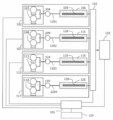
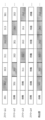
- FIG. 1 is a schematic configuration diagram of a multi-stream liquid chromatographic system according to an embodiment of the present invention. It is a graph explaining the example of the gradient program for the liquid chromatograph in one Example to elute a sample. It is a graph explaining the example of the gradient program for the liquid chromatograph in one Example to elute a sample. It is explanatory drawing of the process of each stream in case the multistream liquid chromatographic system in one Example performs a continuous measurement. It is a different example from this invention, and is a figure explaining the example of the column exchange process in case a preliminary stream does not exist in a multistream liquid chromatography system. It is a figure explaining the example of the column exchange process when the backup stream exists in one Example.
- the embodiment of the present invention describes a configuration using a mass spectrometer as a detector of a multi-stream liquid chromatograph system
- detectors other than the mass spectrometer for example, visible / ultraviolet absorption detector and photodiode array detection are described.
- the present invention can be applied to a vessel, a fluorescence detector and the like.
- the number of separation columns is one for each stream, but the present invention can be applied even if the number of separation columns is any number of 1 or more.
- liquid chromatograph is used in the embodiment of the present invention
- present invention can be applied even if a gas chromatograph is used.
- FIG. 1 is a schematic configuration diagram of a multistream liquid chromatograph system according to an embodiment of the present invention.
- 2A and 2B are graphs explaining an example of a gradient program for the liquid chromatograph in one example to elute the sample.
- FIG. 3 is an explanatory diagram of a process of each stream in the case where the multi-stream liquid chromatographic system in one embodiment performs continuous measurement.
- FIG. 4 is a diagram different from the present invention and is a diagram illustrating an example of a column exchange process in the case where a preliminary stream does not exist in a multistream liquid chromatograph system.
- FIG. 5 is a diagram illustrating an example of a column exchange process when a backup stream exists in one embodiment.
- the multi-stream liquid chromatograph system includes a plurality of liquid chromatograph separation units 102, 107, 112, 117.
- the liquid chromatograph separation unit 102 can be defined as stream 1
- the liquid chromatograph separation unit 107 can be defined as stream 2
- the liquid chromatograph separation unit 112 can be defined as stream 3
- the liquid chromatograph separation unit 117 can be defined as stream 4.
- the liquid chromatograph separation unit 102 includes a liquid feed pump (liquid feed unit (delivery unit)) 103 that feeds while changing the concentrations of a plurality of different solvents, and a sample injection valve (sample injection unit) that introduces a sample into an analysis channel 1251. Part) 104, a separation column 105, and a column constant temperature bath 106 for stabilizing the performance of the separation column 105.
- a liquid feed pump liquid feed unit (delivery unit)
- sample injection valve sample injection unit
- the liquid chromatograph separation unit 107 also has the same configuration as the liquid chromatograph separation unit 102, and a liquid feed pump (liquid feed unit (delivery unit)) that feeds to the analysis channel 1252 while changing the concentrations of a plurality of different solvents. ) 108, a sample injection valve (sample injection section) 109 for introducing a sample into the analysis flow channel 1252, a separation column 110, and a column thermostat 111 for stabilizing the performance of the separation column 105.
- a liquid feed pump liquid feed unit (delivery unit)
- the liquid chromatograph separation unit 112 also has the same configuration as the liquid chromatograph separation units 102 and 107, and supplies two liquids to the analysis flow channel 1253 while changing the concentrations of a plurality of different solvents (liquid transfer pump).
- the liquid chromatograph separation unit 117 has the same configuration as the liquid chromatograph separation units 102, 107 and 112, and a liquid feed pump (feeding pump) that feeds to the analysis channel 1254 while changing the concentrations of a plurality of different solvents.
- a liquid section (delivery section) 118, a sample injection valve (sample injection section) 119 for introducing a sample into the analysis flow channel 1254, a separation column 120, and a column constant temperature bath 121 are provided.
- the liquid chromatograph separation units 102, 107, 112, and 117 are connected in parallel with each other, and are connected to one mass spectrometer (detector) 123 by a flow path switching valve (flow path switching unit) 122.
- the control unit 101 controls the operations of the liquid chromatograph separation units 102, 107, 112, 117, the flow path switching valve 122, and the mass spectrometer 123.
- a display unit 124 is connected to the control unit 101.
- FIG. 2A and FIG. 2B are diagrams showing two examples of a gradient program for the liquid chromatograph to elute a sample in the present embodiment (examples of program A of FIG. 2A and example of program B of FIG. 2B). ..
- the gradient programs A and B are used to analyze different measurement target components.
- Each of the gradient programs is roughly composed of three processes of "column equilibration” 201, "measurement target component elution” 202, and “column washing” 203.
- the vertical axis represents the solvent composition of the pump, and the horizontal axis represents time.
- the liquid feed pumps 103, 108, 113, 118 equilibrate the inside of the column to the initial state at a solvent mixing ratio with a weak sample lysis output (column equilibration 201).
- the sample injection valves 104, 109, 114, and 119 inject the sample solution into the channels in the respective liquid chromatographs 102, 107, 112, and 117 at a time (t1) sufficient for column equilibration 201.
- the liquid feed pumps 103, 108, 113, 118 feed the liquid while gradually changing the composition of the mixed solution so that the measurement target component is separated from the other components in the sample.
- the component to be measured is eluted and detected by the mass spectrometer 123 which is a detector.
- the liquid feed pumps 103, 108, 113, 118 change the solvent composition of the mixed solution to a mixture ratio having a strong elution output, and the separation columns 105, 110, 115, 120 are used. Other adsorbed contaminants are washed (column washing 203).
- a single analysis is completed within a sufficient time (t3) for cleaning the inside of the separation columns 105, 110, 115, 120. This process is repeated for continuous analysis.
- the solvent mixing ratio of each process varies depending on the component to be measured, but in the continuous analysis, the column equilibration 201 causes the previous analysis conditions to influence the next analysis. To avoid.
- the column washing 203 avoids that a contaminant component in the sample solution before that affects the next analysis.
- the detector 123 is operated to detect the measurement component is the measurement target component elution 202.
- control unit 101 has a measurement target component elution (measurement target component elution process) 202 in which the detector 123 operates, and a liquid chromatograph separation units 102, 107, 12, 117. Adjust the test injection timing so that the streams 1 to 4 do not overlap.
- measurement target component elution measurement target component elution process
- FIG. 3 shows the process of each stream and the detector 123 when the multi-stream liquid chromatographic system of FIG. 1 randomly and continuously analyzes the measurement sample measured by the gradient program A or B shown in FIGS. 2A and 2B. An example is shown.
- the control unit 101 shown in FIG. 1 schedules the first stream (stream 1) according to the gradient program information necessary for measuring the first sample.
- the first stream begins the equilibration process 301 of gradient program A.
- the sample injection valve (sample injection unit) 104 of the first stream injects the first sample and starts the elution process 302 of the gradient program A.
- the sample component to be measured is eluted from the column 105 and is detected by the detector 123, which is a mass spectrometer, via the flow path switching valve 122.
- the control unit 101 schedules the measurement of the second sample to the second stream (stream 2) according to the necessary gradient program information, and the second stream starts the equilibration process 301 of the gradient program A. ..
- the first stream moves to the washing process 303 of the gradient program A.
- the sample injection valve (sample injection unit) 109 of the second stream injects the second sample.
- the second stream starts the elution process 302 of the gradient program A, and the component to be measured is detected by the detector 123 from the column 110 of the second stream via the flow path switching valve 122.
- the control unit 101 schedules the measurement of the third sample to the third stream (stream 3) according to the necessary gradient program information, and the third stream starts the equilibration process 311 of the gradient program B.
- control unit 101 schedules the measurement of the fourth sample to the first stream for which the measurement is completed according to the necessary gradient program information, and the first stream starts the equilibration process 311 of the gradient program B. ..
- the second stream executes the wash process 303 of gradient program A.
- the third stream starts the elution process 312 of the gradient program B, and the component to be measured is detected by the detector 123 from the column 115 of the third stream via the flow path switching valve 122.
- the first stream is measured by the gradient program B
- the second stream is measured by the gradient program A
- the third stream is measured by the gradient program B.
- the detector 123 sequentially detects the components to be measured that each stream elutes when the elution process 302 or 312 is executed, and continuously and continuously acquires data.
- the remaining one stream 4 that is not operating is a backup stream that operates when the separation column to be described later needs to be replaced.
- This preliminary stream 4 is in a standby state at the time of normal analysis, but in order to prevent the deterioration of the separation column 120, the liquid feed pump 118 is stopped, the column thermostat 121 is in a temperature control stop state, or at room temperature or for column storage. Wait in the temperature state (usually usable state). That is, the liquid chromatograph separation unit 117 that is the auxiliary stream 4 is a chromatograph separation unit in a standby state, and is configured to have a separation column 120 that can be used for general purposes.
- FIG. 4 shows an example of a column exchange process in the case where a preliminary stream does not exist in a multistream liquid chromatography system.
- the control unit 101 predicts that the number of times of use of the separation column 110 being used in the second stream (stream 2) will reach the end of its life during the continuous analysis, the measurement of the next sample is transferred to the second stream. Do not schedule.
- the separation column 110 is switched to a new separation column.
- the solvent in the used column is replaced with a solvent that causes no problem in disposal, and the liquid feed pump 108 is stopped to release the pressure of the liquid remaining inside the used column.
- the column temperature may be changed to a temperature that is safe to touch even when the user separates the used separation column.
- a method of temporarily stopping the liquid feeding pump 108 to allow the user or the system to attach / detach the separation column, or a method of switching to a spare column previously connected by using a switching valve is used. There is a way to switch the route.
- the liquid feed pump 108 of the second stream is initialized 401 for passing a specific solvent composition into the new column, and the performance of the new column is normal.
- the measurement of a specific standard sample including the process of equilibration 411, elution 412, and washing 413 is performed.
- the control unit 101 schedules the measurement sample only in the first stream and the third stream. In this case, secondly, since the stream 107 cannot operate, the number of operating streams decreases.
- FIG. 5 shows an example of a column exchange process when a backup stream exists, as an embodiment of the present invention.
- the preparatory operation 501 includes, for example, flow path purge at the start of liquid transfer, stabilization of liquid transfer, and temperature stabilization of the column constant temperature bath 121.
- the fourth stream (stream 4) performs the initialization 502 of the spare new column 120.
- the control unit 101 executes the equilibration 511 for evaluating the normality of the separation column 120 of the fourth stream (stream 4). After the completion of the equilibration 511, the control unit 101 injects the standard sample from the sample injection valve (sample injection unit) 119 of the fourth stream (stream 4), and the fourth stream (stream 4) is the elution process of the standard sample. Start 512.
- the standard sample is eluted from the separation column 120 and is detected by the detector 123 via the flow path switching valve 122. After detection of the standard sample by the detector 123, the fourth stream (stream 4) undergoes a washing process 513 of the separation column 120.
- the control unit 101 performs the preparatory operation 501 and the initialization 502 before the end of the life of the separation column 110 of the second stream (stream 2), that is, the first stream (stream 1), the second stream (stream 2), A third stream (stream 3) schedules continuous analysis in progress.
- the normality evaluation of the new separation column 120 of the fourth stream (stream 4), which is the preliminary stream is carried out immediately after the separation column 110 of the second stream (stream 2) reaches the end of its life. After that, continuous analysis by the first stream (stream 1), the third stream (stream 3), and the fourth stream (stream 4) is possible.
- the control unit 101 causes the display unit 124 to display which liquid chromatograph separation unit is the liquid chromatograph separation unit whose separation column has reached the end of life. In addition, the preparation operation of the preliminary stream is started, and the current state of the preliminary stream is displayed on the display unit 124.
- This post-treatment 521 includes a treatment of replacing the solvent in the used separation column 110 with a solvent that does not cause a problem in disposal.
- an analyzer having a plurality of liquid chromatographic separation units is provided with a standby stream that waits until the separation columns of other liquid chromatographic separation units reach the end of their life.
- the control unit predicts that the number of times the separation column has been used in a liquid chromatograph separation unit other than the liquid chromatograph separation unit in the standby state has reached a certain number of times and has reached the end of its life, the separation column of that liquid chromatograph separation unit will reach the end According to the timing, the timing of the preparatory operation, initialization, equilibration, standard sample elution, and washing of the liquid chromatograph separation unit, which is a preliminary stream, is adjusted and controlled so that it can be used. ing.
- liquid chromatograph separation unit in which the separation column that has reached the end of life is replaced with a new separation column is used as the liquid chromatograph separation unit that is always used again, and the original liquid chromatograph separation unit is again used as the spare liquid chromatograph. It can also be a separation part.
- the above-described example is an example in which one spare liquid chromatographic separation unit is provided, but it is also possible to provide a plurality of spare liquid chromatographic separation units corresponding to a plurality of types of solvents. Is.
Landscapes
- Physics & Mathematics (AREA)
- Health & Medical Sciences (AREA)
- Life Sciences & Earth Sciences (AREA)
- Chemical & Material Sciences (AREA)
- Analytical Chemistry (AREA)
- Biochemistry (AREA)
- General Health & Medical Sciences (AREA)
- General Physics & Mathematics (AREA)
- Immunology (AREA)
- Pathology (AREA)
- Other Investigation Or Analysis Of Materials By Electrical Means (AREA)
- Treatment Of Liquids With Adsorbents In General (AREA)
Priority Applications (4)
| Application Number | Priority Date | Filing Date | Title |
|---|---|---|---|
| US17/295,317 US20220011280A1 (en) | 2018-11-20 | 2019-11-20 | Analysis Apparatus Having a Plurality of Chromatographs and Controlling Method Thereof |
| EP19887306.9A EP3885764A4 (en) | 2018-11-20 | 2019-11-20 | ANALYZER WITH A VARIETY OF CHROMATOGRAPHS AND CONTROL METHODS FOR ANALYZER |
| JP2020557580A JPWO2020105661A1 (ja) | 2018-11-20 | 2019-11-20 | 複数のクロマトグラフを有する分析装置及びその制御方法 |
| CN201980076460.3A CN113167772A (zh) | 2018-11-20 | 2019-11-20 | 具有多个色谱仪的分析装置及其控制方法 |
Applications Claiming Priority (2)
| Application Number | Priority Date | Filing Date | Title |
|---|---|---|---|
| JP2018-217175 | 2018-11-20 | ||
| JP2018217175 | 2018-11-20 |
Publications (1)
| Publication Number | Publication Date |
|---|---|
| WO2020105661A1 true WO2020105661A1 (ja) | 2020-05-28 |
Family
ID=70773137
Family Applications (1)
| Application Number | Title | Priority Date | Filing Date |
|---|---|---|---|
| PCT/JP2019/045363 Ceased WO2020105661A1 (ja) | 2018-11-20 | 2019-11-20 | 複数のクロマトグラフを有する分析装置及びその制御方法 |
Country Status (5)
| Country | Link |
|---|---|
| US (1) | US20220011280A1 (https=) |
| EP (1) | EP3885764A4 (https=) |
| JP (1) | JPWO2020105661A1 (https=) |
| CN (1) | CN113167772A (https=) |
| WO (1) | WO2020105661A1 (https=) |
Cited By (3)
| Publication number | Priority date | Publication date | Assignee | Title |
|---|---|---|---|---|
| WO2022185682A1 (ja) * | 2021-03-03 | 2022-09-09 | 株式会社日立ハイテク | 液体クロマトグラフ質量分析装置の制御方法、および液体クロマトグラフ質量分析装置 |
| CN116868062A (zh) * | 2021-03-08 | 2023-10-10 | 株式会社日立高新技术 | 自动分析装置的控制方法 |
| CN120586446A (zh) * | 2025-08-07 | 2025-09-05 | 中粮生化(成都)有限公司 | 一种顺序式模拟移动床色谱分离系统及其独立反洗方法 |
Families Citing this family (6)
| Publication number | Priority date | Publication date | Assignee | Title |
|---|---|---|---|---|
| CN113396328B (zh) * | 2019-02-22 | 2024-09-10 | 株式会社日立高新技术 | 分析装置 |
| JP2023067745A (ja) * | 2021-10-29 | 2023-05-16 | 株式会社島津製作所 | 液体クロマトグラフシステムの洗浄方法および液体クロマトグラフシステム |
| JP2023067746A (ja) | 2021-10-29 | 2023-05-16 | 株式会社島津製作所 | 液体クロマトグラフシステムの洗浄方法および液体クロマトグラフシステム |
| JP2023067747A (ja) | 2021-10-29 | 2023-05-16 | 株式会社島津製作所 | 液体クロマトグラフシステムおよびその洗浄方法、ならびにプログラム |
| CN117929610A (zh) * | 2023-06-16 | 2024-04-26 | 常州三泰科技有限公司 | 一种液相色谱仪系统控制方法及装置 |
| CN117310061A (zh) * | 2023-10-27 | 2023-12-29 | 广州智达实验室科技有限公司 | 样品进样的控制方法、装置、计算机设备和存储介质 |
Citations (5)
| Publication number | Priority date | Publication date | Assignee | Title |
|---|---|---|---|---|
| JPH06324027A (ja) * | 1993-05-12 | 1994-11-25 | Hitachi Ltd | 自動液体クロマトグラフ |
| JP2000304751A (ja) * | 1999-04-16 | 2000-11-02 | Shimadzu Corp | 自動分析装置 |
| US6641783B1 (en) * | 1999-02-08 | 2003-11-04 | Charles Pidgeon | Chromatographic systems with pre-detector eluent switching |
| JP4372419B2 (ja) | 2000-12-28 | 2009-11-25 | コヒーシブ・テクノロジーズ・インコーポレイテッド | マルチカラム・クロマトグラフ装置 |
| JP2018169350A (ja) * | 2017-03-30 | 2018-11-01 | 株式会社島津製作所 | 液体クロマトグラフ |
Family Cites Families (27)
| Publication number | Priority date | Publication date | Assignee | Title |
|---|---|---|---|---|
| US3841059A (en) * | 1972-09-25 | 1974-10-15 | W Mccabe | Compressed and thermostated air regulated gas liquid chromatography oven with simultaneously operated multiple chromatography columns |
| JP2800509B2 (ja) * | 1990-11-30 | 1998-09-21 | 株式会社日立製作所 | 液体クロマトグラフ装置 |
| JP2001208738A (ja) * | 2000-01-28 | 2001-08-03 | Sumitomo Chem Co Ltd | 分析条件選択方法および高速液体クロマトグラフィ装置 |
| EP1269171B1 (en) * | 2000-03-07 | 2006-05-31 | Northeastern University | Parallel array of independent thermostats for column separations |
| JP4403638B2 (ja) * | 2000-06-30 | 2010-01-27 | 株式会社島津製作所 | 液体クロマトグラフ |
| US7261812B1 (en) * | 2002-02-13 | 2007-08-28 | Nanostream, Inc. | Multi-column separation devices and methods |
| US7132650B1 (en) * | 2003-09-26 | 2006-11-07 | Nanostream, Inc. | High throughput multi-dimensional sample analysis |
| US7214320B1 (en) * | 2002-08-08 | 2007-05-08 | Nanostream, Inc. | Systems and methods for high throughput sample analysis |
| US20050048669A1 (en) * | 2003-08-26 | 2005-03-03 | Nanostream, Inc. | Gasketless microfluidic device interface |
| WO2004040295A1 (en) * | 2002-10-31 | 2004-05-13 | Nanostream, Inc. | Parallel detection chromatography systems |
| US6936167B2 (en) * | 2002-10-31 | 2005-08-30 | Nanostream, Inc. | System and method for performing multiple parallel chromatographic separations |
| US6987263B2 (en) * | 2002-12-13 | 2006-01-17 | Nanostream, Inc. | High throughput systems and methods for parallel sample analysis |
| JP3816883B2 (ja) * | 2003-03-06 | 2006-08-30 | 株式会社日立ハイテクノロジーズ | 液体クロマトグラフ質量分析装置 |
| WO2004101151A1 (en) * | 2003-05-08 | 2004-11-25 | Nanostream, Inc. | Sample preparation for parallel chromatography |
| US20050032238A1 (en) * | 2003-08-07 | 2005-02-10 | Nanostream, Inc. | Vented microfluidic separation devices and methods |
| FI117179B (fi) * | 2004-01-23 | 2006-07-14 | Environics Oy | Kaasukromatografi |
| JP2006125856A (ja) * | 2004-10-26 | 2006-05-18 | Sumitomo Chemical Co Ltd | 液体クロマトグラフィー装置 |
| CN103370627B (zh) * | 2010-10-29 | 2016-05-11 | 恩姆菲舍尔科技公司 | 用于样品制备和分析的自动化系统的系统布局 |
| JP6314989B2 (ja) * | 2013-09-25 | 2018-04-25 | 株式会社島津製作所 | ガスクロマトグラフ質量分析装置 |
| JP6331485B2 (ja) * | 2014-03-04 | 2018-05-30 | 株式会社島津製作所 | 液体クロマトグラフ及び液体クロマトグラフ分析方法 |
| CN107110830B (zh) * | 2015-01-26 | 2019-11-22 | 株式会社岛津制作所 | 气相色谱仪 |
| DE112016006847T5 (de) * | 2016-06-16 | 2019-02-07 | Hitachi High-Technologies Corporation | Chromatographie-Massenanalysevorrichtung und Steuerverfahren |
| EP3523646B1 (en) * | 2016-10-04 | 2023-05-10 | The Regents of The University of Michigan | Multi-channel multi-dimensional comprehensive gas chromatography |
| JP7035951B2 (ja) * | 2018-10-16 | 2022-03-15 | 株式会社島津製作所 | 前処理装置およびこれを備えた分析システム |
| US12130267B2 (en) * | 2018-11-28 | 2024-10-29 | Shimadzu Corporation | Analyzing method for azo compound |
| CN113396328B (zh) * | 2019-02-22 | 2024-09-10 | 株式会社日立高新技术 | 分析装置 |
| JP7388206B2 (ja) * | 2020-01-22 | 2023-11-29 | 株式会社島津製作所 | 液体クロマトグラフおよび分析方法 |
-
2019
- 2019-11-20 US US17/295,317 patent/US20220011280A1/en not_active Abandoned
- 2019-11-20 JP JP2020557580A patent/JPWO2020105661A1/ja active Pending
- 2019-11-20 WO PCT/JP2019/045363 patent/WO2020105661A1/ja not_active Ceased
- 2019-11-20 EP EP19887306.9A patent/EP3885764A4/en not_active Withdrawn
- 2019-11-20 CN CN201980076460.3A patent/CN113167772A/zh not_active Withdrawn
Patent Citations (5)
| Publication number | Priority date | Publication date | Assignee | Title |
|---|---|---|---|---|
| JPH06324027A (ja) * | 1993-05-12 | 1994-11-25 | Hitachi Ltd | 自動液体クロマトグラフ |
| US6641783B1 (en) * | 1999-02-08 | 2003-11-04 | Charles Pidgeon | Chromatographic systems with pre-detector eluent switching |
| JP2000304751A (ja) * | 1999-04-16 | 2000-11-02 | Shimadzu Corp | 自動分析装置 |
| JP4372419B2 (ja) | 2000-12-28 | 2009-11-25 | コヒーシブ・テクノロジーズ・インコーポレイテッド | マルチカラム・クロマトグラフ装置 |
| JP2018169350A (ja) * | 2017-03-30 | 2018-11-01 | 株式会社島津製作所 | 液体クロマトグラフ |
Non-Patent Citations (1)
| Title |
|---|
| See also references of EP3885764A4 |
Cited By (4)
| Publication number | Priority date | Publication date | Assignee | Title |
|---|---|---|---|---|
| WO2022185682A1 (ja) * | 2021-03-03 | 2022-09-09 | 株式会社日立ハイテク | 液体クロマトグラフ質量分析装置の制御方法、および液体クロマトグラフ質量分析装置 |
| CN116868062A (zh) * | 2021-03-08 | 2023-10-10 | 株式会社日立高新技术 | 自动分析装置的控制方法 |
| CN120586446A (zh) * | 2025-08-07 | 2025-09-05 | 中粮生化(成都)有限公司 | 一种顺序式模拟移动床色谱分离系统及其独立反洗方法 |
| CN120586446B (zh) * | 2025-08-07 | 2025-10-21 | 中粮生化(成都)有限公司 | 一种顺序式模拟移动床色谱分离系统及其独立反洗方法 |
Also Published As
| Publication number | Publication date |
|---|---|
| US20220011280A1 (en) | 2022-01-13 |
| EP3885764A4 (en) | 2022-08-17 |
| EP3885764A1 (en) | 2021-09-29 |
| JPWO2020105661A1 (ja) | 2021-09-30 |
| CN113167772A (zh) | 2021-07-23 |
Similar Documents
| Publication | Publication Date | Title |
|---|---|---|
| WO2020105661A1 (ja) | 複数のクロマトグラフを有する分析装置及びその制御方法 | |
| US6942793B2 (en) | Liquid chromatograph mass spectrometer | |
| JP6790963B2 (ja) | 液体クロマトグラフ | |
| JP7224434B2 (ja) | 分析装置 | |
| US20110306146A1 (en) | Parallel Screening Supercritical Fluid Chromatography | |
| CN111868517B (zh) | 具有多个色谱仪的分析装置 | |
| CN104897788B (zh) | 液相色谱仪和液相色谱仪分析方法 | |
| JP7574321B2 (ja) | 自動分析装置の制御方法 | |
| JP7262472B2 (ja) | 液体クロマトグラフを有する分析装置および液体クロマトグラフの分析方法 | |
| WO2017122261A1 (ja) | 液体クロマトグラフ分析装置 | |
| WO2015063886A1 (ja) | 液体クロマトグラフ装置 | |
| JP5930075B2 (ja) | サンプル濃縮装置 | |
| JP7388206B2 (ja) | 液体クロマトグラフおよび分析方法 | |
| JP5202272B2 (ja) | 液体クロマトグラフ、液体クロマトグラフ用送液ポンプおよび液体クロマトグラフの洗浄方法 | |
| JP4536570B2 (ja) | 液体クロマトグラフ分析装置 | |
| JP7492646B2 (ja) | 自動分析装置の制御方法 | |
| JP4597841B2 (ja) | 送液ポンプ | |
| EP4314803A1 (en) | Automated semi-preparative gradient recycling liquid chromatography | |
| WO2026078978A1 (ja) | 自動分析装置 | |
| JP2018197669A (ja) | ガスクロマトグラフ装置 | |
| JP2021110548A (ja) | 分析装置及び分析装置の使用方法 | |
| WO2024095765A1 (ja) | 液体クロマトグラフの制御方法および液体クロマトグラフ | |
| JP2023117066A (ja) | 分取流体クロマトグラフ装置 | |
| JP2007121192A (ja) | 液体クロマトグラフ装置 |
Legal Events
| Date | Code | Title | Description |
|---|---|---|---|
| 121 | Ep: the epo has been informed by wipo that ep was designated in this application |
Ref document number: 19887306 Country of ref document: EP Kind code of ref document: A1 |
|
| ENP | Entry into the national phase |
Ref document number: 2020557580 Country of ref document: JP Kind code of ref document: A |
|
| NENP | Non-entry into the national phase |
Ref country code: DE |
|
| ENP | Entry into the national phase |
Ref document number: 2019887306 Country of ref document: EP Effective date: 20210621 |