WO2020105517A1 - 基板処理の条件設定支援方法、基板処理システム、記憶媒体及び学習モデル - Google Patents
基板処理の条件設定支援方法、基板処理システム、記憶媒体及び学習モデルInfo
- Publication number
- WO2020105517A1 WO2020105517A1 PCT/JP2019/044429 JP2019044429W WO2020105517A1 WO 2020105517 A1 WO2020105517 A1 WO 2020105517A1 JP 2019044429 W JP2019044429 W JP 2019044429W WO 2020105517 A1 WO2020105517 A1 WO 2020105517A1
- Authority
- WO
- WIPO (PCT)
- Prior art keywords
- processing
- condition
- unit
- substrate processing
- data
- Prior art date
- Legal status (The legal status is an assumption and is not a legal conclusion. Google has not performed a legal analysis and makes no representation as to the accuracy of the status listed.)
- Ceased
Links
Images







Classifications
-
- H—ELECTRICITY
- H10—SEMICONDUCTOR DEVICES; ELECTRIC SOLID-STATE DEVICES NOT OTHERWISE PROVIDED FOR
- H10P—GENERIC PROCESSES OR APPARATUS FOR THE MANUFACTURE OR TREATMENT OF DEVICES COVERED BY CLASS H10
- H10P72/00—Handling or holding of wafers, substrates or devices during manufacture or treatment thereof
- H10P72/06—Apparatus for monitoring, sorting, marking, testing or measuring
- H10P72/0612—Production flow monitoring, e.g. for increasing throughput
-
- G—PHYSICS
- G06—COMPUTING OR CALCULATING; COUNTING
- G06N—COMPUTING ARRANGEMENTS BASED ON SPECIFIC COMPUTATIONAL MODELS
- G06N3/00—Computing arrangements based on biological models
- G06N3/02—Neural networks
- G06N3/08—Learning methods
-
- G—PHYSICS
- G06—COMPUTING OR CALCULATING; COUNTING
- G06N—COMPUTING ARRANGEMENTS BASED ON SPECIFIC COMPUTATIONAL MODELS
- G06N3/00—Computing arrangements based on biological models
- G06N3/12—Computing arrangements based on biological models using genetic models
-
- H—ELECTRICITY
- H10—SEMICONDUCTOR DEVICES; ELECTRIC SOLID-STATE DEVICES NOT OTHERWISE PROVIDED FOR
- H10P—GENERIC PROCESSES OR APPARATUS FOR THE MANUFACTURE OR TREATMENT OF DEVICES COVERED BY CLASS H10
- H10P72/00—Handling or holding of wafers, substrates or devices during manufacture or treatment thereof
- H10P72/04—Apparatus for manufacture or treatment
- H10P72/0448—Apparatus for applying a liquid, a resin, an ink or the like
-
- H—ELECTRICITY
- H10—SEMICONDUCTOR DEVICES; ELECTRIC SOLID-STATE DEVICES NOT OTHERWISE PROVIDED FOR
- H10P—GENERIC PROCESSES OR APPARATUS FOR THE MANUFACTURE OR TREATMENT OF DEVICES COVERED BY CLASS H10
- H10P76/00—Manufacture or treatment of masks on semiconductor bodies, e.g. by lithography or photolithography
Definitions
- the present disclosure relates to a substrate processing condition setting support method, a substrate processing system, a storage medium, and a learning model.
- Patent Document 1 discloses a device in which a photosensitive coating is formed on the surface of a substrate, and the photosensitive coating is developed after the photosensitive coating is exposed.
- the present disclosure provides a condition setting support method effective for simplifying the work of setting the processing conditions of the substrate processing.
- a substrate processing condition setting support method provides processing conditions of a substrate processing executed by a substrate processing apparatus including supply of a processing liquid to a substrate and actual data on the quality of the substrate processing.
- a data set including the data to the machine learning device, and a model generated by the machine learning device by machine learning based on a plurality of sets of the data sets, and predicting data regarding the quality of the substrate processing according to the input of the processing condition. Deriving recommended processing conditions for the substrate processing based on the learning model to be output.
- condition setting support method effective for simplifying the work of setting the processing conditions of the substrate processing.
- the substrate processing system 1 is a system in which a photosensitive film is formed on the surface of a substrate and the photosensitive film after the exposure process is subjected to a developing process.
- the substrate to be processed is, for example, a semiconductor wafer W.
- the photosensitive film is, for example, a resist film.
- the substrate processing system 1 includes a coating / developing device 2 and a control device 100.
- the coating / developing device 2 includes a carrier block 4, a processing block 5, and an interface block 6.
- the carrier block 4 introduces the wafer W (substrate) into the coating / developing apparatus 2 and guides the wafer W from the coating / developing apparatus 2.
- the carrier block 4 can support a plurality of carriers C for the wafer W and incorporates the transfer arm A1.
- the carrier C accommodates a plurality of circular wafers W, for example.
- the transfer arm A1 takes out the unprocessed wafer W from the carrier C and returns the processed wafer W to the carrier C.
- the processing block 5 has a plurality of processing modules 11, 12, 13, and 14.
- the processing modules 11, 12, 13 (processing unit) perform a film forming process of forming a film by applying a film forming liquid (processing liquid for film forming) on the front surface Wa of the wafer W.
- the processing modules 11, 12, and 13 include a coating unit U1, a thermal processing unit U2, and a transfer arm A3 that transfers the wafer W to these units.
- the processing module 11 forms a lower layer film on the surface of the wafer W by the coating unit U1 and the heat treatment unit U2.
- the coating unit U1 of the processing module 11 coats the processing liquid for forming the lower layer film on the wafer W.
- the heat treatment unit U2 of the treatment module 11 performs various heat treatments associated with the formation of the lower layer film.
- the processing module 12 forms a resist film on the lower layer film by the coating unit U1 and the heat treatment unit U2.
- the coating unit U1 of the processing module 12 coats the resist film forming treatment liquid on the lower layer film.
- the heat treatment unit U2 of the treatment module 12 performs various heat treatments associated with the formation of the resist film.
- the processing module 13 forms an upper layer film on the resist film by the coating unit U1 and the heat treatment unit U2.
- the coating unit U1 of the processing module 13 coats the liquid for forming the upper layer film on the resist film.
- the heat treatment unit U2 of the treatment module 13 performs various heat treatments associated with the formation of the upper layer film.
- the coating unit U1 includes a rotation holding unit 50 and a film forming liquid supply unit 60.
- the rotation holding unit 50 holds and rotates the wafer W.
- the rotation holding unit 50 has a holding unit 51 and a rotation driving unit 52.
- the holding unit 51 supports the wafer W arranged horizontally and holds it by, for example, vacuum suction.
- the rotation drive unit 52 rotates the holding unit 51 around a vertical axis by using, for example, an electric motor as a power source. As a result, the wafer W held by the holder 51 also rotates.
- the film forming liquid supply unit 60 supplies the film forming liquid to the front surface Wa of the wafer W held by the holding unit 51.
- the film forming liquid supply unit 60 has a nozzle 61 and a liquid source 62.
- the nozzle 61 is arranged above the wafer W held by the holding unit 51 and discharges the processing liquid downward.
- the liquid source 62 pressure-feeds the processing liquid to the nozzle 61.
- the processing module 14 performs a development process of supplying a processing solution for development to the resist film (photosensitive film) that has been subjected to the exposure process on the front surface Wa of the wafer W.
- the processing module 14 includes a developing unit U3, a heat treatment unit U4, and a transfer arm A3 that transfers the wafer W to these units.
- the processing module 14 develops the resist film after exposure by the developing unit U3 and the thermal processing unit U4.
- the developing unit U3 coats the surface of the exposed wafer W with a developing solution (developing processing solution) and then rinses it off with a rinsing solution (rinsing processing solution) to develop the resist film.
- the heat treatment unit U4 performs various heat treatments associated with the development processing. Specific examples of the heat treatment include a heat treatment before the development treatment (PEB: Post Exposure Bake) and a heat treatment after the development treatment (PB: Post Bake).
- the developing unit U3 includes a rotation holding section 20, a developing solution supply section 30, and a rinse solution supply section 40.
- the rotation holding unit 20 holds and rotates the wafer W.
- the rotation holding unit 20 has a holding unit 21 and a rotation driving unit 22.
- the holder 21 supports the wafer W arranged horizontally and holds it by, for example, vacuum suction.
- the rotation driving unit 22 rotates the holding unit 21 around a vertical axis by using, for example, an electric motor as a power source. As a result, the wafer W held by the holder 21 also rotates.
- the developing solution supply unit 30 supplies the developing solution to the front surface Wa of the wafer W held by the holding unit 21.
- the developer supply unit 30 has a nozzle 31, a nozzle transfer unit 32, and a liquid source 33.
- the nozzle 31 is arranged above the wafer W held by the holder 21 and discharges the developing solution downward.
- the nozzle transfer unit 32 moves the nozzle 31 in the horizontal direction by using an electric motor or the like as a power source.
- the liquid source 33 pressure-feeds the developing solution to the nozzle 31.
- the rinse liquid supply unit 40 supplies the rinse liquid to the front surface Wa of the wafer W held by the holding unit 21.
- the rinse liquid supply unit 40 has a nozzle 41, a nozzle transfer unit 42, and a liquid source 43.
- the nozzle 41 is arranged above the wafer W held by the holder 21 and discharges the rinse liquid downward.
- the nozzle transfer unit 42 moves the nozzle 41 in the horizontal direction by using an electric motor or the like as a power source.
- the liquid source 43 pressure-feeds the rinse liquid to the nozzle 41.
- the interface block 6 transfers the wafer W to and from an exposure apparatus (not shown) that performs an exposure process on the resist film formed on the wafer W.
- the interface block 6 has a built-in transfer arm A8 and is connected to the exposure apparatus.
- the transfer arm A8 transfers the wafer W before the exposure processing to the exposure apparatus and receives the wafer W after the exposure processing from the exposure apparatus.
- a storage unit U10 is provided between the processing block 5 and the carrier block 4.
- the accommodation unit U10 is partitioned into a plurality of cells arranged in the vertical direction, and the wafer W can be accommodated in each cell.
- the accommodating portion U10 is used to transfer the wafer W between the carrier block 4 and the processing block 5.
- An elevating arm A7 is provided near the accommodation unit U10. The elevating arm A7 elevates and lowers the wafer W between the cells of the accommodation unit U10.
- An accommodation unit U11 is provided between the processing block 5 and the interface block 6.
- the accommodation unit U11 is also divided into a plurality of cells arranged in the vertical direction, and the wafer W can be accommodated in each cell.
- the accommodating unit U11 is used to transfer the wafer W between the processing block 5 and the interface block 6.
- the control device 100 controls the coating / developing device 2 so as to execute the coating / developing process in the following procedure, for example.
- the controller 100 controls the transfer arm A1 so as to transfer the wafer W in the carrier C to the accommodation unit U10, and controls the elevating arm A7 so as to arrange the wafer W in the cell for the processing module 11.
- control device 100 controls the transfer arm A3 so as to transfer the wafer W in the accommodation unit U10 to the coating unit U1 and the heat treatment unit U2 in the processing module 11. Further, the control device 100 controls the coating unit U1 and the heat treatment unit U2 so as to form the lower layer film on the surface of the wafer W. After that, the controller 100 controls the transfer arm A3 so as to return the wafer W on which the lower layer film is formed to the accommodating portion U10, and controls the elevating arm A7 so as to arrange the wafer W in the cell for the processing module 12. ..
- control device 100 controls the transfer arm A3 so as to transfer the wafer W in the container U10 to the coating unit U1 and the thermal processing unit U2 in the processing module 12. Further, the control device 100 controls the coating unit U1 and the heat treatment unit U2 so as to form a resist film on the lower layer film of the wafer W. After that, the controller 100 controls the transfer arm A3 so as to return the wafer W to the accommodating unit U10, and controls the elevating arm A7 so as to arrange the wafer W in the cell for the processing module 13.
- control device 100 controls the transfer arm A3 so as to transfer the wafer W in the accommodation unit U10 to each unit in the processing module 13.
- the control device 100 also controls the coating unit U1 and the heat treatment unit U2 so as to form an upper layer film on the resist film of the wafer W.
- the control device 100 controls the transfer arm A3 so as to transfer the wafer W to the accommodation unit U11.
- the controller 100 controls the transfer arm A8 so as to send the wafer W in the container U11 to the exposure apparatus 3.
- the control device 100 receives the wafer W that has been subjected to the exposure processing from the exposure device 3 and controls the transfer arm A8 to arrange the wafer W in the cell for the processing module 14 in the accommodation unit U11.
- control device 100 controls the transfer arm A3 so as to transfer the wafer W in the accommodating unit U11 to each unit in the processing module 14, and the developing unit U3 and the developing unit U3 to perform the developing process on the resist film of the wafer W.
- the heat treatment unit U4 is controlled.
- the controller 100 controls the transfer arm A3 so as to return the wafer W to the accommodation unit U10, and controls the elevating arm A7 and the transfer arm A1 so as to return the wafer W into the carrier C. With the above, the coating / developing process is completed.
- the substrate processing system may be any system as long as it includes a processing unit that performs substrate processing including supply of the processing liquid to the substrate and a control device 100 that can control the processing unit.
- the substrate processing system 1 further includes a condition setting system 7.
- the condition setting system 7 has a quality inspection device 70. Further, at least a part of the condition setting system 7 is configured by the control device 100. That is, the condition setting system 7 includes the quality inspection device 70 and the control device 100.
- the quality inspection device 70 detects information regarding the quality of the substrate processing performed by the coating / developing device 2.
- the control apparatus 100 causes the coating / developing apparatus 2 (substrate processing apparatus) to perform the substrate processing including the supply of the processing liquid to the wafer W according to the preset processing conditions, and the substrate processing according to the processing conditions. Acquiring the actual result data regarding the quality from the quality inspection apparatus 70, inputting a data set including the processing conditions of the substrate processing and the actual data of the substrate processing to the machine learning apparatus 200, and inputting the processing conditions. So as to output the prediction data regarding the quality of the substrate processing based on the learning model generated by the machine learning device 200 by the machine learning based on the plurality of sets of data sets. Is configured to.
- the prediction data is, for example, data that predicts the above-mentioned performance data.
- the actual data may be any data as long as it relates to the quality of substrate processing.
- Substrate quality data after substrate processing is related to substrate processing quality. Further, the supply state of the processing liquid during the substrate processing is also related to the quality of the substrate processing.
- the condition setting system 7 may further include a machine learning device 200.
- the machine learning device 200 is configured to acquire the data set and generate and execute the learning model by machine learning based on a plurality of data sets.
- the machine learning device 200 may be housed in the same housing as the control device 100, or may be installed at a position distant from the control device 100. When installed at a position away from the control device 100, the machine learning device 200 is connected to the control device 100 via, for example, a local area network.
- the machine learning device 200 may be connected to the control device 100 via a wide area network such as the so-called Internet.
- a wide area network such as the so-called Internet.
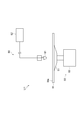
- the quality inspection device 70 has a post-processing inspection unit 80 shown in FIG. 4, for example.
- the post-processing inspection unit 80 detects information regarding the quality of the substrate after the substrate processing.
- the post-processing inspection unit 80 detects information regarding the line width of the resist pattern formed on the surface of the wafer W after the development processing.
- the post-processing inspection unit 80 detects image information in which a difference in line width of the resist pattern can be recognized as a difference in at least one of hue, brightness, and saturation.
- the post-processing inspection unit 80 includes a holding unit 83, a linear driving unit 84, an imaging unit 81, and a light projecting / reflecting unit 82.
- the holding unit 83 holds the wafer W horizontally.
- the linear drive unit 84 uses, for example, an electric motor as a power source, and moves the holding unit 83 along a horizontal linear path.
- the imaging unit 81 acquires image data of the surface of the wafer W.
- the imaging unit 81 is provided on one end side in the post-processing inspection unit 80 in the moving direction of the holding unit 83, and is directed to the other end side in the moving direction.
- the light projecting / reflecting unit 82 projects light to the imaging range and guides the reflected light from the imaging range to the imaging unit 81 side.
- the light projecting / reflecting unit 82 has a half mirror 86 and a light source 87.
- the half mirror 86 is provided at a position higher than the holding unit 83, in the middle of the moving range of the holding unit 83, and reflects light from below toward the image pickup unit 81.
- the light source 87 is provided on the half mirror 86, and illuminates the illumination light downward through the half mirror 86.
- the post-processing inspection unit 80 operates as follows to acquire image data of the front surface of the wafer W.
- the linear drive unit 84 moves the holding unit 83.
- the wafer W passes under the half mirror 86.
- the reflected light from each part of the surface of the wafer W is sequentially sent to the imaging part 81.
- the imaging unit 81 forms an image of reflected light from each part of the surface of the wafer W and acquires image data of the surface of the wafer W. Thereby, the image information of the resist pattern is detected.
- the post-processing inspection unit 80 may detect information regarding the film thickness of the coating film formed on the surface of the wafer W after the film formation processing. For example, the post-processing inspection unit 80 detects image information in which a difference in film thickness of the coating can be recognized as a difference in at least one of hue, brightness, and saturation. The image information can also be detected by the configuration illustrated in FIG.
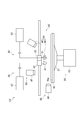
- the quality inspection device 70 may further include an in-process inspection unit 90 shown in FIG.
- the in-process inspection unit 90 detects information regarding the supply state of the processing liquid during substrate processing.
- the in-process inspection section 90 detects information regarding the supply state of the developing solution during the developing process.
- the in-process inspection unit 90 includes a liquid splash detection unit 91, a liquid puddle detection unit 92, and a liquid drop detection unit 93.
- the liquid splash detector 91 detects information about the state of liquid splash during the supply of the developer.
- the liquid splash detection unit 91 includes an irradiation unit 94 and an imaging unit 95.
- the irradiation unit 94 is fixed to, for example, the nozzle 31 or the like, and irradiates the laser beam in the horizontal direction above the wafer W.
- the installation height of the irradiation unit 94 is set to a height at which the droplets splashed from the surface Wa can reach.
- the imaging unit 95 acquires image data of the irradiation range of the laser light from the irradiation unit 94.
- the image data acquired by the imaging unit 95 includes information on the generation state of droplets.
- the liquid puddle detection unit 92 detects information regarding the formation state of the liquid film of the developer on the front surface Wa.
- the puddle detector 92 includes an imaging unit 96.
- the imaging unit 96 acquires image data of the front surface Wa of the wafer W held by the holding unit 21.
- the image data acquired by the imaging unit 96 includes information on the liquid film formation state.
- the dripping detection unit 93 detects information regarding the dripping generation state of the developing solution from the nozzle 31.
- the dripping means a phenomenon in which the developing solution drops from the nozzle 31 outside the preset supplying period of the developing solution.
- the dripping detection unit 93 includes an imaging unit 97.
- the imaging unit 97 acquires the image data of the nozzle 31 and the area below it.
- the image data acquired by the imaging unit 97 includes information regarding the state of dripping.
- the in-process inspection unit 90 may detect information regarding the supply state of the film forming liquid during the film forming process. Also in this case, it is possible to detect the information regarding the supply state of the film forming liquid in the coating unit U1 with the same configuration as the liquid splashing detection unit 91, the liquid puddle detection unit 92, the liquid drop detection unit 93, and the like described above. is there.
- control device 100 has a functional configuration (hereinafter referred to as “functional module”), a processing condition holding unit 111, a processing control unit 112, a data acquisition unit 113, and a data input unit. 114 and a recommended condition derivation unit 115.
- the processing condition holding unit 111 stores preset processing conditions.
- the processing condition holding unit 111 stores the development processing condition of the processing module 14.
- the development processing conditions include heat processing conditions by the heat processing unit U4 and liquid processing conditions by the developing unit U3.
- the liquid processing conditions by the developing unit U3 include a sequence of supplying a developing solution, supplying a rinsing solution, and drying (shaking drying by rotation).
- the liquid processing conditions by the developing unit U3 are as follows: the rotation speed of the wafer W in each sequence, the supply amount of the developer, the supply time of the developer, the supply amount of the rinse liquid, the discharge time of the rinse liquid, and the shake-off drying time. including.
- the solution processing condition by the developing unit U3 further includes a movement start position, a movement speed, a movement end position, etc. of the nozzle 31 during the supply of the development solution. You can leave.
- the processing condition holding unit 111 may store the film forming processing conditions of the processing modules 11, 12, and 13.
- the film forming treatment conditions include liquid treatment conditions by the coating unit U1 and heat treatment conditions by the heat treatment unit U2.
- the liquid processing conditions by the coating unit U1 include a sequence such as supply of a film forming liquid. Further, the liquid processing conditions by the coating unit U1 include the rotation speed of the wafer W in each sequence, the supply amount of the film forming liquid, the supply time of the film forming liquid, and the like.
- the processing control unit 112 causes the processing unit to execute the substrate processing according to the processing conditions stored in the processing condition holding unit 111.
- the processing control unit 112 causes the processing module 14 to execute the development processing according to the development processing condition stored in the processing condition holding unit 111.
- the processing control unit 112 controls the thermal processing unit U4 to perform thermal processing (for example, PEB) on the wafer W after the exposure processing according to preset thermal processing conditions.
- the process control unit 112 controls the developing unit U3 to perform the developing process on the wafer W according to the preset liquid processing conditions.
- the processing control unit 112 controls the heat treatment unit U4 so as to perform the heat treatment (for example, the above PB) on the wafer W according to the preset heat treatment condition.
- the processing control unit 112 may cause the processing modules 11, 12, and 13 to execute the film formation processing according to the film formation processing conditions stored in the processing condition holding unit 111.
- the process control unit 112 controls the coating unit U1 to coat the film forming liquid on the front surface Wa of the wafer W according to a preset liquid processing condition.
- the processing control unit 112 controls the thermal processing unit U2 so as to perform thermal processing on the wafer W according to preset thermal processing conditions.
- the data acquisition unit 113 acquires actual data regarding the quality of substrate processing according to the processing conditions.
- the data acquisition unit 113 may acquire actual result data including actual values of a plurality of items.
- the actual values of the plurality of items may include actual values of the post-processing item indicating the quality of the wafer W after the substrate processing and the in-process item indicating the supply state of the processing liquid during the substrate processing.
- actual data including a plurality of actual values of the same type may be acquired.
- the plurality of actual values of the same kind means a plurality of actual values that should ideally be the same value.
- a plurality of performance values acquired at a plurality of places can be mentioned.
- the data acquisition unit 113 is, as an example of the post-processing item, an actual value indicating the actual value of the line width of the resist pattern formed on the front surface Wa of the wafer W by the development processing (hereinafter, referred to as “actual line width value”). To get. Specifically, the data acquisition unit 113 acquires the line width actual value based on the information detected by the post-processing inspection unit 80. The data acquisition unit 113 may acquire the line width actual values at a plurality of positions on the front surface Wa based on the information detected by the post-processing inspection unit 80.
- the data acquisition unit 113 acquires, as an example of the in-process item, an actual value indicating the supply state of the developing solution during the developing process. Specifically, the data acquisition unit 113 acquires the actual values of the liquid splash of the developing solution, the defective formation of the liquid film, and the presence or absence of the liquid dripping, based on the information detected by the in-process inspection unit 90.
- the data acquisition unit 113 gives an actual value indicating the actual value of the film thickness of the coating film formed on the front surface Wa of the wafer W by the film forming process (hereinafter referred to as “actual film thickness value”). You may get it. Specifically, the data acquisition unit 113 may acquire the actual film thickness value based on the information detected by the post-processing inspection unit 80. The data acquisition unit 113 may acquire actual film thickness values at a plurality of locations on the front surface Wa based on the information detected by the post-processing inspection unit 80.
- the data acquisition unit 113 may acquire an actual value indicating the supply state of the film forming liquid during the film forming process, as an example of the in-process item. Specifically, the data acquisition unit 113 acquires the actual values of the liquid splash of the film forming liquid, the defective formation of the liquid film, and the presence / absence of liquid drip based on the information detected by the in-process inspection unit 90. Good.
- the data input unit 114 inputs a data set including the processing condition and the actual data corresponding to the processing condition to the model generation unit 214 (described later) of the machine learning device 200.
- the data input unit 114 may select a data set to be input to the model generation unit 214 based on the actual value of the item under processing. For example, the data input unit 114 may exclude a data set having a poor supply state of the processing liquid from the input target to the model generation unit 214. Specific examples of the poor supply state of the processing liquid include at least one of the above liquid splashing, liquid film formation failure, and dripping.
- the recommended condition deriving unit 115 derives recommended processing conditions for substrate processing based on the learning model generated by the model generating unit 214 by machine learning based on a plurality of data sets. As will be described later, the learning model is generated so as to output prediction data regarding the quality of substrate processing in response to the input of processing conditions.
- the recommended processing condition is a processing condition determined to be recommended to be adopted based on the learning model and a predetermined evaluation condition of the prediction data.
- the recommended condition derivation unit 115 includes an evaluation condition input unit 121 and a search result acquisition unit 122 as more functional modules.
- the evaluation condition input unit 121 inputs the evaluation condition of the prediction data to the condition search unit 216 (described later) of the machine learning device 200.
- the evaluation condition is a condition for determining whether or not the prediction data is at an allowable level.
- the evaluation condition input unit 121 may input the evaluation condition for evaluating the predicted values of a plurality of items into the condition search unit 216.
- the evaluation condition input unit 121 may input the evaluation condition including the condition regarding the variation of the predicted value in at least a part of the plurality of items to the condition search unit 216.
- the evaluation condition includes a derivation method of the evaluation score of the prediction data and an allowable level of the evaluation score.
- the evaluation condition input unit 121 inputs, into the condition search unit 216, an evaluation condition for evaluating the predicted value of the line width at a plurality of locations on the front surface Wa (hereinafter, referred to as “line width predicted value”).
- the evaluation condition includes, as an example of a method of deriving the evaluation score, a calculation formula (for example, a standard deviation calculation formula) of variations in the line width prediction value in at least part (for example, all positions) of a plurality of places.
- the evaluation condition includes an allowable upper limit value of the variation calculated by the calculation formula as the allowable level of the evaluation score.
- the evaluation condition input unit 121 may input the evaluation condition for evaluating the predicted value of the film thickness at a plurality of locations on the surface Wa to the condition search unit 216.
- the evaluation condition includes, as an example of a method of deriving the evaluation score, a calculation formula (for example, a standard deviation calculation formula) of the variation in the film thickness prediction value in at least a part (for example, all positions) of a plurality of places.
- the evaluation condition includes an allowable upper limit value of the variation calculated by the calculation formula as the allowable level of the evaluation score.
- the search result acquisition unit 122 acquires the recommended processing condition derived by the condition search unit 216 and stores it in the processing condition holding unit 111.
- the recommended processing condition is derived based on a plurality of data sets, a learning model, and the evaluation condition input by the evaluation condition input unit 121.
- the processing control unit 112 may cause the processing unit to further perform substrate processing according to the recommended processing conditions.
- the data acquisition unit 113 may further acquire additional record data regarding the quality of the substrate processing according to the recommended processing conditions.
- the data input unit 114 may further input the additional data set including the recommended processing conditions and the additional actual data into the model generation unit 214.
- the recommended condition derivation unit 115 may update the recommended processing condition based on the learning model updated by the model generation unit 214 based on the additional data set. Updating the learning model means generating a new learning model based on a plurality of data sets to which an additional data set is added. Updating the recommended processing conditions means deriving new recommended processing conditions based on the learning model updated by the model generation unit 214.
- control device 100 may further include the condition evaluation unit 116 and the repetition management unit 117.
- the condition evaluation unit 116 evaluates whether or not to adopt the recommended processing condition.
- the iterative management unit 117 repeats at least the following until the evaluation result by the condition evaluation unit 116 becomes acceptable.
- the processing control unit 112 causes the processing unit to further perform substrate processing according to the recommended processing conditions.
- the data acquisition unit 113 further acquires additional record data.
- the data input unit 114 further inputs the additional data set to the model generation unit 214.
- the recommended condition derivation unit 115 updates the recommended processing conditions based on the learning model updated by the model generation unit 214 based on the additional data set.
- condition evaluation unit 116 evaluates whether or not to adopt the recommended processing condition based on the evaluation result of the additional record data based on the predetermined evaluation condition.
- the evaluation condition may be the same as the evaluation condition of the prediction data described above.
- the evaluation condition includes a method of deriving the evaluation score of the additional performance data and an allowable level of the evaluation score.
- the condition evaluation unit 116 evaluates the line width actual values at a plurality of points on the front surface Wa based on a predetermined evaluation condition.
- the evaluation condition includes, as an example of a method of deriving the evaluation score, a calculation formula (for example, a standard deviation calculation formula) of a variation in the line width actual value at least at a part (for example, all positions) of a plurality of places.
- the evaluation condition includes an allowable upper limit value of the variation calculated by the calculation formula as the allowable level of the evaluation score.
- the evaluation condition input unit 121 may evaluate the actual film thickness values at a plurality of locations on the front surface Wa based on a predetermined evaluation condition.
- the evaluation condition includes, as an example of a method of deriving the evaluation score, a calculation formula (for example, a standard deviation calculation formula) of variations in the actual film thickness value at least at a part (for example, all positions) of a plurality of positions.
- the evaluation condition includes an allowable upper limit value of the variation calculated by the calculation formula as the allowable level of the evaluation score.
- the condition evaluation unit 116 evaluates whether or not to adopt the latest recommended processing condition based on whether or not the difference between the latest recommended processing condition and the past recommended processing condition (for example, the previous recommended processing condition) is an allowable level. May be. It is assumed that the recommended processing condition gradually converges to one condition by the iterative processing by the iterative management unit 117. By reducing the difference between the latest recommended processing condition and the past recommended processing condition to the allowable level, it becomes possible to adopt the recommended processing condition close to the convergence result.
- the condition evaluation unit 116 may evaluate whether or not to adopt the latest recommended processing condition based on whether or not the difference between the latest addition result data and the past addition result data is at an allowable level.
- the condition evaluation unit 116 evaluates whether or not to adopt the latest recommended processing condition based on whether or not the difference between the evaluation score of the latest additional performance data and the evaluation score of the past additional performance data is at an allowable level. Good.
- the control device 100 may further include a performance data correction unit 118.
- the actual data correction unit 118 determines that the actual data of the data set is a factor different from the substrate processing by the processing unit of the coating / developing apparatus 2. Exclude attributed components.
- the performance data correction unit 118 excludes the variation component caused by the exposure processing from the line width performance values at the plurality of locations. Specifically, the performance data correction unit 118 excludes a variation pattern peculiar to the exposure processing, which has been investigated in advance, from the line width performance values at a plurality of places.
- the machine learning device 200 has, as functional modules, a search calculation unit 211, a data acquisition unit 212, a data holding unit 213, a model generation unit 214, a model holding unit 215, and a condition search unit 216.
- the search calculation unit 211 is a machine learning engine in the machine learning device 200.
- the search calculation unit 211 searches for a solution by a genetic algorithm based on a preset learning condition.
- the learning conditions include a first-generation individual, a method of deriving an evaluation score of the individual, and an allowable level of the evaluation score.
- the search calculation unit 211 acquires a plurality of first-generation individuals and calculates an evaluation score for each individual. After that, the search calculation unit 211 selects a plurality of individuals whose evaluation scores are far from the permissible level, and evolves the plurality of individuals into a plurality of next-generation individuals by calculation of crossover, inversion, mutation, and the like. After that, the search calculation unit 211 derives an individual whose evaluation score is an allowable level by repeating the derivation of the evaluation score of the individual, the selection of the individual, and the evolution of the individual.
- the data acquisition unit 212 acquires the data set and the additional data set from the data input unit 114.
- the data holding unit 213 accumulates the data set acquired by the data acquisition unit 212 as a learning database.
- the model generation unit 214 generates the learning model by machine learning based on a plurality of data sets accumulated in the data holding unit 213.
- the model generation unit 214 may generate a learning model by machine learning including a calculation process of searching for the learning model by a genetic program.
- the model generation unit 214 generates a learning model including a plurality of model expressions that respectively output predicted values of a plurality of items according to the input of processing conditions.
- the model generation unit 214 sets the learning condition for deriving the model formula and requests the search calculation unit 211 to derive the model formula according to the learning condition.
- the model generation unit 214 generates a plurality of temporary model formulas that generate a predicted value according to the input of the processing conditions, and sets these as a plurality of first-generation individuals.
- the tentative model expression is a mathematical expression expressed as a tree structure with various operators and random numerical values as elements.
- the model generation unit 214 defines the derivation method by using the deviation score indicating the deviation between the predicted value and the actual value based on the tentative model formula as the evaluation score under the learning condition.
- the model generation unit 214 defines a derivation method including at least the following procedure. a1) Derivation of a plurality of predicted values by inputting processing conditions of a plurality of data sets into a temporary model formula. a2) Derivation of a deviation score indicating a deviation between a plurality of predicted values and actual values of a plurality of data sets.
- the deviation score may be any value as long as it indicates a deviation between a plurality of predicted values and the actual values of a plurality of sets of data sets. Specific examples of the deviation score include the sum of squares of the difference between the predicted value and the actual value, or the square root of the sum of squares.
- the model generation unit 214 sets an upper limit value set in advance for the deviation score as an allowable level of the evaluation score under the learning condition.
- the search calculation unit 211 derives a model formula in which the deviation score is equal to or lower than the upper limit value by repeating derivation of the deviation score of the temporary model formula, selection of the temporary model formula, and evolution of the temporary model formula.
- the model generation unit 214 acquires the model formula derived by the search calculation unit 211 and stores it in the model holding unit 215. By the above procedure, the model generation unit 214 stores each model expression in the model holding unit 215, and thus a learning model including a plurality of model expressions is generated in the model holding unit 215.
- the condition search unit 216 derives the recommended processing conditions based on the plurality of sets of data sets stored in the data storage unit 213, the learning model stored in the model storage unit 215, and the evaluation conditions input by the evaluation condition input unit 121. To do.
- the condition search unit 216 may derive the recommended processing condition by a search process including a calculation process for searching the recommended processing condition by the genetic algorithm. For example, the condition search unit 216 sets the learning condition for deriving the recommended processing condition, and requests the search operation unit 211 to derive the recommended processing condition according to the learning condition.
- condition search unit 216 sets the processing conditions of the plurality of sets of data sets stored in the data holding unit 213 to a plurality of first generation individuals.
- Each processing condition represents a condition of a plurality of items in a tree structure.
- the condition search unit 216 determines a method of deriving an evaluation score under the above learning condition so as to include at least the following procedure. b1) Inputting the processing conditions of a plurality of data sets into a learning model stored in the model holding unit 215 to derive prediction data. b2) To derive the evaluation score of the prediction data according to the derivation method in the evaluation condition input by the evaluation condition input unit 121.
- the condition search unit 216 sets the acceptance level in the evaluation condition input by the evaluation condition input unit 121 as the acceptance level of the evaluation score in the learning condition.
- the search calculation unit 211 derives a recommended processing condition whose evaluation score is an allowable level by repeating the derivation of the evaluation score of the processing condition, the selection of the processing condition, and the evolution of the processing condition.
- the condition search unit 216 acquires the recommended processing condition derived by the search calculation unit 211 and outputs it to the search result acquisition unit 122.
- FIG. 7 is a block diagram illustrating a hardware configuration of the control device 100 and the machine learning device 200.
- the control device 100 includes a circuit 190.
- the circuit 190 includes at least one processor 191, a memory 192, a storage 193, a display device 194, an input device 195, an input / output port 196, and a communication port 197.
- the storage 193 is a computer-readable non-volatile storage medium (for example, flash memory).
- the storage 193 causes the coating / developing apparatus 2 to perform substrate processing according to preset processing conditions, obtains actual data regarding the quality of substrate processing according to the processing conditions from the quality inspection device 70, and Based on the learning model generated by the machine learning device 200 based on the processing condition of the processing and the data set including the actual data of the substrate processing is input to the machine learning device 200, A program for causing the control device 100 to execute the derivation of the recommended processing conditions for the substrate processing is stored.
- the storage 193 includes a storage area that stores a program for configuring the functional module and a storage area that is assigned to the processing condition holding unit 111.
- the display device 194 is used for displaying recommended processing conditions and the like.
- the display device 194 and the input device 195 function as a user interface of the control device 100.
- the display device 194 includes, for example, a liquid crystal monitor, and is used for displaying information to the user.
- the input device 195 is, for example, a keyboard or the like, and acquires input information by the user.
- the display device 194 and the input device 195 may be integrated as a so-called touch panel.
- the input device 195 is used for inputting processing conditions and evaluation conditions.
- the memory 192 temporarily stores the program loaded from the storage 193, the calculation result by the processor 191, and the like.
- the processor 191 cooperates with the memory 192 to execute the above program to control the coating / developing apparatus 2.
- the input / output port 196 inputs / outputs an electric signal between the display device 194 and the input device 195 according to a command from the processor 191.
- the communication port 197 performs network communication with the machine learning device 200 in response to a command from the processor 191.
- the machine learning device 200 includes a circuit 290.
- the circuit 290 includes a processor 291, a memory 292, a storage 293, and a communication port 294.
- the storage 293 is a computer-readable non-volatile storage medium (for example, flash memory).
- the storage 293 stores a program for causing the machine learning apparatus 200 to execute the acquisition of the data set and the generation of the learning model by machine learning based on a plurality of data sets.
- the storage 293 includes a storage area for storing a program for configuring the functional module and a storage area assigned to the data holding unit 213 and the model holding unit 215.
- the memory 292 temporarily stores the program loaded from the storage 293, the calculation result by the processor 291, and the like.
- the processor 291 cooperates with the memory 292 to execute the program, thereby executing the generation of the learning model.
- the communication port 294 performs network communication with the control device 100 in response to a command from the processor 291.
- condition setting support procedure executed by the control device 100 and the machine learning device 200 includes a recommended processing condition derivation procedure and a recommended processing condition brushup procedure.
- condition setting support procedure executed by the machine learning device 200 includes a learning model generation procedure and a recommended processing condition search procedure.
- each procedure will be specifically exemplified.
- the procedure for deriving the recommended processing conditions by the controller 100 is that the coating / developing apparatus 2 is caused to perform the substrate processing including the supply of the processing liquid to the wafer W according to the preset processing conditions, and the substrate according to the processing conditions. Acquiring actual data regarding the quality of processing, inputting a data set including the processing conditions of the substrate processing and the actual data of the substrate processing to the machine learning device 200, and performing a machine based on a plurality of data sets. Deriving recommended processing conditions based on the learning model generated by the learning device 200.
- the deriving of the recommended processing condition is to input the evaluation condition of the prediction data into the machine learning device 200, and the recommendation derived by the machine learning device 200 based on a plurality of data sets, a learning model, and the evaluation condition. Acquiring processing conditions may be included.
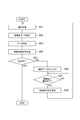
- the control device 100 first executes steps S01, S02, and S03.
- the processing control unit 112 causes the coating / developing apparatus 2 to start the substrate processing according to the processing conditions stored in the processing condition holding unit 111.
- the data acquisition unit 113 acquires the actual value of the item under processing.
- the data acquisition unit 113 may acquire actual values of a plurality of processing items. For example, the data acquisition unit 113 acquires the actual values of the liquid splash of the developing solution, the defective formation of the liquid film, and the presence or absence of the liquid drip based on the information detected by the in-process inspection unit 90.
- the data acquisition unit 113 may acquire the actual values of the liquid splash of the film forming liquid, the defective formation of the liquid film, and the presence / absence of liquid drip based on the information detected by the in-process inspection unit 90.
- the processing control unit 112 confirms whether or not the substrate processing according to the processing conditions is completed.
- step S03 When it is determined in step S03 that the substrate processing is not completed, the control device 100 returns the processing to step S02. After that, the acquisition of the actual value of the item under processing is continued until the substrate processing is completed.
- step S03 the control device 100 executes step S04.
- step S04 the data input unit 114 confirms whether or not there is a defect in the supply state of the processing liquid based on the actual value of the item under processing.
- step S05 the data acquisition unit 113 acquires the actual values of the above-mentioned processed items.
- the data acquisition unit 113 may acquire actual values of a plurality of processed items. For example, the data acquisition unit 113 acquires the line width actual values at a plurality of positions on the front surface Wa based on the information detected by the post-processing inspection unit 80.
- the data acquisition unit 113 may acquire the actual film thickness values at a plurality of positions on the front surface Wa based on the information detected by the post-processing inspection unit 80.
- step S06 the actual result data correction unit 118 excludes components due to factors other than the substrate processing from the actual values of the plurality of post-processing items.
- step S07 the data input unit 114 inputs to the machine learning device 200 a data set including processing conditions and actual data (actual values of a plurality of post-processing items) corresponding to the processing conditions.
- step S08 the control device 100 executes step S08.
- step S08 the data input unit 114 confirms whether or not the number of data sets necessary for machine learning in the machine learning device 200 has been input.
- step S09 the process control unit 112 changes the process condition. For example, the processing control unit 112 changes the processing condition based on the user's input to the input device 195 or the like. Thereafter, control device 100 returns the process to step S01. After that, until the input of the number of data sets necessary for machine learning is completed, the processing conditions are changed, the substrate processing is performed, and the data sets are input.
- step S11 the evaluation condition input unit 121 waits for a learning completion notification from the machine learning device 200.
- step S12 the evaluation condition input unit 121 sets the evaluation condition of the prediction data. For example, the evaluation condition input unit 121 sets the evaluation condition of the prediction data based on the user's input to the input device 195 or the like.
- step S13 the evaluation condition input unit 121 inputs the evaluation condition set in step S12 to the machine learning device 200.
- step S14 the search result acquisition unit 122 acquires the recommended processing conditions derived by the machine learning device 200 based on the plurality of data sets, the learning model, and the evaluation condition input by the evaluation condition input unit 121. It is stored in the processing module 11. This completes the procedure for deriving the recommended processing conditions.
- the recommended processing condition brush-up procedure by the control device 100 is to cause the coating / developing apparatus 2 to further execute the substrate processing in accordance with the recommended processing condition, and further acquire additional record data regarding the quality of the substrate processing in accordance with the recommended processing condition. Further inputting an additional data set including the recommended processing condition and the additional actual data into the machine learning device 200, and setting the recommended processing condition based on the learning model updated by the machine learning device 200 based on the additional data set. Including updating.
- This brush-up procedure may further include evaluating the recommended processing conditions, further causing the coating / developing apparatus 2 to further perform the substrate processing in accordance with the recommended processing conditions, further acquiring the additional performance data, and the additional data. Further inputting the set to the machine learning device 200 and updating the recommended processing condition based on the learning model updated by the machine learning device 200 based on the additional data set, the evaluation result of the recommended processing condition is determined to be predetermined. You may repeat until you reach the level.
- the control device 100 first executes steps S21, S22, S23, S24, and S25.
- step S21 the processing control unit 112 causes the coating / developing apparatus 2 to perform substrate processing according to the recommended processing conditions stored in the processing condition holding unit 111.
- step S22 the data acquisition unit 113 acquires the additional record value of the post-processing item.
- the data acquisition unit 113 may acquire additional record values of a plurality of processed items.
- step S23 the performance data correction unit 118 excludes a component caused by a factor other than the substrate processing from the added performance values of the plurality of post-processing items.
- step S24 the condition evaluation unit 116 evaluates the recommended processing condition.
- step S25 the iterative management unit 117 confirms whether or not the recommended processing conditions can be adopted based on the evaluation result in step S24.
- step S25 When it is determined in step S25 that the recommended processing conditions cannot be adopted, the control device 100 executes steps S26, S27 and S28.
- step S ⁇ b> 26 the data input unit 114 inputs the additional data set including the processing condition and the additional performance data (additional performance value of a plurality of post-processing items) corresponding to the processing condition to the machine learning device 200.
- step S27 the search result acquisition unit 122 waits for a learning model update completion notification from the machine learning device 200.
- step S28 the search result acquisition unit 122 acquires the recommended processing conditions updated by the machine learning device 200 based on the additional data set and stores the recommended processing conditions in the processing module 11. After that, the control device 100 returns the process to step S21. After that, the acquisition of the additional record data and the update of the recommended processing conditions are repeated until the recommended processing conditions can be adopted.
- step S25 When it is determined in step S25 that the recommended processing conditions can be adopted, the control device 100 completes the processing. This completes the recommended process condition brush-up procedure.
- the procedure for generating a learning model by the machine learning device 200 includes acquiring the data set and generating a learning model by machine learning based on a plurality of data sets. Generating a learning model by machine learning may include an arithmetic process of searching a learning model by a genetic program. A learning model including a plurality of model expressions that respectively output predicted values of a plurality of items in response to input of processing conditions may be generated.
- the machine learning device 200 first executes steps S31, S32, and S33.
- step S31 the data acquisition unit 212 waits for input of a data set from the data input unit 114.
- step S32 the data acquisition unit 212 accumulates the input data set in the data holding unit 213.
- step S33 the data holding unit 213 confirms whether or not the number of data sets accumulated in the data holding unit 213 has reached the number required for machine learning.
- step S33 If it is determined in step S33 that the number of accumulated data sets has not reached the number required for machine learning, the control device 100 returns the process to step S31. After that, the acquisition of data sets is repeated until the number of data sets necessary for machine learning is accumulated.
- step S34 the model generation unit 214 sets the learning condition for deriving the model formula corresponding to any of the predicted values, and requests the search calculation unit 211 to derive the model formula according to the learning condition.
- the model generation unit 214 generates a plurality of temporary model formulas that generate a predicted value according to the input of the processing conditions, and sets these as a plurality of first-generation individuals.
- the model generation unit 214 determines the derivation method using the deviation score as an evaluation score, and sets the upper limit value of the deviation score as an allowable level of the evaluation score.
- step S35 the search calculation unit 211 calculates the deviation score of each temporary model formula according to the learning conditions.
- step S36 the search calculation unit 211 confirms whether or not there is a tentative model expression whose deviation score is equal to or less than the upper limit value according to the learning condition.
- step S37 the search calculation unit 211 selects a plurality of temporary model expressions of the next generation by performing calculations such as crossover, inversion, and mutation on the temporary model expressions while eliminating the temporary model expressions whose deviation score exceeds the upper limit. Evolve into a temporary model formula. After that, the machine learning device 200 returns the process to step S35. After that, the derivation of the deviation score of the temporary model formula, the selection of the temporary model formula, and the evolution of the temporary model formula are repeated until the temporary model formula in which the deviation score becomes equal to or less than the upper limit value is derived.
- step S36 If it is determined in step S36 that there is a tentative model expression whose deviation score is less than or equal to the upper limit value, the machine learning device 200 executes steps S38 and S39.
- step S38 the search calculation unit 211 selects a temporary model formula with the best (smallest) deviation score, and stores it in the model holding unit 215 as one model formula of the learning model.
- step S39 the model generation unit 214 determines whether or not the derivation of all the model formulas (that is, all the model formulas required for deriving the prediction values of a plurality of items) for forming the learning model is completed. Check.
- step S41 the model generation unit 214 changes the model formula to be derived. In other words, the model generation unit 214 changes the item to be predicted by the model formula. After that, the machine learning device 200 returns the process to step S34. After that, the setting of the learning condition and the derivation of the model formula based on the learning condition are repeated until the derivation of all the model formulas is completed.
- step S39 If it is determined in step S39 that the derivation of all model expressions has been completed, the machine learning device 200 completes the generation of the learning model. This completes the learning model generation procedure.
- the procedure for searching the recommended processing conditions by the machine learning device 200 includes deriving the recommended processing conditions for the substrate processing based on the plurality of sets of data sets, the learning model, and the evaluation conditions of the prediction data. Derivation of the recommended processing condition may include an arithmetic process of searching the recommended processing condition by the genetic algorithm.
- the recommended processing conditions may be derived based on a plurality of data sets, a plurality of model expressions, and evaluation conditions for evaluating the predicted values of a plurality of items. For example, the recommended processing condition may be derived based on the evaluation condition including the condition regarding the variation in the predicted values of a plurality of items.
- the machine learning device 200 first executes steps S51 and S52.
- step S51 the condition search unit 216 waits for the evaluation condition input unit 121 to input the evaluation condition.
- step S52 the condition search unit 216 sets the learning condition for deriving the recommended processing condition, and requests the search operation unit 211 to derive the recommended processing condition according to the learning condition.
- the condition search unit 216 sets the processing conditions of the plurality of sets of data sets stored in the data holding unit 213 to the plurality of first-generation individuals.
- the condition search unit 216 determines the derivation method of the evaluation score and the allowable level of the evaluation score based on the evaluation condition input by the evaluation condition input unit 121.
- step S53 the search calculation unit 211 inputs each processing condition into the learning model stored in the model holding unit 215 and derives prediction data.
- step S54 the search calculation unit 211 derives the evaluation score of the prediction data.
- step S55 the search calculation unit 211 confirms whether or not there is a processing condition in which the evaluation score is at the allowable level.
- step S55 If it is determined in step S55 that there is no processing condition whose evaluation score is at the acceptable level, the machine learning device 200 executes step S56.
- step S56 the search calculation unit 211 evolves a plurality of processing conditions into next-generation processing conditions by calculating crossovers, inversions, mutations, etc., while eliminating the processing conditions whose evaluation score is far from the allowable level. Let After that, the machine learning device 200 returns the process to step S53. Thereafter, the derivation of the evaluation score of the processing condition, the selection of the processing condition, and the evolution of the processing condition are repeated until the processing condition of which the evaluation score becomes the allowable level is derived.
- step S55 If it is determined in step S55 that there is a processing condition whose evaluation score is at an allowable level, the machine learning device 200 executes steps S57 and S58.
- step S57 the search calculation unit 211 sets the processing condition having the best evaluation score as the recommended processing condition.
- step S58 the condition search unit 216 acquires the recommended processing condition derived by the search calculation unit 211 and outputs it to the search result acquisition unit 122. This completes the search procedure for the recommended processing conditions.
- Derivation of the recommended processing conditions is not limited to the calculation process of searching the recommended processing conditions by the above-mentioned genetic algorithm.
- the recommended processing conditions can be derived by an arithmetic process in which the processing conditions are changed and the evaluation scores are derived until the evaluation score reaches an allowable level.
- the processing conditions of the developing process in the developing unit U3 are, for example, the rotation speed of the wafer W, the supply amount of the developing solution, the supplying time of the developing solution, the supplying amount of the rinse solution, the discharge time of the rinse solution, the drying time for shake-off, the movement of the nozzle 31.
- the start position, the moving speed of the nozzle 31, and the moving end position of the nozzle 31 are included.
- the items for which the recommended processing conditions are required are, for example, the rotation speed of the wafer W during the supply of the developing solution and the moving speed of the nozzle 31. In this case, in steps S01 to S09, inputting a data set to the machine learning device 200 is repeated while changing the rotation speed of the wafer W and the moving speed of the nozzle 31.
- the movement speed of the nozzle 31 is set to 15 mm / s, 20 mm / s, and 25 mm / s while the rotation speed of the wafer W is set to 200 rpm, and then the rotation speed of the wafer W is set to 250 rpm.
- the moving speed of the nozzle 31 is set to 15 mm / s, 20 mm / s, and 25 mm / s.
- the moving speed of the nozzle 31 is set to 15 mm / s, while the rotating speed of the wafer W is set to 300 rpm. It is set to 20 mm / s and 25 mm / s.
- step S04 when it is determined that the supply state of the processing liquid is defective, the data set corresponding to the processing condition is excluded from the input target to the machine learning device 200. It In this case, the processing conditions are further changed in step S09 in order to obtain the required number of data sets for machine learning. For example, when it is determined that the liquid splash of the developer has occurred under the processing conditions of the rotation speed of 300 rpm and the movement speed of 25 mm / s, the rotation speed is changed to 290 rpm, and the conditions of the rotation speed of 290 rpm and the movement speed of 25 mm / s are again set. The actual data in is acquired.
- step S05 for example, the average value of the line widths in each of the divided regions of the wafer W divided into n locations is acquired as the n line width actual values.
- the learning model generated in the machine learning device 200 based on this data set outputs the predicted value of the line width average value in the n divided regions in accordance with the input of the rotation speed of the wafer W and the moving speed of the nozzle, for example. It will be done.
- a standard deviation calculation formula of n line width prediction values is set as the evaluation score calculation formula, and a standard deviation allowable value is set as the allowable level.
- the substrate processing condition setting support method includes the processing conditions of the substrate processing executed by the coating / developing apparatus 2 including the supply of the processing liquid to the wafer W and the substrate.
- condition setting support method since the recommended processing conditions are derived based on the learning model generated by machine learning, it is possible to efficiently search for appropriate processing conditions. Therefore, it is effective to simplify the work of setting the processing conditions of the substrate processing.
- the method for supporting the condition setting of the substrate processing is that the coating / developing apparatus 2 further executes the substrate processing according to the recommended processing conditions, further obtains additional actual data regarding the quality of the substrate processing according to the recommended processing conditions, Further inputting an additional data set including the processing condition and the additional actual data into the machine learning device 200, and updating the recommended processing condition based on the learning model updated by the machine learning device 200 based on the additional data set. May be included.
- the recommended processing conditions are updated by the feedback of the recommended processing conditions and the additional record data. Therefore, it is possible to efficiently search for more appropriate processing conditions.
- the substrate processing condition setting support method further includes evaluating the recommended processing conditions, causing the coating / developing apparatus 2 to further perform the substrate processing in accordance with the recommended processing conditions, further acquiring additional performance data, and adding. Further inputting the data set to the machine learning device 200, and updating the recommended processing condition based on the learning model updated by the machine learning device 200 based on the additional data set, the evaluation result of the recommended processing condition is predetermined. You may repeat until you reach the level. In this case, iterative processing can efficiently search for a more appropriate processing condition.
- the deriving of the recommended processing condition is to input the evaluation condition of the prediction data into the machine learning device 200, and the recommendation derived by the machine learning device 200 based on a plurality of data sets, a learning model, and the evaluation condition. Acquiring processing conditions may be included. In this case, since the machine learning device 200 also searches for the recommended processing conditions, it is possible to more efficiently search for appropriate processing conditions.
- a machine that acquires actual data including actual values of multiple items and generates a learning model including multiple model expressions that respectively output predicted values of multiple items according to input of processing conditions
- the data set may be input to the learning device 200, and the evaluation condition for evaluating the predicted values of a plurality of items may be input to the machine learning device 200.
- the evaluation condition for evaluating the predicted values of a plurality of items may be input to the machine learning device 200.
- an evaluation condition including a condition regarding a variation in predicted values in at least a part of a plurality of items may be input to the machine learning device 200.
- a plurality of items can be evaluated efficiently, more appropriate processing conditions can be searched efficiently.
- the actual data including the actual values of the post-processing item indicating the quality of the wafer W after the substrate processing and the in-process item indicating the supply state of the processing liquid during the substrate processing is acquired. Then, the data set to be input to the machine learning device 200 may be selected based on the actual value of the item being processed. In this case, it is possible to narrow down the search range of the recommended processing condition based on the quality after processing by directly catching the abnormality during processing as the data being processed. Therefore, an appropriate processing condition can be searched for more efficiently.
- the substrate processing condition setting support method further includes, before inputting the data set to the machine learning apparatus 200, excluding components due to factors other than the substrate processing from the actual data of the data set. Good. In this case, a more appropriate processing condition can be searched for.
- the substrate processing may include a developing process of supplying a developing solution to the photosensitive film that has been subjected to the exposure process on the front surface Wa of the wafer W, and the line width of the pattern formed on the front surface Wa of the wafer W by the developing process. Actual data including a value may be acquired.
- the substrate processing includes the development processing, a great deal of effort tends to be required to derive suitable processing conditions. Therefore, according to the above condition setting support method, it is possible to efficiently search for an appropriate processing condition, and the effectiveness is remarkable.
- the substrate processing may include a film forming process in which a film forming liquid is applied to the front surface Wa of the wafer W to form a film, and the actual value of the film thickness of the film formed on the surface Wa of the wafer W by the film forming process is calculated. You may acquire the performance data containing. Even when the substrate processing includes the film forming processing, the quality of the substrate processing is very sensitive to the processing conditions, and therefore it tends to require a great deal of effort to derive the suitable processing conditions. Therefore, according to the above condition setting support method, it is possible to efficiently search for an appropriate processing condition, and the effectiveness is remarkable.
- the substrate to be processed is not limited to the semiconductor wafer, but may be, for example, a glass substrate, a mask substrate, an FPD (Flat Panel Display), or the like.
- Coating / developing apparatus substrate processing apparatus
- processing module processing section
- 112 Processing control section
- 113 Data acquisition section
- 114 ... Data input section
- 115 Recommended condition derivation 121, evaluation condition input unit, 122 search result acquisition unit, 214 model generation unit, W wafer, Wa Wafer surface.
Landscapes
- Engineering & Computer Science (AREA)
- Physics & Mathematics (AREA)
- Theoretical Computer Science (AREA)
- Biophysics (AREA)
- Health & Medical Sciences (AREA)
- Life Sciences & Earth Sciences (AREA)
- Data Mining & Analysis (AREA)
- Molecular Biology (AREA)
- Software Systems (AREA)
- Artificial Intelligence (AREA)
- Biomedical Technology (AREA)
- Computational Linguistics (AREA)
- Mathematical Physics (AREA)
- Evolutionary Computation (AREA)
- General Health & Medical Sciences (AREA)
- General Physics & Mathematics (AREA)
- Computing Systems (AREA)
- General Engineering & Computer Science (AREA)
- Evolutionary Biology (AREA)
- Bioinformatics & Computational Biology (AREA)
- Genetics & Genomics (AREA)
- Bioinformatics & Cheminformatics (AREA)
- Exposure Of Semiconductors, Excluding Electron Or Ion Beam Exposure (AREA)
- Automation & Control Theory (AREA)
- Coating Apparatus (AREA)
- Application Of Or Painting With Fluid Materials (AREA)
Priority Applications (4)
| Application Number | Priority Date | Filing Date | Title |
|---|---|---|---|
| JP2020558311A JP7594914B2 (ja) | 2018-11-21 | 2019-11-12 | 基板処理の条件設定支援方法、基板処理システム、記憶媒体及び学習モデル |
| KR1020217017505A KR102826807B1 (ko) | 2018-11-21 | 2019-11-12 | 기판 처리의 조건 설정 지원 방법, 기판 처리 시스템, 기억 매체 및 학습 모델 |
| CN201980074177.7A CN112997274B (zh) | 2018-11-21 | 2019-11-12 | 基片处理的条件设定辅助方法、基片处理系统、存储介质和学习模型 |
| JP2023175816A JP7699180B2 (ja) | 2018-11-21 | 2023-10-11 | 基板処理の条件設定支援方法、基板処理システム、記憶媒体及び学習モデル |
Applications Claiming Priority (2)
| Application Number | Priority Date | Filing Date | Title |
|---|---|---|---|
| JP2018218375 | 2018-11-21 | ||
| JP2018-218375 | 2018-11-21 |
Publications (1)
| Publication Number | Publication Date |
|---|---|
| WO2020105517A1 true WO2020105517A1 (ja) | 2020-05-28 |
Family
ID=70773628
Family Applications (1)
| Application Number | Title | Priority Date | Filing Date |
|---|---|---|---|
| PCT/JP2019/044429 Ceased WO2020105517A1 (ja) | 2018-11-21 | 2019-11-12 | 基板処理の条件設定支援方法、基板処理システム、記憶媒体及び学習モデル |
Country Status (5)
| Country | Link |
|---|---|
| JP (2) | JP7594914B2 (https=) |
| KR (1) | KR102826807B1 (https=) |
| CN (1) | CN112997274B (https=) |
| TW (1) | TWI830812B (https=) |
| WO (1) | WO2020105517A1 (https=) |
Cited By (7)
| Publication number | Priority date | Publication date | Assignee | Title |
|---|---|---|---|---|
| JP2021108367A (ja) * | 2019-12-27 | 2021-07-29 | 株式会社Screenホールディングス | 基板処理装置、基板処理方法、基板処理システム、及び学習用データの生成方法 |
| JP2023019657A (ja) * | 2021-07-29 | 2023-02-09 | 株式会社Screenホールディングス | 基板処理方法及び基板処理装置 |
| CN115859764A (zh) * | 2021-09-24 | 2023-03-28 | 昂图创新有限公司 | 高混合半导体制造中的深度学习模型 |
| JP2023045817A (ja) * | 2021-09-22 | 2023-04-03 | 株式会社Screenホールディングス | 学習装置、情報処理装置、基板処理装置、基板処理システム、学習方法、レシピ決定方法及び学習プログラム |
| EP4231107A1 (en) | 2022-02-18 | 2023-08-23 | SCREEN Holdings Co., Ltd. | Substrate processing condition setting method, substrate processing method, substrate processing condition setting system, and substrate processing system |
| WO2024237092A1 (ja) * | 2023-05-18 | 2024-11-21 | 株式会社Screenホールディングス | 予測アルゴリズム生成装置、情報処理装置、基板処理装置、予測アルゴリズム生成方法、予測アルゴリズム生成プログラム、処理条件決定方法、処理条件決定プログラムおよび予測アルゴリズム |
| WO2025154410A1 (ja) * | 2024-01-16 | 2025-07-24 | パナソニックIpマネジメント株式会社 | 推定システム、推定方法、データ選定システム、及びデータ選定方法 |
Families Citing this family (3)
| Publication number | Priority date | Publication date | Assignee | Title |
|---|---|---|---|---|
| US12278101B2 (en) * | 2021-11-11 | 2025-04-15 | Applied Materials, Inc. | Coded substrate material identifier communication tool |
| JP2025184266A (ja) * | 2024-06-06 | 2025-12-18 | 株式会社Screenホールディングス | 学習モデル生成方法、学習モデル生成装置および学習モデル生成プログラム |
| KR102850431B1 (ko) * | 2024-07-31 | 2025-08-27 | (주)동주 | 인공지능 알고리즘을 이용하여 도장 제품의 불량률을 제어하는 장치 및 시스템 |
Citations (3)
| Publication number | Priority date | Publication date | Assignee | Title |
|---|---|---|---|---|
| JPH04131930U (ja) * | 1991-05-28 | 1992-12-04 | 山形日本電気株式会社 | フオトレジスト塗布装置 |
| US20100081285A1 (en) * | 2008-09-30 | 2010-04-01 | Tokyo Electron Limited | Apparatus and Method for Improving Photoresist Properties |
| JP2013187548A (ja) * | 2012-03-07 | 2013-09-19 | Tokyo Electron Ltd | レジストバッチ剥離プロセスのための順次段階的混合法 |
Family Cites Families (25)
| Publication number | Priority date | Publication date | Assignee | Title |
|---|---|---|---|---|
| JP2007088485A (ja) * | 2001-12-25 | 2007-04-05 | Tokyo Electron Ltd | 基板処理装置及び基板処理方法 |
| JP2003234280A (ja) * | 2002-02-08 | 2003-08-22 | Dainippon Screen Mfg Co Ltd | 基板処理ユニットおよび基板処理装置 |
| JP4170643B2 (ja) * | 2002-03-14 | 2008-10-22 | 大日本スクリーン製造株式会社 | 基板処理装置 |
| US7508034B2 (en) * | 2002-09-25 | 2009-03-24 | Sharp Kabushiki Kaisha | Single-crystal silicon substrate, SOI substrate, semiconductor device, display device, and manufacturing method of semiconductor device |
| US8050900B2 (en) * | 2003-09-30 | 2011-11-01 | Tokyo Electron Limited | System and method for using first-principles simulation to provide virtual sensors that facilitate a semiconductor manufacturing process |
| KR100598296B1 (ko) * | 2004-06-08 | 2006-07-07 | 동부일렉트로닉스 주식회사 | 감광막 패턴 형성 방법 |
| JP4990548B2 (ja) * | 2006-04-07 | 2012-08-01 | 株式会社日立製作所 | 半導体装置の製造方法 |
| JP2007317068A (ja) * | 2006-05-29 | 2007-12-06 | Osaka Prefecture Univ | リコメンド装置およびリコメンドシステム |
| JP4464979B2 (ja) * | 2007-03-05 | 2010-05-19 | 東京エレクトロン株式会社 | 処理システム、処理方法、及び、プログラム |
| KR100897351B1 (ko) * | 2007-08-31 | 2009-05-15 | 세메스 주식회사 | 기판 현상 방법 및 장치 |
| US7967995B2 (en) * | 2008-03-31 | 2011-06-28 | Tokyo Electron Limited | Multi-layer/multi-input/multi-output (MLMIMO) models and method for using |
| JP2010034180A (ja) * | 2008-07-28 | 2010-02-12 | Toshiba Corp | 半導体製造装置の制御方法および半導体装置の製造方法 |
| JP2011071296A (ja) * | 2009-09-25 | 2011-04-07 | Sharp Corp | 特性予測装置、特性予測方法、特性予測プログラムおよびプログラム記録媒体 |
| CN102033423B (zh) * | 2009-09-28 | 2013-05-29 | 中芯国际集成电路制造(上海)有限公司 | 用于校准光刻工具的装置及方法 |
| JP5336441B2 (ja) * | 2010-08-24 | 2013-11-06 | 東京エレクトロン株式会社 | 液処理装置及び液処理方法 |
| JP5314657B2 (ja) * | 2010-11-12 | 2013-10-16 | 東京エレクトロン株式会社 | ノズルの位置調整方法、プログラム、コンピュータ記憶媒体及び塗布処理装置 |
| JP5739841B2 (ja) * | 2012-06-13 | 2015-06-24 | 株式会社東芝 | 電子デバイスの生産管理装置、生産管理システム及び生産管理プログラム |
| JP6332095B2 (ja) * | 2015-03-20 | 2018-05-30 | 東京エレクトロン株式会社 | 薬液供給装置の調整方法、記憶媒体及び薬液供給装置 |
| JP6352230B2 (ja) | 2015-10-09 | 2018-07-04 | 東京エレクトロン株式会社 | 基板処理方法、基板処理装置及び記録媒体 |
| US10048594B2 (en) * | 2016-02-19 | 2018-08-14 | Tokyo Electron Limited | Photo-sensitized chemically amplified resist (PS-CAR) model calibration |
| JP6584352B2 (ja) * | 2016-03-24 | 2019-10-02 | 東京エレクトロン株式会社 | 制御装置、基板処理システム、基板処理方法及びプログラム |
| JP6541599B2 (ja) * | 2016-03-28 | 2019-07-10 | 東京エレクトロン株式会社 | 制御装置、基板処理システム、基板処理方法及びプログラム |
| EP3291007A1 (en) * | 2016-08-30 | 2018-03-07 | ASML Netherlands B.V. | Patterning stack optimization |
| JP7024307B2 (ja) * | 2017-01-26 | 2022-02-24 | 東京エレクトロン株式会社 | 塗布膜除去装置、塗布膜除去方法及び記憶媒体 |
| JP6769335B2 (ja) * | 2017-02-22 | 2020-10-14 | 東京エレクトロン株式会社 | 処理レシピの評価方法、記憶媒体、処理レシピ評価用の支援装置、及び液処理装置 |
-
2019
- 2019-11-12 KR KR1020217017505A patent/KR102826807B1/ko active Active
- 2019-11-12 JP JP2020558311A patent/JP7594914B2/ja active Active
- 2019-11-12 CN CN201980074177.7A patent/CN112997274B/zh active Active
- 2019-11-12 WO PCT/JP2019/044429 patent/WO2020105517A1/ja not_active Ceased
- 2019-11-12 TW TW108140899A patent/TWI830812B/zh active
-
2023
- 2023-10-11 JP JP2023175816A patent/JP7699180B2/ja active Active
Patent Citations (3)
| Publication number | Priority date | Publication date | Assignee | Title |
|---|---|---|---|---|
| JPH04131930U (ja) * | 1991-05-28 | 1992-12-04 | 山形日本電気株式会社 | フオトレジスト塗布装置 |
| US20100081285A1 (en) * | 2008-09-30 | 2010-04-01 | Tokyo Electron Limited | Apparatus and Method for Improving Photoresist Properties |
| JP2013187548A (ja) * | 2012-03-07 | 2013-09-19 | Tokyo Electron Ltd | レジストバッチ剥離プロセスのための順次段階的混合法 |
Cited By (17)
| Publication number | Priority date | Publication date | Assignee | Title |
|---|---|---|---|---|
| US12322600B2 (en) | 2019-12-27 | 2025-06-03 | SCREEN Holdings Co., Ltd. | Substrate treatment apparatus, substrate treatment method, substrate treatment system, and learning data generation method |
| JP2021108367A (ja) * | 2019-12-27 | 2021-07-29 | 株式会社Screenホールディングス | 基板処理装置、基板処理方法、基板処理システム、及び学習用データの生成方法 |
| JP7542417B2 (ja) | 2019-12-27 | 2024-08-30 | 株式会社Screenホールディングス | 基板処理装置、基板処理方法、基板処理システム、及び学習用データの生成方法 |
| JP2023019657A (ja) * | 2021-07-29 | 2023-02-09 | 株式会社Screenホールディングス | 基板処理方法及び基板処理装置 |
| JP7698502B2 (ja) | 2021-07-29 | 2025-06-25 | 株式会社Screenホールディングス | 基板処理方法及び基板処理装置 |
| JP7808940B2 (ja) | 2021-09-22 | 2026-01-30 | 株式会社Screenホールディングス | 学習装置、情報処理装置、基板処理装置、基板処理システム、学習方法、レシピ決定方法及び学習プログラム |
| JP2023045817A (ja) * | 2021-09-22 | 2023-04-03 | 株式会社Screenホールディングス | 学習装置、情報処理装置、基板処理装置、基板処理システム、学習方法、レシピ決定方法及び学習プログラム |
| US12475386B2 (en) | 2021-09-22 | 2025-11-18 | SCREEN Holdings Co., Ltd. | Learning device, information processing apparatus, substrate processing device, substrate processing system, learning method, recipe determination method and non-transitory computer-readable medium storing learning program |
| US12443153B2 (en) | 2021-09-24 | 2025-10-14 | Onto Innovation Inc. | Deep learning model in high-mix semiconductor manufacturing |
| JP2023055660A (ja) * | 2021-09-24 | 2023-04-18 | オントゥー イノヴェイション インコーポレイテッド | ハイミックス半導体製造における深層学習モデル |
| JP7798742B2 (ja) | 2021-09-24 | 2026-01-14 | オントゥー イノヴェイション インコーポレイテッド | ハイミックス半導体製造における深層学習モデル |
| CN115859764A (zh) * | 2021-09-24 | 2023-03-28 | 昂图创新有限公司 | 高混合半导体制造中的深度学习模型 |
| KR20230124481A (ko) | 2022-02-18 | 2023-08-25 | 가부시키가이샤 스크린 홀딩스 | 기판 처리 조건의 설정 방법, 기판 처리 방법, 기판 처리 조건의 설정 시스템, 및, 기판 처리 시스템 |
| EP4231107A1 (en) | 2022-02-18 | 2023-08-23 | SCREEN Holdings Co., Ltd. | Substrate processing condition setting method, substrate processing method, substrate processing condition setting system, and substrate processing system |
| US12476124B2 (en) | 2022-02-18 | 2025-11-18 | SCREEN Holdings Co., Ltd. | Substrate processing condition setting method, substrate processing method, substrate processing condition setting system, and substrate processing system |
| WO2024237092A1 (ja) * | 2023-05-18 | 2024-11-21 | 株式会社Screenホールディングス | 予測アルゴリズム生成装置、情報処理装置、基板処理装置、予測アルゴリズム生成方法、予測アルゴリズム生成プログラム、処理条件決定方法、処理条件決定プログラムおよび予測アルゴリズム |
| WO2025154410A1 (ja) * | 2024-01-16 | 2025-07-24 | パナソニックIpマネジメント株式会社 | 推定システム、推定方法、データ選定システム、及びデータ選定方法 |
Also Published As
| Publication number | Publication date |
|---|---|
| CN112997274A (zh) | 2021-06-18 |
| CN112997274B (zh) | 2024-08-30 |
| KR20210092238A (ko) | 2021-07-23 |
| KR102826807B1 (ko) | 2025-07-01 |
| TW202024942A (zh) | 2020-07-01 |
| JP7699180B2 (ja) | 2025-06-26 |
| JP7594914B2 (ja) | 2024-12-05 |
| TWI830812B (zh) | 2024-02-01 |
| JPWO2020105517A1 (ja) | 2021-09-30 |
| JP2023171555A (ja) | 2023-12-01 |
Similar Documents
| Publication | Publication Date | Title |
|---|---|---|
| JP7699180B2 (ja) | 基板処理の条件設定支援方法、基板処理システム、記憶媒体及び学習モデル | |
| JP2019113873A (ja) | 問題のある高度プロセス制御パラメータの検出及び訂正のためのシステム | |
| JP7296257B2 (ja) | 基板検査システム、基板検査方法、及び記憶媒体 | |
| TWI849172B (zh) | 使用量子計算之具有動態採樣計劃、最佳化晶圓測量路徑及最佳化晶圓運輸之製造廠管理 | |
| KR20220154049A (ko) | 기판 처리 방법, 기억 매체 및 기판 처리 장치 | |
| JP7612922B2 (ja) | 基板処理装置、基板処理方法及び記憶媒体 | |
| US12442635B2 (en) | Substrate processing apparatus, substrate processing method, and storage medium | |
| US12467742B2 (en) | Film thickness analysis method, film thickness analysis device and storage medium | |
| JP2011044554A (ja) | 露光制御装置および半導体デバイスの製造方法 | |
| US20210249277A1 (en) | Substrate processing method and substrate processing apparatus | |
| TWI862768B (zh) | 基板處理方法、記錄媒體及基板處理裝置 | |
| TWI867452B (zh) | 控制支援裝置以及控制支援方法 | |
| JP2004214385A (ja) | 塗布膜形成装置及びその方法 | |
| JP7425700B2 (ja) | 形状特性値推定装置、形状特性値推定方法、及び記憶媒体 | |
| JP2007088485A (ja) | 基板処理装置及び基板処理方法 | |
| TW202229813A (zh) | 推定模型作成裝置、推定模型作成方法及記憶媒體 | |
| JP2017220489A (ja) | 液処理方法、液処理装置及び記憶媒体 | |
| JP7839655B2 (ja) | 制御支援装置および制御支援方法 | |
| JP2024027989A (ja) | 特徴量推定方法、推定プログラム、及び、特徴量推定装置 | |
| JP2024172963A (ja) | 形状特性値推定装置、形状特性値推定方法、及び記憶媒体 | |
| CN121737806A (zh) | 镀覆装置的控制方法及镀覆装置 | |
| WO2025255664A1 (en) | An automated ai-based spin coating of films for micro leds |
Legal Events
| Date | Code | Title | Description |
|---|---|---|---|
| 121 | Ep: the epo has been informed by wipo that ep was designated in this application |
Ref document number: 19886117 Country of ref document: EP Kind code of ref document: A1 |
|
| ENP | Entry into the national phase |
Ref document number: 2020558311 Country of ref document: JP Kind code of ref document: A |
|
| NENP | Non-entry into the national phase |
Ref country code: DE |
|
| ENP | Entry into the national phase |
Ref document number: 20217017505 Country of ref document: KR Kind code of ref document: A |
|
| 122 | Ep: pct application non-entry in european phase |
Ref document number: 19886117 Country of ref document: EP Kind code of ref document: A1 |