WO2020045087A1 - 化学機械研磨用アルミナ砥粒及びその製造方法、並びに化学機械研磨方法 - Google Patents
化学機械研磨用アルミナ砥粒及びその製造方法、並びに化学機械研磨方法 Download PDFInfo
- Publication number
- WO2020045087A1 WO2020045087A1 PCT/JP2019/031890 JP2019031890W WO2020045087A1 WO 2020045087 A1 WO2020045087 A1 WO 2020045087A1 JP 2019031890 W JP2019031890 W JP 2019031890W WO 2020045087 A1 WO2020045087 A1 WO 2020045087A1
- Authority
- WO
- WIPO (PCT)
- Prior art keywords
- chemical mechanical
- mechanical polishing
- alumina
- abrasive grains
- alumina abrasive
- Prior art date
- Legal status (The legal status is an assumption and is not a legal conclusion. Google has not performed a legal analysis and makes no representation as to the accuracy of the status listed.)
- Ceased
Links
Images
Classifications
-
- B—PERFORMING OPERATIONS; TRANSPORTING
- B24—GRINDING; POLISHING
- B24B—MACHINES, DEVICES, OR PROCESSES FOR GRINDING OR POLISHING; DRESSING OR CONDITIONING OF ABRADING SURFACES; FEEDING OF GRINDING, POLISHING, OR LAPPING AGENTS
- B24B37/00—Lapping machines or devices; Accessories
-
- C—CHEMISTRY; METALLURGY
- C01—INORGANIC CHEMISTRY
- C01F—COMPOUNDS OF THE METALS BERYLLIUM, MAGNESIUM, ALUMINIUM, CALCIUM, STRONTIUM, BARIUM, RADIUM, THORIUM, OR OF THE RARE-EARTH METALS
- C01F7/00—Compounds of aluminium
- C01F7/02—Aluminium oxide; Aluminium hydroxide; Aluminates
-
- C—CHEMISTRY; METALLURGY
- C09—DYES; PAINTS; POLISHES; NATURAL RESINS; ADHESIVES; COMPOSITIONS NOT OTHERWISE PROVIDED FOR; APPLICATIONS OF MATERIALS NOT OTHERWISE PROVIDED FOR
- C09K—MATERIALS FOR MISCELLANEOUS APPLICATIONS, NOT PROVIDED FOR ELSEWHERE
- C09K3/00—Materials not provided for elsewhere
- C09K3/14—Anti-slip materials; Abrasives
-
- H—ELECTRICITY
- H10—SEMICONDUCTOR DEVICES; ELECTRIC SOLID-STATE DEVICES NOT OTHERWISE PROVIDED FOR
- H10P—GENERIC PROCESSES OR APPARATUS FOR THE MANUFACTURE OR TREATMENT OF DEVICES COVERED BY CLASS H10
- H10P52/00—Grinding, lapping or polishing of wafers, substrates or parts of devices
Definitions
- the present invention relates to an alumina abrasive grain for chemical mechanical polishing, a method for producing the same, and a chemical mechanical polishing method.
- CMP Chemical Mechanical Polishing
- a wiring board in a semiconductor device includes an insulating film material, a wiring material, and a barrier metal material for preventing the wiring material from diffusing into an inorganic material film.
- Silicon dioxide is mainly used as an insulating film material
- copper and tungsten are used as wiring materials
- tantalum nitride and titanium nitride are mainly used as barrier metal materials.
- alumina abrasive grains having high hardness may be used.
- a polishing composition containing alumina abrasive grains mainly composed of ⁇ -alumina, fumed alumina, acid, and water for example, see Patent Document 1.
- the polishing composition described in Patent Document 1 can polish the surface to be polished at a high speed by using alumina abrasive grains having high hardness.
- polishing scratches such as scratches are formed on the surface to be polished.
- the polishing composition described in Patent Literature 1 has a problem that alumina abrasive grains settle out in a short time and dispersion stability is low. When the alumina abrasive grains settle, the alumina abrasive grains aggregate. When the polishing composition containing the aggregated alumina abrasive grains is subjected to chemical mechanical polishing, polishing scratches such as scratches may be generated on the surface to be polished.
- An object of the present invention is to provide an alumina abrasive grain for chemical mechanical polishing excellent in stability.
- the present invention has been made to solve at least a part of the problems described above, and can be realized as any of the following embodiments.
- alumina abrasive grains for chemical mechanical polishing At least part of the surface is alumina abrasive grains coated with a coating of a silane compound,
- the number of moles of silicon M Si, the number of moles of aluminum is taken as M Al, the value of M Si / M Al is 0.01 to 0.2,
- the incident angle in the powder X-ray diffraction pattern is in the range of 25 ° or more and 75 ° or less
- the half value width of the peak portion where the diffraction intensity is maximum is 0.3 ° or more and 0.5 ° or less.
- the average primary particle size can be 30 nm or more and 300 nm or less.
- the film thickness of the silane compound coating may be 1 nm or more and 10 nm or less.
- any aspect of the chemical mechanical polishing alumina abrasive grains can be for polishing a substrate containing tungsten.
- the substrate may further contain at least one selected from silicon nitride, silicon dioxide, amorphous silicon, copper, cobalt, titanium, ruthenium, titanium nitride, and tantalum nitride.
- the method includes a step of polishing a substrate containing tungsten by using the chemical mechanical polishing aqueous dispersion containing the alumina abrasive grains for chemical mechanical polishing according to any of the above aspects.
- the substrate may further contain at least one selected from silicon nitride, silicon dioxide, amorphous silicon, copper, cobalt, titanium, ruthenium, titanium nitride, and tantalum nitride.
- the pH of the chemical mechanical polishing aqueous dispersion may be 1 to 6.
- the half value width of the peak portion where the diffraction intensity is maximum in the range where the average primary particle size is 10 nm or more and 1000 nm or less and the incident angle in the powder X-ray diffraction pattern is 25 ° or more and 75 ° or less is 0.3 ° or more and 0.5 or more.
- A preparing an aqueous dispersion of ⁇ -alumina particles having a solid content of not less than 1% by mass and not more than 30% by mass by dispersing ⁇ -alumina particles of not more than ° in water;
- B adding 1 to 50 parts by mass of an alkoxysilane compound to the aqueous dispersion of ⁇ -alumina particles, when the total amount of the ⁇ -alumina particles is 100 parts by mass,
- C growing a silane compound film on the surface of the ⁇ -alumina particles; including.
- the step (c) can be performed at a temperature of 90 ° C. or less.
- the step (a) may further include adding ammonia.
- the chemical mechanical polishing alumina abrasive grain of the present invention in the chemical mechanical polishing performed at the time of forming the wiring of the semiconductor device, it is possible to suppress the occurrence of polishing scratches while polishing the surface to be polished at a high speed. Further, according to the alumina abrasive for chemical mechanical polishing according to the present invention, the dispersion stability in the aqueous dispersion for chemical mechanical polishing is excellent. Therefore, polishing scratches such as scratches are less likely to occur on the surface to be polished.
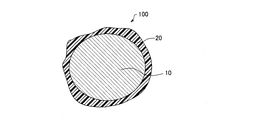
- FIG. 1 is a cross-sectional view schematically illustrating an alumina abrasive grain for chemical mechanical polishing according to the present embodiment.
- Wiring material refers to conductive metal materials such as aluminum, copper, cobalt, titanium, ruthenium, and tungsten.
- Insulating film material refers to a material such as silicon dioxide, silicon nitride, amorphous silicon, and the like.
- carrier metal material refers to a material such as tantalum nitride or titanium nitride which is used by being laminated with a wiring material for the purpose of improving the reliability of the wiring.
- Alumina abrasive grains for chemical mechanical polishing The alumina abrasive grains for chemical mechanical polishing according to the present embodiment have at least a part of the surface coated with a coating of a silane compound, and have the number of moles of silicon M Si and the number of moles of aluminum.
- M Al when M Al is used, when the value of M Si / M Al is 0.01 or more and 0.2 or less, and the incident angle in the powder X-ray diffraction pattern is 25 ° or more and 75 ° or less, the diffraction intensity is maximum. The full width at half maximum of the peak portion is 0.3 ° or more and 0.5 ° or less.
- FIG. 1 is a cross-sectional view schematically illustrating the alumina abrasive grain for chemical mechanical polishing according to the present embodiment.
- the alumina abrasive grains 100 for chemical mechanical polishing according to the present embodiment (hereinafter, also referred to as “alumina abrasive grains 100”) have at least a part of the surface of the alumina particles 10 formed of a silane compound coating 20. It is covered with.
- the alumina abrasive grains 100 for chemical mechanical polishing according to the present embodiment have a core-shell shape in which the alumina particles 10 are used as the core and the silane compound coating 20 is used as the shell.
- the entire surface of the alumina abrasive grains 100 may be covered with the silane compound film 20, or only a part thereof may be covered, but it is preferable that the entire surface is covered.
- the hardness of the surface of the alumina abrasive grains 100 is moderately moderated. Polishing scratches such as scratches are less likely to occur on the polished surface. Further, in the chemical mechanical polishing aqueous dispersion, aggregation of the alumina abrasive grains is less likely to occur, and the dispersion stability of the alumina abrasive grains is improved.
- the thickness of the coating 20 is preferably 1 nm or more and 10 nm or less.
- the thickness of the coating 20 is within the above range, the occurrence of polishing scratches on the surface to be polished can be suppressed without lowering the polishing rate, and the dispersion stability in the aqueous dispersion for chemical mechanical polishing is improved. It's easy to do.
- the film thickness of the coating 20 is 1 nm or more and 3 nm or more, a decrease in the polishing rate of the surface to be polished is particularly easily suppressed, and when the film thickness of the film 20 is 6 nm or more and 10 nm or less, polishing of the surface to be polished is performed. It is particularly easy to suppress the occurrence of scratches.
- the thickness of the film can be determined as an average value obtained by measuring 100 samples of the maximum thickness of the alumina abrasive grains 100 using a transmission electron microscope (TEM).
- the alumina abrasive grains 100 have a half-width of 0.3 ° or more and 0.5 ° or less at the peak portion where the diffraction intensity is maximum when the incident angle in the powder X-ray diffraction pattern is in the range of 25 ° or more and 75 ° or less.
- This half width is preferably 0.3 ° or more and 0.4 ° or less, more preferably 0.32 ° or more and 0.38 ° or less.
- the powder X-ray diffraction pattern of crystalline alumina abrasive grains has an alumina peak at which the diffraction intensity is maximum when the incident angle is in the range of 25 ° to 75 °.
- alumina abrasive grains having a uniform crystallite the peak at which the diffraction intensity is maximum within the above range is sharp, so that the half width of the peak portion tends to be less than 0.3 °.
- alumina abrasive grains having a uniform crystallite having the same value of less than 0.3 ° tend to cause polishing scratches on the surface to be polished.
- alumina abrasive grains having inferior crystallite homogeneity with the same value exceeding 0.5 ° tend to have low polishing characteristics and a low polishing rate on the surface to be polished. Therefore, if the same value is set for the alumina abrasive grains 100 in the above range, it is possible to suppress the occurrence of polishing scratches while polishing the surface to be polished at a high speed.
- Alumina abrasive grains 100, the number of moles of silicon M Si, the number of moles of aluminum is taken as M Al, when the value of M Si / M Al is 0.01 to 0.2, preferably 0.01 It is 0.15 or less, More preferably, it is 0.02 or more and 0.1 or less, Especially preferably, it is 0.03 or more and 0.1 or less. If the value of the molar ratio of silicon to aluminum (M Si / M Al ) contained in the alumina abrasive grains 100 is within the above range, a uniform and appropriate film thickness 20 of the silane compound is formed on the surface of the alumina particles 10. Therefore, it is possible to suppress the occurrence of polishing scratches without lowering the polishing rate of the surface to be polished. Furthermore, the dispersion stability of the alumina abrasive grains 100 in the chemical mechanical polishing aqueous dispersion is likely to be improved.
- the method for producing alumina abrasives for chemical mechanical polishing according to the present embodiment has an average primary particle diameter of 10 nm or more and 1000 nm or less, and an incident angle in a powder X-ray diffraction pattern of 25 °.
- ⁇ -Alumina particles having a half-value width of 0.3 ° to 0.5 ° at the peak where the diffraction intensity is maximum in the range of 75 ° to 75 ° are dispersed in water, and the solid content concentration is 1% by mass to 30%.
- A preparing an aqueous dispersion of ⁇ -alumina particles of not more than 1% by mass when the total amount of the ⁇ -alumina particles is 100 parts by mass in the aqueous dispersion of ⁇ -alumina particles;
- Step (a) In the step (a), in the range where the average primary particle size is 10 nm or more and 1000 nm or less and the incident angle in the powder X-ray diffraction pattern is 25 ° or more and 75 ° or less, the half value width of the peak portion where the diffraction intensity is maximum is 0.
- ⁇ -alumina particles having a solid content of not less than 0.3 ° and not more than 0.5 ° are dispersed in water to prepare an aqueous dispersion of ⁇ -alumina particles having a solid content concentration of not less than 1% by mass and not more than 30% by mass.
- the average primary particle size of the ⁇ -alumina particles used in the step (a) is 10 nm or more and 1000 nm or less. However, as the average primary particle size increases, the surface area per unit weight decreases, and it becomes difficult to form a film. It is preferably from 30 nm to 300 nm, more preferably from 85 nm to 200 nm. When the average primary particle size is in the range of 30 nm or more and 300 nm or less, it becomes easy to prepare alumina grains for chemical mechanical polishing in which the value of M Si / M Al is 0.01 or more and 0.2 or less, and dispersion stability is improved. This is also advantageous.
- the average primary particle size of the ⁇ -alumina particles can be determined by, for example, measuring the primary particle size of 100 particles using a transmission electron microscope (TEM) and setting the average value.
- TEM transmission electron microscope
- Examples of the transmission electron microscope include a device model number “HITACHI H-7650” manufactured by Hitachi High-Technologies Corporation and a device model number “JEM2100Plus” manufactured by JEOL Ltd.
- the ⁇ -alumina particles used in the step (a) have a half-value width of 0.3 ° or more at the peak where the diffraction intensity is maximum when the incident angle in the powder X-ray diffraction pattern is in the range of 25 ° or more and 75 ° or less. 0.5 ° or less.
- This half width is preferably 0.3 ° or more and 0.4 ° or less, more preferably 0.32 ° or more and 0.38 ° or less.
- ⁇ -Alumina particles having a uniform crystallite and having the same value of less than 0.3 ° tend to cause polishing scratches on the surface to be polished.
- ⁇ -alumina particles having inferior crystallite homogeneity with the same value exceeding 0.5 ° tend to have low polishing characteristics and a low polishing rate on the surface to be polished. Accordingly, if the ⁇ -alumina particles have the same value in the above range, it is possible to suppress the occurrence of polishing scratches while polishing the surface to be polished at a high speed.
- Examples of a method for producing such ⁇ -alumina particles include a method for producing submicron-sized ⁇ -alumina particles by a sol-gel process.
- a method for producing submicron-sized ⁇ -alumina particles by a sol-gel process For example, Japanese Patent Application Laid-Open Nos. 10-510238 and 10-506669. And Japanese Patent Publication No. 10-504348.
- the means for dispersing the ⁇ -alumina particles in water is not particularly limited, and water is weighed in a container, the ⁇ -alumina particles are gradually charged into the container, and the whole is uniformly mixed with a stirring means such as a magnetic stirrer. What is necessary is just to make it.
- a disperser such as a high-speed shear stirrer, a homogenizer, a planetary mixer, or a kneader may be used.
- the solid content concentration of the aqueous dispersion of ⁇ -alumina particles is 1% by mass or more and 30% by mass or less, and preferably 1% by mass or more and 20% by mass or less.
- the solid content concentration of the aqueous dispersion of ⁇ -alumina particles is in the above range, it becomes easy to prepare alumina abrasive grains for chemical mechanical polishing having a value of M Si / M Al of 0.01 to 0.2.
- a uniform coating can be formed while suppressing aggregation of the alumina abrasive grains.
- aqueous ammonia as a catalyst to the aqueous dispersion of ⁇ -alumina particles.
- the amount of the aqueous ammonia is not particularly limited, but may be adjusted so that the pH of the aqueous dispersion of ⁇ -alumina particles is 8 to 12. In such a pH range, ammonia functions as a catalyst, and the alkoxyl group of the alkoxysilane compound is hydrolyzed by water present in the surrounding environment to become a hydroxyl group, which is absorbed, hydrogen-bonded, or dehydrated to form ⁇ . Binding to the surface of the alumina particles.
- the surface of the ⁇ -alumina particles is covered with the silane compound film. That is, “covered with a silane compound film” means that a hydroxyl group derived from an alkoxysilane compound is bonded to the surface of alumina particles by adsorption, hydrogen bonding, or dehydration bonding.
- Step (b) is a step of adding 1 to 50 parts by mass of an alkoxysilane compound to the aqueous dispersion of ⁇ -alumina particles when the total amount of the ⁇ -alumina particles is 100 parts by mass. .
- trialkoxysilanes are preferable.
- Specific examples of trialkoxysilanes include methyltrimethoxysilane, methyltriethoxysilane, ethyltrimethoxysilane, ethyltriethoxysilane, n-propyltrimethoxysilane, n-propyltriethoxysilane, i-propyltrimethoxysilane I-propyltriethoxysilane, n-butyltrimethoxysilane, n-butyltriethoxysilane, n-pentyltrimethoxysilane, n-hexyltrimethoxysilane, n-heptyltrimethoxysilane, n-octyltrimethoxysilane, 2-ethylhexyltrimethoxysilane, n-decyl
- 3-aminopropyltriethoxysilane and N-2- (aminoethyl) -3-aminopropyltrimethoxysilane are preferred.
- Alumina abrasive grains on which a coating derived from 3-aminopropyltriethoxysilane or N-2- (aminoethyl) -3-aminopropyltrimethoxysilane is formed the occurrence of polishing scratches is more easily suppressed, and furthermore, chemical mechanical It is preferable because the dispersion stability is easily improved in the aqueous dispersion for polishing.
- the amount of the alkoxysilane compound added in the step (b) is 1 to 50 parts by mass, and 10 to 35 parts by mass, when the total amount of the ⁇ -alumina particles is 100 parts by mass. Is preferred.
- the addition amount of the alkoxysilane compound is within the above range, the alumina particles for chemical mechanical polishing in which the value of M Si / M Al is 0.01 or more and 0.2 or less while suppressing aggregation of ⁇ -alumina particles. Easy to prepare.
- Step (c) is a step of growing a film of a silane compound derived from the alkoxysilane compound on the surface of the ⁇ -alumina particles. Specifically, after the step (b), the aqueous dispersion of ⁇ -alumina particles to which the alkoxysilane compound has been added is stirred at a temperature of 90 ° C. or lower for 1 to 10 hours, so that the surface of the ⁇ -alumina particles is Compound coatings can be grown.
- the upper limit of the temperature of the aqueous dispersion of ⁇ -alumina particles during stirring is preferably 90 ° C, more preferably 70 ° C, still more preferably 60 ° C, even more preferably 50 ° C, and particularly preferably 45 ° C.
- the lower limit of the temperature of the aqueous dispersion of ⁇ -alumina particles during stirring is preferably 20 ° C., more preferably 25 ° C., even more preferably 30 ° C., and particularly preferably 35 ° C.
- a film of the silane compound can be grown on the surface of the ⁇ -alumina particles, but it is preferable to finally cool to room temperature and adjust the pH to 1 to 6 by adding an acid.
- the pH in such a range, the interaction between the polished surface and the alumina abrasive grains for chemical mechanical polishing may be induced, and the polishing rate of the polished surface may be further improved.
- the alumina abrasive grains for chemical mechanical polishing according to the present embodiment have an appropriate hardness by forming a film of a silane compound on the surface as described above, so in chemical mechanical polishing performed at the time of forming wiring of a semiconductor device, Generation of polishing scratches can be suppressed while polishing the surface to be polished at a high speed.
- the alumina abrasive for chemical mechanical polishing according to the present embodiment is used in an acidic region such as a pH of 1 to 6, the interaction between the surface to be polished and the alumina abrasive for chemical mechanical polishing may be reduced. By inducing it, the polishing rate of the surface to be polished can be further improved.
- the alumina abrasive grains for chemical mechanical polishing according to the present embodiment are polished in particular containing silicon nitride, silicon dioxide, amorphous silicon, tungsten, copper, cobalt, titanium, ruthenium, silicon nitride, titanium nitride, and tantalum nitride. It is suitable as a polishing material for chemically and mechanically polishing a surface, and among these, it is particularly suitable as a polishing material for chemically and mechanically polishing a surface to be polished containing tungsten.
- Aqueous dispersion for chemical mechanical polishing used in the case of chemical mechanical polishing is, in addition to alumina abrasive grains for chemical mechanical polishing and water as a main liquid medium, oxidizing agents such as iron nitrate and hydrogen peroxide, amino-substituted silane, It may contain a surfactant, a nitrogen-containing heterocyclic compound, a water-soluble polymer, a pH adjuster, and the like.
- Example 2 Saint-Gobain Ceramic Materials, Inc. Water was added to the product name "7992 alumina dispersion" to prepare a dispersion of 27.47 g / L in terms of alumina. 500 mL of this dispersion was placed in a flask, and 5 wt% aqueous ammonia was added to the flask while stirring with a stirrer until the pH reached 10.3. After the dispersion was stirred at room temperature for 30 minutes, 2.66 g of 3-aminopropyltriethoxysilane (APTES) (the molar ratio of silicon to aluminum was 0.09) was added. Next, the temperature was raised to 40 ° C., and the mixture was stirred at 40 ° C.
- APTES 3-aminopropyltriethoxysilane
- Example 3 Saint-Gobain Ceramic Materials, Inc. Water was added to the product name "7992 alumina dispersion" to prepare a dispersion of 27.47 g / L in terms of alumina. 500 mL of this dispersion was placed in a flask, and 5 wt% aqueous ammonia was added to the flask while stirring with a stirrer until the pH reached 10.3. After the dispersion was stirred at room temperature for 30 minutes, 0.89 g of 3-aminopropyltriethoxysilane (APTES) (the molar ratio of silicon to aluminum was 0.03) was added. Next, the temperature was raised to 40 ° C., and the mixture was stirred at 40 ° C.
- APTES 3-aminopropyltriethoxysilane
- Example 4 Saint-Gobain Ceramic Materials, Inc. Water was added to the product name "7992 alumina dispersion" to prepare a dispersion of 27.47 g / L in terms of alumina. 500 mL of this dispersion was placed in a flask, and 5 wt% aqueous ammonia was added to the flask while stirring with a stirrer until the pH reached 10.3. After the dispersion was stirred at room temperature for 30 minutes, 1.78 g of N-2- (aminoethyl) -3-aminopropyltrimethoxysilane (AAPTMS) (the molar ratio of silicon to aluminum was 0.06) was added.
- AAPTMS N-2- (aminoethyl) -3-aminopropyltrimethoxysilane
- Example 5 Saint-Gobain Ceramic Materials, Inc. Water was added to the alumina dispersion of product name "GEN 4-H" to prepare a dispersion of 27.47 g / L in terms of alumina. 500 mL of this dispersion was placed in a flask, and 5 wt% aqueous ammonia was added to the flask while stirring with a stirrer until the pH reached 10.3. After the dispersion was stirred at room temperature for 30 minutes, 2.66 g of 3-aminopropyltriethoxysilane (APTES) (the molar ratio of silicon to aluminum was 0.09) was added. Next, the temperature was raised to 40 ° C., and the mixture was stirred at 40 ° C.
- APTES 3-aminopropyltriethoxysilane
- Example 6 In the same manner as in Example 1, an alumina abrasive grain dispersion coated with a silane compound film was obtained.
- Example 7 In the same manner as in Example 1, an alumina abrasive grain dispersion coated with a silane compound film was obtained.
- APTES 3-aminopropyltriethoxysilane
- APTES 3-aminopropyltriethoxysilane
- Example 1 An alumina abrasive grain dispersion liquid coated with the silane compound film was obtained. As in Example 1, the film thickness was 5 nm.
- Table 1 Various evaluations were performed in the same manner as in Example 1, and the results are shown in Table 1 below.
- ⁇ X-ray diffraction intensity measurement> The half-value width of the peak at which the diffraction intensity in the powder X-ray diffraction pattern of the alumina abrasive grains was maximized was measured under the following conditions.
- the separation between the washing solution and the particles was performed by using a centrifuge (CP65 ⁇ manufactured by Hitachi Koki Co., Ltd.) for 1 hour at a temperature of 25 ° C. and 4000 rpm.
- the number of moles of aluminum atoms was calculated from the weight of the washed particles.
- the molar ratio was determined from the number of moles of aluminum and silicon obtained above.
- zeta potential The surface charge (zeta potential) of the alumina abrasive grains contained in the aqueous dispersion for chemical mechanical polishing obtained above was measured by an ultrasonic particle size distribution and zeta potential measurement device (Model “DT-1200” manufactured by Dispersion Technology). It measured using. The results are shown in Table 1 below.
- a substrate with a silicon oxide film (a square silicon substrate with a side length of 4 cm with a silicon oxide film of 1500 nm), a substrate with a silicon nitride film (a 200 nm silicon nitride film)
- a 4 cm-long square silicon substrate) and a tungsten film-attached substrate (a 4 nm-long square silicon substrate having a 350 nm tungsten film) were polished using a chemical mechanical polishing apparatus “Poli-400L” (G & P Technology) under the following conditions. Chemical mechanical polishing was performed.
- polishing conditions -Polishing pad: Nitta Haas Co., Ltd., model number "IC1000 XY-P" ⁇ Carrier head load: 129 g / cm 2 -Platen rotation speed: 100 rpm ⁇ Polishing head rotation speed: 90 rpm -Supply amount of the aqueous dispersion for chemical mechanical polishing: 100 mL / min
- polishing rates of the silicon oxide film, silicon nitride film, and tungsten film were calculated using the following formula.
- ⁇ Polishing rate ( ⁇ / min) polishing amount ( ⁇ ) / polishing time (min)
- a substrate with a silicon oxide film (a square silicon substrate with a 1500 nm silicon oxide film and a side length of 4 cm) was polished by a chemical mechanical polishing apparatus "Poli-400L" (G & P Technology).
- -Polishing pad Nitta Haas Co., Ltd., model number "IC1000 XY-P" ⁇
- Carrier head load 129 g / cm 2
- -Platen rotation speed 100 rpm
- Polishing head rotation speed 90 rpm
- Defect evaluation composition supply amount 100 mL / min
- each component represent parts by mass.
- the total amount of each component in the chemical mechanical polishing aqueous dispersion in the table is 100 parts by mass.
- Abbreviations of the alkoxysilane compounds described in Tables 1 and 2 are as follows.
- the alumina abrasive grains for chemical mechanical polishing according to the present invention of Examples 1 to 7 had excellent stability when used as an aqueous dispersion. Further, it was found that the aqueous dispersion for chemical mechanical polishing containing the alumina abrasive grains for chemical mechanical polishing according to the present invention of Examples 1 to 7 can polish a tungsten film as a wiring material at high speed. Furthermore, it was found that the defect evaluation compositions containing the alumina abrasive grains for chemical mechanical polishing according to the present invention of Examples 1 to 7 can reduce the defect rate.
- Comparative Example 1 is an example in which an aqueous dispersion for chemical mechanical polishing containing alumina abrasive grains not coated with a silane compound film was used as the abrasive grains.
- the defect rate of the substrate after polishing by using alumina abrasive grains not covered with the silane compound film was large.
- Comparative Example 2 is an example in which the amount of monomer during synthesis was reduced to the amount used for normal particle surface treatment. No polymer coating layer was observed on the surface of the alumina abrasive grains. In the defect evaluation, the use of alumina abrasive grains on which the silane compound film was not sufficiently formed resulted in a defect area ratio of the polished substrate close to that of uncoated alumina (Comparative Example 1), which was considerably higher than those of Examples 1 to 7. It was big.
- Comparative Example 3 is an example in which an aqueous dispersion for chemical mechanical polishing containing small-sized alumina particles not coated with a silane compound film as abrasive grains was used.
- the defect rate of the polished substrate was smaller than the use of large-diameter alumina particles not covered with the silane compound film (Comparative Example 1).
- the defect rate was higher than that of the abrasive grains (Example 1).
- Comparative Example 4 is an example in which, similarly to the synthesis method of Example 1, an alumina abrasive particle dispersion liquid coated with a silane compound film using calcined alumina AA-04 manufactured by Sumitomo Chemical Co., Ltd. was used as the abrasive particles. . It is estimated that the XRF half width is 0.2685, which is smaller than that of the examples, and the crystal unit is larger than those of the other examples. Therefore, the defect rate was significantly increased to 250%. Further, the stability of the dispersion liquid was significantly deteriorated.
- the present invention is not limited to the above-described embodiment, and various modifications are possible.
- the invention includes configurations substantially the same as the configurations described in the embodiments (for example, a configuration having the same function, method, and result, or a configuration having the same object and effect).
- the invention includes a configuration in which a non-essential part of the configuration described in the embodiment is replaced.
- the invention includes a configuration having the same operational effects as the configuration described in the embodiment or a configuration capable of achieving the same object.
- the invention also includes a configuration in which a known technique is added to the configuration described in the embodiment.
- Alumina particles core part
- 12 Coating of silane compound (shell part)
- 100 Alumina abrasive grains for chemical mechanical polishing
Landscapes
- Chemical & Material Sciences (AREA)
- Organic Chemistry (AREA)
- Engineering & Computer Science (AREA)
- Materials Engineering (AREA)
- Life Sciences & Earth Sciences (AREA)
- Geology (AREA)
- Inorganic Chemistry (AREA)
- Mechanical Engineering (AREA)
- Mechanical Treatment Of Semiconductor (AREA)
- Finish Polishing, Edge Sharpening, And Grinding By Specific Grinding Devices (AREA)
- Polishing Bodies And Polishing Tools (AREA)
- Compositions Of Oxide Ceramics (AREA)
Abstract
半導体装置の配線形成時に行われる化学機械研磨において被研磨面を高速で研磨しながら研磨傷の発生を抑制し、さらには組成物中での分散安定性にも優れた、化学機械研磨用アルミナ砥粒を提供する。 本発明に係る化学機械研磨用アルミナ砥粒は、少なくとも表面の一部がシラン化合物の被膜で被覆されたアルミナ砥粒であって、前記アルミナ砥粒における、ケイ素のモル数をMSi、アルミニウムのモル数をMAlとしたときに、MSi/MAlの値が0.01以上0.2以下であり、粉末X線回折パターンにおける入射角が25°以上75°以下の範囲において、回折強度が最大となるピーク部分の半値幅が0.3°以上0.5°以下である。
Description
本発明は、化学機械研磨用アルミナ砥粒及びその製造方法、並びに化学機械研磨方法に関する。
CMP(Chemical Mechanical Polishing)は、半導体装置の製造における平坦化技術などで急速な普及を見せてきた。このCMPは、被研磨体を研磨パッドに圧着し、研磨パッド上に化学機械研磨用水系分散体を供給しながら被研磨体と研磨パッドとを相互に摺動させて、被研磨体を化学的かつ機械的に研磨する技術である。
近年、半導体装置の高精細化に伴い、半導体装置内に形成される配線及びプラグ等からなる配線層の微細化が進んでいる。これに伴い、配線層を化学機械研磨により平坦化する手法が用いられている。半導体装置における配線基板には、絶縁膜材料と、配線材料と、該配線材料の無機材料膜への拡散を防止するためのバリアメタル材料と、が含まれている。絶縁膜材料としては二酸化ケイ素が、配線材料としては銅やタングステンが、バリアメタル材料としては窒化タンタルや窒化チタンが主に使用されている。
このような材料を高速に研磨するために、高硬度を有するアルミナ砥粒が使用されることがある。具体的には、α-アルミナを主成分とするアルミナ砥粒、フュームドアルミナ、酸、及び水を含有する研磨用組成物が提案されている(例えば、特許文献1参照)。
しかしながら、特許文献1に記載される研磨用組成物は、高硬度を有するアルミナ砥粒等を用いることにより、被研磨面を高速で研磨することはできるが、被研磨面にスクラッチ等の研磨傷が発生しやすいという課題があった。このような研磨傷は、歩留まりを低下させる主な要因となっている。
また、特許文献1に記載される研磨用組成物は、アルミナ砥粒が短時間で沈降してしまい、分散安定性が低いという課題もあった。アルミナ砥粒が沈降すると、アルミナ砥粒同士が凝集する。この凝集したアルミナ砥粒を含む研磨用組成物を化学機械研磨に供すると、被研磨面にスクラッチ等の研磨傷を発生させることがあった。
そこで、本発明に係る幾つかの態様は、半導体装置の配線形成時に行われる化学機械研磨において、被研磨面を高速で研磨しながら研磨傷の発生を抑制し、さらには組成物中での分散安定性にも優れた、化学機械研磨用アルミナ砥粒を提供するものである。
本発明は上述の課題の少なくとも一部を解決するためになされたものであり、以下のいずれかの態様として実現することができる。
本発明に係る化学機械研磨用アルミナ砥粒の一態様は、
少なくとも表面の一部がシラン化合物の被膜で被覆されたアルミナ砥粒であって、
前記アルミナ砥粒における、ケイ素のモル数をMSi、アルミニウムのモル数をMAlとしたときに、MSi/MAlの値が0.01以上0.2以下であり、
粉末X線回折パターンにおける入射角が25°以上75°以下の範囲において、回折強度が最大となるピーク部分の半値幅が0.3°以上0.5°以下である。
少なくとも表面の一部がシラン化合物の被膜で被覆されたアルミナ砥粒であって、
前記アルミナ砥粒における、ケイ素のモル数をMSi、アルミニウムのモル数をMAlとしたときに、MSi/MAlの値が0.01以上0.2以下であり、
粉末X線回折パターンにおける入射角が25°以上75°以下の範囲において、回折強度が最大となるピーク部分の半値幅が0.3°以上0.5°以下である。
前記化学機械研磨用アルミナ砥粒の一態様において、
平均一次粒径が30nm以上300nm以下であることができる。
平均一次粒径が30nm以上300nm以下であることができる。
前記化学機械研磨用アルミナ砥粒のいずれかの態様において、
前記シラン化合物の被膜の膜厚が1nm以上10nm以下であることができる。
前記シラン化合物の被膜の膜厚が1nm以上10nm以下であることができる。
前記化学機械研磨用アルミナ砥粒のいずれかの態様は、
タングステンを含有する基板研磨用であることができる。
タングステンを含有する基板研磨用であることができる。
前記化学機械研磨用アルミナ砥粒のいずれかの態様において、
前記基板が、窒化ケイ素、二酸化ケイ素、アモルファスシリコン、銅、コバルト、チタン、ルテニウム、窒化チタン、及び窒化タンタルから選択される1種以上をさらに含有することができる。
前記基板が、窒化ケイ素、二酸化ケイ素、アモルファスシリコン、銅、コバルト、チタン、ルテニウム、窒化チタン、及び窒化タンタルから選択される1種以上をさらに含有することができる。
本発明に係る化学機械研磨方法の一態様は、
前記いずれかの態様の化学機械研磨用アルミナ砥粒を含有する化学機械研磨用水系分散体を用いて、タングステンを含有する基板を研磨する工程を含む。
前記いずれかの態様の化学機械研磨用アルミナ砥粒を含有する化学機械研磨用水系分散体を用いて、タングステンを含有する基板を研磨する工程を含む。
前記化学機械研磨方法の一態様において、
前記基板が、窒化ケイ素、二酸化ケイ素、アモルファスシリコン、銅、コバルト、チタン、ルテニウム、窒化チタン、及び窒化タンタルから選択される1種以上をさらに含有することができる。
前記基板が、窒化ケイ素、二酸化ケイ素、アモルファスシリコン、銅、コバルト、チタン、ルテニウム、窒化チタン、及び窒化タンタルから選択される1種以上をさらに含有することができる。
前記化学機械研磨方法のいずれかの態様において、
前記化学機械研磨用水系分散体のpHが1~6であることができる。
前記化学機械研磨用水系分散体のpHが1~6であることができる。
本発明に係る化学機械研磨用アルミナ砥粒の製造方法の一態様は、
平均一次粒径が10nm以上1000nm以下、かつ、粉末X線回折パターンにおける入射角が25°以上75°以下の範囲において回折強度が最大となるピーク部分の半値幅が0.3°以上0.5°以下であるα-アルミナ粒子を水に分散させて、固形分濃度1質量%以上30質量%以下のα-アルミナ粒子水分散液を調製する工程(a)と、
前記α-アルミナ粒子水分散液に、前記α-アルミナ粒子の合計量を100質量部としたときに1質量部以上50質量部以下のアルコキシシラン化合物を添加する工程(b)と、
前記α-アルミナ粒子の表面にシラン化合物の被膜を成長させる工程(c)と、
を含む。
平均一次粒径が10nm以上1000nm以下、かつ、粉末X線回折パターンにおける入射角が25°以上75°以下の範囲において回折強度が最大となるピーク部分の半値幅が0.3°以上0.5°以下であるα-アルミナ粒子を水に分散させて、固形分濃度1質量%以上30質量%以下のα-アルミナ粒子水分散液を調製する工程(a)と、
前記α-アルミナ粒子水分散液に、前記α-アルミナ粒子の合計量を100質量部としたときに1質量部以上50質量部以下のアルコキシシラン化合物を添加する工程(b)と、
前記α-アルミナ粒子の表面にシラン化合物の被膜を成長させる工程(c)と、
を含む。
前記化学機械研磨用アルミナ砥粒の製造方法の一態様において、
前記工程(c)は90℃以下の温度で行うことができる。
前記工程(c)は90℃以下の温度で行うことができる。
前記化学機械研磨用アルミナ砥粒の製造方法のいずれかの態様において、
前記工程(a)において、アンモニアを添加することをさらに含むことができる。
前記工程(a)において、アンモニアを添加することをさらに含むことができる。
本発明に係る化学機械研磨用アルミナ砥粒によれば、半導体装置の配線形成時に行われる化学機械研磨において、被研磨面を高速で研磨しながら研磨傷の発生を抑制することができる。また、本発明に係る化学機械研磨用アルミナ砥粒によれば、化学機械研磨用水系分散体中での分散安定性にも優れている。そのため、被研磨面にスクラッチ等の研磨傷がより発生し難くなる。
以下、本発明の好適な実施形態について詳細に説明する。なお、本発明は、下記の実施形態に限定されるものではなく、本発明の要旨を変更しない範囲において実施される各種の変形例も含む。
本明細書において、「~」を用いて記載された数値範囲は、「~」の前後に記載される数値を下限値及び上限値として含む意味である。
「配線材料」とは、アルミニウム、銅、コバルト、チタン、ルテニウム、タングステン等の導電体金属材料のことをいう。「絶縁膜材料」とは、二酸化ケイ素、窒化ケイ素、アモルファスシリコン等の材料のことをいう。「バリアメタル材料」とは、窒化タンタル、窒化チタン等の配線の信頼性を向上させる目的で配線材料と積層させて用いられる材料のことをいう。
1.化学機械研磨用アルミナ砥粒
本実施形態に係る化学機械研磨用アルミナ砥粒は、少なくとも表面の一部がシラン化合物の被膜で被覆されており、ケイ素のモル数をMSi、アルミニウムのモル数をMAlとしたときに、MSi/MAlの値が0.01以上0.2以下であり、粉末X線回折パターンにおける入射角が25°以上75°以下の範囲において、回折強度が最大となるピーク部分の半値幅が0.3°以上0.5°以下である。以下、本実施形態に係る化学機械研磨用アルミナ砥粒について図面を参照しながら説明する。
本実施形態に係る化学機械研磨用アルミナ砥粒は、少なくとも表面の一部がシラン化合物の被膜で被覆されており、ケイ素のモル数をMSi、アルミニウムのモル数をMAlとしたときに、MSi/MAlの値が0.01以上0.2以下であり、粉末X線回折パターンにおける入射角が25°以上75°以下の範囲において、回折強度が最大となるピーク部分の半値幅が0.3°以上0.5°以下である。以下、本実施形態に係る化学機械研磨用アルミナ砥粒について図面を参照しながら説明する。
図1は、本実施形態に係る化学機械研磨用アルミナ砥粒を模式的に示す断面図である。図1に示すように、本実施形態に係る化学機械研磨用アルミナ砥粒100(以下、「アルミナ砥粒100」ともいう。)は、アルミナ粒子10の表面の少なくとも一部がシラン化合物の被膜20で被覆されている。このように本実施形態に係る化学機械研磨用アルミナ砥粒100は、アルミナ粒子10をコア部とし、シラン化合物の被膜20をシェル部とするコアシェル状の形状を有している。アルミナ砥粒100の表面は、シラン化合物の被膜20によって、その全面が覆われていてもよいし、その一部のみが覆われていてもよいが、全面が覆われていることが好ましい。アルミナ粒子10の表面の少なくとも一部がシラン化合物の被膜20によって被覆されることによって、アルミナ砥粒100の表面の硬度が適度に緩和されるため、被研磨面の研磨速度を向上させつつ、被研磨面にスクラッチ等の研磨傷が生じ難くなる。また、化学機械研磨用水系分散体中において、アルミナ砥粒の凝集が生じ難くなり、アルミナ砥粒の分散安定性が向上する。
被膜20の膜厚は、1nm以上10nm以下であることが好ましい。被膜20の膜厚が前記範囲であれば、研磨速度が低下することなく、被研磨面の研磨傷の発生を抑制することができ、さらに化学機械研磨用水系分散体中において分散安定性が向上しやすい。ここで、被膜20の膜厚が1nm以上3nm以上である場合、被研磨面の研磨速度の低下を特に抑制しやすく、被膜20の膜厚が6nm以上10nm以下である場合、被研磨面の研磨傷の発生を特に抑制しやすい。なお、被膜の膜厚は、透過型電子顕微鏡(TEM)を用いてアルミナ砥粒100の膜厚の最大値を100サンプル測定した値の平均値として求めることができる。
アルミナ砥粒100は、粉末X線回折パターンにおける入射角が25°以上75°以下の範囲において、回折強度が最大となるピーク部分の半値幅が0.3°以上0.5°以下である。この半値幅は、0.3°以上0.4°以下であることが好ましく、0.32°以上0.38°以下がより好ましい。一般的に、結晶性のアルミナ砥粒の粉末X線回折パターンは、入射角が25°以上75°以下の範囲内において回折強度が最大となるアルミナのピークを有する。ここで、結晶子が均質なアルミナ砥粒は、前記範囲内において回折強度が最大となるピークがシャープとなる結果、ピーク部分の半値幅が0.3°未満の値を取りやすい。しかしながら、同値が0.3°未満の値となる結晶子が均質なアルミナ砥粒は、被研磨面に研磨傷を生じさせやすい。一方、同値が0.5°超の値となる結晶子の均質性に劣るアルミナ砥粒は、研磨特性が低下しやすく、被研磨面の研磨速度が低下しやすい。したがって、同値が前記範囲のアルミナ砥粒100であれば、被研磨面を高速で研磨しながら研磨傷の発生を抑制することができる。
粉末X線回折パターンにおける入射角が25°以上75°以下の範囲内において回折強度が最大となるピーク部分の半値幅が0.3°以上0.5°以下であるアルミナ砥粒の製造方法としては、ゾルゲルプロセスによるサブミクロンサイズのα-アルミナの製造方法が挙げられ、例えば、特表平10-510238号公報、特表平10-506669号公報、及び特表平10-504348号公報に記載された製造方法が挙げられる。
アルミナ砥粒100は、ケイ素のモル数をMSi、アルミニウムのモル数をMAlとしたときに、MSi/MAlの値が0.01以上0.2以下であり、好ましくは0.01以上0.15以下であり、より好ましくは0.02以上0.1以下であり、特に好ましくは0.03以上0.1以下である。アルミナ砥粒100に含まれるケイ素とアルミニウムとのモル比(MSi/MAl)の値が前記範囲にあれば、アルミナ粒子10の表面に均質で適度な膜厚のシラン化合物の被膜20が形成されていると推測でき、被研磨面の研磨速度を低下させることなく、研磨傷の発生を抑制することができる。さらに、化学機械研磨用水系分散体中においてアルミナ砥粒100の分散安定性が向上しやすい。
2.化学機械研磨用アルミナ砥粒の製造方法
本実施形態に係る化学機械研磨用アルミナ砥粒の製造方法は、平均一次粒径が10nm以上1000nm以下、かつ、粉末X線回折パターンにおける入射角が25°以上75°以下の範囲において回折強度が最大となるピーク部分の半値幅が0.3°以上0.5°以下であるα-アルミナ粒子を水に分散させて、固形分濃度1質量%以上30質量%以下のα-アルミナ粒子水分散液を調製する工程(a)と、前記α-アルミナ粒子水分散液に、前記α-アルミナ粒子の合計量を100質量部としたときに1質量部以上50質量部以下のアルコキシシラン化合物を添加する工程(b)と、前記α-アルミナ粒子の表面にシラン化合物の被膜を成長させる工程(c)と、を含む。本実施形態に係る化学機械研磨用アルミナ砥粒の製造方法によれば、アルミナ粒子の表面に均質で適度な膜厚のシラン化合物の被膜を形成することができる。そのため、研磨速度が低下することなく、被研磨面の研磨傷の発生を抑制することができ、さらには化学機械研磨用水系分散体中において分散安定性が向上しやすい。以下、本実施形態に係る化学機械研磨用アルミナ砥粒の製造方法の各工程について説明する。
本実施形態に係る化学機械研磨用アルミナ砥粒の製造方法は、平均一次粒径が10nm以上1000nm以下、かつ、粉末X線回折パターンにおける入射角が25°以上75°以下の範囲において回折強度が最大となるピーク部分の半値幅が0.3°以上0.5°以下であるα-アルミナ粒子を水に分散させて、固形分濃度1質量%以上30質量%以下のα-アルミナ粒子水分散液を調製する工程(a)と、前記α-アルミナ粒子水分散液に、前記α-アルミナ粒子の合計量を100質量部としたときに1質量部以上50質量部以下のアルコキシシラン化合物を添加する工程(b)と、前記α-アルミナ粒子の表面にシラン化合物の被膜を成長させる工程(c)と、を含む。本実施形態に係る化学機械研磨用アルミナ砥粒の製造方法によれば、アルミナ粒子の表面に均質で適度な膜厚のシラン化合物の被膜を形成することができる。そのため、研磨速度が低下することなく、被研磨面の研磨傷の発生を抑制することができ、さらには化学機械研磨用水系分散体中において分散安定性が向上しやすい。以下、本実施形態に係る化学機械研磨用アルミナ砥粒の製造方法の各工程について説明する。
2.1.工程(a)
工程(a)は、平均一次粒径が10nm以上1000nm以下、かつ、粉末X線回折パターンにおける入射角が25°以上75°以下の範囲において、回折強度が最大となるピーク部分の半値幅が0.3°以上0.5°以下であるα-アルミナ粒子を水に分散させて、固形分濃度1質量%以上30質量%以下のα-アルミナ粒子水分散液を調製する工程である。
工程(a)は、平均一次粒径が10nm以上1000nm以下、かつ、粉末X線回折パターンにおける入射角が25°以上75°以下の範囲において、回折強度が最大となるピーク部分の半値幅が0.3°以上0.5°以下であるα-アルミナ粒子を水に分散させて、固形分濃度1質量%以上30質量%以下のα-アルミナ粒子水分散液を調製する工程である。
工程(a)で用いるα-アルミナ粒子の平均一次粒径は、10nm以上1000nm以下であるが、平均一次粒径が大きくなるほど、単位重量当たりの表面積が小さくなり、被膜が形成され難くなるので、30nm以上300nm以下であることが好ましく、85nm以上200nm以下であることがより好ましい。平均一次粒径が30nm以上300nm以下の範囲であれば、前記MSi/MAlの値が0.01以上0.2以下の化学機械研磨用アルミナ砥粒を調製しやすくなり、分散安定性の点でも有利となる。α-アルミナ粒子の平均一次粒径は、透過型電子顕微鏡(TEM)を用いて例えば100個の粒子の一次粒子径を測定し、その平均値とすることができる。透過型電子顕微鏡としては、例えば、日立ハイテクノロジー社製 装置型番「HITACHI H-7650」、日本電子社製 装置型番「JEM2100Plus」等が挙げられる。
また、工程(a)で用いるα-アルミナ粒子は、粉末X線回折パターンにおける入射角が25°以上75°以下の範囲において、回折強度が最大となるピーク部分の半値幅が0.3°以上0.5°以下である。この半値幅は、0.3°以上0.4°以下であることが好ましく、0.32°以上0.38°以下がより好ましい。同値が0.3°未満の値となる結晶子が均質なα-アルミナ粒子は、被研磨面に研磨傷を生じさせやすい。一方、同値が0.5°超の値となる結晶子の均質性に劣るα-アルミナ粒子は、研磨特性が低下しやすく、被研磨面の研磨速度が低下しやすい。したがって、同値が前記範囲のα-アルミナ粒子であれば、被研磨面を高速で研磨しながら研磨傷の発生を抑制することができる。
このようなα-アルミナ粒子の製造方法としては、ゾルゲルプロセスによるサブミクロンサイズのα-アルミナ粒子の製造方法が挙げられ、例えば、特表平10-510238号公報、特表平10-506669号公報、及び特表平10-504348号公報に記載された製造方法が挙げられる。
α-アルミナ粒子を水に分散させる手段としては、特に制限されず、容器に水を秤量し、その容器にα-アルミナ粒子を徐々に投入して、マグネチックスターラー等の攪拌手段により全体が均一となるようにすればよい。α-アルミナ粒子のダマが残るような場合には、高速剪断攪拌機、ホモジナイザー、プラネタリーミキサー、ニーダー等の分散機を使用してもよい。
α-アルミナ粒子水分散液の固形分濃度は、1質量%以上30質量%以下であるが、1質量%以上20質量%以下であることが好ましい。α-アルミナ粒子水分散液の固形分濃度が前記範囲であれば、前記MSi/MAlの値が0.01以上0.2以下の化学機械研磨用アルミナ砥粒を調製しやすくなる。また、アルミナ砥粒の凝集を抑制しつつ、均質な被膜を形成することができる。
α-アルミナ粒子水分散液には、触媒としてアンモニア水を添加することが好ましい。アンモニア水の添加量は、特に制限されないが、α-アルミナ粒子水分散液のpHが8~12となるように調整するとよい。このようなpH領域であれば、アンモニアが触媒として機能して、アルコキシシラン化合物のアルコキシル基が周囲環境に存在する水により加水分解されてヒドロキシル基となり、これが吸着、水素結合、または脱水結合によりα-アルミナ粒子の表面と結合する。このようにして、α-アルミナ粒子の表面がシラン化合物の被膜で被覆される。すなわち、「シラン化合物の被膜で被覆される」とは、アルコキシシラン化合物由来のヒドロキシル基が、吸着、水素結合、または脱水結合によりアルミナ粒子の表面と結合することをいう。
2.2.工程(b)
工程(b)は、前記α-アルミナ粒子水分散液に、前記α-アルミナ粒子の合計量を100質量部としたときに1質量部以上50質量部以下のアルコキシシラン化合物を添加する工程である。
工程(b)は、前記α-アルミナ粒子水分散液に、前記α-アルミナ粒子の合計量を100質量部としたときに1質量部以上50質量部以下のアルコキシシラン化合物を添加する工程である。
工程(b)で用いられるアルコキシシラン化合物としては、トリアルコキシシラン類が好ましい。トリアルコキシシラン類の具体例としては、メチルトリメトキシシラン、メチルトリエトキシシラン、エチルトリメトキシシラン、エチルトリエトキシシラン、n-プロピルトリメトキシシラン、n-プロピルトリエトキシシラン、i-プロピルトリメトキシシラン、i-プロピルトリエトキシシラン、n-ブチルトリメトキシシラン、n-ブチルトリエトキシシラン、n-ペンチルトリメトキシシラン、n-ヘキシルトリメトキシシラン、n-ヘプチルトリメトキシシラン、n-オクチルトリメトキシシラン、2-エチルヘキシルトリメトキシシラン、n-デシルトリメトキシシラン、n-ドデシルトリメトキシシラン、ビニルトリメトキシシラン、ビニルトリエトキシシラン、シクロヘキシルトリメトキシシラン、シクロヘキシルトリエトキシシラン、フェニルトリメトキシシラン、フェニルトリエトキシシラン、3-クロロプロピルトリメトキシシラン、3-クロロプロピルトリエトキシシラン、3,3,3-トリフルオロプロピルトリメトキシシラン、3,3,3-トリフルオロプロピルトリエトキシシラン、3-アミノプロピルトリメトキシシラン、3-アミノプロピルトリエトキシシラン、N-2-(アミノエチル)-3-アミノプロピルトリメトキシシラン、N-(2-アミノエチル)-3-アミノプロピルトリエトキシシラン、2-ヒドロキシエチルトリメトキシシラン、2-ヒドロキシエチルトリエトキシシラン、2-ヒドロキシプロピルトリメトキシシラン、2-ヒドロキシプロピルトリエトキシシラン、3-ヒドロキシプロピルトリメトキシシラン、3-ヒドロキシプロピルトリエトキシシラン、3-メルカプトプロピルトリメトキシシラン、3-メルカプトプロピルトリエトキシシラン、3-イソシアナートプロピルトリメトキシシラン、3-イソシアナートプロピルトリエトキシシラン、3-グリシドキシプロピルトリメトキシシラン、3-グリシドキシプロピルトリエトキシシラン、2-(3,4-エポキシシクロヘキシル)エチルトリメトキシシラン、2-(3,4-エポキシシクロヘキシル)エチルトリエトキシシラン、3-(メタ)アクリルオキシプロピルトリメトキシシラン、3-(メタ)アタクリルオキシプロピルトリエトキシシラン、3-ウレイドプロピルトリメトキシシラン、3-ウレイドプロピルトリエトキシシラン、メチルトリアセチルオキシシラン等が挙げられる。これらの中でも、3-アミノプロピルトリエトキシシラン及びN-2-(アミノエチル)-3-アミノプロピルトリメトキシシランが好ましい。3-アミノプロピルトリエトキシシラン又はN-2-(アミノエチル)-3-アミノプロピルトリメトキシシランに由来する被膜が形成されたアルミナ砥粒は、研磨傷の発生がより抑制されやすく、さらに化学機械研磨用水系分散体中において分散安定性が向上しやすく好ましい。
工程(b)におけるアルコキシシラン化合物の添加量は、前記α-アルミナ粒子の合計量を100質量部としたときに1質量部以上50質量部以下であり、10質量部以上35質量部以下であることが好ましい。アルコキシシラン化合物の添加量が前記範囲であれば、α-アルミナ粒子の凝集を抑制しつつ、前記MSi/MAlの値が0.01以上0.2以下の化学機械研磨用アルミナ砥粒を調製しやすくなる。
2.3.工程(c)
工程(c)は、前記α-アルミナ粒子の表面に前記アルコキシシラン化合物に由来するシラン化合物の被膜を成長させる工程である。具体的には、工程(b)の後、アルコキシシラン化合物が添加されたα-アルミナ粒子水分散液を90℃以下の温度で1~10時間攪拌することにより、α-アルミナ粒子の表面にシラン化合物の被膜を成長させることができる。
工程(c)は、前記α-アルミナ粒子の表面に前記アルコキシシラン化合物に由来するシラン化合物の被膜を成長させる工程である。具体的には、工程(b)の後、アルコキシシラン化合物が添加されたα-アルミナ粒子水分散液を90℃以下の温度で1~10時間攪拌することにより、α-アルミナ粒子の表面にシラン化合物の被膜を成長させることができる。
攪拌時のα-アルミナ粒子水分散液の温度の上限は、90℃が好ましく、70℃がより好ましく、60℃がさらに好ましく、50℃がさらにより好ましく、45℃が特に好ましい。一方、攪拌時のα-アルミナ粒子水分散液の温度の下限は、20℃が好ましく、25℃がより好ましく、30℃がさらにより好ましく、35℃が特に好ましい。前記範囲の温度でシラン化合物の被膜を成長させることにより、添加した触媒としてのアンモニアが飛散せず、α-アルミナ粒子の表面に適度な強度を有する被膜を形成することができる。また、アルミナ砥粒の凝集を抑制しつつ、十分な膜厚のシラン化合物の被膜を有する化学機械研磨用アルミナ砥粒を調製することができる。
このようにして、α-アルミナ粒子の表面にシラン化合物の被膜を成長させることができるが、最後に室温まで冷却し、酸を添加してpHを1~6に調整することが好ましい。このようなpH領域とすることで、被研磨面と化学機械研磨用アルミナ砥粒との相互作用を誘発させて、被研磨面の研磨速度をより向上できる場合がある。
3.用途
本実施形態に係る化学機械研磨用アルミナ砥粒は、上述したように表面にシラン化合物の被膜を形成することにより適度な硬度を有するため、半導体装置の配線形成時に行われる化学機械研磨において、被研磨面を高速で研磨しながら研磨傷の発生を抑制することができる。
本実施形態に係る化学機械研磨用アルミナ砥粒は、上述したように表面にシラン化合物の被膜を形成することにより適度な硬度を有するため、半導体装置の配線形成時に行われる化学機械研磨において、被研磨面を高速で研磨しながら研磨傷の発生を抑制することができる。
また、本実施形態に係る化学機械研磨用アルミナ砥粒が、pHが1~6のような酸性領域で使用される場合には、被研磨面と化学機械研磨用アルミナ砥粒との相互作用を誘発させることで被研磨面の研磨速度をより向上できる。本実施形態に係る化学機械研磨用アルミナ砥粒は、特に窒化ケイ素、二酸化ケイ素、アモルファスシリコン、タングステン、銅、コバルト、チタン、ルテニウム、窒化ケイ素、窒化チタン、及び窒化タンタル等が含有される被研磨面を化学機械研磨するための研磨材料として好適であり、これらの中でもタングステンが含有される被研磨面を化学機械研磨するための研磨材料として特に好適である。
化学機械研磨の際に用いられる化学機械研磨用水系分散体は、化学機械研磨用アルミナ砥粒及び主要な液状媒体である水の他、硝酸鉄や過酸化水素等の酸化剤、アミノ置換シラン、界面活性剤、含窒素複素環化合物、水溶性高分子、pH調整剤等を含有することができる。
4.実施例
以下、本発明を実施例により説明するが、本発明はこれらの実施例により何ら限定されるものではない。なお、本実施例における「部」及び「%」は、特に断らない限り質量基準である。
以下、本発明を実施例により説明するが、本発明はこれらの実施例により何ら限定されるものではない。なお、本実施例における「部」及び「%」は、特に断らない限り質量基準である。
4.1.化学機械研磨用アルミナ砥粒の調製
<実施例1>
Saint-Gobain Ceramic Materials,Inc.製品名「7992アルミナ分散液」に水を加えて、アルミナ換算で27.47g/Lの分散液を調製した。この分散液500mLをフラスコに入れ撹拌子を用いて撹拌しながら、pHが10.3になるまで5wt%のアンモニア水を添加した。この分散液を室温で30分間撹拌後、3-アミノプロピルトリエトキシシラン(APTES)1.77g(アルミニウムに対するケイ素のモル比は0.06)を加えた。次に、40℃に昇温して40℃で5時間撹拌した。次いで、室温まで冷却し、70%硝酸をpH3.0になるまで添加した。このようにして、シラン化合物の被膜で被覆されたアルミナ砥粒分散液を得た。なお、XRF半値幅については、被覆前のアルミナ粒子で測定した値を示した。他の評価は、得られたシラン化合物で被覆されたアルミナ砥粒分散液を用いて下記の手法で実施した。その結果を下表1に示す。
<実施例1>
Saint-Gobain Ceramic Materials,Inc.製品名「7992アルミナ分散液」に水を加えて、アルミナ換算で27.47g/Lの分散液を調製した。この分散液500mLをフラスコに入れ撹拌子を用いて撹拌しながら、pHが10.3になるまで5wt%のアンモニア水を添加した。この分散液を室温で30分間撹拌後、3-アミノプロピルトリエトキシシラン(APTES)1.77g(アルミニウムに対するケイ素のモル比は0.06)を加えた。次に、40℃に昇温して40℃で5時間撹拌した。次いで、室温まで冷却し、70%硝酸をpH3.0になるまで添加した。このようにして、シラン化合物の被膜で被覆されたアルミナ砥粒分散液を得た。なお、XRF半値幅については、被覆前のアルミナ粒子で測定した値を示した。他の評価は、得られたシラン化合物で被覆されたアルミナ砥粒分散液を用いて下記の手法で実施した。その結果を下表1に示す。
<実施例2>
Saint-Gobain Ceramic Materials,Inc.製品名「7992アルミナ分散液」に水を加えて、アルミナ換算で27.47g/Lの分散液を調製した。この分散液500mLをフラスコに入れ撹拌子を用いて撹拌しながら、pHが10.3になるまで5wt%のアンモニア水を添加した。この分散液を室温で30分間撹拌後、3-アミノプロピルトリエトキシシラン(APTES)2.66g(アルミニウムに対するケイ素のモル比は0.09)を加えた。次に、40℃に昇温して40℃で5時間撹拌した。次いで、室温まで冷却し、70%硝酸をpH3.0になるまで添加した。このようにして、シラン化合物の被膜で被覆されたアルミナ砥粒分散液を得た。各種評価は実施例1と同様に実施した。その結果を下表1に示す。
Saint-Gobain Ceramic Materials,Inc.製品名「7992アルミナ分散液」に水を加えて、アルミナ換算で27.47g/Lの分散液を調製した。この分散液500mLをフラスコに入れ撹拌子を用いて撹拌しながら、pHが10.3になるまで5wt%のアンモニア水を添加した。この分散液を室温で30分間撹拌後、3-アミノプロピルトリエトキシシラン(APTES)2.66g(アルミニウムに対するケイ素のモル比は0.09)を加えた。次に、40℃に昇温して40℃で5時間撹拌した。次いで、室温まで冷却し、70%硝酸をpH3.0になるまで添加した。このようにして、シラン化合物の被膜で被覆されたアルミナ砥粒分散液を得た。各種評価は実施例1と同様に実施した。その結果を下表1に示す。
<実施例3>
Saint-Gobain Ceramic Materials,Inc.製品名「7992アルミナ分散液」に水を加えて、アルミナ換算で27.47g/Lの分散液を調製した。この分散液500mLをフラスコに入れ撹拌子を用いて撹拌しながら、pHが10.3になるまで5wt%のアンモニア水を添加した。この分散液を室温で30分間撹拌後、3-アミノプロピルトリエトキシシラン(APTES)0.89g(アルミニウムに対するケイ素のモル比は0.03)を加えた。次に、40℃に昇温して40℃で5時間撹拌した。次いで、室温まで冷却し、70%硝酸をpH3.0になるまで添加した。このようにして、シラン化合物の被膜で被覆されたアルミナ砥粒分散液を得た。各種評価は実施例1と同様に実施した。その結果を下表1に示す。
Saint-Gobain Ceramic Materials,Inc.製品名「7992アルミナ分散液」に水を加えて、アルミナ換算で27.47g/Lの分散液を調製した。この分散液500mLをフラスコに入れ撹拌子を用いて撹拌しながら、pHが10.3になるまで5wt%のアンモニア水を添加した。この分散液を室温で30分間撹拌後、3-アミノプロピルトリエトキシシラン(APTES)0.89g(アルミニウムに対するケイ素のモル比は0.03)を加えた。次に、40℃に昇温して40℃で5時間撹拌した。次いで、室温まで冷却し、70%硝酸をpH3.0になるまで添加した。このようにして、シラン化合物の被膜で被覆されたアルミナ砥粒分散液を得た。各種評価は実施例1と同様に実施した。その結果を下表1に示す。
<実施例4>
Saint-Gobain Ceramic Materials,Inc.製品名「7992アルミナ分散液」に水を加えて、アルミナ換算で27.47g/Lの分散液を調製した。この分散液500mLをフラスコに入れ撹拌子を用いて撹拌しながら、pHが10.3になるまで5wt%のアンモニア水を添加した。この分散液を室温で30分間撹拌後、N-2-(アミノエチル)-3-アミノプロピルトリメトキシシラン(AAPTMS)1.78g(アルミニウムに対するケイ素のモル比は0.06)を加えた。次に、40℃に昇温して40℃で5時間撹拌した。次いで、室温まで冷却し、70%硝酸をpH3.0になるまで添加した。このようにして、シラン化合物の被膜で被覆されたアルミナ砥粒分散液を得た。各種評価は実施例1と同様に実施した。その結果を下表1に示す。
Saint-Gobain Ceramic Materials,Inc.製品名「7992アルミナ分散液」に水を加えて、アルミナ換算で27.47g/Lの分散液を調製した。この分散液500mLをフラスコに入れ撹拌子を用いて撹拌しながら、pHが10.3になるまで5wt%のアンモニア水を添加した。この分散液を室温で30分間撹拌後、N-2-(アミノエチル)-3-アミノプロピルトリメトキシシラン(AAPTMS)1.78g(アルミニウムに対するケイ素のモル比は0.06)を加えた。次に、40℃に昇温して40℃で5時間撹拌した。次いで、室温まで冷却し、70%硝酸をpH3.0になるまで添加した。このようにして、シラン化合物の被膜で被覆されたアルミナ砥粒分散液を得た。各種評価は実施例1と同様に実施した。その結果を下表1に示す。
<実施例5>
Saint-Gobain Ceramic Materials,Inc.製品名「GEN 4-H」アルミナ分散液に水を加えて、アルミナ換算で27.47g/Lの分散液を調製した。この分散液500mLをフラスコに入れ撹拌子を用いて撹拌しながら、pHが10.3になるまで5wt%のアンモニア水を添加した。この分散液を室温で30分間撹拌後、3-アミノプロピルトリエトキシシラン(APTES)2.66g(アルミニウムに対するケイ素のモル比は0.09)を加えた。次に、40℃に昇温して40℃で5時間撹拌した。次いで、室温まで冷却し、70%硝酸をpH3.0になるまで添加した。このようにして、シラン化合物の被膜で被覆されたアルミナ砥粒分散液を得た。各種評価は実施例1と同様に実施した。その結果を下表1に示す。
Saint-Gobain Ceramic Materials,Inc.製品名「GEN 4-H」アルミナ分散液に水を加えて、アルミナ換算で27.47g/Lの分散液を調製した。この分散液500mLをフラスコに入れ撹拌子を用いて撹拌しながら、pHが10.3になるまで5wt%のアンモニア水を添加した。この分散液を室温で30分間撹拌後、3-アミノプロピルトリエトキシシラン(APTES)2.66g(アルミニウムに対するケイ素のモル比は0.09)を加えた。次に、40℃に昇温して40℃で5時間撹拌した。次いで、室温まで冷却し、70%硝酸をpH3.0になるまで添加した。このようにして、シラン化合物の被膜で被覆されたアルミナ砥粒分散液を得た。各種評価は実施例1と同様に実施した。その結果を下表1に示す。
<実施例6>
実施例1と同様にして、シラン化合物の被膜で被覆されたアルミナ砥粒分散液を得た。
実施例1と同様にして、シラン化合物の被膜で被覆されたアルミナ砥粒分散液を得た。
<実施例7>
実施例1と同様にして、シラン化合物の被膜で被覆されたアルミナ砥粒分散液を得た。
実施例1と同様にして、シラン化合物の被膜で被覆されたアルミナ砥粒分散液を得た。
<比較例1>
Saint-Gobain Ceramic Materials,Inc.製品名「7992アルミナ分散液」を被覆処理することなくそのまま使用して評価した。各種評価結果を下表1に示す。
Saint-Gobain Ceramic Materials,Inc.製品名「7992アルミナ分散液」を被覆処理することなくそのまま使用して評価した。各種評価結果を下表1に示す。
<比較例2>
Saint-Gobain Ceramic Materials,Inc.製品名「7992アルミナ分散液」に水を加えて、アルミナ換算で27.47g/Lの分散液を調製した。この分散液500mLをフラスコに入れ撹拌子を用いて撹拌しながら、pHが10.3になるまで5wt%のアンモニア水を添加した。この分散液を室温で30分間撹拌後、3-アミノプロピルトリエトキシシラン(APTES)0.18g(アルミニウムに対するケイ素のモル比は0.006)を加えた。次に、40℃に昇温して40℃で5時間撹拌した。次いで、室温まで冷却し、70%硝酸をpH3.0になるまで添加した。このようにして、シラン化合物の被膜で被覆されたアルミナ砥粒分散液を得た。この場合、シラン化合物の被膜が薄すぎたため、TEMによる膜厚の測定は不能であった。各種評価は実施例1と同様に実施した。その結果を下表1に示す。
Saint-Gobain Ceramic Materials,Inc.製品名「7992アルミナ分散液」に水を加えて、アルミナ換算で27.47g/Lの分散液を調製した。この分散液500mLをフラスコに入れ撹拌子を用いて撹拌しながら、pHが10.3になるまで5wt%のアンモニア水を添加した。この分散液を室温で30分間撹拌後、3-アミノプロピルトリエトキシシラン(APTES)0.18g(アルミニウムに対するケイ素のモル比は0.006)を加えた。次に、40℃に昇温して40℃で5時間撹拌した。次いで、室温まで冷却し、70%硝酸をpH3.0になるまで添加した。このようにして、シラン化合物の被膜で被覆されたアルミナ砥粒分散液を得た。この場合、シラン化合物の被膜が薄すぎたため、TEMによる膜厚の測定は不能であった。各種評価は実施例1と同様に実施した。その結果を下表1に示す。
<比較例3>
Saint-Gobain Ceramic Materials,Inc.製品名「GEN 4-H」アルミナ分散液を被覆することなくそのまま使用して評価した。各種評価結果を下表1に示す。
Saint-Gobain Ceramic Materials,Inc.製品名「GEN 4-H」アルミナ分散液を被覆することなくそのまま使用して評価した。各種評価結果を下表1に示す。
<比較例4>
住友化学製アルミナ粒子「AA-04」に水を加えて、アルミナ換算で27.47g/Lの分散液を調製した。この分散液500mLをフラスコに入れ撹拌子を用いて撹拌しながら、pHが10.3になるまで5wt%のアンモニア水を添加した。この分散液を室温で30分間撹拌後、3-アミノプロピルトリエトキシシラン(APTES)0.6g(アルミニウムに対するケイ素のモル比は0.02)を加えた。次に、40℃に昇温して40℃で5時間撹拌した。次いで、室温まで冷却し、70%硝酸をpH3.0になるまで添加した。このようにして、シラン化合物の被膜で被覆されたアルミナ砥粒分散液を得た。実施例1と同様、被膜の膜厚は5nmであった。各種評価は実施例1と同様に実施し、その結果を下表1に示す。
住友化学製アルミナ粒子「AA-04」に水を加えて、アルミナ換算で27.47g/Lの分散液を調製した。この分散液500mLをフラスコに入れ撹拌子を用いて撹拌しながら、pHが10.3になるまで5wt%のアンモニア水を添加した。この分散液を室温で30分間撹拌後、3-アミノプロピルトリエトキシシラン(APTES)0.6g(アルミニウムに対するケイ素のモル比は0.02)を加えた。次に、40℃に昇温して40℃で5時間撹拌した。次いで、室温まで冷却し、70%硝酸をpH3.0になるまで添加した。このようにして、シラン化合物の被膜で被覆されたアルミナ砥粒分散液を得た。実施例1と同様、被膜の膜厚は5nmであった。各種評価は実施例1と同様に実施し、その結果を下表1に示す。
4.2.アルミナ砥粒の物性評価
<平均一次粒径及び膜厚の測定>
上記で得られたアルミナ砥粒について、透過型電子顕微鏡(TEM)(日立ハイテクノロジー社製 装置型番「HITACHI H-7650」)を用いて100個の粒子の一次粒子径を測定し、平均一次粒径を算出した。また、アルミナ砥粒の表面に形成された被膜の膜厚は、TEMのスケールゲージを用いて、上記で得られたアルミナ砥粒の膜厚の最大値を100サンプル測定した値の平均値として求めた。その結果を下表1に示す。
<平均一次粒径及び膜厚の測定>
上記で得られたアルミナ砥粒について、透過型電子顕微鏡(TEM)(日立ハイテクノロジー社製 装置型番「HITACHI H-7650」)を用いて100個の粒子の一次粒子径を測定し、平均一次粒径を算出した。また、アルミナ砥粒の表面に形成された被膜の膜厚は、TEMのスケールゲージを用いて、上記で得られたアルミナ砥粒の膜厚の最大値を100サンプル測定した値の平均値として求めた。その結果を下表1に示す。
<X線回折強度測定>
アルミナ砥粒の粉末X線回折パターンにおける回折強度が最大となるピーク部分の半値幅は、以下の条件で測定した。
・装置:全自動水平型多目的X線回折装置SmartLab(リガク社製)
・X線源:CuKα 3kw(水冷)
・測定方法:ガラス試料板を用いた粉末法
・スリット:PB中分解能
・測定範囲:15deg-120deg
・ステップ:0.05deg
・スキャンスピード:0.5deg/min(連続)
アルミナ砥粒の粉末X線回折パターンにおける回折強度が最大となるピーク部分の半値幅は、以下の条件で測定した。
・装置:全自動水平型多目的X線回折装置SmartLab(リガク社製)
・X線源:CuKα 3kw(水冷)
・測定方法:ガラス試料板を用いた粉末法
・スリット:PB中分解能
・測定範囲:15deg-120deg
・ステップ:0.05deg
・スキャンスピード:0.5deg/min(連続)
<MSi/MAlの測定>
得られたアルミナ砥粒のアルミニウムとケイ素のモル比の測定は以下の方法により行った。上記で得られたアルミナ砥粒分散液を十分に乾燥させてアルミナ砥粒粉体を得た後、同乾燥粉体0.1gに10gのテトラエトキシシランと0.1gの水酸化カリウムを加えて1時間加熱還流させた。上記工程で得られた液体成分を1hPaの減圧下で留去した後、ガスクロマトグラフ(装置:Agilent Technologies社製7890、カラム:BPX-5 30m×250μm×0.25μm)を用いて、3-アミノプロピルトリエトキシシラン又はN-2-(アミノエチル)-3-アミノプロピルトリメトキシシランを定量し、モル数を求めることによりケイ素のモル数を算出した。一方、上記加熱還流工程後の残留物を水酸化カリウム水溶液で洗浄することでケイ素成分を完全に溶かし除去した後、純水で洗浄した。この洗浄液と粒子との分離は、遠心分離機(日立工機社製CP65β)を用い、温度25℃、4000rpmの条件下で1時間処理することにより行った。洗浄後の粒子の重量からアルミニウム原子のモル数を算出した。上記で得られたアルミニウムとケイ素のモル数からモル比を求めた。
得られたアルミナ砥粒のアルミニウムとケイ素のモル比の測定は以下の方法により行った。上記で得られたアルミナ砥粒分散液を十分に乾燥させてアルミナ砥粒粉体を得た後、同乾燥粉体0.1gに10gのテトラエトキシシランと0.1gの水酸化カリウムを加えて1時間加熱還流させた。上記工程で得られた液体成分を1hPaの減圧下で留去した後、ガスクロマトグラフ(装置:Agilent Technologies社製7890、カラム:BPX-5 30m×250μm×0.25μm)を用いて、3-アミノプロピルトリエトキシシラン又はN-2-(アミノエチル)-3-アミノプロピルトリメトキシシランを定量し、モル数を求めることによりケイ素のモル数を算出した。一方、上記加熱還流工程後の残留物を水酸化カリウム水溶液で洗浄することでケイ素成分を完全に溶かし除去した後、純水で洗浄した。この洗浄液と粒子との分離は、遠心分離機(日立工機社製CP65β)を用い、温度25℃、4000rpmの条件下で1時間処理することにより行った。洗浄後の粒子の重量からアルミニウム原子のモル数を算出した。上記で得られたアルミニウムとケイ素のモル数からモル比を求めた。
4.3.化学機械研磨用水系分散体の調製
上記で調製したアルミナ砥粒分散液の何れかを下表1に記載の砥粒添加量となるように容量1リットルのポリエチレン製の瓶に投入し、これに下表1に記載の化合物を添加し、合計100質量部となるように水を加え、十分に攪拌した。その後、必要に応じてpH調整剤を添加し、pHを下表1に示す値となるように調整した。その後、孔径0.3μmのフィルターで濾過し、各化学機械研磨用水系分散体を得た。
上記で調製したアルミナ砥粒分散液の何れかを下表1に記載の砥粒添加量となるように容量1リットルのポリエチレン製の瓶に投入し、これに下表1に記載の化合物を添加し、合計100質量部となるように水を加え、十分に攪拌した。その後、必要に応じてpH調整剤を添加し、pHを下表1に示す値となるように調整した。その後、孔径0.3μmのフィルターで濾過し、各化学機械研磨用水系分散体を得た。
4.4.化学機械研磨用水系分散体の評価
<平均二次粒径の測定>
上記で得られた化学機械研磨用水系分散体に含まれるアルミナ砥粒の平均二次粒径を、DLS(堀場製作所社製、動的光散乱式 粒径分布測定装置、型番「LB550」)を用いて測定した。その結果を下表1に示す。
<平均二次粒径の測定>
上記で得られた化学機械研磨用水系分散体に含まれるアルミナ砥粒の平均二次粒径を、DLS(堀場製作所社製、動的光散乱式 粒径分布測定装置、型番「LB550」)を用いて測定した。その結果を下表1に示す。
<ゼータ電位の測定>
上記で得られた化学機械研磨用水系分散体に含まれるアルミナ砥粒の表面電荷(ゼータ電位)を、超音波方式粒度分布・ゼータ電位測定装置(Dispersion Technology社製、型式「DT-1200」)を用いて測定した。その結果を下表1に示す。
上記で得られた化学機械研磨用水系分散体に含まれるアルミナ砥粒の表面電荷(ゼータ電位)を、超音波方式粒度分布・ゼータ電位測定装置(Dispersion Technology社製、型式「DT-1200」)を用いて測定した。その結果を下表1に示す。
<分散液安定性の評価>
上記で得られた化学機械研磨用水系分散体を、スチロール棒瓶に20mL採取して1気圧、25℃で静置した。粒子が分散し白色に見える化学機械研磨用水系分散体の上層部に、粒子が沈降して粒子が存在しなくなることにより生成する透明層が発現するまでの時間を分散液安定性として比較評価した。
上記で得られた化学機械研磨用水系分散体を、スチロール棒瓶に20mL採取して1気圧、25℃で静置した。粒子が分散し白色に見える化学機械研磨用水系分散体の上層部に、粒子が沈降して粒子が存在しなくなることにより生成する透明層が発現するまでの時間を分散液安定性として比較評価した。
<研磨速度の評価>
上記で得られた化学機械研磨用水系分散体を使用し、シリコン酸化膜付基板(シリコン酸化膜1500nm付の辺長4cmの正方形のシリコン基板)、窒化ケイ素膜付基板(窒化ケイ素膜200nmの辺長4cmの正方形のシリコン基板)、タングステン膜付基板(タングステン膜350nmの辺長4cmの正方形のシリコン基板)を、化学機械研磨装置「Poli-400L」(G&P Technology)を用いて、下記の条件で化学機械研磨を実施した。
(研磨条件)
・研磨パッド:ニッタ・ハース株式会社製、型番「IC1000 XY-P」
・キャリアーヘッド荷重:129g/cm2
・定盤回転数:100rpm
・研磨ヘッド回転数:90rpm
・化学機械研磨用水系分散体供給量:100mL/分
なお、シリコン酸化膜、窒化ケイ素膜、及びタングステン膜の研磨速度は、下記計算式を用いて算出した。
・研磨速度(Å/分)=研磨量(Å)/研磨時間(分)
上記で得られた化学機械研磨用水系分散体を使用し、シリコン酸化膜付基板(シリコン酸化膜1500nm付の辺長4cmの正方形のシリコン基板)、窒化ケイ素膜付基板(窒化ケイ素膜200nmの辺長4cmの正方形のシリコン基板)、タングステン膜付基板(タングステン膜350nmの辺長4cmの正方形のシリコン基板)を、化学機械研磨装置「Poli-400L」(G&P Technology)を用いて、下記の条件で化学機械研磨を実施した。
(研磨条件)
・研磨パッド:ニッタ・ハース株式会社製、型番「IC1000 XY-P」
・キャリアーヘッド荷重:129g/cm2
・定盤回転数:100rpm
・研磨ヘッド回転数:90rpm
・化学機械研磨用水系分散体供給量:100mL/分
なお、シリコン酸化膜、窒化ケイ素膜、及びタングステン膜の研磨速度は、下記計算式を用いて算出した。
・研磨速度(Å/分)=研磨量(Å)/研磨時間(分)
<欠陥評価>
ポリエチレン製容器に下表2に示す組成となるように各成分を添加し、全成分の合計量が100質量部となるように純水で調整した。次いで、下表2に示すpHとなるようにpHメーターで確認しながら、撹拌下に5質量%硝酸水溶液で調整することで、各欠陥評価用組成物を調製した。
ポリエチレン製容器に下表2に示す組成となるように各成分を添加し、全成分の合計量が100質量部となるように純水で調整した。次いで、下表2に示すpHとなるようにpHメーターで確認しながら、撹拌下に5質量%硝酸水溶液で調整することで、各欠陥評価用組成物を調製した。
上記で得られた欠陥評価用組成物を使用し、シリコン酸化膜付基板(シリコン酸化膜1500nm付の辺長4cmの正方形のシリコン基板)を、化学機械研磨装置「Poli-400L」(G&P Technology)を用いて、下記の条件で化学機械研磨を実施した。
・研磨パッド:ニッタ・ハース株式会社製、型番「IC1000 XY-P」
・キャリアーヘッド荷重:129g/cm2
・定盤回転数:100rpm
・研磨ヘッド回転数:90rpm
・欠陥評価用組成物供給量:100mL/分
・研磨パッド:ニッタ・ハース株式会社製、型番「IC1000 XY-P」
・キャリアーヘッド荷重:129g/cm2
・定盤回転数:100rpm
・研磨ヘッド回転数:90rpm
・欠陥評価用組成物供給量:100mL/分
上記の組成物を用いて、研磨が行われたシリコン酸化膜基板について、欠陥検査装置(ニコン製 Eclipse L200N)を用いて、10μm以上の大きさの欠陥面積を測定した。全基板面積に対する前記測定された欠陥面積の比率(以下、「欠陥面積率」ともいう。)を計算した。比較例1で示す、Saint-Gobain Ceramic Materials,Inc.製品名「7992アルミナ分散液」を用いて研磨したシリコン酸化膜基板の欠陥面積率を基準(欠陥面積率=100%)として用いて、下記式により欠陥率を求めた。欠陥率が70%以下である場合、良好であると判断することができる。
・欠陥率(%)=(欠陥面積率(%)/7992アルミナ分散液の欠陥面積率(%))×100
・欠陥率(%)=(欠陥面積率(%)/7992アルミナ分散液の欠陥面積率(%))×100
4.5.評価結果
各化学機械研磨用アルミナ砥粒の物性、各化学機械研磨用組成物の組成、物性、及び評価結果を下表1~下表2に示す。
各化学機械研磨用アルミナ砥粒の物性、各化学機械研磨用組成物の組成、物性、及び評価結果を下表1~下表2に示す。


上表1~上表2において、各成分の数値は質量部を表す。各実施例及び各比較例において、表中の化学機械研磨用水系分散体中の各成分の合計量は100質量部となる。上表1~上表2に記載されたアルコキシシラン化合物の略称は以下の通りである。
<アルコキシシラン化合物>
・APTES:東京化成工業株式会社製、3-アミノプロピルトリエトキシシラン
・AAPTMS:東京化成工業株式会社製、N-2-(アミノエチル)-3-アミノプロピルトリメトキシシラン
・APTES:東京化成工業株式会社製、3-アミノプロピルトリエトキシシラン
・AAPTMS:東京化成工業株式会社製、N-2-(アミノエチル)-3-アミノプロピルトリメトキシシラン
実施例1~7の本願発明に係る化学機械研磨用アルミナ砥粒は、水分散液とした場合に安定性に優れていることがわかった。また、実施例1~7の本願発明に係る化学機械研磨用アルミナ砥粒を含有する化学機械研磨用水系分散体によれば、配線材料であるタングステン膜を高速で研磨できることがわかった。さらに、実施例1~7の本願発明に係る化学機械研磨用アルミナ砥粒を含有する欠陥評価用組成物によれば、欠陥率を低減できることがわかった。
比較例1は、砥粒としてシラン化合物の被膜で被覆されていないアルミナ砥粒を含有する化学機械研磨用水系分散体を使用した例である。この場合の欠陥評価では、シラン化合物の被膜で被覆されていないアルミナ砥粒の使用による研磨後基板の欠陥率が大きかった。
比較例2は、通常の粒子表面処理に用いられる量まで合成時モノマー量を減量した時の例である。アルミナ砥粒表面にはポリマー被覆層は観察されなかった。欠陥評価では、シラン化合物の被膜が十分に形成されていないアルミナ砥粒の使用により、研磨後基板の欠陥面積率が未被覆アルミナ(比較例1)に近く、実施例1~7に比べてかなり大きかった。
比較例3は、砥粒としてシラン化合物の被膜で被覆されていない小粒径アルミナ粒子を含有する化学機械研磨用水系分散体を使用した例である。この場合には、欠陥評価では、シラン化合物の被膜で被覆されていない大粒径アルミナ粒子の使用(比較例1)と比較して、研磨後基板の欠陥率が小さかったが、ポリマー被覆したアルミナ砥粒(実施例1)と比べると欠陥率が大きかった。
比較例4は、砥粒として実施例1の合成法と同様に、住友化学社製の焼成アルミナAA-04を用いたシラン化合物の被膜で被覆されたアルミナ砥粒分散液を用いた例である。XRF半値幅が0.2685と実施例よりも小さく、他の実施例と比べて結晶の単位が大きいと推定される。そのため、欠陥率が250%と著しく大きくなった。また、分散液の安定性が著しく悪くなった。
本発明は、上述した実施形態に限定されるものではなく、種々の変形が可能である。例えば、本発明は、実施形態で説明した構成と実質的に同一の構成(例えば、機能、方法および結果が同一の構成、あるいは目的および効果が同一の構成)を含む。また、本発明は、実施形態で説明した構成の本質的でない部分を置き換えた構成を含む。また、本発明は、実施形態で説明した構成と同一の作用効果を奏する構成または同一の目的を達成することができる構成を含む。また、本発明は、実施形態で説明した構成に公知技術を付加した構成を含む。
10…アルミナ粒子(コア部)、12…シラン化合物の被膜(シェル部)、100…化学機械研磨用アルミナ砥粒
Claims (11)
- 少なくとも表面の一部がシラン化合物の被膜で被覆されたアルミナ砥粒であって、
前記アルミナ砥粒における、ケイ素のモル数をMSi、アルミニウムのモル数をMAlとしたときに、MSi/MAlの値が0.01以上0.2以下であり、
粉末X線回折パターンにおける入射角が25°以上75°以下の範囲において、回折強度が最大となるピーク部分の半値幅が0.3°以上0.5°以下である、化学機械研磨用アルミナ砥粒。 - 平均一次粒径が30nm以上300nm以下である、請求項1に記載の化学機械研磨用アルミナ砥粒。
- 前記シラン化合物の被膜の膜厚が1nm以上10nm以下である、請求項1または請求項2に記載の化学機械研磨用アルミナ砥粒。
- タングステンを含有する基板研磨用である、請求項1ないし請求項3のいずれか一項に記載の化学機械研磨用アルミナ砥粒。
- 前記基板が、窒化ケイ素、二酸化ケイ素、アモルファスシリコン、銅、コバルト、チタン、ルテニウム、窒化チタン、及び窒化タンタルから選択される1種以上をさらに含有する、請求項4に記載の化学機械研磨用アルミナ砥粒。
- 請求項1ないし請求項3のいずれか一項に記載の化学機械研磨用アルミナ砥粒を含有する化学機械研磨用水系分散体を用いて、タングステンを含有する基板を研磨する工程を含む、化学機械研磨方法。
- 前記基板が、窒化ケイ素、二酸化ケイ素、アモルファスシリコン、銅、コバルト、チタン、ルテニウム、窒化チタン、及び窒化タンタルから選択される1種以上をさらに含有する、請求項6に記載の化学機械研磨方法。
- 前記化学機械研磨用水系分散体のpHが1~6である、請求項6または請求項7に記載の化学機械研磨方法。
- 平均一次粒径が10nm以上1000nm以下、かつ、粉末X線回折パターンにおける入射角が25°以上75°以下の範囲において回折強度が最大となるピーク部分の半値幅が0.3°以上0.5°以下であるα-アルミナ粒子を水に分散させて、固形分濃度1質量%以上30質量%以下のα-アルミナ粒子水分散液を調製する工程(a)と、
前記α-アルミナ粒子水分散液に、前記α-アルミナ粒子の合計量を100質量部としたときに1質量部以上50質量部以下のアルコキシシラン化合物を添加する工程(b)と、
前記α-アルミナ粒子の表面にシラン化合物の被膜を成長させる工程(c)と、
を含む、化学機械研磨用アルミナ砥粒の製造方法。 - 前記工程(c)が90℃以下の温度で行われる、請求項9に記載の化学機械研磨用アルミナ砥粒の製造方法。
- 前記工程(a)において、アンモニアを添加することをさらに含む、請求項9または請求項10に記載の化学機械研磨用アルミナ砥粒の製造方法。
Applications Claiming Priority (2)
| Application Number | Priority Date | Filing Date | Title |
|---|---|---|---|
| JP2018-161241 | 2018-08-30 | ||
| JP2018161241A JP7167557B2 (ja) | 2018-08-30 | 2018-08-30 | 化学機械研磨用アルミナ砥粒及びその製造方法 |
Publications (1)
| Publication Number | Publication Date |
|---|---|
| WO2020045087A1 true WO2020045087A1 (ja) | 2020-03-05 |
Family
ID=69643854
Family Applications (1)
| Application Number | Title | Priority Date | Filing Date |
|---|---|---|---|
| PCT/JP2019/031890 Ceased WO2020045087A1 (ja) | 2018-08-30 | 2019-08-13 | 化学機械研磨用アルミナ砥粒及びその製造方法、並びに化学機械研磨方法 |
Country Status (3)
| Country | Link |
|---|---|
| JP (1) | JP7167557B2 (ja) |
| TW (1) | TWI821357B (ja) |
| WO (1) | WO2020045087A1 (ja) |
Families Citing this family (1)
| Publication number | Priority date | Publication date | Assignee | Title |
|---|---|---|---|---|
| CN120248830A (zh) * | 2023-12-26 | 2025-07-04 | 安集微电子科技(上海)股份有限公司 | 一种由金属离子修饰的研磨颗粒的制备方法及一种化学机械抛光液 |
Citations (9)
| Publication number | Priority date | Publication date | Assignee | Title |
|---|---|---|---|---|
| JPH07315832A (ja) * | 1994-05-20 | 1995-12-05 | Catalysts & Chem Ind Co Ltd | シリカ修飾アルミナゾルおよびその製造方法 |
| JP2003511850A (ja) * | 1999-10-06 | 2003-03-25 | サンーゴバン セラミックス アンド プラスティクス,インコーポレイティド | Cmp生成物 |
| JP2003512501A (ja) * | 1999-10-15 | 2003-04-02 | サンーゴバン セラミックス アンド プラスティクス,インコーポレイティド | 改良されたcmp生成物 |
| JP2009504561A (ja) * | 2005-08-18 | 2009-02-05 | クラリアント・インターナシヨナル・リミテッド | シランで表面改質されたナノコランダムの製造方法 |
| JP2009062244A (ja) * | 2007-09-07 | 2009-03-26 | Nissan Motor Co Ltd | 粒子分散溶液およびその樹脂組成物ならびにそれらの製造方法 |
| WO2009139450A1 (ja) * | 2008-05-13 | 2009-11-19 | 住友化学株式会社 | アルミナ複合材 |
| JP2010197479A (ja) * | 2009-02-23 | 2010-09-09 | Seiko Epson Corp | トナー外添用アルミナ微粒子、トナー、画像形成方法および画像形成装置 |
| JP2014181159A (ja) * | 2013-03-21 | 2014-09-29 | Tokuyama Corp | 球状アルミナ粒子の粉体とその製造方法 |
| WO2018147074A1 (ja) * | 2017-02-08 | 2018-08-16 | 日立化成株式会社 | 研磨液及び研磨方法 |
Family Cites Families (2)
| Publication number | Priority date | Publication date | Assignee | Title |
|---|---|---|---|---|
| JP2004123445A (ja) * | 2002-10-02 | 2004-04-22 | Sumitomo Chem Co Ltd | αアルミナ粉末およびその製造方法 |
| EP2048189A4 (en) * | 2006-08-03 | 2009-09-30 | Nissan Motor | ALUMINUM OXIDE NANOPARTICLE WITH COATED SURFACE AND RESIN COMPOSITION THEREOF |
-
2018
- 2018-08-30 JP JP2018161241A patent/JP7167557B2/ja active Active
-
2019
- 2019-08-07 TW TW108128042A patent/TWI821357B/zh active
- 2019-08-13 WO PCT/JP2019/031890 patent/WO2020045087A1/ja not_active Ceased
Patent Citations (9)
| Publication number | Priority date | Publication date | Assignee | Title |
|---|---|---|---|---|
| JPH07315832A (ja) * | 1994-05-20 | 1995-12-05 | Catalysts & Chem Ind Co Ltd | シリカ修飾アルミナゾルおよびその製造方法 |
| JP2003511850A (ja) * | 1999-10-06 | 2003-03-25 | サンーゴバン セラミックス アンド プラスティクス,インコーポレイティド | Cmp生成物 |
| JP2003512501A (ja) * | 1999-10-15 | 2003-04-02 | サンーゴバン セラミックス アンド プラスティクス,インコーポレイティド | 改良されたcmp生成物 |
| JP2009504561A (ja) * | 2005-08-18 | 2009-02-05 | クラリアント・インターナシヨナル・リミテッド | シランで表面改質されたナノコランダムの製造方法 |
| JP2009062244A (ja) * | 2007-09-07 | 2009-03-26 | Nissan Motor Co Ltd | 粒子分散溶液およびその樹脂組成物ならびにそれらの製造方法 |
| WO2009139450A1 (ja) * | 2008-05-13 | 2009-11-19 | 住友化学株式会社 | アルミナ複合材 |
| JP2010197479A (ja) * | 2009-02-23 | 2010-09-09 | Seiko Epson Corp | トナー外添用アルミナ微粒子、トナー、画像形成方法および画像形成装置 |
| JP2014181159A (ja) * | 2013-03-21 | 2014-09-29 | Tokuyama Corp | 球状アルミナ粒子の粉体とその製造方法 |
| WO2018147074A1 (ja) * | 2017-02-08 | 2018-08-16 | 日立化成株式会社 | 研磨液及び研磨方法 |
Also Published As
| Publication number | Publication date |
|---|---|
| TWI821357B (zh) | 2023-11-11 |
| JP2020035893A (ja) | 2020-03-05 |
| TW202020103A (zh) | 2020-06-01 |
| JP7167557B2 (ja) | 2022-11-09 |
Similar Documents
| Publication | Publication Date | Title |
|---|---|---|
| JP6803823B2 (ja) | セリア系複合微粒子分散液、その製造方法及びセリア系複合微粒子分散液を含む研磨用砥粒分散液 | |
| TWI577633B (zh) | 氧化矽系複合微粒子分散液、其製造方法及含有氧化矽系複合微粒子分散液的研磨用漿液 | |
| EP3447790B1 (en) | Silica-based composite fine particle dispersion and method for manufacturing same | |
| JP2024008946A (ja) | 研磨用組成物、研磨用組成物の製造方法、研磨方法および半導体基板の製造方法 | |
| TWI736623B (zh) | 化學機械研磨用漿料組合物 | |
| KR20180036932A (ko) | 금속 화합물이 화학적으로 고정된 콜로이드성 입자 및 이를 제조하는 방법 및 이의 용도 | |
| JP7037918B2 (ja) | セリア系複合微粒子分散液、その製造方法及びセリア系複合微粒子分散液を含む研磨用砥粒分散液 | |
| CN102686693A (zh) | Cmp用研磨液及使用其的研磨方法 | |
| TWI600615B (zh) | 用於移除氮化矽之化學機械拋光(cmp)組合物 | |
| CN104107693A (zh) | 金属化合物涂覆的胶体粒子及其制备方法和用途 | |
| TW201904870A (zh) | 氧化鈰系複合微粒子分散液、其製造方法及包含氧化鈰系複合微粒子分散液之研磨用磨粒分散液 | |
| WO2020045088A1 (ja) | 化学機械研磨用水系分散体及び化学機械研磨方法 | |
| JP7002350B2 (ja) | セリア系複合中空微粒子分散液、その製造方法及びセリア系複合中空微粒子分散液を含む研磨用砥粒分散液 | |
| JP2021027274A (ja) | セリア系複合微粒子分散液、その製造方法及びセリア系複合微粒子分散液を含む研磨用砥粒分散液 | |
| JP7526125B2 (ja) | 表面処理シリカ粉末及びその製造方法、樹脂組成物および分散体 | |
| JP2007335847A (ja) | 窒化珪素膜用研磨剤および研磨方法 | |
| JP2020079163A (ja) | セリア系複合微粒子分散液、その製造方法及びセリア系複合微粒子分散液を含む研磨用砥粒分散液 | |
| JP7167557B2 (ja) | 化学機械研磨用アルミナ砥粒及びその製造方法 | |
| JP2022067877A (ja) | 樹脂組成物 | |
| JP6916192B2 (ja) | 研磨用組成物、ならびにこれを用いた研磨方法および半導体基板の製造方法 | |
| TW202403007A (zh) | 研磨粒的製造方法、化學機械研磨用組成物及研磨方法 | |
| WO2021124772A1 (ja) | 化学機械研磨用組成物、化学機械研磨方法、及び化学機械研磨用粒子の製造方法 | |
| JP7038031B2 (ja) | セリア系複合微粒子分散液、その製造方法及びセリア系複合微粒子分散液を含む研磨用砥粒分散液 | |
| TW202106849A (zh) | 磨粒及化學機械研磨用組成物 | |
| TW202128943A (zh) | 化學機械研磨用組成物、化學機械研磨方法及化學機械研磨用粒子的製造方法 |
Legal Events
| Date | Code | Title | Description |
|---|---|---|---|
| 121 | Ep: the epo has been informed by wipo that ep was designated in this application |
Ref document number: 19855984 Country of ref document: EP Kind code of ref document: A1 |
|
| NENP | Non-entry into the national phase |
Ref country code: DE |
|
| 122 | Ep: pct application non-entry in european phase |
Ref document number: 19855984 Country of ref document: EP Kind code of ref document: A1 |