WO2018179818A1 - シリカゾルの製造方法 - Google Patents
シリカゾルの製造方法 Download PDFInfo
- Publication number
- WO2018179818A1 WO2018179818A1 PCT/JP2018/003393 JP2018003393W WO2018179818A1 WO 2018179818 A1 WO2018179818 A1 WO 2018179818A1 JP 2018003393 W JP2018003393 W JP 2018003393W WO 2018179818 A1 WO2018179818 A1 WO 2018179818A1
- Authority
- WO
- WIPO (PCT)
- Prior art keywords
- liquid
- silica sol
- silica
- water
- organic solvent
- Prior art date
- Legal status (The legal status is an assumption and is not a legal conclusion. Google has not performed a legal analysis and makes no representation as to the accuracy of the status listed.)
- Ceased
Links
Images


Classifications
-
- C—CHEMISTRY; METALLURGY
- C01—INORGANIC CHEMISTRY
- C01B—NON-METALLIC ELEMENTS; COMPOUNDS THEREOF; METALLOIDS OR COMPOUNDS THEREOF NOT COVERED BY SUBCLASS C01C
- C01B33/00—Silicon; Compounds thereof
- C01B33/113—Silicon oxides; Hydrates thereof
- C01B33/12—Silica; Hydrates thereof, e.g. lepidoic silicic acid
- C01B33/14—Colloidal silica, e.g. dispersions, gels, sols
- C01B33/145—Preparation of hydroorganosols, organosols or dispersions in an organic medium
-
- C—CHEMISTRY; METALLURGY
- C01—INORGANIC CHEMISTRY
- C01B—NON-METALLIC ELEMENTS; COMPOUNDS THEREOF; METALLOIDS OR COMPOUNDS THEREOF NOT COVERED BY SUBCLASS C01C
- C01B33/00—Silicon; Compounds thereof
- C01B33/113—Silicon oxides; Hydrates thereof
- C01B33/12—Silica; Hydrates thereof, e.g. lepidoic silicic acid
- C01B33/14—Colloidal silica, e.g. dispersions, gels, sols
- C01B33/141—Preparation of hydrosols or aqueous dispersions
-
- C—CHEMISTRY; METALLURGY
- C08—ORGANIC MACROMOLECULAR COMPOUNDS; THEIR PREPARATION OR CHEMICAL WORKING-UP; COMPOSITIONS BASED THEREON
- C08G—MACROMOLECULAR COMPOUNDS OBTAINED OTHERWISE THAN BY REACTIONS ONLY INVOLVING UNSATURATED CARBON-TO-CARBON BONDS
- C08G77/00—Macromolecular compounds obtained by reactions forming a linkage containing silicon with or without sulfur, nitrogen, oxygen or carbon in the main chain of the macromolecule
- C08G77/02—Polysilicates
Definitions
- the present invention relates to a method for producing silica sol.
- Patent Document 1 a production method using a sodium silicate solution called water glass as a starting material is known (Patent Document 1).
- the sodium silicate solution is treated once with a cation exchange resin, and after removing ions such as sodium ions to increase the purity as a starting material, it is used for production of silica sol.
- Patent Document 1 In the production method of Patent Document 1, there is a limit to the purification of the starting material by ion exchange.
- Patent Document 2 discloses a pretreatment step in which alkoxysilane is hydrolyzed with a liquid containing alkoxysilane, an aqueous alkali solution and an organic solvent, and the hydrolyzate obtained in this step is condensed on the surface of silica particles dispersed in the solvent. It is described that monodispersed spherical silica can be obtained by performing separately from the main reaction step to be polymerized. Further, in Patent Document 3, a mixture of methyl silicate and methanol is dropped into a mixed solvent composed of water, methanol and ammonia, and at this time, the reaction time between methyl silicate and water is regulated, so It is described that particles are obtained.
- Silica sol is used as abrasive grains contained in a polishing composition in so-called chemical mechanical polishing (CMP) for polishing and flattening a semiconductor substrate.
- CMP chemical mechanical polishing
- JP 61-158810 A JP-A-6-87608 Japanese Patent Laid-Open No. 11-60232
- an object of the present invention is to provide a method for producing a silica sol that does not generate a gel-like material and can obtain highly-associated silica particles.
- the present inventor has intensively studied.
- the liquid (A) containing the alkali catalyst, water, the first organic solvent and the associating silica particles is mixed with the liquid (B) containing at least one of tetramethoxysilane and its condensate and the second organic solvent.
- the addition rate of the liquid (B) is 8.5 ⁇ 10 ⁇ 4 in terms of silicon atoms with respect to 1 mol of water contained in the liquid (A).
- the inventors have found that the above effect can be obtained by the silica sol production method of ⁇ 5.6 ⁇ 10 ⁇ 3 mol / min, and have completed the present invention.
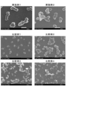
- 3 is a photograph of the silica sols obtained in Examples 1 and 2 and Comparative Examples 1 to 4 observed with a scanning electron microscope (SEM) (magnification: 200000 times).
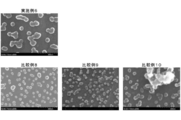
- 3 is a photograph of the silica sols obtained in Examples 3 to 4 and Comparative Examples 5 to 6 observed with a scanning electron microscope (SEM) (magnification: 200000 times). It is the photograph which observed the silica sol obtained in Example 5 and Comparative Example 7 with the scanning electron microscope (SEM) (magnification: 200000 times).
- 3 is a photograph of the silica sol obtained in Example 6 and Comparative Examples 8 to 10 observed with a scanning electron microscope (SEM) (magnification: 200000 times).
- the present invention relates to tetramethoxysilane and a condensate thereof in a liquid (A) (also simply referred to as “liquid (A)” in the present specification) containing an alkali catalyst, water, a first organic solvent, and associating silica particles.
- a liquid (B) containing at least one of the second organic solvent and the second organic solvent hereinafter, also simply referred to as “liquid (B)” to prepare a reaction liquid, Production of silica sol, wherein the addition rate of (B) is 8.5 ⁇ 10 ⁇ 4 to 5.6 ⁇ 10 ⁇ 3 mol / min in terms of silicon atoms with respect to 1 mol of water contained in the liquid (A). Is the method. With this configuration, in the method for producing a silica sol of the present invention, highly associated silica particles can be obtained without generating a gel-like material.
- silica sol in the production of silica sol, highly-associated silica particles can be obtained by increasing the addition rate of the silica raw material, but on the other hand, an unfilterable gel may be generated. Therefore, it has been difficult to obtain highly associated silica particles without generating a gel.
- the liquid (A) contains silica particles for association
- the liquid (B) contains at least one of tetramethoxysilane and its condensate as a raw material, whereby high association silica particles are obtained.
- the particle diameter of the silica particles can be increased. That is, tetramethoxysilane and its condensate have high hydrolysis reactivity.
- the concentration of tetramethoxysilane hydrolyzed in the reaction liquid at the initial stage of the reaction can be increased. It can be raised rapidly. Due to this sudden increase in the hydrolyzed tetramethoxysilane concentration, the associating silica particles previously present in the reaction system grow while associating to obtain highly associated particles without generating a gel. It is considered possible.
- the liquid (A) can be prepared by mixing an alkali catalyst, water, a first organic solvent, and association silica particles.
- the liquid (A) can contain other components in addition to the alkali catalyst, water, the first organic solvent and the associating silica particles as long as the effects of the present invention are not impaired.
- the liquid (A) comprises an alkali catalyst, water, a first organic solvent, and association silica particles.
- the liquid (A) does not contain an alkali catalyst, water, the first organic solvent, and the association silica particles, impurities contained in the produced silica sol can be reduced as much as possible.
- the obtained silica sol is used as a polishing slurry, the influence of impurities on polishing can be suppressed, and the physical properties of the slurry can be easily controlled with respect to the target properties of the additive during polishing slurry composition. Can do.
- it can be used also for the use which dislikes metal impurities, such as a silicon wafer and a device wafer, and can provide a slurry for polishing applicable to a wide range.
- a conventionally well-known thing can be used as an alkali catalyst contained in a liquid (A).
- the alkali catalyst can reduce contamination of metal impurities as much as possible, ammonia, tetramethylammonium hydroxide and other ammonium salts, ethylenediamine, diethylenetriamine, triethylenetetraamine, urea, monoethanolamine, diethanolamine, triethanolamine And tetramethylguanidine.
- ammonia, tetramethyl ammonium hydroxide and other ammonium salts are more preferable, and ammonia is more preferable.
- the alkali catalyst is ammonia.
- Ammonia is highly volatile and can be easily removed from the silica sol.
- an alkali catalyst may be used independently or may be used in mixture of 2 or more types.
- the alkali catalyst may be in the form of an aqueous solution.
- the water contained in the liquid (A) it is preferable to use pure water or ultrapure water from the viewpoint of reducing mixing of metal impurities as much as possible.
- the alkali catalyst is in the form of an aqueous solution or the following associating silica particles are colloidal silica
- the water contained in these is the water contained in the liquid (A). Therefore, it is preferable that the water contained in the alkaline catalyst aqueous solution, colloidal silica, etc. is also pure water or ultrapure water.
- a hydrophilic organic solvent is preferably used as the first organic solvent contained in the liquid (A). Specifically, methanol, ethanol, n-propanol, isopropanol, ethylene glycol, propylene glycol, 1, Examples include alcohols such as 4-butanediol; ketones such as acetone and methyl ethyl ketone.
- the first organic solvent may be used alone or in combination of two or more.
- the first organic solvent is preferably an alcohol.
- the first organic solvent is preferably methanol which is the same type as the alcohol generated by hydrolysis of tetramethoxysilane.
- the association silica particles contained in the liquid (A) are not particularly limited, but colloidal silica is preferably used from the viewpoint of low impurity content.
- the colloidal silica can be produced by, for example, a sol-gel method.
- Colloidal silica can be produced by a sol-gel method using a conventionally known method. Specifically, hydrolysis / condensation reaction is performed using a hydrolyzable silicon compound (for example, alkoxysilane or a derivative thereof) as a raw material. By carrying out, colloidal silica can be obtained.
- a hydrolyzable silicon compound for example, alkoxysilane or a derivative thereof
- the particle diameter of the associating silica particles is not particularly limited, and can be appropriately selected so that the silica particles contained in the produced silica sol have a desired particle diameter.
- the lower limit of the average primary particle diameter of the associating silica particles is preferably 2 nm or more, more preferably 5 nm or more, and further preferably 10 nm or more.
- the upper limit of the average primary particle diameter of the associating silica particles is preferably 200 nm or less, more preferably 100 nm or less, and further preferably 50 nm or less.
- the primary particle diameter of the associating silica particles is based on the specific surface area (SA) of the silica particles calculated from the BET method, and the true specific gravity of silica is 2.2 g / cm 3 , and the primary particle diameter is 6000 / (SA ⁇ 2.2).
- the lower limit of the average secondary particle diameter of the associating silica particles is preferably 5 nm or more, more preferably 10 nm or more, and further preferably 15 nm or more.
- the upper limit of the average secondary particle diameter of the associating silica particles is preferably 300 nm or less, more preferably 150 nm or less, and further preferably 75 nm or less.
- the value of the average secondary particle size of the associating silica particles is a value measured as a volume average particle size by a dynamic light scattering method using a particle size distribution measuring device (UPA-UT151, manufactured by Nikkiso Co., Ltd.). adopt.
- the content of each component in the liquid (A) is not particularly limited, but can be appropriately adjusted to make the silica particles contained in the produced silica sol have a desired particle diameter, shape, and the like.
- a chemical reaction for producing a silica sol is represented by the following reaction formula (1).
- the rate limiting of the reaction in the generation of the silica sol is the amount of tetramethoxysilane (Si (OCH 3 ) 4 ) as a starting material, water for hydrolysis (H 2 O), and an alkali catalyst as a catalyst. Therefore, in the liquid (A), when the reaction temperature and the addition rate are constant, the particle diameter of the silica particles contained in the produced silica sol can be controlled by adjusting the contents of water and the alkali catalyst.
- the molar ratio of the alkali catalyst to water in the liquid (A) is preferably from 0.01 to 0.30, and more preferably from 0.03 to 0.13. When the molar ratio is 0.01 or more, the alkali catalyst can exhibit an action as a hydrolysis catalyst. It is preferable from the viewpoint of productivity and cost that the molar ratio is 0.30 or less.
- the lower limit of the content of the first organic solvent in the liquid (A) is preferably 10% by weight or more, more preferably 20% by weight or more with respect to the total amount (100% by weight) of the liquid (A). Is more preferable.
- the upper limit of the content of the first organic solvent is preferably 98% by weight or less and 95% by weight or less with respect to the total amount (100% by weight) of the liquid (A) from the viewpoint of productivity. It is more preferable.
- the lower limit of the content of the associating silica particles in the liquid (A) is preferably 0.005 to 10% by weight with respect to the total amount (100% by weight) of the liquid (A), and 0.01 to 1 More preferably, it is 0.000% by weight.
- the method for producing the liquid (A) is not particularly limited, and can be obtained, for example, by stirring and mixing an alkali catalyst, water, a first organic solvent, associating silica particles, and other components as necessary.
- liquid (B) containing at least one of tetramethoxysilane and its condensate and a second organic solvent can be prepared by mixing at least one of tetramethoxysilane and its condensate and a second organic solvent.
- tetramethoxysilane and at least one of its condensates are also collectively referred to as “tetramethoxysilane or the like”.
- Liquid (B) dissolves tetramethoxysilane and the like in an organic solvent from the viewpoints of adjusting the reaction rate of hydrolysis and polycondensation of tetramethoxysilane, suppressing the formation of gelled substances, and miscibility. It is preferable to prepare them.
- the liquid (B) can contain other components in addition to at least one of tetramethoxysilane and its condensate and the second organic solvent as long as the effects of the present invention are not impaired.
- the liquid (B) comprises at least one of tetramethoxysilane and its condensate and a second organic solvent.
- the liquid (B) does not contain at least one of tetramethoxysilane and its condensate and the second organic solvent, impurities contained in the produced silica sol can be reduced as much as possible.
- the obtained silica sol is used as a polishing slurry, the influence of impurities on polishing can be suppressed, and the physical properties of the slurry can be easily controlled with respect to the target properties of the additive during polishing slurry composition. Can do.
- it can be used also for the use which dislikes metal impurities, such as a silicon wafer and a device wafer, and can provide a slurry for polishing applicable to a wide range.
- a hydrophilic organic solvent is preferably used as the second organic solvent contained in the liquid (B).
- the second organic solvent may be used alone or in combination of two or more.
- the second organic solvent is more preferable as the second organic solvent.
- the second organic solvent is more preferably methanol which is the same type as the alcohol generated by hydrolysis of tetramethoxysilane. Therefore, in the production method of the present invention, the first organic solvent and the second organic solvent are particularly preferably methanol.
- the contents of tetramethoxysilane and the like and the second organic solvent in the liquid (B) are not particularly limited and can be appropriately adjusted so that the addition rate of the liquid (B) can be within a desired range.
- the content of tetramethoxysilane and the like in the liquid (B) is 30% by weight or more and less than 100% by weight with respect to the total amount (100% by weight) of the liquid (B), and more preferably with the liquid (A). 70 to 90% by weight from the viewpoint of compatibility.
- the tetramethoxysilane condensate in the liquid (B) is, for example, a 2-12 mer, preferably a 4-8 mer.
- the production method of the liquid (B) is not particularly limited, but from the viewpoint of miscibility, it is preferable to obtain tetramethoxysilane and other components as needed by stirring and mixing them in the second organic solvent. .
- Step of preparing reaction solution In the manufacturing method of this invention, the process of mixing a liquid (B) with a liquid (A) and producing a reaction liquid is included.
- the concentration of hydrolyzed tetramethoxysilane in the reaction liquid rapidly increases, and the associating silica particles begin to associate.
- associated silica particles for association can be grown by hydrolysis and polycondensation of tetramethoxysilane or the like.
- reaction liquid is a liquid obtained by mixing the liquid (A) with the liquid (B), and includes a state in which hydrolysis and polycondensation of tetramethoxysilane and the like proceed (including before proceeding).
- Silica sol means a liquid after the hydrolysis and polycondensation.
- the manufactured silica sol may be used as it is depending on the application, or may be used for various applications after filtering with a predetermined filter, or after performing a water replacement step or a concentration step described later.
- the obtained liquid or an organosol dispersed in an organic solvent may be used.
- the stirring speed is not particularly limited, but is, for example, 30 to 500 rpm.
- the addition speed of the liquid (B) is 8.5 ⁇ 10 ⁇ 4 to 5 in terms of silicon atoms with respect to 1 mol of water contained in the liquid (A). 0.6 ⁇ 10 ⁇ 3 mol / min.
- the addition rate of the liquid (B) is less than 8.5 ⁇ 10 ⁇ 4 mol / min, highly-associated silica particles cannot be obtained.
- the addition rate of the liquid (B) exceeds 5.6 ⁇ 10 ⁇ 3 mol / min, a gel-like product is generated.
- the lower limit of the addition rate of the liquid (B) is preferably 1.0 ⁇ 10 ⁇ 3 mol / min or more.
- the upper limit of the addition rate of the liquid (B) is preferably 5.0 ⁇ 10 ⁇ 3 mol / min or less, more preferably 4.0 ⁇ 10 ⁇ 3 mol / min or less, and further preferably 3. 0 ⁇ 10 ⁇ 3 mol / min or less.
- the silicon atom conversion means that the number of moles of silicon atoms contained in tetramethoxysilane and its condensate is defined as the number of moles of tetramethoxysilane and its condensate.
- 1 mol of tetramethoxysilane is 1 mol in terms of silicon atoms.
- 1 mol of the condensate is 4 mol in terms of silicon atoms.
- the addition method of the liquid (B) is not particularly limited as long as the addition speed of the liquid (B) can be obtained. Dripping).
- the temperature of the reaction solution is preferably 5 to 100 ° C., more preferably 5 to 70 ° C.
- the temperature of the reaction solution is 5 ° C. or higher, tetramethoxysilane can be mixed without solidifying.
- the temperature of the reaction solution is 100 ° C. or lower, volatilization of an organic solvent or the like can be prevented.
- ammonia as an alkali catalyst, it is preferable that it is 70 degrees C or less from a viewpoint of particle design.
- the step of preparing the reaction liquid can be performed under any pressure condition under reduced pressure, normal pressure, or increased pressure. However, it is preferable to carry out under normal pressure from the viewpoint of production cost.
- the particle size of the silica particles in the silica sol produced by the production method of the present invention is not particularly limited, and a desired particle size can be selected.
- the average primary particle diameter of the silica particles is, for example, 5 to 200 nm, preferably 30 to 100 nm.
- the average secondary particle diameter of the silica particles is, for example, 10 to 1000 nm, preferably 50 to 250 nm.
- the primary particle diameter of the silica particles based on the specific surface area (SA) of the silica particles calculated from the BET method, the true specific gravity of the silica is 2.2 g / cm 3 , and the primary particle diameter is 6000 / (SA ⁇ 2 .2).
- the average secondary particle size of the silica particles is a value measured as a volume average particle size by a dynamic light scattering method using a particle size distribution measuring device (UPA-UT151, manufactured by Nikkiso Co., Ltd.). Is adopted.
- highly-associated silica particles can be obtained.
- “high association” means that a plurality of particles are formed in a two-dimensional or three-dimensional shape by SEM observation and can be seen. Therefore, in the production method of the present invention, it is possible to obtain a silica particle having a shape that is more deformed than a saddle type, for example, a chain or branched silica particle.
- the shape and average aspect ratio of colloidal silica can be grasped by, for example, observation with an electron microscope.
- a predetermined number of particles for example, 200 particles
- SEM scanning electron microscope
- a predetermined number of particles for example, 200 particles
- the value obtained by dividing the length of the long side (major axis value) by the length of the short side (minor axis value) is the major axis / minor axis ratio (aspect ratio).
- An average aspect ratio can be obtained by arithmetically averaging the aspect ratios of the predetermined number of particles.
- the particle size and shape of the silica particles in the silica sol can be controlled by the number and size of the associating silica particles, the addition rate of tetramethoxysilane, the temperature of the reaction solution, the concentration of the alkali catalyst, and the like.
- At least one step of a water replacement step of replacing an organic solvent present in the silica sol with water and a concentration step of concentrating the silica sol may be performed. More specifically, only the concentration step of concentrating the silica sol may be performed, or only the water replacement step of replacing the organic solvent in the silica sol with water may be performed, or after the concentration step, A water replacement step of replacing the organic solvent with water may be performed, or after the water replacement step, a concentration step of concentrating the liquid replaced with water may be performed. Further, the concentration step may be performed a plurality of times, and at that time, the water replacement step may be performed between the concentration step and the concentration step. For example, after the concentration step, water for replacing the organic solvent in the concentrated liquid with water. You may perform the concentration process which performs a substitution process and also concentrates the liquid substituted with the water.
- the method for producing a silica sol of the present invention may include a step of replacing an organic solvent contained in the silica sol with water (hereinafter, also simply referred to as “water replacement step”).
- This form of silica sol includes a form that is a silica sol that has undergone a concentration step (concentrated silica sol).
- the pH of the silica sol can be adjusted to a neutral range and unreacted substances contained in the silica sol By removing the water, it is possible to obtain a silica sol that has been substituted with water for a long period of time.
- a conventionally known method can be used as a method for replacing the organic solvent in the silica sol with water. For example, a method in which water is added dropwise and heated distillation is performed while keeping the amount of the silica sol at a certain level or more. Is mentioned. At this time, the replacement operation is preferably performed until the liquid temperature and the tower top temperature reach the boiling point of the water to be replaced.
- the water used in this step is preferably pure water or ultrapure water from the viewpoint of reducing metal impurities and the like as much as possible.
- the method for producing a silica sol of the present invention may further include a step of further concentrating the silica sol (hereinafter, also simply referred to as “concentration step”).
- concentration step a step of further concentrating the silica sol
- the form which is the silica sol which passed through the water substitution process (silica sol which carried out water substitution) is also contained in the silica sol of this form.
- the method for concentrating the silica sol is not particularly limited, and a conventionally known method can be used, and examples thereof include a heat concentration method and a membrane concentration method.
- a concentrated silica sol can be obtained by heating and concentrating the silica sol under normal pressure or reduced pressure.
- the silica sol can be concentrated by membrane separation by an ultrafiltration method capable of filtering silica particles.
- the molecular weight cutoff of the ultrafiltration membrane is not particularly limited, but the molecular cutoff cutoff can be selected according to the particle size to be generated.
- the material constituting the ultrafiltration membrane is not particularly limited, and examples thereof include polysulfone, polyacrylonitrile, sintered metal, ceramic, and carbon.
- the form of the ultrafiltration membrane is not particularly limited, and examples include a spiral type, a tubular type, and a hollow fiber type.
- the operating pressure is not particularly limited, but can be set to be equal to or lower than the working pressure of the ultrafiltration membrane to be used.
- the silica sol produced by the production method of the present invention can be used in various applications. In particular, it can be suitably used as an abrasive for polishing an object to be polished such as a semiconductor substrate.
- objects to be polished include silicon materials, metals or metalloids such as aluminum, nickel, tungsten, steel, tantalum, titanium, and stainless steel, or alloys thereof; quartz glass, aluminosilicate glass, glassy carbon, etc.
- the silica sol produced by the production method of the present invention includes a resin filler (for example, a semiconductor element sealing filler), a hard coat agent, a resin modifier, a surface treatment agent, a paint, a pigment, a catalyst, and an anti-slip agent.
- a resin filler for example, a semiconductor element sealing filler
- a hard coat agent for example, a semiconductor element sealing filler
- a resin modifier for example, a hard coat agent
- a resin modifier for example, a hard coat agent, a resin modifier, a surface treatment agent, a paint, a pigment, a catalyst, and an anti-slip agent.
- Example 1 In a reaction vessel equipped with a 5 L stirrer having a cooling function, 2945 g of methanol was mixed with 375.92 g of pure water, 108 g of 29 wt% ammonia water, and 91 g of colloidal silica (silica concentration: 12 wt%, average secondary particle size: 25 nm). The liquid (A) was added, and while stirring at 300 rpm, a liquid (B) obtained by dissolving 309 g of tetramethoxysilane (TMOS) in 79 g of methanol was added at 11 mL / min while maintaining the liquid temperature in the reaction vessel at 20 ° C. A reaction liquid was prepared to obtain a silica sol.
- TMOS tetramethoxysilane
- Example 2 In a reaction vessel equipped with a stirrer with a cooling function of 5 L, 29.5 g of methanol, 295.84 g of pure water, 108 g of 29 wt% ammonia water, and 182 g of colloidal silica (silica concentration: 12 wt%, average secondary particle size: 25 nm) are mixed.
- the liquid (B) obtained by dissolving 309 g of tetramethoxysilane (TMOS) in 79 g of methanol was stirred while stirring at 300 rpm, and 11 mL while maintaining the liquid temperature in the reaction vessel (reaction liquid temperature) at 20 ° C.
- the reaction solution was prepared by adding at / min to obtain a silica sol.
- TMOS tetramethoxysilane
- the liquid (B) in which 309 g was dissolved was added at 11 mL / min while maintaining the liquid temperature in the reaction vessel at 20 ° C. to prepare a reaction liquid, whereby a silica sol was obtained.
- Example 3 In a 5 L reactor equipped with a stirrer having a cooling function, 2945 g of methanol was mixed with 404.46 g of pure water, 162 g of 29 wt% ammonia water and 15 g of colloidal silica (silica concentration: 12 wt%, average secondary particle size: 25 nm). Liquid (A) was added, and while stirring at 300 rpm, liquid (B) in which 309 g of tetramethoxysilane (TMOS) was dissolved in 79 g of methanol was added at 11 mL / min while maintaining the liquid temperature in the reaction vessel at 20 ° C. A reaction solution was prepared to obtain silica sol.
- TMOS tetramethoxysilane
- Example 4 Mixing 2945 g of methanol with 323.5 g of pure water, 162 g of 29 wt% ammonia water and 107 g of colloidal silica (silica concentration: 12 wt%, average secondary particle size: 25 nm) in a 5 L reactor equipped with a stirrer having a cooling function
- the liquid (A) was added, and while stirring at 300 rpm, a liquid (B) obtained by dissolving 309 g of tetramethoxysilane (TMOS) in 79 g of methanol was added at 11 mL / min while maintaining the liquid temperature in the reaction vessel at 30 ° C.
- a reaction liquid was prepared to obtain a silica sol.
- Example 5 In a reaction vessel equipped with a 5 L stirrer having a cooling function, 2945 g of methanol, 373.15 g of pure water, 218 g of 29 wt% ammonia water and colloidal silica (silica concentration: 12 wt%, average secondary particle size: 25 nm) 5.4 g A liquid (B) prepared by dissolving 309 g of tetramethoxysilane (TMOS) in 79 g of methanol was added at a rate of 11 mL / min while maintaining the liquid temperature in the reaction vessel at 20 ° C. with stirring at 300 rpm. The reaction solution was added to obtain a silica sol.
- TMOS tetramethoxysilane
- Example 6 A silica sol was obtained in the same manner as in Example 1 except that the addition rate of the liquid (B) was changed from 11 mL / min to 5.5 mL / min.
- ⁇ Comparative Example 8> In a reaction vessel equipped with a 5 L stirrer having a cooling function, 29.5 g of methanol, 411.36 g of pure water, 108 g of 29 wt% ammonia water, and colloidal silica (silica concentration: 4 wt%, average secondary particle size: 8 nm) 46.5 g A liquid (B) prepared by dissolving 309 g of tetramethoxysilane (TMOS) in 79 g of methanol was added to a liquid (B) with stirring at 300 rpm. Min was added to prepare a reaction solution to obtain a silica sol.
- TMOS tetramethoxysilane
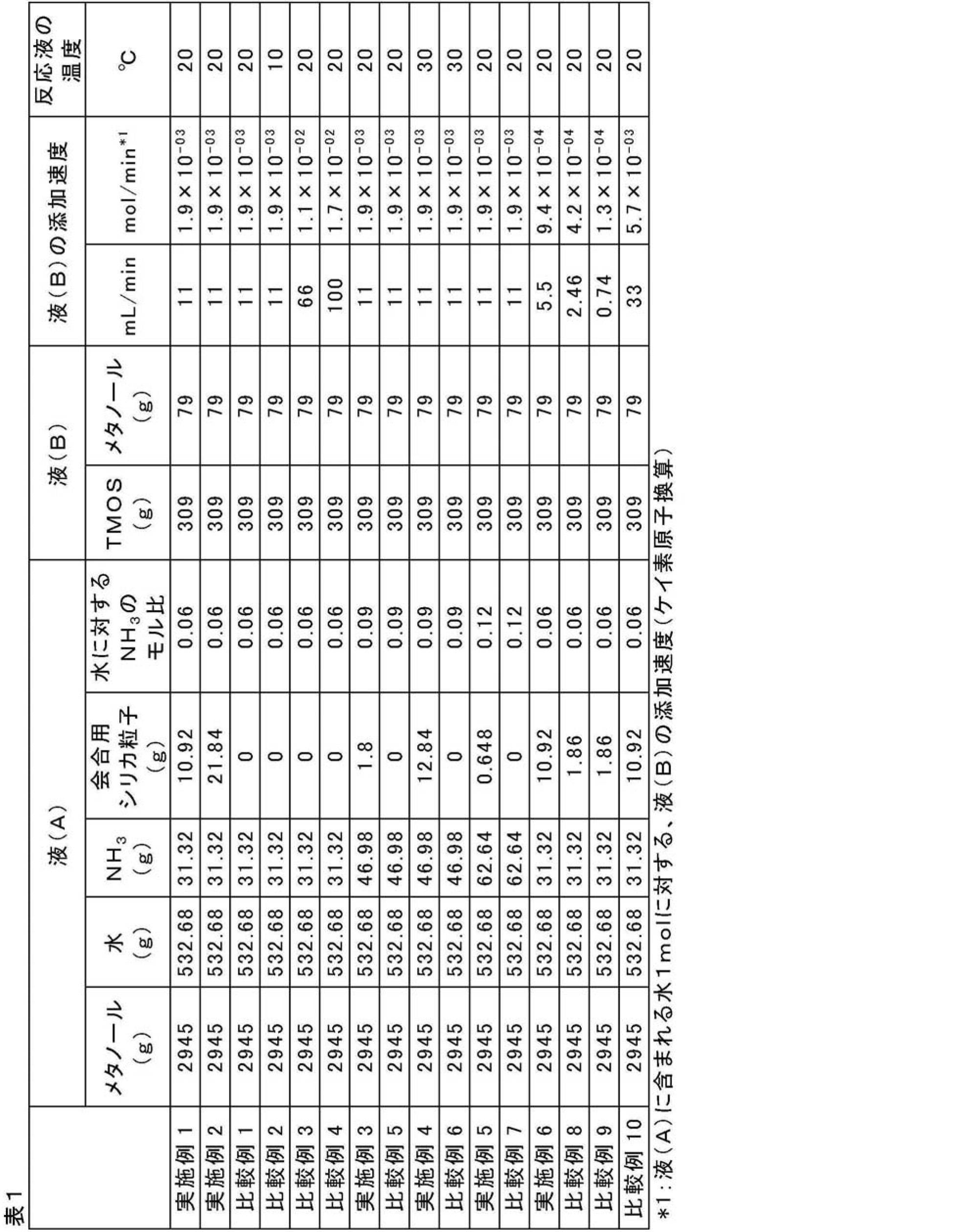
- Table 1 summarizes the composition of the liquid (A), the composition of the liquid (B), the addition rate of the liquid (B), and the temperature of the reaction liquid used in Examples 1 to 6 and Comparative Examples 1 to 10.
- the value of the average secondary particle size of the silica particles contained in the obtained silica sol was measured as a volume average particle size by a dynamic light scattering method using a particle size distribution measuring device (UPA-UT151, manufactured by Nikkiso Co., Ltd.). Adopted values were adopted.
- the silica sol of Comparative Example 10 had a large number of millimeter-sized huge precipitates (gel-like materials), and the above apparatus could not measure the particle diameter. Therefore, in Table 2 below, “not measurable” is set. On the other hand, in the silica sols of Comparative Examples 3 and 4, formation of a gel-like material was confirmed, but it was not a millimeter unit, so the particle diameter of silica particles was measured using the above apparatus.
- the obtained silica sol was confirmed to be capable of filtering silica particles with a ⁇ 47 mm filter having a diameter of 5 ⁇ m.
- the results are shown in Table 2.
- Table 2 “ ⁇ ” indicates that filtration was possible, and “ ⁇ ” indicates that filtration was impossible due to a gel-like material.
- silica sol containing silica particles having a high degree of association can be produced as compared with the comparative example.
- silica particles having a medium particle size (average secondary particle size: 50 to 80 nm) and a large particle size (average secondary particle size: more than 80 nm) can be obtained. I understand.
Landscapes
- Chemical & Material Sciences (AREA)
- Organic Chemistry (AREA)
- Dispersion Chemistry (AREA)
- Inorganic Chemistry (AREA)
- Health & Medical Sciences (AREA)
- Chemical Kinetics & Catalysis (AREA)
- Medicinal Chemistry (AREA)
- Polymers & Plastics (AREA)
- Silicon Compounds (AREA)
- Silicon Polymers (AREA)
Abstract
【課題】ゲル状物を発生させず、かつ高会合のシリカ粒子を得ることができるシリカゾルの製造方法を提供する。 【解決手段】アルカリ触媒、水、第1の有機溶媒および会合用シリカ粒子を含む液(A)に、テトラメトキシシランおよびその縮合物の少なくとも一方ならびに第2の有機溶媒を含む液(B)を混合して反応液を作製する工程を含み、前記混合において、前記液(B)の添加速度が、前記液(A)に含まれる水1molに対して、ケイ素原子換算で8.5×10⁻⁴~5.6×10⁻³mol/minである、シリカゾルの製造方法。
Description
本発明は、シリカゾルの製造方法に関する。
従来、シリカゾルの製造方法としては、水ガラスと呼ばれる珪酸ナトリウム溶液を出発原料とする製造方法が知られている(特許文献1)。この製造方法では、珪酸ナトリウム溶液は、陽イオン交換樹脂で1度処理され、ナトリウムイオンを始めとするイオンを取り除くことにより出発原料としての純度を上昇させた後、シリカゾルの製造に用いられる。
しかしながら、特許文献1の製造方法では、イオン交換による出発原料の高純度化に限界がある。
そこで高純度シリカゾルを得る方法として、正珪酸エチルなどの高純度アルコキシシランの加水分解による方法が開示されている。
特許文献2には、アルコキシシラン、アルカリ水溶液および有機溶媒を含む液でアルコキシシランを加水分解させる予備処理工程と、この工程で得られた加水分解物を溶媒中に分散したシリカ粒子の表面に縮重合させる主反応工程とを分けて行うことにより、単分散球状シリカが得られることが記載されている。また、特許文献3には、珪酸メチルおよびメタノールの混合物を、水、メタノールおよびアンモニアからなる混合溶媒中に滴下し、この際珪酸メチルと水との反応時間を規制することにより、繭型のシリカ粒子が得られることが記載されている。
シリカゾルは、半導体基板を研磨して平坦化する、いわゆる、化学的機械的研磨(Chemical Mechanical Polishing;CMP)において、研磨用組成物に含まれる砥粒として使用されている。このような場合、シリカ粒子を異形化する(高会合にする)ことで、研磨時に高いフリクションを得て、研磨レートをさらに向上させることが望まれている。
しかしながら、引用文献2の技術では、単分散球状シリカを得ることはできるが、高会合のシリカ粒子を得ることができないという問題があり、また特許文献3の技術では、高会合のシリカ粒子にするために滴下速度を上げると、ゲル状物が発生するという問題があった。
そこで、本発明は、上記事情を鑑みてなされたものであり、ゲル状物を発生させず、かつ高会合のシリカ粒子を得ることができるシリカゾルの製造方法を提供することを目的とする。
本発明者は、上記課題に鑑み、鋭意検討を進めた。その結果、アルカリ触媒、水、第1の有機溶媒および会合用シリカ粒子を含む液(A)に、テトラメトキシシランおよびその縮合物の少なくとも一方ならびに第2の有機溶媒を含む液(B)を混合して反応液を作製する工程を含み、前記混合において、前記液(B)の添加速度が、前記液(A)に含まれる水1molに対して、ケイ素原子換算で8.5×10⁻⁴~5.6×10⁻³mol/minである、シリカゾルの製造方法により、上記効果が得られることを見出し、本発明を完成させるに至った。
以下、本発明の実施の形態を説明するが、本発明は、以下の実施の形態のみには限定されない。なお、特記しない限り、操作および物性等の測定は室温(20~25℃)/相対湿度40~50%RHの条件で測定する。
本発明は、アルカリ触媒、水、第1の有機溶媒および会合用シリカ粒子を含む液(A)(本明細書中、単に「液(A)」とも称する)に、テトラメトキシシランおよびその縮合物の少なくとも一方ならびに第2の有機溶媒を含む液(B)(本明細書中、単に「液(B)」とも称する)を混合して反応液を作製する工程を含み、前記混合において、前記液(B)の添加速度が、前記液(A)に含まれる水1molに対して、ケイ素原子換算で8.5×10⁻⁴~5.6×10⁻³mol/minである、シリカゾルの製造方法である。かかる構成により、本発明のシリカゾルの製造方法では、ゲル状物を発生させず、かつ高会合のシリカ粒子を得ることができる。
本発明の製造方法により、上記効果を奏する理由は必ずしも明確ではないが、以下のように考えられる。
一般的に、シリカゾルの製造において、シリカ原料の添加速度を上げることにより、高会合のシリカ粒子を得ることができるが、一方でろ過不能なゲル状物が発生することがある。よって、ゲル状物を発生させず、高会合のシリカ粒子を得ることは困難であった。
本発明の製造方法では、液(B)の添加速度を所定の範囲とすることにより、ゲル状物の発生を抑えることができる。また、本発明の製造方法では、液(A)が会合用のシリカ粒子を含み、液(B)が原料としてテトラメトキシシランおよびその縮合物の少なくとも一方を含むことにより、高会合のシリカ粒子を得ることができる。さらに、シリカ粒子の粒子径を大きくすることができる。すなわち、テトラメトキシシランおよびその縮合物は、加水分解の反応性が高いため、液(A)に液(B)を添加することで、反応初期において反応液中に加水分解したテトラメトキシシラン濃度を急激に上昇させることができる。この急激な加水分解したテトラメトキシシラン濃度の上昇により、先に反応系内に存在している会合用シリカ粒子が会合しながら成長し、ゲル状物を発生させずに、高会合の粒子を得ることができると考えられる。
なお、上記メカニズムは推測に基づくものであり、その正誤が本発明の技術的範囲に影響を及ぼすものではない。
以下、本発明のシリカゾルの製造方法の構成要件を説明する。
[アルカリ触媒、水、第1の有機溶媒および会合用シリカ粒子を含む液(A)]
本発明に係る液(A)は、アルカリ触媒と、水と、第1の有機溶媒と、会合用シリカ粒子とを混合して調製することができる。液(A)は、アルカリ触媒、水、第1の有機溶媒および会合用シリカ粒子に加えて、本発明の効果を損なわない範囲で、他の成分を含むことができる。
本発明に係る液(A)は、アルカリ触媒と、水と、第1の有機溶媒と、会合用シリカ粒子とを混合して調製することができる。液(A)は、アルカリ触媒、水、第1の有機溶媒および会合用シリカ粒子に加えて、本発明の効果を損なわない範囲で、他の成分を含むことができる。
本発明の好ましい実施形態では、液(A)は、アルカリ触媒、水、第1の有機溶媒および会合用シリカ粒子からなる。液(A)がアルカリ触媒、水、第1の有機溶媒および会合用シリカ粒子以外を含まないことにより、製造されたシリカゾルに含まれる不純物を極力低減することができる。これにより、得られたシリカゾルを研磨用スラリーに用いる際に、不純物による研磨への影響を抑制でき、研磨スラリー組成化時の添加剤による狙いの特性に対してのスラリー物性コントロールを容易にすることができる。また、シリコンウェーハ、デバイスウェーハなどの金属不純物を嫌う用途にも用いることができ、広範囲に適用可能な研磨用スラリーを提供することができる。
液(A)に含まれるアルカリ触媒としては、従来公知のものを使用することができる。前記アルカリ触媒は、金属不純物等の混入を極力低減できるという観点から、アンモニア、テトラメチル水酸化アンモニウムその他のアンモニウム塩、エチレンジアミン、ジエチレントリアミン、トリエチレンテトラアミン、尿素、モノエタノールアミン、ジエタノールアミン、トリエタノールアミン、テトラメチルグアニジンなどが挙げられる。これらの中でも、優れた触媒作用の観点から、アンモニア、テトラメチル水酸化アンモニウムその他のアンモニウム塩がより好ましく、アンモニアがさらに好ましい。すなわち、本発明の好ましい実施形態では、前記アルカリ触媒は、アンモニアである。アンモニアは揮発性が高いため、前記シリカゾルから容易に除去することができる。なお、アルカリ触媒は、単独で用いてもよいし、または2種以上を混合して使用してもよい。また、アルカリ触媒は、水溶液の形態であってもよい。
液(A)に含まれる水は、金属不純物等の混入を極力低減する観点から、純水または超純水を使用することが好ましい。上記アルカリ触媒が水溶液の形態であったり、下記会合用シリカ粒子がコロイダルシリカであったりする場合、これらに含まれる水は、液(A)に含まれる水とする。よって、アルカリ触媒の水溶液、コロイダルシリカなどに含まれる水も、純水または超純水であることが好ましい。
液(A)に含まれる第1の有機溶媒としては、親水性の有機溶媒が用いられることが好ましく、具体的には、メタノール、エタノール、n-プロパノール、イソプロパノール、エチレングリコール、プロピレングリコール、1,4-ブタンジオールなどのアルコール類;アセトン、メチルエチルケトンなどのケトン類などが挙げられる。前記第1の有機溶媒は、単独で使用してもよいし、または2種以上を混合して使用してもよい。
特に本発明では、前記第1の有機溶媒としては、アルコール類が好ましい。アルコール類を用いることで、前記シリカゾルを後述する水置換する際に、加熱蒸留によりアルコール類と水とを容易に置換することができるという効果がある。また、有機溶媒の回収や再利用の観点から、第1の有機溶媒としては、テトラメトキシシランの加水分解により生じるアルコールと同一種類であるメタノールであることが好ましい。
液(A)に含まれる会合用シリカ粒子としては、特に制限されないが、不純物の含有量が少ないとの観点から、コロイダルシリカを用いることが好ましい。また、コロイダルシリカは、例えばゾルゲル法によって製造されたものであり得る。ゾルゲル法によるコロイダルシリカの製造は、従来公知の手法を用いて行うことができ、具体的には、加水分解可能なケイ素化合物(例えば、アルコキシシランまたはその誘導体)を原料とし、加水分解・縮合反応を行うことにより、コロイダルシリカを得ることができる。このケイ素化合物としては、1種のみが単独で用いられてもよいし、2種以上が併用されてもよい。
会合用シリカ粒子の粒子径は、特に制限されず、作製されたシリカゾルに含まれるシリカ粒子を所望の粒子径とするために、適宜選択できる。
会合用シリカ粒子の平均一次粒子径の下限は、2nm以上であることが好ましく、5nm以上であることがより好ましく、10nm以上であることがさらに好ましい。また、会合用シリカ粒子の平均一次粒子径の上限は、200nm以下であることが好ましく、100nm以下であることがより好ましく、50nm以下であることがさらに好ましい。会合用シリカ粒子の一次粒子径については、BET法から算出したシリカ粒子の比表面積(SA)を基に、シリカの真比重を2.2g/cm3として、一次粒子径=6000/(SA×2.2)の式で算出することができる。
会合用シリカ粒子の平均二次粒子径の下限は、5nm以上であることが好ましく、10nm以上であることがより好ましく、15nm以上であることがさらに好ましい。また、会合用シリカ粒子の平均二次粒子径の上限は、300nm以下であることが好ましく、150nm以下であることがより好ましく、75nm以下であることがさらに好ましい。会合用シリカ粒子の平均二次粒子径の値としては、粒子径分布測定装置(UPA-UT151、日機装株式会社製)を用いた動的光散乱法により、体積平均粒子径として測定された値を採用する。
液(A)中の各成分の含有量は、特に制限されないが、製造されたシリカゾルに含まれるシリカ粒子を所望の粒子径、形状などにするために、適宜調整できる。
本発明の一実施形態では、シリカゾルを生成する化学反応は、下記反応式(1)のように表される。

シリカゾルの生成における反応の律速は、出発原料としてのテトラメトキシシラン(Si(OCH3)4)、加水分解のための水(H2O)、および触媒としてのアルカリ触媒の量である。よって、液(A)において、反応温度と添加速度が一定のとき、水とアルカリ触媒との含有量を調整することにより、製造されたシリカゾルに含まれるシリカ粒子の粒子径を制御できる。液(A)中の水に対するアルカリ触媒のモル比は、0.01~0.30であることが好ましく、0.03~0.13であることがより好ましい。当該モル比が0.01以上であると、アルカリ触媒が加水分解触媒としての作用を発揮できる。当該モル比が0.30以下であると、生産性およびコストの観点から好ましい。
液(A)中の第1の有機溶媒の含有量の下限は、液(A)の全量(100重量%)に対して、10重量%以上であることが好ましく、20重量%以上であることがより好ましい。また、第1の有機溶媒の含有量の上限は、生産性の観点で、液(A)全量(100重量%)に対して、98重量%以下であることが好ましく、95重量%以下であることがより好ましい。
液(A)中の会合用シリカ粒子の含有量の下限は、液(A)の全量(100重量%)に対して、0.005~10重量%であることが好ましく、0.01~1.00重量%であることがさらに好ましい。
液(A)の製造方法は、特に制限されず、例えばアルカリ触媒、水、第1の有機溶媒、会合用シリカ粒子、および必要に応じて他の成分を撹拌混合することにより得ることができる。
[テトラメトキシシランおよびその縮合物の少なくとも一方ならびに第2の有機溶媒を含む液(B)]
本発明に係る液(B)は、テトラメトキシシランおよびその縮合物の少なくとも一方と、第2の有機溶媒とを混合して調製することができる。本明細書中、「テトラメトキシシランおよびその縮合物の少なくとも一方」を一括して単に「テトラメトキシシラン等」とも称する。液(B)は、テトラメトキシシラン等の加水分解および重縮合の反応速度の調整やゲル状物の発生を抑制すること、および混和性などの観点で、テトラメトキシシラン等を有機溶媒に溶解して調製することが好ましい。
本発明に係る液(B)は、テトラメトキシシランおよびその縮合物の少なくとも一方と、第2の有機溶媒とを混合して調製することができる。本明細書中、「テトラメトキシシランおよびその縮合物の少なくとも一方」を一括して単に「テトラメトキシシラン等」とも称する。液(B)は、テトラメトキシシラン等の加水分解および重縮合の反応速度の調整やゲル状物の発生を抑制すること、および混和性などの観点で、テトラメトキシシラン等を有機溶媒に溶解して調製することが好ましい。
液(B)は、テトラメトキシシランおよびその縮合物の少なくとも一方ならびに第2の有機溶媒に加えて、本発明の効果を損なわない範囲で、他の成分を含むことができる。
本発明の好ましい実施形態では、液(B)は、テトラメトキシシランおよびその縮合物の少なくとも一方ならびに第2の有機溶媒からなる。液(B)がテトラメトキシシランおよびその縮合物の少なくとも一方ならびに第2の有機溶媒以外を含まないことにより、製造されたシリカゾルに含まれる不純物を極力低減することができる。これにより、得られたシリカゾルを研磨用スラリーに用いる際に、不純物による研磨への影響を抑制でき、研磨スラリー組成化時の添加剤による狙いの特性に対してのスラリー物性コントロールを容易にすることができる。また、シリコンウェーハ、デバイスウェーハなどの金属不純物を嫌う用途にも用いることができ、広範囲に適用可能な研磨用スラリーを提供することができる。
液(B)に含まれる第2の有機溶媒としては、親水性の有機溶媒が用いられることが好ましく、具体的には、メタノール、エタノール、n-プロパノール、イソプロパノール、エチレングリコール、プロピレングリコール、1,4-ブタンジオールなどのアルコール類;アセトン、メチルエチルケトンなどのケトン類などが挙げられる。前記第2の有機溶媒は、単独で使用してもよいし、または2種以上を混合して使用してもよい。
本発明では、前記第2の有機溶媒としては、アルコール類がより好ましい。アルコール類を用いることで、前記シリカゾルを後述する水置換する際に、加熱蒸留によりアルコール類と水とを容易に置換することができるという効果がある。また、有機溶媒の回収や再利用の観点から、第2の有機溶媒としては、テトラメトキシシランの加水分解により生じるアルコールと同一種類であるメタノールであることがさらに好ましい。よって、本発明の製造方法において、第1の有機溶媒および第2の有機溶媒が、メタノールであることが特に好ましい。
液(B)中のテトラメトキシシラン等および第2の有機溶媒の含有量は、特に制限されず、液(B)の添加速度を所望の範囲にできるように、適宜調整できる。液(B)中のテトラメトキシシラン等の含有量は、液(B)の全量(100重量%)に対して、30重量%以上100重量%未満であり、より好ましくは液(A)との相溶性の観点で70~90重量%である。
液(B)中のテトラメトキシシラン縮合物は、例えば2~12量体であり、好ましくは4~8量体である。
液(B)の製造方法は、特に制限されないが、混和性の観点から、テトラメトキシシラン等、および必要に応じて他の成分を、第2の有機溶媒に撹拌混合することにより得ることが好ましい。
[反応液を作製する工程]
本発明の製造方法では、液(A)に、液(B)を混合して反応液を作製する工程を含む。液(A)に、液(B)を混合すると、反応液中の加水分解したテトラメトキシシランの濃度が急激に上昇することにより、会合用シリカ粒子が会合し始める。同時に、テトラメトキシシラン等の加水分解および重縮合により、会合した会合用シリカ粒子を成長させることができる。
本発明の製造方法では、液(A)に、液(B)を混合して反応液を作製する工程を含む。液(A)に、液(B)を混合すると、反応液中の加水分解したテトラメトキシシランの濃度が急激に上昇することにより、会合用シリカ粒子が会合し始める。同時に、テトラメトキシシラン等の加水分解および重縮合により、会合した会合用シリカ粒子を成長させることができる。
本明細書中、「反応液」とは、液(A)に、液(B)を混合した液であり、テトラメトキシシラン等の加水分解および重縮合がこれから進行する状態(進行する前を含む)の液を意味する。また、「シリカゾル」とは、前記加水分解および重縮合が終了した液を意味する。
製造されたシリカゾルは、用途に応じてそのままの状態で用いてもよいし、所定のフィルターでろ過して、各種の用途に用いてもよいし、後述する水置換工程や濃縮工程を行った後に得られた液、または有機溶媒に分散させたオルガノゾルとして用いてもよい。
液(A)に、液(B)を混合する際、液(A)を撹拌することが好ましい。撹拌速度は、特に制限されないが、例えば30~500rpmである。
液(A)に、液(B)を混合する際、液(B)の添加速度は、液(A)に含まれる水1molに対して、ケイ素原子換算で8.5×10⁻⁴~5.6×10⁻³mol/minである。液(B)の添加速度が8.5×10-4mol/min未満であると、高会合のシリカ粒子を得ることができない。また、液(B)の添加速度が5.6×10-3mol/minを超えると、ゲル状物が発生する。前記添加速度の範囲内において、アルカリ触媒の濃度、反応液の温度などを制御することにより、さまざまな形状の高会合のシリカ粒子を得ることができる。前記液(B)の添加速度の下限は、好ましくは1.0×10-3mol/min以上である。前記液(B)の添加速度の上限は、好ましくは5.0×10-3mol/min以下であり、より好ましくは4.0×10-3mol/min以下であり、さらに好ましくは3.0×10-3mol/min以下である。なお、ケイ素原子換算とは、テトラメトキシシランおよびその縮合物に含まれるケイ素原子のモル数を、テトラメトキシシランおよびその縮合物のモル数として規定することを意味する。例えば、テトラメトキシシラン1モルは、ケイ素原子で換算すると1モルになる。また、テトラメトキシシランの縮合物が4量体の場合、縮合物1モルは、ケイ素原子で換算すると4モルになる。
液(A)に、液(B)を混合する際、上記液(B)の添加速度が得られるのであれば、液(B)の添加方法は特に制限されず、連続添加でも分割添加(例えば滴下)でもよい。
反応液の温度は、好ましくは5~100℃であり、より好ましくは5~70℃である。反応液の温度が5℃以上であると、テトラメトキシシランが凝固せず混合できる。反応液の温度が100℃以下であると、有機溶媒などの揮発を防ぐことができる。また、アルカリ触媒としてアンモニアを用いる場合、粒子デザインの観点から、70℃以下であることが好ましい。
本発明のシリカゾルの製造方法において、反応液を作製する工程は、減圧下、常圧下、加圧下のいずれの圧力条件下で行なうことも可能である。ただし、生産コストの観点から、常圧下で実施することが好ましい。
本発明の製造方法で製造されたシリカゾル中のシリカ粒子の粒子径は、特に制限されず、所望の粒子径を選択できる。前記シリカ粒子の平均一次粒子径は、例えば5~200nmであり、好ましくは30~100nmである。また、前記シリカ粒子の平均二次粒子径は、例えば10~1000nmであり、好ましくは50~250nmである。
前記シリカ粒子の一次粒子径については、BET法から算出したシリカ粒子の比表面積(SA)を基に、シリカの真比重を2.2g/cm3として、一次粒子径=6000/(SA×2.2)の式で算出することができる。また、前記シリカ粒子の平均二次粒子径の値としては、粒子径分布測定装置(UPA-UT151、日機装株式会社製)を用いた動的光散乱法により、体積平均粒子径として測定された値を採用する。
本発明の製造方法では、高会合のシリカ粒子を得ることができる。ここで、「高会合」とは、SEM観察にて複数の粒子が2次元または3次元に合着して形成されて観える形状をしていることを指す。そのため、本発明の製造方法では、繭型よりもさらに異形化が進んだ形状、例えば鎖状または分岐状のシリカ粒子を得ることができる。
コロイダルシリカの形状や平均アスペクト比は、例えば、電子顕微鏡観察により把握することができる。平均アスペクト比を把握する具体的な手順としては、例えば、走査型電子顕微鏡(SEM)を用いて、独立した粒子の形状を認識できる所定個数(例えば200個)の粒子について、各々の粒子画像に外接する最小の長方形を描く。そして、各粒子画像に対して描かれた長方形について、その長辺の長さ(長径の値)を短辺の長さ(短径の値)で除した値を長径/短径比(アスペクト比)として算出する。上記所定個数の粒子のアスペクト比を算術平均することにより、平均アスペクト比を求めることができる。
シリカゾル中のシリカ粒子の粒子径や形状などは、会合用シリカ粒子数とその粒子径、テトラメトキシシラン等の添加速度、反応液の温度、アルカリ触媒の濃度などによって制御することができる。
[後工程]
本発明のシリカゾルの製造方法では、上述した反応液を作製する工程に加えて、以下に説明する後工程を施してもよい。
本発明のシリカゾルの製造方法では、上述した反応液を作製する工程に加えて、以下に説明する後工程を施してもよい。
具体的には、前記シリカゾル中に存在する有機溶媒を水で置換する水置換工程や、前記シリカゾルを濃縮する濃縮工程の少なくとも一工程を行ってもよい。より詳しくは、前記シリカゾルを濃縮する濃縮工程のみを行ってもよいし、前記シリカゾル中の有機溶媒を水で置換する水置換工程のみを行ってもよいし、濃縮工程後、濃縮した液中の有機溶媒を水で置換する水置換工程を行ってもよいし、水置換工程した後に、水で置換した液を濃縮する濃縮工程を行ってもよい。また、濃縮工程を複数回行ってもよく、その際濃縮工程と濃縮工程の間で水置換工程を行ってもよく、例えば、濃縮工程後、濃縮した液中の有機溶媒を水で置換する水置換工程を行い、さらにその水で置換した液を濃縮する濃縮工程を行ってもよい。
(水置換工程)
本発明のシリカゾルの製造方法は、一実施形態として、前記シリカゾルに含まれる有機溶媒を水で置換する工程を有してもよい(本明細書中、単に「水置換工程」とも称する)。この形態のシリカゾルには、濃縮工程を経たシリカゾル(濃縮したシリカゾル)である形態も含まれる。
本発明のシリカゾルの製造方法は、一実施形態として、前記シリカゾルに含まれる有機溶媒を水で置換する工程を有してもよい(本明細書中、単に「水置換工程」とも称する)。この形態のシリカゾルには、濃縮工程を経たシリカゾル(濃縮したシリカゾル)である形態も含まれる。
前記シリカゾル中の有機溶媒を水で置換することによって、アンモニアをアルカリ触媒として選択した場合、前記シリカゾルのpHを中性域に調整することができるとともに、前記シリカゾル中に含まれていた未反応物を除去することにより、長期間安定な水置換したシリカゾルを得ることができる。
前記シリカゾル中の有機溶媒を水で置換する方法は、従来公知の方法を用いることができ、例えば、前記シリカゾルの液量を一定量以上に保ちながら、水を滴下して加熱蒸留によって置換する方法が挙げられる。この際、置換操作は、液温および塔頂温が置換する水の沸点に達するまで行なうことが好ましい。
本工程で用いる水は、金属不純物等の混入を極力低減する観点から、純水または超純水を用いることが好ましい。
また、シリカゾル中の有機溶媒を水で置換する方法としては、シリカゾルを遠心分離によりシリカ粒子を分離後、水に再分散させる方法も挙げられる。
(濃縮工程)
本発明のシリカゾルの製造方法は、一実施形態として、前記シリカゾルをさらに濃縮する工程を有してもよい(本明細書中、単に「濃縮工程」とも称する)。なお、本形態のシリカゾルには、水置換工程を経たシリカゾル(水置換したシリカゾル)である形態も含まれる。
本発明のシリカゾルの製造方法は、一実施形態として、前記シリカゾルをさらに濃縮する工程を有してもよい(本明細書中、単に「濃縮工程」とも称する)。なお、本形態のシリカゾルには、水置換工程を経たシリカゾル(水置換したシリカゾル)である形態も含まれる。
シリカゾルを濃縮する方法は、特に制限されず、従来公知の方法を用いることができ、例えば、加熱濃縮法、膜濃縮法などが挙げられる。
加熱濃縮法では、シリカゾルを常圧下または減圧下で加熱濃縮することで、濃縮されたシリカゾルを得ることができる。
膜濃縮法では、例えば、シリカ粒子を濾過することができる限外濾過法による膜分離により、シリカゾルを濃縮することができる。限外濾過膜の分画分子量は、特に制限されないが、生成する粒径に合わせて分画分子量を選別することができる。限外濾過膜を構成する材質は、特に制限されないが、例えばポリスルホン、ポリアクリルニトリル、焼結金属、セラミック、カーボンなどが挙げられる。限外濾過膜の形態は、特に制限されないが、スパイラル型、チューブラー型、中空糸型などが挙げられる。限外濾過法では、操作圧力は、特に制限されないが、使用する限外濾過膜の使用圧力以下に設定することができる。
[シリカゾルの用途]
本発明の製造方法で製造されたシリカゾルは、さまざまな用途で使用できる。特に、半導体基板などの研磨対象物を研磨する砥粒として好適に用いることができる。研磨対象物としては、例えばシリコン材料、アルミニウム、ニッケル、タングステン、鋼、タンタル、チタン、ステンレス鋼等の金属もしくは半金属、またはこれらの合金;石英ガラス、アルミノシリケー卜ガラス、ガラス状カーボン等のガラス状物質;アルミナ、シリカ、サファイア、窒化ケイ素、窒化タンタル、炭化チタン等のセラミック材料;炭化ケイ素、窒化ガリウム、ヒ化ガリウム等の化合物半導体基板材料;ポリイミド樹脂等の樹脂材料;等が挙げられる。また、本発明の製造方法で製造されたシリカゾルは、樹脂用フィラー(例えば半導体素子の封止用フィラー)、ハードコート剤、樹脂改質剤、表面処理剤、塗料、顔料、触媒、スリップ防止剤、液晶表示装置のスペーサー、繊維処理剤、結合剤、接着剤、高分子凝集剤、トナー、洗浄剤、化粧品、歯科材料、ナノコンボジット、感熱記録体、感光性フィルム、澱下げ剤などに用いることができる。
本発明の製造方法で製造されたシリカゾルは、さまざまな用途で使用できる。特に、半導体基板などの研磨対象物を研磨する砥粒として好適に用いることができる。研磨対象物としては、例えばシリコン材料、アルミニウム、ニッケル、タングステン、鋼、タンタル、チタン、ステンレス鋼等の金属もしくは半金属、またはこれらの合金;石英ガラス、アルミノシリケー卜ガラス、ガラス状カーボン等のガラス状物質;アルミナ、シリカ、サファイア、窒化ケイ素、窒化タンタル、炭化チタン等のセラミック材料;炭化ケイ素、窒化ガリウム、ヒ化ガリウム等の化合物半導体基板材料;ポリイミド樹脂等の樹脂材料;等が挙げられる。また、本発明の製造方法で製造されたシリカゾルは、樹脂用フィラー(例えば半導体素子の封止用フィラー)、ハードコート剤、樹脂改質剤、表面処理剤、塗料、顔料、触媒、スリップ防止剤、液晶表示装置のスペーサー、繊維処理剤、結合剤、接着剤、高分子凝集剤、トナー、洗浄剤、化粧品、歯科材料、ナノコンボジット、感熱記録体、感光性フィルム、澱下げ剤などに用いることができる。
本発明を、以下の実施例および比較例を用いてさらに詳細に説明する。ただし、本発明の技術的範囲が以下の実施例のみに制限されるわけではない。なお、特記しない限り、「%」および「部」は、それぞれ、「重量%」および「重量部」を意味する。また、下記実施例において、特記しない限り、操作は室温(25℃)/相対湿度40~50%RHの条件下で行われた。
<実施例1>
冷却機能を有する5Lの撹拌機付き反応容器に、メタノール2945gに純水375.92g、29重量%アンモニア水108gおよびコロイダルシリカ(シリカ濃度:12重量%、平均二次粒子径:25nm)91gを混合した液(A)を加え、300rpmで撹拌しながら、メタノール79gにテトラメトキシシラン(TMOS)309gを溶解した液(B)を、反応容器内液温度を20℃に保ちながら11mL/minで添加し、反応液を作製して、シリカゾルを得た。
冷却機能を有する5Lの撹拌機付き反応容器に、メタノール2945gに純水375.92g、29重量%アンモニア水108gおよびコロイダルシリカ(シリカ濃度:12重量%、平均二次粒子径:25nm)91gを混合した液(A)を加え、300rpmで撹拌しながら、メタノール79gにテトラメトキシシラン(TMOS)309gを溶解した液(B)を、反応容器内液温度を20℃に保ちながら11mL/minで添加し、反応液を作製して、シリカゾルを得た。
<実施例2>
冷却機能を有する5Lの撹拌機付き反応容器に、メタノール2945gに純水295.84g、29重量%アンモニア水108gおよびコロイダルシリカ(シリカ濃度:12重量%、平均二次粒子径:25nm)182gを混合した液(A)を加え、300rpmで撹拌しながら、メタノール79gにテトラメトキシシラン(TMOS)309gを溶解した液(B)を、反応容器内液温度(反応液温度)を20℃に保ちながら11mL/minで添加し、反応液を作製して、シリカゾルを得た。
冷却機能を有する5Lの撹拌機付き反応容器に、メタノール2945gに純水295.84g、29重量%アンモニア水108gおよびコロイダルシリカ(シリカ濃度:12重量%、平均二次粒子径:25nm)182gを混合した液(A)を加え、300rpmで撹拌しながら、メタノール79gにテトラメトキシシラン(TMOS)309gを溶解した液(B)を、反応容器内液温度(反応液温度)を20℃に保ちながら11mL/minで添加し、反応液を作製して、シリカゾルを得た。
<比較例1>
冷却機能を有する5Lの撹拌機付き反応容器に、メタノール2945gに純水456gおよび29重量%アンモニア水108gを混合した液(A)を加え、300rpmで撹拌しながら、メタノール79gにテトラメトキシシラン(TMOS)309gを溶解した液(B)を、反応容器内液温度を20℃に保ちながら11mL/minで添加し、反応液を作製して、シリカゾルを得た。
冷却機能を有する5Lの撹拌機付き反応容器に、メタノール2945gに純水456gおよび29重量%アンモニア水108gを混合した液(A)を加え、300rpmで撹拌しながら、メタノール79gにテトラメトキシシラン(TMOS)309gを溶解した液(B)を、反応容器内液温度を20℃に保ちながら11mL/minで添加し、反応液を作製して、シリカゾルを得た。
<比較例2>
反応容器内液温度を20℃から10℃に保つように変更したこと以外は、比較例1と同様にして、シリカゾルを得た。
反応容器内液温度を20℃から10℃に保つように変更したこと以外は、比較例1と同様にして、シリカゾルを得た。
<比較例3>
液(B)の添加速度を11mL/minから66mL/minに変更したこと以外は、比較例1と同様にして、シリカゾルを得た。
液(B)の添加速度を11mL/minから66mL/minに変更したこと以外は、比較例1と同様にして、シリカゾルを得た。
<比較例4>
液(B)の添加速度を11mL/minから100mL/minに変更したこと以外は、比較例1と同様にして、シリカゾルを得た。
液(B)の添加速度を11mL/minから100mL/minに変更したこと以外は、比較例1と同様にして、シリカゾルを得た。
<実施例3>
冷却機能を有する5Lの撹拌機付き反応容器に、メタノール2945gに純水404.46g、29wt%アンモニア水162gおよびコロイダルシリカ(シリカ濃度:12重量%、平均二次粒子径:25nm)15gを混合した液(A)を加え、300rpmで撹拌しながら、メタノール79gにテトラメトキシシラン(TMOS)309gを溶解した液(B)を、反応容器内液温度を20℃に保ちながら11mL/minで添加し、反応液を作製して、シリカゾルを得た。
冷却機能を有する5Lの撹拌機付き反応容器に、メタノール2945gに純水404.46g、29wt%アンモニア水162gおよびコロイダルシリカ(シリカ濃度:12重量%、平均二次粒子径:25nm)15gを混合した液(A)を加え、300rpmで撹拌しながら、メタノール79gにテトラメトキシシラン(TMOS)309gを溶解した液(B)を、反応容器内液温度を20℃に保ちながら11mL/minで添加し、反応液を作製して、シリカゾルを得た。
<比較例5>
冷却機能を有する5Lの撹拌機付き反応容器に、メタノール2945gに純水416.66gおよび29重量%アンモニア水162gを混合した液(A)を加え、300rpmで撹拌しながら、メタノール79gにテトラメトキシシラン(TMOS)309gを溶解した液(B)を、反応容器内液温度を20℃に保ちながら11mL/minで添加し、反応液を作製して、シリカゾルを得た。
冷却機能を有する5Lの撹拌機付き反応容器に、メタノール2945gに純水416.66gおよび29重量%アンモニア水162gを混合した液(A)を加え、300rpmで撹拌しながら、メタノール79gにテトラメトキシシラン(TMOS)309gを溶解した液(B)を、反応容器内液温度を20℃に保ちながら11mL/minで添加し、反応液を作製して、シリカゾルを得た。
<実施例4>
冷却機能を有する5Lの撹拌機付き反応容器に、メタノール2945gに純水323.5g、29重量%アンモニア水162gおよびコロイダルシリカ(シリカ濃度:12重量%、平均二次粒子径:25nm)107gを混合した液(A)を加え、300rpmで撹拌しながら、メタノール79gにテトラメトキシシラン(TMOS)309gを溶解した液(B)を、反応容器内液温度を30℃に保ちながら11mL/minで添加し、反応液を作製して、シリカゾルを得た。
冷却機能を有する5Lの撹拌機付き反応容器に、メタノール2945gに純水323.5g、29重量%アンモニア水162gおよびコロイダルシリカ(シリカ濃度:12重量%、平均二次粒子径:25nm)107gを混合した液(A)を加え、300rpmで撹拌しながら、メタノール79gにテトラメトキシシラン(TMOS)309gを溶解した液(B)を、反応容器内液温度を30℃に保ちながら11mL/minで添加し、反応液を作製して、シリカゾルを得た。
<比較例6>
反応容器内液温度を20℃から30℃に保つように変更したこと以外は、比較例5と同様にして、シリカゾルを得た。
反応容器内液温度を20℃から30℃に保つように変更したこと以外は、比較例5と同様にして、シリカゾルを得た。
<実施例5>
冷却機能を有する5Lの撹拌機付き反応容器に、メタノール2945gに純水373.15g、29重量%アンモニア水218gおよびコロイダルシリカ(シリカ濃度:12重量%、平均二次粒子径:25nm)5.4gを混合した液(A)を加え、300rpmで撹拌しながら、メタノール79gにテトラメトキシシラン(TMOS)309gを溶解した液(B)を、反応容器内液温度を20℃に保ちながら11mL/minで添加し、反応液を作製して、シリカゾルを得た。
冷却機能を有する5Lの撹拌機付き反応容器に、メタノール2945gに純水373.15g、29重量%アンモニア水218gおよびコロイダルシリカ(シリカ濃度:12重量%、平均二次粒子径:25nm)5.4gを混合した液(A)を加え、300rpmで撹拌しながら、メタノール79gにテトラメトキシシラン(TMOS)309gを溶解した液(B)を、反応容器内液温度を20℃に保ちながら11mL/minで添加し、反応液を作製して、シリカゾルを得た。
<比較例7>
冷却機能を有する5Lの撹拌機付き反応容器に、メタノール2945gに純水377.9gおよび29重量%アンモニア水218gを混合した液(A)を加え、300rpmで撹拌しながら、メタノール79gにテトラメトキシシラン(TMOS)309gを溶解した液(B)を、反応容器内液温度を20℃に保ちながら11mL/minで添加し、反応液を作製して、シリカゾルを得た。
冷却機能を有する5Lの撹拌機付き反応容器に、メタノール2945gに純水377.9gおよび29重量%アンモニア水218gを混合した液(A)を加え、300rpmで撹拌しながら、メタノール79gにテトラメトキシシラン(TMOS)309gを溶解した液(B)を、反応容器内液温度を20℃に保ちながら11mL/minで添加し、反応液を作製して、シリカゾルを得た。
<実施例6>
液(B)の添加速度を11mL/minから5.5mL/minに変更したこと以外は、実施例1と同様にして、シリカゾルを得た。
液(B)の添加速度を11mL/minから5.5mL/minに変更したこと以外は、実施例1と同様にして、シリカゾルを得た。
<比較例8>
冷却機能を有する5Lの撹拌機付き反応容器に、メタノール2945gに純水411.36g、29重量%アンモニア水108gおよびコロイダルシリカ(シリカ濃度:4重量%、平均二次粒子径:8nm)46.5gを混合した液(A)を加え、300rpmで撹拌しながら、メタノール79gにテトラメトキシシラン(TMOS)309gを溶解した液(B)を、反応容器内液温度を20℃に保ちながら2.46mL/minで添加し、反応液を作製して、シリカゾルを得た。
冷却機能を有する5Lの撹拌機付き反応容器に、メタノール2945gに純水411.36g、29重量%アンモニア水108gおよびコロイダルシリカ(シリカ濃度:4重量%、平均二次粒子径:8nm)46.5gを混合した液(A)を加え、300rpmで撹拌しながら、メタノール79gにテトラメトキシシラン(TMOS)309gを溶解した液(B)を、反応容器内液温度を20℃に保ちながら2.46mL/minで添加し、反応液を作製して、シリカゾルを得た。
<比較例9>
液(B)の添加速度を2.46mL/minから0.74mL/minに変更したこと以外は、比較例8と同様にして、シリカゾルを得た。
液(B)の添加速度を2.46mL/minから0.74mL/minに変更したこと以外は、比較例8と同様にして、シリカゾルを得た。
<比較例10>
液(B)の添加速度を11mL/minから33mL/minに変更したこと以外は、実施例1と同様にして、シリカゾルを得た。
液(B)の添加速度を11mL/minから33mL/minに変更したこと以外は、実施例1と同様にして、シリカゾルを得た。
実施例1~6および比較例1~10で用いた液(A)の構成、液(B)の構成、液(B)の添加速度および反応液の温度について、表1にまとめる。
[各種物性の測定方法]
上記得られた実施例および比較例のシリカゾルにおいて、各種物性は、以下の手法により測定した。
上記得られた実施例および比較例のシリカゾルにおいて、各種物性は、以下の手法により測定した。
<粒子径の測定>
得られたシリカゾルに含まれるシリカ粒子の平均二次粒子径の値は、粒子径分布測定装置(UPA-UT151、日機装株式会社製)を用いた動的光散乱法により、体積平均粒子径として測定された値を採用した。また、シリカゾルに含まれるシリカ粒子の平均一次粒子径の値は、BET法から算出したシリカ粒子の比表面積(SA)を基に、シリカの真比重を2.2g/cm3として、一次粒子径=6000/(SA×2.2)の式で算出した。結果を表2に示す。
得られたシリカゾルに含まれるシリカ粒子の平均二次粒子径の値は、粒子径分布測定装置(UPA-UT151、日機装株式会社製)を用いた動的光散乱法により、体積平均粒子径として測定された値を採用した。また、シリカゾルに含まれるシリカ粒子の平均一次粒子径の値は、BET法から算出したシリカ粒子の比表面積(SA)を基に、シリカの真比重を2.2g/cm3として、一次粒子径=6000/(SA×2.2)の式で算出した。結果を表2に示す。
なお、比較例10のシリカゾルは、ミリ単位の巨大な沈降物(ゲル状物)が多数あり、上記装置では粒子径を測定するに至らなかった。そのため、下記表2において、「測定不可」としている。一方、比較例3および4のシリカゾルでは、ゲル状物の生成が確認されたが、ミリ単位のものではなかったため、上記装置を用いてシリカ粒子の粒子径を測定した。
<ゲル状物の有無の確認>
得られたシリカゾルについて、上記実施例および比較例に記載の方法でシリカゾルを得た直後におけるゲル状物の生成の有無を目視により確認した。結果を表2に示す。
得られたシリカゾルについて、上記実施例および比較例に記載の方法でシリカゾルを得た直後におけるゲル状物の生成の有無を目視により確認した。結果を表2に示す。
また、得られたシリカゾルについて、口径5μmのφ47mmフィルターによるシリカ粒子の濾過の可否を確認した。結果を表2に示す。下記表2において、「○」は、濾過可能であったことを示し、「×」は、ゲル状物のため、濾過ができなかったことを示す。
<SEM観察>
得られたシリカゾルを走査型電子顕微鏡(SEM) S4700(株式会社日立ハイテクノロジーズ製)を用いて観察した。SEMにより観察した写真(倍率:200000倍)を図1~4に示す。
得られたシリカゾルを走査型電子顕微鏡(SEM) S4700(株式会社日立ハイテクノロジーズ製)を用いて観察した。SEMにより観察した写真(倍率:200000倍)を図1~4に示す。
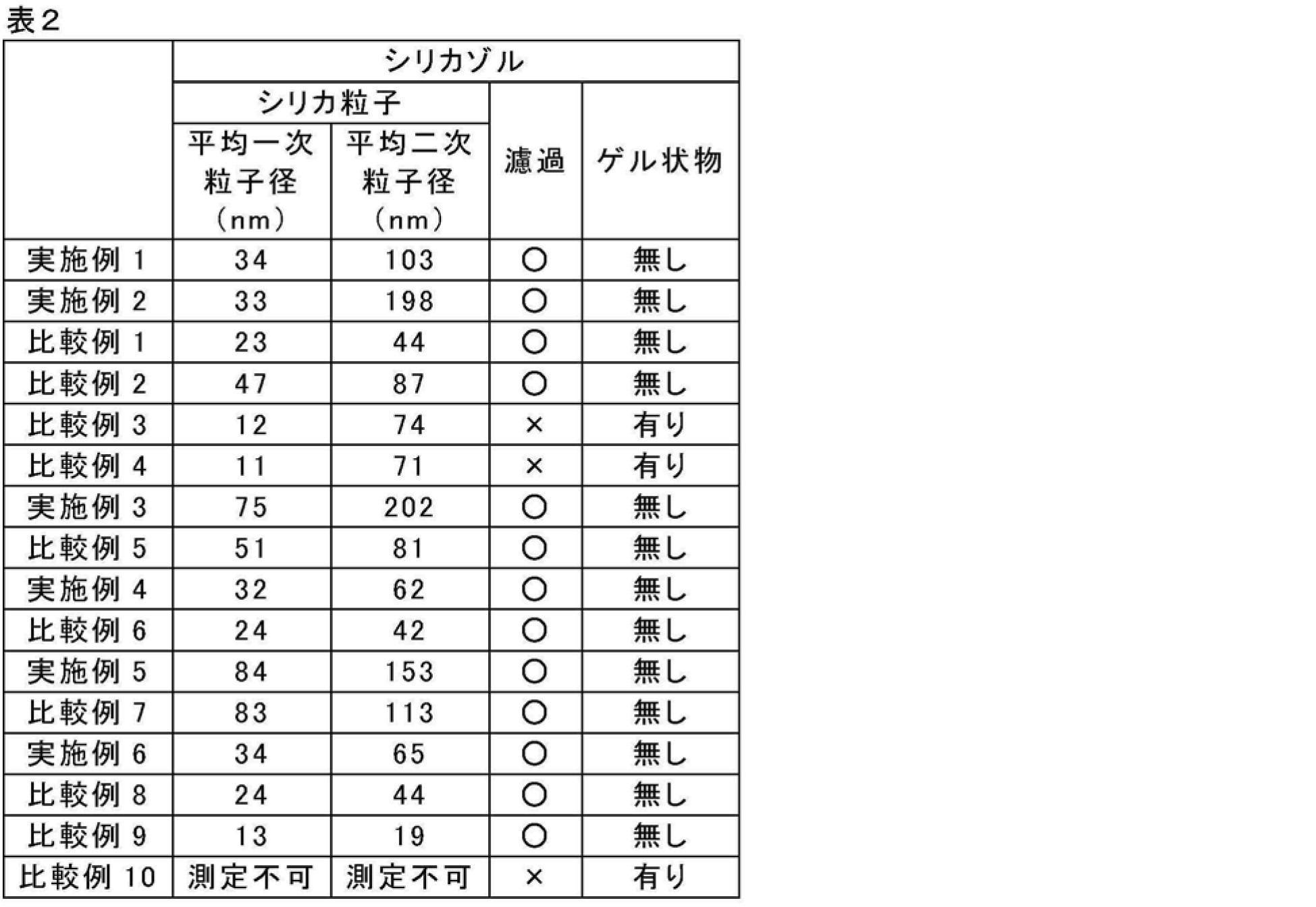
表2および図1~4に示されるように、実施例では、比較例と比べて、高会合度のシリカ粒子を含むシリカゾルを製造できることが分かる。また、実施例の場合、高会合度に加えて、中粒子径(平均二次粒子径:50~80nm)および大粒子径(平均二次粒子径:80nm超)のシリカ粒子を得られることが分かる。
本出願は、2017年3月30日に出願された日本国特許出願第2017-067969号に基づいており、その開示内容は、参照により全体として引用されている。
Claims (8)
- アルカリ触媒、水、第1の有機溶媒および会合用シリカ粒子を含む液(A)に、テトラメトキシシランおよびその縮合物の少なくとも一方ならびに第2の有機溶媒を含む液(B)を混合して反応液を作製する工程を含み、
前記混合において、前記液(B)の添加速度が、前記液(A)に含まれる水1molに対して、ケイ素原子換算で8.5×10⁻⁴~5.6×10⁻³mol/minである、
シリカゾルの製造方法。 - 前記液(A)中の水に対するアルカリ触媒のモル比が、0.01~0.30である、請求項1に記載の製造方法。
- 前記アルカリ触媒が、アンモニアである、請求項1または2に記載の製造方法。
- 前記液(A)が、アルカリ触媒、水、第1の有機溶媒および会合用シリカ粒子からなる、請求項1~3のいずれか1項に記載の製造方法。
- 前記液(B)が、テトラメトキシシランおよびその縮合物の少なくとも一方ならびに第2の有機溶媒からなる、請求項1~4のいずれか1項に記載の製造方法。
- 前記第1の有機溶媒および第2の有機溶媒が、メタノールである、請求項1~5のいずれか1項に記載の製造方法。
- 前記反応液の温度が、5~100℃である、請求項1~6のいずれか1項に記載の製造方法。
- 前記反応液の温度が、5~70℃である、請求項1~7のいずれか1項に記載の製造方法。
Priority Applications (3)
| Application Number | Priority Date | Filing Date | Title |
|---|---|---|---|
| KR1020197028015A KR102633383B1 (ko) | 2017-03-30 | 2018-02-01 | 실리카졸의 제조 방법 |
| US16/498,121 US20200377371A1 (en) | 2017-03-30 | 2018-02-01 | Method for producing silica sol |
| US18/543,060 US12371331B2 (en) | 2017-03-30 | 2023-12-18 | Method for producing silica sol |
Applications Claiming Priority (2)
| Application Number | Priority Date | Filing Date | Title |
|---|---|---|---|
| JP2017-067969 | 2017-03-30 | ||
| JP2017067969A JP6854683B2 (ja) | 2017-03-30 | 2017-03-30 | シリカゾルの製造方法 |
Related Child Applications (2)
| Application Number | Title | Priority Date | Filing Date |
|---|---|---|---|
| US16/498,121 A-371-Of-International US20200377371A1 (en) | 2017-03-30 | 2018-02-01 | Method for producing silica sol |
| US18/543,060 Continuation US12371331B2 (en) | 2017-03-30 | 2023-12-18 | Method for producing silica sol |
Publications (1)
| Publication Number | Publication Date |
|---|---|
| WO2018179818A1 true WO2018179818A1 (ja) | 2018-10-04 |
Family
ID=63674766
Family Applications (1)
| Application Number | Title | Priority Date | Filing Date |
|---|---|---|---|
| PCT/JP2018/003393 Ceased WO2018179818A1 (ja) | 2017-03-30 | 2018-02-01 | シリカゾルの製造方法 |
Country Status (5)
| Country | Link |
|---|---|
| US (2) | US20200377371A1 (ja) |
| JP (1) | JP6854683B2 (ja) |
| KR (1) | KR102633383B1 (ja) |
| TW (1) | TWI814718B (ja) |
| WO (1) | WO2018179818A1 (ja) |
Cited By (1)
| Publication number | Priority date | Publication date | Assignee | Title |
|---|---|---|---|---|
| JPWO2023157813A1 (ja) * | 2022-02-18 | 2023-08-24 |
Families Citing this family (10)
| Publication number | Priority date | Publication date | Assignee | Title |
|---|---|---|---|---|
| JP7470508B2 (ja) * | 2018-11-22 | 2024-04-18 | 株式会社日本触媒 | シリカ粉体、シリカ粉体の製造方法、および焼成シリカ粉体の製造方法 |
| JP7191755B2 (ja) * | 2019-03-28 | 2022-12-19 | 株式会社フジミインコーポレーテッド | シリカゾルの製造方法 |
| JP7351698B2 (ja) * | 2019-09-30 | 2023-09-27 | 日揮触媒化成株式会社 | シリカ粒子分散液及びその製造方法 |
| JP7424859B2 (ja) * | 2020-02-25 | 2024-01-30 | 日揮触媒化成株式会社 | シリカ微粒子分散液およびその製造方法 |
| JP7455623B2 (ja) * | 2020-03-13 | 2024-03-26 | 日揮触媒化成株式会社 | 粒子連結型シリカ微粒子分散液およびその製造方法、並びに研磨用砥粒分散液 |
| KR102485136B1 (ko) * | 2020-03-31 | 2023-01-06 | 한밭대학교 산학협력단 | 실리콘 비드의 제조 방법 |
| JP7441163B2 (ja) * | 2020-12-24 | 2024-02-29 | 日揮触媒化成株式会社 | シリカ微粒子分散液およびその製造方法 |
| JP2023004281A (ja) * | 2021-06-25 | 2023-01-17 | 三菱ケミカル株式会社 | シリカ粒子の製造方法、シリカゾルの製造方法及び研磨方法 |
| JP7712818B2 (ja) * | 2021-08-02 | 2025-07-24 | 日揮触媒化成株式会社 | 粒子連結型シリカ微粒子分散液およびその製造方法、並びに砥粒分散液 |
| JP2023132953A (ja) * | 2022-03-11 | 2023-09-22 | 三菱ケミカル株式会社 | シリカ粒子の製造方法及びシリカゾルの製造方法 |
Citations (4)
| Publication number | Priority date | Publication date | Assignee | Title |
|---|---|---|---|---|
| JPH02243508A (ja) * | 1989-03-16 | 1990-09-27 | Nissan Chem Ind Ltd | シリカ核粒子の成長方法 |
| JPH0648720A (ja) * | 1992-07-30 | 1994-02-22 | Ube Nitto Kasei Co Ltd | シリカ粒子の製造方法 |
| JP2005060217A (ja) * | 2003-07-25 | 2005-03-10 | Fuso Chemical Co Ltd | シリカゾル及びその製造方法 |
| JP2014198649A (ja) * | 2013-03-29 | 2014-10-23 | 日産化学工業株式会社 | シリカゾルの製造方法 |
Family Cites Families (14)
| Publication number | Priority date | Publication date | Assignee | Title |
|---|---|---|---|---|
| JPS61158810A (ja) | 1984-12-28 | 1986-07-18 | Shokubai Kasei Kogyo Kk | 高純度シリカゾルの製造法 |
| JPS63112411A (ja) * | 1986-10-28 | 1988-05-17 | Shin Nippon Kagaku Kogyo Co Ltd | シリカ粒子の製造方法 |
| JP3123652B2 (ja) * | 1990-01-11 | 2001-01-15 | 三菱化学株式会社 | 球状シリカの製造方法 |
| JP3330984B2 (ja) | 1992-09-04 | 2002-10-07 | 株式会社オハラ | 単分散球状シリカの製造方法 |
| JP3441142B2 (ja) * | 1994-02-04 | 2003-08-25 | 日産化学工業株式会社 | 半導体ウェーハーの研磨方法 |
| JPH10203820A (ja) * | 1997-01-17 | 1998-08-04 | Ube Nitto Kasei Co Ltd | シリカ粒子の製造方法 |
| JP3195569B2 (ja) | 1997-08-11 | 2001-08-06 | 守 磯 | 繭型コロイダルシリカの製造方法 |
| US6569908B2 (en) * | 2000-01-19 | 2003-05-27 | Oji Paper Co., Ltd. | Dispersion of silica particle agglomerates and process for producing the same |
| KR100613147B1 (ko) * | 2004-06-07 | 2006-08-17 | 요업기술원 | 표면 코팅층을 포함하는 화학 기계적 연마용 콜로이달 실리카의 제조방법 |
| TW200604097A (en) | 2004-07-26 | 2006-02-01 | Fuso Chemical Co Ltd | Silica sol and manufacturing method therefor |
| CN101492164A (zh) * | 2009-03-09 | 2009-07-29 | 东南大学 | 一种单分散二氧化硅微球的制备方法 |
| US10173902B2 (en) | 2009-10-20 | 2019-01-08 | Nippon Shokubai Co., Ltd. | Amorphous silica and process for producing same |
| CN102390838A (zh) * | 2011-08-22 | 2012-03-28 | 天津晶岭电子材料科技有限公司 | 一种非球形硅溶胶的制备方法 |
| JP2024112411A (ja) | 2023-02-08 | 2024-08-21 | 国立大学法人埼玉大学 | 力覚センサ |
-
2017
- 2017-03-30 JP JP2017067969A patent/JP6854683B2/ja active Active
-
2018
- 2018-02-01 KR KR1020197028015A patent/KR102633383B1/ko active Active
- 2018-02-01 US US16/498,121 patent/US20200377371A1/en not_active Abandoned
- 2018-02-01 WO PCT/JP2018/003393 patent/WO2018179818A1/ja not_active Ceased
- 2018-02-13 TW TW107105173A patent/TWI814718B/zh active
-
2023
- 2023-12-18 US US18/543,060 patent/US12371331B2/en active Active
Patent Citations (4)
| Publication number | Priority date | Publication date | Assignee | Title |
|---|---|---|---|---|
| JPH02243508A (ja) * | 1989-03-16 | 1990-09-27 | Nissan Chem Ind Ltd | シリカ核粒子の成長方法 |
| JPH0648720A (ja) * | 1992-07-30 | 1994-02-22 | Ube Nitto Kasei Co Ltd | シリカ粒子の製造方法 |
| JP2005060217A (ja) * | 2003-07-25 | 2005-03-10 | Fuso Chemical Co Ltd | シリカゾル及びその製造方法 |
| JP2014198649A (ja) * | 2013-03-29 | 2014-10-23 | 日産化学工業株式会社 | シリカゾルの製造方法 |
Cited By (3)
| Publication number | Priority date | Publication date | Assignee | Title |
|---|---|---|---|---|
| JPWO2023157813A1 (ja) * | 2022-02-18 | 2023-08-24 | ||
| WO2023157813A1 (ja) * | 2022-02-18 | 2023-08-24 | 三菱ケミカル株式会社 | シリカ粒子とその製造方法、シリカゾル、研磨組成物、研磨方法、半導体ウェハの製造方法及び半導体デバイスの製造方法 |
| JP7464201B2 (ja) | 2022-02-18 | 2024-04-09 | 三菱ケミカル株式会社 | シリカ粒子とその製造方法、シリカゾル、研磨組成物、研磨方法、半導体ウェハの製造方法及び半導体デバイスの製造方法 |
Also Published As
| Publication number | Publication date |
|---|---|
| US20200377371A1 (en) | 2020-12-03 |
| KR20190132640A (ko) | 2019-11-28 |
| KR102633383B1 (ko) | 2024-02-06 |
| JP6854683B2 (ja) | 2021-04-07 |
| JP2018168031A (ja) | 2018-11-01 |
| US12371331B2 (en) | 2025-07-29 |
| TWI814718B (zh) | 2023-09-11 |
| TW201840478A (zh) | 2018-11-16 |
| US20240116763A1 (en) | 2024-04-11 |
Similar Documents
| Publication | Publication Date | Title |
|---|---|---|
| JP6854683B2 (ja) | シリカゾルの製造方法 | |
| JP4566645B2 (ja) | シリカゾル及びその製造方法 | |
| JP5892882B2 (ja) | コロイダルシリカの製造方法 | |
| JP5080061B2 (ja) | 中性コロイダルシリカの製造方法 | |
| JP5644789B2 (ja) | 粉体組成物 | |
| TWI741116B (zh) | 二氧化矽粒子分散液及其製造方法 | |
| JPS6374911A (ja) | 微細球状シリカの製造法 | |
| JP6284443B2 (ja) | コアシェル型シリカ粒子を含有するコロイダルシリカの製造方法 | |
| WO2017022552A1 (ja) | シリカゾルの製造方法 | |
| JP5905767B2 (ja) | 中性コロイダルシリカ分散液の分散安定化方法及び分散安定性に優れた中性コロイダルシリカ分散液 | |
| JP6933976B2 (ja) | シリカ系粒子分散液及びその製造方法 | |
| JP2024110918A (ja) | シリカゾル | |
| JP2018108924A (ja) | シリカ粒子分散液及びその製造方法 | |
| JP2023016973A (ja) | シリカゾルの製造方法 | |
| TW202525712A (zh) | 膠體二氧化矽及膠體二氧化矽之製造方法 | |
| JP4458396B2 (ja) | 高純度親水性有機溶媒分散シリカゾルの製造方法及びその方法で得られる高純度親水性有機溶媒分散シリカゾル並びに高純度有機溶媒分散シリカゾルの製造方法及びその方法で得られる高純度有機溶媒分散シリカゾル | |
| JP2926915B2 (ja) | 細長い形状のシリカゾル及びその製法 | |
| JP7565671B2 (ja) | シリカゾルの製造方法及びシリカゾル中の中間生成物の抑制方法 | |
| JPWO2018181713A1 (ja) | シリカ粒子分散液の製造方法 | |
| US20250304451A1 (en) | Method for producing silica sol and silica sol | |
| JP7552145B2 (ja) | シリカゾル、シリカゾルの製造方法、研磨組成物、研磨方法及び半導体デバイスの製造方法 | |
| JP7505304B2 (ja) | シリカ粒子の製造装置、シリカ粒子の製造方法、シリカゾルの製造方法、シリカゾル中の中間生成物の抑制方法及び研磨方法 | |
| JP7731017B1 (ja) | コロイダルシリカの製造方法 | |
| JP7491081B2 (ja) | シリカ粒子の製造方法、シリカゾルの製造方法、研磨方法、半導体ウェハの製造方法及び半導体デバイスの製造方法 | |
| CN118439621A (zh) | 二氧化硅溶胶 |
Legal Events
| Date | Code | Title | Description |
|---|---|---|---|
| 121 | Ep: the epo has been informed by wipo that ep was designated in this application |
Ref document number: 18775270 Country of ref document: EP Kind code of ref document: A1 |
|
| ENP | Entry into the national phase |
Ref document number: 20197028015 Country of ref document: KR Kind code of ref document: A |
|
| NENP | Non-entry into the national phase |
Ref country code: DE |
|
| 122 | Ep: pct application non-entry in european phase |
Ref document number: 18775270 Country of ref document: EP Kind code of ref document: A1 |