WO2018159387A1 - 電気電子部品用結晶性ラジカル重合性組成物、当該組成物を使用した電気電子部品成形体、及び当該電気電子部品成形体の製造方法 - Google Patents
電気電子部品用結晶性ラジカル重合性組成物、当該組成物を使用した電気電子部品成形体、及び当該電気電子部品成形体の製造方法 Download PDFInfo
- Publication number
- WO2018159387A1 WO2018159387A1 PCT/JP2018/006007 JP2018006007W WO2018159387A1 WO 2018159387 A1 WO2018159387 A1 WO 2018159387A1 JP 2018006007 W JP2018006007 W JP 2018006007W WO 2018159387 A1 WO2018159387 A1 WO 2018159387A1
- Authority
- WO
- WIPO (PCT)
- Prior art keywords
- radical polymerizable
- polymerizable composition
- crystalline
- crystalline radical
- electric
- Prior art date
- Legal status (The legal status is an assumption and is not a legal conclusion. Google has not performed a legal analysis and makes no representation as to the accuracy of the status listed.)
- Ceased
Links
Classifications
-
- C—CHEMISTRY; METALLURGY
- C08—ORGANIC MACROMOLECULAR COMPOUNDS; THEIR PREPARATION OR CHEMICAL WORKING-UP; COMPOSITIONS BASED THEREON
- C08F—MACROMOLECULAR COMPOUNDS OBTAINED BY REACTIONS ONLY INVOLVING CARBON-TO-CARBON UNSATURATED BONDS
- C08F292/00—Macromolecular compounds obtained by polymerising monomers on to inorganic materials
-
- C—CHEMISTRY; METALLURGY
- C08—ORGANIC MACROMOLECULAR COMPOUNDS; THEIR PREPARATION OR CHEMICAL WORKING-UP; COMPOSITIONS BASED THEREON
- C08F—MACROMOLECULAR COMPOUNDS OBTAINED BY REACTIONS ONLY INVOLVING CARBON-TO-CARBON UNSATURATED BONDS
- C08F290/00—Macromolecular compounds obtained by polymerising monomers on to polymers modified by introduction of aliphatic unsaturated end or side groups
- C08F290/02—Macromolecular compounds obtained by polymerising monomers on to polymers modified by introduction of aliphatic unsaturated end or side groups on to polymers modified by introduction of unsaturated end groups
- C08F290/06—Polymers provided for in subclass C08G
- C08F290/061—Polyesters; Polycarbonates
-
- B—PERFORMING OPERATIONS; TRANSPORTING
- B29—WORKING OF PLASTICS; WORKING OF SUBSTANCES IN A PLASTIC STATE IN GENERAL
- B29C—SHAPING OR JOINING OF PLASTICS; SHAPING OF MATERIAL IN A PLASTIC STATE, NOT OTHERWISE PROVIDED FOR; AFTER-TREATMENT OF THE SHAPED PRODUCTS, e.g. REPAIRING
- B29C43/00—Compression moulding, i.e. applying external pressure to flow the moulding material; Apparatus therefor
- B29C43/003—Compression moulding, i.e. applying external pressure to flow the moulding material; Apparatus therefor characterised by the choice of material
-
- B—PERFORMING OPERATIONS; TRANSPORTING
- B29—WORKING OF PLASTICS; WORKING OF SUBSTANCES IN A PLASTIC STATE IN GENERAL
- B29C—SHAPING OR JOINING OF PLASTICS; SHAPING OF MATERIAL IN A PLASTIC STATE, NOT OTHERWISE PROVIDED FOR; AFTER-TREATMENT OF THE SHAPED PRODUCTS, e.g. REPAIRING
- B29C43/00—Compression moulding, i.e. applying external pressure to flow the moulding material; Apparatus therefor
- B29C43/02—Compression moulding, i.e. applying external pressure to flow the moulding material; Apparatus therefor of articles of definite length, i.e. discrete articles
- B29C43/18—Compression moulding, i.e. applying external pressure to flow the moulding material; Apparatus therefor of articles of definite length, i.e. discrete articles incorporating preformed parts or layers, e.g. compression moulding around inserts or for coating articles
-
- B—PERFORMING OPERATIONS; TRANSPORTING
- B29—WORKING OF PLASTICS; WORKING OF SUBSTANCES IN A PLASTIC STATE IN GENERAL
- B29C—SHAPING OR JOINING OF PLASTICS; SHAPING OF MATERIAL IN A PLASTIC STATE, NOT OTHERWISE PROVIDED FOR; AFTER-TREATMENT OF THE SHAPED PRODUCTS, e.g. REPAIRING
- B29C45/00—Injection moulding, i.e. forcing the required volume of moulding material through a nozzle into a closed mould; Apparatus therefor
- B29C45/0013—Injection moulding, i.e. forcing the required volume of moulding material through a nozzle into a closed mould; Apparatus therefor using fillers dispersed in the moulding material, e.g. metal particles
-
- C—CHEMISTRY; METALLURGY
- C08—ORGANIC MACROMOLECULAR COMPOUNDS; THEIR PREPARATION OR CHEMICAL WORKING-UP; COMPOSITIONS BASED THEREON
- C08F—MACROMOLECULAR COMPOUNDS OBTAINED BY REACTIONS ONLY INVOLVING CARBON-TO-CARBON UNSATURATED BONDS
- C08F2/00—Processes of polymerisation
- C08F2/44—Polymerisation in the presence of compounding ingredients, e.g. plasticisers, dyestuffs, fillers
-
- C—CHEMISTRY; METALLURGY
- C08—ORGANIC MACROMOLECULAR COMPOUNDS; THEIR PREPARATION OR CHEMICAL WORKING-UP; COMPOSITIONS BASED THEREON
- C08F—MACROMOLECULAR COMPOUNDS OBTAINED BY REACTIONS ONLY INVOLVING CARBON-TO-CARBON UNSATURATED BONDS
- C08F220/00—Copolymers of compounds having one or more unsaturated aliphatic radicals, each having only one carbon-to-carbon double bond, and only one being terminated by only one carboxyl radical or a salt, anhydride ester, amide, imide or nitrile thereof
- C08F220/02—Monocarboxylic acids having less than ten carbon atoms; Derivatives thereof
- C08F220/10—Esters
- C08F220/12—Esters of monohydric alcohols or phenols
- C08F220/16—Esters of monohydric alcohols or phenols of phenols or of alcohols containing two or more carbon atoms
- C08F220/18—Esters of monohydric alcohols or phenols of phenols or of alcohols containing two or more carbon atoms with acrylic or methacrylic acids
-
- C—CHEMISTRY; METALLURGY
- C08—ORGANIC MACROMOLECULAR COMPOUNDS; THEIR PREPARATION OR CHEMICAL WORKING-UP; COMPOSITIONS BASED THEREON
- C08F—MACROMOLECULAR COMPOUNDS OBTAINED BY REACTIONS ONLY INVOLVING CARBON-TO-CARBON UNSATURATED BONDS
- C08F220/00—Copolymers of compounds having one or more unsaturated aliphatic radicals, each having only one carbon-to-carbon double bond, and only one being terminated by only one carboxyl radical or a salt, anhydride ester, amide, imide or nitrile thereof
- C08F220/02—Monocarboxylic acids having less than ten carbon atoms; Derivatives thereof
- C08F220/10—Esters
- C08F220/26—Esters containing oxygen in addition to the carboxy oxygen
- C08F220/28—Esters containing oxygen in addition to the carboxy oxygen containing no aromatic rings in the alcohol moiety
- C08F220/285—Esters containing oxygen in addition to the carboxy oxygen containing no aromatic rings in the alcohol moiety and containing a polyether chain in the alcohol moiety
-
- C—CHEMISTRY; METALLURGY
- C08—ORGANIC MACROMOLECULAR COMPOUNDS; THEIR PREPARATION OR CHEMICAL WORKING-UP; COMPOSITIONS BASED THEREON
- C08F—MACROMOLECULAR COMPOUNDS OBTAINED BY REACTIONS ONLY INVOLVING CARBON-TO-CARBON UNSATURATED BONDS
- C08F220/00—Copolymers of compounds having one or more unsaturated aliphatic radicals, each having only one carbon-to-carbon double bond, and only one being terminated by only one carboxyl radical or a salt, anhydride ester, amide, imide or nitrile thereof
- C08F220/02—Monocarboxylic acids having less than ten carbon atoms; Derivatives thereof
- C08F220/10—Esters
- C08F220/26—Esters containing oxygen in addition to the carboxy oxygen
- C08F220/32—Esters containing oxygen in addition to the carboxy oxygen containing epoxy radicals
-
- C—CHEMISTRY; METALLURGY
- C08—ORGANIC MACROMOLECULAR COMPOUNDS; THEIR PREPARATION OR CHEMICAL WORKING-UP; COMPOSITIONS BASED THEREON
- C08F—MACROMOLECULAR COMPOUNDS OBTAINED BY REACTIONS ONLY INVOLVING CARBON-TO-CARBON UNSATURATED BONDS
- C08F220/00—Copolymers of compounds having one or more unsaturated aliphatic radicals, each having only one carbon-to-carbon double bond, and only one being terminated by only one carboxyl radical or a salt, anhydride ester, amide, imide or nitrile thereof
- C08F220/02—Monocarboxylic acids having less than ten carbon atoms; Derivatives thereof
- C08F220/10—Esters
- C08F220/34—Esters containing nitrogen, e.g. N,N-dimethylaminoethyl (meth)acrylate
- C08F220/343—Esters containing nitrogen, e.g. N,N-dimethylaminoethyl (meth)acrylate in the form of urethane links
-
- C—CHEMISTRY; METALLURGY
- C08—ORGANIC MACROMOLECULAR COMPOUNDS; THEIR PREPARATION OR CHEMICAL WORKING-UP; COMPOSITIONS BASED THEREON
- C08F—MACROMOLECULAR COMPOUNDS OBTAINED BY REACTIONS ONLY INVOLVING CARBON-TO-CARBON UNSATURATED BONDS
- C08F283/00—Macromolecular compounds obtained by polymerising monomers on to polymers provided for in subclass C08G
- C08F283/01—Macromolecular compounds obtained by polymerising monomers on to polymers provided for in subclass C08G on to unsaturated polyesters
-
- C—CHEMISTRY; METALLURGY
- C08—ORGANIC MACROMOLECULAR COMPOUNDS; THEIR PREPARATION OR CHEMICAL WORKING-UP; COMPOSITIONS BASED THEREON
- C08F—MACROMOLECULAR COMPOUNDS OBTAINED BY REACTIONS ONLY INVOLVING CARBON-TO-CARBON UNSATURATED BONDS
- C08F290/00—Macromolecular compounds obtained by polymerising monomers on to polymers modified by introduction of aliphatic unsaturated end or side groups
- C08F290/02—Macromolecular compounds obtained by polymerising monomers on to polymers modified by introduction of aliphatic unsaturated end or side groups on to polymers modified by introduction of unsaturated end groups
- C08F290/06—Polymers provided for in subclass C08G
- C08F290/064—Polymers containing more than one epoxy group per molecule
-
- C—CHEMISTRY; METALLURGY
- C08—ORGANIC MACROMOLECULAR COMPOUNDS; THEIR PREPARATION OR CHEMICAL WORKING-UP; COMPOSITIONS BASED THEREON
- C08F—MACROMOLECULAR COMPOUNDS OBTAINED BY REACTIONS ONLY INVOLVING CARBON-TO-CARBON UNSATURATED BONDS
- C08F290/00—Macromolecular compounds obtained by polymerising monomers on to polymers modified by introduction of aliphatic unsaturated end or side groups
- C08F290/02—Macromolecular compounds obtained by polymerising monomers on to polymers modified by introduction of aliphatic unsaturated end or side groups on to polymers modified by introduction of unsaturated end groups
- C08F290/06—Polymers provided for in subclass C08G
- C08F290/067—Polyurethanes; Polyureas
-
- C—CHEMISTRY; METALLURGY
- C08—ORGANIC MACROMOLECULAR COMPOUNDS; THEIR PREPARATION OR CHEMICAL WORKING-UP; COMPOSITIONS BASED THEREON
- C08F—MACROMOLECULAR COMPOUNDS OBTAINED BY REACTIONS ONLY INVOLVING CARBON-TO-CARBON UNSATURATED BONDS
- C08F299/00—Macromolecular compounds obtained by interreacting polymers involving only carbon-to-carbon unsaturated bond reactions, in the absence of non-macromolecular monomers
-
- C—CHEMISTRY; METALLURGY
- C08—ORGANIC MACROMOLECULAR COMPOUNDS; THEIR PREPARATION OR CHEMICAL WORKING-UP; COMPOSITIONS BASED THEREON
- C08K—Use of inorganic or non-macromolecular organic substances as compounding ingredients
- C08K3/00—Use of inorganic substances as compounding ingredients
- C08K3/01—Use of inorganic substances as compounding ingredients characterized by their specific function
- C08K3/013—Fillers, pigments or reinforcing additives
-
- C—CHEMISTRY; METALLURGY
- C08—ORGANIC MACROMOLECULAR COMPOUNDS; THEIR PREPARATION OR CHEMICAL WORKING-UP; COMPOSITIONS BASED THEREON
- C08K—Use of inorganic or non-macromolecular organic substances as compounding ingredients
- C08K3/00—Use of inorganic substances as compounding ingredients
- C08K3/18—Oxygen-containing compounds, e.g. metal carbonyls
- C08K3/24—Acids; Salts thereof
- C08K3/26—Carbonates; Bicarbonates
-
- C—CHEMISTRY; METALLURGY
- C08—ORGANIC MACROMOLECULAR COMPOUNDS; THEIR PREPARATION OR CHEMICAL WORKING-UP; COMPOSITIONS BASED THEREON
- C08K—Use of inorganic or non-macromolecular organic substances as compounding ingredients
- C08K3/00—Use of inorganic substances as compounding ingredients
- C08K3/34—Silicon-containing compounds
- C08K3/36—Silica
-
- C—CHEMISTRY; METALLURGY
- C08—ORGANIC MACROMOLECULAR COMPOUNDS; THEIR PREPARATION OR CHEMICAL WORKING-UP; COMPOSITIONS BASED THEREON
- C08K—Use of inorganic or non-macromolecular organic substances as compounding ingredients
- C08K5/00—Use of organic ingredients
- C08K5/54—Silicon-containing compounds
-
- C—CHEMISTRY; METALLURGY
- C08—ORGANIC MACROMOLECULAR COMPOUNDS; THEIR PREPARATION OR CHEMICAL WORKING-UP; COMPOSITIONS BASED THEREON
- C08L—COMPOSITIONS OF MACROMOLECULAR COMPOUNDS
- C08L33/00—Compositions of homopolymers or copolymers of compounds having one or more unsaturated aliphatic radicals, each having only one carbon-to-carbon double bond, and only one being terminated by only one carboxyl radical, or of salts, anhydrides, esters, amides, imides or nitriles thereof; Compositions of derivatives of such polymers
- C08L33/04—Homopolymers or copolymers of esters
- C08L33/06—Homopolymers or copolymers of esters of esters containing only carbon, hydrogen and oxygen, which oxygen atoms are present only as part of the carboxyl radical
- C08L33/08—Homopolymers or copolymers of acrylic acid esters
-
- H—ELECTRICITY
- H10—SEMICONDUCTOR DEVICES; ELECTRIC SOLID-STATE DEVICES NOT OTHERWISE PROVIDED FOR
- H10W—GENERIC PACKAGES, INTERCONNECTIONS, CONNECTORS OR OTHER CONSTRUCTIONAL DETAILS OF DEVICES COVERED BY CLASS H10
- H10W74/00—Encapsulations, e.g. protective coatings
- H10W74/01—Manufacture or treatment
-
- H—ELECTRICITY
- H10—SEMICONDUCTOR DEVICES; ELECTRIC SOLID-STATE DEVICES NOT OTHERWISE PROVIDED FOR
- H10W—GENERIC PACKAGES, INTERCONNECTIONS, CONNECTORS OR OTHER CONSTRUCTIONAL DETAILS OF DEVICES COVERED BY CLASS H10
- H10W74/00—Encapsulations, e.g. protective coatings
- H10W74/40—Encapsulations, e.g. protective coatings characterised by their materials
- H10W74/47—Encapsulations, e.g. protective coatings characterised by their materials comprising organic materials, e.g. plastics or resins
-
- H—ELECTRICITY
- H10—SEMICONDUCTOR DEVICES; ELECTRIC SOLID-STATE DEVICES NOT OTHERWISE PROVIDED FOR
- H10W—GENERIC PACKAGES, INTERCONNECTIONS, CONNECTORS OR OTHER CONSTRUCTIONAL DETAILS OF DEVICES COVERED BY CLASS H10
- H10W74/00—Encapsulations, e.g. protective coatings
- H10W74/40—Encapsulations, e.g. protective coatings characterised by their materials
- H10W74/47—Encapsulations, e.g. protective coatings characterised by their materials comprising organic materials, e.g. plastics or resins
- H10W74/473—Encapsulations, e.g. protective coatings characterised by their materials comprising organic materials, e.g. plastics or resins containing a filler
-
- B—PERFORMING OPERATIONS; TRANSPORTING
- B29—WORKING OF PLASTICS; WORKING OF SUBSTANCES IN A PLASTIC STATE IN GENERAL
- B29C—SHAPING OR JOINING OF PLASTICS; SHAPING OF MATERIAL IN A PLASTIC STATE, NOT OTHERWISE PROVIDED FOR; AFTER-TREATMENT OF THE SHAPED PRODUCTS, e.g. REPAIRING
- B29C43/00—Compression moulding, i.e. applying external pressure to flow the moulding material; Apparatus therefor
- B29C43/02—Compression moulding, i.e. applying external pressure to flow the moulding material; Apparatus therefor of articles of definite length, i.e. discrete articles
- B29C43/18—Compression moulding, i.e. applying external pressure to flow the moulding material; Apparatus therefor of articles of definite length, i.e. discrete articles incorporating preformed parts or layers, e.g. compression moulding around inserts or for coating articles
- B29C2043/181—Compression moulding, i.e. applying external pressure to flow the moulding material; Apparatus therefor of articles of definite length, i.e. discrete articles incorporating preformed parts or layers, e.g. compression moulding around inserts or for coating articles encapsulated
- B29C2043/182—Compression moulding, i.e. applying external pressure to flow the moulding material; Apparatus therefor of articles of definite length, i.e. discrete articles incorporating preformed parts or layers, e.g. compression moulding around inserts or for coating articles encapsulated completely
-
- B—PERFORMING OPERATIONS; TRANSPORTING
- B29—WORKING OF PLASTICS; WORKING OF SUBSTANCES IN A PLASTIC STATE IN GENERAL
- B29C—SHAPING OR JOINING OF PLASTICS; SHAPING OF MATERIAL IN A PLASTIC STATE, NOT OTHERWISE PROVIDED FOR; AFTER-TREATMENT OF THE SHAPED PRODUCTS, e.g. REPAIRING
- B29C45/00—Injection moulding, i.e. forcing the required volume of moulding material through a nozzle into a closed mould; Apparatus therefor
- B29C2045/0091—Pellets or granules, e.g. their structure, composition, length, height, width
-
- B—PERFORMING OPERATIONS; TRANSPORTING
- B29—WORKING OF PLASTICS; WORKING OF SUBSTANCES IN A PLASTIC STATE IN GENERAL
- B29C—SHAPING OR JOINING OF PLASTICS; SHAPING OF MATERIAL IN A PLASTIC STATE, NOT OTHERWISE PROVIDED FOR; AFTER-TREATMENT OF THE SHAPED PRODUCTS, e.g. REPAIRING
- B29C43/00—Compression moulding, i.e. applying external pressure to flow the moulding material; Apparatus therefor
- B29C43/006—Pressing and sintering powders, granules or fibres
-
- B—PERFORMING OPERATIONS; TRANSPORTING
- B29—WORKING OF PLASTICS; WORKING OF SUBSTANCES IN A PLASTIC STATE IN GENERAL
- B29K—INDEXING SCHEME ASSOCIATED WITH SUBCLASSES B29B, B29C OR B29D, RELATING TO MOULDING MATERIALS OR TO MATERIALS FOR MOULDS, REINFORCEMENTS, FILLERS OR PREFORMED PARTS, e.g. INSERTS
- B29K2033/00—Use of polymers of unsaturated acids or derivatives thereof as moulding material
- B29K2033/04—Polymers of esters
- B29K2033/08—Polymers of acrylic acid esters, e.g. PMA, i.e. polymethylacrylate
-
- B—PERFORMING OPERATIONS; TRANSPORTING
- B29—WORKING OF PLASTICS; WORKING OF SUBSTANCES IN A PLASTIC STATE IN GENERAL
- B29K—INDEXING SCHEME ASSOCIATED WITH SUBCLASSES B29B, B29C OR B29D, RELATING TO MOULDING MATERIALS OR TO MATERIALS FOR MOULDS, REINFORCEMENTS, FILLERS OR PREFORMED PARTS, e.g. INSERTS
- B29K2995/00—Properties of moulding materials, reinforcements, fillers, preformed parts or moulds
- B29K2995/0012—Properties of moulding materials, reinforcements, fillers, preformed parts or moulds having particular thermal properties
- B29K2995/0013—Conductive
-
- B—PERFORMING OPERATIONS; TRANSPORTING
- B29—WORKING OF PLASTICS; WORKING OF SUBSTANCES IN A PLASTIC STATE IN GENERAL
- B29K—INDEXING SCHEME ASSOCIATED WITH SUBCLASSES B29B, B29C OR B29D, RELATING TO MOULDING MATERIALS OR TO MATERIALS FOR MOULDS, REINFORCEMENTS, FILLERS OR PREFORMED PARTS, e.g. INSERTS
- B29K2995/00—Properties of moulding materials, reinforcements, fillers, preformed parts or moulds
- B29K2995/0037—Other properties
- B29K2995/0041—Crystalline
-
- C—CHEMISTRY; METALLURGY
- C08—ORGANIC MACROMOLECULAR COMPOUNDS; THEIR PREPARATION OR CHEMICAL WORKING-UP; COMPOSITIONS BASED THEREON
- C08K—Use of inorganic or non-macromolecular organic substances as compounding ingredients
- C08K3/00—Use of inorganic substances as compounding ingredients
- C08K3/18—Oxygen-containing compounds, e.g. metal carbonyls
- C08K3/24—Acids; Salts thereof
- C08K3/26—Carbonates; Bicarbonates
- C08K2003/265—Calcium, strontium or barium carbonate
-
- C—CHEMISTRY; METALLURGY
- C08—ORGANIC MACROMOLECULAR COMPOUNDS; THEIR PREPARATION OR CHEMICAL WORKING-UP; COMPOSITIONS BASED THEREON
- C08L—COMPOSITIONS OF MACROMOLECULAR COMPOUNDS
- C08L2203/00—Applications
- C08L2203/20—Applications use in electrical or conductive gadgets
- C08L2203/206—Applications use in electrical or conductive gadgets use in coating or encapsulating of electronic parts
Definitions
- the present invention relates to a crystalline radical polymerizable composition for sealing electric and electronic parts, an electric and electronic part sealing body sealed with the composition, and a granular radical polymerizable composition for sealing electric and electronic parts.
- the present invention relates to a manufacturing method of a product and an electrical / electronic component sealing body.
- the present invention also relates to a crystalline radical polymerizable composition for electric and electronic parts, an electric and electronic part molded article formed from the composition, a granular material made of the crystalline radical polymerizable composition for electric and electronic parts, and an electric
- the present invention relates to a method for manufacturing an electronic component molded body.
- liquid epoxy resins have been used that have good adhesion to resin substrates and metals, and are excellent in mechanical strength and fluidity.
- EMC tablet-shaped epoxy molding compounds
- Patent Document 1 epoxy resin compositions for sealing, electronic devices, automobiles, and methods for manufacturing electronic devices are known.
- Patent Document 2 a manufacturing method of a semiconductor device and an acrylic resin composition for semiconductor sealing used therein are known (for example, Patent Document 2).
- Patent Document 3 a heat conductive resin composition is conventionally known (for example, Patent Document 3).
- unsaturated polyester resin compositions and encapsulated motors are known (for example, Patent Document 4).
- JP 2014-148586 A Japanese Patent Laid-Open No. 2015-2204 Japanese Patent No. 6041157 Japanese Patent No. 5727728
- Sealing molding using liquid epoxy resin is manufactured by a method with relatively poor productivity such as compression molding and casting. Therefore, a highly productive manufacturing method is expected.
- the sealing epoxy resin composition is molded by a transfer molding method.
- the epoxy resin composition used for transfer molding needs to return the frozen resin composition to room temperature.
- problems such as a significant decrease in fluidity and a post-curing for several hours in order to obtain the required molded product characteristics because the epoxy resin composition does not completely cure during the molding time.
- Patent Document 1 there is a description of (meth) acrylate resin, unsaturated polyester resin, diallyl phthalate resin, which are radically polymerizable compounds as thermosetting resins, but specific methods for using these radically polymerizable compounds There is no detailed description of the examples. Furthermore, since the curing agent is not described as a radical polymerization initiator, the radical polymerizable compound cannot be three-dimensionally crosslinked even if a (meth) acrylate resin, an unsaturated polyester resin, or a diallyl phthalate resin is used. Therefore, the curing agent described in Patent Document 1 is limited to one that can three-dimensionally crosslink an epoxy resin. Therefore, patent document 1 is the content of an epoxy resin composition in fact.
- the acrylic resin composition for semiconductor encapsulation is liquid at room temperature. Since it is liquid at room temperature, the fluidity is very good, but the acrylic resin composition is liquid at room temperature, so stickiness, workability and handling are poor, and it is used in solid pellets and tablets at room temperature. It cannot be handled by general-purpose molding machines. Moreover, since bubbles tend to remain in the resin composition during molding by casting, it is difficult to control the bubbles. In addition, the liquid resin composition has a problem in that it is difficult to obtain a uniform molded product because the filler tends to settle when an inorganic filler is used, compared to the solid resin composition.
- an object of the present invention is to provide a crystalline radical polymerizable composition having excellent fluidity and good handleability.
- the resin composition has a high thermal conductivity.
- a molding material having a high thermal conductivity contains a large amount of a thermal conductive filler, so that the fluidity is lowered.
- the material having insulating properties and high thermal conductivity is expensive, its use is limited because of its low versatility.
- BMC Molding Compound
- the present invention is to provide a crystalline radical polymerizable composition having excellent thermal conductivity and good handleability.
- the present inventor has found the crystalline radical polymerizable composition for sealing electric and electronic parts of the present invention. It was.
- the crystalline radical polymerizable composition for sealing electric and electronic parts of the present invention comprises at least a crystalline radical polymerizable compound, an inorganic filler, a silane coupling agent, and a radical polymerization initiator.
- the crystalline radical polymerizable compound is an unsaturated polyester, epoxy (meth) acrylate, urethane (meth) acrylate, polyester. It contains at least one selected from (meth) acrylates, polyether (meth) acrylates, radical polymerizable monomers, and radical polymerizable multimers.
- the crystalline radical polymerizable compound has a melting point in the range of 30 to 150 ° C.
- the crystalline radical polymerizable composition for sealing electric and electronic parts of the present invention, is solid at 23 ° C.
- the melt viscosity of the crystalline radical polymerizable composition by the Koka flow tester is measured at 90 ° C.
- the diameter is 0.5 mm
- the length is 1.0 mm
- the pressure is 7 to 1000 Pa ⁇ s at a pressure of 30 kgf / cm 2, or 1 to 7 Pa ⁇ s at a pressure of 1 kgf / cm 2.
- the inorganic filler is 50 to 95% by weight based on the total amount of the crystalline radical polymerizable composition. It is characterized by.
- the ratio of the crystalline radical polymerizable compound to the total amount of the radical polymerizable compound is 30 parts by weight or more. To do.
- the crystalline radical polymerizable compound has a weight average molecular weight of 100 to 100,000.
- the electrical and electronic component sealing body of the present invention is characterized by being sealed with the crystalline radical polymerizable composition for electrical and electronic component sealing of the present invention.
- the granular material of the present invention is characterized by comprising the crystalline radical polymerizable composition for sealing electric and electronic parts of the present invention.
- the method for producing an encapsulated body of electric and electronic parts according to the present invention comprises subjecting the granular material comprising the crystalline radical polymerizable composition for encapsulating electric and electronic parts of the present invention to an injection molding method or an insert molding method using a transfer molding method. It has the process of sealing an electrical and electronic component, It is characterized by the above-mentioned.
- the present inventor has found the crystalline radical polymerizable composition for electric and electronic parts of the present invention. It was.
- the crystalline radical polymerizable composition for electric and electronic parts of the present invention is characterized by containing at least a crystalline radical polymerizable compound, an inorganic filler, a silane coupling agent, and a radical polymerization initiator. .
- the molded article obtained by molding the crystalline radical polymerizable composition for electric and electronic parts has a thermal conductivity of 1.0 W / m. ⁇ It is characterized by K or more.
- the crystalline radical polymerizable compound is an unsaturated polyester, epoxy (meth) acrylate, urethane (meth) acrylate, polyester (meta 1) or more selected from acrylate, polyether (meth) acrylate, radical polymerizable monomer, radical polymerizable multimer.
- the crystalline radical polymerizable compound has a melting point in the range of 30 to 150 ° C.
- the crystalline radical polymerizable composition for electric and electronic parts of the present invention, is solid at 23 ° C.
- the inorganic filler is 40 to 95% by weight based on the total amount of the crystalline radical polymerizable composition.
- the ratio of the crystalline radical polymerizable compound to the total amount of the radical polymerizable compound is 25 parts by weight or more.
- the crystalline radical polymerizable compound has a weight average molecular weight of 70 to 100,000.
- the electric / electronic component molded body of the present invention is characterized by being molded by the crystalline radical polymerizable composition for electric / electronic component of the present invention.
- the molded body has a thermal conductivity of 1.0 W / m ⁇ K or more.
- the granular material of the present invention is characterized by comprising the crystalline radical polymerizable composition for electric and electronic parts of the present invention.
- the method for producing an electric / electronic component molded body of the present invention comprises subjecting the granular material comprising the crystalline radical polymerizable composition for electric / electronic component of the present invention to an injection molding method, a transfer molding method, a compression molding method, or a hot molding method. It has the shaping
- the crystalline radical polymerizable composition for sealing electric and electronic parts of the present invention an effect excellent in handleability is exhibited. Furthermore, according to the method for producing an electrical / electronic component encapsulant of the present invention, since the crystalline radical polymerizable composition has an extremely low viscosity when heated and melted during injection molding and transfer molding, There is an advantageous effect that the fluidity necessary for sealing can be secured.
- an encapsulated body for electric and electronic parts that is encapsulated with a crystalline radical polymerizable composition for encapsulating electric and electronic parts.
- the manufacturing method of the sealing body of electrical and electronic parts which has the process of sealing the electrical and electronic parts by the insert molding method of the granular material, powder, and tablet which consist of crystalline radically polymerizable composition for electrical and electronic parts sealing by this invention can be provided.
- the crystalline radical polymerizable composition for electric and electronic parts of the present invention there is an effect excellent in thermal conductivity and handleability. Furthermore, according to the method for producing an electric / electronic component of the present invention, the fluidity necessary for molding the electric / electronic component can be ensured because the radical polymerizable composition has a low viscosity when heated and melted during injection molding and transfer molding. There is an advantageous effect. Moreover, the electrical / electronic component molded object shape
- the crystalline radical polymerizable composition for sealing electric and electronic parts of the present invention is characterized by comprising at least a crystalline radical polymerizable compound, an inorganic filler, a silane coupling agent, and a radical polymerization initiator. .
- a crystalline radical polymerizable composition for sealing electric and electronic parts may be referred to as a crystalline radical polymerizable composition.
- the crystalline radical polymerizable compound is an unsaturated polyester, epoxy (meth) acrylate, urethane (meth) acrylate, polyester. It contains at least one selected from (meth) acrylates, polyether (meth) acrylates, radical polymerizable monomers, and radical polymerizable multimers.
- the crystalline radical polymerizable compound is a crystalline unsaturated polyester, crystalline epoxy (meth) acrylate, crystalline urethane (meth) acrylate, crystalline polyester (meta ) Acrylate, crystalline polyether (meth) acrylate, crystalline radical polymerizable monomer, or crystalline radical polymerizable multimer.
- the mechanical properties and handleability are improved (the crystallinity may be omitted even in the following).
- the crystalline compound can be a compound having a glass transition point and a melting point. These temperatures can be confirmed by a thermal analyzer such as DSC (differential differential scanning calorimeter) or TGDTA (simultaneous differential thermal thermogravimetric measuring instrument).
- the crystalline compound in the present invention can be a compound whose melting point can be confirmed by a thermal analyzer.
- the crystalline radical polymerizable compound is selected from the viewpoints of workability and moldability from the crystalline radical polymerizable compound.
- the melting point is 30 to 150 ° C., more preferably 30 to 120 ° C., and still more preferably 30 to 100 ° C.
- the melting point of the crystalline radical polymerizable compound When the melting point of the crystalline radical polymerizable compound is lower than the above range, the crystalline radical polymerizable composition tends to become liquid at room temperature, and thus the crystalline radical polymerizable composition may be difficult to maintain a solid.
- the melting point of the crystalline radical polymerizable compound is higher than the above range, it is close to the molding temperature of the mold, so that the time from the start of flow to curing is shortened, and molding failure may occur.
- the crystalline radical polymerizable composition is at 23 ° C. from the viewpoint of handling of the crystalline radical polymerizable compound. It is characterized by being a solid. The above range is because the shape of the composition does not change in the production, molding, and transportation environment of the crystalline radical polymerizable composition, and continuous production is possible with general-purpose production equipment and conditions. It should be noted that solids can be those whose shape and volume are not easily changed by an external force.
- the melt viscosity of the crystalline radical polymerizable composition by the Koka flow tester is measured at the temperature measured. 90 ° C., die diameter 0.5 mm, length 1.0 mm, pressure 7 kg / cm 2 to 7 to 1000 Pa ⁇ s, pressure 1 kgf / cm 2 to 1 to 7 Pa ⁇ s, more preferably 1 to 100 Pa ⁇ s Range.
- melt viscosity of the crystalline radically polymerizable composition is lower than the above range, many thin burrs are generated, making it difficult for the burrs to peel off from the mold, and further, continuous molding is difficult because the composition enters the gaps in the mold.
- melt viscosity is higher than the above range, the filling property is poor at the time of molding, and the product may not be obtained.
- the inorganic filler is 50 to 50% based on the total amount of the crystalline radical polymerizable composition. It is 95% by weight, more preferably 55 to 93% by weight, still more preferably 60 to 90% by weight.
- the amount of the inorganic filler is less than the above range, the range is such that the shrinkage rate is large and the molded product is deformed. If the amount is greater than the above range, the melt viscosity at the time of molding is high and the insert is loaded, This is because the insert may be damaged.
- the ratio of the crystalline radical polymerizable compound to the total amount of the radical polymerizable compound is 30 parts by weight. It is above, More preferably, it can be 40 weight part or more, More preferably, it can be 50 weight part or more.
- the reason why the above range is set is that when the ratio of the crystalline radical polymerizable compound is less than the above range, it may be difficult to become a solid.
- the radical polymerizable compound may include a crystalline radical polymerizable compound and an amorphous radical polymerizable compound.
- the crystalline radical polymerizable compound is based on the total amount of these radical polymerizable compounds.
- An example of a preferred embodiment of the ratio is defined.
- the weight average molecular weight of the crystalline radical polymerizable compound is 100 to 100,000, more preferably 100 to 50,000, and even more preferably 150 to 30,000.
- the above range is because the crystalline radical polymerizable composition is less likely to become a solid when the weight average molecular weight of the crystalline radical polymerizable compound is smaller than the above range, and the crystalline radical polymerizable is larger than the above range. This is because the molecular weight of the composition cannot be controlled with high accuracy, so that the compound characteristics and the composition characteristics may fluctuate.
- the electrical and electronic component sealing body of the present invention is characterized by being sealed with the crystalline radical polymerizable composition for electrical and electronic component sealing of the present invention.
- the granular material of the present invention is characterized by comprising the crystalline radical polymerizable composition for sealing electric and electronic parts of the present invention.
- the present invention may be a granular material, a powder, a tablet, or the like. That is, in the case other than the granular material, the powder, tablet and the like of the present invention can be composed of the crystalline radical polymerizable composition for sealing electric and electronic parts of the present invention.
- the method for producing an encapsulated body of electric and electronic parts according to the present invention comprises subjecting the granular material comprising the crystalline radical polymerizable composition for encapsulating electric and electronic parts of the present invention to an injection molding method or an insert molding method using a transfer molding method. It has the process of sealing an electrical and electronic component, It is characterized by the above-mentioned.
- the sealing body for electrical and electronic parts is a sealing body including an insert.
- the sealing body for electrical and electronic parts is a molded body in which a capacitor, an integrated circuit, and the like are bonded to a substrate and integrally cover them.
- the electrical / electronic component joined to the substrate may cause damage to the electrical / electronic component due to flow pressure such as injection molding or transfer molding using a highly viscous molding material.
- the electrical / electronic component can include a semiconductor or the like in addition to a so-called electrical / electronic component. Therefore, these sealing bodies for electric and electronic parts can also be used for semiconductor sealing bodies.
- the composition of the present invention can be widely applied to sealing bodies that require handling properties, fluidity, and the like.
- a composition having a low melt viscosity and good fluidity is soft at room temperature, which may cause problems in handling.
- the soft composition becomes a lump, and in the injection molding method, the composition is fused in the hopper.
- the transfer molding method the pre-molded tablet is fused, and further, the shape change occurs, and the tablet in the transfer molding machine. There is a possibility that a problem that the insertion hole does not enter may occur.
- the present invention exhibits an excellent effect of having high productivity by satisfying both fluidity and handleability.
- the unsaturated polyester used in the present invention is, for example, an unsaturated polybasic acid, a saturated polybasic acid, and glycols obtained by a known dehydration condensation reaction, and usually has an acid value of 2 to 40 mg-KOH / g. Can have.
- the unsaturated polybasic acid, the selection and combination of the acid components of the saturated polybasic acid, the selection and combination of glycols, and the unsaturated which has crystallinity by appropriately selecting the blending ratio, etc. It can be polyester.
- unsaturated polybasic acids include maleic acid, maleic anhydride, fumaric acid, citraconic acid, mesaconic acid, itaconic acid, tetrahydrophthalic acid, tetrahydrophthalic anhydride, methyltetrahydrophthalic anhydride, and glutaconic acid.
- Saturated polybasic acids are phthalic acid, phthalic anhydride, isophthalic acid, terephthalic acid, succinic acid, adipic acid, sebacic acid, azelaic acid, tetrahydrophthalic anhydride, methyltetrahydrophthalic anhydride, endomethylenetetrahydrophthalic anhydride, Examples thereof include acid and tetrabromophthalic anhydride.
- Glycols include ethylene glycol, 1,3-propanediol, 1,4-butanediol, 1,5-pentanediol, 1,6-hexanediol, 1,8-octanediol, propylene glycol, diethylene glycol, triethylene glycol Dipropylene glycol, neopentyl glycol, 1,3-butanediol, hydrogenated bisphenol A, bisphenol A propylene oxide compound, cyclohexanedimethanol, dibromoneopentyl glycol, and the like.
- fumaric acid is used as the unsaturated polybasic acid
- isophthalic acid or terephthalic acid is used as the saturated polybasic acid
- ethylene glycol or 1,3-propanediol as the main component as glycol.
- 1,4-butanediol, 1,5-pentanediol, 1,6-hexanediol, 1,8-octanediol, and unsaturated polyester using cyclohexanedimethanol are preferred.
- the epoxy (meth) acrylate used in the present invention can be produced by a method known per se. Epoxy having crystallinity by appropriately selecting an epoxy resin and an unsaturated monobasic acid in the presence or absence of a known inhibitor, a known esterification catalyst, in an inert gas stream or in an air atmosphere ( It can be a (meth) epoxy acrylate. If necessary, another radical polymerizable monomer or an organic solvent can be added and reacted for the purpose of lowering the melt viscosity of the reaction system.
- the epoxy (meth) acrylate in the present invention is, for example, an acrylate or methacrylate at the molecular end obtained by addition reaction of acrylic acid or methacrylic acid to an epoxy resin having two or more glycidyl ether groups in one molecule.
- An epoxy (meth) acrylate having a double bond can be obtained.
- An epoxy (meth) acrylate resin in which epoxy (meth) acrylate is dissolved in a radical polymerizable monomer and / or a radical polymerizable multimer may be used.
- the epoxy resin having two or more glycidyl ether groups in one molecule includes, for example, bisphenol A, bisphenol F, bisphenol S, etc., or bisphenol type epoxy resins derived from these derivatives, bixylenol and bixylenol derived from these derivatives.
- the epoxy equivalent serving as a measure of the molecular weight of the epoxy resin is preferably 174 to 2000 eq / g.
- the urethane (meth) acrylate in the present invention is, for example, a molecular terminal obtained by reacting a polyalcohol and / or polyester polyol and / or polyether polyol having two or more hydroxyl groups in one molecule and a diisocyanate.
- a compound having a group and a diisocyanate are reacted so that an isocyanate group remains, and the remaining isocyanate group and a polyalcohol and / or polyester polyol having two or more hydroxyl groups in one molecule and / or It can be set as the urethane acrylate which has a double bond of an acrylate or a methacrylate in the molecular terminal obtained by making it react with polyether polyol.
- urethane (meth) acrylate In the production of urethane (meth) acrylate, an isocyanate, a combination of a polyalcohol and / or polyester polyol and / or a polyether polyol, and a compound having an alcoholic hydroxyl group and one or more acrylate groups or methacrylate groups should be appropriately selected.
- a urethane (meth) epoxy acrylate having crystallinity can be obtained.
- a urethane (meth) acrylate resin in which urethane acrylate or urethane methacrylate is dissolved in a radical polymerizable monomer such as styrene or diethylene glycol dimethacrylate and / or a radical polymerizable multimer may be used. These can be used alone or in a mixture of two or more.
- Examples of the compound having an alcoholic hydroxyl group and at least one acrylate group or methacrylate group include hydroxyethyl (meth) acrylate, 2-hydroxypropyl (meth) acrylate, 2-hydroxybutyl (meth) acrylate, phenoxyhydroxypropyl (meta ) Acrylate, trimethylolpropane di (meth) acrylate, dipropylene glycol mono (meth) acrylate and the like can be used.
- polyalcohol having two or more hydroxyl groups in one molecule examples include neopentyl glycol, ethylene glycol, 1,3-propanediol, 1,2-butanediol, 1,3-butanediol, , 4-butanediol, 1,5-pentanediol, 1,6-hexanediol, 1,7-heptanediol, 1,8-octanediol, 1,9-nonanediol, 1,10-decanediol, propylene Polyester polyol having two or more hydroxyl groups in one molecule such as glycol, diethylene glycol, dipropylene glycol, trimethylene glycol, hydrogenated bisphenol A, bisphenol A ethylene oxide adduct, bisphenol A propylene oxide adduct, etc.
- Neopentyl glycol Polyalcohols such as ethylene glycol, propylene glycol, diethylene glycol, dipropylene glycol, trimethylene glycol, hydrogenated bisphenol A, bisphenol A ethylene oxide adduct, bisphenol A propylene oxide adduct, adipic acid, (anhydrous) phthalic acid, isophthalic acid
- a saturated polyester polyol having a molecular weight of 1000 to 2000 obtained from a dehydration condensation reaction with a polybasic acid such as acid, terephthalic acid or trimellitic acid, and a polyether polyol having two or more hydroxyl groups in one molecule include ethylene oxide.
- polycaprola obtained by ring-opening reaction of polyethylene glycol, polypropylene glycols or caprolactone having a molecular weight of 300 to 2000 obtained by ring-opening reaction of propylene oxide Ton like can be used in combination alone, or two or more kinds.
- aromatic and / or aliphatic polyisocyanate compounds are used as the compound having two or more isocyanate groups in one molecule.
- aromatic and / or aliphatic polyisocyanate compounds are used.
- examples include methylene diisocyanate, isophorone diisocyanate, xylylene diisocyanate, hydrogenated xylylene diisocyanate, trifunctional isocyanate having an isocyanurate ring in which a bifunctional isocyanate compound is trimerized, and an isocyanate prepolymer modified with a commercially available polyol.
- Can do. can be used alone or in admixture of two or more.
- the polyester (meth) acrylate in the present invention is, for example, a molecular end obtained by esterification of a polyester polyol and acrylic acid or methacrylic acid, or a reaction between an acid-terminated polyester and an acrylate or methacrylate having a glycidyl group.
- a polyester acrylate having a double bond of acrylate or methacrylate, or a polyester methacrylate can be used.
- polyester (meth) acrylate having crystallinity can be obtained by appropriately selecting polyester polyol and acrylic acid or methacrylic acid, or acid-terminated polyester and acrylate or methacrylate having a glycidyl group.
- a polyester acrylate resin or a polyester methacrylate resin in which a polyester acrylate or a polyester methacrylate is dissolved in a radical polymerizable monomer and / or a radical polymerizable multimer such as styrene or diethylene glycol dimethacrylate may be used. These can be used alone or in a mixture of two or more.
- the polyether (meth) acrylate in the present invention is obtained by, for example, esterification of a polyether polyol and acrylic acid or methacrylic acid, or a reaction between an acid-terminated polyether and an acrylate or methacrylate having a glycidyl group.
- a polyether acrylate having a double bond of acrylate or methacrylate or a polyether methacrylate can be used.
- polyether (meth) acrylate a polyether polyol and acrylic acid or methacrylic acid, or an acid-terminated polyester and an acrylate or methacrylate having a glycidyl group are appropriately selected to form a polyester (meth) acrylate having crystallinity.
- Polyether acrylate resin or polyether methacrylate resin obtained by dissolving polyether acrylate or polyether methacrylate in a radical polymerizable monomer and / or radical polymerizable multimer such as styrene or diethylene glycol dimethacrylate may be used. These can be used alone or in a mixture of two or more.
- the crystalline radical polymerizable monomer that is solid at 30 to 150 ° C. in the present invention is ethoxylated isocyanuric acid triacrylate (melting point: about 50 ° C.), polyethylene glycol di (meth) acrylate (melting point: 35 to 53 ° C.), methoxypolyethyleneglycol (meth) acrylate (melting point 33-40 ° C.), behenyl acrylate (melting point 46 ° C.), tetramethylpiperidinyl methacrylate (melting point 56-60 ° C.), trimethallyl isocyanurate (melting point 83-87).
- a radically polymerizable monomer that is liquid at room temperature can be used as long as the purpose is not impaired.
- vinyl aromatic compounds such as styrene monomer having a vinyl group, ⁇ -methylstyrene, vinyltoluene, ⁇ -chlorostyrene; vinyl acetate, vinyl propionate, vinyl lactate, vinyl butyrate, Veova monomer (manufactured by Shell Chemical Co., Ltd.), etc.
- Vinyl esters such as methyl acrylate, ethyl acrylate, n-butyl acrylate, methyl methacrylate, ethyl methacrylate, n-butyl methacrylate, and the like.
- Bifunctional such as triallyl cyanurate, diethylene glycol dimethacrylate, diallyltetrabromophthalate, phenoxyethyl acrylate, 2-hydroxyethyl acrylate, 1,6-hexanediol diacrylate, diallyl phthalate having an allyl group, triallyl isocyanurate
- the above radical polymerizable monomers can be used. These radically polymerizable monomers may be used alone or in combination of two or more.
- diallyl phthalate prepolymer As the radical polymerizable multimer in the present invention, diallyl phthalate prepolymer, tie prepolymer, epoxy prepolymer, urethane prepolymer, and acrylate prepolymer can be used. These radically polymerizable multimers may be used alone or in combination of two or more.
- an inorganic filler can be blended.
- the inorganic filler include calcium carbonate, magnesium carbonate, barium carbonate, calcium hydroxide, aluminum hydroxide, magnesium hydroxide, magnesium oxide, alumina, silica, zinc oxide, mica, aluminum nitride, and boron nitride.
- silica is preferred from the viewpoint of fluidity. These may be used alone or in combination of two or more.
- the inorganic filler those having an average particle diameter of 100 ⁇ m or less, preferably 0.01 to 50 ⁇ m can be used. By using the inorganic filler having the above average particle diameter, it is possible to obtain a crystalline radical polymerizable composition for sealing an electric / electronic component having excellent fluidity and strength during molding.
- a (meth) acrylate compound having a polar group and a coupling agent are blended. I can do it.
- (meth) acrylate compound which has a polar group For example, the (meth) acrylate compound to which the substituent containing atoms other than carbon and hydrogen is ester-bonded is mentioned, A hydroxyl group, an epoxy are mentioned as a substituent. Groups, glycidyl ether groups, tetrahydrofurfuryl groups, isocyanate groups, carboxyl groups, alkoxysilyl groups, phosphate ester groups, lactone groups, oxetane groups, tetrahydropyranyl groups, amino groups and the like.
- a coupling agent For example, a silane coupling agent, a titanate coupling agent, etc.
- silane coupling agent an epoxy silane type, an aminosilane type, a cationic silane, for example, can be used.
- Vinyl silane, acrylic silane, mercapto silane, and composites thereof can be used.
- acrylic silane coupling agents are preferred from the viewpoint of strength improvement.
- any additive can be used as long as the object of the present invention is not impaired.
- a radical polymerization initiator usually an unsaturated polyester resin composition
- a thermally decomposable organic peroxide used for a radical polymerizable composition A polymerization inhibitor can be used.
- organic peroxide examples include t-butylperoxy-2-ethylhexyl monocarbonate, 1,1-di (t-hexylperoxy) cyclohexane, 1,1-di (t-butylperoxy) -3,3, Examples thereof include 5-trimethylcyclohexane, t-butylperoxyoctate, benzoyl peroxide, methyl ethyl ketone peroxide, acetylacetone peroxide, t-butylperoxybenzoate, and dicumyl peroxide. These may be used alone or in combination of two or more.
- an organic peroxide having a 10-hour half-life temperature of 100 ° C. or higher it is preferable to use an organic peroxide having a 10-hour half-life temperature of 100 ° C. or higher. Specifically, dicumyl peroxide can be preferably used.
- Polymerization inhibitors include hydroquinone, monomethyl ether hydroquinone, toluhydroquinone, di-t-4-methylphenol, monomethyl ether hydroquinone, phenothiazine, t-butylcatechol, quinones such as parabenzoquinone and pyrogallol, 2,6-di-t- Phenolic compounds such as butyl-p-cresol, 2,2-methylene-bis- (4-methyl-6-tert-butylphenol), 1,1,3-tris- (2-methyl-4-hydroxy-5-tert-butylphenyl) butane, 4 -Hydroxy-2,2,6,6-tetramethylpiperidine 1-oxyl, 4-oxo-2,2,6,6-tetramethylpiperidine-1-oxyl, 4-methoxy-2,2,6,6- Tetramethylpiperidine-1-oxyl, 4-carboxy-2 2,6,6-tetramethylpiperidine 1-oxyl, mention may be made of 1-oxyl such as 2,
- a reinforcing material can be blended. By using the reinforcing material, it is possible to obtain a crystalline radical polymerizable composition for sealing electric and electronic parts having excellent strength characteristics and dimensional stability.
- glass fibers used in fiber reinforced plastics such as BMC (bulk molding compound), SMC (sheet molding compound), etc. are usually used, but are limited to glass fibers. Others can also be used.
- glass fibers silicate glass, E glass (alkali-free glass for electricity), C glass (alkali glass for chemistry), A glass (acid-resistant glass), S glass (high strength glass) Glass fibers such as these can be used, and these can be used as long fibers (roving), short fibers (chopped strands), and milled fibers. Furthermore, these glass fibers can also be used after surface treatment.
- Examples of these include oxides and hydrates thereof, inorganic foam particles, and hollow particles such as silica balloons.
- a release agent in the crystalline radical polymerizable composition for sealing electric and electronic parts of the present invention, a release agent can be used.
- waxes such as fatty acids, fatty acid metal salts, and minerals that are generally used for thermosetting resins can be used.
- fatty acids, fatty acid metal salts, excellent in heat discoloration, And waxes can be preferably used.
- these releasing agents include stearic acid, zinc stearate, aluminum stearate, calcium stearate, and paraffin wax. These release agents may be used alone or in combination of two or more.
- an external mold release agent such as a mold release agent that is sprayed on or applied to a mold or a molding material containing the mold release agent may be used as necessary.
- a curing catalyst in addition to these blending components, a curing catalyst, a polymerization inhibitor, a colorant, a thickener, a wetting and dispersing agent, a surface conditioner, a reducing agent for adjusting the curing conditions of the crystalline radical polymerizable composition.
- a viscosity agent, a flow modifier, other organic additives, inorganic additives, and the like can be appropriately blended as necessary.
- the crystalline radical polymerizable composition for sealing electrical and electronic parts of the present invention is a kneading machine, an extruder, etc. capable of being heated and pressurized after blending each component and mixing sufficiently sufficiently using a mixer, blender or the like. Can be prepared and granulated.
- the granular material, powder, and tablet of the present invention are characterized by comprising the crystalline radical polymerizable composition for sealing electric and electronic parts of the present invention.
- the granular material made of the crystalline radical polymerizable composition for sealing electric and electronic parts of the present invention may be in the form of a pellet.
- the electrical and electronic component sealing body of the present invention is characterized by molding and sealing a granular material, powder, and tablet made of the crystalline radical polymerizable composition for electrical and electronic component sealing of the present invention.
- the electrical / electronic component sealing body can be molded by various methods of molding a thermosetting composition by a conventional method.
- the crystalline radical polymerizable composition for sealing electrical and electronic parts of the present invention is dry and has good thermal stability at the time of melting, so that the molding method is injection molding, injection compression molding, transfer molding.
- a melt heating molding method such as a method or a compression molding method can be suitably used.
- the injection molding method using an injection molding machine and the transfer molding method using a transfer molding machine are particularly suitable.
- the molding time is shortened by the injection molding method, and many molded bodies are molded at once by the transfer molding method. It is possible to manufacture a sealed electric and electronic component having a complicated shape.
- the encapsulated electrical and electronic parts of the present invention can be produced by encapsulating electrical and electronic parts by an insert molding method using the crystalline radical polymerizable composition for encapsulating electrical and electronic parts of the present invention.
- the crystalline radical polymerizable composition for sealing electric and electronic parts of the present invention is one of the constituent components even if all the components constituting the crystalline radical polymerizable composition are separately heated and kneaded in advance. A part or all of them may be mixed and heated and kneaded immediately before mold injection.
- the temperature and pressure of the crystalline radical polymerizable composition at the time of mold injection are not particularly limited, but when an injection molding machine is used, the temperature of the crystalline radical polymerizable composition is 60 to 130 ° C. and the mold temperature is 130 to 190.
- a mold temperature of 130 to 190 ° C. and a pressure of the crystalline radical polymerizable composition of 0.1 to 10 MPa in the transfer molding machine It is preferable because damage is reduced.
- the crystalline radical polymerizable composition for electric and electronic parts of the present invention is characterized by containing at least a crystalline radical polymerizable compound, an inorganic filler, a silane coupling agent, and a radical polymerization initiator. This is because the use of the crystalline radically polymerizable composition makes it possible to realize a polymerizable composition that is excellent in thermal conductivity and handling, as shown in Examples described later.
- the crystalline radical polymerizable composition for electric and electronic parts may be referred to as a crystalline radical polymerizable composition.
- the thermal conductivity of the molded body obtained by molding the crystalline radical polymerizable composition for electric and electronic parts is 1.0 W / m ⁇ K. It is the above. The reason for the above range is that, from the viewpoint of heat dissipation, if it is less than 1.0 W / m ⁇ K, the thermal conductivity is low, and electric and electronic parts may accumulate heat and cause malfunction.
- thermal conductivity in order to increase thermal conductivity, generally heat conductive fillers with irregularities were used, but molding materials with high thermal conductivity contain a large amount of thermal conductive fillers, which reduces fluidity. Therefore, there is a problem that the use is limited and the price tends to be high.
- the crystalline radical polymerizable compound is an unsaturated polyester, epoxy (meth) acrylate, urethane (meth) acrylate, polyester (meta ) Acrylate, polyether (meth) acrylate, radically polymerizable monomer, or one or more selected from radically polymerizable multimers.
- the crystalline radical polymerizable compound is a crystalline unsaturated polyester, crystalline epoxy (meth) acrylate, crystalline urethane (meth) acrylate, crystalline polyester (meta ) Acrylate, crystalline polyether (meth) acrylate, crystalline radical polymerizable monomer, or crystalline radical polymerizable multimer.
- the mechanical properties and handleability are improved (the crystallinity may be omitted even in the following).
- the crystalline compound including the crystalline radical polymerizable compound can be a compound having a glass transition point and a melting point. These temperatures can be confirmed by a thermal analyzer such as DSC (differential differential scanning calorimeter) or TGDTA (simultaneous differential thermal thermogravimetric measuring instrument).
- the crystalline compound in the present invention can be a compound whose melting point can be confirmed by a thermal analyzer.
- the crystalline radical polymerizable compound has a melting point of the crystalline radical polymerizable compound from the viewpoint of workability and moldability.
- the melting point is preferably in the range of 30 to 150 ° C., more preferably 30 to 120 ° C.
- the melting point of the crystalline radical polymerizable compound When the melting point of the crystalline radical polymerizable compound is lower than the above range, the crystalline radical polymerizable composition tends to become liquid at room temperature, and thus the crystalline radical polymerizable composition may be difficult to maintain a solid.
- the melting point of the crystalline radical polymerizable compound is higher than the above range, it is close to the molding temperature of the mold, so that the time from the start of flow to curing is shortened, and molding failure may occur.
- the crystalline radical polymerizable composition is a solid at 23 ° C. from the viewpoint of handling of the crystalline radical polymerizable compound.
- the crystalline radical polymerizable composition is a solid at 23 ° C. from the viewpoint of handling of the crystalline radical polymerizable compound.
- the above range is because the shape of the composition does not change in the production, molding, and transportation environment of the crystalline radical polymerizable composition, and continuous production is possible with general-purpose production equipment and conditions. It should be noted that solids can be those whose shape and volume are not easily changed by an external force.
- the inorganic filler is 40 to 95% by weight with respect to the total amount of the crystalline radical polymerizable composition. %, More preferably 50 to 93% by weight, still more preferably 60 to 90% by weight.
- the above range is because when the amount of the inorganic filler is less than the above range, the shrinkage rate is large and the molded product is deformed, and when it is more than the above range, the melt viscosity at the time of molding is high and the molded product is not filled. This is because gas burning may occur in part and carbonize.
- the ratio of the crystalline radical polymerizable compound to the total amount of the radical polymerizable compound is 25 parts by weight or more. More preferably, it can be 30 parts by weight or more, and more preferably 35 parts by weight or more.
- the reason why the above range is set is that when the ratio of the crystalline radical polymerizable compound is less than the above range, it may be difficult to become a solid.
- the degree of freedom can be increased to some extent because the viscosity can be increased.
- the radical polymerizable compound may include a crystalline radical polymerizable compound and an amorphous radical polymerizable compound.
- the crystalline radical polymerizable compound is based on the total amount of these radical polymerizable compounds.
- An example of a preferred embodiment of the ratio is defined.
- the weight average molecular weight of the crystalline radical polymerizable compound is 70. To 100,000, more preferably 100 to 50,000, and even more preferably 150 to 30,000.
- the above range is because if the weight average molecular weight of the crystalline radical polymerizable compound is smaller than the above range, the crystalline radical polymerizable composition may not become solid easily, and if it is larger than the above range, the crystalline This is because the molecular weight of the radically polymerizable composition cannot be controlled with high accuracy, so that the compound characteristics and composition characteristics may be changed.
- the molded article for electric and electronic parts of the present invention is molded by the crystalline radical polymerizable composition for electric and electronic parts of the present invention.
- the thermal conductivity of the molded body is 1.0 W / m ⁇ K or more.
- the reason for the above range is that, from the viewpoint of heat dissipation, if it is less than 1.0 W / m ⁇ K, the thermal conductivity is low, and electric and electronic parts may accumulate heat and cause malfunction.
- the granular material of the present invention is composed of the crystalline radical polymerizable composition for electric and electronic parts of the present invention.
- this invention may be a powder, a tablet, a pellet, etc. besides a granular material. That is, in the case other than the granular material, the powder, tablet, pellet and the like of the present invention can be composed of the crystalline radical polymerizable composition for electric and electronic parts of the present invention.
- the granular material comprising the crystalline radical polymerizable composition for the electric / electronic component of the present invention is formed by an injection molding method, a transfer molding method, or a compression molding. And a molding process of an electric / electronic component molded body by a hot melt molding method. It can be produced in a short time by the injection molding method, and a large amount of products can be obtained at a time by the transfer molding method.
- the electric / electronic component molded body of the present invention may include an insert.
- the electric / electronic component molded body may be an electric / electronic component case, an electric / electronic component metal, and / or a coil insert molded body.
- the electrical / electronic component can include a semiconductor or the like in addition to a so-called electrical / electronic component. Therefore, these electric and electronic component molded bodies can also be used for semiconductor encapsulated bodies.
- the composition of the present invention can be widely applied to molded products that require high thermal conductivity, handleability, and the like.
- a composition having a low melt viscosity and good fluidity is soft at room temperature, which may cause problems in handling.
- the soft composition becomes a lump, and in the injection molding method, the composition is fused in the hopper.
- the transfer molding method the pre-molded tablet is fused, and further, the shape change occurs, and the tablet in the transfer molding machine. There is a possibility that a problem that the insertion hole does not enter may occur.
- the present invention exhibits an excellent effect of having high productivity by satisfying both fluidity and handleability.
- the unsaturated polyester used in the present invention is, for example, an unsaturated polybasic acid, a saturated polybasic acid, and glycols obtained by a known dehydration condensation reaction, and usually has an acid value of 2 to 40 mg-KOH / g. Can have.
- the unsaturated polybasic acid, the selection and combination of the acid components of the saturated polybasic acid, the selection and combination of glycols, and the unsaturated which has crystallinity by appropriately selecting the blending ratio, etc. It can be polyester.
- unsaturated polybasic acids include maleic acid, maleic anhydride, fumaric acid, citraconic acid, mesaconic acid, itaconic acid, tetrahydrophthalic acid, tetrahydrophthalic anhydride, methyltetrahydrophthalic anhydride, and glutaconic acid.
- Saturated polybasic acids are phthalic acid, phthalic anhydride, isophthalic acid, terephthalic acid, succinic acid, adipic acid, sebacic acid, azelaic acid, tetrahydrophthalic anhydride, methyltetrahydrophthalic anhydride, endomethylenetetrahydrophthalic anhydride, Acid, tetrabromophthalic anhydride, 1,4-cyclohexanedicarboxylic acid, 2,6-naphthalenedicarboxylic acid, 1,4-naphthalenedicarboxylic acid, 2,3-naphthalenedicarboxylic acid 1,5-naphthalenedicarboxylic acid, 1,8- And naphthalenedicarboxylic acid.
- Glycols include ethylene glycol, 1,3-propanediol, 1,4-butanediol, 1,5-pentanediol, 1,6-hexanediol, 1,8-octanediol, propylene glycol, diethylene glycol, triethylene glycol , Dipropylene glycol, neopentyl glycol, 1,3-butanediol, hydrogenated bisphenol A, bisphenol A propylene oxide compound, cyclohexanedimethanol, dibromoneopentyl glycol, isosorbide, isomanide, tricyclodecane dimethanol, etc. Can do.
- fumaric acid is used as the unsaturated polybasic acid
- isophthalic acid or terephthalic acid is used as the saturated polybasic acid
- ethylene glycol or 1,3-propanediol as the main component as glycol.
- 1,4-butanediol, 1,5-pentanediol, 1,6-hexanediol, 1,8-octanediol, and unsaturated polyester using 1,4-cyclohexanedimethanol are preferred.
- the epoxy (meth) acrylate used in the present invention can be produced by a method known per se. Epoxy having crystallinity by appropriately selecting an epoxy resin and an unsaturated monobasic acid in the presence or absence of a known inhibitor, a known esterification catalyst, in an inert gas stream or in an air atmosphere ( It can be a (meth) epoxy acrylate. If necessary, another radical polymerizable monomer or an organic solvent can be added and reacted for the purpose of lowering the melt viscosity of the reaction system.
- the epoxy (meth) acrylate in the present invention is, for example, an acrylate or methacrylate at the molecular end obtained by addition reaction of acrylic acid or methacrylic acid to an epoxy resin having two or more glycidyl ether groups in one molecule.
- An epoxy (meth) acrylate having a double bond can be obtained.
- An epoxy (meth) acrylate resin in which epoxy (meth) acrylate is dissolved in a radical polymerizable monomer and / or a radical polymerizable multimer may be used.
- the epoxy resin having two or more glycidyl ether groups in one molecule includes, for example, bisphenol A, bisphenol F, bisphenol S, etc., or bisphenol type epoxy resins derived from these derivatives, bixylenol and bixylenol derived from these derivatives.
- the epoxy equivalent serving as a measure of the molecular weight of the epoxy resin is preferably 125 to 4,000 eq / g.
- the urethane (meth) acrylate in the present invention is, for example, a molecular terminal obtained by reacting a polyalcohol and / or polyester polyol and / or polyether polyol having two or more hydroxyl groups in one molecule and a diisocyanate.
- a compound having a group and a diisocyanate are reacted so that an isocyanate group remains, and the remaining isocyanate group and a polyalcohol and / or polyester polyol having two or more hydroxyl groups in one molecule and / or It can be set as the urethane acrylate which has a double bond of an acrylate or a methacrylate in the molecular terminal obtained by making it react with polyether polyol.
- urethane (meth) acrylate In the production of urethane (meth) acrylate, an isocyanate, a combination of a polyalcohol and / or polyester polyol and / or a polyether polyol, and a compound having an alcoholic hydroxyl group and one or more acrylate groups or methacrylate groups should be appropriately selected.
- a urethane (meth) epoxy acrylate having crystallinity can be obtained.
- a urethane (meth) acrylate resin in which urethane acrylate or urethane methacrylate is dissolved in a radical polymerizable monomer such as styrene or diethylene glycol dimethacrylate and / or a radical polymerizable multimer may be used. These can be used alone or in a mixture of two or more.
- Examples of the compound having an alcoholic hydroxyl group and at least one acrylate group or methacrylate group include hydroxyethyl (meth) acrylate, 2-hydroxypropyl (meth) acrylate, 2-hydroxybutyl (meth) acrylate, phenoxyhydroxypropyl (meta ) Acrylate, trimethylolpropane di (meth) acrylate, dipropylene glycol mono (meth) acrylate and the like can be used.
- polyalcohol having two or more hydroxyl groups in one molecule examples include neopentyl glycol, ethylene glycol, 1,3-propanediol, 1,2-butanediol, 1,3-butanediol, , 4-butanediol, 1,5-pentanediol, 1,6-hexanediol, 1,7-heptanediol, 1,8-octanediol, 1,9-nonanediol, 1,10-decanediol, propylene Polyester polyol having two or more hydroxyl groups in one molecule such as glycol, diethylene glycol, dipropylene glycol, trimethylene glycol, hydrogenated bisphenol A, bisphenol A ethylene oxide adduct, bisphenol A propylene oxide adduct, etc.
- Neopentyl glycol Polyalcohols such as ethylene glycol, propylene glycol, diethylene glycol, dipropylene glycol, trimethylene glycol, hydrogenated bisphenol A, bisphenol A ethylene oxide adduct, bisphenol A propylene oxide adduct, adipic acid, (anhydrous) phthalic acid, isophthalic acid
- a saturated polyester polyol having a molecular weight of 400 to 2,000 obtained from a dehydration condensation reaction with a polybasic acid such as acid, terephthalic acid or trimellitic acid is a polyether polyol having two or more hydroxyl groups in one molecule.
- the lactone or the like can be used in combination alone, or two or more kinds.
- aromatic and / or aliphatic polyisocyanate compounds are used as the compound having two or more isocyanate groups in one molecule.
- aromatic and / or aliphatic polyisocyanate compounds are used.
- difunctional isocyanate compound is trimerized, biuret, adduct
- isocyanate prepolymer modified with a commercially available polyol Etc can be used alone or in admix
- the polyester (meth) acrylate in the present invention is, for example, a molecular end obtained by esterification of a polyester polyol and acrylic acid or methacrylic acid, or a reaction between an acid-terminated polyester and an acrylate or methacrylate having a glycidyl group.
- a polyester acrylate having a double bond of acrylate or methacrylate, or a polyester methacrylate can be used.
- polyester (meth) acrylate having crystallinity can be obtained by appropriately selecting polyester polyol and acrylic acid or methacrylic acid, or acid-terminated polyester and acrylate or methacrylate having a glycidyl group.
- a polyester acrylate resin or a polyester methacrylate resin in which a polyester acrylate or a polyester methacrylate is dissolved in a radical polymerizable monomer and / or a radical polymerizable multimer such as styrene or diethylene glycol dimethacrylate may be used. These can be used alone or in a mixture of two or more.
- the polyether (meth) acrylate in the present invention is obtained by, for example, esterification of a polyether polyol and acrylic acid or methacrylic acid, or a reaction between an acid-terminated polyether and an acrylate or methacrylate having a glycidyl group.
- a polyether acrylate having a double bond of acrylate or methacrylate or a polyether methacrylate can be used.
- polyether (meth) acrylate a polyether polyol and acrylic acid or methacrylic acid, or an acid-terminated polyester and an acrylate or methacrylate having a glycidyl group are appropriately selected to form a polyester (meth) acrylate having crystallinity.
- Polyether acrylate resin or polyether methacrylate resin obtained by dissolving polyether acrylate or polyether methacrylate in a radical polymerizable monomer and / or radical polymerizable multimer such as styrene or diethylene glycol dimethacrylate may be used. These can be used alone or in a mixture of two or more.
- the crystalline radical polymerizable monomer that is solid at 30 to 150 ° C. in the present invention is ethoxylated isocyanuric acid triacrylate (melting point: about 50 ° C.), polyethylene glycol di (meth) acrylate (melting point: 35 to 53 ° C.), methoxypolyethyleneglycol (meth) acrylate (melting point 33-40 ° C.), behenyl acrylate (melting point 46 ° C.), tetramethylpiperidinyl methacrylate (melting point 56-60 ° C.), trimethallyl isocyanurate (melting point 83-87).
- a radically polymerizable monomer that is liquid at room temperature can be used as long as the purpose is not impaired.
- vinyl aromatic compounds such as styrene monomer having a vinyl group, ⁇ -methylstyrene, vinyltoluene, ⁇ -chlorostyrene; vinyl acetate, vinyl propionate, vinyl lactate, vinyl butyrate, Veova monomer (manufactured by Shell Chemical Co., Ltd.), etc.
- Vinyl esters such as methyl acrylate, ethyl acrylate, n-butyl acrylate, methyl methacrylate, ethyl methacrylate, n-butyl methacrylate, and the like.
- triallyl cyanurate diethylene glycol dimethacrylate, diallyltetrabromophthalate, phenoxyethyl acrylate, 2-hydroxyethyl acrylate, 1,6-hexanediol diacrylate, diallyl phthalate having an allyl group, diallyl maleate, diallyl fumarate, Bifunctional or higher radical polymerizable monomers such as triallyl isocyanurate can be used.
- These radically polymerizable monomers may be used alone or in combination of two or more.
- diallyl phthalate prepolymer As the radical polymerizable multimer in the present invention, diallyl phthalate prepolymer, tie prepolymer, epoxy prepolymer, urethane prepolymer, and acrylate prepolymer can be used. These radically polymerizable multimers may be used alone or in combination of two or more.
- an inorganic filler can be blended.
- the inorganic filler include calcium carbonate, magnesium carbonate, barium carbonate, calcium hydroxide, aluminum hydroxide, magnesium hydroxide, magnesium oxide, alumina, silica, zinc oxide, mica, talc, aluminum nitride, and boron nitride.
- alumina and magnesium oxide are preferred from the viewpoint of thermal conductivity. These may be used alone or in combination of two or more. According to the present invention, it is possible to realize a composition that can be used in a large amount of an inorganic filler that can be used in consideration of cost effectiveness, and therefore, a relatively high thermal conductivity can be achieved.
- inorganic fillers aluminum nitride, boron nitride
- carbon nanotubes diamond, metal powder, etc.
- metal powder metal powder
- the inorganic filler those having an average particle diameter of 150 ⁇ m or less, preferably 0.01 to 80 ⁇ m can be used.
- the inorganic filler having the above average particle diameter it is possible to obtain a crystalline radical polymerizable composition for electric and electronic parts having excellent fluidity and strength during molding.
- the reason why the above range is adopted is that it is more advantageous to use a large inorganic filler as the heat conductive material.
- the resin has a low thermal conductivity, so that it becomes a thermal resistance, and there is a possibility that the thermal conductivity of the molded product is lowered.
- an inorganic filler having a large average particle diameter is advantageous for heat conduction, but an inorganic filler that is too large may have an appearance (surface irregularities) and may not be able to be filled into fine parts. Yes, from this point of view, it can be reduced to a certain size.
- JIS Z 8825-1 is a particle size analysis-laser diffraction method.
- various additives that are in close contact with the inorganic filler and the reinforcing material for example, a (meth) acrylate compound having a polar group or a coupling agent can be blended. .
- (meth) acrylate compound which has a polar group For example, the (meth) acrylate compound to which the substituent containing atoms other than carbon and hydrogen is ester-bonded is mentioned, A hydroxyl group, an epoxy are mentioned as a substituent. Groups, glycidyl ether groups, tetrahydrofurfuryl groups, isocyanate groups, carboxyl groups, alkoxysilyl groups, phosphate ester groups, lactone groups, oxetane groups, tetrahydropyranyl groups, amino groups and the like.
- a coupling agent For example, a silane coupling agent, a titanate coupling agent, etc.
- silane coupling agent an epoxy silane type, an aminosilane type, a cationic silane, for example, can be used.
- Vinyl silane, acrylic silane, mercapto silane, and composites thereof can be used.
- acrylic silane coupling agents are preferred from the viewpoint of strength improvement.
- any additive can be used as long as the object of the present invention is not impaired.
- an organic peroxide or a polymerization inhibitor usually used in an unsaturated polyester resin composition or a radical polymerizable composition is used as a radical polymerization initiator. Can do.
- organic peroxides examples include t-butylperoxy-2-ethylhexyl monocarbonate, 1,1-di (t-hexylperoxy) cyclohexane, 1,1-di (t-butylperoxy) cyclohexane, 1,1 -Di (t-butylperoxy) -3,3,5-trimethylcyclohexane, t-butylperoxyoctoate, benzoyl peroxide, methyl ethyl ketone peroxide, acetylacetone peroxide, t-butylperoxybenzoate, dicumyl peroxide Etc. These may be used alone or in combination of two or more.
- an organic peroxide having a 10-hour half-life temperature of 90 ° C. or more from the viewpoint of molding conditions and storage stability, it is preferable to use an organic peroxide having a 10-hour half-life temperature of 90 ° C. or more, and specifically, dicumyl peroxide can be suitably used.
- Polymerization inhibitors include hydroquinone, monomethyl ether hydroquinone, toluhydroquinone, di-t-4-methylphenol, monomethyl ether hydroquinone, phenothiazine, t-butylcatechol, quinones such as parabenzoquinone and pyrogallol, 2,6-di-t- Phenolic compounds such as butyl-p-cresol, 2,2-methylene-bis- (4-methyl-6-tert-butylphenol), 1,1,3-tris- (2-methyl-4-hydroxy-5-tert-butylphenyl) butane, 4 -Hydroxy-2,2,6,6-tetramethylpiperidine 1-oxyl, 4-oxo-2,2,6,6-tetramethylpiperidine-1-oxyl, 4-methoxy-2,2,6,6- Tetramethylpiperidine-1-oxyl, 4-carboxy-2 2,6,6-tetramethylpiperidine 1-oxyl, mention may be made of 1-oxyl such as 2,
- a reinforcing material can be blended.
- a crystalline radical polymerizable composition for electric and electronic parts having excellent strength characteristics and dimensional stability can be obtained.
- glass fibers used in fiber reinforced plastics such as BMC (bulk molding compound), SMC (sheet molding compound), etc. are usually used, but are limited to glass fibers. Others can also be used.
- glass fibers silicate glass, E glass (alkali-free glass for electricity), C glass (alkali glass for chemistry), A glass (acid-resistant glass), S glass (high strength glass) Glass fibers such as these can be used, and these can be used as long fibers (roving), short fibers (chopped strands), and milled fibers. Furthermore, these glass fibers can also be used after surface treatment.
- inorganic fillers can be appropriately blended within a range that does not impair the properties when formed into a molded body.
- Examples of these include oxides and hydrates thereof, inorganic foam particles, and hollow particles such as silica balloons.
- thermoplastic resin in the crystalline radical polymerizable composition for electric and electronic parts of the present invention, can be appropriately blended within a range that does not impair the properties when formed into a molded body.
- thermoplastic resins such as polystyrene, acrylic resin, polyvinyl acetate, saturated polyester, styrene-butadiene rubber, and organic foam particles.
- a release agent in the crystalline radical polymerizable composition for electric and electronic parts of the present invention, a release agent can be used.
- waxes such as fatty acids, fatty acid metal salts, and minerals that are generally used for thermosetting resins can be used.
- fatty acids, fatty acid metal salts, excellent in heat discoloration, And waxes can be preferably used.
- these releasing agents include stearic acid, zinc stearate, aluminum stearate, calcium stearate, and paraffin wax. These release agents may be used alone or in combination of two or more.
- an external mold release agent such as a mold release agent that is sprayed on or applied to a mold or a molding material containing the mold release agent may be used as necessary.
- a flame retardant in the crystalline radical polymerizable composition for electric and electronic parts of the present invention, a flame retardant can be used.
- flame retardants halogen-based, phosphorus-based, nitrogen-based, complex-type organic flame retardants, and metal hydroxide, antimony-based, red phosphorus-based, silicone-based, borate inorganic flame retardants may be used. it can.
- these flame retardants may be additive-type flame retardants or reactive flame retardants that react with the resin and are incorporated into the resin skeleton. These flame retardants may be used alone or in combination of two or more.
- a curing catalyst in addition to these blending components, a curing catalyst, a polymerization inhibitor, a colorant, a thickener, a wetting and dispersing agent, a surface conditioner, a reducing agent for adjusting the curing conditions of the crystalline radical polymerizable composition.
- a viscosity agent, a flow modifier, other organic additives, inorganic additives, and the like can be appropriately blended as necessary.
- the crystalline radical polymerizable composition for electric and electronic parts of the present invention is prepared by mixing each component and mixing it sufficiently uniformly using a mixer, a blender, etc. It can be prepared and granulated.
- the granular material of the present invention is characterized by comprising the crystalline radical polymerizable composition for electric and electronic parts of the present invention.
- the electric / electronic component molded body of the present invention is characterized by molding a granular material made of the crystalline radical polymerizable composition for electric / electronic components of the present invention.
- the electric / electronic component molded body can be molded by various methods of molding a thermosetting composition by a conventional method.
- the crystalline radical polymerizable composition for electric and electronic parts of the present invention is dry and has good thermal stability at the time of melting, and therefore, as a molding method, an injection molding method, an injection compression molding method, a transfer molding method, A melt heating molding method such as a compression molding method or a hot melt molding method can be suitably used.
- the injection molding method using an injection molding machine and the transfer molding method using a transfer molding machine are particularly suitable.
- the molding time is shortened by the injection molding method, and many molded bodies are molded at once by the transfer molding method.
- the electric / electronic component molded article of the present invention can be produced by molding an electric / electronic component molded article using the crystalline radical polymerizable composition for electric / electronic parts of the present invention.
- the crystalline radical polymerizable composition for electric and electronic parts of the present invention may be a part of the constituent components or even if all the components constituting the crystalline radical polymerizable composition are separately heated and kneaded in advance. All of them may be mixed and heated and kneaded immediately before mold injection.
- the temperature and pressure of the crystalline radical polymerizable composition at the time of mold injection are not particularly limited, but when an injection molding machine is used, the temperature of the crystalline radical polymerizable composition is 60 to 130 ° C. and the mold temperature is 130 to 190.
- a mold temperature of 130 to 190 ° C. and a pressure of the crystalline radical polymerizable composition of 0.1 to 10 MPa in the transfer molding machine It is preferable because damage is reduced.
- Example of production of radically polymerizable composition for sealing electrical and electronic parts Examples 1 to 11, Reference Example 1, and Comparative Examples 1 and 2
- the crystalline or amorphous radically polymerizable compositions of Examples 1 to 11 shown in Table 2, Reference Example 1 and Comparative Examples 1 to 2 shown in Table 3 were mixed in the amounts shown in Tables 2 and 3 below. Then, the mixture was uniformly prepared using a kneader capable of heating and cooling under pressure, and then the preparation was put into an extruder and hot cut to obtain a granular material. Some of the granular materials and massive radical polymerizable compositions were powdered using a pulverizer.
- the obtained radical polymerizable composition and the like were prepared with a hydraulic molding machine (manufactured by Toho Press Mfg. Co., Ltd.) until a mold temperature of 165 ° C., a curing time of 180 seconds, or a time for obtaining a test piece was obtained.
- the molded test pieces were evaluated for physical properties by the methods described below, and are shown in Table 2 and Table 3, respectively.
- Crystalline radical polymerizable compound 1 phthalic acid unsaturated polyester (condensate of terephthalic acid, fumaric acid and 1,6-hexanediol) 2.
- Crystalline radical polymerizable compound 2 urethane methacrylate (2-hydroxyethyl methacrylate adduct of 1,6-hexamethylene diisocyanate) 3.
- Crystalline radical polymerizable compound 3 urethane acrylate (2-hydroxyethyl acrylate adduct of 1,6-hexamethylene diisocyanate) 4).
- Crystalline radical polymerizable monomer 1 Ethoxylated isocyanuric acid triacrylate (A-9300, manufactured by Shin-Nakamura Chemical Co., Ltd.) 5).
- Amorphous radical polymerizable compound 1 phthalic acid unsaturated polyester (Iupica 8552H, manufactured by Nippon Iupica Co., Ltd.) 6).
- Amorphous radical polymerizable compound 2 bisphenol A type epoxy methacrylate (methacrylic acid adduct of bisphenol A type epoxy resin) 7).
- Radical polymerizable monomer 1 diallyl phthalate monomer (Daisodap monomer manufactured by Osaka Soda Co., Ltd.) 8).
- Radical polymerizable monomer 2 Diethylene glycol dimethacrylate (manufactured by Shin-Nakamura Chemical Co., Ltd. 2G)
- Inorganic filler 1 fused silica (Denka Co., Ltd. average particle size 24 ⁇ m) 2.
- Inorganic filler 2 Calcium carbonate (Nitto Flourishing Co., Ltd. average particle size 2 ⁇ m)
- Silane coupling agent Methacrylic silane (Shin-Etsu Chemical Co., Ltd. KBM-503) 2. Radical polymerization initiator: Dicumyl peroxide (Park Mill D, NOF Corporation) 3. Mold release agent: Zinc stearate (GF-200 manufactured by NOF Corporation) 4). Polymerization inhibitor: Perabenzoquinone (PBQ manufactured by Seiko Chemical Co., Ltd.) 5). Colorant: Carbon black (CB40 manufactured by Mitsubishi Chemical Corporation)
- Weight average molecular weight of the radically polymerizable compound shown in Table 1 is obtained by dissolving the polymerizable compound in tetrahydrofuran (THF) at 1.0% by weight and using GPC (gel permeation chromatography) for polystyrene. Measured by conversion. The measurement conditions are shown below. The results are shown in Table 1. However, even if the strict criteria are not satisfied, depending on the desired use, required quality, etc., the weight average molecular weight may be less than 100 or more than 100000, so it should be considered as one guideline. It is good.
- the measuring method was based on JIS K7215.
- the hardness of the crystalline or amorphous radically polymerizable composition of Examples 1 to 11 shown in Table 2, Reference Example 1 and Comparative Examples 1 and 2 shown in Table 3 was measured using a durometer (Nishitokyo Seimitsu Co., Ltd. WR- 105D).
- the radically polymerizable composition whose temperature was adjusted to 90 ° C. was formed into a plate shape of about 100 mm ⁇ 100 mm ⁇ 10 mm and cooled and solidified in a constant temperature room at 23 ° C.
- the radically polymerizable composition before curing adjusted to 23 ° C. was placed on a horizontal hard table.
- the measurement method was based on EIMS T-901. Auxiliary ram type equipped with a spiral flow mold using the crystalline or amorphous radical polymerizable compositions of Examples 1 to 11 shown in Table 2, Reference Example 1 and Comparative Examples 1 and 2 shown in Table 3
- the flow length was measured with a transfer molding machine.
- the spiral flow mold was heated to 165 ° C.
- a spiral flow mold was used in which the center portion was an injection port portion of the material, and a groove was provided in a semicircular spiral curve having a radius of 1.6 mm starting from the injection port portion.
- a predetermined amount of the radical polymerizable composition was weighed out so that the thickness of the cal was in the range of 1 to 10 mm.
- the plunger was raised, the radical polymerizable composition was put into the pot, and a pressure of 3.2 MPa was immediately applied to start transfer molding.
- the movement of the plunger stopped, and after 180 seconds from the start of measurement, the mold was opened and the molded product was taken out.
- the number up to the glossy part at the tip of the molded product or the length of the glossy part plus half the length of the lower density part was read.
- the results are shown in Tables 2 and 3.
- the target flow length was 50 cm, 100 cm or more was excellent, 50 cm or more was good, and less than 50 cm was acceptable. However, even if the strict criteria are not satisfied, depending on the desired use, required quality, and the like, the conditions may be met even if it is less than 50 cm, so it can be considered as one guideline.
- Mold shrinkage The measuring method was based on JIS K 6911. Using the crystalline or amorphous radically polymerizable composition of Examples 1 to 11 shown in Table 2, Reference Example 1 and Comparative Examples 1 and 2 shown in Table 3, compression using a mold for measuring shrinkage rate Test pieces were prepared by molding. The radical polymerizable composition was placed in a mold temperature-controlled at 165 ° C. and heated under pressure for 3 minutes. The test piece was immediately removed from the mold and stored for 24 hours under constant temperature and humidity of 23 ° C. and humidity 55% RH. A total of four dimensions were measured along the measurement lines that perpendicularly crossed the outer shape of the annular band protruding on the front and back of the test piece.
- the mold shrinkage was calculated by measuring the outer shape of the groove of the mold corresponding to the test piece to 0.01 mm under the same conditions. The results are shown in Tables 2 and 3.
- the target mold shrinkage was 0.5%, 0.2% or less was excellent, 0.2 to 0.5% or less was good, and the case where it exceeded 0.5% was acceptable. However, the conditions may be met even if it exceeds 0.5% depending on the desired application, required quality, etc., even if the above strict standards are not satisfied. It is.
- the Tan ⁇ peak temperature was taken as the glass transition point.
- the results are shown in Tables 2 and 3.
- the target glass transition point was 125 ° C., 125 ° C. or higher was good, and less than 125 ° C. was acceptable. However, even if the above strict standards are not satisfied, depending on the desired application, required quality, and the like, the conditions may be met even at a temperature lower than 125 ° C.
- Example 9 is a crystalline radical polymerizable composition having a different inorganic filler content of Example 1.
- the hardness of the composition was 3, which was soft.
- the melt viscosity was 0.5 Pa ⁇ s and the composition had a low viscosity, and the molding shrinkage ratio was large, but other characteristics were good.
- Example 10 is a crystalline radical polymerizable composition obtained by changing the compounding ratio of the radical polymerizable compound by changing the crystalline radical polymerizable compound of Example 5 to a room temperature liquid radical polymerizable compound. Since there were few crystalline radically polymerizable compounds, the hardness of the composition was 0 and soft, and the glass transition point was low, but other properties were good.
- Reference Example 1 is a crystalline radical polymerizable composition in which the blending amount of the inorganic filler of Example 8 is changed.
- the melting start temperature was not observed because the flow stopped during the measurement. Further, the melt viscosity was high and the flow length was short, but other characteristics were good.
- the crystalline radical polymerizable composition for sealing an electronic component containing at least the crystalline radical polymerizable compound is excellent in handleability and fluidity.
- the obtained radical polymerizable composition and the like were prepared with a hydraulic molding machine (manufactured by Toho Press Mfg. Co., Ltd.) until a mold temperature of 165 ° C., a curing time of 180 seconds, or a time for obtaining a test piece was obtained.
- Tables 4 and 5 show the physical property evaluation results of the molded test pieces (molded bodies) carried out by the methods described below.
- Crystalline radical polymerizable compound 1 phthalic unsaturated polyester (condensate of terephthalic acid, fumaric acid and 1,3-propanediol) 2.
- Crystalline radical polymerizable compound 2 urethane methacrylate (2-hydroxyethyl methacrylate adduct of 1,6-hexamethylene diisocyanate) 3.
- Amorphous radical polymerizable compound 1 phthalic acid unsaturated polyester (Iupica 8552H, manufactured by Nippon Iupica Co., Ltd.) 4).
- Amorphous radical polymerizable compound 2 bisphenol A type epoxy methacrylate (methacrylic acid adduct of bisphenol A type epoxy resin) (2) Radical polymerizable monomer5. Radical polymerizable monomer 1: Styrene monomer 6. Radical polymerizable monomer 2: Ethoxylated isocyanuric acid triacrylate (A-9300, manufactured by Shin-Nakamura Chemical Co., Ltd.)
- Inorganic filler 1 Aluminum oxide (Denka Co., Ltd. average particle size 45 ⁇ m) 2.
- Inorganic filler 2 Magnesium oxide (Ube Materials Co., Ltd. average particle size 55 ⁇ m) 3.
- Inorganic filler 3 fused silica (Denka Co., Ltd. average particle size 24 ⁇ m)
- Silane coupling agent Methacrylic silane (Shin-Etsu Chemical Co., Ltd. KBM-503) 2. Radical polymerization initiator: Dicumyl peroxide (Park Mill D, NOF Corporation) 3. Mold release agent: Zinc stearate (GF-200 manufactured by NOF Corporation) 4).
- Thermoplastic resin Polystyrene (G-100C manufactured by Toyo Polystyrene Co., Ltd.) 5).
- Polymerization inhibitor Perabenzoquinone (PBQ manufactured by Seiko Chemical Co., Ltd.) 6).
- Colorant Carbon black (CB40 manufactured by Mitsubishi Chemical Corporation)
- Hardness JIS K 7215 was used as a reference for the measurement method.
- the hardness of the crystalline or amorphous radical polymerizable compositions of Examples 12 to 19 and Comparative Examples 3 to 5 shown in Table 4 and Table 5 was measured with a durometer (West Tokyo Seimitsu Co., Ltd. WR-105D). did.
- the radically polymerizable composition whose temperature was adjusted to 90 ° C. was formed into a plate shape of about 100 mm ⁇ 100 mm ⁇ 10 mm and cooled and solidified in a constant temperature room at 23 ° C.
- the radically polymerizable composition before curing adjusted to 23 ° C. was placed on a horizontal hard table.
- Thermal conductivity The measurement method was ISO22007-2. Thermal conductivity was measured using the molded articles of the crystalline or amorphous radical polymerizable compositions of Examples 12 to 19 and Comparative Examples 3 to 5 shown in Table 4 and Table 5. The molded product of the radical polymerizable resin composition was cut into a 100 mm square and a thickness of 3 mm, and measured at 23 ° C. by a hot disk method (thermal conductivity measuring device TPS2500S manufactured by Kyoto Electronics Industry Co., Ltd.). The results are shown in Tables 4 and 5.
- the target thermal conductivity is 1.0 W / m ⁇ K, 1.5 W / m ⁇ K or higher is excellent, 1.0 W / m ⁇ K or higher is good, and less than 1.0 W / m ⁇ K is acceptable. .
- conditions below 1.0 W / m ⁇ K may be met depending on the desired application, required quality, etc. It is.
- a radical polymerizable composition is placed in a cylinder sample insertion hole having a diameter of 2.0 mm and a length of 10 mm and heated to 90 ° C., and after preheating for 240 seconds, pressurizing the piston with a pressure of 3 to 100 kgf / cm 2 to generate radicals
- the polymerizable composition was allowed to flow out of the nozzle of the die, and the melt viscosity of the composition was determined from the location where the linearity was good.
- the melt viscosity of the composition was measured at three or more points, and the relationship between the melt viscosity of the composition and the shear rate was examined.
- the target viscosity is 10 to 2,000 Pa ⁇ s
- a composition that is 10 to 1,000 Pa ⁇ s is excellent
- 1,000 to 2,000 Pa ⁇ s is good
- 000 Pa ⁇ s was acceptable.
- the condition may be met even if it is less than 10 Pa ⁇ s and / or higher than 2,000 Pa ⁇ s. It should be considered as a guide.
- Comparative Example 3 is a material in which the crystalline radical polymerizable compound 1 of Example 12 is replaced with the amorphous radical polymerizable compound 1 and the blending ratio of the inorganic filler is changed.
- Comparative Example 4 is a material obtained by replacing the crystalline radical polymerizable compound 1 of Example 14 with the amorphous radical polymerizable compound 1.
- Comparative Example 5 is a material in which the crystalline radical polymerizable compound 1 of Example 12 is replaced with the amorphous radical polymerizable compound 2 and the blending ratio of the inorganic filler is changed. A composition using only the amorphous radical polymerizable compound resulted in poor handling.
- the crystalline radical polymerizable composition for electric and electronic parts containing at least the crystalline radical polymerizable compound is excellent in thermal conductivity and handleability.
- the crystalline radical polymerizable composition for sealing electric and electronic parts of the present invention and the electric and electronic part sealing body using the composition have a high glass transition point and excellent heat resistance, various applications for automobiles, communication, computers, and home appliances. It is possible to improve the durability of the connector, harness, semiconductor encapsulant or electronic component encapsulant, switch having a printed circuit board, electrical and electronic parts such as a sensor, and electrical and electronic component encapsulant.
- the crystalline radical polymerizable composition for electric and electronic parts of the present invention and the electric and electronic part molded body using the composition are excellent in thermal conductivity, so that various connectors, coils, automobiles, communications, computers, home appliances, It is possible to improve the durability of a semiconductor encapsulated body or an electronic component encapsulated body, a switch having a printed circuit board, an electric / electronic component such as a sensor, and an electric / electronic component molded body.
Landscapes
- Chemical & Material Sciences (AREA)
- Health & Medical Sciences (AREA)
- Chemical Kinetics & Catalysis (AREA)
- Medicinal Chemistry (AREA)
- Polymers & Plastics (AREA)
- Organic Chemistry (AREA)
- Engineering & Computer Science (AREA)
- Mechanical Engineering (AREA)
- Dispersion Chemistry (AREA)
- Manufacturing & Machinery (AREA)
- Inorganic Chemistry (AREA)
- Materials Engineering (AREA)
- Macromonomer-Based Addition Polymer (AREA)
- Structures Or Materials For Encapsulating Or Coating Semiconductor Devices Or Solid State Devices (AREA)
Abstract
Description
本発明に使用される不飽和ポリエステルは、一例において、例えば、不飽和多塩基酸、飽和多塩基酸及びグリコール類を公知の脱水縮合反応によりせしめ、通常、2~40mg―KOH/gの酸価を有することができる。不飽和ポリエステルの製造において、不飽和多塩基酸、飽和多塩基酸の酸成分の選択や組合せ、及びグリコール類の選択や組合せ、それらの配合割合等を適宜選択することにより結晶性を有する不飽和ポリエステルとすることができる。
本発明に使用されるエポキシ(メタ)アクリレートは、それ自体公知の方法で製造することが出来る。公知の禁止剤、公知のエステル化触媒の存在下又は非存在下、不活性ガス気流中又は空気雰囲気下にてエポキシ樹脂、及び不飽和一塩基酸を適宜選択することにより結晶性を有するエポキシ(メタ)エポキシアクリレートとすることが出来る。必要に応じて反応系の溶融粘度を下げる目的で他のラジカル重合性単量体や有機溶剤を入れて反応させることが出来る。
また本発明におけるウレタン(メタ)アクリレートは、一例として、例えば、一分子中に2個以上の水酸基を有するポリアルコールおよび/またはポリエステルポリオールおよび/またはポリエーテルポリオールとジイソシアネートとを反応させた分子末端のイソシアネート、および/または 一分子中に1個以上のイソシアネートにアルコール性水酸基と1個以上のアクリレート基またはメタクリレート基を有する化合物を反応させるか、または先ずアルコール性水酸基と1個以上のアクリレート基またはメタクリレート基を有する化合物とジイソシアネートとをイソシアネート基が残るように反応させ、残ったイソシアネート基と一分子中に2個以上の水酸基を有するポリアルコールおよび/またはポリエステルポリオールおよび/またはポリエーテルポリオールとを反応させて得られる分子末端にアクリレートまたはメタクリレートの二重結合を有するウレタンアクリレートとすることができる。ウレタン(メタ)アクリレートの製造において、イソシアネートと、ポリアルコールおよび/またはポリエステルポリオールおよび/またはポリエーテルポリオールの組み合わせ、及びアルコール性水酸基と1個以上のアクリレート基またはメタクリレート基を有する化合物を適宜選択する事により結晶性を有するウレタン(メタ)エポキシアクリレートとすることが出来る。ウレタンアクリレート、またはウレタンメタクリレートを、スチレン、ジエチレングリコールジメタクリレートなどのラジカル重合性単量体及び/又はラジカル重合性多量体に溶解したウレタン(メタ)アクリレート樹脂でもよい。これらは単独で、または2種以上の混合物で使用することができる。
また本発明におけるポリエステル(メタ)アクリレートは、一例として、例えば、ポリエステルポリオールとアクリル酸あるいはメタクリル酸とのエステル化、あるいは酸末端ポリエステルとグリシジル基を有するアクリレートまたはメタクリレートとの反応により得られる分子末端にアクリレートまたはメタクリレートの二重結合を有するポリエステルアクリレート、またはポリエステルメタクリレートとすることができる。ポリエステル(メタ)アクリレート の製造において、ポリエステルポリオールと アクリル酸あるいはメタクリル酸、あるいは 酸末端ポリエステルとグリシジル基を有するアクリレートまたはメタクリレートを適宜選択する事により結晶性を有するポリエステル(メタ)アクリレート とすることが出来る。ポリエステルアクリレート、またはポリエステルメタクリレートを例えばスチレン、ジエチレングリコールジメタクリレートなどのラジカル重合性単量体及び/又はラジカル重合性多量体に溶解したポリエステルアクリレート樹脂、またはポリエステルメタクリレート樹脂でもよい。これらは単独で、または2種以上の混合物で使用することができる。
また、本発明におけるポリエーテル(メタ)アクリレートは、一例として、例えば、ポリエーテルポリオールとアクリル酸あるいはメタクリル酸とのエステル化、あるいは酸末端ポリエーテルとグリシジル基を有するアクリレートまたはメタクリレートとの反応により得られる分子末端にアクリレートまたはメタクリレートの二重結合を有するポリエーテルアクリレート、またはポリエーテルメタクリレートとすることができる。ポリエーテル(メタ)アクリレートの製造において、ポリエーテルポリオールとアクリル酸あるいはメタクリル酸、あるいは酸末端ポリエステルとグリシジル基を有するアクリレートまたはメタクリレートを適宜選択する事により結晶性を有するポリエステル(メタ)アクリレートとすることが出来る。ポリエーテルアクリレート、またはポリエーテルメタクリレートを例えばスチレン、ジエチレングリコールジメタクリレートなどのラジカル重合性単量体及び/又はラジカル重合性多量体に溶解したポリエーテルアクリレート樹脂、またはポリエーテルメタクリレート樹脂でもよい。これらは単独で、または2種以上の混合物で使用することができる。
本発明の電気電子部品封止用結晶性ラジカル重合性組成物は、各成分を配合して、ミキサー、ブレンダー等を用いて十分均一に混合した後、加熱加圧可能な混練機、押し出し機等にて調製し、造粒して製造することができる。
本発明の電気電子部品封止体は、本発明の電気電子部品封止用結晶性ラジカル重合性組成物を用いてインサート成形法により電気電子部品を封止することにより製造することができる。ここで、本発明の電気電子部品封止用結晶性ラジカル重合性組成物は、結晶性ラジカル重合性組成物を構成する全成分が別途あらかじめ加熱混練されたものであっても、構成成分の一部または全部が金型注入直前に混合され加熱混練されたものであってもよい。
本発明に使用される不飽和ポリエステルは、一例において、例えば、不飽和多塩基酸、飽和多塩基酸及びグリコール類を公知の脱水縮合反応によりせしめ、通常、2~40mg―KOH/gの酸価を有することができる。不飽和ポリエステルの製造において、不飽和多塩基酸、飽和多塩基酸の酸成分の選択や組合せ、及びグリコール類の選択や組合せ、それらの配合割合等を適宜選択することにより結晶性を有する不飽和ポリエステルとすることができる。
本発明に使用されるエポキシ(メタ)アクリレートは、それ自体公知の方法で製造することが出来る。公知の禁止剤、公知のエステル化触媒の存在下又は非存在下、不活性ガス気流中又は空気雰囲気下にてエポキシ樹脂、及び不飽和一塩基酸を適宜選択することにより結晶性を有するエポキシ(メタ)エポキシアクリレートとすることが出来る。必要に応じて反応系の溶融粘度を下げる目的で他のラジカル重合性単量体や有機溶剤を入れて反応させることが出来る。
また本発明におけるウレタン(メタ)アクリレートは、一例として、例えば、一分子中に2個以上の水酸基を有するポリアルコールおよび/またはポリエステルポリオールおよび/またはポリエーテルポリオールとジイソシアネートとを反応させた分子末端のイソシアネート、および/または 一分子中に1個以上のイソシアネートにアルコール性水酸基と1個以上のアクリレート基またはメタクリレート基を有する化合物を反応させるか、または先ずアルコール性水酸基と1個以上のアクリレート基またはメタクリレート基を有する化合物とジイソシアネートとをイソシアネート基が残るように反応させ、残ったイソシアネート基と一分子中に2個以上の水酸基を有するポリアルコールおよび/またはポリエステルポリオールおよび/またはポリエーテルポリオールとを反応させて得られる分子末端にアクリレートまたはメタクリレートの二重結合を有するウレタンアクリレートとすることができる。ウレタン(メタ)アクリレートの製造において、イソシアネートと、ポリアルコールおよび/またはポリエステルポリオールおよび/またはポリエーテルポリオールの組み合わせ、及びアルコール性水酸基と1個以上のアクリレート基またはメタクリレート基を有する化合物を適宜選択する事により結晶性を有するウレタン(メタ)エポキシアクリレートとすることが出来る。ウレタンアクリレート、またはウレタンメタクリレートを、スチレン、ジエチレングリコールジメタクリレートなどのラジカル重合性単量体及び/又はラジカル重合性多量体に溶解したウレタン(メタ)アクリレート樹脂でもよい。これらは単独で、または2種以上の混合物で使用することができる。
また本発明におけるポリエステル(メタ)アクリレートは、一例として、例えば、ポリエステルポリオールとアクリル酸あるいはメタクリル酸とのエステル化、あるいは酸末端ポリエステルとグリシジル基を有するアクリレートまたはメタクリレートとの反応により得られる分子末端にアクリレートまたはメタクリレートの二重結合を有するポリエステルアクリレート、またはポリエステルメタクリレートとすることができる。ポリエステル(メタ)アクリレート の製造において、ポリエステルポリオールと アクリル酸あるいはメタクリル酸、あるいは 酸末端ポリエステルとグリシジル基を有するアクリレートまたはメタクリレートを適宜選択する事により結晶性を有するポリエステル(メタ)アクリレート とすることが出来る。ポリエステルアクリレート、またはポリエステルメタクリレートを例えばスチレン、ジエチレングリコールジメタクリレートなどのラジカル重合性単量体及び/又はラジカル重合性多量体に溶解したポリエステルアクリレート樹脂、またはポリエステルメタクリレート樹脂でもよい。これらは単独で、または2種以上の混合物で使用することができる。
また、本発明におけるポリエーテル(メタ)アクリレートは、一例として、例えば、ポリエーテルポリオールとアクリル酸あるいはメタクリル酸とのエステル化、あるいは酸末端ポリエーテルとグリシジル基を有するアクリレートまたはメタクリレートとの反応により得られる分子末端にアクリレートまたはメタクリレートの二重結合を有するポリエーテルアクリレート、またはポリエーテルメタクリレートとすることができる。ポリエーテル(メタ)アクリレートの製造において、ポリエーテルポリオールとアクリル酸あるいはメタクリル酸、あるいは酸末端ポリエステルとグリシジル基を有するアクリレートまたはメタクリレートを適宜選択する事により結晶性を有するポリエステル(メタ)アクリレートとすることが出来る。ポリエーテルアクリレート、またはポリエーテルメタクリレートを例えばスチレン、ジエチレングリコールジメタクリレートなどのラジカル重合性単量体及び/又はラジカル重合性多量体に溶解したポリエーテルアクリレート樹脂、またはポリエーテルメタクリレート樹脂でもよい。これらは単独で、または2種以上の混合物で使用することができる。
本発明の電気電子部品用結晶性ラジカル重合性組成物は、各成分を配合して、ミキサー、ブレンダー等を用いて十分均一に混合した後、加熱加圧可能な混練機、押し出し機等にて調製し、造粒して製造することができる。
本発明の電気電子部品成形体は、本発明の電気電子部品用結晶性ラジカル重合性組成物を用いて電気電子部品成形体を成形することにより製造することができる。ここで、本発明の電気電子部品用結晶性ラジカル重合性組成物は、結晶性ラジカル重合性組成物を構成する全成分が別途あらかじめ加熱混練されたものであっても、構成成分の一部または全部が金型注入直前に混合され加熱混練されたものであってもよい。
実施例1~11、参照例1、及び比較例1~2
表2に示す実施例1~11、参照例1、及び表3に示す比較例1~2の結晶性又は非晶性ラジカル重合性組成物は、下記表2、及び3に記載の配合量にて配合し、加圧加熱・冷却可能な混練機を用いて均一に調製した後、調製物を押し出し機に投入してホットカットして粒状物とした。一部の粒状物、塊状のラジカル重合性組成物は粉砕機を用いて粉末とした。
(1)重合性化合物
1.結晶性ラジカル重合性化合物1:フタル酸系不飽和ポリエステル(テレフタル酸とフマル酸と1,6-ヘキサンジオールの縮合物)
2.結晶性ラジカル重合性化合物2:ウレタンメタクリレート(1,6-ヘキサメチレンジイソシアネートの2-ヒドロキシエチルメタクリレート付加物)
3.結晶性ラジカル重合性化合物3:ウレタンアクリレート(1,6-ヘキサメチレンジイソシアネートの2-ヒドロキシエチルアクリレート付加物)
4.結晶性ラジカル重合性単量体1:エトキシ化イソシアヌル酸トリアクリレート(新中村化学(株)製 A-9300)
5.非晶性ラジカル重合性化合物1:フタル酸系不飽和ポリエステル(日本ユピカ(株)製 ユピカ8552H)
6.非晶性ラジカル重合性化合物2:ビスフェノールA型エポキシメタクリレート(ビスフェノールA型エポキシ樹脂のメタクリル酸付加物)
7.ラジカル重合性単量体1:ジアリルフタレートモノマー(大阪ソーダ(株)製 ダイソーダップモノマー)
8.ラジカル重合性単量体2:ジエチレングリコールジメタクリレート(新中村化学(株)製 2G)
1.無機充填材1:溶融シリカ(デンカ(株)製 平均粒子径24μm)
2.無機充填材2:炭酸カルシウム(日東粉化(株)製 平均粒子径2μm)
1.シランカップリング剤:メタクリル系シラン(信越化学工業(株)製 KBM-503)
2.ラジカル重合開始剤:ジクミルパーオキサイド(日油(株)製 パークミルD)
3.離型剤:ステアリン酸亜鉛(日油(株)製 GF-200)
4.重合禁止剤:ペラベンゾキノン(精工化学(株)製 PBQ)
5.着色剤:カーボンブラック(三菱化学(株)製 CB40)
結晶性又は非晶性ラジカル重合性化合物、及びラジカル重合性単量体の融点、及び重量平均分子量を測定して表1に示した。

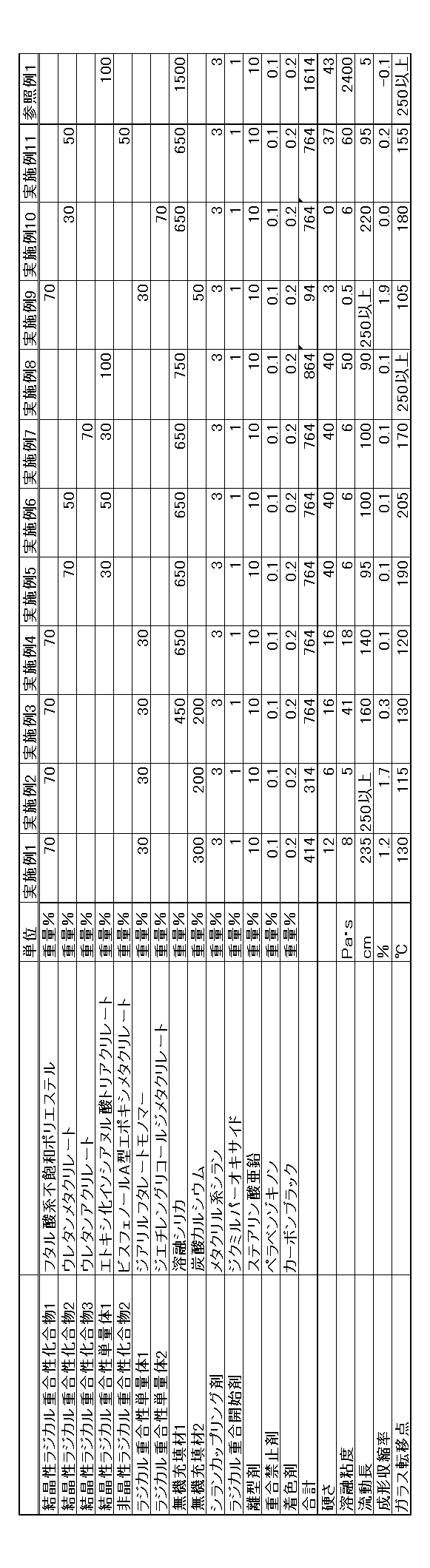

表1に示すラジカル重合性化合物を示差走査熱量分析計「DSC6220」(セイコーインスツル(株)社製)にて、測定試料10mgをアルミパンに入れ、蓋を押さえて密封し、-60℃から200℃まで、10℃/minの昇温速度で測定した。得られた曲線の吸熱ピークを融点とした。その結果を表1に示す。23℃で液体の化合物は測定を中止した。
表1に示すラジカル重合性化合物の重量平均分子量は重合性化合物をテトラヒドロフラン(THF)に1.0重量%にて溶解させ、GPC(ゲルパーミエーションクロマトグラフィー)を用いてポリスチレン換算により測定した。測定条件を下記に示す。その結果を表1に示す。但し、前記厳格な基準をクリアせずとも、所望の用途、要求される品質等によっては、重量平均分子量が100未満、または100000より大きくても適合する場合もあるので、一つの目安として検討すればよいものである。
機器装置:昭和電工(株)製 Shodex GPC-101
カラム:昭和電工(株)製 KF-802、803、804、805
溶媒、キャリア液:THF
流量:1.0ml/分
サンプル濃度:1.0%
温度:40℃
サンプル注入量:200μl
検出器:示差屈折率検出器
測定方法はJIS K 7215を参考とした。表2に示す実施例1~11、参照例1、及び表3に示す比較例1~2の結晶性又は非晶性ラジカル重合性組成物の硬さをデュロメーター(西東京精密(株)WR-105D)にて測定した。90℃に温調したラジカル重合性組成物を約100mm×100mm×10mmの平板状にして23℃の恒温室で冷却固化した。23℃に温調した硬化前のラジカル重合性組成物を水平な硬い台の上に設置した。デュロメーターの加圧基準面を、ラジカル重合性組成物表面に平行を保ちながら、衝撃を伴うことなく、できるだけ速やかにラジカル重合性組成物表面に押し付け、加圧基準面とラジカル重合性組成物とをよく密着させた。1秒以内に速やかに指示装置の指針の最大指示値を読み取った。その結果を表2、及び3に示す。目標とする硬さは10とし、20以上を優、10以上を良、10未満を可とした。
表2に示す実施例1~11、参照例1、及び表3に示す比較例1~2の結晶性又は非晶性ラジカル重合性組成物を高化式フローテスタ((株)島津製作所製 CFT-100EX)にて溶融粘度を測定した。直径0.5mmで長さ1mmダイスを備え、90℃に加熱したシリンダー試料挿入孔にラジカル重合性組成物を入れ、240秒の予備加熱後に30kgf/cm2又は、1kgf/cm2の圧力でピストンを加圧し、ラジカル重合性組成物をダイのノズルから流出させ、直線性が良好な箇所から溶融粘度を求めた。その結果を表2、及び3に示す。目標とする溶融粘度は1~1000Pa・sとし、1~100Pa・sであった組成物を優、100~1000Pa・sを良とした。
測定方法はEIMS T-901を参考とした。表2に示す実施例1~11、参照例1、及び表3に示す比較例1~2の結晶性又は非晶性ラジカル重合性組成物を用いて、スパイラルフロー金型を備えた補助ラム式トランスファー成形機にて流動長を測定した。スパイラルフロー金型は165℃に加熱した。スパイラルフローの金型は、中心部が材料の注入口部になっており、注入口部を起点として半径1.6mmの半円状の渦巻き曲線状に溝が設けられているものを用いた。カルの厚さが1~10mmの範囲になるようにあらかじめ決めた量のラジカル重合性組成物を量り取った。プランジャーを上げ、ラジカル重合性組成物をポットに投入し、直ぐに3.2MPaの圧力を加えてトランスファー成形を開始した。プランジャーの動きが停止し、測定開始から180秒後に金型を開き成形物を取り出した。成形物先端の光沢のある部分までの長さ、または光沢のある部分の長さに、その先の密度の低い部分の長さの1/2を加えた数字を読み取った。その結果を表2、及び3に示す。目標とする流動長は50cmとし、100cm以上を優、50cm以上を良、50cm未満を可とした。但し、前記厳格な基準をクリアせずとも、所望の用途、要求される品質等によっては、50cm未満でも条件が適合する場合もあるので、一つの目安として検討すればよいものである。
測定方法はJIS K 6911に準拠した。表2に示す実施例1~11、参照例1、及び表3に示す比較例1~2の結晶性又は非晶性ラジカル重合性組成物を用いて、収縮率測定用金型を用いて圧縮成形で試験片を作製した。165℃に温調した金型内にラジカル重合性組成物を置き、3分間加圧加熱した。試験片は直ちに金型から取り出し、23℃、湿度55%RHの恒温恒湿下で24時間保管した。試験片の表裏に突起した環状帯の外形をお互いに直行する測定線に沿って、表面2ヶ所、裏面2ヶ所、計4箇所の寸法を測定した。試験片に対応する金型の溝の外形を同一条件で0.01mmまで測定して成形収縮率を算出した。その結果を表2、及び表3に示す。目標とする成形収縮率は0.5%とし、0.2%以下を優、0.2~0.5%以下を良、0.5%を超える場合を可とした。但し、前記厳格な基準をクリアせずとも、所望の用途、要求される品質等によっては、0.5%を超える場合でも条件が適合する場合もあるので、一つの目安として検討すればよいものである。
測定はJIS K 7224-4に準拠した。表2に示す実施例1~11、参照例1、及び表3に示す比較例1~2の結晶性又は非晶性ラジカル重合性組成物を165℃に温調した平板用金型内に置いた。速やかに金型を閉じ加圧加熱成形した。硬化後に金型を開けて平板状の成形片を得た。平板状の成形片から短冊状に切削加工を行いガラス転移点測定用試験片を得た。動的粘弾性(TAインスツルメント社(株)製RSA-G2)は2℃/分の昇温速度で、30~250℃の範囲、周波数10Hzで測定した。Tanδピーク温度をガラス転移点とした。その結果を表2、及び3に示す。目標とするガラス転移点は125℃とし、125℃以上を良、125℃未満を可とした。但し、前記厳格な基準をクリアせずとも、所望の用途、要求される品質等によっては、125℃未満でも条件が適合する場合もあるので、一つの目安として検討すればよいものである。
表2及び表3に示すように、本発明における電気電子部品封止用結晶性ラジカル重合性組成物は、取扱性に優れることが判明した。また、特に、本発明における電気電子部品封止用結晶性ラジカル重合性組成物の実施例1~8、11は、23℃で固体であるため取扱い性に優れ、溶融粘度が低く良好であった。本発明における電気電子部品封止用結晶性ラジカル重合性組成物は、全体的に優れた結果を示すことが判明した。
実施例12~19及び比較例3~5
表4に示す実施例12~19及び比較例3~5の結晶性又は非晶性ラジカル重合性組成物は記載の配合量にて配合し、加圧加熱・冷却可能な混練機を用いて均一に調製した後、調製物を押し出し機に投入してホットカット法にて粒状物とした。一部の粒状物、塊状のラジカル重合性組成物は粉砕機を用いて粉末とした。
(1)ラジカル重合性化合物
1.結晶性ラジカル重合性化合物1:フタル酸系不飽和ポリエステル(テレフタル酸とフマル酸と1,3-プロパンジオールの縮合物)
2.結晶性ラジカル重合性化合物2:ウレタンメタクリレート(1,6-ヘキサメチレンジイソシアネートの2-ヒドロキシエチルメタクリレート付加物)
3.非晶性ラジカル重合性化合物1:フタル酸系不飽和ポリエステル(日本ユピカ(株)製 ユピカ8552H)
4.非晶性ラジカル重合性化合物2:ビスフェノールA型エポキシメタクリレート(ビスフェノールA型エポキシ樹脂のメタクリル酸付加物)
(2)ラジカル重合性単量体
5.ラジカル重合性単量体1:スチレンモノマー
6.ラジカル重合性単量体2:エトキシ化イソシアヌル酸トリアクリレート(新中村化学(株)製 A-9300)
1.無機充填材1:酸化アルミニウム(デンカ(株)製 平均粒径45μm)
2.無機充填材2:酸化マグネシウム(宇部マテリアルズ(株)平均粒径55μm)
3.無機充填材3:溶融シリカ(デンカ(株)製 平均粒子径24μm)
1.シランカップリング剤:メタクリル系シラン(信越化学工業(株)製 KBM-503)
2.ラジカル重合開始剤:ジクミルパーオキサイド(日油(株)製 パークミルD)
3.離型剤:ステアリン酸亜鉛(日油(株)製 GF-200)
4.熱可塑性樹脂:ポリスチレン(東洋ポリスチレン(株)製 G-100C)
5.重合禁止剤:ペラベンゾキノン(精工化学(株)製 PBQ)
6.着色剤:カーボンブラック(三菱化学(株)製 CB40)
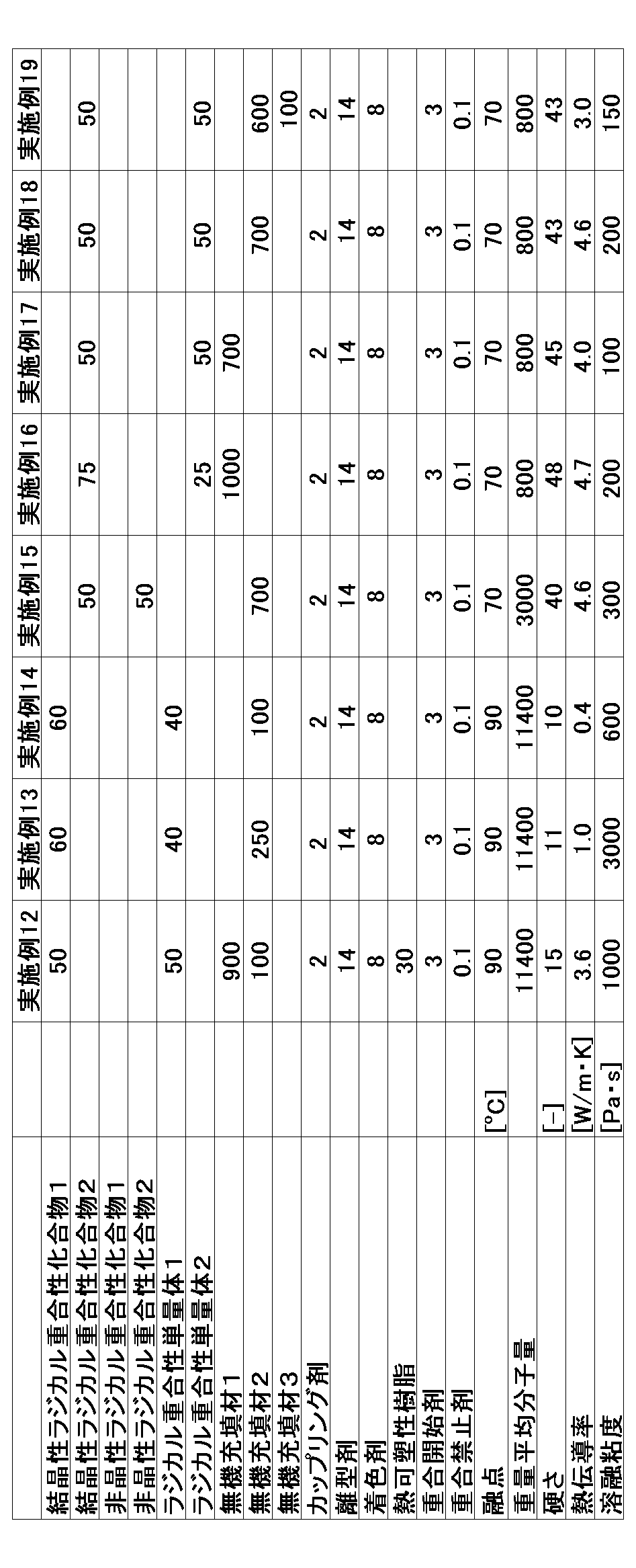
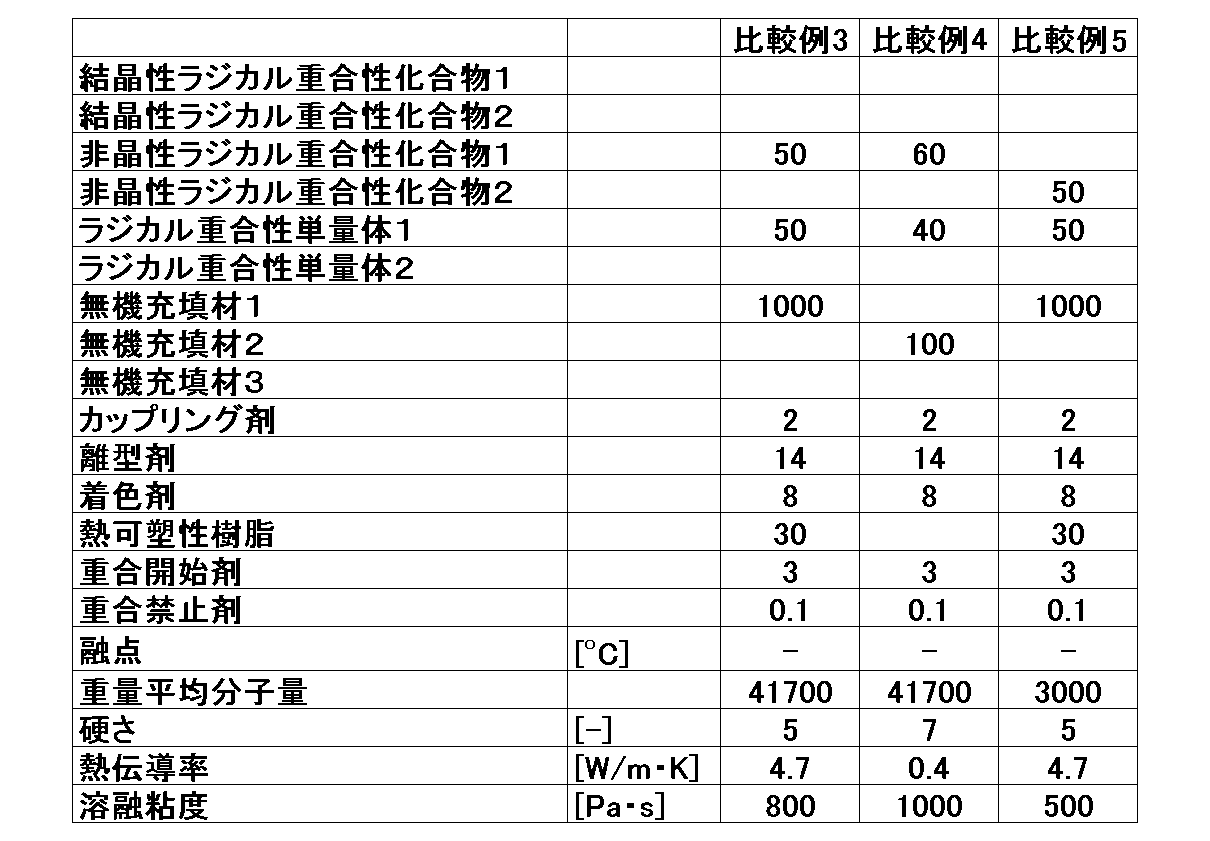
表4、及び表5に示すラジカル重合性化合物を示差走査熱量分析計「DSC6220」(セイコーインスツル(株)製)にて、測定試料10mgをアルミパンに入れ、蓋を押さえて密封し、-60℃から200℃まで、10℃/minの昇温速度で測定した。得られた曲線の吸熱ピークを融点とした。その結果を表4、及び表5に示す。23℃で液体の化合物は測定を中止した。
表4、及び表5に示すラジカル重合性化合物の重量平均分子量はラジカル重合性化合物をテトラヒドロフラン(THF)に1.0重量%にて溶解させ、GPC(ゲルパーミエーションクロマトグラフィー)を用いてポリスチレン換算により測定した。2種類のラジカル重合性化合物がある場合は、大きい方の分子量を記した。その結果を表4、及び表5に示す。但し、前記厳格な基準をクリアせずとも、所望の用途、要求される品質等によっては、重量平均分子量が70未満、または100,000より大きくても適合する場合もあるので、一つの目安として検討すればよいものである。
機器装置:昭和電工(株)製 Shodex GPC-101
カラム:昭和電工(株)製 KF-802、803、804、805
溶媒、キャリア液:THF
流量:1.0ml/分
サンプル濃度:1.0%
温度:40℃
サンプル注入量:200μl
検出器:示差屈折率検出器
測定方法はJIS K 7215を参考とした。表4、及び表5に示す実施例12~19及び比較例3~5の結晶性又は非晶性ラジカル重合性組成物の硬さをデュロメーター(西東京精密(株) WR-105D)にて測定した。90℃に温調したラジカル重合性組成物を約100mm×100mm×10mmの平板状にして23℃の恒温室で冷却固化した。23℃に温調した硬化前のラジカル重合性組成物を水平な硬い台の上に設置した。デュロメーターの加圧基準面を、ラジカル重合性組成物表面に平行を保ちながら、衝撃を伴うことなく、できるだけ速やかにラジカル重合性組成物表面に押し付け、加圧基準面とラジカル重合性組成物とをよく密着させた。1秒以内に速やかに指示装置の指針の最大指示値を読み取った。その結果を表4、及び表5に示す。目標とする硬さは10とし、15以上を優、10以上を良、10未満を可とした。但し、前記厳格な基準をクリアせずとも、所望の用途、要求される品質等によっては10未満の条件が適合する場合もあるので、一つの目安として検討すればよいものである。
測定方法はISO22007-2とした。表4、及び表5に示す実施例12~19及び比較例3~5の結晶性又は非晶性ラジカル重合性組成物の成形体を用いて熱伝導率を測定した。ラジカル重合性樹脂組成物の成形体を100mm角、厚さ3mmに切削し、ホットディスク法(京都電子工業(株)製熱伝導率測定装置TPS2500S)にて23℃で測定した。その結果を表4、及び表5に示す。目標とする熱伝導率は1.0W/m・Kとし、1.5W/m・K以上を優、1.0W/m・K以上を良、1.0W/m・K未満を可とした。但し、前記厳格な基準をクリアせずとも、所望の用途、要求される品質等によっては1.0W/m・K未満の条件が適合する場合もあるので、一つの目安として検討すればよいものである。
表4、及び表5に示す実施例12~19及び比較例3~5の結晶性又は非晶性ラジカル重合性組成物を高化式フローテスタ((株)島津製作所製 CFT-100EX)にて溶融粘度を測定した。直径2.0mmで長さ10mmダイスを備え、90℃に加熱したシリンダー試料挿入孔にラジカル重合性組成物を入れ、240秒の予備加熱後に3~100kgf/cm2の圧力でピストンを加圧し、ラジカル重合性組成物をダイのノズルから流出させ、直線性が良好な個所から組成物の溶融粘度を求めた。組成物の溶融粘度は3点以上の測定を行い、組成物の溶融粘度とせん断速度の関係を調べた。組成物の溶融粘度とせん断速度の関係から内挿、または、外挿によりせん断速度が1000s-1の溶融粘度を求めた。その結果を表4、及び表5に示す。目標とする粘度は10~2,000Pa・sとし、10~1,000Pa・sであった組成物を優、1,000~2,000Pa・sを良、10Pa・s未満及び/または2,000Pa・sを可とした。但し、前記厳格な基準をクリアせずとも、所望の用途、要求される品質によっては、10Pa・s未満及び/または2,000Pa・sより高くても条件が適合する場合もあるので、一つの目安として検討すればよいものである。
表4に示すように、本発明における電気電子部品用結晶性ラジカル重合性組成物の実施例12~19は、23℃で固体であるため取扱い性に優れることが判明した。
Claims (23)
- 結晶性ラジカル重合性化合物と、無機充填材と、シランカップリング剤と、ラジカル重合開始剤とを少なくとも含むことを特徴とする電気電子部品封止用結晶性ラジカル重合性組成物。
- 前記結晶性ラジカル重合性化合物は、不飽和ポリエステル、エポキシ(メタ)アクリレート、ウレタン(メタ)アクリレート、ポリエステル(メタ)アクリレート、ポリエーテル(メタ)アクリレート、ラジカル重合性単量体、ラジカル重合性多量体から選ばれる1種以上を含むことを特徴とする請求項1記載の電気電子部品封止用結晶性ラジカル重合性組成物。
- 前記結晶性ラジカル重合性化合物は、30~150℃の範囲で融点を示すことを特徴とする請求項1又は2に記載の電気電子部品封止用結晶性ラジカル重合性組成物。
- 前記結晶性ラジカル重合性組成物は、23℃で固体であることを特徴とする請求項1~3のいずれか1項に記載の電気電子部品封止用結晶性ラジカル重合性組成物。
- 前記結晶性ラジカル重合性組成物の高化式フローテスタによる溶融粘度は、測定温度90℃、ダイスの直径0.5mmで長さ1.0mm、圧力30kgf/cm2において7~1000Pa・s、又は、圧力1kgf/cm2において1~7Pa・sであることを特徴とする請求項1~4のいずれか1項に記載の電気電子部品封止用結晶性ラジカル重合性組成物。
- 前記無機充填材は、前記結晶性ラジカル重合性組成物全量に対して50~95重量%であることを特徴とする請求項1~5のいずれか1項に記載の電気電子部品封止用結晶性ラジカル重合性組成物。
- ラジカル重合性化合物全量に対する結晶性ラジカル重合性化合物の割合は、30重量部以上であることを特徴とする請求項1~6のいずれか1項に記載の電気電子部品封止用結晶性ラジカル重合性組成物。
- 前記結晶性ラジカル重合性化合物の重量平均分子量は、100~100000であることを特徴とする請求項1~7のいずれか1項に記載の電気電子部品封止用結晶性ラジカル重合性組成物。
- 請求項1~8のいずれか1項に記載の電気電子部品封止用結晶性ラジカル重合性組成物により封止されている電気電子部品封止体。
- 請求項1~8のいずれか1項に記載の電気電子部品封止用結晶性ラジカル重合性組成物からなる粒状物。
- 請求項10記載の電気電子部品封止用結晶性ラジカル重合性組成物からなる前記粒状物を射出成形法、トランスファー成形法によるインサート成形法により電気電子部品を封止する工程を有する電気電子部品封止体の製造方法。
- 結晶性ラジカル重合性化合物と、無機充填材と、シランカップリング剤と、ラジカル重合開始剤とを少なくとも含むことを特徴とする電気電子部品用結晶性ラジカル重合性組成物。
- 前記電気電子部品用結晶性ラジカル重合性組成物を成形した成形体の熱伝導率は、1.0W/m・K以上であることを特徴とする請求項12記載の電気電子部品用結晶性ラジカル重合性組成物。
- 前記結晶性ラジカル重合性化合物は、不飽和ポリエステル、エポキシ(メタ)アクリレート、ウレタン(メタ)アクリレート、ポリエステル(メタ)アクリレート、ポリエーテル(メタ)アクリレート、ラジカル重合性単量体、ラジカル重合性多量体から選ばれる1種以上を含むことを特徴とする請求項12又は13に記載の電気電子部品用結晶性ラジカル重合性組成物。
- 前記結晶性ラジカル重合性化合物は、30~150℃の範囲で融点を示すことを特徴とする請求項12~14のいずれか1項に記載の電気電子部品用結晶性ラジカル重合性組成物。
- 前記結晶性ラジカル重合性組成物は、23℃で固体であることを特徴とする請求項12~15のいずれか1項に記載の電気電子部品用結晶性ラジカル重合性組成物。
- 前記無機充填材は、前記結晶性ラジカル重合性組成物全量に対して40~95重量%であることを特徴とする請求項12~16のいずれか1項に記載の電気電子部品用結晶性ラジカル重合性組成物。
- ラジカル重合性化合物全量に対する前記結晶性ラジカル重合性化合物の割合は、25重量部以上であることを特徴とする請求項12~17のいずれか1項に記載の電気電子部品用結晶性ラジカル重合性組成物。
- 前記結晶性ラジカル重合性化合物の重量平均分子量は、70~100,000であることを特徴とする請求項12~18のいずれか1項に記載の電気電子部品用結晶性ラジカル重合性組成物。
- 請求項12~19のいずれか1項に記載の前記電気電子部品用結晶性ラジカル重合性組成物により成形されている電気電子部品成形体。
- 前記成形体の熱伝導率は、1.0W/m・K以上であることを特徴とする請求項20記載の電気電子部品成形体。
- 請求項12~19のいずれか1項に記載の電気電子部品用結晶性ラジカル重合性組成物からなる粒状物。
- 請求項22記載の前記電気電子部品用結晶性ラジカル重合性組成物からなる前記粒状物を、射出成形法、トランスファー成形法、圧縮成形法、又はホットメルト成形法のいずれかの方法により、電気電子部品成形体を成形する成形工程を有する電気電子部品成形体の製造方法。
Priority Applications (6)
| Application Number | Priority Date | Filing Date | Title |
|---|---|---|---|
| KR1020237002621A KR102672479B1 (ko) | 2017-03-03 | 2018-02-20 | 전기 전자 부품용 결정성 라디칼 중합성 조성물, 상기 조성물을 사용한 전기 전자 부품 성형체, 및 상기 전기 전자 부품 성형체의 제조 방법 |
| CN201880015561.5A CN110382560A (zh) | 2017-03-03 | 2018-02-20 | 电气电子零件用结晶性自由基聚合性组合物、使用该组合物的电气电子零件成型体、及该电气电子零件成型体的制造方法 |
| CN202411034955.9A CN118955823A (zh) | 2017-03-03 | 2018-02-20 | 电气电子零件用结晶性自由基聚合性组合物、使用该组合物的电气电子零件成型体、及该电气电子零件成型体的制造方法 |
| US16/488,558 US11485801B2 (en) | 2017-03-03 | 2018-02-20 | Crystalline radical polymerizable composition for electrical and electronic component, molded article of electrical and electronic component using the composition, and method of the molded article of electrical and electronic component |
| EP18760549.8A EP3590973B1 (en) | 2017-03-03 | 2018-02-20 | Crystalline radical-polymerizable composition for electric/electronic component, molded electric/electronic component obtained using said composition, and production method for said molded electric/electronic component |
| KR1020197025138A KR20190121778A (ko) | 2017-03-03 | 2018-02-20 | 전기 전자 부품용 결정성 라디칼 중합성 조성물, 상기 조성물을 사용한 전기 전자 부품 성형체, 및 상기 전기 전자 부품 성형체의 제조 방법 |
Applications Claiming Priority (4)
| Application Number | Priority Date | Filing Date | Title |
|---|---|---|---|
| JP2017040824A JP6630695B2 (ja) | 2017-03-03 | 2017-03-03 | 電気電子部品封止用結晶性ラジカル重合性組成物、当該組成物を使用した電気電子部品用封止体、及び当該封止体の製造方法 |
| JP2017-040824 | 2017-03-03 | ||
| JP2017217528A JP6653305B2 (ja) | 2017-11-10 | 2017-11-10 | 電気電子部品用結晶性ラジカル重合性組成物、当該組成物を使用した電気電子部品成形体、及び当該電気電子部品成形体の製造方法 |
| JP2017-217528 | 2017-11-10 |
Publications (1)
| Publication Number | Publication Date |
|---|---|
| WO2018159387A1 true WO2018159387A1 (ja) | 2018-09-07 |
Family
ID=63370327
Family Applications (1)
| Application Number | Title | Priority Date | Filing Date |
|---|---|---|---|
| PCT/JP2018/006007 Ceased WO2018159387A1 (ja) | 2017-03-03 | 2018-02-20 | 電気電子部品用結晶性ラジカル重合性組成物、当該組成物を使用した電気電子部品成形体、及び当該電気電子部品成形体の製造方法 |
Country Status (6)
| Country | Link |
|---|---|
| US (1) | US11485801B2 (ja) |
| EP (1) | EP3590973B1 (ja) |
| KR (2) | KR20190121778A (ja) |
| CN (2) | CN118955823A (ja) |
| TW (1) | TWI826369B (ja) |
| WO (1) | WO2018159387A1 (ja) |
Cited By (4)
| Publication number | Priority date | Publication date | Assignee | Title |
|---|---|---|---|---|
| WO2021065217A1 (ja) * | 2019-10-02 | 2021-04-08 | 昭和電工株式会社 | 熱硬化性樹脂組成物、成形体及びランプリフレクター |
| WO2021200817A1 (ja) * | 2020-03-31 | 2021-10-07 | 日本ユピカ株式会社 | 回転電機ロータコアの磁石固定用結晶性ラジカル重合性組成物、当該組成物を使用した回転電機ロータコア、及び当該回転電機ロータコアの製造方法 |
| JPWO2022215716A1 (ja) * | 2021-04-08 | 2022-10-13 | ||
| WO2022239224A1 (ja) | 2021-05-14 | 2022-11-17 | 東洋紡株式会社 | 固形物の製造方法 |
Families Citing this family (1)
| Publication number | Priority date | Publication date | Assignee | Title |
|---|---|---|---|---|
| JP6621951B1 (ja) * | 2018-12-28 | 2019-12-18 | 長瀬産業株式会社 | 半導体装置の製造方法 |
Citations (8)
| Publication number | Priority date | Publication date | Assignee | Title |
|---|---|---|---|---|
| JPS5727628A (en) | 1980-07-17 | 1982-02-15 | Keikichi Katagiri | Box frame body fabricating machine |
| JPS6041157A (ja) | 1983-08-16 | 1985-03-04 | Toshiba Corp | バス争奪制御方式 |
| JP2007528437A (ja) * | 2004-03-09 | 2007-10-11 | ヘンケル コーポレイション | 熱伝導性二液型接着剤組成物 |
| JP2009096839A (ja) * | 2007-10-15 | 2009-05-07 | Three Bond Co Ltd | 光硬化性シール剤およびシール層付き部材の製造方法 |
| JP2014148586A (ja) | 2013-01-31 | 2014-08-21 | Sumitomo Bakelite Co Ltd | 封止用エポキシ樹脂組成物、電子装置、自動車および電子装置の製造方法 |
| JP2015002204A (ja) | 2013-06-13 | 2015-01-05 | パナソニック株式会社 | 半導体装置の製造方法とそれに使用される半導体封止用アクリル樹脂組成物 |
| JP2016092112A (ja) * | 2014-10-31 | 2016-05-23 | 日立化成株式会社 | 先供給型アンダーフィル材、電子部品装置及び電子部品装置の製造方法 |
| WO2017119406A1 (ja) * | 2016-01-07 | 2017-07-13 | 積水化学工業株式会社 | 液晶表示素子用シール剤、上下導通材料、及び、液晶表示素子 |
Family Cites Families (20)
| Publication number | Priority date | Publication date | Assignee | Title |
|---|---|---|---|---|
| JPS6049221B2 (ja) | 1979-01-05 | 1985-10-31 | 東洋紡績株式会社 | 熱硬化性射出成形材料 |
| JPS5727628U (ja) | 1980-07-24 | 1982-02-13 | ||
| JPS6041157U (ja) | 1983-08-31 | 1985-03-23 | 市原 昭夫 | 猫洗い袋 |
| JP3005005B2 (ja) | 1989-09-19 | 2000-01-31 | 旭硝子株式会社 | 反応硬化性樹脂組成物およびそれよりなる人工大理石 |
| JPH0297512A (ja) | 1988-10-03 | 1990-04-10 | Matsushita Electric Works Ltd | 不飽和ポリエステル樹脂成形材料 |
| JPH07331048A (ja) | 1994-06-10 | 1995-12-19 | Sekisui Chem Co Ltd | 熱硬化型導電性樹脂組成物 |
| JPH11268905A (ja) | 1998-03-24 | 1999-10-05 | Maruo Calcium Co Ltd | 無機分散剤、懸濁重合用安定剤、重合体粒子、不飽和ポリエステル樹脂組成物及びトナー組成物 |
| US7297370B2 (en) | 2004-12-22 | 2007-11-20 | General Electric Company | Curable encapsulant composition, device including same, and associated method |
| US20090114272A1 (en) * | 2005-07-07 | 2009-05-07 | Nippon Kayaku Kabushiki Kaisha | Sealing Agent for Photoelectric Converter and Photoelectric Converter Using Same |
| JP5296298B2 (ja) | 2006-04-03 | 2013-09-25 | アイカ工業株式会社 | 結晶性樹脂組成物およびその製造方法 |
| JP5509738B2 (ja) * | 2008-09-30 | 2014-06-04 | デクセリアルズ株式会社 | アクリル系絶縁性接着剤 |
| EP2578650A4 (en) * | 2010-06-01 | 2015-02-25 | Riken Technos Corp | COMPOSITION FOR USE AS COATING MATERIAL, ADHESION METHOD AND LAMINATED PRODUCTS |
| US8691890B2 (en) * | 2010-10-22 | 2014-04-08 | Panasonic Corporation | Unsaturated polyester resin composition for use in LED reflector, and LED reflector and LED luminaire using said composition |
| US9518205B2 (en) | 2011-12-14 | 2016-12-13 | Showa Denko K.K. | Unsaturated polyester resin composition and encapsulated motor |
| CN103827248A (zh) | 2011-12-27 | 2014-05-28 | 松下电器产业株式会社 | 导热性树脂组合物 |
| JP2014077071A (ja) | 2012-10-11 | 2014-05-01 | Japan U-Pica Co Ltd | Led反射板用ラジカル重合性樹脂組成物、前記組成物からなる粒状物、前記粒状物を用いる成形方法、及びled反射板 |
| US20150138778A1 (en) * | 2012-06-04 | 2015-05-21 | Japan U-Pica Company, Ltd. | Crystalline unsaturated polyester resin composition for led reflector, granular material comprising said composition, led reflector produced by molding said granular material, surface-mount-type light-emitting device, and lighting device and image display device each equipped with said light-emitting device |
| CN103073686A (zh) * | 2013-01-07 | 2013-05-01 | 安邦电气集团有限公司 | 一种高热稳定性高分子基导电复合材料及釆用该复合材料制备自限温伴热电缆的方法 |
| EP3306359B1 (en) | 2015-05-28 | 2020-03-04 | Otsuka Chemical Co., Ltd. | Light-reflecting material, light-reflecting body and lighting device |
| JP6630695B2 (ja) | 2017-03-03 | 2020-01-15 | 日本ユピカ株式会社 | 電気電子部品封止用結晶性ラジカル重合性組成物、当該組成物を使用した電気電子部品用封止体、及び当該封止体の製造方法 |
-
2018
- 2018-02-20 CN CN202411034955.9A patent/CN118955823A/zh active Pending
- 2018-02-20 CN CN201880015561.5A patent/CN110382560A/zh active Pending
- 2018-02-20 US US16/488,558 patent/US11485801B2/en active Active
- 2018-02-20 KR KR1020197025138A patent/KR20190121778A/ko not_active Ceased
- 2018-02-20 WO PCT/JP2018/006007 patent/WO2018159387A1/ja not_active Ceased
- 2018-02-20 EP EP18760549.8A patent/EP3590973B1/en active Active
- 2018-02-20 KR KR1020237002621A patent/KR102672479B1/ko active Active
- 2018-03-01 TW TW107106837A patent/TWI826369B/zh active
Patent Citations (8)
| Publication number | Priority date | Publication date | Assignee | Title |
|---|---|---|---|---|
| JPS5727628A (en) | 1980-07-17 | 1982-02-15 | Keikichi Katagiri | Box frame body fabricating machine |
| JPS6041157A (ja) | 1983-08-16 | 1985-03-04 | Toshiba Corp | バス争奪制御方式 |
| JP2007528437A (ja) * | 2004-03-09 | 2007-10-11 | ヘンケル コーポレイション | 熱伝導性二液型接着剤組成物 |
| JP2009096839A (ja) * | 2007-10-15 | 2009-05-07 | Three Bond Co Ltd | 光硬化性シール剤およびシール層付き部材の製造方法 |
| JP2014148586A (ja) | 2013-01-31 | 2014-08-21 | Sumitomo Bakelite Co Ltd | 封止用エポキシ樹脂組成物、電子装置、自動車および電子装置の製造方法 |
| JP2015002204A (ja) | 2013-06-13 | 2015-01-05 | パナソニック株式会社 | 半導体装置の製造方法とそれに使用される半導体封止用アクリル樹脂組成物 |
| JP2016092112A (ja) * | 2014-10-31 | 2016-05-23 | 日立化成株式会社 | 先供給型アンダーフィル材、電子部品装置及び電子部品装置の製造方法 |
| WO2017119406A1 (ja) * | 2016-01-07 | 2017-07-13 | 積水化学工業株式会社 | 液晶表示素子用シール剤、上下導通材料、及び、液晶表示素子 |
Non-Patent Citations (1)
| Title |
|---|
| See also references of EP3590973A4 |
Cited By (7)
| Publication number | Priority date | Publication date | Assignee | Title |
|---|---|---|---|---|
| WO2021065217A1 (ja) * | 2019-10-02 | 2021-04-08 | 昭和電工株式会社 | 熱硬化性樹脂組成物、成形体及びランプリフレクター |
| WO2021200817A1 (ja) * | 2020-03-31 | 2021-10-07 | 日本ユピカ株式会社 | 回転電機ロータコアの磁石固定用結晶性ラジカル重合性組成物、当該組成物を使用した回転電機ロータコア、及び当該回転電機ロータコアの製造方法 |
| JP2021161164A (ja) * | 2020-03-31 | 2021-10-11 | 日本ユピカ株式会社 | 回転電機ロータコアの磁石固定用結晶性ラジカル重合性組成物、当該組成物を使用した回転電機ロータコア、及び当該回転電機ロータコアの製造方法 |
| JP7511372B2 (ja) | 2020-03-31 | 2024-07-05 | 日本ユピカ株式会社 | 回転電機ロータコアの磁石固定用結晶性ラジカル重合性組成物、当該組成物を使用した回転電機ロータコア、及び当該回転電機ロータコアの製造方法 |
| JPWO2022215716A1 (ja) * | 2021-04-08 | 2022-10-13 | ||
| WO2022215716A1 (ja) * | 2021-04-08 | 2022-10-13 | 出光興産株式会社 | 熱硬化性組成物、それを用いた成形品の製造方法、及び硬化物 |
| WO2022239224A1 (ja) | 2021-05-14 | 2022-11-17 | 東洋紡株式会社 | 固形物の製造方法 |
Also Published As
| Publication number | Publication date |
|---|---|
| KR20230018541A (ko) | 2023-02-07 |
| CN118955823A (zh) | 2024-11-15 |
| EP3590973A1 (en) | 2020-01-08 |
| US20200231714A1 (en) | 2020-07-23 |
| TW201902941A (zh) | 2019-01-16 |
| KR20190121778A (ko) | 2019-10-28 |
| US11485801B2 (en) | 2022-11-01 |
| TWI826369B (zh) | 2023-12-21 |
| CN110382560A (zh) | 2019-10-25 |
| EP3590973A4 (en) | 2020-10-14 |
| EP3590973B1 (en) | 2026-03-18 |
| KR102672479B1 (ko) | 2024-06-04 |
Similar Documents
| Publication | Publication Date | Title |
|---|---|---|
| JP6630695B2 (ja) | 電気電子部品封止用結晶性ラジカル重合性組成物、当該組成物を使用した電気電子部品用封止体、及び当該封止体の製造方法 | |
| EP2787015B1 (en) | Unsaturated polyester resin composition and encapsulated motor | |
| KR102672479B1 (ko) | 전기 전자 부품용 결정성 라디칼 중합성 조성물, 상기 조성물을 사용한 전기 전자 부품 성형체, 및 상기 전기 전자 부품 성형체의 제조 방법 | |
| JP6653305B2 (ja) | 電気電子部品用結晶性ラジカル重合性組成物、当該組成物を使用した電気電子部品成形体、及び当該電気電子部品成形体の製造方法 | |
| JP2011006542A (ja) | 不飽和ポリエステル樹脂組成物及び封入モータ | |
| EP3614425A1 (en) | Resin composition for sealing electronic control device, electronic control device, and method for manufacturing same | |
| JP2021046496A (ja) | 電気電子部品固定用結晶性ラジカル重合性組成物、当該組成物を使用した電気電子部品固定電気電子装置、及び電気電子部品固定体の製造方法 | |
| JP6782741B2 (ja) | 車載用イグニッションコイル封止用結晶性ラジカル重合性組成物、当該組成物を使用した車載用イグニッションコイル封止体、及び当該封止体の製造方法 | |
| CN114746456B (zh) | 热固性树脂组合物 | |
| JP7106510B2 (ja) | 電気電子部品用結晶性ラジカル重合性組成物、当該組成物を使用した電気電子部品用成形体、及び当該成形体の製造方法 | |
| JP6782739B2 (ja) | 車載用エレクトロニックコントロールユニット基板封止用熱硬化性樹脂組成物、当該組成物を使用した車載用エレクトロニックコントロールユニット基板封止体、及び当該封止体の製造方法 | |
| JP6782742B2 (ja) | 車載用パワー半導体素子封止用結晶性ラジカル重合性組成物、当該組成物を使用した車載用パワー半導体素子封止体、及び当該封止体の製造方法 | |
| JP2020015777A (ja) | 車載用ハーネス端末封止用結晶性ラジカル重合性組成物、当該組成物を使用した車載用ハーネス端末封止体、及び当該封止体の製造方法 | |
| JP7836650B2 (ja) | 金属密着性に優れる電気電子部品用結晶性ラジカル重合性組成物、当該組成物を使用した電気電子部品、及び当該電気電子部品の製造方法 | |
| JP7713346B2 (ja) | 車載用リアクトルコイル用結晶性ラジカル重合性組成物、当該組成物を使用した車載用リアクトルコイル封止体、及び当該封止体の製造方法 | |
| WO2021200817A1 (ja) | 回転電機ロータコアの磁石固定用結晶性ラジカル重合性組成物、当該組成物を使用した回転電機ロータコア、及び当該回転電機ロータコアの製造方法 | |
| JP6901257B2 (ja) | 耐アーク性bmc | |
| JP7547067B2 (ja) | 電気電子部品固定用結晶性ラジカル重合性組成物、車載ロータコア、及びロータコア固定体の製造方法 | |
| JP2025049884A (ja) | 成形用結晶性ラジカル重合性組成物、当該組成物からなる粒状物、当該粒状物を成形してなる成形体、及び当該成形体の製造方法 | |
| JP2024160729A (ja) | ラジカル重合性組成物及び電気電子部品 | |
| JP2024041655A (ja) | 金属密着性に優れるラジカル重合性組成物、当該組成物を使用した電気電子部品、及び当該電気電子部品の製造方法 |
Legal Events
| Date | Code | Title | Description |
|---|---|---|---|
| 121 | Ep: the epo has been informed by wipo that ep was designated in this application |
Ref document number: 18760549 Country of ref document: EP Kind code of ref document: A1 |
|
| ENP | Entry into the national phase |
Ref document number: 20197025138 Country of ref document: KR Kind code of ref document: A |
|
| NENP | Non-entry into the national phase |
Ref country code: DE |
|
| WWE | Wipo information: entry into national phase |
Ref document number: 2018760549 Country of ref document: EP |
|
| WWG | Wipo information: grant in national office |
Ref document number: 2018760549 Country of ref document: EP |