WO2018139494A1 - 熱膨張性耐火シート - Google Patents
熱膨張性耐火シート Download PDFInfo
- Publication number
- WO2018139494A1 WO2018139494A1 PCT/JP2018/002157 JP2018002157W WO2018139494A1 WO 2018139494 A1 WO2018139494 A1 WO 2018139494A1 JP 2018002157 W JP2018002157 W JP 2018002157W WO 2018139494 A1 WO2018139494 A1 WO 2018139494A1
- Authority
- WO
- WIPO (PCT)
- Prior art keywords
- thermally expandable
- mass
- polyphosphate
- soluble
- aluminum phosphate
- Prior art date
- Legal status (The legal status is an assumption and is not a legal conclusion. Google has not performed a legal analysis and makes no representation as to the accuracy of the status listed.)
- Ceased
Links
Images
Classifications
-
- C—CHEMISTRY; METALLURGY
- C08—ORGANIC MACROMOLECULAR COMPOUNDS; THEIR PREPARATION OR CHEMICAL WORKING-UP; COMPOSITIONS BASED THEREON
- C08K—Use of inorganic or non-macromolecular organic substances as compounding ingredients
- C08K3/00—Use of inorganic substances as compounding ingredients
- C08K3/01—Use of inorganic substances as compounding ingredients characterized by their specific function
- C08K3/016—Flame-proofing or flame-retarding additives
-
- C—CHEMISTRY; METALLURGY
- C08—ORGANIC MACROMOLECULAR COMPOUNDS; THEIR PREPARATION OR CHEMICAL WORKING-UP; COMPOSITIONS BASED THEREON
- C08J—WORKING-UP; GENERAL PROCESSES OF COMPOUNDING; AFTER-TREATMENT NOT COVERED BY SUBCLASSES C08B, C08C, C08F, C08G or C08H
- C08J5/00—Manufacture of articles or shaped materials containing macromolecular substances
- C08J5/18—Manufacture of films or sheets
-
- C—CHEMISTRY; METALLURGY
- C08—ORGANIC MACROMOLECULAR COMPOUNDS; THEIR PREPARATION OR CHEMICAL WORKING-UP; COMPOSITIONS BASED THEREON
- C08K—Use of inorganic or non-macromolecular organic substances as compounding ingredients
- C08K3/00—Use of inorganic substances as compounding ingredients
- C08K3/02—Elements
- C08K3/04—Carbon
-
- C—CHEMISTRY; METALLURGY
- C08—ORGANIC MACROMOLECULAR COMPOUNDS; THEIR PREPARATION OR CHEMICAL WORKING-UP; COMPOSITIONS BASED THEREON
- C08K—Use of inorganic or non-macromolecular organic substances as compounding ingredients
- C08K3/00—Use of inorganic substances as compounding ingredients
- C08K3/32—Phosphorus-containing compounds
-
- C—CHEMISTRY; METALLURGY
- C08—ORGANIC MACROMOLECULAR COMPOUNDS; THEIR PREPARATION OR CHEMICAL WORKING-UP; COMPOSITIONS BASED THEREON
- C08K—Use of inorganic or non-macromolecular organic substances as compounding ingredients
- C08K5/00—Use of organic ingredients
- C08K5/0008—Organic ingredients according to more than one of the "one dot" groups of C08K5/01 - C08K5/59
- C08K5/0016—Plasticisers
-
- C—CHEMISTRY; METALLURGY
- C08—ORGANIC MACROMOLECULAR COMPOUNDS; THEIR PREPARATION OR CHEMICAL WORKING-UP; COMPOSITIONS BASED THEREON
- C08K—Use of inorganic or non-macromolecular organic substances as compounding ingredients
- C08K5/00—Use of organic ingredients
- C08K5/0008—Organic ingredients according to more than one of the "one dot" groups of C08K5/01 - C08K5/59
- C08K5/0066—Flame-proofing or flame-retarding additives
-
- C—CHEMISTRY; METALLURGY
- C08—ORGANIC MACROMOLECULAR COMPOUNDS; THEIR PREPARATION OR CHEMICAL WORKING-UP; COMPOSITIONS BASED THEREON
- C08K—Use of inorganic or non-macromolecular organic substances as compounding ingredients
- C08K5/00—Use of organic ingredients
- C08K5/04—Oxygen-containing compounds
- C08K5/10—Esters; Ether-esters
- C08K5/12—Esters; Ether-esters of cyclic polycarboxylic acids
-
- C—CHEMISTRY; METALLURGY
- C08—ORGANIC MACROMOLECULAR COMPOUNDS; THEIR PREPARATION OR CHEMICAL WORKING-UP; COMPOSITIONS BASED THEREON
- C08K—Use of inorganic or non-macromolecular organic substances as compounding ingredients
- C08K5/00—Use of organic ingredients
- C08K5/16—Nitrogen-containing compounds
- C08K5/34—Heterocyclic compounds having nitrogen in the ring
- C08K5/3467—Heterocyclic compounds having nitrogen in the ring having more than two nitrogen atoms in the ring
- C08K5/3477—Six-membered rings
- C08K5/3492—Triazines
- C08K5/34928—Salts
-
- C—CHEMISTRY; METALLURGY
- C08—ORGANIC MACROMOLECULAR COMPOUNDS; THEIR PREPARATION OR CHEMICAL WORKING-UP; COMPOSITIONS BASED THEREON
- C08K—Use of inorganic or non-macromolecular organic substances as compounding ingredients
- C08K5/00—Use of organic ingredients
- C08K5/49—Phosphorus-containing compounds
-
- C—CHEMISTRY; METALLURGY
- C08—ORGANIC MACROMOLECULAR COMPOUNDS; THEIR PREPARATION OR CHEMICAL WORKING-UP; COMPOSITIONS BASED THEREON
- C08K—Use of inorganic or non-macromolecular organic substances as compounding ingredients
- C08K5/00—Use of organic ingredients
- C08K5/49—Phosphorus-containing compounds
- C08K5/51—Phosphorus bound to oxygen
- C08K5/52—Phosphorus bound to oxygen only
- C08K5/521—Esters of phosphoric acids, e.g. of H3PO4
-
- C—CHEMISTRY; METALLURGY
- C08—ORGANIC MACROMOLECULAR COMPOUNDS; THEIR PREPARATION OR CHEMICAL WORKING-UP; COMPOSITIONS BASED THEREON
- C08K—Use of inorganic or non-macromolecular organic substances as compounding ingredients
- C08K5/00—Use of organic ingredients
- C08K5/49—Phosphorus-containing compounds
- C08K5/51—Phosphorus bound to oxygen
- C08K5/52—Phosphorus bound to oxygen only
- C08K5/521—Esters of phosphoric acids, e.g. of H3PO4
- C08K5/523—Esters of phosphoric acids, e.g. of H3PO4 with hydroxyaryl compounds
-
- C—CHEMISTRY; METALLURGY
- C08—ORGANIC MACROMOLECULAR COMPOUNDS; THEIR PREPARATION OR CHEMICAL WORKING-UP; COMPOSITIONS BASED THEREON
- C08L—COMPOSITIONS OF MACROMOLECULAR COMPOUNDS
- C08L101/00—Compositions of unspecified macromolecular compounds
-
- C—CHEMISTRY; METALLURGY
- C08—ORGANIC MACROMOLECULAR COMPOUNDS; THEIR PREPARATION OR CHEMICAL WORKING-UP; COMPOSITIONS BASED THEREON
- C08K—Use of inorganic or non-macromolecular organic substances as compounding ingredients
- C08K3/00—Use of inorganic substances as compounding ingredients
- C08K3/32—Phosphorus-containing compounds
- C08K2003/321—Phosphates
- C08K2003/327—Aluminium phosphate
Definitions
- the present invention relates to a thermally expandable fireproof sheet.
- a thermally expandable fireproof sheet in which an inorganic material that expands by heating in a matrix resin is used for building materials such as joinery, columns, and wall materials.
- a thermal expansion refractory sheet expands by heating, and a combustion residue forms a refractory heat insulating layer, and exhibits a refractory heat insulating performance.
- the thermal expansion refractory sheet when used in a part exposed to wind and rain or in a part where the humidity is high due to condensation or the like, the components may be eluted, resulting in performance degradation and poor appearance.
- Patent Document 1 includes a thermoplastic resin containing a phosphorus compound, neutralized thermally expandable graphite, and an inorganic filler, and each content is based on 100 parts by weight of the thermoplastic resin.
- the total amount of the phosphorus compound and neutralized thermally expandable graphite is 20 to 200 parts by weight
- the inorganic filler is 50 to 500 parts by weight
- the weight ratio of neutralized thermally expandable graphite: phosphorus compound is 9: 1 to 1: 100, wherein the phosphorus compound is ammonium polyphosphate.
- the conventional thermal expansion refractory sheet usually contains a phosphorus compound in addition to the thermally expandable graphite.
- the phosphorus compound is weak in water and dissolves and hydrolyzes, water or Cannot be used in areas where moisture is present, and the use area was limited.
- An object of the present invention is to provide a thermally expanded refractory sheet that is excellent in fire resistance and hardly deteriorates in performance even when exposed to moisture.
- Item 1 A thermally expandable refractory sheet containing a matrix resin and thermally expandable graphite and having an elution rate of 3% or less after being immersed in pure water at 60 ° C. for 1 week.
- Item 2 The thermally expandable refractory sheet according to Item 1, wherein the expansion residue after heating at 600 ° C. for 30 minutes has a compressive strength of 0.2 kgf / cm 2 or more.
- Item 3 The thermally expandable fireproof sheet according to Item 1 or 2, wherein the phosphorus content is 10% by mass or less.
- Item 4. The thermally expandable refractory sheet according to any one of Items 1 to 3, wherein the content of thermally expandable graphite is 15% by mass or more and less than 60% by mass.
- Item 5 The thermally expandable refractory sheet according to any one of claims 1 to 4, comprising a hardly water-soluble phosphorus compound and having a phosphorus content of 0.5% by mass or more.
- Item 6 The thermally expandable refractory sheet according to any one of claims 1 to 5, comprising a hardly water-soluble phosphorus compound, wherein the content of the hardly water-soluble phosphorus compound is 3% by mass or more.
- the poorly water-soluble phosphorus compound is ammonium polyphosphate, aluminum phosphite, primary aluminum phosphate, secondary aluminum phosphate, tertiary aluminum phosphate, aluminum metaphosphate, condensed aluminum phosphate, melam polyphosphate, melamine polyphosphate, Item 7.
- Item 8 Ammonium polyphosphate, aluminum phosphite, primary aluminum phosphate, secondary aluminum phosphate, tertiary aluminum phosphate, aluminum metaphosphate, condensed aluminum phosphate, melam polyphosphate, melamine polyphosphate, melem polyphosphate and poorly water-soluble Item 5.
- the expanded fireproof sheet of the present invention it is possible to suppress a decrease in performance against exposure to moisture while maintaining excellent fireproof performance.
- the heat-expandable fireproof sheet of the present invention is a heat-expandable fireproof sheet containing a matrix resin and heat-expandable graphite and having an elution rate of 3% or less after being immersed in pure water at 60 ° C. for 1 week.
- the dissolution rate is (Mass of precipitate in immersion water) / (Mass of thermally expandable refractory sheet before immersion) ⁇ 100 (%) Calculated by
- the elution rate after immersion of the heat-expandable fireproof sheet of the present invention in pure water at 60 ° C. for 1 week is 3% or less, but the elution rate after immersion in pure water at 60 ° C. for 1 week is 1.5% or less.
- matrix resins examples include thermoplastic resins, thermosetting resins, elastomers, rubber substances, and combinations thereof.
- thermoplastic resin examples include polypropylene resins, polyethylene resins, poly (1-) butene resins, polyolefin resins such as polypentene resins, polyester resins such as polyethylene terephthalate, polystyrene resins, acrylonitrile-butadiene-styrene (ABS) resins, and ethylene.
- Vinyl acetate copolymer (EVA) polycarbonate resin, polyphenylene ether resin, (meth) acrylic resin, polyamide resin, polyvinyl chloride resin (PVC), chlorinated vinyl chloride resin (CPVC), novolac resin, polyurethane resin, poly Examples include synthetic resins such as isobutylene.
- thermosetting resin examples include synthetic resins such as polyurethane resin, phenol resin, epoxy resin, urea resin, melamine resin, unsaturated polyester resin, and polyimide.
- elastomers examples include olefin elastomers, styrene elastomers, ester elastomers, amide elastomers, vinyl chloride elastomers, combinations thereof, and the like.
- Rubber materials include natural rubber, isoprene rubber, butadiene rubber, 1,2-polybutadiene rubber, styrene-butadiene rubber, chloroprene rubber, nitrile rubber, butyl rubber, chlorinated butyl rubber, ethylene-propylene rubber, ethylene-propylene-diene rubber (EPDM). ), Rubber materials such as chlorosulfonated polyethylene, acrylic rubber, epichlorohydrin rubber, polyvulcanized rubber, non-vulcanized rubber, silicon rubber, fluorine rubber, and urethane rubber.
- non-vulcanized rubber such as butyl rubber, polyolefin resin, olefinic thermoplastic elastomer (TPO), and ethylene-propylene- Diene rubber (EPDM) is preferred.
- polyvinyl chloride resin (PVC), chlorinated polyvinyl chloride (CPVC), and EVA resin are preferred.
- an epoxy resin and a phenol resin are preferable.
- the content of the matrix resin in the thermally expandable refractory sheet is not particularly limited, but is preferably 10 to 60% by mass, and preferably 20 to 60% by mass from the viewpoints of mechanical strength, moldability, and fire resistance. More preferably, it is 20 to 50% by mass. If the content of the matrix resin is 10% by mass or more, it is advantageous in terms of mechanical strength and moldability, and if it is 60% by mass or less, it is advantageous in terms of fire resistance.
- Thermally expandable graphite is a conventionally known substance that expands when heated.
- Thermally expandable graphite is obtained by treating a powder such as natural scaly graphite, pyrolytic graphite, or quiche graphite with an inorganic acid and a strong oxidizing agent to produce a graphite intercalation compound.
- Inorganic acids include concentrated sulfuric acid, nitric acid, selenic acid, and the like.
- the strong oxidizing agent include concentrated nitric acid, perchloric acid, perchlorate, permanganate, dichromate, hydrogen peroxide, and the like.
- Thermally expandable graphite is a crystalline compound that maintains the layered structure of carbon.
- the thermally expandable graphite may optionally be neutralized. That is, the thermally expandable graphite obtained by acid treatment as described above is further neutralized with ammonia, an aliphatic lower amine, an alkali metal compound, an alkaline earth metal compound, or the like.
- the content of thermally expandable graphite in the thermally expandable refractory sheet is not particularly limited, but is preferably 5 to 60% by mass, and more preferably 15% by mass or more. When the content of the thermally expandable graphite is 15% by mass or more, expansion that is more suitable for preventing the passage of fire is obtained. When the content of the heat-expandable graphite is less than 60% by mass, it is preferable in terms of fire resistance and mechanical strength of the heat-expandable fireproof sheet.
- the particle size of the thermally expandable graphite is preferably 20 to 200 mesh.
- the particle size is 200 mesh or smaller, the degree of expansion of graphite is sufficient to obtain an expanded heat insulating layer, and when the particle size is 20 mesh or larger, the dispersibility when blended into the resin is increased. good.
- the average particle size of the thermally expandable graphite is not particularly limited, but is preferably 200 to 1000 ⁇ m, preferably 200 to 600 ⁇ m.
- the average particle size of the thermally expandable graphite can be measured using a commercially available laser diffraction / scattering particle size measuring device.
- the heat-expandable fireproof sheet of the present invention preferably has a higher thermal decomposition temperature of the matrix resin than the expansion start temperature of the heat-expandable graphite to be blended.
- the thermal decomposition temperature of the matrix resin refers to a temperature at which solid resin components are decomposed and mass reduction starts to be confirmed. As a reason for this, when the thermally expandable refractory sheet is heated, the expansion start temperature of the thermally expandable graphite is lower than the thermal decomposition temperature of the resin component.
- expansive graphite starts expansion
- disassembly of a resin component delays and a resin component is arrange
- the average aspect ratio of the thermally expandable graphite is not limited, but is preferably 20 or more. When the average aspect ratio of the thermally expandable graphite is 20 or more, the water resistance of the refractory resin composition can be further improved.
- the average aspect ratio of the heat-expandable graphite is preferably 20 or more, and more preferably 25 or more. However, if the average aspect ratio is too high, cracks may occur.
- the average aspect ratio is the ratio of the average diameter in the horizontal direction to the thickness in the vertical direction. Since the heat-expandable graphite has a generally flat plate shape, it can be seen that the vertical direction matches the thickness direction and the horizontal direction matches the radial direction. Therefore, the value obtained by dividing the maximum horizontal dimension by the vertical thickness is the aspect ratio. Ratio.
- the aspect ratio is measured for a sufficiently large number, that is, 10 or more pieces of graphite, and the average value is defined as the average aspect ratio.
- the average particle diameter of the thermally expandable graphite can also be obtained as an average value of the maximum dimension in the horizontal direction.
- thermally expandable graphite and the thickness of exfoliated graphite can be measured using, for example, a field emission scanning electron microscope (FE-SEM).
- the thermally expandable refractory sheet of the present invention preferably has as little phosphorus content as possible in order to suppress degradation of performance against exposure to moisture such as water and moisture, and contains phosphorus in the thermally expandable refractory sheet.
- the amount is preferably 10% by mass or less.
- the thermally expandable refractory sheet contains a hardly water-soluble phosphorus compound
- the phosphorus content derived from the hardly water-soluble phosphorus compound in the thermally expandable refractory sheet or the phosphorus content in the thermally expandable refractory sheet is 0.5 mass. % Or more, preferably 3% by mass or more, more preferably 5% by mass or more.
- the phosphorus content derived from the poorly water-soluble phosphorus compound in the heat-expandable fireproof sheet or the phosphorus content in the heat-expandable fireproof sheet is 0.5% by mass or more, a decrease in performance against exposure to moisture is suppressed.
- the content of the poorly water-soluble phosphorus compound in the thermally expandable fireproof sheet is 3% by mass or more, preferably 5% by mass or more, more preferably 8% by mass or more.
- the content of the poorly water-soluble phosphorus compound in the thermally expandable fireproof sheet is 30% by mass or less, preferably 20% by mass or less, more preferably 10% by mass or less.
- phosphorus content can be measured by well-known measuring methods, such as calculation from a compounding quantity, or a fluorescent X ray measurement and ICP analysis.
- the poorly water-soluble flame retardant is defined below.
- the matrix resin is other than vinyl chloride resin or chlorinated vinyl chloride resin
- a blend of 50% by mass of matrix resin, 25% by mass of expanded graphite, and 25% by mass of a water-insoluble flame retardant is purified at 60 ° C. for 1 week. It is defined as a compound having an elution rate of 3% or less when immersed.
- the matrix resin is a vinyl chloride resin or a chlorinated vinyl chloride resin
- a blend containing 30% by mass of vinyl chloride resin or chlorinated vinyl chloride resin, 20% by mass of DIDP, 25% by mass of expanded graphite, and 25% by mass of a poorly water-soluble flame retardant A compound having an elution rate of 3% or less when the product is immersed in pure water at 60 ° C. for 1 week is defined as a poorly water-soluble flame retardant.
- the compound is a phosphorus compound
- the poorly water-soluble flame retardant is a poorly water-soluble phosphorus compound.
- the poorly water-soluble phosphorus compound includes a poorly water-soluble inorganic phosphorus compound and a poorly water-soluble organic phosphorus compound.
- the poorly water-soluble inorganic phosphorus compound include ammonium polyphosphate, aluminum phosphite, primary aluminum phosphate, secondary aluminum phosphate, tertiary aluminum phosphate, aluminum metaphosphate, condensed aluminum phosphate, and combinations thereof. It is done.
- the poorly water-soluble organic phosphorus compound include melam polyphosphate, melamine polyphosphate, melem polyphosphate, a poorly water-soluble phosphate ester acting as a phosphorus plasticizer, and combinations thereof.
- Examples of the poorly water-soluble phosphate ester include trimethyl phosphate (TMP), triethyl phosphate (TEP), tributyl phosphate (TBP), tris (2-ethylhexyl) phosphate (TOP), triphenyl phosphate (TPP), Examples include tricresyl phosphate (TCP), trixylenyl phosphate (TXP), cresyl phenyl phosphate (CDP), 2-ethylhexyl diphenyl phosphate, spirocyclic diphosphonate compounds, and the like.
- the poorly water-soluble phosphorus compound is ammonium polyphosphate, aluminum phosphite, first aluminum phosphate, second aluminum phosphate, third aluminum phosphate, aluminum metaphosphate, condensed aluminum phosphate, melam polyphosphate, polyphosphorus It is at least one selected from acid melamine, polyphosphate melem, and poorly water-soluble phosphate ester. More preferably, the poorly water-soluble phosphorus compound is at least one selected from aluminum phosphite, melam polyphosphate, melamine polyphosphate, melem polyphosphate, and poorly water-soluble phosphate ester. More preferably, the poorly water-soluble phosphorus compound is at least one selected from aluminum phosphite, melam polyphosphate, melamine polyphosphate, and poorly water-soluble phosphate ester.
- the phosphorus content including the phosphorus compound in the heat-expandable fireproof sheet is not particularly limited. However, in order to suppress a decrease in performance against exposure to water such as water and moisture, the phosphorus content is 10% by mass. Hereinafter, it is preferably 8% by mass or less, more preferably 5% by mass or less, and further preferably 1% by mass or less. “Phosphorus content” refers to the content of the phosphorus moiety. For example, when phosphorus is derived from a phosphorus compound, it refers to the content of phosphorus in the phosphorus compound.
- the heat-expandable fireproof sheet of the present invention can further contain an inorganic filler.
- the inorganic filler increases the heat capacity and suppresses heat transfer, and works as an aggregate to improve the strength of the expanded heat insulating layer.
- the inorganic filler is not particularly limited, and examples thereof include metal oxides such as alumina, zinc oxide, titanium oxide, calcium oxide, magnesium oxide, iron oxide, tin oxide, antimony oxide, and ferrite; calcium hydroxide, magnesium hydroxide, Metal hydroxides such as aluminum hydroxide and hydrotalcite; Metal carbonates such as basic magnesium carbonate, calcium carbonate, magnesium carbonate, zinc carbonate, strontium carbonate and barium carbonate; Inorganic phosphate as flame retardant; Calcium sulfate , Calcium salts such as gypsum fiber, calcium silicate; silica, diatomaceous earth, dosonite, barium sulfate, talc, clay, mica, montmorillonite, bentonite, activated clay, sepiolite, imogolite, sericite, glass fiber, glass beads, silica-based balloon , Al nitride Ni, boron nitride, silicon nitride, carbon black, graphite, carbon fiber
- the average particle size of the inorganic filler is preferably 0.5 to 100 ⁇ m, more preferably 1 to 50 ⁇ m.
- the inorganic filler has a small average particle size because the dispersibility greatly affects the performance when the addition amount is small. However, when the amount is less than 0.5 ⁇ m, secondary aggregation occurs and the dispersibility deteriorates. It is preferably 5 ⁇ m or more.
- the average particle diameter of the inorganic filler can be measured by obtaining a sufficiently large number, that is, an average particle diameter of 10 or more inorganic fillers using a commercially available laser diffraction / scattering particle size measuring apparatus.
- inorganic fillers include, for example, as aluminum hydroxide, “H-42M” (made by Showa Denko) having a particle size of 1 ⁇ m, “H-31” (made by Showa Denko) having a particle size of 18 ⁇ m; calcium carbonate Examples thereof include “Whiteon SB red” (manufactured by Shiraishi Calcium Co., Ltd.) having a particle diameter of 1.8 ⁇ m, “BF300” (manufactured by Shiraishi Calcium Co., Ltd.) having a particle diameter of 8 ⁇ m, and the like.
- the content of the inorganic filler in the heat-expandable fireproof sheet is not particularly limited, but is preferably 1 to 50% by mass.
- the total content of thermally expandable graphite and inorganic filler in the thermally expandable refractory sheet is preferably 5 to 80% by mass.
- the amount is preferably 5% by mass or more from the viewpoint of satisfying the amount of residue after combustion and obtaining sufficient fire resistance, and is preferably 80% by mass or less from the viewpoint of maintaining mechanical properties.
- the thermally expandable refractory sheet can further contain a plasticizer.
- plasticizer is a plasticizer generally used when manufacturing a polyvinyl chloride resin molded object, it will not specifically limit.
- Phthalate plasticizers such as di-2-ethylhexyl phthalate (DOP), dibutyl phthalate (DBP), diheptyl phthalate (DHP), diisodecyl phthalate (DIDP); Fatty acid ester plasticizers such as di-2-ethylhexyl adipate (DOA), diisobutyl adipate (DIBA), dibutyl adipate (DBA); Epoxidized ester plasticizers such as epoxidized soybean oil; Polyester plasticizers such as adipic acid ester and adipic acid polyester; Trimellitic acid ester plasticizers such as tri-2-ethylhexyl trimellitate (TOTM), triisononyl trimellitate (TINTM); Examples include process oils such as mineral oil.
- One or more plasticizers such as di-2
- the content of the plasticizer is not limited, but is preferably 0 to 40% by mass, more preferably 5 to 35% by mass in the thermally expandable refractory sheet.
- the thermally expandable fireproof sheet of the present invention can further contain a flame retardant organic filler.
- the flame retardant organic filler is an organic compound having a heteroatom such as nitrogen or phosphorus in addition to carbon and hydrogen, and is a compound that can impart flame retardancy to the thermally expandable sheet.
- the compound constituting the flame retardant organic filler is an organic material in which the proportion of carbon atoms in the compound is preferably 35% by mass or less, more preferably 30% by mass or less.
- the proportion of carbon atoms in the compound is preferably 35% by mass or less, more preferably 30% by mass or less.
- the proportion of carbon atoms can be calculated from the chemical structure, and in the case of a polymer compound, it can be measured by a known elemental analysis or the like.
- the flame retardant organic filler is preferably a nitrogen-containing flame retardant. More specifically, at least one selected from melamine compounds and guanidine compounds may be mentioned.
- the flame retardant organic filler does not contain a poorly water-soluble phosphorus compound.
- Examples of melamine compounds include melamine or melamine derivatives such as melamine, melem, melam, melon, or salts thereof.
- Examples of the salt of melamine or melamine derivative include melamine cyanurate, melamine sulfate, melam pyropyrosulfate, melam organic sulfonate, melamine organic phosphonate, melamine organic phosphinate, and melamine borate.
- guanidine compounds include guanidine sulfamate, guanidine phosphate, and guanylurea phosphate.
- melamine or a salt of a melamine derivative or a guanidine-based compound is preferable.
- at least one selected from melamine cyanurate, melamine sulfate, guanidine sulfamate, and guanidine phosphate is more preferable.
- Melamine cyanurate is more preferable, and melamine cyanurate is more preferable.
- the present invention by using the melamine compound or guanidine compound, particularly melamine cyanurate, as the flame retardant organic filler, it becomes easy to make the fire resistance better while maintaining good processability. .
- the content of the flame retardant organic filler in the thermally expandable sheet is preferably 3 to 30% by mass based on the total amount of the thermally expandable sheet.
- the content of the flame retardant organic filler is 3% by mass or more, for example, the ratio of the matrix component that becomes a combustible component is relatively low, so that the fire resistance is sufficiently improved even if the proportion of the inorganic filler is within a predetermined range. Can be made.
- the flame-retardant organic filler is 30% by mass or less, the ratio of the matrix component is relatively high, so that the workability is good, and a large amount of the inorganic filler can be contained, which is preferable in terms of fire resistance. .
- the content of the flame retardant organic filler is preferably 5% by mass or more, more preferably 10% by mass or more, more preferably 25% by mass or less, and preferably 20% by mass or less from the viewpoint of processability and flame retardancy. More preferred.
- Examples of the above-mentioned other components that can be contained in the heat-expandable fireproof sheet further include phenolic, amine-based and sulfur-based antioxidants, metal harm-preventing agents, antistatic agents, stabilizers, and crosslinking agents. , Lubricants, softeners, pigments and the like. These are used as long as their physical properties are not impaired.
- the heat-expandable fireproof sheet is not particularly limited as long as it is thermally insulated by the expanded layer when exposed to a high temperature such as a fire and has the strength of the expanded layer. It is preferable that the expansion ratio after heating for 30 minutes under a heating condition of 50 kW / m 2 is 3 to 50 times. If the expansion ratio is 3 times or more, the expansion ratio can sufficiently fill the burned-out portion of the matrix component, and if it is 50 times or less, the strength of the expansion layer is maintained and the effect of preventing the penetration of the flame is obtained. Kept. The expansion ratio is calculated as (thickness of the test piece after heating) / (thickness of the test piece before heating) of the test piece of the heat-expandable fireproof sheet.
- the heat-expandable fire-resistant sheet can be produced by coating or molding a fire-resistant resin composition in which the matrix component, the heat-expandable graphite, and other optional components are mixed. Molding includes press molding, extrusion molding, and injection molding. Coating or molding is well known in the art.
- the heat-expandable fireproof sheet may be further laminated with the base material.
- a base material is laminated
- the substrate is usually a woven or non-woven fabric, and the fiber used for the woven or non-woven fabric is not particularly limited, but is preferably a non-combustible material or a semi-incombustible material, such as glass fiber, ceramic fiber, Cellulose fibers, polyester fibers, carbon fibers, graphite fibers, thermosetting resin fibers and the like are preferable.
- non-combustible material is a material that does not burn for 20 minutes after the start of heating when fire heat is applied by a normal fire (Building Standard Act Article 2, Item 9, Building Standard Law Enforcement Order) Article 108-2 No. 1).
- Examples of the non-combustible material include carbon fiber, metal, and glass.
- a “quasi-incombustible material” is a material that does not burn for 10 minutes after the start of heating when fire heat is applied by a normal fire (see Article 1, Item 5 of the Building Standards Law Enforcement Ordinance).
- the thickness of the heat-expandable fireproof sheet of the present invention is not particularly limited, but is preferably 0.2 to 10 mm. When it is 0.2 mm or more, heat insulating properties are exhibited, and when it is 10 mm or less, handleability is good in terms of mass.
- the heat-expandable fireproof sheet of the present invention preferably has a compressive strength (also referred to as residual hardness) of 0.2 kgf / cm 2 or more when heated at 600 ° C. for 30 minutes. In a more preferred embodiment, the compressive strength is 0.3 kgf / cm 2 or more 2 kgf / cm 2 or less. In a more preferred embodiment, the compressive strength is 0.5 kgf / cm 2 or more and 2 kgf / cm 2 or less.
- the expansion ratio is calculated as (thickness after heating) / (thickness before heating) of the test piece of the resin composition.
- the thermal expansion fireproof sheet of the present invention preferably has an expansion ratio of 10 times or more when heated at 600 ° C. for 30 minutes. In a more preferred embodiment, the expansion ratio is 15 times or more and 60 times or less. In a more preferred embodiment, the expansion ratio is 20 times or more and 50 times or less.
- the compressive strength of the expansion residue is calculated by compressing the heated test piece with a known compression tester and measuring the maximum value of the compressive stress at the time of 10 mm compression from the upper surface of the residue. Compressed at a speed of 0.1 cm / sec with a 3-point indenter with a diameter of 1 mm in a compression tester, and the maximum value of the stress at the time of 10 mm compression from the upper surface of the residue is measured.
- the thermally expandable fireproof sheet of the present invention can be used for imparting fireproof performance to building materials.
- windows including sliding windows, open windows, raising / lowering windows, etc.
- shoji screens for example, doors (ie doors), doors, bran and other fittings; pillars; Can be reduced or prevented.
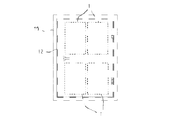
- the heat-expandable fireproof sheet of the present invention is excellent in shape retention, for example, if the heat-expandable fireproof sheet 1 is installed on the main body portion 12 of the door 10 as shown in FIG. Even after combustion, the combustion residue is less likely to collapse and exhibits excellent fire resistance.
- the present invention can employ the following configuration.
- a thermally expandable fireproof sheet that maintains excellent fireproof performance and suppresses deterioration in performance even when exposed to moisture.
- thermally expandable fireproof sheet according to 600 compressive strength of the expansion residue after heating for 30 minutes at °C is 0.3 kgf / cm 2 or more 2 kgf / cm 2 or less (1) or (2). With this configuration, it is possible to obtain a thermally expandable refractory sheet having a moderately high compressive strength after combustion.
- the thermally expandable refractory sheet according to (1) or (2), wherein the expansion residue after heating at 600 ° C. for 30 minutes has a compressive strength of 0.5 kgf / cm 2 or more and 2 kgf / cm 2 or less. With this configuration, it is possible to obtain a thermally expandable refractory sheet having a moderately high compressive strength after combustion.
- thermoly expandable refractory sheet according to any one of (1) to (5), wherein the phosphorus content is 8% by mass or less.
- thermoly expandable refractory sheet according to any one of (1) to (5), wherein the phosphorus content is 5% by mass or less.
- thermoly expandable refractory sheet according to any one of (1) to (5), wherein the phosphorus content is 1% by mass or less.
- thermoly expandable refractory sheet according to any one of (1) to (9), wherein the content of thermally expandable graphite is 15% by mass or more and less than 60% by mass.
- thermoly expandable refractory sheet according to any one of (11) to (13), wherein the content of the poorly water-soluble phosphorus compound is 30% by mass or less. With such a configuration, the mechanical strength and fire resistance of the thermally expandable fireproof sheet are improved.
- thermoly expandable refractory sheet according to any one of (11) to (13), wherein the content of the poorly water-soluble phosphorus compound is 20% by mass or less. With such a configuration, the mechanical strength and fire resistance of the thermally expandable fireproof sheet are improved.
- thermoly expandable refractory sheet according to any one of (11) to (13), wherein the content of the poorly water-soluble phosphorus compound is 10% by mass or less.
- the poorly water-soluble phosphorus compound is composed of ammonium polyphosphate, aluminum phosphite, first aluminum phosphate, second aluminum phosphate, third aluminum phosphate, aluminum metaphosphate, condensed aluminum phosphate, or a combination thereof.
- a poorly water-soluble inorganic phosphorus compound; melam polyphosphate, melamine polyphosphate, melem polyphosphate, poorly water-soluble phosphate ester, or a combination thereof; or a poorly water-soluble inorganic phosphorus compound and the poorly water-soluble inorganic phosphorus The thermally expandable refractory sheet according to any one of (11) to (20), which is a combination of compounds. With such a configuration, a decrease in performance against exposure to moisture in the thermally expandable refractory sheet is more effectively suppressed.
- the poorly water-soluble phosphorus compound is ammonium polyphosphate, aluminum phosphite, primary aluminum phosphate, secondary aluminum phosphate, tertiary aluminum phosphate, aluminum metaphosphate, condensed aluminum phosphate, melam polyphosphate, polyphosphorus
- the heat-expandable fireproof sheet according to any one of (11) to (20), selected from melamine acid, melem polyphosphate, and poorly water-soluble phosphate ester. With such a configuration, a decrease in performance against exposure to moisture in the thermally expandable refractory sheet is more effectively suppressed.
- a poorly water-soluble inorganic phosphorus compound that is ammonium polyphosphate, aluminum phosphite, primary aluminum phosphate, secondary aluminum phosphate, tertiary aluminum phosphate, aluminum metaphosphate, condensed aluminum phosphate, or a combination thereof ; Melam polyphosphate, melamine polyphosphate, melem polyphosphate, poorly water-soluble phosphate ester, or a combination thereof, or a poorly water-soluble organic phosphorus compound;
- the thermally expandable refractory sheet according to any one of (1) to (10), which contains a soluble phosphorus compound. With such a configuration, a decrease in performance against exposure to moisture in the thermally expandable refractory sheet is more effectively suppressed.
- the matrix resin is polyvinyl chloride resin, chlorinated vinyl chloride resin, ethylene vinyl acetate copolymer (EVA), epoxy resin, olefin-based thermoplastic elastomer (TPO), ethylene-propylene-diene rubber (EPDM), chloroprene.
- the thermally expandable fireproof sheet according to any one of (1) to (23), which is rubber, silicone rubber, polyethylene, or butyl rubber.
- thermally expandable refractory sheet according to any one of (1) to (24), wherein the thermally expandable refractory sheet contains 10 to 60% by mass of a matrix resin.
- the plasticizer is a phthalate ester plasticizer such as di-2-ethylhexyl phthalate (DOP), dibutyl phthalate (DBP), diheptyl phthalate (DHP), diisodecyl phthalate (DIDP); di-2-ethylhexyl adipate ( DOA), fatty acid ester plasticizers such as diisobutyl adipate (DIBA), dibutyl adipate (DBA); epoxidized ester plasticizers such as epoxidized soybean oil; polyester plasticizers such as adipic acid esters and adipic acid polyesters; tri-2-ethylhexyl
- trimellitic acid ester plasticizer such as trim
- ethylene vinyl acetate copolymer EVA
- EVA ethylene vinyl acetate copolymer
- TPO olefin-based thermoplastic elastomer
- matrix resin ethylene-propylene-diene rubber
- chloroprene rubber silicone rubber, polyethylene or butyl rubber, 5 to 60% by mass of thermally expandable graphite, ammonium polyphosphate, aluminum phosphite, primary aluminum phosphate, secondary aluminum phosphate, tertiary phosphorus And a water-swellable phosphorus compound which is at least one selected from aluminum phosphate, aluminum metaphosphate, condensed aluminum phosphate, melam polyphosphate, melamine polyphosphate, melem polyphosphate and poorly water-soluble phosphate ester
- the phosphorus content in the refractory sheet is Or less 0% by weight (1) intumescent fireproof sheet according to any one of the - (25). With this configuration, the expanded fireproof sheet can suppress
- thermally expandable refractory sheet according to (29) further comprising 1 to 50% by mass of an inorganic filler in the thermally expandable refractory sheet.
- Polyvinyl chloride resin (Product name: TK-1000, Shin-Etsu Chemical Co., Ltd.) Chlorinated vinyl chloride resin (Product name: HA-53, Tokuyama Sekisui Chemical Co., Ltd.) EVA resin (Product name: EV460, Mitsui DuPont Polychemical Co., Ltd.) Epoxy resin (Product name: FL-079, Mitsubishi Chemical Corporation) Epoxy resin (Product name: E-807, Mitsubishi Chemical Corporation) TPO (Product name: Miralastomer 5020BS, Mitsui Chemicals, Inc.) EPDM (Product name: ENB-EPT X-3012P, Mitsui Chemicals, Inc.) Chloroprene rubber (Product name: Denka Chloroprene MT-100, Denka) Silicone rubber (Product name: HCR SH502U, Toray Dow Corning Co., Ltd.) Polyethylene (Product name: Novatec LD ZE41K, Mitsubishi Chemical Corporation) Butyl
- Test evaluation criteria (dissolution rate) Five test pieces (length: 50 mm, width: 50 mm, thickness: 1.5 mm) prepared from the obtained molded sheets of Examples 1 to 56 and Comparative Examples 1 to 5 were each immersed in 200 g of pure water. After immersing in an airtight container at 1 ° C. for 1 week, a sample was taken out, the immersed pure water was evaporated and dried at 60 ° C. for 96 hours, and the mass of the generated precipitate was measured. The elution rate was measured using the value.
- test pieces (length 100 mm, width 100 mm, thickness 1.5 mm) prepared from the molded sheets of Examples 1 to 56 and Comparative Examples 1 to 5 and the test pieces having the same shape were obtained in 500 mL of pure water at 60 ° C. The sample was taken out after being immersed in a closed container for 1 week. A test piece prepared by evaporating and drying the sample at 60 ° C. for 96 hours was placed on the bottom of a stainless steel holder (101 mm square, height 80 mm), supplied to an electric furnace, and heated at 600 ° C. for 30 minutes. did. Then, the height (highest part) of the test piece is measured for width, length, thickness, and expanded by ((thickness of the test piece after heating) / (thickness of the test piece before heating)). Magnification was calculated.
- Test Results The measurement results of the expansion ratio, compressive strength, and dissolution rate of the test pieces of Examples 1 to 56 and Comparative Examples 1 to 5 are as shown in Table 1.
- the thermally expanded refractory sheet of Example 19 does not contain a phosphorus compound, and the thermally expanded refractory sheets of Examples 1, 6, 7, 14, and 15 contain ammonium polyphosphate.
- the thermally expanded refractory sheets of Examples 2, 8, 11, 18, 20, 21, 24, 27, 30, 33, 36, 39, 49, and 50 contain aluminum phosphite.
- the thermally expanded refractory sheets of Examples 3, 9, 17, 25, 28, 31, 34, 37, 40, 55, and 56 contain melamine polyphosphate.
- the thermally expanded refractory sheets of Examples 4, 10, 12, 16, 20, 26, 29, 32, 35, 38, 41, 51, 52 contain polyphosphate melam.
- the thermally expanded refractory sheets of Examples 5, 13, 23, 53, and 54 contain a poorly water-soluble organic phosphorus compound.
- the thermally expanded refractory sheet of Example 22 contains first aluminum phosphate.
- the thermally expanded refractory sheet of Example 42 contains dibasic aluminum phosphate.
- the thermally expanded refractory sheet of Example 43 contains tertiary aluminum phosphate.
- the thermally expanded refractory sheet of Example 44 contains aluminum metaphosphate.
- the thermally expanded refractory sheets of Examples 45 to 47 contain condensed aluminum phosphate.
- Example 48 contains tricresyl phosphate.
- thermal expansion refractory sheets of Examples 1 to 56 were good in terms of expansion ratio, compressive strength, and dissolution rate, but the thermal expansion refractory sheets of Comparative Examples 1 to 5 had a high dissolution rate and poor water resistance. I understood. In addition, those with a low elution rate had little change in compressive strength after elution, and the compressive strength could be maintained.
Landscapes
- Chemical & Material Sciences (AREA)
- Health & Medical Sciences (AREA)
- Chemical Kinetics & Catalysis (AREA)
- Medicinal Chemistry (AREA)
- Polymers & Plastics (AREA)
- Organic Chemistry (AREA)
- Engineering & Computer Science (AREA)
- Manufacturing & Machinery (AREA)
- Materials Engineering (AREA)
- Building Environments (AREA)
- Compositions Of Macromolecular Compounds (AREA)
- Manufacture Of Macromolecular Shaped Articles (AREA)
- Fireproofing Substances (AREA)
- Special Wing (AREA)
- Manufacture Of Porous Articles, And Recovery And Treatment Of Waste Products (AREA)
Priority Applications (3)
| Application Number | Priority Date | Filing Date | Title |
|---|---|---|---|
| JP2018508236A JP6450500B2 (ja) | 2017-01-25 | 2018-01-24 | 熱膨張性耐火シート |
| KR1020187037052A KR102445991B1 (ko) | 2017-01-25 | 2018-01-24 | 열팽창성 내화 시트 |
| EP18744260.3A EP3575348A4 (en) | 2017-01-25 | 2018-01-24 | THERMALLY EXPANDABLE FIRE RESISTANT SHEET |
Applications Claiming Priority (2)
| Application Number | Priority Date | Filing Date | Title |
|---|---|---|---|
| JP2017010948 | 2017-01-25 | ||
| JP2017-010948 | 2017-01-25 |
Publications (1)
| Publication Number | Publication Date |
|---|---|
| WO2018139494A1 true WO2018139494A1 (ja) | 2018-08-02 |
Family
ID=62979487
Family Applications (1)
| Application Number | Title | Priority Date | Filing Date |
|---|---|---|---|
| PCT/JP2018/002157 Ceased WO2018139494A1 (ja) | 2017-01-25 | 2018-01-24 | 熱膨張性耐火シート |
Country Status (4)
| Country | Link |
|---|---|
| EP (1) | EP3575348A4 (enExample) |
| JP (9) | JP6450500B2 (enExample) |
| KR (1) | KR102445991B1 (enExample) |
| WO (1) | WO2018139494A1 (enExample) |
Cited By (5)
| Publication number | Priority date | Publication date | Assignee | Title |
|---|---|---|---|---|
| CN109181295A (zh) * | 2018-08-09 | 2019-01-11 | 浙江大学 | 利用无机和烷基亚磷酸盐提高热稳定性的磷氮无卤阻燃剂组合物及其应用 |
| CN110054807A (zh) * | 2018-08-09 | 2019-07-26 | 江苏利思德新材料有限公司 | 利用无机亚磷酸金属盐提高热稳定性的磷氮无卤阻燃剂组合物及其应用 |
| JP2020045390A (ja) * | 2018-09-14 | 2020-03-26 | 積水化学工業株式会社 | 耐火性樹脂組成物、及び熱膨張性シート |
| JP2022095225A (ja) * | 2020-12-16 | 2022-06-28 | 因幡電機産業株式会社 | 熱膨張性耐火シート、及び、熱膨張性耐火シートの製造方法 |
| JP2022108673A (ja) * | 2021-01-13 | 2022-07-26 | 積水化学工業株式会社 | 耐火性樹脂組成物 |
Families Citing this family (3)
| Publication number | Priority date | Publication date | Assignee | Title |
|---|---|---|---|---|
| JP2021031605A (ja) * | 2019-08-26 | 2021-03-01 | 積水化学工業株式会社 | 熱膨張性耐火材 |
| JP7007424B2 (ja) * | 2020-06-01 | 2022-01-24 | 積水化学工業株式会社 | 耐火性樹脂組成物、耐火シート及び建具 |
| JP2021195460A (ja) * | 2020-06-15 | 2021-12-27 | 積水化学工業株式会社 | 熱膨張性耐火材 |
Citations (10)
| Publication number | Priority date | Publication date | Assignee | Title |
|---|---|---|---|---|
| JP2000034365A (ja) * | 1997-10-16 | 2000-02-02 | Sekisui Chem Co Ltd | 耐火性樹脂組成物及びそれを用いたシート成形体 |
| JP2005290152A (ja) * | 2004-03-31 | 2005-10-20 | Toray Ind Inc | 難燃性熱可塑性樹脂組成物およびそれからなる成形品 |
| JP2006274134A (ja) * | 2005-03-30 | 2006-10-12 | Denki Kagaku Kogyo Kk | 目地材及びガスケット |
| JP2013147586A (ja) * | 2012-01-20 | 2013-08-01 | Mitsui Chemicals Inc | 難燃性樹脂組成物及びその製造方法、並びにその成形体及び電線 |
| JP2013227685A (ja) * | 2012-04-24 | 2013-11-07 | Toray Ind Inc | 難燃性人工皮革とその製造方法および人工皮革用難燃加工剤 |
| WO2016117699A1 (ja) * | 2015-01-22 | 2016-07-28 | 積水化学工業株式会社 | 耐火性樹脂組成物 |
| WO2016182059A1 (ja) * | 2015-05-14 | 2016-11-17 | 積水化学工業株式会社 | 耐火樹脂組成物 |
| JP2017008310A (ja) * | 2015-06-19 | 2017-01-12 | 積水化学工業株式会社 | 耐火樹脂成形体およびそれを備えた建具 |
| JP2017007333A (ja) * | 2015-06-19 | 2017-01-12 | 積水化学工業株式会社 | 耐火樹脂成形体およびそれを備えた建具 |
| WO2017126654A1 (ja) * | 2016-01-20 | 2017-07-27 | 積水化学工業株式会社 | 耐火性樹脂組成物 |
Family Cites Families (14)
| Publication number | Priority date | Publication date | Assignee | Title |
|---|---|---|---|---|
| JP3370452B2 (ja) * | 1994-10-19 | 2003-01-27 | 積水化学工業株式会社 | 難燃性熱可塑性樹脂組成物 |
| JP3299899B2 (ja) | 1995-12-22 | 2002-07-08 | 積水化学工業株式会社 | 耐火性樹脂組成物 |
| JPH108596A (ja) * | 1996-06-21 | 1998-01-13 | Mitsui Kinzoku Toryo Kagaku Kk | 発泡型防火性成形品および発泡型防火組成物 |
| JP2000159903A (ja) * | 1997-12-22 | 2000-06-13 | Sekisui Chem Co Ltd | 耐火性樹脂シート及びその積層体 |
| JP2000319413A (ja) * | 1999-05-12 | 2000-11-21 | Sekisui Chem Co Ltd | 耐火性シート及びその製造方法 |
| JP4081210B2 (ja) | 1999-09-07 | 2008-04-23 | 積水化学工業株式会社 | 防・耐火外壁構成体の施工方法 |
| JP3432465B2 (ja) | 1999-10-12 | 2003-08-04 | 積水化学工業株式会社 | 防火戸 |
| JP2002146942A (ja) | 2000-08-29 | 2002-05-22 | Sekisui Chem Co Ltd | 防・耐火パネル及び防火戸 |
| JP3746003B2 (ja) | 2001-12-26 | 2006-02-15 | 積水化学工業株式会社 | 粘着性耐火性ゴム組成物及びシート |
| JP2004300279A (ja) * | 2003-03-31 | 2004-10-28 | Mitsubishi Plastics Ind Ltd | 難燃性シート |
| JP4250153B2 (ja) * | 2005-06-17 | 2009-04-08 | 信越化学工業株式会社 | 熱膨張性塩化ビニル系樹脂組成物およびその成形体 |
| JP2010159508A (ja) | 2009-01-07 | 2010-07-22 | Sogo Giken:Kk | 防炎抗菌用コーティング部材及びその製造方法ならびに防炎抗菌性製品 |
| JP2013054379A (ja) * | 2012-11-14 | 2013-03-21 | Nagoya Oil Chem Co Ltd | 吸音材料 |
| WO2016117702A1 (ja) * | 2015-01-22 | 2016-07-28 | 積水化学工業株式会社 | 耐火性樹脂組成物 |
-
2018
- 2018-01-24 KR KR1020187037052A patent/KR102445991B1/ko active Active
- 2018-01-24 JP JP2018508236A patent/JP6450500B2/ja active Active
- 2018-01-24 EP EP18744260.3A patent/EP3575348A4/en active Pending
- 2018-01-24 WO PCT/JP2018/002157 patent/WO2018139494A1/ja not_active Ceased
- 2018-09-03 JP JP2018164795A patent/JP6499796B2/ja active Active
- 2018-10-11 JP JP2018192446A patent/JP6438623B1/ja active Active
- 2018-10-11 JP JP2018192453A patent/JP6438624B1/ja active Active
- 2018-10-23 JP JP2018199503A patent/JP6985235B2/ja active Active
-
2021
- 2021-02-05 JP JP2021017015A patent/JP7157187B2/ja active Active
-
2022
- 2022-02-16 JP JP2022022226A patent/JP7367093B2/ja active Active
-
2023
- 2023-10-10 JP JP2023175409A patent/JP7656678B2/ja active Active
-
2025
- 2025-03-24 JP JP2025047825A patent/JP2025085817A/ja active Pending
Patent Citations (10)
| Publication number | Priority date | Publication date | Assignee | Title |
|---|---|---|---|---|
| JP2000034365A (ja) * | 1997-10-16 | 2000-02-02 | Sekisui Chem Co Ltd | 耐火性樹脂組成物及びそれを用いたシート成形体 |
| JP2005290152A (ja) * | 2004-03-31 | 2005-10-20 | Toray Ind Inc | 難燃性熱可塑性樹脂組成物およびそれからなる成形品 |
| JP2006274134A (ja) * | 2005-03-30 | 2006-10-12 | Denki Kagaku Kogyo Kk | 目地材及びガスケット |
| JP2013147586A (ja) * | 2012-01-20 | 2013-08-01 | Mitsui Chemicals Inc | 難燃性樹脂組成物及びその製造方法、並びにその成形体及び電線 |
| JP2013227685A (ja) * | 2012-04-24 | 2013-11-07 | Toray Ind Inc | 難燃性人工皮革とその製造方法および人工皮革用難燃加工剤 |
| WO2016117699A1 (ja) * | 2015-01-22 | 2016-07-28 | 積水化学工業株式会社 | 耐火性樹脂組成物 |
| WO2016182059A1 (ja) * | 2015-05-14 | 2016-11-17 | 積水化学工業株式会社 | 耐火樹脂組成物 |
| JP2017008310A (ja) * | 2015-06-19 | 2017-01-12 | 積水化学工業株式会社 | 耐火樹脂成形体およびそれを備えた建具 |
| JP2017007333A (ja) * | 2015-06-19 | 2017-01-12 | 積水化学工業株式会社 | 耐火樹脂成形体およびそれを備えた建具 |
| WO2017126654A1 (ja) * | 2016-01-20 | 2017-07-27 | 積水化学工業株式会社 | 耐火性樹脂組成物 |
Cited By (11)
| Publication number | Priority date | Publication date | Assignee | Title |
|---|---|---|---|---|
| CN109181295A (zh) * | 2018-08-09 | 2019-01-11 | 浙江大学 | 利用无机和烷基亚磷酸盐提高热稳定性的磷氮无卤阻燃剂组合物及其应用 |
| CN110054807A (zh) * | 2018-08-09 | 2019-07-26 | 江苏利思德新材料有限公司 | 利用无机亚磷酸金属盐提高热稳定性的磷氮无卤阻燃剂组合物及其应用 |
| CN110054807B (zh) * | 2018-08-09 | 2021-02-02 | 江苏利思德新材料有限公司 | 利用无机亚磷酸金属盐提高热稳定性的磷氮无卤阻燃剂组合物及其应用 |
| JP2020045390A (ja) * | 2018-09-14 | 2020-03-26 | 積水化学工業株式会社 | 耐火性樹脂組成物、及び熱膨張性シート |
| JP2022164720A (ja) * | 2018-09-14 | 2022-10-27 | 積水化学工業株式会社 | 耐火性樹脂組成物、及び熱膨張性シート |
| JP7201373B2 (ja) | 2018-09-14 | 2023-01-10 | 積水化学工業株式会社 | 耐火性樹脂組成物、及び熱膨張性シート |
| JP2024071536A (ja) * | 2018-09-14 | 2024-05-24 | 積水化学工業株式会社 | 耐火性樹脂組成物、及び熱膨張性シート |
| JP2022095225A (ja) * | 2020-12-16 | 2022-06-28 | 因幡電機産業株式会社 | 熱膨張性耐火シート、及び、熱膨張性耐火シートの製造方法 |
| JP7692556B2 (ja) | 2020-12-16 | 2025-06-16 | 因幡電機産業株式会社 | 熱膨張性耐火シート、及び、熱膨張性耐火シートの製造方法 |
| JP2022108673A (ja) * | 2021-01-13 | 2022-07-26 | 積水化学工業株式会社 | 耐火性樹脂組成物 |
| JP7680842B2 (ja) | 2021-01-13 | 2025-05-21 | 積水化学工業株式会社 | 耐火性樹脂組成物 |
Also Published As
| Publication number | Publication date |
|---|---|
| JP2025085817A (ja) | 2025-06-05 |
| JP6499796B2 (ja) | 2019-04-10 |
| JP6985235B2 (ja) | 2021-12-22 |
| JP2019023294A (ja) | 2019-02-14 |
| JP2019019665A (ja) | 2019-02-07 |
| JP2021080466A (ja) | 2021-05-27 |
| JPWO2018139494A1 (ja) | 2019-02-07 |
| JP2022063322A (ja) | 2022-04-21 |
| JP6438623B1 (ja) | 2018-12-19 |
| KR20190105206A (ko) | 2019-09-16 |
| JP6450500B2 (ja) | 2019-01-09 |
| JP7656678B2 (ja) | 2025-04-03 |
| JP7157187B2 (ja) | 2022-10-19 |
| JP2019052308A (ja) | 2019-04-04 |
| JP7367093B2 (ja) | 2023-10-23 |
| EP3575348A1 (en) | 2019-12-04 |
| KR102445991B1 (ko) | 2022-09-21 |
| JP6438624B1 (ja) | 2018-12-19 |
| EP3575348A4 (en) | 2020-09-16 |
| JP2023184538A (ja) | 2023-12-28 |
| JP2019019666A (ja) | 2019-02-07 |
Similar Documents
| Publication | Publication Date | Title |
|---|---|---|
| JP6499796B2 (ja) | 熱膨張性耐火シート | |
| JP6247368B2 (ja) | 耐火性樹脂組成物 | |
| JP6962875B2 (ja) | 耐火樹脂組成物及び耐火樹脂成形体 | |
| JP6546649B2 (ja) | 耐火樹脂組成物及び耐火樹脂成形体 | |
| JP6225287B1 (ja) | 耐火性樹脂組成物 | |
| JP7201373B2 (ja) | 耐火性樹脂組成物、及び熱膨張性シート | |
| JP7261048B2 (ja) | 熱膨張性シート及び熱膨張性シートの製造方法 | |
| JP7372734B2 (ja) | 熱膨張性シート | |
| JP7616815B2 (ja) | 耐火性樹脂組成物、及び熱膨張性シート |
Legal Events
| Date | Code | Title | Description |
|---|---|---|---|
| ENP | Entry into the national phase |
Ref document number: 2018508236 Country of ref document: JP Kind code of ref document: A |
|
| 121 | Ep: the epo has been informed by wipo that ep was designated in this application |
Ref document number: 18744260 Country of ref document: EP Kind code of ref document: A1 |
|
| ENP | Entry into the national phase |
Ref document number: 20187037052 Country of ref document: KR Kind code of ref document: A |
|
| NENP | Non-entry into the national phase |
Ref country code: DE |
|
| ENP | Entry into the national phase |
Ref document number: 2018744260 Country of ref document: EP Effective date: 20190826 |