WO2017164276A1 - 押出樹脂板の製造方法及び押出樹脂板 - Google Patents
押出樹脂板の製造方法及び押出樹脂板 Download PDFInfo
- Publication number
- WO2017164276A1 WO2017164276A1 PCT/JP2017/011620 JP2017011620W WO2017164276A1 WO 2017164276 A1 WO2017164276 A1 WO 2017164276A1 JP 2017011620 W JP2017011620 W JP 2017011620W WO 2017164276 A1 WO2017164276 A1 WO 2017164276A1
- Authority
- WO
- WIPO (PCT)
- Prior art keywords
- resin
- resin plate
- extruded resin
- extruded
- polycarbonate
- Prior art date
- Legal status (The legal status is an assumption and is not a legal conclusion. Google has not performed a legal analysis and makes no representation as to the accuracy of the status listed.)
- Ceased
Links
- 0 CCCC*(CCC1)C[C@]1C(C=C=CC1CC(CC)(CCC)C1)=**CC Chemical compound CCCC*(CCC1)C[C@]1C(C=C=CC1CC(CC)(CCC)C1)=**CC 0.000 description 2
Images
Classifications
-
- B—PERFORMING OPERATIONS; TRANSPORTING
- B29—WORKING OF PLASTICS; WORKING OF SUBSTANCES IN A PLASTIC STATE IN GENERAL
- B29C—SHAPING OR JOINING OF PLASTICS; SHAPING OF MATERIAL IN A PLASTIC STATE, NOT OTHERWISE PROVIDED FOR; AFTER-TREATMENT OF THE SHAPED PRODUCTS, e.g. REPAIRING
- B29C48/00—Extrusion moulding, i.e. expressing the moulding material through a die or nozzle which imparts the desired form; Apparatus therefor
- B29C48/25—Component parts, details or accessories; Auxiliary operations
- B29C48/88—Thermal treatment of the stream of extruded material, e.g. cooling
- B29C48/885—External treatment, e.g. by using air rings for cooling tubular films
-
- B—PERFORMING OPERATIONS; TRANSPORTING
- B29—WORKING OF PLASTICS; WORKING OF SUBSTANCES IN A PLASTIC STATE IN GENERAL
- B29C—SHAPING OR JOINING OF PLASTICS; SHAPING OF MATERIAL IN A PLASTIC STATE, NOT OTHERWISE PROVIDED FOR; AFTER-TREATMENT OF THE SHAPED PRODUCTS, e.g. REPAIRING
- B29C48/00—Extrusion moulding, i.e. expressing the moulding material through a die or nozzle which imparts the desired form; Apparatus therefor
- B29C48/022—Extrusion moulding, i.e. expressing the moulding material through a die or nozzle which imparts the desired form; Apparatus therefor characterised by the choice of material
-
- B—PERFORMING OPERATIONS; TRANSPORTING
- B29—WORKING OF PLASTICS; WORKING OF SUBSTANCES IN A PLASTIC STATE IN GENERAL
- B29C—SHAPING OR JOINING OF PLASTICS; SHAPING OF MATERIAL IN A PLASTIC STATE, NOT OTHERWISE PROVIDED FOR; AFTER-TREATMENT OF THE SHAPED PRODUCTS, e.g. REPAIRING
- B29C48/00—Extrusion moulding, i.e. expressing the moulding material through a die or nozzle which imparts the desired form; Apparatus therefor
- B29C48/16—Articles comprising two or more components, e.g. co-extruded layers
- B29C48/18—Articles comprising two or more components, e.g. co-extruded layers the components being layers
-
- B—PERFORMING OPERATIONS; TRANSPORTING
- B29—WORKING OF PLASTICS; WORKING OF SUBSTANCES IN A PLASTIC STATE IN GENERAL
- B29C—SHAPING OR JOINING OF PLASTICS; SHAPING OF MATERIAL IN A PLASTIC STATE, NOT OTHERWISE PROVIDED FOR; AFTER-TREATMENT OF THE SHAPED PRODUCTS, e.g. REPAIRING
- B29C48/00—Extrusion moulding, i.e. expressing the moulding material through a die or nozzle which imparts the desired form; Apparatus therefor
- B29C48/25—Component parts, details or accessories; Auxiliary operations
- B29C48/88—Thermal treatment of the stream of extruded material, e.g. cooling
- B29C48/91—Heating, e.g. for cross linking
-
- B—PERFORMING OPERATIONS; TRANSPORTING
- B29—WORKING OF PLASTICS; WORKING OF SUBSTANCES IN A PLASTIC STATE IN GENERAL
- B29C—SHAPING OR JOINING OF PLASTICS; SHAPING OF MATERIAL IN A PLASTIC STATE, NOT OTHERWISE PROVIDED FOR; AFTER-TREATMENT OF THE SHAPED PRODUCTS, e.g. REPAIRING
- B29C48/00—Extrusion moulding, i.e. expressing the moulding material through a die or nozzle which imparts the desired form; Apparatus therefor
- B29C48/25—Component parts, details or accessories; Auxiliary operations
- B29C48/88—Thermal treatment of the stream of extruded material, e.g. cooling
- B29C48/911—Cooling
- B29C48/9135—Cooling of flat articles, e.g. using specially adapted supporting means
- B29C48/914—Cooling drums
-
- B—PERFORMING OPERATIONS; TRANSPORTING
- B29—WORKING OF PLASTICS; WORKING OF SUBSTANCES IN A PLASTIC STATE IN GENERAL
- B29C—SHAPING OR JOINING OF PLASTICS; SHAPING OF MATERIAL IN A PLASTIC STATE, NOT OTHERWISE PROVIDED FOR; AFTER-TREATMENT OF THE SHAPED PRODUCTS, e.g. REPAIRING
- B29C48/00—Extrusion moulding, i.e. expressing the moulding material through a die or nozzle which imparts the desired form; Apparatus therefor
- B29C48/25—Component parts, details or accessories; Auxiliary operations
- B29C48/92—Measuring, controlling or regulating
-
- C—CHEMISTRY; METALLURGY
- C08—ORGANIC MACROMOLECULAR COMPOUNDS; THEIR PREPARATION OR CHEMICAL WORKING-UP; COMPOSITIONS BASED THEREON
- C08L—COMPOSITIONS OF MACROMOLECULAR COMPOUNDS
- C08L33/00—Compositions of homopolymers or copolymers of compounds having one or more unsaturated aliphatic radicals, each having only one carbon-to-carbon double bond, and only one being terminated by only one carboxyl radical, or of salts, anhydrides, esters, amides, imides or nitriles thereof; Compositions of derivatives of such polymers
- C08L33/04—Homopolymers or copolymers of esters
- C08L33/06—Homopolymers or copolymers of esters of esters containing only carbon, hydrogen and oxygen, which oxygen atoms are present only as part of the carboxyl radical
- C08L33/10—Homopolymers or copolymers of methacrylic acid esters
- C08L33/12—Homopolymers or copolymers of methyl methacrylate
-
- C—CHEMISTRY; METALLURGY
- C08—ORGANIC MACROMOLECULAR COMPOUNDS; THEIR PREPARATION OR CHEMICAL WORKING-UP; COMPOSITIONS BASED THEREON
- C08L—COMPOSITIONS OF MACROMOLECULAR COMPOUNDS
- C08L35/00—Compositions of homopolymers or copolymers of compounds having one or more unsaturated aliphatic radicals, each having only one carbon-to-carbon double bond, and at least one being terminated by a carboxyl radical, and containing at least one other carboxyl radical in the molecule, or of salts, anhydrides, esters, amides, imides or nitriles thereof; Compositions of derivatives of such polymers
- C08L35/06—Copolymers with vinyl aromatic monomers
-
- C—CHEMISTRY; METALLURGY
- C08—ORGANIC MACROMOLECULAR COMPOUNDS; THEIR PREPARATION OR CHEMICAL WORKING-UP; COMPOSITIONS BASED THEREON
- C08L—COMPOSITIONS OF MACROMOLECULAR COMPOUNDS
- C08L69/00—Compositions of polycarbonates; Compositions of derivatives of polycarbonates
-
- B—PERFORMING OPERATIONS; TRANSPORTING
- B29—WORKING OF PLASTICS; WORKING OF SUBSTANCES IN A PLASTIC STATE IN GENERAL
- B29K—INDEXING SCHEME ASSOCIATED WITH SUBCLASSES B29B, B29C OR B29D, RELATING TO MOULDING MATERIALS OR TO MATERIALS FOR MOULDS, REINFORCEMENTS, FILLERS OR PREFORMED PARTS, e.g. INSERTS
- B29K2069/00—Use of PC, i.e. polycarbonates or derivatives thereof, as moulding material
Definitions
- the present invention relates to an extruded resin plate. More specifically, the present invention is suitable for a touch panel protective cover having good surface properties, suppressing the occurrence of warpage due to residual stress, and controlling the in-plane retardation value even in a high temperature environment.
- the present invention relates to an extruded resin plate comprising a layer containing a methacrylic resin and a layer containing a polycarbonate, and a method for producing the same.
- the touch panel (or touch screen) is an electronic component that combines a display device and a position input device.
- the electronic device can be operated by touching the touch panel with a finger or a pen.
- Touch panels can be used for ATMs, financial institutions such as banks, vending machines, mobile phones, personal digital assistants (PDAs), digital audio players, portable game machines, tablet personal computers, copiers, fax machines, car navigation systems, and other digital information devices. in use.
- An input operation using a touch panel may cause scratches on the surface or the inside may be crushed.
- a transparent protective cover is installed on the surface of the touch panel. Tempered glass is mainly used as a protective cover.
- a transparent resin protective cover has been developed. The protective cover is required to have gloss, scratch resistance, impact resistance, and the like.
- polycarbonate is one of resins suitable for obtaining a molded article having excellent impact resistance.
- a methacrylic resin is one of resins suitable for obtaining a molded product having high gloss and excellent scratch resistance.
- the resin board which consists of a layer which consists of a polycarbonate, and a layer which consists of a methacryl resin can be manufactured by heat-melt-molding (for example, coextrusion molding) simultaneously with a polycarbonate and a methacryl resin.
- heat-melt-molding for example, coextrusion molding
- distortion stress remains in the molded product obtained due to the difference in the characteristics of the two types of resins.
- the strain stress remaining in the molded product is called residual stress, and the molded product having the residual stress is warped or shrunk due to heat or the like.
- methacrylic resin has a methyl methacrylate unit and a unit selected from a methacrylic acid unit, an acrylic acid unit, a maleic anhydride unit, an N-substituted or unsubstituted maleimide unit, a glutaric anhydride structural unit, and a glutarimide structural unit.
- a two-layer resin plate is reported in which a first layer is formed using a methacrylic resin having a glass transition temperature of 110 ° C. or higher (see, for example, Patent Document 2).
- a resin plate still has insufficient heat resistance and moisture resistance of methacrylic resin, and even with this, it does not lead to a sufficient solution of the above-mentioned problems.
- Patent Document 4 discloses that a cured film is formed on at least one surface of a methacrylic resin plate and used as a display window protection plate of a liquid crystal portable information terminal.
- Patent Document 5 discloses that a cured film is formed on a methacrylic resin layer of a laminate obtained by laminating a methacrylic resin layer on one surface of a polycarbonate resin layer and used for a liquid crystal display cover. .
- the above-described protective cover is installed on the front side (viewer side) of the liquid crystal display, and the viewer views the screen of the liquid crystal display through the protective cover. Since the polarization of the light emitted from the display is hardly changed, the screen becomes dark and the image can be seen depending on the angle formed by the polarization axis of the emitted light and the transmission axis of the polarized sunglasses. Sometimes it was difficult. In view of this, a liquid crystal display protective cover that can suppress a reduction in image visibility when the screen of the liquid crystal display is viewed through a polarizing filter such as polarized sunglasses has been studied.
- Patent Document 6 discloses that the in-plane retardation value is 85 to 300 nm.
- the resin plate may be heated to a temperature of about 100 ° C.
- the coating material is thermosetting, it is heated in the coating curing process.
- the coating material is photocurable, it is heated with the irradiation of light.
- the coating material contains a solvent such as an organic solvent, it is heated for drying.
- the retardation value is lowered, and there are cases where it cannot be controlled within the intended range.
- the liquid crystal display protective plate may still be heated to a high temperature. In other words, the retardation value of the resin plate may be lowered.
- An object of the present invention is to provide an extruded resin plate and a method for producing an extruded resin plate that has good surface properties, suppresses the occurrence of warpage, and has a small reduction rate of in-plane retardation value even when heated to a high temperature. It is.
- this invention includes the following aspects. That is, this invention includes the following aspects.
- the glass transition temperature of the layer containing the methacrylic resin is 115 ° C.
- thermoplastic resin laminate in which a layer containing the methacrylic resin is laminated on at least one side of the polycarbonate-containing layer, Sandwiching the thermoplastic resin laminate between the first cooling roll and the second cooling roll, After the thermoplastic resin laminate is wound around the second cooling roll, it is cooled by winding around the third cooling roll, Including a step of pulling the thermoplastic resin laminate by a pulling roll, At the position where the thermoplastic resin laminate is peeled off from the cooling roll to be wound last, the temperature of the entire resin is set in the range of ⁇ 2 ° C. to + 15 ° C.
- a method for producing an extruded resin plate wherein a peripheral speed ratio (V4 / V2) between a peripheral speed (V4) of the take-up roll and a peripheral speed (V2) of the second cooling roll is 0.98 to 1.01. .
- Cy represents an alicyclic hydrocarbon group.
- the layer containing the methacrylic resin is 5% by mass or more and less than 80% by mass, a structural unit derived from an aromatic vinyl compound represented by the following general formula (II), and the following general formula (III)
- R 1 and R 2 each independently represents a hydrogen atom or an alkyl group.
- R 3 and R 4 each independently represents a hydrogen atom or an alkyl group.
- the copolymer contains 50 to 84% by mass of a structural unit derived from the aromatic vinyl compound, 15 to 49% by mass of a structural unit derived from the acid anhydride,
- the method for producing an extruded resin plate according to [5] comprising 1 to 25% by mass of a monomer.
- the in-plane retardation value at least partially in the width direction before and after heating is 50 to 600 nm
- An extruded resin plate obtained by the production method according to any one of [1] to [7] When the extruded resin plate is heated at a temperature of 75 ° C. to 100 ° C. for 5 hours, an in-plane retardation value at least in the width direction is 50 to 600 nm before and after heating, An extruded resin plate in which the reduction rate of the retardation value before and after the heating is less than 15%.
- a method for producing an extruded resin plate wherein the in-plane retardation value is 50 to 600 nm at least in a part of the width direction before and after the heating, and the reduction rate of the retardation value before and after the heating is less than 15%.
- the glass transition temperature of the layer containing the methacrylic resin is 115 ° C. or higher,
- the in-plane retardation value at least partially in the width direction before and after heating is 50 to 600 nm,
- the rate of decrease in the retardation value before and after the heating is less than 15%
- ((S2-S1) / S1) is an extruded resin plate having a ratio of -10% to + 5%.
- the extruded resin plate obtained by the method for producing an extruded resin plate according to the present invention has a good surface property, the occurrence of warpage is suppressed, and the in-plane suitable as a liquid crystal display protective plate when viewed through polarized sunglasses. It has a retardation value. In addition, since the rate of reduction of the in-plane retardation value by heating is small, it can withstand the heating process and high temperature environment, and is excellent in productivity and durability.
- the extruded resin plate of the present invention is suitable for applications such as a touch panel protective cover that requires gloss, scratch resistance and impact resistance.
- the extruded resin plate according to the present invention is a layer containing a methacrylic resin on at least one side of a layer containing polycarbonate (hereinafter also referred to as “polycarbonate-containing layer”) (hereinafter also referred to as “methacrylic resin-containing layer” as appropriate).
- polycarbonate-containing layer a layer containing polycarbonate
- methacrylic resin-containing layer a layer containing polycarbonate
- methacrylic resin-containing layer as appropriate. Since the methacrylic resin-containing layer is laminated on the polycarbonate-containing layer, transparency, impact resistance, and scratch resistance are excellent.
- the extruded resin plate is excellent in production efficiency by being manufactured by an extrusion molding method.
- the lower limit of the glass transition temperature (Tg) of the methacrylic resin-containing layer is 115 ° C, preferably 120 ° C, more preferably 125 ° C, still more preferably 130 ° C, and the glass transition temperature ( The upper limit of Tg) is preferably 160 ° C, more preferably 155 ° C, and even more preferably 150 ° C.
- the linear expansion ratio (SR) and the glass transition temperature (Tg) of the methacrylic resin-containing layer are within this range, the surface property is good and the warp due to the residual stress is small.
- the methacrylic resin contains a structural unit derived from a methacrylic acid ester.
- the content of the structural unit derived from the methacrylic acid ester is preferably 50% by mass or more, more preferably 80% by mass or more, and still more preferably 90% by mass or more. It may be 100% by mass.
- the transparency is good.
- Such methacrylic acid ester is represented by the general formula (IV).
- R represents a hydrocarbon group.
- the hydrocarbon group may be a saturated hydrocarbon group or an unsaturated hydrocarbon group.
- the hydrocarbon group represented by R may be an acyclic aliphatic hydrocarbon group such as a methyl group, an ethyl group or a propyl group, an alicyclic hydrocarbon group, or an aromatic hydrocarbon group such as a phenyl group. It may be.
- R is an alicyclic hydrocarbon group
- the methacrylic acid ester is represented by the general formula (I).
- the methacrylic acid ester represented by the general formula (I) is also referred to as “methacrylic acid ester (I)” as appropriate.
- Cy represents an alicyclic hydrocarbon group.
- Methacrylic acid ester (I) includes methacrylic acid monocyclic aliphatic hydrocarbon esters such as cyclohexyl methacrylate, cyclopentyl methacrylate and cycloheptyl methacrylate; 2-norbornyl methacrylate, 2-methyl-2-norbornyl Methacrylate, 2-ethyl-2-norbornyl methacrylate, 2-isobornyl methacrylate, 2-methyl-2-isobornyl methacrylate, 2-ethyl-2-isobornyl methacrylate, 8-tricyclo [5.2.
- methacrylic acid monocyclic aliphatic hydrocarbon esters such as cyclohexyl methacrylate, cyclopentyl methacrylate and cycloheptyl methacrylate
- 2-norbornyl methacrylate 2-methyl-2-norbornyl Methacrylate
- 2-ethyl-2-norbornyl methacrylate 2-
- the methacrylic resin used in the present invention includes a structural unit derived from methyl methacrylate (hereinafter also referred to as “MMA” as appropriate) and a structural unit derived from methacrylic acid ester (I). More preferred are those comprising a structural unit derived from MMA and a structural unit derived from a polycyclic aliphatic hydrocarbon ester of methacrylic acid, and a structural unit derived from MMA and 8-tricyclo [5.2.1.0]. Those containing a structural unit derived from [ 2,6 ] decanyl methacrylate are more preferred.
- the methacrylic resin may contain structural units derived from monomers other than methacrylic acid ester (I) and MMA, but the content is preferably 10% by mass or less.
- the methacrylic resin used in the present invention preferably contains 40 to 80% by mass, more preferably 50 to 80% by mass, and more preferably 50 to 60% by mass of structural units derived from MMA from the viewpoint of hardness. It is more preferable to contain.
- the methacrylic resin used in the present invention contains 20 to 20 structural units derived from the methacrylic acid ester (I) from the viewpoint of reducing the later-described linear expansion ratio (SR) and the glass transition temperature (Tg) of 115 ° C. or higher.
- the content is preferably 60% by mass, more preferably 20 to 50% by mass, and even more preferably 40 to 50% by mass.
- the structural unit derived from the methacrylic acid ester (I) exceeds 60% by mass, the impact resistance of the methacrylic resin layer tends to decrease.
- the methacrylic resin used in the present invention is obtained by polymerizing the above-mentioned methacrylic acid ester and other monomers as optional components.
- the plurality of types of monomers are mixed to prepare a monomer mixture and then subjected to polymerization.
- radical polymerization is preferably performed by a method such as a bulk polymerization method, a suspension polymerization method, a solution polymerization method, and an emulsion polymerization method from the viewpoint of productivity.
- the weight average molecular weight (hereinafter also referred to as “Mw” as appropriate) of the methacrylic resin used in the present invention is preferably 40,000 to 500,000.
- Mw means the standard polystyrene conversion value measured using a gel perem chromatography (GPC).
- the resin constituting the methacrylic resin-containing layer contains at least 5% by mass and less than 80% by mass of a methacrylic resin and an aromatic vinyl compound represented by at least the following general formula (II) And a structural unit derived from a structural unit derived from an acid anhydride represented by the following general formula (III) (hereinafter also referred to as “anhydride (III)” as appropriate)
- a resin composition hereinafter appropriately described as “resin composition (1)” containing 20% by mass or more of a copolymer (hereinafter appropriately described as “SMA resin”).
- R 1 and R 2 each independently represents a hydrogen atom or an alkyl group.
- R 3 and R 4 each independently represents a hydrogen atom or an alkyl group.
- the methacrylic resin contained in the resin composition (1) is a resin containing a structural unit derived from a methacrylic acid ester represented by the general formula (IV).
- the methacrylic acid ester is not particularly limited, but from the viewpoint of availability, MMA, ethyl methacrylate, n-propyl methacrylate, isopropyl methacrylate, n-butyl methacrylate, isobutyl methacrylate, and tert-methacrylic acid tert- Butyl is preferred and MMA is most preferred.
- the content of the structural unit derived from the methacrylic acid ester in the methacrylic resin is preferably 90% by mass or more, more preferably 95% by mass or more, further preferably 98% by mass or more, and only the structural unit derived from the methacrylic acid ester. May be.
- the methacrylic resin contained in the resin composition (1) preferably contains 90% by mass or more, more preferably 95% by mass or more of a structural unit derived from MMA, 98 It is more preferable to contain it by mass% or more, and only the structural unit derived from MMA may be sufficient.
- the methacrylic resin contained in the resin composition (1) may contain a structural unit derived from a monomer other than the methacrylic acid ester.
- Such other monomers include methyl acrylate (hereinafter also referred to as “MA” as appropriate), ethyl acrylate, n-propyl acrylate, isopropyl acrylate, n-butyl acrylate, isobutyl acrylate, acrylic acid tert-butyl, hexyl acrylate, 2-ethylhexyl acrylate, nonyl acrylate, decyl acrylate, dodecyl acrylate, stearyl acrylate, 2-hydroxyethyl acrylate, 2-hydroxypropyl acrylate, 4-hydroxybutyl acrylate Cyclohexyl acrylate, 2-methoxyethyl acrylate, 3-methoxybutyl acrylate, trifluoromethyl acrylate, trifluoroethyl acrylate
- MA ethyl acrylate, n-propyl acrylate, acrylic Acrylic acid esters such as isopropyl acid, n-butyl acrylate, isobutyl acrylate, and tert-butyl acrylate are preferred, MA and ethyl acrylate are more preferred, and MA is most preferred.
- the total content of structural units derived from these other monomers in the methacrylic resin is preferably 10% by mass or less, more preferably 5% by mass or less, and even more preferably 2% by mass or less.
- the methacrylic resin contained in the resin composition (1) can be obtained by polymerizing the above-mentioned methacrylic acid ester and other monomers as optional components.
- the plurality of types of monomers are mixed to prepare a monomer mixture and then subjected to polymerization.
- radical polymerization is preferably performed by a method such as a bulk polymerization method, a suspension polymerization method, a solution polymerization method, and an emulsion polymerization method from the viewpoint of productivity.
- the weight average molecular weight (hereinafter referred to as “Mw” as appropriate) of the methacrylic resin contained in the resin composition (1) is preferably 40,000 to 500,000.
- Mw weight average molecular weight
- the extruded resin plate of the present invention has excellent scratch resistance and heat resistance.
- the resin composition (1) has excellent moldability. The productivity of the extruded resin plate of the present invention is improved.
- the content of the SMA resin in the resin composition (1) used in the present invention is 20% by mass from the viewpoint of reducing the linear expansion ratio (SR) described later and the glass transition temperature (Tg) of 115 ° C. or higher.
- the content is in the range of 45% by mass or more and less than 95% by mass, and more preferably in the range of 50% by mass or more and less than 90% by mass.
- the content of the methacrylic resin in the resin composition (1) used in the present invention is preferably less than 80%, more preferably in the range of 5% by mass to less than 55% by mass, and more preferably 10% by mass or more. More preferably, it is less than 50% by mass.
- the above-mentioned SMA resin is a copolymer comprising at least a structural unit derived from the aromatic vinyl compound (II) and a structural unit derived from the acid anhydride (III).
- Examples of the alkyl group that R 1 and R 2 in the general formula (II) and R 3 and R 4 in the general formula (III) each independently represent include a methyl group, an ethyl group, an n-propyl group, an isopropyl group, n-butyl group, sec-butyl group, isobutyl group, t-butyl group, n-pentyl group, isopentyl group, neopentyl group, n-hexyl group, n-heptyl group, n-octyl group, 2-ethylhexyl group, nonyl Group, decyl group, dodecyl group and the like, preferably an alkyl group having 12 or less carbon atoms, methyl group, ethyl group, n-propyl group, isopropyl group, n-butyl group, sec-butyl group, isobutyl group, t-butyl
- R 1 is preferably a hydrogen atom, a methyl group, an ethyl group or a t-butyl group.
- R 2 , R 3 and R 4 are preferably a hydrogen atom, a methyl group and an ethyl group.
- the content of the structural unit derived from the aromatic vinyl compound (II) in the SMA resin is preferably in the range of 50 to 85% by mass, more preferably 55 to 82% by mass, and 60 to 80% by mass. More preferably, it is in the range of%.
- the resin composition (1) is excellent in moisture resistance and transparency.
- aromatic vinyl compound (II) examples include styrene; nuclear alkyl-substituted styrene such as 2-methylstyrene, 3-methylstyrene, 4-methylstyrene, 4-ethylstyrene, 4-tert-butylstyrene; ⁇ -methylstyrene , ⁇ -alkyl-substituted styrene such as 4-methyl- ⁇ -methylstyrene; and styrene is preferable from the viewpoint of availability.
- aromatic vinyl compounds (II) may be used individually by 1 type, or may use multiple types together.
- the content of the structural unit derived from the acid anhydride (III) in the SMA resin is preferably in the range of 15 to 50% by mass, more preferably in the range of 18 to 45% by mass, and 20 to 40%. More preferably, it is in the range of mass%.
- the resin composition (1) is excellent in heat resistance and transparency.
- Examples of the acid anhydride (III) include maleic anhydride, citraconic anhydride, dimethylmaleic anhydride and the like, and maleic anhydride is preferable from the viewpoint of availability. These acid anhydrides (III) may be used alone or in combination of two or more.
- the above-mentioned SMA resin preferably contains a structural unit derived from a methacrylic acid ester monomer in addition to the aromatic vinyl compound (II) and the acid anhydride (III).
- the content of the structural unit derived from the methacrylic acid ester monomer in the SMA resin is preferably in the range of 1 to 35% by mass, more preferably in the range of 3 to 30% by mass. More preferably, it is in the range of mass%. When the content is in the range of 1 to 35% by mass, the bending workability and transparency are excellent.
- methacrylic acid ester examples include MMA, ethyl methacrylate, propyl methacrylate, isopropyl methacrylate, n-butyl methacrylate, propyl methacrylate, isopropyl methacrylate, n-butyl methacrylate, isobutyl methacrylate t-butyl methacrylate. , 2-ethylhexyl methacrylate, cyclohexyl methacrylate, phenyl methacrylate, benzyl methacrylate, 1-phenylethyl methacrylate, and the like.
- methacrylic acid esters methacrylic acid alkyl esters having 1 to 7 carbon atoms in the alkyl group are preferable, and MMA is particularly preferable because the obtained SMA resin is excellent in heat resistance and transparency.
- methacrylic acid ester may be used individually by 1 type, or may use multiple types together.
- the above-mentioned SMA resin may have a structural unit derived from another monomer other than the aromatic vinyl compound (II), the acid anhydride (III) and the methacrylic acid ester.
- Such other monomers include MA, ethyl acrylate, n-propyl acrylate, isopropyl acrylate, n-butyl acrylate, isobutyl acrylate, tert-butyl acrylate, hexyl acrylate, 2-ethylhexyl acrylate.
- the content of the structural unit derived from the other monomer in the SMA resin is preferably 10% by mass or less, more preferably 5% by mass or less, and further preferably 2% by mass or less.
- the above-mentioned SMA resin can be obtained by polymerizing the above-mentioned aromatic vinyl compound (II), acid anhydride (III), methacrylic acid ester and other monomers which are optional components.
- a monomer mixture is usually prepared by mixing the monomers to be used, and then subjected to polymerization.
- radical-polymerize by methods, such as a block polymerization method and a solution polymerization method.
- the Mw of the SMA resin is preferably in the range of 40,000 to 300,000.
- the extruded resin plate of the present invention has excellent scratch resistance and impact resistance, and when it is 300,000 or less, it has excellent molding processability and the extruded resin of the present invention. Increases the productivity of the board.
- the above-mentioned resin composition (1) is obtained by mixing the above-mentioned methacrylic resin and the above-mentioned SMA resin.
- a melt mixing method or a solution mixing method can be used.
- the melt mixing method for example, using a melt kneader such as a uniaxial or multiaxial kneader, an open roll, a Banbury mixer, a kneader, and the like, under an inert gas atmosphere such as nitrogen gas, argon gas, helium gas, etc. Perform melt-kneading.
- methacrylic resin and SMA resin are dissolved and mixed in an organic solvent such as toluene, tetrahydrofuran, or methyl ethyl ketone.
- the resin constituting the methacrylic resin-containing layer used in one embodiment of the present invention may contain other polymers than methacrylic resin and SMA resin as long as the effects of the present invention are not impaired.
- examples of such other polymers include polyolefins such as polyethylene and polypropylene, polyamides, polyphenylene sulfide, polyether ether ketone, polyesters, polysulfones, polyphenylene oxides, polyimides, polyether imides, polyacetals and the like; phenol resins, melamine resins And thermosetting resins such as silicone resins and epoxy resins.
- These other polymers may be used individually by 1 type, or may use multiple types together.
- the content of these other polymers in the resin constituting the methacrylic resin-containing layer used in one embodiment of the present invention is preferably 10% by mass or less, more preferably 5% by mass or less. More preferably, it is at most mass%.
- the methacrylic resin contains other polymer and / or additive, it may be added when polymerizing the methacrylic resin or after polymerization.
- the resin composition (1) contains other polymer and / or additive, it is added when the methacrylic resin and / or SMA resin is polymerized, or added when the methacrylic resin and SMA resin are mixed. Or you may add further, after mixing a methacryl resin and SMA resin.
- additives may be added to the resin constituting the methacrylic resin-containing layer used in one embodiment of the present invention as necessary.
- additives include antioxidants, thermal deterioration inhibitors, ultraviolet absorbers, light stabilizers, lubricants, mold release agents, polymer processing aids, antistatic agents, flame retardants, dyes / pigments, and light diffusing agents.
- Impact modifiers such as matting agents, core-shell particles and block copolymers, and phosphors.
- the content of these additives can be appropriately set within a range not impairing the effects of the present invention.
- the content of the antioxidant is 0.01 to 1 with respect to 100 parts by mass of the resin constituting the methacrylic resin-containing layer.
- content of UV absorber is 0.01-3 parts by mass
- content of light stabilizer is 0.01-3 parts by mass
- content of lubricant is 0.01-3 parts by mass
- dye / pigment The content is preferably 0.01 to 3 parts by mass.
- the resin constituting the methacrylic resin-containing layer used in one embodiment of the present invention preferably has a melt flow rate (hereinafter referred to as “MFR” as appropriate) in the range of 1 to 10 g / 10 minutes.
- MFR melt flow rate
- the range is more preferably 5 to 7 g / 10 minutes, and further preferably 2 to 4 g / 10 minutes.
- MFR of resin which comprises the methacryl resin content layer in this specification is the value measured under the temperature of 230 degreeC and 3.8 kg load using the melt indexer.
- the polycarbonate used for the extruded resin plate of the present invention is preferably obtained by copolymerizing a dihydric phenol and a carbonate precursor.
- dihydric phenol examples include 2,2-bis (4-hydroxyphenyl) propane (commonly called bisphenol A), 1,1-bis (4-hydroxyphenyl) ethane, and 1,1-bis (4-hydroxyphenyl) cyclohexane.
- 2,2-bis (3-methyl-4-hydroxyphenyl) propane, 2,2-bis (3,5-dimethyl-4-hydroxyphenyl) propane, bis (4-hydroxyphenyl) sulfide, bis (4- Hydroxyphenyl) sulfone and the like, and among them, bisphenol A is preferred.
- These dihydric phenols may be used individually by 1 type, or may use multiple types together.
- carbonate precursor examples include carbonyl halides such as phosgene, carbonate esters such as diphenyl carbonate, and haloformates such as dihaloformate of dihydric phenol. These carbonate precursors may be used individually by 1 type, or may use multiple types together.
- polycarbonate production method there is no particular limitation on the above-mentioned polycarbonate production method.
- an interfacial polymerization method in which an aqueous solution of a dihydric phenol and an organic solvent solution of a carbonate precursor are reacted at the interface, a dihydric phenol and a carbonate precursor are reacted at high temperature, reduced pressure
- Examples thereof include a transesterification method in which the reaction is carried out under solvent conditions.
- the Mw of the polycarbonate is preferably in the range of 10,000 to 100,000, and more preferably in the range of 20,000 to 70,000.
- the extruded resin plate of the present invention is excellent in impact resistance and heat resistance, and when it is 100,000 or less, the polycarbonate is excellent in molding processability, and the extruded resin plate of the present invention. Increase productivity.
- the above polycarbonate may contain other polymers as long as the effects of the present invention are not impaired.
- the same polymer as the other polymer which may be contained in the methacrylic resin, the resin composition (1) and the above-mentioned resin composition (1) can be used.
- These other polymers may be used individually by 1 type, or may use multiple types together.
- the content of these other polymers in the polycarbonate is preferably 15% by mass or less, more preferably 10% by mass or less, and further preferably 5% by mass or less.
- additives may be added to the polycarbonate as necessary.
- the thing similar to the additive which the resin which comprises the said methacrylic resin content layer may contain can be used.
- the content of these additives can be appropriately set within a range not impairing the effects of the present invention.
- the content of the antioxidant is 0.01 to 1 part by mass and the content of the ultraviolet absorber is 100 parts by mass of the polycarbonate. 0.01-3 parts by weight, light stabilizer content is 0.01-3 parts by weight, lubricant content is 0.01-3 parts by weight, dye / pigment content is 0.01-3 parts by weight Is preferred.
- polycarbonate When another polymer and / or additive is added to the polycarbonate, it may be added when the dihydric phenol and the carbonate precursor are copolymerized, and after the completion of the copolymerization, the polymer is added and melted. You may knead.
- the glass transition temperature (Tg) of the above polycarbonate is preferably in the range of 120 to 160 ° C, more preferably in the range of 135 to 155 ° C, and still more preferably in the range of 140 to 150 ° C.
- the MFR of the polycarbonate is preferably in the range of 1 to 30 g / 10 minutes, more preferably in the range of 3 to 20 g / 10 minutes, and further preferably in the range of 5 to 10 g / 10 minutes.
- the MFR of polycarbonate in the present specification is measured using a melt indexer under conditions of a temperature of 300 ° C. and a load of 1.2 kg.
- polycarbonate for example, “Caliber (registered trademark)” and “SD polycarbonate (registered trademark)” manufactured by Sumika Stylon Polycarbonate Co., Ltd., “Iupilon / Novalex (manufactured by Mitsubishi Engineering Plastics Co., Ltd.). Registered trademark) ",” Taflon (registered trademark) “manufactured by Idemitsu Kosan Co., Ltd., and” Panlite (registered trademark) "manufactured by Teijin Chemicals Ltd. can be suitably used.
- the linear expansion ratio (SR) represented by the relational expression between the linear expansion coefficient (S1) of the polycarbonate-containing layer and the linear expansion coefficient (S2) of the methacrylic resin-containing layer is the linear expansion coefficient of the polycarbonate-containing layer.
- This is represented by a calculation formula ((S2-S1) / S1), which is a ratio between the difference (S2-S1) between the linear expansion coefficient (S2) of the methacrylic resin-containing layer (S1) and the linear expansion coefficient (S1). Define as value.
- the linear expansion ratio (SR) is preferably in the range of ⁇ 10% to + 5%, and the linear expansion ratio (SR) is more preferably in the range of ⁇ 5% to + 2% from the viewpoint of realizing good warpage reduction.
- SR linear expansion ratio
- the thickness of the extruded resin plate of the present invention is preferably 0.1 to 3.0 mm, more preferably 0.5 to 2.0 mm. If it is too thin, the rigidity tends to be insufficient. If it is too thick, it tends to hinder weight reduction of liquid crystal display devices.
- the thickness of the methacrylic resin-containing layer of the extruded resin plate of the present invention is preferably 20 to 200 ⁇ m. Within this range, the balance between scratch resistance and impact resistance is excellent. More preferably, it is 25 to 150 ⁇ m, and further preferably 30 to 100 ⁇ m.
- the thickness of the polycarbonate-containing layer of the extruded resin plate of the present invention is preferably 0.1 to 3.0 mm, more preferably 0.5 to 2.0 mm. If it is too thin, impact resistance tends to be insufficient. If it is too thick, it tends to hinder weight reduction of liquid crystal display devices.
- the extruded resin plate of the present invention may have another resin layer as long as the methacrylic resin-containing layer is laminated on at least one side of the polycarbonate-containing layer.
- polycarbonate-containing layer two layers of methacrylic resin-containing layer
- methacrylic resin-containing layer polycarbonate-containing layer—three layers of methacrylic resin-containing layer
- methacrylic resin-containing layer polycarbonate-containing layer—three layers of other resin layers
- Examples thereof include a resin layer, a methacrylic resin-containing layer, and a polycarbonate-containing layer.
- the extruded resin plate of the present invention may be provided with a cured film on at least one surface thereof.
- a cured film By providing a cured film, functions such as scratch resistance and low reflectivity can be imparted.
- the thickness of the scratch-resistant (hard coat) cured film is preferably 2 to 30 ⁇ m, more preferably 5 to 20 ⁇ m. If it is too thin, the surface hardness will be insufficient, and if it is too thick, cracks may occur due to bending during the production process.
- the thickness of the low-reflective cured film is preferably 80 to 200 nm, more preferably 100 to 150 nm. This is because the low reflection performance is insufficient if it is too thin or too thick.
- the extruded resin plate in one embodiment of the present invention is manufactured by coextrusion.
- the resin constituting the polycarbonate-containing layer and the methacrylic resin-containing layer is heated and melted, and is a wide-shaped discharge port called a T-die in the state of a thermoplastic resin laminate in which the methacrylic resin-containing layer is laminated on at least one side of the polycarbonate-containing layer.
- a thermoplastic resin laminate in which the methacrylic resin-containing layer is laminated on at least one side of the polycarbonate-containing layer.
- thermoplastic resin laminate (extruded resin plate 16) may be further cooled by a further cooling roll.
- the thing of a heat-melting state is mainly expressed as a thermoplastic resin laminated body, and what was solidified is expressed as an extruded resin board, there is no clear boundary of both.
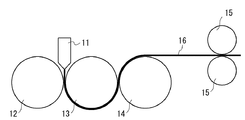
- FIG. 1 shows an outline of a method for producing an extruded resin plate by a co-extrusion apparatus comprising a T die 11, first to third cooling rolls 12 to 14, and a take-up roll 15 as one embodiment.
- the thermoplastic resin laminate extruded from the T die 11 is formed between the pair of rolls including the first cooling roll 12 and the second cooling roll 13 and formed on the sheet-like extruded resin plate 16.
- the extruded resin plate 16 is further cooled by the third cooling roll 14 and taken up by the take-up roll 15 comprising a pair of rolls.
- the 3rd cooling roll 14 turns into a cooling roll wound around last.
- a separate roll may be installed between the third cooling roll and the take-up roll.
- the roll wound lastly becomes the last roll which wound the thermoplastic resin laminated body among the rolls installed between the 3rd cooling roll or the 3rd cooling roll, and the take-up roll.
- the embodiment shown in FIG. 1 in which the cooling roll to be wound last is the third cooling roll will be described as an example.
- the present invention is not limited to this form.
- T-die methods in this case include a feed block method in which the resin constituting the polycarbonate-containing layer and the methacrylic resin-containing layer in a heat-melted state is laminated before the T-die flows, a multi-manifold method in which the resin is laminated inside the T-die, etc. Can be adopted. From the viewpoint of enhancing the smoothness of the interface between the layers constituting the extruded resin plate, the multi-manifold method is preferable.
- examples of the polishing roll in this case include a metal roll and an elastic roll having a metal thin film on the outer peripheral portion (hereinafter sometimes referred to as a metal elastic roll).
- the metal roll is not particularly limited as long as it has high rigidity, and examples thereof include a drilled roll and a spiral roll.
- the surface state of the metal roll is not particularly limited, and may be, for example, a mirror surface, or may have a pattern or unevenness.
- the metal elastic roll is, for example, a substantially cylindrical shaft roll that is rotatably provided, a cylindrical metal thin film that is disposed so as to cover the outer peripheral surface of the shaft roll, and is in contact with the sheet-like thermoplastic resin, It consists of the fluid enclosed between these axial rolls and metal thin films, and a metal elastic roll shows elasticity with a fluid.
- a shaft roll is not specifically limited, For example, it consists of stainless steel etc.
- the metal thin film is made of, for example, stainless steel and preferably has a thickness of about 2 to 5 mm.
- the metal thin film preferably has flexibility, flexibility, etc., and preferably has a seamless structure without a welded joint.
- the metal elastic roll provided with such a metal thin film is excellent in durability, and if the metal thin film is mirror-finished, it can be handled in the same manner as a normal mirror roll. Since it becomes a roll that can transfer the shape, it is easy to use.
- the resin constituting the polycarbonate-containing layer and the methacrylic resin-containing layer is preferably melt filtered with a filter before and / or during multilayer molding.
- a filter medium used is not particularly limited, and is appropriately selected depending on the operating temperature, viscosity, and filtration accuracy.
- a laminate of a plurality of metal fiber nonwoven fabric sintered sheets it is preferable to use a laminate of a plurality of metal fiber nonwoven fabric sintered sheets.
- the filtration accuracy of the filter is not particularly limited, but is preferably 30 ⁇ m or less, more preferably 15 ⁇ m or less, and even more preferably 5 ⁇ m or less.
- the temperature of the entire resin peeled from the third cooling roll 14 is preferably in the range of ⁇ 2 ° C. to + 15 ° C. with respect to the glass transition temperature (Tg) of the polycarbonate.
- Tg glass transition temperature
- the temperature of the whole resin measures and uses the temperature of the whole resin by which polycarbonate resin and the methacryl resin were laminated
- An infrared radiation thermometer may be used for temperature measurement.
- the extruded resin plate according to one embodiment of the present invention preferably has a linear expansion ratio (SR) in the range of ⁇ 10% to + 5%, and the glass transition temperature (Tg) of the methacrylic resin-containing layer is 115 ° C. or higher. It is preferable that The reason is described below.
- SR linear expansion ratio
- Tg glass transition temperature
- the extruded resin plate peeled off from the third cooling roll 14 has a substantially flat shape because it is sandwiched between the third cooling roll 14 and the take-up roll 15 until it is sandwiched between the take-up roll 15.
- the temperature of the extruded resin plate immediately after peeling from the third cooling roll 14 is in the range of ⁇ 2 ° C. to + 15 ° C. with respect to the glass transition temperature (Tg) of the polycarbonate, but the temperature of the extruded resin plate in the vicinity of the take-up roll 15 is room temperature. It is almost normal temperature because it is cooled down.
- the temperature of the extruded resin plate peeled from the third cooling roll 14 is 150 ° C.
- the temperature of the extruded resin plate near the take-up roll is 25 ° C.
- the linear expansion ratio (SR) (S1-S2) / S1 is In the case other than zero, warping occurs due to contraction to the side where the linear expansion coefficient is large.
- the glass transition temperature (Tg) of the methacrylic resin-containing layer is 100 ° C. and the glass transition temperature (Tg) of the polycarbonate-containing layer is 150 ° C.
- the polycarbonate-containing layer is cooled to 150 ° C. from the glass transition temperature (Tg). Therefore, in the polycarbonate-containing layer, the contraction substantially follows the linear expansion coefficient.
- the methacrylic resin-containing layer is cooled from a region (150 ° C.) higher than the glass transition temperature to around 100 ° C. of the glass transition temperature (Tg).
- the methacrylic resin-containing layer has a large value exceeding the linear expansion coefficient. Shrinkage occurs.
- a general resin is an elastic body below the glass transition temperature, but once becomes a viscoelastic body having both functions of viscosity and elasticity above the glass transition temperature.
- the above-described elastic body generates strain when stress is applied, but the strain is eliminated when the load is unloaded.
- the viscoelastic body becomes residual strain when cooled to the glass transition temperature while applying stress.
- the polycarbonate-containing layer is an elastic body
- the methacrylic resin-containing layer is a viscoelastic body. That is, immediately after the extruded resin plate is peeled from the third cooling roll 14, shrinkage strain is generated only in the methacrylic resin-containing layer that is a viscoelastic body. In other words, since the polycarbonate layer which is an elastic body is reversible with respect to stress, it is not distorted even when stress is applied or unloaded. In contrast, a methacrylic resin-containing layer, which is a viscoelastic body, undergoes residual strain due to stress loading / unloading.
- the glass transition temperature (Tg) of the methacrylic resin-containing layer is lower than the glass transition temperature (Tg) of the polycarbonate-containing layer, and the temperature of the extruded resin plate peeled from the third cooling roll 14 is the glass transition of the methacrylic resin-containing layer.
- Tg glass transition temperature
- Tg glass transition temperature
- the polycarbonate is also in a viscoelastic state.
- the temperature of the extruded resin plate is cooled to room temperature by the take-up roll 15, but both the methacrylic resin-containing layer and the polycarbonate-containing layer are simultaneously cooled to room temperature. Therefore, the temperature of the extruded resin plate from immediately after peeling from the third cooling roll 14 to the take-up roll 15 includes the glass transition temperature (Tg) of the polycarbonate and the glass transition temperature (Tg) of the methacrylic resin-containing layer. That is, strain remains in the methacrylic resin-containing layer as the temperature of the extruded resin plate cools from the glass transition temperature (Tg) of the polycarbonate to the glass transition temperature (Tg) of the methacrylic resin-containing layer.
- the warp due to the linear expansion ratio (SR) and the residual stress tend to decrease, so the warp becomes small.
- the warpage caused by the extruded resin plate transferring the shape of the third cooling roll 14 becomes large, which is not preferable.
- the temperature of the resin peeled from the third cooling roll 14 is set in the range of ⁇ 2 ° C. to + 15 ° C. with respect to the glass transition temperature (Tg) of the polycarbonate, and the linear expansion ratio (SR ) In the range of ⁇ 10% to + 5%, and the glass transition temperature (Tg) of the methacrylic resin-containing layer is preferably 115 ° C. or higher in order to obtain a good extruded resin sheet with small warpage.
- Retardation is the phase difference between the light in the molecular main chain direction and the light perpendicular to it.
- a polymer can be formed in an arbitrary shape by thermoforming.
- a certain stress is generated in the heating and cooling processes, and the molecules are oriented to cause retardation. Therefore, in order to control retardation, it is necessary to control molecular orientation.
- the orientation of the molecules is generated by, for example, stress at the time of molding near the glass transition temperature of the polymer.
- the present inventor controls the orientation of molecules by variously adjusting the production conditions in the process of extrusion molding, and at least a part of the retardation value in the width direction by heating after the extrusion resin plate molding (hereinafter simply referred to as “ The inventors have found a method for preventing the decrease of “in-plane retardation value”.
- the influence of the peripheral speed ratio and the heating conditions will be described separately.
- the peripheral speed ratio is the ratio of the peripheral speed of any other cooling roll and take-up roll to the second cooling roll 13.
- the peripheral speed of the second cooling roll is expressed as V2
- the peripheral speed of the third cooling roll is expressed as V3
- the peripheral speed of the take-up roll is expressed as V4.
- the relationship between the peripheral speed ratio (V3 / V2) of the third cooling roll 14 with respect to the second cooling roll 13 and the in-plane retardation value was evaluated under predetermined conditions as follows.
- the temperature of the resin peeled from the third cooling roll 14 is adjusted in the range of ⁇ 2 ° C. to + 15 ° C. with respect to the glass transition temperature (Tg) of the polycarbonate.
- the temperature of the resin that contacts the third cooling roll 14 is higher than the temperature of the resin that peels from the third cooling roll 14 because the resin is cooled by the third cooling roll. That is, the temperature of the resin that contacts the third cooling roll 14 is higher than ⁇ 2 ° C. to + 15 ° C. with respect to the glass transition temperature (Tg) of the polycarbonate, for example, + 20 ° C. with respect to the glass transition temperature (Tg). Be near. In this case, even if the peripheral speed ratio (V3 / V2) of the third cooling roll 14 is increased and a large tensile stress is applied to the extruded resin plate, the temperature of the resin in a high temperature region where the resin molecules are difficult to orient. It was estimated that the in-plane retardation value did not increase greatly. (See Example 14 described later)
- the temperature range in which the resin molecules are easily oriented can be obtained by adjusting the adjustment to a range of ⁇ + 15 ° C., increasing the peripheral speed ratio of the take-up roll 15 and applying a large tensile stress to the extruded resin plate.
- the peripheral speed ratio between the second cooling roll 13 and the take-up roll 15 when the resin temperature when the resin is peeled from the third cooling roll 14 is in the range of ⁇ 2 ° C. to 15 ° C. with respect to the glass transition temperature (Tg) of the polycarbonate.
- Tg glass transition temperature
- the resin temperature at the time of peeling from the third cooling roll 14 is controlled within the range of ⁇ 2 ° C. to 15 ° C. with respect to the glass transition temperature (Tg) of the polycarbonate. It has been found that the in-plane retardation value may be controlled by adjusting the peripheral speed ratio between the roll 13 and the take-up roll 15.
- the peripheral speed ratio (V4 / V2) between the take-up roll and the second cooling roll is set to 0.98 or more and 1.01 or less.
- the in-plane retardation value tends to exceed 600 nm (see Comparative Example 5 described later), 0.98. If it is less than 50 nm, it tends to be less than 50 nm (see Comparative Example 6 described later).
- the peripheral speed ratio between the second cooling roll 13 and the take-up roll 15 is more preferably 0.985 to 0.995. (See Example 10 described later)
- the in-plane retardation value of the liquid crystal display protective plate exceeds 600 nm, the difference in transmittance of each wavelength in the visible light range becomes large when viewed through a polarizing filter such as polarized sunglasses. Is difficult to see.
- a polarizing filter such as polarized sunglasses.
- the transmittance at all wavelengths in the visible light range is greatly reduced, and a black image is difficult to visually recognize.
- the in-plane retardation value is 80 nm to 350 nm, the balance between brightness and color is good and the visibility is excellent.
- the heating conditions in the present invention are in the range of 75 ° C. to 100 ° C., but when measuring, one of 75 ° C. and 5 hours and 100 ° C. and 5 hours is used.
- the heating environment refers to the heating temperature and time in the process of forming a general cured film, and it is preferable that the heating environment can withstand the retardation and maintain the retardation.
- measurement is performed by placing the test piece in an oven controlled at 100 ° C. ⁇ 3 ° C. or 75 ° C. ⁇ 3 ° C. for 5 hours.
- the in-plane retardation value is at least 50 to 600 nm in at least a part of the width direction before and after heating. It is preferable to control the manufacturing process so that the reduction rate of the in-plane retardation value is less than 15%. Furthermore, it is preferable to control the production process so that the extruded resin plate has an in-plane retardation value of 80 to 350 nm at least partly in the width direction before and after heating. Furthermore, it is preferable to control the production process so that the extruded resin plate has a reduction rate of the in-plane retardation value before and after heating of less than 10%.
- the extruded resin plate of the present invention has the above-mentioned characteristics, it can be made an extruded resin plate suitable for a liquid crystal display protective plate or the like through a process of heating at a temperature of 65 ° C. to 110 ° C. for 1 to 30 hours.
- the extruded resin plate of the present invention has good surface properties, suppresses the occurrence of warping, has a small reduction rate of in-plane retardation value even when heated to a high temperature, and has an appropriate in-plane retardation value. Therefore, the extruded resin plate and the resin plate obtained by heating the extruded resin plate can be used for various applications.
- ATMs of financial institutions such as banks, vending machines, mobile phones, personal digital assistants (PDAs), digital audio players, portable game machines, tablet personal computers, copiers, fax machines, car navigation systems, etc. It is particularly useful as a protective plate; a liquid crystal display protective plate.
- glass transition temperature Tg was calculated by the midpoint method from the results obtained by the second scanning.
- Tg glass transition temperature
- the coefficient of linear expansion is defined as the rate of change in length per unit temperature change.
- the linear expansion coefficient was measured according to JIS K7197 using a thermomechanical analyzer (“TMA4000” manufactured by Bruker AXS Co., Ltd.). That is, a sheet-like extruded resin plate obtained by press-molding the resin to be measured was processed into a square pillar shape having a side length of 5 mm ⁇ 5 mm and a height of 10 mm using a diamond saw to form a smooth end surface. Each sample was placed on a quartz plate so that the surface of 5 mm ⁇ 5 mm was in contact with the quartz plate, and a cylindrical rod was placed thereon and fixed by applying a compression load of 5 g.
- the temperature was raised from 25 ° C. (room temperature) to ⁇ 10 ° C. of the glass transition temperature (Tg) of each sample in an air atmosphere at a rate of temperature rise of 3 ° C./min and cooled to 25 ° C. (room temperature) (primary scanning). And it heated up from 25 degreeC (room temperature) to plus 20 degreeC of the glass transition temperature (Tg) of each sample at the temperature increase rate of 3 degree-C / min (secondary scanning). The expansion coefficient at each temperature during the secondary scanning was measured, and the average linear expansion coefficient in the range of 30 ° C. to 80 ° C. was obtained.
- test piece was cut with a running saw to produce a 100 mm square.
- test piece was put into an oven controlled at 100 ° C. ⁇ 3 ° C. for 5 hours.
- Rate of change (%) ([Retardation value before heating]-[Retardation value after heating]) / [Retardation value before heating] ⁇ 100
- Methodacrylic resin B A copolymer obtained by radical polymerization of methyl methacrylate and 8-tricyclo [5.2.1.0 2,6 ] decanyl methacrylate was prepared as methacrylic resin B. Note that 8-tricyclo [5.2.1.0 2, 6] decanyl methacrylate was charged in the total amount of methyl methacrylate and 8 tricyclo [5.2.1.0 2, 6] decanyl methacrylate The ratio (mass percentage) will be referred to as the TC ratio.
- the copolymer composition of the SMA resin was determined by 13 C-NMR method according to the following procedure.
- a nuclear magnetic resonance apparatus GX-270 manufactured by JEOL Ltd.
- a sample solution was prepared by dissolving 1.5 g of SMA resin in 1.5 ml of deuterated chloroform, and measurement was performed under a room temperature environment under conditions of 4000 to 5000 integrations. The following values were determined from the measurement results.
- Mw Weight average molecular weight
- the Mw of the SMA resin was determined by the GPC method according to the following procedure. Tetrahydrofuran was used as the eluent, and TSKgel SuperMultipore HZM-M manufactured by Tosoh Corporation and SuperHZ4000 were connected in series as the column.
- HLC-8320 product number manufactured by Tosoh Corporation equipped with a differential refractive index detector (RI detector) was used.
- RI detector differential refractive index detector
- a sample solution was prepared by dissolving 4 mg of SMA resin in 5 ml of tetrahydrofuran.
- the column oven temperature was set to 40 ° C., 20 ⁇ l of sample solution was injected at an eluent flow rate of 0.35 ml / min, and the chromatogram was measured.
- Ten standard polystyrenes having a molecular weight in the range of 400 to 5000000 were measured by GPC, and a calibration curve showing the relationship between retention time and molecular weight was prepared. Mw was determined based on this calibration curve.
- the charge ratio (mass percentage) that the SMA resin in the resin composition (1) occupies in the total amount of the methacrylic resin A and the SMA resin is referred to as the SMA ratio.
- Example 1 (Method for producing extruded resin plate)
- a methacrylic resin B (glass transition temperature: 120 ° C., linear expansion coefficient: 7.30 ⁇ 10 ⁇ 5 / K) with a TC ratio of 20% by mass is extruded with a 65 mm ⁇ single screw extruder (manufactured by Toshiba Machine Co., Ltd.), and polycarbonate is 150 mm ⁇ single screw extruded.
- a machine manufactured by Toshiba Machine Co., Ltd.
- both were laminated via a multi-manifold die.
- the laminated resin (extruded resin plate 16, molten thermoplastic resin laminate) is sandwiched between the first cooling roll 12 and the second cooling roll 13 as shown in FIG.
- the resin temperature (TT) was adjusted to 150 ° C. by controlling the temperature of the second cooling roll 13 and the third cooling roll 14.
- the peripheral speed ratio (V4 / V2) between the second cooling roll 13 and the take-up roll 15 is 0.995
- the peripheral speed ratio (V3 / V2) between the second cooling roll 13 and the third cooling roll 14 is 1.005. Adjusted.
- the polycarbonate-containing layer side was in contact with the third cooling roll 14 side.
- the thickness of the methacrylic resin-containing layer was 0.075 mm, and the thickness of the polycarbonate-containing layer was 0.925 mm. Table 2 shows the production conditions and the evaluation results of the obtained extruded resin plate.
- Examples 2 to 4 Instead of the methacrylic resin B having a TC ratio of 20% by mass, the methacrylic resin B having the TC ratio described in the column of “methacrylic resin-containing layer” in Table 2 was used, and the resin temperature (TT) was adjusted as described in Table 2. Except that, an extruded resin plate was produced in the same manner as in Example 1. Table 2 shows the production conditions and the evaluation results of the obtained extruded resin plate.
- Example 5 instead of the methacrylic resin B having a TC ratio of 20% by mass, the resin composition (1) having an SMA ratio of 20% by mass was used, and as shown in Table 2, an extruded resin plate was produced in the same manner as in Example 1.
- Example 1 Extruded resin plates were produced in the same manner as in Example 1 except that methacrylic resin A was used instead of methacrylic resin B having a TC ratio of 20% by mass, as shown in Table 2.
- Table 2 shows the production conditions and the evaluation results of the obtained extruded resin plate.
- Example 1 an extruded resin plate in which a layer containing a methacrylic resin B having a TC ratio of 20 to 60% by mass and a polycarbonate-containing layer were produced and tested.
- Table 2 in the case of using the layer containing methacrylic resin B having a TC ratio of 45% in Example 3, the glass transition temperature (Tg), the linear expansion coefficient ratio (SR), the amount of warpage, and the value of retardation. In view of the change rate, the most favorable result was obtained.
- Example 5 to 14 an extruded resin plate in which a layer containing the resin composition (1) having an SMA ratio of 20 to 100% by mass and a polycarbonate-containing layer were produced and tested.
- Table 2 when the layer containing the resin composition (1) having an SMA ratio of 70 mass% in Examples 7 and 9 is used, the retardation value and the rate of change are suitable, and the absolute amount of warpage is The value was also small and the most favorable result was obtained.
- the peripheral speed ratio (V4 / V2) was constant 0.995.
- a layer containing the resin composition (1) having an SMA ratio of 70% by mass was used.
- the resin temperature (TT) was fixed at 155 ° C., and the peripheral speed ratio (V4 / V2) was 0.98 to 1.01.
- Comparative Example 1 the glass transition temperature (Tg) was low and the warpage after high temperature and high humidity was large.
- Comparative Examples 2 and 3 when the resin temperature (TT) was lowered, an extruded resin plate with a large amount of warpage was obtained. Moreover, the reduction rate of the in-plane retardation value before and after heating was large.
- Comparative Example 4 when the resin temperature (TT) was increased, an extruded resin plate with poor surface properties was obtained.
- Comparative Example 5 when the peripheral speed ratio (V4 / V2) was increased, an extruded resin plate having a high retardation value was obtained.
- Comparative Example 6 when the peripheral speed ratio (V4 / V2) was lowered, an extruded resin plate having a low retardation value was obtained.
- the extruded resin plate obtained by the production method of the present invention can be used, for example, as a liquid crystal display protective plate or a protective cover for a touch panel, and is suitable for an in-vehicle display device, a mobile phone, a smartphone, a personal computer, a television, and the like.
Landscapes
- Mechanical Engineering (AREA)
- Engineering & Computer Science (AREA)
- Chemical & Material Sciences (AREA)
- Thermal Sciences (AREA)
- Physics & Mathematics (AREA)
- Chemical Kinetics & Catalysis (AREA)
- Medicinal Chemistry (AREA)
- Polymers & Plastics (AREA)
- Organic Chemistry (AREA)
- Health & Medical Sciences (AREA)
- Laminated Bodies (AREA)
- Extrusion Moulding Of Plastics Or The Like (AREA)
- Surface Treatment Of Optical Elements (AREA)
Abstract
Description
タッチパネルによる入力操作で、表面に擦傷ができたり、内部が圧壊したりすることがある。これを防止するためにタッチパネルの表面に透明な保護カバーが設置される。保護カバーとして強化ガラス製のものが主に使われている。また、加工性や軽量化の観点から、透明樹脂製の保護カバーの開発が行われている。この保護カバーには、光沢、耐擦傷性、耐衝撃性などが求められる。
例えば、特許文献4には、メタクリル樹脂板の少なくとも一方の面に硬化被膜を形成して、液晶方式の携帯型情報端末の表示窓保護板として用いることが開示されている。
また、特許文献5には、ポリカーボネート樹脂層の一方の面にメタクリル樹脂層を積層してなる積層板のメタクリル樹脂層上に硬化被膜を形成して、液晶ディスプレイカバーに用いることが開示されている。
上述したような樹脂板の表面に耐擦傷性(ハードコート性)及び低反射性の硬化被膜を形成する工程において、樹脂板が100℃程度の温度に加熱される場合がある。例えば被膜材料が熱硬化性である場合、被膜の硬化工程で加熱される。また被膜材料が光硬化性である場合、光の照射に伴い加熱される。また被膜材料が有機溶媒などの溶剤を含む場合、乾燥のため加熱される。
ところが樹脂板が高温下に曝されることによりレターデーション値が低下し、意図とする範囲に制御できない事があった。
本発明の目的は、表面性が良好で、反りの発生が抑制され、高温に加熱しても面内のレターデーション値の低下率が小さい押出樹脂板の製造方法及び押出樹脂板を提供することである。
前記メタクリル樹脂を含有する層のガラス転移温度が115℃以上であり、
前記ポリカーボネートを含有する層の少なくとも片面に前記メタクリル樹脂を含有する層が積層された熱可塑性樹脂積層体を溶融状態でTダイから押出し、
第1冷却ロールと第2冷却ロールとの間に前記熱可塑性樹脂積層体を挟み込み、
前記熱可塑性樹脂積層体を前記第2冷却ロールに巻き掛けた後、第3冷却ロールに巻き掛けることにより冷却し、
前記熱可塑性樹脂積層体を引取りロールによって引き取る工程を含み、
最後に巻き掛ける冷却ロールから前記熱可塑性樹脂積層体が剥離する位置において、樹脂全体の温度を、前記ポリカーボネートを含有する層のガラス転移温度に対し-2℃~+15℃の範囲とし、
前記引取りロールの周速度(V4)と、前記第2冷却ロールの周速度(V2)との周速度比(V4/V2)を0.98以上1.01以下とする押出樹脂板の製造方法。
[3]; 前記メタクリル樹脂を含有する層が、メタクリル酸メチルに由来する構造単位40~80質量%を含有し、下記一般式(I)で表されるメタクリル酸エステルに由来する構造単位20~60質量%を含有する、[1]または[2]に記載の押出樹脂板の製造方法。
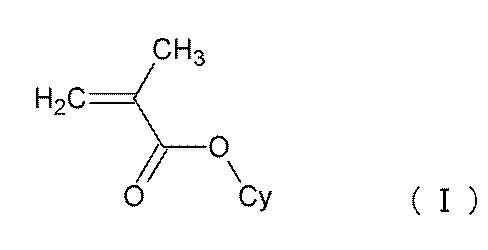
(式中、Cyは脂環式炭化水素基を表す。)
[4]; 前記一般式(I)中におけるCyが多環脂肪族炭化水素基である、[3]に記載の押出樹脂板の製造方法。
[5]; 前記メタクリル樹脂を含有する層が、メタクリル樹脂5質量%以上80質量%未満と、下記一般式(II)で示される芳香族ビニル化合物に由来する構造単位および下記一般式(III)で示される酸無水物に由来する構造単位を含んでなる共重合体20質量%以上とを含有する[1]または[2]のいずれかに記載の押出樹脂板の製造方法。

(式中:R1およびR2は、それぞれ独立して、水素原子またはアルキル基を表す。)
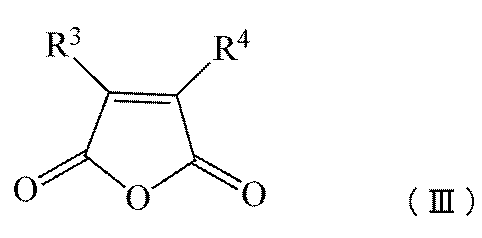
(式中:R3およびR4は、それぞれ独立して、水素原子またはアルキル基を表す。)
[6]; 前記共重合体が前記芳香族ビニル化合物に由来する構造単位を50~84質量%含有し、前記酸無水物に由来する構造単位を15~49質量%含有し、メタクリル酸エステル単量体を1~25質量%含有する、[5]に記載の押出樹脂板の製造方法。
[7]; 前記メタクリル酸エステル単量体がメタクリル酸メチルである、[6]に記載の押出樹脂板の製造方法。
前記押出樹脂板を75℃で5時間加熱したときに、加熱前後で少なくとも幅方向の一部において面内のレターデーション値が50~600nmであり、
前記加熱前後での前記レターデーション値の低下率が15%未満である押出樹脂板。
[9]; [1]~[7]のいずれかに記載の製造方法で得られる押出樹脂板であって、
前記押出樹脂板を100℃で5時間加熱したときに、加熱前後で少なくとも幅方向の一部において面内のレターデーション値が50~600nmであり、
前記加熱前後での前記レターデーション値の低下率が15%未満である押出樹脂板。
[10]; [1]~[7]のいずれかに記載の製造方法で得られる押出樹脂板であって、
前記押出樹脂板を75℃~100℃の温度で5時間加熱したときに、加熱前後で少なくとも幅方向の一部において面内のレターデーション値が50~600nmであり、
前記加熱前後での前記レターデーション値の低下率が15%未満である押出樹脂板。
[11]; 前記加熱前後において、少なくとも幅方向の一部で面内のレターデーション値が80~350nmである、[8]~[10]のいずれかに記載の押出樹脂板。
[12]; 前記加熱前後での前記レターデーション値の低下率が10%未満である、[8]~[11]のいずれかに記載の押出樹脂板。
[13]; 少なくとも一方の表面にさらに耐擦傷性層を備える、[8]~[12]のいずれかに記載の押出樹脂板。
[14]; [1]~[7]のいずれかに記載の製造方法で押出樹脂板を得て、さらに、
前記押出樹脂板を65℃~110℃の温度で1~30時間加熱する工程を含み、
前記加熱前後で少なくとも幅方向の一部において面内のレターデーション値が50~600nmであり、前記加熱前後での前記レターデーション値の低下率が15%未満である押出樹脂板の製造方法。
前記メタクリル樹脂を含有する層のガラス転移温度が115℃以上であり、
75℃で5時間加熱したときに、加熱前後で少なくとも幅方向の一部において面内のレターデーション値が50~600nmであり、
前記加熱前後での前記レターデーション値の低下率が15%未満であり、
前記ポリカーボネートを含有する層の線膨張率(S1)と前記メタクリル樹脂を含有する層の線膨張率(S2)との差(S2-S1)と、前記ポリカーボネートを含有する層の線膨張率(S1)との比((S2-S1)/S1)が-10%~+5%である、押出樹脂板。
また、加熱によりその面内のレターデーション値が低下する割合が小さいため、加熱工程、高温環境に耐えるものであり、生産性、耐久性に優れる。
また、本発明の押出樹脂板は、例えば、光沢、耐擦傷性および耐衝撃性が求められるタッチパネル保護カバーなどの用途に好適である。
ポリカーボネート含有層にメタクリル樹脂含有層が積層されていることにより、透明性、耐衝撃性、耐擦傷性が優れる。
押出樹脂板は押出成形法で製造されることにより生産効率が優れる。
本発明においてメタクリル樹脂は、メタクリル酸エステルに由来する構造単位を含有するものである。メタクリル樹脂において、メタクリル酸エステルに由来する構造単位の含有量は50質量%以上が好ましく、より好ましくは80質量%以上、さらにより好ましくは90質量%以上が好ましい。100質量%であってもよい。メタクリル酸エステルに由来する構造単位の含有量が上述範囲内にある場合には、透明性が良好である。

Rが表す炭化水素基は、メチル基、エチル基、プロピル基などの非環状脂肪族炭化水素基であっても、脂環式炭化水素基であっても、フェニル基などの芳香族炭化水素基であってもよい。ここで、Rが脂環式炭化水素基の場合は、メタクリル酸エステルは、一般式(I)で表される。以降適宜、一般式(I)で表されるメタクリル酸エステルを「メタクリル酸エステル(I)」とも記載する。

(式中、Cyは脂環式炭化水素基を表す。)
なお本明細書において、Mwはゲルパーエミーションクロマトグラフィー(GPC)を用いて測定される標準ポリスチレン換算値を意味する。
本発明の一実施形態においてメタクリル樹脂含有層を構成する樹脂は、メタクリル樹脂5質量%以上80質量%未満と少なくとも下記一般式(II)で示される芳香族ビニル化合物(以降適宜、「芳香族ビニル化合物(II)」とも記載する)に由来する構造単位および下記一般式(III)で示される酸無水物(以降適宜、「酸無水物(III)」とも記載する)に由来する構造単位とよりなる共重合体(以降適宜、「SMA樹脂」と記載する)20質量%以上を含有する樹脂組成物(以降適宜、「樹脂組成物(1)」と記載する)である。メタクリル樹脂含有層が樹脂組成物(1)から構成されていると、ポリカーボネート含有層や後述する硬化被膜との密着性が良好になる。
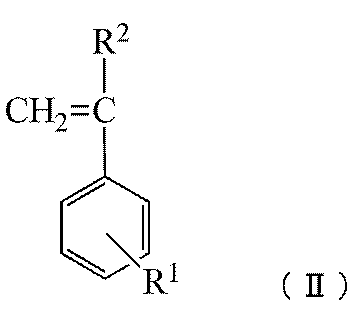
(式中:R1およびR2は、それぞれ独立して、水素原子またはアルキル基を表す。)
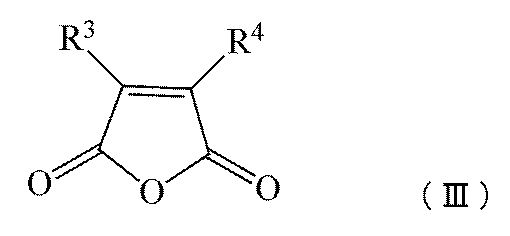
(式中:R3およびR4は、それぞれ独立して、水素原子またはアルキル基を表す。)
かかるメタクリル酸エステルとしては、特に制限はないが、入手性の観点から、MMA、メタクリル酸エチル、メタクリル酸n-プロピル、メタクリル酸イソプロピル、メタクリル酸n-ブチル、メタクリル酸イソブチル、およびメタクリル酸tert-ブチルが好ましく、MMAが最も好ましい。当該メタクリル樹脂におけるメタクリル酸エステルに由来する構造単位の含有量は90質量%以上が好ましく、95質量%以上がより好ましく、98質量%以上がさらに好ましく、メタクリル酸エステルに由来する構造単位のみであってもよい。
本発明に用いられる樹脂組成物(1)中のメタクリル樹脂の含有量は、80%未満であることが好ましく、5質量%以上55質量%未満の範囲であることがより好ましく、10質量%以上50質量%未満の範囲であることがさらに好ましい。
本発明の一実施形態に用いられるメタクリル樹脂含有層を構成する樹脂は、本発明の効果を損なわない範囲で、メタクリル樹脂とSMA樹脂以外の他の重合体を含有してもよい。かかる他の重合体としては、ポリエチレン、ポリプロピレンなどのポリオレフィン、ポリアミド、ポリフェニレンサルファイド、ポリエーテルエーテルケトン、ポリエステル、ポリスルホン、ポリフェニレンオキサイド、ポリイミド、ポリエーテルイミド、ポリアセタール等の熱可塑性樹脂;フェノール樹脂、メラミン樹脂、シリコーン樹脂、エポキシ樹脂等の熱硬化性樹脂などが挙げられる。これら他の重合体は1種を単独で用いても、複数種を併用してもよい。
本発明の一実施形態に用いられるメタクリル樹脂含有層を構成する樹脂中におけるこれら他の重合体の含有量は10質量%以下であることが好ましく、5質量%以下であることがより好ましく、2質量%以下であることがさらに好ましい。
樹脂組成物(1)に他の重合体および/または添加剤を含有させる際は、メタクリル樹脂および/またはSMA樹脂を重合する際に添加しても、メタクリル樹脂およびSMA樹脂を混合する際に添加しても、メタクリル樹脂およびSMA樹脂を混合した後にさらに添加してもよい。
なお、本明細書におけるメタクリル樹脂含有層を構成する樹脂のMFRとは、メルトインデクサーを用いて、温度230℃、3.8kg荷重下で測定した値である。
なお、本明細書におけるポリカーボネートのMFRとは、メルトインデクサーを用いて、温度300℃、1.2kg荷重下の条件で測定したものである。
押出樹脂板において、ポリカーボネート含有層の線膨張率(S1)とメタクリル樹脂含有層の線膨張率(S2)との関係式で表される線膨張比(SR)は、ポリカーボネート含有層の線膨張率(S1)とメタクリル樹脂含有層の線膨張率(S2)との差(S2-S1)と、線膨張率(S1)との比である、計算式((S2-S1)/S1)で表す値と定義する。
線膨張比(SR)は、-10%~+5%の範囲が好ましく、良好な反りの低減を実現する観点から線膨張比(SR)は、-5%~+2%の範囲がより好ましい。線膨張比(SR)がこの範囲であると、表面性が良好で残留応力に起因する反りが小さい押出樹脂板を得やすい。
本発明の押出樹脂板のポリカーボネート含有層の厚さは、好ましくは0.1~3.0mm、より好ましくは0.5~2.0mmである。薄すぎると耐衝撃性が不十分となる傾向がある。厚すぎると液晶表示装置などの軽量化の妨げになる傾向がある。
本発明の一実施形態における押出樹脂板は共押出しで製造される。ポリカーボネート含有層およびメタクリル樹脂含有層を構成する樹脂は加熱溶融され、ポリカーボネート含有層の少なくとも片面にメタクリル樹脂含有層が積層された熱可塑性樹脂積層体の状態で、Tダイといわれる幅広形状の吐出口から溶融状態で押出され、第1冷却ロールおよび第2冷却ロールからなる一対のロールで挟んでシート状に形成される。熱可塑性樹脂積層体はその後さらに、第2冷却ロールに巻きかけた後、少なくとも第3冷却ロールに巻きかけることにより冷却される。また熱可塑性樹脂積層体(押出樹脂板16)はその後さらに、それ以上の冷却ロールで冷却される場合がある。
なお、主に、加熱溶融状態のものを熱可塑性樹脂積層体と表現し、固化したものを押出樹脂板と表現しているが、両者の明確な境界はない。
図1以外の形態として、第3冷却ロールと引き取りロールの間に別途ロールを設置しても良い。この場合、最後に巻きかけるロールは、第3冷却ロールまたは第3冷却ロールと引き取りロールの間に設置したロールのうち、熱可塑性樹脂積層体を巻きかけた最終のロールとなる。
以下では、簡略化のため、最後に巻きかける冷却ロールが第3冷却ロールである図1の形態を例に説明をする。なお、本発明はこの形態に限られるものではない。
一方、メタクリル樹脂含有層は、ガラス転移温度より高温の領域(150℃)からガラス転移温度(Tg)の100℃近傍まで冷却される。従って、ポリカーボネート含有層の線膨張率(S1)とメタクリル樹脂含有層を構成する樹脂の線膨張率(S2)に差がない場合であっても、メタクリル樹脂含有層では、線膨張率を越える大きな収縮が発生する。
上述の弾性体は、応力を加えると歪みを生じるが除荷すると歪み解消するのに対して、粘弾性体は応力を加えたままガラス転移温度に冷却されると残留歪みとなる。第3冷却ロール14から剥離した押出樹脂板の温度が、例えば150℃であり、メタクリル樹脂含有層及びポリカーボネート含有層が上述したガラス転移温度である場合には、押出樹脂板は、第3冷却ロール14から剥離した直後、ポリカーボネート含有層が弾性体であるのに対してメタクリル樹脂含有層は粘弾性体である。つまり、第3冷却ロール14から押出樹脂板を剥離した直後、粘弾性体であるメタクリル樹脂含有層のみに収縮歪が発生することになる。言い換えると、弾性体であるポリカーボネート層は、応力に対して可逆的であるため、応力の負荷・除荷があっても歪まない。これに対して、粘弾性体であるメタクリル樹脂含有層は、応力の負荷・除荷により残留歪みが生じる。
周速度比とは第2冷却ロール13に対するそれ以外の任意の冷却ロール及び引取りロールの周速度の比である。以後、第2冷却ロールの周速度はV2、第3冷却ロールの周速度はV3、引取ロールの周速度はV4と表すことする。
第2冷却ロール13に対する第3冷却ロール14の周速度比(V3/V2)と面内のレターデーション値の関係を以下のように所定の条件で評価した。
上述の第3冷却ロール14から剥離する樹脂の温度はポリカーボネートのガラス転移温度(Tg)に対して-2℃から+15℃の範囲に調整する。
樹脂が第3冷却ロール14に接触する樹脂の温度は、樹脂が第3冷却ロールで冷却されるため、第3冷却ロール14から剥離する樹脂の温度より高い。つまり、樹脂が第3冷却ロール14に接触する樹脂の温度は、ポリカーボネートのガラス転移温度(Tg)に対して-2℃から+15℃よりも高く、例えばガラス転移温度(Tg)に対して+20℃付近になる。この場合、第3冷却ロール14の周速度比(V3/V2)を大きくし押出樹脂板に大きな引張り応力を掛かけたとしても、樹脂の分子が配向し難い高い温度領域の樹脂の温度のため、面内のレターデーション値が大きく増加しなかったと推定した。(後述する実施例14参照)
その理由は、樹脂が第3冷却ロール14から剥離する際の樹脂温度をポリカーボネートのガラス転移温度(Tg)より少し高い温度、具体的には当該ガラス転移温度(Tg)に対して、-2℃~+15℃の範囲に調整に調整し、引き取りロール15の周速度比を大きくし、押出樹脂板に大きな引張り応力を掛けることにより、樹脂の分子が配向しやすい温度領域になるためと思われる。
樹脂が第3冷却ロール14から剥離する際の樹脂温度をポリカーボネートのガラス転移温度(Tg)より低い場合に第2冷却ロール13と引き取りロール15の周速度比(V4/V2)を徐々に大きくした場合は、面内のレターデーション値が徐々に大きくなるが、加熱後の面内のレターデーション値の低下率は大きくなることが分かった(後述する比較例1,2参照)。
その理由は、樹脂が第3冷却ロール14から剥離する際の樹脂温度をポリカーボネートのガラス転移温度(Tg)に対して-2℃~15℃の範囲に調整に調整し、引き取りロール15の周速度比を大きくし、押出樹脂板に大きな引張り応力を掛けることにより、樹脂の分子が配向するためか、加熱温度がポリカーボネートのガラス転移温度(Tg)より低い温度で実施しているため樹脂の配向が緩和し難いためと思われる。
尚、第2冷却ロール13と引き取りロール15の周速度比が1.01を超えた場合は、面内のレターデーション値が600nmを超える傾向があり(後述する比較例5参照)、0.98未満の場合は、50nm未満となる傾向がある(後述する比較例6参照)。面内のレターデーション値を好ましい範囲にする観点から、第2冷却ロール13と引き取りロール15の周速度比は、0.985~0.995がより好ましい。(後述する実施例10参照)
本発明における加熱条件に関しては75℃~100℃の範囲とするが、測定する場合には、75℃、5時間と、100℃、5時間とのうちの一方を用いる。上記加熱環境は、一般的な硬化被膜を形成する過程における加熱温度及び時間を参考としたものであり、この加熱環境に耐えてレターデーションを維持できることが好ましい。
押出樹脂板が、押出樹脂板を75℃から100℃の温度で5時間加熱したときに、加熱前後で少なくとも幅方向の一部において面内のレターデーション値が50~600nmであり、加熱前後での面内のレターデーション値の低下率が15%未満となるように、製造工程を制御することが好ましい。
さらに、押出樹脂板が、加熱前後において、少なくとも幅方向の一部で面内のレターデーション値が80~350nmとなるように、製造工程を制御することが好ましい。
さらに、押出樹脂板が、加熱前後での面内のレターデーション値の低下率が10%未満となるように、製造工程を制御することが好ましい。
本発明の押出樹脂板は、表面性が良好で、反りの発生が抑制され、高温に加熱しても面内のレターデーション値の低下率が小さく、適切な面内のレターデーション値を有しているため、当該押出樹脂板及び当該押出樹脂板を加熱した樹脂板は、各種用途に用いることができる。特に、銀行など金融機関のATM、自動販売機、携帯電話、携帯情報端末(PDA)、デジタルオーディオプレーヤー、携帯ゲーム機、タブレット型パーソナルコンピュータ、コピー機、ファックス、カーナビなどのデジタル情報機器のタッチパネルの保護板;液晶ディスプレイ保護板;として特に有用である。
押出樹脂板の物性を以下の方法にて測定した。
得られた押出樹脂板を減圧下(1kPa)で80℃、24時間乾燥した後、10mgの試験片を切り出して、アルミパンで封止し、示差走査熱量計(「DSC-50」、株式会社リガク製)を用いて、30分以上窒素置換を行った。その後、10ml/分の窒素気流中、一旦25℃から200℃まで20℃/分の速度で昇温して、10分間保持し、25℃まで冷却した(1次走査)。次いで、10℃/分の速度で200℃まで昇温して(2次走査)、2次走査で得られた結果から、中点法でガラス転移温度(Tg)を算出した。なお、2種以上の樹脂を含有することで複数のガラス転移温度が得られる場合は、主成分の樹脂に由来する値をガラス転移温度として採用した。
線膨張率は、単位温度変化あたりの長さ変化率として定義される。線膨張率は、熱機械分析装置(「TMA4000」ブルカー・エイエックスエス株式会社製)を使用しJIS K7197に準じて測定した。すなわち、各測定する樹脂をプレス成形したシート状の押出樹脂板を平滑な端面を形成すべくダイヤモンドソーを用い、一辺の長さが5mm×5mm、高さ10mmの四角柱状に加工し、加工した各試料を石英の板の上に5mm×5mmの面を石英板に接するように置き、その上に、円筒状の棒を置いて、5gの圧縮荷重をかけ固定した。次いで、空気雰囲気下、昇温速度3℃/分で25℃(室温)から各試料のガラス転移温度(Tg)のマイナス10℃まで昇温して、25℃(室温)まで冷却した(1次走査)。そして、昇温速度3℃/分で25℃(室温)から各試料のガラス転移温度(Tg)のプラス20℃まで昇温した(2次走査)。2次走査時の各温度における膨張率を測定し、30℃~80℃の範囲における平均線膨張率を求めた。
実施例および比較例の押出樹脂板を押出流れ方向に対して平行な方向が短辺、押出流れ方向に対して垂直な方向が長辺となるように長方形に切り出して、短辺65mm、長辺110mmの試験片を作製した。作製した試験片を、定盤上にメタクリル樹脂含有層が上向きとなるよう置き、温度23℃、相対湿度50%の環境に24時間放置した。その後、隙間ゲージを用いて試験片と定盤との隙間の最大値を測定し、この値を初期反り量とした。次いで、温度85℃、相対湿度85%に設定した環境試験機の中に前記試験片を、ガラス定盤上にメタクリル樹脂含有層が上向きとなるよう置き、その状態で72時間放置した後、相対湿度50%、23℃環境下で4時間放置した。その後、前記同様に測定し、この値を高温高湿後の反り量とした。試験片を、定盤上にメタクリル樹脂含有層が上向きとなるよう置き、下向きに凸の反りの符号をプラスとし、上向きに凸の反りの符号をマイナスとした。反り量は±0.5mm以下を合格とした。
試験片は、ランニングソーにより切断し、100mm四方のものを作製した。加熱は、試験片を100℃±3℃に管理されたオーブン内に5時間投入した。
試験片は、ランニングソーにより切断し、100mm四方のものを作製した。レターデーション値は、試験片を23℃±3℃の環境下に10分以上放置し株式会社フォトニックラティス製 WPA-100(-L)により測定した。測定位置は、試験片の中央付近を測定した。
また、上記加熱条件を経た試験片に対して、同様にして測定をした。
レターデーションの変化率は以下の式から求めた。
変化率(%)=
(〔加熱前のレターデーション値〕-〔加熱後のレターデーション値〕)/〔加熱前のレターデーション値〕×100
試験片は、ランニングソーにより切断し、100mm四方のものを作製した。
次に目から35cm離れた位置に液晶表示装置を配置して画像を表示した。そして実施例および比較例にかかる加熱前の試験片を液晶表示装置と目の間の、目から30cm離れた位置に表示装置の画面と平行に配置した。試験片のメタクリル樹脂含有層側が目の方向を向くようにした。
まず偏光サングラスを装着せずに、試験片の厚さ方向に通して、画像を目視した。
次に、偏光サングラスを装着して、顔を画像に向けたまま左右に首を傾けて、上記と同様に画像を目視した。
その後、加熱前の試験片を加熱後の試験片に変えた以外は上記と同様にして、偏光サングラスを装着しない場合及び装着した場合について画像を目視した。
○:画像の見え方は偏光サングラスの装着有無によって顕著な変化がなく、画像は問題なく視認できた。
×:画像の見え方は、偏光サングラスを装着しない場合に比べ、装着した場合は首をある角度に傾けた時に暗い映像となったか、あるいは濃い着色が見られ、画像が見えにくかった。
蛍光灯が設置された室内にて、押出樹脂板の両面を肉眼観察し、次の基準で表面性を評価した。
○:押出樹脂板表面にチャタマークが見えない。
△:押出樹脂板表面にチャタマークが見えるが、目立たない
×:押出樹脂板表面にチャタマークが目立つ。
第3冷却ロール14から剥離する位置において押出樹脂板16全体の温度を赤外線放射温度計で測定した。このようにして測定した温度を樹脂温度(TT)と称することにする。
株式会社クラレ製「パラペット(登録商標) HR」(温度230℃、3.8kg荷重下でのMFR=2.0cm3/10分)をメタクリル樹脂Aとして用意した。
メタクリル酸メチルと8-トリシクロ[5.2.1.02,6]デカニルメタクリレートとのラジカル重合によって得られる共重合体をメタクリル樹脂Bとして用意した。
なお、8-トリシクロ[5.2.1.02,6]デカニルメタクリレートが、メタクリル酸メチルと8-トリシクロ[5.2.1.02,6]デカニルメタクリレートの合計量に占める仕込み比率(質量百分率)を、TC比率と称することにする。
製造例では、下記に示すメタクリル樹脂およびSMA樹脂を使用した。
<メタクリル樹脂>
メタクリル樹脂は、上述、株式会社クラレ製「パラペット(登録商標) HR」(メタクリル樹脂Aと同じ)をメタクリル樹脂として用意した。
<SMA樹脂>
SMA樹脂は以下の方法で入手できる。
WO2010/013557に記載の方法で、スチレン-無水マレイン酸-MMA共重合体であるSMA樹脂を得ることができる。
用いたSMA樹脂の質量組成比および重量平均分子量(Mw)を表1に示す。
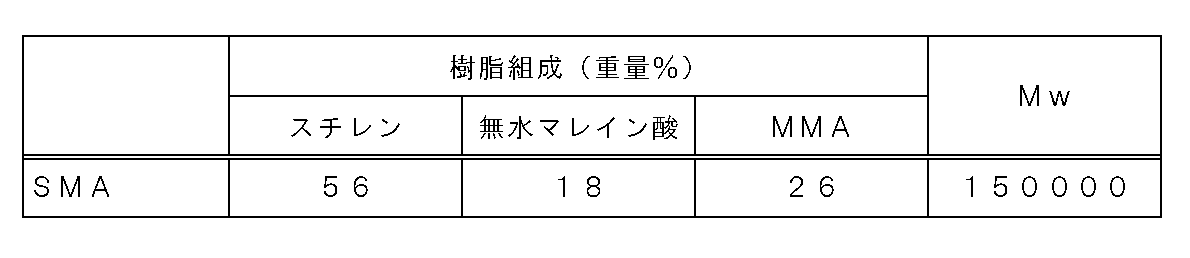
SMA樹脂の共重合組成は、下記の手順で13C-NMR法により求めた。
13C-NMRスペクトルは、核磁気共鳴装置(日本電子社製 GX-270)を用いた。SMA樹脂1.5gを重水素化クロロホルム1.5mlに溶解させて試料溶液を調整し、室温環境下、積算回数4000~5000回の条件にて、測定した。測定結果より、以下の値を求めた。
・〔スチレン単位中のベンゼン環(炭素数6)のカーボンピーク(127、134,143ppm付近)の積分強度〕/6
・〔無水マレイン酸単位中のカルボニル部位(炭素数2)のカーボンピーク(170ppm付近)の積分強度〕/2
・〔MMA単位中のカルボニル部位(炭素数1)のカーボンピーク(175ppm付近)の積分強度〕/1
以上の値の面積比から、試料中のスチレン単位、無水マレイン酸単位、MMA単位のモル比を求めた。得られたモル比とそれぞれのモノマー単位の質量比(スチレン単位:無水マレイン酸単位:MMA単位=104:98:100)から、SMA樹脂中の各単量体の質量組成を求めた。
SMA樹脂のMwは、下記の手順でGPC法により求めた。
溶離液としてテトラヒドロフラン、カラムとして東ソー株式会社製のTSKgel SuperMultipore HZM-Mの2本とSuperHZ4000を直列に繋いだものを用いた。GPC装置として、示差屈折率検出器(RI検出器)を備えた東ソー株式会社製のHLC-8320(品番)を使用した。SMA樹脂4mgをテトラヒドロフラン5mlに溶解させて試料溶液を調整した。カラムオーブンの温度を40℃に設定し、溶離液流量0.35ml/分で、試料溶液20μlを注入して、クロマトグラムを測定した。分子量が400~5000000の範囲内にある標準ポリスチレン10点をGPCで測定し、保持時間と分子量との関係を示す検量線を作成した。この検量線に基づいてMw決定した。
住化スタイロンポリカーボネート株式会社製「SDポリカ(登録商標) PCX」(温度300℃、1.2kg荷重下でのMFR=6.7g/10分、ガラス転移温度(Tg)=150℃、線膨張率=6.93×10-5/K)をポリカーボネートとして用意した。
(押出樹脂板の製造方法)
TC比率20質量%のメタクリル樹脂B(ガラス転移温度:120度、線膨張率:7.30×10⁻⁵/K)を65mmφ一軸押出機[東芝機械株式会社製]で、ポリカーボネートを150mmφ一軸押出機[東芝機械株式会社製]でそれぞれ溶融し、両者を、マルチマニホールド型ダイスを介して積層した。積層した樹脂(押出樹脂板16、溶融状態の熱可塑性樹脂積層体)を図1で示すような第1冷却ロール12と第2冷却ロール13との間に挟み込んで第2冷却ロール13に巻き掛けた後、第3冷却ロール14に巻き掛けることにより冷却し、引取りロール15によって押出樹脂板16を引き取り製造した。樹脂温度(TT)は、第2冷却ロール13及び、第3冷却ロール14の温度を制御することで150℃に調整した。また、第2冷却ロール13と引き取りロール15の周速度比(V4/V2)を0.995に、第2冷却ロール13と第3冷却ロール14の周速度比(V3/V2)を1.005に調整した。第3冷却ロール14側にポリカーボネート含有層側が接するようにした。メタクリル樹脂含有層の厚みを0.075mm、ポリカーボネート含有層の厚みを0.925mmとした。製造条件及び得られた押出樹脂板の評価結果を表2に示す。
TC比率20質量%のメタクリル樹脂Bに代えて、表2の「メタクリル樹脂含有層」の欄に記載のTC比率を有するメタクリル樹脂Bを用い、樹脂温度(TT)を表2に記載のとおり調整した以外は、実施例1と同様にして押出樹脂板を製造した。製造条件及び得られた押出樹脂板の評価結果を表2に示す。
TC比率20質量%のメタクリル樹脂Bに代わりに、SMA比率20質量%の樹脂組成物(1)を用い、表2に記載のとおり実施例1と同様にして押出樹脂板を製造した。
SMA比率20質量%の樹脂組成物(1)の代わりに、表2の「メタクリル樹脂含有層」に記載のSMA比率を有する樹脂組成物(1)を用い、各条件を表2に記載の通り変更した以外は、実施例5と同様にして押出樹脂板を製造した。製造条件及び得られた押出樹脂板の評価結果を表2に示す。
TC比率20質量%のメタクリル樹脂Bの代わりに、メタクリル樹脂Aを用いた以外は、表2に記載のとおり実施例1と同様にして押出樹脂板を製造した。製造条件及び得られた押出樹脂板の評価結果を表2に示す。
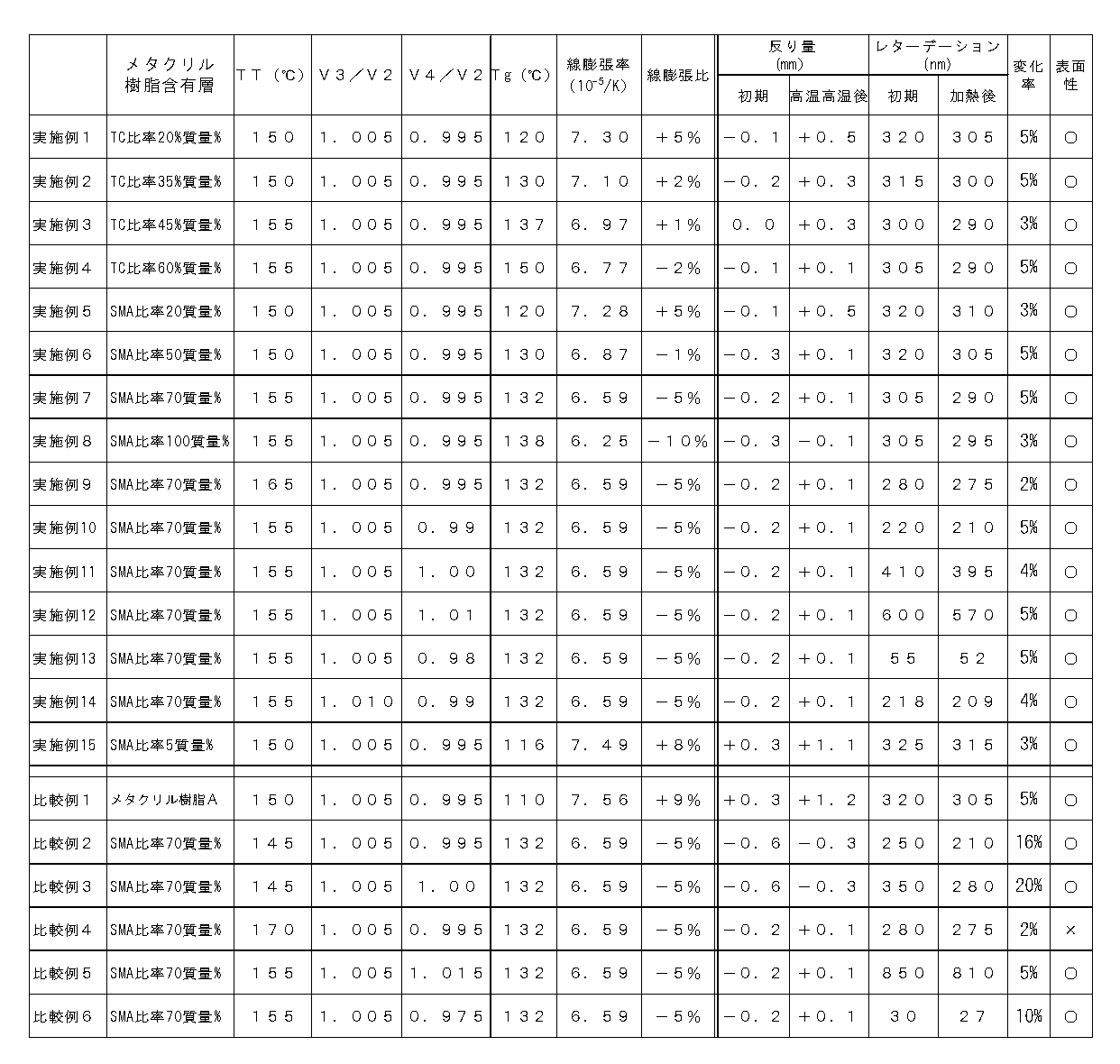
実施例10~14では、SMA比率70質量%の樹脂組成物(1)を含有する層を用い、
樹脂温度(TT)を155℃に固定し周速度比(V4/V2)を0.98~1.01とした。
比較例4では、樹脂温度(TT)を高くしたところ、表面性が悪い押出樹脂板となった。比較例5では、周速度比(V4/V2)を高くしたところ、レターデーション値が高い押出樹脂板となった。比較例6では、周速度比(V4/V2)を低くしたところ、レターデーション値が低い押出樹脂板となった。
12 第1冷却ロール
13 第2冷却ロール
14 第3冷却ロール
15 引き取りロール
16 押出樹脂板(熱可塑性樹脂積層体)
Claims (15)
- ポリカーボネートを含有する層の少なくとも片面にメタクリル樹脂を含有する層が積層された押出樹脂板の製造方法であって、
前記メタクリル樹脂を含有する層のガラス転移温度が115℃以上であり、
前記ポリカーボネートを含有する層の少なくとも片面に前記メタクリル樹脂を含有する層が積層された熱可塑性樹脂積層体を溶融状態でTダイから押出し、
第1冷却ロールと第2冷却ロールとの間に前記熱可塑性樹脂積層体を挟み込み、
前記熱可塑性樹脂積層体を前記第2冷却ロールに巻き掛けた後、第3冷却ロールに巻き掛けることにより冷却し、
前記熱可塑性樹脂積層体を引取りロールによって引き取る工程を含み、
最後に巻き掛ける冷却ロールから前記熱可塑性樹脂積層体が剥離する位置において、樹脂全体の温度を、前記ポリカーボネートを含有する層のガラス転移温度に対し-2℃~+15℃の範囲とし、
前記引取りロールの周速度(V4)と、前記第2冷却ロールの周速度(V2)との周速度比(V4/V2)を0.98以上1.01以下とする押出樹脂板の製造方法。 - 前記ポリカーボネートを含有する層の線膨張率(S1)と前記メタクリル樹脂を含有する層の線膨張率(S2)との差(S2-S1)と、前記ポリカーボネートを含有する層の線膨張率(S1)との比((S2-S1)/S1)が-10%~+5%である、請求項1に記載の押出樹脂板の製造方法。
- 前記メタクリル樹脂を含有する層が、メタクリル酸メチルに由来する構造単位40~80質量%を含有し、下記一般式(I)で表されるメタクリル酸エステルに由来する構造単位20~60質量%を含有する、請求項1または2に記載の押出樹脂板の製造方法。

(式中、Cyは脂環式炭化水素基を表す。) - 前記一般式(I)中におけるCyが多環脂肪族炭化水素基である、請求項3に記載の押出樹脂板の製造方法。
- 前記メタクリル樹脂を含有する層が、メタクリル樹脂5質量%以上80質量%未満と、下記一般式(II)で示される芳香族ビニル化合物に由来する構造単位および下記一般式(III)で示される酸無水物に由来する構造単位を含んでなる共重合体20質量%以上とを含有する請求項1または2に記載の押出樹脂板の製造方法。

(式中:R1およびR2は、それぞれ独立して、水素原子またはアルキル基を表す。)

(式中:R3およびR4は、それぞれ独立して、水素原子またはアルキル基を表す。) - 前記共重合体が前記芳香族ビニル化合物に由来する構造単位を50~84質量%含有し、前記酸無水物に由来する構造単位を15~49質量%含有し、メタクリル酸エステル単量体を1~25質量%含有する、請求項5に記載の押出樹脂板の製造方法。
- 前記メタクリル酸エステル単量体がメタクリル酸メチルである、請求項6に記載の押出樹脂板の製造方法。
- 請求項1~7のいずれかに記載の製造方法で得られる押出樹脂板であって、
前記押出樹脂板を75℃で5時間加熱したときに、加熱前後で少なくとも幅方向の一部において面内のレターデーション値が50~600nmであり、
前記加熱前後での前記レターデーション値の低下率が15%未満である押出樹脂板。 - 請求項1~7のいずれかに記載の製造方法で得られる押出樹脂板であって、
前記押出樹脂板を100℃で5時間加熱したときに、加熱前後で少なくとも幅方向の一部において面内のレターデーション値が50~600nmであり、
前記加熱前後での前記レターデーション値の低下率が15%未満である押出樹脂板。 - 請求項1~7のいずれかに記載の製造方法で得られる押出樹脂板であって、
前記押出樹脂板を75℃~100℃の温度で5時間加熱したときに、加熱前後で少なくとも幅方向の一部において面内のレターデーション値が50~600nmであり、
前記加熱前後での前記レターデーション値の低下率が15%未満である押出樹脂板。 - 前記加熱前後において、少なくとも幅方向の一部で面内のレターデーション値が80~350nmである、請求項8~10のいずれかに記載の押出樹脂板。
- 前記加熱前後での前記レターデーション値の低下率が10%未満である、請求項8~11のいずれかに記載の押出樹脂板。
- 少なくとも一方の表面にさらに耐擦傷性層を備える、請求項8~12のいずれかに記載の押出樹脂板。
- 請求項1~7のいずれかに記載の製造方法で押出樹脂板を得て、さらに
前記押出樹脂板を65℃~110℃の温度で1~30時間加熱する工程を含み、
前記加熱前後で少なくとも幅方向の一部において面内のレターデーション値が50~600nmであり、前記加熱前後での前記レターデーション値の低下率が15%未満である押出樹脂板の製造方法。 - ポリカーボネートを含有する層の少なくとも片面にメタクリル樹脂を含有する層が積層された押出樹脂板であって、
前記メタクリル樹脂を含有する層のガラス転移温度が115℃以上であり、
75℃で5時間加熱したときに、加熱前後で少なくとも幅方向の一部において面内のレターデーション値が50~600nmであり、
前記加熱前後での前記レターデーション値の低下率が15%未満であり、
前記ポリカーボネートを含有する層の線膨張率(S1)と前記メタクリル樹脂を含有する層の線膨張率(S2)との差(S2-S1)と、前記ポリカーボネートを含有する層の線膨張率(S1)との比((S2-S1)/S1)が-10%~+5%である、押出樹脂板。
Priority Applications (3)
| Application Number | Priority Date | Filing Date | Title |
|---|---|---|---|
| CN201780017952.6A CN108778675B (zh) | 2016-03-23 | 2017-03-23 | 挤出树脂板的制造方法和挤出树脂板 |
| KR1020187030003A KR102313558B1 (ko) | 2016-03-23 | 2017-03-23 | 압출 수지판의 제조 방법 및 압출 수지판 |
| JP2018507390A JP6864671B2 (ja) | 2016-03-23 | 2017-03-23 | 押出樹脂板の製造方法及び耐擦傷性層付き押出樹脂板の製造方法 |
Applications Claiming Priority (2)
| Application Number | Priority Date | Filing Date | Title |
|---|---|---|---|
| JP2016057901 | 2016-03-23 | ||
| JP2016-057901 | 2016-03-23 |
Publications (1)
| Publication Number | Publication Date |
|---|---|
| WO2017164276A1 true WO2017164276A1 (ja) | 2017-09-28 |
Family
ID=59900360
Family Applications (1)
| Application Number | Title | Priority Date | Filing Date |
|---|---|---|---|
| PCT/JP2017/011620 Ceased WO2017164276A1 (ja) | 2016-03-23 | 2017-03-23 | 押出樹脂板の製造方法及び押出樹脂板 |
Country Status (5)
| Country | Link |
|---|---|
| JP (1) | JP6864671B2 (ja) |
| KR (1) | KR102313558B1 (ja) |
| CN (1) | CN108778675B (ja) |
| TW (1) | TWI729089B (ja) |
| WO (1) | WO2017164276A1 (ja) |
Cited By (7)
| Publication number | Priority date | Publication date | Assignee | Title |
|---|---|---|---|---|
| WO2019022213A1 (ja) * | 2017-07-28 | 2019-01-31 | 株式会社クラレ | 積層押出樹脂板及び赤外線センサー付き液晶ディスプレイ用の保護板 |
| WO2019107462A1 (ja) * | 2017-11-30 | 2019-06-06 | 株式会社クラレ | 熱成形用積層板とその製造方法 |
| WO2019159890A1 (ja) * | 2018-02-13 | 2019-08-22 | 株式会社クラレ | 積層シートとその製造方法、及び保護カバー付きディスプレイ |
| JP2019219623A (ja) * | 2018-06-22 | 2019-12-26 | 株式会社クラレ | 光拡散性複層樹脂板 |
| JP2019219622A (ja) * | 2018-06-22 | 2019-12-26 | 株式会社クラレ | 光拡散性複層樹脂板 |
| KR20210011946A (ko) | 2018-05-23 | 2021-02-02 | 주식회사 쿠라레 | 압출 수지판과 그 제조 방법, 및 적층판 |
| JPWO2019203230A1 (ja) * | 2018-04-16 | 2021-05-27 | 株式会社クラレ | 積層シートとその製造方法、及び保護カバー付きディスプレイ |
Citations (5)
| Publication number | Priority date | Publication date | Assignee | Title |
|---|---|---|---|---|
| JP2012096357A (ja) * | 2010-10-29 | 2012-05-24 | Sumitomo Chemical Co Ltd | 押出樹脂板の製造方法 |
| WO2014050136A1 (ja) * | 2012-09-28 | 2014-04-03 | 株式会社クラレ | 複層板 |
| WO2014061817A1 (ja) * | 2012-10-15 | 2014-04-24 | 帝人株式会社 | 積層体 |
| WO2016038868A1 (ja) * | 2014-09-08 | 2016-03-17 | 株式会社クラレ | 液晶ディスプレイ保護板の製造方法 |
| WO2016042727A1 (ja) * | 2014-09-18 | 2016-03-24 | 株式会社クラレ | 押出樹脂板の製造方法及び押出樹脂板 |
Family Cites Families (9)
| Publication number | Priority date | Publication date | Assignee | Title |
|---|---|---|---|---|
| JP4239649B2 (ja) | 2003-03-31 | 2009-03-18 | 住友化学株式会社 | 耐擦傷性樹脂板及びそれを用いた携帯型情報端末の表示窓保護板 |
| JP2006103169A (ja) | 2004-10-06 | 2006-04-20 | Mitsubishi Gas Chem Co Inc | 液晶ディスプレーカバー用ポリカーボネート樹脂積層体 |
| JP5065644B2 (ja) | 2005-09-30 | 2012-11-07 | 大日本印刷株式会社 | 化粧シート及びその製造方法並びに化粧シート付射出成形品 |
| CN101201533A (zh) * | 2005-12-14 | 2008-06-18 | 住友化学株式会社 | 透射型屏幕用树脂板 |
| JP4396698B2 (ja) | 2005-12-14 | 2010-01-13 | 住友化学株式会社 | 押出樹脂板の製造方法 |
| JP5186983B2 (ja) | 2008-04-04 | 2013-04-24 | 住友化学株式会社 | 耐擦傷性樹脂板及びその用途 |
| JP2010085978A (ja) | 2008-09-03 | 2010-04-15 | Sumitomo Chemical Co Ltd | 液晶ディスプレイ保護板 |
| CN105829062B (zh) * | 2013-12-19 | 2017-09-19 | 株式会社可乐丽 | 树脂板的制造方法 |
| CN106103092A (zh) * | 2014-03-07 | 2016-11-09 | 株式会社可乐丽 | 层叠体 |
-
2017
- 2017-03-20 TW TW106109081A patent/TWI729089B/zh active
- 2017-03-23 JP JP2018507390A patent/JP6864671B2/ja active Active
- 2017-03-23 CN CN201780017952.6A patent/CN108778675B/zh active Active
- 2017-03-23 KR KR1020187030003A patent/KR102313558B1/ko active Active
- 2017-03-23 WO PCT/JP2017/011620 patent/WO2017164276A1/ja not_active Ceased
Patent Citations (5)
| Publication number | Priority date | Publication date | Assignee | Title |
|---|---|---|---|---|
| JP2012096357A (ja) * | 2010-10-29 | 2012-05-24 | Sumitomo Chemical Co Ltd | 押出樹脂板の製造方法 |
| WO2014050136A1 (ja) * | 2012-09-28 | 2014-04-03 | 株式会社クラレ | 複層板 |
| WO2014061817A1 (ja) * | 2012-10-15 | 2014-04-24 | 帝人株式会社 | 積層体 |
| WO2016038868A1 (ja) * | 2014-09-08 | 2016-03-17 | 株式会社クラレ | 液晶ディスプレイ保護板の製造方法 |
| WO2016042727A1 (ja) * | 2014-09-18 | 2016-03-24 | 株式会社クラレ | 押出樹脂板の製造方法及び押出樹脂板 |
Cited By (16)
| Publication number | Priority date | Publication date | Assignee | Title |
|---|---|---|---|---|
| WO2019022213A1 (ja) * | 2017-07-28 | 2019-01-31 | 株式会社クラレ | 積層押出樹脂板及び赤外線センサー付き液晶ディスプレイ用の保護板 |
| KR20200088859A (ko) * | 2017-11-30 | 2020-07-23 | 주식회사 쿠라레 | 열성형용 적층판과 그 제조 방법 |
| KR102574014B1 (ko) * | 2017-11-30 | 2023-09-04 | 주식회사 쿠라레 | 열성형용 적층판과 그 제조 방법 |
| JP7256752B2 (ja) | 2017-11-30 | 2023-04-12 | 株式会社クラレ | 熱成形用積層板とその製造方法 |
| CN111433028A (zh) * | 2017-11-30 | 2020-07-17 | 株式会社可乐丽 | 热成形用层叠板及其制造方法 |
| JPWO2019107462A1 (ja) * | 2017-11-30 | 2021-01-14 | 株式会社クラレ | 熱成形用積層板とその製造方法 |
| WO2019107462A1 (ja) * | 2017-11-30 | 2019-06-06 | 株式会社クラレ | 熱成形用積層板とその製造方法 |
| EP3722093A4 (en) * | 2017-11-30 | 2021-11-10 | Kuraray Co., Ltd. | THERMOFORMING A LAMINATED PLATE AND METHOD OF MANUFACTURING THEREOF |
| WO2019159890A1 (ja) * | 2018-02-13 | 2019-08-22 | 株式会社クラレ | 積層シートとその製造方法、及び保護カバー付きディスプレイ |
| JPWO2019159890A1 (ja) * | 2018-02-13 | 2021-03-04 | 株式会社クラレ | 積層シートとその製造方法、及び保護カバー付きディスプレイ |
| JP7216700B2 (ja) | 2018-02-13 | 2023-02-01 | 株式会社クラレ | 積層シートとその製造方法、及び保護カバー付きディスプレイ |
| JP7216717B2 (ja) | 2018-04-16 | 2023-02-01 | 株式会社クラレ | 積層シートとその製造方法、及び保護カバー付きディスプレイ |
| JPWO2019203230A1 (ja) * | 2018-04-16 | 2021-05-27 | 株式会社クラレ | 積層シートとその製造方法、及び保護カバー付きディスプレイ |
| KR20210011946A (ko) | 2018-05-23 | 2021-02-02 | 주식회사 쿠라레 | 압출 수지판과 그 제조 방법, 및 적층판 |
| JP2019219622A (ja) * | 2018-06-22 | 2019-12-26 | 株式会社クラレ | 光拡散性複層樹脂板 |
| JP2019219623A (ja) * | 2018-06-22 | 2019-12-26 | 株式会社クラレ | 光拡散性複層樹脂板 |
Also Published As
| Publication number | Publication date |
|---|---|
| JP6864671B2 (ja) | 2021-04-28 |
| CN108778675A (zh) | 2018-11-09 |
| KR102313558B1 (ko) | 2021-10-15 |
| TWI729089B (zh) | 2021-06-01 |
| JPWO2017164276A1 (ja) | 2019-02-14 |
| TW201801890A (zh) | 2018-01-16 |
| CN108778675B (zh) | 2020-06-23 |
| KR20180127414A (ko) | 2018-11-28 |
Similar Documents
| Publication | Publication Date | Title |
|---|---|---|
| JP6864671B2 (ja) | 押出樹脂板の製造方法及び耐擦傷性層付き押出樹脂板の製造方法 | |
| KR102365229B1 (ko) | 압출 수지판의 제조 방법 및 압출 수지판 | |
| JP6926088B2 (ja) | 押出樹脂板の製造方法及び押出樹脂板 | |
| JP6997771B2 (ja) | 押出樹脂板とその製造方法 | |
| JPWO2019022213A1 (ja) | 積層押出樹脂板及び赤外線センサー付き液晶ディスプレイ用の保護板 | |
| JP7045944B2 (ja) | 防眩性保護板 | |
| JP7216700B2 (ja) | 積層シートとその製造方法、及び保護カバー付きディスプレイ | |
| JP7150016B2 (ja) | 押出樹脂板とその製造方法、及び積層板 | |
| JP7713443B2 (ja) | 液晶ディスプレイ保護板、並びに、曲面付き液晶ディスプレイ保護板とその製造方法 | |
| JP7538145B2 (ja) | 液晶ディスプレイ保護板 | |
| JP7574291B2 (ja) | 液晶ディスプレイ保護板、曲面付き液晶ディスプレイ保護板、及びこれらの製造方法 | |
| JP7538138B2 (ja) | 液晶ディスプレイ保護板 | |
| CN117999160A (zh) | 挤出树脂层叠膜及其制造方法 |
Legal Events
| Date | Code | Title | Description |
|---|---|---|---|
| WWE | Wipo information: entry into national phase |
Ref document number: 2018507390 Country of ref document: JP |
|
| NENP | Non-entry into the national phase |
Ref country code: DE |
|
| ENP | Entry into the national phase |
Ref document number: 20187030003 Country of ref document: KR Kind code of ref document: A |
|
| 121 | Ep: the epo has been informed by wipo that ep was designated in this application |
Ref document number: 17770316 Country of ref document: EP Kind code of ref document: A1 |
|
| 122 | Ep: pct application non-entry in european phase |
Ref document number: 17770316 Country of ref document: EP Kind code of ref document: A1 |