WO2017038728A1 - 化合物、有機エレクトロルミネッセンス素子用材料、有機エレクトロルミネッセンス素子、及び電子機器 - Google Patents
化合物、有機エレクトロルミネッセンス素子用材料、有機エレクトロルミネッセンス素子、及び電子機器 Download PDFInfo
- Publication number
- WO2017038728A1 WO2017038728A1 PCT/JP2016/075100 JP2016075100W WO2017038728A1 WO 2017038728 A1 WO2017038728 A1 WO 2017038728A1 JP 2016075100 W JP2016075100 W JP 2016075100W WO 2017038728 A1 WO2017038728 A1 WO 2017038728A1
- Authority
- WO
- WIPO (PCT)
- Prior art keywords
- group
- formula
- compound
- ring
- synthesis
- Prior art date
- Legal status (The legal status is an assumption and is not a legal conclusion. Google has not performed a legal analysis and makes no representation as to the accuracy of the status listed.)
- Ceased
Links
- 0 *c1c(*)c(*)c(c(*)c(*)c(*)c2*)c2c1* Chemical compound *c1c(*)c(*)c(c(*)c(*)c(*)c2*)c2c1* 0.000 description 6
- TVAPDUGCHGDWNO-UHFFFAOYSA-N c(cc1c2c3ccc(c4c5ccc6c4[o]c4c6cccc4)c2[n]5-c2cccc4c2cccc4)ccc1[n]3-c1c(cccc2)c2ccc1 Chemical compound c(cc1c2c3ccc(c4c5ccc6c4[o]c4c6cccc4)c2[n]5-c2cccc4c2cccc4)ccc1[n]3-c1c(cccc2)c2ccc1 TVAPDUGCHGDWNO-UHFFFAOYSA-N 0.000 description 2
- WMOYEZCOOGZRDC-UHFFFAOYSA-N C(C1)C=Cc2c1c(ccc(c(cc1)c3c4c1c(cccc1)c1[n]4-c1ccccc1)c1[n]3-c3cc(-c4nc(-c5ccccc5)cc(-c5ccccc5)n4)ccc3)c1[o]2 Chemical compound C(C1)C=Cc2c1c(ccc(c(cc1)c3c4c1c(cccc1)c1[n]4-c1ccccc1)c1[n]3-c3cc(-c4nc(-c5ccccc5)cc(-c5ccccc5)n4)ccc3)c1[o]2 WMOYEZCOOGZRDC-UHFFFAOYSA-N 0.000 description 1
- LDUIQYRSUZBTQB-UHFFFAOYSA-N CC(C)(C)c(c1c2c3ccccc3[n]1-c1ccccc1)cc(c1c3[o]c4ccccc4c3ccc11)c2[n]1-c1ccccc1 Chemical compound CC(C)(C)c(c1c2c3ccccc3[n]1-c1ccccc1)cc(c1c3[o]c4ccccc4c3ccc11)c2[n]1-c1ccccc1 LDUIQYRSUZBTQB-UHFFFAOYSA-N 0.000 description 1
- ZXJBGIPXTLYCAF-UHFFFAOYSA-N CC(C1)=C(c2ccccc2)N=C(c2ccccc2)N=C1c(cc1)ccc1-c(cc12)ccc1c(c1c(cc3)c4c5[o]c(cccc6)c6c5ccc4[n]1-c1ccccc1)c3[n]2-c1ccccc1 Chemical compound CC(C1)=C(c2ccccc2)N=C(c2ccccc2)N=C1c(cc1)ccc1-c(cc12)ccc1c(c1c(cc3)c4c5[o]c(cccc6)c6c5ccc4[n]1-c1ccccc1)c3[n]2-c1ccccc1 ZXJBGIPXTLYCAF-UHFFFAOYSA-N 0.000 description 1
- WIEALBCSQUHVTI-UHFFFAOYSA-N Fc1ccc2[o]c3c(c(ccc4c5c6ccccc6[n]4-c4ccccc4)c5[n]4-c5ccccc5)c4ccc3c2c1 Chemical compound Fc1ccc2[o]c3c(c(ccc4c5c6ccccc6[n]4-c4ccccc4)c5[n]4-c5ccccc5)c4ccc3c2c1 WIEALBCSQUHVTI-UHFFFAOYSA-N 0.000 description 1
- LIMIPAXRMGOYNG-UHFFFAOYSA-N N#Cc(cc(c(c(c(cc1C#N)c2cc1C#N)c1)cc(C#N)c1C#N)c2c1)c1C#N Chemical compound N#Cc(cc(c(c(c(cc1C#N)c2cc1C#N)c1)cc(C#N)c1C#N)c2c1)c1C#N LIMIPAXRMGOYNG-UHFFFAOYSA-N 0.000 description 1
- CQDGUIDPBSAAQA-UHFFFAOYSA-N N#Cc(cc1)cc2c1[o]c1c(c(C=CC(C3c4ccccc44)N4c4ccccc4)c3[n]3-c4ccccc4)c3ccc21 Chemical compound N#Cc(cc1)cc2c1[o]c1c(c(C=CC(C3c4ccccc44)N4c4ccccc4)c3[n]3-c4ccccc4)c3ccc21 CQDGUIDPBSAAQA-UHFFFAOYSA-N 0.000 description 1
- JLAZYWZDRAXMCD-UHFFFAOYSA-N c(cc1)cc(-c2c3c4ccc2)c1-c3ccc4-[n]1c(c(c2ccccc22)c(cc3)[n]2-c2cccc4c2cccc4)c3c2c1ccc1c2[o]c2c1cccc2 Chemical compound c(cc1)cc(-c2c3c4ccc2)c1-c3ccc4-[n]1c(c(c2ccccc22)c(cc3)[n]2-c2cccc4c2cccc4)c3c2c1ccc1c2[o]c2c1cccc2 JLAZYWZDRAXMCD-UHFFFAOYSA-N 0.000 description 1
- POBTWFMOUBNGRH-UHFFFAOYSA-N c(cc1)cc(-c2ccc3)c1-c(cc1)c2c3c1-[n](c1ccccc11)c(cc2)c1c1c2c2c3[o]c(cccc4)c4c3ccc2[n]1-c1c(cccc2)c2ccc1 Chemical compound c(cc1)cc(-c2ccc3)c1-c(cc1)c2c3c1-[n](c1ccccc11)c(cc2)c1c1c2c2c3[o]c(cccc4)c4c3ccc2[n]1-c1c(cccc2)c2ccc1 POBTWFMOUBNGRH-UHFFFAOYSA-N 0.000 description 1
- RVEIGDOTXPXXHU-UHFFFAOYSA-N c(cc1)ccc1-[n](c(c1c2)ccc2-c2cc(cccc3)c3c3ccccc23)c(cc2)c1c1c2c2c3[o]c(cccc4)c4c3ccc2[n]1-c1ccccc1 Chemical compound c(cc1)ccc1-[n](c(c1c2)ccc2-c2cc(cccc3)c3c3ccccc23)c(cc2)c1c1c2c2c3[o]c(cccc4)c4c3ccc2[n]1-c1ccccc1 RVEIGDOTXPXXHU-UHFFFAOYSA-N 0.000 description 1
- GOLRWGKRSHVAFK-UHFFFAOYSA-N c(cc1)ccc1-[n](c(cccc1)c1c1c2)c1ccc2-c(cc1)cc(c(c2ccc3c4c5ccc6c4[o]c4c6cccc4)c3[n]5-c3ccccc3)c1[n]2-c1ccccc1 Chemical compound c(cc1)ccc1-[n](c(cccc1)c1c1c2)c1ccc2-c(cc1)cc(c(c2ccc3c4c5ccc6c4[o]c4c6cccc4)c3[n]5-c3ccccc3)c1[n]2-c1ccccc1 GOLRWGKRSHVAFK-UHFFFAOYSA-N 0.000 description 1
- IXCSNVWNDGTTTN-UHFFFAOYSA-N c(cc1)ccc1-[n](c1c2cccc1)c1c2c([n](c(cc2)c3c4c2c2ccccc2[o]4)-c2ccccc2)c3c(-c2c3[o]c4ccccc4c3ccc2)c1 Chemical compound c(cc1)ccc1-[n](c1c2cccc1)c1c2c([n](c(cc2)c3c4c2c2ccccc2[o]4)-c2ccccc2)c3c(-c2c3[o]c4ccccc4c3ccc2)c1 IXCSNVWNDGTTTN-UHFFFAOYSA-N 0.000 description 1
- JIHGSGQZKPZVFX-UHFFFAOYSA-N c(cc1)ccc1-[n](c1ccccc11)c(cc2)c1c1c2c(c([o]c2ccc3)c(cc4)c2c3-[n]2c(cccc3)c3c3c2cccc3)c4[n]1-c1ccccc1 Chemical compound c(cc1)ccc1-[n](c1ccccc11)c(cc2)c1c1c2c(c([o]c2ccc3)c(cc4)c2c3-[n]2c(cccc3)c3c3c2cccc3)c4[n]1-c1ccccc1 JIHGSGQZKPZVFX-UHFFFAOYSA-N 0.000 description 1
- FZEJVCXDZPIVNW-UHFFFAOYSA-N c(cc1)ccc1-[n](c1ccccc1c1c2)c1ccc2-c(c1c2c3ccccc3[n]1-c1ccccc1)cc(c1c3[o]c(cccc4)c4c3ccc11)c2[n]1-c1ccccc1 Chemical compound c(cc1)ccc1-[n](c1ccccc1c1c2)c1ccc2-c(c1c2c3ccccc3[n]1-c1ccccc1)cc(c1c3[o]c(cccc4)c4c3ccc11)c2[n]1-c1ccccc1 FZEJVCXDZPIVNW-UHFFFAOYSA-N 0.000 description 1
- PYODSYYPQNXRHC-UHFFFAOYSA-N c(cc1)ccc1-[n]1c(cc(c(c2c3ccc4c2[s]c2c4cccc2)c2)[n]3-c3ccccc3)c2c2ccccc12 Chemical compound c(cc1)ccc1-[n]1c(cc(c(c2c3ccc4c2[s]c2c4cccc2)c2)[n]3-c3ccccc3)c2c2ccccc12 PYODSYYPQNXRHC-UHFFFAOYSA-N 0.000 description 1
- GXMVHXQCVUXEHD-UHFFFAOYSA-N c(cc1)ccc1-[n]1c(cc(cc2)-c(cc3)cc4c3[s]c3ccccc43)c2c2c1ccc(c1c3[o]c(cccc4)c4c3ccc11)c2[n]1-c1ccccc1 Chemical compound c(cc1)ccc1-[n]1c(cc(cc2)-c(cc3)cc4c3[s]c3ccccc43)c2c2c1ccc(c1c3[o]c(cccc4)c4c3ccc11)c2[n]1-c1ccccc1 GXMVHXQCVUXEHD-UHFFFAOYSA-N 0.000 description 1
- OPTFNQDUDTZVKA-UHFFFAOYSA-N c(cc1)ccc1-[n]1c(ccc(-c2c(c(cccc3)c3[o]3)c3c(c(ccc3c4c5ccccc5[n]3-c3ccccc3)c4[n]3-c4ccccc4)c3c2)c2)c2c2ccccc12 Chemical compound c(cc1)ccc1-[n]1c(ccc(-c2c(c(cccc3)c3[o]3)c3c(c(ccc3c4c5ccccc5[n]3-c3ccccc3)c4[n]3-c4ccccc4)c3c2)c2)c2c2ccccc12 OPTFNQDUDTZVKA-UHFFFAOYSA-N 0.000 description 1
- DIVSDYODNURFOW-UHFFFAOYSA-N c(cc1)ccc1-[n]1c2cc(-c3cc4c(cccc5)c5c(cccc5)c5c4cc3)ccc2c2c1ccc(c1c3ccc4c1[o]c1c4cccc1)c2[n]3-c1ccccc1 Chemical compound c(cc1)ccc1-[n]1c2cc(-c3cc4c(cccc5)c5c(cccc5)c5c4cc3)ccc2c2c1ccc(c1c3ccc4c1[o]c1c4cccc1)c2[n]3-c1ccccc1 DIVSDYODNURFOW-UHFFFAOYSA-N 0.000 description 1
- JMAVEJZISPJPST-UHFFFAOYSA-N c(cc1)ccc1-[n]1c2ccc(c3c4[o]c(ccc(-c(cc5)cc6c5c(cccc5)c5[n]6-c5ccccc5)c5)c5c4ccc3[n]3-c4ccccc4)c3c2c2ccccc12 Chemical compound c(cc1)ccc1-[n]1c2ccc(c3c4[o]c(ccc(-c(cc5)cc6c5c(cccc5)c5[n]6-c5ccccc5)c5)c5c4ccc3[n]3-c4ccccc4)c3c2c2ccccc12 JMAVEJZISPJPST-UHFFFAOYSA-N 0.000 description 1
- WHFXZIVYLNQBGO-UHFFFAOYSA-N c(cc1)ccc1-[n]1c2ccc(c3c4[o]c5ccccc5c4cc(Oc4ccccc4)c3[n]3-c4ccccc4)c3c2c2ccccc12 Chemical compound c(cc1)ccc1-[n]1c2ccc(c3c4[o]c5ccccc5c4cc(Oc4ccccc4)c3[n]3-c4ccccc4)c3c2c2ccccc12 WHFXZIVYLNQBGO-UHFFFAOYSA-N 0.000 description 1
- NCESIFOJLHVTOC-UHFFFAOYSA-N c(cc1)ccc1-c(cc1)ccc1-c1c(cccc2)c2nc(-[n]2c(c(c3ccccc33)c(cc4)[n]3-c3cccc5c3cccc5)c4c3c2ccc2c3[o]c3c2cccc3)n1 Chemical compound c(cc1)ccc1-c(cc1)ccc1-c1c(cccc2)c2nc(-[n]2c(c(c3ccccc33)c(cc4)[n]3-c3cccc5c3cccc5)c4c3c2ccc2c3[o]c3c2cccc3)n1 NCESIFOJLHVTOC-UHFFFAOYSA-N 0.000 description 1
- LNYLHFJHHUYGIT-UHFFFAOYSA-N c(cc1)ccc1-c(cc1)ccc1-c1nc(-[n](c2ccccc22)c(cc3)c2c2c3c3c4[o]c5ccccc5c4ccc3[n]2-c2c(cccc3)c3ccc2)nc2ccccc12 Chemical compound c(cc1)ccc1-c(cc1)ccc1-c1nc(-[n](c2ccccc22)c(cc3)c2c2c3c3c4[o]c5ccccc5c4ccc3[n]2-c2c(cccc3)c3ccc2)nc2ccccc12 LNYLHFJHHUYGIT-UHFFFAOYSA-N 0.000 description 1
- IFGSOHIDNIJAFR-UHFFFAOYSA-N c(cc1)ccc1-c(cc1c2c3ccc(c4c5[o]c6ccccc6c5ccc44)c2[n]4-c2ccccc2)ccc1[n]3-c1ccccc1 Chemical compound c(cc1)ccc1-c(cc1c2c3ccc(c4c5[o]c6ccccc6c5ccc44)c2[n]4-c2ccccc2)ccc1[n]3-c1ccccc1 IFGSOHIDNIJAFR-UHFFFAOYSA-N 0.000 description 1
- GFTJSGZSARZOKB-UHFFFAOYSA-N c(cc1)ccc1-c1c(c2ccccc2cc2)c2nc(-[n]2c(c(c3ccccc33)c(cc4)[n]3-c3cccc5c3cccc5)c4c3c2ccc2c3[o]c3c2cccc3)n1 Chemical compound c(cc1)ccc1-c1c(c2ccccc2cc2)c2nc(-[n]2c(c(c3ccccc33)c(cc4)[n]3-c3cccc5c3cccc5)c4c3c2ccc2c3[o]c3c2cccc3)n1 GFTJSGZSARZOKB-UHFFFAOYSA-N 0.000 description 1
- FNMXPOAVLBYXBQ-UHFFFAOYSA-N c(cc1)ccc1-c1c(ccc2c3cccc2)c3nc(-[n]2c(c(c3ccccc33)c(cc4)[n]3-c3c(cccc5)c5ccc3)c4c3c2ccc2c3[o]c3c2cccc3)n1 Chemical compound c(cc1)ccc1-c1c(ccc2c3cccc2)c3nc(-[n]2c(c(c3ccccc33)c(cc4)[n]3-c3c(cccc5)c5ccc3)c4c3c2ccc2c3[o]c3c2cccc3)n1 FNMXPOAVLBYXBQ-UHFFFAOYSA-N 0.000 description 1
- SAIRBHWSQNCGJG-UHFFFAOYSA-N c(cc1)ccc1-c1cc(-c2ccccc2)nc(-c2cccc(-[n](c(cc3[o]c(cccc4)c4c3c3)c3c3ccc4c5c6cccc5)c3c4[n]6-c3ccccc3)c2)n1 Chemical compound c(cc1)ccc1-c1cc(-c2ccccc2)nc(-c2cccc(-[n](c(cc3[o]c(cccc4)c4c3c3)c3c3ccc4c5c6cccc5)c3c4[n]6-c3ccccc3)c2)n1 SAIRBHWSQNCGJG-UHFFFAOYSA-N 0.000 description 1
- DMSGIQPYZSXYPF-UHFFFAOYSA-N c(cc1)ccc1-c1cc(-c2ccccc2)nc(-c2cccc(-[n](c3c(c4ccccc4[o]4)c4ccc3c3ccc4c5c6cccc5)c3c4[n]6-c3ccccc3)c2)n1 Chemical compound c(cc1)ccc1-c1cc(-c2ccccc2)nc(-c2cccc(-[n](c3c(c4ccccc4[o]4)c4ccc3c3ccc4c5c6cccc5)c3c4[n]6-c3ccccc3)c2)n1 DMSGIQPYZSXYPF-UHFFFAOYSA-N 0.000 description 1
- COQPKUKUVJRZNN-UHFFFAOYSA-N c(cc1)ccc1-c1cc(-c2ccccc2)nc(-c2cccc(-[n]3c(c4c(cc5)c6ccccc6[n]4-c4ccccc4)c5c4c3ccc3c4c(cccc4)c4[o]3)c2)n1 Chemical compound c(cc1)ccc1-c1cc(-c2ccccc2)nc(-c2cccc(-[n]3c(c4c(cc5)c6ccccc6[n]4-c4ccccc4)c5c4c3ccc3c4c(cccc4)c4[o]3)c2)n1 COQPKUKUVJRZNN-UHFFFAOYSA-N 0.000 description 1
- VDLAMWFHYXBTHJ-UHFFFAOYSA-N c(cc1)ccc1-c1cc(-c2ccccc2)nc(-c2cccc(-[n]3c(cc4[o]c5cc(-c6cccc(-c7nc(-c8cccc(-[n]9c(c%10c(cc%11)c(cccc%12)c%12[n]%10-c%10ccccc%10)c%11c%10c9cc(c(cccc9)c9[o]9)c9c%10)c8)nc(-c8ccccc8)c7)c6)ccc5c4c4)c4c4c3ccc(c3ccccc33)c4[n]3-c3ccccc3)c2)n1 Chemical compound c(cc1)ccc1-c1cc(-c2ccccc2)nc(-c2cccc(-[n]3c(cc4[o]c5cc(-c6cccc(-c7nc(-c8cccc(-[n]9c(c%10c(cc%11)c(cccc%12)c%12[n]%10-c%10ccccc%10)c%11c%10c9cc(c(cccc9)c9[o]9)c9c%10)c8)nc(-c8ccccc8)c7)c6)ccc5c4c4)c4c4c3ccc(c3ccccc33)c4[n]3-c3ccccc3)c2)n1 VDLAMWFHYXBTHJ-UHFFFAOYSA-N 0.000 description 1
- QUZLDUHPIPDBPJ-UHFFFAOYSA-N c(cc1)ccc1-c1nc(-[n](c2c3c4c5cccc4)c4c(c6ccccc6[o]6)c6ccc4c2ccc3[n]5-c2ccccc2)nc(-c2ccccc2)n1 Chemical compound c(cc1)ccc1-c1nc(-[n](c2c3c4c5cccc4)c4c(c6ccccc6[o]6)c6ccc4c2ccc3[n]5-c2ccccc2)nc(-c2ccccc2)n1 QUZLDUHPIPDBPJ-UHFFFAOYSA-N 0.000 description 1
- RLKPBCAZJQGOSU-UHFFFAOYSA-N c(cc1)ccc1-c1nc(-[n](c2c3c4c5cccc4)c4c6[o]c7ccccc7c6ccc4c2ccc3[n]5-c2ccccc2)nc(-c2ccccc2)n1 Chemical compound c(cc1)ccc1-c1nc(-[n](c2c3c4c5cccc4)c4c6[o]c7ccccc7c6ccc4c2ccc3[n]5-c2ccccc2)nc(-c2ccccc2)n1 RLKPBCAZJQGOSU-UHFFFAOYSA-N 0.000 description 1
- GUXZGHHUPSUOLM-UHFFFAOYSA-N c(cc1)ccc1-c1nc(-[n](c2c3cccc2)c(cc2)c3c3c2c2c4[s]c5ccccc5c4ccc2[n]3-c2ccccc2)nc2ccccc12 Chemical compound c(cc1)ccc1-c1nc(-[n](c2c3cccc2)c(cc2)c3c3c2c2c4[s]c5ccccc5c4ccc2[n]3-c2ccccc2)nc2ccccc12 GUXZGHHUPSUOLM-UHFFFAOYSA-N 0.000 description 1
- BKYSLBSMNRGCPQ-UHFFFAOYSA-N c(cc1)ccc1-c1nc(-[n](c2ccccc22)c(cc3)c2c2c3c(c3c(cc4)c(cccc5)c5[o]3)c4[n]2-c2cccc3ccccc23)nc2ccc(cccc3)c3c12 Chemical compound c(cc1)ccc1-c1nc(-[n](c2ccccc22)c(cc3)c2c2c3c(c3c(cc4)c(cccc5)c5[o]3)c4[n]2-c2cccc3ccccc23)nc2ccc(cccc3)c3c12 BKYSLBSMNRGCPQ-UHFFFAOYSA-N 0.000 description 1
- JBULWVPHHRILHX-UHFFFAOYSA-N c(cc1)ccc1-c1nc(-[n](c2ccccc22)c(cc3)c2c2c3c3c4[o]c(cccc5)c5c4ccc3[n]2-c2c(cccc3)c3ccc2)nc2c(cccc3)c3ccc12 Chemical compound c(cc1)ccc1-c1nc(-[n](c2ccccc22)c(cc3)c2c2c3c3c4[o]c(cccc5)c5c4ccc3[n]2-c2c(cccc3)c3ccc2)nc2c(cccc3)c3ccc12 JBULWVPHHRILHX-UHFFFAOYSA-N 0.000 description 1
- QVZDXXYSXCZOKD-UHFFFAOYSA-N c(cc1)ccc1-c1nc(-[n]2c(c3c(cc4)[o]c5ccccc35)c4c3c(c(cccc4)c4[n]4-c5ccccc5)c4ccc23)nc(-c2ccccc2)n1 Chemical compound c(cc1)ccc1-c1nc(-[n]2c(c3c(cc4)[o]c5ccccc35)c4c3c(c(cccc4)c4[n]4-c5ccccc5)c4ccc23)nc(-c2ccccc2)n1 QVZDXXYSXCZOKD-UHFFFAOYSA-N 0.000 description 1
- YCUKIAPASYLOLS-UHFFFAOYSA-N c(cc1)ccc1-c1nc(-[n]2c(cc(c(c3c4cccc3)c3)[n]4-c4ccccc4)c3c3c2cc(c2ccccc2[o]2)c2c3)nc(-c2ccccc2)n1 Chemical compound c(cc1)ccc1-c1nc(-[n]2c(cc(c(c3c4cccc3)c3)[n]4-c4ccccc4)c3c3c2cc(c2ccccc2[o]2)c2c3)nc(-c2ccccc2)n1 YCUKIAPASYLOLS-UHFFFAOYSA-N 0.000 description 1
- VHKIPRSILACZOQ-UHFFFAOYSA-N c(cc1)ccc1-c1nc(-[n]2c3c(c4ccccc4[o]4)c4ccc3c3c2cc(c(cccc2)c2[n]2-c4ccccc4)c2c3)nc(-c2ccccc2)n1 Chemical compound c(cc1)ccc1-c1nc(-[n]2c3c(c4ccccc4[o]4)c4ccc3c3c2cc(c(cccc2)c2[n]2-c4ccccc4)c2c3)nc(-c2ccccc2)n1 VHKIPRSILACZOQ-UHFFFAOYSA-N 0.000 description 1
- LQSPDVQKYNXMBZ-UHFFFAOYSA-N c(cc1)ccc1-c1nc(-[n]2c3c4[o]c(cccc5)c5c4ccc3c3c2cc(c(cccc2)c2[n]2-c(cc4)ccc4-c4cccc(-c5nc(-[n](c(cc(c(cccc6)c6[n]6-c7ccccc7)c6c6)c6c6c7)c6cc6c7c7ccccc7[o]6)nc(-c6ccccc6)n5)c4)c2c3)nc(-c2ccccc2)n1 Chemical compound c(cc1)ccc1-c1nc(-[n]2c3c4[o]c(cccc5)c5c4ccc3c3c2cc(c(cccc2)c2[n]2-c(cc4)ccc4-c4cccc(-c5nc(-[n](c(cc(c(cccc6)c6[n]6-c7ccccc7)c6c6)c6c6c7)c6cc6c7c7ccccc7[o]6)nc(-c6ccccc6)n5)c4)c2c3)nc(-c2ccccc2)n1 LQSPDVQKYNXMBZ-UHFFFAOYSA-N 0.000 description 1
- ZIFWPSFJVYLRKW-UHFFFAOYSA-N c(cc1)ccc1-c1nc(-[n]2c3c4[o]c5ccccc5c4ccc3c3c2ccc2c3c3ccccc3[n]2-c2ccccc2)nc(-c2ccccc2)n1 Chemical compound c(cc1)ccc1-c1nc(-[n]2c3c4[o]c5ccccc5c4ccc3c3c2ccc2c3c3ccccc3[n]2-c2ccccc2)nc(-c2ccccc2)n1 ZIFWPSFJVYLRKW-UHFFFAOYSA-N 0.000 description 1
- RSVQZQRHHKJEBB-UHFFFAOYSA-N c(cc1)ccc1-c1nc(-c(cc2)cc([o]c3c4c(c5c6c7ccccc77)ccc6[n]7-c6ccccc6)c2c3ccc4[n]5-c2ccccc2)nc(-c2ccccc2)n1 Chemical compound c(cc1)ccc1-c1nc(-c(cc2)cc([o]c3c4c(c5c6c7ccccc77)ccc6[n]7-c6ccccc6)c2c3ccc4[n]5-c2ccccc2)nc(-c2ccccc2)n1 RSVQZQRHHKJEBB-UHFFFAOYSA-N 0.000 description 1
- DVZUINCKOVLWRS-UHFFFAOYSA-N c(cc1)ccc1-c1nc(-c2cc(-[n]3c(ccc4c5c6ccccc6[o]4)c5c4c3ccc3c4c(cccc4)c4[n]3-c3ccccc3)ccc2)nc(-c2ccccc2)c1 Chemical compound c(cc1)ccc1-c1nc(-c2cc(-[n]3c(ccc4c5c6ccccc6[o]4)c5c4c3ccc3c4c(cccc4)c4[n]3-c3ccccc3)ccc2)nc(-c2ccccc2)c1 DVZUINCKOVLWRS-UHFFFAOYSA-N 0.000 description 1
- GLMKJKYWLVDOGZ-UHFFFAOYSA-N c(cc1)ccc1-c1nc(-c2cccc(-[n](c3ccc(c4ccccc4[o]4)c4c3c3ccc4c5c6cccc5)c3c4[n]6-c3ccccc3)c2)nc(-c2ccccc2)c1 Chemical compound c(cc1)ccc1-c1nc(-c2cccc(-[n](c3ccc(c4ccccc4[o]4)c4c3c3ccc4c5c6cccc5)c3c4[n]6-c3ccccc3)c2)nc(-c2ccccc2)c1 GLMKJKYWLVDOGZ-UHFFFAOYSA-N 0.000 description 1
- LLAWZWUORNQJGR-UHFFFAOYSA-N c(cc1)ccc1-c1nc(-c2cccc(-[n]3c(c(c4ccccc44)c(cc5)[n]4-c4cccc6c4cccc6)c5c4c3ccc3c4[o]c4c3cccc4)c2)nc2ccccc12 Chemical compound c(cc1)ccc1-c1nc(-c2cccc(-[n]3c(c(c4ccccc44)c(cc5)[n]4-c4cccc6c4cccc6)c5c4c3ccc3c4[o]c4c3cccc4)c2)nc2ccccc12 LLAWZWUORNQJGR-UHFFFAOYSA-N 0.000 description 1
- NTLIHOAJSVWZDE-UHFFFAOYSA-N c(cc1)ccc1-c1nc(-c2cccc(-[n]3c(cc(c4ccccc4[o]4)c4c4)c4c4c3ccc3c4c(cccc4)c4[n]3-c(cc3)ccc3-c3cccc(-c4nc(-c5cccc(-[n]6c(cc7[o]c(cccc8)c8c7c7)c7c7c6ccc6c7c(cccc7)c7[n]6-c(cc6)ccc6-c6cc(-c7nc(-c8ccccc8)nc(-[n](c(cc8)c9c(c%10ccccc%10%10)c8[n]%10-c8ccccc8)c(cc8)c9c9c8c8ccccc8[o]9)n7)ccc6)c5)nc(-c5ccccc5)c4)c3)c2)nc(-c2ccccc2)c1 Chemical compound c(cc1)ccc1-c1nc(-c2cccc(-[n]3c(cc(c4ccccc4[o]4)c4c4)c4c4c3ccc3c4c(cccc4)c4[n]3-c(cc3)ccc3-c3cccc(-c4nc(-c5cccc(-[n]6c(cc7[o]c(cccc8)c8c7c7)c7c7c6ccc6c7c(cccc7)c7[n]6-c(cc6)ccc6-c6cc(-c7nc(-c8ccccc8)nc(-[n](c(cc8)c9c(c%10ccccc%10%10)c8[n]%10-c8ccccc8)c(cc8)c9c9c8c8ccccc8[o]9)n7)ccc6)c5)nc(-c5ccccc5)c4)c3)c2)nc(-c2ccccc2)c1 NTLIHOAJSVWZDE-UHFFFAOYSA-N 0.000 description 1
- PQPOKJVETKNBGG-UHFFFAOYSA-N c(cc1)ccc1-c1nc(-c2cccc(-[n]3c4c5[o]c(cccc6)c6c5ccc4c4c3ccc(c3ccccc33)c4[n]3-c3ccccc3)c2)nc(-c2ccccc2)c1 Chemical compound c(cc1)ccc1-c1nc(-c2cccc(-[n]3c4c5[o]c(cccc6)c6c5ccc4c4c3ccc(c3ccccc33)c4[n]3-c3ccccc3)c2)nc(-c2ccccc2)c1 PQPOKJVETKNBGG-UHFFFAOYSA-N 0.000 description 1
- YEQFQIYJFYYRCL-UHFFFAOYSA-N c(cc1)ccc1-c1nc(-c2ccccc2)nc(-[n](c2c3)c4c(c(cccc5)c5[n]5-c6ccccc6)c5ccc4c2cc2c3c3ccccc3[o]2)n1 Chemical compound c(cc1)ccc1-c1nc(-c2ccccc2)nc(-[n](c2c3)c4c(c(cccc5)c5[n]5-c6ccccc6)c5ccc4c2cc2c3c3ccccc3[o]2)n1 YEQFQIYJFYYRCL-UHFFFAOYSA-N 0.000 description 1
- CWHADFSAUOPCDQ-UHFFFAOYSA-N c(cc1)ccc1-c1nc(-c2ccccc2)nc(-[n]2c(c(c3ccccc33)c(cc4)[n]3-c3ccccc3)c4c3c2ccc2c3[o]c3c2cccc3)n1 Chemical compound c(cc1)ccc1-c1nc(-c2ccccc2)nc(-[n]2c(c(c3ccccc33)c(cc4)[n]3-c3ccccc3)c4c3c2ccc2c3[o]c3c2cccc3)n1 CWHADFSAUOPCDQ-UHFFFAOYSA-N 0.000 description 1
- LGYGNLPEWADHDO-UHFFFAOYSA-N c(cc1)ccc1-c1nc(-c2ccccc2)nc(-[n]2c(c(c3ccccc33)c(cc4)[n]3-c3ccccc3)c4c3c2ccc2c3c(ccc(-c3cc(-c4nc(-c5ccccc5)nc(-[n](c5c6)c7c(c8ccccc8[n]8-c9ccccc9)c8ccc7c5cc5c6[o]c6ccccc56)n4)ccc3)c3)c3[o]2)n1 Chemical compound c(cc1)ccc1-c1nc(-c2ccccc2)nc(-[n]2c(c(c3ccccc33)c(cc4)[n]3-c3ccccc3)c4c3c2ccc2c3c(ccc(-c3cc(-c4nc(-c5ccccc5)nc(-[n](c5c6)c7c(c8ccccc8[n]8-c9ccccc9)c8ccc7c5cc5c6[o]c6ccccc56)n4)ccc3)c3)c3[o]2)n1 LGYGNLPEWADHDO-UHFFFAOYSA-N 0.000 description 1
- LQCIUGCWUDGAPS-UHFFFAOYSA-N c(cc1)ccc1-c1nc(-c2ccccc2)nc(-c2cc(-c3cc([n](c4c5ccc6c4c4ccccc4[n]6-c4ccccc4)-c4ccccc4)c5c4c3c(cccc3)c3[o]4)ccc2)n1 Chemical compound c(cc1)ccc1-c1nc(-c2ccccc2)nc(-c2cc(-c3cc([n](c4c5ccc6c4c4ccccc4[n]6-c4ccccc4)-c4ccccc4)c5c4c3c(cccc3)c3[o]4)ccc2)n1 LQCIUGCWUDGAPS-UHFFFAOYSA-N 0.000 description 1
- ZTGTXJSNIGVHJC-UHFFFAOYSA-N c(cc1)ccc1N(c1ccccc1)c1cc([n](c2c3cccc2)-c2ccccc2)c3c2c1c1c3[o]c(cccc4)c4c3ccc1[n]2-c1ccccc1 Chemical compound c(cc1)ccc1N(c1ccccc1)c1cc([n](c2c3cccc2)-c2ccccc2)c3c2c1c1c3[o]c(cccc4)c4c3ccc1[n]2-c1ccccc1 ZTGTXJSNIGVHJC-UHFFFAOYSA-N 0.000 description 1
- ZKIMPSAAROLSFE-UHFFFAOYSA-N c(cc1-2)ccc1-c1cc(-[n]3c(c(c4ccccc44)c(cc5)[n]4-c4cccc6c4cccc6)c5c4c5[o]c(cccc6)c6c5ccc34)cc3c1c-2ccc3 Chemical compound c(cc1-2)ccc1-c1cc(-[n]3c(c(c4ccccc44)c(cc5)[n]4-c4cccc6c4cccc6)c5c4c5[o]c(cccc6)c6c5ccc34)cc3c1c-2ccc3 ZKIMPSAAROLSFE-UHFFFAOYSA-N 0.000 description 1
- WMNQODSTKWIAHV-UHFFFAOYSA-N c(cc1-c2ccc3)ccc1-c1c2c3cc(-[n](c2ccccc22)c(cc3)c2c2c3c(c3c(cc4)c5ccccc5[o]3)c4[n]2-c2cccc3ccccc23)c1 Chemical compound c(cc1-c2ccc3)ccc1-c1c2c3cc(-[n](c2ccccc22)c(cc3)c2c2c3c(c3c(cc4)c5ccccc5[o]3)c4[n]2-c2cccc3ccccc23)c1 WMNQODSTKWIAHV-UHFFFAOYSA-N 0.000 description 1
- UZGADOWOXPMKJR-UHFFFAOYSA-N c(cc1c2c3ccc(c4c5[o]c(cccc6)c6c5ccc44)c2[n]4-c2ccc(cccc4)c4c2)ccc1[n]3-c1c(cccc2)c2ccc1 Chemical compound c(cc1c2c3ccc(c4c5[o]c(cccc6)c6c5ccc44)c2[n]4-c2ccc(cccc4)c4c2)ccc1[n]3-c1c(cccc2)c2ccc1 UZGADOWOXPMKJR-UHFFFAOYSA-N 0.000 description 1
- FWESLSXEPXVTJO-UHFFFAOYSA-N c(cc1c2c3ccc(c4c5[o]c(cccc6)c6c5ccc44)c2[n]4-c2cccc4ccccc24)ccc1[n]3-c1ccc(-c2cccc3c2c-2ccc3)c-2c1 Chemical compound c(cc1c2c3ccc(c4c5[o]c(cccc6)c6c5ccc44)c2[n]4-c2cccc4ccccc24)ccc1[n]3-c1ccc(-c2cccc3c2c-2ccc3)c-2c1 FWESLSXEPXVTJO-UHFFFAOYSA-N 0.000 description 1
- VYJOLQGEZGGASJ-UHFFFAOYSA-N c(cc1c2c3ccc(c4c5ccc6c4[o]c4c6cccc4)c2[n]5-c(cc2)cc-4c2-c2cccc5c2c-4ccc5)ccc1[n]3-c1cccc2c1cccc2 Chemical compound c(cc1c2c3ccc(c4c5ccc6c4[o]c4c6cccc4)c2[n]5-c(cc2)cc-4c2-c2cccc5c2c-4ccc5)ccc1[n]3-c1cccc2c1cccc2 VYJOLQGEZGGASJ-UHFFFAOYSA-N 0.000 description 1
- BWDYEAJNNSCANT-UHFFFAOYSA-N c(cc1c2c3ccc(c4c5ccc6c4[o]c4c6cccc4)c2[n]5-c2c(cccc4)c4ccc2)ccc1[n]3-c1nc2ccccc2c(-c2cc(cccc3)c3cc2)n1 Chemical compound c(cc1c2c3ccc(c4c5ccc6c4[o]c4c6cccc4)c2[n]5-c2c(cccc4)c4ccc2)ccc1[n]3-c1nc2ccccc2c(-c2cc(cccc3)c3cc2)n1 BWDYEAJNNSCANT-UHFFFAOYSA-N 0.000 description 1
- ZQHIIBNSMPLGHW-UHFFFAOYSA-N c(cc1c2c3ccc(c4c5ccc6c4[o]c4c6cccc4)c2[n]5-c2cc4c(cccc5)c5c(cccc5)c5c4cc2)ccc1[n]3-c1cccc2c1cccc2 Chemical compound c(cc1c2c3ccc(c4c5ccc6c4[o]c4c6cccc4)c2[n]5-c2cc4c(cccc5)c5c(cccc5)c5c4cc2)ccc1[n]3-c1cccc2c1cccc2 ZQHIIBNSMPLGHW-UHFFFAOYSA-N 0.000 description 1
- UENORSTWGXUPMY-UHFFFAOYSA-N c(cc1c2c3ccc(c4c5ccc6c4[o]c4c6cccc4)c2[n]5-c2nc(-c4cc5ccccc5cc4)c(cccc4)c4n2)ccc1[n]3-c1cccc2c1cccc2 Chemical compound c(cc1c2c3ccc(c4c5ccc6c4[o]c4c6cccc4)c2[n]5-c2nc(-c4cc5ccccc5cc4)c(cccc4)c4n2)ccc1[n]3-c1cccc2c1cccc2 UENORSTWGXUPMY-UHFFFAOYSA-N 0.000 description 1
- KOHSSASBOCKFRO-UHFFFAOYSA-N c(cc1c2c3ccc(c4c5ccc6c4[o]c4ccccc64)c2[n]5-c2cccc4ccccc24)ccc1[n]3-c1cc2ccccc2cc1 Chemical compound c(cc1c2c3ccc(c4c5ccc6c4[o]c4ccccc64)c2[n]5-c2cccc4ccccc24)ccc1[n]3-c1cc2ccccc2cc1 KOHSSASBOCKFRO-UHFFFAOYSA-N 0.000 description 1
Classifications
-
- C—CHEMISTRY; METALLURGY
- C07—ORGANIC CHEMISTRY
- C07D—HETEROCYCLIC COMPOUNDS
- C07D491/00—Heterocyclic compounds containing in the condensed ring system both one or more rings having oxygen atoms as the only ring hetero atoms and one or more rings having nitrogen atoms as the only ring hetero atoms, not provided for by groups C07D451/00 - C07D459/00, C07D463/00, C07D477/00 or C07D489/00
- C07D491/22—Heterocyclic compounds containing in the condensed ring system both one or more rings having oxygen atoms as the only ring hetero atoms and one or more rings having nitrogen atoms as the only ring hetero atoms, not provided for by groups C07D451/00 - C07D459/00, C07D463/00, C07D477/00 or C07D489/00 in which the condensed system contains four or more hetero rings
-
- C—CHEMISTRY; METALLURGY
- C07—ORGANIC CHEMISTRY
- C07D—HETEROCYCLIC COMPOUNDS
- C07D491/00—Heterocyclic compounds containing in the condensed ring system both one or more rings having oxygen atoms as the only ring hetero atoms and one or more rings having nitrogen atoms as the only ring hetero atoms, not provided for by groups C07D451/00 - C07D459/00, C07D463/00, C07D477/00 or C07D489/00
- C07D491/12—Heterocyclic compounds containing in the condensed ring system both one or more rings having oxygen atoms as the only ring hetero atoms and one or more rings having nitrogen atoms as the only ring hetero atoms, not provided for by groups C07D451/00 - C07D459/00, C07D463/00, C07D477/00 or C07D489/00 in which the condensed system contains three hetero rings
- C07D491/14—Ortho-condensed systems
- C07D491/147—Ortho-condensed systems the condensed system containing one ring with oxygen as ring hetero atom and two rings with nitrogen as ring hetero atom
-
- C—CHEMISTRY; METALLURGY
- C09—DYES; PAINTS; POLISHES; NATURAL RESINS; ADHESIVES; COMPOSITIONS NOT OTHERWISE PROVIDED FOR; APPLICATIONS OF MATERIALS NOT OTHERWISE PROVIDED FOR
- C09K—MATERIALS FOR MISCELLANEOUS APPLICATIONS, NOT PROVIDED FOR ELSEWHERE
- C09K11/00—Luminescent materials, e.g. electroluminescent or chemiluminescent
- C09K11/06—Luminescent materials, e.g. electroluminescent or chemiluminescent containing organic luminescent materials
-
- H—ELECTRICITY
- H10—SEMICONDUCTOR DEVICES; ELECTRIC SOLID-STATE DEVICES NOT OTHERWISE PROVIDED FOR
- H10K—ORGANIC ELECTRIC SOLID-STATE DEVICES
- H10K50/00—Organic light-emitting devices
- H10K50/10—OLEDs or polymer light-emitting diodes [PLED]
- H10K50/11—OLEDs or polymer light-emitting diodes [PLED] characterised by the electroluminescent [EL] layers
-
- H—ELECTRICITY
- H10—SEMICONDUCTOR DEVICES; ELECTRIC SOLID-STATE DEVICES NOT OTHERWISE PROVIDED FOR
- H10K—ORGANIC ELECTRIC SOLID-STATE DEVICES
- H10K85/00—Organic materials used in the body or electrodes of devices covered by this subclass
- H10K85/60—Organic compounds having low molecular weight
- H10K85/649—Aromatic compounds comprising a hetero atom
- H10K85/657—Polycyclic condensed heteroaromatic hydrocarbons
-
- C—CHEMISTRY; METALLURGY
- C09—DYES; PAINTS; POLISHES; NATURAL RESINS; ADHESIVES; COMPOSITIONS NOT OTHERWISE PROVIDED FOR; APPLICATIONS OF MATERIALS NOT OTHERWISE PROVIDED FOR
- C09K—MATERIALS FOR MISCELLANEOUS APPLICATIONS, NOT PROVIDED FOR ELSEWHERE
- C09K2211/00—Chemical nature of organic luminescent or tenebrescent compounds
- C09K2211/10—Non-macromolecular compounds
- C09K2211/1003—Carbocyclic compounds
- C09K2211/1007—Non-condensed systems
-
- C—CHEMISTRY; METALLURGY
- C09—DYES; PAINTS; POLISHES; NATURAL RESINS; ADHESIVES; COMPOSITIONS NOT OTHERWISE PROVIDED FOR; APPLICATIONS OF MATERIALS NOT OTHERWISE PROVIDED FOR
- C09K—MATERIALS FOR MISCELLANEOUS APPLICATIONS, NOT PROVIDED FOR ELSEWHERE
- C09K2211/00—Chemical nature of organic luminescent or tenebrescent compounds
- C09K2211/10—Non-macromolecular compounds
- C09K2211/1003—Carbocyclic compounds
- C09K2211/1011—Condensed systems
-
- C—CHEMISTRY; METALLURGY
- C09—DYES; PAINTS; POLISHES; NATURAL RESINS; ADHESIVES; COMPOSITIONS NOT OTHERWISE PROVIDED FOR; APPLICATIONS OF MATERIALS NOT OTHERWISE PROVIDED FOR
- C09K—MATERIALS FOR MISCELLANEOUS APPLICATIONS, NOT PROVIDED FOR ELSEWHERE
- C09K2211/00—Chemical nature of organic luminescent or tenebrescent compounds
- C09K2211/10—Non-macromolecular compounds
- C09K2211/1018—Heterocyclic compounds
- C09K2211/1025—Heterocyclic compounds characterised by ligands
- C09K2211/1029—Heterocyclic compounds characterised by ligands containing one nitrogen atom as the heteroatom
-
- C—CHEMISTRY; METALLURGY
- C09—DYES; PAINTS; POLISHES; NATURAL RESINS; ADHESIVES; COMPOSITIONS NOT OTHERWISE PROVIDED FOR; APPLICATIONS OF MATERIALS NOT OTHERWISE PROVIDED FOR
- C09K—MATERIALS FOR MISCELLANEOUS APPLICATIONS, NOT PROVIDED FOR ELSEWHERE
- C09K2211/00—Chemical nature of organic luminescent or tenebrescent compounds
- C09K2211/10—Non-macromolecular compounds
- C09K2211/1018—Heterocyclic compounds
- C09K2211/1025—Heterocyclic compounds characterised by ligands
- C09K2211/1029—Heterocyclic compounds characterised by ligands containing one nitrogen atom as the heteroatom
- C09K2211/1033—Heterocyclic compounds characterised by ligands containing one nitrogen atom as the heteroatom with oxygen
-
- C—CHEMISTRY; METALLURGY
- C09—DYES; PAINTS; POLISHES; NATURAL RESINS; ADHESIVES; COMPOSITIONS NOT OTHERWISE PROVIDED FOR; APPLICATIONS OF MATERIALS NOT OTHERWISE PROVIDED FOR
- C09K—MATERIALS FOR MISCELLANEOUS APPLICATIONS, NOT PROVIDED FOR ELSEWHERE
- C09K2211/00—Chemical nature of organic luminescent or tenebrescent compounds
- C09K2211/10—Non-macromolecular compounds
- C09K2211/1018—Heterocyclic compounds
- C09K2211/1025—Heterocyclic compounds characterised by ligands
- C09K2211/1044—Heterocyclic compounds characterised by ligands containing two nitrogen atoms as heteroatoms
-
- C—CHEMISTRY; METALLURGY
- C09—DYES; PAINTS; POLISHES; NATURAL RESINS; ADHESIVES; COMPOSITIONS NOT OTHERWISE PROVIDED FOR; APPLICATIONS OF MATERIALS NOT OTHERWISE PROVIDED FOR
- C09K—MATERIALS FOR MISCELLANEOUS APPLICATIONS, NOT PROVIDED FOR ELSEWHERE
- C09K2211/00—Chemical nature of organic luminescent or tenebrescent compounds
- C09K2211/10—Non-macromolecular compounds
- C09K2211/1018—Heterocyclic compounds
- C09K2211/1025—Heterocyclic compounds characterised by ligands
- C09K2211/1088—Heterocyclic compounds characterised by ligands containing oxygen as the only heteroatom
-
- C—CHEMISTRY; METALLURGY
- C09—DYES; PAINTS; POLISHES; NATURAL RESINS; ADHESIVES; COMPOSITIONS NOT OTHERWISE PROVIDED FOR; APPLICATIONS OF MATERIALS NOT OTHERWISE PROVIDED FOR
- C09K—MATERIALS FOR MISCELLANEOUS APPLICATIONS, NOT PROVIDED FOR ELSEWHERE
- C09K2211/00—Chemical nature of organic luminescent or tenebrescent compounds
- C09K2211/18—Metal complexes
- C09K2211/185—Metal complexes of the platinum group, i.e. Os, Ir, Pt, Ru, Rh or Pd
Definitions
- the present invention relates to a novel compound, a material for an organic electroluminescence element, an organic electroluminescence element, and an electronic device.
- Patent Document 1 discloses a compound having a structure in which a benzene ring, a nitrogen-containing five-membered ring, a benzene ring, a nitrogen-containing five-membered ring, a benzene ring, a sulfur-containing five-membered ring, and a benzene ring are condensed in this order. And compounds described in Patent Document 1).
- the following compound, a material for an organic electroluminescence element, an organic electroluminescence element, and an electronic device are provided.
- the compound which is one embodiment of the present invention is a compound represented by the following formula (1).
- a 1 and A 2 are each independently a substituted or unsubstituted aryl group having 6 to 50 ring carbon atoms, or a substituted or unsubstituted heteroaryl group having 5 to 50 ring atoms.
- L 1 and L 2 are each independently a single bond, a substituted or unsubstituted arylene group having 6 to 60 ring carbon atoms, or a substituted or unsubstituted heteroarylene group having 5 to 50 ring atoms.
- X 1 to X 8 are each independently CH, C (R a ) or N.
- * 1 to * 4 are each a bond that forms a single bond. Any two adjacent ones of Y 1 to Y 4 are C forming a single bond with * 1 and * 2, respectively, and the other two are independently CH, C (R a ) or N. Any two adjacent Y 5 to Y 8 are Cs that form a single bond with * 3 and * 4, respectively, and the other two are independently CH, C (R a ) or N.
- R a is a substituent, and when a plurality of R a are present, they may be the same or different from each other, and two selected from a plurality of R a are bonded to each other to form a ring. It may be. ]
- the material for an organic electroluminescence element which is one embodiment of the present invention includes a compound represented by the above formula (1) which is one embodiment of the present invention.
- An organic electroluminescence device which is one embodiment of the present invention is an organic electroluminescence device having a cathode, an anode, and one or more organic thin film layers between the cathode and the anode, The one or more organic thin film layers include a light emitting layer, and at least one of the one or more organic thin film layers includes a compound represented by the above formula (1) which is one embodiment of the present invention.
- An electronic device which is one embodiment of the present invention includes the organic electroluminescence element which is one embodiment of the present invention.
- a novel compound useful as a material for a phosphorescent organic electroluminescent element can be provided.
- an organic electroluminescence element using the compound can be provided.
- a 1 and A 2 are each independently a substituted or unsubstituted aryl group having 6 to 50 ring carbon atoms, or a substituted or unsubstituted heteroaryl group having 5 to 50 ring atoms.
- L 1 and L 2 are each independently a single bond, a substituted or unsubstituted arylene group having 6 to 60 ring carbon atoms, or a substituted or unsubstituted heteroarylene group having 5 to 50 ring atoms.
- X 1 to X 8 are each independently CH, C (R a ) or N.
- * 1 to * 4 are each a bond that forms a single bond.
- Any two adjacent ones of Y 1 to Y 4 are C forming a single bond with * 1 and * 2, respectively, and the other two are independently CH, C (R a ) or N.
- Any two adjacent Y 5 to Y 8 are Cs that form a single bond with * 3 and * 4, respectively, and the other two are independently CH, C (R a ) or N.
- R a is a substituent, and when a plurality of R a are present, they may be the same or different from each other, and two selected from a plurality of R a are bonded to each other to form a ring. It may be. ]
- the compound represented by the above formula (1) is aromatic 6-membered ring-nitrogen-containing 5-membered ring-aromatic 6-membered ring-nitrogen-containing 5-membered ring-aromatic 6-membered ring-oxygen-containing 5-membered ring-aromatic. It has a structure condensed in the order of a six-membered ring. This structure has high planarity, spreads molecular orbitals, and carries holes well. Further, contrary to conventional materials, it has the property that electrons can flow more easily than holes. Furthermore, it can contribute to the voltage reduction of the element.
- the compound represented by the above formula (1) can improve the device lifetime. This is presumably because oxygen atoms are less likely to be oxidized than sulfur atoms and are less likely to deteriorate.
- the compound represented by the above formula (1) includes compounds described in Patent Document 1, aromatic 6-membered ring-nitrogen-containing 5-membered ring-aromatic 6-membered ring-nitrogen-containing 5-membered ring-aromatic 6-membered ring- Compared to a compound having a structure in which a nitrogen-containing five-membered ring and an aromatic six-membered ring are condensed in this order, the energy of the lowest excited triplet state (T1) is high, and higher luminous efficiency can be realized.
- the compound represented by the formula (1) is aromatic 6-membered ring-nitrogen-containing 5-membered ring-aromatic 6-membered ring-nitrogen-containing 5-membered ring-aromatic 6-membered ring-oxygen-containing 5-membered ring-aromatic.
- a structure condensed in the order of the group 6-membered ring becomes a donor unit, and the nitrogen atom has an acceptor substituent, whereby high luminous efficiency can be realized.
- the charge balance of the phosphorescent organic EL device can be easily adjusted, and the efficiency of the device can be increased.
- the charge balance is adjusted, deterioration of various materials constituting the element can be prevented and the element life can be improved.
- the compound represented by the formula (1) is useful as a host material for the phosphorescent layer. In addition, it has excellent carrier transportability and is also useful as a carrier transport material (hole transport material, electron transport material, etc.).
- the compound represented by the formula (1) is more preferably selected from compounds represented by the following formulas (1-a) to (1-d).
- a 1 , A 2 , L 1 , L 2 , X 1 to X 8 , Y 1 to Y 8 , * 3 and * 4 are as defined in the above formula (1).
- * 1 and * 2 in the coupling position is compared to the compound from a Y 2 and Y 3, * 1 and * 2 in coupled position Y 1 and Y 2, or Y 3 and Y 4 compounds that are luminous efficiency higher, device lifetime becomes longer.
- the compound represented by the formula (1) is preferably a compound represented by the following formula (2).
- a 1 , A 2 , L 1 , L 2 and * 1 to * 4 are as defined in the formula (1).
- R 1 ⁇ R 8 are each independently a hydrogen atom or a substituent R a. Any two adjacent members out of R 11 ⁇ R 14 is * 1 and * 2 respectively to form a single bond, the remaining two are each independently a hydrogen atom or a substituent R a. Any two adjacent members out of R 15 ⁇ R 18 is a single bond to form respectively * 3 and * 4, the remaining two are each independently a hydrogen atom or a substituent R a.
- R a is as defined in the formula (1).
- R 1 to R 8 are preferably hydrogen atoms.
- the compound represented by the formula (2) is preferably selected from the group consisting of compounds represented by the following formulas (3-1) to (3-6), and the following formulas (3-1) and (3 More preferably, it is selected from the group consisting of compounds represented by -4) to (3-6).
- a 1 , A 2 , L 1 , L 2 , * 3 and * 4 are as defined in the above formula (1).
- R 1 to R 8 and R 11 to R 18 are as defined in the above formula (2).
- Formulas (3-1) to (3-6) specify the bonding positions of * 1 and * 2 in Formula (2), respectively.
- R 1 to R 8 are preferably hydrogen atoms.
- the relationship between the condensation positions of each aromatic six-membered ring and each nitrogen atom or oxygen-containing five-membered ring in the compound represented by the formula (1) is expressed as follows.
- an indolocarbazole skeleton attention is focused on the middle benzene ring sandwiched between two nitrogen-containing five-membered rings and condensed.
- Two positions bonded to the adjacent benzene ring without passing through the nitrogen atoms of the two five-membered rings are para (p), meta (m) and benzene ring sandwiched between the two five-membered rings. It is called para condensation (p condensation), meta condensation (m condensation) and ortho condensation (o condensation) depending on which position of ortho (o) is used. This is specifically shown below using an indolocarbazole skeleton.
- the benzofuro skeleton is further condensed to the indolocarbazole skeleton.
- the condensation position of the benzofuro skeleton is also represented in the same manner as described above.
- the benzofuro skeleton is further condensed to the para-condensed-1 indolocarbazole skeleton, the following structure is possible.
- pp condensation the condensed form of the compound represented by the formula (1) is abbreviated as “pp condensation” or “pp”, for example, in the case of para-para condensation.
- the condensed forms of oo, om, opp, mo, mm, mp, po, and pm are the lowest excitation.
- the triplet state (T1) is high and light emission efficiency is improved, which is preferable.
- the condensed form of mm, mp, and pm is preferable because of high hole mobility.
- the compounds represented by the formulas (3-1) and (3-2) are selected from the group consisting of compounds represented by the following formulas (2-1) to (2-12).
- the compound represented by the formula (3-1) is selected from the group consisting of compounds represented by the following formulas (2-1) to (2-6).
- a 1 , A 2 , L 1 and L 2 are as defined in the formula (1).
- R 1 to R 8 and R 11 to R 18 are as defined in the above formula (2).
- formulas (2-1) to (2-12) it is preferably selected from the group consisting of compounds represented by formulas (2-1) to (2-6). More preferably, it is selected from the group consisting of compounds represented by (2-4), (2-6), (2-7) and (2-9) to (2-11). More preferably, it is selected from the group consisting of compounds represented by (2) to (2-4) and (2-6).
- the compounds represented by the formulas (3-3) to (3-5) are selected from the group consisting of compounds represented by the following formulas (2-13) to (2-30).
- the compound represented by the formula (3-4) or the formula (3-5) is selected from the group consisting of compounds represented by the following formulas (2-19) to (2-30).
- a 1 , A 2 , L 1 and L 2 are as defined in the formula (1).
- R 1 to R 8 and R 11 to R 18 are as defined in the above formula (2).
- the compound represented by the formula (3-6) is selected from the group consisting of compounds represented by the following formulas (2-31) to (2-36).
- a 1 , A 2 , L 1 and L 2 are as defined in the formula (1).
- R 1 to R 8 and R 11 to R 18 are as defined in the above formula (2).
- R 1 to R 8 are preferably hydrogen atoms.
- Formulas (2-1) to (2-6), Formulas (2-7) to (2-12), Formulas (2-13) to (2-18), Formulas (2-19) to (2-24) ), Formulas (2-25) to (2-30) and formulas (2-31) to (2-36) are respectively represented by * 3 and * 4 in formulas (3-1) to (3-6) This specifies the coupling position.
- the compounds represented by the formulas (3-1) and (3-2) are preferably compounds represented by the following formulas (3-1-1) and (3-2-1), respectively.
- the compound represented by the formula (3-1) is more preferably a compound represented by the following formula (3-1-1).
- a 1 , A 2 , L 1 , L 2 , * 3 and * 4 are as defined in Formula (1).
- R 15 to R 18 are as defined in Formula (2), and any one selected from R 15 , R 17 and R 18 forms a single bond with * 4. ]
- the compounds represented by the formulas (3-3) to (3-5) are preferably compounds represented by the following formulas (3-3-1) to (3-5-1), respectively.
- the compounds represented by the formulas (3-4) and (3-5) are preferably compounds represented by the following formulas (3-4-1) and (3-5-1), respectively.
- a 1 , A 2 , L 1 , L 2 , * 3 and * 4 are as defined in Formula (1).
- R 15 to R 18 are as defined in Formula (2), and any one selected from R 15 , R 17 and R 18 forms a single bond with * 4. ]
- the compound represented by the formula (3-6) is preferably a compound represented by the following formula (3-6-1).
- a 1 , A 2 , L 1 , L 2 , * 3 and * 4 are as defined in Formula (1).
- R 15 to R 18 are as defined in Formula (2), and any one selected from R 15 , R 17 and R 18 forms a single bond with * 4. ]
- any one selected from R 15 , R 17 and R 18 forms a single bond with * 4 means the following.
- * 4 forms a single bond with R 15 * 3 forms a single bond with R 16 .
- * 4 forms a single bond with R 17 * 3 forms a single bond with either R 16 or R 18 .
- * 4 forms a single bond with R 18 * 3 forms a single bond with R 17 .
- a 1 and A 2 in the formula (1) are each independently a substituted or unsubstituted aryl group having 6 to 24 ring carbon atoms, or a substituted or unsubstituted ring atom having 5 to 24 atoms, It is preferably a heteroaryl group containing one or more atoms selected from the group consisting of a nitrogen atom, an oxygen atom and a sulfur atom as a ring-forming atom.
- the substituted or unsubstituted aryl group having 6 to 24 ring carbon atoms in A 1 and A 2 is preferably a substituted or unsubstituted condensed aryl group having 10 to 24 ring carbon atoms.
- the substituted or unsubstituted condensed aryl group having 10 to 24 ring carbon atoms in A 1 and A 2 each independently represents a monovalent compound represented by the following formula (a1-1) or (a1-2): It is preferable that these are residues.
- R 21 to R 36 each independently represent a hydrogen atom or a substituent R b , and when there are a plurality of R b s , they may be the same or different, and a plurality of R b May be bonded to each other to form a ring. ]
- Examples of the substituted or unsubstituted condensed ring-forming residue having 10 to 24 ring-forming carbon atoms in the compound represented by the formula (a1-1) include the following condensed aromatic rings. Among them, a condensed aromatic ring group in which four or more rings are condensed is preferable, and specific examples include a triphenylenyl group.
- Examples of the substituted or unsubstituted condensed ring-forming residue having 10 to 24 ring carbon atoms in the compound represented by the formula (a1-2) include the following compounds.
- a condensed ring forming group in which four or more rings are condensed is preferable, and specific examples thereof include a fluoranthenyl group.
- the substituted or unsubstituted condensed aryl group having 10 to 24 ring carbon atoms in A 1 and A 2 is independently selected from the group consisting of four or more condensed rings. preferable.
- the number of substituted or unsubstituted ring-forming atoms in A 1 and A 2 is 5 to 24, and the ring-forming atoms are one or more selected from the group consisting of a nitrogen atom, an oxygen atom, and a sulfur atom It is preferable that the heteroaryl group containing an atom is each independently a monovalent residue of a compound represented by the following formula (a2).
- X 51 to X 58 are each independently CH, C (R b ) or N.
- R b is a substituent, and when there are a plurality of R b s , they may be the same or different, and two selected from a plurality of R b are bonded to each other to form a ring. It may be formed.
- Y is an oxygen atom, a sulfur atom, —NR d , or —C (R e ) (R f ) —.
- R d , R e and R f are each independently a hydrogen atom or a substituent R b , and when both R e and R f are R b , they may be bonded to each other to form a ring. Good. ]
- the monovalent residue of the compound represented by the formula (a2) is preferably a monovalent residue of the compound represented by the following formula (a2-1).
- Y is as defined in the formula (a2).
- R 51 ⁇ R 58 each independently represent a hydrogen atom or a substituent R b, if R b there are a plurality of each may be the same or different, a plurality existing R b Two selected may combine with each other to form a ring.
- Y is preferably, for example, an oxygen atom, a sulfur atom, NH, or C (CH 3 ) 2 .
- Any of R 51 to R 58 preferably forms a single bond with L 1 or L 2 .
- the groups are preferably each independently a monovalent residue of a compound represented by the following formula (a3).
- X 101 to X 105 each independently represents CH, C (R b ) or a nitrogen atom.
- R b is a substituent, and when there are a plurality of R b s , they may be the same or different, and two selected from a plurality of R b are bonded to each other to form a ring. It may be formed.
- the monovalent residue of the compound represented by the formula (a3) is preferably a monovalent residue of the compound represented by the following formula (a3-1).
- X 104 is as defined in the formula (a3).
- R 101 , R 103 and R 105 are each independently a hydrogen atom or a substituent R b . ]
- X 104 is preferably CH or a nitrogen atom. Any of R 101 , R 103 and R 105 forms a single bond with L 1 or L 2, and the remaining two are independently substituted or unsubstituted aryl groups having 6 to 24 ring carbon atoms. Is preferred.
- X 104 is C (R b ), and the following formulas (a3-1-1) and (a3-1-2) are preferred as examples.
- X 110 is an oxygen atom or a sulfur atom.
- R 110 to R 113 are each independently a hydrogen atom or a substituent R b .
- one of R 101 and R 103 forms a single bond with L 1 or L 2, and the remaining one is an independently substituted or unsubstituted aryl group having 6 to 24 ring carbon atoms. Is preferred.
- the monovalent residue of the compound represented by the formula (a3) is preferably a monovalent residue of the compound represented by the following formula (a3-2).
- X 101 to X 103 and X 106 to X 109 each independently represent CH, C (R b ), or N.
- R b is a substituent, and when a plurality of R b are present, they may be the same or different, and two selected from the plurality of R b are bonded to each other to form a ring May be formed.
- the monovalent residue of the compound represented by the formula (a3-2) is preferably a monovalent residue of the compound represented by the following formula (a3-2-1).
- R 101 , R 103 and R 106 to R 109 are each independently a hydrogen atom or a substituent R b , and when a plurality of R b are present, they may be the same or different, Two selected from a plurality of R b may be bonded to each other to form a ring.
- any of R 101 , R 103 and R 106 to R 109 preferably forms a single bond with L 1 or L 2, and the remaining five are preferably hydrogen atoms.
- a 2 is preferably a substituted or unsubstituted heteroaryl group having 5 to 50 ring atoms. Specifically, A 2 is preferably the above formula (a3), (a3-1), (a3-2) or (a3-2-1).
- a 2 is a heteroaryl group having 5 to 24 substituted or unsubstituted ring-forming atoms and containing one or more atoms selected from the group consisting of a nitrogen atom, an oxygen atom and a sulfur atom as the ring-forming atoms. It is more preferable.
- the compound represented by the formula (2) is preferably a compound represented by the following formula (3), and is selected from the group consisting of compounds represented by the following formulas (3-a) to (3-d). More preferably, it is selected.
- a 2 , L 1 , L 2 and * 1 to * 4 are as defined in the above formula (1).
- R 1 to R 8 and R 11 to R 18 are as defined in the above formula (2).
- X 101 to X 105 are as defined in the above formula (a3).
- * 5 is a bond that forms a single bond with any of X 101 to X 105 .
- the compound represented by the formula (3) is a compound represented by the following formula (4).
- the compounds represented by the formulas (3-a) to (3-d) are preferably compounds represented by the following formulas (4-a) to (4-d), respectively.
- a 2 , L 1 , L 2 and * 1 to * 4 are as defined in the above formula (1).
- R 1 to R 8 and R 11 to R 18 are as defined in the above formula (2).
- X 104 is as defined in the formula (a3).
- R 101 and R 105 are as defined in formula (a3-1). ]
- L 1 and L 2 are preferably each independently a single bond or a group selected from the group consisting of groups represented by the following formulas (i) to (vii).
- R c is a substituent, and when there are a plurality of R c s , they may be the same or different, and two selected from a plurality of R c are bonded to each other to form a ring structure May be.
- R Z is a hydrogen atom or a substituent R c .
- m is independently an integer from 0 to 4, and n is independently an integer from 0 to 3.
- L 1 is preferably a substituted or unsubstituted arylene group having 6 to 60 ring carbon atoms, and L 1 is selected from the group represented by the above formulas (i) to (iii) More preferably.
- R a , R b and R c , and the substituents in the description of “substituted or unsubstituted” are each independently an alkyl group having 1 to 50 carbon atoms or a cyclo group having 3 to 50 ring carbon atoms.
- a group selected from the group consisting of a substituted carbonyl group having a substituent selected from an aryl group, a carboxyl group, a vinyl group, a (meth) acryloyl group, an epoxy group, and an oxetanyl group is preferable.
- Each R a is independently an aryl group having 6 to 20 ring carbon atoms, a heteroaryl group having 5 to 20 ring atoms, a cyano group, a fluorine atom, a linear or branched type having 1 to 20 carbon atoms, Cyclic alkyl group, straight chain, branched or cyclic alkenyl-containing group having 2 to 20 carbon atoms, straight chain, branched or cyclic alkynyl-containing group having 2 to 20 carbon atoms, alkoxy having 1 to 20 carbon atoms Group, aryloxy group having 6 to 20 ring carbon atoms, arylthio group having 6 to 20 ring carbon atoms, heteroaryloxy group having 5 to 20 ring atoms, heteroarylthio group having 5 to 20 ring atoms A monosubstituted, disubstituted or trisubstituted silyl group having a substituent selected from an alkyl group having 1 to 10 carbon atoms, an
- aryloxy groups heteroaryl groups having 5 to 20 ring atoms, fluorine atoms, alkyl groups having 1 to 10 carbon atoms, alkoxy groups having 1 to 10 carbon atoms, and aryl groups having 6 to 20 ring carbon atoms
- R a When a plurality of R a are present, they may be the same or different from each other, and two selected from a plurality of R a may be bonded to each other to form a ring.
- Each R b is independently an aryl group having 6 to 20 ring carbon atoms, a heteroaryl group having 5 to 20 ring atoms, a cyano group, a fluorine atom, a linear or branched type having 1 to 20 carbon atoms, Cyclic alkyl group, straight chain, branched or cyclic alkenyl-containing group having 2 to 20 carbon atoms, straight chain, branched or cyclic alkynyl-containing group having 2 to 20 carbon atoms, alkoxy having 1 to 20 carbon atoms Group, aryloxy group having 6 to 20 ring carbon atoms, arylthio group having 6 to 20 ring carbon atoms, heteroaryloxy group having 5 to 20 ring atoms, heteroarylthio group having 5 to 20 ring atoms A monosubstituted, disubstituted or trisubstituted silyl group having a substituent selected from an alkyl group having 1 to 10 carbon atoms, an
- R c is an aryl group having 6 to 20 ring carbon atoms, a heteroaryl group having 5 to 20 ring atoms, a cyano group, a fluorine atom, a linear, branched or cyclic alkyl group having 1 to 20 carbon atoms.
- C2-C20 linear, branched, and cyclic alkenyl-containing groups, C2-C20 linear, branched, and cyclic alkynyl-containing groups, C1-C20 alkoxy groups, and ring formation Aryloxy group having 6 to 20 carbon atoms, arylthio group having 6 to 20 ring carbon atoms, heteroaryloxy group having 5 to 20 ring atoms, heteroarylthio group having 5 to 20 ring atoms, carbon number 1 A monosubstituted, disubstituted or trisubstituted silyl group having a substituent selected from an alkyl group of ⁇ 10, an alkoxy group of 1 to 10 carbon atoms and an aryl group of 6 to 20 ring carbon atoms, and a ring carbon number of 6 ⁇ 20 aryl groups or rings
- the substituent in the description “substituted or unsubstituted” is preferably a group selected from the group consisting of preferred substituents described for R a , R b and R c above.
- substituent in the description “substituted or unsubstituted” may be further substituted with the above substituent.
- a plurality of these substituents may be bonded to each other to form a ring.
- these substituents are not bonded to each other, and therefore a ring may not be formed.
- the number of ring-forming carbon atoms constitutes the ring itself of a compound having a structure in which atoms are bonded cyclically (for example, a monocyclic compound, a condensed ring compound, a bridged compound, a carbocyclic compound, or a heterocyclic compound). Represents the number of carbon atoms in the atom.
- the carbon contained in the substituent is not included in the number of ring-forming carbons.
- the “ring-forming carbon number” described below is the same unless otherwise specified.
- the benzene ring has 6 ring carbon atoms
- the naphthalene ring has 10 ring carbon atoms
- the pyridinyl group has 5 ring carbon atoms
- the furanyl group has 4 ring carbon atoms.
- the carbon number of the alkyl group is not included in the number of ring-forming carbons.
- the carbon number of the fluorene ring as a substituent is not included in the number of ring-forming carbons.
- the number of ring-forming atoms means a compound (for example, a monocyclic compound, a condensed ring compound, a bridging compound, a carbocyclic compound, a heterocycle) having a structure in which atoms are bonded in a cyclic manner (for example, a monocyclic ring, a condensed ring, or a ring assembly).
- a compound for example, a monocyclic compound, a condensed ring compound, a bridging compound, a carbocyclic compound, a heterocycle
- a cyclic manner for example, a monocyclic ring, a condensed ring, or a ring assembly.
- Atoms that do not constitute a ring or atoms included in a substituent when the ring is substituted by a substituent are not included in the number of ring-forming atoms.
- the “number of ring-forming atoms” described below is the same unless otherwise specified.
- the pyridine ring has 6 ring atoms
- the quinazoline ring has 10 ring atoms
- the furan ring has 5 ring atoms.
- a hydrogen atom bonded to a carbon atom of a pyridine ring or a quinazoline ring or an atom constituting a substituent is not included in the number of ring-forming atoms.
- a fluorene ring is bonded to the fluorene ring as a substituent (including a spirofluorene ring)
- the number of atoms of the fluorene ring as a substituent is not included in the number of ring-forming atoms.
- the “carbon number XX to YY” in the expression “substituted or unsubstituted ZZ group having XX to YY” represents the number of carbon atoms in the case where the ZZ group is unsubstituted. The carbon number of the substituent in the case where it is present is not included.
- atom number XX to YY in the expression “a ZZ group having a substituted or unsubstituted atom number XX to YY” represents the number of atoms when the ZZ group is unsubstituted. In this case, the number of substituent atoms is not included.
- unsubstituted means that a hydrogen atom is bonded without being substituted with the above substituent.
- the hydrogen atom includes isotopes having different neutron numbers, that is, light hydrogen (protium), deuterium (triuterium), and tritium.
- alkyl group having 1 to 50 carbon atoms examples include methyl group, ethyl group, n-propyl group, isopropyl group, n-butyl group, s-butyl group, isobutyl group, t-butyl group, n-pentyl group, n-hexyl, n-heptyl, n-octyl, hydroxymethyl, 1-hydroxyethyl, 2-hydroxyethyl, 2-hydroxyisobutyl, 1,2-dihydroxyethyl, 1,3-dihydroxy Isopropyl group, 2,3-dihydroxy-t-butyl group, 1,2,3-trihydroxypropyl group, chloromethyl group, 1-chloroethyl group, 2-chloroethyl group, 2-chloroisobutyl group, 1,2-
- alkyl group having 1 to 20 carbon atoms include those having 1 to 20 carbon atoms among those mentioned above.
- alkyl group having 1 to 10 carbon atoms include those having 1 to 10 carbon atoms among those mentioned above.
- the alkyl group is preferably selected from n-propyl group, isopropyl group, n-butyl group, s-butyl group, isobutyl group, t-butyl group, n-pentyl group and n-hexyl group.
- the alkyl group preferably has 1 to 20 carbon atoms, more preferably 1 to 10 carbon atoms, and still more preferably 1 to 6 carbon atoms.
- Examples of the cycloalkyl group having 3 to 50 ring carbon atoms include cyclopropyl group, cyclobutyl group, cyclopentyl group, cyclohexyl group, 4-methylcyclohexyl group, 1-adamantyl group, 2-adamantyl group, 1-norbornyl group, And 2-norbornyl group.
- the ring-forming carbon number of the cycloalkyl group is preferably 3 to 10, more preferably 3 to 8, and more preferably 3 to 6.
- halogen atom examples include fluorine, chlorine, bromine, iodine and the like, preferably a fluorine atom.
- the haloalkyl group having 1 to 50 carbon atoms is a group in which one or more hydrogen atoms in the alkyl group having 1 to 50 carbon atoms and the cycloalkyl group having 3 to 50 ring carbon atoms are substituted with the halogen atoms.
- the alkoxy group having an alkyl group having 1 to 50 carbon atoms is a group represented by —OY 10.
- Y 10 include the alkyl group having 1 to 50 carbon atoms and the ring forming carbon atoms having 3 to 50 carbon atoms.
- Examples of the cycloalkyl group are the same as those described above.
- the alkoxy group having 1 to 20 carbon atoms is a group represented by —OY 10A
- examples of Y 10A include the alkyl group having 1 to 50 carbon atoms and the cycloalkyl group having 3 to 50 ring carbon atoms. Among them, an alkyl group or a cycloalkyl group having 1 to 20 carbon atoms can be given.
- the alkoxy group having 1 to 10 carbon atoms is a group represented by —OY 10B.
- Y 10B include the alkyl group having 1 to 50 carbon atoms and the cycloalkyl group having 3 to 50 ring carbon atoms. Among them, an alkyl group or a cycloalkyl group having 1 to 10 carbon atoms can be given.
- the alkylcarbonyloxy group having an alkyl group having 1 to 50 carbon atoms is a group represented by —O— (C ⁇ O) —Y 10 , where Y 10 is as described above.
- Examples of the aryl group having 6 to 50 ring carbon atoms include phenyl group, 1-naphthyl group, 2-naphthyl group, 1-anthryl group, 2-anthryl group, 9-anthryl group, 1-phenanthryl group, 2- Phenanthryl group, 3-phenanthryl group, 4-phenanthryl group, 9-phenanthryl group, 1-pyrenyl group, 2-pyrenyl group, 4-pyrenyl group, 6-chrysenyl group, 1-benzo [c] phenanthryl group, 2-benzo [C] phenanthryl group, 3-benzo [c] phenanthryl group, 4-benzo [c] phenanthryl group, 5-benzo [c] phenanthryl group, 6-benzo [c] phenanthryl group, 1-benzo [g] chrysenyl group 2-benzo [g] chrysenyl group, 3-benzo [g] chrysenyl group, 4-benz
- Examples of the aryl group having 6 to 24 ring carbon atoms include those having 6 to 24 ring carbon atoms among those listed above.
- Examples of the aryl group having 6 to 20 ring carbon atoms include those having 6 to 20 ring carbon atoms among those listed above.
- the aryl group is preferably a phenyl group, 1-naphthyl group, 2-naphthyl group, 1-phenanthryl group, 2-phenanthryl group, 3-phenanthryl group, 4-phenanthryl group, 9-phenanthryl group, 1-fluorenyl group, 2 -Fluorenyl group, 3-fluorenyl group, 4-fluorenyl group, 5-benzo [c] phenanthryl group, 4-benzo [a] anthryl group, 7-benzo [a] anthryl group, 1-triphenyl group, 2-triphenyl group A phenyl group and a fluoranthenyl group;
- the aryl group preferably has 6 to 24 ring-forming carbon atoms, more preferably 6 to 20 carbon atoms.
- the arylene group having 6 to 50 ring carbon atoms and the arylene group having 6 to 60 ring carbon atoms are a residue Y in which one hydrogen atom or substituent is further removed from the aryl group having 6 to 50 ring carbon atoms. 21 .
- the aralkyl group having 7 to 51 carbon atoms and the aryl group having 6 to 50 ring carbon atoms is represented by —Y 11 —Y 20 .
- Y 11 include residues in which one hydrogen atom or substituent is further removed from the above-mentioned alkyl groups having 1 to 50 carbon atoms and cycloalkyl groups having 3 to 50 ring carbon atoms.
- Group or cycloalkylene group examples include the aryl group having 6 to 50 ring carbon atoms.
- the aryloxy group having 6 to 50 ring carbon atoms is represented as -OY 20, and examples of Y 20 include the same groups as those described above for the aryl group having 6 to 50 ring carbon atoms.
- the aryloxy group having 6 to 20 ring carbon atoms is represented as —OY 20A, and examples of Y 20A include the same groups as those described above as the aryl group having 6 to 20 ring carbon atoms.
- the heteroaryloxy group having 5 to 50 ring atoms is represented as —OY 21. Examples of Y 21 include the same groups as the heteroaryl groups having 5 to 50 ring atoms. .
- the heteroaryloxy group having 5 to 20 ring atoms is represented as -OY 21A, and examples of Y 21A include the same groups as those described above for the heteroaryl group having 5 to 20 ring atoms. .
- the arylthio group having 6 to 50 ring carbon atoms is represented as —SY 22, and examples of Y 22 include the same groups as those described above for the aryl group having 6 to 50 ring carbon atoms.
- the arylthio group having 6 to 20 ring carbon atoms is represented by —SY 22A, and examples of Y 22A include the same groups as those described above for the aryl group having 6 to 20 ring carbon atoms.
- the heteroarylthio group having 5 to 50 ring atoms is represented as —SY 23, and examples of Y 23 include the same groups as those described above for the heteroaryl group having 5 to 50 ring atoms. .
- the heteroarylothio group having 5 to 20 ring atoms is represented by —SY 23A, and examples of Y 23A include the same groups as those described above for the heteroaryl group having 5 to 20 ring atoms. It is done.
- An arylcarbonyloxy group having an aryl group having 6 to 50 ring carbon atoms is represented by —O— (C ⁇ O) —Y 20 , where Y 20 is as described above.
- the substituted carbonyl group having a substituent selected from an alkyl group having 1 to 50 carbon atoms and an aryl group having 6 to 50 ring carbon atoms is — (C ⁇ O) —Y 10 or — (C ⁇ O) —Y 20.
- Y 10 and Y 20 are as described above.
- heteroaryl groups having 5 to 50 ring atoms include 1-pyrrolyl group, 2-pyrrolyl group, 3-pyrrolyl group, pyrazinyl group, 2-pyridinyl group, 3-pyridinyl group, 4-pyridinyl group, pyrimidinyl Group, triazinyl group, 1-indolyl group, 2-indolyl group, 3-indolyl group, 4-indolyl group, 5-indolyl group, 6-indolyl group, 7-indolyl group, 1-isoindolyl group, 2-isoindolyl group, 3-isoindolyl group, 4-isoindolyl group, 5-isoindolyl group, 6-isoindolyl group, 7-isoindolyl group, 2-furyl group, 3-furyl group, 2-benzofuranyl group, 3-benzofuranyl group, 4-benzofuranyl group, 5-benzofuranyl group,
- heteroaryl group having 5 to 24 ring atoms examples include those having 5 to 24 ring atoms among those listed above.
- heteroaryl group having 5 to 20 ring atoms examples include those having 5 to 20 ring atoms among those listed above.
- the heteroaryl group is preferably a pyrazinyl group, 2-pyridinyl group, 3-pyridinyl group, 4-pyridinyl group, pyrimidinyl group, triazinyl group, quinazolinyl group, diazadibenzofuranyl group, diazadibenzothiophenyl group, carbazolyl group 1-dibenzofuranyl group, 2-dibenzofuranyl group, 3-dibenzofuranyl group, 4-dibenzofuranyl group, 1-dibenzothiophenyl group, 2-dibenzothiophenyl group, 3-dibenzothiophenyl group, Or a 4-dibenzothiophenyl group.
- the number of ring-forming atoms of the heteroaryl group is 5 to 24, more preferably 5 to 18.
- the ring-forming atom of the heteroaryl group preferably contains an atom selected from the group consisting of a nitrogen atom, an oxygen atom or a sulfur atom.
- the heteroarylene group having 5 to 50 ring atoms is a group Y 31 obtained by further removing one hydrogen atom or substituent from the heteroaryl group having 5 to 50 ring atoms.
- a mono-substituted amino group having a substituent selected from an alkyl group having 1 to 50 carbon atoms and an aryl group having 6 to 50 ring carbon atoms is represented by —NH (Y 10 ) or —NH (Y 20 ), and Y 10 and Y 20 are as described above.
- the disubstituted amino group having a substituent selected from an alkyl group having 1 to 50 carbon atoms and an aryl group having 6 to 50 ring carbon atoms is -N (Y 10 ) 2 , -N (Y 20 ) 2 or -N It is represented by (Y 10 ) (Y 20 ), and Y 10 and Y 20 are as described above. When two Y 10 or Y 20 are present, they may be the same as or different from each other.
- a mono-substituted silyl group having a substituent selected from an alkyl group having 1 to 50 carbon atoms, an alkoxy group having 1 to 50 carbon atoms and an aryl group having 6 to 50 ring carbon atoms is represented by —SiH 2 (Y 10 ), — It is represented by SiH 2 (OY 10 ) or —SiH 2 (Y 20 ).
- a disubstituted silyl group having a substituent selected from an alkyl group having 1 to 50 carbon atoms, an alkoxy group having 1 to 50 carbon atoms and an aryl group having 6 to 50 ring carbon atoms is represented by —SiH (Y 10 ) 2 , — SiH (OY 10 ) 2 , —SiH (Y 20 ) 2 , —SiH (Y 10 ) (Y 20 ), —SiH (Y 10 ) (OY 10 ), —SiH (OY 10 ) (Y 20 )
- the A trisubstituted silyl group having a substituent selected from an alkyl group having 1 to 50 carbon atoms, an alkoxy group having 1 to 50 carbon atoms and an aryl group having 6 to 50 ring carbon atoms is represented by —Si (Y 10 ) 3 , — Si (OY 10) 3, -Si (Y 20) 3, -Si (Y
- Examples of the tri-substituted silyl group include a triarylsilyl group, a monoalkyldiarylsilyl group, and a dialkylmonoarylsilyl group. Specific examples include a trimethylsilyl group, a triethylsilyl group, a tributylsilyl group, a trioctylsilyl group, and a triisobutyl group.
- Silyl group dimethylethylsilyl group, dimethylisoproylsilyl group, dimethylpropylsilyl group, dimethylbutylsilyl group, dimethyltertiarybutylsilyl group, diethylisopropylsilyl group, phenyldimethylsilyl group, diphenylmethylsilyl group, diphenyltertiarybutyl Group, a triphenylsilyl group, and the like, and a trimethylsilyl group, a triethylsilyl group, and a tributylsilyl group.
- the sulfonyl group having a substituent selected from an alkyl group having 1 to 50 carbon atoms and an aryl group having 6 to 50 ring carbon atoms is represented by —S ( ⁇ O) 2 —Y 10 or —S ( ⁇ O) 2 —Y. is represented by 20, Y 10 and Y 20 are as previously described.
- Y 10 and Y 20 are as described above, and when two Y 10 or Y 20 are present, they may be the same as or different from each other.
- the alkylsulfonyloxy group having an alkyl group having 1 to 50 carbon atoms is represented by —O—S ( ⁇ O) 2 (Y 10 ), and Y 10 is as described above.
- the arylsulfonyloxy group having a substituent selected from an aryl group having 6 to 50 ring carbon atoms is represented by —O—S ( ⁇ O) 2 (Y 20 ), and Y 20 is as described above.
- (Meth) acryloyl group includes acryloyl group and methacryloyl group.
- the compound represented by the formula (1) can be produced by the methods shown in the synthesis examples described later and by using known alternative reactions and raw materials in accordance with the target product in those methods.
- organic electroluminescence element material which is one embodiment of the present invention (hereinafter referred to as “organic EL element material which is one embodiment of the present invention”) is a compound represented by the formula (1). including.
- the organic EL device material which is one embodiment of the present invention may be composed of only the compound represented by the formula (1), or may contain other compounds.
- the material for an organic EL device which is one embodiment of the present invention can be used for forming an organic thin film layer such as a light-emitting layer, a hole injection layer, a hole transport layer, an electron injection layer, or an electron transport layer.
- the material for an organic EL element which is one embodiment of the present invention is useful as a phosphorescent host material.
- the compound represented by the formula (1) of the present invention is useful as a transport material because of its high molecular flatness and high charge transportability.
- organic electroluminescence device which is one embodiment of the present invention (hereinafter referred to as “organic EL device which is one embodiment of the present invention”) includes a cathode, an anode, and one or more layers between the cathode and the anode.
- the light emitting layer contains the compound represented by the formula (1). It is preferable that the light emitting layer further contains at least one selected from a fluorescent light emitting material and a phosphorescent light emitting material. Therefore, the light emitting layer may be a phosphorescent light emitting layer or a fluorescent light emitting layer, but is preferably a phosphorescent light emitting layer.
- the compound represented by the formula (1) is preferably used as a host material for a light emitting layer, and particularly preferably used as a host material for a phosphorescent light emitting layer.
- the one or more organic thin film layers preferably further include a hole transport layer.
- the one or more organic thin film layers preferably further include an electron transport layer.
- each layer of the organic EL element which is one embodiment of the present invention may be performed by any of dry film forming methods such as vacuum deposition, sputtering, plasma, and ion plating, and wet film forming methods such as spin coating, dipping, and flow coating. Can be applied.
- the film thickness is not particularly limited, but must be set to an appropriate film thickness. If the film thickness is too thick, a large applied voltage is required to obtain a constant light output, and the efficiency may deteriorate. If the film thickness is too thin, pinholes and the like are generated, and there is a possibility that sufficient light emission luminance cannot be obtained even when an electric field is applied.
- the normal film thickness is suitably in the range of 5 nm to 10 ⁇ m, but more preferably in the range of 10 nm to 0.2 ⁇ m.
- the substrate is used as a support for the light emitting element.
- the substrate for example, glass, quartz, plastic, or the like can be used.
- a flexible substrate may be used.
- the flexible substrate is a substrate that can be bent (flexible), and examples thereof include a plastic substrate made of polycarbonate or polyvinyl chloride.
- anode For the anode formed on the substrate, it is preferable to use a metal, an alloy, an electrically conductive compound, a mixture thereof, or the like having a high work function (specifically, 4.0 eV or more).
- a metal, an alloy, an electrically conductive compound, a mixture thereof, or the like having a high work function (specifically, 4.0 eV or more).
- ITO indium tin oxide
- ITO indium oxide-tin oxide containing silicon or silicon oxide
- indium oxide-zinc oxide silicon oxide
- tungsten oxide and indium oxide containing zinc oxide.
- graphene graphene.
- gold (Au), platinum (Pt), a nitride of a metal material (for example, titanium nitride), or the like can be given.
- the hole injection layer is a layer containing a substance having a high hole injection property.
- Substances with high hole injection properties include molybdenum oxide, titanium oxide, vanadium oxide, rhenium oxide, ruthenium oxide, chromium oxide, zirconium oxide, hafnium oxide, tantalum oxide, silver oxide, Tungsten oxide, manganese oxide, aromatic amine compound, or high molecular compound (oligomer, dendrimer, polymer, etc.) can also be used.
- the hole transport layer is a layer containing a substance having a high hole transport property.
- An aromatic amine compound, a carbazole derivative, an anthracene derivative, or the like can be used for the hole transport layer.
- a high molecular compound such as poly (N-vinylcarbazole) (abbreviation: PVK) or poly (4-vinyltriphenylamine) (abbreviation: PVTPA) can also be used.
- PVK N-vinylcarbazole
- PVTPA poly (4-vinyltriphenylamine
- the layer containing a substance having a high hole-transport property is not limited to a single layer, and two or more layers containing the above substances may be stacked.
- the light-emitting layer is a layer including a substance having high light-emitting properties, and various materials can be used.
- a fluorescent compound that emits fluorescence or a phosphorescent compound that emits phosphorescence can be used as the substance having high light-emitting property.
- a fluorescent compound is a compound that can emit light from a singlet excited state
- a phosphorescent compound is a compound that can emit light from a triplet excited state. These compounds are sometimes referred to as dopants or dopant materials.
- pyrene derivatives As a blue fluorescent material that can be used for the light emitting layer, pyrene derivatives, styrylamine derivatives, chrysene derivatives, fluoranthene derivatives, fluorene derivatives, diamine derivatives, triarylamine derivatives, and the like can be used.
- N, N′-bis [4- (9H-carbazol-9-yl) phenyl] -N, N′-diphenylstilbene-4,4′-diamine (abbreviation: YGA2S)
- 4- (9H -Carbazol-9-yl) -4 '-(10-phenyl-9-anthryl) triphenylamine (abbreviation: YGAPA)
- 4- (10-phenyl-9-anthryl) -4'-(9-phenyl-9H -Carbazol-3-yl) triphenylamine abbreviation: PCBAPA
- An aromatic amine derivative or the like can be used as a green fluorescent material that can be used for the light emitting layer.
- Tetracene derivatives, diamine derivatives and the like can be used as red fluorescent materials that can be used for the light emitting layer.
- N, N, N ′, N′-tetrakis (4-methylphenyl) tetracene-5,11-diamine (abbreviation: p-mPhTD), 7,14-diphenyl-N, N, N ′, And N′-tetrakis (4-methylphenyl) acenaphtho [1,2-a] fluoranthene-3,10-diamine (abbreviation: p-mPhAFD).
- the fluorescent material preferably contains at least one selected from anthracene derivatives, fluoranthene derivatives, styrylamine derivatives, and arylamine derivatives.
- a metal complex such as an iridium complex, an osmium complex, or a platinum complex is used.
- a metal complex such as an iridium complex, an osmium complex, or a platinum complex
- a metal complex such as an iridium complex, an osmium complex, or a platinum complex.
- FIr 6 bis [2- (4 ′, 6′-difluorophenyl) pyridinato-N, C2 ′] iridium (III) tetrakis (1-pyrazolyl) borate
- FIrpic bis [2- (4 ', 6'-difluorophenyl) pyridinato-N, C2'] iridium (III) picolinate
- FIrpic bis [2- (3 ', 5'bistrifluoromethylphenyl) pyridinato-N, C2'] iridium ( III) Picolinate (abbreviation: Ir (CF 3
- An iridium complex or the like is used as a green phosphorescent material that can be used for the light emitting layer.
- a metal complex such as an iridium complex, a platinum complex, a terbium complex, or a europium complex is used.
- a metal complex such as an iridium complex, a platinum complex, a terbium complex, or a europium complex is used.
- iridium complex bis [2- (2′-benzo [4,5- ⁇ ] thienyl) pyridinato-N, C3 ′] iridium (III) acetylacetonate (abbreviation: Ir (btp) 2 (acac)), Bis (1-phenylisoquinolinato-N, C2 ′) iridium (III) acetylacetonate (abbreviation: Ir (piq) 2 (acac)), (acetylacetonato) bis [2,3-bis (4-fluoro Phenyl) quinoxalinato] iridium (III) (abbreviation: Ir (Fdp
- Tb (acac) 3 (Phen) Tris (1,3-diphenyl-1,3-propanedionate) (monophenanthroline) europium (III) (abbreviation: Eu (DBM
- the phosphorescent material is preferably an orthometalated complex of a metal atom selected from iridium (Ir), osmium (Os), and platinum (pt).
- the phosphorescent material that is an orthometalated complex of a metal atom selected from iridium (Ir), osmium (Os), and platinum (Pt) is preferably a complex represented by the following formula ( ⁇ ).
- M represents at least one metal selected from osmium, iridium and platinum, and n represents the valence of the metal.
- Ring A 1 represents a substituted or unsubstituted aryl group having 6 to 24 ring carbon atoms or a heteroaryl group having 5 to 30 ring atoms
- Ring A 2 is a substituted group containing nitrogen as a hetero ring forming atom. Alternatively, it represents an unsubstituted heteroaryl group having 5 to 30 ring atoms.
- Examples of the aryl group having 6 to 24 ring carbon atoms in the ring A 1 of the formula ( ⁇ ) include the aryl groups in the formula (1) described above.
- Examples of the heteroaryl group having 5 to 30 ring-forming atoms in the ring A 1 and the ring A 2 in the formula ( ⁇ ) include the aryl in the formula (1) described above.
- the substituent that the ring A 1 and the ring A 2 of the formula ( ⁇ ) may have is the same as the substituent in the formula (1) described above.
- the complex represented by the formula ( ⁇ ) is preferably a complex represented by the following formula (T) or (U).
- M represents a metal
- ring B and ring C each independently represent an aryl group or heteroaryl group having 5 or 6 ring atoms.
- Ring A-ring B represents a bond pair of an aryl group or a heteroaryl group, and is coordinated to the metal M through the nitrogen atom of ring A and the sp 2 hybrid atom of ring B.
- Ring A to ring C represent a bond pair of an aryl group or a heteroaryl group.
- R a , R b and R c are each independently a hydrogen atom, a substituted or unsubstituted alkyl group having 1 to 25 carbon atoms, a substituted or unsubstituted alkoxy group having 1 to 25 carbon atoms, a substituted or unsubstituted group; Amino group, substituted or unsubstituted alkenyl group having 2 to 25 carbon atoms, substituted or unsubstituted alkynyl group having 2 to 25 carbon atoms, substituted or unsubstituted aralkyl group having 7 to 50 carbon atoms, substituted or unsubstituted It represents any one selected from the group consisting of an aryl group having 6 to 24 ring carbon atoms and a substituted or unsubstituted heteroaryl group having 5 to 30 ring atoms, each independently 1 to 4.
- X 1 to X 9 each independently represents a carbon atom or a nitrogen atom.
- R d and R e are each independently a hydrogen atom, a substituted or unsubstituted alkyl group having 1 to 25 carbon atoms, a substituted or unsubstituted alkoxy group having 1 to 25 carbon atoms, a substituted or unsubstituted amino group, Substituted or unsubstituted alkenyl group having 2 to 25 carbon atoms, substituted or unsubstituted alkynyl group having 2 to 25 carbon atoms, substituted or unsubstituted aralkyl group having 7 to 50 carbon atoms, substituted or unsubstituted ring-forming carbon Represents any one selected from the group consisting of an aryl group having 6 to 24 and a substituted or unsubstituted heteroaryl group having 5 to 30 ring atoms, and R c , R d and R e bonded to
- examples of M include osmium, iridium, platinum, etc. Among them, iridium is preferable.
- examples of the aryl group having 5 or 6 ring atoms represented by ring B and ring C include the aryl group in formula (1) described above.
- Examples of the heteroaryl group having 5 or 6 ring atoms represented by ring B and ring C include the heteroaryl groups described above.
- the aralkyl group having 7 to 50 carbon atoms, the substituted or unsubstituted aryl group having 6 to 24 ring carbon atoms and the substituted or unsubstituted heteroaryl group having 5 to 30 ring atoms are as described above. The same group is mentioned.
- Examples of the monoanionic bidentate ligand represented by L ′ include a ligand represented by the following formula (L ′).
- X 4 ⁇ X 9, R a, and R b are the same as X 4 ⁇ X 9, R a , and R b in Formula (T), preferable embodiments thereof are also the same.
- the ligand represented by the formula (L ′) is represented by the formula (T) through a solid line extending from the ring X 9 to the outside of the ring B and a broken line extending from the nitrogen atom of the ring A to the outside of the ring A. Coordinates to metal M.
- X represents any one selected from the group consisting of NR, oxygen atom, sulfur atom, BR, and selenium atom
- R represents a hydrogen atom or a substituted or unsubstituted carbon number of 1 to 25 It is an alkyl group.
- R 1 , R 2 , R 3 and R 4 are each independently a hydrogen atom, a substituted or unsubstituted alkyl group having 1 to 25 carbon atoms, and a substituted or unsubstituted aryl group having 6 to 24 ring carbon atoms. Any one selected from the group consisting of 1 to 4 each independently.
- examples of the alkyl group having 1 to 25 carbon atoms represented by R, R 1 , R 2 , R 3 and R 4 include the groups described above, and preferred embodiments thereof are also the same.
- examples of the aryl group having 6 to 24 ring carbon atoms represented by R 1 , R 2 , R 3, and R 4 include the groups described above, and preferred embodiments thereof are also the same.
- the complex represented by the formula ( ⁇ ) in addition to the complex represented by the formula (T) or (U), the complex represented by the following formula (V), (X), (Y) or (Z) It can also be used.
- R 50 to R 54 are hydrogen atoms or substituents, k is an integer of 1 to 4, and l is an integer of 1 to 4. , M is an integer of 1 to 2. M is Ir, Os, or Pt. Examples of the substituent represented by R 50 to R 54 are the same as those described above.
- Formula (V) is preferably represented by the following formula (V-1), and formula (X) is preferably represented by the following formula (X-1) or formula (X-2).
- R 50 , k, and M are the same as R 50 , k, and M described above.
- an iridium complex represented by the following formula ( ⁇ ) is also preferable.
- a 1 to A 8 contain carbon or nitrogen, at least one of A 1 to A 8 is nitrogen, ring B is bonded to ring A by a C—C bond, and iridium (Ir) Binds to ring A via an Ir—C bond. It is preferred that only one of A 1 to A 8 is nitrogen, and more preferred that only one of A 5 to A 8 is nitrogen.
- X is O, S or Se, and O is preferable.
- R 1 ⁇ R 4 are independently mono -, di -, tri - or tetra - substituted or an unsubstituted, may be R 1 ⁇ R 4 adjacent, taken together to form a ring, R 1 R 4 is independently hydrogen, deuterium, halogen, substituted or unsubstituted alkyl having 1 to 25 carbon atoms, substituted or unsubstituted cycloalkyl having 3 to 25 ring carbon atoms, substituted or unsubstituted atoms Heteroalkyl having 2 to 25 carbon atoms, substituted or unsubstituted arylalkyl having 7 to 50 carbon atoms, substituted or unsubstituted alkoxy having 1 to 25 carbon atoms, substituted or unsubstituted aryloxy having 6 to 24 ring carbon atoms , Substituted or unsubstituted amino, silyl substituted with one or more groups selected from the group consisting of alkyl groups having 1 to
- R 1 to R 4 are preferably independently selected from the group consisting of hydrogen, deuterium, alkyl having 1 to 25 carbon atoms, and combinations thereof.
- R 2 and / or R 3 is preferably an alkyl group having 1 to 25 carbon atoms, more preferably the alkyl group is deuterated or partially deuterated.
- n is an integer of 1 to 3, and is preferably 1.
- the iridium complex represented by the formula ( ⁇ ) is preferably an iridium complex represented by the following formula ( ⁇ -1).
- the iridium complex represented by the formula ( ⁇ ) is preferably an iridium complex represented by the following formula ( ⁇ -2).
- R 1 to R 4 , X and n are the same as in the formula ( ⁇ ).
- R is selected from the group consisting of substituted or unsubstituted alkyl having 1 to 25 carbon atoms, substituted or unsubstituted cycloalkyl having 3 to 25 ring carbon atoms, and combinations thereof.
- R is preferably substituted or unsubstituted alkyl having 1 to 25 carbon atoms or substituted or unsubstituted cycloalkyl having 3 to 25 ring carbon atoms.
- the light-emitting layer may have a structure in which the above-described highly light-emitting substance (guest material) is dispersed in another substance (host material).
- Various materials can be used as a material for dispersing a highly luminescent substance.
- the lowest unoccupied orbital level (LUMO level) is higher than that of a highly luminescent substance, and the highest occupied orbital level ( It is preferable to use a substance having a low HOMO level.
- Substances (host materials) for dispersing highly luminescent substances include 1) metal complexes such as aluminum complexes, beryllium complexes, or zinc complexes, 2) oxadiazole derivatives, benzimidazole derivatives, phenanthroline derivatives, etc. Heterocyclic compounds, 3) condensed aromatic compounds such as carbazole derivatives, anthracene derivatives, phenanthrene derivatives, pyrene derivatives, or chrysene derivatives, 3) aromatic amine compounds such as triarylamine derivatives, or condensed polycyclic aromatic amine derivatives used.
- the electron transport layer is a layer containing a substance having a high electron transport property.
- metal complexes such as aluminum complexes, beryllium complexes, and zinc complexes
- heteroaromatic compounds such as imidazole derivatives, benzimidazole derivatives, azine derivatives, carbazole derivatives, and phenanthroline derivatives
- 3) polymer compounds can be used.
- the electron injection layer is a layer containing a substance having a high electron injection property.
- alkali metals such as lithium (Li), lithium fluoride (LiF), cesium fluoride (CsF), calcium fluoride (CaF 2 ), lithium oxide (LiO x ), and the like are used. Metals or their compounds can be used.
- cathode For the cathode, it is preferable to use a metal, an alloy, an electrically conductive compound, a mixture thereof, or the like having a small work function (specifically, 3.8 eV or less).
- cathode materials include elements belonging to Group 1 or Group 2 of the Periodic Table of Elements, that is, alkali metals such as lithium (Li) and cesium (Cs), and alkaline earth such as magnesium (Mg). And other rare earth metals such as alloys, alloys containing them (for example, MgAg, AlLi), and alloys containing these.
- the organic electroluminescence element which is one embodiment of the present invention can be used in various electronic devices, for example, a flat light emitter such as a flat panel display of a wall-mounted television, a light source such as a copying machine, a printer, a backlight of a liquid crystal display, or instruments. It can be used for display boards, beacon lights, etc.
- the compound of this invention can be used not only in an organic EL element but in fields, such as an electrophotographic photoreceptor, a photoelectric conversion element, a solar cell, an image sensor.
- intermediate 3-4 1.5 g, 6-methyl-2- (2-nitrophenyl) -1,3,6,2-dioxazaborocan-4, 8-dione: 1.5 g, palladium (II) acetate: 50 mg, 2-dicyclohexylphosphino-2 ′, 6′-dimethoxybiphenyl: 182 mg, tripotassium phosphate: 5.9 g, 1,4-dioxane: 45 ml, Water: 9 ml was charged into the flask, and the mixture was heated to reflux with stirring for 12 hours. After cooling to room temperature (25 ° C.), the reaction solution was transferred to a separatory funnel and extracted with toluene.
- intermediate 8-3 Under argon atmosphere, intermediate 8-2: 2.6 g, bis (pinacolato) diboron: 6.8 g, tris (dibenzylideneacetone) dipalladium (0): 246 mg, 2- (dicyclohexylphos Fino) -2 ′, 4 ′, 6′-tri-isopropyl-1,1′-biphenyl: g, potassium acetate 256 mg, 1,4-dioxane: 45 mL were placed in a flask, and the mixture was heated to reflux with stirring for 12 hours.
- Synthesis Example 2 (Synthesis of Compound 2) In the synthesis of Intermediate 1-4, the same method was used except that “Intermediate 2-A” and “4-Bromodibenzofuran” were used instead of “2-Chloroaniline” and “Intermediate 1-3”. Synthesis gave 644 mg (73% yield) of a white solid. The white solid was identified as Compound 2 by LC-MS analysis.
- Synthesis Example 4 (Synthesis of Compound 4) In the synthesis of Intermediate 1-4, instead of “2-Chloroaniline” and “Intermediate 1-3”, “Intermediate 3-A”, “2-Chloro-4,6-diphenyl-1,3,5” The synthesis was performed in the same manner except that “-triazine” was used to obtain 391 mg (yield 48%) of a white solid. The white solid was identified as Compound 4 by LC-MS analysis.
- Synthesis Example 8 (Synthesis of Compound 8) In the synthesis of Intermediate 1-4, “Intermediate 5-A” and “8-bromofluoranthene” were used in place of “2-Chloroaniline” and “Intermediate 1-3”. And 458 mg (yield 63%) of a white solid was obtained. The white solid was identified as Compound 8 by LC-MS analysis.
- Synthesis Example 11 (Synthesis of Compound 11) In the synthesis of Intermediate 1-4, the same method was used except that “Intermediate 8-A” and “2-Bromotriphenylene” were used instead of “2-Chloroaniline” and “Intermediate 1-3”. Synthesis was performed to obtain 336 mg (yield 63%) of a white solid. The white solid was identified as Compound 11 by LC-MS analysis.
- Synthesis Example 12 (Synthesis of Compound 12) In the synthesis of Intermediate 1-4, “Intermediate 8-A” and “2-Chloro-4,6-diphenyl-pyrimidine” were used instead of “2-Chloroaniline” and “Intermediate 1-3”. Except for the above, synthesis was performed in the same manner to obtain 271 mg (yield 44%) of a white solid. The white solid was identified as Compound 12 by LC-MS analysis.
- Synthesis Example 16 (Synthesis of Compound 16) In the synthesis of Intermediate 1-4, the same method was used except that “Intermediate 9-A” and “9-Bromophenanthrene” were used instead of “2-Chloroaniline” and “Intermediate 1-3”. Synthesized to obtain 393 mg (yield 54%) of white solid. The white solid was identified as Compound 16 by LC-MS analysis.
- Synthesis Example 24 (Synthesis of Compound 24) In the synthesis of Intermediate 1-4, except that “Intermediate 11-A” and “2- (4-Bromophenyl) dibenzothiophene” were used instead of “2-Chloroaniline” and “Intermediate 1-3” was synthesized in the same manner to obtain 711 mg (68% yield) of a white solid. The white solid was identified as Compound 24 by LC-MS analysis.
- Synthesis Example 26 (Synthesis of Compound 26) In the synthesis of Intermediate 1-4, the same synthesis was performed except that “Intermediate 12-4” and “Bromobenzene” were used instead of “Intermediate 1-3” and “2-Chloroaniline”. As a result, 298 mg (yield 63%) of a white solid was obtained. The white solid was identified as Compound 26 by LC-MS analysis.
- intermediate 8-A 2.1 g, 2-bromofluoranthene: 1.54 g, tris (dibenzylideneacetone) dipalladium (0): 92 mg, 2,4,6-triisopropylbiphenyl-2 '-Dicyclohexylphosphine: 191 mg, sodium tert-butoxide: 673 mg, and toluene: 60 mL were charged into a flask, and the mixture was heated and stirred overnight. After cooling to room temperature (25 ° C.), the reaction solution was concentrated, and the residue was purified by silica gel column chromatography to obtain 2.31 g (yield 74%) of a yellow solid. The yellow solid was identified as Compound 27 by LC-MS analysis.
- the compound 27 was synthesized in the same manner except that “7-chlorofluoranthene” was used instead of “2-bromofluoranthene” to obtain 2.30 g (yield 78%) of a yellow solid. Obtained. The yellow solid was identified as Compound 28 by LC-MS analysis.
- the compound 27 was synthesized by the same method except that “2-chloro-4-phenylquinazoline” was used in place of “2-bromofluoranthene” to obtain 2.45 g of a yellow solid (yield 83%). ) The yellow solid was identified as Compound 29 by LC-MS analysis.
- the compound 27 was synthesized by the same method except that “2-chloro-4- [1,1′biphenyl] -quinazoline” was used in place of “2-bromofluoranthene”. 2.05 g (yield 72%) was obtained. The yellow solid was identified as Compound 30 by LC-MS analysis.
- the compound 27 was synthesized in the same manner except that “2-chloro-4-phenylbenzofuro [3,2-d] -pyrimidine” was used instead of “2-bromofluoranthene”. A yellow solid 2.22 g (yield 65%) was obtained. The yellow solid was identified as Compound 32 by LC-MS analysis.
- intermediate 14-1 In the synthesis of intermediate 1-1, instead of “1,2-dibromo-3-nitrobenzene” and “dibenzofuran-2-boronic acid”, “intermediate 14-0”, “dibenzofuran-4” The synthesis was performed in the same manner except that “-boronic acid” was used to obtain 3.2 g (yield 75%) of a white solid. The white solid was identified as Intermediate 14-1 by LC-MS analysis.
- Example 1 (Preparation of organic EL device using compound 25) A glass substrate with 25 mm ⁇ 75 mm ⁇ 1.1 mm ITO transparent electrode (anode) (manufactured by Geomatic) was ultrasonically cleaned in isopropyl alcohol for 5 minutes, and further UV ozone cleaning was performed for 30 minutes. The ITO film thickness was 130 nm. The glass substrate with the transparent electrode line after washing is attached to a substrate holder of a vacuum deposition apparatus, and the compound (HI1) is first coated on the surface on which the transparent electrode line is formed so as to cover the transparent electrode. Evaporation was performed to form a 5 nm-thick hole injection layer.
- the compound (HT1) was vapor-deposited on the hole injection layer made of this compound (HI1) to form a first hole transport layer having a thickness of 40 nm. Further, the compound (HT2) was vapor-deposited on the first hole transport layer made of the compound (HT1) to form a second hole transport layer having a thickness of 10 nm. Next, on the second hole transport layer made of this compound (HT2), the “compound 25” as a host material and the compound (D3) as a dopant material are co-evaporated to form an organic layer having a thickness of 20 nm ( A light emitting layer) was formed. In addition, the density
- the said compound (ET1) and the said compound (Liq) were co-evaporated, and the 45-nm-thick electron carrying layer was formed into a film.
- the Liq concentration in this organic layer was 50% by mass.
- This organic layer functions as an electron transport layer.
- the following compound (Liq) is vapor-deposited on the electron transport layer to form a Liq film having a thickness of 1 nm
- metal Al is vapor-deposited on the Liq film to form a metal cathode having a thickness of 80 nm.
- a film was formed to produce an organic EL element.
- a device arrangement of the organic EL device produced in Example 10 is schematically shown as follows.
- Example 2 instead of “Compound 25” used as the host material, Compounds 14 and 17 and Comparative Compounds 1 to 3 were used to form an organic layer (light emitting layer), respectively. Similarly, an organic EL element was produced.
- Example 4 (Preparation of an organic EL device using Compound 1) A glass substrate with 25 mm ⁇ 75 mm ⁇ 1.1 mm ITO transparent electrode (anode) (manufactured by Geomatic) was ultrasonically cleaned in isopropyl alcohol for 5 minutes, and further UV ozone cleaning was performed for 30 minutes. The ITO film thickness was 130 nm. The glass substrate with the transparent electrode line after washing is attached to a substrate holder of a vacuum deposition apparatus, and the compound (HI1) is first coated on the surface on which the transparent electrode line is formed so as to cover the transparent electrode. Evaporation was performed to form a 5 nm-thick hole injection layer.
- the compound (HT1) On the hole injection layer made of this compound (HI1), the compound (HT1) was deposited to form a first hole transport layer having a thickness of 200 nm. Further, the compound (HT2) was vapor-deposited on the first hole transport layer made of the compound (HT1) to form a second hole transport layer having a thickness of 10 nm. Next, on the second hole transport layer made of this compound (HT2), the “compound 1” as a host material and the compound (D2) as a dopant material are co-evaporated to form an organic layer (light emitting layer) having a thickness of 40 nm. ) Was formed. In addition, the density
- the said compound (ET1) and the said compound (Liq) were co-evaporated, and the 30-nm-thick electron carrying layer was formed into a film.
- the Liq concentration in this organic layer was 50% by mass.
- This organic layer functions as an electron transport layer.
- the compound (Liq) is vapor-deposited on the electron transport layer to form a Liq film having a thickness of 1 nm
- metal Al is vapor-deposited on the Liq film to form a metal cathode having a thickness of 80 nm.
- a film was formed to produce an organic EL element.
- a device arrangement of the organic EL device produced in Example 4 is schematically shown as follows.
- Example 4 instead of “Compound 1” used as the host material, each of Compounds 2 to 25 and Comparative Compounds 4 and 1 was used to form an organic layer (light emitting layer). Similarly, an organic EL element was produced.
- Example 29 (Preparation of organic EL device using compound 26) A glass substrate with 25 mm ⁇ 75 mm ⁇ 1.1 mm ITO transparent electrode (anode) (manufactured by Geomatic) was ultrasonically cleaned in isopropyl alcohol for 5 minutes, and further UV ozone cleaning was performed for 30 minutes. The ITO film thickness was 130 nm. The glass substrate with the transparent electrode line after washing is attached to a substrate holder of a vacuum deposition apparatus, and the compound (HI1) is first coated on the surface on which the transparent electrode line is formed so as to cover the transparent electrode. Evaporation was performed to form a 5 nm-thick hole injection layer.
- the compound (HT1) On the hole injection layer made of this compound (HI1), the compound (HT1) was deposited to form a first hole transport layer having a thickness of 90 nm. Further, the compound (HT2) was vapor-deposited on the first hole transporting layer made of this compound (HT1) to form a second hole transporting layer having a thickness of 60 nm. Next, on the second hole transport layer made of this compound (HT2), the “compound 26” as a host material and the compound (D1) as a dopant material are co-evaporated to form an organic layer (light emitting layer) having a thickness of 40 nm. ) Was formed. In addition, the density
- the said compound (ET1) and the said compound (Liq) were co-evaporated, and the 30-nm-thick electron carrying layer was formed into a film.
- the Liq concentration in this organic layer was 50% by mass.
- This organic layer functions as an electron transport layer.
- the compound (Liq) is vapor-deposited on the electron transport layer to form a Liq film having a thickness of 1 nm
- metal Al is vapor-deposited on the Liq film to form a metal cathode having a thickness of 80 nm.
- a film was formed to produce an organic EL element.
- a device arrangement of the organic EL device produced in Example 4 is schematically shown as follows.
- Example 29 an organic EL device was produced in the same manner as in Example 29 except that the comparative compound 5 was used instead of “Compound 26” used as the host material to form an organic layer (light emitting layer). did.
- Example 30 A 25 mm ⁇ 75 mm ⁇ 1.1 mm thick glass substrate with ITO transparent electrode (anode) (manufactured by Geomatic) was ultrasonically cleaned in isopropyl alcohol for 5 minutes, and then UV ozone cleaning was performed for 30 minutes. The film thickness of ITO was 130 nm. The glass substrate with the transparent electrode line after the cleaning is mounted on the substrate holder of the vacuum deposition apparatus, and the compound HA-1 is first deposited on the surface where the transparent electrode line is formed so as to cover the transparent electrode. A 5 nm thick HA-1 film was deposited to form a hole injection layer.
- ITO transparent electrode anode
- UV ozone cleaning was performed for 30 minutes.
- the film thickness of ITO was 130 nm.
- the glass substrate with the transparent electrode line after the cleaning is mounted on the substrate holder of the vacuum deposition apparatus, and the compound HA-1 is first deposited on the surface where the transparent electrode line is formed so as to cover the transparent electrode.
- a compound HT-1 was vapor-deposited on this hole injection layer to form a 130 nm-thick HT-1 film, thereby forming a first hole transport layer.
- a compound HT-2 was vapor-deposited on the first hole transport layer to form a 20 nm-thick HT-2 film, thereby forming a second hole transport layer.
- a first host (compound 1), a second host (N-1), and GD-1 were formed on the hole transport layer by co-evaporation to form a light-emitting layer having a thickness of 40 nm.
- the first host and the second host contained in the light emitting layer were 50 mass%: 50 mass%, and the concentration of GD-1 was 5 mass%.
- the compound ET-1 and 8-quinolinolatolithium (Liq) were formed by co-evaporation at a mass ratio of 50:50 to form an electron transport layer having a thickness of 25 nm. .
- Liq was vapor-deposited on this electron transport layer to form an electron injection layer having a thickness of 1 nm.
- Metal Al was vapor-deposited on this electron injection layer to form a metal cathode having a thickness of 80 nm, and an organic EL device was produced.
- a device arrangement of the organic EL device prepared in Example 30 is schematically shown as follows.
- Example 30 instead of “Compound 1” used as the first host material, each of the compounds shown in Table 4 below was used, respectively, except that an organic layer (light-emitting layer) was formed. An organic EL element was produced.
- the organic EL devices fabricated in Examples 30 to 37 and Comparative Example 7 were evaluated for external quantum efficiency (EQE) and lifetime (LT95). The results are shown in Table 4.
- the lifetime (LT95) is measured by measuring the time when the luminance is reduced to 95% with respect to the luminance at the start of the test by performing a DC continuous energization test with the initial current density set to 10 mA / cm 2. The measurement time was defined as life (LT95).
- pyrrole (N) -pyrrole compared with Comparative Compound 6 having a hetero five-membered ring in the order of pyrrole (N) -pyrrole (N) -thiophene (S)
- the compound of the present invention having N) -furan (O) in this order has a high external quantum efficiency and a long device lifetime.
- the bonding position of the second pyrrole (N) is Y 1 -Y 2 or Y 3 -Y 4 as compared with the compounds 2, 6 and 24 in which the bonding position of Y 2 -Y 3 in the formula (1). It can be seen that the compounds 1, 11, 15, 16 and 18 are particularly improved in device lifetime.
- Example 38 A 25 mm ⁇ 75 mm ⁇ 1.1 mm thick glass substrate with ITO transparent electrode (anode) (manufactured by Geomatic) was ultrasonically cleaned in isopropyl alcohol for 5 minutes, and then UV ozone cleaning was performed for 30 minutes. The film thickness of ITO was 130 nm. The glass substrate with the transparent electrode line after the cleaning is mounted on the substrate holder of the vacuum deposition apparatus, and the compound HA-1 is first deposited on the surface where the transparent electrode line is formed so as to cover the transparent electrode. A 5 nm thick HA-1 film was deposited to form a hole injection layer.
- an HT-3 film having a thickness of 130 nm was formed on this hole injection layer by depositing compound HT-3 to form a first hole transport layer.
- a compound HT-2 was vapor-deposited on the first hole transport layer to form a 20 nm-thick HT-2 film, thereby forming a second hole transport layer.
- a first host (compound 11), a second host (compound 3) shown in the following table, and GD-1 are formed on the hole transport layer by co-evaporation, and a light emitting layer having a thickness of 40 nm is formed. Formed.
- the first host and the second host contained in the light emitting layer were 50 mass%: 50 mass%, and the concentration of GD-1 was 5 mass%.
- the compound ET-2 and 8-quinolinolatolithium (Liq) were formed by co-evaporation at a mass ratio of 50:50 to form an electron transport layer having a thickness of 25 nm. .
- Liq was vapor-deposited on this electron transport layer to form an electron injection layer having a thickness of 1 nm.
- Metal Al was vapor-deposited on this electron injection layer to form a metal cathode having a thickness of 80 nm, and an organic EL device was produced.
- a device arrangement of the organic EL device prepared in Example 38 is schematically shown as follows.
- Example 39 to 51 and Comparative Examples 8 to 9 In Example 38, instead of “Compound 3” used as the second host material, each of the compounds shown in Table 5 below was used, respectively, except that an organic layer (light-emitting layer) was formed. An organic EL element was produced.
- the organic EL devices fabricated in Examples 38 to 51 and Comparative Examples 8 to 9 were evaluated for external quantum efficiency (EQE) and lifetime (LT95). The results are shown in Table 5.
- the lifetime (LT95) is measured by measuring the time when the luminance is reduced to 95% with respect to the luminance at the start of the test by performing a DC continuous energization test with the initial current density set to 10 mA / cm 2. The measurement time was defined as life (LT95).
- Example 52 A 25 mm ⁇ 75 mm ⁇ 1.1 mm thick glass substrate with ITO transparent electrode (anode) (manufactured by Geomatic) was ultrasonically cleaned in isopropyl alcohol for 5 minutes, and then UV ozone cleaning was performed for 30 minutes. The film thickness of ITO was 130 nm. The glass substrate with the transparent electrode line after the cleaning is mounted on the substrate holder of the vacuum deposition apparatus, and the compound HA-1 is first deposited on the surface where the transparent electrode line is formed so as to cover the transparent electrode. A 5 nm thick HA-1 film was deposited to form a hole injection layer.
- ITO transparent electrode anode
- UV ozone cleaning was performed for 30 minutes.
- the film thickness of ITO was 130 nm.
- the glass substrate with the transparent electrode line after the cleaning is mounted on the substrate holder of the vacuum deposition apparatus, and the compound HA-1 is first deposited on the surface where the transparent electrode line is formed so as to cover the transparent electrode.
- a compound HT-3 was deposited to form a 210 nm thick HT-3 film to form a first hole transport layer.
- a compound HT-2 was vapor-deposited on this first hole transport layer to form an HT-2 film having a thickness of 10 nm, thereby forming a second hole transport layer.
- a compound and RD-1 were formed on the hole transport layer by co-evaporation to form a light emitting layer having a thickness of 40 nm.
- the concentration of RD-1 contained in the light emitting layer was 2% by mass.
- the compound ET-2 and 8-quinolinolatolithium (Liq) were formed by co-evaporation at a mass ratio of 50:50 to form an electron transport layer having a thickness of 25 nm. .
- Liq was vapor-deposited on this electron transport layer to form an electron injection layer having a thickness of 1 nm.
- Metal Al was vapor-deposited on this electron injection layer to form a metal cathode having a thickness of 80 nm, and an organic EL device was produced.
- a device arrangement of the organic EL device produced in Example 52 is schematically shown as follows.
- Example 53 an organic layer (light-emitting layer) was formed using each of the compounds shown in Table 6 below instead of “Compound 8” used as the host material. An EL element was produced.
- the organic EL devices fabricated in Examples 52 to 61 and Comparative Example 10 were evaluated for external quantum efficiency (EQE) and lifetime (LT95). The results are shown in Table 6.
- the lifetime (LT95) was measured by measuring the time when the luminance was reduced to 95% with respect to the luminance at the start of the test by performing a DC continuous energization test with the initial current density set to 50 mA / cm 2. The measurement time was defined as life (LT95).
Landscapes
- Chemical & Material Sciences (AREA)
- Organic Chemistry (AREA)
- Engineering & Computer Science (AREA)
- Materials Engineering (AREA)
- Physics & Mathematics (AREA)
- Spectroscopy & Molecular Physics (AREA)
- Optics & Photonics (AREA)
- Electroluminescent Light Sources (AREA)
- Nitrogen Condensed Heterocyclic Rings (AREA)
- Nitrogen And Oxygen Or Sulfur-Condensed Heterocyclic Ring Systems (AREA)
Abstract
Description
芳香族六員環と五員環が交互に繰り返し縮合した縮合環構造を有する化合物が、燐光有機EL素子の発光層のホスト材料として用いられることが知られている(例えば、特許文献1)。
本発明の他の目的は、当該化合物を用いた有機エレクトロルミネッセンス素子を提供することである。
本発明の一態様である化合物は、下記式(1)で表される化合物であることを特徴とする。

A1及びA2は、それぞれ独立に、置換もしくは無置換の環形成炭素数6~50のアリール基、又は置換もしくは無置換の環形成原子数5~50のヘテロアリール基である。
L1及びL2は、それぞれ独立に、単結合、置換もしくは無置換の環形成炭素数6~60のアリーレン基、又は置換もしくは無置換の環形成原子数5~50のヘテロアリーレン基である。
X1~X8は、それぞれ独立に、CH、C(Ra)又はNである。
*1~*4は、それぞれ単結合を形成する結合手である。
Y1~Y4のうちの隣接するいずれか2つは、*1及び*2とそれぞれ単結合を形成するCであり、残りの2つは、それぞれ独立に、CH、C(Ra)又はNである。
Y5~Y8のうちの隣接するいずれか2つは、*3及び*4とそれぞれ単結合を形成するCであり、残りの2つは、それぞれ独立に、CH、C(Ra)又はNである。
Raは、置換基であり、Raが複数存在する場合は、それぞれ同一であっても、異なっていてもよく、複数存在するRaから選ばれる2つが、互いに結合して環を形成していてもよい。]
本発明の一態様である有機エレクトロルミネッセンス素子は、陰極、陽極、及び該陰極と該陽極の間に一層以上の有機薄膜層を有する有機エレクトロルミネッセンス素子であって、
前記一層以上の有機薄膜層が発光層を含み、前記一層以上の有機薄膜層の少なくとも1層が本発明の一態様である上記式(1)で表される化合物を含むことを特徴とする。
本発明の一態様である電子機器は、上記本発明の一態様である有機エレクトロルミネッセンス素子を搭載したことを特徴とする。
本発明の一態様によれば、当該化合物を用いた有機エレクトロルミネッセンス素子を提供することができる。
本発明の一態様である化合物は、下記式(1)で表される(以下、単に「式(1)で表される化合物」という)。

A1及びA2は、それぞれ独立に、置換もしくは無置換の環形成炭素数6~50のアリール基、又は置換もしくは無置換の環形成原子数5~50のヘテロアリール基である。
L1及びL2は、それぞれ独立に、単結合、置換もしくは無置換の環形成炭素数6~60のアリーレン基、又は置換もしくは無置換の環形成原子数5~50のヘテロアリーレン基である。
X1~X8は、それぞれ独立に、CH、C(Ra)又はNである。
*1~*4は、それぞれ単結合を形成する結合手である。
Y1~Y4のうちの隣接するいずれか2つは、*1及び*2とそれぞれ単結合を形成するCであり、残りの2つは、それぞれ独立に、CH、C(Ra)又はNである。
Y5~Y8のうちの隣接するいずれか2つは、*3及び*4とそれぞれ単結合を形成するCであり、残りの2つは、それぞれ独立に、CH、C(Ra)又はNである。
Raは、置換基であり、Raが複数存在する場合は、それぞれ同一であっても、異なっていてもよく、複数存在するRaから選ばれる2つが、互いに結合して環を形成していてもよい。]
上記式(1)で表される化合物は、芳香族六員環-含窒素五員環-芳香族六員環-含窒素五員環-芳香族六員環-含酸素五員環-芳香族六員環の順に縮合した構造を有している。この構造は、平面生が高く、分子軌道が広がり、正孔をよく運ぶようになる。また、従来の材料とは逆に、正孔に比べて電子を流しやすいという性質を有する。さらには、素子の低電圧化に寄与することができる。
上記式(1)で表される化合物は、特許文献1に記載の化合物や芳香族六員環-含窒素五員環-芳香族六員環-含窒素五員環-芳香族六員環-含窒素五員環-芳香族六員環の順に縮合した構造を有する化合物に比べて最低励起三重項状態(T1)のエネルギーが高く、より高い発光効率を実現できる。
さらに、式(1)で表される化合物は、芳香族六員環-含窒素五員環-芳香族六員環-含窒素五員環-芳香族六員環-含酸素五員環-芳香族六員環の順に縮合した構造がドナーユニットとなり、その窒素原子にアクセプター置換基を有することで、高い発光効率を実現できる。
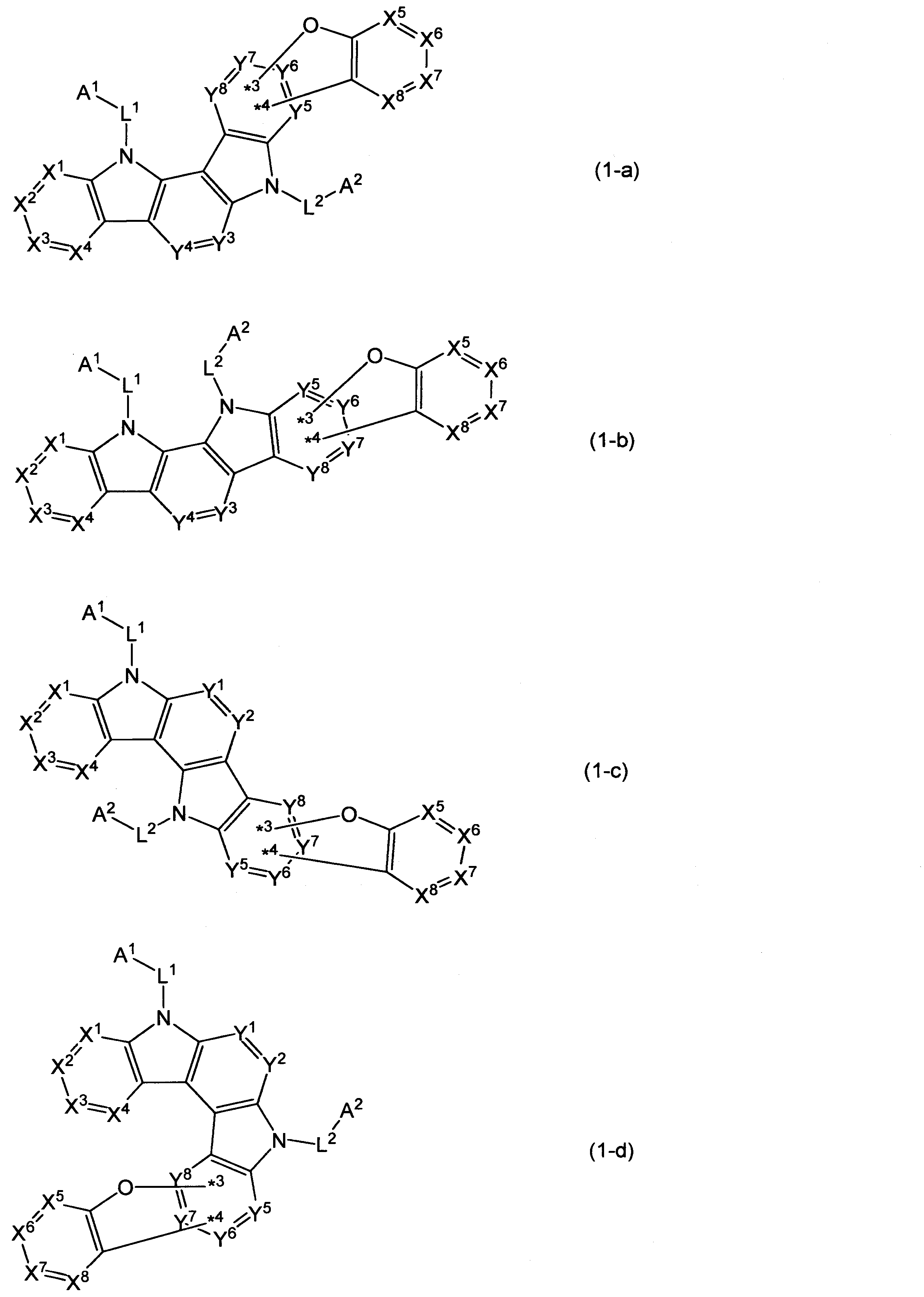
A1,A2,L1、L2、X1~X8、Y1~Y8、*3及び*4は、前記式(1)で定義した通りである。]
式(1)で表される化合物のうち、*1及び*2の結合位置がY2及びY3である化合物に比べ、*1及び*2の結合位置がY1及びY2、又はY3及びY4である化合物は、発光効率がより高く、素子寿命もより長くなる。
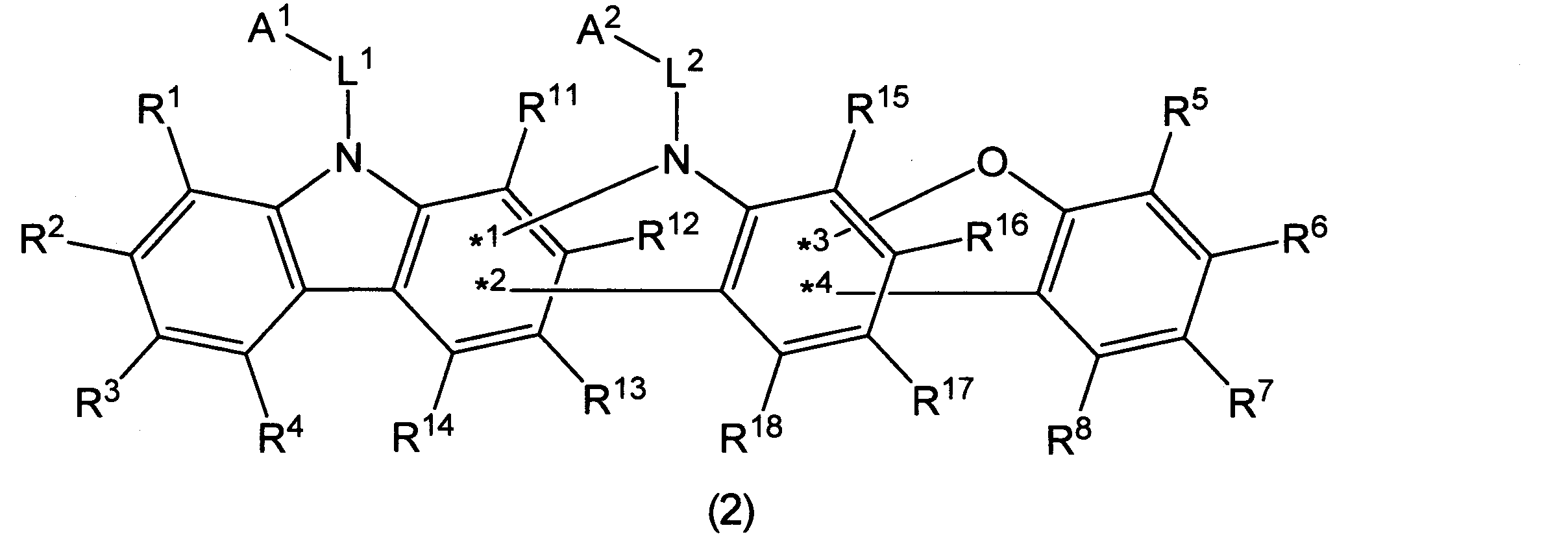
A1,A2,L1、L2及び*1~*4は、前記式(1)で定義した通りである。
R1~R8は、それぞれ独立に、水素原子又は置換基Raである。
R11~R14のうちの隣接するいずれか2つは、*1及び*2とそれぞれ単結合を形成し、残りの2つは、それぞれ独立に、水素原子又は置換基Raである。
R15~R18のうちの隣接するいずれか2つは、*3及び*4とそれぞれ単結合を形成し、残りの2つは、それぞれ独立に、水素原子又は置換基Raである。
Raは、前記式(1)で定義した通りである。]

A1,A2、L1,L2、*3及び*4は、前記式(1)で定義した通りである。
R1~R8及びR11~R18は、前記式(2)で定義した通りである。]
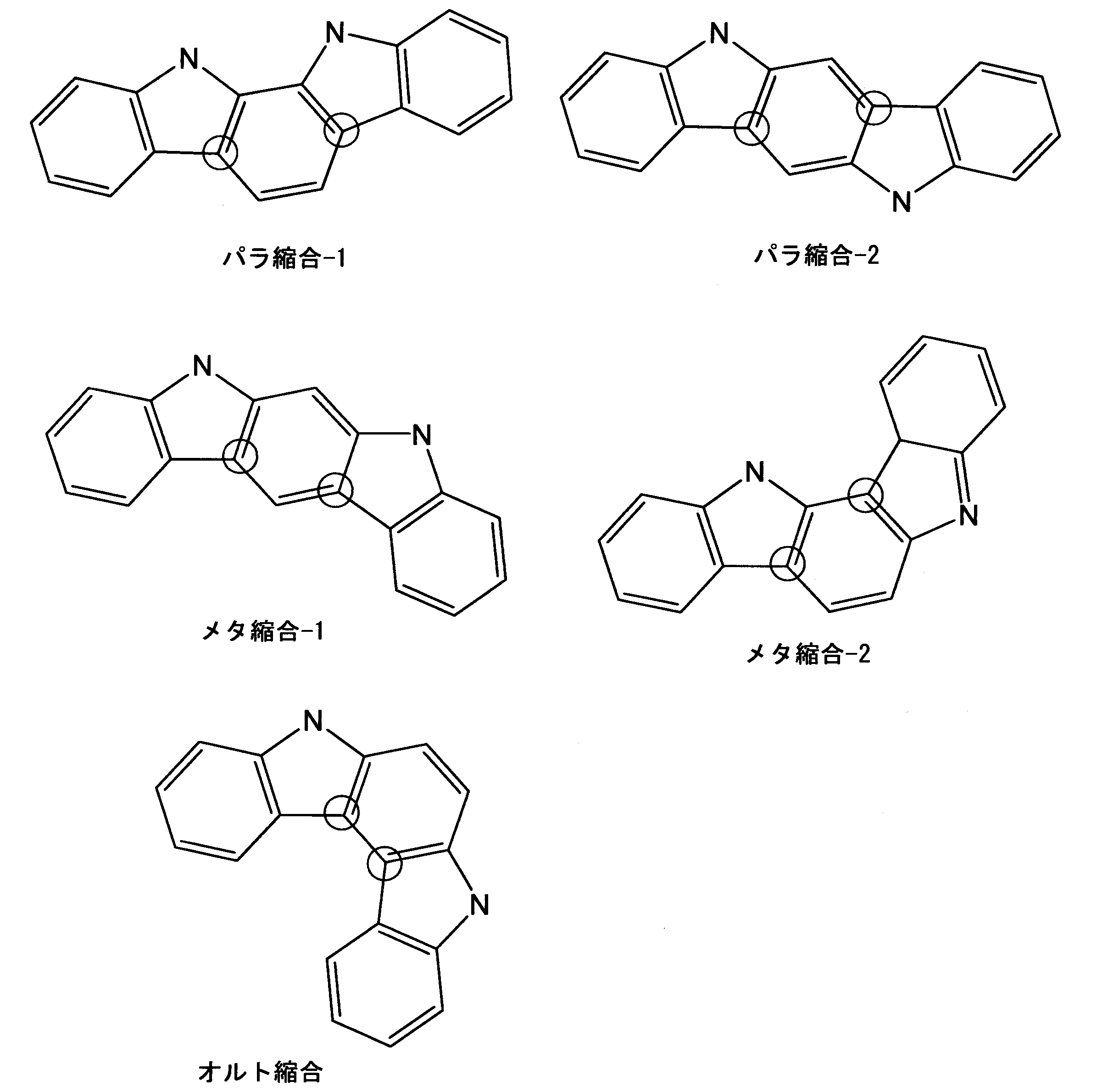


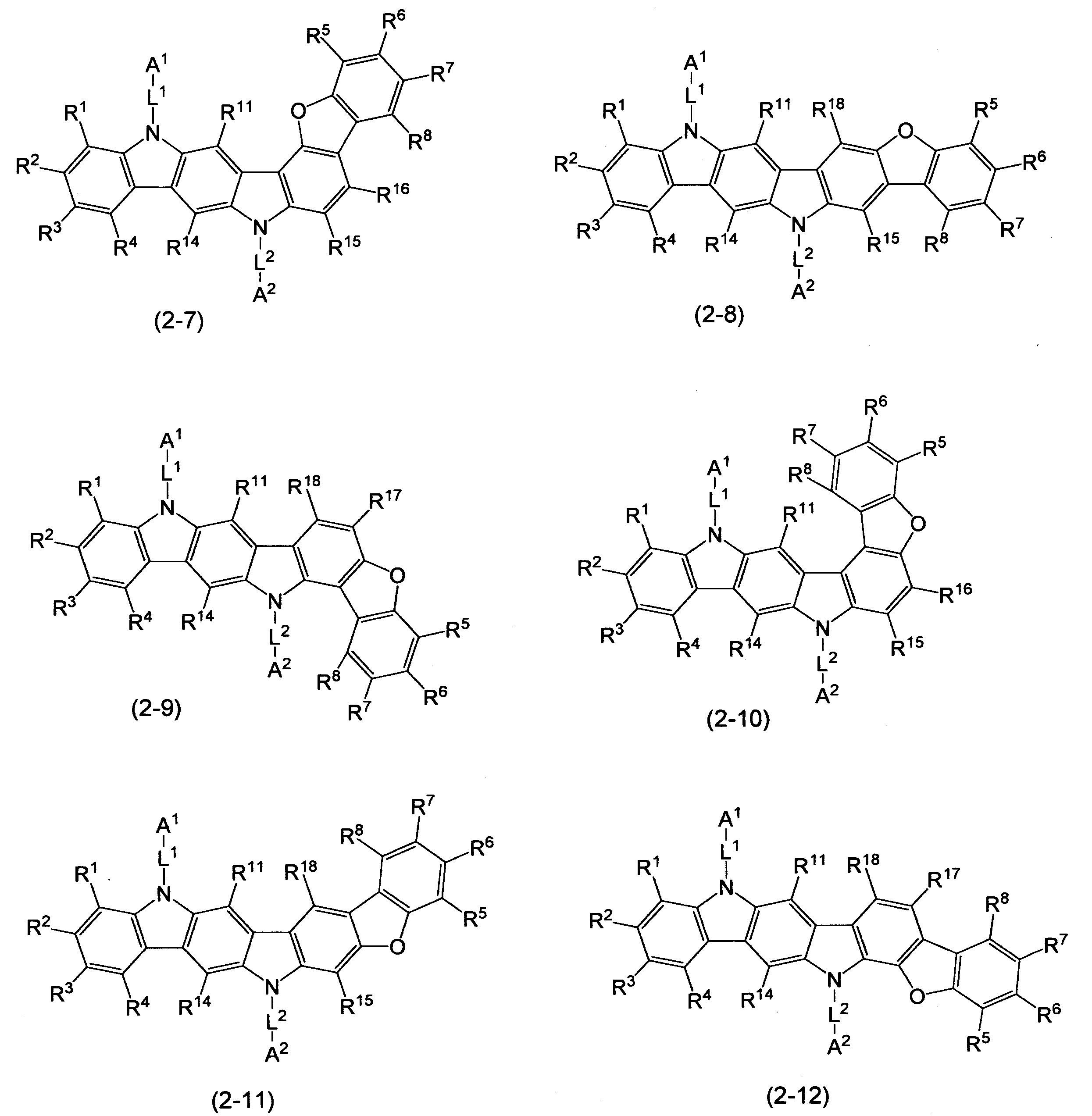
A1,A2、L1及びL2は、前記式(1)で定義した通りである。
R1~R8及びR11~R18は、前記式(2)で定義した通りである。]
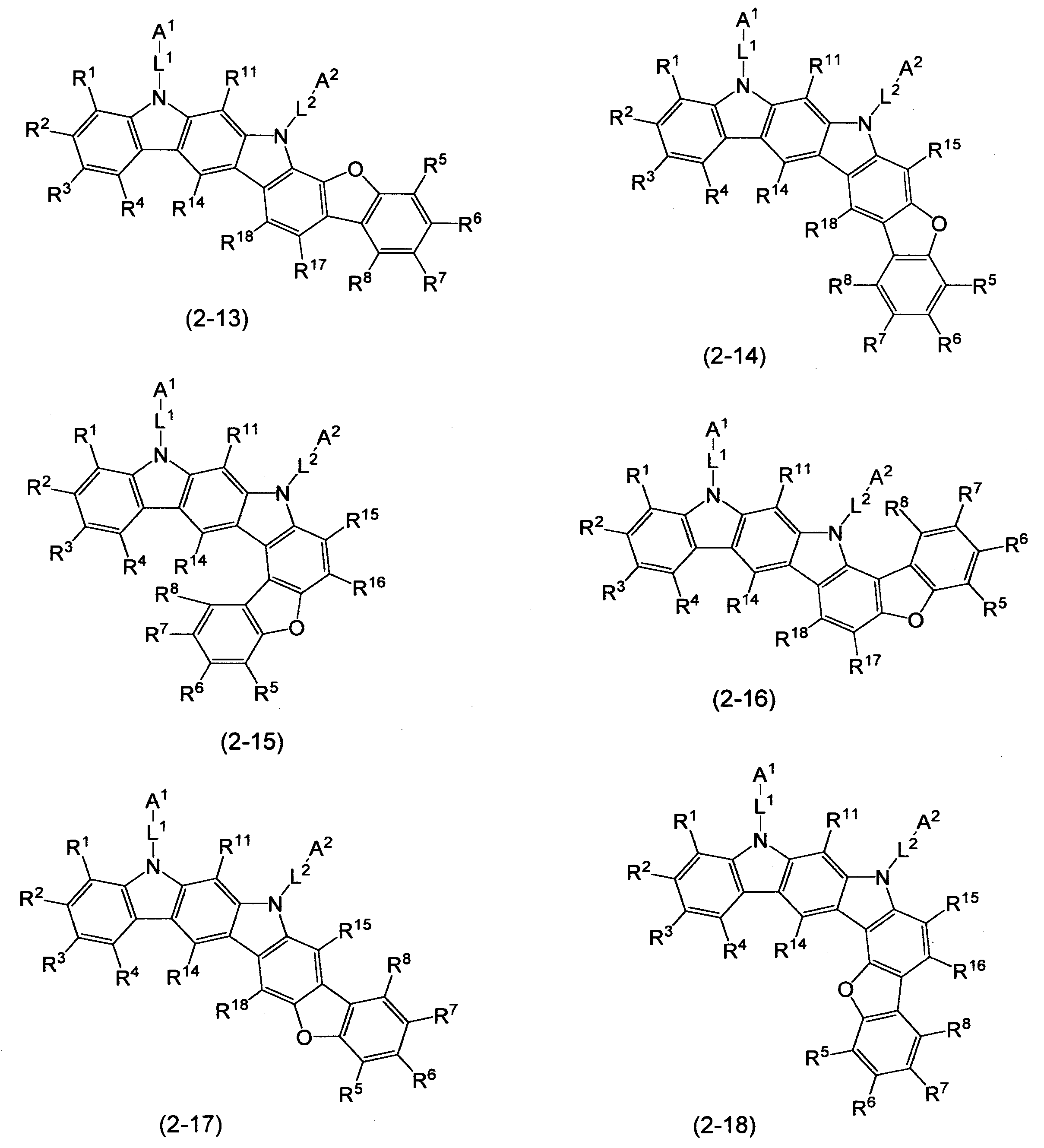
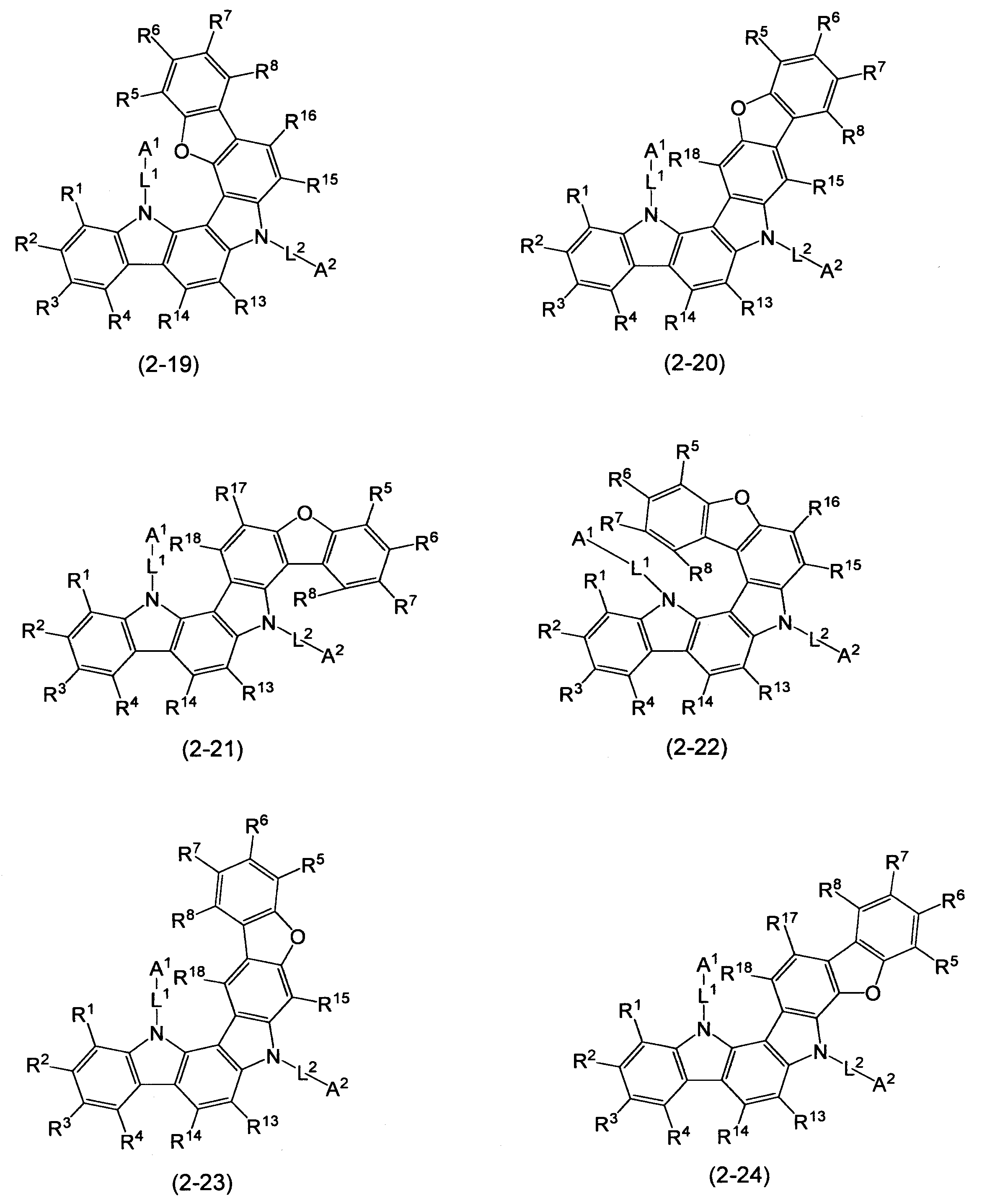
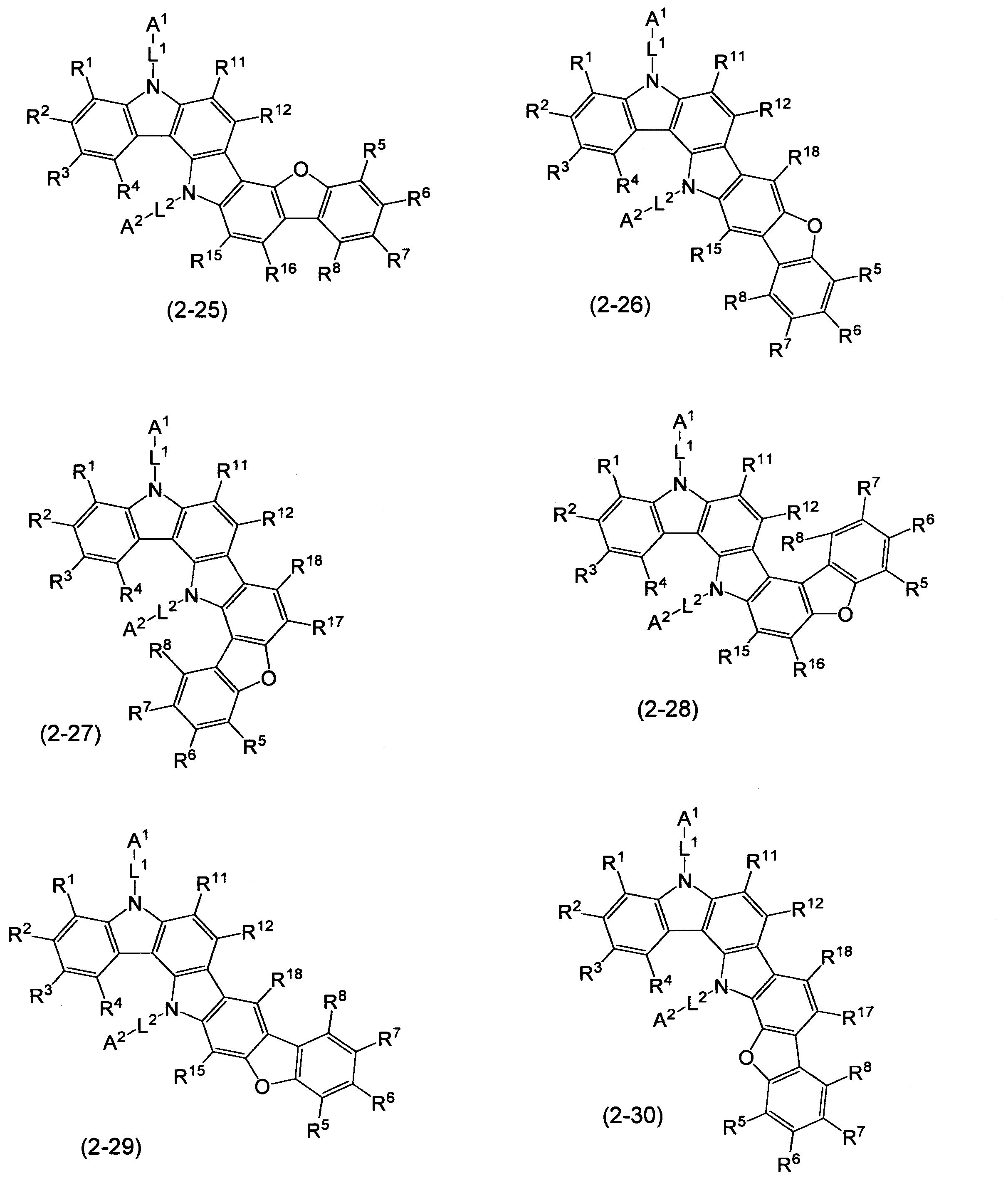
A1,A2、L1及びL2は、前記式(1)で定義した通りである。
R1~R8及びR11~R18は、前記式(2)で定義した通りである。]
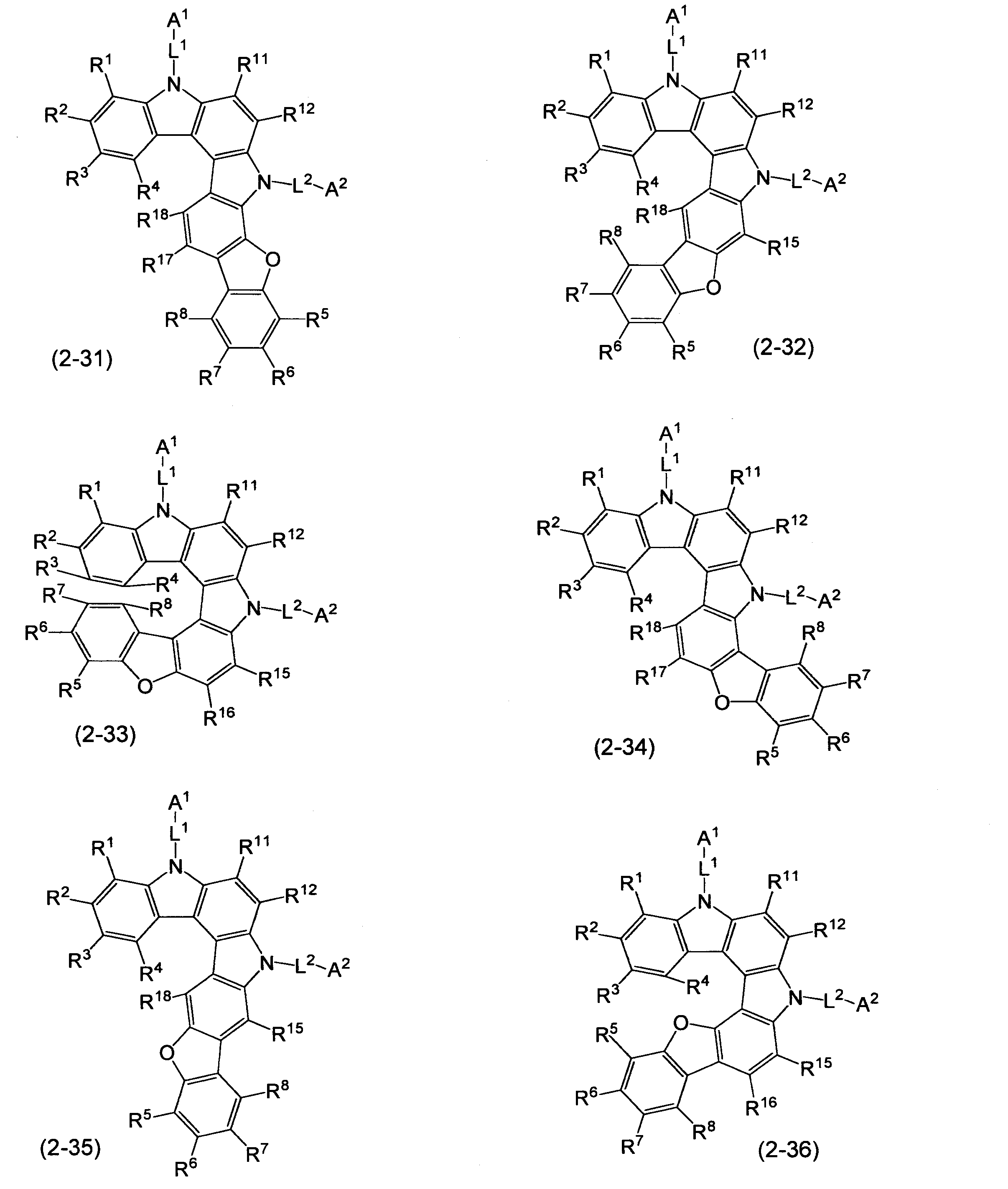
A1,A2、L1及びL2は、前記式(1)で定義した通りである。
R1~R8及びR11~R18は、前記式(2)で定義した通りである。]
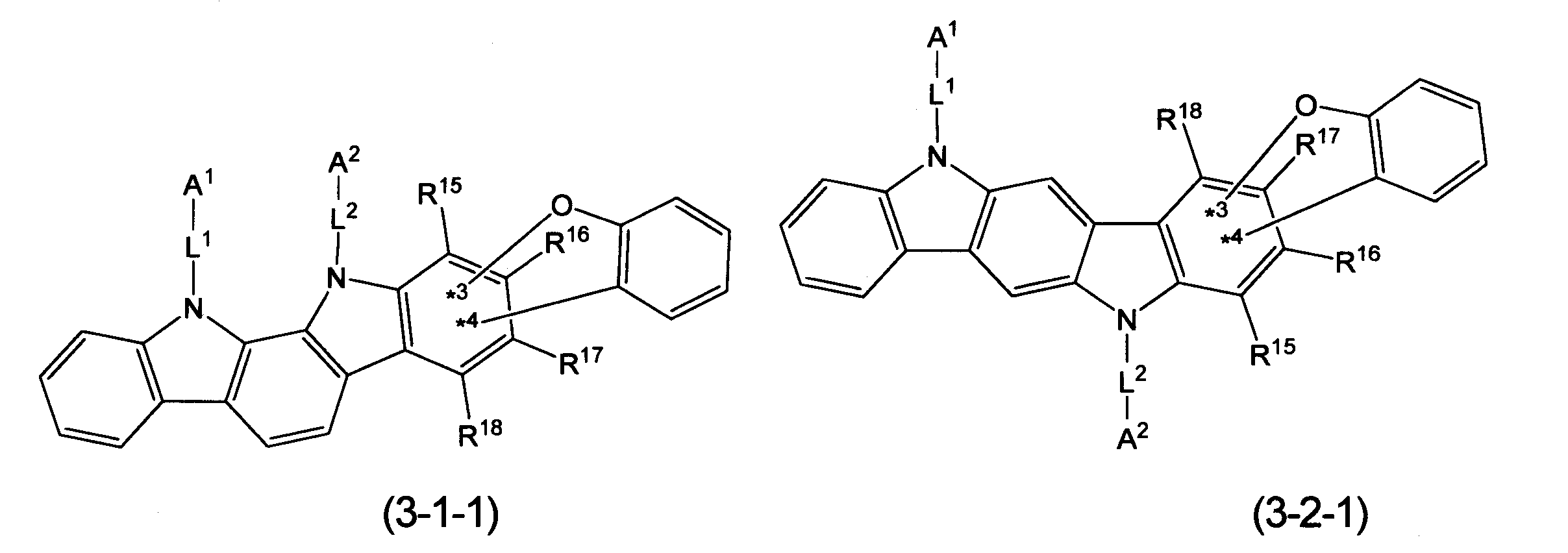
A1、A2,L1,L2,*3及び*4は、式(1)で定義した通りである。
R15~R18は、式(2)で定義した通りであり、R15,R17及びR18から選ばれるいずれかが、*4と単結合を形成する。]

A1、A2,L1,L2,*3及び*4は、式(1)で定義した通りである。
R15~R18は、式(2)で定義した通りであり、R15,R17及びR18から選ばれるいずれかが、*4と単結合を形成する。]

A1、A2,L1,L2,*3及び*4は、式(1)で定義した通りである。
R15~R18は、式(2)で定義した通りであり、R15,R17及びR18から選ばれるいずれかが、*4と単結合を形成する。]
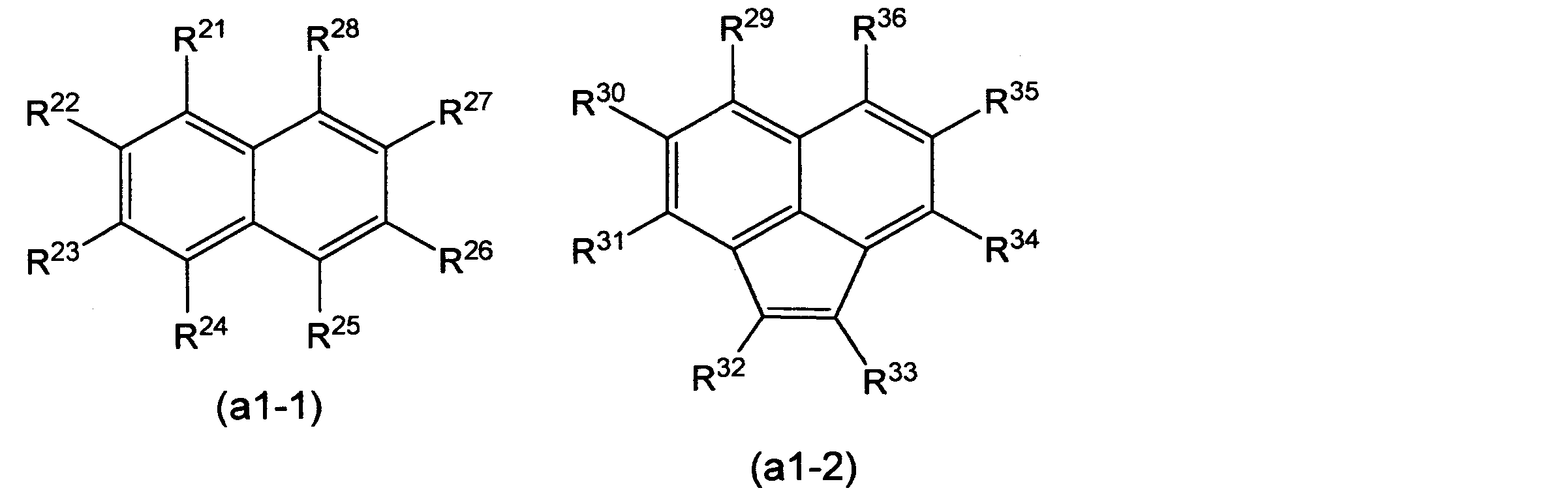
R21~R36は、それぞれ独立に、水素原子又は置換基Rbであって、Rbが複数存在する場合は、それぞれ同一であってもよく、異なっていてもよく、複数存在するRbから選ばれる2つが、互いに結合して環を形成してもよい。]

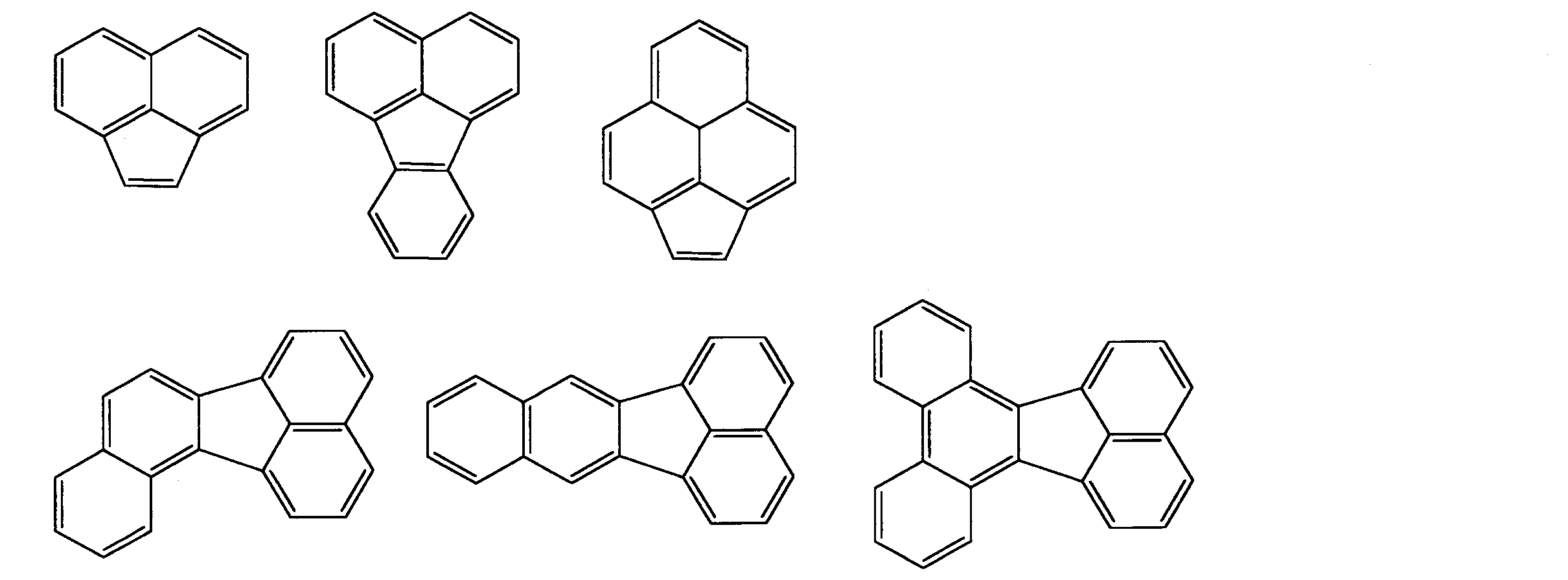

X51~X58は、それぞれ独立に、CH、C(Rb)又はNである。
Rbは、置換基であって、Rbが複数存在する場合は、それぞれ同一であってもよく、異なっていてもよく、複数存在するRbから選ばれる2つが、互いに結合して環を形成してもよい。
Yは、酸素原子、硫黄原子、-NRd、又は-C(Re)(Rf)-である。
Rd、Re及びRfは、それぞれ独立に、水素原子又は置換基Rbであって、Re及びRfの両方がRbである場合は、互いに結合して環を形成してもよい。]
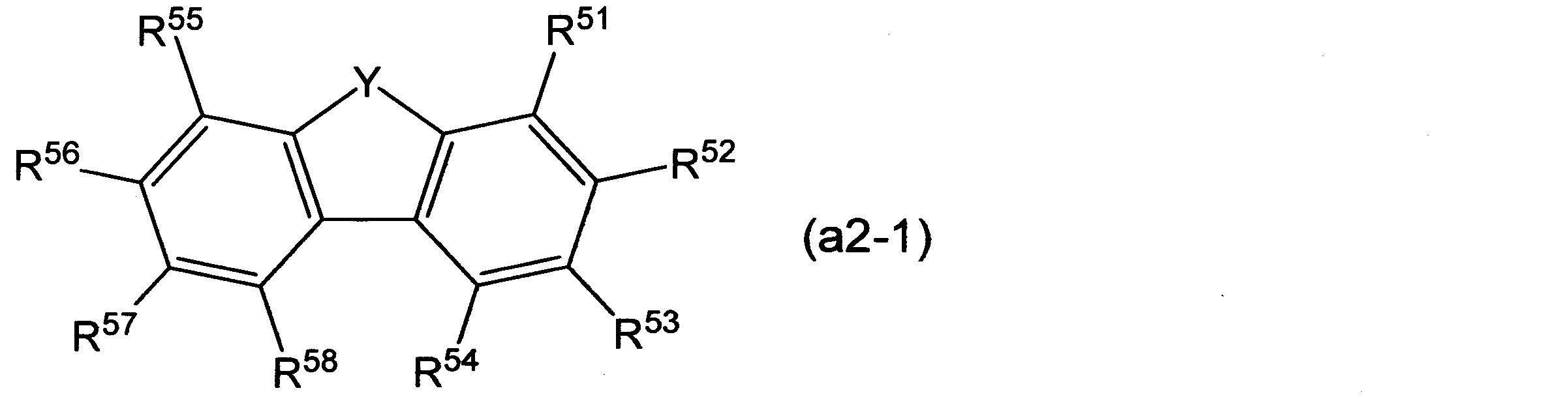
Yは、前記式(a2)で定義した通りである。
R51~R58は、それぞれ独立に、水素原子又は置換基Rbであり、Rbが複数存在する場合は、それぞれ同一であってもよく、異なっていてもよく、複数存在するRbから選ばれる2つが、互いに結合して環を形成してもよい。]
R51~R58のいずれかがL1又はL2と単結合を形成することが好ましい。

X101~X105は、それぞれ独立に、CH、C(Rb)又は窒素原子を示す。
Rbは、置換基であり、Rbが複数存在する場合は、それぞれ同一であってもよく、異なっていてもよく、複数存在するRbから選ばれる2つが、互いに結合して、環を形成していてもよい。]
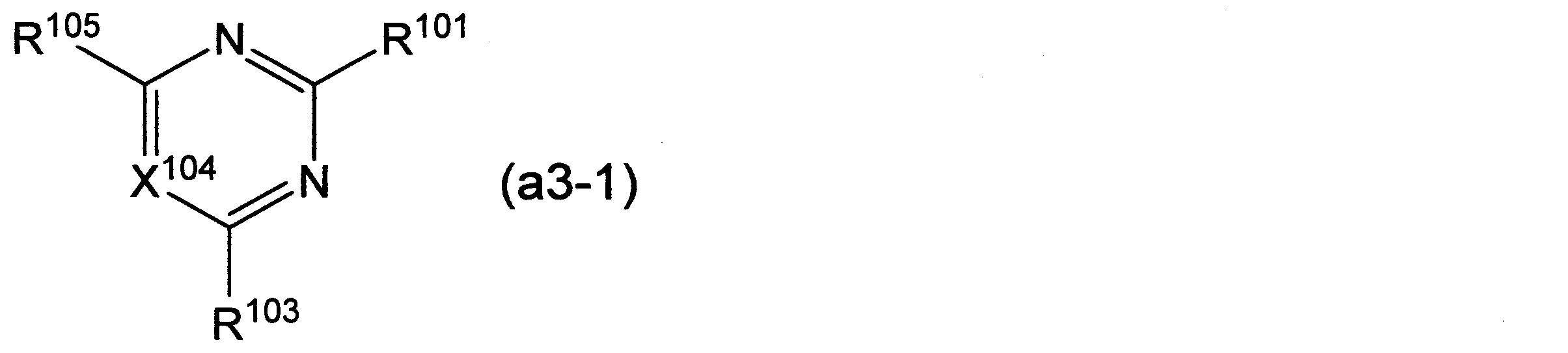
X104は、前記式(a3)で定義した通りである。
R101、R103及びR105は、それぞれ独立に、水素原子又は置換基Rbである。]

X110は、酸素原子又は硫黄原子である。
R110~R113は、それぞれ独立に、水素原子又は置換基Rbである。]
この場合、R101及びR103のいずれかがL1又はL2と単結合を形成し、残りの1つが、それぞれ独立に置換若しくは無置換の環形成炭素数6~24のアリール基であることが好ましい。

X101~X103及びX106~X109は、それぞれ独立に、CH、C(Rb)又はNを示す。
Rbは、置換基であり、Rbが複数存在する場合は、それぞれ同一であってもよく、異なっていてもよく、複数存在するRbから選ばれる2つは、互いに結合して、環を形成していてもよい。]
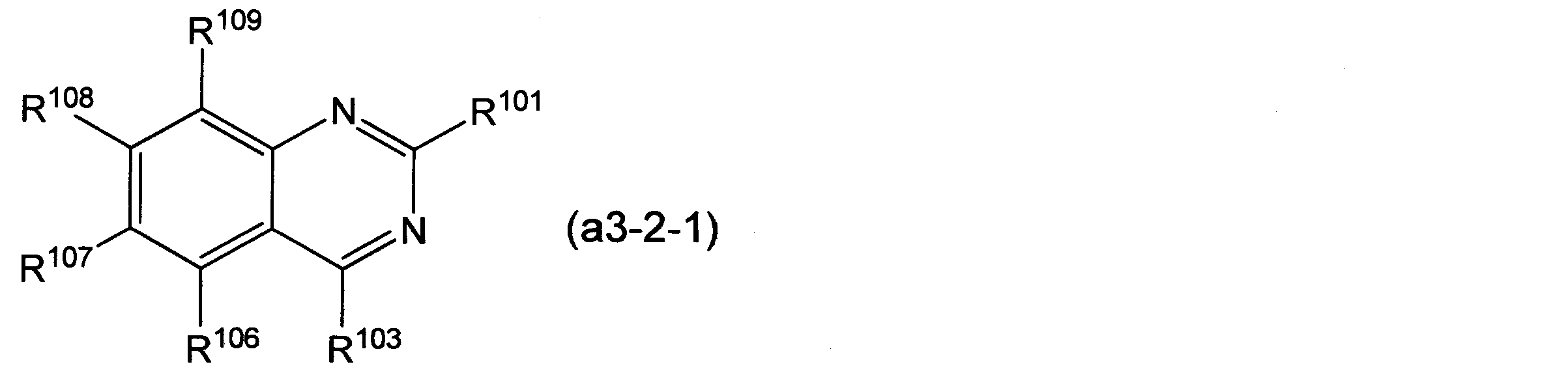
R101、R103及びR106~R109は、それぞれ独立に、水素原子又は置換基Rbであり、Rbが複数存在する場合は、それぞれ同一であってもよく、異なっていてもよく、複数存在するRbから選ばれる2つは、互いに結合して、環を形成していてもよい。]
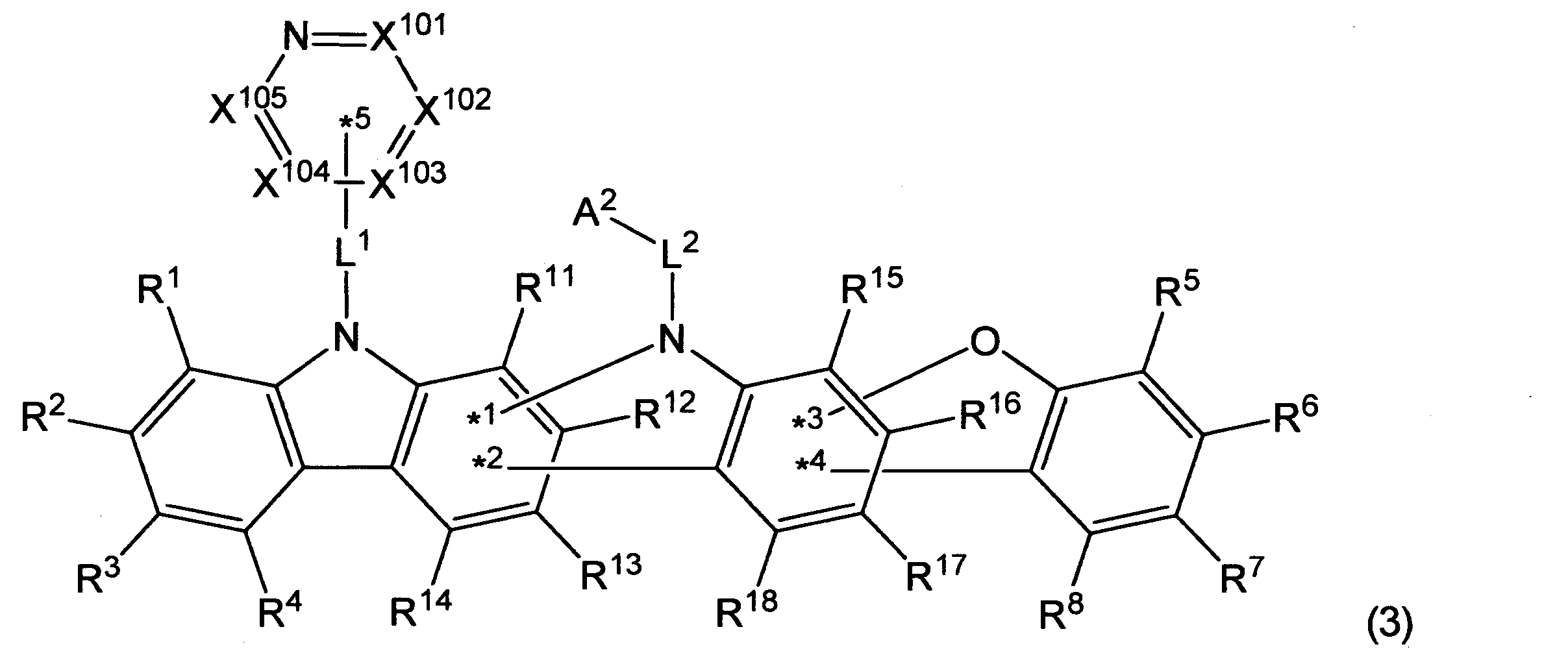
A2,L1,L2及び*1~*4は、前記式(1)で定義した通りである。
R1~R8及びR11~R18は、前記式(2)で定義した通りである。
X101~X105は、前記式(a3)で定義した通りである。
*5は、X101~X105のいずれかと単結合を形成する結合手である。]
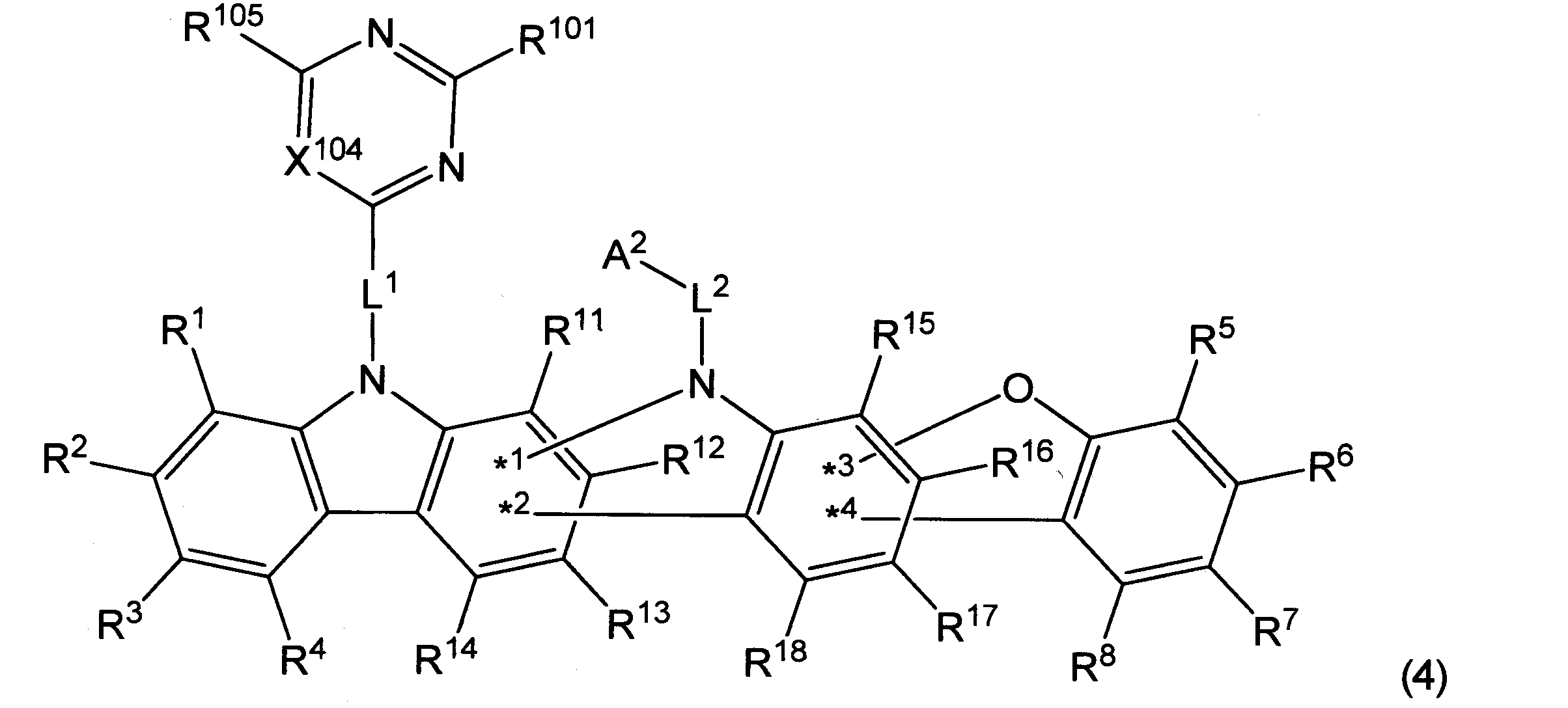

A2,L1,L2及び*1~*4は、前記式(1)で定義した通りである。
R1~R8及びR11~R18は、前記式(2)で定義した通りである。
X104は、前記式(a3)で定義した通りである。
R101及びR105は、前記式(a3-1)で定義した通りである。]
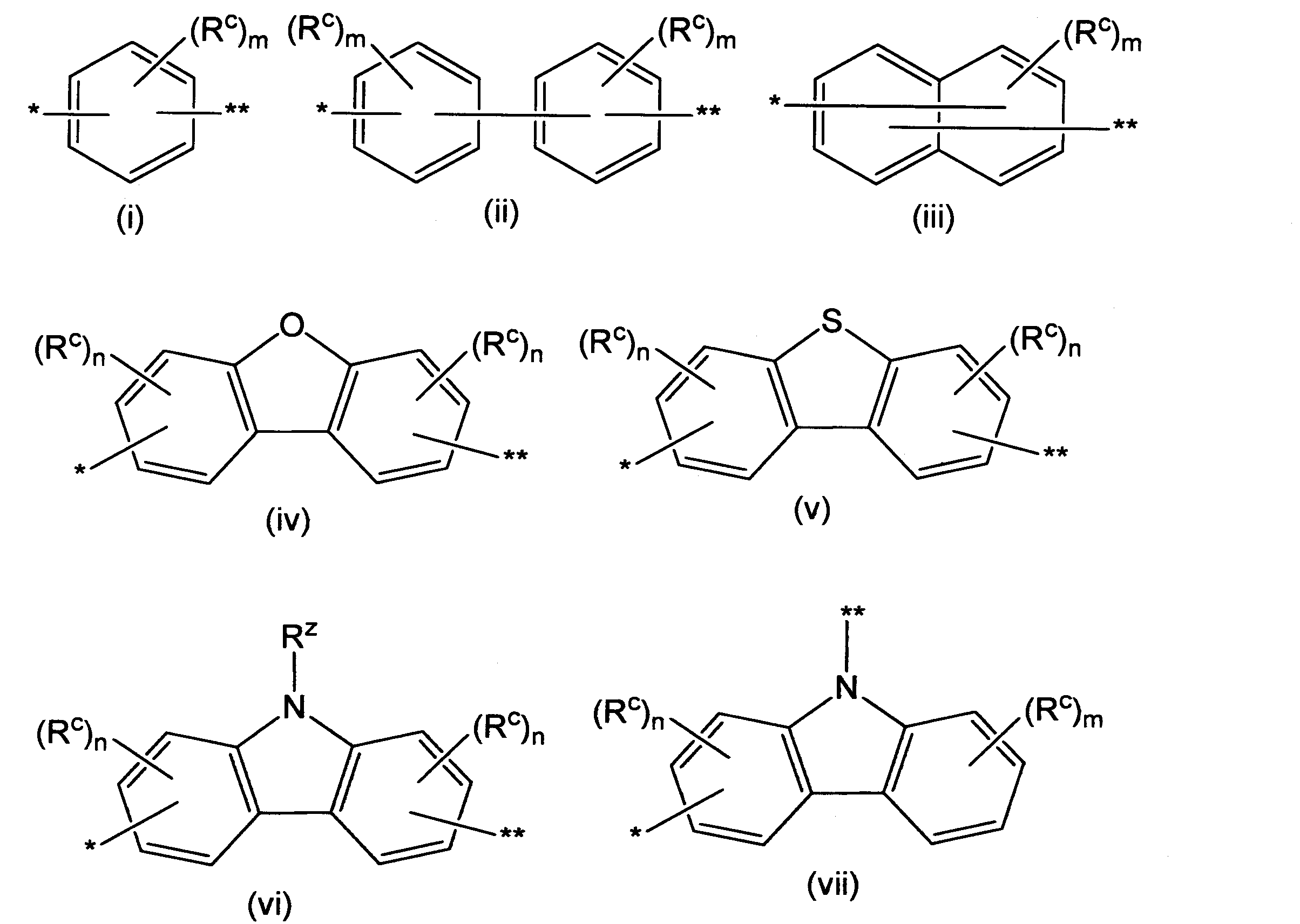
*及び**は、それぞれ独立に、前記式(1)中のN及び、A1及びA2のいずれか一方とそれぞれ単結合を形成する結合手である。
Rcは置換基であり、Rcが複数存在する場合は、それぞれ同一であっても、異なっていてもよく、複数存在するRcから選ばれる2つが、互いに結合して、環構造を形成してもよい。
RZは、水素原子又は置換基Rcである。
mは、それぞれ独立に、0~4の整数であり、nは、それぞれ独立に、0~3の整数である。]
炭素数1~50のアルキル基の例としては、メチル基、エチル基、n-プロピル基、イソプロピル基、n-ブチル基、s-ブチル基、イソブチル基、t-ブチル基、n-ペンチル基、n-ヘキシル基、n-ヘプチル基、n-オクチル基、ヒドロキシメチル基、1-ヒドロキシエチル基、2-ヒドロキシエチル基、2-ヒドロキシイソブチル基、1,2-ジヒドロキシエチル基、1,3-ジヒドロキシイソプロピル基、2,3-ジヒドロキシ-t-ブチル基、1,2,3-トリヒドロキシプロピル基、クロロメチル基、1-クロロエチル基、2-クロロエチル基、2-クロロイソブチル基、1,2-ジクロロエチル基、1,3-ジクロロイソプロピル基、2,3-ジクロロ-t-ブチル基、1,2,3-トリクロロプロピル基、ブロモメチル基、1-ブロモエチル基、2-ブロモエチル基、2-ブロモイソブチル基、1,2-ジブロモエチル基、1,3-ジブロモイソプロピル基、2,3-ジブロモ-t-ブチル基、1,2,3-トリブロモプロピル基、ヨードメチル基、1-ヨードエチル基、2-ヨードエチル基、2-ヨードイソブチル基、1,2-ジヨードエチル基、1,3-ジヨードイソプロピル基、2,3-ジヨード-t-ブチル基、1,2,3-トリヨードプロピル基、アミノメチル基、1-アミノエチル基、2-アミノエチル基、2-アミノイソブチル基、1,2-ジアミノエチル基、1,3-ジアミノイソプロピル基、2,3-ジアミノ-t-ブチル基、1,2,3-トリアミノプロピル基、シアノメチル基、1-シアノエチル基、2-シアノエチル基、2-シアノイソブチル基、1,2-ジシアノエチル基、1,3-ジシアノイソプロピル基、2,3-ジシアノ-t-ブチル基、1,2,3-トリシアノプロピル基、ニトロメチル基、1-ニトロエチル基、2-ニトロエチル基、2-ニトロイソブチル基、1,2-ジニトロエチル基、1,3-ジニトロイソプロピル基、2,3-ジニトロ-t-ブチル基、1,2,3-トリニトロプロピル基等が挙げられる。
炭素数1~20のアルキル基の例としては、上記で挙げた中で炭素数は1~20のものが挙げられる。炭素数1~10のアルキル基の例としては、上記で挙げた中で炭素数は1~10のものが挙げられる。
アルキル基の炭素数は、好ましくは1~20であり、より好ましくは1~10であり、さらに好ましくは1~6である。
シクロアルキル基の環形成炭素数は、3~10が好ましく、3~8がより好ましく、3~6がより好ましい。
炭素数1~20のアルコキシ基は、-OY10Aで表される基であり、Y10Aの例としては、前記炭素数1~50のアルキル基及び前記環形成炭素数3~50のシクロアルキル基として挙げたものの中で、炭素数が1~20のアルキル基又はシクロアルキル基が挙げられる。
炭素数1~10のアルコキシ基は、-OY10Bで表される基であり、Y10Bの例としては、前記炭素数1~50のアルキル基及び前記環形成炭素数3~50のシクロアルキル基として挙げたものの中で、炭素数が1~10のアルキル基又はシクロアルキル基が挙げられる。
環形成炭素数6~24のアリール基の例としては、上記で挙げたもののうち、環形成炭素数が6~24のものが挙げられる。環形成炭素数6~20のアリール基の例としては、上記で挙げたもののうち、環形成炭素数が6~20のものが挙げられる。
アリール基として好ましくは、フェニル基、1-ナフチル基、2-ナフチル基、1-フェナントリル基、2-フェナントリル基、3-フェナントリル基、4-フェナントリル基、9-フェナントリル基、1-フルオレニル基、2-フルオレニル基、3-フルオレニル基、4-フルオレニル基、5-ベンゾ[c]フェナントリル基、4-ベンゾ[a]アントリル基、7-ベンゾ[a]アントリル基、1-トリフェニル基、2-トリフェニル基、フルオランテニル基である。
アリール基として好ましくは環形成炭素数は6~24であり、より好ましくは6~20である。
環形成炭素数6~20のアリールオキシ基は、-OY20Aと表され、Y20Aの例としては前記環形成炭素数6~20のアリール基として挙げたものと同様のものが挙げられる。
環形成原子数5~50のヘテロアリールオキシ基は、-OY21と表され、Y21の例としては前記環形成原子数5~50のヘテロアリール基として挙げたものと同様のものが挙げられる。
環形成原子数5~20のヘテロアリールオキシ基は、-OY21Aと表され、Y21Aの例としては前記環形成原子数5~20のヘテロアリール基として挙げたものと同様のものが挙げられる。
環形成炭素数6~20のアリールチオ基は、-SY22Aと表され、Y22Aの例としては前記環形成炭素数6~20のアリール基として挙げたものと同様のものが挙げられる。
環形成原子数5~50のヘテロアリールチオ基は、-SY23と表され、Y23の例としては前記環形成原子数5~50のヘテロアリール基として挙げたものと同様のものが挙げられる。
環形成原子数5~20のヘテロアリールオチオ基は、-SY23Aと表され、Y23Aの例としては前記環形成原子数5~20のヘテロアリール基として挙げたものと同様のものが挙げられる。
環形成原子数5~24のヘテロアリール基の例としては、上記で挙げたもののうち、環形成原子数が5~24のものが挙げられる。環形成原子数5~20のヘテロアリール基の例としては、上記で挙げたもののうち、環形成原子数が5~20のものが挙げられる。
ヘテロアリール基の環形成原子として、窒素原子、酸素原子又は硫黄原子からなる群から選ばれる原子を含有することが好ましい。
炭素数1~50のアルキル基及び環形成炭素数6~50のアリール基から選ばれる置換基を有するジ置換アミノ基は、-N(Y10)2、-N(Y20)2又は-N(Y10)(Y20)で表され、Y10及びY20は上記の通りである。Y10又はY20が2つある場合は、互いに同一であっても、異なっていてもよい。
炭素数1~50のアルキル基、炭素数1~50のアルコキシ基及び環形成炭素数6~50のアリール基から選ばれる置換基を有するジ置換シリル基は、-SiH(Y10)2、-SiH(OY10)2、-SiH(Y20)2、-SiH(Y10)(Y20)、-SiH(Y10)(OY10)、-SiH(OY10)(Y20)で表される。
炭素数1~50のアルキル基、炭素数1~50のアルコキシ基及び環形成炭素数6~50のアリール基から選ばれる置換基を有するトリ置換シリル基は、-Si(Y10)3、-Si(OY10)3、-Si(Y20)3、-Si(Y10)2(OY10),-Si(OY10)2(Y10)、-Si(Y10)2(Y20)、-Si(OY10)2(Y20),-Si(Y20)2(OY10)、-Si(Y10)(Y20)2又は-Si(Y10)(OY10)(Y20)で表される。Y10及びY20は前記の通りであり、Y10又はY20がそれぞれ複数存在する場合は、互いに同一であっても、異なっていてもよい。

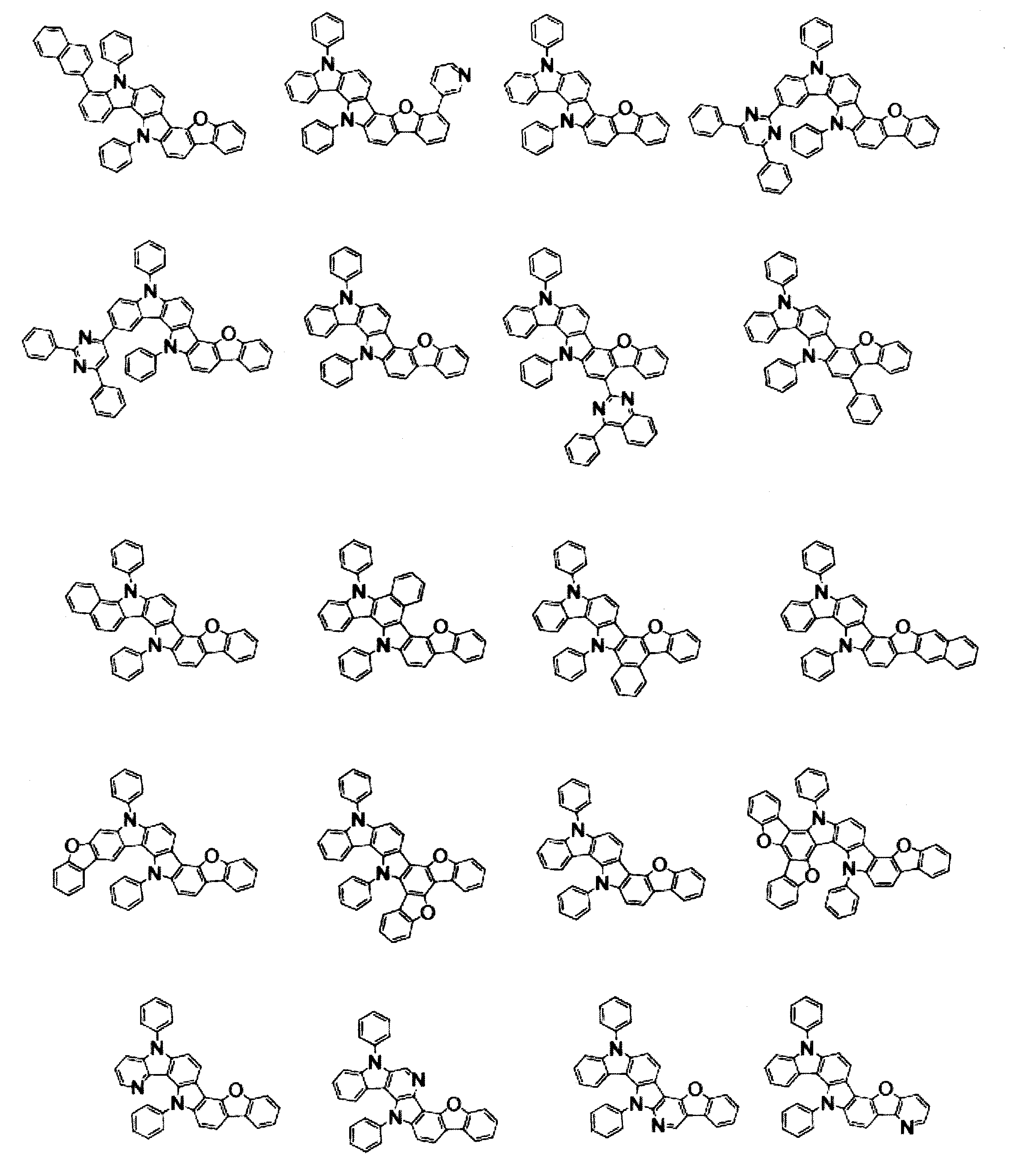
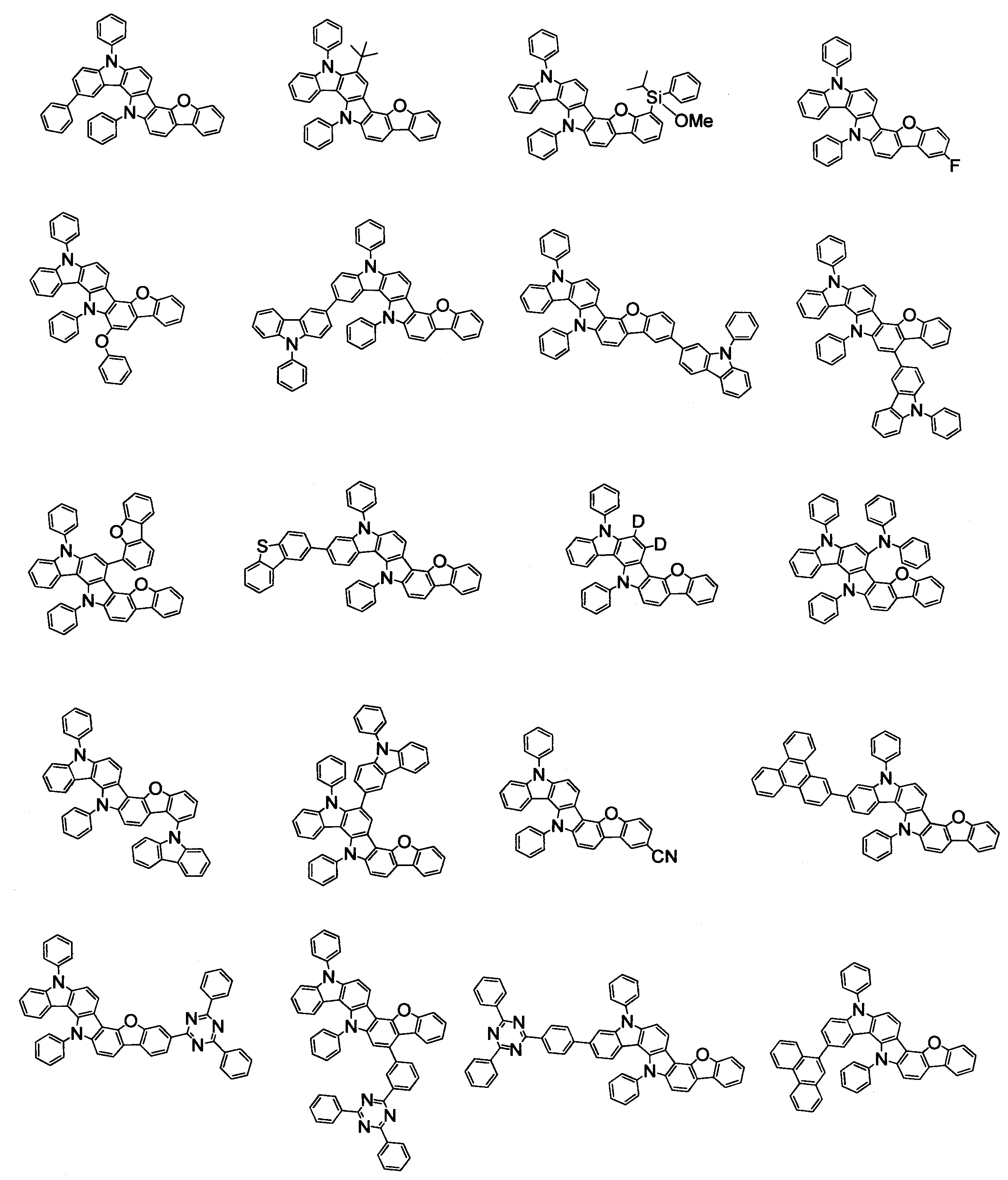
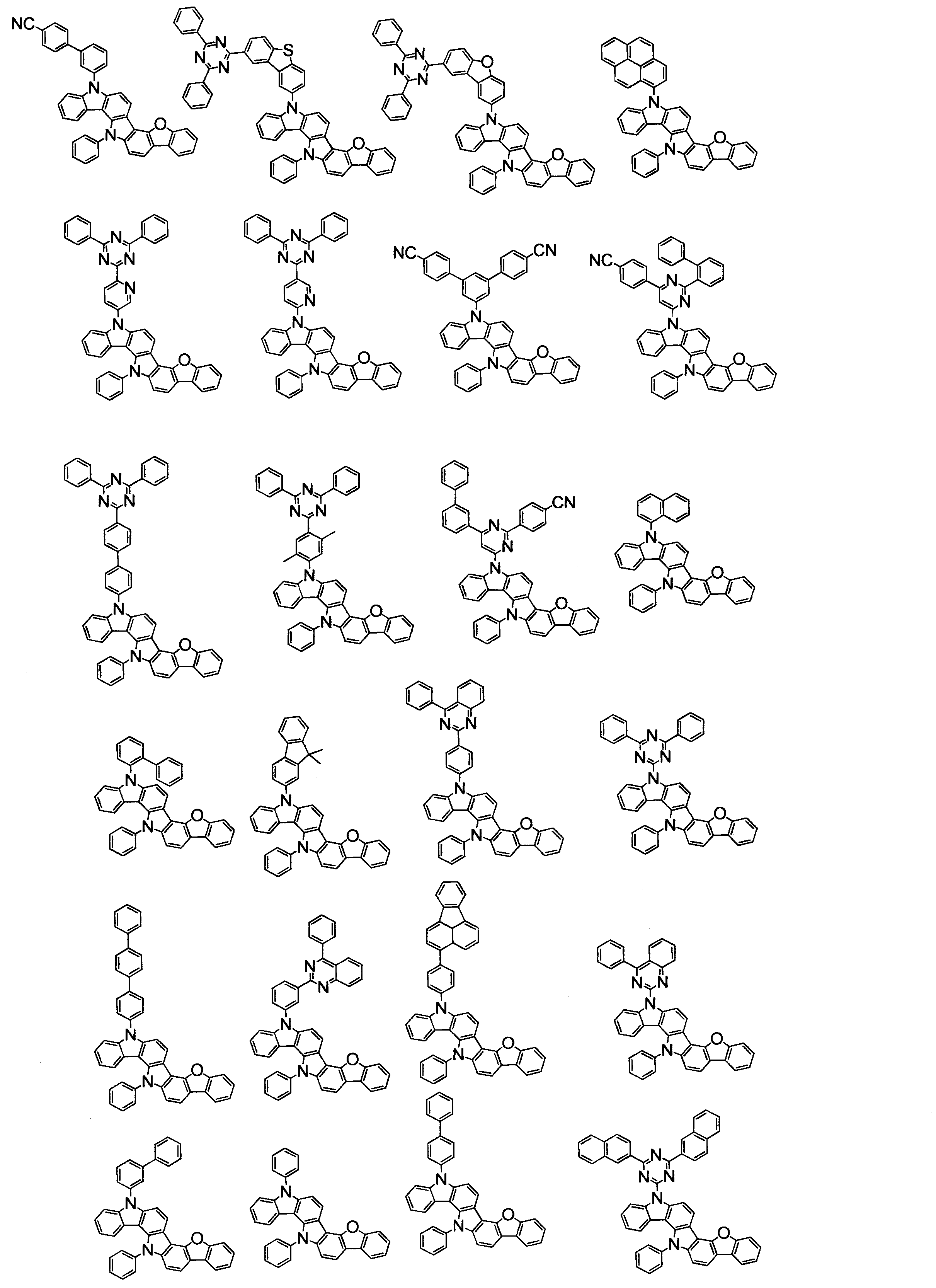
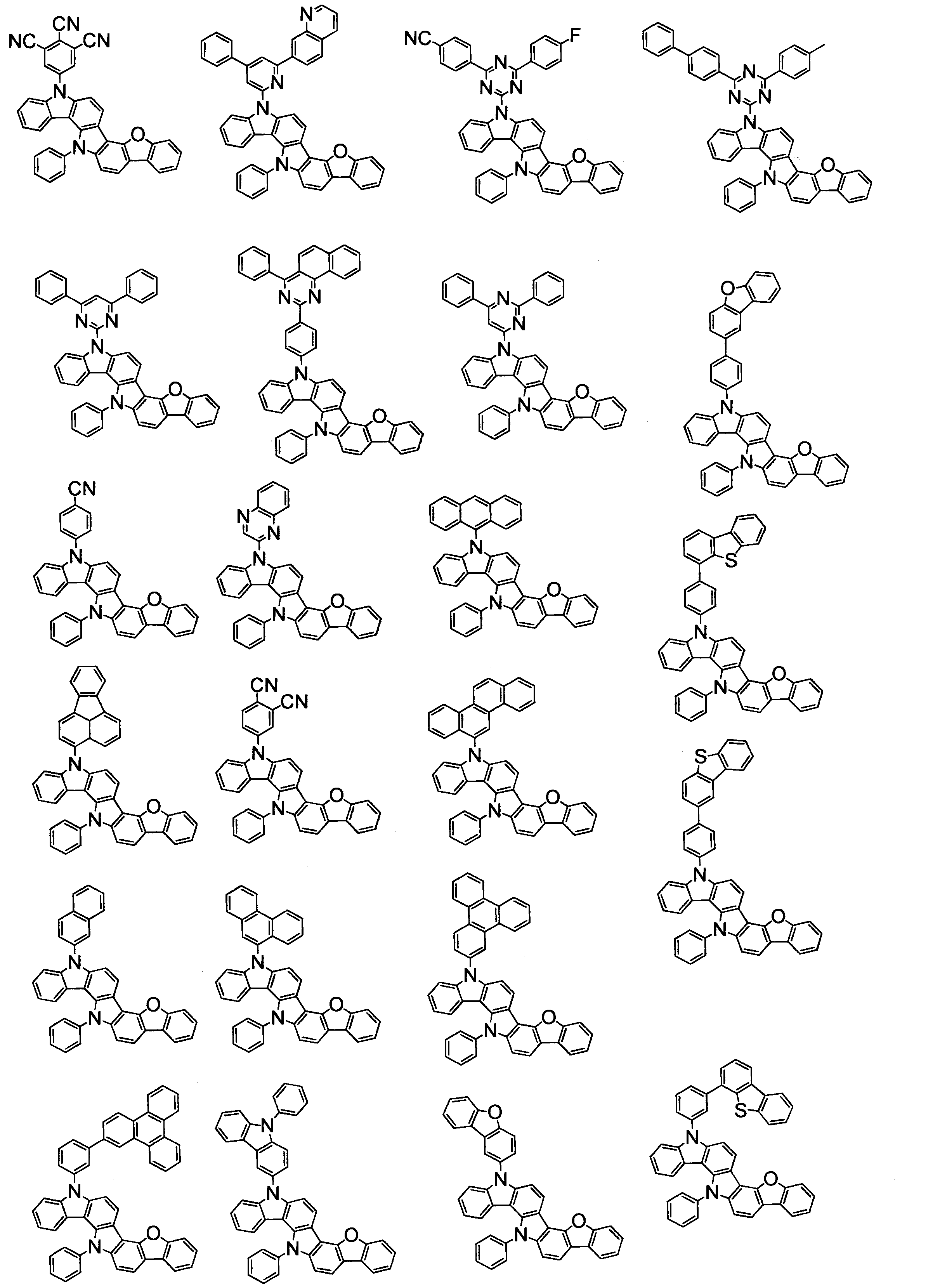
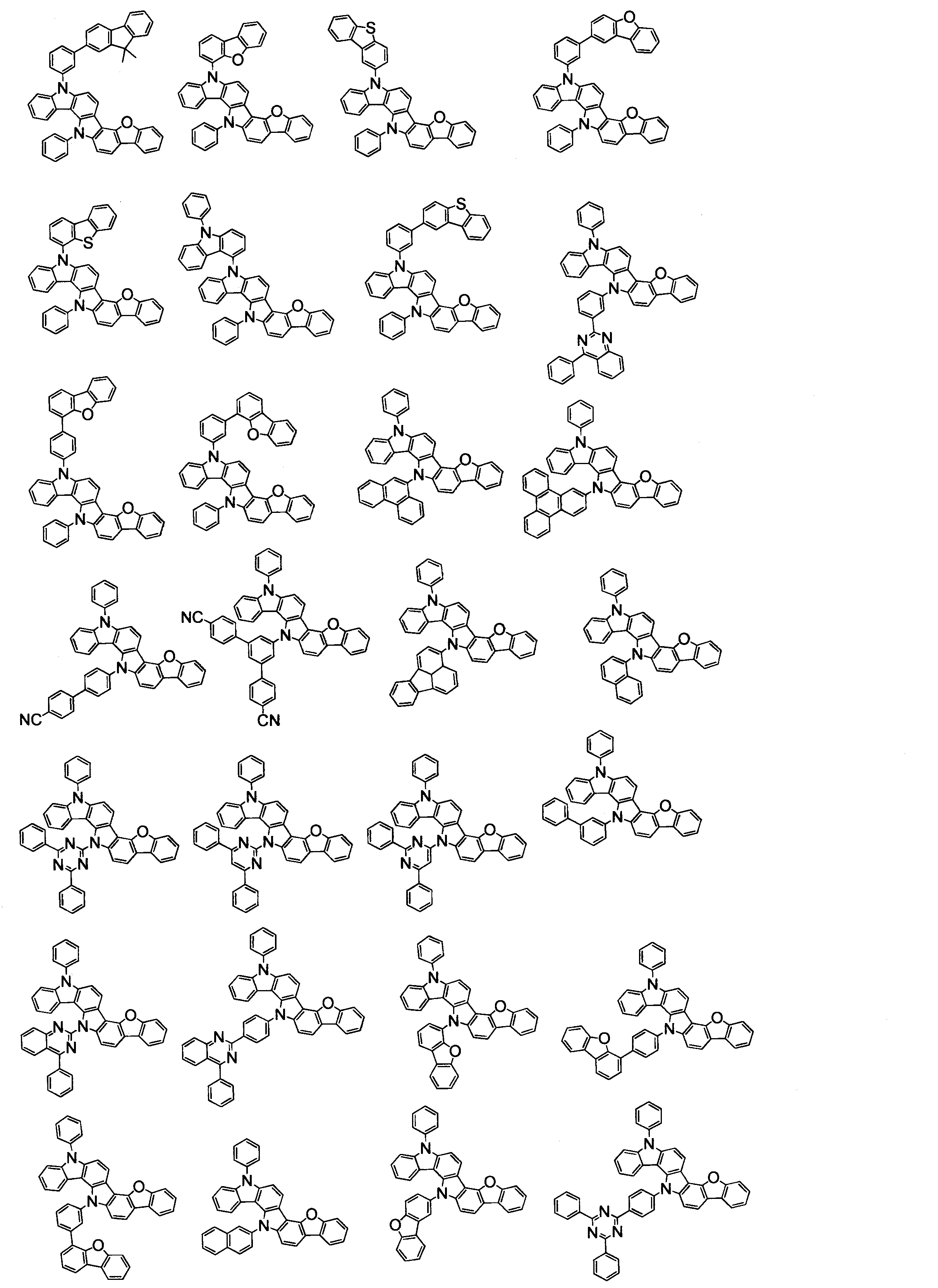
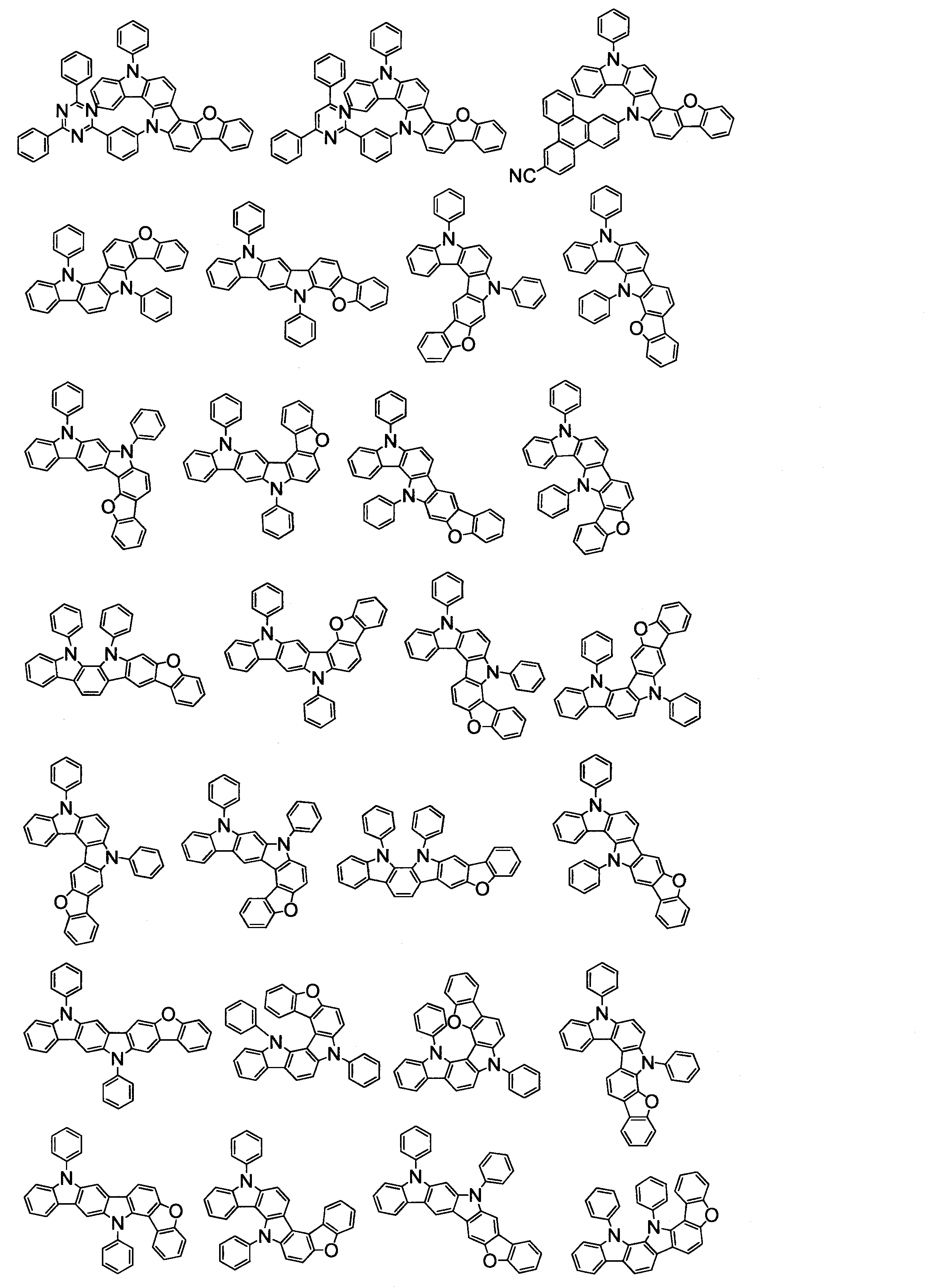


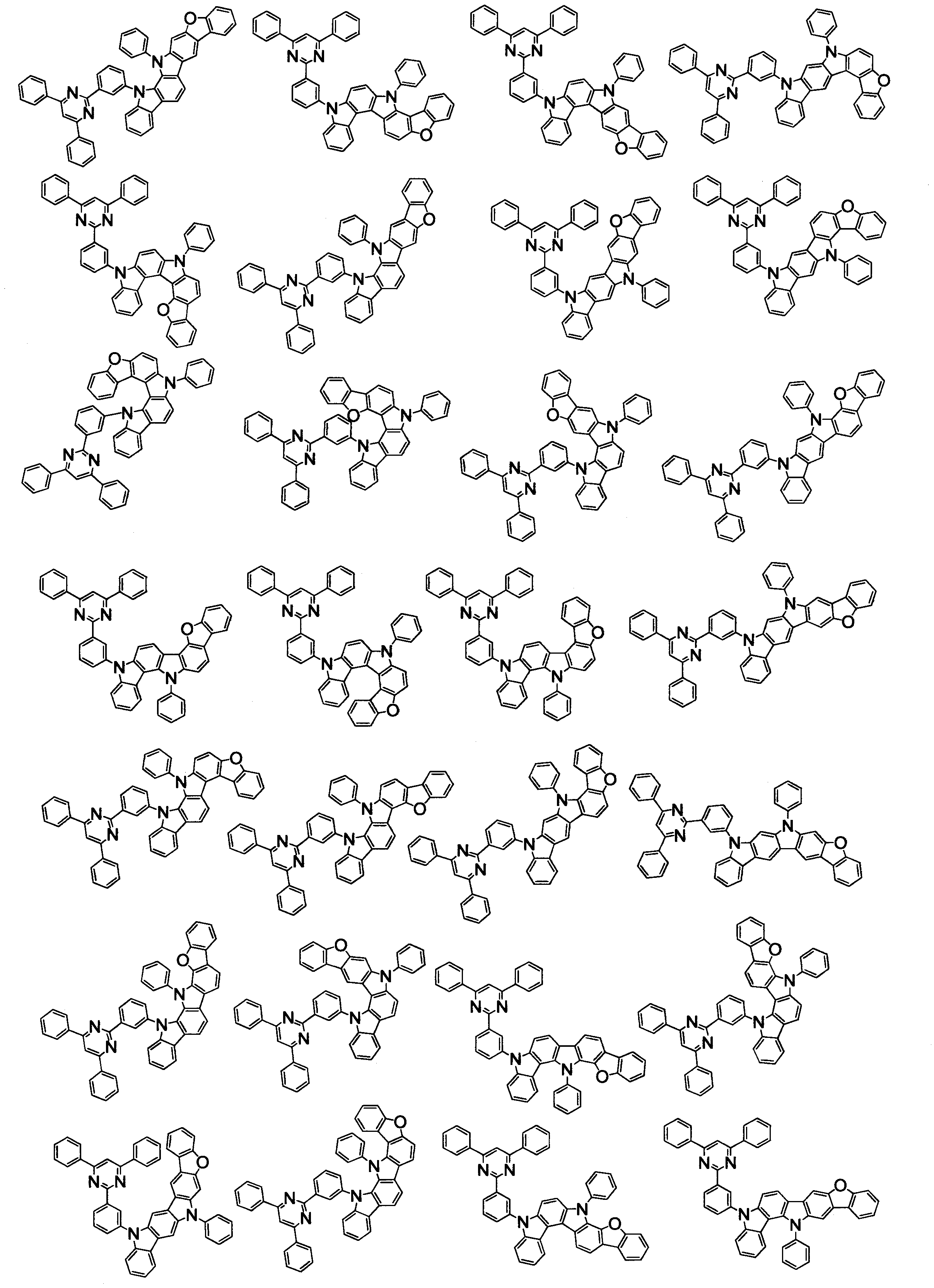
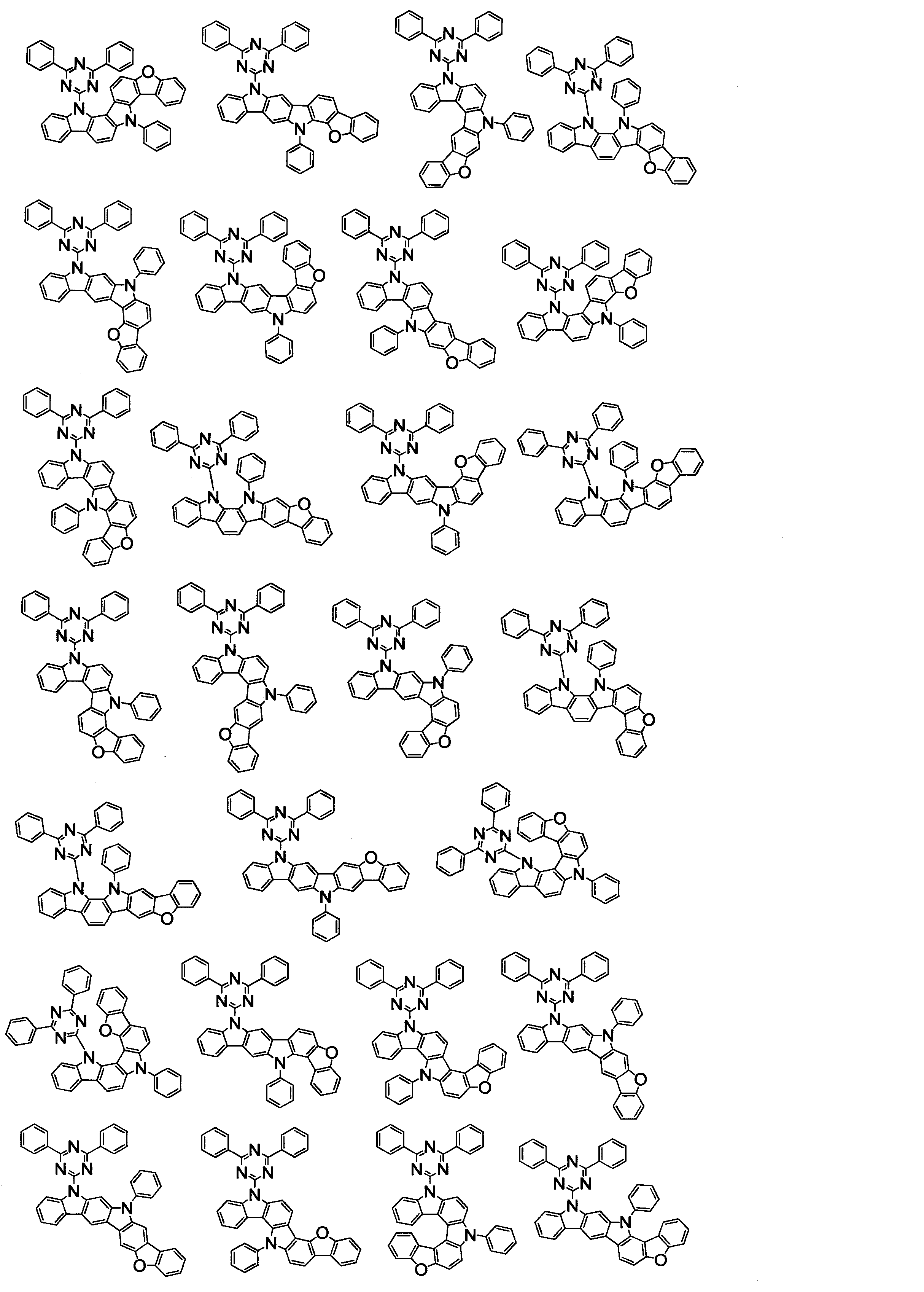
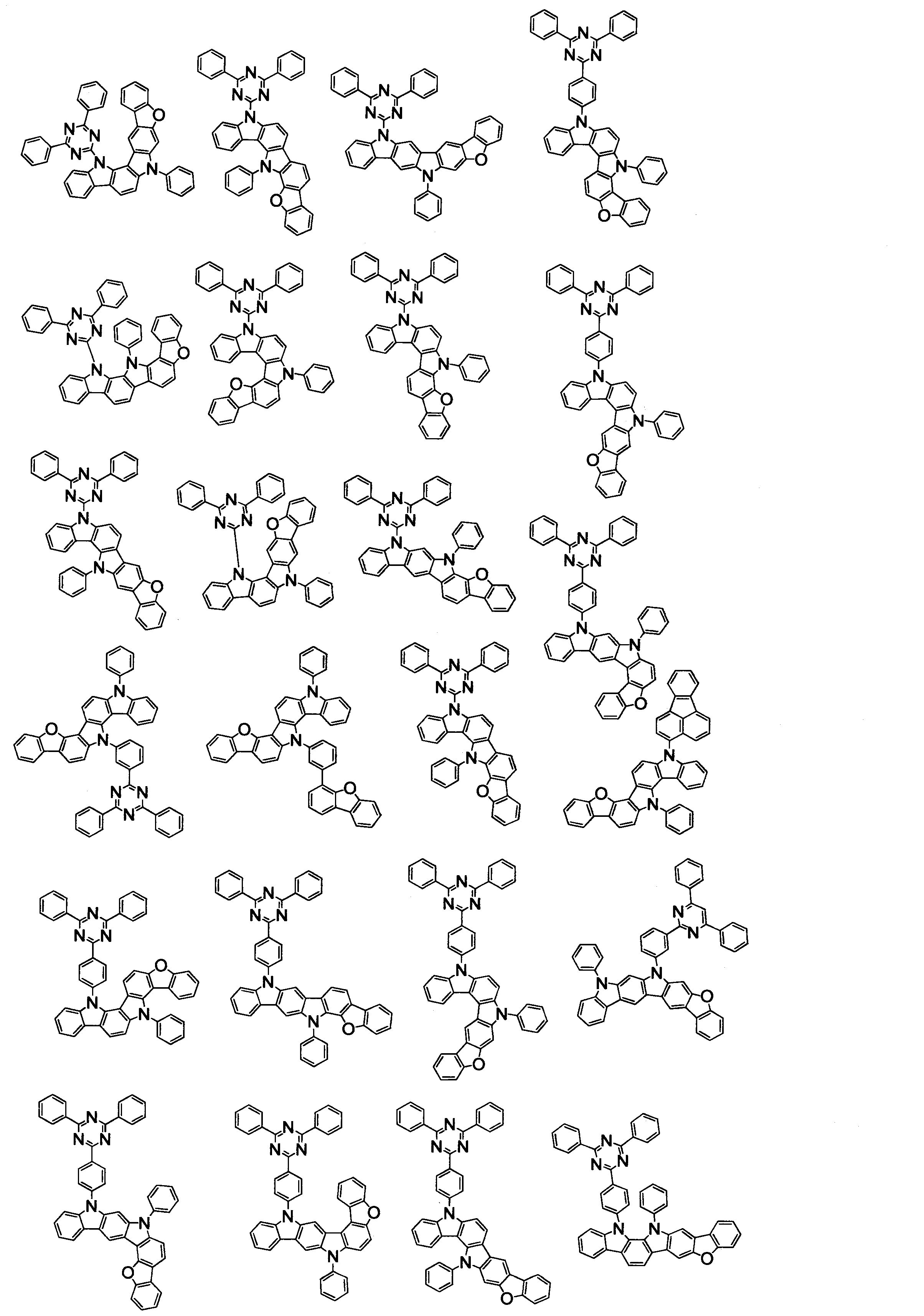
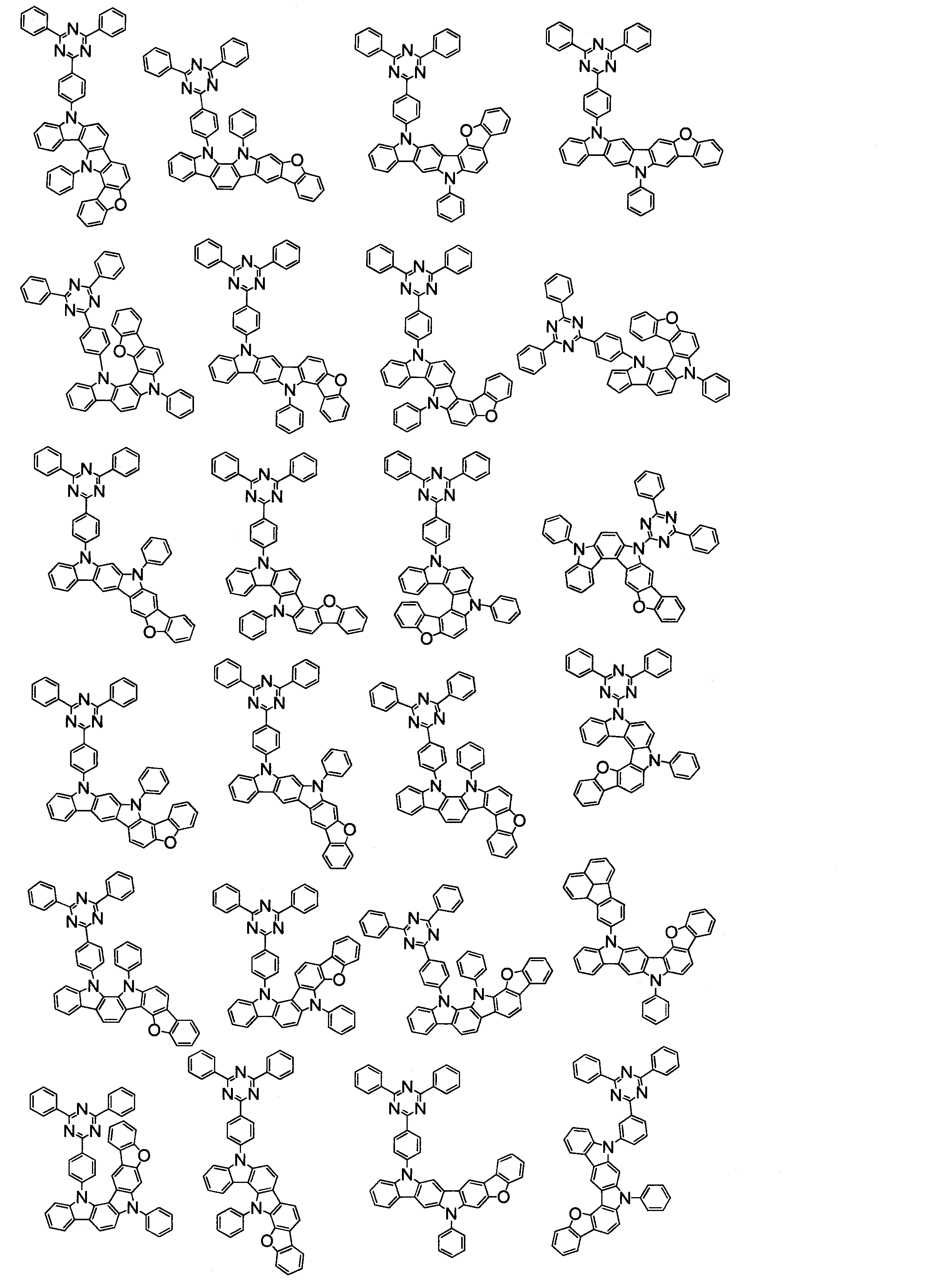
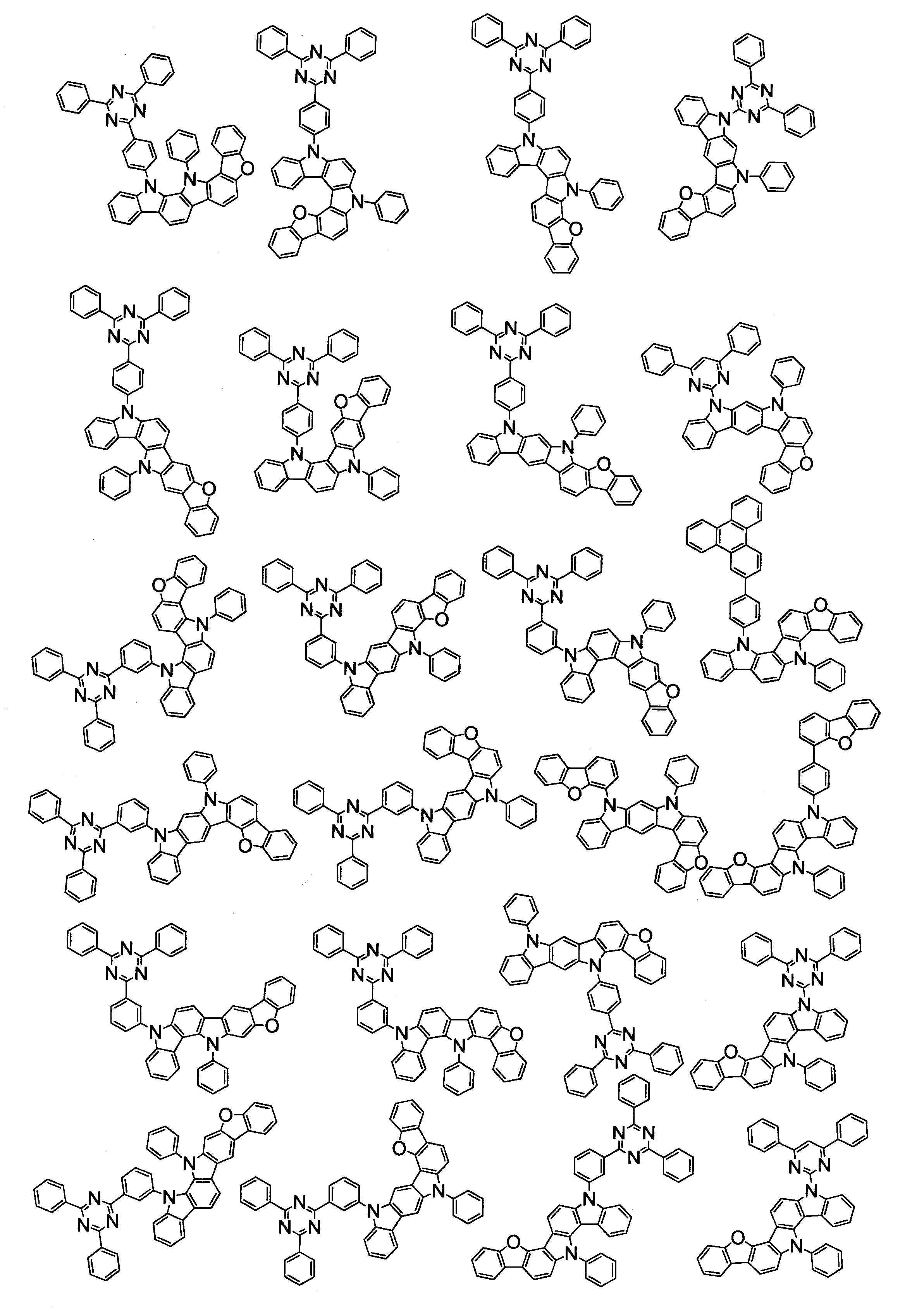


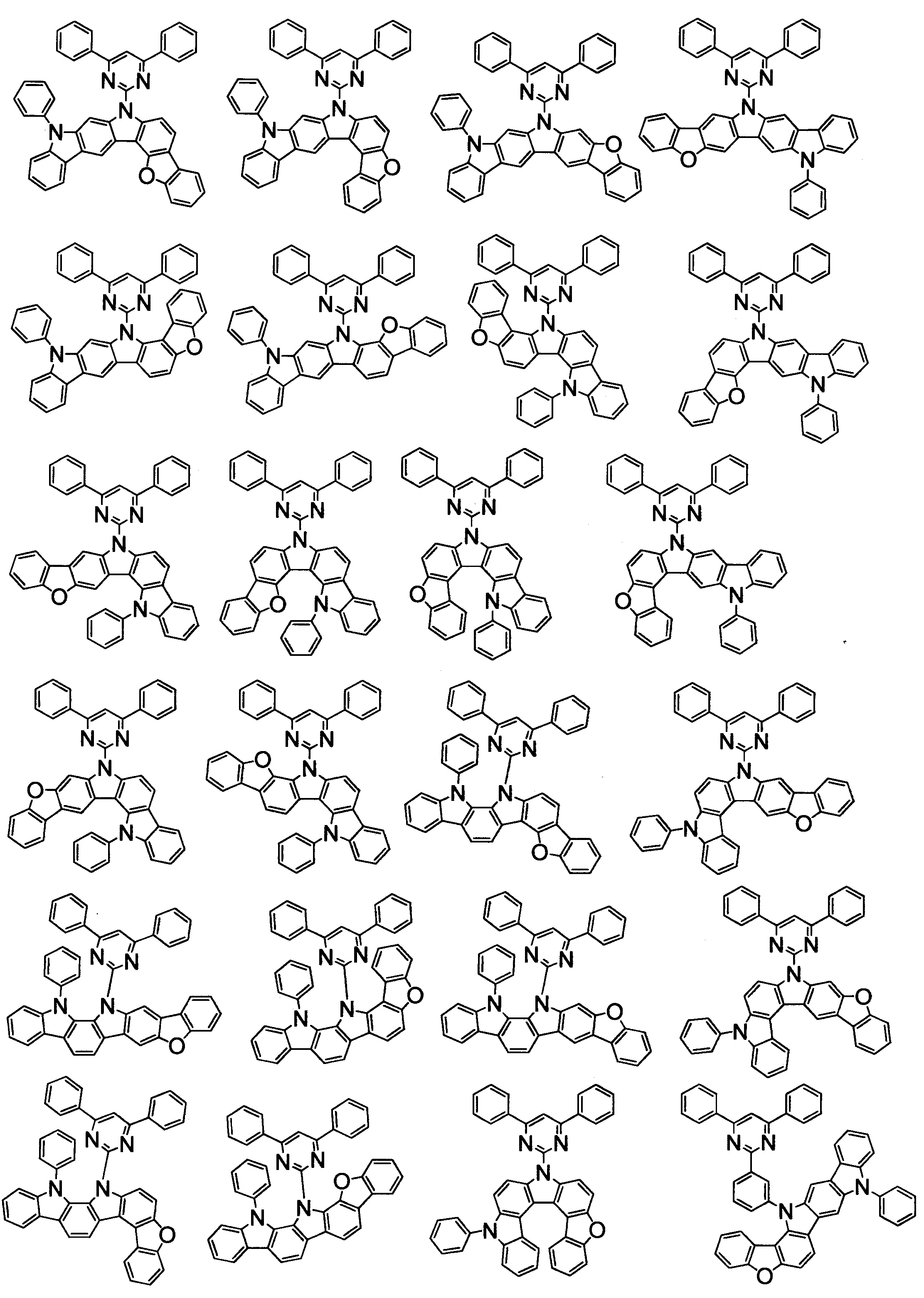


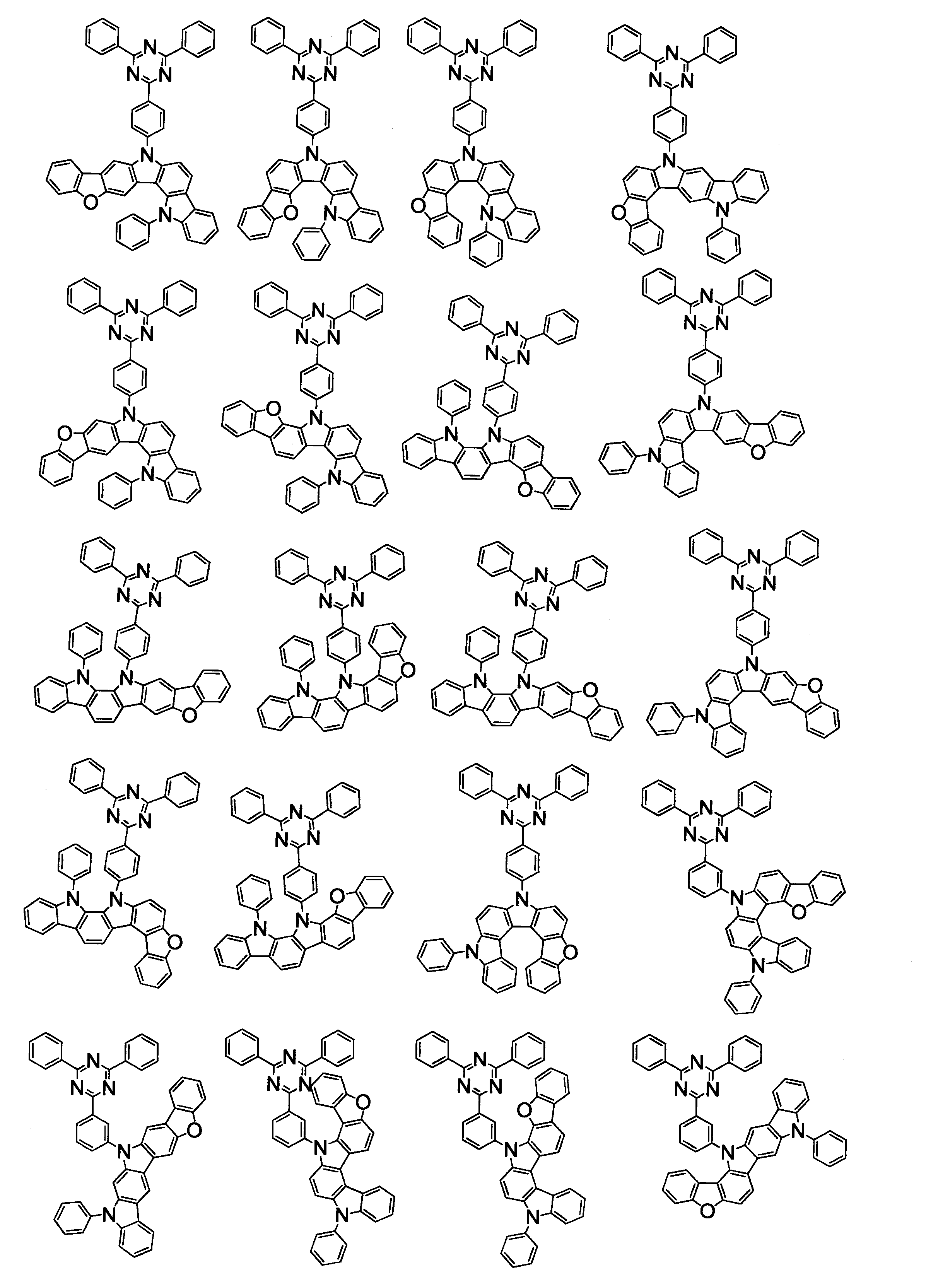


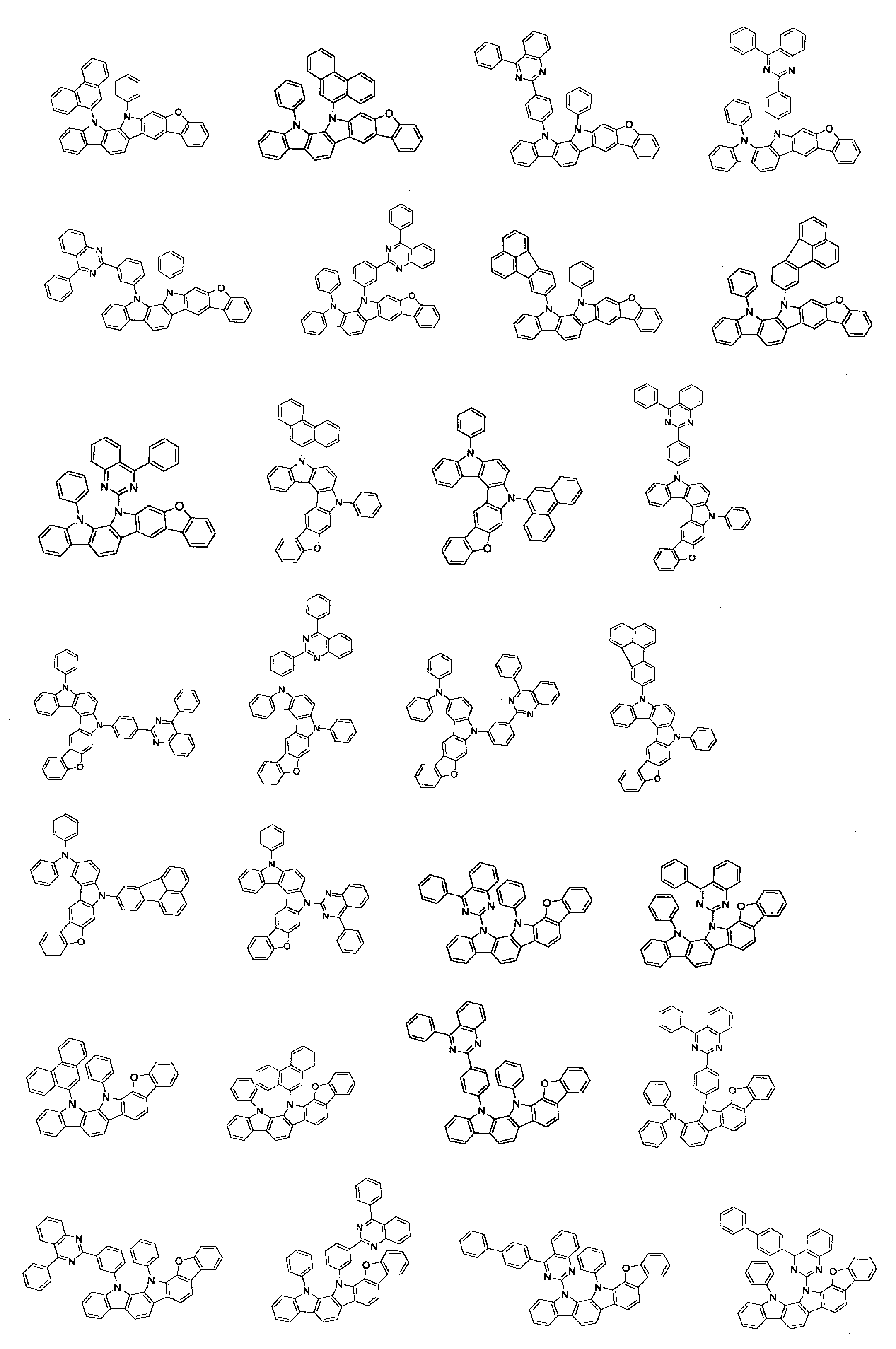
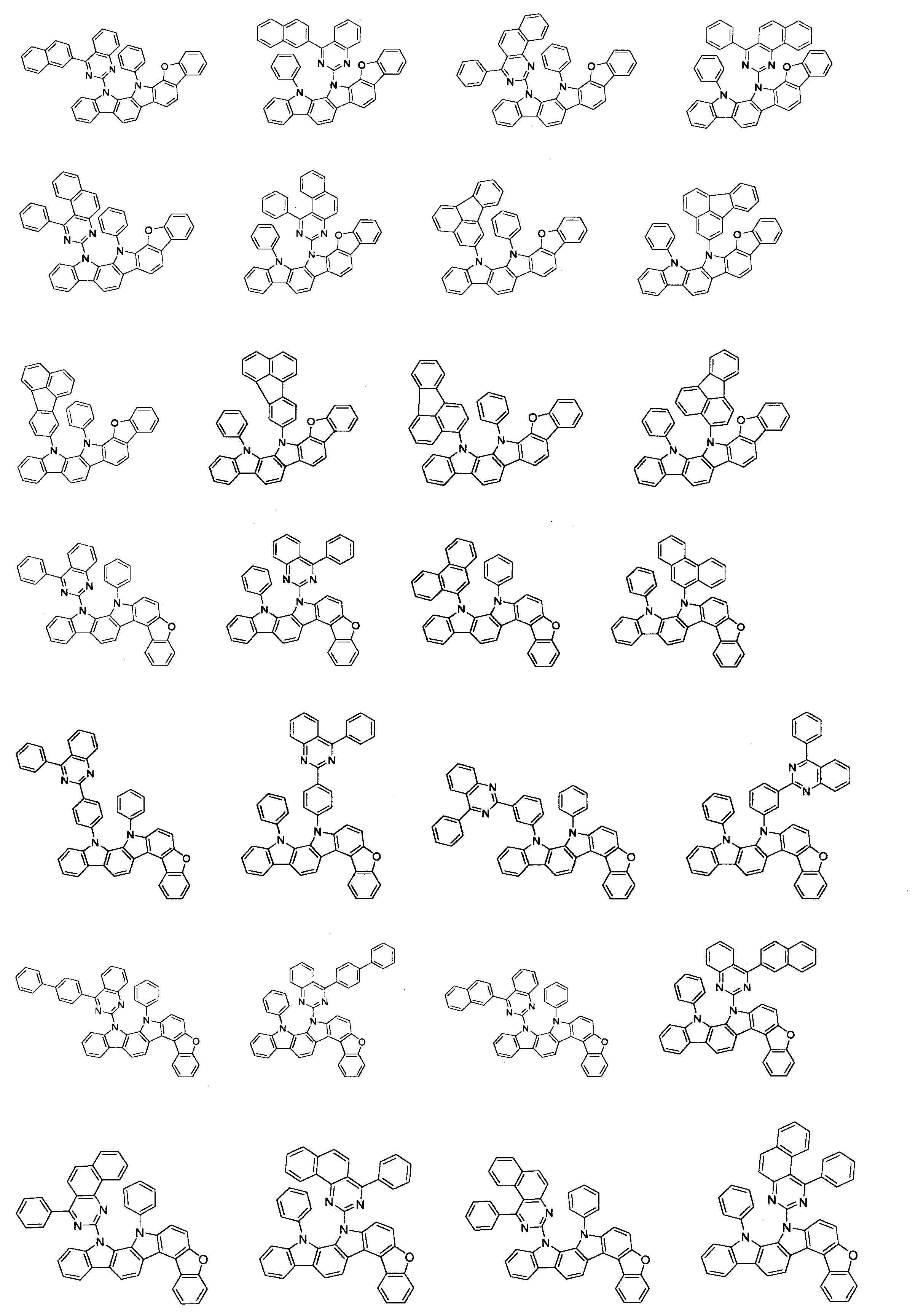

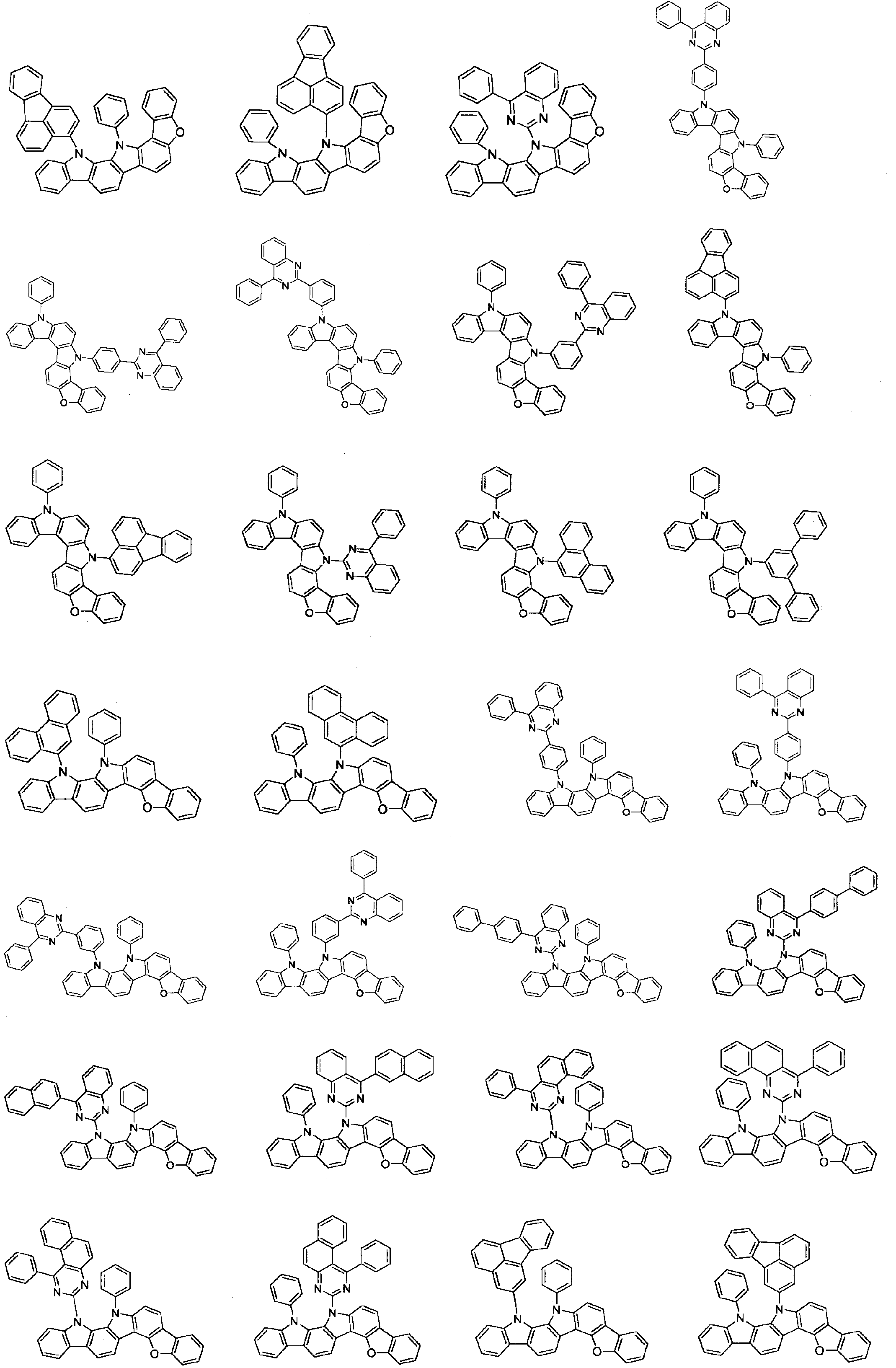
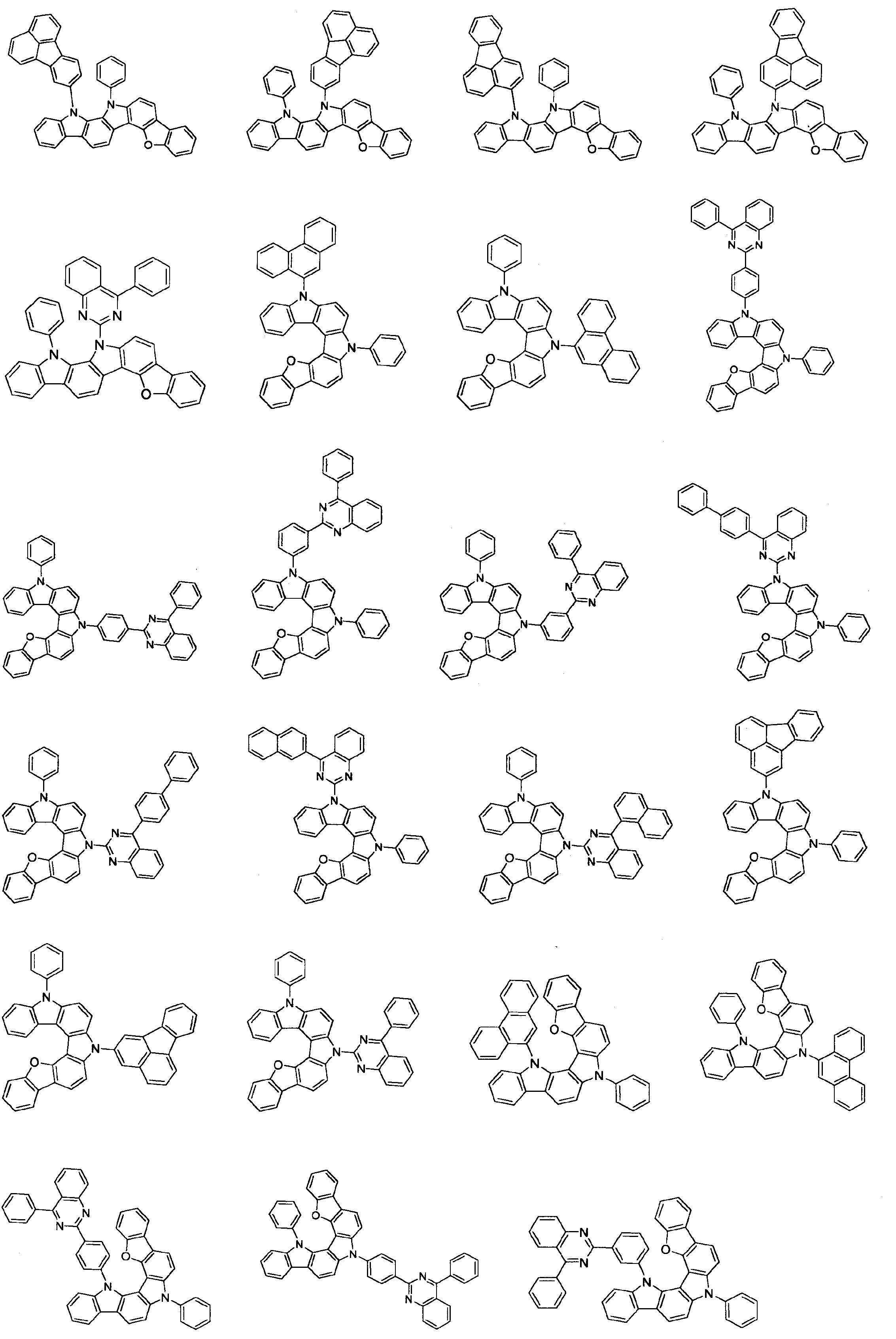

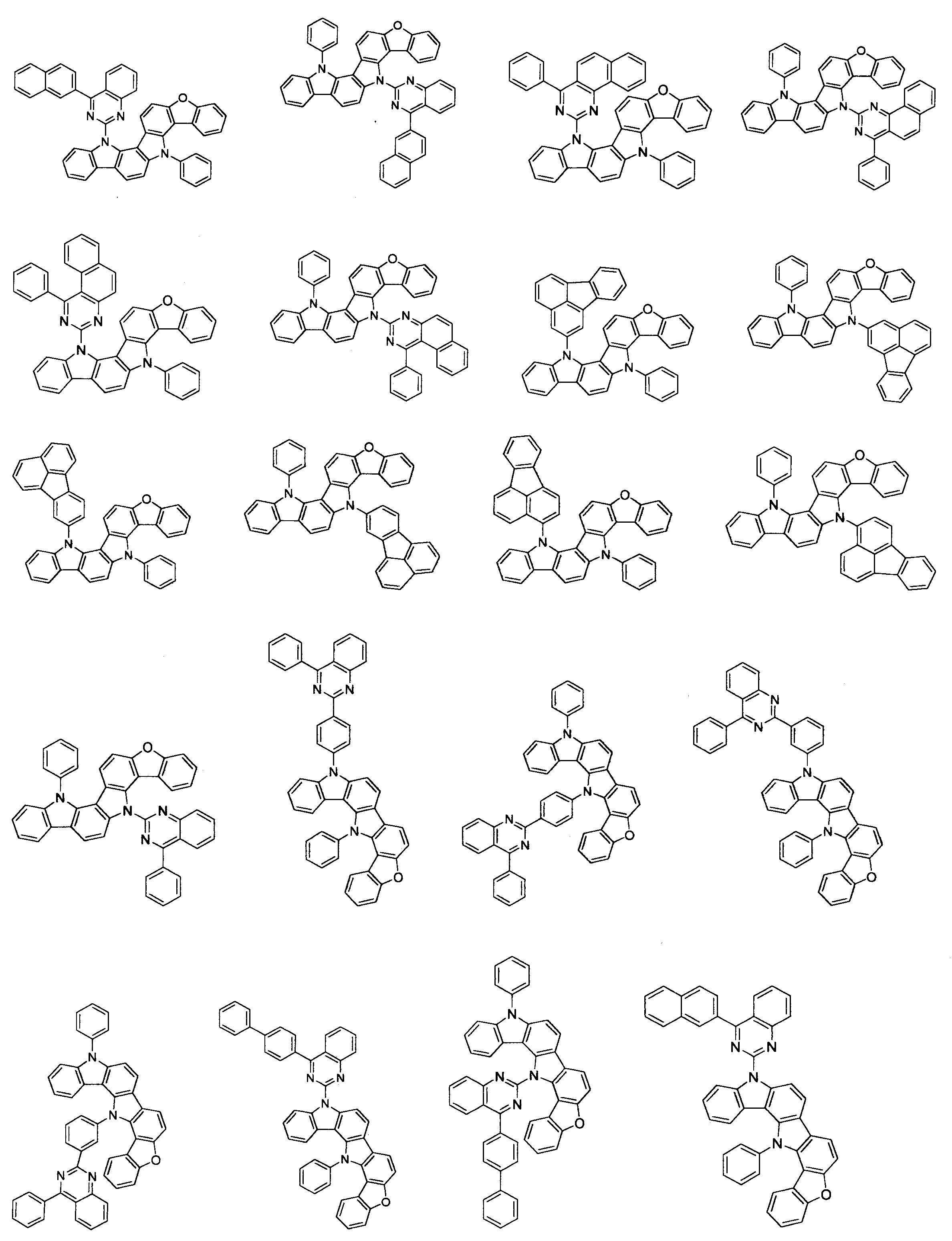
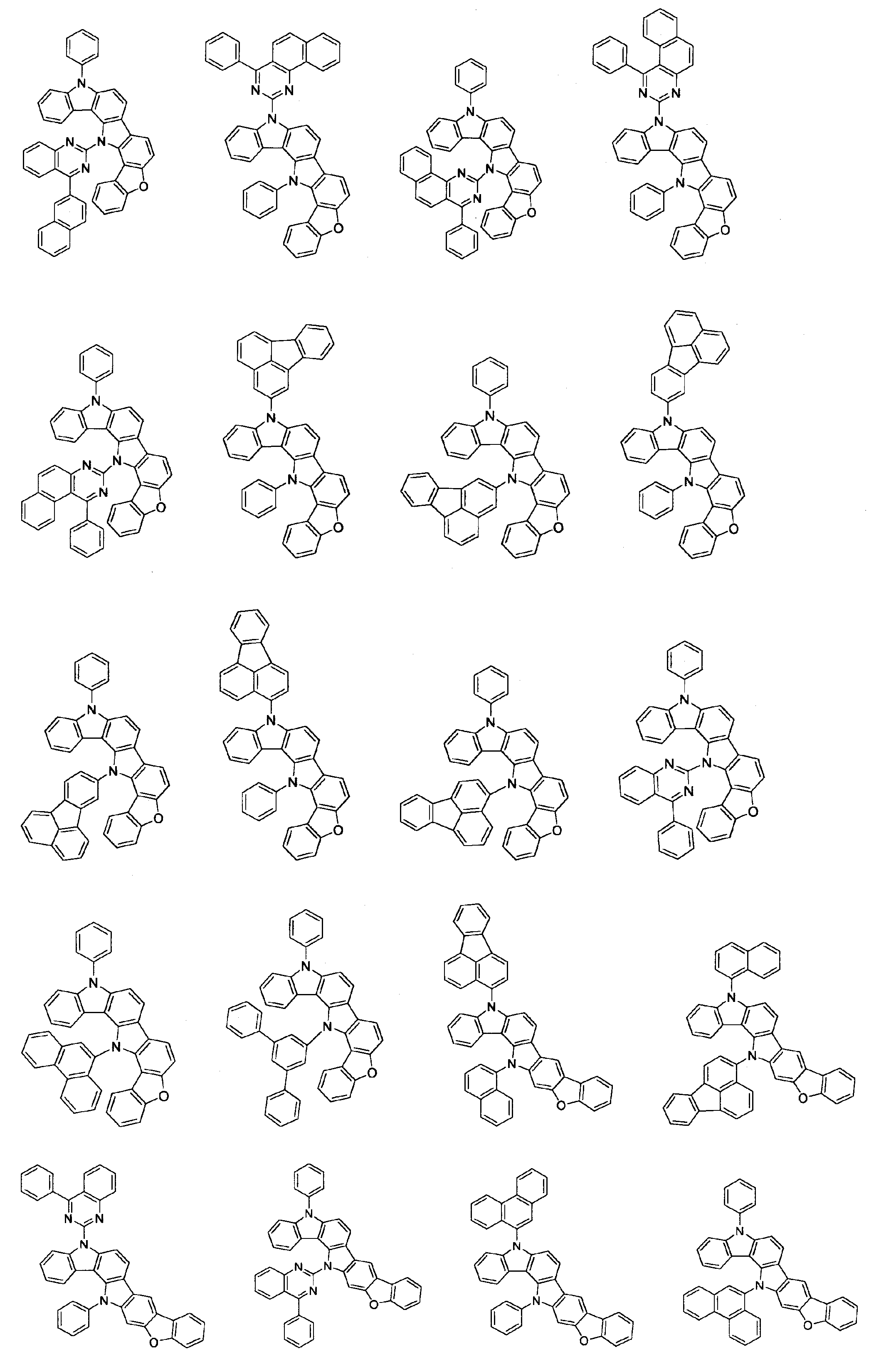
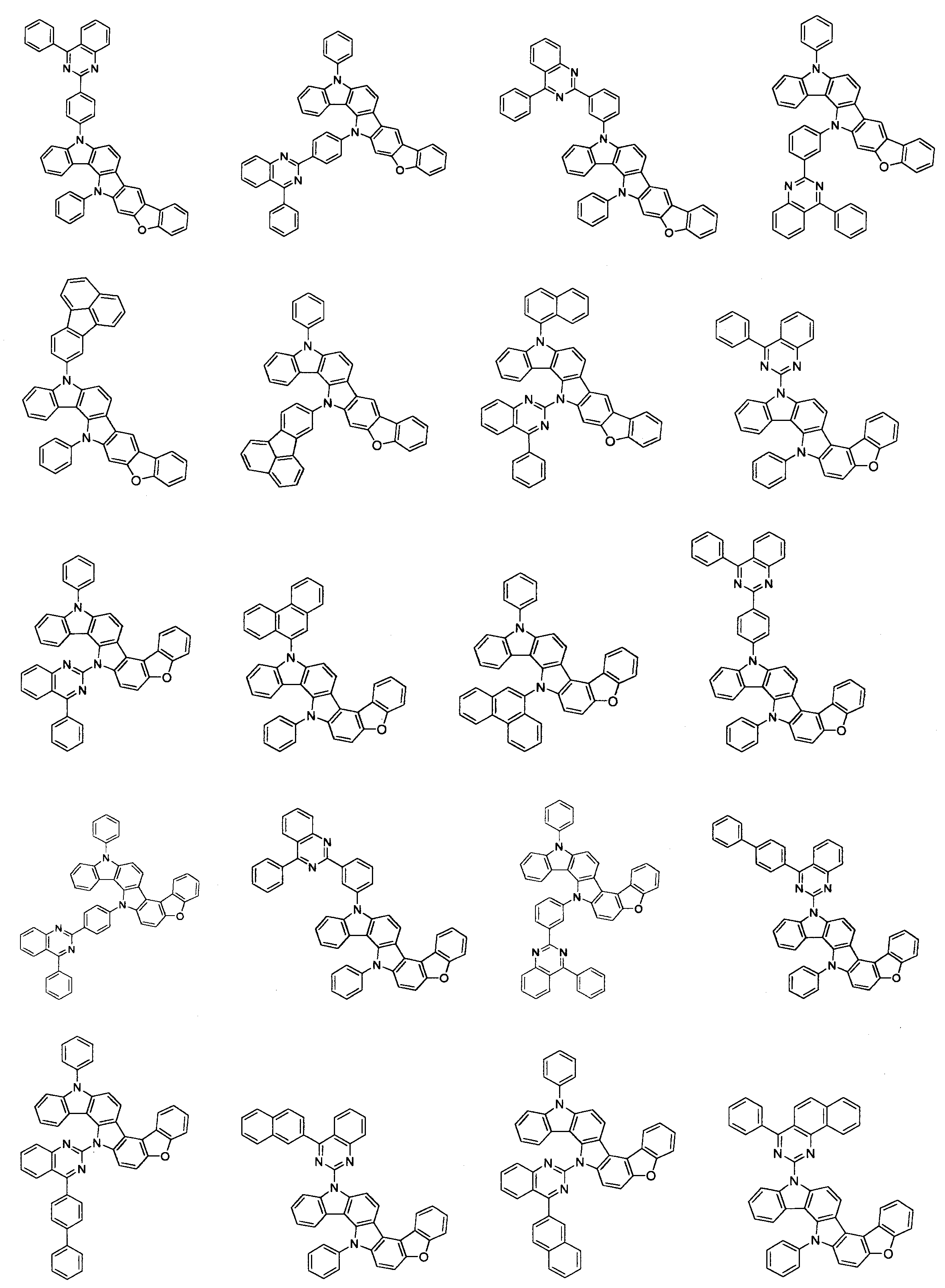

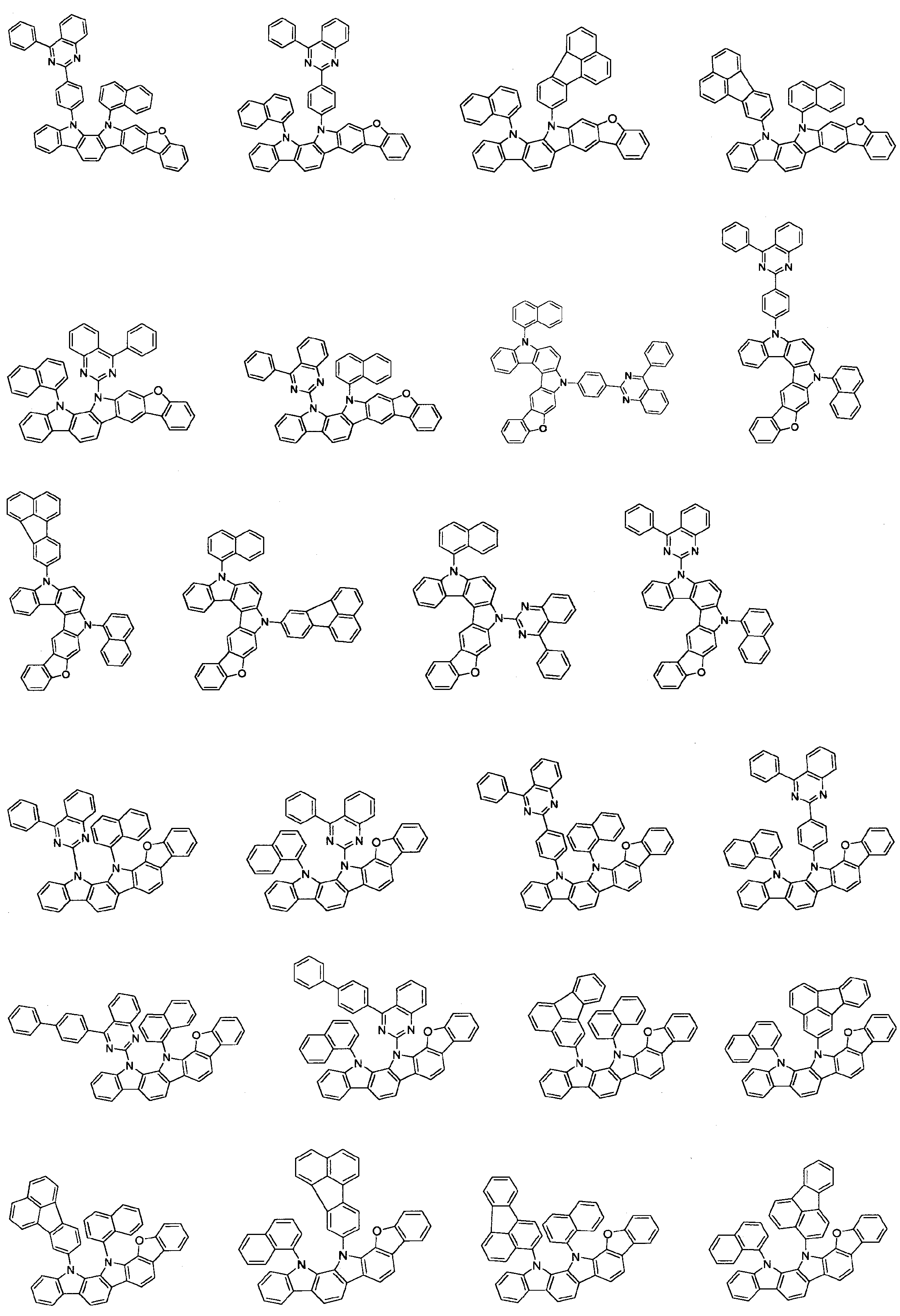

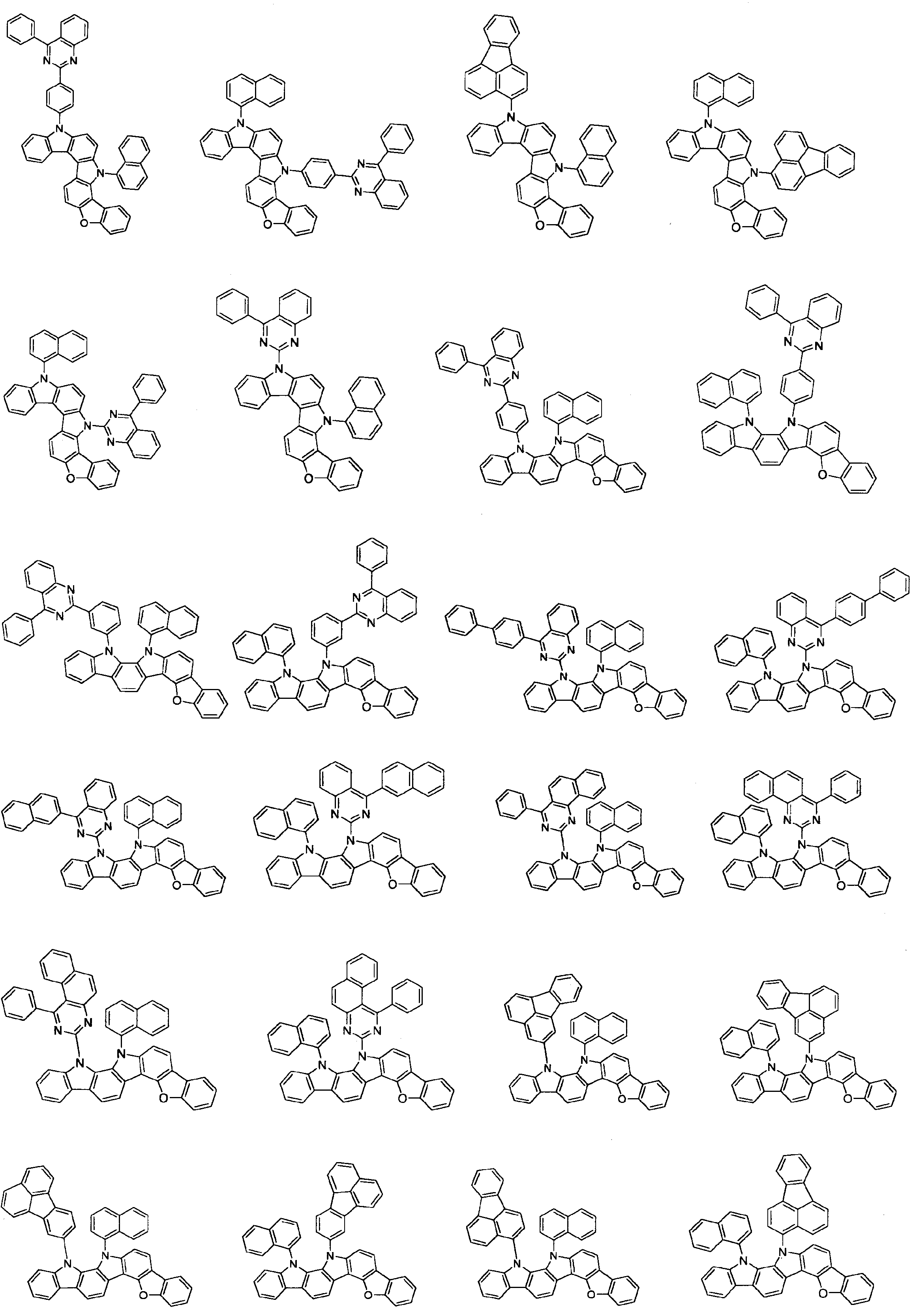
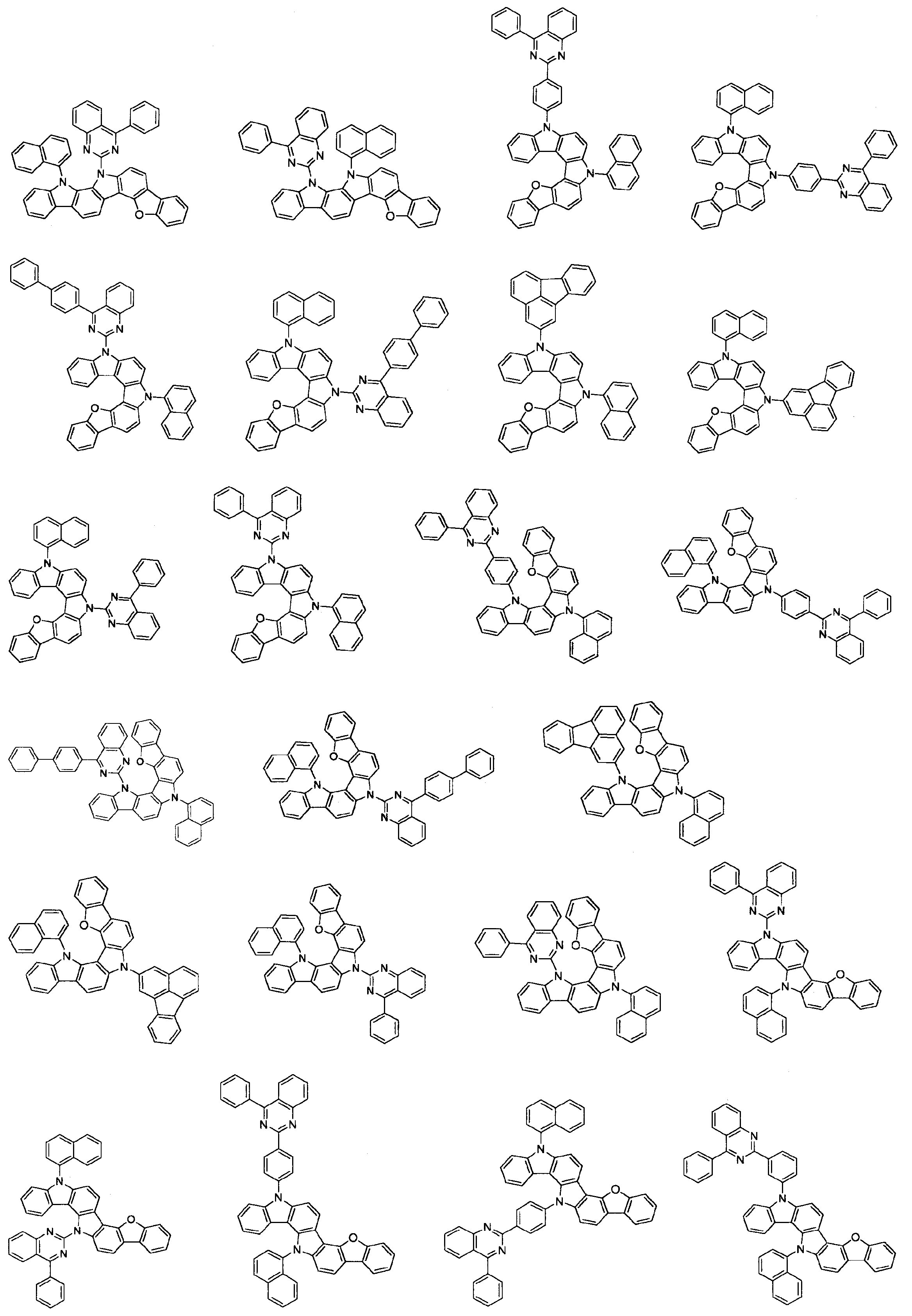
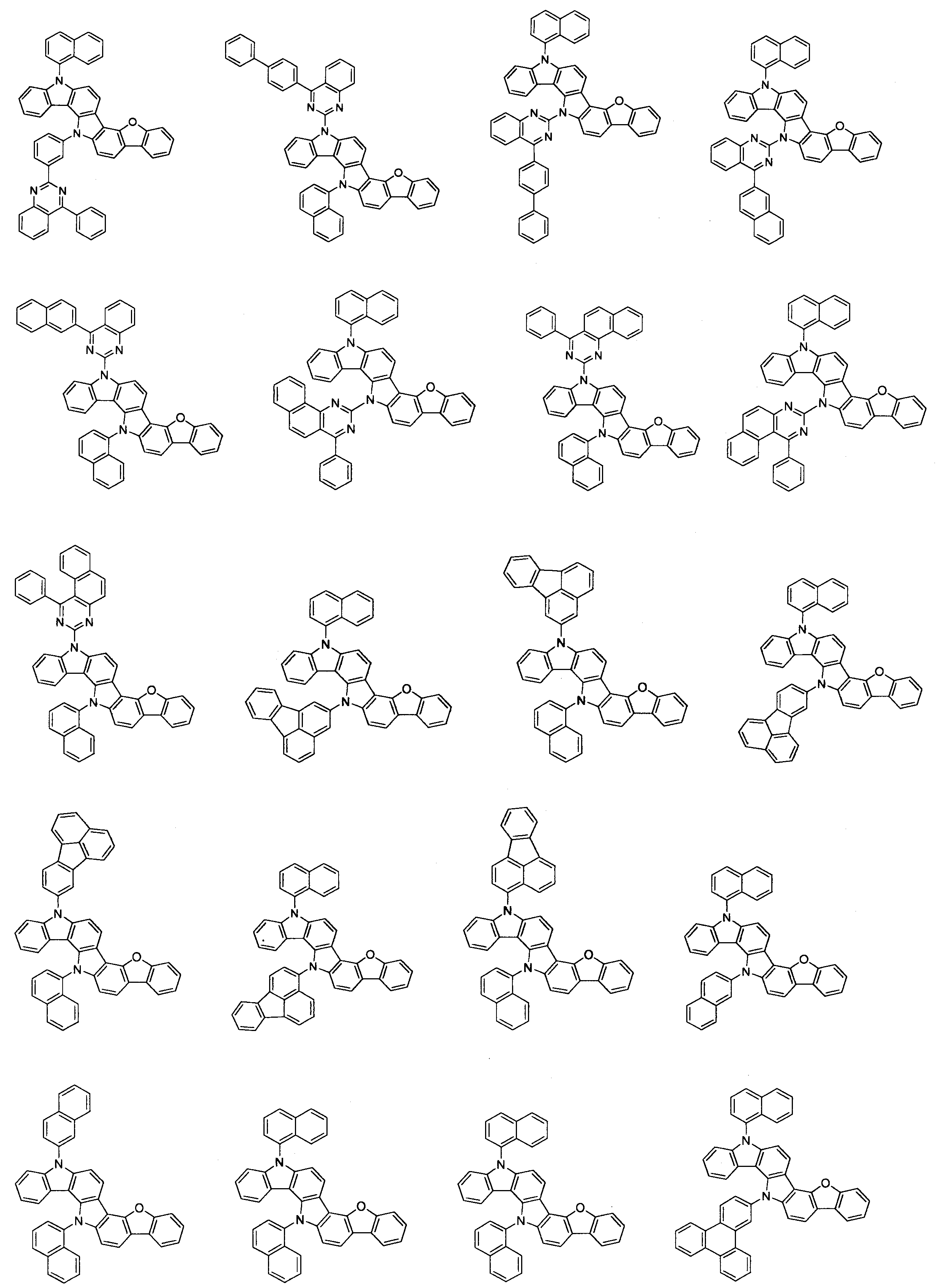
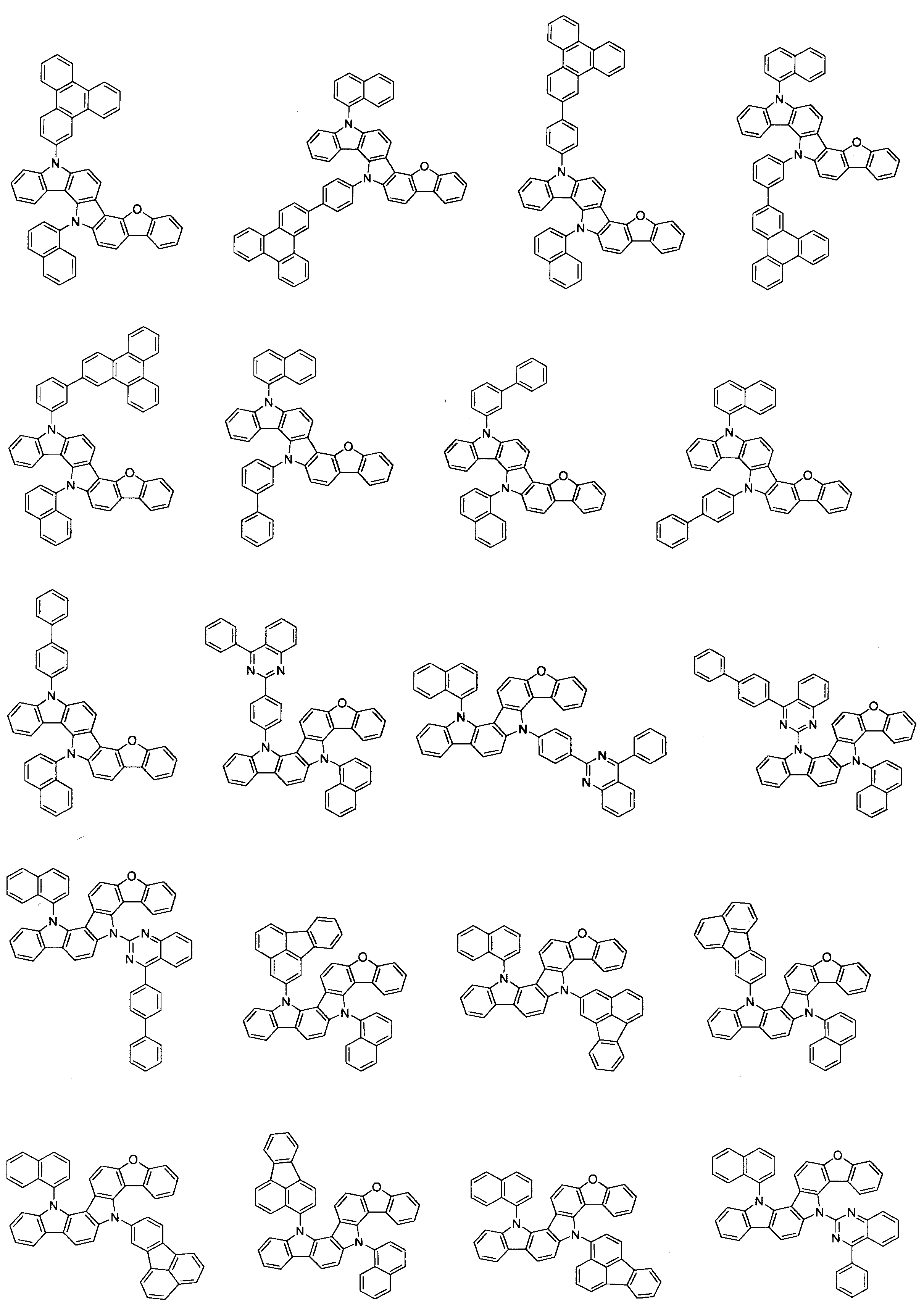

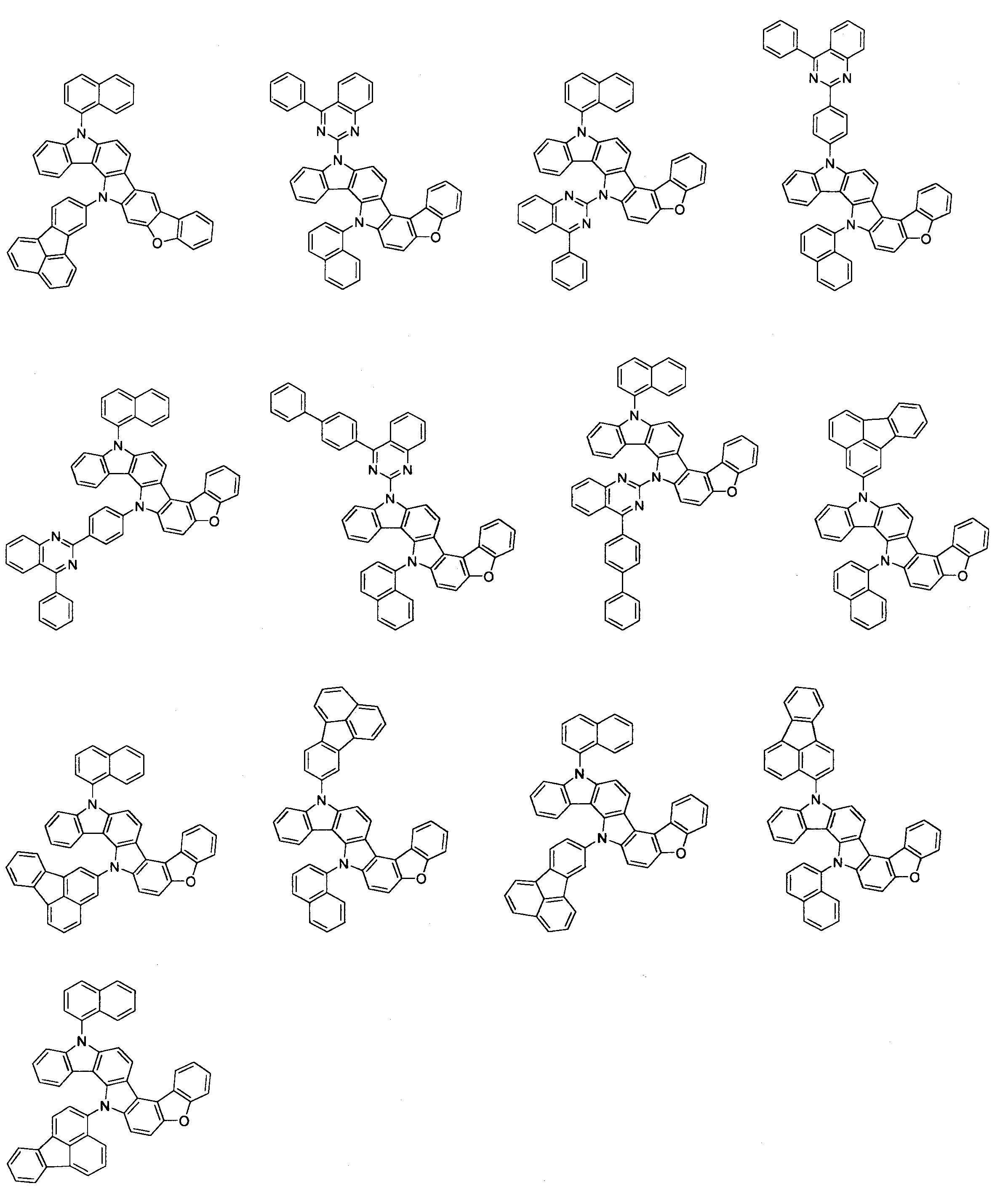

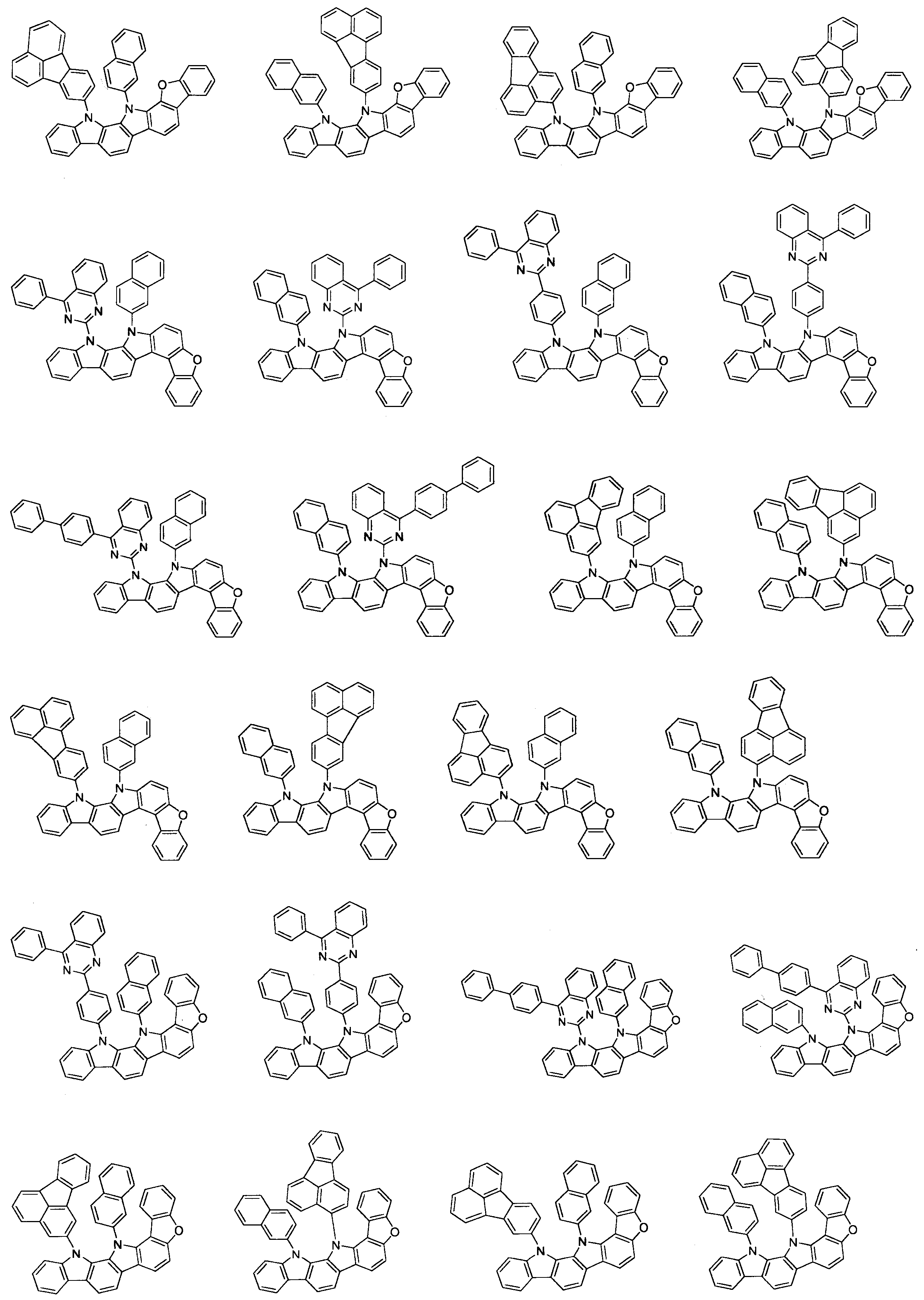

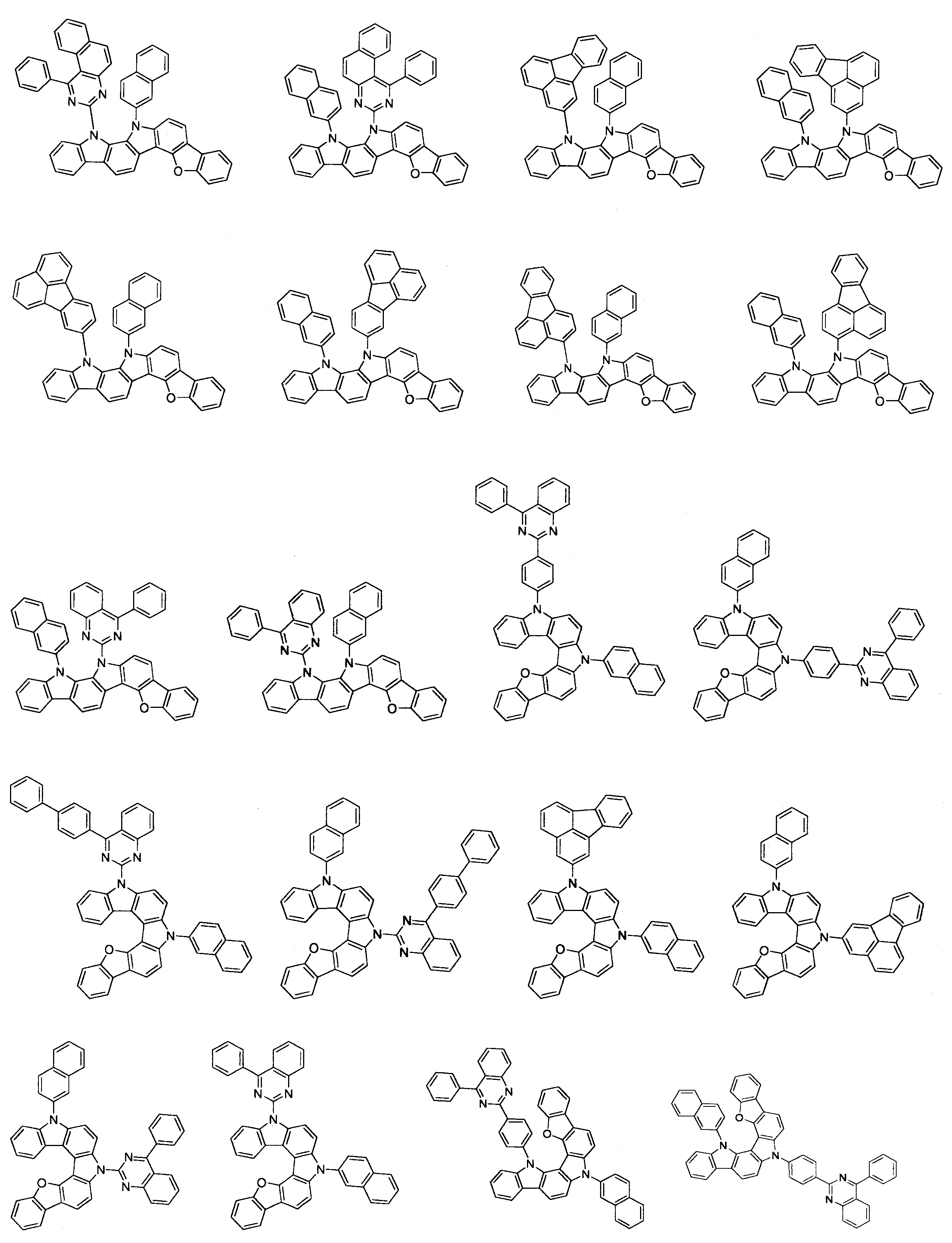
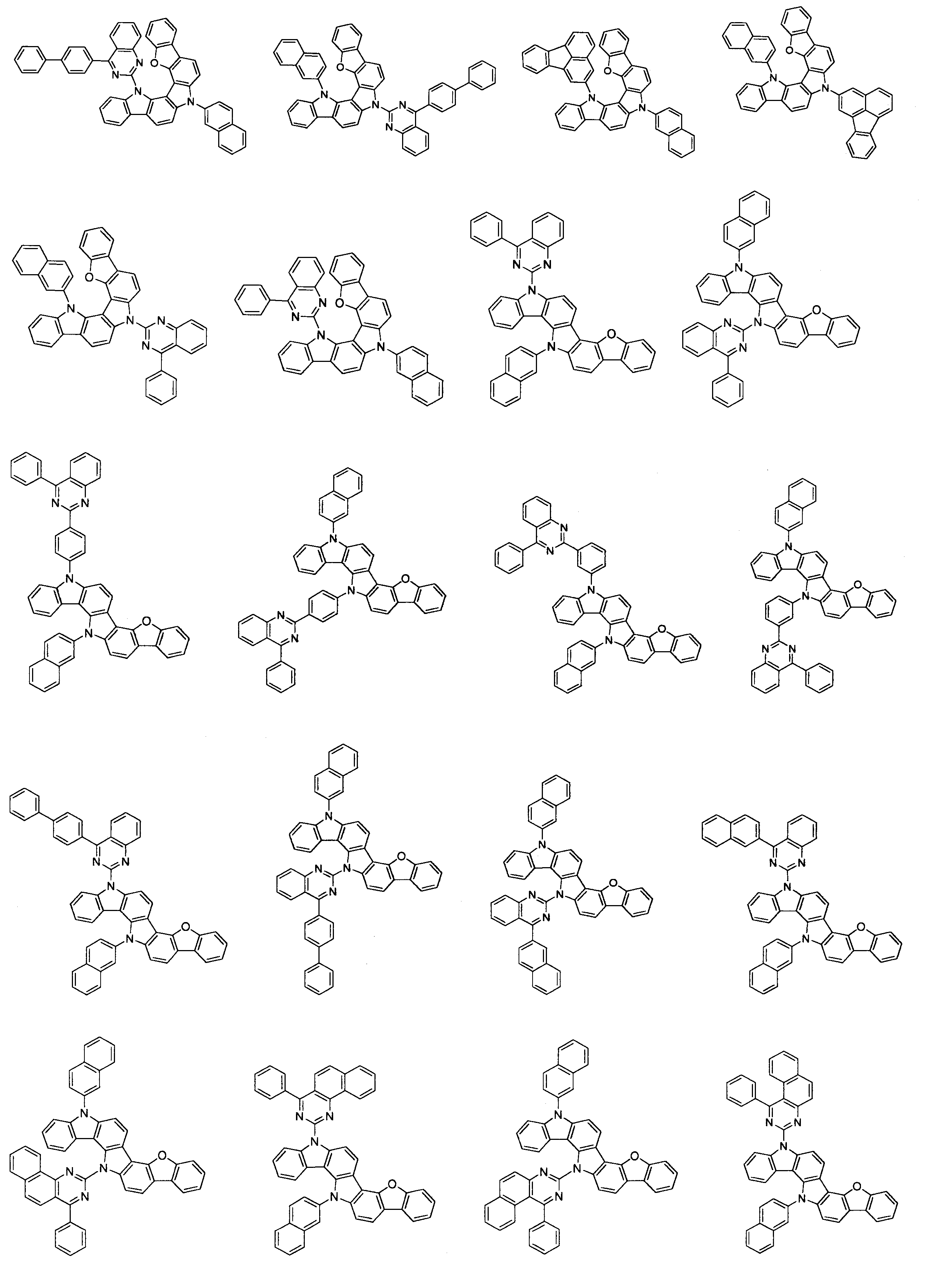

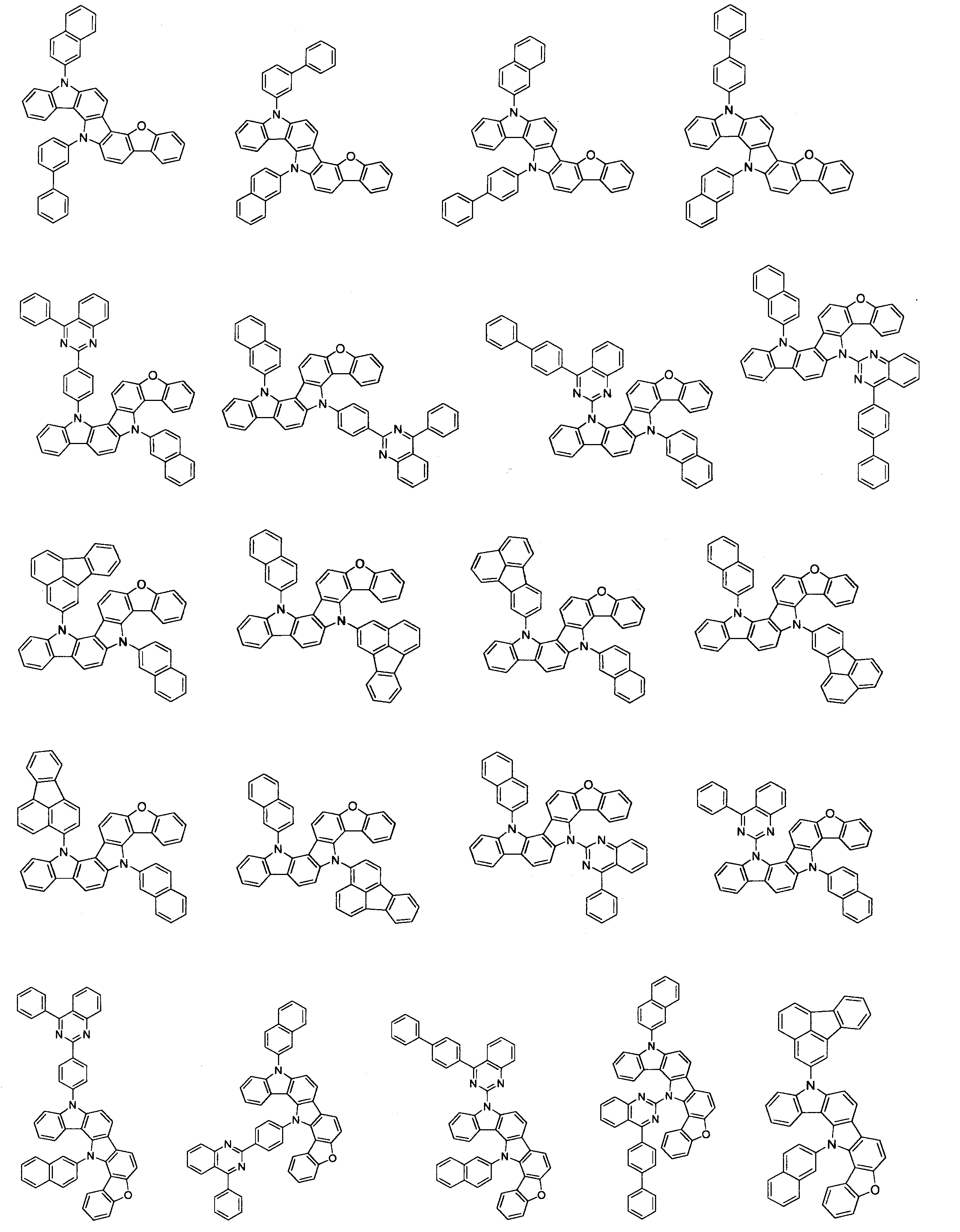

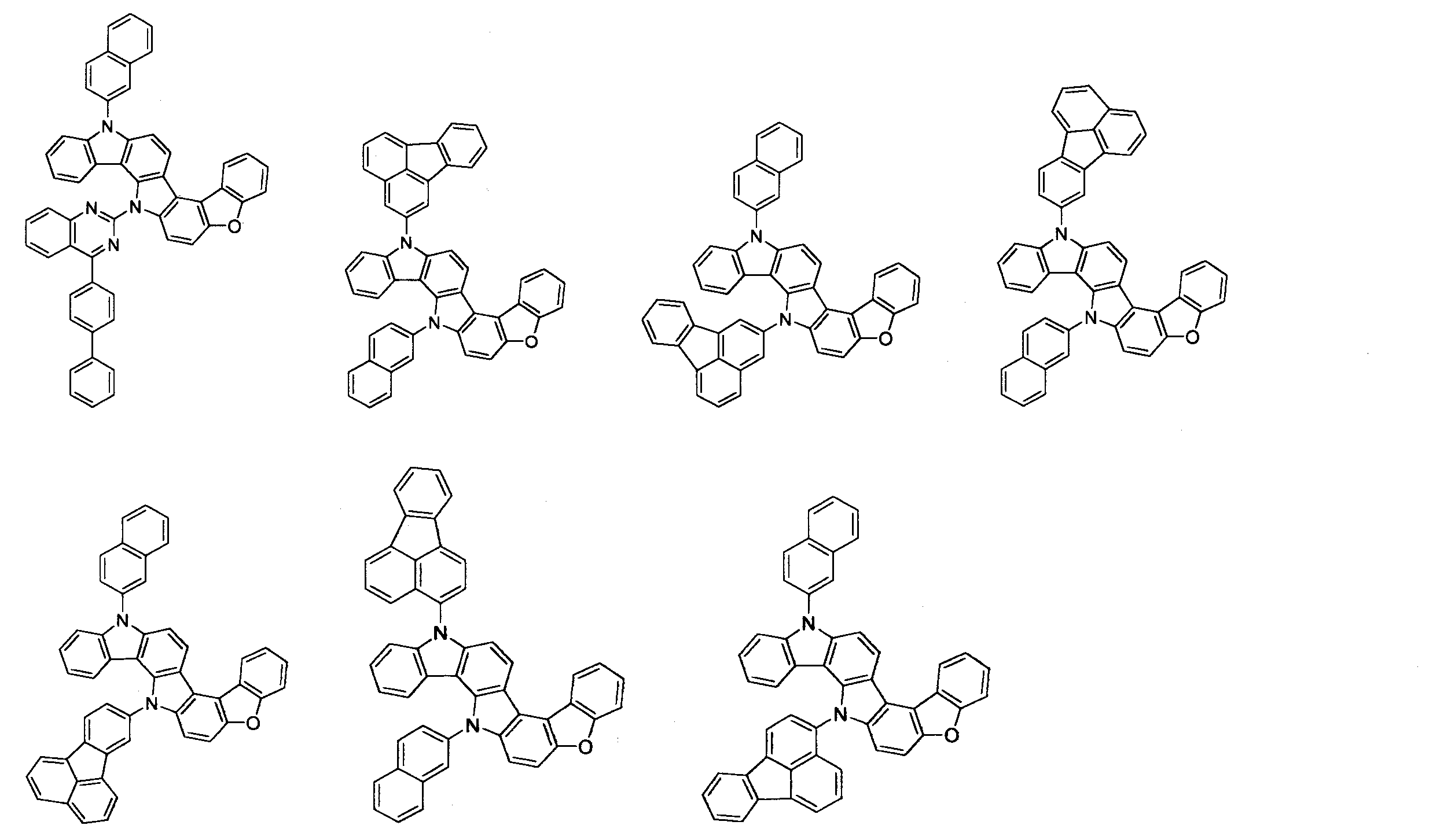


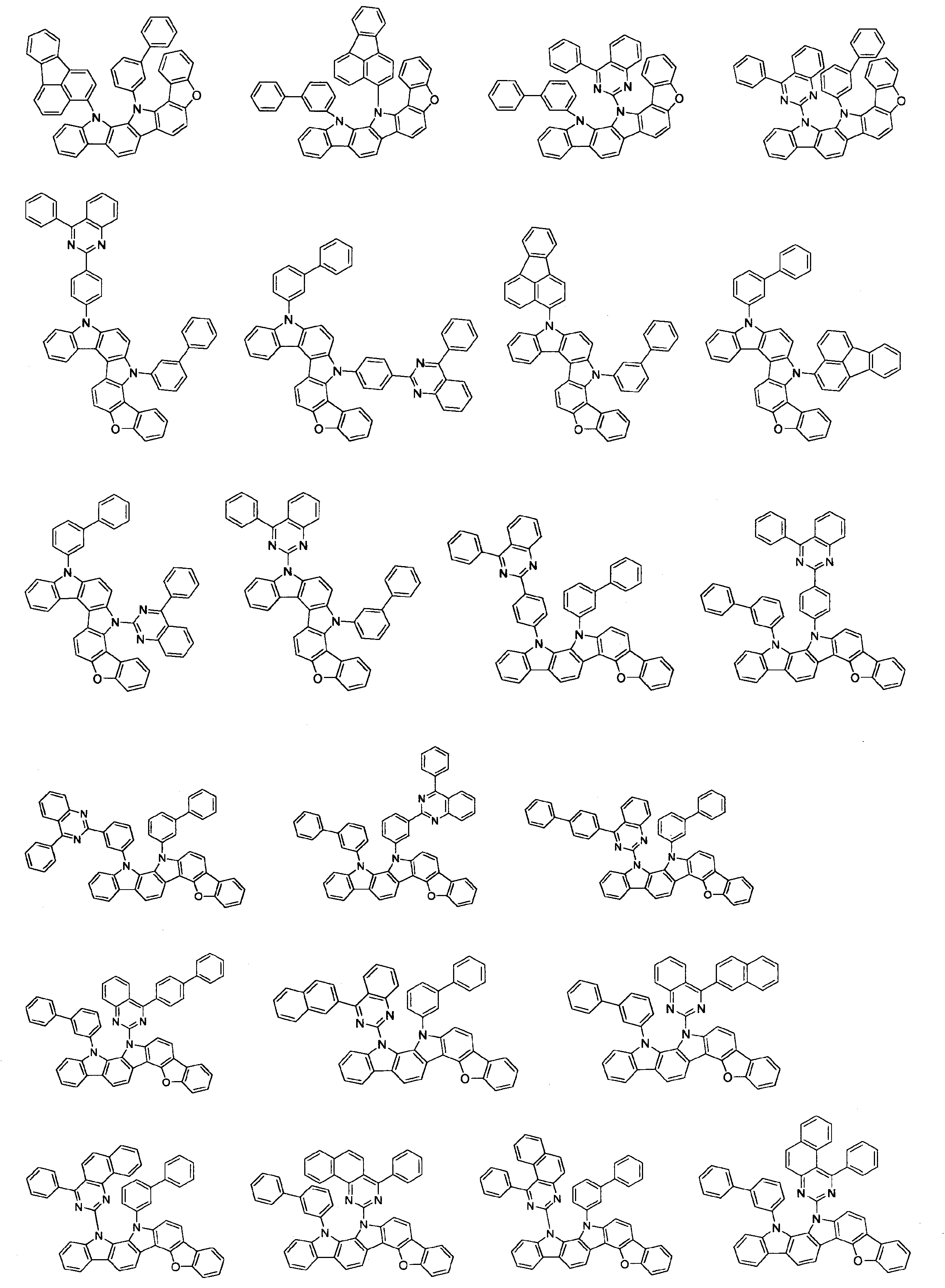
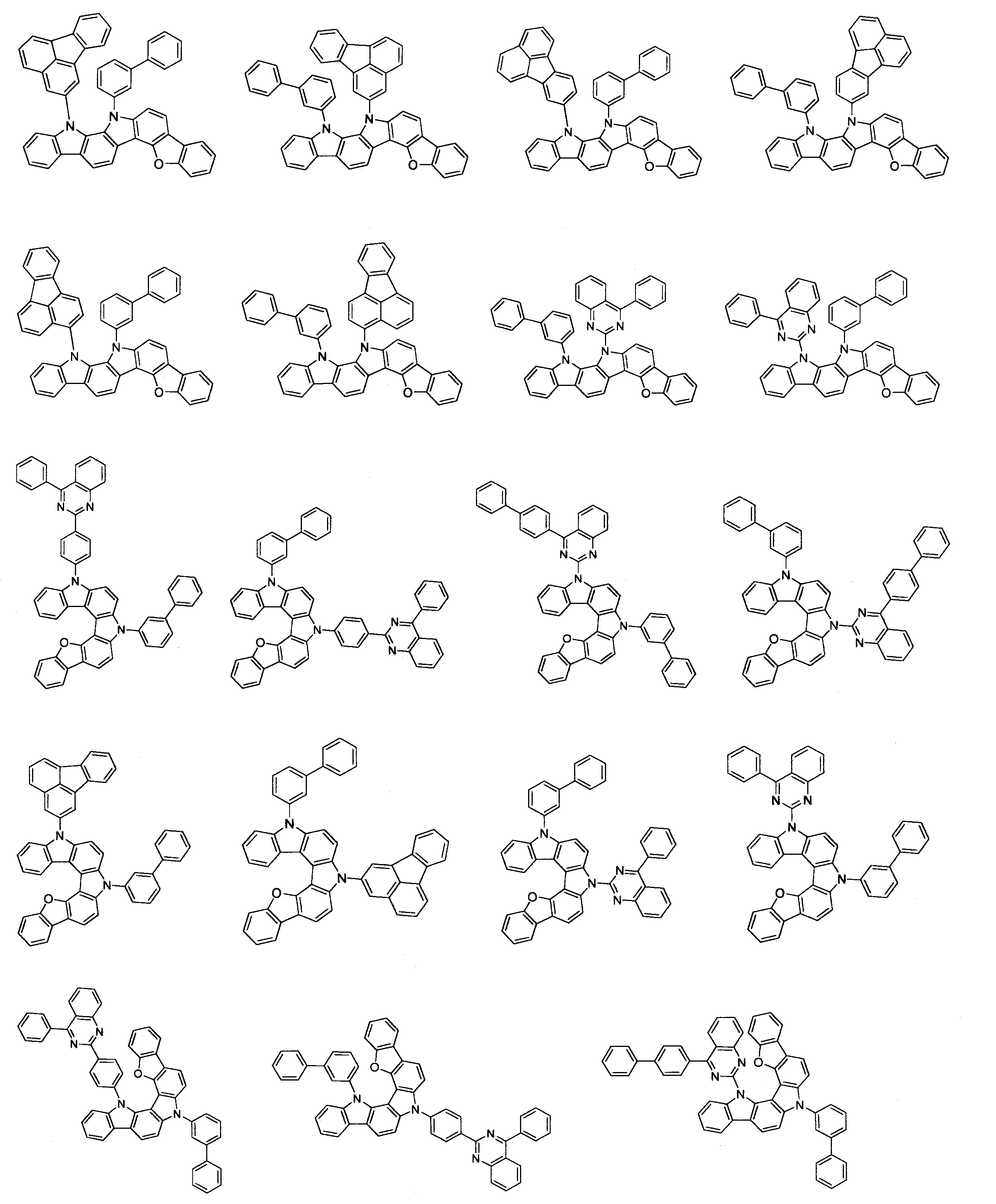

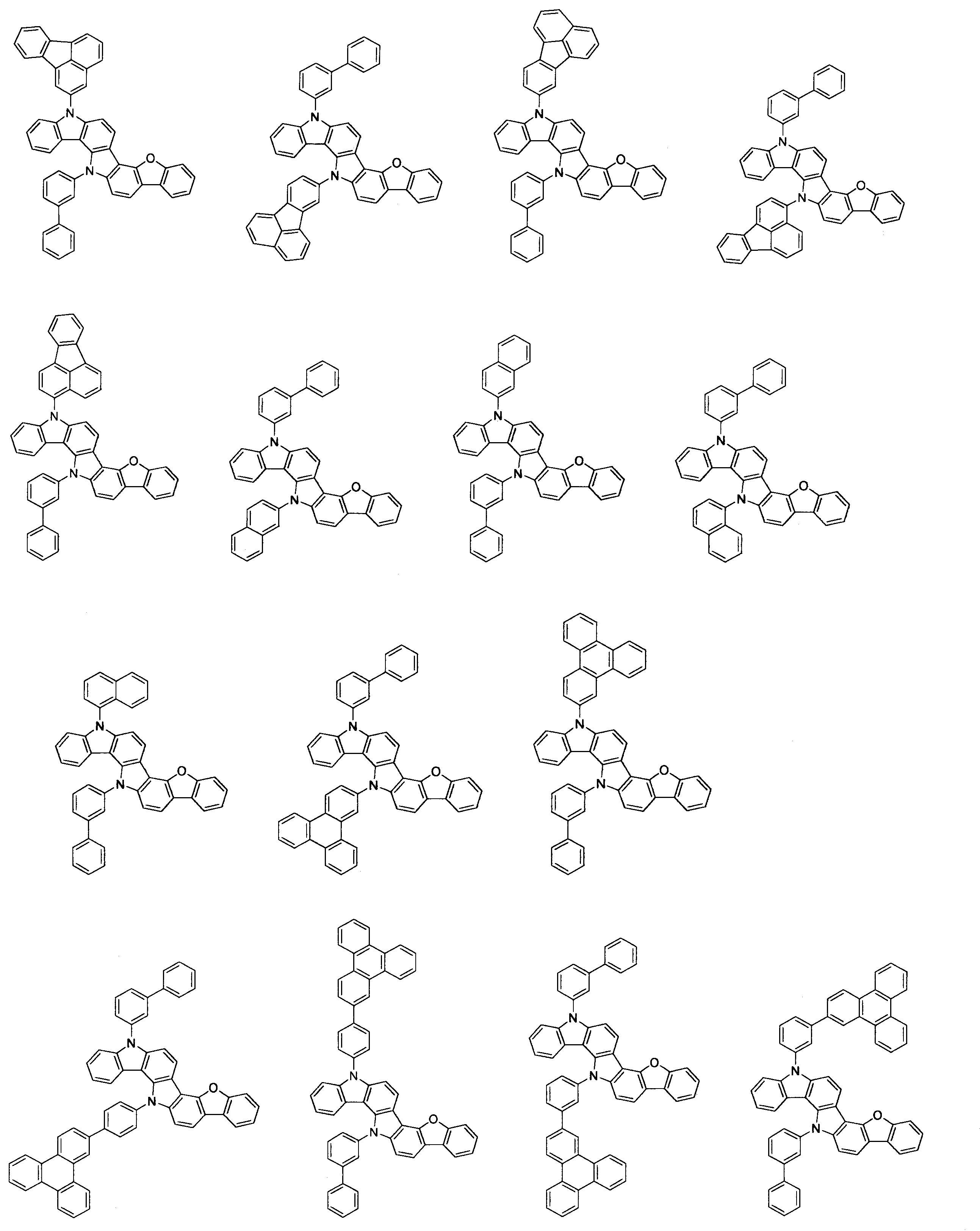
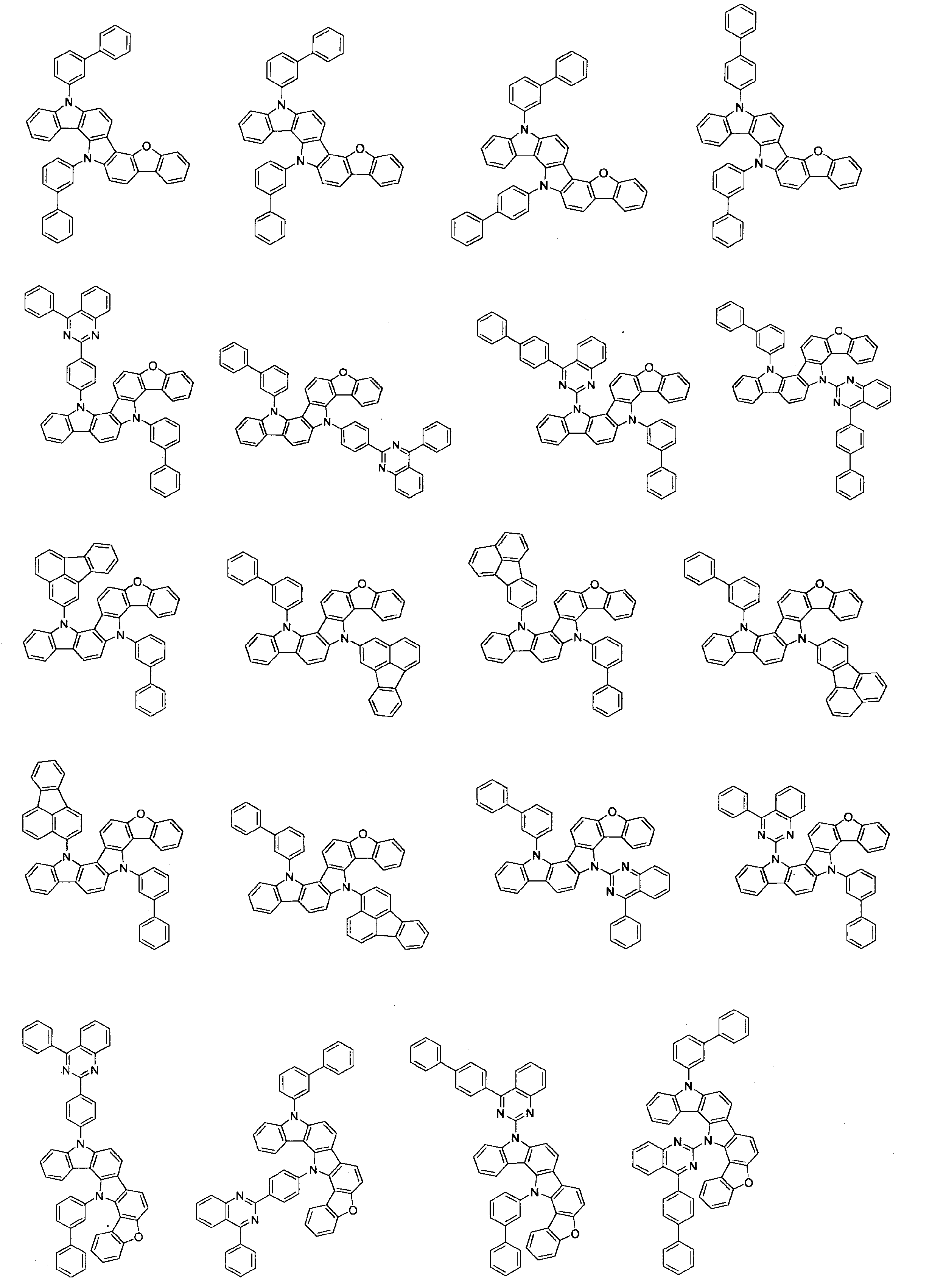
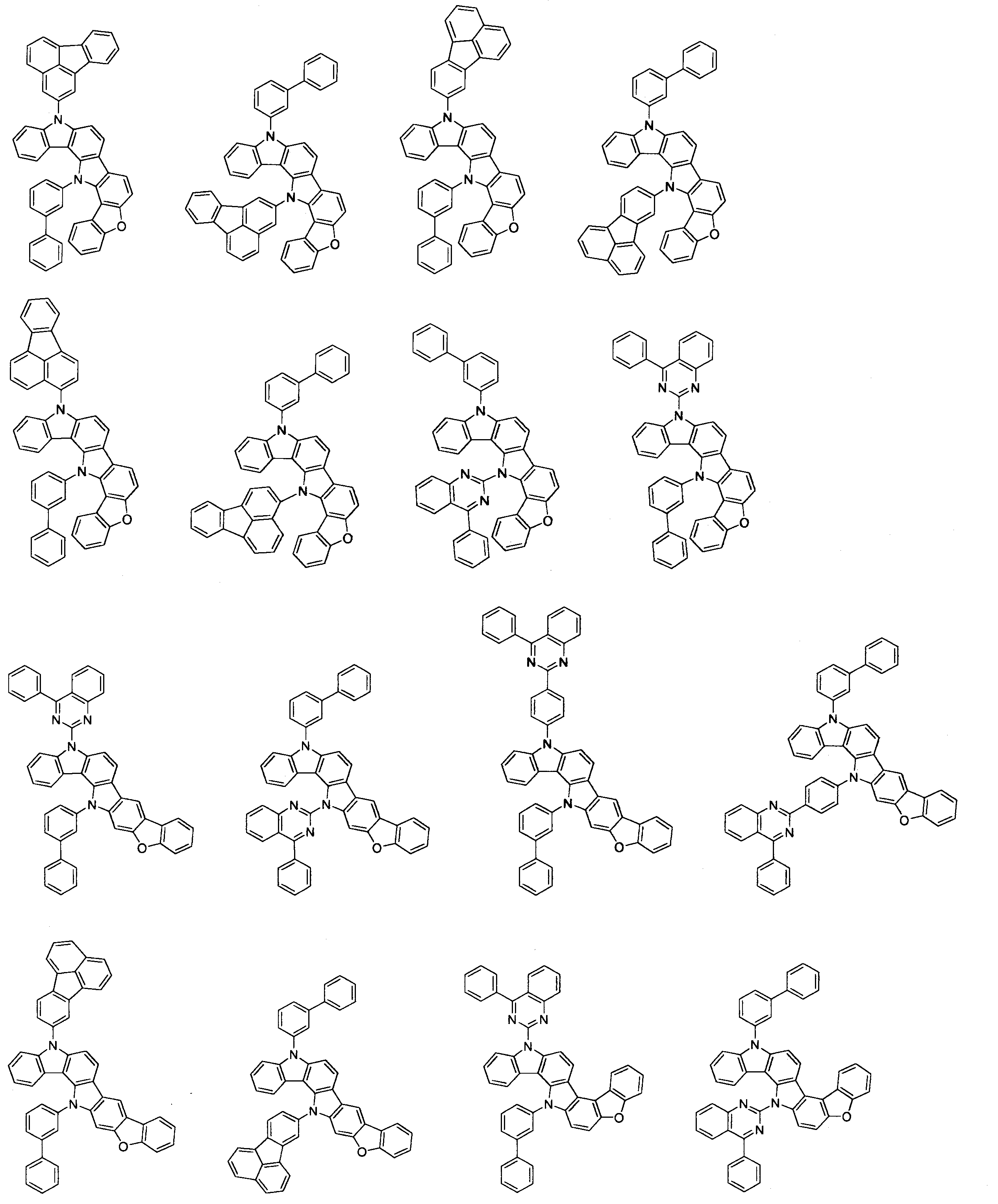
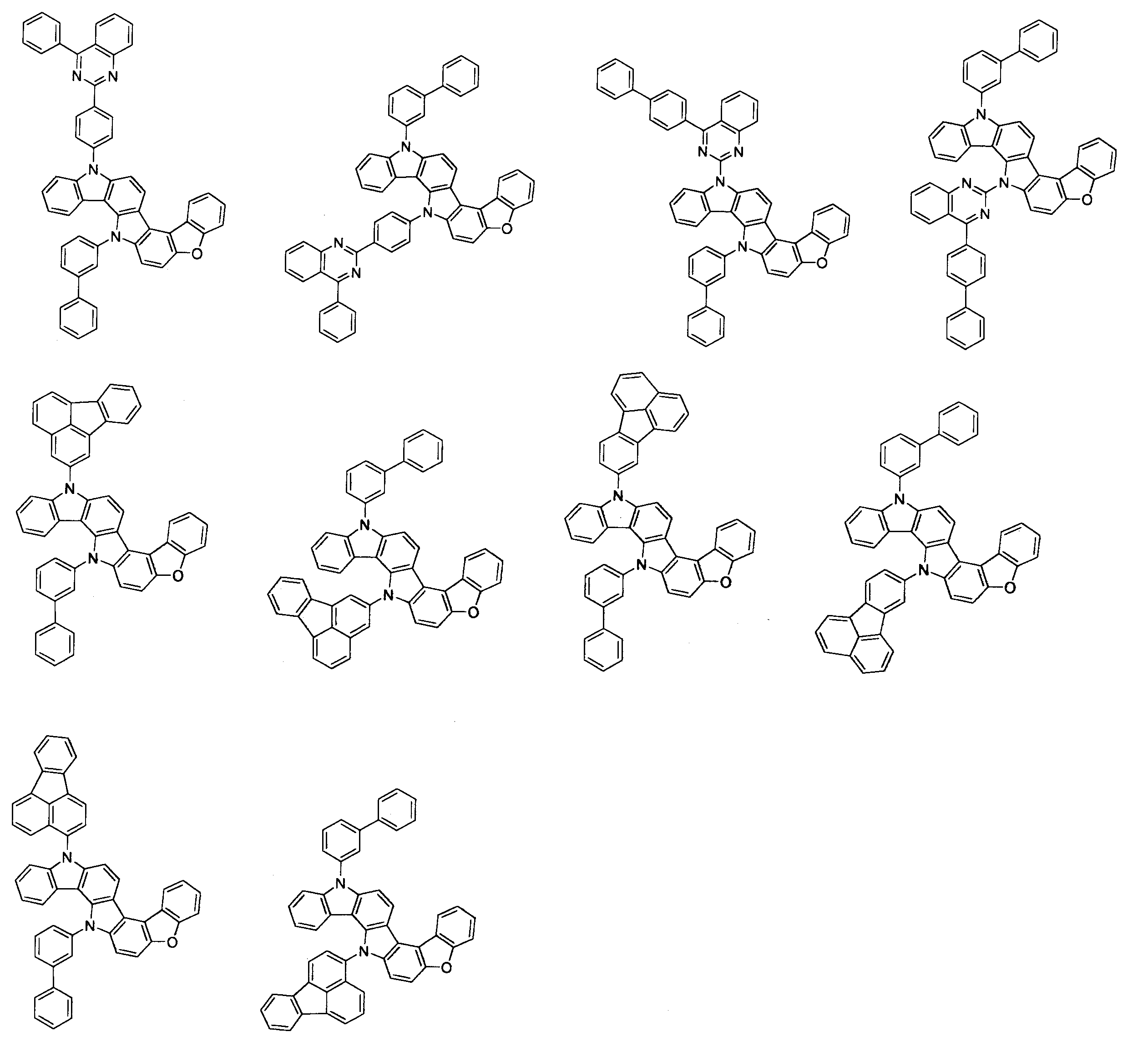
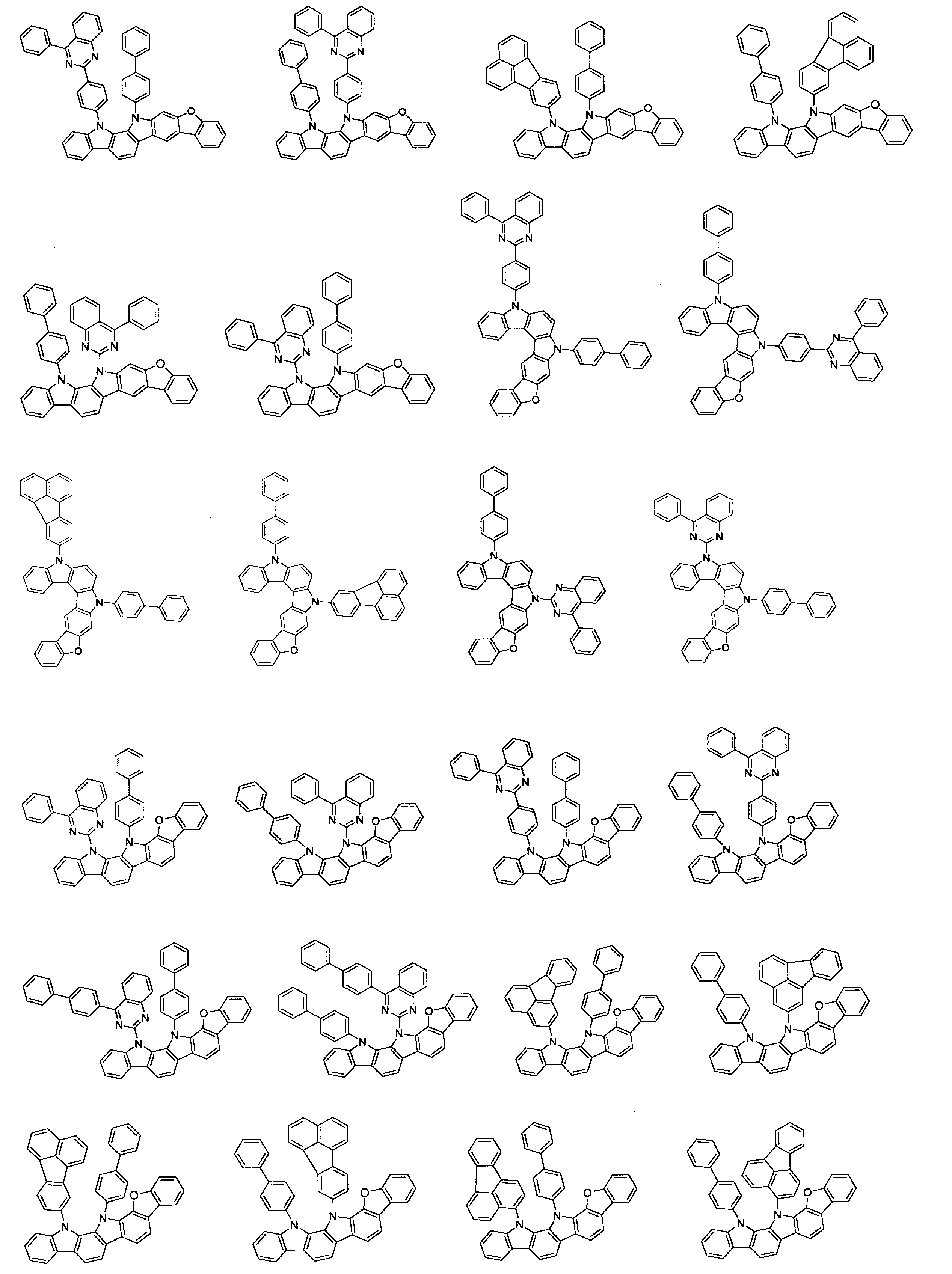

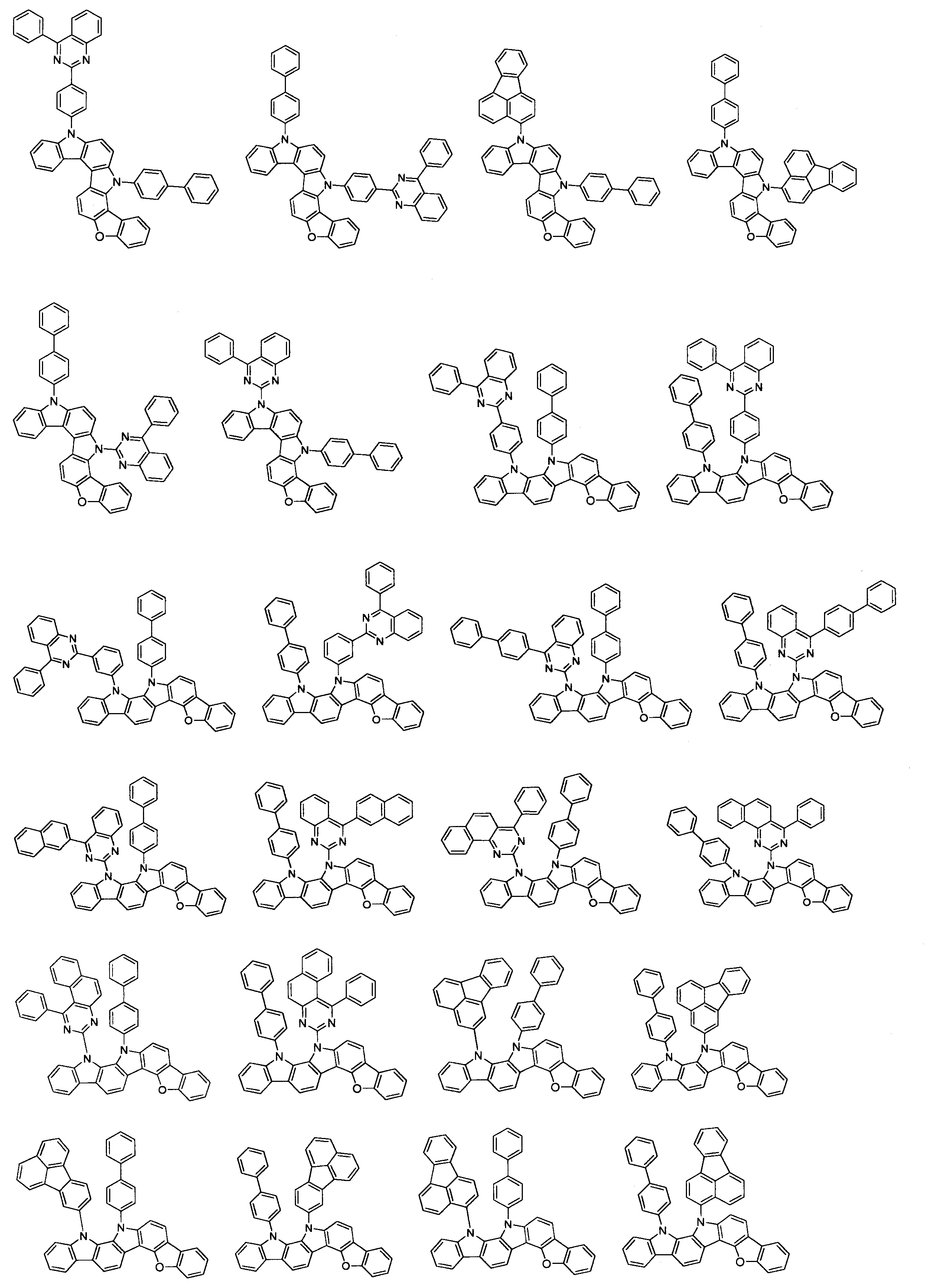

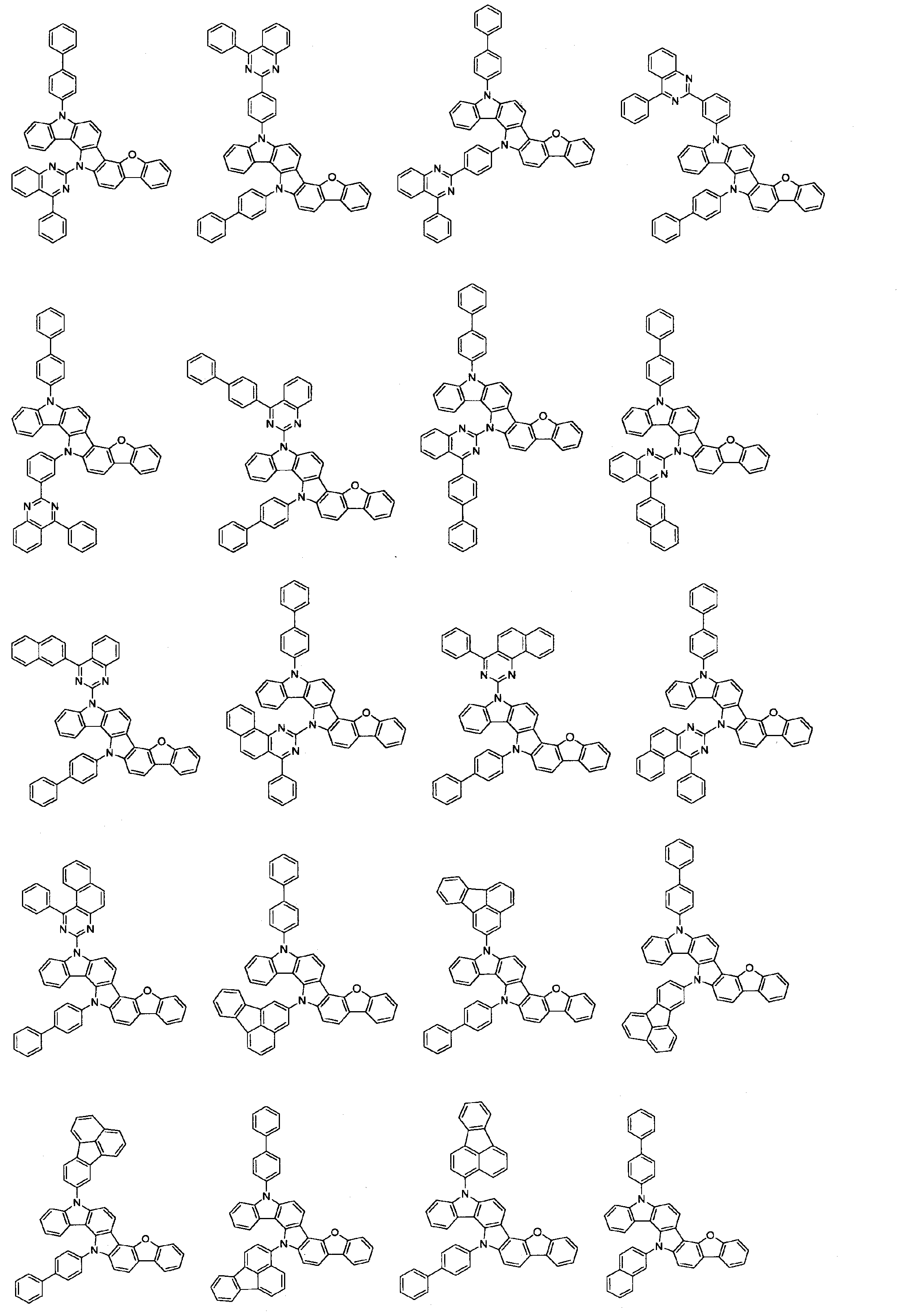
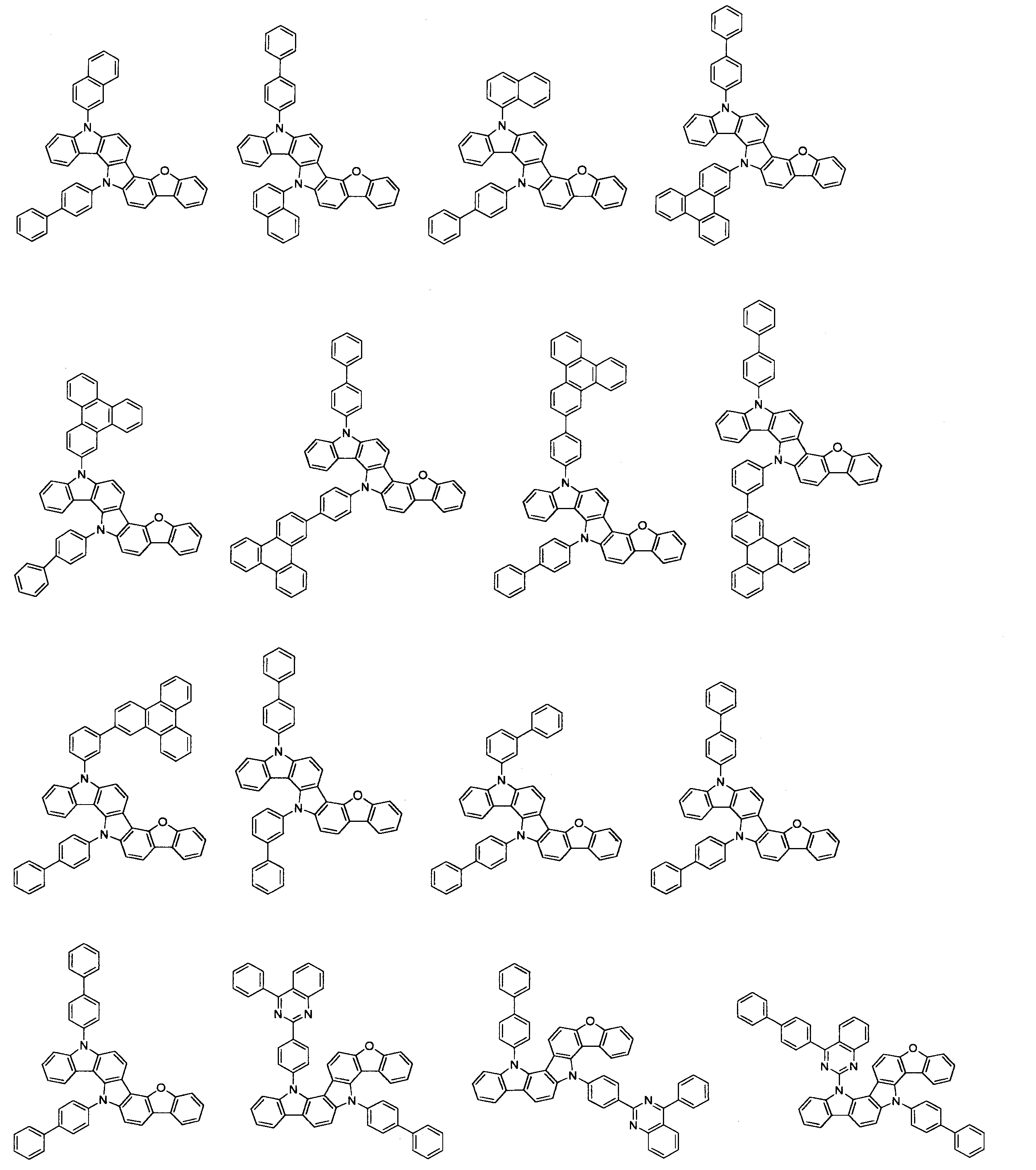


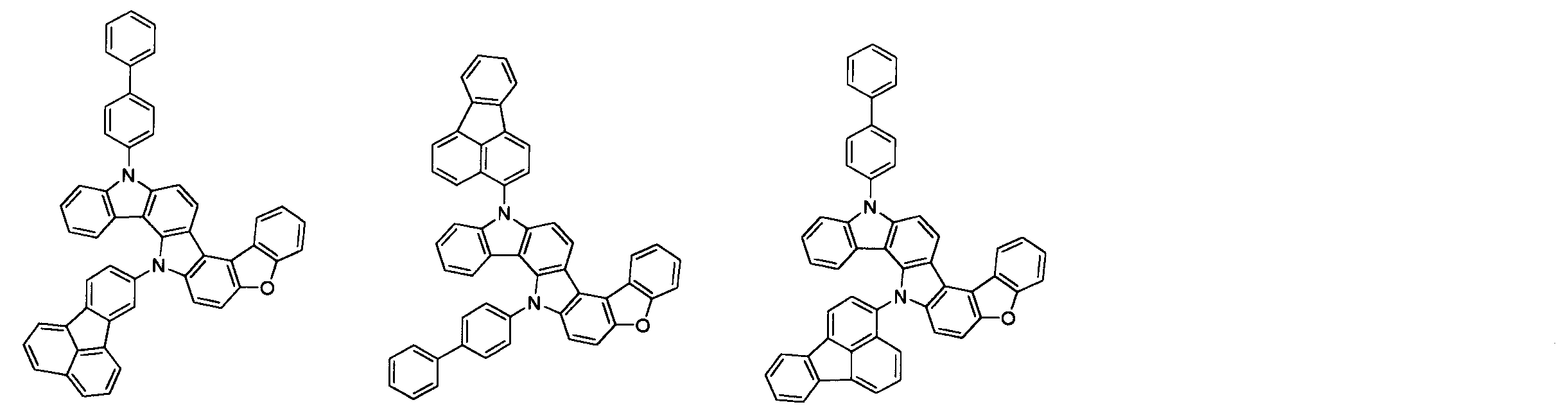
本発明の一態様である有機エレクトロルミネッセンス素子用材料(以下、「本発明の一態様である有機EL素子用材料」という)は、前記式(1)で表される化合物を含む。
本願発明の一態様である有機EL素子用材料は、燐光ホスト材料として有用である。
また、本発明の式(1)で表される化合物は、分子平面性が高く電荷輸送性が高いため輸送材料としても有用である。
本発明の一態様である有機エレクトロルミネッセンス素子(以下、「本発明の一態様である有機EL素子」という)は、陰極、陽極、及び該陰極と該陽極の間に一層以上の有機薄膜層を有する有機エレクトロルミネッセンス素子であって、前記一層以上の有機薄膜層が発光層を含み、前記一層以上の有機薄膜層の少なくとも1層が前記式(1)で表される化合物を含む。
前記発光層が、さらに蛍光発光材料及び燐光発光材料から選ばれる1種以上を含有することが好ましい。従って、前記発光層は、燐光発光層であってもいし、蛍光発光層であってもよいが、燐光発光層であることが好ましい。前記式(1)で表される化合物は、発光層のホスト材料として用いることが好ましく、特に、燐光発光層のホスト材料として用いることが好ましい。
前記一層以上の有機薄膜層が、さらに電子輸送層を含むことが好ましい。
(基板)
基板は、発光素子の支持体として用いられる。基板としては、例えば、ガラス、石英、プラスチック等を用いることができる。また、可撓性基板を用いてもよい。可撓性基板とは、折り曲げることができる(フレキシブル)基板のことであり、例えば、ポリカーボネート、ポリ塩化ビニルからなるプラスチック基板等が挙げられる。
基板上に形成される陽極には、仕事関数の大きい(具体的には4.0eV以上)金属、合金、電気伝導性化合物、及びこれらの混合物等を用いることが好ましい。具体的には、例えば、酸化インジウム-酸化スズ(ITO:Indium Tin Oxide)、珪素若しくは酸化珪素を含有した酸化インジウム-酸化スズ、酸化インジウム-酸化亜鉛、酸化タングステン、及び酸化亜鉛を含有した酸化インジウム、グラフェン等が挙げられる。この他、金(Au)、白金(Pt)、又は金属材料の窒化物(例えば、窒化チタン)等が挙げられる。
正孔注入層は、正孔注入性の高い物質を含む層である。正孔注入性の高い物質としては、モリブデン酸化物、チタン酸化物、バナジウム酸化物、レニウム酸化物、ルテニウム酸化物、クロム酸化物、ジルコニウム酸化物、ハフニウム酸化物、タンタル酸化物、銀酸化物、タングステン酸化物、マンガン酸化物、芳香族アミン化合物、又は高分子化合物(オリゴマー、デンドリマー、ポリマー等)等も使用できる。
正孔輸送層は、正孔輸送性の高い物質を含む層である。正孔輸送層には、芳香族アミン化合物、カルバゾール誘導体、アントラセン誘導体等を使用する事ができる。ポリ(N-ビニルカルバゾール)(略称:PVK)やポリ(4-ビニルトリフェニルアミン)(略称:PVTPA)等の高分子化合物を用いることもできる。但し、電子よりも正孔の輸送性の高い物質であれば、これら以外のものを用いてもよい。尚、正孔輸送性の高い物質を含む層は、単層のものだけでなく、上記物質からなる層が二層以上積層したものとしてもよい。
発光層は、発光性の高い物質を含む層であり、種々の材料を用いることができる。例えば、発光性の高い物質としては、蛍光を発光する蛍光性化合物や燐光を発光する燐光性化合物を用いることができる。蛍光性化合物は一重項励起状態から発光可能な化合物であり、燐光性化合物は三重項励起状態から発光可能な化合物である。これらの化合物はドーパント又はドーパント材料と呼ばれることもある。
発光層に用いることができる青色系の蛍光発光材料として、ピレン誘導体、スチリルアミン誘導体、クリセン誘導体、フルオランテン誘導体、フルオレン誘導体、ジアミン誘導体、トリアリールアミン誘導体等が使用できる。具体的には、N,N’-ビス[4-(9H-カルバゾール-9-イル)フェニル]-N,N’-ジフェニルスチルベン-4,4’-ジアミン(略称:YGA2S)、4-(9H-カルバゾール-9-イル)-4’-(10-フェニル-9-アントリル)トリフェニルアミン(略称:YGAPA)、4-(10-フェニル-9-アントリル)-4’-(9-フェニル-9H-カルバゾール-3-イル)トリフェニルアミン(略称:PCBAPA)等が挙げられる。
イリジウム(Ir)、オスミウム(Os)、白金(Pt)から選択される金属原子のオルトメタル化錯体である燐光発光材料は、下記式(α)で表される錯体であることが好ましい。

環A1は、置換もしくは無置換の環形成炭素数6~24のアリール基又は環形成原子数5~30のヘテロアリール基を表わし、環A2は、窒素をヘテロ環形成原子として含有する置換もしくは無置換の環形成原子数5~30のヘテロアリール基を表わす。
式(α)の環A1及び環A2における環形成原子数5~30のヘテロアリール基としては、前述した式(1)におけるアリールが挙げられる。
式(α)の環A1及び環A2が有し得る置換基は、前述した式(1)における置換基と同じである。
さらに、式(α)で表される錯体は、下記式(T)又は(U)で表される錯体であることが好ましい。

環A-環Bは、アリール基又はヘテロアリール基の結合対を表し、環Aの窒素原子及び環Bのsp2混成原子を介して金属Mに配位する。
環A-環Cは、アリール基又はヘテロアリール基の結合対を表す。
Ra、Rb及びRcは、各々独立に、水素原子、置換もしくは無置換の炭素数1~25のアルキル基、置換もしくは無置換の炭素数1~25のアルコキシ基、置換もしくは無置換のアミノ基、置換もしくは無置換の炭素数2~25のアルケニル基、置換もしくは無置換の炭素数2~25のアルキニル基、置換もしくは無置換の炭素数7~50のアラルキル基、置換もしくは無置換の環形成炭素数6~24のアリール基及び置換もしくは無置換の環形成原子数5~30のヘテロアリール基からなる群より選択されるいずれかを表し、各々独立に1つ~4つである。
X1~X9は、各々独立に、炭素原子又は窒素原子を表す。
Rd及びReは、各々独立に、水素原子、置換もしくは無置換の炭素数1~25のアルキル基、置換もしくは無置換の炭素数1~25のアルコキシ基、置換もしくは無置換のアミノ基、置換もしくは無置換の炭素数2~25のアルケニル基、置換もしくは無置換の炭素数2~25のアルキニル基、置換もしくは無置換の炭素数7~50のアラルキル基、置換もしくは無置換の環形成炭素数6~24のアリール基及び置換もしくは無置換の環形成原子数5~30のヘテロアリール基からなる群より選択されるいずれかを表し、環Cに結合するRc、Rd及びReの少なくとも1つは、水素原子ではない。
mは金属Mの酸化状態を表し、nは1以上である。L’は、モノアニオン性の二座配位子を表す。
環B及び環Cで表される環形成原子数5若しくは6のアリール基としては、前述した式(1)におけるアリール基が挙げられる。
環B及び環Cで表される環形成原子数5若しくは6のヘテロアリール基としては、前述したヘテロアリール基が挙げられる。
R1、R2、Ra、Rb及びRcで表される置換もしくは無置換の炭素数1~25のアルキル基、置換もしくは無置換の炭素数1~25のアルコキシ基、置換もしくは無置換の炭素数7~50のアラルキル基、置換もしくは無置換の環形成炭素数6~24のアリール基及び置換もしくは無置換の環形成原子数5~30のヘテロアリール基としては、それぞれ、前述したものと同様の基が挙げられる。
R1、R2、Ra、Rb及びRcで表される置換もしくは無置換の炭素数2~25のアルケニル基、及び置換もしくは無置換の炭素数2~25のアルキニル基としては、それぞれ、前述したものと同様の基が挙げられる。
L’で表されるモノアニオン性の二座配位子としては、下記式(L’)で表わされる配位子が挙げられる。

X9から環Bより外側に伸びる実線と、環Aの窒素原子から環Aより外側に伸びる破線を介して、式(L’)で表わされる配位子は、式(T)で表される金属Mに配位する。

R1、R2、R3及びR4は、各々独立に、水素原子、置換もしくは無置換の炭素数1~25のアルキル基、及び置換もしくは無置換の環形成炭素数6~24のアリール基からなる群より選択されるいずれかを表し、各々独立に1つ~4つである。
また、R1、R2、R3及びR4で表される環形成炭素数6~24のアリール基としては、前述した基が挙げられ、好ましい態様も同様である。
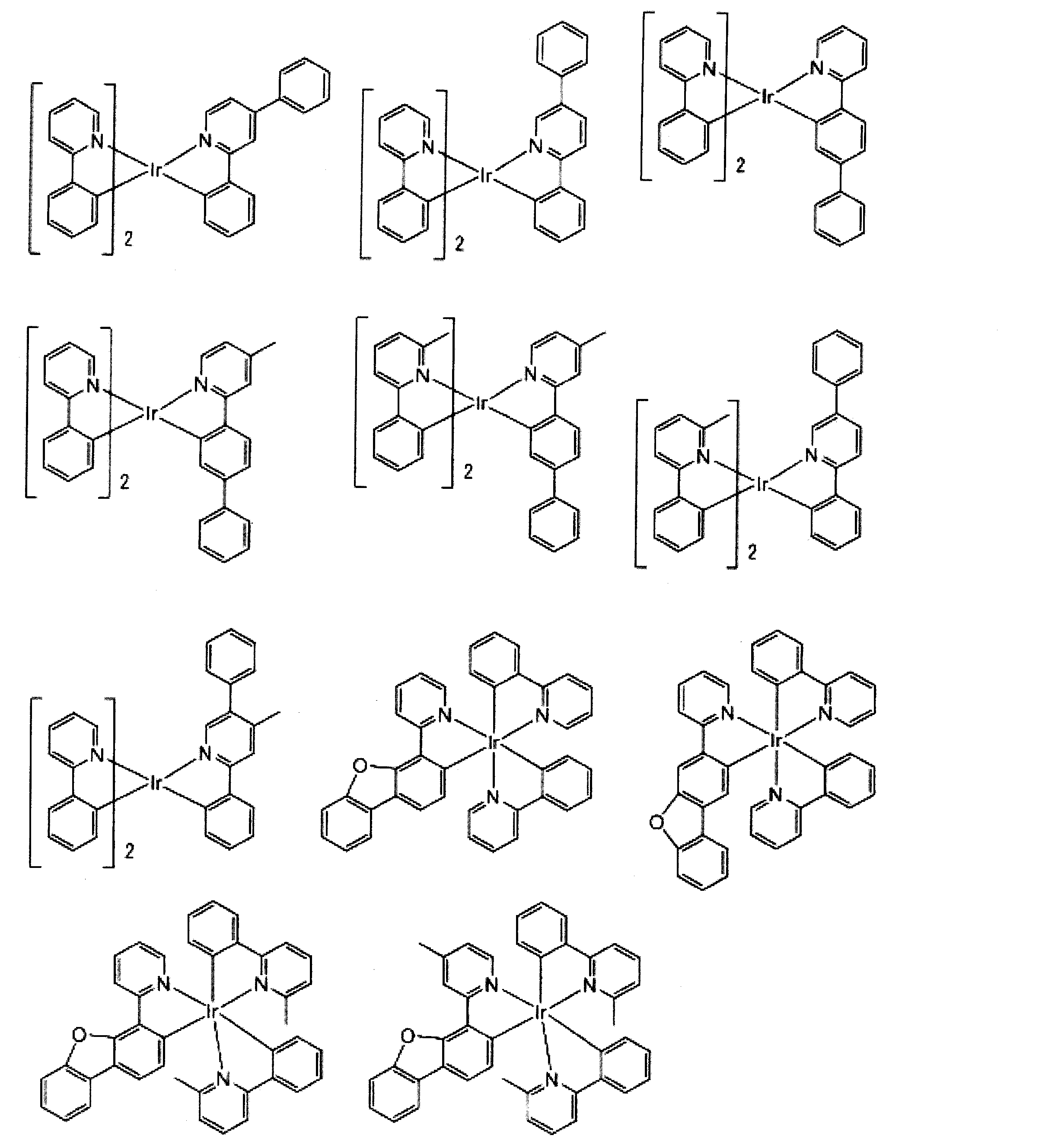
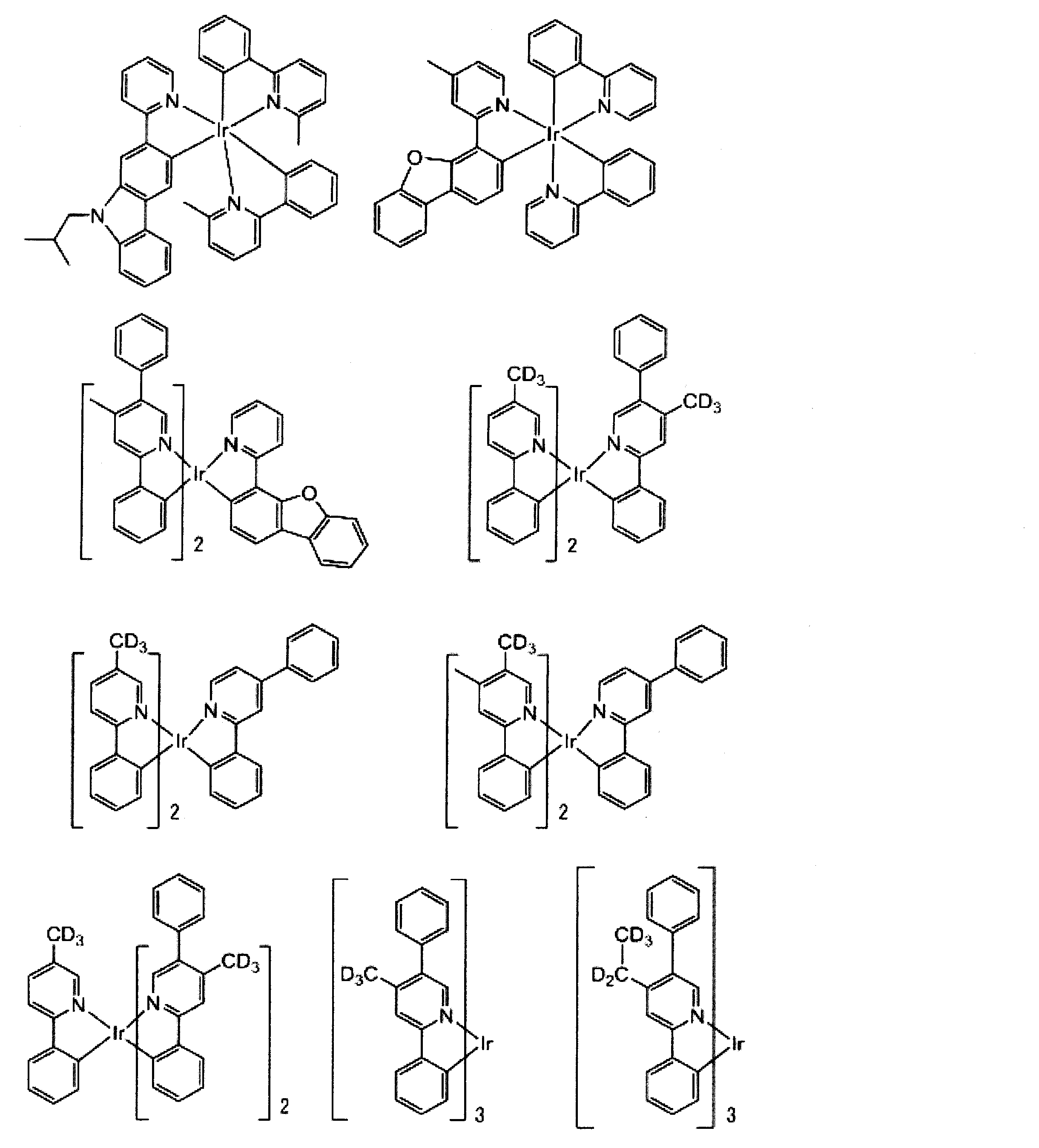
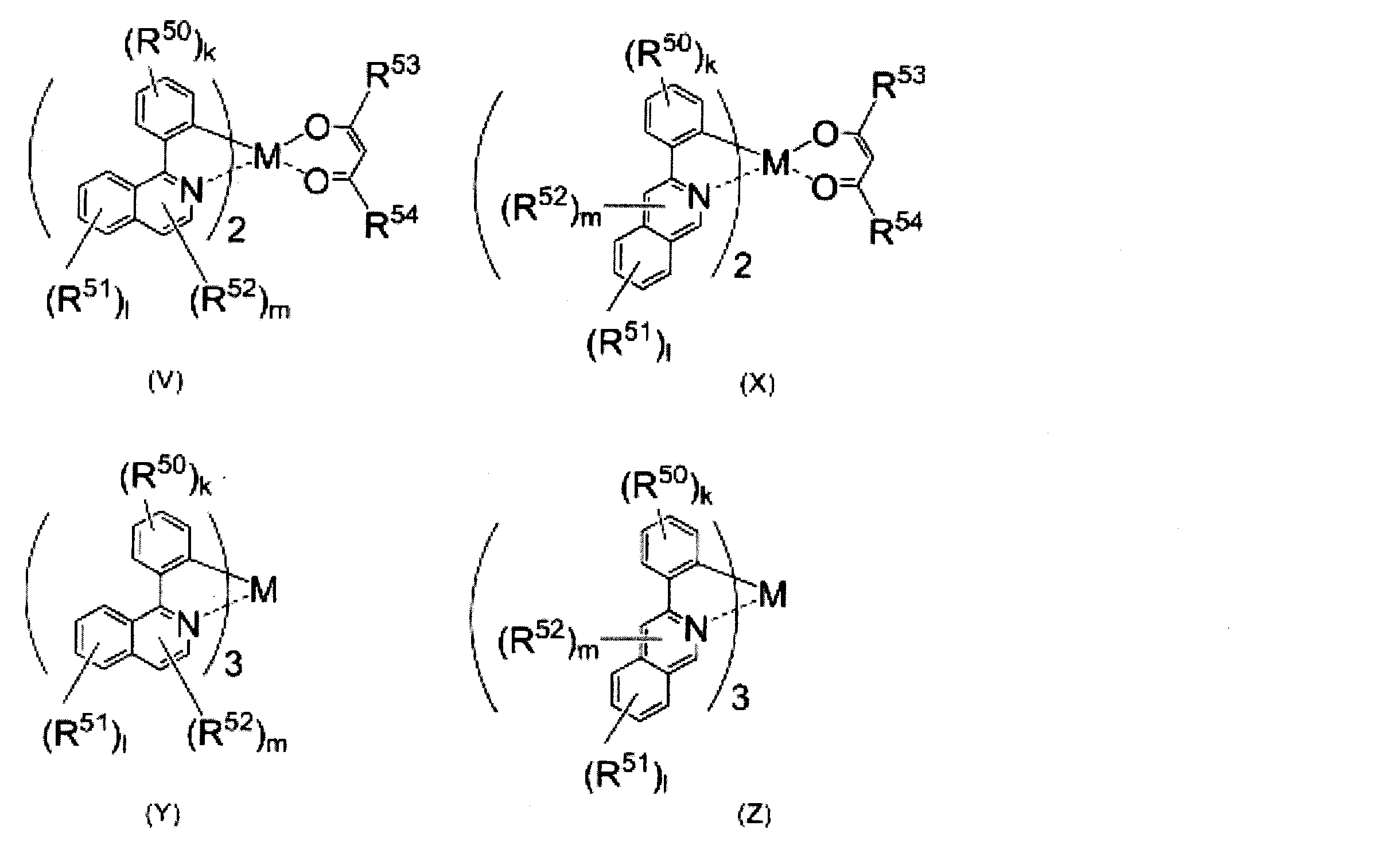
R50~R54の示す置換基としては、前述した置換基と同様のものが挙げられる。
式(V)は下記式(V-1)で表されることが好ましく、式(X)は下記式(X-1)又は式(X-2)で表されることが好ましい。下記式(V-1)、(X-1)、及び(X-2)において、R50、k及びMは、上記の、R50、k及びMと同じである。
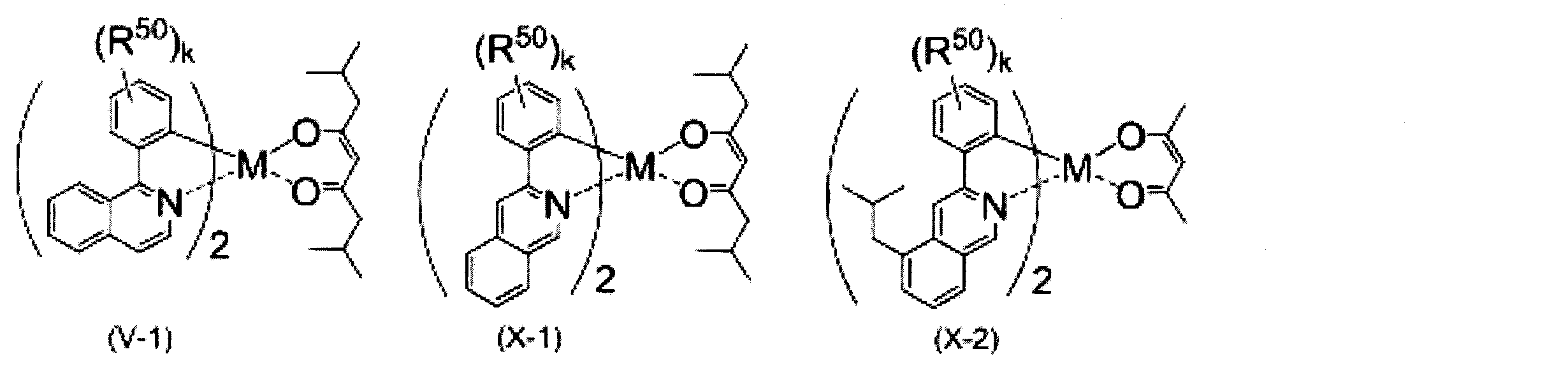


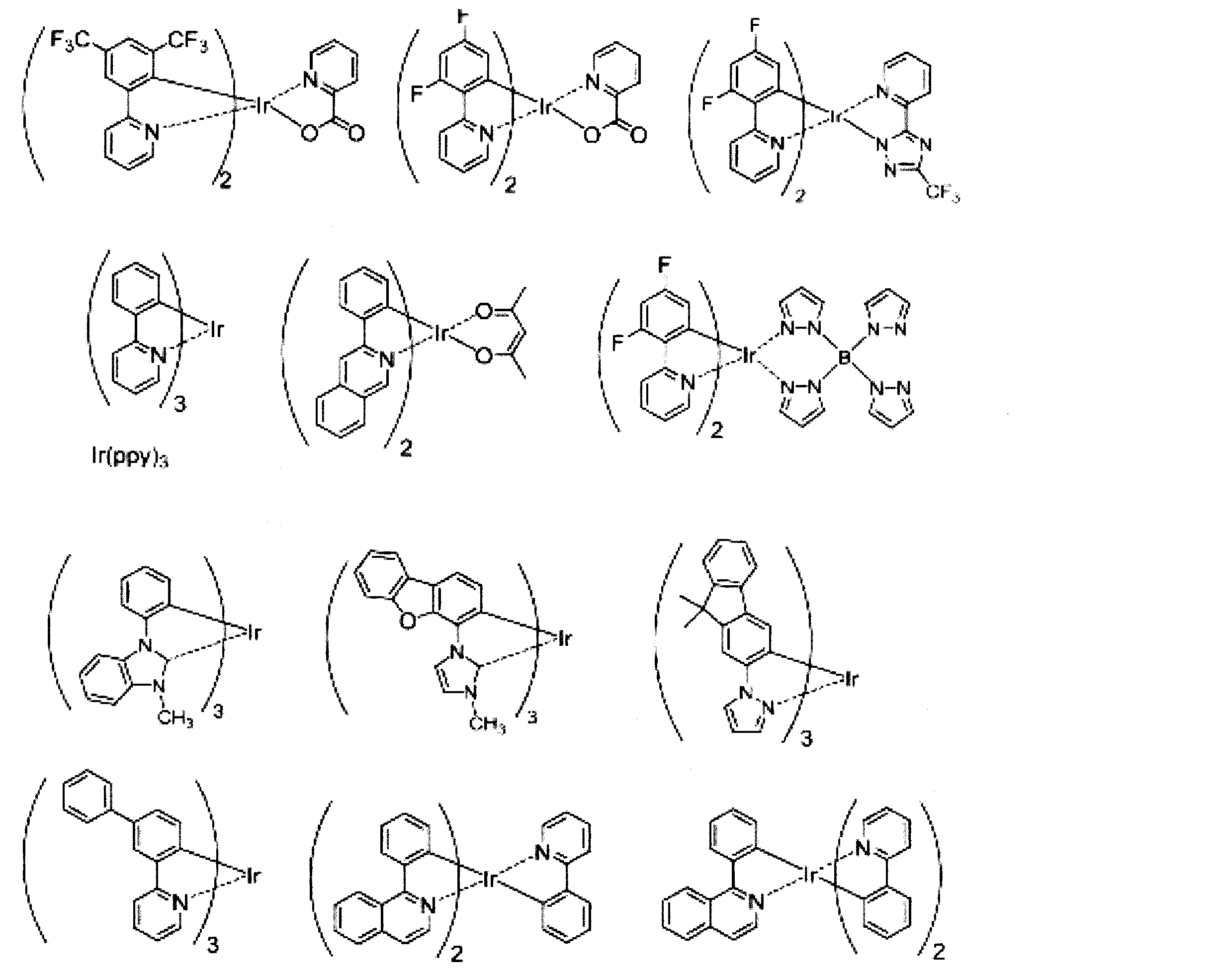

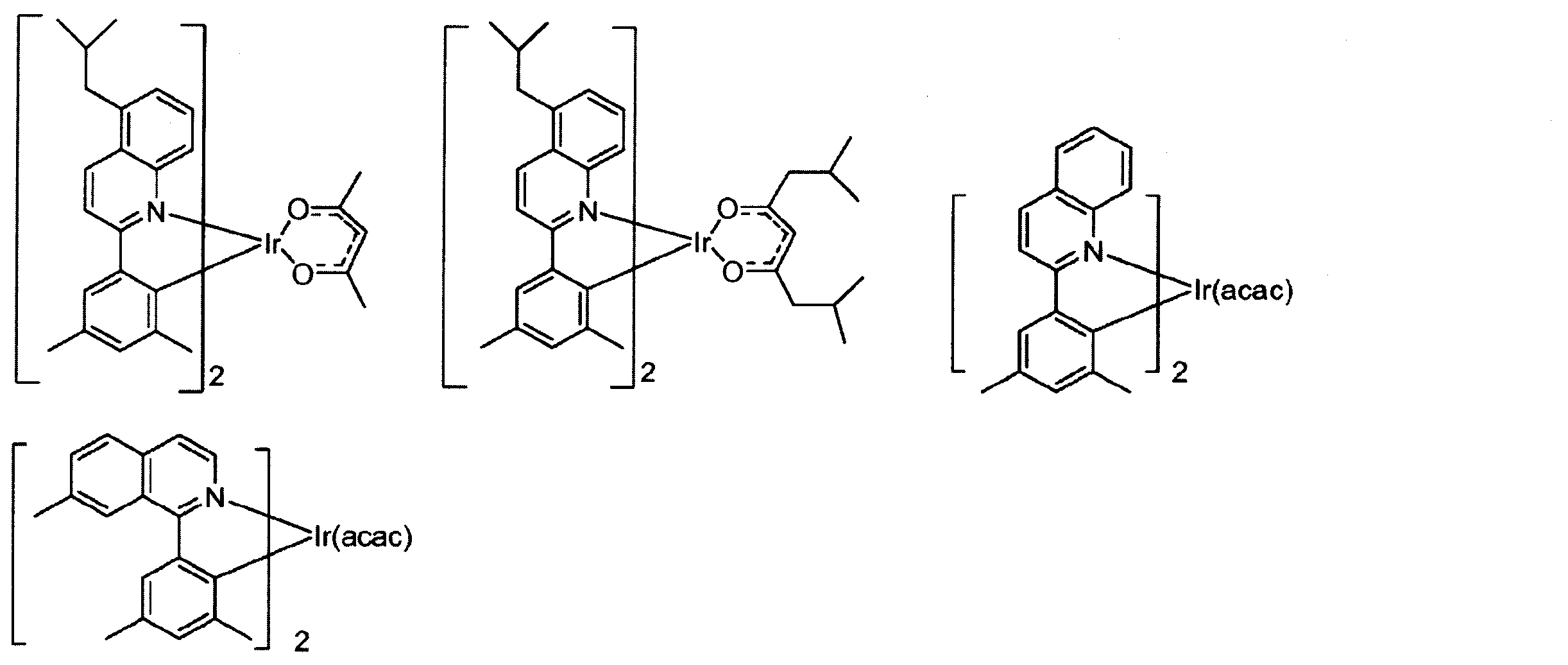
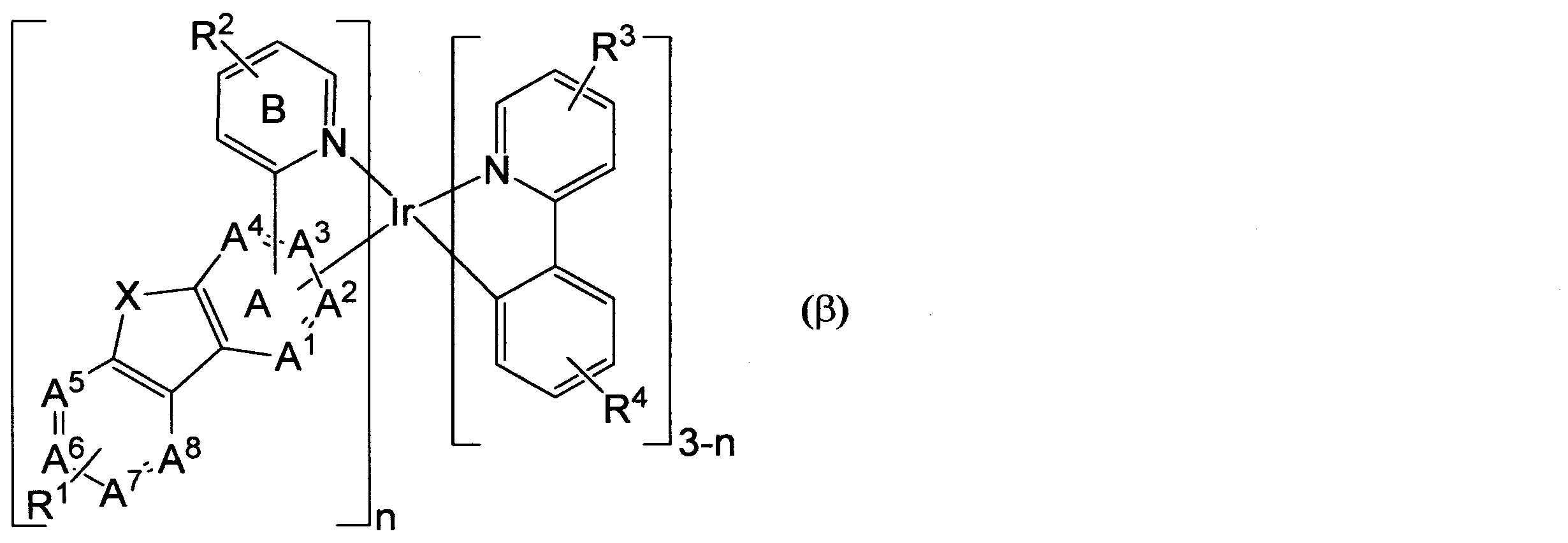
XはO,S又はSeであり、Oが好ましい。
R1~R4は独立してモノ-、ジ-、トリ-もしくはテトラ-置換、又は無置換であり、隣接するR1~R4は互いに結合して環を形成してもよく、R1~R4は独立して、水素、重水素、ハロゲン、置換もしくは無置換の炭素数1~25のアルキル、置換もしくは無置換の環形成炭素数3~25のシクロアルキル、置換もしくは無置換の原子数2~25のヘテロアルキル、置換もしくは無置換の炭素数7~50のアリールアルキル、置換もしくは無置換の炭素数1~25のアルコキシ、置換もしくは無置換の環形成炭素数6~24のアリールオキシ、置換もしくは無置換のアミノ、炭素数1~25のアルキル基及び環形成炭素数6~24のアリール基からなる群から選択される1以上の基で置換されたシリル、置換もしくは無置換の炭素数2~25のアルケニル、環形成炭素数3~25のシクロアルケニル、原子数3~25のヘテロアルケニル、炭素数2~25のアルキニル、環形成炭素数6~24のアリール、環形成原子数5~30のヘテロアリール、アシル、炭素数1~25のアルキル基及び環形成炭素数6~24のアリール基からなる群から選択される1以上の基で置換されたカルボニル、カルボン酸、エステル、ニトリル、イソニトリル、スルファニル、スルフィニル、スルホニル、ホスフィノ、及びこれらの組み合わせからなる群から選択される。R1~R4は独立して水素、重水素、炭素数1~25のアルキル及びこれらの組み合わせからなる群から選択することが好ましい。R2及び/又はR3が炭素数1~25のアルキル基であることが好ましく、当該アルキル基が重水素化されているか、もしくは部分的に重水素化されていることがさらに好ましい。
nは1~3の整数であり、1であることが好ましい。
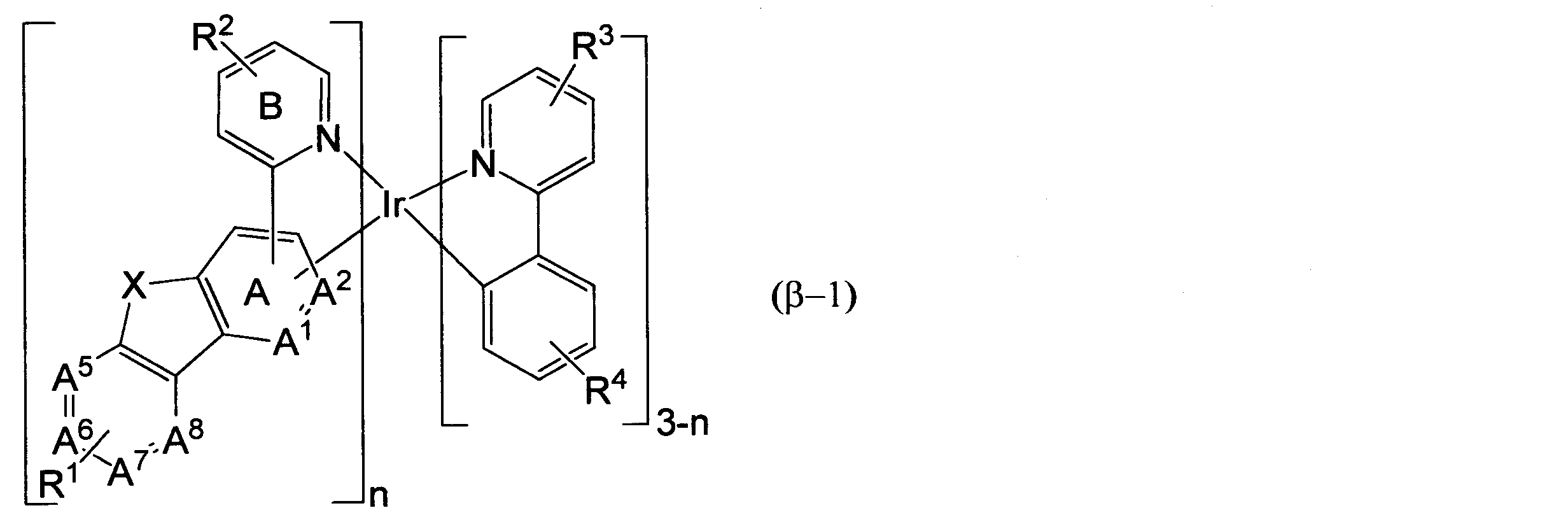
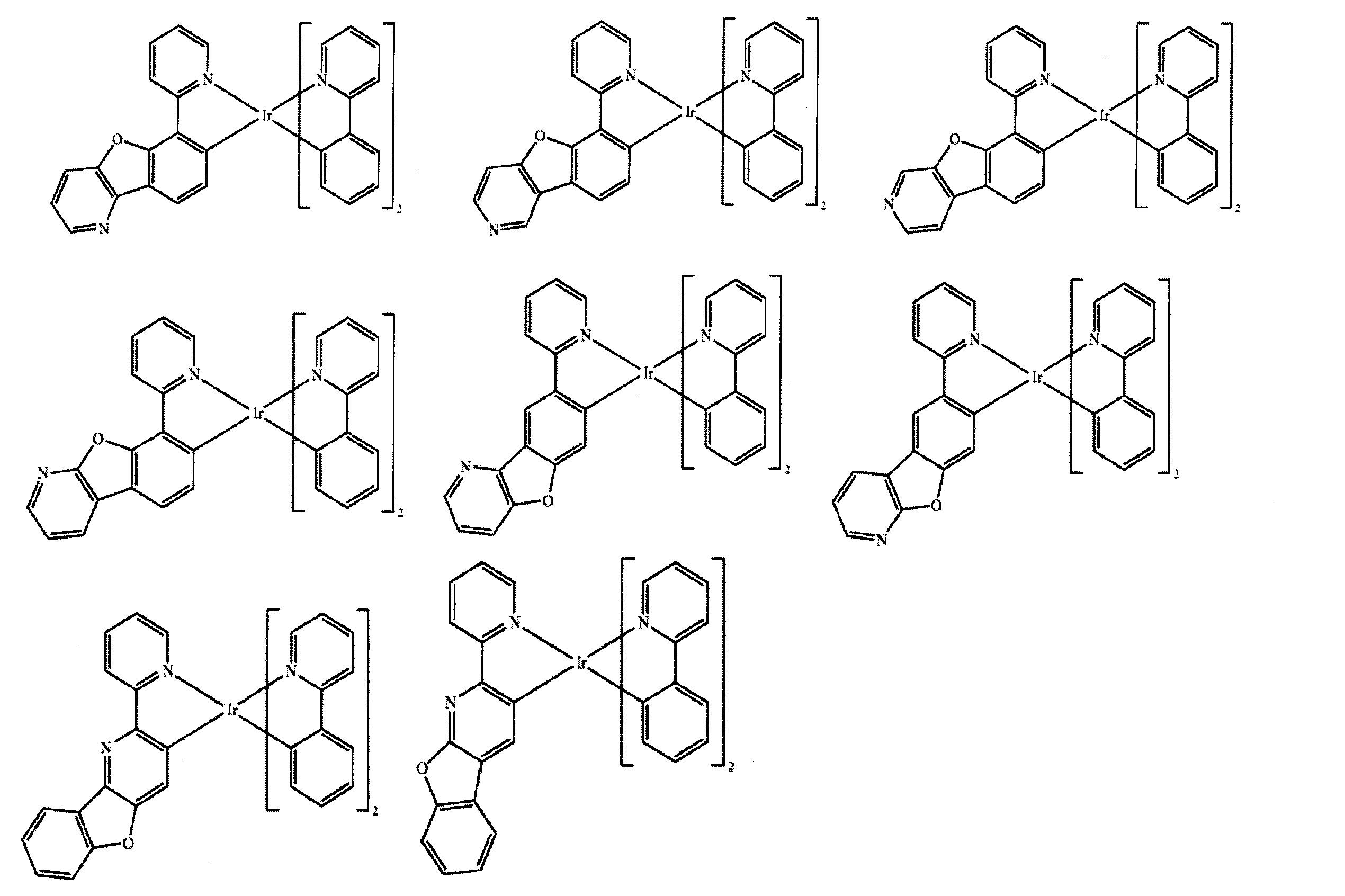
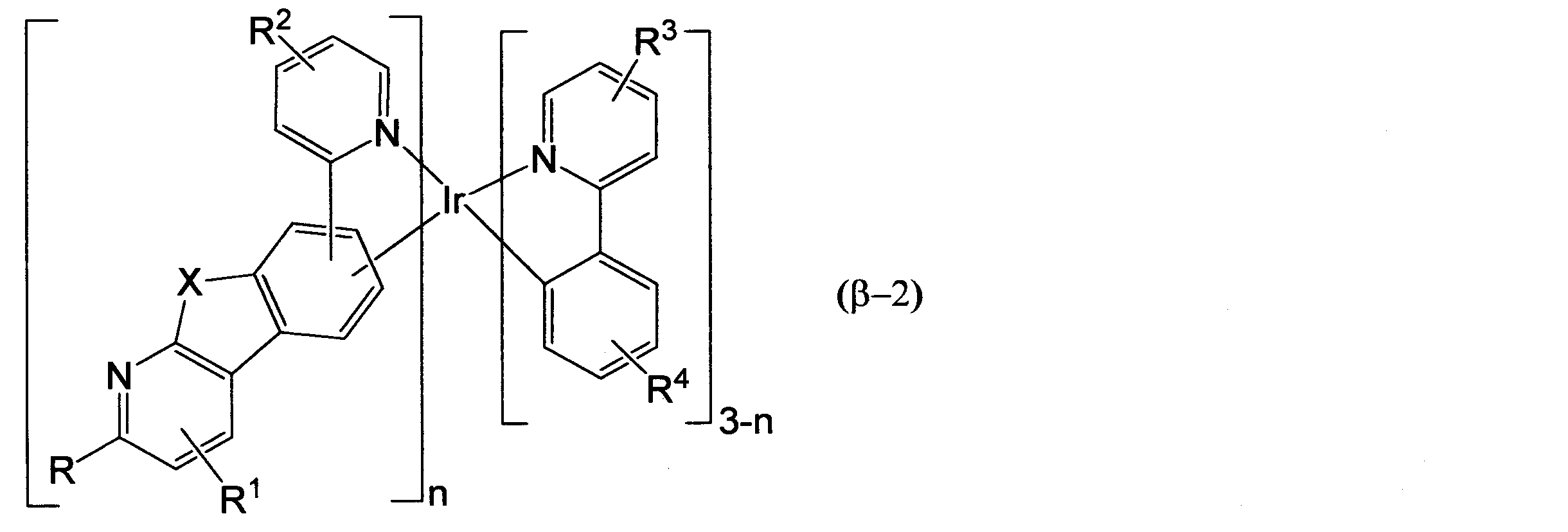
Rは、置換もしくは無置換の炭素数1~25のアルキル、置換もしくは無置換の環形成炭素数3~25のシクロアルキル及びこれらの組み合わせからなる群から選択される。Rは好ましくは置換もしくは無置換の炭素数1~25のアルキル又は置換もしくは無置換の環形成炭素数3~25のシクロアルキルである。

発光層としては、上述した発光性の高い物質(ゲスト材料)を他の物質(ホスト材料)に分散させた構成としてもよい。発光性の高い物質を分散させるための物質としては、各種のものを用いることができ、発光性の高い物質よりも最低空軌道準位(LUMO準位)が高く、最高被占有軌道準位(HOMO準位)が低い物質を用いることが好ましい。
発光性の高い物質を分散させるための物質(ホスト材料)としては、1)アルミニウム錯体、ベリリウム錯体、若しくは亜鉛錯体等の金属錯体、2)オキサジアゾール誘導体、ベンゾイミダゾール誘導体、若しくはフェナントロリン誘導体等の複素環化合物、3)カルバゾール誘導体、アントラセン誘導体、フェナントレン誘導体、ピレン誘導体、若しくはクリセン誘導体等の縮合芳香族化合物、3)トリアリールアミン誘導体、若しくは縮合多環芳香族アミン誘導体等の芳香族アミン化合物が使用される。
電子輸送層は、電子輸送性の高い物質を含む層である。電子輸送層には、1)アルミニウム錯体、ベリリウム錯体、亜鉛錯体等の金属錯体、2)イミダゾール誘導体、ベンゾイミダゾール誘導体、アジン誘導体、カルバゾール誘導体、フェナントロリン誘導体等の複素芳香族化合物、3)高分子化合物を使用することができる。
電子注入層は、電子注入性の高い物質を含む層である。電子注入層には、リチウム(Li)、フッ化リチウム(LiF)、フッ化セシウム(CsF)、フッ化カルシウム(CaF2)、リチウム酸化物(LiOx)等のようなアルカリ金属、アルカリ土類金属、又はそれらの化合物を用いることができる。
陰極には、仕事関数の小さい(具体的には3.8eV以下)金属、合金、電気伝導性化合物、及びこれらの混合物等を用いることが好ましい。このような陰極材料の具体例としては、元素周期表の第1族又は第2族に属する元素、即ちリチウム(Li)やセシウム(Cs)等のアルカリ金属、及びマグネシウム(Mg)等のアルカリ土類金属、及びこれらを含む合金(例えば、MgAg、AlLi)等の希土類金属及びこれらを含む合金等が挙げられる。
本発明の一態様である電子機器は、前記本発明の一態様である有機エレクトロルミネッセンス素子を搭載している。
本発明の一態様である有機エレクトロルミネッセンス素子は、様々な電子機器に使用でき、例えば壁掛けテレビのフラットパネルディスプレイ等の平面発光体、複写機、プリンター、液晶ディスプレイのバックライト又は計器類等の光源、表示板、標識灯等に利用できる。また、本発明の化合物は、有機EL素子だけでなく、電子写真感光体、光電変換素子、太陽電池、イメージセンサー等の分野においても使用できる。
尚、以下の合成反応を参照し、目的物に合わせた公知の代替反応や原料を用いることによって、本願の請求の範囲に記載の化合物を合成することが可能である。
中間体1-Aの合成スキームを以下に示す。

アルゴン雰囲気下、1,2-ジブロモ-3-ニトロベンゼン:2.1g、ジベンゾフラン-2-ボロン酸:1.7g、テトラキス(トリフェニルホスフィン)パラジウム(0):165mg、炭酸ナトリウム:2.3g、トルエン:25mL、1,2-ジメトキシエタン:5ml、水:5mlをフラスコに仕込み、12時間加熱還流攪拌した。
室温(25℃)まで冷却後、反応溶液を分液ロートに移しトルエンにて抽出した。その後、有機層を硫酸ナトリウムで乾燥し、ろ過、濃縮した。残渣をシリカゲルカラムクロマトグラフィで精製し、白色固体2.0g(収率76%)を得た。
LC-MS分析により、当該白色個体を中間1-1と同定した。
アルゴン雰囲気下、中間体1-1:2.0g、トリフェニルホスフィン:3.6g、1,2-ジクロロベンゼン:50mLをフラスコに仕込み、12時間加熱攪拌した。
室温(25℃)まで冷却後、反応溶液をシリカゲルカラムクロマトグラフィで精製し、白色固体1.2g(収率67%)を得た。
LC-MS分析により、当該白色個体を中間体1-2と同定した。
アルゴン雰囲気下、中間体1-2:1.2g、ヨードベンゼン:1.5g、よう化銅(I):35mg、trans-1,2-シクロヘキサンジアミン:62.3mg、リン酸三カリウム:3.1g、1,4ジオキサン:20mLをフラスコに仕込み、12時間加熱還流攪拌した。
室温(25℃)まで冷却後、反応溶液を分液ロートに移し、水を加えトルエンにて抽出した。その後、有機層を硫酸ナトリウムで乾燥し、ろ過、濃縮した。残渣をシリカゲルカラムクロマトグラフィで精製し、白色固体886mg(収率59%)を得た。
LC-MS分析により、当該白色個体を中間1-3と同定した。
アルゴン雰囲気下、中間体1-3:886mg、2-クロロアニリン:329mg、トリス(ジベンジリデンアセトン)ジパラジウム(0):39mg、トリ-tert-ブチルホスホニウムテトラフルオロボラート:50mg、ナトリウムtert-ブトキシド:480mg、キシレン:8mLをフラスコに仕込み、12時間加熱還流攪拌した。
室温(25℃)まで冷却後、反応溶液を濃縮し、残渣をシリカゲルカラムクロマトグラフィで精製し、白色固体808mg(収率82%)を得た。
LC-MS分析により、当該白色個体を中間体1―4と同定した。
アルゴン雰囲気下、中間体1-4:808mg、酢酸パラジウム(II):40mg、トリシクロヘキシルホスホニウムテトラフルオロボラート:130mg、炭酸セシウム:1.7g、N,N-ジメチルアセトアミド:15mLをフラスコに仕込み、130℃で12時間加熱攪拌した。
室温(25℃)まで冷却後、反応溶液を分液ロートに移し水を加えた後、ヘキサン:酢酸エチル=3:1の溶液にて抽出した。その後、有機層を硫酸ナトリウムで乾燥し、ろ過、濃縮した。残渣をシリカゲルカラムクロマトグラフィで精製し、白色固体528mg(収率71%)を得た。
LC-MS分析により、当該白色個体を中間体1-Aと同定した。
中間体2-Aの合成スキームを以下に示す。
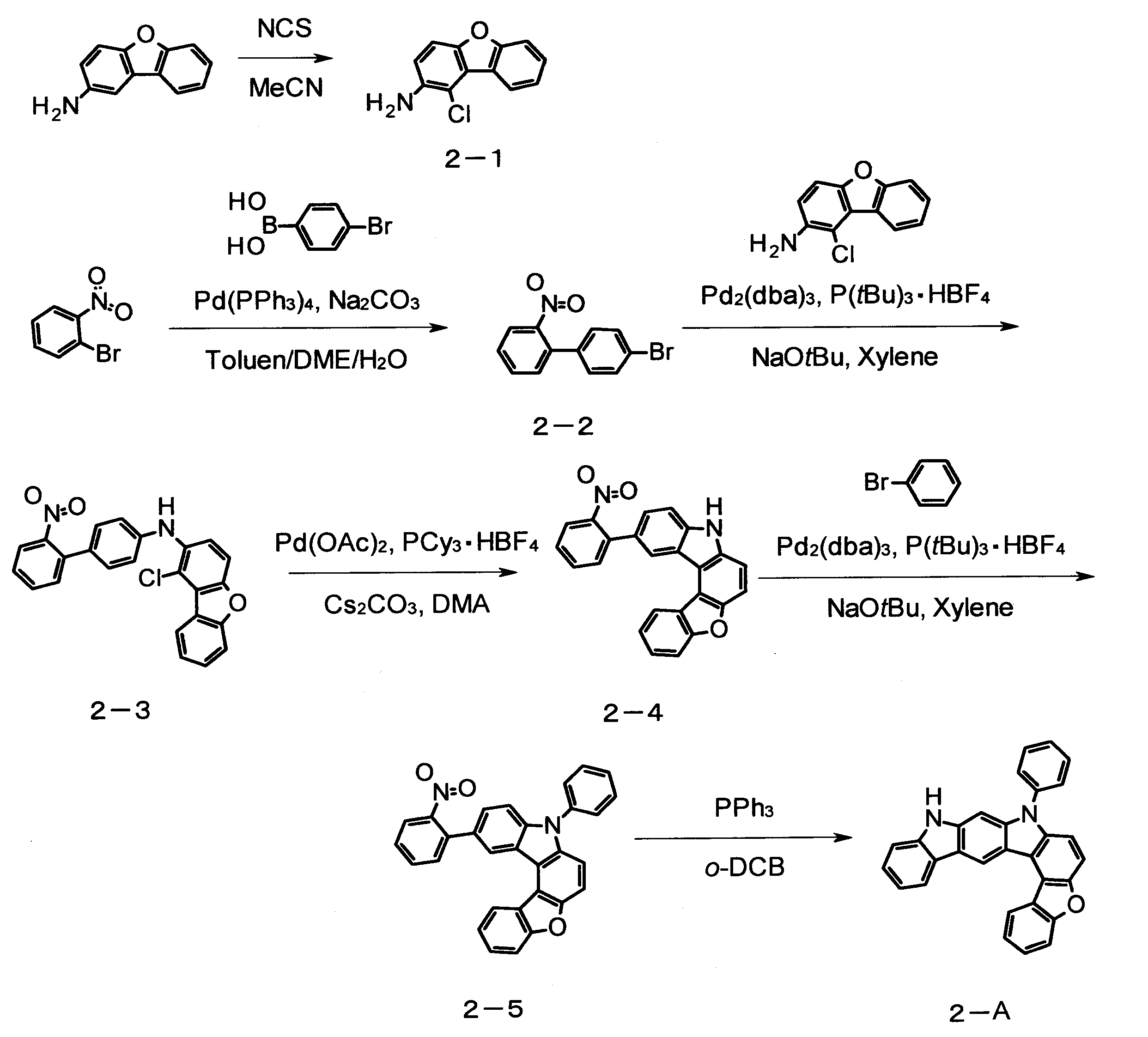
アルゴン雰囲気下、ジベンゾフラン-2-アミン:1.8g、:N-クロロスクシンイミド:1.3g、アセトニトリル:40mLをフラスコに仕込み、25℃で8時間攪拌した。
その後反応溶液を分液ロートに移し水を加えてトルエンにて抽出した。その後、有機層を硫酸ナトリウムで乾燥し、ろ過、濃縮した。残渣をシリカゲルカラムクロマトグラフィで精製し、白色固体1.7g(収率76%)を得た。
LC-MS分析により、当該白色個体を中間体2―1と同定した。
中間体1-1の合成において、「1,2-ジブロモ-3-ニトロベンゼン」、「ジベンゾフラン-2-ボロン酸」の代わりに「2-ブロモニトロベンゼン」、「4ブロモフェニルボロン酸」を用いた以外は、同様の方法で合成し、白色固体1.7g(収率61%)を得た。
LC-MS分析により、当該白色個体を中間体2―2と同定した
中間体1-4の合成において、「中間体1-3」、「2-クロロアニリン」の代わりに「中間体2-1」、「中間体2-2」を用いた以外は、同様の方法で合成し、白色固体1.9g(収率74%)を得た。
LC-MS分析により、当該白色個体を中間体2―3と同定した。
中間体1-Aの合成において、「中間体1-4」の代わりに「中間体2-3」を用いた以外は、同様の方法で合成し、白色固体795mg(収率46%)を得た。
LC-MS分析により、当該白色個体を中間体2―4と同定した。
中間体1-4の合成において、「中間体1-3」、「2-クロロアニリン」の代わりに「中間体2-4」、「ブロモベンゼン」を用いた以外は、同様の方法で合成し、白色固体754mg(収率79%)を得た。
LC-MS分析により、当該白色個体を中間体2―5と同定した
中間体1-2の合成において、「中間体1-1」の代わりに「中間体2-5」を用いた以外は、同様の方法で合成し、白色固体363mg(収率52%)を得た。
LC-MS分析により、当該白色個体を中間体2―Aと同定した
中間体1-Aの合成スキームを以下に示す。

中間体1-1の合成において、「1,2-ジブロモ-3-ニトロベンゼン」、「ジベンゾフラン-2-ボロン酸」の代わりに「2-ブロモニトロベンゼン」、「ジベンゾフラン-4-ボロン酸」を用いた以外は、同様の方法で合成し、白色固体1.9g(収率82%)を得た。
LC-MS分析により、当該白色個体を中間体3―1と同定した
中間体1-2の合成において、「中間体1-1」の代わりに「中間体3-1」を用いた以外は、同様の方法で合成し、白色固体1.4g(収率76%)を得た。
LC-MS分析により、当該白色個体を中間体3―2と同定した
中間体1-3の合成において、「中間体1-2」の代わりに「中間体3-2」を用いた以外は、同様の方法で合成し、白色固体1.5g(収率91%)を得た。
LC-MS分析により、当該白色個体を中間体3―3と同定した。
アルゴン雰囲気下、中間体3-3:1,5g、:N-ブロモスクシンイミド:801mg、N,N-ジメチルホルムアミド:20mLをフラスコに仕込み、25℃で8時間攪拌した。
その後反応溶液を分液ロートに移し水を加えて、ヘキサン:酢酸エチル3:1にて抽出した。その後、有機層を硫酸ナトリウムで乾燥し、ろ過、濃縮した。残渣をシリカゲルカラムクロマトグラフィで精製し、白色固体1.5g(収率82%)を得た。
LC-MS分析により、当該白色個体を中間体3―4と同定した。
アルゴン雰囲気下、中間体3-4:1.5g、6-メチル-2-(2-ニトロフェニル)-1,3,6,2-ジオキサザボロカン-4,8-ジオン:1.5g、酢酸パラジウム(II):50mg、2-ジシクロヘキシルホスフィノ-2’,6’-ジメトキシビフェニル:182mg、りん酸三カリウム:5.9g、1,4-ジオキサン:45ml、水:9mlをフラスコに仕込み、12時間加熱還流攪拌した。
室温(25℃)まで冷却後、反応溶液を分液ロートに移し、トルエンにて抽出した。その後、有機層を硫酸ナトリウムで乾燥し、ろ過、濃縮した。残渣をシリカゲルカラムクロマトグラフィで精製し、白色固体1.2g(収率71%)を得た。
LC-MS分析により、当該白色個体を中間体3-5と同定した。
中間体1-2の合成において、「中間体1-1」の代わりに「中間体3-5」を用いた以外は、同様の方法で合成し、白色固体596mg(収率54%)を得た。
LC-MS分析により、当該白色個体を中間体3-Aと同定した
中間体4-Aの合成スキームを以下に示す。
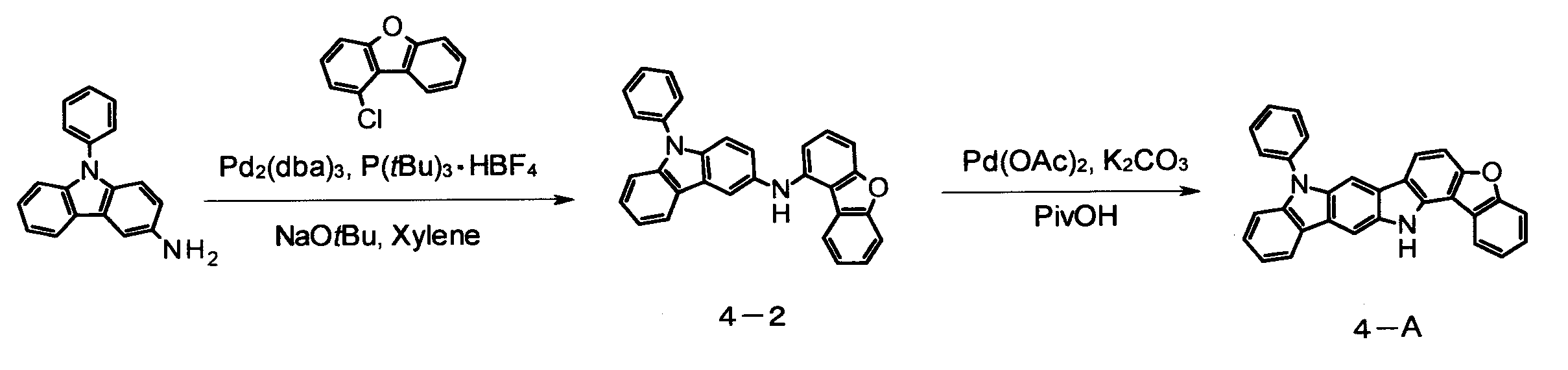
中間体1-4の合成において、「中間体1-3」、「2-クロロアニリン」の代わりに「9-フェニルカルバゾール-3-アミン」、「1-クロロジベンゾフラン」を用いた以外は、同様の方法で合成し、白色固体3.1g(収率62%)を得た。
LC-MS分析により、当該白色個体を中間体4―2と同定した。
空気雰囲気下、中間体4-2:3.1g、酢酸パラジウム(II):161mg、炭酸カリウム:99mg、ピバル酸:7.1gをフラスコに仕込み、130℃で12時間加熱攪拌した。
室温(25℃)まで冷却後トルエンを加え、得られた溶液をシリカゲルカラムクロマトグラフィで精製し、白色固体977mg(収率32%)を得た。
LC-MS分析により、当該白色個体を中間体4-Aと同定した。
中間体5-Aの合成スキームを以下に示す。

中間体1-4の合成において、「中間体1-3」の代わりに「中間体3-4」を用いた以外は、同様の方法で合成し、白色固体2.2g(収率88%)を得た。
LC-MS分析により、当該白色個体を中間体5-1と同定した。
中間体1-Aの合成において、「中間体1-4」の代わりに「中間体5-1」を用いた以外は、同様の方法で合成し、白色固体1.2g(収率61%)を得た。
LC-MS分析により、当該白色個体を中間体5-Aと同定した。
中間体6-Aの合成スキームを以下に示す。
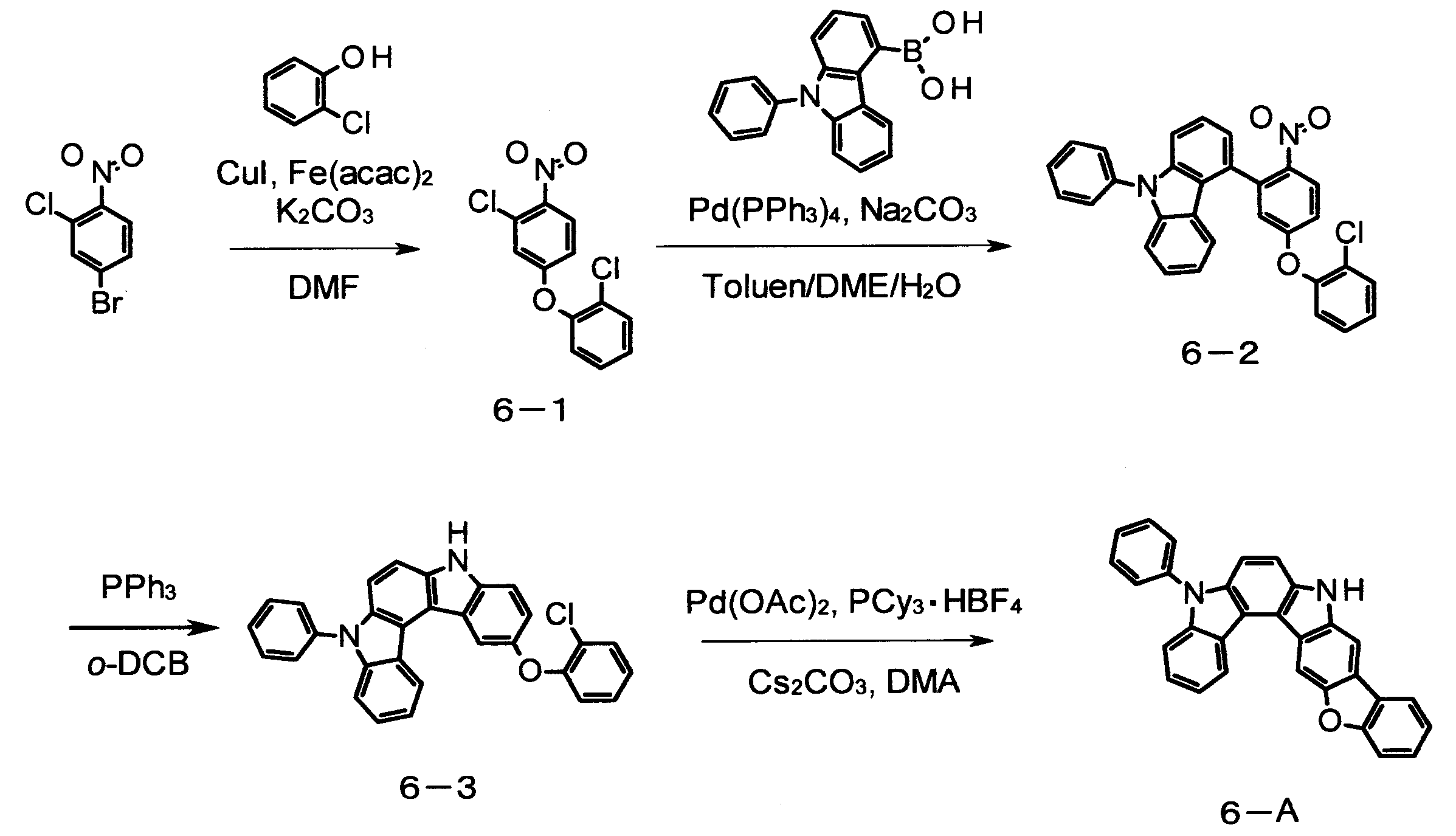
アルゴン雰囲気下、4-ブロモ-2-クロロ-1-ニトロベンゼン:1.91g、2-クロロフェノール:1.2ml、ヨウ化銅:154mg、トリス(2,4-ペンタンジオナト)鉄(III)569mg、炭酸カリウム:2.2g、N,N-ジメチルホルムアミド:15mLをフラスコに仕込み、130℃で12時間加熱攪拌した。
室温(25℃)まで冷却後反応溶液を濾過した後、ろ液を分液ロートに移し水を加え、ヘキサン:酢酸エチル=3:1の溶液にて抽出した。その後、有機層を硫酸ナトリウムで乾燥し、ろ過、濃縮した。残渣をシリカゲルカラムクロマトグラフィで精製し、白色固体1.4g(収率61%)を得た。
LC-MS分析により、当該白色個体を中間体6-1と同定した。
中間体1-1の合成において、「1,2-ジブロモ-3-ニトロベンゼン」、「ジベンゾフラン-2-ボロン酸」の代わりに「中間体6-1」、「4-(9-フェニルカルバゾリル)ボロン酸」を用いた以外は、同様の方法で合成し、白色固体1.5g(収率63%)を得た。
LC-MS分析により、当該白色個体を中間体6-2と同定した
中間体1-2の合成において、「中間体1-1」の代わりに「中間体6-2」を用いた以外は、同様の方法で合成し、白色固体812mg(収率57%)を得た。
LC-MS分析により、当該白色個体を中間体6―3と同定した
中間体1-Aの合成において、「中間体1-4」の代わりに「中間体6-3」を用いた以外は、同様の方法で合成し、白色固体368mg(収率51%)を得た。
LC-MS分析により、当該白色個体を中間体6-Aと同定した。
中間体7-Aの合成スキームを以下に示す。
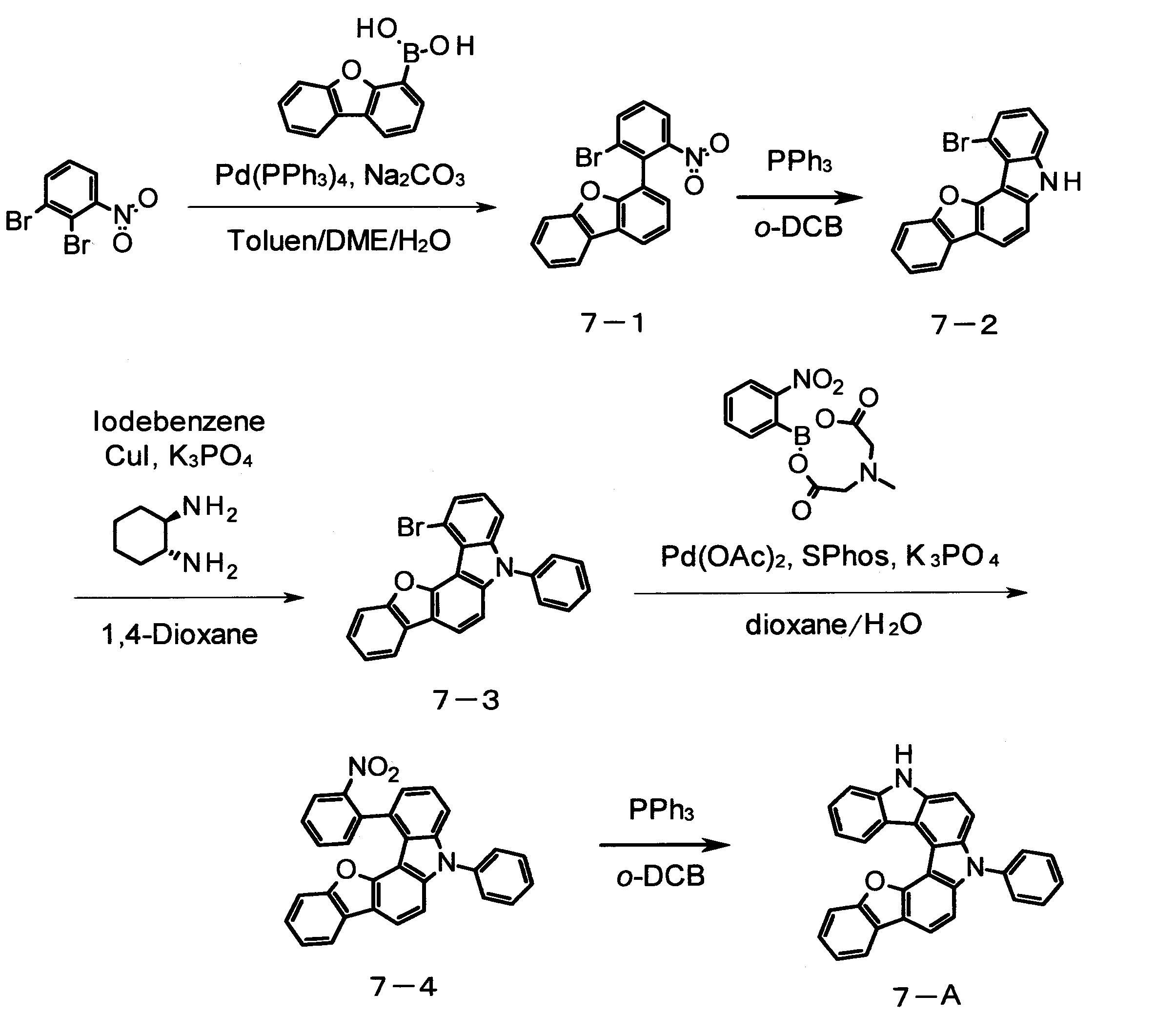
中間体1-1の合成において、「ジベンゾフラン-2-ボロン酸」の代わりに「ジベンゾフラン-4-ボロン酸」を用いた以外は、同様の方法で合成し、白色固体2.5g(収率84%)を得た。
LC-MS分析により、当該白色個体を中間体7―1と同定した。
中間体1-2の合成において、「中間体1-1」の代わりに「中間体7-1」を用いた以外は、同様の方法で合成し、白色固体1.2g(収率54%)を得た。
LC-MS分析により、当該白色個体を中間体7-2と同定した
中間体1-3の合成において、「中間体1-2」の代わりに「中間体7-2」を用いた以外は、同様の方法で合成し、白色固体1.3g(収率87%)を得た。
LC-MS分析により、当該白色個体を中間体7―3と同定した。
中間体3-5の合成において、「中間体3-4」の代わりに「中間体7-3」を用いた以外は、同様の方法で合成し、白色固体809mg(収率55%)を得た。
LC-MS分析により、当該白色個体を中間体7―4と同定した。
中間体1-2の合成において、「中間体1-1」の代わりに「中間体7-4」を用いた以外は、同様の方法で合成し、白色固体503mg(収率67%)を得た。
LC-MS分析により、当該白色個体を中間体7―Aと同定した。
中間体8-Aの合成スキームを以下に示す。
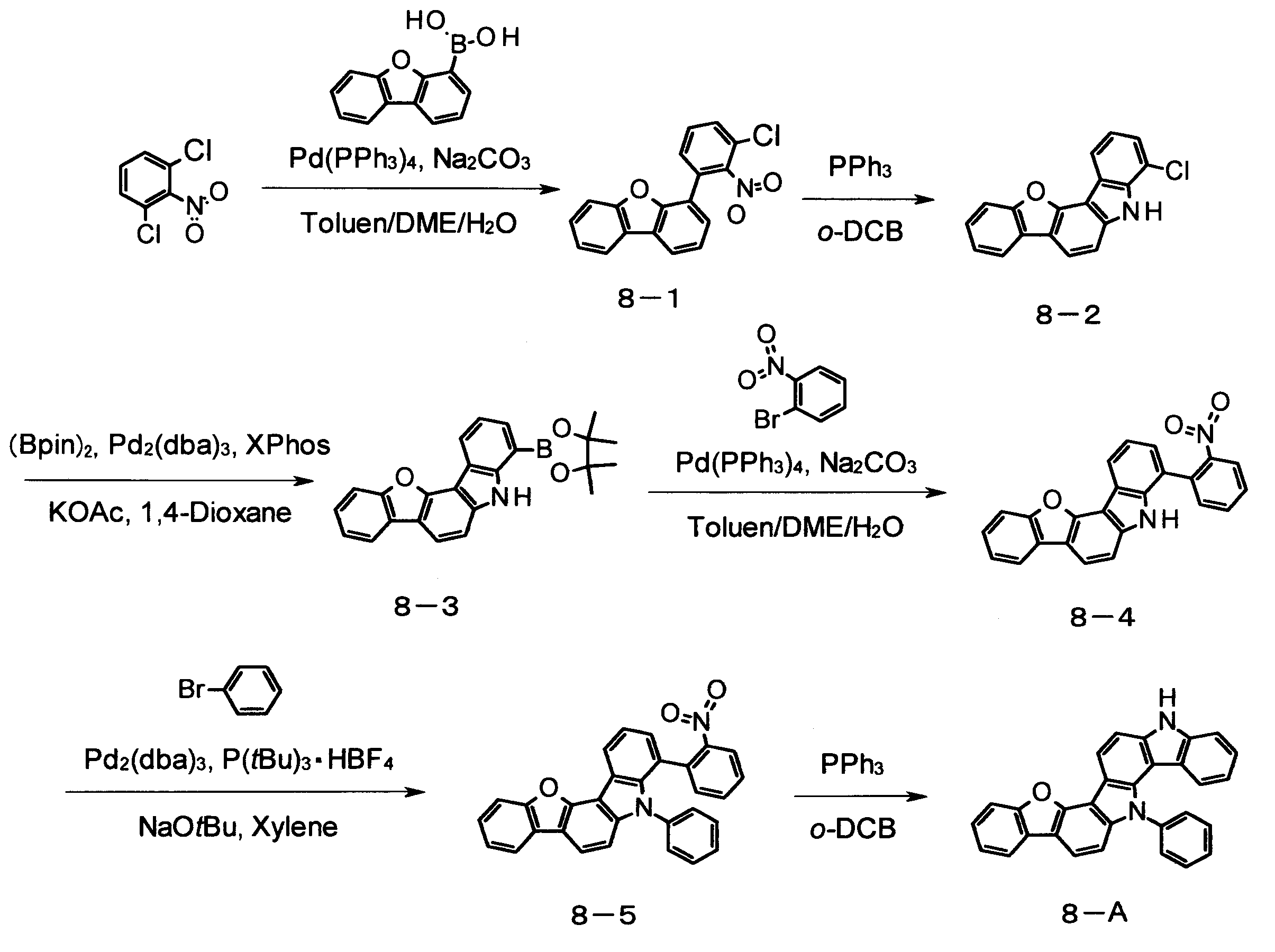
中間体1-1の合成において、「1,2-ジブロモ-3-ニトロベンゼン」、「ジベンゾフラン-2-ボロン酸」の代わりに「1,3-ジクロロ-2-ニトロベンゼン」、「ジベンゾフラン-4-ボロン酸」を用いた以外は、同様の方法で合成し、白色固体6.1g(収率71%)を得た。
LC-MS分析により、当該白色個体を中間体8―1と同定した。
中間体1-2の合成において、「中間体1-1」の代わりに「中間体8-1」を用いた以外は、同様の方法で合成し、白色固体2.6g(収率48%)を得た。
LC-MS分析により、当該白色個体を中間体8―2と同定した。
アルゴン雰囲気下、中間体8-2:2.6g、ビス(ピナコラト)ジボロン:6.8g、トリス(ジベンジリデンアセトン)ジパラジウム(0):246mg、2-(ジシクロヘキシルホスフィノ)-2’,4’,6’-トリ-イソプロピル-1,1’-ビフェニル:g、酢酸カリウム256mg、1,4-ジオキサン:45mLをフラスコに仕込み、12時間加熱還流攪拌した。
室温(25℃)まで冷却後、反応溶液を濃縮し、残渣をシリカゲルカラムクロマトグラフィで精製し、白色固体2.5g(収率74%)を得た。
LC-MS分析により、当該白色個体を中間体8―3と同定した。
中間体1-1の合成において、「1,2-ジブロモ-3-ニトロベンゼン」、「ジベンゾフラン-2-ボロン酸」の代わりに「中間体8-3」、「2-ブロモニトロベンゼン」を用いた以外は、同様の方法で合成し、白色固体2.0g(収率81%)を得た。
LC-MS分析により、当該白色個体を中間体8-4と同定した。
中間体1-4の合成において、「中間体1-3」、「2-クロロアニリン」の代わりに「中間体8-4」、「ブロモベンゼン」を用いた以外は、同様の方法で合成し、白色固体1.3g(収率54%)を得た。
LC-MS分析により、当該白色個体を中間体8-5と同定した。
中間体1-2の合成において、「中間体1-1」の代わりに「中間体8-5」を用いた以外は、同様の方法で合成し、白色固体262mg(収率62%)を得た。
LC-MS分析により、当該白色個体を中間体8―Aと同定した。
中間体9-Aの合成スキームを以下に示す。
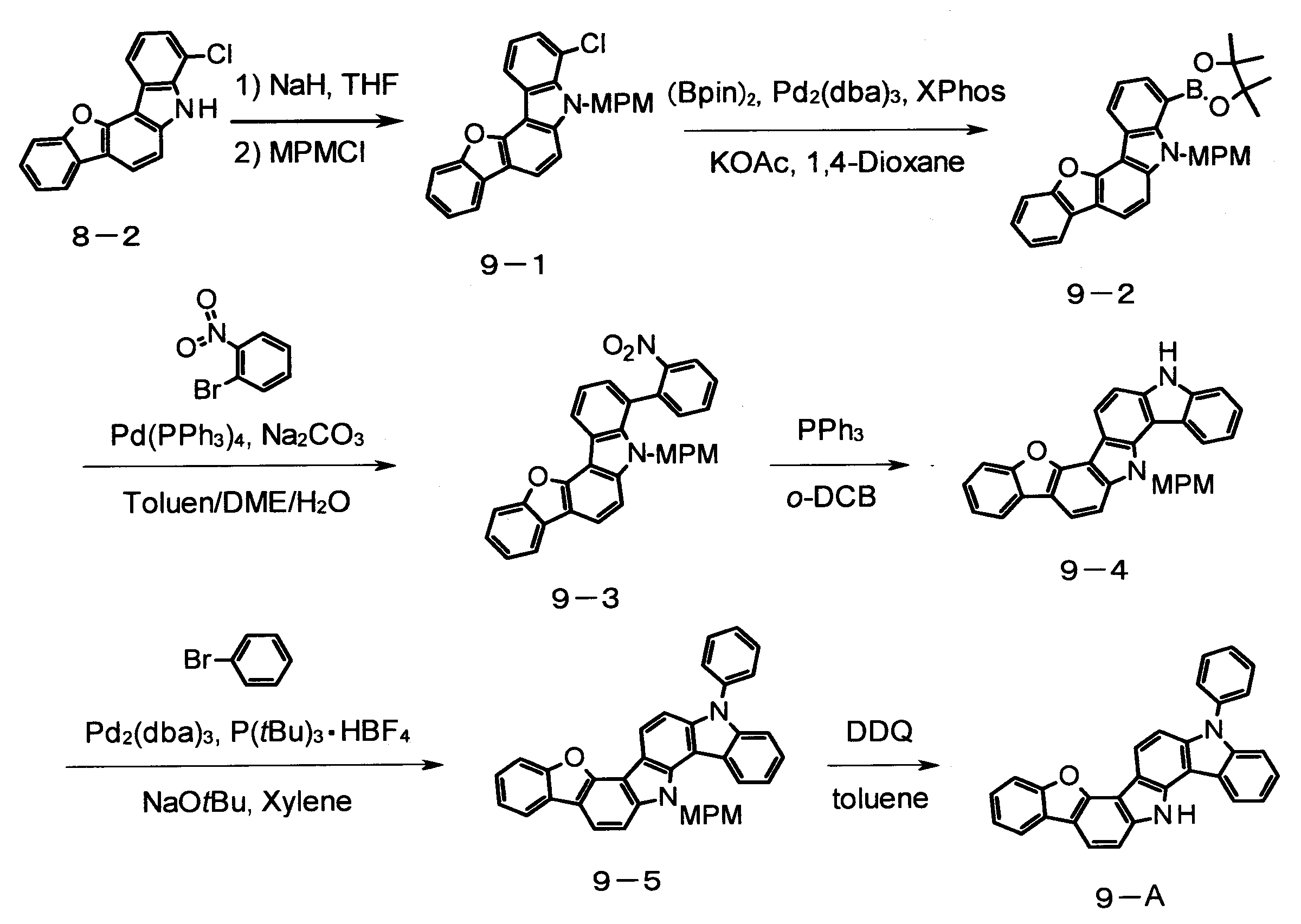
アルゴン雰囲気下、中間体8-2:1.6g、テトラヒドロフラン:15mLをフラスコに仕込み、撹拌しながら0℃まで冷却した。その後、水素化ナトリウム(60%,流動パラフィンに分散):1.5gを加え、0℃のまま30分間撹拌した。続いて4-メトキシベンジルクロリド(MPM-Cl):1.3gを加え、0℃のまま30分間撹拌した。その後室温まで昇温し、6時間撹拌した。
続いて反応溶液に塩化アンモニウム水溶液を加え、その反応溶液を分液ロートに移しトルエンにて抽出した。その後、有機層を硫酸ナトリウムで乾燥し、ろ過、濃縮した。残渣をシリカゲルカラムクロマトグラフィで精製し、白色固体1.9g(収率86%)を得た。
LC-MS分析により、当該白色個体を中間体9―1と同定した。
中間体8-3の合成において、「中間体8-2」の代わりに「中間体9-1」を用いた以外は、同様の方法で合成し、白色固体1.5g(収率66%)を得た。
LC-MS分析により、当該白色個体を中間体9―2と同定した
中間体1-1の合成において、「1,2-ジブロモ-3-ニトロベンゼン」、「ジベンゾフラン-2-ボロン酸」の代わりに「2-ブロモニトロベンゼン」、「中間体9-2」を用いた以外は、同様の方法で合成し、白色固体1.1g(収率69%)を得た。
LC-MS分析により、当該白色個体を中間体9-3と同定した。
中間体1-2の合成において「中間体1-1」の代わりに「中間体9-3」を用いた以外は、同様の方法で合成し、白色固体574mg(収率58%)を得た。
LC-MS分析により、当該白色個体を中間体9-4と同定した。
中間体1-4の合成において、「中間体1-3」、「2-クロロアニリン」の代わりに「中間体9-4」、「ブロモベンゼン」を用いた以外は、同様の方法で合成し、白色固体608mg(収率91%)を得た。
LC-MS分析により、当該白色個体を中間体9―5と同定した
アルゴン雰囲気下、中間体9-5:608mg、2,3-ジクロロ-5,6-ジシアノ-1,4-ベンゾキノン:776mg、トルエン:4mLをフラスコに仕込み、12時間加熱還流攪拌した。
室温(25℃)まで冷却後、反応溶液を濾過し、ろ液を濃縮した。残渣をシリカゲルカラムクロマトグラフィで精製し、白色固体321mg(収率68%)を得た。
LC-MS分析により、当該白色個体を中間体9-Aと同定した。
中間体10-Aの合成スキームを以下に示す。

中間体1-4の合成において、「中間体8-2」の代わりに「4-ブロモ-9H-カルバゾール」を用いた以外は、同様の方法で合成し、白色固体2.0g(収率88%)を得た。
LC-MS分析により、当該白色個体を中間体10-1と同定した。
中間体1-4の合成において、「中間体1-3」、「2-クロロアニリン」の代わりに「中間体10-1」、「ジベンゾフラン-4-アミン」を用いた以外は、同様の方法で合成し、白色固体2.1g(収率82%)を得た。
LC-MS分析により、当該白色個体を中間体10―2と同定した。
中間体4-Aの合成において、「中間体4-2」の代わりに「中間体10-2」を用いた以外は、同様の方法で合成し、白色固体1.3g(収率61%)を得た。
LC-MS分析により、当該白色個体を中間体10―3と同定した。
中間体1-4の合成において、「中間体1-3」、「2-クロロアニリン」の代わりに「中間体10-3」、「ブロモベンゼン」を用いた以外は、同様の方法で合成し、白色固体1.1g(収率74%)を得た。
LC-MS分析により、当該白色個体を中間体10―4と同定した。
中間体9-Aの合成において、「中間体9-5」の代わりに「中間体10-4」を用いた以外は、同様の方法で合成し、白色固体706mg(収率79%)を得た。
LC-MS分析により、当該白色個体を中間体10―Aと同定した
中間体11-Aの合成スキームを以下に示す。
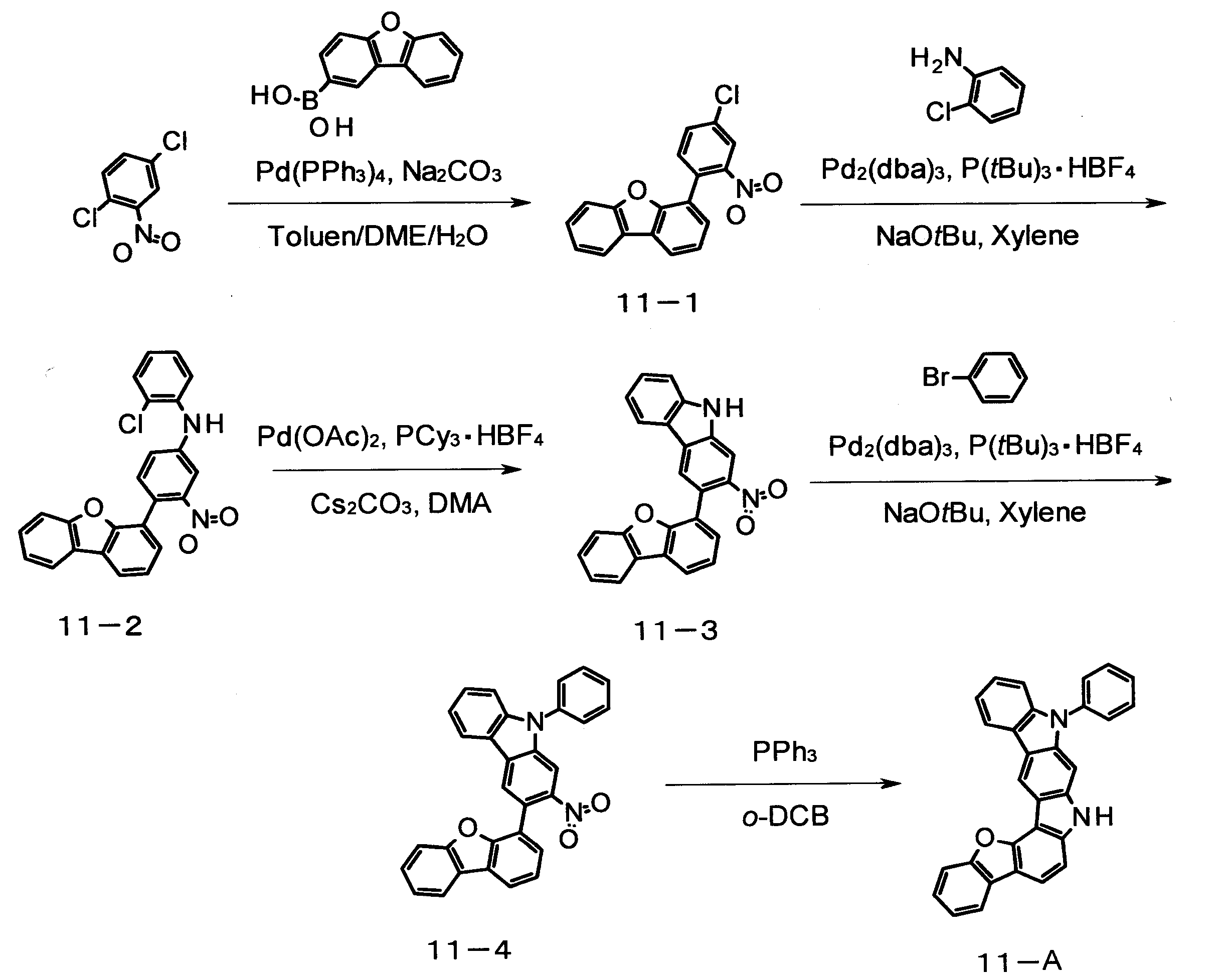
中間体1-1の合成において、「1,2-ジブロモ-3-ニトロベンゼン」の代わりに「1,4-ジクロロ-2-ニトロベンゼン」を用いた以外は、同様の方法で合成し、白色固体2.5g(収率83%)を得た。
LC-MS分析により、当該白色個体を中間体11―1と同定した。
中間体1-4の合成において、「中間体1-3」の代わりに「中間体11-1」を用いた以外は、同様の方法で合成し、白色固体2.3g(収率71%)を得た。
LC-MS分析により、当該白色個体を中間体11-2と同定した。
中間体1-Aの合成において、「中間体1-4」の代わりに「中間体11-2」を用いた以外は、同様の方法で合成し、白色固体1.0g(収率49%)を得た。
LC-MS分析により、当該白色個体を中間体11-3と同定した。
中間体1-4の合成において、「中間体1-3」、「2-クロロアニリン」の代わりに「中間体11-3」、「ブロモベンゼン」を用いた以外は、同様の方法で合成し、白色固体690mg(収率57%)を得た。
LC-MS分析により、当該白色個体を中間体11-4と同定した。
中間体1-2の合成において、「中間体1-1」の代わりに「中間体11-4」を用いた以外は、同様の方法で合成し、白色固体334mg(収率52%)を得た。
LC-MS分析により、当該白色個体を中間体11―Aと同定した。
中間体12-Aの合成スキームを以下に示す。
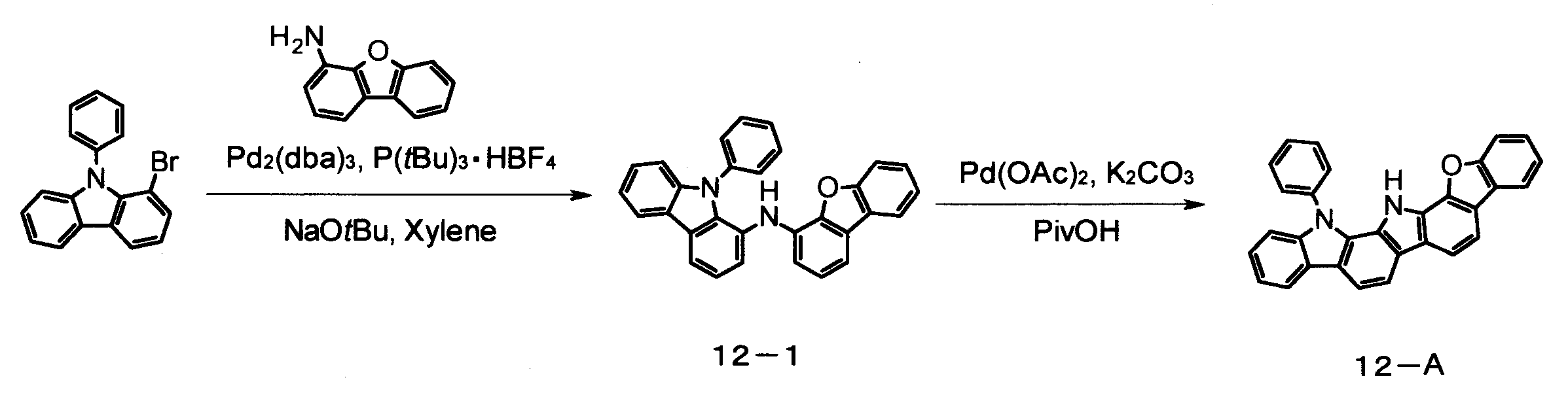
中間体1-4の合成において、「中間体1-3」、「2-クロロアニリン」の代わりに「1-ブロモ-9-フェニル-カルバゾール」、「ジベンゾフラン-4-アミン」を用いた以外は、同様の方法で合成し、白色固体1.9g(収率62%)を得た。
LC-MS分析により、当該白色個体を中間体12-1と同定した。
中間体4-Aの合成において、「中間体4-2」の代わりに「中間体12-1」を用いた以外は、同様の方法で合成し、白色固体887mg(収率48%)を得た。
LC-MS分析により、当該白色個体を中間体12-Aと同定した。
中間体13-Aの合成スキームを以下に示す。

中間体1-4の合成において、「中間体1-3」、「2-クロロアニリン」の代わりに「2-(3-ブロモフェニル)-4,6-ジフェニル-ピリミジン」、「2,7-ジブロモ-9H-カルバゾール」を用いた以外は、同様の方法で合成し、白色固体7.13g(収率78%)を得た。
LC-MS分析により、当該白色個体を中間体13-1と同定した。
中間体6-1の合成において、「4-ブロモ-2-クロロ-1-ニトロベンゼン」の代わりに「中間体12-1」を用いた以外は、同様の方法で合成し、白色固体3.7g(収率48%)を得た。
LC-MS分析により、当該白色個体を中間体13-2と同定した。
中間体1-4の合成において、「中間体1-3」の代わりに「中間体12-2」を用いた以外は、同様の方法で合成し、白色固体2.6g(収率65%)を得た。
LC-MS分析により、当該白色個体を中間体13-3と同定した。
中間体1-2の合成において、「中間体1-1」の代わりに「中間体12-3」を用いた以外は、同様の方法で合成し、白色固体349mg(収率28%)を得た。
LC-MS分析により、当該白色個体を中間体13-Aと同定した。
次に下記化合物1~34の合成例を示す。

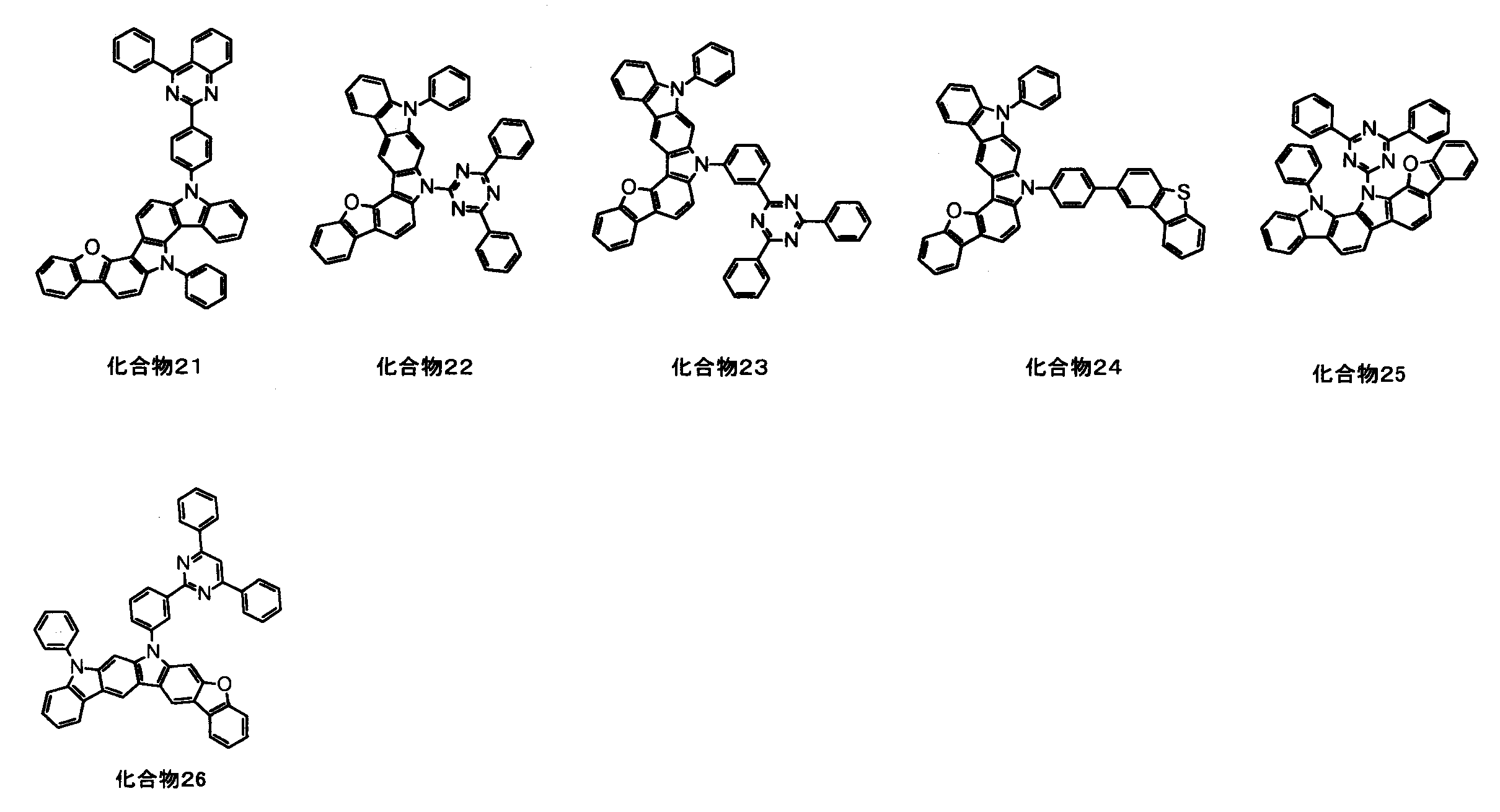

中間体1-4の合成において、「2-クロロアニリン」、「中間体1-3」の代わりに「中間体1-A」、「2-(4-ブロモフェニル)トリフェニレン」を用いた以外は、同様の方法で合成し、白色固体549mg(収率61%)を得た。
LC-MS分析により、当該白色個体を化合物1と同定した。
中間体1-4の合成において、「2-クロロアニリン」、「中間体1-3」の代わりに「中間体2-A」、「4-ブロモジベンゾフラン」を用いた以外は、同様の方法で合成し、白色固体644mg(収率73%)を得た。
LC-MS分析により、当該白色個体を化合物2と同定した。
中間体1-4の合成において、「2-クロロアニリン」、「中間体1-3」の代わりに「中間体2-A」、「2-クロロ-4,6-ジフェニル-ピリミジン」を用いた以外は、同様の方法で合成し、白色固体389mg(収率64%)を得た。
LC-MS分析により、当該白色個体を化合物3と同定した。
中間体1-4の合成において、「2-クロロアニリン」、「中間体1-3」の代わりに「中間体3-A」、「2-クロロ-4,6-ジフェニル-1,3,5-トリアジン」を用いた以外は、同様の方法で合成し、白色固体391mg(収率48%)を得た。
LC-MS分析により、当該白色個体を化合物4と同定した。
中間体1-4の合成において、「2-クロロアニリン」、「中間体1-3」の代わりに「中間体3-A」、「2-(3-ブロモフェニル)-4,6-ジフェニル-1,3,5-トリアジン」を用いた以外は、同様の方法で合成し、白色固体458mg(収率49%%)を得た。
LC-MS分析により、当該白色個体を化合物5と同定した。
中間体1-4の合成において、「2-クロロアニリン」、「中間体1-3」の代わりに「中間体3-A」、「2-(4-ブロモフェニル)ジベンゾフラン」を用いた以外は、同様の方法で合成し、白色固体719mg(収率63%)を得た。
LC-MS分析により、当該白色個体を化合物6と同定した。
中間体1-4の合成において、「2-クロロアニリン」、「中間体1-3」の代わりに「中間体4-A」、「2-(4-ブロモフェニル)-4,6-ジフェニル-1,3,5-トリアジン」を用いた以外は、同様の方法で合成し、白色固体X398mg(収率63%)を得た。
LC-MS分析により、当該白色個体を化合物7と同定した。
中間体1-4の合成において、「2-クロロアニリン」、「中間体1-3」の代わりに「中間体5-A」、「8-ブロモフルオランテン」を用いた以外は、同様の方法で合成し、白色固体458mg(収率63%)を得た。
LC-MS分析により、当該白色個体を化合物8と同定した。
中間体1-4の合成において、「2-クロロアニリン」、「中間体1-3」の代わりに「中間体6-A」、「2-クロロ-4,6-ジフェニル-1,3,5-トリアジン」を用いた以外は、同様の方法で合成し、白色固体442mg(収率56%)を得た。
LC-MS分析により、当該白色個体を化合物9と同定した。
中間体1-4の合成において、「2-クロロアニリン」、「中間体1-3」の代わりに「中間体7-A」、「2-クロロ-4,6-ジフェニル-1,3,5-トリアジン」を用いた以外は、同様の方法で合成し、白色固体299mg(収率44%)を得た。
LC-MS分析により、当該白色個体を化合物10と同定した。
中間体1-4の合成において、「2-クロロアニリン」、「中間体1-3」の代わりに「中間体8-A」、「2-ブロモトリフェニレン」を用いた以外は、同様の方法で合成し、白色固体336mg(収率63%)を得た。
LC-MS分析により、当該白色個体を化合物11と同定した。
中間体1-4の合成において、「2-クロロアニリン」、「中間体1-3」の代わりに「中間体8-A」、「2-クロロ-4,6-ジフェニル-ピリミジン」を用いた以外は、同様の方法で合成し、白色固体271mg(収率44%)を得た。
LC-MS分析により、当該白色個体を化合物12と同定した。
中間体1-4の合成において、「2-クロロアニリン」、「中間体1-3」の代わりに「中間体8-A」、「2-クロロ-4,6-ジフェニル-1,3,5-トリアジン」を用いた以外は、同様の方法で合成し、白色固体394mg(収率52%)を得た。
LC-MS分析により、当該白色個体を化合物13と同定した。
中間体1-4の合成において、「2-クロロアニリン」、「中間体1-3」の代わりに「中間体8-A」、「2-(3-ブロモフェニル)-4,6-ジフェニル-1,3,5-トリアジン」を用いた以外は、同様の方法で合成し、白色固体712mg(収率82%)を得た。
LC-MS分析により、当該白色個体を化合物14と同定した。
中間体1-4の合成において、「2-クロロアニリン」、「中間体1-3」の代わりに「中間体8-A」、「4-(4-ブロモフェニル)ジベンゾフラン」を用いた以外は、同様の方法で合成し、白色固体531mg(収率64%)を得た。
LC-MS分析により、当該白色個体を化合物15と同定した。
中間体1-4の合成において、「2-クロロアニリン」、「中間体1-3」の代わりに「中間体9-A」、「9-ブロモフェナントレン」を用いた以外は、同様の方法で合成し、白色固体393mg(収率54%)を得た。
LC-MS分析により、当該白色個体を化合物16と同定した。
中間体1-4の合成において、「2-クロロアニリン」、「中間体1-3」の代わりに「中間体9-A」、「2-(3-ブロモフェニル)-4,6-ジフェニル-1,3,5-トリアジン」を用いた以外は、同様の方法で合成し、白色固体376mg(収率75%)を得た。
LC-MS分析により、当該白色個体を化合物17と同定した。
中間体1-4の合成において、「2-クロロアニリン」、「中間体1-3」の代わりに「中間体9-A」、「4-(3-ブロモフェニル)ジベンゾフラン」を用いた以外は、同様の方法で合成し、白色固体583mg(収率62%)を得た。
LC-MS分析により、当該白色個体を化合物18と同定した。
中間体1-4の合成において、「2-クロロアニリン」、「中間体1-3」の代わりに「中間体10-A」、「2-クロロ-4,6-ジフェニル-1,3,5-トリアジン」を用いた以外は、同様の方法で合成し、白色固体492mg(収率53%)を得た。
LC-MS分析により、当該白色個体を化合物19と同定した。
中間体1-4の合成において、「2-クロロアニリン」、「中間体1-3」の代わりに「中間体8-A」、「3-ブロモフルオランテン」を用いた以外は、同様の方法で合成し、白色固体583mg(収率49%)を得た。
LC-MS分析により、当該白色個体を化合物20と同定した。
中間体1-4の合成において、「2-クロロアニリン」、「中間体1-3」の代わりに「中間体8-A」、「2-(4-ブロモフェニル)-4-フェニル-キナゾリン」を用いた以外は、同様の方法で合成し、白色固体891mg(収率77%)を得た。
LC-MS分析により、当該白色個体を化合物21と同定した。
中間体1-4の合成において、「2-クロロアニリン」、「中間体1-3」の代わりに「中間体11-A」、「2-クロロ-4,6-ジフェニル-1,3,5-トリアジン」を用いた以外は、同様の方法で合成し、白色固体554mg(収率64%)を得た。
LC-MS分析により、当該白色個体を化合物22と同定した。
中間体1-4の合成において、「2-クロロアニリン」、「中間体1-3」の代わりに「中間体11-A」、「2-(3-ブロモフェニル)-4,6-ジフェニル-1,3,5-トリアジン」を用いた以外は、同様の方法で合成し、白色固体345mg(収率48%)を得た。
LC-MS分析により、当該白色個体を化合物23と同定した。
中間体1-4の合成において、「2-クロロアニリン」、「中間体1-3」の代わりに「中間体11-A」、「2-(4-ブロモフェニル)ジベンゾチオフェン」を用いた以外は、同様の方法で合成し、白色固体711mg(収率68%)を得た。
LC-MS分析により、当該白色個体を化合物24と同定した。
中間体1-4の合成において、「2-クロロアニリン」、「中間体1-3」の代わりに「中間体12-A」、「2-クロロ-4,6-ジフェニル-1,3,5-トリアジン」を用いた以外は、同様の方法で合成し、白色固体623mg(収率73%)を得た。
LC-MS分析により、当該白色個体を化合物25と同定した。
中間体1-4の合成において、「中間体1-3」、「2-クロロアニリン」の代わりに「中間体12-4」、「ブロモベンゼン」を用いた以外は、同様の方法で合成し、白色固体298mg(収率63%)を得た。
LC-MS分析により、当該白色個体を化合物26と同定した。
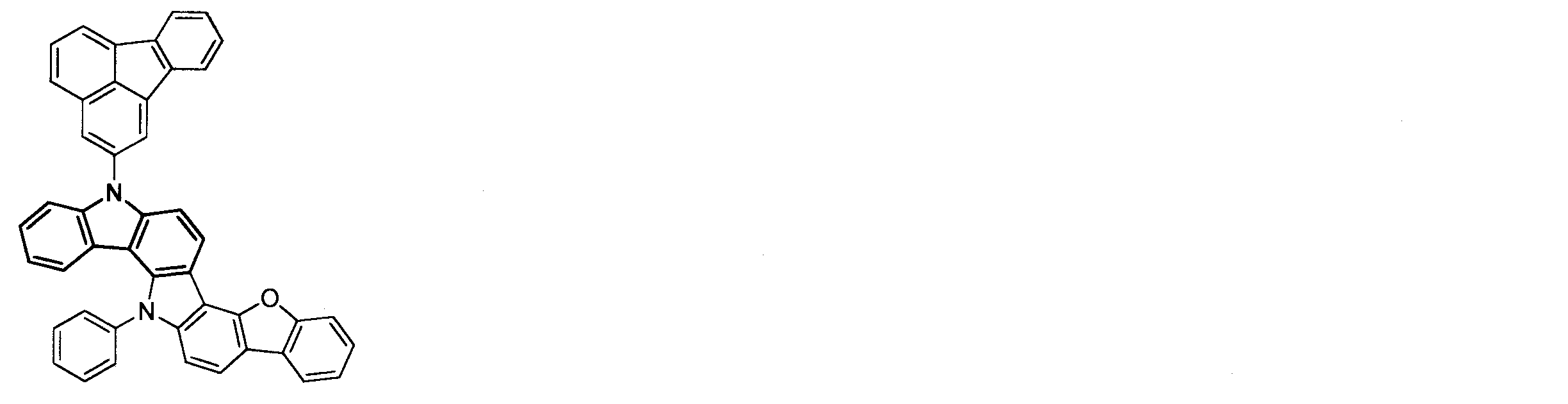

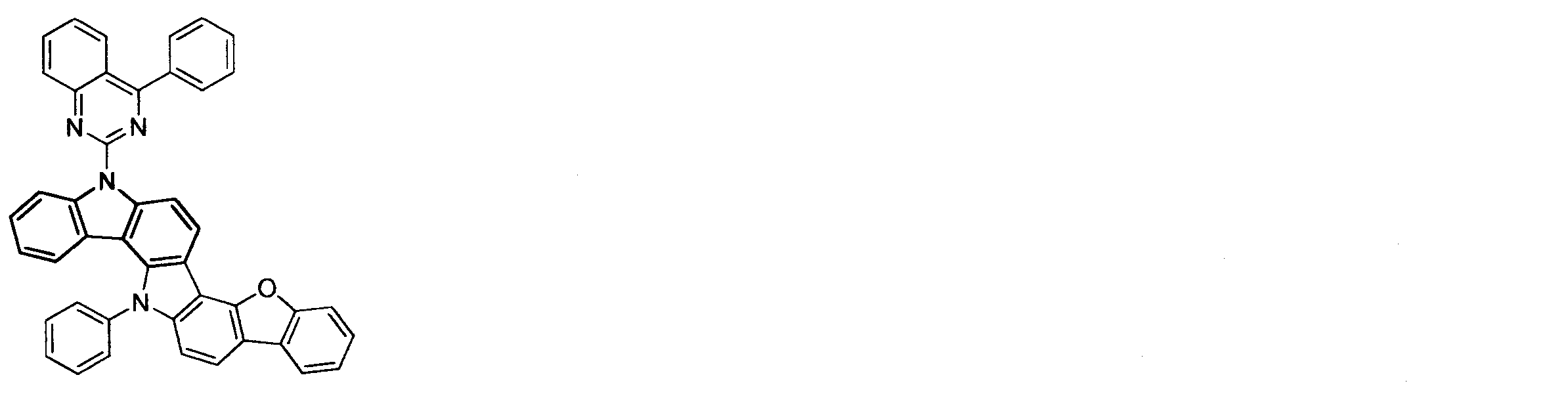

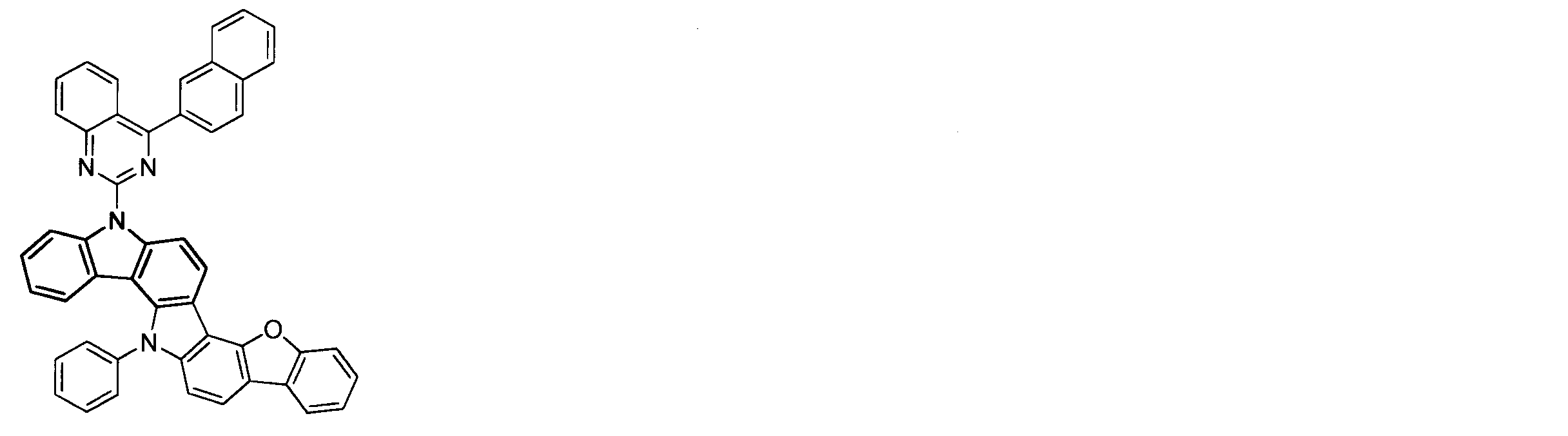


窒素雰囲気下、3-ブロモ-2-フェノール:5.01g、無水トリフルオロメチルスルフォン酸:9.73g、および塩化メチレン:150mLをフラスコに仕込み、0℃に冷却した。その溶液に、ピリジン:3.7mLを滴下し、室温で2時間撹拌した。反応溶液を300mLの氷水に入れ、有機層を塩化メチレンで抽出した。有機層を硫酸ナトリウムで乾燥後、硫酸ナトリウムを除去し、その有機層を濃縮し、黄色固体7.73gを得た。LC-MS分析により、当該黄色固体を中間体14-0と同定した。
中間体1-1の合成において、「1,2-ジブロモー3-ニトロベンゼン」、「ジベンゾフラン-2-ボロン酸」の代わりに「中間体14-0」、「ジベンゾフラン-4-ボロン酸」を用いた以外は、同様の方法で合成し、白色固体3.2g(収率75%)を得た。LC-MS分析により、当該白色固体を中間体14-1と同定した。
中間体1-2の合成において、「中間体1-1」の代わりに「中間体14-1」を用いた以外は、同様の方法で合成し、白色固体2.4g(収率70%)を得た。LC-MS分析により、当該白色固体を中間体14-2と同定した。
中間体1-3の合成において、「中間体1-2」の代わりに「中間体14-2」を用いた以外は、同様の方法で合成し、白色固体2.5g(収率80%)を得た。LC-MS分析により、当該白色固体を中間体14-3と同定した。
中間体1-4の合成において、「中間体1-3」の代わりに「中間体14-3」を用いた以外は、同様の方法で合成し、白色固体2.0g(収率65%)を得た。LC-MS分析により、当該白色固体を中間体14-4と同定した。
中間体1-Aの合成において、「中間体1-4」の代わりに「中間体14-4」を用いた以外は、同様の方法で合成し、白色固体2.0g(収率65%)を得た。LC-MS分析により、当該白色固体を中間体14-Aと同定した。
化合物27の合成において、「2-ブロモフルオランテン」の代わりに、「2-クロロ-4-[1,1’ビフェニル]-キナゾリン」を用いた以外は、同様の方法で合成し、黄色固体2.25g(収率70%)を得た。LC-MS分析により、当該黄色固体を化合物34と同定した。
次に下記比較例で用いる比較化合物1~7を示す。
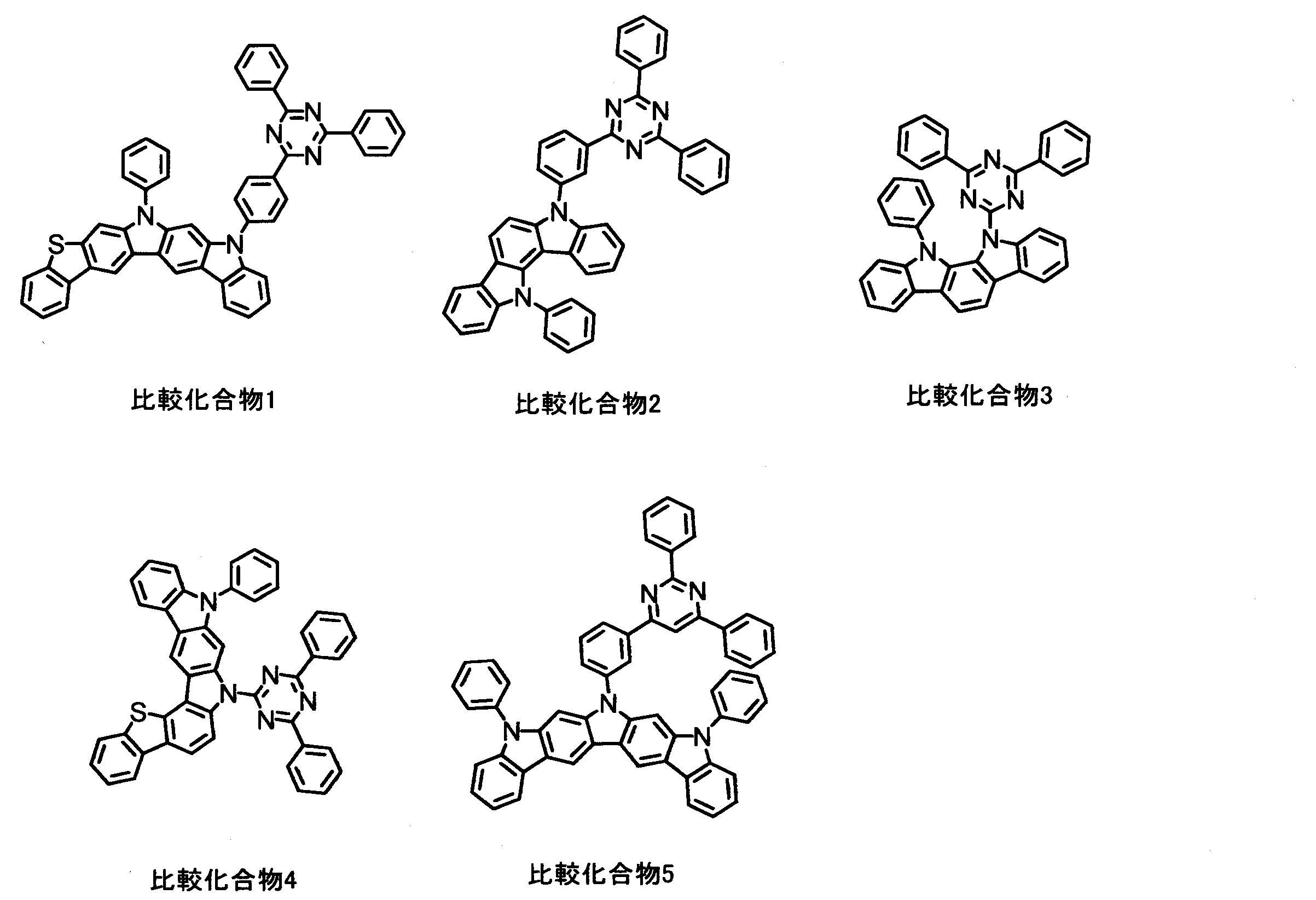

実施例1~29及び比較例1~6の有機EL素子の作製に用いた、本発明の一態様の化合物及び比較化合物以外の材料を以下に示す。
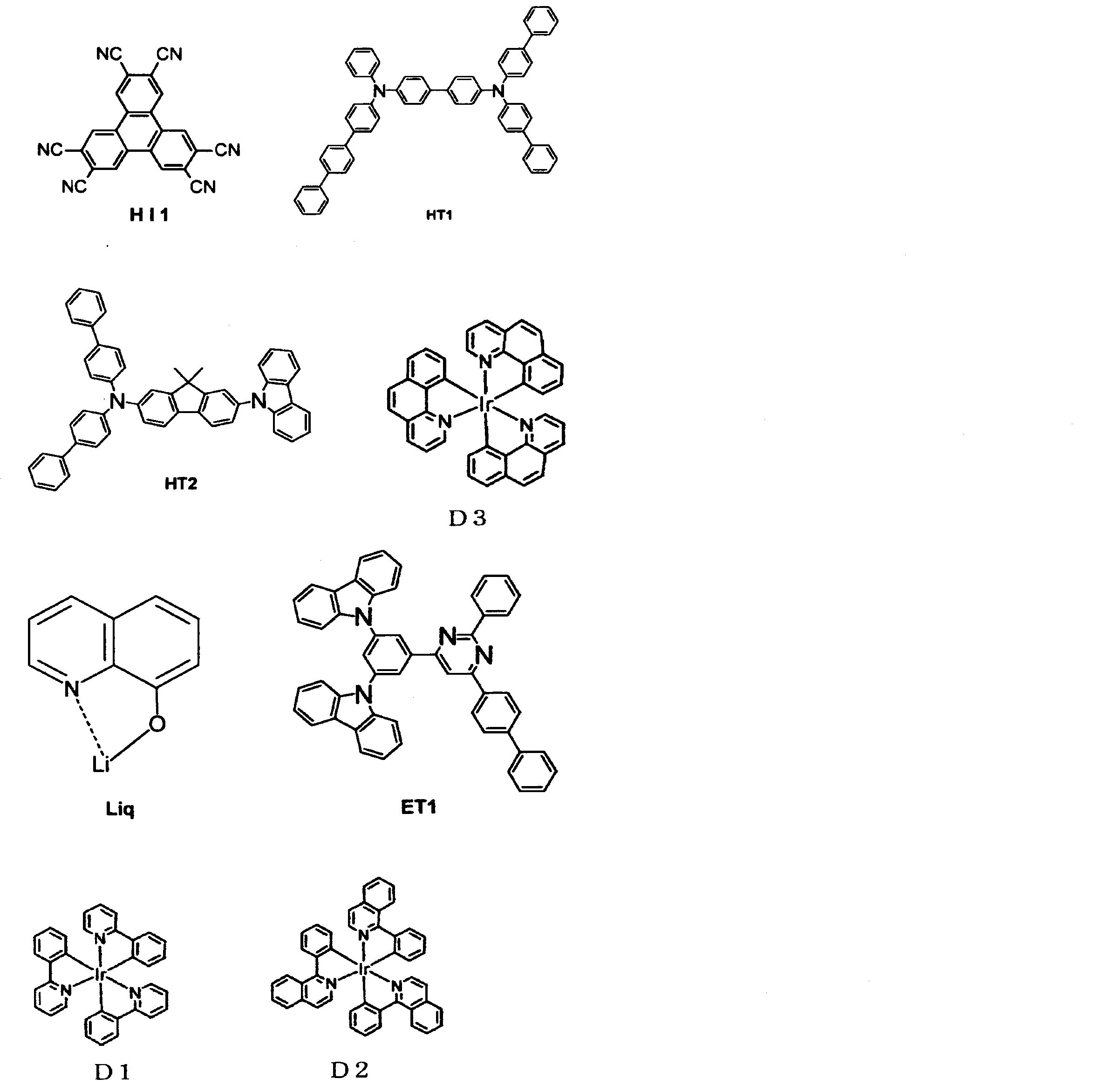
実施例1(化合物25を用いた有機EL素子の作製)
25mm×75mm×1.1mmのITO透明電極(陽極)付きガラス基板(ジオマティック社製)を、イソプロピルアルコール中で5分間超音波洗浄し、さらにUVオゾン洗浄を30分間行った。尚、ITOの膜厚は130nmとした。
洗浄後の透明電極ライン付きガラス基板を真空蒸着装置の基板ホルダーに装着し、まず透明電極ラインが形成されている側の面上に、前記透明電極を覆うようにして、前記化合物(HI1)を蒸着し、膜厚5nmの正孔注入層を成膜した。
この化合物(HI1)からなる正孔注入層上に、前記化合物(HT1)を蒸着し、膜厚40nmの第1正孔輸送層を成膜した。さらに、この化合物(HT1)からなる第1正孔輸送層上に、前記化合物(HT2)を蒸着し、膜厚10nmの第2正孔輸送層を成膜した。
次に、この化合物(HT2)からなる第2正孔輸送層上に、ホスト材料として前記「化合物25」を、及びドーパント材料として前記化合物(D3)を共蒸着し、膜厚20nmの有機層(発光層)を成膜した。尚、当該有機層(発光層)中の前記化合物(D3)の濃度は12質量%とした。
この発光層上に、前記化合物(ET1)及び前記化合物(Liq)を共蒸着し、膜厚45nmの電子輸送層を成膜した。尚、この有機層中のLiq濃度は、50質量%とした。この有機層は、電子輸送層として機能する。
さらに、この電子輸送層上に、下記化合物(Liq)を蒸着して、膜厚1nmのLiq膜を成膜し、このLiq膜上に、金属Alを蒸着して、膜厚80nmの金属陰極を成膜し、有機EL素子を作製した。
本実施例10で作製した有機EL素子の素子構成を略式的に示すと、次のとおりである。
ITO(130nm)/HI1(5nm)/HT1(40nm)/HT2(10nm)/化合物25+D3(12wt%)(20nm)/ET1+Liq(50wt%)(45nm)/Liq(1nm)/Al(80nm)
実施例1において、ホスト材料として用いた「化合物25」に代えて、化合物14及び17、並びに比較化合物1~3をそれぞれ用いて、有機層(発光層)を形成した以外は、実施例1と同様にして、有機EL素子を作製した。
実施例1~3及び比較例1~3で作製した有機EL素子について、以下の評価を行った。評価結果を表1に示す。
(1)駆動電圧(V)
電流密度が10mA/cm2となるようにITO透明電極と金属Al陰極との間に通電したときの電圧(単位:V)を計測した。
電流密度が10mA/cm2となるように素子に電圧を印加したときの分光放射輝度スペクトルを、分光放射輝度計「CS-1000」(製品名、コニカミノルタ社製)で計測した。そして、得られた分光放射輝度スペクトルから、主ピーク波長(λp)(単位:nm)を求めた。
電流密度が10mA/cm2となるように素子に電圧を印加したときの分光放射輝度スペクトルを、分光放射輝度計「CS-1000」(製品名、コニカミノルタ社製)で計測した。
得られた上記分光放射輝度スペクトルから、ランバシアン放射を行ったと仮定し、外部量子効率(EQE)(単位:%)を算出した。

実施例4(化合物1を用いた有機EL素子の作製)
25mm×75mm×1.1mmのITO透明電極(陽極)付きガラス基板(ジオマティック社製)を、イソプロピルアルコール中で5分間超音波洗浄し、さらにUVオゾン洗浄を30分間行った。尚、ITOの膜厚は130nmとした。
洗浄後の透明電極ライン付きガラス基板を真空蒸着装置の基板ホルダーに装着し、まず透明電極ラインが形成されている側の面上に、前記透明電極を覆うようにして、前記化合物(HI1)を蒸着し、膜厚5nmの正孔注入層を成膜した。
この化合物(HI1)からなる正孔注入層上に、前記化合物(HT1)を蒸着し、膜厚200nmの第1正孔輸送層を成膜した。さらに、この化合物(HT1)からなる第1正孔輸送層上に、前記化合物(HT2)を蒸着し、膜厚10nmの第2正孔輸送層を成膜した。
次に、この化合物(HT2)からなる第2正孔輸送層上に、ホスト材料として前記「化合物1」及びドーパント材料として前記化合物(D2)を共蒸着し、膜厚40nmの有機層(発光層)を成膜した。尚、当該有機層(発光層)中の前記化合物(D2)の濃度は2質量%とした。
この発光層上に、前記化合物(ET1)及び前記化合物(Liq)を共蒸着し、膜厚30nmの電子輸送層を成膜した。尚、この有機層中のLiq濃度は、50質量%とした。この有機層は、電子輸送層として機能する。
さらに、この電子輸送層上に、前記化合物(Liq)を蒸着して、膜厚1nmのLiq膜を成膜し、このLiq膜上に、金属Alを蒸着して、膜厚80nmの金属陰極を成膜し、有機EL素子を作製した。
本実施例4で作製した有機EL素子の素子構成を略式的に示すと、次のとおりである。
ITO(130nm)/HI1(5nm)/HT1(200nm)/HT2(10nm)/化合物1+D2(2wt%)(40nm)/ET1+Liq(50wt%)(30nm)/Liq(1nm)/Al(80nm)
実施例4において、ホスト材料として用いた「化合物1」に代えて、化合物2~25、並びに比較化合物4及び1をそれぞれ用いて、有機層(発光層)を形成した以外は、実施例4と同様にして、有機EL素子を作製した。
実施例4~28及び比較例4~5で作製した有機EL素子について、以下の評価を行った。評価結果を表2-1及び2-2に示す。
(1)主ピーク波長(λp)
電流密度が10mA/cm2となるように素子に電圧を印加したときの分光放射輝度スペクトルを、分光放射輝度計「CS-1000」(製品名、コニカミノルタ社製)で計測した。そして、得られた分光放射輝度スペクトルから、主ピーク波長(λp)(単位:nm)を求めた。
初期電流密度を50mA/cm2に設定して直流の連続通電試験を行い、試験開始時の輝度に対して、輝度が90%まで減少する時間を測定し、その測定時間を寿命(LT90)とした。

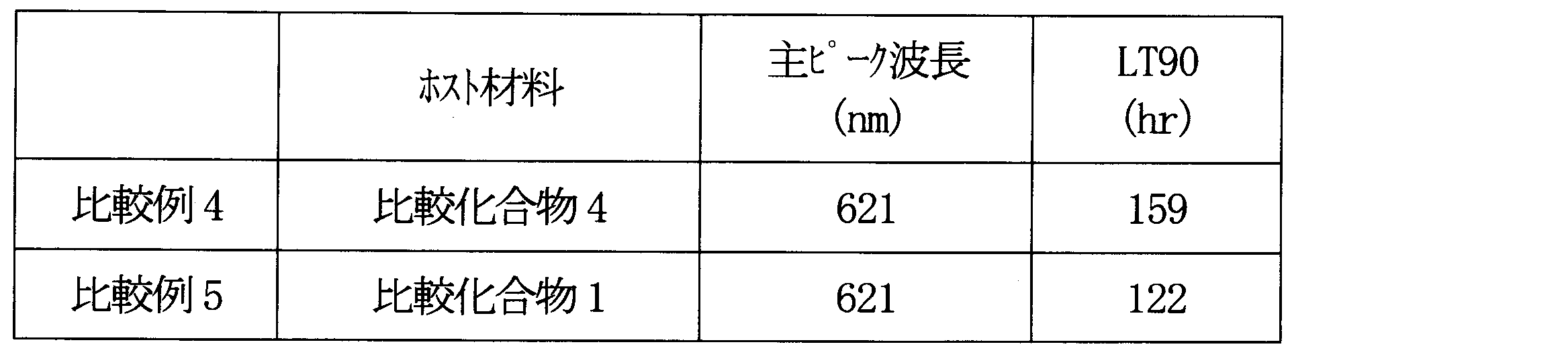
実施例29(化合物26を用いた有機EL素子の作製)
25mm×75mm×1.1mmのITO透明電極(陽極)付きガラス基板(ジオマティック社製)を、イソプロピルアルコール中で5分間超音波洗浄し、さらにUVオゾン洗浄を30分間行った。尚、ITOの膜厚は130nmとした。
洗浄後の透明電極ライン付きガラス基板を真空蒸着装置の基板ホルダーに装着し、まず透明電極ラインが形成されている側の面上に、前記透明電極を覆うようにして、前記化合物(HI1)を蒸着し、膜厚5nmの正孔注入層を成膜した。
この化合物(HI1)からなる正孔注入層上に、前記化合物(HT1)を蒸着し、膜厚90nmの第1正孔輸送層を成膜した。さらに、この化合物(HT1)からなる第1正孔輸送層上に、前記化合物(HT2)を蒸着し、膜厚60nmの第2正孔輸送層を成膜した。
次に、この化合物(HT2)からなる第2正孔輸送層上に、ホスト材料として前記「化合物26」及びドーパント材料として前記化合物(D1)を共蒸着し、膜厚40nmの有機層(発光層)を成膜した。尚、当該有機層(発光層)中の前記化合物(D1)の濃度は5質量%とした。
この発光層上に、前記化合物(ET1)及び前記化合物(Liq)を共蒸着し、膜厚30nmの電子輸送層を成膜した。尚、この有機層中のLiq濃度は、50質量%とした。この有機層は、電子輸送層として機能する。
さらに、この電子輸送層上に、前記化合物(Liq)を蒸着して、膜厚1nmのLiq膜を成膜し、このLiq膜上に、金属Alを蒸着して、膜厚80nmの金属陰極を成膜し、有機EL素子を作製した。
本実施例4で作製した有機EL素子の素子構成を略式的に示すと、次のとおりである。
ITO(130nm)/HI1(5nm)/HT1(90nm)/HT2(60nm)/化合物26+D1(5wt%)(40nm)/ET1+Liq(50wt%)(30nm)/Liq(1nm)/Al(80nm)
実施例29において、ホスト材料として用いた「化合物26」に代えて、比較化合物5を用いて、有機層(発光層)を形成した以外は、実施例29と同様にして、有機EL素子を作製した。
実施例及び比較例で作製した有機EL素子について、以下の評価を行った。評価結果を表3に示す。
(1)主ピーク波長(λp)
電流密度が10mA/cm2となるように素子に電圧を印加したときの分光放射輝度スペクトルを、分光放射輝度計「CS-1000」(製品名、コニカミノルタ社製)で計測した。そして、得られた分光放射輝度スペクトルから、主ピーク波長(λp)(単位:nm)を求めた。
電流密度が10mA/cm2となるように素子に電圧を印加したときの分光放射輝度スペクトルを、分光放射輝度計「CS-1000」(製品名、コニカミノルタ社製)で計測した。
得られた上記分光放射輝度スペクトルから、ランバシアン放射を行ったと仮定し、外部量子効率(EQE)(単位:%)を算出した。

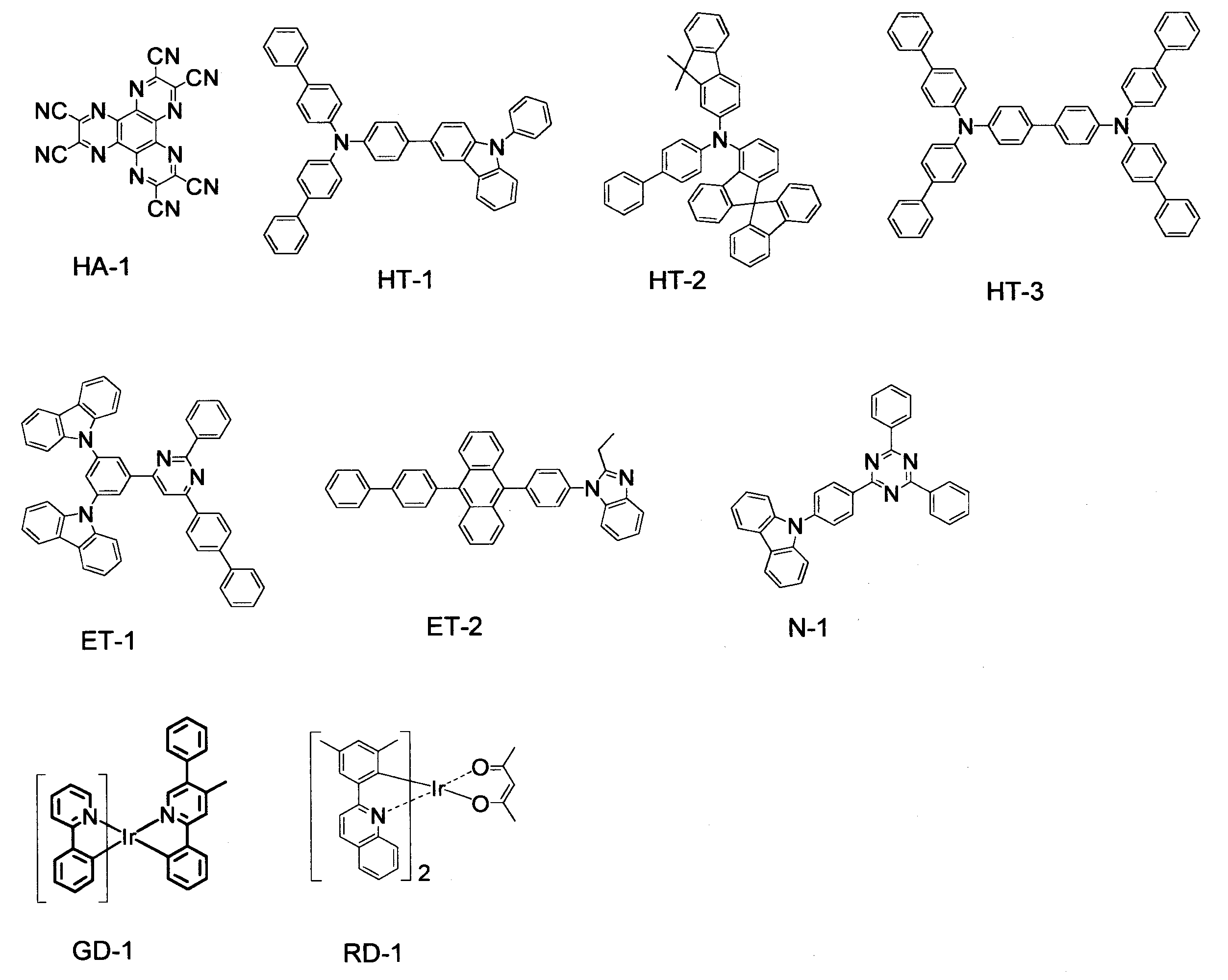
実施例30
25mm×75mm×1.1mm厚のITO透明電極(陽極)付きガラス基板(ジオマティック社製)をイソプロピルアルコール中で超音波洗浄を5分間行なった後、UVオゾン洗浄を30分間行なった。尚、ITOの膜厚は、130nmとした。
洗浄後の透明電極ライン付きガラス基板を真空蒸着装置の基板ホルダーに装着し、まず透明電極ラインが形成されている側の面上に前記透明電極を覆うようにして化合物HA-1を蒸着して膜厚5nmのHA-1膜を成膜し、正孔注入層を形成した。
次に、この正孔注入層の上に、化合物HT-1を蒸着して膜厚130nmのHT-1膜を成膜し、第一正孔輸送層を形成した。
次に、この第一正孔輸送層の上に、化合物HT-2を蒸着して膜厚20nmのHT-2膜を成膜し、第2正孔輸送層を形成した。
次に、この正孔輸送層の上に、第1ホスト(化合物1)及び第2ホスト(N-1)及びGD-1を共蒸着により成膜し、膜厚40nmの発光層を形成した。発光層に含まれる第1ホストと第2ホストは50質量%:50質量%、GD-1の濃度は、5質量%とした。
この発光層の成膜に続けて、化合物ET-1と8-キノリノラトリチウム(Liq)とを50:50の質量比で共蒸着により成膜し、膜厚25nmの電子輸送層を形成した。
この電子輸送層上にLiqを蒸着して、膜厚1nmの電子注入層を形成した。
この電子注入層上に金属Alを蒸着して、膜厚80nmの金属陰極を形成し、有機EL素子を作製した。
本実施例30で作成した有機EL素子の素子構成を略式的に示すと、次のとおりである。
ITO(130nm)/HA-1(5nm)/HT-1(130nm)/HT-2(20nm)/化合物1:N-1:GD-1(47.5wt%:,47.5wt%,5wt%)(40nm)/ET-1+Liq(50wt%)(25nm)/Liq(1nm)/Al(80nm)
実施例30において、第1ホスト材料として用いた「化合物1」に代えて、下記表4に示す化合物をそれぞれ用いて、有機層(発光層)を形成した以外は、実施例30と同様にして、有機EL素子を作製した。
実施例30~37及び比較例7で作製した有機EL素子について、外部量子効率(EQE)及び寿命(LT95)を評価した。結果を表4に示す。
尚、寿命(LT95)は、初期電流密度を10mA/cm2に設定して直流の連続通電試験を行い、試験開始時の輝度に対して、輝度が95%まで減少する時間を測定し、その測定時間を寿命(LT95)とした。
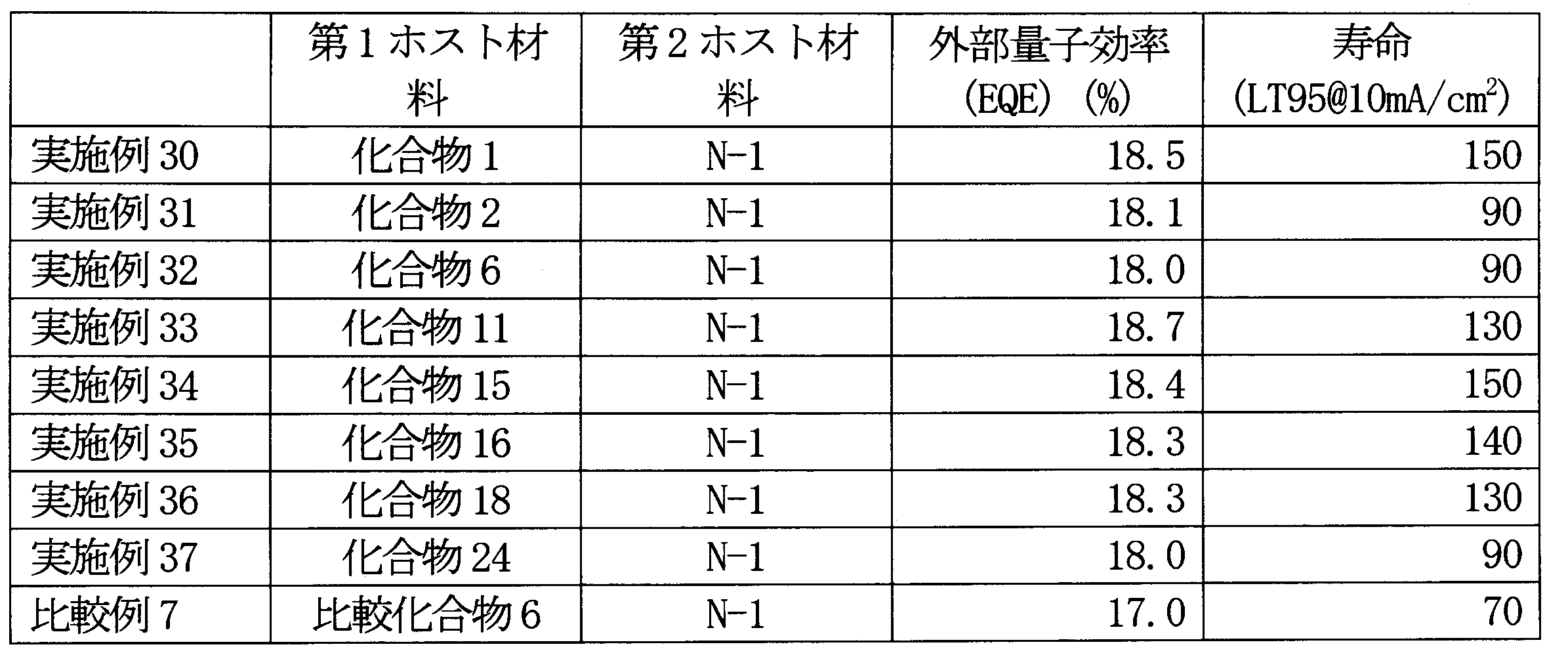
また、二つ目のピロール(N)の結合位置が式(1)のY2-Y3である化合物2,6及び24に比べて、結合位置がY1-Y2又はY3-Y4である化合物1,11,15,16及び18は、特に素子寿命が向上していることがわかる。
実施例38
25mm×75mm×1.1mm厚のITO透明電極(陽極)付きガラス基板(ジオマティック社製)をイソプロピルアルコール中で超音波洗浄を5分間行なった後、UVオゾン洗浄を30分間行なった。ITOの膜厚は、130nmとした。
洗浄後の透明電極ライン付きガラス基板を真空蒸着装置の基板ホルダーに装着し、まず透明電極ラインが形成されている側の面上に前記透明電極を覆うようにして化合物HA-1を蒸着して膜厚5nmのHA-1膜を成膜し、正孔注入層を形成した。
次に、この正孔注入層の上に、化合物HT-3着して膜厚130nmのHT-3膜を成膜し、第一正孔輸送層を形成した。
次に、この第一正孔輸送層の上に、化合物HT-2を蒸着して膜厚20nmのHT-2膜を成膜し、第2正孔輸送層を形成した。
次に、この正孔輸送層の上に、第1ホスト(化合物11)及び下記表に示す第2ホスト(化合物3)及びGD-1を共蒸着により成膜し、膜厚40nmの発光層を形成した。発光層に含まれる第1ホストと第2ホストは50質量%:50質量%、GD-1の濃度は、5質量%とした。
この発光層の成膜に続けて、化合物ET-2と8-キノリノラトリチウム(Liq)とを50:50の質量比で共蒸着により成膜し、膜厚25nmの電子輸送層を形成した。
この電子輸送層上にLiqを蒸着して、膜厚1nmの電子注入層を形成した。
この電子注入層上に金属Alを蒸着して、膜厚80nmの金属陰極を形成し、有機EL素子を作製した。
本実施例38で作成した有機EL素子の素子構成を略式的に示すと、次のとおりである。
ITO(130nm)/HA-1(5nm)/HT-3(130nm)/HT-2(20nm)/化合物11:化合物3:GD-1(47.5wt%,47.5wt%,5wt%)(40nm)/ET-2+Liq(50wt%)(25nm)/Liq(1nm)/Al(80nm)
実施例38において、第2ホスト材料として用いた「化合物3」に代えて、下記表5に示す化合物をそれぞれ用いて、有機層(発光層)を形成した以外は、実施例38と同様にして、有機EL素子を作製した。
実施例38~51及び比較例8~9で作製した有機EL素子について、外部量子効率(EQE)及び寿命(LT95)を評価した。結果を表5に示す。
尚、寿命(LT95)は、初期電流密度を10mA/cm2に設定して直流の連続通電試験を行い、試験開始時の輝度に対して、輝度が95%まで減少する時間を測定し、その測定時間を寿命(LT95)とした。
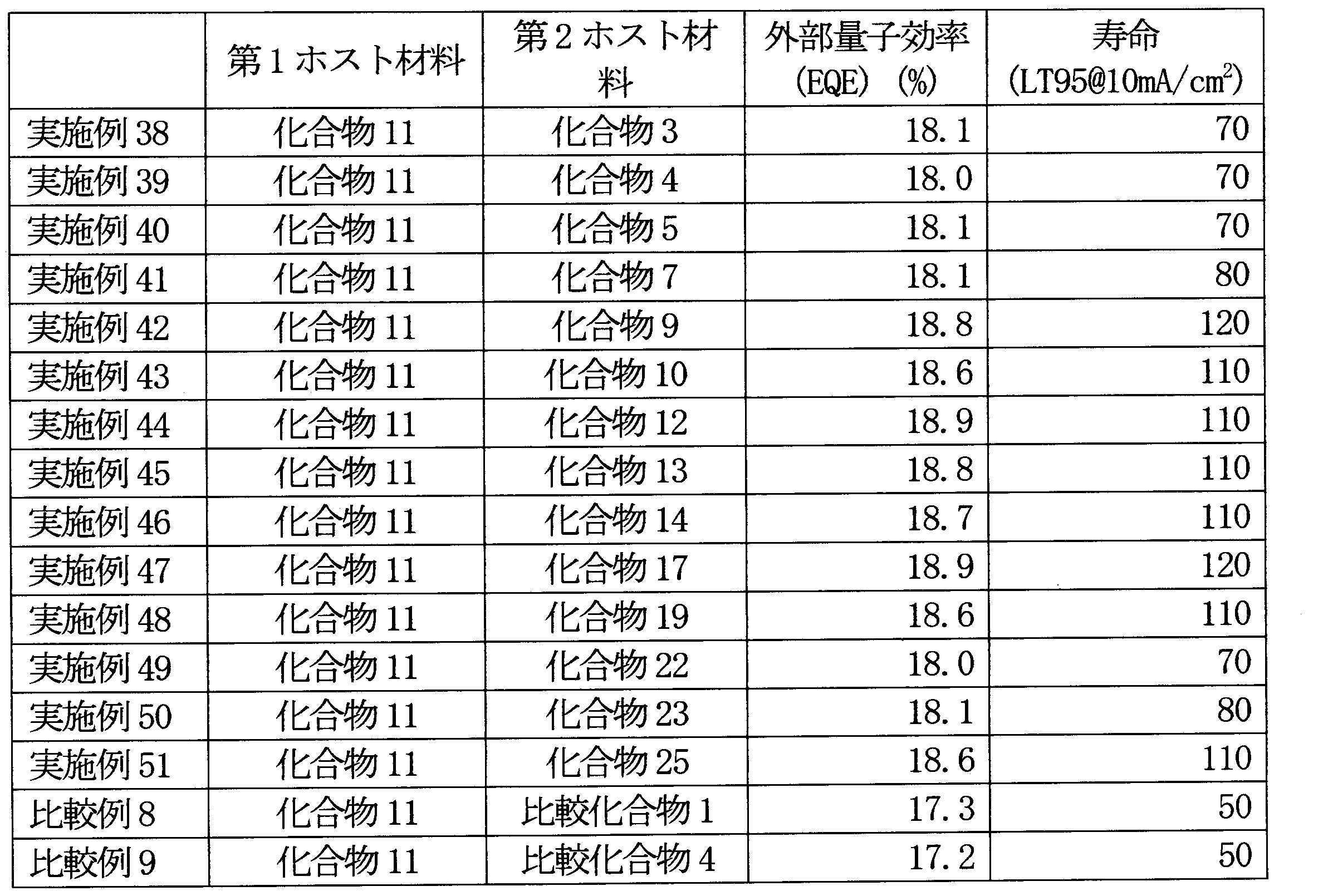
また、二つ目のピロール(N)の結合位置が式(1)のY2-Y3である化合物3、4,5,7、22及び23に比べて、結合位置がY1-Y2又はY3-Y4である化合物9,10,12,13,14,17,19及び25は、特に素子寿命が向上していることがわかる。
実施例52
25mm×75mm×1.1mm厚のITO透明電極(陽極)付きガラス基板(ジオマティック社製)をイソプロピルアルコール中で超音波洗浄を5分間行なった後、UVオゾン洗浄を30分間行なった。ITOの膜厚は、130nmとした。
洗浄後の透明電極ライン付きガラス基板を真空蒸着装置の基板ホルダーに装着し、まず透明電極ラインが形成されている側の面上に前記透明電極を覆うようにして化合物HA-1を蒸着して膜厚5nmのHA-1膜を成膜し、正孔注入層を形成した。
次に、この正孔注入層の上に、化合物HT-3着して膜厚210nmのHT-3膜を成膜し、第一正孔輸送層を形成した。
次に、この第一正孔輸送層の上に、化合物HT-2を蒸着して膜厚10nmのHT-2膜を成膜し、第2正孔輸送層を形成した。
次に、この正孔輸送層の上に、化合物及びRD-1を共蒸着により成膜し、膜厚40nmの発光層を形成した。発光層に含まれるRD-1の濃度は、2質量%とした。
この発光層の成膜に続けて、化合物ET-2と8-キノリノラトリチウム(Liq)とを50:50の質量比で共蒸着により成膜し、膜厚25nmの電子輸送層を形成した。
この電子輸送層上にLiqを蒸着して、膜厚1nmの電子注入層を形成した。
この電子注入層上に金属Alを蒸着して、膜厚80nmの金属陰極を形成し、有機EL素子を作製した。
本実施例52で作成した有機EL素子の素子構成を略式的に示すと、次のとおりである。
ITO(130nm)/HA-1(5nm)/HT-3(210nm)/HT-2(10nm)/化合物8+RD-1(2wt%)(40nm)/ET-2+Liq(50wt%)(25nm)/Liq(1nm)/Al(80nm)
実施例52において、ホスト材料として用いた「化合物8」に代えて、下記表6に示す化合物をそれぞれ用いて、有機層(発光層)を形成した以外は、実施例52と同様にして、有機EL素子を作製した。
実施例52~61及び比較例10で作製した有機EL素子について、外部量子効率(EQE)及び寿命(LT95)を評価した。結果を表6に示す。
尚、寿命(LT95)は、初期電流密度を50mA/cm2に設定して直流の連続通電試験を行い、試験開始時の輝度に対して、輝度が95%まで減少する時間を測定し、その測定時間を寿命(LT95)とした。

また、二つ目のピロール(N)の結合位置が式(1)のY2-Y3である化合物8に比べて、結合位置がY1-Y2又はY3-Y4である化合物20,21及び27~33は、外部量子効率がより高く、素子寿命も向上していることがわかる。
本願のパリ優先の基礎となる日本出願明細書の内容を全てここに援用する。
Claims (36)
- 下記式(1)で表される化合物。

A1及びA2は、それぞれ独立に、置換もしくは無置換の環形成炭素数6~50のアリール基、又は置換もしくは無置換の環形成原子数5~50のヘテロアリール基である。
L1及びL2は、それぞれ独立に、単結合、置換もしくは無置換の環形成炭素数6~60のアリーレン基、又は置換もしくは無置換の環形成原子数5~50のヘテロアリーレン基である。
X1~X8は、それぞれ独立に、CH、C(Ra)又はNである。
*1~*4は、それぞれ単結合を形成する結合手である。
Y1~Y4のうちの隣接するいずれか2つは、*1及び*2とそれぞれ単結合を形成するCであり、残りの2つは、それぞれ独立に、CH、C(Ra)又はNである。
Y5~Y8のうちの隣接するいずれか2つは、*3及び*4とそれぞれ単結合を形成するCであり、残りの2つは、それぞれ独立に、CH、C(Ra)又はNである。
Raは、置換基であり、Raが複数存在する場合は、それぞれ同一であっても、異なっていてもよく、複数存在するRaから選ばれる2つが、互いに結合して環を形成していてもよい。] - 前記式(1)で表される化合物が、下記式(1-a)~(1-d)で表される化合物から選択される、請求項1に記載の化合物。
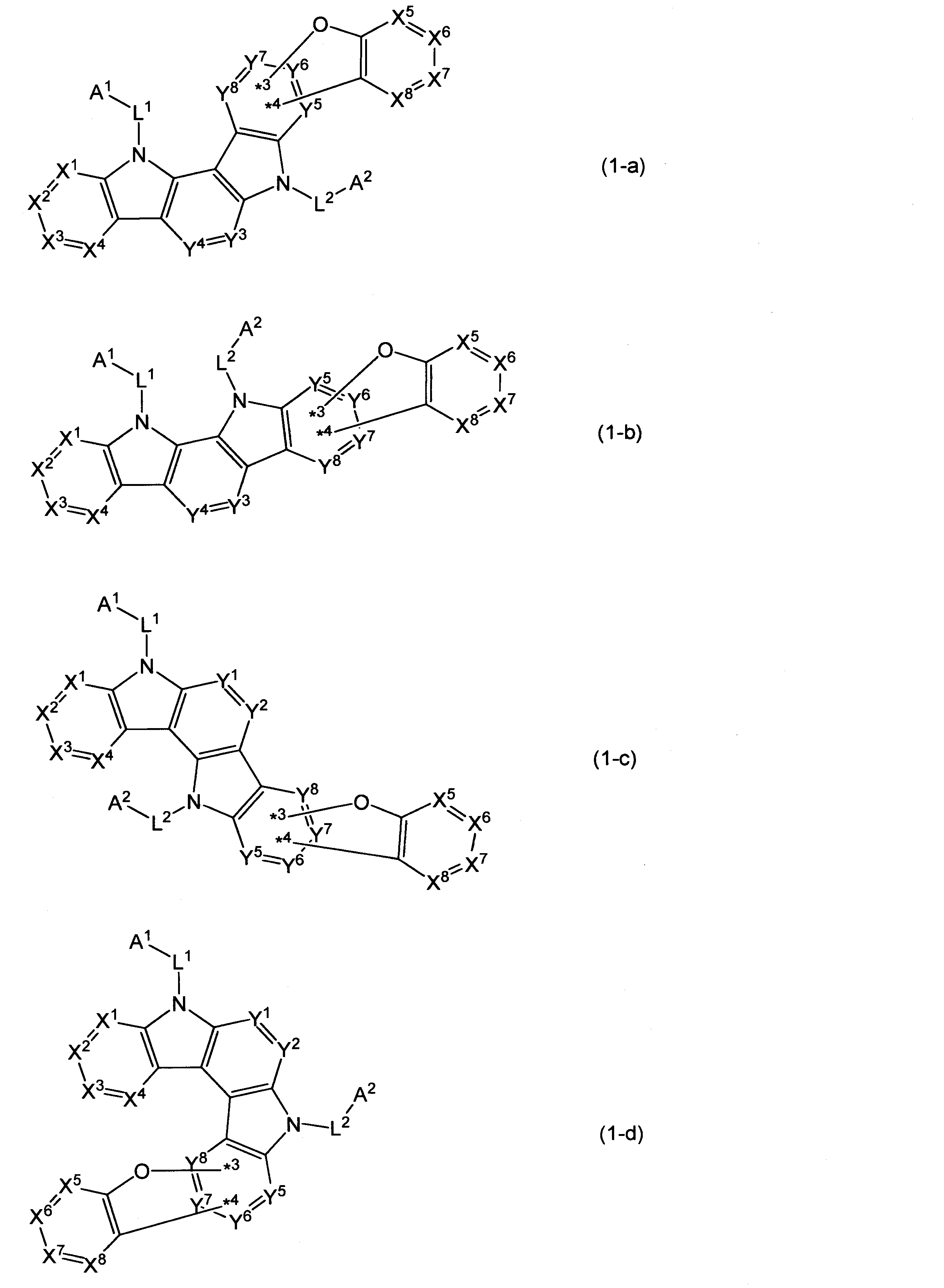
A1,A2,L1、L2、X1~X8、Y1~Y8、*3及び*4は、前記式(1)で定義した通りである。] - 前記式(1)で表される化合物が、下記式(2)で表される化合物である、請求項1に記載の化合物。
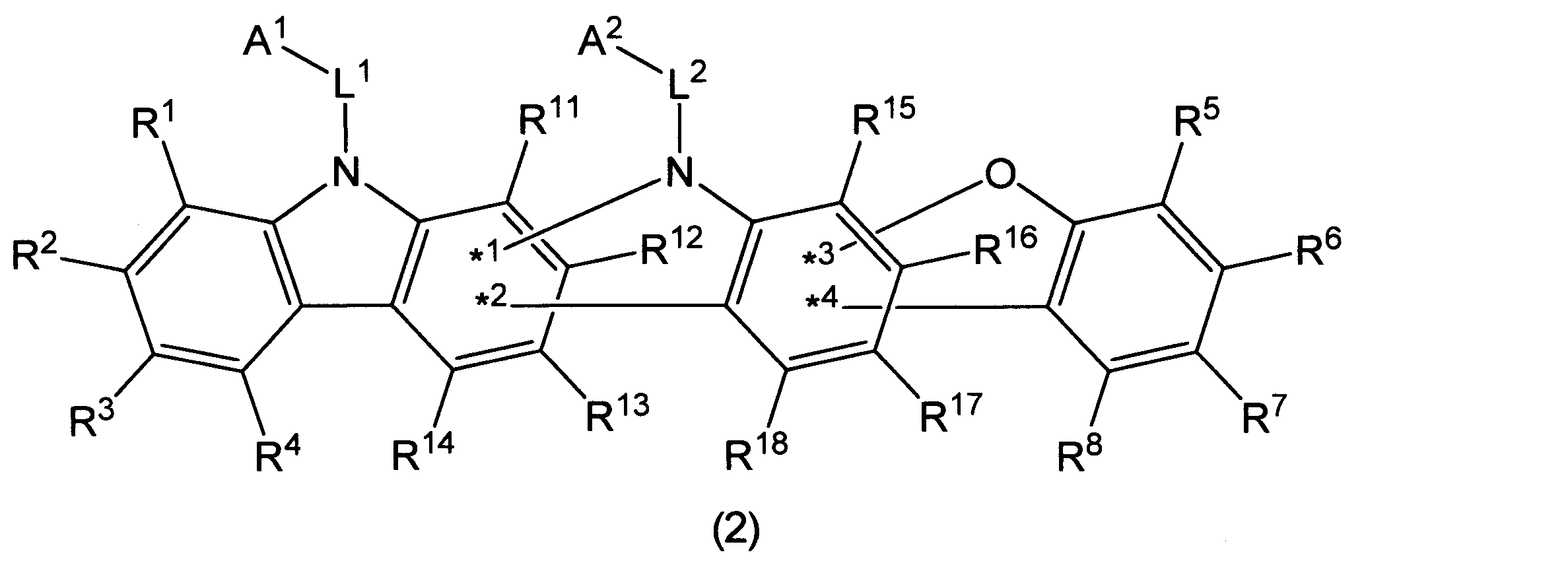
A1,A2,L1、L2及び*1~*4は、前記式(1)で定義した通りである。
R1~R8は、それぞれ独立に、水素原子又は置換基Raである。
R11~R14のうちの隣接するいずれか2つは、*1及び*2とそれぞれ単結合を形成し、残りの2つは、それぞれ独立に、水素原子又は置換基Raである。
R15~R18のうちの隣接するいずれか2つは、*3及び*4とそれぞれ単結合を形成し、残りの2つは、それぞれ独立に、水素原子又は置換基Raである。
Raは、前記式(1)で定義した通りである。] - 前記式(2)で表される化合物が、下記式(3-1)及び(3-4)~(3-6)で表される化合物からなる群から選ばれる、請求項3に記載の化合物。
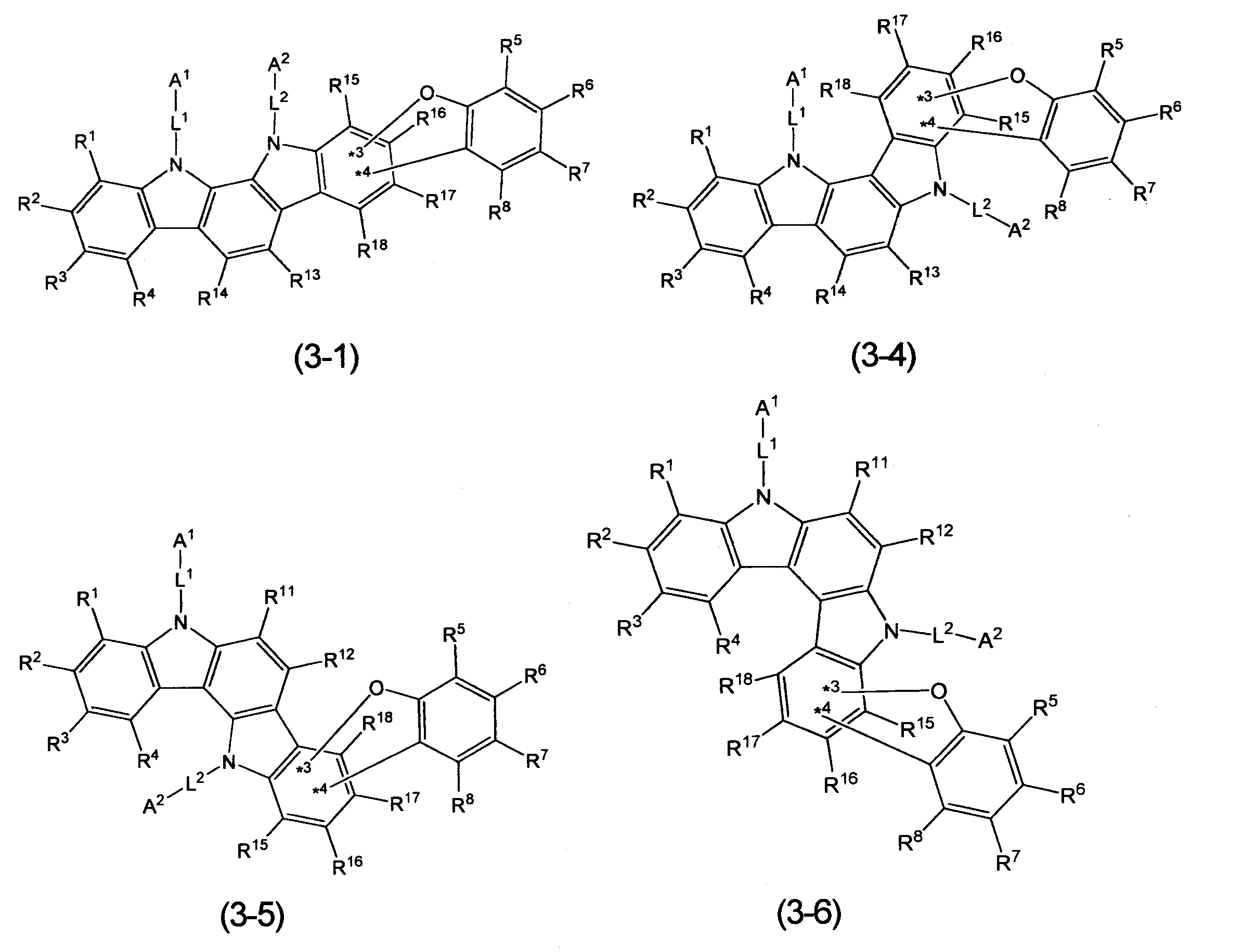
A1,A2、L1,L2、*3及び*4は、前記式(1)で定義した通りである。
R1~R8及びR11~R18は、前記式(2)で定義した通りである。] - 前記式(3-1)で表される化合物が、下記式(2-1)~(2-6)で表される化合物からなる群から選ばれる、請求項4に記載の化合物。
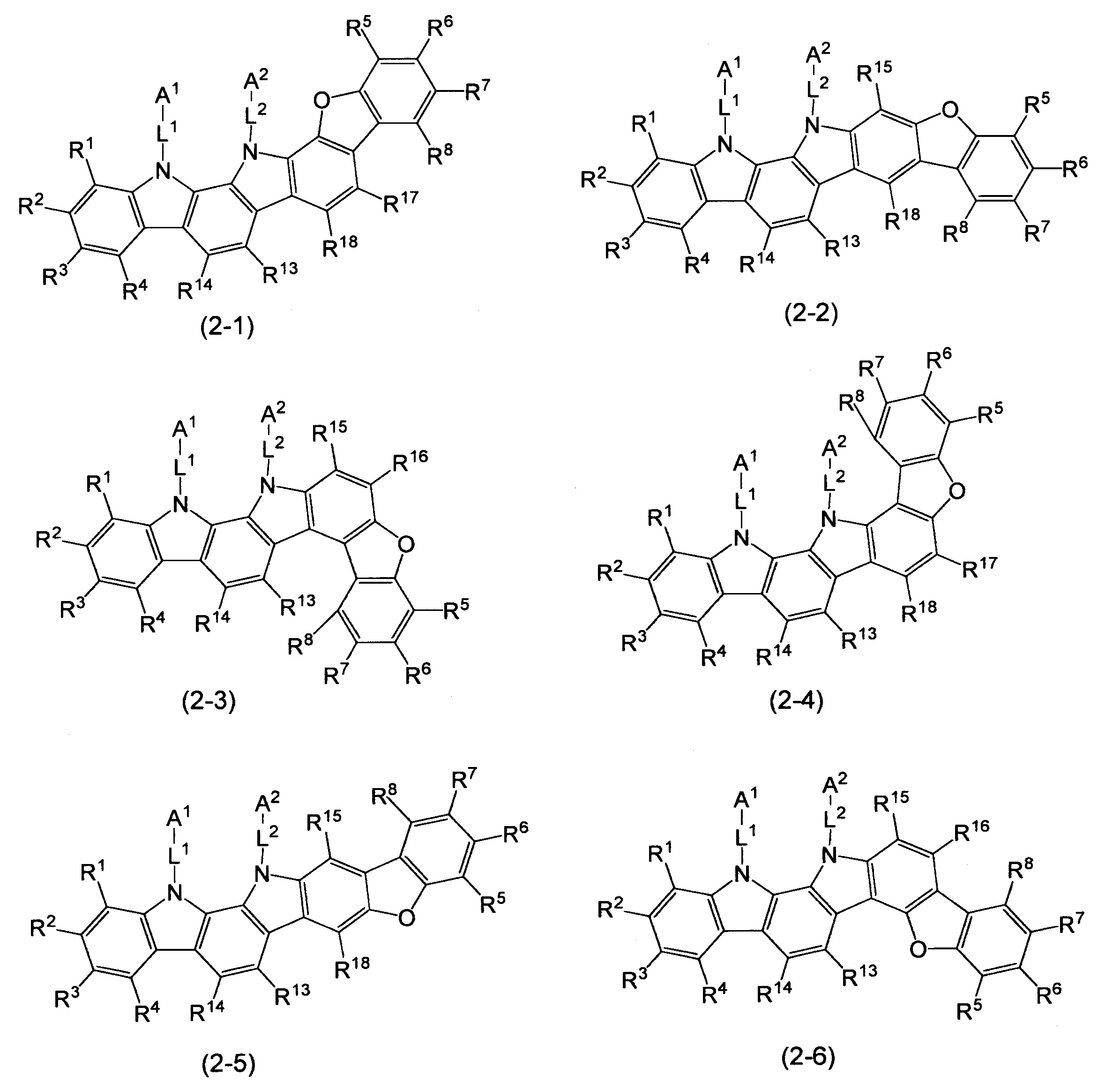
A1,A2、L1及びL2は、前記式(1)で定義した通りである。
R1~R8及びR11~R18は、前記式(2)で定義した通りである。] - 前記式(3-1)で表される化合物が、前記式(2-2)~(2-4)及び(2-6)で表される化合物からなる群から選ばれる、請求項5に記載の化合物。
- 前記式(3-4)又は式(3-5)で表される化合物が、下記式(2-19)~(2-30)で表される化合物からなる群から選ばれる、請求項4に記載の化合物。

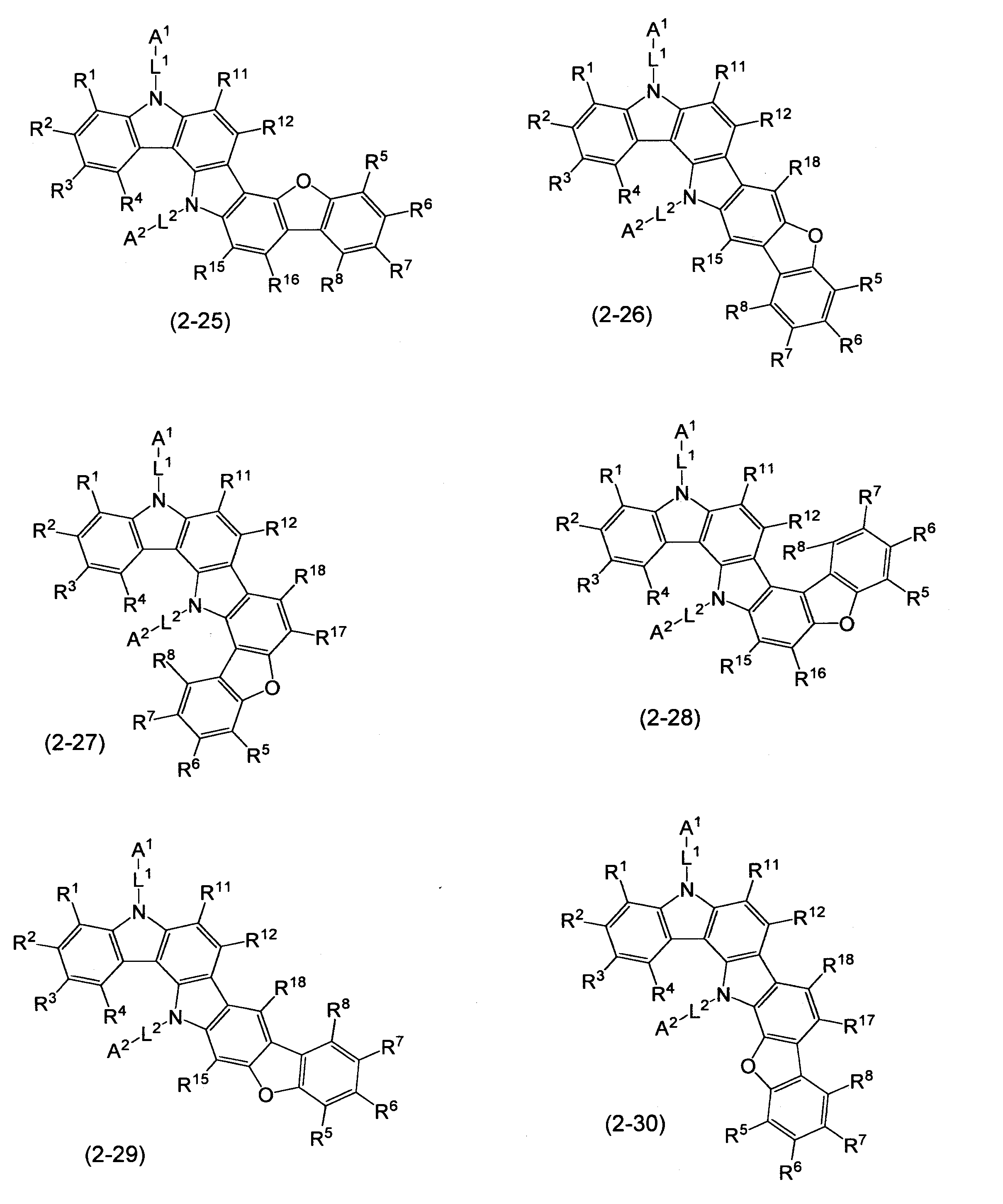
A1,A2、L1及びL2は、前記式(1)で定義した通りである。
R1~R8及びR11~R18は、前記式(2)で定義した通りである。] - 前記式(3-6)で表される化合物が、下記式(2-31)~(2-36)で表される化合物からなる群から選ばれる、請求項4に記載の化合物。

A1,A2、L1及びL2は、前記式(1)で定義した通りである。
R1~R8及びR11~R18は、前記式(2)で定義した通りである。] - R1~R8が、水素原子である、請求項3~8のいずれかに記載の化合物。
- 前記式(3-1)で表される化合物が、下記式(3-1-1)で表される化合物である、請求項4に記載の化合物。
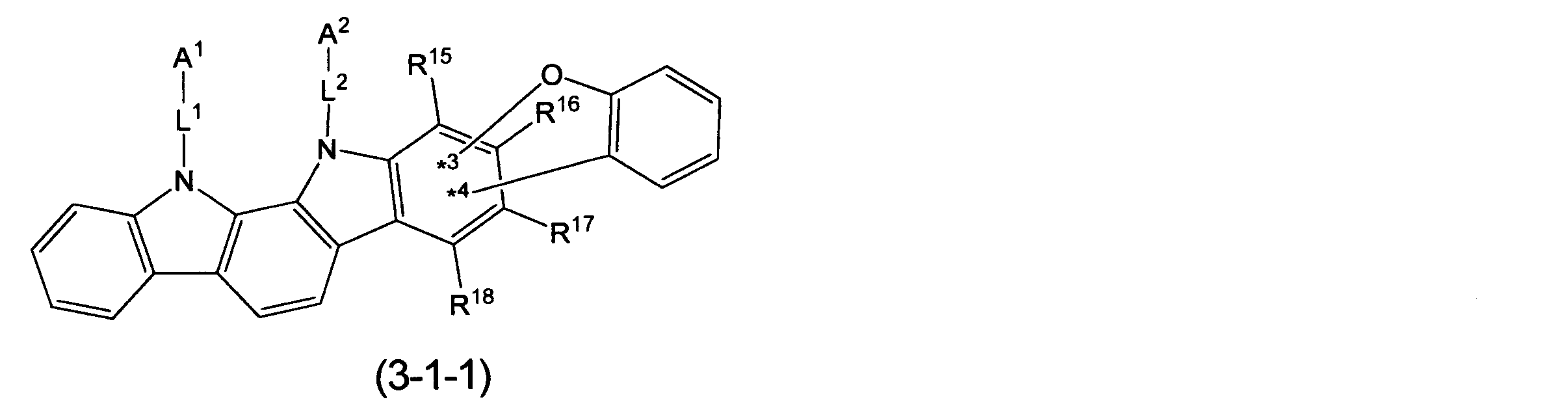
A1、A2,L1,L2,*3及び*4は、式(1)で定義した通りである。
R15~R18は、式(2)で定義した通りであり、R15,R17及びR18から選ばれるいずれかが、*4と単結合を形成する。] - 前記式(3-4)及び(3-5)で表される化合物が、それぞれ下記式(3-4-1)及び(3-5-1)で表される化合物である、請求項4に記載の化合物。

A1、A2,L1,L2,*3及び*4は、式(1)で定義した通りである。
R15~R18は、式(2)で定義した通りであり、R15,R17及びR18から選ばれるいずれかが、*4と単結合を形成する。] - 前記式(3-6)で表される化合物が、下記式(3-6-1)で表される化合物である、請求項4に記載の化合物。

A1、A2,L1,L2,*3及び*4は、式(1)で定義した通りである。
R15~R18は、式(2)で定義した通りであり、R15,R17及びR18から選ばれるいずれかが、*4と単結合を形成する。] - A1及びA2が、それぞれ独立に、置換もしくは無置換の環形成炭素数6~24のアリール基、又は置換もしくは無置換の環形成原子数5~24であり、該環形成原子として窒素原子、酸素原子及び硫黄原子からなる群から選ばれる1以上の原子を含有するへテロアリール基である、請求項1~12のいずれかに記載の化合物。
- A1及びA2における前記置換もしくは無置換の環形成炭素数6~24のアリール基が、それぞれ独立に、置換もしくは無置換の環形成炭素数10~24の縮合アリール基である、請求項13に記載の化合物。
- A1及びA2における前記置換もしくは無置換の環形成炭素数10~24の縮合アリール基が、それぞれ独立に、下記式(a1-1)又は(a1-2)で表される化合物の1価の残基である、請求項14に記載の化合物。
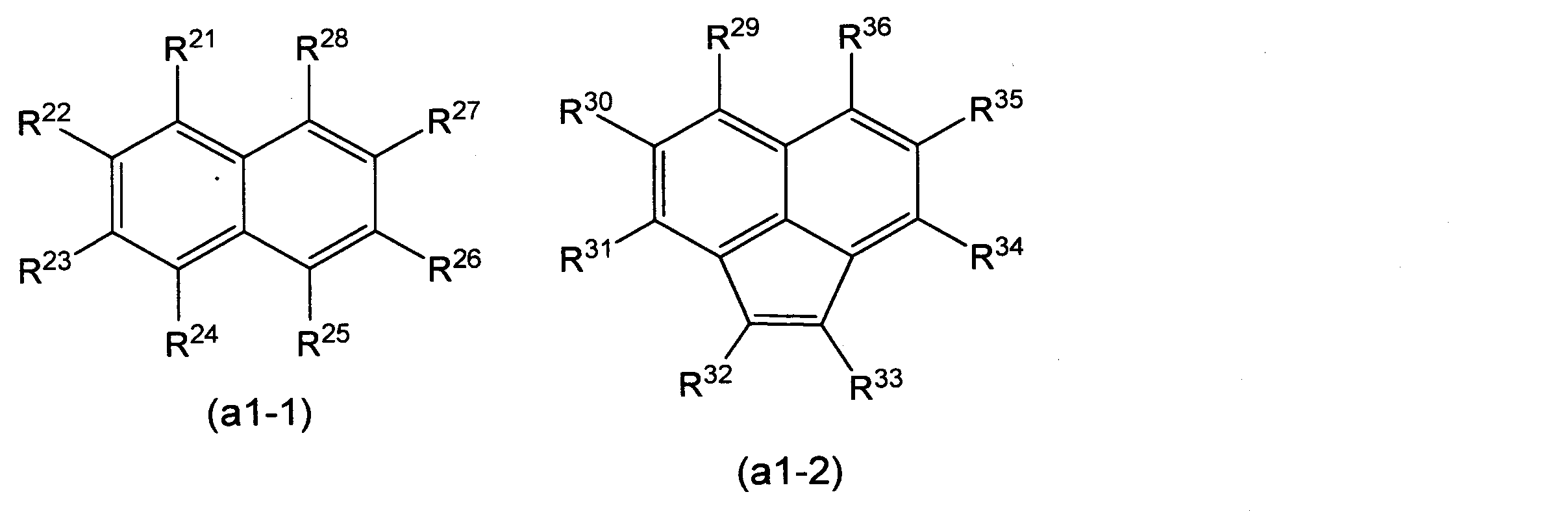
R21~R36は、それぞれ独立に、水素原子又は置換基Rbであって、Rbが複数存在する場合は、それぞれ同一であってもよく、異なっていてもよく、複数存在するRbから選ばれる2つが、互いに結合して環を形成してもよい。] - A1及びA2における前記置換もしくは無置換の環形成炭素数10~24の縮合アリール基が、それぞれ独立に、4環以上からなる縮合環からなる群から選択される、請求項14に記載の化合物。
- A1及びA2における前記置換もしくは無置換の環形成原子数5~24であり、該環形成原子として窒素原子、酸素原子及び硫黄原子からなる群から選ばれる1以上の原子を含有するへテロアリール基が、それぞれ独立に、下記式(a2)で表される化合物の1価の残基である、請求項13~16のいずれかに記載の化合物。

X51~X58は、それぞれ独立に、CH、C(Rb)又はNである。
Rbは、置換基であって、Rbが複数存在する場合は、それぞれ同一であってもよく、異なっていてもよく、複数存在するRbから選ばれる2つが、互いに結合して環を形成してもよい。
Yは、酸素原子、硫黄原子、-NRd、又は-C(Re)(Rf)-である。
Rd、Re及びRfは、それぞれ独立に、水素原子又は置換基Rbであって、Re及びRfの両方がRbである場合は、互いに結合して環を形成してもよい。] - 前記式(a2)で表される化合物の1価の残基が、下記式(a2-1)で表される化合物の1価の残基である、請求項17に記載の化合物。

Yは、前記式(a2)で定義した通りである。
R51~R58は、それぞれ独立に、水素原子又は置換基Rbであり、Rbが複数存在する場合は、それぞれ同一であってもよく、異なっていてもよく、複数存在するRbから選ばれる2つが、互いに結合して環を形成してもよい。] - A1及びA2における前記置換もしくは無置換の環形成原子数5~24であり、該環形成原子として窒素原子、酸素原子及び硫黄原子からなる群から選ばれる1以上の原子を含有するへテロアリール基が、それぞれ独立に、下記式(a3)で表される化合物の1価の残基である、請求項13に記載の化合物。

X101~X105は、それぞれ独立に、CH、C(Rb)又は窒素原子を示す。
Rbは、置換基であり、Rbが複数存在する場合は、それぞれ同一であってもよく、異なっていてもよく、複数存在するRbから選ばれる2つが、互いに結合して、環を形成していてもよい。] - 前記式(a3)で表される化合物の1価の残基が、下記式(a3-1)で表される化合物の1価の残基である、請求項19に記載の化合物。
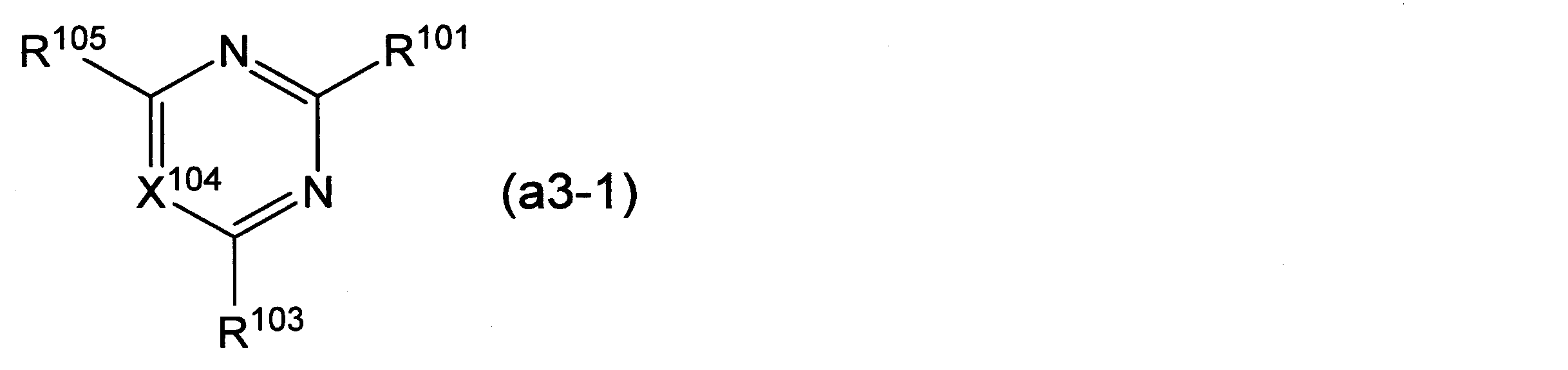
X104は、前記式(a3)で定義した通りである。
R101、R103及びR105は、それぞれ独立に、水素原子又は置換基Rbである。] - 前記式(a3)で表される化合物の1価の残基が、下記式(a3-2)で表される化合物の1価の残基である、請求項19に記載の化合物。

X101~X103及びX106~X109は、それぞれ独立に、CH、C(Rb)又はNを示す。
Rbは、置換基であり、Rbが複数存在する場合は、それぞれ同一であってもよく、異なっていてもよく、複数存在するRbから選ばれる2つは、互いに結合して、環を形成していてもよい。] - 前記式(a3-2)で表される化合物の1価の残基が、下記式(a3-2-1)で表される化合物の1価の残基である、請求項21に記載の化合物。
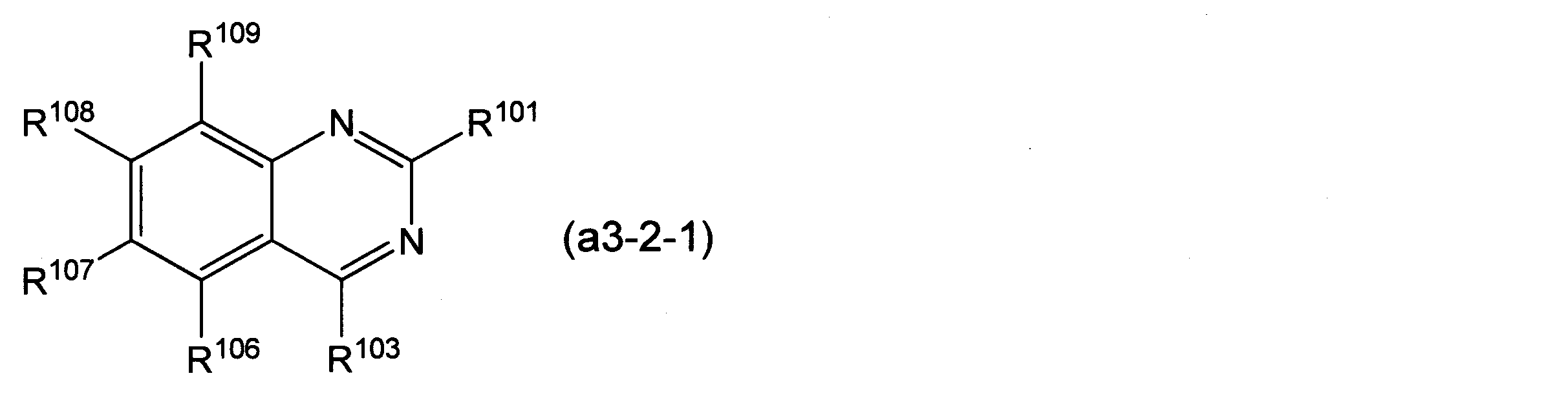
R101、R103及びR106~R109は、それぞれ独立に、水素原子又は置換基Rbであり、Rbが複数存在する場合は、それぞれ同一であってもよく、異なっていてもよく、複数存在するRbから選ばれる2つは、互いに結合して、環を形成していてもよい。] - A2が、置換もしくは無置換の環形成原子数5~50のへテロアリール基である、請求項1~22のいずれかに記載の化合物。
- A2が、置換もしくは無置換の環形成原子数5~24であり、該環形成原子として窒素原子、酸素原子及び硫黄原子からなる群から選ばれる1以上の原子を含有するへテロアリール基である、請求項23に記載の化合物。
- 前記式(2)で表される化合物が、下記式(3-a)~(3-d)で表される化合物からなる群から選択される、請求項3に記載の化合物。
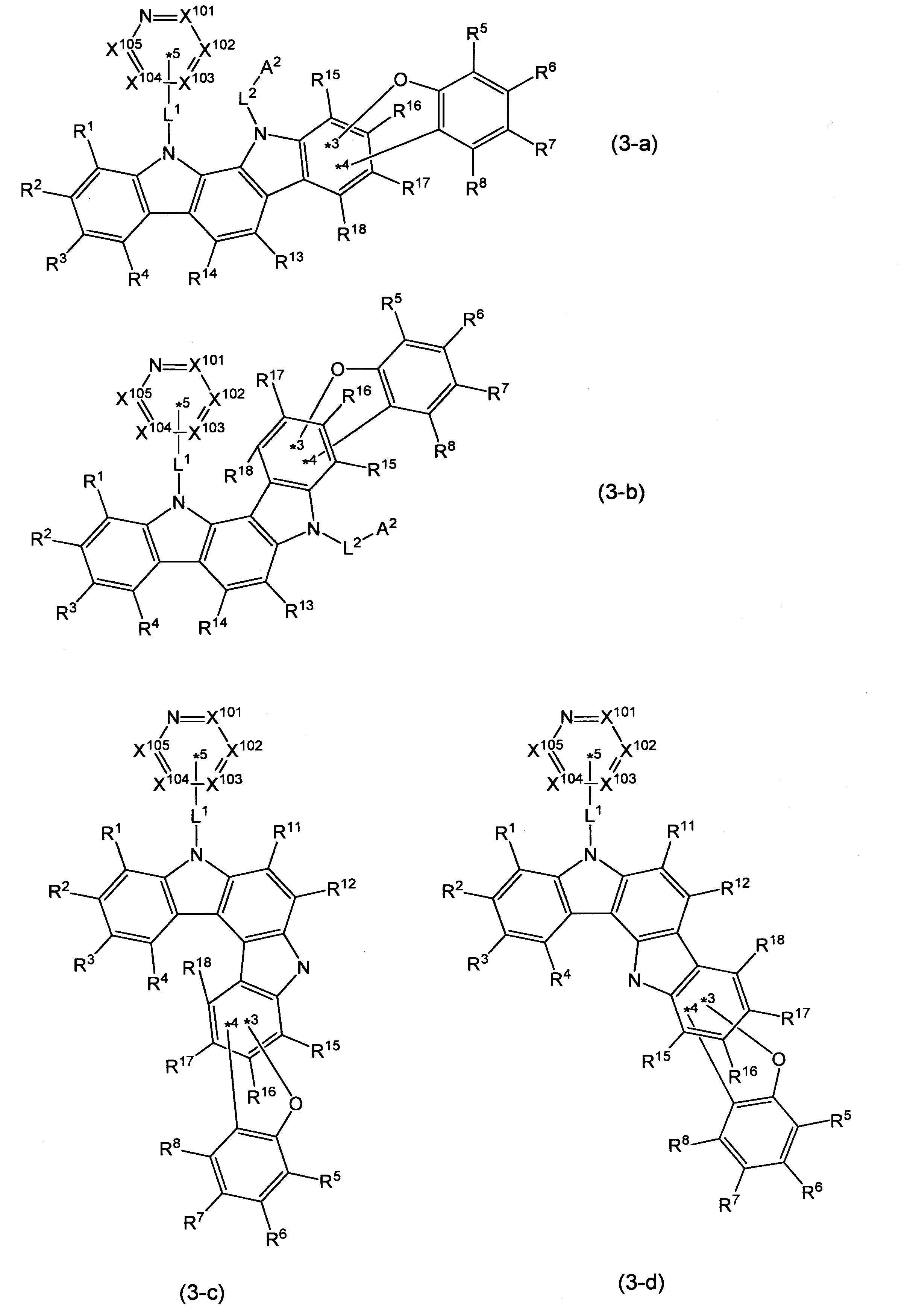
A2,L1,L2及び*1~*4は、前記式(1)で定義した通りである。
R1~R8及びR11~R18は、前記式(2)で定義した通りである。
X101~X105は、前記式(a3)で定義した通りである。
*5は、X101~X105のいずれかと単結合を形成する結合手である。] - 前記式(3-a)~(3-d)で表される化合物が、それぞれ下記式(4-a)~(4-d)で表される化合物である、請求項25に記載の化合物。
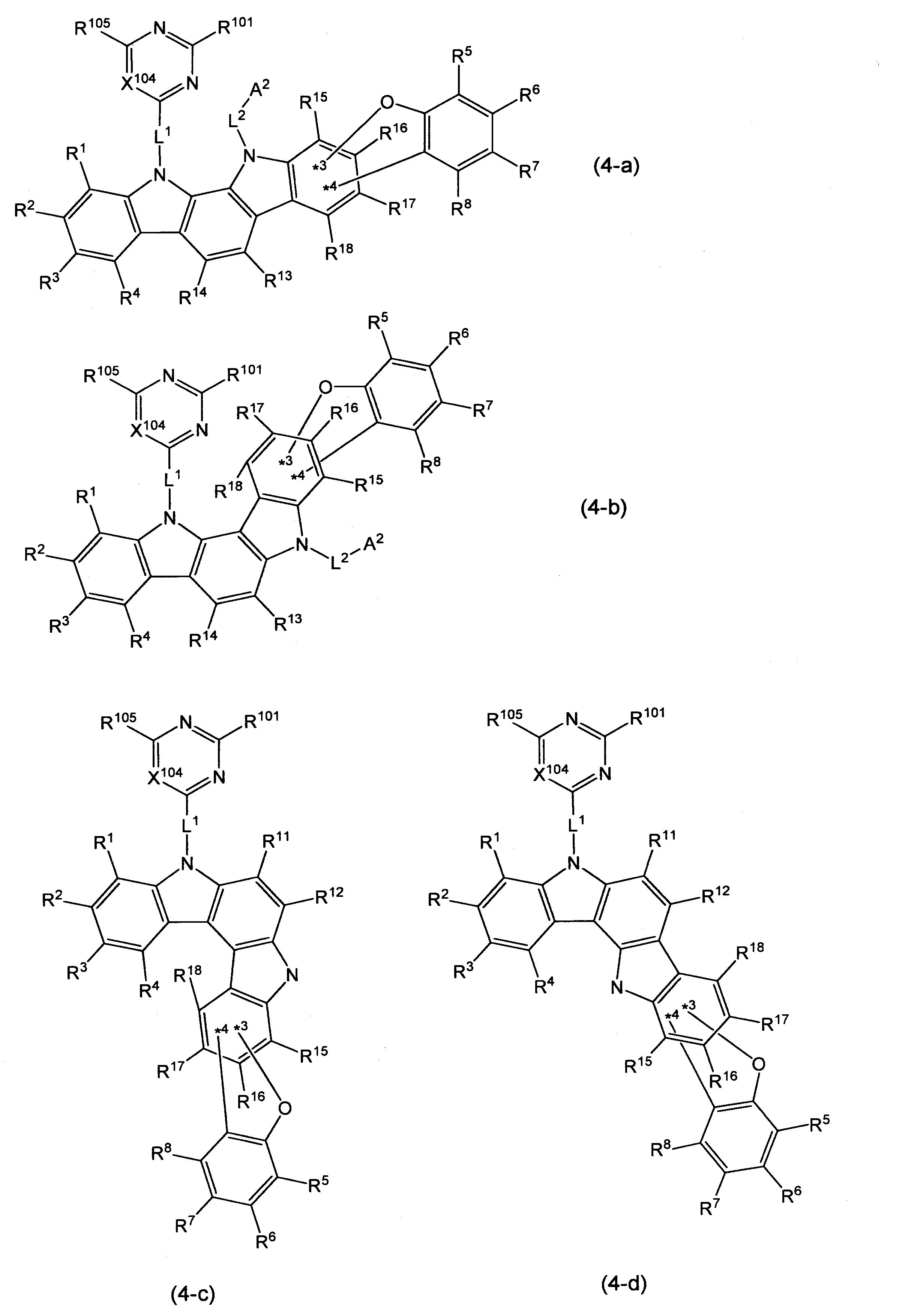
A2,L1,L2及び*1~*4は、前記式(1)で定義した通りである。
R1~R8及びR11~R18は、前記式(2)で定義した通りである。
X104は、前記式(a3)で定義した通りである。
R101及びR105は、前記式(a3-1)で定義した通りである。] - L1及びL2が、それぞれ独立に、単結合、又は下記式(i)~(vii)で表される基からなる群から選択される基である、請求項1~26のいずれかに記載の化合物。

*及び**は、それぞれ独立に、前記式(1)中のN及び、A1及びA2のいずれか一方とそれぞれ単結合を形成する結合手である。
Rcは置換基であり、Rcが複数存在する場合は、それぞれ同一であっても、異なっていてもよく、複数存在するRcから選ばれる2つが、互いに結合して、環構造を形成してもよい。
RZは、水素原子又は置換基Rcである。
mは、それぞれ独立に、0~4の整数であり、nは、それぞれ独立に、0~3の整数である。] - L1が、置換もしくは無置換の環形成炭素数6~60のアリーレン基である、請求項1~26のいずれかに記載の化合物。
- L1が、前記式(i)~(iii)で表される群から選択される請求項28に記載の化合物。
- 請求項1~29のいずれかに記載の化合物を含む、有機エレクトロルミネッセンス素子用材料。
- 陰極、陽極、及び該陰極と該陽極の間に一層以上の有機薄膜層を有する有機エレクトロルミネッセンス素子であって、
前記一層以上の有機薄膜層が発光層を含み、前記一層以上の有機薄膜層の少なくとも1層が請求項1~29のいずれかに記載の化合物を含む、有機エレクトロルミネッセンス素子。 - 前記発光層が、前記化合物を含む、請求項31に記載の有機エレクトロルミネッセンス素子。
- 前記発光層が、さらに蛍光発光材料及び燐光発光材料から選ばれる1種以上を含有する、請求項31又は32に記載の有機エレクトロルミネッセンス素子。
- 前記一層以上の有機薄膜層が、さらに正孔輸送層を含む、請求項31~33のいずれかに記載の有機エレクトロルミネッセンス素子。
- 前記一層以上の有機薄膜層が、さらに電子輸送層を含む、請求項31~34のいずれかに記載の有機エレクトロルミネッセンス素子。
- 請求項31~35のいずれかに記載の有機エレクトロルミネッセンス素子を搭載した、電子機器。
Priority Applications (4)
| Application Number | Priority Date | Filing Date | Title |
|---|---|---|---|
| JP2016567701A JPWO2017038728A1 (ja) | 2015-08-28 | 2016-08-26 | 化合物、有機エレクトロルミネッセンス素子用材料、有機エレクトロルミネッセンス素子、及び電子機器 |
| KR1020177002312A KR20180042146A (ko) | 2015-08-28 | 2016-08-26 | 화합물, 유기 전기발광 소자용 재료, 유기 전기발광 소자, 및 전자 기기 |
| US15/329,167 US10703762B2 (en) | 2015-08-28 | 2016-08-26 | Compound, material for organic electroluminescence device, organic electroluminescence device and electronic apparatus |
| CN201680002131.0A CN106687461A (zh) | 2015-08-28 | 2016-08-26 | 化合物、有机电致发光元件用材料、有机电致发光元件和电子设备 |
Applications Claiming Priority (2)
| Application Number | Priority Date | Filing Date | Title |
|---|---|---|---|
| JP2015168514 | 2015-08-28 | ||
| JP2015-168514 | 2015-08-28 |
Publications (1)
| Publication Number | Publication Date |
|---|---|
| WO2017038728A1 true WO2017038728A1 (ja) | 2017-03-09 |
Family
ID=58187597
Family Applications (1)
| Application Number | Title | Priority Date | Filing Date |
|---|---|---|---|
| PCT/JP2016/075100 Ceased WO2017038728A1 (ja) | 2015-08-28 | 2016-08-26 | 化合物、有機エレクトロルミネッセンス素子用材料、有機エレクトロルミネッセンス素子、及び電子機器 |
Country Status (5)
| Country | Link |
|---|---|
| US (1) | US10703762B2 (ja) |
| JP (1) | JPWO2017038728A1 (ja) |
| KR (1) | KR20180042146A (ja) |
| CN (1) | CN106687461A (ja) |
| WO (1) | WO2017038728A1 (ja) |
Cited By (5)
| Publication number | Priority date | Publication date | Assignee | Title |
|---|---|---|---|---|
| CN109776542A (zh) * | 2017-11-10 | 2019-05-21 | 北京鼎材科技有限公司 | 一种有机电致发光材料及其应用 |
| EP3502107A1 (en) * | 2017-12-20 | 2019-06-26 | Samsung Display Co., Ltd. | 1-aminodibenzofuran-based compound and organic light-emitting device including the same |
| EP3604477A1 (en) * | 2018-07-30 | 2020-02-05 | Idemitsu Kosan Co., Ltd. | Polycyclic compound, organic electroluminescence device, and electronic device |
| WO2024135588A1 (ja) * | 2022-12-23 | 2024-06-27 | 日鉄ケミカル&マテリアル株式会社 | 光電変換素子用材料を含む光電変換素子 |
| US12144249B2 (en) | 2020-07-17 | 2024-11-12 | Samsung Sdi Co., Ltd. | Compound for organic optoelectronic device, composition for organic optoelectronic device, organic optoelectronic device and display device |
Families Citing this family (5)
| Publication number | Priority date | Publication date | Assignee | Title |
|---|---|---|---|---|
| CN107868089B (zh) * | 2017-12-21 | 2019-08-27 | 河南省科学院化学研究所有限公司 | 一种5,12-二氢-5-苯基吲哚并[3,2-a]咔唑的合成方法 |
| CN108299284A (zh) * | 2018-01-18 | 2018-07-20 | 河南省科学院化学研究所有限公司 | 一种2-溴-6,9-二苯基咔唑工业化生产工艺 |
| KR102922186B1 (ko) * | 2021-08-31 | 2026-02-03 | 엘티소재주식회사 | 헤테로 고리 화합물, 이를 포함하는 유기 발광 소자 및 유기 발광 소자의 유기물층용 조성물 |
| KR102810821B1 (ko) * | 2021-09-14 | 2025-05-22 | 엘티소재주식회사 | 헤테로 고리 화합물, 이를 포함하는 유기 발광 소자 및 유기 발광 소자의 유기물층용 조성물 |
| CN119775285B (zh) * | 2023-10-07 | 2026-03-06 | 陕西莱特光电材料股份有限公司 | 有机化合物及有机电致发光器件和电子装置 |
Citations (8)
| Publication number | Priority date | Publication date | Assignee | Title |
|---|---|---|---|---|
| CN101220034A (zh) * | 2008-01-11 | 2008-07-16 | 山东大学 | 一种λ-型超格斯碱衍生物类有机电致发光材料 |
| JP2013082662A (ja) * | 2011-10-10 | 2013-05-09 | Samsung Display Co Ltd | ヘテロ環化合物、それを含む有機発光素子及び平板表示装置 |
| WO2014057684A1 (ja) * | 2012-10-11 | 2014-04-17 | 出光興産株式会社 | ラダー化合物、及びそれを用いた有機エレクトロルミネッセンス素子 |
| WO2015108325A1 (ko) * | 2014-01-16 | 2015-07-23 | 덕산네오룩스 주식회사 | 유기전기 소자용 화합물, 이를 이용한 유기전기소자 및 그 전자 장치 |
| JP2015151399A (ja) * | 2014-02-12 | 2015-08-24 | 三星電子株式会社Samsung Electronics Co.,Ltd. | 縮合環化合物及びそれを含む有機発光素子 |
| WO2015182994A1 (en) * | 2014-05-27 | 2015-12-03 | Rohm And Haas Electronic Materials Korea Ltd. | Organic electroluminescent compound and organic electroluminescent device comprising the same |
| WO2016036171A1 (en) * | 2014-09-04 | 2016-03-10 | Rohm And Haas Electronic Materials Korea Ltd. | A plurality of host materials and organic electroluminescent devices comprising the same |
| KR20160028737A (ko) * | 2014-09-04 | 2016-03-14 | 에스에프씨 주식회사 | 유기발광 화합물 및 이를 포함하는 유기전계발광소자 |
Family Cites Families (42)
| Publication number | Priority date | Publication date | Assignee | Title |
|---|---|---|---|---|
| DE102009023155A1 (de) | 2009-05-29 | 2010-12-02 | Merck Patent Gmbh | Materialien für organische Elektrolumineszenzvorrichtungen |
| DE102009031021A1 (de) | 2009-06-30 | 2011-01-05 | Merck Patent Gmbh | Materialien für organische Elektrolumineszenzvorrichtungen |
| US9666806B2 (en) | 2009-09-16 | 2017-05-30 | Merck Patent Gmbh | Formulations for the production of electronic devices |
| KR20110102055A (ko) | 2010-03-10 | 2011-09-16 | 제일모직주식회사 | 유기광전소자용 화합물 및 이를 포함하는 유기광전소자 |
| DE102010014933A1 (de) | 2010-04-14 | 2011-10-20 | Merck Patent Gmbh | Materialien für elektronische Vorrichtungen |
| US9159930B2 (en) | 2010-11-26 | 2015-10-13 | Merck Patent Gmbh | Formulations and electronic devices |
| GB201020882D0 (en) | 2010-12-09 | 2011-01-26 | Univ Manchester | Novel process and compounds |
| EP2695213B1 (de) | 2011-04-05 | 2019-11-13 | Merck Patent GmbH | Organische elektrolumineszenzvorrichtung |
| JP6118036B2 (ja) | 2011-04-12 | 2017-04-19 | ユー・ディー・シー アイルランド リミテッド | 有機電界発光素子、有機電界発光素子用材料、膜、発光層、及び有機電界発光素子の作製方法 |
| JP6174030B2 (ja) | 2011-09-21 | 2017-08-02 | メルク パテント ゲーエムベーハー | 有機エレクトロルミネッセンスデバイス用のカルバゾール誘導体 |
| KR101903216B1 (ko) | 2011-10-20 | 2018-10-01 | 메르크 파텐트 게엠베하 | 유기 전계발광 소자용 재료 |
| KR20130114785A (ko) | 2012-04-10 | 2013-10-21 | 롬엔드하스전자재료코리아유한회사 | 신규한 유기 전계 발광 화합물 및 이를 포함하는 유기 전계 발광 소자 |
| KR20140097044A (ko) | 2013-01-29 | 2014-08-06 | 주식회사 엘지화학 | 헤테로환 화합물 및 이를 포함한 유기 전자소자 |
| KR101822827B1 (ko) | 2013-03-11 | 2018-01-29 | 덕산네오룩스 주식회사 | 유기전기 소자용 화합물, 이를 이용한 유기전기소자 및 그 전자 장치 |
| WO2014148047A1 (ja) | 2013-03-22 | 2014-09-25 | 出光興産株式会社 | ヘテロ縮合環を有するアミン化合物及びそれを用いた有機エレクトロルミネッセンス素子 |
| KR101838833B1 (ko) | 2013-03-27 | 2018-04-26 | 이데미쓰 고산 가부시키가이샤 | 축합 플루오란텐 화합물, 이것을 이용한 유기 전기발광 소자용 재료, 및 이것을 이용한 유기 전기발광 소자 및 전자 기기 |
| KR102098063B1 (ko) | 2013-05-21 | 2020-04-07 | 덕산네오룩스 주식회사 | 유기전기 소자용 화합물, 이를 이용한 유기전기소자 및 그 전자 장치 |
| JP6148731B2 (ja) | 2013-06-26 | 2017-06-14 | 出光興産株式会社 | 化合物、有機エレクトロルミネッセンス素子用材料、有機エレクトロルミネッセンス素子、および電子機器 |
| KR101653338B1 (ko) | 2013-08-05 | 2016-09-01 | 제일모직 주식회사 | 유기 화합물, 유기 광전자 소자 및 표시 장치 |
| US10074806B2 (en) | 2013-08-20 | 2018-09-11 | Universal Display Corporation | Organic electroluminescent materials and devices |
| US9831437B2 (en) | 2013-08-20 | 2017-11-28 | Universal Display Corporation | Organic electroluminescent materials and devices |
| WO2014111269A2 (de) | 2013-10-14 | 2014-07-24 | Merck Patent Gmbh | Materialien für elektronische vorrichtungen |
| KR101680093B1 (ko) | 2014-01-16 | 2016-11-28 | 덕산네오룩스 주식회사 | 유기전기 소자용 화합물, 이를 이용한 유기전기소자 및 그 전자 장치 |
| JP2015153911A (ja) | 2014-02-14 | 2015-08-24 | 富士フイルム株式会社 | 光電変換素子、光センサ、撮像素子 |
| JP6378106B2 (ja) | 2014-04-16 | 2018-08-22 | 出光興産株式会社 | 化合物、有機エレクトロルミネッセンス素子および電子機器 |
| WO2015165563A1 (de) | 2014-04-30 | 2015-11-05 | Merck Patent Gmbh | Materialien für elektronische vorrichtungen |
| KR102372950B1 (ko) | 2014-05-02 | 2022-03-14 | 롬엔드하스전자재료코리아유한회사 | 유기 전계 발광 화합물 및 이를 포함하는 유기 전계 발광 소자 |
| KR20150136452A (ko) | 2014-05-27 | 2015-12-07 | 롬엔드하스전자재료코리아유한회사 | 유기 전계 발광 화합물 및 이를 포함하는 유기 전계 발광 소자 |
| DE102014008722B4 (de) | 2014-06-18 | 2024-08-22 | Merck Patent Gmbh | Zusammensetzungen für elektronische Vorrichtungen, Formulierung diese enthaltend, Verwendung der Zusammensetzung, Verwendung der Formulierung sowie organische elektronische Vorrichtung enthaltend die Zusammensetzung |
| US10749118B2 (en) | 2014-06-26 | 2020-08-18 | Samsung Display Co., Ltd. | Heterocyclic compound and organic light-emitting device including the same |
| JP6387311B2 (ja) | 2014-06-26 | 2018-09-05 | 出光興産株式会社 | 有機エレクトロルミネッセンス素子、有機エレクトロルミネッセンス素子用材料、および電子機器 |
| JP6374329B2 (ja) | 2014-06-26 | 2018-08-15 | 出光興産株式会社 | 有機エレクトロルミネッセンス素子、有機エレクトロルミネッセンス素子用材料、および電子機器 |
| JP6306460B2 (ja) | 2014-07-18 | 2018-04-04 | 富士フイルム株式会社 | 有機半導体膜形成用の組成物、非発光性有機半導体デバイス用有機半導体材料、有機膜トランジスタ用材料、非発光性有機半導体デバイス用塗布溶液、非発光性有機半導体デバイス用インク、非発光性有機半導体デバイス用有機半導体膜、有機膜トランジスタおよびオリゴマー |
| KR101605114B1 (ko) | 2014-08-02 | 2016-03-21 | 주식회사 에코제로 | 고추냉이를 주재로 한 새집증후군 제거용 친환경 탈취제의 제조방법 |
| KR102449305B1 (ko) | 2014-08-15 | 2022-09-29 | 이데미쓰 고산 가부시키가이샤 | 화합물, 유기 전기발광 소자용 재료, 유기 전기발광 소자, 및 전자 기기 |
| JP2017212024A (ja) | 2014-08-28 | 2017-11-30 | 出光興産株式会社 | 有機エレクトロルミネッセンス素子および電子機器 |
| CN110233206B (zh) | 2014-10-07 | 2021-07-30 | 出光兴产株式会社 | 有机电致发光元件、以及电子设备 |
| KR102429869B1 (ko) | 2014-10-17 | 2022-08-05 | 삼성전자주식회사 | 유기 발광 소자 |
| US9997717B2 (en) | 2014-12-12 | 2018-06-12 | Idemitsu Kosan Co., Ltd. | Organic electroluminescence device and electronic device |
| EP3255693B1 (en) | 2015-02-06 | 2024-10-09 | Idemitsu Kosan Co., Ltd | Organic electroluminescence element and electronic device |
| JP6804988B2 (ja) | 2015-02-13 | 2020-12-23 | 出光興産株式会社 | 有機el発光装置および電子機器 |
| CN107613973A (zh) | 2015-03-18 | 2018-01-19 | 艾维克山有限责任公司 | 化学合成吡咯连接的二价化合物的方法及其组合物 |
-
2016
- 2016-08-26 WO PCT/JP2016/075100 patent/WO2017038728A1/ja not_active Ceased
- 2016-08-26 KR KR1020177002312A patent/KR20180042146A/ko not_active Withdrawn
- 2016-08-26 CN CN201680002131.0A patent/CN106687461A/zh active Pending
- 2016-08-26 JP JP2016567701A patent/JPWO2017038728A1/ja active Pending
- 2016-08-26 US US15/329,167 patent/US10703762B2/en active Active
Patent Citations (8)
| Publication number | Priority date | Publication date | Assignee | Title |
|---|---|---|---|---|
| CN101220034A (zh) * | 2008-01-11 | 2008-07-16 | 山东大学 | 一种λ-型超格斯碱衍生物类有机电致发光材料 |
| JP2013082662A (ja) * | 2011-10-10 | 2013-05-09 | Samsung Display Co Ltd | ヘテロ環化合物、それを含む有機発光素子及び平板表示装置 |
| WO2014057684A1 (ja) * | 2012-10-11 | 2014-04-17 | 出光興産株式会社 | ラダー化合物、及びそれを用いた有機エレクトロルミネッセンス素子 |
| WO2015108325A1 (ko) * | 2014-01-16 | 2015-07-23 | 덕산네오룩스 주식회사 | 유기전기 소자용 화합물, 이를 이용한 유기전기소자 및 그 전자 장치 |
| JP2015151399A (ja) * | 2014-02-12 | 2015-08-24 | 三星電子株式会社Samsung Electronics Co.,Ltd. | 縮合環化合物及びそれを含む有機発光素子 |
| WO2015182994A1 (en) * | 2014-05-27 | 2015-12-03 | Rohm And Haas Electronic Materials Korea Ltd. | Organic electroluminescent compound and organic electroluminescent device comprising the same |
| WO2016036171A1 (en) * | 2014-09-04 | 2016-03-10 | Rohm And Haas Electronic Materials Korea Ltd. | A plurality of host materials and organic electroluminescent devices comprising the same |
| KR20160028737A (ko) * | 2014-09-04 | 2016-03-14 | 에스에프씨 주식회사 | 유기발광 화합물 및 이를 포함하는 유기전계발광소자 |
Cited By (8)
| Publication number | Priority date | Publication date | Assignee | Title |
|---|---|---|---|---|
| CN109776542A (zh) * | 2017-11-10 | 2019-05-21 | 北京鼎材科技有限公司 | 一种有机电致发光材料及其应用 |
| EP3502107A1 (en) * | 2017-12-20 | 2019-06-26 | Samsung Display Co., Ltd. | 1-aminodibenzofuran-based compound and organic light-emitting device including the same |
| CN109942557A (zh) * | 2017-12-20 | 2019-06-28 | 三星显示有限公司 | 胺类化合物和包括该胺类化合物的有机发光装置 |
| EP3604477A1 (en) * | 2018-07-30 | 2020-02-05 | Idemitsu Kosan Co., Ltd. | Polycyclic compound, organic electroluminescence device, and electronic device |
| WO2020026133A1 (en) | 2018-07-30 | 2020-02-06 | Idemitsu Kosan Co., Ltd. | Polycyclic compound, organic electroluminescence device, and electronic device |
| US12144249B2 (en) | 2020-07-17 | 2024-11-12 | Samsung Sdi Co., Ltd. | Compound for organic optoelectronic device, composition for organic optoelectronic device, organic optoelectronic device and display device |
| WO2024135588A1 (ja) * | 2022-12-23 | 2024-06-27 | 日鉄ケミカル&マテリアル株式会社 | 光電変換素子用材料を含む光電変換素子 |
| KR20250127290A (ko) | 2022-12-23 | 2025-08-26 | 닛테츠 케미컬 앤드 머티리얼 가부시키가이샤 | 광전 변환 소자용 재료를 포함하는 광전 변환 소자 |
Also Published As
| Publication number | Publication date |
|---|---|
| US10703762B2 (en) | 2020-07-07 |
| CN106687461A (zh) | 2017-05-17 |
| KR20180042146A (ko) | 2018-04-25 |
| US20180339994A1 (en) | 2018-11-29 |
| JPWO2017038728A1 (ja) | 2018-06-14 |
Similar Documents
| Publication | Publication Date | Title |
|---|---|---|
| US11322711B2 (en) | Organic EL light emitting apparatus and electronic instrument | |
| KR101419666B1 (ko) | 유기 전기발광 소자용 재료 및 그것을 이용한 유기 전기발광 소자 | |
| JP5925308B2 (ja) | 有機エレクトロルミネッセンス素子 | |
| JP5074627B2 (ja) | ビスカルバゾール誘導体、有機エレクトロルミネッセンス素子用材料及びそれを用いた有機エレクトロルミネッセンス素子 | |
| KR20220061138A (ko) | 유기 일렉트로루미네센스 소자 및 전자 기기 | |
| WO2017038728A1 (ja) | 化合物、有機エレクトロルミネッセンス素子用材料、有機エレクトロルミネッセンス素子、及び電子機器 | |
| JP6060095B2 (ja) | カルバゾール化合物、有機エレクトロルミネッセンス素子用材料および有機エレクトロルミネッセンス素子 | |
| WO2016088354A1 (ja) | 金属錯体化合物、有機エレクトロルミネッセンス素子用材料、組成物、有機エレクトロルミネッセンス素子及び電子機器 | |
| CN103732591A (zh) | 双咔唑衍生物及使用其的有机电致发光元件 | |
| WO2013039184A1 (ja) | 芳香族アミン誘導体およびそれを用いた有機エレクトロルミネッセンス素子 | |
| WO2018043435A1 (ja) | 有機エレクトロルミネッセンス素子及びそれを搭載した電子機器 | |
| KR20130057416A (ko) | 유기 전기발광 소자용 재료 및 그것을 이용한 유기 전기발광 소자 | |
| WO2017069258A1 (ja) | 新規化合物、有機エレクトロルミネッセンス素子用材料、有機エレクトロルミネッセンス素子及び電子機器 | |
| EP4238953A1 (en) | Compound, organic electroluminescent element and electronic device | |
| US11839138B2 (en) | Organic electroluminescent element and electronic device | |
| EP4458816A1 (en) | Compound, organic electroluminescent element, and electronic device | |
| KR101211471B1 (ko) | 고효율 카바졸계 화합물 및 이를 포함하는 유기전계 발광소자 | |
| EP4137473B1 (en) | Compound, organic electroluminescent element and electronic device | |
| WO2017047670A1 (ja) | 有機エレクトロルミネッセンス素子 | |
| KR20240045229A (ko) | 조성물, 유기 전기발광 소자용 재료, 유기 전기발광 소자, 및 전자 기기 | |
| JP6047116B2 (ja) | 新規なアントラセン化合物及びこれを用いた有機エレクトロルミネッセンス素子 |
Legal Events
| Date | Code | Title | Description |
|---|---|---|---|
| ENP | Entry into the national phase |
Ref document number: 2016567701 Country of ref document: JP Kind code of ref document: A |
|
| ENP | Entry into the national phase |
Ref document number: 20177002312 Country of ref document: KR Kind code of ref document: A |
|
| WWE | Wipo information: entry into national phase |
Ref document number: 15329167 Country of ref document: US |
|
| 121 | Ep: the epo has been informed by wipo that ep was designated in this application |
Ref document number: 16841760 Country of ref document: EP Kind code of ref document: A1 |
|
| NENP | Non-entry into the national phase |
Ref country code: DE |
|
| 122 | Ep: pct application non-entry in european phase |
Ref document number: 16841760 Country of ref document: EP Kind code of ref document: A1 |