WO2016199847A1 - 積層フィルム - Google Patents
積層フィルム Download PDFInfo
- Publication number
- WO2016199847A1 WO2016199847A1 PCT/JP2016/067204 JP2016067204W WO2016199847A1 WO 2016199847 A1 WO2016199847 A1 WO 2016199847A1 JP 2016067204 W JP2016067204 W JP 2016067204W WO 2016199847 A1 WO2016199847 A1 WO 2016199847A1
- Authority
- WO
- WIPO (PCT)
- Prior art keywords
- laminated film
- resin
- film
- urethane acrylate
- acrylic
- Prior art date
- Legal status (The legal status is an assumption and is not a legal conclusion. Google has not performed a legal analysis and makes no representation as to the accuracy of the status listed.)
- Ceased
Links
Classifications
-
- C—CHEMISTRY; METALLURGY
- C08—ORGANIC MACROMOLECULAR COMPOUNDS; THEIR PREPARATION OR CHEMICAL WORKING-UP; COMPOSITIONS BASED THEREON
- C08J—WORKING-UP; GENERAL PROCESSES OF COMPOUNDING; AFTER-TREATMENT NOT COVERED BY SUBCLASSES C08B, C08C, C08F, C08G or C08H
- C08J7/00—Chemical treatment or coating of shaped articles made of macromolecular substances
- C08J7/04—Coating
- C08J7/043—Improving the adhesiveness of the coatings per se, e.g. forming primers
-
- B—PERFORMING OPERATIONS; TRANSPORTING
- B29—WORKING OF PLASTICS; WORKING OF SUBSTANCES IN A PLASTIC STATE IN GENERAL
- B29C—SHAPING OR JOINING OF PLASTICS; SHAPING OF MATERIAL IN A PLASTIC STATE, NOT OTHERWISE PROVIDED FOR; AFTER-TREATMENT OF THE SHAPED PRODUCTS, e.g. REPAIRING
- B29C45/00—Injection moulding, i.e. forcing the required volume of moulding material through a nozzle into a closed mould; Apparatus therefor
- B29C45/14—Injection moulding, i.e. forcing the required volume of moulding material through a nozzle into a closed mould; Apparatus therefor incorporating preformed parts or layers, e.g. injection moulding around inserts or for coating articles
-
- B—PERFORMING OPERATIONS; TRANSPORTING
- B32—LAYERED PRODUCTS
- B32B—LAYERED PRODUCTS, i.e. PRODUCTS BUILT-UP OF STRATA OF FLAT OR NON-FLAT, e.g. CELLULAR OR HONEYCOMB, FORM
- B32B27/00—Layered products comprising a layer of synthetic resin
- B32B27/30—Layered products comprising a layer of synthetic resin comprising vinyl (co)polymers; comprising acrylic (co)polymers
-
- C—CHEMISTRY; METALLURGY
- C08—ORGANIC MACROMOLECULAR COMPOUNDS; THEIR PREPARATION OR CHEMICAL WORKING-UP; COMPOSITIONS BASED THEREON
- C08J—WORKING-UP; GENERAL PROCESSES OF COMPOUNDING; AFTER-TREATMENT NOT COVERED BY SUBCLASSES C08B, C08C, C08F, C08G or C08H
- C08J7/00—Chemical treatment or coating of shaped articles made of macromolecular substances
- C08J7/04—Coating
- C08J7/046—Forming abrasion-resistant coatings; Forming surface-hardening coatings
-
- C—CHEMISTRY; METALLURGY
- C09—DYES; PAINTS; POLISHES; NATURAL RESINS; ADHESIVES; COMPOSITIONS NOT OTHERWISE PROVIDED FOR; APPLICATIONS OF MATERIALS NOT OTHERWISE PROVIDED FOR
- C09D—COATING COMPOSITIONS, e.g. PAINTS, VARNISHES OR LACQUERS; FILLING PASTES; CHEMICAL PAINT OR INK REMOVERS; INKS; CORRECTING FLUIDS; WOODSTAINS; PASTES OR SOLIDS FOR COLOURING OR PRINTING; USE OF MATERIALS THEREFOR
- C09D175/00—Coating compositions based on polyureas or polyurethanes; Coating compositions based on derivatives of such polymers
- C09D175/04—Polyurethanes
- C09D175/14—Polyurethanes having carbon-to-carbon unsaturated bonds
- C09D175/16—Polyurethanes having carbon-to-carbon unsaturated bonds having terminal carbon-to-carbon unsaturated bonds
Definitions
- the present invention relates to a laminated film.
- these films include ⁇ Transparency that prints and patterns on the surface of the substrate are clearly visible, ⁇ Thermoformability that can be applied to various molding methods such as thermal lamination, compressed air molding that shapes the film according to the surface shape of the substrate, vacuum molding, hot press molding, insert / in-mold molding, and three-dimensional laminate molding , ⁇ Folding crack resistance, Various characteristics such as are required.
- N, N-diethyl-3-methylbenzamide (abbreviated as DEET, Diet, etc.), which is widely used as an active ingredient of so-called insect repellents, has a solubility in materials such as plastics and leather. It is very strong and is known as a drug that can easily damage automobile interiors.
- a method of forming a hard coat layer such as a crosslinked layer or a cured layer on the surface of the film is known.
- the hard coat layer provided on the surface of the acrylic resin film is generally insufficient in heat deformability.
- the method of providing a hard coat layer is characterized by thermoformability (for example, 150% to 200% or more during shape forming such as pressure forming or vacuum forming), which is a feature of acrylic resin films. Resulting in cracking of the film or hard coat layer during lamination on the surface of the molded body, peeling from the edge of the laminated body, etc. There is a problem of ease.
- the present invention is excellent in transparency, surface hardness, bending crack resistance, folding whitening resistance, and thermoformability, and is not significantly inferior in chemical resistance and stain resistance to various chemicals, It aims at providing the laminated film which can be used for decoration and surface protection, such as a member for vehicles, furniture, and an electronic / electric equipment housing
- the present inventors have included a unit having a specific glass transition temperature and derived from a specific urethane acrylate resin in the acrylic resin film, and further, in the urethane acrylate resin.
- a cured resin layer in which the average number of urethane bonds contained in the derived unit is 40/1 unit the present inventors have found that the above-mentioned problems can be solved and have completed the present invention.
- the urethane acrylate resin has a structure containing a functional group selected from an acryloyl group or a (meth) acryloyl group at the end of the polyurethane resin, and these are collectively referred to as “urethane acrylate resin” in the present text.
- urethane acrylate resin a structure containing a functional group selected from an acryloyl group or a (meth) acryloyl group at the end of the polyurethane resin, and these are collectively referred to as “urethane acrylate resin” in the present text.
- a laminated film comprising a cured resin layer on an acrylic resin film,
- the glass transition temperature of the cured resin layer is 105 ° C. or higher
- the cured resin layer is made of a resin containing a unit derived from a urethane acrylate resin,
- the laminated film whose average of the content number of the urethane bond in the unit derived from a urethane acrylate resin is 40/1 unit or more.
- a laminated film comprising a cured resin layer on an acrylic resin film,
- the glass transition temperature of the cured resin layer is 105 ° C. or higher
- the urethane acrylate resin is an addition reaction product of a polyvalent isocyanate containing a bifunctional isocyanate compound having a cyclic structure, a diol compound, and a hydroxyl group-containing compound containing an acryloyl group and / or a methacryloyl group.
- the hydroxyl group-containing compound contains a compound containing two or more acryloyl groups and / or methacryloyl groups in the molecule and one hydroxyl group, (4) or (5) Such a laminated film.
- the value obtained by dividing the average number of urethane bonds per molecule of the urethane acrylate resin by the total number of acryloyl groups and / or methacryloyl groups per molecule is in the range of 7 to 21, (4) to ( A laminated film according to any one of 7).
- a laminated film comprising a cured resin layer on an acrylic resin film,
- the amount of change in the haze value of the laminated film after dropping a mixed organic solvent containing 25% N, N-diethyl-3-methylbenzamide onto the cured resin layer in the laminated film and heat-treating at 80 ° C. for 24 hours is 0. .2% or less
- a laminate comprising the laminated film according to any one of (1) to (13) on the surface of a molded product made of a thermoplastic resin or a thermosetting resin.
- a method for producing a laminated film comprising forming a cured resin layer comprising a resin containing a unit derived from a urethane acrylate resin on an acrylic resin film,
- the glass transition temperature of the cured resin layer is 105 ° C. or higher
- the manufacturing method of a laminated film whose average number of urethane bonds per molecule of urethane acrylate resin is 40 or more.
- (16) including forming a resin layer containing a urethane acrylate resin on an acrylic resin film by a wet coating method; The method for producing a laminated film according to (15), wherein the cured resin layer is formed by curing the resin layer with active energy rays.
- the average number of urethane bonds per molecule of the urethane acrylate resin divided by the total number of acryloyl groups and methacryloyl groups per molecule is in the range of 7 to 21 (15) or (16 The manufacturing method of the laminated
- the laminated film of the present invention is excellent in transparency, surface hardness, folding crack resistance, folding whitening resistance, and thermoformability, and is resistant to chemicals such as printing ink, DOP, sebum, sunscreen and insect repellent. Chemical properties and stain resistance are not significantly inferior.
- the laminated film according to the above (1) is referred to as a first laminated film.
- the first laminated film includes a cured resin layer on the acrylic resin film.
- the glass transition temperature of the cured resin layer is 105 ° C. or higher.
- a cured resin layer consists of resin containing the unit derived from urethane acrylate resin.
- the average number of urethane bonds in the unit derived from the urethane acrylate resin is 40/1 unit or more.
- the thickness of the laminated film is preferably 20 to 300 ⁇ m, more preferably 40 to 200 ⁇ m.
- the thickness of the laminated film is 20 ⁇ m or more, the film has good moldability and is not easily wrinkled during film winding.
- the thickness of the laminated film is 300 ⁇ m or less, the production cost can be easily suppressed and the film can be easily wound into a roll.
- an arbitrary surface shape such as a hairline, a prism, a concavo-convex shape, or a matte surface may be imparted to one side or both sides according to applications.
- Such surface shape can be imparted by a known method. For example, there is a method of transferring the surface shape of the roll by sandwiching both surfaces of the laminated film fed from the feeding device between two rolls or belts having a surface shape on at least one surface. Examples of a method for imparting such a surface shape include a method described in JP 2010-82872 A. At this time, the application of the surface irregularity shape may be performed on the acrylic resin film side or may be performed on the cured resin layer side.
- the haze of the laminated film is preferably 2.0 or less, more preferably 1.5 or less, particularly preferably 1.0 or less, and 0.8 or less. Is more preferable.
- the haze here is a measured value at a thickness of 75 ⁇ m under the conditions of a temperature of 23 ° C. ⁇ 2 ° C. and a humidity of 50% ⁇ 5% in accordance with JIS K6714.
- the pencil hardness of the laminated film is preferably in the range of 2B to H. More preferably, the pencil hardness is HB to H. When the pencil hardness of the laminated film is within the above range, the laminated film is less likely to be scratched or cracked during bending, and the handleability of the laminated film is good.
- the pencil hardness is preferably the hardness on the cured resin layer side.
- a cured resin layer consists of resin containing the unit derived from urethane acrylate resin. Such a cured resin layer can be formed by curing a mixture of monomers including a urethane acrylate resin.
- the glass transition temperature of the cured resin layer is 105 ° C. or higher, preferably 108 ° C. or higher, and more preferably 112 ° C. or higher.
- a cured resin layer exhibiting such a glass transition temperature on an acrylic resin film a laminated film excellent in surface hardness, bending crack resistance, folding whitening resistance, chemical resistance, and stain resistance is obtained.
- Cheap From the viewpoint of thermoformability, the glass transition temperature of the cured resin layer is equal to or lower than the thermoforming temperature such as pressure forming, vacuum forming, hot press forming, insert forming, in-mold forming, and three-dimensional laminate forming.
- the upper limit of the glass transition temperature of the cured resin layer is preferably 220 ° C. or less, more preferably 200 ° C. or less, from the viewpoint of inhibiting thermal decomposition of the acrylic resin.
- the material of the cured resin layer such as urethane acrylate resin and the method of forming the cured resin layer will be described.
- the urethane acrylate resin can form a cured resin layer exhibiting a desired glass transition temperature, and is not particularly limited as long as the average content of urethane bonds in units derived from the urethane acrylate resin is 40/1 units or more.
- the urethane acrylate resin is produced by reacting a polyhydric alcohol, a polyvalent isocyanate, a hydroxyl group-containing acrylate and / or a hydroxyl group-containing (meth) acrylate, and generating a urethane bond by a reaction between the isocyanate group and the hydroxyl group.
- (meth) acrylate refers to both acrylate and methacrylate.
- the various properties of the urethane acrylate resin include the structure of the polyhydric alcohol, the type of polyisocyanate, and the acryloyl group and methacryloyl group (CH 2 ⁇ CH—CO—, CH 2 ⁇ of the hydroxyl group-containing acrylate or hydroxyl group-containing methacrylate). It can be adjusted by the number of C (CH 3 ) —CO—).
- CH 2 ⁇ CH—CO— CH 2 ⁇ of the hydroxyl group-containing acrylate or hydroxyl group-containing methacrylate. It can be adjusted by the number of C (CH 3 ) —CO—).
- Polyhydric alcohol The number of hydroxyl groups that the polyhydric alcohol used as a raw material has is not particularly limited. Preferred polyhydric alcohols include linear or branched diol compounds having 2 to 10 carbon atoms.
- diol compound examples include ethylene glycol, 1,3-propanediol, 1,4-butanediol, 1,5-pentanediol, 1,6-hexanediol, 1,7-heptanediol, 1, 8-octanediol, 1,9-nonanediol, 1,10-decanediol, 3-methyl-1,5-pentanediol, neopentyl glycol, 2-methyl-1,8-octanediol, 1,4-cyclohexane Examples include dimethanol, polytetramethylene glycol, and hydroquinone. Two or more of these may be used in combination.
- the molecular weight of the diol compound is preferably 100 or less, more preferably 80 or less.
- the polyhydric alcohol demonstrated above may use one type of compound independently, and may use 2 or more types together.
- polyvalent isocyanate Although there is no restriction
- diisocyanate compound examples include tolylene diisocyanate, 4,4′-diphenylmethane diisocyanate, xylylene diisocyanate, xylene diisocyanate, hexamethylene diisocyanate, lysine diisocyanate, 4,4′-methylene bis (cyclohexyl isocyanate), methylcyclohexane-2, 4 (or 2,6) -diisocyanate, 1,3- (isocyanatomethyl) cyclohexane, isophorone diisocyanate, trimethylhexamethylene diisocyanate, dimer acid diisocyanate, dianisidine diisocyanate, phenyl diisocyanate, halogenated phenyl diisocyanate, methylene diisocyanate, ethylene diisocyanate, Butylene diisocyanate, propylene Diisocyanate, octadecylene diisocyanate,
- polyvalent isocyanate examples include triphenylmethane-4,4 ′, 4 ′′ -triisocyanate, 1,3,5-triisocyanatobenzene, 2,4,6-triisocyanatotoluene.
- diisocyanate compounds are preferred from the viewpoint of controlling the weight average molecular weight of the urethane acrylate resin.
- numerator is preferable from a viewpoint of control of a glass transition temperature. From these two viewpoints, it is more preferable that the polyvalent isocyanate contains a bifunctional isocyanate compound having a cyclic structure.
- the content of the polyvalent isocyanate having a cyclic structure in the polyvalent isocyanate is preferably 70% by mass or more, more preferably 80% by mass or more, particularly preferably 90% by mass or more, and most preferably 100% by mass.
- the polyvalent isocyanate has a alicyclic structure in the molecule, particularly It is more preferable to include a dicyanate compound having an alicyclic structure.
- diisocyanate compound having such an alicyclic structure examples include isophorone diisocyanate, 4,4′-methylene bis (cyclohexyl isocyanate), cyclohexylene diisocyanate, cyclohexane dimethylene diisocyanate, bis (isocyanate methyl) benzene, and bis (isocyanate methyl). And cyclohexane.
- isophorone diisocyanate is particularly preferable.
- polyvalent isocyanate As the polyvalent isocyanate described above, one kind of compound may be used alone, or two or more kinds may be used in combination.
- hydroxyl group-containing (meth) acrylate examples include those having one or more hydroxyl groups in one molecule. Specifically, hydroxyethyl acrylate, trimethylolpropane diacrylate, trimethylolpropane monoacrylate, tetramethylolmethane triacrylate, tetramethylolmethane diacrylate, pentaerythritol triacrylate, pentaerythritol diacrylate, glycerin diacrylate, glycerin monoacrylate , Dipentaerythritol pentaacrylate, dipentaerythritol tetraacrylate, dipentaerythritol triacrylate, hydroxyethyl methacrylate, trimethylolpropane dimethacrylate, tetramethylol methane trimethacrylate, pentaerythr
- (meth) acrylates having a small number of hydroxyl groups are preferred, and (meth) acrylates having one hydroxyl group are more preferred.
- the number of hydroxyl groups is one in the molecule, an undesired molecular weight extension reaction is prevented, and the relationship between the number of acryloyl groups and the total number of methacryloyl groups in the urethane acrylate resin and the weight average molecular weight can be easily controlled.
- acrylate is more reactive than methacrylate.
- preferable hydroxyl group-containing (meth) acrylate compounds in terms of reactivity include divalent to pentavalent hydroxyl group-containing acrylates such as pentaerythritol triacrylate, glycerol diacrylate, and dipentaerythritol pentaacrylate.
- the average number of urethane bonds in units derived from the urethane acrylate resin is 40/1 units or more.
- a urethane acrylate resin having an average number of urethane bonds per molecule of 40 or more is used as the urethane acrylate resin.
- the average content of urethane bonds per molecule of the urethane acrylate resin is preferably 42 or more.
- the upper limit of the average number of urethane bonds per molecule of the urethane acrylate resin is preferably 70 or less, more preferably 60 or less, particularly preferably 55 or less, from the viewpoint of easily forming a cured resin layer having a preferable degree of crosslinking. The following is more preferable.
- the value obtained by dividing the weight average molecular weight by the number of acryloyl groups and the total number of methacryloyl groups per molecule is preferably in the range of 1000 or more and 3000 or less.
- the lower limit of such a value is preferably 1000 or more, more preferably 1200 or more, and even more preferably 1300 or more.
- 3000 or less are preferable and 2000 or less are more preferable.
- the crosslinking density of the cured resin layer is within an appropriate range. It is easy to obtain a laminate having both chemical properties and stain resistance and excellent elongation at the time of hot stretching. Specifically, the stretching at 120 ° C. can be stretched to 150% or more, and can be stretched 2.5 times or more. From the viewpoint of easily forming a cured resin layer having a preferred degree of crosslinking, the total number of acryloyl groups and methacryloyl groups per molecule of urethane acrylate resin is preferably 6 or more.
- the glass transition temperature of the cured resin layer is 105 ° C. or higher.
- the glass transition temperature of the urethane acrylate resin is preferably 60 ° C. or more, more preferably 70 ° C. or more, and particularly preferably 80 ° C. or more from the viewpoint of easily forming a cured resin layer exhibiting a glass transition temperature within a desired range. preferable.
- the glass transition temperature of the urethane acrylate resin is less than 60 ° C., it is difficult to form a cured resin layer exhibiting a sufficiently high glass transition temperature, and as a result, chemical resistance and stain resistance may be insufficient. .
- the value obtained by dividing the average number of urethane bonds per molecule by the total number of acryloyl groups and methacryloyl groups per molecule is preferably within the range of 7 to 21 and within the range of 7 to 15 A range of 7 or more and 10 or less is more preferable.
- the stretch at 120 ° C. molding is 150% or more. However, it is easy to obtain a laminated film having excellent chemical resistance and stain resistance.
- the weight average molecular weight of the urethane acrylate resin indicates a value determined on the basis of standard polystyrene by GPC (gel permeation gas chromatography) method.
- GPC gel permeation gas chromatography
- the weight average molecular weight of the urethane acrylate resin is preferably 6200 or more, more preferably 7000 or more, and further preferably 8000 or more.
- stretching at 120 ° C. can be made 150% or more, and the viscosity of the urethane acrylate resin is within a range that can be handled well.
- the urethane acrylate resin having an average number of urethane bonds per molecule of 40 or more is a urethane acrylate resin having an average number of urethane bonds per molecule of less than 40 within a range not impairing the effects of the present invention. May be used in combination.
- a urethane acrylate resin having an average content of urethane bonds per molecule of 40 or more is a main component.
- the content of urethane acrylate resin having an average number of urethane bonds per molecule of 40 or more in 100% by weight of all urethane acrylate resin components is preferably 70 to 100% by weight, and 80 to 100%. % By weight is more preferable, and 90 to 100% by weight is more preferable.
- the cured resin layer may be formed by copolymerizing another polymerizable monomer together with the urethane acrylate resin.
- polymerizable monomers conventionally known monomers having various non-conjugated double bonds can be used as long as the object of the present invention is not impaired.
- polysynthetic monomers include, for example, monomers that give other structural units other than methyl methacrylate, which are used as raw materials for acrylic resins described later, and manufacture of acrylic ester-based crosslinked elastic bodies described later. The polyfunctional monomer used for is mentioned.
- the amount of the urethane acrylate resin with respect to the total amount of the urethane acrylate resin and the other polymerizable monomer is preferably 70% by weight or more, more preferably 80% by weight or more, particularly preferably 90% by weight or more, and 100% by weight. Most preferred.
- the urethane acrylate resin is applied on the acrylic resin film as a paint containing the urethane acrylate resin. Thereafter, a cured resin layer is formed by reaction-curing acryloyl groups and / or methacryloyl groups in the formed coating film. A laminated film is obtained through such a method.
- a method for curing a coating film containing a urethane acrylate resin known techniques can be widely used. Among these, it is particularly preferable to use a method of irradiating active energy rays typified by ultraviolet rays.
- a photopolymerization initiator to a paint containing a urethane acrylate resin.
- the photopolymerization initiator include acetophenone, benzophenone, benzoyl methyl ether, benzoyl ethyl ether, benzoin isopropyl ether, benzoin isobutyl ether, dibenzyl, 1-hydroxy-cyclohexyl-phenyl-ketone, 2,2-dimethoxy-2- Phenylacetophenone, tetramethylthiuram monosulfide, tetramethylthiuram disulfide, thioxanthone, 2-chlorothioxanthone, 2-methylthioxanthone, 2-methyl-1- [4- (methylthio) phenyl] -2-morpholinopropan-1-one Compound etc. are mentioned. Of these, 1-hydroxy-cyclohexyl-phenyl-ketone, which is excellent
- the paint containing a urethane acrylate resin used to form the cured resin layer may contain various known leveling agents for the purpose of improving the coating property to the acrylic resin film.
- the leveling agent for example, a fluorine leveling agent, an acrylic leveling agent, a silicone leveling agent, and an adduct or a mixture thereof can be used.
- a leveling agent having an acryloyl group and / or a methacryloyl group is preferable in that bleeding out to the surface of the cured resin layer hardly occurs.
- the addition amount of the leveling agent is preferably in the range of 0 to 6.0 parts by weight with respect to 100 parts by weight of the monomer containing the urethane acrylate resin.
- the coating material containing a urethane acrylate resin contains an organic solvent.
- the boiling point of the organic solvent is preferably 50 to 150 ° C. from the viewpoint of workability during coating and drying.
- the type of the organic solvent is not particularly limited as long as a paint can be prepared and coating and drying operations are possible.
- organic solvent examples include alcohols such as methanol, ethanol, isopropyl alcohol, and normal propyl alcohol; esters such as methyl acetate, ethyl acetate, and butyl acetate; acetone, methyl ethyl ketone, and methyl isobutyl ketone. Ketones; aromatic solvents such as toluene and xylene; monoethers of glycols such as methyl cellosolve and ethyl cellosolve. These organic solvents can be used alone or in combination of several kinds as appropriate. Moreover, you may mix
- a paint containing a urethane acrylate resin is applied onto the acrylic resin film. That is, a coating film that is a resin layer containing a urethane acrylate resin is formed on the acrylic resin film by a wet coating method. Any known coating method can be used as the coating method. Examples of preferable coating methods include reverse coating, gravure coating, bar coating, die coating, spray coating, kiss coating, wire bar coating, and curtain coating. These methods may be used alone or in combination.
- the coating film containing the urethane acrylate resin described above is applied onto the acrylic resin film substrate to form a coating film.
- the coating film is irradiated with active energy rays. By performing, a cured resin layer is formed.
- the drying temperature is preferably 80 ° C. or higher and 120 ° C. or lower. By drying at a temperature in such a range, the solvent can be sufficiently removed and the acrylic resin film can be easily prevented from being deformed by heat.
- ultraviolet rays can be used as the active energy rays irradiated after the drying.
- the wavelength of the ultraviolet light is preferably in the range of 200 to 400 nm.
- Preferable ultraviolet irradiation conditions are, for example, an illuminance of 80 to 240 mW / cm 2 and an irradiation amount of 70 to 500 mJ / cm 2 .
- active energy rays ionizing radiation such as electron beams, ⁇ rays, ⁇ rays, and ⁇ rays can be used in addition to ultraviolet rays.
- Specific energy sources or irradiation devices include, for example, germicidal lamps, fluorescent lamps for ultraviolet rays, carbon arc, xenon lamps, electrodeless lamps, high-pressure mercury lamps, low-pressure mercury lamps, metal halide lamps, excimer lamps, and other lamp light sources, argon It is possible to use an irradiation device equipped with a pulse such as an ion laser or a helium neon laser, a continuous laser light source, or an electron beam using a scanning type or curtain type electron beam accelerator.
- a pulse such as an ion laser or a helium neon laser, a continuous laser light source, or an electron beam using a scanning type or curtain type electron beam accelerator.
- ⁇ Acrylic resin film> An acrylic resin film is used as the base film in the laminated film. By using an acrylic resin film for the base film, it is easy to obtain a laminated film having excellent transparency, weather resistance, surface hardness, and adhesion to a decorative substrate.
- polycarbonate resin acrylic resin, ASA resin, ABS resin, AS resin and other styrene resins, saturated or unsaturated polyester resin, vinyl ester resin, epoxy resin, polyamide resin, polyphenylene sulfide resin, Thermoplastic resins such as polyphenylene oxide resins, polyacetal resins, polylactic acid resins, cellulose acylate resins, olefin- (meth) acrylic acid derivative copolymer resins, and fibers / fillers using these resins Examples include reinforced composite materials.
- the acrylic resin film the acrylic resin, other thermoplastic resins, rubber components, other components, and a method for producing the acrylic resin film will be described.
- acrylic resin A conventionally well-known thing can be used as an acrylic resin which is the material of an acrylic resin film.
- the acrylic resin include 20 to 100 parts by weight of a thermoplastic acrylic polymer composed of 50 to 100% by weight of methyl methacrylate units and 0 to 50% by weight of other structural units from the viewpoint of hardness and moldability.
- the containing resin is preferred.
- examples of other monomers that give structural units include methyl acrylate, butyl acrylate, ethyl acrylate, propyl acrylate, isobutyl acrylate, t-butyl acrylate, cyclohexyl acrylate, and ⁇ -hydroxyethyl acrylate.
- Acrylic acid and its derivatives such as phenoxyethyl acrylate, benzyl acrylate, dimethylaminoethyl acrylate, glycidyl acrylate, acrylic acid, ethyl methacrylate, propyl methacrylate, n-butyl methacrylate, isobutyl methacrylate, methacrylic acid t-butyl, phenyl methacrylate, benzyl methacrylate, cyclohexyl methacrylate, phenoxyethyl methacrylate, isobornyl methacrylate, dicyclopentenyl methacrylate, glycidyl methacrylate Methacrylic acid and its derivatives such as adamantyl methacrylate and methacrylic acid, vinyl cyanide such as acrylonitrile and methacrylonitrile, aromatic vinyl derivatives such as styrene, vinyltoluene and ⁇ -methylstyrene,
- the method for producing the acrylic resin is not particularly limited, and known polymerization methods such as a known suspension polymerization method, bulk polymerization method, solution polymerization method, emulsion polymerization method, and dispersion polymerization method can be applied.
- a unit having a specific structure may be introduced into the acrylic resin by copolymerization, functional group modification, modification or the like.
- specific structures include: A glutarimide structure (see, for example, JP-A-62-89705, JP-A-02-178310, and WO2005 / 54311), A lactone ring structure (see, for example, JP-A No. 2004-168882 and JP-A No. 2006-171464), A (meth) acrylic acid unit or a glutaric anhydride structure obtained by thermal condensation cyclization of the unit (see, for example, JP-A No.
- a maleic anhydride unit see, for example, JP-A-5-119217
- an N-substituted or unsubstituted maleimide unit see, for example, WO2009 / 84541
- Etc By introducing these structures into an acrylic resin, the molecular chain becomes rigid, and effects such as improved heat resistance, improved surface hardness, reduced heat shrinkage, improved chemical resistance and stain resistance can be expected.
- thermoplastic resin that is at least partially compatible with the acrylic resin may be used in combination with the acrylic resin as long as the object of the present invention is not impaired or reinforced.
- thermoplastic resins include styrene-acrylonitrile resins, styrene- (meth) acrylic acid resins, styrene-maleic anhydride resins, styrene-N substituted or unsubstituted maleimide resins, styrene-acrylonitrile-butadiene resins, styrene.
- -Styrenic resins such as acrylonitrile-acrylic ester resin, polyvinyl chloride resin, polycarbonate resin, amorphous saturated polyester resin, polyamide resin, phenoxy resin, polyarylate resin, olefin- (meth) acrylic acid derivative resin, cellulose
- cellulose derivatives such as acylate, vinyl acetate resin, polyvinyl alcohol resin, polyvinyl acetal resin, polylactic acid resin, and PHBH resin.
- styrene resins and polycarbonate resins have excellent compatibility with acrylic resins, and can improve the bending resistance, solvent resistance, low moisture absorption, etc. of acrylic resin films. preferable.
- the acrylic resin film is more preferably an acrylic film using an acrylic resin composition containing a rubber component.
- the rubber component contains a soft / elastic resin component.
- a known rubber component such as a crosslinked or non-crosslinked polymer, a block copolymer, or a graft copolymer can be used.
- a core shell having a hard outer layer portion obtained by polymerizing vinyl polymerizable units in the presence of particles of an acrylate-based cross-linked elastic body [cross-linked elastic body made of a polymer mainly composed of an acrylate ester]. It is preferable to use a type graft copolymer.
- an acrylic elastic graft copolymer using acrylic ester-based crosslinked elastic particles having a specific particle diameter and crosslinking density For example, an acrylic elastic graft having a hard-soft-hard multilayer structure containing hard crosslinked acrylic particles inside the crosslinked rubber particles, as disclosed in Japanese Patent Publication No. 55-27576 and Japanese Patent No. 3563166 An acrylic resin composition containing a copolymer is used.
- an acrylic resin composition containing such an acrylic elastic graft copolymer By using an acrylic resin composition containing such an acrylic elastic graft copolymer, transparency, heat resistance, surface hardness, bending crack resistance, bending whitening resistance, and stretching during thermoforming It is easy to obtain an acrylic resin film excellent in the balance of physical properties such as properties and thermoformability.
- acrylic resin composition it is possible to use an acrylic resin graft copolymer produced by the same reactor, and then an acrylic resin produced continuously.
- acrylic elastomer graft copolymer in the presence of acrylate ester crosslinked elastomer particles having a layer structure of one layer or two or more layers containing one or more acrylate ester crosslinked elastomer layers.
- a copolymer obtained by copolymerizing a monomer mixture (b) comprising 50 to 100% by weight of a methacrylic acid ester and 0 to 50% by weight of another copolymerizable vinyl monomer is preferred.
- the acrylic ester-based crosslinked elastic particles having a layer structure of two or more layers the acrylic ester-based crosslinked elastic layer may be present in any layer. It is more preferable that the outermost layer is an acrylate-based crosslinked elastic body layer in order to improve the bending cracking resistance of the laminated film.
- the acrylic ester-based crosslinked elastic body has an acrylic ester, other vinyl monomers copolymerizable as necessary, and two or more non-conjugated double bonds per copolymerizable molecule.
- a polymer of a monomer mixture (a) composed of a polyfunctional monomer is preferred.
- Monomers and polyfunctional monomers may all be mixed (one-stage polymerization) and used more than once (two-stage polymerization) by changing the composition of the monomer and polyfunctional monomer. Polymerization may be performed separately in polymerization or higher).
- an alkyl acrylate ester is preferable from the viewpoint of polymerizability and cost, and an alkyl group having 1 to 12 carbon atoms is preferable.
- preferable monomers include, for example, methyl acrylate, ethyl acrylate, propyl acrylate, butyl acrylate, isobutyl acrylate, 2-ethylhexyl acrylate, n-octyl acrylate, isobornyl acrylate, acrylic acid Examples include cyclohexyl. These may be used alone or in combination of two or more.
- the amount of the acrylic ester used as the monomer of the acrylic ester-based crosslinked elastic body is preferably 50 to 99.9% by weight, and 70 to 99.9% by weight in 100% by weight of the monomer mixture (a). Is more preferable, and 80 to 99.9 wt% is most preferable. If the amount of acrylate ester is 50 to 99.9% by weight, it is easy to obtain a laminated film that has good impact resistance and elongation at the time of tensile break, and is less likely to crack during secondary molding.
- Examples of other copolymerizable vinyl monomers in the acrylic ester-based crosslinked elastomer include, for example, methyl methacrylate, ethyl methacrylate, propyl methacrylate, n-butyl methacrylate, isobutyl methacrylate, t-methacrylic acid t- Methacrylic acid esters such as butyl, phenyl methacrylate, benzyl methacrylate, cyclohexyl methacrylate, phenoxyethyl methacrylate, isobornyl methacrylate and dicyclopentenyl methacrylate, vinyl halides such as vinyl chloride and vinyl bromide, acrylonitrile, methacrylo Vinyl cyanides such as nitriles, vinyl esters such as vinyl formate, vinyl acetate and vinyl propionate, aromatic vinyl derivatives such as styrene, vinyltoluene and ⁇ -methylstyrene, vinylidene
- the amount of the other copolymerizable vinyl monomer in the acrylic ester-based crosslinked elastic body is preferably 0 to 49.9% by weight, and 0 to 30% by weight in 100% by weight of the monomer mixture (a). More preferred is 0 to 20% by weight.
- the amount of the other vinyl monomer is 49.9% by weight or less, it is easy to obtain a laminated film having excellent impact resistance and elongation at the time of tensile break, and suppressing the occurrence of cracks during secondary molding of the laminated film. It's easy to do.
- polyfunctional monomer having two or more non-conjugated double bonds per copolymerizable molecule used for the production of an acrylic ester-based crosslinked elastic body it is usually used as a crosslinking agent and / or a graft crossing agent. It may be used.
- Preferred examples of the polyfunctional monomer include allyl methacrylate, allyl acrylate, triallyl cyanurate, triallyl isocyanurate, diallyl phthalate, diallyl malate, divinyl adipate, divinyl benzene, ethylene glycol dimethacrylate, propylene glycol.
- Examples include dimethacrylate, diethylene glycol dimethacrylate, triethylene glycol dimethacrylate, trimethylolpropane trimethacrylate, tetromethylolmethane tetramethacrylate, and dipropylene glycol dimethacrylate. These polyfunctional monomers may be used alone or in combination of two or more.
- the amount of the polyfunctional monomer having two or more non-conjugated double bonds per molecule that can be used for the production of the acrylate-based crosslinked elastomer is an average of the acrylate-based crosslinked elastomer. Along with the particle diameter, it greatly affects stress whitening, elongation at the time of tensile fracture, or transparency.
- the amount of the polyfunctional monomer used in the production of the acrylic ester-based crosslinked elastic body is preferably 0.1 to 10% by weight, preferably 1.0 to 4% by weight in 100% by weight of the monomer mixture (a). Is more preferable.
- the amount of the polyfunctional monomer used is 0.1 to 10% by weight, it is preferable from the viewpoint of bending cracking resistance, bending whitening resistance, and resin flowability during molding.
- the amount of the polyfunctional monomer used is too small, the bending whitening resistance and transparency are likely to be impaired.
- the amount of the polyfunctional monomer used is excessive, bending resistance, impact resistance, transparency of the film and the like are easily impaired.
- acrylic elastomer graft copolymer in the presence of acrylate ester crosslinked elastomer particles, 50 to 100% by weight of methacrylic acid ester and 0 to 50% by weight of other copolymerizable vinyl monomers can be used.
- a copolymer obtained by graft copolymerization of the monomer mixture (b) is preferable. More preferably, in the presence of 5 to 90 parts by weight of acrylic ester-based crosslinked elastic particles, it consists of 50 to 100% by weight of an alkyl methacrylate and 0 to 50% by weight of another copolymerizable vinyl monomer.
- the total amount of the acrylic ester-based crosslinked elastic particles and the monomer mixture (b) shall satisfy 100 parts by weight.
- the amount of the methacrylic acid alkyl ester in the monomer mixture (b) is preferably 50% by weight or more, more preferably 60% by weight or more, and still more preferably 80% by weight or more in terms of hardness and rigidity.
- copolymerizable vinyl monomers those used in the above-mentioned acrylic ester-based crosslinked elastic bodies and alkyl alkyl esters having an alkyl group with 1 to 12 carbon atoms can be used.
- monomers may be used independently and may use 2 or more types together.
- the graft copolymerization of the monomer mixture (b) in the presence of the acrylic ester crosslinked elastomer particles is performed on the acrylic ester crosslinked elastomer particles.
- a polymer component (free polymer) which is not graft-bonded is produced.
- Such a free polymer can be used as part or all of the acrylic resin constituting the matrix phase of the acrylic resin composition and acrylic film of the present invention.
- a chain transfer agent may be added to the monomer mixture (b) for the purpose of controlling the molecular weight of the polymer and the amount of the above free polymer produced.
- the chain transfer agent may be selected from those usually used for radical polymerization. For example, alkyl mercaptan having 2 to 20 carbon atoms, mercapto acids, thiophenol, carbon tetrachloride or a mixture thereof is preferable.
- the chain transfer agent is used in an amount of 0 to 2 parts by weight, preferably 0 to 0.5 parts by weight, based on 100 parts by weight of the total amount of the monomer mixture (b).
- the graft ratio of the monomer mixture (b) to the acrylic ester-based crosslinked elastic particles is preferably 5 to 250%, more preferably 10 to 230%, and still more preferably 20 to 220%.
- the graft ratio is preferably increased.
- acrylic ester-based crosslinked elastic resistant particles having a graft ratio within the above range are used, it is easy to obtain an acrylic resin film excellent in bending whitening resistance, transparency, elongation at tensile fracture, and moldability.
- the graft ratio is too low, the bending whitening resistance, transparency, and elongation at the time of tensile breakage tend to be lowered.
- the average particle diameter d of the acrylic elastic body graft copolymer is preferably 50 nm to 400 nm, more preferably 50 nm to 350 nm, and further preferably 50 nm to 300 nm.
- the acrylic resin film contains an acrylic elastic graft copolymer having an average particle diameter within such a range, it is easy to balance impact resistance and bending cracking resistance with transparency and whitening. If the average particle size of the acrylic elastic graft copolymer is too small, impact resistance and bending cracking resistance are likely to be impaired. If the average particle size of the acrylic elastic graft copolymer is excessive, the transparency is likely to be impaired, and bending whitening is likely to occur.
- the average particle diameter d (nm) of the acrylate-based crosslinked elastic particles in the acrylic resin film and the amount w (% by weight) of the polyfunctional monomer used in the acrylate-based crosslinked elastic body are: In order to greatly affect the stress whitening of the film, elongation at the time of tensile break, or transparency, it is preferable that the relational expression: 0.02d ⁇ w ⁇ 0.06d is satisfied, and 0.02d ⁇ w ⁇ 0.05d. It is more preferable to satisfy the above.
- the amount of the polyfunctional monomer is within the range of the above relational expression, the elongation at the time of secondary molding of the acrylic resin film is less likely to decrease, and cracks are less likely to occur during molding and cutting, and transparency. And has the advantage that stress whitening hardly occurs during bending or tensile deformation.
- the acrylic ester-based crosslinked elastic particles in the acrylic resin film are averaged after the amount of the polyfunctional monomer satisfies the above relational expression.
- the particle diameter d is preferably 50 to 250 nm, more preferably 50 to 200 nm, still more preferably 50 to 150 nm, and particularly preferably 60 to 120 nm.
- the average particle diameter d of the acrylic ester-based crosslinked elastic particles is 50 nm or more, a decrease in elongation at the time of secondary molding and generation of cracks at the time of molding or cutting are unlikely to occur. If the average particle diameter is 250 nm or less, stress whitening is less likely to occur, and transparency, particularly after vacuum molding or in-mold molding, can ensure transparency after insert molding (transparency retention before and after heating). preferable.
- the average particle diameter of the acrylic elastic graft copolymer is a value measured using a light scattering method in a latex state using a Microtrac particle size distribution measuring device MT3000 manufactured by Nikkiso Co., Ltd.
- the method for producing the acrylic elastic graft copolymer is not particularly limited, and a known emulsion polymerization method, emulsion-suspension polymerization method, suspension polymerization method, bulk polymerization method, solution polymerization method or dispersion polymerization method can be applied.
- the emulsion polymerization method is particularly preferable from the viewpoint that the adjustment range of the resin structure is large.
- initiators such as known organic peroxides, inorganic peroxides, and azo compounds can be used.
- organic peroxides 1,1,3,3-tetramethylbutyl hydroperoxide, succinic acid peroxide, peroxymaleic acid t-butyl ester, cumene hydroperoxide, benzoylperoxide
- organic peroxides such as oxide and lauroyl peroxide
- inorganic peroxides such as potassium persulfate and sodium persulfate
- azo compounds such as azobisisobutyronitrile are also used. These may be used alone or in combination of two or more.
- initiators may be used as thermal decomposition type radical polymerization initiators, or alternatively sodium sulfite, sodium thiosulfate, sodium formaldehyde sulfoxylate, ascorbic acid, hydroxyacetone acid, ferrous sulfate, sulfuric acid It may be used as a normal redox type polymerization initiator in combination with a reducing agent such as a complex of ferrous iron and ethylenediaminetetraacetic acid-2-sodium.
- a reducing agent such as a complex of ferrous iron and ethylenediaminetetraacetic acid-2-sodium.
- inorganic peroxides such as potassium persulfate, sodium persulfate, and ammonium persulfate are used from the viewpoint of polymerization stability and particle size control, or t-butyl hydroperoxide, cumene hydroperoxide, etc. It is more preferable to use redox initiators in which organic process oxides of the above are combined with inorganic reducing agents such as divalent iron salts and / or organic reducing agents such as sodium formaldehyde sulfoxylate, reducing sugar, ascorbic acid, etc. preferable.
- the above-mentioned inorganic peroxide or organic peroxide is added by a known addition method such as a method of adding to a polymerization system as it is, a method of adding by mixing with a monomer, a method of adding by dispersing in an emulsifier aqueous solution, or the like. can do. From the viewpoint of the transparency of the resulting acrylic elastic graft copolymer, a method of adding to a monomer or a method of adding by dispersing in an aqueous emulsifier solution is preferred.
- surfactant used for the emulsion polymerization of the acrylic elastic graft copolymer there is no particular limitation on the surfactant used for the emulsion polymerization of the acrylic elastic graft copolymer, and a wide variety of known surfactants can be used.
- anionic surfactants such as sodium alkyl sulfonate, sodium alkyl benzene sulfonate, sodium dioctyl sulfosuccinate, sodium alkyl sulfate, fatty acid sodium, sodium alkyl phosphate, sodium alkyl ether phosphate, sodium alkyl phenyl ether phosphate
- nonionic surfactants such as alkylphenols, reaction products of aliphatic alcohols with propylene oxide, and ethylene oxide.
- These surfactants may be used alone or in combination of two or more.
- a cationic surfactant such as an alkylamine salt may be used.
- the acrylic elastic graft copolymer can be separated and recovered from the latex of the acrylic elastic graft copolymer obtained by emulsion polymerization by a known method. For example, after adding a water-soluble electrolyte to the latex and coagulating it, the acrylic elastomer graft copolymer is separated and recovered by washing and drying the solids, or by treatment such as spray drying or freeze drying of the latex. be able to.
- the acrylic elastic graft copolymer is previously obtained prior to the separation and recovery of the acrylic elastic graft copolymer. It is preferable to filter the latex with a filter or mesh to remove substances that cause foreign matter defects such as environmental foreign matter and polymerization scale. As such a filter or mesh, for example, it is sufficient that the mesh is 2 times or more larger than the average particle diameter of the acrylic elastic graft copolymer, and known ones used for filtration of liquid media can be used. It is.
- the content of the acrylic ester-based crosslinked elastic body in the acrylic resin film used in the present invention is preferably 5 to 70% by weight, more preferably 5 to 45% by weight, and further preferably 10 to 30% by weight.
- the total amount of the acrylic resin composition comprising the acrylic elastic graft copolymer and the acrylic resin is 100% by weight. If the content of the acrylic ester-based crosslinked elastic body is 5% by weight or more, the elongation at the time of tensile break of the obtained film is difficult to decrease, cracks are hardly generated when the film is cut, and stress whitening occurs. Tend to be difficult. Moreover, if it is 70 weight% or less, the melt processing at the time of manufacturing an acrylic resin film is easy.
- additives used for acrylic resin films can be added to the acrylic resin composition constituting the acrylic resin film within a range that does not impair the effects of the present invention.
- additives include antioxidants, ultraviolet absorbers, light stabilizers, light diffusing agents, matting agents, lubricants, coloring agents such as pigments and dyes, antiblocking agents composed of organic or inorganic particles, metals and Examples include, but are not limited to, infrared reflectors, plasticizers, and antistatic agents made of metal oxides.
- These additives do not interfere with the features of the acrylic resin film, and do not interfere with the adhesion between the acrylic resin film and the cured resin layer for imparting chemical resistance and stain resistance. Any amount can be used as long as it does not contaminate the outer appearance or interfere with the purpose of surface decoration or surface protection.
- a well-known processing method can be used for manufacture of an acrylic resin film.
- an inflation method, a T-die extrusion method, a calendar molding method, a press molding method, or an acrylic resin composition used in the present invention is dissolved and dispersed in a solvent, and then a film-like material is formed on a belt-like substrate.
- a solvent casting method in which a film is formed by casting and volatilizing the solvent.
- a melt processing method that does not use a solvent, particularly a T-die extrusion method is preferable. According to the melt processing method, a film having excellent surface properties can be produced with high productivity, and the burden on the global environment and working environment due to production costs and solvents can be reduced.
- a filter or a mesh is used to cause an appearance defect or an internal foreign matter of the acrylic resin film. Filter and remove environmental foreign substances, polymerization scale, and deteriorated resin. Thereby, the appearance quality of the acrylic resin film is improved.
- a filtration step may be performed, for example, at the stage of blending and pelletizing an acrylic resin and an acrylic elastic graft copolymer and other blends at the time of melt processing. You may perform before the film forming process by die
- the solvent casting method it may be carried out after the solution mixing of the acrylic resin and the acrylic elastic graft copolymer and before cast film formation.
- Known filters and meshes can be widely used. In particular, when producing a high-quality acrylic resin film by melt processing, it is preferable to use a leaf disk type filter in terms of filtration efficiency and productivity.
- a film having excellent surface properties can be obtained by simultaneously contacting (sandwiching) both sides of a molten film with a cooling roll or a metal belt when the film is molded as required.
- a film having a superior surface property can be obtained by simultaneously contacting a roll or metal belt maintained at a glass transition temperature of ⁇ 50 ° C. or less, preferably a glass transition temperature of ⁇ 30 ° C. or less.
- a roll for performing such sandwiching at least one of them is a metal roll having elasticity as disclosed in, for example, Japanese Patent Laid-Open No. 2000-153547 and Japanese Patent Laid-Open No. 11-235747.
- a roll mirror surface can be transferred using a low pinching pressure, and a film having excellent smoothness and less internal strain can be obtained.
- Uniaxial or biaxial stretching can be carried out using a known stretching apparatus. Biaxial stretching is performed using known methods and methods as appropriate, such as sequential biaxial stretching, simultaneous biaxial stretching, and longitudinal stretching, followed by transverse stretching while relaxing the longitudinal direction to reduce film bowing. It is possible to implement.
- Such surface shape can be imparted by a known method. For example, by sandwiching both sides of a melted film immediately after extrusion or a formed film fed out from a feeding device with two rolls or belts having a surface shape on at least one surface, the surface shape of the roll is changed. There is a method of transferring.
- the thickness of the cured resin layer in the laminated film of the present invention is preferably 1 to 30 ⁇ m, more preferably 2 to 20 ⁇ m, and even more preferably 3 to 15 ⁇ m.
- the thickness of the cured resin layer is 1 ⁇ m or more, it is easy to obtain a laminated film having excellent chemical resistance and stain resistance.
- the thickness of the cured resin layer is 30 ⁇ m or less, it is easy to produce a laminated film without excessive costs, and molding processing using the laminated film is easy.
- an adhesive suitable for lamination or an adhesive layer made of an adhesive resin may be provided between the cured resin layer and the acrylic resin film within a range not impairing the effects of the present invention.
- multilayer film may contain the fluororesin layer in the range which does not impair the effect of this invention.
- Adhesive layer A well-known thing can be used as an adhesive agent and adhesive resin which are the materials of an adhesive bond layer.
- Adhesives and adhesive resins include (meth) acrylic acid alkyl ester resins, or their copolymers, styrene-butadiene copolymers, polyisoprene rubber, polyisobutylene rubber and other rubbers, and polyvinyl ether resins. , Silicone-based, maleimide-based, cyanoacrylate-based resins, vinylidene halide resins such as vinylidene chloride and vinylidene fluoride, and mixtures thereof with urethane acrylate resins and (meth) acrylic acid alkyl ester-based resins.
- (meth) acrylic acid alkyl ester resins which are copolymers mainly composed of (meth) acrylic acid alkyl ester monomers, preferable. These may be used alone, or may be used as an adhesive composition by blending a crosslinking agent and a tackifier.
- the (meth) acrylic acid alkyl ester resin is an alkyl ester of acrylic acid or methacrylic acid, and is not particularly limited.
- the method for forming the cured resin layer of the urethane acrylate resin can be used in the same manner.
- the laminated film may include a fluororesin layer.
- a fluororesin layer By providing the fluororesin layer, it is easy to impart liquid repellency such as water repellency and lactic acid resistance to the laminated film.
- the fluororesin layer is preferably provided on one or both outermost phases of the laminated film, and more preferably provided on the curable resin layer.
- the fluororesin is not particularly limited as long as it can form a fluororesin layer, and a known fluororesin is used.
- a fluoroacrylic resin is preferable.
- a fluorine-type acrylic resin is a polymer containing the unit derived from the (meth) acrylate containing a fluoroalkyl group.
- the fluorinated acrylic resin is preferably an acrylic resin obtained by copolymerizing a fluorine-containing vinyl monomer and other copolymerizable vinyl monomers.
- the monomer represented by these is preferable. This is because the fluorine-based acrylic resin containing a unit derived from the monomer represented by the formula (1) is excellent in adhesion to the cured resin layer and the acrylic resin film.
- the monomer represented by the above formula (1) known compounds can be used. Specific examples of the monomer represented by the formula (1) include trifluoromethyl methacrylate, 2,2,2-trifluoroethyl methacrylate, 3,3,3-trifluoropropyl methacrylate, tri 4,4,4 -Fluorobutyl methacrylate, 6,6,6-trifluorohexyl methacrylate, 8,8,8-trifluorooctyl methacrylate, 1,1,1,3,3,3-hexafluoropropan-2-yl methacrylate, 2- (Trifluoromethyl) ethyl methacrylate, trifluoromethyl acrylate, 2,2,2-trifluoroethyl acrylate, 3,3,3-trifluoropropyl acrylate, 4,4,4-trifluorobutyl acrylate, 6,6, 6-trifluorohexyl acrylate, 8,8,8-trifluoro Octyl acrylate, 1,1,1,3,
- trifluoromethyl methacrylate having a terminal trifluoromethyl group in terms of transparency when formed into a film, adhesion to a cured resin layer or an acrylic resin film, chemical resistance, and contamination resistance, And 2,2,2-trifluoroethyl methacrylate are preferred.
- copolymerized vinyl monomers that can be copolymerized with fluorine-containing vinyl monomers include, for example, methyl methacrylate, ethyl methacrylate, n-propyl methacrylate, i-propyl methacrylate, n-butyl methacrylate, i-butyl methacrylate.
- alkyl methacrylate is preferable from the viewpoint of transparency and adhesion to the cured resin layer and the acrylic resin film.
- alkyl methacrylate C 1 -C 4 alkyl methacrylate is preferable.
- C 1 -C 4 alkyl methacrylates methyl methacrylate, ethyl methacrylate, n-propyl methacrylate, i-propyl methacrylate, n-butyl methacrylate, i-butyl methacrylate, and t-Butyl methacrylate is preferred.
- the fluorinated acrylic resin is represented by the formula (1). It is preferably a polymer of a mixture of monomers composed of 50 to 100 parts by weight of the represented monomer and 0 to 50 parts by weight of other copolymerized vinyl monomers. More preferred is a polymer of a mixture of monomers composed of 70 to 99 parts by weight of the monomer represented by the formula (1) and 1 to 30 parts by weight of other copolymerized vinyl monomers.
- the fluorine-based acrylic resin is preferably a copolymer of a monomer represented by the formula (1) and a methacrylate-based monomer from the viewpoint of heat resistance and water repellency at high temperatures.
- a copolymer when the total of the monomer represented by the formula (1) and the methacrylate monomer is 100 parts by weight, the monomer represented by the formula (1) is 50 parts by weight or more.
- a polymer of a mixture of monomers consisting of less than 100 parts by weight and more than 0 parts by weight and 50 parts by weight or less of methacrylate monomers is preferred. More preferred is a polymer of a mixture of monomers composed of 70 to 99 parts by weight of the monomer represented by the formula (1) and 1 to 30 parts by weight of a methacrylate monomer.
- the monomer mixture used for the preparation of the above preferred copolymer preferably contains more than 0 part by weight and 50 parts by weight or less of C 1 -C 4 alkyl methacrylate with respect to 100 parts by weight of the monomer mixture. It is preferable to contain 1 part by weight or more and 30 parts by weight or less.
- the obtained fluorinated acrylic resin has a high glass transition temperature, excellent water repellency at high temperatures, and excellent lactic acid resistance.
- the number average molecular weight of the fluororesin is not particularly limited, but is preferably 3000 to 1000000, more preferably 5000 to 500000, and particularly preferably 8000 to 300000.
- a fluororesin having a number average molecular weight within such a range combines excellent chemical resistance with a viscosity within a range that can be easily processed.
- the fluororesin layer may contain other resins together with the fluoroacrylic resin described above.
- other resins include fluorine resins such as vinylidene fluoride resin (PVDF) and vinyl fluoride resin (PVF), and acrylic resins.
- the resin constituting the fluororesin layer may or may not have three-dimensional crosslinking, and preferably does not have three-dimensional crosslinking. Since the resin has substantially no three-dimensional cross-linking, the molding process near the softening temperature of the resin is easy.
- the fact that the resin does not substantially have a three-dimensional crosslinking means that the molecular chain structure of the resin is a chain structure having almost no network structure due to crosslinking.
- the glass transition temperature of the resin constituting the fluororesin layer is preferably 60 ° C. or higher, more preferably 70 ° C. or higher, and particularly preferably 80 ° C. or higher.
- the glass transition temperature of the resin is within such a range, the laminated film can easily be imparted with contamination resistance at high temperatures.
- the thickness of the fluororesin layer is preferably 1 to 10 ⁇ m, more preferably 1 to 8 ⁇ m, and particularly preferably 2 to 6 ⁇ m.
- a method for forming the fluororesin layer is not particularly limited, but a wet coating method using an organic solvent solution of a resin constituting the fluororesin layer as a coating liquid is preferable. The coating liquid is applied to the surface on which the fluororesin layer is to be formed, and the organic solvent is removed from the coating film, whereby the fluororesin layer is formed.
- the thickness of the fluororesin layer can be adjusted by adjusting the resin concentration in the coating liquid and the thickness of the coating film made of the coating liquid.
- the laminated film according to the above (2) is referred to as a second laminated film.
- the second laminated film includes a cured resin layer on the acrylic resin film.
- the glass transition temperature of the cured resin layer is 105 ° C. or higher, like the first laminated film.
- the material of the cured resin layer is not particularly limited, but the cured resin layer is formed by polymerizing a monomer having a non-conjugated double bond.
- the cured resin layer is preferably formed using the same material as that described for the first laminated film.
- the acrylic resin film is the same as the first laminated film.
- the method for adjusting the glass transition temperature of the cured resin layer within a predetermined range is not particularly limited.
- the glass transition temperature of the cured resin layer can be increased by increasing the degree of crosslinking of the cured resin layer or by increasing the glass transition temperature of the monomer that is the raw material of the cured resin layer.
- the second laminated film has an elongation rate of 150% or more until yield fracture under conditions of a size of 10 ⁇ 100 mm, a chuck interval of 50 mm, a pulling speed of 200 mm / min, and a tensile thermostatic bath temperature of 120 ° C.
- the elongation is preferably 200% or more.
- the method for adjusting the elongation of the laminated film under the above conditions is not particularly limited.
- the elongation percentage can be adjusted by appropriately adjusting the degree of crosslinking after curing in the cured resin layer.
- the elongation percentage can also be adjusted by adjusting the average number of urethane bonds per molecule of the urethane acrylate resin.
- the average number of urethane bonds is not particularly limited, but a preferable range for obtaining a laminated film exhibiting a desired elongation at 120 ° C. is as described above for the first laminated film.
- the elongation percentage can also be adjusted by adjusting the weight average molecular weight of the urethane acrylate resin.
- the weight average molecular weight of the urethane acrylate resin is not particularly limited, but a preferable range for obtaining a laminated film exhibiting a desired elongation at 120 ° C. is as described above for the first laminated film.
- the second laminated film may include other layers in addition to the cured resin layer and the acrylic resin film.
- the thickness of the second laminated film, the thickness of the cured resin layer, and the thickness of the acrylic resin film are the same as those of the first laminated film.
- the haze is the same as that of the first laminated film.
- the second laminated film may be given any surface shape such as a hairline, a prism, an uneven shape, or a matte surface on one side or both sides depending on the application. Good.
- the laminated film according to the above (12) is referred to as a third laminated film.
- the third laminated film includes a cured resin layer on the acrylic resin film.
- a mixed organic solvent containing 25% of N, N-diethyl-3-methylbenzamide was dropped on the cured resin layer in the laminated film and the haze value after heat treatment at 80 ° C. for 24 hours was obtained. The amount of change is 0.2% or less.
- the third laminated film has the above characteristics with respect to the haze value, since the cured resin layer is sufficiently crosslinked, the third laminated film is excellent in surface hardness, chemical resistance, and stain resistance.
- the material of the cured resin layer is not particularly limited, but the cured resin layer is formed by polymerizing a monomer having a non-conjugated double bond. Typically, the cured resin layer is preferably formed using the same material as that described for the first laminated film.
- the amount of change in haze can be increased by increasing the degree of crosslinking of the cured resin layer or by increasing the glass transition temperature of the monomer that is the raw material of the cured resin layer.
- the third laminated film has an elongation rate of 200% or more until it yields and breaks under conditions of a size of 10 ⁇ 100 mm, a gap between chucks of 50 mm, a pulling speed of 200 mm / min, and a tensile thermostatic bath temperature of 120 ° C.
- the laminated film includes the cured resin layer exhibiting the glass transition temperature and the acrylic resin film and is configured to exhibit the above-described elongation, a laminated film having desired performance can be obtained.
- the method for adjusting the elongation of the laminated film under the above conditions is not particularly limited.
- the elongation percentage of the laminated film under the above conditions is adjusted, for example, by the same method as the elongation adjusting method described for the second laminated film.
- the third laminated film may include other layers in addition to the cured resin layer and the acrylic resin film.
- the thickness of the second laminated film, the thickness of the cured resin layer, and the thickness of the acrylic resin film are the same as those of the first laminated film.
- the haze value is the same as that of the first laminated film.
- the third laminated film may be given any surface shape such as a hairline, a prism, a concavo-convex shape, or a matte surface on one or both sides depending on the application. Good.
- ⁇ Use of laminated film As the use of the laminated film, surface protection and decorative use for a molded article or member having a three-dimensional shape or a three-dimensional design, such as a vehicle interior material, a building material, and a housing of an electric / electronic device, are particularly preferable.
- the use of the laminated film is not limited to these, and can be used for surface protection and decoration of a wide range of articles.
- automotive interior applications such as instrument panels, console boxes, meter covers, door lock pezels, steering wheels, power window switch bases, center clusters, and dashboards; weatherstrips, bumpers, bumper guards, side mudguards, body panels , Spoilers, front rills, strut mounts, wheel caps, center pillars, door mirrors, center ornaments, side moldings, door moldings, wind moldings, automotive exterior applications such as windows, headlamp covers, tail lamp covers, and windshield parts; smartphones, mobile phones Applications such as housings, display windows, and buttons for portable electronic devices such as tablet terminals; TVs, DVD players, stereos Equipment, rice cookers, washing machines, refrigerators, air conditioners, humidifiers, dehumidifiers, fans, other household electronic appliances, furniture products, etc., such as housings, front panels, buttons, emblems, and cosmetics Applications: Furniture exterior materials; Wall interiors, ceilings, floors, bathtubs, toilet seats, and other architectural interior materials; Siding exterior walls, fences, roofs, gates, and
- the surface of the member after lamination is the cured resin layer side
- the contact surface or adhesion surface with the member is the acrylic resin film side. From the viewpoints of water resistance and stain resistance.
- the method for laminating the laminated film on the molded body or the decorative substrate is not limited, and a known method can be used.
- a method of surface decoration or surface protection for forming a layer comprising the laminated film of the present invention on the surface of a molded article having a three-dimensional shape for example, Japanese Patent Publication No. 63-6339 and Japanese Patent Publication No. 4-9647 are disclosed.
- a film-in-mold molding method or a film insert molding method, or Japanese Patent No. 3733564 A three-dimensional laminate molding method similar to the method described in Japanese Patent Publication No. 3924760 can be preferably used.
- the film-in-mold molding method or the film insert molding method is laminated with a print decoration layer or a backer sheet as necessary, and a shape is given in advance by vacuum forming, pressure forming, hot press forming, or the like.
- the film is laminated and integrated on the surface of the injection-molded body by injection-molding the base resin into the mold cavity with the film inserted into the injection-molding mold.
- the above three-dimensional laminate molding method is similarly used in the case where a printing decoration layer or a backer sheet is laminated as necessary, and after laminating the adhesive layer, the film with the adhesive layer softened by heat is applied in a vacuum state or a compressed air state. This is a molding method to be applied to the surface of the molded body.
- the resin temperature, molding conditions or the formation of a three-dimensional design such as a printed layer, a decorative layer, a vapor deposition layer, an embossed shape on the laminated film of the present invention or the presence or absence of a backer sheet is not particularly limited. It can be set appropriately in consideration of the type and use of the base resin.
- the backer sheet include known styrene resins such as ABS resin, polyolefin resins, vinyl chloride resins, polycarbonate resins, polyester resins, and acrylic resins, as described in, for example, JP-A-2000-238070.
- a sheet of material can be widely used.
- Parts and “%” in the following production examples, examples and comparative examples represent “parts by weight” and “% by weight”, respectively.
- the transparency (haze, haze value) of the obtained laminated film is 23 ° C. ⁇ 2 using a light transmittance measuring device (Nippon Denshoku Industries haze meter; NDH-2000 type) according to JIS K6714. The measurement was performed at a temperature of 50 ° C. and a humidity of 50%.
- the change in the portion of the dried laminated film or acrylic resin film where the sunscreen agent was applied was evaluated visually and touched according to the following criteria.
- ⁇ Test without weight As with the test with weight, after extending the sunscreen to a range of 1 cm ⁇ 1 cm, leave it at 80 ° C. for 24 hours without gauze and weight, or 24 hours at 90 ° C. After leaving, the dripped sunscreen was wiped off with gauze. After the laminated film or acrylic resin film was washed with water, the change in the portion of the dried laminated film or acrylic resin film to which sunscreen was applied was evaluated in the same manner as in the test with weight.
- the laminated films of Examples 1 to 5 and Comparative Examples 1 to 4 were contacted with a sunscreen agent on the cured resin layer, and the film of Comparative Example 5 was acrylic.
- a sunscreen agent was brought into contact with the base resin film, and in the laminated films of Example 6 and Comparative Example 6, the sunscreen agent was brought into contact with the fluororesin layer.
- C The unevenness
- the mixed solution was brought into contact with the cured resin layer.
- the mixed solution was brought into contact with the resin film, and in the laminated films of Example 6 and Comparative Example 6, the mixed solution was brought into contact with the fluororesin layer.
- ⁇ Lactic acid resistance> One drop (0.01 g) of lactic acid water (10% lactic acid aqueous solution) is dropped on the obtained laminated film or acrylic resin film (Comparative Example 5), and left for 24 hours at 80 ° C., then laminated film or acrylic The resin film was washed with water, and the change in the application part of the dried laminated film or acrylic resin film was evaluated visually and touched according to the following criteria.
- lactic acid water was brought into contact with the cured resin layer
- lactic acid water was brought into contact with the acrylic resin film.
- lactic acid water was brought into contact with the fluororesin layer.
- A No change is observed.
- the surface hardness of the obtained laminated film or acrylic resin film was evaluated by measuring the pencil hardness under a load of 500 g in accordance with JIS K5600-5-4.
- the hardness on the cured resin layer side was measured, and in the film of Comparative Example 5, the hardness of the acrylic resin film surface was measured, and the laminated film of Comparative Example 6 was measured. Then, the hardness of the surface on the fluororesin layer side was measured.
- Total number of acryloyl and methacryloyl groups of urethane acrylate resin The total number of acryloyl groups and methacryloyl groups of the hydroxyl group-containing (meth) acrylate added to the end of the urethane resin. For example, since the urethane resin ends of ethylene glycol and isophorone diisocyanate are at two locations (both ends), the number of acryloyl groups becomes 6 when three pentaerythritol trimethacrylates having acryloyl groups are added. When using 2 or more types of hydroxyl-containing (meth) acrylate, it adds at each molar ratio.
- Glass transition temperature of urethane acrylate resin and cured resin layer The glass transition temperature of the urethane acrylate resin and the cured resin layer was measured according to the method defined in JIS K7121. However, the solution product was measured using a solvent degassed and dried. Further, the glass transition temperature of the cured resin layer was measured using a sample obtained by scraping off a part of the cured resin layer in the laminated film.
- the average number of urethane bonds in the urethane acrylate resin is calculated from the weight average molecular weight and the number of components of the diol compound, diisocyanate compound, and hydroxyl group-containing (meth) acrylate compound.
- weight average molecular weight 7411 ethylene glycol (molecular weight 62), isophorone diisocyanate (molecular weight 222) and pentaerythritol triacrylate (molecular weight 298)
- both ends are pentaerythritol triacrylate and the inner side is isophorone diisocyanate / ethylene.
- the average number of urethane bonds per molecule of the urethane acrylate resin having the above configuration is 4.
- units of ethylene glycol and isophorone diisocyanate are added and the number of urethane bonds increases by two.
- the molecular weight 1102 (298 ⁇ 2 + 222 ⁇ 2 + 62) of the first component is subtracted from the weight average molecular weight 7411 to be 6309, and this value is divided by the unit molecular weight 284 (62 + 222) of ethylene glycol isophorone diisocyanate.
- the average number of urethane bonds of this urethane acrylate resin is 48 (4 + 22 ⁇ 2).
- the obtained urethane acrylate resin (A-1) has a glass transition temperature of 120 ° C., a weight average molecular weight of 7411, a number of acryloyl groups per molecule of 6, and a weight average molecular weight of acryloyl groups and methacryloyl groups per molecule.
- the value divided by the total number was 1235.
- the average number of urethane bonds per molecule was 48, and the value obtained by dividing the average number of urethane bonds per molecule by the total number of acryloyl groups and methacryloyl groups per molecule was 8.
- the obtained urethane acrylate resin (A-3) had a value obtained by dividing the weight average molecular weight by the total number of acryloyl groups and (meth) acryloyl groups per molecule.
- the number of urethane bonds per molecule was 47, and the value obtained by dividing the number of urethane bonds per molecule by the total number of acryloyl groups and (meth) acryloyl groups per molecule was 8.
- the obtained urethane acrylate resin (A-4) has a glass transition temperature of 98 ° C., a weight average molecular weight of 6200, the number of functional groups per molecule of 2, and a weight average molecular weight of acryloyl groups and methacryloyl groups per molecule.
- the value divided by the total number was 3100.
- the average number of urethane bonds per molecule was 42, and the value obtained by dividing the average number of urethane bonds per molecule by the total number of acryloyl groups and methacryloyl groups per molecule was 21.
- the obtained urethane acrylate resin (A-6) has no glass transition temperature observed at 40 ° C. or higher, the weight average molecular weight is 6800, the total number of acryloyl groups and methacryloyl groups per molecule is 6, and the weight average molecular weight
- the value obtained by dividing by the number of functional groups per molecule was 1133.
- the average number of urethane bonds per molecule was 12, and the value obtained by dividing the average number of urethane bonds per molecule by the total number of acryloyl groups and methacryloyl groups per molecule was 2.
- Monomer mixture (c1-1a): -Vinyl monomer mixture (butyl acrylate (BA) 90% and methyl methacrylate (MMA) 10%) 100 parts-allyl methacrylate (AlMA) 1 part-cumene hydroperoxide (CHP) 0.2 part then dioctyl After 0.05 part of sodium sulfosuccinate was charged, the internal temperature was adjusted to 60 ° C., 100 parts of a vinyl monomer mixture (BA 10% and MMA 90%), 0.5 part of tarlead decyl mercaptan (t-DM) and 70 parts of a monomer mixture (c1-1b) consisting of 0.5 part of CHP was continuously added at a rate of 10 parts / hour, and the polymerization was continued for another hour, whereby an acrylic elastic graft copolymer (c1- 1) (average particle size 90 nm) was obtained. The polymerization conversion rate was 98.2%. The obtained latex was salted out with calcium chloride, coagul
- a 90 mm ⁇ L / D 36 vented single screw extruder adjusted to a temperature of 220 ° C., melt kneading at a screw rotation speed of 90 rpm and a discharge rate of 190 kg / hr, taken into a strand shape, cooled in a water bath, Cutting with a pelletizer gave resin pellets of acrylic resin (C-1).
- the obtained laminated film was stretched 150% (2.5 times) using a biaxial stretching machine at 120 ° C. so that the total film thickness was 32 ⁇ m, and a 150% stretched product was obtained.
- the obtained stretched product was evaluated for chemical resistance and stain resistance. The results are shown in Table 2.
- Example 2 Except for using the urethane acrylate resin (A-2) obtained in Production Example 2, the cured resin layer obtained by curing the urethane acrylate resin was 5 ⁇ m in total thickness by the same operation as in Example 1. Obtained a laminated film of 80 ⁇ m. Table 2 shows the evaluation results regarding the obtained laminated film. Further, in the same manner as in Example 1, a 150% stretched product of the obtained laminated film was obtained. Table 2 shows the evaluation results regarding the obtained stretched product.
- Example 3 Except for using the urethane acrylate resin (A-3) obtained in Production Example 3, the cured resin layer obtained by curing the urethane acrylate resin was 5 ⁇ m in total thickness by the same operation as in Example 1. Obtained a laminated film of 80 ⁇ m. Table 2 shows the evaluation results regarding the obtained laminated film. Further, in the same manner as in Example 1, a 150% stretched product of the obtained laminated film was obtained. Table 2 shows the evaluation results regarding the obtained stretched product.
- Example 4 Except for using the urethane acrylate resin (A-4) obtained in Production Example 4, the cured resin layer obtained by curing the urethane acrylate resin in the same operation as in Example 1 had a total film thickness of 5 ⁇ m. Obtained a laminated film of 80 ⁇ m. Table 2 shows the evaluation results regarding the obtained laminated film. Further, in the same manner as in Example 1, a 150% stretched product of the obtained laminated film was obtained. Table 2 shows the evaluation results regarding the obtained stretched product.
- the solvent was evaporated by leaving it in a dryer at 80 ° C. for 1 minute, and then a 20% solution of the fluorine acrylic resin obtained in Production Example 8 After coating, the film is dried for 2 minutes in an 80 ° C. dryer, irradiated with ultraviolet rays of 400 mJ / cm 2 , and the cured resin layer obtained by curing the urethane acrylate resin has a film thickness of 5 ⁇ m and a fluorine-based acrylic resin film thickness of 4 ⁇ m. A laminated film having a total film thickness of 84 ⁇ m was obtained. Further, in the same manner as in Example 1, a 150% stretched product of the obtained laminated film was obtained. Table 2 shows the evaluation results regarding the obtained laminated film and the stretched product.
- Example 3 Except for using urethane acrylate resin (A-7) (manufactured by Nippon Synthetic Chemical Co., Ltd., UV3520EA), the cured resin layer obtained by curing the urethane acrylate resin was 5 ⁇ m in total thickness by the same operation as in Example 1. A laminated film having a thickness of 80 ⁇ m was obtained. Table 2 shows the evaluation results regarding the obtained laminated film.
- the urethane acrylate resin (A-7) has a glass transition temperature of 46 ° C., a weight average molecular weight of 14,000, and a value obtained by dividing the weight average molecular weight by the total number of acryloyl groups and methacryloyl groups per molecule is 7000. Further, in the same manner as in Example 1, a 150% stretched product of the obtained laminated film was obtained. Table 2 shows the evaluation results regarding the obtained stretched product.
- the weight average molecular weight is 352 and the value obtained by dividing the weight average molecular weight by the number of functional groups per molecule is 88.
- multilayer film of the comparative example 4 the 150% stretched product of the laminated
- Example 5 Table 2 shows the evaluation results regarding only the acrylic film (thickness 75 ⁇ m) obtained in Example 1. Moreover, it carried out similarly to Example 1, and obtained the 150% stretched product of the obtained film. Table 2 shows the evaluation results regarding the obtained stretched product.
- Example 2 shows the evaluation results regarding the obtained laminated film and the stretched product.
- Table 1 shows information regarding the material, film thickness, raw materials, and the like regarding the cured resin layers formed in each of the examples and comparative examples. In Comparative Examples 5 and 6, the cured resin layer was not formed.
- Table 2 shows the evaluation results of the laminated films obtained in each of the examples and comparative examples and the stretched products thereof. In Table 1, “ ⁇ 40” means less than 40. In Table 2, “1.0 ⁇ ” means more than 1.0.
- a cured resin layer having a glass transition temperature of 105 ° C. or higher is provided on an acrylic resin film, and the cured resin layer is made of a resin containing a unit derived from a urethane acrylate resin, and
- the laminated film of the Example formed using the urethane acrylate resin whose number of urethane bonds per molecule is 40 or more has chemical resistance against chemicals such as printing ink, DOP, sunscreen agent, insect repellent and the like. In practice, it is difficult to cause problems regarding chemical resistance and stain resistance without being significantly inferior in contamination. About the laminated film of Example 3 and 4, when test conditions are severe, sunscreen resistance and insect repellent resistance may be inferior.
- any evaluation of sunscreen resistance and insect repellent resistance is good under the conditions of 23 ° C., 24 hours, with gauze. That is, the laminated films of Examples 3 and 4 have no problem with respect to sunscreen resistance and insect repellent resistance in a normal environment where sunscreen and insect repellent are used. Furthermore, the laminated films of the examples have excellent transparency, surface hardness, resistance to bending cracking, and resistance to bending whitening, similar to acrylic resin films, and high stretch at a high temperature of 120 ° C. Is possible. For this reason, the laminated film of an Example is optimal for the decoration or protective film used for insert molding, in-mold molding, three-dimensional laminate molding, etc. which are used for an automotive interior / exterior member.
Landscapes
- Chemical & Material Sciences (AREA)
- Organic Chemistry (AREA)
- Health & Medical Sciences (AREA)
- Polymers & Plastics (AREA)
- Medicinal Chemistry (AREA)
- Chemical Kinetics & Catalysis (AREA)
- Engineering & Computer Science (AREA)
- Manufacturing & Machinery (AREA)
- Mechanical Engineering (AREA)
- Life Sciences & Earth Sciences (AREA)
- Wood Science & Technology (AREA)
- Materials Engineering (AREA)
- Laminated Bodies (AREA)
- Polyurethanes Or Polyureas (AREA)
Abstract
透明性、表面硬度、耐折曲げ割れ性、耐折曲げ白化性、および熱成形性に優れ、種々の薬剤に対する耐薬品性や耐汚染性が著しく劣らず、車輌用部材や家具、電子・電機機器筐体などの加飾や表面保護に用いることのできる積層フィルムを提供すること。 アクリル系樹脂フィルムに、特定のガラス転移温度を有し、かつ特定のウレタンアクリレート樹脂に由来する単位を含み、さらに、ウレタンアクリレート樹脂に由来する単位におけるウレタン結合の含有数の平均が40/1単位である硬化樹脂層を形成する。
Description
本発明は、積層フィルムに関する。
近年、車輌用部材や家具、電子・電機機器筐体などの成形や表面保護、加飾などにおいて、環境問題から塗装・メッキ工程で排出される有害物質の規制が一層厳しくなってきている。
このような実情の中、種々の部材や成形品において表面保護、加飾などの目的で使用される材料として特にアクリル樹脂製の加飾フィルムや保護フィルムが注目されている。アクリル樹脂製の加飾フィルムや保護フィルムは、基材の表面に接着させて使用される。
このため、これらのフィルムには、
・基材の表面に施した印刷や模様が鮮明に見える透明性、
・熱ラミネート、フィルムを基材の表面形状に合せて賦型する圧空成形、真空成形、熱プレス成形、インサート/インモールド成形、3次元ラミネート成形などの種々の成形方法に対応可能な熱成形性、
・耐折曲げ割れ性、
などの種々の特性が要求される。
このような実情の中、種々の部材や成形品において表面保護、加飾などの目的で使用される材料として特にアクリル樹脂製の加飾フィルムや保護フィルムが注目されている。アクリル樹脂製の加飾フィルムや保護フィルムは、基材の表面に接着させて使用される。
このため、これらのフィルムには、
・基材の表面に施した印刷や模様が鮮明に見える透明性、
・熱ラミネート、フィルムを基材の表面形状に合せて賦型する圧空成形、真空成形、熱プレス成形、インサート/インモールド成形、3次元ラミネート成形などの種々の成形方法に対応可能な熱成形性、
・耐折曲げ割れ性、
などの種々の特性が要求される。
また、必要に応じてフィルム自体に加飾印刷が施される。このため、加飾用途で使用されるフィルムには、印刷用インキ溶剤に対する耐薬品性のみならず日焼け止め剤への耐性も望まれる。特に車輌内装部材において、皮膚に塗布された日焼け止め剤が車輌用内装部材に付着することによるフィルムの劣化が問題となる場合があるためである。
加えて、車内で虫除け剤を使用する際に、虫除け剤が内装部材に付着することによる基材の劣化が問題となる場合もある。
以上の理由から、加飾フィルムや保護フィルムには、これらの薬剤に対する耐薬品性、耐汚染性なども要求される場合がある。
加えて、車内で虫除け剤を使用する際に、虫除け剤が内装部材に付着することによる基材の劣化が問題となる場合もある。
以上の理由から、加飾フィルムや保護フィルムには、これらの薬剤に対する耐薬品性、耐汚染性なども要求される場合がある。
かかる薬剤の中でも、いわゆる虫除け剤の有効成分として幅広く利用されている、N,N-ジエチル-3-メチルベンズアミド(DEET、ディートなどと略称される)は、プラスチックや皮革などの材料に対する溶解力が非常に強く、自動車内装などを傷めやすい薬剤として知られている。
これらの薬剤に対する耐薬品性や耐汚染性を満足させるための方法の1つとしては、フィルムの表面に架橋層、または硬化層などのハードコート層を形成する方法が知られている。
しかし、アクリル系樹脂フィルムの表面に設けられるハードコート層は、一般的に熱変形性が不十分である。
このため、ハードコート層を設ける方法には、アクリル系樹脂フィルムの特長である、熱成形性(例えば圧空成形や真空成形などの形状賦型時に150%~200%、あるいはそれ以上の延伸に耐え、深絞り形状を付与できる)が損なわれることに起因する、3次元形状の賦型や成形体表面への積層時のフィルムやハードコート層の割れや、積層体端部からの剥離などの生じやすさの問題がある。
上記の理由から、ハードコート層を備えるアクリル系樹脂フィルムを用いる場合、正常な表面加飾をしにくい場合がある。
また、アクリル系樹脂フィルムなどのフィルムの表面に多官能ウレタンアクリレートを用いて硬化層を形成することが知られている(特許文献1~6)。この場合、硬化層中に架橋密度が大きな箇所が発生するため、アクリル系樹脂フィルムの熱成形性が損なわれやすい。
さらに、ウレタン硬化剤とアクリルポリオール樹脂とを熱硬化させて硬化層を形成することも知られている(特許文献7)。しかし、熱硬化の速度はUV硬化の速度よりも遅いため、熱硬化された硬化層を備えるフィルムには、生産性、フィルム巻取り後のブロッキングに課題がある。
しかし、アクリル系樹脂フィルムの表面に設けられるハードコート層は、一般的に熱変形性が不十分である。
このため、ハードコート層を設ける方法には、アクリル系樹脂フィルムの特長である、熱成形性(例えば圧空成形や真空成形などの形状賦型時に150%~200%、あるいはそれ以上の延伸に耐え、深絞り形状を付与できる)が損なわれることに起因する、3次元形状の賦型や成形体表面への積層時のフィルムやハードコート層の割れや、積層体端部からの剥離などの生じやすさの問題がある。
上記の理由から、ハードコート層を備えるアクリル系樹脂フィルムを用いる場合、正常な表面加飾をしにくい場合がある。
また、アクリル系樹脂フィルムなどのフィルムの表面に多官能ウレタンアクリレートを用いて硬化層を形成することが知られている(特許文献1~6)。この場合、硬化層中に架橋密度が大きな箇所が発生するため、アクリル系樹脂フィルムの熱成形性が損なわれやすい。
さらに、ウレタン硬化剤とアクリルポリオール樹脂とを熱硬化させて硬化層を形成することも知られている(特許文献7)。しかし、熱硬化の速度はUV硬化の速度よりも遅いため、熱硬化された硬化層を備えるフィルムには、生産性、フィルム巻取り後のブロッキングに課題がある。
本発明は、上記現状に鑑み、透明性、表面硬度、耐折曲げ割れ性、耐折曲げ白化性、および熱成形性に優れ、種々の薬剤に対する耐薬品性や耐汚染性が著しく劣らず、車輌用部材や家具、電子・電機機器筐体などの加飾や表面保護に用いることのできる積層フィルムを提供することを目的とする。
上記事情に鑑み、鋭意検討した結果、本発明者らは、アクリル系樹脂フィルムに、特定のガラス転移温度を有し、かつ特定のウレタンアクリレート樹脂に由来する単位を含み、さらに、ウレタンアクリレート樹脂に由来する単位におけるウレタン結合の含有数の平均が40/1単位である硬化樹脂層を形成することにより、上記課題を解決することを見出し、本発明を完成するに至った。なおウレタンアクリレート樹脂とは、ポリウレタン樹脂の末端にアクリロイル基もしくは(メタ)アクリロイル基から選ばれる官能基を含む構造を有するものであり、本文ではこれらを総称して「ウレタンアクリレート樹脂」と称する。
具体的には、以下の(1)~(14)に記載の発明を提供する。
具体的には、以下の(1)~(14)に記載の発明を提供する。
(1) アクリル系樹脂フィルム上に硬化樹脂層を備える積層フィルムであって、
硬化樹脂層のガラス転移温度が105℃以上であり、
硬化樹脂層が、ウレタンアクリレート樹脂に由来する単位を含む樹脂からなり、
ウレタンアクリレート樹脂に由来する単位におけるウレタン結合の含有数の平均が、40/1単位以上である、積層フィルム。
硬化樹脂層のガラス転移温度が105℃以上であり、
硬化樹脂層が、ウレタンアクリレート樹脂に由来する単位を含む樹脂からなり、
ウレタンアクリレート樹脂に由来する単位におけるウレタン結合の含有数の平均が、40/1単位以上である、積層フィルム。
(2) アクリル系樹脂フィルム上に硬化樹脂層を備える積層フィルムであって、
硬化樹脂層のガラス転移温度が105℃以上であり、
サイズ10×100mm、チャック間50mm、引っ張り速度200mm/min、および引張恒温槽温度120℃の条件で降伏破断するまでの伸び率が150%以上である、積層フィルム。
硬化樹脂層のガラス転移温度が105℃以上であり、
サイズ10×100mm、チャック間50mm、引っ張り速度200mm/min、および引張恒温槽温度120℃の条件で降伏破断するまでの伸び率が150%以上である、積層フィルム。
(3) 伸び率が200%以上である、(2)にかかる積層フィルム。
(4) ウレタンアクリレート樹脂が、環状構造を有する2官能イソシアネート化合物を含む多価イソシアネートと、ジオール化合物と、アクリロイル基および/またはメタアクリロイル基を含有する水酸基含有化合物との付加反応物である,(1)にかかる積層フィルム。
(5) 環状構造が脂環式構造である、(4)にかかる積層フィルム。
(6) 水酸基含有化合物が、分子内にアクリロイル基および/またはメタアクリロイル基を2個以上含有し、かつ水酸基を1個含有する化合物を含むことを特徴とする、(4)または(5)にかかる積層フィルム。
(7) ジオール化合物が、分子量100以下のジオール化合物を含む、(4)~(6)のいずれか1つにかかる積層フィルム。
(8) ウレタンアクリレート樹脂の1分子あたりの平均ウレタン結合数を1分子あたりのアクリロイル基および/またはメタアクリロイル基の総数で除した値が7以上21以下の範囲内である、(4)~(7)のいずれか1つにかかる積層フィルム。
(9) ウレタンアクリレート樹脂の重量平均分子量が6200以上である、(1)および(4)~(8)のいずれか1つにかかる積層フィルム。
(10) 積層フィルムのJIS K5600-5-4による500g荷重の鉛筆硬度が2B~Hの範囲内である、(1)~(9)のいずれか1つにかかる積層フィルム。
(11) インモールド成形用またはインサート成形用の表面加飾または表面保護フィルムである、(1)~(10)のいずれか1つにかかる積層フィルム。
(12) 3次元ラミネート成形用の表面加飾または表面保護フィルムである、(1)~(10)のいずれか1つにかかる積層フィルム。
(13) アクリル系樹脂フィルム上に硬化樹脂層を備える積層フィルムであって、
N,N-ジエチル-3-メチルベンズアミドを25%含む混合有機溶剤を、積層フィルム中の硬化樹脂層上に滴下して80℃×24時間熱処理した後の積層フィルムのヘイズ値の変化量が0.2%以下であり、
サイズ10×100mm、チャック間50mm、引っ張り速度200mm/min、および引張恒温槽温度120℃の条件で降伏破断するまでの伸び率が200%以上である、積層フィルム。
N,N-ジエチル-3-メチルベンズアミドを25%含む混合有機溶剤を、積層フィルム中の硬化樹脂層上に滴下して80℃×24時間熱処理した後の積層フィルムのヘイズ値の変化量が0.2%以下であり、
サイズ10×100mm、チャック間50mm、引っ張り速度200mm/min、および引張恒温槽温度120℃の条件で降伏破断するまでの伸び率が200%以上である、積層フィルム。
(14) (1)~(13)のいずれか1つにかかる積層フィルムを、熱可塑性樹脂または熱硬化性樹脂からなる成形体の表面に備える、積層体。
(15) ウレタンアクリレート樹脂に由来する単位を含む樹脂からなる硬化樹脂層をアクリル系樹脂フィルム上に形成することを含む、積層フィルムの製造方法であって、
硬化樹脂層のガラス転移温度が105℃以上であり、
ウレタンアクリレート樹脂1分子あたりの平均ウレタン結合数が40以上である、積層フィルムの製造方法。
硬化樹脂層のガラス転移温度が105℃以上であり、
ウレタンアクリレート樹脂1分子あたりの平均ウレタン結合数が40以上である、積層フィルムの製造方法。
(16) ウレタンアクリレート樹脂を含む樹脂層をウェットコーティング法によりアクリル系樹脂フィルム上に形成することを含み、
樹脂層を活性エネルギー線により硬化させて硬化樹脂層を形成させる、(15)にかかる積層フィルムの製造方法。
樹脂層を活性エネルギー線により硬化させて硬化樹脂層を形成させる、(15)にかかる積層フィルムの製造方法。
(17) ウレタンアクリレート樹脂の1分子あたりの平均ウレタン結合数を、1分子あたりのアクリロイル基およびメタクリロイル基の総数で除したが値が7以上21以下の範囲内である、(15)または(16)にかかる積層フィルムの製造方法。
(18) ウレタンアクリレート樹脂のガラス転移温度が60℃以上である、(15)~(17)のいずれか1つにかかる積層フィルムの製造方法。
本発明の積層フィルムは、透明性、表面硬度、耐折曲げ割れ性、耐折曲げ白化性、および熱成形性に優れ、印刷インキ、DOP、皮脂、日焼け止め剤および虫除け剤などの薬剤に対する耐薬品性と耐汚染性とが著しく劣ることがない。
以下、第1の積層フィルム、第2の積層フィルム、第3の積層フィルム、および積層フィルムの用途について詳細に説明する。
なお、本出願の明細書および特許請求の範囲において、第1値Aを下限とし、第2値Bを上限とする数値範囲について「A~B」と表される場合、「A~B」で表される数値範囲はA以上B以下の範囲を意味する。
なお、本出願の明細書および特許請求の範囲において、第1値Aを下限とし、第2値Bを上限とする数値範囲について「A~B」と表される場合、「A~B」で表される数値範囲はA以上B以下の範囲を意味する。
≪第1の積層フィルム≫
本願明細書において、前述の(1)にかかる積層フィルムを、第1の積層フィルムと称する。第1の積層フィルムは、アクリル系樹脂フィルム上に硬化樹脂層を備える。
硬化樹脂層のガラス転移温度は105℃以上である。
硬化樹脂層は、ウレタンアクリレート樹脂に由来する単位を含む樹脂からなる。
ウレタンアクリレート樹脂に由来する単位におけるウレタン結合の含有数の平均が、40/1単位以上である。
本願明細書において、前述の(1)にかかる積層フィルムを、第1の積層フィルムと称する。第1の積層フィルムは、アクリル系樹脂フィルム上に硬化樹脂層を備える。
硬化樹脂層のガラス転移温度は105℃以上である。
硬化樹脂層は、ウレタンアクリレート樹脂に由来する単位を含む樹脂からなる。
ウレタンアクリレート樹脂に由来する単位におけるウレタン結合の含有数の平均が、40/1単位以上である。
積層フィルムの厚みは、20~300μmが好ましく、40~200μmがより好ましい。積層フィルムの厚みが20μm以上であると、フィルムの成形加工性が良好であるとともに、フィルム巻取り時にシワが入りにくい。積層フィルムの厚みが300μm以下であると、製造コストを抑えやすく、フィルムをロール状に巻きやすい。
積層フィルムにおいて、用途に応じて、片面あるいは両面に、ヘアライン、プリズム、凹凸形状、艶消し表面などの任意の表面形状を付与してもよい。
このような表面形状の付与は、公知の方法で実施することができる。例えば、繰り出し装置から繰り出された積層フィルムの両面を、少なくとも一方の表面に表面形状を有する2本のロールまたはベルトで挟み込むことにより、ロールの表面形状を転写する方法が挙げられる。このような表面形状を付与する方法としては、例えば特開2010-82872号公報に記載のような方法が挙げられる。
このとき、表面凹凸形状の付与は、アクリル系樹脂フィルム側に対して行われてもよく、硬化樹脂層側に対して行われてもよい。
このような表面形状の付与は、公知の方法で実施することができる。例えば、繰り出し装置から繰り出された積層フィルムの両面を、少なくとも一方の表面に表面形状を有する2本のロールまたはベルトで挟み込むことにより、ロールの表面形状を転写する方法が挙げられる。このような表面形状を付与する方法としては、例えば特開2010-82872号公報に記載のような方法が挙げられる。
このとき、表面凹凸形状の付与は、アクリル系樹脂フィルム側に対して行われてもよく、硬化樹脂層側に対して行われてもよい。
自動車内装部材などに使用した際の外観の観点から、積層フィルムの曇価(ヘイズ)は2.0以下が好ましく、1.5以下がより好ましく、1.0以下が特に好ましく、0.8以下がさらに好ましい。
ここでの曇価(ヘイズ)は、JIS K6714に準拠し、温度23℃±2℃、湿度50%±5%の条件下における、厚み75μmでの測定値である。
積層フィルムの鉛筆硬度は2B~Hの範囲内であることが好ましい。より好ましくは鉛筆硬度がHB~Hである。積層フィルムの鉛筆硬度が上記の範囲内であると、積層フィルムに、擦傷や折曲げ時の割れが生じにくく、積層フィルムの取り扱い性が良好である。
かかる鉛筆硬度は、硬化樹脂層側の硬度であるのが好ましい。
かかる鉛筆硬度は、硬化樹脂層側の硬度であるのが好ましい。
以下、硬化樹脂層、アクリル系樹脂フィルム、およびその他の層について説明する。
<硬化樹脂層>
硬化樹脂層は、ウレタンアクリレート樹脂に由来する単位を含む樹脂からなる。かかる硬化樹脂層は、ウレタンアクリレート樹脂を含む単量体の混合物を、硬化させることにより形成し得る。
硬化樹脂層は、ウレタンアクリレート樹脂に由来する単位を含む樹脂からなる。かかる硬化樹脂層は、ウレタンアクリレート樹脂を含む単量体の混合物を、硬化させることにより形成し得る。
また、硬化樹脂層のガラス転移温度は105℃以上であり、108℃以上が好ましく、112℃以上がより好ましい。
かかるガラス転移温度を示す硬化樹脂層をアクリル系樹脂フィルム上に積層することにより、表面硬度、耐折曲げ割れ性、耐折曲げ白化性、耐薬品性、および耐汚染性に優れる積層フィルムを得やすい。
また、熱成形性の観点から、硬化樹脂層のガラス転移温度は、圧空成形、真空成形、熱プレス成形、インサート成形、インモールド成形、3次元ラミネート成形などの熱成形温度と同等かそれ以下であることが好ましい。
具体的には、硬化樹脂層のガラス転移温度の上限としては、アクリル樹脂の熱分解を抑止する点から、220℃以下が好ましく、200℃以下がより好ましい。
かかるガラス転移温度を示す硬化樹脂層をアクリル系樹脂フィルム上に積層することにより、表面硬度、耐折曲げ割れ性、耐折曲げ白化性、耐薬品性、および耐汚染性に優れる積層フィルムを得やすい。
また、熱成形性の観点から、硬化樹脂層のガラス転移温度は、圧空成形、真空成形、熱プレス成形、インサート成形、インモールド成形、3次元ラミネート成形などの熱成形温度と同等かそれ以下であることが好ましい。
具体的には、硬化樹脂層のガラス転移温度の上限としては、アクリル樹脂の熱分解を抑止する点から、220℃以下が好ましく、200℃以下がより好ましい。
以下、ウレタンアクリレート樹脂などの硬化樹脂層の材料と、硬化樹脂層の形成方法とについて説明する。
〔ウレタンアクリレート樹脂〕
ウレタンアクリレート樹脂は、所望するガラス転移温度を示す硬化樹脂層を形成でき、ウレタンアクリレート樹脂に由来する単位におけるウレタン結合の含有数の平均が、40/1単位以上である限り特に限定されない。
ウレタンアクリレート樹脂は、多価アルコールと、多価イソシアネートと、水酸基含有アクリレートおよび/または水酸基含有(メタ)アクリレートとを反応させることで、イソシアネート基と水酸基との反応によるウレタン結合の生成を経て、製造し得る。
ここで(メタ)アクリレートとは、アクリレートとメタクリレートの両方を指す。
なお、ウレタンアクリレート樹脂の各種特性は、多価アルコールの構造、多価イソシアネートの種類、および水酸基含有アクリレートあるいは水酸基含有メタアクリレートのアクリロイル基およびメタアクリロイル基(CH2=CH-CO-、CH2=C(CH3)-CO-)の数によって調整することができる。
以下、ウレタンアクリレート樹脂について、原料である多価アルコール、多価イソシアネート、および水酸基含有(メタ)アクリレートや、ウレタンアクリレート樹脂の特性について説明する。
ウレタンアクリレート樹脂は、所望するガラス転移温度を示す硬化樹脂層を形成でき、ウレタンアクリレート樹脂に由来する単位におけるウレタン結合の含有数の平均が、40/1単位以上である限り特に限定されない。
ウレタンアクリレート樹脂は、多価アルコールと、多価イソシアネートと、水酸基含有アクリレートおよび/または水酸基含有(メタ)アクリレートとを反応させることで、イソシアネート基と水酸基との反応によるウレタン結合の生成を経て、製造し得る。
ここで(メタ)アクリレートとは、アクリレートとメタクリレートの両方を指す。
なお、ウレタンアクリレート樹脂の各種特性は、多価アルコールの構造、多価イソシアネートの種類、および水酸基含有アクリレートあるいは水酸基含有メタアクリレートのアクリロイル基およびメタアクリロイル基(CH2=CH-CO-、CH2=C(CH3)-CO-)の数によって調整することができる。
以下、ウレタンアクリレート樹脂について、原料である多価アルコール、多価イソシアネート、および水酸基含有(メタ)アクリレートや、ウレタンアクリレート樹脂の特性について説明する。
(多価アルコール)
原料として使用される多価アルコールが有する水酸基の数は特に限定されない。好ましい多価アルコールとしては、炭素数が2~10の直鎖状または分岐鎖状のジオール化合物が挙げられる。
原料として使用される多価アルコールが有する水酸基の数は特に限定されない。好ましい多価アルコールとしては、炭素数が2~10の直鎖状または分岐鎖状のジオール化合物が挙げられる。
ジオール化合物の好適な具体的としては、エチレングリコール、1,3-プロパンジオール、1,4-ブタンジオール、1,5-ペンタンジオール、1,6-ヘキサンジオール、1,7-ヘプタンジオール、1,8-オクタンジオール、1,9-ノナンジオール、1,10-デカンジオール、3-メチル-1,5-ペンタンジオール、ネオペンチルグリコール、2-メチル-1,8-オクタンジオール、1,4-シクロヘキサンジメタノール、ポリテトラメチレングリコール、およびヒドロキノンなどが挙げられる。これらのうち2種以上を併用してもよい。
これらのなかでは、エチレングリコール、1,3-プロパンジオール、および1,4-ブタンジオールなどがより好ましく、エチレングリコールが最も好ましい。
ウレタンアクリレート樹脂の重量平均分子量の制御の観点と、ウレタン結合導入の観点とから、ジオール化合物の分子量は100以下が好ましく、より好ましくは80以下である。
以上説明した多価アルコールは、1種の化合物を単独で使用してもよいし、2種以上を併用してもよい。
これらのなかでは、エチレングリコール、1,3-プロパンジオール、および1,4-ブタンジオールなどがより好ましく、エチレングリコールが最も好ましい。
ウレタンアクリレート樹脂の重量平均分子量の制御の観点と、ウレタン結合導入の観点とから、ジオール化合物の分子量は100以下が好ましく、より好ましくは80以下である。
以上説明した多価アルコールは、1種の化合物を単独で使用してもよいし、2種以上を併用してもよい。
(多価イソシアネート)
多価イソシアネートとしては特に制限はないが、例えば、脂肪族系ジイソシアネート化合物、脂環族系ジイソシアネート化合物、芳香族系ジイソシアネート化合物などのジイソシアネート化合物が好ましく使用できる。
多価イソシアネートとしては特に制限はないが、例えば、脂肪族系ジイソシアネート化合物、脂環族系ジイソシアネート化合物、芳香族系ジイソシアネート化合物などのジイソシアネート化合物が好ましく使用できる。
ジイソシアネート化合物の具体例としては、トリレンジイソシアネート、4,4’-ジフェニルメタンジイソシアネート、キシリレンジイソシアネート、キシレンジイソシアネート、ヘキサメチレンジイソシアネート、リジンジイソシアネート、4,4’-メチレンビス(シクロヘキシルイソシアネート)、メチルシクロヘキサン-2,4(または2,6)-ジイソシアネート、1,3-(イソシアネートメチル)シクロヘキサン、イソホロンジイソシアネート、トリメチルヘキサメチレンジイソシアネート、ダイマー酸ジイソシアネート、ジアニシジンジイソシアネート、フェニルジイソシアネート、ハロゲン化フェニルジイソシアネート、メチレンジイソシアネート、エチレンジイソシアネート、ブチレンジイソシアネート、プロピレンジイソシアネート、オクタデシレンジイソシアネート、1,5-ナフタレンジイソシアネート、ポリメチレンポリフェニレンジイソシアネート、トリフェニルメタントリイソシアネート、ナフタレンジイソシアネート、トリレンジイソシアネート重合体、ジフェニルメタンジイソシアネートの重合体、ヘキサメチレンジイソシアネートの重合体、3-フェニル-2-エチレンジイソシアネート、クメン-2,4-ジイソシアネート、4-メトキシ-1,3-フェニレンジイソシアネート、4-エトキシ-1,3-フェニレンジイソシアネート、2,4’-ジイソシアネートジフェニルエーテル、5,6-ジメチル-1,3-フェニレンジイソシアネート、4,4’-ジイソシアネートジフェニルエーテル、ベンジジンジイゾシアネート、9,10-アンスラセンジイソシアネート、4,4’-ジイソシアネートベンジル、3,3’-ジメチル-4,4’-ジイソシアネートジフェニルメタン、2,6-ジメチル-4,4’-ジイソシアネートジフェニル、3,3’-ジメトキシ-4,4’-ジイソシアネートジフェニル、1,4-アンスラセンジイソシアネート、フェニレンジイソシアネート、2,4,6-トリレントリイソシアネート、2,4,4’-トリイソシアネートジフェニルエーテル、1,4-テトラメチレンジイソシアネート、1,6-ヘキサメチレンジイソシアネート、1,10-デカメチレンジイソシアネート、1,2-シクロヘキシレンジイソシアネート、1,3-シクロヘキシレンジイソシアネート、1,4-シクロヘキシレンジイソシアネート、4,4’-メチレン-ビス(シクロヘキシルイソシアネート)、シクロヘキサンジメチレンジイソシアネート、ビス(イソシアネートメチル)ベンゼン、ビス(イソシアネートメチル)シクロヘキサン、トルエンジイソシアネートなどを挙げることができる。
その他には、多価イソシアネートの好適な具体例として、トリフェニルメタン-4,4’,4”-トリイソシアネート、1,3,5-トリイソシアナトベンゼン、2,4,6-トリイソシアナトトルエン、4,4’-ジメチルジフェニルメタン-2,2’,5,5’-テトライソシアネートなどの3個以上のイソシアネート基を有する多価イソシアネート化合物;エチレングリコール、プロピレングリコール、1,4-ブチレングリコール、ポリアルキレングリコール、トリメチロールプロパン、ヘキサントリオールなどのポリオールの水酸基に対してイソシアネート基が過剰量となる量の多価イソシアネート化合物を反応させてなる付加物;ヘキサメチレンジイソシアネート、イソホロンジイソシアネート、トリレンジイソシアネート、キシリレンジイソシアネート、4,4’-ジフェニルメタンジイソシアネート、4,4’-メチレンビス(シクロヘキシルイソシアネート)などのビューレットタイプ付加物、イソシアヌル環タイプ付加物なども挙げられる。
これらのなかでは、ウレタンアクリレート樹脂の重量平均分子量の制御の観点よりジイソシアネート化合物が好ましい。また、ガラス転移温度の制御の観点より、分子内に環状構造を有する多価イソシアネートが好ましい。これら2つの観点からは、多価イソシアネートが、環状構造を有する2官能イソシアネート化合物を含むのがより好ましい。
多価イソシアネート中の、環状構造を有する多価イソシアネートの含有量は、70質量%以上が好ましく、80質量%以上がより好ましく、90質量%以上が特に好ましく、100質量%が最も好ましい。
さらに、積層フィルムの耐薬品性、耐汚染性を向上させたり、降伏破断までの伸び率を向上させたりする観点より、多価イソシアネートが、分子内に脂環式構造を有する多価イソシアネート、特に脂環式構造を有するジシアネート化合物含むのがより好ましい。
多価イソシアネート中の、環状構造を有する多価イソシアネートの含有量は、70質量%以上が好ましく、80質量%以上がより好ましく、90質量%以上が特に好ましく、100質量%が最も好ましい。
さらに、積層フィルムの耐薬品性、耐汚染性を向上させたり、降伏破断までの伸び率を向上させたりする観点より、多価イソシアネートが、分子内に脂環式構造を有する多価イソシアネート、特に脂環式構造を有するジシアネート化合物含むのがより好ましい。
このような脂環式構造を有するジイソシアネート化合物としては、例えばイソホロンジイソシアネート、4,4’-メチレンビス(シクロヘキシルイソシアネート)、シクロヘキシレンジイソシアネート、シクロヘキサンジメチレンジイソシアネート、ビス(イソシアネートメチル)ベンゼン、ビス(イソシアネートメチル)シクロヘキサンなどが挙げられる。これらの中でも特にイソホロンジイソシアネートが好ましい。
以上説明した多価イソシアネートとしては、1種の化合物を単独で使用してもよいし、2種以上を併用してもよい。
(水酸基含有(メタ)アクリレート)
水酸基含有アクリレートあるいは水酸基含有メタアクリレートとしては水酸基を一分子中に1つ以上持つものが挙げられる。具体的には、ヒドロキシエチルアクリレート、トリメチロールプロパンジアクリレート、トリメチロールプロパンモノアクリレート、テトラメチロールメタントリアクリレート、テトラメチロールメタンジアクリレート、ペンタエリスリトールトリアクリレート、ペンタエリスリトールジアクリレート、グリセリンジアクリレート、グリセリンモノアクリレート、ジペンタエリスリトールペンタアクリレート、ジペンタエリスリトールテトラアクリレート、ジペンタエリスリトールトリアクリレート、ヒドロキシエチルメタクリレート、トリメチロールプロパンジメタクリレート、テトラメチロールメタントリメタクリレート、ペンタエリスリトールトリメタクリレート、グリセリンジメタクリレート、ジペンタエリスリトールペンタメタクリレート、ジペンタエリスリトールテトラメタクリレートなどが挙げられる。これらは1種を単独で使用されても、2種以上を併用されてもよい。
水酸基含有アクリレートあるいは水酸基含有メタアクリレートとしては水酸基を一分子中に1つ以上持つものが挙げられる。具体的には、ヒドロキシエチルアクリレート、トリメチロールプロパンジアクリレート、トリメチロールプロパンモノアクリレート、テトラメチロールメタントリアクリレート、テトラメチロールメタンジアクリレート、ペンタエリスリトールトリアクリレート、ペンタエリスリトールジアクリレート、グリセリンジアクリレート、グリセリンモノアクリレート、ジペンタエリスリトールペンタアクリレート、ジペンタエリスリトールテトラアクリレート、ジペンタエリスリトールトリアクリレート、ヒドロキシエチルメタクリレート、トリメチロールプロパンジメタクリレート、テトラメチロールメタントリメタクリレート、ペンタエリスリトールトリメタクリレート、グリセリンジメタクリレート、ジペンタエリスリトールペンタメタクリレート、ジペンタエリスリトールテトラメタクリレートなどが挙げられる。これらは1種を単独で使用されても、2種以上を併用されてもよい。
これらのなかでは、水酸基数が少ない(メタ)アクリレートが好ましく、水酸基を1つ持つ(メタ)アクリレートがより好ましい。水酸基数が分子中に1つであると、品質上望まれない分子量延長反応が防止され、ウレタンアクリレート樹脂のアクリロイル基数およびメタアクリロイル基の総数と重量平均分子量との関係の制御が容易である。
さらに、メタアクリレートより、アクリレートの方が反応性に優れている。このため、反応性の点で好ましい水酸基含有(メタ)アクリレート化合物としては、ペンタエリスリトールトリアクリレート、グリセリンジアクリレート、ジペンタエリスリトールペンタアクリレートなどの2~5価の水酸基含有アクリレートが挙げられる。
さらに、メタアクリレートより、アクリレートの方が反応性に優れている。このため、反応性の点で好ましい水酸基含有(メタ)アクリレート化合物としては、ペンタエリスリトールトリアクリレート、グリセリンジアクリレート、ジペンタエリスリトールペンタアクリレートなどの2~5価の水酸基含有アクリレートが挙げられる。
(ウレタンアクリレート樹脂の特性)
硬化樹脂層において、ウレタンアクリレート樹脂に由来する単位におけるウレタン結合の含有数の平均は、40/1単位以上である。
このため、ウレタンアクリレート樹脂としても、1分子あたりの平均ウレタン結合数が40以上のウレタンアクリレート樹脂が使用される。ウレタンアクリレート樹脂の1分子あたりのウレタン結合の含有数の平均は、42以上が好ましい。
硬化樹脂層における、ウレタンアクリレート樹脂に由来する単位におけるウレタン結合の含有数の平均が、上記の範囲内であると、熱延伸時の伸び率に優れる積層体を得やすい。
また、好ましい架橋度の硬化樹脂層を形成しやすい点から、ウレタンアクリレート樹脂の1分子あたりの平均ウレタン結合数の上限は、70以下が好ましく、60以下がより好ましく、55以下が特に好ましく、53以下がさらに好ましい。
硬化樹脂層において、ウレタンアクリレート樹脂に由来する単位におけるウレタン結合の含有数の平均は、40/1単位以上である。
このため、ウレタンアクリレート樹脂としても、1分子あたりの平均ウレタン結合数が40以上のウレタンアクリレート樹脂が使用される。ウレタンアクリレート樹脂の1分子あたりのウレタン結合の含有数の平均は、42以上が好ましい。
硬化樹脂層における、ウレタンアクリレート樹脂に由来する単位におけるウレタン結合の含有数の平均が、上記の範囲内であると、熱延伸時の伸び率に優れる積層体を得やすい。
また、好ましい架橋度の硬化樹脂層を形成しやすい点から、ウレタンアクリレート樹脂の1分子あたりの平均ウレタン結合数の上限は、70以下が好ましく、60以下がより好ましく、55以下が特に好ましく、53以下がさらに好ましい。
ウレタンアクリレート樹脂について、重量平均分子量を1分子あたりのアクリロイル基数およびメタアクリロイル基の総数で除した値は、1000以上3000以下の範囲内が好ましい。得られる積層体の熱成形性の観点から、かかる値の下限としては、1000以上が好ましく、1200以上がより好ましく、1300以上がさらに好ましい。また、かかる値の上限としては、3000以下が好ましく、2000以下がより好ましい。
重量平均分子量を1分子あたりのアクリロイル基数およびメタアクリロイル基の総数で除した値が上記の範囲内であるウレタンアクリレート樹脂を用いると、硬化樹脂層の架橋密度が適度な範囲内であるため、耐薬品性および耐汚染性と、優れた熱延伸時の伸び率とを兼ね備える積層体を得やすい。具体的には、120℃成形時の延伸を150%以上とし、2.5倍以上に延伸できる。
好ましい架橋度の硬化樹脂層を形成しやすい観点から、ウレタンアクリレート樹脂一分子あたりのアクリロイル基およびメタアクリロイル基の総数は6以上が好ましい。
重量平均分子量を1分子あたりのアクリロイル基数およびメタアクリロイル基の総数で除した値が上記の範囲内であるウレタンアクリレート樹脂を用いると、硬化樹脂層の架橋密度が適度な範囲内であるため、耐薬品性および耐汚染性と、優れた熱延伸時の伸び率とを兼ね備える積層体を得やすい。具体的には、120℃成形時の延伸を150%以上とし、2.5倍以上に延伸できる。
好ましい架橋度の硬化樹脂層を形成しやすい観点から、ウレタンアクリレート樹脂一分子あたりのアクリロイル基およびメタアクリロイル基の総数は6以上が好ましい。
また、硬化樹脂層のガラス転移温度は105℃以上である。このため、所望する範囲内のガラス転移温度を示す硬化樹脂層を形成しやすい点から、ウレタンアクリレート樹脂のガラス転移温度は、60℃以上が好ましく、70℃以上がより好ましく、80℃以上が特に好ましい。
ウレタンアクリレート樹脂のガラス転移温度が60℃未満であると、十分に高いガラス転移温度を示す硬化樹脂層を形成しにくく、その結果、耐薬品性、耐汚染性が不十分である可能性がある。
ウレタンアクリレート樹脂のガラス転移温度が60℃未満であると、十分に高いガラス転移温度を示す硬化樹脂層を形成しにくく、その結果、耐薬品性、耐汚染性が不十分である可能性がある。
ウレタンアクリレート樹脂について、1分子あたりの平均ウレタン結合数を1分子あたりのアクリロイル基およびメタアクリロイル基の総数で除した値は、7以上21以下の範囲内が好ましく、7以上15以下の範囲内がより好ましい、7以上10以下の範囲内が最も好ましい。
1分子あたりの平均ウレタン結合数を1分子あたりのアクリロイル基およびメタアクリロイル基の総数で除した値が上記の範囲内であるウレタンアクリレート樹脂を用いると、120℃成形時の延伸を150%以上としつつ、耐薬品性、および耐汚染性に優れる積層フィルムを得やすい。
1分子あたりの平均ウレタン結合数を1分子あたりのアクリロイル基およびメタアクリロイル基の総数で除した値が上記の範囲内であるウレタンアクリレート樹脂を用いると、120℃成形時の延伸を150%以上としつつ、耐薬品性、および耐汚染性に優れる積層フィルムを得やすい。
ウレタンアクリレート樹脂の重量平均分子量は、GPC(ゲルパーミエーション・ガスクロマトグラフィー)法により、標準ポリスチレンを基準にして求める値を指す。
ウレタンアクリレート樹脂1分子中のアクリロイル基およびメタアクリロイル基の総数は、ウレタンアクリレート樹脂の化学構造が既知である場合には当該化学構造に基づいて算出でき、ウレタンアクリレート樹脂の化学構造が未知である場合にはNMR(核磁気共鳴吸収)を用いて測定できる。
ウレタンアクリレート樹脂1分子中のアクリロイル基およびメタアクリロイル基の総数は、ウレタンアクリレート樹脂の化学構造が既知である場合には当該化学構造に基づいて算出でき、ウレタンアクリレート樹脂の化学構造が未知である場合にはNMR(核磁気共鳴吸収)を用いて測定できる。
ウレタンアクリレート樹脂の重量平均分子量は6200以上が好ましく、より好ましくは7000以上、さらに好ましくは8000以上である。重量平均分子量が上記の範囲内であるウレタンアクリレート樹脂を用いると、120℃成形時の延伸を150%以上にできるとともに、ウレタンアクリレート樹脂の粘度が良好に取り扱える範囲内である。
1分子あたりのウレタン結合の含有数の平均が40以上であるウレタンアクリレート樹脂は、本発明の効果を損なわない範囲で、1分子あたりのウレタン結合の含有数の平均が40未満であるウレタンアクリレート樹脂と併用されてもよい。
全ウレタンアクリレート樹脂中において、1分子あたりのウレタン結合の含有数の平均が40以上であるウレタンアクリレート樹脂が主成分であるのが好ましい。
具体的には、全ウレタンアクリレート樹脂成分100重量%における、1分子あたりのウレタン結合の含有数の平均が40以上であるウレタンアクリレート樹脂の含有量は、70~100重量%が好ましく、80~100重量%がより好ましく、90~100重量%がさらに好ましい。
全ウレタンアクリレート樹脂中において、1分子あたりのウレタン結合の含有数の平均が40以上であるウレタンアクリレート樹脂が主成分であるのが好ましい。
具体的には、全ウレタンアクリレート樹脂成分100重量%における、1分子あたりのウレタン結合の含有数の平均が40以上であるウレタンアクリレート樹脂の含有量は、70~100重量%が好ましく、80~100重量%がより好ましく、90~100重量%がさらに好ましい。
〔他の重合性の単量体〕
硬化樹脂層は、ウレタンアクリレート樹脂とともに、他の重合性の単量体を共重合させて形成されてもよい。
他の重合性の単量体としては、本発明の目的を阻害しない範囲で、従来知られる種々の非共役二重結合を有する単量体を用いることができる。
他の重合成の単量体としては、例えば、後述するアクリル樹脂の原料として用いられる、メタクリル酸メチル以外のその他の構成単位を与える単量体や、後述するアクリル酸エステル系架橋弾性体の製造に用いられる多官能性単量体が挙げられる。
硬化樹脂層は、ウレタンアクリレート樹脂とともに、他の重合性の単量体を共重合させて形成されてもよい。
他の重合性の単量体としては、本発明の目的を阻害しない範囲で、従来知られる種々の非共役二重結合を有する単量体を用いることができる。
他の重合成の単量体としては、例えば、後述するアクリル樹脂の原料として用いられる、メタクリル酸メチル以外のその他の構成単位を与える単量体や、後述するアクリル酸エステル系架橋弾性体の製造に用いられる多官能性単量体が挙げられる。
ウレタンアクリレート樹脂と、他の重合性単量体との総量に対するウレタンアクリレート樹脂の量は、70重量%以上が好ましく、80重量%以上がより好ましく、90重量%以上が特に好ましく、100重量%が最も好ましい。
〔光重合開始剤〕
ウレタンアクリレート樹脂は、ウレタンアクリレート樹脂を含む塗料としてアクリル系樹脂フィルム上に塗布される。その後、形成された塗布膜中で、アクリロイル基および/またはメタアクリロイル基を反応硬化させることにより、硬化樹脂層が形成される。
このような方法を経て、積層フィルムが得られる。
ウレタンアクリレート樹脂を含む塗布膜の硬化方法としては、公知の技術が幅広く使用可能である。その中でも特に、紫外線に代表される活性エネルギー線を照射させる方法を用いることが好ましい。
この方法を用いる場合には、ウレタンアクリレート樹脂を含む塗料に光重合開始剤を添加することが好ましい。光重合開始剤の具体例としては、アセトフェノン、ベンゾフェノン、ベンゾイルメチルエーテル、ベンゾイルエチルエーテル、ベンゾインイソプロピルエーテル、ベンゾインイソブチルエーテル、ジベンジル、1-ヒドロキシ-シクロヘキシル-フェニル-ケトン、2,2-ジメトキシ-2-フェニルアセトフェノン、テトラメチルチウラムモノスルフィド、テトラメチルチウラムジスルフィド、チオキサントン、2-クロロチオキサントン、2-メチルチオキサントン、2-メチル-1-[4-(メチルチオ)フェニル]-2-モルフォリノプロパン-1-オン化合物などが挙げられる。
中でも、樹脂との相溶性にも優れる1-ヒドロキシ-シクロヘキシル-フェニル-ケトンが望ましい。
ウレタンアクリレート樹脂は、ウレタンアクリレート樹脂を含む塗料としてアクリル系樹脂フィルム上に塗布される。その後、形成された塗布膜中で、アクリロイル基および/またはメタアクリロイル基を反応硬化させることにより、硬化樹脂層が形成される。
このような方法を経て、積層フィルムが得られる。
ウレタンアクリレート樹脂を含む塗布膜の硬化方法としては、公知の技術が幅広く使用可能である。その中でも特に、紫外線に代表される活性エネルギー線を照射させる方法を用いることが好ましい。
この方法を用いる場合には、ウレタンアクリレート樹脂を含む塗料に光重合開始剤を添加することが好ましい。光重合開始剤の具体例としては、アセトフェノン、ベンゾフェノン、ベンゾイルメチルエーテル、ベンゾイルエチルエーテル、ベンゾインイソプロピルエーテル、ベンゾインイソブチルエーテル、ジベンジル、1-ヒドロキシ-シクロヘキシル-フェニル-ケトン、2,2-ジメトキシ-2-フェニルアセトフェノン、テトラメチルチウラムモノスルフィド、テトラメチルチウラムジスルフィド、チオキサントン、2-クロロチオキサントン、2-メチルチオキサントン、2-メチル-1-[4-(メチルチオ)フェニル]-2-モルフォリノプロパン-1-オン化合物などが挙げられる。
中でも、樹脂との相溶性にも優れる1-ヒドロキシ-シクロヘキシル-フェニル-ケトンが望ましい。
〔レベリング剤〕
硬化樹脂層を形成するために用いられる、ウレタンアクリレート樹脂を含む塗料は、アクリル系樹脂フィルムへの塗工性の改善を目的に公知の各種レベリング剤を含んでいてもよい。
レベリング剤としては、例えば、フッ素系レベリング剤、アクリル系レベリング剤、シリコーン系レベリング剤、およびそれらの付加物あるいは混合物を使用することができる。
中でも、硬化樹脂層表面へのブリードアウトが発生し難い点で、アクリロイル基および/またはメタアクリロイル基を有するレベリング剤が望ましい。
レベリング剤の添加量は、ウレタンアクリレート樹脂を含む単量体100重量部に対し0~6.0重量部の範囲内が好ましい。
硬化樹脂層を形成するために用いられる、ウレタンアクリレート樹脂を含む塗料は、アクリル系樹脂フィルムへの塗工性の改善を目的に公知の各種レベリング剤を含んでいてもよい。
レベリング剤としては、例えば、フッ素系レベリング剤、アクリル系レベリング剤、シリコーン系レベリング剤、およびそれらの付加物あるいは混合物を使用することができる。
中でも、硬化樹脂層表面へのブリードアウトが発生し難い点で、アクリロイル基および/またはメタアクリロイル基を有するレベリング剤が望ましい。
レベリング剤の添加量は、ウレタンアクリレート樹脂を含む単量体100重量部に対し0~6.0重量部の範囲内が好ましい。
〔その他の成分〕
ウレタンアクリレート樹脂を含む塗料には、上記ウレタンアクリレート樹脂の他に、紫外線吸収剤、光安定化剤、消泡剤などの公知の各種添加剤も必要に応じて添加することが可能である。
また、ウレタンアクリレート樹脂を含む塗料は有機溶剤を含む。有機溶剤の沸点は、50~150℃が、塗工時の作業性、乾燥性の点から好ましい。
有機溶剤の種類は、塗料を調製でき、塗工および乾燥の作業が可能であれば特に限定されない。有機溶剤の好適な具体例としては、メタノール、エタノール、イソプロピルアルコール、およびノルマルプロピルアルコールなどのアルコール類;酢酸メチル、酢酸エチル、および酢酸ブチルなどのエステル類;アセトン、メチルエチルケトン、およびメチルイソブチルケトンなどのケトン類;トルエン、およびキシレンなどの芳香族溶剤;メチルセロソルブ、およびエチルセロソルブなどのグリコール類のモノエーテルが挙げられる。これらの有機溶剤は、単独あるいは適宜数種類組み合わせて使用することもできる。
また、本発明の効果を損なわない範囲で、アクリル系樹脂、ウレタン樹脂などのその他樹脂を配合してもよい。
ウレタンアクリレート樹脂を含む塗料には、上記ウレタンアクリレート樹脂の他に、紫外線吸収剤、光安定化剤、消泡剤などの公知の各種添加剤も必要に応じて添加することが可能である。
また、ウレタンアクリレート樹脂を含む塗料は有機溶剤を含む。有機溶剤の沸点は、50~150℃が、塗工時の作業性、乾燥性の点から好ましい。
有機溶剤の種類は、塗料を調製でき、塗工および乾燥の作業が可能であれば特に限定されない。有機溶剤の好適な具体例としては、メタノール、エタノール、イソプロピルアルコール、およびノルマルプロピルアルコールなどのアルコール類;酢酸メチル、酢酸エチル、および酢酸ブチルなどのエステル類;アセトン、メチルエチルケトン、およびメチルイソブチルケトンなどのケトン類;トルエン、およびキシレンなどの芳香族溶剤;メチルセロソルブ、およびエチルセロソルブなどのグリコール類のモノエーテルが挙げられる。これらの有機溶剤は、単独あるいは適宜数種類組み合わせて使用することもできる。
また、本発明の効果を損なわない範囲で、アクリル系樹脂、ウレタン樹脂などのその他樹脂を配合してもよい。
(硬化樹脂層の形成方法)
上記の通り、硬化樹脂層を形成する際には、ウレタンアクリレート樹脂を含む塗料がアクリル系樹脂フィルム上に塗布される。つまり、アクリル系樹脂フィルム上に、ウェットコーティング法によって、ウレタンアクリレート樹脂を含む樹脂層である塗布膜が形成される。塗料の塗布方法としては、公知の任意の塗工方法を用いることができる。
好ましい塗工方法としては、例えば、リバースコート法、グラビアコート法、バーコート法、ダイコート法、スプレーコート法、キスコート法、ワイヤーバーコート法、カーテンコート法などが挙げられる。これらの方法は、単独あるいは複数組み合わせて用いてもよい。
上記の通り、硬化樹脂層を形成する際には、ウレタンアクリレート樹脂を含む塗料がアクリル系樹脂フィルム上に塗布される。つまり、アクリル系樹脂フィルム上に、ウェットコーティング法によって、ウレタンアクリレート樹脂を含む樹脂層である塗布膜が形成される。塗料の塗布方法としては、公知の任意の塗工方法を用いることができる。
好ましい塗工方法としては、例えば、リバースコート法、グラビアコート法、バーコート法、ダイコート法、スプレーコート法、キスコート法、ワイヤーバーコート法、カーテンコート法などが挙げられる。これらの方法は、単独あるいは複数組み合わせて用いてもよい。
アクリル系樹脂フィルム基材上に、以上説明したウレタンアクリレート樹脂を含む塗料を塗布して塗布膜を形成し、例えば80℃以上の雰囲気で乾燥塗布膜を乾燥した後、塗布膜に活性エネルギー線照射を行うことで、硬化樹脂層が形成される。
上記の乾燥温度は、80℃以上120℃以下が好ましい。かかる範囲の温度で乾燥を行うことにより、十分に溶剤を除去できるとともに、アクリル系樹脂フィルムの熱による変形を防ぎやすい。
上記の乾燥温度は、80℃以上120℃以下が好ましい。かかる範囲の温度で乾燥を行うことにより、十分に溶剤を除去できるとともに、アクリル系樹脂フィルムの熱による変形を防ぎやすい。
また、上記乾燥後に照射する活性エネルギー線としては紫外線を用いることができる。紫外線の波長は200~400nmの範囲内が好ましい。好ましい紫外線照射条件としては、例えば、照度80~240mW/cm2、照射量70~500mJ/cm2である。
活性エネルギー線としては紫外線の他、電子線、α線、β線、γ線のような電離放射線を用いることができる。具体的なエネルギー源または照射装置としては、例えば、殺菌灯、紫外線用蛍光灯、カーボンアーク、キセノンランプ、無電極ランプ、高圧水銀ランプ、低圧水銀ランプ、メタルハライドランプ、エキシマランプなどのランプ光源、アルゴンイオンレーザーやヘリウムネオンレーザーなどのパルス、連続のレーザー光源などを備える照射装置または走査型、カーテン型電子線加速器による電子線などを用いることが可能である。
活性エネルギー線としては紫外線の他、電子線、α線、β線、γ線のような電離放射線を用いることができる。具体的なエネルギー源または照射装置としては、例えば、殺菌灯、紫外線用蛍光灯、カーボンアーク、キセノンランプ、無電極ランプ、高圧水銀ランプ、低圧水銀ランプ、メタルハライドランプ、エキシマランプなどのランプ光源、アルゴンイオンレーザーやヘリウムネオンレーザーなどのパルス、連続のレーザー光源などを備える照射装置または走査型、カーテン型電子線加速器による電子線などを用いることが可能である。
<アクリル系樹脂フィルム>
積層フィルム中の基材フィルムとしては、アクリル系樹脂フィルムが使用される。基材フィルムにアクリル系樹脂フィルムを使用することにより、透明性、耐候性、表面硬度、加飾基体に対する密着性に優れる積層フィルムを得やすい。
加飾基体の材質としては、ポリカーボネート樹脂、アクリル系樹脂、ASA樹脂、ABS樹脂、AS樹脂などのスチレン系樹脂、飽和もしくは不飽和ポリエステル樹脂、ビニルエステル樹脂、エポキシ樹脂、ポリアミド樹脂、ポリフェニレンサルファイド樹脂、ポリフェニレンオキシド樹脂、ポリアセタール樹脂、ポリ乳酸樹脂、セルロースアシレート系樹脂、オレフィン-(メタ)アクリル酸誘導体の共重合体樹脂などの熱可塑性樹脂あるいは熱硬化性樹脂、さらにはこれらを用いた繊維/フィラー強化複合材などが挙げられる。
積層フィルム中の基材フィルムとしては、アクリル系樹脂フィルムが使用される。基材フィルムにアクリル系樹脂フィルムを使用することにより、透明性、耐候性、表面硬度、加飾基体に対する密着性に優れる積層フィルムを得やすい。
加飾基体の材質としては、ポリカーボネート樹脂、アクリル系樹脂、ASA樹脂、ABS樹脂、AS樹脂などのスチレン系樹脂、飽和もしくは不飽和ポリエステル樹脂、ビニルエステル樹脂、エポキシ樹脂、ポリアミド樹脂、ポリフェニレンサルファイド樹脂、ポリフェニレンオキシド樹脂、ポリアセタール樹脂、ポリ乳酸樹脂、セルロースアシレート系樹脂、オレフィン-(メタ)アクリル酸誘導体の共重合体樹脂などの熱可塑性樹脂あるいは熱硬化性樹脂、さらにはこれらを用いた繊維/フィラー強化複合材などが挙げられる。
以下、アクリル系樹脂フィルムについて、アクリル樹脂、他の熱可塑性樹脂、ゴム成分、その他の成分、アクリル系樹脂フィルムの製造方法について説明する。
〔アクリル樹脂〕
アクリル系樹脂フィルムの材質であるアクリル樹脂としては、従来公知のものが使用できる。
アクリル樹脂としては、例えば、硬度、成形性の観点から、メタクリル酸メチル単位50~100重量%、およびその他の構成単位0~50重量%から構成される熱可塑性アクリル重合体を20~100重量部含む樹脂が好ましい。
その他の構成単位を与える単量体としては、例えば、アクリル酸メチル、アクリル酸ブチル、アクリル酸エチル、アクリル酸プロピル、アクリル酸イソブチル、アクリル酸t-ブチル、アクリル酸シクロヘキシル、アクリル酸β-ヒドロキシエチル、アクリル酸フェノキシエチル、アクリル酸ベンジル、アクリル酸ジメチルアミノエチル、アクリル酸グリシジル、アクリル酸などのアクリル酸およびその誘導体、メタクリル酸エチル、メタクリル酸プロピル、メタクリル酸n-ブチル、メタクリル酸イソブチル、メタクリル酸t-ブチル、メタクリル酸フェニル、メタクリル酸ベンジル、メタクリル酸シクロヘキシル、メタクリル酸フェノキシエチル、メタクリル酸イソボルニル、メタクリル酸ジシクロペンテニル、メタクリル酸グリシジル、メタクリル酸アダマンチル、メタクリル酸などのメタクリル酸およびその誘導体、アクリロニトリル、メタクリロニトリルなどのシアン化ビニル、スチレン、ビニルトルエン、α-メチルスチレンなどの芳香族ビニル誘導体、塩化ビニリデン、弗化ビニリデンなどのハロゲン化ビニリデンなどが挙げられる。これらは単独で使用してもよいし、2種以上が併用されてもよい。
アクリル系樹脂フィルムの材質であるアクリル樹脂としては、従来公知のものが使用できる。
アクリル樹脂としては、例えば、硬度、成形性の観点から、メタクリル酸メチル単位50~100重量%、およびその他の構成単位0~50重量%から構成される熱可塑性アクリル重合体を20~100重量部含む樹脂が好ましい。
その他の構成単位を与える単量体としては、例えば、アクリル酸メチル、アクリル酸ブチル、アクリル酸エチル、アクリル酸プロピル、アクリル酸イソブチル、アクリル酸t-ブチル、アクリル酸シクロヘキシル、アクリル酸β-ヒドロキシエチル、アクリル酸フェノキシエチル、アクリル酸ベンジル、アクリル酸ジメチルアミノエチル、アクリル酸グリシジル、アクリル酸などのアクリル酸およびその誘導体、メタクリル酸エチル、メタクリル酸プロピル、メタクリル酸n-ブチル、メタクリル酸イソブチル、メタクリル酸t-ブチル、メタクリル酸フェニル、メタクリル酸ベンジル、メタクリル酸シクロヘキシル、メタクリル酸フェノキシエチル、メタクリル酸イソボルニル、メタクリル酸ジシクロペンテニル、メタクリル酸グリシジル、メタクリル酸アダマンチル、メタクリル酸などのメタクリル酸およびその誘導体、アクリロニトリル、メタクリロニトリルなどのシアン化ビニル、スチレン、ビニルトルエン、α-メチルスチレンなどの芳香族ビニル誘導体、塩化ビニリデン、弗化ビニリデンなどのハロゲン化ビニリデンなどが挙げられる。これらは単独で使用してもよいし、2種以上が併用されてもよい。
アクリル樹脂の製造方法は、特に限定されず、公知の懸濁重合法、塊状重合法、溶液重合法、乳化重合法、分散重合法などの公知の重合法が適用可能である。
耐熱性や剛性、表面硬度などを改善するため、特定の構造を有する単位を、共重合や官能基修飾、変性などによりアクリル樹脂に導入してもよい。
このような特定の構造としては、
・グルタルイミド構造(例えば、特開昭62-89705号公報、特開平02-178310号公報、およびWO2005/54311などを参照)、
・ラクトン環構造(例えば、特開2004-168882号公報、および特開2006-171464号公報などを参照)、
・(メタ)アクリル酸単位や、これが熱的に縮合環化して得られるグルタル酸無水物構造(例えば、特開2004-307834号公報などを参照)、
・マレイン酸無水物単位(例えば、特開平5-119217号公報などを参照)、および
・N-置換または非置換マレイミド単位(例えば、WO2009/84541などを参照)、
などが挙げられる。
これらの構造をアクリル樹脂に導入することで、分子鎖が剛直となり、耐熱性の向上、表面硬度の向上、加熱収縮の低減、耐薬品性および耐汚染性の向上などの効果が期待できる。
このような特定の構造としては、
・グルタルイミド構造(例えば、特開昭62-89705号公報、特開平02-178310号公報、およびWO2005/54311などを参照)、
・ラクトン環構造(例えば、特開2004-168882号公報、および特開2006-171464号公報などを参照)、
・(メタ)アクリル酸単位や、これが熱的に縮合環化して得られるグルタル酸無水物構造(例えば、特開2004-307834号公報などを参照)、
・マレイン酸無水物単位(例えば、特開平5-119217号公報などを参照)、および
・N-置換または非置換マレイミド単位(例えば、WO2009/84541などを参照)、
などが挙げられる。
これらの構造をアクリル樹脂に導入することで、分子鎖が剛直となり、耐熱性の向上、表面硬度の向上、加熱収縮の低減、耐薬品性および耐汚染性の向上などの効果が期待できる。
〔他の熱可塑性樹脂成分〕
アクリル樹脂と少なくとも部分的に相溶性を有する熱可塑性樹脂を、本発明の目的を損なわないか、もしくは補強する範囲でアクリル樹脂と併用してもよい。
このような熱可塑性樹脂としては、例えば、スチレン-アクリロニトリル樹脂、スチレン-(メタ)アクリル酸樹脂、スチレン-無水マレイン酸樹脂、スチレン-N置換または非置換マレイミド樹脂、スチレン-アクリロニトリル-ブタジエン樹脂、スチレン-アクリロニトリル-アクリル酸エステル樹脂などのスチレン系樹脂、ポリ塩化ビニル樹脂、ポリカーボネート樹脂、非晶質の飽和ポリエステル樹脂、ポリアミド樹脂、フェノキシ樹脂、ポリアリレート樹脂、オレフィン-(メタ)アクリル酸誘導体樹脂、セルロースアシレートなどのセルロース誘導体、酢酸ビニル樹脂、ポリビニルアルコール樹脂、ポリビニルアセタール樹脂、ポリ乳酸樹脂、およびPHBH樹脂などが挙げられる。
これらの中では、スチレン系樹脂やポリカーボネート樹脂が、アクリル樹脂との相溶性に優れることと、アクリル系樹脂フィルムの耐折曲げ割れ性、耐溶剤性、低吸湿性などを向上させうることとから好ましい。
アクリル樹脂と少なくとも部分的に相溶性を有する熱可塑性樹脂を、本発明の目的を損なわないか、もしくは補強する範囲でアクリル樹脂と併用してもよい。
このような熱可塑性樹脂としては、例えば、スチレン-アクリロニトリル樹脂、スチレン-(メタ)アクリル酸樹脂、スチレン-無水マレイン酸樹脂、スチレン-N置換または非置換マレイミド樹脂、スチレン-アクリロニトリル-ブタジエン樹脂、スチレン-アクリロニトリル-アクリル酸エステル樹脂などのスチレン系樹脂、ポリ塩化ビニル樹脂、ポリカーボネート樹脂、非晶質の飽和ポリエステル樹脂、ポリアミド樹脂、フェノキシ樹脂、ポリアリレート樹脂、オレフィン-(メタ)アクリル酸誘導体樹脂、セルロースアシレートなどのセルロース誘導体、酢酸ビニル樹脂、ポリビニルアルコール樹脂、ポリビニルアセタール樹脂、ポリ乳酸樹脂、およびPHBH樹脂などが挙げられる。
これらの中では、スチレン系樹脂やポリカーボネート樹脂が、アクリル樹脂との相溶性に優れることと、アクリル系樹脂フィルムの耐折曲げ割れ性、耐溶剤性、低吸湿性などを向上させうることとから好ましい。
〔ゴム成分〕
アクリル系樹脂フィルムは、ゴム成分を含有したアクリル樹脂組成物を用いたアクリルフィルムであることがより好ましい。ゴム成分は、軟質・弾性体樹脂成分を含有する。かかるゴム成分としては、架橋または非架橋の重合体、ブロック共重合体、グラフト共重合体など、公知のゴム成分が利用できる。
例えば、アクリル酸エステル系架橋弾性体[アクリル酸エステルを主成分とした重合体からなる架橋弾性体]の粒子の存在下にビニル重合性単位を重合して得られた硬質の外層部を有するコアシェル型グラフト共重合体を用いることが好ましい。
より好ましくは、特開2003-73520号公報に示されているような、特定の粒子径および架橋密度を有するアクリル酸エステル系架橋弾性体粒子を用いたアクリル系弾性体グラフト共重合体や、特公昭55-27576号公報や特許第3563166号公報などに示されるような、例えば、架橋ゴム粒子の内部に硬質の架橋アクリル粒子を含有する硬質-軟質-硬質の多層構造を有するアクリル系弾性体グラフト共重合体を含有するアクリル樹脂組成物が用いられる。
アクリル系樹脂フィルムは、ゴム成分を含有したアクリル樹脂組成物を用いたアクリルフィルムであることがより好ましい。ゴム成分は、軟質・弾性体樹脂成分を含有する。かかるゴム成分としては、架橋または非架橋の重合体、ブロック共重合体、グラフト共重合体など、公知のゴム成分が利用できる。
例えば、アクリル酸エステル系架橋弾性体[アクリル酸エステルを主成分とした重合体からなる架橋弾性体]の粒子の存在下にビニル重合性単位を重合して得られた硬質の外層部を有するコアシェル型グラフト共重合体を用いることが好ましい。
より好ましくは、特開2003-73520号公報に示されているような、特定の粒子径および架橋密度を有するアクリル酸エステル系架橋弾性体粒子を用いたアクリル系弾性体グラフト共重合体や、特公昭55-27576号公報や特許第3563166号公報などに示されるような、例えば、架橋ゴム粒子の内部に硬質の架橋アクリル粒子を含有する硬質-軟質-硬質の多層構造を有するアクリル系弾性体グラフト共重合体を含有するアクリル樹脂組成物が用いられる。
このようなアクリル系弾性体グラフト共重合体を含有するアクリル樹脂組成物を用いることで、透明性、耐熱性、表面硬度、耐折曲げ割れ性、耐折曲げ白化性、および熱成形時における延伸性、熱成形性などの物性のバランスに優れたアクリル系樹脂フィルムを得やすい。
アクリル樹脂組成物としては、同一の反応機でアクリル系弾性体グラフト共重合体を製造した後、アクリル樹脂を続けて製造したものも使用できる。
好ましいアクリル系弾性体グラフト共重合体としては、1層以上のアクリル酸エステル系架橋弾性体層を含有する1層または2層以上の層構造を有するアクリル酸エステル系架橋弾性体粒子の存在下に、メタクリル酸エステル50~100重量%および共重合可能な他のビニル系単量体0~50重量%からなる単量体混合物(b)を共重合して得られる共重合体が好ましい。
2層以上の層構造を有するアクリル酸エステル系架橋弾性体粒子中で、アクリル酸エステル系架橋弾性体層はいずれの層に存在してもよい。最外層がアクリル酸エステル系架橋弾性体層であるのが、積層フィルムの耐折曲げ割れ性の向上のためにより好ましい。
2層以上の層構造を有するアクリル酸エステル系架橋弾性体粒子中で、アクリル酸エステル系架橋弾性体層はいずれの層に存在してもよい。最外層がアクリル酸エステル系架橋弾性体層であるのが、積層フィルムの耐折曲げ割れ性の向上のためにより好ましい。
アクリル酸エステル系架橋弾性体としては、アクリル酸エステル、必要に応じて共重合可能な他のビニル系単量体、および、共重合可能な1分子あたり2個以上の非共役二重結合を有する多官能性単量体からなる単量体混合物(a)の重合体が好ましい。
単量体および多官能性単量体を全部混合(1段重合)して使用してもよく、また、単量体および多官能性単量体の組成を変化させて2回以上(2段重合以上)に分けて重合させてもよい。
単量体および多官能性単量体を全部混合(1段重合)して使用してもよく、また、単量体および多官能性単量体の組成を変化させて2回以上(2段重合以上)に分けて重合させてもよい。
アクリル酸エステル系架橋弾性体の単量体として使用されるアクリル酸エステルとしては、重合性やコストの点より、アクリル酸アルキルエステルが好ましく、アルキル基の炭素数1~12が好ましい。
好ましい単量体の具体例としては、例えば、アクリル酸メチル、アクリル酸エチル、アクリル酸プロピル、アクリル酸ブチル、アクリル酸イソブチル、アクリル酸2-エチルヘキシル、アクリル酸n-オクチル、アクリル酸イソボルニル、アクリル酸シクロヘキシルなどが挙げられる。これらは、単独で使用してもよく、2種以上を併用してもよい。
好ましい単量体の具体例としては、例えば、アクリル酸メチル、アクリル酸エチル、アクリル酸プロピル、アクリル酸ブチル、アクリル酸イソブチル、アクリル酸2-エチルヘキシル、アクリル酸n-オクチル、アクリル酸イソボルニル、アクリル酸シクロヘキシルなどが挙げられる。これらは、単独で使用してもよく、2種以上を併用してもよい。
アクリル酸エステル系架橋弾性体の単量体として使用されるアクリル酸エステルの量は、単量体混合物(a)100重量%において50~99.9重量%が好ましく、70~99.9重量%がより好ましく、80~99.9重量%が最も好ましい。
アクリル酸エステル量が50~99.9重量%であれば、耐衝撃性や引張破断時の伸びが良好であり、二次成型時にクラックが発生しにくい積層フィルムを得やすい。
アクリル酸エステル量が50~99.9重量%であれば、耐衝撃性や引張破断時の伸びが良好であり、二次成型時にクラックが発生しにくい積層フィルムを得やすい。
アクリル酸エステル系架橋弾性体における共重合可能な他のビニル系単量体としては、例えば、メタクリル酸メチル、メタクリル酸エチル、メタクリル酸プロピル、メタクリル酸n-ブチル、メタクリル酸イソブチル、メタクリル酸t-ブチル、メタクリル酸フェニル、メタクリル酸ベンジル、メタクリル酸シクロヘキシル、メタクリル酸フェノキシエチル、メタクリル酸イソボルニル、メタクリル酸ジシクロペンテニルなどのメタクリル酸エステル、塩化ビニル、臭化ビニルなどのハロゲン化ビニル、アクリロニトリル、メタクリロニトリルなどのシアン化ビニル、蟻酸ビニル、酢酸ビニル、プロピオン酸ビニルなどのビニルエステル、スチレン、ビニルトルエン、α-メチルスチレンなどの芳香族ビニル誘導体、塩化ビニリデン、弗化ビニリデンなどのハロゲン化ビニリデン、アクリル酸、アクリル酸ナトリウム、アクリル酸カルシウムなどのアクリル酸およびその塩、アクリル酸β-ヒドロキシエチル、アクリル酸フェノキシエチル、アクリル酸ベンジル、アクリル酸ジメチルアミノエチル、アクリル酸グリシジル、アクリルアミド、N-メチロ-ルアクリルアミドなどのアクリル酸誘導体、メタクリル酸、メタクリル酸ナトリウム、メタクリル酸カルシウムなどのメタクリル酸およびその塩、メタクリルアミド、メタクリル酸β-ヒドロキシエチル、メタクリル酸ジメチルアミノエチル、メタクリル酸グリシジルなどのメタクリル酸誘導体、無水マレイン酸、N-アルキルマレイミド、N-フェニルマレイミドなどのマレイン酸誘導体などが挙げられる。これらは単独で使用してもよいし、2種以上が併用されてもよい。これらのうちでも、耐候性、透明性の点より、メタクリル酸エステルおよび芳香族ビニル誘導体が特に好ましい。
アクリル酸エステル系架橋弾性体における共重合可能な他のビニル系単量体の量は、単量体混合物(a)100重量%において0~49.9重量%が好ましく、0~30重量%がより好ましく、0~20重量%が最も好ましい。他のビニル系単量体の量が49.9重量%以下であると、耐衝撃性および引張破断時の伸びが優れる積層フィルムを得やすく、積層フィルムの二次成型時におけるクラックの発生を抑制しやすい。
アクリル酸エステル系架橋弾性体の製造に用いられる、共重合可能な1分子あたり2個以上の非共役二重結合を有する多官能性単量体としては、架橋剤および/あるいはグラフト交叉剤として通常使用されるものでよい。
多官能性単量体の好適な具体例としては、アリルメタクリレート、アリルアクリレート、トリアリルシアヌレート、トリアリルイソシアヌレート、ジアリルフタレート、ジアリルマレート、ジビニルアジペート、ジビニルベンゼン、エチレングリコールジメタクリレート、プロピレングリコールジメタクリレート、ジエチレングリコールジメタクリレート、トリエチレングリコールジメタクリレート、トリメチルロールプロパントリメタクリレート、テトロメチロールメタンテトラメタクリレート、およびジプロピレングリコールジメタクリレートなどが挙げられる。これらの多官能性単量体は、単独で使用してもよいし、2種以上を併用してもよい。
多官能性単量体の好適な具体例としては、アリルメタクリレート、アリルアクリレート、トリアリルシアヌレート、トリアリルイソシアヌレート、ジアリルフタレート、ジアリルマレート、ジビニルアジペート、ジビニルベンゼン、エチレングリコールジメタクリレート、プロピレングリコールジメタクリレート、ジエチレングリコールジメタクリレート、トリエチレングリコールジメタクリレート、トリメチルロールプロパントリメタクリレート、テトロメチロールメタンテトラメタクリレート、およびジプロピレングリコールジメタクリレートなどが挙げられる。これらの多官能性単量体は、単独で使用してもよいし、2種以上を併用してもよい。
アクリル酸エステル系架橋弾性体の製造に用いられる、共重合可能な1分子あたり2個以上の非共役二重結合を有する多官能性単量体の量は、アクリル酸エステル系架橋弾性体の平均粒子径とともに、応力白化、引張破断時の伸びあるいは透明性に大きく影響する。
アクリル酸エステル系架橋弾性体の製造に用いられる多官能性単量体の量は、単量体混合物(a)100重量%において0.1~10重量%が好ましく、1.0~4重量%がより好ましい。
多官能性単量体の使用量が0.1~10重量%であれば、耐折曲げ割れ性、耐折曲げ白化性および成形時における樹脂の流動性の観点から好ましい。
多官能性単量体の使用量が過少であると、耐折曲げ白化性や透明性が損なわれやすい。多官能性単量体の使用量が過多であると、耐折曲げ割れ性、耐衝撃性、フィルムの透明性などが損なわれやすい。
アクリル酸エステル系架橋弾性体の製造に用いられる多官能性単量体の量は、単量体混合物(a)100重量%において0.1~10重量%が好ましく、1.0~4重量%がより好ましい。
多官能性単量体の使用量が0.1~10重量%であれば、耐折曲げ割れ性、耐折曲げ白化性および成形時における樹脂の流動性の観点から好ましい。
多官能性単量体の使用量が過少であると、耐折曲げ白化性や透明性が損なわれやすい。多官能性単量体の使用量が過多であると、耐折曲げ割れ性、耐衝撃性、フィルムの透明性などが損なわれやすい。
アクリル系弾性体グラフト共重合体としては、アクリル酸エステル系架橋弾性体粒子の存在下に、メタクリル酸エステル50~100重量%および共重合可能な他のビニル系単量体0~50重量%からなる単量体混合物(b)をグラフト共重合させて得られる共重合体が好ましい。
より好ましくは、アクリル酸エステル系架橋弾性体粒子5~90重量部の存在下に、メタクリル酸アルキルエステル50~100重量%および共重合可能な他のビニル系単量体0~50重量%からなる単量体混合物(b)95~10重量部を少なくとも1段階以上でグラフト共重合させることにより得られる共重合体である。
ただし、アクリル酸エステル系架橋弾性体粒子および単量体混合物(b)の合計量が100重量部を満たすものとする。
より好ましくは、アクリル酸エステル系架橋弾性体粒子5~90重量部の存在下に、メタクリル酸アルキルエステル50~100重量%および共重合可能な他のビニル系単量体0~50重量%からなる単量体混合物(b)95~10重量部を少なくとも1段階以上でグラフト共重合させることにより得られる共重合体である。
ただし、アクリル酸エステル系架橋弾性体粒子および単量体混合物(b)の合計量が100重量部を満たすものとする。
単量体混合物(b)中のメタクリル酸アルキルエステルの量は、硬度、剛性の点で、50重量%以上が好ましく、60重量%以上がより好ましく、80重量%以上がさらに好ましい。共重合可能な他のビニル系単量体としては、前述のアクリル酸エステル系架橋弾性体に使用したものや、アルキル基の炭素数が1~12であるアクリル酸アルキルエステルが使用可能である。具体例としては、アクリル酸メチル、アクリル酸エチル、アクリル酸プロピル、アクリル酸n-ブチル、アクリル酸イソブチル、アクリル酸t-ブチル、アクリル酸-2-エチルヘキシル、アクリル酸n-オクチル、スチレン、アクリロニトリル、(メタ)アクリル酸、N-置換マレイミド類などが挙げられる。これらの単量体は、単独で使用してもよく、2種以上を併用してもよい。
前述のアクリル系弾性体グラフト共重合体の製造においては、アクリル酸エステル系架橋弾性体粒子の存在下における単量体混合物(b)のグラフト共重合に際して、アクリル酸エステル系架橋弾性体粒子に対してグラフト結合していない重合体成分(フリーポリマー)が生じる場合がある。このようなフリーポリマーは、本発明のアクリル樹脂組成物およびアクリルフィルムのマトリクス相を構成するアクリル樹脂の一部または全部を構成するものとして使用できる。
単量体混合物(b)には、重合体の分子量の制御および、上記のフリーポリマーの生成量を制御する目的で、連鎖移動剤を加えてもよい。連鎖移動剤は、通常ラジカル重合に用いられるものの中から選択して用いればよいが、例えば炭素数2~20のアルキルメルカプタン、メルカプト酸類、チオフェノール、四塩化炭素あるいはそれらの混合物などが好ましい。連鎖移動剤の使用量は、単量体混合物(b)の総量100重量部に対して、0~2重量部、好ましくは0~0.5重量部を使用する。
アクリル酸エステル系架橋弾性体粒子に対する単量体混合物(b)のグラフト率は、5~250%が好ましく、10~230%がより好ましく、20~220%がさらに好ましい。アクリル系弾性体グラフト共重合体に対して、他のアクリル樹脂を併用しない場合には、グラフト率は高くすることが好ましい。
グラフト率が上記の範囲内であるアクリル酸エステル系架橋弾性耐粒子を用いると、耐折曲げ白化性、透明性、引張破断時の伸び、および成形性に優れるアクリル系樹脂フィルムを得やすい。
グラフト率が低すぎると、耐折曲げ白化性、透明性、および引張破断時の伸びが低下しやすい。引張破断時の伸びが少ないと、アクリル系樹脂フィルムを二次成型する時にクラックが発生しやすくい。グラフト率が高すぎると、フィルム成形時の溶融粘度が高くなりフィルムの成形性が低下する傾向がある。
グラフト率が上記の範囲内であるアクリル酸エステル系架橋弾性耐粒子を用いると、耐折曲げ白化性、透明性、引張破断時の伸び、および成形性に優れるアクリル系樹脂フィルムを得やすい。
グラフト率が低すぎると、耐折曲げ白化性、透明性、および引張破断時の伸びが低下しやすい。引張破断時の伸びが少ないと、アクリル系樹脂フィルムを二次成型する時にクラックが発生しやすくい。グラフト率が高すぎると、フィルム成形時の溶融粘度が高くなりフィルムの成形性が低下する傾向がある。
アクリル系弾性体グラフト共重合体の平均粒子径dは50nm~400nmが好ましく、50nm~350nmがより好ましく、50nm~300nmがさらに好ましい。
かかる範囲内の平均粒子径を有するアクリル系弾性体グラフト共重合体をアクリル系樹脂フィルムが含むと、耐衝撃性および耐折曲げ割れ性と、透明性や折曲げ白化とのバランスを取りやすい。
アクリル系弾性体グラフト共重合体の平均粒子径が過小であると、耐衝撃性および耐折曲げ割れ性が損なわれやすい。アクリル系弾性体グラフト共重合体の平均粒子径が過大であると、透明性が損なわれやすく、折曲げ白化が生じやすい。
かかる範囲内の平均粒子径を有するアクリル系弾性体グラフト共重合体をアクリル系樹脂フィルムが含むと、耐衝撃性および耐折曲げ割れ性と、透明性や折曲げ白化とのバランスを取りやすい。
アクリル系弾性体グラフト共重合体の平均粒子径が過小であると、耐衝撃性および耐折曲げ割れ性が損なわれやすい。アクリル系弾性体グラフト共重合体の平均粒子径が過大であると、透明性が損なわれやすく、折曲げ白化が生じやすい。
アクリル系樹脂フィルム中のアクリル酸エステル系架橋弾性体粒子の平均粒子径d(nm)と、アクリル酸エステル系架橋弾性体に用いられる多官能性単量体の量w(重量%)とは、フィルムの応力白化、引張破断時の伸び、あるいは透明性に大きく影響するため、関係式:0.02d≦w≦0.06dを満たすものであることが好ましく、0.02d≦w≦0.05dを満たすものであることがより好ましい。
多官能性単量体の量が、上記関係式の範囲内であれば、アクリル系樹脂フィルムの二次成形時の伸びが低下しにくく、成形加工や切削の際にクラックが生じにくく、透明性に優れ、かつ折曲げや引張変形の際に応力白化が生じ難い、といった利点を有する。
多官能性単量体の量が、上記関係式の範囲内であれば、アクリル系樹脂フィルムの二次成形時の伸びが低下しにくく、成形加工や切削の際にクラックが生じにくく、透明性に優れ、かつ折曲げや引張変形の際に応力白化が生じ難い、といった利点を有する。
アクリル系樹脂フィルムにこのような利点を付与する場合には、アクリル系樹脂フィルム中のアクリル酸エステル系架橋弾性体粒子は多官能性単量体の量が上記関係式を満たしたうえで、平均粒子径dは50~250nmが好ましく、50~200nmがより好ましく、50~150nmがさらに好ましく、60~120nmが特に好ましい。
アクリル酸エステル系架橋弾性体粒子の平均粒子径dが50nm以上であれば、二次成形時の伸びの低下や、成形加工や切削の際のクラックの発生が生じにくい。平均粒子径が250nm以下であれば、応力白化が生じにくく、透明性、特に真空成形やインモールド成型後、インサート成形後の透明性(加熱前後の透明性保持)を確保することができるため、好ましい。
アクリル酸エステル系架橋弾性体粒子の平均粒子径dが50nm以上であれば、二次成形時の伸びの低下や、成形加工や切削の際のクラックの発生が生じにくい。平均粒子径が250nm以下であれば、応力白化が生じにくく、透明性、特に真空成形やインモールド成型後、インサート成形後の透明性(加熱前後の透明性保持)を確保することができるため、好ましい。
ここでのアクリル系弾性体グラフト共重合体の平均粒子径は、日機装株式会社製、Microtrac粒度分布測定装置MT3000を使用し、ラテックス状態で光散乱法を用いて測定した値である。
アクリル系弾性体グラフト共重合体の製造方法は、特に限定されず、公知の乳化重合法、乳化-懸濁重合法、懸濁重合法、塊状重合法、溶液重合法または分散重合法が適用可能であるが、樹脂構造の調整幅が大きいといった観点から乳化重合法が特に好ましい。
アクリル系弾性体グラフト共重合体の重合における開始剤としては、公知の有機系過酸化物、無機系過酸化物、アゾ化合物などの開始剤を使用することができる。
具体的には、t-ブチルハイドロパーオキサイド、1,1,3,3-テトラメチルブチルハイドロパーオキサイド、スクシン酸パ-オキサイド、パ-オキシマレイン酸t-ブチルエステル、クメンハイドロパーオキサイド、ベンゾイルパーオキサイド、ラウロイルパーオキサイドなどの有機系過酸化物や、過硫酸カリウム、過硫酸ナトリウムなどの無機系過酸化物、さらにアゾビスイソブチロニトリルなどのアゾ化合物も使用される。これらは単独で用いてもよく、2種以上併用してもよい。
これらの開始剤は、熱分解型のラジカル重合開始剤として使用してもよく、またあるいは亜硫酸ナトリウム、チオ硫酸ナトリウム、ナトリウムホルムアルデヒドスルフォキシレート、アスコルビン酸、ヒドロキシアセトン酸、硫酸第一鉄、硫酸第一鉄とエチレンジアミン四酢酸-2-ナトリウムの錯体などの還元剤と組み合わせた通常のレドックス型重合開始剤として使用してもよい。
具体的には、t-ブチルハイドロパーオキサイド、1,1,3,3-テトラメチルブチルハイドロパーオキサイド、スクシン酸パ-オキサイド、パ-オキシマレイン酸t-ブチルエステル、クメンハイドロパーオキサイド、ベンゾイルパーオキサイド、ラウロイルパーオキサイドなどの有機系過酸化物や、過硫酸カリウム、過硫酸ナトリウムなどの無機系過酸化物、さらにアゾビスイソブチロニトリルなどのアゾ化合物も使用される。これらは単独で用いてもよく、2種以上併用してもよい。
これらの開始剤は、熱分解型のラジカル重合開始剤として使用してもよく、またあるいは亜硫酸ナトリウム、チオ硫酸ナトリウム、ナトリウムホルムアルデヒドスルフォキシレート、アスコルビン酸、ヒドロキシアセトン酸、硫酸第一鉄、硫酸第一鉄とエチレンジアミン四酢酸-2-ナトリウムの錯体などの還元剤と組み合わせた通常のレドックス型重合開始剤として使用してもよい。
これらの中でも、重合安定性、粒子径制御の点から、過硫酸カリウム、過硫酸ナトリウム、過硫酸アンモニウムなどの無機系過酸化物を用いるか、もしくは、t-ブチルハイドロパーオキサイドやクメンハイドロパーオキサイドなどの有機経過酸化物を2価の鉄塩などの無機系還元剤および/またはホルムアルデヒドスルホキシル酸ソーダ、還元糖、アスコルビン酸などの有機系還元剤と組み合わせたレドックス系開始剤を使用するのがより好ましい。
上記の無機過酸化物あるいは有機系過酸化物は、重合系にそのまま添加する方法、単量体に混合して添加する方法、乳化剤水溶液に分散させて添加する方法など、公知の添加法で添加することができる。得られるアクリル系弾性体グラフト共重合体の透明性の点から、単量体に混合して添加する方法あるいは乳化剤水溶液に分散させて添加する方法が好ましい。
アクリル系弾性体グラフト共重合体の乳化重合に使用される界面活性剤には特に限定はなく、公知の界面活性剤が広く使用できる。例えば、アルキルスルフォン酸ナトリウム、アルキルベンゼンスルフォン酸ナトリウム、ジオクチルスルフォコハク酸ナトリウム、アルキル硫酸ナトリウム、脂肪酸ナトリウム、アルキルリン酸ナトリウム、アルキルエーテルリン酸ナトリウム、アルキルフェニルエーテルリン酸ナトリウムなどの陰イオン性界面活性剤や、アルキルフェノール類、脂肪族アルコール類とプロピレンオキサイド、エチレンオキサイドとの反応生成物などの非イオン性界面活性剤などが挙げられる。これらの界面活性剤は単独で用いてもよく、2種以上併用してもよい。さらに要すれば、アルキルアミン塩などの陽イオン性界面活性剤を使用してもよい。
乳化重合により得られたアクリル系弾性体グラフト共重合体のラテックスから、公知の方法によりアクリル系弾性体グラフト共重合体を分離、回収することができる。例えばラテックスに水溶性電解質を添加して凝固後、固形分の洗浄および乾燥の操作により、または、ラテックスの噴霧乾燥、凍結乾燥などによる処理により、アクリル系弾性体グラフト共重合体を分離、回収することができる。
より好ましくは、本発明において使用されるアクリル系樹脂フィルムの外観欠陥や内部異物を低減する目的で、アクリル系弾性体グラフト共重合体の分離、回収に先立ち、予めアクリル系弾性体グラフト共重合体のラテックスをフィルターやメッシュでろ過して、環境異物や、重合スケールなどの、異物欠陥原因となる物質を除去することが好ましい。
このようなフィルターやメッシュとしては、例えば目開きがアクリル系弾性体グラフト共重合体の平均粒子径よりも2倍以上大きいものであればよく、液状媒体のろ過に用いられる公知のものが使用可能である。
このようなフィルターやメッシュとしては、例えば目開きがアクリル系弾性体グラフト共重合体の平均粒子径よりも2倍以上大きいものであればよく、液状媒体のろ過に用いられる公知のものが使用可能である。
本発明において使用されるアクリル系樹脂フィルム中のアクリル酸系エステル架橋弾性体の含有量は、5~70重量%が好ましく、5~45重量%がより好ましく、10~30重量%がさらに好ましい。
ただし、アクリル系樹脂フィルム中、アクリル系弾性体グラフト共重合体およびアクリル樹脂からなるアクリル樹脂組成物の合計量が100重量%であるものとする。
アクリル酸系エステル架橋弾性体の含有量が5重量%以上であれば、得られるフィルムの引張破断時の伸びが低下し難く、フィルムを切断する際にクラックが発生し難く、また応力白化が発生し難くなる傾向がある。また70重量%以下であれば、アクリル系樹脂フィルムを製造する際の溶融加工が容易である。
ただし、アクリル系樹脂フィルム中、アクリル系弾性体グラフト共重合体およびアクリル樹脂からなるアクリル樹脂組成物の合計量が100重量%であるものとする。
アクリル酸系エステル架橋弾性体の含有量が5重量%以上であれば、得られるフィルムの引張破断時の伸びが低下し難く、フィルムを切断する際にクラックが発生し難く、また応力白化が発生し難くなる傾向がある。また70重量%以下であれば、アクリル系樹脂フィルムを製造する際の溶融加工が容易である。
〔その他の成分〕
アクリル系樹脂フィルムを構成するアクリル樹脂組成物には、本発明の効果を損なわない範囲で、アクリル系樹脂フィルムに使用される従来公知の添加剤を添加することができる。
このような添加剤としては、酸化防止剤、紫外線吸収剤、光安定剤、光拡散剤、艶消し剤、滑剤、顔料や染料などの着色料、有機あるいは無機粒子からなるアンチブロッキング剤、金属や金属酸化物からなる赤外線反射剤、可塑剤、帯電防止剤などが挙げられるが、これに限定されるものではない。
これらの添加剤は、アクリル系樹脂フィルムの特長を妨げず、アクリル系樹脂フィルムと、耐薬品性および耐汚染性を付与するための硬化樹脂層との接着性を阻害しない範囲で、またブリードアウトなどにより外観を汚染したり表面加飾や表面保護などの目的を妨げる事のない範囲で、任意の量を使用することができる。
アクリル系樹脂フィルムを構成するアクリル樹脂組成物には、本発明の効果を損なわない範囲で、アクリル系樹脂フィルムに使用される従来公知の添加剤を添加することができる。
このような添加剤としては、酸化防止剤、紫外線吸収剤、光安定剤、光拡散剤、艶消し剤、滑剤、顔料や染料などの着色料、有機あるいは無機粒子からなるアンチブロッキング剤、金属や金属酸化物からなる赤外線反射剤、可塑剤、帯電防止剤などが挙げられるが、これに限定されるものではない。
これらの添加剤は、アクリル系樹脂フィルムの特長を妨げず、アクリル系樹脂フィルムと、耐薬品性および耐汚染性を付与するための硬化樹脂層との接着性を阻害しない範囲で、またブリードアウトなどにより外観を汚染したり表面加飾や表面保護などの目的を妨げる事のない範囲で、任意の量を使用することができる。
〔アクリル系樹脂フィルムの製造方法〕
アクリル系樹脂フィルムの製造には、公知の加工法が使用できる。例えば、溶融加工法であるインフレーション法やTダイ押出法、あるいはカレンダー成形法、プレス成形法、あるいは本発明に使用するアクリル樹脂組成物を溶剤に溶解・分散後、ベルト状基材上にフィルム状に流延し溶剤を揮発させることで製膜する溶剤キャスト法などを用いることができる。
これらの中でも、溶剤を使用しない溶融加工法、特にTダイ押出法が好ましい。
溶融加工法によれば、表面性に優れたフィルムを高い生産性で製造でき、さらに製造コストや溶剤による地球環境や作業環境への負荷を低減することができる。
アクリル系樹脂フィルムの製造には、公知の加工法が使用できる。例えば、溶融加工法であるインフレーション法やTダイ押出法、あるいはカレンダー成形法、プレス成形法、あるいは本発明に使用するアクリル樹脂組成物を溶剤に溶解・分散後、ベルト状基材上にフィルム状に流延し溶剤を揮発させることで製膜する溶剤キャスト法などを用いることができる。
これらの中でも、溶剤を使用しない溶融加工法、特にTダイ押出法が好ましい。
溶融加工法によれば、表面性に優れたフィルムを高い生産性で製造でき、さらに製造コストや溶剤による地球環境や作業環境への負荷を低減することができる。
より好ましくは、アクリル樹脂組成物を溶融加工法あるいは溶剤キャスト法で加工する際に、フィルターまたはメッシュを用いて、アクリル系樹脂フィルムの外観欠陥や内部異物などの原因となる、アクリル樹脂組成物中の環境異物や重合スケール、劣化樹脂などをろ過し、除去する。これにより、アクリル系樹脂フィルムの外観品質が向上する。
このようなろ過工程は、例えば溶融加工時にアクリル樹脂とアクリル系弾性体グラフト共重合体、その他配合物の配合・ペレット化の段階で行ってもよく、Tダイ押出法を用いる場合には、Tダイによるフィルム製膜工程の前に行ってもよく、その両方を行ってもよい。
また溶剤キャスト法を用いる場合には、アクリル樹脂とアクリル系弾性体グラフト共重合体の溶液混合後、キャスト製膜を行う前に実施すればよい。
このようなフィルターやメッシュとしては、公知のものが広く利用可能である。特に高品質のアクリル系樹脂フィルムを溶融加工により製造する場合には、リーフディスク型フィルターを用いることが、ろ過効率や生産性の上で好ましい。
このようなろ過工程は、例えば溶融加工時にアクリル樹脂とアクリル系弾性体グラフト共重合体、その他配合物の配合・ペレット化の段階で行ってもよく、Tダイ押出法を用いる場合には、Tダイによるフィルム製膜工程の前に行ってもよく、その両方を行ってもよい。
また溶剤キャスト法を用いる場合には、アクリル樹脂とアクリル系弾性体グラフト共重合体の溶液混合後、キャスト製膜を行う前に実施すればよい。
このようなフィルターやメッシュとしては、公知のものが広く利用可能である。特に高品質のアクリル系樹脂フィルムを溶融加工により製造する場合には、リーフディスク型フィルターを用いることが、ろ過効率や生産性の上で好ましい。
アクリル系樹脂フィルムの製造においては、必要に応じて、フィルムを成形加工する際、溶融状態のフィルム両面を冷却ロールまたは金属ベルトに同時に接触させる(挟み込む)ことにより表面性の優れるフィルムが得られる。特にアクリル樹脂組成物のガラス転移温度-50℃以内、好ましくはガラス転移温度-30℃以内の温度に維持したロールまたは金属ベルトに同時に接触させることにより、表面性のより優れたフィルムが得られる。
より好ましくは、このような挟み込みを行うためのロールとして、少なくとも一方を例えば特開2000-153547号公報や特開平11-235747号公報などに開示されたような弾性を有する金属ロールを使用する。そうすることで、低い挟み込み圧力を用いてロール鏡面を転写でき、平滑性に優れ、かつ内部歪のより少ないフィルムを得ることができる。
また、目的に応じて、フィルムの成形に引続いて、一軸延伸あるいは二軸延伸を行うことも可能である。一軸あるいは二軸延伸は、公知の延伸装置を用いて実施することができる。二軸延伸は、逐次二軸延伸、同時二軸延伸、縦延伸の後、縦方向を緩和しつつ横延伸を行い、フィルムのボウイングを低減させる延伸方法など、公知の形式、手法を適宜用いて実施することが可能である。
より好ましくは、このような挟み込みを行うためのロールとして、少なくとも一方を例えば特開2000-153547号公報や特開平11-235747号公報などに開示されたような弾性を有する金属ロールを使用する。そうすることで、低い挟み込み圧力を用いてロール鏡面を転写でき、平滑性に優れ、かつ内部歪のより少ないフィルムを得ることができる。
また、目的に応じて、フィルムの成形に引続いて、一軸延伸あるいは二軸延伸を行うことも可能である。一軸あるいは二軸延伸は、公知の延伸装置を用いて実施することができる。二軸延伸は、逐次二軸延伸、同時二軸延伸、縦延伸の後、縦方向を緩和しつつ横延伸を行い、フィルムのボウイングを低減させる延伸方法など、公知の形式、手法を適宜用いて実施することが可能である。
さらに、用途に応じて、アクリル系樹脂フィルムの片面あるいは両面に、ヘアライン、プリズム、凹凸形状、艶消し表面などの任意の表面形状を付与してもよい。
このような表面形状の付与は、公知の方法で実施することができる。
例えば、押出直後の溶融状態のフィルム、あるいは繰り出し装置から繰り出された成形済みのフィルムの両面を、少なくとも一方の表面に表面形状を有する2本のロールまたはベルトで挟み込むことにより、ロールの表面形状を転写する方法が挙げられる。
このような表面形状の付与は、公知の方法で実施することができる。
例えば、押出直後の溶融状態のフィルム、あるいは繰り出し装置から繰り出された成形済みのフィルムの両面を、少なくとも一方の表面に表面形状を有する2本のロールまたはベルトで挟み込むことにより、ロールの表面形状を転写する方法が挙げられる。
本発明の積層フィルムにおける硬化樹脂層の厚みは、1~30μmが好ましく、2~20μmがより好ましく、3~15μmがさらに好ましい。硬化樹脂層の厚みが1μm以上である場合、耐薬品性、および耐汚染性に優れる積層フィルムを得やすい。硬化樹脂層の厚みが、30μm以下であると、過度にコストをかけることなく積層フィルムを製造しやすく、また積層フィルムを用いる成形加工が容易である。
<その他の層>
例えば、積層フィルムにおいて、本発明の効果を損なわない範囲で、積層のために硬化樹脂層とアクリル系樹脂フィルムとの間に適した接着剤、あるいは接着性樹脂からなる接着層を設けてもよい。
また、積層フィルムは、本発明の効果を損なわない範囲で、フッ素樹脂層を含んでいてもよい。
例えば、積層フィルムにおいて、本発明の効果を損なわない範囲で、積層のために硬化樹脂層とアクリル系樹脂フィルムとの間に適した接着剤、あるいは接着性樹脂からなる接着層を設けてもよい。
また、積層フィルムは、本発明の効果を損なわない範囲で、フッ素樹脂層を含んでいてもよい。
〔接着剤層〕
接着剤層の材料である、接着剤、および接着性樹脂としては公知のものが使用可能である。接着剤、および接着性樹脂としては、(メタ)アクリル酸アルキルエステル系樹脂、またはこれらの共重合体、スチレン-ブタジエン共重合体、ポリイソプレンゴム、ポリイソブチレンゴムなどのゴム類や、ポリビニルエーテル系、シリコーン系、マレイミド系、シアノアクリレート系樹脂、塩化ビニリデンやフッ化ビニリデンなどのハロゲン化ビニリデン樹脂やこれらとウレタンアクリレート樹脂、(メタ)アクリル酸アルキルエステル系樹脂との混合物などが挙げられる。
接着剤、および接着性樹脂の中では、耐候性、透明性の観点から、(メタ)アクリル酸アルキルエステル単量体を主成分とする共重合体である(メタ)アクリル酸アルキルエステル系樹脂が好ましい。これらは単独で使用してもよく、架橋剤、粘着付与剤を配合して、粘着剤組成物として用いてもよい。
接着剤層の材料である、接着剤、および接着性樹脂としては公知のものが使用可能である。接着剤、および接着性樹脂としては、(メタ)アクリル酸アルキルエステル系樹脂、またはこれらの共重合体、スチレン-ブタジエン共重合体、ポリイソプレンゴム、ポリイソブチレンゴムなどのゴム類や、ポリビニルエーテル系、シリコーン系、マレイミド系、シアノアクリレート系樹脂、塩化ビニリデンやフッ化ビニリデンなどのハロゲン化ビニリデン樹脂やこれらとウレタンアクリレート樹脂、(メタ)アクリル酸アルキルエステル系樹脂との混合物などが挙げられる。
接着剤、および接着性樹脂の中では、耐候性、透明性の観点から、(メタ)アクリル酸アルキルエステル単量体を主成分とする共重合体である(メタ)アクリル酸アルキルエステル系樹脂が好ましい。これらは単独で使用してもよく、架橋剤、粘着付与剤を配合して、粘着剤組成物として用いてもよい。
(メタ)アクリル酸アルキルエステル系樹脂は、アクリル酸またはメタクリル酸のアルキルエステルであって、特に限定されるものではないが、例えば、アクリル酸メチル、アクリル酸エチル、アクリル酸イソプロピル、アクリル酸n-ブチル、アクリル酸イソブチル、(メタ)アクリル酸ペンチル、(メタ)アクリル酸2-エチルヘキシル、(メタ)アクリル酸イソオクチル、(メタ)アクリル酸イソノニル、(メタ)アクリル酸デシル、(メタ)アクリル酸ラウリルなどが挙げられる。
接着層を設ける方法は、上記ウレタンアクリレート樹脂の硬化樹脂層を形成する方法を同様に用いることができる。
〔フッ素樹脂層〕
積層フィルムは、フッ素樹脂層を含んでいてもよい。フッ素樹脂層を設けることにより、積層フィルムに撥水性などの撥液性や、耐乳酸性を付与しやすい。
フッ素樹脂層は、積層フィルムの最外相の一方または両方に設けられるのが好ましく、硬化性樹脂層上に設けられるのがより好ましい。
フッ素樹脂としては、フッ素樹脂層を形成可能なものであれば特に限定されず、公知のフッ素樹脂が用いられる。
フッ素樹脂としては、フッ素系アクリル樹脂が好ましい。
積層フィルムは、フッ素樹脂層を含んでいてもよい。フッ素樹脂層を設けることにより、積層フィルムに撥水性などの撥液性や、耐乳酸性を付与しやすい。
フッ素樹脂層は、積層フィルムの最外相の一方または両方に設けられるのが好ましく、硬化性樹脂層上に設けられるのがより好ましい。
フッ素樹脂としては、フッ素樹脂層を形成可能なものであれば特に限定されず、公知のフッ素樹脂が用いられる。
フッ素樹脂としては、フッ素系アクリル樹脂が好ましい。
フッ素系アクリル樹脂は、フルオロアルキル基を含有する(メタ)アクリレートに由来する単位を含む重合体である。
フッ素系アクリル樹脂は、フッ素含有ビニル単量体、およびその他の共重合可能なビニル単量体を共重合したアクリル樹脂であるのが好ましい。
フッ素系アクリル樹脂は、フッ素含有ビニル単量体、およびその他の共重合可能なビニル単量体を共重合したアクリル樹脂であるのが好ましい。
フッ素含有ビニル単量体としては、下記式(1):
CH2=CR2H-CO-O-R1-CF3・・・(1)
(式中、R1は単結合、直鎖状または分岐鎖状の炭素数1~7のアルキレン基、または前述のアルキレン基上のいずれかの水素原子がフッ素原子に置換されたフッ素置換アルキレン基であり、R2は水素原子またはメチル基である。)
で表される単量体が好ましい。式(1)で表される単量体に由来する単位を含むフッ素系アクリル樹脂が、硬化樹脂層やアクリル系樹脂フィルムとの密着性に優れるためである。
CH2=CR2H-CO-O-R1-CF3・・・(1)
(式中、R1は単結合、直鎖状または分岐鎖状の炭素数1~7のアルキレン基、または前述のアルキレン基上のいずれかの水素原子がフッ素原子に置換されたフッ素置換アルキレン基であり、R2は水素原子またはメチル基である。)
で表される単量体が好ましい。式(1)で表される単量体に由来する単位を含むフッ素系アクリル樹脂が、硬化樹脂層やアクリル系樹脂フィルムとの密着性に優れるためである。
上記式(1)で表される単量体としては、公知の化合物を使用できる。式(1)で表される単量体の具体例としては、トリフルオロメチルメタクリレート、2,2,2-トリフルオロエチルメタクリレート、3,3,3-トリフルオロプロピルメタクリレート、トリ4,4,4-フルオロブチルメタクリレート、6,6,6-トリフルオロヘキシルメタクリレート、8,8,8-トリフルオロオクチルメタクリレート、1,1,1,3,3,3-ヘキサフルオロプロパン-2-イルメタクリレート、2-(トリフルオロメチル)エチルメタクリレート、トリフルオロメチルアクリレート、2,2,2-トリフルオロエチルアクリレート、3,3,3-トリフルオロプロピルアクリレート、4,4,4-トリフルオロブチルアクリレート、6,6,6-トリフルオロヘキシルアクリレート、8,8,8-トリフルオロオクチルアクリレート、1,1,1,3,3,3-ヘキサフルオロプロパン-2-イルアクリレート、および2-(トリフルオロメチル)エチルアクリレートなどが挙げられる。これらは単独で用いてもよく、2種以上を組み合わせて使用してもよい。
これらの中でも、フィルム化した場合の透明性、硬化樹脂層またはアクリル系樹脂フィルムとの密着性、耐薬品性、および耐汚染性の点で、トリフルオロメチル基を末端に有するトリフルオロメチルメタクリレート、および2,2,2-トリフルオロエチルメタクリレートが好ましい。
フッ素含有ビニル系単量体と共重合可能なその他の共重合ビニル単量体としては、例えば、メチルメタクリレート、エチルメタクリレート、n-プロピルメタクリレート、i-プロピルメタクリレート、n-ブチルメタクリレート、i-ブチルメタクリレート、t-ブチルメタクリレート、n-ペンチルメタクリレート、n-ヘキシルメタクリレート、シクロヘキシルメタクリレート、2-エチルヘキシルメタクリレート、アダマンチルメタクリレート,n-ドデシルメタクリレート、イソボルニルメタクリレート、メチルアクリレート、エチルアクリレート、n-プロピルアクリレート、i-プロピルアクリレレート、n-ブチルアクリレート、i-ブチルアクリレート、t-ブチルアクリレート、n-ペンチルアクリレート、n-ヘキシルアクリレート、シクロヘキシルアクリレート、2-エチルヘキシルアクリレート、アダマンチルアクリレート、n-ドデシルアクリレート、イソボルニルアクリレート、グリシジルメタクリレート、グリシジルアクリレート、アリルメタクリレート、アリルアクリレート、3,4-エポキシシクロヘキシルメチルメタクリレート、3,4-エポキシシクロヘキシルメチルアクリレート、フェニルメタクリレート、フェニルアクリレート、α-メチルスチレン、p-ビニルトルエン、メタクリルアミド、アクリルアミド、N,N-ジメチルメタクリルアミド、N,N-ジメチルアクリルアミド、2,2,6,6-テトラメチルピペリジン-4-イルアクリレート、エチルビニルエーテル、イソプロピルビニルエーテル、n-プロピルビニルエーテル、n-ブチルビニルエーテル、イソブチルビニルエーテル、2-エチルヘキシルビニルエーテル、シクロヘキシルビニルエーテル、2,3-ジヒドロフラン、3,4-ジヒドロ-2H-ピラン、トリメトキシシリルプロピルメタクリレート、マレイン酸エステル類、フマル酸エステル類、スチレン、アクリロニトリル、メタクリロニトリル、クロトン酸2-ヒドロキシエチル、クロトン酸2-ヒドロキシプロピル、クロトン酸3-ヒドロキシプロピル、クロトン酸3-ヒドロキシブチル、クロトン酸4-ヒドロキシブチル、クロトン酸5-ヒドロキシペンチル、クロトン酸6-ヒドロキシヘキシル、アリルアルコール、アリルグリシジルエーテル、クロトン酸メチル、クロトン酸エチル、クロトン酸プロピル、酢酸ビニル、プロピオン酸ビニル、酪酸ビニル、ピバリン酸ビニル、カプロン酸ビニル、カプリル酸ビニル、カプリン酸ビニル、ラウリン酸ビニル、ステアリン酸ビニル、シクロヘキサンカルボン酸ビニル、安息香酸ビニル、桂皮酸ビニル、およびp-t-ブチル安息香酸ビニルが挙げられる。これらは単独で用いてもよく、2種以上を組み合わせて使用してもよい。
その他の共重合ビニル単量体の使用は必須ではなく、フッ素樹脂層を設計するうえで、フッ素樹脂層の形成目的などに応じて適宜選択して使用される。
上記のその他の共重合ビニル単量体の中では、透明性、硬化樹脂層およびアクリル系樹脂フィルムとの密着性の点から、アルキルメタクリレートが好ましい。
アルキルメタクリレートとしては、C1-C4アルキルメタクリレートが好ましい。C1-C4アルキルメタクリレートの中では、フッ素樹脂の耐薬品性および硬度の点から、メチルメタクリレート、エチルメタクリレート、n-プロピルメタクリレート、i-プロピルメタクリレート、n-ブチルメタクリレート、i-ブチルメタクリレート、およびt-ブチルメタクリレートが好ましい。
上記のその他の共重合ビニル単量体の中では、透明性、硬化樹脂層およびアクリル系樹脂フィルムとの密着性の点から、アルキルメタクリレートが好ましい。
アルキルメタクリレートとしては、C1-C4アルキルメタクリレートが好ましい。C1-C4アルキルメタクリレートの中では、フッ素樹脂の耐薬品性および硬度の点から、メチルメタクリレート、エチルメタクリレート、n-プロピルメタクリレート、i-プロピルメタクリレート、n-ブチルメタクリレート、i-ブチルメタクリレート、およびt-ブチルメタクリレートが好ましい。
フッ素系アクリル樹脂は、式(1)で表される単量体と、その他の共重合ビニル単量体との共重合体との合計量を100重量部とする場合に、式(1)で表される単量体50~100重量部と、その他の共重合ビニル単量体0~50重量部とからなる単量体の混合物の重合体であるのが好ましい。
より好ましくは、式(1)で表される単量体70~99重量部と、その他の共重合ビニル単量体1~30重量部とからなる単量体の混合物の重合体である。
上記の組成の単量体の混合物の重合体を用いてフッ素樹脂層を形成することにより、積層フィルムに良好な撥水性を付与しやすい。
より好ましくは、式(1)で表される単量体70~99重量部と、その他の共重合ビニル単量体1~30重量部とからなる単量体の混合物の重合体である。
上記の組成の単量体の混合物の重合体を用いてフッ素樹脂層を形成することにより、積層フィルムに良好な撥水性を付与しやすい。
フッ素系アクリル樹脂は、耐熱性および高温下での撥水性の点から、式(1)で表される単量体と、メタクリレート系単量体との共重合体が好ましい。
かかる共重合体としては、式(1)で表される単量体とメタクリレート系単量体との合計を100重量部とする場合、式(1)で表される単量体50重量部以上100重量部未満と、メタクリレート系単量体0重量部超50重量部以下とからなる単量体の混合物の重合体が好ましい。
より好ましくは、式(1)で表される単量体70~99重量部と、メタクリレート系単量体1~30重量部とからなる単量体の混合物の重合体である。
かかる共重合体としては、式(1)で表される単量体とメタクリレート系単量体との合計を100重量部とする場合、式(1)で表される単量体50重量部以上100重量部未満と、メタクリレート系単量体0重量部超50重量部以下とからなる単量体の混合物の重合体が好ましい。
より好ましくは、式(1)で表される単量体70~99重量部と、メタクリレート系単量体1~30重量部とからなる単量体の混合物の重合体である。
上記の好ましい共重合体の調製に用いられる単量体の混合物は、単量体の混合物100重量部に対して、C1-C4アルキルメタクリレートを0重量部超50重量部以下含むのが好ましく、1重量部以上30重量部以下含むのが好ましい。
この場合、得られるフッ素系アクリル樹脂が、高いガラス転移温度と、高温下での優れた撥水性と、優れた耐乳酸性とを備える。
この場合、得られるフッ素系アクリル樹脂が、高いガラス転移温度と、高温下での優れた撥水性と、優れた耐乳酸性とを備える。
フッ素樹脂の数平均分子量は特に限定されないが、3000~1000000が好ましく、5000~500000がより好ましく、8000~300000が特に好ましい。
かかる範囲内の数平均分子量を有するフッ素樹脂は、優れた耐薬品性と、加工しやすい範囲の粘度とを兼ね備える。
かかる範囲内の数平均分子量を有するフッ素樹脂は、優れた耐薬品性と、加工しやすい範囲の粘度とを兼ね備える。
フッ素樹脂層には、以上説明したフッ素系アクリル樹脂とともに他の樹脂が含まれていてもよい。他の樹脂としては、フッ化ビニリデン樹脂(PVDF)、フッ化ビニル樹脂(PVF)などのフッ素系樹脂や、アクリル樹脂が挙げられる。
フッ素樹脂層を構成する樹脂は、3次元架橋を有しても有さなくてもよく、3次元架橋を有さないのが好ましい。樹脂が3次元架橋を実質的に有さないことにより、樹脂の軟化温度付近での成形加工が容易である。実質的に、樹脂が3次元架橋を有さないとは、樹脂の分子鎖の構造が、架橋による網目構造をほとんど有さない鎖状構造であることをいう。
フッ素樹脂層を構成する樹脂のガラス転移温度は、60℃以上が好ましく、70℃以上がより好ましく、80℃以上が特に好ましい。樹脂のガラス転移温度がかかる範囲内であると、積層フィルムに高温化での耐汚染性を付与しやすい。
フッ素樹脂層の厚さは、1~10μmが好ましく、1~8μmがより好ましく、2-6μmが特に好ましい。
フッ素樹脂層を形成する方法は特に限定されないが、フッ素樹脂層を構成する樹脂の有機溶剤溶液をコーティング液として用いるウェットコーティング法が好ましい。
フッ素樹脂層が形成される面に、上記のコーティング液が塗布され、塗布膜から有機溶剤を除去することにより、フッ素樹脂層が形成される。
フッ素樹脂層の厚さは、コーティング液中の樹脂濃度や、コーティング液からなる塗布膜の膜厚を調整することにより調整できる。
フッ素樹脂層を形成する方法は特に限定されないが、フッ素樹脂層を構成する樹脂の有機溶剤溶液をコーティング液として用いるウェットコーティング法が好ましい。
フッ素樹脂層が形成される面に、上記のコーティング液が塗布され、塗布膜から有機溶剤を除去することにより、フッ素樹脂層が形成される。
フッ素樹脂層の厚さは、コーティング液中の樹脂濃度や、コーティング液からなる塗布膜の膜厚を調整することにより調整できる。
≪第2の積層フィルム≫
本願明細書において、前述の(2)に係る積層フィルムを、第2の積層フィルムと称する。第2の積層フィルムは、アクリル系樹脂フィルム上に硬化樹脂層を備える。
硬化樹脂層のガラス転移温度は、第1の積層フィルムと同様、105℃以上である。
硬化樹脂層の材質は特に限定されないが、非共役二重結合を有する単量体を重合させて硬化樹脂層が形成される。典型的には、第1の積層フィルムについて説明した材料と同様の材料を用いて硬化樹脂層が形成されるのが好ましい。
アクリル系樹脂フィルムは、第1の積層フィルムと同様である。
本願明細書において、前述の(2)に係る積層フィルムを、第2の積層フィルムと称する。第2の積層フィルムは、アクリル系樹脂フィルム上に硬化樹脂層を備える。
硬化樹脂層のガラス転移温度は、第1の積層フィルムと同様、105℃以上である。
硬化樹脂層の材質は特に限定されないが、非共役二重結合を有する単量体を重合させて硬化樹脂層が形成される。典型的には、第1の積層フィルムについて説明した材料と同様の材料を用いて硬化樹脂層が形成されるのが好ましい。
アクリル系樹脂フィルムは、第1の積層フィルムと同様である。
硬化樹脂層のガラス転移温度を所定の範囲内に調整する方法は特に限定されない。例えば、硬化樹脂層のガラス転移温度は、硬化樹脂層の架橋度を高めたり、硬化樹脂層の原料である単量体のガラス転移温度を高めたりすることにより高められる。
第2の積層フィルムは、サイズ10×100mm、チャック間50mm、引っ張り速度200mm/min、および引張恒温槽温度120℃の条件で降伏破断するまでの伸び率が150%以上である。伸び率は200%以上が好ましい。
積層フィルムが、上記のガラス転移温度を示す硬化樹脂層とアクリル系樹脂フィルムとを含み、上記の伸び率を示すように構成されることにより、所望する性能を有する積層フィルムが得られる。
積層フィルムが、上記のガラス転移温度を示す硬化樹脂層とアクリル系樹脂フィルムとを含み、上記の伸び率を示すように構成されることにより、所望する性能を有する積層フィルムが得られる。
積層フィルムの、上記条件での伸び率を調整する方法は特に限定されない。例えば、硬化樹脂層における硬化後の架橋度を適宜調整することにより、上記伸び率を調整できる。
硬化樹脂層が前述のウレタンアクリレート樹脂を含む組成物の硬化物である場合、ウレタンアクリレート樹脂1分子あたりの平均ウレタン結合数を調整することでも、上記伸び率を調整できる。平均ウレタン結合数は特に限定されないが、120℃で所望する伸び率を示す積層フィルムを得るための好ましい範囲は、第1の積層フィルムについて前述した通りである。
さらに、硬化樹脂層が前述のウレタンアクリレート樹脂を含む組成物の硬化物である場合、ウレタンアクリレート樹脂の重量平均分子量を調整することでも、上記伸び率を調整できる。ウレタンアクリレート樹脂の重量平均分子量は特に限定されないが、120℃で所望する伸び率を示す積層フィルムを得るための好ましい範囲は、第1の積層フィルムについて前述した通りである。
硬化樹脂層が前述のウレタンアクリレート樹脂を含む組成物の硬化物である場合、ウレタンアクリレート樹脂1分子あたりの平均ウレタン結合数を調整することでも、上記伸び率を調整できる。平均ウレタン結合数は特に限定されないが、120℃で所望する伸び率を示す積層フィルムを得るための好ましい範囲は、第1の積層フィルムについて前述した通りである。
さらに、硬化樹脂層が前述のウレタンアクリレート樹脂を含む組成物の硬化物である場合、ウレタンアクリレート樹脂の重量平均分子量を調整することでも、上記伸び率を調整できる。ウレタンアクリレート樹脂の重量平均分子量は特に限定されないが、120℃で所望する伸び率を示す積層フィルムを得るための好ましい範囲は、第1の積層フィルムについて前述した通りである。
第2の積層フィルムは、第1の積層フィルムと同様、硬化樹脂層とアクリル系樹脂フィルムと以外に、他の層を含んでいてもよい。
第2の積層フィルムについて、第2の積層フィルムの厚さ、硬化樹脂層の厚さ、およびアクリル系樹脂フィルムの厚さは、それぞれ第1の積層フィルムと同様である。
第2の積層フィルムについて、曇価(ヘイズ)は、第1の積層フィルムと同様である。
また、第2の積層フィルム対して、第1の積層フィルムと同様に、用途に応じて、片面あるいは両面に、ヘアライン、プリズム、凹凸形状、艶消し表面などの任意の表面形状を付与してもよい。
第2の積層フィルムについて、第2の積層フィルムの厚さ、硬化樹脂層の厚さ、およびアクリル系樹脂フィルムの厚さは、それぞれ第1の積層フィルムと同様である。
第2の積層フィルムについて、曇価(ヘイズ)は、第1の積層フィルムと同様である。
また、第2の積層フィルム対して、第1の積層フィルムと同様に、用途に応じて、片面あるいは両面に、ヘアライン、プリズム、凹凸形状、艶消し表面などの任意の表面形状を付与してもよい。
≪第3の積層フィルム≫
本願明細書において、前述の(12)に係る積層フィルムを、第3の積層フィルムと称する。第3の積層フィルムは、アクリル系樹脂フィルム上に硬化樹脂層を備える。
第3の積層フィルムでは、N,N-ジエチル-3-メチルベンズアミドを25%含む混合有機溶剤を、積層フィルム中の硬化樹脂層上に滴下して80℃×24時間熱処理した後のヘイズ値の変化量が0.2%以下である。
第3の積層フィルムがヘイズ値について上記の特性を備える場合、硬化樹脂層が十分に架橋されているため、第3の積層フィルムが表面硬度、耐薬品性、および耐汚染性に優れる。
硬化樹脂層の材質は特に限定されないが、非共役二重結合を有する単量体を重合させて硬化樹脂層が形成される。典型的には、第1の積層フィルムについて説明した材料と同様の材料を用いて硬化樹脂層が形成されるのが好ましい。
本願明細書において、前述の(12)に係る積層フィルムを、第3の積層フィルムと称する。第3の積層フィルムは、アクリル系樹脂フィルム上に硬化樹脂層を備える。
第3の積層フィルムでは、N,N-ジエチル-3-メチルベンズアミドを25%含む混合有機溶剤を、積層フィルム中の硬化樹脂層上に滴下して80℃×24時間熱処理した後のヘイズ値の変化量が0.2%以下である。
第3の積層フィルムがヘイズ値について上記の特性を備える場合、硬化樹脂層が十分に架橋されているため、第3の積層フィルムが表面硬度、耐薬品性、および耐汚染性に優れる。
硬化樹脂層の材質は特に限定されないが、非共役二重結合を有する単量体を重合させて硬化樹脂層が形成される。典型的には、第1の積層フィルムについて説明した材料と同様の材料を用いて硬化樹脂層が形成されるのが好ましい。
積層フィルムにヘイズの変化に関する上記試験を施した場合のヘイズの変化量が、所定の範囲内であるように調整する方法は特に限定されない。例えば、ヘイズの変化量は、硬化樹脂層の架橋度を高めたり、硬化樹脂層の原料である単量体のガラス転移温度を高めることにより高められる。
第3の積層フィルムは、サイズ10×100mm、チャック間50mm、引っ張り速度200mm/min、および引張恒温槽温度120℃の条件で降伏破断するまでの伸び率が200%以上である。
積層フィルムが、上記のガラス転移温度を示す硬化樹脂層とアクリル系樹脂フィルムとを含み、上記の伸び率を示すように構成されることにより、所望する性能を有する積層フィルムが得られる。
積層フィルムの、上記条件での伸び率を調整する方法は特に限定されない。積層フィルムの上記条件での伸び率は、例えば、第2の積層フィルムについて説明した伸び率の調整方法と同様の方法で調整される。
積層フィルムが、上記のガラス転移温度を示す硬化樹脂層とアクリル系樹脂フィルムとを含み、上記の伸び率を示すように構成されることにより、所望する性能を有する積層フィルムが得られる。
積層フィルムの、上記条件での伸び率を調整する方法は特に限定されない。積層フィルムの上記条件での伸び率は、例えば、第2の積層フィルムについて説明した伸び率の調整方法と同様の方法で調整される。
第3の積層フィルムは、第1の積層フィルムと同様、硬化樹脂層とアクリル系樹脂フィルムと以外に、他の層を含んでいてもよい。
第3の積層フィルムについて、第2の積層フィルムの厚さ、硬化樹脂層の厚さ、およびアクリル系樹脂フィルムの厚さは、それぞれ第1の積層フィルムと同様である。
第3の積層フィルムについて、曇価(ヘイズ)は、第1の積層フィルムと同様である。
また、第3の積層フィルム対して、第1の積層フィルムと同様に、用途に応じて、片面あるいは両面に、ヘアライン、プリズム、凹凸形状、艶消し表面などの任意の表面形状を付与してもよい。
第3の積層フィルムについて、第2の積層フィルムの厚さ、硬化樹脂層の厚さ、およびアクリル系樹脂フィルムの厚さは、それぞれ第1の積層フィルムと同様である。
第3の積層フィルムについて、曇価(ヘイズ)は、第1の積層フィルムと同様である。
また、第3の積層フィルム対して、第1の積層フィルムと同様に、用途に応じて、片面あるいは両面に、ヘアライン、プリズム、凹凸形状、艶消し表面などの任意の表面形状を付与してもよい。
≪積層フィルムの用途≫
積層フィルムの用途としては、車輌内装材、建材、電気・電子機器の筐体などの、3次元形状や立体意匠を有する成形体、部材に対する表面保護や加飾用途が特に好ましい。積層フィルムの用途はこれらに限定されず、幅広い物品の表面保護や加飾用途に使用可能である。
具体例としては、インストルメントパネル、コンソールボックス、メーターカバー、ドアロックペゼル、ステアリングホイール、パワーウィンドウスイッチベース、センタークラスター、およびダッシュボードなどの自動車内装用途;ウェザーストリップ、バンパー、バンパーガード、サイドマッドガード、ボディーパネル、スポイラー、フロンリル、ストラットマウント、ホイールキャップ、センターピラー、ドアミラー、センターオーナメント、サイドモール、ドアモール、ウインドモールなど、窓、ヘッドランプカバー、テールランプカバー、および風防部品などの自動車外装用途;スマートフォン、携帯電話、タブレット端末などの携帯電子機器のハウジング、表示窓、およびボタンなどの用途;テレビ、DVDプレイヤー、ステレオ装置、炊飯器、洗濯機、冷蔵庫、エアコン、加湿器、除湿機、扇風機、その他の家庭用電子電気機器、および家具製品などの、筐体、フロントパネル、ボタン、エンブレム、および表面化粧材などの用途;家具用外装材用途;壁面、天井、床、バスタブ、および便座などの建築用内装材用途;サイディングなどの外壁、塀、屋根、門扉、および破風板などの建築用外装材用途;窓枠、扉、手すり敷居、および鴨居などの家具類の表面化粧材用途;各種ディスプレイ、レンズ、ミラー、ゴーグル、および窓ガラスなどの光学部材用途;電車、航空機、船舶などの自動車以外の各種乗り物の内外装用途などが挙げられる。
積層フィルムの用途としては、車輌内装材、建材、電気・電子機器の筐体などの、3次元形状や立体意匠を有する成形体、部材に対する表面保護や加飾用途が特に好ましい。積層フィルムの用途はこれらに限定されず、幅広い物品の表面保護や加飾用途に使用可能である。
具体例としては、インストルメントパネル、コンソールボックス、メーターカバー、ドアロックペゼル、ステアリングホイール、パワーウィンドウスイッチベース、センタークラスター、およびダッシュボードなどの自動車内装用途;ウェザーストリップ、バンパー、バンパーガード、サイドマッドガード、ボディーパネル、スポイラー、フロンリル、ストラットマウント、ホイールキャップ、センターピラー、ドアミラー、センターオーナメント、サイドモール、ドアモール、ウインドモールなど、窓、ヘッドランプカバー、テールランプカバー、および風防部品などの自動車外装用途;スマートフォン、携帯電話、タブレット端末などの携帯電子機器のハウジング、表示窓、およびボタンなどの用途;テレビ、DVDプレイヤー、ステレオ装置、炊飯器、洗濯機、冷蔵庫、エアコン、加湿器、除湿機、扇風機、その他の家庭用電子電気機器、および家具製品などの、筐体、フロントパネル、ボタン、エンブレム、および表面化粧材などの用途;家具用外装材用途;壁面、天井、床、バスタブ、および便座などの建築用内装材用途;サイディングなどの外壁、塀、屋根、門扉、および破風板などの建築用外装材用途;窓枠、扉、手すり敷居、および鴨居などの家具類の表面化粧材用途;各種ディスプレイ、レンズ、ミラー、ゴーグル、および窓ガラスなどの光学部材用途;電車、航空機、船舶などの自動車以外の各種乗り物の内外装用途などが挙げられる。
積層フィルムの成形体、加飾基材表面への積層においては、積層後の部材表面が硬化樹脂層側であり、部材との接触面あるいは接着面がアクリル系樹脂フィルム側であることが耐薬品性、耐汚染性の面より好ましい。
積層フィルムの、成形体や加飾基材への積層方法は、制限されるものではなく、公知の方法が使用できる。特に3次元形状を有する成形体の表面に、本発明の積層フィルムからなる層を形成する表面加飾あるいは表面保護の方法としては、例えば特公昭63-6339号公報、特公平4-9647号公報、特開平7-9480号公報、特開平8-323934号公報、特開平10-279766号公報など公報に記載の方法と同様な、フィルムインモールド成形法またはフィルムインサート成形法や、特許第3733564号公報や特許第3924760号公報に記載の方法と同様な3次元ラミネート成形法などが好ましく使用できる。
上記フィルムインモールド成形法またはフィルムインサート成形法は、必要に応じて印刷加飾層やバッカーシートなどを積層し、真空成形、圧空成形、熱プレス成形などにより予め形状を付与した、または、付与しないフィルムを、射出成形金型内に挿入した状態で、金型キャビティに基材樹脂の射出成形を行うことにより、射出成形体の表面にフィルムを積層一体化させる方法である。
上記3次元ラミネート成形法は、同様に必要に応じて印刷加飾層やバッカーシートなどを積層し、接着層を積層後、熱で軟化させた接着層付きのフィルムを、真空状態もしくは圧空状態で成形体表面に貼り付ける成型方法である。その際、樹脂温度、成形条件あるいは本発明の積層フィルムへの印刷層、加飾層、蒸着層、エンボス形状などの立体意匠などの形成やバッカーシートの有無などは特に制限されず、成形法や基材樹脂の種類、用途などを勘案し適宜設定することができる。
バッカーシートとしては、例えば特開2000-238070などに記載されるように、ABS樹脂などのスチレン系樹脂、ポリオレフィン系樹脂、塩化ビニル樹脂、ポリカーボネート系樹脂、ポリエステル系樹脂、アクリル系樹脂などの公知の材質のシートが広く使用可能である。
上記3次元ラミネート成形法は、同様に必要に応じて印刷加飾層やバッカーシートなどを積層し、接着層を積層後、熱で軟化させた接着層付きのフィルムを、真空状態もしくは圧空状態で成形体表面に貼り付ける成型方法である。その際、樹脂温度、成形条件あるいは本発明の積層フィルムへの印刷層、加飾層、蒸着層、エンボス形状などの立体意匠などの形成やバッカーシートの有無などは特に制限されず、成形法や基材樹脂の種類、用途などを勘案し適宜設定することができる。
バッカーシートとしては、例えば特開2000-238070などに記載されるように、ABS樹脂などのスチレン系樹脂、ポリオレフィン系樹脂、塩化ビニル樹脂、ポリカーボネート系樹脂、ポリエステル系樹脂、アクリル系樹脂などの公知の材質のシートが広く使用可能である。
次に、本発明を実施例に基づき、さらに詳細に説明するが、本発明はこれらの実施例のみに限定されるものではない。
下記製造例、実施例および比較例中の「部」および「%」は、それぞれ「重量部」および「重量%」を表す。
(アクリル系弾性体グラフト共重合体(c-1)の粒径測定方法)
日機装株式会社製、Microtrac粒度分布測定装置MT3000を使用し、ラテックス状態で光散乱法を用いて測定した。懸濁重合にて樹脂を作成した場合はスラリー状態にて、日機装株式会社製 Microtrac粒度分布計9210SRA/9220FRAを用いて測定した。
日機装株式会社製、Microtrac粒度分布測定装置MT3000を使用し、ラテックス状態で光散乱法を用いて測定した。懸濁重合にて樹脂を作成した場合はスラリー状態にて、日機装株式会社製 Microtrac粒度分布計9210SRA/9220FRAを用いて測定した。
(透明性の評価)
得られた積層フィルムの透明性(ヘイズ、曇価)は、JIS K6714に準じて、光線透過率測定装置(日本電色工業製ヘイズメーター;NDH-2000型)を用いて、温度23℃±2℃、湿度50%で測定した。
得られた積層フィルムの透明性(ヘイズ、曇価)は、JIS K6714に準じて、光線透過率測定装置(日本電色工業製ヘイズメーター;NDH-2000型)を用いて、温度23℃±2℃、湿度50%で測定した。
耐薬品性試験後のヘイズの変化量は、下記の式に従って算出した。
ヘイズの変化量 = 試験後のヘイズ値-試験前のヘイズ値
ヘイズの変化量 = 試験後のヘイズ値-試験前のヘイズ値
(耐薬品性の評価)
<耐キシレン性>
得られた積層フィルムまたはアクリル系樹脂フィルム(比較例5)にキシレンを一滴(0.02g)垂らし、積層フィルムまたはアクリル系樹脂フィルムの変化を目視と手触りとで、以下の基準に従って評価した。
なお、実施例1~5および比較例1~4の積層フィルムでは硬化樹脂層上にキシレンを垂らし、比較例5のフィルムではアクリル系樹脂フィルム上にキシレンを垂らし、実施例6および比較例6の積層フィルムではフッ素樹脂層上にキシレンを垂らした。
A:変化が全く認められない。
B:指で触って滴下跡の凹凸を確認できないが、目視では滴下跡を確認できる。
C:指で触って滴下跡の凹凸を確認でき、かつ、目視でも滴下跡を確認できる。
<耐キシレン性>
得られた積層フィルムまたはアクリル系樹脂フィルム(比較例5)にキシレンを一滴(0.02g)垂らし、積層フィルムまたはアクリル系樹脂フィルムの変化を目視と手触りとで、以下の基準に従って評価した。
なお、実施例1~5および比較例1~4の積層フィルムでは硬化樹脂層上にキシレンを垂らし、比較例5のフィルムではアクリル系樹脂フィルム上にキシレンを垂らし、実施例6および比較例6の積層フィルムではフッ素樹脂層上にキシレンを垂らした。
A:変化が全く認められない。
B:指で触って滴下跡の凹凸を確認できないが、目視では滴下跡を確認できる。
C:指で触って滴下跡の凹凸を確認でき、かつ、目視でも滴下跡を確認できる。
(耐薬品性、耐汚染性の評価)
<耐DOP性>
得られた積層フィルムまたはアクリル系樹脂フィルム(比較例5)にDOP(フタル酸ジオクチル)を浸漬したガーゼ2枚を載せそのまま80℃で72時間放置した。その後、当該ガーゼを取り除き、付着したDOPをガーゼでふき取った。積層フィルムまたはアクリル系樹脂フィルムを水洗した後、乾燥された積層フィルムまたはアクリル系樹脂フィルムの塗布部の変化を目視と手触りとで、以下の基準に従って評価した。
なお、実施例1~5および比較例1~4の積層フィルムでは硬化樹脂層上にDOPを接触させ、比較例5のフィルムではアクリル系樹脂フィルム上にDOPを接触させ、実施例6および比較例6の積層フィルムではフッ素樹脂層上にDOPを接触させた。
A:変化が認められない。
B:指で触って塗布跡の凹凸を確認できないが、目視では塗布跡を確認できる。
C:指で触って塗布跡の凹凸を確認でき、かつ、目視でも塗布跡を確認できる。
<耐DOP性>
得られた積層フィルムまたはアクリル系樹脂フィルム(比較例5)にDOP(フタル酸ジオクチル)を浸漬したガーゼ2枚を載せそのまま80℃で72時間放置した。その後、当該ガーゼを取り除き、付着したDOPをガーゼでふき取った。積層フィルムまたはアクリル系樹脂フィルムを水洗した後、乾燥された積層フィルムまたはアクリル系樹脂フィルムの塗布部の変化を目視と手触りとで、以下の基準に従って評価した。
なお、実施例1~5および比較例1~4の積層フィルムでは硬化樹脂層上にDOPを接触させ、比較例5のフィルムではアクリル系樹脂フィルム上にDOPを接触させ、実施例6および比較例6の積層フィルムではフッ素樹脂層上にDOPを接触させた。
A:変化が認められない。
B:指で触って塗布跡の凹凸を確認できないが、目視では塗布跡を確認できる。
C:指で触って塗布跡の凹凸を確認でき、かつ、目視でも塗布跡を確認できる。
<耐日焼け止め剤性[耐コパトーン(登録商標)性]>
・重り有の試験
得られた積層フィルムまたはアクリル系樹脂フィルム(比較例5)に日焼け止め剤(コパトーンウォーター・ベイビーズ・ローションSPF50)を一滴(0.002g)滴下し、1×1cmの範囲に延ばした。日焼け止め剤が塗布された箇所に、1cm×1cmのガーゼ1枚と20gの重りとを載せ、23℃で24時間放置後、または、74℃で1時間放置後、滴下した日焼け止め剤をガーゼでふき取った。積層フィルムまたはアクリル系樹脂フィルムを水洗した後、乾燥された積層フィルムまたはアクリル系樹脂フィルムの日焼け止め剤が塗布された箇所の変化を目視と手触りとで、以下の基準に従って評価した。
・重り無の試験
重り有の試験と同様に、日焼け止め剤を1cm×1cmの範囲に延ばした後、ガーゼと重りとが無い条件で80℃で24時間放置後、または、90℃で24時間放置後、滴下した日焼け止め剤をガーゼでふき取った。積層フィルムまたはアクリル系樹脂フィルムを水洗した後、乾燥された積層フィルムまたはアクリル系樹脂フィルムの日焼け止めが塗布された箇所の変化を、重り有の試験と同様に評価した。
なお、重り有の試験と重り無の試験との双方について、実施例1~5および比較例1~4の積層フィルムでは硬化樹脂層上に日焼け止め剤を接触させ、比較例5のフィルムではアクリル系樹脂フィルム上に日焼け止め剤を接触させ、実施例6および比較例6の積層フィルムではフッ素樹脂層上に日焼け止め剤を接触させた。
A:変化が認められない。
B:指で触って塗布跡の凹凸を確認できないが、目視では塗布跡を確認できる。
C:指で触って塗布跡の凹凸を確認でき、かつ、目視でも塗布跡を確認できる。
・重り有の試験
得られた積層フィルムまたはアクリル系樹脂フィルム(比較例5)に日焼け止め剤(コパトーンウォーター・ベイビーズ・ローションSPF50)を一滴(0.002g)滴下し、1×1cmの範囲に延ばした。日焼け止め剤が塗布された箇所に、1cm×1cmのガーゼ1枚と20gの重りとを載せ、23℃で24時間放置後、または、74℃で1時間放置後、滴下した日焼け止め剤をガーゼでふき取った。積層フィルムまたはアクリル系樹脂フィルムを水洗した後、乾燥された積層フィルムまたはアクリル系樹脂フィルムの日焼け止め剤が塗布された箇所の変化を目視と手触りとで、以下の基準に従って評価した。
・重り無の試験
重り有の試験と同様に、日焼け止め剤を1cm×1cmの範囲に延ばした後、ガーゼと重りとが無い条件で80℃で24時間放置後、または、90℃で24時間放置後、滴下した日焼け止め剤をガーゼでふき取った。積層フィルムまたはアクリル系樹脂フィルムを水洗した後、乾燥された積層フィルムまたはアクリル系樹脂フィルムの日焼け止めが塗布された箇所の変化を、重り有の試験と同様に評価した。
なお、重り有の試験と重り無の試験との双方について、実施例1~5および比較例1~4の積層フィルムでは硬化樹脂層上に日焼け止め剤を接触させ、比較例5のフィルムではアクリル系樹脂フィルム上に日焼け止め剤を接触させ、実施例6および比較例6の積層フィルムではフッ素樹脂層上に日焼け止め剤を接触させた。
A:変化が認められない。
B:指で触って塗布跡の凹凸を確認できないが、目視では塗布跡を確認できる。
C:指で触って塗布跡の凹凸を確認でき、かつ、目視でも塗布跡を確認できる。
<耐虫除け剤性>
・ガーゼ有試験
得られた積層フィルムまたはアクリル系樹脂フィルム(比較例5)に虫除け剤であるN,N-ジエチル-3-メチルベンズアミドを25重量%含有する混合液(4-メトキシけい皮酸2-エチルヘキシル、2-シアノ-3,3-ジフェニルアクリル酸2-エチルヘキシル、サリチル酸3,3,5-トリメチルシクロヘキシル、N,N-ジエチル-3-メチルベンズアミドの等量(重量比)混合溶剤)一滴(0.002g)を浸漬したガーゼ1枚を載せそのまま23℃で24時間放置、または、74℃で1時間放置した、放置後、ガーゼを取り除き、積層フィルムまたはアクリル系樹脂フィルムの表面の混合液を中性洗剤で洗浄した後、水で洗浄した。洗浄された積層フィルムまたはアクリル系樹脂フィルムを乾燥した後、積層フィルムまたはアクリル系樹脂フィルムの混合液が塗布された箇所の変化を目視と手触りとで、以下の基準に従って評価した。
・ガーゼ無試験
ガーゼ有試験と同様の混合液一滴(0.002g)を、積層フィルムまたはアクリル系樹脂フィルム(比較例5)上に滴下した。80℃で24時間放置後に、滴下した混合液を中性洗剤で洗浄した後、水で洗浄した。乾燥された積層フィルムまたはアクリル系樹脂フィルムの混合液が滴下された箇所の変化を、ガーゼ有試験と同様に評価した。
なお、ガーゼ有の試験とガーゼ無の試験との双方について、実施例1~5および比較例1~4の積層フィルムでは硬化樹脂層上に混合液を接触させ、比較例5のフィルムではアクリル系樹脂フィルム上に混合液を接触させ、実施例6および比較例6の積層フィルムではフッ素樹脂層上に混合液を接触させた。
A:変化が認められない。
B:指で触って塗布跡または滴下跡の凹凸を確認できないが、目視では塗布跡または滴下あとを確認できる。
C:指で触って塗布跡または滴下跡の凹凸を確認でき、かつ、目視でも塗布跡または滴下跡を確認できる。
・ガーゼ有試験
得られた積層フィルムまたはアクリル系樹脂フィルム(比較例5)に虫除け剤であるN,N-ジエチル-3-メチルベンズアミドを25重量%含有する混合液(4-メトキシけい皮酸2-エチルヘキシル、2-シアノ-3,3-ジフェニルアクリル酸2-エチルヘキシル、サリチル酸3,3,5-トリメチルシクロヘキシル、N,N-ジエチル-3-メチルベンズアミドの等量(重量比)混合溶剤)一滴(0.002g)を浸漬したガーゼ1枚を載せそのまま23℃で24時間放置、または、74℃で1時間放置した、放置後、ガーゼを取り除き、積層フィルムまたはアクリル系樹脂フィルムの表面の混合液を中性洗剤で洗浄した後、水で洗浄した。洗浄された積層フィルムまたはアクリル系樹脂フィルムを乾燥した後、積層フィルムまたはアクリル系樹脂フィルムの混合液が塗布された箇所の変化を目視と手触りとで、以下の基準に従って評価した。
・ガーゼ無試験
ガーゼ有試験と同様の混合液一滴(0.002g)を、積層フィルムまたはアクリル系樹脂フィルム(比較例5)上に滴下した。80℃で24時間放置後に、滴下した混合液を中性洗剤で洗浄した後、水で洗浄した。乾燥された積層フィルムまたはアクリル系樹脂フィルムの混合液が滴下された箇所の変化を、ガーゼ有試験と同様に評価した。
なお、ガーゼ有の試験とガーゼ無の試験との双方について、実施例1~5および比較例1~4の積層フィルムでは硬化樹脂層上に混合液を接触させ、比較例5のフィルムではアクリル系樹脂フィルム上に混合液を接触させ、実施例6および比較例6の積層フィルムではフッ素樹脂層上に混合液を接触させた。
A:変化が認められない。
B:指で触って塗布跡または滴下跡の凹凸を確認できないが、目視では塗布跡または滴下あとを確認できる。
C:指で触って塗布跡または滴下跡の凹凸を確認でき、かつ、目視でも塗布跡または滴下跡を確認できる。
<耐乳酸性>
得られた積層フィルムまたはアクリル系樹脂フィルム(比較例5)に乳酸水(10%乳酸水溶液)を一滴(0.01g)垂らし、80℃の温度条件化で24時間放置後、積層フィルムまたはアクリル系樹脂フィルムを水洗し、乾燥された積層フィルムまたはアクリル系樹脂フィルムの塗布部の変化を目視と手触りとで、以下の基準に従って評価した。
なお、実施例1~5および比較例1~4の積層フィルムでは硬化樹脂層上に乳酸水を接触させ、比較例5のフィルムではアクリル系樹脂フィルム上に乳酸水を接触させ、実施例6および比較例6の積層フィルムではフッ素樹脂層上に乳酸水を接触させた。
A:変化が認められない。
B:指で触って塗布跡の凹凸を確認できないが、目視では塗布跡を確認できる。
C:指で触って塗布跡の凹凸を確認でき、かつ、目視でも塗布跡を確認できる。
得られた積層フィルムまたはアクリル系樹脂フィルム(比較例5)に乳酸水(10%乳酸水溶液)を一滴(0.01g)垂らし、80℃の温度条件化で24時間放置後、積層フィルムまたはアクリル系樹脂フィルムを水洗し、乾燥された積層フィルムまたはアクリル系樹脂フィルムの塗布部の変化を目視と手触りとで、以下の基準に従って評価した。
なお、実施例1~5および比較例1~4の積層フィルムでは硬化樹脂層上に乳酸水を接触させ、比較例5のフィルムではアクリル系樹脂フィルム上に乳酸水を接触させ、実施例6および比較例6の積層フィルムではフッ素樹脂層上に乳酸水を接触させた。
A:変化が認められない。
B:指で触って塗布跡の凹凸を確認できないが、目視では塗布跡を確認できる。
C:指で触って塗布跡の凹凸を確認でき、かつ、目視でも塗布跡を確認できる。
(熱成形性の評価)
オートグラフAGS10KNG((株)島津製作所製)、TERMOSTATIC CHAMBERはModel:TCRI-200SP((株)島津製作所製)を用いて、得られた積層フィルムまたはアクリル系樹脂フィルム(比較例5)を10×100mmのサイズに切り出し、チャック間50mm、引っ張り速度200mm/min、引張恒温槽温度120℃の条件で引張試験を行い、積層フィルムまたはアクリル系樹脂フィルム(比較例5)にクラックが発生する降伏破断までの伸びを測定した。150%伸び(延伸)とは2.5倍延伸ができることを意味する。
オートグラフAGS10KNG((株)島津製作所製)、TERMOSTATIC CHAMBERはModel:TCRI-200SP((株)島津製作所製)を用いて、得られた積層フィルムまたはアクリル系樹脂フィルム(比較例5)を10×100mmのサイズに切り出し、チャック間50mm、引っ張り速度200mm/min、引張恒温槽温度120℃の条件で引張試験を行い、積層フィルムまたはアクリル系樹脂フィルム(比較例5)にクラックが発生する降伏破断までの伸びを測定した。150%伸び(延伸)とは2.5倍延伸ができることを意味する。
(耐折曲げ割れ性の評価)
得られた積層フィルムまたはアクリル系樹脂フィルム(比較例5)を1回180度折曲げて、折曲げ部の変化を目視で評価した。
A:割れが認められない。
B:わずかに割れが発生する。
C:フィルムが割れ、完全に破断する。
得られた積層フィルムまたはアクリル系樹脂フィルム(比較例5)を1回180度折曲げて、折曲げ部の変化を目視で評価した。
A:割れが認められない。
B:わずかに割れが発生する。
C:フィルムが割れ、完全に破断する。
(耐折曲げ白化性の評価)
得られた積層フィルムまたはアクリル系樹脂フィルム(比較例5)を1回180度折曲げて、折曲げ部の変化を目視で評価した。
A:白化が認められない。
B:光を透過した時にわずかに白化が認められる。
C:白化が認められる。
得られた積層フィルムまたはアクリル系樹脂フィルム(比較例5)を1回180度折曲げて、折曲げ部の変化を目視で評価した。
A:白化が認められない。
B:光を透過した時にわずかに白化が認められる。
C:白化が認められる。
(表面硬度の評価)
得られた積層フィルムまたはアクリル系樹脂フィルム(比較例5)の表面硬度を、JIS K5600-5-4に従い、500g荷重で鉛筆硬度を測定して評価した。
なお、実施例1~6および比較例1~4の積層フィルムでは硬化樹脂層側の硬度を測定し、比較例5のフィルムではアクリル系樹脂フィルム表面の硬度を測定し、比較例6の積層フィルムではフッ素樹脂層側の面の硬度を測定した。
得られた積層フィルムまたはアクリル系樹脂フィルム(比較例5)の表面硬度を、JIS K5600-5-4に従い、500g荷重で鉛筆硬度を測定して評価した。
なお、実施例1~6および比較例1~4の積層フィルムでは硬化樹脂層側の硬度を測定し、比較例5のフィルムではアクリル系樹脂フィルム表面の硬度を測定し、比較例6の積層フィルムではフッ素樹脂層側の面の硬度を測定した。
(ウレタンアクリレート樹脂の重量平均分子量)
HLC8220GPC(東ソー株式会社製)を用い、GPCカラムとしてTSKgel Super H5000、H4000、H3000(東ソー株式会社製)を3本連結したものを用い、溶媒としてTHF(安定剤入り)を用いて、ポリスチレン換算で測定した。その他の条件は、測定温度:INLET OVEN 40℃、サンプル量:10μl、液量:0.6ml/min、検出器:RIである。
HLC8220GPC(東ソー株式会社製)を用い、GPCカラムとしてTSKgel Super H5000、H4000、H3000(東ソー株式会社製)を3本連結したものを用い、溶媒としてTHF(安定剤入り)を用いて、ポリスチレン換算で測定した。その他の条件は、測定温度:INLET OVEN 40℃、サンプル量:10μl、液量:0.6ml/min、検出器:RIである。
(ウレタンアクリレート樹脂のアクリロイル基およびメタアクリロイル基の総数)
ウレタン樹脂の末端に付加した水酸基含有(メタ)アクリレートのアクリロイル基およびメタアクリロイル基の総数とする。例えば、エチレングリコールとイソホロンジイソシアネートのウレタン樹脂の末端は、2箇所(両末端)のため、3個アクリロイル基を有するペンタエリスリトールトリメタクリレートが付加するとアクリロイル基数が6となる。水酸基含有(メタ)アクリレートを2種類以上使用する場合は、それぞれのモル比率で付加する。
ウレタン樹脂の末端に付加した水酸基含有(メタ)アクリレートのアクリロイル基およびメタアクリロイル基の総数とする。例えば、エチレングリコールとイソホロンジイソシアネートのウレタン樹脂の末端は、2箇所(両末端)のため、3個アクリロイル基を有するペンタエリスリトールトリメタクリレートが付加するとアクリロイル基数が6となる。水酸基含有(メタ)アクリレートを2種類以上使用する場合は、それぞれのモル比率で付加する。
(ウレタンアクリレート樹脂および硬化樹脂層のガラス転移温度)
ウレタンアクリレート樹脂および硬化樹脂層のガラス転移温度の測定は、JIS K7121に規定される方法に準拠して測定した。但し、溶液品は溶剤脱気乾燥を行ったもので測定した。また、硬化樹脂層のガラス転移温度は、積層フィルム中の硬化樹脂層を一部削り取って採取した試料を用いて測定した。
ウレタンアクリレート樹脂および硬化樹脂層のガラス転移温度の測定は、JIS K7121に規定される方法に準拠して測定した。但し、溶液品は溶剤脱気乾燥を行ったもので測定した。また、硬化樹脂層のガラス転移温度は、積層フィルム中の硬化樹脂層を一部削り取って採取した試料を用いて測定した。
(ウレタンアクリレート樹脂の平均ウレタン結合数)
ウレタンアクリレート樹脂の平均ウレタン結合数は、重量平均分子量とジオール化合物、ジイソシアネート化合物、水酸基含有(メタ)アクリレート化合物の構成数から算出される。
例えば、重量平均分子量7411で、エチレングリコール(分子量62)、イソホロンジイソシアネート(分子量222)とペンタエリスリトールトリアクリレート(分子量298)の構成では、両末端はペンタエリスリトールトリアクリレートで、その内側がイソホロンジイソシアネート・エチレングリコール・イソホロンジイソシアネートである組み合わせである。
このため、上記構成のウレタンアクリレート樹脂の1分子あたりの平均ウレタン結合数は4である。分子量が増えるに従い、エチレングリコール・イソホロンジイソシアネートのユニットが追加されウレタン結合数が2ずつ増える。その結果、重量平均分子量7411から最初の構成の分子量1102(298×2+222×2+62)を引くと6309となり、この値をエチレングリコール・イソホロンジイソシアネートのユニット分子量284(62+222)で割ると22となる。その結果、このウレタンアクリレート樹脂の平均ウレタン結合数は48(4+22×2)となる。
ウレタンアクリレート樹脂の平均ウレタン結合数は、重量平均分子量とジオール化合物、ジイソシアネート化合物、水酸基含有(メタ)アクリレート化合物の構成数から算出される。
例えば、重量平均分子量7411で、エチレングリコール(分子量62)、イソホロンジイソシアネート(分子量222)とペンタエリスリトールトリアクリレート(分子量298)の構成では、両末端はペンタエリスリトールトリアクリレートで、その内側がイソホロンジイソシアネート・エチレングリコール・イソホロンジイソシアネートである組み合わせである。
このため、上記構成のウレタンアクリレート樹脂の1分子あたりの平均ウレタン結合数は4である。分子量が増えるに従い、エチレングリコール・イソホロンジイソシアネートのユニットが追加されウレタン結合数が2ずつ増える。その結果、重量平均分子量7411から最初の構成の分子量1102(298×2+222×2+62)を引くと6309となり、この値をエチレングリコール・イソホロンジイソシアネートのユニット分子量284(62+222)で割ると22となる。その結果、このウレタンアクリレート樹脂の平均ウレタン結合数は48(4+22×2)となる。
(製造例1)
<ウレタンアクリレート樹脂(A-1)>
温度計、冷却管、撹拌装置を備えた1Lの4口フラスコに、ペンタエリスリトールトリアクリレート254gと、エチレングリコール45gと、メチルエチルケトン500gと、ジブチル錫ジラウレート1gと、2,6-tert-ブチル-4-メチルフェノール(BHT)1gとを仕込み、均一に混合した。
<ウレタンアクリレート樹脂(A-1)>
温度計、冷却管、撹拌装置を備えた1Lの4口フラスコに、ペンタエリスリトールトリアクリレート254gと、エチレングリコール45gと、メチルエチルケトン500gと、ジブチル錫ジラウレート1gと、2,6-tert-ブチル-4-メチルフェノール(BHT)1gとを仕込み、均一に混合した。
60℃に制御しながらイソホロンジイソシアネート201gを投入し、投入終了後70℃で15hrs撹拌し反応を完結させてウレタンアクリレート樹脂(A-1)を固形分として50質量%含有する樹脂液を得た。得られた樹脂液は、赤外線吸収スペクトルによりイソシアネート残基が観測されなくなかった。
得られたウレタンアクリレート樹脂(A-1)は、ガラス転移温度120℃、重量平均分子量7411、1分子あたりのアクリロイル基数が6であり、重量平均分子量を1分子あたりのアクリロイル基およびメタアクリロイル基の総数で除した値は1235であった。また、1分子あたりの平均ウレタン結合数が48であり、1分子あたりの平均ウレタン結合数を1分子あたりのアクリロイル基およびメタアクリロイル基の総数で除した値は8であった。
(製造例2)
<ウレタンアクリレート樹脂(A-2)>
エチレングリコールの配合量を変更した以外は製造例1同様に実施し、ガラス転移温度110℃、重量平均分子量が8126、1分子あたりの官能基数が6のウレタンアクリレート樹脂(A-2)を固形分として50質量%含有する樹脂液を得た。得られたウレタンアクリレート樹脂(A-2)は、重量平均分子量を1分子あたりのアクリロイル基およびメタアクリロイル基の総数で除した値は1354であった。また、1分子あたりの平均ウレタン結合数が53であり、1分子あたりの平均ウレタン結合数を1分子あたりのアクリロイル基およびメタアクリロイル基の総数で除した値は9であった。
<ウレタンアクリレート樹脂(A-2)>
エチレングリコールの配合量を変更した以外は製造例1同様に実施し、ガラス転移温度110℃、重量平均分子量が8126、1分子あたりの官能基数が6のウレタンアクリレート樹脂(A-2)を固形分として50質量%含有する樹脂液を得た。得られたウレタンアクリレート樹脂(A-2)は、重量平均分子量を1分子あたりのアクリロイル基およびメタアクリロイル基の総数で除した値は1354であった。また、1分子あたりの平均ウレタン結合数が53であり、1分子あたりの平均ウレタン結合数を1分子あたりのアクリロイル基およびメタアクリロイル基の総数で除した値は9であった。
(製造例3)
<ウレタンアクリレート樹脂(A-3)>
イソホロンジイソシアネート201gをイソホロンジイソシアネート151gおよびヘキサメチレンジイソシアネート38gに変更した以外は製造例1同様に実施し、ガラス転移温度78℃、重量平均分子量が7194、1分子あたりの官能基数が6のウレタンアクリレート樹脂(A-3)を固形分として50質量%含有する樹脂液を得た。得られたウレタンアクリレート樹脂(A-3)は、重量平均分子量を1分子あたりのアクリロイル基および(メタ)アクリロイル基の総数で除した値は1199であった。また、1分子あたりのウレタン結合数が47であり、1分子あたりのウレタン結合数を1分子あたりのアクリロイル基および(メタ)アクリロイル基の総数で除した値は8であった。
<ウレタンアクリレート樹脂(A-3)>
イソホロンジイソシアネート201gをイソホロンジイソシアネート151gおよびヘキサメチレンジイソシアネート38gに変更した以外は製造例1同様に実施し、ガラス転移温度78℃、重量平均分子量が7194、1分子あたりの官能基数が6のウレタンアクリレート樹脂(A-3)を固形分として50質量%含有する樹脂液を得た。得られたウレタンアクリレート樹脂(A-3)は、重量平均分子量を1分子あたりのアクリロイル基および(メタ)アクリロイル基の総数で除した値は1199であった。また、1分子あたりのウレタン結合数が47であり、1分子あたりのウレタン結合数を1分子あたりのアクリロイル基および(メタ)アクリロイル基の総数で除した値は8であった。
(製造例4)
<ウレタンアクリレート樹脂(A-4)>
温度計、冷却管、撹拌装置を備えた1Lの4口フラスコに、ヒドロキシエチルアクリレート60gと、エチレングリコール45gと、メチルエチルケトン306gと、ジブチル錫ジラウレート1gと、2,6-tert-ブチル-4-メチルフェノール(BHT)1gとを仕込み、均一に混合した。
<ウレタンアクリレート樹脂(A-4)>
温度計、冷却管、撹拌装置を備えた1Lの4口フラスコに、ヒドロキシエチルアクリレート60gと、エチレングリコール45gと、メチルエチルケトン306gと、ジブチル錫ジラウレート1gと、2,6-tert-ブチル-4-メチルフェノール(BHT)1gとを仕込み、均一に混合した。
60℃に制御しながらイソホロンジイソシアネート201gを投入し、投入終了後70℃で15hrs撹拌し反応を完結させてウレタンアクリレート樹脂液を得た(固形分50質量%)。得られた樹脂液は、赤外線吸収スペクトルによりイソシアネート残基が観測されなかった。
得られたウレタンアクリレート樹脂(A-4)は、ガラス転移温度98℃、重量平均分子量6200、1分子あたりの官能基数が2であり、重量平均分子量を1分子あたりのアクリロイル基およびメタアクリロイル基の総数で除した値は3100であった。また、1分子あたりの平均ウレタン結合数が42であり、1分子あたりの平均ウレタン結合数を1分子あたりのアクリロイル基およびメタアクリロイル基の総数で除した値は21であった。
(製造例5)
<ウレタンアクリレート樹脂(A-5)>
エチレングリコールの配合量を変更した以外は製造例1同様に実施し、ガラス転移温度104℃、重量平均分子量が4500、1分子あたりの官能基数が6のウレタンアクリレート樹脂(A-5)を固形分として50質量%含有する樹脂液を得た。得られたウレタンアクリレート樹脂(A-5)は、重量平均分子量を1分子あたりのアクリロイル基およびメタアクリロイル基の総数で除した値は750であった。また、1分子あたりの平均ウレタン結合数が28であり、1分子あたりの平均ウレタン結合数を1分子あたりのアクリロイル基およびメタアクリロイル基の総数で除した値は5であった。
<ウレタンアクリレート樹脂(A-5)>
エチレングリコールの配合量を変更した以外は製造例1同様に実施し、ガラス転移温度104℃、重量平均分子量が4500、1分子あたりの官能基数が6のウレタンアクリレート樹脂(A-5)を固形分として50質量%含有する樹脂液を得た。得られたウレタンアクリレート樹脂(A-5)は、重量平均分子量を1分子あたりのアクリロイル基およびメタアクリロイル基の総数で除した値は750であった。また、1分子あたりの平均ウレタン結合数が28であり、1分子あたりの平均ウレタン結合数を1分子あたりのアクリロイル基およびメタアクリロイル基の総数で除した値は5であった。
(製造例6)
<ウレタンアクリレート樹脂(A-6)>
温度計、冷却管、撹拌装置を備えた1Lの4口フラスコに、ペンタエリスリトールトリアクリレート247gと、ポリテトラメチレングリコール(分子量約1000)175gと、メチルエチルケトン500gと、ジブチル錫ジラウレート1gと、2,6-tert-ブチル-4-メチルフェノール(BHT)1gとを仕込み、均一に混合した。
<ウレタンアクリレート樹脂(A-6)>
温度計、冷却管、撹拌装置を備えた1Lの4口フラスコに、ペンタエリスリトールトリアクリレート247gと、ポリテトラメチレングリコール(分子量約1000)175gと、メチルエチルケトン500gと、ジブチル錫ジラウレート1gと、2,6-tert-ブチル-4-メチルフェノール(BHT)1gとを仕込み、均一に混合した。
60℃に制御しながらイソホロンジイソシアネート78gを投入し、投入終了後70℃で15hrs撹拌し反応を完結させてウレタンアクリレート樹脂液を得た(固形分50質量%)。得られた樹脂液は、赤外線吸収スペクトルによりイソシアネート残基が観測されなかった。
得られたウレタンアクリレート樹脂(A-6)は、40℃以上ではガラス転移温度が観測されず、重量平均分子量6800、1分子あたりのアクリロイル基およびメタアクリロイル基の総数が6であり、重量平均分子量を1分子あたりの官能基数で除した値は1133であった。また、1分子あたりの平均ウレタン結合数が12であり、1分子あたりの平均ウレタン結合数を1分子あたりのアクリロイル基およびメタアクリロイル基の総数で除した値は2であった。
(製造例7)アクリル樹脂(C-1)
<アクリル系弾性体グラフト共重合体(c1-1)>
撹拌機付き8L重合装置に、以下の物質を仕込んだ。
・脱イオン水 200部
・ジオクチルスルフォコハク酸ナトリウム 0.33部
・ソディウムホルムアルデヒドスルフォキシレ-ト 0.15部
・エチレンジアミン四酢酸-2-ナトリウム 0.001部
・硫酸第一鉄 0.00025部
重合機内を窒素ガスで充分に置換し実質的に酸素のない状態とした後、内温を60℃にし、下記単量体混合物(c1-1a)30部を10部/時間の割合で連続的に添加し、添加終了後、さらに0.5時間重合を継続し、アクリル酸エステル系架橋弾性体粒子(平均粒子径d=80nm)を得た。重合転化率は99.5%であった。
<アクリル系弾性体グラフト共重合体(c1-1)>
撹拌機付き8L重合装置に、以下の物質を仕込んだ。
・脱イオン水 200部
・ジオクチルスルフォコハク酸ナトリウム 0.33部
・ソディウムホルムアルデヒドスルフォキシレ-ト 0.15部
・エチレンジアミン四酢酸-2-ナトリウム 0.001部
・硫酸第一鉄 0.00025部
重合機内を窒素ガスで充分に置換し実質的に酸素のない状態とした後、内温を60℃にし、下記単量体混合物(c1-1a)30部を10部/時間の割合で連続的に添加し、添加終了後、さらに0.5時間重合を継続し、アクリル酸エステル系架橋弾性体粒子(平均粒子径d=80nm)を得た。重合転化率は99.5%であった。
単量体混合物(c1-1a):
・ビニル単量体混合物(アクリル酸ブチル(BA)90%およびメタクリル酸メチル(MMA)10%) 100部
・アリルメタクリレート(AlMA) 1部
・クメンハイドロパーオキサイド(CHP) 0.2部
その後、ジオクチルスルフォコハク酸ナトリウム0.05部を仕込んだ後、内温を60℃にし、ビニル単量体混合物(BA10%およびMMA90%)100部、ターシャリードデシルメルカプタン(t-DM)0.5部およびCHP0.5部からなる単量体混合物(c1-1b)70部を10部/時間の割合で連続的に添加し、さらに1時間重合を継続し、アクリル系弾性体グラフト共重合体(c1-1)(平均粒子径=90nm)を得た。重合転化率は98.2%であった。得られたラテックスを塩化カルシウムで塩析、凝固し、水洗、乾燥して樹脂粉末(c1-1)を得た。
・ビニル単量体混合物(アクリル酸ブチル(BA)90%およびメタクリル酸メチル(MMA)10%) 100部
・アリルメタクリレート(AlMA) 1部
・クメンハイドロパーオキサイド(CHP) 0.2部
その後、ジオクチルスルフォコハク酸ナトリウム0.05部を仕込んだ後、内温を60℃にし、ビニル単量体混合物(BA10%およびMMA90%)100部、ターシャリードデシルメルカプタン(t-DM)0.5部およびCHP0.5部からなる単量体混合物(c1-1b)70部を10部/時間の割合で連続的に添加し、さらに1時間重合を継続し、アクリル系弾性体グラフト共重合体(c1-1)(平均粒子径=90nm)を得た。重合転化率は98.2%であった。得られたラテックスを塩化カルシウムで塩析、凝固し、水洗、乾燥して樹脂粉末(c1-1)を得た。
<アクリル系樹脂(C-1)>
アクリル系弾性体グラフト共重合体(c1-1)70部およびメタクリル系重合体(住友化学(株)製、スミペックスMM)30部を、ヘンシェルミキサーを用いて混合した後、シリンダ温度を150℃~220℃に温度調整した90mmφ L/D=36 ベント付単軸押出機を使用し、スクリュー回転数90rpm、吐出量190kg/hrにて溶融混練を行い、ストランド状に引き取り、水槽にて冷却後、ペレタイザーを用いて切断して、アクリル系樹脂(C-1)の樹脂ペレットを得た。
アクリル系弾性体グラフト共重合体(c1-1)70部およびメタクリル系重合体(住友化学(株)製、スミペックスMM)30部を、ヘンシェルミキサーを用いて混合した後、シリンダ温度を150℃~220℃に温度調整した90mmφ L/D=36 ベント付単軸押出機を使用し、スクリュー回転数90rpm、吐出量190kg/hrにて溶融混練を行い、ストランド状に引き取り、水槽にて冷却後、ペレタイザーを用いて切断して、アクリル系樹脂(C-1)の樹脂ペレットを得た。
(製造例8)
<フッ素系アクリル樹脂>
撹拌機、温度計、還流冷却器、窒素ガス導入管および滴下ロートを備えた反応器にメチルイソブチルケトンを83部仕込み、窒素ガスを導入しつつ85℃に昇温した後、2,2,2-トリフルオロエチルメタクリレート90部、メチルメタクリレート10部および2、2’-アゾビス(2-メチルブチロニトリル)0.5部の混合物を滴下ロートから5時間かけて等速滴下した。次に、2,2’-アゾビス(2-メチルブチロニトリル)0.2部およびメチルイソブチルケトン35部の混合溶液を1時間かけて等速滴下した。その後、引き続き、105℃で2時間撹拌した後に50℃まで冷却し、フッ素系アクリル樹脂を合成した。得られたフッ素系アクリル樹脂の固形分濃度は45%、GPCで測定した数平均分子量は5万であった。メチルイソブチルケトンにて固形分20%に希釈してコーティング溶液として使用した。
<フッ素系アクリル樹脂>
撹拌機、温度計、還流冷却器、窒素ガス導入管および滴下ロートを備えた反応器にメチルイソブチルケトンを83部仕込み、窒素ガスを導入しつつ85℃に昇温した後、2,2,2-トリフルオロエチルメタクリレート90部、メチルメタクリレート10部および2、2’-アゾビス(2-メチルブチロニトリル)0.5部の混合物を滴下ロートから5時間かけて等速滴下した。次に、2,2’-アゾビス(2-メチルブチロニトリル)0.2部およびメチルイソブチルケトン35部の混合溶液を1時間かけて等速滴下した。その後、引き続き、105℃で2時間撹拌した後に50℃まで冷却し、フッ素系アクリル樹脂を合成した。得られたフッ素系アクリル樹脂の固形分濃度は45%、GPCで測定した数平均分子量は5万であった。メチルイソブチルケトンにて固形分20%に希釈してコーティング溶液として使用した。
(実施例1)
製造例7で得られたアクリル系樹脂の樹脂ペレット(C-1)を、Tダイ付90mmφ L/D=29 単軸押出機を用いて、シリンダ設定温度170~210℃にて吐出量100kg/hrにて溶融混練し、ダイス温度200-215℃にてTダイより吐出し、吐出された樹脂の両面を金属ロールと弾性金属ロールにて同時に接触させて成形し、厚み75μmのアクリル系樹脂フィルムを得た。
製造例1で得られたウレタンアクリレート樹脂(A-1)(固形分)100質量部に対して、1.5質量部の光重合開始剤(チバスペシャリティケミカルズ社製イルガキュア184、1-ヒドロキシシクロヘキシル-フェニルケトン)を加えて、さらにエタノールを加えて固形分30%の樹脂溶液を調製した。
製造例7で得られたアクリル系樹脂の樹脂ペレット(C-1)を、Tダイ付90mmφ L/D=29 単軸押出機を用いて、シリンダ設定温度170~210℃にて吐出量100kg/hrにて溶融混練し、ダイス温度200-215℃にてTダイより吐出し、吐出された樹脂の両面を金属ロールと弾性金属ロールにて同時に接触させて成形し、厚み75μmのアクリル系樹脂フィルムを得た。
製造例1で得られたウレタンアクリレート樹脂(A-1)(固形分)100質量部に対して、1.5質量部の光重合開始剤(チバスペシャリティケミカルズ社製イルガキュア184、1-ヒドロキシシクロヘキシル-フェニルケトン)を加えて、さらにエタノールを加えて固形分30%の樹脂溶液を調製した。
得られた樹脂溶液をアクリル系樹脂フィルム上にコーティングした後に、80℃乾燥機に1分間放置して、溶媒を揮発させてから、紫外線を400mJ/cm2照射して、ウレタンアクリレート樹脂を硬化させた硬化樹脂層の膜厚が5μmで総膜厚が80μmの積層フィルムを得た。
得られた積層フィルムについて、透明性、表面硬度、耐折曲げ割れ性、耐折曲げ白化性、耐薬品性、DOP、日焼け止め剤および虫除け剤に対する耐薬品性および耐汚染性、ならびに、熱成形性(120℃伸び)を評価した。結果を表2に示す。
得られた積層フィルムを、2軸延伸機を使用して120℃度下で、総膜厚が32μmとなるように、150%(2.5倍)延伸し、150%延伸品を得た。得られた延伸品について、耐薬品性および耐汚染性を評価した。結果を表2に示す。
(実施例2)
製造例2で得られたウレタンアクリレート樹脂(A-2)を使用した以外は、実施例1と同様の操作にて、ウレタンアクリレート樹脂を硬化させた硬化樹脂層の膜厚が5μmで総膜厚が80μmの積層フィルムを得た。
得られた積層フィルムに関する評価結果を表2に示す。
また、実施例1と同様にして、得られた積層フィルムの150%延伸品を得た。得られた延伸品に関する評価結果を表2に示す。
製造例2で得られたウレタンアクリレート樹脂(A-2)を使用した以外は、実施例1と同様の操作にて、ウレタンアクリレート樹脂を硬化させた硬化樹脂層の膜厚が5μmで総膜厚が80μmの積層フィルムを得た。
得られた積層フィルムに関する評価結果を表2に示す。
また、実施例1と同様にして、得られた積層フィルムの150%延伸品を得た。得られた延伸品に関する評価結果を表2に示す。
(実施例3)
製造例3で得られたウレタンアクリレート樹脂(A-3)を使用した以外は、実施例1と同様の操作にて、ウレタンアクリレート樹脂を硬化させた硬化樹脂層の膜厚が5μmで総膜厚が80μmの積層フィルムを得た。
得られた積層フィルムに関する評価結果を表2に示す。
また、実施例1と同様にして、得られた積層フィルムの150%延伸品を得た。得られた延伸品に関する評価結果を表2に示す。
製造例3で得られたウレタンアクリレート樹脂(A-3)を使用した以外は、実施例1と同様の操作にて、ウレタンアクリレート樹脂を硬化させた硬化樹脂層の膜厚が5μmで総膜厚が80μmの積層フィルムを得た。
得られた積層フィルムに関する評価結果を表2に示す。
また、実施例1と同様にして、得られた積層フィルムの150%延伸品を得た。得られた延伸品に関する評価結果を表2に示す。
(実施例4)
製造例4で得られたウレタンアクリレート樹脂(A-4)を使用した以外は、実施例1と同様の操作にて、ウレタンアクリレート樹脂を硬化させた硬化樹脂層の膜厚が5μmで総膜厚が80μmの積層フィルムを得た。
得られた積層フィルムに関する評価結果を表2に示す。
また、実施例1と同様にして、得られた積層フィルムの150%延伸品を得た。得られた延伸品に関する評価結果を表2に示す。
製造例4で得られたウレタンアクリレート樹脂(A-4)を使用した以外は、実施例1と同様の操作にて、ウレタンアクリレート樹脂を硬化させた硬化樹脂層の膜厚が5μmで総膜厚が80μmの積層フィルムを得た。
得られた積層フィルムに関する評価結果を表2に示す。
また、実施例1と同様にして、得られた積層フィルムの150%延伸品を得た。得られた延伸品に関する評価結果を表2に示す。
(実施例5)
製造例7で得られたアクリル系樹脂の樹脂ペレット(C-1)を、Tダイ付90mmφ、L/D=29の単軸押出機を用いて、シリンダ設定温度170~210℃にて吐出量100kg/hrにて溶融混練し、ダイス温度200-215℃にてTダイより吐出し、吐出された樹脂の両面を金属ロールと弾性金属ロールにて同時に接触させて成形し、厚み75μmのアクリル系樹脂フィルムを得た。
製造例2で得られたウレタンアクリレート樹脂(A-2)(固形分)100質量部に対して、1.5質量部の光重合開始剤(チバスペシャリティケミカルズ社製イルガキュア184、1-ヒドロキシシクロヘキシル-フェニルケトン)を加えて、さらにエタノールを加えて固形分30%の樹脂溶液を調製した。
製造例7で得られたアクリル系樹脂の樹脂ペレット(C-1)を、Tダイ付90mmφ、L/D=29の単軸押出機を用いて、シリンダ設定温度170~210℃にて吐出量100kg/hrにて溶融混練し、ダイス温度200-215℃にてTダイより吐出し、吐出された樹脂の両面を金属ロールと弾性金属ロールにて同時に接触させて成形し、厚み75μmのアクリル系樹脂フィルムを得た。
製造例2で得られたウレタンアクリレート樹脂(A-2)(固形分)100質量部に対して、1.5質量部の光重合開始剤(チバスペシャリティケミカルズ社製イルガキュア184、1-ヒドロキシシクロヘキシル-フェニルケトン)を加えて、さらにエタノールを加えて固形分30%の樹脂溶液を調製した。
得られたウレタンアクリレート樹脂溶液をアクリル系樹脂フィルム上にコーティングした後に、80℃乾燥機に1分間放置して溶媒を揮発させてから、さらに製造例8で得たフッ素系アクリル樹脂の20%溶液をコーティング後に80℃乾燥機で2分間乾燥後を行い、紫外線を400mJ/cm2照射して、ウレタンアクリレート樹脂を硬化させた硬化樹脂層の膜厚が5μm、フッ素系アクリル樹脂膜厚が4μmで、総膜厚が84μmの積層フィルムを得た。
また、実施例1と同様にして、得られた積層フィルムの150%延伸品を得た。得られた積層フィルムと、延伸品とに関する評価結果を表2に示す。
また、実施例1と同様にして、得られた積層フィルムの150%延伸品を得た。得られた積層フィルムと、延伸品とに関する評価結果を表2に示す。
(比較例1)
製造例5で得られたウレタンアクリレート樹脂(A-5)を使用した以外は、実施例1と同様の操作にて、ウレタンアクリレート樹脂を硬化させた硬化樹脂層の膜厚が5μmで総膜厚が80μmの積層フィルムを得た。
得られた積層フィルムに関する評価結果を表2に示す。
なお、比較例1の積層フィルムを用いて延伸を行ったが、割れの発生のため積層フィルムの150%延伸品が得られなかった。このため、延伸品に関する評価を行わなかった。
製造例5で得られたウレタンアクリレート樹脂(A-5)を使用した以外は、実施例1と同様の操作にて、ウレタンアクリレート樹脂を硬化させた硬化樹脂層の膜厚が5μmで総膜厚が80μmの積層フィルムを得た。
得られた積層フィルムに関する評価結果を表2に示す。
なお、比較例1の積層フィルムを用いて延伸を行ったが、割れの発生のため積層フィルムの150%延伸品が得られなかった。このため、延伸品に関する評価を行わなかった。
(比較例2)
製造例6で得られたウレタンアクリレート樹脂(A-6)を使用した以外は、実施例1と同様の操作にて、ウレタンアクリレート樹脂を硬化させた硬化樹脂層の膜厚が5μmで総膜厚が80μmの積層フィルムを得た。
得られた積層フィルムに関する評価結果を表2に示す。
なお、比較例2の積層フィルムを用いて延伸を行ったが、割れの発生のため積層フィルムの150%延伸品が得られなかった。このため、延伸品に関する評価を行わなかった。
製造例6で得られたウレタンアクリレート樹脂(A-6)を使用した以外は、実施例1と同様の操作にて、ウレタンアクリレート樹脂を硬化させた硬化樹脂層の膜厚が5μmで総膜厚が80μmの積層フィルムを得た。
得られた積層フィルムに関する評価結果を表2に示す。
なお、比較例2の積層フィルムを用いて延伸を行ったが、割れの発生のため積層フィルムの150%延伸品が得られなかった。このため、延伸品に関する評価を行わなかった。
(比較例3)
ウレタンアクリレート樹脂(A-7)(日本合成化学製、UV3520EA)を使用した以外は、実施例1と同様の操作にて、ウレタンアクリレート樹脂を硬化させた硬化樹脂層の膜厚が5μmで総膜厚が80μmの積層フィルムを得た。得られた積層フィルムに関する評価結果を表2に示す。ウレタンアクリレート樹脂(A-7)は、ガラス転移温度46℃、重量平均分子量14000、重量平均分子量を1分子あたりのアクリロイル基およびメタアクリロイル基の総数で除した値は7000である。
また、実施例1と同様にして、得られた積層フィルムの150%延伸品を得た。得られた延伸品に関する評価結果を表2に示す。
ウレタンアクリレート樹脂(A-7)(日本合成化学製、UV3520EA)を使用した以外は、実施例1と同様の操作にて、ウレタンアクリレート樹脂を硬化させた硬化樹脂層の膜厚が5μmで総膜厚が80μmの積層フィルムを得た。得られた積層フィルムに関する評価結果を表2に示す。ウレタンアクリレート樹脂(A-7)は、ガラス転移温度46℃、重量平均分子量14000、重量平均分子量を1分子あたりのアクリロイル基およびメタアクリロイル基の総数で除した値は7000である。
また、実施例1と同様にして、得られた積層フィルムの150%延伸品を得た。得られた延伸品に関する評価結果を表2に示す。
(比較例4)
ウレタンアクリレート樹脂に製造例2で得られたウレタンアクリレート樹脂(A-2)とウレタンアクリレート樹脂(A-8)(共栄社化学製、ライトアクリレートPE-4A)(固形分100%)を固形分比率で60/40で混合した以外は、実施例1と同様の操作にて、ウレタンアクリレート樹脂を硬化させた硬化樹脂層の膜厚が5μmで総膜厚が80μmの積層フィルムを得た。得られた積層フィルムに関する評価結果を表2に示す。ウレタンアクリレート樹脂(A-8)は、40℃以上ではガラス転移温度が観測されず、重量平均分子量352、重量平均分子量を1分子あたりの官能基数で除した値は88である。
なお、比較例4の積層フィルムを用いて延伸を行ったが、割れの発生のため積層フィルムの150%延伸品が得られなかった。このため、延伸品に関する評価を行わなかった。
ウレタンアクリレート樹脂に製造例2で得られたウレタンアクリレート樹脂(A-2)とウレタンアクリレート樹脂(A-8)(共栄社化学製、ライトアクリレートPE-4A)(固形分100%)を固形分比率で60/40で混合した以外は、実施例1と同様の操作にて、ウレタンアクリレート樹脂を硬化させた硬化樹脂層の膜厚が5μmで総膜厚が80μmの積層フィルムを得た。得られた積層フィルムに関する評価結果を表2に示す。ウレタンアクリレート樹脂(A-8)は、40℃以上ではガラス転移温度が観測されず、重量平均分子量352、重量平均分子量を1分子あたりの官能基数で除した値は88である。
なお、比較例4の積層フィルムを用いて延伸を行ったが、割れの発生のため積層フィルムの150%延伸品が得られなかった。このため、延伸品に関する評価を行わなかった。
(比較例5)
実施例1で得られたアクリルフィルム(厚み75μm)のみに関する評価結果を表2に示す。
また、実施例1と同様にして、得られたフィルムの150%延伸品を得た。得られた延伸品に関する評価結果を表2に示す。
実施例1で得られたアクリルフィルム(厚み75μm)のみに関する評価結果を表2に示す。
また、実施例1と同様にして、得られたフィルムの150%延伸品を得た。得られた延伸品に関する評価結果を表2に示す。
(比較例6)
製造例7で得られたアクリル系樹脂の樹脂ペレット(C-1)を、Tダイ付90mmφ、L/D=29の単軸押出機を用いて、シリンダ設定温度170~210℃にて吐出量100kg/hrにて溶融混練し、ダイス温度200-215℃にてTダイより吐出し、吐出された樹脂の両面を金属ロールと弾性金属ロールにて同時に接触させて成形し、厚み75μmのアクリル系樹脂フィルムを得た。
得られたアクリル系樹脂フィルム上に、製造例8で得られたフッ素系アクリル樹脂の20%溶液をコーティング後に80℃乾燥機で2分間乾燥して、フッ素系アクリル樹脂膜厚が4μmで、総膜厚が79μmの積層フィルムを得た。
また、実施例1と同様にして、得られた積層フィルムの150%延伸品を得た。得られた積層フィルムと、延伸品とに関する評価結果を表2に示す。
製造例7で得られたアクリル系樹脂の樹脂ペレット(C-1)を、Tダイ付90mmφ、L/D=29の単軸押出機を用いて、シリンダ設定温度170~210℃にて吐出量100kg/hrにて溶融混練し、ダイス温度200-215℃にてTダイより吐出し、吐出された樹脂の両面を金属ロールと弾性金属ロールにて同時に接触させて成形し、厚み75μmのアクリル系樹脂フィルムを得た。
得られたアクリル系樹脂フィルム上に、製造例8で得られたフッ素系アクリル樹脂の20%溶液をコーティング後に80℃乾燥機で2分間乾燥して、フッ素系アクリル樹脂膜厚が4μmで、総膜厚が79μmの積層フィルムを得た。
また、実施例1と同様にして、得られた積層フィルムの150%延伸品を得た。得られた積層フィルムと、延伸品とに関する評価結果を表2に示す。
以下、表1に各実施例および比較例で形成された硬化樹脂層に関する、材質、膜厚、原材料などに関する情報を示す。なお、比較例5および6では硬化樹脂層は形成されなかった。
また、表2に、各実施例および比較例で得られた積層フィルムおよびその延伸品の評価結果を示す。
表1において、「<40」は40未満を意味する。表2において「1.0<」は1.0超を意味する。
また、表2に、各実施例および比較例で得られた積層フィルムおよびその延伸品の評価結果を示す。
表1において、「<40」は40未満を意味する。表2において「1.0<」は1.0超を意味する。

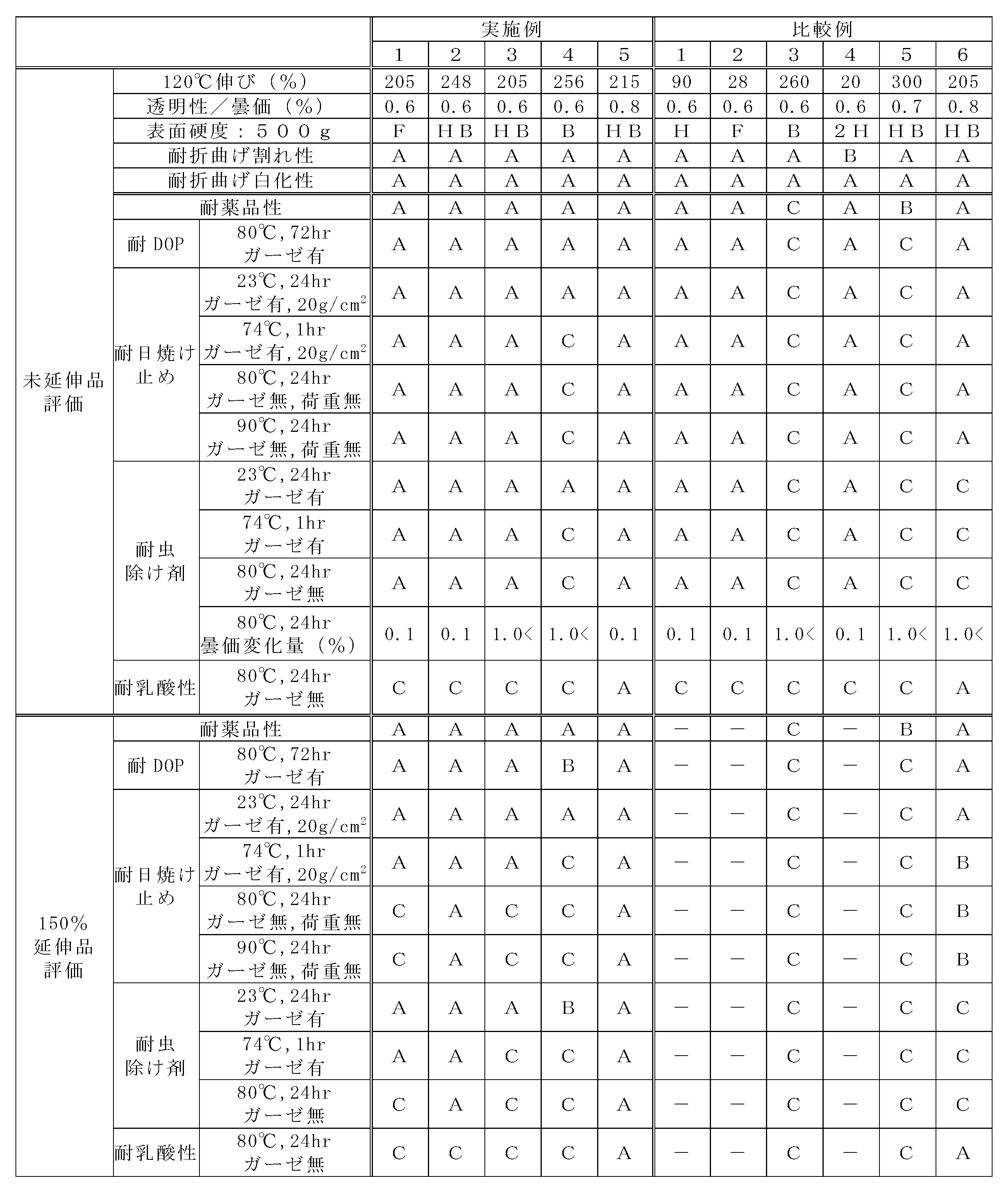
表1および表2に示される通り、アクリル系樹脂フィルム上にガラス転移温度が105℃以上である硬化樹脂層を備え、当該硬化樹脂層がウレタンアクリレート樹脂に由来する単位を含む樹脂からなり、かつ1分子あたりのウレタン結合数が40以上であるウレタンアクリレート樹脂を用いて形成されている実施例の積層フィルムは、印刷インキ、DOP、日焼け止め剤、虫除け剤などの薬剤に対する耐薬品性、および耐汚染性が著しく劣ることなく、実用上、耐薬品性や耐汚染性についての問題を起こしにくい。
実施例3および4の積層フィルムについては、試験条件が過酷である場合に、耐日焼け止め性や、耐虫除け剤性が劣る場合がある。しかし、耐日焼け止め性、および耐虫除け剤性のいずれの評価も、23℃、24時間、ガーゼ有の条件では良好である。つまり、実施例3および4の積層フィルムは、日焼け止めや虫除け剤が使用される通常の環境下における耐日焼け止め性、および耐虫除け剤性について問題ない。
さらに、実施例の積層フィルムは、アクリル系樹脂フィルムと同様に優れた透明性、表面硬度、耐折曲げ割れ性、および耐折曲げ白化性などの特性を備え、また120℃高温時の高延伸が可能である。
このため、実施例の積層フィルムは、自動車内外装部材などに使用されるインサート成形、インモールド成形、3次元ラミネート成形などに用いる加飾あるいは保護フィルムに最適である。
実施例3および4の積層フィルムについては、試験条件が過酷である場合に、耐日焼け止め性や、耐虫除け剤性が劣る場合がある。しかし、耐日焼け止め性、および耐虫除け剤性のいずれの評価も、23℃、24時間、ガーゼ有の条件では良好である。つまり、実施例3および4の積層フィルムは、日焼け止めや虫除け剤が使用される通常の環境下における耐日焼け止め性、および耐虫除け剤性について問題ない。
さらに、実施例の積層フィルムは、アクリル系樹脂フィルムと同様に優れた透明性、表面硬度、耐折曲げ割れ性、および耐折曲げ白化性などの特性を備え、また120℃高温時の高延伸が可能である。
このため、実施例の積層フィルムは、自動車内外装部材などに使用されるインサート成形、インモールド成形、3次元ラミネート成形などに用いる加飾あるいは保護フィルムに最適である。
比較例1、2、および4から、ウレタンアクリレート樹脂の1分子あたりのウレタン結合数が40未満である場合、得られる積層フィルムは、耐薬品性などは優れる一方で、120℃で十分に延伸することができないことが分かる。
比較例3から硬化樹脂層のガラス転移温度が105℃未満であり、かつウレタンアクリレート樹脂の1分子あたりのウレタン結合数が40未満である場合、得られる積層フィルムの印刷インキ、DOP、日焼け止め剤、虫除け剤などの薬剤に対する耐薬品性、および耐汚染性が著しく劣ることが分かる。
比較例5から、硬化樹脂層を備えないアクリル系樹脂フィルムは、120℃良好に延伸できても、DOP、日焼け止め剤、虫除け剤などの薬剤に対する耐薬品性が著しく劣ることが分かる。
比較例6から、アクリル系樹脂フィルム上に、硬化樹脂層を設けず、フッ素樹脂層を設ける場合、DOPや日焼け止め剤に対する耐薬品性はアクリル系樹脂フィルム単独よりも改善されるが、虫除け剤に対する耐薬品性はアクリル系樹脂フィルムと同様に劣っていることが分かる。
比較例3から硬化樹脂層のガラス転移温度が105℃未満であり、かつウレタンアクリレート樹脂の1分子あたりのウレタン結合数が40未満である場合、得られる積層フィルムの印刷インキ、DOP、日焼け止め剤、虫除け剤などの薬剤に対する耐薬品性、および耐汚染性が著しく劣ることが分かる。
比較例5から、硬化樹脂層を備えないアクリル系樹脂フィルムは、120℃良好に延伸できても、DOP、日焼け止め剤、虫除け剤などの薬剤に対する耐薬品性が著しく劣ることが分かる。
比較例6から、アクリル系樹脂フィルム上に、硬化樹脂層を設けず、フッ素樹脂層を設ける場合、DOPや日焼け止め剤に対する耐薬品性はアクリル系樹脂フィルム単独よりも改善されるが、虫除け剤に対する耐薬品性はアクリル系樹脂フィルムと同様に劣っていることが分かる。
Claims (16)
- アクリル系樹脂フィルム上に硬化樹脂層を備える積層フィルムであって、
前記硬化樹脂層のガラス転移温度が105℃以上であり、
前記硬化樹脂層が、ウレタンアクリレート樹脂に由来する単位を含む樹脂からなり、
前記ウレタンアクリレート樹脂に由来する単位におけるウレタン結合の含有数の平均が、40/1単位以上である、積層フィルム。 - アクリル系樹脂フィルム上に硬化樹脂層を備える積層フィルムであって、
前記硬化樹脂層のガラス転移温度が105℃以上であり、
サイズ10×100mm、チャック間50mm、引っ張り速度200mm/min、および引張恒温槽温度120℃の条件で降伏破断するまでの伸び率が150%以上である、積層フィルム。 - 前記伸び率が200%以上である、請求項2に記載の積層フィルム。
- ウレタンアクリレート樹脂が、環状構造を有する2官能イソシアネート化合物を含む多価イソシアネートと、ジオール化合物と、アクリロイル基および/またはメタアクリロイル基を含有する水酸基含有化合物との付加反応物である、請求項1に記載の積層フィルム。
- 前記環状構造が脂環式構造である、請求項4に記載の積層フィルム。
- 前記水酸基含有化合物が、分子内にアクリロイル基および/またはメタアクリロイル基を2個以上含有し、かつ水酸基を1個含有する化合物を含むことを特徴とする、請求項4または5に記載の積層フィルム。
- 前記ジオール化合物が、分子量100以下のジオール化合物を含む、請求項4~6のいずれか1項に記載の積層フィルム。
- 前記ウレタンアクリレート樹脂の1分子あたりの平均ウレタン結合数を1分子あたりのアクリロイル基および/またはメタアクリロイル基の総数で除した値が7以上20以下の範囲内である、請求項4~7のいずれか1項に記載の積層フィルム。
- 前記ウレタンアクリレート樹脂の重量平均分子量が6200以上である、請求項1および4~8のいずれか1項に記載の積層フィルム。
- 前記積層フィルムのJIS K5600-5-4による500g荷重の鉛筆硬度が2B~Hの範囲内である、請求項1~9のいずれか1項に記載の積層フィルム。
- アクリル系樹脂フィルム上に硬化樹脂層を備える積層フィルムであって、
N,N-ジエチル-3-メチルベンズアミドを25%含む混合有機溶剤を、前記積層フィルム中の前記硬化樹脂層上に滴下して80℃×24時間熱処理した後の前記積層フィルムのヘイズ値の変化量が0.2%以下であり、
サイズ10×100mm、チャック間50mm、引っ張り速度200mm/min、および引張恒温槽温度120℃の条件で降伏破断するまでの伸び率が200%以上である、積層フィルム。 - 請求項1~11のいずれか1項に記載の積層フィルムを、熱可塑性樹脂または熱硬化性樹脂からなる成形体の表面に備える、積層体。
- ウレタンアクリレート樹脂に由来する単位を含む樹脂からなる硬化樹脂層をアクリル系樹脂フィルム上に形成することを含む、積層フィルムの製造方法であって、
前記硬化樹脂層のガラス転移温度が105℃以上であり、
前記ウレタンアクリレート樹脂1分子あたりの平均ウレタン結合数が40以上である、積層フィルムの製造方法。 - 前記ウレタンアクリレート樹脂を含む樹脂層をウェットコーティング法によりアクリル系樹脂フィルム上に形成することを含み、
前記樹脂層を活性エネルギー線により硬化させて硬化樹脂層を形成させる、請求項13に記載の積層フィルムの製造方法。 - 前記ウレタンアクリレート樹脂の1分子あたりの平均ウレタン結合数を、1分子あたりのアクリロイル基およびメタクリロイル基の総数で除したが値が7以上21以下の範囲内である、請求項13または14に記載の積層フィルムの製造方法。
- 前記ウレタンアクリレート樹脂のガラス転移温度が60℃以上である、請求項13~15のいずれか1項に記載の積層フィルムの製造方法。
Priority Applications (1)
| Application Number | Priority Date | Filing Date | Title |
|---|---|---|---|
| JP2017523692A JPWO2016199847A1 (ja) | 2015-06-12 | 2016-06-09 | 積層フィルム |
Applications Claiming Priority (4)
| Application Number | Priority Date | Filing Date | Title |
|---|---|---|---|
| JP2015119748 | 2015-06-12 | ||
| JP2015-119748 | 2015-06-12 | ||
| JP2015-144183 | 2015-07-21 | ||
| JP2015144183 | 2015-07-21 |
Publications (1)
| Publication Number | Publication Date |
|---|---|
| WO2016199847A1 true WO2016199847A1 (ja) | 2016-12-15 |
Family
ID=57503717
Family Applications (1)
| Application Number | Title | Priority Date | Filing Date |
|---|---|---|---|
| PCT/JP2016/067204 Ceased WO2016199847A1 (ja) | 2015-06-12 | 2016-06-09 | 積層フィルム |
Country Status (2)
| Country | Link |
|---|---|
| JP (1) | JPWO2016199847A1 (ja) |
| WO (1) | WO2016199847A1 (ja) |
Cited By (18)
| Publication number | Priority date | Publication date | Assignee | Title |
|---|---|---|---|---|
| JP2018111793A (ja) * | 2017-01-11 | 2018-07-19 | アイカ工業株式会社 | 紫外線硬化型樹脂組成物及びハードコートフィルム |
| JP2020082729A (ja) * | 2018-11-19 | 2020-06-04 | 株式会社カネカ | 積層フィルム、成形体、及び車載ディスプレイ用前面板 |
| JP2021066874A (ja) * | 2019-10-23 | 2021-04-30 | アイカ工業株式会社 | 光硬化性樹脂組成物及びハードコートフィルム |
| JP2021134221A (ja) * | 2020-02-21 | 2021-09-13 | 中国塗料株式会社 | 光硬化性塗料組成物、硬化塗膜およびそれを備える塗膜付き基材 |
| CN113661191A (zh) * | 2019-05-30 | 2021-11-16 | 中国涂料株式会社 | 紫外线固化型氨基甲酸酯丙烯酸酯树脂、及含有其的紫外线固化型树脂组合物 |
| JP2022126018A (ja) * | 2021-02-18 | 2022-08-30 | アイカ工業株式会社 | 反射防止フィルム及びその製造方法 |
| JP2022540121A (ja) * | 2019-07-12 | 2022-09-14 | ダウ グローバル テクノロジーズ エルエルシー | 水系組成物 |
| JP2023040446A (ja) * | 2021-09-10 | 2023-03-23 | アイカ工業株式会社 | 光硬化性樹脂組成物、ハードコートフィルム及びそれを用いたプラスチック成形品 |
| JP7293518B1 (ja) | 2022-07-11 | 2023-06-19 | アイカ工業株式会社 | 自動車外装の成形用フィルム用ハードコート樹脂組成物 |
| CN116472174A (zh) * | 2020-12-28 | 2023-07-21 | 东洋油墨Sc控股株式会社 | 装饰成型用层叠膜、所述膜的制造方法、及装饰成型体 |
| JP2023119087A (ja) * | 2022-02-16 | 2023-08-28 | アイカ工業株式会社 | 光硬化性樹脂組成物、成形用ハードコートフィルム及びそれを用いた成形品、並びにインサート成形品の製造方法 |
| CN116963907A (zh) * | 2021-03-05 | 2023-10-27 | 株式会社钟化 | 层叠体及其制造方法 |
| JP7385784B1 (ja) | 2023-06-13 | 2023-11-22 | アイカ工業株式会社 | 光硬化性樹脂組成物、成形用ハードコートフィルム及びそれを用いた成形品 |
| US20240158648A1 (en) * | 2022-11-11 | 2024-05-16 | Samsung Electronics Co., Ltd. | Matting agent-free matt metallic steel sheet for home appliance and refrigerators including the same |
| JP7517786B1 (ja) | 2023-01-31 | 2024-07-17 | Nissha株式会社 | 加飾成形品及びその製造方法 |
| WO2024228370A1 (ja) * | 2023-05-02 | 2024-11-07 | アイカ工業株式会社 | 光硬化性樹脂組成物、成形用ハードコートフィルム、成形用フィルム、インサート成形品、アウトモールド成形品、インサート成形品の製造方法、及びアウトモールド成形品の製造方法 |
| WO2025004853A1 (ja) * | 2023-06-28 | 2025-01-02 | 株式会社カネカ | 積層体、それを含む成形体、及び成形体の製造方法 |
| EP4302996A4 (en) * | 2021-03-05 | 2025-03-19 | Kaneka Corporation | Laminate and method for producing same |
Citations (5)
| Publication number | Priority date | Publication date | Assignee | Title |
|---|---|---|---|---|
| JP2002293851A (ja) * | 2001-03-29 | 2002-10-09 | Kansai Paint Co Ltd | 光硬化性樹脂組成物 |
| JP2006070112A (ja) * | 2004-08-31 | 2006-03-16 | Hitachi Chem Co Ltd | 光硬化性樹脂組成物 |
| JP2010131901A (ja) * | 2008-12-05 | 2010-06-17 | Three M Innovative Properties Co | 積層シート、それを貼り付けた部品およびその製造方法 |
| JP2011157497A (ja) * | 2010-02-02 | 2011-08-18 | Daicel-Cytec Co Ltd | 活性エネルギー線硬化性組成物 |
| WO2015011804A1 (ja) * | 2013-07-24 | 2015-01-29 | ハリマ化成株式会社 | コーティング材およびコーティング組成物 |
-
2016
- 2016-06-09 JP JP2017523692A patent/JPWO2016199847A1/ja not_active Withdrawn
- 2016-06-09 WO PCT/JP2016/067204 patent/WO2016199847A1/ja not_active Ceased
Patent Citations (5)
| Publication number | Priority date | Publication date | Assignee | Title |
|---|---|---|---|---|
| JP2002293851A (ja) * | 2001-03-29 | 2002-10-09 | Kansai Paint Co Ltd | 光硬化性樹脂組成物 |
| JP2006070112A (ja) * | 2004-08-31 | 2006-03-16 | Hitachi Chem Co Ltd | 光硬化性樹脂組成物 |
| JP2010131901A (ja) * | 2008-12-05 | 2010-06-17 | Three M Innovative Properties Co | 積層シート、それを貼り付けた部品およびその製造方法 |
| JP2011157497A (ja) * | 2010-02-02 | 2011-08-18 | Daicel-Cytec Co Ltd | 活性エネルギー線硬化性組成物 |
| WO2015011804A1 (ja) * | 2013-07-24 | 2015-01-29 | ハリマ化成株式会社 | コーティング材およびコーティング組成物 |
Cited By (33)
| Publication number | Priority date | Publication date | Assignee | Title |
|---|---|---|---|---|
| JP2018111793A (ja) * | 2017-01-11 | 2018-07-19 | アイカ工業株式会社 | 紫外線硬化型樹脂組成物及びハードコートフィルム |
| JP7477281B2 (ja) | 2018-11-19 | 2024-05-01 | 株式会社カネカ | 積層フィルム、成形体、及び車載ディスプレイ用前面板 |
| JP2020082729A (ja) * | 2018-11-19 | 2020-06-04 | 株式会社カネカ | 積層フィルム、成形体、及び車載ディスプレイ用前面板 |
| CN113661191A (zh) * | 2019-05-30 | 2021-11-16 | 中国涂料株式会社 | 紫外线固化型氨基甲酸酯丙烯酸酯树脂、及含有其的紫外线固化型树脂组合物 |
| JP2022540121A (ja) * | 2019-07-12 | 2022-09-14 | ダウ グローバル テクノロジーズ エルエルシー | 水系組成物 |
| US12297315B2 (en) | 2019-07-12 | 2025-05-13 | Arkema France | Water-based compositions |
| JP2021066874A (ja) * | 2019-10-23 | 2021-04-30 | アイカ工業株式会社 | 光硬化性樹脂組成物及びハードコートフィルム |
| JP2021134221A (ja) * | 2020-02-21 | 2021-09-13 | 中国塗料株式会社 | 光硬化性塗料組成物、硬化塗膜およびそれを備える塗膜付き基材 |
| JP7445457B2 (ja) | 2020-02-21 | 2024-03-07 | 中国塗料株式会社 | 光硬化性塗料組成物、硬化塗膜およびそれを備える塗膜付き基材 |
| CN116472174A (zh) * | 2020-12-28 | 2023-07-21 | 东洋油墨Sc控股株式会社 | 装饰成型用层叠膜、所述膜的制造方法、及装饰成型体 |
| JP2022126018A (ja) * | 2021-02-18 | 2022-08-30 | アイカ工業株式会社 | 反射防止フィルム及びその製造方法 |
| JP7554134B2 (ja) | 2021-02-18 | 2024-09-19 | アイカ工業株式会社 | 反射防止フィルム及びその製造方法 |
| CN116963907A (zh) * | 2021-03-05 | 2023-10-27 | 株式会社钟化 | 层叠体及其制造方法 |
| EP4302996A4 (en) * | 2021-03-05 | 2025-03-19 | Kaneka Corporation | Laminate and method for producing same |
| JP7748836B2 (ja) | 2021-09-10 | 2025-10-03 | アイカ工業株式会社 | 光硬化性樹脂組成物、ハードコートフィルム及びそれを用いたプラスチック成形品 |
| JP2023040446A (ja) * | 2021-09-10 | 2023-03-23 | アイカ工業株式会社 | 光硬化性樹脂組成物、ハードコートフィルム及びそれを用いたプラスチック成形品 |
| JP2023119087A (ja) * | 2022-02-16 | 2023-08-28 | アイカ工業株式会社 | 光硬化性樹脂組成物、成形用ハードコートフィルム及びそれを用いた成形品、並びにインサート成形品の製造方法 |
| JP7783756B2 (ja) | 2022-02-16 | 2025-12-10 | アイカ工業株式会社 | 光硬化性樹脂組成物、成形用ハードコートフィルム及びそれを用いた成形品、並びにインサート成形品の製造方法 |
| JP2024009744A (ja) * | 2022-07-11 | 2024-01-23 | アイカ工業株式会社 | 成形用ハードコートフィルム及びそれを用いた成形品、並びにインサート成形品の製造方法 |
| WO2024014053A1 (ja) * | 2022-07-11 | 2024-01-18 | アイカ工業株式会社 | 自動車外装の成形用フィルム用ハードコート樹脂組成物、成形用ハードコートフィルム、インサート成形品の製造方法、インサート成形品、及びアウトモールド成形品 |
| JP7293518B1 (ja) | 2022-07-11 | 2023-06-19 | アイカ工業株式会社 | 自動車外装の成形用フィルム用ハードコート樹脂組成物 |
| JP2024009743A (ja) * | 2022-07-11 | 2024-01-23 | アイカ工業株式会社 | 自動車外装の成形用フィルム用ハードコート樹脂組成物 |
| JP7361962B1 (ja) | 2022-07-11 | 2023-10-16 | アイカ工業株式会社 | 成形用ハードコートフィルム及びそれを用いた成形品、並びにインサート成形品の製造方法 |
| US12454623B2 (en) * | 2022-11-11 | 2025-10-28 | Samsung Electronics Co., Ltd. | Matting agent-free matte metallic steel sheet for home appliance and refrigerators including the same |
| US20240158648A1 (en) * | 2022-11-11 | 2024-05-16 | Samsung Electronics Co., Ltd. | Matting agent-free matt metallic steel sheet for home appliance and refrigerators including the same |
| JP2024108298A (ja) * | 2023-01-31 | 2024-08-13 | Nissha株式会社 | 加飾成形品及びその製造方法 |
| JP7517786B1 (ja) | 2023-01-31 | 2024-07-17 | Nissha株式会社 | 加飾成形品及びその製造方法 |
| WO2024228370A1 (ja) * | 2023-05-02 | 2024-11-07 | アイカ工業株式会社 | 光硬化性樹脂組成物、成形用ハードコートフィルム、成形用フィルム、インサート成形品、アウトモールド成形品、インサート成形品の製造方法、及びアウトモールド成形品の製造方法 |
| JP2024178663A (ja) * | 2023-06-13 | 2024-12-25 | アイカ工業株式会社 | 光硬化性樹脂組成物、成形用ハードコートフィルム及びそれを用いた成形品 |
| JP2024178884A (ja) * | 2023-06-13 | 2024-12-25 | アイカ工業株式会社 | 光硬化性樹脂組成物、成形用ハードコートフィルム及びそれを用いた成形品 |
| JP7385784B1 (ja) | 2023-06-13 | 2023-11-22 | アイカ工業株式会社 | 光硬化性樹脂組成物、成形用ハードコートフィルム及びそれを用いた成形品 |
| JP7492639B1 (ja) | 2023-06-13 | 2024-05-29 | アイカ工業株式会社 | 光硬化性樹脂組成物、成形用ハードコートフィルム及びそれを用いた成形品 |
| WO2025004853A1 (ja) * | 2023-06-28 | 2025-01-02 | 株式会社カネカ | 積層体、それを含む成形体、及び成形体の製造方法 |
Also Published As
| Publication number | Publication date |
|---|---|
| JPWO2016199847A1 (ja) | 2018-03-29 |
Similar Documents
| Publication | Publication Date | Title |
|---|---|---|
| JPWO2016199847A1 (ja) | 積層フィルム | |
| JP7142090B2 (ja) | ガラス積層体、その製造方法、及びそれを用いた表示装置の前面板 | |
| JP7842036B2 (ja) | 積層体およびその利用 | |
| US20230416556A1 (en) | Laminate and method for producing same | |
| JP5827017B2 (ja) | 光学フィルムとその製造方法、光学部材および画像表示装置 | |
| JP6688304B2 (ja) | ブロック共重合体 | |
| KR20210049969A (ko) | 광학 적층체 | |
| JPWO2017022704A1 (ja) | 成型用コーティングフィルム | |
| US11760855B2 (en) | Acrylic resin film, laminated film, production method for laminated film, and molded article | |
| KR20250163851A (ko) | (메타)아크릴계 수지 조성물 및 (메타)아크릴계 수지 필름 | |
| JP6591166B2 (ja) | 光学フィルム、その利用およびその製造方法 | |
| JP6683415B2 (ja) | 光学フィルムおよびその利用 | |
| JP2012056252A (ja) | アクリル系樹脂フィルム | |
| JP2018193534A (ja) | 艶消し熱可塑性樹脂フィルム及び艶消し熱可塑性樹脂積層フィルム | |
| JP2021031497A (ja) | (メタ)アクリル系樹脂組成物、及び(メタ)アクリル系樹脂フィルム | |
| WO2015174070A1 (ja) | フッ素含有アクリル樹脂からなるコーティング層を基材フィルムに積層させたフィルム | |
| US20260022221A1 (en) | Laminate and resin molded body containing same | |
| CN116963907A (zh) | 层叠体及其制造方法 | |
| JP7837197B2 (ja) | 樹脂成形体被覆用機能性フィルム、その製造方法、樹脂成形体、及びその製造方法 | |
| JP7837196B2 (ja) | 樹脂成形体被覆用機能性フィルム、その製造方法、樹脂成形体、及びその製造方法 | |
| WO2025004853A1 (ja) | 積層体、それを含む成形体、及び成形体の製造方法 | |
| JP2016093959A (ja) | 積層フィルム | |
| JP2019066884A (ja) | 光学フィルムおよびその利用 | |
| JP2026083342A (ja) | (メタ)アクリル系樹脂フィルムの製造方法、粘着シートの製造方法、及び偏光フィルムの製造方法 |
Legal Events
| Date | Code | Title | Description |
|---|---|---|---|
| 121 | Ep: the epo has been informed by wipo that ep was designated in this application |
Ref document number: 16807553 Country of ref document: EP Kind code of ref document: A1 |
|
| ENP | Entry into the national phase |
Ref document number: 2017523692 Country of ref document: JP Kind code of ref document: A |
|
| NENP | Non-entry into the national phase |
Ref country code: DE |
|
| 122 | Ep: pct application non-entry in european phase |
Ref document number: 16807553 Country of ref document: EP Kind code of ref document: A1 |