WO2016194929A1 - パーフルオロアルカンスルホニルフェノール化合物の製造方法 - Google Patents
パーフルオロアルカンスルホニルフェノール化合物の製造方法 Download PDFInfo
- Publication number
- WO2016194929A1 WO2016194929A1 PCT/JP2016/066128 JP2016066128W WO2016194929A1 WO 2016194929 A1 WO2016194929 A1 WO 2016194929A1 JP 2016066128 W JP2016066128 W JP 2016066128W WO 2016194929 A1 WO2016194929 A1 WO 2016194929A1
- Authority
- WO
- WIPO (PCT)
- Prior art keywords
- acid
- salt
- group
- oxidizing agent
- iron
- Prior art date
- Legal status (The legal status is an assumption and is not a legal conclusion. Google has not performed a legal analysis and makes no representation as to the accuracy of the status listed.)
- Ceased
Links
- 0 C*c(cc1N)ccc1O Chemical compound C*c(cc1N)ccc1O 0.000 description 1
Classifications
-
- C—CHEMISTRY; METALLURGY
- C07—ORGANIC CHEMISTRY
- C07C—ACYCLIC OR CARBOCYCLIC COMPOUNDS
- C07C315/00—Preparation of sulfones; Preparation of sulfoxides
-
- C—CHEMISTRY; METALLURGY
- C07—ORGANIC CHEMISTRY
- C07C—ACYCLIC OR CARBOCYCLIC COMPOUNDS
- C07C315/00—Preparation of sulfones; Preparation of sulfoxides
- C07C315/04—Preparation of sulfones; Preparation of sulfoxides by reactions not involving the formation of sulfone or sulfoxide groups
-
- C—CHEMISTRY; METALLURGY
- C07—ORGANIC CHEMISTRY
- C07C—ACYCLIC OR CARBOCYCLIC COMPOUNDS
- C07C315/00—Preparation of sulfones; Preparation of sulfoxides
- C07C315/02—Preparation of sulfones; Preparation of sulfoxides by formation of sulfone or sulfoxide groups by oxidation of sulfides, or by formation of sulfone groups by oxidation of sulfoxides
-
- C—CHEMISTRY; METALLURGY
- C07—ORGANIC CHEMISTRY
- C07C—ACYCLIC OR CARBOCYCLIC COMPOUNDS
- C07C317/00—Sulfones; Sulfoxides
- C07C317/26—Sulfones; Sulfoxides having sulfone or sulfoxide groups and nitrogen atoms, not being part of nitro or nitroso groups, bound to the same carbon skeleton
- C07C317/32—Sulfones; Sulfoxides having sulfone or sulfoxide groups and nitrogen atoms, not being part of nitro or nitroso groups, bound to the same carbon skeleton with sulfone or sulfoxide groups bound to carbon atoms of six-membered aromatic rings of the carbon skeleton
- C07C317/34—Sulfones; Sulfoxides having sulfone or sulfoxide groups and nitrogen atoms, not being part of nitro or nitroso groups, bound to the same carbon skeleton with sulfone or sulfoxide groups bound to carbon atoms of six-membered aromatic rings of the carbon skeleton having sulfone or sulfoxide groups and amino groups bound to carbon atoms of six-membered aromatic rings being part of the same non-condensed ring or of a condensed ring system containing that ring
- C07C317/36—Sulfones; Sulfoxides having sulfone or sulfoxide groups and nitrogen atoms, not being part of nitro or nitroso groups, bound to the same carbon skeleton with sulfone or sulfoxide groups bound to carbon atoms of six-membered aromatic rings of the carbon skeleton having sulfone or sulfoxide groups and amino groups bound to carbon atoms of six-membered aromatic rings being part of the same non-condensed ring or of a condensed ring system containing that ring with the nitrogen atoms of the amino groups bound to hydrogen atoms or to carbon atoms
Definitions
- the present invention relates to a method for producing a perfluoroalkanesulfonylphenol compound useful as an intermediate for the production of medical and agricultural chemicals.
- Perfluoroalkanesulfonylphenol compounds are useful as intermediates for the production of medical and agricultural chemicals (see WO2014 / 104407).
- a perfluoroalkanesulfanylphenol compound is generally produced from a phenol compound and then oxidized (see WO2014 / 104407 and JournalJof Organic Chemistry, 1964, vol. 29, p.898-900). .
- the present invention provides a new method for producing perfluoroalkanesulfonylphenol compounds.
- an alkali metal salt or zinc salt of C1-C6 perfluoroalkanesulfinic acid and 2-aminophenol or a salt thereof optionally substituted with 1 to 3 C1-C6 alkyl groups are used as an oxidizing agent.
- R 1 represents a C1-C6 perfluoroalkyl group
- R 2 represents a C1-C6 alkyl group
- m represents an integer of 0 to 3.
- compound (3) a salt thereof
- the alkali metal salt of C1-C6 perfluoroalkanesulfinic acid used in the present invention has the formula (1a):
- R 1 represents a C1-C6 perfluoroalkyl group
- M represents an alkali metal.
- R 1 has the same meaning as above). It is a sulfinate shown by.
- Examples of the C1-C6 perfluoroalkyl group include a trifluoromethyl group, a pentafluoroethyl group, a heptafluoropropyl group, a nonafluorobutyl group, a perfluoropentyl group, and a perfluorohexyl group.
- a fluoroalkyl group is preferred.
- Alkali metals are lithium, sodium, potassium, rubidium and cesium.
- alkali metal salt of C1-C6 perfluoroalkanesulfinic acid examples include sodium trifluoromethanesulfinate, potassium trifluoromethanesulfinate, sodium pentafluoroethanesulfinate, potassium pentafluoroethanesulfinate, sodium heptafluoropropanesulfinate, Examples include potassium heptafluoropropanesulfinate, sodium nonafluorobutanesulfinate and sodium tridecafluorohexanesulfinate.
- the sulfinate can be obtained by purchase of a commercial product, synthesis or the like according to the method described in WO2011 / 108622.
- Examples of the zinc salt of C1-C6 perfluoroalkanesulfinic acid include bis (trifluoromethanesulfinic acid) zinc, bis (pentafluoroethanesulfinic acid) zinc and bis (tridecafluorohexanesulfinic acid) zinc.
- the sulfinate can be obtained by purchasing a commercially available product, synthesis or the like according to the method described in Nature (London, United Kingdom) (2012), 492 (7427), 95-99).
- the 2-aminophenol optionally substituted with 1 to 3 C1-C6 alkyl groups has the formula (2):
- R 2 represents a C1-C6 alkyl group
- m represents an integer of 0 to 3.
- the C1-C6 alkyl group may be linear or branched.
- a methyl group, an ethyl group, a propyl group, an isopropyl group examples thereof include a butyl group, sec-butyl group, tert-butyl group, pentyl group, 2-pentyl group, neopentyl group, 4-methyl-2-pentyl group, hexyl group and 3-methylpentyl group.
- Examples of the compound (2) include 2-aminophenol, 2-amino-3-methylphenol, 2-amino-5-methylphenol, 2-amino-6-methylphenol, 2-amino-3-ethylphenol, Examples include 2-amino-5-ethylphenol and 2-amino-6-ethylphenol.
- the salt of 2-aminophenol which may be substituted with a C1-C6 alkyl group means an acid addition salt of compound (2).
- Specific examples thereof include addition salts of inorganic acids such as hydrochloric acid and sulfuric acid, and methane.
- Examples thereof include organic sulfonic acids such as sulfonic acid and p-toluenesulfonic acid, and organic acid addition salts such as organic carboxylic acids such as acetic acid and trifluoroacetic acid.
- An addition salt of an inorganic acid can be obtained by adding 1 mol to 10 mol of an inorganic acid such as hydrochloric acid or sulfuric acid in 1 mol of the compound (2) in an organic solvent (for example, an alcohol such as ethanol). It can also be generated in the system.
- an organic solvent for example, an alcohol such as ethanol
- the addition salt of organic acid is 1 mol to 10 mol of organic acid such as organic sulfonic acid such as methanesulfonic acid and p-toluenesulfonic acid or organic carboxylic acid such as acetic acid and trifluoroacetic acid with respect to 1 mol of compound (2).
- organic acid such as organic sulfonic acid such as methanesulfonic acid and p-toluenesulfonic acid or organic carboxylic acid such as acetic acid and trifluoroacetic acid with respect to 1 mol of compound (2).
- organic solvent for example, alcohol such as ethanol
- the acid addition salt of compound (2) can be led to compound (2) by neutralization with a base such as an aqueous sodium hydroxide solution.
- the oxidizing agent includes oxygen; persulfates such as potassium persulfate and ammonium persulfate; peroxides such as hydrogen peroxide and tert-butyl hydroperoxide; trivalent iron compounds, divalent copper compounds, Transition metal compounds such as manganese compounds; hypervalent iodine compounds such as sodium periodate; quinone compounds such as benzoquinone, naphthoquinone, anthraquinone and chloranil; and salts of halogen oxoacids such as sodium hypochlorite and sodium chlorite Etc. Moreover, you may use these in combination of 2 or more types.
- Examples of the trivalent iron compound include iron (III) chloride, potassium hexacyanoferrate (III), iron oxide (III), and the like.
- Examples of the divalent copper compound include copper (II) sulfate and copper chloride (II). ) And the like.
- Examples of the manganese compound include manganese dioxide.
- an oxidizing agent selected from the group consisting of potassium persulfate, ammonium persulfate, tert-butyl hydroperoxide, iron (III) chloride, iron (III) oxide, manganese dioxide and copper (II) sulfate is preferable.
- Iron oxide (III) ( ⁇ crystal, ⁇ crystal, ⁇ crystal, ⁇ crystal) is more preferable.
- the reaction may be performed in air, or another oxidant may be used in combination.
- the reaction for producing compound (3) or a salt thereof by reacting an alkali metal salt or zinc salt of C1-C6 perfluoroalkanesulfinic acid with compound (2) or a salt thereof in the presence of an oxidizing agent is usually carried out in a solvent.
- Solvents include aromatic hydrocarbons such as toluene, xylene, cumene, monochlorobenzene, and tetralin; aliphatic hydrocarbons such as hexane, heptane, octane, nonane, and cyclohexane; sulfur-containing compounds such as dimethyl sulfoxide and sulfolane.
- Ethers such as tetrahydrofuran, 2-methyltetrahydrofuran, cyclopentylmethyl ether, tert-butyl methyl ether, monoglyme, diglyme; organic carboxylic acids such as acetic acid, propionic acid, butyric acid, ethylhexanoic acid; N, N-dimethylacetamide, N, N-dimethylformua And amides such as acetonitrile and propyl nitrile; esters such as methyl acetate and ethyl acetate; ketones such as acetone and methyl isobutyl ketone; alcohols such as methanol, ethanol and propanol; and mixtures thereof. It is done. Of these, organic carboxylic acids and nitriles are preferred.
- the amount of the solvent is usually 1 to 100 times by weight, preferably 1 to 30 times by weight of the compound (2).
- the sulfinate is usually used in a ratio of 1 mol to 5 mol with respect to 1 mol of the compound (2).
- the oxidizing agent is usually used at a ratio of 1 mol to 5 mol with respect to 1 mol of the compound (2).
- the reaction temperature is usually in the range of ⁇ 20 ° C. to 200 ° C.
- the reaction time is usually in the range of 1 minute to 24 hours.
- a strong acid examples include sulfuric acid, methanesulfonic acid and hydrochloric acid.
- the amount of the strong acid used is usually 1 mol to 10 mol with respect to 1 mol of the compound (2).
- the compound (3) After completion of the reaction, the compound (3) can be isolated by subjecting the reaction mixture to crystallization and the like. The obtained compound (3) can be further purified by distillation, recrystallization, extraction, chromatography or the like.
- a reducing agent such as a metal hydride is added to the reaction system after the reaction is completed. Iron in the system generated from the valent iron compound can be removed by filtration.
- the metal hydride include lithium aluminum hydride, lithium borohydride, sodium borohydride, lithium hydride, potassium hydride, and calcium hydride. Lithium aluminum hydride, lithium borohydride, hydrogenation Sodium boron is preferred.
- the addition amount of the metal hydride is preferably in a ratio of 0.1 mol to 5 mol per mol of the trivalent iron compound to be added.
- Compound (3) can also be isolated in the form of an acid addition salt.
- acid addition salts include addition salts of inorganic acids such as hydrochloric acid and sulfuric acid, organic sulfonic acids such as methanesulfonic acid and p-toluenesulfonic acid, and organic carboxylic acids such as acetic acid and trifluoroacetic acid. Is an addition salt.
- an acid is added to crystallize the acid addition salt.
- Examples of the obtained compound (3) include 2-amino-4-trifluoromethanesulfonyl) phenol, 2-amino-3-methyl-4-trifluoromethanesulfonylphenol, 2-amino-5-methyl-4-trifluoromethane.
- Sulfonylphenol 2-amino-6-methyl-4-trifluoromethanesulfonylphenol, 2-amino-3-ethyl-4-trifluoromethanesulfonylphenol, 2-amino-5-ethyl-4-trifluoromethanesulfonylphenol, 2- Examples include amino-6-ethyl-4-trifluoromethanesulfonylphenol and 2-amino-4-pentafluoroethanesulfonylphenol. Examples of the embodiment of the present invention include the following modes.
- the oxidizing agent is one or more oxidizing agents selected from the group consisting of persulfates, peroxides, trivalent iron compounds, divalent copper compounds and manganese compounds.
- the oxidizing agent is one or more oxidizing agents selected from the group consisting of persulfates, peroxides, trivalent iron compounds, divalent copper compounds and manganese compounds, and a strong acid is added.
- the oxidizing agent is one or more oxidizing agents selected from the group consisting of persulfates, peroxides, trivalent iron compounds, divalent copper compounds, and manganese compounds, sulfuric acid, methanesulfonic acid and A method of adding one or more strong acids selected from the group consisting of hydrochloric acid.
- the oxidizing agent is one or more oxidations selected from the group consisting of potassium persulfate, ammonium persulfate, tert-butyl hydroperoxide, iron (III) chloride, iron (III) oxide, manganese dioxide and copper (II) sulfate.
- a method that is an agent is an agent.
- the oxidizing agent is one or more oxidations selected from the group consisting of potassium persulfate, ammonium persulfate, tert-butyl hydroperoxide, iron (III) chloride, iron (III) oxide, manganese dioxide and copper (II) sulfate.
- a method to add a strong acid is one or more oxidations selected from the group consisting of potassium persulfate, ammonium persulfate, tert-butyl hydroperoxide, iron (III) chloride, iron (III) oxide, manganese dioxide and copper (II) sulfate.
- the oxidizing agent is one or more oxidations selected from the group consisting of potassium persulfate, ammonium persulfate, tert-butyl hydroperoxide, iron (III) chloride, iron (III) oxide, manganese dioxide and copper (II) sulfate.
- a method of adding one or more strong acids selected from the group consisting of sulfuric acid, methanesulfonic acid and hydrochloric acid.
- the method in which the oxidizing agent is iron (III) oxide.
- the oxidizing agent is iron (III) oxide and a strong acid is added.
- the oxidizing agent is iron (III) oxide and sulfuric acid is added.
- the oxidizing agent is iron (III) oxide and methanesulfonic acid is added.
- the oxidizing agent is iron (III) oxide
- the method is carried out in acetonitrile.
- the oxidizing agent is iron (III) oxide and sulfuric acid is added in acetonitrile.
- the oxidizing agent is iron (III) oxide, and methanesulfonic acid is added in acetonitrile.
- the method in which the oxidizing agent is manganese dioxide.
- the oxidizing agent is manganese dioxide, and a strong acid is added.
- the oxidizing agent is manganese dioxide, and methanesulfonic acid is added in acetonitrile.
- the method in which the oxidizing agent is iron (III) chloride.
- the oxidizing agent is iron (III) chloride and a strong acid is added.
- the oxidizing agent is iron (III) chloride and methanesulfonic acid is added.
- the method in which the oxidizing agent is oxygen is oxygen.
- the method in which the oxidizing agent is oxygen and iron (III) chloride.
- Example 1-1 Under a nitrogen atmosphere, 0.14 mol (15.00 g) of 2-aminophenol, 0.21 mol (32.17 g) of sodium trifluoromethanesulfinate, 60 g of acetonitrile and 0.41 mol (40.41 g) of sulfuric acid were stirred at room temperature for 15 minutes. did. To the obtained mixture, 0.27 mol (43.73 g) of iron oxide (Fe 2 O 3 ) and 90 g of acetonitrile were added, followed by stirring at 70 ° C. for 7 hours.
- iron oxide Fe 2 O 3
- Example 1-2 Under a nitrogen atmosphere, 0.09 mol (10.00 g) of 2-aminophenol, 0.08 mol (12.9 g) of sodium trifluoromethanesulfinate, 100 g of acetonitrile and 0.33 mol (32.33 g) of sulfuric acid were stirred at room temperature for 15 minutes. did. To the obtained mixture, 0.18 mol (29.16 g) of iron oxide (Fe 2 O 3 ) and 50 g of acetonitrile were added, followed by stirring at 73 ° C. for 2 hours.
- iron oxide Fe 2 O 3
- the filtrate and the washing solution were combined and concentrated, and 75 g of 1N hydrochloric acid and 100 g of methyl-t-butyl ether were added to the oily substance, and the mixture was separated into an organic layer and an aqueous layer.
- the aqueous layer was extracted with 100 g of methyl-t-butyl ether, and the obtained organic layers were combined, 7 g of activated carbon was added, stirred for 30 minutes, filtered, and the filtrate was concentrated. Crystals were precipitated by adding 10 g of methanol to the obtained oily substance and adding it to a solution of 35 g of sodium sulfate in 200 g of water while stirring at room temperature.
- Iron oxide (Fe 2 O 3 ) used below was obtained by heating iron oxide (Fe 3 O 4 ) in air at 250 ° C. for 2 hours. Under a nitrogen atmosphere, 0.09 mol (10.00 g) of 2-aminophenol, 0.08 mol (12.9 g) of sodium trifluoromethanesulfinate, 100 g of acetonitrile and 0.33 mol (32.33 g) of sulfuric acid were stirred at room temperature for 15 minutes. did. To the obtained mixture, 0.18 mol (29.16 g) of iron oxide (Fe 2 O 3 ) prepared above and 50 g of acetonitrile were added, and the mixture was stirred at 73 ° C. for 5 hours.
- the reaction mixture was cooled to room temperature, 0.05 mol (2.08 g) of sodium borohydride was added, and the mixture was stirred for 30 minutes, then 50 g of water was added, filtered through Celite (registered trademark), and washed with acetonitrile.
- the yield was calculated by analyzing a part of the combined liquid of the filtrate and the washing liquid by high performance liquid chromatography using an internal standard method. The yield of 2-amino-5-trifluoromethanesulfonylphenol was 69%.
- Example 2 Under a nitrogen atmosphere, 30.2 mmol (4.72 g) of sodium trifluoromethanesulfinate, 27.5 mmol (3.0 g) of 2-aminophenol and 60 g of acetonitrile were mixed, and 13.27 g of methanesulfonic acid was added dropwise at 5 ° C. . To the obtained mixture, 55.3 mmol (4.81 g) of manganese dioxide was added at 5 ° C. over 8 hours, and the mixture was stirred at 5 ° C. for 1 hour.
- Example 4-1 To a mixture obtained by adding 18.3 mmol (2.00 g) of 2-aminophenol and 20.2 mmol (3.15 g) of sodium trifluoromethanesulfinate to 20 g of acetic acid, 20.2 mmol (1.94 g) of methanesulfonic acid was added dropwise. And stirred at room temperature for 30 minutes. 40.4 mmol (9.21 g) of ammonium persulfate was added to the obtained mixture, and the mixture was heated and stirred at 50 ° C. for 10 hours.
- Example 4-2 The same operation as described in Example 4-1 was performed using copper (II) sulfate instead of ammonium persulfate, and the production of 2-amino-5-trifluoromethanesulfonylphenol was confirmed.
- Example 5-1 2.75 mmol (450 mg) of anhydrous iron (III) chloride and 3 g of acetonitrile were mixed under cooling in an ice water bath under a nitrogen atmosphere, and 2.75 mmol (300 mg) of 2-aminophenol, trifluoromethanesulfinic acid was added to the resulting mixture.
- Example 5-2 The same operation as described in Example 5-1 was performed using potassium persulfate instead of ammonium persulfate, and the production of 2-amino-5-trifluoromethanesulfonylphenol was confirmed.
- Example 6-1 Sodium trifluoromethanesulfinate 0.5 mmol (0.078 g), 2-aminophenol 0.25 mmol (0.027 g) and anhydrous iron (III) chloride 0.5 mmol (0.081 g) were added to 1 mL of acetic acid and added at 70 ° C. for 5 hours. Heating and stirring were performed for a time. A part of the reaction mixture was collected and analyzed using high performance liquid chromatography to confirm the formation of 2-amino-5-trifluoromethanesulfonylphenol.
- Example 6-2 The same operations as described in Example 6-1 were performed using the solvents, sulfinates and oxidizing agents described in [Table 1] below. The results are shown below.
- CF 3 S (O) ONa represents sodium trifluoromethanesulfinate
- CF 3 S (O) OK represents potassium trifluoromethanesulfinate
- (CF 3 S (O) O) 2 Zn represents bis (trifluoromethanesulfinic acid) zinc.
- Example 6-3 The same operations as described in Example 6-1 were performed using the combinations of solvents, sulfinates, and oxidizing agents described in [Table 2], and 2-amino-5-trifluoromethanesulfonyl was used in all reactions. Phenol was obtained.
- Example 7-1 2-Aminophenol hydrochloride 13.7 mmol (2.00 g), sodium trifluoromethanesulfinate 15.1 mmol (2.36 g) and ammonium persulfate 30.2 mmol (6.90 g) were added to 20 g of acetic acid and added under nitrogen atmosphere. The mixture was heated and stirred at ° C for 10 hours. A part of the reaction mixture was collected and analyzed by high performance liquid chromatography to confirm the formation of 2-amino-5-trifluoromethanesulfonylphenol.
- Example 7-2 The same operation as described in Example 7-1 was performed using potassium persulfate instead of ammonium persulfate, and the production of 2-amino-5-trifluoromethanesulfonylphenol was confirmed.
- Example 8-1 2-amino-3-methylphenol 0.25 mmol (0.047 g), sodium trifluoromethanesulfinate 0.5 mmol (0.086 g) and anhydrous iron (III) chloride 0.5 mmol (0.081 g) were added to 1 mL of acetic acid. The mixture was heated and stirred at 70 ° C. for 5 hours.
- Example 8-2 The same operation as described in Example 8-1 was performed using the sulfinate and the oxidizing agent described in [Table 3], and 2-amino-3-methyl-4-trifluoromethanesulfonyl was used in any reaction. Formation of phenol was confirmed.
- a perfluoroalkanesulfonylphenol compound useful as an intermediate for the production of medical and agricultural chemicals can be produced.
Landscapes
- Chemical & Material Sciences (AREA)
- Organic Chemistry (AREA)
- Chemical Kinetics & Catalysis (AREA)
- Organic Low-Molecular-Weight Compounds And Preparation Thereof (AREA)
Abstract
Description
本発明によれば、C1-C6パーフルオロアルカンスルフィン酸のアルカリ金属塩又は亜鉛塩と1~3個のC1-C6アルキル基で置換されていてもよい2-アミノフェノール又はその塩とを酸化剤の存在下で反応させることにより式(3):

で示される化合物(以下、化合物(3)と記す)又はその塩を製造することができる。

で示されるスルフィン酸塩であり、C1-C6パーフルオロアルカンスルフィン酸の亜鉛塩は、式(1b):
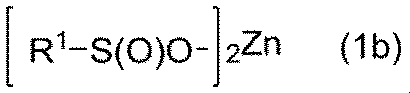
で示されるスルフィン酸塩である。
C1-C6パーフルオロアルキル基としては、例えば、トリフルオロメチル基、ペンタフルオロエチル基、ヘプタフルオロプロピル基、ノナフルオロブチル基、パーフルオロペンチル基及びパーフルオロヘキシル基が挙げられ、中でもC1-C3パーフルオロアルキル基が好ましい。
アルカリ金属は、リチウム、ナトリウム、カリウム、ルビジウム及びセシウムである。
C1-C6パーフルオロアルカンスルフィン酸のアルカリ金属塩としては、例えば、トリフルオロメタンスルフィン酸ナトリウム、トリフルオロメタンスルフィン酸カリウム、ペンタフルオロエタンスルフィン酸ナトリウム、ペンタフルオロエタンスルフィン酸カリウム、ヘプタフルオロプロパンスルフィン酸ナトリウム、ヘプタフルオロプロパンスルフィン酸カリウム、ノナフルオロブタンスルフィン酸ナトリウム及びトリデカフルオロヘキサンスルフィン酸ナトリウムが挙げられる。該スルフィン酸塩は、市販品の購入、WO2011/108622に記載の方法に準じて合成などにより入手できる。
C1-C6パーフルオロアルカンスルフィン酸の亜鉛塩としては、例えば、ビス(トリフルオロメタンスルフィン酸)亜鉛、ビス(ペンタフルオロエタンスルフィン酸)亜鉛及びビス(トリデカフルオロヘキサンスルフィン酸)亜鉛が挙げられる。該スルフィン酸塩は市販品の購入、Nature (London, United Kingdom) (2012), 492(7427), 95-99)に記載の方法に準じて合成などにより入手できる。
1~3個のC1-C6アルキル基で置換されていてもよい2-アミノフェノールは、式(2):

で示される化合物(以下、化合物(2)と記す)であり、ここで、C1-C6アルキル基は直鎖状でも分岐鎖状でもよく、例えば、メチル基、エチル基、プロピル基、イソプロピル基、ブチル基、sec-ブチル基、tert-ブチル基、ペンチル基、2-ペンチル基、ネオペンチル基、4-メチル-2-ペンチル基、ヘキシル基、3-メチルペンチル基が挙げられる。
C1-C6アルキル基で置換されていてもよい2-アミノフェノールの塩とは、化合物(2)の酸付加塩を意味し、具体例としては、塩酸、硫酸等の無機酸の付加塩並びにメタンスルホン酸、p-トルエンスルホン酸等の有機スルホン酸及び酢酸、トリフルオロ酢酸等の有機カルボン酸などの有機酸の付加塩が挙げられる。
本発明において、酸化剤としては、酸素;過硫酸カリウム、過硫酸アンモニウム等の過硫酸塩;過酸化水素、tert-ブチルヒドロペルオキシド等の過酸化物;三価の鉄化合物、二価の銅化合物、マンガン化合物等の遷移金属化合物;過ヨウ素酸ナトリウム等の超原子価ヨウ素化合物;ベンゾキノン、ナフトキノン、アントラキノン、クロラニル等のキノン化合物;及び次亜塩素酸ナトリウム、亜塩素酸ナトリウム等のハロゲンオキソ酸の塩などが挙げられる。また、これらを2種以上組み合わせて使用してもよい。
上記の酸化剤の中でも、過硫酸カリウム、過硫酸アンモニウム、tert-ブチルヒドロペルオキシド、塩化鉄(III)、酸化鉄(III)、二酸化マンガン及び硫酸銅(II)からなる群より選ばれる酸化剤が好ましく、酸化鉄(III)(α晶、β晶、γ晶、ε晶)がより好ましい。
金属水素化物としては、例えば、水素化リチウムアルミニウム、水素化ホウ素リチウム、水素化ホウ素ナトリウム、水素化リチウム、水素化カリウム及び水素化カルシウムが挙げられ、水素化リチウムアルミニウム、水素化ホウ素リチウム、水素化ホウ素ナトリウムが好ましい。
金属水素化物の添加量は、加える三価の鉄化合物の1モルに対して0.1モル~5モルの割合が好ましい。
本発明の実施態様としては、例えば以下の態様が挙げられる。
実施例中の高速液体クロマトグラフィーを用いた内部標準法による分析条件は以下の通りである。
・分析機器:(株)島津製作所製 CBM-20A
・移動相 (A/B):0.1%リン酸水/アセトニトリル
・カラム:(株)住化分析センター製 SUMIPAX ODS Z-CLUE φ4.6mm×100mm(3μm)
・カラム温度:40℃
・流速:1.0 mL/min
・UV波長:250 nm
・注入量:10μl
・内部標準物質 アセトアニリド
・タイムプログラム

実施例1-1
窒素雰囲気下で、2-アミノフェノール0.14mol(15.00g)、トリフルオロメタンスルフィン酸ナトリウム0.21mol(32.17g)、アセトニトリル60g及び硫酸0.41mol(40.41g)を室温で15分間撹拌した。得られた混合物に、酸化鉄(Fe2O3)0.27mol(43.73g)とアセトニトリル90gを加えた後、70℃で7時間撹拌した。反応混合物を、室温まで冷却後、水素化ホウ素ナトリウム0.08mol(3.12g)を加え、30分間撹拌した後、水50g加え、セライト(登録商標)ろ過して、アセトニトリルで洗浄した。ろ液と洗浄液とを合わせた混合液の一部を高速液体クロマトグラフィーを用いた内部標準法で分析することにより収率を算出した。2-アミノ-5-トリフルオロメタンスルホニルフェノールの収率は54%であった。
実施例1‐2
窒素雰囲気下で、2-アミノフェノール0.09mol(10.00g)、トリフルオロメタンスルフィン酸ナトリウム0.08mol(12.9g)、アセトニトリル100g及び硫酸0.33mol(32.33g)を室温で15分間撹拌した。得られた混合物に、酸化鉄(Fe2O3)0.18mol(29.16g)とアセトニトリル50gを加えた後、73℃で2時間撹拌した。反応混合物を、室温まで冷却後、水素化ホウ素ナトリウム0.05mol(2.08g)を加え、30分間撹拌した後、水10g加え、セライト(登録商標)ろ過して、アセトニトリルで洗浄した。ろ液と洗浄液とを合わせた混合液の一部を高速液体クロマトグラフィーを用いて内部標準法で分析することにより収率を算出した。2-アミノ-5-トリフルオロメタンスルホニルフェノールの収率は78%であった。
ろ液と洗浄液を合わせ、濃縮して得られた油状物に、1規定塩酸75gとメチル-t-ブチルエーテル100gを加え、有機層と水層に分液した。水層をメチル―t-ブチルエーテル100gで抽出し、得られた有機層を合わせ、活性炭7gを加えて30分撹拌後、ろ過し、ろ液を濃縮した。得られた油状物にメタノール10gを加え、硫酸ナトリウム35gを水200gに溶かした溶液中に、室温で撹拌しながら添加することで、結晶を析出させた。ろ過して得た結晶を乾燥することで、純度73%の2-アミノ-5-トリフルオロメタンスルホニルフェノール18.1gを得た。
取り出し収率60%。
この粗結晶18gを、50%メタノール水160gと活性炭5gと60℃で30分撹拌後、60℃でろ過し、ろ液からメタノールを留去して析出した結晶を得た。室温まで冷却後、ろ過乾燥することで、純度90.7%の2-アミノ-5-トリフルオロメタンスルホニルフェノール12gを得た。単離収率50%
実施例1-3
酸化鉄(Fe3O4)を、空気中250℃で2時間加熱することで、以下に使用する酸化鉄(Fe2O3)を得た。
窒素雰囲気下で、2-アミノフェノール0.09mol(10.00g)、トリフルオロメタンスルフィン酸ナトリウム0.08mol(12.9g)、アセトニトリル100g及び硫酸0.33mol(32.33g)を室温で15分間撹拌した。得られた混合物に、上記で調製した酸化鉄(Fe2O3)0.18mol(29.16g)とアセトニトリル50gとを加え、73℃で5時間撹拌した。反応混合物を、室温まで冷却後、水素化ホウ素ナトリウム0.05mol(2.08g)を加え、30分間撹拌した後、水50g加え、セライト(登録商標)ろ過して、アセトニトリルで洗浄した。ろ液と洗浄液とを合わせた混合液の一部を高速液体クロマトグラフィーを用いて内部標準法で分析することにより収率を算出した。2-アミノ-5-トリフルオロメタンスルホニルフェノールの収率は69%であった。
実施例2
窒素雰囲気下で、トリフルオロメタンスルフィン酸ナトリウム30.2mmol(4.72g)、2-アミノフェノール27.5mmol(3.0g)及びアセトニトリル60gを混合し、5℃でメタンスルホン酸13.27gを滴下した。得られた混合物に、5℃で二酸化マンガン55.3mmol(4.81g)を8時間かけて加え、5℃で1時間撹拌を行った。反応混合物に、10%ハイドロサルファイト水溶液(30g)を加え、撹拌、分液を行い、2-アミノ-5-トリフルオロメタンスルホニルフェノールを含む有機層を得た。この有機層の一部を採取し、高速液体クロマトグラフィーを用いた内部標準法で分析することにより収率を算出した。収率64%。
実施例3
2-アミノフェノール22.9mmol(2.50g)、トリフルオロメタンスルフィン酸ナトリウム25.2mmol(3.90g)、無水塩化鉄(III)25.2mmol(4.09g)及び酢酸25gを混合し、空気中で70℃、5時間加熱、撹拌を行った。反応混合物の一部を採取し、高速液体クロマトグラフィーを用いて分析することで2-アミノ-5トリフルオロメタンスルホニルフェノールの生成を確認した。収率50%。
実施例4-1
2-アミノフェノール18.3mmol(2.00g)及びトリフルオロメタンスルフィン酸ナトリウム20.2mmol(3.15g)を酢酸20gに加えて得た混合物にメタンスルホン酸20.2mmol(1.94g)を滴下して室温で30分間撹拌した。得られた混合物に過硫酸アンモニウム40.4mmol(9.21g)を加えて50℃で10時間加熱、撹拌を行った。反応混合物の一部を採取し、高速液体クロマトグラフィーを用いて分析することで2-アミノ-5-トリフルオロメタンスルホニルフェノールの生成を確認した。
実施例4-2
過硫酸アンモニウムの代わりに硫酸銅(II)を用いて実施例4-1の記載と同じ操作を行い、2-アミノ-5-トリフルオロメタンスルホニルフェノールの生成を確認した。
実施例5-1
無水塩化鉄(III)2.75mmol(450mg)とアセトニトリル3gとを窒素雰囲気下、氷水バスで冷却しながら混合し、得られた混合物に2-アミノフェノール2.75mmol(300mg)、トリフルオロメタンスルフィン酸ナトリウム4.1mmol(650mg)及びメタンスルホン酸5.5mmol(530mg)を順に加え、15分撹拌した。この混合物に、過硫酸アンモニウム6.88mmol(1.57g)を加えてから、氷水バスを外し、20℃で6時間撹拌した。反応混合物に、水素化ホウ素ナトリウム1.58mmol(60mg)を加え、30分間撹拌後、水3gと酢酸エチル10gとを加え、撹拌、分液することで、2-アミノ-5-トリフルオロメタンスルホニルフェノールを含む有機層を得た。この有機層の一部を採取して高速液体クロマトグラフィーを用いた内部標準分析法で分析することにより2-アミノ-5トリフルオロメタンスルホニルフェノールの収率を算出した。収率30%。
実施例5-2
過硫酸アンモニウムの代わりに過硫酸カリウムを用いて実施例5-1の記載と同じ操作を行い、2-アミノ-5-トリフルオロメタンスルホニルフェノールの生成を確認した。
実施例6-1
トリフルオロメタンスルフィン酸ナトリウム0.5mmol(0.078g)、2-アミノフェノール0.25mmol(0.027g)及び無水塩化鉄(III)0.5mmol(0.081g)を酢酸1mLに加え70℃で5時間加熱、撹拌を行った。反応混合物の一部を採取し、高速液体クロマトグラフィーを用いて分析することで、2-アミノ-5-トリフルオロメタンスルホニルフェノールの生成を確認した。
実施例6-2
下記[表1]に記載の溶媒、スルフィン酸塩及び酸化剤を用い、実施例6-1の記載と同じ操作を行った。結果を以下に示す。

実施例6-3
[表2]に記載の組み合わせの溶媒、スルフィン酸塩及び酸化剤を用いて、実施例6-1の記載と同じ操作を行ったところ、いずれの反応においても2-アミノ-5-トリフルオロメタンスルホニルフェノールが得られた。

実施例7-1
2-アミノフェノール塩酸塩13.7mmol(2.00g)、トリフルオロメタンスルフィン酸ナトリウム15.1mmol(2.36g)及び過硫酸アンモニウム30.2mmol(6.90g)を酢酸20gに加えて窒素雰囲気下、70℃で10時間加熱、撹拌を行った。反応混合物を一部採取して高速液体クロマトグラフィーにて分析することで2-アミノ-5-トリフルオロメタンスルホニルフェノールの生成を確認した。
実施例7-2
過硫酸アンモニウムの代わりに過硫酸カリウムを用いて、実施例7-1の記載と同じ操作を行い、2-アミノ-5-トリフルオロメタンスルホニルフェノールの生成を確認した。
実施例8-1
2-アミノ-3-メチルフェノール0.25mmol(0.047g)、トリフルオロメタンスルフィン酸ナトリウム0.5mmol(0.086g)及び無水塩化鉄(III)0.5mmol(0.081g)を酢酸1mLに加え、70℃で5時間加熱、攪拌を行った。反応混合物の一部を採取し、高速液体クロマトグラフィーを用いて分析することで、2-アミノ-3-メチル-4-トリフルオロメタンスルホニルフェノールの生成を確認した。
実施例8-2
[表3]に記載のスルフィン酸塩及び酸化剤を用いて、実施例8-1の記載と同じ操作を行ったところ、いずれの反応においても2-アミノ-3-メチル-4-トリフルオロメタンスルホニルフェノールの生成が確認された。

参考例1
2-ニトロフェノール0.25mmol(0.035g)、トリフルオロメタンスルフィン酸ナトリウム0.50mmol(0.078g)及び無水塩化鉄(III)0.5mmol(0.081g)を酢酸1mLに加え、70℃で5時間加熱、撹拌を行った。反応混合物の一部を採取し、高速液体クロマトグラフィーを用いて分析したところ、2-アミノ-3-メチル-4-トリフルオロメタンスルホニルフェノールの生成は確認できなかった。
参考例2
2-アセチルアミノフェノール0.25mmol(0.038g)、トリフルオロメタンスルフィン酸ナトリウム0.078g(0.50mmol)及び無水塩化鉄(III)0.5mmol(0.081g)を酢酸1mLに加え、70℃で5時間加熱、撹拌を行った。反応混合物の一部を採取し、高速液体クロマトグラフィーを用いて分析したところ、2-アミノ-3-メチル-4-トリフルオロメタンスルホニルフェノールの生成は確認できなかった。
Claims (8)
- C1-C6パーフルオロアルカンスルフィン酸のアルカリ金属塩又は亜鉛塩と1~3個のC1-C6アルキル基で置換されていてもよい2-アミノフェノール又はその塩とを酸化剤の存在下で反応させる式(3):
(式中、R1はC1-C6パーフルオロアルキル基を表し、R2はC1-C6アルキル基を表し、mは0~3のいずれかの整数を表す。)
で示される化合物又はその塩の製造方法。 - 酸化剤が、過硫酸塩、過酸化物、三価の鉄化合物、二価の銅化合物及びマンガン化合物からなる群より選ばれる1以上の酸化剤である請求項1に記載の方法。
- 酸化剤が、過硫酸カリウム、過硫酸アンモニウム、tert-ブチルヒドロペルオキシド、塩化鉄(III)、酸化鉄(III)、二酸化マンガン及び硫酸銅(II)からなる群より選ばれる1以上の酸化剤である請求項1に記載の方法。
- R1がC1-C3パーフルオロアルキル基である請求項1~3のいずれかに記載の方法。
- R1がトリフルオロメチル基である請求項1~3のいずれかに記載の方法。
- C1-C6パーフルオロアルカンスルフィン酸のナトリウム塩又はカリウム塩を反応させる請求項1~3のいずれかに記載の方法。
- トリフルオロメタンスルフィン酸のナトリウム塩又はカリウム塩を反応させる請求項5に記載の方法。
- C1-C6パーフルオロアルカンスルフィン酸のアルカリ金属塩又は亜鉛塩と1~3個のC1-C6アルキル基で置換されていてもよい2-アミノフェノール又はその塩とを酸化剤の存在下で、硫酸、メタンスルホン酸又は塩酸を加えて反応させる請求項1に記載の方法。
Priority Applications (5)
| Application Number | Priority Date | Filing Date | Title |
|---|---|---|---|
| JP2017521965A JP6597778B2 (ja) | 2015-06-04 | 2016-06-01 | パーフルオロアルカンスルホニルフェノール化合物の製造方法 |
| US15/575,693 US10160722B2 (en) | 2015-06-04 | 2016-06-01 | Method for producing perfluoroalkanesulfonyl phenol compounds |
| DE112016002460.6T DE112016002460T5 (de) | 2015-06-04 | 2016-06-01 | Verfahren zur Herstellung von Perfluoralkansulfonylphenol-Verbindungen |
| CN201680031856.2A CN107709292B (zh) | 2015-06-04 | 2016-06-01 | 全氟烷烃磺酰基苯酚化合物的制造方法 |
| CH01456/17A CH712709B1 (de) | 2015-06-04 | 2016-06-01 | Verfahren zur Herstellung von Perfluoralkansulfonylphenol-Verbindungen. |
Applications Claiming Priority (2)
| Application Number | Priority Date | Filing Date | Title |
|---|---|---|---|
| JP2015113690 | 2015-06-04 | ||
| JP2015-113690 | 2015-06-04 |
Publications (1)
| Publication Number | Publication Date |
|---|---|
| WO2016194929A1 true WO2016194929A1 (ja) | 2016-12-08 |
Family
ID=57441352
Family Applications (1)
| Application Number | Title | Priority Date | Filing Date |
|---|---|---|---|
| PCT/JP2016/066128 Ceased WO2016194929A1 (ja) | 2015-06-04 | 2016-06-01 | パーフルオロアルカンスルホニルフェノール化合物の製造方法 |
Country Status (6)
| Country | Link |
|---|---|
| US (1) | US10160722B2 (ja) |
| JP (1) | JP6597778B2 (ja) |
| CN (1) | CN107709292B (ja) |
| CH (1) | CH712709B1 (ja) |
| DE (1) | DE112016002460T5 (ja) |
| WO (1) | WO2016194929A1 (ja) |
Cited By (3)
| Publication number | Priority date | Publication date | Assignee | Title |
|---|---|---|---|---|
| EP3369726A4 (en) * | 2015-10-30 | 2019-04-17 | Sumitomo Chemical Company, Limited | PROCESS FOR PREPARING 2-AMINO-4-SUBSTITUTED PHENYL |
| WO2021213978A1 (de) | 2020-04-21 | 2021-10-28 | Bayer Aktiengesellschaft | 2-(het)aryl-substituierte kondensierte heterocyclen-derivate als schädlingsbekämpfungsmittel |
| WO2022238391A1 (de) | 2021-05-12 | 2022-11-17 | Bayer Aktiengesellschaft | 2-(het)aryl-substituierte kondensierte heterocyclen-derivate als schädlingsbekämpfungsmittel |
Citations (4)
| Publication number | Priority date | Publication date | Assignee | Title |
|---|---|---|---|---|
| JPS497223A (ja) * | 1972-04-10 | 1974-01-22 | ||
| JPH01149762A (ja) * | 1987-12-04 | 1989-06-12 | Seitetsu Kagaku Co Ltd | 4−(アルキルスルホニル)−2−アミノフェノールの製造方法 |
| WO2014104407A1 (en) * | 2012-12-27 | 2014-07-03 | Sumitomo Chemical Company, Limited | Fused oxazole compounds and use thereof for pest control |
| WO2015198850A1 (ja) * | 2014-06-26 | 2015-12-30 | 住友化学株式会社 | フェノール化合物の製造方法 |
Family Cites Families (4)
| Publication number | Priority date | Publication date | Assignee | Title |
|---|---|---|---|---|
| FR2662439B1 (fr) | 1990-05-23 | 1993-11-19 | Rhone Poulenc Chimie | Reactif et procede de perfluoroalkylation de substrats nucleophiles par les perfluoroalcanesulfinates de sodium en milieu oxydant. |
| JP3057293B2 (ja) | 1990-06-04 | 2000-06-26 | 日本純良薬品株式会社 | フェノール性化合物の製法 |
| WO2009037294A1 (en) * | 2007-09-20 | 2009-03-26 | Glaxo Group Limited | Compounds which have activity at m1 receptor and their uses in medicine |
| CN103694153B (zh) * | 2013-12-20 | 2016-01-20 | 华南理工大学 | 肉桂酸与芳基亚磺酸盐反应合成烯基砜类化合物的方法 |
-
2016
- 2016-06-01 CH CH01456/17A patent/CH712709B1/de not_active IP Right Cessation
- 2016-06-01 JP JP2017521965A patent/JP6597778B2/ja active Active
- 2016-06-01 DE DE112016002460.6T patent/DE112016002460T5/de not_active Withdrawn
- 2016-06-01 WO PCT/JP2016/066128 patent/WO2016194929A1/ja not_active Ceased
- 2016-06-01 US US15/575,693 patent/US10160722B2/en not_active Expired - Fee Related
- 2016-06-01 CN CN201680031856.2A patent/CN107709292B/zh active Active
Patent Citations (4)
| Publication number | Priority date | Publication date | Assignee | Title |
|---|---|---|---|---|
| JPS497223A (ja) * | 1972-04-10 | 1974-01-22 | ||
| JPH01149762A (ja) * | 1987-12-04 | 1989-06-12 | Seitetsu Kagaku Co Ltd | 4−(アルキルスルホニル)−2−アミノフェノールの製造方法 |
| WO2014104407A1 (en) * | 2012-12-27 | 2014-07-03 | Sumitomo Chemical Company, Limited | Fused oxazole compounds and use thereof for pest control |
| WO2015198850A1 (ja) * | 2014-06-26 | 2015-12-30 | 住友化学株式会社 | フェノール化合物の製造方法 |
Non-Patent Citations (1)
| Title |
|---|
| ANDREADES, S ET AL.: "Aryl Fluoroalkyl Sulfides. II. Preparation by Condensation of Trifluoromethanesulfenyl Chloride with Aromatic Systems", THE JOURNAL OF ORGANIC CHEMISTRY, vol. 29, no. 4, 1964, pages 898 - 900, XP055332302 * |
Cited By (3)
| Publication number | Priority date | Publication date | Assignee | Title |
|---|---|---|---|---|
| EP3369726A4 (en) * | 2015-10-30 | 2019-04-17 | Sumitomo Chemical Company, Limited | PROCESS FOR PREPARING 2-AMINO-4-SUBSTITUTED PHENYL |
| WO2021213978A1 (de) | 2020-04-21 | 2021-10-28 | Bayer Aktiengesellschaft | 2-(het)aryl-substituierte kondensierte heterocyclen-derivate als schädlingsbekämpfungsmittel |
| WO2022238391A1 (de) | 2021-05-12 | 2022-11-17 | Bayer Aktiengesellschaft | 2-(het)aryl-substituierte kondensierte heterocyclen-derivate als schädlingsbekämpfungsmittel |
Also Published As
| Publication number | Publication date |
|---|---|
| JPWO2016194929A1 (ja) | 2018-03-22 |
| US10160722B2 (en) | 2018-12-25 |
| DE112016002460T5 (de) | 2018-02-15 |
| CN107709292B (zh) | 2019-08-20 |
| CN107709292A (zh) | 2018-02-16 |
| CH712709B1 (de) | 2020-01-15 |
| US20180290970A1 (en) | 2018-10-11 |
| JP6597778B2 (ja) | 2019-10-30 |
Similar Documents
| Publication | Publication Date | Title |
|---|---|---|
| JP6597778B2 (ja) | パーフルオロアルカンスルホニルフェノール化合物の製造方法 | |
| JP2017025014A (ja) | ベンゾオキサゾール化合物の製造方法 | |
| WO2021157590A1 (ja) | ジフルオロメチル置換芳香族複素環化合物の製造方法 | |
| KR20090108934A (ko) | 1,3-프로펜설톤의 제조방법 | |
| WO2017014214A1 (ja) | 4-(トリフルオロメチルスルホニル)フェノール化合物の製造方法 | |
| JP2009155280A (ja) | γ−ブチロラクトン化合物の製造方法 | |
| JP6597788B2 (ja) | 2−アミノ−4−置換フェノールの製造方法 | |
| ZA200300988B (en) | Method for producing bicyclic 1,3-diketones. | |
| US20090030199A1 (en) | Process for the preparation of 2-(4-hydroxy-3-morfolynil)-2-cyclohexenone | |
| JP6464970B2 (ja) | オキサジリジン化合物の製造方法 | |
| ES2383667T3 (es) | Procedimiento para producir un derivado de quinolincarboxialdehído y un intermedio del mismo | |
| CN101511767A (zh) | 氟化酸的制备方法 | |
| JP6687914B2 (ja) | O−[1−(2−ヒドロキシプロピル)]オキシム化合物の製造方法 | |
| JP6002572B2 (ja) | ビス(アセチルアセトナト)ジオキソモリブデン(vi)を用いたファルネサールの製造方法 | |
| JP4605321B2 (ja) | 光学活性オキサゾリン化合物及び該化合物を用いる光学活性アリルアルコール誘導体の製造法 | |
| JP4899385B2 (ja) | 3−アミノメチルオキセタン化合物の製法 | |
| JP2010270092A (ja) | アセチル化合物、該アセチル化合物の製造方法、および該アセチル化合物を使用したナフトール化合物の製造方法 | |
| EP0464218B1 (en) | Process for producing isoxazole derivative | |
| JP2025035859A (ja) | 4-ケトベンズアミド誘導体及び4-ケト安息香酸誘導体の製造方法 | |
| JP5344287B2 (ja) | α−ジフルオロハロメチルカルボニル化合物の製造法 | |
| JP2010150152A (ja) | リオニレシノール又はその類似体の製造方法 | |
| JP2012201668A (ja) | 1,3−ジフルオロアセトンの製造方法 | |
| JP2003183207A (ja) | 2,6−ジクロロフェノール化合物の製造法 | |
| JP2019104700A (ja) | 1,3−ウンデカジエン−5−インの製造方法 | |
| JP2012017313A (ja) | フッ化スルホニルの製造法 |
Legal Events
| Date | Code | Title | Description |
|---|---|---|---|
| 121 | Ep: the epo has been informed by wipo that ep was designated in this application |
Ref document number: 16803363 Country of ref document: EP Kind code of ref document: A1 |
|
| ENP | Entry into the national phase |
Ref document number: 2017521965 Country of ref document: JP Kind code of ref document: A |
|
| WWE | Wipo information: entry into national phase |
Ref document number: 15575693 Country of ref document: US |
|
| WWE | Wipo information: entry into national phase |
Ref document number: 10201700001456 Country of ref document: CH |
|
| WWE | Wipo information: entry into national phase |
Ref document number: 112016002460 Country of ref document: DE |
|
| 122 | Ep: pct application non-entry in european phase |
Ref document number: 16803363 Country of ref document: EP Kind code of ref document: A1 |