WO2016175001A1 - 熱伝導性シリコーングリース組成物 - Google Patents
熱伝導性シリコーングリース組成物 Download PDFInfo
- Publication number
- WO2016175001A1 WO2016175001A1 PCT/JP2016/061248 JP2016061248W WO2016175001A1 WO 2016175001 A1 WO2016175001 A1 WO 2016175001A1 JP 2016061248 W JP2016061248 W JP 2016061248W WO 2016175001 A1 WO2016175001 A1 WO 2016175001A1
- Authority
- WO
- WIPO (PCT)
- Prior art keywords
- group
- grease composition
- organopolysiloxane
- thermally conductive
- silicone grease
- Prior art date
- Legal status (The legal status is an assumption and is not a legal conclusion. Google has not performed a legal analysis and makes no representation as to the accuracy of the status listed.)
- Ceased
Links
- XPJCIBUAEOITBZ-UHFFFAOYSA-N C(C1OC1)ON(c1ccccc1)OCC1OC1 Chemical compound C(C1OC1)ON(c1ccccc1)OCC1OC1 XPJCIBUAEOITBZ-UHFFFAOYSA-N 0.000 description 1
- YDVVCNSCTSPGPO-UHFFFAOYSA-N CC1C=C(Cc(cc2)cc(C)c2N)C=CC1N Chemical compound CC1C=C(Cc(cc2)cc(C)c2N)C=CC1N YDVVCNSCTSPGPO-UHFFFAOYSA-N 0.000 description 1
Classifications
-
- C—CHEMISTRY; METALLURGY
- C10—PETROLEUM, GAS OR COKE INDUSTRIES; TECHNICAL GASES CONTAINING CARBON MONOXIDE; FUELS; LUBRICANTS; PEAT
- C10M—LUBRICATING COMPOSITIONS; USE OF CHEMICAL SUBSTANCES EITHER ALONE OR AS LUBRICATING INGREDIENTS IN A LUBRICATING COMPOSITION
- C10M169/00—Lubricating compositions characterised by containing as components a mixture of at least two types of ingredient selected from base-materials, thickeners or additives, covered by the preceding groups, each of these compounds being essential
- C10M169/04—Mixtures of base-materials and additives
-
- C—CHEMISTRY; METALLURGY
- C08—ORGANIC MACROMOLECULAR COMPOUNDS; THEIR PREPARATION OR CHEMICAL WORKING-UP; COMPOSITIONS BASED THEREON
- C08K—Use of inorganic or non-macromolecular organic substances as compounding ingredients
- C08K3/00—Use of inorganic substances as compounding ingredients
- C08K3/02—Elements
- C08K3/08—Metals
-
- C—CHEMISTRY; METALLURGY
- C08—ORGANIC MACROMOLECULAR COMPOUNDS; THEIR PREPARATION OR CHEMICAL WORKING-UP; COMPOSITIONS BASED THEREON
- C08K—Use of inorganic or non-macromolecular organic substances as compounding ingredients
- C08K3/00—Use of inorganic substances as compounding ingredients
- C08K3/18—Oxygen-containing compounds, e.g. metal carbonyls
- C08K3/20—Oxides; Hydroxides
- C08K3/22—Oxides; Hydroxides of metals
-
- C—CHEMISTRY; METALLURGY
- C08—ORGANIC MACROMOLECULAR COMPOUNDS; THEIR PREPARATION OR CHEMICAL WORKING-UP; COMPOSITIONS BASED THEREON
- C08K—Use of inorganic or non-macromolecular organic substances as compounding ingredients
- C08K3/00—Use of inorganic substances as compounding ingredients
- C08K3/28—Nitrogen-containing compounds
-
- C—CHEMISTRY; METALLURGY
- C08—ORGANIC MACROMOLECULAR COMPOUNDS; THEIR PREPARATION OR CHEMICAL WORKING-UP; COMPOSITIONS BASED THEREON
- C08K—Use of inorganic or non-macromolecular organic substances as compounding ingredients
- C08K5/00—Use of organic ingredients
-
- C—CHEMISTRY; METALLURGY
- C08—ORGANIC MACROMOLECULAR COMPOUNDS; THEIR PREPARATION OR CHEMICAL WORKING-UP; COMPOSITIONS BASED THEREON
- C08K—Use of inorganic or non-macromolecular organic substances as compounding ingredients
- C08K5/00—Use of organic ingredients
- C08K5/54—Silicon-containing compounds
- C08K5/541—Silicon-containing compounds containing oxygen
- C08K5/5415—Silicon-containing compounds containing oxygen containing at least one Si—O bond
-
- C—CHEMISTRY; METALLURGY
- C08—ORGANIC MACROMOLECULAR COMPOUNDS; THEIR PREPARATION OR CHEMICAL WORKING-UP; COMPOSITIONS BASED THEREON
- C08L—COMPOSITIONS OF MACROMOLECULAR COMPOUNDS
- C08L63/00—Compositions of epoxy resins; Compositions of derivatives of epoxy resins
-
- C—CHEMISTRY; METALLURGY
- C08—ORGANIC MACROMOLECULAR COMPOUNDS; THEIR PREPARATION OR CHEMICAL WORKING-UP; COMPOSITIONS BASED THEREON
- C08L—COMPOSITIONS OF MACROMOLECULAR COMPOUNDS
- C08L83/00—Compositions of macromolecular compounds obtained by reactions forming in the main chain of the macromolecule a linkage containing silicon with or without sulfur, nitrogen, oxygen or carbon only; Compositions of derivatives of such polymers
- C08L83/04—Polysiloxanes
-
- C—CHEMISTRY; METALLURGY
- C09—DYES; PAINTS; POLISHES; NATURAL RESINS; ADHESIVES; COMPOSITIONS NOT OTHERWISE PROVIDED FOR; APPLICATIONS OF MATERIALS NOT OTHERWISE PROVIDED FOR
- C09K—MATERIALS FOR MISCELLANEOUS APPLICATIONS, NOT PROVIDED FOR ELSEWHERE
- C09K5/00—Heat-transfer, heat-exchange or heat-storage materials, e.g. refrigerants; Materials for the production of heat or cold by chemical reactions other than by combustion
- C09K5/08—Materials not undergoing a change of physical state when used
- C09K5/14—Solid materials, e.g. powdery or granular
-
- C—CHEMISTRY; METALLURGY
- C10—PETROLEUM, GAS OR COKE INDUSTRIES; TECHNICAL GASES CONTAINING CARBON MONOXIDE; FUELS; LUBRICANTS; PEAT
- C10M—LUBRICATING COMPOSITIONS; USE OF CHEMICAL SUBSTANCES EITHER ALONE OR AS LUBRICATING INGREDIENTS IN A LUBRICATING COMPOSITION
- C10M107/00—Lubricating compositions characterised by the base-material being a macromolecular compound
- C10M107/20—Lubricating compositions characterised by the base-material being a macromolecular compound containing oxygen
- C10M107/22—Macromolecular compounds obtained by reactions only involving carbon-to-carbon unsaturated bonds
- C10M107/24—Macromolecular compounds obtained by reactions only involving carbon-to-carbon unsaturated bonds containing monomers having an unsaturated radical bound to an alcohol, aldehyde, ketonic, ether, ketal or acetal radical
-
- C—CHEMISTRY; METALLURGY
- C10—PETROLEUM, GAS OR COKE INDUSTRIES; TECHNICAL GASES CONTAINING CARBON MONOXIDE; FUELS; LUBRICANTS; PEAT
- C10M—LUBRICATING COMPOSITIONS; USE OF CHEMICAL SUBSTANCES EITHER ALONE OR AS LUBRICATING INGREDIENTS IN A LUBRICATING COMPOSITION
- C10M107/00—Lubricating compositions characterised by the base-material being a macromolecular compound
- C10M107/50—Lubricating compositions characterised by the base-material being a macromolecular compound containing silicon
-
- C—CHEMISTRY; METALLURGY
- C10—PETROLEUM, GAS OR COKE INDUSTRIES; TECHNICAL GASES CONTAINING CARBON MONOXIDE; FUELS; LUBRICANTS; PEAT
- C10M—LUBRICATING COMPOSITIONS; USE OF CHEMICAL SUBSTANCES EITHER ALONE OR AS LUBRICATING INGREDIENTS IN A LUBRICATING COMPOSITION
- C10M125/00—Lubricating compositions characterised by the additive being an inorganic material
- C10M125/04—Metals; Alloys
-
- C—CHEMISTRY; METALLURGY
- C10—PETROLEUM, GAS OR COKE INDUSTRIES; TECHNICAL GASES CONTAINING CARBON MONOXIDE; FUELS; LUBRICANTS; PEAT
- C10M—LUBRICATING COMPOSITIONS; USE OF CHEMICAL SUBSTANCES EITHER ALONE OR AS LUBRICATING INGREDIENTS IN A LUBRICATING COMPOSITION
- C10M125/00—Lubricating compositions characterised by the additive being an inorganic material
- C10M125/10—Metal oxides, hydroxides, carbonates or bicarbonates
-
- C—CHEMISTRY; METALLURGY
- C10—PETROLEUM, GAS OR COKE INDUSTRIES; TECHNICAL GASES CONTAINING CARBON MONOXIDE; FUELS; LUBRICANTS; PEAT
- C10M—LUBRICATING COMPOSITIONS; USE OF CHEMICAL SUBSTANCES EITHER ALONE OR AS LUBRICATING INGREDIENTS IN A LUBRICATING COMPOSITION
- C10M125/00—Lubricating compositions characterised by the additive being an inorganic material
- C10M125/20—Compounds containing nitrogen
-
- C—CHEMISTRY; METALLURGY
- C10—PETROLEUM, GAS OR COKE INDUSTRIES; TECHNICAL GASES CONTAINING CARBON MONOXIDE; FUELS; LUBRICANTS; PEAT
- C10M—LUBRICATING COMPOSITIONS; USE OF CHEMICAL SUBSTANCES EITHER ALONE OR AS LUBRICATING INGREDIENTS IN A LUBRICATING COMPOSITION
- C10M125/00—Lubricating compositions characterised by the additive being an inorganic material
- C10M125/26—Compounds containing silicon or boron, e.g. silica, sand
-
- C—CHEMISTRY; METALLURGY
- C10—PETROLEUM, GAS OR COKE INDUSTRIES; TECHNICAL GASES CONTAINING CARBON MONOXIDE; FUELS; LUBRICANTS; PEAT
- C10M—LUBRICATING COMPOSITIONS; USE OF CHEMICAL SUBSTANCES EITHER ALONE OR AS LUBRICATING INGREDIENTS IN A LUBRICATING COMPOSITION
- C10M169/00—Lubricating compositions characterised by containing as components a mixture of at least two types of ingredient selected from base-materials, thickeners or additives, covered by the preceding groups, each of these compounds being essential
- C10M169/02—Mixtures of base-materials and thickeners
-
- C—CHEMISTRY; METALLURGY
- C10—PETROLEUM, GAS OR COKE INDUSTRIES; TECHNICAL GASES CONTAINING CARBON MONOXIDE; FUELS; LUBRICANTS; PEAT
- C10M—LUBRICATING COMPOSITIONS; USE OF CHEMICAL SUBSTANCES EITHER ALONE OR AS LUBRICATING INGREDIENTS IN A LUBRICATING COMPOSITION
- C10M2201/00—Inorganic compounds or elements as ingredients in lubricant compositions
- C10M2201/04—Elements
- C10M2201/05—Metals; Alloys
-
- C—CHEMISTRY; METALLURGY
- C10—PETROLEUM, GAS OR COKE INDUSTRIES; TECHNICAL GASES CONTAINING CARBON MONOXIDE; FUELS; LUBRICANTS; PEAT
- C10M—LUBRICATING COMPOSITIONS; USE OF CHEMICAL SUBSTANCES EITHER ALONE OR AS LUBRICATING INGREDIENTS IN A LUBRICATING COMPOSITION
- C10M2201/00—Inorganic compounds or elements as ingredients in lubricant compositions
- C10M2201/06—Metal compounds
- C10M2201/061—Carbides; Hydrides; Nitrides
-
- C—CHEMISTRY; METALLURGY
- C10—PETROLEUM, GAS OR COKE INDUSTRIES; TECHNICAL GASES CONTAINING CARBON MONOXIDE; FUELS; LUBRICANTS; PEAT
- C10M—LUBRICATING COMPOSITIONS; USE OF CHEMICAL SUBSTANCES EITHER ALONE OR AS LUBRICATING INGREDIENTS IN A LUBRICATING COMPOSITION
- C10M2201/00—Inorganic compounds or elements as ingredients in lubricant compositions
- C10M2201/06—Metal compounds
- C10M2201/062—Oxides; Hydroxides; Carbonates or bicarbonates
-
- C—CHEMISTRY; METALLURGY
- C10—PETROLEUM, GAS OR COKE INDUSTRIES; TECHNICAL GASES CONTAINING CARBON MONOXIDE; FUELS; LUBRICANTS; PEAT
- C10M—LUBRICATING COMPOSITIONS; USE OF CHEMICAL SUBSTANCES EITHER ALONE OR AS LUBRICATING INGREDIENTS IN A LUBRICATING COMPOSITION
- C10M2201/00—Inorganic compounds or elements as ingredients in lubricant compositions
- C10M2201/10—Compounds containing silicon
- C10M2201/105—Silica
-
- C—CHEMISTRY; METALLURGY
- C10—PETROLEUM, GAS OR COKE INDUSTRIES; TECHNICAL GASES CONTAINING CARBON MONOXIDE; FUELS; LUBRICANTS; PEAT
- C10M—LUBRICATING COMPOSITIONS; USE OF CHEMICAL SUBSTANCES EITHER ALONE OR AS LUBRICATING INGREDIENTS IN A LUBRICATING COMPOSITION
- C10M2209/00—Organic macromolecular compounds containing oxygen as ingredients in lubricant compositions
- C10M2209/10—Macromolecular compoundss obtained otherwise than by reactions only involving carbon-to-carbon unsaturated bonds
- C10M2209/101—Condensation polymers of aldehydes or ketones and phenols, e.g. Also polyoxyalkylene ether derivatives thereof
- C10M2209/1016—Condensation polymers of aldehydes or ketones and phenols, e.g. Also polyoxyalkylene ether derivatives thereof used as thickening agents
-
- C—CHEMISTRY; METALLURGY
- C10—PETROLEUM, GAS OR COKE INDUSTRIES; TECHNICAL GASES CONTAINING CARBON MONOXIDE; FUELS; LUBRICANTS; PEAT
- C10M—LUBRICATING COMPOSITIONS; USE OF CHEMICAL SUBSTANCES EITHER ALONE OR AS LUBRICATING INGREDIENTS IN A LUBRICATING COMPOSITION
- C10M2229/00—Organic macromolecular compounds containing atoms of elements not provided for in groups C10M2205/00, C10M2209/00, C10M2213/00, C10M2217/00, C10M2221/00 or C10M2225/00 as ingredients in lubricant compositions
- C10M2229/02—Unspecified siloxanes; Silicones
- C10M2229/025—Unspecified siloxanes; Silicones used as base material
-
- C—CHEMISTRY; METALLURGY
- C10—PETROLEUM, GAS OR COKE INDUSTRIES; TECHNICAL GASES CONTAINING CARBON MONOXIDE; FUELS; LUBRICANTS; PEAT
- C10M—LUBRICATING COMPOSITIONS; USE OF CHEMICAL SUBSTANCES EITHER ALONE OR AS LUBRICATING INGREDIENTS IN A LUBRICATING COMPOSITION
- C10M2229/00—Organic macromolecular compounds containing atoms of elements not provided for in groups C10M2205/00, C10M2209/00, C10M2213/00, C10M2217/00, C10M2221/00 or C10M2225/00 as ingredients in lubricant compositions
- C10M2229/04—Siloxanes with specific structure
- C10M2229/041—Siloxanes with specific structure containing aliphatic substituents
- C10M2229/0415—Siloxanes with specific structure containing aliphatic substituents used as base material
-
- C—CHEMISTRY; METALLURGY
- C10—PETROLEUM, GAS OR COKE INDUSTRIES; TECHNICAL GASES CONTAINING CARBON MONOXIDE; FUELS; LUBRICANTS; PEAT
- C10M—LUBRICATING COMPOSITIONS; USE OF CHEMICAL SUBSTANCES EITHER ALONE OR AS LUBRICATING INGREDIENTS IN A LUBRICATING COMPOSITION
- C10M2229/00—Organic macromolecular compounds containing atoms of elements not provided for in groups C10M2205/00, C10M2209/00, C10M2213/00, C10M2217/00, C10M2221/00 or C10M2225/00 as ingredients in lubricant compositions
- C10M2229/04—Siloxanes with specific structure
- C10M2229/043—Siloxanes with specific structure containing carbon-to-carbon double bonds
- C10M2229/0435—Siloxanes with specific structure containing carbon-to-carbon double bonds used as base material
-
- C—CHEMISTRY; METALLURGY
- C10—PETROLEUM, GAS OR COKE INDUSTRIES; TECHNICAL GASES CONTAINING CARBON MONOXIDE; FUELS; LUBRICANTS; PEAT
- C10M—LUBRICATING COMPOSITIONS; USE OF CHEMICAL SUBSTANCES EITHER ALONE OR AS LUBRICATING INGREDIENTS IN A LUBRICATING COMPOSITION
- C10M2229/00—Organic macromolecular compounds containing atoms of elements not provided for in groups C10M2205/00, C10M2209/00, C10M2213/00, C10M2217/00, C10M2221/00 or C10M2225/00 as ingredients in lubricant compositions
- C10M2229/04—Siloxanes with specific structure
- C10M2229/046—Siloxanes with specific structure containing silicon-oxygen-carbon bonds
- C10M2229/0465—Siloxanes with specific structure containing silicon-oxygen-carbon bonds used as base material
-
- C—CHEMISTRY; METALLURGY
- C10—PETROLEUM, GAS OR COKE INDUSTRIES; TECHNICAL GASES CONTAINING CARBON MONOXIDE; FUELS; LUBRICANTS; PEAT
- C10M—LUBRICATING COMPOSITIONS; USE OF CHEMICAL SUBSTANCES EITHER ALONE OR AS LUBRICATING INGREDIENTS IN A LUBRICATING COMPOSITION
- C10M2229/00—Organic macromolecular compounds containing atoms of elements not provided for in groups C10M2205/00, C10M2209/00, C10M2213/00, C10M2217/00, C10M2221/00 or C10M2225/00 as ingredients in lubricant compositions
- C10M2229/04—Siloxanes with specific structure
- C10M2229/048—Siloxanes with specific structure containing carboxyl groups
- C10M2229/0485—Siloxanes with specific structure containing carboxyl groups used as base material
-
- C—CHEMISTRY; METALLURGY
- C10—PETROLEUM, GAS OR COKE INDUSTRIES; TECHNICAL GASES CONTAINING CARBON MONOXIDE; FUELS; LUBRICANTS; PEAT
- C10N—INDEXING SCHEME ASSOCIATED WITH SUBCLASS C10M RELATING TO LUBRICATING COMPOSITIONS
- C10N2010/00—Metal present as such or in compounds
- C10N2010/04—Groups 2 or 12
-
- C—CHEMISTRY; METALLURGY
- C10—PETROLEUM, GAS OR COKE INDUSTRIES; TECHNICAL GASES CONTAINING CARBON MONOXIDE; FUELS; LUBRICANTS; PEAT
- C10N—INDEXING SCHEME ASSOCIATED WITH SUBCLASS C10M RELATING TO LUBRICATING COMPOSITIONS
- C10N2010/00—Metal present as such or in compounds
- C10N2010/06—Groups 3 or 13
-
- C—CHEMISTRY; METALLURGY
- C10—PETROLEUM, GAS OR COKE INDUSTRIES; TECHNICAL GASES CONTAINING CARBON MONOXIDE; FUELS; LUBRICANTS; PEAT
- C10N—INDEXING SCHEME ASSOCIATED WITH SUBCLASS C10M RELATING TO LUBRICATING COMPOSITIONS
- C10N2010/00—Metal present as such or in compounds
- C10N2010/08—Groups 4 or 14
-
- C—CHEMISTRY; METALLURGY
- C10—PETROLEUM, GAS OR COKE INDUSTRIES; TECHNICAL GASES CONTAINING CARBON MONOXIDE; FUELS; LUBRICANTS; PEAT
- C10N—INDEXING SCHEME ASSOCIATED WITH SUBCLASS C10M RELATING TO LUBRICATING COMPOSITIONS
- C10N2010/00—Metal present as such or in compounds
- C10N2010/14—Group 7
-
- C—CHEMISTRY; METALLURGY
- C10—PETROLEUM, GAS OR COKE INDUSTRIES; TECHNICAL GASES CONTAINING CARBON MONOXIDE; FUELS; LUBRICANTS; PEAT
- C10N—INDEXING SCHEME ASSOCIATED WITH SUBCLASS C10M RELATING TO LUBRICATING COMPOSITIONS
- C10N2010/00—Metal present as such or in compounds
- C10N2010/16—Groups 8, 9, or 10
-
- C—CHEMISTRY; METALLURGY
- C10—PETROLEUM, GAS OR COKE INDUSTRIES; TECHNICAL GASES CONTAINING CARBON MONOXIDE; FUELS; LUBRICANTS; PEAT
- C10N—INDEXING SCHEME ASSOCIATED WITH SUBCLASS C10M RELATING TO LUBRICATING COMPOSITIONS
- C10N2020/00—Specified physical or chemical properties or characteristics, i.e. function, of component of lubricating compositions
- C10N2020/01—Physico-chemical properties
- C10N2020/02—Viscosity; Viscosity index
-
- C—CHEMISTRY; METALLURGY
- C10—PETROLEUM, GAS OR COKE INDUSTRIES; TECHNICAL GASES CONTAINING CARBON MONOXIDE; FUELS; LUBRICANTS; PEAT
- C10N—INDEXING SCHEME ASSOCIATED WITH SUBCLASS C10M RELATING TO LUBRICATING COMPOSITIONS
- C10N2020/00—Specified physical or chemical properties or characteristics, i.e. function, of component of lubricating compositions
- C10N2020/01—Physico-chemical properties
- C10N2020/055—Particles related characteristics
- C10N2020/06—Particles of special shape or size
-
- C—CHEMISTRY; METALLURGY
- C10—PETROLEUM, GAS OR COKE INDUSTRIES; TECHNICAL GASES CONTAINING CARBON MONOXIDE; FUELS; LUBRICANTS; PEAT
- C10N—INDEXING SCHEME ASSOCIATED WITH SUBCLASS C10M RELATING TO LUBRICATING COMPOSITIONS
- C10N2030/00—Specified physical or chemical properties which is improved by the additive characterising the lubricating composition, e.g. multifunctional additives
- C10N2030/02—Pour-point; Viscosity index
-
- C—CHEMISTRY; METALLURGY
- C10—PETROLEUM, GAS OR COKE INDUSTRIES; TECHNICAL GASES CONTAINING CARBON MONOXIDE; FUELS; LUBRICANTS; PEAT
- C10N—INDEXING SCHEME ASSOCIATED WITH SUBCLASS C10M RELATING TO LUBRICATING COMPOSITIONS
- C10N2030/00—Specified physical or chemical properties which is improved by the additive characterising the lubricating composition, e.g. multifunctional additives
- C10N2030/08—Resistance to extreme temperature
-
- C—CHEMISTRY; METALLURGY
- C10—PETROLEUM, GAS OR COKE INDUSTRIES; TECHNICAL GASES CONTAINING CARBON MONOXIDE; FUELS; LUBRICANTS; PEAT
- C10N—INDEXING SCHEME ASSOCIATED WITH SUBCLASS C10M RELATING TO LUBRICATING COMPOSITIONS
- C10N2050/00—Form in which the lubricant is applied to the material being lubricated
- C10N2050/10—Form in which the lubricant is applied to the material being lubricated semi-solid; greasy
Definitions
- the present invention relates to a thermally conductive silicone grease composition, and particularly to a thermally conductive silicone grease composition having a low viscosity and excellent thermal conductivity.
- thermally conductive materials used for heat removal have been used. Proposed. In this case, there are two types of thermally conductive materials: (1) a sheet-like material that is easy to handle, and (2) a paste-like material called heat radiation grease.
- the sheet-like material (1) has the advantage of being easy to handle and excellent in stability, while the contact thermal resistance is inevitably increased. It will be inferior to the case.
- a certain degree of strength and hardness is required to maintain the sheet shape, tolerances generated between the element and the housing cannot be absorbed, and the element may be destroyed by the stress.
- the heat dissipating grease (2) can be adapted not only for mass production of electrical and electronic products by using a dispensing device or printing device, but also has a low heat contact resistance for heat dissipation performance.
- the viscosity of the heat-dissipating grease is lowered in order to obtain good dispensing performance and printing performance, the amount of thermally conductive inorganic filler is limited and sufficient heat conductivity cannot be ensured. As a result, the device may malfunction.
- a specific organopolysiloxane, a thickener such as zinc oxide, alumina, aluminum nitride, boron nitride, and silicon carbide, an organopolysiloxane having at least one hydroxyl group directly bonded to a silicon atom in one molecule, and Grease-like silicone composition in which base oil bleed is suppressed by combining alkoxysilane Patent Document 1
- liquid silicone, thermally conductive inorganic filler having a constant thermal conductivity and a Mohs hardness of 6 or more, and A thermally conductive silicone composition excellent in thermal conductivity and dispensing property (Patent Document 2) comprising a combination of a thermally conductive inorganic filler having a constant thermal conductivity and a Mohs hardness of 5 or less
- Thermally conductive grease composition comprising a combination of oil and metallic aluminum powder having an average particle size of 0.5 to 50 ⁇ m (Patent Document 3); average Silicone grease composition in which the filling
- an object of the present invention is to provide a heat conductive silicone grease composition having excellent heat conductivity and low viscosity.
- the present inventor has combined a specific organopolysiloxane, a non-silicone organic compound having a higher SP value than the organopolysiloxane, and a thermally conductive inorganic filler.
- the present inventors have found that a high-viscosity silicone grease composition having a low viscosity can be obtained, and reached the present invention.
- the present invention provides the following high thermal conductivity silicone grease composition.
- A Organopolysiloxane: 20 to 90 parts by mass
- B Non-silicone organic compound: 80 to 10 parts by mass
- C Thermally conductive inorganic filler having an average particle size of 0.5 to 100 ⁇ m: heat comprising 200 to 2,000 parts by mass with respect to a total of 100 parts by mass of components (A) and (B)
- a conductive silicone grease composition in which the SP value of the organopolysiloxane (A) and the non-silicone organic compound (B) is (B)> (A) and the SP value of the component (B) ⁇
- the thermal conductive silicone grease composition is characterized in that the SP value of the component is> 2 and the viscosity of the thermal conductive silicone grease composition is 50 to 1,000 Pa ⁇ s at 25 ° C.
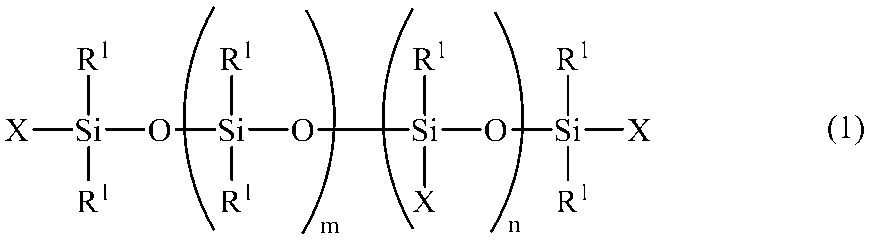
- Organopolysiloxane (A) is represented by the following general formula (1) (In the formula, R 1 is .X is a monovalent hydrocarbon group having same or different is a group represented by R 1 or -R 2 -SiR 1 (3-a ) (OR 3) a, R 1 is As described above, R 2 is an oxygen atom or an alkylene group having 1 to 4 carbon atoms, R 3 is an alkyl group having 1 to 4 carbon atoms, an alkoxyalkyl group, an alkenyl group, or an acyl group, and a is an integer of 1 to 3 M and n are 1 ⁇ m ⁇ 1,000 and 0 ⁇ n ⁇ 1,000, respectively.
- the non-silicone organic compound (B) is a compound having an SP value of 10 or more having an organic group selected from an epoxy group, a phenolic hydroxyl group and an amino group in the molecule,
- the heat conductive inorganic filler (C) is one or more selected from aluminum, silver, copper, nickel, zinc oxide, aluminum oxide, silicon oxide, magnesium oxide, aluminum nitride, boron nitride, silicon nitride, and metal silicon
- the thermally conductive silicone grease composition of the present invention is not only excellent in dispensing properties and printability with low viscosity, but also excellent in thermal conductivity, so it is suitable for heat removal from electrical and electronic components that generate heat during use. is there.
- the organopolysiloxane of component (A) that constitutes the thermally conductive silicone grease composition of the present invention preferably has a viscosity at 25 ° C. in the range of 0.005 to 100 mPa ⁇ s as measured by a Brookfield rotary viscometer. Is more preferably 0.005 to 50 mPa ⁇ s. If the viscosity at 25 ° C. is less than 0.005 mPa ⁇ s, the resulting silicone grease composition will be separated during storage and the stability will be poor, and if it is greater than 100 mPa ⁇ s, mixing with the component (B) will occur. May be difficult.
- the organopolysiloxane of component (A) preferably contains at least a hydrolyzable organopolysiloxane represented by the following general formula (1).
- R 1 is the same or different monovalent hydrocarbon group;
- X is independently a group represented by R 1 or —R 2 —SiR 1 (3-a) (OR 3 ) a ;
- R 1 is as described above,
- R 2 is an oxygen atom or an alkylene group having 1 to 4 carbon atoms,
- R 3 is an alkyl group, alkoxyalkyl group, alkenyl group or acyl group having 1 to 4 carbon atoms, and a is 1 to And an integer of 3.
- m and n are 1 ⁇ m ⁇ 1,000 and 0 ⁇ n ⁇ 1,000, respectively.
- a more preferred organopolysiloxane (A) component used in the present invention is represented by the following general formula (2).
- R 1 is independently an unsubstituted or substituted monovalent hydrocarbon group
- R 3 is independently an alkyl group, an alkoxyalkyl group, an alkenyl group, or an acyl group
- p is an integer of 5 to 100
- a is an integer of 1 to 3.
- the composition of the present invention exhibits fluidity. It also has the role of maintaining and imparting good handleability to the composition.
- R 1 is independently an unsubstituted or substituted monovalent hydrocarbon group preferably having 1 to 10 carbon atoms, more preferably 1 to 6 carbon atoms, still more preferably 1 to 3 carbon atoms.
- Examples thereof include a linear alkyl group, a branched alkyl group, a cyclic alkyl group, an alkenyl group, an aryl group, an aralkyl group, and a halogenated alkyl group.
- Examples of the linear alkyl group include a methyl group, an ethyl group, a propyl group, a hexyl group, and an octyl group.
- Examples of the branched alkyl group include isopropyl group, isobutyl group, tert-butyl group, and 2-ethylhexyl group.
- Examples of the cyclic alkyl group include a cyclopentyl group and a cyclohexyl group.
- Examples of the alkenyl group include a vinyl group and an allyl group.
- Examples of the aryl group include a phenyl group and a tolyl group.
- Examples of the aralkyl group include a 2-phenylethyl group and a 2-methyl-2-phenylethyl group.
- halogenated alkyl group examples include a 3,3,3-trifluoropropyl group, a 2- (nonafluorobutyl) ethyl group, and a 2- (heptadecafluorooctyl) ethyl group.
- R 1 is preferably a methyl group, a phenyl group, or a vinyl group.
- R 3 is independently an alkyl group, an alkoxyalkyl group, an alkenyl group, or an acyl group.
- the alkyl group include linear alkyl groups, branched alkyl groups, and cyclic alkyl groups similar to those exemplified for R 1 .
- the alkoxyalkyl group include a methoxyethyl group and a methoxypropyl group.
- the acyl group include an acetyl group and an octanoyl group.
- R 3 is preferably an alkyl group, particularly preferably a methyl group or an ethyl group. n and m are as described above.
- n + m is 10 to 50
- p is an integer of 5 to 100, preferably 10 to 50
- a is an integer of 1 to 3, preferably 3.
- the molecule preferably has 1 to 6 OR 3 groups, particularly 3 or 6 OR 3 groups.
- the viscosity of the organopolysiloxane (A) at 25 ° C. is usually 0.005 to 100 mPa ⁇ s, particularly preferably 0.005 to 50 mPa ⁇ s.
- the viscosity is lower than 0.005 mPa ⁇ s, oil bleed is likely to be generated from the room temperature moisture-curing type heat conductive silicone grease composition, and it is liable to sag.
- the viscosity is higher than 100 mPa ⁇ s, it is obtained.
- the resulting heat conductive silicone grease composition has poor fluidity, and the dispensing property and printability may be deteriorated.
- suitable organopolysiloxane (A) include the following.
- the thermally conductive silicone composition thickens and cannot be discharged, If the amount is more than 90 parts by mass, the viscosity becomes too low and the organopolysiloxane (A) bleeds. Therefore, it is used in the range of 20 to 90 parts by mass, preferably in the range of 30 to 80 parts by mass. .
- the non-silicone organic compound of component (B) is preferably an organic compound having an organic group selected from an epoxy group, a phenolic hydroxyl group and an amino group in the molecule, and more preferably an aromatic liquid having 3 or less functional groups.
- a compound, particularly a trifunctional or lower aromatic liquid epoxy resin is preferred.
- the following epoxy resin is mentioned as a compound which has an epoxy group.
- the molecular structure, molecular weight, etc. are limited to a viscosity of 10 to 1,000,000 mPa ⁇ s at 25 ° C. by a Brookfield type rotational viscometer.
- Examples of such an epoxy compound include bis (4-hydroxyphenyl) methane, 2,2′-bis (4-hydroxyphenyl) propane or diglycidyl ethers of the halides and condensation polymers thereof (so-called bisphenol F).
- Type epoxy resin bisphenol A type epoxy resin, etc.
- butadiene diepoxide vinylcyclohexene dioxide
- resorcin diglycidyl ether 1,4-bis (2,3-epoxypropoxy) benzene
- 1,4-bis (2,3-epoxypropoxy) cyclohexene bis (3,4-epoxy-6-methylcyclohexylmethyl) adipate, 1,2-dioxybenzene or resorcinol
- Polyhydric or polyvalent Epoxy glycidyl ether or polyglycidyl ester obtained by condensing lucol and epichlorohydrin,
- the epoxy resin may be used in combination with a monoepoxy compound as appropriate.
- the monoepoxy compound include styrene oxide, cyclohexene oxide, propylene oxide, methyl glycidyl ether, ethyl glycidyl ether, phenyl glycidyl ether, allyl glycidyl ether, Examples include octylene oxide and dodecene oxide.
- the epoxy resin to be used is not necessarily limited to only one type, and two or more types can be used in combination.
- amino group-containing compound examples include diethylenetriamine, triethylenetetramine, diethylaminopropylamine, N-aminoethylpiperazine, bis (4-amino-3-methylcyclohexyl) methane, metaxylylenediamine, menthanediamine, Amine compounds such as 3,9-bis (3-aminopropyl) -2,4,8,10-tetraoxaspiro (5,5) undecane; epoxy resin-diethylenetriamine adduct, amine-ethylene oxide adduct, cyanoethylated polyamine Modified aliphatic polyamines such as 4,4′-diaminodiphenylmethane, o-, m-, p-phenylenediamine, bis [4- (3-aminophenoxy) phenyl] sulfone, 2,4-diaminotoluene, 2,5 -Diaminotorue 2,4-diaminoxy
- phenol group-containing compound examples include bisphenol A, bisphenol F, trimethylol allyloxyphenol, low-polymerization degree phenol novolac resin, epoxidized or butylated phenol resin, or “Super Beckcite” 1001 [Nippon Reichhold Chemical Co., Ltd.] Manufactured by Hitachi, Ltd., “Hitanol” 4010 (manufactured by Hitachi, Ltd.), Scadoform L. 9 (Netherlands Scado, manufactured by Zwoll), Methylon 75108 (manufactured by General Electric, USA), and other phenol resins known under the trade names.
- Particularly preferable ones include those shown in B-1 to B-7 shown in Examples described later.
- the SP values of the organopolysiloxane (A) and the non-silicone organic compound (B) are SP (A) and SP (B), respectively, SP (B)> SP (A), and SP (B) -SP (A)> 2, preferably SP (B) -SP (A) ⁇ 2.5, more preferably SP (B) -SP (A) ⁇ 3.
- the SP (A) is 7 to 9, more preferably 7.5 to 8.5, and SP (B) is 10 to 16, more preferably 11 to 15.
- the blending amount of the component (B) is 10 to 80 parts by mass, particularly 20 to 70 parts by mass, and the total amount with the component (A) is 100 parts by mass.
- SP value means ⁇ F of various atomic groups by Okitsu described in Table 1 below described in Toshinao Okitsu, “Adhesion”, Kobunshi Shuppankai, Vol. 40, No. 8 (1996) p342-350. It means the solubility parameter ⁇ calculated by the following formula (3) using the ⁇ v value. In the case of a mixed solvent or a copolymer, it means the solubility parameter ⁇ calculated by the following formula (4).
- ⁇ ⁇ F / ⁇ v (3)
- ⁇ mix ⁇ 1 ⁇ 1 + ⁇ 2 ⁇ 2 + ...
- ⁇ F represents ⁇ F in Table 1 below
- ⁇ v represents the molar volume ⁇ v in Table 1 below
- ⁇ represents a volume fraction or a mole fraction
- ⁇ 1 + ⁇ 2 +... ⁇ n 1.
- the bifunctional epoxy resin GAN (manufactured by Nippon Kayaku Co., Ltd.) has heptane as atomic groups: 4 —CH 2 —, 2 > CH—, 2 —O— (Arom, Lin), It has two —O— (Epoxy), one —N ⁇ , and one —C 6 H 5 (Arom).
- the ⁇ F and ⁇ v values are determined from Table 1 for each atomic group.
- the SP value of liquid bisphenol A epoxy as a polymer is determined as follows.
- the liquid epoxy resin used is RE310S (manufactured by Nippon Kayaku Co., Ltd.). From the measured epoxy equivalent, the average polymerization number n was 0.069. The specific gravity was 1.15.
- the thermal conductivity of silicone is 0.16 W / mK
- the epoxy resin Bisphenol A
- the thermal conductivity of silicone is 0.16 W / mK
- the epoxy resin Bisphenol A
- the difference in SP value is greater than 2.
- Surfaces of metals, metal oxides, and metal nitrides have hydroxyl groups or amino groups on the surfaces due to the influence of oxygen and moisture in the atmosphere. By this surface functional group, the non-silicone organic material having a high SP value has a strong interaction with the heat conductive inorganic filler.
- Component (C) is a filler that imparts thermal conductivity to the thermally conductive silicone grease composition of the present invention.
- the heat conductive inorganic filler (C) used in the present invention needs to have an average particle size of 0.5 to 100 ⁇ m. Even if the average particle diameter is smaller than 0.5 ⁇ m or larger than 100 ⁇ m, the grease becomes non-uniform and the viscosity becomes high, so that it is particularly preferably 1 to 20 ⁇ m. In the present invention, the average particle diameter was measured by a laser diffraction method.
- thermally conductive inorganic filler of component (C) examples include metal powder, metal oxide powder, metal hydroxide powder, and metal nitride powder. Specifically, aluminum, silver, copper, nickel Zinc oxide, aluminum oxide, silicon oxide, magnesium oxide, aluminum nitride, boron nitride, silicon nitride, metal silicon, or a combination of two or more of these are preferred.
- the amount of component (C) must be in the range of 200 to 2,000 parts by mass with respect to 100 parts by mass in total of the organopolysiloxane of component (A) and the non-silicone organic compound of component (B). Preferably, it is in the range of 700 to 1,500 parts by mass. If the amount is less than 200 parts by mass, not only a sufficient thermal conductivity cannot be obtained, but also the strength as grease cannot be maintained, so that it becomes easy to shift. If it is larger than 2,000 parts by mass, the grease cannot be maintained.
- the thermally conductive silicone grease composition of the present invention When the thermally conductive silicone grease composition of the present invention is produced, the components (A), (B), (C) and other components are added to the trimix, twin mix, planetary mixer (all of which are Inoue Seisakusho). (Such as registered trademark of the mixer manufactured by Co., Ltd.), Ultramixer (registered trademark of the mixer manufactured by Mizuho Industry Co., Ltd.), Hibis Disper Mix (registered trademark of the mixer manufactured by Special Machine Industries Co., Ltd.), etc. Use to mix. If necessary, it may be heated to 50 to 170 ° C.
- the grease viscosity (viscosity of the thermally conductive silicone grease composition) is 50 to 1,000 Pa ⁇ s, preferably 100 to 500 Pa ⁇ s at 25 ° C.
- the viscosity of the sample is measured with a Malcolm viscometer, and the maximum value recorded on the plotter is taken as the viscosity.
- the thermal conductivity was measured at 25 ° C. using TPA-501 manufactured by Kyoto Electronics Industry Co., Ltd.
- Examples and Comparative Examples The blending components shown in Tables 2 and 3 were mixed in the blending amounts shown in Tables 2 and 3 by a planetary mixer at 150 ° C. for 2 hours to obtain a heat conductive silicone grease composition. The results of grease viscosity and thermal conductivity of the resulting composition are shown in Tables 2 and 3.
- Organopolysiloxane (A) A-1: Organopolysiloxane (SP value 8.0, viscosity 30 mPa ⁇ s) A-2: Organosilane (SP value 8.2, viscosity 3 mPa ⁇ s) A-3: Organopolysiloxane (SP value 8.1, viscosity 80 mPa ⁇ s)
- B-2 Bisphenol F type epoxy resin (SP value 12.7, viscosity 1,300 mPa ⁇ s)
- B-4 GAN (SP value 14.5, viscosity 130 mPa ⁇ s)
- B-7 Dihydroxydiallyldiphenylmethane (SP value 12.9, viscosity 2,500 mPa ⁇ s)
- C-1 as a heat conductive inorganic filler C: zinc oxide powder (average particle size 1.1 ⁇ m)
- C-2 Aluminum powder (average particle size 10 ⁇ m)
- dicyandiamide (DICY) was used as an epoxy homopolymerization, epoxy-amine polymerization, and epoxy-phenol polymerization catalyst.
- the particle diameter of the thermally conductive inorganic filler is a volume-based cumulative average diameter measured by Microtrac MT3300EX, a particle size analyzer manufactured by Nikkiso Co., Ltd.
- the heat conductive silicone grease composition of the present invention is not only excellent in high heat conductivity, but also has good workability due to its low viscosity, so heat removal from electrical and electronic parts that generate heat during use It is suitable for.
Landscapes
- Chemical & Material Sciences (AREA)
- Chemical Kinetics & Catalysis (AREA)
- Organic Chemistry (AREA)
- Health & Medical Sciences (AREA)
- General Chemical & Material Sciences (AREA)
- Oil, Petroleum & Natural Gas (AREA)
- Medicinal Chemistry (AREA)
- Polymers & Plastics (AREA)
- Inorganic Chemistry (AREA)
- Engineering & Computer Science (AREA)
- Metallurgy (AREA)
- Emergency Medicine (AREA)
- Physics & Mathematics (AREA)
- Combustion & Propulsion (AREA)
- Thermal Sciences (AREA)
- Materials Engineering (AREA)
- Compositions Of Macromolecular Compounds (AREA)
Abstract
Description
〔1〕
(A)オルガノポリシロキサン:20~90質量部、
(B)非シリコーン系有機化合物:80~10質量部、
(但し、(A)、(B)成分の合計は100質量部である。)
(C)平均粒径が0.5~100μmである熱伝導性無機充填材:(A)、(B)成分の合計100質量部に対して200~2,000質量部
を含有してなる熱伝導性シリコーングリース組成物であって、オルガノポリシロキサン(A)と非シリコーン系有機化合物(B)のSP値が(B)>(A)であると共に、(B)成分のSP値-(A)成分のSP値>2であり、かつ熱伝導性シリコーングリース組成物の粘度が25℃において50~1,000Pa・sであることを特徴とする熱伝導性シリコーングリース組成物。
〔2〕
オルガノポリシロキサン(A)が、下記一般式(1)
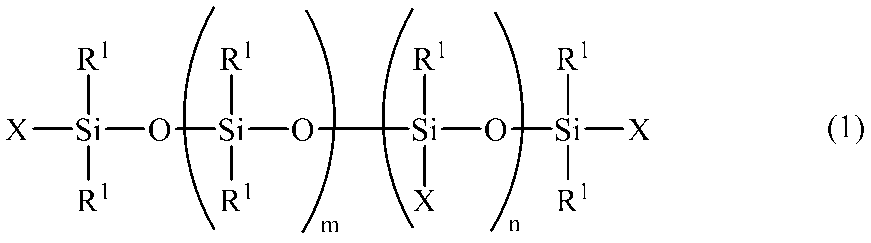
で示され、25℃における粘度が0.005~100mPa・sである加水分解性オルガノポリシロキサンであり、
非シリコーン系有機化合物(B)が、分子中にエポキシ基、フェノール性水酸基及びアミノ基から選ばれる有機基を有するSP値が10以上の化合物であり、
熱伝導性無機充填材(C)が、金属系粉末、金属酸化物系粉末、金属水酸化物粉末及び金属窒化物粉末から選択される少なくとも1種である〔1〕記載の熱伝導性シリコーングリース組成物。
〔3〕
オルガノポリシロキサン(A)が、OR3基(R3は上記の通り)を3個又は6個有する加水分解性オルガノポリシロキサンである〔2〕記載の熱伝導性シリコーングリース組成物。
〔4〕
非シリコーン系有機化合物(B)が、分子中にエポキシ基、フェノール性水酸基及びアミノ基から選ばれる有機基を有する3官能以下の芳香族液状化合物である〔2〕又は〔3〕記載の熱伝導性シリコーングリース組成物。
〔5〕
非シリコーン系有機化合物(B)が、3官能以下の芳香族液状エポキシ樹脂である〔4〕記載の熱伝導性シリコーングリース組成物。
〔6〕
前記熱伝導性無機充填材(C)が、アルミニウム、銀、銅、ニッケル、酸化亜鉛、酸化アルミニウム、酸化ケイ素、酸化マグネシウム、窒化アルミニウム、窒化ホウ素、窒化ケイ素、及び金属ケイ素から選ばれる1種又は2種以上の組み合せである〔1〕~〔5〕のいずれかに記載の熱伝導性シリコーングリース組成物。

n、mは上記の通りであるが、好ましくはn+mが10~50であり、pは5~100の整数であり、好ましくは10~50である。aは1~3の整数であり、好ましくは3である。なお、分子中にOR3基は1~6個、特に3又は6個有することが好ましい。

この場合、エポキシ基を有する化合物としては、下記のエポキシ樹脂が挙げられる。分子構造、分子量などはブルックフィールド型回転粘度計による25℃における粘度が10~1,000,000mPa・sに制限される。このようなエポキシ化合物としては、例えば、ビス(4-ヒドロキシフェニル)メタン、2,2'-ビス(4-ヒドロキシフェニル)プロパン又はこのハロゲン化物のジグリシジルエーテル及びこれらの縮重合物(いわゆるビスフェノールF型エポキシ樹脂、ビスフェノールA型エポキシ樹脂等)、ブタジエンジエポキシド、ビニルシクロヘキセンジオキシド、レゾルシンのジグリシジルエーテル、1,4-ビス(2,3-エポキシプロポキシ)ベンゼン、4,4'-ビス(2,3-エポキシプロポキシ)ジフェニルエーテル、1,4-ビス(2,3-エポキシプロポキシ)シクロヘキセン、ビス(3,4-エポキシ-6-メチルシクロヘキシルメチル)アジペート、1,2-ジオキシベンゼン或いはレゾルシノール、多価フェノール又は多価アルコールとエピクロルヒドリンとを縮合させて得られるエポキシグリシジルエーテル或いはポリグリシジルエステル、過酸化法によりエポキシ化したエポキシ化ポリオレフィン、エポキシ化ポリブタジエン、ナフタレン環含有エポキシ樹脂、ビフェニル型エポキシ樹脂、フェノールアラルキル型エポキシ樹脂、ビフェニルアラルキル型エポキシ樹脂、シクロペンタジエン型エポキシ樹脂などが挙げられる。
また、用いるエポキシ樹脂は必ずしも1種類のみに限定されるものではなく、2種もしくはそれ以上を併用することができる。
δ=ΣΔF/ΣΔv (3)
δmix=φ1δ1+φ2δ2+・・・φnδn (4)
式中、ΔFは、下記表1におけるΔFを表し、Δvは、下記表1におけるモル容積Δvを表す。φは、容積分率又はモル分率を表し、φ1+φ2+・・・φn=1である。
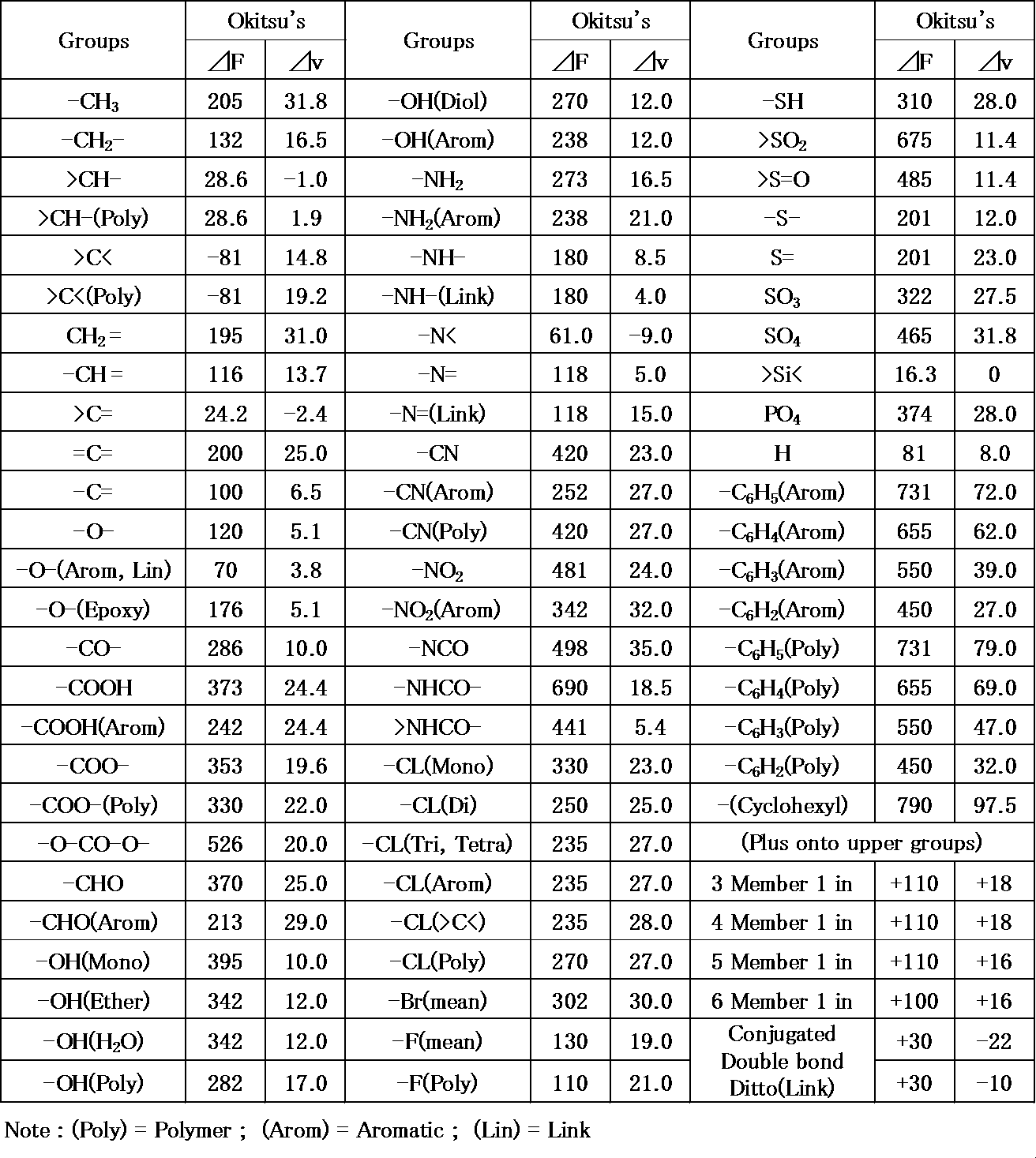
ヘプタンは、原子団として、-CH3を2個、-CH2-を5個有する。各々の原子団について表1よりΔF、Δv値を求める。
ΣΔF=205×2+132×5=1070
ΣΔv=31.8×2+16.5×5=146.1
従って、上記式(3)よりヘプタンのδhepは、以下のように求められる。
δhep=ΣΔF/ΣΔv=1070/146.1=7.32
ΣΔF=1869.2
ΣΔv=145
従って、上記式(3)よりヘプタンのδGANは、以下のように求められる。
δGAN=d*ΣΔF/ΣΔv=1.15*1869.2/145=14.8

使用した液状エポキシ樹脂はRE310S(日本化薬社製)である。
測定されたエポキシ当量より、平均重合数nは0.069とした。
比重は1.15を用いた。
カッコ内の繰り返し単位右側はΣΔF=538.6、ΣΔv=40.9
カッコ内はΣΔF=2352.9、ΣΔv=280.3
カッコ内の繰り返し単位右側はΣΔF=2176.9、ΣΔv=243.3
従って、上記式(3)よりビスフェノールAエポキシ RE310SのδRE310Sは、以下のように求められる。
δRE310S=1.15*(538.6/40.9+0.069*2352.9/280.3+2176.9/243.3)=10.9

ポリオルガノシロキサンと非シリコーン系有機化合物を混合すると、SP値の差が2より大きければ両者は分離する。金属や金属酸化物、金属窒化物の表面は大気中の酸素と水分の影響により、表面に水酸基もしくはアミノ基が存在する。この表面官能基によってSP値の高い非シリコーン系有機材料は熱伝導性無機充填材と強い相互作用を持つようになる。意図的にSP値が異なり、SP値の高い非シリコーン系有機化合物をシリコーンのマトリックス中に浮かぶ熱伝導性無機充填材の島の間に非シリコーン系有機材料によって橋かけを行うことにより、従来のシリコーン系熱伝導性放熱グリースになかった放熱特性を示すようになった。
また非シリコーン系有機材料に熱硬化性を付与することにより、グリースがズレて変形した場合や、低温や高温環境でも熱伝導性無機充填材と非シリコーン系有機材料の熱のパスが保持されるために、熱伝導特性が変化しないことが期待できる。
この場合、粘度はマルコム粘度計で試料の粘度を測定し、プロッターでの記録の最大値を粘度とする。
ロータ:A(10rpm)
測定条件:25℃±0.5℃
粘度が低すぎると、フィラーの沈降が激しく使用前に混合撹拌が必要となり、粘度が高すぎると、精密な吐出が困難となる。
ブルックフィールド型回転粘度計にて25±0.5℃、ロータNo.4、10rpmの回転数で測定を行った。
熱伝導性シリコーングリース組成物の粘度の測定は、(株)マルコム製の型番PC-1TL(回転数10rpm)を用いて25℃で行った。
熱伝導率は、京都電子工業(株)製のTPA-501を用いて、25℃において測定した。
表2,3に示す配合成分を表2,3に示す配合量でプラネタリーミキサーにより、150℃で2時間混合し、熱伝導性シリコーングリース組成物を得た。得られた組成物のグリース粘度、熱伝導率の結果を表2,3に示す。
オルガノポリシロキサン(A)として
A-1:オルガノポリシロキサン(SP値8.0,粘度30mPa・s)

A-2:オルガノシラン(SP値8.2,粘度3mPa・s)

A-3:オルガノポリシロキサン(SP値8.1,粘度80mPa・s)

B-1:ビスフェノールA型エポキシ樹脂(SP値10.9,粘度16,000mPa・s)

B-2:ビスフェノールF型エポキシ樹脂(SP値12.7,粘度1,300mPa・s)

B-3:エピコート630(SP値14.6,粘度250mPa・s)

B-4:GAN(SP値14.5,粘度130mPa・s)

B-5:GOT(SP値12.9,粘度55mPa・s)

B-6:ジアミノジメチルジフェニルメタン(SP値11.8,粘度1,500mPa・s)
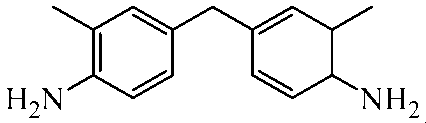
B-7:ジヒドロキシジアリルジフェニルメタン(SP値12.9,粘度2,500mPa・s)

C-1:酸化亜鉛粉末(平均粒径1.1μm)
C-2:アルミニウム粉末(平均粒径10μm)
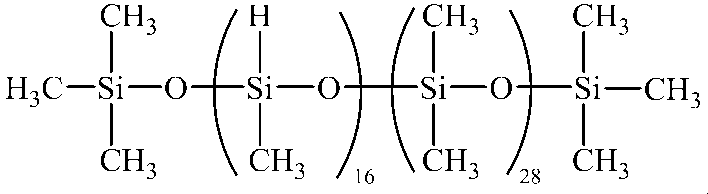
攪拌機、温度計、冷却管及び窒素ガス導入管を設けた内容積100mlのフラスコに、両末端がジメチルビニルシリル基で封鎖され、主鎖の5モル%がフェニル基で残りの95モル%がメチル基である、25℃における粘度がロータNo.4/10rpmで1,100mPa・sのオルガノポリシロキサン39gと、下記式のオルガノハイドロジェンポリシロキサン1gを入れた。更に、白金-ジビニルテトラメチルジシロキサン錯体のジメチルビニルシリル末端封鎖のジメチルポリシロキサン溶液(白金原子を1質量%含有する白金触媒)を0.03g投入してオルガノポリシロキサン(シロキサン(1))を得た。SP値は8.1であった。
熱伝導性無機充填材の粒径は、日機装(株)製の粒度分析計であるマイクロトラックMT3300EXにより測定した、体積基準の累積平均径である。


Claims (6)
- (A)オルガノポリシロキサン:20~90質量部、
(B)非シリコーン系有機化合物:80~10質量部、
(但し、(A)、(B)成分の合計は100質量部である。)
(C)平均粒径が0.5~100μmである熱伝導性無機充填材:(A)、(B)成分の合計100質量部に対して200~2,000質量部
を含有してなる熱伝導性シリコーングリース組成物であって、オルガノポリシロキサン(A)と非シリコーン系有機化合物(B)のSP値が(B)>(A)であると共に、(B)成分のSP値-(A)成分のSP値>2であり、かつ熱伝導性シリコーングリース組成物の粘度が25℃において50~1,000Pa・sであることを特徴とする熱伝導性シリコーングリース組成物。 - オルガノポリシロキサン(A)が、下記一般式(1)

で示され、25℃における粘度が0.005~100mPa・sである加水分解性オルガノポリシロキサンであり、
非シリコーン系有機化合物(B)が、分子中にエポキシ基、フェノール性水酸基及びアミノ基から選ばれる有機基を有するSP値が10以上の化合物であり、
熱伝導性無機充填材(C)が、金属系粉末、金属酸化物系粉末、金属水酸化物粉末及び金属窒化物粉末から選択される少なくとも1種である請求項1記載の熱伝導性シリコーングリース組成物。 - オルガノポリシロキサン(A)が、OR3基(R3は上記の通り)を3個又は6個有する加水分解性オルガノポリシロキサンである請求項2記載の熱伝導性シリコーングリース組成物。
- 非シリコーン系有機化合物(B)が、分子中にエポキシ基、フェノール性水酸基及びアミノ基から選ばれる有機基を有する3官能以下の芳香族液状化合物である請求項2又は3記載の熱伝導性シリコーングリース組成物。
- 非シリコーン系有機化合物(B)が、3官能以下の芳香族液状エポキシ樹脂である請求項4記載の熱伝導性シリコーングリース組成物。
- 前記熱伝導性無機充填材(C)が、アルミニウム、銀、銅、ニッケル、酸化亜鉛、酸化アルミニウム、酸化ケイ素、酸化マグネシウム、窒化アルミニウム、窒化ホウ素、窒化ケイ素、及び金属ケイ素から選ばれる1種又は2種以上の組み合せである請求項1~5のいずれか1項記載の熱伝導性シリコーングリース組成物。
Priority Applications (4)
| Application Number | Priority Date | Filing Date | Title |
|---|---|---|---|
| KR1020177032250A KR102570177B1 (ko) | 2015-04-30 | 2016-04-06 | 열전도성 실리콘 그리스 조성물 |
| JP2017515457A JP6292347B2 (ja) | 2015-04-30 | 2016-04-06 | 熱伝導性シリコーングリース組成物 |
| US15/562,492 US10704008B2 (en) | 2015-04-30 | 2016-04-06 | Heat-conductive silicone grease composition |
| CN201680024933.1A CN107531999B (zh) | 2015-04-30 | 2016-04-06 | 导热性硅脂组合物 |
Applications Claiming Priority (2)
| Application Number | Priority Date | Filing Date | Title |
|---|---|---|---|
| JP2015-092709 | 2015-04-30 | ||
| JP2015092709 | 2015-04-30 |
Publications (1)
| Publication Number | Publication Date |
|---|---|
| WO2016175001A1 true WO2016175001A1 (ja) | 2016-11-03 |
Family
ID=57199070
Family Applications (1)
| Application Number | Title | Priority Date | Filing Date |
|---|---|---|---|
| PCT/JP2016/061248 Ceased WO2016175001A1 (ja) | 2015-04-30 | 2016-04-06 | 熱伝導性シリコーングリース組成物 |
Country Status (6)
| Country | Link |
|---|---|
| US (1) | US10704008B2 (ja) |
| JP (1) | JP6292347B2 (ja) |
| KR (1) | KR102570177B1 (ja) |
| CN (1) | CN107531999B (ja) |
| TW (1) | TWI683860B (ja) |
| WO (1) | WO2016175001A1 (ja) |
Cited By (6)
| Publication number | Priority date | Publication date | Assignee | Title |
|---|---|---|---|---|
| JP2018053025A (ja) * | 2016-09-27 | 2018-04-05 | 信越化学工業株式会社 | 熱伝導性シリコーングリース組成物 |
| JP2018178010A (ja) * | 2017-04-17 | 2018-11-15 | 信越化学工業株式会社 | 熱伝導性シリコーングリース組成物及びその硬化物 |
| WO2019093052A1 (ja) * | 2017-11-09 | 2019-05-16 | 信越化学工業株式会社 | 熱伝導性シリコーングリース組成物 |
| JP2020002204A (ja) * | 2018-06-26 | 2020-01-09 | 住友金属鉱山株式会社 | 熱伝導性グリース |
| WO2020040478A1 (ko) * | 2018-08-24 | 2020-02-27 | 주식회사 아모그린텍 | 개선된 방열 성능을 갖는 전기 모터 및 그 제조 방법 |
| CN111534358A (zh) * | 2020-05-09 | 2020-08-14 | 中山市特好德润滑科技有限公司 | 一种导热润滑脂及其制备方法和应用 |
Families Citing this family (2)
| Publication number | Priority date | Publication date | Assignee | Title |
|---|---|---|---|---|
| KR102394963B1 (ko) | 2017-02-08 | 2022-05-04 | 엘켐 실리콘즈 유에스에이 코포레이션 | 열 관리가 개선된 이차 배터리 팩 |
| WO2021079194A2 (en) * | 2019-10-24 | 2021-04-29 | Tianjin Laird Technologies Limited | Dispensing systems and methods including online remixing of thermal management and/or emi mitigation materials |
Citations (6)
| Publication number | Priority date | Publication date | Assignee | Title |
|---|---|---|---|---|
| JP2009096961A (ja) * | 2007-10-19 | 2009-05-07 | Shin Etsu Chem Co Ltd | リワーク性に優れた熱伝導性シリコーングリース組成物 |
| JP2010059237A (ja) * | 2008-09-01 | 2010-03-18 | Dow Corning Toray Co Ltd | 熱伝導性シリコーン組成物及び半導体装置 |
| JP2010100665A (ja) * | 2008-10-21 | 2010-05-06 | Shin-Etsu Chemical Co Ltd | 熱伝導性シリコーングリース組成物 |
| JP2011140566A (ja) * | 2010-01-07 | 2011-07-21 | Dow Corning Toray Co Ltd | 熱伝導性シリコーングリース組成物 |
| WO2013077351A1 (ja) * | 2011-11-25 | 2013-05-30 | 日本化薬株式会社 | エポキシ樹脂混合物、エポキシ樹脂組成物、プリプレグおよびそれらの硬化物 |
| WO2014136773A1 (ja) * | 2013-03-06 | 2014-09-12 | Dic株式会社 | エポキシ樹脂組成物、硬化物、放熱材料及び電子部材 |
Family Cites Families (9)
| Publication number | Priority date | Publication date | Assignee | Title |
|---|---|---|---|---|
| US6114429A (en) | 1997-08-06 | 2000-09-05 | Shin-Etsu Chemical Co., Ltd. | Thermally conductive silicone composition |
| JP3195277B2 (ja) | 1997-08-06 | 2001-08-06 | 信越化学工業株式会社 | 熱伝導性シリコーン組成物 |
| JP2938429B1 (ja) | 1998-02-27 | 1999-08-23 | 信越化学工業株式会社 | 熱伝導性シリコーン組成物 |
| EP0939115A1 (en) | 1998-02-27 | 1999-09-01 | Shin-Etsu Chemical Co., Ltd. | Thermally conductive grease composition |
| JP3948642B2 (ja) | 1998-08-21 | 2007-07-25 | 信越化学工業株式会社 | 熱伝導性グリース組成物及びそれを使用した半導体装置 |
| JP2000169873A (ja) | 1998-12-02 | 2000-06-20 | Shin Etsu Chem Co Ltd | シリコーングリース組成物 |
| EP1016546B1 (en) | 1998-12-28 | 2004-05-19 | Nippon Paper Industries Co., Ltd. | Ink-jet recording paper containing silica layers and method for its' manufacture |
| JP2003301184A (ja) | 2002-04-12 | 2003-10-21 | Hitachi Ltd | 廃プラスチックの熱分解油化処理方法及び処理装置 |
| JP5914884B2 (ja) | 2010-02-10 | 2016-05-11 | パナソニックIpマネジメント株式会社 | デジタルビデオ信号出力装置および表示装置、デジタルビデオ信号出力方法および受信方法 |
-
2016
- 2016-04-06 WO PCT/JP2016/061248 patent/WO2016175001A1/ja not_active Ceased
- 2016-04-06 US US15/562,492 patent/US10704008B2/en active Active
- 2016-04-06 KR KR1020177032250A patent/KR102570177B1/ko active Active
- 2016-04-06 CN CN201680024933.1A patent/CN107531999B/zh active Active
- 2016-04-06 JP JP2017515457A patent/JP6292347B2/ja active Active
- 2016-04-29 TW TW105113539A patent/TWI683860B/zh active
Patent Citations (6)
| Publication number | Priority date | Publication date | Assignee | Title |
|---|---|---|---|---|
| JP2009096961A (ja) * | 2007-10-19 | 2009-05-07 | Shin Etsu Chem Co Ltd | リワーク性に優れた熱伝導性シリコーングリース組成物 |
| JP2010059237A (ja) * | 2008-09-01 | 2010-03-18 | Dow Corning Toray Co Ltd | 熱伝導性シリコーン組成物及び半導体装置 |
| JP2010100665A (ja) * | 2008-10-21 | 2010-05-06 | Shin-Etsu Chemical Co Ltd | 熱伝導性シリコーングリース組成物 |
| JP2011140566A (ja) * | 2010-01-07 | 2011-07-21 | Dow Corning Toray Co Ltd | 熱伝導性シリコーングリース組成物 |
| WO2013077351A1 (ja) * | 2011-11-25 | 2013-05-30 | 日本化薬株式会社 | エポキシ樹脂混合物、エポキシ樹脂組成物、プリプレグおよびそれらの硬化物 |
| WO2014136773A1 (ja) * | 2013-03-06 | 2014-09-12 | Dic株式会社 | エポキシ樹脂組成物、硬化物、放熱材料及び電子部材 |
Cited By (13)
| Publication number | Priority date | Publication date | Assignee | Title |
|---|---|---|---|---|
| JP2018053025A (ja) * | 2016-09-27 | 2018-04-05 | 信越化学工業株式会社 | 熱伝導性シリコーングリース組成物 |
| JP2018178010A (ja) * | 2017-04-17 | 2018-11-15 | 信越化学工業株式会社 | 熱伝導性シリコーングリース組成物及びその硬化物 |
| CN111315825B (zh) * | 2017-11-09 | 2021-12-14 | 信越化学工业株式会社 | 导热性硅脂组合物 |
| CN111315825A (zh) * | 2017-11-09 | 2020-06-19 | 信越化学工业株式会社 | 导热性硅脂组合物 |
| KR20200086307A (ko) * | 2017-11-09 | 2020-07-16 | 신에쓰 가가꾸 고교 가부시끼가이샤 | 열전도성 실리콘 그리스 조성물 |
| US11186798B2 (en) | 2017-11-09 | 2021-11-30 | Shin-Etsu Chemical Co., Ltd. | Thermally conductive silicone grease composition |
| WO2019093052A1 (ja) * | 2017-11-09 | 2019-05-16 | 信越化学工業株式会社 | 熱伝導性シリコーングリース組成物 |
| KR102601088B1 (ko) | 2017-11-09 | 2023-11-13 | 신에쓰 가가꾸 고교 가부시끼가이샤 | 열전도성 실리콘 그리스 조성물 |
| JP2020002204A (ja) * | 2018-06-26 | 2020-01-09 | 住友金属鉱山株式会社 | 熱伝導性グリース |
| JP7110759B2 (ja) | 2018-06-26 | 2022-08-02 | 住友金属鉱山株式会社 | 熱伝導性グリース |
| WO2020040478A1 (ko) * | 2018-08-24 | 2020-02-27 | 주식회사 아모그린텍 | 개선된 방열 성능을 갖는 전기 모터 및 그 제조 방법 |
| CN111534358A (zh) * | 2020-05-09 | 2020-08-14 | 中山市特好德润滑科技有限公司 | 一种导热润滑脂及其制备方法和应用 |
| CN111534358B (zh) * | 2020-05-09 | 2022-03-29 | 中山市特好德润滑科技有限公司 | 一种导热润滑脂及其制备方法和应用 |
Also Published As
| Publication number | Publication date |
|---|---|
| KR20180004146A (ko) | 2018-01-10 |
| CN107531999A (zh) | 2018-01-02 |
| TW201710392A (zh) | 2017-03-16 |
| US20180094207A1 (en) | 2018-04-05 |
| US10704008B2 (en) | 2020-07-07 |
| JPWO2016175001A1 (ja) | 2017-08-31 |
| CN107531999B (zh) | 2020-10-27 |
| TWI683860B (zh) | 2020-02-01 |
| JP6292347B2 (ja) | 2018-03-14 |
| KR102570177B1 (ko) | 2023-08-24 |
Similar Documents
| Publication | Publication Date | Title |
|---|---|---|
| JP6292347B2 (ja) | 熱伝導性シリコーングリース組成物 | |
| JP5434795B2 (ja) | 熱伝導性シリコーングリース組成物 | |
| CN113272386B (zh) | 导热性有机硅组合物 | |
| JP5843364B2 (ja) | 熱伝導性組成物 | |
| JP2013091726A (ja) | 熱伝導性シリコーン組成物 | |
| JP6669028B2 (ja) | 熱伝導性シリコーングリース組成物 | |
| CN115667407B (zh) | 高导热性有机硅组合物 | |
| TWI777523B (zh) | 導熱性加成硬化型矽氧組成物 | |
| JP6579272B2 (ja) | 熱伝導性シリコーン組成物 | |
| JP6394559B2 (ja) | 熱伝導性シリコーングリース組成物 | |
| JP6372293B2 (ja) | 熱伝導性シリコーングリース組成物 | |
| WO2024247771A1 (ja) | 熱伝導性シリコーン組成物及び硬化物 | |
| JP6769384B2 (ja) | 熱伝導性シリコーングリース組成物及びその硬化物 | |
| JP2010013563A (ja) | 熱伝導性シリコーングリース | |
| JP7656559B2 (ja) | 熱伝導性シリコーン樹脂シートおよびその製造方法 | |
| CN121057784A (zh) | 导热性有机硅组合物及固化物 | |
| TW202342693A (zh) | 導熱性加成硬化型矽氧組成物、及其硬化物 | |
| WO2023021956A1 (ja) | 熱伝導性シリコーン組成物 | |
| WO2025187619A1 (ja) | 熱伝導性シリコーン組成物 | |
| WO2022075213A1 (ja) | 二液硬化型組成物セット、熱伝導性硬化物及び電子機器 |
Legal Events
| Date | Code | Title | Description |
|---|---|---|---|
| 121 | Ep: the epo has been informed by wipo that ep was designated in this application |
Ref document number: 16786278 Country of ref document: EP Kind code of ref document: A1 |
|
| ENP | Entry into the national phase |
Ref document number: 2017515457 Country of ref document: JP Kind code of ref document: A |
|
| WWE | Wipo information: entry into national phase |
Ref document number: 15562492 Country of ref document: US |
|
| NENP | Non-entry into the national phase |
Ref country code: DE |
|
| ENP | Entry into the national phase |
Ref document number: 20177032250 Country of ref document: KR Kind code of ref document: A |
|
| 122 | Ep: pct application non-entry in european phase |
Ref document number: 16786278 Country of ref document: EP Kind code of ref document: A1 |