WO2016006683A1 - 環状オレフィン系樹脂組成物フィルム - Google Patents
環状オレフィン系樹脂組成物フィルム Download PDFInfo
- Publication number
- WO2016006683A1 WO2016006683A1 PCT/JP2015/069892 JP2015069892W WO2016006683A1 WO 2016006683 A1 WO2016006683 A1 WO 2016006683A1 JP 2015069892 W JP2015069892 W JP 2015069892W WO 2016006683 A1 WO2016006683 A1 WO 2016006683A1
- Authority
- WO
- WIPO (PCT)
- Prior art keywords
- cyclic olefin
- resin composition
- styrene
- composition film
- olefin resin
- Prior art date
- Legal status (The legal status is an assumption and is not a legal conclusion. Google has not performed a legal analysis and makes no representation as to the accuracy of the status listed.)
- Ceased
Links
Images




Classifications
-
- C—CHEMISTRY; METALLURGY
- C08—ORGANIC MACROMOLECULAR COMPOUNDS; THEIR PREPARATION OR CHEMICAL WORKING-UP; COMPOSITIONS BASED THEREON
- C08J—WORKING-UP; GENERAL PROCESSES OF COMPOUNDING; AFTER-TREATMENT NOT COVERED BY SUBCLASSES C08B, C08C, C08F, C08G or C08H
- C08J5/00—Manufacture of articles or shaped materials containing macromolecular substances
- C08J5/18—Manufacture of films or sheets
-
- B—PERFORMING OPERATIONS; TRANSPORTING
- B29—WORKING OF PLASTICS; WORKING OF SUBSTANCES IN A PLASTIC STATE IN GENERAL
- B29C—SHAPING OR JOINING OF PLASTICS; SHAPING OF MATERIAL IN A PLASTIC STATE, NOT OTHERWISE PROVIDED FOR; AFTER-TREATMENT OF THE SHAPED PRODUCTS, e.g. REPAIRING
- B29C48/00—Extrusion moulding, i.e. expressing the moulding material through a die or nozzle which imparts the desired form; Apparatus therefor
- B29C48/022—Extrusion moulding, i.e. expressing the moulding material through a die or nozzle which imparts the desired form; Apparatus therefor characterised by the choice of material
-
- B—PERFORMING OPERATIONS; TRANSPORTING
- B29—WORKING OF PLASTICS; WORKING OF SUBSTANCES IN A PLASTIC STATE IN GENERAL
- B29C—SHAPING OR JOINING OF PLASTICS; SHAPING OF MATERIAL IN A PLASTIC STATE, NOT OTHERWISE PROVIDED FOR; AFTER-TREATMENT OF THE SHAPED PRODUCTS, e.g. REPAIRING
- B29C48/00—Extrusion moulding, i.e. expressing the moulding material through a die or nozzle which imparts the desired form; Apparatus therefor
- B29C48/03—Extrusion moulding, i.e. expressing the moulding material through a die or nozzle which imparts the desired form; Apparatus therefor characterised by the shape of the extruded material at extrusion
- B29C48/07—Flat, e.g. panels
- B29C48/08—Flat, e.g. panels flexible, e.g. films
-
- B—PERFORMING OPERATIONS; TRANSPORTING
- B29—WORKING OF PLASTICS; WORKING OF SUBSTANCES IN A PLASTIC STATE IN GENERAL
- B29D—PRODUCING PARTICULAR ARTICLES FROM PLASTICS OR FROM SUBSTANCES IN A PLASTIC STATE
- B29D7/00—Producing flat articles, e.g. films or sheets
- B29D7/01—Films or sheets
-
- C—CHEMISTRY; METALLURGY
- C08—ORGANIC MACROMOLECULAR COMPOUNDS; THEIR PREPARATION OR CHEMICAL WORKING-UP; COMPOSITIONS BASED THEREON
- C08L—COMPOSITIONS OF MACROMOLECULAR COMPOUNDS
- C08L23/00—Compositions of homopolymers or copolymers of unsaturated aliphatic hydrocarbons having only one carbon-to-carbon double bond; Compositions of derivatives of such polymers
- C08L23/02—Compositions of homopolymers or copolymers of unsaturated aliphatic hydrocarbons having only one carbon-to-carbon double bond; Compositions of derivatives of such polymers not modified by chemical after-treatment
- C08L23/04—Homopolymers or copolymers of ethene
- C08L23/08—Copolymers of ethene
- C08L23/0807—Copolymers of ethene with unsaturated hydrocarbons only containing four or more carbon atoms
- C08L23/0823—Copolymers of ethene with unsaturated hydrocarbons only containing four or more carbon atoms with aliphatic cyclic olefins
-
- C—CHEMISTRY; METALLURGY
- C08—ORGANIC MACROMOLECULAR COMPOUNDS; THEIR PREPARATION OR CHEMICAL WORKING-UP; COMPOSITIONS BASED THEREON
- C08L—COMPOSITIONS OF MACROMOLECULAR COMPOUNDS
- C08L45/00—Compositions of homopolymers or copolymers of compounds having no unsaturated aliphatic radicals in side chain, and having one or more carbon-to-carbon double bonds in a carbocyclic or in a heterocyclic ring system; Compositions of derivatives of such polymers
-
- C—CHEMISTRY; METALLURGY
- C08—ORGANIC MACROMOLECULAR COMPOUNDS; THEIR PREPARATION OR CHEMICAL WORKING-UP; COMPOSITIONS BASED THEREON
- C08L—COMPOSITIONS OF MACROMOLECULAR COMPOUNDS
- C08L53/00—Compositions of block copolymers containing at least one sequence of a polymer obtained by reactions only involving carbon-to-carbon unsaturated bonds; Compositions of derivatives of such polymers
-
- G—PHYSICS
- G02—OPTICS
- G02B—OPTICAL ELEMENTS, SYSTEMS OR APPARATUS
- G02B1/00—Optical elements characterised by the material of which they are made; Optical coatings for optical elements
- G02B1/10—Optical coatings produced by application to, or surface treatment of, optical elements
- G02B1/14—Protective coatings, e.g. hard coatings
-
- G—PHYSICS
- G02—OPTICS
- G02B—OPTICAL ELEMENTS, SYSTEMS OR APPARATUS
- G02B1/00—Optical elements characterised by the material of which they are made; Optical coatings for optical elements
- G02B1/10—Optical coatings produced by application to, or surface treatment of, optical elements
- G02B1/18—Coatings for keeping optical surfaces clean, e.g. hydrophobic or photo-catalytic films
-
- G—PHYSICS
- G02—OPTICS
- G02B—OPTICAL ELEMENTS, SYSTEMS OR APPARATUS
- G02B5/00—Optical elements other than lenses
- G02B5/30—Polarising elements
-
- B—PERFORMING OPERATIONS; TRANSPORTING
- B29—WORKING OF PLASTICS; WORKING OF SUBSTANCES IN A PLASTIC STATE IN GENERAL
- B29C—SHAPING OR JOINING OF PLASTICS; SHAPING OF MATERIAL IN A PLASTIC STATE, NOT OTHERWISE PROVIDED FOR; AFTER-TREATMENT OF THE SHAPED PRODUCTS, e.g. REPAIRING
- B29C2948/00—Indexing scheme relating to extrusion moulding
- B29C2948/92—Measuring, controlling or regulating
- B29C2948/92504—Controlled parameter
- B29C2948/92704—Temperature
-
- B—PERFORMING OPERATIONS; TRANSPORTING
- B29—WORKING OF PLASTICS; WORKING OF SUBSTANCES IN A PLASTIC STATE IN GENERAL
- B29C—SHAPING OR JOINING OF PLASTICS; SHAPING OF MATERIAL IN A PLASTIC STATE, NOT OTHERWISE PROVIDED FOR; AFTER-TREATMENT OF THE SHAPED PRODUCTS, e.g. REPAIRING
- B29C48/00—Extrusion moulding, i.e. expressing the moulding material through a die or nozzle which imparts the desired form; Apparatus therefor
- B29C48/001—Combinations of extrusion moulding with other shaping operations
- B29C48/0018—Combinations of extrusion moulding with other shaping operations combined with shaping by orienting, stretching or shrinking, e.g. film blowing
-
- B—PERFORMING OPERATIONS; TRANSPORTING
- B29—WORKING OF PLASTICS; WORKING OF SUBSTANCES IN A PLASTIC STATE IN GENERAL
- B29C—SHAPING OR JOINING OF PLASTICS; SHAPING OF MATERIAL IN A PLASTIC STATE, NOT OTHERWISE PROVIDED FOR; AFTER-TREATMENT OF THE SHAPED PRODUCTS, e.g. REPAIRING
- B29C48/00—Extrusion moulding, i.e. expressing the moulding material through a die or nozzle which imparts the desired form; Apparatus therefor
- B29C48/16—Articles comprising two or more components, e.g. co-extruded layers
- B29C48/18—Articles comprising two or more components, e.g. co-extruded layers the components being layers
- B29C48/21—Articles comprising two or more components, e.g. co-extruded layers the components being layers the layers being joined at their surfaces
-
- B—PERFORMING OPERATIONS; TRANSPORTING
- B29—WORKING OF PLASTICS; WORKING OF SUBSTANCES IN A PLASTIC STATE IN GENERAL
- B29C—SHAPING OR JOINING OF PLASTICS; SHAPING OF MATERIAL IN A PLASTIC STATE, NOT OTHERWISE PROVIDED FOR; AFTER-TREATMENT OF THE SHAPED PRODUCTS, e.g. REPAIRING
- B29C48/00—Extrusion moulding, i.e. expressing the moulding material through a die or nozzle which imparts the desired form; Apparatus therefor
- B29C48/25—Component parts, details or accessories; Auxiliary operations
- B29C48/30—Extrusion nozzles or dies
- B29C48/305—Extrusion nozzles or dies having a wide opening, e.g. for forming sheets
-
- B—PERFORMING OPERATIONS; TRANSPORTING
- B29—WORKING OF PLASTICS; WORKING OF SUBSTANCES IN A PLASTIC STATE IN GENERAL
- B29C—SHAPING OR JOINING OF PLASTICS; SHAPING OF MATERIAL IN A PLASTIC STATE, NOT OTHERWISE PROVIDED FOR; AFTER-TREATMENT OF THE SHAPED PRODUCTS, e.g. REPAIRING
- B29C48/00—Extrusion moulding, i.e. expressing the moulding material through a die or nozzle which imparts the desired form; Apparatus therefor
- B29C48/25—Component parts, details or accessories; Auxiliary operations
- B29C48/36—Means for plasticising or homogenising the moulding material or forcing it through the nozzle or die
- B29C48/395—Means for plasticising or homogenising the moulding material or forcing it through the nozzle or die using screws surrounded by a cooperating barrel, e.g. single screw extruders
- B29C48/40—Means for plasticising or homogenising the moulding material or forcing it through the nozzle or die using screws surrounded by a cooperating barrel, e.g. single screw extruders using two or more parallel screws or at least two parallel non-intermeshing screws, e.g. twin screw extruders
-
- B—PERFORMING OPERATIONS; TRANSPORTING
- B29—WORKING OF PLASTICS; WORKING OF SUBSTANCES IN A PLASTIC STATE IN GENERAL
- B29C—SHAPING OR JOINING OF PLASTICS; SHAPING OF MATERIAL IN A PLASTIC STATE, NOT OTHERWISE PROVIDED FOR; AFTER-TREATMENT OF THE SHAPED PRODUCTS, e.g. REPAIRING
- B29C48/00—Extrusion moulding, i.e. expressing the moulding material through a die or nozzle which imparts the desired form; Apparatus therefor
- B29C48/25—Component parts, details or accessories; Auxiliary operations
- B29C48/88—Thermal treatment of the stream of extruded material, e.g. cooling
- B29C48/911—Cooling
- B29C48/9135—Cooling of flat articles, e.g. using specially adapted supporting means
- B29C48/914—Cooling drums
-
- B—PERFORMING OPERATIONS; TRANSPORTING
- B29—WORKING OF PLASTICS; WORKING OF SUBSTANCES IN A PLASTIC STATE IN GENERAL
- B29K—INDEXING SCHEME ASSOCIATED WITH SUBCLASSES B29B, B29C OR B29D, RELATING TO MOULDING MATERIALS OR TO MATERIALS FOR MOULDS, REINFORCEMENTS, FILLERS OR PREFORMED PARTS, e.g. INSERTS
- B29K2023/00—Use of polyalkenes or derivatives thereof as moulding material
- B29K2023/04—Polymers of ethylene
- B29K2023/08—Copolymers of ethylene
-
- B—PERFORMING OPERATIONS; TRANSPORTING
- B29—WORKING OF PLASTICS; WORKING OF SUBSTANCES IN A PLASTIC STATE IN GENERAL
- B29K—INDEXING SCHEME ASSOCIATED WITH SUBCLASSES B29B, B29C OR B29D, RELATING TO MOULDING MATERIALS OR TO MATERIALS FOR MOULDS, REINFORCEMENTS, FILLERS OR PREFORMED PARTS, e.g. INSERTS
- B29K2023/00—Use of polyalkenes or derivatives thereof as moulding material
- B29K2023/10—Polymers of propylene
- B29K2023/14—Copolymers of polypropylene
-
- B—PERFORMING OPERATIONS; TRANSPORTING
- B29—WORKING OF PLASTICS; WORKING OF SUBSTANCES IN A PLASTIC STATE IN GENERAL
- B29K—INDEXING SCHEME ASSOCIATED WITH SUBCLASSES B29B, B29C OR B29D, RELATING TO MOULDING MATERIALS OR TO MATERIALS FOR MOULDS, REINFORCEMENTS, FILLERS OR PREFORMED PARTS, e.g. INSERTS
- B29K2023/00—Use of polyalkenes or derivatives thereof as moulding material
- B29K2023/18—Polymers of hydrocarbons having four or more carbon atoms, e.g. polymers of butylene, e.g. PB, i.e. polybutylene
-
- B—PERFORMING OPERATIONS; TRANSPORTING
- B29—WORKING OF PLASTICS; WORKING OF SUBSTANCES IN A PLASTIC STATE IN GENERAL
- B29K—INDEXING SCHEME ASSOCIATED WITH SUBCLASSES B29B, B29C OR B29D, RELATING TO MOULDING MATERIALS OR TO MATERIALS FOR MOULDS, REINFORCEMENTS, FILLERS OR PREFORMED PARTS, e.g. INSERTS
- B29K2023/00—Use of polyalkenes or derivatives thereof as moulding material
- B29K2023/38—Polymers of cycloalkenes, e.g. norbornene or cyclopentene
-
- B—PERFORMING OPERATIONS; TRANSPORTING
- B29—WORKING OF PLASTICS; WORKING OF SUBSTANCES IN A PLASTIC STATE IN GENERAL
- B29K—INDEXING SCHEME ASSOCIATED WITH SUBCLASSES B29B, B29C OR B29D, RELATING TO MOULDING MATERIALS OR TO MATERIALS FOR MOULDS, REINFORCEMENTS, FILLERS OR PREFORMED PARTS, e.g. INSERTS
- B29K2025/00—Use of polymers of vinyl-aromatic compounds or derivatives thereof as moulding material
- B29K2025/04—Polymers of styrene
- B29K2025/08—Copolymers of styrene, e.g. AS or SAN, i.e. acrylonitrile styrene
-
- B—PERFORMING OPERATIONS; TRANSPORTING
- B29—WORKING OF PLASTICS; WORKING OF SUBSTANCES IN A PLASTIC STATE IN GENERAL
- B29K—INDEXING SCHEME ASSOCIATED WITH SUBCLASSES B29B, B29C OR B29D, RELATING TO MOULDING MATERIALS OR TO MATERIALS FOR MOULDS, REINFORCEMENTS, FILLERS OR PREFORMED PARTS, e.g. INSERTS
- B29K2105/00—Condition, form or state of moulded material or of the material to be shaped
- B29K2105/0085—Copolymers
-
- B—PERFORMING OPERATIONS; TRANSPORTING
- B29—WORKING OF PLASTICS; WORKING OF SUBSTANCES IN A PLASTIC STATE IN GENERAL
- B29L—INDEXING SCHEME ASSOCIATED WITH SUBCLASS B29C, RELATING TO PARTICULAR ARTICLES
- B29L2007/00—Flat articles, e.g. films or sheets
- B29L2007/008—Wide strips, e.g. films, webs
-
- B—PERFORMING OPERATIONS; TRANSPORTING
- B29—WORKING OF PLASTICS; WORKING OF SUBSTANCES IN A PLASTIC STATE IN GENERAL
- B29L—INDEXING SCHEME ASSOCIATED WITH SUBCLASS B29C, RELATING TO PARTICULAR ARTICLES
- B29L2011/00—Optical elements, e.g. lenses, prisms
-
- C—CHEMISTRY; METALLURGY
- C08—ORGANIC MACROMOLECULAR COMPOUNDS; THEIR PREPARATION OR CHEMICAL WORKING-UP; COMPOSITIONS BASED THEREON
- C08J—WORKING-UP; GENERAL PROCESSES OF COMPOUNDING; AFTER-TREATMENT NOT COVERED BY SUBCLASSES C08B, C08C, C08F, C08G or C08H
- C08J2323/00—Characterised by the use of homopolymers or copolymers of unsaturated aliphatic hydrocarbons having only one carbon-to-carbon double bond; Derivatives of such polymers
- C08J2323/02—Characterised by the use of homopolymers or copolymers of unsaturated aliphatic hydrocarbons having only one carbon-to-carbon double bond; Derivatives of such polymers not modified by chemical after treatment
- C08J2323/04—Homopolymers or copolymers of ethene
- C08J2323/08—Copolymers of ethene
-
- C—CHEMISTRY; METALLURGY
- C08—ORGANIC MACROMOLECULAR COMPOUNDS; THEIR PREPARATION OR CHEMICAL WORKING-UP; COMPOSITIONS BASED THEREON
- C08J—WORKING-UP; GENERAL PROCESSES OF COMPOUNDING; AFTER-TREATMENT NOT COVERED BY SUBCLASSES C08B, C08C, C08F, C08G or C08H
- C08J2345/00—Characterised by the use of homopolymers or copolymers of compounds having no unsaturated aliphatic radicals in side chain, and having one or more carbon-to-carbon double bonds in a carbocyclic or in a heterocyclic ring system; Derivatives of such polymers
-
- C—CHEMISTRY; METALLURGY
- C08—ORGANIC MACROMOLECULAR COMPOUNDS; THEIR PREPARATION OR CHEMICAL WORKING-UP; COMPOSITIONS BASED THEREON
- C08J—WORKING-UP; GENERAL PROCESSES OF COMPOUNDING; AFTER-TREATMENT NOT COVERED BY SUBCLASSES C08B, C08C, C08F, C08G or C08H
- C08J2453/00—Characterised by the use of block copolymers containing at least one sequence of a polymer obtained by reactions only involving carbon-to-carbon unsaturated bonds; Derivatives of such polymers
-
- C—CHEMISTRY; METALLURGY
- C08—ORGANIC MACROMOLECULAR COMPOUNDS; THEIR PREPARATION OR CHEMICAL WORKING-UP; COMPOSITIONS BASED THEREON
- C08J—WORKING-UP; GENERAL PROCESSES OF COMPOUNDING; AFTER-TREATMENT NOT COVERED BY SUBCLASSES C08B, C08C, C08F, C08G or C08H
- C08J2453/00—Characterised by the use of block copolymers containing at least one sequence of a polymer obtained by reactions only involving carbon-to-carbon unsaturated bonds; Derivatives of such polymers
- C08J2453/02—Characterised by the use of block copolymers containing at least one sequence of a polymer obtained by reactions only involving carbon-to-carbon unsaturated bonds; Derivatives of such polymers of vinyl aromatic monomers and conjugated dienes
-
- C—CHEMISTRY; METALLURGY
- C08—ORGANIC MACROMOLECULAR COMPOUNDS; THEIR PREPARATION OR CHEMICAL WORKING-UP; COMPOSITIONS BASED THEREON
- C08L—COMPOSITIONS OF MACROMOLECULAR COMPOUNDS
- C08L53/00—Compositions of block copolymers containing at least one sequence of a polymer obtained by reactions only involving carbon-to-carbon unsaturated bonds; Compositions of derivatives of such polymers
- C08L53/02—Compositions of block copolymers containing at least one sequence of a polymer obtained by reactions only involving carbon-to-carbon unsaturated bonds; Compositions of derivatives of such polymers of vinyl-aromatic monomers and conjugated dienes
- C08L53/025—Compositions of block copolymers containing at least one sequence of a polymer obtained by reactions only involving carbon-to-carbon unsaturated bonds; Compositions of derivatives of such polymers of vinyl-aromatic monomers and conjugated dienes modified
Definitions
- the present invention relates to a cyclic olefin resin composition film in which an elastomer or the like is added and dispersed in a cyclic olefin resin.
- Cyclic olefin resin is an amorphous and thermoplastic olefin resin that has a cyclic olefin skeleton in its main chain, has excellent optical properties (transparency, low birefringence), low water absorption, It has excellent performance such as dimensional stability and high moisture resistance. Therefore, films or sheets made of cyclic olefin resins are expected to be developed for various optical applications such as retardation films, polarizing plate protective films, light diffusion plates, and moisture proof packaging applications such as pharmaceutical packaging and food packaging. Yes.
- the film is usually joined by cutting with an automatic cutter called a splice at the time of roll switching.
- an automatic cutter called a splice
- the film cannot be easily cut, there is a possibility that the roll to be switched will entrain the film.
- runnability is lowered due to the unevenness of the splice part, and there is a possibility that the film breaks.
- a film that can be easily cut with a fingertip without using a jig such as scissors or a cutter is desired.
- JP 2004-156048 A JP 2000-345122 A Japanese Patent Laid-Open No. 5-220836 JP-A-6-344436
- the present invention has been proposed in view of such conventional circumstances, and provides a cyclic olefin-based resin composition film having excellent workability.
- the present inventor added a styrene elastomer to the cyclic olefin resin, the average value of the short axis dispersion diameter of the styrene elastomer was not more than a predetermined value, and the cyclic olefin resin in the major axis direction and the minor axis direction of the styrene elastomer. It has been found that excellent workability can be obtained by defining the tear strength of the composition film, and the present invention has been completed.
- the average value of the short axis dispersion diameter of the styrene elastomer is 2.0 ⁇ m or less
- the tear strength of the cyclic olefin resin composition film in the major axis direction of the styrene elastomer is 70 N / mm or less
- the tear strength of the cyclic olefin resin composition film in the minor axis direction of the styrene elastomer is 90 N / mm or more.
- the method for producing a cyclic olefin-based resin composition film according to the present invention includes a method of heating and melting a cyclic olefin-based resin and a styrene-based elastomer, and extruding the heat-melted cyclic olefin-based resin composition by an extrusion method.
- the average value of the short axis dispersion diameter of the styrene elastomer is 2.0 ⁇ m or less
- the tear strength of the cyclic olefin resin composition film in the major axis direction of the styrene elastomer is 70 N / mm.
- a cyclic olefin resin composition film having a tear strength of 90 N / mm or more in the short axis direction of the styrene elastomer is obtained.
- the cyclic olefin resin composition film according to the present invention is suitable for application to transparent conductive elements, input devices, display devices, and electronic devices.
- the average value of the short axis dispersion diameter of the styrenic elastomer is not more than a predetermined value, it is difficult to break in the MD direction, and has mechanical anisotropy that is easy to break in the TD direction. Obtainable.
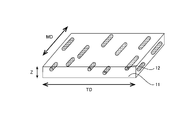
- FIG. 1 is a cross-sectional perspective view showing an outline of a cyclic olefin-based resin composition film according to the present embodiment.
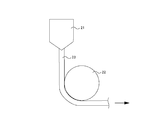
- FIG. 2 is a schematic diagram illustrating a configuration example of a film manufacturing apparatus.
- 3A and 3B are cross-sectional views illustrating an example of a transparent conductive film
- FIGS. 3C and 3D are cross-sectional views illustrating an example of a transparent conductive film provided with a moth-eye-shaped structure.
- FIG. 4 is a schematic cross-sectional view showing a configuration example of the touch panel.
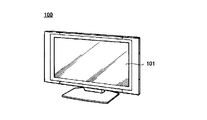
- FIG. 5 is an external view illustrating an example of a television device as an electronic apparatus.
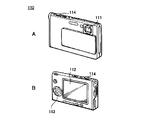
- 6A and 6B are external views illustrating examples of a digital camera as an electronic device.
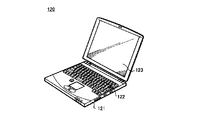
- FIG. 7 is an external view illustrating an example of a notebook personal computer as an electronic device.
- FIG. 8 is an external view illustrating an example of a video camera as an electronic device.
- FIG. 9 is an external view illustrating an example of a mobile phone as an electronic device.
- FIG. 10 is an external view illustrating an example of a tablet computer as an electronic device.
- the cyclic olefin resin composition film according to the present embodiment contains a cyclic olefin resin and a styrene elastomer.
- the cyclic olefin resin composition film has an average value of the short axis dispersion diameter of the styrene elastomer of 2.0 ⁇ m or less, and the tear strength of the cyclic olefin resin composition film in the major axis direction of the styrene elastomer is 70 N / mm or less, and the tear strength of the cyclic olefin resin composition film in the minor axis direction of the styrene elastomer is 90 N / mm or more.
- FIG. 1 is a cross-sectional perspective view showing an outline of a cyclic olefin-based resin composition film according to the present embodiment.
- the cyclic olefin resin composition film contains a cyclic olefin resin 11 and a styrene elastomer 12.
- the cyclic olefin-based resin composition film is, for example, a short film or sheet, the X-axis direction which is the width direction (TD: Transverse Direction), and the Y-axis direction which is the length direction (MD: Machine Direction), And a Z-axis direction that is a thickness direction.
- the thickness Z of the cyclic olefin-based resin composition film is preferably 0.1 ⁇ m to 2 mm, more preferably 1 ⁇ m to 1 mm.
- a dispersed phase (island phase) made of styrene elastomer 12 is dispersed in a matrix (sea phase) made of cyclic olefin resin 11.
- the dispersed phase is dispersed with shape anisotropy in the MD direction by, for example, extrusion molding, has a major axis in the MD direction, and a minor axis in the TD direction.
- the short axis dispersion diameter of the styrene elastomer 12 is preferably 2.0 ⁇ m or less, and more preferably 1.0 ⁇ m or less. If the minor axis dispersion diameter is too large, a gap is generated between the styrene elastomer / cyclic olefin resin due to the styrene elastomer phase change under environmental preservation, and the refractive index of the styrene elastomer itself changes, The haze of the entire film is greatly changed.
- the short axis dispersion diameter means the size in the TD direction of the dispersed phase composed of the styrene elastomer 12 and can be measured as follows. First, the TD-thickness (Z-axis) cross section of the cyclic olefin-based resin composition film is cut. Then, the cross section of the film is magnified, the short axis of each dispersed phase in the predetermined range at the center of the cross section of the film is measured, and the average value is defined as the short axis dispersion diameter. Moreover, when a dispersion diameter is small, it is preferable to cut
- the cyclic olefin resin composition has a tear strength in the major axis direction of the styrene elastomer of 70 N / mm or less and a tear strength in the minor axis direction of the styrene elastomer of 90 N / mm or more. That is, the tear strength in the MD direction that is pulled in the MD direction and is split in the TD direction is 70 N / mm or less, and the tear strength in the TD direction that is pulled in the TD direction and split in the MD direction is 90 N / mm or more.
- the cyclic olefin resin composition film has a tear strength in the major axis direction of the styrene elastomer of 40 N / mm or more, and a tear strength in the major axis direction of the styrene elastomer and the minor axis direction of the styrene elastomer.
- the difference from the tear strength is preferably 40 N / mm or more. Thereby, excellent toughness can be obtained.
- the addition amount of the styrene-based elastomer is preferably less than 35 wt%, and preferably 5 wt% or more and 30 wt% or less. If the amount of styrene-based elastomer added is too large, retardation in the in-plane direction tends to increase, and if it is too small, sufficient toughness cannot be obtained.
- the cyclic olefin resin composition film preferably has an in-plane retardation of 30 nm or less. Thereby, for example, it can be applied as an indirect member in a liquid crystal display creation / evaluation process, for example, as an adhesive tape for reinforcement or a protective cover for a panel.
- the cyclic olefin-based resin is a polymer compound having a main chain composed of carbon-carbon bonds and having a cyclic hydrocarbon structure in at least part of the main chain.
- This cyclic hydrocarbon structure is introduced by using a compound (cyclic olefin) having at least one olefinic double bond in the cyclic hydrocarbon structure as represented by norbornene or tetracyclododecene as a monomer. Is done.
- Cyclic olefin resins include cyclic olefin addition (co) polymers or hydrogenated products thereof (1), cyclic olefin and ⁇ -olefin addition copolymers or hydrogenated products (2), cyclic olefin ring-opening ( Co) polymers or hydrogenated products thereof (3).
- cyclic olefin examples include: cyclopentene, cyclohexene, cyclooctene; one-ring cyclic olefin such as cyclopentadiene, 1,3-cyclohexadiene; bicyclo [2.2.1] hept-2-ene (common name: norbornene) ), 5-methyl-bicyclo [2.2.1] hept-2-ene, 5,5-dimethyl-bicyclo [2.2.1] hept-2-ene, 5-ethyl-bicyclo [2.2.
- Tricyclo [4.3.0.1 2,5 ] deca-3,7-diene (common name: dicyclopentadiene), tricyclo [4.3.0.1 2,5 ] dec-3-ene; tricyclo [ 4.4.0.1 2,5 ] undeca-3,7-diene or tricyclo [4.4.0.1 2,5 ] undeca-3,8-diene or a partially hydrogenated product thereof (or cyclopentadiene) Tricyclo [4.4.0.1 2,5 ] undec-3-ene; 5-cyclopentyl-bicyclo [2.2.1] hept-2-ene, 5-cyclohexyl-bicyclo [2.2.1] hept-2-ene, 5-cyclohexenylbicyclo [2.2.1] hept-2-ene, 5-phenyl-bicyclo [2.2.1] hept-2-ene A cyclic olefin of the ring;
- Tetracyclo [4.4.0.1 2,5 . 1 7,10 ] dodec-3-ene also simply referred to as tetracyclododecene
- 8-methyltetracyclo [4.4.0.1 2,5 . 1 7,10 ] dodec-3-ene 8-ethyltetracyclo [4.4.0.1 2,5 . 1 7,10 ] dodec-3-ene
- 8-methylidenetetracyclo 4.4.0.1 2,5 . 1 7,10 ] dodec-3-ene
- 8-vinyltetracyclo [4.4.0.1 2,5 . 1 7,10 ] dodec-3-ene 8-propenyl-tetracyclo [4.4.0.1 2,5 . 1 7,10 ] tetracyclic olefins such as dodec-3-ene;
- ⁇ -olefin copolymerizable with the cyclic olefin examples include ethylene, propylene, 1-butene, 1-pentene, 1-hexene, 3-methyl-1-butene, 3-methyl-1-pentene, 3 -Ethyl-1-pentene, 4-methyl-1-pentene, 4-methyl-1-hexene, 4,4-dimethyl-1-hexene, 4,4-dimethyl-1-pentene, 4-ethyl-1- Hexene, 3-ethyl-1-hexene, 1-octene, 1-decene, 1-dodecene, 1-tetradecene, 1-hexadecene, 1-octadecene, 1-eicosene, etc.
- Examples thereof include 2 to 8 ⁇ -olefins. These ⁇ -olefins can be used alone or in combination of two or more. As these ⁇ -olefins, those contained in the range of 5 to 200 mol% with respect to the cyclic polyolefin can be used.
- polymerization method of the cyclic olefin or the cyclic olefin and the ⁇ -olefin and the hydrogenation method of the obtained polymer there is no particular limitation on the polymerization method of the cyclic olefin or the cyclic olefin and the ⁇ -olefin and the hydrogenation method of the obtained polymer, and it can be performed according to a known method.
- an addition copolymer of ethylene and norbornene is preferably used as the cyclic olefin resin.
- the structure of the cyclic olefin-based resin is not particularly limited, and may be a chain, branched, or crosslinked, but is preferably a straight chain.
- the molecular weight of the cyclic olefin-based resin is 5,000 to 300,000, preferably 10,000 to 150,000, and more preferably 15,000 to 100,000 according to the GPC method. If the number average molecular weight is too low, the mechanical strength decreases, and if it is too high, the moldability deteriorates.
- the cyclic olefin resin has a polar group (for example, a carboxyl group, an acid anhydride group, an epoxy group, an amide group, an ester group, a hydroxyl group, etc.) in the above-mentioned cyclic olefin resins (1) to (3).
- a polar group for example, a carboxyl group, an acid anhydride group, an epoxy group, an amide group, an ester group, a hydroxyl group, etc.
- What (4) which grafted and / or copolymerized the unsaturated compound (u) which has can be included. Two or more of the above cyclic olefin resins (1) to (4) may be used in combination.
- Examples of the unsaturated compound (u) include (meth) acrylic acid, maleic acid, maleic anhydride, itaconic anhydride, glycidyl (meth) acrylate, alkyl (meth) acrylate (carbon number 1 to 10) ester, maleic acid Examples include alkyl (having 1 to 10 carbon atoms) ester, (meth) acrylamide, (2-hydroxyethyl) (meth) acrylate, and the like.
- Affinity with metals and polar resins can be increased by using a modified cyclic olefin resin (4) obtained by grafting and / or copolymerizing an unsaturated compound (u) having a polar group, so vapor deposition, sputtering, coating It is possible to increase the strength of various secondary processing such as adhesion, and is suitable when secondary processing is required.
- the presence of the polar group has a drawback of increasing the water absorption rate of the cyclic olefin resin.
- the content of polar groups is preferably 0 to 1 mol / kg per 1 kg of cyclic olefin resin.
- the styrenic elastomer is a copolymer of styrene and a conjugated diene such as butadiene or isoprene, and / or a hydrogenated product thereof.
- the styrene elastomer is a block copolymer having styrene as a hard segment and conjugated diene as a soft segment.
- the structure of the soft segment changes the storage elastic modulus of the styrene-based elastomer, and the content of styrene that is the hard segment changes the refractive index and changes the haze of the entire film.
- the styrene elastomer does not require a vulcanization step and is preferably used. Further, the hydrogenated one is more preferable because it has higher thermal stability.
- styrenic elastomers examples include styrene / butadiene / styrene block copolymers, styrene / isoprene / styrene block copolymers, styrene / ethylene / butylene / styrene block copolymers, and styrene / ethylene / propylene / styrene block copolymers. Examples thereof include styrene and butadiene block copolymers.
- styrene / ethylene / butylene / styrene block copolymer styrene / ethylene / propylene / styrene block copolymer, styrene / butadiene block copolymer (hydrogenation) in which double bond of conjugated diene component is eliminated by hydrogenation May also be used.
- the structure of the styrene-based elastomer is not particularly limited, and may be chain-like, branched or cross-linked, but is preferably linear in order to reduce the storage elastic modulus.
- At least one styrene selected from the group consisting of styrene / ethylene / butylene / styrene block copolymers, styrene / ethylene / propylene / styrene block copolymers, and hydrogenated styrene / butadiene block copolymers.
- Based elastomers are preferably used.
- hydrogenated styrene / butadiene block copolymers are more preferably used because of high tear strength and small haze increase after environmental preservation.
- the ratio of butadiene to styrene in the hydrogenated styrene / butadiene block copolymer is preferably in the range of 10 to 90 mol% so as not to impair the compatibility with the cyclic olefin resin.
- the styrene content of the styrene elastomer is preferably 20 to 40 mol%. By setting the styrene content to 20 to 40 mol%, the haze can be reduced.
- the molecular weight of the styrene elastomer is 5,000 to 300,000, preferably 10,000 to 150,000, and more preferably 20,000 to 100,000, as determined by the GPC method. If the number average molecular weight is too low, the mechanical strength decreases, and if it is too high, the moldability deteriorates.
- various compounding agents may be added to the cyclic olefin-based resin composition as necessary as long as the characteristics are not impaired.
- the various compounding agents are not particularly limited as long as they are usually used in thermoplastic resin materials.
- inorganic oxide fine particles, antioxidants, ultraviolet absorbers, light stabilizers, plasticizers, lubricants examples thereof include antistatic agents, flame retardants, colorants such as dyes and pigments, near infrared absorbers, compounding agents such as fluorescent whitening agents, and fillers.
- the cyclic olefin-based resin composition film having such a structure since it has mechanical anisotropy that is difficult to break in the MD (Machine Direction) direction and easily breaks in the TD (Transverse Direction) direction, an excellent roll Stable running performance can be obtained. Moreover, since it becomes easy to cut
- the method for producing a cyclic olefin-based resin composition film according to the present embodiment is a method in which a cyclic olefin-based resin and a styrene-based elastomer are heated and melted, and the heated and melted cyclic olefin-based resin composition is extruded to form a film.
- the average value of the short axis dispersion diameter of the styrene elastomer is 2.0 ⁇ m or less, and the tear strength of the cyclic olefin resin composition film in the major axis direction of the styrene elastomer is 70 N / mm or less, and A cyclic olefin resin composition film in which the tear strength of the cyclic olefin resin composition film in the minor axis direction of the styrene elastomer is 90 N / mm or more is obtained.
- the cyclic olefin-based resin composition film may be unstretched, uniaxially stretched, or biaxially stretched, but is preferably unstretched.
- uniaxial stretching the tensile strength in the MD direction that is pulled in the MD direction and the tear in the TD direction is increased, the tear strength in the TD direction that is pulled in the TD direction and is split in the MD direction is decreased, and cutting in the TD direction becomes difficult. End up.
- FIG. 2 is a schematic diagram showing a configuration example of a film manufacturing apparatus.
- the film manufacturing apparatus includes a die 21 and a roll 22.
- the die 21 is a die for melt molding, and extrudes the molten resin material 23 into a film shape.
- the resin material 23 contains the above-mentioned cyclic olefin resin composition, for example.
- the roll 22 has a role of transporting the resin material 23 extruded from the die 21 into a film shape. Further, the roll 22 has a medium flow path therein, and the surface can be adjusted to an arbitrary temperature by an individual temperature control device.
- the material of the surface of the roll 22 is not specifically limited, A metal rubber, resin, an elastomer, etc. can be used.
- a cyclic olefin resin composition containing the above-mentioned cyclic olefin resin and a styrene elastomer is melt-mixed at a temperature in the range of 210 ° C to 300 ° C. The higher the melting temperature, the smaller the short axis dispersion diameter of the styrene elastomer.
- the cyclic olefin-based resin composition film according to the present embodiment can be used for various optical applications, for example, a retardation film, a polarizing plate protective film, a light diffusion plate, etc., particularly a prism sheet and a liquid crystal cell substrate.
- a retardation film for example, a retardation film, a polarizing plate protective film, a light diffusion plate, etc., particularly a prism sheet and a liquid crystal cell substrate.
- FIGS. 3A and 3B are cross-sectional views showing an example of a transparent conductive film.
- This transparent conductive film (transparent conductive element) is constituted by using the above-mentioned cyclic olefin-based resin composition film as a base film (base material).
- this transparent conductive film includes a retardation film 31 as a base film (base material), and a transparent conductive layer 33 on at least one surface of the retardation film 31.
- FIG. 3A is an example in which the transparent conductive layer 33 is provided on one surface of the retardation film 31
- FIG. 3B is an example in which the transparent conductive layer 33 is provided on both surfaces of the retardation film 31.
- a hard coat layer 32 may be further provided between the retardation film 31 and the transparent conductive layer 33.
- the material of the transparent conductive layer 33 for example, one or more selected from the group consisting of electrically conductive metal oxide materials, metal materials, carbon materials, and conductive polymers can be used.
- the metal oxide material include indium tin oxide (ITO) zinc oxide, indium oxide, antimony-added tin oxide, fluorine-added tin oxide, aluminum-added zinc oxide, gallium-added zinc oxide, silicon-added zinc oxide, and zinc oxide- Examples thereof include a tin oxide system, an indium oxide-tin oxide system, and a zinc oxide-indium oxide-magnesium oxide system.
- metal material for example, metal nanofillers such as metal nanoparticles and metal nanowires can be used.
- these materials include copper, silver, gold, platinum, palladium, nickel, tin, cobalt, rhodium, iridium, iron, ruthenium, osmium, manganese, molybdenum, tungsten, niobium, tantalum, titanium, bismuth, Examples thereof include metals such as antimony and lead, and alloys thereof.
- the carbon material include carbon black, carbon fiber, fullerene, graphene, carbon nanotube, carbon microcoil, and nanohorn.
- the conductive polymer for example, substituted or unsubstituted polyaniline, polypyrrole, polythiofin, and one or two (co) polymers selected from these can be used.
- the transparent conductive layer 33 may be a transparent electrode having a predetermined electrode pattern. Examples of the electrode pattern include a stripe shape, but are not limited thereto.
- a photosensitive resin for example, acrylate resins such as urethane acrylate, epoxy acrylate, polyester acrylate, polyol acrylate, polyether acrylate, and melamine acrylate can be used.
- the urethane acrylate resin is obtained by reacting a polyester polyol with an isocyanate monomer or a prepolymer, and reacting an acrylate or methacrylate monomer having a hydroxyl group with the obtained product.
- the thickness of the hard coat layer 32 is preferably 1 ⁇ m to 20 ⁇ m, but is not particularly limited to this range.
- the transparent conductive film is provided with a moth-eye structure 34 as an antireflection layer on at least one surface of the above-described retardation film. Also good.
- FIG. 3C is an example in which a moth-eye structure 34 is provided on one surface of the retardation film 31, and FIG. 3D is an example in which a moth-eye structure is provided on both surfaces of the retardation film.
- the antireflection layer provided on the surface of the retardation film 11 is not limited to the moth-eye structure described above, and a conventionally known antireflection layer such as a low refractive index layer can also be used. .
- FIG. 4 is a schematic cross-sectional view showing one configuration example of the touch panel.
- the touch panel (input device) 40 is a so-called resistive film type touch panel.
- the resistive film type touch panel may be either an analog resistive film type touch panel or a digital resistive film type touch panel.
- the touch panel 40 includes a first transparent conductive film 41 and a second transparent conductive film 42 facing the first transparent conductive film 41.
- the 1st transparent conductive film 41 and the 2nd transparent conductive film 42 are bonded together via the bonding part 45 between those peripheral parts.
- As the bonding part 45 for example, an adhesive paste, an adhesive tape or the like is used.
- the touch panel 40 is bonded to the display device 44 through the bonding layer 43, for example.
- a material of the bonding layer 43 for example, an acrylic, rubber, or silicon adhesive can be used, and an acrylic adhesive is preferable from the viewpoint of transparency.
- the touch panel 40 further includes a polarizer 48 bonded to the surface on the touch side of the first transparent conductive film 41 via a bonding layer 50 or the like.
- a polarizer 48 bonded to the surface on the touch side of the first transparent conductive film 41 via a bonding layer 50 or the like.
- the 1st transparent conductive film 41 and / or the 2nd transparent conductive film 42 the above-mentioned transparent conductive film can be used.
- the retardation film as the base film (base material) is set to ⁇ / 4.
- the touch panel 40 is preferably provided with a moth-eye structure 34 on the opposing surfaces of the first transparent conductive film 41 and the second transparent conductive film 42, that is, on the surface of the transparent conductive layer 33.
- the optical characteristics for example, a reflection characteristic, a transmission characteristic, etc.
- the touch panel 40 preferably further includes a single-layer or multi-layer antireflection layer on the surface of the first transparent conductive film 41 on the touch side. Thereby, a reflectance can be reduced and visibility can be improved.
- the touch panel 40 further includes a hard coat layer on the surface on the touch side of the first transparent conductive film 41 from the viewpoint of improving the scratch resistance.
- the surface of the hard coat layer is preferably imparted with antifouling properties.
- the touch panel 40 further includes a front panel (surface member) 49 bonded to the surface on the touch side of the first transparent conductive film 41 via the bonding layer 51. Moreover, it is preferable that the touch panel 40 further includes a glass substrate 46 bonded to the surface of the second transparent conductive film 42 bonded to the display device 44 via a bonding layer 47.
- the touch panel 40 preferably further includes a plurality of structures on the surface to be bonded to the display device 44 of the second transparent conductive film 42 or the like.
- the adhesion between the touch panel 40 and the bonding layer 43 can be improved by the anchor effect of the plurality of structures.
- a moth-eye structure is preferable. Thereby, interface reflection can be suppressed.
- a liquid crystal display for example, a liquid crystal display, a CRT (Cathode Ray Tube) display, a plasma display (Plasma Display Panel: PDP), an electroluminescence (Electro Luminescence: EL) display, a surface conduction electron-emitting device display (Surface-conduction)
- Various display devices such as Electron-emitter Display (SED) can be used.
- FIG. 5 is an external view illustrating an example of a television device as an electronic apparatus.
- the television device 100 includes a display unit 101, and the display unit 101 includes a touch panel 40.
- FIG. 6A and 6B are external views illustrating examples of a digital camera as an electronic device.
- 6A is an external view of the digital camera viewed from the front side
- FIG. 6B is an external view of the digital camera viewed from the back side.
- the digital camera 110 includes a light emitting unit 111 for flash, a display unit 112, a menu switch 113, a shutter button 114, and the like, and the display unit 112 includes the touch panel 40 described above.
- FIG. 7 is an external view showing an example of a notebook personal computer as an electronic device.
- the notebook personal computer 120 includes a main body 121 including a keyboard 122 for inputting characters, a display unit 123 for displaying images, and the like, and the display unit 123 includes the touch panel 40 described above.
- FIG. 8 is an external view showing an example of a video camera as an electronic device.
- the video camera 130 includes a main body 131, a subject shooting lens 132 on the side facing forward, a start / stop switch 133 during shooting, a display unit 134, and the like, and the display unit 134 includes the touch panel 40 described above.
- FIG. 9 is an external view showing an example of a mobile phone as an electronic device.
- the mobile phone 140 is a so-called smartphone, and the display unit 141 includes the touch panel 40 described above.
- FIG. 10 is an external view showing an example of a tablet computer as an electronic device.
- the tablet computer 150 includes the touch panel 40 described above on the display unit 151.
- Example> Examples of the present invention will be described in detail below.
- a styrene elastomer was added to a cyclic olefin resin, and a cyclic olefin resin composition film having a predetermined tear strength in the MD direction and the TD direction was prepared.
- the film retardation and workability were evaluated.
- the present invention is not limited to these examples.
- the short axis dispersion diameter, tear strength, retardation, and workability of the styrene-based elastomer of the cyclic olefin-based resin composition film were evaluated as follows.
- the TD (Transverse Direction) -thickness (Z-axis) cross section of the cyclic olefin-based resin composition film was cut with a microtome, and the film cross section was magnified and observed about 2500 times with an optical microscope. And the short axis of the styrene-type elastomer of the range of 20 micrometers x 20 micrometers of the film cross section center was measured, and the average value was made into the short axis dispersion diameter of a surface layer part.
- a film having a thickness of 80 ⁇ m was measured according to JISK7128.
- the average value of the tear strength in the MD direction measured in a tensile tester (AG-X, manufactured by Shimadzu Corporation) at a test speed of 200 mm / min using a No. 3 type test piece as the test piece, and pulled in the MD direction.
- the average value of the tear strength in the TD direction that is pulled in the TD direction was calculated.
- the tear strength in the MD direction was evaluated as “ ⁇ ” when the tear strength was 70 N / mm or less, and as “x” when the tear strength exceeded 70 N / mm.
- the tear strength in the TD direction was evaluated as “ ⁇ ” when the tear strength was 100 N / mm or more, and “x” when less than 90 N / mm.
- An optical material inspection device (RETS-100, manufactured by Otsuka Electronics Co., Ltd.) was used to measure the in-plane retardation Re of the cyclic olefin resin composition film.
- S. O. E. L606 (manufactured by Asahi Kasei Chemicals Corporation): hydrogenated styrene / butadiene block copolymer
- Tuftec H1517 (manufactured by Asahi Kasei Chemicals Corporation): styrene / ethylene / butylene / styrene block copolymer
- Example 1 90% by weight of TOPAS 6013-S04 (manufactured by Polyplastics Co., Ltd.) as the cyclic olefin resin and S.E. O. E. L606 (manufactured by Asahi Kasei Chemicals Corporation) was blended at 10 wt%. This is kneaded at a predetermined temperature in the temperature range of 210 ° C. to 300 ° C.
- the olefin resin composition was extruded at a speed of 250 g / min, and a film having a thickness of 80 ⁇ m was wound on a roll.
- the short axis dispersion diameter of the styrene elastomer in the TD-thickness (Z axis) cross section of the film was 0.2 ⁇ m.
- the tear strength in the MD direction was 53 N / mm
- the tear strength in the TD direction was 165 N / mm
- the workability was evaluated as ⁇ .
- retardation Re was evaluation of (circle) in 4 nm.
- Example 2 As the cyclic olefin-based resin, 85% by weight of TOPAS6013-S04 (manufactured by Polyplastics Co., Ltd.) and 15% by weight of Tuftec H1517 (manufactured by Asahi Kasei Chemicals Corporation) as the styrene-based elastomer were blended. This is kneaded at a predetermined temperature in the temperature range of 210 ° C. to 300 ° C.
- the olefin resin composition was extruded at a speed of 250 g / min, and a film having a thickness of 80 ⁇ m was wound on a roll.
- the short axis dispersion diameter of the styrene elastomer in the TD-thickness (Z axis) cross section of the film was 0.9 ⁇ m.
- the tear strength in the MD direction was 48 N / mm, and the tear strength in the TD direction was 145 N / mm.
- retardation Re was evaluation of (circle) in 18 nm.
- Example 3 As the cyclic olefin resin, 95% by weight of TOPAS6013-S04 (manufactured by Polyplastics Co., Ltd.) and 5% by weight of Tuftec H1517 (manufactured by Asahi Kasei Chemicals Co., Ltd.) as styrene elastomers were blended. This is kneaded at a predetermined temperature in the temperature range of 210 ° C. to 300 ° C.
- the olefin resin composition was extruded at a speed of 250 g / min, and a film having a thickness of 80 ⁇ m was wound on a roll.
- the short axis dispersion diameter of the styrene elastomer in the TD-thickness (Z axis) cross section of the film was 0.6 ⁇ m.
- the tear strength in the MD direction was 46 N / mm
- the tear strength in the TD direction was 105 N / mm
- the workability was evaluated as ⁇ .
- retardation Re was evaluation of (circle) in 9 nm.
- Example 4 As the cyclic olefin-based resin, 70% by weight of TOPAS6013-S04 (manufactured by Polyplastics Co., Ltd.) and 30% by weight of Tuftec H1517 (manufactured by Asahi Kasei Chemicals Corporation) as the styrene-based elastomer were blended. This is kneaded at a predetermined temperature in the temperature range of 210 ° C. to 300 ° C.
- the olefin resin composition was extruded at a speed of 250 g / min, and a film having a thickness of 80 ⁇ m was wound on a roll.
- the short-axis dispersion diameter of the styrene elastomer in the TD-thickness (Z-axis) cross section of the film was 1.8 ⁇ m.
- the tear strength in the MD direction was 69 N / mm
- the tear strength in the TD direction was 200 N / mm
- the workability was evaluated as ⁇ .
- retardation Re was evaluation of (circle) in 30 nm.
- Example 5 96 wt% of TOPAS6013-S04 (manufactured by Polyplastics Co., Ltd.) was added as a cyclic olefin resin, and 4 wt% of Tuftec H1517 (manufactured by Asahi Kasei Chemicals Corporation) was blended as a styrene elastomer. This is kneaded at a predetermined temperature in the temperature range of 210 ° C. to 300 ° C.
- the olefin resin composition was extruded at a speed of 250 g / min, and a film having a thickness of 80 ⁇ m was wound on a roll.
- the short axis dispersion diameter of the styrene elastomer in the TD-thickness (Z axis) cross section of the film was 0.5 ⁇ m.
- the tear strength in the MD direction was 43 N / mm
- the tear strength in the TD direction was 90 N / mm
- the workability was evaluated as ⁇ .
- retardation Re was evaluation of (circle) in 3 nm.
- the olefin resin composition was extruded at a speed of 250 g / min, and a film having a thickness of 80 ⁇ m was wound on a roll.
- the short axis dispersion diameter of the styrene elastomer in the TD-thickness (Z axis) cross section of the film was 1.9 ⁇ m.
- the tear strength in the MD direction was 72 N / mm
- the tear strength in the TD direction was 220 N / mm
- the evaluation was o
- the workability was the evaluation of x.
- the retardation Re was evaluated as x at 32 nm.
- cyclic olefin resin As the cyclic olefin resin, ZEONOR ZF16 (manufactured by Nippon Zeon Co., Ltd.) was used, and no styrene elastomer was blended. This is kneaded at a predetermined temperature in the temperature range of 210 ° C. to 300 ° C. using a twin screw extruder (specifications: diameter 25 mm, length: 26 D, T die width: 160 mm) with a T die attached to the tip, and then circular The olefin resin composition was extruded at a speed of 250 g / min, and a film having a thickness of 80 ⁇ m was wound on a roll.
- ZEONOR ZF16 manufactured by Nippon Zeon Co., Ltd.
- the tear strength in the MD direction was x at 240 N / mm
- the tear strength in the TD direction was 340 N / mm
- the evaluation was o
- the workability was an evaluation of x.
- retardation Re was evaluation of (circle) in 5 nm.
- a cyclic olefin resin As a cyclic olefin resin, ZEONOR ZM16 (manufactured by Nippon Zeon Co., Ltd.) was used, and no styrene elastomer was blended. This is kneaded at a predetermined temperature in the temperature range of 210 ° C. to 300 ° C. using a twin screw extruder (specifications: diameter 25 mm, length: 26 D, T die width: 160 mm) with a T die attached to the tip, and then circular The olefin resin composition was extruded at a speed of 250 g / min, and a film having a thickness of 80 ⁇ m was wound on a roll.
- ZEONOR ZM16 manufactured by Nippon Zeon Co., Ltd.
- the tear strength in the MD direction was 230 N / mm
- the tear strength in the TD direction was 100 N / mm
- the evaluation was o
- the workability was an evaluation of x.
- the retardation Re was evaluated as x at 138 nm.
- cyclic olefin resin TOPAS 6013-S04 (manufactured by Polyplastics Co., Ltd.) was used, and no styrene elastomer was blended. This is kneaded at a predetermined temperature in the temperature range of 210 ° C. to 300 ° C. using a twin screw extruder (specifications: diameter 25 mm, length: 26 D, T die width: 160 mm) with a T die attached to the tip, and then circular The olefin resin composition was extruded at a speed of 250 g / min, and a film having a thickness of 80 ⁇ m was wound on a roll.
- the tear strength in the MD direction was 42 N / mm
- the tear strength in the TD direction was 42 N / mm
- an evaluation of x and the workability was an evaluation of x.
- retardation Re was evaluation of (circle) in 3 nm.
Landscapes
- Chemical & Material Sciences (AREA)
- Engineering & Computer Science (AREA)
- Physics & Mathematics (AREA)
- Chemical Kinetics & Catalysis (AREA)
- Medicinal Chemistry (AREA)
- Polymers & Plastics (AREA)
- Organic Chemistry (AREA)
- Health & Medical Sciences (AREA)
- Mechanical Engineering (AREA)
- Manufacturing & Machinery (AREA)
- General Physics & Mathematics (AREA)
- Optics & Photonics (AREA)
- Materials Engineering (AREA)
- Manufacture Of Macromolecular Shaped Articles (AREA)
- Compositions Of Macromolecular Compounds (AREA)
- Polarising Elements (AREA)
- Extrusion Moulding Of Plastics Or The Like (AREA)
Abstract
Description
1.環状オレフィン系樹脂組成物フィルム
2.環状オレフィン系樹脂組成物フィルムの製造方法
3.電子機器への適用例
4.実施例
本実施の形態に係る環状オレフィン系樹脂組成物フィルムは、環状オレフィン系樹脂と、スチレン系エラストマーとを含有する。また、環状オレフィン系樹脂組成物フィルムは、スチレン系エラストマーの短軸分散径の平均値が、2.0μm以下であり、スチレン系エラストマーの長軸方向における環状オレフィン系樹脂組成物フィルムの引裂き強度が、70N/mm以下、且つ、スチレン系エラストマーの短軸方向における環状オレフィン系樹脂組成物フィルムの引裂き強度が、90N/mm以上である。これにより、MD(Machine Direction)方向に破断しにくく、TD(Transverse Direction)方向に破断しやすい機械的異方性を有するため、優れた作業性を得ることができる。
環状オレフィン系樹脂は、主鎖が炭素-炭素結合からなり、主鎖の少なくとも一部に環状炭化水素構造を有する高分子化合物である。この環状炭化水素構造は、ノルボルネンやテトラシクロドデセンに代表されるような、環状炭化水素構造中に少なくとも一つのオレフィン性二重結合を有する化合物(環状オレフィン)を単量体として用いることで導入される。
スチレン系エラストマーは、スチレンとブタジエンもしくはイソプレン等の共役ジエンの共重合体、及び/又は、その水素添加物である。スチレン系エラストマーは、スチレンをハードセグメント、共役ジエンをソフトセグメントとしたブロック共重合体である。ソフトセグメントの構造が、スチレン系エラストマーの貯蔵弾性率を変化させ、ハードセグメントであるスチレンの含有率が、屈折率を変化させ、フィルム全体のヘイズを変化させる。スチレン系エラストマーは、加硫工程が不用であり、好適に用いられる。また、水素添加をしたものの方が、熱安定性が高く、さらに好適である。
環状オレフィン系樹脂組成物には、環状オレフィン系樹脂、及びスチレン系エラストマーの他に、その特性を損なわない範囲で、必要に応じて各種配合剤が添加されていてもよい。各種配合剤としては、熱可塑性樹脂材料で通常用いられているものであれば格別な制限はなく、例えば、無機酸化物微粒子、酸化防止剤、紫外線吸収剤、光安定剤、可塑剤、滑剤、帯電防止剤、難燃剤、染料や顔料などの着色剤、近赤外線吸収剤、蛍光増白剤などの配合剤、充填剤等が挙げられる。
本実施の形態に係る環状オレフィン系樹脂組成物フィルムの製造方法は、環状オレフィン系樹脂と、スチレン系エラストマーとを加熱溶融し、加熱溶融された環状オレフィン系樹脂組成物を押出法により、フィルム状に押し出し、スチレン系エラストマーの短軸分散径の平均値が、2.0μm以下であり、スチレン系エラストマーの長軸方向における環状オレフィン系樹脂組成物フィルムの引裂き強度が、70N/mm以下、且つ、スチレン系エラストマーの短軸方向における環状オレフィン系樹脂組成物フィルムの引裂き強度が、90N/mm以上である環状オレフィン系樹脂組成物フィルムを得る。
本実施の形態に係る環状オレフィン系樹脂組成物フィルムは、各種光学用途、例えば位相差フィルム、偏光板保護フィルム、光拡散板等、特にプリズムシート、液晶セル基板への用途に用いることができる。以下では、環状オレフィン系樹脂組成物フィルムを位相差フィルムとして用いた適用例について説明する。
以下、本発明の実施例について詳細に説明する。本実施例では、環状オレフィン系樹脂に、スチレン系エラストマーを添加し、MD方向及びTD方向について所定の引裂き強度を有する環状オレフィン系樹脂組成物フィルムを作成した。そして、フィルムのリタデーション、及び作業性について評価した。なお、本発明はこれらの実施例に限定されるものではない。
環状オレフィン系樹脂組成物フィルムのTD(Transverse Direction)-厚み(Z軸)断面をミクロトームにより切断し、そのフィルム断面を、光学顕微鏡で約2500倍に拡大観察した。そして、フィルム断面中央の20μm×20μmの範囲のスチレン系エラストマーの短軸を計測し、その平均値を表層部の短軸分散径とした。
厚み80μmのフィルムをJISK7128に従い測定した。試験片として3号形試験片を用い、引張試験機(AG-X、島津製作所(株)製)を用いて試験速度200mm/分で測定し、MD方向に引っ張るMD方向の引裂き強度の平均値、及びTD方向に引っ張るTD方向の引裂き強度の平均値を算出した。
光学材料検査装置(RETS-100、大塚電子社製)を使用し、環状オレフィン系樹脂組成物フィルムの面内方向のリタデーションReを測定した。
MD方向の引裂き強度が70N/mm以下、且つ、TD方向の引裂き強度が90N/mm以上のものを「○」と評価し、それ以外を「×」と評価した。MD方向の引裂き強度が70N/mm以下、且つ、TD方向の引裂き強度が90N/mm以上あれば、靱性を保ったまま、手で容易にカット可能となるため、作業効率が向上する。
環状オレフィン系樹脂としては、次の3種類を使用した。
TOPAS6013-S04(ポリプラスチック(株)製):エチレンとノルボルネンの付加共重合体
ゼオノアZF16(日本ゼオン(株)製):シクロオレフィンポリマー(COP)樹脂
ゼオノアZM16(日本ゼオン(株)製):シクロオレフィンポリマー(COP)樹脂
S.O.E. L606(旭化成ケミカルズ(株)製):水添スチレン/ブタジエンブロック共重合体
タフテックH1517(旭化成ケミカルズ(株)製):スチレン/エチレン/ブチレン/スチレンブロック共重合体
環状オレフィン系樹脂として、TOPAS6013-S04(ポリプラスチック(株)製)を90wt%、及びスチレン系エラストマーとして、S.O.E.L606(旭化成ケミカルズ(株)製)を10wt%配合した。これを先端にTダイを取り付けた二軸押出機(仕様:直径25mm、長さ:26D、Tダイ幅:160mm)を用いて210℃~300℃の温度範囲の所定温度で混練した後、環状オレフィン系樹脂組成物を、250g/minの速さで押し出し、厚さが80μmのフィルムをロールに巻きとった。
環状オレフィン系樹脂として、TOPAS6013-S04(ポリプラスチック(株)製)を85wt%、及びスチレン系エラストマーとして、タフテックH1517(旭化成ケミカルズ(株)製)を15wt%配合した。これを先端にTダイを取り付けた二軸押出機(仕様:直径25mm、長さ:26D、Tダイ幅:160mm)を用いて210℃~300℃の温度範囲の所定温度で混練した後、環状オレフィン系樹脂組成物を、250g/minの速さで押し出し、厚さが80μmのフィルムをロールに巻きとった。
環状オレフィン系樹脂として、TOPAS6013-S04(ポリプラスチック(株)製)を95wt%、及びスチレン系エラストマーとして、タフテックH1517(旭化成ケミカルズ(株)製)を5wt%配合した。これを先端にTダイを取り付けた二軸押出機(仕様:直径25mm、長さ:26D、Tダイ幅:160mm)を用いて210℃~300℃の温度範囲の所定温度で混練した後、環状オレフィン系樹脂組成物を、250g/minの速さで押し出し、厚さが80μmのフィルムをロールに巻きとった。
環状オレフィン系樹脂として、TOPAS6013-S04(ポリプラスチック(株)製)を70wt%、及びスチレン系エラストマーとして、タフテックH1517(旭化成ケミカルズ(株)製)を30wt%配合した。これを先端にTダイを取り付けた二軸押出機(仕様:直径25mm、長さ:26D、Tダイ幅:160mm)を用いて210℃~300℃の温度範囲の所定温度で混練した後、環状オレフィン系樹脂組成物を、250g/minの速さで押し出し、厚さが80μmのフィルムをロールに巻きとった。
環状オレフィン系樹脂として、TOPAS6013-S04(ポリプラスチック(株)製)を96wt%、及びスチレン系エラストマーとして、タフテックH1517(旭化成ケミカルズ(株)製)を4wt%配合した。これを先端にTダイを取り付けた二軸押出機(仕様:直径25mm、長さ:26D、Tダイ幅:160mm)を用いて210℃~300℃の温度範囲の所定温度で混練した後、環状オレフィン系樹脂組成物を、250g/minの速さで押し出し、厚さが80μmのフィルムをロールに巻きとった。
環状オレフィン系樹脂として、TOPAS6013-S04(ポリプラスチック(株)製)を65wt%、及びスチレン系エラストマーとして、タフテックH1517(旭化成ケミカルズ(株)製)を35wt%配合した。これを先端にTダイを取り付けた二軸押出機(仕様:直径25mm、長さ:26D、Tダイ幅:160mm)を用いて210℃~300℃の温度範囲の所定温度で混練した後、環状オレフィン系樹脂組成物を、250g/minの速さで押し出し、厚さが80μmのフィルムをロールに巻きとった。
環状オレフィン系樹脂として、ゼオノアZF16(日本ゼオン(株)製)を使用し、スチレン系エラストマーを配合しなかった。これを先端にTダイを取り付けた二軸押出機(仕様:直径25mm、長さ:26D、Tダイ幅:160mm)を用いて210℃~300℃の温度範囲の所定温度で混練した後、環状オレフィン系樹脂組成物を、250g/minの速さで押し出し、厚さが80μmのフィルムをロールに巻きとった。
環状オレフィン系樹脂として、ゼオノアZM16(日本ゼオン(株)製)を使用し、スチレン系エラストマーを配合しなかった。これを先端にTダイを取り付けた二軸押出機(仕様:直径25mm、長さ:26D、Tダイ幅:160mm)を用いて210℃~300℃の温度範囲の所定温度で混練した後、環状オレフィン系樹脂組成物を、250g/minの速さで押し出し、厚さが80μmのフィルムをロールに巻きとった。
環状オレフィン系樹脂として、TOPAS6013-S04(ポリプラスチック(株)製)を使用し、スチレン系エラストマーを配合しなかった。これを先端にTダイを取り付けた二軸押出機(仕様:直径25mm、長さ:26D、Tダイ幅:160mm)を用いて210℃~300℃の温度範囲の所定温度で混練した後、環状オレフィン系樹脂組成物を、250g/minの速さで押し出し、厚さが80μmのフィルムをロールに巻きとった。

Claims (11)
- 環状オレフィン系樹脂と、スチレン系エラストマーとを含有する環状オレフィン系樹脂組成物フィルムにおいて、
前記スチレン系エラストマーの短軸分散径の平均値が、2.0μm以下であり、
前記スチレン系エラストマーの長軸方向における当該環状オレフィン系樹脂組成物フィルムの引裂き強度が、70N/mm以下、且つ、前記スチレン系エラストマーの短軸方向における当該環状オレフィン系樹脂組成物フィルムの引裂き強度が、90N/mm以上である環状オレフィン系樹脂組成物フィルム。 - 前記スチレン系エラストマーの長軸方向における当該環状オレフィン系樹脂組成物フィルムの引裂き強度が、40N/mm以上であり、
前記スチレン系エラストマーの長軸方向における当該環状オレフィン系樹脂組成物フィルムの引裂き強度と、前記スチレン系エラストマーの短軸方向における当該環状オレフィン系樹脂組成物フィルムの引裂き強度との差が、40N/mm以上である請求項1記載の環状オレフィン系樹脂組成物フィルム。 - 前記スチレン系エラストマーの添加量が、5wt%以上30wt%以下である請求項1又は2記載の環状オレフィン系樹脂組成物フィルム。
- 面内方向のリタデーションが30nm以下である請求項1乃至3のいずれか1項に記載の環状オレフィン系樹脂組成物フィルム。
- 前記環状オレフィン系樹脂が、エチレンとノルボルネンの付加共重合体である請求項1乃至4のいずれか1項に記載の環状オレフィン系樹脂組成物フィルム。
- 前記スチレン系エラストマーが、スチレン/エチレン/ブチレン/スチレンブロック共重合体、スチレン/エチレン/プロピレン/スチレンブロック共重合体、水素添加スチレン/ブタジエンブロック共重合体からなる群より選ばれる1種以上である請求項1乃至5のいずれか1項に記載の環状オレフィン系樹脂組成物フィルム。
- 前記請求項1乃至6のいずれか1項に記載の環状オレフィン系樹脂組成物フィルムを基材として備える透明導電性素子。
- 前記請求項1乃至6のいずれか1項に記載の環状オレフィン系樹脂組成物フィルムを備える入力装置。
- 前記請求項1乃至6のいずれか1項に記載の環状オレフィン系樹脂組成物フィルムを備える表示装置。
- 前記請求項1乃至6のいずれか1項に記載の環状オレフィン系樹脂組成物フィルムを備える電子機器。
- 環状オレフィン系樹脂と、スチレン系エラストマーとを加熱溶融し、
前記加熱溶融された環状オレフィン系樹脂組成物を押出法により、フィルム状に押し出し、前記スチレン系エラストマーの短軸分散径の平均値が、2.0μm以下であり、前記スチレン系エラストマーの長軸方向における当該環状オレフィン系樹脂組成物フィルムの引裂き強度が、70N/mm以下、且つ、前記スチレン系エラストマーの短軸方向における当該環状オレフィン系樹脂組成物フィルムの引裂き強度が、90N/mm以上である環状オレフィン系樹脂組成物フィルムを得る環状オレフィン系樹脂組成物フィルムの製造方法。
Priority Applications (3)
| Application Number | Priority Date | Filing Date | Title |
|---|---|---|---|
| CN201580034176.1A CN106471046A (zh) | 2014-07-11 | 2015-07-10 | 环状烯烃系树脂组合物膜 |
| KR1020167034075A KR20170031092A (ko) | 2014-07-11 | 2015-07-10 | 고리형 올레핀계 수지 조성물 필름 |
| US15/323,868 US20170152360A1 (en) | 2014-07-11 | 2015-07-10 | Cyclic olefin resin composition film |
Applications Claiming Priority (2)
| Application Number | Priority Date | Filing Date | Title |
|---|---|---|---|
| JP2014-143678 | 2014-07-11 | ||
| JP2014143678A JP6424030B2 (ja) | 2014-07-11 | 2014-07-11 | 環状オレフィン系樹脂組成物フィルム |
Publications (1)
| Publication Number | Publication Date |
|---|---|
| WO2016006683A1 true WO2016006683A1 (ja) | 2016-01-14 |
Family
ID=55064311
Family Applications (1)
| Application Number | Title | Priority Date | Filing Date |
|---|---|---|---|
| PCT/JP2015/069892 Ceased WO2016006683A1 (ja) | 2014-07-11 | 2015-07-10 | 環状オレフィン系樹脂組成物フィルム |
Country Status (5)
| Country | Link |
|---|---|
| US (1) | US20170152360A1 (ja) |
| JP (1) | JP6424030B2 (ja) |
| KR (1) | KR20170031092A (ja) |
| CN (1) | CN106471046A (ja) |
| WO (1) | WO2016006683A1 (ja) |
Cited By (1)
| Publication number | Priority date | Publication date | Assignee | Title |
|---|---|---|---|---|
| WO2016153038A1 (ja) * | 2015-03-26 | 2016-09-29 | デクセリアルズ株式会社 | 環状オレフィン系樹脂組成物フィルム |
Families Citing this family (2)
| Publication number | Priority date | Publication date | Assignee | Title |
|---|---|---|---|---|
| CN113480833B (zh) * | 2021-07-30 | 2023-08-22 | 宁波石墨烯创新中心有限公司 | 一种石墨烯/螺旋碳纤维/环氧树脂复合材料的制备方法 |
| KR20240022607A (ko) * | 2021-08-25 | 2024-02-20 | 덴카 주식회사 | 반도체 밀봉 프로세스용 열가소성 이형 필름, 및 이것을 사용한 전자 부품의 제조 방법 |
Citations (10)
| Publication number | Priority date | Publication date | Assignee | Title |
|---|---|---|---|---|
| JPH02289637A (ja) * | 1989-02-20 | 1990-11-29 | Mitsui Petrochem Ind Ltd | 環状オレフィン系重合体からなるシートまたはフィルム |
| JPH07258504A (ja) * | 1994-03-18 | 1995-10-09 | Sumitomo Bakelite Co Ltd | 透明高防湿薬品包装用ポリマーアロイシート |
| JPH1121413A (ja) * | 1997-07-02 | 1999-01-26 | Kanegafuchi Chem Ind Co Ltd | シクロオレフィン系共重合体樹脂組成物及びその製造方法 |
| WO2004035688A1 (ja) * | 2002-10-03 | 2004-04-29 | Sekisui Chemical Co., Ltd. | 熱可塑性飽和ノルボルネン系樹脂フィルム、及び、熱可塑性飽和ノルボルネン系樹脂フィルムの製造方法 |
| JP2004156048A (ja) * | 2004-02-09 | 2004-06-03 | Polyplastics Co | 環状オレフィン系樹脂組成物フィルム |
| JP2007154074A (ja) * | 2005-12-06 | 2007-06-21 | Mitsui Chemicals Inc | フィルムまたはシート用環状オレフィン系樹脂組成物およびその用途 |
| JP2012159752A (ja) * | 2011-02-02 | 2012-08-23 | Sekisui Chem Co Ltd | 光学フィルムの製造方法及び光学フィルムの製造装置 |
| WO2014034200A1 (ja) * | 2012-08-31 | 2014-03-06 | ポリプラスチックス株式会社 | 透明フィルム |
| WO2015080167A1 (ja) * | 2013-11-26 | 2015-06-04 | デクセリアルズ株式会社 | 環状オレフィン系樹脂組成物フィルム |
| WO2015083808A1 (ja) * | 2013-12-04 | 2015-06-11 | デクセリアルズ株式会社 | 環状オレフィン系樹脂組成物フィルム |
Family Cites Families (28)
| Publication number | Priority date | Publication date | Assignee | Title |
|---|---|---|---|---|
| JPH05220836A (ja) | 1992-02-17 | 1993-08-31 | Nippon Petrochem Co Ltd | 直線カット性フィルム及びその製造法 |
| DE69323877T2 (de) * | 1992-11-06 | 1999-07-29 | Daicel Chemical Industries, Ltd., Sakai, Osaka | Leicht reissbare folie und deren herstellungsverfahren |
| JPH06344436A (ja) | 1993-06-04 | 1994-12-20 | Nippon Petrochem Co Ltd | 低温シール性を有する直線カット性包装材 |
| US6090888A (en) * | 1996-06-06 | 2000-07-18 | Hoechst Celanese Corporation | Cyclic olefin polymer blends exhibiting improved impact resistance and good transparency |
| JP2000239476A (ja) * | 1999-02-22 | 2000-09-05 | Kanegafuchi Chem Ind Co Ltd | 非晶性ポリオレフィン系樹脂組成物 |
| JP4461508B2 (ja) | 1999-06-04 | 2010-05-12 | 宇部興産株式会社 | 粘着テープおよび粘着シート |
| US6297322B1 (en) * | 1999-09-09 | 2001-10-02 | Baxter International Inc. | Cycloolefin blends and method for solvent bonding polyolefins |
| US6255396B1 (en) * | 1999-09-09 | 2001-07-03 | Baxter International Inc. | Cycloolefin blends and method for solvent bonding polyolefins |
| DE10292319B4 (de) * | 2001-06-01 | 2012-03-08 | Daicel Chemical Industries, Ltd. | Lichtstreuender Film, ebene Lichtquellen-Einrichtung und Flüssigkristall-Anzeige-Vorrichtung, in denen er verwendet wird |
| DE60224963T2 (de) * | 2001-09-13 | 2009-03-05 | Jsr Corp. | Cyclisches Olefin-Additionscopolymer und Verfahren zu seiner Herstellung, vernetzbare Zusammensetzung, vernetztes Produkt und Verfahren zu seiner Herstellung und optisch transparentes Material und seine Anwendung |
| US20030181584A1 (en) * | 2002-02-07 | 2003-09-25 | Kraton Polymers U.S. Llc | Elastomeric articles prepared from controlled distribution block copolymers |
| CN1285668C (zh) * | 2002-10-03 | 2006-11-22 | 积水化学工业株式会社 | 热塑性饱和降冰片烯类树脂膜及其制造方法 |
| EP1592745B1 (en) * | 2003-01-28 | 2007-04-11 | Cryovac, Inc. | Cycloolefinic copolymer for high modulus film |
| US20060159888A1 (en) * | 2004-10-29 | 2006-07-20 | Hebrink Timothy J | Optical films incorporating cyclic olefin copolymers |
| JP2006257399A (ja) * | 2005-02-21 | 2006-09-28 | Kureha Corp | 離型フィルム、積層離型フィルム及びそれらの製造方法 |
| US20070081115A1 (en) * | 2005-07-27 | 2007-04-12 | Fujifilm Corporation | Polarizing plate and image display device using the same |
| DE102005054032A1 (de) * | 2005-11-10 | 2007-05-16 | Tesa Ag | Verfahren zur Herstellung von Haftklebemassen hoher Anisotropie |
| US20100195313A1 (en) * | 2007-08-02 | 2010-08-05 | Masanori Hiraishi | Light-diffusing film and apparatus provided with the same |
| JP2009181856A (ja) * | 2008-01-31 | 2009-08-13 | Sumitomo Chemical Co Ltd | 透明導電膜付き透明板および有機エレクトロルミネッセンス素子 |
| US8795834B2 (en) * | 2009-02-09 | 2014-08-05 | Sapturf, Llc | Synthetic turf having cooling layer |
| JP5595525B2 (ja) * | 2010-01-27 | 2014-09-24 | クレイトン・ポリマーズ・ユー・エス・エル・エル・シー | スチレン−イソブチレン−スチレンおよびスチレン−エチレン/ブチレン−スチレンブロックコポリマーを含有する組成物 |
| WO2011129869A1 (en) * | 2010-04-15 | 2011-10-20 | Topas Advanced Polymers, Inc. | Melt blends of amorphous cycloolefin polymers and partially crystalline cycloolefin elastomers with improved toughness |
| DE102012006287A1 (de) * | 2012-03-29 | 2013-10-02 | Topas Advanced Polymers Gmbh | Transparente thermoplastische Harzzusammensetzung mit hoher Duktilität und deren Verwendung |
| US20140162041A1 (en) * | 2012-12-10 | 2014-06-12 | Topas Advanced Polymers, Inc. | Touch Screen Film With Improved Optics and Processability |
| JP2015055796A (ja) * | 2013-09-12 | 2015-03-23 | 富士フイルム株式会社 | 光学フィルム及び表示装置 |
| EP3266829B1 (en) * | 2015-03-06 | 2025-03-12 | Zeon Corporation | Resin composition and resin molded article |
| EP3287264B1 (en) * | 2015-04-20 | 2020-07-08 | MCPP Innovation LLC | Shaping filament for material extrusion type three-dimensional printer, and process for producing shaped object |
| DE102016223852A1 (de) * | 2016-11-30 | 2018-05-30 | Tesa Se | Wiederablösbarer Haftklebestreifen |
-
2014
- 2014-07-11 JP JP2014143678A patent/JP6424030B2/ja active Active
-
2015
- 2015-07-10 US US15/323,868 patent/US20170152360A1/en not_active Abandoned
- 2015-07-10 CN CN201580034176.1A patent/CN106471046A/zh active Pending
- 2015-07-10 KR KR1020167034075A patent/KR20170031092A/ko not_active Withdrawn
- 2015-07-10 WO PCT/JP2015/069892 patent/WO2016006683A1/ja not_active Ceased
Patent Citations (10)
| Publication number | Priority date | Publication date | Assignee | Title |
|---|---|---|---|---|
| JPH02289637A (ja) * | 1989-02-20 | 1990-11-29 | Mitsui Petrochem Ind Ltd | 環状オレフィン系重合体からなるシートまたはフィルム |
| JPH07258504A (ja) * | 1994-03-18 | 1995-10-09 | Sumitomo Bakelite Co Ltd | 透明高防湿薬品包装用ポリマーアロイシート |
| JPH1121413A (ja) * | 1997-07-02 | 1999-01-26 | Kanegafuchi Chem Ind Co Ltd | シクロオレフィン系共重合体樹脂組成物及びその製造方法 |
| WO2004035688A1 (ja) * | 2002-10-03 | 2004-04-29 | Sekisui Chemical Co., Ltd. | 熱可塑性飽和ノルボルネン系樹脂フィルム、及び、熱可塑性飽和ノルボルネン系樹脂フィルムの製造方法 |
| JP2004156048A (ja) * | 2004-02-09 | 2004-06-03 | Polyplastics Co | 環状オレフィン系樹脂組成物フィルム |
| JP2007154074A (ja) * | 2005-12-06 | 2007-06-21 | Mitsui Chemicals Inc | フィルムまたはシート用環状オレフィン系樹脂組成物およびその用途 |
| JP2012159752A (ja) * | 2011-02-02 | 2012-08-23 | Sekisui Chem Co Ltd | 光学フィルムの製造方法及び光学フィルムの製造装置 |
| WO2014034200A1 (ja) * | 2012-08-31 | 2014-03-06 | ポリプラスチックス株式会社 | 透明フィルム |
| WO2015080167A1 (ja) * | 2013-11-26 | 2015-06-04 | デクセリアルズ株式会社 | 環状オレフィン系樹脂組成物フィルム |
| WO2015083808A1 (ja) * | 2013-12-04 | 2015-06-11 | デクセリアルズ株式会社 | 環状オレフィン系樹脂組成物フィルム |
Cited By (1)
| Publication number | Priority date | Publication date | Assignee | Title |
|---|---|---|---|---|
| WO2016153038A1 (ja) * | 2015-03-26 | 2016-09-29 | デクセリアルズ株式会社 | 環状オレフィン系樹脂組成物フィルム |
Also Published As
| Publication number | Publication date |
|---|---|
| CN106471046A (zh) | 2017-03-01 |
| JP6424030B2 (ja) | 2018-11-14 |
| JP2016020412A (ja) | 2016-02-04 |
| US20170152360A1 (en) | 2017-06-01 |
| KR20170031092A (ko) | 2017-03-20 |
Similar Documents
| Publication | Publication Date | Title |
|---|---|---|
| JP6297824B2 (ja) | 環状オレフィン系樹脂組成物フィルム | |
| JP6678576B2 (ja) | 環状オレフィン系樹脂組成物フィルム | |
| WO2015080167A1 (ja) | 環状オレフィン系樹脂組成物フィルム | |
| WO2015178279A1 (ja) | 環状オレフィン系樹脂組成物フィルム | |
| JP6525515B2 (ja) | 環状オレフィン系樹脂組成物フィルム | |
| WO2015178331A1 (ja) | 環状オレフィン系樹脂組成物フィルム | |
| JP6424030B2 (ja) | 環状オレフィン系樹脂組成物フィルム | |
| JP6424033B2 (ja) | 環状オレフィン系樹脂組成物フィルム | |
| JP6723745B2 (ja) | 環状オレフィン系樹脂組成物フィルム | |
| WO2016084173A1 (ja) | 環状オレフィン系樹脂組成物フィルム | |
| WO2016153038A1 (ja) | 環状オレフィン系樹脂組成物フィルム | |
| WO2017085809A1 (ja) | 環状オレフィン系樹脂組成物フィルム |
Legal Events
| Date | Code | Title | Description |
|---|---|---|---|
| 121 | Ep: the epo has been informed by wipo that ep was designated in this application |
Ref document number: 15819542 Country of ref document: EP Kind code of ref document: A1 |
|
| ENP | Entry into the national phase |
Ref document number: 20167034075 Country of ref document: KR Kind code of ref document: A |
|
| WWE | Wipo information: entry into national phase |
Ref document number: 15323868 Country of ref document: US |
|
| NENP | Non-entry into the national phase |
Ref country code: DE |
|
| 122 | Ep: pct application non-entry in european phase |
Ref document number: 15819542 Country of ref document: EP Kind code of ref document: A1 |