WO2015129889A1 - 位相差材形成用樹脂組成物、配向材および位相差材 - Google Patents
位相差材形成用樹脂組成物、配向材および位相差材 Download PDFInfo
- Publication number
- WO2015129889A1 WO2015129889A1 PCT/JP2015/055969 JP2015055969W WO2015129889A1 WO 2015129889 A1 WO2015129889 A1 WO 2015129889A1 JP 2015055969 W JP2015055969 W JP 2015055969W WO 2015129889 A1 WO2015129889 A1 WO 2015129889A1
- Authority
- WO
- WIPO (PCT)
- Prior art keywords
- group
- component
- resin
- forming
- resin composition
- Prior art date
- Legal status (The legal status is an assumption and is not a legal conclusion. Google has not performed a legal analysis and makes no representation as to the accuracy of the status listed.)
- Ceased
Links
- 0 CC**C1C(C)C*C1 Chemical compound CC**C1C(C)C*C1 0.000 description 6
Classifications
-
- C—CHEMISTRY; METALLURGY
- C08—ORGANIC MACROMOLECULAR COMPOUNDS; THEIR PREPARATION OR CHEMICAL WORKING-UP; COMPOSITIONS BASED THEREON
- C08F—MACROMOLECULAR COMPOUNDS OBTAINED BY REACTIONS ONLY INVOLVING CARBON-TO-CARBON UNSATURATED BONDS
- C08F220/00—Copolymers of compounds having one or more unsaturated aliphatic radicals, each having only one carbon-to-carbon double bond, and only one being terminated by only one carboxyl radical or a salt, anhydride ester, amide, imide or nitrile thereof
- C08F220/02—Monocarboxylic acids having less than ten carbon atoms; Derivatives thereof
- C08F220/52—Amides or imides
- C08F220/54—Amides, e.g. N,N-dimethylacrylamide or N-isopropylacrylamide
- C08F220/58—Amides, e.g. N,N-dimethylacrylamide or N-isopropylacrylamide containing oxygen in addition to the carbonamido oxygen, e.g. N-methylolacrylamide, N-(meth)acryloylmorpholine
-
- C—CHEMISTRY; METALLURGY
- C08—ORGANIC MACROMOLECULAR COMPOUNDS; THEIR PREPARATION OR CHEMICAL WORKING-UP; COMPOSITIONS BASED THEREON
- C08F—MACROMOLECULAR COMPOUNDS OBTAINED BY REACTIONS ONLY INVOLVING CARBON-TO-CARBON UNSATURATED BONDS
- C08F120/00—Homopolymers of compounds having one or more unsaturated aliphatic radicals, each having only one carbon-to-carbon double bond, and only one being terminated by only one carboxyl radical or a salt, anhydride, ester, amide, imide or nitrile thereof
- C08F120/02—Monocarboxylic acids having less than ten carbon atoms; Derivatives thereof
- C08F120/52—Amides or imides
- C08F120/54—Amides, e.g. N,N-dimethylacrylamide or N-isopropylacrylamide
- C08F120/58—Amides, e.g. N,N-dimethylacrylamide or N-isopropylacrylamide containing oxygen in addition to the carbonamido oxygen, e.g. N-methylolacrylamide, N-acryloyl morpholine
-
- C—CHEMISTRY; METALLURGY
- C08—ORGANIC MACROMOLECULAR COMPOUNDS; THEIR PREPARATION OR CHEMICAL WORKING-UP; COMPOSITIONS BASED THEREON
- C08F—MACROMOLECULAR COMPOUNDS OBTAINED BY REACTIONS ONLY INVOLVING CARBON-TO-CARBON UNSATURATED BONDS
- C08F2/00—Processes of polymerisation
- C08F2/38—Polymerisation using regulators, e.g. chain terminating agents, e.g. telomerisation
-
- C—CHEMISTRY; METALLURGY
- C08—ORGANIC MACROMOLECULAR COMPOUNDS; THEIR PREPARATION OR CHEMICAL WORKING-UP; COMPOSITIONS BASED THEREON
- C08F—MACROMOLECULAR COMPOUNDS OBTAINED BY REACTIONS ONLY INVOLVING CARBON-TO-CARBON UNSATURATED BONDS
- C08F212/00—Copolymers of compounds having one or more unsaturated aliphatic radicals, each having only one carbon-to-carbon double bond, and at least one being terminated by an aromatic carbocyclic ring
- C08F212/02—Monomers containing only one unsaturated aliphatic radical
- C08F212/04—Monomers containing only one unsaturated aliphatic radical containing one ring
- C08F212/06—Hydrocarbons
- C08F212/08—Styrene
-
- C—CHEMISTRY; METALLURGY
- C08—ORGANIC MACROMOLECULAR COMPOUNDS; THEIR PREPARATION OR CHEMICAL WORKING-UP; COMPOSITIONS BASED THEREON
- C08F—MACROMOLECULAR COMPOUNDS OBTAINED BY REACTIONS ONLY INVOLVING CARBON-TO-CARBON UNSATURATED BONDS
- C08F220/00—Copolymers of compounds having one or more unsaturated aliphatic radicals, each having only one carbon-to-carbon double bond, and only one being terminated by only one carboxyl radical or a salt, anhydride ester, amide, imide or nitrile thereof
- C08F220/02—Monocarboxylic acids having less than ten carbon atoms; Derivatives thereof
- C08F220/10—Esters
- C08F220/12—Esters of monohydric alcohols or phenols
- C08F220/14—Methyl esters, e.g. methyl (meth)acrylate
-
- C—CHEMISTRY; METALLURGY
- C08—ORGANIC MACROMOLECULAR COMPOUNDS; THEIR PREPARATION OR CHEMICAL WORKING-UP; COMPOSITIONS BASED THEREON
- C08F—MACROMOLECULAR COMPOUNDS OBTAINED BY REACTIONS ONLY INVOLVING CARBON-TO-CARBON UNSATURATED BONDS
- C08F220/00—Copolymers of compounds having one or more unsaturated aliphatic radicals, each having only one carbon-to-carbon double bond, and only one being terminated by only one carboxyl radical or a salt, anhydride ester, amide, imide or nitrile thereof
- C08F220/02—Monocarboxylic acids having less than ten carbon atoms; Derivatives thereof
- C08F220/10—Esters
- C08F220/20—Esters of polyhydric alcohols or phenols, e.g. 2-hydroxyethyl (meth)acrylate or glycerol mono-(meth)acrylate
-
- C—CHEMISTRY; METALLURGY
- C08—ORGANIC MACROMOLECULAR COMPOUNDS; THEIR PREPARATION OR CHEMICAL WORKING-UP; COMPOSITIONS BASED THEREON
- C08F—MACROMOLECULAR COMPOUNDS OBTAINED BY REACTIONS ONLY INVOLVING CARBON-TO-CARBON UNSATURATED BONDS
- C08F220/00—Copolymers of compounds having one or more unsaturated aliphatic radicals, each having only one carbon-to-carbon double bond, and only one being terminated by only one carboxyl radical or a salt, anhydride ester, amide, imide or nitrile thereof
- C08F220/62—Monocarboxylic acids having ten or more carbon atoms; Derivatives thereof
- C08F220/64—Acids; Metal salts or ammonium salts thereof
-
- C—CHEMISTRY; METALLURGY
- C08—ORGANIC MACROMOLECULAR COMPOUNDS; THEIR PREPARATION OR CHEMICAL WORKING-UP; COMPOSITIONS BASED THEREON
- C08L—COMPOSITIONS OF MACROMOLECULAR COMPOUNDS
- C08L25/00—Compositions of, homopolymers or copolymers of compounds having one or more unsaturated aliphatic radicals, each having only one carbon-to-carbon double bond, and at least one being terminated by an aromatic carbocyclic ring; Compositions of derivatives of such polymers
- C08L25/02—Homopolymers or copolymers of hydrocarbons
- C08L25/04—Homopolymers or copolymers of styrene
- C08L25/08—Copolymers of styrene
- C08L25/14—Copolymers of styrene with unsaturated esters
-
- C—CHEMISTRY; METALLURGY
- C08—ORGANIC MACROMOLECULAR COMPOUNDS; THEIR PREPARATION OR CHEMICAL WORKING-UP; COMPOSITIONS BASED THEREON
- C08L—COMPOSITIONS OF MACROMOLECULAR COMPOUNDS
- C08L33/00—Compositions of homopolymers or copolymers of compounds having one or more unsaturated aliphatic radicals, each having only one carbon-to-carbon double bond, and only one being terminated by only one carboxyl radical, or of salts, anhydrides, esters, amides, imides or nitriles thereof; Compositions of derivatives of such polymers
- C08L33/02—Homopolymers or copolymers of acids; Metal or ammonium salts thereof
-
- C—CHEMISTRY; METALLURGY
- C08—ORGANIC MACROMOLECULAR COMPOUNDS; THEIR PREPARATION OR CHEMICAL WORKING-UP; COMPOSITIONS BASED THEREON
- C08L—COMPOSITIONS OF MACROMOLECULAR COMPOUNDS
- C08L33/00—Compositions of homopolymers or copolymers of compounds having one or more unsaturated aliphatic radicals, each having only one carbon-to-carbon double bond, and only one being terminated by only one carboxyl radical, or of salts, anhydrides, esters, amides, imides or nitriles thereof; Compositions of derivatives of such polymers
- C08L33/04—Homopolymers or copolymers of esters
- C08L33/06—Homopolymers or copolymers of esters of esters containing only carbon, hydrogen and oxygen, which oxygen atoms are present only as part of the carboxyl radical
- C08L33/08—Homopolymers or copolymers of acrylic acid esters
-
- G—PHYSICS
- G02—OPTICS
- G02B—OPTICAL ELEMENTS, SYSTEMS OR APPARATUS
- G02B1/00—Optical elements characterised by the material of which they are made; Optical coatings for optical elements
- G02B1/04—Optical elements characterised by the material of which they are made; Optical coatings for optical elements made of organic materials, e.g. plastics
-
- G—PHYSICS
- G02—OPTICS
- G02B—OPTICAL ELEMENTS, SYSTEMS OR APPARATUS
- G02B5/00—Optical elements other than lenses
- G02B5/30—Polarising elements
- G02B5/3083—Birefringent or phase retarding elements
-
- G—PHYSICS
- G02—OPTICS
- G02F—OPTICAL DEVICES OR ARRANGEMENTS FOR THE CONTROL OF LIGHT BY MODIFICATION OF THE OPTICAL PROPERTIES OF THE MEDIA OF THE ELEMENTS INVOLVED THEREIN; NON-LINEAR OPTICS; FREQUENCY-CHANGING OF LIGHT; OPTICAL LOGIC ELEMENTS; OPTICAL ANALOGUE/DIGITAL CONVERTERS
- G02F1/00—Devices or arrangements for the control of the intensity, colour, phase, polarisation or direction of light arriving from an independent light source, e.g. switching, gating or modulating; Non-linear optics
- G02F1/01—Devices or arrangements for the control of the intensity, colour, phase, polarisation or direction of light arriving from an independent light source, e.g. switching, gating or modulating; Non-linear optics for the control of the intensity, phase, polarisation or colour
- G02F1/13—Devices or arrangements for the control of the intensity, colour, phase, polarisation or direction of light arriving from an independent light source, e.g. switching, gating or modulating; Non-linear optics for the control of the intensity, phase, polarisation or colour based on liquid crystals, e.g. single liquid crystal display cells
- G02F1/133—Constructional arrangements; Operation of liquid crystal cells; Circuit arrangements
- G02F1/1333—Constructional arrangements; Manufacturing methods
- G02F1/1335—Structural association of cells with optical devices, e.g. polarisers or reflectors
- G02F1/13363—Birefringent elements, e.g. for optical compensation
-
- G—PHYSICS
- G02—OPTICS
- G02F—OPTICAL DEVICES OR ARRANGEMENTS FOR THE CONTROL OF LIGHT BY MODIFICATION OF THE OPTICAL PROPERTIES OF THE MEDIA OF THE ELEMENTS INVOLVED THEREIN; NON-LINEAR OPTICS; FREQUENCY-CHANGING OF LIGHT; OPTICAL LOGIC ELEMENTS; OPTICAL ANALOGUE/DIGITAL CONVERTERS
- G02F1/00—Devices or arrangements for the control of the intensity, colour, phase, polarisation or direction of light arriving from an independent light source, e.g. switching, gating or modulating; Non-linear optics
- G02F1/01—Devices or arrangements for the control of the intensity, colour, phase, polarisation or direction of light arriving from an independent light source, e.g. switching, gating or modulating; Non-linear optics for the control of the intensity, phase, polarisation or colour
- G02F1/13—Devices or arrangements for the control of the intensity, colour, phase, polarisation or direction of light arriving from an independent light source, e.g. switching, gating or modulating; Non-linear optics for the control of the intensity, phase, polarisation or colour based on liquid crystals, e.g. single liquid crystal display cells
- G02F1/133—Constructional arrangements; Operation of liquid crystal cells; Circuit arrangements
- G02F1/1333—Constructional arrangements; Manufacturing methods
- G02F1/1337—Surface-induced orientation of the liquid crystal molecules, e.g. by alignment layers
- G02F1/133711—Surface-induced orientation of the liquid crystal molecules, e.g. by alignment layers by organic films, e.g. polymeric films
-
- G—PHYSICS
- G02—OPTICS
- G02F—OPTICAL DEVICES OR ARRANGEMENTS FOR THE CONTROL OF LIGHT BY MODIFICATION OF THE OPTICAL PROPERTIES OF THE MEDIA OF THE ELEMENTS INVOLVED THEREIN; NON-LINEAR OPTICS; FREQUENCY-CHANGING OF LIGHT; OPTICAL LOGIC ELEMENTS; OPTICAL ANALOGUE/DIGITAL CONVERTERS
- G02F1/00—Devices or arrangements for the control of the intensity, colour, phase, polarisation or direction of light arriving from an independent light source, e.g. switching, gating or modulating; Non-linear optics
- G02F1/01—Devices or arrangements for the control of the intensity, colour, phase, polarisation or direction of light arriving from an independent light source, e.g. switching, gating or modulating; Non-linear optics for the control of the intensity, phase, polarisation or colour
- G02F1/13—Devices or arrangements for the control of the intensity, colour, phase, polarisation or direction of light arriving from an independent light source, e.g. switching, gating or modulating; Non-linear optics for the control of the intensity, phase, polarisation or colour based on liquid crystals, e.g. single liquid crystal display cells
- G02F1/133—Constructional arrangements; Operation of liquid crystal cells; Circuit arrangements
- G02F1/1333—Constructional arrangements; Manufacturing methods
- G02F1/1337—Surface-induced orientation of the liquid crystal molecules, e.g. by alignment layers
- G02F1/13378—Surface-induced orientation of the liquid crystal molecules, e.g. by alignment layers by treatment of the surface, e.g. embossing, rubbing or light irradiation
- G02F1/133788—Surface-induced orientation of the liquid crystal molecules, e.g. by alignment layers by treatment of the surface, e.g. embossing, rubbing or light irradiation by light irradiation, e.g. linearly polarised light photo-polymerisation
-
- C—CHEMISTRY; METALLURGY
- C08—ORGANIC MACROMOLECULAR COMPOUNDS; THEIR PREPARATION OR CHEMICAL WORKING-UP; COMPOSITIONS BASED THEREON
- C08F—MACROMOLECULAR COMPOUNDS OBTAINED BY REACTIONS ONLY INVOLVING CARBON-TO-CARBON UNSATURATED BONDS
- C08F220/00—Copolymers of compounds having one or more unsaturated aliphatic radicals, each having only one carbon-to-carbon double bond, and only one being terminated by only one carboxyl radical or a salt, anhydride ester, amide, imide or nitrile thereof
- C08F220/02—Monocarboxylic acids having less than ten carbon atoms; Derivatives thereof
- C08F220/10—Esters
- C08F220/34—Esters containing nitrogen, e.g. N,N-dimethylaminoethyl (meth)acrylate
- C08F220/36—Esters containing nitrogen, e.g. N,N-dimethylaminoethyl (meth)acrylate containing oxygen in addition to the carboxy oxygen, e.g. 2-N-morpholinoethyl (meth)acrylate or 2-isocyanatoethyl (meth)acrylate
-
- C—CHEMISTRY; METALLURGY
- C08—ORGANIC MACROMOLECULAR COMPOUNDS; THEIR PREPARATION OR CHEMICAL WORKING-UP; COMPOSITIONS BASED THEREON
- C08F—MACROMOLECULAR COMPOUNDS OBTAINED BY REACTIONS ONLY INVOLVING CARBON-TO-CARBON UNSATURATED BONDS
- C08F220/00—Copolymers of compounds having one or more unsaturated aliphatic radicals, each having only one carbon-to-carbon double bond, and only one being terminated by only one carboxyl radical or a salt, anhydride ester, amide, imide or nitrile thereof
- C08F220/02—Monocarboxylic acids having less than ten carbon atoms; Derivatives thereof
- C08F220/10—Esters
- C08F220/34—Esters containing nitrogen, e.g. N,N-dimethylaminoethyl (meth)acrylate
- C08F220/36—Esters containing nitrogen, e.g. N,N-dimethylaminoethyl (meth)acrylate containing oxygen in addition to the carboxy oxygen, e.g. 2-N-morpholinoethyl (meth)acrylate or 2-isocyanatoethyl (meth)acrylate
- C08F220/365—Esters containing nitrogen, e.g. N,N-dimethylaminoethyl (meth)acrylate containing oxygen in addition to the carboxy oxygen, e.g. 2-N-morpholinoethyl (meth)acrylate or 2-isocyanatoethyl (meth)acrylate containing further carboxylic moieties
-
- C—CHEMISTRY; METALLURGY
- C08—ORGANIC MACROMOLECULAR COMPOUNDS; THEIR PREPARATION OR CHEMICAL WORKING-UP; COMPOSITIONS BASED THEREON
- C08F—MACROMOLECULAR COMPOUNDS OBTAINED BY REACTIONS ONLY INVOLVING CARBON-TO-CARBON UNSATURATED BONDS
- C08F222/00—Copolymers of compounds having one or more unsaturated aliphatic radicals, each having only one carbon-to-carbon double bond, and at least one being terminated by a carboxyl radical and containing at least one other carboxyl radical in the molecule; Salts, anhydrides, esters, amides, imides, or nitriles thereof
- C08F222/10—Esters
- C08F222/1006—Esters of polyhydric alcohols or polyhydric phenols
- C08F222/102—Esters of polyhydric alcohols or polyhydric phenols of dialcohols, e.g. ethylene glycol di(meth)acrylate or 1,4-butanediol dimethacrylate
-
- C—CHEMISTRY; METALLURGY
- C08—ORGANIC MACROMOLECULAR COMPOUNDS; THEIR PREPARATION OR CHEMICAL WORKING-UP; COMPOSITIONS BASED THEREON
- C08F—MACROMOLECULAR COMPOUNDS OBTAINED BY REACTIONS ONLY INVOLVING CARBON-TO-CARBON UNSATURATED BONDS
- C08F222/00—Copolymers of compounds having one or more unsaturated aliphatic radicals, each having only one carbon-to-carbon double bond, and at least one being terminated by a carboxyl radical and containing at least one other carboxyl radical in the molecule; Salts, anhydrides, esters, amides, imides, or nitriles thereof
- C08F222/10—Esters
- C08F222/1006—Esters of polyhydric alcohols or polyhydric phenols
- C08F222/103—Esters of polyhydric alcohols or polyhydric phenols of trialcohols, e.g. trimethylolpropane tri(meth)acrylate
-
- G—PHYSICS
- G02—OPTICS
- G02B—OPTICAL ELEMENTS, SYSTEMS OR APPARATUS
- G02B1/00—Optical elements characterised by the material of which they are made; Optical coatings for optical elements
- G02B1/08—Optical elements characterised by the material of which they are made; Optical coatings for optical elements made of polarising materials
-
- G—PHYSICS
- G02—OPTICS
- G02F—OPTICAL DEVICES OR ARRANGEMENTS FOR THE CONTROL OF LIGHT BY MODIFICATION OF THE OPTICAL PROPERTIES OF THE MEDIA OF THE ELEMENTS INVOLVED THEREIN; NON-LINEAR OPTICS; FREQUENCY-CHANGING OF LIGHT; OPTICAL LOGIC ELEMENTS; OPTICAL ANALOGUE/DIGITAL CONVERTERS
- G02F1/00—Devices or arrangements for the control of the intensity, colour, phase, polarisation or direction of light arriving from an independent light source, e.g. switching, gating or modulating; Non-linear optics
- G02F1/01—Devices or arrangements for the control of the intensity, colour, phase, polarisation or direction of light arriving from an independent light source, e.g. switching, gating or modulating; Non-linear optics for the control of the intensity, phase, polarisation or colour
- G02F1/13—Devices or arrangements for the control of the intensity, colour, phase, polarisation or direction of light arriving from an independent light source, e.g. switching, gating or modulating; Non-linear optics for the control of the intensity, phase, polarisation or colour based on liquid crystals, e.g. single liquid crystal display cells
- G02F1/133—Constructional arrangements; Operation of liquid crystal cells; Circuit arrangements
- G02F1/1333—Constructional arrangements; Manufacturing methods
- G02F1/1335—Structural association of cells with optical devices, e.g. polarisers or reflectors
- G02F1/13363—Birefringent elements, e.g. for optical compensation
- G02F1/133631—Birefringent elements, e.g. for optical compensation with a spatial distribution of the retardation value
-
- G—PHYSICS
- G02—OPTICS
- G02F—OPTICAL DEVICES OR ARRANGEMENTS FOR THE CONTROL OF LIGHT BY MODIFICATION OF THE OPTICAL PROPERTIES OF THE MEDIA OF THE ELEMENTS INVOLVED THEREIN; NON-LINEAR OPTICS; FREQUENCY-CHANGING OF LIGHT; OPTICAL LOGIC ELEMENTS; OPTICAL ANALOGUE/DIGITAL CONVERTERS
- G02F1/00—Devices or arrangements for the control of the intensity, colour, phase, polarisation or direction of light arriving from an independent light source, e.g. switching, gating or modulating; Non-linear optics
- G02F1/01—Devices or arrangements for the control of the intensity, colour, phase, polarisation or direction of light arriving from an independent light source, e.g. switching, gating or modulating; Non-linear optics for the control of the intensity, phase, polarisation or colour
- G02F1/13—Devices or arrangements for the control of the intensity, colour, phase, polarisation or direction of light arriving from an independent light source, e.g. switching, gating or modulating; Non-linear optics for the control of the intensity, phase, polarisation or colour based on liquid crystals, e.g. single liquid crystal display cells
- G02F1/133—Constructional arrangements; Operation of liquid crystal cells; Circuit arrangements
- G02F1/1333—Constructional arrangements; Manufacturing methods
- G02F1/1335—Structural association of cells with optical devices, e.g. polarisers or reflectors
- G02F1/13363—Birefringent elements, e.g. for optical compensation
- G02F1/133635—Multifunctional compensators
Definitions
- the present invention relates to a resin composition for forming a retardation material, an alignment material, and a retardation material.
- a right-eye image is visually recognized by an observer's right eye
- a left-eye image is visually recognized by an observer's left eye, whereby a stereoscopic image can be displayed.
- a retardation material is usually disposed on a display element such as a liquid crystal panel.
- a retardation material a plurality of two kinds of retardation regions having different retardation characteristics are regularly arranged, and a patterned retardation material is formed.
- a retardation material patterned so as to arrange a plurality of retardation regions having different retardation characteristics is referred to as a patterned retardation material.
- the patterned retardation material can be produced, for example, by optically patterning a retardation material made of a polymerizable liquid crystal as disclosed in Patent Document 2.
- Optical patterning of a retardation material made of a polymerizable liquid crystal utilizes a photo-alignment technique known for forming an alignment material for a liquid crystal panel. That is, a coating film made of a photo-alignment material is provided on a substrate, and two types of polarized light having different polarization directions are irradiated on the coating film. Then, a photo-alignment film is obtained as an alignment material in which two types of liquid crystal alignment regions having different liquid crystal alignment control directions are formed.
- a solution-like retardation material containing a polymerizable liquid crystal is applied on the photo-alignment film to realize the alignment of the polymerizable liquid crystal. Thereafter, the aligned polymerizable liquid crystal is cured to form a patterned retardation material.
- acrylic resins and polyimide resins having photodimerization sites such as cinnamoyl groups and chalcone groups in the side chain are known as usable photo-alignment materials.
- These resins have been reported to exhibit the ability to control the alignment of liquid crystals (hereinafter also referred to as liquid crystal alignment) by irradiation with polarized UV light (see Patent Documents 3 to 5).
- such an acrylic resin having a photodimerization site such as a cinnamoyl group or a chalcone group in the side chain may not have sufficient characteristics when applied to the formation of a retardation material.
- a large amount of polarized UV exposure is required. .
- the polarized UV exposure amount is much larger than the polarized UV exposure amount (for example, about 30 mJ / cm 2 ) sufficient to align the liquid crystal for a normal liquid crystal panel.
- the reason for increasing the amount of polarized UV exposure is that, in the case of retardation material formation, unlike liquid crystals for liquid crystal panels, polymerizable liquid crystals are used in the state of solution and applied onto the alignment material. Yes.
- an alignment material is formed using an acrylic resin having a photodimerization site such as a cinnamoyl group in the side chain, and the polymerizable liquid crystal is to be aligned, the acrylic resin is subjected to photocrosslinking by a photodimerization reaction. . And it is necessary to irradiate polarized light with a large exposure amount until resistance to the polymerizable liquid crystal solution is developed. In order to align the liquid crystal of the liquid crystal panel, it is usually only necessary to dimerize only the surface of the photo-alignment alignment material.
- an object of the present invention is to provide a resin composition for forming a retardation material for providing an alignment material having excellent photoreaction efficiency and capable of aligning a polymerizable liquid crystal with high sensitivity.
- Another object of the present invention is to form the retardation material forming resin composition, which has excellent photoreaction efficiency and has solvent resistance and adhesion durability, and is a highly sensitive and polymerizable liquid crystal. It is to provide an alignment material capable of orienting and a retardation material formed using the alignment material.
- the present invention relates to a resin composition for forming a phase difference material.
- the said photo-alignment group is an organic group containing the structure represented by following formula (1). (In the formula, R represents a hydroxy group or an amino group, and X 1 represents a phenylene group which may be substituted with an arbitrary substituent.)
- resin of the said (A) component is an acrylic copolymer.
- the resin of the component (A) further has a self-crosslinkable group, or is represented by a hydroxy group, a carboxyl group, an amide group, an amino group, an alkoxysilyl group, and the following formula (2).
- a self-crosslinkable group or is represented by a hydroxy group, a carboxyl group, an amide group, an amino group, an alkoxysilyl group, and the following formula (2).
- At least one group A selected from the group consisting of the above groups [provided that when the terminal part of the photoalignable group in the resin is a carboxyl group or an amide group, the terminal part is also included in the group A.
- the resin of the component (A) is at least selected from the group consisting of a hydroxy group, a carboxyl group, an amide group, an amino group, an alkoxysilyl group, and a group represented by the following formula (2).
- One group A [However, when the terminal part of the photoalignable group in the resin is a carboxyl group or an amide group, the terminal part is also included in the group A. It is preferable that the composition further contains a crosslinking agent (B) that reacts with the at least one group A.
- R 5 represents an alkyl group, an alkoxy group or a phenyl group.
- the resin of the component (A) is at least selected from the group consisting of a hydroxy group, a carboxyl group, an amide group, an amino group, an alkoxysilyl group, and a group represented by the following formula (2).
- One group A [However, when the terminal part of the photoalignable group in the resin is a carboxyl group or an amide group, the terminal part is also included in the group A. It is preferable to further have a group that reacts with the at least one group A.
- R 5 represents an alkyl group, an alkoxy group or a phenyl group.
- at least a group A selected from the group consisting of a hydroxy group, a carboxyl group, an amide group, an amino group, an alkoxysilyl group, and a group represented by the above formula (2) is used as the component (C). It is preferable to further contain a compound having two. 1st aspect of this invention WHEREIN: It is preferable to further contain a crosslinking catalyst as (D) component.
- the component (E) one or more polymerizable groups, a hydroxy group, a carboxyl group, an amide group, an amino group, an alkoxysilyl group, and a group represented by the above formula (2) It is preferable to further contain a compound having at least one group A selected from the group or one or more groups that react with the at least one group A.
- the component (F) further contains a monomer having a photo-alignable group in which a thermally reactive site is directly bonded or connected via a linking group and one or more polymerizable groups. Is preferred.
- the second aspect of the present invention relates to an alignment material characterized by being obtained using the phase difference material forming resin composition of the first aspect of the present invention.
- the third aspect of the present invention relates to a retardation material characterized by being formed using a cured film obtained from the phase difference material forming resin composition of the first aspect of the present invention.
- thermosetting film-forming composition comprising a resin [(A) component] having a photo-alignable group in which a thermoreactive site is directly bonded or connected via a linking group.
- a resin [(A) component] having a photo-alignable group in which a thermoreactive site is directly bonded or connected via a linking group.
- the said photo-alignment group is an organic group containing the structure represented by following formula (1). (In the formula, R represents a hydroxy group or an amino group, and X 1 represents a phenylene group which may be substituted with an arbitrary substituent.)
- resin of the said (A) component is an acrylic copolymer.
- the resin of the component (A) further has a self-crosslinkable group, or is represented by a hydroxy group, a carboxyl group, an amide group, an amino group, an alkoxysilyl group, and the following formula (2).
- a self-crosslinkable group or is represented by a hydroxy group, a carboxyl group, an amide group, an amino group, an alkoxysilyl group, and the following formula (2).
- At least one group A selected from the group consisting of the above groups [provided that when the terminal part of the photoalignable group in the resin is a carboxyl group or an amide group, the terminal part is also included in the group A.
- the resin of the component (A) is at least selected from the group consisting of a hydroxy group, a carboxyl group, an amide group, an amino group, an alkoxysilyl group, and a group represented by the following formula (2).
- One group A [However, when the terminal part of the photoalignable group in the resin is a carboxyl group or an amide group, the terminal part is also included in the group A. It is preferable that the composition further contains a crosslinking agent (B) that reacts with the at least one group A.
- R 5 represents an alkyl group, an alkoxy group or a phenyl group.
- the resin of the component (A) is at least selected from the group consisting of a hydroxy group, a carboxyl group, an amide group, an amino group, an alkoxysilyl group, and a group represented by the following formula (2).
- One group A [However, when the terminal part of the photoalignable group in the resin is a carboxyl group or an amide group, the terminal part is also included in the group A. It is preferable to further have a group that reacts with the at least one group A.
- R 5 represents an alkyl group, an alkoxy group or a phenyl group.
- at least a group A selected from the group consisting of a hydroxy group, a carboxyl group, an amide group, an amino group, an alkoxysilyl group, and a group represented by the above formula (2) is used as the component (C). It is preferable to further contain a compound having two.
- the fifth aspect of the present invention relates to a cured film obtained by using the thermosetting film forming composition of the fourth aspect of the present invention.
- an alignment material that has excellent adhesion, alignment sensitivity, pattern formation, and adhesion durability and can align a polymerizable liquid crystal with high sensitivity even on a resin film is formed.
- a resin composition for forming a retardation material can be provided.
- the second aspect of the present invention it is possible to provide an alignment material that has excellent adhesion, alignment sensitivity, pattern formation and adhesion durability, and can align the polymerizable liquid crystal with high sensitivity.
- the third aspect of the present invention it is possible to provide a retardation material that can be formed on a resin film with high efficiency and can be subjected to optical patterning.
- thermosetting film formation composition which can form the cured film which has the liquid crystal aligning ability (photo-alignment property) by light irradiation. Can be provided.
- the fifth aspect of the present invention it is possible to provide a cured film having liquid crystal alignment ability (photo-alignment) by light irradiation in addition to high transparency, high solvent resistance, and high heat resistance.
- the resin composition for forming a retardation material of the present invention is for forming a thermosetting film having photo-alignment property, and contains a component having a photo-orientation site and a site for thermal crosslinking. It is.
- the photo-alignment group is a specific photo-alignment group, that is, a photo-alignment group in which the thermally reactive site is connected through a direct bond or a linking group.
- the specific photo-alignable group for example, when the photo-alignable group is a cinnamic acid residue, the cinnamic acid residue has a carboxyl group which is a thermally crosslinkable group as a part thereof.
- the thermally crosslinkable group forms a part of the photoreactive group, it can be included in the specific photoalignable group in the composition of the present invention.
- the resin composition for forming a retardation material of the present invention is a resin having a specific photo-alignment group as the component (A), that is, a photo-alignment group in which a thermally reactive site is connected through a direct bond or a linking group. And further contains a thermal crosslinking system.
- the resin of the component (A) only needs to have a thermally reactive site in a specific photo-alignable group as a thermally reactive site.
- the resin of the component (A) is a copolymer with a monomer having the group A
- the component (B) contains a crosslinking agent that thermally reacts with the group A.
- a composition is a copolymer with a monomer having the group A, and the component (B) contains a crosslinking agent that thermally reacts with the group A.
- compositions that further includes a self-crosslinking group in the resin of the component (A) as a thermal crosslinking system.
- the resin composition for phase difference material formation of this invention can contain a crosslinking agent as (B) component.
- the resin composition for forming a retardation material of the present invention includes a hydroxy group, a carboxyl group, an amide group, an amino group, an alkoxysilyl group and the following as a component (C):
- part connects through
- the resin composition for forming a retardation material of the present invention can contain other additives as long as the effects of the present invention are not impaired.
- details of each component will be described.
- the component (A) contained in the resin composition for forming a retardation material of the present invention includes a photo-alignable group (hereinafter, simply referred to as “photo-alignable group”) in which a thermally reactive site is directly bonded or connected via a linking group. Resin).
- the structural site that the resin of component (A) can have as a heat-reactive site includes a carboxyl group, an amide group, an N-substituted amide group, a hydroxy group, an amino group, an alkoxysilyl group, and the above formula (2). And the like. Of these, a carboxyl group or an amide group is preferred.
- the photo-alignment group refers to a functional group at a structural site that undergoes photodimerization or photoisomerization.
- the photo-dimerizing structural site that the resin of component (A) can have as a photo-alignable group is a site that forms a dimer by light irradiation.
- Specific examples thereof include a cinnamoyl group, a chalcone group, and a coumarin. Group, anthracene group and the like. Of these, a cinnamoyl group is preferred because of its high transparency in the visible light region and high photodimerization reactivity.
- the photoisomerizable structural moiety that the resin of component (A) can have as a photoalignable group refers to a structural moiety that changes into a cis isomer and a trans isomer upon irradiation with light.
- Specific examples thereof include an azobenzene structure and stilbene.
- Examples of the site include a structure. Of these, an azobenzene structure is preferred because of its high reactivity.
- the thermally reactive site is connected to the photo-alignment group through a direct bond or a linking group.
- a linking group include a linear alkylene group having 1 to 15 carbon atoms and a group having 3 to 20 carbon atoms. It is a divalent group selected from a branched alkylene group, a cyclic alkylene group having 3 to 20 carbon atoms, and a phenylene group, or a group formed by bonding a plurality of such divalent groups.
- examples of the bond between the divalent groups constituting the linking group and the bond between the linking group and the thermally reactive site include a single bond, an ester bond, an amide bond, a urea bond, and an ether bond.
- the divalent groups may be the same or different, and when there are a plurality of the bonds, the bonds may be the same or different.
- linear alkylene group having 1 to 15 carbon atoms examples include methylene group, ethylene group, n-propylene group, n-butylene group, n-pentylene group, n-hexylene group, n-heptylene group, and n-octylene.
- Examples of the branched alkylene group having 3 to 20 carbon atoms include i-propylene group, i-butylene group, s-butylene group, t-butylene group, 1-methyl-n-butylene group, 2-methyl- n-butylene group, 3-methyl-n-butylene group, 1,1-dimethyl-n-propylene group, 1,2-dimethyl-n-propylene group, 2,2-dimethyl-n-propylene group, 1-ethyl -N-propylene group, 1-methyl-n-pentylene group, 2-methyl-n-pentylene group, 3-methyl-n-pentylene group, 4-methyl-n-pentylene group, 1,1-dimethyl-n- Butylene, 1,2-dimethyl-n-butylene, 1,3-dimethyl-n-butylene, 2,2-dimethyl-n-butylene, 2,3-dimethyl-n-butylene, 3,3 -Dimethyl-n-bu
- Examples of the cyclic alkylene group having 3 to 20 carbon atoms include a monocyclic alkylene group such as a cyclopropylene group, a cyclobutylene group, a cyclopentylene group, a cyclohexylene group, a cycloheptylene group, and a cyclooctylene group, and norbornylene. And polycyclic alkylene groups such as a tricyclodecylene group, a tetracyclododecylene group and an adamantylene group.
- the resin of component (A) is preferably an acrylic copolymer.
- R is hydroxy group, amino group, hydroxyphenoxy group, carboxylphenoxy group, aminophenoxy group, aminocarbonylphenoxy group, phenylamino group, hydroxyphenylamino group, carboxylphenylamino group, aminophenylamino group, hydroxyalkyl.
- X 1 represents a phenylene group which may be substituted with any substituent, and the benzene ring in the definition of these substituents may be substituted with a substituent Good.
- alkyl groups such as a methyl group, an ethyl group, a propyl group, a butyl group, an isobutyl group
- Haloalkyl groups such as a trifluoromethyl group
- Alkoxy groups such as a methoxy group and an ethoxy group
- a halogen atom such as iodine, bromine, chlorine or fluorine
- a cyano group such as iodine, bromine, chlorine or fluorine
- a cyano group such as iodine, bromine, chlorine or fluorine
- the substituent include an alkyl group such as a methyl group, an ethyl group, a propyl group, a butyl group, and an isobutyl group; a haloalkyl group such as a trifluoromethyl group; a methoxy group, Examples thereof include alkoxy groups such as ethoxy group; halogen atoms such as iodine, bromine, chlorine and fluorine; cyano group; nitro group and the like.
- a hydroxy group and an amino group are preferable, and a hydroxy group is particularly preferable.
- a resin in which an organic group having a structure represented by the above formula (1) is bonded to the main chain via a spacer is preferable.
- the spacer is a divalent group selected from a linear alkylene group having 1 to 15 carbon atoms, a branched alkylene group having 3 to 20 carbon atoms, a cyclic alkylene group having 3 to 20 carbon atoms, and a phenylene group. Or a group formed by bonding a plurality of the divalent groups.
- the bond between the divalent groups constituting the spacer, the bond between the spacer and the polymerizable group, and the bond between the spacer and the group represented by the above formula (1) include a single bond, an ester bond, and an amide. Examples include a bond, a urea bond, and an ether bond.
- the divalent groups may be the same or different, and when there are a plurality of the bonds, the bonds may be the same or different.
- linear alkylene group having 1 to 15 carbon atoms the linear alkylene group having 1 to 15 carbon atoms
- the branched alkylene group having 3 to 20 carbon atoms the branched alkylene group having 3 to 20 carbon atoms
- the cyclic alkylene group having 3 to 20 carbon atoms are described in paragraphs [0037] to [ [0039].
- R represents a hydroxy group or an amino group
- X 1 represents a photoalignment represented by a phenylene group which may be substituted with any substituent.
- a resin having a group is preferred, and an acrylic copolymer having the photoalignable group is more preferred.
- the acrylic copolymer refers to a polymer obtained by homopolymerization or copolymerization using a monomer having an unsaturated double bond such as acrylic ester, methacrylic ester or styrene.
- the “acrylic copolymer” in the present invention corresponds to an acrylic polymer in addition to an acrylic copolymer.
- the acrylic copolymer having a photo-alignment group (hereinafter also referred to as a specific copolymer) may be an acrylic copolymer having such a structure, and the main chain skeleton of the polymer constituting the acrylic copolymer. And the type of side chain is not particularly limited.
- the acrylic copolymer as the component (A) preferably has a weight average molecular weight of 1,000 to 200,000, more preferably 2,000 to 150,000, and 3,000 to 100,000. More preferably it is. If the weight average molecular weight is over 200,000, the solubility in the solvent may be lowered and the handling property may be lowered. If the weight average molecular weight is less than 1,000, the heat is There may be insufficient curing during curing and solvent resistance and heat resistance may decrease.
- the weight average molecular weight is a value obtained by using gel as a standard sample by gel permeation chromatography (GPC).
- GPC gel permeation chromatography
- (A) As a synthesis method of the acrylic copolymer having a photoalignable group as a component, a monomer having a photoalignable group, for example, a monomer having a photoalignable group represented by the above formula (1) is polymerized. The method is simple.
- Examples of the monomer having a photoalignable group represented by the above formula (1) include 4- (6-methacryloxyhexyl-1-oxy) cinnamic acid, 4- (6-acryloxyhexyl-1-oxy), and the like. ) Cinnamic acid, 4- (3-methacryloxypropyl-1-oxy) cinnamic acid, 4- (6-methacryloxyhexyl-1-oxy) cinnamamide, 4- (6-acryloxyhexyl-1-oxy) Cinnamamide, 4- (3-methacryloxypropyl-1-oxy) cinnamamide, 4- (4- (3-methacryloxypropyl-1-oxy) acryloxy) benzoic acid, 4- (4- (6-methacryloxyhexyl) -1-oxy) benzoyloxy) cinnamic acid, 4- (6-methacryloxyhexyl-1-oxy) -N- (4-cyanophenyl) Cinnamamide, and 4- (such as 6-methacryloxy-hexyl-1-
- the component (A) contained in the resin composition for forming a retardation material of the present invention further has a self-crosslinkable group in addition to the photoalignable group, or a hydroxy group, a carboxyl group, an amide group, At least one group A selected from the group consisting of an amino group, an alkoxysilyl group and a group represented by the following formula (2) [provided that when the terminal portion of the photoalignable group is a carboxyl group or an amide group, The terminal portion is also included in the group A.
- the acrylic copolymer further has a group (hereinafter also referred to as a crosslinkable group) that reacts with (In the formula, R 5 represents an alkyl group, an alkoxy group or a phenyl group.)
- examples of the alkyl group represented by R 5 include an alkyl group having 1 to 20 carbon atoms, and an alkyl group having 1 to 5 carbon atoms is preferable.
- examples of such an alkyl group include a methyl group, ethyl group, n-propyl group, i-propyl group, n-butyl group, i-butyl group, s-butyl group, t-butyl group, and n-pentyl group.
- examples of the alkoxy group represented by R 5 include an alkoxy group having 1 to 20 carbon atoms, and an alkoxy group having 1 to 5 carbon atoms is preferable.
- alkoxy groups include methoxy group, ethoxy group, n-propoxy group, i-propoxy group, n-butoxy group, i-butoxy group, s-butoxy group, t-butoxy group, and n-pentoxy group.
- a method for synthesizing an acrylic copolymer having a self-crosslinkable group in addition to a photoalignable group or having a crosslinkable group a monomer having a photoalignable group and a monomer having a self-crosslinkable group
- a method of polymerizing with a monomer having a crosslinkable group is simple.
- the self-crosslinkable group and the crosslinkable group examples include an alkoxymethylamide group, a hydroxymethylamide group, an alkoxysilyl group, a glycidyl group, an epoxycyclohexyl group, a vinyl group, and a blocked isocyanate group.
- the content is 0.1 to 0.9 per one repeating unit in the resin of the component (A).
- the number is 0.1 to 0.8 from the viewpoint of the balance between the orientation of the alignment material and the solvent resistance.
- Examples of the monomer having a self-crosslinkable group and a crosslinkable group include N-hydroxymethyl (meth) acrylamide, N-methoxymethyl (meth) acrylamide, N-ethoxymethyl (meth) acrylamide, and N-butoxymethyl (meth).
- the component (A) contained in the resin composition for forming a retardation material of the present invention includes a hydroxy group, a carboxyl group, an amide group, an amino group, an alkoxysilyl group, and the above formula ( 2) At least one group A selected from the group consisting of the group represented by 2) [However, when the terminal part of the photoalignable group is a carboxyl group or an amide group, the terminal part is also included in the group A. ] It is preferable that it is an acrylic copolymer which has further.
- Examples of the group represented by the above formula (2) include the following structures.
- the acrylic copolymer further having at least one group A selected from the group consisting of a hydroxy group, a carboxyl group, an amide group, an amino group, an alkoxysilyl group, and a group represented by the above formula (2).
- the method for synthesizing the polymer is at least selected from the group consisting of a monomer having a photo-alignment group, a hydroxy group, a carboxyl group, an amide group, an amino group, an alkoxysilyl group, and a group represented by the above formula (2).
- a method of polymerizing a monomer having one group A is simple.
- Examples of the monomer having at least one group A selected from the group consisting of a hydroxy group, a carboxyl group, an amide group, an amino group, an alkoxysilyl group, and a group represented by the above formula (2) include, for example, 2-hydroxyethyl acrylate 2-hydroxyethyl methacrylate, 2-hydroxypropyl acrylate, 2-hydroxypropyl methacrylate, 4-hydroxybutyl acrylate, 4-hydroxybutyl methacrylate, 2,3-dihydroxypropyl acrylate, 2,3-dihydroxypropyl methacrylate, diethylene glycol monoacrylate Diethylene glycol monomethacrylate, caprolactone 2- (acryloyloxy) ethyl ester, caprolactone 2- (methacryloyloxy) ethyl ester, Li (ethylene glycol) ethyl ether acrylate, poly (ethylene glycol) ethyl ether methacrylate, 5-acryloyloxy-6-hydroxynor
- the component (A) contained in the resin composition for forming a retardation material of the present invention includes a hydroxy group, a carboxyl group, an amide group, an amino group, an alkoxysilyl group, and the above formula ( 2) At least one group A selected from the group consisting of the group represented by 2) [However, when the terminal part of the photoalignable group is a carboxyl group or an amide group, the terminal part is also included in the group A. It is preferable that it is an acrylic copolymer further having a group (crosslinkable group) that reacts with] and at least one group A.
- At least one group A selected from the group consisting of a crosslinkable group and a hydroxy group, carboxyl group, amide group, amino group, alkoxysilyl group, and group represented by the above formula (2) As a method for synthesizing an acrylic copolymer further comprising: a monomer having a photoalignable group, a monomer having a crosslinkable group, a hydroxy group, a carboxyl group, an amide group, an amino group, an alkoxysilyl group, and the above formula (2 The method of polymerizing a monomer having at least one group A selected from the group consisting of groups represented by The monomer is selected from the group consisting of a monomer having a photo-alignment group, a monomer having a crosslinkable group, and a group represented by the hydroxy group, carboxyl group, amide group, amino group, alkoxysilyl group, and the above formula (2).
- the monomer having at least one group A is as
- a monomer having a photoalignable group, a monomer having a self-crosslinkable group or a monomer having a crosslinkable group, and a hydroxy group, carboxyl group, amide group, amino group A monomer having at least one group A selected from a group, an alkoxysilyl group, and a group represented by the above formula (2) (hereinafter, photoalignable group, self-crosslinkable group, crosslinkable group, hydroxy group, carboxyl group)
- An amide group, an amino group, an alkoxysilyl group and a group represented by the above formula (2) are also referred to as a specific functional group 1), and a monomer having no specific functional group 1 copolymerizable with these monomers Can be used in combination.
- Such monomers include acrylic acid ester compounds, methacrylic acid ester compounds, maleimide compounds, acrylamide compounds, acrylonitrile, maleic anhydride, styrene compounds and vinyl compounds.
- acrylic acid ester compounds methacrylic acid ester compounds
- maleimide compounds maleimide compounds
- acrylamide compounds acrylonitrile
- maleic anhydride maleic anhydride
- styrene compounds vinyl compounds.
- acrylic ester compound examples include methyl acrylate, ethyl acrylate, isopropyl acrylate, benzyl acrylate, naphthyl acrylate, anthryl acrylate, anthryl methyl acrylate, phenyl acrylate, 2,2,2-trifluoroethyl acrylate, tert- Butyl acrylate, cyclohexyl acrylate, isobornyl acrylate, 2-methoxyethyl acrylate, methoxytriethylene glycol acrylate, 2-ethoxyethyl acrylate, tetrahydrofurfuryl acrylate, 3-methoxybutyl acrylate, 2-methyl-2-adamantyl acrylate, 2 -Propyl-2-adamantyl acrylate, 8-methyl-8-tricyclodecyl acrylate And 8-ethyl-8-tricyclodecyl acrylate.
- methacrylic acid ester compound examples include methyl methacrylate, ethyl methacrylate, isopropyl methacrylate, benzyl methacrylate, naphthyl methacrylate, anthryl methacrylate, anthryl methyl methacrylate, phenyl methacrylate, 2,2,2-trifluoroethyl methacrylate, tert- Butyl methacrylate, cyclohexyl methacrylate, isobornyl methacrylate, 2-methoxyethyl methacrylate, methoxytriethylene glycol methacrylate, 2-ethoxyethyl methacrylate, tetrahydrofurfuryl methacrylate, 3-methoxybutyl methacrylate, 2-methyl-2-adamantyl methacrylate, ⁇ -Butyrolactone methacrylate, 2-propyl- - adamantyl methacrylate, 8-methyl-8-tricyclode
- vinyl compound examples include methyl vinyl ether, benzyl vinyl ether, vinyl naphthalene, vinyl carbazole, allyl glycidyl ether, and 3-ethenyl-7-oxabicyclo [4.1.0] heptane.
- styrene compound examples include styrene, methylstyrene, chlorostyrene, and bromostyrene.
- maleimide compound examples include maleimide, N-methylmaleimide, N-phenylmaleimide, and N-cyclohexylmaleimide.
- the amount of each monomer used to obtain the specific copolymer is 10 to 90 mol% of the monomer having a photo-alignment group based on the total amount of all monomers, the self-crosslinkable group, the group A and the crosslinkable group. It is preferable that the monomer having a substituent selected from (also collectively referred to as a specific crosslinkable group 1. This also includes a substituent at the end of the photoalignable group) is 10 to 90 mol%. When the content of the monomer having the specific crosslinkable group 1 is less than 10 mol%, it is difficult to impart sufficient thermosetting property and it is difficult to maintain high sensitivity and good liquid crystal orientation. Moreover, when using together the monomer which does not have the specific functional group 1 when obtaining a specific copolymer, it is preferable that the usage-amount is 90 mol% or less based on the total amount of all the monomers.
- the method for obtaining the specific copolymer used in the present invention is not particularly limited.
- the solvent used will not be specifically limited if the monomer which has the specific functional group 1, the monomer which does not have the specific functional group 1 used depending on necessity, a polymerization initiator, etc. are dissolved. Specific examples are described in ⁇ Solvent> described later.
- the specific copolymer obtained by the above method is usually in a solution state dissolved in a solvent.
- the solution of the specific copolymer obtained by the above method is poured into diethyl ether or water under stirring to cause reprecipitation, and after the generated precipitate is filtered and washed, under normal pressure or reduced pressure, It can be dried at room temperature or heat to obtain a powder of the specific copolymer.
- the polymerization initiator and unreacted monomer coexisting with the specific copolymer can be removed, and as a result, a purified powder of the specific copolymer is obtained. If sufficient purification cannot be achieved by a single operation, the obtained powder may be redissolved in a solvent and the above operation may be repeated.
- the specific copolymer may be used in the form of a powder or in the form of a solution obtained by re-dissolving the purified powder in a solvent described later.
- the specific copolymer of component (A) may be a mixture of a plurality of types of specific copolymers.
- the resin composition for forming a retardation material of the present invention can contain a crosslinking agent as the component (B).
- a crosslinking agent that reacts with at least one group A selected from the group consisting of a hydroxy group, a carboxyl group, an amide group, an amino group, an alkoxysilyl group, and a group represented by the above formula (2). Can be mentioned.
- crosslinking agent as component (B) examples include compounds such as epoxy compounds, methylol compounds, isocyanate compounds, phenoplast compounds, compounds having two or more trialkoxysilyl groups, alkoxysilane compounds having amino groups, alkoxy groups and / or Or an organometallic compound having a chelate ligand, a polymer of N-alkoxymethylacrylamide, a polymer of a compound having an epoxy group, a polymer of a compound having an alkoxysilyl group, a polymer of a compound having an isocyanate group, and a melamine
- examples thereof include polymers such as formaldehyde resin.
- epoxy compound described above examples include ethylene glycol diglycidyl ether, polyethylene glycol diglycidyl ether, propylene glycol diglycidyl ether, tripropylene glycol diglycidyl ether, polypropylene glycol diglycidyl ether, neopentyl glycol diglycidyl ether, 1, 6-hexanediol diglycidyl ether, glycerin diglycidyl ether, 2,2-dibromoneopentyl glycol diglycidyl ether, 1,3,5,6-tetraglycidyl-2,4-hexanediol, N, N, N ′, N ′,-tetraglycidyl-m-xylenediamine, 1,3-bis (N, N-diglycidylaminomethyl) cyclohexane, and N, N, N ′, N′-tetraglycidyl 4,4'-diaminodipheny
- methylol compound described above examples include compounds such as alkoxymethylated glycoluril, alkoxymethylated benzoguanamine, and alkoxymethylated melamine.
- alkoxymethylated glycoluril examples include, for example, 1,3,4,6-tetrakis (methoxymethyl) glycoluril, 1,3,4,6-tetrakis (butoxymethyl) glycoluril, 1,3,4 , 6-tetrakis (hydroxymethyl) glycoluril, 1,3-bis (hydroxymethyl) urea, 1,1,3,3-tetrakis (butoxymethyl) urea, 1,1,3,3-tetrakis (methoxymethyl) Examples include urea, 1,3-bis (hydroxymethyl) -4,5-dihydroxy-2-imidazolinone, and 1,3-bis (methoxymethyl) -4,5-dimethoxy-2-imidazolinone.
- glycoluril compounds (trade names: Cymel (registered trademark) 1170, Powderlink (registered trademark) 1174) manufactured by Mitsui Cytec Co., Ltd., methylated urea resins (trade name: UFR (registered trademark) 65) ), Butylated urea resin (trade names: UFR (registered trademark) 300, U-VAN10S60, U-VAN10R, U-VAN11HV), urea / formaldehyde resin (high-condensation type, product name: Beccamin (trade name) manufactured by DIC Corporation) Registered trademark) J-300S, P-955, N) and the like.
- methylated urea resins (trade name: UFR (registered trademark) 65)
- Butylated urea resin (trade names: UFR (registered trademark) 300, U-VAN10S60, U-VAN10R, U-VAN11HV)
- urea / formaldehyde resin high-
- alkoxymethylated benzoguanamine examples include, for example, tetramethoxymethylbenzoguanamine.
- Commercially available products manufactured by Mitsui Cytec Co., Ltd. (trade name: Cymel (registered trademark) 1123), manufactured by Sanwa Chemical Co., Ltd. (trade names: Nicalac (registered trademark) BX-4000, BX-37, BL- 60, BX-55H) and the like.
- alkoxymethylated melamine examples include, for example, hexamethoxymethylmelamine.
- methoxymethyl type melamine compounds (trade names: Cymel (registered trademark) 300, 301, 303, 350) manufactured by Mitsui Cytec Co., Ltd., butoxymethyl type melamine compounds (trade name: My Coat (registered trademark)) 506, 508), Sanwa Chemical's methoxymethyl-type melamine compound (trade names: Nicalak (registered trademark) MW-30, MW-22, MW-11, MS-001, MX-002, MX-730, MX-750, MX-035), butoxymethyl type melamine compounds (trade names: Nicalac (registered trademark) MX-45, MX-410, MX-302) and the like.
- it may be a compound obtained by condensing a melamine compound, urea compound, glycoluril compound and benzoguanamine compound in which a hydrogen atom of such an amino group is substituted with a methylol group or an alkoxymethyl group.
- a melamine compound urea compound, glycoluril compound and benzoguanamine compound in which a hydrogen atom of such an amino group is substituted with a methylol group or an alkoxymethyl group.
- the high molecular weight compound manufactured from the melamine compound and the benzoguanamine compound which are described in US Patent 6,323,310 is mentioned.
- Examples of commercially available products of the melamine compound include trade name: Cymel (registered trademark) 303 (manufactured by Mitsui Cytec Co., Ltd.).
- Examples of commercially available products of the benzoguanamine compound include product name: Cymel (registered trademark) 1123 ( Mitsui Cytec Co., Ltd.).
- isocyanate compound described above examples include, for example, VESTANAT B1358 / 100, VESTAGON BF 1540 (above, isocyanurate type modified polyisocyanate, manufactured by Degussa Japan Co., Ltd.), Takenate (registered trademark) B-882N, B- 7075 (above, isocyanurate type modified polyisocyanate, manufactured by Mitsui Chemicals, Inc.).
- phenoplast compound described above include the following compounds, but the phenoplast compound is not limited to the following compound examples.
- compounds having two or more trialkoxysilyl groups include, for example, 1,4-bis (trimethoxysilyl) benzene, 1,4-bis (triethoxysilyl) benzene, 4,4′-bis (tri Methoxysilyl) biphenyl, 4,4′-bis (triethoxysilyl) biphenyl, bis (trimethoxysilyl) ethane, bis (triethoxysilyl) ethane, bis (trimethoxysilyl) methane, bis (triethoxysilyl) methane, Bis (trimethoxysilyl) ethylene, bis (triethoxysilyl) ethylene, 1,3-bis (trimethoxysilylethyl) tetramethyldisiloxane, 1,3-bis (triethoxysilylethyl) tetramethyldisiloxane, bis ( Triethoxysilylmethyl) amine, bis (trimethoxysilyl
- alkoxysilane compound having an amino group examples include N, N′-bis [3- (trimethoxysilyl) propyl] -1,2-ethanediamine, N, N′-bis [3- (tri Ethoxysilyl) propyl] -1,2-ethanediamine, N- [3- (trimethoxysilyl) propyl] -1,2-ethanediamine, N- [3- (triethoxysilyl) propyl] -1,2- Ethanediamine, bis- ⁇ 3- (trimethoxysilyl) propyl ⁇ amine, bis- ⁇ 3- (triethoxysilyl) propyl ⁇ amine, 3-aminopropyltrimethoxysilane, 3-aminopropyltriethoxysilane, trimethoxy ⁇ 3 -(Methylamino) propylsilane, 3- (N-allylamino) propyltrimethoxysilane, 3- (N-allylamin
- organometallic compound having an alkoxy group and / or a chelate ligand include, for example, diisopropoxyethyl acetoacetate aluminum, diisopropoxyacetylacetonate aluminum, triacetylacetonate aluminum, tetrakisisopropoxytitanium, tetrakis Compounds such as normal butoxytitanium, tetraoctyl titanate, diisopropoxybis (acetylacetonate) titanium, titanium tetraacetylacetonate, tetrakis (normalpropoxy) zirconium, tetrakis (normalbutoxy) zirconium, tetrakis (acetylacetonate) zirconium Can be mentioned.
- examples of the polymer of N-alkoxymethylacrylamide described above include N-hydroxymethyl (meth) acrylamide, N-methoxymethyl (meth) acrylamide, N-ethoxymethyl (meth) acrylamide, and N-butoxymethyl (meta).
- Such a polymer include, for example, poly (N-butoxymethylacrylamide), a copolymer of N-butoxymethylacrylamide and styrene, a copolymer of N-hydroxymethylmethacrylamide and methylmethacrylate, N And a copolymer of ethoxymethyl methacrylamide and benzyl methacrylate, a copolymer of N-butoxymethyl acrylamide, benzyl methacrylate and 2-hydroxypropyl methacrylate.
- the weight average molecular weight of such a polymer is 1,000 to 200,000, more preferably 3,000 to 150,000, and still more preferably 3,000 to 50,000.
- Examples of the polymer of a compound having an epoxy group include a polymer produced using a compound having an epoxy group such as glycidyl methacrylate, 3,4-epoxycyclohexylmethyl methacrylate, 3,4-epoxycyclohexylmethyl methacrylate, and the like. It is done.
- Such a polymer include, for example, poly (3,4-epoxycyclohexylmethyl methacrylate), poly (glycidyl methacrylate), a copolymer of glycidyl methacrylate and methyl methacrylate, 3,4-epoxycyclohexylmethyl methacrylate, Examples thereof include a copolymer of methyl methacrylate, a copolymer of glycidyl methacrylate and styrene.
- the weight average molecular weight of such a polymer is 1,000 to 200,000, more preferably 3,000 to 150,000, and still more preferably 3,000 to 50,000.
- Examples of the polymer of a compound having an alkoxysilyl group described above include a polymer produced using a compound having an alkoxysilyl group such as 3-methacryloxypropyltrimethoxysilane.
- polystyrene examples include, for example, poly (3-methacryloxypropyltrimethoxysilane), a copolymer of 3-methacryloxypropyltrimethoxysilane and styrene, 3-methacryloxypropyltrimethoxysilane and methyl
- examples thereof include a copolymer with methacrylate.
- the weight average molecular weight of such a polymer is 1,000 to 200,000, more preferably 3,000 to 150,000, and still more preferably 3,000 to 50,000.
- the “poly ((meth) acryloxypropyltrimethoxysilane)” means a poly (meth) acrylate having an alkoxysilyl group.
- Examples of the polymer of the compound having an isocyanate group described above include 2-isocyanatoethyl methacrylate (Karenz MOI [registered trademark], manufactured by Showa Denko KK), 2-isocyanatoethyl acrylate (Karenz AOI [registered trademark]).
- polymers include, for example, poly (2-isocyanatoethyl acrylate), poly (2- (0- [1′-methylpropylideneamino] carboxyamino) ethyl methacrylate), 2-isocyanatoethyl Examples thereof include a copolymer of methacrylate and styrene, a copolymer of 2-[(3,5-dimethylpyrazolyl) carbonylamino] ethyl methacrylate and methyl methacrylate, and the like.
- the weight average molecular weight of such a polymer is 1,000 to 200,000, more preferably 3,000 to 150,000, and still more preferably 3,000 to 50,000.
- melamine formaldehyde resin examples include resins represented by the following formula obtained by polycondensation of melamine and formaldehyde.
- R 21 represents a hydrogen atom or an alkyl group having 1 to 4 carbon atoms, and n is a natural number representing the number of repeating units.
- the methylol group generated during the polycondensation of melamine and formaldehyde is alkylated from the viewpoint of storage stability.
- the method for obtaining the melamine formaldehyde resin as the component (B) is not particularly limited. Generally, melamine and formaldehyde are mixed, made weakly alkaline using sodium carbonate or ammonia, and then heated at 60 ° C to 100 ° C. Is synthesized. Further, the methylol group can be alkoxylated by reacting with alcohol.
- the (B) component melamine formaldehyde resin preferably has a weight average molecular weight of 250 to 5,000, more preferably 300 to 4,000, and even more preferably 350 to 3,500. If the weight average molecular weight exceeds 5,000, the solubility in the solvent may decrease and handling may decrease. If the weight average molecular weight is less than 250, the curing may be insufficient during thermal curing. Therefore, the effect of improving solvent resistance and heat resistance may not be sufficiently exhibited.
- the melamine formaldehyde resin as the component (B) may be used in a liquid form or a solution form in which a purified liquid is redissolved in a solvent described later.
- cross-linking agents can be used alone or in combination of two or more.
- the content of the crosslinking agent as the component (B) includes the resin as the component (A), the optional components (C), (E), and (F). It is preferably 0 to 100 parts by mass, more preferably 0 to 80 parts by mass based on 100 parts by mass of the total amount with the components.
- the content of the crosslinking agent is excessive, the photo-alignment property and the storage stability may be lowered.
- the resin composition for forming a retardation material of the present invention is selected from the group consisting of a hydroxy group, a carboxyl group, an amide group, an amino group, an alkoxysilyl group and a group represented by the above formula (2) as the component (C).
- a compound having at least two groups A (hereinafter also referred to as specific functional group 2) can be contained.
- the component (C) may be a low molecular compound or a high molecular compound.
- Examples of the low molecular weight compound (C) include pentaerythritol, dipentaerythritol, diethylene glycol, triethylene glycol, dipropylene glycol, adipic acid, adipamide, hexamethylene diamine, 1,4-bis (acetoacetylaminoethyl). ) Cyclohexane, 1- (4- (2- (4- (3-oxo-butyl) -phenoxy) -ethoxy) -phenyl) -butane-1,3-dione, 1,4-butanediol diacetate, etc. It is done.
- polymer compound (C) examples include acrylic polymer, polyamic acid, polyimide, polyvinyl alcohol, polyester, polyester polycarboxylic acid, polyether polyol, polyester polyol, polycarbonate polyol, polycaprolactone polyol, and polyalkyleneimine.
- the polymer compound as component (C) is preferably an acrylic polymer, cyclodextrin, cellulose, polyether polyol, polyester polyol, polycarbonate polyol, polycaprolactone polyol, and phenol novolac resin.
- the acrylic polymer which is a preferable example of the polymer compound of component (C) is a polymer obtained by polymerizing a monomer having an unsaturated double bond such as acrylic acid, methacrylic acid, styrene, and vinyl compound. Any polymer may be used as long as it is a polymer obtained by polymerizing a monomer containing a group A or a mixture thereof, and there are no particular limitations on the type of main chain skeleton and side chain of the polymer constituting the acrylic polymer.
- the monomer containing the group A a monomer having a polyethylene glycol ester group, a monomer having a hydroxyalkyl ester group having 2 to 5 carbon atoms, a monomer having a phenolic hydroxy group, a monomer having a carboxyl group, a monomer having an amide group , A monomer having an amino group, a monomer having a group represented by the above formula (2), and the like.
- Examples of the monomer having a polyethylene glycol ester group described above include monoacrylate or monomethacrylate of H— (OCH 2 CH 2 ) n—OH.
- the value of n is 2 to 50, preferably 2 to 10.
- Examples of the monomer having a hydroxyalkyl ester group having 2 to 5 carbon atoms include 2-hydroxyethyl methacrylate, 2-hydroxyethyl acrylate, 2-hydroxypropyl methacrylate, 2-hydroxypropyl acrylate, and 4-hydroxybutyl acrylate. And 4-hydroxybutyl methacrylate.
- Examples of the monomer having a phenolic hydroxy group described above include p-hydroxystyrene, m-hydroxystyrene, and o-hydroxystyrene.
- Examples of the monomer having a carboxyl group described above include acrylic acid, methacrylic acid, and vinyl benzoic acid.
- Examples of the monomer having an amide group described above include acrylamide and methacrylamide.
- Examples of the above-mentioned monomer having an amino group include 2-aminoethyl acrylate, 2-aminoethyl methacrylate, aminopropyl acrylate, and aminopropyl methacrylate.
- Examples of the monomer having an alkoxysilyl group described above include 3-acryloyloxytrimethoxysilane, 3-acryloyloxytriethoxysilane, 3-methacryloyloxytrimethoxysilane, and 3-methacryloyloxytriethoxysilane.
- Examples of the monomer having a group represented by the above formula (2) include 2-acetoacetoxyethyl acrylate and 2-acetoacetoxyethyl methacrylate.
- a monomer having no specific functional group 2 can be used in combination as long as the effects of the present invention are not impaired.
- Such monomers include acrylic acid ester compounds, methacrylic acid ester compounds, maleimide compounds, acrylonitrile, maleic anhydride, styrene compounds and vinyl compounds.
- acrylic ester compound examples include methyl acrylate, ethyl acrylate, isopropyl acrylate, benzyl acrylate, naphthyl acrylate, anthryl acrylate, anthryl methyl acrylate, phenyl acrylate, 2,2,2-trifluoroethyl acrylate, tert-butyl.
- methacrylic acid ester compound examples include methyl methacrylate, ethyl methacrylate, isopropyl methacrylate, benzyl methacrylate, naphthyl methacrylate, anthryl methacrylate, anthryl methyl methacrylate, phenyl methacrylate, 2,2,2-trifluoroethyl methacrylate, tert-butyl.
- maleimide compounds include maleimide, N-methylmaleimide, N-phenylmaleimide, and N-cyclohexylmaleimide.
- styrene compound examples include styrene, methyl styrene, chlorostyrene, bromostyrene, and the like.
- vinyl compound examples include vinyl ether, methyl vinyl ether, benzyl vinyl ether, phenyl vinyl ether, and propyl vinyl ether.
- the usage-amount of the monomer which has the specific functional group 2 used in order to obtain the acrylic polymer which is an example of a component is based on the total amount of all the monomers used in order to obtain the acrylic polymer which is (C) component. 2 mol% to 100 mol% is preferable. When the monomer having the specific functional group 2 is too small, the liquid crystal orientation of the cured film obtained is insufficient. Moreover, when using together the monomer which does not have the specific functional group 2 when obtaining an acrylic polymer, it is preferable that the usage-amount is 98 mol% or less based on the total amount of all the monomers.
- the method to obtain the acrylic polymer which is an example of a component is not specifically limited,
- a coexisting solvent it is obtained by a polymerization reaction at a temperature of 50 to 110 ° C.
- the solvent used will not be specifically limited if it dissolves the monomer which has the specific functional group 2, the monomer which does not have the specific functional group 2 used depending on necessity, a polymerization initiator, etc. Specific examples are described in the ⁇ Solvent> section below.
- the acrylic polymer which is an example of the component (C) obtained by the above method is usually in a solution state dissolved in a solvent.
- the acrylic polymer solution which is an example of the component (C) obtained by the above method
- the polymerization initiator coexisting with the acrylic polymer which is an example of the component (C) and unreacted monomers can be removed, and as a result, the acrylic polymer which is an example of the purified component (C) Of powder is obtained. If sufficient purification cannot be achieved by a single operation, the obtained powder may be redissolved in a solvent and the above operation may be repeated.
- the acrylic polymer which is a preferred example of the component (C) preferably has a weight average molecular weight of 3,000 to 200,000, more preferably 4,000 to 150,000, and 5,000 to 100. More preferably, it is 1,000. If the weight average molecular weight is over 200,000, the solubility in the solvent may be reduced and the handling property may be reduced. If the weight average molecular weight is less than 3,000, When cured, it may become insufficiently cured and solvent resistance and heat resistance may decrease.
- Cyclodextrins which are preferable examples of the polymer compound of component (C) include cyclodextrins such as ⁇ -cyclodextrin, ⁇ -cyclodextrin and ⁇ -cyclodextrin; methyl- ⁇ -cyclodextrin, methyl- ⁇ -cyclo Dextrin and methylated cyclodextrins such as methyl- ⁇ -cyclodextrin; hydroxymethyl- ⁇ -cyclodextrin, hydroxymethyl- ⁇ -cyclodextrin, hydroxymethyl- ⁇ -cyclodextrin, 2-hydroxyethyl- ⁇ -cyclodextrin, 2-hydroxyethyl- ⁇ -cyclodextrin, 2-hydroxyethyl- ⁇ -cyclodextrin, 2-hydroxyethyl- ⁇ -cyclodextrin, 2-hydroxypropyl- ⁇ -cyclodextrin, 2-hydroxypropyl- ⁇ -cyclodextrin, 2-hydroxypropyl- ⁇ -cycl
- celluloses that are preferable examples of the polymer compound of component (C) include hydroxyalkyl celluloses such as hydroxyethyl cellulose and hydroxypropyl cellulose, hydroxyalkylalkyl celluloses such as hydroxyethyl methyl cellulose, hydroxypropyl methyl cellulose, and hydroxyethyl ethyl cellulose; Examples thereof include cellulose, and hydroxyalkyl celluloses such as hydroxyethyl cellulose and hydroxypropyl cellulose are preferable.
- polyether polyol which is a preferred example of the polymer compound of component (C)
- polyether polyols include ADEKA Adeka Polyether P Series, G Series, EDP Series, BPX Series, FC Series, CM Series, NOF UNIOX (registered trademark) HC-40, HC-60, ST -30E, ST-40E, G-450, G-750, Uniol (registered trademark) TG-330, TG-1000, TG-3000, TG-4000, HS-1600D, DA-400, DA-700, DB- 400, Nonion (registered trademark) LT-221, ST-221, OT-221 and the like.
- polyester polyol which is a preferred example of the polymer compound of component (C)
- diols such as ethylene glycol, propylene glycol, butylene glycol, polyethylene glycol, and polypropylene glycol are added to polyvalent carboxylic acids such as adipic acid, sebacic acid, and isophthalic acid.
- Specific examples of the polyester polyol include DIC polylite (registered trademark) OD-X-286, OD-X-102, OD-X-355, OD-X-2330, OD-X-240, and OD-X-668.
- polycarbonate polyol which is a preferable example of the polymer compound (C) include those obtained by reacting a polyhydric alcohol such as trimethylolpropane or ethylene glycol with diethyl carbonate, diphenyl carbonate, ethylene carbonate or the like.
- polycarbonate polyol include Plaxel (registered trademark) CD205, CD205PL, CD210, CD220 manufactured by Daicel Chemical Industries, and polycarbonate diols C-590, C-1050, C-2050, C-2090, C-3090 manufactured by Kuraray, and the like.
- polycaprolactone polyol which is a preferred example of the polymer compound of component (C) include those obtained by ring-opening polymerization of ⁇ -caprolactone using a polyhydric alcohol such as trimethylolpropane or ethylene glycol as an initiator.
- polyhydric alcohol such as trimethylolpropane or ethylene glycol as an initiator.
- Specific examples of the polycaprolactone polyol include DIC's Polylite (registered trademark) OD-X-2155, OD-X-640, OD-X-2568, Daicel Chemical's Plaxel (registered trademark) 205, L205AL, 205U, 208, 210 212, L212AL, 220, 230, 240, 303, 305, 308, 312, 320, and the like.
- phenol novolak resin that is a preferable example of the polymer compound of component (C) include phenol-formaldehyde polycondensate.
- the compound of the component (C) may be used in a powder form or a solution form in which purified powder is redissolved in a solvent described later.
- the component (C) may be a single species or a mixture of a plurality of compounds exemplified as the component (C).
- the content of the component (C) in the resin composition for forming a retardation material of the present invention is as follows: the resin of the component (A), the crosslinking agent of the component (B), the compound of the component (E) described later, and (F ) Based on 100 parts by mass of the total of the component monomers, it is preferably 0 to 200 parts by mass, more preferably 0 to 150 parts by mass. When the content of the component (C) is excessive, the photo-alignment may decrease.
- composition for forming a retardation material of the present embodiment can further contain a crosslinking catalyst as the component (D).
- crosslinking catalyst as component (D) examples include an acid or a thermal acid generator. This component (D) is effective in promoting a thermosetting reaction in a cured film formed using the phase difference material forming resin composition of the present invention.
- component (D) is a sulfonic acid group-containing compound, hydrochloric acid or a salt thereof, and a compound that thermally decomposes during pre-baking or post-baking to generate an acid, ie, temperature.
- the compound is not particularly limited as long as it is a compound that generates an acid by thermal decomposition at 80 ° C. to 250 ° C.
- Examples of such compounds include hydrochloric acid, methanesulfonic acid, ethanesulfonic acid, propanesulfonic acid, butanesulfonic acid, pentanesulfonic acid, octanesulfonic acid, benzenesulfonic acid, p-toluenesulfonic acid, camphorsulfonic acid, trifluoro.
- L-methanesulfonic acid L-methanesulfonic acid, p-phenolsulfonic acid, 2-naphthalenesulfonic acid, mesitylenesulfonic acid, p-xylene-2-sulfonic acid, m-xylene-2-sulfonic acid, 4-ethylbenzenesulfonic acid, 1H, 1H, 2H, Sulfonic acids such as 2H-perfluorooctane sulfonic acid, perfluoro (2-ethoxyethane) sulfonic acid, pentafluoroethane sulfonic acid, nonafluorobutane-1-sulfonic acid, dodecylbenzene sulfonic acid, or hydrates and salts thereof Is mentioned.
- Examples of the compound that generates an acid by heat include bis (tosyloxy) ethane, bis (tosyloxy) propane, bis (tosyloxy) butane, p-nitrobenzyl tosylate, o-nitrobenzyl tosylate, 1,2,3- Phenylenetris (methylsulfonate), p-toluenesulfonic acid pyridinium salt, p-toluenesulfonic acid morphonium salt, p-toluenesulfonic acid ethyl ester, p-toluenesulfonic acid propyl ester, p-toluenesulfonic acid butyl ester, p- Toluenesulfonic acid isobutyl ester, p-toluenesulfonic acid methyl ester, p-toluenesulfonic acid phenethyl ester, cyanomethyl p
- TA100, TA120, TA160 manufactured by San Apro Co., Ltd.
- K-PURE registered trademark
- TAG2690, TAG2690, CXC1614, CXC1738 and above, King Industries Inc.
- Sun-Aid SI-100L, SI-180L Sun-Aid SI-100L, SI-180L (Sanshin Chemical Industry Co., Ltd.) and the like.
- crosslinking catalyst as component (D) examples include metal chelate compounds and silanol compounds.
- the metal chelate compound and the silanol compound as component (D) in combination the cured film formed by using the resin composition for forming a retardation material of the present invention is effective for promoting a thermosetting reaction.
- metal chelate compounds include zirconium compounds, titanium compounds, and aluminum compounds. More specifically, diisopropyl titanium diacetyl acetonate, titanium tetraacetyl acetonate, zirconium tetraacetyl acetonate, and diisopropoxyethyl acetoacetate aluminum.
- silanol compound examples include triphenylsilanol, trimethylsilanol, triethylsilanol, 1,1,3,3-tetraphenyl-1,3-disiloxanediol, 1,4-bis (hydroxydimethylsilyl) benzene, and the like. It is done.
- the content of the component (D) is the resin of the component (A), the crosslinking agent of the component (B), the compound of the component (C), and a later-described (E ) To 100 parts by mass of the total amount of the component compound and the component (F) monomer, preferably 0 to 20 parts by mass, more preferably 0 to 15 parts by mass, and even more preferably 0 parts by mass. Thru
- the storage stability of a composition may fall.
- the resin composition for forming a retardation material of the present invention is a compound having any of the component (A), the component (B), and the component (C), a thermally crosslinkable group, and a polymerizable group, that is, one or more. And at least one group A selected from the group consisting of a hydroxy group, a carboxyl group, an amide group, an amino group, an alkoxysilyl group and a group represented by the above formula (2), or the at least one group A
- the compound which has 1 or more group which reacts with (E) component can be contained.
- the compound of the component (E) is cured on the cured film. Reinforces the adhesion between the polymerizable liquid crystal layers, that is, acts as an adhesion improving component.
- the compound of component (E) is preferably a compound having a polymerizable group containing a C ⁇ C double bond and a hydroxy group, and a polymerizable group containing a C ⁇ C double bond and an N-alkoxymethyl group.
- the polymerizable group containing a C ⁇ C double bond include an acryl group, a methacryl group, a vinyl group, an allyl group, and a maleimide group.
- R 41 represents a hydrogen atom or a methyl group, and m represents an integer of 1 to 10.
- N of the N-alkoxymethyl group includes an amide nitrogen atom and a thioamide nitrogen.
- the N-alkoxymethyl group includes an amide nitrogen atom, a thioamide nitrogen atom, a urea nitrogen atom, a thiourea nitrogen atom, a urethane nitrogen atom, and a nitrogen bonded to the adjacent position of the nitrogen atom of the nitrogen-containing heterocyclic ring.
- Examples include a structure in which an alkoxymethyl group is bonded to a nitrogen atom selected from atoms and the like.
- any compound having the above-mentioned group may be used.
- the following formula (x) The compound represented by these is mentioned. (Wherein R 1 represents a hydrogen atom or a methyl group, R 2 represents a hydrogen atom or a linear or branched alkyl group having 1 to 10 carbon atoms)
- alkyl group examples include methyl group, ethyl group, n-propyl group, isopropyl group, n-butyl group, isobutyl group, sec-butyl group, tert-butyl group, n-pentyl group, and 1-methyl-n.
- Specific examples of the compound represented by the above formula (x) include N-butoxymethylacrylamide, N-isobutoxymethylacrylamide, N-methoxymethylacrylamide, N-methoxymethylmethacrylamide, and N-methylolacrylamide. It is done.
- Another embodiment of the compound having a polymerizable group containing a C ⁇ C double bond and an N-alkoxymethyl group as component (E) is preferably a compound represented by the following formula (X2), for example. .
- R 11 represents a hydrogen atom or a methyl group.
- R 13 and R 14 each independently represents a linear or branched alkylene group having 2 to 20 carbon atoms, or an aliphatic group having 5 to 6 carbon atoms.
- R 12 represents a cyclic group or an aliphatic group containing an aliphatic ring having 5 to 6 carbon atoms, and one methylene group or a plurality of methylene groups not adjacent to each other may be replaced with an ether bond.
- One methylene group or a plurality of non-adjacent methylene groups may be replaced with an ether bond, Z is> NCOO-, or -OCON ⁇ (where "-" is a single bond)
- ">"" ⁇ " Indicates that bond is two, and either one of the bonds is .r representing a.) Indicating that it is bound with -CH 2 OR 12 2 to 9 which is a natural number.)
- alkylene group having 2 to 20 carbon atoms in the definition of R 13 and R 14 include divalent to 9-valent atoms in which 1 to 8 hydrogen atoms are further removed from an alkyl group having 2 to 20 carbon atoms. The group of is mentioned.
- alkyl group having 2 to 20 carbon atoms include ethyl, n-propyl, i-propyl, n-butyl, i-butyl, s-butyl, t-butyl, n -Pentyl group, 1-methyl-n-butyl group, 2-methyl-n-butyl group, 3-methyl-n-butyl group, 1,1-dimethyl-n-propyl group, n-hexyl group, 1-methyl -N-pentyl, 2-methyl-n-pentyl, 1,1-dimethyl-n-butyl, 1-ethyl-n-butyl, 1,1,2-trimethyl-n-propyl, n- Heptyl, n-octyl, n-nonyl, n-decyl, n-undecyl, n-dodecyl, n-tridecyl, n-tetradecy
- R 13 is an ethylene group and R 14 is a hexylene group.
- alkyl group having 1 to 20 carbon atoms in the definition of R 12 include the above specific examples of the alkyl group having 2 to 20 carbon atoms and a methyl group. Of these, an alkyl group having 1 to 6 carbon atoms is preferable, and a methyl group, an ethyl group, an n-propyl group, or an n-butyl group is particularly preferable.
- R may be a natural number of 2 or more and 9 or less, preferably 2 to 6.
- Compound (X2) is obtained by the production method represented by the following reaction scheme. That is, a carbamate compound having an acryl or methacryl group represented by the following formula (X2-1) (hereinafter also referred to as compound (X2-1)) is reacted in a solvent to which trimethylsilyl chloride and paraformaldehyde are added. It is produced by synthesizing an intermediate represented by the following formula (X2-2), and adding and reacting an alcohol represented by R 12 —OH to the reaction solution.
- R 11 , R 12 , R 13 , R 14 , Z and r represent the above-mentioned meanings, and X represents —NHCOO— or —OCONH—.
- trimethylsilyl chloride and paraformaldehyde to be used with respect to compound (X2-1) is not particularly limited. However, in order to complete the reaction, trimethylsilyl chloride is 1.0 to 6.0 equivalent times the amount of one carbamate bond in the molecule, Paraformaldehyde is preferably used in an amount of 1.0 to 3.0 equivalents, and more preferably the equivalent of trimethylsilyl chloride is greater than the equivalent of paraformaldehyde.
- the reaction solvent is not particularly limited as long as it is inert to the reaction.
- hydrocarbons such as hexane, cyclohexane, benzene and toluene; methylene chloride, carbon tetrachloride, chloroform, 1,2-dichloroethane and the like Halogenated hydrocarbons; ethers such as diethyl ether, diisopropyl ether, 1,4-dioxane and tetrahydrofuran; nitriles such as acetonitrile and propionitrile; N, N-dimethylformamide, N, N-dimethylacetamide, N -Nitrogen-containing aprotic polar solvents such as methyl-2-pyrrolidone and 1,3-dimethyl-2-imidazolidinone; pyridines such as pyridine and picoline. These solvents may be used alone, or two or more of these may be mixed and used.
- Preferred are m
- reaction concentration is not particularly limited, but the reaction may be carried out without using a solvent.
- a solvent 0.1 to 100 mass relative to compound (X2-1) is used. Double the solvent may be used. Preferably it is 1 thru
- the reaction temperature is not particularly limited, but is, for example, ⁇ 90 to 200 ° C., preferably ⁇ 20 to 100 ° C., and more preferably ⁇ 10 to 50 ° C.
- the reaction time is usually 0.05 to 200 hours, preferably 0.5 to 100 hours.
- the reaction can be carried out at normal pressure or under pressure, and may be batch or continuous.
- a polymerization inhibitor may be added.
- BHT 2,6-di-tert-butyl-para-cresol
- hydroquinone para-methoxyphenol, etc.
- para-methoxyphenol para-methoxyphenol
- the addition amount in the case of adding a polymerization inhibitor is not particularly limited, but is 0.0001 to 10 wt%, preferably 0.01 to 1 wt% with respect to the total amount (mass) of compound (X2-1). is there. In the present specification, wt% means mass%.
- a base may be added to suppress hydrolysis under acidic conditions.
- the base include pyridines such as pyridine and picoline, and tertiary amines such as trimethylamine, triethylamine, diisopropylethylamine and tributylamine. Triethylamine and diisopropylethylamine are preferable, and triethylamine is more preferable.
- the addition amount in the case of adding a base is not particularly limited, but it may be used 0.01 to 2.0 equivalents, more preferably 0.5 to 1 with respect to the addition amount of trimethylsilyl chloride used in the reaction. 0.0 equivalents.
- the synthesis method of compound (X2-1) is not particularly limited, but it can be produced by reacting (meth) acryloyloxyalkyl isocyanate with a polyol compound or reacting a hydroxyalkyl (meth) acrylate compound with a polyisocyanate compound. I can do it.
- (meth) acryloyloxyalkyl isocyanate examples include, for example, 2-methacryloyloxyethyl isocyanate (manufactured by Showa Denko KK, trade name: Karenz MOI [registered trademark]), 2-acryloyloxyethyl isocyanate (Showa). Denko Co., Ltd., trade name: Karenz AOI [registered trademark]) and the like.
- polyol compound examples include ethylene glycol, propylene glycol, 1,4-butanediol, 1,3-butanediol, 1,5-pentanediol, neopentyl glycol, 3-methyl-1,5-pentanediol, Examples include diol compounds such as 1,6-hexanediol and 1,4-cyclohexanedimethanol, triol compounds such as glycerin and trimethylolpropane, pentaerythritol, dipentaerythritol, and diglycerin.
- hydroxyalkyl (meth) acrylate compounds include 2-hydroxyethyl acrylate, 2-hydroxyethyl methacrylate, 2-hydroxypropyl acrylate, 2-hydroxypropyl methacrylate, 4-hydroxybutyl acrylate, 4-hydroxybutyl methacrylate, and diethylene glycol.
- monomers having a hydroxy group such as monoacrylate, diethylene glycol monomethacrylate, poly (ethylene glycol) ethyl ether acrylate, poly (ethylene glycol) ethyl ether methacrylate, and the like.
- polyisocyanate compound examples include aliphatic diisocyanates such as hexamethylene diisocyanate, 2,4,4-trimethylhexamethylene diisocyanate, dimer acid diisocyanate, isophorone diisocyanate, 4,4′-methylenebis (cyclohexyl isocyanate), ⁇ , ⁇ Alicyclic diisocyanates such as' -diisocyanate dimethylcyclohexane, lysine ester triisocyanate, 1,6,11-undecane triisocyanate, 1,8-diisocyanate-4-isocyanatomethyloctane, 1,3,6-hexamethylene triisocyanate, And triisocyanates such as bicycloheptane triisocyanate.
- aliphatic diisocyanates such as hexamethylene diisocyanate, 2,4,4-trimethylhexamethylene diisocyanate, dimer acid diisocyanate, isophorone
- the component (E) may be a mixture of a plurality of compounds of the component (E).
- the compound of the component (E) is a liquid crystal alignment film (cured film) and a film thereon.
- the polymerizable functional group of the polymerizable liquid crystal and the crosslinking reaction site contained in the liquid crystal alignment film can be linked by a covalent bond so as to improve the adhesion to the formed polymerizable liquid crystal layer.
- the retardation material of this embodiment formed by laminating a cured polymerizable liquid crystal on the alignment material of this embodiment can maintain strong adhesion even under high temperature and high quality conditions, such as peeling. High durability can be exhibited.
- the content of the component (E) in the resin composition for forming a retardation material of the present invention is as follows: the resin as the component (A), the crosslinking agent as the component (B), the compound as the component (C), and the component (D).
- the amount is preferably 0 to 80 parts by weight, more preferably 0 to 50 parts by weight, based on 100 parts by weight of the total of the crosslinking catalyst and the monomer (F) described later.
- the photo-alignment property and solvent resistance of a cured film may fall.
- the resin composition for forming a retardation material of the present invention comprises a monomer having a photoalignable group in which a thermally reactive site is directly bonded or connected via a linking group and one or more polymerizable groups as component (F). Can be contained.
- the monomer of component (F) is a layer of a polymerizable liquid crystal layer formed on the cured film. Reinforces the adhesion between the two, that is, acts as an adhesion improving component.
- the photo-alignment group in which the thermally reactive site is connected directly via a bond or a linking group is as described in paragraphs [0033] to [0039].
- the monomer of component (F) is preferably a monomer having a photo-alignment group in which the thermally reactive sites are connected directly or through a linking group and a polymerizable group containing a C ⁇ C double bond.
- a photo-alignment group in which the thermally reactive site is directly connected or connected via a linking group an organic group having a structure represented by the following formula (1) is preferable.
- R is hydroxy group, amino group, hydroxyphenoxy group, carboxylphenoxy group, aminophenoxy group, aminocarbonylphenoxy group, phenylamino group, hydroxyphenylamino group, carboxylphenylamino group, aminophenylamino group, hydroxyalkyl.
- X 1 represents a phenylene group which may be substituted with any substituent, and the benzene ring in the definition of these substituents may be substituted with a substituent Good.
- an organic group including a structure in which R represents a hydroxy group or an amino group and X 1 represents a phenylene group which may be substituted with any substituent is preferable.
- examples of the polymerizable group containing a C ⁇ C double bond include an acryl group, a methacryl group, a vinyl group, an allyl group, and a maleimide group.
- Examples of the monomer of component (F) include 4- (6-methacryloxyhexyl-1-oxy) cinnamic acid, 4- (3-methacryloxypropyl-1-oxy) cinnamic acid, and 4- (6 -Methacryloxyhexyl-1-oxy) cinnamamide and the like.
- the content of the component (F) in the resin composition for forming a retardation material of the present invention is as follows: a resin as the component (A), a crosslinking agent as the component (B), a compound as the component (C), and (D)
- the amount is preferably 0 to 40 parts by mass, more preferably 0 to 30 parts by mass with respect to 100 parts by mass of the component crosslinking catalyst.
- the solvent resistance of a cured film may fall.
- the resin composition for forming a retardation material of the present invention is mainly used in a solution state dissolved in a solvent.
- the solvent used in that case is (A) component and (B) component, and (C) component, (D) component, (E) component, (F) component, and / or other additives mentioned later if desired.
- its type and structure are not particularly limited.
- the solvent include, for example, methanol, ethanol, n-propanol, isopropanol, n-butanol, isobutanol, n-pentanol, 2-methyl-1-butanol, ethylene glycol monomethyl ether, ethylene glycol monoethyl ether, Methyl cellosolve acetate, ethyl cellosolve acetate, diethylene glycol monomethyl ether, diethylene glycol monoethyl ether, propylene glycol, diethylene glycol, propylene glycol monomethyl ether, propylene glycol monomethyl ether acetate, propylene glycol monoethyl ether, propylene glycol propyl ether, propylene glycol propyl ether acetate, Toluene, xylene, methyl Tyl ketone, cyclopentanone, cyclohexanone, 2-butanone, methyl isobutyl ketone, 3-
- methanol, ethanol, isopropanol, n-propanol, n-butanol, 2-methyl- 1-butanol, 2-heptanone, methyl isobutyl ketone, propylene glycol monomethyl ether, propylene glycol, diethylene glycol, propylene glycol monomethyl ether acetate and the like are preferable from the viewpoint that the film is resistant.
- the resin composition for forming a retardation material of the present invention is a sensitizer, an adhesion improver, a silane coupling agent, a surfactant, and a rheology modifier as long as the effects of the present invention are not impaired.
- Pigments, dyes, storage stabilizers, antifoaming agents, antioxidants, and the like are examples of the resin composition for forming a retardation material of the present invention.
- a sensitizer is effective in promoting a photoreaction after forming a thermosetting film using the resin composition for forming a retardation material of the present invention.
- sensitizers that are examples of additives include benzophenone, anthracene, anthraquinone, thioxanthone and derivatives thereof, and nitrophenyl compounds.
- benzophenone derivatives and nitrophenyl compounds are preferred.
- Specific examples of preferred compounds include N, N-diethylaminobenzophenone, 2-nitrofluorene, 2-nitrofluorenone, 5-nitroacenaphthene, 4-nitrobiphenyl, 4-nitrocinnamic acid, 4-nitrostilbene, 4-nitrobenzophenone. , And 5-nitroindole.
- N, N-diethylaminobenzophenone which is a derivative of benzophenone is preferable.
- sensitizers are not limited to those described above.
- the sensitizers can be used alone or in combination of two or more compounds.
- the proportion of the sensitizer used in the resin composition for forming a retardation material of the present invention is 0.1 to 20 parts by mass with respect to 100 parts by mass in total of components (A) to (F). Preferably, it is 0.2 mass part thru
- the resin composition for forming a retardation material of the present invention contains a resin as the component (A) and a crosslinking agent as the component (B).
- the phase difference material-forming resin composition of the present invention further includes a hydroxy group, a carboxyl group, an amide group, an amino group, an alkoxysilyl group and the above component as the component (C).
- a compound having a photo-alignable group in which a thermally reactive site is directly bonded or connected via a linking group and one or more polymerizable groups can also be contained as the compound having (F).
- the resin composition for phase difference material formation of this invention can contain another additive, unless the effect of this invention is impaired.
- the compounding ratio of the component (A) and the component (B) is preferably 20:80 to 100: 0 in mass ratio.
- the content of the component (B) is excessive, the liquid crystal orientation tends to be lowered.
- Preferred examples of the resin composition for forming a retardation material of the present invention are as follows. [1]: A resin composition for forming a retardation material containing the component (A).
- Phase difference material forming resin composition containing 0 to 100 parts by mass of component (C) based on 100 parts by mass of component (A).
- the mixing ratio of the component (A) and the component (B) is 20:80 to 100: 0 by mass ratio, and is based on 100 parts by mass of the total amount of the component (A) and the component (B).
- Retardant-forming resin composition containing 0 part by mass to 100 parts by mass of component (C) and solvent based on 100 parts by mass of the total amount of component (A) and component (B). .
- the blending ratio, preparation method, and the like when the resin composition for forming a retardation material of the present invention is used as a solution will be described in detail below.
- the ratio of the solid content in the resin composition for forming a retardation material of the present invention is not particularly limited as long as each component is uniformly dissolved in a solvent, but is 1% by mass to 80% by mass, Preferably it is 2 mass% to 60 mass%, More preferably, it is 3 mass% to 40 mass%.
- solid content means what remove
- the method for preparing the resin composition for forming a retardation material of the present invention is not particularly limited.
- a preparation method for example, (B) component, (C) component and (D) component, (E) component and (F) component, etc. are added to a solution of component (A) dissolved in a solvent at a predetermined ratio.
- a method of mixing and obtaining a uniform solution, or a method of further adding and mixing other additives as necessary at an appropriate stage of the preparation method can be mentioned.
- a solution of a specific copolymer obtained by a polymerization reaction in a solvent can be used as it is.
- the (B) component, the (C) component, the (D) component, the (E) component, the (F) component, and the like are put into the solution of the (A) component in the same manner as described above to obtain a uniform solution.
- a solvent may be further added for the purpose of adjusting the concentration.
- the solvent used in the production process of the component (A) and the solvent used for adjusting the concentration of the phase difference material-forming resin composition may be the same or different.
- the prepared solution of the phase difference material-forming resin composition after filtration using a filter having a pore diameter of about 0.2 ⁇ m.
- a solution of the resin composition for forming a retardation material of the present invention is applied to a substrate (for example, a silicon / silicon dioxide-coated substrate, a silicon nitride substrate, a substrate coated with a metal such as aluminum, molybdenum, or chromium, a glass substrate, quartz Substrate, ITO substrate, etc.) or film (for example, resin film such as triacetyl cellulose (TAC) film, cycloolefin polymer film, polyethylene terephthalate film, acrylic film) etc., bar coating, spin coating, flow coating, roll
- a cured film can be formed by coating, slit coating, spin coating following the slit, inkjet coating, printing, etc. to form a coating film, followed by heat drying with a hot plate or oven.
- the heating and drying conditions may be such that the cross-linking reaction with the cross-linking agent proceeds to such an extent that the components of the alignment material formed from the cured film do not elute into the polymerizable liquid crystal solution applied thereon.
- a heating temperature and a heating time appropriately selected from the range of 0 to 230 ° C. and a time of 0.4 to 60 minutes are employed.
- the heating temperature and the heating time are preferably 70 ° C. to 230 ° C., 0.5 minutes to 10 minutes.
- the film thickness of the cured film formed using the phase difference material forming resin composition of the present invention is, for example, 0.05 ⁇ m to 5 ⁇ m, and is appropriately determined in consideration of the level difference of the substrate to be used and optical and electrical properties. You can choose.
- the cured film thus formed can function as an alignment material, that is, a member for aligning a liquid crystal compound such as liquid crystal by performing polarized UV irradiation.
- ultraviolet light to visible light having a wavelength of 150 nm to 450 nm is usually used, and irradiation is performed by irradiating linearly polarized light from a vertical or oblique direction at room temperature or in a heated state.
- the alignment material formed from the resin composition for forming a retardation material of the present invention has solvent resistance and heat resistance
- a retardation material made of a polymerizable liquid crystal solution is applied onto the alignment material.
- the retardation material is heated to the phase transition temperature of the liquid crystal to be in a liquid crystal state and aligned on the alignment material. Then, the retardation material in an oriented state can be cured as it is to form a retardation material as a layer having optical anisotropy.
- the retardation material for example, a liquid crystal monomer having a polymerizable group and a composition containing the same are used.
- substrate which forms an orientation material is a film
- the film which has the phase difference material of this Embodiment is useful as a phase difference film.
- the phase difference material that forms such a phase difference material is in a liquid crystal state and has an alignment state such as horizontal alignment, cholesteric alignment, vertical alignment, hybrid alignment, etc. on the alignment material. It can be used properly according to the phase difference.
- a line and space pattern mask is applied to the cured film formed by the above-described method from the retardation material forming resin composition of the present embodiment.
- a predetermined reference for example, polarized UV exposure in the direction of +45 degrees, and after removing the mask, the polarized UV light is exposed in the direction of -45 degrees, and two kinds of liquid crystal alignments having different liquid crystal alignment control directions.
- An alignment material in which regions are formed is obtained.
- the retardation material is brought into a liquid crystal state by being heated to the phase transition temperature of the liquid crystal, and is aligned on the alignment material.
- the retardation material in an oriented state is cured as it is, and a patterned retardation material in which a plurality of two types of retardation regions having different retardation characteristics are regularly arranged can be obtained.
- the alignment materials on both substrates are bonded to each other via a spacer, and then between the substrates.
- a liquid crystal display element in which liquid crystal is injected to align the liquid crystal may be used. Therefore, the resin composition for forming a retardation material of the present invention can be suitably used for producing various retardation materials (retardation films), liquid crystal display elements, and the like.
- the present invention also relates to a cured film forming composition containing a resin having a specific photoalignable group as the component (A).
- the cured film forming composition of this invention can contain a crosslinking agent as (B) component in addition to (A) component.
- the cured film forming composition of the present invention includes a hydroxy group, a carboxyl group, an amide group, an amino group, an alkoxysilyl group and the following formula (2) as the component (C) in addition to the components (A) and (B).
- the cured film forming composition of this invention can contain another additive, unless the effect of this invention is impaired.
- or (C) component, the preparation method of a cured film formation composition, etc. are the same as the resin composition for phase difference material formation mentioned above.
- composition component used in Examples and their abbreviations Each composition component used in the following examples and comparative examples is as follows. ⁇ Component (A), Component (B), Component (C): Polymer raw material> M6CA: 4- (6-methacryloxyhexyl-1-oxy) cinnamic acid M3CA: 4- (3-methacryloxypropyl-1-oxy) cinnamic acid M6CAm: 4- (6-methacryloxyhexyl-1-oxy) ) Cinnamamide HEMA: 2-hydroxyethyl methacrylate MAA: methacrylic acid MMA: methyl methacrylate lens MOI-BM (registered trademark): 2- (0- (1′-methylpropylideneamino) carboxyamino) ethyl methacrylate (Showa Denko) (Made by Co., Ltd.) BMAA: N-butoxymethylacrylamide St: Styrene EGAMA: Ethylene glycol monoacetoacetate monome
- HMM Melamine crosslinking agent represented by the following structural formula [CYMEL (registered trademark) 303 (Mitsui Cytec Co., Ltd.)]
- TC-401 Titanium tetraacetylacetonate (containing 35% IPA [isopropanol] as a solvent)
- ORGATICS registered trademark
- Each resin composition for forming a retardation material in Examples and Comparative Examples contained a solvent, and propylene glycol monomethyl ether (PM) and isopropanol (IPA) were used as the solvent.
- the molecular weight of the acrylic copolymer in the polymerization example was as follows using a room temperature gel permeation chromatography (GPC) apparatus (GPC-101) manufactured by Shodex Co., Ltd. and columns (KD-803, KD-805) manufactured by Shodex Co. And measured.
- the following number average molecular weight (hereinafter referred to as Mn) and weight average molecular weight (hereinafter referred to as Mw) were expressed in terms of polystyrene.
- BMAA (100.0 g) and AIBN (4.2 g) as a polymerization catalyst were dissolved in PM (193.5 g) and reacted at 90 ° C. for 20 hours to obtain an acrylic polymer solution (solid content concentration: 35 mass%) (P9).
- Mn of the obtained acrylic copolymer was 2,700 and Mw was 3,900.
- Synthesis Example 2 Synthesis of compound [DM-2] In a 500 mL four-necked flask under a nitrogen stream, 35.0 g of ethyl acetate, 87.0 g of toluene, 8.41 g (50.0 mmol) of hexamethylene diisocyanate, 1,8-diazabicyclo [5.4.0] -7- Undecene (DBU) 0.345 g (2.27 mmol) and 2,6-ditertiarybutyl-para-cresol (BHT) 70.0 mg (0.318 mmol) were charged at room temperature and stirred with a magnetic stirrer. The temperature was raised to 60 ° C.
- DBU 1,8-diazabicyclo [5.4.0] -7- Undecene
- BHT 2,6-ditertiarybutyl-para-cresol
- the mixed solution of the two organic layers was further washed with 170 g of brine, and the obtained organic layer was dried over magnesium sulfate. Magnesium sulfate was removed by filtration, and the resulting dichloromethane solution was concentrated and dried to obtain the desired [DM-2] (16.2 g, 33.1 mmol, yield 91.0%).
- the structure of the compound [DM-2] was confirmed by obtaining the following spectral data by 1 H-NMR analysis.
- Examples 1 to 22> and ⁇ Comparative Examples 1 to 4> Each of the phase difference material forming resin compositions of Examples 1 to 22 and Comparative Examples 1 to 4 was prepared with the composition shown in Table 1. Next, a cured film was formed using each phase difference material forming resin composition, and the orientation of each of the obtained cured films was evaluated.
- phase difference material forming resin compositions of Examples and Comparative Examples were spin-coated on a non-alkali glass at 2000 rpm for 30 seconds using a spin coater, and then heated and dried on a hot plate at a temperature of 100 ° C. for 60 seconds. A film was formed.
- the cured film was vertically irradiated with 313 nm linearly polarized light with an exposure amount of 10 mJ / cm 2 .
- a polymerizable liquid crystal solution RMS03-013C for horizontal alignment manufactured by Merck Co., Ltd. was applied using a spin coater, and then pre-baked on a hot plate at 60 ° C. for 60 seconds. A 0 ⁇ m coating film was formed.
- This film was exposed at 300 mJ / cm 2 to prepare a retardation material.
- the phase difference material on the prepared substrate is sandwiched between a pair of polarizing plates, the state of the phase difference characteristic in the phase difference material is observed, ⁇ if the phase difference is expressed without defects, and phase difference is expressed Is described in the column of “Drying conditions 1” where ⁇ is a defect and ⁇ is a phase difference is not expressed.
- the heating and drying conditions of each resin composition for forming a retardation material were 100 ° C. for 60 seconds and then 150 ° C. for 300 seconds on a hot plate. Evaluation similar to “Condition 1” was performed and described in the column of “Drying condition 2”.
- drying condition 2 When the result of “drying condition 2” was ⁇ or x, the heating and drying conditions of each phase difference material forming resin composition were set on a hot plate at 100 ° C. for 60 seconds and then at 200 ° C. for 300 seconds. Evaluation was made in the same manner as “drying condition 1”, and the result was described in the column of “drying condition 3”.
- Table 2 shows the results of the above evaluation.
- the resin composition for forming a retardation material of the present invention is for forming a thermosetting film having photo-alignment properties, and has a photo-alignment portion and a portion for thermal crosslinking.
- the photo-alignment group is a specific photo-alignment group, that is, a photo-alignment group in which the thermally reactive site is connected through a direct bond or a linking group.
- the specific photoalignable group for example, when the photoalignable group is a cinnamic acid residue, the cinnamic acid residue has a carboxyl group which is a thermally crosslinkable group as a part thereof.
- the thermally crosslinkable group forms a part of the photoreactive group, it can be included in the specific photoalignable group in the composition of the present invention.
- the site for thermal crosslinking includes a group A selected from the group consisting of a hydroxy group, a carboxyl group, an amide group, an amino group, an alkoxysilyl group, and a group represented by the above formula (2).
- Any component in the composition may have both the group A and the group that reacts with the group A, or any component in the composition may have a site that is self-crosslinked by heat.
- the composition of the present invention contains, as component (A), a resin having a specific photo-alignable group, that is, a photo-alignable group in which a thermally reactive site is connected through a direct bond or a linking group.
- the resin of component (A) only needs to have a thermally reactive site in a specific photo-alignable group as a thermally reactive site, and contains a copolymer of M6CA and MMA and a crosslinking agent.
- Example 16 is an example of this.
- One aspect of the present invention includes a composition that further includes a group that reacts with a thermally reactive site connected to a specific photo-alignable group in the resin of component (A) as a thermal crosslinking system.
- Examples 9 and 13 are examples of this, and Example 13 is an example that further contains a copolymer having a group A.
- compositions in which the resin of the component (A) is a copolymer with a monomer having the group A, and the component (B) contains a crosslinking agent that thermally reacts with the group A are examples of this. Of these, Examples 7, 14, 15, 17, and 18 are examples containing a copolymer having the above group A, and Examples 11, 12, 14, 15, 17, and 18 This is an example having an adhesion promoting component.
- compositions further comprising a self-crosslinking group in the resin as the component (A) as a thermal crosslinking system are this example.
- the resin composition for forming a retardation material of the present invention is very useful as an alignment material for forming a liquid crystal alignment film of a liquid crystal display element and an optically anisotropic film provided inside or outside the liquid crystal display element.
- it is suitable as a material for forming a patterned retardation material for a 3D display.
- a material for forming a cured film such as a protective film, a flat film and an insulating film in various displays such as a thin film transistor (TFT) type liquid crystal display element and an organic EL element, particularly an interlayer insulating film of a TFT type liquid crystal display element, a color filter It is also suitable as a material for forming a protective film or an insulating film of an organic EL element.
Landscapes
- Chemical & Material Sciences (AREA)
- Physics & Mathematics (AREA)
- Health & Medical Sciences (AREA)
- Chemical Kinetics & Catalysis (AREA)
- Medicinal Chemistry (AREA)
- Polymers & Plastics (AREA)
- Organic Chemistry (AREA)
- Optics & Photonics (AREA)
- General Physics & Mathematics (AREA)
- Nonlinear Science (AREA)
- Mathematical Physics (AREA)
- Crystallography & Structural Chemistry (AREA)
- Spectroscopy & Molecular Physics (AREA)
- Addition Polymer Or Copolymer, Post-Treatments, Or Chemical Modifications (AREA)
- Polarising Elements (AREA)
- Liquid Crystal (AREA)
- Compositions Of Macromolecular Compounds (AREA)
Abstract
Description
そして、観察者がメガネを着用して3D画像を観察するディスプレイの方式の1つとしては、円偏光メガネ方式等が知られている(例えば、特許文献1を参照。)。
そして、本発明の別の目的は、その位相差材形成用樹脂組成物を用いて形成される、優れた光反応効率を有するとともに耐溶剤性および密着耐久性を備え、高感度で重合性液晶を配向させることができる配向材とその配向材を用いて形成された位相差材を提供することにある。
本発明の他の目的および利点は、以下の記載から明らかとなるであろう。
本発明の第1の態様において、前記光配向性基が下記式(1)で表される構造を含む有機基であることが好ましい。

本発明の第1の態様において、前記(A)成分の樹脂がアクリル共重合体であることが好ましい。
本発明の第1の態様において、前記(A)成分の樹脂が自己架橋性基をさらに有するか、又はヒドロキシ基、カルボキシル基、アミド基、アミノ基、アルコキシシリル基及び下記式(2)で表される基からなる群から選ばれる少なくとも1つの基A[但し、前記樹脂中の光配向性基の末端部がカルボキシル基又はアミド基である場合は、該末端部も基Aに含まれる。]と反応する基をさらに有することが好ましい。

本発明の第1の態様において、前記(A)成分の樹脂がヒドロキシ基、カルボキシル基、アミド基、アミノ基、アルコキシシリル基及び下記式(2)で表される基からなる群から選ばれる少なくとも1つの基A[但し、前記樹脂中の光配向性基の末端部がカルボキシル基又はアミド基である場合は、該末端部も基Aに含まれる。]をさらに有し、かつ前記組成物が該少なくとも1つの基Aと反応する架橋剤(B)をさらに含有することが好ましい。

本発明の第1の態様において、前記(A)成分の樹脂がヒドロキシ基、カルボキシル基、アミド基、アミノ基、アルコキシシリル基及び下記式(2)で表される基からなる群から選ばれる少なくとも1つの基A[但し、前記樹脂中の光配向性基の末端部がカルボキシル基又はアミド基である場合は、該末端部も基Aに含まれる。]と反応する基、並びに該少なくとも1つの基Aをさらに有することが好ましい。

本発明の第1の態様において、(C)成分としてヒドロキシ基、カルボキシル基、アミド基、アミノ基、アルコキシシリル基及び上記式(2)で表される基からなる群から選ばれる基Aを少なくとも2つ有する化合物をさらに含有することが好ましい。
本発明の第1の態様において、(D)成分として架橋触媒をさらに含有することが好ましい。
本発明の第1の態様において、(E)成分として1つ以上の重合性基と、ヒドロキシ基、カルボキシル基、アミド基、アミノ基、アルコキシシリル基及び上記式(2)で表される基からなる群から選ばれる少なくとも1つの基A又は該少なくとも1つの基Aと反応する1つ以上の基とを有する化合物をさらに含有することが好ましい。
本発明の第1の態様において、(F)成分として熱反応性部位が直接結合又は連結基を介してつながる光配向性基と、1つ以上の重合性基とを有するモノマーをさらに含有することが好ましい。
本発明の第4の態様において、前記光配向性基が下記式(1)で表される構造を含む有機基であることが好ましい。

本発明の第4の態様において、前記(A)成分の樹脂がアクリル共重合体であることが好ましい。
本発明の第4の態様において、前記(A)成分の樹脂が自己架橋性基をさらに有するか、又はヒドロキシ基、カルボキシル基、アミド基、アミノ基、アルコキシシリル基及び下記式(2)で表される基からなる群から選ばれる少なくとも1つの基A[但し、前記樹脂中の光配向性基の末端部がカルボキシル基又はアミド基である場合は、該末端部も基Aに含まれる。]と反応する基をさらに有することが好ましい。

本発明の第4の態様において、前記(A)成分の樹脂がヒドロキシ基、カルボキシル基、アミド基、アミノ基、アルコキシシリル基及び下記式(2)で表される基からなる群から選ばれる少なくとも1つの基A[但し、前記樹脂中の光配向性基の末端部がカルボキシル基又はアミド基である場合は、該末端部も基Aに含まれる。]をさらに有し、かつ前記組成物が該少なくとも1つの基Aと反応する架橋剤(B)をさらに含有することが好ましい。

本発明の第4の態様において、前記(A)成分の樹脂がヒドロキシ基、カルボキシル基、アミド基、アミノ基、アルコキシシリル基及び下記式(2)で表される基からなる群から選ばれる少なくとも1つの基A[但し、前記樹脂中の光配向性基の末端部がカルボキシル基又はアミド基である場合は、該末端部も基Aに含まれる。]と反応する基、並びに該少なくとも1つの基Aをさらに有することが好ましい。

本発明の第4の態様において、(C)成分としてヒドロキシ基、カルボキシル基、アミド基、アミノ基、アルコキシシリル基及び上記式(2)で表される基からなる群から選ばれる基Aを少なくとも2つ有する化合物をさらに含有することが好ましい。
本発明の位相差材形成用樹脂組成物は、光配向性を有する熱硬化膜を形成するためのものであり、光配向性部位と、熱架橋のための部位とを有する成分を含有するものである。そして、光配向性基が特定の光配向性基、すなわち、熱反応性部位が直接結合又は連結基を介してつながる光配向性基であることを特徴とする。
また、本発明の態様の一つとして、熱架橋系として、特定の光配向性基とつながる熱反応性部位と反応する基を前記(A)成分の樹脂にさらに含む組成物が挙げられる。

以下、各成分の詳細を説明する。
本発明の位相差材形成用樹脂組成物に含有される(A)成分は、熱反応性部位が直接結合又は連結基を介してつながる光配向性基(以下、単に「光配向性基」ともいう)を有する樹脂である。
(A)成分の樹脂が光配向性基として有することのできる光二量化する構造部位とは、光照射により二量体を形成する部位であり、その具体例としては、シンナモイル基、カルコン基、クマリン基、アントラセン基等が挙げられる。これらのうち可視光領域での透明性の高さ、光二量化反応性の高さからシンナモイル基が好ましい。

なお、上記炭素原子数1乃至15の直鎖状アルキレン基、炭素原子数3乃至20の分岐状アルキレン基及び炭素原子数3乃至20の環状アルキレン基それぞれの具体例は、段落[0037]乃至[0039]に記載した通りである。
光配向性基を有するアクリル共重合体(以下、特定共重合体ともいう)は、斯かる構造を有するアクリル共重合体であればよく、アクリル共重合体を構成する高分子の主鎖の骨格及び側鎖の種類などについて特に限定されない。

そのようなアルキル基としては、例えば、メチル基、エチル基、n-プロピル基、i-プロピル基、n-ブチル基、i-ブチル基、s-ブチル基、t-ブチル基、n-ペンチル基、1-メチル-n-ブチル基、2-メチル-n-ブチル基、3-メチル-n-ブチル基、1,1-ジメチル-n-プロピル基、1,2-ジメチル-n-プロピル基、2,2-ジメチル-n-プロピル基、1-エチル-n-プロピル基、n-ヘキシル基、1-メチル-n-ペンチル基、2-メチル-n-ペンチル基、3-メチル-n-ペンチル基、4-メチル-n-ペンチル基、1,1-ジメチル-n-ブチル基、1,2-ジメチル-n-ブチル基、1,3-ジメチル-n-ブチル基、2,2-ジメチル-n-ブチル基、2,3-ジメチル-n-ブチル基、3,3-ジメチル-n-ブチル基、1-エチル-n-ブチル基、2-エチル-n-ブチル基、1,1,2-トリメチル-n-プロピル基、1,2,2-トリメチル-n-プロピル基、1-エチル-1-メチル-n-プロピル基、1-エチル-2-メチル-n-プロピル基、n-ヘプチル基、n-オクチル基、n-ノニル基、n-デカニル基、n-ウンデシル基、n-ドデシル基、n-トリデシル基、n-テトラデシル基、n-ペンタデシル基、n-ヘキサデシル基、n-ヘプタデシル基、n-オクタデシル基、n-ノナデシル基、n-エイコシル基、シクロプロピル基、シクロブチル基、シクロペンチル基、シクロヘキシル基及びシクロヘプチル基等が挙げられる。
その中でも、メチル基、エチル基、n-プロピル基、n-ブチル基及びイソブチル基等が好ましい。
そのようなアルコキシ基としては、例えば、メトキシ基、エトキシ基、n-プロポキシ基、i-プロポキシ基、n-ブトキシ基、i-ブトキシ基、s-ブトキシ基、t-ブトキシ基、n-ペントキシ基、1-メチル-n-ブトキシ基、2-メチル-n-ブトキシ基、3-メチル-n-ブトキシ基、1,1-ジメチル-n-プロポキシ基、1,2-ジメチル-n-プロポキシ基、2,2-ジメチル-n-プロポキシ基、1-エチル-n-プロポキシ基、n-ヘキシルオキシ基、1-メチル-n-ペンチルオキシ基、2-メチル-n-ペンチルオキシ基、3-メチル-n-ペンチルオキシ基、4-メチル-n-ペンチルオキシ基、1,1-ジメチル-n-ブトキシ基、1,2-ジメチル-n-ブトキシ基、1,3-ジメチル-n-ブトキシ基、2,2-ジメチル-n-ブトキシ基、2,3-ジメチル-n-ブトキシ基、3,3-ジメチル-n-ブトキシ基、1-エチル-n-ブトキシ基、2-エチル-n-ブトキシ基、1,1,2-トリメチル-n-プロポキシ基、1,2,2,-トリメチル-n-プロポキシ基、1-エチル-1-メチル-n-プロポキシ基、1-エチル-2-メチル-n-プロポキシ基、n-ヘプチルオキシ基、n-オクチルオキシ基、n-ノニルオキシ基、n-デシルオキシ基、n-ウンデシルオキシ基、n-ドデシルオキシ基、n-トリデシルオキシ基、n-テトラデシルオキシ基、n-ペンタデシルオキシ基、n-ヘキサデシルオキシ基、n-ヘプタデシルオキシ基、n-オクタデシルオキシ基、n-ノナデシルオキシ基、n-エイコサデシルオキシ基、シクロプロポキシ基、シクロブトキシ基、シクロペンチルオキシ基、シクロヘキシルオキシ基及びシクロヘプチルオキシ基等が挙げられる。
その中でも、メトキシ基、エトキシ基及びn-プロポキシ基等が好ましい。
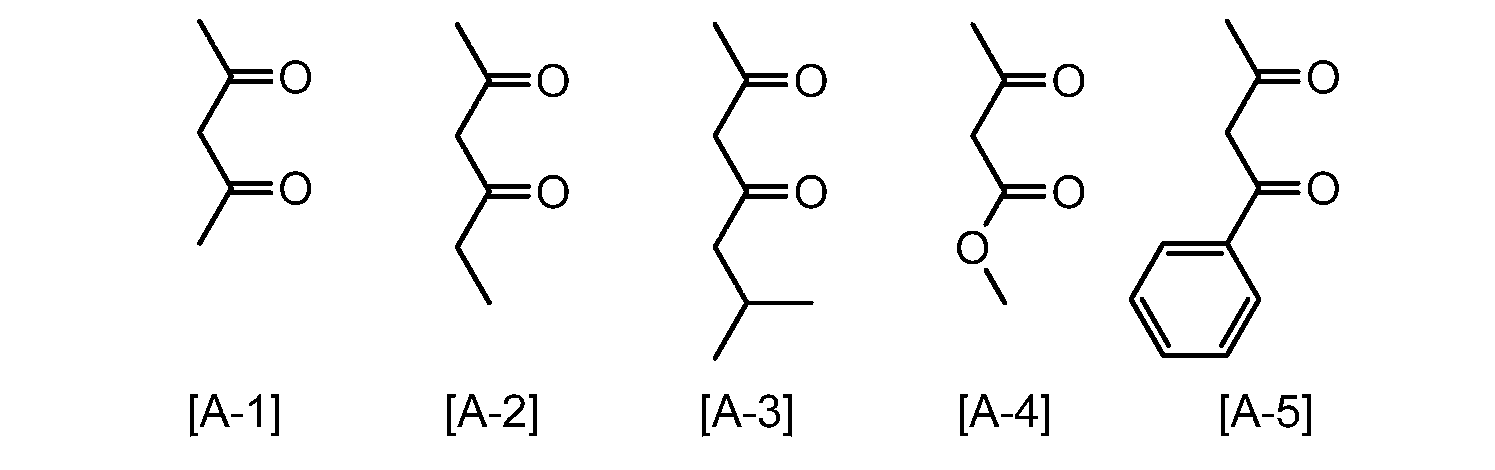
なお、光配向性基を有するモノマー、架橋性基を有するモノマー、並びにヒドロキシ基、カルボキシル基、アミド基、アミノ基、アルコキシシリル基及び上記式(2)で表される基からなる群から選ばれる少なくとも1つの基Aを有するモノマーは、上述した通りである。
以下、前記モノマーの具体例を挙げるが、これらに限定されるものではない。
また、特定共重合体を得る際に特定官能基1を有さないモノマーを併用する場合、その使用量は、全モノマーの合計量に基づいて、90モル%以下であることが好ましい。
前記方法により得られる特定共重合体は、通常、溶剤に溶解した溶液の状態である。
本発明の位相差材形成用樹脂組成物には、(B)成分として架橋剤を含有させることができる。(B)成分としては、ヒドロキシ基、カルボキシル基、アミド基、アミノ基、アルコキシシリル基及び上記式(2)で表される基からなる群から選ばれる少なくとも1つの基Aと反応する架橋剤が挙げられる。
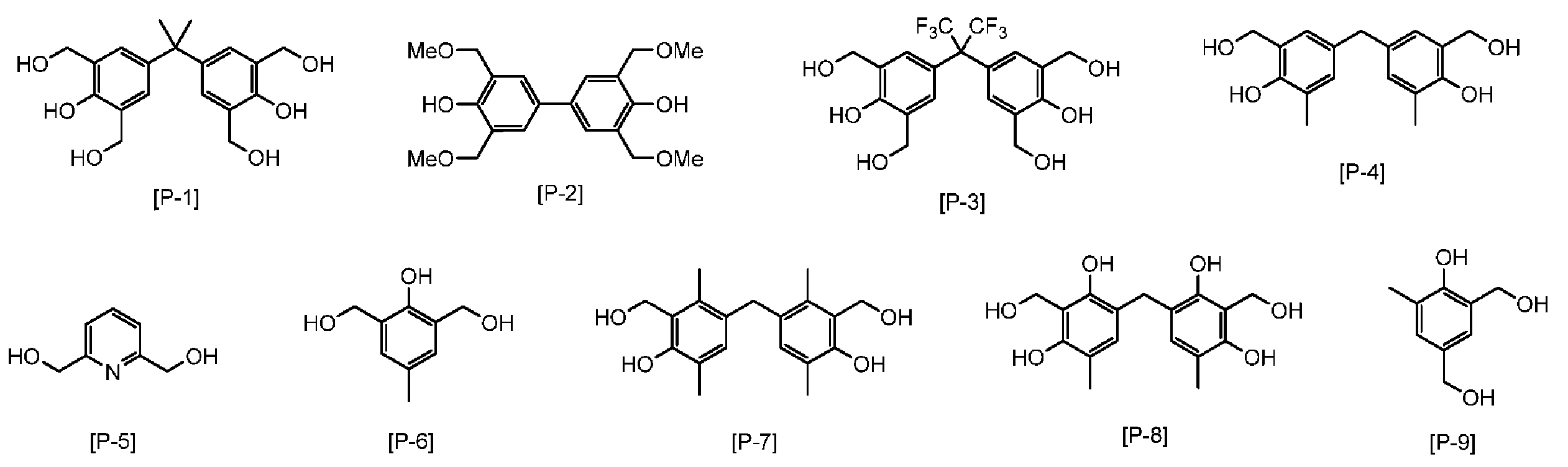

本発明の位相差材形成用樹脂組成物には、(C)成分としてヒドロキシ基、カルボキシル基、アミド基、アミノ基、アルコキシシリル基及び上記式(2)で表される基からなる群から選ばれる基A(以下、特定官能基2ともいう。)を少なくとも2つ有する化合物を含有させることができる。(C)成分は低分子化合物であっても高分子化合物であっても良い。
また、アクリル重合体を得る際に特定官能基2を有さないモノマーを併用する場合、その使用量は、全モノマーの合計量に基づいて、98モル%以下であることが好ましい。
本実施の形態の位相差材用形成用組成物は、(A)成分、(B)成分、及び(C)成分に加えて、(D)成分として架橋触媒をさらに含有することができる。
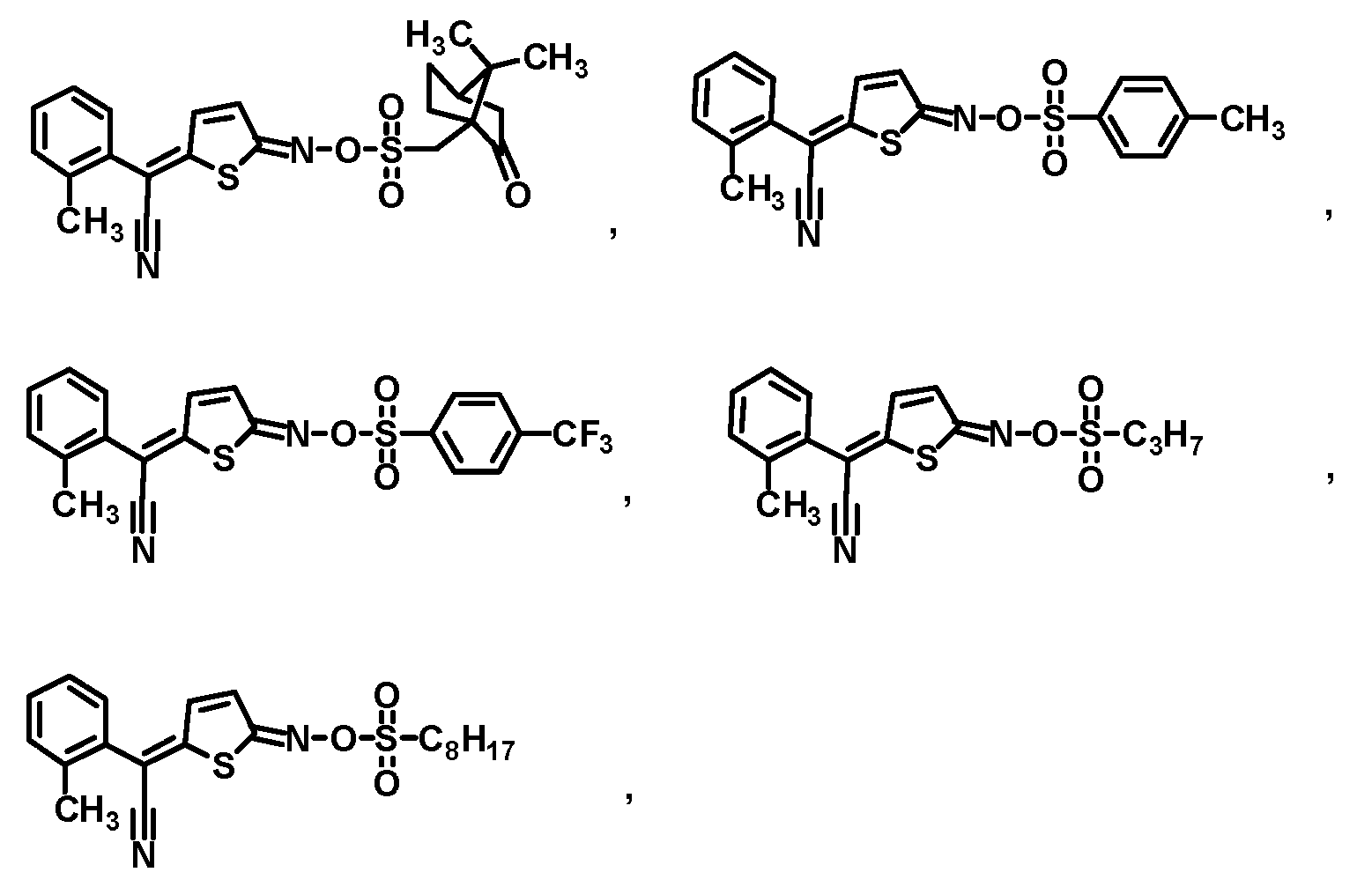


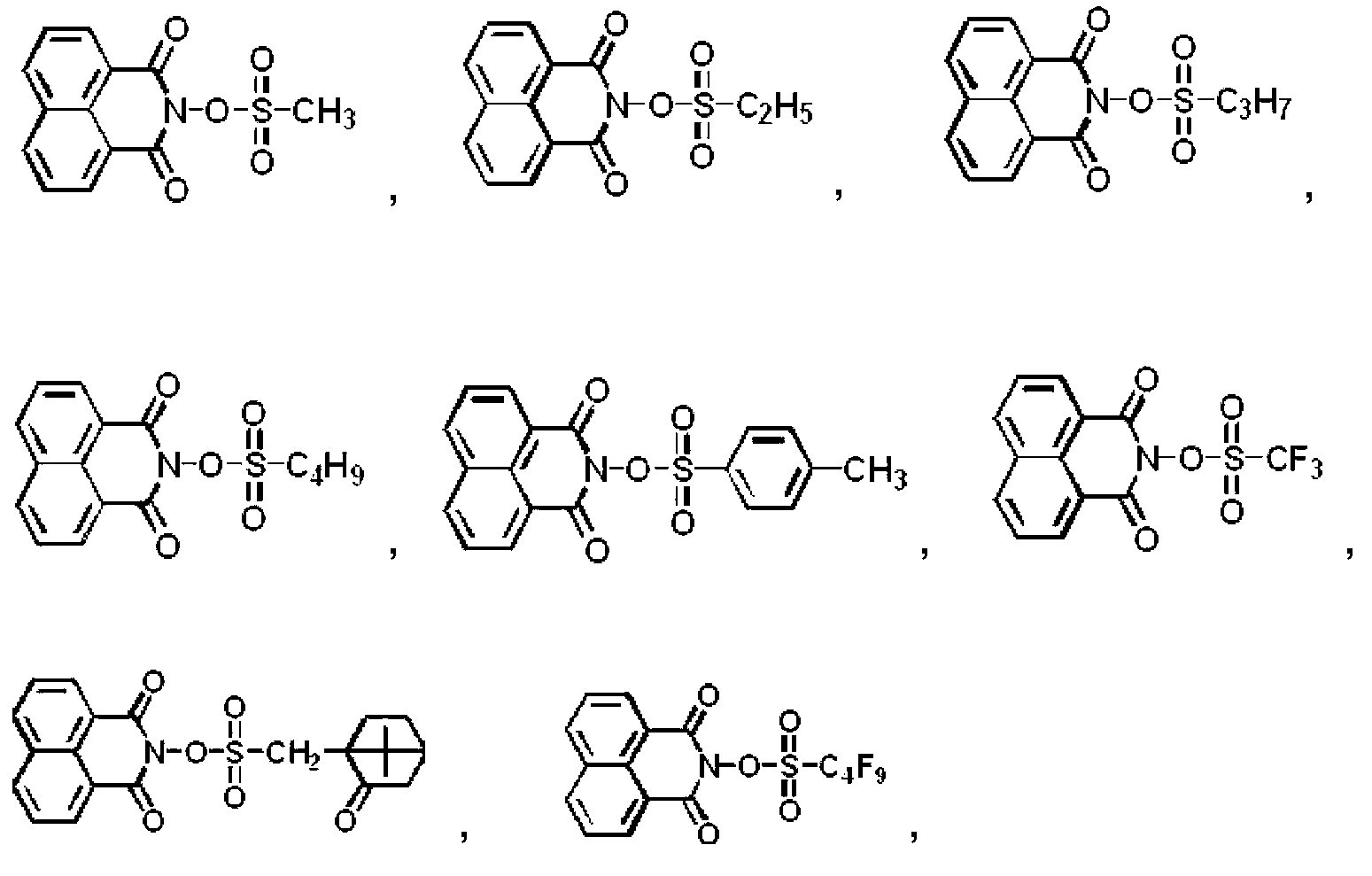

本発明の位相差材形成用樹脂組成物は、(A)成分、(B)成分、及び(C)成分のいずれかと熱架橋可能な基と重合性基とを有する化合物、すなわち、1つ以上の重合性基と、ヒドロキシ基、カルボキシル基、アミド基、アミノ基、アルコキシシリル基及び上記式(2)で表される基からなる群から選ばれる少なくとも1つの基A又は該少なくとも1つの基Aと反応する1つ以上の基とを有する化合物を(E)成分として含有することができる。
(E)成分を含有する本発明の位相差材形成用樹脂組成物から形成される硬化膜を配向材として用いた場合に、(E)成分の化合物は、硬化膜上に形成される硬化された重合性液晶の層との間の密着性を強化する、すなわち密着性向上成分として作用する。

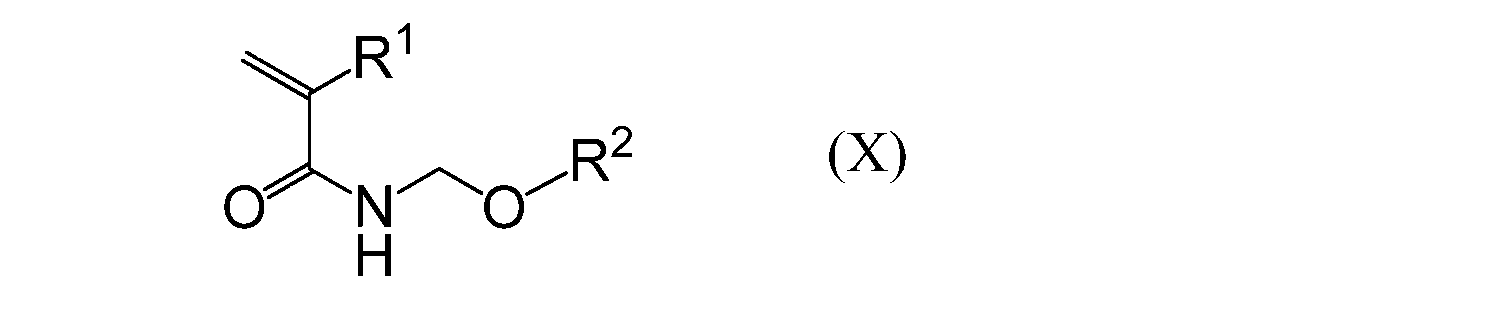
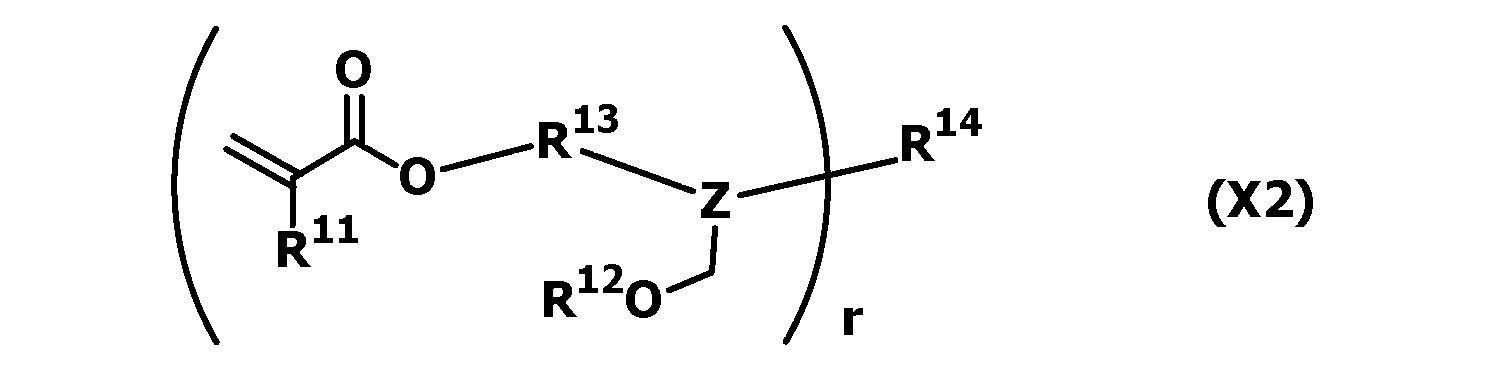
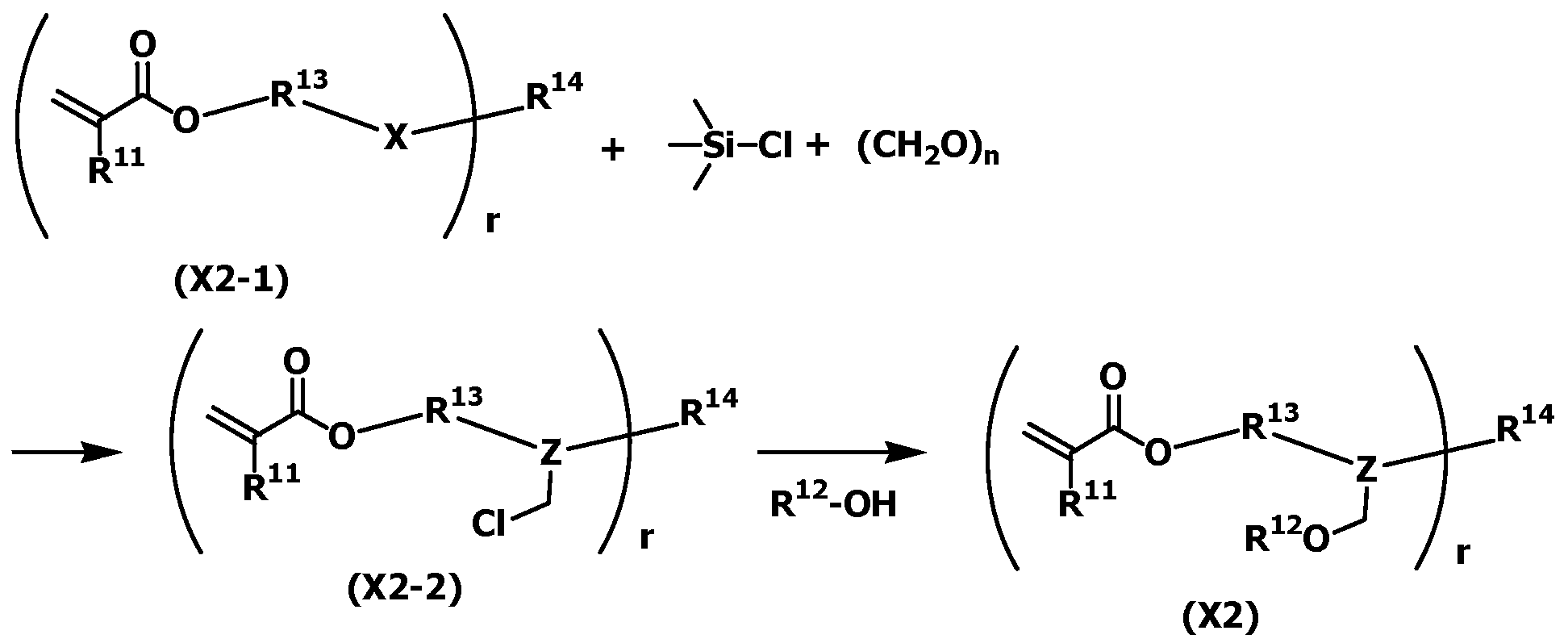
本発明の位相差材形成用樹脂組成物は、(F)成分として熱反応性部位が直接結合又は連結基を介してつながる光配向性基と、1つ以上の重合性基とを有するモノマーを含有することができる。
(F)成分のモノマーは、本発明の位相差材形成用樹脂組成物から形成される硬化膜を配向材として用いた場合に、その上に形成される硬化された重合性液晶の層との間の密着性を強化する、すなわち密着性向上成分として作用する。
熱反応性部位が直接結合又は連結基を介してつながる光配向性基としては、下記式(1)で表される構造を含む有機基が好ましい。

本発明の位相差材形成用樹脂組成物は、主として溶剤に溶解した溶液状態で用いられる。その際に使用する溶剤は、(A)成分及び(B)成分、所望により、(C)成分、(D)成分、(E)成分、(F)成分、及び/又は、後述するその他添加剤を溶解できればよく、その種類及び構造などは特に限定されるものでない。
さらに、本発明の位相差材形成用樹脂組成物は、本発明の効果を損なわない限りにおいて、必要に応じて、増感剤、密着向上剤、シランカップリング剤、界面活性剤、レオロジー調整剤、顔料、染料、保存安定剤、消泡剤、酸化防止剤等を含有することができる。
本発明の位相差材形成用樹脂組成物は、(A)成分である樹脂と、(B)成分である架橋剤を含有する。本発明の位相差材形成用樹脂組成物は、(A)成分、(B)成分に加えて、さらに、(C)成分としてヒドロキシ基、カルボキシル基、アミド基、アミノ基、アルコキシシリル基及び上記式(2)で表される基からなる群から選ばれる基Aを少なくとも2つ有する化合物、(D)成分として架橋触媒、(E)成分として1つ以上の重合性基と、ヒドロキシ基、カルボキシル基、アミド基、アミノ基、アルコキシシリル基及び上記式(2)で表される基からなる群から選ばれる少なくとも1つの基A又は該少なくとも1つの基Aと反応する1つ以上の基とを有する化合物並びに(F)成分として熱反応性部位が直接結合又は連結基を介してつながる光配向性基と、1つ以上の重合性基とを有するモノマーをも含有することができる。そして、本発明の位相差材形成用樹脂組成物は、本発明の効果を損なわない限りにおいて、その他の添加剤を含有することができる。
[1]:(A)成分を含有する位相差材形成用樹脂組成物。
本発明の位相差材形成用樹脂組成物における固形分の割合は、各成分が均一に溶剤に溶解している限り、特に限定されるものではないが、1質量%乃至80質量%であり、好ましくは2質量%乃至60質量%であり、より好ましくは3質量%乃至40質量%である。ここで、固形分とは、位相差材形成用樹脂組成物の全成分から溶剤を除いたものをいう。
本発明の位相差材形成用樹脂組成物の溶液を基板(例えば、シリコン/二酸化シリコン被覆基板、シリコンナイトライド基板、金属、例えば、アルミニウム、モリブデン、クロムなどが被覆された基板、ガラス基板、石英基板、ITO基板等)やフィルム(例えば、トリアセチルセルロース(TAC)フィルム、シクロオレフィンポリマーフィルム、ポリエチレンテレフタレートフィルム、アクリルフィルム等の樹脂フィルム)等の上に、バーコート、回転塗布、流し塗布、ロール塗布、スリット塗布、スリットに続いた回転塗布、インクジェット塗布、印刷などによって塗布して塗膜を形成し、その後、ホットプレートまたはオーブン等で加熱乾燥することにより、硬化膜を形成することができる。
そのため、本発明の位相差材形成用樹脂組成物は、各種位相差材(位相差フィルム)や液晶表示素子等の製造に好適に用いることができる。
本発明は、また(A)成分として特定の光配向性基を有する樹脂を含有する硬化膜形成組成物に関する。本発明の硬化膜形成組成物は、(A)成分に加えて、(B)成分として架橋剤を含有することができる。さらに、本発明の硬化膜形成組成物は、(A)成分、(B)成分に加えて、(C)成分としてヒドロキシ基、カルボキシル基、アミド基、アミノ基、アルコキシシリル基及び下記式(2)で表される基からなる群から選ばれる基Aを少なくとも2つ有する化合物をさらに含有することができる。

なお、(A)成分乃至(C)成分、及び硬化膜形成組成物の調製方法等は、上述した位相差材形成用樹脂組成物と同じである。
以下の実施例および比較例で用いられる各組成成分は、次のとおりである。
<成分(A)、成分(B)、成分(C):重合体原料>
M6CA:4-(6-メタクリルオキシヘキシル-1-オキシ)けい皮酸
M3CA:4-(3-メタクリルオキシプロピル-1-オキシ)けい皮酸
M6CAm:4-(6-メタクリルオキシヘキシル-1-オキシ)シンナムアミド
HEMA:2-ヒドロキシエチルメタクリレート
MAA:メタクリル酸
MMA:メタクリル酸メチル
カレンズMOI-BM(登録商標):メタクリル酸2-(0-(1’-メチルプロピリデンアミノ)カルボキシアミノ)エチル(昭和電工株式会社製)
BMAA:N-ブトキシメチルアクリルアミド
St:スチレン
EGAMA:エチレングリコールモノアセトアセテートモノメタクリレート(2-アセトアセトキシエチルメタクリレート)


HMM:下記の構造式で表されるメラミン架橋剤[サイメル(CYMEL)(登録商標)303(三井サイテック(株)製)]

PTSA:p-トルエンスルホン酸
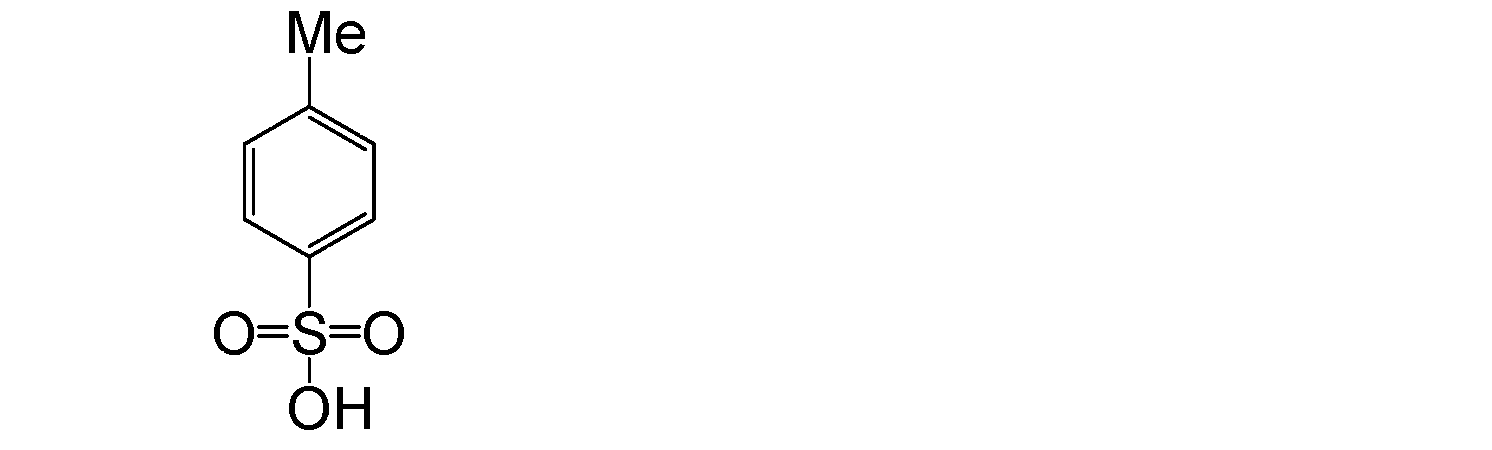
TPS:トリフェニルシラノール
TAG-2689:K-PURE(登録商標)TAG2689(King Industries Inc.製)
80MFA:エポキシエステル80MFA(共栄社化学株式会社製)
BMAA:N-ブトキシメチルアクリルアミド
DM-1:

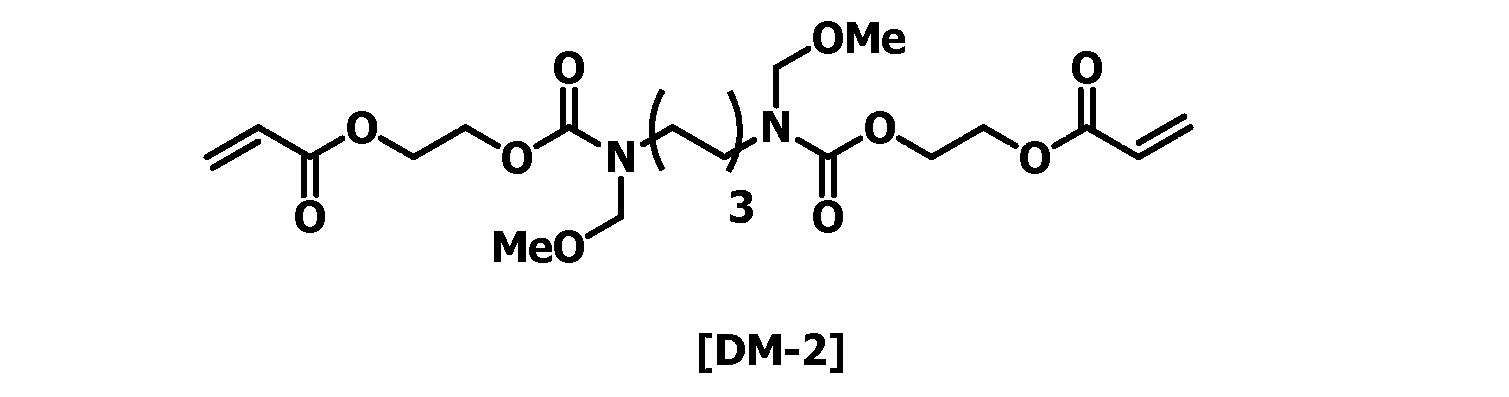
M6CA:4-(6-メタクリルオキシヘキシル-1-オキシ)けい皮酸
実施例及び比較例の各位相差材形成用樹脂組成物は溶剤を含有し、その溶剤として、プロピレングリコールモノメチルエーテル(PM)及びイソプロパノール(IPA)を用いた。
重合例におけるアクリル共重合体の分子量は、(株)Shodex社製常温ゲル浸透クロマトグラフィー(GPC)装置(GPC-101)、Shodex社製カラム(KD―803、KD-805)を用い以下のようにして測定した。
なお、下記の数平均分子量(以下、Mnと称す。)及び重量平均分子量(以下、Mwと称す。)は、ポリスチレン換算値にて表した。
カラム温度:50℃
溶離液:N,N-ジメチルホルムアミド(添加剤として、臭化リチウム-水和物(LiBr・H2O)が30mmol/L、リン酸・無水結晶(o―リン酸)が30mmol/L、テトラヒドロフラン(THF)が10mL/L)
流速:1.0mL/分
検量線作成用標準サンプル:東ソー社製 TSK 標準ポリエチレンオキサイド(分子量 約900,000、150,000、100,000、30,000)、及び、ポリマーラボラトリー社製 ポリエチレングリコール(分子量 約12,000、4,000、1,000)。
1H-NMR分析に用いた分析装置及び分析条件は、下記の通りである。
核磁気共鳴装置:Varian NMR System 400 NB(400 MHz)
測定溶媒:CDCl3
基準物質:テトラメチルシラン(TMS)(δ0.0 ppm for 1H)
M6CA 4.0g、MMA 4.0g、HEMA 2.0g、重合触媒としてAIBN 0.3gをPM 41.2gに溶解し、80℃にて20時間反応させることによりアクリル共重合体溶液(固形分濃度20質量%)(P1)を得た。得られたアクリル共重合体のMnは9,300、Mwは29,000であった。
M6CA 9.0g、HEMA 1.0g、重合触媒としてAIBN 0.3gをPM 41.2gに溶解し、80℃にて20時間反応させることによりアクリル共重合体溶液(固形分濃度20質量%)(P2)を得た。得られたアクリル共重合体のMnは14,000、Mwは33,000であった。
M6CA 7.0g、HEMA 3.0g、重合触媒としてAIBN 0.3gをPM 41.2gに溶解し、80℃にて20時間反応させることによりアクリル共重合体溶液(固形分濃度20質量%)(P3)を得た。得られたアクリル共重合体のMnは12,000、Mwは26,200であった。
M6CA 3.0g、HEMA 7.0g、重合触媒としてAIBN 0.3gをPM 41.2gに溶解し、80℃にて20時間反応させることによりアクリル共重合体溶液(固形分濃度20質量%)(P4)を得た。得られたアクリル共重合体のMnは14,100、Mwは28,600であった。
M3CA 5.0g、HEMA 5.0g、重合触媒としてAIBN 0.3gをPM 41.2gに溶解し、80℃にて20時間反応させることによりアクリル共重合体溶液(固形分濃度20質量%)(P5)を得た。得られたアクリル共重合体のMnは10,800、Mwは34,900であった。
M6CA 7.0g、カレンズMOI-BM 3.0g、重合触媒としてAIBN 0.3gをPM 41.2gに溶解し、80℃にて20時間反応させることによりアクリル共重合体溶液(固形分濃度20質量%)(P6)を得た。得られたアクリル共重合体のMnは13,000、Mwは43,000であった。
M6CAm 7.0g、HEMA 3.0g、重合触媒としてAIBN 0.3gをPM 41.2gに溶解し、80℃にて20時間反応させることによりアクリル共重合体溶液(固形分濃度20質量%)(P7)を得た。得られたアクリル共重合体のMnは12,000、Mwは37,000であった。
MMA 7.0g、HEMA 7.0g、MAA 3.5g、重合触媒としてAIBN 0.5gをPM 53.9gに溶解し、70℃にて20時間反応させることによりアクリル共重合体溶液(固形分濃度25質量%)(P8)を得た。得られたアクリル共重合体のMnは10,300、Mwは24,600であった。
BMAA100.0g、重合触媒としてAIBN 4.2gをPM 193.5gに溶解し、90℃にて20時間反応させることによりアクリル重合体溶液(固形分濃度35質量%)(P9)を得た。得られたアクリル共重合体のMnは2,700、Mwは3,900であった。
M6CA 5.0g、MMA 5.0g、重合触媒としてAIBN 0.5gをPM 42.0gに溶解し、80℃にて20時間反応させることによりアクリル共重合体溶液(固形分濃度20質量%)(P10)を得た。得られたアクリル共重合体のMnは7,300、Mwは16,200であった。
M6CA 4.0g、St 4.0g、HEMA 2.0g、重合触媒としてAIBN 0.1gをPM 90.9gに溶解し、80℃にて20時間反応させることによりアクリル共重合体溶液(固形分濃度10質量%)(P11)を得た。得られたアクリル共重合体のMnは17,100、Mwは55,300であった。
MMA 9.0g、HEMA 1.0g、重合触媒としてAIBN 0.1gをPM 40.4gに溶解し、80℃にて20時間反応させることによりアクリル共重合体溶液(固形分濃度20質量%)(P12)を得た。得られたアクリル共重合体のMnは15,900、Mwは29,900であった。
M6CA 6.0g、EGAMA 4.0g、重合触媒としてAIBN 0.3gをPM 41.2gに溶解し、80℃にて20時間反応させることによりアクリル共重合体溶液(固形分濃度20質量%)(P13)を得た。得られたアクリル共重合体のMnは9,900、Mwは21,500であった。
M6CAm 7.0g、M100 3.0g、重合触媒としてAIBN 0.3gをPM 92.7gに溶解し、80℃にて20時間反応させることによりアクリル共重合体溶液(固形分濃度20質量%)(P14)を得た。得られたアクリル共重合体のMnは13,200、Mwは27,000であった。
合成例1:化合物[DM-1]の合成

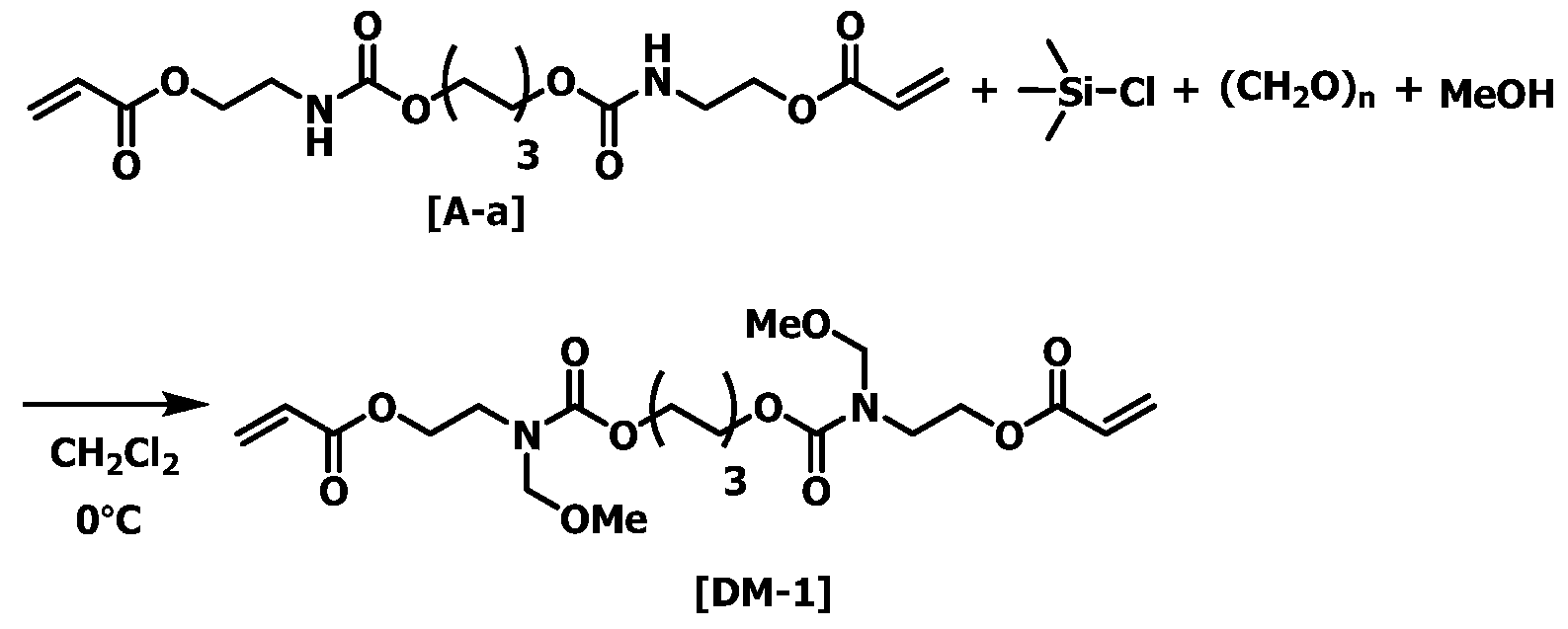
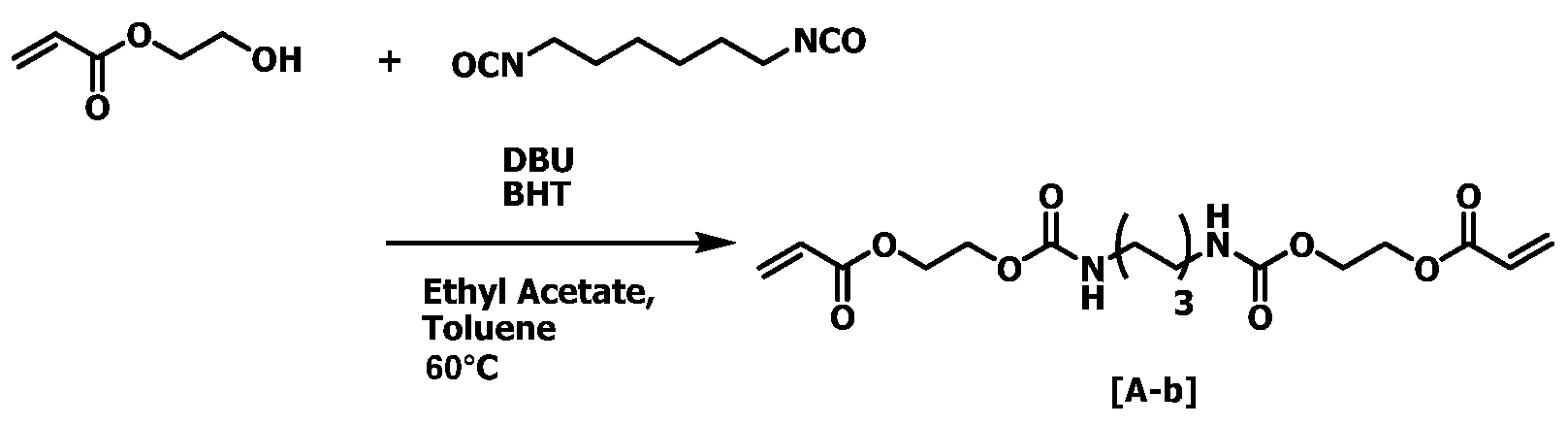
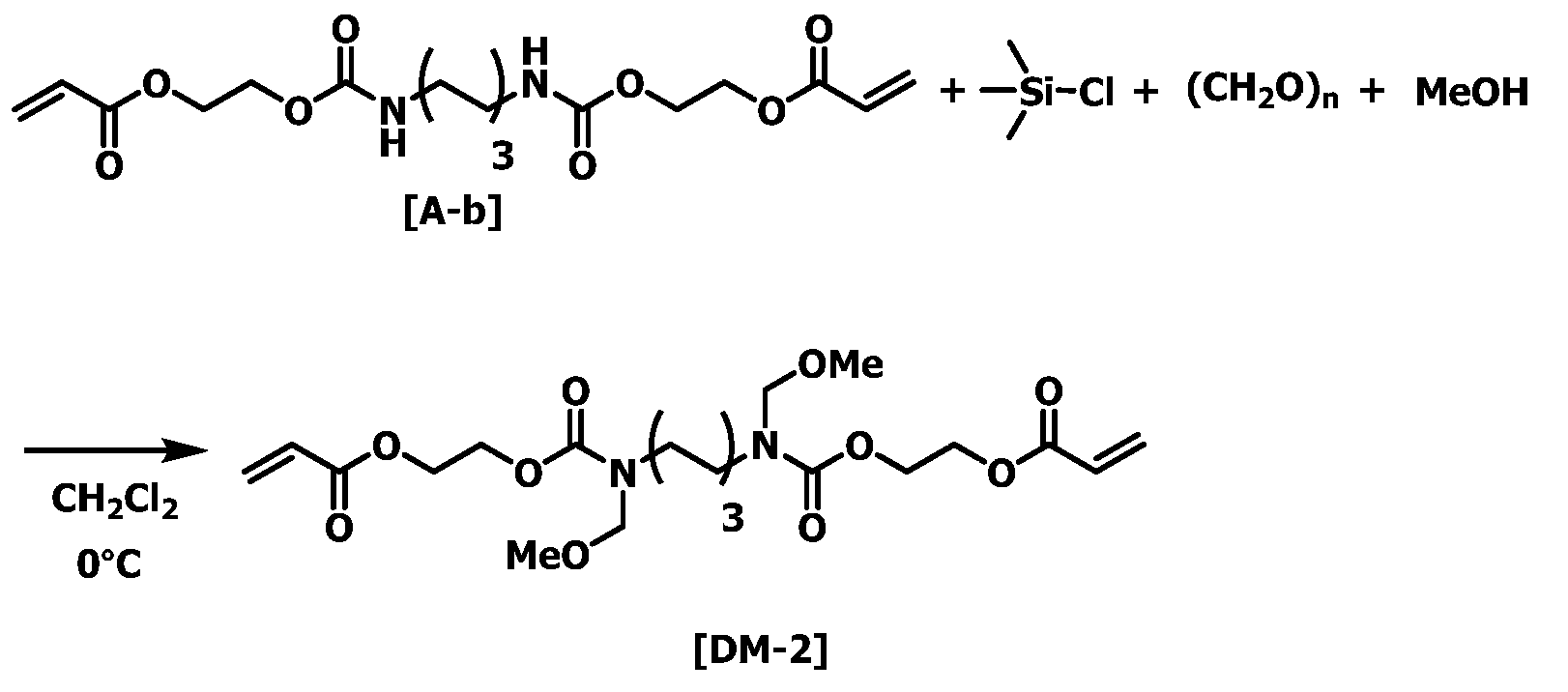
表1に示す組成にて実施例1乃至22および比較例1乃至4の各位相差材形成用樹脂組成物を調製した。次に、各位相差材形成用樹脂組成物を用いて硬化膜を形成し、得られた硬化膜それぞれについて、配向性の評価を行った。

実施例及び比較例の各位相差材形成用樹脂組成物を無アルカリガラス上にスピンコーターを用いて2000rpmで30秒間回転塗布した後、温度100℃で60秒間、ホットプレート上で加熱乾燥を行い硬化膜を形成した。この硬化膜に313nmの直線偏光を10mJ/cm2の露光量で垂直に照射した。露光後の基板上にメルク株式会社製の水平配向用重合性液晶溶液RMS03-013Cを、スピンコーターを用いて塗布し、次いで、60℃で60秒間ホットプレート上においてプリベークを行い、膜厚1.0μmの塗膜を形成した。このフィルムを300mJ/cm2で露光し、位相差材を作製した。作製した基板上の位相差材を一対の偏光板で挟み込み、位相差材における位相差特性の発現状況を観察し、位相差が欠陥なく発現しているものを○、位相差が発現しているが欠陥が見られるものを△、位相差が発現していないものを×として「乾燥条件1」の欄に記載した。この結果が△または×だったものについては各位相差材形成用樹脂組成物の前記加熱乾燥の条件を100℃で60秒間、次いで150℃で300秒間のホットプレート上での加熱乾燥とし、「乾燥条件1」と同様の評価を行い、「乾燥条件2」の欄に記載した。「乾燥条件2」での結果が△または×だったものについては各位相差材形成用樹脂組成物の前記加熱乾燥の条件を100℃で60秒間、次いで200℃で300秒間のホットプレート上での加熱乾燥とし、「乾燥条件1」と同様の評価を行い、「乾燥条件3」の欄に記載した。
以上の評価を行った結果を表2に示す。

Claims (20)
- 熱反応性部位が直接結合又は連結基を介してつながる光配向性基を有する樹脂[(A)成分]を含有することを特徴とする、熱硬化可能な位相差材形成用樹脂組成物。
- 前記光配向性基が下記式(1)で表される構造を含む有機基である、請求項1に記載の位相差材形成用樹脂組成物。

- 前記(A)成分の樹脂がアクリル共重合体である、請求項1又は請求項2に記載の位相差材形成用樹脂組成物。
- 前記(A)成分の樹脂が自己架橋性基をさらに有するか、又はヒドロキシ基、カルボキシル基、アミド基、アミノ基、アルコキシシリル基及び下記式(2)で表される基からなる群から選ばれる少なくとも1つの基A[但し、前記樹脂中の光配向性基の末端部がカルボキシル基又はアミド基である場合は、該末端部も基Aに含まれる。]と反応する基をさらに有する、請求項1乃至請求項3のいずれか1項に記載の位相差材形成用樹脂組成物。

- 前記(A)成分の樹脂がヒドロキシ基、カルボキシル基、アミド基、アミノ基、アルコキシシリル基及び下記式(2)で表される基からなる群から選ばれる少なくとも1つの基A[但し、前記樹脂中の光配向性基の末端部がカルボキシル基又はアミド基である場合は、該末端部も基Aに含まれる。]をさらに有し、かつ前記組成物が該少なくとも1つの基Aと反応する架橋剤(B)をさらに含有する、請求項1乃至請求項3のいずれか1項に記載の位相差材形成用樹脂組成物。
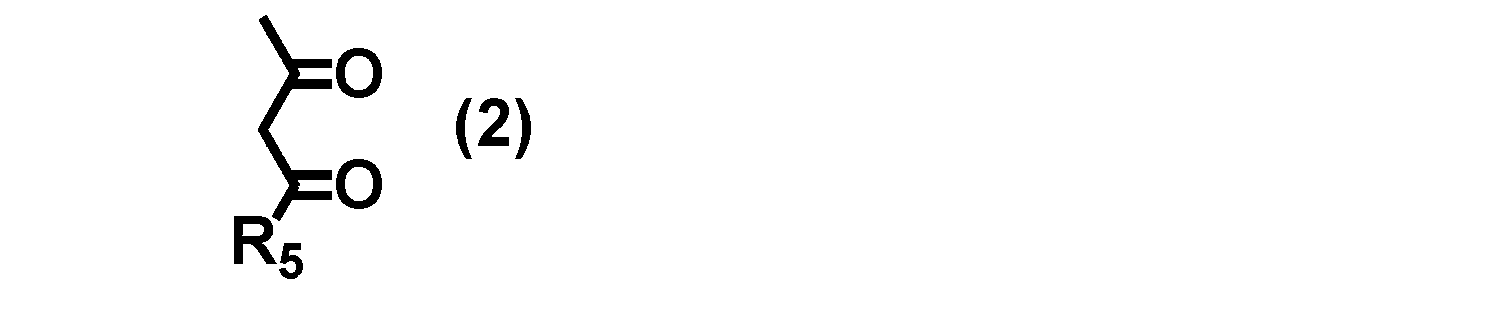
- 前記(A)成分の樹脂がヒドロキシ基、カルボキシル基、アミド基、アミノ基、アルコキシシリル基及び下記式(2)で表される基からなる群から選ばれる少なくとも1つの基A[但し、前記樹脂中の光配向性基の末端部がカルボキシル基又はアミド基である場合は、該末端部も基Aに含まれる。]と反応する基、並びに該少なくとも1つの基Aをさらに有する、請求項1乃至請求項3のいずれか1項に記載の位相差材形成用樹脂組成物。
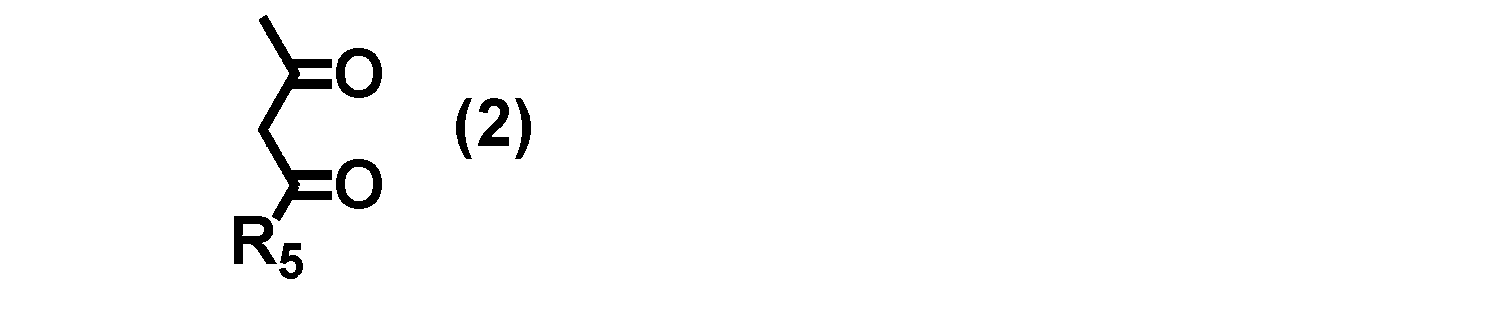
- (C)成分としてヒドロキシ基、カルボキシル基、アミド基、アミノ基、アルコキシシリル基及び上記式(2)で表される基からなる群から選ばれる基Aを少なくとも2つ有する化合物をさらに含有する、請求項1乃至請求項6のいずれか1項に記載の位相差材形成用樹脂組成物。
- (D)成分として架橋触媒をさらに含有する、請求項1乃至請求項7のいずれか1項に記載の位相差材形成用樹脂組成物。
- (E)成分として1つ以上の重合性基と、ヒドロキシ基、カルボキシル基、アミド基、アミノ基、アルコキシシリル基及び上記式(2)で表される基からなる群から選ばれる少なくとも1つの基A又は該少なくとも1つの基Aと反応する1つ以上の基とを有する化合物をさらに含有する、請求項1乃至請求項8のいずれか1項に記載の位相差材形成用樹脂組成物。
- (F)成分として熱反応性部位が直接結合又は連結基を介してつながる光配向性基と、1つ以上の重合性基とを有するモノマーをさらに含有する、請求項1乃至請求項9のいずれか1項に記載の位相差材形成用樹脂組成物。
- 請求項1乃至請求項10のいずれか1項に記載の位相差材形成用樹脂組成物を用いて得られることを特徴とする配向材。
- 請求項1乃至請求項10のいずれか1項に記載の位相差材形成用樹脂組成物から得られる硬化膜を使用して形成されることを特徴とする位相差材。
- 熱反応性部位が直接結合又は連結基を介してつながる光配向性基を有する樹脂[(A)成分]を含有することを特徴とする、熱硬化膜形成組成物。
- 前記光配向性基が下記式(1)で表される構造を含む有機基である、請求項13に記載の熱硬化膜形成組成物。

- 前記(A)成分の樹脂がアクリル共重合体である、請求項13又は請求項14に記載の熱硬化膜形成組成物。
- 前記(A)成分の樹脂が自己架橋性基をさらに有するか、又はヒドロキシ基、カルボキシル基、アミド基、アミノ基、アルコキシシリル基及び下記式(2)で表される基からなる群から選ばれる少なくとも1つの基A[但し、前記樹脂中の光配向性基の末端部がカルボキシル基又はアミド基である場合は、該末端部も基Aに含まれる。]と反応する基をさらに有する、請求項13乃至請求項15のいずれか1項に記載の熱硬化膜形成組成物。

- 前記(A)成分の樹脂がヒドロキシ基、カルボキシル基、アミド基、アミノ基、アルコキシシリル基及び下記式(2)で表される基からなる群から選ばれる少なくとも1つの基A[但し、前記樹脂中の光配向性基の末端部がカルボキシル基又はアミド基である場合は、該末端部も基Aに含まれる。]をさらに有し、かつ前記組成物が該少なくとも1つの基Aと反応する架橋剤(B)をさらに含有する、請求項13乃至請求項15のいずれか1項に記載の熱硬化膜形成組成物。

- 前記(A)成分の樹脂がヒドロキシ基、カルボキシル基、アミド基、アミノ基、アルコキシシリル基及び下記式(2)で表される基からなる群から選ばれる少なくとも1つの基A[但し、前記樹脂中の光配向性基の末端部がカルボキシル基又はアミド基である場合は、該末端部も基Aに含まれる。]と反応する基、並びに該少なくとも1つの基Aをさらに有する、請求項13乃至請求項15のいずれか1項に記載の熱硬化膜形成組成物。

- (C)成分としてヒドロキシ基、カルボキシル基、アミド基、アミノ基、アルコキシシリル基及び上記式(2)で表される基からなる群から選ばれる基Aを少なくとも2つ有する化合物をさらに含有する、請求項13乃至請求項18のいずれか1項に記載の熱硬化膜形成組成物。
- 請求項13乃至請求項19のいずれか1項に記載の熱硬化膜形成組成物を用いて得られることを特徴とする硬化膜。
Priority Applications (6)
| Application Number | Priority Date | Filing Date | Title |
|---|---|---|---|
| CN201580010359.XA CN106030355B (zh) | 2014-02-28 | 2015-02-27 | 相位差材形成用树脂组合物、取向材及相位差材 |
| KR1020217026921A KR102359535B1 (ko) | 2014-02-28 | 2015-02-27 | 위상차재 형성용 수지 조성물, 배향재 및 위상차재 |
| JP2016505339A JP6754097B2 (ja) | 2014-02-28 | 2015-02-27 | 位相差材形成用樹脂組成物、配向材および位相差材 |
| US15/122,277 US10081693B2 (en) | 2014-02-28 | 2015-02-27 | Retardation material-forming resin composition, orientation material, and retardation material |
| KR1020167021065A KR102296695B1 (ko) | 2014-02-28 | 2015-02-27 | 위상차재 형성용 수지 조성물, 배향재 및 위상차재 |
| US16/104,644 US10590219B2 (en) | 2014-02-28 | 2018-08-17 | Retardation material-forming resin composition, orientation material, and retardation material |
Applications Claiming Priority (4)
| Application Number | Priority Date | Filing Date | Title |
|---|---|---|---|
| JP2014039699 | 2014-02-28 | ||
| JP2014-039699 | 2014-02-28 | ||
| JP2014-140946 | 2014-07-08 | ||
| JP2014140946 | 2014-07-08 |
Related Child Applications (2)
| Application Number | Title | Priority Date | Filing Date |
|---|---|---|---|
| US15/122,277 A-371-Of-International US10081693B2 (en) | 2014-02-28 | 2015-02-27 | Retardation material-forming resin composition, orientation material, and retardation material |
| US16/104,644 Division US10590219B2 (en) | 2014-02-28 | 2018-08-17 | Retardation material-forming resin composition, orientation material, and retardation material |
Publications (1)
| Publication Number | Publication Date |
|---|---|
| WO2015129889A1 true WO2015129889A1 (ja) | 2015-09-03 |
Family
ID=54009201
Family Applications (1)
| Application Number | Title | Priority Date | Filing Date |
|---|---|---|---|
| PCT/JP2015/055969 Ceased WO2015129889A1 (ja) | 2014-02-28 | 2015-02-27 | 位相差材形成用樹脂組成物、配向材および位相差材 |
Country Status (6)
| Country | Link |
|---|---|
| US (2) | US10081693B2 (ja) |
| JP (3) | JP6754097B2 (ja) |
| KR (2) | KR102296695B1 (ja) |
| CN (2) | CN110256630B (ja) |
| TW (2) | TWI688598B (ja) |
| WO (1) | WO2015129889A1 (ja) |
Cited By (12)
| Publication number | Priority date | Publication date | Assignee | Title |
|---|---|---|---|---|
| WO2017155023A1 (ja) * | 2016-03-09 | 2017-09-14 | シャープ株式会社 | 組成物、液晶パネル、液晶表示装置、電子機器 |
| KR20180014695A (ko) * | 2015-06-02 | 2018-02-09 | 닛산 가가쿠 고교 가부시키 가이샤 | 광배향용 액정배향제, 배향재 및 위상차재 |
| WO2018173727A1 (ja) * | 2017-03-24 | 2018-09-27 | 富士フイルム株式会社 | 光配向性共重合体、光配向膜および光学積層体 |
| WO2018181364A1 (ja) * | 2017-03-27 | 2018-10-04 | 日産化学株式会社 | 硬化膜形成組成物、配向材および位相差材 |
| CN108700779A (zh) * | 2015-12-28 | 2018-10-23 | 日产化学工业株式会社 | 液晶取向剂、液晶取向膜、及液晶表示元件 |
| CN108885373A (zh) * | 2015-12-28 | 2018-11-23 | 日产化学工业株式会社 | 含有具备具有异氰酸酯基和/或封端化的异氰酸酯基的部位以及具有光反应性的部位的聚合物和交联剂的液晶取向剂、液晶取向膜、及液晶表示元件 |
| WO2019124386A1 (ja) * | 2017-12-18 | 2019-06-27 | 日産化学株式会社 | 硬化膜形成組成物、配向材および位相差材 |
| JPWO2020241642A1 (ja) * | 2019-05-27 | 2020-12-03 | ||
| WO2021157480A1 (ja) * | 2020-02-06 | 2021-08-12 | 富士フイルム株式会社 | 化合物、液晶組成物、液晶フィルム |
| JPWO2021166701A1 (ja) * | 2020-02-17 | 2021-08-26 | ||
| WO2023204281A1 (ja) * | 2022-04-21 | 2023-10-26 | 日産化学株式会社 | 熱硬化性光配向膜用樹脂組成物 |
| WO2025047888A1 (ja) * | 2023-08-29 | 2025-03-06 | 日産化学株式会社 | 硬化膜形成用組成物、配向材及び位相差材 |
Families Citing this family (12)
| Publication number | Priority date | Publication date | Assignee | Title |
|---|---|---|---|---|
| US20180171207A1 (en) | 2015-06-17 | 2018-06-21 | Clariant International Ltd. | Water-Soluble Or Water-Swellable Polymers As Water Loss Reducers In Cement Slurries |
| JP6399241B2 (ja) * | 2016-09-02 | 2018-10-03 | 住友化学株式会社 | 高分子化合物、該高分子化合物を硬化した膜及び該膜を含む電子デバイス |
| US11384186B2 (en) | 2016-12-12 | 2022-07-12 | Clariant International Ltd | Polymer comprising certain level of bio-based carbon |
| ES2867526T3 (es) | 2016-12-12 | 2021-10-20 | Clariant Int Ltd | Uso de un polímero bioderivado en una composición cosmética, dermatológica o farmacéutica |
| EP3554644B1 (en) | 2016-12-15 | 2025-03-19 | Clariant International Ltd | Water-soluble and/or water-swellable hybrid polymer |
| EP3554643B1 (en) | 2016-12-15 | 2025-03-19 | Clariant International Ltd | Water-soluble and/or water-swellable hybrid polymer |
| ES3017507T3 (en) | 2016-12-15 | 2025-05-13 | Clariant Int Ltd | Water-soluble and/or water-swellable hybrid polymer |
| US11339241B2 (en) | 2016-12-15 | 2022-05-24 | Clariant International Ltd. | Water-soluble and/or water-swellable hybrid polymer |
| US20200325327A1 (en) * | 2017-10-16 | 2020-10-15 | Nissan Chemical Corporation | Cured-film-forming composition, orientation material, and retardation material |
| WO2020017615A1 (ja) * | 2018-07-18 | 2020-01-23 | Kjケミカルズ株式会社 | 三次元造形サポート材用活性エネルギー線硬化性樹脂組成物とインク |
| EP3670612A1 (de) * | 2018-12-18 | 2020-06-24 | Hilti Aktiengesellschaft | Verwendung von urethanmethacrylat-verbindungen in reaktivharz-zusammensetzungen |
| CN121548612A (zh) * | 2023-07-25 | 2026-02-17 | 日产化学株式会社 | 固化膜形成用组合物、取向材及相位差材 |
Citations (5)
| Publication number | Priority date | Publication date | Assignee | Title |
|---|---|---|---|---|
| JP2005326439A (ja) * | 2004-05-12 | 2005-11-24 | Fuji Photo Film Co Ltd | 位相差板材料、重合体、位相差板および画像表示装置 |
| JP2009173792A (ja) * | 2008-01-25 | 2009-08-06 | Chisso Corp | 配向膜、これを有する液晶表示素子、及び配向膜用組成物 |
| WO2011010635A1 (ja) * | 2009-07-21 | 2011-01-27 | 日産化学工業株式会社 | 光配向性を有する熱硬化膜形成組成物 |
| JP2014012823A (ja) * | 2012-06-06 | 2014-01-23 | Jnc Corp | 光配向性基を有する高分子組成物、該高分子組成物から作製される液晶配向膜及び該液晶配向膜から作製される位相差板を備えた光デバイス |
| WO2014017497A1 (ja) * | 2012-07-24 | 2014-01-30 | 日産化学工業株式会社 | 液晶配向膜の製造方法、液晶配向膜、液晶表示素子、重合体及び液晶配向剤 |
Family Cites Families (16)
| Publication number | Priority date | Publication date | Assignee | Title |
|---|---|---|---|---|
| JPS611342A (ja) | 1984-06-14 | 1986-01-07 | Noboru Yamada | 製燻法 |
| DE59408097D1 (de) | 1993-02-17 | 1999-05-20 | Rolic Ag | Orientierungsschicht für Flüssigkristalle |
| US6107427A (en) * | 1995-09-15 | 2000-08-22 | Rolic Ag | Cross-linkable, photoactive polymer materials |
| JP3767962B2 (ja) | 1997-02-19 | 2006-04-19 | シャープ株式会社 | 映像表示システム |
| EP1021479B1 (en) | 1997-09-25 | 2002-07-17 | Rolic AG | Photocrosslinkable polyimides |
| JP2005049865A (ja) | 2003-07-17 | 2005-02-24 | Arisawa Mfg Co Ltd | 光学位相差素子の製造方法 |
| JP4816003B2 (ja) * | 2005-10-28 | 2011-11-16 | Dic株式会社 | 光配向膜用組成物、光配向膜の製造方法、及びこれを用いた光学異方体、光学素子、その製造方法 |
| JP5316740B2 (ja) | 2007-08-30 | 2013-10-16 | Jsr株式会社 | 液晶配向膜の形成方法 |
| JP5668906B2 (ja) * | 2009-02-19 | 2015-02-12 | Jsr株式会社 | 液晶配向剤、液晶配向膜および液晶表示素子 |
| KR20130045856A (ko) * | 2010-04-08 | 2013-05-06 | 닛산 가가쿠 고교 가부시키 가이샤 | 광배향성을 가지는 열경화막 형성 조성물 |
| JP4957977B1 (ja) * | 2011-01-17 | 2012-06-20 | Dic株式会社 | 液晶配向層用組成物 |
| CN107463066B (zh) * | 2011-10-11 | 2020-10-30 | 日产化学工业株式会社 | 形成固化膜的组合物、取向材及相位差材 |
| JP5884923B2 (ja) * | 2012-02-02 | 2016-03-15 | エルジー・ケム・リミテッド | 液晶組成物 |
| JP6086115B2 (ja) * | 2012-03-28 | 2017-03-01 | 日産化学工業株式会社 | 硬化膜形成組成物、配向材および位相差材 |
| KR102021775B1 (ko) * | 2012-06-20 | 2019-09-17 | 닛산 가가쿠 가부시키가이샤 | 경화막 형성 조성물, 배향재 및 위상차재 |
| US10100201B2 (en) * | 2014-02-28 | 2018-10-16 | Nissan Chemical Industries, Ltd. | Cured film formation composition, orientation material and retardation material |
-
2015
- 2015-02-27 CN CN201910432968.4A patent/CN110256630B/zh active Active
- 2015-02-27 JP JP2016505339A patent/JP6754097B2/ja active Active
- 2015-02-27 KR KR1020167021065A patent/KR102296695B1/ko active Active
- 2015-02-27 KR KR1020217026921A patent/KR102359535B1/ko active Active
- 2015-02-27 WO PCT/JP2015/055969 patent/WO2015129889A1/ja not_active Ceased
- 2015-02-27 US US15/122,277 patent/US10081693B2/en active Active
- 2015-02-27 CN CN201580010359.XA patent/CN106030355B/zh active Active
- 2015-03-02 TW TW104106495A patent/TWI688598B/zh active
- 2015-03-02 TW TW109103931A patent/TWI757687B/zh active
-
2018
- 2018-08-17 US US16/104,644 patent/US10590219B2/en active Active
-
2020
- 2020-08-18 JP JP2020138253A patent/JP7381420B2/ja active Active
-
2022
- 2022-08-10 JP JP2022128374A patent/JP2022164706A/ja active Pending
Patent Citations (5)
| Publication number | Priority date | Publication date | Assignee | Title |
|---|---|---|---|---|
| JP2005326439A (ja) * | 2004-05-12 | 2005-11-24 | Fuji Photo Film Co Ltd | 位相差板材料、重合体、位相差板および画像表示装置 |
| JP2009173792A (ja) * | 2008-01-25 | 2009-08-06 | Chisso Corp | 配向膜、これを有する液晶表示素子、及び配向膜用組成物 |
| WO2011010635A1 (ja) * | 2009-07-21 | 2011-01-27 | 日産化学工業株式会社 | 光配向性を有する熱硬化膜形成組成物 |
| JP2014012823A (ja) * | 2012-06-06 | 2014-01-23 | Jnc Corp | 光配向性基を有する高分子組成物、該高分子組成物から作製される液晶配向膜及び該液晶配向膜から作製される位相差板を備えた光デバイス |
| WO2014017497A1 (ja) * | 2012-07-24 | 2014-01-30 | 日産化学工業株式会社 | 液晶配向膜の製造方法、液晶配向膜、液晶表示素子、重合体及び液晶配向剤 |
Cited By (27)
| Publication number | Priority date | Publication date | Assignee | Title |
|---|---|---|---|---|
| KR20180014695A (ko) * | 2015-06-02 | 2018-02-09 | 닛산 가가쿠 고교 가부시키 가이샤 | 광배향용 액정배향제, 배향재 및 위상차재 |
| EP3299879A4 (en) * | 2015-06-02 | 2018-04-25 | Nissan Chemical Industries, Ltd. | Liquid crystal aligning agent for photo-alignment, aligning material and retardation material |
| KR102588261B1 (ko) | 2015-06-02 | 2023-10-12 | 닛산 가가쿠 가부시키가이샤 | 광배향용 액정배향제, 배향재 및 위상차재 |
| CN108885373B (zh) * | 2015-12-28 | 2021-12-03 | 日产化学工业株式会社 | 液晶取向剂、液晶取向膜、及液晶表示元件 |
| CN108700779A (zh) * | 2015-12-28 | 2018-10-23 | 日产化学工业株式会社 | 液晶取向剂、液晶取向膜、及液晶表示元件 |
| CN108885373A (zh) * | 2015-12-28 | 2018-11-23 | 日产化学工业株式会社 | 含有具备具有异氰酸酯基和/或封端化的异氰酸酯基的部位以及具有光反应性的部位的聚合物和交联剂的液晶取向剂、液晶取向膜、及液晶表示元件 |
| CN108700779B (zh) * | 2015-12-28 | 2022-06-10 | 日产化学工业株式会社 | 液晶取向剂、液晶取向膜、及液晶表示元件 |
| WO2017155023A1 (ja) * | 2016-03-09 | 2017-09-14 | シャープ株式会社 | 組成物、液晶パネル、液晶表示装置、電子機器 |
| WO2018173727A1 (ja) * | 2017-03-24 | 2018-09-27 | 富士フイルム株式会社 | 光配向性共重合体、光配向膜および光学積層体 |
| JP2023052367A (ja) * | 2017-03-27 | 2023-04-11 | 日産化学株式会社 | 硬化膜形成組成物、配向材および位相差材 |
| WO2018181364A1 (ja) * | 2017-03-27 | 2018-10-04 | 日産化学株式会社 | 硬化膜形成組成物、配向材および位相差材 |
| JPWO2018181364A1 (ja) * | 2017-03-27 | 2020-02-06 | 日産化学株式会社 | 硬化膜形成組成物、配向材および位相差材 |
| JP7260853B2 (ja) | 2017-03-27 | 2023-04-19 | 日産化学株式会社 | 硬化膜形成組成物、配向材および位相差材 |
| JP7273371B2 (ja) | 2017-12-18 | 2023-05-15 | 日産化学株式会社 | 硬化膜形成組成物、配向材および位相差材 |
| JPWO2019124386A1 (ja) * | 2017-12-18 | 2021-01-07 | 日産化学株式会社 | 硬化膜形成組成物、配向材および位相差材 |
| WO2019124386A1 (ja) * | 2017-12-18 | 2019-06-27 | 日産化学株式会社 | 硬化膜形成組成物、配向材および位相差材 |
| CN115975155A (zh) * | 2017-12-18 | 2023-04-18 | 日产化学株式会社 | 取向材用固化膜形成用组合物、取向材和相位差材 |
| JP7569016B2 (ja) | 2019-05-27 | 2024-10-17 | 日産化学株式会社 | 硬化膜形成組成物、配向材および位相差材 |
| WO2020241642A1 (ja) * | 2019-05-27 | 2020-12-03 | 日産化学株式会社 | 硬化膜形成組成物、配向材および位相差材 |
| JPWO2020241642A1 (ja) * | 2019-05-27 | 2020-12-03 | ||
| CN113874470A (zh) * | 2019-05-27 | 2021-12-31 | 日产化学株式会社 | 固化膜形成用组合物、取向构件和相位差构件 |
| JP7335986B2 (ja) | 2020-02-06 | 2023-08-30 | 富士フイルム株式会社 | 化合物、液晶組成物、液晶フィルム |
| JPWO2021157480A1 (ja) * | 2020-02-06 | 2021-08-12 | ||
| WO2021157480A1 (ja) * | 2020-02-06 | 2021-08-12 | 富士フイルム株式会社 | 化合物、液晶組成物、液晶フィルム |
| JPWO2021166701A1 (ja) * | 2020-02-17 | 2021-08-26 | ||
| WO2023204281A1 (ja) * | 2022-04-21 | 2023-10-26 | 日産化学株式会社 | 熱硬化性光配向膜用樹脂組成物 |
| WO2025047888A1 (ja) * | 2023-08-29 | 2025-03-06 | 日産化学株式会社 | 硬化膜形成用組成物、配向材及び位相差材 |
Also Published As
| Publication number | Publication date |
|---|---|
| TW201609924A (zh) | 2016-03-16 |
| TWI688598B (zh) | 2020-03-21 |
| TWI757687B (zh) | 2022-03-11 |
| US20180355087A1 (en) | 2018-12-13 |
| KR20160127724A (ko) | 2016-11-04 |
| JP2020201502A (ja) | 2020-12-17 |
| CN110256630B (zh) | 2021-09-28 |
| KR20210107177A (ko) | 2021-08-31 |
| CN106030355A (zh) | 2016-10-12 |
| CN106030355B (zh) | 2019-06-18 |
| CN110256630A (zh) | 2019-09-20 |
| JP2022164706A (ja) | 2022-10-27 |
| JPWO2015129889A1 (ja) | 2017-03-30 |
| TW202024219A (zh) | 2020-07-01 |
| JP6754097B2 (ja) | 2020-09-09 |
| JP7381420B2 (ja) | 2023-11-15 |
| KR102359535B1 (ko) | 2022-02-08 |
| US10081693B2 (en) | 2018-09-25 |
| US10590219B2 (en) | 2020-03-17 |
| KR102296695B1 (ko) | 2021-09-02 |
| US20160369025A1 (en) | 2016-12-22 |
Similar Documents
| Publication | Publication Date | Title |
|---|---|---|
| JP7381420B2 (ja) | 位相差材形成用樹脂組成物、配向材および位相差材 | |
| JP6725883B2 (ja) | 硬化膜形成組成物、配向材および位相差材 | |
| JP6734563B2 (ja) | 硬化膜形成組成物、配向材および位相差材 | |
| JP6823295B2 (ja) | N−アルコキシメチル基を有する繰り返し単位及び重合性のc=c二重結合を含む側鎖を有する繰り返し単位を含むポリマー | |
| JP6429030B2 (ja) | 硬化膜形成組成物、配向材および位相差材 | |
| KR102587587B1 (ko) | 경화막 형성 조성물, 배향재 및 위상차재 | |
| WO2016129642A1 (ja) | 硬化膜形成組成物、配向材および位相差材 |
Legal Events
| Date | Code | Title | Description |
|---|---|---|---|
| 121 | Ep: the epo has been informed by wipo that ep was designated in this application |
Ref document number: 15755891 Country of ref document: EP Kind code of ref document: A1 |
|
| ENP | Entry into the national phase |
Ref document number: 2016505339 Country of ref document: JP Kind code of ref document: A |
|
| ENP | Entry into the national phase |
Ref document number: 20167021065 Country of ref document: KR Kind code of ref document: A |
|
| NENP | Non-entry into the national phase |
Ref country code: DE |
|
| WWE | Wipo information: entry into national phase |
Ref document number: 15122277 Country of ref document: US |
|
| 122 | Ep: pct application non-entry in european phase |
Ref document number: 15755891 Country of ref document: EP Kind code of ref document: A1 |