WO2015108173A1 - 感熱記録材料 - Google Patents
感熱記録材料 Download PDFInfo
- Publication number
- WO2015108173A1 WO2015108173A1 PCT/JP2015/051152 JP2015051152W WO2015108173A1 WO 2015108173 A1 WO2015108173 A1 WO 2015108173A1 JP 2015051152 W JP2015051152 W JP 2015051152W WO 2015108173 A1 WO2015108173 A1 WO 2015108173A1
- Authority
- WO
- WIPO (PCT)
- Prior art keywords
- heat
- sensitive recording
- recording material
- color
- formula
- Prior art date
- Legal status (The legal status is an assumption and is not a legal conclusion. Google has not performed a legal analysis and makes no representation as to the accuracy of the status listed.)
- Ceased
Links
Classifications
-
- B—PERFORMING OPERATIONS; TRANSPORTING
- B41—PRINTING; LINING MACHINES; TYPEWRITERS; STAMPS
- B41M—PRINTING, DUPLICATING, MARKING, OR COPYING PROCESSES; COLOUR PRINTING
- B41M5/00—Duplicating or marking methods; Sheet materials for use therein
- B41M5/26—Thermography ; Marking by high energetic means, e.g. laser otherwise than by burning, and characterised by the material used
- B41M5/30—Thermography ; Marking by high energetic means, e.g. laser otherwise than by burning, and characterised by the material used using chemical colour formers
- B41M5/337—Additives; Binders
- B41M5/3375—Non-macromolecular compounds
-
- B—PERFORMING OPERATIONS; TRANSPORTING
- B41—PRINTING; LINING MACHINES; TYPEWRITERS; STAMPS
- B41M—PRINTING, DUPLICATING, MARKING, OR COPYING PROCESSES; COLOUR PRINTING
- B41M5/00—Duplicating or marking methods; Sheet materials for use therein
- B41M5/26—Thermography ; Marking by high energetic means, e.g. laser otherwise than by burning, and characterised by the material used
- B41M5/30—Thermography ; Marking by high energetic means, e.g. laser otherwise than by burning, and characterised by the material used using chemical colour formers
- B41M5/333—Colour developing components therefor, e.g. acidic compounds
- B41M5/3333—Non-macromolecular compounds
- B41M5/3335—Compounds containing phenolic or carboxylic acid groups or metal salts thereof
- B41M5/3336—Sulfur compounds, e.g. sulfones, sulfides, sulfonamides
-
- B—PERFORMING OPERATIONS; TRANSPORTING
- B41—PRINTING; LINING MACHINES; TYPEWRITERS; STAMPS
- B41M—PRINTING, DUPLICATING, MARKING, OR COPYING PROCESSES; COLOUR PRINTING
- B41M2205/00—Printing methods or features related to printing methods; Location or type of the layers
- B41M2205/04—Direct thermal recording [DTR]
Definitions
- the present invention relates to a heat-sensitive recording material. More specifically, the present invention relates to a heat-sensitive recording material that has little background fogging against heat and excellent storage stability of color images.
- heat-sensitive recording materials are obtained by dispersing a leuco dye and a developer such as a phenolic substance separately into fine particles, and then mixing both of them together with additives such as a binder, a sensitizer, a filler, and a lubricant. Is applied to paper, film, synthetic paper, etc., and color recording is obtained by a chemical reaction that occurs when one or both of the leuco dye and the developer is melted and contacted by heating. .
- a thermal printer or the like with a built-in thermal head is used for the color development of such a heat-sensitive recording material.
- this thermal recording method is (1) no noise during recording, (2) no need for development, fixing, etc. (3) maintenance-free, (4) machine relatively It is widely used in the fields of facsimile, computer output, printers used in calculators, medical measurement recorders, automatic ticket vending machines, thermal recording labels, etc. .
- An object of the present invention is to solve the above-mentioned drawbacks of the prior art, and to provide a heat-sensitive recording material that has excellent color developability, has little background fog against heat, and has excellent storage stability of color images.
- the present inventor has completed the present invention as a result of various studies to achieve the above object.
- a heat-sensitive recording material comprising a color-forming compound, bis (3-allyl-4-hydroxyphenyl) sulfone having ⁇ -type crystals, and a compound represented by the following formula (1)
- R represents a substituted or unsubstituted C1-C10 alkyl group, a substituted or unsubstituted C2-C10 alkenyl group, or a substituted or unsubstituted aryl group
- R in the formula (1) is an unsubstituted C1-C10 alkyl group, an unsubstituted aryl group, an unsubstituted C2-C6 alkenyl group, or a hydroxyl group, an amino group, or a C3-C10 linear alkoxy group.
- the heat-sensitive recording material of the present invention contains a color-forming compound, bis (3-allyl-4-hydroxyphenyl) sulfone having ⁇ -type crystals as a color developing compound, and a compound represented by the formula (1).
- a color developing compound bis (3-allyl-4-hydroxyphenyl) sulfone having ⁇ -type crystals as a color developing compound
- a compound represented by the formula (1) Depending on the type, one or more of other color developing compounds, sensitizers, binders, fillers, and other additives may be included.
- the bis (3-allyl-4-hydroxyphenyl) sulfone having an ⁇ -type crystal used in the present invention can be synthesized based on JP-A-11-29549.
- the compound represented by the formula (1) can be synthesized by a known method described in, for example, JP-A-61-89090 or can be obtained as a commercial product.
- R represents a substituted or unsubstituted C1-C10 alkyl group, a substituted or unsubstituted C2-C10 alkenyl group, or a substituted or unsubstituted aryl group.
- alkyl group in R examples include a linear, branched or cyclic alkyl group, and specifically include methyl, ethyl, n-propyl, n-butyl, n-pentyl, n-hexyl, n-heptyl, linear alkyl groups such as n-octyl, n-nonyl, n-decyl (preferably C1 to C10); isopropyl, isobutyl, sec-butyl, t-butyl, isoamyl, t-amyl, isohexyl, t-hexyl, isoheptyl , T-heptyl, isooctyl, t-octyl, 2-ethylhexyl, isononyl, isodecyl and other branched alkyl groups (preferably C3 to C10); cyclopropyl, cyclobutyl, cyclo
- alkyl group in R a linear or branched alkyl group is preferable, and a linear alkyl group is particularly preferable. Among these, a C1-C6 linear alkyl group is particularly preferable.
- the alkyl group in R may have a substituent.
- substituents include methoxy, ethoxy, n-propoxy, n-butoxy, n-pentoxy, n-hexyloxy, n-heptoxy, n-octyloxy, linear C1-C10 alkoxy groups such as n-nonyloxy, n-decyloxy; isopropoxy, isobutoxy, sec-butoxy, t-butoxy, isoamyloxy, t-amyloxy, isohexyloxy, t-hexyloxy, isoheptoxy, t-heptoxy, isooctyloxy, C3-C10 branched chain alkoxy groups such as t-octyloxy, 2-ethylhexyloxy, isononyloxy, isodecyloxy; C3-C7 cyclic alkoxy groups such as cyclopropoxy, cyclobut
- These aryl groups are the above-mentioned C1-C10 linear alkyl groups (preferably C1-C10 linear groups).
- An alkyl group) and a C2-C10 linear alkenyl group (preferably a group selected from the group consisting of C2-C6 linear alkenyl groups) described later); a hydroxyl group; a cyano group; a nitro Groups; mono-C1 ⁇ such as methylamino, ethylamino, n-propylamino, n-butylamino, n-pentylamino, n-hexylamino, n-heptylamino, n-octylamino, n-nonylamino, n-decylamino, etc.
- C10 linear alkylamino group isopropylamino, isobutylamino, sec- Tylamino, t-butylamino, isoamylamino, t-amylamino, isohexylamino, t-hexylamino, isoheptylamino, t-heptylamino, isooctylamino, t-octylamino, 2-ethylhexylamino, isononylamino, Mono-C3-C10 branched alkylamino groups such as isodecylamino; mono-C3-C7 cyclic alkylamino groups such as cyclopropylamino, cyclobutylamino, cyclopentylamino, cyclohexylamino, cycloheptylamino; dimethylamino, diethylamino, di- n-propylamino, di
- the substituent of the alkyl group in R is particularly preferably a C1-C6 linear alkoxy group, a C3-C6 branched alkoxy group, a hydroxyl group or an amino group.
- alkenyl group in R examples include straight-chain, branched-chain, or cyclic alkenyl groups. Specific examples include straight-chain alkenyl such as vinyl, 1-propenyl, 2-propenyl, allyl, 2-pentenyl, and 3-butenyl. A group (preferably C2-C10); a C2-C6 branched alkenyl group (preferably C4-C10) such as isopropenyl, 1-methylallyl, 3-methyl-2-butenyl, 2-methyl-1-propenyl, or the like; or Examples thereof include cyclic alkenyl groups such as 2-cyclopenten-1-yl and 3-cyclohexen-1-yl (preferably C4 to C7).
- alkenyl group in R a linear or branched alkenyl group is preferable, and a linear alkenyl group is particularly preferable. Among them, a C2 to C6 linear alkenyl group is preferable, and a C2 to C4 linear alkenyl group is particularly preferable.
- substituent of the alkenyl group in R include the same substituents as the alkyl group described above, but an unsubstituted alkenyl group is preferable.
- aryl group in R include C6-C12 aryl groups such as phenyl, naphthyl, biphenyl, and the like, and a phenyl group is particularly preferable.
- the aryl group in R may have a substituent, and examples of the substituent include the substituents that the alkyl group described above may have.
- the color-forming compound used in the present invention is not particularly limited, and may be any compound that is generally used for pressure-sensitive recording paper and heat-sensitive recording paper. Examples thereof include fluorane compounds, triarylmethane compounds, spiro compounds, diphenylmethane compounds. Compounds, thiazine compounds, lactam compounds, fluorene compounds, and the like.
- fluorane compound examples include 3-diethylamino-6-methyl-7-anilinofluorane, 3-dibutylamino-6-methyl-7-anilinofluorane, 3- (N-methyl-N— Cyclohexylamino) -6-methyl-7-anilinofluorane, 3- (N-ethyl-N-isopentylamino) -6-methyl-7-anilinofluorane, 3- (N-ethyl-N-isobutyl) Amino) -6-methyl-7-anilinofluorane, 3- [N-ethyl-N- (3-ethoxypropyl) amino] -6-methyl-7-anilinofluorane, 3- (N-ethyl- N-hexylamino) -6-methyl-7-anilinofluorane, 3-dipentylamino-6-methyl-7-anilinofluorane, 3- (N-methyl-N-propyla
- triarylmethane compounds include, for example, 3,3-bis (p-dimethylaminophenyl) -6-dimethylaminophthalide (also known as crystal violet lactone or CVL), 3,3-bis (p-dimethyl).
- spiro compound examples include, for example, 3-methylspirodinaphthopyran, 3-ethylspirodinaphthopyran, 3,3′-dichlorospirodinaphthopyran, 3-benzylspirodinaphthopyran, 3-propylspirobenzo
- pyran 3-methylnaphtho- (3-methoxybenzo) spiropyran, 1,3,3-trimethyl-6-nitro-8′-methoxyspiro (indoline-2,2′-benzopyran) and the like.
- diphenylmethane compounds include N-halophenyl-leucooramine, 4,4-bis-dimethylaminophenylbenzhydrylbenzyl ether, N-2,4,5-trichlorophenylleucooramine, and the like.
- thiazine compounds include benzoyl leucomethylene blue and p-nitrobenzoyl leucomethylene blue.
- lactam compound include rhodamine B anilinolactam and rhodamine Bp-chloroanilinolactam.
- fluorene compound examples include, for example, 3,6-bis (dimethylamino) fluorene spiro (9,3 ′)-6′-dimethylaminophthalide, 3,6-bis (dimethylamino) fluorene spiro (9, 3 ′)-6′-pyrrolidinophthalide, 3-dimethylamino-6-diethylaminofluorene spiro (9,3 ′)-6′-pyrrolidinophthalide and the like. These color forming compounds are used alone or in combination.
- the color developing compound that can be used in the present invention is not particularly limited, and any compound that is generally used for pressure-sensitive recording paper and heat-sensitive recording paper may be used.
- sensitizer thermoofusible compound
- the sensitizer (thermofusible compound) used in the present invention include, for example, waxes such as animal and vegetable waxes and synthetic waxes, higher fatty acids, higher fatty acid amides, higher fatty acid anilides, naphthalene derivatives, aromatic ethers. , Aromatic carboxylic acid derivatives, aromatic sulfonic acid ester derivatives, carbonic acid or oxalic acid diester derivatives, biphenyl derivatives, terphenyl derivatives, sulfone derivatives, etc. Among them, those which are solid at room temperature and have a melting point of 60 ° C. or higher are preferable. used.
- waxes include, for example, wood wax, carnauba wax, shellac, paraffin, montan wax, oxidized paraffin, polyethylene wax, oxidized polyethylene and the like.
- higher fatty acids include stearic acid and behenic acid.
- higher fatty acid amide include stearic acid amide, oleic acid amide, N-methyl stearic acid amide, erucic acid amide, methylol behenic acid amide, methylene bis stearic acid amide, and ethylene bis stearic acid amide.
- higher fatty acid anilide include stearic acid anilide and linoleic acid anilide.
- naphthalene derivative examples include 1-benzyloxynaphthalene, 2-benzyloxynaphthalene, 1-hydroxynaphthoic acid phenyl ester and the like.
- aromatic ether examples include 1,2-diphenoxyethane, 1,4-diphenoxybutane, 1,2-bis (3-methylphenoxy) ethane, 1,2-bis (4-methoxyphenoxy) ethane, 1 , 2-bis (3,4-dimethylphenyl) ethane, 1-phenoxy-2- (4-chlorophenoxy) ethane, 1-phenoxy-2- (4-methoxyphenoxy) ethane, 1,2-diphenoxymethylbenzene Etc.
- aromatic carboxylic acid derivative examples include p-hydroxybenzoic acid benzyl ester, p-benzyloxybenzoic acid benzyl ester, and terephthalic acid dibenzyl ester.
- aromatic sulfonic acid ester derivative examples include p-toluenesulfonic acid phenyl ester, phenyl mesitylene sulfonate, 4-methylphenyl mesitylene sulfonate, and the like.
- Examples of the carbonic acid or oxalic acid diester derivative include diphenyl carbonate, oxalic acid dibenzyl ester, oxalic acid di (4-chlorobenzyl) ester, and oxalic acid di (4-methylbenzyl) ester.
- Examples of the biphenyl derivative include p-benzylbiphenyl and p-allyloxybiphenyl.
- Examples of the terphenyl derivative include m-terphenyl.
- Examples of the sulfone derivative include diphenylsulfone.
- binder used in the present invention include, for example, methyl cellulose, methoxy cellulose, hydroxyethyl cellulose, carboxymethyl cellulose, sodium carboxymethyl cellulose, cellulose, polyvinyl alcohol (PVA), carboxyl group-modified polyvinyl alcohol, sulfonic acid group-modified polyvinyl alcohol, Silyl group-modified polyvinyl alcohol, polyvinyl pyrrolidone, polyacrylamide, polyacrylic acid, starch and derivatives thereof, casein, gelatin, water-soluble isoprene rubber, alkali salt of styrene / maleic anhydride copolymer, iso (or diiso) butylene / anhydrous Water-soluble binder such as alkali salt of maleic acid copolymer; and (meth) acrylic acid ester copolymer, styrene / (meth) acrylic acid ester Copolymer, polyurethane, polyester polyurethane, polyether polyure
- filler used in the present invention include, for example, calcium carbonate, magnesium carbonate, magnesium oxide, silica, white carbon, talc, clay, alumina, magnesium hydroxide, aluminum hydroxide, aluminum oxide, barium sulfate, polystyrene resin. And urea-formalin resin.
- additives other than those described above can be used.
- higher fatty acid metal salts such as zinc stearate and calcium stearate for the purpose of preventing thermal head wear and sticking
- an ultraviolet absorber such as a phenol derivative, a benzophenone compound, or a benzotriazole compound can be used.
- the content of each main component contained in the heat-sensitive recording material in the present invention is usually 1 to 50% by weight, preferably 5 to 30% by weight, of the color forming compound.
- the total amount of bis (3-allyl-4-hydroxyphenyl) sulfone having ⁇ -type crystals as a color developing compound and the compound represented by the formula (1) is usually 1 to 70% by weight, preferably 10 to 50% by weight. It is.
- the sensitizer is usually 1 to 80% by weight
- the binder is usually 1 to 90% by weight
- the filler is usually 0 to 80% by weight.
- the total amount of bis (3-allyl-4-hydroxyphenyl) sulfone having ⁇ -type crystals and the compound represented by formula (1) is usually 0.5 to 20 times by weight with respect to the chromogenic compound, The range is preferably 1 to 5 times by weight.
- the weight ratio of bis (3-allyl-4-hydroxyphenyl) sulfone having ⁇ -type crystals to the compound represented by the formula (1) is 9: 1 to 1: 9, preferably 9: 1 to 5: 5, more preferably 8: 2 to 6: 4. When the mixing ratio of the formula (1) exceeds 40% by weight, the improvement due to addition may not be observed.
- thermosensitive recording material of the present invention may be used in combination with other color developing compounds, sensitizers or other additives.
- the chromogenic compound, bis (3-allyl-4-hydroxyphenyl) sulfone having ⁇ -type crystals, and the compound represented by the formula (1), which are used in the present invention are each separately combined with a binder or, if necessary, other After being pulverized and dispersed with a dispersing machine such as a ball mill, an attritor, or a sand mill (usually, water is used as a medium when the pulverization or dispersion is carried out in a wet manner), and then mixed, the thermal recording of the present invention A coating solution for the material can be prepared.
- a sample comprising the heat-sensitive recording layer of the present invention can be prepared by coating and drying with a blade coater or the like.
- an intermediate layer may be provided between the heat-sensitive recording layer and the support, or an overcoat layer (protective layer) may be provided on the heat-sensitive recording layer.
- the intermediate layer and the overcoat layer (protective layer) are crushed and dispersed as necessary in the same manner as in the preparation of the heat-sensitive recording material coating solution, for example, together with the binder or other additives as necessary.
- the coating weight is usually about 0.1 to 10 g / m 2 when dried, and dried.
- thermosensitive recording layer Compound [A] was prepared by pulverizing and dispersing Compound 7 in Table 1 with the following composition using a sand grinder so that the average particle size was 1 ⁇ m or less.
- a mixture of the following composition was pulverized and dispersed using a sand grinder so that the average particle size was 1 ⁇ m or less to prepare a [B] solution and a [C] solution, respectively.
- thermosensitive recording layer of the present invention was prepared by coating and drying.
- a protective layer coating solution having the following composition was applied onto the heat-sensitive recording layer so that the weight upon drying was 2 g / m 2 and dried to obtain a sample having a heat-sensitive recording layer with a protective layer.
- Example 1 showed extremely superior results compared to Comparative Example 1 in terms of heat resistance.
- Comparative Examples 2-6 Instead of the ⁇ -type crystal bis (3-allyl-4-hydroxyphenyl) sulfone of the liquid [C] in Example 1, a bis-form different from the ⁇ -type crystal obtained by the method described in JP-A-61-89090 is used. A comparative heat-sensitive recording material was obtained in the same manner as in Examples 2 to 6 except that (3-allyl-4-hydroxyphenyl) sulfone was used.
- the heat-sensitive recording material of the present invention containing a chromogenic compound, bis (3-allyl-4-hydroxyphenyl) sulfone having ⁇ -type crystals and a compound represented by the formula (1) is compared with conventionally known ones. It can be said that the color developability is excellent, the background fogging of the unrecorded portion with respect to dry heat and wet heat is small, and the storage stability is excellent.
Landscapes
- Chemical & Material Sciences (AREA)
- Chemical Kinetics & Catalysis (AREA)
- General Chemical & Material Sciences (AREA)
- Physics & Mathematics (AREA)
- Optics & Photonics (AREA)
- Heat Sensitive Colour Forming Recording (AREA)
Abstract
熱に対する未記録部の地肌かぶりが少なく、更に発色画像の保存安定性にも優れた感熱記録材料を提供する。 支持体上に設けた感熱発色層が、通常無色ないし淡色の発色性化合物、該発色性化合物を熱時発色させうる顕色性化合物及び増感剤を主要成分とする感熱記録材料であって、該顕色性化合物としてα型の結晶を有するビス(3-アリル-4-ヒドロキシフェニル)スルホンと式(1)で示される化合物を含有する。
Description
本発明は感熱記録材料に関する。更に詳しくは、熱に対する地肌かぶりが少なく、発色画像の保存安定性に優れた感熱記録材料に関するものである。
感熱記録材料は、一般にロイコ染料とフェノール性物質等の顕色剤をそれぞれ別個に微粒子状に分散化後、両者を混合し、これに結合剤、増感剤、充填剤、滑剤等の添加剤を添加して塗液とし、紙、フィルム、合成紙等に塗布したもので、加熱によりロイコ染料と顕色剤の一方又は両者が溶融、接触して起こる化学反応により発色記録を得るものである。このような感熱記録材料の発色のためには、サーマルヘッドを内蔵したサーマルプリンター等が用いられる。この感熱記録法は他の記録法に比較して、(1)記録時に騒音がでない、(2)現像、定着等の必要がない、(3)メンテナンスフリーである、(4)機械が比較的安価である等の特徴により、ファクシミリ分野、コンピューターのアウトプット、電卓等で利用されるプリンターの分野、医療計測用のレコーダー分野、自動券売機分野、感熱記録型ラベル分野等に広く用いられている。
近年、感熱記録材料の使用用途が拡大すると共に、より生産性を向上させるため高速記録に対する要求が一段と高くなり、高速記録に十分対応しうる感熱記録材料の開発が強く望まれている。しかし、一般に感熱記録材料の感度を高めて熱応答性を良くすると、製造時、使用時あるいは保管時に地肌かぶりが起こるという欠点があらわれやすくなる。このように感熱記録材料の未記録部(未使用部)についても安定性の向上が望まれている。
このような高温の環境条件において地肌かぶりが少なく、各種画像保存性等の良好な感熱記録材料を開発する試みが種々行われ、例えば文献1~3等に2,4’-ジヒドロキシジフェニルスルホンを顕色性化合物と使用して、白紙の耐熱性あるいは地肌かぶりを改善し、各種画像保存性等を向上することが記載されているが、高品位あるいは長期間使用に要求される品質を満たすという点では未だ不十分である。
このような高温の環境条件において地肌かぶりが少なく、各種画像保存性等の良好な感熱記録材料を開発する試みが種々行われ、例えば文献1~3等に2,4’-ジヒドロキシジフェニルスルホンを顕色性化合物と使用して、白紙の耐熱性あるいは地肌かぶりを改善し、各種画像保存性等を向上することが記載されているが、高品位あるいは長期間使用に要求される品質を満たすという点では未だ不十分である。
本発明の目的は、前記の従来技術の欠点を解決し、発色性に優れ、且つ熱に対する地肌かぶりが少なく、発色画像の保存安定性に優れた感熱記録材料を提供することにある。
本発明者は、前記目的を達成すべく種々の検討を重ねた結果、本発明を完成させたものである。
即ち本発明は、各実施形態において、
[1]発色性化合物、α型の結晶を有するビス(3-アリル-4-ヒドロキシフェニル)スルホン及び下記式(1)で示される化合物を含有することを特徴とする感熱記録材料
[1]発色性化合物、α型の結晶を有するビス(3-アリル-4-ヒドロキシフェニル)スルホン及び下記式(1)で示される化合物を含有することを特徴とする感熱記録材料

(式1においてRは置換若しくは非置換のC1~C10のアルキル基、置換若しくは非置換のC2~C10のアルケニル基、又は置換若しくは非置換のアリール基を表す)、
[2]式(1)のRは、非置換C1~C10のアルキル基、非置換のアリール基、非置換のC2~C6のアルケニル基、又はヒドロキシル基、アミノ基、C3~C10直鎖アルコキシ基、ニトロ基及びC2~C10の直鎖アルケニル基から選択される置換基で置換された、C1~C10のアルキル基又はアリール基を表す[1]記載の感熱記録材料、
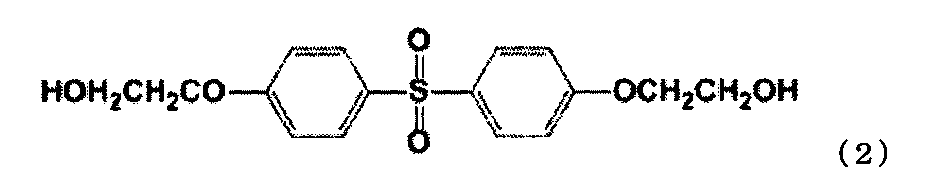
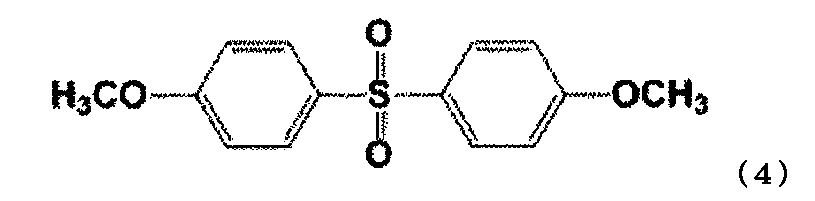
[3]式(1)に示す化合物が式(2)乃至式(7)の何れかで示される化合物である、[1]に記載の感熱記録材料、


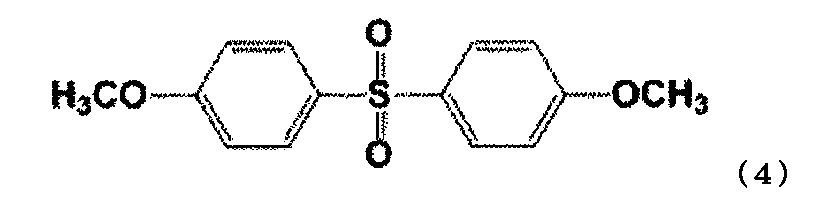



[4]式(1)で示される化合物が式(6)または式(7)である、[1]に記載の感熱記録材料
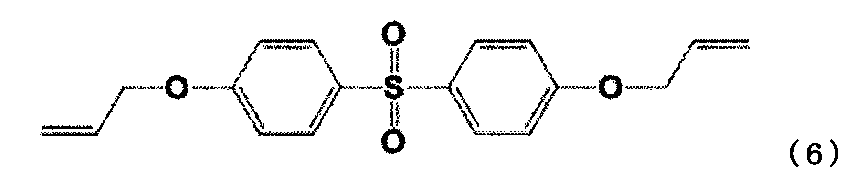

、及び
[5]式(1)に示す化合物が式(6)に示す化合物である[1]に記載の感熱記録材料を提供する。
本発明により熱に対する地肌かぶりが少なく、発色画像の保存安定性に優れた感熱記録材料を提供する事が出来た。
本発明を詳細に説明する。本発明の感熱記録材料は、発色性化合物と、顕色性化合物としてα型の結晶を有するビス(3-アリル-4-ヒドロキシフェニル)スルホンと式(1)で示される化合物とを含み、必要に応じて、その他の顕色性化合物、増感剤、結合剤、充填剤、及びその他の添加物等の1種若しくは2種以上を含んでもよい。
本発明において用いられるα型の結晶を有するビス(3-アリル-4-ヒドロキシフェニル)スルホンは、特開平11-29549号に基づき合成できる。式(1)で示される化合物は、例えば特開昭61-89090等に記載の公知の方法で合成でき、または市販品として入手する事もできる。
式(1)においてRは置換若しくは非置換のC1~C10のアルキル基、置換若しくは非置換のC2~C10のアルケニル基、又は置換若しくは非置換のアリール基を表す。
Rにおけるアルキル基としては、直鎖、分岐鎖又は環状のアルキル基が挙げられ、具体的には、メチル、エチル、n-プロピル、n-ブチル、n-ペンチル、n-ヘキシル、n-ヘプチル、n-オクチル、n-ノニル、n-デシル等の直鎖アルキル基(好ましくはC1~C10);イソプロピル、イソブチル、sec-ブチル、t-ブチル、イソアミル、t-アミル、イソヘキシル、t-ヘキシル、イソヘプチル、t-ヘプチル、イソオクチル、t-オクチル、2-エチルヘキシル、イソノニル、イソデシル等の分岐鎖アルキル基(好ましくはC3~C10);シクロプロピル、シクロブチル、シクロペンチル、シクロヘキシル、シクロヘプチル等の環状アルキル基(好ましくはC3~C7)等が挙げられる。
Rにおけるアルキル基としては、直鎖又は分岐鎖アルキル基が好ましく、直鎖アルキル基が特に好ましい。中でも、C1~C6の直鎖アルキル基が特に好ましい。
Rにおけるアルキル基は置換基を有してもよく、置換基の具体例としては、メトキシ、エトキシ、n-プロポキシ、n-ブトキシ、n-ペントキシ、n-ヘキシロキシ、n-ヘプトキシ、n-オクチロキシ、n-ノニロキシ、n-デシロキシ等の直鎖C1~C10アルコキシ基;イソプロポキシ、イソブトキシ、sec-ブトキシ、t-ブトキシ、イソアミロキシ、t-アミロキシ、イソヘキシロキシ、t-ヘキシロキシ、イソヘプトキシ、t-ヘプトキシ、イソオクチロキシ、t-オクチロキシ、2-エチルヘキシロキシ、イソノニロキシ、イソデシロキシ等のC3~C10分岐鎖アルコキシ基;シクロプロポキシ、シクロブトキシ、シクロペントキシ、シクロヘキシロキシ、シクロヘプトキシ等のC3~C7環状アルコキシ基;フェノキシ、ナフチロキシ、ビフェニロキシ等のC6~C12アリールオキシ基;フェニル、ナフチル、ビフェニル等のC6~C12アリール基(これらアリール基は、上記C1~C10の直鎖アルキル基(好ましくはC1~C10の直鎖アルキル基)及び後述するC2~C10の直鎖アルケニル基(好ましくはC2~C6直鎖アルケニル基)からなる群から選択される基で置換されているものが好ましい);ヒドロキシル基;シアノ基;ニトロ基;メチルアミノ、エチルアミノ、n-プロピルアミノ、n-ブチルアミノ、n-ペンチルアミノ、n-ヘキシルアミノ、n-ヘプチルアミノ、n-オクチルアミノ、n-ノニルアミノ、n-デシルアミノ等のモノC1~C10直鎖アルキルアミノ基;イソプロピルアミノ、イソブチルアミノ、sec-ブチルアミノ、t-ブチルアミノ、イソアミルアミノ、t-アミルアミノ、イソヘキシルアミノ、t-ヘキシルアミノ、イソヘプチルアミノ、t-ヘプチルアミノ、イソオクチルアミノ、t-オクチルアミノ、2-エチルヘキシルアミノ、イソノニルアミノ、イソデシルアミノ等のモノC3~C10分岐鎖アルキルアミノ基;シクロプロピルアミノ、シクロブチルアミノ、シクロペンチルアミノ、シクロヘキシルアミノ、シクロヘプチルアミノ等のモノC3~C7環状アルキルアミノ基;ジメチルアミノ、ジエチルアミノ、ジ-n-プロピルアミノ、ジ-n-ブチルアミノ、ジ-n-ペンチルアミノ、ジ-n-ヘキシルアミノ、ジ-n-ヘプチルアミノ、ジ-n-オクチルアミノ、ジ-n-ノニルアミノ、ジ-n-デシルアミノ等のジC1~C10直鎖アルキルアミノ基;ジイソプロピルアミノ、ジイソブチルアミノ、ジ-sec-ブチルアミノ、ジ-t-ブチルアミノ、ジイソアミルアミノ、ジ-t-アミルアミノ、ジイソヘキシルアミノ、ジ-t-ヘキシルアミノ、ジイソヘプチルアミノ、ジ-t-ヘプチルアミノ、ジイソオクチルアミノ、ジ-t-オクチルアミノ、ジ-(2-エチルヘキシル)アミノ、ジイソノニルアミノ、ジイソデシルアミノ等のジC3~C10分岐鎖アルキルアミノ基;ジシクロプロピルアミノ、ジシクロブチルアミノ、ジシクロペンチルアミノ、ジシクロヘキシルアミノ、ジシクロヘプチルアミノ等のジC3~C7環状アルキルアミノ等が挙げられる。
Rにおけるアルキル基の置換基としては、C1~C6の直鎖アルコキシ基、C3~C6の分岐アルコキシ基、ヒドロキシル基またはアミノ基が特に好ましい。
Rにおけるアルケニル基としては、直鎖、分岐鎖又は環状のアルケニル基が挙げられ、具体的には、ビニル、1-プロペニル、2-プロペニル、アリル、2-ペンテニル、3-ブテニル等の直鎖アルケニル基(好ましくはC2~C10);イソプロペニル、1-メチルアリル、3-メチル-2-ブテニル、2-メチル-1-プロペニル等のC2~C6の分岐鎖アルケニル基(好ましくはC4~C10);又は2-シクロペンテン-1-イル、3-シクロヘキセン-1-イル等の環状アルケニル基(好ましくはC4~C7)が挙げられる。
Rにおけるアルケニル基としては、直鎖又は分岐鎖アルケニル基が好ましく、直鎖アルケニル基が特に好ましい。中でも、C2~C6の直鎖アルケニル基が好ましく、C2~C4の直鎖アルケニル基が特に好ましい。
Rにおけるアルケニル基の置換基としては、上記アルキル基の置換基と同様のものを挙げることができるが、非置換のアルケニル基が好ましい。
Rにおけるアルケニル基としては、直鎖又は分岐鎖アルケニル基が好ましく、直鎖アルケニル基が特に好ましい。中でも、C2~C6の直鎖アルケニル基が好ましく、C2~C4の直鎖アルケニル基が特に好ましい。
Rにおけるアルケニル基の置換基としては、上記アルキル基の置換基と同様のものを挙げることができるが、非置換のアルケニル基が好ましい。
Rにおけるアリール基としては、具体例として、フェニル、ナフチル、ビフェニル等のC6~C12アリール基が挙げられ、フェニル基が特に好ましい。
Rにおけるアリール基は置換基を有してもよく、置換基としては上述したアルキル基が有してもよい置換基を挙げることができる。
上記式(1)で表される化合物の具体例を下記表1に示すが、本発明はこれらの具体例に限定されるものではない。

本発明において用いられる発色性化合物は、特に制限されないが、一般に感圧記録紙や感熱記録紙に用いられるものであればよく、例えばフルオラン系化合物、トリアリールメタン系化合物、スピロ系化合物、ジフェニルメタン系化合物、チアジン系化合物、ラクタム系化合物、フルオレン系化合物等が挙げられる。
フルオラン系化合物の具体例としては、例えば3-ジエチルアミノ-6-メチル-7-アニリノフルオラン、3-ジブチルアミノ-6-メチル-7-アニリノフルオラン、3-(N-メチル-N-シクロヘキシルアミノ)-6-メチル-7-アニリノフルオラン、3-(N-エチル-N-イソペンチルアミノ)-6-メチル-7-アニリノフルオラン、3-(N-エチル-N-イソブチルアミノ)-6-メチル-7-アニリノフルオラン、3-[N-エチル-N-(3-エトキシプロピル)アミノ]-6-メチル-7-アニリノフルオラン、3-(N-エチル-N-ヘキシルアミノ)-6-メチル-7-アニリノフルオラン、3-ジペンチルアミノ-6-メチル-7-アニリノフルオラン、3-(N-メチル-N-プロピルアミノ)-6-メチル-7-アニリノフルオラン、3-(N-エチル-N-テトラヒドロフリルアミノ)-6-メチル-7-アニリノフルオラン、3-ジエチルアミノ-6-メチル-7-(p-クロロアニリノ)フルオラン、3-ジエチルアミノ-6-メチル-7-(p-フルオロアニリノ)フルオラン、3-[N-エチル-N-(p-トリル)アミノ]-6-メチル-7-アニリノフルオラン、3-ジエチルアミノ-6-メチル-7-(p-トルイジノ)フルオラン、3-ジエチルアミノ-7-(o-クロロアニリノ)フルオラン、3-ジブチルアミノ-7-(o-クロロアニリノ)フルオラン、3-ジエチルアミノ-7-(o-フルオロアニリノ)フルオラン、3-ジブチルアミノ-7-(o-フルオロアニリノ)フルオラン、3-ジエチルアミノ-7-(3,4-ジクロロアニリノ)フルオラン、3-ピロリジノ-6-メチル-7-アニリノフルオラン、3-ジエチルアミノ-6-クロロ-7-エトキシエチルアミノフルオラン、3-ジエチルアミノ-6-クロロ-7-アニリノフルオラン、3-ジエチルアミノ-7-クロロフルオラン、3-ジエチルアミノ-7-メチルフルオラン、3-ジエチルアミノ-7-オクチルフルオラン、3-[N-エチル-N-(p-トリル)アミノ]-6-メチル-7-フェネチルフルオラン等が挙げられる。
トリアリールメタン系化合物の具体例としては、例えば3,3-ビス(p-ジメチルアミノフェニル)-6-ジメチルアミノフタリド(別名:クリスタルバイオレットラクトン又はCVL)、3,3-ビス(p-ジメチルアミノフェニル)フタリド、3-(p-ジメチルアミノフェニル)-3-(1,2-ジメチルアミノインドール-3-イル)フタリド、3-(p-ジメチルアミノフェニル)-3-(2-メチルインドール-3-イル)フタリド、3-(p-ジメチルアミノフェニル)-3-(2-フェニルインドール-3-イル)フタリド、3,3-ビス(1,2-ジメチルインドール-3-イル)-5-ジメチルアミノフタリド、3,3-ビス(1,2-ジメチルインドール-3-イル)-6-ジメチルアミノフタリド、3,3-ビス(9-エチルカルバゾール-3-イル)-5-ジメチルアミノフタリド、3,3-(2-フェニルインドール-3-イル)-5-ジメチルアミノフタリド、3-p-ジメチルアミノフェニル-3-(1-メチルピロール-2-イル)-6-ジメチルアミノフタリド等が挙げられる。
スピロ系化合物の具体例としては、例えば3-メチルスピロジナフトピラン、3-エチルスピロジナフトピラン、3,3’-ジクロロスピロジナフトピラン、3-ベンジルスピロジナフトピラン、3-プロピルスピロベンゾピラン、3-メチルナフト-(3-メトキシベンゾ)スピロピラン、1,3,3-トリメチル-6-ニトロ-8’-メトキシスピロ(インドリン-2,2’-ベンゾピラン)等が挙げられる。ジフェニルメタン系化合物の具体例としては、例えばN-ハロフェニル-ロイコオーラミン、4,4-ビス-ジメチルアミノフェニルベンズヒドリルベンジルエーテル、N-2,4,5-トリクロロフェニルロイコオーラミン等が挙げられる。チアジン系化合物の具体例としては、例えばベンゾイルロイコメチレンブルー、p-ニトロベンゾイルロイコメチレンブルー等が挙げられる。ラクタム系化合物の具体例としては、例えばローダミンBアニリノラクタム、ローダミンB-p-クロロアニリノラクタム等が挙げられる。フルオレン系化合物の具体例としては、例えば3,6-ビス(ジメチルアミノ)フルオレンスピロ(9,3’)-6’-ジメチルアミノフタリド、3,6-ビス(ジメチルアミノ)フルオレンスピロ(9,3’)-6’-ピロリジノフタリド、3-ジメチルアミノ-6-ジエチルアミノフルオレンスピロ(9,3’)-6’-ピロリジノフタリド等が挙げられる。これらの発色性化合物は単独もしくは混合して用いられる。
本発明において併用可能な顕色性化合物としては、特に制限されないが、一般に感圧記録紙や感熱記録紙に用いられているものであればよく、例えばα-ナフトール、β-ナフトール、p-オクチルフェノール、4-t-オクチルフェノール、p-t-ブチルフェノール、p-フェニルフェノール、1,1-ビス(p-ヒドロキシフェニル)プロパン、2,2-ビス(p-ヒドロキシフェニル)プロパン(別名:ビスフェノールA又はBPA)、2,2-ビス(p-ヒドロキシフェニル)ブタン、1,1-ビス(p-ヒドロキシフェニル)シクロヘキサン、4,4’-チオビスフェノール、4,4’-シクロ-ヘキシリデンジフェノール、2,2’-ビス(2,5-ジブロム-4-ヒドロキシフェニル)プロパン、4,4’-イソプロピリデンビス(2-t-ブチルフェノール)、2,2’-メチレンビス(4-クロロフェノール)、4,4’-ジヒドロキシジフェニルスルホン、4-ヒドロキシ-4’-メトキシジフェニルスルホン、2,4’-ジヒドロキシジフェニルスルホン、4-ヒドロキシ-4’-イソプロポキシジフェニルスルホン、4-ヒドロキシ-4’-エトキシジフェニルスルホン、4-ヒドロキシ-4’-ブトキシジフェニルスルホン、4-ヒドロキシ-4’-ベンジルオキシジフェニルスルホン、ビス(4-ヒドロキシフェニル)酢酸メチル、ビス(4-ヒドロキシフェニル)酢酸ブチル、ビス(4-ヒドロキシフェニル)酢酸ベンジル、2,4-ジヒドロキシ-2’-メトキシベンズアニリド等のフェノール性化合物;p-ヒドロキシ安息香酸ベンジル、p-ヒドロキシ安息香酸エチル、4-ヒドロキシフタル酸ジベンジル、4-ヒドロキシフタル酸ジメチル、5-ヒドロキシイソフタル酸エチル、3,5-ジ-t-ブチルサリチル酸、3,5-ジ-α-メチルベンジルサリチル酸等の芳香族カルボン酸誘導体;芳香族カルボン酸又はその多価金属塩等が挙げられる。
本発明において用いられる増感剤(熱可融性化合物)の具体例としては、例えば動植物性ワックス、合成ワックスなどのワックス類、高級脂肪酸、高級脂肪酸アミド、高級脂肪酸アニリド、ナフタレン誘導体、芳香族エーテル、芳香族カルボン酸誘導体、芳香族スルホン酸エステル誘導体、炭酸又はシュウ酸ジエステル誘導体、ビフェニル誘導体、ターフェニル誘導体、スルホン誘導体等が挙げられ、中でも常温では固体で、融点が60℃以上のものが好ましく使用される。
ワックス類の具体例としては、例えば木ろう、カルナウバろう、シェラック、パラフィン、モンタンろう、酸化パラフィン、ポリエチレンワックス、酸化ポリエチレン等が挙げられる。高級脂肪酸としては、例えばステアリン酸、ベヘン酸等が挙げられる。高級脂肪酸アミドとしては、例えばステアリン酸アミド、オレイン酸アミド、N-メチルステアリン酸アミド、エルカ酸アミド、メチロールベヘン酸アミド、メチレンビスステアリン酸アミド、エチレンビスステアリン酸アミド等が挙げられる。高級脂肪酸アニリドとしては、例えばステアリン酸アニリド、リノール酸アニリド等が挙げられる。ナフタレン誘導体としては、例えば1-ベンジルオキシナフタレン、2-ベンジルオキシナフタレン、1-ヒドロキシナフトエ酸フェニルエステル等が挙げられる。芳香族エーテルとしては、例えば1,2-ジフェノキシエタン、1,4-ジフェノキシブタン、1,2-ビス(3-メチルフェノキシ)エタン、1,2-ビス(4-メトキシフェノキシ)エタン、1,2-ビス(3,4-ジメチルフェニル)エタン、1-フェノキシ-2-(4-クロロフェノキシ)エタン、1-フェノキシ-2-(4-メトキシフェノキシ)エタン、1,2-ジフェノキシメチルベンゼン等が挙げられる。芳香族カルボン酸誘導体としては、例えばp-ヒドロキシ安息香酸ベンジルエステル、p-ベンジルオキシ安息香酸ベンジルエステル、テレフタル酸ジベンジルエステル等が挙げられる。芳香族スルホン酸エステル誘導体としては、例えばp-トルエンスルホン酸フェニルエステル、フェニルメシチレンスルホナート、4-メチルフェニルメシチレンスルホナート等が挙げられる。炭酸又はシュウ酸ジエステル誘導体としては、例えば炭酸ジフェニル、シュウ酸ジベンジルエステル、シュウ酸ジ(4-クロロベンジル)エステル、シュウ酸ジ(4-メチルベンジル)エステル類が挙げられる。ビフェニル誘導体としては、例えばp-ベンジルビフェニル、p-アリルオキシビフェニル等が挙げられ、ターフェニル誘導体としては、例えばm-ターフェニル等が挙げられ、スルホン誘導体としては、例えばジフェニルスルホン等が挙げられる。
本発明に用いられる結合剤の具体例としては、例えばメチルセルロース、メトキシセルロース、ヒドロキシエチルセルロース、カルボキシメチルセルロース、ナトリウムカルボキシメチルセルロース、セルロース、ポリビニルアルコール(PVA)、カルボキシル基変性ポリビニルアルコール、スルホン酸基変性ポリビニルアルコール、シリル基変性ポリビニルアルコール、ポリビニルピロリドン、ポリアクリルアミド、ポリアクリル酸、デンプン及びその誘導体、カゼイン、ゼラチン、水溶性イソプレンゴム、スチレン/無水マレイン酸共重合体のアルカリ塩、イソ(又はジイソ)ブチレン/無水マレイン酸共重合体のアルカリ塩等の水溶性の結合剤;並びに(メタ)アクリル酸エステル共重合体、スチレン/(メタ)アクリル酸エステル共重合体、ポリウレタン、ポリエステル系ポリウレタン、ポリエーテル系ポリウレタン、ポリ酢酸ビニル、エチレン/酢酸ビニル共重合体、ポリ塩化ビニル、塩化ビニル/酢酸ビニル共重合体、ポリ塩化ビニリデン、ポリスチレン、スチレン/ブタジエン(SB)共重合体、カルボキシル化スチレン/ブタジエン(SB)共重合体、スチレン/ブタジエン/アクリル酸系共重合体、アクリロニトリル/ブタジエン(NB)共重合体、カルボキシル化アクリロニトリル/ブタジエン(NB)共重合体、コロイダルシリカと(メタ)アクリル樹脂の複合体粒子等の疎水性高分子エマルジョン等が挙げられる。
本発明に用いられる充填剤の具体例としては、例えば炭酸カルシウム、炭酸マグネシウム、酸化マグネシウム、シリカ、ホワイトカーボン、タルク、クレー、アルミナ、水酸化マグネシウム、水酸化アルミニウム、酸化アルミニウム、硫酸バリウム、ポリスチレン樹脂、尿素-ホルマリン樹脂等が挙げられる。
更に本発明においては上記以外の種々の添加剤を使用することができる。例えばサーマルヘッド磨耗防止、スティッキング防止等の目的でのステアリン酸亜鉛、ステアリン酸カルシウム等の高級脂肪酸金属塩を使用することができる。また、酸化防止あるいは老化防止効果を付与する為にフェノール誘導体、ベンゾフェノン系化合物、ベンゾトリアゾール系化合物等の紫外線吸収剤を使用することができる。また、各種の界面活性剤、消泡剤等を使用してもよい。
本発明における感熱記録材料中に含まれる主な各成分の含有率であるが、発色性化合物は通常1~50重量%、好ましくは5~30重量%である。顕色性化合物であるα型の結晶を有するビス(3-アリル-4-ヒドロキシフェニル)スルホンと式(1)で示される化合物の総量は通常1~70重量%、好ましくは10~50重量%である。増感剤は通常1~80重量%であり、結合剤は通常1~90重量%であり、充填剤は通常0~80重量%である。更に、α型の結晶を有するビス(3-アリル-4-ヒドロキシフェニル)スルホンと式(1)で示される化合物の総量は発色性化合物に対して、通常0.5~20重量倍であり、好ましくは1~5重量倍の範囲である。また、α型の結晶を有するビス(3-アリル-4-ヒドロキシフェニル)スルホンと式(1)で示される化合物との重量比は9:1~1:9、好ましくは9:1~5:5、更に好ましくは8:2~6:4である。式(1)の混合比率が40重量%を超えると添加による改善が見られない場合がある。その他、滑剤、界面活性剤、消泡剤、紫外線吸収剤等は各々任意の割合で通常0~30重量%の範囲で使用するのが好ましい。本発明の感熱記録材料は、これらの成分以外にも、他の顕色性化合物や増感剤又はその他の添加物を併用してもよい。
次に、本発明の感熱記録材料の調製方法を説明する。本発明に用いられる、発色性化合物、α型の結晶を有するビス(3-アリル-4-ヒドロキシフェニル)スルホン、式(1)で示される化合物を、それぞれ別々に結合剤あるいは必要に応じてその他の添加剤等と共にボールミル、アトライター、サンドミル等の分散機にて粉砕、分散化した後(通常、粉砕や分散を湿式で行うときは水を媒体として用いる)、混合して本発明の感熱記録材料の塗布液を調製する事ができる。得られた塗布液を紙(普通紙、上質紙、コート紙等が使用出来る)、プラスチックシート、合成紙等の支持体上に通常乾燥重量で1~20g/m2になるようにバーコーター、ブレードコーター等により塗布、乾燥して本発明の感熱記録層からなる試料を作製する事ができる。
また、必要に応じて感熱記録層と支持体の間に中間層を設けたり、感熱記録層上にオーバーコート層(保護層)を設けても良い。中間層、オーバーコート層(保護層)は、例えば前記の結合剤あるいは必要に応じてその他の添加物と共に、感熱記録材料塗布液の調製におけるのと同様に必要に応じて粉砕、分散して中間層用塗布液又はオーバーコート層(保護層)用塗布液とした後、乾燥時の重量で通常0.1~10g/m2程度となるように塗布し、乾燥することにより設けられる。
本発明を実施例により更に具体的に説明するが、本発明がこれらに限定されるものではない。実施例中「部」は重量部、溶液の説明における「%」は重量%である。
[実施例1] (感熱記録層の作製)
表1における化合物7を下記組成でサンドグラインダーを用いて平均粒径が1μm以下になるように粉砕、分散化して[A]液を調製した。
表1における化合物7を下記組成でサンドグラインダーを用いて平均粒径が1μm以下になるように粉砕、分散化して[A]液を調製した。
[A]液:表1における化合物7(特開昭61-89090号を参照) 25部
25%PVA水溶液 20部
水 55部
25%PVA水溶液 20部
水 55部
下記組成の混合物をサンドグラインダーを用いて平均粒径が1μm以下になるように粉砕、分散化してそれぞれ[B]液及び[C]液を調製した。
[B]液:3-ジブチルアミノ-6-メチル-7-アニリノフルオラン 5部
15%PVA水溶液 40部
水 25部
[C]液:α型結晶のビス(3-アリル-4-ヒドロキシフェニル)スルホン
(特開平11-29549号を参照) 25部
25%PVA水溶液 20部
水 55部
[B]液:3-ジブチルアミノ-6-メチル-7-アニリノフルオラン 5部
15%PVA水溶液 40部
水 25部
[C]液:α型結晶のビス(3-アリル-4-ヒドロキシフェニル)スルホン
(特開平11-29549号を参照) 25部
25%PVA水溶液 20部
水 55部
次いで、上記で得られた各液を下記の組成で混合して感熱記録材料の塗布液を調製し、坪量50g/m2の上質紙上に乾燥時の重量が5g/m2となるように塗布、乾燥して本発明の感熱記録層を有する試料を作製した。
[A]液 7.2部
[B]液 8.6部
[C]液 16.8部
67%炭酸カルシウム水分散液 9.0部
48%変性スチレン・ブタジエン共重合体ラテックス 6.3部
水 52.1部
[A]液 7.2部
[B]液 8.6部
[C]液 16.8部
67%炭酸カルシウム水分散液 9.0部
48%変性スチレン・ブタジエン共重合体ラテックス 6.3部
水 52.1部
(保護層の形成)
次に下記組成からなる保護層塗布液を前記の感熱記録層上に乾燥時の重量が2g/m2となるように塗布、乾燥して保護層付きの感熱記録層を有する試料を得た。
40%スチレン/アクリル酸エステル共重合体エマルジョン 115部
5%ベントナイト水分散液 17部
45%スチレン・アクリル共重合体水性エマルジョン 44部
39%ステアリン酸亜鉛水分散液 103部
67%炭酸カルシウム水分散液 15部
次に下記組成からなる保護層塗布液を前記の感熱記録層上に乾燥時の重量が2g/m2となるように塗布、乾燥して保護層付きの感熱記録層を有する試料を得た。
40%スチレン/アクリル酸エステル共重合体エマルジョン 115部
5%ベントナイト水分散液 17部
45%スチレン・アクリル共重合体水性エマルジョン 44部
39%ステアリン酸亜鉛水分散液 103部
67%炭酸カルシウム水分散液 15部
[比較例1]
実施例1の[C]液のα型結晶のビス(3-アリル-4-ヒドロキシフェニル)スルホンの代わりに特開昭61-89090号に記載の方法により得られるα型の結晶とは異なるビス(3-アリル-4-ヒドロキシフェニル)スルホンを使用する以外は実施例1と同様にして比較用の試料を得た。
実施例1の[C]液のα型結晶のビス(3-アリル-4-ヒドロキシフェニル)スルホンの代わりに特開昭61-89090号に記載の方法により得られるα型の結晶とは異なるビス(3-アリル-4-ヒドロキシフェニル)スルホンを使用する以外は実施例1と同様にして比較用の試料を得た。
[耐熱性試験]
上記の実施例1及び比較例1で得られた感熱記録材層を有する両試料を、イシダ社製のサーマルプリンター(型式:L-2000)で印字し、通常の加熱発色性を確認すると共に、両試料を70℃の恒温器中に1時間放置した。試験前後の試料の未記録部(地肌)のマクベス反射濃度をマクベス社製のマクベス反射濃度計(型式:RD-914)で測定した。評価結果を下表2及び表3に示す。
尚、試験前後の試料の未記録部のマクベス反射濃度の変化量が少ない程、地肌かぶりが少なく耐熱性に優れていることがわかる。変化量は以下の計算式で求めた。
変化量=試験後の試料の未記録部のマクベス反射濃度-試験前の試料の未記録部のマクベス反射濃度
上記の実施例1及び比較例1で得られた感熱記録材層を有する両試料を、イシダ社製のサーマルプリンター(型式:L-2000)で印字し、通常の加熱発色性を確認すると共に、両試料を70℃の恒温器中に1時間放置した。試験前後の試料の未記録部(地肌)のマクベス反射濃度をマクベス社製のマクベス反射濃度計(型式:RD-914)で測定した。評価結果を下表2及び表3に示す。
尚、試験前後の試料の未記録部のマクベス反射濃度の変化量が少ない程、地肌かぶりが少なく耐熱性に優れていることがわかる。変化量は以下の計算式で求めた。
変化量=試験後の試料の未記録部のマクベス反射濃度-試験前の試料の未記録部のマクベス反射濃度
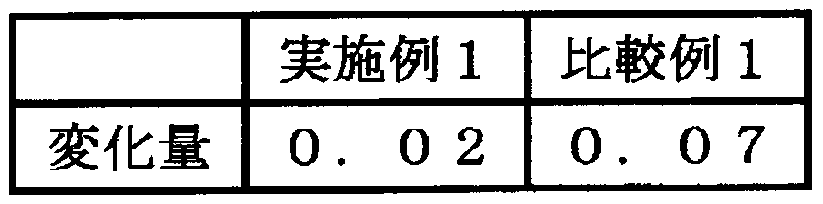
表2の結果から耐熱性において、実施例1は比較例1と比べ極めて優れる結果を示した。
実施例2~6
実施例1の[A]液に用いられている、表1における化合物7の代わりに、各々、表1における化合物2、化合物3、化合物4、化合物5、化合物11を用いた以外は実施例1と同様にして、本発明の感熱記録材料を得た。
実施例1の[A]液に用いられている、表1における化合物7の代わりに、各々、表1における化合物2、化合物3、化合物4、化合物5、化合物11を用いた以外は実施例1と同様にして、本発明の感熱記録材料を得た。
比較例2~6
実施例1の[C]液のα型結晶のビス(3-アリル-4-ヒドロキシフェニル)スルホンの代わりに特開昭61-89090号に記載の方法により得られるα型の結晶とは異なるビス(3-アリル-4-ヒドロキシフェニル)スルホンを使用する以外は、各々実施例2~6と同様にして比較用の感熱記録材料を得た。
実施例1の[C]液のα型結晶のビス(3-アリル-4-ヒドロキシフェニル)スルホンの代わりに特開昭61-89090号に記載の方法により得られるα型の結晶とは異なるビス(3-アリル-4-ヒドロキシフェニル)スルホンを使用する以外は、各々実施例2~6と同様にして比較用の感熱記録材料を得た。
上記実施例2~6及び比較例2~6で得られた感熱記録材料を、実施例1と同様にして耐熱性試験を実施した。結果を下表3に示す。
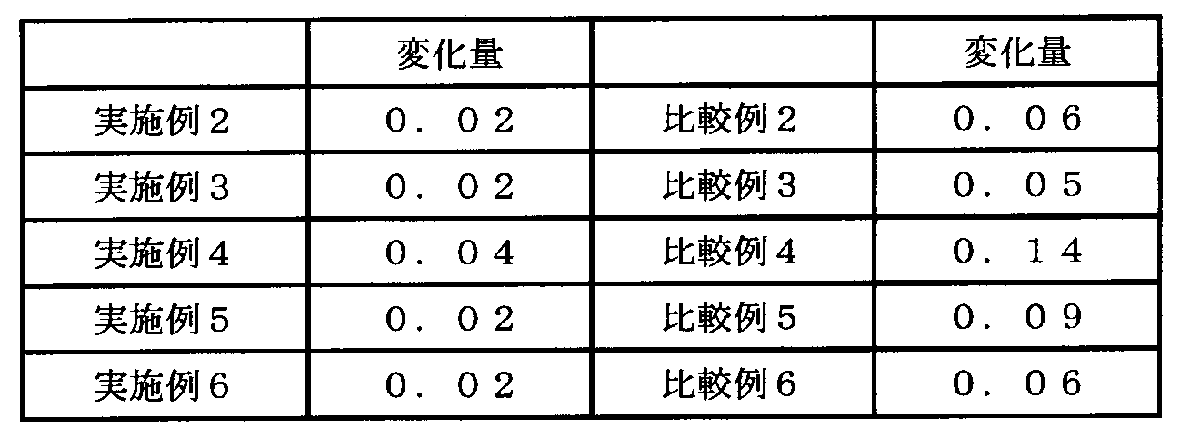
本発明の、発色性化合物、α型の結晶を有するビス(3-アリル-4-ヒドロキシフェニル)スルホン及び式(1)で示される化合物を含有する感熱記録材料は、従来公知のものに比べて発色性に優れ、且つ乾熱及び湿熱に対する未記録部の地肌かぶりが少なく、保存安定性に優れていると言える。
Claims (5)
- 発色性化合物、α型の結晶を有するビス(3-アリル-4-ヒドロキシフェニル)スルホン及び下記式(1)で示される化合物を含有することを特徴とする感熱記録材料。

(式1においてRは置換若しくは非置換のC1~C10のアルキル基、置換若しくは非置換のC2~C10のアルケニル基、又は置換若しくは非置換のアリール基を表す) - 式(1)のRは、非置換C1~C10のアルキル基、非置換のアリール基、非置換のC2~C6のアルケニル基、又はヒドロキシル基、アミノ基、C3~C10直鎖アルコキシ基、ニトロ基及びC2~C10の直鎖アルケニル基から選択される置換基で置換された、C1~C10のアルキル基又はアリール基を表す、請求項1に記載の感熱記録材料。
- 式(1)に示す化合物が式(2)乃至式(7)の何れかで示される化合物である、請求項1に記載の感熱記録材料。


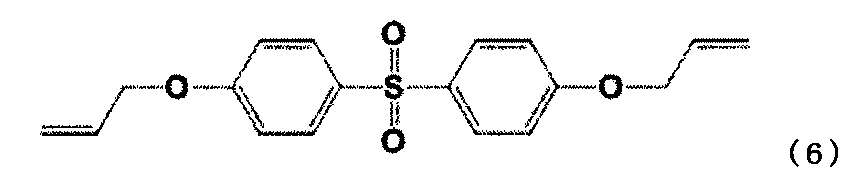

- 式(1)で示される化合物が式(6)または式(7)に示される化合物である、請求項1に記載の感熱記録材料。
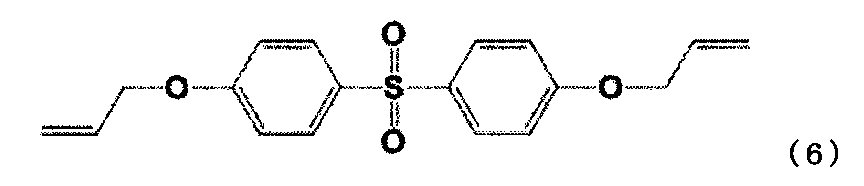

- 式(1)に示す化合物が式(6)に示す化合物である、請求項1に記載の感熱記録材料。
Priority Applications (1)
| Application Number | Priority Date | Filing Date | Title |
|---|---|---|---|
| JP2015557907A JPWO2015108173A1 (ja) | 2014-01-17 | 2015-01-16 | 感熱記録材料 |
Applications Claiming Priority (4)
| Application Number | Priority Date | Filing Date | Title |
|---|---|---|---|
| JP2014006629 | 2014-01-17 | ||
| JP2014-006629 | 2014-01-17 | ||
| JP2014-157814 | 2014-08-01 | ||
| JP2014157814 | 2014-08-01 |
Publications (1)
| Publication Number | Publication Date |
|---|---|
| WO2015108173A1 true WO2015108173A1 (ja) | 2015-07-23 |
Family
ID=53543056
Family Applications (1)
| Application Number | Title | Priority Date | Filing Date |
|---|---|---|---|
| PCT/JP2015/051152 Ceased WO2015108173A1 (ja) | 2014-01-17 | 2015-01-16 | 感熱記録材料 |
Country Status (2)
| Country | Link |
|---|---|
| JP (1) | JPWO2015108173A1 (ja) |
| WO (1) | WO2015108173A1 (ja) |
Citations (12)
| Publication number | Priority date | Publication date | Assignee | Title |
|---|---|---|---|---|
| JPS6072788A (ja) * | 1983-09-30 | 1985-04-24 | Shin Nisso Kako Co Ltd | 熱感応発色性記録材料 |
| JPS6189087A (ja) * | 1984-10-08 | 1986-05-07 | Nikka Chem Ind Co Ltd | 感熱記録材料用増感剤 |
| JPS6189090A (ja) * | 1984-10-08 | 1986-05-07 | Nikka Chem Ind Co Ltd | 感熱記録材料 |
| JPS6442447A (en) * | 1987-08-10 | 1989-02-14 | Tokuyama Soda Kk | Vinylphenyl compound and production thereof |
| JPH08169180A (ja) * | 1994-12-19 | 1996-07-02 | Mitsui Toatsu Chem Inc | 感熱記録材料 |
| JPH08175024A (ja) * | 1994-12-26 | 1996-07-09 | Mitsubishi Paper Mills Ltd | 感熱記録材料 |
| JPH1129549A (ja) * | 1997-05-14 | 1999-02-02 | Nippon Kayaku Co Ltd | 感熱記録材料およびビスフェノールs誘導体の新規結晶 |
| JPH11208122A (ja) * | 1998-01-21 | 1999-08-03 | Oji Paper Co Ltd | 感熱記録体 |
| JP2002079758A (ja) * | 2000-09-05 | 2002-03-19 | Nippon Kayaku Co Ltd | 感熱記録材料 |
| JP2002274058A (ja) * | 2001-03-21 | 2002-09-25 | Ricoh Co Ltd | 感熱記録材料 |
| JP2005066881A (ja) * | 2003-08-27 | 2005-03-17 | Mitsubishi Paper Mills Ltd | 両面記録媒体 |
| JP2008188926A (ja) * | 2007-02-07 | 2008-08-21 | Nippon Kayaku Co Ltd | 感熱記録材料 |
-
2015
- 2015-01-16 WO PCT/JP2015/051152 patent/WO2015108173A1/ja not_active Ceased
- 2015-01-16 JP JP2015557907A patent/JPWO2015108173A1/ja active Pending
Patent Citations (12)
| Publication number | Priority date | Publication date | Assignee | Title |
|---|---|---|---|---|
| JPS6072788A (ja) * | 1983-09-30 | 1985-04-24 | Shin Nisso Kako Co Ltd | 熱感応発色性記録材料 |
| JPS6189087A (ja) * | 1984-10-08 | 1986-05-07 | Nikka Chem Ind Co Ltd | 感熱記録材料用増感剤 |
| JPS6189090A (ja) * | 1984-10-08 | 1986-05-07 | Nikka Chem Ind Co Ltd | 感熱記録材料 |
| JPS6442447A (en) * | 1987-08-10 | 1989-02-14 | Tokuyama Soda Kk | Vinylphenyl compound and production thereof |
| JPH08169180A (ja) * | 1994-12-19 | 1996-07-02 | Mitsui Toatsu Chem Inc | 感熱記録材料 |
| JPH08175024A (ja) * | 1994-12-26 | 1996-07-09 | Mitsubishi Paper Mills Ltd | 感熱記録材料 |
| JPH1129549A (ja) * | 1997-05-14 | 1999-02-02 | Nippon Kayaku Co Ltd | 感熱記録材料およびビスフェノールs誘導体の新規結晶 |
| JPH11208122A (ja) * | 1998-01-21 | 1999-08-03 | Oji Paper Co Ltd | 感熱記録体 |
| JP2002079758A (ja) * | 2000-09-05 | 2002-03-19 | Nippon Kayaku Co Ltd | 感熱記録材料 |
| JP2002274058A (ja) * | 2001-03-21 | 2002-09-25 | Ricoh Co Ltd | 感熱記録材料 |
| JP2005066881A (ja) * | 2003-08-27 | 2005-03-17 | Mitsubishi Paper Mills Ltd | 両面記録媒体 |
| JP2008188926A (ja) * | 2007-02-07 | 2008-08-21 | Nippon Kayaku Co Ltd | 感熱記録材料 |
Also Published As
| Publication number | Publication date |
|---|---|
| JPWO2015108173A1 (ja) | 2017-03-23 |
Similar Documents
| Publication | Publication Date | Title |
|---|---|---|
| US10780724B2 (en) | Heat-sensitive recording material | |
| JP2018043363A (ja) | 感熱記録材料 | |
| JP2008296436A (ja) | 感熱記録材料 | |
| JP7655667B2 (ja) | 感熱記録材料 | |
| JP2008188926A (ja) | 感熱記録材料 | |
| JPWO2015108173A1 (ja) | 感熱記録材料 | |
| JP2008296427A (ja) | 感熱記録材料 | |
| JP4148792B2 (ja) | 感熱記録材料 | |
| JP4535503B2 (ja) | 感熱記録材料 | |
| WO2015125861A1 (ja) | 感熱記録材料 | |
| JP2008296426A (ja) | 感熱記録材料 | |
| JP2005014559A (ja) | 感熱記録材料 | |
| JP2009126067A (ja) | 感熱記録材料 | |
| JP2015155184A (ja) | 感熱記録材料 | |
| JP2015058629A (ja) | 感熱記録材料 | |
| JP2005014329A (ja) | 感熱記録材料 | |
| JP2015110286A (ja) | 感熱記録材料 | |
| JP2015058628A (ja) | 感熱記録材料 | |
| JP2015058630A (ja) | 感熱記録材料 | |
| JP2014205255A (ja) | 感熱記録材料 | |
| JP2008049482A (ja) | 感熱記録材料 | |
| JP2007326268A (ja) | 感熱記録材料 | |
| JP2008080620A (ja) | 感熱記録材料 | |
| JP2007268887A (ja) | 感熱記録材料 | |
| JP2007168076A (ja) | 感熱記録材料 |
Legal Events
| Date | Code | Title | Description |
|---|---|---|---|
| 121 | Ep: the epo has been informed by wipo that ep was designated in this application |
Ref document number: 15737118 Country of ref document: EP Kind code of ref document: A1 |
|
| ENP | Entry into the national phase |
Ref document number: 2015557907 Country of ref document: JP Kind code of ref document: A |
|
| NENP | Non-entry into the national phase |
Ref country code: DE |
|
| 122 | Ep: pct application non-entry in european phase |
Ref document number: 15737118 Country of ref document: EP Kind code of ref document: A1 |