WO2014119675A1 - 半導体デバイス検査装置及び半導体デバイス検査方法 - Google Patents
半導体デバイス検査装置及び半導体デバイス検査方法 Download PDFInfo
- Publication number
- WO2014119675A1 WO2014119675A1 PCT/JP2014/052145 JP2014052145W WO2014119675A1 WO 2014119675 A1 WO2014119675 A1 WO 2014119675A1 JP 2014052145 W JP2014052145 W JP 2014052145W WO 2014119675 A1 WO2014119675 A1 WO 2014119675A1
- Authority
- WO
- WIPO (PCT)
- Prior art keywords
- signal
- unit
- semiconductor device
- signal terminal
- terminal
- Prior art date
- Legal status (The legal status is an assumption and is not a legal conclusion. Google has not performed a legal analysis and makes no representation as to the accuracy of the status listed.)
- Ceased
Links
Images


Classifications
-
- G—PHYSICS
- G01—MEASURING; TESTING
- G01R—MEASURING ELECTRIC VARIABLES; MEASURING MAGNETIC VARIABLES
- G01R31/00—Arrangements for testing electric properties; Arrangements for locating electric faults; Arrangements for electrical testing characterised by what is being tested not provided for elsewhere
- G01R31/26—Testing of individual semiconductor devices
- G01R31/265—Contactless testing
- G01R31/2656—Contactless testing using non-ionising electromagnetic radiation, e.g. optical radiation
-
- G—PHYSICS
- G01—MEASURING; TESTING
- G01N—INVESTIGATING OR ANALYSING MATERIALS BY DETERMINING THEIR CHEMICAL OR PHYSICAL PROPERTIES
- G01N21/00—Investigating or analysing materials by the use of optical means, i.e. using sub-millimetre waves, infrared, visible or ultraviolet light
-
- G—PHYSICS
- G01—MEASURING; TESTING
- G01N—INVESTIGATING OR ANALYSING MATERIALS BY DETERMINING THEIR CHEMICAL OR PHYSICAL PROPERTIES
- G01N21/00—Investigating or analysing materials by the use of optical means, i.e. using sub-millimetre waves, infrared, visible or ultraviolet light
- G01N21/84—Systems specially adapted for particular applications
- G01N21/88—Investigating the presence of flaws or contamination
- G01N21/95—Investigating the presence of flaws or contamination characterised by the material or shape of the object to be examined
- G01N21/9501—Semiconductor wafers
-
- G—PHYSICS
- G01—MEASURING; TESTING
- G01R—MEASURING ELECTRIC VARIABLES; MEASURING MAGNETIC VARIABLES
- G01R23/00—Arrangements for measuring frequencies; Arrangements for analysing frequency spectra
- G01R23/16—Spectrum analysis; Fourier analysis
-
- G—PHYSICS
- G01—MEASURING; TESTING
- G01R—MEASURING ELECTRIC VARIABLES; MEASURING MAGNETIC VARIABLES
- G01R31/00—Arrangements for testing electric properties; Arrangements for locating electric faults; Arrangements for electrical testing characterised by what is being tested not provided for elsewhere
- G01R31/26—Testing of individual semiconductor devices
- G01R31/2601—Apparatus or methods therefor
-
- G—PHYSICS
- G01—MEASURING; TESTING
- G01R—MEASURING ELECTRIC VARIABLES; MEASURING MAGNETIC VARIABLES
- G01R31/00—Arrangements for testing electric properties; Arrangements for locating electric faults; Arrangements for electrical testing characterised by what is being tested not provided for elsewhere
- G01R31/28—Testing of electronic circuits, e.g. by signal tracer
- G01R31/2851—Testing of integrated circuits [IC]
-
- G—PHYSICS
- G01—MEASURING; TESTING
- G01R—MEASURING ELECTRIC VARIABLES; MEASURING MAGNETIC VARIABLES
- G01R31/00—Arrangements for testing electric properties; Arrangements for locating electric faults; Arrangements for electrical testing characterised by what is being tested not provided for elsewhere
- G01R31/28—Testing of electronic circuits, e.g. by signal tracer
- G01R31/302—Contactless testing
- G01R31/308—Contactless testing using non-ionising electromagnetic radiation, e.g. optical radiation
- G01R31/311—Contactless testing using non-ionising electromagnetic radiation, e.g. optical radiation of integrated circuits
-
- H—ELECTRICITY
- H10—SEMICONDUCTOR DEVICES; ELECTRIC SOLID-STATE DEVICES NOT OTHERWISE PROVIDED FOR
- H10P—GENERIC PROCESSES OR APPARATUS FOR THE MANUFACTURE OR TREATMENT OF DEVICES COVERED BY CLASS H10
- H10P74/00—Testing or measuring during manufacture or treatment of wafers, substrates or devices
- H10P74/20—Testing or measuring during manufacture or treatment of wafers, substrates or devices characterised by the properties tested or measured, e.g. structural or electrical properties
- H10P74/203—Structural properties, e.g. testing or measuring thicknesses, line widths, warpage, bond strengths or physical defects
-
- G—PHYSICS
- G01—MEASURING; TESTING
- G01N—INVESTIGATING OR ANALYSING MATERIALS BY DETERMINING THEIR CHEMICAL OR PHYSICAL PROPERTIES
- G01N2201/00—Features of devices classified in G01N21/00
- G01N2201/12—Circuits of general importance; Signal processing
Definitions
- the present invention relates to a semiconductor device inspection apparatus and a semiconductor device inspection method.
- optical probing techniques called EOP (Electro Optical Probing) and EOFM (Electro-Optical Frequency Mapping) are known.
- EOP Electro Optical Probing
- EOFM Electro-Optical Frequency Mapping
- optical probing technology as described above is a very effective technology because it can specify the failure location and cause of failure in a semiconductor device such as an integrated circuit.
- an object of the present invention is to provide a semiconductor device inspection apparatus and a semiconductor device inspection method capable of efficiently and accurately inspecting a semiconductor device.
- a semiconductor device inspection apparatus includes a light generation unit that generates light applied to a semiconductor device that is a device to be inspected, and a semiconductor when light generated by the light generation unit is applied to the semiconductor device.
- a light detection unit that detects reflected light reflected by the device and outputs a detection signal; a drive signal application unit that applies a drive signal for driving the semiconductor device to the semiconductor device; and a first electric signal to which the detection signal is input
- a measurement unit, a second electrical measurement unit to which a detection signal and a drive signal are selectively input, a first signal terminal electrically connected to the light detection unit, and a drive signal application unit are electrically connected.
- the switching unit uses the connection destination of the connection unit as the first signal terminal
- the first and second electrical measurement units can simultaneously measure detection signals at two frequencies. . That is, the semiconductor device can be inspected efficiently.
- the detection signal is input to the first electric measurement unit and the drive signal is input to the second electric measurement unit. Therefore, the phase difference can be calculated from the phase of the detection signal and the phase of the drive signal, and the failure location and the cause of the failure can be specified from the phase difference. That is, the semiconductor device can be inspected with high accuracy. As described above, according to the semiconductor device apparatus, the inspection of the semiconductor device can be performed efficiently and accurately.
- the other end that is provided between the first electrical measurement unit and the first signal terminal and is connected to the first signal terminal by the switching unit is connected to the second.
- a signal attenuating unit for attenuating an electric signal flowing in the direction from the first signal terminal toward the first electric measuring unit may be further provided.
- the signal attenuating unit amplifies the electric signal from the light detection unit to the first signal terminal, and the electric signal from the first signal terminal to the first electric measurement unit.
- the signal attenuating unit includes an amplifier that amplifies an electric signal from the photodetection unit to the first signal terminal, an electric signal from the photodetection unit to the first signal terminal, and the first signal terminal to the first signal terminal. And an attenuator for attenuating an electrical signal directed to the electrical measurement unit.
- the signal attenuating unit has an electrical resistance electrically connected to the ground, the switching unit has an attenuation switching unit electrically connected to the electrical resistance, and the switching unit is the other end of the connection unit. May be electrically connected to the first signal terminal.
- the signal attenuating unit has an electrical resistance electrically connected to the ground, and the switching unit is electrically connected to the third signal terminal and the light detection unit electrically connected to the electrical resistance.
- the fourth signal terminal and the intermediate connection portion whose one end is electrically connected to the first signal terminal are further included, and the switching portion connects the other end of the connection portion to the first signal terminal.
- the intermediate connection portion When the intermediate connection portion is connected to the fourth signal terminal and the other end of the connection portion is connected to the second signal terminal, the intermediate connection portion may be connected to the third signal terminal. With such a configuration, it is possible to prevent the noise signal from being input to the first electric measurement unit, and to calculate the phase difference between the detection signal and the drive signal with higher accuracy.
- the first electrical measurement unit and the second electrical measurement unit measure the amplitude of each component of the composite wave
- the first spectrum analysis unit and the second spectrum It may be an analysis unit.
- the switching unit when the switching unit connects the other end to the second signal terminal, the frequency and phase of the reference signal that operates the first spectrum analysis unit, and the second You may further provide the signal synchronizer which synchronizes the frequency and phase of the reference signal which operate
- the first electrical measurement unit is a spectrum analysis unit that measures the amplitude of each component of the composite wave
- the second electrical measurement unit is a lock-in amplification unit. May be.
- a semiconductor device inspection method includes a light generation step for generating light to be irradiated on a semiconductor device that is a device to be inspected, and when the semiconductor device is irradiated with light generated in the light generation step.
- a light detection step of detecting reflected light reflected by the semiconductor device and outputting a detection signal a drive signal applying step of applying a drive signal for driving the semiconductor device to the semiconductor device, and the detection signal as a first electric measurement unit
- a second measurement step of selectively inputting the detection signal and the drive signal to the second electric measurement unit. Also by this semiconductor device inspection method, the semiconductor device can be inspected efficiently and accurately for the same reason as the above-described semiconductor device inspection apparatus.
- the drive signal may be input to the second electric measurement unit after the detection signal is input to the second electric measurement unit in the second measurement step.
- the first and second electrical measurement units measure detection signals at two frequencies to efficiently identify abnormal frequencies, and then accurately identify the location of failure and cause of failure from the phase difference between the detection signal and drive signal. it can.
- the detection signal may be input to the second electrical measurement unit after the drive signal is input to the second electrical measurement unit in the second measurement step.
- a failure location and a cause of failure can be identified from the phase difference between the detection signal and the drive signal, and processing such as noise removal can be performed thereafter.
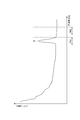
- 3 is a graph showing an example of setting a frequency band in the semiconductor device inspection apparatus of FIG. 1.
- 3 is a graph showing an example of setting a frequency band in the semiconductor device inspection apparatus of FIG. 1.
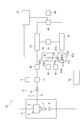
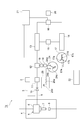
- It is a block diagram of the semiconductor device test
- It is a block diagram of the semiconductor device test
- the semiconductor device inspection apparatus 1 is an apparatus for inspecting the semiconductor device 8 such as specifying an abnormality occurrence location in the semiconductor device 8 that is a device under test (DUT).
- the semiconductor device 8 includes an integrated circuit having a PN junction such as a transistor (for example, a small scale integrated circuit (SSI), a medium scale integrated circuit (MSI), a large scale integrated circuit (LSI: Large). Scale Integration), Very Large Scale Integration (VLSI), Ultra Large Scale Integration (ULSI), Giga Scale Integration (GSI), High Current / High Voltage There are MOS transistors and bipolar transistors.
- the semiconductor device 8 may be a semiconductor device that can be modulated by heat on the substrate.
- the semiconductor device inspection apparatus 1 includes a laser light source (light generation unit) 2.
- the laser light source 2 is operated by a first power source (not shown), and emits light irradiated on the semiconductor device 8.
- the light emitted from the laser light source 2 is guided to the scanning optical system 5 through the polarization-preserving single mode optical fiber 3 for probe light.
- the scan optical system 5 has a scan head 6 and a lens system 7. Thereby, the light guided to the scanning optical system 5 forms an image at a predetermined position of the semiconductor device 8, and the irradiation region of the light is scanned two-dimensionally with respect to the semiconductor device 8.
- the scanning optical system 5 and the semiconductor device 8 are disposed in the dark box 4.
- the reflected light reflected by the semiconductor device 8 when the light emitted from the laser light source 2 is applied to the semiconductor device 8 is guided to the optical sensor (light detection unit) 10 through the optical fiber 9 for return light.
- the optical sensor 10 is operated by a second power source (not shown) provided separately from a first power source (not shown), detects reflected light, and outputs a detection signal.
- the detection signal output from the optical sensor 10 is input to the branch circuit 12 via the amplifier 11.
- the branch circuit 12 branches and outputs the detection signal.
- One of the branched detection signals is input to a spectrum analyzer (first electrical measurement unit / first spectrum analysis unit / first spectrum analyzer) 13, and the other of the branched detection signals is an attenuator 18,
- the signal is input to the spectrum analyzer (second electrical measurement unit / second spectrum analysis unit / second spectrum analyzer) 14 via the amplifier 19 and the switching unit 17.
- the spectrum analysis unit is an electrical measurement unit that measures the amplitude of each component of the composite wave signal such as a spectrum analyzer.
- the spectrum analyzers 13 and 14 are electrically connected to each other via a signal synchronization unit 15.
- the spectrum analyzers 13 and 14 are electrically connected to the output signal processing unit 16.
- the spectrum analyzers 13 and 14 generate a signal based on the input electrical signal (details will be described later), and input the signal to the output signal processing unit 16.
- the output signal processing unit 16 generates an analysis signal based on the signals input by the spectrum analyzers 13 and 14, forms a semiconductor device image based on the analysis signal, and causes the display unit 20 to display the semiconductor device image.
- a laser scan controller 21 is electrically connected to the output signal processing unit 16.
- the laser scan controller 21 controls the laser light source 2 and the scan optical system 5.
- the spectrum analyzers 13 and 14 are electrically connected to a tester unit (drive signal applying unit) 22 including a tester, a pulse generator, and a power source.
- the tester unit 22 applies a drive signal (test pattern) having a predetermined modulation frequency to the semiconductor device 8. Thereby, the semiconductor device 8 is driven at the time of inspection.
- the switching unit 17 has a function of switching a signal input to the spectrum analyzer 14.
- the switching unit 17 includes a detection signal terminal (first signal terminal) 17 a electrically connected to the optical sensor 10, and a drive signal terminal (second signal terminal) 17 b electrically connected to the tester unit 22.
- One end 17d has a connection portion 17c electrically connected to the spectrum analyzer 14. Switching of the signal input to the spectrum analyzer 14 by the switching unit 17 is performed by connecting the other end 17e of the connection unit 17c to either the detection signal terminal 17a or the drive signal terminal 17b.
- the spectrum analyzer 14 receives the detection signal branched by the branch circuit 12, and the other end 17e is connected to the drive signal terminal 17b.
- the spectrum analyzer 14 receives the drive signal output from the tester unit 22.
- an amplifier 19 may be connected to the branch circuit 12 and an attenuator 18 may be connected to the detection signal terminal 17 a of the switching unit 17.
- the attenuator 18 and the amplifier 19 are provided between the spectrum analyzer 13 and the detection signal terminal 17a.
- the attenuator 18 has a function as a signal attenuation unit.
- the attenuator 18 detects a detection signal that flows from the optical sensor 10 toward the detection signal terminal 17a, a reflected signal that flows backward from the detection signal terminal 17a toward the spectrum analyzer 13, and a direction from the detection signal terminal 17a toward the spectrum analyzer 13.
- Each electric signal of the flowing crosstalk signal is attenuated.
- the reflected signal flowing backward from the detection signal terminal 17a toward the spectrum analyzer 13 means that when the other end 17e of the switching unit 17 is connected to the drive signal terminal 17b, the branch circuit 12 to the detection signal terminal 17a.
- the detection signals that have flowed in the direction for example, a signal that is reflected by the detection signal terminal 17 a of the switching unit 17 and flows backward toward the spectrum analyzer 13.
- the crosstalk signal flowing from the detection signal terminal 17a toward the spectrum analyzer 13 is the direction from the drive signal terminal 17b to the spectrum analyzer 14 in a state where the other end 17e of the switching unit 17 is connected to the drive signal terminal 17b.
- This is a signal that flows toward the spectrum analyzer 13 that is generated when the drive signal that flows in this manner leaks (wraps around) the detection signal terminal 17a (or wiring) that is not connected by electrical action.
- the amplifier 19 amplifies the electrical signal flowing from the light detection unit 10 toward the detection signal terminal 17a with a predetermined amplification factor, and attenuates the electrical signal flowing from the detection signal terminal 17a toward the spectrum analyzer 13. Therefore, the amplifier 19 has both a function as a signal amplification unit and a function as a signal attenuation unit. Thereby, the amplifier 19 is set so as to amplify the detection signal flowing from the optical sensor 10 through the attenuator 18 toward the detection signal terminal 17a. That is, the detection signal output from the optical sensor 10 is attenuated once by the attenuator 18 and then amplified by the amplifier 19 so as to be equal to the intensity before attenuation.
- the amplifier 19 is set to attenuate the reflected signal and the crosstalk signal flowing from the detection signal terminal 17a toward the spectrum analyzer 13 without amplifying.
- an isolation amplifier, a buffer amplifier, or the like can be used.
- the amplifier 19 may be configured to switch the signal amplification factor.
- an amplifier control unit (not shown) that controls the amplification factor of the amplifier 19 is further provided, and the amplification factor for the input signal is switched by the amplifier control unit (not shown).
- the amplifier 19 amplifies the electric signal flowing from the light detection unit 10 toward the detection signal terminal 17a at a predetermined amplification factor, and amplifies the electric signal flowing from the detection signal terminal 17a toward the spectrum analyzer 13. No, or amplify with low gain.
- a detection signal is input to the spectrum analyzer 13.
- a detection signal and a drive signal are selectively input to the spectrum analyzer 14.
- the output signal processing unit 16 sets the measurement frequency band FR1 for the detection signal input to the spectrum analyzer 13 and sets the measurement frequency band FR2 for the detection signal input to the spectrum analyzer 14.
- the spectrum analyzer 13 inputs a signal generated from the detection signal in the measurement frequency band FR1 to the output signal processing unit 16.
- the spectrum analyzer 14 inputs a signal generated from the detection signal in the measurement frequency band FR2 to the output signal processing unit 16. Then, the output signal processing unit 16 acquires the analysis signal by calculating the difference between the signals input from the spectrum analyzers 13 and 14.
- the detection signal detected by the optical sensor 10 is input to the spectrum analyzer 13, and the tester unit 22 inputs the spectrum analyzer 14.
- a drive signal applied to the semiconductor device 8 or a signal that is an integer multiple of the repetition frequency of the drive signal is input as a reference signal.
- the spectrum analyzer 13 extracts a signal of a predetermined frequency from the detection signal and inputs it to the output signal processing unit 16.
- the spectrum analyzer 14 extracts a signal having the frequency of the reference signal and inputs it to the output signal processing unit 16.
- the output signal processing unit 16 calculates a phase difference between the signal input from the spectrum analyzer 13 and the signal input from the spectrum analyzer 14 and creates a phase image based on the phase difference.
- the signal synchronization unit 15 controls the frequency and phase of the reference signal for operating the spectrum analyzer 13 and the frequency and phase of the reference signal for operating the spectrum analyzer 14 to be synchronized. Is done.
- the first measurement method is a method in which after the other end 17e is connected to the detection signal terminal 17a and the abnormal frequency is specified, the other end 17e is connected to the drive signal terminal 17b and the failure location and the cause of the failure are specified.
- the other end 17e of the switching unit 17 is connected to the detection signal terminal 17a.
- detection signals detected by the optical sensor 10 are input to the spectrum analyzers 13 and 14, respectively.
- the detection signal input to each of the spectrum analyzers 13 and 14 is composed of signals having a plurality of frequencies.
- the output signal processor 16 is set so that the spectrum analyzer 13 extracts and outputs the signal of the measurement frequency band FR1, and the spectrum analyzer 14 extracts and outputs the signal of the measurement frequency band FR2. .
- the measurement frequency band FR1 and the measurement frequency band FR2 are different frequency bands.
- the output signal processing unit 16 sets the measurement frequency band FR1 and the measurement frequency band FR2 based on the first modulation frequency of the first drive signal and the second modulation frequency of the second drive signal. That is, the measurement frequency band FR1 is set to include a frequency N times (N is a natural number) the first modulation frequency of the first drive signal, and the measurement frequency band FR2 is the second modulation frequency of the second drive signal.
- the frequency is set to include N times (N is a natural number). According to this, as shown in FIG. 2, the difference between the measurement signal S1 based on the measurement frequency band FR1 generated by the spectrum analyzer 13 and the measurement signal S2 based on the measurement frequency band FR2 generated by the spectrum analyzer 14 Thus, in the measurement frequency bands FR1 and FR2, analysis signals from which the inherent noise and the like of the semiconductor device inspection apparatus are removed can be acquired. An amplitude image of the analysis signal is displayed on the display unit 20 by the output signal processing unit 16.
- the amplitude image of the analysis signal displayed on the display unit 20 is confirmed, and the frequency that is different from the normal amplitude image is specified as the frequency (abnormal frequency) including the signal caused by the failure.
- the amplitude image confirmation of the analysis signal is repeatedly performed by changing the setting of the measurement frequency bands FR1 and FR2 until an abnormal frequency is acquired.
- the other end 17e of the switching unit 17 is switched from the state connected to the detection signal terminal 17a to the state connected to the drive signal terminal 17b.
- the detection signal detected by the optical sensor 10 is input to the spectrum analyzer 13, and the drive signal applied to the semiconductor device 8 by the tester unit 22 is input to the spectrum analyzer 14.
- the spectrum analyzer 13 receives the above-described abnormal frequency detection signal.
- the frequency and phase of the reference signal for operating the spectrum analyzer 13 and the frequency and phase of the reference signal for operating the spectrum analyzer 14 are controlled according to the setting of the signal synchronization unit 15.
- the signals output from the spectrum analyzers 13 and 14 are input to the output signal processing unit 16. Then, the output signal processing unit 16 calculates the phase difference between the signals output from the spectrum analyzers 13 and 14 and displays a phase image based on the phase difference on the display unit 20. Such a phase image is created for each irradiation region by changing the light irradiation region in the semiconductor device 8 guided to the scanning optical system 5. The phase image is displayed in a color based on the phase difference. By grasping the appropriate color as the phase difference of the signals output from the spectrum analyzers 13 and 14 for each irradiation region, the color deviates from the appropriate color (not the desired phase difference). ) Location can be specified as a failure location of the semiconductor device 8.
- the cause of the failure can be specified by the degree of deviation from an appropriate color, whether or not the color is a specific color, and the like. Note that the cause of failure is, for example, that the wiring between elements of the semiconductor device 8 is cut or there is a high resistance portion.
- the other end 17e is connected to the drive signal terminal 17b, the failure location and the cause of the failure are specified from the phase difference, and then the other end 17e is connected to the detection signal terminal 17a.
- This is a technique for acquiring a signal from which noise of the noise is removed.
- the other end 17e of the switching unit 17 is connected to the drive signal terminal 17b.
- the detection signal detected by the optical sensor 10 is input to the spectrum analyzer 13, and the drive signal applied to the semiconductor device 8 by the tester unit 22 is input to the spectrum analyzer 14.
- the output signal processing unit 16 is set so that the spectrum analyzer 13 extracts and outputs a signal having a predetermined frequency from the detection signal, and the spectrum analyzer 14 extracts and outputs a signal having the frequency of the drive signal. Set to.
- the signals output from the spectrum analyzers 13 and 14 are input to the output signal processing unit 16. Then, the output signal processing unit 16 calculates the phase difference between the signals output from the spectrum analyzers 13 and 14 and displays a phase image based on the phase difference on the display unit 20. Such a phase image is created for each irradiation region by changing the light irradiation region in the semiconductor device 8 guided to the scanning optical system 5. The phase image is displayed in a color based on the phase difference. When a fault location is specified from the phase image, the scan optical system 5 is adjusted so that the fault location becomes a light irradiation region.
- the other end 17e of the switching unit 17 is switched from the state connected to the drive signal terminal 17b to the state connected to the detection signal terminal 17a.
- detection signals detected by the optical sensor 10 are input to the spectrum analyzers 13 and 14, respectively.
- the signal from the optical sensor 10 is composed of signals having a plurality of frequencies.
- the output analyzer 16 is set so that the spectrum analyzer 13 extracts and outputs a signal in a predetermined frequency band (measurement frequency band) FR1, and the spectrum analyzer 14 is a semiconductor. It is set to extract and output a signal in the frequency band (reference frequency band) FR2 that is equal to or lower than the level obtained by adding the frequency bands not dependent on the frequency among the inherent noise of the device inspection apparatus.
- the output signal processing unit 16 takes the difference between the signals input from the spectrum analyzer 13 and the spectrum analyzer 14 to obtain a signal from which white noise has been removed (analysis signal). By using the analysis signal, the accuracy of the measurement result can be improved.
- a semiconductor device inspection method is performed, which includes a measurement step of, and a second measurement step of selectively inputting a detection signal and a drive signal to the spectrum analyzer 14.
- the second measurement step includes a method of inputting the detection signal to the spectrum analyzer 14 and then inputting the drive signal to the spectrum analyzer 14, and the method of inputting the drive signal to the spectrum analyzer 14 and then converting the detection signal to the spectrum. There is a method of inputting to the analyzer 14.
- the semiconductor device inspection apparatus 1 when the switching unit 17 uses the connection destination of the other end 17e as the detection signal terminal 17a, the spectrum analyzers 13 and 14 can simultaneously measure the amplitudes of the two frequencies. That is, the semiconductor device 8 can be efficiently inspected.
- the detection signal is input to the spectrum analyzer 13 and the drive signal is input to the spectrum analyzer 14.
- the phase difference can be calculated from the phase of the drive signal and the phase of the drive signal, and the failure location and the cause of the failure can be identified from the phase difference. That is, the semiconductor device 8 can be inspected with high accuracy.
- the semiconductor device 8 can be efficiently and accurately inspected.
- the switching unit 17 connects the other end 17e to the drive signal terminal 17b, the frequency and phase of the reference signal for operating the spectrum analyzer 13 and the frequency and phase of the reference signal for operating the spectrum analyzer 14 are synchronized. Since the signal synchronization unit 15 is provided, it is possible to prevent the phase difference caused by the reference frequency error between the spectrum analyzers 13 and 14 from being superimposed, so that the phase difference between the detection signal and the drive signal can be more accurately determined. It can be calculated.
- the detection signal terminal is changed to the spectrum analyzer 13.
- the spectrum analyzer is connected to the spectrum analyzer
- the detection signal that flows backward toward 13 and the drive signal that flows from the detection signal terminal 17a toward the spectrum analyzer 13 can be appropriately attenuated. Thereby, it is possible to prevent the noise signal from being input to the spectrum analyzer 13 and to calculate the phase difference between the detection signal and the drive signal with higher accuracy.
- the light generation unit that generates the light applied to the semiconductor device 8 is not limited to the laser light source 2 but may be another light source such as a super luminescent diode. Further, heat may be applied to the semiconductor device 8 instead of the electrical signal.
- the first electric measurement unit and the second electric measurement unit are not limited to spectrum analyzers such as a spectrum analyzer, but various electric measurement devices such as lock-in amplifiers and oscilloscopes (or devices having these functions). But you can.
- a spectrum analyzer including a plurality of spectrum analysis units may be used.
- Such a spectrum analyzer has a first channel for inputting a signal to a first electric measurement unit corresponding to the spectrum analyzer 13 and a second channel for inputting a signal to a second electric measurement unit corresponding to the spectrum analyzer 14.
- the first channel is electrically connected to the branch circuit 12, and the second channel is electrically connected to the other end 17 d of the switching unit 17.
- the signal attenuating unit includes a signal attenuating mechanism 23 having an electric resistance 23a connected to the ground terminal 23b, and one end is connected to the electric resistance 23a.
- the attenuation switch 17f on the side not connected to the electrical resistor 23a is provided. The end may be connected to the detection signal terminal 17a. According to this configuration, when the switching unit 17 switches the connection of the other end 17e from the detection signal terminal 17a to the drive signal terminal 17b, the attenuation switching unit 17f is connected to the detection signal terminal 17a, and thus the detection signal terminal 17a.
- An electric signal flowing from the signal toward the spectrum analyzer 13 is output to the ground. Therefore, the electric signal flowing from the detection signal terminal 17a toward the spectrum analyzer 13 can be appropriately attenuated.
- a signal attenuating unit including an attenuator 18 and an amplifier 19 may be further provided between the detection signal terminal 17 a and the branch circuit 12.
- the signal attenuation unit includes a signal attenuation mechanism 25 having an electric resistance 25a connected to the ground terminal 25b, and is electrically connected to the branch circuit 12.
- An intermediate switching unit 24 comprising: a branch circuit terminal 24a having an attenuation terminal 24b; or an intermediate connection portion 24c having one end electrically connected to the detection signal terminal 17a and electrically connectable to either one of the other ends. You may have.
- the intermediate connection unit 24c when the switching unit 17 connects the other end 17e to the detection signal terminal 17a, the intermediate connection unit 24c is electrically connected to the other end of the detection signal terminal 17a and connected to the other end.
- the intermediate connection unit 24c When the unit 17 switches the connection of the other end 17e from the detection signal terminal 17a to the drive signal terminal 17b, the intermediate connection unit 24c is connected to the attenuation terminal 24b so that the flow flows from the branch circuit terminal 24a toward the spectrum analyzer 13.
- the electric signal is output to the ground. Therefore, the electric signal flowing from the detection signal terminal 17a toward the spectrum analyzer 13 can be appropriately attenuated.
- a signal attenuating unit including an attenuator 18 and an amplifier 19 may be further provided between the branch circuit terminal 24 a and the branch circuit 12.
- 17f Attenuation switching unit
- 18 Attenuator (signal attenuating unit / attenuator)
- 19 Amplifier (signal attenuating unit / amplifier)
- 20 Display unit
- 22 Tester unit (driving signal applying unit) 23a, 25a ... electrical resistance, 23b, 25b ... ground, 24a ... branch circuit terminal (fourth signal terminals), 24b ... decay terminal (third signal terminals), 24c ... intermediate connection portion.
Landscapes
- Physics & Mathematics (AREA)
- General Physics & Mathematics (AREA)
- Engineering & Computer Science (AREA)
- Health & Medical Sciences (AREA)
- Toxicology (AREA)
- Electromagnetism (AREA)
- General Engineering & Computer Science (AREA)
- Microelectronics & Electronic Packaging (AREA)
- Computer Hardware Design (AREA)
- Computer Vision & Pattern Recognition (AREA)
- Mathematical Physics (AREA)
- Chemical & Material Sciences (AREA)
- Pathology (AREA)
- Immunology (AREA)
- General Health & Medical Sciences (AREA)
- Biochemistry (AREA)
- Analytical Chemistry (AREA)
- Life Sciences & Earth Sciences (AREA)
- Tests Of Electronic Circuits (AREA)
- Testing Or Measuring Of Semiconductors Or The Like (AREA)
- Measuring Leads Or Probes (AREA)
Priority Applications (6)
| Application Number | Priority Date | Filing Date | Title |
|---|---|---|---|
| KR1020157018901A KR101777031B1 (ko) | 2013-02-01 | 2014-01-30 | 반도체 디바이스 검사 장치 및 반도체 디바이스 검사 방법 |
| KR1020177024676A KR101923846B1 (ko) | 2013-02-01 | 2014-01-30 | 반도체 디바이스 검사 장치 및 반도체 디바이스 검사 방법 |
| JP2014559747A JP5744353B2 (ja) | 2013-02-01 | 2014-01-30 | 半導体デバイス検査装置及び半導体デバイス検査方法 |
| US14/764,327 US9618563B2 (en) | 2013-02-01 | 2014-01-30 | Semiconductor device inspection device and semiconductor device inspection method |
| SG11201505836WA SG11201505836WA (en) | 2013-02-01 | 2014-01-30 | Semiconductor device inspection device and semiconductor device inspection method |
| US15/447,525 US10101383B2 (en) | 2013-02-01 | 2017-03-02 | Semiconductor device inspection device and semiconductor device inspection method |
Applications Claiming Priority (2)
| Application Number | Priority Date | Filing Date | Title |
|---|---|---|---|
| JP2013018683 | 2013-02-01 | ||
| JP2013-018683 | 2013-02-01 |
Related Child Applications (2)
| Application Number | Title | Priority Date | Filing Date |
|---|---|---|---|
| US14/764,327 A-371-Of-International US9618563B2 (en) | 2013-02-01 | 2014-01-30 | Semiconductor device inspection device and semiconductor device inspection method |
| US15/447,525 Continuation US10101383B2 (en) | 2013-02-01 | 2017-03-02 | Semiconductor device inspection device and semiconductor device inspection method |
Publications (1)
| Publication Number | Publication Date |
|---|---|
| WO2014119675A1 true WO2014119675A1 (ja) | 2014-08-07 |
Family
ID=51262384
Family Applications (2)
| Application Number | Title | Priority Date | Filing Date |
|---|---|---|---|
| PCT/JP2014/052145 Ceased WO2014119675A1 (ja) | 2013-02-01 | 2014-01-30 | 半導体デバイス検査装置及び半導体デバイス検査方法 |
| PCT/JP2014/052146 Ceased WO2014119676A1 (ja) | 2013-02-01 | 2014-01-30 | 半導体デバイス検査装置及び半導体デバイス検査方法 |
Family Applications After (1)
| Application Number | Title | Priority Date | Filing Date |
|---|---|---|---|
| PCT/JP2014/052146 Ceased WO2014119676A1 (ja) | 2013-02-01 | 2014-01-30 | 半導体デバイス検査装置及び半導体デバイス検査方法 |
Country Status (5)
| Country | Link |
|---|---|
| US (4) | US9618563B2 (enExample) |
| JP (3) | JP5744353B2 (enExample) |
| KR (5) | KR101679527B1 (enExample) |
| SG (3) | SG10201604835TA (enExample) |
| WO (2) | WO2014119675A1 (enExample) |
Families Citing this family (17)
| Publication number | Priority date | Publication date | Assignee | Title |
|---|---|---|---|---|
| SG10201604835TA (en) | 2013-02-01 | 2016-07-28 | Hamamatsu Photonics Kk | Semiconductor device inspection device and semiconductor device inspection method |
| TWI619954B (zh) * | 2014-10-16 | 2018-04-01 | Dcg系統公司 | 雷射電壓測試系統與方法 |
| JP6714485B2 (ja) * | 2016-09-28 | 2020-06-24 | 浜松ホトニクス株式会社 | 半導体デバイス検査方法及び半導体デバイス検査装置 |
| JP2018072290A (ja) * | 2016-11-04 | 2018-05-10 | ルネサスエレクトロニクス株式会社 | 故障箇所特定装置および故障箇所特定方法 |
| KR102440165B1 (ko) * | 2018-06-28 | 2022-09-06 | 주식회사 히타치하이테크 | 반도체 검사 장치 |
| US11011435B2 (en) * | 2018-11-20 | 2021-05-18 | Asm Technology Singapore Pte Ltd | Apparatus and method inspecting bonded semiconductor dice |
| JP7164488B2 (ja) * | 2019-05-31 | 2022-11-01 | 浜松ホトニクス株式会社 | 半導体デバイス検査方法及び半導体デバイス検査装置 |
| SG11202111416YA (en) * | 2019-05-31 | 2021-11-29 | Hamamatsu Photonics Kk | Semiconductor apparatus examination method and semiconductor apparatus examination apparatus |
| JP6824351B1 (ja) * | 2019-09-13 | 2021-02-03 | 浜松ホトニクス株式会社 | 半導体試料の検査装置及び検査方法 |
| US11204383B2 (en) * | 2019-09-30 | 2021-12-21 | Formfactor, Inc. | Methods for maintaining gap spacing between an optical probe of a probe system and an optical device of a device under test, and probe systems that perform the methods |
| US11133864B1 (en) * | 2020-04-24 | 2021-09-28 | Ciena Corporation | Measurement of crosstalk |
| KR102425048B1 (ko) * | 2020-12-24 | 2022-07-27 | 큐알티 주식회사 | 반도체 소자 테스트용 빔 검사 장치, 및 빔 검사 방법 |
| KR102707286B1 (ko) * | 2021-05-21 | 2024-09-20 | 주식회사 히타치하이테크 | 시료 검사 장치 |
| WO2023002688A1 (ja) * | 2021-07-19 | 2023-01-26 | 浜松ホトニクス株式会社 | 半導体故障解析装置及び半導体故障解析方法 |
| KR102586199B1 (ko) * | 2021-10-21 | 2023-10-06 | 큐알티 주식회사 | 전력 반도체 소자의 검사 방법, 및 이를 위한 검사 시스템 |
| KR102418633B1 (ko) * | 2021-12-22 | 2022-07-07 | 큐알티 주식회사 | 반도체 소자의 방사선 평가 방법, 및 반도체 소자의 방사선 평가 시스템 |
| KR102547617B1 (ko) * | 2022-06-23 | 2023-06-26 | 큐알티 주식회사 | 가속환경 제공 반도체 소자 테스트 장치 및 이를 이용한 가속환경에서 반도체 소자 테스트 방법 |
Citations (3)
| Publication number | Priority date | Publication date | Assignee | Title |
|---|---|---|---|---|
| JPH01169862A (ja) * | 1987-12-25 | 1989-07-05 | Hitachi Ltd | 荷電粒子線装置 |
| JPH0547883A (ja) * | 1991-08-12 | 1993-02-26 | Nippon Telegr & Teleph Corp <Ntt> | 集積回路の回路試験装置および回路試験方法 |
| JPH07134147A (ja) * | 1993-11-10 | 1995-05-23 | Fujitsu Ltd | 信号波形測定装置 |
Family Cites Families (31)
| Publication number | Priority date | Publication date | Assignee | Title |
|---|---|---|---|---|
| JPH0513522A (ja) | 1991-07-04 | 1993-01-22 | Advantest Corp | 電荷光学プローブ |
| JP3154531B2 (ja) | 1991-12-18 | 2001-04-09 | 富士通株式会社 | 信号測定装置 |
| JPH06201803A (ja) | 1992-12-28 | 1994-07-22 | Fujitsu Ltd | 信号波形測定装置及び信号波形測定方法 |
| SE502886C2 (sv) | 1994-06-13 | 1996-02-12 | Whirlpool Europ | Styrförfarande för en mikrovågsugn, mikrovågsugn och dess användning för tillagning/uppvärmning av en matvara enligt styrförfarandet |
| GB9411908D0 (en) | 1994-06-14 | 1994-08-03 | John Heyer Paper Ltd | Web monitoring for paper machines |
| JP3500215B2 (ja) | 1995-02-07 | 2004-02-23 | 浜松ホトニクス株式会社 | 電圧測定装置 |
| JP3500216B2 (ja) | 1995-02-07 | 2004-02-23 | 浜松ホトニクス株式会社 | 電圧測定装置 |
| DE19511869B4 (de) | 1995-03-31 | 2004-02-26 | Geiler, Hans-Dieter, Dr. | Verfahren und Anordnung zur Responseanalyse von Halbleitermaterialien mit optischer Anregung |
| KR960035045U (ko) | 1995-04-13 | 1996-11-21 | 김헌영 | 파이프 단열재의 마감처리에 사용되는 포장재 |
| US5905577A (en) | 1997-03-15 | 1999-05-18 | Schlumberger Technologies, Inc. | Dual-laser voltage probing of IC's |
| JPH11271363A (ja) | 1998-03-19 | 1999-10-08 | Ando Electric Co Ltd | 電気光学サンプリングオシロスコープ |
| US6252222B1 (en) | 2000-01-13 | 2001-06-26 | Schlumberger Technologies, Inc. | Differential pulsed laser beam probing of integrated circuits |
| US6976234B2 (en) * | 2003-01-13 | 2005-12-13 | Credence Systems Corporation | Apparatus and method for measuring characteristics of dynamic electrical signals in integrated circuits |
| JP2005134196A (ja) | 2003-10-29 | 2005-05-26 | Nec Electronics Corp | 非破壊解析方法及び非破壊解析装置 |
| KR100674972B1 (ko) | 2005-05-24 | 2007-01-29 | 삼성전자주식회사 | 반도체 소자의 펄스 특성 측정 시스템 및 측정 방법 |
| US7659981B2 (en) | 2005-08-26 | 2010-02-09 | Dcg Systems, Inc. | Apparatus and method for probing integrated circuits using polarization difference probing |
| US7733100B2 (en) | 2005-08-26 | 2010-06-08 | Dcg Systems, Inc. | System and method for modulation mapping |
| JP5340524B2 (ja) | 2006-03-23 | 2013-11-13 | 浜松ホトニクス株式会社 | 放射線検出器及び放射線検出方法 |
| US7999949B2 (en) * | 2006-04-24 | 2011-08-16 | Raintree Scientific Instruments (Shanghai) Corporation | Spectroscopic ellipsometers |
| JP5181989B2 (ja) | 2008-10-03 | 2013-04-10 | ソニー株式会社 | 短パルス光源装置、レーザ駆動方法、光ピックアップ及び光ディスク装置 |
| US8754633B2 (en) * | 2009-05-01 | 2014-06-17 | Dcg Systems, Inc. | Systems and method for laser voltage imaging state mapping |
| JP2011075441A (ja) * | 2009-09-30 | 2011-04-14 | Hamamatsu Photonics Kk | 半導体デバイス故障解析装置 |
| US8309883B2 (en) | 2010-05-20 | 2012-11-13 | Ipg Photonics Corporation | Methods and systems for laser processing of materials |
| US8564301B2 (en) | 2010-11-08 | 2013-10-22 | Semiconductor Components Industries, Llc | Device and method for determining capacitance as a function of voltage |
| JP5894745B2 (ja) * | 2011-05-31 | 2016-03-30 | 浜松ホトニクス株式会社 | 集積回路検査装置 |
| JP6166032B2 (ja) | 2012-11-06 | 2017-07-19 | 浜松ホトニクス株式会社 | 半導体デバイス検査装置及び半導体デバイス検査方法 |
| SG10201604835TA (en) | 2013-02-01 | 2016-07-28 | Hamamatsu Photonics Kk | Semiconductor device inspection device and semiconductor device inspection method |
| JP6283501B2 (ja) * | 2013-11-12 | 2018-02-21 | 浜松ホトニクス株式会社 | 周波数解析装置及び周波数解析方法 |
| JP6283507B2 (ja) * | 2013-11-29 | 2018-02-21 | 浜松ホトニクス株式会社 | 半導体デバイス計測装置及び半導体デバイス計測方法 |
| JP6407555B2 (ja) | 2014-04-24 | 2018-10-17 | 浜松ホトニクス株式会社 | 画像生成装置及び画像生成方法 |
| JP6484051B2 (ja) * | 2015-02-10 | 2019-03-13 | 浜松ホトニクス株式会社 | 検査方法及び検査装置 |
-
2014
- 2014-01-30 SG SG10201604835TA patent/SG10201604835TA/en unknown
- 2014-01-30 KR KR1020157019600A patent/KR101679527B1/ko active Active
- 2014-01-30 WO PCT/JP2014/052145 patent/WO2014119675A1/ja not_active Ceased
- 2014-01-30 US US14/764,327 patent/US9618563B2/en active Active
- 2014-01-30 SG SG11201505836WA patent/SG11201505836WA/en unknown
- 2014-01-30 WO PCT/JP2014/052146 patent/WO2014119676A1/ja not_active Ceased
- 2014-01-30 JP JP2014559747A patent/JP5744353B2/ja active Active
- 2014-01-30 SG SG11201505833XA patent/SG11201505833XA/en unknown
- 2014-01-30 KR KR1020177024676A patent/KR101923846B1/ko active Active
- 2014-01-30 KR KR1020167032138A patent/KR101764560B1/ko active Active
- 2014-01-30 JP JP2014559748A patent/JP5745707B2/ja active Active
- 2014-01-30 US US14/764,246 patent/US9562944B2/en active Active
- 2014-01-30 KR KR1020157018901A patent/KR101777031B1/ko active Active
- 2014-01-30 KR KR1020177015376A patent/KR20170069292A/ko not_active Ceased
-
2015
- 2015-05-01 JP JP2015094299A patent/JP6389797B2/ja active Active
-
2016
- 2016-07-26 US US15/219,946 patent/US10191104B2/en active Active
-
2017
- 2017-03-02 US US15/447,525 patent/US10101383B2/en active Active
Patent Citations (3)
| Publication number | Priority date | Publication date | Assignee | Title |
|---|---|---|---|---|
| JPH01169862A (ja) * | 1987-12-25 | 1989-07-05 | Hitachi Ltd | 荷電粒子線装置 |
| JPH0547883A (ja) * | 1991-08-12 | 1993-02-26 | Nippon Telegr & Teleph Corp <Ntt> | 集積回路の回路試験装置および回路試験方法 |
| JPH07134147A (ja) * | 1993-11-10 | 1995-05-23 | Fujitsu Ltd | 信号波形測定装置 |
Also Published As
| Publication number | Publication date |
|---|---|
| KR101923846B1 (ko) | 2018-11-29 |
| KR101764560B1 (ko) | 2017-08-02 |
| US10101383B2 (en) | 2018-10-16 |
| JP5745707B2 (ja) | 2015-07-08 |
| KR20170104637A (ko) | 2017-09-15 |
| KR101679527B1 (ko) | 2016-11-24 |
| US20150369755A1 (en) | 2015-12-24 |
| WO2014119676A1 (ja) | 2014-08-07 |
| US20150377959A1 (en) | 2015-12-31 |
| KR20150112954A (ko) | 2015-10-07 |
| KR20170069292A (ko) | 2017-06-20 |
| SG10201604835TA (en) | 2016-07-28 |
| SG11201505836WA (en) | 2015-09-29 |
| SG11201505833XA (en) | 2015-08-28 |
| JP5744353B2 (ja) | 2015-07-08 |
| US10191104B2 (en) | 2019-01-29 |
| US20160334459A1 (en) | 2016-11-17 |
| US9618563B2 (en) | 2017-04-11 |
| KR20150103686A (ko) | 2015-09-11 |
| US20170176521A1 (en) | 2017-06-22 |
| KR101777031B1 (ko) | 2017-09-08 |
| JPWO2014119676A1 (ja) | 2017-01-26 |
| KR20160135845A (ko) | 2016-11-28 |
| JP2015145883A (ja) | 2015-08-13 |
| JP6389797B2 (ja) | 2018-09-12 |
| US9562944B2 (en) | 2017-02-07 |
| JPWO2014119675A1 (ja) | 2017-01-26 |
Similar Documents
| Publication | Publication Date | Title |
|---|---|---|
| JP5744353B2 (ja) | 半導体デバイス検査装置及び半導体デバイス検査方法 | |
| JP6166032B2 (ja) | 半導体デバイス検査装置及び半導体デバイス検査方法 | |
| KR102270039B1 (ko) | 반도체 디바이스 테스트 장치 및 반도체 디바이스 테스트 방법 | |
| US9618550B2 (en) | Apparatus for frequency analyzing a measurement target and method of frequency analyzing a measurement target | |
| US11927626B2 (en) | Semiconductor sample inspection device and inspection method | |
| TW202212847A (zh) | 檢查裝置 | |
| US11573251B2 (en) | Semiconductor sample inspection device and inspection method |
Legal Events
| Date | Code | Title | Description |
|---|---|---|---|
| 121 | Ep: the epo has been informed by wipo that ep was designated in this application |
Ref document number: 14745443 Country of ref document: EP Kind code of ref document: A1 |
|
| ENP | Entry into the national phase |
Ref document number: 2014559747 Country of ref document: JP Kind code of ref document: A |
|
| ENP | Entry into the national phase |
Ref document number: 20157018901 Country of ref document: KR Kind code of ref document: A |
|
| WWE | Wipo information: entry into national phase |
Ref document number: 14764327 Country of ref document: US |
|
| NENP | Non-entry into the national phase |
Ref country code: DE |
|
| 122 | Ep: pct application non-entry in european phase |
Ref document number: 14745443 Country of ref document: EP Kind code of ref document: A1 |