WO2012165447A1 - 導電性高分子、導電性高分子水溶液、導電性高分子膜、固体電解コンデンサ及びその製造方法 - Google Patents
導電性高分子、導電性高分子水溶液、導電性高分子膜、固体電解コンデンサ及びその製造方法 Download PDFInfo
- Publication number
- WO2012165447A1 WO2012165447A1 PCT/JP2012/063836 JP2012063836W WO2012165447A1 WO 2012165447 A1 WO2012165447 A1 WO 2012165447A1 JP 2012063836 W JP2012063836 W JP 2012063836W WO 2012165447 A1 WO2012165447 A1 WO 2012165447A1
- Authority
- WO
- WIPO (PCT)
- Prior art keywords
- conductive polymer
- group
- electrolytic capacitor
- solid electrolytic
- aqueous solution
- Prior art date
- Legal status (The legal status is an assumption and is not a legal conclusion. Google has not performed a legal analysis and makes no representation as to the accuracy of the status listed.)
- Ceased
Links
- IMUUNYPYNWXUBO-UHFFFAOYSA-N Nc(c(S(O)(=O)=O)c1)ccc1S(O)(=O)=O Chemical compound Nc(c(S(O)(=O)=O)c1)ccc1S(O)(=O)=O IMUUNYPYNWXUBO-UHFFFAOYSA-N 0.000 description 1
Images
Classifications
-
- H—ELECTRICITY
- H01—ELECTRIC ELEMENTS
- H01G—CAPACITORS; CAPACITORS, RECTIFIERS, DETECTORS, SWITCHING DEVICES, LIGHT-SENSITIVE OR TEMPERATURE-SENSITIVE DEVICES OF THE ELECTROLYTIC TYPE
- H01G9/00—Electrolytic capacitors, rectifiers, detectors, switching devices, light-sensitive or temperature-sensitive devices; Processes of their manufacture
- H01G9/004—Details
- H01G9/022—Electrolytes; Absorbents
- H01G9/025—Solid electrolytes
-
- C—CHEMISTRY; METALLURGY
- C08—ORGANIC MACROMOLECULAR COMPOUNDS; THEIR PREPARATION OR CHEMICAL WORKING-UP; COMPOSITIONS BASED THEREON
- C08K—Use of inorganic or non-macromolecular organic substances as compounding ingredients
- C08K5/00—Use of organic ingredients
- C08K5/36—Sulfur-, selenium-, or tellurium-containing compounds
- C08K5/41—Compounds containing sulfur bound to oxygen
- C08K5/42—Sulfonic acids; Derivatives thereof
-
- H—ELECTRICITY
- H01—ELECTRIC ELEMENTS
- H01G—CAPACITORS; CAPACITORS, RECTIFIERS, DETECTORS, SWITCHING DEVICES, LIGHT-SENSITIVE OR TEMPERATURE-SENSITIVE DEVICES OF THE ELECTROLYTIC TYPE
- H01G9/00—Electrolytic capacitors, rectifiers, detectors, switching devices, light-sensitive or temperature-sensitive devices; Processes of their manufacture
- H01G9/0029—Processes of manufacture
-
- H—ELECTRICITY
- H01—ELECTRIC ELEMENTS
- H01G—CAPACITORS; CAPACITORS, RECTIFIERS, DETECTORS, SWITCHING DEVICES, LIGHT-SENSITIVE OR TEMPERATURE-SENSITIVE DEVICES OF THE ELECTROLYTIC TYPE
- H01G9/00—Electrolytic capacitors, rectifiers, detectors, switching devices, light-sensitive or temperature-sensitive devices; Processes of their manufacture
- H01G9/004—Details
- H01G9/022—Electrolytes; Absorbents
- H01G9/025—Solid electrolytes
- H01G9/028—Organic semiconducting electrolytes, e.g. TCNQ
-
- C—CHEMISTRY; METALLURGY
- C08—ORGANIC MACROMOLECULAR COMPOUNDS; THEIR PREPARATION OR CHEMICAL WORKING-UP; COMPOSITIONS BASED THEREON
- C08G—MACROMOLECULAR COMPOUNDS OBTAINED OTHERWISE THAN BY REACTIONS ONLY INVOLVING UNSATURATED CARBON-TO-CARBON BONDS
- C08G2261/00—Macromolecular compounds obtained by reactions forming a carbon-to-carbon link in the main chain of the macromolecule
- C08G2261/30—Monomer units or repeat units incorporating structural elements in the main chain
- C08G2261/32—Monomer units or repeat units incorporating structural elements in the main chain incorporating heteroaromatic structural elements in the main chain
- C08G2261/322—Monomer units or repeat units incorporating structural elements in the main chain incorporating heteroaromatic structural elements in the main chain non-condensed
- C08G2261/3221—Monomer units or repeat units incorporating structural elements in the main chain incorporating heteroaromatic structural elements in the main chain non-condensed containing one or more nitrogen atoms as the only heteroatom, e.g. pyrrole, pyridine or triazole
-
- C—CHEMISTRY; METALLURGY
- C08—ORGANIC MACROMOLECULAR COMPOUNDS; THEIR PREPARATION OR CHEMICAL WORKING-UP; COMPOSITIONS BASED THEREON
- C08G—MACROMOLECULAR COMPOUNDS OBTAINED OTHERWISE THAN BY REACTIONS ONLY INVOLVING UNSATURATED CARBON-TO-CARBON BONDS
- C08G2261/00—Macromolecular compounds obtained by reactions forming a carbon-to-carbon link in the main chain of the macromolecule
- C08G2261/30—Monomer units or repeat units incorporating structural elements in the main chain
- C08G2261/32—Monomer units or repeat units incorporating structural elements in the main chain incorporating heteroaromatic structural elements in the main chain
- C08G2261/322—Monomer units or repeat units incorporating structural elements in the main chain incorporating heteroaromatic structural elements in the main chain non-condensed
- C08G2261/3223—Monomer units or repeat units incorporating structural elements in the main chain incorporating heteroaromatic structural elements in the main chain non-condensed containing one or more sulfur atoms as the only heteroatom, e.g. thiophene
Definitions
- the present embodiment relates to a conductive polymer, a conductive polymer aqueous solution, a conductive polymer film obtained from the conductive polymer aqueous solution, a solid electrolytic capacitor using them, and a method for manufacturing the same.
- Conductive polymer materials are used for capacitor electrodes, dye-sensitized solar cell electrodes, electroluminescent display electrodes, and the like.
- a conductive polymer material a polymer material obtained by increasing the molecular weight of pyrrole, thiophene, 3,4-ethylenedioxythiophene, aniline, or the like is known. Technologies related to this are disclosed in Patent Documents 1 and 2.
- Patent Document 1 relates to a solution (dispersion) of polythiophene, a production method thereof, and use of a salt for antistatic treatment of a plastic molded body.
- a polythiophene dispersion composed of a structural unit of 3,4-dialkoxythiophene in the presence of a polyanion in the literature, polystyrene sulfonic acid
- this polythiophene dispersion is produced by oxidative polymerization of 3,4-dialkoxythiophene at a temperature of 0 to 100 ° C. in the presence of a polyacid.
- Patent Document 2 discloses an aqueous dispersion of a complex of poly (3,4-dialkoxythiophene) and a polyanion, a method for producing the same, a coating composition containing the aqueous dispersion, and a composition to which the composition is applied.
- the present invention relates to a coated substrate having a transparent conductive film. Specifically, poly (3,4-dialkoxythiophene) produced by polymerizing 3,4-dialkoxythiophene in an aqueous solvent using peroxodisulfuric acid as an oxidizing agent in the presence of a polyanion. ) And polyanions in aqueous dispersions are described.
- Poly anions such as polystyrene sulfonic acid are inherently insulators, but have a hydrophilic property that contributes to water solubility in addition to their role as a dopant that imparts conductivity.
- it is difficult to control the content (dope) rate. If it is going to improve the water-soluble effect, it will be in the state in which the poly anion which is not doped to a conductive polymer, ie, does not contribute to electroconductivity exists excessively. Therefore, the methods described in Patent Documents 1 and 2 have a problem in that the contact between the conductive polymer particles is hindered by such a polyanion and the conductivity is lowered.
- the conductive polymer as described above can obtain a sufficient conductivity with respect to the antistatic material described in Patent Document 2.
- an electrode capacitor element
- ESR equivalent series resistance
- an object of the present embodiment is to provide a conductive polymer having high conductivity, a conductive polymer aqueous solution using a conductive polymer having high conductivity, and a conductive polymer film. Furthermore, it is providing the solid electrolytic capacitor corresponding to reduction of ESR, and its manufacturing method.
- the conductive polymer according to the present embodiment is characterized by containing a monomolecular organic acid having one anionic group and one or more hydrophilic groups.
- the anion group is preferably a sulfo group (—SO 3 H).
- the hydrophilic group is selected from the group consisting of a sulfo group (—SO 3 H), a carboxyl group (—COOH), an amino group (—NH 2 ), and a hydroxyl group (—OH). It is preferable that at least one selected.
- the monomolecular organic acid is preferably aniline-2,4-disulfonic acid.
- the monomolecular organic acid used in the present embodiment has, for example, a three-dimensional structural restriction on a polymer composed of polypyrrole, polythiophene, or a derivative thereof, and the functional group doped to impart conductivity is 1 One.
- the case where the above-mentioned aniline-2,4-disulfonic acid is used as the monomolecular organic acid will be described as an example.
- Aniline-2,4-disulfonic acid has three functional groups consisting of one amino group and two sulfo groups, as shown in formula (1) described below.
- the sulfo group has the strongest function of attracting conjugated ⁇ electrons that affect the expression of conductivity.
- the sulfo group becomes an anion group when doped, and has a property of acting as a hydrophilic group when not doped. Therefore, one sulfo group attracts conjugated ⁇ electrons and is doped into the polymer to contribute to conductivity, and the other sulfo group that is not doped contributes to imparting water solubility.
- an amino group contributes to water solubility provision as a hydrophilic group. In this way, the highly conductive conductive polymer according to the present embodiment is obtained.
- the aqueous conductive polymer solution according to this embodiment is obtained by dissolving or dispersing the conductive polymer.
- the conductive polymer film according to this embodiment is obtained by drying the conductive polymer aqueous solution and removing the solvent.
- the solid electrolytic capacitor according to the present embodiment has an anode conductor made of a valve metal and a dielectric layer formed on the surface of the anode conductor, and the conductive polymer film is formed on the surface of the dielectric layer. A solid electrolyte layer is formed.
- the method for producing a solid electrolytic capacitor according to the present embodiment includes a step of forming a dielectric layer on the surface of an anode conductor made of a valve metal, impregnating the surface of the dielectric layer with the conductive polymer aqueous solution, And a step of forming an electrolyte layer.
- the method for manufacturing a solid electrolytic capacitor according to the present embodiment includes a step of forming a dielectric layer on the surface of an anode conductor made of a valve metal, and a first conductive polymer compound is provided on the surface of the dielectric layer. Forming a first conductive polymer compound layer by chemical oxidative polymerization or electrolytic polymerization of monomers; impregnating the surface of the first conductive polymer compound layer with the conductive polymer aqueous solution; Forming a conductive polymer compound layer.
- a highly conductive conductive polymer, a conductive polymer aqueous solution, and a conductive polymer film can be provided. Furthermore, the outstanding solid electrolytic capacitor corresponding to reduction of ESR and its manufacturing method can be provided.
- the conductive polymer the conductive polymer aqueous solution, the conductive polymer film obtained from the aqueous solution, the solid electrolytic capacitor using these, and the manufacturing method thereof will be described in detail.
- the conductive polymer according to this embodiment is a conductive polymer doped with a monomolecular organic acid having one anionic group as a dopant and one or more hydrophilic groups for imparting water solubility to the conductive polymer. It is. Therefore, since the conductive polymer according to the present embodiment does not include an extra polyanion that does not contribute to conductivity, electrical characteristics excellent in conductivity can be obtained.
- the monomolecular organic acid doped into the conductive polymer according to the present embodiment is a monomolecular organic acid having one or more hydrophilic groups for imparting water solubility to the conductive polymer.
- the conductive polymer is imparted with a property of improving the solubility or dispersion in a solvent such as water.
- the “conductive polymer containing a monomolecular organic acid” means that the conductive polymer includes a polymer constituting the conductive polymer and a monomolecular organic acid which is a dopant doped in the polymer. Indicates.
- the “monomolecular organic acid” is an organic acid composed of one molecule, and does not include a polymer organic acid having a repeating unit. The molecular weight of the monomolecular organic acid is preferably 75 or more and 300 or less.
- the anionic group for doping possessed by the monomolecular organic acid examples include a sulfo group (—SO 3 H) and a carboxyl group (—COOH). In order to obtain high conductivity, a sulfo group (—SO 3 H) is preferable.
- the anionic group which a monomolecular organic acid has is a group which becomes an anionic group when doped in a polymer.
- the monomolecular organic acid may have two or more anionic groups, but preferably has one anionic group.
- the hydrophilic group for imparting water solubility of the monomolecular organic acid is that the conductive polymer improves the solubility or dispersion in the solvent, so that a sulfo group (—SO 3 H), a carboxyl group (—COOH) ), An amino group (—NH 2 ), and a hydroxyl group (—OH).
- the hydrophilic group refers to a group that forms a weak bond with a water molecule by electrostatic action or hydrogen bond, and is stable in water.
- a hydrophilic group for example, a sulfo group
- the group is regarded as an anionic group.
- the monomolecular organic acid preferably has two or more hydrophilic groups. Moreover, it is preferable that a monomolecular organic acid has 4 or less hydrophilic groups.
- Monomolecular organic acids include aminomethanesulfonic acid, 3-aminopropanesulfonic acid, 5-sulfosalicylic acid, o-aminobenzenesulfonic acid, m-aminobenzenesulfonic acid, p-aminobenzenesulfonic acid, o-sulfobenzoic acid.
- Examples of the polymer constituting the conductive polymer include polypyrrole, polythiophene, or derivatives thereof. Among them, poly (3,4-ethylenedioxythiophene) having a structural unit represented by the following formula (2), which is a polythiophene derivative, or a derivative thereof is preferable from the viewpoint of conductivity. Examples of the derivative of poly (3,4-ethylenedioxythiophene) include poly (alkylated 3,4-ethylenedioxythiophene) in which the ethylene part of the following formula (2) is substituted with an alkyl group.
- the conductive polymer may be a homopolymer, a copolymer, a single type, or two or more types.
- the aqueous conductive polymer solution according to the present embodiment is an aqueous solution obtained by dissolving or dispersing the conductive polymer according to the present embodiment. Since an excess poly anion that does not contribute to conductivity is not included, a conductive polymer film having excellent conductivity can be obtained.
- the solvent of the conductive polymer aqueous solution is preferably a mixed solvent of water and a polar organic solvent such as alcohol, acetone, acetonitrile, or ethylene glycol.
- a polar organic solvent such as alcohol, acetone, acetonitrile, or ethylene glycol.
- water is more preferable from the viewpoints of easy installation of exhaust equipment for solvent vapor that evaporates in the drying process of the conductive polymer aqueous solution, low environmental burden, and easy removal.
- the content of the conductive polymer in the conductive polymer aqueous solution is 0.1 parts by mass or more and 30.0 parts by mass or less with respect to 100 parts by mass of water as a solvent from the viewpoint of good solubility or dispersibility. It is preferably 0.5 parts by mass or more and 20.0 parts by mass or less.
- the aqueous conductive polymer solution preferably contains a resin and / or a substance that reacts with heat or light to become a resin as a binder in order to improve the adhesion of the conductive polymer.
- binders polyvinyl alcohol, polyvinyl pyrrolidone, polyvinyl chloride, polyvinyl acetate, polyvinyl butyrate, polyacrylic acid ester, polyacrylic acid amide, polymethacrylic acid ester, polymethacrylic acid amide, polyacrylonitrile, styrene / acrylic acid ester , Vinyl acetate / acrylic acid ester and ethylene / vinyl acetate copolymer, polybutadiene, polyisoprene, polystyrene, polyether, polyester, polycarbonate, polyurethane, polyamide, polyimide, polyamideimide, polysulfone, melamine formaldehyde resin, epoxide resin, silicone resin, cellulose Etc.
- Examples of the resin and / or the substance that reacts with heat or light to become a resin include a water-soluble polyhydric alcohol such as erythritol and pentaerythritol, and a water-soluble substance having two or more carboxyl groups such as adipic acid and phthalic acid. And a mixture with an organic substance.
- a water-soluble polyhydric alcohol and a water-soluble organic substance having two or more carboxyl groups react with heat to become polyester. 1 type may be sufficient as a binder and 2 or more types may be sufficient as it.
- the conductive polymer film according to the present embodiment is obtained by drying the aqueous conductive polymer solution according to the present embodiment and removing the solvent, and has excellent adhesion to the substrate and high conductivity.
- the drying temperature for removing the solvent is preferably 300 ° C. or lower in consideration of not thermally decomposing the conductive polymer.
- the solid electrolytic capacitor according to the present embodiment has a solid electrolyte layer containing the conductive polymer according to the present embodiment.
- the solid electrolytic capacitor according to the present embodiment since the material (film) forming the solid electrolyte layer has a high conductivity, the solid electrolytic capacitor has a low ESR.
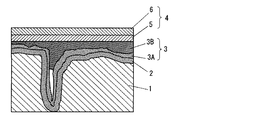
- FIG. 1 is a schematic cross-sectional view showing the structure of the solid electrolytic capacitor according to this embodiment.
- This solid electrolytic capacitor has a structure in which a dielectric layer 2, a solid electrolyte layer 3, and a cathode conductor 4 are formed in this order on the surface of an anode conductor 1.
- FIG. 1 shows a cathode portion that is a region for obtaining the capacitance of the capacitor element. Therefore, the anode portion connected to the anode terminal of the capacitor element is omitted.
- the cathode part and the anode part are provided by dividing the valve action metal forming the anode conductor 1 by applying an insulating resin (not shown).
- the anode conductor 1 is the same as that obtained by subjecting a plate-like, foil-like, or linear valve-acting metal to a surface expansion treatment by etching, or sintering a molded body of a fine powder of the valve-acting metal and subjecting it to a surface expansion treatment. It is formed of a sintered body with a role.
- the valve action metal include tantalum, aluminum, titanium, niobium, zirconium, and alloys thereof. These may use only 1 type and may use 2 or more types together. Among these, at least one valve action metal selected from the group consisting of aluminum, tantalum and niobium is preferable from the viewpoint of workability.
- the dielectric layer 2 is a layer formed by electrolytic oxidation of the surface of the anode conductor 1, and is also formed in pores such as a sintered body and a porous body.
- the thickness of the dielectric layer 2 can be adjusted as appropriate by the voltage of electrolytic oxidation.
- the solid electrolyte layer 3 is formed from a conductive polymer or a conductive polymer film according to this embodiment.
- the solid electrolyte layer 3 may have a single layer structure or a multilayer structure.
- FIG. 1 shows a case of a multilayer structure, and the solid electrolyte layer 3 includes a first conductive polymer compound layer 3A and a second conductive polymer compound layer 3B.
- the solid electrolyte layer 3 further includes a conductive polymer obtained by polymerizing pyrrole, thiophene, aniline, or a derivative thereof other than the conductive polymer according to the present embodiment, an oxide derivative such as manganese dioxide, ruthenium oxide, An organic semiconductor such as TCNQ (7,7,8,8-tetracyanoquinodimethane complex salt) may be included.
- a conductive polymer obtained by polymerizing pyrrole, thiophene, aniline, or a derivative thereof other than the conductive polymer according to the present embodiment
- an oxide derivative such as manganese dioxide, ruthenium oxide
- An organic semiconductor such as TCNQ (7,7,8,8-tetracyanoquinodimethane complex salt) may be included.
- the solid electrolyte layer 3 in the solid electrolytic capacitor shown in FIG. 1 is obtained, for example, by the following method.
- the first conductive polymer compound layer 3A is formed on the surface of the dielectric layer 2 by chemical oxidative polymerization or electrolytic polymerization of a monomer that provides the first conductive polymer compound.
- the surface of the first conductive polymer compound layer 3A is impregnated with the aqueous conductive polymer solution according to the present embodiment to form the second conductive polymer compound layer 3B.
- the monomer that gives the first conductive polymer compound at least one selected from the group consisting of pyrrole, thiophene, aniline, and derivatives thereof can be used.
- the dopant used when the monomer is chemically oxidatively polymerized or electrolytically polymerized to obtain the first conductive polymer compound includes benzene sulfonic acid, naphthalene sulfonic acid, phenol sulfonic acid, styrene sulfonic acid, and derivatives thereof. Of these, sulfonic acid compounds are preferred.
- the molecular weight of the dopant can be appropriately selected from low molecular weight compounds to high molecular weight compounds.
- the solvent may be a mixed solvent containing water and an organic solvent soluble in water, but may be water.
- the impregnation method a method of repeating the impregnation from the viewpoint that the conductive polymer compound layer can be uniformly formed is preferable. Furthermore, it is more preferable to perform the impregnation in an environment reduced from atmospheric pressure or in an environment pressurized from atmospheric pressure from the viewpoint of increasing the impregnation efficiency. Further, in order to sufficiently fill the inside of the porous pores with the conductive polymer aqueous solution, it is preferably left for several minutes to several tens of minutes after the impregnation.
- the removal of the solvent from the conductive polymer aqueous solution can be performed by drying the conductive polymer aqueous solution.
- the drying temperature is not particularly limited as long as the solvent can be removed, but it is preferably 300 ° C. or lower from the viewpoint of preventing element deterioration due to heat.
- the drying time can be appropriately optimized depending on the drying temperature, but is not particularly limited as long as the conductivity is not impaired.
- the cathode conductor 4 is not particularly limited as long as it is a conductor.
- the cathode conductor 4 may have a two-layer structure including a graphite layer 5 and a silver conductive resin layer 6.
- Example 1 The monomer 3,4-ethylenedioxythiophene (1 g) was dispersed in water (30 mL) with stirring. Further, aniline-2,4-disulfonic acid (5 g) as a dopant and iron (III) sulfate (1 g) as an oxidizing agent were dissolved. The resulting solution was stirred at room temperature for 48 hours to oxidize and polymerize the monomer.
- the solution obtained in the above step was subjected to electrodialysis and liquid separation a plurality of times to remove impurities.
- a conductive polymer aqueous solution containing poly (3,4-ethylenedioxythiophene) doped with aniline-2,4-disulfonic acid containing no impurities was obtained.
- Example 2 A conductive polymer aqueous solution was produced in the same manner as in Example 1 except that 5-sulfosalicylic acid was used as the dopant. Then, a conductive polymer film was formed in the same manner as in Example 1 except that the obtained conductive polymer aqueous solution was used, and the conductivity was evaluated. The results are shown in Table 1.
- Example 3 A self-emulsifying polyester dispersion (0.3 g) was added as a binder to the aqueous conductive polymer solution (20 g) obtained in Example 1. This solution was stirred at room temperature for 24 hours to dissolve the self-emulsifying polyester dispersion, whereby a conductive polymer aqueous solution was produced. Then, a conductive polymer film was formed in the same manner as in Example 1 except that the obtained conductive polymer aqueous solution was used, and the conductivity was evaluated. The results are shown in Table 1.
- Example 1 A conductive polymer aqueous solution was produced by the method described in Example 1 of Patent Document 1. Specifically, 3,4-ethylenedioxythiophene (0.5 g), polystyrene sulfonic acid (2 g) having a weight average molecular weight of 4,000 and iron (III) sulfate (0.05 g) were added to water (20 mL). In addition, the mixture was stirred at room temperature for 24 hours. Thereby, a conductive polymer aqueous solution was produced. Then, a conductive polymer film was formed in the same manner as in Example 1 except that the obtained conductive polymer aqueous solution was used, and the conductivity was evaluated. The results are shown in Table 1.
- the conductive polymer films obtained in Examples 1 to 3 had higher conductivity than the conductive polymer film obtained in Comparative Example 1. Thereby, the effect of high electrical conductivity of this embodiment has been confirmed.
- the effect of increasing the conductivity is assumed to be because the conductive polymer film does not contain excessive poly anions that do not contribute to conductivity.
- Example 4 Porous aluminum was used as an anode conductor made of a valve metal. An oxide film as a dielectric layer was formed on the surface of the aluminum by anodization. By applying an insulating resin to the anode conductor, it was divided into an anode part connected to the anode terminal and a cathode part for obtaining a capacitance. Subsequently, the area
- the ESR of this solid electrolytic capacitor was measured at a frequency of 100 kHz using an LCR meter.
- the total cathode area was converted to a unit area (1 cm 2 ). The measurement results are shown in Table 2.
- Example 5 A solid electrolytic capacitor was produced in the same manner as in Example 4 except that the conductive polymer aqueous solution obtained in Example 2 was used. Table 2 shows the results of ESR of the solid electrolytic capacitor measured by the same method as in Example 4.
- Example 6 A solid electrolytic capacitor was produced in the same manner as in Example 4 except that the aqueous conductive polymer solution obtained in Example 3 was used. Table 2 shows the results of ESR of the solid electrolytic capacitor measured by the same method as in Example 4.
- Example 7 Porous aluminum was used as an anode conductor made of a valve metal. An oxide film as a dielectric layer was formed on the surface of the aluminum by anodization. In the same manner as in Example 4, the anode part and the cathode part were separated by an insulating resin. Subsequently, the area
- p-toluenesulfonic acid (20 g) as a dopant and ammonium persulfate (10 g) as an oxidant were immersed in an oxidant solution dissolved in pure water (200 mL) and pulled up. These dipping and pulling steps were repeated 10 times to carry out chemical oxidative polymerization. As a result, a first conductive polymer compound layer was formed.
- the conductive polymer aqueous solution produced in Example 1 was dropped on the surface of the first conductive polymer compound layer and impregnated. Then, it dried at 125 degreeC with the thermostat and solidified. As a result, a second conductive polymer compound layer was formed.
- Example 8 A solid electrolytic capacitor was produced in the same manner as in Example 7 except that the conductive polymer aqueous solution obtained in Example 2 was used. Table 2 shows the results of ESR of the solid electrolytic capacitor measured by the same method as in Example 4.
- Example 9 A solid electrolytic capacitor was produced in the same manner as in Example 7 except that the conductive polymer aqueous solution obtained in Example 3 was used. Table 2 shows the results of ESR of the solid electrolytic capacitor measured by the same method as in Example 4.
- Example 10 A solid electrolytic capacitor was manufactured in the same manner as in Example 4 except that porous tantalum was used as the anode conductor made of a valve metal. Table 2 shows the results of ESR of the solid electrolytic capacitor measured by the same method as in Example 4.
- Comparative Example 2 A solid electrolytic capacitor was produced in the same manner as in Example 4 except that the aqueous conductive polymer solution obtained in Comparative Example 1 was used. Table 2 shows the results of ESR of the solid electrolytic capacitor measured by the same method as in Example 4.
- the solid electrolytic capacitors obtained in Examples 4 to 10 had lower ESR than the solid electrolytic capacitor obtained in Comparative Example 2. This is presumably because the conductivity of the conductive polymer film used in Examples 4 to 10 is high. Since the resistance of the solid electrolyte layer is reduced by using the conductive polymer film according to the present embodiment for the solid electrolyte layer, it is possible to reduce the ESR of the solid electrolytic capacitor.
Landscapes
- Chemical & Material Sciences (AREA)
- Chemical Kinetics & Catalysis (AREA)
- Engineering & Computer Science (AREA)
- Power Engineering (AREA)
- Electrochemistry (AREA)
- Microelectronics & Electronic Packaging (AREA)
- Organic Chemistry (AREA)
- Polymers & Plastics (AREA)
- Medicinal Chemistry (AREA)
- Health & Medical Sciences (AREA)
- Manufacturing & Machinery (AREA)
- Polyoxymethylene Polymers And Polymers With Carbon-To-Carbon Bonds (AREA)
- Compositions Of Macromolecular Compounds (AREA)
- Macromolecular Compounds Obtained By Forming Nitrogen-Containing Linkages In General (AREA)
- Other Resins Obtained By Reactions Not Involving Carbon-To-Carbon Unsaturated Bonds (AREA)
Abstract
Description
本実施形態に係る導電性高分子は、ドーパントとしてのアニオン基を1つと導電性高分子に水溶性を付与するための親水基を1つ以上持つ単分子有機酸がドープされた導電性高分子である。したがって、本実施形態に係る導電性高分子は、導電性に寄与しない余分なポリ陰イオンを含まないために、導電性に優れた電気的特性を得ることができる。


本実施形態に係る導電性高分子水溶液とは、本実施形態に係る導電性高分子を溶解、または分散して得られる水溶液である。導電性に寄与しない余剰のポリ陰イオンなどを含まないために、導電性に優れた導電性高分子膜を得ることができる。
本実施形態に係る導電性高分子膜は、本実施形態に係る導電性高分子水溶液を乾燥して、溶媒を除去したものであり、基材への密着性に優れ、かつ高導電率である。溶媒を除去するための乾燥温度は、導電性高分子を熱分解させないことを考慮して、300℃以下が好ましい。
本実施形態に係る固体電解コンデンサは、本実施形態に係る導電性高分子を含む固体電解質層を有する。本実施形態に係る固体電解コンデンサにおいては、固体電解質層を形成する材料(膜)が高導電率であるため、低ESRの固体電解コンデンサとなる。
水(30mL)に、モノマーである3,4-エチレンジオキシチオフェン(1g)を攪拌しながら分散させた。さらに、ドーパントであるアニリン-2,4-ジスルホン酸(5g)と酸化剤である硫酸鉄(III)(1g)とを溶解させた。得られた溶液を室温下で48時間攪拌して、モノマーの酸化重合を行った。
ドーパントとして、5-スルホサリチル酸を用いた以外は、実施例1と同様にして、導電性高分子水溶液を製造した。そして、得られた導電性高分子水溶液を用いた以外は、実施例1と同様にして、導電性高分子膜を形成し、その導電率を評価した。その結果を表1に示す。
実施例1で得られた導電性高分子水溶液(20g)に、バインダーとして自己乳化型ポリエステル分散体(0.3g)を加えた。この溶液を室温下で24時間攪拌して、自己乳化型ポリエステル分散体を溶解させることで、導電性高分子水溶液を製造した。そして、得られた導電性高分子水溶液を用いた以外は、実施例1と同様にして、導電性高分子膜を形成し、その導電率を評価した。その結果を表1に示す。
特許文献1の実施例1に記載の方法で、導電性高分子水溶液を製造した。具体的には、水(20mL)に、3,4-エチレンジオキシチオフェン(0.5g)、重量平均分子量4,000のポリスチレンスルホン酸(2g)及び硫酸鉄(III)(0.05g)を加え、室温下で24時間攪拌した。これにより、導電性高分子水溶液を製造した。そして、得られた導電性高分子水溶液を用いた以外は、実施例1と同様にして、導電性高分子膜を形成し、その導電率を評価した。その結果を表1に示す。

弁作用金属からなる陽極導体として多孔質性のアルミニウムを用いた。陽極酸化により前記アルミニウムの表面に誘電体層である酸化皮膜を形成した。陽極導体に絶縁樹脂を塗布することによって、陽極端子に接続する陽極部と、静電容量を得るための陰極部とに区分した。次いで、陰極部となる誘電体層を形成した陽極導体の領域を、実施例1で製造した導電性高分子水溶液に浸漬し、引き上げた。その後、125℃の恒温槽にて乾燥し、固化させて、固体電解質層を形成した。そして、固体電解質層の表面に、グラファイト層及び銀導電性樹脂からなる陰極導体を形成した。これにより、固体電解コンデンサを製造した。
実施例2で得られた導電性高分子水溶液を用いた以外は、実施例4と同様に実施して、固体電解コンデンサを製造した。実施例4と同様の方法で測定した固体電解コンデンサのESRの結果を表2に示す。
実施例3で得られた導電性高分子水溶液を用いた以外は、実施例4と同様に実施して、固体電解コンデンサを製造した。実施例4と同様の方法で測定した固体電解コンデンサのESRの結果を表2に示す。
弁作用金属からなる陽極導体として多孔質性のアルミニウムを用いた。陽極酸化により前記アルミニウムの表面に誘電体層である酸化皮膜を形成した。実施例4と同様に、陽極部と陰極部とを絶縁樹脂で区分した。次いで、陰極部となる誘電体層を形成した陽極導体の領域を、ピロール(10g)を純水(200mL)に溶解させたモノマー液に浸漬し、引き上げた。さらに、ドーパントとしてp-トルエンスルホン酸(20g)と、酸化剤として過硫酸アンモニウム(10g)とを純水(200mL)に溶解させた酸化剤液に浸漬し、引き上げた。これらの浸漬と引き上げの工程を10回繰り返し、化学酸化重合を行った。これにより、第一の導電性高分子化合物層を形成した。
実施例2で得られた導電性高分子水溶液を用いた以外は、実施例7と同様に実施して、固体電解コンデンサを製造した。実施例4と同様の方法で測定した固体電解コンデンサのESRの結果を表2に示す。
実施例3で得られた導電性高分子水溶液を用いた以外は、実施例7と同様に実施して、固体電解コンデンサを製造した。実施例4と同様の方法で測定した固体電解コンデンサのESRの結果を表2に示す。
弁作用金属からなる陽極導体として多孔質性のタンタルを用いた以外は、実施例4と同様に実施して、固体電解コンデンサを製造した。実施例4と同様の方法で測定した固体電解コンデンサのESRの結果を表2に示す。
比較例1で得られた導電性高分子水溶液を用いた以外は、実施例4と同様に実施して、固体電解コンデンサを製造した。実施例4と同様の方法で測定した固体電解コンデンサのESRの結果を表2に示す。

2 誘電体層
3 固体電解質層
3A 第一の導電性高分子化合物層
3B 第二の導電性高分子化合物層
4 陰極導体
5 グラファイト層
6 銀導電性樹脂層
Claims (14)
- アニオン基を1つと親水基を1つ以上有する単分子有機酸を含有する導電性高分子。
- 前記アニオン基が、スルホ基(-SO3H)である請求項1に記載の導電性高分子。
- 前記親水基が、スルホ基(-SO3H)、カルボキシル基(-COOH)、アミノ基(-NH2)及びヒドロキシル基(-OH)からなる群から選択される少なくとも1種である請求項1または2に記載の導電性高分子。
- 前記単分子有機酸が、アニリン-2,4-ジスルホン酸である請求項1乃至3のいずれか1項に記載の導電性高分子。
- ピロール、チオフェンまたはそれらの誘導体から構成されるポリマーである請求項1乃至4のいずれか1項に記載の導電性高分子。
- 請求項1乃至5のいずれか1項に記載の導電性高分子を溶解、または分散して得られる導電性高分子水溶液。
- バインダーとして、樹脂、及び/または、熱もしくは光により反応して樹脂になる物質を含む請求項6に記載の導電性高分子水溶液。
- 請求項6または7に記載の導電性高分子水溶液を乾燥して、溶媒を除去して得られる導電性高分子膜。
- 弁作用金属からなる陽極導体と、前記陽極導体の表面に形成された誘電体層とを有し、前記誘電体層の表面に請求項8に記載の導電性高分子膜を含む固体電解質層が形成された固体電解コンデンサ。
- 前記弁作用金属が、アルミニウム、タンタル及びニオブからなる群から選択される少なくとも1種である請求項9に記載の固体電解コンデンサ。
- 弁作用金属からなる陽極導体の表面に誘電体層を形成する工程と、前記誘電体層の表面に請求項6または7に記載の導電性高分子水溶液を含浸し、固体電解質層を形成する工程と、を含む固体電解コンデンサの製造方法。
- 弁作用金属からなる陽極導体の表面に誘電体層を形成する工程と、前記誘電体層の表面に、第一の導電性高分子化合物を与えるモノマーの化学酸化重合または電解重合により、第一の導電性高分子化合物層を形成する工程と、前記第一の導電性高分子化合物層の表面に請求項6または7に記載の導電性高分子水溶液を含浸し、第二の導電性高分子化合物層を形成する工程と、を含む固体電解コンデンサの製造方法。
- 前記第一の導電性高分子化合物が、ピロール、チオフェン、アニリン及びそれらの誘導体からなる群から選択される少なくとも1種の重合体である請求項12に記載の固体電解コンデンサの製造方法。
- 前記弁作用金属が、アルミニウム、タンタル及びニオブからなる群から選択される少なくとも1種である請求項11乃至13のいずれか1項に記載の固体電解コンデンサの製造方法。
Priority Applications (3)
| Application Number | Priority Date | Filing Date | Title |
|---|---|---|---|
| CN201280025293.8A CN103562260A (zh) | 2011-05-30 | 2012-05-30 | 导电聚合物、导电聚合物水溶液、导电聚合物膜、固体电解电容器及其制备方法 |
| US14/119,848 US20140098467A1 (en) | 2011-05-30 | 2012-05-30 | Electroconductive polymer, electroconductive polymer aqueous solution, electroconductive polymer film, solid electrolytic capacitor and method for producing the same |
| DE112012002324.2T DE112012002324T5 (de) | 2011-05-30 | 2012-05-30 | Elektrisch leitendes Polymer, elektrisch leitende wässrige Polymerlösung, elektrisch leitender Polymerfilm, Festelektrolytkondensator und Verfahren zur Herstellung desselben |
Applications Claiming Priority (2)
| Application Number | Priority Date | Filing Date | Title |
|---|---|---|---|
| JP2011120479A JP2012246427A (ja) | 2011-05-30 | 2011-05-30 | 導電性高分子、導電性高分子水溶液、導電性高分子膜、固体電解コンデンサ及びその製造方法 |
| JP2011-120479 | 2011-05-30 |
Publications (1)
| Publication Number | Publication Date |
|---|---|
| WO2012165447A1 true WO2012165447A1 (ja) | 2012-12-06 |
Family
ID=47259301
Family Applications (1)
| Application Number | Title | Priority Date | Filing Date |
|---|---|---|---|
| PCT/JP2012/063836 Ceased WO2012165447A1 (ja) | 2011-05-30 | 2012-05-30 | 導電性高分子、導電性高分子水溶液、導電性高分子膜、固体電解コンデンサ及びその製造方法 |
Country Status (5)
| Country | Link |
|---|---|
| US (1) | US20140098467A1 (ja) |
| JP (1) | JP2012246427A (ja) |
| CN (1) | CN103562260A (ja) |
| DE (1) | DE112012002324T5 (ja) |
| WO (1) | WO2012165447A1 (ja) |
Families Citing this family (8)
| Publication number | Priority date | Publication date | Assignee | Title |
|---|---|---|---|---|
| WO2014087617A1 (ja) * | 2012-12-07 | 2014-06-12 | パナソニック株式会社 | 固体電解コンデンサの製造方法 |
| CN106663539B (zh) * | 2014-06-26 | 2018-06-12 | 松下电器产业株式会社 | 电解电容器及其制造方法 |
| JP6745431B2 (ja) * | 2015-05-29 | 2020-08-26 | パナソニックIpマネジメント株式会社 | 電解コンデンサおよび導電性高分子分散体 |
| JP6640052B2 (ja) * | 2015-08-26 | 2020-02-05 | 信越ポリマー株式会社 | 帯電防止性成形体の製造方法 |
| WO2017218516A1 (en) * | 2016-06-13 | 2017-12-21 | Polydrop, Llc | Compositions comprising conjugated polymers and uses thereof |
| US20180240565A1 (en) | 2017-02-17 | 2018-08-23 | Polydrop, Llc | Conductive polymer-matrix compositions and uses thereof |
| CN110010353B (zh) * | 2018-09-29 | 2021-01-01 | 深圳新宙邦科技股份有限公司 | 一种聚合物分散体及固态电解电容器 |
| CN110349762B (zh) | 2019-07-22 | 2021-06-11 | 丰宾电子(深圳)有限公司 | 一种固体电解质铝电解电容器的制造方法 |
Citations (6)
| Publication number | Priority date | Publication date | Assignee | Title |
|---|---|---|---|---|
| JPH05178989A (ja) * | 1991-12-27 | 1993-07-20 | Nitto Chem Ind Co Ltd | アニリン系共重合体スルホン化物とその製法 |
| JPH0656987A (ja) * | 1992-08-11 | 1994-03-01 | Bridgestone Corp | 導電性高分子の製造方法 |
| JP2004189789A (ja) * | 2002-12-09 | 2004-07-08 | Matsushita Electric Ind Co Ltd | 導電性高分子およびそれを用いた固体電解コンデンサ |
| JP2007103558A (ja) * | 2005-10-03 | 2007-04-19 | Shin Etsu Polymer Co Ltd | 固体電解質、電解コンデンサ及びにその製造方法 |
| JP2008133415A (ja) * | 2006-11-01 | 2008-06-12 | Shin Etsu Polymer Co Ltd | 導電性高分子溶液の製造方法 |
| JP2011086393A (ja) * | 2009-10-13 | 2011-04-28 | Nec Tokin Corp | 導電性高分子懸濁水溶液およびその製造方法、導電性高分子材料、ならびに電解コンデンサおよびその製造方法 |
Family Cites Families (2)
| Publication number | Priority date | Publication date | Assignee | Title |
|---|---|---|---|---|
| JP2011082313A (ja) * | 2009-10-06 | 2011-04-21 | Shin Etsu Polymer Co Ltd | 固体電解キャパシタ及びその製造方法 |
| JP5410251B2 (ja) * | 2009-11-26 | 2014-02-05 | Necトーキン株式会社 | 導電性高分子懸濁液およびその製造方法、導電性高分子材料、電解コンデンサ、ならびに固体電解コンデンサおよびその製造方法 |
-
2011
- 2011-05-30 JP JP2011120479A patent/JP2012246427A/ja active Pending
-
2012
- 2012-05-30 WO PCT/JP2012/063836 patent/WO2012165447A1/ja not_active Ceased
- 2012-05-30 DE DE112012002324.2T patent/DE112012002324T5/de not_active Withdrawn
- 2012-05-30 CN CN201280025293.8A patent/CN103562260A/zh active Pending
- 2012-05-30 US US14/119,848 patent/US20140098467A1/en not_active Abandoned
Patent Citations (6)
| Publication number | Priority date | Publication date | Assignee | Title |
|---|---|---|---|---|
| JPH05178989A (ja) * | 1991-12-27 | 1993-07-20 | Nitto Chem Ind Co Ltd | アニリン系共重合体スルホン化物とその製法 |
| JPH0656987A (ja) * | 1992-08-11 | 1994-03-01 | Bridgestone Corp | 導電性高分子の製造方法 |
| JP2004189789A (ja) * | 2002-12-09 | 2004-07-08 | Matsushita Electric Ind Co Ltd | 導電性高分子およびそれを用いた固体電解コンデンサ |
| JP2007103558A (ja) * | 2005-10-03 | 2007-04-19 | Shin Etsu Polymer Co Ltd | 固体電解質、電解コンデンサ及びにその製造方法 |
| JP2008133415A (ja) * | 2006-11-01 | 2008-06-12 | Shin Etsu Polymer Co Ltd | 導電性高分子溶液の製造方法 |
| JP2011086393A (ja) * | 2009-10-13 | 2011-04-28 | Nec Tokin Corp | 導電性高分子懸濁水溶液およびその製造方法、導電性高分子材料、ならびに電解コンデンサおよびその製造方法 |
Also Published As
| Publication number | Publication date |
|---|---|
| US20140098467A1 (en) | 2014-04-10 |
| JP2012246427A (ja) | 2012-12-13 |
| DE112012002324T5 (de) | 2014-03-27 |
| CN103562260A (zh) | 2014-02-05 |
Similar Documents
| Publication | Publication Date | Title |
|---|---|---|
| CN103154132B (zh) | 具有改进的电性能参数且包含pedot/pss和稳定剂的层组合物 | |
| JP5995262B2 (ja) | Pedot/pssを固体電解質として含有するコンデンサにおける電気パラメータをポリグリセロールによって改善するための方法 | |
| JP5441952B2 (ja) | 導電性高分子懸濁溶液およびその製造方法、導電性高分子材料、ならびに電解コンデンサおよびその製造方法 | |
| JP6546092B2 (ja) | コンデンサアノードに使用するための鎖に結合した対イオンを有する導電性ポリマーと、鎖に結合していない対イオンを有する導電性ポリマーの混合物を含む分散液 | |
| JP4903759B2 (ja) | 導電性高分子懸濁液およびその製造方法、導電性高分子材料、電解コンデンサ、ならびに固体電解コンデンサおよびその製造方法 | |
| JP5952551B2 (ja) | 導電性高分子組成物およびその製造方法、導電性高分子材料の製造方法、導電性基材の製造方法、電極の製造方法、電子デバイスの製造方法並びに固体電解コンデンサの製造方法 | |
| JP5465025B2 (ja) | 導電性高分子懸濁液およびその製造方法、導電性高分子材料、固体電解コンデンサおよびその製造方法 | |
| JP2012246427A (ja) | 導電性高分子、導電性高分子水溶液、導電性高分子膜、固体電解コンデンサ及びその製造方法 | |
| JP6017148B2 (ja) | 導電性高分子懸濁溶液、導電性高分子材料、ならびに電解コンデンサおよびその製造方法 | |
| JP6016780B2 (ja) | 導電性高分子溶液及びその製造方法、導電性高分子材料、ならびにそれを用いた固体電解コンデンサ及びその製造方法 | |
| JP2010275378A (ja) | 導電性高分子懸濁液およびその製造方法、導電性高分子材料並びに、固体電解コンデンサおよびその製造方法 | |
| JP2013122016A (ja) | 導電性高分子組成物、導電性高分子材料、導電性基材、電極および固体電解コンデンサ | |
| JP2010182426A (ja) | 導電性高分子組成物およびその製造方法、並びに導電性高分子組成物を用いた固体電解コンデンサ | |
| CN103733286B (zh) | 固体电解电容器及其制造方法 | |
| JP6129569B2 (ja) | 導電性高分子溶液及びその製造方法、導電性高分子材料並びに固体電解コンデンサ | |
| CN103460319B (zh) | 导电性聚合物水性悬浮液及其制备方法、导电性有机材料,以及固体电解电容器及其制备方法 | |
| JP6223703B2 (ja) | 導電性高分子溶液及びその製造方法、導電性高分子材料、ならびに固体電解コンデンサ | |
| JP6266236B2 (ja) | 導電性高分子溶液及びその製造方法、導電性高分子材料、ならびに固体電解コンデンサ及びその製造方法 | |
| JP2012214530A (ja) | 導電性高分子懸濁溶液およびその製造方法、導電性有機材料、ならびに電解コンデンサおよびその製造方法 | |
| JP5053460B2 (ja) | 導電性高分子懸濁液およびその製造方法、導電性高分子材料、電解コンデンサ、ならびに固体電解コンデンサおよびその製造方法 | |
| JP2016082052A (ja) | 導電性高分子溶液、導電性高分子組成物、ならびに電解コンデンサおよびその製造方法 | |
| CN107533921B (zh) | 电解电容器 | |
| TWI606475B (zh) | 固體電解電容器及其製造方法 | |
| JP2014175424A (ja) | 導電性高分子形成用電解重合液とそれを用いた固体電解コンデンサの製造方法 | |
| CN106663539A (zh) | 电解电容器及其制造方法 |
Legal Events
| Date | Code | Title | Description |
|---|---|---|---|
| 121 | Ep: the epo has been informed by wipo that ep was designated in this application |
Ref document number: 12793190 Country of ref document: EP Kind code of ref document: A1 |
|
| WWE | Wipo information: entry into national phase |
Ref document number: 14119848 Country of ref document: US |
|
| WWE | Wipo information: entry into national phase |
Ref document number: 112012002324 Country of ref document: DE Ref document number: 1120120023242 Country of ref document: DE |
|
| 122 | Ep: pct application non-entry in european phase |
Ref document number: 12793190 Country of ref document: EP Kind code of ref document: A1 |