WO2012157832A1 - 광경화성 디안히드로헥산헥솔 유도체, 이의 제조방법 및 이를 포함하는 광경화성 조성물 - Google Patents
광경화성 디안히드로헥산헥솔 유도체, 이의 제조방법 및 이를 포함하는 광경화성 조성물 Download PDFInfo
- Publication number
- WO2012157832A1 WO2012157832A1 PCT/KR2011/010293 KR2011010293W WO2012157832A1 WO 2012157832 A1 WO2012157832 A1 WO 2012157832A1 KR 2011010293 W KR2011010293 W KR 2011010293W WO 2012157832 A1 WO2012157832 A1 WO 2012157832A1
- Authority
- WO
- WIPO (PCT)
- Prior art keywords
- formula
- compound represented
- weight
- compound
- parts
- Prior art date
- Legal status (The legal status is an assumption and is not a legal conclusion. Google has not performed a legal analysis and makes no representation as to the accuracy of the status listed.)
- Ceased
Links
Images
Classifications
-
- C—CHEMISTRY; METALLURGY
- C07—ORGANIC CHEMISTRY
- C07D—HETEROCYCLIC COMPOUNDS
- C07D493/00—Heterocyclic compounds containing oxygen atoms as the only ring hetero atoms in the condensed system
- C07D493/02—Heterocyclic compounds containing oxygen atoms as the only ring hetero atoms in the condensed system in which the condensed system contains two hetero rings
- C07D493/04—Ortho-condensed systems
-
- B—PERFORMING OPERATIONS; TRANSPORTING
- B01—PHYSICAL OR CHEMICAL PROCESSES OR APPARATUS IN GENERAL
- B01J—CHEMICAL OR PHYSICAL PROCESSES, e.g. CATALYSIS OR COLLOID CHEMISTRY; THEIR RELEVANT APPARATUS
- B01J31/00—Catalysts comprising hydrides, coordination complexes or organic compounds
- B01J31/02—Catalysts comprising hydrides, coordination complexes or organic compounds containing organic compounds or metal hydrides
-
- C—CHEMISTRY; METALLURGY
- C08—ORGANIC MACROMOLECULAR COMPOUNDS; THEIR PREPARATION OR CHEMICAL WORKING-UP; COMPOSITIONS BASED THEREON
- C08F—MACROMOLECULAR COMPOUNDS OBTAINED BY REACTIONS ONLY INVOLVING CARBON-TO-CARBON UNSATURATED BONDS
- C08F122/00—Homopolymers of compounds having one or more unsaturated aliphatic radicals each having only one carbon-to-carbon double bond, and at least one being terminated by a carboxyl radical and containing at least one other carboxyl radical in the molecule; Salts, anhydrides, esters, amides, imides or nitriles thereof
- C08F122/10—Esters
- C08F122/1006—Esters of polyhydric alcohols or polyhydric phenols, e.g. ethylene glycol dimethacrylate
-
- C—CHEMISTRY; METALLURGY
- C08—ORGANIC MACROMOLECULAR COMPOUNDS; THEIR PREPARATION OR CHEMICAL WORKING-UP; COMPOSITIONS BASED THEREON
- C08F—MACROMOLECULAR COMPOUNDS OBTAINED BY REACTIONS ONLY INVOLVING CARBON-TO-CARBON UNSATURATED BONDS
- C08F136/00—Homopolymers of compounds having one or more unsaturated aliphatic radicals, at least one having two or more carbon-to-carbon double bonds
- C08F136/02—Homopolymers of compounds having one or more unsaturated aliphatic radicals, at least one having two or more carbon-to-carbon double bonds the radical having only two carbon-to-carbon double bonds
- C08F136/20—Homopolymers of compounds having one or more unsaturated aliphatic radicals, at least one having two or more carbon-to-carbon double bonds the radical having only two carbon-to-carbon double bonds unconjugated
-
- C—CHEMISTRY; METALLURGY
- C08—ORGANIC MACROMOLECULAR COMPOUNDS; THEIR PREPARATION OR CHEMICAL WORKING-UP; COMPOSITIONS BASED THEREON
- C08F—MACROMOLECULAR COMPOUNDS OBTAINED BY REACTIONS ONLY INVOLVING CARBON-TO-CARBON UNSATURATED BONDS
- C08F2/00—Processes of polymerisation
- C08F2/46—Polymerisation initiated by wave energy or particle radiation
- C08F2/48—Polymerisation initiated by wave energy or particle radiation by ultraviolet or visible light
Definitions
- the present invention relates to a photocurable dianhydrohexanehexol derivative, a preparation method thereof, and a photocurable composition including the same, and more particularly, to a biomass-derived dianhydrohexanehexole (1,4: 3,6-Dianhydro-D-hexane 2-hydroxypropyl methacrylate (HPM) functional group prepared by reacting -1,2,3,4,5,6-hexol, DHH) compound under optimum reaction conditions. It relates to an environment-friendly biomass-derived photocurable compound, a method for preparing the same, and a photocurable composition comprising the photocurable compound.
- HPM 3,6-Dianhydro-D-hexane 2-hydroxypropyl methacrylate
- Curable materials such as adhesives, adhesives, sealants, coatings, encapsulants, and paints are currently used in various industries such as civil engineering, construction, packaging, bookbinding, automobiles, electronics, precision, optical products, woodworking, plywood, textiles, leather, and medical. Of course, their use is widespread, such as being used for general household use.
- curable materials are manufactured in the form of a mixture of chemicals mainly composed of synthetic resins, and are composed of organic solvents (solvents) used in the manufacturing process and various volatile additives added to improve physical properties. And harmful chemicals such as dioxins and environmental hormones.
- bisphenol A among petroleum-derived compounds is used as a starting material of various chemical materials and is applied to polycarbonate and various curable materials.
- the inventors of the present invention reacted a biomass-derived dianhydrohexanehexol compound under an optimal reaction condition to bind a 2-hydroxypropyl methacrylate (HPM) functional group.
- HPM 2-hydroxypropyl methacrylate
- An object of the present invention is to replace the conventional petroleum-derived bisphenol A-based photocurable material that generates harmful substances, and derived from biomass, 1,4: 3,6-Dianhydro-hexane-1 It is to provide a photocurable compound having a, 2,3,4,5,6-hexol (DHH) skeleton.
- DHH 2,3,4,5,6-hexol
- Still another object of the present invention is to provide a photocurable composition comprising a photocurable compound derived from the biomass.
- the present invention provides a compound represented by the following formula (1).
- the compound represented by the above formula (I) the biomass-derived Dian dihydro hexane heksol (1,4: 3,6- D ianhydro- h exane -1,2,3,4,5,6- h exol, DHH
- Biomass-derived dianhydrohexanehexole used to provide the DHH backbone in the present invention has a structure of formula (2).
- the present invention provides a substance capable of replacing bisphenol A derived from petroleum resources and known as a toxic substance by applying a DHH compound (Formula 2) derived from a carbohydrate-based biomass as a basic skeleton.
- the DHH compound (Formula 2) has a rigid ring structure, it has a physical property similar to that of bisphenol A derived from a petrochemical process, and may be used as a substitute compound.
- the present invention provides a method for preparing a compound represented by the following formula (1).
- the present invention provides a method for preparing a compound represented by Chemical Formula 1, including the following steps as in Scheme 1.
- Step 1 is a step of preparing a compound represented by the formula (3) by reacting the compound represented by the formula (2) and epihalohydrin in the presence of a hydroxide, the DHH compound and epihalohydrin represented by the formula (2) Reacting to impart a glycidyl functional group to the DHH compound. This is a process for effectively binding glycidyl functional groups to DHH compounds.
- the compound represented by Formula 2 may be derived from a carbohydrate polymer.
- the compound represented by Formula 2 may be prepared from a carbohydrate polymer, as shown in Scheme 2 below.
- a carbohydrate polymer such as cellulose (Cellulose), which contains about 30 to 40% of the carbohydrate polymer, is extracted and then hydrolyzed or treated with an enzyme to perform a saccharification process. (Hexose) compound was obtained, and then the aldehyde group of the hexasaccharide compound was reduced by hydrogenation reaction to prepare hexane-1,2,3,4,5,6-hexol (HH) having 6 hydroxyl groups.
- HH hexane-1,2,3,4,5,6-hexol
- step 1) may be performed by using an aprotic polar solvent as a solvent and reacting the DHH compound (Formula 2) with epihalohydrin in the presence of hydroxide.
- This provides reaction conditions in which glycidyl functional groups can be easily bonded to the low-reactivity secondary hydroxyl group in the DHH compound (Formula 2).
- the aprotic polar solvent may be any one or more selected from the group consisting of DMSO, DMF, DMA, and NMP, but is not limited thereto.
- the epihalohydrin is a compound in which a halogen atom is bonded to a carbon atom adjacent to an epoxide, and specifically, for example, epichlorohydrin, epibromohydrin, or epiiadohydrin (epibromohydrin). epiiodohydrin) may be any one or more selected from, and the like, but is not limited thereto.
- the hydroxide salt is a group consisting of an alkali metal and a hydroxy group, specifically, for example, may be any one or more selected from LiOH, NaOH, KOH, and the like, but is not limited thereto.
- the weight ratio of the compound represented by Formula 2 of the step 1) to epihalohydrin is preferably 100 to 800 parts by weight of epihalohydrin with respect to 100 parts by weight of the compound represented by Formula 2, more preferably 200 It is effective to be from 500 parts by weight. If the weight ratio of epihalohydrin is less than 100 parts by weight with respect to 100 parts by weight of the compound represented by the formula (2), there is a disadvantage in that the conversion is lowered. If it is more than 800 parts by weight, by-products increase and unreacted epihalohi The disadvantage is that you have to separate.
- the weight ratio of the compound represented by the formula (2) of the step 1) and the hydroxide salt is preferably 300 to 1000 parts by weight of hydroxide, more preferably 500 to 800 parts by weight based on 100 parts by weight of the compound represented by the formula (2). to be. If the weight ratio of the hydroxide salt is less than 300 parts by weight based on 100 parts by weight of the compound represented by Formula 2, the yield of the product is lowered, and if it is more than 1000 parts by weight, there is a disadvantage that the by-products increase.
- the aprotic polar solvent is preferably 200 to 2000 parts by weight, more preferably 300 to 1000 parts by weight based on 100 parts by weight of the compound represented by the formula (2).
- the reaction time of step 1) is preferably 0.5 to 16 hours, more preferably 3 to 8 hours. If the reaction time is shorter than 0.5 hours, the conversion rate is lowered, and if it is longer than 16 hours, there is a disadvantage that the by-products increase.
- the reaction temperature of step 1) is preferably 4 to 80 °C, more preferably 30 to 50 °C effective. If the reaction temperature is lower than 4 °C has a disadvantage of lowering the conversion rate, higher than 80 °C has the disadvantage of increasing the by-products.
- Step 2 is a step of preparing a compound represented by the formula (1) by reacting the compound represented by the formula (3) and methacrylic acid, methacryl having a compound having the DHH skeleton having two glycidyl functional groups (Formula 3) It is a step of giving two 2-hydroxypropyl methacrylate (HPM) functional groups to the DHH skeleton by reacting with an acid.
- HPM 2-hydroxypropyl methacrylate
- step 2) is preferably carried out using triethylamine which is an organic base compound as a reaction catalyst.
- the weight ratio of the compound represented by Formula 3 of the step 2) and methacrylic acid is preferably 300 to 2000 parts by weight of methacrylic acid, more preferably 500 to 1000 parts by weight based on 100 parts by weight of the compound represented by Formula 3 Is effective. If the weight ratio of methacrylic acid is less than 300 parts by weight with respect to 100 parts by weight of the compound represented by Formula 3, the yield of the product is lowered, and if it is more than 2000 parts by weight, there is a disadvantage that the unreacted methacrylic acid must be separated. have.
- the reaction time of step 2) is preferably 3 to 16 hours, more preferably 4 to 6 hours. If the reaction time is shorter than 3 hours, the conversion rate is lowered, and if it is longer than 16 hours, there is a disadvantage that the by-products increase.
- the reaction temperature of step 2) is preferably 80 to 120 ° C, more preferably 90 to 110 ° C. If the reaction temperature is lower than 80 °C has a disadvantage of lowering the conversion rate, higher than 120 °C has the disadvantage of increasing the by-products.
- the present invention also provides a photocurable composition comprising the compound represented by Formula 1 and a free radical photoinitiator.
- the photocurable composition is characterized in that the solvent-free.
- the free radical photoinitiator may be any substance as long as it is a free radical photoinitiator, more preferably, benzophenone, benzoin, acetophenone, benzyl, benzyl ketal, anthraquinone, triphenylphosphine, benzoylphosphine oxide, or thioxanthone.
- Xanthone acridine derivative, phenazene derivative, quinoxaline derivative, 1-phenyl-1,2-propanedione-2-O-benzoyloxime, 1-aminophenyl ketone, 1-hydroxyphenyl ketone, tri
- the photocuring rate and photocuring properties can be further maximized.
- the weight ratio of the compound represented by Formula 1 to the free radical photoinitiator is preferably 0.1 to 10 parts by weight of the free radical photoinitiator, more preferably 0.5 to 5 parts by weight based on 100 parts by weight of the compound represented by Formula 1. If the free radical photoinitiator is less than 0.1 parts by weight, the effect of strengthening the photocuring properties is significantly lowered. If the free radical photoinitiator is more than 10 parts by weight, the curing rate may be lowered due to the excessive content, and the economical efficiency is also reduced. There is a problem falling.
- the photocurable composition of the present invention may further include an inorganic filler.
- the inorganic filler it is effective to use at least one of silica, alumina or talc.
- various mixing additives may be further included, including silane coupling agents, release agents such as stearic acid, palmitic acid, zinc stearate and calcium stearate and pigments.
- the photocurable composition of the present invention may be prepared by sufficiently mixing and homogenizing the above components through an extruder, kneader or roll.
- the dianhydrohexanehexol derivative which is a photocurable compound having a biomass-derived DHH skeleton of the present invention, may replace the conventional bisphenol A-based photocurable substance, which is a harmful substance to humans, and is derived from biomass by replacing petroleum resources. It is possible to cope with, and can reduce the generation of irreversible carbon dioxide has an environmentally friendly advantage.
- the present invention not only can produce a biomass-derived photocurable material in excellent yield, but also has a synthetic route, which is very economical.
- biomass while using biomass as a raw material, it has the advantage that the physical properties of the photocurable material that is equivalent to or better than the conventional petroleum-derived photocurable material.
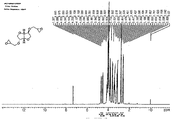
- FIG. 1 is an H-NMR spectrum of a compound represented by Chemical Formula 3.
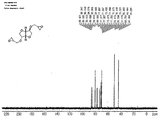
- FIG. 2 is a C-NMR spectrum of the compound represented by Chemical Formula 3.
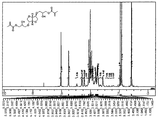
- FIG. 3 is an H-NMR spectrum of a compound represented by Chemical Formula 1.
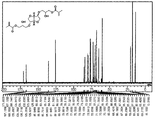
- FIG. 4 is a C-NMR spectrum of a compound represented by Chemical Formula 1.
- Step 1 preparation of diglycidyl dianhydrohexanehexol
- reaction solution was then filtered through a syringe filter to remove salts from the residue, and the filtrate was diluted in an appropriate amount of methylene chloride and transferred to a separatory funnel.
- Photo-DSC is a device that can check photocuring behavior such as conversion ratio, curing rate, etc. by installing photocuring accessories on existing DSCs and sinking them to find the heat of reaction.
- TA Instrument's Q-1000 DSC and Photocalorimetric accessory (Novacure 2100) were directly connected.
- a medium pressure mercury lamp 100 W, Intensity: 20 mW / cm 2
- TPO 2,4,6-Trimethylbenzoyl-diphenyl-diphenyl Phosphine
- Samples containing 1 wt% photocuring initiator were placed in an open aluminum pan about 4 mg each and irradiated with light at 25 ° C. to measure the amount of heat generated from the sample.
- Photocuring shrinkage was measured using a Linear Variable Differential Transformer (LVDT) transducer and UV Spot curing equipment. This is a method of evaluating the curing shrinkage rate based on the principle of measuring the linear deformation using the non-contact linear variable differential converter while the photocuring with UV-Spot curing equipment.
- LVDT Linear Variable Differential Transformer
- Photocurable compound with DHH framework by linearly variable derivative when irradiated with 30 ⁇ L sample at 10 cm distance using 1.2-1.5 mW / cm 2 intensity light source and 1 wt% TPO as photocuring initiator The photocuring shrinkage measurement result of (Example 1) was found to be 5.2% by volume.
- the photocurable compound (Example 1) of the present invention has excellent performance as compared to the (meth) acrylic photocurable material, which generally exhibits a photocuring shrinkage of about 10% by volume. This is because the HPM functional group has a relatively high degree of freedom of the alkyl chain compared to the (meth) acrylic group and serves as a spacer.
- Adhesion strength is the most basic physical property showing the function as an adhesive.
- the bond shear strength was measured using a UTM device.
- the instrument used for the physical property measurement was HUNKSFIELD's H100KS model, and the measured values were calculated using QMat (ver. 5.37) software.
- Adhesion strength was measured after curing by irradiating UV for 30-300 seconds each, and showed an adhesive shear strength of about 600-800 kPa, and a 1: 1 mixture of commercially available Bis-GMA and TEGDMA. When compared with, it can be seen that it has a similar adhesive strength.
- the measurement results of the adhesive strength are shown in Table 1 below.
- the present invention is a dianhydrohexane hexol derivative which is a photocurable compound having a biomass-derived DHH skeleton, and can replace the conventional bisphenol A-based photocurable substance, which is harmful to humans, and is derived from biomass by replacing petroleum resources. It is possible to cope with the times and to reduce the generation of irreversible carbon dioxide, there is an industrial applicability.
Landscapes
- Chemical & Material Sciences (AREA)
- Organic Chemistry (AREA)
- Chemical Kinetics & Catalysis (AREA)
- Health & Medical Sciences (AREA)
- Medicinal Chemistry (AREA)
- Polymers & Plastics (AREA)
- Engineering & Computer Science (AREA)
- Materials Engineering (AREA)
- Organic Low-Molecular-Weight Compounds And Preparation Thereof (AREA)
- Heterocyclic Carbon Compounds Containing A Hetero Ring Having Oxygen Or Sulfur (AREA)
- Polymerisation Methods In General (AREA)
Abstract
본 발명은 광경화성 이소소르비드 유도체, 이의 제조방법 및 이를 포함하는 광경화성 조성물에 관한 것으로, 더욱 상세하게는 바이오매스 유래 이소소르비드 즉, 1,4:3,6-Dianhydro-hexane-1,2,3,4,5,6-hexol (DHH) 화합물을 최적의 반응조건하에서 반응시켜 제조한 2-히드록시프로필 메타크릴레이트 (2-hydroxypropyl methacrylate, HPM) 관능기가 결합된 구조의 친환경적인 바이오매스 유래 광경화성 화합물, 이의 제조방법, 및 상기 광경화성 화합물을 포함하는 광경화성 조성물에 관한 것이다.
Description
본 발명은 광경화성 디안히드로헥산헥솔 유도체, 이의 제조방법 및 이를 포함하는 광경화성 조성물에 관한 것으로, 더욱 상세하게는 바이오매스 유래 디안히드로헥산헥솔 (1,4:3,6-Dianhydro-D-hexane-1,2,3,4,5,6-hexol, DHH) 화합물을 최적의 반응조건하에서 반응시켜 제조한 2-히드록시프로필 메타크릴레이트 (2-hydroxypropyl methacrylate, HPM) 관능기가 결합된 구조의 친환경적인 바이오매스 유래 광경화성 화합물, 이의 제조방법, 및 상기 광경화성 화합물을 포함하는 광경화성 조성물에 관한 것이다.
접착제, 점착제, 실란트, 코팅제, 봉지제, 도료 등의 경화성 소재는, 현재 토목, 건축분야로부터 포장, 제본, 자동차, 전자, 정밀, 광학제품, 목공, 합판, 섬유, 피혁, 의료 등 각종 산업분야는 물론, 일반 가정용으로 사용되는 등, 그 용도는 실로 광범위해지고 있다.
이러한 경화성 소재는 합성수지를 주재료로 하는 화학물질의 혼합물 형태로 제조되는 제품으로서, 제조 과정에서 사용되는 유기용매(용제) 및 물성을 향상시키기 위해 첨가되는 다양한 휘발성 첨가제들로 인해 휘발성 유기 화합물(VOC), 다이옥신 및 환경 호르몬 등 유해한 화학물질을 발생시킨다.
최근에는 국제협약에 의한 환경규제를 통해 이러한 유해물질의 생산 및 사용을 엄격히 제한하고 있으며, 더 나아가 EU 등에서는 이러한 규제를 새로운 무역제재의 수단으로 활용하고 있다. 이러한 추세에 발맞추어, 종래의 용제형 접착제는 수용성, 무용매형, 핫멜트형(hot-melt)형 등으로 대체되어 가고 있다.
한편, 이러한 경화성 소재를 비롯한, 현재 우리가 사용하고 있는 대부분의 정밀화학소재들은 석유 분리정제공정 (Oil Refinery Process)으로부터 유래된 석유화학제품이다. 그러나, 국제 유가는 매장량 감소와 BRICs를 중심으로 한 수요급증으로 인해 꾸준히 상승하고 있으며, 온실가스의 배출을 엄격히 규제하는 국제협약이 발효됨에 따라, 앞으로 석유와 같은 비가역 화석자원의 사용은 막대한 환경비용을 초래할 것으로 예상된다.
따라서, 기존의 석유자원 유래 정밀화학제품을 새로운 자원으로부터 얻고자 하는 많은 노력이 이루어지고 있으며, 가장 대표적인 것이 탄수화물계 바이오매스(biomass)를 공급원으로 사용하는 것이다 (Ghheda, J. N. et al., Angew. Chem. Int. Ed.
2007, 46, 7164-7183, Corma, A. et al., Chem. Rev.
2007, 107, 2411-2502).
자연계는 광합성 작용을 통해 매년 약 1,700 억톤 정도의 막대한 양의 탄수화물을 생산하고 있으며, 인류는 이 중 약 3% 정도만을 식량, 종이, 가구, 건자재 등으로 사용하고 있다. 따라서 재생과 지속사용이 가능한 탄수화물계 바이오매스로부터 제조된 정밀화학제품은 석유화학제품을 대체할 수 있을 것으로 기대된다.
한편, 석유자원 유래 화합물 중 비스페놀 A는 다양한 화학소재의 출발물질로 사용되고 있는 물질로서 폴리카보네이트와 다양한 경화성 소재에 적용되고 있다.
그러나, 비스페놀 A는 환경호르몬 문제를 유발하는 독성물질로서 최근 들어 유아용 젖병 등에 사용되는 비스페놀 A계 폴리카보네이트가 시장에서 퇴출되고 있는 실정이다.
이에 따라, 비스페놀 A를 대체하기 위한 많은 시도가 이루어지고 있으며, 가장 대표적인 것이 탄수화물계 바이오매스로부터 유래된 디안히드로헥산헥솔 (1,4:3,6-Dianhydro-hexane-1,2,3,4,5,6-hexol, DHH)이다.
이미, DHH 중 하나의 이성질체인 아이소소르비드를 비스페놀 A 대신 사용하여 제조된 폴리카보네이트가 안경렌즈 등에 적용되고 있다.
이에 본 발명자들은 상기와 같은 점을 감안하여 연구하던 중 바이오매스 유래 디안히드로헥산헥솔 화합물을 최적의 반응조건하에서 반응시켜 2-히드록시프로필 메타크릴레이트 (2-hydroxypropyl methacrylate, HPM) 관능기가 결합된 화합물을 제조함으로써, 종래 석유자원 유래 비스페놀 A계 화합물을 친환경적인 바이오매스 유래 광경화성 화합물로 대체할 수 있으며, 수율 및 경제성이 높을 뿐만 아니라, 빠른 경화속도를 구현할 수 있는 바이오매스 유래 DHH 골격을 갖는 광경화성 화합물을 제공할 수 있음을 확인함으로써 본 발명을 완성하였다.
본 발명의 목적은 종래 유해물질을 발생시키는 석유자원 유래 비스페놀 A계 광경화성 물질을 대체할 수 있으며, 바이오매스에서 유래함으로써, 친환경적인 바이오매스 유래 1,4:3,6-Dianhydro-hexane-1,2,3,4,5,6-hexol (DHH) 골격을 갖는 광경화성 화합물을 제공하는 것이다.
본 발명의 다른 목적은 공정조건을 최적화함으로써, 바이오매스에서 광경화성 물질을 우수한 수율로 제조할 수 있을 뿐만 아니라, 합성경로 또한 매우 경제적인 바이오매스 유래 DHH 골격을 갖는 광경화성 화합물의 제조방법을 제공하는 것이다.
본 발명의 또 다른 목적은 상기 바이오매스에서 유래한 광경화성 화합물을 포함하는 광경화성 조성물을 제공하는 것이다.
상기 과제를 해결하기 위해, 본 발명은 하기 화학식 1로 표시되는 화합물을 제공한다.
[ 화학식1 ]

본 발명에 따른 상기 화학식 1로 표시되는 화합물은 바이오매스 유래 디안히드로헥산헥솔(1,4:3,6-Dianhydro-hexane-1,2,3,4,5,6-hexol, DHH) 골격을 갖는 광경화성 화합물로서, DHH 골격에 2개의 2-히드록시프로필 메타크릴레이트 (2-hydroxypropyl methacrylate, HPM) 관능기가 결합된 분자구조로 이루어지는 것을 특징으로 한다.
본 발명에서 DHH 골격을 제공하기 위해 사용되는 바이오매스 유래 디안히드로헥산헥솔 는 하기 화학식 2의 구조를 갖는다.
[ 화학식1 ]

즉, 본 발명에서는 탄수화물계 바이오매스로부터 유래된 DHH 화합물(화학식 2)을 기본 골격으로 적용함으로써, 석유자원으로부터 유래되며 독성물질로 알려진 비스페놀 A를 대체할 수 있는 물질을 제공한다.
상기 DHH 화합물(화학식 2)은 견고한 고리구조를 갖고 있기 때문에 석유화학공정으로부터 나오는 비스페놀 A와 유사한 물리적 성질을 갖으며, 대체 화합물로 사용이 가능하다.
상기 DHH 화합물(화학식 2)에 글리시딜 관능기를 부여하여, 하기 화학식 3으로 표시되는 화합물을 얻은 다음 이를 메타크릴산과 반응시켜 DHH 골격에 2개의 HPM 관능기가 결합된 본 발명의 광경화성 화합물(화학식 1)을 제공함으로써, 이중고리에 의해 견고한 물성이 제공될 뿐만 아니라, 분자내에 존재하는 히드록시기에 의해 접착능력이 제공되며, 말단의 메타클리레이트 관능기에 의해 광경화능력이 제공될 수 있어, 다기능을 구현할 수 있는 장점이 있다.
[ 화학식1 ]

또한, 본 발명은 하기 반응식 1과 같은 화학식 1로 표시되는 화합물의 제조방법을 제공한다.
[반응식 1]
[규칙 제91조에 의한 정정 27.02.2012]

구체적으로, 본 발명은 상기 반응식 1과 같이 하기 단계를 포함하는 상기 화학식 1로 표시되는 화합물의 제조방법을 제공한다.
1) 하기 화학식 2로 표시되는 화합물과 에피할로히드린(epihalohydrin)을 수산화염 존재 하에 반응시켜 하기 화학식 3으로 표시되는 화합물을 제조하는 단계 및
2) 상기 화학식 3으로 표시되는 화합물과 메타크릴산을 반응시켜 화학식 1로 표시되는 화합물을 제조하는 단계:
[화학식 1]

[화학식 2]

[화학식 3]

상기 단계 1은, 화학식 2로 표시되는 화합물과 에피할로히드린을 수산화염 존재 하에 반응시켜 화학식 3으로 표시되는 화합물을 제조하는 단계로서, 화학식 2로 표시되는 DHH 화합물과 에피할로히드린을 반응시켜, 상기 DHH 화합물에 글리시딜 관능기를 부여하는 단계이다. 이는 DHH 화합물에 글리시딜 관능기를 효과적으로 결합시키기 위한 공정이다.
본 발명에서, 상기 화학식 2로 표시되는 화합물은 탄수화물 고분자로부터 유래된 것일 수 있다.
구체적으로, 상기 화학식 2로 표시되는 화합물은 하기 반응식 2와 같이 탄수화물 고분자로부터 제조될 수 있다.
[반응식 2]

즉, 먼저 육상식물에 약 30 내지 40% 정도 함유된 탄수화물 고분자인 셀룰로오스(Cellulose)와 같은 탄수화물 고분자를 추출하고 이를 가수분해 (Hydrolysis)하거나 효소로 처리하는 단당화 공정(Saccharification)을 수행하여 6탄당(Hexose) 화합물을 얻은 다음, 이러한 6탄당 화합물의 알데히드기를 수소첨가반응 등을 통해 환원하여 6개의 히드록시기를 갖는 hexane-1,2,3,4,5,6-hexol (HH)을 제조한 후, 상기 HH 화합물을 산촉매 조건 하에서 탈수화 반응을 통해 고리화반응시킴으로써 5각고리 2개가 fused된 이중고리 화합물인 화학식 2로 표시되는 DHH 화합물을 얻을 수 있다.
본 발명에서, 상기 단계 1)은 용매로서 비양성자 극성용매(aprotic polar solvent)를 사용하고 상기 DHH 화합물(화학식 2)과 에피할로히드린을 수산화염의 존재 하에 반응시켜 수행될 수 있다. 이는 DHH 화합물(화학식 2) 내의 반응성이 낮은 2차 히드록시기에 용이하게 글리시딜 관능기가 결합될 수 있는 반응조건을 제공한다.
상기 비양성자 극성용매는 DMSO, DMF, DMA 및 NMP로 구성되는 군으로부터 선택되는 어느 하나 이상일 수 있으며, 이에 제한되는 것은 아니다.
상기 에피할로히드린은 에폭시드와 인접한 탄소원자에 할로겐원자가 결합되어 있는 화합물로서, 구체적으로 예를 들면, 에피클로로히드린(epichlorohydrin), 에피브로모히드린(epibromohydrin), 에피아이오도히드린(epiiodohydrin) 등 중에서 선택되는 어느 하나 이상일 수 있으며, 이에 제한되는 것은 아니다.
상기 수산화염은 알칼리 금속과 히드록시기로 구성되는 군으로서, 구체적으로 예를 들면, LiOH, NaOH, KOH 등 중에서 선택되는 어느 하나 이상일 수 있으며, 이에 제한되는 것은 아니다.
상기 단계 1)의 화학식 2로 표시되는 화합물과 에피할로히드린의 중량비는 화학식 2로 표시되는 화합물 100 중량부에 대하여 에피할로히드린 100 내지 800 중량부인 것이 바람직하며, 더욱 바람직하게는 200 내지 500중량부인 것이 효과적이다. 만일 화학식 2로 표시되는 화합물 100 중량부에 대하여 에피할로히드린의 중량비가 100 중량부보다 적으면 전환율이 낮아지는 단점이 있고, 800 중량부보다 많으면 부산물이 증가하고, 미반응 에피할로히드린을 분리해야 하는 단점이 있다.
상기 단계 1)의 화학식 2로 표시되는 화합물과 수산화염의 중량비는 화학식 2로 표시되는 화합물 100 중량부에 대하여 수산화염 300 내지 1000 중량부인 것이 바람직하며, 더욱 바람직하게는 500 내지 800중량부인 것이 효과적이다. 만일 화학식 2로 표시되는 화합물 100 중량부에 대하여 수산화염의 중량비가 300 중량부보다 적으면 생성물의 수율이 낮아지는 단점이 있고, 1000 중량부보다 많으면 부산물이 증가하는 단점이 있다.
또한, 상기 비양성자 극성용매는 화학식 2로 표시되는 화합물 100 중량부에 대하여 200 내지 2000 중량부인 것이 바람직하며, 더욱 바람직하게는 300 내지 1000중량부인 것이 효과적이다.
상기 단계 1)의 반응 시간은 0.5 내지 16시간인 것이 바람직하며, 더욱 바람직하게는 3 내지 8시간인 것이 효과적이다. 만일 반응 시간이 0.5 시간보다 짧으면 전환율이 낮아지는 단점이 있고, 16 시간보다 길면 부산물이 증가하는 단점이 있다.
상기 단계 1)의 반응 온도는 4 내지 80 ℃인 것이 바람직하며, 더욱 바람직하게는 30 내지 50 ℃인 것이 효과적이다. 만일 반응 온도가 4 ℃보다 낮으면 전환율이 낮아지는 단점이 있고, 80 ℃보다 높으면 부산물이 증가하는 단점이 있다.
상기 단계 2는, 화학식 3으로 표시되는 화합물과 메타크릴산을 반응시켜 화학식 1로 표시되는 화합물을 제조하는 단계로서, 2개의 글리시딜 관능기를 갖는 DHH 골격을 갖는 화합물(화학식 3)을 메타크릴산과 반응시킴으로써 DHH 골격에 2개의 2-히드록시프로필 메타크릴레이트 (2-hydroxypropyl methacrylate, HPM) 관능기를 부여하는 단계이다.
또한, 상기 단계 2)는 반응 촉매로서 유기염기 화합물인 트리에틸아민을 사용하여 수행되는 것이 바람직하다.
상기 단계 2)의 화학식 3으로 표시되는 화합물과 메타크릴산의 중량비는 화학식 3으로 표시되는 화합물 100 중량부에 대하여 메타크릴산 300 내지 2000 중량부인 것이 바람직하며, 더욱 바람직하게는 500 내지 1000중량부인 것이 효과적이다. 만일 화학식 3으로 표시되는 화합물 100 중량부에 대하여 메타크릴산의 중량비가 300 중량부보다 적으면 생성물의 수율이 낮아지는 단점이 있고, 2000 중량부보다 많으면 미반응 메타크릴산을 분리해야 하는 단점이 있다.
상기 단계 2)의 반응 시간은 3 내지 16시간인 것이 바람직하며, 더욱 바람직하게는 4 내지 6시간인 것이 효과적이다. 만일 반응 시간이 3 시간보다 짧으면 전환율이 낮아지는 단점이 있고, 16 시간보다 길면 부산물이 증가하는 단점이 있다.
상기 단계 2)의 반응 온도는 80 내지 120 ℃인 것이 바람직하며, 더욱 바람직하게는 90 내지 110 ℃인 것이 효과적이다. 만일 반응 온도가 80 ℃보다 낮으면 전환율이 낮아지는 단점이 있고, 120 ℃보다 높으면 부산물이 증가하는 단점이 있다.
또한, 본 발명은 상기 화학식 1로 표시되는 화합물 및 자유라디칼 광개시제를 포함하는 광경화성 조성물을 제공한다.
본 발명에서, 상기 광경화성 조성물은 무용매형인 것을 특징으로 한다.
상기 자유라디칼 광개시제는, 자유라디칼 광개시제이면 어떤 물질이든 무방하나, 더욱 바람직하게는, 벤조페논, 벤조인, 아세토페논, 벤질, 벤질 케탈, 안트라퀴논, 트라이페닐포스핀, 벤조일포스핀 옥사이드, 티오잔톤, 잔톤, 아크리딘 유도체, 페나젠 유도체, 퀸옥살린 유도체, 1-페닐-1,2-프로페인다이온-2-O-벤조일옥심, 1-아미노페닐 케톤, 1-하이드록시페닐 케톤, 트라이아진 화합물 및 캄포퀴논으로 구성되는 군으로부터 선택되는 어느 하나 이상을 사용할 경우 광경화속도 및 광경화특성을 더욱 극대화시킬 수 있다.
상기 화학식 1로 표시되는 화합물과 자유라디칼 광개시제의 중량비는 화학식 1로 표시되는 화합물 100 중량부에 대하여 자유라디칼 광개시제 0.1 내지 10 중량부인 것이 바람직하며, 더욱 바람직하게는 0.5 내지 5중량부인 것이 효과적이다. 만일 상기 자유라디칼 광개시제가 0.1 중량부보다 적으면 광경화 특성 강화효과가 현저히 저하되며, 만일 상기 자유라디칼 광개시제가 10중량부보다 많으면 과다한 함량으로 인해 오히려 경화속도가 저하될 수 있을 뿐만 아니라, 경제성도 떨어지는 문제가 있다.
또한, 본 발명의 광경화성 조성물은 무기충전제를 추가로 포함할 수 있다. 상기 무기충전제는, 실리카, 알루미나 또는 활석 중 적어도 하나를 사용하는 것이 효과적이다.
또한, 요구되는 특성에 따라, 실란 커플링제, 스테아르산, 팔미트산, 스테아르산 아연 및 스테아르산 칼슘과 같은 이형제 및 안료를 비롯한 다양한 혼합 첨가제를 더 포함할 수 있다.
본 발명의 광경화성 조성물은 상기 성분들을 압출기, 혼련기 또는 롤을 통해 충분히 혼합 및 균질화 시킴으로써 제조될 수 있다.
본 발명의 바이오매스 유래 DHH 골격을 갖는 광경화성 화합물인 디안히드로헥산헥솔 유도체는 종래 인체유해물질인 비스페놀 A계 광경화성 물질을 대체할 수 있으며, 석유자원을 대체하여 바이오매스에서 유래함으로써, 고유가 시대에 대응이 가능하고, 비가역 이산화탄소의 발생을 줄일 수 있어 친환경적인 장점이 있다.
또한, 본 발명은 공정조건을 최적화함으로써, 바이오매스 유래 광경화성 물질을 우수한 수율로 제조할 수 있을 뿐만 아니라, 합성경로 또한 매우 경제적인 장점이 있다. 뿐만 아니라, 바이오매스를 원료로 하면서도, 종래 석유자원 유래 광경화성 물질과 동등 또는 보다 우수한 광경화성 물질의 물성을 구현할 수 있다는 장점을 갖는다.
도 1은 화학식 3으로 표시되는 화합물의 H-NMR 스펙트럼이다.
도 2는 화학식 3으로 표시되는 화합물의 C-NMR 스펙트럼이다.
도 3은 화학식 1로 표시되는 화합물의 H-NMR 스펙트럼이다.
도 4는 화학식 1로 표시되는 화합물의 C-NMR 스펙트럼이다.
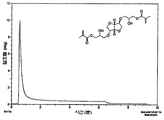
도 5는 화학식 1로 표시되는 화합물에 대한 Photo-DSC에 의한 광경화 거동 측정 결과를 나타낸다.
이하, 실시예를 통하여 본 발명을 더욱 상세히 설명하고자 한다. 이들 실시예는 오로지 본 발명을 보다 구체적으로 설명하기 위한 것으로, 본 발명의 범위가 이들 실시예에 의해 제한되는 것은 아니다.
실시예 1: 본 발명의 광경화성 화합물의 제조
1 단계: 디글리시딜 디안히드로헥산헥솔의 제조

100 mL 둥근바닥 플라스크에 화학식 2-1의 화합물(5.0 g, 34 mmol), KOH (14.0 g, 212 mmol)을 넣고 고무마개를 씌운 후 N2 분위기하에서 dry DMSO (25 mL)을 가하였다. 24 배쓰에 반응액이 담긴 둥근바닥 플라스크를 담그고 열평형시켰다. 플라스크의 내부에 열평형이 이루어지면 에피클로로히드린 (11.0 mL, 204 mmol) 을 주사기를 통해 천천히 적가하였다. 이때 적가에 따라 플라스크 내부의 서스펜션의 색이 점점 진한 갈색으로 변함을 관찰하였다. 적가 이후 40 에서 6시간 동안 교반하여 반응시켰다. 이후 반응액을 실린지 필터를 통해 여과함으로써 잔존물 중에서 염을 제거하고, 여과액은 적당량의 메틸렌 클로라이드에 희석한 후 분액 깔대기에 옮겼다. 증류수 및 식염수로 차례로 세척하고, 유기층의 수분제거(MgSO4) 및 여과, 감압 농축 후 플래시 크로마토그래피 (헥산: 에틸아세테이트 = 1:1)로 분리하여 투명한 오일로 화학식 3-1의 화합물을 얻었다(5.3 g, 20.4 mmole, 60 %).
1H NMR (600 MHz, CDCl3): δ4.70-4.63 (m, H), 4.54-4.51 (m, H), 4.16-3.94 (m, 4H), 3.85-3.81 (m, 2H), 3.66-3.58 (m, 2H), 3.48-3.36 (m, 2H), 3.22-3.10 (m, 2H), 2.84-2.78 (m, 2H), 2.66-2.56 (m. 2H).
13C NMR (150 MHz, CDCl3): δ 86.1, 84.7, 80.5, 73.3, 73.0, 71.6, 70.9, 70.2, 50.6, 50.3, 44.1, 43.9.
Mass spectrum (ESI), m/z 259.1 (M + Na)+.
단계 2: 본 발명 광경화성 화합물의 제조

질소 분위기 하에서 100 mL 둥근 바닥 플라스크에 상기 단계 1에 따라 합성된 화학식 3-1의 화합물(1g, 3.8 mmol), 디페닐 피크릴히드라질 (Diphenyl picrylhydrazyl) (10 mg, 0.6 mmol), 및 메타크릴산 (methacrylic acid) (7 mL, 78 mmol)을 넣고 교반하였다. 이후 TEA를 2-3방울 적가하고 100 ℃에서 4시간 동안 교반하였다. 반응 종결 후 진한 갈색의 반응액이 얻어졌으며 이 반응액을 분액 깔대기에 옮겨 20 wt% NaHCO3 수용액으로 4-5회 씻어주고 물/에틸아세테이트 (water/E.A)로 work-up를 실시하였다. 유기층으로 모아 증류하여 용매를 제거한 후 헥산:에틸 아세테이트 (1:2, v/v)의 플래시 크로마토그래피를 통하여 점성이 있는 무색으로 화학식 1-1의 화합물을 얻었다(1.23 g, 2.9 mmole, 75 %).
1H NMR (400 MHz, CDCl3): δ 6.08 (s, 2H), 5.52 (s, 2H), 4.58 (s,2H), 4.16 (s, 4H), 4.12-3.3 (m, 10H), 3.13 (s, 2H), 2.0 (s, 2H), 1.95 (s, 6H).
13C NMR (100 MHz, CDCl3): δ 171.0, 167.1, 135.8, 125.8, 85.8, 79.7, 75.2, 72.7, 70.0, 18.1.
실험예 1: 광경화 속도 측정
Photo-DSC는 기존의 DSC에 광경화 악세사리를 장착하고 이 둘을 싱크시켜 반응열을 알아봄으로써 경화율(conversion ratio), 광경화 속도(curing rate) 등과 같은 광경화 거동을 확인할 수 있는 기기로서, TA Instrument사의 Q-1000 DSC와 Photocalorimetric accessory(Novacure 2100)를 직접 연결하여 사용하였다.
광원은 중압수은 램프 (100W, Intensity: 20 mW/cm2)를 사용하였고, 경화개시제로는 라디칼 광경화개시제인 TPO (2,4,6-Trimethylbenzoyl-diphenyl-diphenyl Phosphine)를 사용하였다. 1 wt% 광경화개시제를 포함한 시료를 약 4 mg 씩 개방형 알루미늄 팬(open type alumium pan)에 넣고 25 ℃에서 광을 조사하며 시료로부터 유발되는 반응열량을 측정하였다.
Photo-DSC 분석 결과, 30초 내에 90 당량% 이상의 광경화가 완료되는 것을 확인할 수 있었다.
Photo-DSC에 의한 DHH 골격을 갖는 광경화성 화합물(실시예 1)의 광경화 속도 측정결과는 도 5에 나타내었다.
실험예 2: 광경화 수축률 측정
광경화수축률은 선형가변 미분변환기(Linear Variable Differential Transformer(LVDT) transducer)와 UV Spot curing 장비를 이용하였다. 이는 UV-Spot curing 장비로 광경화를 시키면서 이때 발생되는 수축률을 비접촉식 선형가변 미분변환기를 이용하여 선형 변형을 측정하는 원리로 경화수축률을 평가하는 방법이다.
수축률 측정기는 R&B사의 Linometer System인 RB308 LinometerTM 를 사용하였으며, UV-Spot curing 장비는 Ushio사의 SP-7을 사용하였다. 전자기장을 이용하여 거리를 측정할 수 있는 비접촉식 선형 변위 센서 위에 일정한 간격을 두고 스테인리스 디스크를 올려놓은 뒤, 스테인리스 디스크 위에 일정한 두께 혹은 일정량의 시료를 로딩하였다. 그 뒤 수지 위를 슬라이드 글라스로 덮은 뒤에 고정시켰다. 슬라이드 글라스에서 일정 높이에 광원을 고정시킨 후, UV를 조사시킴과 동시에 센서를 작동시키면 스테인리스 디스크가 슬라이드 글라스 방향으로 상승하며, 센서와 스테인리스 디스크 간격이 멀어지게 되는데, 이 간격을 기록하여, 수축 정도를 측정하였다.
1.2-1.5 mW/cm2 세기의 광원과 광경화개시제로서 1 wt%의 TPO를 사용하여, 10 cm 거리에서 30 μL의 시료를 조사하였을 때, 선형가변 미분변환기에 의한 DHH 골격을 갖는 광경화성 화합물(실시예 1)의 광경화 수축률 측정결과는 5.2 부피%인 것으로 나타났다.
따라서, 일반적으로 약 10 부피% 내외의 광경화수축률을 보이는 (메타)크릴계 광경화소재에 비해 본 발명의 광경화성 화합물(실시예 1)이 우수한 성능을 갖는 것으로 판단되었다. 이는 분자구조상 HPM 관능기가 (메타)크릴 관능기에 비해 상대적으로 자유도가 높은 알킬체인이 존재하여 스페이서(spacer)로서의 역할을 하기 때문인 것으로 보였다.
실험예 3: 접착강도 측정
접착강도는 접착제로서의 기능을 나타내는 가장 기본적인 물성으로서, 본 실험에서는 UTM기기를 이용하여 접착 전단 강도(lap shear strength)를 측정하였다. 물성 측정에 사용된 기기는 HOUNSFIELD사의 H100KS 모델을 사용하였으며, QMat (ver. 5.37) 소프트웨어를 사용하여 측정값을 계산하였다.
피착재로는 광투과성을 고려하여 투명한 폴리카보네이트를 사용하였으며, 시편은 ASTM D 5868-01 규격에 근거하여 일정한 크기(1 inch × 4 inch × 0.12 inch = 가로×세로×두께)의 피착재 2개를 1 inch × 1 inch 면적만큼 겹치게 한 후 겹쳐진 면 사이에 접착소재를 도포하여 사용하였다. 각 시편을 UTM에 고정할 때, 시편 양 끝 grip을1 inch로 하였고, 시편은 0.5 inch/min 속도로 잡아당겨 전단 강도(shear strength)를 측정하였다. 각 시료는 20 μL의 정량을 도포하였으며, 일정한 시간 동안 200 mW/cm2의 세기로 UV를 조사하여 경화하였다.
각각 30-300초에 해당하는 시간 동안 UV를 조사하여 경화시킨 후 접착강도를 측정한 결과, 약 600-800 kPa의 접착 전단 강도를 보였으며, 현재 시판 중인 Bis-GMA와 TEGDMA의 1:1 혼합물과 비교하였을 때, 유사한 접착강도를 갖는 것을 알 수 있었다. 접착강도의 측정 결과는 하기 표 1에 나타내었다.
표 1
| 경화 시간(sec) | 접착 전단 강도 (kPa) | |
| 본 발명 광경화성 화합물 (실시예 1) | Bis-GMA/TEGDMA (1:1) | |
| 30 | 663 | 677 |
| 60 | 638 | 663 |
| 90 | 710 | 708 |
| 180 | 774 | 775 |
| 300 | 757 | 681 |
이상에서 본 발명의 바람직한 실시예를 설명하였으나, 본 발명은 다양한 변화와 변경 및 균등물을 사용할 수 있다. 본 발명은 상기 실시예를 적절히 변형하여 동일하게 응용할 수 있음이 명확하다. 따라서 상기 기재 내용은 하기 특허청구범위의 한계에 의해 정해지는 본 발명의 범위를 한정하는 것이 아니다.
본 발명은 바이오매스 유래 DHH 골격을 갖는 광경화성 화합물인 디안히드로헥산헥솔 유도체로써, 종래 인체유해물질인 비스페놀 A계 광경화성 물질을 대체할 수 있으며, 석유자원을 대체하여 바이오매스에서 유래함으로써, 고유가 시대에 대응이 가능하고, 비가역 이산화탄소의 발생을 줄일 수 있는 특징이 있는바, 산업상 이용가능성이 있다.
Claims (20)
- 하기 화학식 1로 표시되는 화합물:[화학식 1]

- 하기 단계를 포함하는 하기 화학식 1로 표시되는 화합물의 제조방법:하기 화학식 2로 표시되는 화합물과 에피할로히드린을 수산화염 존재 하에 반응시켜 하기 화학식 3으로 표시되는 화합물을 제조하는 단계(단계 1); 및상기 화학식 3으로 표시되는 화합물과 메타크릴산을 반응시켜 화학식 1로 표시되는 화합물을 제조하는 단계(단계 2):[화학식 1]
 [화학식 2]
 [화학식 3]
- 제2항에 있어서, 상기 화학식 2로 표시되는 화합물은 탄수화물 고분자로부터 유래된 것인, 화학식 1로 표시되는 화합물의 제조방법.
- 제2항에 있어서, 상기 단계 1)은 용매로서 비양성자 극성용매를 사용하여 수행되는, 화학식 1로 표시되는 화합물의 제조방법.
- 제4항에 있어서, 상기 비양성자 극성용매는 DMSO, DMF, DMA 및 NMP로 구성되는 군으로부터 선택되는 어느 하나 이상인 것인, 화학식 1로 표시되는 화합물의 제조방법.
- 제2항에 있어서, 상기 에피할로히드린은 에피클로로히드린, 에피브로모히드린, 에피아이오드히드린으로 구성되는 군으로부터 선택되는 어느 하나 이상인, 화학식 1로 표시되는 화합물의 제조방법.
- 제2항에 있어서, 상기 수산화염은 LiOH, NaOH, KOH로 구성되는 군으로부터 선택되는 어느 하나 이상인, 화학식 1로 표시되는 화합물의 제조방법.
- 제2항에 있어서, 상기 단계 1)의 화학식 2로 표시되는 화합물과 에피할로히드린의 중량비는 화학식 2로 표시되는 화합물 100 중량부에 대하여 에피할로히드린 100 내지 800 중량부인, 화학식 1로 표시되는 화합물의 제조방법.
- 제2항에 있어서, 상기 단계 1)의 화학식 2로 표시되는 화합물과 수산화염의 중량비는 화학식 2로 표시되는 화합물 100 중량부에 대하여 수산화염 300 내지 1000 중량부인, 화학식 1로 표시되는 화합물의 제조방법.
- 제2항에 있어서, 상기 단계 1)의 반응 시간은 0.5 내지 16시간인, 화학식 1로 표시되는 화합물의 제조방법.
- 제2항에 있어서, 상기 단계 1)의 반응 온도는 4 내지 80 ℃인, 화학식 1로 표시되는 화합물의 제조방법.
- 제2항에 있어서, 상기 단계 2)는 반응 촉매로서 트리에틸아민을 사용하여 수행되는, 화학식 1로 표시되는 화합물의 제조방법.
- 제2항에 있어서, 상기 단계 2)의 화학식 3으로 표시되는 화합물과 메타크릴산의 중량비는 화학식 3으로 표시되는 화합물 100 중량부에 대하여 메타크릴산 300 내지 2000 중량부인, 화학식 1로 표시되는 화합물의 제조방법.
- 제2항에 있어서, 상기 단계 2)의 반응 시간은 3 내지 16시간인, 화학식 1로 표시되는 화합물의 제조방법.
- 제2항에 있어서, 상기 단계 2)의 반응 온도는 80 내지 120 ℃인, 화학식 1로 표시되는 화합물의 제조방법.
- 제1항 기재의 화합물 및 자유라디칼 광개시제를 포함하는 광경화성 조성물.
- 제16항에 있어서, 상기 광경화성 조성물이 무용매형인, 광경화성 조성물.
- 제16항에 있어서, 상기 자유라디칼 광개시제는 벤조페논, 벤조인, 아세토페논, 벤질, 벤질 케탈, 안트라퀴논, 트라이페닐포스핀, 벤조일포스핀 옥사이드, 티오잔톤, 잔톤, 아크리딘 유도체, 페나젠 유도체, 퀸옥살린 유도체, 1-페닐-1,2-프로페인다이온-2-O-벤조일옥심, 1-아미노페닐 케톤, 1-하이드록시페닐 케톤, 트라이아진 화합물 및 캄포퀴논으로 구성되는 군으로부터 선택되는 어느 하나 이상인, 광경화성 조성물.
- 제16항에 있어서, 상기 제1항 기재의 화합물과 자유라디칼 광개시제의 중량비는 제1항 기재의 화합물 100 중량부에 대하여 자유라디칼 광개시제 0.1 내지 10 중량부인, 광경화성 조성물.
- 제16항에 있어서, 무기충전제를 추가로 포함하는 광경화성 조성물.
Priority Applications (2)
| Application Number | Priority Date | Filing Date | Title |
|---|---|---|---|
| US14/110,457 US9156851B2 (en) | 2011-05-19 | 2011-12-29 | Photocurable dianhydro-hexane-hexol derivative, manufacturing method thereof, and photocurable composition including same |
| CN201180069311.8A CN103619848B (zh) | 2011-05-19 | 2011-12-29 | 光固化型二缩水-己烷-六醇衍生物及其制备方法以及包含该衍生物的光固化型组合物 |
Applications Claiming Priority (2)
| Application Number | Priority Date | Filing Date | Title |
|---|---|---|---|
| KR10-2011-0047396 | 2011-05-19 | ||
| KR1020110047396A KR101272840B1 (ko) | 2011-05-19 | 2011-05-19 | 광경화성 디안히드로헥산헥솔 유도체, 이의 제조방법 및 이를 포함하는 광경화성 조성물 |
Publications (1)
| Publication Number | Publication Date |
|---|---|
| WO2012157832A1 true WO2012157832A1 (ko) | 2012-11-22 |
Family
ID=47177133
Family Applications (1)
| Application Number | Title | Priority Date | Filing Date |
|---|---|---|---|
| PCT/KR2011/010293 Ceased WO2012157832A1 (ko) | 2011-05-19 | 2011-12-29 | 광경화성 디안히드로헥산헥솔 유도체, 이의 제조방법 및 이를 포함하는 광경화성 조성물 |
Country Status (4)
| Country | Link |
|---|---|
| US (1) | US9156851B2 (ko) |
| KR (1) | KR101272840B1 (ko) |
| CN (1) | CN103619848B (ko) |
| WO (1) | WO2012157832A1 (ko) |
Cited By (7)
| Publication number | Priority date | Publication date | Assignee | Title |
|---|---|---|---|---|
| WO2014114534A1 (en) * | 2013-01-25 | 2014-07-31 | Basf Se | New radiation-curable compounds and coating compositions |
| WO2015110758A1 (fr) | 2014-01-21 | 2015-07-30 | Roquette Freres | Procede de fabrication de glycidyl ethers d'isohexides, produits ainsi obtenus et leurs utilisations |
| JP2017526752A (ja) * | 2014-07-18 | 2017-09-14 | ククド ケミカル カンパニー リミテッド | 高機能性天然原料由来のエポキシ樹脂及びその製造方法、並びにそれを用いたエポキシ樹脂硬化組成物 |
| US10913817B2 (en) | 2015-08-13 | 2021-02-09 | Roquette Freres | Use of a composition of low-viscosity bis-anhydrohexitol ethers as a reactive diluent for crosslinkable resin, adhesive, coating and matrix compositions for composites |
| KR20210075279A (ko) * | 2019-12-12 | 2021-06-23 | 주식회사 제일화성 | 바이오 에폭시 아크릴레이트 수지를 이용한 3d 프린팅용 광경화형 조성물 및 그 제조 방법 |
| FR3111895A1 (fr) | 2020-06-30 | 2021-12-31 | Roquette Freres | Procédé d’obtention de polyépoxydes biosourcés aux propriétés améliorées |
| FR3115788A1 (fr) | 2020-11-03 | 2022-05-06 | Roquette Freres | Prépolymères époxy oligomériques comprenant des motifs isosorbide |
Families Citing this family (9)
| Publication number | Priority date | Publication date | Assignee | Title |
|---|---|---|---|---|
| JP2014518560A (ja) | 2011-04-05 | 2014-07-31 | オルネクス ベルギウム ソシエテ アノニム | 輻射線硬化性組成物 |
| EP2644634A1 (en) | 2012-03-30 | 2013-10-02 | Cytec Surface Specialties, S.A. | Radiation curable (meth)acrylated compounds |
| EP2644589A1 (en) | 2012-03-30 | 2013-10-02 | Cytec Surface Specialties, S.A. | Radiation Curable (Meth)acrylated Compounds |
| KR101694385B1 (ko) | 2015-04-16 | 2017-01-10 | 한국생산기술연구원 | 광경화형 4-관능성 아이소소바이드 유도체 화합물 및 그의 제조방법 |
| KR20170040598A (ko) | 2015-10-05 | 2017-04-13 | 동우 화인켐 주식회사 | 하드코팅 조성물 및 이로부터 형성되는 하드코팅 필름 |
| FR3064634B1 (fr) * | 2017-03-28 | 2020-11-06 | Roquette Freres | Derives acryliques de 1 :4, 3 :6 dianhydrohexitol |
| KR102169999B1 (ko) * | 2018-11-06 | 2020-10-27 | 주식회사 제일화성 | 흡수성 수지용 아크릴계 가교제의 제조방법, 이로 제조된 흡수성 수지용 아크릴계 가교제 및 이를 포함하는 생분해성 고흡수성 수지 |
| KR102135265B1 (ko) * | 2018-12-21 | 2020-07-20 | 주식회사 제일화성 | 아이소소바이드 기반의 광경화형 조성물 및 그 제조방법 |
| KR102690395B1 (ko) * | 2021-12-31 | 2024-07-31 | 주식회사 제일화성 | 인장강도가 우수한 광경화형 조성물 및 그 제조 방법 |
Citations (4)
| Publication number | Priority date | Publication date | Assignee | Title |
|---|---|---|---|---|
| WO1989005302A1 (en) * | 1987-12-03 | 1989-06-15 | Heinrich Mack Nachf. | Aminopropanol derivatives of 1,4:3,6-dianhydro-hexitol nitrates, processes for their preparation and their use as medicaments |
| JPH06261774A (ja) * | 1990-12-19 | 1994-09-20 | Kyowa Hakko Kogyo Co Ltd | 1,4:3,6−ジアンヒドログルシトール 2−アシレートの製造法 |
| KR100197049B1 (ko) * | 1995-11-09 | 1999-06-15 | 프레이 폴커 | 키랄 디언히드록헥시톨 유도체 함유액정 오르가노실록산 |
| US20020013482A1 (en) * | 2000-07-13 | 2002-01-31 | Consortium Fur Elektrochemische Industrie Gmbh | Process for the preparation of dianhydrohexitol bis(4-acryloyloxy)acylates |
Family Cites Families (9)
| Publication number | Priority date | Publication date | Assignee | Title |
|---|---|---|---|---|
| US3041300A (en) * | 1959-10-06 | 1962-06-26 | Martin Marietta Corp | Polyglycidyl ethers of ether anhydro hexitols, method of production, and aqueous solutions thereof |
| US3272845A (en) * | 1963-03-21 | 1966-09-13 | Atlas Chem Ind | Bisglycidyl ethers of isohexides |
| US6902687B2 (en) * | 2002-04-18 | 2005-06-07 | Fuji Photo Film Co., Ltd. | Optically active isosorbide derivative and optically active isomannide derivative, production methods thereof, photo-reactive chiral agent, liquid crystal composition, liquid crystal color filter, optical film and recording medium, method for changing helical structure of liquid crystal and method for fixing helical structure of liquid crystal |
| US20050124762A1 (en) * | 2003-12-03 | 2005-06-09 | Cohen Gordon M. | Dental compositions containing core-shell polymers with low modulus cores |
| US7619056B2 (en) * | 2006-06-02 | 2009-11-17 | New Jersey Institute Of Technology | Thermoset epoxy polymers from renewable resources |
| WO2009155020A2 (en) * | 2008-05-28 | 2009-12-23 | Archer Daniels Midland Company | Production of 5-membered and 6-membered cyclic esters of polyols |
| ES2423939T3 (es) * | 2009-09-10 | 2013-09-25 | Cognis Ip Management Gmbh | Derivados de isosorburo gliceril éter y su empleo en aplicaciones de uso doméstico |
| JP5270510B2 (ja) * | 2009-10-19 | 2013-08-21 | 第一工業製薬株式会社 | 環状(メタ)アクリレート化合物、その製造方法、及び樹脂組成物 |
| EP2742055B1 (en) * | 2011-08-10 | 2019-10-16 | Drexel University | Process for preparing polymers having enhanced glass transition temperatures from renewable bio-based (meth)acrylated monomers in the presence of a vinyl ester resin monomer or unsaturated polyester monomer |
-
2011
- 2011-05-19 KR KR1020110047396A patent/KR101272840B1/ko active Active
- 2011-12-29 WO PCT/KR2011/010293 patent/WO2012157832A1/ko not_active Ceased
- 2011-12-29 CN CN201180069311.8A patent/CN103619848B/zh active Active
- 2011-12-29 US US14/110,457 patent/US9156851B2/en active Active
Patent Citations (4)
| Publication number | Priority date | Publication date | Assignee | Title |
|---|---|---|---|---|
| WO1989005302A1 (en) * | 1987-12-03 | 1989-06-15 | Heinrich Mack Nachf. | Aminopropanol derivatives of 1,4:3,6-dianhydro-hexitol nitrates, processes for their preparation and their use as medicaments |
| JPH06261774A (ja) * | 1990-12-19 | 1994-09-20 | Kyowa Hakko Kogyo Co Ltd | 1,4:3,6−ジアンヒドログルシトール 2−アシレートの製造法 |
| KR100197049B1 (ko) * | 1995-11-09 | 1999-06-15 | 프레이 폴커 | 키랄 디언히드록헥시톨 유도체 함유액정 오르가노실록산 |
| US20020013482A1 (en) * | 2000-07-13 | 2002-01-31 | Consortium Fur Elektrochemische Industrie Gmbh | Process for the preparation of dianhydrohexitol bis(4-acryloyloxy)acylates |
Cited By (14)
| Publication number | Priority date | Publication date | Assignee | Title |
|---|---|---|---|---|
| WO2014114534A1 (en) * | 2013-01-25 | 2014-07-31 | Basf Se | New radiation-curable compounds and coating compositions |
| WO2015110758A1 (fr) | 2014-01-21 | 2015-07-30 | Roquette Freres | Procede de fabrication de glycidyl ethers d'isohexides, produits ainsi obtenus et leurs utilisations |
| CN105916862A (zh) * | 2014-01-21 | 2016-08-31 | 罗盖特公司 | 用于生产异己糖醇缩水甘油醚的工艺、由此获得的产物及其用途 |
| CN105916862B (zh) * | 2014-01-21 | 2018-12-14 | 罗盖特公司 | 用于生产异己糖醇缩水甘油醚的工艺、由此获得的产物及其用途 |
| US10174152B2 (en) | 2014-01-21 | 2019-01-08 | Roquette Freres | Process for producing isohexide glycidyl ethers, products thus obtained, and uses thereof |
| JP2017526752A (ja) * | 2014-07-18 | 2017-09-14 | ククド ケミカル カンパニー リミテッド | 高機能性天然原料由来のエポキシ樹脂及びその製造方法、並びにそれを用いたエポキシ樹脂硬化組成物 |
| US10913817B2 (en) | 2015-08-13 | 2021-02-09 | Roquette Freres | Use of a composition of low-viscosity bis-anhydrohexitol ethers as a reactive diluent for crosslinkable resin, adhesive, coating and matrix compositions for composites |
| KR20210075279A (ko) * | 2019-12-12 | 2021-06-23 | 주식회사 제일화성 | 바이오 에폭시 아크릴레이트 수지를 이용한 3d 프린팅용 광경화형 조성물 및 그 제조 방법 |
| KR102283886B1 (ko) * | 2019-12-12 | 2021-08-03 | 주식회사 제일화성 | 바이오 에폭시 아크릴레이트 수지를 이용한 3d 프린팅용 광경화형 조성물 및 그 제조 방법 |
| FR3111895A1 (fr) | 2020-06-30 | 2021-12-31 | Roquette Freres | Procédé d’obtention de polyépoxydes biosourcés aux propriétés améliorées |
| WO2022002438A1 (fr) | 2020-06-30 | 2022-01-06 | Roquette Freres | Procédé d'obtention de polyépoxydes biosourcés aux propriétés améliorées |
| FR3115788A1 (fr) | 2020-11-03 | 2022-05-06 | Roquette Freres | Prépolymères époxy oligomériques comprenant des motifs isosorbide |
| WO2022096148A1 (fr) | 2020-11-03 | 2022-05-12 | Roquette Freres | Prepolymeres epoxy oligomeriques comprenant des motifs isosorbide |
| US12398235B2 (en) | 2020-11-03 | 2025-08-26 | Roquette Freres | Oligomeric epoxy pre-polymers comprising isosorbide units |
Also Published As
| Publication number | Publication date |
|---|---|
| US20140073716A1 (en) | 2014-03-13 |
| KR101272840B1 (ko) | 2013-06-10 |
| CN103619848A (zh) | 2014-03-05 |
| CN103619848B (zh) | 2016-01-20 |
| KR20120129253A (ko) | 2012-11-28 |
| US9156851B2 (en) | 2015-10-13 |
Similar Documents
| Publication | Publication Date | Title |
|---|---|---|
| WO2012157832A1 (ko) | 광경화성 디안히드로헥산헥솔 유도체, 이의 제조방법 및 이를 포함하는 광경화성 조성물 | |
| WO2011030991A1 (ko) | 바이오매스 유래 퓨란계 경화성 화합물, 무용매형 경화성 조성물 및 이들의 제조방법 | |
| KR20200070263A (ko) | 티올 화합물, 그의 합성 방법 및 당해 티올 화합물의 이용 | |
| CN105829485B (zh) | 具有粘合性的光固化性组合物 | |
| KR102531269B1 (ko) | 에폭시·옥세탄 화합물, 그의 합성 방법 및 당해 화합물의 이용 | |
| EP2592074A1 (en) | Thioxanthone-4-carboxylates, their preparation methods, photoinitiator compositions and uses thereof | |
| CN105131899B (zh) | 高稳定性混凝土硅酮接缝胶及其制备方法 | |
| TWI613271B (zh) | 硬化性樹脂組成物 | |
| KR101768732B1 (ko) | 옥세탄 환 함유 (메트)아크릴산에스테르 화합물 | |
| DE69022582D1 (de) | Verfahren zur herstellung von vinylethern. | |
| KR101990030B1 (ko) | 광경화형 아이소소바이드 유도체 화합물 및 그의 제조방법 | |
| KR101694385B1 (ko) | 광경화형 4-관능성 아이소소바이드 유도체 화합물 및 그의 제조방법 | |
| EP3233785A1 (de) | Fluorverbindungen | |
| CN106065076B (zh) | 一种水溶性硅醚嵌段离子液体型大分子光引发剂及其制备方法 | |
| KR20150067355A (ko) | 내uv성 에폭시 구조용 접착제 | |
| CN116670196B (zh) | 二环氧化合物、固化性组合物、固化物和光学部件 | |
| KR101916876B1 (ko) | 흡수성이 개선된 광경화형 아이소소바이드 유도체 및 그의 제조방법 | |
| JP6719310B2 (ja) | (メタ)アクリレート化合物、その合成方法および該(メタ)アクリレート化合物の利用 | |
| KR101310302B1 (ko) | 바이오매스 유래 퓨란계 광경화성 화합물 및 이를 포함하는 무용매형 광경화성 조성물 및 그 제조방법 | |
| CN119954747B (zh) | 一种氧杂改性丙烯酸酯化合物、制备方法及其应用 | |
| JP7585442B1 (ja) | オレフィン・オキセタン化合物、該オレフィン・オキセタン化合物の合成方法およびその利用 | |
| WO2019082717A1 (ja) | エポキシ・オキセタン化合物、その合成方法および該化合物の利用 | |
| KR101833446B1 (ko) | 비스퓨란 유도체 화합물, 그를 포함하는 조성물 및 그의 제조방법 | |
| JP5435208B2 (ja) | グリシジル基を有する9−アントロール化合物 | |
| CN117467036A (zh) | 一种双官能团含硫光引发剂及其制备方法和应用 |
Legal Events
| Date | Code | Title | Description |
|---|---|---|---|
| 121 | Ep: the epo has been informed by wipo that ep was designated in this application |
Ref document number: 11865588 Country of ref document: EP Kind code of ref document: A1 |
|
| WWE | Wipo information: entry into national phase |
Ref document number: 14110457 Country of ref document: US |
|
| NENP | Non-entry into the national phase |
Ref country code: DE |
|
| 122 | Ep: pct application non-entry in european phase |
Ref document number: 11865588 Country of ref document: EP Kind code of ref document: A1 |