WO2012132329A1 - 無機繊維質ペーパー及びその製造方法 - Google Patents
無機繊維質ペーパー及びその製造方法 Download PDFInfo
- Publication number
- WO2012132329A1 WO2012132329A1 PCT/JP2012/001944 JP2012001944W WO2012132329A1 WO 2012132329 A1 WO2012132329 A1 WO 2012132329A1 JP 2012001944 W JP2012001944 W JP 2012001944W WO 2012132329 A1 WO2012132329 A1 WO 2012132329A1
- Authority
- WO
- WIPO (PCT)
- Prior art keywords
- fiber
- mass
- content
- sio
- biosoluble inorganic
- Prior art date
- Legal status (The legal status is an assumption and is not a legal conclusion. Google has not performed a legal analysis and makes no representation as to the accuracy of the status listed.)
- Ceased
Links
Images


Classifications
-
- D—TEXTILES; PAPER
- D21—PAPER-MAKING; PRODUCTION OF CELLULOSE
- D21H—PULP COMPOSITIONS; PREPARATION THEREOF NOT COVERED BY SUBCLASSES D21C OR D21D; IMPREGNATING OR COATING OF PAPER; TREATMENT OF FINISHED PAPER NOT COVERED BY CLASS B31 OR SUBCLASS D21G; PAPER NOT OTHERWISE PROVIDED FOR
- D21H13/00—Pulp or paper, comprising synthetic cellulose or non-cellulose fibres or web-forming material
- D21H13/36—Inorganic fibres or flakes
- D21H13/38—Inorganic fibres or flakes siliceous
-
- C—CHEMISTRY; METALLURGY
- C03—GLASS; MINERAL OR SLAG WOOL
- C03C—CHEMICAL COMPOSITION OF GLASSES, GLAZES OR VITREOUS ENAMELS; SURFACE TREATMENT OF GLASS; SURFACE TREATMENT OF FIBRES OR FILAMENTS MADE FROM GLASS, MINERALS OR SLAGS; JOINING GLASS TO GLASS OR OTHER MATERIALS
- C03C13/00—Fibre or filament compositions
- C03C13/06—Mineral fibres, e.g. slag wool, mineral wool, rock wool
-
- C—CHEMISTRY; METALLURGY
- C03—GLASS; MINERAL OR SLAG WOOL
- C03C—CHEMICAL COMPOSITION OF GLASSES, GLAZES OR VITREOUS ENAMELS; SURFACE TREATMENT OF GLASS; SURFACE TREATMENT OF FIBRES OR FILAMENTS MADE FROM GLASS, MINERALS OR SLAGS; JOINING GLASS TO GLASS OR OTHER MATERIALS
- C03C13/00—Fibre or filament compositions
-
- C—CHEMISTRY; METALLURGY
- C03—GLASS; MINERAL OR SLAG WOOL
- C03C—CHEMICAL COMPOSITION OF GLASSES, GLAZES OR VITREOUS ENAMELS; SURFACE TREATMENT OF GLASS; SURFACE TREATMENT OF FIBRES OR FILAMENTS MADE FROM GLASS, MINERALS OR SLAGS; JOINING GLASS TO GLASS OR OTHER MATERIALS
- C03C25/00—Surface treatment of fibres or filaments made from glass, minerals or slags
- C03C25/10—Coating
- C03C25/24—Coatings containing organic materials
- C03C25/26—Macromolecular compounds or prepolymers
- C03C25/28—Macromolecular compounds or prepolymers obtained by reactions involving only carbon-to-carbon unsaturated bonds
- C03C25/285—Acrylic resins
-
- C—CHEMISTRY; METALLURGY
- C03—GLASS; MINERAL OR SLAG WOOL
- C03C—CHEMICAL COMPOSITION OF GLASSES, GLAZES OR VITREOUS ENAMELS; SURFACE TREATMENT OF GLASS; SURFACE TREATMENT OF FIBRES OR FILAMENTS MADE FROM GLASS, MINERALS OR SLAGS; JOINING GLASS TO GLASS OR OTHER MATERIALS
- C03C25/00—Surface treatment of fibres or filaments made from glass, minerals or slags
- C03C25/10—Coating
- C03C25/42—Coatings containing inorganic materials
-
- C—CHEMISTRY; METALLURGY
- C04—CEMENTS; CONCRETE; ARTIFICIAL STONE; CERAMICS; REFRACTORIES
- C04B—LIME, MAGNESIA; SLAG; CEMENTS; COMPOSITIONS THEREOF, e.g. MORTARS, CONCRETE OR LIKE BUILDING MATERIALS; ARTIFICIAL STONE; CERAMICS; REFRACTORIES; TREATMENT OF NATURAL STONE
- C04B14/00—Use of inorganic materials as fillers, e.g. pigments, for mortars, concrete or artificial stone; Treatment of inorganic materials specially adapted to enhance their filling properties in mortars, concrete or artificial stone
- C04B14/38—Fibrous materials; Whiskers
- C04B14/46—Rock wool ; Ceramic or silicate fibres
-
- C—CHEMISTRY; METALLURGY
- C04—CEMENTS; CONCRETE; ARTIFICIAL STONE; CERAMICS; REFRACTORIES
- C04B—LIME, MAGNESIA; SLAG; CEMENTS; COMPOSITIONS THEREOF, e.g. MORTARS, CONCRETE OR LIKE BUILDING MATERIALS; ARTIFICIAL STONE; CERAMICS; REFRACTORIES; TREATMENT OF NATURAL STONE
- C04B28/00—Compositions of mortars, concrete or artificial stone, containing inorganic binders or the reaction product of an inorganic and an organic binder, e.g. polycarboxylate cements
- C04B28/005—Compositions of mortars, concrete or artificial stone, containing inorganic binders or the reaction product of an inorganic and an organic binder, e.g. polycarboxylate cements containing gelatineous or gel forming binders, e.g. gelatineous Al(OH)3, sol-gel binders
-
- D—TEXTILES; PAPER
- D01—NATURAL OR MAN-MADE THREADS OR FIBRES; SPINNING
- D01F—CHEMICAL FEATURES IN THE MANUFACTURE OF ARTIFICIAL FILAMENTS, THREADS, FIBRES, BRISTLES OR RIBBONS; APPARATUS SPECIALLY ADAPTED FOR THE MANUFACTURE OF CARBON FILAMENTS
- D01F9/00—Artificial filaments or the like of other substances; Manufacture thereof; Apparatus specially adapted for the manufacture of carbon filaments
- D01F9/08—Artificial filaments or the like of other substances; Manufacture thereof; Apparatus specially adapted for the manufacture of carbon filaments of inorganic material
-
- D—TEXTILES; PAPER
- D21—PAPER-MAKING; PRODUCTION OF CELLULOSE
- D21H—PULP COMPOSITIONS; PREPARATION THEREOF NOT COVERED BY SUBCLASSES D21C OR D21D; IMPREGNATING OR COATING OF PAPER; TREATMENT OF FINISHED PAPER NOT COVERED BY CLASS B31 OR SUBCLASS D21G; PAPER NOT OTHERWISE PROVIDED FOR
- D21H13/00—Pulp or paper, comprising synthetic cellulose or non-cellulose fibres or web-forming material
- D21H13/36—Inorganic fibres or flakes
-
- C—CHEMISTRY; METALLURGY
- C03—GLASS; MINERAL OR SLAG WOOL
- C03C—CHEMICAL COMPOSITION OF GLASSES, GLAZES OR VITREOUS ENAMELS; SURFACE TREATMENT OF GLASS; SURFACE TREATMENT OF FIBRES OR FILAMENTS MADE FROM GLASS, MINERALS OR SLAGS; JOINING GLASS TO GLASS OR OTHER MATERIALS
- C03C2213/00—Glass fibres or filaments
- C03C2213/02—Biodegradable glass fibres
-
- D—TEXTILES; PAPER
- D21—PAPER-MAKING; PRODUCTION OF CELLULOSE
- D21H—PULP COMPOSITIONS; PREPARATION THEREOF NOT COVERED BY SUBCLASSES D21C OR D21D; IMPREGNATING OR COATING OF PAPER; TREATMENT OF FINISHED PAPER NOT COVERED BY CLASS B31 OR SUBCLASS D21G; PAPER NOT OTHERWISE PROVIDED FOR
- D21H15/00—Pulp or paper, comprising fibres or web-forming material characterised by features other than their chemical constitution
- D21H15/02—Pulp or paper, comprising fibres or web-forming material characterised by features other than their chemical constitution characterised by configuration
-
- Y—GENERAL TAGGING OF NEW TECHNOLOGICAL DEVELOPMENTS; GENERAL TAGGING OF CROSS-SECTIONAL TECHNOLOGIES SPANNING OVER SEVERAL SECTIONS OF THE IPC; TECHNICAL SUBJECTS COVERED BY FORMER USPC CROSS-REFERENCE ART COLLECTIONS [XRACs] AND DIGESTS
- Y10—TECHNICAL SUBJECTS COVERED BY FORMER USPC
- Y10T—TECHNICAL SUBJECTS COVERED BY FORMER US CLASSIFICATION
- Y10T428/00—Stock material or miscellaneous articles
- Y10T428/249921—Web or sheet containing structurally defined element or component
-
- Y—GENERAL TAGGING OF NEW TECHNOLOGICAL DEVELOPMENTS; GENERAL TAGGING OF CROSS-SECTIONAL TECHNOLOGIES SPANNING OVER SEVERAL SECTIONS OF THE IPC; TECHNICAL SUBJECTS COVERED BY FORMER USPC CROSS-REFERENCE ART COLLECTIONS [XRACs] AND DIGESTS
- Y10—TECHNICAL SUBJECTS COVERED BY FORMER USPC
- Y10T—TECHNICAL SUBJECTS COVERED BY FORMER US CLASSIFICATION
- Y10T428/00—Stock material or miscellaneous articles
- Y10T428/29—Coated or structually defined flake, particle, cell, strand, strand portion, rod, filament, macroscopic fiber or mass thereof
- Y10T428/2913—Rod, strand, filament or fiber
Definitions
- the present invention relates to an inorganic fibrous paper and a method for producing the same, and more particularly to an improvement in the sealing property of an inorganic fibrous paper containing biosoluble inorganic fibers.
- Inorganic fiber paper is lightweight, easy to handle, and excellent in heat resistance, and is used as, for example, a heat-resistant sealing material.
- problems have recently been pointed out that inorganic fibers are inhaled into the human body and enter the lungs.
- biosoluble inorganic fibers have been developed that do not cause problems even when inhaled by the human body, or are unlikely to occur (for example, Patent Document 1).
- the sealing property of the inorganic fiber paper may be insufficient (for example, gas permeability may be too high).
- the present invention has been made in view of the above problems, and an object thereof is to provide an inorganic fibrous paper excellent in sealing properties and a method for producing the same.
- an inorganic fibrous paper includes a first biosoluble inorganic fiber having an average fiber diameter of 3 to 7 ⁇ m and a first fiber having an average fiber diameter of 2 to 3 ⁇ m. Two biosoluble inorganic fibers and a binder are included. The average fiber diameter of the second biosoluble inorganic fiber is smaller than the average fiber diameter of the first biosoluble inorganic fiber. ADVANTAGE OF THE INVENTION According to this invention, the inorganic fibrous paper excellent in the sealing performance can be provided.
- the inorganic fibrous paper may contain 30 to 90% by mass of the first biosoluble inorganic fiber and 10 to 70% by mass of the second biosoluble inorganic fiber.
- the SiO 2 content of the first biosoluble inorganic fiber may be 50 to 82% by mass.
- the first biosoluble inorganic fiber may be a biosoluble inorganic fiber that has been heat-treated in advance.
- a method for producing an inorganic fibrous paper includes a first biosoluble inorganic fiber having an average fiber diameter of 3 to 7 ⁇ m and an average fiber diameter of 2 to 3 ⁇ m.
- the method includes the step of making a raw material containing a second biosoluble inorganic fiber smaller than the average fiber diameter of the first biosoluble inorganic fiber and a binder.
- ADVANTAGE OF THE INVENTION According to this invention, the manufacturing method of the inorganic fibrous paper excellent in the sealing performance can be provided.
- the inorganic fibrous paper (hereinafter referred to as “present paper”) according to the present embodiment is a first biosoluble inorganic fiber (hereinafter referred to as “first fiber”) having an average fiber diameter of 3 to 7 ⁇ m.
- first fiber a first biosoluble inorganic fiber
- second fiber a second biosoluble inorganic fiber having an average fiber diameter of 2 to 3 ⁇ m and a binder. The average fiber diameter of the second fiber is smaller than the first fiber.
- the paper includes the first fiber having a relatively large average fiber diameter and the second fiber having an average fiber diameter smaller than the first fiber. It also has excellent sealing properties derived from bifilaments.
- the average fiber diameter of the first fibers may be, for example, 3.1 to 4.5 ⁇ m, or 3.1 to 4.0 ⁇ m.
- the average fiber diameter of the first fibers is larger than the above range, the density of the paper is too low and the strength of the paper is likely to be low.
- the average fiber diameter of the second fiber is smaller than the above range (for example, when the average fiber diameter is 1 ⁇ m or less), the second fiber is easily broken, and thus the strength of the paper is low. Prone.
- this paper may not include fibers having an average fiber diameter larger than 7 ⁇ m. Moreover, this paper is good also as not including the fiber whose average fiber diameter is less than 2 micrometers, for example, and good also as not including the fiber whose average fiber diameter is 1 micrometer or less.
- the average fiber length of the first fibers is not particularly limited as long as the paper is suitably produced, and is, for example, 1 to 200 mm, preferably 1 to 100 mm.
- the average fiber length of the second fibers is not particularly limited as long as the paper is suitably produced, and is, for example, 1 to 200 mm, preferably 1 to 100 mm. When the average fiber length of the first fiber and the second fiber is within the above range, it becomes easy to produce the paper having an appropriate density.
- the average fiber diameter and the average fiber length are respectively obtained as arithmetic average values of the fiber diameter and fiber length when the fiber diameter and fiber length of 300 to 500 fibers are measured under an optical microscope, for example.
- the first fiber and the second fiber are not particularly limited as long as the average fiber diameter is a biosoluble inorganic fiber having the above-mentioned range.
- the biosoluble inorganic fiber is an inorganic fiber having biosolubility (for example, a property of being decomposed in the living body even if inhaled into the lungs of the living body). That is, the first fiber and the second fiber are inorganic fibers having a physiological saline dissolution rate at 40 ° C. of 1% or more, for example.
- the physiological saline dissolution rate of inorganic fibers is measured, for example, as follows. That is, first, 1 g of a sample prepared by pulverizing inorganic fibers to 200 mesh or less and 150 mL of physiological saline are placed in an Erlenmeyer flask (volume: 300 mL) and placed in an incubator at 40 ° C. Next, a horizontal vibration of 120 revolutions per minute is continuously applied to the Erlenmeyer flask for 50 hours. Thereafter, the concentration (mg / L) of each element contained in the filtrate obtained by filtration is measured with an ICP emission analyzer.
- the physiological saline dissolution rate (%) is calculated. That is, for example, when the measurement elements are silicon (Si), magnesium (Mg), calcium (Ca), and aluminum (Al), the physiological saline dissolution rate C (%) is calculated by the following formula.
- C (%) [filtrate amount (L) ⁇ (a1 + a2 + a3 + a4) ⁇ 100] / [mass of inorganic fiber before dissolution (mg) ⁇ (b1 + b2 + b3 + b4) / 100].
- a1, a2, a3 and a4 are the measured concentrations of silicon, magnesium, calcium and aluminum (mg / L), respectively, and b1, b2, b3 and b4 are respectively in the inorganic fibers before dissolution. It is content (mass%) of silicon, magnesium, calcium, and aluminum.
- the chemical composition of the first fiber and the second fiber is not particularly limited as long as the first fiber and the second fiber have the above-described average fiber diameter and biosolubility, respectively. That is, one or both of the first fiber and the second fiber include, for example, silica (SiO 2 ) and an alkaline earth metal oxide, and the content of the alkaline earth metal oxide is 10 to 80 It is a mass% inorganic fiber.
- the alkaline earth metal oxide is, for example, one or more selected from the group consisting of calcia (CaO), magnesia (MgO), BeO, SrO and BaO, preferably calcia (CaO) and / or Magnesia (MgO).
- first fiber and the second fiber include, for example, silica (SiO 2 ) and at least one of calcia (CaO) and magnesia (MgO), and the SiO 2 content is 35 to 82% by mass.
- the total of CaO content and MgO content is an inorganic fiber of 10 to 50% by mass.
- One or both of the first fiber and the second fiber may be an amorphous biosoluble inorganic fiber.
- the chemical composition of the first fiber and the chemical composition of the second fiber may be different. That is, the SiO 2 content of the first fiber may be, for example, 50 to 82% by mass (preferably 70 to 80% by mass). In this case, the SiO 2 content of the second fiber may be, for example, 35 to 58% by mass.
- the first fiber has, for example, a SiO 2 content of 50 to 82% by mass, preferably 58 to 82% by mass, and a total of CaO content and MgO content is 10 to 43% by mass,
- the inorganic fiber is preferably 18 to 34% by mass (preferably 18 to 30% by mass).
- the SiO 2 content of the first fiber When the SiO 2 content of the first fiber is in the above range, the first fiber has excellent heat resistance in addition to biosolubility. Then, the paper also by including a first fiber content of SiO 2 is large, and thus having excellent heat resistance.
- the present paper includes a second fiber having an average fiber diameter smaller than the first fiber. As a result, this paper combines the excellent heat resistance derived from the first fiber and the excellent sealing property derived from the second fiber.
- the CaO content of the first fiber may be, for example, 5 to 34% by mass (preferably 21 to 26% by mass). That is, the first fiber is, for example, a biosoluble inorganic fiber (hereinafter referred to as “SiO 2 / CaO fiber”) having a SiO 2 content of 50 to 82% by mass and a CaO content of 5 to 34% by mass. Yes.)
- SiO 2 / CaO fiber a biosoluble inorganic fiber having a SiO 2 content of 50 to 82% by mass and a CaO content of 5 to 34% by mass.
- the MgO content of the first fiber may be, for example, 1% by mass or less (that is, 0 to 1% by mass). That is, the first fiber has, for example, a SiO 2 content of 50 to 82% by mass, a CaO content of 5 to 34% by mass, preferably 9 to 34% by mass, and an MgO content of 1% by mass or less. it may be a SiO 2 / CaO fibers.
- the MgO content of the first fiber may be 1 to 24% by mass, preferably 10 to 24% by mass, more preferably 10 to 20% by mass (preferably 14 to 22% by mass). That is, the first fiber has, for example, an SiO 2 content of 50 to 82% by mass, an MgO content of 1 to 24% by mass, preferably 10 to 24% by mass, and a CaO content of 1 to 9% by mass. It may be a biosoluble inorganic fiber (hereinafter sometimes referred to as “SiO 2 / MgO fiber”).
- the first fiber may be a biosoluble inorganic fiber containing SiO 2 , MgO, and CaO as main components. That is, the first fiber may have, for example, a total of 97 mass% or more (that is, 97 to 100 mass%) of the SiO 2 content, the MgO content, and the CaO content.
- first fiber and the second fiber may contain other components in addition to SiO 2 and an alkaline earth metal oxide (for example, at least one of MgO and CaO).
- first fiber and the second fiber are, for example, alumina (Al 2 O 3 ), titania (TiO 2 ), zirconia (ZrO 2 ), iron oxide (Fe 2 O 3 ), manganese oxide (MnO ), Or one or more selected from the group consisting of potassium oxide (K 2 O).
- the total of SiO 2 , Al 2 O 3 , ZrO 2 and TiO 2 may be 50 mass% to 82 mass%, and the total of CaO and MgO may be 18 mass% to 50 mass%.
- the first fiber when the first fiber contains Al 2 O 3, Al 2 O 3 content, for example, 0 to 3 mass%, 1-2 mass% or 2-3 wt%.
- the first fiber has, for example, a total content of SiO 2 content, MgO content, CaO content and Al 2 O 3 content of 98% by mass or more (ie, 98 to 100% by mass) or 99% by mass or more. (That is, 99 to 100% by mass).
- the first fiber examples include SiO 2 / CaO fibers having the following composition. Fibers having the following composition are excellent in biosolubility and fire resistance after heating.
- SiO 2 66-82 wt% for example, it can be 68-80 wt%, 70-80 wt%, 71-80 wt% or 71-76 wt%)
- CaO 10-34% by weight for example, it can be 18-32% by weight, 20-30% by weight, 20-27% by weight or 21-26% by weight
- the total of SiO 2 , CaO, MgO and Al 2 O 3 may be more than 98 wt% or more than 99 wt%.
- the biosoluble inorganic fiber includes alkali metal oxides (K 2 O, Na 2 O, Li 2 O, etc.), Sc, La, Ce, Pr, Nd, Sm, Eu, Gd, Tb as other components. , Dy, Ho, Er, Tm, Yb, Lu, Y, or a mixture thereof, Fe 2 O 3 , ZrO 2 , TiO 2 , P 2 O 5 , B 2 O 3 , MnO, One or more of ZnO, SrO, BaO, Cr 2 O 3 and the like may or may not be included. Other oxides may be 1.0 wt% or less, 0.2 wt% or less, or 0.1 wt% or less, respectively.
- the alkali metal oxide may contain 1.0% by weight or less, 0.2% by weight or less, or 0.1% by weight or less of each oxide.
- the total of the alkali metal oxides may be 1.0% by weight or less, 0.2% by weight or less, or 0.1% by weight or less.
- the second fiber can be, for example, rock wool.
- Rock wool may be derived from natural minerals or derived from blast furnace slag.
- Rock wool is fiberized by blowing away molten material such as basalt, blast furnace slag, etc. in a cupola or electric furnace at 1500 ° C to 1600 ° C, or molten slag taken out of the blast furnace at a high temperature by centrifugal force or the like. Can be manufactured.
- the chemical composition of rock wool can vary depending on the raw material.
- the SiO 2 content is 30 to 50% by mass (preferably 35 to 45% by mass)
- the Al 2 O 3 content is 10 to 20% by mass.
- the amount is 1 to 10% by mass (preferably 4 to 8% by mass)
- the CaO content is 20 to 40% by mass
- the Fe 2 O 3 content is 0 to 3% by mass
- the MnO content is 0 to 1% by mass. It is a biosoluble inorganic fiber.
- the rock wool for example, one containing 35 to 45% by mass of SiO 2 , 1 to 10% by mass of MgO, 20 to 40% by mass of CaO, and 10 to 20% by mass of Al 2 O 3 can be used.
- the shrinkage in the length direction when heated at 800 ° C. for 24 hours in an air atmosphere is 10% or more
- the shrinkage rate in the length direction when heat-treated at 1100 ° C. for 24 hours is 12% or more.
- the desired properties derived from the first fiber and the desired sealability derived from the second fiber are realized in the paper. It is not particularly limited as long as it is within a range.
- the paper has, for example, 30 to 90% by mass of the first fiber, 10 to 70% by mass of the second fiber, 40 to 80% by mass of the first fiber, and 20 to 60% by mass of the second fiber. It is assumed that the fiber contains 32 to 79.6% by mass, the second fiber 16 to 59.7% by mass, the first fiber 36 to 78.4% by mass, and the second fiber 18 to 58.8% by mass. Also good.
- the total of the content of the first fiber and the content of the second fiber may be, for example, 80 to 99.5% by mass, 90 to 98% by mass.
- this paper is good also as including biosoluble inorganic fiber other than a 1st fiber and a 2nd fiber, and good also as not including a biosoluble inorganic fiber other than a 1st fiber and a 2nd fiber. Moreover, this paper is good also as not containing inorganic fiber other than biosoluble inorganic fiber. Moreover, this paper is good also as not including an organic fiber.
- the first fiber may be a biosoluble inorganic fiber that has been heat-treated in advance (hereinafter sometimes referred to as “heat-treated fiber”). That is, in this case, the first fiber is, for example, a biosoluble inorganic fiber having the above-described chemical composition and subjected to a heat treatment prior to the paper making.
- this paper is used when the first fiber is a heat-treated fiber.
- this paper is used when the first fiber is a biosoluble inorganic fiber that has not been heat-treated (hereinafter sometimes referred to as “untreated fiber”).
- untreated fiber a biosoluble inorganic fiber that has not been heat-treated
- the restoration rate after compression heating is the ratio at which the thickness of the inorganic fibrous paper is restored after the inorganic fibrous paper is heated in a compressed state (that is, the thickness of the inorganic fibrous paper is reduced) ( The ratio of the thickness after compression heating to the thickness before compression heating).
- the heat treatment conditions are not particularly limited as long as the desired characteristics of the paper are improved. That is, for example, as described above, the heat treatment conditions are determined in a range in which the restoration rate after compression heating of the paper containing heat-treated fibers is higher than that of the paper containing untreated fibers.
- the temperature for heating the first fiber in the heat treatment (hereinafter referred to as “heat treatment temperature”) is, for example, 300 to 1300 ° C., preferably 400 to 1300 ° C., more preferably 700 to 1000 ° C. .
- the heat treatment temperature may be lower than the crystallization temperature of the first fiber, for example. That is, the heat treatment temperature may be, for example, 300 ° C. or higher or 400 ° C. or higher and a temperature lower than the crystallization temperature, or 700 ° C. or higher and lower than the crystallization temperature.
- the crystallization temperature is measured by, for example, TG-DTA (thermogravimetric-differential heat measurement).
- the first fiber after the heat treatment tends to be more fragile than the first fiber before the heat treatment.
- the biosolubility of the first fiber after the heat treatment is determined by the heating. May be lower than before processing.
- embrittlement of the first fiber and a decrease in biosolubility are effectively avoided.
- the time for holding the first fiber at the heat treatment temperature (hereinafter referred to as “heat treatment time”) is not particularly limited, and is, for example, 1 minute to 48 hours, preferably 3 minutes to 24 hours. .
- the binder is not particularly limited as long as it binds the first fiber and the second fiber, and one or both of an organic binder and an inorganic binder are used. That is, the paper contains one or both of an organic binder and an inorganic binder. Specifically, for example, the paper may contain an organic binder and no inorganic binder, may contain an organic binder and an inorganic binder, or may contain an inorganic binder and no organic binder.
- Organic binders can also be used as molding aids and flocculants, such as acrylic ester resins, acrylic resins such as styrene / acrylic resins, ethylene / vinyl acetate resins, vinyl acetate resins, styrene / butadiene resins, starch, polyacrylamide It is 1 type, or 2 or more types selected from the group which consists of.
- the inorganic binder is, for example, one or more selected from the group consisting of colloidal silica such as anionic colloidal silica and cationic colloidal silica, fumed silica, zirconia sol, titania sol, alumina sol, bentonite, and kaolin. is there.
- This paper may further contain other components in addition to the first fiber, the second fiber and the binder. That is, this paper may further contain, for example, a fixing agent, an aggregating agent, and a molding aid as other components. This paper is good also as occupying 96% or more with a fiber and a binder.
- the thickness of this paper is not particularly limited and is appropriately determined depending on its use and required characteristics. That is, the thickness of the paper is, for example, 0.1 to 8 mm, preferably 0.5 to 6 mm.
- the basis weight of the paper is not particularly limited, and is appropriately determined depending on its use and required characteristics. That is, the basis weight of the paper is, for example, 10 to 2800 g / m 2 , and preferably 75 to 1800 g / m 2 .
- the density of the paper is not particularly limited, and is appropriately determined depending on its use and required characteristics. That is, the density of the paper is, for example, 0.1 to 0.35 g / cm 3 , and preferably 0.15 to 0.3 g / cm 3 .
- This paper is applied for various purposes. That is, this paper is used for the installation for a heating and / or heat retention, for example. Specifically, this paper is used in, for example, heat treatment equipment, industrial furnaces, incinerators, combustion equipment, molten aluminum equipment, hot water boilers, hot water heaters, household gas stoves, heating appliances (gas fan heaters, petroleum fan heaters, etc.) Used as sealing materials (for example, gaskets) (sealing materials such as heat and gas), buffering agents (cushioning materials) (for example, catalyst buffers for denitration), and petroleum stove cores.
- sealing materials for example, gaskets
- sealing materials such as heat and gas
- buffering agents cushioning materials
- catalyst buffers for denitration for example, catalyst buffers for denitration
- a method for producing an inorganic fibrous paper according to the present embodiment is a step of making a raw material containing the first fiber, the second fiber, and the binder described above (hereinafter, “Making process”).
- the paper described above is preferably produced by this method.
- a raw material containing the first fiber, the second fiber and the binder is prepared.
- the total of the content of the first fiber and the content of the second fiber is, for example, 80 to 99.5% by mass
- the binder one or both of the organic binder and the inorganic binder
- the content is, for example, 0.5 to 20% by mass.
- the raw material may further contain other components as described above.
- the content of other components is, for example, 5% by mass or less, or 4% by mass or less.
- the raw material is prepared by mixing the first fiber, the second fiber, the binder, and other components as necessary with a solvent.
- the solvent is not particularly limited as long as the first fiber, the second fiber, and the binder are mixed and dispersed.
- water for example, distilled water, ion exchange water, tap water, ground water, industrial water
- Organic solvents for example, monovalent alcohols such as ethanol and propanol, and divalent alcohols such as ethylene glycol
- the raw material of the paper thus prepared is a fluid composition (so-called slurry or the like) suitable for papermaking.
- this paper is made from the raw material thus prepared. Papermaking can be preferably performed using, for example, a commercially available papermaking apparatus.
- a heat processing fiber is prepared as a 1st fiber. That is, in this case, in this method, a raw material containing a first fiber, a second fiber, and a binder that have been preheated is prepared, and the raw material is made to produce the paper.
- the method may further include a step of heat-treating the first fiber (hereinafter referred to as “heat treatment step”) prior to the paper making step.
- heat treatment step first, a first fiber that is an untreated fiber is prepared, and then the untreated fiber is subjected to a heat treatment to obtain a first fiber that is a heat treated fiber.
- Heat treatment conditions for example, heat treatment time, heat treatment time
- the first fiber may be heat treated at a temperature lower than the crystallization temperature.
- the raw material containing the heat processing fiber obtained by the heat processing process, the 2nd fiber, and a binder is made.
- fiber A Quality SiO 2 / CaO fiber
- the crystallization temperature of fiber A was 895 ° C.
- the average fiber diameter of the fiber A was 3.4 ⁇ m.
- a rock wool having a SiO 2 content of 40 mass%, a CaO content of 35 mass%, an MgO content of 5 mass%, and an Al 2 O 3 content of 13 mass% (hereinafter referred to as “fiber C”). ”) was prepared.
- the average fiber diameter of the fiber C was 2 to 3 ⁇ m.
- biosoluble inorganic fiber composed of fiber A and fiber C combined at any ratio described above, and acrylic resin as an organic binder (AG-100: solid content 50%, manufactured by Showa Denko KK) 12 parts by weight, 1.2 parts by weight of a sulfuric acid band (aluminum sulfate: 0.2% solution, manufactured by Daimei Chemical Co., Ltd.) as a fixing agent, and polyacrylamide (DS414: 0.5% solution, as a flocculant)
- a raw material slurry was prepared by mixing 0.1 parts by weight of Seiko PMC) and 2000 parts by weight of water. And using the commercially available papermaking apparatus, papermaking of the raw material slurry was performed, and the inorganic fiber paper was manufactured. All of the manufactured inorganic fibrous papers had a thickness of 0.5 to 6 mm, a basis weight of 75 to 1800 g / m 2 , and a density of 0.15 to 0.3 g / cm 3 .
- test piece was compressed with a flange so that its thickness was reduced to 50%. Then, air was allowed to flow from the compressor to the flange, and the flow rate (L / min) of the air when the differential pressure reached 30 KPa was measured. The measured flow rate (breathability) was evaluated as the sealing property (L / min) of the inorganic fibrous paper.
- the restoration rate after compression heating of the inorganic fibrous paper produced as described above was evaluated. That is, first, three test pieces each having a width of 25 mm and a length of 50 mm were cut out from arbitrary portions of each inorganic fibrous paper, and the thickness of each test piece (thickness before compression heating) was measured with a caliper.
- the thickness before compression heating was set to 100%, and the test piece was compressed until the thickness reached 50%. Further, the compressed test piece was placed in an electric furnace at 500 ⁇ 15 ° C. and held for 3 hours for compression heating. The specimen was then released from compression heating.
- the thickness of the test piece (thickness after compression heating) 0.5 hours after releasing the compression heating was measured with a caliper. And the ratio (%) of the thickness after compression heating with respect to the thickness before compression heating of a test piece was computed as a restoration rate.
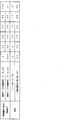
- FIG. 1 the result of having evaluated sealing property (L / min) and the restoration rate (%) after compression heating about six types of inorganic fibrous papers with different blends of biosoluble inorganic fibers is shown. Note that the sealing property and the restoration rate after compression heating shown in FIG. 1 are arithmetic average values of values obtained for three test pieces. Moreover, it shows that sealing performance is so high that the numerical value of sealing performance in FIG. 1 is small.
- the restoration rate after compression heating tends to decrease, but the sealing performance is improved.
- the fiber A was 40 to 80 parts by weight and the fiber C was 60 to 20 parts by weight
- the inorganic fibrous paper had sufficient sealing properties while maintaining the restoration rate after compression heating.
- an amorphous SiO 2 / MgO fiber having a SiO 2 content of 76% by mass, a CaO content of 4% by mass, a MgO content of 18% by mass, and an Al 2 O 3 content of 2% by mass. (Hereinafter referred to as “fiber B”).
- the crystallization temperature of the fiber B was 857 ° C.
- the average fiber diameter of the fiber B was 3.6 ⁇ m.
- the fiber C used also in the above-mentioned Example 1 was prepared.
- inorganic fibrous paper which contains the fiber B and the fiber C in the ratio mutually different as a biosoluble inorganic fiber similarly to the above-mentioned Example 1 was manufactured. All of the manufactured inorganic fibrous papers had a thickness of 0.5 to 6 mm, a basis weight of 75 to 1800 g / m 2 , and a density of 0.15 to 0.3 g / cm 3 .
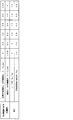
- FIG. 2 shows the results of evaluating the sealing property (L / min) and the restoration rate (%) after compression heating for six types of inorganic fiber papers having different blends of biosoluble inorganic fibers. Note that the sealability and the restoration rate after compression heating shown in FIG. 2 are arithmetic average values of values obtained for three test pieces.
- the inorganic fibrous paper As shown in FIG. 2, as the compounding ratio of the fibers C contained in the inorganic fibrous paper increases, the restoration rate after compression heating tends to decrease, but the sealing performance is improved. In particular, when the fiber B is 40 to 80 parts by weight and the fiber C is 60 to 20 parts by weight, the inorganic fibrous paper has sufficient sealing properties while maintaining the restoration rate after compression heating.
- heat-treated fiber A As the first fiber, a heat-treated fiber A (hereinafter referred to as “heat-treated fiber A”) was prepared. That is, the heat treatment fiber A was obtained by subjecting the fiber A used in Example 1 described above to a heat treatment at 800 ° C., which is lower than the crystallization temperature, for 20 minutes. As a 2nd fiber, the fiber C used also in the above-mentioned Example 1 was prepared.
- the restoration rate after compression heating of the inorganic fibrous paper containing 80 parts by weight of the heat-treated fiber A and 20 parts by weight of the fiber C was remarkably increased as compared with that of the inorganic fibrous paper containing 100 parts by weight of fiber A and not containing fiber C.
- the inorganic fibrous paper has a sufficient recovery rate after compression heating, a sufficient sealing property, It was equipped with.
- heat-treated fiber B As the first fiber, a heat-treated fiber B (hereinafter referred to as “heat-treated fiber B”) was prepared. That is, the heat treatment fiber B was obtained by subjecting the fiber B used in Example 2 described above to a heat treatment at 800 ° C., which is lower than the crystallization temperature, for 20 minutes. As a 2nd fiber, the fiber C used also in the above-mentioned Example 1 was prepared.
- inorganic fibrous paper containing the heat processing fiber B and the fiber C in the ratio mutually different as a biosoluble inorganic fiber similarly to the above-mentioned Example 1 were manufactured. All of the manufactured inorganic fibrous papers had a thickness of 0.5 to 6 mm, a basis weight of 75 to 1800 g / m 2 , and a density of 0.15 to 0.3 g / cm 3 .
- FIG. 4 shows the results of evaluating the sealing property (L / min) and the recovery rate (%) after compression heating for six types of inorganic fibrous papers having different biosoluble inorganic fiber blends. Note that the sealability and the recovery rate after compression heating shown in FIG. 4 are arithmetic average values of values obtained for three test pieces.
- the sealing property is improved.
- the restoration rate after compression heating was significantly increased as compared to the result (see FIG. 2) in Example 2 described above using fiber B, which was an untreated fiber. That is, the use of heat-treated fiber B as the first fiber significantly improved the restoration rate after compression heating.
- the inorganic fibrous paper has a sufficient recovery rate after compression heating, a sufficient sealing property, It was equipped with.
Landscapes
- Chemical & Material Sciences (AREA)
- Engineering & Computer Science (AREA)
- Life Sciences & Earth Sciences (AREA)
- Materials Engineering (AREA)
- Organic Chemistry (AREA)
- Chemical Kinetics & Catalysis (AREA)
- General Chemical & Material Sciences (AREA)
- Geochemistry & Mineralogy (AREA)
- Ceramic Engineering (AREA)
- Inorganic Chemistry (AREA)
- General Life Sciences & Earth Sciences (AREA)
- Structural Engineering (AREA)
- Dispersion Chemistry (AREA)
- Civil Engineering (AREA)
- Textile Engineering (AREA)
- Glass Compositions (AREA)
- Paper (AREA)
- Inorganic Fibers (AREA)
- Nonwoven Fabrics (AREA)
Abstract
Description
SiO2 66~82重量%(例えば、68~80重量%、70~80重量%、71~80重量%又は71~76重量%とできる)
CaO 10~34重量%(例えば、18~32重量%、20~30重量%、20~27重量%又は21~26重量%とできる)
MgO 3重量%以下(例えば、1重量%以下とできる)
Al2O3 5重量%以下(例えば3.5重量%以下、3.4重量%以下又は3重量%以下とできる。また、1重量%以上、1.1重量%以上又は2重量%以上とできる)
他の酸化物 2重量%未満
第一の生体溶解性無機繊維として、SiO2含有量が74質量%、CaO含有量が25質量%、MgO含有量が0.3質量%、Al2O3含有量が2質量%の非晶質のSiO2/CaO繊維(以下、「繊維A」という。)を準備した。繊維Aの結晶化温度は895℃であった。繊維Aの平均繊維径は3.4μmであった。
上述のようにして製造された無機繊維質ペーパーのシール性を評価した。すなわち、まず、各無機繊維質ペーパーの任意の箇所から、外径30mm、内径15mmの試験片を3つずつ打ち抜いた。
上述のようにして製造された無機繊維質ペーパーの圧縮加熱後の復元率を評価した。すなわち、まず、各無機繊維質ペーパーの任意の箇所から、幅25mm、長さ50mmの試験片を3つずつ切り出し、各試験片の厚さ(圧縮加熱前の厚さ)をノギスで測定した。
図1には、生体溶解性無機繊維の配合が異なる6種類の無機繊維質ペーパーについてシール性(L/分)及び圧縮加熱後の復元率(%)を評価した結果を示す。なお、図1に示すシール性及び圧縮加熱後の復元率は、いずれも3つの試験片について得られた値の算術平均値である。また、図1においてシール性の数値が小さいほど、シール性が高いことを示す。
第一繊維として、SiO2含有量が76質量%、CaO含有量が4質量%、MgO含有量が18質量%、Al2O3含有量が2質量%の非晶質のSiO2/MgO繊維(以下、「繊維B」という。)を準備した。繊維Bの結晶化温度は857℃であった。繊維Bの平均繊維径は3.6μmであった。第二繊維としては、上述の実施例1でも使用した繊維Cを準備した。
上述の実施例1と同様に、無機繊維質ペーパーのシール性及び圧縮加熱後の復元率を評価した。図2には、生体溶解性無機繊維の配合が異なる6種類の無機繊維質ペーパーについてシール性(L/分)及び圧縮加熱後の復元率(%)を評価した結果を示す。なお、図2に示すシール性及び圧縮加熱後の復元率は、いずれも3つの試験片について得られた値の算術平均値である。
第一繊維として、加熱処理が施された繊維A(以下、「加熱処理繊維A」という。)を準備した。すなわち、上述の実施例1で使用された繊維Aに、結晶化温度未満である800℃にて20分の加熱処理を施すことにより、加熱処理繊維Aを得た。第二繊維としては、上述の実施例1でも使用した繊維Cを準備した。
上述の実施例1と同様に、無機繊維質ペーパーのシール性及び圧縮加熱後の復元率を評価した。図3には、生体溶解性無機繊維の配合が異なる6種類の無機繊維質ペーパーについてシール性(L/分)及び圧縮加熱後の復元率(%)を評価した結果を示す。なお、図3に示すシール性及び圧縮加熱後の復元率は、いずれも3つの試験片について得られた値の算術平均値である。
第一繊維として、加熱処理が施された繊維B(以下、「加熱処理繊維B」という。)を準備した。すなわち、上述の実施例2で使用された繊維Bに、結晶化温度未満である800℃にて20分の加熱処理を施すことにより、加熱処理繊維Bを得た。第二繊維としては、上述の実施例1でも使用した繊維Cを準備した。
上述の実施例1と同様に、無機繊維質ペーパーのシール性及び圧縮加熱後の復元率を評価した。図4には、生体溶解性無機繊維の配合が異なる6種類の無機繊維質ペーパーについてシール性(L/分)及び圧縮加熱後の復元率(%)を評価した結果を示す。なお、図4に示すシール性及び圧縮加熱後の復元率は、いずれも3つの試験片について得られた値の算術平均値である。
この明細書に記載の文献の内容を全てここに援用する。
Claims (15)
- 平均繊維径が3μm~7μmである第一の生体溶解性無機繊維と、
平均繊維径が2μm~3μmであって、前記第一の生体溶解性無機繊維の平均繊維径より小さい第二の生体溶解性無機繊維と、
バインダーと、
を含み、
前記第一の生体溶解性無機繊維と前記第二の生体溶解性無機繊維は化学組成が異なり、
前記第一の生体溶解性無機繊維が、
SiO2含有量が50~82質量%であり、CaO含有量が5~34質量%であり、MgO含有量が1質量%以下であるSiO2/CaO繊維であるか、
SiO2含有量が50~82質量%であり、MgO含有量が1~20質量%であり、CaO含有量が1~9質量%であるSiO2/MgO繊維である無機繊維質ペーパーからなるシール材又は緩衝材。 - 前記SiO2/MgO繊維は、BaOを含まない請求項1に記載されたシール材又は緩衝材。
- 前記SiO2/CaO繊維及び前記SiO2/MgO繊維は、Al2O3含有量が0~3質量%である請求項1又は2に記載されたシール材又は緩衝材。
- 前記第二の生体溶解性無機繊維が、SiO2を30質量%~50質量%含有する請求項1乃至3のいずれかに記載されたシール材又は緩衝材。
- 厚さが0.1~8mmである請求項1乃至4のいずれかに記載されたシール材又は緩衝材。
- 前記第一の生体溶解性無機繊維の平均繊維径が3.1μm~4.0μmである
請求項1乃至5のいずれかに記載されたシール材又は緩衝材。 - 前記第一の生体溶解性無機繊維を30質量%~90質量%、及び前記第二の生体溶解性無機繊維を10質量%~70質量%含む
請求項1乃至6のいずれかに記載されたシール材又は緩衝材。 - 前記第一の生体溶解性無機繊維を40質量%~80質量%、及び前記第二の生体溶解性無機繊維を20質量%~60質量%含む
請求項7に記載されたシール材又は緩衝材。 - 前記第二の繊維が、ロックウールである
請求項1乃至8のいずれかに記載されたシール材又は緩衝材。 - 前記第二の繊維が、SiO2を35質量%~45質量%、MgOを1質量%~10質量%、CaOを20質量%~40質量%、Al2O3を10質量%~20質量%含む繊維である
請求項1乃至8のいずれかに記載されたシール材又は緩衝材。 - 前記第一の生体溶解性無機繊維は、予め加熱処理が施された生体溶解性無機繊維である
請求項1乃至10のいずれかに記載されたシール材又は緩衝材。 - 前記加熱処理温度が400℃~1300℃である
請求項11に記載されたシール材又は緩衝材。 - 繊維として、前記第一の生体溶解性無機繊維と第二の生体溶解性無機繊維だけを含む請求項1乃至12のいずれかに記載されたシール材又は緩衝材。
- 前記緩衝材が脱硝用触媒緩衝材である請求項1乃至13のいずれかに記載されたシール材又は緩衝材。
- 平均繊維径が3~7μmである第一の生体溶解性無機繊維と、
平均繊維径が2~3μmであって、前記第一の生体溶解性無機繊維の平均繊維径より小さく、前記第一の生体溶解性無機繊維と化学組成が異なる第二の生体溶解性無機繊維と、
バインダーと、を含む原料を抄造する工程を含み、
前記第一の生体溶解性無機繊維が、
SiO2含有量が50~82質量%であり、CaO含有量が5~34質量%であり、MgO含有量が1質量%以下であるSiO2/CaO繊維であるか、
SiO2含有量が50~82質量%であり、MgO含有量が1~20質量%であり、CaO含有量が1~9質量%であるSiO2/MgO繊維である
シール材又は緩衝材の製造方法。
Priority Applications (4)
| Application Number | Priority Date | Filing Date | Title |
|---|---|---|---|
| CN201280013767.7A CN103429818B (zh) | 2011-03-31 | 2012-03-21 | 无机纤维质纸及其制造方法 |
| KR1020137025190A KR101428435B1 (ko) | 2011-03-31 | 2012-03-21 | 무기 섬유질 페이퍼 및 그 제조 방법 |
| AU2012235476A AU2012235476B2 (en) | 2011-03-31 | 2012-03-21 | Inorganic-fiber based paper and method for manufacturing same |
| EP12764323.7A EP2692946B1 (en) | 2011-03-31 | 2012-03-21 | Inorganic-fiber based paper and method for manufacturing same |
Applications Claiming Priority (2)
| Application Number | Priority Date | Filing Date | Title |
|---|---|---|---|
| JP2011-077939 | 2011-03-31 | ||
| JP2011077939A JP5015336B1 (ja) | 2011-03-31 | 2011-03-31 | 無機繊維質ペーパー及びその製造方法 |
Publications (1)
| Publication Number | Publication Date |
|---|---|
| WO2012132329A1 true WO2012132329A1 (ja) | 2012-10-04 |
Family
ID=46844549
Family Applications (1)
| Application Number | Title | Priority Date | Filing Date |
|---|---|---|---|
| PCT/JP2012/001944 Ceased WO2012132329A1 (ja) | 2011-03-31 | 2012-03-21 | 無機繊維質ペーパー及びその製造方法 |
Country Status (7)
| Country | Link |
|---|---|
| US (1) | US8641868B2 (ja) |
| EP (1) | EP2692946B1 (ja) |
| JP (1) | JP5015336B1 (ja) |
| KR (1) | KR101428435B1 (ja) |
| CN (1) | CN103429818B (ja) |
| AU (1) | AU2012235476B2 (ja) |
| WO (1) | WO2012132329A1 (ja) |
Cited By (6)
| Publication number | Priority date | Publication date | Assignee | Title |
|---|---|---|---|---|
| US20120255697A1 (en) * | 2011-04-05 | 2012-10-11 | Nichias Corporation | Inorganic fiber paper, method of producing the same and equipment using the same |
| US9944552B2 (en) | 2013-07-22 | 2018-04-17 | Morgan Advanced Materials Plc | Inorganic fibre compositions |
| DE112017004988T5 (de) | 2016-09-30 | 2019-09-05 | Morgan Advanced Materials Plc. | Anorganische Faserzusammensetzungen |
| US10894737B2 (en) | 2016-01-15 | 2021-01-19 | Thermal Ceramics Uk Limited | Apparatus and method for forming melt-formed inorganic fibres |
| JP2021181383A (ja) * | 2020-05-18 | 2021-11-25 | イソライト工業株式会社 | 生理食塩水に可溶な耐熱性無機繊維 |
| WO2022084655A1 (en) | 2020-10-23 | 2022-04-28 | Thermal Ceramics Uk Limited | Thermal insulation |
Families Citing this family (11)
| Publication number | Priority date | Publication date | Assignee | Title |
|---|---|---|---|---|
| KR101460965B1 (ko) * | 2010-06-23 | 2014-11-13 | 아사히 화이바 구라스 가부시키가이샤 | 무기 섬유 단열 흡음재용 수성 바인더, 무기 섬유 단열 흡음재 및 무기 섬유 단열 흡음재의 제조 방법 |
| JP5015336B1 (ja) * | 2011-03-31 | 2012-08-29 | ニチアス株式会社 | 無機繊維質ペーパー及びその製造方法 |
| CN105829607A (zh) * | 2013-08-26 | 2016-08-03 | 尤尼弗瑞克斯 I 有限责任公司 | 无机纤维纸 |
| WO2015119929A1 (en) * | 2014-02-05 | 2015-08-13 | Borgwarner Inc. | Supercharging device |
| JP5634637B1 (ja) * | 2014-08-08 | 2014-12-03 | ニチアス株式会社 | 生体溶解性無機繊維 |
| JP2018028347A (ja) * | 2016-08-17 | 2018-02-22 | 日本バルカー工業株式会社 | シート状ガスケット |
| JP6605569B2 (ja) * | 2016-12-26 | 2019-11-13 | Kj特殊紙株式会社 | 無機繊維紙 |
| JP6528824B2 (ja) * | 2017-10-06 | 2019-06-12 | 王子ホールディングス株式会社 | 繊維強化プラスチック成形体用シート及び繊維強化プラスチック成形体 |
| JP6634459B2 (ja) * | 2018-02-20 | 2020-01-22 | ニチアス株式会社 | 膨張性シート |
| US12234336B2 (en) * | 2018-12-18 | 2025-02-25 | Nissin Chemical Industry Co., Ltd. | Binder for inorganic fibers and inorganic fiber mat |
| JP7540182B2 (ja) * | 2020-03-31 | 2024-08-27 | セイコーエプソン株式会社 | 繊維成形体製造用原料および繊維成形体の製造方法 |
Citations (5)
| Publication number | Priority date | Publication date | Assignee | Title |
|---|---|---|---|---|
| JPH10512232A (ja) * | 1995-10-30 | 1998-11-24 | ユニフラックス コーポレイション | 耐高温性ガラス繊維 |
| JP2002068777A (ja) | 2000-08-28 | 2002-03-08 | Nichias Corp | 無機繊維及びその製造方法 |
| JP2002069897A (ja) * | 2000-08-30 | 2002-03-08 | Kankyo Science Kk | 抗菌性無機質シート |
| JP2006152468A (ja) * | 2004-11-26 | 2006-06-15 | Saint-Gobain Tm Kk | 無機繊維およびその製造方法 |
| JP2007063078A (ja) * | 2005-08-31 | 2007-03-15 | Nichias Corp | 無機繊維及びその製造方法 |
Family Cites Families (48)
| Publication number | Priority date | Publication date | Assignee | Title |
|---|---|---|---|---|
| GR65316B (en) * | 1978-06-20 | 1980-08-02 | Arjomari Prioux | Method for the preparation of fibrous leaf |
| US4612251A (en) * | 1982-07-30 | 1986-09-16 | Arjomari-Prioux | Paper sheet having a very high proportion of latex, process for preparing same and applications thereof particularly as a substitution product for impregnated glass webs |
| JPS60181400A (ja) | 1984-02-21 | 1985-09-17 | 鈴木 貞夫 | 無機質シ−ト |
| US5332699A (en) * | 1986-02-20 | 1994-07-26 | Manville Corp | Inorganic fiber composition |
| RU2113420C1 (ru) * | 1992-01-17 | 1998-06-20 | Дзе Морган Крусибл Компани ПЛС | Применение солерастворимых неорганических волокон в качестве огнеупорной изоляции, способ изготовления огнеупорной изоляции |
| JPH062298A (ja) | 1992-06-15 | 1994-01-11 | Senji Kaneko | 下水汚泥によるスラグウールを利用したシート及び立体成形体 |
| DE69432866T2 (de) * | 1993-01-15 | 2003-12-24 | The Morgan Crucible Co. Plc., Windsor | In Salzlösung lösliche anorganische Fasern |
| GB9414154D0 (en) * | 1994-07-13 | 1994-08-31 | Morgan Crucible Co | Saline soluble inorganic fibres |
| US5569629A (en) * | 1994-08-23 | 1996-10-29 | Unifrax Corporation | High temperature stable continuous filament glass ceramic fibers |
| US5767022A (en) * | 1994-08-23 | 1998-06-16 | Unifrax Corporation | Friction pad containing high temperature stable continuous filament glass fibers |
| US6030910A (en) * | 1995-10-30 | 2000-02-29 | Unifrax Corporation | High temperature resistant glass fiber |
| US5932347A (en) * | 1996-10-31 | 1999-08-03 | Owens Corning Fiberglas Technology, Inc. | Mineral fiber compositions |
| US6294491B1 (en) * | 1997-03-28 | 2001-09-25 | Johns Manville International, Inc. | Lightweight glass fiber insulation |
| ZA989387B (en) * | 1998-08-13 | 1999-04-15 | Unifrax Corp | High temperature resistant glass fiber |
| JP4264164B2 (ja) | 1998-11-04 | 2009-05-13 | 日東紡績株式会社 | 加熱膨張型無機質繊維フェルト |
| DE60003569T2 (de) * | 1999-09-10 | 2004-04-29 | The Morgan Crucible Co. Plc., Windsor | Hochtemperaturbeständige, in salzlösung lösliche fasern |
| JP4738579B2 (ja) | 2000-09-18 | 2011-08-03 | 北越紀州製紙株式会社 | 液体濾過用フィルター濾材及びその製造方法 |
| JP3880038B2 (ja) * | 2001-09-28 | 2007-02-14 | ニチアス株式会社 | 生体溶解性ハニカム構造体 |
| GB2383793B (en) * | 2002-01-04 | 2003-11-19 | Morgan Crucible Co | Saline soluble inorganic fibres |
| BR0302547B1 (pt) * | 2002-01-10 | 2012-11-27 | fibra inorgánica vìtrea resistente a altas temperaturas e processo de fabricação de fibra inorgánica vìtrea resistente a altas temperaturas e processo de isolamento de um artigo. | |
| JP3995084B2 (ja) * | 2002-07-05 | 2007-10-24 | サンゴバン・ティーエム株式会社 | 耐水性および生体溶解性を有する無機繊維とその製造方法 |
| JP2004143254A (ja) * | 2002-10-23 | 2004-05-20 | Nichias Corp | ロックウール成形体及びその製造方法 |
| JP2004198981A (ja) | 2002-12-20 | 2004-07-15 | Nippon Muki Co Ltd | オイル塗布クリーニングロール用オイル保持シート |
| JP2006009187A (ja) | 2004-06-24 | 2006-01-12 | Nippon Sheet Glass Co Ltd | 無機繊維ペーパーの製造方法 |
| JP5154738B2 (ja) | 2004-07-26 | 2013-02-27 | 日本板硝子株式会社 | 耐熱セラミックシート |
| JP2006089881A (ja) * | 2004-09-24 | 2006-04-06 | Saint-Gobain Tm Kk | 無機繊維とその製造方法 |
| WO2006057240A1 (ja) * | 2004-11-24 | 2006-06-01 | Nippon Sheet Glass Company, Limited | 無機繊維紙 |
| JP4669326B2 (ja) | 2005-05-31 | 2011-04-13 | 帝人株式会社 | 無機繊維紙およびその製造方法 |
| US7749923B2 (en) * | 2006-09-07 | 2010-07-06 | Johns Manville | Facing and faced insulation products |
| WO2008136875A1 (en) * | 2007-01-08 | 2008-11-13 | Unifrax I Llc | Fire-barrier film laminate |
| US20100196722A1 (en) * | 2007-08-01 | 2010-08-05 | Lucidi Gerard J | Bio-soluble fiber-based mixtures and their use in matrices for infrared emission |
| JP2009257422A (ja) * | 2008-04-15 | 2009-11-05 | Ibiden Co Ltd | 保持シール材、及び、排ガス浄化装置 |
| JP5451993B2 (ja) * | 2008-07-04 | 2014-03-26 | ニチアス株式会社 | 無機繊維ペーパー及びこれを用いたハニカム構造体並びにフィルタ− |
| US9290866B2 (en) * | 2008-11-03 | 2016-03-22 | 3M Innovative Properties Company | Mounting mat and pollution control device with the same |
| US8916102B2 (en) * | 2008-11-03 | 2014-12-23 | 3M Innovative Properties Company | Mounting mat and pollution control device with the same |
| JP5726089B2 (ja) * | 2009-01-05 | 2015-05-27 | ユニフラックス ワン リミテッド ライアビリティ カンパニー | 高強度生体溶解性無機繊維断熱マット |
| CA2773757A1 (en) * | 2009-09-24 | 2011-03-31 | Unifrax I Llc | Multiple layer mat and exhaust gas treatment device |
| EP2483485B1 (en) * | 2009-10-02 | 2016-12-07 | Unifrax I LLC | Ultra low weight insulation board |
| AU2010340532B2 (en) * | 2010-01-07 | 2014-06-26 | Nichias Corporation | Inorganic fibrous molded refractory article, method for producing inorganic fibrous molded refractory article, and inorganic fibrous unshaped refractory composition |
| WO2011130056A2 (en) * | 2010-04-13 | 2011-10-20 | 3M Innovative Properties Company | Inorganic fiber webs and methods of making and using |
| US8343400B2 (en) * | 2010-04-13 | 2013-01-01 | 3M Innovative Properties Company | Methods of making inorganic fiber webs |
| CA2796032A1 (en) * | 2010-04-13 | 2011-10-20 | 3M Innovative Properties Company | Inorganic fiber webs and methods of making and using |
| US20110311404A1 (en) * | 2010-06-16 | 2011-12-22 | Creedon Matthew J | Thermally Stable Inorganic Fibers For Exhaust Gas Treatment Device Insulating Mat |
| WO2012021817A2 (en) * | 2010-08-12 | 2012-02-16 | Unifrax I Llc | Exhaust gas treatment device |
| JP2011042575A (ja) * | 2010-11-22 | 2011-03-03 | Nichias Corp | 無機繊維質成形体及びその製造方法 |
| JP4977253B1 (ja) * | 2011-03-30 | 2012-07-18 | ニチアス株式会社 | 無機繊維質ペーパー及びその製造方法並びに設備 |
| JP5015336B1 (ja) * | 2011-03-31 | 2012-08-29 | ニチアス株式会社 | 無機繊維質ペーパー及びその製造方法 |
| US8940134B2 (en) * | 2011-04-05 | 2015-01-27 | Nichias Corporation | Paper comprising heat treated bio-soluble inorganic fibers, and method and equipment for making same |
-
2011
- 2011-03-31 JP JP2011077939A patent/JP5015336B1/ja active Active
- 2011-04-05 US US13/064,639 patent/US8641868B2/en not_active Expired - Fee Related
-
2012
- 2012-03-21 AU AU2012235476A patent/AU2012235476B2/en active Active
- 2012-03-21 KR KR1020137025190A patent/KR101428435B1/ko active Active
- 2012-03-21 WO PCT/JP2012/001944 patent/WO2012132329A1/ja not_active Ceased
- 2012-03-21 CN CN201280013767.7A patent/CN103429818B/zh active Active
- 2012-03-21 EP EP12764323.7A patent/EP2692946B1/en active Active
Patent Citations (5)
| Publication number | Priority date | Publication date | Assignee | Title |
|---|---|---|---|---|
| JPH10512232A (ja) * | 1995-10-30 | 1998-11-24 | ユニフラックス コーポレイション | 耐高温性ガラス繊維 |
| JP2002068777A (ja) | 2000-08-28 | 2002-03-08 | Nichias Corp | 無機繊維及びその製造方法 |
| JP2002069897A (ja) * | 2000-08-30 | 2002-03-08 | Kankyo Science Kk | 抗菌性無機質シート |
| JP2006152468A (ja) * | 2004-11-26 | 2006-06-15 | Saint-Gobain Tm Kk | 無機繊維およびその製造方法 |
| JP2007063078A (ja) * | 2005-08-31 | 2007-03-15 | Nichias Corp | 無機繊維及びその製造方法 |
Cited By (13)
| Publication number | Priority date | Publication date | Assignee | Title |
|---|---|---|---|---|
| US8940134B2 (en) * | 2011-04-05 | 2015-01-27 | Nichias Corporation | Paper comprising heat treated bio-soluble inorganic fibers, and method and equipment for making same |
| US20120255697A1 (en) * | 2011-04-05 | 2012-10-11 | Nichias Corporation | Inorganic fiber paper, method of producing the same and equipment using the same |
| US9944552B2 (en) | 2013-07-22 | 2018-04-17 | Morgan Advanced Materials Plc | Inorganic fibre compositions |
| US10894737B2 (en) | 2016-01-15 | 2021-01-19 | Thermal Ceramics Uk Limited | Apparatus and method for forming melt-formed inorganic fibres |
| DE112017004988T5 (de) | 2016-09-30 | 2019-09-05 | Morgan Advanced Materials Plc. | Anorganische Faserzusammensetzungen |
| JP7127084B2 (ja) | 2020-05-18 | 2022-08-29 | イソライト工業株式会社 | 生理食塩水に可溶な耐熱性無機繊維 |
| JP2021181383A (ja) * | 2020-05-18 | 2021-11-25 | イソライト工業株式会社 | 生理食塩水に可溶な耐熱性無機繊維 |
| WO2022084655A1 (en) | 2020-10-23 | 2022-04-28 | Thermal Ceramics Uk Limited | Thermal insulation |
| DE102021211745A1 (de) | 2020-10-23 | 2022-04-28 | Thermal Ceramics Uk Limited | Wärmeisolierung |
| DE102021211746A1 (de) | 2020-10-23 | 2022-04-28 | Thermal Ceramics Uk Limited | Wärmeisolierung |
| DE102021211747A1 (de) | 2020-10-23 | 2022-04-28 | Thermal Ceramics Uk Limited | Wärmeisolierung |
| DE112021005608T5 (de) | 2020-10-23 | 2023-08-24 | Thermal Ceramics Uk Limited | Wärmeisolierung |
| DE102021211747B4 (de) | 2020-10-23 | 2024-02-29 | Thermal Ceramics Uk Limited | Wärmeisolierung |
Also Published As
| Publication number | Publication date |
|---|---|
| KR20130124397A (ko) | 2013-11-13 |
| JP5015336B1 (ja) | 2012-08-29 |
| EP2692946A4 (en) | 2015-03-11 |
| AU2012235476A1 (en) | 2013-06-06 |
| AU2012235476B2 (en) | 2015-02-05 |
| US20120247695A1 (en) | 2012-10-04 |
| KR101428435B1 (ko) | 2014-08-07 |
| CN103429818B (zh) | 2015-05-06 |
| CN103429818A (zh) | 2013-12-04 |
| EP2692946A1 (en) | 2014-02-05 |
| JP2012211417A (ja) | 2012-11-01 |
| US8641868B2 (en) | 2014-02-04 |
| EP2692946B1 (en) | 2019-01-02 |
Similar Documents
| Publication | Publication Date | Title |
|---|---|---|
| JP5015336B1 (ja) | 無機繊維質ペーパー及びその製造方法 | |
| JP4977253B1 (ja) | 無機繊維質ペーパー及びその製造方法並びに設備 | |
| JP5295775B2 (ja) | ガラス組成 | |
| JP6109802B2 (ja) | 塩溶解性セラミック繊維組成物 | |
| WO2012049858A1 (ja) | 無機繊維質成形体及びその製造方法並びに加熱設備 | |
| US8940134B2 (en) | Paper comprising heat treated bio-soluble inorganic fibers, and method and equipment for making same | |
| JP7277541B2 (ja) | 断熱材 | |
| KR20190047744A (ko) | 생체 용해성 무기섬유 | |
| CA2790090C (en) | A composition for preparing ceramic fiber and a biosoluble ceramic fiber prepared therefrom for heat insulating material at high temperature | |
| JP5148770B1 (ja) | 無機繊維質ペーパーからなる緩衝材及びその製造方法 | |
| JP6554269B2 (ja) | 生体溶解性無機繊維の製造方法 | |
| KR20130067421A (ko) | 염용해성이 향상된 미네랄울 섬유 조성물 및 이로부터 얻어진 미네랄울 섬유를 함유하는 건축자재 | |
| JP5236100B1 (ja) | 無機繊維質ペーパーからなる緩衝材及びその製造方法並びに設備 | |
| CN103392033A (zh) | 无机纤维 | |
| CN101528623B (zh) | 无机纤维 |
Legal Events
| Date | Code | Title | Description |
|---|---|---|---|
| 121 | Ep: the epo has been informed by wipo that ep was designated in this application |
Ref document number: 12764323 Country of ref document: EP Kind code of ref document: A1 |
|
| ENP | Entry into the national phase |
Ref document number: 2012235476 Country of ref document: AU Date of ref document: 20120321 Kind code of ref document: A |
|
| ENP | Entry into the national phase |
Ref document number: 20137025190 Country of ref document: KR Kind code of ref document: A |
|
| NENP | Non-entry into the national phase |
Ref country code: DE |
|
| WWE | Wipo information: entry into national phase |
Ref document number: 2012764323 Country of ref document: EP |