WO2012018038A1 - 酢酸含有排水の処理方法及び装置 - Google Patents
酢酸含有排水の処理方法及び装置 Download PDFInfo
- Publication number
- WO2012018038A1 WO2012018038A1 PCT/JP2011/067746 JP2011067746W WO2012018038A1 WO 2012018038 A1 WO2012018038 A1 WO 2012018038A1 JP 2011067746 W JP2011067746 W JP 2011067746W WO 2012018038 A1 WO2012018038 A1 WO 2012018038A1
- Authority
- WO
- WIPO (PCT)
- Prior art keywords
- acetic acid
- exchange resin
- treating
- water
- containing wastewater
- Prior art date
- Legal status (The legal status is an assumption and is not a legal conclusion. Google has not performed a legal analysis and makes no representation as to the accuracy of the status listed.)
- Ceased
Links
Images


Classifications
-
- C—CHEMISTRY; METALLURGY
- C02—TREATMENT OF WATER, WASTE WATER, SEWAGE, OR SLUDGE
- C02F—TREATMENT OF WATER, WASTE WATER, SEWAGE, OR SLUDGE
- C02F1/00—Treatment of water, waste water, or sewage
- C02F1/42—Treatment of water, waste water, or sewage by ion-exchange
-
- C—CHEMISTRY; METALLURGY
- C02—TREATMENT OF WATER, WASTE WATER, SEWAGE, OR SLUDGE
- C02F—TREATMENT OF WATER, WASTE WATER, SEWAGE, OR SLUDGE
- C02F1/00—Treatment of water, waste water, or sewage
- C02F1/28—Treatment of water, waste water, or sewage by sorption
- C02F1/283—Treatment of water, waste water, or sewage by sorption using coal, charred products, or inorganic mixtures containing them
-
- C—CHEMISTRY; METALLURGY
- C02—TREATMENT OF WATER, WASTE WATER, SEWAGE, OR SLUDGE
- C02F—TREATMENT OF WATER, WASTE WATER, SEWAGE, OR SLUDGE
- C02F1/00—Treatment of water, waste water, or sewage
- C02F1/42—Treatment of water, waste water, or sewage by ion-exchange
- C02F2001/422—Treatment of water, waste water, or sewage by ion-exchange using anionic exchangers
-
- C—CHEMISTRY; METALLURGY
- C02—TREATMENT OF WATER, WASTE WATER, SEWAGE, OR SLUDGE
- C02F—TREATMENT OF WATER, WASTE WATER, SEWAGE, OR SLUDGE
- C02F1/00—Treatment of water, waste water, or sewage
- C02F1/42—Treatment of water, waste water, or sewage by ion-exchange
- C02F2001/425—Treatment of water, waste water, or sewage by ion-exchange using cation exchangers
-
- C—CHEMISTRY; METALLURGY
- C02—TREATMENT OF WATER, WASTE WATER, SEWAGE, OR SLUDGE
- C02F—TREATMENT OF WATER, WASTE WATER, SEWAGE, OR SLUDGE
- C02F1/00—Treatment of water, waste water, or sewage
- C02F1/42—Treatment of water, waste water, or sewage by ion-exchange
- C02F2001/427—Treatment of water, waste water, or sewage by ion-exchange using mixed beds
-
- C—CHEMISTRY; METALLURGY
- C02—TREATMENT OF WATER, WASTE WATER, SEWAGE, OR SLUDGE
- C02F—TREATMENT OF WATER, WASTE WATER, SEWAGE, OR SLUDGE
- C02F2101/00—Nature of the contaminant
- C02F2101/30—Organic compounds
- C02F2101/34—Organic compounds containing oxygen
-
- C—CHEMISTRY; METALLURGY
- C02—TREATMENT OF WATER, WASTE WATER, SEWAGE, OR SLUDGE
- C02F—TREATMENT OF WATER, WASTE WATER, SEWAGE, OR SLUDGE
- C02F2101/00—Nature of the contaminant
- C02F2101/30—Organic compounds
- C02F2101/38—Organic compounds containing nitrogen
-
- C—CHEMISTRY; METALLURGY
- C02—TREATMENT OF WATER, WASTE WATER, SEWAGE, OR SLUDGE
- C02F—TREATMENT OF WATER, WASTE WATER, SEWAGE, OR SLUDGE
- C02F2103/00—Nature of the water, waste water, sewage or sludge to be treated
- C02F2103/32—Nature of the water, waste water, sewage or sludge to be treated from the food or foodstuff industry, e.g. brewery waste waters
-
- C—CHEMISTRY; METALLURGY
- C02—TREATMENT OF WATER, WASTE WATER, SEWAGE, OR SLUDGE
- C02F—TREATMENT OF WATER, WASTE WATER, SEWAGE, OR SLUDGE
- C02F2303/00—Specific treatment goals
- C02F2303/02—Odour removal or prevention of malodour
-
- C—CHEMISTRY; METALLURGY
- C02—TREATMENT OF WATER, WASTE WATER, SEWAGE, OR SLUDGE
- C02F—TREATMENT OF WATER, WASTE WATER, SEWAGE, OR SLUDGE
- C02F2303/00—Specific treatment goals
- C02F2303/16—Regeneration of sorbents, filters
Definitions
- the present invention relates to a method and an apparatus for treating wastewater discharged from a food factory or the like and containing acetic acid and further peracetic acid.
- chlorinated chemicals have been mainly used as disinfectants or disinfectants used in food factories, but chlorinated chemicals have problems such as safety to the human body and corrosiveness to metals. Therefore, in recent years, a medicine mainly composed of peracetic acid has been used as a bactericide or disinfectant instead of a chlorine-based medicine.
- This agent is usually used as a peracetic acid-based fungicide (oxonia) comprising peracetic acid, acetic acid, hydrogen peroxide and water having the following composition.
- water containing peracetic acid is treated by adding a reducing agent (sodium bisulfite, sodium thiosulfate, etc.) to peracetic acid-containing water to reduce peracetic acid to acetic acid, or peracetic acid-containing water.
- a reducing agent sodium bisulfite, sodium thiosulfate, etc.
- JP-A-4-22494 a transition metal catalyst
- the cost of the reducing agent is high, and there is a problem of an increase in ions such as sulfate ions generated by the reduction, which is inappropriate for the recovery and reuse of water.
- the transition metal in the catalyst such as copper is oxidized by reduction and eluted into the treated water, which may deteriorate the water quality.
- Japanese Patent No. 3606031 Japanese Patent Laid-Open No. 2001-129564
- oxonia wastewater is contacted with activated carbon to reduce peracetic acid to acetic acid, then contacted with a cation exchange resin to remove cations, and then contacted with an anion exchange resin to acetic acid.
- acetic acid can be efficiently adsorbed and removed by subsequent contact treatment with an anion exchange resin.
- Patent Document 2 The treatment technique of Patent Document 2 is sufficient from the viewpoint of the purity of recovered water, but an anion exchange resin is disposed in the final stage, so that amines that elute in a small amount from the anion exchange resin depending on the recovery conditions. Measures against odor are required. In addition, since the odor becomes strong when the water temperature is a high temperature of 50 ° C. or more like oxonia waste water, a sufficient countermeasure against odor is required.
- the present invention provides a method and apparatus for treating acetic acid-containing wastewater that can sufficiently remove acetic acid from acetic acid-containing wastewater, and that prevents elution of amines into treated water and prevents odor generation. Objective.
- the method for treating acetic acid-containing wastewater according to the first aspect is a method for treating acetic acid-containing wastewater discharged from a food or beverage factory, a step of bringing the water to be treated into contact with an anion exchange resin, and a step of bringing it into contact with a cation exchange resin thereafter. It is characterized by having.
- the method for treating acetic acid-containing wastewater according to the second aspect is a method for treating acetic acid-containing wastewater discharged from a food or beverage factory, wherein the treated water is brought into contact with a mixed bed containing at least an anion exchange resin and a cation exchange resin. It is characterized by having.
- the method for treating acetic acid-containing wastewater according to the third aspect is the mixing ratio of anion exchange resin and cation exchange resin in the mixed bed containing the anion exchange resin and the cation exchange resin in the method for treating acetic acid-containing wastewater according to the second aspect (
- a method for treating acetic acid-containing wastewater according to a fourth aspect is the method for treating acetic acid-containing wastewater according to any one of the first to third aspects, wherein the anion exchange resin is a weakly basic anion exchange resin and the cation exchange resin is strongly acidic. It is a cation exchange resin.
- the method for treating acetic acid-containing wastewater according to the fifth aspect is a method for treating wastewater containing acetic acid and peracetic acid discharged from a food or beverage factory, bringing the wastewater into contact with activated carbon and reducing it to acetic acid,
- the activated carbon-treated water is treated by the method for treating acetic acid-containing wastewater according to any one of the first to fourth aspects.
- the method for treating acetic acid-containing wastewater according to the sixth aspect is characterized in that, in the method for treating acetic acid-containing wastewater according to any one of the first to fifth aspects, the wastewater is oxonia wastewater having a water temperature of 40 ° C. or higher.
- the apparatus for treating acetic acid-containing wastewater according to the seventh aspect is the apparatus for treating acetic acid-containing wastewater discharged from a food or beverage factory, wherein an anion exchange tower into which water to be treated is introduced, and an effluent from the anion exchange tower are introduced. And a cation exchange column.
- the acetic acid-containing wastewater treatment apparatus is the acetic acid-containing wastewater treatment apparatus according to the seventh aspect, wherein the water flow SV of the anion exchange tower is 5 to 25 hr ⁇ 1 and the water flow SV of the cation exchange tower is 10 to 30 hr ⁇ 1 .
- a treatment apparatus for acetic acid-containing wastewater according to a ninth aspect is a mixed-bed resin tower including at least an anion exchange resin and a cation exchange resin into which water to be treated is introduced in a treatment apparatus for acetic acid-containing wastewater discharged from a food or beverage factory. It is provided with.
- the acetic acid-containing wastewater treatment device of the tenth aspect is characterized in that, in the acetic acid-containing wastewater treatment device of the ninth aspect, the water flow SV of the mixed bed resin tower is 10 to 30 hr ⁇ 1 .
- An acetic acid-containing wastewater treatment apparatus is the treatment apparatus for wastewater containing acetic acid and peracetic acid discharged from a food or beverage factory, wherein the activated carbon tower into which the wastewater is introduced and the effluent from the activated carbon tower And a treatment apparatus for acetic acid-containing wastewater according to any one of the seventh to tenth aspects, which is treated as water to be treated.
- An acetic acid-containing wastewater treatment apparatus is the acetic acid-containing wastewater treatment apparatus according to the eleventh aspect, wherein the activated carbon tower is a multi-stage fluidized bed activated carbon tower having an upward flow, and its water flow SV is 5 to 5. It is characterized by being 20 hr ⁇ 1 .
- the apparatus for treating acetic acid-containing wastewater according to the thirteenth aspect is characterized in that, in the apparatus for treating acetic acid-containing wastewater according to any of the seventh to twelfth aspects, the wastewater is oxonia wastewater having a water temperature of 40 ° C. or higher.
- acetic acid-containing wastewater is first contacted with an anion exchange resin to remove anionic species, and then contacted with a cation exchange resin to remove the cation species. Trace amounts of amines are eluted from the first contact step with the anion exchange resin, but these amines are removed by the subsequent contact treatment with the cation exchange resin. As a result, treated water in which acetic acid is sufficiently removed and odor generation due to the eluted amines is prevented can be obtained.
- acetic acid-containing wastewater is brought into contact with a mixed bed containing at least an anion exchange resin and a cation exchange resin.
- acetic acid is removed by the anion exchange resin, and amines are removed by the cation exchange resin, so that treated water in which odor generation is prevented is obtained.
- Yet another aspect of the present invention is a method and apparatus for treating peracetic acid-containing wastewater, wherein the peracetic acid-containing wastewater is first contacted with activated carbon to reduce peracetic acid to acetic acid. Thereafter, the treatment is performed in accordance with the method and apparatus for treating acetic acid-containing wastewater of the first or second aspect.
- treated water in which peracetic acid and acetic acid are sufficiently removed and odor generation is prevented can be obtained.
- acetic acid exchanged and adsorbed on the anion exchange resin can be desorbed and recovered as CH 3 COONa in the regeneration waste liquid by regenerating the anion exchange resin with sodium hydroxide or the like.
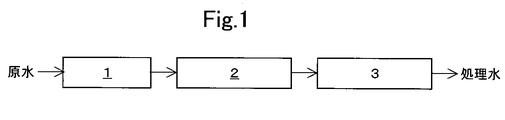
- 1 is a flow diagram illustrating the method and apparatus of the present invention. 1 is a flow diagram illustrating the method and apparatus of the present invention. It is a flowchart which shows the conventional method and apparatus.
- FIG. 1 is a system diagram showing a peracetic acid-containing water treatment device (treatment recovery device) according to a first embodiment of the present invention.
- peracetic acid-containing water (raw water) is passed through the activated carbon tower 1 to reduce peracetic acid to acetic acid.
- the raw material and shape of the activated carbon charged in the activated carbon tower 1 are not particularly limited in terms of the function of reducing peracetic acid to acetic acid, and coal-based, coconut-based, or other granular or powdery materials may be used. it can.
- Water passing rate of the activated carbon column 1 has superficial velocity in terms of reduction efficiency (SV) 5 ⁇ 20hr -1, preferably in the particular 8 ⁇ 12hr -1.
- the activated carbon tower 1 When hydrogen peroxide (H 2 O 2 ) is contained in the raw water, the activated carbon tower 1 also reduces H 2 O 2 to water and removes it.
- H 2 O 2 hydrogen peroxide
- the effluent from the activated carbon tower 1 is first passed through the anion exchange tower 2 to adsorb and remove acetic acid produced by reduction of peracetic acid and acetic acid derived from raw water.
- the anion exchange resin packed in the anion exchange tower 2 is preferably a weakly basic anion exchange resin, and is preferably treated with water flow SV5 to 25 hr ⁇ 1 .
- the effluent water from the anion exchange column 2 is water from which peracetic acid has been highly removed.
- the raw water is oxonia wastewater, all of peracetic acid, H 2 O 2 and acetic acid are highly removed.
- the acetic acid exchanged and adsorbed on the anion exchange resin of the anion exchange column 2 is removed as CH 3 COONa in the regenerated waste liquid by regenerating the acetic acid exchanged / adsorbed anion exchange resin with sodium hydroxide or the like. Can be separated and collected.
- the regenerated waste liquid may be biologically treated, and CH 3 COONa in the regenerated waste liquid can be easily reused because both the concentration and purity are high.
- the effluent water from the anion exchange tower 2 is then passed to the cation exchange tower 3.
- Cation species such as K + and Na + contained in the raw water and amines eluted from the anion exchange tower 2 are removed by the ion exchange treatment in the cation exchange tower 3.
- the cation exchange resin packed in the cation packed tower 3 is preferably a strongly acidic cation exchange resin, and the water flow SV is preferably about 10 to 30 hr ⁇ 1 .
- FIG. 2 is a system diagram showing a peracetic acid-containing water treatment device (treatment recovery device) according to a second embodiment of the present invention.
- peracetic acid-containing water (raw water) is passed through the activated carbon tower 1 to reduce peracetic acid to acetic acid.
- the configuration and water flow conditions of the activated carbon tower 1 are the same as those in the first embodiment.
- the effluent from the activated carbon tower 1 is then passed through a mixed bed resin tower 4 containing at least a cation exchange resin and an anion exchange resin. Thereby, both cation and anion are removed, and treated water in which amines eluted from the anion exchange resin are adsorbed and removed by the cation exchange resin is obtained.
- a combination of a strongly acidic cation exchange resin and a strongly basic anion exchange resin is preferable, and the mixing ratio (weight ratio) of the cation exchange resin and the anion exchange resin is preferred.
- the water flow SV is preferably about 10 to 30 hr ⁇ 1 .
- Such a method and apparatus of the present invention is suitable for the treatment of oxonia wastewater containing peracetic acid, acetic acid and H 2 O 2 at a temperature of about 40 ° C. to 50 ° C., particularly from the oxonia cleaning step using pure water.
- the concentration of peracetic acid and acetic acid generated is about 50 to 300 mg / L in total, and it is suitable for the treatment of relatively low concentration wastewater having a hydrogen peroxide concentration of about 10 to 300 mg / L.
- the method and apparatus of the present invention are also suitable for the treatment of acid cleaning rinse water in a CIP apparatus.
- the CIP device is a device that cleans a production line for beverages such as soft drinks, natural waters, juices, ketchups, mayonnaises and the like having various tanks, plates, pipes, and other configurations without disassembling.
- Example 1 Oxonia wastewater containing peracetic acid and acetic acid in an amount of 176 mg / L in terms of acetic acid and 36 mg / L of hydrogen peroxide was passed through the treatment apparatus shown in FIG. The test water temperature was adjusted to 50 ° C., which is the actual oxonia drainage temperature.
- each column The specifications of each column are as follows, and the water flow SV was activated carbon tower: 10 hr ⁇ 1 , cation exchange tower: 20 hr ⁇ 1 , and anion exchange tower 10 hr ⁇ 1 .
- Activated carbon tower A 220 mL column packed with 200 mL of granular activated carbon “Crycol WG” manufactured by Kurita Kogyo Co., Ltd.
- Cation exchange tower A column with a capacity of 220 mL packed with 100 mL of cation exchange resin “DIAION SK-112L” (deodorized conditioned product) manufactured by Mitsubishi Chemical Corporation.
- Example 2 In Example 1, a water flow test was conducted under the same conditions as in Example 1 except that the effluent water of the activated carbon tower 1 was passed through the mixed bed resin tower 4 as shown in FIG.
- the mixed bed resin tower 4 a column having a capacity of 220 mL and a mixture of 50 mL of the above cation exchange resin and 100 mL of anion exchange resin (SAT15L manufactured by Mitsubishi Chemical Corporation) is used, and the water flow SV is 10 hr ⁇ 1. It was. Table 1 shows the quality of the treated water.
- Example 1 In Example 1, the order of the anion exchange tower 2 and the cation exchange tower 3 is reversed, and the effluent water of the activated carbon tower 1 is passed in the order of the cation exchange tower 3 and the anion exchange tower 2 as shown in FIG. The water flow test was conducted under the same conditions as in Example 1. Table 1 shows the measurement results of the electrical conductivity and TOC of the effluent water of the cation exchange tower 3 and the quality of the treated water.
- Example 2 while maintaining the purity of pure water by contacting activated carbon tower effluent water in the order of anion exchange resin ⁇ cation exchange resin or contacting with mixed bed resin,
- the amine concentration can be reduced from about 85 ⁇ g / L in Comparative Example 1 to about 2 ⁇ g / L (Example 2) or 1 ⁇ g / L or less (Example 1), and the odor can be improved to an odorless state.
Landscapes
- Life Sciences & Earth Sciences (AREA)
- Hydrology & Water Resources (AREA)
- Engineering & Computer Science (AREA)
- Environmental & Geological Engineering (AREA)
- Water Supply & Treatment (AREA)
- Chemical & Material Sciences (AREA)
- Organic Chemistry (AREA)
- Treatment Of Water By Ion Exchange (AREA)
- Treatment Of Water By Oxidation Or Reduction (AREA)
- Water Treatment By Sorption (AREA)
- Physical Water Treatments (AREA)
Abstract
【課題】酢酸やさらには過酢酸を含有する排水から過酢酸及び酢酸を十分に除去することができ、しかも処理水中へのアミン類の溶出が防止され、臭気発生が防止される酢酸含有排水の処理方法及び装置を提供する。 【解決手段】オキソニア廃水などの過酢酸含有排水を活性炭塔1に通水して活性炭と接触させた後、アニオン交換塔2に通水してアニオン交換樹脂と接触させ、次いでカチオン交換塔3に通水してカチオン交換樹脂と接触させる。又は、過酢酸含有排水を活性炭塔1に通水した後、アニオン交換樹脂及びカチオン交換樹脂の混床樹脂塔4に通水する。
Description
本発明は、食品工場等から排出される、酢酸さらには過酢酸を含有する排水を処理する方法及び装置に関する。
食品工場等で使用される殺菌剤ないし除菌剤としては、従来、塩素系の薬剤が主に使用されていたが、塩素系の薬剤は、人体に対する安全性、金属に対する腐食性等の問題があるため、近年、塩素系の薬剤に代わる殺菌剤ないし除菌剤として、過酢酸を主成分とする薬剤が使用されるようになってきた。この薬剤は、通常、下記組成の過酢酸、酢酸、過酸化水素及び水からなる過酢酸系殺菌剤(オキソニア)として使用されている。
[過酢酸系殺菌剤(オキソニア)の組成]
過酢酸(CH3COOOH):10重量%
酢酸(CH3COOH) :20重量%
過酸化水素(H2O2) :20重量%
従って、食品工場等からは、過酢酸、酢酸及び過酸化水素を含有する所謂オキソニア排水(廃水)が排出されるため、これを処理する必要がある。
過酢酸(CH3COOOH):10重量%
酢酸(CH3COOH) :20重量%
過酸化水素(H2O2) :20重量%
従って、食品工場等からは、過酢酸、酢酸及び過酸化水素を含有する所謂オキソニア排水(廃水)が排出されるため、これを処理する必要がある。
従来、過酢酸を含有する水を処理する方法としては、過酢酸含有水に還元剤(重亜硫酸ソーダ、チオ硫酸ソーダ等)を添加して過酢酸を酢酸に還元する方法、或いは過酢酸含有水を遷移金属触媒と接触させて過酢酸を酢酸に還元する方法(特開平4-22494号公報)が提案されている。しかしながら、還元剤による方法では、還元剤のコストが高くつく上に、還元により生成する硫酸イオン等のイオンの増加の問題があり、水の回収、再利用には不適当である。また、遷移金属触媒を用いる方法では、銅などの触媒中の遷移金属が還元により酸化されて処理水中に溶出し、水質を低下させる恐れがある。
特許3603701(特開2001-129564)には、オキソニア排水を活性炭と接触させて過酢酸を酢酸に還元した後、カチオン交換樹脂と接触させてカチオンを除去し、次いでアニオン交換樹脂と接触させて酢酸を吸着除去する方法及び装置が記載されている。この方法によれば、共存カチオンを初めに除去するために、その後のアニオン交換樹脂との接触処理により酢酸を効率よく吸着除去することができる。
近年、食品、飲料工場において、回収水を含めて使用水の水質面での要求は厳しくなってきており、特に臭気や細菌数を低く抑えることが強く求められている。
上記特許文献2の処理技術は、回収水の純度の観点からは充分な処理であるが、最終段にアニオン交換樹脂を配しているため、回収条件によってはアニオン交換樹脂から微量溶出するアミン類に対する臭気対策が必要となる。なお、オキソニア排水のように水温が50℃以上の高温度であると、臭気が強くなるので、十分な臭気対策が必要となる。
この臭気対策として、
i) 臭気が問題にならなくなるまで、処理水を排出する。
ii) アニオン交換処理の後に、活性炭処理や再度カチオン交換塔を設置する。
といった方式が考えられるが、いずれも処理水の廃棄量増加、あるいは初期投資費用の増加といった課題がある。
i) 臭気が問題にならなくなるまで、処理水を排出する。
ii) アニオン交換処理の後に、活性炭処理や再度カチオン交換塔を設置する。
といった方式が考えられるが、いずれも処理水の廃棄量増加、あるいは初期投資費用の増加といった課題がある。
本発明は、酢酸含有排水から酢酸を十分に除去することができ、しかも処理水中へのアミン類の溶出が防止され、臭気発生が防止される酢酸含有排水の処理方法及び装置を提供することを目的とする。
第1態様の酢酸含有排水の処理方法は、食品又は飲料工場から排出される酢酸含有排水の処理方法において、被処理水をアニオン交換樹脂と接触させる工程と、その後カチオン交換樹脂と接触させる工程とを有することを特徴とする。
第2態様の酢酸含有排水の処理方法は、食品又は飲料工場から排出される酢酸含有排水の処理方法において、被処理水を少なくともアニオン交換樹脂とカチオン交換樹脂とを含む混床と接触させる工程を有することを特徴とする。
第3態様の酢酸含有排水の処理方法は、第2態様の酢酸含有排水の処理方法において、前記アニオン交換樹脂とカチオン交換樹脂とを含む混床の、アニオン交換樹脂とカチオン交換樹脂の混合比率(重量比)が、カチオン交換樹脂:アニオン交換樹脂=1:1.5~10であることを特徴とする。
第4態様の酢酸含有排水の処理方法は、第1~3態様のいずれかの酢酸含有排水の処理方法において、前記アニオン交換樹脂が弱塩基性アニオン交換樹脂であり、前記カチオン交換樹脂が強酸性カチオン交換樹脂であることを特徴とする。
第5態様の酢酸含有排水の処理方法は、食品又は飲料工場から排出される酢酸及び過酢酸を含有する排水の処理方法において、該排水を活性炭と接触させて酢酸に還元する工程と、その後、この活性炭処理水を第1~4態様のいずれかの酢酸含有排水の処理方法によって処理することを特徴とする。
第6態様の酢酸含有排水の処理方法は、第1~5態様のいずれかの酢酸含有排水の処理方法において、前記排水が水温40℃以上のオキソニア排水であることを特徴とする。
第7態様の酢酸含有排水の処理装置は、食品又は飲料工場から排出される酢酸含有排水の処理装置において、被処理水が導入されるアニオン交換塔と、該アニオン交換塔の流出水が導入されるカチオン交換塔とを備えたことを特徴とする。
第8態様の酢酸含有排水の処理装置は、第7態様の酢酸含有排水の処理装置において、前記アニオン交換塔の通水SVが5~25hr-1であり、前記カチオン交換塔の通水SVが10~30hr-1であることを特徴とする。
第9態様の酢酸含有排水の処理装置は、食品又は飲料工場から排出される酢酸含有排水の処理装置において、被処理水が導入される少なくともアニオン交換樹脂とカチオン交換樹脂とを含む混床樹脂塔を備えたことを特徴とする。
第10態様の酢酸含有排水の処理装置は、第9態様の酢酸含有排水の処理装置において、前記混床樹脂塔の通水SVが10~30hr-1であることを特徴とする。
第11態様の酢酸含有排水の処理装置は、食品又は飲料工場から排出される酢酸及び過酢酸を含有する排水の処理装置において、該排水が導入される活性炭塔と、該活性炭塔の流出水を被処理水として処理する第7~10態様のいずれかの酢酸含有排水の処理装置とを備えたことを特徴とする。
第12態様の酢酸含有排水の処理装置は、第11態様の酢酸含有排水の処理装置において、前記活性炭塔が上向流の多段式の流動床式活性炭塔であり、その通水SVが5~20hr-1であることを特徴とする。
第13態様の酢酸含有排水の処理装置は、第7~12態様のいずれかの酢酸含有排水の処理装置において、排水が水温40℃以上のオキソニア排水であることを特徴とする。
本発明の一態様に係る酢酸含有排水の処理方法及び装置では、酢酸含有排水をまずアニオン交換樹脂と接触させてアニオン種を除去し、次いでカチオン交換樹脂と接触させてカチオン種を除去する。最初のアニオン交換樹脂との接触工程からは微量のアミン類が溶出するが、このアミン類は後段のカチオン交換樹脂との接触処理により除去される。これにより、酢酸が十分に除去され、また溶出アミン類に起因した臭気発生も防止された処理水が得られる。
本発明の別態様の酢酸含有排水の処理方法及び装置では、酢酸含有排水を少なくともアニオン交換樹脂とカチオン交換樹脂とを含む混床と接触させる。これにより、酢酸がアニオン交換樹脂で除去されると共に、アミン類がカチオン交換樹脂によって除去され、臭気発生も防止された処理水が得られる。
本発明のさらに別の態様は、過酢酸含有排水を処理する方法及び装置であって、まず過酢酸含有排水を活性炭と接触させ、過酢酸を酢酸に還元する。その後は、上記第1又は第2態様の酢酸含有排水の処理方法及び装置に従って処理を行う。これにより過酢酸及び酢酸が十分に除去され、臭気発生も防止された処理水が得られる。
なお、本発明では、アニオン交換樹脂に交換・吸着された酢酸は、このアニオン交換樹脂を水酸化ナトリウム等で再生することにより、再生廃液中にCH3COONaとして脱離回収することができる。
なお、本発明では、アニオン交換樹脂に交換・吸着された酢酸は、このアニオン交換樹脂を水酸化ナトリウム等で再生することにより、再生廃液中にCH3COONaとして脱離回収することができる。
以下に、図面を参照して本発明の実施の形態を詳細に説明する。
図1は本発明の第1の実施の形態に係る過酢酸含有水の処理装置(処理回収装置)を示す系統図である。
図1の実施の形態にあっては、まず過酢酸含有水(原水)を活性炭塔1に通水して過酢酸を酢酸に還元する。この活性炭塔1に充填する活性炭の原料及び形状には、過酢酸を酢酸に還元するという機能上からは特に制限はなく、石炭系、ヤシガラ系、その他の粒状ないし粉状のものを用いることができる。
過酢酸の還元では、酸素と少量の炭酸ガス気泡が発生することから、この気泡を速やかに除去するために活性炭塔1としては、上向流の多段式の流動床式活性炭塔が好適である。この活性炭塔1の通水速度は、還元効率の面から空塔速度(SV)5~20hr-1、特に8~12hr-1とするのが好ましい。
なお、原水に過酸化水素(H2O2)が含まれる場合には、活性炭塔1でH2O2も水に還元されて除去される。
活性炭搭1の流出水はまずアニオン交換塔2に通水して過酢酸の還元で生じた酢酸及び原水由来の酢酸を吸着除去する。このアニオン交換塔2に充填するアニオン交換樹脂としては、弱塩基性アニオン交換樹脂が好ましく、通水SV5~25hr-1で処理するのが好ましい。
アニオン交換塔2の流出水は、過酢酸が高度に除去された水であり、特に原水がオキソニア廃水である場合には、過酢酸、H2O2及び酢酸がいずれも高度に除去される。
なお、このアニオン交換塔2のアニオン交換樹脂に交換・吸着された酢酸は、この酢酸を交換・吸着したアニオン交換樹脂を水酸化ナトリウム等で再生することにより、再生廃液中にCH3COONaとして脱離・回収することができる。再生廃液は、生物処理してもよく、また、この再生廃液中のCH3COONaは濃度、純度が共に高いため、容易に再利用することもできる。
アニオン交換塔2の流出水は次いでカチオン交換搭3に通水する。原水に含まれるK+,Na+等のカチオン種や、アニオン交換塔2から溶出したアミン類がこのカチオン交換搭3でのイオン交換処理により除去される。このカチオン充填塔3に充填するカチオン交換樹脂としては、強酸性カチオン交換樹脂が好ましく、その通水SVは10~30hr-1程度とするのが好ましい。
なお、原水が過酢酸を含有しない酢酸含有排水である場合には、活性炭塔1を経由せずに原水をアニオン交換塔2に導入すればよい。
図2は本発明の第2の実施の形態に係る過酢酸含有水の処理装置(処理回収装置)を示す系統図である。
この図2の実施の形態にあっては、まず過酢酸含有水(原水)を活性炭塔1に通水して過酢酸を酢酸に還元する。この活性炭塔1の構成及び通水条件は上記第1の実施の形態と同様である。
活性炭塔1の流出水は次いで少なくともカチオン交換樹脂とアニオン交換樹脂とを含む混床樹脂塔4に通水する。これにより、カチオン及びアニオンの双方が除去されると共に、アニオン交換樹脂から溶出したアミン類がカチオン交換樹脂によって吸着除去された処理水が得られる。
混床樹脂塔4に充填するカチオン交換樹脂及びアニオン交換樹脂としては、強酸性カチオン交換樹脂及び強塩基性アニオン交換樹脂の組み合わせが好ましく、そのカチオン交換樹脂とアニオン交換樹脂との混合比率(重量比)は、排水原水水質にもよるが、1:1.5~10程度が好適である。通水SVは10~30hr-1程度とするのが好ましい。
なお、原水が過酢酸を含有しない酢酸含有排水である場合には、活性炭塔1を経由せずに原水を混床樹脂塔4に導入すればよい。
このような本発明の方法及び装置は、過酢酸、酢酸及びH2O2を含む温度40℃~50℃程度のオキソニア廃水の処理に好適であり、特に、純水を用いたオキソニア洗浄工程から発生する、過酢酸及び酢酸の濃度が合計で50~300mg/L程度であり、過酸化水素濃度が10~300mg/L程度の比較的低濃度の廃水の処理に好適である。なお、本発明の方法及び装置は、CIP装置の酸洗浄すすぎ水の処理にも好適である。CIP装置は、各種タンク、プレート、配管、その他の構成からなる清涼飲料水、天然水、ジュース、ケチャップ、マヨネーズ等の飲料等の製造ラインを分解することなく洗浄する装置である。
以下に実施例及び比較例を挙げて本発明をより具体的に説明する。
[実施例1]
図1に示す処理装置に、過酢酸及び酢酸を酢酸換算で176mg/L含有すると共に、過酸化水素36mg/Lを含有するオキソニア排水を通水した。試験水温は、実機のオキソニア排水温度である50℃に調整した。アニオン交換塔2の出口水及び処理水について、電気伝導率(純水純度の指標)、TOC(全有機炭素濃度:酢酸や共存する有機物の除去効果の指標)、臭気(官能試験:処理水の臭気の指標)及びアミン類(トリメチルアミン、ジメチルアミン、モノメチルアミン及び合計の全アミン濃度:臭気に影響を与える物質がどの程度溶出しているかの指標)を測定し、結果を表1に示した。
図1に示す処理装置に、過酢酸及び酢酸を酢酸換算で176mg/L含有すると共に、過酸化水素36mg/Lを含有するオキソニア排水を通水した。試験水温は、実機のオキソニア排水温度である50℃に調整した。アニオン交換塔2の出口水及び処理水について、電気伝導率(純水純度の指標)、TOC(全有機炭素濃度:酢酸や共存する有機物の除去効果の指標)、臭気(官能試験:処理水の臭気の指標)及びアミン類(トリメチルアミン、ジメチルアミン、モノメチルアミン及び合計の全アミン濃度:臭気に影響を与える物質がどの程度溶出しているかの指標)を測定し、結果を表1に示した。
なお、各塔の仕様は下記の通りであり、通水SVは各々、活性炭塔:10hr-1,カチオン交換搭:20hr-1,アニオン交換塔10hr-1とした。
活性炭塔 : 容量220mLのカラムに栗田工業(株)製粒状活性炭「クリコールWG」を200mL充填したもの
アニオン交換搭: 容量220mLのカラムにランクセス(株)製アニオン交換樹脂「UP1231MD」(脱臭コンディショニング品)を200mL充填したもの
カチオン交換搭: 容量220mLのカラムに三菱化学(株)製カチオン交換樹脂「DIAION SK-112L」(脱臭コンディショニング品)を100mL充填したもの
アニオン交換搭: 容量220mLのカラムにランクセス(株)製アニオン交換樹脂「UP1231MD」(脱臭コンディショニング品)を200mL充填したもの
カチオン交換搭: 容量220mLのカラムに三菱化学(株)製カチオン交換樹脂「DIAION SK-112L」(脱臭コンディショニング品)を100mL充填したもの
[実施例2]
実施例1において、活性炭塔1の流出水を図2のように混床樹脂塔4に通水するようにした他は実施例1と同一条件にて通水試験を行った。なお、混床樹脂塔4としては、容量220mLのカラムに上記カチオン交換樹脂50mLとアニオン交換樹脂(三菱化学(株)製SAT15L)100mLとを混合充填したものを用い、通水SVは10hr-1とした。処理水の水質を表1に示す。
実施例1において、活性炭塔1の流出水を図2のように混床樹脂塔4に通水するようにした他は実施例1と同一条件にて通水試験を行った。なお、混床樹脂塔4としては、容量220mLのカラムに上記カチオン交換樹脂50mLとアニオン交換樹脂(三菱化学(株)製SAT15L)100mLとを混合充填したものを用い、通水SVは10hr-1とした。処理水の水質を表1に示す。
[比較例1]
実施例1において、アニオン交換塔2とカチオン交換塔3との順番を逆にし、図3の通り、活性炭塔1の流出水をカチオン交換塔3、アニオン交換塔2の順番に通水するようにした他は実施例1と同一条件にて通水試験を行った。カチオン交換塔3の流出水の電気伝導率及びTOCと、処理水の水質の測定結果を表1に示す。
実施例1において、アニオン交換塔2とカチオン交換塔3との順番を逆にし、図3の通り、活性炭塔1の流出水をカチオン交換塔3、アニオン交換塔2の順番に通水するようにした他は実施例1と同一条件にて通水試験を行った。カチオン交換塔3の流出水の電気伝導率及びTOCと、処理水の水質の測定結果を表1に示す。

表1の通り、実施例1及び実施例2によると、活性炭塔流出水をアニオン交換樹脂→カチオン交換樹脂の順に接触させるか又は混床樹脂と接触させることにより、純水純度を維持しながら、アミン類濃度を比較例1の85μg/L程度から2μg/L(実施例2)又は1μg/L以下(実施例1)程度にまで低減し、臭気を無臭状態まで改善することができる。
本発明を特定の態様を用いて詳細に説明したが、本発明の意図と範囲を離れることなく様々な変更が可能であることは当業者に明らかである。
なお、本出願は、2010年8月6日付で出願された日本特許出願(特願2010-177717)に基づいており、その全体が引用により援用される。
なお、本出願は、2010年8月6日付で出願された日本特許出願(特願2010-177717)に基づいており、その全体が引用により援用される。
1 活性炭塔
2 アニオン交換塔
3 カチオン交換搭
4 混床樹脂塔
2 アニオン交換塔
3 カチオン交換搭
4 混床樹脂塔
Claims (13)
- 食品又は飲料工場から排出される酢酸含有排水の処理方法において、被処理水をアニオン交換樹脂と接触させる工程と、その後カチオン交換樹脂と接触させる工程とを有することを特徴とする酢酸含有排水の処理方法。
- 食品又は飲料工場から排出される酢酸含有排水の処理方法において、被処理水を少なくともアニオン交換樹脂とカチオン交換樹脂とを含む混床と接触させる工程を有することを特徴とする酢酸含有排水の処理方法。
- 請求項2において、前記アニオン交換樹脂とカチオン交換樹脂とを含む混床の、アニオン交換樹脂とカチオン交換樹脂の混合比率(重量比)が、カチオン交換樹脂:アニオン交換樹脂=1:1.5~10であることを特徴とする酢酸含有排水の処理方法。
- 請求項1ないし3のいずれか1項において、前記アニオン交換樹脂が弱塩基性アニオン交換樹脂であり、前記カチオン交換樹脂が強酸性カチオン交換樹脂であることを特徴とする酢酸含有排水の処理方法。
- 食品又は飲料工場から排出される酢酸及び過酢酸を含有する排水の処理方法において、該排水を活性炭と接触させて酢酸に還元する工程と、その後、この活性炭処理水を請求項1ないし4のいずれか1項の酢酸含有排水の処理方法によって処理することを特徴とする酢酸含有排水の処理方法。
- 請求項1ないし5のいずれか1項において、前記排水が水温40℃以上のオキソニア排水であることを特徴とする酢酸含有排水の処理方法。
- 食品又は飲料工場から排出される酢酸含有排水の処理装置において、
被処理水が導入されるアニオン交換塔と、該アニオン交換塔の流出水が導入されるカチオン交換塔とを備えたことを特徴とする酢酸含有排水の処理装置。 - 請求項7において、前記アニオン交換塔の通水SVが5~25hr-1であり、前記カチオン交換塔の通水SVが10~30hr-1であることを特徴とする酢酸含有排水の処理装置。
- 食品又は飲料工場から排出される酢酸含有排水の処理装置において、
被処理水が導入される少なくともアニオン交換樹脂とカチオン交換樹脂とを含む混床樹脂塔を備えたことを特徴とする酢酸含有排水の処理装置。 - 請求項9において、前記混床樹脂塔の通水SVが10~30hr-1であることを特徴とする酢酸含有排水の処理装置。
- 食品又は飲料工場から排出される酢酸及び過酢酸を含有する排水の処理装置において、該排水が導入される活性炭塔と、該活性炭塔の流出水を被処理水として処理する請求項7ないし10のいずれか1項の酢酸含有排水の処理装置とを備えたことを特徴とする酢酸含有排水の処理装置。
- 請求項11において、前記活性炭塔が上向流の多段式の流動床式活性炭塔であり、その通水SVが5~20hr-1であることを特徴とする酢酸含有排水の処理装置。
- 請求項7ないし12のいずれか1項において、排水が水温40℃以上のオキソニア排水であることを特徴とする酢酸含有排水の処理装置。
Priority Applications (1)
| Application Number | Priority Date | Filing Date | Title |
|---|---|---|---|
| CN201180037972.2A CN103052599B (zh) | 2010-08-06 | 2011-08-03 | 含有醋酸的排水的处理方法及装置 |
Applications Claiming Priority (2)
| Application Number | Priority Date | Filing Date | Title |
|---|---|---|---|
| JP2010177717A JP5720138B2 (ja) | 2010-08-06 | 2010-08-06 | 酢酸含有排水の処理方法 |
| JP2010-177717 | 2010-08-06 |
Publications (1)
| Publication Number | Publication Date |
|---|---|
| WO2012018038A1 true WO2012018038A1 (ja) | 2012-02-09 |
Family
ID=45559534
Family Applications (1)
| Application Number | Title | Priority Date | Filing Date |
|---|---|---|---|
| PCT/JP2011/067746 Ceased WO2012018038A1 (ja) | 2010-08-06 | 2011-08-03 | 酢酸含有排水の処理方法及び装置 |
Country Status (3)
| Country | Link |
|---|---|
| JP (1) | JP5720138B2 (ja) |
| CN (1) | CN103052599B (ja) |
| WO (1) | WO2012018038A1 (ja) |
Cited By (2)
| Publication number | Priority date | Publication date | Assignee | Title |
|---|---|---|---|---|
| CN111527051A (zh) * | 2018-06-01 | 2020-08-11 | 伍德依文达菲瑟有限责任公司 | 回收聚酰胺6的生产中的萃取水的方法 |
| CN112897735A (zh) * | 2021-01-18 | 2021-06-04 | 天津红科朴业科技有限公司 | 一种生化处理后水制高纯水的工艺 |
Families Citing this family (2)
| Publication number | Priority date | Publication date | Assignee | Title |
|---|---|---|---|---|
| JP6278589B2 (ja) * | 2012-09-25 | 2018-02-14 | オルガノ株式会社 | 過酢酸含有排水の処理装置および過酢酸含有排水の処理方法 |
| JP6177039B2 (ja) * | 2013-07-26 | 2017-08-09 | 水ing株式会社 | アニオン交換樹脂由来の臭気を除去する方法および装置 |
Citations (7)
| Publication number | Priority date | Publication date | Assignee | Title |
|---|---|---|---|---|
| JPH11151488A (ja) * | 1997-09-17 | 1999-06-08 | Sumitomo Heavy Ind Ltd | 純水製造装置 |
| JPH11221561A (ja) * | 1998-02-10 | 1999-08-17 | Kurita Water Ind Ltd | 純水装置 |
| JP2001129564A (ja) * | 1999-11-04 | 2001-05-15 | Kurita Water Ind Ltd | 過酢酸の分解方法、過酢酸含有水の処理方法及び処理装置 |
| JP2001170657A (ja) * | 1999-12-14 | 2001-06-26 | Japan Organo Co Ltd | 過酢酸含有排水の処理装置 |
| JP2004330154A (ja) * | 2003-05-12 | 2004-11-25 | Japan Organo Co Ltd | 復水脱塩装置およびその装置へのイオン交換樹脂の充填方法 |
| JP2006289283A (ja) * | 2005-04-12 | 2006-10-26 | Nippon Rensui Co Ltd | 排水の処理装置、リンサー排水回収装置、リンサー排水回収システム、および排水の処理方法 |
| JP2007323095A (ja) * | 1996-11-21 | 2007-12-13 | Japan Organo Co Ltd | フォトレジスト現像廃液の再生処理方法 |
Family Cites Families (2)
| Publication number | Priority date | Publication date | Assignee | Title |
|---|---|---|---|---|
| JPS5229473A (en) * | 1975-08-30 | 1977-03-05 | Kurita Water Ind Ltd | Pure water production apparatus |
| JP2607534B2 (ja) * | 1987-08-05 | 1997-05-07 | オルガノ株式会社 | 純水中の臭気成分の除去装置 |
-
2010
- 2010-08-06 JP JP2010177717A patent/JP5720138B2/ja not_active Expired - Fee Related
-
2011
- 2011-08-03 WO PCT/JP2011/067746 patent/WO2012018038A1/ja not_active Ceased
- 2011-08-03 CN CN201180037972.2A patent/CN103052599B/zh not_active Expired - Fee Related
Patent Citations (7)
| Publication number | Priority date | Publication date | Assignee | Title |
|---|---|---|---|---|
| JP2007323095A (ja) * | 1996-11-21 | 2007-12-13 | Japan Organo Co Ltd | フォトレジスト現像廃液の再生処理方法 |
| JPH11151488A (ja) * | 1997-09-17 | 1999-06-08 | Sumitomo Heavy Ind Ltd | 純水製造装置 |
| JPH11221561A (ja) * | 1998-02-10 | 1999-08-17 | Kurita Water Ind Ltd | 純水装置 |
| JP2001129564A (ja) * | 1999-11-04 | 2001-05-15 | Kurita Water Ind Ltd | 過酢酸の分解方法、過酢酸含有水の処理方法及び処理装置 |
| JP2001170657A (ja) * | 1999-12-14 | 2001-06-26 | Japan Organo Co Ltd | 過酢酸含有排水の処理装置 |
| JP2004330154A (ja) * | 2003-05-12 | 2004-11-25 | Japan Organo Co Ltd | 復水脱塩装置およびその装置へのイオン交換樹脂の充填方法 |
| JP2006289283A (ja) * | 2005-04-12 | 2006-10-26 | Nippon Rensui Co Ltd | 排水の処理装置、リンサー排水回収装置、リンサー排水回収システム、および排水の処理方法 |
Cited By (2)
| Publication number | Priority date | Publication date | Assignee | Title |
|---|---|---|---|---|
| CN111527051A (zh) * | 2018-06-01 | 2020-08-11 | 伍德依文达菲瑟有限责任公司 | 回收聚酰胺6的生产中的萃取水的方法 |
| CN112897735A (zh) * | 2021-01-18 | 2021-06-04 | 天津红科朴业科技有限公司 | 一种生化处理后水制高纯水的工艺 |
Also Published As
| Publication number | Publication date |
|---|---|
| JP2012035196A (ja) | 2012-02-23 |
| JP5720138B2 (ja) | 2015-05-20 |
| CN103052599A (zh) | 2013-04-17 |
| CN103052599B (zh) | 2014-09-03 |
Similar Documents
| Publication | Publication Date | Title |
|---|---|---|
| JP5720138B2 (ja) | 酢酸含有排水の処理方法 | |
| JP5441714B2 (ja) | 純水の製造方法およびその装置、オゾン水製造方法およびその装置、並びに洗浄方法およびその装置 | |
| JP4765843B2 (ja) | 海水淡水化方法 | |
| JP5609174B2 (ja) | 水処理システム | |
| JP3603701B2 (ja) | 過酢酸含有廃水の処理方法及び処理装置 | |
| JP2014198286A (ja) | 難生物分解性有機物含有水の処理方法及び処理装置 | |
| CN104591370A (zh) | 一种过氧化氢与过硫酸盐联合催化臭氧的水处理方法 | |
| CN104163526B (zh) | 一种调节pH强化离子交换去除水中亚硝胺前体物的方法 | |
| JP2018176141A (ja) | 水処理装置及び水処理方法 | |
| CN101182056A (zh) | 一种利用电气石复合催化氧化去除水藻的方法 | |
| JPS6336890A (ja) | 高純度水の製造装置 | |
| JP5463928B2 (ja) | 水処理システム | |
| JP5436372B2 (ja) | 過酢酸含有廃水を処理する処理方法及び処理装置 | |
| JPS6071085A (ja) | 過酸化水素の除去方法 | |
| JP2013208562A (ja) | 難生物分解性有機物含有水の処理方法 | |
| CN103754980A (zh) | 一种Mg-Al水滑石吸附去除水中氨基酸的方法 | |
| JP5915683B2 (ja) | バナジウム含有水の処理方法及び装置 | |
| JP6572534B2 (ja) | 過酢酸含有排水の処理装置および処理方法 | |
| CN207227165U (zh) | 一种自来水中氯离子深度净化的组合系统 | |
| TWI284117B (en) | Method and system for treating wastewater containing hydrogen peroxide | |
| JP4666984B2 (ja) | 高純度イオン交換水製造方法及びその装置 | |
| JP5564817B2 (ja) | イオン交換樹脂の再生方法及び超純水製造装置 | |
| JP2013220406A (ja) | 洗浄排水の処理装置および洗浄排水の処理方法 | |
| TWI644725B (zh) | 含氟活性氧化鋁的處理方法 | |
| JP2005298949A (ja) | 亜鉛の回収方法 |
Legal Events
| Date | Code | Title | Description |
|---|---|---|---|
| WWE | Wipo information: entry into national phase |
Ref document number: 201180037972.2 Country of ref document: CN |
|
| 121 | Ep: the epo has been informed by wipo that ep was designated in this application |
Ref document number: 11814663 Country of ref document: EP Kind code of ref document: A1 |
|
| NENP | Non-entry into the national phase |
Ref country code: DE |
|
| 122 | Ep: pct application non-entry in european phase |
Ref document number: 11814663 Country of ref document: EP Kind code of ref document: A1 |