WO2010032359A1 - 車載機器、情報通信システム、車載機器の通信制御方法およびプログラム - Google Patents
車載機器、情報通信システム、車載機器の通信制御方法およびプログラム Download PDFInfo
- Publication number
- WO2010032359A1 WO2010032359A1 PCT/JP2009/003619 JP2009003619W WO2010032359A1 WO 2010032359 A1 WO2010032359 A1 WO 2010032359A1 JP 2009003619 W JP2009003619 W JP 2009003619W WO 2010032359 A1 WO2010032359 A1 WO 2010032359A1
- Authority
- WO
- WIPO (PCT)
- Prior art keywords
- unique information
- information
- portable
- vehicle
- communication
- Prior art date
- Legal status (The legal status is an assumption and is not a legal conclusion. Google has not performed a legal analysis and makes no representation as to the accuracy of the status listed.)
- Ceased
Links
Images

Classifications
-
- H—ELECTRICITY
- H04—ELECTRIC COMMUNICATION TECHNIQUE
- H04M—TELEPHONIC COMMUNICATION
- H04M1/00—Substation equipment, e.g. for use by subscribers
- H04M1/60—Substation equipment, e.g. for use by subscribers including speech amplifiers
- H04M1/6033—Substation equipment, e.g. for use by subscribers including speech amplifiers for providing handsfree use or a loudspeaker mode in telephone sets
- H04M1/6041—Portable telephones adapted for handsfree use
- H04M1/6075—Portable telephones adapted for handsfree use adapted for handsfree use in a vehicle
- H04M1/6083—Portable telephones adapted for handsfree use adapted for handsfree use in a vehicle by interfacing with the vehicle audio system
- H04M1/6091—Portable telephones adapted for handsfree use adapted for handsfree use in a vehicle by interfacing with the vehicle audio system including a wireless interface
-
- H—ELECTRICITY
- H04—ELECTRIC COMMUNICATION TECHNIQUE
- H04M—TELEPHONIC COMMUNICATION
- H04M1/00—Substation equipment, e.g. for use by subscribers
- H04M1/26—Devices for calling a subscriber
- H04M1/27—Devices whereby a plurality of signals may be stored simultaneously
- H04M1/274—Devices whereby a plurality of signals may be stored simultaneously with provision for storing more than one subscriber number at a time, e.g. using toothed disc
- H04M1/2745—Devices whereby a plurality of signals may be stored simultaneously with provision for storing more than one subscriber number at a time, e.g. using toothed disc using static electronic memories, e.g. chips
- H04M1/27467—Methods of retrieving data
- H04M1/27475—Methods of retrieving data using interactive graphical means or pictorial representations
Definitions
- the present invention relates to an in-vehicle device that can communicate with a mobile device, an information communication system, a communication control method for the in-vehicle device, and a program.
- in-vehicle devices that can communicate with a mobile device such as a mobile phone in order to perform a hands-free call or Internet connection are known.
- a mobile device such as a mobile phone
- a hands-free call or Internet connection is known.
- one portable device that is a target for hands-free calling or the like is set in advance as a priority device, and only the priority device can communicate.
- the mobile device set as the priority device is the communication target, so there is no problem of erroneous communication with mobile devices other than the priority device.
- the in-vehicle device described in Patent Document 1 has a problem that when a plurality of people such as a family drive a single car, a mobile device that is not a mobile device owned by the driver is set as a priority device. . In other words, if a portable device other than the driver is accidentally set as a priority device in this way, it is necessary to manually change the setting of the priority device to the portable device owned by the driver. I can't say that.
- an object of the present invention is to provide an in-vehicle device, an information communication system, an in-vehicle device communication control method, and a program capable of easily and reliably setting a portable device owned by a driver as a priority device.
- the in-vehicle device of the present invention includes a communication unit that communicates with a mobile device, a unique information storage unit that stores a plurality of unique information assigned to the plurality of portable devices, and a communication unit among the plurality of stored unique information.
- a communication unit that communicates with a mobile device
- a unique information storage unit that stores a plurality of unique information assigned to the plurality of portable devices
- a communication unit among the plurality of stored unique information In order to select one or more unique information from the unique information output means for displaying or outputting one or more unique information corresponding to one or more portable devices that can communicate with each other from the one or more output unique information
- a priority device setting unit for setting a portable device corresponding to the selected one piece of unique information as a priority device to be subjected to priority communication.
- the communication control method for an in-vehicle device is a communication control method for an in-vehicle device that is capable of communicating with a mobile device and includes unique information storage means for storing a plurality of unique information assigned to the plurality of portable devices.
- the in-vehicle device communicates with one or more portable devices, and one or more unique devices corresponding to one or more portable devices capable of communication among a plurality of unique information stored in the unique information storage means
- the step of acquiring an operation signal when one piece of unique information is selected from the one or more pieces of outputted unique information, and the selected piece of unique information Executing a step of setting the portable device as a priority device to be subjected to priority communication.
- the mobile device owned by the driver can be set as the priority device.
- the user's own mobile device can be reliably set as the priority device only by the operation of selecting the unique information of his / her own mobile device. This eliminates the need for complicated setting change operations and prevents other people's portable devices from being erroneously set as priority devices, which is convenient.
- the “in-vehicle device” is a concept including not only a device fixed to the vehicle but also a device (portable in-vehicle device) that is detachably provided in the vehicle.
- the unique information determination unit that determines whether the corresponding unique information is stored in the unique information storage unit, and the unique information
- a unique information registration unit that registers the unique information of the portable device in the unique information storage unit when there is a portable device that has been determined by the determination unit as not to store the unique information.
- the user when communication is performed with a portable device that does not store unique information (unregistered), the user registers unique information of the new portable device in order to register the unique information of the portable device. Manual registration can be saved. After the unique information discriminating means discriminates that the unique information is not stored, the user is asked whether registration is necessary, and after the confirmation, the unique information is registered in the unique information storage means. good.
- the vehicle-mounted device described above further includes a format determination unit that determines whether or not the format of the corresponding unique information matches a predetermined format for one or more portable devices that can communicate with the communication unit.
- the information registering means registers the unique information when the format determining means determines that the format of the unique information matches a predetermined format.
- the unique information when it is determined that the format of the unique information matches the predetermined format, the unique information is registered, so that inappropriate registration of unique information can be prevented.
- a mobile phone when a mobile phone is used as the mobile device, a telephone number can be used as the specific information, but the format of the specific information is a predetermined format (the first three characters of the numeric string are “080” or “090”). If they do not match, the mobile device is not a mobile phone (not a device that can be set as a priority device), and registration of unique information can be prohibited.
- the mobile device has an owner information storage unit that stores owner information regarding the owner, and the unique information registration unit is read from the owner information storage unit of the mobile device.
- the owner information is registered as unique information of the portable device.
- the mobile device when it is a mobile phone, it has an owner information storage unit (such as an “owner information” function or a “profile” function) that stores owner information about the owner.
- owner information storage unit such as an “owner information” function or a “profile” function
- the owner information read from the owner information storage unit can be registered as unique information, the user can easily determine the output unique information. That is, when the owner name is stored as owner information in the owner information storage unit, the driver name may be selected from one or more owner names, and the device name (model name, physical address) Etc.) or a phone number as unique information, selection errors can be reduced.
- the mobile device is a mobile phone, and further includes a phone book storage unit that stores a phone book in which owner information related to the owner of each mobile device is associated with a phone number, and registration of unique information
- the means reads each telephone number from one or more portable devices communicable by the communication means, refers to the telephone book storage means, and obtains owner information associated with each telephone number of one or more portable devices. It is registered as unique information.
- the owner information associated with the telephone number read from the mobile device can be registered as unique information using the telephone directory function installed in the in-vehicle device.
- the user can easily discriminate the output unique information, and can reduce selection mistakes as compared with the case where the device name and the telephone number are used as the unique information.
- owner information can be registered without any trouble even in portable devices that do not store owner information.
- the mobile device is a mobile phone
- the mobile phone includes a phone book storage unit that stores a phone book in which owner information about the owner of each mobile device is associated with a phone number.
- the communication means can communicate with a plurality of portable devices
- the unique information registration means reads the respective telephone numbers from the plurality of portable devices that can communicate with the communication means, and the plurality of portable devices.
- the phone book storage unit of the device the owner information associated with each read telephone number is searched, and each searched owner information is registered as unique information of a plurality of portable devices. .
- the owner information associated with the telephone number read from the mobile device can be registered as unique information using the phone book function installed in each mobile device.
- the user can easily discriminate the output unique information, and can reduce selection mistakes as compared with the case where the device name and the telephone number are used as the unique information.
- the telephone directory function is not required on the in-vehicle device side, the device configuration can be simplified and the owner information can be registered without any trouble even in a portable device that does not store the owner information.
- the mobile device has a first unique information storage unit that stores first unique information that is information for identifying each portable device and is the same as or different from the unique information. Specific information registered in the unique information storage means by associating the unique information specified by the user with the operation means as the third unique information to the first unique information read from the first unique information storage section of the portable device It further has a registration means.
- the output unique information (third unique information) can be easily determined.
- a name, a nickname, an image (icon), etc. can be designated as the “third unique information”.
- a physical address, a device name (model name), and the like are conceivable.
- the communication unit transmits the third unique information specified by the user to the portable device having the first unique information associated with the third unique information, and the first unique information of the portable device
- the storage unit stores the third unique information transmitted by the communication unit as the first unique information.
- the 3rd specific information which the user specified with the vehicle equipment can be registered into a portable apparatus (1st specific information storage part).
- the “first unique information” is rewritable information (for example, device name).
- the vehicle-mounted device described above further includes a travel history storage unit that associates and stores a portable device that functions as a priority device and a travel history of the vehicle therebetween, and the unique information output unit refers to the travel history storage unit And one or more specific information corresponding to the one or more portable devices is displayed or output in sound according to a travel history associated with the one or more portable devices that can communicate with the communication means. .
- the travel history storage means includes at least one information of the number of travels, the travel time, the travel distance, the travel date and time, the day of travel, the travel start point, and the travel end point as the travel history of the vehicle. It is memorized.
- the unique information output means is characterized in that the output order or output form of the one or more unique information is changed according to a travel history associated with the one or more portable devices.
- the travel history of the vehicle when each mobile device was functioning as a priority device is learned (stored), and each unique information corresponding to each mobile device is displayed according to the learning result Or since it outputs with an audio
- the vehicle has traveled in the past (priority device) that displays unique information in the order of the longest travel time or travel distance (the cumulative total of travel time or travel distance or the longest travel time or longest travel distance while set as the priority device).
- Display the specific information preferentially when the time, day of the week or travel start point matches the time of the day, day of the week or travel start point, and the date and time of the last travel (set as a priority device) May adopt a display law such as displaying new unique information preferentially. That is, the output order and output form of one or more specific information may be changed according to the travel history.
- the output method is display, the unique information displayed at a position close to the driver side may have a high priority, or the unique information displayed on the upper side of the screen may have a high priority. Further, the unique information displayed on the screen in the largest size may have a high priority, and the unique information displayed in color or highlighted may have a high priority.
- the unique information output first may be given a high priority, or the unique information outputted at the maximum volume may be given a high priority.
- the mobile device has a time information storage unit that stores time information related to date and time or day of the week, and the unique information output means refers to the time information storage unit of one or more mobile devices. According to the time information stored in each portable device, one or more pieces of unique information are displayed or output by voice.
- the time information storage unit stores the time information and destination information indicating the destination in association with each other, and based on the destination information read from the time information storage unit of the portable device Further, it is characterized by further comprising route guidance means for performing route guidance.
- each unique information corresponding to each portable device is displayed or output by voice, so that the convenience when selecting one unique information is improved.
- a destination is set on the mobile device side
- the destination information is transferred to the in-vehicle device, and the route guidance is performed on the in-vehicle device side.
- the route guidance can be started immediately after boarding, which is convenient.
- the portable device side since it is considered that the portable device side stores the time information in association with the destination information, it is considered that the portable device is desired to be set as the priority device.
- the time and day of the week coincide with each other, the user can easily select appropriate unique information by preferentially outputting the unique information of the portable device.
- the unique information output means displays one or more unique information with a priority order or outputs sound
- the priority device setting means operates within a predetermined time from the output time by the unique information output means.
- the mobile device corresponding to the unique information with the highest priority is set as the priority device. Even if the user cannot perform the selection operation for some reason, the most suitable portable device can be set as the priority device from one or more portable devices that can communicate.
- An information communication system is characterized by including the above-described in-vehicle device and a portable device.
- the program of the present invention is a program for causing a computer to execute each step in the communication control method for an in-vehicle device described above.
- an in-vehicle device can provide an information communication system or program capable of easily and reliably setting a portable device owned by a driver as a priority device.
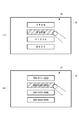
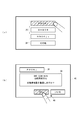
- FIG. 5 is a diagram showing a display example of a unique information list different from FIG. 4. It is a figure which shows the modification of the flowchart of FIG. It is a figure which shows an example of the list of 1st specific information, and the selection screen of 2nd specific information.
- a vehicle-mounted device an information communication system, a communication control method for the vehicle-mounted device, and a program according to an embodiment of the present invention will be described.
- an in-vehicle device an information device having a communication function with a mobile device (for example, a mobile phone) and a car navigation function is illustrated.
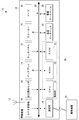
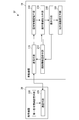
- FIG. 1 is a control block diagram of the in-vehicle device 10.
- the in-vehicle device 10 includes a GPS (Global Positioning System) receiver 11, an antenna 12, a self-contained navigation sensor 13, a display 14, a touch panel 15, a speaker 16, a microphone 18, a communication unit 19, a control unit 20,
- a map database hereinafter referred to as “map DB”) 24, a registration database (hereinafter referred to as “registration DB”) 25, and a connection bus 26 are provided.
- a GPS (Global Positioning System) receiver 11 receives GPS information (including position information and time information) via an antenna 12.
- the self-contained navigation sensor 13 includes an angle sensor and a distance sensor (both not shown), and is used for specifying the vehicle position by combining with the GPS receiver 11.
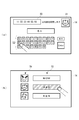
- the display 14 displays various operation screens (see FIG. 4 and the like) as necessary, and also displays route guidance information during route guidance.
- the touch panel 15 is configured by a matrix switch arranged to be superimposed on the display 14 and detects contact of a finger or the like. In the present embodiment, it is mainly used for performing operations on the various operation screens.
- the speaker 16 outputs route guidance information by voice and performs various voice confirmations (voice guidance for prompting the user to make selections and confirmations).
- the microphone 18 performs various operations in a hands-free manner, and is used for inputting an operation signal, like the touch panel 15.
- the microphone 18 is also used to perform a hands-free call when the mobile device 30 is a mobile phone.
- the communication unit 19 performs short-range wireless communication and infrared communication with the mobile device 30. Note that the communication unit 19 may perform wired communication such as bus connection instead of the non-contact communication. In the present embodiment, short-range wireless communication is adopted.
- the map DB 24 stores the map data for route guidance in a nonvolatile manner.
- the registration DB 25 stores, in a non-volatile manner, spot registration information that has been spot-registered and unique information assigned to the mobile device 30 that has communicated in the past (has undergone connection authentication processing).
- “physical address” or “device name” can be used as unique information that can be used as initial setting information.
- the “device name” is often a “model name” such as when the mobile device 30 is a mobile phone, and is information that is easier to understand (more easily recognized by the user) than the “physical address”. Then, “model name” is used as unique information.
- unique information used for connection authentication such as “model name” is referred to as “first unique information”.
- the portable device 30 includes a unique information storage unit 310 (unique information storage unit) and a communication unit 320 as main functional configurations.
- the unique information storage means 310 stores first unique information (model name) assigned to the mobile device 30.
- first unique information model name
- the unique information storage unit 310 stores the first unique information in a state in which it cannot be rewritten and deleted by the user.
- device name model name
- the communication means 320 is used for input / output (transmission / reception) of information with the in-vehicle device 10, and is mainly used for transmission of the first unique information.
- the in-vehicle device 10 includes a communication unit 110, a specific information determination unit 120, a format determination unit 130, a specific information registration unit 140, a specific information storage unit 150, a specific information output unit 160, an operation unit 170, and a priority device as main functional configurations.
- Setting means 180 is included.
- the communication means 110 is for inputting / outputting information to / from the mobile device 30 and includes the communication unit 19 as a main component.
- the unique information determination unit 120 determines whether the corresponding first unique information is already stored in the unique information storage unit 150 of the in-vehicle device 10 for the portable device 30 that can communicate with the communication unit 110. is there.
- the unique information storage unit 150 uses the registration DB 25 as a main component, and stores a plurality of pieces of first unique information (model names of the portable devices 30) assigned to the respective portable devices 30 that have undergone connection authentication processing. In this case, the unique information storage unit 150 stores the pass key (authentication key) input by the connection authentication process with the portable device 30 and the first unique information read from the portable device 30 in association with each other.
- the format determination unit 130 includes the first unique information of the portable device 30. It is determined whether or not the information format matches a predetermined format.
- the “predetermined format” indicates a format of a character string representing a model name. That is, when the mobile device 30 is a mobile phone, an alphanumeric format (3 or 4 alphanumeric characters, etc.) representing the model name is stored in the RAM 23 or the like, and the first unique information spilled from the mobile device 30 is stored. , It is determined whether or not these formats match.
- model names of all mobile phones on the market are stored in the RAM 23 or the like, and depending on whether or not the first unique information read from the mobile device 30 corresponds to one of the stored model names. It may be determined whether or not it matches a predetermined format. Further, it is preferable that information related to the model name of the mobile phone is received regularly from an external server (or at a timing when the power is turned on) and is always updated to the latest information.
- the unique information registration unit 140 determines the first unique information of the mobile device 30 as the unique information. It is registered in the storage unit 150.
- the unique information determination unit 120, the format determination unit 130, and the unique information registration unit 140 all have the control unit 20 as a main component.
- the unique information output means 160 is one or more first unique information corresponding to one or more portable devices 30 that can communicate with the communication means 110 among the plurality of first unique information stored in the unique information storage means 150.
- the unique information list is displayed or output as sound, and the control unit 20, the display 14, and the speaker 16 are the main components.
- the display or audio output of the unique information list by the unique information output means 160 is information output for prompting the user to select one first unique information.
- the operation unit 170 performs an operation (input of an operation signal) for selecting one first unique information from one or more first unique information output by the unique information output unit 160.
- the touch panel 15 and the microphone 18 are main components.
- the priority device setting unit 180 sets the portable device 30 corresponding to the first unique information selected by the operation unit 170 as a priority device to be subjected to priority communication.
- the control unit 20 is a main component.
- the “priority device” refers to a target device for the in-vehicle device 10 to perform a hands-free call or Internet connection. Therefore, even when there are a plurality of mobile devices 30 in the vehicle, only one mobile device 30 (driver's mobile device 30) set as a priority device by the priority device setting means 180 uses the in-vehicle device 10. Eligible for hands-free calls and internet connections.
- the mobile device 30 set as the priority device is referred to as a “driver device”.
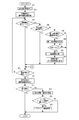
- the first unique information is output by display.
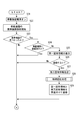
- the search for the portable device 30 is started (S02). If the mobile device 30 is found (S03: Yes), it is determined whether or not the first unique information (including the passkey) of the mobile device 30 has been registered in the registration DB 25 (S04). If it is determined that it has not been registered (S04: No), it is further determined whether or not the first unique information is for a portable device (whether or not it matches a predetermined format) (S05). If it is determined that the device is used (S05: Yes), the first unique information of the portable device 30 is displayed on the display 14 (S06). At this time, the display 14 also displays the contents for inquiring the user whether or not to register the first unique information.
- connection authentication processing is performed (including passkey input, S08), and the first unique information of the mobile device 30 is registered in the registration DB 25 (S09). ). Thereafter, it is determined whether or not a predetermined time (for example, 30 seconds) has elapsed since the start of the search for the mobile device 30 (S02) (S10). If the predetermined time has not elapsed (S10: No), S03 to Repeat S10.
- a predetermined time for example, 30 seconds
- the mobile device 30 is not found (S03: No), or when the mobile device 30 is found but the first unique information is already registered in the registration DB 25 (S04: Yes), the first unique information is Even if it is not for a mobile device (S05: No), it is determined whether or not a predetermined time has elapsed since the search for the mobile device 30 was started (S10). If the predetermined time has not elapsed (S10: No), S03 is determined. Repeat steps S10.
- each first unique information is assigned to an individual display button 41, and is displayed side by side in the order of communication or the model name.
- the mobile device 30 corresponding to the first unique information is set as the driver device ( S15), the process is terminated.
- the mobile device 30 set as the driver device transmits a status status such as hands-free or incoming mail to the in-vehicle device 10 by short-range wireless communication.
- the user selects whether to register the first unique information (see S07).
- the process may be omitted. If only one portable device 30 can communicate, the driver device may be set without requiring the display of the unique information list (S13) and the selection operation by the user (S14). .
- the first unique information is read from each portable device 30 at any time when communication is performed, and is displayed on the display 14 each time. You may make it display.
- the user can easily and surely select the driver device only by selecting one first unique information from the list-displayed first unique information. Can be set. In other words, a complicated setting change operation as in the prior art is unnecessary, and even when there are a plurality of portable devices 30 in the vehicle, the driver erroneously sets the passenger's portable device 30 as the driver device. Because there is not, convenience is good. Further, when communication is performed with a mobile device 30 in which the first unique information is not stored (unregistered), processing for registering the first unique information of the mobile device 30 (S06 to S09) is performed. Therefore, the trouble of newly registering the mobile device 30 can be saved.
- the display and registration of the first unique information are not performed.
- the first unique information may be registered if designated by the user.
- the display button 35 corresponding to the first unique information for the portable device does not correspond to the first unique information for the portable device.
- the display button 37 (see “b” in FIG. 5) is displayed separately from the display button (“other” display button) 36 having a lower layer.
- a display button list 37 of first unique information that does not correspond to the first unique information for the portable device is displayed.
- the user selects the first unique information corresponding to the desired mobile device 30 from these.
- the user changes the model name (or device name) in the mobile device 30 (when the unique information storage unit 310 of the mobile device 30 is stored in a rewritable state), etc. Even when the format of the first unique information does not match the predetermined format, it can be registered in the in-vehicle device 10.
- second unique information such as a telephone number (information that can be obtained after connection authentication and is mainly used in the unique information list process. This corresponds to a subordinate concept of the unique information. ).
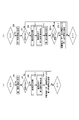
- the processing in this case is shown in FIG.
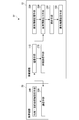
- FIG. 6A when it is determined that the first unique information is for a portable device (S05: Yes), the first unique information of the portable device 30 is displayed on the display 14 (S06). ) When the user registers the first unique information (S07: Yes), connection authentication processing is performed (S08).
- the second unique information is acquired from the portable device 30 via the communication unit 19 (S09-1), and the second unique information of the portable device 30 and the first unique information corresponding to the second unique information are stored in the registration DB 25. Information is registered (S09-2).
- a list of second unique information is displayed in the unique information list display process in S13 of FIG. According to this configuration, since the second unique information can be registered after confirming the first unique information, it is possible to reduce registration mistakes and to reduce selection mistakes when selecting one second unique information.
- FIG. 6B when it is determined that the first unique information is for the portable device (S05: Yes), the first unique information of the portable device 30 is displayed on the display 14. (S06).
- FIG. 7A shows a display example thereof. Here, it is assumed that the screen is the same as that in FIG.
- connection authentication processing is performed (S08).
- the second unique information is acquired from the portable device 30 via the communication unit 19 (S09-1), and is displayed on the display 14 (S09-a).
- FIG. 7B shows an example of the display.
- the selected first unique information 38, the acquired second unique information 39, and a selection button 40 for selecting necessity of registration are displayed.
- the selection button 40 “Yes” is selected (S09-b: Yes)
- the second unique information of the portable device 30 and the first unique information corresponding to the second unique information are registered in the registration DB 25. (S09-2).
- the selection button 40 “No” is selected (S09-b: No)
- the registration of the mobile device 30 is stopped. According to this configuration, it is possible to determine whether or not registration is necessary after confirming the second unique information, so that registration errors can be further reduced.
- FIG. 4B shows a display example of a unique information list when “telephone number” is used as the second unique information, and different telephone numbers are assigned to the respective display buttons 41.
- the telephone number may be read from owner information storage means (owner information storage unit, “owner information” function, “profile” function, etc., not shown) provided in the portable device 30.
- the “telephone number”, “manufacturing number”, and “model name” are information that cannot be rewritten and erased on the mobile device 30 side. It becomes effective information that can be uniquely identified. Since the “owner name” is information that can be changed by the user, the driver device can be selected more easily by registering his / her name and the like.
- the in-vehicle device 10 further includes a phone book storage unit (not shown) for storing a phone book in which owner information related to the owner of each portable device 30 is associated with a telephone number
- the unique information registration unit 140 includes: Each telephone number is read from one or more portable devices 30 that can communicate with the communication means 110, and the owner information associated with each telephone number is referred to as the second unique information by referring to the telephone directory storage means. You may make it acquire.
- the owner information associated with the telephone number read from the mobile device 30 can be registered as the second unique information using the telephone directory function installed in the in-vehicle device 10. Thereby, owner information can be registered without any trouble even for the portable device 30 that does not have the “owner information” function or the “profile” function.
- each portable device 30 stores a phone book storing telephone book in which owner information related to the owner of a portable device other than its own portable device 30 is associated with a telephone number (phone book storage unit, not shown). It is assumed that When the communication unit 110 can communicate with the plurality of mobile devices 30, the unique information registration unit 140 reads out the respective telephone numbers from the plurality of mobile devices 30 and also stores the phone books of the plurality of mobile devices 30. With reference to the storage means, the owner information associated with each read telephone number is searched, and each searched owner information is registered as the second unique information of the plurality of portable devices 30. According to this configuration, since no telephone directory function is required on the in-vehicle device 10 side, the device configuration of the in-vehicle device 10 can be simplified.
- the first unique information for example, “model name” or the second unique information (for example, “phone number”) read from the mobile device 30 by the in-vehicle device 10 is displayed on the display 14 as a list.
- the user designates unique information (for example, image information such as an icon) for each mobile device 30 and a list of the designated unique information is displayed on the display 14 as a list. It is different in point.
- the unique information such as image information that can be specified by the user is hereinafter referred to as “third unique information” (the third unique information is also a subordinate concept of the unique information).
- third unique information the third unique information is also a subordinate concept of the unique information.
- FIG. 8 is a functional block diagram of the information communication system SY according to the second embodiment. Note that components having substantially the same functions as those shown in FIG. 2 are given the same reference numerals, and descriptions thereof are omitted.
- the portable device 30 includes a first unique information storage unit 330 (first unique information storage unit) and a communication unit 320.
- the first unique information storage means 330 stores first unique information that is information for identifying each portable device 30. In the present embodiment, a “physical address” is used as the first unique information.
- the in-vehicle device 10 includes a communication unit 110, a unique information registration unit 210, a unique information storage unit 220, a unique information output unit 230, an operation unit 240, and a priority device setting unit 180.
- the unique information registration unit 210 performs third unique information (such as an icon) designated by the user using the operation unit 240 (touch panel 15) with respect to the first unique information read from the first unique information storage unit 330 of the portable device 30. Image information) and the connection authentication process are performed, and then registered in the unique information storage means 220. Therefore, the unique information storage unit 220 includes the pass key input by the connection authentication process with the portable device 30, the first unique information (physical address) read from the portable device 30, and the third unique information ( Icon).
- the unique information output means 230 is one or more first devices corresponding to one or more portable devices 30 that can communicate with the communication means 110 among a plurality of third unique information registered in the unique information storage means 150 by user designation. Three unique information is displayed or outputted.
- the operation means 240 is used for designating third unique information and selecting a driver device.
- the driver device setting process of the in-vehicle device 10 will be described with reference to the flowchart of FIG.
- the first unique information is output by display.
- the search for the mobile device 30 is started (S22). If the mobile device 30 is found (S23: Yes), the third unique information (first It is determined whether or not the information is registered in the registration DB 25 (S24). Here, if it is not registered (S24: No), the first unique information of the portable device 30 is displayed on the display 14 (S25), and the user is inquired about the necessity of registration (S26).
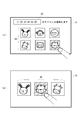
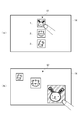
- FIG. 10A is a diagram illustrating a display example of the unique information designation screen.
- a tiger icon is designated from the icon candidates 44 as an icon to be associated with the first unique information (physical address “11: 22: 33: 44: 55: 66”) displayed in the name display field 43. It shows how it is being done.
- connection authentication processing is performed (S28), and the first unique information read from the mobile device 30 and the third unique information are associated with each other and registered in the registration DB 25. (S29).
- the subsequent processing is the same as that after S10 in the flowchart shown in FIG.
- a list of third unique information (icon list 45) designated by the user is displayed (see FIG. 10B).
- the third unique information is listed according to the order in which communication was performed, the physical address order, or the icon identification code order.
- the output third specific information corresponds to which (who) portable device 30. It is possible to easily determine whether it is a thing.
- the physical address is used as the “first unique information”, but “device name (model name)” may be used instead.
- “second unique information” may be acquired after “first unique information”, and “second unique information” may be displayed in S25 of FIG. In this case, the “second unique information” and the “third unique information” may be stored in association with each other in S29.
- an icon (image) on which an animal pattern is drawn is used as the “third unique information”.
- a drawn icon may be used.
- FIG. 11A shows a display example of a unique information designation screen (nickname change screen) different from FIG. 10A.
- the registered icon 51 which is a registered icon, is displayed in association with the first unique information displayed in the name display column 50, and the nickname input using the alphabet key group 52 is registered in association with these. Is possible.
- the nickname can be changed. In this case, the nickname before the change is displayed in the name display field 50.
- FIG. 11B is a diagram showing a display example of the unique information list when icons and nicknames are registered.
- the icon 54 and the corresponding nickname display button 55 are displayed side by side, each portable device 30 can be more accurately identified, and selection errors in the driver device can be reduced.
- the nickname is not registered, the first unique information (“physical address”) is displayed on the display button 55 instead of the nickname.
- the third unique information such as the name and the nickname
- the registered third unique information can also be registered in the mobile device 30. That is, the communication unit 110 transmits the third unique information (name and nickname) designated by the user to the portable device 30 having the first unique information associated with the third unique information
- the unique information storage unit 330 preferably stores the third unique information transmitted from the in-vehicle device 10 as the first unique information. According to this configuration, it is possible to save the trouble of customizing the first unique information (changing the setting according to user preferences) on the portable device 30 side. However, in this case, it is assumed that the first unique information is rewritable and erasable information (for example, “device name”).
- the third unique information corresponding to each portable device 30 is listed according to the order in which the communication is performed.
- the embodiment is different in that each third unique information is listed according to the travel history when each portable device 30 functions as a driver device.
- an icon (image information) is used as the third unique information will be exemplified, and the description will focus on differences from the second embodiment.
- FIG. 12 is a functional block diagram of the in-vehicle device 10 according to the third embodiment.
- the in-vehicle device 10 according to the present embodiment includes a communication unit 110, a travel history storage unit 250, a unique information storage unit 220, a unique information output unit 260, an operation unit 240, and a priority device setting unit 180.
- the travel history storage unit 250 stores the portable device 30 functioning as the driver device and the travel history of the vehicle in association with each other, and the registration DB 25 is a main component.
- the unique information output unit 260 refers to the travel history storage unit 250, and sends the specific information output unit 260 to the one or more mobile devices 30 according to the travel history associated with the one or more mobile devices 30 that can communicate with the communication unit 110.
- the corresponding one or more third specific information is displayed or output as audio.
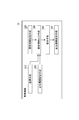
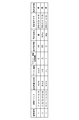
- the travel history storage means 250 has a management number assigned in the order of registration of the portable device 30, first unique information (physical address) read from the portable device 30, and designation (input) by the user.
- Nickname name in short-range wireless communication
- icon type third unique information
- the accumulated travel time, the travel start point (final departure point) when it was last set as the driver device, the travel date and time, and the travel end point (final destination) are stored in association with each other.
- the unique information output unit 260 may display the unique information list (see FIG. 14A).
- An icon list 57 is displayed. That is, the icons “Rabbit”, “Tiger”, and “Ushi” are displayed from the top of the screen in the descending order of the “number of times of setting the driver device”.
- priority priority order
- the icon list 57 shown in FIG. 14B shows a case where the display form of each icon is changed according to the travel history. That is, when the vehicle is a right steering wheel, an icon displayed at a position close to the driver side (“Rabbit” in the example in the figure) is displayed as a high priority. Further, in the example of the figure, an icon located on the lower side of the screen and an icon with a large display size are displayed with a high priority. In addition, icons displayed in color or highlighted (with a frame, blinking, etc.) may be displayed with a high priority.
- the unique information output means 260 is arranged in order of increasing cumulative travel time (“tiger”). , "Rabbit”, “Ushi”) in order of lowering (lowering) the priority and displaying the icon list.
- the unique information output unit 260 decreases the priority in the order of the latest travel date (in the order of “Rabbit”, “Tiger”, “Ushi”). To display the icon list.
- the unique information output means 260 displays a list of icons by increasing the priority of the current place or the place close to the place when setting the driver device. To do.
- the driver device setting information of each portable device 30 may be recorded as the travel history information, and an icon list may be displayed based on the driver device setting information.
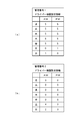
- FIG. 15A shows driver device setting information of management number 1, and the driver device of management number 1 shows that there are many weekday drivings both in the morning and in the afternoon.
- FIG. 15B shows the driver device setting information of the management number 2, and the driver device of the management number 2 shows that there are many weekend drivings both in the morning and in the afternoon. Therefore, for example, when the current date and time is Saturday morning, the unique information output unit 260 preferentially displays the icon of the driver device with the management number 2 over the management number 1. For example, when the current date and time is Tuesday afternoon, the unique information output unit 260 preferentially displays the icon of the driver device with the management number 1 over the management number 2.
- each third device corresponding to each portable device 30 according to the traveling history of the vehicle when each portable device 30 functions as a driver device Since the information is displayed, the convenience when selecting the driver device can be improved.
- the third unique information output first may be set to have a high priority. Further, the third unique information output at the maximum volume may be set to a high priority, and the third unique information output with a sound quality different from that of the normal sound may be set to a high priority.
- the unique information output means 260 displays a list of unique information with priorities, and the selection by the operation means 240 within a predetermined time from the output time by the unique information output means 260. If the process is not performed, the priority device setting unit 180 may automatically set the portable device 30 corresponding to the third unique information with the highest priority as the driver device. According to this configuration, even when the user cannot perform the selection operation for some reason, the most suitable portable device 30 can be set as the driver device among the one or more portable devices 30 capable of communication. .
- the third unique information (each image information) is listed according to the travel history when each portable device 30 functions as a driver device.
- the third unique information is listed according to the time information stored in each portable device 30. Therefore, the difference from the third embodiment will be mainly described.
- FIG. 16 is a functional block diagram of the information communication system SY according to the fourth embodiment.
- the mobile device 30 according to the present embodiment includes a time / destination information storage unit 340 (time information storage unit) and a communication unit 320.
- the time / destination information storage means 340 stores destination information indicating a destination in association with time information related to date / time or day of the week. Therefore, although not particularly illustrated, the portable device 30 of the present embodiment has an input means for inputting (setting) destination information and time information.
- the destination information is information indicating a destination for performing route guidance by the in-vehicle device 10
- the time information is information indicating a time when the destination information is used (a time to go to the destination). is there.
- the destination and the time are set in advance and stored in the time / destination information storage means 340.
- the in-vehicle device 10 refers to the time / destination information storage unit 340 of the portable device 30 and reads out the information.
- the in-vehicle device 10 includes a communication unit 110, a route guidance unit 270, a unique information storage unit 220, a unique information output unit 280, an operation unit 240, and a priority device setting unit 180.
- the route guidance unit 270 performs route search and route guidance (route guidance display and voice guidance) to the destination based on the destination information transferred from the mobile device 30, and includes the GPS receiver 11, the autonomous navigation sensor 13, and the like.
- the control unit 20 and the map DB 24 are main components.
- the route guidance unit 270 performs route guidance based on the destination information from the portable device 30 set as the driver device by the priority device setting unit 180.
- the unique information output means 280 refers to the time / destination information storage means 340 of the mobile device 30 when the communication means 110 communicates with the mobile device 30, and according to the read time information, The third unique information of the mobile device 30 is displayed. For example, when communication with a plurality of portable devices 30 is possible and the time information indicates the date and time, priority is given to the date and time indicated by the time information, and the corresponding third unique information is listed. In addition, when the time information indicates the day of the week, priority is given to the day of the week indicated by the time information that matches the day of the week of communication. When the time information indicates the time of day, the time indicated by the time information is the same as the time of communication. A display method such as displaying near objects with priority is also conceivable. Note that the unique information output means 280 displays the third unique information with a lower priority for the mobile device 30 in which the time information (destination information) is not stored.
- each third unique information corresponding to each mobile device 30 is displayed or output by voice. Convenience when selecting the three unique information can be improved.
- the destination information can be transferred to the in-vehicle device 10 and the route guidance can be performed on the in-vehicle device 10 side, the route guidance is started immediately after boarding. be able to.
- the output method may be audio output instead of display.
- the in-vehicle device 10 of the present invention only one piece of unique information is selected from one or more pieces of unique information displayed or output as audio.
- the portable device 30 owned by the driver can be set as the driver device easily and reliably.
- one or more unique items are determined according to the travel history when each mobile device 30 functions as a driver device and the time information stored in the mobile device 30.
- the information (third unique information) is listed, the user may be able to select (set) whether the unique information is listed according to the condition of the travel history or the time information. Also, what kind of information (such as the number of times the driver device is set and the total running time) is adopted as the running history, what kind of information (date, time, day of the week, etc.) is adopted as the time information, and those The user may be allowed to set the weighting.
- the first unique information or the second unique information may be listed instead of the third unique information.
- the specific information list is output for the purpose of setting the driver device (the portable device 30 that is a target of the hands-free call or Internet connection).
- the in-vehicle environment may be set to a driver-specific environment.
- audio settings, seat position settings, steering position settings, and the like can be considered as in-vehicle environments.
- each component in the in-vehicle device 10 and the portable device 30 shown in the above embodiment is a program.
- the program can be provided by being stored in a recording medium (not shown). That is, a program for causing a computer to function as each component of the in-vehicle device 10 and the portable device 30 and a recording medium recording the program are also included in the scope of the right of the present invention. Other modifications can be made as appropriate without departing from the scope of the present invention.
Landscapes
- Engineering & Computer Science (AREA)
- Signal Processing (AREA)
- Computer Networks & Wireless Communication (AREA)
- Multimedia (AREA)
- Telephone Function (AREA)
- Mobile Radio Communication Systems (AREA)
Applications Claiming Priority (2)
| Application Number | Priority Date | Filing Date | Title |
|---|---|---|---|
| JP2008-242743 | 2008-09-22 | ||
| JP2008242743A JP2010074745A (ja) | 2008-09-22 | 2008-09-22 | 車載機器、情報通信システム、車載機器の通信制御方法およびプログラム |
Publications (1)
| Publication Number | Publication Date |
|---|---|
| WO2010032359A1 true WO2010032359A1 (ja) | 2010-03-25 |
Family
ID=42039212
Family Applications (1)
| Application Number | Title | Priority Date | Filing Date |
|---|---|---|---|
| PCT/JP2009/003619 Ceased WO2010032359A1 (ja) | 2008-09-22 | 2009-07-30 | 車載機器、情報通信システム、車載機器の通信制御方法およびプログラム |
Country Status (2)
| Country | Link |
|---|---|
| JP (1) | JP2010074745A (enExample) |
| WO (1) | WO2010032359A1 (enExample) |
Cited By (1)
| Publication number | Priority date | Publication date | Assignee | Title |
|---|---|---|---|---|
| US11240364B2 (en) | 2016-08-05 | 2022-02-01 | Toyota Motor Engineering & Manufacturing North America, Inc. | Vehicle human-machine interface (HMI) device operation of a handheld mobile device |
Families Citing this family (5)
| Publication number | Priority date | Publication date | Assignee | Title |
|---|---|---|---|---|
| JP2012134793A (ja) * | 2010-12-22 | 2012-07-12 | Panasonic Corp | 車載機器 |
| JP5726008B2 (ja) * | 2011-07-28 | 2015-05-27 | アルパイン株式会社 | 接続機器一覧の表示制御装置および表示制御方法 |
| JP2015052954A (ja) * | 2013-09-09 | 2015-03-19 | アルパイン株式会社 | データ識別管理装置およびデータ識別管理方法 |
| JP6406000B2 (ja) * | 2014-12-25 | 2018-10-17 | 株式会社デンソー | 車両制御システム |
| JP2019169814A (ja) * | 2018-03-22 | 2019-10-03 | 本田技研工業株式会社 | 車両制御装置、及びプログラム |
Citations (11)
| Publication number | Priority date | Publication date | Assignee | Title |
|---|---|---|---|---|
| JP2001117883A (ja) * | 1999-10-18 | 2001-04-27 | Takanori Taniguchi | 電子化した名刺情報を無線方式により情報交換し、収集した名刺情報の管理及び活用を行う携帯電話端末 |
| JP2001521247A (ja) * | 1997-10-24 | 2001-11-06 | マイクロソフト コーポレイション | モバイル・デバイス上における統合化通信アーキテクチャ |
| JP2004318728A (ja) * | 2003-04-18 | 2004-11-11 | Toyota Motor Corp | 情報提供方法、情報提供システム、情報端末装置およびセンター |
| JP2005286827A (ja) * | 2004-03-30 | 2005-10-13 | Denso Corp | ハンズフリー装置 |
| JP2006005744A (ja) * | 2004-06-18 | 2006-01-05 | Denso Corp | 通信装置、通信システム、及びプログラム |
| JP2006145494A (ja) * | 2004-11-24 | 2006-06-08 | Matsushita Electric Ind Co Ltd | 目的地設定支援装置 |
| JP2006157632A (ja) * | 2004-11-30 | 2006-06-15 | Olympus Corp | 電子アルバム装置及び電子アルバム作成鑑賞方法 |
| JP2006254148A (ja) * | 2005-03-11 | 2006-09-21 | Sony Corp | ハンズフリーシステム、携帯電話及び車載装置 |
| JP2007216845A (ja) * | 2006-02-17 | 2007-08-30 | Denso Corp | 車載情報装置および携帯機器 |
| JP2007266755A (ja) * | 2006-03-27 | 2007-10-11 | Denso Corp | 携帯電話の発信制御装置およびハンズフリー通話装置 |
| JP2008104102A (ja) * | 2006-10-20 | 2008-05-01 | Softbank Bb Corp | 通信システム、携帯端末、情報処理装置、通信方法、サーバおよびプログラム |
-
2008
- 2008-09-22 JP JP2008242743A patent/JP2010074745A/ja not_active Ceased
-
2009
- 2009-07-30 WO PCT/JP2009/003619 patent/WO2010032359A1/ja not_active Ceased
Patent Citations (11)
| Publication number | Priority date | Publication date | Assignee | Title |
|---|---|---|---|---|
| JP2001521247A (ja) * | 1997-10-24 | 2001-11-06 | マイクロソフト コーポレイション | モバイル・デバイス上における統合化通信アーキテクチャ |
| JP2001117883A (ja) * | 1999-10-18 | 2001-04-27 | Takanori Taniguchi | 電子化した名刺情報を無線方式により情報交換し、収集した名刺情報の管理及び活用を行う携帯電話端末 |
| JP2004318728A (ja) * | 2003-04-18 | 2004-11-11 | Toyota Motor Corp | 情報提供方法、情報提供システム、情報端末装置およびセンター |
| JP2005286827A (ja) * | 2004-03-30 | 2005-10-13 | Denso Corp | ハンズフリー装置 |
| JP2006005744A (ja) * | 2004-06-18 | 2006-01-05 | Denso Corp | 通信装置、通信システム、及びプログラム |
| JP2006145494A (ja) * | 2004-11-24 | 2006-06-08 | Matsushita Electric Ind Co Ltd | 目的地設定支援装置 |
| JP2006157632A (ja) * | 2004-11-30 | 2006-06-15 | Olympus Corp | 電子アルバム装置及び電子アルバム作成鑑賞方法 |
| JP2006254148A (ja) * | 2005-03-11 | 2006-09-21 | Sony Corp | ハンズフリーシステム、携帯電話及び車載装置 |
| JP2007216845A (ja) * | 2006-02-17 | 2007-08-30 | Denso Corp | 車載情報装置および携帯機器 |
| JP2007266755A (ja) * | 2006-03-27 | 2007-10-11 | Denso Corp | 携帯電話の発信制御装置およびハンズフリー通話装置 |
| JP2008104102A (ja) * | 2006-10-20 | 2008-05-01 | Softbank Bb Corp | 通信システム、携帯端末、情報処理装置、通信方法、サーバおよびプログラム |
Cited By (1)
| Publication number | Priority date | Publication date | Assignee | Title |
|---|---|---|---|---|
| US11240364B2 (en) | 2016-08-05 | 2022-02-01 | Toyota Motor Engineering & Manufacturing North America, Inc. | Vehicle human-machine interface (HMI) device operation of a handheld mobile device |
Also Published As
| Publication number | Publication date |
|---|---|
| JP2010074745A (ja) | 2010-04-02 |
Similar Documents
| Publication | Publication Date | Title |
|---|---|---|
| EP1619474B1 (en) | Navigation apparatus, position information registration method and program thereof | |
| JP4390006B2 (ja) | カーナビゲーション装置、携帯情報端末、及びカーナビゲーションシステム | |
| JP4859447B2 (ja) | ナビゲーション装置 | |
| EP1179815A1 (en) | Mobile information processing system | |
| WO2010032359A1 (ja) | 車載機器、情報通信システム、車載機器の通信制御方法およびプログラム | |
| JP2009289192A (ja) | 相乗り乗車システム | |
| WO2010109836A1 (ja) | 通知装置、通知システム、通知装置の制御方法、制御プログラム、及び該プログラムを記録したコンピュータ読み取り可能な記録媒体 | |
| US20080306682A1 (en) | System serving a remotely accessible page and method for requesting navigation related information | |
| US20110237184A1 (en) | On-board device, information communication system, method for controlling communication of on-board device, and computer program therefor | |
| JP4877109B2 (ja) | ナビゲーション装置 | |
| JP4797741B2 (ja) | 携帯電話の発信制御装置およびハンズフリー通話装置 | |
| JP4736982B2 (ja) | 作動制御装置、プログラム | |
| JP2006178228A (ja) | 車載機器及び情報表示方法、情報処理システム | |
| JP6082519B2 (ja) | 案内経路決定装置および案内経路決定システム | |
| JP5423535B2 (ja) | ナビゲーション装置及びナビゲーション方法 | |
| JP2004294429A (ja) | 情報提示装置および情報提示方法 | |
| JP4125139B2 (ja) | 車載用情報端末 | |
| WO2014030263A1 (ja) | 携帯端末装置、携帯端末装置の制御方法、携帯端末装置で実行されるプログラム、及び、携帯端末装置用クレードル | |
| JP5187905B2 (ja) | 経路案内装置及びプログラム | |
| JP2010055291A (ja) | 車載システム及び携行品の携行忘れ確認方法 | |
| JP5018665B2 (ja) | データ通信システムおよびこれに用いる第1車載装置、第2車載装置、およびデータ記憶装置 | |
| JP5408922B2 (ja) | ナビゲーション装置 | |
| EP3712563A1 (en) | Information provision device, information provision method, and program | |
| JP4933196B2 (ja) | 車載情報端末 | |
| JP4862137B2 (ja) | カーナビゲーション装置及び制御方法 |
Legal Events
| Date | Code | Title | Description |
|---|---|---|---|
| 121 | Ep: the epo has been informed by wipo that ep was designated in this application |
Ref document number: 09814205 Country of ref document: EP Kind code of ref document: A1 |
|
| DPE1 | Request for preliminary examination filed after expiration of 19th month from priority date (pct application filed from 20040101) | ||
| NENP | Non-entry into the national phase |
Ref country code: DE |
|
| 122 | Ep: pct application non-entry in european phase |
Ref document number: 09814205 Country of ref document: EP Kind code of ref document: A1 |