WO2004077149A1 - ハロゲン化銀カラー写真感光材料 - Google Patents
ハロゲン化銀カラー写真感光材料 Download PDFInfo
- Publication number
- WO2004077149A1 WO2004077149A1 PCT/JP2003/002355 JP0302355W WO2004077149A1 WO 2004077149 A1 WO2004077149 A1 WO 2004077149A1 JP 0302355 W JP0302355 W JP 0302355W WO 2004077149 A1 WO2004077149 A1 WO 2004077149A1
- Authority
- WO
- WIPO (PCT)
- Prior art keywords
- silver halide
- silver
- color
- group
- layer
- Prior art date
- Legal status (The legal status is an assumption and is not a legal conclusion. Google has not performed a legal analysis and makes no representation as to the accuracy of the status listed.)
- Ceased
Links
Classifications
-
- G—PHYSICS
- G03—PHOTOGRAPHY; CINEMATOGRAPHY; ANALOGOUS TECHNIQUES USING WAVES OTHER THAN OPTICAL WAVES; ELECTROGRAPHY; HOLOGRAPHY
- G03C—PHOTOSENSITIVE MATERIALS FOR PHOTOGRAPHIC PURPOSES; PHOTOGRAPHIC PROCESSES, e.g. CINE, X-RAY, COLOUR, STEREO-PHOTOGRAPHIC PROCESSES; AUXILIARY PROCESSES IN PHOTOGRAPHY
- G03C7/00—Multicolour photographic processes or agents therefor; Regeneration of such processing agents; Photosensitive materials for multicolour processes
- G03C7/30—Colour processes using colour-coupling substances; Materials therefor; Preparing or processing such materials
- G03C7/3022—Materials with specific emulsion characteristics, e.g. thickness of the layers, silver content, shape of AgX grains
-
- G—PHYSICS
- G03—PHOTOGRAPHY; CINEMATOGRAPHY; ANALOGOUS TECHNIQUES USING WAVES OTHER THAN OPTICAL WAVES; ELECTROGRAPHY; HOLOGRAPHY
- G03C—PHOTOSENSITIVE MATERIALS FOR PHOTOGRAPHIC PURPOSES; PHOTOGRAPHIC PROCESSES, e.g. CINE, X-RAY, COLOUR, STEREO-PHOTOGRAPHIC PROCESSES; AUXILIARY PROCESSES IN PHOTOGRAPHY
- G03C7/00—Multicolour photographic processes or agents therefor; Regeneration of such processing agents; Photosensitive materials for multicolour processes
- G03C7/30—Colour processes using colour-coupling substances; Materials therefor; Preparing or processing such materials
- G03C7/392—Additives
- G03C7/39208—Organic compounds
- G03C7/39212—Carbocyclic
- G03C7/39216—Carbocyclic with OH groups
-
- G—PHYSICS
- G03—PHOTOGRAPHY; CINEMATOGRAPHY; ANALOGOUS TECHNIQUES USING WAVES OTHER THAN OPTICAL WAVES; ELECTROGRAPHY; HOLOGRAPHY
- G03C—PHOTOSENSITIVE MATERIALS FOR PHOTOGRAPHIC PURPOSES; PHOTOGRAPHIC PROCESSES, e.g. CINE, X-RAY, COLOUR, STEREO-PHOTOGRAPHIC PROCESSES; AUXILIARY PROCESSES IN PHOTOGRAPHY
- G03C1/00—Photosensitive materials
- G03C1/005—Silver halide emulsions; Preparation thereof; Physical treatment thereof; Incorporation of additives therein
- G03C1/0051—Tabular grain emulsions
- G03C2001/0055—Aspect ratio of tabular grains in general; High aspect ratio; Intermediate aspect ratio; Low aspect ratio
-
- G—PHYSICS
- G03—PHOTOGRAPHY; CINEMATOGRAPHY; ANALOGOUS TECHNIQUES USING WAVES OTHER THAN OPTICAL WAVES; ELECTROGRAPHY; HOLOGRAPHY
- G03C—PHOTOSENSITIVE MATERIALS FOR PHOTOGRAPHIC PURPOSES; PHOTOGRAPHIC PROCESSES, e.g. CINE, X-RAY, COLOUR, STEREO-PHOTOGRAPHIC PROCESSES; AUXILIARY PROCESSES IN PHOTOGRAPHY
- G03C7/00—Multicolour photographic processes or agents therefor; Regeneration of such processing agents; Photosensitive materials for multicolour processes
- G03C7/30—Colour processes using colour-coupling substances; Materials therefor; Preparing or processing such materials
- G03C7/3022—Materials with specific emulsion characteristics, e.g. thickness of the layers, silver content, shape of AgX grains
- G03C2007/3024—Ratio silver to coupler
-
- G—PHYSICS
- G03—PHOTOGRAPHY; CINEMATOGRAPHY; ANALOGOUS TECHNIQUES USING WAVES OTHER THAN OPTICAL WAVES; ELECTROGRAPHY; HOLOGRAPHY
- G03C—PHOTOSENSITIVE MATERIALS FOR PHOTOGRAPHIC PURPOSES; PHOTOGRAPHIC PROCESSES, e.g. CINE, X-RAY, COLOUR, STEREO-PHOTOGRAPHIC PROCESSES; AUXILIARY PROCESSES IN PHOTOGRAPHY
- G03C7/00—Multicolour photographic processes or agents therefor; Regeneration of such processing agents; Photosensitive materials for multicolour processes
- G03C7/30—Colour processes using colour-coupling substances; Materials therefor; Preparing or processing such materials
- G03C7/3029—Materials characterised by a specific arrangement of layers, e.g. unit layers, or layers having a specific function
- G03C2007/3034—Unit layer
-
- G—PHYSICS
- G03—PHOTOGRAPHY; CINEMATOGRAPHY; ANALOGOUS TECHNIQUES USING WAVES OTHER THAN OPTICAL WAVES; ELECTROGRAPHY; HOLOGRAPHY
- G03C—PHOTOSENSITIVE MATERIALS FOR PHOTOGRAPHIC PURPOSES; PHOTOGRAPHIC PROCESSES, e.g. CINE, X-RAY, COLOUR, STEREO-PHOTOGRAPHIC PROCESSES; AUXILIARY PROCESSES IN PHOTOGRAPHY
- G03C7/00—Multicolour photographic processes or agents therefor; Regeneration of such processing agents; Photosensitive materials for multicolour processes
- G03C7/30—Colour processes using colour-coupling substances; Materials therefor; Preparing or processing such materials
- G03C7/3029—Materials characterised by a specific arrangement of layers, e.g. unit layers, or layers having a specific function
Definitions
- the present invention relates to a silver halide color photographic light-sensitive material, and more particularly to a silver halide color photographic light-sensitive material having high sensitivity, no color turbidity, excellent graininess, and excellent color reproducibility.
- sensitization techniques relate to the production method of silver halide emulsions, to chemical sensitivity of silver halide emulsions, to spectral sensitization of silver halide emulsions, to silver halide emulsions.
- Various methods are known, such as those based on the design method of color photographic light-sensitive materials and those relating to the development process of silver halide color light-sensitive materials.
- the most preferable and essential method is to reduce the inefficiency of the silver halide crystal during the photosensitive process and improve the quantum efficiency It is to make it.
- emulsion As one of the means to increase sensitivity and image quality, a technology to improve the sensitivity / grain size ratio per silver halide grain in a silver halide emulsion (hereinafter simply referred to as emulsion) is studied. Have been.
- silver halide grains contained in silver halide emulsions are known to have various shapes. For example, cubic, octahedral, and tetradecahedral normal silver halide grains, tabular silver halide grains having one or more twin twin planes, and non-parallel twin grains There are tetrapod-like and rod-like silver halide particles having a surface.
- tabular silver halide grains (hereinafter also simply referred to as “tabular grains”) are relatively high in color sensitivity relative to intrinsic sensitivity as photographic characteristics. It has various advantages, such as improvement in sharpness (sharpness), less light scattering by particles, and high-resolution images.
- tabular grains having a high aspect ratio In order to more effectively bring out the above advantages of tabular grains, it is effective to use tabular grains having a high aspect ratio. As is known in the art, the higher the silver iodide content, the more difficult it is to prepare tabular grains having a high aspect ratio. Most of the conventional tabular grains were silver bromide or silver iodobromide having a low silver iodide content.
- oxidized developing agent (DP ') scavenger is used for the silver halide emulsion layer or intermediate layer to prevent capri by development, prevent color turbidity around and between layers, and improve color reproducibility. Improvement techniques have been proposed (for example, see Patent Document 1).
- a photosensitive layer unit having each of the color sensitivity of blue, green, and red is provided on the support, and the photosensitive unit having each color sensitivity is a single layer or a plurality of photosensitive units having different sensitivities.
- a silver halide color photographic light-sensitive material comprising at least one non-light-sensitive intermediate layer between light-sensitive layer units having different color sensitivities, wherein at least one of the intermediate layers has the following general formula:
- the photosensitive layer which contains the compound represented by (1) in an amount of 0.0004 m 0 1 Zm 2 or more and has an average silver iodide content of 5.0 mo Halogen containing a silver halide emulsion of not more than 1% Silver halide photographic photosensitive material c
- L ⁇ and L 2 each represent a methylene chain
- X 2 are each one C 0 2 -, one S 0 2 _, _CONR 4 - , one NR4CO-, _S 0 2 NR 4 - , one NR 4 S 0 2 —, 1 0—, 1 NR 4 C0 2 —, — NR 4 C 0NR 5 —
- R 2 ⁇ R 4 and R 5 each represent a hydrogen atom, an alkyl group, an alkenyl group, an alkynyl group, an aryl group or a complex ring group, and R 3 represents a substituent.
- X, ⁇ 2, y ⁇ 2 each represents an integer of 0 to 20. ]
- the ratio (CZB) of the m 0 1 number (C) and the mo 1 number (B) of the color coupler contained in the photosensitive layer adjacent to the support side of the intermediate layer is not more than 0.02.
- a photosensitive layer unit having each of the color sensitivity of blue, green, and red is provided on the support, and the photosensitive unit having each color sensitivity is one layer or a plurality of photosensitive layers having different sensitivities.
- a silver halide color photographic light-sensitive material comprising at least one non-light-sensitive intermediate layer between light-sensitive layer units having different color sensitivities, wherein at least one of the intermediate layers has the general formula (1) Mo 1 number of the represented compound (A) (mo 1 / m 2 ) and the ratio (AZB) of the mo 1 number (B) ( mo 1 / m 2 ) of silver in the photosensitive layer adjacent to the support side of the intermediate layer is 0.04 or more; The ratio (C / B) between the m 0 1 number (C) of the color coupler contained in the layer and the m 0 1 number (B) of silver is not more than 0.02, and the photosensitive layer has A silver halide photographic light-sensitive material comprising a silver halide emulsion having a
- the silver halide color photographic light-sensitive material of the present invention has a photosensitive layer unit having a color sensitivity of each of blue, green and red on a support, and a photosensitive layer unit having each color sensitivity.
- a silver halide color photographic light-sensitive material comprising at least one non-light-sensitive intermediate layer between light-sensitive layers having different color sensitivities, comprising one or a plurality of light-sensitive layers having different sensitivities. At least one of the layers contains 0.0004 mol Zm 2 or more of the compound represented by the general formula (1), and the photosensitive layer adjacent to the support side of the intermediate layer has an average silver iodide content of 5%. It is characterized by containing a silver halide emulsion of not more than 1% Omo.
- the silver halide color photographic light-sensitive material of the present invention has a photosensitive layer unit having each color sensitivity of blue, green and red on a support, and the photosensitive layer unit having each color sensitivity is A silver halide color comprising one or a plurality of photosensitive layers having different sensitivities, and having at least one non-photosensitive intermediate layer between photosensitive units having different color sensitivities.
- a mo 1 number of the compound represented by the general formula is included in at least one layer of the intermediate layer (1) (A) (mo 1 / m 2), adjacent to the support side of the intermediate layer
- the ratio (A / B) to the mo 1 number (B) (mo 1 / m 3 ) of silver in the photosensitive layer is 0.04 or more, and the m 0 1 number of the color coupler contained in the photosensitive layer
- the ratio (C / B) of (C) to the mo 1 number of silver (B) is not more than 0.2
- the photosensitive layer has an average silver iodide content of not more than 5. It is characterized by containing a certain silver halide emulsion.
- examples of the alkyl group represented by R 2 , R 4 and R 5 include, for example, methyl, ethyl, propyl, isopropyl, n-butyl, tert-butyl, n-pentynole, cyclopentyl, n —Hexyl, cyclohexyl, n-octyl octyl, 2-ethylhexyl, n-dodecyl and the like.
- alkyl groups further include a halogen atom, an alkoxy group (each group such as methoxy, ethoxy, 1,1-dimethylethoxy, n-hexyloxy, n-dodecyloxy), an aryloxy group (a phenoxy group, a naphthyloxy group, etc.).
- Aryl group phenyl group, naphthyl group, etc.
- alkoxycarbonyl group each group such as methoxycarbonyl, ethoxycarbonyl, n-butoxycarbonyl, 2-ethylhexylcarbonyl
- aryloxycarbonyl group Phenoxycarbonyl group, naphthyloxycarbonyl group, etc., alkenyl group (vinyl group, aryl group, etc.), heterocyclic group (2-pyridyl, 3-pyridyl, 4-pyridyl, morpholyl, piperidyl, piperazyl) , Pyrimidyl, pyrazolyl, furyl, etc.), alkynyl groups (propargyl Group), amino group (amino group, N, N-dimethylamino group, anilino group, etc.), hydroxy group, cyano group, sulfo group, carboxyl group, sulfonamide group (
- Examples of the alkenyl group represented by Ri R 2 , R 4 and R 5 include a vinyl group, an aryl group and the like, and these further include an alkyl group represented by R 2 , R 4 and R 5 , and The alkyl group may have, as a substituent, the group mentioned as a substituent of the alkyl group.
- Examples of the alkynyl group represented by R 2 , R 4 and R 5 include a propargyl group and the like, and these further include an alkyl group represented by Ri, R 2 , R 4 and R 5 , and an alkyl group represented by You may have the group mentioned as a substituent as a substituent.
- Examples of the aryl group represented by R 2 , R 4 and R 5 include a phenyl group and a naphthyl group, and these are further represented by R, R 2 , R 4 and R 5. It may have, as a substituent, the groups mentioned as substituents of the alkyl group and the alkyl group.
- Examples of the heterocyclic group represented by R 2 , R 4 and R 5 include a pyridyl group (2-pyridyl group, 3-pyridyl group, 4-pyridyl group, etc.), a thiazolyl group, an oxazolyl group, an imidazolyl group, a furyl group, thienyl group, pyrrolyl group, Birajiniru group, pyrimidyl Gini group, pyridazinyl group, selenazolyl group, Suruhora group, a piperidinyl group, a pyrazolyl group, and a tetrazolyl group, they may further R 2, It may have, as a substituent, the alkyl group represented by R 4 and R 5 , and the groups mentioned as the substituent of the alkyl group.
- the substituent represented by R 3 may be any group that can be substituted on the benzene ring.
- Alkyl groups methyl, ethyl, n-propyl, isopropyl, tert-butyltertn-pentyl ⁇ cyclopentyl ⁇ n-hexyl ⁇ cyclohexyl, n-octyl, n-dodecyl, etc.
- alkenyl groups Vinyl group, aryl group, etc., alkynyl group (propargyl group, etc.), aryl group (phenyl group, naphthyl group, etc.), heterocyclic group (pyridyl, thiazolyl, oxazolyl, imidazolyl, furyl, piralyl, pyrazinyl, pyrimidinyl , Pyridazinyl, selenazolyl, sulfonyl, piperidinyl, pyr
- peridot groups methyl peridode, ethyl peridode, pentyl peridode, Groups such as cyclohexyl perylene, n-octyl peridode, n-dodecyl peridolide, vinyl peridode, naphthyl peridode, 2-pyridylaminoureido, etc.
- acetyl group acetyl dimethyl carbonyl group, propyl carbonyl
- Rubonyl methylaminocarbonyl, dimethylaminocarbonyl, propylaminocarbonyl,
- the compound represented by the general formula (1) when used for the non-photosensitive intermediate layer, it is required that 4 ⁇ 10 4 mo 1 or more per lm 2 be used, and preferably 5 ⁇ 10 4 mo 1 - used 4 ⁇ 1 X 10_ 2 mo 1.
- the photosensitive layer adjacent to the support side of the intermediate layer containing the compound represented by the general formula (1) constitutes one color-sensitive photosensitive unit by a plurality of adjacent photosensitive layers including the photosensitive layer.
- the photosensitive layer is preferably the photosensitive layer having the highest sensitivity among the color-sensitive photosensitive units.
- the silver halide emulsion having an average silver iodide content of 5.0 mo 1% or less used in the photosensitive layer adjacent to the support side of the intermediate layer of the present invention preferably has an average aspect ratio of 8.0. This is an emulsion containing the monodispersed flat plate-shaped silver haptic silver halide grains described above.
- Tabular silver halide grains having an average aspect ratio of 8.0 or more are crystallographically classified as twins, and one or more grains are contained in one grain. It is a crystal having twin planes, and the classification of twin morphology in silver halide grains is described in detail in Ketsu and Moiza's Yukifumi "P hotographishe K orrespondenz", Vol. 99, No. 99, and No. 100, p. You.
- the tabular silver halide grains preferably used in the present invention have two or more twin planes parallel to each other in the grains. These twin planes are almost parallel to the plane having the largest area among the planes forming the surface of the tabular grains (called the main plane).
- a particularly preferred embodiment in the present invention is a case having two twin planes parallel to the main plane.
- the number of silver halide grains having two twin planes parallel to the main plane is preferably 70% or more, and 80% or more. More preferably, it is more preferably 90% or more.
- Tabular silver halide grains preferably used in the present invention are silver halide grains having an aspect ratio of 8 or more determined by the following method.
- the aspect ratio of silver halide grains can be obtained by the following formula by determining the grain size and grain thickness of each silver halide grain by the following method.
- Aspect ratio particle size Z particle thickness
- the average grain size of the tabular silver halide grains is preferably from 0.1 to 50 m, more preferably from 0.1 to 20 m, and preferably from 1.0 to 20 m. m is most preferred.
- the average particle diameter is an arithmetic average of the particle diameters ri.
- the three significant figures and the least significant figure are rounded off, and the number of measured particles shall be indiscriminately at least 1,000.
- the particle diameter ri is the diameter when the projected image viewed from the direction perpendicular to the main plane of the tabular silver halide grains is converted into a circular image having the same area (projected area circle converted particle diameter). ).
- the grain size ri can be obtained by photographing and printing silver halide grains with an electron microscope at a magnification of 10,000 to 70,000, and measuring the particle diameter or the projected area on the print. .
- the average thickness of the tabular silver halide grains is preferably not more than 0.25 m, and is preferably from 0.05 to 0.20 m. Is more preferable, and particularly preferably 0.05 to 0.10 m.
- the projected area and thickness of each grain for calculating the particle size ratio of the silver halide grains described above can be determined by the following method.
- a sample coated with silver halide grains is prepared as described above, shadowing is performed on the particles by carbon vapor deposition from a certain angle, and then a repli- cation sample is prepared by a normal replica method.
- An electron micrograph of the sample is taken, and the projected area and thickness of each particle are determined using an image processing device or the like.
- the projected area of the particle can be calculated from the projected area of the internal standard
- the thickness of the particle can be calculated from the internal standard and the length of the shadow of the particle.
- the silver halide grains according to the present invention are preferably monodisperse.
- the grain size distribution (coefficient of variation of grain size) is defined by the following formula, the grain size distribution is more preferably less than 30%. Preferably it is less than 15%.
- the average particle diameter and the standard deviation are determined from the particle diameter ri defined above.
- the silver halide emulsion according to the present invention is characterized in that the average silver iodide content of silver halide grains is not more than 5 mol%, preferably from 2.0 mol% to 4.0 mol%. It is.
- the silver iodide content of the above silver halide grains can be determined by the EPMA method (Electron Probe MicroAnalyzer method). Specifically, a sample in which silver halide grains are well dispersed so that they do not come into contact with each other is prepared, and the sample is irradiated with an electron beam while being cooled to 10 ° C or less with liquid nitrogen. By determining the characteristic X-ray intensity of silver and iodine emitted from the silver halide, the silver iodide content of each silver halide grain can be determined. In the present invention, the average silver iodide content of 100 or more silver halide grains obtained by the above method is defined as the average silver iodide content.
- the tabular silver halide grains preferably used in the present invention can have dislocation lines, and the form of the dislocation lines can be appropriately selected.
- a dislocation line that exists linearly with respect to a specific direction of the crystal orientation of the grain, or a dislocation line that is bent can be selected. Further, it is present over the entire particle or only at a specific part of the particle. For example, the dislocation line exists only at the fringe portion (outer peripheral portion) of the particle, or the dislocation line exists only at the main plane. Therefore, it is possible to select from a mode in which dislocation lines are present or a mode in which dislocation lines are concentrated near the vertex.
- the dislocation lines of the silver halide grains are, for example, JF Hamilton, P hot o. S ci. Eng. 11 (1967) 57, T. Si o ⁇ awa, J. Soc. P Hot ci. S ci. Japan 35 (1972) 213 can be observed by a direct method using a transmission electron microscope at low temperature. That is, the silver halide grains taken out from the silver halide emulsion without taking care not to apply enough pressure to generate dislocations are placed on a mesh for an electron microscope and damaged by an electron beam (such as a printout). Observe by the transmission method with the sample cooled in order to prevent the above.
- the thicker the particles, the more difficult it is for the electron beam to penetrate so that a clearer observation can be obtained by using a high acceleration voltage electron microscope.
- the number and location of dislocation lines in each particle can be known from the particle photographs obtained by such a method.
- the silver halide emulsion according to the present invention can contain a polyvalent metal atom, a polyvalent metal atom ion, or a polyvalent metal atom complex inside or on the surface of silver halide grains.
- the polyvalent metal atom, polyvalent metal atom ion, polyvalent metal atom complex or polyvalent metal atom complex ion include Fe, Co, Ni, Ru, Rh, Pd, Re, O s, Ir, Pt, Mg, Al, Ca, Sc, Ti, V, Cr, Mn, Cu, Z n, G a, G e, A s ⁇ S e, S r ⁇ Y ⁇ Mo, Z r , N b, C d, In n ⁇ S n ⁇ S b, B a, La, W, A u, Hg, Tl, Pb, Bi, Ce and U etc.
- a metal complex When a metal complex is selected, a six-coordinate complex, a five-coordinate complex, a four-coordinate complex, and a two-coordinate complex are preferable, and an octahedral six-coordinate complex and a planar four-coordinate complex are more preferable.
- Ligands for constituting the complex CN @ -, CO, N0 2 -, 1, 10- Fuwenan trolley down, 2, 2 '- Bibirijiru, S 0 3 -, Echirenjiami down, NH 3, pyridine emissions, H 2 0, NC S-, NCO one, 0 3, S 0 4 2_ ⁇ OH- ⁇ N 3 - ⁇ S 2 - ⁇ F- ⁇ C 1 one, B r-, I-, etc. can be used.
- M is a charged frontier orbital polyvalent metal ion, preferably Fe 2+ , Ru 2+ , 0 s 2+ , Co 3+ , Rh 3+ , Ir 3 ⁇ P d 4+ or P t 4 + ;
- L is German Stands for a six-coordinate complex ligand which can be selected upright, provided that at least four of the ligands are anion ligands and at least one of the ligands (preferably at least three and optimally (At least four) are more electronegative than any halide ligand; and n represents 2_, 3—, or 4—.
- At least one selected from the group consisting of a polyvalent metal atom, an ion thereof, and a complex thereof is used, but Ir, Ru, Os, Fe, Rh, Co, In , G a, G e,? (Each atom such as 1 or 1; its ion and its complex are particularly preferably used.
- the concentration of at least one selected from the group consisting of a polyvalent metal atom, an ion thereof, a complex thereof, and an ion thereof used in the present invention is generally from 1 ⁇ 10 7 to 1 ⁇ 10 7 to 1 mol per mol of silver halide.
- silver bromide, silver iodobromide, or silver iodobromochloride can be used as the silver halide emulsion according to the present invention.
- Gelatin and hydrophilic colloid are mentioned as a dispersion medium which can be preferably used in the silver halide emulsion according to the present invention.
- Enzyme-treated gelatin as described in P30 (1966) can be preferably used.
- hydrophilic colloids include gelatin derivatives, proteins such as graft polymers of gelatin and other macromolecules, albumin, and casein; cellulose derivatives such as hydroxyxethyl cellulose, carboxymethyl cellulose, and cellulose sulfates. And derivatives such as sodium alginate, starch derivatives; polyvinyl alcohol, polyvinyl alcohol partial acetal, poly (N-vinylpyrrolidone), polyacrylic acid, polymethacrylic acid, polyacrylamide, polyvinylimidazole, polyvinyl villa A variety of synthetic hydrophilic macromolecules such as sols or single or copolymers can be used.
- the desalting step is to wash the silver halide emulsion with water to remove soluble salts.
- RD Research II Disclosure
- anionic surfactants for example, polystyrenesulfonic acid
- the silver halide emulsion according to the present invention may be subjected to reduction sensitization.
- Reduction sensitization is carried out by adding a reducing agent to an aqueous solution of a protective colloid in which silver halide grains are grown, or reducing the aqueous solution of a protective colloid in which silver halide grains are grown with a low pA of 7.0 or less. It can be carried out under g conditions or under high pH conditions of pH 7.0 or higher, by ripening or growing the silver halide grains. These methods may be appropriately combined.
- Various methods well known in the art can be used to form silver halide grains in the production of the silver halide emulsion of the present invention.
- a single-jet method, a double-jet method, a triple-jet method, a method for supplying fine silver halide particles, or the like can be used in any combination. Further, a method of controlling pH and pAg in a liquid phase in which silver halide is formed in accordance with the growth rate of silver halide can also be used. The formation of silver halide grains is preferably performed under conditions close to the critical growth rate.
- a seed emulsion can also be used.
- the silver halide grains in the seed emulsion may have a regular crystal structure such as cubic, octahedral, or tetradecahedral, or may have a spherical or plate-like shape. It may have an irregular crystal form. In these particles, any ratio can be used for the (100) plane and the (111) plane.
- the silver halide grains in the seed emulsion used may be a composite of these crystal forms, and grains of various crystal forms may be mixed. The silver halide grains are preferred, and the twin silver halide grains having two opposing parallel twin planes are particularly preferred.
- a silver halide solvent known in the art can be used.However, if possible, the use of the silver halide solvent during the formation of base tabular grains is not required. However, it is better to avoid it except ripening after nucleation.
- any of the acidic method, the neutral method and the ammonia method can be used, but the acidic method or the neutral method is preferred.
- a halide ion and a silver ion may be mixed simultaneously, or one of them may be mixed in the presence of the other.
- halide ions and silver ions can be added sequentially or simultaneously by controlling PA g and pH in a mixing vessel.
- the halogen composition of the silver halide grains may be changed using a conversion method.
- the silver halide fine particles when silver halide fine particles are used, the silver halide fine particles may be prepared in advance before the preparation of the silver halide particles according to the present invention, or the silver halide fine particles may be prepared. May be prepared in parallel.
- the silver halide fine particles according to the present invention may be prepared as described in JP-A Nos. 1-18417 and 2-44335. It can be manufactured by using a mixer separately provided outside the reaction container in which silver particles are formed.A silver halide fine particle once prepared by a mixer is provided separately from the mixer. It is preferable to supply arbitrarily to the reaction vessel after preparing it arbitrarily so as to be suitable for the growth environment in the reaction vessel in which the preparation of the silver halide grains concerned here is performed.
- a concentration operation of the silver halide emulsion by an ultrafiltration method can be performed.
- a dilution environment is preferable. Therefore, it is preferable to apply an ultrafiltration method in order to improve productivity.
- the concentration operation of the silver halide emulsion using the ultrafiltration method it is preferable to use the silver halide emulsion production equipment disclosed in JP-A-10-33992.
- the conditions other than those described above are described in JP-A Nos.
- RD 38957 Appropriate conditions can be selected by referring to items I and III, and item XV of RD40145.
- the silver halide emulsion having the above specific structure according to the present invention can be subjected to chemical sensitization according to a known method.
- the chemical sensitizer that can be used in the present invention is not particularly limited, and known chalcogen sensitizers, gold sensitizers, and the like can be used.
- the chalcogen sensitizer referred to in the present invention is a general term for selenium sensitizer, sulfur sensitizer, and tellurium sensitizer.
- an unstable selenium compound which can react with silver nitrate in an aqueous solution to form a silver selenide precipitate is preferably used.
- Useful selenium sensitizers include colloid doselenium metal, isoselenocyanates (such as allyl isoselenocyanate), and selenoureas (N, N-dimethylselenourea, N, N ,, '-triethylselenourea) , ⁇ , ⁇ , N '—Trimethyl- ⁇ ' —Heptafluoroselenourea, ⁇ , ⁇ , ⁇ 'Trimethyl_ ⁇ '—Heptafluoropropylcarbonylselenourea, ⁇ , ⁇ , N' —Trimethyl-N '— 4—Nitrophenylcarbonylselenourea, etc.), selenoketones (selenoacetone / selenoacetophenone, etc.), selenoamides (selenoacetoamide, ⁇ , ⁇ -dimethylselenobenzamide, etc.), selenocarboxylic acids and selenoest
- a sulfur sensitizer such as 1,3-diphenylthiourea, triethylthiourea, and 1-ethyl-3- (2-thiazolyl) thiourea, rhodanine derivatives, dithicarbamic acids, polysulfide organic compounds, Preferred are thiosulfate and sulfur alone.
- thiourea derivatives such as 1,3-diphenylthiourea, triethylthiourea, and 1-ethyl-3- (2-thiazolyl) thiourea, rhodanine derivatives, dithicarbamic acids, polysulfide organic compounds
- thiosulfate and sulfur alone Preferred are thiosulfate and sulfur alone.
- monosulfur belonging to the orthorhombic system is preferable.
- a noble metal salt such as gold, platinum, palladium, and iridium described in RD Magazine No. 307105, etc.
- gold sensitizers include, in addition to chloroauric acid, gold thiosulfate, gold thiocyanate, and the like, U.S. Pat. Nos. 2,597,856, 5,049,485, JP-B-44-15748, and JP-B-44-15748.
- spectral sensitizing dye that can be used in the present invention.
- examples thereof include a cyanine dye, a merocyanine dye, a complex cyanine dye, a complex merocyanine dye, a holobora-cyanine dye, a hemicyanine dye, and styryl.
- Dyes and hemioxonol dyes are included.
- Particularly useful dyes are those belonging to the cyanine dyes, merocyanine dyes and complex merocyanine dyes. These dyes can be applied to any of commonly used nuclei.
- Nuclei in which hydrocarbon rings are fused i.e., indolenine nucleus, benzwearnine nucleus, indole nucleus, benzoxazol nucleus, naphthoxazol nucleus, benzothiazol nucleus, naphthothiazole nucleus, benzoselenazole nucleus, and benzimidazole nucleus And quinoline nuclei can be applied. These nuclei may be substituted on carbon atoms.
- nuclei having a ketomethine structure include pyrazoline-15-one nucleus, thiohydantoin nucleus, 2-thioxazolidin_2,4-dione nucleus, thiazoline-1,2,4-dione nucleus, rhodanine nucleus, and chiovalbiti nucleus.
- a 5- to 6-membered heterocyclic nucleus such as a ruthenium nucleus can be applied.
- the silver halide emulsion according to the present invention may contain an inhibitor.
- the inhibitor is also called a Capri inhibitor, an anti-Capri agent or a stabilizer, and the inhibitor that can be used is particularly limited.
- tetrazaindenes azoles, such as benzothiazolium salts, ditroindazoles, nitrobenzimidazoles, chlorobenzimidazoles, bromobenzimidazoles, Rucaptothiazoles, mercaptobenzimidazoles, aminotriazoles, benzotriazoles, nitrobenzotriazoles, mercaptotetrazole (especially 1-phenyl-5-mercaptotetrazole), etc.
- Triazines such as thymidines and mercapto triazines Compounds, further include benzene Chio sulfide phosphate, benzenesulfinate phosphate, benzenesulfonic acid Ami de, high Dorokinon derivatives, Aminofuweno Le derivatives, gallic acid derivatives, the Asukorubin acid derivative.
- a silver halide emulsion which has been subjected to physical ripening, chemical ripening and photosensitization is used. Additives used in such a process are described in RDN 0.17643, No. 18716 and No. 308 119. The places to be described are shown below.
- Couplers can be used in the photosensitive layer according to the present invention, and specific examples are described in the above RD. The relevant sections are described below.
- Each of the above additives can be added by a dispersion method described in RD 308 119 XIV or the like.
- the processing of the silver halide photographic light-sensitive material of the present invention can be performed, for example, by T. H. J. MUMS, Theory of the Photographic Process, 4th Edition, T, he T heoryof T he P hotographic Process Edition, pages 291 to 334, and Journal of the American Chemical Society, Vol. 73, No. 3, pp. 100 (1951).
- the known developers described can be used.
- pages 28 to 29 of RD 17643 and 6 of RD 187 16 mentioned above. Development can be carried out by a usual method described on page 15 and RD 308 119 XIX.
- the number m 0 of color developing couplers (C) and the number mo 1 of silver (B) contained in the photosensitive layer adjacent to the support side of the intermediate layer are as follows.
- the ratio (CZB) is 0.02 or less, whereby the granularity can be improved.
- the color-forming coupler contained in the photosensitive layer adjacent to the support side of the intermediate layer according to the present invention is at least one kind, and plural kinds thereof are contained at an arbitrary ratio. Can be.
- the m 0 1 number (C) of the color coupler according to the present invention is the total of the m 0 1 numbers of the plurality of couplers.
- the coloring couplers include color couplers, DIR couplers and the like in addition to ordinary couplers.
- X-01 solution 1.25 mol aqueous solution of potassium bromide 205.7 m 1 G—01 solution: alkali-treated inert gelatin (average molecular weight 100,000) 1 20.5 g and the following surfactant A 10% by mass methanol solution containing 8.8 ml 1 292 1 ml aqueous solution
- Surfactant A HO (CH 2 CH 2 0) m [CH (CH 3) CH 2 0] 2.
- the temperature was raised to 60 ° C. in 45 minutes, and pAg was adjusted to 9.2. Subsequently, an aqueous solution containing 0.136 mol of ammonia and an aqueous solution of aqueous hydration power were added to adjust the pH to 9.3 and held for 6 minutes, and then the pH was adjusted with 1 mol / L nitric acid. 6. Adjusted to 1.
- the emulsion thus obtained had a cubic equivalent average particle size of 0.27 m, an average aspect ratio of 12.0, and a variation coefficient of particle size of 14.2%. It was a tabular emulsion. This is designated as tabular seed emulsion 1.
- Tabular seed emulsion 1 was continuously grown according to the following procedure to prepare a tabular silver halide emulsion Em-1.
- X-11 solution Aqueous solution containing 3.45 mol / L of potassium bromide and 0.05 mol / L of potassium iodide 2059 m 1
- Solution I An aqueous solution containing 57.7 g of sodium p-acetoamide benzenesulfonate
- Z-11 solution aqueous solution containing 20 g of sodium sulfite
- the following outer liquid phase was formed by adding the following liquid S-13 and liquid X-13 while accelerating the flow rates (the ratio of the flow rates at the start and end was about 1.4 times).
- Em-2 a tabular silver halide emulsion, showed that the average grain size in cubic terms was 1.0 m, the average aspect ratio was 6.8, the variation coefficient of grain size was 18%, and the average silver iodide of grains was Tabular grains having a content of 3.4 mol% were obtained.
- Em-2 a tabular silver halide emulsion, has five or more dislocation lines on each side. It was confirmed that tabular grains were present at 76% of the total projected area.
- Em-3 a tabular silver halide emulsion, revealed that the average grain size in cubic terms was 1.0 jam, the average aspect ratio was 6.8, the variation coefficient of grain size was 15%, and the average iodide of grains was The tabular grains had a silver content of 7.8 mol%. In addition, it was confirmed that tabular grains having 5 or more dislocation lines on each side were present in 77% of the total projected area in Em-3, which is a tabular silver halide emulsion.
- red-sensitive emulsion R-1 a red-sensitive emulsion was prepared in the same manner except that the tabular silver halide emulsions Em-2 and Em-3 were used in place of the tabular silver halide emulsion Em-1. Emulsions R-2 and R-3 were obtained.
- a silver halide color photographic material was prepared by forming each layer having the composition shown below from the support side on a 125-m-thick triacetyl cell mouth film support provided with an undercoat layer. 10 1 were produced.
- the amount of each material added below are expressed in grams per 1 m 2. However, silver halide And colloidal silver were converted to the amount of silver, and the sensitizing dye (indicated by SD) was expressed in moles per mole of silver.
- OIL-2 0.088 Gelatin 0.84 (6th layer: middle layer) AS-17 0.107 OIL-10.25 Gelatin 0.91 (7th layer: low-sensitivity green photosensitive layer)
- Silver iodobromide emulsion b 0.23 Silver iodobromide emulsion c 0.10 S D-4 17 X 10 S D- 5 1 28 X 10 S D- 6 1 61 X 10 M-1 0.27 M CM-1 085 D— 2 004 A 0-200 1 per person 069 A 0-3 033
- Silver iodobromide emulsion b 0.11 Silver iodobromide emulsion d 0.17 Silver iodobromide emulsion e 0.17
- polyvinylpyrrolidone AF-1, AF-2
- calcium chloride inhibitors AF-3, AF_4, AF-5, AF-6 with weight average molecular weight: 10,000 and weight average molecular weight: 100,000
- AF-7 hardeners H-1, H-2 and preservative Ase-1 were added as appropriate.
- the characteristics of each silver iodobromide emulsion other than the red-sensitive emulsion R-3 used in the preparation of Sample 101 are shown in the table below.
- the average grain size is the diameter (average value) of a circle corresponding to the same projected area for silver iodobromide emulsions c, d, e, g, and h.
- silver iodobromide emulsions a, b, and i Is represented by the length of one side of the cube (average value).
- Silver iodobromide emulsion c 0.6 1 3 1 5.43 silver iodobromide emulsion d 0.98 3 76.1 0 silver iodobromide emulsion e 0.95 0.80 3.07 silver iodobromide emulsion g 1.50 3 1 6.60 Silver iodobromide emulsion h 1.23 7 9 2.85 Silver iodobromide emulsion i 0.043 1 9 Red-sensitive emulsion R-3, excluding silver iodobromide emulsion i After adding each sensitizing dye described above, each emulsion was added with sodium thiosulfate, chloroauric acid, potassium thiocyanate, etc., and chemically sensitized so that the relationship between capri-sensitivity was optimized. gave. The details of the compounds used for preparing the sample 101 are shown below.
- the prepared red-sensitive emulsion R-1 R-2 was used in place of the red-sensitive emulsion R-3 used in the fifth high-sensitivity red-sensitive layer (the amount of silver ( B)), the addition amount of all the color-forming couplers used in the fifth high-sensitivity red light-sensitive layer (C), and the compound AS-17 represented by the general formula (1) used in the intermediate layer of the sixth layer.
- Sample 102 115 was prepared in the same manner except that the addition amount (A) was changed to the amount shown in the table below.
- the amount of the color coupler in the fifth layer was as shown in the following table while keeping the molar ratio of C-1 ⁇ C-12, CC-1 and D-3 constant.
- Samples 101 to 115 were subjected to white edge exposure with white light, color development processing and density measurement were performed as described above, and for each sample, from the minimum density in the D-Log E characteristic curve of the obtained cyan image.
- the reciprocal of the amount of exposure required to obtain a density of +0.10 was defined as sensitivity, and the relative sensitivity with the sensitivity of sample 101 as 100 was determined and shown as characteristic value 1.
- Samples 10 1 to 115 were subjected to red separation exposure using a Latin filter No. 26 manufactured by Eastman Kodak Co., Ltd., and subjected to color development processing and density measurement in the same manner as described above to obtain a cyan image and a magenta color.
- the amount of increase in the magenta density from the capri at the exposure amount at which the cyan density gives the minimum density of +0.3 is displayed as the characteristic value 2.
- Samples 101 to 115 were subjected to edge exposure with white light, and color development was performed in the same manner as described above. Using the developed sample, the granularity was evaluated by RMS granularity. RMS granularity is calculated by subtracting the minimum density + 1.0 part for the magenta color image. And the measurement unit, and scanned with a micro densitometry one coater opening scan area 1800 ⁇ m 2 (slit preparative width 10 mX slit preparative length 180 im), the standard deviation of the variation in the concentration measurement sampling 1 000 or more density values 1000 The double value was obtained, and the characteristic value 3 was shown as a relative value with sample 101 being 100. The smaller the value, the better the graininess.
- Samples 101 to 115 were subjected to edge exposure with white light, and the developed samples subjected to color development in the same manner as described above were used to evaluate the granularity by RMS granularity.
- the density measurement sampling was determined to be 1000 times the standard deviation of the variation of the density value of 1000 or more, and the characteristic value 4 was shown as a relative value with the sample 101 being 100. The smaller the value, the better the graininess.
- the compound AS represented by the general formula (1) in the silver halide emulsion of the fifth high-sensitivity red-sensitive layer and the intermediate layer of the sixth layer AS — By keeping the amount of 17 within the range of the present invention, high red sensitivity is maintained, color turbidity from the red photosensitive layer to the green photosensitive layer is greatly reduced, and the granularity of the green photosensitive layer is improved. Is a minute Call Further, it can be seen that if the m 0 1 ratio (CZB) force of the coupler and silver is s ′ O .02 or less, the granularity of the red photosensitive layer is good.
- CZB m 0 1 ratio
- the compound AS-1 represented by the general formula (1) in the ninth layer of the high-sensitivity green light-sensitive silver halide emulsion and the 10th layer of the yellow filter was used.
- the amount of 7 within the range of the present invention, high sensitivity of the recording layer is maintained and color turbidity from the green-sensitive emulsion layer to the blue-sensitive layer is greatly reduced, as in the above-described examples. It was confirmed that when the graininess of the blue photosensitive layer was improved and the m 01 ratio (C / B) of the coupler and silver was 0.02 or less, the graininess of the green photosensitive layer was good.
- the configuration of the present invention provides a silver halide color photographic light-sensitive material having high sensitivity, preventing color turbidity between photosensitive layers having different color sensitivities, improving graininess, and excellent color reproducibility. I do.
Landscapes
- Physics & Mathematics (AREA)
- General Physics & Mathematics (AREA)
- Spectroscopy & Molecular Physics (AREA)
- Silver Salt Photography Or Processing Solution Therefor (AREA)
Description
明細 ハ口ゲン化銀力ラー写真感光材料 技術分野
本発明は、 ハロゲン化銀カラ一写真感光材料に関し、 詳しくは、 高感度で、 かつ色濁りがなく、 粒状性に優れ、 色再現性に優れたハロゲン化銀カラー写真 感光材料に関する。 背景技術
ハロゲン化銀カラ一写真感光材料は、 極めて完成度の高い成熟製品と言われ ている一方、 要求される性能は、 高感度、 高画質に加えて、 保存性が良好であ り、 更に現像処理時間を短縮した迅速処理適性を加味する必要があり、 その要 求レベルは近年益々高まつてきている。
特に、 昨今のデジタルカメラの技術進歩により、 ハロゲン化銀カラー写真感 光材料の優位性を保持するためには、高感度で且つカプリや色濁りを低く抑え、 迅速処理性を高める必要がある。
ハロゲン化銀乳剤の高感度化技術、 すなわち増感技術はハロゲン化銀乳剤の 製造方法に関するもの、 ハロゲン化銀乳剤の化学增感に関するもの、 ハロゲン 化銀乳剤の分光増感に関するもの、 ハロゲン化銀カラ一写真感光材料の設計方 法によるもの等、 更にはハロゲン化銀カラー感光材料の現像プロセスに関する もの等々、 各種の方法が知られている。 その中でも最も好ましく且つ本質的な 方法は、 ハロゲン化銀結晶の感光過程での非効率を軽減させ、 量子効率を向上
させることである。
高感度化、 高画質化を図る手段の一つとして、 ハロゲン化銀乳剤(以下、 単 に乳剤どもいう) 中のハロゲン化銀粒子 1個当たりの感度/粒子サィズ比を向 上させる技術が検討されている。
一般に、 ハロゲン化銀乳剤に含まれるハロゲン化銀粒子は、 様々な形状を有 することが知られている。 例えば、 立方体や八面体、 十四面体状の正常晶ハロ ゲン化銀粒子や、 双晶面を 1つまたは平行な双晶面を複数有する平板状ハロゲ ン化銀粒子、 非平行な双晶面を有するテトラポッ ト状ゃ棒状のハロゲン化銀粒 子等がある。 中でも平板状ハロゲン化銀粒子 (以下、 単に平板粒子ともいう) は、 その写真特性として、 固有感度に対して色增感感度が相対的に高い、 その 粒子形態よりハロゲン化銀写真感光材料の鮮鋭性 (シャープネス) の向上を図 ることができる、 粒子による光散乱が少なく、 解像度の高い画像が得られる等 の種々の利点を有している。
平板粒子に関係する従来技術としては、 例えば、 米国特許第 4, 434, 2 26号、 同第 4, 439, 520号、 同第 4, 41 , 310号、 同第 4, 4 33, 048号、 同第 4, 414, 306号、 同第 4, 459, 353号、 特 公平 4— 36374号、 同 5— 16015号、 同 6— 44132号、 特開平 6 一 43605号、 同 6— 43606号、 同 6— 214331号、 同 6— 222 488号、 同 6— 230493号、 同 6— 258745号等に、 その製造方法 並びに使用技術が開示されている。
平板粒子の上記利点をより効果的に引き出すためには、 高ァスぺクト比の平 板粒子を用いることが有効である。 当業界で知られているように、 沃化銀含有 率が高くなるほど高ァスぺクト比平板粒子の調製は困難となるため、 上記の様
な従来技術による平板粒子の多くは、 臭化銀もしくは沃化銀含有率の低い沃臭 化銀であった。
しかしながら、 沃化銀含有率の低いハロゲン化銀粒子は、 現像活性となり、 加えて高ァスぺクト比平板粒子は、 その形状的要因によって現像がさらに促進 されるために、 同一の塗布銀量においては、 粒状性の劣化や層間での色濁りに よる影響を招きやすくなり、 ァスぺクト比の高い平板粒子ほど前記平板粒子の 利点を引き出すことが困難であった。
一方、 大規模処理を行う現像所で用いられている自動現像機や店頭等で用い られる小型現像機、 所謂ミニラボ等で連続して現像処理を行う場合には、 通常 は、 処理するフィルム面積に応じて、 一定量の各現像補充液を補充して、 処理 液を常に一定の処理特性、 あるいは組成となるように制御されている。 また、 処理液の現像活性度を、 常時モニタ一し、 必要に応じて補正を行う方法もとら れている。 この様に、 現像処理液の品質管理が、 厳密になされていれば問題は ないが、 例えば、 時間当たりのフィルム処理量が少ない場合、 非定常的な現像 処理を行う場合、 乾燥地域等で水分蒸発量が異常に多い場合、 あるいは休日等 を挟んで現像処理が長時間停止した後に現像処理を再開する場合等では、 現像 処理液の活性度が変動しゃすい状況にある。
この様な現象処理環境下において、 ハロゲン化銀カラ一写真感光材料に対し 処理安定性を付与される様々な試みがなされており、 例えば、 感光性ハロゲン 化銀粒子の組成や構造により改良する方法、 ハロゲン化銀カラー写真感光材料 の構成、例えば、層構成、膜厚、硬膜度等により改良する方法、油溶性添加剤、 例えば、 カプラー、 D I Rカプラー等により改良する方法、 あるいは、 現像安 定剤、 現像抑制剤を用いる方法等が知られている。 しかしながら、 これらの現
像処理に対する安定性を向上させるために提案されている方法では、 他の写真 性能の低下を伴う場合が多く、 処理安定性と写真性能とを両立させることが困 難な状況である。
上記課題に対し、 現像主薬酸化体(D P ' ) スカベンジャーをハロゲン化銀 乳剤層或いは中間層に用いることにより、 現像によるカプリを防止し、 周辺お よび層間の色濁りを防止し、 色再現性を改良する技術が提案されている (例え ば、 特許文献 1参照。)。
しかしながら、 上記いずれの方法も、 ある程度の迅速処理化は達成されるも のの、 色濁りや、 粒状性、 色再現性に関しては、 決して充分とは言えず、 更な る品質改良が求められている。
(特許文献 1 )
特開平 9一 2 0 3 9 9 5号公報 発明の開示
本発明の上記目的は、 下記の各々の構成により達成される。
( 1 ) 支持体上に、 青、 緑、 赤のそれぞれの感色性を有する感光層ュニッ ト を有し、 各感色性を有する感光層ュニッ トは 1層又は感度の異なる複数の感光. 層からなり、 感色性の異なる感光層ュニッ ト間に少なくとも 1層の非感光性中 間層を有するハロゲン化銀カラ一写真感光材料において、 該中間層の少なくと も 1層に下記一般式( 1 )で表される化合物を 0 . 0 0 0 4 m 0 1 Zm 2以上含 有し、 且つ該中間層の支持体側に隣接する感光層に、 平均沃化銀含有率が 5 . 0 m o 1 %以下であるハロゲン化銀乳剤を含有することを特徴とするハロゲン
化銀カラ一写真感光材料 c

〔式中、 L丄及び L2は各々メチレン鎖を表し、 及び X2は各々一 C 02—、 一 S 02_、 _CONR4—、 一 NR4CO—、 _S 02NR4—、 一 NR4S 02—、 一 0—、 一 NR4C02—、 — NR4C 0NR5—を表す。 R2ヽ R4及び R5 は各々水素原子、 アルキル基、 アルケニル基、 アルキニル基、 ァリール基、 複 素環基を表し、 R3は置換基を表す。 X 、 χ 2、 y ^ 2は各々 0〜20の整数 を表す。〕
( 2 ) 前記平均沃化銀含有率が 5. Omo 1 %以下であるハロゲン化銀乳剤 は、 平均ァスぺクト比が 8. 0以上であることを特徴とする ( 1 )記載のハロ ゲン化銀力ラ一写真感光材料。
( 3 ) 前記中間層の支持体側に隣接する感光層に含まれる発色カプラーの m 0 1数( C ) と銀の m o 1数( B ) との比( CZB ) が 0. 02以下であるこ とを特徴とする ( 1 ) または ( 2 )記載のハロゲン化銀カラー写真感光材料。
( 4 ) 支持体上に、 青、 緑、 赤のそれぞれの感色性を有する感光層ュニッ ト を有し、 各感色性を有する感光層ュニッ トは 1層又は感度の異なる複数の感光 層からなり、 感色性の異なる感光層ュニット間に少なくとも 1層の非感光性中 間層を有するハロゲン化銀カラー写真感光材料において、 中間層の少なくとも 1層に含まれる前記一般式( 1 )で表される化合物の m o 1数( A ) (m o 1 /
m2) と、 該中間層の支持体側に隣接する感光層中の銀の m o 1数( B) ( m o 1 /m2) との比( AZB)が 0. 04以上であり、 且つ該感光層に含まれる発 色カプラーの m 0 1数 ( C ) と銀の m 0 1数( B ) との比( C/B ) 力 0. 0 2以下であり、 且つ該感光層に、 平均沃化銀含有率が 5. 0 m o 1 %以下であ るハロゲン化銀乳剤を含有することを特徴とするハロゲン化銀力ラ一写真感光 材料。
( 5 ) 前記平均沃化銀含有率が 5. O m o 1 %以下であるハロゲン化銀乳剤 は、 平均ァスぺク ト比が 8. 0以上であることを特徴とする ( 4 )記載のハロ ゲン化銀力ラ一写真感光材料。
発明を実施するための最良の形態
本発明のハロゲン化銀カラー写真感光材料は、 支持体上に、 青、 緑、 赤のそ れぞれの感色性を有する感光層ュニットを有し、 各感色性を有する感光層ュニ ッ トは 1層又は感度の異なる複数の感光層からなり、 感色性の異なる感光層ュ ニッ ト間に少なくとも 1層の非感光性中間層を有するハロゲン化銀カラー写真 感光材料において、 該中間層の少なくとも 1層に前記一般式 ( 1 ) で表される 化合物を 0. 0004m o l Zm2以上含有し、且つ該中間層の支持体側に隣接 する感光層に、 平均沃化銀含有率が 5. Om o 1 %以下であるハロゲン化銀乳 剤を含有することが特徴である。
また、 本発明のハロゲン化銀カラー写真感光材料は、 支持体上に、 青、 緑、 赤のそれぞれの感色性を有する感光層ュニットを有し、 各感色性を有する感光 層ュニッ トは 1層又は感度の異なる複数の感光層からなり、 感色性の異なる感 光層ュニット間に少なくとも 1層の非感光性中間層を有するハロゲン化銀カラ
一写真感光材料において、中間層の少なくとも 1層に含まれる前記一般式( 1 ) で表される化合物の m o 1数( A) (m o 1 /m2) と、 該中間層の支持体側に 隣接する感光層中の銀の mo 1数( B)( m o 1 /m3) との比( A/B)が 0. 04以上であり、 且つ該感光層に含まれる発色カプラーの m 0 1数 ( C ) と銀 の m o 1数 ( B) との比 ( C/B) が 0. ◦ 2以下であり、 且つ該感光層に、 平均沃化銀含有率が 5. Om o 1 %以下であるハロゲン化銀乳剤を含有するこ とが特徴である。
はじめに、 本発明に係るハロゲン化銀力ラー写真感光材料の非感光性中間層 の少なくとも 1層に用いられる前記一般式 ( 1 ) で表される化合物について説 明する。
一般式 ( 1 ) において、 R2、 R4及び R5で表されるアルキル基として は、 例えば、 メチル、 ェチル、 プロピル、 イソプロピル、 n—ブチル、 t e r tーブチル、 n—ペンチノレ、 シク口ペンチル、 n—へキシル、 シクロへキシル、 n一才クチル、 2ーェチルへキシル、 n—ドデシル等の各基が挙げられる。 こ れらのアルキル基は、更にハロゲン原子、 アルコキシ基(メ トキシ、 ェトキシ、 1, 1ージメチルエトキシ、 n—へキシルォキシ、 n—ドデシルォキシ等の各 基)、ァリールォキシ基(フヱノキシ基、ナフチルォキシ基等)、 ァリール基(フ ェニル基、 ナフチル基等)、 アルコキシカルボニル基(メ トキシカルボニル、 ェ トキシカルボニル、 n—ブトキシカルボニル、 2—ェチルへキシルカルボニル 等の各基)、 ァリールォキシカルボニル基(フヱノキシカルボニル基、 ナフチル ォキシカルボニル基等)、 アルケニル基(ビニル基、ァリル基等)、複素環基( 2 一ピリジル、 3—ピリジル、 4—ピリジル、 モルホリル、 ピぺリジル、 ピペラ ジル、 ピリ ミジル、 ピラゾリル、 フリル等の各基)、 アルキニル基(プロパルギ
ル基等)、 アミノ基 (ァミノ基、 N, N—ジメチルァミノ基、 ァニリノ基等)、 ヒ ドロキシ基、 シァノ基、 スルホ基、 カルボキシル基、 スルホンアミ ド基 (メ チルスルホニルァミノ、 ェチルスルホニルァミノ、 n—ブチルスルホニルアミ ノヽ n—ォクチルスルホニルァミノ、 フエニルスルホニルァミノ等の各基) 等 の置換基を有してもよい。
Ri R2、 R4及び R5で表されるアルケニル基としては、 ビニル基、 ァリル 基等を挙げることができ、 これらは更に R2、 R4及び R5で表されるアル キル基、及びアルキル基の置換基として挙げた基を置換基として有してもよい。
R2、 R4及び R5で表されるアルキニル基としては、 プロパルギル基等 を挙げることができ、 これらは更に Ri、 R2、 R 4及び R5で表されるアルキル 基、 及びアルキル基の置換基として挙げた基を置換基として有してもよい。
R2、 R4及び R5で表されるァリール基としては、 フエ二ル基ヽ ナフチ ル基等を挙げることができ、 これらは更に R 、 R2、 R4及び R5で表されるァ ルキル基、 及びアルキル基の置換基として挙げた基を置換基として有してもよ い。
R2、 R4及び R5で表される複素環基としては、 ピリジル基 ( 2—ピリ ジル基、 3—ピリジル基、 4一ピリジル基等)、チアゾリル基、ォキサゾリル基、 ィ ミダゾリル基、 フリル基、 チェニル基、 ピロリル基、 ビラジニル基、 ピリ ミ ジ二ル基、 ピリダジニル基、 セレナゾリル基、 スルホラ二ル基、 ピペリジニル 基、 ピラゾリル基、 テトラゾリル基等を挙げることができ、 これらは更に R2、 R4及び R5で表されるアルキル基、及びアルキル基の置換基として挙げた 基を置換基として有してもよい。
R3で表される置換基は、ベンゼン環上に置換可能な基なら何でもよく、例え
ばアルキル基 (メチル、 ェチル、 n—プロピル、 イソプロピル、 t e r t—ブ チルヽ n—ペンチルヽ シクロペンチルヽ n—へキシルヽ シクロへキシル、 n— ォクチル、 n—ドデシル等の各基)、 アルケニル基(ビニル基、 ァリル基等)、 アルキニル基(プロパルギル基等)、 ァリール基(フヱニル基、 ナフチル基等)、 複素環基(ピリジル、 チアゾリル、 ォキサゾリル、 ィ ミダゾリル、 フリル、 ピ 口リル、 ピラジニル、 ピリ ミジニル、 ピリダジニル、 セレナゾリル、 スルホラ 二ル、 ピぺリジニル、 ピラゾリル、.テトラゾリル等の各基)、 ハ口ゲン原子、 了 ルコキシ基 (メ トキシ、 エトキン、 プロピルォキシ、 n—ペンチルォキシ、 シ クロペンチルォキシ、 n—へキシルォキシ、 シクロへキシルォキシ、 n—ォク チル才キン、 n一ドデシルォキシ等の基)、 ァリールォキシ基(フヱノキシ基、 ナフチルォキン基等)、 アルコキシカルボニル基(メチルォキシカルボニル、 ェ チルォキシカルボニル、 n—ブチルォキシカルボニル、 nーォクチルォキシカ ルボニル、 n—ドデシルォキシカルボニル等の基)、ァリールォキシカルボニル 基 (フヱニルォキシカルボニル基、 ナフチルォキシカルボ二ル基等)、 スルホン アミ ド基(メチルスルホニルァミノ、 ェチルスルホニルァミノ、 n—プチルス ルホニルァミノ、 n—へキシルスルホニルァミノ、 シクロへキシルスルホニル ァミノ、 n—ォクチルスルホニルァミノ、 n—ドデシルスルホニルァミノ、 フ ェニルスルホニルァミノ等の各基)、 スルファモイル基(ァミノスルホニル、 メ チルアミノスルホニル、 ジメチルアミノスルホニル、 n—ブチルアミノスルホ ニル、 n—へキシルアミノスルホニル、 シクロへキシルアミノスルホニル、 n ーォクチルアミノスルホニル、 n—ドデシルアミノスルホニル、 フヱニルアミ ノスルホニル、 ナフチルアミノスルホニル、 2—ピリジルアミノスルホニル等 の各基)、 ゥレイ ド基(メチルゥレイ ド、 ェチルゥレイ ド、 ペンチルゥレイ ド、
シクロへキシルゥレイ ド、 n—ォクチルゥレイ ド、 n—ドデシルゥレイ ド、 フ ヱニルゥレイ ド、 ナフチルゥレイ ド、 2—ピリジルアミノウレイ ド等の各基)、 ァシル基(ァセチルヽ ェチルカルボニル基、 プロピルカルボニル、 n一ペンチ ルカノレボニノレ、 、ンクロへキシルカルボニル、 n一才クチルカルボニル、 2—ェ チルへキシルカルボニル、 n—ドデシルカルボニル、 フヱニルカルボニル、 ナ フチルカルボニル、 ピリジルカルボニル等の各基)、 力ルバモイル基(ァミノ力 ルボニル、 メチルァミノカルボニル、 ジメチルァミノカルボニル、 プロピルァ ミノカルボニル、 n—ペンチルァミノカルボニル、 シクロへキシルァミノカル ボニル、 n—ォクチルァミノカルボニル、 2—ェチルへキシルァミノカルボ二 ル、 n—ドデシルァミノカルボニル、 フヱニルァミノカルボニル、 ナフチルァ ミノ力ルポニル、 2—ピリジルァミノ力ルポニル等の各基)、 了ミ ド基(メチル カルボニルァミノ、 ェチルカルボニルァミノ、 ジメチルァミノカルボニル、 プ 口ピルァミノカルボニル、 n一ペンチルァミノ力ルボニル、 シクロへキシルァ ミノカルボニル、 2—ェチルへキシルァミノカルボニル、 nーォクチルァミノ カルボニル、 ドデシルァミノカルボニル、 フエニルァミノカルボニル、 ナフチ ルァミノカルボニル等の基)、 スルホニル基(メチルスルホニル、 ェチルスルホ ニル、 n—ブチルスノレホニルヽ シクロへキシルスルホニル、 2—ェチルへキシ ルスルホニ^/、 ドデシルスルホニル、 フヱニルスルホニル、 ナフチルスルホニ ル、 2—ピリジルスルホニル等の基)、 アミノ基(ァミノ、 ェチルァミノ、 ジメ チルァミノ、 n—ブチルァミノ、 シクロペンチルァミノ、 2—ェチルへキシル ァミノ、 n—ドデシルァミノ、 ァニリノ、 ナフチルァミノ、 2—ピリジルアミ ノ等の各基)、 シァノ基、 ニトロ基、 カルボキシル基、 ヒドロキシル基、水素原 子等で、 これらは更に R 2、 R 4及び R 5で表されるアルキル基、 及びアル
キル基の置換基として挙げた基を置換基として有してもよい。
以下に、 一般式( 1 ) で表される化合物例を挙げるが、 これらに限定されな い。
化合物例

R7 g
AS- -1 —— Cl6H33(i) — H — CH3 —— H
AS - -2 —— H ― Ci2H25 —— H u
AS - -3 — C8H17(t) — H — n
AS - -4 C8Hi7 LI
— Π Iレ 8H17 PI
Λ G一 c
O Π ― C O6H11 一 H Π

AS- -7 —— C=C一 CgHis — H C^C— CeHi3 — H
AS- -8
w ― H — H
AS- -9 一 CH2COOC12H25 — H — CH2COOC12H25 — H M AOC一 1 u — CH COOCQHI7 — H — CH2COOC8H17 — H
LI
AS— 11 —— CH2COOC12H25 —— H — CH3 — Π
AS- 12 — CH2SO2C12H25 — H 一 CH2SO2C12H25 — H
AS- 13 —— CH2NHCOC6H13 — H —— CH2NHCOC6H13 — H
AS - 14 一 CH2CONHC8H17 — H ― CH2CONHC8H17 — H
AS- 15 一 CH2S02NHC12H25 — H —— CH2S02NHC12H25 — H
AS- 16 — CH2NHCONHC6H13 — H — CH2NHCONHC6H 3 — H
AS - -17 — (CH2)3COOC6H13 — H — (CH2)3COOC6H13 — H
CH3 CH3
AS- -18 — C(CH2)3C02CeHi3 — H — C(CH2)3COOC6H13 — H
CH3 CH3
C4H9
AS- -19 —— CH(CH2)i6COOCH3 — H — H 一 H
化合物例

R6 R9
CH3 CH3
AS -20
CH(CH2)3COOC6H13 一 H -CH(CH2)3COOC6H13 一 H AS— 21 -C8H17(t) — H -CH2-IM O -H AS -22 C 0H2i(sec) — H -C4H9(t) 一 H
C6H13
— H -CH3 一 H
AS— 23— CH(CH2)6COOCH3

本発明においては、 これら一般式( 1 ) で表される化合物を、 非感光性中間 層に用いる場合は、 l m2当たり 4X 10— 4mo 1以上用いることを要件として おり、 好ましくは 5 X 10— 4〜1 X 10_2 m o 1で用いる。
前記一般式( 1 ) で表される化合物を含有する中間層の支持体側に隣接する 感光層が、 該感光層を含む複数の隣接する感光層によって 1つの感色性の感光 層ュニッ トを構成している場合、 該感光層は該感色性の感光層ュニットの中で は、 最も感度の高い感光層であることが好ましい。 本発明の中間層の支持体側 に隣接する感光層に用いられる平均沃化銀含有率が 5. 0 m o 1 %以下のハロ ゲン化銀乳剤は、 好ましくは平均ァスぺクト比が 8. 0以上である単分散の平 板状ハ口ゲン化銀粒子を含有する乳剤である。
平均ァスぺクト比が 8. 0以上の平板状ハロゲン化銀粒子 (以下、 単に平板 粒子ともいう) とは、 結晶学的には双晶に分類され、 一つの粒子内に一つ以上 の双晶面を有する結晶であり、ハロゲン化銀粒子における双晶の形態の分類は、 クラインとモイザ一による幸文 「P h o t o g r a p h i s h e K o r r e s p o n d e n z」 の 99卷 99頁、 同 100卷 57頁に詳しく述べられてい る。
本発明に好ましく用いられる平板状 ヽロゲン化銀粒子は、 粒子内に互いに平 行な 2つ以上の双晶面を有するものである。 これらの双晶面は、 平板状粒子の 表面を形成する平面の中で最も広い面積を有する面 (主平面という) に対して ほぼ平行に存在する。 本発明における特に好ましい形態は、 主平面に平行な 2 つの双晶面を有する場合である。 本発明において、 主平面に平行な 2つの双晶 面を有するハロゲン化銀粒子個数は 70 %以上であることが好ましく、 80 %
以上であることが更に好ましく、 9 0 %以上であることが特に好ましい。 本発明に好ましく用いられる平板状ハロゲン化銀粒子は、 下記の方法により 求めるアスペク ト比が 8以上のハロゲン化銀粒子である。
ハロゲン化銀粒子のァスぺクト比は、 下記の方法により粒径と粒子厚さを個 々のハロゲン化銀粒子について求め、 次式で得られる。
ァスぺク ト比 =粒径 Z粒子厚さ
本発明に係るハロゲン化銀乳剤においては、 平板状ハロゲン化銀粒子の平均 粒径は 0 . 1〜5 0 mが好ましく、 0 . 1〜2 0〃mがより好ましく、 1 . 0〜2 0 mが最も好ましい。
本発明において、 平均粒径とは、 粒径 r iの算術平均とする。 ただし、 有効 数字 3桁、 最小桁数字は四捨五入し、 測定粒子個数は無差別に 1, 0 0 0個以 上であることとする。 ここでいう粒径 r iとは、 平板状ハロゲン化銀粒子の主 平面に対し、 垂直な方向から見たときの投影像を同面積の円像に換算したとき の直径(投影面積円換算粒径) である。 また、 粒径 r iは、 ハロゲン化銀粒子 を電子顕微鏡で 1〜7万倍に拡大して撮影、 プリントし、 そのプリント上の粒 子直径または投影時の面積を実測することにより得ることができる。
本発明に係るハロゲン化銀乳剤においては、 平板状ハロゲン化銀粒子の厚さ の平均は 0 . 2 5 m以下であることが好ましく、 0 . 0 0 5〜0 . 2 0〃m であることがより好ましく、 0 . 0 0 5〜0 . 1 0〃 mであることが特に好ま しい。
上記説明したハロゲン化銀粒子の粒径ゃァスぺクト比を算出するための個々 の粒子の投影面積と厚さは、 以下の方法で求めることができる。 支持体上に内 部標準となる粒径既知のラテックスボールと、 主平面が基板に平行に配向する
ようにハ口ゲン化銀粒子とを塗布した試料を作製し、 ある角度からカーボン蒸 着により粒子にシャド一ィングを行った後、 通常のレプリカ法によってレプリ 力試料を作製する。 同試料の電子顕微鏡写真を撮影し、 画像処理装置等を用い て個々の粒子の投影面積と厚さを求める。 この場合、 粒子の投影面積は内部標 準の投影面積から、 粒子の厚さは内部標準と粒子の影の長さから算出すること ができる。
本発明に係るハロゲン化銀粒子は、 単分散性であることが好ましく、 下記式 によって粒径分布(粒径の変動係数) を定義した時、 粒径分布が 3 0 %未満が より好ましく、 更に好ましくは 1 5 %未満である。
粒径分布(% ) - (粒径の標準偏差 Z平均粒径) X 1 0 0
平均粒径及び標準偏差は、 上記で定義した粒径 r iから求めるものとする。 本発明に係るハロゲン化銀乳剤において、 ハ口ゲン化銀粒子の平均沃化銀含 有率は 5 m o 1 %以下であることが特徴であり、 好ましくは 2 . 0〜4 . 0 m o 1 %である。
上記のハロゲン化銀粒子の沃化銀含有率は、 E P M A法( E 1 e c t r ο n P r o b e M i c r o A n a 1 y z e r法)により求めることができる。 具体的には、 ハロゲン化銀粒子を互いに接触しない様によく分散させた試料を 作製し、 液体窒素で一 1 0 o °c以下に冷却しながら電子ビームを照射し、 個々 のハロゲン化銀粒子から放射される銀及び沃素の特性 X線強度を求めることに より、個々のハロゲン化銀粒子の沃化銀含有率を決定することができる。なお、 本発明においては、 上記方法により 1 0 0個以上のハロゲン化銀粒子について 求めたハロゲン化銀粒子の沃化銀含有率を平均したものを平均沃化銀含有率と する。
本発明に好ましく用いられる平板状ハロゲン化銀粒子は、 転位線を有するこ とができ、 転位線の形態は適宜選択できる。 例えば、 粒子の結晶方位の特定方 向に対して直線的に存在する転位線、或いは曲つた転位線を選ぶことができる。 更には、 粒子全体に亘つて存在する、 あるいは粒子の特定の部分にのみ存在す る、例えば、粒子のフリンジ部(外周部)に限定して転位線が存在する形態や、 主平面に限定して転位線が存在する形態あるいは頂点近傍に集中的に転位線が 存在する形態等から選ぶこともできる。
ハロゲン化銀粒子が有する転位線は、 例えば、 J. F. H a m i l t o n, P h o t o. S c i . E n g. 1 1 ( 1967 ) 57や、 T. S i ο ζ a w a, J . S o c. P h o t . S c i . J a p a n 35 ( 1972 ) 2 13に記 載の低温での透過型電子顕微鏡を用いた直接的な方法により観察できる。即ち、 ハ口ゲン化銀乳剤から粒子に転位が発生するほどの圧力をかけないように注意 して取り出したハロゲン化銀粒子を、 電子顕微鏡用のメッシュに乗せ、 電子線 による損傷(プリントァゥトなど) を防ぐように試料を冷却した状態で透過法 により観察を行う。 この時、 粒子が厚いほど電子線が透過しにく くなるので、 高加速電圧型の電子顕微鏡を用いた方がより鮮明に観察することができる。 こ のような方法によって得られた粒子写真から、 個々の粒子における転位線の数 や位置を知ることができる。
本発明に係るハロゲン化銀乳剤は、 ハロゲン化銀粒子の内部又は表面に、 多 価金属原子、多価金属原子ィォン、多価金属原子錯体を含有することができる。 前記の多価金属原子、 多価金属原子イオン、 多価金属原子錯体または多価金 属原子錯体イオンとしては、 F e、 C o、 N i、 Ru、 R h、 P d、 R e、 O s、 I r、 P t、 Mg、 A l、 C a、 S c、 T i、 V、 C r、 Mn、 C u、 Z
n、 G a、 G e、 A sヽ S e、 S rヽ Yヽ Mo、 Z r、 N b、 C d、 I nヽ S nヽ S b、 B a、 L a、 W、 A u、 H g、 T l、 P b、 B i、 C e及び U等の 元素の周期表の第 3〜 7周期(最も一般的には第 4〜 6周期)からの金属原子、 イオン、その錯体及びこれらを含む塩(錯塩を含む)、 その他これらを含む化合 物等から選ばれる少なくとも 1種を用いることができるが、 単塩又は金属錯体 から選択することが好ましい。
金属錯体から選択する場合、 6配位錯体、 5配位錯体、 4配位錯体、 2配位 錯体が好ましく、 八面体 6配位錯体、 平面 4配位錯体がより好ましい。
錯体を構成する配位子としては、 CN―、 CO、 N02—、 1, 10—フヱナン トロリ ン、 2, 2' —ビビリジル、 S 03—、 エチレンジァミ ン、 NH3、 ピリジ ン、 H20、 NC S―、 NCO一、 03、 S 04 2_ヽ OH—ヽ N3-ヽ S 2-ヽ F—ヽ C 1 一、 B r―、 I―等を用いることができる。
本発明に用いられるハロゲン化銀乳剤に多価金属を含有させるには、 以下の 公知の技術が適用できる。
例えば、 B. H. C a r r o l l , 「 I r i d i u m S e n s i t i z a t i o n, A L i t e r a t u r e R e v i e w」, P h o t o g r a p h i c S c i e n c e a n d E n g i n e e r i n g, 第 24卷, 第 6号, 1980年 1 1 1 2月, 第 265〜 267頁、 米国特許第 1 , 95 1, 93 3号、 同第 2, 628, 167号、 同第 3, 687, 676号、 同第 3, 76 1, 267号、 同第 3, 890, 154号、 同第 3, 90 1, 71 1号、 同第 3, 901, 713号、 同第 4, 173, 483号、 同第 4, 269, 927 号、 同第 4, 413, 055号ヽ 同第 4, 477, 56 1号、 同第 4, 58 1, 327号、 同第 4, 643, 965号、 同第 4, 806, 462号、 同第 4,
828, 962号、 同第 4, 835, 093号、 同第 4, 902, 6 1 1号、 同第 4, 98 1, 780号、 同第 4, 997, 75 1号、 同第 5, 057, 4 02号、 同第 5, 134, 060号、 同第 5, 1 53, 1 10号、 同第 5, 1 64, 292号、 同第 5, 166, 044号、 同第 5, 204, 234号、 同 第 5, 166, 045号、 同第 5, 229, 263号、 同第 5, 252, 45 1号、 同第 5, 252, 530号、 EP O第 0244184号、 同第 0488 737号、 同第 048860 1号、 同第 0368304号、 同第 040593 8号、 同第 0509674号、 同第 0563946号、 特願平 2— 24958 8号、 WO第 93 Z02390号等に記載の技術が適用できる。 更に、 米国特 許第 4, 847, 19 1号、 同 4, 933, 272号、 同 4, 98 1, 78 1 号、 同 5, 037, 732号、 同 937, 180号、 同 4, 945, 035号、 同 5, 1 1 2, 732号、 E P 0第 0509674号、同第 05 13738号、 WO第 9 1ノ 10 166号、同第 92Z16876号、 ドィッ国特許第 298, 320号、 米国特許第 5, 360, 71 2号、 同第 5, 024, 93 1号等に 記載の技術を適用することが出来る。
また、 R e s e a r c h D i s c l o s u r e (以降、 RDと略す)第 3 67巻, 1994年 1 1月, アイテム 36736には、 浅い電子トラップド一 パントを選定する基準のわかりやすい説明がある。 本発明においては、 多価金 属原子、 そのイオン及びその錯体、 そのイオンからなる群から選ばれる少なく とも 1種の中で、下記に示すような 6配位錯体ィオンを使用することができる。
〔ML6〕 n
式中、 Mは充満フロンティア軌道多価金属イオン、 好ましくは F e 2+、 R u 2+、 0 s 2+、 C o 3+、 R h3+、 I r 3\ P d 4+もしくは P t 4 +であり ; Lは独
立して選択することができる 6配位錯体リガンドを表すが、 但し、 リガンドの 少なく とも 4個はァニオンリガンドであり、 リガンドの少なく とも 1個 (好ま しくは少なく とも 3個及び最適には少なくとも 4個) は何れのハロゲン化物リ ガンドよりも電気的陰性が高く ; そして nは 2_、 3—又は 4—を表す。
本発明において、 I r化合物を用いる場合、 好ましい化合物例として、 K2 I r C 16、 K3 I r C 1 6、 K2 I r B r 5等がある。
好ましく用いられるその他の多価金属化合物の具体例としては、 I n C 13、 K4F e ( CN) 6、 K3F e ( CN) S、 K R u ( CN) 6、 P b (N03) 2及 びこれらの水和物等が挙げられる。
本発明においては、 多価金属原子、 そのイオン及びその錯体からなる群から 選ばれる少なく とも 1種が用いられるが、 I r、 R u、 O s、 F e、 R h、 C o、 I n、 G a、 G e、 ?(1又は 1;等の各原子、 そのイオン及びその錯体が 特に好ましく用いられる。
本発明において用いられる多価金属原子、 そのイオン及びその錯体、 そのィ オンからなる群から選ばれる少なくとも 1種の濃度としては、 一般的にハロゲ ン化銀 1モルあたり 1 X 10— 7〜1 X 10— 2モルの範囲が適当であり、 より好 ましくは 1 X 10— 6〜 1 X 10—3モルの範囲であり、 2 X 1 CT6〜1 X 10— 4 モルの範囲が特に好ましい。
本発明に係るハロゲン化銀乳剤は、 臭化銀、 沃臭化銀、 沃臭塩化銀を用いる ことができる。
本発明に係るハロゲン化銀乳剤に好ましく用いることができる分散媒とし て、 ゼラチンと親水性コロイ ドが挙げられる。 ゼラチンとしては、 通常分子量
1 0万程度のアル力リ処理ゼラチンや酸処理ゼラチン、 或いは酸化処理したゼ
ラチンや、 B u l l . S o c. S c i . P h o t o. J a a n. N o. 1 6.
P 30 ( 1966 ) に記載されたような酵素処理ゼラチンを好ましく用いるこ とができる。 親水性コロイ ドとしては、 例えば、 ゼラチン誘導体、 ゼラチンと 他の高分子とのグラフ トポリマ一、 アルブミン、 カゼインのような蛋白質; ヒ ドロキシェチルセルロース、 カルボキシメチルセルロース、 セルロース硫酸ェ ステル類の如きセルロース誘導体、 アルギン酸ソ一ダ、 澱粉誘導体のような誘 導体; ポリ ビニルアルコール、 ポリビニルアルコール部分ァセタール、 ポリ一 N—ビニルピロリ ドン、 ポリアクリル酸、 ポリメタクリル酸、 ポリアクリルァ ミ ド、 ポリ ビニルイ ミダゾ一ル、 ポリビニルビラゾールのような単一あるいは 共重合体の如き多種の合成親水性高分子物質を用いることができる。
本発明に係るハロゲン化銀乳剤の製造において、 粒子形成の途中あるいは粒 子形成終了後に 1回以上の脱塩工程を設けることが好ましい。 ここでいう脱塩 工程とは、 ハロゲン化銀乳剤を水洗し、 可溶性塩類を除去することである。 該 脱塩工程については、 リサーチ 'ディスクロージャー (以下、 RDと略す) 1 7643号 II項を参考にすることができ、 無機塩類、 ァニオン性界面活性剤あ るいはァニオン性ポリマ一 (たとえばポリスチレンスルホン酸) を用いたフロ キユレーション法により好ましく実施することができる。
本発明に係るハロゲン化銀乳剤は、還元増感されていてもよい。還元増感は、 ハロゲン化銀粒子成長が行われる保護コロイ ド水溶液中に還元剤を添加する カヽあるいはハロゲン化銀粒子成長が行われる保護コロイ ド水溶液を p A g 7. 0以下の低 p A g条件下で、 または p H 7. 0以上の高 p H条件とし、 ハロゲ ン化銀粒子を熟成または粒子成長を行うことによって施すことができる。 これ らの方法は、 適宜組み合わせもよい。
本発明のハ口ゲン化銀乳剤の製造におけるハロゲン化銀粒子の形成には、 当 該分野でよく知られている種々の方法を用いることができる。 即ち、 シングル - ジヱット法、 ダブル ·ジヱッ ト法、 トリプル · ジヱット法あるいはハロゲン 化銀微粒子供給法等を任意に組み合わせて使用することができる。 また、 ハロ ゲン化銀が生成される液相中の p H、 p A gをハロゲン化銀の成長速度に合わ せてコントロールする方法も併せて使用することができる。 ハロゲン化銀粒子 の形成は、 臨界成長速度に近い条件で行うのがよい。
本発明のハロゲン化銀乳剤の製造には、 種乳剤を用いることもできる。 種乳 剤を用いる場合には、 該種乳剤中のハロゲン化銀粒子は、 立方体、 八面体、 十 四面体のような規則的な結晶構造を持つものでもよいし、 球状や板状のような 変則的な結晶形を持つものでもよい。これらの粒子において( 1 0 0 )面と( 1 1 1 ) 面の比率は任意のものが使用できる。 また、 これらの結晶形の複合であ つてもよく、 様々な結晶形の粒子の混合されていてもよいが用いられる種乳剤 中のハ口ゲン化銀粒子は双晶面を有する双晶ハ口ゲン化銀粒子であることが好 ましく、 二つの対向する平行な双晶面を有する双晶ハロゲン化銀粒子であるこ とが特に好ましい。
本発明のハ口ゲン化銀乳剤の製造には、 当業界で公知となっているハロゲン 化銀溶剤を使用することができるが、 できれば、 基盤平板粒子の形成時にはハ ロゲン化銀溶剤の使用は、 核形成後の熟成を除いて避けたほうがよい。
本発明のハロゲン化銀乳剤の製造には、 酸性法、 中性法、 アンモニア法のい ずれの方法をも用いることができるが、 酸性法あるいは中性法が好ましい。 本発明のハロゲン化銀乳剤の製造においては、 ハラィ ドイオンと銀イオンと を同時に混合しても、 いずれか一方が存在する中に他方を混合してもよい。 ま
た、 ハロゲン化銀結晶の臨界成長速度を考慮し、 ハラィ ドイオンと銀イオンと を混合釜内の P A g、 p Hをコントロールして逐次又は同時に添加することも できる。 ハロゲン化銀形成の任意の工程でコンバージョン法を用いて、 ハロゲ ン化銀粒子のハロゲン組成を変化させてもよい。
本発明においては、 ハロゲン化銀微粒子を用いる場合、 該ハロゲン化銀微粒 子は、 本発明に係るハロゲン化銀粒子の調製に先立ち予め調製してもよいし、 該ハ口ゲン化銀粒子の調製と並行して調製してもよい。 後者の並行して調製す る場合には、 特開平 1— 1 8 3 4 1 7号、 同 2— 4 4 3 3 5号等に示されるよ うにハロゲン化銀微粒子を本発明に係るハロゲン化銀粒子の形成が行われる反 応容器外に別に設けられた混合器を用いることにより製造することができる 、 該混合器とは別に調製容器を設け、 混合器でいったん調製されたハロゲン 化銀微粒子を、 ここで関わるハロゲン化銀粒子の調製が行われる反応容器内の 成長環境に適するように任意に調製してから該反応容器に供給することが好ま しい。
本発明に係るハロゲン化銀乳剤の製造において、 成長工程の少なくとも一部 において、限外濾過法によるハロゲン化銀乳剤の濃縮操作を行うことができる。 ァスぺクト比が高い平板乳剤を製造する場合には、 希釈環境が好ましいため、 生産性を向上するために限外濾過法の適用は好ましい。 限外濾過法を用いたハ ロゲン化銀乳剤の濃縮操作を行う場合には、 特開平 1 0— 3 3 9 9 2 3号公報 に開示されているハロゲン化銀乳剤の製造設備を好ましく用いることができ 本発明のハロゲン化銀乳剤の製造においては、 上記以外の条件については、 特開昭 6 1— 6 6 4 3号、 同 6 1— 1 4 6 3 0号、 同 6 1— 1 1 2 1 4 2号、
同 62— 157024号、 同 62— 18556号、 同 63— 92942号、 同 63— 15 1 6 18号、 同 63— 163451号、 同 63— 220238号、 同 63— 3 1 1244号、 RD 38957の I項及び III項、 RD40 145の XV項等を参考にして適切な条件を選択することができる。
本発明に係る上記特定の構成からなるハロゲン化銀乳剤は、 公知の方法に従 つて化学増感を施すことができる。
本発明で用いることのできる化学増感剤としては、 特に制限はないが、 公知 のカルコゲン増感剤、 金増感剤等を用いることとができる。 本発明でいうカル コゲン増感剤とは、 セレン增感剤、 硫黄增感剤、 テルル增感剤の総称である。 · セレン増感剤としては、 特に水溶液中で硝酸銀と反応して銀セレニドの沈殿 を形成しうる不安定セレン化合物が好ましく用いられる。例えば、米国特許 1, 574, 944号、 同 1, 602, 592号、 同 1, 623, 499号、 特開 昭 60— 1 50046号、 特開平 4一 25832号、 同 4一 109240号、 同 4— 147250号等に記載されている。
有用なセレン增感剤としては、 コロイ ドセレン金属、 イソセレノシアナート 類(ァリルイソセレノシアナ一ト等)、 セレノ尿素類(N, N—ジメチルセレノ 尿素、 N, N, Ν' —トリェチルセレノ尿素、 Ν, Ν, N' —トリメチルー Ν ' —ヘプタフルォロセレノ尿素、 Ν, Ν, Ν' 一トリメチル _Ν' —ヘプタフ ルォロプロピルカルボ二ルセレノ尿素、 Ν, Ν, N' —トリメチルー N' — 4 —ニトロフヱニルカルボ二ルセレノ尿素等)、 セレノケトン類 (セレノアセト ンヽ セレノァセトフエノン等)、 セレノアミ ド(セレノァセトアミ ド、 Ν, Ν— ジメチルセレノベンズアミ ド等)、 セレノカルボン酸類及びセレノエステル類 ( 2—セレノプロピオン酸ヽ メチル一 3—セレノブチレ一ト等)、 セレノホスフ
エート類( トリー P—トリセレノフォスフヱート等)、 セレニド類(ジメチルセ レニド、 ト リフエニルホスフィ ンセレニド、 ペンタフルオロフヱ二ル一ジフエ ニルホスフィ ンセレニド、 ト リフリルホスフィンセレニド、 トリピリジルホス フィンセレニド等)が挙げられる。特に好ましいセレン増感剤は、セレノ尿素、 セレノアミ ド類、 セレニド類である。
本発明においては硫黄増感剤を用いることも好ましい。 具体的には、 1, 3 —ジフヱ二ルチオ尿素、 トリェチルチオ尿素、 1一ェチル— 3— ( 2—チアゾ リル) チォ尿素などのチォ尿素誘導体、 ローダニン誘導体、 ジチカルバミン酸 類、 ポリスルフィ ド有機化合物、 チォ硫酸塩、 硫黄単体などが好ましい。 尚、 硫黄単体としては、 斜方晶系に属する 一硫黄が好ましい。 その他、 米国特許 1, 574, 944号、 同 2, 410, 689号、 同 2, 278, 947号、 同 2, 728, 668号、 同 3, 50 1, 3 1 3号、 同 3, 656, 955号、 西独出願公開 ( 0 L S ) 1, 22, 869号、 特開昭 56— 24937号、 同 55— 450 16号等に記載されている硫黄増感剤を用いる事が出来る。 本発明においては、 更に RD誌 307 105号などに記載される金、 白金、 パラジウム、 イリジウムなどの貴金属塩を用いることが好ましく、 中でも、 特 に金増感剤を併用することが好ましい。 有用な金增感剤としては、 塩化金酸、 チォ硫酸金、チォシアン酸金等の他に、米国特許 2, 597, 856号、 同 5, 049, 485号、 特公昭 44一 15748号、 特開平 1— 147537号、 同 4一 70650号等に開示されている有機金化合物などが挙げられる。 又、 金錯塩を用いた增感法を行う場合には、 補助剤として、 チォ硫酸塩、 チオシァ ン酸塩、 チォェ一テル等の金のリガンドを併用することが好ましく、 特にチォ シアン酸塩を用いるのが好ましい。
また、 本発明に係る上記特定の構成からなるハロゲン化銀乳剤は、 公知の方 法に従って分光増感を施すことができる。
本発明で用いることのできる分光增感色素としては、 公知の化合物を用いる ことができ、 例えば、 シァニン色素、 メロシアニン色素、 複合シァニン色素、 複合メロシアニン色素、 ホロボーラ一シァニン色素、 へミシァニン色素、 スチ リル色素及びへミオキソノール色素が包含される。 特に有用な色素はシァニン 色素、 メロシアニン色素及び複合メロシアニン色素に属する色素である。 これ らの色素類は通常利用されている核のいずれをも適用できる。 即ち、 ピロリン 核、 ォキサゾリン核、 チアゾリン核、 ピロ一ル核、 ォキサゾール核、 チアゾ一 ル核ヽセレナゾ一ル核、ィミダゾ一ル核、テトラゾ一ル核、 ピリジン核などで、 これらの核に脂肪式炭化水素環が融合した核、 即ちインドレニン核、 ベンズィ ンドレニン核、ィンドール核、ベンズォキサゾ一ル核、ナフトォキサゾ一ル核、 ベンゾチアゾ一ル核、 ナフ トチアゾール核、 ベンゾセレナゾ一ル核、 ベンズィ ミダゾ一ル核、 キノリ ン核などが適用できる。 これらの核は炭素原子上に置換 されてもよい。
メロシアニン色素又は複合メロシアニン色素にはケトメチン構造を有する核 として、 ピラゾリン一 5—オン核、 チォヒダントイン核、 2—チォォキサゾリ ジン _2, 4ージオン核、 チアゾリン一 2, 4ージオン核、 ローダニン核、 チ ォバルビッ一ル酸核などの 5〜 6員異節環核を適用することができる。
これらの特許は、 例えば、 ドイツ特許第 929, 080号、 米国特許第 2, 231, 658号、 同第 2, 493, 748号、 同第 2, 503, 776号、 同第 2, 519, 001号、 同第 2, 9 12, 329号、 同第 3, 655, 3 94号、 同第 3, 656, 959号、 同第 3, 672, 897号、 同第 3, 6
49, 217号、 英国特許第 1, 242, 588号ヽ 特公昭 44— 14030 号に記載されている。
本発明に係るハロゲン化銀乳剤には抑制剤を含有していても良く、 抑制剤と はカプリ抑制剤、 カプリ防止剤あるいは安定剤とも呼ばれ、 用いることのでき る抑制剤としては、 特に制限はなく、 例えば、 テトラザインデン類、 ァゾール 類、 例えばベンゾチァゾリウム塩、 二トロインダゾール類、 ニトロべンズィ ミ ダゾ一ル類、 クロ口べンズイ ミダゾ一ル類、 ブロモベンズイ ミダゾ一ル類、 メ ルカプトチアゾール類、 メルカプトベンズィ ミダゾール類、 ァミノ トリァゾー ル類、 ベンゾト リアゾ一ル類、 ニトロべンゾトリアゾール類、 メルカプトテト ラゾール類 (特に 1—フエ二ルー 5—メルカプトテトラゾール) など、 またメ ルカプトピリ ミジン類、 メルカブト トリアジン類、 例えばォキサゾリチォンの ようなチオケト化合物、 更にはベンゼンチォスルフィ ン酸、 ベンゼンスルフィ ン酸、 ベンゼンスルフォン酸アミ ド、 ハイ ドロキノン誘導体、 アミノフヱノー ル誘導体、 没食子酸誘導体、 ァスコルビン酸誘導体を挙げることができる。 本発明においては、 ハロゲン化銀乳剤に関して、 物理熟成、 化学熟成及び分 光増感を行ったものを使用する。 この様な工程で使用される添加剤は、 RDN 0. 17643、 N o. 187 16及び N o. 308 1 19に記載されている。 以下に記載箇所を示す。
〔項目〕 〔RD308 1 19の頁〕 [: RD 17643〕〔 RD 187 16〕 化学增感剤 996 ΙΠ— A項 23 648 分光増感剤 996 IV— A— A、
B、 C、 D、 23〜24 648〜649 Hヽ Iヽ J"項
強色増感剤 996 IV— A - E、 J項
23〜24 648〜649 力ブリ防止剤 998 VI 24〜25 649 安定剤 998 VI 24〜25 649 本発明のハロゲン化銀カラー写真感光材料に使用できる公知の写真用添加剤 も、 上記 RDに記載されている。 以下に関連のある記載箇所を示す。
〔項目〕 〔RD 308 1 1 9の頁〕!; RD 1 7643〕〔RD 187 161 色濁り防止剤 1 002VII - I項 25 650 色素画像安定剤 100 1 VII - J項 25
増白剤 998 V 24
紫外線吸収剤 1 003VIII— I項、
XIII— C項 25 26
光吸収剤 1 003VIII 25 26
光散乱剤 1003VIII
フィルタ一染料 1003VIII 25 26
バインダー 1 003 IX 26 65 1 スタチック防止剤 1006ΧΠΙ 27 650 硬膜剤 1 004 X 26 65 1 可塑剤 1006X11 27 650 潤滑剤 1 006X11 27 650 活性剤 ·塗布助剤 1005X1 26〜27 650 マット剤 1 007XVI
現像剤 (ハロゲン化銀カラ一写真感光材料に含有)
1001 MB項
本発明に係る感光層には、 種々のカプラーを使用することが出来、 その具体 例は、 上記 RDに記載されている。 以下に関連のある記載箇所を示す。
〔項目〕 〔RD 3081 19の頁〕 [ RD 17643 ] ィエロ一カプラー 1001 VII— D項 VIIC〜G項 マせンタカブラ一 100 1 VII— D項 VIIC〜G項 シァンカプラ一 100 1 VII— D項 VIIC〜G項 カラ一ドカプラー 1002 VII— G項 VIIG項
D I Rカプラー 100 1 VII— F項 VIIF項
B A Rカプラー 1002 VII— F項
その他の有用残基放出 100 1 VII— F項
カプラー
アルカ リ可溶カプラー 100 1VII— E項
上記各添加剤は、 RD 308 1 19XIVに記載されている分散法などにより、 添加することが出来る。
本発明のハ口ゲン化銀力ラー写真感光材料を現像処理するには、 例えば T . H. ジヱ一ムズ著、 セォリイ ォブ ザ ホトグラフィ ック プロセス第 4版 ぃ丄、 h e T h e o r y o f T h e P h o t o g r a p h i c P r o c e s s F o r t h E d i t i o n )第 29 1〜 334頁及びジャーナル ォブ ザ アメ リカン ケミカル ソサェティ ( J o u r n a l o f t h e Am e r i c a C h e m i c a l S o c i e t y )第 73卷、 N o. 3、 100頁 ( 195 1 ) に記載されている公知の現像剤を使用すること ができる。 また、 前述の RD 17643の 28〜 29頁、 RD 187 16の 6
1 5頁及び RD 308 1 19 XIXに記載された通常の方法によって、現像処理す ることができる。
本発明に係るハロゲン化銀カラ一写真感光材料においては、 前記中間層の支 持体側に隣接する感光層に含まれる発色カプラーの m o 1数( C) と銀の m o 1数( B ) との比 ( CZB) が 0. 02以下であることが好ましい実施態様で あり、 これにより粒状性を良好にすることができる。
本発明のハロゲン化銀カラ一写真感光材料において、 本発明に係る該中間層 の支持体側に隣接する感光層に含まれる発色カプラーは、 少なくとも 1種類で あり、 任意の比率で複数種含有することができる。 複数種含有する場合、 本発 明に係る発色カプラーの m 0 1数( C ) とは、 それら複数のカプラーの m 0 1 数の合計である。 又、 発色カプラーには、 通常のカプラーの他カラ一ドカブラ ―、 D I Rカプラー等も含まれる。
以下、 実施例により本発明を更に具体的に説明するが、 本発明の実施態様は これらに限定されるものではない。
《ハロゲン化銀乳剤の調製》
〔平板状ハ口ゲン化銀乳剤 E m— 1の調製〕
(平板状種乳剤 1の調製)
以下の手順で、 平板状である種乳剤 1を調製した。
[核生成工程]
反応容器内で、 低分子量ゼラチン (平均分子量 1, 5万) 162. 8 gと臭 化カリウム 23. 6 gを含む 28. 3 Lの水溶液を 15 °Cに保ち、 特開昭 62 - 160 1 28号公報記載の混合撹拌装置を用いて高速に撹拌しながら、 0. 5モルノ Lの硫酸を用いて、 p Hを 1. 90に調整した。 その後、 ダブルジヱ
ット法を用いて下記 S— 01液と下記 X— 0 1液を、 一定の流量で 1分間かけ て添加し、 核形成を行ったのち、 下記 G— 0 1液を加えた。
S— 0 1液: 1. 25モル/ Lの硝酸銀水溶液 205. 7 m 1
X— 01液: 1. 25モルノしの臭化カリウム水溶液 205. 7 m 1 G— 0 1液:アルカリ処理不活性ゼラチン (平均分子量 10万) 1 20. 5 gと、 下記界面活性剤 Aの 10質量%メタノール溶液 8. 8 m 1を含む 292 1 m 1の水溶液
界面活性剤 A : HO ( CH2CH20 ) m [CH ( CH3) CH20] 2。

[熟成工程]
核生成工程終了後に、 45分間を要して 60°Cに昇温し p A gを 9. 2に調 整した。 続いて 0. 1 36モルのアンモニアを含む水溶液と水酸化力リゥム水 溶液を加えて p Hを 9. 3に調整して 6分間保持した後、 1モル/ Lの硝酸を 用いて p Hを 6. 1に調整した。
[成長工程]
熟成工程終了後、 p A gを 9. 2に保ちつつ、 ダブルジヱッ ト法を用いて、 下記 S— 02液と下記 X— 02液とを、 流量を加速しながら (開始時と終了時 の添加流量の比が約 5倍) 20分間で添加した。
S— 02液: 1. 25モル ZLの硝酸銀水溶液 2620 m 1
X— 02液: 1. 25モル ZLの臭化カリウム 2620 m 1
上記各溶液を添加終了後、 常法に従い脱塩、 水洗処理を施し、 追加のゼラチ ンを加えてよく分散した。 以上のようにして得られた乳剤は、 立方体換算平均 粒径 0. 27 m、 平均アスペクト比 1 2. 0、 粒径の変動係数 14. 2%の
平板状乳剤であった。 これを平板状種乳剤 1とする。
( Em— 1の調製)
平板状種乳剤 1を以下の手順で引き続き成長を行い、 平板状ハロゲン化銀乳 剤である Em— 1を調製した。
[A相の形成]
0. 21モル相当の平板状種乳剤 1と前記界面活性剤 Aの 10質量%メタノ —ル溶液 1. O m 1を含む 1 %ゼラチン水溶液 1 5 Lを、 温度 60° (:、 p A g 8. 9に保ちつつ、 ダブルジヱット法を用いて下記 S— 1 1液と下記 X— 1 1 液を流量を加速しながら (開始時と終了時の添加流量の比が約 10倍)添加し て A相を形成した。 A相形成後の平均アスペク ト比は、 18. 4であった。
S— 1 1液: 3. 5モル ZLの硝酸銀水溶液 2059 m l
X— 1 1液: 3. 45モル/ Lの臭化力リウムと 0. 05モル/ Lの沃化カ リウムを含む水溶液 2059 m 1
[B相の形成]
A相形成後に、 下記 1— 1 1液と下記 Z_ l 1液を添加し、 水酸化カリウム 水溶液で p Hを 9. 7に調整し 6分間保持した後に、 酢酸水溶液で p Hを 5. 0、 臭化力リゥム水溶液で p A gを 9. 8に調整した。 引き続いて、 下記 S— 1 2液と下記 X— 1 2液を添加流量を加速しながら (開始時と終了時の添加流 量の比が約 2. 2倍) 添加して B相を形成した。
I一 1 1液: p—ョ一ドアセトアミ ドベンゼンスルホン酸ナトリウム 57. 7 gを含む水溶液
Z— 1 1液:亜硫酸ナトリウム 20. O gを含む水溶液
S— 12液: 3. 5モル ZLの硝酸銀水溶液 726 m 1
X— 12液: 3. 36モル/ Lの臭化カリウムと 0. 14モル の沃化カ リゥムを含む水溶液 726m l
[最外相の形成]
B相形成に続いて、 下記 S— 13液と下記 X— 13液を流量を加速しながら (開始時と終了時の添加流量の比が約 1. 4倍) 添加して最外相を形成した。
S— 13液: 1. 25モル Lの硝酸銀水溶液 509m l
X— 13液: 1. 25モル/ Lの臭化力リゥム水溶液 509m l
最外相形成終了後に、 特開平 5— 72658号に記載の方法に従い、 脱塩及 び水洗処理を施し、 ゼラチンを加えて良く分散し、 40でにて 11を5. 8、 p A gを 8. 1に調整して、 平板状ハ口ゲン化銀乳剤 E m _ 1を得た。
平板状ハロゲン化銀乳剤である Em— 1を解析した結果、 立方体換算の平均 粒径が 1. 0 /m、 平均アスペク ト比が 13. 3、 粒径の変動係数 14 %、 粒 子の平均沃化銀含有率が 3. 4モル%の平板状粒子であった。 また、 平板状ハ ロゲン化銀乳剤である Em— 1には、 各辺にそれぞれ 5本以上の転位線を有す る平板状粒子が全投影面積の 82%存在していることを確認した。
〔平板状ハ口ゲン化銀乳剤 E m— 2の調製〕
上記平板状ハロゲン化銀乳剤 Em— 1の調製において、 平均ァスぺクト比が 6. 8となるように、 A相、 B相及び最外相形成時の p A gを適宜調整した以 外は同様にして、 平板状ハ口ゲン化銀乳剤 E m— 2を調製した。
平板状ハロゲン化銀乳剤である Em— 2を解析した結果、 立方体換算の平均 粒径が 1. 0 m、 平均アスペクト比が 6. 8、 粒径の変動係数 18 %、 粒子 の平均沃化銀含有率が 3. 4モル%の平板状粒子であった。 また、 平板状ハロ ゲン化銀乳剤である Em— 2には、 各辺にそれぞれ 5本以上の転位線を有する
平板状粒子が全投影面積の 76 %存在していることを確認した。
〔平板状ハ口ゲン化銀乳剤 E m— 3の調製〕
上記平板状ノ、ロゲン化銀乳剤 E m— 1の調製において、 A相形成に用いた X 一 1 1液に代えて、 下記 X_ l 1' 液を用いた以外は同様にして、 平板状ハロ ゲン化銀乳剤 Em_3を調製した。
X— 1 1 液: 3. 22モル ZLの臭化カ リウムと 0. 28モル/ Lの沃化 力 リウムを含む水溶液 2059 m l
平板状ハロゲン化銀乳剤である Em— 3を解析した結果、 立方体換算の平均 粒径が 1. 0 jam、 平均アスペク ト比が 6. 8、 粒径の変動係数 15 %、 粒子 の平均沃化銀含有率が 7. 8モル%の平板状粒子であった。 また、 平板状ハロ ゲン化銀乳剤である Em— 3には、 各辺にそれぞれ 5本以上の転位線を有する 平板状粒子が全投影面積の 77 %存在していることを確認した。
《ハ口ゲン化銀乳剤の化学増感処理》
以上のように調製した各ハロゲン化銀乳剤を用いて、 下記の方法に従って化 学増感及び分光増感を施して、 増感処理済みの赤感光性乳剤を調製した。 (赤感光性乳剤 R— 1の調製)
平板状ハロゲン化銀乳剤 Em_ 1の一部を 55°Cに加熱溶解し、 ハロゲン化 銀 1モル当たり増感色素 S D— 1を 4. 2 X 10— 4モル、 S D— 2を 5. 8 X 1 0—5モル、 S D— 3を 2. 8 X 10— 4モル添加し、 55°Cに保ったまま 20 分後、 化学增感剤として、 チォ硫酸ナトリウム五水塩 1. 1 X 10_5モル、 塩 化金酸 5. 2 X 10— 6モルとチォシアン酸カ リウム 5. 6 X 10—4モルの混合 液を、 2分間隔で添加して 1 100秒感度が最適となるように熟成した。 熟 成終了時に安定剤 S T— 1を添加して降温し、 冷却固化させて赤感光性乳剤 R
一 1を得た。 なお、 上記調製に用いた S D— 1、 S D— 2、 50—3及び3 一 1の詳細については、 後述する。
(赤感光性乳剤 R— 2、 R— 3の調製)
上記赤感光性乳剤 R— 1の調製において、 平板状ハロゲン化銀乳剤 Em— 1 に代えて、 平板状ハロゲン化銀乳剤 Em— 2、 Em— 3を用いた以外は同様に して、 赤感光性乳剤 R— 2、 R— 3を得た。
以上により調製した各赤感光性乳剤の特徴を、 以下に示す。
〔ハロゲン化銀乳剤〕
乳剤 乳剤 平均沃化銀 AR 転位線 備考
含有率 有無
(mo 1 % )
R- 1 E m— 1 3. 4 1 3. 3 有 本発明
E m- 2 3. 4 6. 8 有 本発明
R- 3 E m- 3 7. 8 6. 8 有 比較例
《ハ口ゲン化銀力ラ一写真感光材料の作製》
〔試料 10 1の作製〕
下引き層を施した厚さ 125〃mのト リァセチルセル口一スフィルム支持体 上に、 下記に示すような組成の各層を順次支持体側から形成してハロゲン化銀 カラ一写真感光材料である試料 10 1を作製した。
下記の各素材の添加量は 1 m2当たりのグラム数で表す。但し、ハロゲン化銀
とコロイ ド銀は銀の量に換算し、 増感色素 ( S Dで示す) は銀 1モル当たりの モル数で示した。
(第 1層:ハレーション防止層) ( gZm2) 黒色コロイ ド銀 0. 1 3 U V - 1 0 30
CM- 1 0 1 1
0 I L - 1 0, 23 ゼラチン 1, 20 (第 2層:中間層)
O I L - 3 0. 267 ゼラチン 0. 89 (第 3層:低感度赤感光層)
沃臭化銀乳剤 a 0. 3 1 沃臭化銀乳剤 c 0. 22 S D— 1 1 28 X 10
S D- 2 1 78 X 10
S D— 3 8 40 X 10
C一 1 0. 32
C C一 1 0. 056 D— 1 0. 0 1
AO— 2 0. 002
0 I L - 2 0. 320 ゼラチン 1. 06
(第 4層:中感度赤感光層)
沃臭化銀乳剤 b 0. 08 沃臭化銀乳剤 d 0. 40
S D— 1 2 56 X 10 S D- 2 3 50 X 10
S D- 3 1 72 X 10
C一 1 0. 2 19
C C一 1 0. 044
D- 1 0. 024 D— 3 0. 002
AO- 2 0. 002
0 I L - 2 0. 00 1 ゼラチン 0. 84 (第 5層:高感度赤感光層)
赤感光性乳剤 R— 3 1. 08
C一 1 0. 090
C一 2 0. 080
C C一 1 0. 037
D— 3 0. 006 A 0 - 2 0. 00 1
O I L - 2 0. 088 ゼラチン 0. 84 (第 6層:中間層)
A S - 17 0. 1 07 O I L - 1 0. 25 ゼラチン 0. 9 1 (第 7層:低感度緑感光層)
沃臭化銀乳剤 b 0. 23 沃臭化銀乳剤 c 0. 10 S D-4 17 X 10 S D- 5 1 28 X 10 S D- 6 1 61 X 10 M- 1 0. 275 CM- 1 085 D— 2 004 A 0 - 2 00 1 人一 069 A 0 - 3 033
O I L - 1 0. 10 ゼラチン 1. 1 (第 8層:中感度緑感光層)
沃臭化銀乳剤 c 0. 09 沃臭化銀乳剤 d 0. 33
S D-4 3. 83 X 10_4
S D- 5 4. 00 X 10
S D— 6 5. 00 X 10
M— 1 0 1 0 1
CM- 1 0 0 39
D— 2 0 0 1
D— 3 0 1 2 A O— 2 0 0 1
X- 2 0 1
A O— 3 0 07
O I L - 1 2 80 ゼラチン 0 6 (第 9層:高感度緑感光層)
沃臭化銀乳剤 g 0. 5 0
S D - 4 1. 00 X 1 0
S D— 5 3. 50 X 1 0
S D- 6 6 00 X 1 0 M— 1 0. 0 58
CM— 1 0 29
AO- 2 00 1
X- 2 0 1 5
A 0 - 3 0 07 O I L - 1 1 1 ゼラチン 1 1
(第 1 0層:イエロ一フィルタ一層)
黄色コロイ ド銀 0. 0 6
A S - 17 0. 07
O I L - 1 0. 09 ゼラチン 0. 90 (第 1 1層:低感度青感光層)
沃臭化銀乳剤 b 0. 1 1 沃臭化銀乳剤 d 0. 1 7 沃臭化銀乳剤 e 0. 1 7
S D- 7 2. 78 X 10
S D- 8 7 17 X 10 Y— 1 0. 925
A 0 - 2 0. 003
0 I L - 1 0. 371 ゼラチン 1. 9 1 (第 1 2層:高感度青感光層)
沃臭化銀乳剤 e 0. 03 沃臭化銀乳剤 h 0. 25
S D - 7 2. 78 X 10 - 5
S D— 8 1. 83 X 10
Y— 1 0. 078 A 0 - 2 0, 00 1
D- 4 0. 038
0 I L - 1 0. 047 ゼラチン 0. 6 1
(第 1 3層:第 1保護層)
沃臭化銀乳剤 i 0. 22
U V - 1 0. 10
U V - 2 0. 06 X— 1 0. 04
A F - 6 0. 003 ゼラチン 0. 70 (第 14層:第 2保護層)
PM- 1 0 10 PM- 2 0 0 18
WAX- 1 0 02
S U— 1 0 003 ゼラチン 0. 55 尚、上記の組成物の他に、塗布助剤 S U— 2、 S U— 3、分散助剤 S U— 4、 粘度調整剤 V— 1、 安定剤 S T - 1、 重量平均分子量: 10, 000及び重量 平均分子量: 100, 000の 2種のポリビニルピロリ ドン ( AF— 1、 A F — 2 )、 塩化カルシウム、 抑制剤 A F— 3、 AF_4、 AF— 5、 AF— 6、 A F— 7、 硬膜剤 H— 1、 H— 2及び防腐剤 A s e - 1を適宜添加した。
上記試料 1 01の作製に用いた赤感光性乳剤 R— 3以外の各沃臭化銀乳剤の 特徴を下表に表示する。 なお、 平均粒径は沃臭化銀乳剤 c、 d、 e、 g、 hに ついては、投影面積が同じである円相当の直径(平均値)で、沃臭化銀乳剤 a、 b、 iについては、 立方体の一辺長 (平均値) で表した。
沃臭化銀乳剤 平均粒径 平均沃度含有量 平均アスペク ト比
( ^m) (モル% ) (平均粒径 Z厚さ) 沃臭化銀乳剤 a 0. 27 2 0
沃臭化銀乳剤 b 0. 28 2 0
沃臭化銀乳剤 c 0. 6 1 3 1 5. 43 沃臭化銀乳剤 d 0. 89 3 7 6. 1 0 沃臭化銀乳剤 e 0. 95 . 8 0 3. 07 沃臭化銀乳剤 g 1. 50 3 1 6. 60 沃臭化銀乳剤 h 1. 23 7 9 2. 85 沃臭化銀乳剤 i 0. 043 1 9 赤感光性乳剤 R— 3、 沃臭化銀乳剤 iを除く各乳剤は、 上記に記載した各増 感色素を添加した後、 チォ硫酸ナト リウム、 塩化金酸、 チォシアン酸力リウム 等を添加し、 カプリ—感度の関係が最適になるように化学増感を施した。 以下に、 上記試料 1 0 1の作製に用いた化合物の詳細を示す。
Y一 1

 CM— 1
CM— 1

D-1 D-2

QC14H29
D-4
SD-1


AO-2

AO— 3

OIL— 1
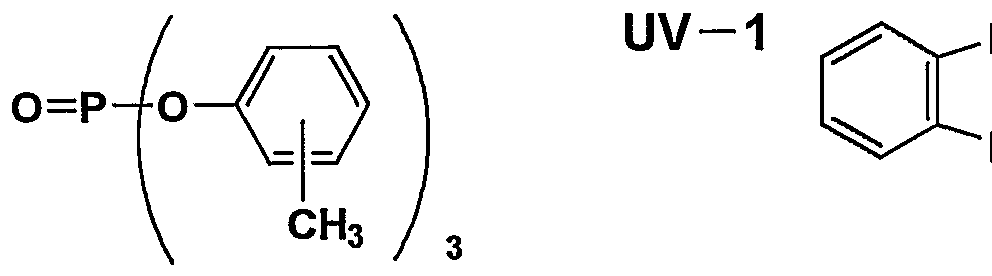
流動パラフィン
H9C4OOC(CH2)8COOC4H9
度

Ase一 1 (下記 3成分の混合物)

(成分 A) (成分 B) (成分 c) 成分 A:成分 B:成分 C=50:46:4(モル比)
H -1
CH2=CHS02— CH2CONHC2H4 HCOCH2— S02CH=CH2
H— 2
ONa
N人 N
CI人 N人 CI
X-2 I " \
H29C14OOCH4C2— ^ ^N— C2H4COOC14H29
ST— 1 OH
N一 N
H3C N Λ N J


X-1 H
o丫 U
HN-
NHCONH2

SU-1 Na03S COOCH2(CF2CF2)3H
、COOCH2(CF2CF2)3H
CH2COOCH2CH(C2H5)C4H9
SU-3
†HCOOCH2CH(C2H5)C4H9
S03Na

x:y:z=3:3:4
n:重合度

〔試料 102 1 15の作製〕
上記試料 10 1の作製において、 第 5層の高感度赤感光層で用いた赤感光性 乳剤 R— 3に代えて、 前記調製した赤感光性乳剤 R— 1 R— 2を用い (銀量 ( B))、 第 5層の高感度赤感光層に用いた全発色カプラーの添加量( C ) およ び第 6層の中間層に用いた一般式( 1 ) で示される化合物 A S— 17の添加量 ( A ) を下表に示す量とした以外は同様にして、 試料 102 1 15を作製し た o
尚、 第 5層の発色カプラー量は、 C一 1ヽ C一 2、 C C— 1、 D— 3の添加 モル比は一定にしたまま添加量を下表に示す量とした。
試料 乳剤種 第 5層高感度赤感光層
中間層 備考 A S - 17 銀 3.
i Ϊ 力プラ一量
( A ) ( B ) ( C )
5 ( X 10.一
( X 1 0 -2 ( X 10一4
m o 1 / m 0 1 /m2) m o 1 /m2 )
101 R- 3 2 1. 00 3 比較例
102 R— 2 2 1. 00 3 比較例
10 1 03 R- 2 2 1. 00 2 比較例
104 R— 1 2 1. 00 2 比較例
105 R— 3 4 1. 25 3. 75 比較例
1 06 R- 2 4 1. 25 3. 75 本発明
107 R- 2 4 1. 00 3 本発明
15 1 08 R— 1 4 0. 6 15 1. 85 本発明
109 R- 1 5 1. 00 3 本発明
1 10 R— 1 5 • 1 1. 70 5. 1 本発明 丄 丄 丄 T KD― O Q
Δ 0. 75 1. 5
1 12 R— 1 3 . o 0. 60 1. 2 本発明
20 1 13 R- 2 4 1. 00 2 本発明
1 1 R— 1 5 1. 00 2 本発明
1 15 R— 1 5 . 1 1. 00 0. 85 本発明
各添加量の比を下記に示す c 試料 ( C/B )
番号
1 0 1 0. 02 0. 03 比較例
102 0. 02 0, 03 比較例
1 03 0. 02 0. 02 比較例
1 04 0. 02 0. 02 比較例
10 105 0. 032 0. 03 比較例 丄 U π υ . U ΰ ώ π υ . Π Q
U 明
107 0. 04 0. 03 本発明
108 0. 065 0. 03 本発明
1 09 0. 05 0. 03 本発明
15 1 10 0. 03 0. 03 本発明
1 1 1 0. 04 0. 02 本発明
1 1 2 0. 05 0. 02 本発明
1 13 0. 04 0. 02 本発明
1 1 0. 05 0. 02 本発明
20 1 15 0. 06 0. 0 1 本発明
〔各試料の露光、 現像及び特性評価〕
(露光、 現像及び濃度測定)
以上のようにして作製した各試料を、 J I S K 76 14— 1981に準 じて、 下記の特性値評価に応じたようにゥエッジを介して露光を行った後、 特 開平 10— 1 23652号公報の段落番号〔 0220〕〜同 〔 0227〕 に記 載の現像処理方法に従つてカラ一発色現像処理を行なった。
カラー発色現像処理を行った各試料について、 透過型濃度計である X— r i t e社製濃度計によりイエロ一、 マゼンタ、 シアンの各透過 S t a t u sM濃 度の測定を行い、 各色画像に射して D— L 0 g E特性曲線を作成した。
く赤感光層感度の測定 . ·特性値 1〉
試料 10 1〜1 1 5に白色光でゥエッジ露光を与え、 前記に従い発色現像処 理及び濃度測定を行い各試料について、 得られたシアン画像の D— L o g E特 性曲線において、 最小濃度から + 0. 1 0の濃度を得るのに要する露光量の逆 数を感度と定義し、 試料 101の感度を 100とする相対感度を求め特性値 1 として示した。
く赤色分解露光による緑色感光層への影響の評価 · .特性値 2〉
試料 10 1〜1 15にイース トマンコダック社製ラッテンフ ィルタ一 N o . 26を用いて赤色分解露光を行い、 上記と同様に発色現像処理及び濃度測定を 行い、 得られたシアン色画像及びマゼンタ色画像の D— L o g E特性曲線にお いて、 シアン濃度が最小濃度 +0. 3の濃度を与える露光量におけるマゼンタ 濃度のカプリからの上昇分を特性値 2として表示した。
く粒状性の評価 · ·特性値 3〉
試料 10 1〜1 15に対して白色光でゥヱッジ露光を与え、 上記と同様に発 色現像処理を行った現像済み試料を用い、 粒状性を、 RMS粒状度により評価 した。 RMS粒状度は、 マゼンタ色画像について、 最小濃度 + 1. 0の部分を
被測定部とし、開口走査面積 1800 ^m2 (スリッ ト巾 10 mXスリッ ト長 180 im) のマイクロデンシトメ一ターで走査し、 濃度測定サンプリング 1 000以上の濃度値の変動の標準偏差の 1000倍値を求め、 試料 1 0 1を 1 00とした相対値で特性値 3として示した。 数値が小さいほど粒状性が優れて いることを示す。
く粒状性の評価 · ·特性値 4〉
試料 10 1〜1 15に対して白色光でゥ ッジ露光を与え、 上記と同様に発 色現像処理を行った現像済み試料を用い、 粒状性を、 RMS粒状度により評価 した。 RMS粒状度は、 シアン色画像について、 最小濃度 +0. 3の部分を被 測定部とし、開口走査面積 1800 ^m2 (スリッ ト巾 10 mXスリット長 1 80 ^ m ) のマイクロデンシトメータ一で走査し、 濃度測定サンプリ ング 10 00以上の濃度値の変動の標準偏差の 1000倍値を求め、 試料 10 1を 10 0とした相対値で特性値 4として示した。 数値が小さいほど粒状性が優れてい ることを示す。
以上により得られた結果を、 下表に示す。
試料 〔評価結果〕
番号 特性値 1 特性値 2 特性値 3 特性値 4 備考
10 1 100 π πリ πリ 100 100 比較例
102 1 1 2 π o 105 102 比較例
103 1 10 πリ , リ * - 106 95 比較例
104 122 πリ · 1 10 97 比較例
105 100 リ . πリ Π VJ 100 100 比較例
106 1 1 2 π 93 102 本発明
107 1 1 2 πリ · リ 87 102 本発明
108 1 5 πリ · Π 9 88 105 本発明
109 125 0. 0 1 74 105 本発明
1 n リ 0. 01 S Q 1 n 1 ¾
1 1 1 108 0. 02 89 95 本発明
1 12 1 17 0. 0 1 87 97 本発明
1 13 1 10 0. 0 1 75 95 本発明
1 14 1 10 0. 01 77 97 本発明
1 15 120 0. 00 71 93 本発明 上記表から分かる通り、 第 5層の高感度赤感光層のハロゲン化銀乳剤および 第 6層の中間層中の一般式( 1 ) で表される化合物 A S— 17の量を本発明の 範囲とすることにより、 高い赤感度を維持するとともに、 赤感光層から緑感光 層への色濁りが大きく低減され、 緑感光層の粒状性が改善されていることが分
かる。 さらに、 カプラーと銀の m 0 1比 ( C Z B ) 力 s' O . 0 2以下であると、 赤感光層の粒状が良好であることが分かる。
また、 上記実施例と同様に第 9層の高感度緑感光層のハ口ゲン化銀乳剤およ び第 1 0層のイェローフィルター層中の一般式 ( 1 ) で表される化合物 A S一 1 7の量を本発明の範囲とすることにより、 上記実施例と同様に、 高い録感光 層の感度を維持するとともに、 緑感光性乳剤層から青感光層への色濁りが大き く低減され、青感光層の粒状性が改善され、さらにカプラーと銀の m 0 1比( C / B ) が 0 . 0 2以下であると、 緑感光層の粒状が良好であることが確認され た。 産業上の利用の可能性
以上のように、 本発明の構成により、 高感度で、 感色性の異なる感光層間の 色濁りが防止され、 粒状性が改良され、 色再現性に優れたハロゲン化銀カラー 写真感光材料を提供する。
Claims
1.. 支持体上に、 青、 緑、 赤のそれぞれの感色性を有する感光層ュニッ トを 有し、 各感色性を有する感光層ュニットは 1層又は感度の異なる複数の感光層 からなり、 感色性の異なる感光層ュニッ ト間に少なくとも 1層の非感光性中間 層を有するハロゲン化銀カラー写真感光材料において、 該中間層の少なくとも 1層に下記一般式( 1 )で表される化合物を 0. 0004m o lZm2以上含有 し、 且つ該中間層の支持体側に隣接する感光層に、 平均沃化銀含有率が 5. 0 m o 1 %以下であるハロゲン化銀乳剤を含有することを特徵とするハロゲン化 銀カラー写真感光材料。 一般

〔式中、 L i及び L2は各々メチレン鎖を表し、 及び X2は各々一 C02—、 - S 02—、 一 CONR4—、 _NR4CO—、 一 S 02NR4—、 一 NR4S 02—、 一 0—、 —NR4C02—ヽ 一: NR4C ONR5—を表す。 R2、 R4及び R5 は各々水素原子、 アルキル基、 アルケニル基、 アルキニル基、 ァリール基、 複 素環基を表し、 R3は置換基を表す。 X l、 X 2、 y i. ァ2は各々 0〜20の整数 を表す。〕
2. 前記平均沃化銀含有率が 5. Omo 1 %以下であるハロゲン化銀乳剤は、 平均ァスぺク ト比が 8. 0以上であることを特徴とする請求の範囲第 1項記載
のハロゲン化銀力ラ一写真感光材料。
3. 前記中間層の支持体側に隣接する感光層に含まれる発色カプラーの m 0 1数( C ) と銀の m 0 1数( B ) との比 ( C/B ) が 0. 0 2以下であること を特徴とする請求の範囲第 1項または第 2項記載のハ口ゲン化銀力ラ一写真感 光材料。
4. 支持体上に、 青、 緑、 赤のそれぞれの感色性を有する感光層ュニッ トを 有し、 各感色性を有する感光層ュニッ トは 1層又は感度の異なる複数の感光層 からなり、 感色性の異なる感光層ュニッ ト間に少なくとも 1層の非感光性中間 層を有するハロゲン化銀カラ一写真感光材料において、 中間層の少なくとも 1 層に含まれる前記一般式( 1 )で表される化合物の m o 1数( A ) ( m o 1 /m 2) と、 該中間層の支持体側に隣接する感光層中の銀の m o 1数( B ) ( m o 1 /m2) との比( AZB )が 0. 04以上であり、 且つ該感光層に含まれる発色 カプラーの m o 1数( C ) と銀の m 0 1数( B ) との比( C/B ) が 0. 0 2 以下であり、 且つ該感光層に、 平均沃化銀含有率が 5. 0 m o 1 %以下である ハ口ゲン化銀乳剤を含有することを特徴とするハロゲン化銀力ラー写真感光材 料。
5. 前記平均沃化銀含有率が 5. O rn o 1 %以下であるハロゲン化銀乳剤は、 平均ァスぺクト比が 8. 0以上であることを特徴とする請求の範囲第 4項記載 のハロゲン化銀力ラー写真感光材料。
Priority Applications (1)
| Application Number | Priority Date | Filing Date | Title |
|---|---|---|---|
| PCT/JP2003/002355 WO2004077149A1 (ja) | 2003-02-28 | 2003-02-28 | ハロゲン化銀カラー写真感光材料 |
Applications Claiming Priority (1)
| Application Number | Priority Date | Filing Date | Title |
|---|---|---|---|
| PCT/JP2003/002355 WO2004077149A1 (ja) | 2003-02-28 | 2003-02-28 | ハロゲン化銀カラー写真感光材料 |
Publications (1)
| Publication Number | Publication Date |
|---|---|
| WO2004077149A1 true WO2004077149A1 (ja) | 2004-09-10 |
Family
ID=32923126
Family Applications (1)
| Application Number | Title | Priority Date | Filing Date |
|---|---|---|---|
| PCT/JP2003/002355 Ceased WO2004077149A1 (ja) | 2003-02-28 | 2003-02-28 | ハロゲン化銀カラー写真感光材料 |
Country Status (1)
| Country | Link |
|---|---|
| WO (1) | WO2004077149A1 (ja) |
Citations (3)
| Publication number | Priority date | Publication date | Assignee | Title |
|---|---|---|---|---|
| US6350564B1 (en) * | 2000-10-17 | 2002-02-26 | Eastman Kodak Company | Color photographic element containing speed improving compound in combination with reflecting material |
| JP2002082417A (ja) * | 2000-09-07 | 2002-03-22 | Konica Corp | ハロゲン化銀カラー写真感光材料 |
| JP2002090924A (ja) * | 2000-09-13 | 2002-03-27 | Fuji Photo Film Co Ltd | ハロゲン化銀写真乳剤及びこれを含有するハロゲン化銀カラー写真感光材料 |
-
2003
- 2003-02-28 WO PCT/JP2003/002355 patent/WO2004077149A1/ja not_active Ceased
Patent Citations (3)
| Publication number | Priority date | Publication date | Assignee | Title |
|---|---|---|---|---|
| JP2002082417A (ja) * | 2000-09-07 | 2002-03-22 | Konica Corp | ハロゲン化銀カラー写真感光材料 |
| JP2002090924A (ja) * | 2000-09-13 | 2002-03-27 | Fuji Photo Film Co Ltd | ハロゲン化銀写真乳剤及びこれを含有するハロゲン化銀カラー写真感光材料 |
| US6350564B1 (en) * | 2000-10-17 | 2002-02-26 | Eastman Kodak Company | Color photographic element containing speed improving compound in combination with reflecting material |
Similar Documents
| Publication | Publication Date | Title |
|---|---|---|
| WO2004077149A1 (ja) | ハロゲン化銀カラー写真感光材料 | |
| JP3253680B2 (ja) | ハロゲン化銀写真乳剤 | |
| Maternaghan | Use of monosize dispersions in silver halide photographic emulsions | |
| JP3918492B2 (ja) | ハロゲン化銀写真乳剤 | |
| WO2004046814A1 (ja) | ハロゲン化銀カラー写真感光材料 | |
| JP4221860B2 (ja) | ハロゲン化銀乳剤及びハロゲン化銀写真感光材料 | |
| US6593071B2 (en) | Silver halide photographic emulsion and silver halide photographic light sensitive material | |
| JPH11352619A (ja) | ハロゲン化銀写真乳剤及びその製造方法並びに写真感光材料 | |
| JP3626337B2 (ja) | ハロゲン化銀粒子及び写真感光材料並びにその製造方法 | |
| JP3718980B2 (ja) | ハロゲン化銀写真乳剤及びそれを用いたハロゲン化銀写真感光材料 | |
| EP1306719B1 (en) | Silver halide photographic material showing improved latent image stability | |
| JPH07248564A (ja) | ハロゲン化銀写真乳剤及びハロゲン化銀写真感光材料 | |
| WO2004077147A1 (ja) | ハロゲン化銀カラー写真感光材料 | |
| JPH0772579A (ja) | ハロゲン化銀写真乳剤 | |
| JP2001264909A (ja) | ハロゲン化銀乳剤及びハロゲン化銀カラー写真感光材料 | |
| JP2001117194A (ja) | ハロゲン化銀カラー写真感光材料 | |
| JPH1062887A (ja) | ハロゲン化銀写真乳剤及びそれを用いたカラー写真感光材料 | |
| JPH09265165A (ja) | ハロゲン化銀カラー写真感光材料 | |
| JPH11143001A (ja) | ハロゲン化銀乳剤の製造方法及びハロゲン化銀写真感光材料 | |
| JPH11119361A (ja) | ハロゲン化銀カラー写真感光材料 | |
| JPH08129243A (ja) | ハロゲン化銀写真感光材料 | |
| JPH07140582A (ja) | ハロゲン化銀写真乳剤及びハロゲン化銀写真感光材料 | |
| WO2004046813A1 (ja) | ハロゲン化銀カラー写真感光材料 | |
| JP2000047344A (ja) | ハロゲン化銀写真乳剤 | |
| JPH0777768A (ja) | ハロゲン化銀写真乳剤 |
Legal Events
| Date | Code | Title | Description |
|---|---|---|---|
| AK | Designated states |
Kind code of ref document: A1 Designated state(s): BR CN ID IN JP KR MX PH PL RU SG US VN |
|
| AL | Designated countries for regional patents |
Kind code of ref document: A1 Designated state(s): AT BE BG CH CY CZ DE DK EE ES FI FR GB GR HU IE IT LU MC NL PT SE SI SK TR |
|
| 121 | Ep: the epo has been informed by wipo that ep was designated in this application | ||
| 122 | Ep: pct application non-entry in european phase | ||
| NENP | Non-entry into the national phase |
Ref country code: JP |
|
| WWW | Wipo information: withdrawn in national office |
Country of ref document: JP |