US9856451B2 - Lactic acid bacterium having IgA production promoting activity, and use thereof - Google Patents
Lactic acid bacterium having IgA production promoting activity, and use thereof Download PDFInfo
- Publication number
- US9856451B2 US9856451B2 US14/369,625 US201214369625A US9856451B2 US 9856451 B2 US9856451 B2 US 9856451B2 US 201214369625 A US201214369625 A US 201214369625A US 9856451 B2 US9856451 B2 US 9856451B2
- Authority
- US
- United States
- Prior art keywords
- composition
- lactic acid
- acid bacterium
- bps402
- treated cells
- Prior art date
- Legal status (The legal status is an assumption and is not a legal conclusion. Google has not performed a legal analysis and makes no representation as to the accuracy of the status listed.)
- Active
Links
Images



Classifications
-
- C—CHEMISTRY; METALLURGY
- C12—BIOCHEMISTRY; BEER; SPIRITS; WINE; VINEGAR; MICROBIOLOGY; ENZYMOLOGY; MUTATION OR GENETIC ENGINEERING
- C12N—MICROORGANISMS OR ENZYMES; COMPOSITIONS THEREOF; PROPAGATING, PRESERVING, OR MAINTAINING MICROORGANISMS; MUTATION OR GENETIC ENGINEERING; CULTURE MEDIA
- C12N1/00—Microorganisms; Compositions thereof; Processes of propagating, maintaining or preserving microorganisms or compositions thereof; Processes of preparing or isolating a composition containing a microorganism; Culture media therefor
- C12N1/20—Bacteria; Culture media therefor
-
- A—HUMAN NECESSITIES
- A23—FOODS OR FOODSTUFFS; TREATMENT THEREOF, NOT COVERED BY OTHER CLASSES
- A23L—FOODS, FOODSTUFFS OR NON-ALCOHOLIC BEVERAGES, NOT OTHERWISE PROVIDED FOR; PREPARATION OR TREATMENT THEREOF
- A23L33/00—Modifying nutritive qualities of foods; Dietetic products; Preparation or treatment thereof
- A23L33/10—Modifying nutritive qualities of foods; Dietetic products; Preparation or treatment thereof using additives
- A23L33/135—Bacteria or derivatives thereof, e.g. probiotics
-
- A—HUMAN NECESSITIES
- A61—MEDICAL OR VETERINARY SCIENCE; HYGIENE
- A61K—PREPARATIONS FOR MEDICAL, DENTAL OR TOILETRY PURPOSES
- A61K8/00—Cosmetics or similar toiletry preparations
- A61K8/02—Cosmetics or similar toiletry preparations characterised by special physical form
- A61K8/0212—Face masks
-
- A—HUMAN NECESSITIES
- A61—MEDICAL OR VETERINARY SCIENCE; HYGIENE
- A61K—PREPARATIONS FOR MEDICAL, DENTAL OR TOILETRY PURPOSES
- A61K8/00—Cosmetics or similar toiletry preparations
- A61K8/18—Cosmetics or similar toiletry preparations characterised by the composition
- A61K8/96—Cosmetics or similar toiletry preparations characterised by the composition containing materials, or derivatives thereof of undetermined constitution
- A61K8/97—Cosmetics or similar toiletry preparations characterised by the composition containing materials, or derivatives thereof of undetermined constitution from algae, fungi, lichens or plants; from derivatives thereof
- A61K8/9728—Fungi, e.g. yeasts
-
- A—HUMAN NECESSITIES
- A61—MEDICAL OR VETERINARY SCIENCE; HYGIENE
- A61K—PREPARATIONS FOR MEDICAL, DENTAL OR TOILETRY PURPOSES
- A61K8/00—Cosmetics or similar toiletry preparations
- A61K8/18—Cosmetics or similar toiletry preparations characterised by the composition
- A61K8/96—Cosmetics or similar toiletry preparations characterised by the composition containing materials, or derivatives thereof of undetermined constitution
- A61K8/99—Cosmetics or similar toiletry preparations characterised by the composition containing materials, or derivatives thereof of undetermined constitution from microorganisms other than algae or fungi, e.g. protozoa or bacteria
-
- A—HUMAN NECESSITIES
- A61—MEDICAL OR VETERINARY SCIENCE; HYGIENE
- A61P—SPECIFIC THERAPEUTIC ACTIVITY OF CHEMICAL COMPOUNDS OR MEDICINAL PREPARATIONS
- A61P1/00—Drugs for disorders of the alimentary tract or the digestive system
-
- A—HUMAN NECESSITIES
- A61—MEDICAL OR VETERINARY SCIENCE; HYGIENE
- A61P—SPECIFIC THERAPEUTIC ACTIVITY OF CHEMICAL COMPOUNDS OR MEDICINAL PREPARATIONS
- A61P1/00—Drugs for disorders of the alimentary tract or the digestive system
- A61P1/04—Drugs for disorders of the alimentary tract or the digestive system for ulcers, gastritis or reflux esophagitis, e.g. antacids, inhibitors of acid secretion, mucosal protectants
-
- A—HUMAN NECESSITIES
- A61—MEDICAL OR VETERINARY SCIENCE; HYGIENE
- A61P—SPECIFIC THERAPEUTIC ACTIVITY OF CHEMICAL COMPOUNDS OR MEDICINAL PREPARATIONS
- A61P1/00—Drugs for disorders of the alimentary tract or the digestive system
- A61P1/14—Prodigestives, e.g. acids, enzymes, appetite stimulants, antidyspeptics, tonics, antiflatulents
-
- A—HUMAN NECESSITIES
- A61—MEDICAL OR VETERINARY SCIENCE; HYGIENE
- A61P—SPECIFIC THERAPEUTIC ACTIVITY OF CHEMICAL COMPOUNDS OR MEDICINAL PREPARATIONS
- A61P11/00—Drugs for disorders of the respiratory system
-
- A—HUMAN NECESSITIES
- A61—MEDICAL OR VETERINARY SCIENCE; HYGIENE
- A61P—SPECIFIC THERAPEUTIC ACTIVITY OF CHEMICAL COMPOUNDS OR MEDICINAL PREPARATIONS
- A61P17/00—Drugs for dermatological disorders
- A61P17/16—Emollients or protectives, e.g. against radiation
-
- A—HUMAN NECESSITIES
- A61—MEDICAL OR VETERINARY SCIENCE; HYGIENE
- A61P—SPECIFIC THERAPEUTIC ACTIVITY OF CHEMICAL COMPOUNDS OR MEDICINAL PREPARATIONS
- A61P31/00—Antiinfectives, i.e. antibiotics, antiseptics, chemotherapeutics
- A61P31/04—Antibacterial agents
-
- A—HUMAN NECESSITIES
- A61—MEDICAL OR VETERINARY SCIENCE; HYGIENE
- A61P—SPECIFIC THERAPEUTIC ACTIVITY OF CHEMICAL COMPOUNDS OR MEDICINAL PREPARATIONS
- A61P31/00—Antiinfectives, i.e. antibiotics, antiseptics, chemotherapeutics
- A61P31/12—Antivirals
-
- A—HUMAN NECESSITIES
- A61—MEDICAL OR VETERINARY SCIENCE; HYGIENE
- A61P—SPECIFIC THERAPEUTIC ACTIVITY OF CHEMICAL COMPOUNDS OR MEDICINAL PREPARATIONS
- A61P37/00—Drugs for immunological or allergic disorders
- A61P37/02—Immunomodulators
- A61P37/04—Immunostimulants
-
- A—HUMAN NECESSITIES
- A61—MEDICAL OR VETERINARY SCIENCE; HYGIENE
- A61P—SPECIFIC THERAPEUTIC ACTIVITY OF CHEMICAL COMPOUNDS OR MEDICINAL PREPARATIONS
- A61P39/00—General protective or antinoxious agents
-
- A—HUMAN NECESSITIES
- A61—MEDICAL OR VETERINARY SCIENCE; HYGIENE
- A61P—SPECIFIC THERAPEUTIC ACTIVITY OF CHEMICAL COMPOUNDS OR MEDICINAL PREPARATIONS
- A61P39/00—General protective or antinoxious agents
- A61P39/02—Antidotes
-
- A—HUMAN NECESSITIES
- A61—MEDICAL OR VETERINARY SCIENCE; HYGIENE
- A61Q—SPECIFIC USE OF COSMETICS OR SIMILAR TOILETRY PREPARATIONS
- A61Q19/00—Preparations for care of the skin
- A61Q19/08—Anti-ageing preparations
-
- C—CHEMISTRY; METALLURGY
- C12—BIOCHEMISTRY; BEER; SPIRITS; WINE; VINEGAR; MICROBIOLOGY; ENZYMOLOGY; MUTATION OR GENETIC ENGINEERING
- C12N—MICROORGANISMS OR ENZYMES; COMPOSITIONS THEREOF; PROPAGATING, PRESERVING, OR MAINTAINING MICROORGANISMS; MUTATION OR GENETIC ENGINEERING; CULTURE MEDIA
- C12N1/00—Microorganisms; Compositions thereof; Processes of propagating, maintaining or preserving microorganisms or compositions thereof; Processes of preparing or isolating a composition containing a microorganism; Culture media therefor
- C12N1/20—Bacteria; Culture media therefor
- C12N1/205—Bacterial isolates
-
- C12R1/225—
-
- A—HUMAN NECESSITIES
- A61—MEDICAL OR VETERINARY SCIENCE; HYGIENE
- A61K—PREPARATIONS FOR MEDICAL, DENTAL OR TOILETRY PURPOSES
- A61K35/00—Medicinal preparations containing materials or reaction products thereof with undetermined constitution
- A61K35/66—Microorganisms or materials therefrom
- A61K35/74—Bacteria
- A61K35/741—Probiotics
- A61K35/744—Lactic acid bacteria, e.g. enterococci, pediococci, lactococci, streptococci or leuconostocs
- A61K35/747—Lactobacilli, e.g. L. acidophilus or L. brevis
-
- C—CHEMISTRY; METALLURGY
- C12—BIOCHEMISTRY; BEER; SPIRITS; WINE; VINEGAR; MICROBIOLOGY; ENZYMOLOGY; MUTATION OR GENETIC ENGINEERING
- C12R—INDEXING SCHEME ASSOCIATED WITH SUBCLASSES C12C - C12Q, RELATING TO MICROORGANISMS
- C12R2001/00—Microorganisms ; Processes using microorganisms
- C12R2001/01—Bacteria or Actinomycetales ; using bacteria or Actinomycetales
- C12R2001/225—Lactobacillus
Definitions
- the present invention relates to a lactic acid bacterium belonging to Lactobacillus kunkeei , which has a high IgA production inducing activity and is immunologically safe; and a food composition, a pharmaceutical composition, a cosmetic composition, and an immunostimulant, each of which comprises the lactic acid bacterium or treated cells of the lactic acid bacterium.
- ulcerative colitis Among inflammatory bowel diseases (IBD), ulcerative colitis and Crohn's disease are of unknown cause, and are intractable.
- Factors associated with inflammatory bowel diseases are abnormalities in the intestinal bacterial flora, secretory IgA production disorder of intestinal epithelial cells, cytokines in the intestinal mucosa, and like factors.
- the primary lesion of ulcerative colitis is nonspecific chronic inflammation in the large intestine mucosa. Because various autoantibodies are observed therein, ulcerative colitis is considered to have characteristics as an autoimmune disease.
- Crohn's disease is pathologically characterized by noncaseating granulomatous inflammatory lesions, and dysfunction of monocyte/macrophage cells is considered to be one of the causative factors for the disease.
- the number of ulcerative colitis patients and Crohn's disease patients has steadily increased by slightly less than 10 percent per year, which is problematic.
- IBD used to be considered an autoimmune disease.
- the inflammation has now been deemed to be caused by intestinal bacteria. It has been reported that intestinal mucosa of IBD patients is less protective against endogenous microflora than in controls, which results in an increase of bacteria in the lumen (see Gastroenterology , 1999, 117: 1089-1097).
- probiotics as a therapy has been the focus of attention since probiotics were reported to have an effect of preventing and alleviating enteritis.
- NPL Non-patent Literature
- Lactic acid bacteria ingested in the form of fermented milk or the like, are known to exhibit various physiological effects based on their functionality, such as regulation of intestinal functions and reduction of serum cholesterol.
- physiological effects of lactic acid bacteria effects on autoimmune diseases such as chronic rheumatoid arthritis and insulin-dependent diabetes, and inflammatory bowel diseases such as irritable bowel syndrome, ulcerative colitis, and Crohn's disease, have begun to receive attention.
- Patent Literature (PTL) 1 discloses that cell debris obtained by crushing bacterial cells of one or more species of lactic acid bacteria selected from the group consisting of lactic acid bacteria belonging to the genera Lactobacillus, Lactococcus , and Streptococcus , has interleukin-10 and interleukin-12 production regulating ability, and the application of this product to Crohn's disease and refractory inflammatory bowel diseases is disclosed.
- Patent Literature (PTL) 2 discloses that lactic acid bacteria belonging to Lactobacillus salivarius , which are highly adhesive to mucous membranes and have high proliferation ability and high resistance to acids, are applicable to prevention and/or treatment of ulcerative colitis and Crohn's disease.
- Non-patent Literature (NPL) 2 presents experimental results which show that Lactobacillus casei strain GG has the potential to increase the gut IgA immune response and thereby to promote the gut immunological barrier, and reports that Lactobacillus GG could provide an adjunct nutritional therapy for Crohn's disease.
- Non-patent Literature (NPL) 3 reports research results which show that Lactobacillus GG may improve gut barrier function and clinical status in children with Crohn's disease.
- Non-patent Literature (NPL) 4 reports that intranasal administration of Lactobacillus rhamnosus GG protects mice from influenza virus infection by enhancing respiratory cell-mediated immune responses.
- Non-patent Literature (NPL) 5 There is also a report that IFN- ⁇ and IL-2 mRNA levels in the mucosa of patients with Crohn's disease are significantly increased, compared to controls, and that chronic intestinal inflammation in patients with Crohn's disease is characterized by an increase of Th1-like cytokines.
- Non-patent Literature (NPL) 6 reports that Lactobacillus kunkeei , which is a new species belonging to the genus Lactobacillus , was isolated from wine. Further, Non-patent Literature (NPL) 7 reports that a fructophilic lactic acid bacteria strain was isolated from a fructose-rich site (flowers), and that the strain was found to contain Lactobacillus kunkeei . Patent Literature (PTL) 3 reports that Lactobacillus kunkeei was isolated from honeybees.
- Lactic acid bacteria that have such excellent IgA production inducing activity and that do not induce non-specific cell-mediated immune responses are highly useful, and the development of such lactic acid bacteria has been desired.
- an object of the present invention is to provide a lactic acid bacterium belonging to Lactobacillus kunkeei , the bacterium having high IgA production inducing activity and being immunologically safe.
- Another object of the present invention is to provide a food composition, a pharmaceutical composition, a cosmetic composition, and an immunostimulant, each of which comprises the lactic acid bacterium or treated cells of the lactic acid bacterium.
- lactic acid bacteria belonging to Lactobacillus kunkeei which were isolated from bee pollen and identified, have a significantly higher IgA production inducing activity than that of Lactobacillus strain GG (ATCC534103), and have a significantly lower mitogenic activity and a significantly lower IL-2 production inducing activity than those of Listeria strain EGD.
- the mitogenic activity and IL-2 production inducing activity of the lactic acid bacteria are substantially at the same levels as those achieved without stimulation, and are extremely low, even when compared with heat-killed Listeria bacteria. Therefore, these lactic acid bacteria are considered to have no ability to induce non-specific cellular immunity. That is, the lactic acid bacteria are immunologically safe materials.
- the present invention was accomplished as a result of further research based on these findings, and provides the following lactic acid bacterium, compositions comprising the lactic acid bacterium, or the like.
- the lactic acid bacterium belonging to Lactobacillus kunkeei according to the present invention has excellent characteristics of having high IgA production inducing activity and being immunologically safe.
- the lactic acid bacterium is useful in the fields of foods, drugs, cosmetics, etc.
- the lactic acid bacterium of the present invention has the above characteristics, the following effects are expected: immunostimulation for preventing infection by pathogens or viruses that invade through the respiratory or esophageal mucosa; intestinal immunostimulation for preventing or alleviating food poisoning; intestinal regulation, beautification, or anti-aging; and prevention and/or treatment of an inflammatory bowel disease, such as Crohn's disease or ulcerative colitis.
- FIG. 1 shows the results of agarose gel electrophoresis of RAPD PCR of Lactobacillus kunkeei strains BPS402 and BPS104, and strain JCM 16173, which were electrophoresed on 1% agarose gel at 50V for 1 hour and 30 minutes and stained with EtBr.
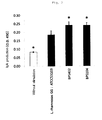
- FIG. 2 is a graph showing the IgA production inducing ability of Lactobacillus kunkeei strains BPS402 and BPS104. *: p ⁇ 0.05 (vs. L. rhamnosus GG: ATCC53103, Dunnett's Multiple Comparison Test).
- FIG. 3 is a graph showing mitogenic activity (S.I. value) of Lactobacillus kunkeei strains BPS402 and BPS104. *: p ⁇ 0.01 (vs. Listeria monocytogenes : EGD, Dunnett's Multiple Comparison Test), S.I. value: stimulation index, the amount of BrdU-Thymidine uptake by spleen-derived lymphocytes (expressed with the uptake amount without stimulation being set as 1.0).
- FIG. 4 is a graph showing IL-2 production inducing ability (S.I. value) of Lactobacillus kunkeei strains BPS402 and BPS104. *: p ⁇ 0.01 (vs. Listeria monocytogenes : EGD, Dunnett's Multiple Comparison Test), S.I. value: stimulation index, the amount of BrdU-Thymidine uptake by CTLL-2 cells (expressed with the uptake amount without stimulation being set as 1.0).
- FIG. 5 is a graph showing a comparison of changes in the survival rate of BALB/c mice after infection with an influenza virus (A/PR/8/34 strain) (a physiological saline-administered group vs. a 1 mg/kg-administered group) (**: significant differences at P ⁇ 0.05 in comparison with the physiological saline-administered group).
- FIG. 6 is a graph showing a comparison of intrapulmonary viral genome amounts in physiological saline-administered mice and BPS402-administered mice after infection with an influenza virus.
- the relative value of the amount of intrapulmonary virus genome in each sample is presented with standard deviations (**: significant differences at P ⁇ 0.05).
- FIG. 7 is a graph showing a comparison of virus-specific IgA in bronchoalveolar lavage fluid (BALF) between physiological saline-administered mice and BPS402-administered mice after infection with an influenza virus.
- BALF bronchoalveolar lavage fluid
- the lactic acid bacterium belonging to Lactobacillus kunkeei according to the present invention is characterized by having a higher IgA production inducing activity than that of the Lactobacillus strain GG (ATCC534103), and a lower mitogenic activity and a lower IL-2 production inducing activity than those of Listeria strain EGD.
- the lactic acid bacterium of the present invention is preferably a lactic acid bacterium that assimilates glucose, fructose, sucrose, trehalose, and gluconate.
- the source from which the lactic acid bacterium of the present invention is isolated is preferably honeybees or apiculture products (honeybee products).
- an apiculture product refers to a product obtained by breeding honeybees. Examples of such products include honey, royal jelly, propolis, beeswax, bee bread, bee pollen, bee larvae, and processed products thereof (such as extracts).
- a lactic acid bacterium isolated from bee pollen is particularly preferable as the lactic acid bacterium of the present invention.
- a material having IgA production inducing activity higher than that of Lactobacillus strain GG is considered to have remarkably high IgA production inducing activity.
- Listeria Listeria monocytogenes
- Listeria monocytogenes is a gram-positive short bacillus that causes listeriosis. Only viable bacteria thereof can induce protective cellular immunity; establishing immunity with heat-killed bacteria is not easy ( Japanese Bacteriology Magazine, 64(4): 365-376, 2009).
- Heat-killed Listeria strain EGD also has mitogenic activity and IL-2-inducing ability, although the levels of activity and ability are not as high as in viable bacteria ( Immunology , 1987, 62: 241-248). However, heat sterilization is actually effective for Listeria as well as for many food-poisoning bacteria, and is widely known as a means for preventing food poisoning. Accordingly, a material that has mitogenic activity and IL-2 production inducing activity lower than those of heat-killed Listeria strain EGD is considered to be immunologically safe.
- lactic acid bacterium belonging to Lactobacillus kunkeei of the present invention include Lactobacillus kunkeei strain BPS402 and Lactobacillus kunkeei strain BPS104 isolated from bee pollen and identified by the present inventors (hereinafter sometimes simply referred to as “strain BSP402” and “strain BSP104”). These strains were deposited with the National Institute of Advanced Industrial Science and Technology (Independent Administration Corporation), International Patent Organism Depositary (Chuo Dai-6, 1-1 Higashi 1-Chome, Tsukuba-shi, Ibaraki-ken, Japan, (postal code: 305-5466)) under the accession numbers FERM P-22177 and FERM P-22176 on Oct. 3, 2011. These strains were transferred to an international deposit, and have been deposited under the accession numbers FERM BP-11439 and FERM BP-11438.
- SEQ ID NO: 1 in the sequence list shows the base sequence of 16S rRNA of the strain BPS402.
- the sequence of 16S rRNA of the strain BPS402 has 100% identity to Lactobacillus kunkeei strain YH-15 (JCM16173), which is a reference strain of a known species.
- JCM16173 Lactobacillus kunkeei strain YH-15
- the results of simplified molecular phylogenetic analysis showed that the strain BPS402 formed a cluster together with Lactobacillus kunkeei , and that both were in the same molecular phylogenetic position. It is determined from these results that the strain BPS402 is a lactic acid bacterium belonging to Lactobacillus kunkeei.
- SEQ ID NO: 2 in the sequence list shows the base sequence of 16S rRNA of the strain BPS402.
- the sequence of 16S rRNA of the strain BPS104 has 99.9% identity to Lactobacillus kunkeei strain YH-15 (JCM16173), which is a reference strain of a known species.
- JCM16173 is a reference strain of a known species.
- the results of simplified molecular phylogenetic analysis showed that the strain BPS104 formed a cluster together with Lactobacillus kunkeei , and that both were in the same molecular phylogenetic position. It is determined from these results that the strain BPS104 is a lactic acid bacterium belonging to Lactobacillus kunkeei.
- Table 1 below shows the summary of test results of saccharide fermentability of the strain BPS402, strain BPS104, and Lactobacillus kunkeei (JCM16173). Table 1 shows that the saccharide fermentability of the strain BPS402 and strain BPS104 is different from that of the known strain.
- Random amplified polymorphic DNA (RAPD) analysis was performed using a primer 5′-CCGCAGCCAA-3′ under the following reaction conditions. Preincubation: 94° C. for 2 minutes, amplification: 94° C. for 1 minute, 30° C. for 1 minute, and 72° C. for 1.5 minutes (40 cycles), and primer extension: 74° C. for 5 minutes (1 cycle).
- RAPD Random amplified polymorphic DNA
- FIG. 1 shows the results.
- the results of FIG. 1 show that the RAPD patterns of the strains BPS402 and BPS104 are different from those of known Lactobacillus kunkeei strains.
- strains BPS402 and BPS104 are novel Lactobacillus kunkeei strains.
- strains can be cultured in a usual manner. There is no specific limitation on the medium to be used, as long as these strains can be cultured therein. Natural media, synthetic media, semisynthetic media, and like media can be used. Milk, royal jelly, etc., can also be used as media.
- media containing a nitrogen source and a carbon source can be used.
- nitrogen sources include meat extract, peptone, casein, yeast extract, gluten, soybean flour, soybean hydrolyzate, amino acids, and the like.
- carbon sources include glucose, lactose, fructose, inositol, sorbitol, starch syrup, starch, rice malt extract, wheat bran, bagasse, molasses, and the like.
- minerals such as ammonium sulfate, potassium phosphate, magnesium chloride, sodium chloride, calcium carbonate, iron, manganese, and molybdenum
- various vitamins, etc. can be added.
- the culturing temperature is typically 4 to 45° C., and preferably 30 to 37° C.
- the culturing time is typically about 8 to 72 hours.
- Aeration-shaking or aeration-agitation may be performed.
- the pH of the medium is typically 4.0 to 9.0, and preferably 6.0 to 8.0.
- An example of the culture method is a method comprising inoculating the cells at a concentration of 1% into MRS medium, and culturing the cells at 37° C. for 24 hours.
- the food composition of the present invention comprises the lactic acid bacterium or treated cells of the lactic acid bacterium as an essential component.
- the food composition includes all food compositions that can be ingested by animals (including humans).
- the food composition of the present invention contains the lactic acid bacterium that may be either viable or heat-killed.
- the lactic acid bacterium isolated cells may be used, or a cell culture or fermentation product thereof may be used.
- Examples of the treated cells of the lactic acid bacterium include those obtained by subjecting the lactic acid bacterium to heating, pasting, drying (freeze-drying, vacuum-drying, spray-drying, etc.), freezing, lysis, crushing, extraction, etc.
- Examples of the treated cells further include supernatants obtained by removing proteins from cell debris obtained by sonication or other disintegration techniques, supernatants obtained by removing the solids from a cell culture or fermentation product thereof, etc.
- the lactic acid bacterium may be used alone, or in admixture with other microorganisms.
- the lactic acid bacterium or treated cells thereof may be used without further processing, or, if necessary, may be mixed with minerals, vitamins, flavonoids, quinones, polyphenols, amino acids, nucleic acids, essential fatty acids, fresheners, binders, sweeteners, disintegrators, lubricants, coloring agents, fragrances, stabilizing agents, preservatives, sustained-release regulators, surfactants, solubilizers, wetting agents, and the like.
- the type of food composition according to the present invention is not particularly limited, and examples thereof include dairy products; fermented foods (yogurt, royal jelly, etc.); beverages (coffee, juices, tea drinks, and like soft drinks, milk beverages, lactic acid bacteria beverages, drinks containing lactic acid bacteria, yogurt drinks, carbonated drinks, Japanese sake, Western wines and spirits, fruit wines, and like liquors, etc.); spreads (custard cream, etc.); pastes (fruit pastes, etc.); Western-style confectioneries (chocolate, doughnut, pie, cream puff, gum, jelly, candies, cookies, cakes, pudding, etc.); Japanese sweets (daifuku [rice cake stuffed with sweet beans], rice cake, manju [steamed yeast bun with filling], kasutera [Castella sponge cakes], anmitsu [gelatin mixed with other ingredients], yokan [azuki bean jelly], etc.); frozen desserts (ice creams, ice candies, sherbets, etc.); foods (curry, g
- the method for producing the food composition of the present invention is also not particularly limited, and can be suitably performed according to a known method.
- the lactic acid bacterium or treated cells thereof may be mixed into or sprayed over the intermediate or final product obtained in a process of producing such a food composition as described above, thereby obtaining a food.
- Fermented products, lactic acid bacteria beverages, and drinks containing lactic acid bacteria can be obtained by fermenting cow's milk or like animal milks, milk raw materials, etc., with the lactic acid bacterium.
- the fermented foods of royal jelly can also be produced by fermenting royal jelly with the lactic acid bacterium.
- the food composition of the present invention can also be used as health foods, functional foods, nutraceuticals, dietary supplements, foods for health uses, foods for specified health uses, or probiotic products.
- the dosage unit form of the composition for use as a dietary supplement is not particularly limited, and can be suitably selected. Examples of such dosage forms include tablets, capsules, granules, liquids, powders, and the like.
- the content of the lactic acid bacterium or treated cells thereof in the food composition of the present invention can be suitably selected from 1 ⁇ 10 ⁇ 7 to 100 wt. %, preferably 1 ⁇ 10 ⁇ 5 to 100 wt. %, and more preferably 1 to 100 wt. %.
- the amount of intake of the food composition of the present invention can be suitably set according to various conditions, such as the consumer's body weight, age, sex, and symptoms.
- the daily intake expressed by the number of lactic acid bacterium may be, for example, 1 ⁇ 10 6 or more, preferably 1 ⁇ 10 9 or more, and more preferably 1 ⁇ 10 12 or more.
- the pharmaceutical composition of the present invention comprises the lactic acid bacterium or treated cells thereof as an essential ingredient.
- the pharmaceutical composition of the present invention can be referred to as a lactic acid bacteria preparation.
- the pharmaceutical composition of the present invention contains the lactic acid bacterium that may be either viable or heat-killed.
- the lactic acid bacterium isolated cells may be used, or a cell culture or fermentation product thereof may be used.
- Examples of the treated cells of the lactic acid bacterium include those obtained by subjecting the lactic acid bacterium to heating, pasting, drying (freeze-drying, vacuum-drying, spray-drying, etc.), freezing, lysis, etc.
- Examples of the treated cells further include supernatants obtained by removing proteins from cell debris obtained by sonication or other disintegration techniques, supernatants obtained by removing the solids from a cell culture or fermentation product thereof, etc.
- the lactic acid bacterium may be used alone, or in admixture with other microorganisms.
- the lactic acid bacterium or treated cells thereof may be used without further processing, or mixed with a pharmaceutically acceptable non-toxic carrier, diluent, or excipient, and formed into tablets (including uncoated tablets, sugar-coated tablets, effervescent tablets, film-coated tablets, chewable tablets, troches, etc.), capsules, pills, powder (powdered drugs), fine granules, granules, liquids, suspensions, emulsions, syrups, pastes, and injections (including preparations formulated into liquids by admixture into distilled water or an infusion, such as an amino acid infusion or an electrolyte infusion, before use).
- a pharmaceutically acceptable non-toxic carrier including uncoated tablets, sugar-coated tablets, effervescent tablets, film-coated tablets, chewable tablets, troches, etc.
- capsules pills, powder (powdered drugs), fine granules, granules, liquids, suspensions, emulsions
- the content of the lactic acid bacterium or treated cells thereof in the pharmaceutical composition of the present invention can be suitably selected from 1 ⁇ 10 ⁇ 7 to 100 wt. %, preferably 1 ⁇ 10 ⁇ 5 to 100 wt. %, and more preferably 1 to 100 wt. %.
- the dose of the pharmaceutical composition of the present invention can be suitably set according to various conditions, such as the patient's body weight, age, sex, and symptoms.
- the daily dose expressed by the number of lactic acid bacterium may be, for example, 1 ⁇ 10 10 or more, preferably 1 ⁇ 10 11 or more, and more preferably 1 ⁇ 10 12 or more.
- the lactic acid bacterium or treated cells thereof according to the present invention can also be used as an immunostimulant for preventing infection by a pathogen or a virus that invades through the respiratory or esophageal mucosa, or as an intestinal immunostimulant for preventing or alleviating food poisoning.
- an immunostimulant for preventing infection by a pathogen or a virus that invades through the respiratory or esophageal mucosa
- an intestinal immunostimulant for preventing or alleviating food poisoning.
- examples of the virus that the respiratory or esophageal mucosa include, but are not limited to, influenza viruses.
- the food or pharmaceutical composition of the present invention is effective for intestinal regulation, beautification, or anti-aging, and preventing and/or treating inflammatory bowel diseases (preferably Crohn's disease or ulcerative colitis).
- the cosmetic composition of the present invention contains the lactic acid bacterium or treated cells thereof as an essential component.
- the cosmetic composition of the present invention contains the lactic acid bacterium that may be either viable or heat-killed.
- the lactic acid bacterium isolated cells may be used, or a cell culture or fermentation product thereof may be used.
- Examples of the treated cells of the lactic acid bacterium include those obtained by subjecting the lactic acid bacterium to heating, pasting, drying (freeze-drying, vacuum-drying, spray-drying, etc.), freezing, lysis, etc.
- Examples of the treated cells further include supernatants obtained by removing proteins from cell debris obtained by sonication or other disintegration techniques, supernatants obtained by removing the solids from a cell culture or fermentation product thereof, etc.
- the lactic acid bacterium may be used alone, or in admixture with other microorganisms.
- the cosmetic composition of the present invention includes all cosmetic compositions that are applied to the skin, mucosa, body hair, head hair, scalp, nails, teeth, facial skin, lips, etc. of animals (including humans).
- the content of the lactic acid bacterium or treated cells thereof in the cosmetic composition of the present invention can be suitably selected from the range of 1 ⁇ 10 ⁇ 10 to 100 wt. %, preferably 1 ⁇ 10 ⁇ 6 to 50 wt. %, and more preferably 1 ⁇ 10 ⁇ 2 to 10 wt. %.
- the cosmetic composition of the present invention may contain, in addition to the lactic acid bacterium or treated cells thereof, ingredients commonly used in cosmetics, such as skin-lightening agents, moisturizers, antioxidants, oily components, ultraviolet absorbers, surfactants, thickeners, alcohols, powder constituents, color materials, aqueous ingredients, water, various skin nutrients, etc.
- ingredients commonly used in cosmetics such as skin-lightening agents, moisturizers, antioxidants, oily components, ultraviolet absorbers, surfactants, thickeners, alcohols, powder constituents, color materials, aqueous ingredients, water, various skin nutrients, etc.
- the cosmetic composition of the present invention can be formulated into a wide range of dosage forms, such as aqueous solutions, solubilizers, emulsions, powders, oils, gels, ointments, aerosols, water-oil bilayer preparations, and water-oil-powder trilayer preparations.
- the cosmetic composition of the present invention may be used for any purpose of use.
- uses include basic cosmetics such as facial washes, face lotions, milky lotions, creams, gels, essences, beauty essences, packs, and masks; make-up products such as foundations, lipsticks, blushes, eye shadows, eyeliners, and mascaras; nail cosmetics such as nail polishes, base coats, topcoats, and nail polish removers; and other products such as facial washes, massaging agents, cleansing agents, after-shave lotions, pre-shave lotions, shaving creams, body soaps, soaps, shampoos, rinses, hair treatments, hair dressings, hair tonics, hair growing agents, antiperspirants, and bath agents.
- basic cosmetics such as facial washes, face lotions, milky lotions, creams, gels, essences, beauty essences, packs, and masks
- make-up products such as foundations, lipsticks, blushes, eye shadows, eyeliners, and mascaras
- the cosmetic composition of the present invention is expected to exhibit anti-aging effects, such as skin-lightening effects and moisturizing effects.
- the medium used for isolating the bacteria was an MRS culture medium (or ROGOSA medium). Any of apple juice, orange juice, tomato juice, or grape juice was added as desired to achieve a final concentration of 25%, and the medium was adjusted to pH 4.5 with acetic acid and sodium hydroxide.
- Bee pollen was appropriately diluted in the prepared medium, and culture was started at 25 to 37° C. in an incubator. After 2 to 3 days of culture, the cells were spread on MRS agar medium containing calcium carbonate by a streak method, and culture was further continued at the same temperature as above for another two to three days to obtain single colonies having a clear zone by lactic acid production. The obtained colonies were cultured in MRS, and then cryopreserved at ⁇ 80° C. as a 10% glycerol stock.
- the amount of IgA production (O.D. ⁇ 0.2), and mitogenic activity and IL-2 production (S.I. value ⁇ 1.2) were used as screening indices in the present test examples.
- S.I. value without stimulation was set as 1.0.
- mice Six-week-old female BALB/c mice preliminarily bred for one week after completion of quarantine and inspection were used. The individuals that had similar body weights and exhibited similar changes in body weight during the preliminary breeding were selected as test animals.
- the blood was collected from the animals under anesthesia to exsanguinate the animals.
- spleen and small intestine including cecum and ileocecum
- Petri dishes containing a 1% BSA-containing Hank's solution and stored ice-cold.
- Spleen-derived lymphocytes (SPL) were collected from the spleen
- Peyer's patch-derived lymphocytes (PPL) were collected from the small intestine.
- Cells of each type were resuspended in 10% RPMI-1640 medium to a density of 1 ⁇ 10 6 cells/ml.
- Each bacterial strain was streaked on Mueller-Hinton agar medium, and cultured in a 37° C. incubator for 16 hours. Single colonies grown on the agar medium were picked up with a platinum needle, streaked on new Mueller-Hinton agar medium, and cultured in a 37° C. incubator for 16 hours. The cell colonies were lysed in TS liquid medium to a McFarland turbidity (MCF) of 3.0 as a rule of thumb, thus preparing bacterial suspensions. The number of cells in a portion of each bacterial suspension was counted by the tenfold serial dilution method. The obtained bacterial suspensions were heated at 100° C. for 30 minutes, and used as the test substances described in the next section.
- MCF McFarland turbidity
- the collected PPL was stimulated with one of the test substances as an antigen. Forty-eight hours after the stimulation, the culture supernatant was collected. IgA in the collected culture supernatant was measured by ELISA assay.
- the collected SPL was stimulated with mitogen (PWM final concentration: 5 ⁇ g/mL) or with one of the test substances as an antigen in the presence of BrdU-Thymidine. The amount of uptake of BrdU-Thymidine was measured. Further, the culture supernatant was collected using the same system, and a cell proliferation ability test using CTLL-2 cells was conducted.
- Peyer's patch cells were stimulated with one of the test substances. The culture supernatant after 48 hours of stimulation was added to an ELISA plate for measuring IgA antibody, and IgA antibody production inducing ability was evaluated. Peyer's patch cells without stimulation were used as a negative control, and the O.D. value obtained using each test substance was evaluated relative to the O.D. value of the negative control.
- FIG. 2 shows the results.
- the O.D. values of the strains BPS402 and BPS104 were 0.243 and 0.242, respectively, and the O.D. value obtained using the control strain Listeria monocytogenes was 0.107.
- Spleen cells were stimulated using one of the test substances.
- the uptake of fluorescently labeled BrdU-Thymidine was evaluated by fluorescence intensity using a flow cytometer.
- Spleen cells without stimulation were used as a negative control.
- the fluorescence intensity obtained using each test substance was evaluated relative to the fluorescence intensity of the negative control.
- FIG. 3 shows the results.
- the S.I. value of the blastogenic response obtained using the control strain Listeria monocytogenes was 2.1, whereas S.I. values of the strains BPS402 and BSP104 were 1.2 and 0.9, respectively.
- IL-2 in the culture supernatant obtained in the above test was measured using CTLL-2 cells as an indicator.
- BrdU-Thymidine uptake of CTLL-2 cells was evaluated by fluorescence intensity determined using a flow cytometer. Spleen cells without stimulation were used as a negative control. The fluorescence intensity of each test substance was evaluated relative to the fluorescence intensity of the negative control.
- FIG. 4 shows the results.
- the S.I. value of the blastogenic response obtained using the control strain Listeria monocytogenes was 1.4, while the S.I. values of the strains BPS402 and BSP104 were 1.1 and 1.0, respectively.
- the heat-killed lactic acid bacterial strains BPS402 and BPS104 did not exhibit such potent mitogenic activity as to induce T cell immune response. Even compared to heat-killed Listeria bacteria, which are intracellular parasitic bacteria, the heat-killed lactic acid bacterial strains BPS402 and BPS104 are extremely low in terms of cellular proliferation response and IL-2 production inducing ability, and thus do not have the ability to non-specifically induce cellular immunity. That is, the strains BPS402 and BPS104 do not always enhance immune activity in a host, and are considered to be immunologically safe substances.
- the heat-killed lactic acid bacteria may induce IgA production of Peyer's patch cells. Accordingly, the heat-killed lactic acid bacteria are likely to increase the amount of IgA antibody present in mucosal epithelium, such as respiratory mucosa and esophageal mucosa, and is thus considered to be effective for preventing infection of pathogens (such as viruses) that invade through the mouth and nose.
- pathogens such as viruses
- MDCK cells cultured in a cell growth medium were infected with an influenza virus (IFVA, strain PR/8/34 (H1N1)), which had been cryopreserved in a deep freezer, at a multiplicity of infection (M.O.I.) of 0.01 and cultured at 37° C. in the presence of 5% CO 2 for 72 hours (one passage).
- IFVA influenza virus
- H1N1 strain PR/8/34
- M.O.I. multiplicity of infection
- Cells serially passaged for 5 passages were mass-produced, and subjected to sucrose gradient centrifugation to separate and purify a viral fluid.
- the viral fluid was stored in a deep freezer until use.
- a portion of the virus fluid was subjected to tenfold serial dilution to confirm cytopathic effects, thereby determining the viral infectivity titer (TCID 50 ) and plaque-forming unit (pfu).
- mice Six-week-old male BALB/c mice preliminarily bred for one week after completion of the quarantine and inspection were used. Each mouse was given one of the test substances in an amount of 0.2 mL by a single oral gavage. The concentration of each test substance was set to 1 mg per kg of the body weight. A test substance was given by oral gavage once a day throughout the test period, and this administration was continued until the end of the test period after IFVA infection. Physiological saline was orally administered to a negative control group in the same manner as each test substance.
- mice were divided into two test groups.
- the table below shows the details.
- the two groups were intranasally inoculated with the prepared IFVA, and 20 mice reliably inoculated with the virus were assigned to each group.
- mice Nine-week-old female BALB/c mice given the test substance by oral gavage for 3 consecutive weeks were used.
- the mice were intraperitoneally injected with Pentobarbital sodium (5.0 mg/mL; Kyoritsuseiyaku Corporation (trade name; Somnopentyl anesthetic injection) diluted with physiological saline at 50 mg/kg in the order of animal numbering to undergo general anesthesia.
- the prepared IFVA was intranasally inoculated at 103 pfu/20 ⁇ L into the right nasal cavity of each mouse.
- the survival rate was determined by dividing the number of individuals that survived during the follow-up observation period by the total number of individuals in each group, and multiplying the obtained value by 100.
- mice Six-week-old male BALB/c mice preliminarily bred for one week after completion of the quarantine and inspection were used. Each mouse was given the test substance in an amount of 0.2 mL by a single oral gavage. The concentration of the test substance was set to 100 mg per kg of the body weight. The test substance was given by oral gavage once a day throughout the test period, and this administration was continued until the end of the test period after IFVA infection. Physiological saline was orally administered to a negative control group in the same manner as each test substance.
- mice were divided into a total of four groups: two virus-inoculated groups, and two non-virus-inoculated groups.
- the table below shows the details.
- the two virus-inoculated groups were intranasally inoculated with the prepared IFVA, and 50 mice reliably inoculated with the virus were assigned to each group.
- the number of mice in each of the non-virus-inoculated groups was 10. For grouping, each mouse was numbered and assigned by stratified randomization when the test substance began to be administered.
- mice TABLE 3 Number Test Viral Test substance of group infection concentration mice Notes 1 ⁇ ⁇ 10 For analysis of (none) (Physiological non-infection saline) (d0) 2 ⁇ 100 mg/kg 10 For analysis of non-infection (d0) 3 + ⁇ 50 (Intranasal inoculation) 4 + 100 mg/kg 50 c. IFVA Inoculation
- mice Nine-week-old female BALB/c mice given the test substance by oral gavage for 3 consecutive weeks were used. Pentobarbital sodium (5.0 mg/mL; Kyoritsuseiyaku Corporation (trade name; Somnopentyl anesthetic injection) diluted with physiological saline was intraperitoneally injected to the mice at 50 mg/kg in the order of animal numbering to undergo general anesthesia. Under general anesthesia, the prepared IFVA was intranasally inoculated at 102 pfu/20 ⁇ L into the right nasal cavity of each mouse. 20 ⁇ L of physiological saline was intranasally administered to the non-virus-inoculated groups in a similar manner.
- Pentobarbital sodium 5.0 mg/mL
- Kyoritsuseiyaku Corporation trade name; Somnopentyl anesthetic injection
- mice in each group were killed.
- Bronchioalveolar lavage fluid (BALF) was collected from five mice in each group, while untreated lungs were excised from three mice in each group and preserved in 10% (v/v) formalin.
- the lungs after the treatment were excised from 5 mice in each group, and cell suspensions were created using a gentleMACS Dissociator (Miltenyi Biotec). Lung-derived total RNA was extracted from each of the cell suspensions using ISOGEN II. The extracted RNA was subjected to a reverse transcription reaction using Uni12 primer (Hoffmann E. et al., Arch Virol., 2001). After selectively amplifying viral genomic RNA, the amount of viral genomic RNA in the lungs was measured by real-time PCR using primers specific to the viral NP gene.
- the collected BALF was centrifuged and separated into a supernatant and cellular components.
- the supernatant was stored in a deep freezer until analysis was conducted.
- the antibody in the BALF supernatant was measured by ELISA.
- the measurement parameter was anti-influenza virus-specific IgA.
- a comparison in the survival rate analysis between the groups was made using a log-rank test at a two-sided significance level of 0.05. Significance of difference between the groups in other tests was assessed using a Student's t-test at a two-sided significance level of 0.05.
- the physiological saline-administered group which is an experimental control group, had a survival rate of 25.0% at the completion of the test.
- the group given a test substance lactic acid bacteria BPS402 powder; hereinafter referred to as BPS402
- BPS402 lactic acid bacteria BPS402 powder
- a comparison of the group given BPS402 in an amount of 1 mg/kg to the experimental control group using a log-rank test (p 0.0465) indicated a significant difference.
- Non-patent Literature (NPL) 4 discloses that administration of LGG in an amount of 200 ⁇ g/mouse provides an influenza virus-preventing effect, whereas the use of BPS402 in an amount of 20 ⁇ g/mouse (the body weight of the mouse is assumed to be 20 g) provided the preventing effect. This indicates that BPS402 was effective at one-tenth the dose of the LGG.
- sIgA A significant elevation of sIgA ( ⁇ g/min) in saliva was observed after intake of BPS402, compared to that before intake of BPS402.
- sIgA is widely known as an immunoglobulin having important immunological function in the mucosal system, and is considered to reduce the risk of infection with upper respiratory tract infections.
- the degree of dryness of the skin was shown on a linear scale of 0 to 100 mm and analyzed by visual analog scale (VAS). Dryness of the skin was significantly improved after intake of BPS402, compared to that before intake of BPS402, and a moisturizing effect was confirmed.
- VAS visual analog scale
- 1,000 L of a medium containing 2% glucose and 5% yeast extract was adjusted to pH 6.5 and BPS104 culture obtained by preculture was inoculated thereinto at 1%. While the pH was suitably adjusted, the cells were cultured at 30 to 37° C. for 24 to 48 hours to obtain a cell culture. The resulting cell culture was centrifuged, and 1 part by weight of water was added per part by weight of the cells. Then, the cells were lyophilized, and the solids were pulverized by a pulverizer to obtain 1 kg of lactic acid bacteria BPS104 powder.
- lactic acid bacteria BPS104 powder 400 g of lactic acid bacteria BPS104 powder and 20 g of sucrose fatty acid ester were mixed. The mixture was filled into hard capsules using a filler to obtain 2,000 capsules of lactic acid bacteria BPS104.
- BPS402 culture obtained by preculture was inoculated at 1%. After culture at 30° C. for 48 hours, the residue was removed by centrifugation, and 800 mL of a royal jelly fermented extract was obtained.
- Example 2 The same procedure as in Example 1 was repeated to obtain 800 mL of enzyme-treated royal jelly from 1,000 mL of a diluent obtained by diluting enzyme-treated royal jelly fermented extract to a final concentration of 5%.
- the fermented extracts obtained in Examples 1 and 2 were tested in the following five items. No effect was indicated as ⁇ , and a slight effect was indicated as ⁇ /+. Effects were evaluated on a scale of one (+) to three (+++), in ascending order of effects. Table 4 shows the results.
- the fermented extract after 48 hours was evaluated using a pH meter.
- the culture after 48 hours was compared with that before fermentation and evaluated.
- the culture after 48 hours was suspended.
- the suspension was suitably diluted, spread-plated onto MRS agar medium, and evaluated.
- the color of the medium 5 days after the melanin production inhibition test was confirmed with the naked eye, and oxidation of DOPA was evaluated.
- 1,000 mL of a solution containing 0.1% sodium citrate, 1.0% sodium pyrrolidone carboxylate, and 5.0% 1,3-butylene glycol was prepared by mixing each component into purified water at 50° C. 100 mL of ethanol containing 0.6% POE(30)POP(6) decyltetradecyl ether (NIKKOL PEN-4630) was gradually added with stirring to the solution and thereby solubilized. The resulting product was cooled to 30° C. with stirring and the lactic acid bacteria fermented extract obtained in Example 2 was added to a final concentration of 0.5%, thus providing 1,000 mL of a lactic acid bacteria fermented extract lotion.
- NIKKOL PEN-4630 decyltetradecyl ether
Landscapes
- Health & Medical Sciences (AREA)
- Life Sciences & Earth Sciences (AREA)
- Engineering & Computer Science (AREA)
- Chemical & Material Sciences (AREA)
- General Health & Medical Sciences (AREA)
- Veterinary Medicine (AREA)
- Public Health (AREA)
- Animal Behavior & Ethology (AREA)
- Organic Chemistry (AREA)
- Bioinformatics & Cheminformatics (AREA)
- Medicinal Chemistry (AREA)
- Biotechnology (AREA)
- Chemical Kinetics & Catalysis (AREA)
- General Chemical & Material Sciences (AREA)
- Pharmacology & Pharmacy (AREA)
- Nuclear Medicine, Radiotherapy & Molecular Imaging (AREA)
- Wood Science & Technology (AREA)
- Genetics & Genomics (AREA)
- Zoology (AREA)
- Microbiology (AREA)
- Tropical Medicine & Parasitology (AREA)
- Epidemiology (AREA)
- Birds (AREA)
- Mycology (AREA)
- Virology (AREA)
- Biomedical Technology (AREA)
- Biochemistry (AREA)
- General Engineering & Computer Science (AREA)
- Nutrition Science (AREA)
- Dermatology (AREA)
- Immunology (AREA)
- Toxicology (AREA)
- Gerontology & Geriatric Medicine (AREA)
- Food Science & Technology (AREA)
- Polymers & Plastics (AREA)
- Oncology (AREA)
- Communicable Diseases (AREA)
- Botany (AREA)
- Pulmonology (AREA)
- Medicines Containing Material From Animals Or Micro-Organisms (AREA)
Applications Claiming Priority (3)
| Application Number | Priority Date | Filing Date | Title |
|---|---|---|---|
| JP2011289314 | 2011-12-28 | ||
| JP2011-289314 | 2011-12-28 | ||
| PCT/JP2012/083523 WO2013099883A1 (ja) | 2011-12-28 | 2012-12-25 | IgA産生促進作用を有する新規乳酸菌及びその用途 |
Related Parent Applications (1)
| Application Number | Title | Priority Date | Filing Date |
|---|---|---|---|
| PCT/JP2012/083523 A-371-Of-International WO2013099883A1 (ja) | 2011-12-28 | 2012-12-25 | IgA産生促進作用を有する新規乳酸菌及びその用途 |
Related Child Applications (1)
| Application Number | Title | Priority Date | Filing Date |
|---|---|---|---|
| US15/835,126 Continuation US10570366B2 (en) | 2011-12-28 | 2017-12-07 | Lactic acid bacterium having IgA production promoting activity, and use thereof |
Publications (2)
| Publication Number | Publication Date |
|---|---|
| US20140363880A1 US20140363880A1 (en) | 2014-12-11 |
| US9856451B2 true US9856451B2 (en) | 2018-01-02 |
Family
ID=48697368
Family Applications (2)
| Application Number | Title | Priority Date | Filing Date |
|---|---|---|---|
| US14/369,625 Active US9856451B2 (en) | 2011-12-28 | 2012-12-25 | Lactic acid bacterium having IgA production promoting activity, and use thereof |
| US15/835,126 Active US10570366B2 (en) | 2011-12-28 | 2017-12-07 | Lactic acid bacterium having IgA production promoting activity, and use thereof |
Family Applications After (1)
| Application Number | Title | Priority Date | Filing Date |
|---|---|---|---|
| US15/835,126 Active US10570366B2 (en) | 2011-12-28 | 2017-12-07 | Lactic acid bacterium having IgA production promoting activity, and use thereof |
Country Status (3)
| Country | Link |
|---|---|
| US (2) | US9856451B2 (enExample) |
| JP (3) | JP5468183B2 (enExample) |
| WO (1) | WO2013099883A1 (enExample) |
Families Citing this family (19)
| Publication number | Priority date | Publication date | Assignee | Title |
|---|---|---|---|---|
| US9856451B2 (en) | 2011-12-28 | 2018-01-02 | Yamada Bee Company Inc. | Lactic acid bacterium having IgA production promoting activity, and use thereof |
| JP2015030688A (ja) * | 2013-08-01 | 2015-02-16 | 興人ライフサイエンス株式会社 | 栄養組成物 |
| JP6486612B2 (ja) * | 2014-05-27 | 2019-03-20 | 株式会社山田養蜂場本社 | 抗アレルギー作用を有する乳酸菌及びその用途 |
| JP6457963B2 (ja) * | 2016-02-25 | 2019-01-23 | 日清ファルマ株式会社 | 大腸デリバリーカプセル製剤 |
| JP6888835B2 (ja) * | 2016-12-28 | 2021-06-16 | 株式会社山田養蜂場本社 | 発酵物及びその製造方法 |
| EP3564381A4 (en) * | 2016-12-28 | 2020-08-26 | Yamada Bee Company, Inc. | FERMENTED HONEY PRODUCT AND MANUFACTURING METHOD FOR IT |
| JP6994214B2 (ja) * | 2017-05-01 | 2022-02-21 | 日本コルマー株式会社 | 皮膚改善用食品組成物 |
| PL233794B1 (pl) * | 2017-11-06 | 2019-11-29 | Biowet Pulawy Spolka Z Ograniczona Odpowiedzialnoscia | Szczepy bakterii z rodzajow Lactobacillus i Fructobacillus wyizolowane z przewodu pokarmowego pszczol miodnych do zastosowania w zwalczaniu i zapobieganiu chorob pszczol oraz preparaty probiotyczne na bazie takich szczepow bakterii |
| IT201800007229A1 (it) * | 2018-07-16 | 2020-01-16 | Processo microbiologico per la produzione di pane d’api | |
| CN120617326A (zh) | 2018-10-30 | 2025-09-12 | 株式会社村田制作所 | 热休克蛋白基因表达调节剂、医药品、化妆品和热休克蛋白基因表达调节剂的制造方法 |
| TWI689585B (zh) * | 2018-12-10 | 2020-04-01 | 日商奧碧慧央集團股份有限公司 | 新穎乳酸菌株及包含新穎乳酸菌株之免疫賦活劑 |
| WO2021059986A1 (ja) | 2019-09-25 | 2021-04-01 | 株式会社村田製作所 | コラーゲン産生亢進剤、医薬品、化粧品、及びコラーゲン産生亢進剤の製造方法 |
| JP7488573B2 (ja) * | 2021-01-14 | 2024-05-22 | 株式会社山田養蜂場本社 | マクロファージ活性剤 |
| JP2022132724A (ja) * | 2021-03-01 | 2022-09-13 | 国立研究開発法人農業・食品産業技術総合研究機構 | 免疫グロブリンa分泌促進剤 |
| JP7663240B2 (ja) * | 2022-03-03 | 2025-04-16 | 株式会社アルソア慧央グループ | 腸管免疫賦活剤及びIgA産生促進剤 |
| JP7717383B2 (ja) * | 2022-03-03 | 2025-08-04 | 株式会社アルソア慧央グループ | 腸管免疫賦活剤、IgA産生促進剤及び遺伝子発現促進剤 |
| WO2023229282A1 (ko) * | 2022-05-25 | 2023-11-30 | 전남대학교산학협력단 | 락토바실러스 쿤케이 nchbl-003 균주 또는 이의 배양액을 포함하는 대사성 질환 예방, 치료 또는 개선용 조성물 |
| KR20240164663A (ko) * | 2023-05-11 | 2024-11-20 | 전남대학교산학협력단 | 락토바실러스 쿤케이 nchbl-003 균주 또는 이의 사균체를 유효성분으로 포함하는 호흡기 질환 또는 염증성 질환 치료, 예방 또는 개선용 조성물 |
| JP7903880B2 (ja) * | 2024-12-05 | 2026-08-12 | 株式会社山田養蜂場本社 | プラズマサイトイド樹状細胞の活性化剤及びミエロイド系樹状細胞の活性化剤 |
Citations (9)
| Publication number | Priority date | Publication date | Assignee | Title |
|---|---|---|---|---|
| WO2000041707A2 (en) | 1999-01-15 | 2000-07-20 | Enterprise Ireland (Trading As Bioresearch Ireland) | USE OF $i(LACTOBACILLUS SALIVARIUS) |
| WO2002016554A1 (en) | 2000-08-25 | 2002-02-28 | Wakamoto Pharmaceutical Co.,Ltd. | Probiotics products containing lactic acid bacterium |
| WO2004076615A2 (en) | 2003-02-27 | 2004-09-10 | Bioneer A/S | Immunomodulating probiotic compounds |
| JP2007070249A (ja) | 2005-09-05 | 2007-03-22 | Shinshu Univ | 免疫機能調節剤、抗アレルギー剤、免疫調節用組成物及び抗アレルギー用組成物並びにこれらが含まれた食品 |
| WO2007036230A1 (en) | 2005-09-28 | 2007-04-05 | Nordisk Rebalance A/S | Treatment of ibd and ibs using both probiotic bacteria and fermented cereal as treatment effectors |
| WO2007040446A1 (en) | 2005-10-06 | 2007-04-12 | Probi Ab | Use of lactobacillus for treatment of autoimmune diseases |
| JP2007269737A (ja) | 2006-03-31 | 2007-10-18 | Morinaga Milk Ind Co Ltd | インターロイキン産生調節剤、該インターロイキン産生調節剤を含む医薬組成物及び飲食品、並びにその製造方法 |
| WO2008136730A1 (en) | 2007-05-03 | 2008-11-13 | Tobias Olofsson | Novel bacteria isolated from fresh honey or the honey producing tract of honey bees |
| WO2013099883A1 (ja) | 2011-12-28 | 2013-07-04 | 株式会社山田養蜂場本社 | IgA産生促進作用を有する新規乳酸菌及びその用途 |
Family Cites Families (11)
| Publication number | Priority date | Publication date | Assignee | Title |
|---|---|---|---|---|
| JPH0564555A (ja) | 1991-09-04 | 1993-03-19 | Kojundo Chem Lab Co Ltd | 蜜蜂生産物とその採取方法 |
| DE4232732C1 (de) | 1992-09-30 | 1994-02-03 | Gsf Forschungszentrum Umwelt | Standardisiertes Gelee Royale, Verfahren zu seiner Gewinnung und seine Verwendung |
| JPH08143462A (ja) | 1994-11-18 | 1996-06-04 | San Crest:Kk | 免疫賦活剤及び抗腫瘍剤 |
| IT1276783B1 (it) | 1995-06-23 | 1997-11-03 | Bracco Spa | Formulazioni farmaceutiche e dietetiche per la profilassi e la cura di affezioni gastrointestinali |
| JP2002241289A (ja) | 2001-02-16 | 2002-08-28 | Ichimaru Pharcos Co Ltd | 肥厚化角質層柔軟化剤 |
| US8852916B2 (en) * | 2010-01-22 | 2014-10-07 | The Invention Science Fund I, Llc | Compositions and methods for therapeutic delivery with microorganisms |
| JP5266596B2 (ja) | 2006-12-28 | 2013-08-21 | グリコ乳業株式会社 | 免疫賦活作用を有する乳酸菌,免疫賦活作用を有する製品及びその製造方法 |
| JP5144085B2 (ja) | 2007-02-20 | 2013-02-13 | 国立大学法人 東京大学 | IgA抗体産生向上作用をもつ乳酸菌を含有する腸管免疫力増強剤 |
| JP4565057B2 (ja) | 2008-07-04 | 2010-10-20 | 日本ハム株式会社 | イムノグロブリンa誘導能の高い新規乳酸菌 |
| JP2010057395A (ja) | 2008-09-02 | 2010-03-18 | Kizakura Co Ltd | 腸管免疫調節作用を有する乳酸菌 |
| JP5585769B2 (ja) | 2009-05-15 | 2014-09-10 | ダイソー株式会社 | 腸管免疫賦活能を有する乳酸菌に対する効果促進剤 |
-
2012
- 2012-12-25 US US14/369,625 patent/US9856451B2/en active Active
- 2012-12-25 WO PCT/JP2012/083523 patent/WO2013099883A1/ja not_active Ceased
- 2012-12-25 JP JP2013534101A patent/JP5468183B2/ja active Active
-
2013
- 2013-11-29 JP JP2013247797A patent/JP6420535B2/ja active Active
-
2017
- 2017-07-27 JP JP2017145866A patent/JP6685974B2/ja active Active
- 2017-12-07 US US15/835,126 patent/US10570366B2/en active Active
Patent Citations (14)
| Publication number | Priority date | Publication date | Assignee | Title |
|---|---|---|---|---|
| WO2000041707A2 (en) | 1999-01-15 | 2000-07-20 | Enterprise Ireland (Trading As Bioresearch Ireland) | USE OF $i(LACTOBACILLUS SALIVARIUS) |
| JP2004502633A (ja) | 1999-01-15 | 2004-01-29 | エンタープライズ・アイルランド(トレイディング・アズ・バイオリサーチ・アイルランド) | ラクトバチルス・サリバリウス(Lactobacillussalivarius)の使用 |
| WO2002016554A1 (en) | 2000-08-25 | 2002-02-28 | Wakamoto Pharmaceutical Co.,Ltd. | Probiotics products containing lactic acid bacterium |
| US20030157079A1 (en) | 2000-08-25 | 2003-08-21 | Wakamoto Pharmaceutical Co., Ltd. | Lactic acid bacteria-containing probiotics products |
| WO2004076615A2 (en) | 2003-02-27 | 2004-09-10 | Bioneer A/S | Immunomodulating probiotic compounds |
| JP2007070249A (ja) | 2005-09-05 | 2007-03-22 | Shinshu Univ | 免疫機能調節剤、抗アレルギー剤、免疫調節用組成物及び抗アレルギー用組成物並びにこれらが含まれた食品 |
| WO2007036230A1 (en) | 2005-09-28 | 2007-04-05 | Nordisk Rebalance A/S | Treatment of ibd and ibs using both probiotic bacteria and fermented cereal as treatment effectors |
| JP2009509981A (ja) | 2005-09-28 | 2009-03-12 | ノルディスク リバランス アクティーゼルスカブ | 治療エフェクターとしてプロバイオティック細菌と発酵穀物を用いるibd及びibsの治療 |
| WO2007040446A1 (en) | 2005-10-06 | 2007-04-12 | Probi Ab | Use of lactobacillus for treatment of autoimmune diseases |
| JP2009511471A (ja) | 2005-10-06 | 2009-03-19 | プロビ エービー | 自己免疫疾患治療のための乳酸菌の使用 |
| JP2007269737A (ja) | 2006-03-31 | 2007-10-18 | Morinaga Milk Ind Co Ltd | インターロイキン産生調節剤、該インターロイキン産生調節剤を含む医薬組成物及び飲食品、並びにその製造方法 |
| WO2008136730A1 (en) | 2007-05-03 | 2008-11-13 | Tobias Olofsson | Novel bacteria isolated from fresh honey or the honey producing tract of honey bees |
| JP2010525809A (ja) | 2007-05-03 | 2010-07-29 | オロフソン、トビアス | 新鮮な蜂蜜又はミツバチの蜂蜜産生管から単離された新規細菌 |
| WO2013099883A1 (ja) | 2011-12-28 | 2013-07-04 | 株式会社山田養蜂場本社 | IgA産生促進作用を有する新規乳酸菌及びその用途 |
Non-Patent Citations (10)
Also Published As
| Publication number | Publication date |
|---|---|
| US20180112176A1 (en) | 2018-04-26 |
| JP6420535B2 (ja) | 2018-11-07 |
| JP5468183B2 (ja) | 2014-04-09 |
| JP2014073130A (ja) | 2014-04-24 |
| US20140363880A1 (en) | 2014-12-11 |
| JPWO2013099883A1 (ja) | 2015-05-07 |
| JP6685974B2 (ja) | 2020-04-22 |
| US10570366B2 (en) | 2020-02-25 |
| JP2018008980A (ja) | 2018-01-18 |
| WO2013099883A1 (ja) | 2013-07-04 |
Similar Documents
| Publication | Publication Date | Title |
|---|---|---|
| US10570366B2 (en) | Lactic acid bacterium having IgA production promoting activity, and use thereof | |
| EP2455450B1 (en) | Novel lactobacillus plantarum and composition containing same | |
| CN102470151B (zh) | 口腔内疾病的预防、改善或治疗剂 | |
| CN104023732B (zh) | 口腔疾患的预防或治疗剂 | |
| JP7179343B2 (ja) | 新規な乳酸菌株およびそれを含む免疫賦活剤 | |
| KR102543494B1 (ko) | 신규 프로바이오틱스 및 이의 용도 | |
| CN111212575A (zh) | 肌肉增量用组合物 | |
| KR102368628B1 (ko) | Iv형 알레르기용 조성물 | |
| JP7362081B2 (ja) | 新規な乳酸菌株及びその用途 | |
| JP5324283B2 (ja) | 感染防御剤 | |
| JP6486612B2 (ja) | 抗アレルギー作用を有する乳酸菌及びその用途 | |
| JP5001830B2 (ja) | 免疫賦活用組成物 | |
| US20240415901A1 (en) | AGENT FOR INHIBITING PROLIFERATION OF SARS-CoV-2 | |
| TW201609120A (zh) | 含乳酸菌之腸道屏障功能促進劑 | |
| JP7849700B2 (ja) | 新規酢酸菌とその利用 | |
| JP7663240B2 (ja) | 腸管免疫賦活剤及びIgA産生促進剤 | |
| TW202335675A (zh) | 腸管免疫賦活劑、IgA産生促進劑及基因表現促進劑 | |
| HK1116667B (en) | Composition for immunostimulation |
Legal Events
| Date | Code | Title | Description |
|---|---|---|---|
| AS | Assignment |
Owner name: YAMADA BEE COMPANY, INC., JAPAN Free format text: ASSIGNMENT OF ASSIGNORS INTEREST;ASSIGNORS:MATSUURA, DAISUKE;ASAMA, TAKASHI;MOTOKI, HIRONORI;AND OTHERS;SIGNING DATES FROM 20140611 TO 20140628;REEL/FRAME:033575/0281 |
|
| STCF | Information on status: patent grant |
Free format text: PATENTED CASE |
|
| MAFP | Maintenance fee payment |
Free format text: PAYMENT OF MAINTENANCE FEE, 4TH YEAR, LARGE ENTITY (ORIGINAL EVENT CODE: M1551); ENTITY STATUS OF PATENT OWNER: LARGE ENTITY Year of fee payment: 4 |
|
| MAFP | Maintenance fee payment |
Free format text: PAYMENT OF MAINTENANCE FEE, 8TH YEAR, LARGE ENTITY (ORIGINAL EVENT CODE: M1552); ENTITY STATUS OF PATENT OWNER: LARGE ENTITY Year of fee payment: 8 |