EP4534484A1 - Kupfer-chromoxidspinell und harzzusammensetzung und harzformartikel daraus - Google Patents
Kupfer-chromoxidspinell und harzzusammensetzung und harzformartikel daraus Download PDFInfo
- Publication number
- EP4534484A1 EP4534484A1 EP23815919.8A EP23815919A EP4534484A1 EP 4534484 A1 EP4534484 A1 EP 4534484A1 EP 23815919 A EP23815919 A EP 23815919A EP 4534484 A1 EP4534484 A1 EP 4534484A1
- Authority
- EP
- European Patent Office
- Prior art keywords
- copper
- chromium oxide
- oxide spinel
- compound
- molybdenum
- Prior art date
- Legal status (The legal status is an assumption and is not a legal conclusion. Google has not performed a legal analysis and makes no representation as to the accuracy of the status listed.)
- Pending
Links
Images




Classifications
-
- C—CHEMISTRY; METALLURGY
- C08—ORGANIC MACROMOLECULAR COMPOUNDS; THEIR PREPARATION OR CHEMICAL WORKING-UP; COMPOSITIONS BASED THEREON
- C08K—Use of inorganic or non-macromolecular organic substances as compounding ingredients
- C08K3/00—Use of inorganic substances as compounding ingredients
- C08K3/18—Oxygen-containing compounds, e.g. metal carbonyls
- C08K3/20—Oxides; Hydroxides
- C08K3/22—Oxides; Hydroxides of metals
-
- C—CHEMISTRY; METALLURGY
- C01—INORGANIC CHEMISTRY
- C01G—COMPOUNDS CONTAINING METALS NOT COVERED BY SUBCLASSES C01D OR C01F
- C01G37/00—Compounds of chromium
-
- C—CHEMISTRY; METALLURGY
- C01—INORGANIC CHEMISTRY
- C01G—COMPOUNDS CONTAINING METALS NOT COVERED BY SUBCLASSES C01D OR C01F
- C01G37/00—Compounds of chromium
- C01G37/006—Compounds containing chromium, with or without oxygen or hydrogen, and containing two or more other elements
-
- H—ELECTRICITY
- H05—ELECTRIC TECHNIQUES NOT OTHERWISE PROVIDED FOR
- H05K—PRINTED CIRCUITS; CASINGS OR CONSTRUCTIONAL DETAILS OF ELECTRIC APPARATUS; MANUFACTURE OF ASSEMBLAGES OF ELECTRICAL COMPONENTS
- H05K1/00—Printed circuits
- H05K1/02—Details
- H05K1/03—Use of materials for the substrate
- H05K1/0313—Organic insulating material
- H05K1/0353—Organic insulating material consisting of two or more materials, e.g. two or more polymers, polymer + filler, + reinforcement
- H05K1/0373—Organic insulating material consisting of two or more materials, e.g. two or more polymers, polymer + filler, + reinforcement containing additives, e.g. fillers
-
- C—CHEMISTRY; METALLURGY
- C01—INORGANIC CHEMISTRY
- C01P—INDEXING SCHEME RELATING TO STRUCTURAL AND PHYSICAL ASPECTS OF SOLID INORGANIC COMPOUNDS
- C01P2002/00—Crystal-structural characteristics
- C01P2002/30—Three-dimensional structures
- C01P2002/32—Three-dimensional structures spinel-type (AB2O4)
-
- C—CHEMISTRY; METALLURGY
- C01—INORGANIC CHEMISTRY
- C01P—INDEXING SCHEME RELATING TO STRUCTURAL AND PHYSICAL ASPECTS OF SOLID INORGANIC COMPOUNDS
- C01P2002/00—Crystal-structural characteristics
- C01P2002/50—Solid solutions
-
- C—CHEMISTRY; METALLURGY
- C01—INORGANIC CHEMISTRY
- C01P—INDEXING SCHEME RELATING TO STRUCTURAL AND PHYSICAL ASPECTS OF SOLID INORGANIC COMPOUNDS
- C01P2002/00—Crystal-structural characteristics
- C01P2002/70—Crystal-structural characteristics defined by measured X-ray, neutron or electron diffraction data
- C01P2002/76—Crystal-structural characteristics defined by measured X-ray, neutron or electron diffraction data by a space-group or by other symmetry indications
-
- C—CHEMISTRY; METALLURGY
- C01—INORGANIC CHEMISTRY
- C01P—INDEXING SCHEME RELATING TO STRUCTURAL AND PHYSICAL ASPECTS OF SOLID INORGANIC COMPOUNDS
- C01P2002/00—Crystal-structural characteristics
- C01P2002/80—Crystal-structural characteristics defined by measured data other than those specified in group C01P2002/70
- C01P2002/85—Crystal-structural characteristics defined by measured data other than those specified in group C01P2002/70 by XPS, EDX or EDAX data
-
- C—CHEMISTRY; METALLURGY
- C01—INORGANIC CHEMISTRY
- C01P—INDEXING SCHEME RELATING TO STRUCTURAL AND PHYSICAL ASPECTS OF SOLID INORGANIC COMPOUNDS
- C01P2004/00—Particle morphology
- C01P2004/01—Particle morphology depicted by an image
- C01P2004/03—Particle morphology depicted by an image obtained by SEM
-
- C—CHEMISTRY; METALLURGY
- C01—INORGANIC CHEMISTRY
- C01P—INDEXING SCHEME RELATING TO STRUCTURAL AND PHYSICAL ASPECTS OF SOLID INORGANIC COMPOUNDS
- C01P2004/00—Particle morphology
- C01P2004/51—Particles with a specific particle size distribution
-
- C—CHEMISTRY; METALLURGY
- C01—INORGANIC CHEMISTRY
- C01P—INDEXING SCHEME RELATING TO STRUCTURAL AND PHYSICAL ASPECTS OF SOLID INORGANIC COMPOUNDS
- C01P2004/00—Particle morphology
- C01P2004/60—Particles characterised by their size
- C01P2004/61—Micrometer sized, i.e. from 1-100 micrometer
-
- C—CHEMISTRY; METALLURGY
- C01—INORGANIC CHEMISTRY
- C01P—INDEXING SCHEME RELATING TO STRUCTURAL AND PHYSICAL ASPECTS OF SOLID INORGANIC COMPOUNDS
- C01P2004/00—Particle morphology
- C01P2004/60—Particles characterised by their size
- C01P2004/62—Submicrometer sized, i.e. from 0.1-1 micrometer
-
- C—CHEMISTRY; METALLURGY
- C08—ORGANIC MACROMOLECULAR COMPOUNDS; THEIR PREPARATION OR CHEMICAL WORKING-UP; COMPOSITIONS BASED THEREON
- C08K—Use of inorganic or non-macromolecular organic substances as compounding ingredients
- C08K3/00—Use of inorganic substances as compounding ingredients
- C08K3/18—Oxygen-containing compounds, e.g. metal carbonyls
- C08K3/20—Oxides; Hydroxides
- C08K3/22—Oxides; Hydroxides of metals
- C08K2003/2251—Oxides; Hydroxides of metals of chromium
-
- C—CHEMISTRY; METALLURGY
- C08—ORGANIC MACROMOLECULAR COMPOUNDS; THEIR PREPARATION OR CHEMICAL WORKING-UP; COMPOSITIONS BASED THEREON
- C08K—Use of inorganic or non-macromolecular organic substances as compounding ingredients
- C08K3/00—Use of inorganic substances as compounding ingredients
- C08K3/18—Oxygen-containing compounds, e.g. metal carbonyls
- C08K3/20—Oxides; Hydroxides
- C08K3/22—Oxides; Hydroxides of metals
- C08K2003/2255—Oxides; Hydroxides of metals of molybdenum
-
- C—CHEMISTRY; METALLURGY
- C08—ORGANIC MACROMOLECULAR COMPOUNDS; THEIR PREPARATION OR CHEMICAL WORKING-UP; COMPOSITIONS BASED THEREON
- C08K—Use of inorganic or non-macromolecular organic substances as compounding ingredients
- C08K2201/00—Specific properties of additives
- C08K2201/002—Physical properties
-
- C—CHEMISTRY; METALLURGY
- C08—ORGANIC MACROMOLECULAR COMPOUNDS; THEIR PREPARATION OR CHEMICAL WORKING-UP; COMPOSITIONS BASED THEREON
- C08K—Use of inorganic or non-macromolecular organic substances as compounding ingredients
- C08K2201/00—Specific properties of additives
- C08K2201/002—Physical properties
- C08K2201/003—Additives being defined by their diameter
-
- C—CHEMISTRY; METALLURGY
- C08—ORGANIC MACROMOLECULAR COMPOUNDS; THEIR PREPARATION OR CHEMICAL WORKING-UP; COMPOSITIONS BASED THEREON
- C08K—Use of inorganic or non-macromolecular organic substances as compounding ingredients
- C08K2201/00—Specific properties of additives
- C08K2201/002—Physical properties
- C08K2201/006—Additives being defined by their surface area
-
- C—CHEMISTRY; METALLURGY
- C08—ORGANIC MACROMOLECULAR COMPOUNDS; THEIR PREPARATION OR CHEMICAL WORKING-UP; COMPOSITIONS BASED THEREON
- C08K—Use of inorganic or non-macromolecular organic substances as compounding ingredients
- C08K3/00—Use of inorganic substances as compounding ingredients
- C08K3/01—Use of inorganic substances as compounding ingredients characterized by their specific function
- C08K3/013—Fillers, pigments or reinforcing additives
-
- H—ELECTRICITY
- H05—ELECTRIC TECHNIQUES NOT OTHERWISE PROVIDED FOR
- H05K—PRINTED CIRCUITS; CASINGS OR CONSTRUCTIONAL DETAILS OF ELECTRIC APPARATUS; MANUFACTURE OF ASSEMBLAGES OF ELECTRICAL COMPONENTS
- H05K1/00—Printed circuits
- H05K1/02—Details
- H05K1/0284—Details of three-dimensional rigid printed circuit boards
-
- H—ELECTRICITY
- H05—ELECTRIC TECHNIQUES NOT OTHERWISE PROVIDED FOR
- H05K—PRINTED CIRCUITS; CASINGS OR CONSTRUCTIONAL DETAILS OF ELECTRIC APPARATUS; MANUFACTURE OF ASSEMBLAGES OF ELECTRICAL COMPONENTS
- H05K2203/00—Indexing scheme relating to apparatus or processes for manufacturing printed circuits covered by H05K3/00
- H05K2203/10—Using electric, magnetic and electromagnetic fields; Using laser light
- H05K2203/107—Using laser light
-
- H—ELECTRICITY
- H05—ELECTRIC TECHNIQUES NOT OTHERWISE PROVIDED FOR
- H05K—PRINTED CIRCUITS; CASINGS OR CONSTRUCTIONAL DETAILS OF ELECTRIC APPARATUS; MANUFACTURE OF ASSEMBLAGES OF ELECTRICAL COMPONENTS
- H05K3/00—Apparatus or processes for manufacturing printed circuits
- H05K3/10—Apparatus or processes for manufacturing printed circuits in which conductive material is applied to the insulating support in such a manner as to form the desired conductive pattern
- H05K3/105—Apparatus or processes for manufacturing printed circuits in which conductive material is applied to the insulating support in such a manner as to form the desired conductive pattern by conversion of non-conductive material on or in the support into conductive material, e.g. by using an energy beam
Definitions
- the present invention relates to a copper-chromium oxide spinel with controlled particle size distribution, and a resin composition and a molded article containing the copper-chromium oxide spinel.
- MID molded interconnect devices
- MID includes the one-time molding method in which the surface of the resin molded article is roughened and plated, the two-time molding method in which a resin for forming circuits and a resin for forming insulating parts are separately molded twice and then integrated, and the hot stamping method in which circuits and the like are formed directly on the resin molded article using a stamping die.
- the laser direct structuring (LDS) technique a type of the one-time molding method, has attracted particular attention from the viewpoint of being able to reduce manufacturing costs and being able to produce ultrafine circuits in a short period of time, for example.
- the LDS technique is a technique in which when a laser is applied to a resin molded article containing a certain additive, and the surface of the part to which the laser has been applied is roughened and the additive is activated, thus enabling formation of a strong plated layer in the part to which the laser has been applied.
- PTL 1 shows a conductor track structure containing a high oxide having high thermal stability and having a spinel structure having resistance in an acidic or alkaline aqueous metallization bath, or a simple d-metal oxide or a mixture thereof, or a mixed metal oxide similar to the spinel structure.
- PTL 2 shows a thermosetting resin composition for LDS containing a non-conductive metal compound forming metallic nuclei by the application of active energy rays in which the non-conductive metal compound contains one or more selected from the group consisting of spinel type metal oxides, metal oxides having two or more transition metal elements in which they are selected from Group 3 to Group 12 of the periodic table and the groups are adjacent to each other, and tin-containing oxides.
- PTL 3 discloses a thermoplastic composition with improved plating performance and shows that the composition contains a metallic compound in an amount of 1 wt% with respect to the weight of a crude composition and the metallic compound is represented by AB 2 O 4 .
- PTL 1, PTL 2, and PTL 3 described above use commercially available metal oxides and do not sufficiently study metal oxides.
- a metal oxide is not uniformly dispersed in a resin, and the presence of coarse particles on the surface of a cured product leads to a rough surface, resulting in variations in the adhesion of plating and plating processing.
- a copper-chromium oxide spinel having certain particle size distribution and particle size, but knowledge about conventional copper-chromium oxide spinels and methods for producing the same is limited, and there is still room for further study.
- the present invention has been made to solve the above problems and an object thereof is to provide a copper-chromium oxide spinel with controlled particle size distribution and a resin composition containing the copper-chromium oxide spinel.
- the present invention has the following aspects.
- molybdenum being unevenly present in the surface layer of the copper-chromium oxide spinel can be determined by the fact that the content of molybdenum (Mo 2 ) in terms of MoO 3 conversion with respect to 100% by mass of the surface layer of the copper-chromium oxide spinel, which is determined by performing the XPS surface analysis on the copper-chromium oxide spinel, is larger than the content of molybdenum (Mo 1 ) in terms of MoO 3 conversion with respect to 100% by mass of the copper-chromium oxide spinel, which is determined by performing the X-ray fluorescence (XRF) analysis on the copper-chromium oxide spinel.
- Mo 2 molybdenum
- Mo 1 molybdenum
- the "unevenly present in the surface layer” refers to a state in which the mass of copper or a copper compound per unit volume in the surface layer is larger than the mass of copper or a copper compound per unit volume in other than the surface layer.
- the method for producing a copper-chromium oxide spinel includes firing a copper compound and a chromium compound. More specifically, the method for producing a copper-chromium oxide spinel may include mixing together the copper compound and the chromium compound to form a mixture and firing the mixture, which is not limiting.
- a preferred method for producing a copper-chromium oxide spinel includes a step (a mixing step) of mixing together the copper compound and the chromium compound to form the mixture and a step (a firing step) of firing the mixture.
- the mixing step is a step of mixing together the copper compound and the chromium compound to form the mixture.
- the method of mixing is not limited to a particular method, and simple mixing that mixes together a powder of the copper compound and a powder of the chromium compound, mechanical mixing using a pulverizer or the like, mixing using a mortar or the like, mixing in a dry state or a wet state, and the like can be used.
- examples of the mixing in the wet state include a method of adding the powder of the copper compound and the powder of the chromium compound to a liquid medium and mixing them together in a stirring mill.
- liquid medium organic solvents, oils and fats, water, or the like can be used, and water is preferred because posttreatment is easy.
- the stirring mill is not limited to a particular stirring mill so long as it is a medium stirring mill using a medium (beads, balls, or sand), and examples thereof include bead mills, ball mills, sand mills, and paint shakers. Paint shakers with balls as the medium are preferred because they are easy to handle.
- the stirring time may be 5 to 240 minutes, 30 to 180 minutes, or 60 to 180 minutes from the viewpoint of being able to mix together raw materials.
- examples of the mixing in the dry state include manual methods such as putting the powder of the copper compound and the powder of the chromium compound in a bag, which is shaken or rubbed, and ball mills, tube mills, vibration mills, and planetary mills using a medium (beads, balls, or sand). Planetary mills with balls as the medium are preferred because they are easy to handle.
- the type of the copper compound is not limited to a particular type.
- the copper compound may be monovalent or divalent one, and examples thereof include copper chloride, copper sulfate, copper sulfide, copper carbonate, and copper oxide. Copper carbonate and copper oxide are preferred from the viewpoint of ease of availability.
- the shape of the copper-chromium oxide spinel after firing hardly reflects the shape of the copper compound as one of the raw materials, and thus as the copper compound, for example, a spherical one, an amorphous one, aspect-having structures (wires, fibers, ribbons, tubes, and the like), and sheets can also be suitably used.
- the type of the chromium compound is not limited to a particular type.
- Examples of the chromium compound include chromium chloride, chromium sulfate, chromium sulfide, chromium carbonate, and chromium oxide, and chromium carbonate and chromium oxide are preferred from the viewpoint of ease of availability.
- the shape of the copper-chromium oxide spinel after firing hardly reflects the shape of the chromium compound as one of the raw materials, and thus as the chromium compound, for example, a spherical one, an amorphous one, aspect-having structures (wires, fibers, ribbons, tubes, and the like), and sheets can also be suitably used.
- the molar ratio (Cu/Cr) of chromium to copper in the raw materials, for example, in the mixture is basically 2, and the Cu/Cr may be in a range of 1.5 to 2.5 because excessive products or raw materials can be easily removed in a purification step, which will be described in detail below.
- a molybdenum compound may further be used during firing.
- the method of production prior to the firing step, can include a step (the mixing step) of mixing together the copper compound, the chromium compound, and the molybdenum compound to form a mixture and can include a step (the firing step) of firing the mixture.
- molybdenum compound examples include molybdenum oxide, molybdic acid, molybdenum sulfide, molybdenum silicide, silicomolybdic acid, magnesium molybdate, and molybdate compounds, and molybdenum oxide is preferred.
- molybdenum oxide examples include molybdenum dioxide (MoO 2 ) and molybdenum trioxide (MoO 3 ), and molybdenum trioxide is preferred.
- the molybdate compounds are not limited so long as they are salt compounds of molybdenum oxoanions such as MoO 4 2- , Mo 2 O 7 2- , Mo 3 O 10 2- , Mo 4 O 13 2- , Mo 5 O 16 2- , Mo 6 O 19 2- , Mo 7 O 24 6- , and Mo 8 O 26 4-.
- the molybdate compounds may be alkali metal salts, alkaline earth metal salts, or ammonium salts of molybdenum oxoanions.
- Examples of the molybdate compounds include alkali metal salts of molybdenum oxoanions, and examples thereof include lithium molybdate, potassium molybdate, and sodium molybdate.
- the molybdate compounds may be hydrates.
- the molybdenum compound is preferably at least one compound selected from the group consisting of molybdenum trioxide, lithium molybdate, potassium molybdate, and sodium molybdate, more preferably at least one compound selected from the group consisting of molybdenum trioxide, potassium molybdate, and sodium molybdate, and particularly preferably molybdenum trioxide and sodium molybdate.
- a molybdate compound formed by firing in advance a mixture of molybdenum oxide and a metal chloride for example, a metal carbonate, a halogen salt, a sulfate, or the like
- a metal chloride for example, a metal carbonate, a halogen salt, a sulfate, or the like
- sodium molybdate formed by firing a mixture of molybdenum oxide and sodium carbonate can be used.
- the molybdenum compound is used as a flux agent.
- this method of production using the molybdenum compound as the flux agent may be hereinafter simply referred to as the "flux method.”
- the copper compound, the chromium compound, and the molybdenum compound react with each other at a high temperature to partly form copper molybdate and chromium molybdate.
- the copper molybdate and the chromium molybdate are decomposed along with the formation of the copper-chromium oxide spinel at a high temperature, during which part of molybdenum oxide is considered to be incorporated into the copper-chromium oxide spinel.
- molybdenum oxide evaporates to be removed from the system, but when sodium molybdate or the like is used as the molybdenum compound, the alkali metal compound and molybdenum oxide easily combine to form a molybdate again, which is hardly discharged out of the system and remains in the system.
- the blending amounts of the copper compound, the chromium compound, and the molybdenum compound used are not limited to particular amounts, and the molybdenum compound may be blended in an amount of 1 to 1,000 parts by mass or blended in an amount of 5 to 100 parts by mass with respect to 100 parts by mass of the total blending amount of the copper compound and the chromium compound in the raw materials, for example, in the mixture.
- the value of the molar ratio (molybdenum/(copper + chromium)) between the molybdenum atoms in the molybdenum compound and the copper and chromium atoms in the copper compound and the chromium compound in the raw materials, for example, in the mixture is preferably 0.001 or more, more preferably 0.003 or more, even more preferably 0.01 or more, and particularly preferably 0.02 or more.
- the upper limit of the molar ratio between the molybdenum atoms in the molybdenum compound and the copper and chromium atoms in the copper compound and the chromium compound in the raw materials, for example, in the mixture may be set as appropriate, and from the viewpoint of a reduction in the amount of the molybdenum compound used and improvement in production efficiency, for example, the value of the molar ratio (molybdenum/(copper + chromium)) may be 1 or less, 0.5 or less, 0.2 or less, or 0.1 or less.
- the value of molybdenum/(copper + chromium) in the raw materials for example, in the mixture, for example, the value of molybdenum/(copper + chromium) may be 0.001 to 1, 0.003 to 0.5, 0.01 to 0.2, or 0.02 to 0.1.
- the copper-chromium oxide spinel to be obtained can be made to have desired particle size and particle size distribution without being subjected to the pulverization and/or classification steps described below.
- a sodium compound and/or a potassium compound may further be used.
- the sodium compound and/or the potassium compound in combination it is easy to adjust the particle size of the copper-chromium oxide spinel to be produced, and the copper-chromium oxide spinel with a low degree of flocculation or no flocculation can be easily produced.
- a compound containing molybdenum and sodium such as sodium molybdate
- a compound containing molybdenum and potassium such as potassium molybdate
- a compound containing molybdenum and potassium such as potassium molybdate, can also be used instead of at least part of the molybdenum compound and the potassium compound.
- the compound containing molybdenum and sodium which is suitable as the flux agent, can be produced, for example, in the process of firing with the molybdenum compound and the sodium compound, which are lower in price and more readily available, as raw materials.
- both the case in which the molybdenum compound and the sodium compound are used as the flux agent and the case in which the compound containing molybdenum and sodium is used as the flux agent are regarded as the case in which the molybdenum compound and the sodium compound are used as the flux agent, that is, in the presence of the molybdenum compound and the sodium compound.
- the compound containing molybdenum and potassium which is suitable as the flux agent, can be produced, for example, in the process of firing with the molybdenum compound and the potassium compound, which are lower in price and more readily available, as raw materials.
- both the case in which the molybdenum compound and the potassium compound are used as the flux agent and the case in which the compound containing molybdenum and potassium is used as the flux agent are regarded as the case in which the molybdenum compound and the potassium compound are used as the flux agent, that is, in the presence of the molybdenum compound and the potassium compound.
- the sodium compound is not limited to a particular sodium compound, and examples thereof include sodium carbonate, sodium molybdate, sodium oxide, sodium sulfate, sodium hydroxide, sodium nitrate, sodium chloride, and metallic sodium.
- sodium carbonate, sodium molybdate, sodium oxide, and sodium sulfate are preferably used from the viewpoint of ease of industrial availability and ease of handling.
- sodium molybdate contains molybdenum and can thus also have the function as the molybdenum compound described above.
- the potassium compound is not limited to a particular potassium compound, and examples thereof include potassium chloride, potassium chlorite, potassium chlorate, potassium sulfate, potassium hydrogen sulfate, potassium sulfite, potassium hydrogen sulfite, potassium nitrate, potassium carbonate, potassium hydrogencarbonate, potassium acetate, potassium oxide, potassium bromide, potassium bromate, potassium hydroxide, potassium silicate, potassium phosphate, potassium hydrogen phosphate, potassium sulfide, potassium hydrogen sulfide, potassium molybdate, and potassium tungstate.
- the potassium compounds include isomers, as in the case of the molybdenum compounds.
- potassium carbonate, potassium hydrogencarbonate, potassium oxide, potassium hydroxide, potassium chloride, potassium sulfate, and potassium molybdate are preferably used, and potassium carbonate, potassium hydrogencarbonate, potassium chloride, potassium sulfate, and potassium molybdate are more preferably used.
- potassium compounds described above may be used alone or in combination of two or more thereof.
- potassium molybdate contains molybdenum and can thus also have the function as the molybdenum compound described above.
- a metal compound may further be used during firing if desired.
- the metal compound is not limited to a particular metal compound and preferably contains at least one selected from the group consisting of Group II metal compounds and Group III metal compounds.
- Group II metal compounds examples include calcium compounds, strontium compounds, and barium compounds.
- Group III metal compounds examples include scandium compounds, yttrium compounds, lanthanum compounds, and cerium compounds.
- the metal compounds described above mean oxides, hydroxides, carbonates, and chlorides of metal elements.
- examples of the yttrium compounds include yttrium oxide (Y 2 O 3 ), yttrium hydroxide, and yttrium carbonate.
- the metal compounds are preferably oxides of metal elements. Note that these metal compounds include isomers.
- the metal compound is preferably a metal compound of third-period elements, a metal compound of fourth-period elements, a metal compound of fifth-period elements, or a metal compound of sixthperiod elements, more preferably a metal compound of fourth-period elements or a metal compound of fifth-period elements, and even more preferably a metal compound of fifth-period elements.
- calcium compounds, yttrium compounds, and lanthanum compounds are preferably used, calcium compounds and yttrium compounds are more preferably used, and yttrium compounds are particularly preferably used.
- the metal compound is preferably used at a ratio of, for example, 0 to 1.2% by mass (for example, 0 to 1 mol%) with respect to the total amount of the chromium compound used in the mixing step.
- the firing step is a step of firing the mixture.
- the copper-chromium oxide spinel according to the embodiment is obtained by firing the mixture.
- the state of the copper compound and the chromium compound during firing is not limited to a particular state, and it is only required that they are present in the same space.
- the firing temperature may be 800°C or higher, 900°C or higher, or 1,200°C or higher. A higher firing temperature controls the shape of the copper-chromium oxide spinel, which is preferred.
- the temperature rising rate may be 20 to 600°C/h, 40 to 500°C/h, 100 to 400°C/h, or 200 to 400°C/h.
- the temperature rising time to a certain firing temperature is preferably performed in a range of 15 minutes to 10 hours.
- the holding time at the firing temperature can be 5 minutes or longer and is preferably performed in a range of 5 minutes to 30 hours.
- a firing temperature holding time of 2 hours or longer is more preferred, and a firing temperature holding time of 2 to 15 hours is particularly preferred.
- the atmosphere of firing is not limited to a particular atmosphere so long as the effects of the present invention are obtained, and, for example, an oxygen-containing atmosphere such as air or oxygen or an inert atmosphere such as nitrogen, argon, or carbon dioxide is preferred, and an air atmosphere is more preferred when the aspect of cost is considered.
- the apparatus for firing is not necessarily limited, and what is called a firing furnace can be used. Examples thereof include roller hearth kilns, pusher kilns, rotary kilns, tunnel kilns, and shuttle kilns.
- the molybdenum compound is used as the flux agent, as in conventional flux methods, crystal growth can be performed at temperatures much lower than the melting point of the target compound, with the advantage that the crystal shape and/or the particle size distribution can precisely be controlled.
- the state of the copper compound, the chromium compound, and the molybdenum compound during firing is not limited to a particular state, and it is only required that the molybdenum compound is present in the same space in which it can act on the copper compound and the chromium compound.
- the firing temperature which is determined as appropriate taking into consideration the target particle size, particle size distribution, shape, and the like of the copper-chromium oxide spinel.
- the firing temperature may be 800°C or higher, 800°C or higher, or 900°C or higher.
- the formation of the copper-chromium oxide spinel can be performed efficiently at low cost.
- the firing temperature is a temperature much lower than 1,500°C
- the copper-chromium oxide spinel having automorphism can be formed regardless of the shape of the precursor.
- the firing temperature may be 1,500°C or lower or 1,000°C or lower.
- the numerical range of the firing temperature at which the copper compound and the chromium compound are fired in the firing step may be, as an example, 700 to 1,500°C, 800 to 1,200°C, 900 to 1,000°C, or 950 to 1,000°C.
- the temperature rising rate may be 20 to 600°C/h, 40 to 500°C/h, 100 to 400°C/h, or 200 to 400°C/h from the viewpoint of production efficiency.
- the temperature rising time to a certain firing temperature is preferably performed in a range of 15 minutes to 10 hours.
- the holding time at the firing temperature can be 5 minutes or longer and is preferably performed in a range of 5 minutes to 30 hours.
- a firing temperature holding time of 2 hours or longer is more preferred, and a firing temperature holding time of 2 to 15 hours is particularly preferred.
- the atmosphere of firing is not limited to a particular atmosphere so long as the effects of the present invention are obtained, and, for example, an oxygen-containing atmosphere such as air or oxygen or an inert atmosphere such as nitrogen, argon, or carbon dioxide is preferred, and an air atmosphere is more preferred when the aspect of cost is considered.
- the apparatus for firing is not necessarily limited, and what is called a firing furnace can be used.
- the firing furnace is preferably made of a material that does not react with molybdenum oxide that has sublimated, and furthermore, a highly sealed firing furnace is preferably used so that molybdenum oxide is efficiently utilized.
- the method for producing a copper-chromium oxide spinel may include a cooling step.
- the cooling step is a step of cooling the copper-chromium oxide spinel that has undergone crystal growth in the firing step.
- the cooling rate which is not limited to a particular rate, is preferably 1 to 1,000°C/hour, more preferably 5 to 500°C/hour, and even more preferably 50 to 100°C/hour.
- the cooling rate is 1°C/hour or more, the production time can be reduced, which is preferred.
- the cooling rate is 1,000°C/hour or less, a firing vessel is less likely to break due to heat shock and can be used for a long term, which is preferred.
- the method of cooling which is not limited to a particular method of cooling, may be either natural cooling or use a cooling apparatus.
- molybdenum when used in the method for producing a copper-chromium oxide spinel, it may further include a posttreatment step of removing at least part of the molybdenum as needed after the firing step.
- Examples of the method include washing and high-temperature treatment. These can be performed in combination.
- Molybdenum can adhere to the surface of the copper-chromium oxide spinel.
- the molybdenum can be removed by washing with water, an aqueous ammonia solution, an aqueous sodium hydroxide solution, or the like.
- the molybdenum content in the copper-chromium oxide spinel can be controlled.
- Examples of the method of high-temperature treatment include a method of raising the temperature to the sublimation point or the boiling point of the molybdenum compound or higher.
- a fired product obtained through the firing step may not meet the optimal particle size range for the use under consideration due to flocculation of the copper-chromium oxide spinel.
- the copper-chromium oxide spinel may be pulverized to meet the suitable particle size range as needed.
- the method for pulverizing the fired product is not limited to a particular method, and conventionally known methods of pulverization, such as ball mills, jaw crushers, jet mills, disk mills, spectro mills, grinders, and mixer mills, can be used.
- the fired product containing the copper-chromium oxide spinel obtained by the firing step may be subjected to classification processing as appropriate to adjust the particle size range.
- classification processing refers to the operation of grouping particles according to the size of the particles.
- Classification may be either wet type or dry type, and from the viewpoint of productivity, dry classification is preferred. Dry classification includes classification with a sieve and wind classification, which performs classification through the difference between centrifugal force and fluid drag force. From the viewpoint of classification accuracy, wind classification is preferred, which can be performed using classifiers such as airflow classifiers utilizing the Coanda effect, swirling airflow type classifiers, forced vortex centrifugal classifiers, and semi-free vortex centrifugal classifiers.
- classifiers such as airflow classifiers utilizing the Coanda effect, swirling airflow type classifiers, forced vortex centrifugal classifiers, and semi-free vortex centrifugal classifiers.
- the pulverization step and the classification step described above can be performed at necessary stages. By the presence or absence of these pulverization and classification and the selection of conditions for those, for example, the average particle size of the copper-chromium oxide spinel to be obtained can be adjusted.
- the copper-chromium oxide spinel of the embodiment or the copper-chromium oxide spinel obtained by the method of production of the embodiment has a low degree of flocculation or no flocculation and is thus preferred from the viewpoint of easily exhibiting its original properties, being more excellent in its own handleability, and being more excellent in dispersibility when it is used dispersed in a dispersed medium.
- molybdenum When molybdenum is used in the method for producing a copper-chromium oxide spinel, it can easily produce a copper-chromium oxide spinel with a low degree of flocculation or no flocculation and thus has an excellent advantage that a copper-chromium oxide spinel having desired excellent properties can be produced with high productivity even without performing the pulverization step or the classification step.
- the copper-chromium oxide spinel of the present invention has precisely controlled particle size and particle size distribution and can thus suitably be used in catalysts and resin compositions.
- Specific examples of its uses include, but not limited to, synthetic reaction catalysts, exhaust gas purification catalysts, heat-resistant pigments, and resin compositions for LDS.
- the copper-chromium oxide spinel of the present invention can suitably be used for resin compositions and in particular can suitably be used as resin compositions for LDS.
- a method for obtaining a resin composition from the copper-chromium oxide spinel of the present invention it is obtained by thoroughly melting and kneading the copper-chromium oxide spinel, a thermoplastic resin, and an inorganic filler until becoming uniform using an extruder, a kneader, a roll, or the like as needed and cooling the kneaded product.
- the shape of the resin composition to be obtained may be any shape such as a pellet shape when the thermoplastic resin is used and may be pulverized to an appropriate size and made into a tablet shape with a tabletting machine or the like when a thermosetting resin is used.
- the resin composition for LDS may further contain clay minerals, fillers, coupling agents, and other additives as optional components.
- the content of the copper-chromium oxide spinel in the resin composition may be contained in an amount of more than 0 part by mass, preferably 1 part by mass or more, and more preferably 5 parts by mass or more as a lower limit and may be preferably less than 30 parts by mass and more preferably less than 20 mass parts as an upper limit with respect to 100 parts by mass of the resin composition. Being within the above range can achieve good platability of a molded article to be obtained.
- thermoplastic resin is not limited to a particular thermoplastic resin, and examples thereof include polyester resins, polyarylene sulfide resins, polyamide resins, polyimide resins, polyetherimide resins, polycarbonate resins, polyphenylene ether resins, polysulfone resins, polyethersulfone resins, polyetheretherketone resins, polyetherketone resins, polyarylene resins, syndiotactic polystyrene resins, polyethylene resins, polypropylene resins, polytetrafluoroethylene resins, polyvinylidene fluoride resins, polystyrene resins, acrylonitrile-butadienestyrene (ABS) resins, phenolic resins, urethane resins, and liquid crystal polymers.
- polyester resins polyarylene sulfide resins, polyamide resins, polyimide resins, polyetherimide resins, polycarbonate resins, polyphenylene ether resins, poly
- polyarylene sulfide resins may be used alone or in combination of two or more thereof.
- polyarylene sulfide resins preferred are polyarylene sulfide resins, polyamide resins, polyetherimide resins, polycarbonate resins, polyphenylene ether resins, polysulfone resins, polyethersulfone resins, polyetheretherketone resins, polyetherketone resins, polyarylene resins, and syndiotactic polystyrene resins, and from the viewpoint of maintaining the adhesion of plating, polyarylene sulfide resins and polyamide resins, which have high laser sensitivity, are particularly preferred.
- thermosetting resin is not limited to a particular thermosetting resin, and examples thereof include epoxy resins, phenolic resins, oxetane resins, (meth)acrylate resins, unsaturated polyester resins, diaryl phthalate resins, and maleimide resins. These resins may be used alone or in combination of two or more thereof. Among these, from the viewpoint of improving curability, preservability, heat resistance, moisture resistance, and chemical resistance, epoxy resins are particularly preferred.
- the blending ratio of the thermoplastic resin or the thermosetting is in a range from preferably 5% by mass or more and more preferably 10% by mass or more to preferably 40% by mass or less and more preferably 20% by mass or less with respect to the entire mass of the resin composition.
- the blending ratio of the thermoplastic resin or the thermosetting resin with respect to the entire mass of the resin composition is 5% by mass or more, the plating deposition rate of the molded article to be obtained can be improved, which is preferred.
- the blending ratio is preferably 40% by mass or less.
- the inorganic filler examples include fused silica, crystalline silica, cristobalite, alumina, silicon nitride, aluminum nitride, aluminum hydroxide, boron nitride, titanium oxide, glass fibers, alumina fibers, zinc oxide, talc, and calcium carbide. These inorganic fillers may be used alone or in combination of two or more thereof. From the viewpoint of improvement in the dispersibility of the resin composition, fused silica and crystalline silica are more preferred, and from the viewpoint of improvement in the mechanical strength of the molded article, glass fibers are more preferred.
- the resin composition can blend clay minerals as an optional component.
- the clay minerals exhibiting a synergistic effect with the copper-chromium oxide spinel of the present invention, has the function of improving the plating properties of the molded article to be obtained and the bonding strength of a plating layer. From the viewpoint of obtaining a practical plating deposition rate for the molded article to be obtained, the clay minerals are preferably uniformly contained in the resin composition as is the case with the copper-chromium oxide spinel.
- the clay minerals are not limited to particular clay minerals, and examples thereof include carbonate minerals and silicate minerals.
- the fillers are not limited to particular fillers, and examples thereof include fibrous fillers such as carbon fibers, silane glass fibers, ceramic fibers, aramid fibers, metal fibers, potassium titanate fibers, silicon carbide fibers, and calcium silicate (wollastonite); and non-fibrous fillers such as glass beads, glass flakes, barium sulfate, clay, pyrophyllite, bentonite, sericite, attapulgite, ferrite, calcium silicate, calcium carbonate, magnesium carbonate, glass beads, zeolite, and calcium sulfate. These fillers may be used alone or in combination of two or more thereof. These fillers have functions such as further imparting mechanical strength to the molded article.
- fibrous fillers such as carbon fibers, silane glass fibers, ceramic fibers, aramid fibers, metal fibers, potassium titanate fibers, silicon carbide fibers, and calcium silicate (wollastonite)
- non-fibrous fillers such as glass beads, glass
- the coupling agents include, as silane coupling agents, epoxy group-containing alkoxysilane compounds such as ⁇ -glycidoxypropyltrimethoxysilane, ⁇ -glycidoxypropyltriethoxysilane, and ⁇ -(3,4-epoxycyclohexyl)ethyltrimethoxysilane; isocyanato group-containing alkoxysilane compounds such as ⁇ -isocyanatopropyltrimethoxysilane, ⁇ -isocyanatopropyltriethoxysilane, ⁇ -isocyanatopropylmethyldimethoxysilane, ⁇ -isocyanatopropylmethyldiethoxysilane, ⁇ -isocyanatopropylethyldimethoxysilane, ⁇ -isocyanatopropylethyldiethoxysilane, and ⁇ -isocyanatopropyltrichlorosilane; amino group-containing al
- additives examples include curing agents, curing accelerators, mold release agents, flame retardants, light stabilizers, heat stabilizers, alkalis, elastomers, titanium oxide, antioxidants, hydrolysis resistance modifiers, matting agents, UV absorbers, nucleating agents, plasticizers, dispersants, antistatic agents, coloring inhibitors, gelation inhibitors, and colorants.
- the method for obtaining a resin molded article from the resin composition of the present invention is not limited to a particular method, and known methods can be employed as appropriate, and examples thereof include mold molding such as injection molding, injection compression molding, and transfer molding, extrusion molding, sheet molding, thermoforming, rotational molding, laminate molding, press molding, blow molding, and melt molding.
- mold molding such as injection molding, injection compression molding, and transfer molding, extrusion molding, sheet molding, thermoforming, rotational molding, laminate molding, press molding, blow molding, and melt molding.
- the obtained molded article is suitably used for wiring and circuits for built-in antennas, touch sensors, and chip packages because the surface layer of the molded article is roughened by laser direct structuring on the surface or the inside, plating treatment is applied, and thereby plating can be deposited only on a roughened area.
- Examples of the method for roughening the surface layer include lasers.
- the wavelength of the laser can be selected as appropriate from the range of 150 to 12,000 nm and is preferably 185 nm, 248 nm, 254 nm, 308 nm, 355 nm, 532 nm, 1,064 nm, or 10,600 nm.
- the plating treatment may be either electrolytic plating or electroless plating.
- the laser application described above roughens the surface layer of the molded article, exposing part of the activated copper-chromium oxide spinel in the resin composition. With this, during the plating treatment, plating is deposited only on the roughened area, and circuits or the like can be formed.
- a plating solution known plating solutions can be used as appropriate without any particular limitation, and plating solutions containing required metal components such as Cu, Ni, and Ag can be used.
- the method for determining whether the copper-chromium oxide spinel of the present invention can suitably be used for LDS uses is not limited to a particular method, and it can be evaluated by, for example, observing flocculated particles in a dispersion liquid, observing metallic element distribution in the dispersion liquid, and measuring the surface roughness of a resin cured product.
- Examples of the method for directly observing the flocculated particles in the dispersion liquid include a method of producing a dispersion liquid containing the copper-chromium oxide spinel of the present invention, a resin, and a solvent and then visually observing the dispersion liquid to determine the presence or absence of flocculates of the copper-chromium oxide spinel. When no flocculates are observed, it can be evaluated as "good dispersibility (hereinafter O)", and when flocculates are observed, it can be evaluated as "faulty dispersibility (hereinafter X)."
- the resin which is not limited to a particular resin
- the thermosetting resins and the thermoplastic resins described above are used, for example.
- a dispersant can also be used in place of the resin.
- known dispersants can be used as appropriate, and examples thereof include polymer dispersants such as urethane-based dispersants, acrylic dispersants, polyethyleneimine-based dispersants, polyarylamine-based dispersants, polyoxyethylene alkyl ether-based dispersants, polyoxyethylene diester-based dispersants, polyether phosphoric acid-based dispersants, polyester phosphoric acid-based dispersants, sorbitan aliphatic ester-based dispersants, and aliphatic modified polyester-based dispersants.
- the resin and the dispersant may be used in combination, or the dispersion liquid may be prepared only with the solvent and the copper-chromium oxide spinel without using the resin or the dispersant.
- the solvent may be an organic solvent or water.
- the organic solvent is not limited to a particular organic solvent, and examples thereof include alcohols such as methanol, ethanol, propanol, isopropyl alcohol, butanol, hexanol, heptanol, octanol, decanol, cyclohexanol, terpineol, and 1-methoxy-2-propanol; glycols such as ethylene glycol and propylene glycol; ketones such as acetone, ethyl ketone, methyl ethyl ketone, and diethyl ketone; esters such as ethyl acetate, butyl acetate, and benzyl acetate; ether alcohols such as methoxyethanol and ethoxyethanol; ethers such as dioxane and tetrahydrofuran; acid amides such as N,N-dimethylformamide; aromatic hydrocarbons such as
- the resin cured product can be produced based on the methods described for the resin composition and the resin molded article described above.
- the method for measuring the roughness of the surface can be performed in accordance with JIS B0601 (1994).
- the roughness of the surface can also be evaluated by observing the surface state of a coating obtained by dropping or applying a composition for color spreading, which is a mixture of the copper-chromium oxide spinel, a water-soluble binder, a dispersant, and a defoaming agent, onto a base material and then curing it.
- a composition for color spreading which is a mixture of the copper-chromium oxide spinel, a water-soluble binder, a dispersant, and a defoaming agent
- water-soluble binder examples include styrene acrylic resin emulsions, (meth)acrylate resin emulsions, and polybutadiene resin emulsions.
- dispersant examples include phosphate-based ones, among which sodium hexametaphosphate and sodium pyrophosphate are preferred.
- defoaming agent examples include silicone defoaming agents, and any ones such as emulsification dispersion type ones and solubilization type ones can be used.
- the method for evaluating dispersibility may be either visual evaluation or metal elemental analysis. In the former case, if vertical streaks (color unevenness) occur in the coating, it can be determined to be faulty dispersibility. In the latter case, variations in elements are evaluated from profiles showing the peak intensity of Cu and Cr, and if they are unevenly present in a part, it can be determined to be faulty dispersibility.
- Copper oxide (II) (a reagent manufactured by Kanto Chemical Co., Inc., CuO) in an amount of 7.95 parts, 15.20 parts of chromium oxide (III) (a reagent manufactured by Kanto Chemical Co., Inc., Cr 2 O 3 ), 1.16 parts of molybdenum trioxide (manufactured by Nippon Inorganic Colour & Chemical Co., Ltd.), 30 parts of ion exchanged water, and 120 parts of zirconia beads 5 mm in diameter were charged into a 100 ml polypropylene bottle and mixed together and pulverized using a paint shaker for 120 minutes to obtain a mixture.
- the obtained mixture was transferred to a metal vat and dried in an oven at 120°C, and the dried object was pulverized with a mixer (manufactured by Osaka Chemical Co., Ltd.).
- the pulverized raw materials were put into a crucible and fired in a ceramic electric furnace at 950°C for 10 hours. Note that the temperature was raised at 5°C/minute. After the temperature was lowered, the crucible was taken out to obtain a black powder.
- the black powder was dispersed in 300 mL of 0.25% ammonia water, and the dispersion solution was stirred at room temperature (25 to 30°C) for 2 hours, passed through a 100 ⁇ m sieve, filtered to remove the ammonia water, washed with water, and dried to obtain a copper-chromium oxide spinel.
- the particles were subjected to XRF and XPS analysis to show Mo 1 of 0.2% by mass, Mo 2 of 5.4% by mass, Cu 1 of 33.7% by mass, and Cu 2 of 62.7% by mass.
- a copper-chromium oxide spinel was obtained in the same manner as in Example 1 except that the amount of molybdenum trioxide used was changed to 2.32 parts. Note that the particles were subjected to XRF and XPS analysis to show Mo 1 of 0.3% by mass, Mo 2 of 3.9% by mass, Cu 1 of 33.4% by mass, and Cu 2 of 71.7% by mass.
- Copper oxide (II) (a reagent manufactured by Kanto Chemical Co., Inc., CuO) in an amount of 7.95 parts, 15.20 parts of chromium oxide (III) (a reagent manufactured by Kanto Chemical Co., Inc., Cr 2 O 3 ), 2.32 parts of Na 2 Mo 2 O 7 described above, 30 parts of ion exchanged water, and 120 parts of zirconia beads 5 mm in diameter were charged into a 100 ml polypropylene bottle and mixed together and pulverized using a paint shaker for 120 minutes to obtain a mixture. The obtained mixture was transferred to a metal vat and dried in an oven at 120°C, and the dried object was pulverized with a mixer (manufactured by Osaka Chemical Co., Ltd.).
- the pulverized raw materials were put into a crucible and fired in a ceramic electric furnace at 950°C for 10 hours. Note that the temperature was raised at 5°C/minute. After the temperature was lowered, the crucible was taken out to obtain a black powder. Subsequently, the black powder was dispersed in 300 mL of 0.25% ammonia water, and the dispersion solution was stirred at room temperature (25 to 30°C) for 2 hours, passed through a 100 ⁇ m sieve, filtered to remove the ammonia water, washed with water, and dried to obtain a copper-chromium oxide spinel. Note that the particles were subjected to XRF and XPS analysis to show Mo 1 of 0.1% by mass, Mo 2 of 0.8% by mass, Cu 1 of 33.3% by mass, and Cu 2 of 64.4% by mass.
- Copper oxide (II) (a reagent manufactured by Kanto Chemical Co., Inc., CuO) in an amount of 7.95 parts, 15.20 parts of chromium oxide (III) (a reagent manufactured by Kanto Chemical Co., Inc., Cr 2 O 3 ), 1.16 parts of molybdenum trioxide (manufactured by Nippon Inorganic Colour & Chemical Co., Ltd.), 30 parts of ion exchanged water, and 120 parts of zirconia beads 5 mm in diameter were charged into a 100 ml polypropylene bottle and mixed together and pulverized using a paint shaker for 120 minutes to obtain a mixture.
- the obtained mixture was transferred to a metal vat and dried in an oven at 120°C, and the dried object was pulverized with a mixer (manufactured by Osaka Chemical Co., Ltd.).
- the pulverized raw materials were put into a crucible and fired in a ceramic electric furnace at 900°C for 10 hours. Note that the temperature was raised at 5°C/minute. After the temperature was lowered, the crucible was taken out to obtain a black powder.
- the black powder was dispersed in 300 mL of 0.25% ammonia water, and the dispersion solution was stirred at room temperature (25 to 30°C) for 2 hours, passed through a 100 ⁇ m sieve, filtered to remove the ammonia water, washed with water, and dried to obtain a copper-chromium oxide spinel.
- the particles were subjected to XRF and XPS analysis to show Mo 1 of 0.1% by mass, Mo 2 of 0.3% by mass, Cu 1 of 32.9% by mass, and Cu 2 of 55.9% by mass.
- Copper oxide (II) (a reagent manufactured by Kanto Chemical Co., Inc., CuO) in an amount of 7.95 parts, 15.20 parts of chromium oxide (III) (a reagent manufactured by Kanto Chemical Co., Inc., Cr 2 O 3 ), 2.32 parts of molybdenum trioxide (manufactured by Nippon Inorganic Colour & Chemical Co., Ltd.), 30 parts of ion exchanged water, and 120 parts of zirconia beads 5 mm in diameter were charged into a 100 ml polypropylene bottle and mixed together and pulverized using a paint shaker for 120 minutes to obtain a mixture.
- the obtained mixture was transferred to a metal vat and dried in an oven at 120°C, and the dried object was pulverized with a mixer (manufactured by Osaka Chemical Co., Ltd.).
- the pulverized raw materials were put into a crucible and fired in a ceramic electric furnace at 950°C for 10 hours. Note that the temperature was raised at 5°C/minute. After the temperature was lowered, the crucible was taken out to obtain a black powder.
- the black powder was dispersed in 300 mL of 0.25% ammonia water, and the dispersion solution was stirred at room temperature (25 to 30°C) for 2 hours, passed through a 100 ⁇ m sieve, filtered to remove the ammonia water, washed with water, and dried to obtain a copper-chromium oxide spinel.
- the particles were subjected to XRF and XPS analysis to show Mo 1 of 0.2% by mass, Mo 2 of 2.7% by mass, Cu 1 of 33.2% by mass, and Cu 2 of 61.6% by mass.
- Copper oxide (II) (a reagent manufactured by Kanto Chemical Co., Inc., CuO) in an amount of 7.95 parts, 15.20 parts of chromium oxide (III) (a reagent manufactured by Kanto Chemical Co., Inc., Cr 2 O 3 ), 2.32 parts of Na 2 Mo 2 O 7 described above, 30 parts of ion exchanged water, and 120 parts of zirconia beads 5 mm in diameter were charged into a 100 ml polypropylene bottle and mixed together and pulverized using a paint shaker for 120 minutes to obtain a mixture. The obtained mixture was transferred to a metal vat and dried in an oven at 120°C, and the dried object was pulverized with a mixer (manufactured by Osaka Chemical Co., Ltd.).
- the pulverized raw materials were put into a crucible and fired in a ceramic electric furnace at 900°C for 10 hours. Note that the temperature was raised at 5°C/minute. After the temperature was lowered, the crucible was taken out to obtain a black powder. Subsequently, the black powder was dispersed in 300 mL of 0.25% ammonia water, and the dispersion solution was stirred at room temperature (25 to 30°C) for 2 hours, passed through a 100 ⁇ m sieve, filtered to remove the ammonia water, washed with water, and dried to obtain a copper-chromium oxide spinel. Note that the particles were subjected to XRF and XPS analysis to show Mo 1 of 0.1% by mass, Mo 2 of 0.9% by mass, Cu 1 of 33.4% by mass, and Cu 2 of 51.2% by mass.
- Copper oxide (II) (a reagent manufactured by Kanto Chemical Co., Inc., CuO) in an amount of 7.95 parts, 15.20 parts of chromium oxide (III) (a reagent manufactured by Kanto Chemical Co., Inc., Cr 2 O 3 ), 30 parts of ion exchanged water, and 120 parts of zirconia beads 5 mm in diameter were charged into a 100 ml polypropylene bottle and mixed together and pulverized using a paint shaker for 120 minutes to obtain a mixture. The obtained mixture was transferred to a metal vat and dried in an oven at 120°C, and the dried object was pulverized with a mixer (manufactured by Osaka Chemical Co., Ltd.).
- the pulverized raw materials were put into a crucible and fired in a ceramic electric furnace at 900°C for 10 hours. Note that the temperature was raised at 5°C/minute. After the temperature was lowered, the crucible was taken out to obtain a dark green powder. Subsequently, the dark green powder was dispersed in 300 mL of 0.25% ammonia water, and the dispersion solution was stirred at room temperature (25 to 30°C) for 2 hours, passed through a 100 ⁇ m sieve, filtered to remove the ammonia water, washed with water, and dried to obtain a dark green powder.
- Copper oxide (II) (a reagent manufactured by Kanto Chemical Co., Inc., CuO) in an amount of 4.78 parts, 15.00 parts of chromium oxide (III) (a reagent manufactured by Kanto Chemical Co., Inc., Cr 2 O 3 ), 0.02 part of molybdenum trioxide (manufactured by Nippon Inorganic Colour & Chemical Co., Ltd.), 0.20 part of zinc oxide (a reagent manufactured by Kanto Chemical Co., Inc., ZnO), 30 parts of ion exchanged water, and 120 parts of zirconia beads 5 mm in diameter were charged into a 100 ml polypropylene bottle and mixed together and pulverized using a paint shaker for 120 minutes to obtain a mixture.
- chromium oxide (III) a reagent manufactured by Kanto Chemical Co., Inc., Cr 2 O 3
- molybdenum trioxide manufactured by Nippon Inorganic Colour & Chemical Co., Ltd.
- zinc oxide a rea
- the obtained mixture was transferred to a metal vat and dried in an oven at 120°C, and the dried object was pulverized with a mixer (manufactured by Osaka Chemical Co., Ltd.).
- the pulverized raw materials were put into a crucible and fired in a ceramic electric furnace at 900°C for 10 hours. Note that the temperature was raised at 5°C/minute. After the temperature was lowered, the crucible was taken out to obtain a black powder.
- the black powder was dispersed in 300 mL of 0.25% ammonia water, and the dispersion solution was stirred at room temperature (25 to 30°C) for 2 hours, passed through a 100 ⁇ m sieve, filtered to remove the ammonia water, washed with water, and dried to obtain a copper-chromium oxide spinel.
- the particles were subjected to XRF and XPS analysis to show Mo 1 of 0.1% by mass and Mo 2 of 10.0% by mass.
- the particle size distribution of the sample powder was measured in dry form using a laser diffraction type dry particle size distribution analyzer (HELOS (H3355) & RODOS manufactured by Japan Laser Corporation) under the conditions of a dispersion pressure of 3 bar and a suction pressure of 90 mbar.
- the particle size at the point where the distribution curve of volume integration % intersects a horizontal axis of 50% was determined as D50. Note that D10 and D90 were also obtained by the same method.
- a styrene acrylic resin emulsion manufactured by Seiko PMC Corporation, Hairosu-X, X-436, an aqueous dispersion solution containing 40% by mass of a
- the obtained ink composition was spread on a piece of inkjet paper using a bar coater #20, 10 mm in diameter (manufactured by AS ONE Corporation) and was then dried (at room temperature and under the atmosphere) for 1 hour to obtain a color-spread object.
- the color-spread object obtained above was fixed to an aluminum plate, and gold was coated on the surface of the coating of the color-spread object using a magnetron sputtering apparatus (manufactured by Vacuum Device Inc.) to make a sample for measurement.
- a magnetron sputtering apparatus manufactured by Vacuum Device Inc.
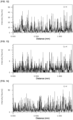
- the intensity of energy regions corresponding to the characteristic X-rays of Cr-K ⁇ and Cu-K ⁇ was measured using a table-top SEM (JCM-7000 manufactured by JEOL Ltd.) while scanning the surface on a straight line of about 1 mm under the condition of an acceleration voltage of 15 kV.
Landscapes
- Chemical & Material Sciences (AREA)
- Organic Chemistry (AREA)
- Inorganic Chemistry (AREA)
- Health & Medical Sciences (AREA)
- Chemical Kinetics & Catalysis (AREA)
- Medicinal Chemistry (AREA)
- Polymers & Plastics (AREA)
- Engineering & Computer Science (AREA)
- Microelectronics & Electronic Packaging (AREA)
- Inorganic Compounds Of Heavy Metals (AREA)
- Compositions Of Macromolecular Compounds (AREA)
- Manufacturing Of Printed Wiring (AREA)
Applications Claiming Priority (2)
| Application Number | Priority Date | Filing Date | Title |
|---|---|---|---|
| JP2022090174 | 2022-06-02 | ||
| PCT/JP2023/019459 WO2023234161A1 (ja) | 2022-06-02 | 2023-05-25 | 酸化銅クロムスピネル、及びその樹脂組成物、樹脂成形品 |
Publications (1)
| Publication Number | Publication Date |
|---|---|
| EP4534484A1 true EP4534484A1 (de) | 2025-04-09 |
Family
ID=89024880
Family Applications (1)
| Application Number | Title | Priority Date | Filing Date |
|---|---|---|---|
| EP23815919.8A Pending EP4534484A1 (de) | 2022-06-02 | 2023-05-25 | Kupfer-chromoxidspinell und harzzusammensetzung und harzformartikel daraus |
Country Status (6)
| Country | Link |
|---|---|
| US (1) | US20250215191A1 (de) |
| EP (1) | EP4534484A1 (de) |
| JP (1) | JP7468801B1 (de) |
| CN (1) | CN119173481A (de) |
| TW (1) | TW202406854A (de) |
| WO (1) | WO2023234161A1 (de) |
Family Cites Families (7)
| Publication number | Priority date | Publication date | Assignee | Title |
|---|---|---|---|---|
| JPH08281109A (ja) * | 1995-04-10 | 1996-10-29 | Tokin Corp | CuCr系酸化物触媒用粉末の製造方法 |
| EP2604648A1 (de) * | 2011-12-12 | 2013-06-19 | Mitsubishi Chemical Europe GmbH | Thermoplastische Zusammensetzung |
| US11040887B2 (en) * | 2016-06-23 | 2021-06-22 | Dic Corporation | Spinel particles, method for producing same and composition and molded article including spinel particles |
| JP6455747B2 (ja) * | 2016-06-29 | 2019-01-23 | Dic株式会社 | 金属酸化物の製造装置および前記金属酸化物の製造方法 |
| JP6965562B2 (ja) * | 2017-05-11 | 2021-11-10 | Dic株式会社 | スピネル粒子の製造方法、スピネル粒子、並びに前記スピネル粒子を含む樹脂組成物および成形物 |
| JP6569830B2 (ja) * | 2017-05-11 | 2019-09-04 | Dic株式会社 | スピネル型複合酸化物粒子およびその製造方法、スピネル型複合酸化物粒子を含む樹脂組成物および成形物 |
| CN110951281B (zh) * | 2019-11-28 | 2021-10-15 | 黄山市晶特美新材料有限公司 | 一种利用氧化钼和氧化锌促进的固相烧结法制备的铜铬黑色剂及其制备 |
-
2023
- 2023-05-24 TW TW112119391A patent/TW202406854A/zh unknown
- 2023-05-25 EP EP23815919.8A patent/EP4534484A1/de active Pending
- 2023-05-25 US US18/866,551 patent/US20250215191A1/en active Pending
- 2023-05-25 CN CN202380038749.2A patent/CN119173481A/zh active Pending
- 2023-05-25 WO PCT/JP2023/019459 patent/WO2023234161A1/ja not_active Ceased
- 2023-05-25 JP JP2023554020A patent/JP7468801B1/ja active Active
Also Published As
| Publication number | Publication date |
|---|---|
| TW202406854A (zh) | 2024-02-16 |
| JP7468801B1 (ja) | 2024-04-16 |
| US20250215191A1 (en) | 2025-07-03 |
| WO2023234161A1 (ja) | 2023-12-07 |
| JPWO2023234161A1 (de) | 2023-12-07 |
| CN119173481A (zh) | 2024-12-20 |
Similar Documents
| Publication | Publication Date | Title |
|---|---|---|
| JP5016993B2 (ja) | 酸化マグネシウム粒子凝集体及びその製造方法 | |
| JP6152220B2 (ja) | 樹脂組成物及び塗工液 | |
| TWI245742B (en) | Method for manufacturing highly-crystallized oxide powder | |
| EP2493813B1 (de) | Verfahren zur herstellung von titandiboridpulvern | |
| KR20180095875A (ko) | 복합 텅스텐 산화물 초미립자 및 이의 분산액 | |
| EP1669418A1 (de) | Sphärisch beschichtetes magnesiumoxidpulver, dessen herstellung und verwendung in harzmasse | |
| KR100474846B1 (ko) | 인듐산화물 분말 및 인듐 주석 산화물 타겟의 제조방법 | |
| WO2023032986A1 (ja) | 電子材料用シリカ及びその製造方法 | |
| CN115835912A (zh) | 具有特定的低价氧化钛的晶体组成的粒子及其制造方法 | |
| JP5726728B2 (ja) | Ito粉体、ito塗料、並びに、ito塗料を用いて成膜される透明導電膜 | |
| EP3219673B1 (de) | Bariumsulfatpulverherstellungsverfahren und bariumsulfatpulver | |
| US20250215191A1 (en) | Copper-chromium oxide spinel, and resin composition and resin molded article thereof | |
| JPWO2020145342A1 (ja) | スピネル粒子及びその製造方法、樹脂組成物、成形物、組成物、グリーンシート、焼成物、並びに、ガラスセラミックス基板 | |
| EP4534485A1 (de) | Kupferchromoxidspinell, harzzusammensetzung daraus, harzformartikel und verfahren zur herstellung eines kupferchromoxidspinells | |
| JP7435473B2 (ja) | 樹脂組成物、成形物、組成物、グリーンシート、焼成物及びガラスセラミックス基板 | |
| US7758845B2 (en) | Method for producing an alpha alumina particle | |
| JP2025088141A (ja) | 樹脂組成物 | |
| TW201412637A (zh) | 塡料及玻璃組成物、以及六方晶磷酸鹽之製造方法 | |
| JP4360070B2 (ja) | 高結晶性複酸化物粉末の製造方法 | |
| TW202406850A (zh) | 鋅尖晶石粒子及其製造方法、樹脂組成物及成形物 | |
| KR101219216B1 (ko) | 나노크기의 아연실리케이트계 녹색 형광체의 제조방법 | |
| CN117295690A (zh) | 无机氧化物粉末及其制造方法、以及树脂组合物 |
Legal Events
| Date | Code | Title | Description |
|---|---|---|---|
| STAA | Information on the status of an ep patent application or granted ep patent |
Free format text: STATUS: THE INTERNATIONAL PUBLICATION HAS BEEN MADE |
|
| PUAI | Public reference made under article 153(3) epc to a published international application that has entered the european phase |
Free format text: ORIGINAL CODE: 0009012 |
|
| STAA | Information on the status of an ep patent application or granted ep patent |
Free format text: STATUS: REQUEST FOR EXAMINATION WAS MADE |
|
| 17P | Request for examination filed |
Effective date: 20241118 |
|
| AK | Designated contracting states |
Kind code of ref document: A1 Designated state(s): AL AT BE BG CH CY CZ DE DK EE ES FI FR GB GR HR HU IE IS IT LI LT LU LV MC ME MK MT NL NO PL PT RO RS SE SI SK SM TR |
|
| DAV | Request for validation of the european patent (deleted) | ||
| DAX | Request for extension of the european patent (deleted) |