EP4439596A1 - Anisotroper nanokristalliner seltenerd-permanentmagnet und herstellungsverfahren dafür - Google Patents
Anisotroper nanokristalliner seltenerd-permanentmagnet und herstellungsverfahren dafür Download PDFInfo
- Publication number
- EP4439596A1 EP4439596A1 EP23904777.2A EP23904777A EP4439596A1 EP 4439596 A1 EP4439596 A1 EP 4439596A1 EP 23904777 A EP23904777 A EP 23904777A EP 4439596 A1 EP4439596 A1 EP 4439596A1
- Authority
- EP
- European Patent Office
- Prior art keywords
- magnetic powder
- powder
- phase
- flaky
- rare earth
- Prior art date
- Legal status (The legal status is an assumption and is not a legal conclusion. Google has not performed a legal analysis and makes no representation as to the accuracy of the status listed.)
- Granted
Links
Images




Classifications
-
- H—ELECTRICITY
- H01—ELECTRIC ELEMENTS
- H01F—MAGNETS; INDUCTANCES; TRANSFORMERS; SELECTION OF MATERIALS FOR THEIR MAGNETIC PROPERTIES
- H01F1/00—Magnets or magnetic bodies characterised by the magnetic materials therefor; Selection of materials for their magnetic properties
- H01F1/01—Magnets or magnetic bodies characterised by the magnetic materials therefor; Selection of materials for their magnetic properties of inorganic materials
- H01F1/03—Magnets or magnetic bodies characterised by the magnetic materials therefor; Selection of materials for their magnetic properties of inorganic materials characterised by their coercivity
- H01F1/032—Magnets or magnetic bodies characterised by the magnetic materials therefor; Selection of materials for their magnetic properties of inorganic materials characterised by their coercivity of hard-magnetic materials
- H01F1/04—Magnets or magnetic bodies characterised by the magnetic materials therefor; Selection of materials for their magnetic properties of inorganic materials characterised by their coercivity of hard-magnetic materials metals or alloys
- H01F1/047—Alloys characterised by their composition
- H01F1/053—Alloys characterised by their composition containing rare earth metals
- H01F1/055—Alloys characterised by their composition containing rare earth metals and magnetic transition metals, e.g. SmCo5
- H01F1/057—Alloys characterised by their composition containing rare earth metals and magnetic transition metals, e.g. SmCo5 and IIIa elements, e.g. Nd2Fe14B
- H01F1/0571—Alloys characterised by their composition containing rare earth metals and magnetic transition metals, e.g. SmCo5 and IIIa elements, e.g. Nd2Fe14B in the form of particles, e.g. rapid quenched powders or ribbon flakes
- H01F1/0575—Alloys characterised by their composition containing rare earth metals and magnetic transition metals, e.g. SmCo5 and IIIa elements, e.g. Nd2Fe14B in the form of particles, e.g. rapid quenched powders or ribbon flakes pressed, sintered or bonded together
- H01F1/0577—Alloys characterised by their composition containing rare earth metals and magnetic transition metals, e.g. SmCo5 and IIIa elements, e.g. Nd2Fe14B in the form of particles, e.g. rapid quenched powders or ribbon flakes pressed, sintered or bonded together sintered
-
- B—PERFORMING OPERATIONS; TRANSPORTING
- B22—CASTING; POWDER METALLURGY
- B22F—WORKING METALLIC POWDER; MANUFACTURE OF ARTICLES FROM METALLIC POWDER; MAKING METALLIC POWDER; APPARATUS OR DEVICES SPECIALLY ADAPTED FOR METALLIC POWDER
- B22F1/00—Metallic powder; Treatment of metallic powder, e.g. to facilitate working or to improve properties
- B22F1/09—Mixtures of metallic powders
-
- B—PERFORMING OPERATIONS; TRANSPORTING
- B22—CASTING; POWDER METALLURGY
- B22F—WORKING METALLIC POWDER; MANUFACTURE OF ARTICLES FROM METALLIC POWDER; MAKING METALLIC POWDER; APPARATUS OR DEVICES SPECIALLY ADAPTED FOR METALLIC POWDER
- B22F3/00—Manufacture of workpieces or articles from metallic powder characterised by the manner of compacting or sintering; Apparatus specially adapted therefor ; Presses and furnaces
- B22F3/12—Both compacting and sintering
- B22F3/14—Both compacting and sintering simultaneously
-
- B—PERFORMING OPERATIONS; TRANSPORTING
- B22—CASTING; POWDER METALLURGY
- B22F—WORKING METALLIC POWDER; MANUFACTURE OF ARTICLES FROM METALLIC POWDER; MAKING METALLIC POWDER; APPARATUS OR DEVICES SPECIALLY ADAPTED FOR METALLIC POWDER
- B22F3/00—Manufacture of workpieces or articles from metallic powder characterised by the manner of compacting or sintering; Apparatus specially adapted therefor ; Presses and furnaces
- B22F3/12—Both compacting and sintering
- B22F3/16—Both compacting and sintering in successive or repeated steps
-
- B—PERFORMING OPERATIONS; TRANSPORTING
- B22—CASTING; POWDER METALLURGY
- B22F—WORKING METALLIC POWDER; MANUFACTURE OF ARTICLES FROM METALLIC POWDER; MAKING METALLIC POWDER; APPARATUS OR DEVICES SPECIALLY ADAPTED FOR METALLIC POWDER
- B22F3/00—Manufacture of workpieces or articles from metallic powder characterised by the manner of compacting or sintering; Apparatus specially adapted therefor ; Presses and furnaces
- B22F3/20—Manufacture of workpieces or articles from metallic powder characterised by the manner of compacting or sintering; Apparatus specially adapted therefor ; Presses and furnaces by extruding
-
- B—PERFORMING OPERATIONS; TRANSPORTING
- B22—CASTING; POWDER METALLURGY
- B22F—WORKING METALLIC POWDER; MANUFACTURE OF ARTICLES FROM METALLIC POWDER; MAKING METALLIC POWDER; APPARATUS OR DEVICES SPECIALLY ADAPTED FOR METALLIC POWDER
- B22F9/00—Making metallic powder or suspensions thereof
- B22F9/002—Making metallic powder or suspensions thereof amorphous or microcrystalline
- B22F9/008—Rapid solidification processing
-
- B—PERFORMING OPERATIONS; TRANSPORTING
- B22—CASTING; POWDER METALLURGY
- B22F—WORKING METALLIC POWDER; MANUFACTURE OF ARTICLES FROM METALLIC POWDER; MAKING METALLIC POWDER; APPARATUS OR DEVICES SPECIALLY ADAPTED FOR METALLIC POWDER
- B22F9/00—Making metallic powder or suspensions thereof
- B22F9/02—Making metallic powder or suspensions thereof using physical processes
- B22F9/04—Making metallic powder or suspensions thereof using physical processes starting from solid material, e.g. by crushing, grinding or milling
-
- C—CHEMISTRY; METALLURGY
- C22—METALLURGY; FERROUS OR NON-FERROUS ALLOYS; TREATMENT OF ALLOYS OR NON-FERROUS METALS
- C22C—ALLOYS
- C22C23/00—Alloys based on magnesium
-
- C—CHEMISTRY; METALLURGY
- C22—METALLURGY; FERROUS OR NON-FERROUS ALLOYS; TREATMENT OF ALLOYS OR NON-FERROUS METALS
- C22C—ALLOYS
- C22C24/00—Alloys based on an alkali or an alkaline earth metal
-
- C—CHEMISTRY; METALLURGY
- C22—METALLURGY; FERROUS OR NON-FERROUS ALLOYS; TREATMENT OF ALLOYS OR NON-FERROUS METALS
- C22C—ALLOYS
- C22C38/00—Ferrous alloys, e.g. steel alloys
- C22C38/002—Ferrous alloys, e.g. steel alloys containing In, Mg, or other elements not provided for in one single group C22C38/001 - C22C38/60
-
- C—CHEMISTRY; METALLURGY
- C22—METALLURGY; FERROUS OR NON-FERROUS ALLOYS; TREATMENT OF ALLOYS OR NON-FERROUS METALS
- C22C—ALLOYS
- C22C38/00—Ferrous alloys, e.g. steel alloys
- C22C38/005—Ferrous alloys, e.g. steel alloys containing rare earths, i.e. Sc, Y, Lanthanides
-
- C—CHEMISTRY; METALLURGY
- C22—METALLURGY; FERROUS OR NON-FERROUS ALLOYS; TREATMENT OF ALLOYS OR NON-FERROUS METALS
- C22C—ALLOYS
- C22C38/00—Ferrous alloys, e.g. steel alloys
- C22C38/10—Ferrous alloys, e.g. steel alloys containing cobalt
-
- C—CHEMISTRY; METALLURGY
- C22—METALLURGY; FERROUS OR NON-FERROUS ALLOYS; TREATMENT OF ALLOYS OR NON-FERROUS METALS
- C22C—ALLOYS
- C22C9/00—Alloys based on copper
-
- H—ELECTRICITY
- H01—ELECTRIC ELEMENTS
- H01F—MAGNETS; INDUCTANCES; TRANSFORMERS; SELECTION OF MATERIALS FOR THEIR MAGNETIC PROPERTIES
- H01F1/00—Magnets or magnetic bodies characterised by the magnetic materials therefor; Selection of materials for their magnetic properties
- H01F1/01—Magnets or magnetic bodies characterised by the magnetic materials therefor; Selection of materials for their magnetic properties of inorganic materials
- H01F1/03—Magnets or magnetic bodies characterised by the magnetic materials therefor; Selection of materials for their magnetic properties of inorganic materials characterised by their coercivity
- H01F1/032—Magnets or magnetic bodies characterised by the magnetic materials therefor; Selection of materials for their magnetic properties of inorganic materials characterised by their coercivity of hard-magnetic materials
- H01F1/04—Magnets or magnetic bodies characterised by the magnetic materials therefor; Selection of materials for their magnetic properties of inorganic materials characterised by their coercivity of hard-magnetic materials metals or alloys
- H01F1/047—Alloys characterised by their composition
- H01F1/053—Alloys characterised by their composition containing rare earth metals
- H01F1/055—Alloys characterised by their composition containing rare earth metals and magnetic transition metals, e.g. SmCo5
- H01F1/057—Alloys characterised by their composition containing rare earth metals and magnetic transition metals, e.g. SmCo5 and IIIa elements, e.g. Nd2Fe14B
- H01F1/0571—Alloys characterised by their composition containing rare earth metals and magnetic transition metals, e.g. SmCo5 and IIIa elements, e.g. Nd2Fe14B in the form of particles, e.g. rapid quenched powders or ribbon flakes
-
- H—ELECTRICITY
- H01—ELECTRIC ELEMENTS
- H01F—MAGNETS; INDUCTANCES; TRANSFORMERS; SELECTION OF MATERIALS FOR THEIR MAGNETIC PROPERTIES
- H01F41/00—Apparatus or processes specially adapted for manufacturing or assembling magnets, inductances or transformers; Apparatus or processes specially adapted for manufacturing materials characterised by their magnetic properties
- H01F41/02—Apparatus or processes specially adapted for manufacturing or assembling magnets, inductances or transformers; Apparatus or processes specially adapted for manufacturing materials characterised by their magnetic properties for manufacturing cores, coils, or magnets
- H01F41/0253—Apparatus or processes specially adapted for manufacturing or assembling magnets, inductances or transformers; Apparatus or processes specially adapted for manufacturing materials characterised by their magnetic properties for manufacturing cores, coils, or magnets for manufacturing permanent magnets
- H01F41/0266—Moulding; Pressing
-
- H—ELECTRICITY
- H01—ELECTRIC ELEMENTS
- H01F—MAGNETS; INDUCTANCES; TRANSFORMERS; SELECTION OF MATERIALS FOR THEIR MAGNETIC PROPERTIES
- H01F41/00—Apparatus or processes specially adapted for manufacturing or assembling magnets, inductances or transformers; Apparatus or processes specially adapted for manufacturing materials characterised by their magnetic properties
- H01F41/02—Apparatus or processes specially adapted for manufacturing or assembling magnets, inductances or transformers; Apparatus or processes specially adapted for manufacturing materials characterised by their magnetic properties for manufacturing cores, coils, or magnets
- H01F41/0253—Apparatus or processes specially adapted for manufacturing or assembling magnets, inductances or transformers; Apparatus or processes specially adapted for manufacturing materials characterised by their magnetic properties for manufacturing cores, coils, or magnets for manufacturing permanent magnets
- H01F41/0273—Imparting anisotropy
-
- H—ELECTRICITY
- H01—ELECTRIC ELEMENTS
- H01F—MAGNETS; INDUCTANCES; TRANSFORMERS; SELECTION OF MATERIALS FOR THEIR MAGNETIC PROPERTIES
- H01F41/00—Apparatus or processes specially adapted for manufacturing or assembling magnets, inductances or transformers; Apparatus or processes specially adapted for manufacturing materials characterised by their magnetic properties
- H01F41/02—Apparatus or processes specially adapted for manufacturing or assembling magnets, inductances or transformers; Apparatus or processes specially adapted for manufacturing materials characterised by their magnetic properties for manufacturing cores, coils, or magnets
- H01F41/0253—Apparatus or processes specially adapted for manufacturing or assembling magnets, inductances or transformers; Apparatus or processes specially adapted for manufacturing materials characterised by their magnetic properties for manufacturing cores, coils, or magnets for manufacturing permanent magnets
- H01F41/0293—Apparatus or processes specially adapted for manufacturing or assembling magnets, inductances or transformers; Apparatus or processes specially adapted for manufacturing materials characterised by their magnetic properties for manufacturing cores, coils, or magnets for manufacturing permanent magnets diffusion of rare earth elements, e.g. Tb, Dy or Ho, into permanent magnets
-
- B—PERFORMING OPERATIONS; TRANSPORTING
- B22—CASTING; POWDER METALLURGY
- B22F—WORKING METALLIC POWDER; MANUFACTURE OF ARTICLES FROM METALLIC POWDER; MAKING METALLIC POWDER; APPARATUS OR DEVICES SPECIALLY ADAPTED FOR METALLIC POWDER
- B22F3/00—Manufacture of workpieces or articles from metallic powder characterised by the manner of compacting or sintering; Apparatus specially adapted therefor ; Presses and furnaces
- B22F3/20—Manufacture of workpieces or articles from metallic powder characterised by the manner of compacting or sintering; Apparatus specially adapted therefor ; Presses and furnaces by extruding
- B22F2003/208—Warm or hot extruding
-
- B—PERFORMING OPERATIONS; TRANSPORTING
- B22—CASTING; POWDER METALLURGY
- B22F—WORKING METALLIC POWDER; MANUFACTURE OF ARTICLES FROM METALLIC POWDER; MAKING METALLIC POWDER; APPARATUS OR DEVICES SPECIALLY ADAPTED FOR METALLIC POWDER
- B22F2201/00—Treatment under specific atmosphere
- B22F2201/20—Use of vacuum
-
- B—PERFORMING OPERATIONS; TRANSPORTING
- B22—CASTING; POWDER METALLURGY
- B22F—WORKING METALLIC POWDER; MANUFACTURE OF ARTICLES FROM METALLIC POWDER; MAKING METALLIC POWDER; APPARATUS OR DEVICES SPECIALLY ADAPTED FOR METALLIC POWDER
- B22F2202/00—Treatment under specific physical conditions
- B22F2202/05—Use of magnetic field
-
- B—PERFORMING OPERATIONS; TRANSPORTING
- B22—CASTING; POWDER METALLURGY
- B22F—WORKING METALLIC POWDER; MANUFACTURE OF ARTICLES FROM METALLIC POWDER; MAKING METALLIC POWDER; APPARATUS OR DEVICES SPECIALLY ADAPTED FOR METALLIC POWDER
- B22F2301/00—Metallic composition of the powder or its coating
- B22F2301/35—Iron
- B22F2301/355—Rare Earth - Fe intermetallic alloys
-
- B—PERFORMING OPERATIONS; TRANSPORTING
- B22—CASTING; POWDER METALLURGY
- B22F—WORKING METALLIC POWDER; MANUFACTURE OF ARTICLES FROM METALLIC POWDER; MAKING METALLIC POWDER; APPARATUS OR DEVICES SPECIALLY ADAPTED FOR METALLIC POWDER
- B22F2998/00—Supplementary information concerning processes or compositions relating to powder metallurgy
- B22F2998/10—Processes characterised by the sequence of their steps
-
- C—CHEMISTRY; METALLURGY
- C22—METALLURGY; FERROUS OR NON-FERROUS ALLOYS; TREATMENT OF ALLOYS OR NON-FERROUS METALS
- C22C—ALLOYS
- C22C2202/00—Physical properties
- C22C2202/02—Magnetic
Definitions
- the present disclosure relates to the technical field of rare earth permanent magnet materials, and in particular to an anisotropic nanocrystalline rare earth permanent magnet and a preparation method thereof.
- RE-Fe-B rare earth permanent magnet alloy is a permanent magnet material with the highest application performance due to its excellent hard magnetic properties, and has become an indispensable basic material for the development of modern industrial society.
- higher requirements has been emposed for the magnetic properties of RE-Fe-B permanent magnet materials. Therefore, the development of high-performance RE-Fe-B permanent magnet materials has become a hot topic in high-tech research and development of various countries around the world.
- nanocrystalline RE-Fe-B rare earth permanent magnets show better corrosion- and temperature-resistance due to their rich grain boundary structure(s), thus achieving a higher coercive force at the same rare earth content. Accordingly, the nanocrystalline RE-Fe-B has become the most potential rare earth permanent magnet material. Under ideal conditions, the magnetic properties of anisotropic nanocrystalline RE-Fe-B rare earth permanent magnets are twice that of isotropic nanocrystalline RE-Fe-B rare earth permanent magnets. However, a coercive force of the anisotropic nanocrystalline RE-Fe-B rare earth permanent magnet prepared in the actual production process is still far lower than the theoretical value. Currently, researchers have tried a variety of experimental approaches to improve the coercive force of rare earth permanent magnets.
- 201510834685.4 discloses a method for preparing a nanocrystalline rare earth permanent magnet material with a high coercivity by thermal deformation.
- the coercive force of the magnet is improved by adding a high-melting WC phase.
- the WC phase could react with an Nd-rich phase and a main phase RE 2 Fe 14 B, limiting the further improvement of magnetic properties.
- An object of the present disclosure is to provide an anisotropic nanocrystalline rare earth permanent magnet and a preparation method thereof, which can cost-effectively improve a coercive force of the anisotropic nanocrystalline rare earth permanent magnet.
- the present disclosure provides an anisotropic nanocrystalline rare earth permanent magnet, as described in the following technical solutions.
- an anisotropic nanocrystalline rare earth permanent magnet including an RE-Fe-B matrix phase and a second phase, wherein
- the rare earth permanent magnet is prepared from a raw material powder obtained by mixing an RE-Fe-B magnetic powder and an M-Cu alloy powder, wherein M is at least one selected from the group consisting of Ca and Mg, and the RE-Fe-B magnetic powder has a chemical formula of RE x Fe 100-x-y-z TM y B z , wherein
- the M-Cu alloy powder is in an amount of 0.1 wt.% to 5.0 wt.% based on a mass of the RE-Fe-B magnetic powder.
- the M-Cu alloy powder is a Ca-Cu alloy powder, and the Ca-Cu alloy powder has 10 wt.% to 60 wt.% of Cu; or the M-Cu alloy powder is a Mg-Cu alloy powder, and the Mg-Cu alloy powder has 1 wt.% to 50 wt.% of Cu; or the M-Cu alloy powder is a Ca-Mg-Cu alloy powder, and the Ca-Mg-Cu alloy powder has 10 wt.% to 50 wt.% of Cu.
- the coarse-grained region in the RE-Fe-B matrix phase has the volume fraction of not more than 1%.
- the present disclosure provides a method for preparing the anisotropic nanocrystalline rare earth permanent magnet, including the following steps:
- the RE-Fe-B magnetic powder includes a nanocrystalline magnetic powder or an amorphous magnetic powder; the nanocrystalline magnetic powder has a structure selected from the group consisting of an equiaxed crystal structure and a flaky crystal structure; in the equiaxed crystal structure, an average grain size is in a range of 10 nm to 400 nm; and in the flaky crystal structure, an average grain size in a length direction of grains is in a range of 20 nm to 500 nm, and an average grain size in a thickness direction of the grains is in a range of 10 nm to 200 nm.
- the RE-Fe-B magnetic powder includes a flaky magnetic powder, a granular magnetic powder, or an irregular magnetic powder; and the flaky magnetic powder has a length-to-thickness ratio of 1.2 to 30.
- the thermal processing includes at least one selected from the group consisting of thermal deformation, thermal extrusion deformation, magnetic field-oriented sintering molding, and mechanically-oriented sintering molding.
- the thermal deformation includes the following steps: preparing the raw material powder at a temperature ranging from room temperature to 800 °C into a green body with a density of 50% to 99.99%; and subjecting the green body to the thermal deformation at a temperature of 600 °C to 850 °C to reach a deformation amount of 30% to 90% at a deformation rate of 0.01 mm/s to 3.5 mm/s such that the main phase RE 2 Fe 14 B flaky nanocrystallines are regularly arranged.
- the thermal extrusion deformation includes the following steps:
- the thermal extrusion deformation includes the following steps: subjecting the raw material powder to the thermal extrusion deformation at a temperature of 600 °C to 850 °C such that the main phase RE 2 Fe 14 B flaky nanocrystallines are regularly arranged.
- the magnetic field-oriented sintering molding includes the following steps:
- the hot pressing sintering is conducted at a temperature of 450 °C to 850 °C and a pressure of 50 MPa to 500 MPa for 1 min to 60 min.
- the pressureless sintering is conducted at a temperature of 600 °C to 850 °C for 10 min to 120 min.
- the mechanically-oriented sintering molding includes the following steps: subjecting the anisotropic raw material powder to hot-pressing oriented sintering at a temperature of 450 °C to 850 °C under a uniaxial pressure of 50 MPa to 500 MPa for 1 min to 60 min, where the RE-Fe-B magnetic powder of the anisotropic raw material powder is a flaky magnetic powder with a length-to-thickness ratio of 1.2 to 30; and the flaky magnetic powder has an easy magnetization direction parallel to a thickness direction of the flaky magnetic powder.
- the mechanically-oriented sintering molding includes the following steps: subjecting the anisotropic raw material powder to cold pressing molding at room temperature under a uniaxial pressure to obtain a molded green body, wherein the RE-Fe-B magnetic powder of the anisotropic raw material powder is a flaky magnetic powder with a length-to-thickness ratio of 1.2 to 30; the flaky magnetic powder has an easy magnetization direction parallel to a thickness direction of the flaky magnetic powder; and the molded green body has a density of 40% to 70%; and subjecting the molded green body to pressureless sintering at a temperature of 600 °C to 850 °C for 10 min to 120 min.
- the present disclosure provides an anisotropic nanocrystalline rare earth permanent magnet and a preparation method thereof. To make the objects, technical solutions, and effects of the present disclosure clearer, the following further describes the present disclosure in detail. It should be understood that the specific embodiments described herein are merely intended to explain the present disclosure, but not to limit the present disclosure.
- the first method is to densify nanocrystalline or amorphous magnetic powder into a green body, and then thermoplastic processing is conducted on the green body, such that the main phase RE 2 Fe 14 B flaky nanocrystallines in the green body are regularly arranged through thermal coupling, that is to say, c-axes of the main phase RE 2 Fe 14 B flaky nanocrystallines are arranged parallel, to prepare the anisotropic nanocrystalline rare earth permanent magnet.
- the second method is to subject anisotropic magnetic powder with a nanocrystalline structure to magnetic field orientation and sintering density to prepare the anisotropic nanocrystalline rare earth permanent magnet.
- Anisotropic nanocrystalline rare earth permanent magnets include main phase RE 2 Fe 14 B flaky nanocrystallines and an RE-rich phase distributed around the main phase grains. The former imparts the magnet with high saturation magnetization, and the latter's demagnetizing coupling ensures that the magnet shows a high coercive force.
- the grain size of the main phase and the composition and distribution of the RE-rich phase both are the determinants of the coercive force of rare earth permanent magnets.
- the applicant has also found that there are three main reasons for the decrease in coercive force of anisotropic nanocrystalline RE-Fe-B rare earth permanent magnet.
- stress concentration and local overheating occur at the magnetic powder interface, and the grains in the interface region are prone to abnormal growth, forming coarse grains and resulting in a reduction in coercive force.
- the rare earth-rich phase is highly active and could be rapidly oxidized at room temperature into rare earth oxides, which reduce a demagnetizing coupling effect of the rare earth-rich phase, resulting in a reduction in the coercive force.
- an M-Cu alloy with low melting points could be generated, namely a Ca-Cu alloy (-490 °C), an Mg-Cu alloy (-485 °C), or a Ca-Mg-Cu alloy.
- the added M-Cu alloy does not react with the main phase RE 2 Fe 14 B, and low-melting M-Cu alloy could flow and diffuse during the magnet preparation process to achieve uniform distribution without breaking into extremely fine powder, thus avoiding serious oxidation of Ca or Mg.
- the M-Cu alloy Compared with elemental Ca and Mg powders, the M-Cu alloy has better oxidation resistance, thus retaining the reducing activity of Ca and Mg, which could reduce rare earth oxides on the surface of the RE-Fe-B magnetic powder during the thermal processing, thereby increasing the fluidity of the rare earth-rich phase, inhibiting the enrichment of the rare earth-rich phase at the interface, and thereby better diffusing onto the surface of the main phase grains inside the magnet.
- a pinning effect of grain boundaries relative to magnetic domain walls is enhanced to improve the coercive force of the magnet.
- the M-Cu phase or the M-Cu-O phase generated in situ exists at the RE-Fe-B magnetic powder interface inside the magnet, and could inhibit the formation of coarse grains during thermal processing and is conducive to refining the main phase grains. This mechanism further improves the coercive force of anisotropic nanocrystalline rare earth permanent magnet.
- the present disclosure provides an anisotropic nanocrystalline rare earth permanent magnet.
- the rare earth permanent magnet includes an RE-Fe-B matrix phase and a second phase, wherein the RE-Fe-B matrix phase includes main phase RE 2 Fe 14 B flaky nanocrystallines regularly arranged and an RE-rich phase around main phase grains; c-axes of the main phase RE 2 Fe 14 B flaky nanocrystallines are arranged in parallel; the main phase RE 2 Fe 14 B flaky nanocrystallines have an average grain size in a length direction of 70 nm to 800 nm, preferably 100 nm to 600 nm, more preferably 150 nm to 400 nm, even more preferably 200 nm to 400 nm, even more preferably 210 nm to 350 nm, and even more preferably 230 nm to 300 nm; and have an average grain size in a thickness direction of 30 nm to 200 nm, preferably 50 nm to 150 nm, and more preferably 70 nm to 120 nm;
- the rare earth permanent magnet is prepared from a raw material powder obtained by mixing an RE-Fe-B magnetic powder and an M-Cu alloy powder, wherein M is at least one of Ca and Mg, the RE-Fe-B magnetic powder has a formula of RE x Fe 100-x-y-z TM y B z , wherein RE is one or more of La, Ce, Pr, Nd, Y, Dy, Tb, and Ho, preferably at least one of La, Ce, Pr, Nd, and Y; TM is one or more of Co, Zr, Cr, V, Nb, Si, Ti, Mo, Mn, W, Ga, Cu, Al, and Zn, preferably at least one of Co, Zr, Cr, V, Nb, Ga, and Mo; and x, y, and z each represent a mass fraction of an element, and satisfy inequalities: 26.0 ⁇ x ⁇ 36.0, 0.14 ⁇ y ⁇ 8.0, and 0.8 ⁇ z ⁇ 1.36.
- the M-Cu alloy powder is added in an amount of 0.1-5.0 wt.%, preferably 0.5-3 wt.%, more preferably 0.5-2.0 wt.%, even more preferably 0.5-1.5 wt.%, and still even more preferably 0.5-1.0 wt.%.
- the M-Cu alloy powder is distributed at the magnetic powder interface inside the RE-Fe-B magnet. An insufficient addition amount is not conducive to improving grain boundary phase distribution and suppressing grain coarsening; while an excessive addition amount leads to agglomeration of the M-Cu alloy powder, which is not conducive to improving the performance of nanocrystalline rare earth permanent magnet.
- the Ca-Cu alloy powder has a Cu mass percentage of 10-60 wt.%, preferably 15-55 wt.%, more preferably 20-50 wt.%. In some embodiments, the Mg-Cu alloy powder has a Cu mass percentage of 1-50 wt.%, preferably 5-45 wt.%, and more preferably 10-45 wt.%. In some embodiments, the Ca-Mg-Cu alloy powder has a Cu mass percentage of 10-50 wt.%. In some embodiments, the M-Cu alloy powder has an average particle size of not more than 300 ⁇ m, preferably not more than 200 ⁇ m, and more preferably not more than 100 ⁇ m.
- the M-Cu alloy powder partially reduces the rare earth oxides, forming the M-Cu-O phase, and the unreacted part remains as the M-Cu phase, which is distributed at the magnetic powder interface, inhibiting the growth of grains at the RE-Fe-B interface to form coarse grains.
- the RE-Fe-B matrix phase includes a coarse-grained region having a volume fraction of not more than 10%, which is calculated based on a volume of the coarse-grained region and a volume of the rare earth permanent magnet, the volume fraction is more preferably not more than 8%, even more preferably not more than 6%, even more preferably not more than 4%, even yet more preferably not more than 3%, even more preferably not more than 2%, even more preferably not more than 1% and not less than 0, or not less than 0.5%.
- the coarse-grained region refers to an equiaxed grain region with a grain size of greater than 500 nm, and a volume fraction of the coarse-grained region is calculated based on the volume of the coarse-grained region and the volume of the rare earth permanent magnet. Determination of the volume fraction of the coarse-grained region: a cross-section parallel to a c-axis (easy magnetization axis) of the magnet is tested by SEM, and then an average value of a ratio of the sum of the coarse-grained region area to a total area of the magnet in 5 low-magnification SEM images is averaged.
- the low-magnification SEM images have a magnification of 500 times or other magnifications, whichever could achieve the measurement of the area of the coarse-grained region.
- the present disclosure provides a method for preparing the anisotropic nanocrystalline rare earth permanent magnet, including the following steps:
- the RE-Fe-B magnetic powder adopts a nanocrystalline magnetic powder or an amorphous magnetic powder;
- the nanocrystalline magnetic powder has a structure of an equiaxed crystal structure or a flaky crystal structure; in the equiaxed crystal structure, an average grain size is in a range of 10 nm to 400 nm, preferably 30 nm to 200 nm, and more preferably 35 nm to 150 nm; and in the flaky crystal structure, an average grain size in a length direction of grains is in a range of 20 nm to 500 nm, preferably 50 nm to 400 nm, and more preferably 100 nm to 300 nm; and an average grain size in a thickness direction of the grains is in a range of 10 nm to 200 nm, preferably 30 nm to 150 nm, and more preferably 50 nm to 100 nm.
- the RE-Fe-B magnetic powder is a flaky magnetic powder, a granular magnetic powder, or an irregular magnetic powder, wherein the flaky magnetic powder has a length-to-thickness ratio of 1.2 to 30, preferably 1.5 to 30, more preferably 2 to 20, even more preferably 3 to 15, and even more preferably 5 to 10.
- an easy magnetization direction of the anisotropic flaky magnetic powder is parallel to a thickness direction of the magnetic powder.
- the thermal processing includes at least one of thermal deformation, thermal extrusion deformation, magnetic field-oriented sintering molding, and mechanically-oriented sintering molding.
- the thermal deformation includes the following steps:
- the thermal extrusion deformation includes the following steps:
- the magnetic field-oriented sintering molding includes the following steps:
- the mechanically-oriented sintering molding includes the following steps:
- This example provided an anisotropic nanocrystalline rare earth permanent magnet and a preparation method thereof, wherein the preparation method was as follows.
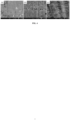
- An alloy ingot with a chemical formula of Ca 70 Cu 30 (wt.%) was mechanically crushed to obtain an alloy powder with an average particle size of 100 ⁇ m, and a phase of the alloy powder was determined by XRD. As shown in FIG. 1 , the alloy powder included a Ca phase and a Ca 2 Cu phase, and the crushed alloy powder was not oxidized.
- the Ca 70 Cu 30 alloy powder and the nanocrystalline rapidly-quenched magnetic powder were mixed three-dimensionally for 2 h under a protective atmosphere of argon to obtain a raw material powder, wherein the raw material powder was an isotropic raw material powder.
- the Ca 70 Cu 30 alloy powder was in an amount of 0.5 wt.%, 1.0 wt.%, 1.5 wt.%, and 2.0 wt.% of the nanocrystalline rapidly-quenched magnetic powder, respectively.
- the raw material powder prepared in S1 was subjected to thermal processing, specifically as follows:
- the raw material powders of different components were separately prepared into a green body under a vacuum degree of 1 ⁇ 10 -2 Pa and at a temperature of 650 °C and a pressure of 200 MPa, with a density of 99%;
- the green body was subjected to thermal deformation at 780 °C under a vacuum degree of 1 ⁇ 10 -2 Pa at a thermal deformation rate of 0.1 mm/s, a deformation amount in a height direction of the green body being 70%, to obtain an anisotropic nanocrystalline magnet.
- Comparative Example 1 was different from Example 1 in that the Ca 70 Cu 30 alloy powder was not added to the nanocrystalline rapidly-quenched magnetic powder in Comparative Example 1, while the remaining preparation steps were the same as those in Example 1.
- Comparative Example 2 was different from Example 1 in that the Al 70 Cu 30 alloy powder was added to the nanocrystalline rapidly-quenched magnetic powder in Comparative Example 2, and the Al 70 Cu 30 alloy powder was added in an amount of 1 wt.% of a mass of the nanocrystalline rapidly-quenched magnetic powder; while the remaining preparation steps were the same as those in Example 1.
- Table 1 shows the magnetic properties of different magnets prepared in Example 1, Comparative Example 1, and Comparative Example 2.
- Table 1 Magnetic properties of anisotropic nanocrystalline magnets Alloy added B r (kGs) H cj (kOe) (BH) max (MGOe) 0 wt.% Ca 70 Cu 30 13.60 14.15 42.5 0.5 wt.% Ca 70 Cu 30 13.55 16.5 41.52 1.0 wt.% Ca 70 Cu 30 13.49 17.70 41.41 1.5 wt.% Ca 70 Cu 30 13.2 16.58 40.0 2.0 wt.% Ca 70 Cu 30 13.12 15.8 38.2 1.0 wt.% Al 70 Cu 30 13.12 16.54 39.95
- a certain amount of the Ca 70 Cu 30 alloy could significantly improve a coercive force of the anisotropic nanocrystalline rare earth permanent magnet, and the amount was preferably 0.5-1.5 wt.%, and optimally 0.5-1.0 wt.%.
- the white Nd-rich phase was enriched in the form of strips at the magnetic powder interface, and the independent point-like phases in the Nd-rich phase are rare earth oxides.
- FIG. 2(b) there are coarse grains at the magnetic powder interface in the magnet.
- the coarse grains are equiaxed crystals, and an average grain size of the equiaxed crystals is 550 nm.
- a volume fraction of the coarse-grained region in the Nd-Fe-B matrix phase is 13.5%, and the volume fraction of the coarse-grained region was calculated based on a volume of the coarse-grained region and a volume of the rare earth permanent magnet. Determination of the volume fraction of the coarse-grained region: a cross-section parallel to the c-axis (easy magnetization axis) of the magnet was tested by SEM, and then a ratio of the sum of the coarse-grained region area to a total area of the magnet in 5 low-magnification (500 times) SEM images was averaged using Image-Pro Plus software.
- the Nd-Fe-B matrix phase includes regularly arranged main phase Nd 2 Fe 14 B flaky nanocrystallines and an Nd-rich phase around main phase grains.
- C-axes (grain thickness direction) of the main phase Nd 2 Fe 14 B flaky nanocrystallines are arranged in parallel.
- the main phase Nd 2 Fe 14 B flaky nanocrystallines have an average grain size in the length direction of 300 nm and an average grain size in the thickness direction of 100 nm, and the flaky nanocrystallines each have a length-to-thickness ratio of 3.
- the white Nd-rich phase enrichs at the magnetic powder interface decreased.
- FIG. 3(b) there were coarse grains at some magnetic powder interfaces. The coarse grains are equiaxed crystals, and an average grain size of the equiaxed crystals is 512 nm. Statistics show that a volume fraction of the coarse-grained region is 8%, and a black particle phase of Ca-Cu alloy is distributed at the magnetic powder interface.
- the Nd-Fe-B matrix phase includes regularly arranged main phase Nd 2 Fe 14 B flaky nanocrystallines and an Nd-rich phase around main phase grains.
- the main phase Nd 2 Fe 14 B flaky nanocrystallines have an average grain size in the length direction of 290 nm and an average grain size in the thickness direction of 95 nm, and the flaky nanocrystallines each have a length-to-thickness ratio of 3.05.
- the Nd-Fe-B matrix phase includes regularly arranged main phase Nd 2 Fe 14 B flaky nanocrystallines and an Nd-rich phase around main phase grains. C-axes (grain thickness direction) of the main phase Nd 2 Fe 14 B flaky nanocrystallines are arranged in parallel.
- the main phase Nd 2 Fe 14 B flaky nanocrystallines have an average grain size in the length direction of 280 nm and an average grain size in the thickness direction of 80 nm, and the flaky nanocrystallines each have a length-to-thickness ratio of 3.5.
- the black particle phase is enriched at the magnetic powder interface, while there is no enriched white Nd-rich phase at the magnetic powder interface.
- FIG. 5(b) further increase in the Ca-Cu alloy content leads to the agglomeration of Ca-Cu alloy particles at the magnetic powder interface inside the magnet, resulting in uneven microstructure inside the magnet and decreaseed magnetic properties of the magnet.
- Statistics show that a volume fraction of the coarse-grained region is not more than 1%.
- the Nd-Fe-B matrix phase includes regularly arranged main phase Nd 2 Fe 14 B flaky nanocrystallines and a Nd-rich phase around main phase grains. C-axes (grain thickness direction) of the main phase Nd 2 Fe 14 B flaky nanocrystallines are arranged in parallel.
- the main phase Nd 2 Fe 14 B flaky nanocrystallines have an average grain size in the length direction of 281 nm and an average grain size in the thickness direction of 79 nm, and the flaky nanocrystallines each have a length-to-thickness ratio of 3.56.
- an appropriate amount of Ca-Cu alloy added to the anisotropic nanocrystalline rare earth permanent magnet could inhibit the formation of coarse grains at the magnet interface; on the other hand, the Ca-Cu alloy could also refine the grains of the main phase RE 2 Fe 14 B flaky nanocrystallines.
- the Ca-Cu alloy could inhibit the enrichment of the Nd-rich phase at the magnetic powder interface, increase the content of the Nd-rich phase between the main phase grains inside the magnet, enhance the pinning effect of the grain boundaries on the magnetic domain walls, and improve the coercive force of the magnet.
- FIG. 7(b) to FIG. 7(f) indicating that the particle phase in the framed area is composed of three elements: Ca, Cu, and O.
- the unreacted Ca-Cu alloy remains as the Ca-Cu phase in the thermal deformation-based magnet, indicating that the Ca-Cu alloy does not react with the main phase Nd 2 Fe 14 B.
- FIG. 7(a), FIG. 7(b), and FIG. 7(c) also intuitively show the main phase Nd 2 Fe 14 B flaky nanocrystallines and the grain boundary Nd-rich phase, and the grain boundary Nd-rich phase is continuously distributed in the grain boundaries to improve the pinning effect. Therefore, the coercive force of the thermal deformation-based magnet was significantly improved.
- This example provided an anisotropic nanocrystalline rare earth permanent magnet and a preparation method thereof, and the preparation method was as follows:
- Comparative Example 3 was different from Example 2 in that the CaesCuss alloy powder was not added in Comparative Example 3, while the remaining preparation steps were the same as those in Example 2.
- Table 2 shows the magnetic properties of the anisotropic nanocrystalline magnetic rings prepared in Example 2 and Comparative Example 3.
- Table 2 Magnetic properties of anisotropic nanocrystalline magnetic ring B r (kGs) H cj (kOE) (BH) max (MGOE) Example 2 13.42 17.93 40.1
- Example 3 13.54 15.4 40.3
- rare earth oxide Nd-O phase there is also a large quantity of rare earth oxide Nd-O phase at the magnetic powder interface.
- the rare earth oxide Nd-O phase substantially disappears, and the enrichment of the Nd-rich phase at the magnetic powder interface is inhibited.
- the Ca-Cu phase and Ca-Cu-O phase are evenly distributed at the interface.
- the matrix phase includes regularly arranged main phase Nd 2 Fe 14 B flaky nanocrystallines and a Nd-rich phase around main phase grains. C-axis (grain thickness direction) of the main phase Nd 2 Fe 14 B flaky nanocrystallines are arranged in parallel.
- the grains of the main phase Nd 2 Fe 14 B flaky nanocrystallines of the magnetic ring have also been refined.
- the main phase Nd 2 Fe 14 B flaky nanocrystallines have an average grain size in the length direction of 235 nm and an average grain size in the thickness direction of 105 nm, and the flaky nanocrystallines each have a length-to-thickness ratio of 2.24.
- Statistics show that the volume fraction of the coarse-grained region is less than 1%, and the coarse-grained region at the interface is inhibited.
- This example provided an anisotropic nanocrystalline rare earth permanent magnet and a preparation method thereof, and the preparation method was as follows:
- Table 3 shows the magnetic properties of the anisotropic magnetic ring.
- the RE-Fe-B matrix phase inside the thermal extrusion-based magnetic ring with 1.5 wt.% of Ca 70 Cu 30 alloy includes regularly arranged main phase Nd 2 Fe 14 B flaky nanocrystallines and an Nd-rich phase around main phase grains; the main phase Nd 2 Fe 14 B flaky nanocrystallines have an average grain size in a length direction of 280 nm and an average grain size in a thickness direction of 100 nm; and the flaky nanocrystallines each have a length-to-thickness ratio of 2.8. Statistics show that a volume fraction of the coarse-grained region is not more than 1%.
- the main phase Nd 2 Fe 14 B flaky nanocrystallines have an average grain size in a length direction of 279 nm and an average grain size in a thickness direction of 100 nm; and the flaky nanocrystallines each have a length-to-thickness ratio of 2.79.
- Statistics show that a volume fraction of the coarse-grained region is not more than 1%, indicating that interface coarse grains are inhibited.
- This example provided an anisotropic nanocrystalline rare earth permanent magnet and a preparation method thereof, and the preparation method was as follows:
- Comparative Example 4 was different from Example 4 in that the Ca 70 Cu 30 alloy powder was not added in Comparative Example 4, while the remaining preparation steps were the same as those in Example 4.
- Table 4 shows the magnetic properties of the anisotropic magnets prepared in Example 4 and Comparative Example 4.
- Table 4 Magnetic properties of anisotropic magnet B r (kGs) H cj (kOe) (BH) max (MGOE) Example 4 12.9 14.1 37.5 Comparative Example 4 13.1 12.3 38.2
- the Nd-Fe-B matrix phase includes regularly arranged main phase Nd 2 Fe 14 B flaky nanocrystallines and an Nd-rich phase around main phase grains.
- the main phase Nd 2 Fe 14 B flaky nanocrystallines have an average grain size in the length direction of 275 nm and an average grain size in the thickness direction of 115 nm, and the flaky nanocrystallines each have a length-to-thickness ratio of 2.39.
- the rare earth oxides at the magnetic powder interface substantially disappear, and the Ca-Cu phase and Ca-Cu-O phase are evenly distributed at the interface.
- the coarse-grained region at the magnetic powder interface substantially disappears, and a volume fraction of the coarse-grained region is calculated to be 2%.
- This example provided an anisotropic nanocrystalline rare earth permanent magnet and a preparation method thereof, where the preparation method was as follows:
- Comparative Example 5 was different from Example 5 in that the Mg 85.5 Cu 14.5 alloy powder was not added in Comparative Example 5, while the remaining preparation steps were the same as those in Example 5.
- Table 5 shows the magnetic properties of the anisotropic magnets prepared in Example 5 and Comparative Example 5.
- Table 5 Magnetic properties of anisotropic magnets B r (kGs) H cj (kOe) (BH) max (MGOe) 0 wt.% 13.41 12.1 40.09 0.5 wt.% 13.31 12.9 39.91 1.0 wt.% 13.22 14.1 39.82 2.0 wt.% 13.02 13.2 38.84
- the addition of a certain amount of the Mg 85.5 Cu 14.5 alloy could significantly improve a coercive force of anisotropic nanocrystalline magnet, and the amount is optimally 0.5-1.0 wt.%.
- the SEM results show that in the sintered nanocrystalline magnet without Mg-Cu alloy added in Comparative Example 5, the main phase Nd 2 Fe 14 B flaky nanocrystallines have an average grain size in the length direction of 280 nm and an average grain size in the thickness direction of 105 nm, and there are coarse grains in the magnetic powder interface, statistics show that the volume fraction of the coarse-grained region is 14.5%. Further, there is a large quantity of rare earth oxides at the magnetic powder interface.
- the Nd-Fe-B matrix phase includes regularly arranged main phase Nd 2 Fe 14 B flaky nanocrystallines and an Nd-rich phase around main phase grains.
- C-axis (grain thickness direction) of the main phase Nd 2 Fe 14 B flaky nanocrystallines are arranged in parallel, the main phase Nd 2 Fe 14 B flaky nanocrystallines have an average grain size in the length direction of 278 nm and an average grain size in the thickness direction of 102 nm, and the flaky nanocrystallines each have a length-to-thickness ratio of 2.73, there are coarse grains at some magnetic powder interfaces.
- Statistics show that the volume fraction of the coarse-grained region is 10%.
- the main phase Nd 2 Fe 14 B flaky nanocrystallines After further increasing the Mg-Cu alloy content to 1.0 wt.%, the main phase Nd 2 Fe 14 B flaky nanocrystallines have an average grain size in the length direction of 275 nm and an average grain size in the thickness direction of 101 nm, and the flaky nanocrystallines each have a length-to-thickness ratio of 2.72. Statistics show that the volume fraction of the coarse-grained region is 2.5%. When the Mg-Cu alloy content reaches 2.0 wt.%, the main phase Nd 2 Fe 14 B flaky nanocrystallines have an average grain size in the length direction of 275 nm and an average grain size in the thickness direction of 100 nm, and the flaky nanocrystallines each have a length-to-thickness ratio of 2.75.
Landscapes
- Engineering & Computer Science (AREA)
- Chemical & Material Sciences (AREA)
- Power Engineering (AREA)
- Mechanical Engineering (AREA)
- Manufacturing & Machinery (AREA)
- Organic Chemistry (AREA)
- Metallurgy (AREA)
- Materials Engineering (AREA)
- Crystallography & Structural Chemistry (AREA)
- Inorganic Chemistry (AREA)
- Hard Magnetic Materials (AREA)
- Powder Metallurgy (AREA)
- Manufacturing Cores, Coils, And Magnets (AREA)
Applications Claiming Priority (2)
| Application Number | Priority Date | Filing Date | Title |
|---|---|---|---|
| CN202310120822.2A CN116230346B (zh) | 2023-02-16 | 2023-02-16 | 一种各向异性纳米晶稀土永磁体及制备方法 |
| PCT/CN2023/140453 WO2024169395A1 (zh) | 2023-02-16 | 2023-12-21 | 一种各向异性纳米晶稀土永磁体及制备方法 |
Publications (4)
| Publication Number | Publication Date |
|---|---|
| EP4439596A1 true EP4439596A1 (de) | 2024-10-02 |
| EP4439596A4 EP4439596A4 (de) | 2025-03-12 |
| EP4439596C0 EP4439596C0 (de) | 2026-02-11 |
| EP4439596B1 EP4439596B1 (de) | 2026-02-11 |
Family
ID=86574439
Family Applications (1)
| Application Number | Title | Priority Date | Filing Date |
|---|---|---|---|
| EP23904777.2A Active EP4439596B1 (de) | 2023-02-16 | 2023-12-21 | Anisotroper nanokristalliner seltenerd-permanentmagnet und herstellungsverfahren dafür |
Country Status (5)
| Country | Link |
|---|---|
| US (2) | US12334236B2 (de) |
| EP (1) | EP4439596B1 (de) |
| JP (1) | JP7658651B1 (de) |
| CN (1) | CN116230346B (de) |
| WO (1) | WO2024169395A1 (de) |
Families Citing this family (2)
| Publication number | Priority date | Publication date | Assignee | Title |
|---|---|---|---|---|
| CN116230346B (zh) | 2023-02-16 | 2023-08-22 | 四川大学 | 一种各向异性纳米晶稀土永磁体及制备方法 |
| WO2026053934A1 (ja) * | 2024-09-03 | 2026-03-12 | 日本特殊陶業株式会社 | 助剤合金粉末、および助剤合金粉末の製造方法 |
Family Cites Families (24)
| Publication number | Priority date | Publication date | Assignee | Title |
|---|---|---|---|---|
| US4983232A (en) * | 1987-01-06 | 1991-01-08 | Hitachi Metals, Ltd. | Anisotropic magnetic powder and magnet thereof and method of producing same |
| JP3171558B2 (ja) * | 1995-06-30 | 2001-05-28 | 株式会社東芝 | 磁性材料およびボンド磁石 |
| JPH11251123A (ja) * | 1998-03-05 | 1999-09-17 | Hitachi Metals Ltd | 耐酸化性に富んだ希土類磁石用合金粉末およびその製造方法ならびにそれを用いた希土類焼結磁石 |
| CN1735947A (zh) | 2002-05-24 | 2006-02-15 | 代顿大学 | 纳米晶态和纳米复合稀土永磁体材料及其制造方法 |
| US20060005898A1 (en) | 2004-06-30 | 2006-01-12 | Shiqiang Liu | Anisotropic nanocomposite rare earth permanent magnets and method of making |
| WO2012008623A1 (ja) * | 2010-07-16 | 2012-01-19 | トヨタ自動車株式会社 | 希土類磁石の製造方法、及び希土類磁石 |
| EP2444985B1 (de) | 2010-10-25 | 2018-07-11 | Toyota Jidosha Kabushiki Kaisha | Herstellungsverfahren für Seltenerdmagneten |
| JP5472236B2 (ja) | 2011-08-23 | 2014-04-16 | トヨタ自動車株式会社 | 希土類磁石の製造方法、及び希土類磁石 |
| EP3007191B1 (de) * | 2013-05-24 | 2018-01-31 | Toyota Jidosha Kabushiki Kaisha | Dauermagnetquellenpulverherstellungsverfahren, dauermagnetherstellungsverfahren und dauermagnetrohmaterialpulverprüfverfahren |
| CN103971875B (zh) * | 2014-05-15 | 2017-02-22 | 聊城大学 | 一种镁铜晶界改性高磁性烧结钕铁硼磁体及其制备工艺 |
| WO2016093379A1 (ko) * | 2014-12-08 | 2016-06-16 | 엘지전자 주식회사 | 비자성 합금을 포함하는 열간가압변형 자석 및 이의 제조방법 |
| DE102015220337A1 (de) * | 2015-10-19 | 2017-04-20 | Robert Bosch Gmbh | Gebundener Magnet, Verfahren zu dessen Herstellung und elektrische Maschine |
| CN105321645B (zh) | 2015-11-25 | 2020-12-15 | 中国科学院宁波材料技术与工程研究所 | 高矫顽力纳米晶热变形稀土永磁材料及其制备方法 |
| CN105321646A (zh) * | 2015-11-25 | 2016-02-10 | 中国科学院宁波材料技术与工程研究所 | 高矫顽力纳米晶热变形稀土永磁体及其制备方法 |
| JP6743650B2 (ja) | 2016-10-27 | 2020-08-19 | 日立金属株式会社 | R−t−b系焼結磁石の製造方法 |
| CN108022707B (zh) * | 2016-11-04 | 2020-03-17 | 上海交通大学 | 一种热变形或反向挤出Nd-Fe-B磁体的热处理工艺 |
| CN106548844B (zh) | 2016-12-06 | 2019-01-29 | 中国科学院宁波材料技术与工程研究所 | 一种热变形稀土永磁材料及其制备方法 |
| JP7263696B2 (ja) | 2017-08-31 | 2023-04-25 | 株式会社プロテリアル | 希土類磁石用合金 |
| CN113936877A (zh) * | 2020-06-29 | 2022-01-14 | 有研稀土新材料股份有限公司 | 一种改性烧结钕铁硼磁体及其制备方法与应用 |
| CN111755237B (zh) | 2020-07-23 | 2022-08-02 | 中国科学院宁波材料技术与工程研究所 | 一种钕铁硼磁体和调控钕铁硼磁体粗晶层晶粒尺寸及粒径分布的方法 |
| CN112071543B (zh) * | 2020-08-05 | 2022-04-22 | 四川大学 | 一种高矫顽力稀土永磁体及其制备方法 |
| CN112941457B (zh) * | 2021-01-21 | 2022-09-20 | 华南理工大学 | 一种钕铁硼磁体用合金复合晶界扩散剂及其制备方法与应用 |
| CN113223846A (zh) * | 2021-04-26 | 2021-08-06 | 北京工业大学 | 一种一步加热制备各向异性钕铁硼磁体的方法 |
| CN116230346B (zh) * | 2023-02-16 | 2023-08-22 | 四川大学 | 一种各向异性纳米晶稀土永磁体及制备方法 |
-
2023
- 2023-02-16 CN CN202310120822.2A patent/CN116230346B/zh active Active
- 2023-12-21 WO PCT/CN2023/140453 patent/WO2024169395A1/zh not_active Ceased
- 2023-12-21 US US18/721,567 patent/US12334236B2/en active Active
- 2023-12-21 EP EP23904777.2A patent/EP4439596B1/de active Active
- 2023-12-21 JP JP2024532200A patent/JP7658651B1/ja active Active
-
2025
- 2025-04-28 US US19/192,080 patent/US12512237B2/en active Active
Also Published As
| Publication number | Publication date |
|---|---|
| US20250259771A1 (en) | 2025-08-14 |
| US12512237B2 (en) | 2025-12-30 |
| JP7658651B1 (ja) | 2025-04-08 |
| WO2024169395A1 (zh) | 2024-08-22 |
| EP4439596C0 (de) | 2026-02-11 |
| EP4439596A4 (de) | 2025-03-12 |
| US20240420873A1 (en) | 2024-12-19 |
| EP4439596B1 (de) | 2026-02-11 |
| JP2025512193A (ja) | 2025-04-17 |
| US12334236B2 (en) | 2025-06-17 |
| CN116230346B (zh) | 2023-08-22 |
| CN116230346A (zh) | 2023-06-06 |
Similar Documents
| Publication | Publication Date | Title |
|---|---|---|
| US12512237B2 (en) | Anisotropic nanocrystalline rare earth permanent magnet | |
| EP3075874B1 (de) | Seltenerdmagnet mit geringem borgehalt | |
| EP3441988A1 (de) | Gesinterter r-t-b-basierter permanentmagnet | |
| EP3176794B1 (de) | Schnell abgeschreckte legierung und herstellungsverfahren für seltenerdmagnet | |
| EP1377691B1 (de) | Verfahren zur herstellung von seltenerdlegierungs sinterformteilen | |
| CN102903471A (zh) | 一种钕铁硼永磁材料及其制备方法 | |
| US20250069784A1 (en) | Neodymium-iron-boron magnet as well as preparation method therefor and use thereof | |
| US20230093584A1 (en) | Method for preparing NdFeB magnets including lanthanum or cerium | |
| CN109732046B (zh) | 一种烧结钕铁硼磁体及其制备方法 | |
| EP3955268A1 (de) | Ndfeb-legierungspulver zur herstellung von gesinterten ndfeb-magneten hoher koerzitivkraft und verwendung davon | |
| JP7654155B2 (ja) | 耐食性を有する高性能なネオジム鉄ボロン焼結磁石及びその製造方法並びに用途 | |
| Peng et al. | Effects of grain boundary diffusion of PrCu alloy on microstructure and coercivity of hot deformed (Nd, Ce)-Fe-B magnets | |
| JP7788784B2 (ja) | Nd-Fe-B系焼結磁性体及びその製造方法 | |
| JP2025133704A (ja) | Ti含有ネオジム鉄ボロン磁石およびその製造方法と使用 | |
| WO2012043139A1 (ja) | R-t-b系希土類永久磁石用合金材料、r-t-b系希土類永久磁石の製造方法およびモーター | |
| CN115280436A (zh) | 各向异性稀土类烧结磁体及其制造方法 | |
| WO2012029527A1 (ja) | R-t-b系希土類永久磁石用合金材料、r-t-b系希土類永久磁石の製造方法およびモーター | |
| JP7303157B2 (ja) | 希土類磁石及びその製造方法 | |
| JP7463791B2 (ja) | R-t-b系希土類焼結磁石およびr-t-b系希土類焼結磁石の製造方法 | |
| EP1632299A1 (de) | Verfahren zur herstellung eines auf seltenen erden basierenden legierungspulvers und verfahren zur herstellung eines gesinterten magneten auf basis seltener erden | |
| JP2024541030A (ja) | 高保磁力Nd-Fe-B系焼結磁石及びその製造方法並びに応用 | |
| JP7409285B2 (ja) | 希土類磁石及びその製造方法 | |
| CN1078731C (zh) | 一种高性能稀土永磁材料及其制备方法 | |
| JP4955217B2 (ja) | R−t−b系焼結磁石用原料合金及びr−t−b系焼結磁石の製造方法 | |
| CN117727520B (zh) | 一种高磁性耐蚀烧结富铈永磁体及其制备方法 |
Legal Events
| Date | Code | Title | Description |
|---|---|---|---|
| STAA | Information on the status of an ep patent application or granted ep patent |
Free format text: STATUS: UNKNOWN |
|
| STAA | Information on the status of an ep patent application or granted ep patent |
Free format text: STATUS: THE INTERNATIONAL PUBLICATION HAS BEEN MADE |
|
| PUAI | Public reference made under article 153(3) epc to a published international application that has entered the european phase |
Free format text: ORIGINAL CODE: 0009012 |
|
| STAA | Information on the status of an ep patent application or granted ep patent |
Free format text: STATUS: REQUEST FOR EXAMINATION WAS MADE |
|
| 17P | Request for examination filed |
Effective date: 20240625 |
|
| AK | Designated contracting states |
Kind code of ref document: A1 Designated state(s): AL AT BE BG CH CY CZ DE DK EE ES FI FR GB GR HR HU IE IS IT LI LT LU LV MC ME MK MT NL NO PL PT RO RS SE SI SK SM TR |
|
| A4 | Supplementary search report drawn up and despatched |
Effective date: 20250207 |
|
| RIC1 | Information provided on ipc code assigned before grant |
Ipc: H01F 41/02 20060101ALI20250203BHEP Ipc: H01F 1/057 20060101AFI20250203BHEP |
|
| RIC1 | Information provided on ipc code assigned before grant |
Ipc: H01F 1/057 20060101AFI20251028BHEP Ipc: H01F 41/02 20060101ALI20251028BHEP |
|
| GRAP | Despatch of communication of intention to grant a patent |
Free format text: ORIGINAL CODE: EPIDOSNIGR1 |
|
| STAA | Information on the status of an ep patent application or granted ep patent |
Free format text: STATUS: GRANT OF PATENT IS INTENDED |
|
| GRAS | Grant fee paid |
Free format text: ORIGINAL CODE: EPIDOSNIGR3 |
|
| GRAA | (expected) grant |
Free format text: ORIGINAL CODE: 0009210 |
|
| STAA | Information on the status of an ep patent application or granted ep patent |
Free format text: STATUS: THE PATENT HAS BEEN GRANTED |
|
| DAV | Request for validation of the european patent (deleted) | ||
| DAX | Request for extension of the european patent (deleted) | ||
| INTG | Intention to grant announced |
Effective date: 20251212 |
|
| AK | Designated contracting states |
Kind code of ref document: B1 Designated state(s): AL AT BE BG CH CY CZ DE DK EE ES FI FR GB GR HR HU IE IS IT LI LT LU LV MC ME MK MT NL NO PL PT RO RS SE SI SK SM TR |
|
| REG | Reference to a national code |
Ref country code: CH Ref legal event code: F10 Free format text: ST27 STATUS EVENT CODE: U-0-0-F10-F00 (AS PROVIDED BY THE NATIONAL OFFICE) Effective date: 20260211 Ref country code: GB Ref legal event code: FG4D |
|
| REG | Reference to a national code |
Ref country code: DE Ref legal event code: R096 Ref document number: 602023012022 Country of ref document: DE |
|
| REG | Reference to a national code |
Ref country code: IE Ref legal event code: FG4D |
|
| U01 | Request for unitary effect filed |
Effective date: 20260217 |
|
| U07 | Unitary effect registered |
Designated state(s): AT BE BG DE DK EE FI FR IT LT LU LV MT NL PT RO SE SI Effective date: 20260223 |