EP4172784B1 - Bismuth antimony alloys for use as topological insulators - Google Patents
Bismuth antimony alloys for use as topological insulators Download PDFInfo
- Publication number
- EP4172784B1 EP4172784B1 EP20942544.6A EP20942544A EP4172784B1 EP 4172784 B1 EP4172784 B1 EP 4172784B1 EP 20942544 A EP20942544 A EP 20942544A EP 4172784 B1 EP4172784 B1 EP 4172784B1
- Authority
- EP
- European Patent Office
- Prior art keywords
- bisbe
- alloy layer
- layer
- bisb
- dopant element
- Prior art date
- Legal status (The legal status is an assumption and is not a legal conclusion. Google has not performed a legal analysis and makes no representation as to the accuracy of the status listed.)
- Active
Links
Images







Classifications
-
- H—ELECTRICITY
- H10—SEMICONDUCTOR DEVICES; ELECTRIC SOLID-STATE DEVICES NOT OTHERWISE PROVIDED FOR
- H10N—ELECTRIC SOLID-STATE DEVICES NOT OTHERWISE PROVIDED FOR
- H10N50/00—Galvanomagnetic devices
- H10N50/80—Constructional details
- H10N50/85—Materials of the active region
-
- G—PHYSICS
- G11—INFORMATION STORAGE
- G11C—STATIC STORES
- G11C11/00—Digital stores characterised by the use of particular electric or magnetic storage elements; Storage elements therefor
- G11C11/02—Digital stores characterised by the use of particular electric or magnetic storage elements; Storage elements therefor using magnetic elements
- G11C11/16—Digital stores characterised by the use of particular electric or magnetic storage elements; Storage elements therefor using magnetic elements using elements in which the storage effect is based on magnetic spin effect
- G11C11/161—Digital stores characterised by the use of particular electric or magnetic storage elements; Storage elements therefor using magnetic elements using elements in which the storage effect is based on magnetic spin effect details concerning the memory cell structure, e.g. the layers of the ferromagnetic memory cell
-
- G—PHYSICS
- G11—INFORMATION STORAGE
- G11C—STATIC STORES
- G11C11/00—Digital stores characterised by the use of particular electric or magnetic storage elements; Storage elements therefor
- G11C11/18—Digital stores characterised by the use of particular electric or magnetic storage elements; Storage elements therefor using Hall-effect devices
-
- H—ELECTRICITY
- H03—ELECTRONIC CIRCUITRY
- H03B—GENERATION OF OSCILLATIONS, DIRECTLY OR BY FREQUENCY-CHANGING, BY CIRCUITS EMPLOYING ACTIVE ELEMENTS WHICH OPERATE IN A NON-SWITCHING MANNER; GENERATION OF NOISE BY SUCH CIRCUITS
- H03B15/00—Generation of oscillations using galvano-magnetic devices, e.g. Hall-effect devices, or using superconductivity effects
- H03B15/006—Generation of oscillations using galvano-magnetic devices, e.g. Hall-effect devices, or using superconductivity effects using spin transfer effects or giant magnetoresistance
-
- H—ELECTRICITY
- H10—SEMICONDUCTOR DEVICES; ELECTRIC SOLID-STATE DEVICES NOT OTHERWISE PROVIDED FOR
- H10B—ELECTRONIC MEMORY DEVICES
- H10B61/00—Magnetic memory devices, e.g. magnetoresistive RAM [MRAM] devices
-
- H—ELECTRICITY
- H10—SEMICONDUCTOR DEVICES; ELECTRIC SOLID-STATE DEVICES NOT OTHERWISE PROVIDED FOR
- H10N—ELECTRIC SOLID-STATE DEVICES NOT OTHERWISE PROVIDED FOR
- H10N50/00—Galvanomagnetic devices
- H10N50/10—Magnetoresistive devices
-
- H—ELECTRICITY
- H10—SEMICONDUCTOR DEVICES; ELECTRIC SOLID-STATE DEVICES NOT OTHERWISE PROVIDED FOR
- H10N—ELECTRIC SOLID-STATE DEVICES NOT OTHERWISE PROVIDED FOR
- H10N50/00—Galvanomagnetic devices
- H10N50/80—Constructional details
-
- H—ELECTRICITY
- H10—SEMICONDUCTOR DEVICES; ELECTRIC SOLID-STATE DEVICES NOT OTHERWISE PROVIDED FOR
- H10N—ELECTRIC SOLID-STATE DEVICES NOT OTHERWISE PROVIDED FOR
- H10N52/00—Hall-effect devices
-
- H—ELECTRICITY
- H10—SEMICONDUCTOR DEVICES; ELECTRIC SOLID-STATE DEVICES NOT OTHERWISE PROVIDED FOR
- H10N—ELECTRIC SOLID-STATE DEVICES NOT OTHERWISE PROVIDED FOR
- H10N52/00—Hall-effect devices
- H10N52/80—Constructional details
-
- G—PHYSICS
- G11—INFORMATION STORAGE
- G11B—INFORMATION STORAGE BASED ON RELATIVE MOVEMENT BETWEEN RECORD CARRIER AND TRANSDUCER
- G11B5/00—Recording by magnetisation or demagnetisation of a record carrier; Reproducing by magnetic means; Record carriers therefor
- G11B2005/0002—Special dispositions or recording techniques
- G11B2005/0005—Arrangements, methods or circuits
- G11B2005/0024—Microwave assisted recording
Definitions
- Embodiments of the present disclosure generally relate to bismuth antimony (BiSb) alloys with (012) orientation for use as topological insulators.
- BiSb bismuth antimony
- BiSb with (012) orientation is a narrow gap topological insulator with both giant spin Hall effect and high electrical conductivity.
- BiSb is a material that has been proposed in various spin-orbit torque (SOT) applications, such as for a spin Hall layer for magnetoresistive random access memory (MRAM) devices and energy-assisted magnetic recording (EAMR) write heads.
- SOT spin-orbit torque
- MRAM magnetoresistive random access memory
- EAMR energy-assisted magnetic recording
- US2017/0288666 A1 describes voltage-controlled magnetic based devices that include a magnetic insulator; a topological insulator adjacent the magnetic insulator; and magnetic dopants within the topological insulator.
- the magnetic dopants are located within an edge region of the topological insulator to inhibit charge current flow in the topological insulator during a switching operation using an applied electric field generating by applying a switching voltage across two electrodes at opposite sides of the topological insulator. Power dissipation due to carrier-based currents can be avoided or at least minimized by the magnetic dopants at the edges of the topological insulator.
- KHANG et al. describe in the article entitled “Conductive Topological Insulator With Large Spin Hall Effect For Ultralow Power Spin-Orbit Torque Switching", Nature Materials 17, 808-813 (2018 ), spin-orbit torque switching using the spin Hall effect in heavy metals and topological insulators.
- a prior BiSb layer with (012) orientation has a large spin Hall angle effect and high electrical conductivity.
- TABLE 1 shows one example of the properties of a BiSb layer with (012) orientation in comparison to beta-tantalum and to a BiSb layer with (001) orientation.
- a BiSb layer with (012) orientation has similar electrical conductivity and a much larger spin Hall angle than beta-tantalum (Beta-Ta) or a BiSb layer with (001) orientation. Therefore, the relative power required to produce a spin Hall effect is lower for BiSb (012) in comparison to Beta-Ta or BiSb (001).
- the present BiSbE alloy layers according to various embodiments disclosed herein have a high degree of (012) orientation, a large spin Hall angle effect, a low interfacial roughness, and a high electrical conductivity comparable to BiSb (012) materials without dopant elements.
- the BiSbE alloy layers with metallic dopant elements provide higher annealing temperatures to be used in comparison to BiSb materials without dopant elements.
- a BiSbE alloy layer includes a non-metallic dopant element comprising Si, P, Ge, other suitable non-metallic dopant elements, or combinations thereof.
- a BiSbE alloy layer includes a metallic dopant element comprising Ni, Co, Fe, CoFe, NiFe, NiCo, NiCu, CoCu, NiAg, CuAg, Cu, Al, Zn, Ag, Ga, In, other suitable metallic dopant elements, or combinations thereof.
- the dopant element of the BiSbE alloy layer has a low solubility inside the BiSb lattice while maintaining the topological insulator property and the (012) orientation of the BiSb material. It is believed that a portion of the dopant element goes into the BiSb lattice after deposition. For example, in certain embodiments for a dopant element deposited at room temperature, a portion of the dopant element goes into the BiSb lattice and contracts the a-axis by about 0.5% and expands the c-axis from about 0.5 to about 1.0%. It is believed that a portion of the dopant element can act as a grain boundary segregant refining the structure of the BiSb grains or go to the BiSbE interfacial regions forming part of a seed layer or part of a cap layer.
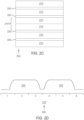
- FIG. 1A is a schematic illustration of a top down planar view of a BiSbE alloy layer 100 at deposition.
- the BiSbE alloy layer 100 comprises a plurality of BiSb lamellae layers 110 and one or more dopant element lamellae layers at deposition.
- the BiSbE alloy layer 100 comprises grains of BiSb and a layer of atoms/clusters 120 of dopant element(s) deposited uniformly over the grains of BiSb. It is believed that the atoms/clusters 120 of dopant element lamella layer forms uniformly over the BiSb lamella layer 110.
- FIG. 1B is a schematic illustration of a top down planar view of the BiSbE alloy layer 100 after post annealing. It is believed that the atoms/clusters 120 of dopant element(s) have been redistributed to the grain boundaries of the BiSbE lamella layer 110. Some portion of the atoms/clusters 120 of dopant element is retained in the BiSb lattice while another portion of the atoms/clusters 120 of dopant element goes to the grain boundaries of the BiSb and to the BiSbE interfaces.
- the portion of the dopant element that goes to the grain boundaries of the BiSb becomes a segregant which reduces the grain size of the BiSb and reduces the interfacial roughness of the BiSbE alloy layer 100.
- the portion of the dopant element comprising metallic dopant elements that is retained in the BiSb lattice increases the melting point of the BiSbE alloy layer in comparison to a BiSb layer without dopant elements.
- the portion of the dopant element that is retained in the BiSb lattice allows the annealing temperature of the BiSbE alloy layer to be increased due to alloying (lattice hardening) and grain boundary segregation (grain size hardening) effects which pin and restrict the grain boundaries from moving at elevated temperatures.
- the BiSbE alloy layer is able to withstand an anneal, such as an anneal of about 280°C or above for three hours or more.
- the BiSbE alloy layer is formed to a thickness from about 20 ⁇ to about 200 ⁇ , such as from about 50 ⁇ to about 150 ⁇ . In other embodiments, the BiSbE alloy layer is formed to any suitable thickness. In certain embodiments, the BiSbE alloy layer is deposited by physical vapor deposition (PVD), such as sputtering, molecular beam epitaxy, ion beam deposition, other suitable PVD processes, and combinations thereof. In certain embodiments, a SOT device includes a BiSbE alloy layer formed over any suitable layer and with any suitable layer formed over the BiSbE alloy layer.
- PVD physical vapor deposition
- the BiSbE alloy layer comprises a multi-layer laminate of a plurality of BiSb lamellae layers and one or more dopant element lamellae layers.
- the BiSbE alloy multi-layer laminate provides placement of the dopant element lamella layer at specific regions of the BiSbE alloy layer to increase nucleation and growth of (012) orientation, to reduce interfacial roughness, and/or to reduce grain size.
- the BiSbE alloy layer comprises 2 to 10 BiSb lamellae layers with each BiSb lamella layer having a thickness from about 5 ⁇ to about 30 ⁇ and comprises 1 to 9 dopant element lamellae layers with each dopant element lamella layer having a thickness from about 0.1 ⁇ to about 4 ⁇ .
- One or more dopant element lamellae layers are interspersed between the BiSb lamellae layers.
- the BiSbE alloy layer comprises any suitable number of BiSb lamellae layers with each BiSb lamella layer formed to any suitable thickness and comprises any suitable number of dopant element lamellae layers with each dopant element lamella layer formed to any suitable thickness.
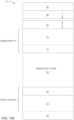
- FIG. 2A is a schematic illustration of deposition of a BiSbE alloy layer 200 comprising six BiSb lamellae layers 210 and five dopant element lamellae layers 220.
- a dopant element lamella layer 220 has been deposited between each of the BiSb lamellae layers 210.
- the dopant element lamellae layers 220 have been deposited throughout the BiSbE alloy layer 200.
- FIG. 2B is a schematic illustration of the distribution of the dopant element within the BiSb lamellae layers 210 of the BiSbE alloy layer 200 at deposition or after annealing. The dopant element is distributed into each of the BiSb lamellae layers 210.
- FIG. 2C is a schematic illustration of deposition of a BiSbE alloy layer 200 comprising six BiSb lamellae layers 210 and four dopant element lamellae layers 220.
- the BiSbE alloy layer 200 can also be viewed as two thin BiSb lamellae layers 210 at the bottom edge, two thin BiSb lamellae layers 210 at the top edge, and a thick BiSb lamella layer 210T at the center with dopant element lamellae layers 220 therebetween.
- the dopant element lamellae layers 220 have been deposited at the bottom edge and the top edge of the BiSbE alloy layer 200 but not at the center of the BiSbE alloy layer 200.
- FIG. 1 is a schematic illustration of deposition of a BiSbE alloy layer 200 comprising six BiSb lamellae layers 210 and four dopant element lamellae layers 220.
- the BiSbE alloy layer 200 can also be viewed as two thin BiSb lam
- 2D is a schematic illustration of the distribution of the dopant element within the BiSb lamellae layers 210 of the BiSbE alloy layer 200 at deposition or after annealing.
- the dopant element is distributed at the bottom edge and the top edge of the BiSbE alloy layer 200.
- FIG. 2E is a schematic illustration of deposition of a BiSbE alloy layer 200 comprising six BiSb lamellae layers 210 and three dopant element lamellae layers 220.
- the BiSbE alloy layer 200 can also be viewed as one thin BiSb lamella layer 210 at the bottom edge, one thin BiSb lamella layer 210 at the top edge, and two thick BiSb lamellae layers 210T at the center with dopant element lamellae layers 220 therebetween.
- the dopant element lamellae layers 220 have been deposited every other BiSb lamella layer 210.
- the dopant element lamellae layers 220 have been deposited at the bottom edge, the center, and the top edge of the BiSbE alloy layer 200.
- FIG. 2F is a schematic illustration of the distribution of the dopant element within the BiSb lamellae layers 210 of the BiSbE alloy layer 200 at deposition or after annealing. The dopant element is distributed at the bottom edge, the center, and the top edge of the BiSbE alloy layer 200.
- FIG. 2G is a schematic illustration of deposition of a BiSbE alloy layer 200 comprising six BiSb lamellae layers 210 and three dopant element lamellae layers 220.
- the BiSbE alloy layer 200 can be viewed as three thin BiSb lamellae layers 210 at the bottom edge and one thick BiSb lamella layer 210T at top edge with dopant element lamellae layers 220 therebetween.
- the dopant element lamellae layers 220 have been deposited at the bottom edge but not at the top edge of the BiSbE alloy layer 200.
- 2H is a schematic illustration of the distribution of the dopant element within the BiSb lamellae layers 210 of the BiSbE alloy layer 200 at deposition or after annealing.
- the dopant element is distributed at the bottom edge of the BiSbE alloy layer 200.
- FIG. 13A is a schematic cross-sectional view of certain embodiments of a SOT device 10 having a BiSbE alloy layer 50 with (012) orientation forming a SOT-based magnetoresistive random access memory (MRAM) device as defined by the subject matter of the claims.
- MRAM magnetoresistive random access memory
- the BiSbE alloy layer 50 with (012) orientation is formed over a substrate 20, such as a silicon substrate, an alumina substrate, or other suitable substrates.
- a seed layer 30 is deposited over the substrate 20.
- the seed layer 30 comprises a silicide layer 32 or other suitable seed layers.
- the silicide layer 32 comprises NiSi, NiFeSi, NiFeTaSi, NiCuSi, CoSi, CoFeSi, CoFeTaSi, CoCuSi, or combinations thereof.
- the seed layer 30 further comprises a surface control layer 40 between the silicide layer 32 and the BiSbE alloy layer 50.
- the surface control layer 40 comprises NiFe, NiFeTa, NiTa, NiW, NiFeW, NiCu, NiFeCu, CoTa, CoFeTa, NiCoTa, Co, CoM, CoNiM, CoNi, NiSi, CoSi, NiCoSi, Cu, CuAg, CuAgM, CuM, or combinations thereof, in which M is Fe, Cu, Co, Ta, Ag, Ni, Mn, Cr, V, Ti, or Si.
- an interlayer 70 is deposited over the BiSbE alloy layer 50.
- the interlayer 70 comprises a silicide layer 72.
- the silicide layer 72 comprises NiSi, FeSi, CoSi, NiCuSi, NiFeTaSi, CoFeSi, CoCuSi, or combinations thereof.
- the interlayer 70 further comprises a surface control layer 71 between the BiSbE alloy layer 50 and the silicide layer 72.
- the surface control layer 71 comprises Cu, Ni, NiFe, Co, or combinations thereof.
- a free perpendicular magnetic anisotropy (PMA) layer 80 is formed over the interlayer 70.
- the free PMA layer 80 can comprise one or more stacks of a Co/Pt, Co/Pd, Co/Ni, CoFeB, FePt or other PMA inducing layers or combinations thereof.
- An insulating layer 84 such as a MgO layer, is formed over the free PMA layer 80.
- a reference PMA layer 88 is formed over the insulating layer 84.
- the reference PMA layer 88 can comprise one or more stacks of a Co/Pt, Co/Pd, Co/Ni, CoFeB, FePt or other PMA inducing layers or combinations thereof.
- the reference PMA layer 88 can include one or more synthetic antiferromagnetic (SAF) pinned structures.
- a cap layer 92 can be formed over the reference PMA layer 88.
- the cap layer 92 comprises NiFe, SiN, Si, NiFeTa, NiTa, Pt, Co, Cu, Ni, NiCu, CoCu, Ru, Ta, Cr, Au, Rh, CoFe, CoFeB, other non-magnetic materials, other magnetic materials, and combinations thereof.
- the magnetic direction of the reference PMA layer 88 can be set with an anneal of about 270°C or above for two hours or more.
- the BiSbE alloy layer 50 comprises a metallic dopant element.
- the metallic dopant element of the BiSbE alloy layer 50 helps to maintain the low interfacial roughness of the BiSbE alloy layer 50 after anneal and helps to the manufacturability, performance, and/or life time of the MRAM device.
- the BiSbE alloy layer 50 comprises a metallic dopant element has reduced migration of Sb of the BiSbE alloy layer 50 after post annealing in comparison to a BiSb material without dopant elements.
- a plurality of the SOT devices 10 can be configured together as part of a memory cell array in which the BiSbE alloy layer 50 is a spin orbit material electrode.
- a top electrode (not shown) can be disposed over the reference PMA layer 88.
- Each of the memory cells may be part of a two-terminal device or a three terminal device.
- the spin orbit material electrode and the top electrode may serve as bit lines, word lines, read word lines, write word lines, and combinations thereof.
- the memory cell array may be implemented as a crosspoint array or other architectures.
- FIG. 13B is a schematic cross-sectional view of certain embodiments of a SOT device 10 having a BiSbE alloy layer 50 with (012) orientation forming a portion or component of a SOT-based EAMR write head used in magnetic recording as defined by the subject matter of the claims.
- the BiSbE alloy layer 50 with (012) orientation is formed over a substrate 20, such as a silicon substrate, an alumina substrate, or other suitable substrates.
- a seed layer 30 is deposited over the substrate 20.
- the seed layer 30 comprises a silicide layer 32 or other suitable seed layers.
- the silicide layer 32 comprises NiSi, NiFeSi, NiFeTaSi, NiCuSi, CoSi, CoFeSi, CoFeTaSi, CoCuSi, or combinations thereof.
- the seed layer 30 further comprises a surface control layer 40 between the silicide layer 32 and the BiSbE alloy layer 50.
- the surface control layer 40 comprises NiFe, NiFeTa, NiTa, NiW, NiFeW, NiCu, NiFeCu, CoTa, CoFeTa, NiCoTa, Co, CoM, CoNiM, CoNi, NiSi, CoSi, NiCoSi, Cu, CuAg, CuAgM, CuM, or combinations thereof, in which M is Fe, Cu, Co, Ta, Ag, Ni, Mn, Cr, V, Ti, or Si.
- an interlayer 70 is deposited over the BiSbE alloy layer 50.
- the interlayer 70 comprises a silicide layer 72.
- the silicide layer 72 comprises NiSi, FeSi, CoSi, NiCuSi, NiFeTaSi, CoFeSi, CoCuSi, or combinations thereof.
- the interlayer 70 further comprises a surface control layer 71 between the BiSbE alloy layer 50 and the silicide layer 72.
- the surface control layer 71 comprises Cu, Ni, NiFe, Co, or combinations thereof.
- a spin-torque layer (STL) 60 is formed over the interlayer 70.
- Charge current through a BiSbE alloy layer 50 acting as a spin Hall layer generates a spin current in the BiSbE layer 50.
- the spin-orbital coupling of the BiSbE alloy layer 50 and a spin torque layer (STL) 60 causes switching or precession of magnetization of the STL 60 by the spin-orbital coupling of the spin current from the BiSbE alloy layer 50.
- the BiSbE alloy layer 50 comprises a metallic dopant element or a non-metallic dopant element.
- a BiSbE alloy layer 50 comprising a non-metallic dopant element can be used since degradation of the interfacial roughness due to post annealing is avoided.
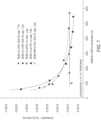
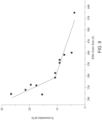
- FIG. 10 shows that the dopant elements reduced interface roughness in comparison to a BiSb layer without dopant elements.
- the BiSbE alloy layer with an atomic percent content of the dopant element from about 3% to about 12% produced a large reduction in surface roughness in comparison to a BiSb material without dopant elements.
- the BiSbE alloy layer with an atomic percent content of the dopant element greater than 12% were comparable to a BiSb material without dopant elements with larger interfacial roughness.
- BiSbE alloy layer 1140 comprised dopant element Cu in an atomic percent content of about Cu6% which was annealed at about 280°C for 3 hours.
- BiSbE alloy layer 1150 comprised dopant element NiFe in an atomic percent content of about 10%. Dopant elements reduce the grain size for all BiSbE alloy thicknesses.
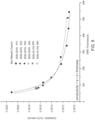
- FIG. 12 is a plot of the logarithm of the intensity versus 2-theta XRD out-of-the plane or coupled scans of BiSbE stacks 1210, 1220.
- the BiSbE alloy layer comprised a metallic dopant of CuAgNi in an atomic percent content of about 6%.
- the metallic dopant of CuAgNi comprised Ag in an atomic percent content of about 5% and with Ni in an atomic percent content of about 10%.
- the BiSbE alloy layer was formed by depositing six BiSb lamellae layers and by depositing four CuAgNi lamellae layers.
- the CuAgNi lamellae layers were deposited at the bottom edge and the top edge of the BiSbE alloy layer in the order of BiSb-CuAgNi-BiSb- CuAgNi-BiSb-BiSb-CuAgNi-BiSb-CuAgNi-BiSb (BCBCBBCBCB).
- Each of the stacks 1210, 1220 comprised a NiFeCu-silicide layer formed to a thickness of about 20 ⁇ , a copper layer formed to a thickness of about 1 ⁇ , a BiSbE alloy layer formed to a thickness of about 100 ⁇ , an NiFeCu-silicide layer formed to a thickness of about 14 ⁇ , and a capping layer of SiN formed to a thickness of about 60 ⁇ .
- BiSbE stack 1210 was before annealing.
- BiSbE stack 1220 is after annealing at about 280°C for about 3 hours near the melting point of BiSb.
- BiSbE stacks 1210, 1220 showed strong (012) texture before and after annealing.
- the BiSbE stack 1220 showed strong (012) texture even after annealing near the melting point of BiSb with a rocking curve of about 11 degrees or less, such as from 7 degrees to 11 degrees.
- An XRR measurement of the BiSbE stack 1220 after anneal showed a low surface roughness of about 14 ⁇ or less.
Landscapes
- Engineering & Computer Science (AREA)
- Computer Hardware Design (AREA)
- Hall/Mr Elements (AREA)
- Mram Or Spin Memory Techniques (AREA)
- Semiconductor Memories (AREA)
- Physical Vapour Deposition (AREA)
Applications Claiming Priority (2)
| Application Number | Priority Date | Filing Date | Title |
|---|---|---|---|
| US16/917,334 US11495741B2 (en) | 2020-06-30 | 2020-06-30 | Bismuth antimony alloys for use as topological insulators |
| PCT/US2020/066902 WO2022005518A1 (en) | 2020-06-30 | 2020-12-23 | Bismuth antimony alloys for use as topological insulators |
Publications (3)
| Publication Number | Publication Date |
|---|---|
| EP4172784A1 EP4172784A1 (en) | 2023-05-03 |
| EP4172784A4 EP4172784A4 (en) | 2023-12-13 |
| EP4172784B1 true EP4172784B1 (en) | 2025-04-02 |
Family
ID=79030390
Family Applications (1)
| Application Number | Title | Priority Date | Filing Date |
|---|---|---|---|
| EP20942544.6A Active EP4172784B1 (en) | 2020-06-30 | 2020-12-23 | Bismuth antimony alloys for use as topological insulators |
Country Status (5)
| Country | Link |
|---|---|
| US (1) | US11495741B2 (https=) |
| EP (1) | EP4172784B1 (https=) |
| JP (1) | JP7371256B2 (https=) |
| CN (1) | CN114730286B (https=) |
| WO (1) | WO2022005518A1 (https=) |
Cited By (1)
| Publication number | Priority date | Publication date | Assignee | Title |
|---|---|---|---|---|
| EP4454435A4 (en) * | 2021-12-22 | 2025-12-17 | Western Digital Tech Inc | NEW DOTING METHOD TO REFINE PRINCE SIZE FOR A MORE UNIFORM BISB FILM SURFACE |
Families Citing this family (14)
| Publication number | Priority date | Publication date | Assignee | Title |
|---|---|---|---|---|
| US11694713B2 (en) * | 2020-02-12 | 2023-07-04 | Western Digital Technologies, Inc. | BiSb topological insulator with novel buffer layer that promotes a BiSb (012) orientation |
| US11489108B2 (en) | 2020-04-28 | 2022-11-01 | Western Digital Technologies, Inc. | BiSb topological insulator with seed layer or interlayer to prevent sb diffusion and promote BiSb (012) orientation |
| US11968905B2 (en) * | 2020-07-01 | 2024-04-23 | Northeastern University | Sputter deposited crystalline ordered topological insulator/ferromagnet (TI/FM) thin film heterostructures for spintronics applications |
| US11100946B1 (en) | 2020-07-01 | 2021-08-24 | Western Digital Technologies, Inc. | SOT differential reader and method of making same |
| US11094338B1 (en) | 2020-07-09 | 2021-08-17 | Western Digital Technologies, Inc. | SOT film stack for differential reader |
| US12178140B2 (en) | 2020-12-02 | 2024-12-24 | Northeastern University | Topological insulator/normal metal bilayers as spin hall materials for spin orbit torque devices, and methods of fabrication of same |
| US12156479B2 (en) * | 2021-01-04 | 2024-11-26 | Taiwan Semiconductor Manufacturing Co., Ltd. | Memory device and manufacturing method thereof |
| US11763973B2 (en) | 2021-08-13 | 2023-09-19 | Western Digital Technologies, Inc. | Buffer layers and interlayers that promote BiSbx (012) alloy orientation for SOT and MRAM devices |
| US11532323B1 (en) * | 2021-08-18 | 2022-12-20 | Western Digital Technologies, Inc. | BiSbX (012) layers having increased operating temperatures for SOT and MRAM devices |
| US11875827B2 (en) | 2022-03-25 | 2024-01-16 | Western Digital Technologies, Inc. | SOT reader using BiSb topological insulator |
| US11783853B1 (en) | 2022-05-31 | 2023-10-10 | Western Digital Technologies, Inc. | Topological insulator based spin torque oscillator reader |
| US12106791B2 (en) | 2022-06-30 | 2024-10-01 | Western Digital Technologies, Inc. | Doped BiSb (012) or undoped BiSb (001) topological insulator with GeNiFe buffer layer and/or interlayer for SOT based sensor, memory, and storage devices |
| US12154603B1 (en) | 2023-06-14 | 2024-11-26 | Western Digital Technologies, Inc. | Spin-orbit torque (SOT) writer with topological insulator materials |
| US12354627B2 (en) | 2023-06-28 | 2025-07-08 | Western Digital Technologies, Inc. | Higher areal density non-local spin orbit torque (SOT) writer with topological insulator materials |
Family Cites Families (58)
| Publication number | Priority date | Publication date | Assignee | Title |
|---|---|---|---|---|
| US5751521A (en) | 1996-09-23 | 1998-05-12 | International Business Machines Corporation | Differential spin valve sensor structure |
| JP3760095B2 (ja) | 2000-12-14 | 2006-03-29 | 株式会社日立グローバルストレージテクノロジーズ | 2素子型再生センサ、垂直磁気記録再生用薄膜磁気ヘッド及び垂直磁気記録再生装置 |
| US6667861B2 (en) | 2001-07-16 | 2003-12-23 | International Business Machines Corporation | Dual/differential GMR head with a single AFM layer |
| US6680828B2 (en) | 2002-06-07 | 2004-01-20 | International Business Machines Corporation | Differential GMR head system and method using self-pinned layer |
| US7298595B2 (en) | 2003-09-26 | 2007-11-20 | Hitachi Global Storage Technologies Netherlands B.V. | Differential GMR sensor with multi-layer bias structure between free layers of first and second self-pinned GMR sensors |
| US7016160B2 (en) | 2003-11-18 | 2006-03-21 | Seagate Technology Llc | Differential CPP reader for perpendicular magnetic recording |
| US7242556B2 (en) | 2004-06-21 | 2007-07-10 | Hitachi Global Storage Technologies Netherlands B.V. | CPP differential GMR sensor having antiparallel stabilized free layers for perpendicular recording |
| US7436632B2 (en) | 2004-06-30 | 2008-10-14 | Seagate Technology Llc | Differential/dual CPP recording head |
| US7643255B2 (en) | 2006-03-17 | 2010-01-05 | Hitachi Global Storage Technologies Netherlands B.V. | Anti-parallel magnetization layers in the free layers and magnetization layers of a differential sensor read head |
| JP2009026400A (ja) | 2007-07-20 | 2009-02-05 | Hitachi Global Storage Technologies Netherlands Bv | 差動磁気抵抗効果型磁気ヘッド |
| US7881018B2 (en) | 2007-09-05 | 2011-02-01 | Hitachi Global Storage Technologies Netherlands B.V. | Differential current perpendicular to plane giant magnetoresistive sensor structure having improved robustness against spin torque noise |
| JP4934582B2 (ja) | 2007-12-25 | 2012-05-16 | 株式会社日立製作所 | スピンホール効果素子を用いた磁気センサ、磁気ヘッド及び磁気メモリ |
| JP2010113782A (ja) | 2008-11-10 | 2010-05-20 | Hitachi Global Storage Technologies Netherlands Bv | 出力をバランス化した差動型再生磁気ヘッド及びその製造方法 |
| JP2010140524A (ja) | 2008-12-09 | 2010-06-24 | Hitachi Global Storage Technologies Netherlands Bv | 差動型磁気抵抗効果ヘッド及び磁気記録再生装置 |
| US8125746B2 (en) | 2009-07-13 | 2012-02-28 | Seagate Technology Llc | Magnetic sensor with perpendicular anisotrophy free layer and side shields |
| US8654465B2 (en) | 2011-12-09 | 2014-02-18 | HGST Netherlands B.V. | Implementing spin-torque oscillator sensing with enhanced demodulator for hard disk drives |
| US8570677B2 (en) | 2011-12-09 | 2013-10-29 | HGST Netherlands B.V. | Implementing spin-torque oscillator sensing with enhanced integrated demodulator for hard disk drives |
| US8553346B2 (en) | 2011-12-09 | 2013-10-08 | HGST Netherlands B.V. | Implementing spin-torque oscillator sensing with enhanced delay control feedback circuit for hard disk drives |
| US9099119B2 (en) | 2013-02-11 | 2015-08-04 | HGST Netherlands B.V. | Magnetic read sensor using spin hall effect |
| US9099188B2 (en) | 2013-03-09 | 2015-08-04 | Yimin Guo | Magnetoresistive element |
| US9076954B2 (en) * | 2013-08-08 | 2015-07-07 | Samsung Electronics Co., Ltd. | Method and system for providing magnetic memories switchable using spin accumulation and selectable using magnetoelectric devices |
| US9741369B2 (en) | 2014-02-28 | 2017-08-22 | Western Digital Technologies, Inc. | Multi-track reader for improved signal to noise ratio |
| US20150287426A1 (en) | 2014-04-07 | 2015-10-08 | HGST Netherlands B.V. | Magnetic read head having spin hall effect layer |
| US10153425B2 (en) | 2015-09-10 | 2018-12-11 | Institute Of Physics, Chinese Academy Of Sciences | Spin logic device and electronic equipment including same |
| US9472216B1 (en) | 2015-09-23 | 2016-10-18 | Western Digital (Fremont), Llc | Differential dual free layer magnetic reader |
| US9607842B1 (en) | 2015-10-02 | 2017-03-28 | Asm Ip Holding B.V. | Methods of forming metal silicides |
| WO2017090736A1 (ja) | 2015-11-27 | 2017-06-01 | Tdk株式会社 | スピン流磁化反転型磁気抵抗効果素子及びスピン流磁化反転型磁気抵抗効果素子の製造方法 |
| US20170221506A1 (en) | 2016-02-02 | 2017-08-03 | Seagate Technology Llc | Thin Data Reader Cap |
| US9806710B2 (en) * | 2016-03-31 | 2017-10-31 | University Of Iowa Research Foundation | Voltage-controlled magnetic-based devices having topological insulator/magnetic insulator heterostructure |
| TWI634680B (zh) | 2016-04-19 | 2018-09-01 | 國立清華大學 | 具熱穩定性之自旋軌道扭力式磁性隨存記憶體 |
| US10283561B2 (en) * | 2016-12-14 | 2019-05-07 | Regents Of The University Of Minnesota | Two-terminal spintronic devices |
| US9947347B1 (en) | 2016-12-20 | 2018-04-17 | Western Digital Technologies, Inc. | Magnetic sensor using inverse spin hall effect |
| JP7024204B2 (ja) * | 2017-04-21 | 2022-02-24 | Tdk株式会社 | スピン流磁化回転素子、磁気抵抗効果素子及び磁気メモリ |
| US10720570B2 (en) | 2017-06-12 | 2020-07-21 | Western Digital Technologies, Inc. | Magnetic sensor using spin hall effect |
| US10354709B2 (en) | 2017-06-19 | 2019-07-16 | Regents Of The University Of Minnesota | Composite free magnetic layers |
| US10210888B1 (en) | 2017-06-23 | 2019-02-19 | Western Digital Technologies, Inc. | Dual spin-orbit torque oscillator in magnetic recording |
| US10014012B1 (en) | 2017-06-23 | 2018-07-03 | Western Digital Technologies, Inc. | Spin-orbit torque based magnetic recording |
| CN109327975A (zh) | 2017-07-31 | 2019-02-12 | 奥特斯奥地利科技与系统技术有限公司 | 用于部件承载件中的孔的无缺陷铜填充的方法和镀覆装置 |
| US10923651B2 (en) | 2017-08-16 | 2021-02-16 | National University Of Singapore | Spin orbit materials for efficient spin current generation |
| JP7227614B2 (ja) * | 2017-09-15 | 2023-02-22 | 国立大学法人東京工業大学 | 磁性体とBiSbの積層構造の製造方法、磁気抵抗メモリ、純スピン注入源 |
| WO2019125388A1 (en) | 2017-12-18 | 2019-06-27 | Intel Corporation | Spin orbit coupling based oscillator using exchange bias |
| CN110392931B (zh) | 2018-02-19 | 2022-05-03 | Tdk株式会社 | 自旋轨道转矩型磁化旋转元件、自旋轨道转矩型磁阻效应元件及磁存储器 |
| JP6530527B1 (ja) * | 2018-03-19 | 2019-06-12 | 株式会社東芝 | 磁気記憶装置 |
| US11251365B2 (en) * | 2018-03-30 | 2022-02-15 | Intel Corporation | High blocking temperature spin orbit torque electrode |
| US10790002B2 (en) | 2018-06-21 | 2020-09-29 | Samsung Electronics Co., Ltd. | Giant spin hall-based compact neuromorphic cell optimized for differential read inference |
| US10483457B1 (en) | 2018-08-14 | 2019-11-19 | Qualcomm Incorporated | Differential spin orbit torque magnetic random access memory (SOT-MRAM) cell structure and array |
| US11875832B2 (en) * | 2018-09-05 | 2024-01-16 | Keio University | Spintronics device, magnetic memory, and electronic apparatus |
| KR102604071B1 (ko) * | 2018-11-23 | 2023-11-20 | 삼성전자주식회사 | 자기 기억 소자 및 이의 제조 방법 |
| KR102604743B1 (ko) * | 2018-12-11 | 2023-11-22 | 삼성전자주식회사 | 자기 메모리 장치 |
| US10991390B2 (en) | 2019-02-08 | 2021-04-27 | Western Digital Technologies, Inc. | Head assembly with suspension system for a tape embedded drive |
| US11205447B2 (en) | 2019-08-21 | 2021-12-21 | Headway Technologies, Inc. | Reader noise reduction using spin hall effects |
| JP2021057357A (ja) | 2019-09-26 | 2021-04-08 | 国立大学法人東京工業大学 | 磁気抵抗メモリ |
| US10839831B1 (en) | 2019-12-30 | 2020-11-17 | Western Digital Technologies, Inc. | Dual writer designs with SOT and STT assisted recording |
| US11694713B2 (en) * | 2020-02-12 | 2023-07-04 | Western Digital Technologies, Inc. | BiSb topological insulator with novel buffer layer that promotes a BiSb (012) orientation |
| US11489108B2 (en) | 2020-04-28 | 2022-11-01 | Western Digital Technologies, Inc. | BiSb topological insulator with seed layer or interlayer to prevent sb diffusion and promote BiSb (012) orientation |
| US11100946B1 (en) | 2020-07-01 | 2021-08-24 | Western Digital Technologies, Inc. | SOT differential reader and method of making same |
| US11222656B1 (en) | 2020-07-09 | 2022-01-11 | Western Digital Technologies, Inc. | Method to reduce baseline shift for a SOT differential reader |
| US11094338B1 (en) | 2020-07-09 | 2021-08-17 | Western Digital Technologies, Inc. | SOT film stack for differential reader |
-
2020
- 2020-06-30 US US16/917,334 patent/US11495741B2/en active Active
- 2020-12-23 CN CN202080080281.XA patent/CN114730286B/zh active Active
- 2020-12-23 JP JP2022529860A patent/JP7371256B2/ja active Active
- 2020-12-23 WO PCT/US2020/066902 patent/WO2022005518A1/en not_active Ceased
- 2020-12-23 EP EP20942544.6A patent/EP4172784B1/en active Active
Cited By (1)
| Publication number | Priority date | Publication date | Assignee | Title |
|---|---|---|---|---|
| EP4454435A4 (en) * | 2021-12-22 | 2025-12-17 | Western Digital Tech Inc | NEW DOTING METHOD TO REFINE PRINCE SIZE FOR A MORE UNIFORM BISB FILM SURFACE |
Also Published As
| Publication number | Publication date |
|---|---|
| CN114730286B (zh) | 2025-08-19 |
| US11495741B2 (en) | 2022-11-08 |
| CN114730286A (zh) | 2022-07-08 |
| EP4172784A4 (en) | 2023-12-13 |
| EP4172784A1 (en) | 2023-05-03 |
| WO2022005518A1 (en) | 2022-01-06 |
| JP2023508637A (ja) | 2023-03-03 |
| JP7371256B2 (ja) | 2023-10-30 |
| US20210408370A1 (en) | 2021-12-30 |
Similar Documents
| Publication | Publication Date | Title |
|---|---|---|
| EP4172784B1 (en) | Bismuth antimony alloys for use as topological insulators | |
| US12527232B2 (en) | BiSb topological insulator with seed layer or interlayer to prevent Sb diffusion and promote BiSb (012) orientation | |
| CN108011039B (zh) | 自旋轨道转矩型磁化反转元件及磁存储器 | |
| JP6754108B2 (ja) | 単結晶磁気抵抗素子、その製造方法及びその使用方法 | |
| US9024398B2 (en) | Perpendicular STTMRAM device with balanced reference layer | |
| US9349944B2 (en) | Magnetic tunnel junction device | |
| CN111095530A (zh) | 磁性体与BiSb的层叠构造的制造方法、磁阻存储器、纯自旋注入源 | |
| US10763430B2 (en) | Method for stabilizing spin element and method for manufacturing spin element | |
| US20190088711A1 (en) | Spin current magnetization rotational element, spin-orbit torque magnetoresistance effect element, and magnetic memory | |
| US11665979B2 (en) | Magnetic junctions having enhanced tunnel magnetoresistance and utilizing heusler compounds | |
| US10903416B2 (en) | Alloy thin films exhibiting perpendicular magnetic anisotropy | |
| US10858730B2 (en) | Multilayer thin films exhibiting perpendicular magnetic anisotropy | |
| JP6908639B2 (ja) | 磁気トンネル接合 | |
| WO2021171101A1 (en) | Mtj stack with self-ordering top magnetic free layer with tetragonal crystalline symmetry | |
| US11545290B2 (en) | Magnetoresistive element having a giant interfacial perpendicular magnetic anisotropy | |
| CN114730830B (zh) | 具有种子层或夹层以防止Sb扩散并促进BiSb(012)取向的BiSb拓扑绝缘体 | |
| US10879451B2 (en) | Magnetic tunnel junction device and magnetic resistance memory device | |
| JP6986729B2 (ja) | 単結晶磁気抵抗素子、及びこれを用いたデバイス | |
| US20240412759A1 (en) | Film and Method for BiSbX (012) Texture for SOT Devices | |
| CN120021408A (zh) | 磁隧道结元件和包括磁隧道结元件的存储器件 |
Legal Events
| Date | Code | Title | Description |
|---|---|---|---|
| STAA | Information on the status of an ep patent application or granted ep patent |
Free format text: STATUS: THE INTERNATIONAL PUBLICATION HAS BEEN MADE |
|
| PUAI | Public reference made under article 153(3) epc to a published international application that has entered the european phase |
Free format text: ORIGINAL CODE: 0009012 |
|
| STAA | Information on the status of an ep patent application or granted ep patent |
Free format text: STATUS: REQUEST FOR EXAMINATION WAS MADE |
|
| 17P | Request for examination filed |
Effective date: 20220520 |
|
| AK | Designated contracting states |
Kind code of ref document: A1 Designated state(s): AL AT BE BG CH CY CZ DE DK EE ES FI FR GB GR HR HU IE IS IT LI LT LU LV MC MK MT NL NO PL PT RO RS SE SI SK SM TR |
|
| DAV | Request for validation of the european patent (deleted) | ||
| DAX | Request for extension of the european patent (deleted) | ||
| REG | Reference to a national code |
Ref legal event code: R079 Free format text: PREVIOUS MAIN CLASS: G06F0012000000 Ipc: H10N0050100000 Ref country code: DE Ref legal event code: R079 Ref document number: 602020048944 Country of ref document: DE Free format text: PREVIOUS MAIN CLASS: G06F0012000000 Ipc: H10N0050100000 |
|
| A4 | Supplementary search report drawn up and despatched |
Effective date: 20231110 |
|
| RIC1 | Information provided on ipc code assigned before grant |
Ipc: G11B 5/00 20060101ALN20231106BHEP Ipc: H03B 15/00 20060101ALI20231106BHEP Ipc: G11C 11/16 20060101ALI20231106BHEP Ipc: G11C 11/18 20060101ALI20231106BHEP Ipc: H10N 50/85 20230101ALI20231106BHEP Ipc: H10N 50/80 20230101ALI20231106BHEP Ipc: H10N 50/10 20230101AFI20231106BHEP |
|
| GRAP | Despatch of communication of intention to grant a patent |
Free format text: ORIGINAL CODE: EPIDOSNIGR1 |
|
| STAA | Information on the status of an ep patent application or granted ep patent |
Free format text: STATUS: GRANT OF PATENT IS INTENDED |
|
| RIC1 | Information provided on ipc code assigned before grant |
Ipc: G11B 5/00 20060101ALN20241002BHEP Ipc: H03B 15/00 20060101ALI20241002BHEP Ipc: G11C 11/16 20060101ALI20241002BHEP Ipc: G11C 11/18 20060101ALI20241002BHEP Ipc: H10N 50/85 20230101ALI20241002BHEP Ipc: H10N 50/80 20230101ALI20241002BHEP Ipc: H10N 50/10 20230101AFI20241002BHEP |
|
| RIC1 | Information provided on ipc code assigned before grant |
Ipc: G11B 5/00 20060101ALN20241008BHEP Ipc: H03B 15/00 20060101ALI20241008BHEP Ipc: G11C 11/16 20060101ALI20241008BHEP Ipc: G11C 11/18 20060101ALI20241008BHEP Ipc: H10N 50/85 20230101ALI20241008BHEP Ipc: H10N 50/80 20230101ALI20241008BHEP Ipc: H10N 50/10 20230101AFI20241008BHEP |
|
| RIC1 | Information provided on ipc code assigned before grant |
Ipc: G11B 5/00 20060101ALN20241016BHEP Ipc: H03B 15/00 20060101ALI20241016BHEP Ipc: G11C 11/16 20060101ALI20241016BHEP Ipc: G11C 11/18 20060101ALI20241016BHEP Ipc: H10N 50/85 20230101ALI20241016BHEP Ipc: H10N 50/80 20230101ALI20241016BHEP Ipc: H10N 50/10 20230101AFI20241016BHEP |
|
| INTG | Intention to grant announced |
Effective date: 20241028 |
|
| RAP3 | Party data changed (applicant data changed or rights of an application transferred) |
Owner name: WESTERN DIGITAL TECHNOLOGIES, INC. |
|
| P01 | Opt-out of the competence of the unified patent court (upc) registered |
Free format text: CASE NUMBER: APP_59757/2024 Effective date: 20241105 |
|
| GRAS | Grant fee paid |
Free format text: ORIGINAL CODE: EPIDOSNIGR3 |
|
| GRAA | (expected) grant |
Free format text: ORIGINAL CODE: 0009210 |
|
| STAA | Information on the status of an ep patent application or granted ep patent |
Free format text: STATUS: THE PATENT HAS BEEN GRANTED |
|
| AK | Designated contracting states |
Kind code of ref document: B1 Designated state(s): AL AT BE BG CH CY CZ DE DK EE ES FI FR GB GR HR HU IE IS IT LI LT LU LV MC MK MT NL NO PL PT RO RS SE SI SK SM TR |
|
| REG | Reference to a national code |
Ref country code: GB Ref legal event code: FG4D |
|
| REG | Reference to a national code |
Ref country code: CH Ref legal event code: EP |
|
| REG | Reference to a national code |
Ref country code: DE Ref legal event code: R096 Ref document number: 602020048944 Country of ref document: DE |
|
| REG | Reference to a national code |
Ref country code: IE Ref legal event code: FG4D |
|
| REG | Reference to a national code |
Ref country code: NL Ref legal event code: FP |
|
| REG | Reference to a national code |
Ref country code: AT Ref legal event code: MK05 Ref document number: 1782624 Country of ref document: AT Kind code of ref document: T Effective date: 20250402 |
|
| PG25 | Lapsed in a contracting state [announced via postgrant information from national office to epo] |
Ref country code: ES Free format text: LAPSE BECAUSE OF FAILURE TO SUBMIT A TRANSLATION OF THE DESCRIPTION OR TO PAY THE FEE WITHIN THE PRESCRIBED TIME-LIMIT Effective date: 20250402 Ref country code: FI Free format text: LAPSE BECAUSE OF FAILURE TO SUBMIT A TRANSLATION OF THE DESCRIPTION OR TO PAY THE FEE WITHIN THE PRESCRIBED TIME-LIMIT Effective date: 20250402 Ref country code: PT Free format text: LAPSE BECAUSE OF FAILURE TO SUBMIT A TRANSLATION OF THE DESCRIPTION OR TO PAY THE FEE WITHIN THE PRESCRIBED TIME-LIMIT Effective date: 20250804 |
|
| REG | Reference to a national code |
Ref country code: LT Ref legal event code: MG9D |
|
| PG25 | Lapsed in a contracting state [announced via postgrant information from national office to epo] |
Ref country code: GR Free format text: LAPSE BECAUSE OF FAILURE TO SUBMIT A TRANSLATION OF THE DESCRIPTION OR TO PAY THE FEE WITHIN THE PRESCRIBED TIME-LIMIT Effective date: 20250703 Ref country code: NO Free format text: LAPSE BECAUSE OF FAILURE TO SUBMIT A TRANSLATION OF THE DESCRIPTION OR TO PAY THE FEE WITHIN THE PRESCRIBED TIME-LIMIT Effective date: 20250702 |
|
| PG25 | Lapsed in a contracting state [announced via postgrant information from national office to epo] |
Ref country code: PL Free format text: LAPSE BECAUSE OF FAILURE TO SUBMIT A TRANSLATION OF THE DESCRIPTION OR TO PAY THE FEE WITHIN THE PRESCRIBED TIME-LIMIT Effective date: 20250402 |
|
| PG25 | Lapsed in a contracting state [announced via postgrant information from national office to epo] |
Ref country code: BG Free format text: LAPSE BECAUSE OF FAILURE TO SUBMIT A TRANSLATION OF THE DESCRIPTION OR TO PAY THE FEE WITHIN THE PRESCRIBED TIME-LIMIT Effective date: 20250402 |
|
| PG25 | Lapsed in a contracting state [announced via postgrant information from national office to epo] |
Ref country code: HR Free format text: LAPSE BECAUSE OF FAILURE TO SUBMIT A TRANSLATION OF THE DESCRIPTION OR TO PAY THE FEE WITHIN THE PRESCRIBED TIME-LIMIT Effective date: 20250402 |
|
| PG25 | Lapsed in a contracting state [announced via postgrant information from national office to epo] |
Ref country code: AT Free format text: LAPSE BECAUSE OF FAILURE TO SUBMIT A TRANSLATION OF THE DESCRIPTION OR TO PAY THE FEE WITHIN THE PRESCRIBED TIME-LIMIT Effective date: 20250402 |
|
| PG25 | Lapsed in a contracting state [announced via postgrant information from national office to epo] |
Ref country code: RS Free format text: LAPSE BECAUSE OF FAILURE TO SUBMIT A TRANSLATION OF THE DESCRIPTION OR TO PAY THE FEE WITHIN THE PRESCRIBED TIME-LIMIT Effective date: 20250702 |
|
| PG25 | Lapsed in a contracting state [announced via postgrant information from national office to epo] |
Ref country code: IS Free format text: LAPSE BECAUSE OF FAILURE TO SUBMIT A TRANSLATION OF THE DESCRIPTION OR TO PAY THE FEE WITHIN THE PRESCRIBED TIME-LIMIT Effective date: 20250802 |
|
| PG25 | Lapsed in a contracting state [announced via postgrant information from national office to epo] |
Ref country code: LV Free format text: LAPSE BECAUSE OF FAILURE TO SUBMIT A TRANSLATION OF THE DESCRIPTION OR TO PAY THE FEE WITHIN THE PRESCRIBED TIME-LIMIT Effective date: 20250402 |
|
| PGFP | Annual fee paid to national office [announced via postgrant information from national office to epo] |
Ref country code: NL Payment date: 20251003 Year of fee payment: 6 |
|
| REG | Reference to a national code |
Ref country code: DE Ref legal event code: R097 Ref document number: 602020048944 Country of ref document: DE |
|
| PGFP | Annual fee paid to national office [announced via postgrant information from national office to epo] |
Ref country code: DE Payment date: 20250930 Year of fee payment: 6 |
|
| PGFP | Annual fee paid to national office [announced via postgrant information from national office to epo] |
Ref country code: GB Payment date: 20251001 Year of fee payment: 6 |
|
| PG25 | Lapsed in a contracting state [announced via postgrant information from national office to epo] |
Ref country code: SM Free format text: LAPSE BECAUSE OF FAILURE TO SUBMIT A TRANSLATION OF THE DESCRIPTION OR TO PAY THE FEE WITHIN THE PRESCRIBED TIME-LIMIT Effective date: 20250402 Ref country code: DK Free format text: LAPSE BECAUSE OF FAILURE TO SUBMIT A TRANSLATION OF THE DESCRIPTION OR TO PAY THE FEE WITHIN THE PRESCRIBED TIME-LIMIT Effective date: 20250402 |
|
| PG25 | Lapsed in a contracting state [announced via postgrant information from national office to epo] |
Ref country code: CZ Free format text: LAPSE BECAUSE OF FAILURE TO SUBMIT A TRANSLATION OF THE DESCRIPTION OR TO PAY THE FEE WITHIN THE PRESCRIBED TIME-LIMIT Effective date: 20250402 |
|
| PG25 | Lapsed in a contracting state [announced via postgrant information from national office to epo] |
Ref country code: EE Free format text: LAPSE BECAUSE OF FAILURE TO SUBMIT A TRANSLATION OF THE DESCRIPTION OR TO PAY THE FEE WITHIN THE PRESCRIBED TIME-LIMIT Effective date: 20250402 |
|
| PG25 | Lapsed in a contracting state [announced via postgrant information from national office to epo] |
Ref country code: SK Free format text: LAPSE BECAUSE OF FAILURE TO SUBMIT A TRANSLATION OF THE DESCRIPTION OR TO PAY THE FEE WITHIN THE PRESCRIBED TIME-LIMIT Effective date: 20250402 |
|
| PG25 | Lapsed in a contracting state [announced via postgrant information from national office to epo] |
Ref country code: IT Free format text: LAPSE BECAUSE OF FAILURE TO SUBMIT A TRANSLATION OF THE DESCRIPTION OR TO PAY THE FEE WITHIN THE PRESCRIBED TIME-LIMIT Effective date: 20250402 |
|
| PLBE | No opposition filed within time limit |
Free format text: ORIGINAL CODE: 0009261 |
|
| STAA | Information on the status of an ep patent application or granted ep patent |
Free format text: STATUS: NO OPPOSITION FILED WITHIN TIME LIMIT |
|
| REG | Reference to a national code |
Ref country code: CH Ref legal event code: L10 Free format text: ST27 STATUS EVENT CODE: U-0-0-L10-L00 (AS PROVIDED BY THE NATIONAL OFFICE) Effective date: 20260211 |
|
| PG25 | Lapsed in a contracting state [announced via postgrant information from national office to epo] |
Ref country code: RO Free format text: LAPSE BECAUSE OF FAILURE TO SUBMIT A TRANSLATION OF THE DESCRIPTION OR TO PAY THE FEE WITHIN THE PRESCRIBED TIME-LIMIT Effective date: 20250402 |
|
| 26N | No opposition filed |
Effective date: 20260105 |