EP4144978B1 - Verfahren und vorrichtung zur steuerung der kraftstoffeinspritzung für einen verbrennungsmotor - Google Patents
Verfahren und vorrichtung zur steuerung der kraftstoffeinspritzung für einen verbrennungsmotor Download PDFInfo
- Publication number
- EP4144978B1 EP4144978B1 EP20933692.4A EP20933692A EP4144978B1 EP 4144978 B1 EP4144978 B1 EP 4144978B1 EP 20933692 A EP20933692 A EP 20933692A EP 4144978 B1 EP4144978 B1 EP 4144978B1
- Authority
- EP
- European Patent Office
- Prior art keywords
- fuel
- pressure
- detected
- fuel pressure
- fuel injection
- Prior art date
- Legal status (The legal status is an assumption and is not a legal conclusion. Google has not performed a legal analysis and makes no representation as to the accuracy of the status listed.)
- Active
Links
Images



Classifications
-
- F—MECHANICAL ENGINEERING; LIGHTING; HEATING; WEAPONS; BLASTING
- F02—COMBUSTION ENGINES; HOT-GAS OR COMBUSTION-PRODUCT ENGINE PLANTS
- F02D—CONTROLLING COMBUSTION ENGINES
- F02D41/00—Electrical control of supply of combustible mixture or its constituents
- F02D41/30—Controlling fuel injection
- F02D41/38—Controlling fuel injection of the high pressure type
- F02D41/3809—Common rail control systems
- F02D41/3836—Controlling the fuel pressure
-
- F—MECHANICAL ENGINEERING; LIGHTING; HEATING; WEAPONS; BLASTING
- F02—COMBUSTION ENGINES; HOT-GAS OR COMBUSTION-PRODUCT ENGINE PLANTS
- F02D—CONTROLLING COMBUSTION ENGINES
- F02D41/00—Electrical control of supply of combustible mixture or its constituents
- F02D41/30—Controlling fuel injection
- F02D41/3011—Controlling fuel injection according to or using specific or several modes of combustion
- F02D41/3076—Controlling fuel injection according to or using specific or several modes of combustion with special conditions for selecting a mode of combustion, e.g. for starting, for diagnosing
-
- F—MECHANICAL ENGINEERING; LIGHTING; HEATING; WEAPONS; BLASTING
- F02—COMBUSTION ENGINES; HOT-GAS OR COMBUSTION-PRODUCT ENGINE PLANTS
- F02D—CONTROLLING COMBUSTION ENGINES
- F02D41/00—Electrical control of supply of combustible mixture or its constituents
- F02D41/30—Controlling fuel injection
- F02D41/38—Controlling fuel injection of the high pressure type
- F02D41/40—Controlling fuel injection of the high pressure type with means for controlling injection timing or duration
-
- F—MECHANICAL ENGINEERING; LIGHTING; HEATING; WEAPONS; BLASTING
- F02—COMBUSTION ENGINES; HOT-GAS OR COMBUSTION-PRODUCT ENGINE PLANTS
- F02D—CONTROLLING COMBUSTION ENGINES
- F02D41/00—Electrical control of supply of combustible mixture or its constituents
- F02D41/02—Circuit arrangements for generating control signals
- F02D41/14—Introducing closed-loop corrections
- F02D41/1401—Introducing closed-loop corrections characterised by the control or regulation method
- F02D2041/1413—Controller structures or design
- F02D2041/1432—Controller structures or design the system including a filter, e.g. a low pass or high pass filter
-
- F—MECHANICAL ENGINEERING; LIGHTING; HEATING; WEAPONS; BLASTING
- F02—COMBUSTION ENGINES; HOT-GAS OR COMBUSTION-PRODUCT ENGINE PLANTS
- F02D—CONTROLLING COMBUSTION ENGINES
- F02D2200/00—Input parameters for engine control
- F02D2200/02—Input parameters for engine control the parameters being related to the engine
- F02D2200/06—Fuel or fuel supply system parameters
- F02D2200/0602—Fuel pressure
- F02D2200/0604—Estimation of fuel pressure
-
- F—MECHANICAL ENGINEERING; LIGHTING; HEATING; WEAPONS; BLASTING
- F02—COMBUSTION ENGINES; HOT-GAS OR COMBUSTION-PRODUCT ENGINE PLANTS
- F02D—CONTROLLING COMBUSTION ENGINES
- F02D41/00—Electrical control of supply of combustible mixture or its constituents
- F02D41/30—Controlling fuel injection
- F02D41/38—Controlling fuel injection of the high pressure type
- F02D41/40—Controlling fuel injection of the high pressure type with means for controlling injection timing or duration
- F02D41/406—Electrically controlling a diesel injection pump
-
- Y—GENERAL TAGGING OF NEW TECHNOLOGICAL DEVELOPMENTS; GENERAL TAGGING OF CROSS-SECTIONAL TECHNOLOGIES SPANNING OVER SEVERAL SECTIONS OF THE IPC; TECHNICAL SUBJECTS COVERED BY FORMER USPC CROSS-REFERENCE ART COLLECTIONS [XRACs] AND DIGESTS
- Y02—TECHNOLOGIES OR APPLICATIONS FOR MITIGATION OR ADAPTATION AGAINST CLIMATE CHANGE
- Y02T—CLIMATE CHANGE MITIGATION TECHNOLOGIES RELATED TO TRANSPORTATION
- Y02T10/00—Road transport of goods or passengers
- Y02T10/10—Internal combustion engine [ICE] based vehicles
- Y02T10/40—Engine management systems
Definitions
- the present invention relates to fuel injection control method and device for an internal combustion engine, in particular, for an in-cylinder injection-type internal combustion engine.
- In-cylinder injection-type internal combustion engines have a higher injection pressure of fuel (also referred to as a fuel pressure, hereinafter) than that of intake port injection-type internal combustion engines, so variations in the fuel pressure have a large effect on variations in the fuel injection amount, and the accuracy in air-fuel ratio control may deteriorate.
- a fuel pressure also referred to as a fuel pressure, hereinafter
- Patent Document 1 a fuel injection control device has been proposed (Patent Document 1), in which a determination is made whether the fuel pressure is in a transient state or a steady state based on the degree of variation in the fuel pressure, and the degree of smoothing of the detected fuel pressure is changed in accordance with the determination result, or when the internal combustion engine is started, the injection pulse width is corrected based on the detected fuel pressure which is not subjected to the smoothing process, and after the internal combustion engine is started, the injection pulse width is corrected based on the detected fuel pressure which is subjected to the smoothing process.
- Prior art document US 2004 / 0 107 944 A1 refers to a filter processing device for detecting values of common rail pressure and common rail fuel injection control device.
- Detected values of a common rail pressure that were detected by a pressure sensor are read within crank angle periods which are at least not more than half of a pumping cycle of a supply pump.
- the values detected within one pumping cycle preceding a reading time are averaged during each of the reading times, and the value thus obtained is used as a common rail pressure after averaging processing, which is a representative value or a control value of the actual common rail pressure.
- the feedback control of common rail pressure is executed by using the values of common rail pressure after averaging processing thus computed by moving averaging. Consequently, the actual common rail pressure is converted into values suitable for control, and the feedback control of common rail pressure is executed with higher accuracy.
- Prior art document US 2018 / 0 171 927 A1 discloses a controller of a control device of an internal combustion engine.
- the controller comprises a storage configured to store fuel pressure detected during injection of one port injection valve of port injection valves in association with another port injection valve, of the port injection valves, scheduled to inject fuel after one or two cycles of the fuel pressure pulsation elapsing from injection of the one port injection valve, and a calculator configured to calculate an energization period of the another port injection valve based on the stored fuel pressure.
- a problem to be solved by the present invention is to provide fuel injection control method and device for an internal combustion engine that have a high degree of accuracy in the air-fuel ratio control during the fuel injection.
- the object underlying the present invention is achieved by a fuel injection control method for an internal combustion engine according to independent claim 1 and by a fuel injection control device for an internal combustion engine according to independent claim 4.
- Preferred embodiments are defined in the respective dependent claims.
- the present invention solves the above problem inter alia through executing a first smoothing process and a second smoothing process that performs smoothing different from that in the first smoothing process on a detected fuel pressure and selecting, based on the operating state of an internal combustion engine, whether to execute fuel injection control based on a first detected fuel pressure smoothed by the first smoothing process or fuel injection control based on a second detected fuel pressure smoothed by the second smoothing process.
- a fuel injection control method for an internal combustion engine is proposed, wherein the internal combustion engine is an in-cylinder injection-type internal combustion engine and comprises a fuel pump that pressure-feeds fuel, a fuel injection valve that injects the fuel pressure-fed by the fuel pump directly into a cylinder of the internal combustion engine, and a fuel pressure detection device that detects a pressure of the fuel pressure-fed by the fuel pump.
- the fuel injection control method comprises a first smoothing process of performing a smoothing process on a detected fuel pressure by first smoothing, a second smoothing process of performing a smoothing process on the detected fuel pressure by second smoothing different from the first smoothing, and a selection process of selecting, based on an operating state of the internal combustion engine, whether to execute fuel injection control based on a first detected fuel pressure smoothed by the first smoothing process or fuel injection control based on a second detected fuel pressure smoothed by the second smoothing process.
- the second smoothing process is (i) an average value calculation process of calculating an average value of a plurality of fuel pressures detected during one cycle time correlated with a discharge interval of the fuel pump or it is (ii) an average value calculation process of calculating an average value of a plurality of fuel pressures detected during one cycle time correlated with an injection interval of the fuel.
- the operating state is distinguished based on a degree of variation in the detected fuel pressure. When the degree of variation in the detected fuel pressure is relatively large or in the transient state, the fuel injection control based on the first detected fuel pressure is executed. When the degree of variation in the detected fuel pressure is relatively small or in the steady state, the fuel injection control based on the second detected fuel pressure is executed.
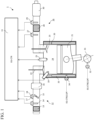
- FIG. 1 is a block diagram illustrating an internal combustion engine to which an embodiment of the fuel injection control method and device according to the present invention is applied.
- this internal combustion engine represents an example of a spark ignition-type and in-cylinder direct injection-type internal combustion engine 1.
- the internal combustion engine 1 of the present embodiment has an air-intake passage 12.
- the air-intake passage 12 is provided with an air filter 13, an air flow meter 14 that detects the intake air flow rate, and a throttle valve 15 and a collector 16 that control the intake air flow rate.
- An exhaust passage 26 is provided with an air-fuel ratio sensor 27 that detects the air-fuel ratio of the exhaust and thus the intake air-fuel mixture by detecting the concentration of a specific component in the exhaust, for example, the concentration of oxygen, and the detection signal of the air-fuel ratio sensor 27 is output to the engine control unit 11.
- the air-fuel ratio sensor 27 may be an oxygen sensor that outputs a rich/lean output or may also be a wide-range air-fuel ratio sensor that linearly detects the air-fuel ratio over a wide range.
- the exhaust passage 26 is also provided with an exhaust purification catalyst 28 for purifying the exhaust.
- the exhaust purification catalyst 28 for use include a three-way catalyst and an oxidation catalyst.
- the oxidation catalyst performs oxidation of the carbon monoxide CO and hydrocarbons HC in the exhaust.
- the exhaust passage 26 is provided with an oxygen sensor 29 downstream the exhaust purification catalyst 28.
- the oxygen sensor 29 detects the concentration of a specific component in the exhaust, for example, the concentration of oxygen and outputs a rich/lean output, and its detection signal is output to the engine control unit 11.
- the oxygen sensor 29 is provided downstream the exhaust purification catalyst 28 for the purpose of suppression or the like of control errors due to deterioration of the air-fuel ratio sensor 27, etc.
- the internal combustion engine 1 has a crankshaft 31 that is provided with a crankshaft angle sensor 32, and the engine control unit 11 can detect an engine rotation speed Ne by counting, for a certain period of time, a crankshaft unit angle signal that is output from the crankshaft angle sensor 32 in synchronization with the engine rotation, or by measuring the cycle of a crank reference angle signal.
- the internal combustion engine 1 has a cooling jacket 33 therein.
- the cooling jacket 33 is provided with a water temperature sensor 34 facing inside the cooling jacket 33.
- the water temperature sensor 34 detects a cooling water temperature Tw in the cooling jacket 33 and outputs it to the engine control unit 11.
- Fuel injection valves 19 are each provided facing inside the combustion chamber 24. Each fuel injection valve 19 is driven to open by a fuel injection pulse signal (signal having a fuel injection pulse width Ti to be described later) that is set in the engine control unit 11. The fuel injection valve 19 directly injects the fuel, which is pressure-fed from the fuel pump and controlled to have a predetermined pressure by a pressure regulator, into the cylinder at a predetermined timing so that the injection amount is obtained in accordance with the driving demand.
- a fuel injection system that supplies the fuel to the fuel injection valves 19 is illustrated in FIG. 2 .
- FIG. 2 is a block diagram illustrating an example of a fuel injection system that supplies fuel to the fuel injection valves 19.
- This system includes a fuel tank 35 that stores fuel.
- the fuel tank 35 is provided with a low-pressure pump 36 that pumps up the fuel.
- the low-pressure pump 36 is driven by an electric motor (not illustrated) whose power source is a battery.
- the fuel sucked by the low-pressure pump 36 is supplied to a high-pressure pump 38 through a low-pressure fuel pipe 37.
- the low-pressure fuel pipe 37 is provided with a pressure regulator 39.
- the pressure regulator 39 regulates the discharge pressure of the low-pressure pump 36, that is, the fuel supply pressure to the high-pressure pump 38, to a predetermined pressure. An excessive amount of fuel above that pressure is returned to the fuel tank 35 through a fuel return pipe 40.
- the high-pressure fuel discharged from the high-pressure pump 38 flows into a fuel rail 44 (also referred to as a delivery pipe) through a high-pressure fuel pipe 43 and is supplied to the fuel injection valves 19 attached to respective cylinders of the internal combustion engine 1.
- the fuel rail 44 which is a part of the high-pressure fuel pipe 43, is provided with a fuel pressure sensor 45 (fuel pressure detection device) that detects the pressure of fuel supplied from the high-pressure pump 38 to the fuel injection valves 19.
- the detection signal of the fuel pressure sensor 45 is output to the engine control unit 11.
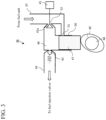
- FIG. 3 is a schematic diagram illustrating a configuration example of the high-pressure pump 38 including a fuel pressure control valve 41 and a check valve 42 of FIG. 2 .
- the high-pressure pump 38 of the present embodiment is a plunger pump that reciprocates a plunger 47 in a fuel chamber 46 to suck/discharge the fuel.
- the plunger 47 is biased toward a pump cam 49 fixed to a camshaft 48 of the internal combustion engine 1 and reciprocates in a plunger cylinder 50 as the pump cam 49 rotates.
- the low-pressure fuel pipe 37 of FIG. 2 is connected to the upper right, and the high-pressure fuel pipe 43 of FIG. 2 is connected to the left.
- the fuel pressure control valve 41 which is composed of a normally open-type solenoid valve, is provided on the low-pressure fuel pipe 37 side of the high-pressure pump 38 of the present embodiment.
- the plunger cylinder 50 communicates with the fuel chamber 46, and the volume of the fuel chamber 46 expands or contracts in accordance with the position of the plunger 47 reciprocating in the plunger cylinder 50.
- the low-pressure fuel pipe 37 and the plunger cylinder 50 are connected via a first opening portion 51.
- the first opening portion 51 opens at the middle of the plunger cylinder 50 so as to communicate with the fuel chamber 46 only when the plunger 47 moves down to expand the fuel chamber 46.
- the low-pressure fuel pipe 37 and the fuel chamber 46 are normally communicated with each other via a second opening portion 52.
- the second opening portion 52 is opened and closed by a valve body 41a of the fuel pressure control valve 41. That is, the fuel pressure control valve 41 controls the opening/closing timing of the valve body 41a thereby to adjust the amount of fuel discharged from the fuel chamber 46 to the high-pressure fuel pipe 43.
- the high-pressure fuel pipe 43 is normally communicated with the fuel chamber 46 via the check valve 42, which allows the fuel to be discharged from the fuel chamber 46 but prevents the backward flow of the fuel.
- the valve body 41a closes the second opening portion 52.
- This operation shuts off the communication between the low-pressure fuel pipe 37 and the fuel chamber 46, and the check valve 42 prevents the backflow of fuel from the high-pressure fuel pipe 43; therefore, the pressure in the fuel chamber 46 becomes negative.
- the plunger 47 further moves down and the first opening portion 51 opens, the fuel from the low-pressure fuel pipe 37 flows into the plunger cylinder 50 and is sucked into the fuel chamber 46.
- the pressure and amount of the fuel discharged from the fuel chamber 46 to the high-pressure fuel pipe 43 are adjusted. For example, as the opening time of the valve body 41a is lengthened when the plunger 47 is in the upward stroke, the fuel pressure can be decreased to reduce the discharge amount of the fuel, while as the opening time of the valve body 41a is shortened when the plunger 47 is in the upward stroke, the fuel pressure can be increased to increase the discharge amount of the fuel.
- the high-pressure pump 38 of the present embodiment is feedback-controlled based on a basic fuel pressure that is preliminarily set in accordance with the engine rotation speed and an actual fuel pressure that is detected by the fuel pressure sensor 45. This will be more specifically described.
- the engine control unit 11 stores a control map of a basic fuel pressure that is preliminarily set for the high-pressure pump 38 in accordance with the engine rotation speed, for example, a control map that is set such that the horizontal axis represents the pulse width for a basic fuel pressure to be output to the fuel pressure control valve 41, which is composed of an electromagnetic valve, and the vertical axis represents the engine rotation speed.
- the pulse width for the basic fuel pressure corresponding to the engine rotation speed is extracted from the control map and corrected with the actual fuel pressure detected by the fuel pressure sensor 45, and the corrected pulse width is adopted as the next pulse width for the fuel pressure.
- the actual fuel pressure used in this operation will be described later.
- the fuel injection valves 19 are driven to open by a fuel injection pulse signal that is set in the engine control unit 11.
- the engine control unit 11 calculates a basic fuel injection pulse width Tp corresponding to a basic fuel injection amount in accordance with the operating conditions of the internal combustion engine 1, such as the driver's accelerator operation and the vehicle speed, and also calculates a fuel pressure correction coefficient K1 and another fuel correction coefficient K2.
- the fuel pressure correction coefficient K1 is calculated in accordance with the fuel pressure detected by the fuel pressure sensor 45.
- a signal of the fuel injection pulse width for control Ti thus obtained is output to the fuel injection valves 19, and a target injection amount of fuel is thereby injected into each cylinder.
- the fuel injection pulse width is corrected in accordance with the fuel pressure detected by the fuel pressure sensor 45, and further to prevent the fuel injection pulse width from being erroneously corrected due to the influence of high-frequency variations in the fuel pressure, the fuel pressure detected by the fuel pressure sensor 45 is subjected to a smoothing process such as a moderating process (weighted averaging process) to correct the fuel injection pulse width in accordance with the detected fuel pressure after the smoothing process.
- a smoothing process such as a moderating process (weighted averaging process) to correct the fuel injection pulse width in accordance with the detected fuel pressure after the smoothing process.
- FIG. 4 is a diagram illustrating an example of the relationships between the fuel pressure detected by the fuel pressure sensor 45, the sampling interval, the calculation interval for the fuel injection pulse, and the timing of fuel injection.
- a thick solid line L indicates a detected voltage value of the fuel pressure sensor 45 at a certain engine speed.
- the pressure of the fuel discharged from the high-pressure pump 38 toward the fuel injection valves 19 is affected by the pressure feeding from the high-pressure pump 38 and/or the fuel injection from the fuel injection valves 19 and therefore generates an analog signal having a periodic waveform as illustrated in FIG. 4 .
- the engine control unit 11 samples the voltage value thus output from the fuel pressure sensor 45 at time intervals, for example, of 2 msec as illustrated in the figure, subjects the voltage values sampled at this cycle to a weighted averaging process at time intervals, for example, of 10 msec, and uses the obtained results for calculation of the fuel injection pulse width.
- the white circles on the waveform L of the detected voltage value of the fuel pressure sensor 45 in FIG. 4 indicate the detected voltage values sampled at 2 msec intervals, and likewise the black circles indicate the voltage values obtained by subjecting the detected voltage values to the weighted averaging process at 10 msec intervals.
- the black-circled voltage values subjected to the weighted averaging process are used for calculation of the subsequent fuel injection ("fuel injection start" timing in the figure).
- the black-circled voltage values subjected to the weighted averaging process periodically vary as indicated by the chain double-dashed line in the figure. Therefore, even when the fuel injection pulse width is calculated using the detected voltage values subjected to the weighted averaging process, the fuel injection amount still includes the variation in the actual fuel pressure.
- the engine control unit 11 of the present embodiment executes a first smoothing process of performing a smoothing process by first smoothing and a second smoothing process of performing a smoothing process by second smoothing different from the first smoothing. Then, the engine control unit 11 performs a selection process of selecting, based on the operating state of the internal combustion engine 1, whether to execute fuel injection control based on a first detected fuel pressure smoothed by the first smoothing process or fuel injection control based on a second detected fuel pressure smoothed by the second smoothing process.
- the fuel injection control executed by the engine control unit 11 includes a correction calculation process of correcting, based on the detected fuel pressures subjected to the smoothing processes of the first smoothing process and the second smoothing process, the above-described basic fuel injection pulse width Tp to calculate a fuel injection pulse width for control Ti.
- the correction calculation process is performed for the fuel injection amount from the fuel injection valves 19.
- the fuel injection control executed by the engine control unit 11 may include fuel pump feedback control of feedback-controlling the fuel pressure control valve 41 of the high-pressure pump 38 based on the detected fuel pressures subjected to the smoothing processes of the first smoothing process and the second smoothing process.
- FIG. 4 is a diagram for describing the first smoothing process executed on the detected voltage value of the fuel pressure sensor 45 in the internal combustion engine 1 of the present embodiment.
- the moderating process as the first smoothing includes sampling the analog detection voltage (indicated by waveform L), which is continuously output from the fuel pressure sensor 45, at time intervals, for example, of 2 msec (intervals of sampling the fuel pressure) and weighted-averaging the fuel pressure value weighted and averaged last time and the fuel pressure value detected this time.
- the weighted average value is updated at intervals of 2 msec.
- Pav represents a moderated value of the detected fuel pressure (i indicates this time and i-1 indicates last time)
- P represents the detected fuel pressure
- ⁇ represents a moderating coefficient (0 ⁇ 1)
- FIG. 5 is a diagram for describing the second smoothing process executed on the detected voltage value of the fuel pressure sensor 45 in the internal combustion engine 1 of the present embodiment.
- the second smoothing is determined in consideration of a waveform L of the detected voltage value of the fuel pressure sensor 45 illustrated in FIG. 5 (the same as the waveform L illustrated in FIG. 4 ), and a process that can absorb or eliminate the periodic variations in the waveform L is adopted.
- the pressure of the fuel discharged from the high-pressure pump 38 toward the fuel injection valves 19 is affected by the pressure feeding from the high-pressure pump 38 and/or the fuel injection from the fuel injection valves 19, and it is thus inferred that the detected voltage value of the pressure sensor 45 exhibits the waveform L illustrated in FIG. 5 .
- the discharge cycle of the high-pressure pump 38 correlates with the rotation cycle of the camshaft 48 of the internal combustion engine 1.
- the rotation cycle of the camshaft 48 of the internal combustion engine 1 is the opening/closing cycle of the intake valve and the exhaust valve, and the discharge cycle of the high-pressure pump 38 can therefore be detected by using a crank angle signal detected by the crank angle sensor 32.
- an averaging process is performed on a plurality of fuel pressure values sampled at time intervals, for example, of 2 msec. This represents the second detected fuel pressure smoothed by the second smoothing process.
- the drive source of the high-pressure pump 38 has no relation to the drive of the internal combustion engine 1, the discharge cycle of the high-pressure pump 38 by the drive source may be detected regardless of the drive cycle of the internal combustion engine 1.
- the detected voltage value (waveform L) of the fuel pressure sensor 45 illustrated in FIG. 5 is strongly affected by the fuel injection and the variation cycle of the analog detection fuel pressure value matches the fuel injection cycle, it is desired to use, as the second smoothing, an average value calculation process of calculating the average value of a plurality of fuel pressures detected during one cycle time correlated with the injection interval of the fuel.
- the injection interval of fuel injection correlates with the combustion cycle of the internal combustion engine 1, and the injection interval of fuel injection can therefore be detected by using the crank angle signal detected by the crank angle sensor 32.
- an averaging process is performed on a plurality of fuel pressure values sampled at time intervals, for example, of 2 msec. This represents the second detected fuel pressure smoothed by the second smoothing process.
- FIG. 5 is a diagram for describing an average value calculation process of calculating the average value of a plurality of fuel pressures detected during one cycle time correlated with the discharge cycle of the high-pressure pump 38 and/or the injection cycle of the fuel injection valves 19.
- the average value calculation process is performed for the output waveform L of the detected voltage value of the fuel pressure sensor 45.
- the high-pressure pump 38 is a pump driven by the pump cam 49 fixed to the camshaft 48 of the internal combustion engine 1
- the discharge cycle of the high-pressure pump 38 correlates with the combustion cycle of the internal combustion engine 1
- the cam shaft 48 rotates once at a crank angle CA of 720°; therefore, in a 3-cylinder engine, the discharge interval of the high-pressure pump 38 and the injection interval of the fuel can be matched at every 240 CA crank angle, and in a 4-cylinder engine, the discharge interval of the high-pressure pump 38 and the injection interval of the fuel can be matched at every 180 CA crank angle.
- the cam shape of the pump cam 49 fixed to the camshaft 48 is formed in such a shape that the discharge interval of the high-pressure pump 38 is 240 CA for a 3-cylinder engine or 180 CA for a 4-cylinder engine.
- the high-pressure pump 38 is a pump driven by the pump cam 49 fixed to the camshaft 48 of the internal combustion engine 1, if it is attempted to match the discharge interval of the high-pressure pump 38 to the injection interval of the fuel in a 6-cylinder engine or an 8-cylinder engine in the same manner as above, they have to be matched at every 120 CA crank angle in a 6-cylinder engine or every 90 CA crank angle in a 8-cylinder engine.
- the pump cam 49 which realizes a short discharge interval such as 90 CA or 120 CA is not practical specifically because the cam shape becomes complicated.
- a crank angle of 240 CA is set as one cycle time as in the case of a 3-cylinder engine
- a crank angle of 180 CA is set as one cycle time as in the case of a 4-cylinder engine. That is, in a 6-cylinder engine or an 8-cylinder engine, the setting is such that the fuel injection is performed twice for one discharge of the high-pressure pump 38, and it is therefore desired to use the average value calculation process of calculating the average value of a plurality of fuel pressures detected by the fuel pressure sensor 45 during one cycle time correlated with the discharge interval of the high-pressure pump 38.
- the camshaft 48 which rotates once at a crank angle of 720 CA
- the cam shape of the pump cam 49 fixed to the camshaft 48 is formed in such a shape that the discharge interval of the high-pressure pump 38 is 240 CA in a 3-cylinder engine and in a 6-cylinder engine or 180 CA in a 4-cylinder engine and in an 8-cylinder engine
- the discharge interval of the high-pressure pump 38 and the injection interval of the fuel are matched in the 3-cylinder engine and the 4-cylinder engine, and therefore the second detected fuel pressure smoothed based on this cycle time is preferably used for both the calculation of the fuel injection pulse width for control of the fuel injection valves 19 and the fuel pump feedback control for the high-pressure pump 38.
- the second smoothing the average value calculation process of calculating the average value of a plurality of fuel pressures detected during one cycle time correlated with the injection interval of the fuel.
- an injection interval of 120 CA is set as one cycle time for sampling the fuel pressure
- an injection interval of 90 CA is set as one cycle time for sampling the fuel pressure
- the second detected fuel pressure smoothed based on this cycle time is used for calculation of the fuel injection pulse width for control of the fuel injection valves 19.
- the cycle time correlated with the discharge interval of the high-pressure pump 38 that is, 240 CA for a 6-cylinder engine or 180 CA for an 8-cylinder engine is set as one cycle time for sampling the fuel pressure, and the second detected fuel pressure smoothed based on this cycle time is used.
- the engine control unit 11 of the present embodiment selects, based on the operating state of the internal combustion engine 1, whether to execute fuel injection control based on the first detected fuel pressure smoothed by the above-described first smoothing process or fuel injection control based on the second detected fuel pressure smoothed by the above-described second smoothing process.
- the operating state of the internal combustion engine 1 is distinguished based on the degree of variation in the detected fuel pressure.
- the distinction based on the degree of variation in the fuel pressure may be made by whether the degree of variation in the fuel pressure is relatively large or small with respect to the previous degree of variation or may alternatively be made by whether the degree of variation in the fuel pressure is in a transient state or a steady state.
- the degree of variation in the detected fuel pressure is relatively large or in the transient state
- the distinction may be made whether the internal combustion engine 1 is being started or has been started. For example, from the start of the internal combustion engine 1 until a predetermined time elapses after the engine rotation speed and the fuel pressure reach predetermined values or more, a determination may be made that the internal combustion engine 1 is being started, and thereafter a determination may be made that the internal combustion engine 1 has been started.
- the degree of variation in the detected fuel pressure refers to the amount of variation in the detected fuel pressure per unit time (including an increase (+) and a decrease (-)), and it can be obtained by performing a comparison calculation on the fuel pressure values detected by the fuel pressure sensor 45.
- a predetermined determination value range range of ⁇ a (a is a positive constant)
- the degree of variation in the fuel pressure is in a transient state
- the degree of variation is within the predetermined determination value range
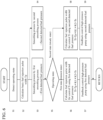
- step S1 detection signals are input, including a detection signal from the vehicle speed sensor, a detection signal from the accelerator opening degree sensor, a detection signal from the crank angle sensor 32, a flag indicating the engine start, a detection signal from the fuel pressure sensor 45, and other detection signals from various sensors relating to the operating state of the internal combustion engine 1.
- Step S1 is followed by step S2, in which the basic fuel injection pulse width Tp corresponding to the basic fuel injection amount is calculated in accordance with the operating load of the internal combustion engine 1 due to the driver's accelerator operation, such as the detection signal from the vehicle speed sensor or the detection signal from the accelerator opening degree sensor.
- step S3 the detection signal obtained by the fuel pressure sensor 45 is processed by the first smoothing, and this is adopted as the first detected fuel pressure.
- step S4 the detection signal obtained by the fuel pressure sensor 45 is processed by the second smoothing, and this is adopted as the second detected fuel pressure.
- the first smoothing is a process in which the data sampling range is set as a unit time
- the second smoothing is a process in which the data sampling range is set as a variation cycle of the fuel pressure.
- Steps S3 and S4 are followed by step S5, in which a determination is made whether the operating state of the internal combustion engine 1 is a first state (e.g., transient state, when starting the internal combustion engine 1) or a second state (e.g., steady state, after starting the internal combustion engine 1).
- This determination is executed based on the degree of variation in the fuel pressure detected by the fuel pressure sensor 45. For example, when the degree of variation in the fuel pressure is relatively large or in the transient state, the first state is determined, while when the degree of variation in the fuel pressure is relatively small or in the steady state, the second state is determined.
- the process proceeds to step S6.
- step S7 the fuel pressure control valve 41 of the high-pressure pump 38 is feedback-controlled using the first detected fuel pressure calculated in step S3. According to this feedback control, the opening degree of the valve body 41a of the fuel pressure control valve 41 is adjusted in response to the first detected fuel pressure.
- step S9 the fuel pressure control valve 41 of the high-pressure pump 38 is feedback-controlled using the second detected fuel pressure calculated in step S4. According to this feedback control, the opening degree of the valve body 41a of the fuel pressure control valve 41 is adjusted in response to the second detected fuel pressure.
- the first smoothing process in step S3 and the second smoothing process in step S4 illustrated in FIG. 6 are configured to be executed in parallel before determining the operating state of the internal combustion engine 1 in step S5, but the routine may be modified such that the order of step S5 and steps S3 and S4 is reversed, the operating state of the internal combustion engine 1 is determined in step S5, and any one of steps S3 and S4 is executed in accordance with the determination result.
- a first smoothing process of performing a smoothing process on a detected fuel pressure by first smoothing a second smoothing process of performing a smoothing process on the detected fuel pressure by second smoothing different from the first smoothing, and a selection process of selecting, based on an operating state of the internal combustion engine, whether to execute fuel injection control based on a first detected fuel pressure smoothed by the first smoothing process or fuel injection control based on a second detected fuel pressure smoothed by the second smoothing process.
- This can further improve the accuracy in the air-fuel ratio control in accordance with the operating state of the internal combustion engine 1.
- the selection process selects whether to execute the fuel injection control by the fuel injection pulse width for control corrected based on the first detected fuel pressure or the fuel injection control by the fuel injection pulse width corrected based on the second detected fuel pressure. This can further improve the accuracy in the air-fuel ratio control in accordance with the operating state of the internal combustion engine 1 from the viewpoint of the fuel injection amount.
- the selection process selects whether to execute the fuel pump feedback control based on the first detected fuel pressure or the fuel pump feedback control based on the second detected fuel pressure. This can further improve the accuracy in the air-fuel ratio control in accordance with the operating state of the internal combustion engine 1 from the viewpoint of the fuel pressure.
- the operating state is distinguished based on a degree of variation in the detected fuel pressure, or the operating state is distinguished by whether it is in a transient state or a steady state.
- the fuel injection control based on the first detected fuel pressure is executed, and when the degree of variation in the detected fuel pressure is relatively small or in the steady state, the fuel injection control based on the second detected fuel pressure is executed.
- the above high-pressure pump 38 corresponds to the fuel pump according to the present invention
- the above fuel pressure sensor 45 corresponds to the fuel pressure detection device according to the present invention
- the above engine control unit 11 corresponds to the control device according to the present invention.
Landscapes
- Engineering & Computer Science (AREA)
- Chemical & Material Sciences (AREA)
- Combustion & Propulsion (AREA)
- Mechanical Engineering (AREA)
- General Engineering & Computer Science (AREA)
- Electrical Control Of Air Or Fuel Supplied To Internal-Combustion Engine (AREA)
- Combined Controls Of Internal Combustion Engines (AREA)
Claims (4)
- Kraftstoffeinspritzung-Steuerverfahren für eine Brennkraftmaschine (1), wobei die Brennkraftmaschine (1) eine Brennkraftmaschine vom In-Zylinder-Einspritzungstyp ist,
umfassend:- eine Kraftstoffpumpe (38), die Kraftstoff unter Druck zuführt;- ein Kraftstoffeinspritzventil (19), das den durch die Kraftstoffpumpe (38) unter Druck geförderten Kraftstoff direkt in einen Zylinder (20) der Brennkraftmaschine (1) einspritzt; und- eine Kraftstoffdruck-Erfassungsvorrichtung (45), die einen Druck des durch die Kraftstoffpumpe (38) unter Druck geförderten Kraftstoffs erfasst,wobei:- das Kraftstoffeinspritzung-Steuerverfahren aufweist:- einen ersten Glättungsvorgang zum Ausführen eines Glättungsvorgangs an einem erfassten Kraftstoffdruck durch erste Glättung;- einen zweiten Glättungsvorgang zum Ausführen eines Glättungsvorgangs an dem erfassten Kraftstoffdruck durch zweite Glättung, die sich von der ersten Glättung unterscheidet; und- einen Auswahlvorgang zum Auswählen, basierend auf einem Betriebszustand der Brennkraftmaschine (1), ob eine Kraftstoffeinspritzsteuerung basierend auf einem ersten erfassten Kraftstoffdruck, der durch den ersten Glättungsvorgang geglättet wird, oder eine Kraftstoffeinspritzsteuerung basierend auf einem zweiten erfassten Kraftstoffdruck, der durch den zweiten Glättungsvorgang geglättet wird, ausgeführt werden soll,- der zweite Glättungsvorgang ist:- ein Durchschnittswertberechnungsvorgang zum Berechnen eines Durchschnittswerts einer Mehrzahl von Kraftstoffdrücken, die während einer Zykluszeit erfasst wird, die mit einem Entladeintervall der Kraftstoffpumpe (38) korreliert wird; oder- ein Durchschnittswertberechnungsvorgang zum Berechnen eines Durchschnittswerts einer Mehrzahl von Kraftstoffdrücken, die während einer Zykluszeit erfasst wird, die mit einem Einspritzintervall des Kraftstoffs korreliert wird,- der erste Glättungsvorgang ein moderierender Vorgang zum Ausführen von Berechnung basierend auf einer Funktion von Pav(i) = Pav(i-1) × α + P × (1-α) ist, wobei Pav einen moderierten Wert des erfassten Kraftstoffdrucks darstellt, i diesen Zeitpunkt darstellt, i-1 den letzten Zeitpunkt darstellt, P den erfassten Kraftstoffdruck darstellt und α einen moderierenden Koeffizienten darstellt, wobei die Beziehung 0 < α < 1 erfüllt ist,- der Betriebszustand basierend auf einem Grad von Veränderung des erfassten Kraftstoffdrucks unterschieden wird,- wobei der Betriebszustand dadurch unterschieden wird, ob er sich in einem transienten Zustand oder in einem stationären Zustand befindet,- wenn der Grad von Veränderung des erfassten Kraftstoffdrucks relativ groß ist oder sich im transienten Zustand befindet, wird die auf dem ersten erfassten Kraftstoffdruck basierende Kraftstoffeinspritzsteuerung ausgeführt, und- wenn der Grad von Veränderung des erfassten Kraftstoffdrucks relativ gering ist oder sich in einem stationären Zustand befindet, wird die Kraftstoffeinspritzsteuerung basierend auf dem zweiten erfassten Kraftstoffdruck ausgeführt. - Kraftstoffeinspritzung-Steuerverfahren nach Anspruch 1, wobei:- die Kraftstoffeinspritzsteuerung einen Korrekturberechnungsvorgang zum Korrigieren einer Basis-Kraftstoffeinspritzimpulsbreite basierend auf dem erfassten Kraftstoffdruck beim Glättungsvorgang aufweist, um eine Kraftstoffeinspritzimpulsbreite zum Steuern zu berechnen, und- der Auswahlvorgang auswählt, ob die Kraftstoffeinspritzsteuerung durch die Kraftstoffeinspritzimpulsbreite zum Steuern, die basierend auf dem ersten erfassten Kraftstoffdruck korrigiert wird, oder die Kraftstoffeinspritzsteuerung durch die Kraftstoffeinspritzimpulsbreite, die basierend auf dem zweiten erfassten Kraftstoffdruck korrigiert wird, ausgeführt werden soll.
- Kraftstoffeinspritzung-Steuerverfahren nach Anspruch 1 oder 2, wobei:- die Kraftstoffeinspritzsteuerung eine Kraftstoffpumpen-Rückkopplungssteuerung zum Rückkoppeln der Kraftstoffpumpe (38) basierend auf dem erfassten Kraftstoffdruck beim Glättungsvorgang aufweist, und- der Auswahlvorgang auswählt, ob die Kraftstoffpumpen-Rückkopplungssteuerung basierend auf dem ersten erfassten Kraftstoffdruck oder die Kraftstoffpumpen-Rückkopplungssteuerung basierend auf dem zweiten erfassten Kraftstoffdruck ausgeführt werden soll.
- Kraftstoffeinspritzung-Steuervorrichtung für eine Brennkraftmaschine (1), umfassend:- eine Kraftstoffpumpe (38), die Kraftstoff unter Druck zuführt;- ein Kraftstoffeinspritzventil (19), das den durch die Kraftstoffpumpe (38) unter Druck geförderten Kraftstoff direkt in einen Zylinder (20) der Brennkraftmaschine (1) einspritzt;- eine Kraftstoffdruck-Erfassungsvorrichtung (45), die einen Druck des durch die Kraftstoffpumpe (38) unter Druck geförderten Kraftstoffs erfasst; und- eine Steuereinheit (11),wobei:- die Steuereinheit (11) konfiguriert ist, um Folgendes auszuführen:- einen ersten Glättungsvorgang zum Ausführen eines Glättungsvorgangs an einem erfassten Kraftstoffdruck durch erste Glättung;- einen zweiten Glättungsvorgang zum Ausführen eines Glättungsvorgangs an dem erfassten Kraftstoffdruck durch zweite Glättung, die sich von der ersten Glättung unterscheidet; und- einen Auswahlvorgang zum Auswählen, basierend auf einem Betriebszustand der Brennkraftmaschine (1), ob eine Kraftstoffeinspritzungssteuerung basierend auf einem ersten erfassten Kraftstoffdruck, der durch den ersten Glättungsvorgang geglättet wird, oder eine Kraftstoffeinspritzungssteuerung basierend auf einem zweiten erfassten Kraftstoffdruck, der durch den zweiten Glättungsvorgang geglättet wird, ausgeführt werden soll,- der zweite Glättungsvorgang ist:- ein Durchschnittswertberechnungsvorgang zum Berechnen eines Durchschnittswerts einer Mehrzahl von Kraftstoffdrücken, die während einer Zykluszeit erfasst wird, die mit einem Entladeintervall der Kraftstoffpumpe (38) korreliert wird; oder- ein Durchschnittswertberechnungsvorgang zum Berechnen eines Durchschnittswerts einer Mehrzahl von Kraftstoffdrücken, die während einer Zykluszeit erfasst wird, die mit einem Einspritzintervall des Kraftstoffs korreliert wird,- der erste Glättungsvorgang ein moderierender Vorgang zum Ausführen von Berechnung basierend auf einer Funktion von Pav(i) = Pav(i-1) × α + P × (1-α) darstellt, wobei Pav einen moderierten Wert des erfassten Kraftstoffdrucks darstellt, i diesen Zeitpunkt darstellt, i-1 den letzten Zeitpunkt darstellt, P den erfassten Kraftstoffdruck darstellt und α einen moderierenden Koeffizienten darstellt, wobei die Beziehung 0 < α < 1 erfüllt ist,- der Betriebszustand basierend auf einem Grad von Veränderung des erfassten Kraftstoffdrucks unterschieden wird,- wobei der Betriebszustand dadurch unterschieden wird, ob er sich in einem transienten Zustand oder in einem stationären Zustand befindet,- wenn der Grad von Veränderung des erfassten Kraftstoffdrucks relativ groß ist oder sich in dem transienten Zustand befindet, wird die Kraftstoffeinspritzungssteuerung basierend auf dem ersten erfassten Kraftstoffdruck ausgeführt, und- wenn der Grad von Veränderung des erfassten Kraftstoffdrucks relativ klein ist oder sich in einem stationären Zustand befindet, wird die Kraftstoffeinspritzungssteuerung basierend auf dem zweiten erfassten Kraftstoffdruck ausgeführt.
Applications Claiming Priority (1)
| Application Number | Priority Date | Filing Date | Title |
|---|---|---|---|
| PCT/JP2020/018117 WO2021220400A1 (ja) | 2020-04-28 | 2020-04-28 | 内燃機関の燃料噴射制御方法及び装置 |
Publications (3)
| Publication Number | Publication Date |
|---|---|
| EP4144978A1 EP4144978A1 (de) | 2023-03-08 |
| EP4144978A4 EP4144978A4 (de) | 2023-06-28 |
| EP4144978B1 true EP4144978B1 (de) | 2024-10-23 |
Family
ID=78332320
Family Applications (1)
| Application Number | Title | Priority Date | Filing Date |
|---|---|---|---|
| EP20933692.4A Active EP4144978B1 (de) | 2020-04-28 | 2020-04-28 | Verfahren und vorrichtung zur steuerung der kraftstoffeinspritzung für einen verbrennungsmotor |
Country Status (5)
| Country | Link |
|---|---|
| US (1) | US11828244B2 (de) |
| EP (1) | EP4144978B1 (de) |
| JP (1) | JP7283634B2 (de) |
| CN (1) | CN115443374A (de) |
| WO (1) | WO2021220400A1 (de) |
Family Cites Families (13)
| Publication number | Priority date | Publication date | Assignee | Title |
|---|---|---|---|---|
| JPS59185815A (ja) * | 1983-04-07 | 1984-10-22 | Diesel Kiki Co Ltd | 内燃機関の排気微粒子処理装置 |
| JPH09256897A (ja) * | 1996-03-22 | 1997-09-30 | Unisia Jecs Corp | 内燃機関の燃料噴射制御装置 |
| JP3834918B2 (ja) * | 1997-03-04 | 2006-10-18 | いすゞ自動車株式会社 | エンジンの燃料噴射方法及びその装置 |
| JP3849367B2 (ja) * | 1999-09-20 | 2006-11-22 | いすゞ自動車株式会社 | コモンレール式燃料噴射装置 |
| JP3511492B2 (ja) * | 1999-12-14 | 2004-03-29 | 三菱電機株式会社 | 筒内噴射エンジンの燃料噴射制御装置 |
| JP2004183550A (ja) * | 2002-12-03 | 2004-07-02 | Isuzu Motors Ltd | コモンレール圧検出値のフィルタ処理装置及びコモンレール式燃料噴射制御装置 |
| JP2004346852A (ja) * | 2003-05-23 | 2004-12-09 | Mitsubishi Automob Eng Co Ltd | 内燃機関の燃料噴射制御装置 |
| PL382259A1 (pl) * | 2007-04-24 | 2008-10-27 | Tomasz Marcin Pirowski | Zewnętrzny moduł sterowania mocą silnika |
| JP5045640B2 (ja) * | 2008-10-27 | 2012-10-10 | 株式会社デンソー | 筒内噴射式内燃機関の燃料噴射制御装置 |
| JP5579787B2 (ja) * | 2012-06-19 | 2014-08-27 | 本田技研工業株式会社 | 内燃機関の制御装置 |
| CN108350819B (zh) * | 2015-11-05 | 2021-08-31 | 丰田自动车株式会社 | 内燃机的控制装置 |
| JP2017166418A (ja) * | 2016-03-16 | 2017-09-21 | トヨタ自動車株式会社 | 自動車 |
| JP6960370B2 (ja) * | 2018-04-19 | 2021-11-05 | 日立Astemo株式会社 | 内燃機関の燃料噴射制御装置 |
-
2020
- 2020-04-28 JP JP2022518486A patent/JP7283634B2/ja active Active
- 2020-04-28 US US17/921,892 patent/US11828244B2/en active Active
- 2020-04-28 EP EP20933692.4A patent/EP4144978B1/de active Active
- 2020-04-28 CN CN202080099906.7A patent/CN115443374A/zh active Pending
- 2020-04-28 WO PCT/JP2020/018117 patent/WO2021220400A1/ja not_active Ceased
Also Published As
| Publication number | Publication date |
|---|---|
| WO2021220400A1 (ja) | 2021-11-04 |
| CN115443374A (zh) | 2022-12-06 |
| EP4144978A4 (de) | 2023-06-28 |
| US20230167781A1 (en) | 2023-06-01 |
| EP4144978A1 (de) | 2023-03-08 |
| US11828244B2 (en) | 2023-11-28 |
| JPWO2021220400A1 (de) | 2021-11-04 |
| JP7283634B2 (ja) | 2023-05-30 |
Similar Documents
| Publication | Publication Date | Title |
|---|---|---|
| JP4782759B2 (ja) | 内燃機関制御装置および内燃機関制御システム | |
| JP4096924B2 (ja) | 内燃機関用噴射量制御装置 | |
| RU2568373C2 (ru) | Способ диагностики топливных форсунок | |
| JP2005307747A (ja) | 内燃機関の燃料供給装置 | |
| US10077732B2 (en) | Fuel injection control device for internal combustion engine | |
| US20130197786A1 (en) | Control apparatus and control method for multi-cylinder internal combustion engine | |
| US7885757B2 (en) | Degradation determination apparatus and degradation determination system for oxygen concentration sensor | |
| US7574299B2 (en) | Fuel injection control apparatus and method for internal combustion engine | |
| JP5040884B2 (ja) | 燃料噴射制御装置 | |
| JP2009008005A (ja) | 内燃機関の制御装置 | |
| US5826564A (en) | Fuel injection control apparatus and method for engine | |
| JP2005048659A (ja) | 燃料温度推定装置 | |
| EP4144978B1 (de) | Verfahren und vorrichtung zur steuerung der kraftstoffeinspritzung für einen verbrennungsmotor | |
| JP2009250075A (ja) | 燃料噴射量制御装置及び燃料噴射システム | |
| JP2002047983A (ja) | 内燃機関の高圧燃料供給システムの異常診断装置 | |
| JP4759496B2 (ja) | 内燃機関の排ガス浄化装置 | |
| JPH09256886A (ja) | 直噴式エンジンの燃料噴射制御装置 | |
| JP2001304012A (ja) | 内燃機関の燃料噴射量制御装置 | |
| JP2000110618A (ja) | 内燃機関の燃料噴射量制御装置 | |
| JP4407442B2 (ja) | 筒内噴射式エンジンの燃圧制御装置 | |
| US20100043754A1 (en) | Controller for internal combustion engine | |
| JP2000257476A (ja) | 筒内噴射式内燃機関の制御装置 | |
| JP4743090B2 (ja) | 多気筒エンジンの燃料噴射装置 | |
| JP4032952B2 (ja) | 内燃機関の可変バルブ制御装置 | |
| JP2000045842A (ja) | 内燃機関の燃料噴射制御装置 |
Legal Events
| Date | Code | Title | Description |
|---|---|---|---|
| STAA | Information on the status of an ep patent application or granted ep patent |
Free format text: STATUS: THE INTERNATIONAL PUBLICATION HAS BEEN MADE |
|
| PUAI | Public reference made under article 153(3) epc to a published international application that has entered the european phase |
Free format text: ORIGINAL CODE: 0009012 |
|
| STAA | Information on the status of an ep patent application or granted ep patent |
Free format text: STATUS: REQUEST FOR EXAMINATION WAS MADE |
|
| 17P | Request for examination filed |
Effective date: 20221025 |
|
| AK | Designated contracting states |
Kind code of ref document: A1 Designated state(s): AL AT BE BG CH CY CZ DE DK EE ES FI FR GB GR HR HU IE IS IT LI LT LU LV MC MK MT NL NO PL PT RO RS SE SI SK SM TR |
|
| REG | Reference to a national code |
Ref country code: DE Ref legal event code: R079 Free format text: PREVIOUS MAIN CLASS: F02D0041340000 Ipc: F02D0041380000 Ref country code: DE Ref legal event code: R079 Ref document number: 602020040107 Country of ref document: DE Free format text: PREVIOUS MAIN CLASS: F02D0041340000 Ipc: F02D0041380000 |
|
| A4 | Supplementary search report drawn up and despatched |
Effective date: 20230526 |
|
| RIC1 | Information provided on ipc code assigned before grant |
Ipc: F02D 41/14 20060101ALN20230522BHEP Ipc: F02D 41/40 20060101ALI20230522BHEP Ipc: F02D 41/38 20060101AFI20230522BHEP |
|
| DAV | Request for validation of the european patent (deleted) | ||
| DAX | Request for extension of the european patent (deleted) | ||
| GRAP | Despatch of communication of intention to grant a patent |
Free format text: ORIGINAL CODE: EPIDOSNIGR1 |
|
| STAA | Information on the status of an ep patent application or granted ep patent |
Free format text: STATUS: GRANT OF PATENT IS INTENDED |
|
| RIC1 | Information provided on ipc code assigned before grant |
Ipc: F02D 41/14 20060101ALN20240730BHEP Ipc: F02D 41/40 20060101ALI20240730BHEP Ipc: F02D 41/38 20060101AFI20240730BHEP |
|
| GRAS | Grant fee paid |
Free format text: ORIGINAL CODE: EPIDOSNIGR3 |
|
| INTG | Intention to grant announced |
Effective date: 20240809 |
|
| GRAA | (expected) grant |
Free format text: ORIGINAL CODE: 0009210 |
|
| STAA | Information on the status of an ep patent application or granted ep patent |
Free format text: STATUS: THE PATENT HAS BEEN GRANTED |
|
| AK | Designated contracting states |
Kind code of ref document: B1 Designated state(s): AL AT BE BG CH CY CZ DE DK EE ES FI FR GB GR HR HU IE IS IT LI LT LU LV MC MK MT NL NO PL PT RO RS SE SI SK SM TR |
|
| REG | Reference to a national code |
Ref country code: GB Ref legal event code: FG4D |
|
| REG | Reference to a national code |
Ref country code: CH Ref legal event code: EP |
|
| REG | Reference to a national code |
Ref country code: DE Ref legal event code: R096 Ref document number: 602020040107 Country of ref document: DE |
|
| REG | Reference to a national code |
Ref country code: IE Ref legal event code: FG4D |
|
| REG | Reference to a national code |
Ref country code: LT Ref legal event code: MG9D |
|
| REG | Reference to a national code |
Ref country code: NL Ref legal event code: MP Effective date: 20241023 |
|
| REG | Reference to a national code |
Ref country code: AT Ref legal event code: MK05 Ref document number: 1735010 Country of ref document: AT Kind code of ref document: T Effective date: 20241023 |
|
| PG25 | Lapsed in a contracting state [announced via postgrant information from national office to epo] |
Ref country code: NL Free format text: LAPSE BECAUSE OF FAILURE TO SUBMIT A TRANSLATION OF THE DESCRIPTION OR TO PAY THE FEE WITHIN THE PRESCRIBED TIME-LIMIT Effective date: 20241023 |
|
| PG25 | Lapsed in a contracting state [announced via postgrant information from national office to epo] |
Ref country code: NL Free format text: LAPSE BECAUSE OF FAILURE TO SUBMIT A TRANSLATION OF THE DESCRIPTION OR TO PAY THE FEE WITHIN THE PRESCRIBED TIME-LIMIT Effective date: 20241023 |
|
| PG25 | Lapsed in a contracting state [announced via postgrant information from national office to epo] |
Ref country code: PT Free format text: LAPSE BECAUSE OF FAILURE TO SUBMIT A TRANSLATION OF THE DESCRIPTION OR TO PAY THE FEE WITHIN THE PRESCRIBED TIME-LIMIT Effective date: 20250224 Ref country code: HR Free format text: LAPSE BECAUSE OF FAILURE TO SUBMIT A TRANSLATION OF THE DESCRIPTION OR TO PAY THE FEE WITHIN THE PRESCRIBED TIME-LIMIT Effective date: 20241023 Ref country code: IS Free format text: LAPSE BECAUSE OF FAILURE TO SUBMIT A TRANSLATION OF THE DESCRIPTION OR TO PAY THE FEE WITHIN THE PRESCRIBED TIME-LIMIT Effective date: 20250223 |
|
| PG25 | Lapsed in a contracting state [announced via postgrant information from national office to epo] |
Ref country code: FI Free format text: LAPSE BECAUSE OF FAILURE TO SUBMIT A TRANSLATION OF THE DESCRIPTION OR TO PAY THE FEE WITHIN THE PRESCRIBED TIME-LIMIT Effective date: 20241023 |
|
| PG25 | Lapsed in a contracting state [announced via postgrant information from national office to epo] |
Ref country code: BG Free format text: LAPSE BECAUSE OF FAILURE TO SUBMIT A TRANSLATION OF THE DESCRIPTION OR TO PAY THE FEE WITHIN THE PRESCRIBED TIME-LIMIT Effective date: 20241023 |
|
| PG25 | Lapsed in a contracting state [announced via postgrant information from national office to epo] |
Ref country code: ES Free format text: LAPSE BECAUSE OF FAILURE TO SUBMIT A TRANSLATION OF THE DESCRIPTION OR TO PAY THE FEE WITHIN THE PRESCRIBED TIME-LIMIT Effective date: 20241023 |
|
| PG25 | Lapsed in a contracting state [announced via postgrant information from national office to epo] |
Ref country code: NO Free format text: LAPSE BECAUSE OF FAILURE TO SUBMIT A TRANSLATION OF THE DESCRIPTION OR TO PAY THE FEE WITHIN THE PRESCRIBED TIME-LIMIT Effective date: 20250123 |
|
| PG25 | Lapsed in a contracting state [announced via postgrant information from national office to epo] |
Ref country code: AT Free format text: LAPSE BECAUSE OF FAILURE TO SUBMIT A TRANSLATION OF THE DESCRIPTION OR TO PAY THE FEE WITHIN THE PRESCRIBED TIME-LIMIT Effective date: 20241023 Ref country code: GR Free format text: LAPSE BECAUSE OF FAILURE TO SUBMIT A TRANSLATION OF THE DESCRIPTION OR TO PAY THE FEE WITHIN THE PRESCRIBED TIME-LIMIT Effective date: 20250124 Ref country code: LV Free format text: LAPSE BECAUSE OF FAILURE TO SUBMIT A TRANSLATION OF THE DESCRIPTION OR TO PAY THE FEE WITHIN THE PRESCRIBED TIME-LIMIT Effective date: 20241023 |
|
| PG25 | Lapsed in a contracting state [announced via postgrant information from national office to epo] |
Ref country code: PL Free format text: LAPSE BECAUSE OF FAILURE TO SUBMIT A TRANSLATION OF THE DESCRIPTION OR TO PAY THE FEE WITHIN THE PRESCRIBED TIME-LIMIT Effective date: 20241023 |
|
| PG25 | Lapsed in a contracting state [announced via postgrant information from national office to epo] |
Ref country code: RS Free format text: LAPSE BECAUSE OF FAILURE TO SUBMIT A TRANSLATION OF THE DESCRIPTION OR TO PAY THE FEE WITHIN THE PRESCRIBED TIME-LIMIT Effective date: 20250123 |
|
| PG25 | Lapsed in a contracting state [announced via postgrant information from national office to epo] |
Ref country code: SM Free format text: LAPSE BECAUSE OF FAILURE TO SUBMIT A TRANSLATION OF THE DESCRIPTION OR TO PAY THE FEE WITHIN THE PRESCRIBED TIME-LIMIT Effective date: 20241023 |
|
| PGFP | Annual fee paid to national office [announced via postgrant information from national office to epo] |
Ref country code: DE Payment date: 20250319 Year of fee payment: 6 |
|
| PG25 | Lapsed in a contracting state [announced via postgrant information from national office to epo] |
Ref country code: DK Free format text: LAPSE BECAUSE OF FAILURE TO SUBMIT A TRANSLATION OF THE DESCRIPTION OR TO PAY THE FEE WITHIN THE PRESCRIBED TIME-LIMIT Effective date: 20241023 |
|
| PG25 | Lapsed in a contracting state [announced via postgrant information from national office to epo] |
Ref country code: EE Free format text: LAPSE BECAUSE OF FAILURE TO SUBMIT A TRANSLATION OF THE DESCRIPTION OR TO PAY THE FEE WITHIN THE PRESCRIBED TIME-LIMIT Effective date: 20241023 |
|
| PG25 | Lapsed in a contracting state [announced via postgrant information from national office to epo] |
Ref country code: RO Free format text: LAPSE BECAUSE OF FAILURE TO SUBMIT A TRANSLATION OF THE DESCRIPTION OR TO PAY THE FEE WITHIN THE PRESCRIBED TIME-LIMIT Effective date: 20241023 |
|
| REG | Reference to a national code |
Ref country code: DE Ref legal event code: R097 Ref document number: 602020040107 Country of ref document: DE |
|
| PG25 | Lapsed in a contracting state [announced via postgrant information from national office to epo] |
Ref country code: SK Free format text: LAPSE BECAUSE OF FAILURE TO SUBMIT A TRANSLATION OF THE DESCRIPTION OR TO PAY THE FEE WITHIN THE PRESCRIBED TIME-LIMIT Effective date: 20241023 |
|
| PG25 | Lapsed in a contracting state [announced via postgrant information from national office to epo] |
Ref country code: CZ Free format text: LAPSE BECAUSE OF FAILURE TO SUBMIT A TRANSLATION OF THE DESCRIPTION OR TO PAY THE FEE WITHIN THE PRESCRIBED TIME-LIMIT Effective date: 20241023 |
|
| PG25 | Lapsed in a contracting state [announced via postgrant information from national office to epo] |
Ref country code: IT Free format text: LAPSE BECAUSE OF FAILURE TO SUBMIT A TRANSLATION OF THE DESCRIPTION OR TO PAY THE FEE WITHIN THE PRESCRIBED TIME-LIMIT Effective date: 20241023 |
|
| PLBE | No opposition filed within time limit |
Free format text: ORIGINAL CODE: 0009261 |
|
| STAA | Information on the status of an ep patent application or granted ep patent |
Free format text: STATUS: NO OPPOSITION FILED WITHIN TIME LIMIT |
|
| PG25 | Lapsed in a contracting state [announced via postgrant information from national office to epo] |
Ref country code: SE Free format text: LAPSE BECAUSE OF FAILURE TO SUBMIT A TRANSLATION OF THE DESCRIPTION OR TO PAY THE FEE WITHIN THE PRESCRIBED TIME-LIMIT Effective date: 20241023 |
|
| 26N | No opposition filed |
Effective date: 20250724 |
|
| REG | Reference to a national code |
Ref country code: CH Ref legal event code: H13 Free format text: ST27 STATUS EVENT CODE: U-0-0-H10-H13 (AS PROVIDED BY THE NATIONAL OFFICE) Effective date: 20251125 |
|
| PG25 | Lapsed in a contracting state [announced via postgrant information from national office to epo] |
Ref country code: LU Free format text: LAPSE BECAUSE OF NON-PAYMENT OF DUE FEES Effective date: 20250428 |
|
| PG25 | Lapsed in a contracting state [announced via postgrant information from national office to epo] |
Ref country code: MC Free format text: LAPSE BECAUSE OF FAILURE TO SUBMIT A TRANSLATION OF THE DESCRIPTION OR TO PAY THE FEE WITHIN THE PRESCRIBED TIME-LIMIT Effective date: 20241023 |
|
| REG | Reference to a national code |
Ref country code: BE Ref legal event code: MM Effective date: 20250430 |
|
| PG25 | Lapsed in a contracting state [announced via postgrant information from national office to epo] |
Ref country code: BE Free format text: LAPSE BECAUSE OF NON-PAYMENT OF DUE FEES Effective date: 20250430 |
|
| PG25 | Lapsed in a contracting state [announced via postgrant information from national office to epo] |
Ref country code: CH Free format text: LAPSE BECAUSE OF NON-PAYMENT OF DUE FEES Effective date: 20250430 |
|
| PGFP | Annual fee paid to national office [announced via postgrant information from national office to epo] |
Ref country code: GB Payment date: 20260319 Year of fee payment: 7 |
|
| PG25 | Lapsed in a contracting state [announced via postgrant information from national office to epo] |
Ref country code: IE Free format text: LAPSE BECAUSE OF NON-PAYMENT OF DUE FEES Effective date: 20250428 |
|
| PGFP | Annual fee paid to national office [announced via postgrant information from national office to epo] |
Ref country code: FR Payment date: 20260320 Year of fee payment: 7 |