EP4010423B1 - Durchsichtige zusammensetzung - Google Patents
Durchsichtige zusammensetzung Download PDFInfo
- Publication number
- EP4010423B1 EP4010423B1 EP20746683.0A EP20746683A EP4010423B1 EP 4010423 B1 EP4010423 B1 EP 4010423B1 EP 20746683 A EP20746683 A EP 20746683A EP 4010423 B1 EP4010423 B1 EP 4010423B1
- Authority
- EP
- European Patent Office
- Prior art keywords
- weight
- acid
- carbon atoms
- radicals
- compositions
- Prior art date
- Legal status (The legal status is an assumption and is not a legal conclusion. Google has not performed a legal analysis and makes no representation as to the accuracy of the status listed.)
- Active
Links
Classifications
-
- C—CHEMISTRY; METALLURGY
- C08—ORGANIC MACROMOLECULAR COMPOUNDS; THEIR PREPARATION OR CHEMICAL WORKING-UP; COMPOSITIONS BASED THEREON
- C08L—COMPOSITIONS OF MACROMOLECULAR COMPOUNDS
- C08L33/00—Compositions of homopolymers or copolymers of compounds having one or more unsaturated aliphatic radicals, each having only one carbon-to-carbon double bond, and only one being terminated by only one carboxyl radical, or of salts, anhydrides, esters, amides, imides or nitriles thereof; Compositions of derivatives of such polymers
- C08L33/04—Homopolymers or copolymers of esters
- C08L33/06—Homopolymers or copolymers of esters of esters containing only carbon, hydrogen and oxygen, which oxygen atoms are present only as part of the carboxyl radical
- C08L33/10—Homopolymers or copolymers of methacrylic acid esters
- C08L33/12—Homopolymers or copolymers of methyl methacrylate
-
- C—CHEMISTRY; METALLURGY
- C08—ORGANIC MACROMOLECULAR COMPOUNDS; THEIR PREPARATION OR CHEMICAL WORKING-UP; COMPOSITIONS BASED THEREON
- C08G—MACROMOLECULAR COMPOUNDS OBTAINED OTHERWISE THAN BY REACTIONS ONLY INVOLVING UNSATURATED CARBON-TO-CARBON BONDS
- C08G77/00—Macromolecular compounds obtained by reactions forming a linkage containing silicon with or without sulfur, nitrogen, oxygen or carbon in the main chain of the macromolecule
- C08G77/04—Polysiloxanes
- C08G77/20—Polysiloxanes containing silicon bound to unsaturated aliphatic groups
-
- C—CHEMISTRY; METALLURGY
- C08—ORGANIC MACROMOLECULAR COMPOUNDS; THEIR PREPARATION OR CHEMICAL WORKING-UP; COMPOSITIONS BASED THEREON
- C08G—MACROMOLECULAR COMPOUNDS OBTAINED OTHERWISE THAN BY REACTIONS ONLY INVOLVING UNSATURATED CARBON-TO-CARBON BONDS
- C08G77/00—Macromolecular compounds obtained by reactions forming a linkage containing silicon with or without sulfur, nitrogen, oxygen or carbon in the main chain of the macromolecule
- C08G77/42—Block-or graft-polymers containing polysiloxane sequences
- C08G77/445—Block-or graft-polymers containing polysiloxane sequences containing polyester sequences
-
- C—CHEMISTRY; METALLURGY
- C08—ORGANIC MACROMOLECULAR COMPOUNDS; THEIR PREPARATION OR CHEMICAL WORKING-UP; COMPOSITIONS BASED THEREON
- C08L—COMPOSITIONS OF MACROMOLECULAR COMPOUNDS
- C08L83/00—Compositions of macromolecular compounds obtained by reactions forming in the main chain of the macromolecule a linkage containing silicon with or without sulfur, nitrogen, oxygen or carbon only; Compositions of derivatives of such polymers
- C08L83/10—Block- or graft-copolymers containing polysiloxane sequences
-
- C—CHEMISTRY; METALLURGY
- C08—ORGANIC MACROMOLECULAR COMPOUNDS; THEIR PREPARATION OR CHEMICAL WORKING-UP; COMPOSITIONS BASED THEREON
- C08L—COMPOSITIONS OF MACROMOLECULAR COMPOUNDS
- C08L2201/00—Properties
- C08L2201/10—Transparent films; Clear coatings; Transparent materials
Definitions
- the present invention is directed to compositions consisting of a poly(alkyl)(meth)acrylate matrix material and at least one additive, wherein the transparency is minimally affected by the addition of the additive.
- Transparent plastic components can be found in numerous applications: for example as covers for household appliances, as covers for instruments in motor vehicles or as displays.
- PMMA polymethyl methacrylate
- the surfaces of the parts made of PMMA have a high hardness, which is crucial for their end use as a decorative covering. It is generally known that among the thermoplastic materials, PMMA is the one with the highest surface hardness and scratch resistance, determined by means of the pencil hardness test. Nevertheless, for some applications with particularly high demands on the surfaces, especially in the case of decorative and eye-catching parts, even PMMA moldings have to be protected against various signs of wear. For this purpose, the components are often equipped with a coating.
- Curable plastic resins are preferably used as coating materials. Examples include coatings of polyesters with a dialdehyde (e.g. US3484157 ), polyurethanes (e.g. DE 2611782 ), with alkyl titanate (e.g. US3700487 ), melamine in the most diverse variations or melamine polyol (e.g. GB1308697 , US3862261 ). Furthermore, acrylic resins of various types (e.g. DE 2317874 ), fluorinated hydrocarbons in various combinations and modifications ( NL 6608316 , EN1963278 , UK 2454076 ), crosslinked polyalkyleneimine compounds ( US3766299 ) and silicon compounds, especially silicone resins (e.g.
- the EP 180129 describes a process for coating plastics with a scratch-resistant and anti-reflective effect consisting of acrylate or methacrylate polymers, silicon-organic polymers or melamine resins.
- sol-gel systems have also been described, which can be used, inter alia, with the aid of plasma processes. These systems are often made from modified silanes and alkoxides through hydrolysis and condensation processes. Due to the reactivity of these systems, the storage stability of the paint mixture is usually very short.
- radiation-curable coating agents are also used for coating plastic substrates. So be in the U.S. 6,420,451 radiation-curable coating compositions for the coating of optical substrates, such as lenses, from various plastic substrates, such as polycarbonate, described. In addition to monofunctional acrylates, the coating compositions contain urethane acrylates and colloidal metal oxides, in particular SiO 2 particles.
- thermoplastic elastomers in particular polyurethanes (TPU), polyamides (PEBA), copolyesters (COPE) and styrenes (S-TPE), were in the EP1640418 organomodified siloxanes proposed as additives.
- TPU polyurethanes
- PEBA polyamides
- COPE copolyesters
- S-TPE styrenes
- polyester-polysiloxane-modified polyolefins that are obtained by reacting acid anhydride-grafted polyolefins with hydroxy-functional organopolysiloxanes.
- polyester-polysiloxane copolymers are added to the polymer matrix as an additive.
- a disadvantage of this process is the complicated production of the polyester-polysiloxane copolymers.
- polyestersiloxanes Particularly preferred and in the examples with technical data are the polyester siloxanes, the polyester part of which was produced using hexenol, so the connecting element of the polyester itself and the siloxane is a pure alkylene bridge.
- the object of the present invention was to provide compositions with high scratch resistance, the compositions preferably being highly transparent.
- compositions with special polysiloxane-polyester copolymers which have an oxygen-containing bridge between the polyester units and the polysiloxane, have both high scratch resistance and high transparency.
- Another object of the present invention is the use of the moldings according to the invention as decorative cover panels or functional add-on parts, in motor vehicles, consumer electronics or in household appliances.
- compositions according to the invention are described below by way of example, without the invention being restricted to these exemplary embodiments. If ranges, general formulas or compound classes are specified below, these should not only include the corresponding ranges or groups of compounds that are explicitly mentioned, but also all sub-ranges and sub-groups of compounds that are obtained by removing individual values (ranges) or compounds can become. If documents are cited in the context of the present description, their content should fully belong to the disclosure content of the present invention. If percentages are given below, unless otherwise stated, these are percentages by weight. In the case of compositions, the percentages relate to the total composition unless otherwise stated. If mean values are given below, they are mass mean unless otherwise stated (weight average). If measured values are given below, these measured values were determined at a pressure of 101325 Pa and a temperature of 25 °C, unless otherwise stated.
- the various fragments in formula (I) and (II) are randomly distributed.
- Statistical distributions are built up in blocks with any number of blocks and any sequence or are subject to a randomized distribution, they can also be built up alternatingly or form a gradient across the chain, in particular they can also form all mixed forms, in which groups of different distributions may be present can follow each other.
- Special implementations can result in the statistical distributions being restricted by the implementation. For all areas that are not affected by the restriction, the statistical distribution does not change.
- index numbers given in the formulas (I) and (II) given here and the value ranges of the given indices are to be understood as the mean values of the possible statistical distribution of the structures actually present and/or their mixtures. This also applies to structural formulas that are exactly reproduced as such.
- compositions according to the invention are made from moldings consisting exclusively of the compositions according to the invention have a higher transparency than corresponding compositions of the prior art because of a lower opacity.
- compositions according to the invention are produced, which have very good resistance to wiping, scouring and scratching without an additional scratch-resistant coating or film.
- compositions according to the invention are changed very little by the addition of the additive, so the colorimetric values L*, a* and b* in the CieLab system deviate only very slightly.
- compositions of the invention are that dark plastic moldings, especially blue, gray, brown, black and anthracite-colored, have no veil perceptible to the human eye.
- compositions according to the invention are very high gloss values.
- the plastic moldings according to the invention have the advantage that they are suitable for both indoor and outdoor use due to their resistance to wiping, scouring and scratching.
- molded body and molded part are used synonymously. These are not only made from the compositions claimed according to the invention by injection molding, but also those that are produced, for example, by continuous extrusion, e.g. in the form of a profile, a film or a plate (sheet), or parts that are produced by deep-drawing a film or of a sheet can be generated.
- Multi-layer foils or sheets e.g. ABS colored black and transparent PMMA layer as in automobile construction, in which it is possible that only the top layer contains the additive, fall under the definition of molded body and molded part.
- Poly(alkyl)(meth)acrylate means both methacrylates and acrylates; where the esters of acrylic acid are alkyl acrylates, the same also applies to the esters of methacrylic acid.
- the values of d1, d2, m1, m2 and N are to be understood as average values in the polymer molecule.
- the additives to be used according to the invention are preferably in the form of equilibrated mixtures.
- the indices used in the formulas are to be regarded as statistical averages (number averages).
- the individual fragments of the formulas (I) and (II) preferably have a random structure.
- Statistical distributions are built up in blocks with any number of blocks and any sequence or are subject to a randomized distribution, they can also be built up alternatingly or form a gradient across the chain, in particular they can also form all mixed forms, in which groups of different distributions may be present on each other can follow. Special implementations can result in the statistical distributions being restricted by the implementation. For all areas that are not affected by the restriction, the statistical distribution does not change.
- the percentage of polyester-modified siloxane units in formula (I), i.e. (d2+m2)*100/N is equal to 4 to 40%, more preferably from 8 to 30%, particularly preferably from 10 to 25%.
- the radicals R 3 are preferably independently saturated or unsaturated oxygen-interrupted hydrocarbons with p+1 bonding sites, more preferably R 3 consists of fragments (a) and (b), the two fragments being linked to one another via an oxygen atom.
- the fragments (a) and (b) preferably consist of the elements carbon, oxygen and hydrogen; the fragments (a) and (b) are more preferably free of heteroatoms, ie in particular free of oxygen atoms.
- Fragment (a) preferably has saturated or unsaturated hydrocarbons having 2 to 4 carbon atoms, preferably 2 to 3 carbon atoms and preferably free from heteroatoms.
- Fragment (b) preferably has saturated hydrocarbons having 1 to 6 carbon atoms, preferably 2 to 6 carbon atoms, and is preferably free of heteroatoms.
- radicals R 3 containing as fragment (a) have at least one ethylene, 1,2-propylene, 1,3-propylene, 1,2-butylene, 1,4-butylene group or but-2-ene -1,2,4-triyl (from gopanol) and fragment (b) as defined above.
- the radicals R 3 particularly preferably have a divalent saturated hydrocarbon consisting of 2 to 4 carbon atoms and hydrogen as fragment (a) and a radical selected from ethylene, 1,2-propylene and 1,3-, when p is 1, as fragment (b).
- -propylene one radical selected for p equal to 2 from prop-1,2,3-triyl (from glycerol), neopent-triyl (from neopentanol), trimethylolprop-triyl (from TMP) residue.
- the radicals R 3 particularly preferably have at least one obligatory divalent saturated radical consisting of 2 to 4 carbon atoms and hydrogen as fragment (a) and a radical selected from ethylene, 1,2-propylene- and 1,3-propylene, when p is 2, a radical selected from prop-1,2,3-triyl (from glycerol), neopent-triyl (from neopentanetriol), trimethylolprop-triyl (from TMP) radical.
- the radical R 3 is a hydrocarbon having 5 to 6 carbon atoms and one oxygen atom, where the fragment (a) is an ethylene or 1,3-propylene group.
- the polyester radicals R 4 are preferably built up from 3 to 30, preferably from 4 to 20 and particularly preferably from 5 to 15 ester units.
- the polyester radicals R 4 are preferably built up from acyl radicals of the acids acetic acid, propionic acid, butyric acid, isobutyric acid, valeric acid, 3-methylbutyric acid, caproic acid, enanthic acid, caprylic acid, 3,5,5-trimethylcaproic acid and the corresponding hydroxy acids or lactones, more preferably valeric acid, 3-methylbutyric acid, caproic acid, enanthic acid, caprylic acid, 3,5,5-trimethylcaproic acid and the corresponding hydroxy acids or lactones and more preferably valeric acid and caproic acid and the corresponding hydroxy acids or lactones, particularly preferably 5-hydroxyvaleric acid or ⁇ -valerolactone and 6-hydroxy-caproic acid or ⁇ -caprolactone.
- polyester radicals R 4 can be built up identically or differently with regard to their number of acid radicals.
- polyester radicals R 4 are preferably built up from the same acid radicals.
- Preferred polyester radicals are those obtained by ring-opening (poly)esterification of lactones.
- the polyester radicals obtained by (poly)esterification of caprolactones or valerolactones, in particular of ⁇ -caprolactone, 3,5,5-trimethyl-caprolactone or ⁇ -valerolactone and particularly preferably of ⁇ -caprolactone are particularly preferred.
- the polyester radicals R 4 are more preferably made up of the same acid radicals with different numbers of acid radicals and particularly preferably of 5-hydroxyvaleric acid or ⁇ -valerolactone and 6-hydroxycaproic acid or ⁇ -caprolactone.
- the R 1 group has the R 3 group as a hydrocarbon having 5 to 6 carbon atoms and one oxygen atom, wherein the fragment (a) is an ethylene or 1,3-propylene group and a polyester group R 4 from the same acid groups, where the polyester radical R 4 is made up of 5 to 15 ⁇ -caprolactone and ⁇ -valerolactone units
- Preferred additives of the formula (I) are those in which the polyester radical is built up from 3 to 30, preferably from 4 to 20 and particularly preferably from 5 to 15 ⁇ -caprolactone and/or ⁇ -valerolactone units.
- More preferred additives of the formula (I) are those in which the polyester residue is built up from 3 to 30, preferably from 4 to 20 and particularly preferably from 5 to 15 ⁇ -caprolactone and/or ⁇ -valerolactone units, the percentage of Polyester-modified siloxane units so (d2 + m2) * 100 / N is equal to 5 to 40%, more preferably from 8 to 30%, particularly preferably from 10 to 25%.
- the preferred additives of the formula (I) contain exclusively methyl groups as R, N is 20 to 60, and in which the polyester radicals R 4 are built up from 5 to 15 ester units.
- More preferred additives of formula (I) have as R only methyl groups, N is 20 to 60 and wherein the group R 1 has the group R 3 as a hydrocarbyl group having 5 to 6 carbon atoms and one oxygen atom, wherein the fragment (a ) is an ethylene or 1,3-propylene group and a polyester radical R 4 composed of the same acid radicals, the polyester radical R 4 being composed of 5 to 15 ⁇ -caprolactone and/or ⁇ -valerolactone units.
- Particularly preferred additives of the formula (I) have exclusively methyl groups as R, N is equal to 20 to 60, and where the radical R 1 has the radical R 3 as a hydrocarbon having 5 to 6 carbon atoms and one oxygen atom, the fragment (a ) is an ethylene or 1,3-propylene group and a polyester radical R 4 from the same acid radicals, where the polyester radical R 4 is made up of 5 to 15 ⁇ -caprolactone and/or ⁇ -valerolactone units, the percentage of polyester-modified siloxane units ie (d2+m2)*100/N being 8 to 30%, particularly preferred from 10 to 25%.
- moldings consisting exclusively of the compositions according to the invention, i.e. consisting of a poly(alkyl)(meth)acrylate matrix material and at least one additive according to formula (I), are produced, the additives preferably being present at 1% by weight, 2% by weight -% or 3% by weight are included.
- the shaped bodies are preferably plates, more preferably plates with a thickness of 1, 2 or 3 millimeters.
- the transparency of plates with a thickness of 2 mm and with an additive content of 2% by weight is particularly preferably determined.
- An analog plate without additive serves as a comparison value.
- the transparency is preferably determined as opacity, more preferably the opacity is determined using an SP62 from X-Rite in accordance with their instructions for use.
- the opacity preferably increases by no more than 25% compared to the comparison value, more preferably by no more than 22%, particularly preferably by no more than 19% and particularly preferably by no more than 16%; this increase is determined by the formula (Opaz ⁇ sample ⁇ - Opaz ⁇ comparison ⁇ ) * 100% / Opaz ⁇ comparison ⁇ . This increase can also assume negative values if the transparency of the sample was increased compared to the comparative value.
- the above percentages are based on opacity measurements of sheets with a thickness of 2 mm and an additive content of 2% by weight.
- the additives of the formula (I) according to the invention can be obtained by the known processes by reacting corresponding hydrosiloxanes with unsaturated hydrocarbons and subsequent (poly)esterification or by directly reacting unsaturated polyesters with hydrosiloxanes.
- the implementation can be as in EP 1 640 418 described by hydrosilylation or by dehydrogenative hydrosilylation.
- the production of polysiloxanes containing polyester radicals can, for. B. EP 0 208 734 be removed.
- compositions according to the invention preferably consist of 0.05% by weight to 10% by weight, more preferably 0.1% by weight to 5% by weight, particularly preferably 0.5% by weight to 3% by weight .-%, from the additive of formula (I) based on the total composition.
- the molding compositions and moldings according to the invention preferably have auxiliaries and fillers, more preferably not more than 10% by weight, particularly preferably not more than 5% by weight and in particular not more than 2% by weight auxiliaries and fillers included.
- the molding compositions and moldings according to the invention contain other additives such as colorants selected from organic dyes and pigments, light stabilizers selected from UV stabilizers, UV absorbers and IR absorbers, antimicrobial active ingredients, flame retardants, heat stabilizers, antioxidants , crosslinking polymers and/or fiber-reinforcing additives of an organic or inorganic nature, and impact modifiers.
- colorants selected from organic dyes and pigments
- light stabilizers selected from UV stabilizers, UV absorbers and IR absorbers
- antimicrobial active ingredients flame retardants, heat stabilizers, antioxidants
- crosslinking polymers and/or fiber-reinforcing additives of an organic or inorganic nature and impact modifiers.
- Dyes are preferably selected as coloring components.
- the molding compositions or the moldings according to the invention contain an impact modifier, in particular in a proportion of 0.1 to 15% by weight, preferably 0.5 to 10% by weight and very particularly preferably 1 to 6% by weight. -%, in each case based on the total mass of the molding compound or the molding.
- All commercially available impact modifiers can be used, in particular elastomer particles with an average particle diameter of 10 to 300 nm (measurements using the ultracentrifuge method, for example).
- the elastomer particles preferably have a core with a soft elastomer phase and at least one hard phase bonded thereto.
- the poly(alkyl)(meth)acrylate matrix material used according to the invention as component a) is preferably a homo- or copolymer of methyl methacrylate. Mixtures and blends of different poly(alkyl)(meth)acrylates and other polymers are also included in the invention.
- the present invention also relates to a copolymer of at least one poly(alkyl)(meth)acrylate and other comonomers.
- Component a) according to the invention is not a thermoplastic elastomer.
- Alkyl is branched or unbranched, cyclic or linear alkyl radicals having 1 to 20, preferably 1 to 8, particularly preferably 1 to 4 carbon atoms, which can be substituted with functional groups or heteroatoms such as O, S or N, preferably O or N, more preferably O. It is preferably a methyl, ethyl, butyl or cyclohexyl radical.
- the matrix material a) can be a homopolymer, a copolymer or mixtures thereof.
- at least one component of the matrix material is 50 to 100% by weight, preferably 80 to 100% by weight, more preferably 90 to 100% by weight, particularly preferably more preferably 95 to 100% by weight, and in particular polymerized from 99 to 100% by weight of methyl methacrylate.
- 100% by weight corresponds to a homopolymer, lower concentrations correspond to a copolymer.
- This component (main component) is present in the matrix material to an extent of at least 50% by weight to 100% by weight, preferably from 70 to 95% by weight, particularly preferably from 80 to 90% by weight.
- polymerization monomers are preferably styrene, ⁇ -methyl styrene, C2- to C4-alkyl (meth)acrylates and maleic anhydride.
- Preferred alkyl (meth)acrylates are ethyl acrylate and butyl acrylate, especially n-butyl acrylate.
- These polymerization monomers are preferably polymerized at 1 to 50% by weight, more preferably at more than 1% up to 20% by weight and especially at 5 to 10% by weight
- the main component of the matrix material a) preferably has a molecular weight Mw (weight average) in the range from 40,000 to 280,000 g/mol and particularly preferably in the range from 60,000 to 140,000 g/mol (determination of Mw by means of gel permeation chromatography with reference to polymethyl methacrylate as a calibration standard).
- the main component of the matrix material a) preferably has a solution viscosity in chloroform at 25° C. (ISO 1628-Part 6) of less than/equal to 55, preferably less than/equal to 50, in particular 40 to 55, particularly preferably 43-50 ml/g .
- the additives of the formula (I) can be incorporated by any of the processes known to those skilled in the art.
- the matrix material is premixed with the additive of formula (I) and possible other ingredients.
- Mixing aggregates such as e.g. B. Henschel or tumble mixer.
- the premix is then homogenized with melting or with the action of shearing forces. This is preferably done under the action of shearing forces in a kneader or extruder.
- Preferred processes for the production of molded parts are injection molding, thermoforming, calendering or extrusion, with different versions of the injection molding process and calendering being particularly preferred.
- the moldings according to the invention are preferably produced entirely from the molding composition according to the invention.
- the molding composition according to the invention in the entire molding is preferably 0.1% to 99.9% by weight, particularly preferably 10 to 30% by weight.
- the moldings according to the invention are characterized, among other things, by the fact that they have a surface of the highest quality and with the aid of the polymethyl methacrylate and the addition of the above-mentioned Additives can be protected from damage or loss of surface quality.
- the particular advantage of the moldings according to the invention is that the surface is scratch- and wipe-resistant, this does not rule out the possibility of the moldings produced according to the invention being coated in whole or in part with a film or a paint.
- the moldings according to the invention are preferably used as decorative cover panels or functional add-on parts in motor vehicles, consumer electronics or in household appliances.
- the gloss is measured in accordance with DIN 67530 at various angles of incidence (20°, 60°, 85°).
- the regularly reflected light component referred to as a ray of light incident at a defined angle of 20°, 60° or 85° to the perpendicular is referred to as gloss.
- the measurement is carried out using a micro-gloss measuring device from Byk-Gardner (Wesel).
- Wesel Byk-Gardner
- Gloss is given in gloss units (GU) based on a black glass standard. The value of the surface gloss should be as high as possible.
- Opacity is the measure of the optical transmission of paper, film, ink and other layers. The measurements are carried out with the SP62 from X-Rite according to their instructions for use.
- the brightness values L* are determined using a spectrophotometer (SP 62, from X-Rite).
- the plastic sheets produced are tested using a Crockmaster 670 (James H. Heal, UK) in accordance with EN ISO 105-X12 or BS 1006 X12.
- a defined number of strokes forwards/backwards
- the assessment is made visually, there is a grading from 1 for very good to 5 for unsatisfactory, with 1 being without a trace, 2 being noticeable, 3 being slightly scratched, 4 being badly scratched and 5 being very bad.
- the test according to BN 108-13 or GMN 3943 is carried out using the multi-finger tester Taber 710 (from Elcometer). It is determined whether a tip (diameter 1 mm) with a different application weight resulting in 2, 5, 10, 12 and 15 N leads to a visually perceptible scratch. The five tips move at 7.5 meters per minute over the surface to be scratched. Surfaces of moldings according to the invention have fewer scratches or less deep scratches than surfaces of moldings not according to the invention.
- sample 12 (Table 1), 395.7 g of anhydrous ⁇ -caprolactone and 204.3 g of a poly(methyl, hydroxyethylpropoxy)(dimethyl)siloxane copolymer were placed in a four-necked flask equipped with a KPG stirrer, reflux condenser and thermometer OH number of 68 mg KOH/g and heated to 140° C. with stirring. At 140°C, 0.3 g of tin(II) octoate was added and the exotherm to 150°C was allowed. After a reaction time of 7 hours at 145° C., the viscous liquid product was cooled to approx. 70° C. and poured into a metal pan to cool.
- Example 2 Production and testing of the optical properties of molded parts
- Example 1 The molding compositions produced in Example 1 were processed on an injection molding machine to give sheets measuring 6 cm ⁇ 6 cm and having different thicknesses. These panels were examined for their optical properties (opacity and L* values) using an SP 62 from X-rite. The L* values were collected over a black background of Leneta film, the black background having an L* value of 27.41. Samples 14 and 15 in Tables 2 and 3 of the results are the values for PLEXIGLAS without an additive, where, with values in the range of 40 units for L*, it can be seen that even transparent PMMA without an additive already causes a strong change, because the light passes through the PMMA layer is partially changed before it hits the black background. The higher the L* value of the sample, the more the material loses transparency.
- Tables 2 and 3 show that the compositions according to the invention consistently show lower values for opacity and also for the L* value than the compositions not according to the invention.
- the plastic panes produced using the compositions according to the invention are therefore significantly clearer and less cloudy than when using compositions of the prior art.
- the plastic sheets produced according to example 2 were tested using a Crockmaster 670 (James H. Heal, UK) in accordance with EN ISO 105-X12 or BS 1006 X12. For this purpose, a defined number of strokes (forwards/backwards) were wiped over the plate with a crocking cloth and a contact weight of 9N, in three tests 100, 250 and 500 strokes each. The assessment is made visually, there is a grading from 1 for very good to 5 for unsatisfactory, with 1 being without a trace, 2 being noticeable, 3 being slightly scratched, 4 being badly scratched and 5 being very bad.
- Table 4 Wipe resistance according to Example 3 of transparent, uncolored PLEXIGLAS ⁇ sup>® ⁇ /sup> 8N with different concentrations of additive additional 1% additive 2% additive 100 250 500 100 250 500 1 4 5 5 4 5 5 7 3 3 4 2 2 2 8th 3 3 4 2 2 3 15 4 5 5 4 5 5
- Samples 7 and 8 according to the invention show a significant increase in wipe resistance compared to the untreated material and compared to the prior art additive.
Landscapes
- Chemical & Material Sciences (AREA)
- Health & Medical Sciences (AREA)
- Chemical Kinetics & Catalysis (AREA)
- Medicinal Chemistry (AREA)
- Polymers & Plastics (AREA)
- Organic Chemistry (AREA)
- Compositions Of Macromolecular Compounds (AREA)
Description
- Die vorliegende Erfindung ist auf Zusammensetzungen bestehend aus einem Poly(alkyl)(meth)acrylat-Matrixmaterial und mindestens einem Additiv, wobei die Transparenz durch die Zugabe des Additivs minimal beeinflusst wird, gerichtet.
- Transparente Kunststoffbauteile finden sich in zahlreichen Anwendungen: beispielweise als Blenden bei Haushaltgeräten, als Abdeckungen für Instrumente in Kraftfahrzeugen oder als Displays.
- Die hohe optische Transparenz und die Abwesenheit einer Eigenfarbe von Polymethylmethacrylat (PMMA) Formmassen ermöglicht die Realisierung eines breiten Spektrums von verschiedenen Einfärbungen, die für dekorative Abdeckungen (z. B. verschiedene Blenden im Autointerieur und -exterieur) zum Einsatz kommen. Des Weiteren können durch den Einsatz von eingefärbten PMMA Formmassen Oberflächen der höchsten Güteklasse mit hohem Glanz realisiert werden, was für die Endanwendungen eine wichtige Rolle spielt.
- Die Oberflächen der aus PMMA hergestellten Teile besitzen eine hohe Härte, die für deren Endanwendung als dekorative Abdeckung von entscheidender Bedeutung ist. Es ist allgemein bekannt, dass PMMA unter den thermoplastischen Werkstoffen derjenige mit der höchsten Oberflächenhärte und Kratzfestigkeit, bestimmt mittels der Bleistifthärteprüfung, ist. Dennoch müssen für einige Anwendungen mit besonders hohen Ansprüchen an die Oberflächen, insbesondere bei dekorativen und die Aufmerksamkeit anziehenden Teilen, selbst PMMA Formkörper gegen verschiedene Verschleißerscheinungen geschützt werden. Hierzu werden die Bauteile oftmals mit einer Beschichtung ausgestattet.
- Allgemein stellt die Anfälligkeit von Kunststoffformkörpern gegenüber Wischspuren und Kratzern ein Problem dar, da die betreffenden Gegenstände dadurch unansehnlich werden. Es wurden daher zahlreiche Verfahren entwickelt, um Kunststoffe mit kratzfesten Schichten zu versehen.
- Als Beschichtungsmaterialien werden bevorzugt härtbare Kunststoffharze verwendet. Genannt seien beispielsweise Beschichtungen von Polyestern mit einem Dialdehyd (z. B.
US 3484157 ), Polyurethanen (z. B.DE 2611782 ), mit Alkyltitanat (z. B.US 3700487 ), Melamin in den verschiedensten Variationen oder Melamin-Polyol (z. B.GB 1308697 US 3862261 ). Weiter sind Acrylharze der verschiedensten Arten (z. B.DE 2317874 ), fluorierte Kohlenwasserstoffe in den verschiedensten Kombinationen und Modifikationen (NL 6608316 DE 1963278 ,DE 2454076 ), vernetzte Polyalkyleniminverbindungen (US 3766299 ) und Siliciumverbindungen, insbesondere Silikonharze (z. B.BE 821403 US 3451838 ,US 3707397 ) zur Beschichtung herangezogen worden. DieEP 180129 - Es wurden auch verschiedenste Sol-Gel-Systeme beschrieben, die u. a. mit Hilfe von Plasma-Verfahren eingesetzt werden können. Diese Systeme werden häufig aus modifizierten Silanen und Alkoxiden durch Hydrolyse- und Kondensationsprozesse hergestellt. Aufgrund der Reaktivität dieser Systeme ist die Lagerstabilität der Lackmischung meist sehr kurz. Des Weiteren werden auch strahlungshärtbare Beschichtungsmittel zur Beschichtung von Kunststoffsubstraten eingesetzt. So werden in der
US 6,420,451 strahlungshärtbare Beschichtungsmittel für die Beschichtung von optischen Substraten, beispielsweise Linsen, aus verschiedenen Kunststoffsubstraten, wie beispielsweise Polycarbonat, beschrieben. Die Beschichtungsmittel enthalten neben monofunktionellen Acrylaten Urethanacrylate und kolloidale Metalloxide, insbesondere SiO2-Teilchen. - Allen zuvor beschriebenen Verfahren ist gemein, dass sie zusätzliche und aufwendige Arbeitsschritte, nämlich Applizierung und Aushärtung des Lacksystems/ Beschichtungsmittels, benötigen und/oder aus mehreren Schichten bestehen.
- Speziell zur Verbesserung der Kratzfestigkeit von thermoplastischen Elastomeren, insbesondere Polyurethanen (TPU), Polyamiden (PEBA), Copolyestern (COPE) und Styrolen (S-TPE), wurden in der
EP 1640418 organomodifizierte Siloxane als Additive vorgeschlagen. Diese Siloxane werden als Additiv direkt der Formmasse zugegeben. Sie bilden auf der Oberfläche des aus der Formmasse hergestellten Formteils eine Art Schmierfilm. Beschädigungen der Oberfläche werden dadurch verhindert, sodass der auf das Formteil einwirkende Gegenstand über die Oberfläche gleiten kann. Die Formkörper bedürfen daher angeblich keiner zusätzlichen Beschichtung mit einem Kratzfestlack. - Eine genauere Betrachtung der
EP 1640418 zeigt, dass es sich bei den dort verwendeten Kunststoffen um - im Vergleich zu PMMA-sehr weiche Kunststoffe handelt. Diese weisen eine elastische Oberfläche auf und sind daher schon von sich aus weniger empfindlich gegen mechanische Einwirkungen mit scharfen oder spitzen Gegenständen. Somit stellen solche elastischen Polymere ganz andere Anforderungen im Hinblick auf eine kratzfeste Ausrüstung als die z. B. sehr harte Oberfläche von PMMA-Formteilen. Einen Hinweis darauf, dass organomodifizierte Siloxane die Wischfestigkeit von Oberflächen von PMMA-Formteilen verbessern können, gibt es in derEP 1640418 nicht. - In der
DE 10059454 werden Additive mit Siloxaneinheiten vorgeschlagen, welche die Kratzfestigkeit von Oberflächen von Formteilen aus verschiedenen Polymeren verbessern sollen. Es handelt sich dabei um Polyester-Polysiloxanmodifizierte Polyolefine, die durch Umsetzung von Säureanhydrid-gepfropften Polyolefinen mit hydroxyfunktionellen Organopolysiloxanen erhalten werden. Diese Polyester-Polysiloxan-Copolymere werden als Additiv in die Polymermatrix zugegeben. Nachteilig an diesem Verfahren ist jedoch die aufwendige Herstellung der Polyester-Polysiloxan-Copolymere. - In der
WO 2012/034821 werden PMMA-haltige Formmassen und Formkörper beansprucht, deren Kratzfestigkeit mit Polyestersiloxanen erhöht wird. Besonders bevorzugt und in den Beispielen mit technischen Daten unterlegt sind die Polyestersiloxane, deren Polyesterteil unter Verwendung von Hexenol hergestellt wurden, somit ist das verbindende Element vom Polyester selbst und dem Siloxan eine reine Alkylenbrücke. - Aufgabe der vorliegenden Erfindung war die Bereitstellung von Zusammensetzungen mit hoher Kratzfestigkeit, wobei die Zusammensetzungen vorzugsweise hochtransparent sein sollen.
- Überraschenderweise weisen Zusammensetzungen mit speziellen Polysiloxan-Polyester-Copolymeren, die zwischen den Polyestereinheiten und dem Polysiloxan eine sauerstoffhaltige Brücke aufweisen, sowohl eine hohe Kratzfestigkeit als auch eine hohe Transparenz auf.
- Gegenstand der vorliegenden Erfindung sind Zusammensetzungen bestehend aus einem Poly(alkyl)(meth)acrylat-Matrixmaterial und mindestens einem Additiv der Formel (I)
M1 m1M2 m2D1 d1D2 d2 (I)
mit - M1
- = [R3SiO1/2]
- M2
- = [R2R1SiO1/2]
- D1
- = [R2SiO2/2]
- D2
- = [RR1SiO2/2]
- Weitere Gegenstände sind Formmassen und Formköper enthaltend die erfindungsgemäßen Zusammensetzungen.
- Ein weiterer Gegenstand der vorliegenden Erfindung ist die Verwendung der erfindungsgemäßen Formkörper als dekorative Abdeckblenden oder funktionelle Anbauteile, in Kraftfahrzeugen, Unterhaltungselektronik oder in Haushaltgeräten.
- Die erfindungsgemäßen Zusammensetzungen, die erfindungsgemäßen Formmassen und Formkörper enthaltend die erfindungsgemäßen Zusammensetzungen sowie die erfindungsgemäße Verwendung werden nachfolgend beispielhaft beschrieben, ohne dass die Erfindung auf diese beispielhaften Ausführungsformen beschränkt sein soll. Sind nachfolgend Bereiche, allgemeine Formeln oder Verbindungsklassen angegeben, so sollen diese nicht nur die entsprechenden Bereiche oder Gruppen von Verbindungen umfassen, die explizit erwähnt sind, sondern auch alle Teilbereiche und Teilgruppen von Verbindungen, die durch Herausnahmen von einzelnen Werten (Bereichen) oder Verbindungen erhalten werden können. Werden im Rahmen der vorliegenden Beschreibung Dokumente zitiert, so soll deren Inhalt vollständig zum Offenbarungsgehalt der vorliegenden Erfindung gehören. Werden nachfolgend %-Angaben gemacht, so handelt es sich, wenn nicht anders angegeben, um Angaben in Gewichts-%. Bei Zusammensetzungen beziehen sich die %-Angaben, wenn nicht anders angegeben auf die Gesamtzusammensetzung. Werden nachfolgend Mittelwerte angegeben, so handelt es sich, wenn nicht anders angegeben, um Massenmittel (Gewichtsmittel). Werden nachfolgend Messwerte angegeben, so wurden diese Messwerte, wenn nicht anders angegeben, bei einem Druck von 101325 Pa und einer Temperatur von 25 °C ermittelt.
- Die verschiedenen Fragmente in der Formel (I) und (II) sind statistisch verteilt. Statistische Verteilungen sind blockweise aufgebaut mit einer beliebigen Anzahl an Blöcken und einer beliebigen Sequenz oder unterliegen einer randomisierten Verteilung, sie können auch alternierend aufgebaut sein oder auch über die Kette einen Gradienten bilden, insbesondere können sie auch alle Mischformen bilden, bei denen gegebenenfalls Gruppen unterschiedlicher Verteilungen aufeinander folgen können. Spezielle Ausführungen können dazu führen, dass die statistischen Verteilungen durch die Ausführung Beschränkungen erfahren. Für alle Bereiche, die nicht von der Beschränkung betroffen sind, ändert sich die statistische Verteilung nicht.
- Die in den hier angeführten Formeln (I) und (II) wiedergegebenen Indexzahlen und die Wertbereiche der angegebenen Indizes verstehen sich als die Mittelwerte der möglichen statistischen Verteilung der tatsächlichen vorhandenen Strukturen und/oder deren Mischungen. Dies gilt auch für als solche an sich exakt wiedergegebene Strukturformeln.
- Ein Vorteil der erfindungsgemäßen Zusammensetzungen ist, dass Formteile ausschließlich bestehend aus den erfindungsgemäßen Zusammensetzungen eine höhere Transparenz, wegen einer niedrigeren Opazität, aufweisen als entsprechende Zusammensetzungen des Standes der Technik.
- Ein Vorteil der erfindungsgemäßen Zusammensetzungen ist, dass transparente Kunststoffformteile mit hoher Oberflächengüte hergestellt werden, welche ohne eine zusätzliche Kratzfestbeschichtung bzw. Folie, eine sehr gute Widerstandsfähigkeit gegen Wischen, Scheuern und Kratzen aufweisen.
- Ein weiterer Vorteil der erfindungsgemäßen Zusammensetzungen ist, dass farbige Kunststoffformteile durch die Zugabe des Additivs nur sehr wenig in ihrem Farbeindruck verändert werden, die farbmetrischen Werte L*, a* und b* im CieLab System weichen deshalb nur sehr wenig ab.
- Ein weiterer Vorteil der erfindungsgemäßen Zusammensetzungen ist, dass dunkle Kunststoffformteile, besonders blaue, graue, braune, schwarze und anthrazit farbige, keinen für das menschliche Auge wahrnehmbaren Schleier aufweisen.
- Ein weiterer Vorteil der erfindungsgemäßen Zusammensetzungen ist, dass die Kunststoffformteile mit glatter Oberfläche sehr hohe Glanzwerte aufweisen.
- Die erfindungsgemäßen Kunststoffformteile weisen den Vorteil auf, dass sie aufgrund ihrer Widerstandsfähigkeit gegen Wischen, Scheuern und Kratzen sowohl für den Innen- als auch für den Außenbereich geeignet sind.
- Im Rahmen der vorliegenden Erfindung werden die Begriffe Formkörper und Formteil synonym verwendet. Diese sind nicht nur aus den erfindungsgemäß beanspruchten Zusammensetzungen durch Spritzguss hergestellt, sondern auch solche, die z.B. durch eine kontinuierliche Extrusion z.B. in Form eines Profils, einer Folie oder einer Platte (Sheet) anfallen oder auch solche Teile, die durch das Tiefziehen einer Folie oder eines Sheets erzeugt werden.
- Auch mehrlagige Folien oder Sheets, z.B. ABS schwarz eingefärbt und transparente PMMA-Schicht wie im Automobilbau, in dem eventuell nur die Deckschicht das Additiv enthält, fallen unter die Definition von Formkörper und Formteil.
- Unter "Poly(alkyl)(meth)acrylat" werden sowohl Methacrylate als auch Acrylate verstanden; wobei die Ester der Acrylsäure Alkylacrylate sind, gleiches gilt auch für die Ester der Methacrylsäure.
- Die erfindungsgemäßen Zusammensetzungen bestehen aus
- a) einem Poly(alkyl)(meth)acrylat-Matrixmaterial
- b) zumindest einem Additiv der Formel (I)
M1 m1M2 m2D1 d1D2 d2 (I)
mit- M1
- = [R3SiO1/2]
- M2
- = [R2R1SiO1/2]
- D1
- = [R2SiO2/2]
- D2
- = [RR1SiO2/2]
- R unabhängig voneinander ein Alkylrest oder ein aromatischer oder ein alkylaromatischer Rest ist, wobei die Alkylreste bevorzugt 1 bis 4 Kohlenstoffatome, die aromatischen oder alkylaromatischen Reste bevorzugt 6 bis 8 Kohlenstoffatome aufweisen,
- R1 unabhängig voneinander -R3 - (O - R4)p ist, wobei
- R4 ein Polyesterrest ist,
- R3 ein von Sauerstoffatomen unterbrochener p+1 valenter Kohlenwasserstoff ist, der 3 bis 10 Kohlenstoffatome aufweist, bevorzugt 4 bis 8, insbesondere bevorzugt 5 bis 6 Kohlenstoffatome,
- wobei p gleich 1 bis 4, bevorzugt 1 bis 2 ist,
- mit
- d1 = 5 bis 70, bevorzugt 10 bis 60, insbesondere bevorzugt 15 bis 50,
- d2 = 0 bis 20, bevorzugt 1 bis 15, mehr bevorzugt 2 bis 10,
- m1 = 0 bis 2,
- m2 = 0 bis 2, bevorzugt 2,
- mit der Maßgabe, dass gilt:
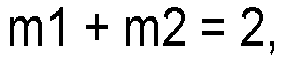
- N = d1 + d2 + 2 von 10 bis 80, bevorzugt von 15 bis 70 ist, mehr bevorzugt von 20 bis 60, und

- Die Werte von d1, d2, m1, m2 und N sind als durchschnittliche Werte im Polymermolekül zu verstehen. Die erfindungsgemäß zu verwendenden Additive liegen bevorzugt in Form von äquilibrierten Gemischen vor. Die in den Formeln verwendeten Indices sind als statistische Mittelwerte (Zahlenmittel) zu betrachten.
- Die einzelnen Fragmente der Formeln (I) und (II) sind bevorzugt statistisch aufgebaut.
- Statistische Verteilungen sind blockweise aufgebaut mit einer beliebigen Anzahl an Blöcken und einer beliebigen Sequenz oder unterliegen einer randomisierten Verteilung, sie können auch alternierend aufgebaut sein oder auch über die Kette einen Gradienten bilden, insbesondere können sie auch alle Mischformen bilden, bei denen gegebenenfalls Gruppen unterschiedlicher Verteilungen aufeinander folgen können. Spezielle Ausführungen können dazu führen, dass die statistischen Verteilungen durch die Ausführung Beschränkungen erfahren. Für alle Bereiche, die nicht von der Beschränkung betroffen sind, ändert sich die statistische Verteilung nicht.
- Bevorzugt handelt es sich bei den erfindungsgemäßen Zusammensetzungen bestehend aus
- a) einem Poly(alkyl)(meth)acrylat-Matrixmaterial und
- b) zumindest einem Additiv der Formel (I)
- Bevorzugt ist der Prozentsatz an Polyester-modifizierten Siloxaneinheiten in Formel (I), also (d2 + m2) * 100 / N, gleich 4 bis 40 %, mehr bevorzugt von 8 bis 30 %, besonders bevorzugt von 10 bis 25 %.
- Die Radikale R3 sind bevorzugt unabhängig voneinander gesättigte oder ungesättigte von Sauerstoff unterbrochene Kohlenwasserstoffe mit p+1 Bindungsstellen, mehr bevorzugt besteht R3 aus den Fragmenten (a) und (b), wobei die beiden Fragmente über ein Sauerstoffatom miteinander verbunden sind. Die Fragmente (a) und (b) bestehen vorzugsweise aus den Elementen Kohlenstoff, Sauerstoff und Wasserstoff, mehr bevorzugt sind die Fragmente (a) und (b) frei von Heteroatomen, also insbesondere frei von Sauerstoffatomen.
- Fragment (a) weist bevorzugt gesättigte oder ungesättigte Kohlenwasserstoffe auf mit 2 bis 4 Kohlenstoffatome, bevorzugt 2 bis 3 Kohlenstoffatome und bevorzugt frei von Heteroatomen.
- Fragment (b) weist bevorzugt gesättigte Kohlenwasserstoffe auf mit 1 bis 6 Kohlenstoffatomen, bevorzugt 2 bis 6 Kohlenstoffatomen und ist bevorzugt frei von Heteroatomen.
- Weiter mehr bevorzugt weisen die Radikale R3 enthaltend als Fragment (a) mindestens eine Ethylen-, 1,2-Propylen-, 1,3-Propylen, 1,2-Butylen-, 1,4-Butylengruppe oder But-2-en-1,2,4-triyl (aus Gopanol) auf und Fragment (b) wie vorstehend definiert.
- Besonders bevorzugt weisen die Radikale R3 als Fragment (a) einen divalenten gesättigten Kohlenwasserstoff bestehend aus 2 bis 4 Kohlenstoffatomen und Wasserstoff und als Fragment (b) für p gleich 1 einen Rest ausgewählt aus Ethylen, 1,2-Propylen- und 1,3-Propylen, für p gleich 2 einen Rest ausgewählt aus Prop-1,2,3-triyl- (aus Glycerin), Neopent-triyl- (aus Neopentanol), Trimethylolprop-triyl- (aus TMP) Rest.
- Besonders bevorzugt weisen die Radikale R3 als Fragment (a) mindestens einen obligat divalenten, gesättigten Rest auf bestehend aus 2 bis 4 Kohlenstoffatomen und Wasserstoff und als Fragment (b) für p gleich 1 einen Rest ausgewählt aus Ethylen, 1,2-Propylen- und 1,3-Propylen, für p gleich 2 einen Rest ausgewählt aus Prop-1,2,3-triyl- (aus Glycerin), Neopent-triyl- (aus Neopentantriol), Trimethylolprop-triyl- (aus TMP) Rest.
- Weiter besonders bevorzugt weist der Rest R3 einen Kohlenwasserstoff mit 5 bis 6 Kohlenstoffatomen und einem Sauerstoffatom auf, wobei das Fragment (a) eine Ethylen- oder 1,3-Propylengruppe ist.
- Die Polyesterreste R4 sind vorzugsweise aus 3 bis 30, bevorzugt aus 4 bis 20 und besonders bevorzugt aus 5 bis 15 Estereinheiten aufgebaut.
- Die Polyesterreste R4 sind vorzugsweise aus Acylrestender Säuren Essigsäure, Propionsäure, Buttersäure, Isobuttersäure, Valeriansäure, 3-Methyl-Buttersäure, Capronsäure, Önanthsäure, Caprylsäure, 3,5,5-Trimethyl-capronsäure sowie den entsprechenden Hydroxysäuren oder Lactonen, aufgebaut, mehr bevorzugt Valeriansäure, 3-Methyl-Buttersäure, Capronsäure, Önanthsäure, Caprylsäure, 3,5,5 Trimethyl-capronsäure sowie den entsprechenden Hydroxysäuren oder Lactonen und mehr bevorzugt Valeriansäure und Capronsäure sowie den entsprechenden Hydroxysäuren oder Lactonen, besonders bevorzugt 5-Hydroxy-Valeriansäure bzw. δ-Valerolacton und 6-Hydroxy-Capronsäure bzw. ε-Caprolacton.
- Die Polyesterreste R4 können gleich oder verschieden in Bezug auf ihre Anzahl an Säureresten aufgebaut sein.
- Vorzugsweise sind die Polyesterreste R4 aus gleichen Säureresten aufgebaut. Bevorzugte Polyesterreste sind solche, die durch ringöffnende (Poly)-Veresterung von Lactonen erhalten werden. Besonders bevorzugt sind die Polyesterreste, die durch (Poly)-Veresterung von Caprolactonen oder Valerolactonen, insbesondere von ε-Caprolacton, 3,5,5-Trimethyl-Caprolacton oder δ-Valerolacton und besonders bevorzugt von ε-Caprolacton erhalten werden.
- Mehr bevorzugt sind die Polyesterreste R4 aus gleichen Säureresten aufgebaut mit unterschiedlichen Anzahlen an Säureresten und besonders bevorzugt aus 5-Hydroxy-Valeriansäure bzw. δ-Valerolacton und 6-Hydroxy-Capronsäure bzw. ε-Caprolacton.
- Bevorzugt weist der Rest R1 den Rest R3 als einen Kohlenwasserstoff mit 5 bis 6 Kohlenstoffatomen und einem Sauerstoffatom auf, wobei das Fragment (a) eine Ethylen- oder 1,3-Propylengruppe ist und einen Polyesterrest R4 aus gleichen Säureresten auf, wobei der Polyesterrest R4 aus 5 bis 15 ε-Caprolacton- und δ-Valerolacton Einheiten aufgebaut ist
- Bevorzugte Additive der Formel (I) sind solche, bei denen der Polyesterrest aus 3 bis 30, bevorzugt aus 4 bis 20 und besonders bevorzugt aus 5 bis 15 ε-Caprolacton- und/oder δ-Valerolacton Einheiten aufgebaut ist.
- Mehr bevorzugte Additive der Formel (I) sind solche, bei denen der Polyesterrest aus 3 bis 30, bevorzugt aus 4 bis 20 und besonders bevorzugt aus 5 bis 15 ε-Caprolacton- und/oder δ-Valerolacton Einheiten aufgebaut ist, wobei der Prozentsatz an Polyester modifizierten Siloxaneinheiten also (d2 + m2) * 100 / N gleich 5 bis 40 % ist, mehr bevorzugt von 8 bis 30 %, besonders bevorzugt von 10 bis 25 %.
- Die bevorzugten Additive der Formel (I) weisen als R ausschließlich Methylgruppen auf, N ist gleich 20 bis 60, und bei denen die Polyesterreste R4 von 5 bis 15 Estereinheiten aufgebaut ist.
- Mehr bevorzugte Additive der Formel (I) weisen als R ausschließlich Methylgruppen auf, N ist gleich 20 bis 60, und wobei der Rest R1 den Rest R3 als einen Kohlenwasserstoff mit 5 bis 6 Kohlenstoffatomen und einem Sauerstoffatom auf, wobei das Fragment (a) eine Ethylen oder 1,3-Propylengruppe ist und einen Polyesterrest R4 aus gleichen Säureresten auf, wobei der Polyesterrest R4 aus 5 bis 15 ε-Caprolacton- und/oder δ-Valerolacton Einheiten aufgebaut ist.
- Besonders bevorzugte Additive der Formel (I) weisen als R ausschließlich Methylgruppen auf, N ist gleich 20 bis 60, und wobei der Rest R1 den Rest R3 als einen Kohlenwasserstoff mit 5 bis 6 Kohlenstoffatomen und einem Sauerstoffatom auf, wobei das Fragment (a) eine Ethylen oder 1,3-Propylengruppe ist und einen Polyesterrest R4 aus gleichen Säureresten auf, wobei der Polyesterrest R4 aus 5 bis 15 ε-Caprolacton- und/oder δ-Valerolacton Einheiten aufgebaut ist, wobei der Prozentsatz an Polyester modifizierten Siloxaneinheiten also (d2 + m2) * 100 / N gleich von 8 bis 30 % ist, besonders bevorzugt von 10 bis 25 %.
- Zur Bestimmung der Transparenz werden Formkörper bestehend ausschließlich aus den erfindungsgemäßen Zusammensetzungen, also bestehend aus einem Poly(alkyl)(meth)acrylat-Matrixmaterial und mindestens einem Additiv gemäß Formel (I) hergestellt, wobei die Additive bevorzugt zu 1 Gew-%, 2 Gew-% oder 3 Gew-% enthalten sind. Die Formkörper sind bevorzugt Platten, mehr bevorzugt Platten mit einer Dicke von 1, 2 oder 3 Millimetern. Besonders bevorzugt wird die Transparenz von Platten mit einer Dicke von 2 mm und mit einem Additivgehalt von 2 Gew-% bestimmt. Als Vergleichswert dient eine analoge Platte ohne Additiv.
- Die Transparenz wird bevorzugt als Opazität bestimmt, mehr bevorzugt wird die Opazität mit einem SP62 der Firma X-Rite gemäß deren Gebrauchsanweisung bestimmt. Bevorzugt erhöht sich die Opazität gegenüber dem Vergleichswert um nicht mehr als 25%, mehr bevorzugt um nicht mehr als 22%, besonders bevorzugt um nicht mehr als 19% und insbesondere bevorzugt um nicht mehr als 16%; diese Erhöhung wird nach der Formel (Opaz {Probe} - Opaz {Vergleich}) * 100% / Opaz {Vergleich} bestimmt. Diese Erhöhung kann auch negative Werte annehmen, wenn die Transparenz der Probe gegenüber dem Vergleichswert erhöht wurde. Vorgenannte Prozentangaben basieren auf Opazitätsmessungen von Platten mit einer Dicke von 2 mm und mit einem Additivgehalt von 2 Gew-%.
- Die erfindungsgemäßen Additive der Formel (I) können nach den bekannten Verfahren durch Umsetzung von entsprechenden Wasserstoffsiloxanen mit ungesättigten Kohlenwasserstoffen und anschließender (Poly)-Veresterung oder durch direkte Umsetzung von ungesättigten Polyestern mit Wasserstoffsiloxanen erhalten werden. Die Umsetzung kann wie in
EP 1 640 418 beschrieben durch Hydrosilylierung bzw. durch dehydrogenative Hydrosilylierung erfolgen. Die Herstellung Polyesterreste aufweisender Polysiloxane kann z. B.EP 0 208 734 entnommen werden. - Bevorzugt werden die erfindungsgemäßen Additive der Formel (I) in einem ersten Schritt im Sinne einer Hydrosilylierung entsprechender Wasserstoffsiloxane der Formel (II)
M1 m1M2 m2D1 d1D2 d2 (II)
mit - M1
- = [R3SiO1/2]
- M2'
- = [R2RHSiO1/2]
- D1
- = [R2SiO2/2]
- D2'
- = [RRHSiO2/2]
- R unabhängig voneinander ein Alkylrest oder ein aromatischer oder alkylaromatischer Rest ist, wobei die Alkylreste bevorzugt 1 bis 4 Kohlenstoffatome, die aromatischen oder alkylaromatischen Reste bevorzugt 6 bis 8 Kohlenstoffatome aufweisen,
- RH Wasserstoff ist,
- mit
- d1 = 5 bis 70, bevorzugt 10 bis 60, insbesondere bevorzugt 15 bis 50
- d2 = 0 bis 20, bevorzugt 1 bis 15, mehr bevorzugt 2 bis 10
- m1 = 0 bis 2,
- m2 = 0 bis 2, bevorzugt 2
- mit der Maßgabe, dass gilt:

- N = d1 + d2 + 2 von 10 bis 80, bevorzugt von 15 bis 70 ist, mehr bevorzugt von 20 bis 60, und

- mit ungesättigten Verbindungen R3V-(OH)p, wobei R3Vein von mindestens einem Sauerstoffatom unterbrochener p+1 valenter ungesättigter Kohlenwasserstoffrest ist, wobei dieser Kohlenwasserstoffrest bevorzugt ununterbrochene Alkyleneinheiten mit 1 bis 6 Kohlenstoffatome, besonders bevorzugt 2 bis 5 Kohlenstoffatome aufweist,
- wobei p gleich 1 bis 4, bevorzugt 1 bis 2 ist,
- mit einem zur Hydrosilylierung geeigneten Katalysator umgesetzt
- und in einem zweiten Schritt die OH-Gruppen des Restes R3 mit Säurerestmonomeren, bevorzugt Anhydriden, Estern und Lactonen, insbesondere bevorzugt Lactonen,
- wobei alle Indices und Reste wie vorstehend zu Formel (I) auch in ihren Bevorzugungen definiert sind.
- Die erfindungsgemäßen Zusammensetzungen bestehen bevorzugt zu 0,05 Gew.-% bis 10 Gew.-%, mehr bevorzugt zu 0,1 Gew.-% bis 5 Gew.-%, insbesondere bevorzugt zu 0,5 Gew.-% bis 3 Gew.-%, aus dem Additiv der Formel (I) bezogen auf die Gesamtzusammensetzung.
- Bevorzugt weisen die erfindungsgemäßen Formmassen und Formkörper neben den erfindungsgemäßen Zusammensetzungen Hilfs- und Füllstoffe auf, mehr bevorzugt nicht mehr als 10 Gew.-%, besonders bevorzugt nicht mehr als 5 Gew.-% und insbesondere nicht mehr als 2 Gew.-% Hilfs- und Füllstoffe enthalten.
- Die erfindungsgemäßen Formmassen und Formkörper enthalten neben den erfindungsgemäßen Zusammensetzungen und den Hilfs- und Füllstoffen weitere Zusätze wie Farbmittel ausgewählt aus organischen Farbstoffen und Pigmenten, Lichtstabilisatoren ausgewählt aus UV-Stabilisatoren, UV-Absorbern und IR-Absorbern, antimikrobielle Wirkstoffe, Flammschutzmittel, Thermostabilisatoren, Antioxidantien, vernetzende Polymere und/oder faserverstärkende Zusatzstoffe organischer oder anorganischer Art, sowie Schlagzähmodifizierungsmittel.
- Bevorzugt werden als farbgebende Komponenten Farbstoffe ausgewählt.
- In einer besonders bevorzugten Ausführungsform enthalten die erfindungsgemäßen Formmassen bzw. der Formkörper ein Schlagzähmodifizierungsmittel, insbesondere in einem Anteil von 0,1 bis 15 Gew.-%, bevorzugt 0,5 bis 10 Gew.-% und ganz besonders bevorzugt 1 bis 6 Gew.-%, jeweils bezogen auf die Gesamtmasse der Formmasse bzw. des Formkörpers. Es können alle handelsüblichen Schlagzähmodifizierungsmittel verwendet werden, insbesondere Elastomerteilchen mit einem mittleren Teilchendurchmesser von 10 bis 300 nm (Messungen z. B. mit der Ultrazentrifugenmethode). Bevorzugt weisen die Elastomerteilchen einen Kern mit einer weichen Elastomerphase und zumindest einer daran gebundenen Hartphase auf.
- Bei dem erfindungsgemäß als Komponente a) verwendeten Poly(alkyl)(meth)acrylat-Matrixmaterial handelt es sich bevorzugt um Homo- oder Copolymere von Methylmethacrylat. Mischungen sowie Blends aus verschiedenen Poly(alkyl)(meth)acrylaten und anderen Polymeren sind ebenfalls von der Erfindung eingeschlossen. Auch ein Copolymer aus zumindest einem Poly(alkyl)(meth)acrylat und weiteren Comonomeren ist Gegenstand der vorliegenden Erfindung. Die erfindungsgemäße Komponente a) ist kein thermoplastisches Elastomer.
- Unter "alkyl" werden dabei verzweigte oder unverzweigte, cyclische oder lineare Alkylreste mit 1 bis 20, bevorzugt 1 bis 8, besonders bevorzugt 1 bis 4 Kohlenstoffatomen, welche mit funktionellen Gruppen substituiert sein können oder Heteroatome wie O, S oder N, bevorzugt O oder N, mehr bevorzugt O aufweisen können. Bevorzugt handelt es sich um einen Methyl-, Ethyl-, Butyl- oder Cyclohexyl-Rest.
- Das Matrixmaterial a) kann ein Homopolymer, ein Copolymer oder Mischungen davon sein. So wird zumindest eine Komponente des Matrixmaterials zu 50 bis 100 Gew.-%, bevorzugt zu 80 bis 100 Gew.-%, mehr bevorzugt zu 90 bis 100 Gew.-%, besonders bevorzugt weiter mehr bevorzugt 95 bis 100 Gew.-%, und insbesondere zu 99 bis 100 Gew. -% aus Methylmethacrylat polymerisiert. 100 Gew.-% entsprechen einem Homopolymer, niedrigere Konzentrationen entsprechen einem Copolymer. Diese Komponente (Hauptkomponente) ist im Matrixmaterial zu mindestens 50 Gew.-% bis 100 Gew.-%, bevorzugt von 70 bis 95 Gew.-%, besonders bevorzugt von 80 bis 90 Gew.-% vorhanden.
- Weitere Polymerisationsmonomere sind bevorzugt Styrol, α-Methylstyrol, C2- bis C4-Alkyl(meth)acrylate und Maleinsäureanhydrid. Bevorzugte Alkyl(meth)acrylate sind Ethylacrylat und Butylacrylat, insbesondere n-Butylacrylat. Diese Polymerisationsmonomere werden bevorzugt zu 1 bis 50 Gew.-%, mehr bevorzugt zu mehr als 1 bis zu 20 Gew.-% und insbesondere zu 5 bis 10 Gew.-% polymerisiert
- Als besonders bevorzugte Mengenanteile haben sich erwiesen:
- 65 bis 85, bevorzugt 70 bis 80 Gew.-% Methylmethacrylat,
- 10 bis 20, bevorzugt 12 bis 18 Gew.-% Styrol und
- 5 bis 15, bevorzugt 8 bis 12 Gew.-% Maleinsäureanhydrid,
- Die Hauptkomponente des Matrixmaterials a) weist bevorzugt ein Molekulargewicht Mw (Gewichtsmittel) im Bereich von 40000 bis 280000 g/mol und besonders bevorzugt im Bereich von 60000 bis 140000 g/mol (Bestimmung von Mw mittels Gelpermeationschromatographie unter Bezug auf Polymethylmethacrylat als Eichstandard) auf.
- Die Hauptkomponente des Matrixmaterials a) weist bevorzugt eine Lösungsviskosität in Chloroform bei 25°C (ISO 1628 - Teil 6) von kleiner/gleich 55, bevorzugt kleiner/gleich 50, insbesondere 40 bis 55, besonders bevorzugt von 43 - 50 ml/g auf.
- Details zu der oben beschriebenen Mischung sowie der Herstellung der einzelnen Polymere und der Polymermischung können der
WO 2005/108486 entnommen werden. - Die Einarbeitung der Additive der Formel (I) kann nach allen dem Fachmann bekannten Verfahren erfolgen. So wird das Matrixmaterial mit dem Additiv der Formel (I) und möglichen anderen Inhaltstoffen vorgemischt. Zur Vormischung dienen Mischaggregate wie z. B. Henschel- oder Taumelmischer. Nachfolgend wird die Vormischung unter Aufschmelzen oder unter Einwirkung von Scherkräften homogenisiert. Bevorzugt geschieht dies unter Einwirkung von Scherkräften in einem Kneter oder Extruder.
- Bevorzugte Verfahren zur Herstellung von Formteilen sind Spritzgießen, Thermoformen, Kalandrieren oder Extrusion, dabei besonders bevorzugt sind verschiedene Ausführungen des Spritzgussverfahrens und des Kalandrierens. Die erfindungsgemäßen Formkörper werden bevorzugt vollständig aus der erfindungsgemäßen Formmasse hergestellt.
- Es kann sich jedoch auch um ein Mehrkomponentenbauteil, z. B. hergestellt durch Coextrusion, Mehrkomponentenspritzguss etc. handeln, bei denen aus der erfindungsgemäßen Formmasse nur eine oder mehrere Schichten/Teile des Formkörpers hergestellt werden. In diesem Fall beträgt der Anteil der erfindungsgemäßen Formmasse am gesamten Formkörper bevorzugt 0,1% bis 99,9% Gew. %, besonders bevorzugt 10 bis 30 Gew. %.
- Die erfindungsgemäßen Formkörper zeichnen sich unter anderem dadurch aus, dass sie eine Oberfläche der höchsten Güte aufweisen und mit Hilfe des Polymethylmethacrylats und des Zusatzes der o. g. Additiven vor der Schädigung bzw. des Verlustes der Oberflächengüte bewahrt werden können.
- Auch wenn der besondere Vorteil der erfindungsgemäßen Formteile darin zu sehen ist, dass die Oberfläche kratz- und wischfest ist, so schließt dies dennoch nicht aus, dass die erfindungsgemäß hergestellten Formteile ganz oder teilweise mit einer Folie oder einem Lack beschichtet werden.
- Die erfindungsgemäßen Formteile werden bevorzugt verwendet als dekorative Abdeckblenden oder funktionelle Anbauteile, in Kraftfahrzeugen, Unterhaltungselektronik oder in Haushaltgeräten.
- Die Messung des Glanzes wird in Anlehnung an die DIN 67530 bei verschiedenen Einstrahlungswinkeln (20°, 60°, 85°) durchgeführt. Als Glanz wird der regulär reflektierte Lichtanteil, bezogen auf einen unter einem definierten Winkel von 20°, 60° oder 85° zum Lot einfallenden Lichtstrahl bezeichnet. Die Messung wird mit einem Messgerät micro-gloss der Firma Byk-Gardner (Wesel) durchgeführt. Bei Glanzmessung von Kunststofffolien wird als Untergrund ein schwarzer Papierbogen genutzt. Der Glanz wird in Glanzeinheiten (GE) angegeben, die auf einen Schwarzglasstandard bezogen werden. Der Wert des Oberflächenglanzes sollte möglichst hoch sein.
- Die Opazität ist das Maß für die optische Durchlässigkeit von Papier, Folien, Druckfarben und anderen Schichten. Die Messungen werden mit dem SP62 der Firma X-Rite gemäß deren Gebrauchsanweisung durchgeführt.
- Die Helligkeitswerte L* werden mittels Spektralphotometer (SP 62, Firma X-Rite) der bestimmt.
- Zur Bestimmung der Wischbeständigkeit werden die hergestellten Kunststoffplatten mittels Crockmaster 670 (James H. Heal, UK) nach EN ISO 105-X12 bzw. BS 1006 X12 geprüft. Hierzu wird über die Platte mit einem Crocking Cloth und einem Auflagegewicht von 9N eine definierte Anzahl von Hüben (vorwärts/rückwärts) gewischt. Die Beurteilung erfolgt visuell, es erfolgt eine Benotung nach Noten von 1 für sehr gut bis 5 für ungenügend, wobei 1 spurlos, 2 wahrnehmbar, 3 gering, 4 stark und 5 sehr stark zerkratzt bedeutet.
- Mittels dem Multi-Finger Tester Taber 710 (Fa. Elcometer) wird die Prüfung nach BN 108-13 bzw. GMN 3943 durchgeführt. Bestimmt wird, ob eine Spitze (Durchmesser 1 mm) bei einem unterschiedlichen Auflagegewicht resultierend in 2, 5, 10, 12 und 15 N zu einem visuell wahrnehmbaren Kratzer führt. Dabei bewegen sich die fünf Spitzen mit 7,5 Meter pro Minute über die zu zerkratzende Fläche. Oberflächen erfindungsgemäßer Formkörper weisen weniger Kratzer oder weniger tiefe Kratzer auf als Oberflächen nichterfindungsgemäßer Formkörper.
- In Anlehnung an Beispiel 1 der
WO 1986/004072 wurden die Additive der Tabelle 1 hergestellt, die Angaben in Spalte E resultieren aus der Dosierung. - Zur Herstellung von Probe 12 (Tabelle 1) wurden in einem Vierhalskolben bestückt mit KPG-Rührer, Rückflusskühler und Thermometer 395,7 g wasserfreies ε-Caprolacton und 204,3 g eines Poly(methyl, hydroxyethylpropoxy)(dimethyl)siloxan-Copolymers mit einer OH-Zahl von 68 mg KOH/g vorgelegt und unter Rühren auf 140°C aufgeheizt. Bei 140°C wurden 0,3 g Zinn(II)-octoat zugegeben und die Exothermie bis 150°C zugelassen. Nach 7h Reaktionszeit bei 145°C wurde das viskose flüssige Produkt auf ca. 70°C abgekühlt und zum Erkalten in eine Metallwanne ausgegossen. Nach Abkühlen auf Raumtemperatur erhielt man ein festes farbloses Produkt mit einem per 1H-NMR bestimmten Restcaprolactongehalt von kleiner oder gleich 0,3%.

Tabelle 1: Additive gemäß Beispiel 1, die angegeben generischen Parameter beziehen sich auf die oben gezeigte Formel; die Fragmente der Spalte A sind mit der linken Valenz an das Silikonpolymer gebunden Probe R1 A E n m 1 -A-E -(CH2)6-O- 20 x Capryl 28 0 2 -A-E -(CH2)6-O- 14 x Capryl 20 0 3 -A-E -(CH2)6-O- 6 x Capryl 13 5 4 -CH3 -(CH2)6-O- 14 x Capryl 43 5 5 -A-E -(CH2)6-O- 14 x Capryl + 6 x Valeryl 28 0 7 -A-E -(CH2)3-O-(CH2)2-O- 20 x Capryl 28 0 8 -A-E -(CH2)2-O-(CH2)4-O- 20 x Capryl 28 0 9 -A-E -Propoxy - Glyceryl 10 x Capryl 28 0 10 -A-E -Propoxy - TMP 10 x Capryl 28 0 11 -A-E -(CH2)3-O-(CH2)2-O- 6 x Capryl 13 5 12 -CH3 -(CH2)3-O-(CH2)2-O- 14 x Capryl 43 5 13 -A-E -(CH2)3-O-(CH2)2-O- 14 x Capryl + 6 x Valeryl 28 0 Nicht erfindungsgemäße Verbindungen sind die Proben 1 bis 5. - Der Rest Propoxy - Glyceryl entspricht:

- Der Rest Propoxy - TMP entspricht:

- Die Reste E der Proben 1 bis 13 tragen terminal eine Hydroxylgruppe.
- Zur Herstellung der Compounds werden 3 kg PMMA mit den entsprechenden Anteilen der Additive nach Beispiel 1.1 in einem Mischer der Fa. Henschel (Volumen von 4 Liter) 5 Minuten gemischt und dann in den Haupteinzug der Extrusionslinie gegeben. Die Extrusion erfolgt auf einem 27 mm Zweischneckenextruder (gleichläufige Compoundierschnecke mit einem Verhältnis L/D = 40 der Firma Leistritz. Das Temperaturprofil wurde dem jeweiligen Datenblatt des PMMA entnommen, PLEXIGLAS® FT 15, PLEXIGLAS® 8N und PLEXIGLAS® 8N 9V002 (schwarz) (Warenzeichen der Evonik, Deutschland) wurden von Evonik Röhm GmbH bezogen.
- Die im Beispiel 1 hergestellten Formmassen wurden auf einer Spritzgussmaschine zu Platten von einer Größe von 6 cm x 6 cm mit unterschiedlicher Dicke verarbeitet. Diese Platten wurden mit einem SP 62 der Firma X-rite auf auf ihre optischen Eigenschaften (Opazität und L*-Werte) hin untersucht. Die L*-Werte wurden über einen schwarzen Hintergrund einer Leneta Folie erhoben, wobei der schwarze Hintergrund einen L*-Wert von 27,41 aufwies. Probe 14 und 15 der Ergebnistabellen 2 und 3 sind jeweils die Werte für PLEXIGLAS ohne Additiv, wo mit Werten im Bereich von 40 Einheiten für L* ersichtlich wird, dass selbst transparentes PMMA ohne Additiv bereits eine starke Änderung herbeiführt, weil das Licht durch die PMMA-Schicht partiell verändert wird, bevor es auf den schwarzen Hintergrund trifft. Je höher also der L*-Wert der Probe ist, desto stärker verliert das Material an Transparenz. Diese Erhöhung des L*-Wertes geht dann auch mit einer Erhöhung des Wertes der Opazität einher, was aber eine Reduktion der Transparenz darstellt.
Tabelle 2: Opazität (abgekürzt als "Opaz.") und L*-Werte gemäß Beispiel 2 in PLEXIGLAS FT 15 mit unterschiedlichen Konzentrationen an Additiv und unterschiedlichen Schichtdicken (SD), Angaben der Konzentration in Gew.-% bezogen auf die Zusammensetzung, Probe 14 entspricht dem Matrixpolymer ohne ein Additiv Zus 1% Additiv SD 2 mm 2% Additiv SD 2mm 3% Additiv SD 2 mm 2% Additiv SD 0,60 mm Opaz. L*-Wert Opaz. L*-Wert Opaz. L*-Wert Opaz. L*-Wert 1 18,4 43,17 23,7 45,27 28,8 48,55 20,4 44,89 2 18,1 43,04 22,3 45,01 27,5 47,89 3 19,8 44,54 4 19,9 44,79 5 18,2 42,75 22,3 44,92 26,7 47,53 20,0 44,51 7 16,2 41,55 18,0 42,10 20,8 44,17 15,1 41,09 8 16,9 41,48 17,1 41,88 20,2 43,81 9 16,5 41,54 17,5 42,01 10 17,2 42,17 11 16,4 41,48 12 17,9 42,31 21,9 44,27 14,1 40,54 14 15,6 41,24 15,6 41,24 15,6 41,24 14,1 40,20 Tabelle 3: Opazität (abgekürzt als "Opaz.") und L*-Werte gemäß Beispiel 2 in PLEXIGLAS 8N mit unterschiedlichen Konzentrationen an Additiv und unterschiedlichen Schichtdicken (SD), Angaben der Konzentration in Gew.-% bezogen auf die Zusammensetzung, Probe 15 entspricht dem Matrixpolymer ohne ein Additiv Zus. 1% Additiv SD, 2 mm 2% Additiv SD, 2mm 2% Additiv 0,60 mm Opaz. L*-Wert Opaz. L*-Wert Opaz. L*-Wert 1 19,9 44,01 27,3 48,10 23,1 44,85 2 20,1 44,92 27,1 47,92 22,9 44,78 5 20,5 44,81 28,0 48,72 23,6 45,17 7 16,5 41,57 19,2 42,76 16,2 40,81 8 16,9 41,44 18,9 43,31 15,8 40,72 12 16,1 40,87 19,7 43,54 17,0 41,57 15 16,3 41,05 16,3 41,05 - Die Beispiele der Tabellen 2 und 3 zeigen, dass die erfindungsgemäßen Zusammensetzungen durchweg niedrigere Werte in der Opazität wie auch im L*-Wert als die nicht erfindungsgemäßen Zusammensetzungen zeigen. Damit sind die hergestellten Kunststoffscheiben unter Verwendung der erfindungsgemäßen Zusammensetzungen deutlich klarer und weniger trüb als unter Verwendung von Zusammensetzungen des Standes der Technik.
- Zur Bestimmung der Wischbeständigkeit wurde die gemäß Beispiel 2 hergestellten Kunststoffplatten mittels Crockmaster 670 (James H. Heal, UK) nach EN ISO 105-X12 bzw. BS 1006 X12 geprüft. Hierzu wurde über die Platte mit einem Crocking Cloth und einem Auflagegewicht von 9N eine definierte Anzahl von Hüben (vorwärts/rückwärts) gewischt, in drei Versuchen jeweils 100, 250 und 500 Hübe. Die Beurteilung erfolgt visuell, es erfolgt eine Benotung nach Noten von 1 für sehr gut bis 5 für ungenügend, wobei 1 spurlos, 2 wahrnehmbar, 3 gering, 4 stark und 5 sehr stark zerkratzt bedeutet.
Tabelle 4: Wischbeständigkeit gemäß Beispiel 3 von transparentem, nicht eingefärbtem PLEXIGLAS® 8N mit unterschiedlichen Konzentrationen an Additiv Zus. 1% Additiv 2% Additiv 100 250 500 100 250 500 1 4 5 5 4 5 5 7 3 3 4 2 2 2 8 3 3 4 2 2 3 15 4 5 5 4 5 5 - Die erfindungsgemäßen Proben 7 und 8 zeigen eine deutliche Steigerung der Wischbeständigkeit gegenüber dem unbehandelten Material, wie auch gegenüber dem Additiv des Standes der Technik.
Claims (12)
- Zusammensetzungen bestehend ausa) einem Poly(alkyl)(meth)acrylat-Matrixmaterialb) zumindest einem Additiv der Formel (I)
M1 m1M2 m2D1 d1D2 d2 (I)
mitM1 = [R3SiO1/2]M2 = [R2R1SiO1/2]D1 = [R2SiO2/2]D2 = [RR1SiO2/2]wobeiR unabhängig voneinander ein Alkylrest oder ein aromatischer oder ein alkylaromatischer Rest ist, wobei die Alkylreste bevorzugt 1 bis 4 Kohlenstoffatome, die aromatischen oder alkylaromatischen Reste bevorzugt 6 bis 8 Kohlenstoffatome aufweisen,R1 unabhängig voneinander - R3 - (O - R4)p ist, wobeiR4 ein Polyesterrest ist,R3 ein von Sauerstoffatomen unterbrochener p+1 valenter Kohlenwasserstoff ist, der 3 bis 10 Kohlenstoffatome aufweist,wobei p gleich 1 bis 4 ist,mitd1 = 5 bis 70,d2 = 0 bis 20,m1 = 0 bis 2,m2 = 0 bis 2,mit der Maßgabe, dass gilt: N = d1 + d2 + 2 = 10 bis 80,
- Zusammensetzungen gemäß Anspruch 1, wobei (d2 + m2) * 100 / N von 4 % bis 40 % beträgt.
- Zusammensetzungen gemäß einem der Ansprüche 1 oder 2, wobei die Radikale R3 in Formel (I) unabhängig voneinander gesättigte oder ungesättigte von Sauerstoff unterbrochene Kohlenwasserstoffe mit p+1 Bindungsstellen, wobei R3 aus den Fragmenten (a) und (b) besteht, wobei die beiden Fragmente über Sauerstoffatome miteinander verbunden sind.
- Zusammensetzungen gemäß einem der Ansprüche 1 bis 3, wobei Fragment (a) gesättigte oder ungesättigte Kohlenwasserstoffe mit 2 bis 4 Kohlenstoffatomen, bevorzugt 2 bis 3 Kohlenstoffatomen aufweist und Fragment (b) gesättigte Kohlenwasserstoffe mit 1 bis 6 Kohlenstoffatomen, bevorzugt 2 bis 6 Kohlenstoffatomen aufweist und beide Fragmente (a) und (b) frei von Heteroatomen sind.
- Zusammensetzungen gemäß einem der Ansprüche 1 bis 4, wobei die Polyesterreste R4 aus 3 bis 30, bevorzugt aus 4 bis 20 und besonders bevorzugt aus 5 bis 15 Estereinheiten aufgebaut sind.
- Zusammensetzungen gemäß einem der Ansprüche 1 bis 5, wobei die Polyesterreste R4 aus Acylresten einer oder mehrerer der Säuren Essigsäure, Propionsäure, Buttersäure, Isobuttersäure, Valeriansäure, 3-Methyl-Buttersäure, Capronsäure, Önanthsäure, Caprylsäure 3,5,5-Trimethyl-capronsäure und den entsprechenden Hydroxysäuren oder Lactonen, mehr bevorzugt Valeriansäure, 3-Methyl-Buttersäure, Capronsäure, Önanthsäure, Caprylsäure, 3,5,5-Trimethyl-capronsäure und den entsprechenden Hydroxysäuren oder Lactonen und besonders bevorzugt Valeriansäure und Capronsäure und den entsprechenden Hydroxysäuren oder Lactonen aufgebaut sind.
- Zusammensetzungen gemäß einem der Ansprüche 1 bis 6, wobei die Zusammensetzungen zu 0,05 Gew.-% bis 10 Gew.-%, mehr bevorzugt zu 0,1 Gew.-% bis 5 Gew.-%, insbesondere bevorzugt zu 0,5 Gew.-% bis 3 Gew.-%, aus dem Additiv der Formel (I) bezogen auf die Gesamtzusammensetzung bestehen.
- Formmasse oder Formkörper enthaltend eine Zusammensetzung nach einem der Ansprüche 1 bis 7.
- Formmasse oder Formkörper gemäß Anspruch 8 enthaltend ein Schlagzähmodifizierungsmittel, insbesondere in einem Anteil von 0,1 bis 15 Gew.-%, bevorzugt 0,5 bis 10 Gew.-% und ganz besonders bevorzugt 1 bis 6 Gew.-%, jeweils bezogen auf die Gesamtmasse der Formmasse bzw. des Formkörpers.
- Formmasse oder Formkörper gemäß einem der Ansprüche 8 oder 9, wobei das Matrixmaterial a) ein Homopolymer, ein Copolymer oder Mischungen davon sind, wobei zumindest eine Komponente des Matrixmaterials a) zu 50 bis 100 Gew.-%, bevorzugt zu 80 bis 100 Gew.%, mehr bevorzugt zu 90 bis 100 Gew.-%, besonders bevorzugt weiter mehr bevorzugt 95 bis 100 Gew.-%, und insbesondere zu 99 bis 100 Gew. -% ein Polymerisat aus Methylmethacrylat ist.
- Formmasse oder Formkörper gemäß einem der Ansprüche 8 bis 10, wobei die Formmasse oder Formkörper neben den Zusammensetzungen der Ansprüche 1 bis 7 und eventuellen Hilfs- und Füllstoffen weitere Zusätze wie Farbmittel enthält.
- Verwendung von Zusammensetzungen nach einem der Ansprüche 1 bis 7 und der Formmasse oder Formkörper nach einem der Ansprüche 8 bis 11 als dekorative Abdeckblenden oder funktionelle Anbauteile, in Kraftfahrzeugen, Unterhaltungselektronik oder in Haushaltgeräten.
Applications Claiming Priority (2)
| Application Number | Priority Date | Filing Date | Title |
|---|---|---|---|
| EP19190668.4A EP3772527A1 (de) | 2019-08-08 | 2019-08-08 | Durchsichtige zusammensetzung |
| PCT/EP2020/071776 WO2021023699A1 (de) | 2019-08-08 | 2020-08-03 | Durchsichtige zusammensetzung |
Publications (2)
| Publication Number | Publication Date |
|---|---|
| EP4010423A1 EP4010423A1 (de) | 2022-06-15 |
| EP4010423B1 true EP4010423B1 (de) | 2022-10-05 |
Family
ID=67658567
Family Applications (2)
| Application Number | Title | Priority Date | Filing Date |
|---|---|---|---|
| EP19190668.4A Withdrawn EP3772527A1 (de) | 2019-08-08 | 2019-08-08 | Durchsichtige zusammensetzung |
| EP20746683.0A Active EP4010423B1 (de) | 2019-08-08 | 2020-08-03 | Durchsichtige zusammensetzung |
Family Applications Before (1)
| Application Number | Title | Priority Date | Filing Date |
|---|---|---|---|
| EP19190668.4A Withdrawn EP3772527A1 (de) | 2019-08-08 | 2019-08-08 | Durchsichtige zusammensetzung |
Country Status (7)
| Country | Link |
|---|---|
| US (1) | US12152138B2 (de) |
| EP (2) | EP3772527A1 (de) |
| JP (1) | JP7766019B2 (de) |
| KR (1) | KR102662539B1 (de) |
| CN (1) | CN114207018B (de) |
| ES (1) | ES2930192T3 (de) |
| WO (1) | WO2021023699A1 (de) |
Family Cites Families (40)
| Publication number | Priority date | Publication date | Assignee | Title |
|---|---|---|---|---|
| US3429845A (en) | 1965-06-15 | 1969-02-25 | Du Pont | Compositions comprising polysilicic acid and copolymers of fluorinated monomers with omega-hydroxyalkyl vinyl ethers |
| US3484157A (en) | 1965-10-23 | 1969-12-16 | American Optical Corp | Abrasion-resistant optical element |
| US3451838A (en) | 1965-12-03 | 1969-06-24 | Owens Illinois Inc | Process of coating plastics with organopolysiloxanes and articles made thereby |
| JPS4832423B1 (de) | 1968-12-18 | 1973-10-05 | ||
| GB1308697A (en) | 1969-05-02 | 1973-02-21 | Amicon Corp | Coating compositions |
| US3766299A (en) | 1970-11-04 | 1973-10-16 | Esb Inc | Reaction product of polyalkylene imine and epoxy halo ethylenic substituted difunctional compounds |
| US3700487A (en) | 1971-02-23 | 1972-10-24 | American Optical Corp | Polycarbonate substrate with durable,abrasion and scratch-resistant,antifogging coating |
| US3707397A (en) | 1971-02-26 | 1972-12-26 | Owens Illinois Inc | Process for providing uniform organopolysiloxane coatings on polycarbonate and acrylic surfaces |
| US3843390A (en) | 1972-04-19 | 1974-10-22 | Baychem Corp | Coated polycarbonates |
| US3862261A (en) | 1973-10-03 | 1975-01-21 | Ophthalmic Sciences Inc | Melamine resin-polyol-polyurethane coating composition and article coated therewith |
| AR205906A1 (es) | 1973-11-14 | 1976-06-15 | Du Pont | Una composicion de recubrimiento |
| US3986997A (en) | 1974-06-25 | 1976-10-19 | Dow Corning Corporation | Pigment-free coating compositions |
| US4021505A (en) | 1975-03-20 | 1977-05-03 | American Cyanamid Company | Mar-resistant coating composition of reaction product of hydroxy-terminated urethane and melamine resin |
| DE3427208C2 (de) * | 1984-07-24 | 1986-06-05 | BYK-Chemie GmbH, 4230 Wesel | Lacke und Formmassen mit einem den Verlauf fördernden und die Gleitfähigkeit erhöhenden Gehalt an Siloxanen und die Verwendung solcher Siloxane als Zusatzmittel für Lacke und Formmassen |
| DE3439482A1 (de) | 1984-10-27 | 1986-05-07 | Röhm GmbH, 6100 Darmstadt | Verfahren zur beschichtung von substraten mit kratzfesten, nichtreflektierenden ueberzuegen |
| US4663413A (en) * | 1985-01-04 | 1987-05-05 | Thoratec Laboratories Corp. | Polysiloxane-polylactone block copolymers |
| DE3535283A1 (de) * | 1985-10-03 | 1987-04-09 | Byk Chemie Gmbh | Polyestergruppenhaltige polysiloxane fuer lacke und formmassen und die verwendung hierfuer |
| DE3821337A1 (de) * | 1988-06-24 | 1989-12-28 | Roehm Gmbh | Schlagzaehe polymethylmethacrylat-formmasse |
| JPH02228323A (ja) * | 1989-03-02 | 1990-09-11 | Dainichiseika Color & Chem Mfg Co Ltd | シロキサン変性ポリエステル系樹脂及びその製造方法 |
| JP2986509B2 (ja) * | 1989-05-26 | 1999-12-06 | 三井化学株式会社 | 変性ポリエステル樹脂組成物、その製造方法、およびその用途 |
| JPH09328556A (ja) * | 1996-06-07 | 1997-12-22 | Nippon Unicar Co Ltd | オルガノポリシロキサン系共重合体およびこれを含有する樹脂組成物 |
| JPH1135778A (ja) * | 1997-07-17 | 1999-02-09 | Sumitomo Chem Co Ltd | 樹脂組成物 |
| JPH11335537A (ja) * | 1998-05-26 | 1999-12-07 | Dainippon Ink & Chem Inc | 帯電防止剤及び帯電防止性樹脂組成物 |
| DE10059454A1 (de) | 2000-11-30 | 2002-06-20 | Goldschmidt Ag Th | Siloxan-modifizierte Polyolefine und deren Verwendung als Additive für Polymerformulierungen |
| US6420451B1 (en) | 2000-12-11 | 2002-07-16 | Sola International, Inc. | Impact resistant UV curable hardcoatings |
| DE102004022540A1 (de) | 2004-05-05 | 2005-12-08 | Röhm GmbH & Co. KG | Formmasse für Formkörper mit hoher Witterungsbeständigkeit |
| DE102004033060A1 (de) * | 2004-07-08 | 2006-01-26 | Byk-Chemie Gmbh | Polyestermodifizierte Polysiloxane und deren Verwendung als Additive für Thermoplaste, Formmassen und Lacke |
| DE502004004040D1 (de) | 2004-09-16 | 2007-07-19 | Goldschmidt Gmbh | Verwendung organomodifizierter Siloxane zur Behandlung von Oberflächen thermoplastischer Elastomere |
| DE102007046736A1 (de) * | 2007-09-28 | 2009-04-02 | Evonik Goldschmidt Gmbh | Verwendung linearer Siloxane und Verfahren zu deren Herstellung |
| DE102008000360A1 (de) * | 2008-02-21 | 2009-08-27 | Evonik Goldschmidt Gmbh | Neue Alkoxysilylgruppen tragende Polyetheralkohole durch Alkoxylierung epoxidfunktioneller Alkoxysilane an Doppelmetallcyanid (DMC)-Katalysatoren, sowie Verfahren zu deren Herstellung |
| KR100962368B1 (ko) * | 2010-04-12 | 2010-06-10 | 엘지엠엠에이 주식회사 | 내스크래치성이 향상된 내충격 메틸메타크릴레이트 수지 조성물 |
| DE102010031087A1 (de) * | 2010-07-08 | 2012-01-12 | Evonik Goldschmidt Gmbh | Neuartige polyestermodifizierte Organopolysiloxane |
| US8962728B2 (en) * | 2010-09-17 | 2015-02-24 | Evonik Röhm Gmbh | Weathering-resistant, colored moldings with improved gloss and wipe resistance |
| US9453143B2 (en) | 2011-11-14 | 2016-09-27 | Byk-Chemie Gmbh | Use of modified polysiloxanes in coating material compositions and molding materials |
| JP6857489B2 (ja) * | 2016-02-04 | 2021-04-14 | 旭化成株式会社 | メタクリル系樹脂組成物及びその成形体 |
| EP3213634A1 (de) * | 2016-03-04 | 2017-09-06 | Evonik Degussa GmbH | Verwendung von polyether modifizierten kurzkettigen siloxanen in der landwirtschaft zur erhöhung des ernteertrages |
| WO2018016473A1 (ja) * | 2016-07-21 | 2018-01-25 | 三菱ケミカル株式会社 | 熱可塑性樹脂組成物、成形体及び車両材料 |
| WO2018173435A1 (ja) * | 2017-03-21 | 2018-09-27 | 三菱ケミカル株式会社 | 熱可塑性樹脂組成物、成形体及び車両用部材 |
| JP7155296B2 (ja) | 2018-06-05 | 2022-10-18 | ベーイプシロンカー ヘミー ゲゼルシャフト ミット ベシュレンクター ハフトゥング | ポリエーテルポリエステルセグメントおよびポリシロキサンセグメントを有するポリマー |
| JP7362897B2 (ja) * | 2019-08-08 | 2023-10-17 | エボニック オペレーションズ ゲーエムベーハー | 分岐ポリエステルシロキサン |
-
2019
- 2019-08-08 EP EP19190668.4A patent/EP3772527A1/de not_active Withdrawn
-
2020
- 2020-08-03 US US17/632,849 patent/US12152138B2/en active Active
- 2020-08-03 KR KR1020227007209A patent/KR102662539B1/ko active Active
- 2020-08-03 CN CN202080056238.XA patent/CN114207018B/zh active Active
- 2020-08-03 ES ES20746683T patent/ES2930192T3/es active Active
- 2020-08-03 EP EP20746683.0A patent/EP4010423B1/de active Active
- 2020-08-03 WO PCT/EP2020/071776 patent/WO2021023699A1/de not_active Ceased
- 2020-08-03 JP JP2022507614A patent/JP7766019B2/ja active Active
Also Published As
| Publication number | Publication date |
|---|---|
| CN114207018A (zh) | 2022-03-18 |
| US12152138B2 (en) | 2024-11-26 |
| EP4010423A1 (de) | 2022-06-15 |
| ES2930192T3 (es) | 2022-12-07 |
| EP3772527A1 (de) | 2021-02-10 |
| WO2021023699A1 (de) | 2021-02-11 |
| US20220267583A1 (en) | 2022-08-25 |
| KR20220044986A (ko) | 2022-04-12 |
| KR102662539B1 (ko) | 2024-05-03 |
| CN114207018B (zh) | 2024-03-05 |
| JP7766019B2 (ja) | 2025-11-07 |
| JP2022544147A (ja) | 2022-10-17 |
Similar Documents
| Publication | Publication Date | Title |
|---|---|---|
| EP2616512B1 (de) | Witterungsbeständige, eingefärbte formkörper mit verbessertem glanz und wischbeständigkeit | |
| EP2150582B1 (de) | Zusammensetzung mit erhöhter spannungsrissbeständigkeit | |
| EP2150581B1 (de) | Eingefärbte zusammensetzung mit erhöhter spannungsrissbeständigkeit | |
| EP2909247B1 (de) | Themoplastisch verarbeitbare transparente blends aus thermoplastischen polyurethanen und poly(meth)acrylaten | |
| EP1680276B1 (de) | Mehrschichtfolie aus (meth)acrylatcopolymer und polycarbonat | |
| EP4263709B1 (de) | Zusammensetzung und verfahren zur herstellung einer transluzenten thermoplastischen polycarbonat/polymethylmethacrylat-formmasse | |
| EP4010429B1 (de) | Verzweigte polyestersiloxane | |
| DE102016206134B4 (de) | Lackiertes polycarbonat-erzeugnis, das mit einer beschichtungslackzusammensetzung zur polycarbonat-glasierung beschichtet ist, und fahrzeugbauteil umfassend das polycarbonat-erzeugnis | |
| DD159344A5 (de) | Transparente thermoplastische masse | |
| DE102015223170B4 (de) | Zusammensetzung mit glatter textur für ein-schicht-ein-brand-beschichtung | |
| DE102013018101A1 (de) | Thermoplastische Elastomerenzusammensetzungen mit Silikonölbeständigkeit | |
| DE112019004899T5 (de) | Druckempfindliche Klebefolie zum Oberflächenschutz | |
| EP4010423A1 (de) | Durchsichtige zusammensetzung | |
| EP4367166B1 (de) | Zusammensetzung und verfahren zur herstellung einer transparenten thermoplastischen polycarbonat/polymethylmethacrylat-formmasse | |
| DE102018133635A1 (de) | Thermoplastische Harzzusammensetzung und Formartikel, für den diese verwendet wird | |
| DE102013112847A1 (de) | Selbst-wiederherstellende Farbzusammensetzung, die Kratzer beseitigt | |
| KR102080822B1 (ko) | 질감 도료용 수지 | |
| KR100714887B1 (ko) | 투명성 및 작업안정성이 우수한 열가소성 수지 조성물 | |
| WO2003011964A1 (de) | Spannungsrissbeständiges, glänzendes schlagzäh-polystyrol | |
| DE102023209809A1 (de) | Harzzusammensetzung |
Legal Events
| Date | Code | Title | Description |
|---|---|---|---|
| STAA | Information on the status of an ep patent application or granted ep patent |
Free format text: STATUS: UNKNOWN |
|
| STAA | Information on the status of an ep patent application or granted ep patent |
Free format text: STATUS: THE INTERNATIONAL PUBLICATION HAS BEEN MADE |
|
| PUAI | Public reference made under article 153(3) epc to a published international application that has entered the european phase |
Free format text: ORIGINAL CODE: 0009012 |
|
| STAA | Information on the status of an ep patent application or granted ep patent |
Free format text: STATUS: REQUEST FOR EXAMINATION WAS MADE |
|
| 17P | Request for examination filed |
Effective date: 20220128 |
|
| AK | Designated contracting states |
Kind code of ref document: A1 Designated state(s): AL AT BE BG CH CY CZ DE DK EE ES FI FR GB GR HR HU IE IS IT LI LT LU LV MC MK MT NL NO PL PT RO RS SE SI SK SM TR |
|
| GRAP | Despatch of communication of intention to grant a patent |
Free format text: ORIGINAL CODE: EPIDOSNIGR1 |
|
| STAA | Information on the status of an ep patent application or granted ep patent |
Free format text: STATUS: GRANT OF PATENT IS INTENDED |
|
| GRAS | Grant fee paid |
Free format text: ORIGINAL CODE: EPIDOSNIGR3 |
|
| INTG | Intention to grant announced |
Effective date: 20220720 |
|
| GRAA | (expected) grant |
Free format text: ORIGINAL CODE: 0009210 |
|
| STAA | Information on the status of an ep patent application or granted ep patent |
Free format text: STATUS: THE PATENT HAS BEEN GRANTED |
|
| AK | Designated contracting states |
Kind code of ref document: B1 Designated state(s): AL AT BE BG CH CY CZ DE DK EE ES FI FR GB GR HR HU IE IS IT LI LT LU LV MC MK MT NL NO PL PT RO RS SE SI SK SM TR |
|
| DAV | Request for validation of the european patent (deleted) | ||
| DAX | Request for extension of the european patent (deleted) | ||
| REG | Reference to a national code |
Ref country code: GB Ref legal event code: FG4D Free format text: NOT ENGLISH |
|
| REG | Reference to a national code |
Ref country code: CH Ref legal event code: EP |
|
| REG | Reference to a national code |
Ref country code: AT Ref legal event code: REF Ref document number: 1522731 Country of ref document: AT Kind code of ref document: T Effective date: 20221015 |
|
| REG | Reference to a national code |
Ref country code: IE Ref legal event code: FG4D Free format text: LANGUAGE OF EP DOCUMENT: GERMAN |
|
| REG | Reference to a national code |
Ref country code: DE Ref legal event code: R096 Ref document number: 502020001811 Country of ref document: DE |
|
| REG | Reference to a national code |
Ref country code: ES Ref legal event code: FG2A Ref document number: 2930192 Country of ref document: ES Kind code of ref document: T3 Effective date: 20221207 |
|
| REG | Reference to a national code |
Ref country code: NL Ref legal event code: FP |
|
| REG | Reference to a national code |
Ref country code: LT Ref legal event code: MG9D |
|
| PG25 | Lapsed in a contracting state [announced via postgrant information from national office to epo] |
Ref country code: SE Free format text: LAPSE BECAUSE OF FAILURE TO SUBMIT A TRANSLATION OF THE DESCRIPTION OR TO PAY THE FEE WITHIN THE PRESCRIBED TIME-LIMIT Effective date: 20221005 Ref country code: PT Free format text: LAPSE BECAUSE OF FAILURE TO SUBMIT A TRANSLATION OF THE DESCRIPTION OR TO PAY THE FEE WITHIN THE PRESCRIBED TIME-LIMIT Effective date: 20230206 Ref country code: NO Free format text: LAPSE BECAUSE OF FAILURE TO SUBMIT A TRANSLATION OF THE DESCRIPTION OR TO PAY THE FEE WITHIN THE PRESCRIBED TIME-LIMIT Effective date: 20230105 Ref country code: LT Free format text: LAPSE BECAUSE OF FAILURE TO SUBMIT A TRANSLATION OF THE DESCRIPTION OR TO PAY THE FEE WITHIN THE PRESCRIBED TIME-LIMIT Effective date: 20221005 Ref country code: FI Free format text: LAPSE BECAUSE OF FAILURE TO SUBMIT A TRANSLATION OF THE DESCRIPTION OR TO PAY THE FEE WITHIN THE PRESCRIBED TIME-LIMIT Effective date: 20221005 |
|
| PG25 | Lapsed in a contracting state [announced via postgrant information from national office to epo] |
Ref country code: RS Free format text: LAPSE BECAUSE OF FAILURE TO SUBMIT A TRANSLATION OF THE DESCRIPTION OR TO PAY THE FEE WITHIN THE PRESCRIBED TIME-LIMIT Effective date: 20221005 Ref country code: PL Free format text: LAPSE BECAUSE OF FAILURE TO SUBMIT A TRANSLATION OF THE DESCRIPTION OR TO PAY THE FEE WITHIN THE PRESCRIBED TIME-LIMIT Effective date: 20221005 Ref country code: LV Free format text: LAPSE BECAUSE OF FAILURE TO SUBMIT A TRANSLATION OF THE DESCRIPTION OR TO PAY THE FEE WITHIN THE PRESCRIBED TIME-LIMIT Effective date: 20221005 Ref country code: IS Free format text: LAPSE BECAUSE OF FAILURE TO SUBMIT A TRANSLATION OF THE DESCRIPTION OR TO PAY THE FEE WITHIN THE PRESCRIBED TIME-LIMIT Effective date: 20230205 Ref country code: HR Free format text: LAPSE BECAUSE OF FAILURE TO SUBMIT A TRANSLATION OF THE DESCRIPTION OR TO PAY THE FEE WITHIN THE PRESCRIBED TIME-LIMIT Effective date: 20221005 Ref country code: GR Free format text: LAPSE BECAUSE OF FAILURE TO SUBMIT A TRANSLATION OF THE DESCRIPTION OR TO PAY THE FEE WITHIN THE PRESCRIBED TIME-LIMIT Effective date: 20230106 |
|
| P01 | Opt-out of the competence of the unified patent court (upc) registered |
Effective date: 20230524 |
|
| REG | Reference to a national code |
Ref country code: DE Ref legal event code: R097 Ref document number: 502020001811 Country of ref document: DE |
|
| PG25 | Lapsed in a contracting state [announced via postgrant information from national office to epo] |
Ref country code: SM Free format text: LAPSE BECAUSE OF FAILURE TO SUBMIT A TRANSLATION OF THE DESCRIPTION OR TO PAY THE FEE WITHIN THE PRESCRIBED TIME-LIMIT Effective date: 20221005 Ref country code: RO Free format text: LAPSE BECAUSE OF FAILURE TO SUBMIT A TRANSLATION OF THE DESCRIPTION OR TO PAY THE FEE WITHIN THE PRESCRIBED TIME-LIMIT Effective date: 20221005 Ref country code: EE Free format text: LAPSE BECAUSE OF FAILURE TO SUBMIT A TRANSLATION OF THE DESCRIPTION OR TO PAY THE FEE WITHIN THE PRESCRIBED TIME-LIMIT Effective date: 20221005 Ref country code: DK Free format text: LAPSE BECAUSE OF FAILURE TO SUBMIT A TRANSLATION OF THE DESCRIPTION OR TO PAY THE FEE WITHIN THE PRESCRIBED TIME-LIMIT Effective date: 20221005 Ref country code: CZ Free format text: LAPSE BECAUSE OF FAILURE TO SUBMIT A TRANSLATION OF THE DESCRIPTION OR TO PAY THE FEE WITHIN THE PRESCRIBED TIME-LIMIT Effective date: 20221005 |
|
| PLBE | No opposition filed within time limit |
Free format text: ORIGINAL CODE: 0009261 |
|
| STAA | Information on the status of an ep patent application or granted ep patent |
Free format text: STATUS: NO OPPOSITION FILED WITHIN TIME LIMIT |
|
| PG25 | Lapsed in a contracting state [announced via postgrant information from national office to epo] |
Ref country code: SK Free format text: LAPSE BECAUSE OF FAILURE TO SUBMIT A TRANSLATION OF THE DESCRIPTION OR TO PAY THE FEE WITHIN THE PRESCRIBED TIME-LIMIT Effective date: 20221005 Ref country code: AL Free format text: LAPSE BECAUSE OF FAILURE TO SUBMIT A TRANSLATION OF THE DESCRIPTION OR TO PAY THE FEE WITHIN THE PRESCRIBED TIME-LIMIT Effective date: 20221005 |
|
| 26N | No opposition filed |
Effective date: 20230706 |
|
| PG25 | Lapsed in a contracting state [announced via postgrant information from national office to epo] |
Ref country code: SI Free format text: LAPSE BECAUSE OF FAILURE TO SUBMIT A TRANSLATION OF THE DESCRIPTION OR TO PAY THE FEE WITHIN THE PRESCRIBED TIME-LIMIT Effective date: 20221005 |
|
| PG25 | Lapsed in a contracting state [announced via postgrant information from national office to epo] |
Ref country code: MC Free format text: LAPSE BECAUSE OF FAILURE TO SUBMIT A TRANSLATION OF THE DESCRIPTION OR TO PAY THE FEE WITHIN THE PRESCRIBED TIME-LIMIT Effective date: 20221005 |
|
| REG | Reference to a national code |
Ref country code: CH Ref legal event code: PL |
|
| PG25 | Lapsed in a contracting state [announced via postgrant information from national office to epo] |
Ref country code: MC Free format text: LAPSE BECAUSE OF FAILURE TO SUBMIT A TRANSLATION OF THE DESCRIPTION OR TO PAY THE FEE WITHIN THE PRESCRIBED TIME-LIMIT Effective date: 20221005 |
|
| PG25 | Lapsed in a contracting state [announced via postgrant information from national office to epo] |
Ref country code: LU Free format text: LAPSE BECAUSE OF NON-PAYMENT OF DUE FEES Effective date: 20230803 |
|
| PG25 | Lapsed in a contracting state [announced via postgrant information from national office to epo] |
Ref country code: LU Free format text: LAPSE BECAUSE OF NON-PAYMENT OF DUE FEES Effective date: 20230803 Ref country code: CH Free format text: LAPSE BECAUSE OF NON-PAYMENT OF DUE FEES Effective date: 20230831 |
|
| REG | Reference to a national code |
Ref country code: IE Ref legal event code: MM4A |
|
| PG25 | Lapsed in a contracting state [announced via postgrant information from national office to epo] |
Ref country code: IE Free format text: LAPSE BECAUSE OF NON-PAYMENT OF DUE FEES Effective date: 20230803 |
|
| PG25 | Lapsed in a contracting state [announced via postgrant information from national office to epo] |
Ref country code: IE Free format text: LAPSE BECAUSE OF NON-PAYMENT OF DUE FEES Effective date: 20230803 |
|
| PG25 | Lapsed in a contracting state [announced via postgrant information from national office to epo] |
Ref country code: BG Free format text: LAPSE BECAUSE OF FAILURE TO SUBMIT A TRANSLATION OF THE DESCRIPTION OR TO PAY THE FEE WITHIN THE PRESCRIBED TIME-LIMIT Effective date: 20221005 |
|
| PG25 | Lapsed in a contracting state [announced via postgrant information from national office to epo] |
Ref country code: BG Free format text: LAPSE BECAUSE OF FAILURE TO SUBMIT A TRANSLATION OF THE DESCRIPTION OR TO PAY THE FEE WITHIN THE PRESCRIBED TIME-LIMIT Effective date: 20221005 |
|
| PG25 | Lapsed in a contracting state [announced via postgrant information from national office to epo] |
Ref country code: CY Free format text: LAPSE BECAUSE OF FAILURE TO SUBMIT A TRANSLATION OF THE DESCRIPTION OR TO PAY THE FEE WITHIN THE PRESCRIBED TIME-LIMIT; INVALID AB INITIO Effective date: 20200803 |
|
| PG25 | Lapsed in a contracting state [announced via postgrant information from national office to epo] |
Ref country code: HU Free format text: LAPSE BECAUSE OF FAILURE TO SUBMIT A TRANSLATION OF THE DESCRIPTION OR TO PAY THE FEE WITHIN THE PRESCRIBED TIME-LIMIT; INVALID AB INITIO Effective date: 20200803 |
|
| PGFP | Annual fee paid to national office [announced via postgrant information from national office to epo] |
Ref country code: NL Payment date: 20250821 Year of fee payment: 6 |
|
| PGFP | Annual fee paid to national office [announced via postgrant information from national office to epo] |
Ref country code: ES Payment date: 20250926 Year of fee payment: 6 |
|
| PGFP | Annual fee paid to national office [announced via postgrant information from national office to epo] |
Ref country code: DE Payment date: 20250820 Year of fee payment: 6 |
|
| PGFP | Annual fee paid to national office [announced via postgrant information from national office to epo] |
Ref country code: IT Payment date: 20250825 Year of fee payment: 6 |
|
| PGFP | Annual fee paid to national office [announced via postgrant information from national office to epo] |
Ref country code: GB Payment date: 20250820 Year of fee payment: 6 Ref country code: BE Payment date: 20250820 Year of fee payment: 6 |
|
| PGFP | Annual fee paid to national office [announced via postgrant information from national office to epo] |
Ref country code: AT Payment date: 20251020 Year of fee payment: 5 Ref country code: FR Payment date: 20250828 Year of fee payment: 6 |
|
| PG25 | Lapsed in a contracting state [announced via postgrant information from national office to epo] |
Ref country code: TR Free format text: LAPSE BECAUSE OF FAILURE TO SUBMIT A TRANSLATION OF THE DESCRIPTION OR TO PAY THE FEE WITHIN THE PRESCRIBED TIME-LIMIT Effective date: 20221005 |