EP3972016B1 - Positivelektrodenaktives material für natriumionenbatterie, natriumionenbatterie aus demselben hergestellt, batteriemodul, batteriepack und vorrichtung - Google Patents
Positivelektrodenaktives material für natriumionenbatterie, natriumionenbatterie aus demselben hergestellt, batteriemodul, batteriepack und vorrichtung Download PDFInfo
- Publication number
- EP3972016B1 EP3972016B1 EP20867772.4A EP20867772A EP3972016B1 EP 3972016 B1 EP3972016 B1 EP 3972016B1 EP 20867772 A EP20867772 A EP 20867772A EP 3972016 B1 EP3972016 B1 EP 3972016B1
- Authority
- EP
- European Patent Office
- Prior art keywords
- positive electrode
- sodium ion
- ion battery
- active material
- metal oxide
- Prior art date
- Legal status (The legal status is an assumption and is not a legal conclusion. Google has not performed a legal analysis and makes no representation as to the accuracy of the status listed.)
- Active
Links
Images


Classifications
-
- H—ELECTRICITY
- H01—ELECTRIC ELEMENTS
- H01M—PROCESSES OR MEANS, e.g. BATTERIES, FOR THE DIRECT CONVERSION OF CHEMICAL ENERGY INTO ELECTRICAL ENERGY
- H01M4/00—Electrodes
- H01M4/02—Electrodes composed of, or comprising, active material
- H01M4/36—Selection of substances as active materials, active masses, active liquids
- H01M4/48—Selection of substances as active materials, active masses, active liquids of inorganic oxides or hydroxides
- H01M4/50—Selection of substances as active materials, active masses, active liquids of inorganic oxides or hydroxides of manganese
- H01M4/505—Selection of substances as active materials, active masses, active liquids of inorganic oxides or hydroxides of manganese of mixed oxides or hydroxides containing manganese for inserting or intercalating light metals, e.g. LiMn2O4 or LiMn2OxFy
-
- B—PERFORMING OPERATIONS; TRANSPORTING
- B60—VEHICLES IN GENERAL
- B60L—PROPULSION OF ELECTRICALLY-PROPELLED VEHICLES; SUPPLYING ELECTRIC POWER FOR AUXILIARY EQUIPMENT OF ELECTRICALLY-PROPELLED VEHICLES; ELECTRODYNAMIC BRAKE SYSTEMS FOR VEHICLES IN GENERAL; MAGNETIC SUSPENSION OR LEVITATION FOR VEHICLES; MONITORING OPERATING VARIABLES OF ELECTRICALLY-PROPELLED VEHICLES; ELECTRIC SAFETY DEVICES FOR ELECTRICALLY-PROPELLED VEHICLES
- B60L50/00—Electric propulsion with power supplied within the vehicle
- B60L50/50—Electric propulsion with power supplied within the vehicle using propulsion power supplied by batteries or fuel cells
- B60L50/60—Electric propulsion with power supplied within the vehicle using propulsion power supplied by batteries or fuel cells using power supplied by batteries
- B60L50/64—Constructional details of batteries specially adapted for electric vehicles
-
- B—PERFORMING OPERATIONS; TRANSPORTING
- B60—VEHICLES IN GENERAL
- B60L—PROPULSION OF ELECTRICALLY-PROPELLED VEHICLES; SUPPLYING ELECTRIC POWER FOR AUXILIARY EQUIPMENT OF ELECTRICALLY-PROPELLED VEHICLES; ELECTRODYNAMIC BRAKE SYSTEMS FOR VEHICLES IN GENERAL; MAGNETIC SUSPENSION OR LEVITATION FOR VEHICLES; MONITORING OPERATING VARIABLES OF ELECTRICALLY-PROPELLED VEHICLES; ELECTRIC SAFETY DEVICES FOR ELECTRICALLY-PROPELLED VEHICLES
- B60L53/00—Methods of charging batteries, specially adapted for electric vehicles; Charging stations or on-board charging equipment therefor; Exchange of energy storage elements in electric vehicles
- B60L53/50—Charging stations characterised by energy-storage or power-generation means
- B60L53/53—Batteries
-
- C—CHEMISTRY; METALLURGY
- C01—INORGANIC CHEMISTRY
- C01G—COMPOUNDS CONTAINING METALS NOT COVERED BY SUBCLASSES C01D OR C01F
- C01G53/00—Compounds of nickel
- C01G53/40—Complex oxides containing nickel and at least one other metal element
- C01G53/42—Complex oxides containing nickel and at least one other metal element containing alkali metals, e.g. LiNiO2
- C01G53/44—Complex oxides containing nickel and at least one other metal element containing alkali metals, e.g. LiNiO2 containing manganese
- C01G53/50—Complex oxides containing nickel and at least one other metal element containing alkali metals, e.g. LiNiO2 containing manganese of the type (MnO2)n-, e.g. Li(NixMn1-x)O2 or Li(MyNixMn1-x-y)O2
- C01G53/502—Complex oxides containing nickel and at least one other metal element containing alkali metals, e.g. LiNiO2 containing manganese of the type (MnO2)n-, e.g. Li(NixMn1-x)O2 or Li(MyNixMn1-x-y)O2 containing lithium and cobalt
- C01G53/504—Complex oxides containing nickel and at least one other metal element containing alkali metals, e.g. LiNiO2 containing manganese of the type (MnO2)n-, e.g. Li(NixMn1-x)O2 or Li(MyNixMn1-x-y)O2 containing lithium and cobalt with the molar ratio of nickel with respect to all the metals other than alkali metals higher than or equal to 0.5, e.g. Li(MzNixCoyMn1-x-y-z)O2 with x ≥ 0.5
-
- C—CHEMISTRY; METALLURGY
- C01—INORGANIC CHEMISTRY
- C01G—COMPOUNDS CONTAINING METALS NOT COVERED BY SUBCLASSES C01D OR C01F
- C01G53/00—Compounds of nickel
- C01G53/40—Complex oxides containing nickel and at least one other metal element
- C01G53/42—Complex oxides containing nickel and at least one other metal element containing alkali metals, e.g. LiNiO2
- C01G53/44—Complex oxides containing nickel and at least one other metal element containing alkali metals, e.g. LiNiO2 containing manganese
- C01G53/50—Complex oxides containing nickel and at least one other metal element containing alkali metals, e.g. LiNiO2 containing manganese of the type (MnO2)n-, e.g. Li(NixMn1-x)O2 or Li(MyNixMn1-x-y)O2
- C01G53/51—Complex oxides containing nickel and at least one other metal element containing alkali metals, e.g. LiNiO2 containing manganese of the type (MnO2)n-, e.g. Li(NixMn1-x)O2 or Li(MyNixMn1-x-y)O2 containing sodium
-
- H—ELECTRICITY
- H01—ELECTRIC ELEMENTS
- H01M—PROCESSES OR MEANS, e.g. BATTERIES, FOR THE DIRECT CONVERSION OF CHEMICAL ENERGY INTO ELECTRICAL ENERGY
- H01M10/00—Secondary cells; Manufacture thereof
- H01M10/05—Accumulators with non-aqueous electrolyte
- H01M10/054—Accumulators with insertion or intercalation of metals other than lithium, e.g. with magnesium or aluminium
-
- H—ELECTRICITY
- H01—ELECTRIC ELEMENTS
- H01M—PROCESSES OR MEANS, e.g. BATTERIES, FOR THE DIRECT CONVERSION OF CHEMICAL ENERGY INTO ELECTRICAL ENERGY
- H01M4/00—Electrodes
- H01M4/02—Electrodes composed of, or comprising, active material
- H01M4/04—Processes of manufacture in general
- H01M4/0471—Processes of manufacture in general involving thermal treatment, e.g. firing, sintering, backing particulate active material, thermal decomposition, pyrolysis
-
- H—ELECTRICITY
- H01—ELECTRIC ELEMENTS
- H01M—PROCESSES OR MEANS, e.g. BATTERIES, FOR THE DIRECT CONVERSION OF CHEMICAL ENERGY INTO ELECTRICAL ENERGY
- H01M4/00—Electrodes
- H01M4/02—Electrodes composed of, or comprising, active material
- H01M4/36—Selection of substances as active materials, active masses, active liquids
- H01M4/48—Selection of substances as active materials, active masses, active liquids of inorganic oxides or hydroxides
-
- H—ELECTRICITY
- H01—ELECTRIC ELEMENTS
- H01M—PROCESSES OR MEANS, e.g. BATTERIES, FOR THE DIRECT CONVERSION OF CHEMICAL ENERGY INTO ELECTRICAL ENERGY
- H01M4/00—Electrodes
- H01M4/02—Electrodes composed of, or comprising, active material
- H01M4/36—Selection of substances as active materials, active masses, active liquids
- H01M4/48—Selection of substances as active materials, active masses, active liquids of inorganic oxides or hydroxides
- H01M4/485—Selection of substances as active materials, active masses, active liquids of inorganic oxides or hydroxides of mixed oxides or hydroxides for inserting or intercalating light metals, e.g. LiTi2O4 or LiTi2OxFy
-
- H—ELECTRICITY
- H01—ELECTRIC ELEMENTS
- H01M—PROCESSES OR MEANS, e.g. BATTERIES, FOR THE DIRECT CONVERSION OF CHEMICAL ENERGY INTO ELECTRICAL ENERGY
- H01M4/00—Electrodes
- H01M4/02—Electrodes composed of, or comprising, active material
- H01M4/36—Selection of substances as active materials, active masses, active liquids
- H01M4/48—Selection of substances as active materials, active masses, active liquids of inorganic oxides or hydroxides
- H01M4/52—Selection of substances as active materials, active masses, active liquids of inorganic oxides or hydroxides of nickel, cobalt or iron
- H01M4/525—Selection of substances as active materials, active masses, active liquids of inorganic oxides or hydroxides of nickel, cobalt or iron of mixed oxides or hydroxides containing iron, cobalt or nickel for inserting or intercalating light metals, e.g. LiNiO2, LiCoO2 or LiCoOxFy
-
- H—ELECTRICITY
- H01—ELECTRIC ELEMENTS
- H01M—PROCESSES OR MEANS, e.g. BATTERIES, FOR THE DIRECT CONVERSION OF CHEMICAL ENERGY INTO ELECTRICAL ENERGY
- H01M50/00—Constructional details or processes of manufacture of the non-active parts of electrochemical cells other than fuel cells, e.g. hybrid cells
- H01M50/20—Mountings; Secondary casings or frames; Racks, modules or packs; Suspension devices; Shock absorbers; Transport or carrying devices; Holders
- H01M50/244—Secondary casings; Racks; Suspension devices; Carrying devices; Holders characterised by their mounting method
-
- H—ELECTRICITY
- H01—ELECTRIC ELEMENTS
- H01M—PROCESSES OR MEANS, e.g. BATTERIES, FOR THE DIRECT CONVERSION OF CHEMICAL ENERGY INTO ELECTRICAL ENERGY
- H01M50/00—Constructional details or processes of manufacture of the non-active parts of electrochemical cells other than fuel cells, e.g. hybrid cells
- H01M50/20—Mountings; Secondary casings or frames; Racks, modules or packs; Suspension devices; Shock absorbers; Transport or carrying devices; Holders
- H01M50/249—Mountings; Secondary casings or frames; Racks, modules or packs; Suspension devices; Shock absorbers; Transport or carrying devices; Holders specially adapted for aircraft or vehicles, e.g. cars or trains
-
- C—CHEMISTRY; METALLURGY
- C01—INORGANIC CHEMISTRY
- C01P—INDEXING SCHEME RELATING TO STRUCTURAL AND PHYSICAL ASPECTS OF SOLID INORGANIC COMPOUNDS
- C01P2002/00—Crystal-structural characteristics
-
- C—CHEMISTRY; METALLURGY
- C01—INORGANIC CHEMISTRY
- C01P—INDEXING SCHEME RELATING TO STRUCTURAL AND PHYSICAL ASPECTS OF SOLID INORGANIC COMPOUNDS
- C01P2002/00—Crystal-structural characteristics
- C01P2002/70—Crystal-structural characteristics defined by measured X-ray, neutron or electron diffraction data
- C01P2002/74—Crystal-structural characteristics defined by measured X-ray, neutron or electron diffraction data by peak-intensities or a ratio thereof only
-
- C—CHEMISTRY; METALLURGY
- C01—INORGANIC CHEMISTRY
- C01P—INDEXING SCHEME RELATING TO STRUCTURAL AND PHYSICAL ASPECTS OF SOLID INORGANIC COMPOUNDS
- C01P2004/00—Particle morphology
- C01P2004/60—Particles characterised by their size
- C01P2004/61—Micrometer sized, i.e. from 1-100 micrometer
-
- C—CHEMISTRY; METALLURGY
- C01—INORGANIC CHEMISTRY
- C01P—INDEXING SCHEME RELATING TO STRUCTURAL AND PHYSICAL ASPECTS OF SOLID INORGANIC COMPOUNDS
- C01P2006/00—Physical properties of inorganic compounds
- C01P2006/10—Solid density
-
- C—CHEMISTRY; METALLURGY
- C01—INORGANIC CHEMISTRY
- C01P—INDEXING SCHEME RELATING TO STRUCTURAL AND PHYSICAL ASPECTS OF SOLID INORGANIC COMPOUNDS
- C01P2006/00—Physical properties of inorganic compounds
- C01P2006/40—Electric properties
-
- H—ELECTRICITY
- H01—ELECTRIC ELEMENTS
- H01M—PROCESSES OR MEANS, e.g. BATTERIES, FOR THE DIRECT CONVERSION OF CHEMICAL ENERGY INTO ELECTRICAL ENERGY
- H01M4/00—Electrodes
- H01M4/02—Electrodes composed of, or comprising, active material
- H01M2004/021—Physical characteristics, e.g. porosity, surface area
-
- H—ELECTRICITY
- H01—ELECTRIC ELEMENTS
- H01M—PROCESSES OR MEANS, e.g. BATTERIES, FOR THE DIRECT CONVERSION OF CHEMICAL ENERGY INTO ELECTRICAL ENERGY
- H01M4/00—Electrodes
- H01M4/02—Electrodes composed of, or comprising, active material
- H01M2004/026—Electrodes composed of, or comprising, active material characterised by the polarity
- H01M2004/028—Positive electrodes
-
- H—ELECTRICITY
- H01—ELECTRIC ELEMENTS
- H01M—PROCESSES OR MEANS, e.g. BATTERIES, FOR THE DIRECT CONVERSION OF CHEMICAL ENERGY INTO ELECTRICAL ENERGY
- H01M2220/00—Batteries for particular applications
- H01M2220/20—Batteries in motive systems, e.g. vehicle, ship, plane
-
- Y—GENERAL TAGGING OF NEW TECHNOLOGICAL DEVELOPMENTS; GENERAL TAGGING OF CROSS-SECTIONAL TECHNOLOGIES SPANNING OVER SEVERAL SECTIONS OF THE IPC; TECHNICAL SUBJECTS COVERED BY FORMER USPC CROSS-REFERENCE ART COLLECTIONS [XRACs] AND DIGESTS
- Y02—TECHNOLOGIES OR APPLICATIONS FOR MITIGATION OR ADAPTATION AGAINST CLIMATE CHANGE
- Y02E—REDUCTION OF GREENHOUSE GAS [GHG] EMISSIONS, RELATED TO ENERGY GENERATION, TRANSMISSION OR DISTRIBUTION
- Y02E60/00—Enabling technologies; Technologies with a potential or indirect contribution to GHG emissions mitigation
- Y02E60/10—Energy storage using batteries
-
- Y—GENERAL TAGGING OF NEW TECHNOLOGICAL DEVELOPMENTS; GENERAL TAGGING OF CROSS-SECTIONAL TECHNOLOGIES SPANNING OVER SEVERAL SECTIONS OF THE IPC; TECHNICAL SUBJECTS COVERED BY FORMER USPC CROSS-REFERENCE ART COLLECTIONS [XRACs] AND DIGESTS
- Y02—TECHNOLOGIES OR APPLICATIONS FOR MITIGATION OR ADAPTATION AGAINST CLIMATE CHANGE
- Y02T—CLIMATE CHANGE MITIGATION TECHNOLOGIES RELATED TO TRANSPORTATION
- Y02T10/00—Road transport of goods or passengers
- Y02T10/60—Other road transportation technologies with climate change mitigation effect
- Y02T10/70—Energy storage systems for electromobility, e.g. batteries
-
- Y—GENERAL TAGGING OF NEW TECHNOLOGICAL DEVELOPMENTS; GENERAL TAGGING OF CROSS-SECTIONAL TECHNOLOGIES SPANNING OVER SEVERAL SECTIONS OF THE IPC; TECHNICAL SUBJECTS COVERED BY FORMER USPC CROSS-REFERENCE ART COLLECTIONS [XRACs] AND DIGESTS
- Y02—TECHNOLOGIES OR APPLICATIONS FOR MITIGATION OR ADAPTATION AGAINST CLIMATE CHANGE
- Y02T—CLIMATE CHANGE MITIGATION TECHNOLOGIES RELATED TO TRANSPORTATION
- Y02T10/00—Road transport of goods or passengers
- Y02T10/60—Other road transportation technologies with climate change mitigation effect
- Y02T10/7072—Electromobility specific charging systems or methods for batteries, ultracapacitors, supercapacitors or double-layer capacitors
-
- Y—GENERAL TAGGING OF NEW TECHNOLOGICAL DEVELOPMENTS; GENERAL TAGGING OF CROSS-SECTIONAL TECHNOLOGIES SPANNING OVER SEVERAL SECTIONS OF THE IPC; TECHNICAL SUBJECTS COVERED BY FORMER USPC CROSS-REFERENCE ART COLLECTIONS [XRACs] AND DIGESTS
- Y02—TECHNOLOGIES OR APPLICATIONS FOR MITIGATION OR ADAPTATION AGAINST CLIMATE CHANGE
- Y02T—CLIMATE CHANGE MITIGATION TECHNOLOGIES RELATED TO TRANSPORTATION
- Y02T90/00—Enabling technologies or technologies with a potential or indirect contribution to GHG emissions mitigation
- Y02T90/10—Technologies relating to charging of electric vehicles
- Y02T90/12—Electric charging stations
Definitions
- the present disclosure belongs to the field of electrochemistry, and relates to a positive electrode active material for a sodium ion battery, and in particular, to a high-voltage resistant positive electrode active material for a sodium ion battery.
- the present disclosure further relates to a sodium ion battery made from the aforementioned positive active material, a battery module, a battery pack and an apparatus.
- the key factor restricting the performance of a sodium ion battery is its positive electrode material.
- positive electrode materials such as oxides, fluorides, sulfides, phosphates, pyrophosphates, metal-organic framework/metal hexacyanides and organic compounds
- transition metal oxide positive electrode materials having a layered structure have received extensive attention and become a potential positive electrode material for a sodium ion battery for their high theoretical capacities, high densities, low costs, and ease of preparation.
- a first aspect of the present disclosure provides a positive electrode active material for a sodium ion battery (5), mainly comprising an O3-phase layered metal oxide having the following molecular formula: Na 0.85 Li 0.1 Ni 0.175 Fe 0.2 Mn 0.525 O 2 (Formula I) wherein the O3-phase layered metal oxide has a ratio of I(003)/I(104) at 0.87, in an X-ray diffraction spectrum, wherein I(003) denotes a peak intensity of the (003) crystal plane of the O3-phase layered metal oxide, while I(104) denotes a peak intensity of the (104) crystal plane of the O3-phase layered metal oxide, and I(003)/I(104) reflects an antisite defect of sodium metal cation in the O3-phase layered metal oxide, wherein the O3-phase layered metal oxide has a hexagonal crystal system with a space group specified by R3m, wherein a ratio of crystal lattice parameter c to crystal
- the O3-phase layered metal oxide doped with a particular metal cation has high structural stability, and when used at a high voltage, can not only maintain good cycle performance but also exhibit stable electrical properties. It was found that when doped with at least one of Li + , Cu 2+ , Zn 2+ , Co 2+ and Ti 4+ , an O3-phase layered metal oxide having a high ratio of I 003 /I 104 can be obtained, which exhibits a better structural order and a stronger binding of metal-oxygen (MO) bond.
- MO metal-oxygen
- the O3-phase layered metal oxide has a good crystal structure, which is assigned to a hexagonal crystal system with a space group specified by R3m, with a high ratio of crystal lattice parameter c to crystal lattice parameter a.
- This material exhibits excellent crystallinity and has the optimal layered structure.
- Metal oxides having such a structure when used at a high voltage, can achieve good cycle performance and exhibit stable electrical performances.
- the O3-phase layered metal oxide has a ratio of I(003)/I(104) of 0.87 in an X-ray diffraction spectrum, where I(003) denotes a peak intensity of the (003) crystal plane of the O3-phase layered metal oxide, while I(104) denotes a peak intensity of the (104) crystal plane of the O3-phase layered metal oxide, and I(003)/I(104) reflects an antisite defect of sodium metal cations in the O3-phase layered metal oxide.
- the interaction between the transition metal and oxygen (TM-O) of the O3-phase layered metal oxide is enhanced.
- the O3-phase layered metal oxide is assigned to a hexagonal crystal system with a space group specified by R3m, where a ratio of crystal lattice parameter c to crystal lattice parameter a is 5.58.
- R3m space group specified by R3m
- the O3-phase layered metal oxide has the ratio of I(003)/I(104) of 0.87, in the X-ray diffraction spectrum, and the O3-phase layered metal oxide is assigned to a hexagonal crystal system with a space group specified by R3m, where a ratio of crystal lattice parameter c to crystal lattice parameter a is 5.58.
- a ratio of crystal lattice parameter c to crystal lattice parameter a is 5.58.
- the positive electrode active material for a sodium ion battery according to the first aspect according to the invention, primary particles of the O3-phase layered metal oxide have a flaky structure.
- the resulting positive electrode active material has ideal structural stability and electrical performances.
- the positive electrode active material for a sodium ion battery is obtained by the following steps: i) coprecipitating a Ni source and a Mn source in the presence of a complexing agent and a precipitating agent to obtain a Ni-Mn metal salt precursor, and ii) carrying out a solid phase sintering to the Ni-Mn metal salt precursor from the step i) together with a Na source, a Fe source and an M source, so as to obtain the positive electrode active material including the O3-phase layered metal oxide.
- the sintering is carried out at a temperature 900°C for 20 hours, wherein the M source is Li 2 CO 3 .
- the sintering is carried out at a temperature of 900°C.
- a positive electrode active material exhibiting an appropriate crystallization behavior is obtained.
- the sintering is carried out for 20 hours.
- a positive electrode active material having excellent electrochemical performances is obtained.
- a second aspect of the present disclosure provides a sodium ion battery, including a positive electrode plate, a negative electrode plate, a separator interposed between the positive electrode plate and the negative electrode plate, and an electrolyte, wherein the positive electrode plate includes a positive electrode current collector, and a positive electrode active material layer disposed on at least one side of the positive electrode current collector; the positive electrode active material is the positive electrode active material according to the present disclosure, and the battery has a charge cut-off voltage of 4.2 V or higher.
- the battery has an initial specific discharge capacity of 120 mAh/g at a voltage of 2.0 V to 4.2 V, and a capacity retention of 87% or higher after 100 cycles at 1 C.
- a third aspect of the present disclosure provides a sodium ion battery, including a positive electrode plate, a negative electrode plate, a separator interposed between the positive electrode plate and the negative electrode plate, and an electrolyte, wherein the positive electrode plate includes a positive electrode current collector, and a positive electrode active material layer disposed on at least one side of the positive electrode current collector; the positive electrode active material is the positive electrode active material according to the present disclosure, and the battery has a charge cut-off voltage of 4.5 V or higher.
- the battery has an initial specific discharge capacity of 150 mAh/g at a voltage of 2.0 V to 4.5 V, and a capacity retention of 80% or higher after 100 cycles at 1 C.
- a fourth aspect of the present disclosure provides a battery module, including the sodium ion battery according to the second or third aspect of the present disclosure.
- a fifth aspect of the present disclosure provides a battery pack, including the battery module according to the fourth aspect of the present disclosure.
- a sixth aspect of the present disclosure provides an apparatus according to the invention, including the sodium ion battery according to the second or third aspect of the present disclosure according to the invention, wherein the sodium ion battery is used as a power source or an energy storage unit of the apparatus; optionally, the apparatus comprises an electric vehicle, a hybrid electric vehicle, a plug-in hybrid electric vehicle, an electric bicycle, an electric scooter, an electric golf cart, an electric truck, an electric ship, or an energy storage system.
- the battery module, the battery pack and the apparatus provided in the present disclosure each include the sodium ion battery provided in the present disclosure, and therefore have at least the same advantages with the sodium ion battery.
- I(003)/I(104) is used to reflect an antisite defect of sodium metal cation in the O3-phase layered metal oxide, wherein I(003) denotes a peak intensity of the positive electrode active material at the (003) crystal plane, while 1(104) denotes a peak intensity at the (104) crystal plane.
- I(003) denotes a peak intensity of the positive electrode active material at the (003) crystal plane
- 1(104) denotes a peak intensity at the (104) crystal plane.
- the larger the ratio of I(003)/I(104) the lower the antisite defect of sodium metal cation in the O3-phase layered metal oxide, meaning that the higher the structural order of the O3-phase layered metal oxide, the more stable the structure.
- ratio of crystal lattice parameter c to crystal lattice parameter a is used to characterize the crystal structure of the O3-phase layered metal oxide.
- the ratio of c/a is greater than 5
- the material is considered to be well crystallized with a layered structure.
- the larger the ratio the higher the proportion of the layered structure in the material, and the better the layered structure formed.
- primary particles refer to the crystal particles of the O3-phase layered metal oxide, which are different from the particles (secondary particles) formed by agglomeration of crystal particles.
- the present disclosure provides a positive electrode active material for a sodium ion battery (5), mainly comprising an O3-phase layered metal oxide having the following molecular formula: Na 0.85 Li 1.1 Ni 0.175 Fe 0.2 Mn 0.525 O 2 (Formula I) wherein the O3-phase layered metal oxide has a ratio of I(003)/I(104) at 0.87, in an X-ray diffraction spectrum, wherein I(003) denotes a peak intensity of the (003) crystal plane of the O3-phase layered metal oxide, while I(104) denotes a peak intensity of the (104) crystal plane of the O3-phase layered metal oxide, and I(003)/I(104) reflects an antisite defect of sodium metal cation in the O3-phase layered metal oxide, wherein the O3-phase layered metal oxide has a hexagonal crystal system with a space group specified by R3m, wherein a ratio of crystal lattice parameter c to
- An oxide having a layered structure is mainly used as a positive electrode active material in the production of a sodium ion battery.
- the Oxide having the layered structure can be classified into P2-phase and O3-phase layered metal oxides according to their stable phase structures, where O3-phase NaxMO 2 (0.67 ⁇ X ⁇ 1; M is one or more metals selected from Fe, Mn and Ni) may have great advantages in both aspects of specific capacity and specific energy and thus be considered as potential positive electrode materials for a sodium ion battery.
- O3-phase layered transition metal oxide positive electrode material that still has high specific capacity and long service life at an acceptable cost and is suitable for commercialization at present.
- the positive electrode active material for a sodium ion battery mainly includes an O3-phase layered metal oxide.
- the O3-phase layered metal oxide is a main component of the positive electrode active material.
- the positive electrode active material for a sodium ion battery includes 90wt% or higher, optionally 95wt% or higher, more preferably 98wt% or higher, and further optionally 99wt% or higher of an O3-phase layered metal oxide based on the total weight of the positive electrode active material.
- the positive electrode active material for a sodium ion battery is consisted of an O3-phase layered metal oxide.
- the inventors of the present disclosure surprisingly found that in the positive electrode active material for a sodium ion battery according to the present disclosure, the O3-phase layered metal oxide that is doped with a particular metal cation has high structural stability, and when used at a high voltage, can exhibit not only stable electrical performances but also significantly improved cycle performance. Without being bound by the following theory, it is supposed that the reason is that when the O3-phase sodium-nickel-manganese-iron oxide is doped and modified with a specific type of metal element, the irreversible phase transition (P3-P3') of this material in a high voltage zone (e.g.
- the irreversible phase transition (P3-P3') in the high voltage zone is mainly induced by Joule-Thomson (J-T) effect of Ni 3+ .
- J-T Joule-Thomson
- the doping metal enhances transition metal and oxygen (TM-O) interaction, particularly Ni-O interaction, and can effectively inhibit the J-T effect of Ni 3+ , thereby achieving the purpose of inhibiting the irreversible phase transition in the high voltage zone.
- the metal cation for doping with the O3-phase layered metal oxide is Li + .
- the doping of such specific types of metal cations is vital to improve the structural stability of the metal oxide.
- the inventors of the present disclosure surprisingly found that the O3-phase layered metal oxide doped with such specific types of metal cations has improved structural stability as compared with the O3-phase layered metal oxide doped with other metal cations (e.g. Mg 2+ ) disclosed in the related art.
- the O3-phase layered metal oxide obtained according to the present disclosure exhibits significantly superior electrical performances and dynamic properties when used at a high voltage.
- the O3-phase layered metal oxide has a ratio of I(003)/I(104) of 0.87 in an X-ray diffraction spectrum, wherein 1(003) denotes a peak intensity of the (003) crystal plane of the O3-phase layered metal oxide, while I(104) denotes a peak intensity of the (104) crystal plane of the O3-phase layered metal oxide, and I(003)/I(104) reflects an antisite defect of sodium metal cation in the O3-phase layered metal oxide.
- the O3-phase layered metal oxide is assigned to a hexagonal crystal system with a space group specified by R3m, where a ratio of crystal lattice parameter c to crystal lattice parameter a is 5.58.
- the positive electrode active material is obtained by the following steps:
- the inventors of the present disclosure found that during the preparation process of a positive electrode active material, the sintering temperature and sintering time would affect the electrical performances and cycle performance of the positive electrode active material.
- the sintering temperature would have a greater impact on the performance of a material, mainly because when the sintering temperature is lower than an optimal sintering temperature, the reaction is not complete and it is easy to form an amorphous material, and the material may exhibit poor crystallization behavior and may contain an impurity phase with a negative impact on the electrochemical properties of the material.
- a diffusion coefficient of materials increases, which promotes the mass transfer processes such as diffusion of ions and vacancies, and particle rearrangement, thereby being conducive to obtaining a product with high crystallinity. Therefore, an appropriate increase of the sintering temperature is beneficial to the reaction.
- the material may have coarsened crystal grains and reduced specific surface area, which are not conducive to the intercalation and deintercalation of sodium ions in the material. Thereforethe sintering is carried out at a temperature of 900°C.
- the sintering time will also affect the electrochemical properties of the material. As the sintering time increases, the ions and vacancies have enough time to undergo the mass transfer processes such as diffusion and particle rearrangement, thereby being conducive to obtaining a product with a more stable structure. Therefore, an appropriate extension of the sintering time is beneficial to the reaction. However, too long sintering time is economically disadvantageous and will not significantly improve the structural stability of the product. Therefore, the sintering is carried out for a period of 20 hours.
- a complexing agent may be used in the preparation of the positive electrode active material for a sodium ion battery according to the present disclosure.
- the complexing agent is one or more of ammonia, ammonium bicarbonate, ammonium sulfate, ammonium carbonate, citric acid and ethylenediaminetetraacetic acid (EDTA) disodium.
- a precipitating agent may be used in the preparation process of the positive electrode active material for a sodium ion battery according to the present disclosure.
- the precipitating agent is one or more of sodium hydroxide, potassium hydroxide and lithium hydroxide.
- the positive electrode active material including the O3-phase layered metal oxide according to the present disclosure has excellent structural stability and is applicable to high voltage zones.
- FIG. 4 is a three-dimensional diagram of a sodium ion battery 5 according to an embodiment.
- FIG. 5 is an exploded view of FIG. 4 .
- the sodium ion battery 5 includes a casing 51, an electrode assembly 52, a top cap assembly 53, and an electrolyte (not shown).
- the electrode assembly 52 is housed in the casing 51.
- the number of electrode assemblies 52 is not limited, which can be one or more.
- the electrode assembly 52 includes a positive electrode plate, a negative electrode plate, and a separator. The positive electrode plate and the negative electrode plate are spaced apart by the separator.
- the electrolyte is injected into the casing 51 and the electrode assembly 52 is impregnated with the electrolyte.
- the electrode assembly includes, for example, a first electrode plate, a second electrode plate, and a separator.
- the sodium ion battery 5 shown in FIG. 4 is a canister type battery.
- the sodium ion battery 5 may be a pouch type battery, that is, the casing 51 is replaced by a metal-plastic film and the top cap assembly 53 is omitted.
- the second aspect of the present disclosure provides a sodium ion battery, including a positive electrode plate, a negative electrode plate, a separator interposed between the positive electrode plate and the negative electrode plate, and an electrolyte, the positive electrode plate including a positive electrode current collector, and a positive electrode active material layer disposed on at least one side of the positive electrode current collector, wherein the positive electrode active material is the positive electrode active material according to the present disclosure, and wherein the battery has a charge cut-off voltage of 4.2 V or higher.
- the sodium ion battery has an initial specific discharge capacity of 120 mAh/g at a voltage of 2.0 V to 4.2 V, and a capacity retention of 87% or higher after 100 cycles at 1 C.
- the third aspect of the present disclosure provides a sodium ion battery, including a positive electrode plate, a negative electrode plate, a separator interposed between the positive electrode plate and the negative electrode plate, and an electrolyte, the positive electrode plate including a positive electrode current collector, and a positive electrode active material layer disposed on at least one side of the positive electrode current collector, wherein the positive electrode active material is the positive electrode active material according to the present disclosure, and the battery has a charge cut-off voltage of 4.5 V or higher.
- the sodium ion battery has an initial specific discharge capacity of 150 mAh/g at a voltage of 2.0 V to 4.5 V, and a capacity retention of 80% or higher after 100 cycles at 1 C.
- the positive electrode plate including the positive electrode active material has a certain compacted density.
- the positive electrode plate has a compacted density (TD) of 1.5 ⁇ TD ⁇ 4.0, optionally 2.0 ⁇ TD ⁇ 4.0. Too low compacted density of an electrode plate would not be conducive to increasing the volume energy density of the electrode plate, while too high tap density would not be conductive to the full contact of the electrolyte of the material and thus not conducive to the electrochemical performance exertion of the material.
- a ratio of mean particle sizes of the positive and negative electrode materials is: 0.2 ⁇ A/B ⁇ 3, optionally 0.5 ⁇ A/B ⁇ 1, where A is the mean particle size of the positive electrode material, and B is the mean particle size of the negative electrode material.
- A is the mean particle size of the positive electrode material
- B is the mean particle size of the negative electrode material.
- A/B is controlled within an appropriate range, such that superior charge and discharge performance of the battery at a high rate can be achieved.
- A/B is greater than the given range, the particle size of the negative electrode material may be too small or the particle size of the positive electrode material may be too large. If the particle size of the negative electrode material is too small, the sodium ion battery may have very poor initial cycle Coulombic efficiency. If the particle size of the positive electrode material is too large, the sodium ion battery may have very poor rate capability.
- A/B is less than the given range, the mean particle size of the negative electrode material may be too large or the mean particle size of the positive electrode material may be too small.
- the mean particle size of the negative electrode material is too large, sodium ions cannot be intercalated in the negative electrode material completely, which may lead to the precipitation of sodium. If the mean particle size of the positive electrode material is too small, there will also be problems in the preparation processes of paste and electrode plates.
- FIG. 6 is a three-dimensional diagram of a battery module 4 according to an embodiment.
- the battery module 4 provided in the fourth aspect of the present disclosure includes the sodium ion battery 5 of the second aspect of the present disclosure according to the invention.
- the battery module 4 includes a plurality of sodium ion batteries 5.
- the plurality of sodium ion batteries 5 are arranged in a longitudinal direction.
- the battery module 4 can be used as a power source or an energy storage device.
- the number of the sodium ion batteries 5 in the battery module 4 can be adjusted according to use and capacity of the battery module 4.
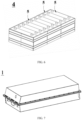
- FIG. 7 is a three-dimensional diagram of a battery pack 1 according to an embodiment.
- FIG. 8 is an exploded view of FIG. 7 .
- the battery pack 1 provided in the fifth aspect of the present disclosure includes the battery module 4 of the fourth aspect of the present disclosure.
- the battery pack 1 includes an upper case body 2, a lower case body 3, and battery modules 4.
- the upper case body 2 and the lower case body 3 are assembled together to form a space for housing the battery modules 4.
- the battery modules 4 are placed in the space formed by the upper case body 2 and the lower case body 3 assembled together.
- Output electrodes of the battery modules 4 are drawn out of one or both of the upper case body 2 and the lower case body 3 to supply power to the outside or receive power from the outside.
- the number and arrangement of the battery modules 4 used in the battery pack 1 may be determined according to actual requirements.
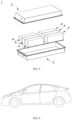
- FIG. 9 is a schematic diagram of an apparatus with a sodium ion battery as a power source according to an embodiment.
- the apparatus provided in the sixth aspect of the present disclosure according to the invention includes the sodium ion battery 5 of the second aspect of the present disclosure according to the invention, and the sodium ion battery 5 can be used as a power source for the apparatus.
- the apparatus with the sodium ion battery 5 is an electric automobile.
- the apparatus with the sodium ion battery 5 may be any other electric vehicles (such as an electric bus, a tramcar, an electric bicycle, an electric motorcycle, an electric scooter, an electric golf cart, and an electric truck) in addition to the electric automobile, an electric ship, an electric tool, an electronic device, or an energy storage system.
- the electric automobile may be a pure electric vehicle, a hybrid electric vehicle, or a plug-in hybrid electric vehicle.
- the apparatus provided in the sixth aspect of the present disclosure according to the invention may include the battery module 4 according to the fourth aspect of the present disclosure.
- the apparatus provided in the sixth aspect of the present disclosure according to the invention may include the battery pack 1 according to the fifth aspect of the present disclosure.
- a button battery is prepared by the following process:
- Powder diffraction data was obtained by using a powder sample X-ray diffractometer (XRD, Bruker D8) under conditions of CuK ⁇ used as an X-ray source, a working voltage of 40 kV, and a current of 40 mA. A sample scanning angle ranged from 10 to 80 degrees, with a step of 0.02 degree.
- VESTA was used to construct the basic structure of the synthesized material, and then GENERAL STRUCTURE ANALYSIS SYSTEM software (GSAS) was used to refine the XRD spectrum, including adjusting atomic parameters in the structure and fitting used peak pattern parameters, instrument parameters and the like by the least square method, so that the full-spectrum weighted residual variance factor Rwp was minimized. After the refinement achieved the requirements, the structure data was exported and used for VESTA analysis and graphing.
- GSAS GENERAL STRUCTURE ANALYSIS SYSTEM software
- the grain size of the positive electrode active material was measured by using an X-ray diffractometer.
- Step 2): the compacted density D of the positive electrode film was calculated by the following formula: the compacted density D (measured in g/cm 3 ) of the positive electrode film the mass per unit area (g/cm 2 ) of the positive electrode film/the positive electrode film thickness (cm), where the positive electrode film thickness may be measured by using a high-qualified micrometer.
- the sodium ion battery was charged to 4.2 V at 0.1 C at 2 V to 4.2 V and allowed to stand for 2 minutes, with the charge capacity at this point being denoted as C0.
- the sodium ion battery was then discharged to 2 V at 0.1 C, with the discharge capacity at this point being the initial specific discharge capacity at 2 V to 4.2 V, denoted as D0.
- the sodium ion battery was charged to 4.5 V at 0.1 C at 2 V to 4.5 V and allowed to stand for 2 minutes, with the charge capacity at this point being denoted as C0.
- the sodium ion battery was then discharged to 2 V at 0.1 C, with the discharge capacity at this point being the initial specific discharge capacity at 2 V to 4.5 V, denoted as D1.
- the sodium ion battery was firstly charged to 4.2 V with a constant current at 1 C and then discharged with a constant current at 1 C to a voltage of 2.0 V. This was a charge-discharge cycle, and the discharge capacity in this cycle was the discharge capacity at the first cycle.
- the sodium ion battery was subjected to a 100-cycle charge/discharge test according to the above method, and the discharge capacity at the 100th cycle was detected.
- the capacity retention (%) of the sodium ion battery after 100 cycles (the discharge capacity of the sodium ion battery at the 100th cycle/the discharge capacity of the sodium ion battery at the first cycle) ⁇ 100%.
- the sodium ion battery was firstly charged to 4.5 V with a constant current at 1 C and then discharged with a constant current at 1 C to a voltage of 2.0 V. This was a charge-discharge cycle, and the discharge capacity in this cycle was the discharge capacity of the first cycle.
- the sodium ion battery was subjected to a 100-cycle charge/discharge test according to the above method, and the discharge capacity of the 100th cycle was detected.
- the capacity retention (%) of the sodium ion battery for 100 cycles (the discharge capacity of the sodium ion battery at the 100th cycle/the discharge capacity of the sodium ion battery at the first cycle) ⁇ 100%.
- a nickel manganese hydroxide precursor was prepared by coprecipitation with NiSO 4 ⁇ 6H 2 O and MnSO 4 ⁇ H 2 O as a Ni source and a Mn source, ammonium hydroxide as a complexing agent and NaOH as a precipitating agent.
- the positive electrode active materials of Comparative Examples 1 to 4 were prepared by the above-mentioned method with the exception that the salt or oxide containing a doping element M was not used in Comparative Examples 1 to 3 and an oxide of Mg was used for doping in Comparative Example 4.
- the positive electrode active material of the present disclosure and the positive electrode active materials as controls were measured for their I003/I104 ratio and crystal lattice parameters c/a ratio, which was summarized in Table 1 below.
- Table 1 Chemical Formulas, Structural Properties and Electrical performances of O3-Phase Layered Metal Oxides Chemical formula Salt or Oxide Containi ng Doping Element M Sintering Temperat ure /°C Sinteri ng Time/h I 003 /I 1 04 c/a 1 st Cycle Dischar ge Specific Capacit y [mAh/g ] at 2.0-4.2 V Capacit y Retenti on (%) after 100 Cycles at 1 C at 2.0-4.2 V 1 st Cycle Dischar ge Specific Capacit y [mAh/g ] at 2.0-4.5 V Capacit y Retenti on (%) after 100 cycles at 1 C At 2.0-4.5 V Ex1 Na 0.85 Ti 0.05 Ni 0.173 Fe 0.2 Mn 0.
- the doping elements in the positive electrode active materials in the form of the O3-phase layered metal oxides had a significant effect on the structural properties of the positive electrode active materials, such as crystallinity and antisite defect of sodium cation.
- the sintering temperature and time of the positive electrode active materials would also have an impact on the structural properties, which would further affect the electrochemical performances of sodium ion batteries, especially the high-voltage discharge specific capacity and high-voltage cycle performance.
- the sintering temperature and the sintering time would also have a certain impact on the structural properties including the crystallization behavior and the antisite defect of sodium cation of the positive electrode active material of the positive electrode active material and the electrical performances including high-voltage discharge specific capacity and high-voltage cycle performance of the sodium ion battery. Sintering at 900°C for 20 hours resulted in formation of the positive electrode active material having the optimal properties.
Landscapes
- Chemical & Material Sciences (AREA)
- General Chemical & Material Sciences (AREA)
- Chemical Kinetics & Catalysis (AREA)
- Electrochemistry (AREA)
- Engineering & Computer Science (AREA)
- Inorganic Chemistry (AREA)
- Organic Chemistry (AREA)
- Manufacturing & Machinery (AREA)
- Materials Engineering (AREA)
- Power Engineering (AREA)
- Transportation (AREA)
- Mechanical Engineering (AREA)
- Aviation & Aerospace Engineering (AREA)
- Life Sciences & Earth Sciences (AREA)
- Sustainable Development (AREA)
- Sustainable Energy (AREA)
- Secondary Cells (AREA)
- Battery Electrode And Active Subsutance (AREA)
Claims (4)
- Positivelektroden-Aktivmaterial für eine Natriumionenbatterie (5), hauptsächlich umfassend ein geschichtetes O3-Phasen-Metalloxid mit der folgenden molekularen Formel:
Na0,85Li0,1Ni0,175Fe0,2Mn0,525O2 (Formel I)
wobei das geschichtete O3-Phasen-Metalloxid ein Verhältnis von 1(003)/1(104) bei 0,87 in einem Röntgenbeugungsspektrum aufweist, wobei I(003) eine Spitzenintensität der (003)-Kristallebene des geschichteten O3-Phasen-Metalloxids bezeichnet, während I(104) eine Spitzenintensität der (104)-Kristallebene des geschichteten O3-Phasen-Metalloxids bezeichnet, und 1(003)/1(104) einen Antisite-Defekt von Natriummetallkation in dem geschichteten O3-Phasen-Metalloxid reflektiert, wobei das geschichtete O3-Phasen-Metalloxid ein hexagonales Kristallsystem mit einer durch R3m spezifizierten Raumgruppe aufweist, wobei ein Verhältnis von Kristallgitterparameter c zu Kristallgitterparameter a 5,58 beträgt. - Verfahren zur Herstellung des Positivelektroden-Aktivmaterials für eine Natriumionenbatterie (5) nach Anspruch 1, wobei das Verfahren die folgenden Schritte umfasst:i) Mitfällung einer Ni-Quelle und einer Mn-Quelle in Gegenwart eines Komplexbildners und eines Fällungsmittels, um einen Ni-Mn-Metallsalzvorläufer zu erhalten, undii) Durchführen einer Festphasensinterung zu dem Ni-Mn-Metallsalzvorläufer aus Schritt i) zusammen mit einer Na-Quelle, einer Fe-Quelle und einer M-Quelle, um das Positivelektroden-Aktivmaterial zu erhalten, welches das geschichtete O3-Phasenmetalloxid umfasst,wobei das Sintem bei einer Temperatur von 900 °C durchgeführt wird und das Sintern für einen Zeitraum von 20 Stunden durchgeführt wird,wobei die M-Quelle Li2CO3 ist.
- Natriumionenbatterie (5), die eine Positivelektrodenplatte, eine Negativelektrodenplatte, einen Separator, der zwischen der Positivelektrodenplatte und der Negativelektrodenplatte angeordnet ist, und einen Elektrolyten umfasst, wobei die Positivelektrodenplatte einen Positivelektroden-Stromsammler und eine Positivelektroden-Aktivmaterialschicht umfasst, die auf mindestens einer Seite des Positivelektroden-Stromsammlers angeordnet ist, wobei das Positivelektroden-Aktivmaterial das Positivelektroden-Aktivmaterial nach Anspruch 1 ist, und wobei die Batterie eine Ladungsschlussspannung von 4,2 V oder höher aufweist.
- Vorrichtung, umfassend die Natriumionenbatterie (5) nach Anspruch 3, wobei die Natriumionenbatterie (5) als Leistungsquelle oder Energiespeichereinheit der Vorrichtung dient; wobei die Vorrichtung gegebenenfalls ein Elektrofahrzeug, ein Hybrid-Elektrofahrzeug, ein Plug-in-Hybrid-Elektrofahrzeug, ein Elektrofahrrad, einen Elektroroller, einen Elektrogolfwagen, einen Elektro-LKW, ein Elektroschiff oder ein Energiespeichersystem umfasst.
Priority Applications (1)
| Application Number | Priority Date | Filing Date | Title |
|---|---|---|---|
| EP24206452.5A EP4559876A3 (de) | 2019-09-27 | 2020-09-07 | Positivelektrodenaktivmaterial für natriumionenbatterie, natriumionenbatterie aus aktivmaterial, batteriemodul, batteriepack und vorrichtung |
Applications Claiming Priority (2)
| Application Number | Priority Date | Filing Date | Title |
|---|---|---|---|
| CN201910922651.9A CN112670497A (zh) | 2019-09-27 | 2019-09-27 | 钠离子电池用正极活性材料、由该活性材料制成的钠离子电池、电池模块、电池包及装置 |
| PCT/CN2020/113822 WO2021057457A1 (zh) | 2019-09-27 | 2020-09-07 | 钠离子电池用正极活性材料、由该活性材料制成的钠离子电池、电池模块、电池包及装置 |
Related Child Applications (2)
| Application Number | Title | Priority Date | Filing Date |
|---|---|---|---|
| EP24206452.5A Division EP4559876A3 (de) | 2019-09-27 | 2020-09-07 | Positivelektrodenaktivmaterial für natriumionenbatterie, natriumionenbatterie aus aktivmaterial, batteriemodul, batteriepack und vorrichtung |
| EP24206452.5A Division-Into EP4559876A3 (de) | 2019-09-27 | 2020-09-07 | Positivelektrodenaktivmaterial für natriumionenbatterie, natriumionenbatterie aus aktivmaterial, batteriemodul, batteriepack und vorrichtung |
Publications (3)
| Publication Number | Publication Date |
|---|---|
| EP3972016A1 EP3972016A1 (de) | 2022-03-23 |
| EP3972016A4 EP3972016A4 (de) | 2023-02-08 |
| EP3972016B1 true EP3972016B1 (de) | 2025-06-25 |
Family
ID=75164896
Family Applications (2)
| Application Number | Title | Priority Date | Filing Date |
|---|---|---|---|
| EP20867772.4A Active EP3972016B1 (de) | 2019-09-27 | 2020-09-07 | Positivelektrodenaktives material für natriumionenbatterie, natriumionenbatterie aus demselben hergestellt, batteriemodul, batteriepack und vorrichtung |
| EP24206452.5A Pending EP4559876A3 (de) | 2019-09-27 | 2020-09-07 | Positivelektrodenaktivmaterial für natriumionenbatterie, natriumionenbatterie aus aktivmaterial, batteriemodul, batteriepack und vorrichtung |
Family Applications After (1)
| Application Number | Title | Priority Date | Filing Date |
|---|---|---|---|
| EP24206452.5A Pending EP4559876A3 (de) | 2019-09-27 | 2020-09-07 | Positivelektrodenaktivmaterial für natriumionenbatterie, natriumionenbatterie aus aktivmaterial, batteriemodul, batteriepack und vorrichtung |
Country Status (4)
| Country | Link |
|---|---|
| US (3) | US20220123299A1 (de) |
| EP (2) | EP3972016B1 (de) |
| CN (3) | CN119905574A (de) |
| WO (1) | WO2021057457A1 (de) |
Families Citing this family (53)
| Publication number | Priority date | Publication date | Assignee | Title |
|---|---|---|---|---|
| CN112687944A (zh) | 2019-10-18 | 2021-04-20 | 宁德时代新能源科技股份有限公司 | 钠离子电池、钠离子电池用正极极片、正极活性材料、电池模块、电池包和装置 |
| CN113651368A (zh) * | 2021-08-16 | 2021-11-16 | 合肥工业大学 | 一种通过掺锂调控制备不同晶型钠离子电池正极材料的方法 |
| CN114005969B (zh) * | 2021-09-29 | 2023-09-15 | 浙江钠创新能源有限公司 | 一种金属离子掺杂的改性钠离子材料及其制备方法与应用 |
| CN114023921A (zh) * | 2021-11-01 | 2022-02-08 | 惠州亿纬锂能股份有限公司 | 一种钠离子电池正极极片及其制备方法和应用 |
| CN114551848A (zh) * | 2021-12-16 | 2022-05-27 | 南京大学深圳研究院 | 一种Li掺杂钠离子电池阴极材料及其制备方法 |
| CN116802872A (zh) | 2021-12-29 | 2023-09-22 | 宁德时代新能源科技股份有限公司 | 层状氧化物正极活性材料、以及包含其的正极极片、钠离子电池及用电装置 |
| CN116565186A (zh) * | 2022-01-27 | 2023-08-08 | 南京大学 | 一种钠离子电池层状锰基正极材料、制备方法及用途 |
| CN116741950A (zh) * | 2022-03-03 | 2023-09-12 | 江苏翔鹰新能源科技有限公司 | 一种单晶型钠离子电池正极活性物质及其制备方法和用途 |
| CN114744179B (zh) * | 2022-05-11 | 2023-08-18 | 蜂巢能源科技股份有限公司 | 一种钠离子电池正极材料及其制备方法和应用 |
| CN114899390B (zh) * | 2022-05-13 | 2023-08-22 | 上海恩捷新材料科技有限公司 | 多元共掺杂钠离子正极材料及其制备方法与应用 |
| CN115000399B (zh) * | 2022-05-25 | 2023-07-25 | 江苏聚烽新能源科技有限公司 | 一种类球状钠离子电池正极材料及其制备方法和钠离子电池 |
| CN114927663A (zh) * | 2022-05-26 | 2022-08-19 | 中国科学技术大学 | 一种五元层状氧化物钠离子电池正极材料及其制备方法和应用 |
| CN115000374B (zh) * | 2022-06-13 | 2024-05-31 | 星恒电源股份有限公司 | 一种复合正极材料、钠离子电池正极片及钠离子电池 |
| CN115241422B (zh) * | 2022-06-21 | 2024-06-25 | 上海璞钠能源科技有限公司 | 一种钠离子电池用正极材料及其制备方法 |
| EP4322260A4 (de) * | 2022-06-24 | 2024-07-31 | Contemporary Amperex Technology Co., Limited | Elektrodenaktivmaterial, sekundärbatterie und elektrische vorrichtung |
| CN121439775A (zh) * | 2022-06-24 | 2026-01-30 | 宁德时代新能源科技股份有限公司 | 电极活性材料、二次电池及用电装置 |
| CN115036487B (zh) * | 2022-06-27 | 2024-04-30 | 湖南工程学院 | 具有超结构的层状氧化物钠离子电池正极材料及制备方法 |
| CN117716537B (zh) * | 2022-07-14 | 2026-02-10 | 宁德时代新能源科技股份有限公司 | 正极活性材料及其制备方法、二次电池、电池模块、电池包和用电装置 |
| CN115377409B (zh) * | 2022-08-09 | 2024-10-25 | 南开大学 | 一种高性能钠离子电池层状氧化物电极材料 |
| EP4328187A1 (de) * | 2022-08-23 | 2024-02-28 | Centre national de la recherche scientifique | Natriumschichtoxid, seine verwendung und verfahren zu seiner herstellung |
| CN115275180A (zh) * | 2022-08-26 | 2022-11-01 | 上海恩捷新材料科技有限公司 | 空位型钠离子正极材料及其制备方法与应用 |
| CN115498154B (zh) * | 2022-09-22 | 2025-12-16 | 深圳市贝特瑞新能源技术研究院有限公司 | 正极材料及其制备方法、钠离子电池 |
| CN115621458B (zh) * | 2022-11-08 | 2024-11-08 | 江苏正力新能电池技术股份有限公司 | 一种o3型钠离子电池层状正极材料及其制备方法、正极极片和钠离子电池 |
| CN115810748B (zh) * | 2022-11-16 | 2026-03-10 | 深圳市拓邦锂电池有限公司 | 正极活性材料及其制备方法、正极极片和钠离子电池 |
| CN115881920A (zh) * | 2022-12-14 | 2023-03-31 | 中国科学技术大学 | 多策略改性的钴掺杂包覆型单晶层状氧化物钠离子电池正极材料 |
| CN118183871A (zh) * | 2022-12-14 | 2024-06-14 | 黄云辉 | 钠缺陷型高熵层状氧化物及其制备方法和应用 |
| CN116111066A (zh) * | 2023-01-30 | 2023-05-12 | 宁波容百新能源科技股份有限公司 | 正极材料及其制备方法、筛选高循环性能正极材料的方法、钠离子电池 |
| CN116190765A (zh) * | 2023-02-24 | 2023-05-30 | 深圳新宙邦科技股份有限公司 | 一种钠离子电池 |
| CN118588883B (zh) * | 2023-03-02 | 2025-09-30 | 中国科学院物理研究所 | 提高钠离子层状氧化物空气稳定性的方法、材料及应用 |
| CN116314728B (zh) * | 2023-05-15 | 2023-10-27 | 宁德时代新能源科技股份有限公司 | 钠层状金属氧化物及其制备方法、二次电池和用电装置 |
| CN116375111B (zh) * | 2023-06-06 | 2023-09-01 | 宜宾锂宝新材料有限公司 | 一种钠离子电池及其正极材料与前驱体和制备方法 |
| CN121748367A (zh) * | 2023-06-19 | 2026-03-27 | 宁德时代新能源科技股份有限公司 | 正极活性材料及其制备方法、正极极片、电池和用电设备 |
| WO2024262523A1 (ja) * | 2023-06-20 | 2024-12-26 | Jfeスチール株式会社 | ナトリウムイオン二次電池用正極活物質、ナトリウムイオン二次電池用正極活物質の製造方法およびナトリウムイオン二次電池 |
| CN116632206A (zh) * | 2023-06-25 | 2023-08-22 | 万华化学(烟台)电池材料科技有限公司 | 一种钠离子电池正极材料及其制备方法和应用 |
| CN116544417B (zh) * | 2023-07-06 | 2024-03-19 | 宁波容百新能源科技股份有限公司 | 正极活性材料及其制备方法、正极片和钠离子电池 |
| CN116581286B (zh) * | 2023-07-11 | 2023-10-20 | 天津国安盟固利新材料科技股份有限公司 | 一种钠离子电池正极材料及其制备方法和钠离子电池 |
| CN116969521B (zh) * | 2023-07-31 | 2025-06-10 | 中国科学院过程工程研究所 | 一种钠离子电池正极材料前驱体及其制备方法和应用 |
| KR20250108705A (ko) * | 2023-08-31 | 2025-07-15 | 베이징 이스프링 머티리얼 테크놀로지 컴퍼니 리미티드 | 나트륨이온 배터리 양극재 및 그 제조방법, 나트륨이온 배터리 |
| CN122246087A (zh) * | 2023-09-28 | 2026-06-19 | 宁德时代新能源科技股份有限公司 | 正极材料及其制备方法、正极、钠电池和用电装置 |
| CN117012949B (zh) * | 2023-10-07 | 2024-01-26 | 有研(广东)新材料技术研究院 | 低镍层状钠离子电池正极材料及其制备方法 |
| CN117597798B (zh) * | 2023-10-07 | 2025-05-30 | 广东邦普循环科技有限公司 | 一种钠离子正极材料及其制备方法与用途 |
| CN117423825A (zh) * | 2023-10-24 | 2024-01-19 | 湖北融通高科先进材料集团股份有限公司 | 一种钠离子电池正极材料及其制备方法和应用 |
| WO2025086098A1 (zh) * | 2023-10-24 | 2025-05-01 | 青美邦新能源材料有限公司 | 包覆型钠电正极材料及其制备方法与应用 |
| CN119965255A (zh) * | 2023-11-02 | 2025-05-09 | 宁德时代新能源科技股份有限公司 | 正极材料及其制备方法、正极、钠电池和用电装置 |
| CN117285087B (zh) * | 2023-11-24 | 2024-04-23 | 北京中科海钠科技有限责任公司 | 一种层状氧化物及其制备方法和钠电池 |
| CN117334887A (zh) * | 2023-12-01 | 2024-01-02 | 宜宾锂宝新材料有限公司 | 一种层状氧化物复合正极材料及其制备方法和钠电池 |
| FR3160063A1 (fr) * | 2024-03-07 | 2025-09-12 | Saft | Elément électrochimique sodium-ion et méthode de cyclage d’un tel élément |
| CN118645618B (zh) * | 2024-06-28 | 2025-04-18 | 北京当升材料科技股份有限公司 | 正极活性材料及其制备方法、正极极片、电池及用电设备 |
| CN118684282B (zh) * | 2024-08-22 | 2024-11-26 | 四川大学 | 一种钠离子电池层状氧化物正极材料的制备方法 |
| CN118763214B (zh) * | 2024-09-05 | 2025-01-14 | 上海兆钠新能源科技有限公司 | 一种锰基钠离子电池正极材料及其制备方法、正极片和钠离子二次电池 |
| CN119361679B (zh) * | 2024-10-09 | 2025-09-16 | 南京航空航天大学 | 一种适用于高电压的o3相钠离子电池正极材料及其制备方法 |
| JP2026092447A (ja) * | 2024-11-26 | 2026-06-05 | トヨタ自動車株式会社 | 電極活物質及び電池 |
| CN119447279B (zh) * | 2025-01-13 | 2025-04-08 | 天津国安盟固利新材料科技股份有限公司 | 一种钠离子电池正极材料及其制备方法与钠离子电池 |
Family Cites Families (13)
| Publication number | Priority date | Publication date | Assignee | Title |
|---|---|---|---|---|
| JP6087075B2 (ja) * | 2012-06-27 | 2017-03-01 | 旭化成株式会社 | 複合酸化物及びその製造方法、並びに非水系二次電池 |
| KR102188078B1 (ko) * | 2014-05-13 | 2020-12-07 | 삼성전자주식회사 | 비리튬 이차전지용 음극 활물질, 그 제조방법, 이를 포함하는 비리튬 이차전지용 음극 및 비리튬 이차전지 |
| CN104795551B (zh) * | 2014-07-17 | 2017-07-14 | 中国科学院物理研究所 | 一种层状含铜氧化物材料及其制备方法和用途 |
| CN104795560B (zh) * | 2014-07-21 | 2017-05-31 | 中国科学院物理研究所 | 一种富钠p2相层状氧化物材料及其制备方法和用途 |
| CN104795561B (zh) * | 2014-07-25 | 2019-02-15 | 中国科学院物理研究所 | 一种层状o3相含镍氧化物正极材料及其制备方法和用途 |
| WO2016033422A1 (en) * | 2014-08-29 | 2016-03-03 | Massachusetts Institute Of Technology | Sodium transition metal oxide electroactive compounds |
| CN104795552B (zh) * | 2014-10-16 | 2016-08-24 | 中国科学院物理研究所 | 一种层状氧化物材料、制备方法、极片、二次电池和用途 |
| EP3332437B1 (de) * | 2015-07-15 | 2020-09-02 | Toyota Motor Europe | Natriumschichtoxid als kathodenmaterial für natriumionenbatterie |
| CN105161703A (zh) * | 2015-08-07 | 2015-12-16 | 复旦大学 | 用于钠离子电池的五元层状氧化物正极材料及其制备方法 |
| JP6672758B2 (ja) * | 2015-12-09 | 2020-03-25 | 住友電気工業株式会社 | ナトリウムイオン二次電池および正極活物質粒子 |
| EP3533102A4 (de) * | 2016-10-26 | 2020-05-27 | National University of Singapore | Nicht brennbare natrium-ionen-batterien |
| KR102006164B1 (ko) * | 2017-08-23 | 2019-08-02 | 전자부품연구원 | 나트륨이온전지용 양극활물질 및 그의 제조 방법 |
| CN109585795A (zh) * | 2017-09-29 | 2019-04-05 | 中国科学院物理研究所 | 混合相结构层状氧化物材料及其制备方法和用途 |
-
2019
- 2019-09-27 CN CN202510208719.2A patent/CN119905574A/zh active Pending
- 2019-09-27 CN CN201910922651.9A patent/CN112670497A/zh active Pending
- 2019-09-27 CN CN202510208717.3A patent/CN119812300A/zh active Pending
-
2020
- 2020-09-07 WO PCT/CN2020/113822 patent/WO2021057457A1/zh not_active Ceased
- 2020-09-07 EP EP20867772.4A patent/EP3972016B1/de active Active
- 2020-09-07 EP EP24206452.5A patent/EP4559876A3/de active Pending
-
2021
- 2021-12-28 US US17/563,101 patent/US20220123299A1/en not_active Abandoned
-
2025
- 2025-04-13 US US19/177,612 patent/US20260162980A1/en active Pending
- 2025-04-28 US US19/192,309 patent/US20250260008A1/en active Pending
Also Published As
| Publication number | Publication date |
|---|---|
| US20260162980A1 (en) | 2026-06-11 |
| EP4559876A3 (de) | 2025-08-13 |
| US20220123299A1 (en) | 2022-04-21 |
| EP3972016A1 (de) | 2022-03-23 |
| WO2021057457A1 (zh) | 2021-04-01 |
| CN119812300A (zh) | 2025-04-11 |
| EP4559876A2 (de) | 2025-05-28 |
| US20250260008A1 (en) | 2025-08-14 |
| CN119905574A (zh) | 2025-04-29 |
| EP3972016A4 (de) | 2023-02-08 |
| CN112670497A (zh) | 2021-04-16 |
Similar Documents
| Publication | Publication Date | Title |
|---|---|---|
| US20250260008A1 (en) | Positive electrode active material for sodium ion battery, sodium ion battery made from same, battery module, battery pack and apparatus | |
| EP4456188A1 (de) | Kathodenaktivmaterial für lithiumsekundärbatterie, herstellungsverfahren dafür und lithiumsekundärbatterie damit | |
| US8986570B2 (en) | Positive electrode active material for lithium secondary battery and use thereof | |
| EP2784026B1 (de) | Wirkstoff | |
| EP2475033B1 (de) | Verfahren zur herstellung eines positiven elektroden-aktivmaterials für lithium sekundärbatterien | |
| EP3352261B1 (de) | Zelle mit wasserfreiem elektrolyt und zellenpaket | |
| EP1720211B1 (de) | Negativelektrode für eine lithium-sekundärbatterie und lithium-sekundärbatterie | |
| US7740982B2 (en) | Active material, manufacturing method thereof, and non-aqueous electrolyte secondary battery including the active material | |
| KR20250161510A (ko) | 리튬 이차 전지용 양극 활물질, 이의 제조방법 및 이를 포함하는 리튬 이차 전지 | |
| EP4456189A1 (de) | Positivelektrodenaktivmaterial für eine wiederaufladbare lithiumbatterie, positivelektrode damit und wiederaufladbare lithiumbatterie damit | |
| EP1492177A2 (de) | Positives aktives Elektrodenmaterial und seine Verwendung | |
| US6399251B1 (en) | Lithium secondary battery | |
| EP4037024B1 (de) | Aktives kathodenmaterial, verfahren zur herstellung davon und lithium-sekundärbatterie damit | |
| EP2999035A2 (de) | Aktivmaterial, batterie mit nichtwässrigem elektrolyt und batteriepack | |
| EP2573844B1 (de) | Nichtwässrige Elektrolytbatterie, Elektrode dafür und Batteriepack | |
| US20100219370A1 (en) | Positive electrode active material, positive electrode for nonaqueous electrolyte battery, and nonaqueous electrolyte battery | |
| US20210320354A1 (en) | Rechargeable lithium ion battery with improved life characteristics | |
| JP7117536B2 (ja) | 負極活物質及び電池 | |
| KR101668929B1 (ko) | 2차 전지 및 그 제조 방법 | |
| KR102502591B1 (ko) | 양극 활물질 및 이를 포함하는 리튬 이차 전지 | |
| EP4329011A1 (de) | Elektrodenaktivmaterial, sekundärbatterie und elektrische vorrichtung | |
| US20250210633A1 (en) | Bipolar electrode and power storage device | |
| CN121439781A (zh) | 磷酸铁锂材料及制备、正极片、电池、电池组及用电设备 |
Legal Events
| Date | Code | Title | Description |
|---|---|---|---|
| STAA | Information on the status of an ep patent application or granted ep patent |
Free format text: STATUS: THE INTERNATIONAL PUBLICATION HAS BEEN MADE |
|
| PUAI | Public reference made under article 153(3) epc to a published international application that has entered the european phase |
Free format text: ORIGINAL CODE: 0009012 |
|
| STAA | Information on the status of an ep patent application or granted ep patent |
Free format text: STATUS: REQUEST FOR EXAMINATION WAS MADE |
|
| 17P | Request for examination filed |
Effective date: 20211213 |
|
| AK | Designated contracting states |
Kind code of ref document: A1 Designated state(s): AL AT BE BG CH CY CZ DE DK EE ES FI FR GB GR HR HU IE IS IT LI LT LU LV MC MK MT NL NO PL PT RO RS SE SI SK SM TR |
|
| TPAC | Observations filed by third parties |
Free format text: ORIGINAL CODE: EPIDOSNTIPA |
|
| DAV | Request for validation of the european patent (deleted) | ||
| DAX | Request for extension of the european patent (deleted) | ||
| A4 | Supplementary search report drawn up and despatched |
Effective date: 20230109 |
|
| RIC1 | Information provided on ipc code assigned before grant |
Ipc: C01G 53/00 19680901ALI20230102BHEP Ipc: H01M 4/505 20100101AFI20230102BHEP |
|
| TPAC | Observations filed by third parties |
Free format text: ORIGINAL CODE: EPIDOSNTIPA |
|
| STAA | Information on the status of an ep patent application or granted ep patent |
Free format text: STATUS: EXAMINATION IS IN PROGRESS |
|
| 17Q | First examination report despatched |
Effective date: 20230807 |
|
| RAP1 | Party data changed (applicant data changed or rights of an application transferred) |
Owner name: CONTEMPORARY AMPEREX TECHNOLOGY(HONG KONG) LIMITED |
|
| GRAP | Despatch of communication of intention to grant a patent |
Free format text: ORIGINAL CODE: EPIDOSNIGR1 |
|
| STAA | Information on the status of an ep patent application or granted ep patent |
Free format text: STATUS: GRANT OF PATENT IS INTENDED |
|
| INTG | Intention to grant announced |
Effective date: 20241029 |
|
| GRAJ | Information related to disapproval of communication of intention to grant by the applicant or resumption of examination proceedings by the epo deleted |
Free format text: ORIGINAL CODE: EPIDOSDIGR1 |
|
| STAA | Information on the status of an ep patent application or granted ep patent |
Free format text: STATUS: EXAMINATION IS IN PROGRESS |
|
| GRAP | Despatch of communication of intention to grant a patent |
Free format text: ORIGINAL CODE: EPIDOSNIGR1 |
|
| STAA | Information on the status of an ep patent application or granted ep patent |
Free format text: STATUS: GRANT OF PATENT IS INTENDED |
|
| INTC | Intention to grant announced (deleted) | ||
| INTG | Intention to grant announced |
Effective date: 20250116 |
|
| P01 | Opt-out of the competence of the unified patent court (upc) registered |
Free format text: CASE NUMBER: APP_1289/2025 Effective date: 20250109 |
|
| GRAS | Grant fee paid |
Free format text: ORIGINAL CODE: EPIDOSNIGR3 |
|
| GRAA | (expected) grant |
Free format text: ORIGINAL CODE: 0009210 |
|
| STAA | Information on the status of an ep patent application or granted ep patent |
Free format text: STATUS: THE PATENT HAS BEEN GRANTED |
|
| AK | Designated contracting states |
Kind code of ref document: B1 Designated state(s): AL AT BE BG CH CY CZ DE DK EE ES FI FR GB GR HR HU IE IS IT LI LT LU LV MC MK MT NL NO PL PT RO RS SE SI SK SM TR |
|
| REG | Reference to a national code |
Ref country code: GB Ref legal event code: FG4D |
|
| REG | Reference to a national code |
Ref country code: CH Ref legal event code: EP |
|
| REG | Reference to a national code |
Ref country code: CH Ref legal event code: EP |
|
| REG | Reference to a national code |
Ref country code: IE Ref legal event code: FG4D |
|
| REG | Reference to a national code |
Ref country code: DE Ref legal event code: R096 Ref document number: 602020053495 Country of ref document: DE |
|
| REG | Reference to a national code |
Ref country code: NL Ref legal event code: FP |
|
| PG25 | Lapsed in a contracting state [announced via postgrant information from national office to epo] |
Ref country code: FI Free format text: LAPSE BECAUSE OF FAILURE TO SUBMIT A TRANSLATION OF THE DESCRIPTION OR TO PAY THE FEE WITHIN THE PRESCRIBED TIME-LIMIT Effective date: 20250625 |
|
| PGFP | Annual fee paid to national office [announced via postgrant information from national office to epo] |
Ref country code: DE Payment date: 20250923 Year of fee payment: 6 |
|
| REG | Reference to a national code |
Ref country code: LT Ref legal event code: MG9D |
|
| PG25 | Lapsed in a contracting state [announced via postgrant information from national office to epo] |
Ref country code: NO Free format text: LAPSE BECAUSE OF FAILURE TO SUBMIT A TRANSLATION OF THE DESCRIPTION OR TO PAY THE FEE WITHIN THE PRESCRIBED TIME-LIMIT Effective date: 20250925 Ref country code: GR Free format text: LAPSE BECAUSE OF FAILURE TO SUBMIT A TRANSLATION OF THE DESCRIPTION OR TO PAY THE FEE WITHIN THE PRESCRIBED TIME-LIMIT Effective date: 20250926 |
|
| PGFP | Annual fee paid to national office [announced via postgrant information from national office to epo] |
Ref country code: NL Payment date: 20250916 Year of fee payment: 6 |
|
| PG25 | Lapsed in a contracting state [announced via postgrant information from national office to epo] |
Ref country code: BG Free format text: LAPSE BECAUSE OF FAILURE TO SUBMIT A TRANSLATION OF THE DESCRIPTION OR TO PAY THE FEE WITHIN THE PRESCRIBED TIME-LIMIT Effective date: 20250625 |
|
| PGFP | Annual fee paid to national office [announced via postgrant information from national office to epo] |
Ref country code: GB Payment date: 20250916 Year of fee payment: 6 |
|
| PG25 | Lapsed in a contracting state [announced via postgrant information from national office to epo] |
Ref country code: HR Free format text: LAPSE BECAUSE OF FAILURE TO SUBMIT A TRANSLATION OF THE DESCRIPTION OR TO PAY THE FEE WITHIN THE PRESCRIBED TIME-LIMIT Effective date: 20250625 |
|
| PGFP | Annual fee paid to national office [announced via postgrant information from national office to epo] |
Ref country code: FR Payment date: 20250915 Year of fee payment: 6 |
|
| PG25 | Lapsed in a contracting state [announced via postgrant information from national office to epo] |
Ref country code: RS Free format text: LAPSE BECAUSE OF FAILURE TO SUBMIT A TRANSLATION OF THE DESCRIPTION OR TO PAY THE FEE WITHIN THE PRESCRIBED TIME-LIMIT Effective date: 20250925 |
|
| PG25 | Lapsed in a contracting state [announced via postgrant information from national office to epo] |
Ref country code: LV Free format text: LAPSE BECAUSE OF FAILURE TO SUBMIT A TRANSLATION OF THE DESCRIPTION OR TO PAY THE FEE WITHIN THE PRESCRIBED TIME-LIMIT Effective date: 20250625 |
|
| PG25 | Lapsed in a contracting state [announced via postgrant information from national office to epo] |
Ref country code: PT Free format text: LAPSE BECAUSE OF FAILURE TO SUBMIT A TRANSLATION OF THE DESCRIPTION OR TO PAY THE FEE WITHIN THE PRESCRIBED TIME-LIMIT Effective date: 20251027 |
|
| REG | Reference to a national code |
Ref country code: AT Ref legal event code: MK05 Ref document number: 1807513 Country of ref document: AT Kind code of ref document: T Effective date: 20250625 |
|
| PG25 | Lapsed in a contracting state [announced via postgrant information from national office to epo] |
Ref country code: IS Free format text: LAPSE BECAUSE OF FAILURE TO SUBMIT A TRANSLATION OF THE DESCRIPTION OR TO PAY THE FEE WITHIN THE PRESCRIBED TIME-LIMIT Effective date: 20251025 |
|
| PG25 | Lapsed in a contracting state [announced via postgrant information from national office to epo] |
Ref country code: SM Free format text: LAPSE BECAUSE OF FAILURE TO SUBMIT A TRANSLATION OF THE DESCRIPTION OR TO PAY THE FEE WITHIN THE PRESCRIBED TIME-LIMIT Effective date: 20250625 Ref country code: AT Free format text: LAPSE BECAUSE OF FAILURE TO SUBMIT A TRANSLATION OF THE DESCRIPTION OR TO PAY THE FEE WITHIN THE PRESCRIBED TIME-LIMIT Effective date: 20250625 |
|
| PG25 | Lapsed in a contracting state [announced via postgrant information from national office to epo] |
Ref country code: CZ Free format text: LAPSE BECAUSE OF FAILURE TO SUBMIT A TRANSLATION OF THE DESCRIPTION OR TO PAY THE FEE WITHIN THE PRESCRIBED TIME-LIMIT Effective date: 20250625 |
|
| PG25 | Lapsed in a contracting state [announced via postgrant information from national office to epo] |
Ref country code: PL Free format text: LAPSE BECAUSE OF FAILURE TO SUBMIT A TRANSLATION OF THE DESCRIPTION OR TO PAY THE FEE WITHIN THE PRESCRIBED TIME-LIMIT Effective date: 20250625 |
|
| PG25 | Lapsed in a contracting state [announced via postgrant information from national office to epo] |
Ref country code: EE Free format text: LAPSE BECAUSE OF FAILURE TO SUBMIT A TRANSLATION OF THE DESCRIPTION OR TO PAY THE FEE WITHIN THE PRESCRIBED TIME-LIMIT Effective date: 20250625 |
|
| PG25 | Lapsed in a contracting state [announced via postgrant information from national office to epo] |
Ref country code: SK Free format text: LAPSE BECAUSE OF FAILURE TO SUBMIT A TRANSLATION OF THE DESCRIPTION OR TO PAY THE FEE WITHIN THE PRESCRIBED TIME-LIMIT Effective date: 20250625 |
|
| PG25 | Lapsed in a contracting state [announced via postgrant information from national office to epo] |
Ref country code: ES Free format text: LAPSE BECAUSE OF FAILURE TO SUBMIT A TRANSLATION OF THE DESCRIPTION OR TO PAY THE FEE WITHIN THE PRESCRIBED TIME-LIMIT Effective date: 20250625 |
|
| PG25 | Lapsed in a contracting state [announced via postgrant information from national office to epo] |
Ref country code: RO Free format text: LAPSE BECAUSE OF FAILURE TO SUBMIT A TRANSLATION OF THE DESCRIPTION OR TO PAY THE FEE WITHIN THE PRESCRIBED TIME-LIMIT Effective date: 20250625 |
|
| REG | Reference to a national code |
Ref country code: DE Ref legal event code: R097 Ref document number: 602020053495 Country of ref document: DE |
|
| PG25 | Lapsed in a contracting state [announced via postgrant information from national office to epo] |
Ref country code: DK Free format text: LAPSE BECAUSE OF FAILURE TO SUBMIT A TRANSLATION OF THE DESCRIPTION OR TO PAY THE FEE WITHIN THE PRESCRIBED TIME-LIMIT Effective date: 20250625 |
|
| PG25 | Lapsed in a contracting state [announced via postgrant information from national office to epo] |
Ref country code: IT Free format text: LAPSE BECAUSE OF FAILURE TO SUBMIT A TRANSLATION OF THE DESCRIPTION OR TO PAY THE FEE WITHIN THE PRESCRIBED TIME-LIMIT Effective date: 20250625 |
|
| PLBE | No opposition filed within time limit |
Free format text: ORIGINAL CODE: 0009261 |
|
| STAA | Information on the status of an ep patent application or granted ep patent |
Free format text: STATUS: NO OPPOSITION FILED WITHIN TIME LIMIT |
|
| REG | Reference to a national code |
Ref country code: CH Ref legal event code: H13 Free format text: ST27 STATUS EVENT CODE: U-0-0-H10-H13 (AS PROVIDED BY THE NATIONAL OFFICE) Effective date: 20260504 |
|
| REG | Reference to a national code |
Ref country code: CH Ref legal event code: L10 Free format text: ST27 STATUS EVENT CODE: U-0-0-L10-L00 (AS PROVIDED BY THE NATIONAL OFFICE) Effective date: 20260507 |
|
| PG25 | Lapsed in a contracting state [announced via postgrant information from national office to epo] |
Ref country code: LU Free format text: LAPSE BECAUSE OF NON-PAYMENT OF DUE FEES Effective date: 20250907 |
|
| REG | Reference to a national code |
Ref country code: BE Ref legal event code: MM Effective date: 20250930 |
|
| 26N | No opposition filed |
Effective date: 20260326 |
|
| PG25 | Lapsed in a contracting state [announced via postgrant information from national office to epo] |
Ref country code: LT Free format text: LAPSE BECAUSE OF FAILURE TO SUBMIT A TRANSLATION OF THE DESCRIPTION OR TO PAY THE FEE WITHIN THE PRESCRIBED TIME-LIMIT Effective date: 20250625 |
|
| PG25 | Lapsed in a contracting state [announced via postgrant information from national office to epo] |
Ref country code: MC Free format text: LAPSE BECAUSE OF FAILURE TO SUBMIT A TRANSLATION OF THE DESCRIPTION OR TO PAY THE FEE WITHIN THE PRESCRIBED TIME-LIMIT Effective date: 20250625 |
|
| PG25 | Lapsed in a contracting state [announced via postgrant information from national office to epo] |
Ref country code: CH Free format text: LAPSE BECAUSE OF NON-PAYMENT OF DUE FEES Effective date: 20250930 Ref country code: IE Free format text: LAPSE BECAUSE OF NON-PAYMENT OF DUE FEES Effective date: 20250907 Ref country code: BE Free format text: LAPSE BECAUSE OF NON-PAYMENT OF DUE FEES Effective date: 20250930 |
|
| PG25 | Lapsed in a contracting state [announced via postgrant information from national office to epo] |
Ref country code: SE Free format text: LAPSE BECAUSE OF FAILURE TO SUBMIT A TRANSLATION OF THE DESCRIPTION OR TO PAY THE FEE WITHIN THE PRESCRIBED TIME-LIMIT Effective date: 20250625 |