EP3787128B1 - Steckverbindung - Google Patents
Steckverbindung Download PDFInfo
- Publication number
- EP3787128B1 EP3787128B1 EP20202736.3A EP20202736A EP3787128B1 EP 3787128 B1 EP3787128 B1 EP 3787128B1 EP 20202736 A EP20202736 A EP 20202736A EP 3787128 B1 EP3787128 B1 EP 3787128B1
- Authority
- EP
- European Patent Office
- Prior art keywords
- plug
- extension
- electrical
- contacts
- connector
- Prior art date
- Legal status (The legal status is an assumption and is not a legal conclusion. Google has not performed a legal analysis and makes no representation as to the accuracy of the status listed.)
- Active
Links
Images
Classifications
-
- H—ELECTRICITY
- H01—ELECTRIC ELEMENTS
- H01R—ELECTRICALLY-CONDUCTIVE CONNECTIONS; STRUCTURAL ASSOCIATIONS OF A PLURALITY OF MUTUALLY-INSULATED ELECTRICAL CONNECTING ELEMENTS; COUPLING DEVICES; CURRENT COLLECTORS
- H01R13/00—Details of coupling devices of the kinds covered by groups H01R12/70 or H01R24/00 - H01R33/00
- H01R13/64—Means for preventing incorrect coupling
- H01R13/642—Means for preventing incorrect coupling by position or shape of contact members
-
- G—PHYSICS
- G02—OPTICS
- G02B—OPTICAL ELEMENTS, SYSTEMS OR APPARATUS
- G02B6/00—Light guides; Structural details of arrangements comprising light guides and other optical elements, e.g. couplings
- G02B6/24—Coupling light guides
- G02B6/36—Mechanical coupling means
- G02B6/38—Mechanical coupling means having fibre to fibre mating means
- G02B6/3807—Dismountable connectors, i.e. comprising plugs
- G02B6/381—Dismountable connectors, i.e. comprising plugs of the ferrule type, e.g. fibre ends embedded in ferrules, connecting a pair of fibres
- G02B6/3825—Dismountable connectors, i.e. comprising plugs of the ferrule type, e.g. fibre ends embedded in ferrules, connecting a pair of fibres with an intermediate part, e.g. adapter, receptacle, linking two plugs
-
- G—PHYSICS
- G02—OPTICS
- G02B—OPTICAL ELEMENTS, SYSTEMS OR APPARATUS
- G02B6/00—Light guides; Structural details of arrangements comprising light guides and other optical elements, e.g. couplings
- G02B6/24—Coupling light guides
- G02B6/36—Mechanical coupling means
- G02B6/38—Mechanical coupling means having fibre to fibre mating means
- G02B6/3807—Dismountable connectors, i.e. comprising plugs
- G02B6/3833—Details of mounting fibres in ferrules; Assembly methods; Manufacture
- G02B6/3847—Details of mounting fibres in ferrules; Assembly methods; Manufacture with means preventing fibre end damage, e.g. recessed fibre surfaces
- G02B6/3849—Details of mounting fibres in ferrules; Assembly methods; Manufacture with means preventing fibre end damage, e.g. recessed fibre surfaces using mechanical protective elements, e.g. caps, hoods, sealing membranes
-
- G—PHYSICS
- G02—OPTICS
- G02B—OPTICAL ELEMENTS, SYSTEMS OR APPARATUS
- G02B6/00—Light guides; Structural details of arrangements comprising light guides and other optical elements, e.g. couplings
- G02B6/24—Coupling light guides
- G02B6/36—Mechanical coupling means
- G02B6/38—Mechanical coupling means having fibre to fibre mating means
- G02B6/3807—Dismountable connectors, i.e. comprising plugs
- G02B6/3833—Details of mounting fibres in ferrules; Assembly methods; Manufacture
- G02B6/3865—Details of mounting fibres in ferrules; Assembly methods; Manufacture fabricated by using moulding techniques
-
- G—PHYSICS
- G02—OPTICS
- G02B—OPTICAL ELEMENTS, SYSTEMS OR APPARATUS
- G02B6/00—Light guides; Structural details of arrangements comprising light guides and other optical elements, e.g. couplings
- G02B6/24—Coupling light guides
- G02B6/36—Mechanical coupling means
- G02B6/38—Mechanical coupling means having fibre to fibre mating means
- G02B6/3807—Dismountable connectors, i.e. comprising plugs
- G02B6/3869—Mounting ferrules to connector body, i.e. plugs
-
- G—PHYSICS
- G02—OPTICS
- G02B—OPTICAL ELEMENTS, SYSTEMS OR APPARATUS
- G02B6/00—Light guides; Structural details of arrangements comprising light guides and other optical elements, e.g. couplings
- G02B6/24—Coupling light guides
- G02B6/36—Mechanical coupling means
- G02B6/38—Mechanical coupling means having fibre to fibre mating means
- G02B6/3807—Dismountable connectors, i.e. comprising plugs
- G02B6/3873—Connectors using guide surfaces for aligning ferrule ends, e.g. tubes, sleeves, V-grooves, rods, pins, balls
- G02B6/3874—Connectors using guide surfaces for aligning ferrule ends, e.g. tubes, sleeves, V-grooves, rods, pins, balls using tubes, sleeves to align ferrules
- G02B6/3878—Connectors using guide surfaces for aligning ferrule ends, e.g. tubes, sleeves, V-grooves, rods, pins, balls using tubes, sleeves to align ferrules comprising a plurality of ferrules, branching and break-out means
- G02B6/3879—Linking of individual connector plugs to an overconnector, e.g. using clamps, clips, common housings comprising several individual connector plugs
-
- H—ELECTRICITY
- H01—ELECTRIC ELEMENTS
- H01R—ELECTRICALLY-CONDUCTIVE CONNECTIONS; STRUCTURAL ASSOCIATIONS OF A PLURALITY OF MUTUALLY-INSULATED ELECTRICAL CONNECTING ELEMENTS; COUPLING DEVICES; CURRENT COLLECTORS
- H01R13/00—Details of coupling devices of the kinds covered by groups H01R12/70 or H01R24/00 - H01R33/00
- H01R13/46—Bases; Cases
- H01R13/502—Bases; Cases composed of different pieces
-
- H—ELECTRICITY
- H01—ELECTRIC ELEMENTS
- H01R—ELECTRICALLY-CONDUCTIVE CONNECTIONS; STRUCTURAL ASSOCIATIONS OF A PLURALITY OF MUTUALLY-INSULATED ELECTRICAL CONNECTING ELEMENTS; COUPLING DEVICES; CURRENT COLLECTORS
- H01R13/00—Details of coupling devices of the kinds covered by groups H01R12/70 or H01R24/00 - H01R33/00
- H01R13/64—Means for preventing incorrect coupling
-
- H—ELECTRICITY
- H01—ELECTRIC ELEMENTS
- H01R—ELECTRICALLY-CONDUCTIVE CONNECTIONS; STRUCTURAL ASSOCIATIONS OF A PLURALITY OF MUTUALLY-INSULATED ELECTRICAL CONNECTING ELEMENTS; COUPLING DEVICES; CURRENT COLLECTORS
- H01R13/00—Details of coupling devices of the kinds covered by groups H01R12/70 or H01R24/00 - H01R33/00
- H01R13/64—Means for preventing incorrect coupling
- H01R13/645—Means for preventing incorrect coupling by exchangeable elements on case or base
-
- G—PHYSICS
- G02—OPTICS
- G02B—OPTICAL ELEMENTS, SYSTEMS OR APPARATUS
- G02B6/00—Light guides; Structural details of arrangements comprising light guides and other optical elements, e.g. couplings
- G02B6/24—Coupling light guides
- G02B6/42—Coupling light guides with opto-electronic elements
- G02B6/4296—Coupling light guides with opto-electronic elements coupling with sources of high radiant energy, e.g. high power lasers, high temperature light sources
- G02B2006/4297—Coupling light guides with opto-electronic elements coupling with sources of high radiant energy, e.g. high power lasers, high temperature light sources having protection means, e.g. protecting humans against accidental exposure to harmful laser radiation
-
- H—ELECTRICITY
- H01—ELECTRIC ELEMENTS
- H01R—ELECTRICALLY-CONDUCTIVE CONNECTIONS; STRUCTURAL ASSOCIATIONS OF A PLURALITY OF MUTUALLY-INSULATED ELECTRICAL CONNECTING ELEMENTS; COUPLING DEVICES; CURRENT COLLECTORS
- H01R13/00—Details of coupling devices of the kinds covered by groups H01R12/70 or H01R24/00 - H01R33/00
- H01R13/62—Means for facilitating engagement or disengagement of coupling parts or for holding them in engagement
- H01R13/625—Casing or ring with bayonet engagement
-
- H—ELECTRICITY
- H01—ELECTRIC ELEMENTS
- H01R—ELECTRICALLY-CONDUCTIVE CONNECTIONS; STRUCTURAL ASSOCIATIONS OF A PLURALITY OF MUTUALLY-INSULATED ELECTRICAL CONNECTING ELEMENTS; COUPLING DEVICES; CURRENT COLLECTORS
- H01R13/00—Details of coupling devices of the kinds covered by groups H01R12/70 or H01R24/00 - H01R33/00
- H01R13/66—Structural association with built-in electrical component
- H01R13/70—Structural association with built-in electrical component with built-in switch
- H01R13/71—Contact members of coupling parts operating as switch, e.g. linear or rotational movement required after mechanical engagement of coupling part to establish electrical connection
Definitions
- the present invention relates to a plug connection for transmitting electrical current according to the preamble of patent claim 1.
- Such plug connections often have a structure with a male plug connector and a female plug connector, wherein the male plug connector has a plug-in extension with a plug-in extension casing wall and electrical contacts, wherein the electrical contacts are arranged in a plug-in extension interior space surrounded by the plug-in extension casing wall, and the female plug connector has a plug-in extension receptacle with a plug-in extension receptacle casing wall and electrical counter-contacts, wherein the electrical counter-contacts are arranged in a plug-in extension receptacle interior space surrounded by the plug-in extension receptacle casing wall, wherein at least one projection is arranged on a casing wall, which is the plug-in extension casing wall or the plug-in extension receptacle casing wall, and the other of these casing walls has at least one receiving slot corresponding to the projection, wherein in an undamaged state of the projection and the receiving slot, the plug-in extension can only be inserted into the plug-in extension recept
- Such plug connections for transmitting electrical current are known from the prior art and are shown, for example, in Community designs 001229827, in particular 001229827-0001 and -0006, 002677641, in particular 002677641-0001, and 001393623-0001 and -0002.
- the projections and the corresponding slots prevent non-matching plug connectors from being plugged into one another when used correctly in the prior art. It also ensures that matching plug connectors can only be plugged into one another in the specified or intended insertion position when used correctly.
- EP 2 209 171 A2 discloses a plug connection according to the preamble of claim 1.
- the object of the invention is to provide an additional measure with which, in plug connections of the type mentioned above, it can be prevented that incorrect electrical contact between the electrical contacts and the electrical mating contacts is accidentally made by plugging together non-matching connectors and/or by plugging together connectors in a position not intended for this purpose.
- the invention proposes a plug connection according to patent claim 1.
- the invention is therefore characterized in that the molded part is arranged relative to the contacts and the counter-molded part relative to the counter-contacts exclusively in one precisely defined position and orientation.
- the basis for this is a construction in which the male connector in the interior of the plug-in extension additionally has at least one molded part and the female connector in the interior of the plug-in extension receiving space additionally has at least one counter-molded part, wherein the molded part and the counter-molded part together form a locking device for preventing electrical contact between the electrical contacts and the electrical counter-contacts when the plug-in extension is inserted into the plug-in extension receiving space starting from a position deviating from the clearly predetermined insertion position.
- the molded part in the insertion extension interior of the male plug and the counter molded part in the insertion extension receiving interior of the female connector thus provide an additional safety measure which prevents the electrical contacts of the male connector from being accidentally incorrectly connected to the electrical counter contacts of the female connector, i.e. electrically contacted. If the male and/or female connectors of plug connections according to the invention are damaged or even completely disappear due to abrasion, wear or other wear and tear, or if the projections and/or receiving slots disappear completely, so that they can no longer ensure that the male and female connectors can only be plugged into one another starting from the clearly specified insertion position, i.e.
- the molded part and the corresponding counter-molded part still form an additional safety measure, which still ensures that if the female and male connectors are plugged into one another incorrectly, at least there is no incorrect electrical contact between the electrical contacts and the electrical counter-contacts.
- the connectors are plugged into one another incorrectly, either intentionally or accidentally, usually with the use of appropriate force.
- the interaction of the molded part and the counter-molded part can at least prevent incorrect electrical contact between the electrical contacts and the electrical counter-contacts.
- the projections and/or receiving slots on the plug-in extension are arranged so as to point outwards, on a surface or outer surface of the plug-in extension casing wall facing away from the plug-in extension interior. This means that they are exposed to increased wear and tear and can therefore be damaged or even completely removed.
- Arranging the molded part in the plug-in extension interior and the counter-molded part in the plug-in extension receiving interior has the advantage that the molded part and the counter-molded part are particularly well protected by the corresponding plug-in extension casing wall or the corresponding plug-in extension receiving casing wall against external influences and in particular against abrasion or other impairments, which further contributes to reliably preventing electrical contact between the electrical contacts and the wrong electrical counter-contacts.
- the electrical contact could also be referred to as the electrically conductive connection of the electrical contacts to the electrical counter-contacts.
- plug connections according to the invention are used to transmit electrical current. This can involve both electrical signal transmission, in which relatively low electrical power is transmitted, and electrical transmission of power with correspondingly high currents and/or voltages. Plug connections according to the invention can therefore be designed both for electrical data transmission and electrical power transmission, e.g. for supplying power to electrical devices. One could also speak of plug connections for transmitting electrical energy and/or electrical signals. Mixed forms of these are also possible. In addition, plug connections according to the invention do not necessarily have to be limited to transmitting only electrical currents and/or voltages. In addition, optical data transmission or the like can also be integrated into plug connections according to the invention.
- Both the male and female connectors of the plug connection according to the invention can be cable connectors, i.e. connectors that are connected directly to the cable, but also so-called chassis connectors, i.e. connectors that are attached to device housings.
- the female connector could also be referred to as a socket.
- the projections could also be referred to as elevations, the receiving slots could also be referred to as depressions or indentations or grooves.
- the projections can be arranged on the plug-in extension casing wall as well as on the plug-in extension receiving casing wall and protrude beyond them. They can point inwards, i.e. towards the respective interior, but also outwards. Accordingly, the receiving slots can also be attached to the plug-in extension casing wall as well as to the plug-in extension receiving casing wall or incorporated into the respective casing wall. Mixed forms are also conceivable.
- the projections and the corresponding receiving slots serve to ensure that the male connector can only be inserted from the outside when the projections and receiving slots are undamaged. from the clear insertion position specified by the projection and the receiving slot in the insertion direction into the insertion extension receptacle. Put simply, the projections and receiving slots, when undamaged and handled correctly, actually ensure that the male connector is not inserted incorrectly into the female connector.
- the molded part according to the invention in conjunction with the corresponding counter-molded part, at least prevents the male connector from being inserted so far into the female connector that the electrical contacts and the electrical counter-contacts are incorrectly connected to one another.
- the clear insertion position predetermined by the projection and the receiving slot is also referred to here as the clear predetermined insertion position or just the predetermined insertion position.
- the shape and position of the receiving slot corresponding to a respective projection corresponds in its shape and position to the shape and position or location of the corresponding projection in such a way that, when the projection and receiving slot are undamaged and when used correctly, insertion is only possible starting from the clearly specified insertion position.
- electrical counter contacts is used only to clarify that these are the electrical contact elements of the female connector. Neither the term “electrical contacts of the male connector” nor the term “electrical counter contacts of the female connector” says anything about the number and physical design of the respective electrical contact elements. These can be very different and corresponding to each other. Both the number of electrical contacts of the male connector and the number of electrical counter contacts of the female connector can vary. There can be one, two, three or more electrical contacts and accordingly also one, two, three or more electrical counter-contacts. Three electrical contacts and correspondingly three electrical counter-contacts are particularly preferred. As a rule, in plug connections according to the invention, the number of electrical contacts of the male connector corresponds to the number of electrical counter-contacts of the female connector.
- the molded part has at least one stop surface and the counter-molded part has at least one counter-stop surface, wherein, to form the locking device, the stop surface and the counter-stop surface abut against one another when the plug-in extension is inserted in the insertion direction into the plug-in extension receptacle starting from a position deviating from the clearly predetermined insertion position, even when the plug-in extension is not completely inserted in the insertion direction and the contacts are still away from the counter contacts, and prevent the plug-in extension from being completely inserted in the insertion direction into the plug-in extension receptacle in order to prevent the electrical contacts from making electrical contact with the electrical counter contacts.
- the molded part is arranged centrally in the plug-in extension interior, preferably on a longitudinal center axis of the plug-in extension.
- the molded part is preferably located between the electrical contacts in the plug-in extension interior.
- the same advantageously also applies to the female plug connector.
- the counter molded part is therefore also advantageously arranged centrally in the plug-in extension interior, preferably on a longitudinal center axis of the plug-in extension receptacle.
- the counter molded part is also preferably located between the electrical counter contacts.
- Both the molded part and the corresponding counter-molded part can be shaped very differently in order to represent the locking device according to the invention and its function.
- a part which is the molded part or the counter-molded part, has at least one free space into which the other of these parts penetrates when the insertion extension is inserted in the insertion direction into the insertion extension receptacle starting from the predetermined insertion position.
- the free space can thus be formed both on the molded part and on the counter-molded part.
- the other part in each case, i.e. then the counter-molded part or the molded part can then penetrate into this free space when the insertion extension is inserted starting from the clearly predetermined insertion position.
- the free space can be V-shaped. There can also be several free spaces, e.g. two opposite one another. According to the invention, the part penetrating into the free space or free spaces, i.e. then the molded part or the counter-molded part, is rotatably mounted in the free space, namely rotatably mounted between two rotation stops according to the invention.
- the insertion extension in plug connections according to the invention, it can be provided that, starting from the clearly predefined insertion position, the insertion extension must be inserted exclusively linearly in the insertion direction into the insertion extension receptacle in order to reach the end position in which the electrical contacts are electrically contacted with the electrical counter-contacts.
- preferred embodiments of the invention provide that, starting from the predefined insertion position, the insertion extension can be inserted in the insertion direction into the insertion extension receptacle to reach a fully inserted position and, starting from the fully inserted position, can be extended by the can be rotated around the insertion direction into an end position, wherein in the end position the electrical contacts are electrically contacted with the electrical mating contacts.
- the insertion direction advantageously coincides with the longitudinal center axes of the insertion extension and the insertion extension receptacle or is coaxial with them.
- the said end position in which the electrical contacts are electrically contacted with the electrical mating contacts, is only reached when, starting from the clearly predetermined insertion position, a linear insertion process first takes place in the insertion direction.
- This linear insertion process reaches the fully inserted position, from which the insertion extension, preferably the entire male plug connector, is then rotated around the insertion direction into the end position.
- At least one receiving channel extending in a circumferential direction and adjoining the receiving slot is arranged in the casing wall in which the receiving slot is also arranged, in which the projection is guided when rotating from the fully inserted position to the end position.
- the, preferably all, electrical contacts are arranged on a common circular path of the electrical contacts and/or that the, preferably all, electrical counter-contacts are arranged on a common circular path of the electrical counter-contacts. It is also preferably provided that an outer surface of the plug-in extension casing wall and/or an inner surface of the plug-in extension receiving casing wall is or are formed in the shape of a circular cylinder casing at least in some areas, apart from projections or receiving slots and/or receiving channels arranged there.
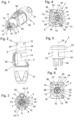
- the male connector 2 of the connector 1 according to the invention shown here as an example is a cable connector in this example and in Fig.1 in a perspective and in Fig.2 shown in a side view.
- Fig.3 shows a view in the direction of the insertion extension 4 of this male connector 2.
- the corresponding female connector 3 is designed as a so-called chassis socket or as a so-called chassis plug, which is intended to be attached to the housing of an electrical device.
- a female connector 3 according to the invention like the male connector 2 shown here, could also be designed as a cable plug, without this requiring any changes to the components essential to the invention. This also applies vice versa for the male connector 2.
- the female connector 3 shown here can be screwed or otherwise fastened to the housing of the electrical device in a manner known per se by means of the fastening holes 36 in the flange 33.
- Fig.4 shows a perspective view of this female connector 3
- Fig.5 a side view.
- Fig.6 shows a view into the insertion extension receptacle interior 11 of this female connector 3 or its insertion extension receptacle 8.
- the male connector 2 has, as is known per se, a housing 29 over which the plug-in extension 4 protrudes.
- the cable grommet 31 On the side opposite the plug-in extension 4 is the cable grommet 31, through which an electrical cable can be inserted into the male connector 2 in a manner known per se and can be contacted there with the electrical contacts 6 of the plug-in extension 4 or male connector 2.
- a slider 30 on the outside of the housing 29 of the male connector 2 there is also a slider 30 known per se, which is intended for releasing a lock designed as in the prior art.
- the housing 29, the cable grommet 31 and the slider 30 are ultimately not relevant to the invention and can be designed as is known per se in the prior art, just like the interior of the housing 29 and the cable grommet 31.
- the plug-in extension 4 has a plug-in extension casing wall 5 which, in the embodiment shown, apart from the projections 12 arranged thereon and projecting outwards, is designed in the shape of a circular cylinder casing, i.e. in particular has an outer surface 25 in the shape of a circular cylinder casing. In the embodiment shown, a total of 4 projections 12 are arranged on this outer surface 25, projecting outwards. These four projections 12 differ in their shape and also in their position. As already stated at the beginning, there can also be more or fewer and differently shaped and also differently arranged projections 12.
- Corresponding receiving slots 13 could just as well be located in the plug-in extension casing wall 5 if the corresponding projections 12 were formed in the plug-in extension receiving casing wall 9 of the plug-in extension 4 of the female connector 3.
- Mixed forms in which both projections 12 and receiving slots 13 are arranged on both the insertion extension casing wall 5 and the insertion extension receiving casing wall 9 are also conceivable.
- the plug-in extension casing wall 5 surrounds the plug-in extension interior space 7 in which the electrical contacts 6 are located.
- the plug-in extension casing wall 5 is, as in the embodiment shown here, advantageously designed to be long enough that the electrical contacts 6 are completely recessed in the plug-in extension interior space 7 and do not protrude above it.
- the countersunk electrical contacts 6 can be clearly seen. It can also be seen that in this embodiment they are arranged on a common circular path 23.
- the molded part 15 with its outward-facing stop surfaces 17 is arranged centrally in the plug-in extension interior 7.
- the shape and function of this molded part 15 and in particular its interaction with the counter-molded part 16 of the female connector 3 will be explained in more detail below.
- the centrally arranged molded part 15 lies here on the longitudinal center axis 19 of the plug-in extension 4 and between the electrical contacts 6.
- the plug-in extension receiving casing wall 9 of the plug-in extension receiving 8 surrounds the plug-in extension receiving interior 11 in which the electrical counter-contacts 10 are arranged.
- these electrical counter-contacts 10 are also all arranged on a common circular path 24 and are recessed in the plug-in extension receiving interior 11.
- the external contacts 34 which are in conductive connection with the electrical counter-contacts 10, are used to connect cables or the like and protrude at the rear, i.e. on the side facing away from the flange 33, over the housing 32 of the female connector 3.
- the counter-molded part 16 according to the invention with its two counter-stop surfaces 18, the two free spaces 27 and the rotation stops 28 is also arranged centrally in the plug-in extension receiving interior 11.
- the longitudinal center axis 20 of the insertion extension holder 8 also runs through the counter-molded part 16.
- the insertion extension holder casing wall 9 has a circular-cylindrical inner surface 26, which in this embodiment is penetrated by the receiving slots 13.
- Each receiving slot 13 is followed by a receiving channel 22, which is also arranged in the insertion extension holder casing wall 9 and penetrates the inner surface 26.
- the male connector 2 with its insertion extension 4 is inserted in the insertion direction 14 starting from the clear insertion position specified by the projections 12 and the corresponding receiving slots 13 in the plug-in extension holder 8 is inserted.
- the plug-in extension 4 is inserted sufficiently far into the plug-in extension holder 8 in the insertion direction 14, the fully inserted position can be reached, in which the electrical contacts 6 in this embodiment are not yet electrically connected or contacted with the electrical counter-contacts 10.
- the plug-in extension 4 In order to reach the end position in which this is the case, the plug-in extension 4 must first be rotated in the circumferential direction 21 starting from the fully inserted position, only then does an electrical contact between the electrical contacts 6 and the electrical counter-contacts 10 occur in this embodiment.
- a seal 35 known per se is located in the insertion extension receiving space 8 of the female connector 3. The front end of the insertion extension casing wall 5 is pressed against this seal 35 in the fully inserted position.
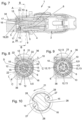
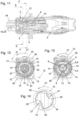
- the insertion extension 4 or the entire male connector 2 is moved from the fully inserted position according to the Fig. 7 to 10 in the circumferential direction 21.
- the projections 12 of the insertion extension are guided in the receiving channels 22 of the insertion extension receiving casing wall 9.
- the electrical contacts 6 are then electrically conductive with the electrical counter contacts 10 connected, as is particularly evident in the Figs. 11 and 13 can be seen.
- the Fig. 11 to 14 In the end position shown, the electrical contacts 6 are then electrically conductive with the electrical counter contacts 10 connected, as is particularly evident in the Figs. 11 and 13 can be seen.
Landscapes
- Physics & Mathematics (AREA)
- General Physics & Mathematics (AREA)
- Optics & Photonics (AREA)
- Details Of Connecting Devices For Male And Female Coupling (AREA)
- Connector Housings Or Holding Contact Members (AREA)
Description
- Die vorliegende Erfindung betrifft eine Steckverbindung zur Übertragung von elektrischem Strom gemäss dem Oberbegriff von Patentanspruch 1.
- Derartige Steckverbindungen weisen oftmals einen Aufbau mit einem männlichen Steckverbinder und einem weiblichen Steckverbinder auf, wobei der männliche Steckverbinder einen Einsteckfortsatz mit einer Einsteckfortsatzmantelwand und elektrischen Kontakten aufweist, wobei in einem von der Einsteckfortsatzmantelwand umgebenen Einsteckfortsatzinnenraum die elektrischen Kontakte angeordnet sind, und der weibliche Steckverbinder eine Einsteckfortsatzaufnahme mit einer Einsteckfortsatzaufnahmemantelwand und elektrischen Gegenkontakten aufweist, wobei in einem von der Einsteckfortsatzaufnahmemantelwand umgebenen Einsteckfortsatzaufnahmeinnenraum die elektrischen Gegenkontakte angeordnet sind, wobei an einer Mantelwand, welche die Einsteckfortsatzmantelwand oder die Einsteckfortsatzaufnahmemantelwand ist, zumindest ein Vorsprung angeordnet ist und die andere dieser Mantelwände zumindest einen, zu dem Vorsprung korrespondierenden Aufnahmeschlitz aufweist, wobei in einem unbeschädigten Zustand des Vorsprungs und des Aufnahmeschlitzes der Einsteckfortsatz ausschliesslich ausgehend von einer eindeutigen, von dem Vorsprung und dem Aufnahmeschlitz vorgegebenen Einsteckstellung in einer Einsteckrichtung in die Einsteckfortsatzaufnahme einsteckbar ist.
- Solche Steckverbindungen zur Übertragung von elektrischem Strom sind aus dem Stand der Technik bekannt und z.B. in den Gemeinschaftsgeschmacksmustern 001229827, insbesondere 001229827-0001 und -0006, 002677641, insbesondere 002677641-0001, und 001393623-0001 und -0002 gezeigt. Durch die Vorsprünge und die jeweils korrespondierenden Aufnahmeschlitze wird bei sachgerechter Bedienung beim Stand der Technik verhindert, dass nicht zusammengehörige Steckverbinder ineinander eingesteckt werden. Weiters wird sichergestellt, dass zusammengehörige Steckverbinder bei sachgemässem Gebrauch nur in der vorgegebenen bzw. vorgesehenen Einsteckstellung ineinandergesteckt werden können.
- Die Praxis zeigt allerdings, dass es durch unsachgemässen Gebrauch, aber auch durch Abnutzung an den Vorsprüngen und/oder Aufnahmeschlitzen dazu kommen kann, dass die Steckverbinder in einer nicht vorgesehenen Stellung und/oder Kombination ineinandergesteckt werden. Hierdurch kann es passieren, dass versehentlich die elektrischen Kontakte mit hierfür nicht vorgesehenen elektrischen Gegenkontakten elektrisch kontaktiert, also elektrisch leitend verbunden werden. Dies kann sowohl zu einer Gefährdung der an die Steckverbinder angeschlossenen Kabel und Geräte als auch der diese Kabel und Geräte bzw. Steckverbinder bedienenden Personen führen.
EP 2 209 171 A2 offenbart eine Steckverbindung gemäß dem Oberbegriff von Anspruch 1. - Aufgabe der Erfindung ist es, eine zusätzliche Massnahme bereitzustellen, mit der bei Steckverbindungen der oben genannten Art verhindert werden kann, dass es durch Zusammenstecken von nicht zusammengehörigen Steckverbindern und/oder durch Zusammenstecken von Steckverbindern in einer hierfür nicht vorgesehenen Stellung aus Versehen zum falschen elektrischen Kontaktieren der elektrischen Kontakte mit den elektrischen Gegenkontakten kommt.
- Zur Lösung dieser Aufgabe schlägt die Erfindung eine Steckverbindung gemäss Patentanspruch 1 vor.
- Es ist bei der Erfindung somit vorgesehen, dass dadurch gekennzeichnet, dass das Formteil relativ zu den Kontakten und das Gegenformteil relativ zu den Gegenkontakten ausschliesslich in nur einer genau definierten Position und Ausrichtung angeordnet ist. Basis dafür ist eine Konstruktion, bei welcher der männliche Steckverbinder im Einsteckfortsatzinnenraum zusätzlich zumindest ein Formteil und der weibliche Steckverbinder im Einsteckfortsatzaufnahmeinnenraum zusätzlich zumindest ein Gegenformteil aufweisen, wobei das Formteil und das Gegenformteil gemeinsam eine Sperrvorrichtung zur Verhinderung eines elektrischen Kontaktierens der elektrischen Kontakte mit den elektrischen Gegenkontakten bei einem Einstecken des Einsteckfortsatzes in die Einsteckfortsatzaufnahme ausgehend von einer, von der eindeutigen vorgegebenen Einsteckstellung abweichenden Stellung bilden.
- Durch das Formteil im Einsteckfortsatzinnenraum des männlichen Steckers und das Gegenformteil im Einsteckfortsatzaufnahmeinnenraum des weiblichen Steckverbinders wird somit eine zusätzliche Sicherungsmassnahme bereitgestellt, welche verhindert, dass die elektrischen Kontakte des männlichen Steckverbinders versehentlich falsch mit den elektrischen Gegenkontakten des weiblichen Steckverbinders elektrisch leitend verbunden, also elektrisch kontaktiert werden. Sollte es bei männlichen und/oder weiblichen Steckverbindern erfindungsgemässer Steckverbindungen durch Abrieb, Abnutzung oder sonstigen Verschleiss zu Beschädigungen oder gar zum vollständigen Verschwinden der Vorsprünge und/oder Aufnahmeschlitze kommen, sodass diese nicht mehr sicherstellen können, dass der männliche und der weibliche Steckverbinder ausschliesslich ausgehend von der eindeutigen vorgegebenen Einsteckstellung, also in der eigentlich vorgesehenen Art und Weise, ineinandergesteckt werden können, so bilden das Formteil und das korrespondierende Gegenformteil immer noch eine zusätzliche Sicherungsmassnahme, welche beim falschen Ineinanderstecken von weiblichem und männlichem Steckverbinder immer noch dafür sorgt, dass es zumindest nicht zu einem falschen elektrischen Kontaktieren der elektrischen Kontakte und der elektrischen Gegenkontakte kommt. Das Gleiche gilt, wenn die Steckverbinder vorsätzlich oder versehentlich, in der Regel unter entsprechender Gewaltanwendung, falsch ineinandergesteckt werden. Auch in diesem Fall kann durch das Zusammenwirken von Formteil und Gegenformteil zumindest ein falsches elektrisches Kontaktieren der elektrischen Kontakte mit den elektrischen Gegenkontakten verhindert werden.
- In der Regel sind die Vorsprünge und/oder Aufnahmeschlitze am Einsteckfortsatz nach aussen weisend, auf einer vom Einsteckfortsatzinnenraum wegweisenden Oberfläche bzw. Aussenfläche der Einsteckfortsatzmantelwand angeordnet. Dies hat zur Folge, dass sie einem erhöhten Verschleiss ausgesetzt sind und dadurch beschädigt oder sogar ganz entfernt werden können. Das Anordnen des Formteils im Einsteckfortsatzinnenraum und des Gegenformteils im Einsteckfortsatzaufnahmeinnenraum hat den Vorteil, dass das Formteil und das Gegenformteil von der entsprechenden Einsteckfortsatzmantelwand bzw. der entsprechenden Einsteckfortsatzaufnahmemantelwand gegen äussere Einflüsse und insbesondere gegen Abrieb oder andere Beeinträchtigungen besonders gut geschützt ist bzw. sind, was zur sicheren Verhinderung eines elektrischen Kontaktierens der elektrischen Kontakte mit den jeweils falschen elektrischen Gegenkontakten weiter beiträgt. Der Vollständigkeit halber wird darauf hingewiesen, dass das elektrische Kontaktieren auch als elektrisch leitfähiges Miteinanderverbinden der elektrischen Kontakte mit den elektrischen Gegenkontakten bezeichnet werden könnte.
- Mit erfindungsgemässen Steckverbindungen wird allgemein gesprochen elektrischer Strom übertragen. Es kann sich dabei sowohl um eine elektrische Signalübertragung, bei der eher geringe elektrische Leistungen übertragen werden, als auch um eine elektrische Übertragung von Leistung mit entsprechend hohen Stromstärken und/oder Spannungen handeln. Erfindungsgemässe Steckverbindungen können also sowohl zur elektrischen Datenübertragung als auch zur elektrischen Leistungsübertragung z.B. zur Stromversorgung von elektrischen Geräten ausgelegt sein. Man könnte auch von Steckverbindungen zur Übertragung von elektrischer Energie und/oder elektrischen Signalen sprechen. Auch Mischformen davon sind möglich. Darüber hinaus müssen erfindungsgemässe Steckverbindungen auch nicht zwingend darauf beschränkt sein, nur elektrische Ströme und/oder Spannungen zu übertragen. In erfindungsgemässe Steckverbindungen kann zusätzlich z.B. auch eine optische Datenübertragung oder dergleichen integriert sein.
- Sowohl beim männlichen Steckverbinder als auch beim weiblichen Steckverbinder der erfindungsgemässen Steckverbindung kann es sich um Kabelstecker, also um Steckverbinder, welche direkt am Kabel angeschlossen werden, aber auch um sogenannte Chassisstecker, also Steckverbinder die an Gerätegehäusen angebracht werden, handeln. Der weibliche Steckverbinder könnte auch als Buchse bezeichnet werden.
- Die Vorsprünge könnten auch als Erhebungen, die Aufnahmeschlitze könnten auch als Vertiefungen oder Eintiefungen oder Nuten bezeichnet werden. Die Vorsprünge können sowohl an der Einsteckfortsatzmantelwand als auch an der Einsteckfortsatzaufnahmemantelwand angeordnet sein und über diese hinausstehen. Sie können nach innen, also zum jeweiligen Innenraum aber auch nach aussen weisen. Entsprechend können auch die Aufnahmeschlitze sowohl an der Einsteckfortsatzmantelwand als auch an der Einsteckfortsatzaufnahmemantelwand angebracht bzw. in die jeweilige Mantelwand eingebracht sein. Auch Mischformen sind denkbar. Es kann sich pro Mantelwand um einen, aber auch mehrere Vorsprünge und/oder Aufnahmeschlitze handeln. Im Folgenden wird in der Regel in der Einzahl von dem Vorsprung und dem Aufnahmeschlitz gesprochen. Dies ist aber nur eine sprachliche Vereinfachung. Es kann sich in allen nachfolgend geschilderten Ausführungsvarianten um einen oder mehrere Vorsprünge aber auch um einen oder mehrere Aufnahmeschlitze handeln. Die Vorsprünge und die dazu korrespondierenden Aufnahmeschlitze dienen dazu, dass der männliche Steckverbinder im unbeschädigten Zustand der Vorsprünge und Aufnahmeschlitze nur ausgehend von der eindeutigen, von dem Vorsprung und dem Aufnahmeschlitz vorgegebenen Einsteckstellung in der Einsteckrichtung in die Einsteckfortsatzaufnahme einsteckbar ist. Vereinfacht gesprochen sorgen die Vorsprünge und Aufnahmeschlitze im unbeschädigten Zustand und bei sachgerechter Handhabung also eigentlich dafür, dass es gar nicht zu einem falschen Einstecken des männlichen Steckverbinders in den weiblichen Steckverbinder kommt. Die Praxis hat allerdings, wie oben bereits geschildert, gezeigt, dass es durch Beschädigung, Abnutzung oder sonstige Beeinträchtigung von Vorsprüngen und Aufnahmeschlitzen aber auch durch unsachgemässe Handhabung dazu kommen kann, dass der Einsteckfortsatz des männlichen Steckverbinders ausgehend von einer falschen, von der eindeutigen vorgegebenen Einsteckstellung abweichenden Stellung in die Einsteckfortsatzaufnahme des weiblichen Steckverbinders eingesteckt werden kann. In diesem Fall verhindert das erfindungsgemässe Formteil in Zusammenwirkung mit dem entsprechenden Gegenformteil zumindest, dass der männliche Steckverbinder so weit in den weiblichen Steckverbinder eingeschoben werden kann, dass die elektrischen Kontakte und die elektrischen Gegenkontakte falsch miteinander verbunden werden. Die eindeutige, von dem Vorsprung und dem Aufnahmeschlitz vorgegebene Einsteckstellung wird hier kurz auch als eindeutige vorgegebene Einsteckstellung oder nur als vorgegebene Einsteckstellung bezeichnet.
- Der zu einem jeweiligen Vorsprung korrespondierende Aufnahmeschlitz entspricht in seiner Ausformung und Lage so der Form und Position bzw. Lage des entsprechenden Vorsprungs, dass im unbeschädigten Zustand von Vorsprung und Aufnahmeschlitz und bei sachgerechter Anwendung ein Einstecken eben nur ausgehend von der eindeutigen vorgegebenen Einsteckstellung aus möglich ist.
- Der Begriff der elektrischen Gegenkontakte wird lediglich zur Klarstellung verwendet, dass es sich hierbei um die elektrischen Kontaktelemente des weiblichen Steckverbinders handelt. Weder der Begriff der elektrischen Kontakte des männlichen Steckverbinders noch der der elektrischen Gegenkontakte des weiblichen Steckverbinders sagt irgendetwas über die Anzahl und physische Ausgestaltung der jeweiligen elektrischen Kontaktelemente aus. Diese kann sehr verschieden und entsprechend korrespondierend zueinander ausgebildet sein. Sowohl die Anzahl der elektrischen Kontakte des männlichen Steckverbinders als auch die Anzahl der elektrischen Gegenkontakte des weiblichen Steckverbinders können variieren. Es kann sich um ein, zwei, drei oder mehr elektrische Kontakte und entsprechend auch um ein, zwei, drei oder mehr elektrische Gegenkontakte handeln. Besonders bevorzugt sind drei elektrische Kontakte und entsprechend drei elektrische Gegenkontakte. In der Regel entspricht bei erfindungsgemässen Steckverbindungen die Anzahl der elektrischen Kontakte des männlichen Steckverbinders der Anzahl der elektrischen Gegenkontakte des weiblichen Steckverbinders.
- Bevorzugte Ausgestaltungsformen der Erfindung sehen vor, dass das Formteil zumindest eine Anschlagfläche und das Gegenformteil zumindest eine Gegenanschlagfläche aufweisen, wobei zur Ausbildung der Sperrvorrichtung die Anschlagfläche und die Gegenanschlagfläche beim Einstecken des Einsteckfortsatzes in der Einsteckrichtung in die Einsteckfortsatzaufnahme ausgehend von einer von der eindeutigen vorgegebenen Einsteckstellung abweichenden Stellung bereits bei nicht vollständig in der Einsteckrichtung eingestecktem Einsteckfortsatz und noch von den Gegenkontakten entfernten Kontakten aneinander anschlagen und zur Verhinderung des elektrischen Kontaktierens der elektrischen Kontakte mit den elektrischen Gegenkontakten ein vollständiges Einstecken des Einsteckfortsatzes in der Einsteckrichtung in die Einsteckfortsatzaufnahme verhindern.
- Bei der Verwendung der Begriffe Formteil und Gegenformteil wie auch Anschlagfläche und Gegenanschlagfläche handelt es sich, wie bei den elektrischen Kontakten und den elektrischen Gegenkontakten ebenfalls letztendlich um eine Konvention, die lediglich dazu dient, die sprachliche Zuordnung zum männlichen bzw. weiblichen Steckverbinder zu vereinfachen und zu vereinheitlichen. Diese Begriffe sagen daher noch nichts über die konkrete Ausgestaltung und Anordnung im jeweiligen Steckverbinder aus.
- Besonders bevorzugte Ausgestaltungsformen der Erfindung sehen vor, dass das Formteil zentral im Einsteckfortsatzinnenraum, vorzugsweise auf einer Längsmittelachse des Einsteckfortsatzes, angeordnet ist. Bevorzugt befindet sich das Formteil zwischen den elektrischen Kontakten im Einsteckfortsatzinnenraum. Analoges gilt günstigerweise auch für den weiblichen Steckverbinder. Auch das Gegenformteil ist also günstigerweise zentral im Einsteckfortsatzinnenraum, vorzugsweise auf einer Längsmittelachse der Einsteckfortsatzaufnahme, angeordnet. Bevorzugt befindet sich das Gegenformteil auch zwischen den elektrischen Gegenkontakten.
- Wie eingangs bereits erläutert, können bei erfindungsgemässen Steckverbindungen und ihren männlichen und weiblichen Steckverbindern jeweils nur ein Vorsprung und nur ein korrespondierender Aufnahmeschlitz pro jeweiliger Mantelwand aber eben auch mehrere Vorsprünge und mehrere Aufnahmeschlitze vorgesehen sein. Es ist somit im Rahmen der Erfindung möglich, dass an einer Mantelwand, welche die Einsteckfortsatzmantelwand oder die Einsteckfortsatzaufnahmemantelwand ist, mehrere, vorzugsweise vier, voneinander verschieden ausgeformte und/oder an voneinander verschiedenen Positionen angeordnete Vorsprünge angeordnet sind und die andere dieser Mantelwände eine zu den Vorsprüngen korrespondierende Anzahl von voneinander verschieden ausgeformten und/oder an voneinander verschiedenen Positionen angeordneten Aufnahmeschlitzen aufweist. Sowohl das Formteil als auch das dazu korrespondierende Gegenformteil können sehr unterschiedlich ausgeformt sein, um die erfindungsgemässe Sperrvorrichtung und ihre Funktion darzustellen. Erfindungsgemäß ist vorgesehen, dass ein Teil, welches das Formteil oder das Gegenformteil ist, zumindest einen Freiraum aufweist, in welchen das andere dieser Teile beim Einstecken des Einsteckfortsatzes in der Einsteckrichtung in die Einsteckfortsatzaufnahme ausgehend von der vorgegebenen Einsteckstellung eindringt. Der Freiraum kann somit sowohl am Formteil als auch am Gegenformteil ausgebildet sein. Das jeweils andere Teil, also dann eben entsprechend das Gegenformteil oder das Formteil, kann beim Einstecken des Einsteckfortsatzes ausgehend von der eindeutigen vorgegebenen Einsteckstellung dann entsprechend in diesen Freiraum eindringen. In einer Draufsicht, insbesondere in Einsteckrichtung gesehen, kann der Freiraum V-förmig ausgebildet sein. Es kann sich auch um mehrere, z.B. zwei einander gegenüberliegende Freiräume handeln. Erfindungsgemäß ist das in den Freiraum oder die Freiräume eindringende Teil, also dann entsprechend das Formteil oder das Gegenformteil, im Freiraum drehbar gelagert, nämlich erfindungsgemäß drehbar zwischen zwei Drehanschlägen gelagert.
- Grundsätzlich kann bei erfindungsgemässen Steckverbindungen vorgesehen sein, dass ausgehend von der eindeutigen vorgegebenen Einsteckstellung der Einsteckfortsatz ausschliesslich linear in der Einsteckrichtung in die Einsteckfortsatzaufnahme eingesteckt werden muss, um so die Endstellung zu erreichen, in der die elektrischen Kontakte mit den elektrischen Gegenkontakten elektrisch kontaktiert sind. Bevorzugte Ausgestaltungsformen der Erfindung sehen jedoch vor, dass der Einsteckfortsatz ausgehend von der vorgegebenen Einsteckstellung in der Einsteckrichtung in die Einsteckfortsatzaufnahme zum Erreichen einer vollständig eingesteckten Stellung einsteckbar ist und ausgehend von der vollständig eingesteckten Stellung um die Einsteckrichtung herum in eine Endstellung drehbar ist, wobei in der Endstellung die elektrischen Kontakte mit den elektrischen Gegenkontakten elektrisch kontaktiert sind. Die Einsteckrichtung fällt dabei günstigerweise mit den Längsmittelachsen des Einsteckfortsatzes und der Einsteckfortsatzaufnahme zusammen bzw. ist mit diesen koaxial ausgebildet. Bei diesen Ausgestaltungsformen der Erfindung ist somit vorgesehen, dass die genannte Endstellung, in der die elektrischen Kontakte mit den elektrischen Gegenkontakten elektrisch kontaktiert sind, erst dann erreicht wird, wenn ausgehend von der eindeutigen vorgegebenen Einsteckstellung zunächst ein linearer Einsteckvorgang in Einsteckrichtung stattfindet. Mit diesem linearen Einsteckvorgang wird die vollständig eingesteckte Stellung erreicht, aus der heraus der Einsteckfortsatz, vorzugsweise der gesamte männliche Steckverbinder, dann um die Einsteckrichtung herum in die Endstellung gedreht wird.
- In diesem Zusammenhang ist es günstig, wenn in der Mantelwand, in der auch der Aufnahmeschlitz angeordnet ist, zumindest ein in einer Umfangsrichtung verlaufender und an den Aufnahmeschlitz anschliessender Aufnahmekanal angeordnet ist, in dem der Vorsprung beim Drehen von der vollständig eingesteckten Stellung in die Endstellung geführt ist.
- Weiters ist es günstig, wenn die, vorzugsweise alle, elektrischen Kontakte auf einer gemeinsamen Kreisbahn der elektrischen Kontakte angeordnet sind und/oder dass die, vorzugsweise alle, elektrischen Gegenkontakte auf einer gemeinsamen Kreisbahn der elektrischen Gegenkontakte angeordnet sind. Bevorzugt ist auch vorgesehen, dass eine Aussenfläche der Einsteckfortsatzmantelwand und/oder eine Innenfläche der Einsteckfortsatzaufnahmemantelwand abgesehen von dort angeordneten Vorsprüngen oder Aufnahmeschlitzen und/oder dort angeordneten Aufnahmekanälen zumindest bereichsweise kreiszylindermantelförmig ausgebildet ist bzw. sind.
- Weitere bevorzugte Ausgestaltungsformen erfindungsgemässer Steckverbindungen werden beispielhaft in der nachfolgenden Figurenbeschreibung anhand eines erfindungsgemässen Ausführungsbeispiels erläutert. Es zeigen:
- Fig. 1 bis 3
- Ansichten eines männlichen Steckverbinders einer erfindungsgemässen Steckverbindung;
- Fig. 4 bis 6
- Ansichten eines weiblichen Steckverbinders der erfindungsgemässen Steckverbindung;
- Fig. 7
- einen Längsschnitt durch die Steckverbindung mit diesem männlichen und diesem weiblichen Steckverbinder in der vollständig eingesteckten Stellung entlang der Schnittlinie CC aus
Fig. 8 ; - Fig. 8
- den Querschnitt entlang der Schnittlinie AA aus
Fig. 7 ; - Fig. 9
- den Querschnitt entlang der Schnittlinie BB aus
Fig. 8 ; - Fig. 10
- das Detail D aus
Fig. 8 ; - Fig. 11
- einen Längsschnitt durch diese Steckverbindung in der Endstellung, in der die elektrischen Kontakte mit den elektrischen Gegenkontakten elektrisch kontaktiert sind, entlang der Schnittlinie GG aus
Fig. 12 ; - Fig. 12
- den Querschnitt entlang der Schnittlinie EE aus
Fig. 11 ; - Fig. 13
- den Querschnitt entlang der Schnittlinie FF aus
Fig. 11 ; - Fig. 14
- das Detail H aus
Fig. 12 vergrössert; - Fig. 15
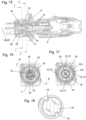
- einen Längsschnitt durch die Steckverbindung, wobei allerdings der männliche Steckverbinder ausgehend von einer von der eindeutigen vorgesehenen Einsteckstellung abweichenden Stellung eingesteckt wurde, entlang der Schnittlinie KK aus
Fig. 16 ; - Fig. 16
- den Querschnitt entlang der Schnittlinie II aus
Fig. 15 ; - Fig. 17
- den Querschnitt entlang der Schnittlinie JJ aus
Fig. 15 und - Fig. 18
- das Detail L aus
Fig. 16 , vergrössert. - Der hier beispielhaft gezeigte männliche Steckverbinder 2 der erfindungsgemässen Steckverbindung 1 ist in diesem Beispiel ein Kabelstecker und in
Fig. 1 in einer Perspektive und inFig. 2 in einer Seitenansicht dargestellt.Fig. 3 zeigt eine Ansicht in Richtung in den Einsteckfortsatz 4 dieses männlichen Steckverbinders 2 hinein. Der korrespondierende weibliche Steckverbinder 3 ist als sogenannte Chassisbuchse bzw. als sogenannter Chassisstecker ausgebildet, welcher dazu vorgesehen ist, am Gehäuse eines Elektrogerätes befestigt zu werden. Natürlich könnte ein erfindungsgemässer weiblicher Steckverbinder 3 so wie der hier gezeigte männliche Steckverbinder 2 auch als Kabelstecker ausgeführt sein, ohne dass hierdurch etwas an den erfindungswesentlichen Bauteilen geändert werden müsste. Dies gilt andersherum auch für den männlichen Steckverbinder 2. Auch dieser könnte grundsätzlich als ein Chassisstecker ausgeführt sein. Der hier gezeigte weibliche Steckverbinder 3 kann mittels der Befestigungslöcher 36 im Flansch 33 in an sich bekannter Art und Weise am Gehäuse des Elektrogerätes angeschraubt bzw. anderweitig befestigt werden.Fig. 4 zeigt eine perspektivische Ansicht auf diesen weiblichen Steckverbinder 3,Fig. 5 eine Seitenansicht.Fig. 6 zeigt einen Blick in den Einsteckfortsatzaufnahmeinnenraum 11 dieses weiblichen Steckverbinders 3 bzw. dessen Einsteckfortsatzaufnahme 8. - Der männliche Steckverbinder 2 weist, wie an sich bekannt, ein Gehäuse 29 auf, über das der Einsteckfortsatz 4 übersteht. Auf der dem Einsteckfortsatz 4 entgegengesetzten Seite befindet sich die Kabeltülle 31, durch die hindurch ein elektrisches Kabel in den männlichen Steckverbinder 2 in an sich bekannter Art und Weise eingeführt und dort an den elektrischen Kontakten 6 des Einsteckfortsatzes 4 bzw. männlichen Steckverbinders 2 kontaktiert werden kann. Im gezeigten Ausführungsbeispiel befindet sich aussen am Gehäuse 29 des männlichen Steckverbinders 2 auch ein an sich bekannter Schieber 30, welcher zum Lösen einer wie beim Stand der Technik ausgebildeten Verriegelung vorgesehen ist. Das Gehäuse 29, die Kabeltülle 31 und der Schieber 30 sind letztendlich nicht erfindungsrelevant und können ebenso wie das Innenleben des Gehäuses 29 und der Kabeltülle 31, wie beim Stand der Technik an sich bekannt, ausgeführt sein.
- Der Einsteckfortsatz 4 weist eine Einsteckfortsatzmantelwand 5 auf, welche im gezeigten Ausführungsbeispiel, abgesehen von den daran angeordneten und nach aussen stehenden Vorsprüngen 12 kreiszylindermantelförmig ausgebildet ist, also insbesondere eine kreiszylindermantelförmige Aussenfläche 25 aufweist. Im gezeigten Ausführungsbeispiel sind an dieser Aussenfläche 25 insgesamt 4 Vorsprünge 12 nach aussen abstehend angeordnet. Diese vier Vorsprünge 12 unterscheiden sich in ihrer Form und auch in ihrer Position. Wie bereits eingangs ausgeführt, können es auch mehr oder weniger und anders ausgeformte und auch anders eingeordnete Vorsprünge 12 sein. Genauso gut könnten sich in der Einsteckfortsatzmantelwand 5 auch entsprechende Aufnahmeschlitze 13 befinden, wenn die entsprechenden Vorsprünge 12 in der Einsteckfortsatzaufnahmemantelwand 9 des Einsteckfortsatzes 4 des weiblichen Steckverbinders 3 ausgebildet wären. Auch Mischformen, bei denen sowohl Vorsprünge 12 als auch Aufnahmeschlitze 13 sowohl an der Einsteckfortsatzmantelwand 5 als auch an der Einsteckfortsatzaufnahmemantelwand 9 angeordnet sind, sind denkbar.
- Die Einsteckfortsatzmantelwand 5 umgibt jedenfalls den Einsteckfortsatzinnenraum 7, in dem sich die elektrischen Kontakte 6 befinden. Die Einsteckfortsatzmantelwand 5 ist, wie im hier gezeigten Ausführungsbeispiel, günstigerweise so lang ausgeführt, dass die elektrischen Kontakte 6 im Einsteckfortsatzinnenraum 7 vollständig versenkt angeordnet sind und über diesen nicht überstehen. Bei dem Blick gemäss
Fig. 3 in den Einsteckfortsatzinnenraum 7 hinein, sind die versenkt angeordneten elektrischen Kontakte 6 gut zu erkennen. Zu sehen ist auch, dass diese in diesem Ausführungsbeispiel auf einer gemeinsamen Kreisbahn 23 angeordnet sind. Zentral im Einsteckfortsatzinnenraum 7 ist erfindungsgemäss das Formteil 15 mit seinen nach aussen weisenden Anschlagflächen 17 angeordnet. Die Form und Funktion dieses Formteils 15 und insbesondere seine Wechselwirkung mit dem Gegenformteil 16 des weiblichen Steckverbinders 3 wird nachfolgend noch genauer erläutert. Das zentral angeordnete Formteil 15 liegt hier auf der Längsmittelachse 19 des Einsteckfortsatzes 4 und zwischen den elektrischen Kontakten 6. - Die Einsteckfortsatzaufnahmemantelwand 9 der Einsteckfortsatzaufnahme 8 umgibt den Einsteckfortsatzaufnahmeinnenraum 11, in welchem die elektrischen Gegenkontakte 10 angeordnet sind. Auch diese elektrischen Gegenkontakte 10 sind in diesem Ausführungsbeispiel alle auf einer gemeinsamen Kreisbahn 24 angeordnet und im Einsteckfortsatzaufnahmeinnenraum 11 versenkt angeordnet. Die Aussenkontakte 34, welche mit den elektrischen Gegenkontakten 10 in leitfähiger Verbindung stehen, dienen dem Anschluss von Kabeln oder dergleichen und stehen hinten, also auf der vom Flansch 33 abgewandten Seite über das Gehäuse 32 des weiblichen Steckverbinders 3 über. Zentral im Einsteckfortsatzaufnahmeinnenraum 11 ist auch das erfindungsgemässe Gegenformteil 16 mit seinen beiden Gegenanschlagflächen 18, den beiden Freiräumen 27 und den Drehanschlägen 28 angeordnet. Durch das Gegenformteil 16 hindurch verläuft auch die Längsmittelachse 20 der Einsteckfortsatzaufnahme 8. Die Einsteckfortsatzaufnahmemantelwand 9 weist eine kreiszylinderförmige Innenfläche 26 auf, welche in diesem Ausführungsbeispiel durch die Aufnahmeschlitze 13 durchbrochen ist. An jeden Aufnahmeschlitz 13 schliesst ein ebenfalls in der Einsteckfortsatzaufnahmemantelwand 9 angeordneter, die Innenfläche 26 durchbrechender Aufnahmekanal 22 an.
- Bei einer sachgerechten Anwendung wird der männliche Steckverbinder 2 mit seinem Einsteckfortsatz 4 ausgehend von der eindeutigen, von den Vorsprüngen 12 und den korrespondierenden Aufnahmeschlitzen 13 vorgegebenen Einsteckstellung in der Einsteckrichtung 14 in die Einsteckfortsatzaufnahme 8 eingesteckt. Hierdurch kann bei einem entsprechend weiten Einschieben des Einsteckfortsatzes 4 in die Einsteckfortsatzaufnahme 8 in Einsteckrichtung 14 die vollständig eingesteckte Stellung erreicht werden, in der die elektrischen Kontakte 6 in diesem Ausführungsbeispiel aber noch nicht mit den elektrischen Gegenkontakten 10 elektrisch leitend verbunden bzw. kontaktiert sind. Um die Endstellung, in der dies der Fall ist, zu erreichen, muss der Einsteckfortsatz 4 zunächst noch von der vollständig eingesteckten Stellung ausgehend in Umfangsrichtung 21 gedreht werden, erst dann kommt es in diesem Ausführungsbeispiel zu einem elektrischen Kontaktieren der elektrischen Kontakte 6 mit den elektrischen Gegenkontakten 10.
- In den
Fig. 7 bis 10 ist die vollständig eingesteckte Stellung gezeigt, in der noch keine elektrische Kontaktierung zwischen den elektrischen Kontakten 6 und den elektrischen Gegenkontakten 10 erfolgt ist. Letzteres ist besonders gut inFig. 9 zu erkennen. In denFig. 7, 8 und 10 ist auch gut zu sehen, dass bei diesem Einsteckvorgang, ausgehend von der durch die unbeschädigten Vorsprünge 12 und die korrespondierenden Aufnahmeschlitze 13 vorgegebenen eindeutigen Einsteckstellungen die Nasen des Formteils 15 des Einsteckfortsatzes 4 jeweils in einen der hier V-förmig ausgebildeten Freiräume 27 des Gegenformteils 16 eingedrungen sind, sodass auch die Anschlagflächen 17 des Formteils 15 beim Einsteckvorgang nicht mit den Gegenanschlagflächen 18 des Gegenformteils 16 kollidiert bzw. in Wirkverbindung getreten sind. - In dem hier gezeigten Ausführungsbeispiel der Steckverbindung 1 befindet sich eine an sich bekannte Dichtung 35 im Einsteckfortsatzaufnahmeraum 8 des weiblichen Steckverbinders 3. Gegen diese Dichtung 35 wird das vordere Ende der Einsteckfortsatzmantelwand 5 in der vollständig eingesteckten Stellung gedrückt.
- Zum Erreichen der Endstellung gemäss der
Fig. 11 bis 14 und damit zum elektrischen Kontaktieren der elektrischen Kontakte 6 mit den elektrischen Gegenkontakten 10 wird der Einsteckfortsatz 4 bzw. der gesamte männliche Steckverbinder 2 ausgehend von der vollständig eingesteckten Stellung gemäss derFig. 7 bis 10 in Umfangsrichtung 21 gedreht. Dabei werden die Vorsprünge 12 des Einsteckfortsatzes in den Aufnahmekanälen 22 der Einsteckfortsatzaufnahmemantelwand 9 geführt. In der in denFig. 11 bis 14 gezeigten Endstellung sind dann die elektrischen Kontakte 6 mit den elektrischen Gegenkontakten 10 elektrisch leitend verbunden, wie dies besonders gut in denFig. 11 und 13 zu sehen ist. In denFig. 12 und insbesondere 14 ist gut zu sehen, dass durch diese Drehbewegung in Umfangsrichtung 21 die Nasen des Formteils 15 und damit das Formteil 15 an sich in den Freiräumen 27 des Gegenformteils 16 von einem Drehanschlag 28, sieheFig. 10 , zum anderen Drehanschlag 28, sieheFig. 14 , gedreht wurde. Diese Drehanschläge 28 können als zusätzliche Begrenzung der Drehbewegung in Umfangsrichtung 21 eingesetzt werden, müssen aber nicht zwingend vorhanden sein. - Anhand der
Fig. 1 bis 14 wurde bislang die sachgemässe Verwendung der erfindungsgemässen Steckverbindung 1 beschrieben, bei welcher sich die Vorsprünge 12 und die korrespondierenden Aufnahmeschlitze 13 in einem unbeschädigten Zustand befinden und die eindeutige Einsteckstellung vorgeben. - Wie eingangs erläutert, sind Fälle aufgetreten, bei denen durch Beschädigung, Abrieb oder dergleichen die Vorsprünge 12 und/oder die Aufnahmeschlitze 13 beschädigt wurden, sodass hierdurch oder durch schlichtweg unsachgemässe Verwendung ein Einsteckvorgang des Einsteckfortsatzes 4 in die Einsteckfortsatzaufnahme 8 ausgehend von einer von der eindeutigen vorgegebenen Einsteckstellung abweichenden Stellung durchgeführt wurde. In den
Fig. 15 bis 18 ist nun gezeigt, wie in einem solchen Fall durch das Zusammenwirken des erfindungsgemässen Formteils 15 mit dem erfindungsgemässen Gegenformteil 16 eine Sperrvorrichtung gebildet wird, welche verhindert, dass die elektrischen Kontakte 6 mit den elektrischen Gegenkontakten 10 elektrisch leitend verbunden bzw. elektrisch kontaktiert werden. In denFig. 15, 16 und 18 ist gut zu sehen, wie bei diesem Einsteckvorgang die Anschlagflächen 17 des Formteils 15 an den Gegenanschlagflächen 18 des Gegenformteils 16 anschlagen, bevor es zu einem elektrischen Verbinden bzw. Kontaktieren der elektrischen Kontakte 6 mit den falschen elektrischen Gegenkontakten 10 kommen kann. Das Zusammenwirken von Formteil 15 und Gegenformteil 16 bzw. ihrer Anschläge 17 mit den Gegenanschlägen 18 verhindert somit ein elektrisches Kontaktieren der elektrischen Kontakte 6 mit den elektrischen Gegenkontakten 10, da der Einsteckfortsatz 4 in der Einsteckrichtung 14 nicht vollständig in die Einsteckfortsatzaufnahme 8 eingesteckt werden kann. Dies ist besonders gut inFig. 15 zu sehen, indem dort, wenn die Anschlagflächen 17 bereits an den Gegenanschlagflächen 18 anliegen, die elektrischen Kontakte 6 immer noch von den elektrischen Gegenkontakten 10 entfernt angeordnet sind und so mit diesen nicht in elektrisch leitende Verbindung treten können. -
1 Steckverbindung 36 Befestigungsloch 2 männlicher Steckverbinder 3 weiblicher Steckverbinder 4 Einsteckfortsatz 5 Einsteckfortsatzmantelwand 6 elektrischer Kontakt 7 Einsteckfortsatzinnenraum 8 Einsteckfortsatzaufnahme 9 Einsteckfortsatzaufnahmemantelwand 10 elektrischer Gegenkontakt 11 Einsteckfortsatzaufnahmeinnenraum 12 Vorsprung 13 Aufnahmeschlitz 14 Einsteckrichtung 15 Formteil 16 Gegenformteil 17 Anschlagfläche 18 Gegenanschlagfläche 19 Längsmittelachse 20 Längsmittelachse 21 Umfangsrichtung 22 Aufnahmekanal 23 gemeinsame Kreisbahn 24 gemeinsame Kreisbahn 25 Aussenfläche 26 Innenfläche 27 Freiraum 28 Drehanschlag 29 Gehäuse 30 Schieber 31 Kabeltülle 32 Gehäuse 33 Flansch 34 Aussenkontakt 35 Dichtung
Claims (9)
- Steckverbindung (1) zur Übertragung von elektrischem Strom mit einem männlichen Steckverbinder (2) und einem weiblichen Steckverbinder (3), wobeider männliche Steckverbinder (2) einen Einsteckfortsatz (4) mit einer Einsteckfortsatzmantelwand (5) und elektrischen Kontakten (6) aufweist, wobei in einem von der Einsteckfortsatzmantelwand (5) umgebenen Einsteckfortsatzinnenraum (7) die elektrischen Kontakte (6) angeordnet sind, undder weibliche Steckverbinder (3) eine Einsteckfortsatzaufnahme (8) mit einer Einsteckfortsatzaufnahmemantelwand (9) und elektrischen Gegenkontakten (10) aufweist, wobei in einem von der Einsteckfortsatzaufnahmemantelwand (9) umgebenen Einsteckfortsatzaufnahmeinnenraum (11) die elektrischen Gegenkontakte (10) angeordnet sind,wobei an einer Mantelwand, welche die Einsteckfortsatzmantelwand (5) oder die Einsteckfortsatzaufnahmemantelwand (9) ist, zumindest ein Vorsprung (12) angeordnet ist und die andere dieser Mantelwände zumindest einen, zu dem Vorsprung (12) korrespondierenden Aufnahmeschlitz (13) aufweist, wobei in einem unbeschädigten Zustand des Vorsprungs (12) und des Aufnahmeschlitzes (13) der Einsteckfortsatz (4) ausschließlich ausgehend von einer eindeutigen, von dem Vorsprung (12) und dem Aufnahmeschlitz (13) vorgegebenen Einsteckstellung in einer Einsteckrichtung (14) in die Einsteckfortsatzaufnahme (8) einsteckbar ist,wobei der männliche Steckverbinder (2) im Einsteckfortsatzinnenraum (7) zusätzlich zumindest ein Formteil (15) und der weibliche Steckverbinder (3) im Einsteckfortsatzaufnahmeinnenraum (11) zusätzlich zumindest ein Gegenformteil (16) aufweisen, wobei das Formteil (15) und das Gegenformteil (16) gemeinsam eine Sperrvorrichtung zur Verhinderung eines elektrischen Kontaktierens der elektrischen Kontakte (6) mit den elektrischen Gegenkontakten (10) bei einem Einstecken des Einsteckfortsatzes (4) in die Einsteckfortsatzaufnahme (8) ausgehend von einer, von der eindeutigen vorgegebenen Einsteckstellung abweichenden Stellung bilden,wobei ein Teil, welches das Formteil (15) oder das Gegenformteil (16) ist, zumindest einen, vorzugsweise in einer Draufsicht gesehen V-förmigen, Freiraum (27) aufweist, in welchen das andere dieser Teile beim Einstecken des Einsteckfortsatzes (4) in der Einsteckrichtung (14) in die Einsteckfortsatzaufnahme (8) ausgehend von der eindeutigen vorgegebenen Einsteckstellung eindringt,dadurch gekennzeichnet, dassdas in den Freiraum (27) eindringende Teil im Freiraum (27) zwischen zwei Drehanschlägen (28) drehbar ist.
- Steckverbindung nach Anspruch 1, dadurch gekennzeichnet, dass das Formteil (15) zumindest eine Anschlagfläche (17) und das Gegenformteil (16) zumindest eine Gegenanschlagfläche (18) aufweisen, wobei zur Ausbildung der Sperrvorrichtung die Anschlagfläche (17) und die Gegenanschlagfläche (18) beim Einstecken des Einsteckfortsatzes (4) in der Einsteckrichtung in die Einsteckfortsatzaufnahme (8) ausgehend von einer von der eindeutigen vorgegebenen Einsteckstellung abweichenden Stellung bereits bei nicht vollständig in der Einsteckrichtung (14) eingestecktem Einsteckfortsatz (4) und noch von den Gegenkontakten (10) entfernten Kontakten (6) aneinander anschlagen und zur Verhinderung des elektrischen Kontaktierens der elektrischen Kontakte (6) mit den elektrischen Gegenkontakten (10) ein vollständiges Einstecken des Einsteckfortsatzes (4) in der Einsteckrichtung (14) in die Einsteckfortsatzaufnahme (8) verhindern.
- Steckverbindung (1) nach Anspruch 1 oder 2, dadurch gekennzeichnet, dass das Formteil (15) zentral im Einsteckfortsatzinnenraum (7), vorzugsweise auf einer Längsmittelachse (19) des Einsteckfortsatzes (4), und/oder zwischen den elektrischen Kontakten (6) angeordnet ist.
- Steckverbindung (1) nach einem der Ansprüche 1 bis 3, dadurch gekennzeichnet, dass das Gegenformteil (16) zentral im Einsteckfortsatzaufnahmeinnenraum (11), vorzugsweise auf einer Längsmittelachse (20) der Einsteckfortsatzaufnahme (8), und/oder zwischen den elektrischen Gegenkontakten (10) angeordnet ist.
- Steckverbindung (1) nach einem der Ansprüche 1 bis 4, dadurch gekennzeichnet, dass an einer Mantelwand, welche die Einsteckfortsatzmantelwand (5) oder die Einsteckfortsatzaufnahmemantelwand (9) ist, mehrere, vorzugsweise vier, voneinander verschieden ausgeformte und/oder an voneinander verschiedenen Positionen angeordnete Vorsprünge (12) angeordnet sind und die andere dieser Mantelwände eine zu den Vorsprüngen (12) korrespondierende Anzahl von voneinander verschieden ausgeformten und/oder an voneinander verschiedenen Positionen angeordneten Aufnahmeschlitzen (13) aufweist.
- Steckverbindung (1) nach einem der Ansprüche 1 bis 5, dadurch gekennzeichnet, dass der Einsteckfortsatz (4) ausgehend von der eindeutigen vorgegebenen Einsteckstellung in der Einsteckrichtung (14) in die Einsteckfortsatzaufnahme (8) zum Erreichen einer vollständig eingesteckten Stellung einsteckbar ist und ausgehend von der vollständig eingesteckten Stellung um die Einsteckrichtung (14) herum in eine Endstellung drehbar ist, wobei in der Endstellung die elektrischen Kontakte (6) mit den elektrischen Gegenkontakten (10) elektrisch kontaktiert sind.
- Steckverbindung (1) nach Anspruch 6, dadurch gekennzeichnet, dass in der Mantelwand, in der auch der Aufnahmeschlitz (13) angeordnet ist, zumindest ein in einer Umfangsrichtung (21) verlaufender und an den Aufnahmeschlitz (13) anschliessender Aufnahmekanal (22) angeordnet ist, in dem der Vorsprung (12) beim Drehen von der vollständig eingesteckten Stellung in die Endstellung geführt ist.
- Steckverbindung (1) nach einem der Ansprüche 1 bis 7, dadurch gekennzeichnet, dass die, vorzugsweise alle, elektrischen Kontakte (6) auf einer gemeinsamen Kreisbahn (23) der elektrischen Kontakte (6) angeordnet sind und/oder dass die, vorzugsweise alle, elektrischen Gegenkontakte (10) auf einer gemeinsamen Kreisbahn (24) der elektrischen Gegenkontakte (10) angeordnet sind.
- Steckverbindung (1) nach einem der Ansprüche 1 bis 8, dadurch gekennzeichnet, dass eine Aussenfläche (25) der Einsteckfortsatzmantelwand (5) und/oder eine Innenfläche (26) der Einsteckfortsatzaufnahmemantelwand (9) abgesehen von dort angeordneten Vorsprüngen (12) oder Aufnahmeschlitzen (13) und/oder dort angeordneten Aufnahmekanälen (22) zumindest bereichsweise kreiszylindermantelförmig ausgebildet ist bzw. sind.
Applications Claiming Priority (3)
| Application Number | Priority Date | Filing Date | Title |
|---|---|---|---|
| DE102018101431.7A DE102018101431A1 (de) | 2018-01-23 | 2018-01-23 | Steckverbindung |
| EP18208607.4A EP3514892B1 (de) | 2018-01-23 | 2018-11-27 | Steckverbindung |
| EP19216920.9A EP3641070A1 (de) | 2018-01-23 | 2018-11-27 | Steckverbindung |
Related Parent Applications (2)
| Application Number | Title | Priority Date | Filing Date |
|---|---|---|---|
| EP19216920.9A Division EP3641070A1 (de) | 2018-01-23 | 2018-11-27 | Steckverbindung |
| EP18208607.4A Division EP3514892B1 (de) | 2018-01-23 | 2018-11-27 | Steckverbindung |
Publications (2)
| Publication Number | Publication Date |
|---|---|
| EP3787128A1 EP3787128A1 (de) | 2021-03-03 |
| EP3787128B1 true EP3787128B1 (de) | 2024-07-17 |
Family
ID=64500270
Family Applications (3)
| Application Number | Title | Priority Date | Filing Date |
|---|---|---|---|
| EP18208607.4A Active EP3514892B1 (de) | 2018-01-23 | 2018-11-27 | Steckverbindung |
| EP20202736.3A Active EP3787128B1 (de) | 2018-01-23 | 2018-11-27 | Steckverbindung |
| EP19216920.9A Withdrawn EP3641070A1 (de) | 2018-01-23 | 2018-11-27 | Steckverbindung |
Family Applications Before (1)
| Application Number | Title | Priority Date | Filing Date |
|---|---|---|---|
| EP18208607.4A Active EP3514892B1 (de) | 2018-01-23 | 2018-11-27 | Steckverbindung |
Family Applications After (1)
| Application Number | Title | Priority Date | Filing Date |
|---|---|---|---|
| EP19216920.9A Withdrawn EP3641070A1 (de) | 2018-01-23 | 2018-11-27 | Steckverbindung |
Country Status (5)
| Country | Link |
|---|---|
| US (2) | US10823914B2 (de) |
| EP (3) | EP3514892B1 (de) |
| JP (2) | JP6705027B2 (de) |
| CN (2) | CN112886338B (de) |
| DE (1) | DE102018101431A1 (de) |
Families Citing this family (4)
| Publication number | Priority date | Publication date | Assignee | Title |
|---|---|---|---|---|
| US10615530B2 (en) | 2017-06-06 | 2020-04-07 | Amphenol Corporation | Spring loaded electrical connector |
| DE102018101431A1 (de) * | 2018-01-23 | 2019-07-25 | Neutrik Ag | Steckverbindung |
| CN113097790B (zh) * | 2021-04-08 | 2022-10-21 | 山东聚辰电缆有限公司 | 一种电力电缆接头及电力电缆接头的连接工艺 |
| WO2023232256A1 (de) | 2022-06-02 | 2023-12-07 | Neutrik Ag | Einbausteckverbinder |
Family Cites Families (43)
| Publication number | Priority date | Publication date | Assignee | Title |
|---|---|---|---|---|
| US2986612A (en) * | 1959-04-06 | 1961-05-30 | Hubbell Inc Harvey | Electrical connectors for industrial uses |
| US3351887A (en) * | 1965-06-28 | 1967-11-07 | Eldon D Jones | Interlocking electrical connection |
| US3339039A (en) * | 1965-09-10 | 1967-08-29 | Arrow Hart & Hegeman Electric | Electrical connector with contactprotecting and arc-quenching shield |
| AT313404B (de) * | 1970-03-31 | 1974-02-25 | Staff & Schwarz Gmbh | Elektrische Kupplung zum Verbinden elektrischer Leitungen |
| JPH0229176U (de) * | 1988-08-18 | 1990-02-26 | ||
| JP2779104B2 (ja) | 1992-11-12 | 1998-07-23 | 日本原子力研究所 | 簡易着脱電気コネクター |
| DE19851301C2 (de) * | 1998-11-06 | 2001-05-17 | Framatome Connectors Int | Elektrischer Steckverbinder für Zünder |
| JP2000208209A (ja) * | 1999-01-14 | 2000-07-28 | D D K Ltd | 電源接続用コネクタ |
| US6394661B1 (en) * | 1999-02-09 | 2002-05-28 | Fiber Systems International | Fiber optic connector having receptacle housing for radially aligning mating inserts |
| US6234683B1 (en) * | 1999-09-13 | 2001-05-22 | Stratos Lightwave, Inc. | Field repairable hermaphroditic connector |
| US6394856B1 (en) * | 2000-01-04 | 2002-05-28 | Tyco Electronics Corp. | Electrical connector with programmable keying |
| US6986686B2 (en) * | 2001-02-23 | 2006-01-17 | Olympus Corporation | Electrical plug for supplying electric power from a power supply to a medical instrument |
| US6764351B2 (en) * | 2001-08-27 | 2004-07-20 | Campagnie Deutsch GmbH | Electrical connector |
| US7429170B2 (en) * | 2005-10-31 | 2008-09-30 | Owens-Illinois Closure Inc. | Method and machine for compression molding closure shells |
| DE102006001630A1 (de) * | 2006-01-11 | 2007-07-12 | Neutrik Aktiengesellschaft | Steckerbuchse |
| JP4557915B2 (ja) | 2006-03-24 | 2010-10-06 | 株式会社七星科学研究所 | シャッター付き電気コネクタ |
| JP4777148B2 (ja) * | 2006-05-31 | 2011-09-21 | 矢崎総業株式会社 | コネクタ |
| US20100136808A1 (en) * | 2007-03-27 | 2010-06-03 | Van-System S.R.L. | Electrical Connector |
| US7585116B2 (en) * | 2007-04-12 | 2009-09-08 | Fiber Systems International | Fiber optic connector having hermaphroditic coupling mechanism |
| US7435112B1 (en) * | 2008-02-08 | 2008-10-14 | Tyco Electronics Corporation | Electrical connector having a mechanical mating cycle limitation |
| JP5341532B2 (ja) * | 2009-01-19 | 2013-11-13 | 第一電子工業株式会社 | 1対の誤嵌合防止キー及び該キーを用いた電気コネクタ |
| JP4847564B2 (ja) * | 2009-07-22 | 2011-12-28 | 日本航空電子工業株式会社 | コネクタ組立体 |
| JP4925372B2 (ja) * | 2009-12-28 | 2012-04-25 | 日本航空電子工業株式会社 | 光コネクタアダプタ |
| US8550843B2 (en) * | 2010-11-22 | 2013-10-08 | Andrew Llc | Tabbed connector interface |
| JP5775335B2 (ja) * | 2011-03-16 | 2015-09-09 | 矢崎総業株式会社 | 突き当てコネクタ |
| DE102011113062A1 (de) * | 2011-09-09 | 2013-03-14 | Amphenol-Tuchel Electronics Gmbh | Kontaktgeschützter Steckverbinder |
| ES2615434T3 (es) * | 2012-06-26 | 2017-06-06 | Huawei Technologies Co., Ltd. | Conector de fibra óptica, adaptador de fibra óptica y conjunto de conector de fibra óptica |
| JP5946377B2 (ja) * | 2012-09-07 | 2016-07-06 | 矢崎総業株式会社 | コネクタ |
| US9252539B2 (en) * | 2012-11-02 | 2016-02-02 | Hubbell Incorporated | Internally switched female receptacle or connector with plug-latching safety interlock |
| DE202013006297U1 (de) | 2013-07-11 | 2013-07-25 | Rosenberger Hochfrequenztechnik Gmbh & Co. Kg | Steckverbinder |
| EP3234672B1 (de) * | 2014-12-19 | 2021-09-08 | CommScope Telecommunications (Shanghai) Co. Ltd. | Gehärteter glasfaserverbinder mit vorkomprimierter feder |
| US9755382B2 (en) * | 2015-03-13 | 2017-09-05 | Senko Advanced Components, Inc. | Connector system with interchangeable connector modules for optical fibers, electrical conductors, or both |
| USD779434S1 (en) * | 2015-04-09 | 2017-02-21 | Neutrik Ag | Electrical connector |
| DE202015003177U1 (de) | 2015-04-30 | 2015-05-13 | Rosenberger Hochfrequenztechnik Gmbh & Co. Kg | Steckverbindung und Satz von Steckverbindungen |
| WO2017106514A1 (en) * | 2015-12-16 | 2017-06-22 | Commscope Technologies Llc | Field installed fiber optic connector |
| US9905956B2 (en) * | 2015-12-22 | 2018-02-27 | Biosense Webster (Israel) Ltd. | Preventing unwanted contact between terminals |
| US10128594B2 (en) * | 2015-12-22 | 2018-11-13 | Biosense Webster (Israel) Ltd. | Connectors having three-dimensional surfaces |
| DE102016101255A1 (de) * | 2016-01-25 | 2017-07-27 | Neutrik Ag | Verbinder |
| JP2018081144A (ja) * | 2016-11-14 | 2018-05-24 | 住友電気工業株式会社 | 光コネクタ |
| JP2019000797A (ja) * | 2017-06-14 | 2019-01-10 | 大日本印刷株式会社 | ウェブクリーナーおよびウェブクリーナーシステム |
| FR3076955B1 (fr) * | 2018-01-12 | 2020-01-31 | Marechal Electric | Socle de prise equipe d'un disque et d'un obturateur |
| DE102018101431A1 (de) * | 2018-01-23 | 2019-07-25 | Neutrik Ag | Steckverbindung |
| GB2594946B (en) * | 2020-05-12 | 2025-01-22 | Gyrus Medical Ltd | RF Shaver connector |
-
2018
- 2018-01-23 DE DE102018101431.7A patent/DE102018101431A1/de not_active Withdrawn
- 2018-11-27 EP EP18208607.4A patent/EP3514892B1/de active Active
- 2018-11-27 EP EP20202736.3A patent/EP3787128B1/de active Active
- 2018-11-27 EP EP19216920.9A patent/EP3641070A1/de not_active Withdrawn
-
2019
- 2019-01-07 JP JP2019000797A patent/JP6705027B2/ja active Active
- 2019-01-11 US US16/245,751 patent/US10823914B2/en active Active
- 2019-01-23 CN CN202110187223.3A patent/CN112886338B/zh active Active
- 2019-01-23 CN CN201910063569.5A patent/CN110071397B/zh active Active
-
2020
- 2020-05-12 JP JP2020084081A patent/JP7333286B2/ja active Active
- 2020-10-13 US US17/068,968 patent/US11409050B2/en active Active
Also Published As
| Publication number | Publication date |
|---|---|
| CN110071397A (zh) | 2019-07-30 |
| CN110071397B (zh) | 2021-02-05 |
| US11409050B2 (en) | 2022-08-09 |
| US10823914B2 (en) | 2020-11-03 |
| CN112886338B (zh) | 2023-05-09 |
| JP7333286B2 (ja) | 2023-08-24 |
| EP3787128A1 (de) | 2021-03-03 |
| US20190227239A1 (en) | 2019-07-25 |
| JP6705027B2 (ja) | 2020-06-03 |
| DE102018101431A1 (de) | 2019-07-25 |
| EP3514892B1 (de) | 2020-05-20 |
| EP3641070A1 (de) | 2020-04-22 |
| CN112886338A (zh) | 2021-06-01 |
| JP2019129148A (ja) | 2019-08-01 |
| EP3514892A1 (de) | 2019-07-24 |
| JP2020181818A (ja) | 2020-11-05 |
| US20210026079A1 (en) | 2021-01-28 |
Similar Documents
| Publication | Publication Date | Title |
|---|---|---|
| DE102006016882B4 (de) | Steckverbinder | |
| EP1730815B1 (de) | Koaxialsteckverbindung für leiterplatten mit gefedertem toleranzausgleich | |
| EP3031103B1 (de) | System aus mehreren elektrischen steckverbindermodulen und einem elektrisch leitfähigen halterahmen | |
| EP3057183B1 (de) | Gedichteter Stecker | |
| EP3516741B1 (de) | Stecker mit schutz | |
| EP3787128B1 (de) | Steckverbindung | |
| DE102015015202B4 (de) | Steckverbinder und Stecksystem | |
| EP3176885B1 (de) | Steckerverbinderanordnung | |
| EP2862237B1 (de) | Isolierkörper eines steckverbinders | |
| DE102015201089A1 (de) | Zwischengehäuse mit einer CPA-Aufnahme und Steckverbindersysteme umfassend ein solches | |
| DE102014103864A1 (de) | Steckvorrichtungsmontage in Elektrofahrzeugen | |
| EP3713018B1 (de) | Elektrischer steckverbinder | |
| DE2215757A1 (de) | Koaxialsteckverbindung | |
| EP3386033A1 (de) | Isolierkörper für eine steckverbindereinheit | |
| EP4010949B1 (de) | Elektrischer steckverbinder | |
| EP3170230B1 (de) | Modulares gehäuseabgangssystem | |
| DE102017222809B4 (de) | Elektrischer Steckverbinder und Steckverbindung | |
| DE102018122848A1 (de) | Modulelement zur Aufnahme in einem Halterahmen für einen Steckverbinder | |
| EP1867024B1 (de) | Leitungsdurchführungsvorrichtung | |
| DE102013113878A1 (de) | Steckverbinder mit Einzeladerabdichtung | |
| EP1381118B1 (de) | Symmetrischer Steckverbinder | |
| DE202012101303U1 (de) | Steckverbindergehäuse | |
| EP1632009A1 (de) | Kontaktelement und komplementäre leitungskammer für einen stecker oder eine buchse in schneidklemmtechnik | |
| DE102020109823A1 (de) | Entladestecker für einen Akku eines Elektrofahrrades | |
| DE102021107137B4 (de) | Elektrischer Anschlussverbinder und elektrische Steckverbinderanordnung hierfür |
Legal Events
| Date | Code | Title | Description |
|---|---|---|---|
| PUAI | Public reference made under article 153(3) epc to a published international application that has entered the european phase |
Free format text: ORIGINAL CODE: 0009012 |
|
| STAA | Information on the status of an ep patent application or granted ep patent |
Free format text: STATUS: THE APPLICATION HAS BEEN PUBLISHED |
|
| AC | Divisional application: reference to earlier application |
Ref document number: 3514892 Country of ref document: EP Kind code of ref document: P Ref document number: 3641070 Country of ref document: EP Kind code of ref document: P |
|
| AK | Designated contracting states |
Kind code of ref document: A1 Designated state(s): AL AT BE BG CH CY CZ DE DK EE ES FI FR GB GR HR HU IE IS IT LI LT LU LV MC MK MT NL NO PL PT RO RS SE SI SK SM TR |
|
| AX | Request for extension of the european patent |
Extension state: BA ME |
|
| STAA | Information on the status of an ep patent application or granted ep patent |
Free format text: STATUS: REQUEST FOR EXAMINATION WAS MADE |
|
| 17P | Request for examination filed |
Effective date: 20210809 |
|
| RBV | Designated contracting states (corrected) |
Designated state(s): AL AT BE BG CH CY CZ DE DK EE ES FI FR GB GR HR HU IE IS IT LI LT LU LV MC MK MT NL NO PL PT RO RS SE SI SK SM TR |
|
| STAA | Information on the status of an ep patent application or granted ep patent |
Free format text: STATUS: EXAMINATION IS IN PROGRESS |
|
| 17Q | First examination report despatched |
Effective date: 20220614 |
|
| GRAP | Despatch of communication of intention to grant a patent |
Free format text: ORIGINAL CODE: EPIDOSNIGR1 |
|
| STAA | Information on the status of an ep patent application or granted ep patent |
Free format text: STATUS: GRANT OF PATENT IS INTENDED |
|
| RIC1 | Information provided on ipc code assigned before grant |
Ipc: H01R 13/625 20060101ALN20240320BHEP Ipc: H01R 13/71 20060101ALN20240320BHEP Ipc: H01R 13/64 20060101AFI20240320BHEP |
|
| INTG | Intention to grant announced |
Effective date: 20240408 |
|
| GRAS | Grant fee paid |
Free format text: ORIGINAL CODE: EPIDOSNIGR3 |
|
| GRAA | (expected) grant |
Free format text: ORIGINAL CODE: 0009210 |
|
| STAA | Information on the status of an ep patent application or granted ep patent |
Free format text: STATUS: THE PATENT HAS BEEN GRANTED |
|
| AC | Divisional application: reference to earlier application |
Ref document number: 3514892 Country of ref document: EP Kind code of ref document: P Ref document number: 3641070 Country of ref document: EP Kind code of ref document: P |
|
| AK | Designated contracting states |
Kind code of ref document: B1 Designated state(s): AL AT BE BG CH CY CZ DE DK EE ES FI FR GB GR HR HU IE IS IT LI LT LU LV MC MK MT NL NO PL PT RO RS SE SI SK SM TR |
|
| REG | Reference to a national code |
Ref country code: CH Ref legal event code: EP |
|
| REG | Reference to a national code |
Ref country code: DE Ref legal event code: R096 Ref document number: 502018014882 Country of ref document: DE |
|
| REG | Reference to a national code |
Ref country code: IE Ref legal event code: FG4D Free format text: LANGUAGE OF EP DOCUMENT: GERMAN |
|
| REG | Reference to a national code |
Ref country code: LT Ref legal event code: MG9D |
|
| REG | Reference to a national code |
Ref country code: NL Ref legal event code: MP Effective date: 20240717 |
|
| PG25 | Lapsed in a contracting state [announced via postgrant information from national office to epo] |
Ref country code: PT Free format text: LAPSE BECAUSE OF FAILURE TO SUBMIT A TRANSLATION OF THE DESCRIPTION OR TO PAY THE FEE WITHIN THE PRESCRIBED TIME-LIMIT Effective date: 20241118 |
|
| PG25 | Lapsed in a contracting state [announced via postgrant information from national office to epo] |
Ref country code: NL Free format text: LAPSE BECAUSE OF FAILURE TO SUBMIT A TRANSLATION OF THE DESCRIPTION OR TO PAY THE FEE WITHIN THE PRESCRIBED TIME-LIMIT Effective date: 20240717 |
|
| PG25 | Lapsed in a contracting state [announced via postgrant information from national office to epo] |
Ref country code: PT Free format text: LAPSE BECAUSE OF FAILURE TO SUBMIT A TRANSLATION OF THE DESCRIPTION OR TO PAY THE FEE WITHIN THE PRESCRIBED TIME-LIMIT Effective date: 20241118 Ref country code: NL Free format text: LAPSE BECAUSE OF FAILURE TO SUBMIT A TRANSLATION OF THE DESCRIPTION OR TO PAY THE FEE WITHIN THE PRESCRIBED TIME-LIMIT Effective date: 20240717 |
|
| PGFP | Annual fee paid to national office [announced via postgrant information from national office to epo] |
Ref country code: DE Payment date: 20241121 Year of fee payment: 7 |
|
| PG25 | Lapsed in a contracting state [announced via postgrant information from national office to epo] |
Ref country code: NO Free format text: LAPSE BECAUSE OF FAILURE TO SUBMIT A TRANSLATION OF THE DESCRIPTION OR TO PAY THE FEE WITHIN THE PRESCRIBED TIME-LIMIT Effective date: 20241017 |
|
| PG25 | Lapsed in a contracting state [announced via postgrant information from national office to epo] |
Ref country code: GR Free format text: LAPSE BECAUSE OF FAILURE TO SUBMIT A TRANSLATION OF THE DESCRIPTION OR TO PAY THE FEE WITHIN THE PRESCRIBED TIME-LIMIT Effective date: 20241018 Ref country code: FI Free format text: LAPSE BECAUSE OF FAILURE TO SUBMIT A TRANSLATION OF THE DESCRIPTION OR TO PAY THE FEE WITHIN THE PRESCRIBED TIME-LIMIT Effective date: 20240717 Ref country code: PL Free format text: LAPSE BECAUSE OF FAILURE TO SUBMIT A TRANSLATION OF THE DESCRIPTION OR TO PAY THE FEE WITHIN THE PRESCRIBED TIME-LIMIT Effective date: 20240717 |
|
| PG25 | Lapsed in a contracting state [announced via postgrant information from national office to epo] |
Ref country code: BG Free format text: LAPSE BECAUSE OF FAILURE TO SUBMIT A TRANSLATION OF THE DESCRIPTION OR TO PAY THE FEE WITHIN THE PRESCRIBED TIME-LIMIT Effective date: 20240717 |
|
| PG25 | Lapsed in a contracting state [announced via postgrant information from national office to epo] |
Ref country code: LV Free format text: LAPSE BECAUSE OF FAILURE TO SUBMIT A TRANSLATION OF THE DESCRIPTION OR TO PAY THE FEE WITHIN THE PRESCRIBED TIME-LIMIT Effective date: 20240717 |
|
| PG25 | Lapsed in a contracting state [announced via postgrant information from national office to epo] |
Ref country code: IS Free format text: LAPSE BECAUSE OF FAILURE TO SUBMIT A TRANSLATION OF THE DESCRIPTION OR TO PAY THE FEE WITHIN THE PRESCRIBED TIME-LIMIT Effective date: 20241117 |
|
| PG25 | Lapsed in a contracting state [announced via postgrant information from national office to epo] |
Ref country code: HR Free format text: LAPSE BECAUSE OF FAILURE TO SUBMIT A TRANSLATION OF THE DESCRIPTION OR TO PAY THE FEE WITHIN THE PRESCRIBED TIME-LIMIT Effective date: 20240717 |
|
| PG25 | Lapsed in a contracting state [announced via postgrant information from national office to epo] |
Ref country code: RS Free format text: LAPSE BECAUSE OF FAILURE TO SUBMIT A TRANSLATION OF THE DESCRIPTION OR TO PAY THE FEE WITHIN THE PRESCRIBED TIME-LIMIT Effective date: 20241017 Ref country code: ES Free format text: LAPSE BECAUSE OF FAILURE TO SUBMIT A TRANSLATION OF THE DESCRIPTION OR TO PAY THE FEE WITHIN THE PRESCRIBED TIME-LIMIT Effective date: 20240717 |
|
| PG25 | Lapsed in a contracting state [announced via postgrant information from national office to epo] |
Ref country code: RS Free format text: LAPSE BECAUSE OF FAILURE TO SUBMIT A TRANSLATION OF THE DESCRIPTION OR TO PAY THE FEE WITHIN THE PRESCRIBED TIME-LIMIT Effective date: 20241017 Ref country code: PL Free format text: LAPSE BECAUSE OF FAILURE TO SUBMIT A TRANSLATION OF THE DESCRIPTION OR TO PAY THE FEE WITHIN THE PRESCRIBED TIME-LIMIT Effective date: 20240717 Ref country code: NO Free format text: LAPSE BECAUSE OF FAILURE TO SUBMIT A TRANSLATION OF THE DESCRIPTION OR TO PAY THE FEE WITHIN THE PRESCRIBED TIME-LIMIT Effective date: 20241017 Ref country code: LV Free format text: LAPSE BECAUSE OF FAILURE TO SUBMIT A TRANSLATION OF THE DESCRIPTION OR TO PAY THE FEE WITHIN THE PRESCRIBED TIME-LIMIT Effective date: 20240717 Ref country code: IS Free format text: LAPSE BECAUSE OF FAILURE TO SUBMIT A TRANSLATION OF THE DESCRIPTION OR TO PAY THE FEE WITHIN THE PRESCRIBED TIME-LIMIT Effective date: 20241117 Ref country code: HR Free format text: LAPSE BECAUSE OF FAILURE TO SUBMIT A TRANSLATION OF THE DESCRIPTION OR TO PAY THE FEE WITHIN THE PRESCRIBED TIME-LIMIT Effective date: 20240717 Ref country code: GR Free format text: LAPSE BECAUSE OF FAILURE TO SUBMIT A TRANSLATION OF THE DESCRIPTION OR TO PAY THE FEE WITHIN THE PRESCRIBED TIME-LIMIT Effective date: 20241018 Ref country code: FI Free format text: LAPSE BECAUSE OF FAILURE TO SUBMIT A TRANSLATION OF THE DESCRIPTION OR TO PAY THE FEE WITHIN THE PRESCRIBED TIME-LIMIT Effective date: 20240717 Ref country code: ES Free format text: LAPSE BECAUSE OF FAILURE TO SUBMIT A TRANSLATION OF THE DESCRIPTION OR TO PAY THE FEE WITHIN THE PRESCRIBED TIME-LIMIT Effective date: 20240717 Ref country code: BG Free format text: LAPSE BECAUSE OF FAILURE TO SUBMIT A TRANSLATION OF THE DESCRIPTION OR TO PAY THE FEE WITHIN THE PRESCRIBED TIME-LIMIT Effective date: 20240717 |
|
| PG25 | Lapsed in a contracting state [announced via postgrant information from national office to epo] |
Ref country code: SM Free format text: LAPSE BECAUSE OF FAILURE TO SUBMIT A TRANSLATION OF THE DESCRIPTION OR TO PAY THE FEE WITHIN THE PRESCRIBED TIME-LIMIT Effective date: 20240717 Ref country code: RO Free format text: LAPSE BECAUSE OF FAILURE TO SUBMIT A TRANSLATION OF THE DESCRIPTION OR TO PAY THE FEE WITHIN THE PRESCRIBED TIME-LIMIT Effective date: 20240717 Ref country code: DK Free format text: LAPSE BECAUSE OF FAILURE TO SUBMIT A TRANSLATION OF THE DESCRIPTION OR TO PAY THE FEE WITHIN THE PRESCRIBED TIME-LIMIT Effective date: 20240717 |
|
| REG | Reference to a national code |
Ref country code: DE Ref legal event code: R097 Ref document number: 502018014882 Country of ref document: DE |
|
| PG25 | Lapsed in a contracting state [announced via postgrant information from national office to epo] |
Ref country code: EE Free format text: LAPSE BECAUSE OF FAILURE TO SUBMIT A TRANSLATION OF THE DESCRIPTION OR TO PAY THE FEE WITHIN THE PRESCRIBED TIME-LIMIT Effective date: 20240717 |
|
| PG25 | Lapsed in a contracting state [announced via postgrant information from national office to epo] |
Ref country code: CZ Free format text: LAPSE BECAUSE OF FAILURE TO SUBMIT A TRANSLATION OF THE DESCRIPTION OR TO PAY THE FEE WITHIN THE PRESCRIBED TIME-LIMIT Effective date: 20240717 |
|
| PG25 | Lapsed in a contracting state [announced via postgrant information from national office to epo] |
Ref country code: SK Free format text: LAPSE BECAUSE OF FAILURE TO SUBMIT A TRANSLATION OF THE DESCRIPTION OR TO PAY THE FEE WITHIN THE PRESCRIBED TIME-LIMIT Effective date: 20240717 |
|
| PLBE | No opposition filed within time limit |
Free format text: ORIGINAL CODE: 0009261 |
|
| STAA | Information on the status of an ep patent application or granted ep patent |
Free format text: STATUS: NO OPPOSITION FILED WITHIN TIME LIMIT |
|
| 26N | No opposition filed |
Effective date: 20250422 |
|
| REG | Reference to a national code |
Ref country code: CH Ref legal event code: PL |
|
| PG25 | Lapsed in a contracting state [announced via postgrant information from national office to epo] |
Ref country code: MC Free format text: LAPSE BECAUSE OF FAILURE TO SUBMIT A TRANSLATION OF THE DESCRIPTION OR TO PAY THE FEE WITHIN THE PRESCRIBED TIME-LIMIT Effective date: 20240717 |
|
| PG25 | Lapsed in a contracting state [announced via postgrant information from national office to epo] |
Ref country code: LU Free format text: LAPSE BECAUSE OF NON-PAYMENT OF DUE FEES Effective date: 20241127 |
|
| REG | Reference to a national code |
Ref country code: CH Ref legal event code: PL |
|
| GBPC | Gb: european patent ceased through non-payment of renewal fee |
Effective date: 20241127 |
|
| PG25 | Lapsed in a contracting state [announced via postgrant information from national office to epo] |
Ref country code: CH Free format text: LAPSE BECAUSE OF NON-PAYMENT OF DUE FEES Effective date: 20241130 |
|
| REG | Reference to a national code |
Ref country code: BE Ref legal event code: MM Effective date: 20241130 |
|
| PG25 | Lapsed in a contracting state [announced via postgrant information from national office to epo] |
Ref country code: SE Free format text: LAPSE BECAUSE OF FAILURE TO SUBMIT A TRANSLATION OF THE DESCRIPTION OR TO PAY THE FEE WITHIN THE PRESCRIBED TIME-LIMIT Effective date: 20240717 |
|
| PG25 | Lapsed in a contracting state [announced via postgrant information from national office to epo] |
Ref country code: BE Free format text: LAPSE BECAUSE OF NON-PAYMENT OF DUE FEES Effective date: 20241130 Ref country code: GB Free format text: LAPSE BECAUSE OF NON-PAYMENT OF DUE FEES Effective date: 20241127 |
|
| PG25 | Lapsed in a contracting state [announced via postgrant information from national office to epo] |
Ref country code: FR Free format text: LAPSE BECAUSE OF NON-PAYMENT OF DUE FEES Effective date: 20241130 |
|
| PG25 | Lapsed in a contracting state [announced via postgrant information from national office to epo] |
Ref country code: IE Free format text: LAPSE BECAUSE OF NON-PAYMENT OF DUE FEES Effective date: 20241127 |