EP3764002B1 - Kältekreislaufvorrichtung - Google Patents
Kältekreislaufvorrichtung Download PDFInfo
- Publication number
- EP3764002B1 EP3764002B1 EP19775846.9A EP19775846A EP3764002B1 EP 3764002 B1 EP3764002 B1 EP 3764002B1 EP 19775846 A EP19775846 A EP 19775846A EP 3764002 B1 EP3764002 B1 EP 3764002B1
- Authority
- EP
- European Patent Office
- Prior art keywords
- elastic members
- base
- compressor
- centroid
- disposed
- Prior art date
- Legal status (The legal status is an assumption and is not a legal conclusion. Google has not performed a legal analysis and makes no representation as to the accuracy of the status listed.)
- Active
Links
Images



Classifications
-
- F—MECHANICAL ENGINEERING; LIGHTING; HEATING; WEAPONS; BLASTING
- F25—REFRIGERATION OR COOLING; COMBINED HEATING AND REFRIGERATION SYSTEMS; HEAT PUMP SYSTEMS; MANUFACTURE OR STORAGE OF ICE; LIQUEFACTION SOLIDIFICATION OF GASES
- F25D—REFRIGERATORS; COLD ROOMS; ICE-BOXES; COOLING OR FREEZING APPARATUS NOT OTHERWISE PROVIDED FOR
- F25D23/00—General constructional features
- F25D23/006—General constructional features for mounting refrigerating machinery components
-
- F—MECHANICAL ENGINEERING; LIGHTING; HEATING; WEAPONS; BLASTING
- F24—HEATING; RANGES; VENTILATING
- F24F—AIR-CONDITIONING; AIR-HUMIDIFICATION; VENTILATION; USE OF AIR CURRENTS FOR SCREENING
- F24F1/00—Room units for air-conditioning, e.g. separate or self-contained units or units receiving primary air from a central station
- F24F1/06—Separate outdoor units, e.g. outdoor unit to be linked to a separate room comprising a compressor and a heat exchanger
- F24F1/08—Compressors specially adapted for separate outdoor units
- F24F1/12—Vibration or noise prevention thereof
-
- F—MECHANICAL ENGINEERING; LIGHTING; HEATING; WEAPONS; BLASTING
- F16—ENGINEERING ELEMENTS AND UNITS; GENERAL MEASURES FOR PRODUCING AND MAINTAINING EFFECTIVE FUNCTIONING OF MACHINES OR INSTALLATIONS; THERMAL INSULATION IN GENERAL
- F16F—SPRINGS; SHOCK-ABSORBERS; MEANS FOR DAMPING VIBRATION
- F16F15/00—Suppression of vibrations in systems; Means or arrangements for avoiding or reducing out-of-balance forces, e.g. due to motion
- F16F15/02—Suppression of vibrations of non-rotating, e.g. reciprocating systems; Suppression of vibrations of rotating systems by use of members not moving with the rotating systems
- F16F15/04—Suppression of vibrations of non-rotating, e.g. reciprocating systems; Suppression of vibrations of rotating systems by use of members not moving with the rotating systems using elastic means
- F16F15/08—Suppression of vibrations of non-rotating, e.g. reciprocating systems; Suppression of vibrations of rotating systems by use of members not moving with the rotating systems using elastic means with rubber springs ; with springs made of rubber and metal
-
- F—MECHANICAL ENGINEERING; LIGHTING; HEATING; WEAPONS; BLASTING
- F25—REFRIGERATION OR COOLING; COMBINED HEATING AND REFRIGERATION SYSTEMS; HEAT PUMP SYSTEMS; MANUFACTURE OR STORAGE OF ICE; LIQUEFACTION SOLIDIFICATION OF GASES
- F25B—REFRIGERATION MACHINES, PLANTS OR SYSTEMS; COMBINED HEATING AND REFRIGERATION SYSTEMS; HEAT PUMP SYSTEMS
- F25B13/00—Compression machines, plants or systems, with reversible cycle
-
- F—MECHANICAL ENGINEERING; LIGHTING; HEATING; WEAPONS; BLASTING
- F25—REFRIGERATION OR COOLING; COMBINED HEATING AND REFRIGERATION SYSTEMS; HEAT PUMP SYSTEMS; MANUFACTURE OR STORAGE OF ICE; LIQUEFACTION SOLIDIFICATION OF GASES
- F25B—REFRIGERATION MACHINES, PLANTS OR SYSTEMS; COMBINED HEATING AND REFRIGERATION SYSTEMS; HEAT PUMP SYSTEMS
- F25B31/00—Compressor arrangements
Definitions
- the present invention relates to a refrigeration apparatus including a double anti-vibration structure.
- JP 2005-241197 A discloses a double anti-vibration structure. JP 2005-241197 A describes disposing a support member in an apparatus body via a second anti-vibration member and mounting a compressor on the support member via a first anti-vibration member.
- the second anti-vibration member is disposed on each of four corners of the support member, and the compressor is disposed on an end of the support member.
- disposing a compressor at a location away from the center of vibration of the support member has a problem that, for example, a large centrifugal force acts on the compressor when a base vibrates, and pipes are subjected to a large load.
- a refrigeration cycle apparatus includes a housing, second elastic members, a base, first elastic members, and a compressor.
- the housing includes a bottom member.
- the second elastic members are disposed on the bottom member.
- the base is disposed on the bottom member via the second elastic members.
- the first elastic members are disposed on the base.
- the compressor is configured to compress a refrigerant.
- the compressor is disposed on the base via the first elastic members.
- a projected position of a centroid of the compressor on the base is represented by a position P.
- a distance r1 is defined as a distance between the position P and a projected position on the base of a centroid of one of the first elastic members which is closest to the position P.
- On the base a circle centered at the position P with a radius of 1.5 times r1 is drawn.
- the compressor and the second elastic members are disposed such that a projected position Q of an arrangement centroid of the second elastic members on the base is present inside the circle.
- the projected position P of the centroid of the compressor on the base and the projected position Q of the arrangement of the centroid of the second elastic members form a distance PQ.
- the compressor is disposed close to the arrangement centroid of the second elastic members, and thus, even when the base vibrates, a centrifugal force applied to the compressor is suppressed to be small, a shear force applied to the first elastic members is small, and a stress on a compressor connection pipe is small.
- a refrigeration cycle apparatus is the refrigeration cycle apparatus according to the first aspect in which the compressor and the second elastic members are disposed such that, when a circle centered at the position P with a radius of r1 is drawn on the base, the projected position Q of the arrangement centroid of the second elastic members on the base is present inside the circle.
- the compressor is disposed closer to the arrangement centroid of the second elastic members, and thus, even when the base vibrates, the centrifugal force applied to the compressor is suppressed to be smaller, the shear force applied to the first elastic members is smaller, and the stress on the compressor connection pipe is smaller.
- a refrigeration cycle apparatus includes a housing, second elastic members, a base, first elastic members, and a compressor.
- the housing includes a bottom member.
- the second elastic members are disposed on the bottom member.
- the base is disposed on the bottom member via the second elastic members.
- the first elastic members are disposed on the base.
- the compressor is configured to compress a refrigerant.
- the compressor is disposed on the base via the first elastic members.
- a projected position of an arrangement centroid of the first elastic members on the base is represented by a position S.
- a distance r2 is defined as a distance between the position S and a projected position on the base of a centroid of one of the first elastic members which is closest to the position S.
- a circle centered at the position S with a radius of 1.5 times r2 is drawn.
- the first elastic members and the second elastic members are disposed such that a projected position Q of an arrangement centroid of the second elastic members on the base is present inside the circle.
- the projected position S of the centroid of the first elastic members on the base and the projected position Q of the arrangement of the centroid of the second elastic members form a distance SQ.
- the arrangement centroid of the first elastic members is disposed close to the arrangement centroid of the second elastic members in a top view, and thus, even when the base vibrates, a centrifugal force applied to the compressor is suppressed to be small, a shear force applied to the first elastic members is small, and a stress on a compressor connection pipe is reduced.
- a refrigeration cycle apparatus is the refrigeration cycle apparatus according to the third aspect in which the first elastic members and the second elastic members are disposed such that, when a circle centered at the position S with a radius of r2 is drawn on the base, the projected position Q of the arrangement centroid of the second elastic members on the base is present inside the circle.
- the arrangement centroid of the first elastic members is disposed closer to the arrangement centroid of the second elastic members in a top view, and thus, even when the base vibrates, the centrifugal force applied to the compressor is suppressed to be smaller, the shear force applied to the first elastic members is smaller, and the stress on the compressor connection pipe is further reduced.
- a refrigeration cycle apparatus includes a housing, second elastic members, a base, first elastic members, and a compressor.
- the housing includes a bottom member.
- the second elastic members are disposed on the bottom member.
- the base is disposed on the bottom member via the second elastic members.
- the first elastic members are disposed on the base.
- the compressor is configured to compress a refrigerant.
- the compressor is disposed on the base via the first elastic members.
- a distance between a position Q of an arrangement centroid of the second elastic members and a position of a centroid of one of the second elastic members which is farthest from the position Q is represented by r3.
- On the base a circle centered at the position Q with a radius of 0.2 times r3 is drawn.
- the compressor and the second elastic members are disposed such that a projected position P of a centroid of the compressor on the base is presented inside the circle.
- the projected position P of the centroid of the compressor on the base and the projected position Q of the arrangement of the centroid of the second elastic members form a distance PQ.
- the compressor is disposed close to the arrangement centroid of the second elastic members, and thus, even when the base vibrates, a centrifugal force applied to the compressor is suppressed to be small, a shear force applied to the first elastic members is small, and a stress on a compressor connection pipe is reduced.
- a refrigeration cycle apparatus includes a housing, second elastic members, a base, first elastic members, and a compressor.
- the housing includes a bottom member.
- the second elastic members are disposed on the bottom member.
- the base is disposed on the bottom member via the second elastic members.
- the first elastic members are disposed on the base.
- the compressor is configured to compress a refrigerant.
- the compressor is disposed on the base via the first elastic members.
- the projected position S of the centroid of the first elastic members on the base and the projected position Q of the arrangement of the centroid of the second elastic members form a distance SQ.
- the arrangement centroid of the first elastic members is disposed close to the arrangement centroid of the second elastic members in a top view, and thus, even when the base vibrates, a centrifugal force applied to the compressor is suppressed to be small, a shear force applied to the first elastic members is small, and a stress on a compressor connection pipe is reduced.
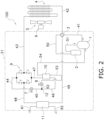
- FIG. 1 and Fig. 2 A perspective view of an appearance of a refrigeration cycle apparatus 100 of a first embodiment and a refrigerant circuit are illustrated in Fig. 1 and Fig. 2 , respectively.
- the refrigeration cycle apparatus 100 of the present embodiment is an apparatus that uses a heat pump and that heats and/or cools water. By using heated or cooled water, the refrigeration cycle apparatus 100 can be utilized as a water heater or a water cooler. Alternatively, by using heated or cooled water as a medium, the refrigeration cycle apparatus 100 may constitute an air conditioning apparatus that performs heating and cooling.
- the refrigerant circuit of the refrigeration cycle apparatus 100 of the present embodiment includes a compressor 1, an accumulator 2, a four-way switching valve 3, an air heat exchanger 4, a check valve 9, a first expansion valve 7, a second expansion valve 8, an economizer heat exchanger 10, and a water heat exchanger 11.
- a refrigerant circulates in each device, and a vapor compression refrigeration cycle is performed.
- the refrigeration cycle apparatus 100 further includes a fan 5 that sends air to the air heat exchanger 4, and a fan motor 6 that drives the fan.
- the refrigeration cycle apparatus 100 When water is to be heated, the refrigeration cycle apparatus 100 operates as follows.
- the refrigerant is compressed by the compressor 1 and sent to the water heat exchanger 11, which acts as a condenser.
- the refrigerant is decompressed by, mainly, the first expansion valve 7, vaporized by the air heat exchanger 4, which acts as an evaporator, and sent to the compressor 1 again.
- the water heat exchanger 11 acts as a refrigerant evaporator.
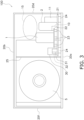
- a housing 20 is constituted by a bottom member 20a, a top member 20b, a front member 20c, a right-side member 20d, a rear member 20e, and a left-side member 20f.
- the housing 20 covers the outer side of devices constituting the refrigeration cycle.
- a space in an inner portion of the housing 20 is divided by a partition plate 25 into, roughly, a heat exchange chamber on the left side in which the air heat exchanger 4 and the fan 5 are disposed and a machine chamber on the right side in which devices, such as the compressor 1, are disposed.
- the machine chamber in the machine chamber, four second elastic members 24 are disposed on the bottom member 20a, and the base 21 is disposed on the second elastic members 24.
- the second elastic member 24 is disposed at each of the corners of the base 21 in Fig. 4 but may be constituted by one large piece or may be divided into two or more.
- a material of the second elastic members 24 is rubber or urethane.
- the compressor 1 includes an elastic-member mount portion 22.
- First elastic members 23 are mounted on the elastic-member mount portion 22.
- the compressor 1 is supported on the base 21 by three first elastic members 23 and bolts (not illustrated).
- the first elastic members 23 are anti-vibration rubber.
- the compressor 1 may be supported on the base 21 by the first elastic members and bolts or may be supported on the base 21 by only the first elastic members.
- the first elastic members 23 may be constituted by one piece or may be constituted by a plurality of first elastic members.
- a material of the first elastic members 23 may be, other than rubber, urethane. The material and the spring constant may be different or the same between the first elastic members 23 and the second elastic members 24.
- the compressor 1 is disposed on a double anti-vibration structure via the first elastic members 23, the base 21, and the second elastic members 24. Consequently, even when the compressor 1 vibrates due to operation of the refrigeration cycle apparatus 100, transmission of the vibration and generation of noise are suppressed.
- a first electric component 31 and a second electric component 32 are housed and fixed in an electric-component casing 30.
- the electric-component casing 30 is fixed to the base 21.
- the first electric component 31 is a power device constituting an inverter that controls the compressor.
- the second electric component 32 controls the first expansion valve 7, the fan motor 6, the second expansion valve 8, and the four-way switching valve 3.
- the accumulator 2 indicates, of components constituting the refrigerant circuit, components disposed on the base 21.
- the other refrigeration-cycle constituent components 15 in Fig. 3 and Fig. 4 include the first expansion valve 7, the second expansion valve 8, the check valve 9, and the four-way switching valve 3.
- the refrigeration-cycle constituent components 15 are fixed to the base 21 by a pipe and other support members (not illustrated).
- the arrangement centroid is a point that serves as a center (node) of vibration of the base 21.
- the arrangement centroid is a point that does not move when the base vibrates. To be exact, it is thus required to perform measurement or calculation in a state in which a load is applied to the base 21, that is, in a state in which all of the devices are placed on the base 21. It is, however, required in a designing stage to determine a position of the compressor before placing those devices.
- the arrangement centroid of the second elastic members is defined as an arrangement centroid calculated as follows.
- the arrangement centroid of the second elastic members 24 is a position determined such that, when a position vector having a starting point at an arrangement centroid of the position of the centroid of each second elastic member 24 on the base 21 is multiplied by a spring reaction (scalar quantity) of each second elastic member 24 with respect to a unit load to thereby obtain vectors corresponding to the second elastic members 24, the total of the vectors is zero.
- the arrangement centroid can be calculated as follows.
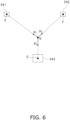
- a position Q is determined on the base 21. Projected positions of the centroids of the second elastic members 241, 242, and 243 on the base 21 are represented by positions E, F, and G, respectively.
- a position vector of QE is obtained from the position Q, the position vector is multiplied by a spring reaction of the second elastic member 241, which is the first one, with respect to a unit load, and a vector v1 having the magnitude and the direction of QE is drawn.
- the second elastic member 242 which is the second one, has a spring constant, an area, and a thickness that are the same as those of the second elastic member 241, which is the first one.
- the magnitude of v2 is a length obtained by multiplying v1 by a distance ratio QF/QE. With the position Q as a base point, a vector v2 having a magnitude of v2 is drawn in the direction of QF.
- the second elastic member 243 which is the third one, has a spring constant, an area, and a thickness that are different from those of the second elastic member 241, which is the first one.
- the magnitude of v3 becomes a length obtained through a multiplication of v1 ⁇ (distance ratio QG/QE) ⁇ (area ratio) ⁇ (spring constant ratio) ⁇ (thickness ratio). With the position Q as a base point, a vector v3 having a magnitude of v3 is drawn in the direction of QG.
- the vector total of the thus created vectors v1, v2, and v3 is calculated.
- the calculation is stopped, and the position Q is determined as an arrangement centroid. If zero is not obtained, the position Q is changed. Then, calculation is continued until the vector total becomes zero or almost zero, and a point where zero is obtained is determined as an arrangement centroid.
- the arrangement centroid of the first elastic members is determined in the same manner. Note that, in either of the cases, the position of the arrangement centroid is determined at a position projected on the base 21 in a top view.
- FIG. 5 an arrangement of the compressor 1 (including the elastic-member mount portion 22), first elastic members 23x, 23y, and 23z, the base 21, and second elastic members 24a, 24b, 24c, and 24d in the present embodiment is illustrated.
- Positions A, B, C, and D indicate projected positions of centroids of the second elastic members 24a, 24b, 24c, and 24d, respectively, on the base 21 in top view.
- Positions X, Y, and Z indicate projected positions of centroids of the first elastic members 23x, 23y, and 23z, respectively, on the base 21 in top view.
- the arrangement centroid of the second elastic members 24 is calculated.
- the second elastic members 24a, 24b, 24c, and 24d are constituted by the same material and have the same size and the same thickness. Therefore, the arrangement centroid of the second elastic members is the position Q, which is the intersection point of straight lines BD and AC.
- the arrangement centroid of the first elastic members 23 also can be calculated as with the arrangement centroid of the second elastic members 24.
- the projected positions X, Y, and Z of the centroids of the first elastic members 23x, 23y, and 23z on the base 21 in top view are the vertices of an equilateral triangle.
- the first elastic members 23x, 23y, and 23z are constituted by the same material and have the same area and the same thickness.
- a projected position S of the centroid of the total of the three first elastic members 23 on the base 21 is the position S of the centroid of an equilateral triangle XYZ.
- the compressor 1 has a cylindrical shape.
- the centroid of the compressor 1 can be approximated by the center of the circle in Fig. 5 . Therefore, the projected position of the centroid of the compressor 1 on the base 21 is the position P.
- the projected position P of the centroid of the compressor 1 on the base 21 and the projected position S of the arrangement centroid of the first elastic members on the base 21 are coincident with each other.
- the compressor 1 is disposed close to the arrangement centroid of the second elastic members 24.
- the compressor 1 and the second elastic members 24 are disposed such that, when a circle centered at the projected position P of the centroid of the compressor 1 on the base 21 with a radius of 1.5 times r1 is drawn on the base 21, the projected position Q of the arrangement centroid of the second elastic members 24 on the base 21 is present inside the circle.
- the position Q is present inside a circle centered at the position P with a radius of r1.
- a distance SQ between the projected position Q of the arrangement centroid of the second elastic members 24 on the base 21 and the projected position S of the arrangement centroid of the first elastic members 23 on the base 21 is 1.5 times r2 or less.
- the compressor 1 is disposed on the bottom member 20a via the first elastic members 23, the base 21, and the second elastic members 24.
- the double anti-vibration structure is employed to thereby address suppression of transmission of the vibration of the compressor 1 and calmness.
- conditions are provided for the arrangement position of the compressor 1 on the base 21 in such a double anti-vibration structure.
- the compressor 1 is disposed close to the arrangement centroid of the second elastic members 24. More specifically, the compressor 1 and the second elastic members 24 are disposed such that, when a circle centered at the position P of the centroid of the compressor 1 with a radius of 1.5 times r1 is drawn on the base 21, the position Q of the arrangement centroid of the second elastic members 24 is present inside the circle.
- r1 is a distance between the projected position P of the centroid of the compressor 1 on the base 21 and the projected position X on the base 21 of the centroid of one of the first elastic members 23 which is closest to the position P.
- the compressor 1 receives a larger centrifugal force as the compressor 1 becomes farther from the arrangement centroid of the base 21.
- a shear force which is a horizontal-direction component of the centrifugal force
- rigidity of the first elastic members 23 in the horizontal direction is small. Therefore, when the shear force is large, the first elastic members 23 are largely deformed. In particular, as a result of vibration displacement of the compressor increasing, a stress on a compressor connection pipe increases, and, in a worst case, a likelihood of the first elastic members being broken is generated.
- the vibration displacement of the compressor resulting from vibration displacement of the base 21 also increases, which increases the stress on the compressor connection pipe.
- an exclusive fixing member or specification design of special spring rigidity in the horizontal direction for the first elastic members 23 may be required.
- the centrifugal force decreases.
- the shear force in the horizontal direction on the first elastic members also decreases, and the stress on the compressor connection pipe can be also reduced.
- vibration displacement of the compressor 1 with respect to the housing 20 can be also reduced, and thus, it is also possible to reduce the load on the compressor connection pipe.
- a special measure for vibration during transportation is also not required.
- the centrifugal force increases, as described above, a moment to overturn the compressor also increases, and there is a likelihood of an excessive load being applied also to the first elastic members 23.
- the moment to overturn the compressor can be reduced, and it is possible to prevent the first elastic members 23 from being broken.
- recesses and projections may be provided for rigidity improvement.
- the second elastic members 24 are disposed on the bottom member 20a, it is often impossible for the second elastic members 24, due to these recesses and projections, to freely select the arrangement place.
- the projected position Q of the arrangement centroid of the second elastic members 24 on the base 21 is present inside a circle centered at the position P with a radius of r1 ⁇ 1.5, it is possible to determine the arrangement of the second elastic members 24 relatively easily.
- the compressor 1 and the second elastic members 24 are disposed as follows. That is, the projected position Q of the arrangement centroid of the second elastic members 24 on the base 21 is present inside a circle centered at the projected position P of the centroid of the compressor 1 on the base 21 with a radius of r1.
- the centrifugal force on the compressor 1 is further reduced, the shear force in the horizontal direction on the first elastic members 23 is also further reduced, and the stress on the compressor connection pipe can be also further reduced. Further, vibration displacement of the compressor 1 with respect to the housing 20 can be also further reduced, and thus, it is also possible to further reduce the load on the compressor connection pipe.
- the first elastic members 23 are disposed with respect to the arrangement centroid of the second elastic members 24 so as to cancel the overturning moment by surrounding the arrangement centroid, which stabilizes the behavior of the compressor 1 with respect to the vibration of the base 21.
- the first elastic members 23 and the second elastic members 24 are disposed so as to satisfy the following conditions.
- a circle centered at the projected position S of the arrangement centroid of the first elastic members on the base with a radius of 1.5 times r2 is drawn.
- r2 is a distance between the position S and the projected position on the base of the centroid of one of the first elastic members which is closest to the position S.
- the projected position Q of the arrangement centroid of the second elastic members on the base 21 is determined so as to be present inside the circle.
- the first elastic members 23 and the second elastic members 24 are disposed as follows. That is, the projected position Q of the arrangement centroid of the second elastic members 24 on the base 21 is present in a circle centered at the projected position S of the arrangement centroid of the first elastic members on the base 21 with a radius of r2.
- the centrifugal force on the compressor 1 is further reduced, the shear force in the horizontal direction on the first elastic members 23 is also further reduced, and the stress on the compressor connection pipe can be also further reduced. Further, vibration displacement of the compressor 1 with respect to the housing 20 can be also further reduced, and thus, it is also possible to further reduce the load on the compressor connection pipe.
- the first elastic members 23 are disposed with respect to the arrangement centroid of the second elastic members 24 so as to cancel the overturning moment by surrounding the arrangement centroid, which stabilizes the behavior of the compressor 1 with respect to the vibration of the base 21.
- the compressor 1 and the second elastic members 24 are disposed so as to satisfy the following conditions.
- a circle centered at the projected position Q of the arrangement centroid of the second elastic members 24 on the base with a radius of 0.2 times r3 is drawn.
- the projected position P of the centroid of the compressor 1 on the base 21 is determined to be present inside the circle.
- the first elastic members 23 and the second elastic members 24 are disposed so as to satisfy the following conditions.
- a circle centered at the projected position Q of the arrangement centroid of the second elastic members on the base with a radius of 0.2 times r3 is drawn.
- the projected position S of the arrangement centroid of the first elastic members 23 on the base 21 is determined to be present inside the circle.
Landscapes
- Engineering & Computer Science (AREA)
- General Engineering & Computer Science (AREA)
- Mechanical Engineering (AREA)
- Physics & Mathematics (AREA)
- Thermal Sciences (AREA)
- Chemical & Material Sciences (AREA)
- Combustion & Propulsion (AREA)
- Acoustics & Sound (AREA)
- Aviation & Aerospace Engineering (AREA)
- Compressor (AREA)
- Vibration Prevention Devices (AREA)
Claims (6)
- Kühlkreislaufvorrichtung, umfassend:ein Gehäuse (20), das ein Bodenelement (20a) einschließt;zweite elastische Elemente (24), die auf dem Bodenelement angeordnet sind;eine Basis (21), die über die zweiten elastischen Elemente auf dem Bodenelement angeordnet ist;erste elastische Elemente (23), die auf der Basis angeordnet sind; undeinen Kompressor (1), der über die ersten elastischen Elemente auf der Basis angeordnet ist und konfiguriert ist, um ein Kühlmittel zu komprimieren,wobei, wenn ein Abstand zwischen einer projizierten Position P eines Schwerpunkts des Kompressors auf der Basis und einer projizierten Position auf der Basis eines Schwerpunkts eines der ersten elastischen Elemente, das der Position P am nächsten ist, durch r1 repräsentiert wird,der Kompressor und die zweiten elastischen Elemente so angeordnet sind, dass, wenn ein an der Position P zentrierter Kreis mit einem Radius von 1,5 mal r1 auf der Basis gezeichnet wird, eine projizierte Position Q eines Anordnungsschwerpunkts der zweiten elastischen Elemente auf der Basis innerhalb des Kreises vorhanden ist,wobeidie projizierte Position P des Schwerpunkts des Kompressors (1) auf der Basis (21) und die projizierte Position Q der Anordnung des Schwerpunkts der zweiten elastischen Elemente (24) einen Abstand PQ bilden.
- Kühlkreislaufvorrichtung nach Anspruch 1,
wobei der Kompressor und die zweiten elastischen Elemente so angeordnet sind, dass, wenn ein an der Position P zentrierter Kreis mit einem Radius von r1 auf der Basis gezeichnet wird, die projizierte Position Q des Anordnungsschwerpunkts der zweiten elastischen Elemente auf der Basis innerhalb des Kreises vorhanden ist. - Kühlkreislaufvorrichtung, umfassend:ein Gehäuse (20), das ein Bodenelement (20a) einschließt;zweite elastische Elemente (24), die auf dem Bodenelement angeordnet sind;eine Basis (21), die über die zweiten elastischen Elemente auf dem Bodenelement angeordnet ist;erste elastische Elemente (23), die auf der Basis angeordnet sind; undeinen Kompressor (1), der über die ersten elastischen Elemente auf der Basis angeordnet ist und konfiguriert ist, um ein Kühlmittel zu komprimieren,wobei, wenn ein Abstand zwischen einer projizierten Position S eines Anordnungsschwerpunkts der ersten elastischen Elemente auf der Basis und einer projizierten Position auf der Basis eines Schwerpunkts eines der ersten elastischen Elemente, das der Position S am nächsten ist, durch r2 repräsentiert wird,die ersten elastischen Elemente und die zweiten elastischen Elemente so angeordnet sind, dass, wenn ein an der Position S zentrierter Kreis mit einem Radius von 1,5 mal r2 auf der Basis gezeichnet wird, eine projizierte Position Q eines Anordnungsschwerpunkts der zweiten elastischen Elemente auf der Basis innerhalb des Kreises vorhanden ist,wobeidie projizierte Position S des Schwerpunkts der ersten elastischen Elemente (23) auf der Basis (21) und die projizierte Position Q der Anordnung des Schwerpunkts der zweiten elastischen Elemente (24) einen Abstand SQ bilden.
- Kühlkreislaufvorrichtung nach Anspruch 3, wobei die ersten elastischen Elemente und die zweiten elastischen Elemente so angeordnet sind, dass, wenn ein an der Position S zentrierter Kreis mit einem Radius von r2 auf der Basis gezeichnet wird, die projizierte Position Q des Anordnungsschwerpunkts der zweiten elastischen Elemente auf der Basis innerhalb des Kreises vorhanden ist.
- Kühlkreislaufvorrichtung, umfassend:ein Gehäuse (20), das ein Bodenelement (20a) einschließt;zweite elastische Elemente (24), die auf dem Bodenelement angeordnet sind;eine Basis (21), die über das zweite elastische Element auf dem Bodenelement angeordnet ist;erste elastische Elemente (23), die auf der Basis angeordnet sind; undeinen Kompressor (1), der über die ersten elastischen Elemente auf der Basis angeordnet ist und konfiguriert ist, um ein Kühlmittel zu komprimieren,wobei, wenn ein Abstand zwischen einer projizierten Position Q eines Anordnungsschwerpunkts der zweiten elastischen Elemente auf der Basis und einer projizierten Position auf der Basis eines Schwerpunkts eines der zweiten elastischen Elemente, der am weitesten von der Position Q entfernt ist, durch r3 repräsentiert wird,der Kompressor und die zweiten elastischen Elemente so angeordnet sind, dass, wenn ein an der Position Q zentrierter Kreis mit einem Radius von 0,2 mal r3 auf der Basis gezeichnet wird, eine projizierte Position P eines Schwerpunkts des Kompressors auf der Basis innerhalb des Kreises vorhanden ist,wobeidie projizierte Position P des Schwerpunkts des Kompressors (1) auf der Basis (21) und die projizierte Position Q der Anordnung des Schwerpunkts der zweiten elastischen Elemente (24) einen Abstand PQ bilden.
- Kühlkreislaufvorrichtung, umfassend:ein Gehäuse (20), das ein Bodenelement (20a) einschließt;zweite elastische Elemente (24), die auf dem Bodenelement angeordnet sind;eine Basis (21), die über die zweiten elastischen Elemente auf dem Bodenelement angeordnet ist;erste elastische Elemente (23), die auf der Basis angeordnet sind; undeinen Kompressor (1), der über die ersten elastischen Elemente auf der Basis angeordnet ist und konfiguriert ist, um ein Kühlmittel zu komprimieren,wobei, wenn ein Abstand zwischen einer projizierten Position Q eines Anordnungsschwerpunkts der zweiten elastischen Elemente auf der Basis und einer projizierten Position auf der Basis eines Schwerpunkts eines der zweiten elastischen Elemente, der am weitesten von der Position Q entfernt ist, durch r3 repräsentiert wird,die ersten elastischen Elemente und die zweiten elastischen Elemente so angeordnet sind, dass, wenn ein an der Position Q zentrierter Kreis mit einem Radius von 0,2 mal r3 auf der Basis gezeichnet wird, eine projizierte Position S eines Anordnungsschwerpunkts der ersten elastischen Elemente auf der Basis innerhalb des Kreises vorhanden ist,wobeidie projizierte Position S des Schwerpunkts der ersten elastischen Elemente (23) auf der Basis (21) und die projizierte Position Q der Anordnung des Schwerpunkts der zweiten elastischen Elemente (24) einen Abstand SQ bilden.
Applications Claiming Priority (2)
| Application Number | Priority Date | Filing Date | Title |
|---|---|---|---|
| JP2018070230A JP6677267B2 (ja) | 2018-03-30 | 2018-03-30 | 冷凍サイクル装置 |
| PCT/JP2019/012526 WO2019188993A1 (ja) | 2018-03-30 | 2019-03-25 | 冷凍サイクル装置 |
Publications (3)
| Publication Number | Publication Date |
|---|---|
| EP3764002A1 EP3764002A1 (de) | 2021-01-13 |
| EP3764002A4 EP3764002A4 (de) | 2021-05-05 |
| EP3764002B1 true EP3764002B1 (de) | 2024-05-01 |
Family
ID=68060004
Family Applications (1)
| Application Number | Title | Priority Date | Filing Date |
|---|---|---|---|
| EP19775846.9A Active EP3764002B1 (de) | 2018-03-30 | 2019-03-25 | Kältekreislaufvorrichtung |
Country Status (7)
| Country | Link |
|---|---|
| US (1) | US11073325B2 (de) |
| EP (1) | EP3764002B1 (de) |
| JP (1) | JP6677267B2 (de) |
| CN (1) | CN111919065B (de) |
| CA (1) | CA3093804C (de) |
| PL (1) | PL3764002T3 (de) |
| WO (1) | WO2019188993A1 (de) |
Families Citing this family (5)
| Publication number | Priority date | Publication date | Assignee | Title |
|---|---|---|---|---|
| JP7044983B2 (ja) * | 2020-03-31 | 2022-03-31 | ダイキン工業株式会社 | 冷凍サイクル装置 |
| JP7150775B2 (ja) * | 2020-03-31 | 2022-10-11 | ダイキン工業株式会社 | 冷凍サイクル装置 |
| US12031746B2 (en) * | 2021-07-13 | 2024-07-09 | Goodman Manufacturing Company, L.P. | Heating, ventilation, and air conditioning system with tiered multi-level base pan |
| EP4421393A1 (de) * | 2023-02-23 | 2024-08-28 | Daikin Europe N.V. | Ausseneinheit |
| US20250121387A1 (en) * | 2023-10-16 | 2025-04-17 | Glorymakeup Inc. | Programmable Air Supply System with Liquid Cooling and Noise Suppression |
Family Cites Families (21)
| Publication number | Priority date | Publication date | Assignee | Title |
|---|---|---|---|---|
| JPS60112306A (ja) * | 1983-11-22 | 1985-06-18 | Nec Kansai Ltd | 電子減衰器 |
| JPS63199938A (ja) * | 1987-02-12 | 1988-08-18 | Bridgestone Corp | 除振支持装置 |
| JPH0510843U (ja) * | 1991-07-22 | 1993-02-12 | 株式会社富士通ゼネラル | 圧縮機の防振支持装置 |
| JP3293865B2 (ja) | 1991-12-10 | 2002-06-17 | 三菱重工業株式会社 | 組込式二重防振装置 |
| US5308121A (en) | 1992-07-30 | 1994-05-03 | Gunn Robert T | Credit/service card with expanded surface area |
| US5306121A (en) * | 1993-04-23 | 1994-04-26 | Carrier Corporation | Compressor tiered mounting arrangement |
| JPH09166338A (ja) * | 1995-12-14 | 1997-06-24 | Yamaha Motor Co Ltd | ヒートポンプ装置 |
| JPH10205454A (ja) * | 1997-01-27 | 1998-08-04 | Daikin Ind Ltd | 圧縮機 |
| US5839295A (en) | 1997-02-13 | 1998-11-24 | Frontier Refrigeration And Air Conditioning Ltd. | Refrigeration/heat pump module |
| CN1166900C (zh) * | 1997-12-30 | 2004-09-15 | 开利公司 | 用于空调器的压缩机安装系统 |
| US6260373B1 (en) * | 2000-02-16 | 2001-07-17 | American Standard International Inc. | Heat exchanger with double vibration isolation |
| KR100380653B1 (ko) * | 2000-09-05 | 2003-04-23 | 삼성전자주식회사 | 회전압축기 조립체 |
| JP2003232543A (ja) | 2002-02-07 | 2003-08-22 | Mitsubishi Heavy Ind Ltd | ガスヒートポンプ式空気調和機の防振構造 |
| JP2005055106A (ja) * | 2003-08-06 | 2005-03-03 | Matsushita Electric Ind Co Ltd | アキュムレータを備えた圧縮機 |
| JP2005241197A (ja) | 2004-02-27 | 2005-09-08 | Kimura Kohki Co Ltd | ヒートポンプ式空調機 |
| JP4660176B2 (ja) * | 2004-12-07 | 2011-03-30 | 三洋電機株式会社 | 冷却装置 |
| JP5372550B2 (ja) | 2009-02-20 | 2013-12-18 | 三洋電機株式会社 | スクロール型圧縮機 |
| JP2010243033A (ja) * | 2009-04-03 | 2010-10-28 | Mitsubishi Electric Corp | ヒートポンプ室外機 |
| EP2628950B1 (de) * | 2010-10-13 | 2019-02-20 | Toshiba Carrier Corporation | Hermetisch abgedichteter drehkompressor und kühlkreisvorrichtung damit |
| JP6373108B2 (ja) * | 2014-07-23 | 2018-08-15 | 東芝キヤリア株式会社 | 冷凍サイクル装置 |
| CN206222539U (zh) * | 2016-11-28 | 2017-06-06 | 广东欧科空调制冷有限公司 | 吊顶式空调外机的压缩机减振结构 |
-
2018
- 2018-03-30 JP JP2018070230A patent/JP6677267B2/ja active Active
-
2019
- 2019-03-25 CN CN201980022764.1A patent/CN111919065B/zh active Active
- 2019-03-25 WO PCT/JP2019/012526 patent/WO2019188993A1/ja not_active Ceased
- 2019-03-25 EP EP19775846.9A patent/EP3764002B1/de active Active
- 2019-03-25 CA CA3093804A patent/CA3093804C/en active Active
- 2019-03-25 PL PL19775846.9T patent/PL3764002T3/pl unknown
- 2019-03-25 US US17/043,460 patent/US11073325B2/en active Active
Also Published As
| Publication number | Publication date |
|---|---|
| CN111919065B (zh) | 2021-09-14 |
| CA3093804C (en) | 2023-01-03 |
| CA3093804A1 (en) | 2019-10-03 |
| US20210025643A1 (en) | 2021-01-28 |
| PL3764002T3 (pl) | 2024-08-26 |
| CN111919065A (zh) | 2020-11-10 |
| EP3764002A1 (de) | 2021-01-13 |
| WO2019188993A1 (ja) | 2019-10-03 |
| EP3764002A4 (de) | 2021-05-05 |
| JP2019178856A (ja) | 2019-10-17 |
| JP6677267B2 (ja) | 2020-04-08 |
| US11073325B2 (en) | 2021-07-27 |
Similar Documents
| Publication | Publication Date | Title |
|---|---|---|
| EP3764002B1 (de) | Kältekreislaufvorrichtung | |
| US20180297067A1 (en) | Linear Vibration Motor | |
| WO2003087695A1 (en) | Self-excited vibration heat pipe and computer with the heat pipe | |
| JP2016119216A (ja) | 電動車両の駆動用バッテリパック | |
| JP6094497B2 (ja) | 電動圧縮機、及び電動圧縮機の製造方法 | |
| CN104303293A (zh) | 冷却装置的连接结构、冷却装置和连接冷却装置的方法 | |
| JP2000022226A (ja) | 低温容器の冷却装置 | |
| US11035579B2 (en) | Refrigeration cycle apparatus | |
| JP2010243033A (ja) | ヒートポンプ室外機 | |
| JP2005322757A (ja) | 冷却装置および電子機器 | |
| CN206637752U (zh) | 空调机的室外机 | |
| EP3764003B1 (de) | Kältekreislaufvorrichtung | |
| JP6637518B2 (ja) | 機電一体モータ | |
| JP2016173042A (ja) | 冷媒圧縮装置および冷凍サイクル装置 | |
| JP5625966B2 (ja) | ヒートポンプ給湯室外機 | |
| JP7150775B2 (ja) | 冷凍サイクル装置 | |
| JP7657188B2 (ja) | 磁気回路部品、送風機、圧縮機、及び冷凍装置 | |
| US12369282B2 (en) | Liquid cooling rack assembly for computing system and telecommunication system including the same | |
| JP3400242B2 (ja) | 温調庫機器 | |
| JP2019074292A (ja) | 空気調和装置 | |
| JP2017083029A (ja) | 冷凍装置の室外ユニット | |
| JP2006073881A (ja) | 半導体素子の冷却装置 | |
| CN117652213A (zh) | 散热部件及其制造方法、中框部件、壳体部件及终端设备 | |
| JP2005077078A (ja) | 冷却庫 | |
| JP2004136736A (ja) | 車両用熱交換器 |
Legal Events
| Date | Code | Title | Description |
|---|---|---|---|
| STAA | Information on the status of an ep patent application or granted ep patent |
Free format text: STATUS: THE INTERNATIONAL PUBLICATION HAS BEEN MADE |
|
| PUAI | Public reference made under article 153(3) epc to a published international application that has entered the european phase |
Free format text: ORIGINAL CODE: 0009012 |
|
| STAA | Information on the status of an ep patent application or granted ep patent |
Free format text: STATUS: REQUEST FOR EXAMINATION WAS MADE |
|
| 17P | Request for examination filed |
Effective date: 20201007 |
|
| AK | Designated contracting states |
Kind code of ref document: A1 Designated state(s): AL AT BE BG CH CY CZ DE DK EE ES FI FR GB GR HR HU IE IS IT LI LT LU LV MC MK MT NL NO PL PT RO RS SE SI SK SM TR |
|
| AX | Request for extension of the european patent |
Extension state: BA ME |
|
| A4 | Supplementary search report drawn up and despatched |
Effective date: 20210401 |
|
| RIC1 | Information provided on ipc code assigned before grant |
Ipc: F24F 1/12 20110101AFI20210326BHEP Ipc: F16F 15/08 20060101ALI20210326BHEP Ipc: F25B 31/00 20060101ALI20210326BHEP |
|
| DAV | Request for validation of the european patent (deleted) | ||
| DAX | Request for extension of the european patent (deleted) | ||
| RAP3 | Party data changed (applicant data changed or rights of an application transferred) |
Owner name: DAIKIN INDUSTRIES, LTD. |
|
| STAA | Information on the status of an ep patent application or granted ep patent |
Free format text: STATUS: EXAMINATION IS IN PROGRESS |
|
| 17Q | First examination report despatched |
Effective date: 20230130 |
|
| P01 | Opt-out of the competence of the unified patent court (upc) registered |
Effective date: 20230525 |
|
| GRAP | Despatch of communication of intention to grant a patent |
Free format text: ORIGINAL CODE: EPIDOSNIGR1 |
|
| STAA | Information on the status of an ep patent application or granted ep patent |
Free format text: STATUS: GRANT OF PATENT IS INTENDED |
|
| INTG | Intention to grant announced |
Effective date: 20231122 |
|
| GRAS | Grant fee paid |
Free format text: ORIGINAL CODE: EPIDOSNIGR3 |
|
| GRAA | (expected) grant |
Free format text: ORIGINAL CODE: 0009210 |
|
| STAA | Information on the status of an ep patent application or granted ep patent |
Free format text: STATUS: THE PATENT HAS BEEN GRANTED |
|
| AK | Designated contracting states |
Kind code of ref document: B1 Designated state(s): AL AT BE BG CH CY CZ DE DK EE ES FI FR GB GR HR HU IE IS IT LI LT LU LV MC MK MT NL NO PL PT RO RS SE SI SK SM TR |
|
| REG | Reference to a national code |
Ref country code: GB Ref legal event code: FG4D |
|
| REG | Reference to a national code |
Ref country code: CH Ref legal event code: EP |
|
| REG | Reference to a national code |
Ref country code: IE Ref legal event code: FG4D |
|
| REG | Reference to a national code |
Ref country code: DE Ref legal event code: R096 Ref document number: 602019051471 Country of ref document: DE |
|
| REG | Reference to a national code |
Ref country code: LT Ref legal event code: MG9D |
|
| REG | Reference to a national code |
Ref country code: NL Ref legal event code: MP Effective date: 20240501 |
|
| PG25 | Lapsed in a contracting state [announced via postgrant information from national office to epo] |
Ref country code: IS Free format text: LAPSE BECAUSE OF FAILURE TO SUBMIT A TRANSLATION OF THE DESCRIPTION OR TO PAY THE FEE WITHIN THE PRESCRIBED TIME-LIMIT Effective date: 20240901 |
|
| PG25 | Lapsed in a contracting state [announced via postgrant information from national office to epo] |
Ref country code: BG Free format text: LAPSE BECAUSE OF FAILURE TO SUBMIT A TRANSLATION OF THE DESCRIPTION OR TO PAY THE FEE WITHIN THE PRESCRIBED TIME-LIMIT Effective date: 20240501 |
|
| PG25 | Lapsed in a contracting state [announced via postgrant information from national office to epo] |
Ref country code: FI Free format text: LAPSE BECAUSE OF FAILURE TO SUBMIT A TRANSLATION OF THE DESCRIPTION OR TO PAY THE FEE WITHIN THE PRESCRIBED TIME-LIMIT Effective date: 20240501 Ref country code: HR Free format text: LAPSE BECAUSE OF FAILURE TO SUBMIT A TRANSLATION OF THE DESCRIPTION OR TO PAY THE FEE WITHIN THE PRESCRIBED TIME-LIMIT Effective date: 20240501 |
|
| PG25 | Lapsed in a contracting state [announced via postgrant information from national office to epo] |
Ref country code: GR Free format text: LAPSE BECAUSE OF FAILURE TO SUBMIT A TRANSLATION OF THE DESCRIPTION OR TO PAY THE FEE WITHIN THE PRESCRIBED TIME-LIMIT Effective date: 20240802 |
|
| PG25 | Lapsed in a contracting state [announced via postgrant information from national office to epo] |
Ref country code: PT Free format text: LAPSE BECAUSE OF FAILURE TO SUBMIT A TRANSLATION OF THE DESCRIPTION OR TO PAY THE FEE WITHIN THE PRESCRIBED TIME-LIMIT Effective date: 20240902 |
|
| REG | Reference to a national code |
Ref country code: AT Ref legal event code: MK05 Ref document number: 1682830 Country of ref document: AT Kind code of ref document: T Effective date: 20240501 |
|
| PG25 | Lapsed in a contracting state [announced via postgrant information from national office to epo] |
Ref country code: NL Free format text: LAPSE BECAUSE OF FAILURE TO SUBMIT A TRANSLATION OF THE DESCRIPTION OR TO PAY THE FEE WITHIN THE PRESCRIBED TIME-LIMIT Effective date: 20240501 |
|
| PG25 | Lapsed in a contracting state [announced via postgrant information from national office to epo] |
Ref country code: ES Free format text: LAPSE BECAUSE OF FAILURE TO SUBMIT A TRANSLATION OF THE DESCRIPTION OR TO PAY THE FEE WITHIN THE PRESCRIBED TIME-LIMIT Effective date: 20240501 |
|
| PG25 | Lapsed in a contracting state [announced via postgrant information from national office to epo] |
Ref country code: AT Free format text: LAPSE BECAUSE OF FAILURE TO SUBMIT A TRANSLATION OF THE DESCRIPTION OR TO PAY THE FEE WITHIN THE PRESCRIBED TIME-LIMIT Effective date: 20240501 |
|
| PG25 | Lapsed in a contracting state [announced via postgrant information from national office to epo] |
Ref country code: LV Free format text: LAPSE BECAUSE OF FAILURE TO SUBMIT A TRANSLATION OF THE DESCRIPTION OR TO PAY THE FEE WITHIN THE PRESCRIBED TIME-LIMIT Effective date: 20240501 |
|
| PG25 | Lapsed in a contracting state [announced via postgrant information from national office to epo] |
Ref country code: PT Free format text: LAPSE BECAUSE OF FAILURE TO SUBMIT A TRANSLATION OF THE DESCRIPTION OR TO PAY THE FEE WITHIN THE PRESCRIBED TIME-LIMIT Effective date: 20240902 Ref country code: NO Free format text: LAPSE BECAUSE OF FAILURE TO SUBMIT A TRANSLATION OF THE DESCRIPTION OR TO PAY THE FEE WITHIN THE PRESCRIBED TIME-LIMIT Effective date: 20240801 Ref country code: NL Free format text: LAPSE BECAUSE OF FAILURE TO SUBMIT A TRANSLATION OF THE DESCRIPTION OR TO PAY THE FEE WITHIN THE PRESCRIBED TIME-LIMIT Effective date: 20240501 Ref country code: LV Free format text: LAPSE BECAUSE OF FAILURE TO SUBMIT A TRANSLATION OF THE DESCRIPTION OR TO PAY THE FEE WITHIN THE PRESCRIBED TIME-LIMIT Effective date: 20240501 Ref country code: IS Free format text: LAPSE BECAUSE OF FAILURE TO SUBMIT A TRANSLATION OF THE DESCRIPTION OR TO PAY THE FEE WITHIN THE PRESCRIBED TIME-LIMIT Effective date: 20240901 Ref country code: HR Free format text: LAPSE BECAUSE OF FAILURE TO SUBMIT A TRANSLATION OF THE DESCRIPTION OR TO PAY THE FEE WITHIN THE PRESCRIBED TIME-LIMIT Effective date: 20240501 Ref country code: GR Free format text: LAPSE BECAUSE OF FAILURE TO SUBMIT A TRANSLATION OF THE DESCRIPTION OR TO PAY THE FEE WITHIN THE PRESCRIBED TIME-LIMIT Effective date: 20240802 Ref country code: FI Free format text: LAPSE BECAUSE OF FAILURE TO SUBMIT A TRANSLATION OF THE DESCRIPTION OR TO PAY THE FEE WITHIN THE PRESCRIBED TIME-LIMIT Effective date: 20240501 Ref country code: ES Free format text: LAPSE BECAUSE OF FAILURE TO SUBMIT A TRANSLATION OF THE DESCRIPTION OR TO PAY THE FEE WITHIN THE PRESCRIBED TIME-LIMIT Effective date: 20240501 Ref country code: BG Free format text: LAPSE BECAUSE OF FAILURE TO SUBMIT A TRANSLATION OF THE DESCRIPTION OR TO PAY THE FEE WITHIN THE PRESCRIBED TIME-LIMIT Effective date: 20240501 Ref country code: AT Free format text: LAPSE BECAUSE OF FAILURE TO SUBMIT A TRANSLATION OF THE DESCRIPTION OR TO PAY THE FEE WITHIN THE PRESCRIBED TIME-LIMIT Effective date: 20240501 Ref country code: RS Free format text: LAPSE BECAUSE OF FAILURE TO SUBMIT A TRANSLATION OF THE DESCRIPTION OR TO PAY THE FEE WITHIN THE PRESCRIBED TIME-LIMIT Effective date: 20240801 |
|
| PG25 | Lapsed in a contracting state [announced via postgrant information from national office to epo] |
Ref country code: DK Free format text: LAPSE BECAUSE OF FAILURE TO SUBMIT A TRANSLATION OF THE DESCRIPTION OR TO PAY THE FEE WITHIN THE PRESCRIBED TIME-LIMIT Effective date: 20240501 |
|
| PG25 | Lapsed in a contracting state [announced via postgrant information from national office to epo] |
Ref country code: EE Free format text: LAPSE BECAUSE OF FAILURE TO SUBMIT A TRANSLATION OF THE DESCRIPTION OR TO PAY THE FEE WITHIN THE PRESCRIBED TIME-LIMIT Effective date: 20240501 |
|
| PG25 | Lapsed in a contracting state [announced via postgrant information from national office to epo] |
Ref country code: CZ Free format text: LAPSE BECAUSE OF FAILURE TO SUBMIT A TRANSLATION OF THE DESCRIPTION OR TO PAY THE FEE WITHIN THE PRESCRIBED TIME-LIMIT Effective date: 20240501 |
|
| PG25 | Lapsed in a contracting state [announced via postgrant information from national office to epo] |
Ref country code: RO Free format text: LAPSE BECAUSE OF FAILURE TO SUBMIT A TRANSLATION OF THE DESCRIPTION OR TO PAY THE FEE WITHIN THE PRESCRIBED TIME-LIMIT Effective date: 20240501 Ref country code: SK Free format text: LAPSE BECAUSE OF FAILURE TO SUBMIT A TRANSLATION OF THE DESCRIPTION OR TO PAY THE FEE WITHIN THE PRESCRIBED TIME-LIMIT Effective date: 20240501 |
|
| PG25 | Lapsed in a contracting state [announced via postgrant information from national office to epo] |
Ref country code: SM Free format text: LAPSE BECAUSE OF FAILURE TO SUBMIT A TRANSLATION OF THE DESCRIPTION OR TO PAY THE FEE WITHIN THE PRESCRIBED TIME-LIMIT Effective date: 20240501 |
|
| PG25 | Lapsed in a contracting state [announced via postgrant information from national office to epo] |
Ref country code: SM Free format text: LAPSE BECAUSE OF FAILURE TO SUBMIT A TRANSLATION OF THE DESCRIPTION OR TO PAY THE FEE WITHIN THE PRESCRIBED TIME-LIMIT Effective date: 20240501 Ref country code: SK Free format text: LAPSE BECAUSE OF FAILURE TO SUBMIT A TRANSLATION OF THE DESCRIPTION OR TO PAY THE FEE WITHIN THE PRESCRIBED TIME-LIMIT Effective date: 20240501 Ref country code: RO Free format text: LAPSE BECAUSE OF FAILURE TO SUBMIT A TRANSLATION OF THE DESCRIPTION OR TO PAY THE FEE WITHIN THE PRESCRIBED TIME-LIMIT Effective date: 20240501 Ref country code: EE Free format text: LAPSE BECAUSE OF FAILURE TO SUBMIT A TRANSLATION OF THE DESCRIPTION OR TO PAY THE FEE WITHIN THE PRESCRIBED TIME-LIMIT Effective date: 20240501 Ref country code: DK Free format text: LAPSE BECAUSE OF FAILURE TO SUBMIT A TRANSLATION OF THE DESCRIPTION OR TO PAY THE FEE WITHIN THE PRESCRIBED TIME-LIMIT Effective date: 20240501 Ref country code: CZ Free format text: LAPSE BECAUSE OF FAILURE TO SUBMIT A TRANSLATION OF THE DESCRIPTION OR TO PAY THE FEE WITHIN THE PRESCRIBED TIME-LIMIT Effective date: 20240501 |
|
| REG | Reference to a national code |
Ref country code: DE Ref legal event code: R097 Ref document number: 602019051471 Country of ref document: DE |
|
| PLBE | No opposition filed within time limit |
Free format text: ORIGINAL CODE: 0009261 |
|
| STAA | Information on the status of an ep patent application or granted ep patent |
Free format text: STATUS: NO OPPOSITION FILED WITHIN TIME LIMIT |
|
| 26N | No opposition filed |
Effective date: 20250204 |
|
| PGFP | Annual fee paid to national office [announced via postgrant information from national office to epo] |
Ref country code: DE Payment date: 20250319 Year of fee payment: 7 |
|
| PG25 | Lapsed in a contracting state [announced via postgrant information from national office to epo] |
Ref country code: SI Free format text: LAPSE BECAUSE OF FAILURE TO SUBMIT A TRANSLATION OF THE DESCRIPTION OR TO PAY THE FEE WITHIN THE PRESCRIBED TIME-LIMIT Effective date: 20240501 |
|
| PGFP | Annual fee paid to national office [announced via postgrant information from national office to epo] |
Ref country code: FR Payment date: 20250326 Year of fee payment: 7 Ref country code: PL Payment date: 20250313 Year of fee payment: 7 |
|
| PGFP | Annual fee paid to national office [announced via postgrant information from national office to epo] |
Ref country code: IT Payment date: 20250325 Year of fee payment: 7 Ref country code: GB Payment date: 20250324 Year of fee payment: 7 |
|
| PG25 | Lapsed in a contracting state [announced via postgrant information from national office to epo] |
Ref country code: SE Free format text: LAPSE BECAUSE OF FAILURE TO SUBMIT A TRANSLATION OF THE DESCRIPTION OR TO PAY THE FEE WITHIN THE PRESCRIBED TIME-LIMIT Effective date: 20240501 |
|
| PG25 | Lapsed in a contracting state [announced via postgrant information from national office to epo] |
Ref country code: MC Free format text: LAPSE BECAUSE OF FAILURE TO SUBMIT A TRANSLATION OF THE DESCRIPTION OR TO PAY THE FEE WITHIN THE PRESCRIBED TIME-LIMIT Effective date: 20240501 |
|
| REG | Reference to a national code |
Ref country code: CH Ref legal event code: H13 Free format text: ST27 STATUS EVENT CODE: U-0-0-H10-H13 (AS PROVIDED BY THE NATIONAL OFFICE) Effective date: 20251024 |
|
| PG25 | Lapsed in a contracting state [announced via postgrant information from national office to epo] |
Ref country code: LU Free format text: LAPSE BECAUSE OF NON-PAYMENT OF DUE FEES Effective date: 20250325 |
|
| REG | Reference to a national code |
Ref country code: BE Ref legal event code: MM Effective date: 20250331 |
|
| PG25 | Lapsed in a contracting state [announced via postgrant information from national office to epo] |
Ref country code: BE Free format text: LAPSE BECAUSE OF NON-PAYMENT OF DUE FEES Effective date: 20250331 |
|
| PG25 | Lapsed in a contracting state [announced via postgrant information from national office to epo] |
Ref country code: CH Free format text: LAPSE BECAUSE OF NON-PAYMENT OF DUE FEES Effective date: 20250331 |
|
| PG25 | Lapsed in a contracting state [announced via postgrant information from national office to epo] |
Ref country code: IE Free format text: LAPSE BECAUSE OF NON-PAYMENT OF DUE FEES Effective date: 20250325 |