EP3721901A1 - Toxicity management for anti-tumor activity of cars - Google Patents
Toxicity management for anti-tumor activity of cars Download PDFInfo
- Publication number
- EP3721901A1 EP3721901A1 EP20158930.6A EP20158930A EP3721901A1 EP 3721901 A1 EP3721901 A1 EP 3721901A1 EP 20158930 A EP20158930 A EP 20158930A EP 3721901 A1 EP3721901 A1 EP 3721901A1
- Authority
- EP
- European Patent Office
- Prior art keywords
- cell
- cytokine
- cells
- patient
- carcinoma
- Prior art date
- Legal status (The legal status is an assumption and is not a legal conclusion. Google has not performed a legal analysis and makes no representation as to the accuracy of the status listed.)
- Pending
Links
Images





Classifications
-
- A—HUMAN NECESSITIES
- A61—MEDICAL OR VETERINARY SCIENCE; HYGIENE
- A61K—PREPARATIONS FOR MEDICAL, DENTAL OR TOILETRY PURPOSES
- A61K35/00—Medicinal preparations containing materials or reaction products thereof with undetermined constitution
- A61K35/12—Materials from mammals; Compositions comprising non-specified tissues or cells; Compositions comprising non-embryonic stem cells; Genetically modified cells
- A61K35/14—Blood; Artificial blood
- A61K35/17—Lymphocytes; B-cells; T-cells; Natural killer cells; Interferon-activated or cytokine-activated lymphocytes
-
- A—HUMAN NECESSITIES
- A61—MEDICAL OR VETERINARY SCIENCE; HYGIENE
- A61K—PREPARATIONS FOR MEDICAL, DENTAL OR TOILETRY PURPOSES
- A61K39/00—Medicinal preparations containing antigens or antibodies
- A61K39/395—Antibodies; Immunoglobulins; Immune serum, e.g. antilymphocytic serum
- A61K39/39533—Antibodies; Immunoglobulins; Immune serum, e.g. antilymphocytic serum against materials from animals
- A61K39/3955—Antibodies; Immunoglobulins; Immune serum, e.g. antilymphocytic serum against materials from animals against proteinaceous materials, e.g. enzymes, hormones, lymphokines
-
- A—HUMAN NECESSITIES
- A61—MEDICAL OR VETERINARY SCIENCE; HYGIENE
- A61K—PREPARATIONS FOR MEDICAL, DENTAL OR TOILETRY PURPOSES
- A61K31/00—Medicinal preparations containing organic active ingredients
- A61K31/70—Carbohydrates; Sugars; Derivatives thereof
- A61K31/7088—Compounds having three or more nucleosides or nucleotides
-
- A—HUMAN NECESSITIES
- A61—MEDICAL OR VETERINARY SCIENCE; HYGIENE
- A61K—PREPARATIONS FOR MEDICAL, DENTAL OR TOILETRY PURPOSES
- A61K31/00—Medicinal preparations containing organic active ingredients
- A61K31/70—Carbohydrates; Sugars; Derivatives thereof
- A61K31/7088—Compounds having three or more nucleosides or nucleotides
- A61K31/713—Double-stranded nucleic acids or oligonucleotides
-
- A—HUMAN NECESSITIES
- A61—MEDICAL OR VETERINARY SCIENCE; HYGIENE
- A61K—PREPARATIONS FOR MEDICAL, DENTAL OR TOILETRY PURPOSES
- A61K35/00—Medicinal preparations containing materials or reaction products thereof with undetermined constitution
-
- A—HUMAN NECESSITIES
- A61—MEDICAL OR VETERINARY SCIENCE; HYGIENE
- A61K—PREPARATIONS FOR MEDICAL, DENTAL OR TOILETRY PURPOSES
- A61K40/00—Cellular immunotherapy
- A61K40/10—Cellular immunotherapy characterised by the cell type used
- A61K40/11—T-cells, e.g. tumour infiltrating lymphocytes [TIL] or regulatory T [Treg] cells; Lymphokine-activated killer [LAK] cells
-
- A—HUMAN NECESSITIES
- A61—MEDICAL OR VETERINARY SCIENCE; HYGIENE
- A61K—PREPARATIONS FOR MEDICAL, DENTAL OR TOILETRY PURPOSES
- A61K40/00—Cellular immunotherapy
- A61K40/30—Cellular immunotherapy characterised by the recombinant expression of specific molecules in the cells of the immune system
- A61K40/31—Chimeric antigen receptors [CAR]
-
- A—HUMAN NECESSITIES
- A61—MEDICAL OR VETERINARY SCIENCE; HYGIENE
- A61K—PREPARATIONS FOR MEDICAL, DENTAL OR TOILETRY PURPOSES
- A61K40/00—Cellular immunotherapy
- A61K40/40—Cellular immunotherapy characterised by antigens that are targeted or presented by cells of the immune system
- A61K40/41—Vertebrate antigens
- A61K40/42—Cancer antigens
- A61K40/4202—Receptors, cell surface antigens or cell surface determinants
- A61K40/421—Immunoglobulin superfamily
- A61K40/4211—CD19 or B4
-
- A—HUMAN NECESSITIES
- A61—MEDICAL OR VETERINARY SCIENCE; HYGIENE
- A61K—PREPARATIONS FOR MEDICAL, DENTAL OR TOILETRY PURPOSES
- A61K45/00—Medicinal preparations containing active ingredients not provided for in groups A61K31/00 - A61K41/00
- A61K45/06—Mixtures of active ingredients without chemical characterisation, e.g. antiphlogistics and cardiaca
-
- A—HUMAN NECESSITIES
- A61—MEDICAL OR VETERINARY SCIENCE; HYGIENE
- A61K—PREPARATIONS FOR MEDICAL, DENTAL OR TOILETRY PURPOSES
- A61K48/00—Medicinal preparations containing genetic material which is inserted into cells of the living body to treat genetic diseases; Gene therapy
- A61K48/0083—Medicinal preparations containing genetic material which is inserted into cells of the living body to treat genetic diseases; Gene therapy characterised by an aspect of the administration regime
-
- A—HUMAN NECESSITIES
- A61—MEDICAL OR VETERINARY SCIENCE; HYGIENE
- A61P—SPECIFIC THERAPEUTIC ACTIVITY OF CHEMICAL COMPOUNDS OR MEDICINAL PREPARATIONS
- A61P35/00—Antineoplastic agents
- A61P35/02—Antineoplastic agents specific for leukemia
-
- A—HUMAN NECESSITIES
- A61—MEDICAL OR VETERINARY SCIENCE; HYGIENE
- A61P—SPECIFIC THERAPEUTIC ACTIVITY OF CHEMICAL COMPOUNDS OR MEDICINAL PREPARATIONS
- A61P37/00—Drugs for immunological or allergic disorders
- A61P37/02—Immunomodulators
- A61P37/06—Immunosuppressants, e.g. drugs for graft rejection
-
- A—HUMAN NECESSITIES
- A61—MEDICAL OR VETERINARY SCIENCE; HYGIENE
- A61P—SPECIFIC THERAPEUTIC ACTIVITY OF CHEMICAL COMPOUNDS OR MEDICINAL PREPARATIONS
- A61P39/00—General protective or antinoxious agents
- A61P39/02—Antidotes
-
- C—CHEMISTRY; METALLURGY
- C12—BIOCHEMISTRY; BEER; SPIRITS; WINE; VINEGAR; MICROBIOLOGY; ENZYMOLOGY; MUTATION OR GENETIC ENGINEERING
- C12Q—MEASURING OR TESTING PROCESSES INVOLVING ENZYMES, NUCLEIC ACIDS OR MICROORGANISMS; COMPOSITIONS OR TEST PAPERS THEREFOR; PROCESSES OF PREPARING SUCH COMPOSITIONS; CONDITION-RESPONSIVE CONTROL IN MICROBIOLOGICAL OR ENZYMOLOGICAL PROCESSES
- C12Q1/00—Measuring or testing processes involving enzymes, nucleic acids or microorganisms; Compositions therefor; Processes of preparing such compositions
- C12Q1/68—Measuring or testing processes involving enzymes, nucleic acids or microorganisms; Compositions therefor; Processes of preparing such compositions involving nucleic acids
- C12Q1/6876—Nucleic acid products used in the analysis of nucleic acids, e.g. primers or probes
- C12Q1/6883—Nucleic acid products used in the analysis of nucleic acids, e.g. primers or probes for diseases caused by alterations of genetic material
- C12Q1/6886—Nucleic acid products used in the analysis of nucleic acids, e.g. primers or probes for diseases caused by alterations of genetic material for cancer
-
- G—PHYSICS
- G01—MEASURING; TESTING
- G01N—INVESTIGATING OR ANALYSING MATERIALS BY DETERMINING THEIR CHEMICAL OR PHYSICAL PROPERTIES
- G01N33/00—Investigating or analysing materials by specific methods not covered by groups G01N1/00 - G01N31/00
- G01N33/48—Biological material, e.g. blood, urine; Haemocytometers
- G01N33/50—Chemical analysis of biological material, e.g. blood, urine; Testing involving biospecific ligand binding methods; Immunological testing
- G01N33/68—Chemical analysis of biological material, e.g. blood, urine; Testing involving biospecific ligand binding methods; Immunological testing involving proteins, peptides or amino acids
- G01N33/6803—General methods of protein analysis not limited to specific proteins or families of proteins
-
- A—HUMAN NECESSITIES
- A61—MEDICAL OR VETERINARY SCIENCE; HYGIENE
- A61K—PREPARATIONS FOR MEDICAL, DENTAL OR TOILETRY PURPOSES
- A61K39/00—Medicinal preparations containing antigens or antibodies
- A61K2039/505—Medicinal preparations containing antigens or antibodies comprising antibodies
-
- A—HUMAN NECESSITIES
- A61—MEDICAL OR VETERINARY SCIENCE; HYGIENE
- A61K—PREPARATIONS FOR MEDICAL, DENTAL OR TOILETRY PURPOSES
- A61K39/00—Medicinal preparations containing antigens or antibodies
- A61K2039/51—Medicinal preparations containing antigens or antibodies comprising whole cells, viruses or DNA/RNA
- A61K2039/515—Animal cells
-
- A—HUMAN NECESSITIES
- A61—MEDICAL OR VETERINARY SCIENCE; HYGIENE
- A61K—PREPARATIONS FOR MEDICAL, DENTAL OR TOILETRY PURPOSES
- A61K2239/00—Indexing codes associated with cellular immunotherapy of group A61K40/00
- A61K2239/38—Indexing codes associated with cellular immunotherapy of group A61K40/00 characterised by the dose, timing or administration schedule
-
- A—HUMAN NECESSITIES
- A61—MEDICAL OR VETERINARY SCIENCE; HYGIENE
- A61K—PREPARATIONS FOR MEDICAL, DENTAL OR TOILETRY PURPOSES
- A61K2239/00—Indexing codes associated with cellular immunotherapy of group A61K40/00
- A61K2239/46—Indexing codes associated with cellular immunotherapy of group A61K40/00 characterised by the cancer treated
- A61K2239/48—Blood cells, e.g. leukemia or lymphoma
-
- G—PHYSICS
- G01—MEASURING; TESTING
- G01N—INVESTIGATING OR ANALYSING MATERIALS BY DETERMINING THEIR CHEMICAL OR PHYSICAL PROPERTIES
- G01N2333/00—Assays involving biological materials from specific organisms or of a specific nature
- G01N2333/435—Assays involving biological materials from specific organisms or of a specific nature from animals; from humans
- G01N2333/52—Assays involving cytokines
-
- G—PHYSICS
- G01—MEASURING; TESTING
- G01N—INVESTIGATING OR ANALYSING MATERIALS BY DETERMINING THEIR CHEMICAL OR PHYSICAL PROPERTIES
- G01N2800/00—Detection or diagnosis of diseases
- G01N2800/52—Predicting or monitoring the response to treatment, e.g. for selection of therapy based on assay results in personalised medicine; Prognosis
-
- G—PHYSICS
- G01—MEASURING; TESTING
- G01N—INVESTIGATING OR ANALYSING MATERIALS BY DETERMINING THEIR CHEMICAL OR PHYSICAL PROPERTIES
- G01N33/00—Investigating or analysing materials by specific methods not covered by groups G01N1/00 - G01N31/00
- G01N33/48—Biological material, e.g. blood, urine; Haemocytometers
- G01N33/50—Chemical analysis of biological material, e.g. blood, urine; Testing involving biospecific ligand binding methods; Immunological testing
- G01N33/68—Chemical analysis of biological material, e.g. blood, urine; Testing involving biospecific ligand binding methods; Immunological testing involving proteins, peptides or amino acids
- G01N33/6863—Cytokines, i.e. immune system proteins modifying a biological response such as cell growth proliferation or differentiation, e.g. TNF, CNF, GM-CSF, lymphotoxin, MIF or their receptors
Definitions
- the cytokine inhibitory therapy is selected from the group consisting of a small interfering RNA (siRNA), a microRNA, an antisense nucleic acid, a ribozyme, an expression vector encoding a transdominant negative mutant, an antibody, a peptide, a small molecule, a cytokine inhibitory drug, and any combination thereof.
- siRNA small interfering RNA
- microRNA an antisense nucleic acid
- a ribozyme an expression vector encoding a transdominant negative mutant
- an antibody a peptide
- a small molecule a cytokine inhibitory drug
- an element means one element or more than one element.
- the antibodies in the present invention may exist in a variety of forms including, for example, polyclonal antibodies, monoclonal antibodies, Fv, Fab and F(ab) 2 , as well as single chain antibodies and humanized antibodies ( Harlow et al., 1999, In: Using Antibodies: A Laboratory Manual, Cold Spring Harbor Laboratory Press, NY ; Harlow et al., 1989, In: Antibodies: A Laboratory Manual, Cold Spring Harbor, New York ; Houston et al., 1988, Proc. Natl. Acad. Sci. USA 85:5879-5883 ; Bird et al., 1988, Science 242:423-426 ).
- autologous is meant to refer to any material derived from the same individual to which it is later to be re-introduced into the individual.
- Co-stimulatory ligand includes a molecule on an antigen presenting cell (e.g., an aAPC, dendritic cell, B cell, and the like) that specifically binds a cognate co-stimulatory molecule on a T cell, thereby providing a signal which, in addition to the primary signal provided by, for instance, binding of a TCR/CD3 complex with an MHC molecule loaded with peptide, mediates a T cell response, including, but not limited to, proliferation, activation, differentiation, and the like.
- an antigen presenting cell e.g., an aAPC, dendritic cell, B cell, and the like
- “Homologous” refers to the sequence similarity or sequence identity between two polypeptides or between two nucleic acid molecules. When a position in both of the two compared sequences is occupied by the same base or amino acid monomer subunit, e.g., if a position in each of two DNA molecules is occupied by adenine, then the molecules are homologous at that position.
- the percent of homology between two sequences is a function of the number of matching or homologous positions shared by the two sequences divided by the number of positions compared X 100. For example, if 6 of 10 of the positions in two sequences are matched or homologous then the two sequences are 60% homologous.
- the DNA sequences ATTGCC and TATGGC share 50% homology. Generally, a comparison is made when two sequences are aligned to give maximum homology.
- IgD is the immunoglobulin that has no known antibody function, but may serve as an antigen receptor.
- IgE is the immunoglobulin that mediates immediate hypersensitivity by causing release of mediators from mast cells and basophils upon exposure to allergen.
- immune response includes T cell mediated and/or B cell mediated immune responses.
- exemplary immune responses include T cell responses, e.g., cytokine production and cellular cytotoxicity.
- immune response includes immune responses that are indirectly effected by T cell activation, e.g., antibody production (humoral responses) and activation of cytokine responsive cells, e.g., macrophages.
- Immune cells involved in the immune response include lymphocytes, such as B cells and T cells (CD4+, CD8+, Th1 and Th2 cells); antigen presenting cells (e.g., professional antigen presenting cells such as dendritic cells, macrophages, B lymphocytes, Langerhans cells, and non-professional antigen presenting cells such as keratinocytes, endothelial cells, astrocytes, fibroblasts, oligodendrocytes); natural killer cells; myeloid cells, such as macrophages, eosinophils, mast cells, basophils, and granulocytes.
- B cells and T cells CD4+, CD8+, Th1 and Th2 cells
- antigen presenting cells e.g., professional antigen presenting cells such as dendritic cells, macrophages, B lymphocytes, Langerhans cells, and non-professional antigen presenting cells such as keratinocytes, endothelial cells, astrocytes,
- isolated means altered or removed from the natural state.
- a nucleic acid or a peptide naturally present in a living animal is not “isolated,” but the same nucleic acid or peptide partially or completely separated from the coexisting materials of its natural state is “isolated.”
- An isolated nucleic acid or protein can exist in substantially purified form, or can exist in a non-native environment such as, for example, a host cell.
- first therapy and second therapy in a combination therapy are administered with a time separation of no more than about 15 minutes, such as no more than about any of 10, 5, or 1 minutes.
- first and second therapies may be contained in the same composition (e.g., a composition comprising both a first and second therapy) or in separate compositions (e.g., a first therapy in one composition and a second therapy is contained in another composition).
- an antibody which recognizes a specific antigen, but does not substantially recognize or bind other molecules in a sample.
- an antibody that specifically binds to an antigen from one species may also bind to that antigen from one or more species. But, such cross-species reactivity does not itself alter the classification of an antibody as specific.
- an antibody that specifically binds to an antigen may also bind to different allelic forms of the antigen. However, such cross reactivity does not itself alter the classification of an antibody as specific.
- a "stimulatory molecule,” as the term is used herein, means a molecule on a T cell that specifically binds with a cognate stimulatory ligand present on an antigen presenting cell.
- a “stimulatory ligand,” as used herein, means a ligand that when present on an antigen presenting cell (e.g., an aAPC, a dendritic cell, a B-cell, and the like) can specifically bind with a cognate binding partner (referred to herein as a "stimulatory molecule") on a T cell, thereby mediating a primary response by the T cell, including, but not limited to, activation, initiation of an immune response, proliferation, and the like.
- an antigen presenting cell e.g., an aAPC, a dendritic cell, a B-cell, and the like
- a cognate binding partner referred to herein as a "stimulatory molecule”
- Stimulatory ligands are well-known in the art and encompass, inter alia, an MHC Class I molecule loaded with a peptide, an anti-CD3 antibody, a superagonist anti-CD28 antibody, and a superagonist anti-CD2 antibody.
- subject is intended to include living organisms in which an immune response can be elicited (e.g., mammals). Examples of subjects include humans, dogs, cats, mice, rats, and transgenic species thereof.
- terapéutica as used herein means a treatment and/or prophylaxis.
- a therapeutic effect is obtained by suppression, remission, or eradication of a disease state.
- the treatment method comprises a first-line of therapy comprising administering the CAR of the invention into the patient to induce an anti-tumor immune response and monitoring the levels of soluble factors in the patient post T cell infusion to determine the type of second-line of therapy appropriate to treat the patient as a consequence of the first-line of therapy.
- the invention encompasses a first-line and a second-line therapy, wherein the first-line therapy comprises administering a CAR T cell of the invention to the patient in need thereof.
- the treatment regimen of the invention allows for the management of the cancer and treatment thereof by evaluating the soluble factor profile in patients post T cell infusion.
- An appropriate second-line therapy comprises administering an appropriate soluble factor inhibitor to the patient in order to reduce the elevated levels of the soluble factor resulting from the first-line therapy.
- the appropriate second-line therapy comprises administering an appropriate soluble factor activator to the patient in order to increase the suppressed levels of the soluble factor resulting from the first-line therapy.
- invention may be applied to identify cytokine levels decreased as a result of the presence of the CAR T cells of the invention in the patient, which allows the specialized treatment of the patient with cytokine activators to increase the diminished levels of the cytokine.
- cytokine Commercial antibodies to the cytokine are available and can be used with the methods and kits of the present invention. It is well known to those of skill in the art that the type, source and other aspects of an antibody to be used is a consideration to be made in light of the assay in which the antibody is used. In some instances, antibodies that will recognize its antigen target on a Western blot might not applicable to an ELISA or ELISpot assay and vice versa.
- the antibodies to be used for the assays of the present invention can be produced using techniques for producing monoclonal or polyclonal antibodies that are well known in the art (see, e.g., Coligan, Current Protocols in Immunology (1991 ); Harlow & Lane, supra; Goding, Monoclonal Antibodies: Principles and Practice (2d ed. 1986 ); and Kohler & Milstein, Nature 256:495-497 (1975 ).
- the present invention provides methods for detection of polynucleotide sequences which code for the cytokine in a biological sample.
- a biological sample refers to a cell or population of cells or a quantity of tissue or fluid from a patient. Most often, the sample has been removed from a patient, but the term “biological sample” can also refer to cells or tissue analyzed in vivo, i.e., without removal from the patient. Typically, a “biological sample” will contain cells from the patient, but the term can also refer to noncellular biological material.
- the level and/or presence of a cytokine polynucleotide or polypeptide will be detected in a biological sample, thereby detecting the differential expression of the cytokine to generate a cytokine profile from a biological sample derived from a patient infused with a CAR T cell of the invention compared to the control biological sample.
- the amount of a cytokine polynucleotide or polypeptide detected in the biological sample indicates the presence of a cytokine to generate a cytokine profile for the purpose of classifying the patient for the appropriate cytokine treatment.
- a skilled artisan can elect to administer to the patient in need of such management an effective amount of a cytokine inhibitory compound.
- cytokine profile indicates a decrease in a particular cytokine post T cell infusion compared to control (e.g., pre T cell infusion)
- control e.g., pre T cell infusion
- a skilled artisan can elect to administer to the patient in need of such management an effective amount of a cytokine activator compound.
- the difference in cytokine levels between the post T cell infusion sample and the control sample and be at least about 0.5, 1.0, 1.5, 2, 5, 10, 100, 200, 500, 1000 fold.
- Antibodies can be obtained by conventional hybridoma approaches, phage display (see, e.g., Dower et al., WO 91/17271 and McCafferty et al., WO 92/01047 ), use of transgenic mice with human immune systems ( Lonberg et al., WO93/12227 (1993 )), among other sources.
- Nucleic acids encoding immunoglobulin chains can be obtained from hybridomas or cell lines producing antibodies, or based on immunoglobulin nucleic acid or amino acid sequences in the published literature.
- the invention should be construed to include any number of variations for each of the components of the construct as described elsewhere herein. That is, the invention includes the use of any antigen binding moiety in the CAR to generate a CAR-mediated T-cell response specific to the antigen binding moiety.
- the antigen binding moiety in the CAR of the invention can target a tumor antigen for the purposes of treat cancer.
- Cancers that may be treated include tumors that are not vascularized, or not yet substantially vascularized, as well as vascularized tumors.
- the cancers may comprise non-solid tumors (such as hematological tumors, for example, leukemias and lymphomas) or may comprise solid tumors.
- Types of cancers to be treated with the CARs of the invention include, but are not limited to, carcinoma, blastoma, and sarcoma, and certain leukemia or lymphoid malignancies, benign and malignant tumors, and malignancies e.g., sarcomas, carcinomas, and melanomas.
- sarcomas e.g., sarcomas, carcinomas, and melanomas.
- Adult tumors/cancers and pediatric tumors/cancers are also included.
- the CAR can be designed to target CD33/IL3Ra to treat acute myelogenous leukemia and the like.
- the invention should not be construed to be limited to solely to the antigen targets and diseases disclosed herein. Rather, the invention should be construed to include any antigenic target that is associated with a disease where a CAR can be used to treat the disease.
- the cells activated and expanded as described herein may be utilized in the treatment and prevention of diseases that arise in individuals who are immunocompromised.
- the CAR-modified T cells of the invention are used in the treatment of CCL.
- the cells of the invention are used in the treatment of patients at risk for developing CCL.
- the present invention provides methods for the treatment or prevention of CCL comprising administering to a subject in need thereof, a therapeutically effective amount of the CAR-modified T cells of the invention.
- compositions of the present invention may be administered in a manner appropriate to the disease to be treated (or prevented).
- the quantity and frequency of administration will be determined by such factors as the condition of the patient, and the type and severity of the patient's disease, although appropriate dosages may be determined by clinical trials.
- T cells can be activated from blood draws of from 10cc to 400cc.
- T cells are activated from blood draws of 20cc, 30cc, 40cc, 50cc, 60cc, 70cc, 80cc, 90cc, or 100cc. Not to be bound by theory, using this multiple blood draw/multiple reinfusion protocol may serve to select out certain populations of T cells.
- the dosage of the above treatments to be administered to a patient will vary with the precise nature of the condition being treated and the recipient of the treatment.
- the scaling of dosages for human administration can be performed according to art-accepted practices.
- the dose for CAMPATH for example, will generally be in the range 1 to about 100 mg for an adult patient, usually administered daily for a period between 1 and 30 days.
- the preferred daily dose is 1 to 10 mg per day although in some instances larger doses of up to 40 mg per day may be used (described in U.S. Patent No. 6,120,766 ).
- the second-line of therapy comprises compositions and methods for the treatment of CRS.
- Symptoms of CRS include high fevers, nausea, transient hypotension, hypoxia, and the like.
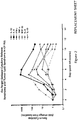
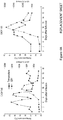
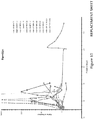
- the present invention is based on the observation that CART 19 cells induced elevated levels of soluble factors in the patient including but is not limited to IFN- ⁇ , TNF ⁇ , IL-2 and IL-6. Therefore, the second-line of therapy comprises compounds and methods for neutralizing the effects against the elevated cytokines resulting from the administration of the CART 19 cells.
- the neutralizing agents are capable of counteracting undesired concerted burst of cytokine expression/activity and, thus, are useful for the prevention, amelioration and treatment of CRS associated with CART 19 therapy.
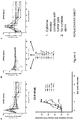
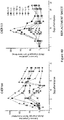
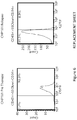
- results presented herein provides updated results of 10 patients who received CART19 cells, including 9 patients with CLL and 1 pediatric patient with relapsed refractory ALL. 6/9 evaluable patient s had a complete recovery (CR) or partial recovery (PR), including 4 sustained CRs. While there was no acute infusional toxicity, all responding patients also developed CRS. All had high fevers, as well as grade 3 or 4 hypotension/hypoxia. CRS preceded peak blood expression of CART 19 cells, and then increased in intensity until the CART19 cell peak (D10-31 after infusion). The ALL patient experienced the most significant toxicity, with grade 4 hypotension and respiratory failure. Steroid therapy on D6 resulted in no improvement.
- TNF ⁇ and IL-6 antagonists were administered. This resulted in resolution of fever and hypotension within 12hr and a rapid wean from ventilator support to room air.
- CART19 T cells can produce massive in-vivo expansion, long-term persistence, and anti-tumor efficacy, but can also induce significant CRS with features suggestive of MAS/HLH that responds rapidly to cytokine blockade.
- blockade of TNF ⁇ and/or IL-6 may interfere with proliferation and effector function, but if given at a point where cell proliferation is underway, toc may ameliorate the symptoms that have been observed that correlate with robust clinical responses.
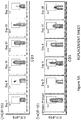
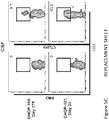
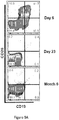
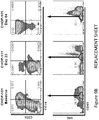
- CAR T cells have clinical activity in acute lymphocytic leukemia (ALL). Briefly, two pediatric patients with relapsed and refractory pre-B cell ALL were treated with 10 6 to 10 7 /kg T cell transduced with anti-CD 19 antibody and a T-cell signaling molecule (CTL019 CAR T cells; also referred to as CART19). The CTL019 T cells expanded more than 1000-fold in both patients, and trafficked to bone marrow. In addition, the CAR T cells were able to cross the blood brain barrier and persisted at high levels for at least 6 months, as measured in the cerebral spinal fluid. Eight severe adverse events were noted.
- ALL acute lymphocytic leukemia
- CRS cytokine release syndrome
- B cell aplasia Both patients developed a cytokine release syndrome (CRS) and B cell aplasia.
- CRS cytokine release syndrome
- the CRS was severe and cytokine blockade with etanercept and tocilizumab was effective in reversing the syndrome, and yet did not prevent CAR T cell expansion and anti-leukemic efficacy.
- Complete remission was observed in both patients, and is ongoing in one patient at 9 months after treatment. The other patient relapsed with blast cells that no longer express CD 19 approximately 2 months after treatment.
- Samples peripheral blood, bone marrow were collected in lavender top (K2EDTA,) or red top (no additive) vacutainer tubes (Becton Dickinson). Lavender top tubes were delivered to the laboratory within 2 hours of draw, or shipped overnight at room temperature in insulated containers essentially as described ( Olson et al., 2011, J Transl Med 9:26 ) prior to processing. Samples were processed within 30 minutes of receipt according to established laboratory SOP. Peripheral blood and marrow mononuclear cells were purified, processed, and stored in liquid nitrogen as described ( Kalos et al., 2011, Science Translational Medicine 3:95ra73 ).
- Red top tubes were processed within 2 hours of draw including coagulation time; serum isolated by centrifugation, aliquoted in single use 100 ⁇ L aliquots and stored at -80° C. CSF was delivered to the laboratory within 30 minutes of aspiration and cells in CSF were collected by centrifugation of CSF fluid and processed for DNA and flow cytometry.
- an 8-point standard curve was generated consisting of 5 to 10 6 copies CTL019 lentivirus plasmid spiked into 100 ng non-transduced control genomic DNA. Each data-point (sample, standard curve) was evaluated in triplicate with a positive Ct value in 3/3 replicates with % CV less than 0.95% for all quantifiable values.
- a parallel amplification reaction to control for the quality of interrogated DNA was performed using 20 ng input genomic DNA from peripheral blood and marrow (2-4.3 ng for CSF samples), and a primer/probe combination specific for non-transcribed genomic sequence upstream of the CDKN1A gene as described ( Kalos et al., 2011, Science Translational Medicine 3:95ra73 ).
- amplification reactions generated a correction factor (CF) to correct for calculated versus actual DNA input.
- Copies of transgene per microgram DNA were calculated according to the formula: copies calculated from CTL019 standard curve per input DNA (ng) x CF x 1000 ng. Accuracy of this assay was determined by the ability to quantify marking of the infused cell product by Q-PCR. These blinded determinations generated Q-PCR and flow marking values of 11.1% and 11.6%, respectively, for the CHOP-100 and 20.0% and 14.4%, respectively, marking for the CHOP-101 infusion products.
- MDA-CAR Jena and Cooper, 2013, L. Anti-idiotype antibody for CD19. PlosONE 2013 ; in press
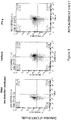
- a murine antibody to CD19 CAR conjugated to Alexa647 Antibodies for multi-parametric immunophenotyping: T cell detection panels: anti-CD3-FITC, anti-CD8-PE, anti-CD 14-PE-Cy7, anti-CD 16-PE-Cy7, anti-CD 19-PE-Cy7 anti-CD 16-PE-Cy7.
- tocilizumab (anti-IL6) has promise for glucocorticoid resistant GVHD ( Drobyski et al., 2011, Biol Blood Marrow Transplant 17(12):1862-8 ; Le Huu et al., 2012, J Invest Dermatol 132(12):2752-61 ; Tawara et al., 2011, Clinical Cancer Research 17:77-88 ), and the results presented herein are consistent with these data.
Landscapes
- Health & Medical Sciences (AREA)
- Life Sciences & Earth Sciences (AREA)
- Chemical & Material Sciences (AREA)
- General Health & Medical Sciences (AREA)
- Animal Behavior & Ethology (AREA)
- Public Health (AREA)
- Veterinary Medicine (AREA)
- Medicinal Chemistry (AREA)
- Engineering & Computer Science (AREA)
- Epidemiology (AREA)
- Pharmacology & Pharmacy (AREA)
- Immunology (AREA)
- Molecular Biology (AREA)
- Organic Chemistry (AREA)
- Bioinformatics & Cheminformatics (AREA)
- Proteomics, Peptides & Aminoacids (AREA)
- Biotechnology (AREA)
- Hematology (AREA)
- Biochemistry (AREA)
- Microbiology (AREA)
- Physics & Mathematics (AREA)
- Analytical Chemistry (AREA)
- Pathology (AREA)
- Genetics & Genomics (AREA)
- Biomedical Technology (AREA)
- Urology & Nephrology (AREA)
- Cell Biology (AREA)
- Nuclear Medicine, Radiotherapy & Molecular Imaging (AREA)
- Chemical Kinetics & Catalysis (AREA)
- General Chemical & Material Sciences (AREA)
- Zoology (AREA)
- Wood Science & Technology (AREA)
- Biophysics (AREA)
- Oncology (AREA)
- General Physics & Mathematics (AREA)
- Food Science & Technology (AREA)
- Mycology (AREA)
- General Engineering & Computer Science (AREA)
- Bioinformatics & Computational Biology (AREA)
- Endocrinology (AREA)
Priority Applications (4)
| Application Number | Priority Date | Filing Date | Title |
|---|---|---|---|
| DK24202493.3T DK4461308T3 (da) | 2012-07-13 | 2013-07-12 | Toksicitetshåndtering for anti-tumoraktivitet af car'er |
| EP21215762.2A EP4019041B1 (en) | 2012-07-13 | 2013-07-12 | Toxicity management for anti-tumor activity of cars |
| EP24202493.3A EP4461308B1 (en) | 2012-07-13 | 2013-07-12 | Toxicity management for anti-tumor activity of cars |
| DK21215762.2T DK4019041T3 (da) | 2012-07-13 | 2013-07-12 | Toksicitetshåndtering for cars antitumoraktivitet |
Applications Claiming Priority (4)
| Application Number | Priority Date | Filing Date | Title |
|---|---|---|---|
| US201261671482P | 2012-07-13 | 2012-07-13 | |
| US201361782982P | 2013-03-14 | 2013-03-14 | |
| EP13817210.1A EP2872171B1 (en) | 2012-07-13 | 2013-07-12 | Toxicity management for anti-tumor activity of cars |
| PCT/US2013/050267 WO2014011984A1 (en) | 2012-07-13 | 2013-07-12 | Toxicity management for anti-tumor activity of cars |
Related Parent Applications (2)
| Application Number | Title | Priority Date | Filing Date |
|---|---|---|---|
| EP13817210.1A Division-Into EP2872171B1 (en) | 2012-07-13 | 2013-07-12 | Toxicity management for anti-tumor activity of cars |
| EP13817210.1A Division EP2872171B1 (en) | 2012-07-13 | 2013-07-12 | Toxicity management for anti-tumor activity of cars |
Related Child Applications (2)
| Application Number | Title | Priority Date | Filing Date |
|---|---|---|---|
| EP21215762.2A Division EP4019041B1 (en) | 2012-07-13 | 2013-07-12 | Toxicity management for anti-tumor activity of cars |
| EP24202493.3A Division EP4461308B1 (en) | 2012-07-13 | 2013-07-12 | Toxicity management for anti-tumor activity of cars |
Publications (1)
| Publication Number | Publication Date |
|---|---|
| EP3721901A1 true EP3721901A1 (en) | 2020-10-14 |
Family
ID=49916566
Family Applications (5)
| Application Number | Title | Priority Date | Filing Date |
|---|---|---|---|
| EP20158930.6A Pending EP3721901A1 (en) | 2012-07-13 | 2013-07-12 | Toxicity management for anti-tumor activity of cars |
| EP21215762.2A Active EP4019041B1 (en) | 2012-07-13 | 2013-07-12 | Toxicity management for anti-tumor activity of cars |
| EP13817210.1A Active EP2872171B1 (en) | 2012-07-13 | 2013-07-12 | Toxicity management for anti-tumor activity of cars |
| EP18154090.7A Revoked EP3338794B1 (en) | 2012-07-13 | 2013-07-12 | Toxicity management for anti-tumor activity of cars |
| EP24202493.3A Active EP4461308B1 (en) | 2012-07-13 | 2013-07-12 | Toxicity management for anti-tumor activity of cars |
Family Applications After (4)
| Application Number | Title | Priority Date | Filing Date |
|---|---|---|---|
| EP21215762.2A Active EP4019041B1 (en) | 2012-07-13 | 2013-07-12 | Toxicity management for anti-tumor activity of cars |
| EP13817210.1A Active EP2872171B1 (en) | 2012-07-13 | 2013-07-12 | Toxicity management for anti-tumor activity of cars |
| EP18154090.7A Revoked EP3338794B1 (en) | 2012-07-13 | 2013-07-12 | Toxicity management for anti-tumor activity of cars |
| EP24202493.3A Active EP4461308B1 (en) | 2012-07-13 | 2013-07-12 | Toxicity management for anti-tumor activity of cars |
Country Status (21)
| Country | Link |
|---|---|
| US (4) | US20150202286A1 (enExample) |
| EP (5) | EP3721901A1 (enExample) |
| JP (6) | JP6382191B2 (enExample) |
| KR (1) | KR102204029B1 (enExample) |
| CN (4) | CN108379586A (enExample) |
| AU (2) | AU2013289967B2 (enExample) |
| BR (1) | BR112015000660A8 (enExample) |
| CA (1) | CA2878928C (enExample) |
| DK (4) | DK4461308T3 (enExample) |
| EA (1) | EA201590210A1 (enExample) |
| ES (4) | ES2941370T3 (enExample) |
| FI (2) | FI4019041T3 (enExample) |
| HR (2) | HRP20250822T1 (enExample) |
| HU (4) | HUE072215T2 (enExample) |
| IN (1) | IN2014DN11155A (enExample) |
| LT (4) | LT3338794T (enExample) |
| MX (2) | MX2015000438A (enExample) |
| PL (3) | PL4461308T3 (enExample) |
| PT (4) | PT4019041T (enExample) |
| SI (2) | SI4019041T1 (enExample) |
| WO (1) | WO2014011984A1 (enExample) |
Cited By (1)
| Publication number | Priority date | Publication date | Assignee | Title |
|---|---|---|---|---|
| EP4019041A1 (en) | 2012-07-13 | 2022-06-29 | The Trustees of the University of Pennsylvania | Toxicity management for anti-tumor activity of cars |
Families Citing this family (118)
| Publication number | Priority date | Publication date | Assignee | Title |
|---|---|---|---|---|
| EP3653212B1 (en) | 2012-12-20 | 2023-04-26 | Purdue Research Foundation | Chimeric antigen receptor-expressing t cells as anti-cancer therapeutics |
| ES2814962T3 (es) | 2013-02-20 | 2021-03-29 | Novartis Ag | Fijación eficaz como objetivo de la leucemia humana primaria utilizando células T modificadas con receptor de antígeno quimérico anti-CD123 |
| PL2958943T3 (pl) | 2013-02-20 | 2020-04-30 | The Trustees Of The University Of Pennsylvania | Leczenie nowotworu złośliwego za pomocą humanizowanego chimerycznego receptora antygenowego anty-egfrviii |
| ES3058841T3 (en) | 2013-03-15 | 2026-03-13 | Novartis Ag | Targeting cytotoxic cells with chimeric receptors for adoptive immunotherapy |
| TWI654206B (zh) | 2013-03-16 | 2019-03-21 | 諾華公司 | 使用人類化抗-cd19嵌合抗原受體治療癌症 |
| CA2931684C (en) | 2013-12-19 | 2024-02-20 | Novartis Ag | Human mesothelin chimeric antigen receptors and uses thereof |
| EP4420663A3 (en) | 2013-12-20 | 2024-10-30 | Novartis AG | Regulatable chimeric antigen receptor |
| EP4303229A3 (en) | 2014-01-21 | 2024-04-17 | Novartis AG | Enhanced antigen presenting ability of car t cells by co-introduction of costimulatory molecules |
| SI3888674T1 (sl) * | 2014-04-07 | 2024-08-30 | Novartis Ag | Zdravljenje raka z uporabo antigenskega himernega receptorja proti-CD19 |
| CA2946511C (en) | 2014-04-21 | 2023-08-22 | The Childen's Hospital Of Philadelphia | Compositions and methods for treating cytokine-related disorders |
| WO2016014553A1 (en) | 2014-07-21 | 2016-01-28 | Novartis Ag | Sortase synthesized chimeric antigen receptors |
| US10174095B2 (en) | 2014-07-21 | 2019-01-08 | Novartis Ag | Nucleic acid encoding a humanized anti-BCMA chimeric antigen receptor |
| JP6736540B2 (ja) | 2014-07-21 | 2020-08-05 | ノバルティス アーゲー | Cll−1キメラ抗原受容体を使用した癌の処置 |
| SG10201913765YA (en) | 2014-07-21 | 2020-03-30 | Novartis Ag | Treatment of cancer using a cd33 chimeric antigen receptor |
| RU2020117196A (ru) | 2014-08-19 | 2020-10-15 | Новартис Аг | Химерный антигенный рецептор (car) против cd123 для использования в лечении злокачественных опухолей |
| JP6839074B2 (ja) | 2014-09-17 | 2021-03-03 | ノバルティス アーゲー | 養子免疫療法のためのキメラ受容体での細胞毒性細胞のターゲティング |
| CA2963935A1 (en) * | 2014-10-08 | 2016-04-14 | Novartis Ag | Biomarkers predictive of therapeutic responsiveness to chimeric antigen receptor therapy and uses thereof |
| IL253149B2 (en) | 2014-12-29 | 2023-11-01 | Novartis Ag | Methods of making chimeric antigen receptor-expressing cells |
| WO2016115482A1 (en) | 2015-01-16 | 2016-07-21 | Novartis Pharma Ag | Phosphoglycerate kinase 1 (pgk) promoters and methods of use for expressing chimeric antigen receptor |
| US11161907B2 (en) | 2015-02-02 | 2021-11-02 | Novartis Ag | Car-expressing cells against multiple tumor antigens and uses thereof |
| CN113713091A (zh) * | 2015-02-06 | 2021-11-30 | 新加坡国立大学 | 工程免疫细胞及其用途和生产方法 |
| US11304976B2 (en) | 2015-02-18 | 2022-04-19 | Enlivex Therapeutics Ltd | Combination immune therapy and cytokine control therapy for cancer treatment |
| US11596652B2 (en) | 2015-02-18 | 2023-03-07 | Enlivex Therapeutics R&D Ltd | Early apoptotic cells for use in treating sepsis |
| US11000548B2 (en) | 2015-02-18 | 2021-05-11 | Enlivex Therapeutics Ltd | Combination immune therapy and cytokine control therapy for cancer treatment |
| US11512289B2 (en) * | 2015-02-18 | 2022-11-29 | Enlivex Therapeutics Rdo Ltd | Combination immune therapy and cytokine control therapy for cancer treatment |
| US11497767B2 (en) | 2015-02-18 | 2022-11-15 | Enlivex Therapeutics R&D Ltd | Combination immune therapy and cytokine control therapy for cancer treatment |
| US11318163B2 (en) | 2015-02-18 | 2022-05-03 | Enlivex Therapeutics Ltd | Combination immune therapy and cytokine control therapy for cancer treatment |
| IL303972A (en) | 2015-04-08 | 2023-08-01 | Novartis Ag | CD20 treatments, CD22 treatments and combined treatments with CD19 chimeric antigen receptor expressing cell |
| WO2016168595A1 (en) | 2015-04-17 | 2016-10-20 | Barrett David Maxwell | Methods for improving the efficacy and expansion of chimeric antigen receptor-expressing cells |
| EP4140492A1 (en) | 2015-04-21 | 2023-03-01 | Enlivex Therapeutics Rdo Ltd | Therapeutic pooled blood apoptotic cell preparations and uses thereof |
| EP3286211A1 (en) | 2015-04-23 | 2018-02-28 | Novartis AG | Treatment of cancer using chimeric antigen receptor and protein kinase a blocker |
| AU2016297014B2 (en) | 2015-07-21 | 2021-06-17 | Novartis Ag | Methods for improving the efficacy and expansion of immune cells |
| US11667691B2 (en) | 2015-08-07 | 2023-06-06 | Novartis Ag | Treatment of cancer using chimeric CD3 receptor proteins |
| US11747346B2 (en) | 2015-09-03 | 2023-09-05 | Novartis Ag | Biomarkers predictive of cytokine release syndrome |
| HUE066644T2 (hu) | 2015-09-15 | 2024-08-28 | Acerta Pharma Bv | CD19-inhibitor és BTK-inhibitor terápiás kombinációi |
| CN116121281B (zh) | 2015-11-27 | 2026-01-02 | 卡瑟里克斯私人有限公司 | 经遗传修饰的细胞及其用途 |
| IL259576B (en) | 2015-12-04 | 2022-09-01 | Novartis Ag | grna molecule containing tracr and crrna, pharmaceutical composition containing it and method for preparing cells for immunotherapy |
| EP3384294B1 (en) * | 2015-12-04 | 2021-10-13 | Juno Therapeutics, Inc. | Methods and compositions related to toxicity associated with cell therapy |
| US11413340B2 (en) | 2015-12-22 | 2022-08-16 | Novartis Ag | Mesothelin chimeric antigen receptor (CAR) and antibody against PD-L1 inhibitor for combined use in anticancer therapy |
| JP6853514B2 (ja) * | 2015-12-27 | 2021-03-31 | 国立大学法人東海国立大学機構 | 炎症性サイトカインの産生が抑制されるキメラ抗原受容体遺伝子改変リンパ球 |
| JP6884155B2 (ja) * | 2016-02-18 | 2021-06-09 | エンリヴェックス セラピューティクス リミテッド | 癌治療のための併用免疫療法及びサイトカイン制御療法 |
| WO2018009923A1 (en) * | 2016-07-08 | 2018-01-11 | F1 Oncology, Inc. | Methods and compositions for transducing lymphocytes and regulating the activity thereof |
| US11111505B2 (en) | 2016-03-19 | 2021-09-07 | Exuma Biotech, Corp. | Methods and compositions for transducing lymphocytes and regulating the activity thereof |
| US11325948B2 (en) | 2016-03-19 | 2022-05-10 | Exuma Biotech Corp. | Methods and compositions for genetically modifying lymphocytes to express polypeptides comprising the intracellular domain of MPL |
| MA44486A (fr) * | 2016-03-22 | 2019-01-30 | Seattle Childrens Hospital Dba Seattle Childrens Res Inst | Procédés d'intervention précoce pour prévenir ou atténuer la toxicité |
| US11549099B2 (en) | 2016-03-23 | 2023-01-10 | Novartis Ag | Cell secreted minibodies and uses thereof |
| EP3439675A4 (en) | 2016-04-08 | 2019-12-18 | Purdue Research Foundation | METHOD AND COMPOSITIONS FOR CAR-T CELL THERAPY |
| ES2937699T3 (es) | 2016-04-22 | 2023-03-30 | Crage Medical Co Ltd | Composiciones y métodos de inmunoterapia celular |
| EP3448874A4 (en) | 2016-04-29 | 2020-04-22 | Voyager Therapeutics, Inc. | COMPOSITIONS FOR TREATING A DISEASE |
| US11299751B2 (en) | 2016-04-29 | 2022-04-12 | Voyager Therapeutics, Inc. | Compositions for the treatment of disease |
| KR20240036704A (ko) * | 2016-06-06 | 2024-03-20 | 주노 쎄러퓨티크스 인코퍼레이티드 | 입양 세포 치료법을 이용한 b 세포 악성종양의 치료 방법 |
| US20190336504A1 (en) | 2016-07-15 | 2019-11-07 | Novartis Ag | Treatment and prevention of cytokine release syndrome using a chimeric antigen receptor in combination with a kinase inhibitor |
| CN110267677A (zh) * | 2016-08-01 | 2019-09-20 | 诺华股份有限公司 | 使用与原m2巨噬细胞分子抑制剂组合的嵌合抗原受体治疗癌症 |
| MY200337A (en) | 2016-10-07 | 2023-12-20 | Novartis Ag | Nucleic acid molecules encoding chimeric antigen receptors comprising a cd20 binding domain |
| CN106636090B (zh) * | 2016-10-11 | 2019-08-09 | 上海优卡迪生物医药科技有限公司 | 人源白细胞介素6的siRNA、重组表达CAR-T载体及其构建方法和应用 |
| JP7227131B2 (ja) * | 2016-12-03 | 2023-02-21 | ジュノー セラピューティクス インコーポレイテッド | Car-t細胞の投薬を決定するための方法 |
| EP3548046A2 (en) | 2016-12-03 | 2019-10-09 | Juno Therapeutics, Inc. | Methods and compositions for use of therapeutic t cells in combination with kinase inhibitors |
| CN108148863B (zh) * | 2016-12-05 | 2019-12-17 | 上海优卡迪生物医药科技有限公司 | 一种封闭il6r的用于缓解crs的car-t转基因载体及其构建方法和应用 |
| CN108250301A (zh) * | 2016-12-29 | 2018-07-06 | 天津天锐生物科技有限公司 | 一种多靶点嵌合抗原受体 |
| EP3574005B1 (en) | 2017-01-26 | 2021-12-15 | Novartis AG | Cd28 compositions and methods for chimeric antigen receptor therapy |
| US11649288B2 (en) | 2017-02-07 | 2023-05-16 | Seattle Children's Hospital | Phospholipid ether (PLE) CAR T cell tumor targeting (CTCT) agents |
| ES2988795T3 (es) | 2017-02-27 | 2024-11-21 | Juno Therapeutics Inc | Composiciones, artículos de fabricación y métodos relacionados con la dosificación en terapia celular |
| ES3010559T3 (en) | 2017-02-28 | 2025-04-03 | Endocyte Inc | Compositions and methods for car t cell therapy |
| CA3054621A1 (en) | 2017-03-22 | 2018-09-27 | Novartis Ag | Compositions and methods for immunooncology |
| AR111651A1 (es) | 2017-04-28 | 2019-08-07 | Novartis Ag | Conjugados de anticuerpos que comprenden agonistas del receptor de tipo toll y terapias de combinación |
| WO2018204413A1 (en) * | 2017-05-01 | 2018-11-08 | H. Lee Moffitt Cancer Center And Research Institute, Inc. | Targeted cytokine blockades for car-t therapy |
| KR20200054160A (ko) | 2017-06-02 | 2020-05-19 | 주노 쎄러퓨티크스 인코퍼레이티드 | 입양 세포 요법을 사용한 치료를 위한 물품 제조 및 방법 |
| CA3064893A1 (en) * | 2017-06-08 | 2018-12-13 | Enlivex Therapeutics Ltd. | Therapeutic apoptotic cells for cancer therapy |
| US11648269B2 (en) | 2017-08-10 | 2023-05-16 | National University Of Singapore | T cell receptor-deficient chimeric antigen receptor T-cells and methods of use thereof |
| JP7320498B2 (ja) * | 2017-10-02 | 2023-08-03 | ヒューマニジェン,インコーポレイテッド | Gm-csfアンタゴニストを使用した免疫療法関連毒性の治療方法 |
| WO2020055932A2 (en) * | 2018-09-10 | 2020-03-19 | Humanigen, Inc. | Methods of treating immunotherapy-related toxicity using a gm-csf antagonist |
| WO2019079564A1 (en) * | 2017-10-18 | 2019-04-25 | Kite Pharma, Inc. | METHODS OF DELIVERY OF CHIMERIC ANTIGEN RECEPTOR IMMUNOTHERAPY |
| US11999802B2 (en) | 2017-10-18 | 2024-06-04 | Novartis Ag | Compositions and methods for selective protein degradation |
| WO2019089855A1 (en) | 2017-11-01 | 2019-05-09 | Juno Therapeutics, Inc. | Process for generating therapeutic compositions of engineered cells |
| WO2019089858A2 (en) | 2017-11-01 | 2019-05-09 | Juno Therapeutics, Inc. | Methods of assessing or monitoring a response to a cell therapy |
| US11564946B2 (en) | 2017-11-01 | 2023-01-31 | Juno Therapeutics, Inc. | Methods associated with tumor burden for assessing response to a cell therapy |
| CN112218651A (zh) | 2018-01-08 | 2021-01-12 | 诺华公司 | 用于与嵌合抗原受体疗法组合的免疫增强rna |
| AU2019209428B2 (en) * | 2018-01-22 | 2025-06-26 | Endocyte, Inc. | Methods of use for CAR T cells |
| CA3090089A1 (en) | 2018-02-06 | 2019-08-15 | Seattle Children's Hospital (dba Seattle Children's Research Institute) | Fluorescein-specific cars exhibiting optimal t cell function against fl-ple labelled tumors |
| CN108300807A (zh) * | 2018-02-07 | 2018-07-20 | 安徽古生物科技有限公司 | 针对第四代嵌合抗原受体car载体pcr鉴定的方法 |
| TW202000229A (zh) | 2018-02-23 | 2020-01-01 | 美商安德賽特公司 | Car t細胞療法之順序方法 |
| US20210046159A1 (en) * | 2018-03-09 | 2021-02-18 | Ospedale San Raffaele S.R.L. | Il-1 antagonist and toxicity induced by cell therapy |
| EP3765154A4 (en) * | 2018-03-14 | 2021-11-24 | Celledit LLC | MODIFICATION OF IMMUNE CELLS TO REDUCE TOXICITY AND USES THEREOF IN ADOPTIVE CELL THERAPY |
| JP2021518160A (ja) | 2018-03-15 | 2021-08-02 | ケーエスキュー セラピューティクス, インコーポレイテッド | 免疫療法の改善のための遺伝子調節組成物及び遺伝子調節方法 |
| US10869888B2 (en) | 2018-04-17 | 2020-12-22 | Innovative Cellular Therapeutics CO., LTD. | Modified cell expansion and uses thereof |
| EP3788369A1 (en) | 2018-05-01 | 2021-03-10 | Novartis Ag | Biomarkers for evaluating car-t cells to predict clinical outcome |
| SG11202010996QA (en) | 2018-05-23 | 2020-12-30 | Nat Univ Singapore | Blockade of cd2 surface expression and expression of chimeric antigen receptors for immunotherapy of t-cell malignancies |
| EP3801769A1 (en) | 2018-05-25 | 2021-04-14 | Novartis AG | Combination therapy with chimeric antigen receptor (car) therapies |
| US20200054675A1 (en) | 2018-06-01 | 2020-02-20 | Washington University | Suppression of cytokine release syndrome in chimeric antigen receptor cell therapy |
| MX2020013017A (es) * | 2018-06-01 | 2021-03-02 | Mayo Found Medical Education & Res | Materiales y metodos para tratar cancer. |
| JP7438988B2 (ja) | 2018-06-13 | 2024-02-27 | ノバルティス アーゲー | Bcmaキメラ抗原受容体及びその使用 |
| CN108949759B (zh) * | 2018-07-23 | 2021-06-01 | 合肥一兮生物科技有限公司 | 敲减人IL-15的siRNA、CD19 CAR表达载体、CAR-T细胞及构建方法和应用 |
| JP2021532116A (ja) | 2018-07-23 | 2021-11-25 | マジェンタ セラピューティクス インコーポレイテッドMagenta Therapeutics, Inc. | 同種異系の細胞療法における抗−cd5抗体薬物コンジュゲート(adc)の使用 |
| BR112021002487A2 (pt) * | 2018-08-10 | 2021-07-27 | Eutilex Co., Ltd. | receptor de antígeno quimérico que se liga a hla-dr e célula car-t |
| US12240915B2 (en) | 2018-08-30 | 2025-03-04 | Innovative Cellular Therapeutics Holdings, Ltd. | Chimeric antigen receptor cells for treating solid tumor |
| CA3116412A1 (en) * | 2018-10-31 | 2020-05-07 | Humanigen, Inc. | Materials and methods for treating cancer |
| SG11202105084VA (en) * | 2018-11-16 | 2021-06-29 | Juno Therapeutics Inc | Methods of dosing engineered t cells for the treatment of b cell malignancies |
| US10918667B2 (en) | 2018-11-20 | 2021-02-16 | Innovative Cellular Therapeutics CO., LTD. | Modified cell expressing therapeutic agent and uses thereof |
| CN120005921A (zh) | 2018-12-12 | 2025-05-16 | 凯德药业股份有限公司 | 嵌合抗原和t细胞受体及使用的方法 |
| JP2022524178A (ja) * | 2019-01-07 | 2022-04-28 | セルリス パルティシパソエス リミターダ | タンデム受容体carにおける二重特異性と腫瘍マイクロ環境を変調する方法 |
| CN112430579A (zh) * | 2019-08-26 | 2021-03-02 | 深圳宾德生物技术有限公司 | 靶向Her2并干扰IL-6表达的嵌合抗原受体T细胞及其制备方法和应用 |
| CN114761037A (zh) | 2019-11-26 | 2022-07-15 | 诺华股份有限公司 | 结合bcma和cd19的嵌合抗原受体及其用途 |
| IL292924A (en) | 2019-11-26 | 2022-07-01 | Novartis Ag | Chimeric antigen receptors cd19 and cd22 and their uses |
| EP4100428A4 (en) | 2020-02-04 | 2024-03-06 | Seattle Children's Hospital (DBA Seattle Children's Research Institute) | CHIMERIC ANTI-DINITROPHENOL ANTIGEN RECEPTORS |
| US12076343B2 (en) | 2020-02-19 | 2024-09-03 | Innovative Cellular Therapeutics Holdings, Ltd. | Engineered safety in cell therapy |
| US20220169694A1 (en) * | 2020-02-20 | 2022-06-02 | Kite Pharma, Inc. | Chimeric antigen receptor t cell therapy |
| US12043654B2 (en) | 2020-06-02 | 2024-07-23 | Innovative Cellular Therapeutics Holdings, Ltd. | Anti-GCC antibody and CAR thereof for treating digestive system cancer |
| EP3988116A1 (en) * | 2020-10-23 | 2022-04-27 | Consejo Superior De Investigaciones Científicas (CSIC) | Methods and compositions for the treatment of hematologic malignancies |
| US11661459B2 (en) | 2020-12-03 | 2023-05-30 | Century Therapeutics, Inc. | Artificial cell death polypeptide for chimeric antigen receptor and uses thereof |
| TW202237827A (zh) | 2020-12-03 | 2022-10-01 | 美商世紀治療股份有限公司 | 經基因工程改造之細胞及其用途 |
| TW202237638A (zh) | 2020-12-09 | 2022-10-01 | 日商武田藥品工業股份有限公司 | 烏苷酸環化酶c(gcc)抗原結合劑之組成物及其使用方法 |
| CN116635064A (zh) | 2020-12-18 | 2023-08-22 | 世纪治疗股份有限公司 | 具有适应性受体特异性的嵌合抗原受体系统 |
| SI4284512T1 (sl) | 2021-01-28 | 2025-06-30 | Regeneron Pharmaceuticals, Inc. | Sestavki in postopki za zdravljenje sindroma sproščanja citokinov |
| CA3172530A1 (en) | 2021-02-25 | 2022-09-01 | Spencer PARK | Ror1 targeting chimeric antigen receptor |
| WO2023004055A1 (en) * | 2021-07-21 | 2023-01-26 | The Cleveland Clinic Foundation | Metabolic and inflammatory markers for car-t cell therapy |
| WO2023076096A1 (en) * | 2021-10-27 | 2023-05-04 | Rush University Medical Center | Methods of treating the effects of cytokine storms |
| WO2023159001A1 (en) * | 2022-02-15 | 2023-08-24 | Kite Pharma, Inc. | Predicting adverse events from immunotherapy |
| JP2025535448A (ja) * | 2022-10-20 | 2025-10-24 | マイクロ クリスパー プライベート リミテッド | 免疫療法におけるサイトカイン放出症候群の軽減 |
Citations (14)
| Publication number | Priority date | Publication date | Assignee | Title |
|---|---|---|---|---|
| WO1990007861A1 (en) | 1988-12-28 | 1990-07-26 | Protein Design Labs, Inc. | CHIMERIC IMMUNOGLOBULINS SPECIFIC FOR p55 TAC PROTEIN OF THE IL-2 RECEPTOR |
| WO1991017271A1 (en) | 1990-05-01 | 1991-11-14 | Affymax Technologies N.V. | Recombinant library screening methods |
| WO1992001047A1 (en) | 1990-07-10 | 1992-01-23 | Cambridge Antibody Technology Limited | Methods for producing members of specific binding pairs |
| US5199942A (en) | 1991-06-07 | 1993-04-06 | Immunex Corporation | Method for improving autologous transplantation |
| WO1993012227A1 (en) | 1991-12-17 | 1993-06-24 | Genpharm International, Inc. | Transgenic non-human animals capable of producing heterologous antibodies |
| US5225539A (en) | 1986-03-27 | 1993-07-06 | Medical Research Council | Recombinant altered antibodies and methods of making altered antibodies |
| US5530101A (en) | 1988-12-28 | 1996-06-25 | Protein Design Labs, Inc. | Humanized immunoglobulins |
| US6120766A (en) | 1991-12-04 | 2000-09-19 | Hale; Geoffrey | CDW52-specific antibody for treatment of multiple sclerosis |
| US6267722B1 (en) | 1998-02-03 | 2001-07-31 | Adeza Biomedical Corporation | Point of care diagnostic systems |
| US6656745B1 (en) | 2000-06-02 | 2003-12-02 | Francis X. Cole | Devices and methods for a multi-level, semi-quantitative immunodiffusion assay |
| US6818455B2 (en) | 1987-04-27 | 2004-11-16 | Inverness Medical Switzerland Gmbh | Capillary immunoassay and device therefor comprising mobilizable particulate labelled reagents |
| WO2005023761A2 (en) * | 2003-09-11 | 2005-03-17 | Kemia, Inc. | Cytokine inhibitors |
| US7189522B2 (en) | 2005-03-11 | 2007-03-13 | Chembio Diagnostic Systems, Inc. | Dual path immunoassay device |
| US20100150829A1 (en) * | 2008-11-25 | 2010-06-17 | Leon Garcia-Martinez | Antibodies to IL-6 and use thereof |
Family Cites Families (13)
| Publication number | Priority date | Publication date | Assignee | Title |
|---|---|---|---|---|
| FR901228A (fr) | 1943-01-16 | 1945-07-20 | Deutsche Edelstahlwerke Ag | Système d'aimant à entrefer annulaire |
| AU2008207646A1 (en) * | 2001-10-04 | 2008-09-25 | Genetics Institute, Llc | Methods and compositions for modulating interleukin-21 receptor activity |
| GB2401040A (en) | 2003-04-28 | 2004-11-03 | Chugai Pharmaceutical Co Ltd | Method for treating interleukin-6 related diseases |
| EP1664796B1 (en) * | 2003-09-15 | 2010-12-15 | Oklahoma Medical Research Foundation | Method of using cytokine assays to diagnose, treat, and evaluate ankylosing spondylitis |
| KR101741731B1 (ko) | 2007-05-21 | 2017-05-30 | 앨더바이오 홀딩스 엘엘씨 | Il-6에 대한 항체 및 이의 용도 |
| WO2008157282A1 (en) * | 2007-06-18 | 2008-12-24 | Genentech, Inc. | Biological markers predictive of rheumatoid arthritis response to b-cell antagonists |
| CN102292106B (zh) | 2008-11-25 | 2016-02-03 | 奥尔德生物制药公司 | Il-6抗体及其用途 |
| WO2010075249A2 (en) * | 2008-12-22 | 2010-07-01 | Genentech, Inc. | A method for treating rheumatoid arthritis with b-cell antagonists |
| CN102740888B (zh) | 2009-11-24 | 2016-10-12 | 奥尔德生物制药公司 | Il-6抗体及其用途 |
| PH12013501201A1 (en) | 2010-12-09 | 2013-07-29 | Univ Pennsylvania | Use of chimeric antigen receptor-modified t cells to treat cancer |
| WO2013033626A2 (en) | 2011-08-31 | 2013-03-07 | Trustees Of Dartmouth College | Nkp30 receptor targeted therapeutics |
| EA026436B9 (ru) | 2012-07-04 | 2017-07-31 | Ин Энд Тек С.Р.Л. | Шарнирная петля для вращательного движения двери, в частности армированной двери |
| HRP20250822T1 (hr) | 2012-07-13 | 2025-09-26 | The Trustees Of The University Of Pennsylvania | UPRAVLJANJE TOKSIČNOŠĆU ZA PROTUTUMORSKO DJELOVANJE CAR-a |
-
2013
- 2013-07-12 HR HRP20250822TT patent/HRP20250822T1/hr unknown
- 2013-07-12 PL PL24202493.3T patent/PL4461308T3/pl unknown
- 2013-07-12 US US14/410,659 patent/US20150202286A1/en not_active Abandoned
- 2013-07-12 CN CN201810348463.5A patent/CN108379586A/zh active Pending
- 2013-07-12 HU HUE24202493A patent/HUE072215T2/hu unknown
- 2013-07-12 FI FIEP21215762.2T patent/FI4019041T3/fi active
- 2013-07-12 EP EP20158930.6A patent/EP3721901A1/en active Pending
- 2013-07-12 DK DK24202493.3T patent/DK4461308T3/da active
- 2013-07-12 DK DK21215762.2T patent/DK4019041T3/da active
- 2013-07-12 AU AU2013289967A patent/AU2013289967B2/en active Active
- 2013-07-12 PT PT212157622T patent/PT4019041T/pt unknown
- 2013-07-12 MX MX2015000438A patent/MX2015000438A/es active IP Right Grant
- 2013-07-12 ES ES21215762T patent/ES2941370T3/es active Active
- 2013-07-12 DK DK13817210.1T patent/DK2872171T3/da active
- 2013-07-12 EP EP21215762.2A patent/EP4019041B1/en active Active
- 2013-07-12 CA CA2878928A patent/CA2878928C/en active Active
- 2013-07-12 ES ES18154090T patent/ES2778701T3/es active Active
- 2013-07-12 HR HRP20230297TT patent/HRP20230297T1/hr unknown
- 2013-07-12 EA EA201590210A patent/EA201590210A1/ru unknown
- 2013-07-12 PL PL21215762.2T patent/PL4019041T3/pl unknown
- 2013-07-12 CN CN202010124303.XA patent/CN111481667A/zh active Pending
- 2013-07-12 DK DK18154090.7T patent/DK3338794T3/da active
- 2013-07-12 PT PT138172101T patent/PT2872171T/pt unknown
- 2013-07-12 CN CN201380037301.5A patent/CN104427997B/zh active Active
- 2013-07-12 FI FIEP24202493.3T patent/FI4461308T3/fi active
- 2013-07-12 SI SI201332036T patent/SI4019041T1/sl unknown
- 2013-07-12 LT LTEP18154090.7T patent/LT3338794T/lt unknown
- 2013-07-12 PL PL13817210T patent/PL2872171T3/pl unknown
- 2013-07-12 HU HUE21215762A patent/HUE061555T2/hu unknown
- 2013-07-12 LT LTEP21215762.2T patent/LT4019041T/lt unknown
- 2013-07-12 JP JP2015521838A patent/JP6382191B2/ja active Active
- 2013-07-12 HU HUE13817210A patent/HUE053556T2/hu unknown
- 2013-07-12 KR KR1020157003078A patent/KR102204029B1/ko active Active
- 2013-07-12 ES ES24202493T patent/ES3032321T3/es active Active
- 2013-07-12 HU HUE18154090A patent/HUE048947T2/hu unknown
- 2013-07-12 PT PT181540907T patent/PT3338794T/pt unknown
- 2013-07-12 EP EP13817210.1A patent/EP2872171B1/en active Active
- 2013-07-12 LT LTEP13817210.1T patent/LT2872171T/lt unknown
- 2013-07-12 WO PCT/US2013/050267 patent/WO2014011984A1/en not_active Ceased
- 2013-07-12 SI SI201332104T patent/SI4461308T1/sl unknown
- 2013-07-12 ES ES13817210T patent/ES2859522T3/es active Active
- 2013-07-12 PT PT242024933T patent/PT4461308T/pt unknown
- 2013-07-12 EP EP18154090.7A patent/EP3338794B1/en not_active Revoked
- 2013-07-12 IN IN11155DEN2014 patent/IN2014DN11155A/en unknown
- 2013-07-12 EP EP24202493.3A patent/EP4461308B1/en active Active
- 2013-07-12 LT LTEP24202493.3T patent/LT4461308T/lt unknown
- 2013-07-12 CN CN202010124264.3A patent/CN111467494B/zh active Active
- 2013-07-12 BR BR112015000660A patent/BR112015000660A8/pt not_active Application Discontinuation
-
2015
- 2015-01-09 MX MX2019014761A patent/MX2019014761A/es unknown
-
2018
- 2018-04-26 JP JP2018085102A patent/JP6563554B2/ja active Active
- 2018-04-26 US US15/963,728 patent/US11273219B2/en active Active
- 2018-05-07 US US15/972,972 patent/US10603378B2/en active Active
- 2018-06-04 AU AU2018203924A patent/AU2018203924B2/en active Active
- 2018-08-09 JP JP2018150287A patent/JP2019006782A/ja not_active Withdrawn
-
2019
- 2019-07-24 JP JP2019136179A patent/JP7034125B2/ja active Active
-
2022
- 2022-02-22 US US17/677,208 patent/US20230013642A1/en not_active Abandoned
- 2022-03-01 JP JP2022030740A patent/JP7682820B2/ja active Active
-
2024
- 2024-11-06 JP JP2024194132A patent/JP2025013518A/ja active Pending
Patent Citations (17)
| Publication number | Priority date | Publication date | Assignee | Title |
|---|---|---|---|---|
| US5225539A (en) | 1986-03-27 | 1993-07-06 | Medical Research Council | Recombinant altered antibodies and methods of making altered antibodies |
| US6818455B2 (en) | 1987-04-27 | 2004-11-16 | Inverness Medical Switzerland Gmbh | Capillary immunoassay and device therefor comprising mobilizable particulate labelled reagents |
| WO1990007861A1 (en) | 1988-12-28 | 1990-07-26 | Protein Design Labs, Inc. | CHIMERIC IMMUNOGLOBULINS SPECIFIC FOR p55 TAC PROTEIN OF THE IL-2 RECEPTOR |
| US5530101A (en) | 1988-12-28 | 1996-06-25 | Protein Design Labs, Inc. | Humanized immunoglobulins |
| US5585089A (en) | 1988-12-28 | 1996-12-17 | Protein Design Labs, Inc. | Humanized immunoglobulins |
| US5693762A (en) | 1988-12-28 | 1997-12-02 | Protein Design Labs, Inc. | Humanized immunoglobulins |
| US5693761A (en) | 1988-12-28 | 1997-12-02 | Protein Design Labs, Inc. | Polynucleotides encoding improved humanized immunoglobulins |
| WO1991017271A1 (en) | 1990-05-01 | 1991-11-14 | Affymax Technologies N.V. | Recombinant library screening methods |
| WO1992001047A1 (en) | 1990-07-10 | 1992-01-23 | Cambridge Antibody Technology Limited | Methods for producing members of specific binding pairs |
| US5199942A (en) | 1991-06-07 | 1993-04-06 | Immunex Corporation | Method for improving autologous transplantation |
| US6120766A (en) | 1991-12-04 | 2000-09-19 | Hale; Geoffrey | CDW52-specific antibody for treatment of multiple sclerosis |
| WO1993012227A1 (en) | 1991-12-17 | 1993-06-24 | Genpharm International, Inc. | Transgenic non-human animals capable of producing heterologous antibodies |
| US6267722B1 (en) | 1998-02-03 | 2001-07-31 | Adeza Biomedical Corporation | Point of care diagnostic systems |
| US6656745B1 (en) | 2000-06-02 | 2003-12-02 | Francis X. Cole | Devices and methods for a multi-level, semi-quantitative immunodiffusion assay |
| WO2005023761A2 (en) * | 2003-09-11 | 2005-03-17 | Kemia, Inc. | Cytokine inhibitors |
| US7189522B2 (en) | 2005-03-11 | 2007-03-13 | Chembio Diagnostic Systems, Inc. | Dual path immunoassay device |
| US20100150829A1 (en) * | 2008-11-25 | 2010-06-17 | Leon Garcia-Martinez | Antibodies to IL-6 and use thereof |
Non-Patent Citations (54)
| Title |
|---|
| BARGOU ET AL., SCIENCE, vol. 321, 2008, pages 974 - 7 |
| BARRETT ET AL., N ENGL J MED, vol. 331, 1994, pages 1253 - 8 |
| BEHRENS ET AL., J CLIN INVEST, vol. 121, no. 6, 2011, pages 2264 - 77 |
| BIERER ET AL., CURR. OPIN. IMMUN., vol. 5, 1993, pages 763 - 773 |
| BIRD ET AL., SCIENCE, vol. 242, 1988, pages 423 - 426 |
| BOYCE ET AL., ANNALS OF ONCOLOGY, vol. 14, 2003, pages 520 - 535 |
| BRENTJENS ET AL., BLOOD, vol. 118, 2011, pages 4817 - 28 |
| CARLOS A RAMOS ET AL: "Chimeric antigen receptor (CAR)-engineered lymphocytes for cancer therapy", EXPERT OPINION ON BIOLOGICAL THERAPY, vol. 11, no. 7, 1 July 2011 (2011-07-01), pages 855 - 873, XP055122639, ISSN: 1471-2598, DOI: 10.1517/14712598.2011.573476 * |
| COLIGAN, CURRENT PROTOCOLS IN IMMUNOLOGY, 1991 |
| COLLINS ET AL., BONE MARROW TRANSPLANT, vol. 26, no. 5, 2000, pages 511 - 6 |
| COLLINS ET AL., J CLIN ONCOL, vol. 15, 1997, pages 433 - 44 |
| D. T. TEACHEY ET AL: "Cytokine release syndrome after blinatumomab treatment related to abnormal macrophage activation and ameliorated with cytokine-directed therapy", BLOOD, vol. 121, no. 26, 15 May 2013 (2013-05-15), pages 5154 - 5157, XP055188107, ISSN: 0006-4971, DOI: 10.1182/blood-2013-02-485623 * |
| DAVID L. PORTER ET AL: "Chimeric Antigen Receptor-Modified T Cells in Chronic Lymphoid Leukemia", NEW ENGLAND JOURNAL OF MEDICINE, vol. 365, no. 8, 25 August 2011 (2011-08-25), pages 725 - 733, XP055052475, ISSN: 0028-4793, DOI: 10.1056/NEJMoa1103849 * |
| DIEFFENFACHDVEKSLER, PCR PRIMER: A LABORATORY MANUAL, 1995 |
| DROBYSKI ET AL., BIOL BLOOD MARROW TRANSPLANT, vol. 17, no. 12, 2011, pages 1862 - 8 |
| G. A. YANIK ET AL: "The impact of soluble tumor necrosis factor receptor etanercept on the treatment of idiopathic pneumonia syndrome after allogeneic hematopoietic stem cell", BLOOD, 15 October 2008 (2008-10-15), pages 3073 - 3081, XP055236431, Retrieved from the Internet <URL:http://www.bloodjournal.org/content/bloodjournal/112/8/3073.full.pdf> [retrieved on 20151215] * |
| GARCIA-MANEROTHOMAS, HEMATOL ONCOL CLIN NORTH AM, vol. 15, no. 1, 2001, pages 163 - 205 |
| GOUJON ET AL., NUCLEIC ACIDS RES, vol. 38, 2010, pages W695 - 9 |
| GRUPP SA PORTER DL TEACHEY DT ET AL: "CD19-Redirected Chimeric Antigen Receptor T(CART19) Cells Induce a Cytokine Release Syndrome (CRS) and Induction of Treatable Macrophage Activation Syndrome (MAS) That Can Be Managed by the IL-6 Antagonist Tocilizumab", vol. 120, no. 21, 16 November 2012 (2012-11-16), pages 2604, XP009521968, ISSN: 0006-4971, Retrieved from the Internet <URL:https://ashpublications.org/blood/article/120/21/2604/112647/CD19-Redirected-Chimeric-Antigen-Receptor-T-CART19> [retrieved on 20200728], DOI: 10.1182/BLOOD.V120.21.2604.2604 * |
| HARLOW ET AL.: "Using Antibodies: A Laboratory Manual", 1999, COLD SPRING HARBOR LABORATORY PRESS |
| HARLOWLANE: "Goding, Monoclonal Antibodies: Principles and Practice", 1986 |
| HENDERSON ET AL., IMMUN., vol. 73, 1991, pages 316 - 321 |
| HOTFILDER ET AL., CANCER RESEARCH, vol. 65, 2005, pages 1442 - 9 |
| HOUSTON ET AL., PROC. NATL. ACAD. SCI. USA, vol. 85, 1988, pages 5879 - 5883 |
| HUSE ET AL., SCIENCE, vol. 246, 1989, pages 1275 - 1281 |
| INNIS ET AL.: "PCR Protocols, A Guide to Methods and Applications", 1990, ACADEMIC PRESS |
| JANKA ET AL., ANNU REV MED, vol. 63, 2012, pages 233 - 46 |
| JENSEN ET AL., BIOL BLOOD MARROW TRANSPLANT, vol. 16, 2010, pages 1245 - 56 |
| KALOS ET AL., SCIENCE TRANSLATIONAL MEDICINE, vol. 3, 2011, pages 95ra73 |
| KALOS ET AL., SCIENCE TRANSLATIONAL MEDICINE, vol. 3, pages 95ra73 |
| KALOS ET AL., SCIENCE, 2011 |
| KEVIN J. CURRAN ET AL: "Chimeric antigen receptors for T cell immunotherapy: current understanding and future directions", THE JOURNAL OF GENE MEDICINE, vol. 14, no. 6, 27 June 2012 (2012-06-27), pages 405 - 415, XP055081970, ISSN: 1099-498X, DOI: 10.1002/jgm.2604 * |
| KOCHENDERFER ET AL., BLOOD, vol. 116, 2010, pages 4099 - 102 |
| KOCHENDERFER ET AL., BLOOD, vol. 119, 2012, pages 2709 - 20 |
| KOHLERMILSTEIN, NATURE, vol. 256, 1975, pages 495 - 497 |
| KOLB ET AL., BLOOD, vol. 86, 1995, pages 2041 - 50 |
| LARIMORE ET AL., J IMMUNOL, vol. 189, 2012, pages 3221 - 30 |
| LE HUU ET AL., J INVEST DERMATOL, vol. 132, no. 12, 2012, pages 2752 - 61 |
| LE VISEUR ET AL., CANCER CELL, vol. 14, 2008, pages 47 - 58 |
| LIU ET AL., CELL, vol. 66, 1991, pages 807 - 815 |
| MILONE ET AL., MOL THER, vol. 17, pages 1453 - 64 |
| OLSON ET AL., J TRANSL MED, vol. 9, 2011, pages 26 |
| PORTER DAVID L ET AL: "717: Chimeric Antigen Receptor T Cells Directed Against CD19 Induce Durable Responses and Transient Cytokine Release Syndrome in Relapsed, Refractory CLL and ALL", vol. 120, no. 21, 16 November 2012 (2012-11-16), pages 717, XP009511066, ISSN: 0006-4971, Retrieved from the Internet <URL:http://www.bloodjournal.org/content/120/21/717> [retrieved on 20200727] * |
| PORTER ET AL., N ENGL J MED, vol. 365, 2011, pages 725 - 33 |
| PULLEN ET AL., J CLIN ONCOL, vol. 11, no. 5, 1993, pages 839 - 49 |
| QUEEN ET AL., PROC. NATL. ACAD. SCI. USA, vol. 86, 1989, pages 10029 - 10033 |
| RENIER BRENTJENS ET AL: "Treatment of Chronic Lymphocytic Leukemia With Genetically Targeted Autologous T Cells: Case Report of an Unforeseen Adverse Event in a Phase I Clinical Trial", MOLECULAR THERAPY, vol. 18, no. 4, 1 April 2010 (2010-04-01), pages 666 - 668, XP055143817, ISSN: 1525-0016, DOI: 10.1038/mt.2010.31 * |
| ROBINS ET AL., BLOOD, vol. 114, 2009, pages 4099 - 107 |
| ROSENBERG ET AL., NEW ENG. J. OF MED., vol. 319, 1988, pages 1676 |
| SIEVERS ET AL., MOL SYST BIOL, vol. 7, 2011, pages 539 |
| TANG ET AL., BR J HAEMATOL, vol. 143, 2008, pages 84 - 91 |
| TAWARA ET AL., CLINICAL CANCER RESEARCH, vol. 17, 2011, pages 77 - 88 |
| TILL ET AL., BLOOD, vol. 112, 2008, pages 2261 - 71 |
| WARD ET AL., NATURE, vol. 341, 1989, pages 544 - 546 |
Cited By (1)
| Publication number | Priority date | Publication date | Assignee | Title |
|---|---|---|---|---|
| EP4019041A1 (en) | 2012-07-13 | 2022-06-29 | The Trustees of the University of Pennsylvania | Toxicity management for anti-tumor activity of cars |
Also Published As
Similar Documents
| Publication | Publication Date | Title |
|---|---|---|
| US20230013642A1 (en) | Toxicity Management for Anti-Tumor Activity of CARs | |
| HK40116181B (en) | Toxicity management for anti-tumor activity of cars | |
| HK40116181A (en) | Toxicity management for anti-tumor activity of cars | |
| HK40069741A (en) | Toxicity management for anti-tumor activity of cars | |
| HK40069741B (en) | Toxicity management for anti-tumor activity of cars | |
| HK40039113A (en) | Toxicity management for anti-tumor activity of cars | |
| HK1253365B (en) | Toxicity management for anti-tumor activity of cars | |
| EA041322B1 (ru) | Контроль над токсичностью в случае противоопухолевой активности химерных антигенных рецепторов (car) |
Legal Events
| Date | Code | Title | Description |
|---|---|---|---|
| PUAI | Public reference made under article 153(3) epc to a published international application that has entered the european phase |
Free format text: ORIGINAL CODE: 0009012 |
|
| STAA | Information on the status of an ep patent application or granted ep patent |
Free format text: STATUS: THE APPLICATION HAS BEEN PUBLISHED |
|
| AC | Divisional application: reference to earlier application |
Ref document number: 2872171 Country of ref document: EP Kind code of ref document: P |
|
| AK | Designated contracting states |
Kind code of ref document: A1 Designated state(s): AL AT BE BG CH CY CZ DE DK EE ES FI FR GB GR HR HU IE IS IT LI LT LU LV MC MK MT NL NO PL PT RO RS SE SI SK SM TR |
|
| AX | Request for extension of the european patent |
Extension state: BA ME |
|
| STAA | Information on the status of an ep patent application or granted ep patent |
Free format text: STATUS: REQUEST FOR EXAMINATION WAS MADE |
|
| 17P | Request for examination filed |
Effective date: 20210414 |
|
| RAX | Requested extension states of the european patent have changed |
Extension state: BA Payment date: 20210414 Extension state: ME Payment date: 20210414 |
|
| RBV | Designated contracting states (corrected) |
Designated state(s): AL AT BE BG CH CY CZ DE DK EE ES FI FR GB GR HR HU IE IS IT LI LT LU LV MC MK MT NL NO PL PT RO RS SE SI SK SM TR |
|
| REG | Reference to a national code |
Ref country code: HK Ref legal event code: DE Ref document number: 40039113 Country of ref document: HK |
|
| RAP3 | Party data changed (applicant data changed or rights of an application transferred) |
Owner name: THE CHILDREN'S HOSPITAL OF PHILADELPHIA Owner name: THE TRUSTEES OF THE UNIVERSITY OF PENNSYLVANIA |
|
| P01 | Opt-out of the competence of the unified patent court (upc) registered |
Effective date: 20230526 |
|
| STAA | Information on the status of an ep patent application or granted ep patent |
Free format text: STATUS: EXAMINATION IS IN PROGRESS |
|
| 17Q | First examination report despatched |
Effective date: 20240510 |
|
| TPAC | Observations filed by third parties |
Free format text: ORIGINAL CODE: EPIDOSNTIPA |
|
| STAA | Information on the status of an ep patent application or granted ep patent |
Free format text: STATUS: THE APPLICATION HAS BEEN WITHDRAWN |