EP3699229B1 - Pulver-slush-formkörper aus vinylchloridharz-zusammensetzung und laminat - Google Patents
Pulver-slush-formkörper aus vinylchloridharz-zusammensetzung und laminat Download PDFInfo
- Publication number
- EP3699229B1 EP3699229B1 EP18868155.5A EP18868155A EP3699229B1 EP 3699229 B1 EP3699229 B1 EP 3699229B1 EP 18868155 A EP18868155 A EP 18868155A EP 3699229 B1 EP3699229 B1 EP 3699229B1
- Authority
- EP
- European Patent Office
- Prior art keywords
- polyvinyl chloride
- molded body
- less
- mass
- acrylic polymer
- Prior art date
- Legal status (The legal status is an assumption and is not a legal conclusion. Google has not performed a legal analysis and makes no representation as to the accuracy of the status listed.)
- Active
Links
Images





Classifications
-
- C—CHEMISTRY; METALLURGY
- C08—ORGANIC MACROMOLECULAR COMPOUNDS; THEIR PREPARATION OR CHEMICAL WORKING-UP; COMPOSITIONS BASED THEREON
- C08L—COMPOSITIONS OF MACROMOLECULAR COMPOUNDS
- C08L51/00—Compositions of graft polymers in which the grafted component is obtained by reactions only involving carbon-to-carbon unsaturated bonds; Compositions of derivatives of such polymers
- C08L51/003—Compositions of graft polymers in which the grafted component is obtained by reactions only involving carbon-to-carbon unsaturated bonds; Compositions of derivatives of such polymers grafted on to macromolecular compounds obtained by reactions only involving unsaturated carbon-to-carbon bonds
-
- B—PERFORMING OPERATIONS; TRANSPORTING
- B29—WORKING OF PLASTICS; WORKING OF SUBSTANCES IN A PLASTIC STATE IN GENERAL
- B29C—SHAPING OR JOINING OF PLASTICS; SHAPING OF MATERIAL IN A PLASTIC STATE, NOT OTHERWISE PROVIDED FOR; AFTER-TREATMENT OF THE SHAPED PRODUCTS, e.g. REPAIRING
- B29C41/00—Shaping by coating a mould, core or other substrate, i.e. by depositing material and stripping-off the shaped article; Apparatus therefor
- B29C41/02—Shaping by coating a mould, core or other substrate, i.e. by depositing material and stripping-off the shaped article; Apparatus therefor for making articles of definite length, i.e. discrete articles
- B29C41/18—Slush casting, i.e. pouring moulding material into a hollow mould with excess material being poured off
-
- B—PERFORMING OPERATIONS; TRANSPORTING
- B32—LAYERED PRODUCTS
- B32B—LAYERED PRODUCTS, i.e. PRODUCTS BUILT-UP OF STRATA OF FLAT OR NON-FLAT, e.g. CELLULAR OR HONEYCOMB, FORM
- B32B27/00—Layered products comprising a layer of synthetic resin
- B32B27/06—Layered products comprising a layer of synthetic resin as the main or only constituent of a layer, which is next to another layer of the same or of a different material
- B32B27/065—Layered products comprising a layer of synthetic resin as the main or only constituent of a layer, which is next to another layer of the same or of a different material of foam
-
- B—PERFORMING OPERATIONS; TRANSPORTING
- B32—LAYERED PRODUCTS
- B32B—LAYERED PRODUCTS, i.e. PRODUCTS BUILT-UP OF STRATA OF FLAT OR NON-FLAT, e.g. CELLULAR OR HONEYCOMB, FORM
- B32B27/00—Layered products comprising a layer of synthetic resin
- B32B27/06—Layered products comprising a layer of synthetic resin as the main or only constituent of a layer, which is next to another layer of the same or of a different material
- B32B27/08—Layered products comprising a layer of synthetic resin as the main or only constituent of a layer, which is next to another layer of the same or of a different material of synthetic resin
-
- B—PERFORMING OPERATIONS; TRANSPORTING
- B32—LAYERED PRODUCTS
- B32B—LAYERED PRODUCTS, i.e. PRODUCTS BUILT-UP OF STRATA OF FLAT OR NON-FLAT, e.g. CELLULAR OR HONEYCOMB, FORM
- B32B27/00—Layered products comprising a layer of synthetic resin
- B32B27/18—Layered products comprising a layer of synthetic resin characterised by the use of special additives
- B32B27/22—Layered products comprising a layer of synthetic resin characterised by the use of special additives using plasticisers
-
- B—PERFORMING OPERATIONS; TRANSPORTING
- B32—LAYERED PRODUCTS
- B32B—LAYERED PRODUCTS, i.e. PRODUCTS BUILT-UP OF STRATA OF FLAT OR NON-FLAT, e.g. CELLULAR OR HONEYCOMB, FORM
- B32B27/00—Layered products comprising a layer of synthetic resin
- B32B27/30—Layered products comprising a layer of synthetic resin comprising vinyl (co)polymers; comprising acrylic (co)polymers
- B32B27/306—Layered products comprising a layer of synthetic resin comprising vinyl (co)polymers; comprising acrylic (co)polymers comprising vinyl acetate or vinyl alcohol (co)polymers
-
- B—PERFORMING OPERATIONS; TRANSPORTING
- B32—LAYERED PRODUCTS
- B32B—LAYERED PRODUCTS, i.e. PRODUCTS BUILT-UP OF STRATA OF FLAT OR NON-FLAT, e.g. CELLULAR OR HONEYCOMB, FORM
- B32B27/00—Layered products comprising a layer of synthetic resin
- B32B27/30—Layered products comprising a layer of synthetic resin comprising vinyl (co)polymers; comprising acrylic (co)polymers
- B32B27/308—Layered products comprising a layer of synthetic resin comprising vinyl (co)polymers; comprising acrylic (co)polymers comprising acrylic (co)polymers
-
- B—PERFORMING OPERATIONS; TRANSPORTING
- B32—LAYERED PRODUCTS
- B32B—LAYERED PRODUCTS, i.e. PRODUCTS BUILT-UP OF STRATA OF FLAT OR NON-FLAT, e.g. CELLULAR OR HONEYCOMB, FORM
- B32B27/00—Layered products comprising a layer of synthetic resin
- B32B27/32—Layered products comprising a layer of synthetic resin comprising polyolefins
-
- B—PERFORMING OPERATIONS; TRANSPORTING
- B32—LAYERED PRODUCTS
- B32B—LAYERED PRODUCTS, i.e. PRODUCTS BUILT-UP OF STRATA OF FLAT OR NON-FLAT, e.g. CELLULAR OR HONEYCOMB, FORM
- B32B27/00—Layered products comprising a layer of synthetic resin
- B32B27/40—Layered products comprising a layer of synthetic resin comprising polyurethanes
-
- B—PERFORMING OPERATIONS; TRANSPORTING
- B32—LAYERED PRODUCTS
- B32B—LAYERED PRODUCTS, i.e. PRODUCTS BUILT-UP OF STRATA OF FLAT OR NON-FLAT, e.g. CELLULAR OR HONEYCOMB, FORM
- B32B5/00—Layered products characterised by the non- homogeneity or physical structure, i.e. comprising a fibrous, filamentary, particulate or foam layer; Layered products characterised by having a layer differing constitutionally or physically in different parts
- B32B5/18—Layered products characterised by the non- homogeneity or physical structure, i.e. comprising a fibrous, filamentary, particulate or foam layer; Layered products characterised by having a layer differing constitutionally or physically in different parts characterised by features of a layer of foamed material
-
- B—PERFORMING OPERATIONS; TRANSPORTING
- B32—LAYERED PRODUCTS
- B32B—LAYERED PRODUCTS, i.e. PRODUCTS BUILT-UP OF STRATA OF FLAT OR NON-FLAT, e.g. CELLULAR OR HONEYCOMB, FORM
- B32B5/00—Layered products characterised by the non- homogeneity or physical structure, i.e. comprising a fibrous, filamentary, particulate or foam layer; Layered products characterised by having a layer differing constitutionally or physically in different parts
- B32B5/18—Layered products characterised by the non- homogeneity or physical structure, i.e. comprising a fibrous, filamentary, particulate or foam layer; Layered products characterised by having a layer differing constitutionally or physically in different parts characterised by features of a layer of foamed material
- B32B5/20—Layered products characterised by the non- homogeneity or physical structure, i.e. comprising a fibrous, filamentary, particulate or foam layer; Layered products characterised by having a layer differing constitutionally or physically in different parts characterised by features of a layer of foamed material foamed in situ
-
- C—CHEMISTRY; METALLURGY
- C08—ORGANIC MACROMOLECULAR COMPOUNDS; THEIR PREPARATION OR CHEMICAL WORKING-UP; COMPOSITIONS BASED THEREON
- C08K—Use of inorganic or non-macromolecular organic substances as compounding ingredients
- C08K5/00—Use of organic ingredients
- C08K5/04—Oxygen-containing compounds
- C08K5/10—Esters; Ether-esters
-
- C—CHEMISTRY; METALLURGY
- C08—ORGANIC MACROMOLECULAR COMPOUNDS; THEIR PREPARATION OR CHEMICAL WORKING-UP; COMPOSITIONS BASED THEREON
- C08L—COMPOSITIONS OF MACROMOLECULAR COMPOUNDS
- C08L27/00—Compositions of homopolymers or copolymers of compounds having one or more unsaturated aliphatic radicals, each having only one carbon-to-carbon double bond, and at least one being terminated by a halogen; Compositions of derivatives of such polymers
- C08L27/02—Compositions of homopolymers or copolymers of compounds having one or more unsaturated aliphatic radicals, each having only one carbon-to-carbon double bond, and at least one being terminated by a halogen; Compositions of derivatives of such polymers not modified by chemical after-treatment
- C08L27/04—Compositions of homopolymers or copolymers of compounds having one or more unsaturated aliphatic radicals, each having only one carbon-to-carbon double bond, and at least one being terminated by a halogen; Compositions of derivatives of such polymers not modified by chemical after-treatment containing chlorine atoms
- C08L27/06—Homopolymers or copolymers of vinyl chloride
-
- C—CHEMISTRY; METALLURGY
- C08—ORGANIC MACROMOLECULAR COMPOUNDS; THEIR PREPARATION OR CHEMICAL WORKING-UP; COMPOSITIONS BASED THEREON
- C08L—COMPOSITIONS OF MACROMOLECULAR COMPOUNDS
- C08L33/00—Compositions of homopolymers or copolymers of compounds having one or more unsaturated aliphatic radicals, each having only one carbon-to-carbon double bond, and only one being terminated by only one carboxyl radical, or of salts, anhydrides, esters, amides, imides or nitriles thereof; Compositions of derivatives of such polymers
- C08L33/04—Homopolymers or copolymers of esters
- C08L33/06—Homopolymers or copolymers of esters of esters containing only carbon, hydrogen and oxygen, which oxygen atoms are present only as part of the carboxyl radical
-
- B—PERFORMING OPERATIONS; TRANSPORTING
- B29—WORKING OF PLASTICS; WORKING OF SUBSTANCES IN A PLASTIC STATE IN GENERAL
- B29K—INDEXING SCHEME ASSOCIATED WITH SUBCLASSES B29B, B29C OR B29D, RELATING TO MOULDING MATERIALS OR TO MATERIALS FOR MOULDS, REINFORCEMENTS, FILLERS OR PREFORMED PARTS, e.g. INSERTS
- B29K2027/00—Use of polyvinylhalogenides or derivatives thereof as moulding material
- B29K2027/06—PVC, i.e. polyvinylchloride
-
- B—PERFORMING OPERATIONS; TRANSPORTING
- B29—WORKING OF PLASTICS; WORKING OF SUBSTANCES IN A PLASTIC STATE IN GENERAL
- B29K—INDEXING SCHEME ASSOCIATED WITH SUBCLASSES B29B, B29C OR B29D, RELATING TO MOULDING MATERIALS OR TO MATERIALS FOR MOULDS, REINFORCEMENTS, FILLERS OR PREFORMED PARTS, e.g. INSERTS
- B29K2033/00—Use of polymers of unsaturated acids or derivatives thereof as moulding material
- B29K2033/04—Polymers of esters
- B29K2033/08—Polymers of acrylic acid esters, e.g. PMA, i.e. polymethylacrylate
-
- B—PERFORMING OPERATIONS; TRANSPORTING
- B32—LAYERED PRODUCTS
- B32B—LAYERED PRODUCTS, i.e. PRODUCTS BUILT-UP OF STRATA OF FLAT OR NON-FLAT, e.g. CELLULAR OR HONEYCOMB, FORM
- B32B2250/00—Layers arrangement
- B32B2250/02—2 layers
-
- B—PERFORMING OPERATIONS; TRANSPORTING
- B32—LAYERED PRODUCTS
- B32B—LAYERED PRODUCTS, i.e. PRODUCTS BUILT-UP OF STRATA OF FLAT OR NON-FLAT, e.g. CELLULAR OR HONEYCOMB, FORM
- B32B2250/00—Layers arrangement
- B32B2250/03—3 layers
-
- B—PERFORMING OPERATIONS; TRANSPORTING
- B32—LAYERED PRODUCTS
- B32B—LAYERED PRODUCTS, i.e. PRODUCTS BUILT-UP OF STRATA OF FLAT OR NON-FLAT, e.g. CELLULAR OR HONEYCOMB, FORM
- B32B2266/00—Composition of foam
- B32B2266/02—Organic
- B32B2266/0214—Materials belonging to B32B27/00
- B32B2266/0278—Polyurethane
-
- B—PERFORMING OPERATIONS; TRANSPORTING
- B32—LAYERED PRODUCTS
- B32B—LAYERED PRODUCTS, i.e. PRODUCTS BUILT-UP OF STRATA OF FLAT OR NON-FLAT, e.g. CELLULAR OR HONEYCOMB, FORM
- B32B2305/00—Condition, form or state of the layers or laminate
- B32B2305/02—Cellular or porous
- B32B2305/022—Foam
-
- B—PERFORMING OPERATIONS; TRANSPORTING
- B32—LAYERED PRODUCTS
- B32B—LAYERED PRODUCTS, i.e. PRODUCTS BUILT-UP OF STRATA OF FLAT OR NON-FLAT, e.g. CELLULAR OR HONEYCOMB, FORM
- B32B2307/00—Properties of the layers or laminate
- B32B2307/50—Properties of the layers or laminate having particular mechanical properties
- B32B2307/54—Yield strength; Tensile strength
-
- B—PERFORMING OPERATIONS; TRANSPORTING
- B32—LAYERED PRODUCTS
- B32B—LAYERED PRODUCTS, i.e. PRODUCTS BUILT-UP OF STRATA OF FLAT OR NON-FLAT, e.g. CELLULAR OR HONEYCOMB, FORM
- B32B2307/00—Properties of the layers or laminate
- B32B2307/70—Other properties
- B32B2307/746—Slipping, anti-blocking, low friction
-
- B—PERFORMING OPERATIONS; TRANSPORTING
- B32—LAYERED PRODUCTS
- B32B—LAYERED PRODUCTS, i.e. PRODUCTS BUILT-UP OF STRATA OF FLAT OR NON-FLAT, e.g. CELLULAR OR HONEYCOMB, FORM
- B32B2327/00—Polyvinylhalogenides
- B32B2327/06—PVC, i.e. polyvinylchloride
-
- B—PERFORMING OPERATIONS; TRANSPORTING
- B32—LAYERED PRODUCTS
- B32B—LAYERED PRODUCTS, i.e. PRODUCTS BUILT-UP OF STRATA OF FLAT OR NON-FLAT, e.g. CELLULAR OR HONEYCOMB, FORM
- B32B2375/00—Polyureas; Polyurethanes
-
- B—PERFORMING OPERATIONS; TRANSPORTING
- B32—LAYERED PRODUCTS
- B32B—LAYERED PRODUCTS, i.e. PRODUCTS BUILT-UP OF STRATA OF FLAT OR NON-FLAT, e.g. CELLULAR OR HONEYCOMB, FORM
- B32B2605/00—Vehicles
-
- B—PERFORMING OPERATIONS; TRANSPORTING
- B32—LAYERED PRODUCTS
- B32B—LAYERED PRODUCTS, i.e. PRODUCTS BUILT-UP OF STRATA OF FLAT OR NON-FLAT, e.g. CELLULAR OR HONEYCOMB, FORM
- B32B2605/00—Vehicles
- B32B2605/003—Interior finishings
-
- B—PERFORMING OPERATIONS; TRANSPORTING
- B32—LAYERED PRODUCTS
- B32B—LAYERED PRODUCTS, i.e. PRODUCTS BUILT-UP OF STRATA OF FLAT OR NON-FLAT, e.g. CELLULAR OR HONEYCOMB, FORM
- B32B27/00—Layered products comprising a layer of synthetic resin
- B32B27/30—Layered products comprising a layer of synthetic resin comprising vinyl (co)polymers; comprising acrylic (co)polymers
- B32B27/304—Layered products comprising a layer of synthetic resin comprising vinyl (co)polymers; comprising acrylic (co)polymers comprising vinyl halide (co)polymers, e.g. PVC, PVDC, PVF, PVDF
-
- C—CHEMISTRY; METALLURGY
- C08—ORGANIC MACROMOLECULAR COMPOUNDS; THEIR PREPARATION OR CHEMICAL WORKING-UP; COMPOSITIONS BASED THEREON
- C08F—MACROMOLECULAR COMPOUNDS OBTAINED BY REACTIONS ONLY INVOLVING CARBON-TO-CARBON UNSATURATED BONDS
- C08F120/00—Homopolymers of compounds having one or more unsaturated aliphatic radicals, each having only one carbon-to-carbon double bond, and only one being terminated by only one carboxyl radical or a salt, anhydride, ester, amide, imide or nitrile thereof
- C08F120/02—Monocarboxylic acids having less than ten carbon atoms; Derivatives thereof
- C08F120/10—Esters
- C08F120/12—Esters of monohydric alcohols or phenols
- C08F120/14—Methyl esters, e.g. methyl (meth)acrylate
-
- C—CHEMISTRY; METALLURGY
- C08—ORGANIC MACROMOLECULAR COMPOUNDS; THEIR PREPARATION OR CHEMICAL WORKING-UP; COMPOSITIONS BASED THEREON
- C08F—MACROMOLECULAR COMPOUNDS OBTAINED BY REACTIONS ONLY INVOLVING CARBON-TO-CARBON UNSATURATED BONDS
- C08F220/00—Copolymers of compounds having one or more unsaturated aliphatic radicals, each having only one carbon-to-carbon double bond, and only one being terminated by only one carboxyl radical or a salt, anhydride ester, amide, imide or nitrile thereof
- C08F220/02—Monocarboxylic acids having less than ten carbon atoms; Derivatives thereof
- C08F220/10—Esters
- C08F220/12—Esters of monohydric alcohols or phenols
- C08F220/14—Methyl esters, e.g. methyl (meth)acrylate
-
- C—CHEMISTRY; METALLURGY
- C08—ORGANIC MACROMOLECULAR COMPOUNDS; THEIR PREPARATION OR CHEMICAL WORKING-UP; COMPOSITIONS BASED THEREON
- C08F—MACROMOLECULAR COMPOUNDS OBTAINED BY REACTIONS ONLY INVOLVING CARBON-TO-CARBON UNSATURATED BONDS
- C08F220/00—Copolymers of compounds having one or more unsaturated aliphatic radicals, each having only one carbon-to-carbon double bond, and only one being terminated by only one carboxyl radical or a salt, anhydride ester, amide, imide or nitrile thereof
- C08F220/02—Monocarboxylic acids having less than ten carbon atoms; Derivatives thereof
- C08F220/10—Esters
- C08F220/12—Esters of monohydric alcohols or phenols
- C08F220/16—Esters of monohydric alcohols or phenols of phenols or of alcohols containing two or more carbon atoms
- C08F220/18—Esters of monohydric alcohols or phenols of phenols or of alcohols containing two or more carbon atoms with acrylic or methacrylic acids
- C08F220/1804—C4-(meth)acrylate, e.g. butyl (meth)acrylate, isobutyl (meth)acrylate or tert-butyl (meth)acrylate
-
- C—CHEMISTRY; METALLURGY
- C08—ORGANIC MACROMOLECULAR COMPOUNDS; THEIR PREPARATION OR CHEMICAL WORKING-UP; COMPOSITIONS BASED THEREON
- C08F—MACROMOLECULAR COMPOUNDS OBTAINED BY REACTIONS ONLY INVOLVING CARBON-TO-CARBON UNSATURATED BONDS
- C08F265/00—Macromolecular compounds obtained by polymerising monomers on to polymers of unsaturated monocarboxylic acids or derivatives thereof as defined in group C08F20/00
- C08F265/04—Macromolecular compounds obtained by polymerising monomers on to polymers of unsaturated monocarboxylic acids or derivatives thereof as defined in group C08F20/00 on to polymers of esters
- C08F265/06—Polymerisation of acrylate or methacrylate esters on to polymers thereof
-
- C—CHEMISTRY; METALLURGY
- C08—ORGANIC MACROMOLECULAR COMPOUNDS; THEIR PREPARATION OR CHEMICAL WORKING-UP; COMPOSITIONS BASED THEREON
- C08K—Use of inorganic or non-macromolecular organic substances as compounding ingredients
- C08K5/00—Use of organic ingredients
- C08K5/0008—Organic ingredients according to more than one of the "one dot" groups of C08K5/01 - C08K5/59
- C08K5/0016—Plasticisers
-
- C—CHEMISTRY; METALLURGY
- C08—ORGANIC MACROMOLECULAR COMPOUNDS; THEIR PREPARATION OR CHEMICAL WORKING-UP; COMPOSITIONS BASED THEREON
- C08L—COMPOSITIONS OF MACROMOLECULAR COMPOUNDS
- C08L2205/00—Polymer mixtures characterised by other features
- C08L2205/02—Polymer mixtures characterised by other features containing two or more polymers of the same C08L -group
- C08L2205/025—Polymer mixtures characterised by other features containing two or more polymers of the same C08L -group containing two or more polymers of the same hierarchy C08L, and differing only in parameters such as density, comonomer content, molecular weight, structure
-
- C—CHEMISTRY; METALLURGY
- C08—ORGANIC MACROMOLECULAR COMPOUNDS; THEIR PREPARATION OR CHEMICAL WORKING-UP; COMPOSITIONS BASED THEREON
- C08L—COMPOSITIONS OF MACROMOLECULAR COMPOUNDS
- C08L2205/00—Polymer mixtures characterised by other features
- C08L2205/03—Polymer mixtures characterised by other features containing three or more polymers in a blend
-
- C—CHEMISTRY; METALLURGY
- C08—ORGANIC MACROMOLECULAR COMPOUNDS; THEIR PREPARATION OR CHEMICAL WORKING-UP; COMPOSITIONS BASED THEREON
- C08L—COMPOSITIONS OF MACROMOLECULAR COMPOUNDS
- C08L2205/00—Polymer mixtures characterised by other features
- C08L2205/03—Polymer mixtures characterised by other features containing three or more polymers in a blend
- C08L2205/035—Polymer mixtures characterised by other features containing three or more polymers in a blend containing four or more polymers in a blend
-
- C—CHEMISTRY; METALLURGY
- C08—ORGANIC MACROMOLECULAR COMPOUNDS; THEIR PREPARATION OR CHEMICAL WORKING-UP; COMPOSITIONS BASED THEREON
- C08L—COMPOSITIONS OF MACROMOLECULAR COMPOUNDS
- C08L33/00—Compositions of homopolymers or copolymers of compounds having one or more unsaturated aliphatic radicals, each having only one carbon-to-carbon double bond, and only one being terminated by only one carboxyl radical, or of salts, anhydrides, esters, amides, imides or nitriles thereof; Compositions of derivatives of such polymers
- C08L33/04—Homopolymers or copolymers of esters
- C08L33/06—Homopolymers or copolymers of esters of esters containing only carbon, hydrogen and oxygen, which oxygen atoms are present only as part of the carboxyl radical
- C08L33/08—Homopolymers or copolymers of acrylic acid esters
Definitions
- the present invention relates to a powder slush molded body of a polyvinyl chloride composition to be favorably used as a facing material for vehicle interior parts, and a laminate.
- a polyvinyl chloride composition has excellent chemical resistance and durability.
- a molded body obtained by molding a polyvinyl chloride composition blended with a plasticizer has excellent flexibility and a favorable texture and imparts a sense of luxuriousness, and is thus often used as a facing material for automobile interior parts such as an instrument panel and a door trim.
- a laminate and the like formed of a molded body obtained by molding a polyvinyl chloride composition through powder slush molding and a polyurethane resin or the like is suitably used for automobile interior parts.
- a molded body obtained by molding a polyvinyl chloride composition blended with a plasticizer has a problem in that the plasticizer moves to the surface of the molded body under the influence of heat, light, or the like, and thus the flexibility of the molded body is likely to decrease. Therefore, the blend amount of the plasticizer is increased in order to improve the flexibility, but an increase in the blend amount of the plasticizer poses a problem in that, when a piece of cloth is used to wipe off dirt on the surface of the molded body, fibers attach to the surface.
- Patent Document 1 proposes that adhesion of fuzz to a polyvinyl chloride composition and bleeding of an additive in a polyvinyl chloride composition can be suppressed by further blending hydroxyl group-modified silicone oil into the polyvinyl chloride composition blended with a plasticizer.
- Patent Document 2 proposes that the surface characteristics and flexibility of a molded body are improved by using a polyvinyl chloride composition containing two types of polyvinyl chloride particles having different average particle diameters, and modified polyorganosiloxane particles.
- the present invention provides a powder slush molded body of a polyvinyl chloride composition that has high flexibility after heat aging as well as favorable surface characteristics, and a laminate.
- the present invention relates to a powder slush molded body of a polyvinyl chloride composition, the polyvinyl chloride composition containing a polyvinyl chloride, a plasticizer, and an acrylic polymer, wherein the polyvinyl chloride composition contains the plasticizer in an amount of 110 parts by mass or more and 150 parts by mass or less with respect to 100 parts by mass of the polyvinyl chloride, when a cross section of the powder slush molded body extending in parallel with a thickness direction is observed under an optical microscope using reflected light, irregular scale-like polyvinyl chloride particles having a long diameter of 30 ⁇ m or more and 500 ⁇ m or less are continuous with one another via interfacial portions, and the number of aggregated particles of the acrylic polymer having a long diameter of 30 ⁇ m or more and 100 ⁇ m or less is 10 particles/mm 2 or less, wherein the acrylic polymer contains a constitutional unit derived from a (meth)acrylic ester in an amount of 50 mass% or more
- an intensity of a peak at a wave number of 666 ⁇ 5 cm -1 originating from the plasticizer observed in a Raman spectrum of an inner portion of the polyvinyl chloride particle is higher than an intensity of a peak at a wave number of 666 ⁇ 5 cm -1 originating from the plasticizer observed in a Raman spectrum of the interfacial portion.
- the interfacial portion has a thickness of 1 ⁇ m or more and 20 ⁇ m or less.
- the acrylic polymer contains a constitutional unit derived from a (meth)acrylic ester in an amount of 50 mass% or more, and the (meth)acrylic ester includes at least one (meth)acrylic ester selected from the group consisting of a (meth)acrylic ester of an aliphatic alcohol having two or more carbon atoms and a (meth)acrylic ester of an aromatic alcohol. It is preferable that the plasticizer includes a trimellitate-based plasticizer.
- the powder slush molded body as a facing for a vehicle interior material.
- the present invention also relates to a laminate obtained by laminating a polyurethane foam layer and the powder slush molded body.
- the laminate it is preferable to use the laminate as a vehicle interior material.
- the inventors of the present invention conducted numerous studies to solve the above-mentioned problems. As a result, they found that, when a powder slush molded body of a polyvinyl chloride composition (also referred to as "polyvinyl chloride molded body" hereinafter) containing a polyvinyl chloride, a plasticizer, and an acrylic polymer contained the plasticizer in an amount of 110 parts by mass or more and 150 parts by mass or less with respect to 100 parts by mass of the polyvinyl chloride, and when a cross section of the powder slush molded body extending in parallel with a thickness direction was observed under an optical microscope using reflected light, irregular scale-like polyvinyl chloride particles having a long diameter of 30 ⁇ m or more and 500 ⁇ m or less were continuous with one another via interfacial portions, and the number of aggregated particles of the acrylic polymer having a long diameter of 30 ⁇ m or more and 100 ⁇ m or less was 10 particles/mm 2 or less, the molded body had
- a stereoscopic microscope SMZ-1500 manufactured by Nikon Corporation can be used as the optical microscope, for example.
- the term “scale-like polyvinyl chloride particles” refers to scale-like objects in an image obtained by observing the cross section of the powder slush molded body extending in parallel with the thickness direction under an optical microscope using reflected light.
- the term “irregular” means that the sizes and/or shapes are not uniform.
- the term “long diameter of the polyvinyl chloride particle” refers to the longest straight line among straight lines that each connect random two random points on the outer circumference of a scale-like object in the image obtained by observing the cross section of the powder slush molded body extending in parallel with the thickness direction under an optical microscope using reflected light.
- the long diameter of the polyvinyl chloride particles is an average of the long diameters of twenty randomly-selected scale-like objects.
- the term "interfacial portions" refers to irregular ring-shaped objects that surround the scale-like objects in the image obtained by observing the cross section of the powder slush molded body extending in parallel with the thickness direction under an optical microscope using reflected light.
- the term “aggregated particles of the acrylic polymer” refers to circular objects in the image obtained by observing the cross section of the powder slush molded body extending in parallel with the thickness direction under an optical microscope using reflected light.
- the term “long diameter of aggregated particles of the acrylic polymer” refers to the longest straight line among straight lines that each connect two random points on the outer circumference of a circular object in the image obtained by observing the cross section of the powder slush molded body extending in parallel with the thickness direction under an optical microscope using reflected light.
- the number of aggregated particles of the acrylic polymer is determined by selecting twenty random positions (500 ⁇ m ⁇ 500 ⁇ m) in the image obtained by observing the cross section of the powder slush molded body extending in parallel with the thickness direction under an optical microscope using reflected light, measuring the number of circular objects (aggregated particles of the acrylic polymer) at each position, and converting the average of the numbers obtained through the measurement into the number of particles per mm 2 .
- polyvinyl chloride refers to polyvinyl chloride having an average particle diameter of 50 ⁇ m or more and 500 ⁇ m or less, the average particle diameter being measured in accordance with JIS K 7369:2009.
- polyvinyl chloride for a paste refers to polyvinyl chloride having an average particle diameter of 0.01 ⁇ m or more and less than 50 ⁇ m, the average particle diameter being measured using a laser diffraction-scattering type particle size distribution measurement apparatus.
- the long diameter of the polyvinyl chloride particle is 30 ⁇ m or more and 500 ⁇ m or less, and for example, it is preferably 60 ⁇ m or more, and more preferably 90 ⁇ m or more.
- the long diameter of the polyvinyl chloride particle is preferably 300 ⁇ m or less, and more preferably 200 ⁇ m or less, for example.
- the average particle diameter of the polyvinyl chloride is preferably 60 ⁇ m or more and 300 ⁇ m or less, more preferably 90 ⁇ m or more and 300 ⁇ m or less, and even more preferably 90 ⁇ m or more and 200 ⁇ m or less, for example.
- the adhesiveness of the polyvinyl chloride molded body to a urethane foam layer is improved.
- the number of aggregated particles of the acrylic polymer is preferably 7 particles/mm 2 or less, more preferably 5 particles/mm 2 or less, even more preferably 3 particles/mm 2 or less, and even more preferably 0 particles/mm 2 , which means that the aggregated particles of the acrylic polymer are not present.
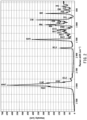
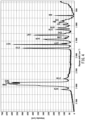
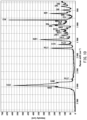
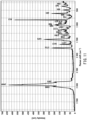
- a peak at a wave number of 600 ⁇ 5 cm -1 originating from the acrylic polymer is present in the Raman spectrum of the interfacial portion.
- the peak at a wave number of 600 ⁇ 5 cm -1 originating from the acrylic polymer is not normally observed in the Raman spectrum of the inner portion of the polyvinyl chloride particle.
- the intensity of the peak at a wave number of 600 ⁇ 5 cm -1 originating from the acrylic polymer observed in the Raman spectrum of the interfacial portion is higher than the intensity of the peak at a wave number of 600 ⁇ 5 cm -1 originating from the acrylic polymer observed in the Raman spectrum of the inner portion of the polyvinyl chloride particle.
- the intensity of a peak at a wave number of 666 ⁇ 5 cm -1 originating from the plasticizer observed in the Raman spectrum of the inner portion of the polyvinyl chloride particle is higher than the intensity of the peak at a wave number of 666 ⁇ 5 cm -1 originating from the plasticizer observed in the Raman spectrum of the interfacial portion.
- the intensity of a peak at a wave number of 666 ⁇ 5 cm -1 originating from the plasticizer observed in the Raman spectrum of the inner portion of the polyvinyl chloride particle is preferably 1.2 or more times, more preferably 1.4 or more times, and even more preferably 1.6 or more times, as high as the intensity of the peak at a wave number of 666 ⁇ 5 cm -1 originating from the plasticizer observed in the Raman spectrum of the interfacial portion.
- the peak originating from the acrylic polymer is present in the Raman spectrum of the interfacial portion, and the intensity of the peak originating from the plasticizer in the Raman spectrum of the inner portion of the polyvinyl chloride particle is higher than the intensity of the peak originating from the plasticizer in the Raman spectrum of the interfacial portion. Therefore, it is inferred that a larger amount of the acrylic polymer is present in the interfacial portion and a larger amount of the plasticizer is present in the inner portion of the polyvinyl chloride particle.
- the plasticizer is held inside the polyvinyl chloride particles surrounded by the interfacial portions containing the acrylic polymer in a larger amount and is thus less likely to move to the surfaces of the polyvinyl chloride particles, thus suppressing stickiness (reducing the dynamic friction coefficient) of the surface of the polyvinyl chloride molded body.
- the intensity of a peak at a predetermined wave number in the Raman spectrum of the inner portion of the polyvinyl chloride particle is determined by analyzing, using laser Raman spectroscopy, four randomly-selected positions of one randomly-selected scale-like object in the image obtained by observing the cross section of the powder slush molded body extending in parallel with the thickness direction under an optical microscope using reflected light, and taking an average of the intensities at the predetermined wave number in the thus-obtained four Raman spectra.
- the intensity of a peak at a predetermined wave number in the Raman spectrum of the interfacial portion is determined by analyzing, using laser Raman spectroscopy, four randomly-selected positions of one randomly-selected ring-shaped object in the image obtained by observing the cross section of the powder slush molded body extending in parallel with the thickness direction under an optical microscope using reflected light, and taking an average of the intensities at the predetermined wave number in the thus-obtained four Raman spectra.
- the intensity of a peak at a predetermined wave number in a Raman spectrum is calculated by drawing a base line between two points at a wave number of 750 cm -1 and a wave number of 575 cm -1 and measuring the peak height at the predetermined wave number.
- the thickness of the interfacial portion is preferably 1 ⁇ m or more, more preferably 3 ⁇ m or more, and even more preferably 5 ⁇ m or more, from the viewpoint of further suppressing stickiness.
- the thickness of the interfacial portion is preferably 20 ⁇ m or less, more preferably 15 ⁇ m or less, and even more preferably 10 ⁇ m or less, from the viewpoint of further improving flexibility after heat aging, for example.
- the "thickness of the interfacial portion" is determined by selecting twenty random positions in the interfacial portions in the image obtained by observing the cross section of the powder slush molded body extending in parallel with the thickness direction under an optical microscope using reflected light, measuring the thickness of the interfacial portion at each position, and taking an average of the thus-obtained thicknesses.
- the average particle diameter of the polyvinyl chloride is any particular limitation on the average particle diameter of the polyvinyl chloride as long as it is 50 ⁇ m or more and 500 ⁇ m or less, and for example, it is preferably 100 ⁇ m or more, and more preferably 150 ⁇ m or more.
- the average particle diameter of the polyvinyl chloride is preferably 300 ⁇ m or less, and more preferably 200 ⁇ m or less, for example. More specifically, the average particle diameter of the polyvinyl chloride is preferably 100 ⁇ m or more and 300 ⁇ m or less, more preferably 100 ⁇ m or more and 200 ⁇ m or less, and even more preferably 150 ⁇ m or more and 200 ⁇ m or less, for example.
- the average particle diameter of the polyvinyl chloride is within the above-described range, the fluidity of the powder of the polyvinyl chloride composition is improved, and the adhesiveness of a polyvinyl chloride molded body obtained by molding the polyvinyl chloride composition to a urethane foam layer is improved.
- the average degree of polymerization of the polyvinyl chloride is 1,350 or more.
- the average degree of polymerization is preferably 1,400 or more from the viewpoint of more easily forming the powder of the polyvinyl chloride composition.
- the upper limit of the average degree of polymerization of the polyvinyl chloride may be 3,800 or less, for example.
- the average degree of polymerization is preferably 3,500 or less, and more preferably 3,000 or less, from the viewpoint of improving the flexibility of a polyvinyl chloride molded body obtained by molding the polyvinyl chloride composition.
- the average degree of polymerization of the polyvinyl chloride is preferably 1,350 or more and 3,800 or less, more preferably 1,350 or more and 3,500 or less, and even more preferably 1,400 or more and 3,000 or less.
- the average degree of polymerization of the polyvinyl chloride is measured in accordance with JIS K 6720-2:1999.
- polyvinyl chloride there is no particular limitation on the polyvinyl chloride, and a homopolymer of a vinyl chloride monomer and/or a copolymer of a vinyl chloride monomer and another copolymerizable monomer can be used.
- the other copolymerizable monomer include, but are not particularly limited to, ethylene, propylene, vinyl acetate, allyl chloride, allyl glycidyl ether, acrylic ester, and vinyl ether.
- the polyvinyl chloride may be manufactured using any known polymerization method such as a suspension polymerization method or a bulk polymerization method, for example, but is preferably manufactured using a suspension polymerization method from the viewpoint of low cost and excellent thermal stability.
- the polyvinyl chloride composition may contain the polyvinyl chloride in an amount of 30 mass% or more or 35 mass% or more, for example, but there is no particular limitation thereto.
- the polyvinyl chloride composition may contain the polyvinyl chloride in an amount of 60 mass% or less, or 55 mass% or less, or 50 mass% or less, or 45 mass% or less. More specifically, the polyvinyl chloride composition may contain the polyvinyl chloride in an amount of 30 mass% or more and 60 mass% or less, or 35 mass% or more and 55 mass% or less, for example.
- the blend amount of the plasticizer there is no particular limitation on the blend amount of the plasticizer as long as the blend amount is 110 parts by mass or more and 150 parts by mass or less with respect to 100 parts by mass of the polyvinyl chloride, and for example, it is preferably 115 parts by mass or more from the viewpoint of improving the heat aging resistance of the polyvinyl chloride molded body.
- the blend amount is preferably 145 parts by mass or less from the viewpoint of facilitating the formation of powder of the polyvinyl chloride composition.
- the blend amount of the plasticizer is preferably 115 parts by mass or more and 150 parts by mass or less, and more preferably 115 parts by mass or more and 145 parts by mass or less, with respect to 100 parts by mass of the polyvinyl chloride.
- plasticizer there is no particular limitation on the plasticizer as long as a plasticizer for a polyvinyl chloride is used.
- a plasticizer for a polyvinyl chloride for example, trimellitate-based plasticizers, phthalic acid-based plasticizers, pyromellitic acid-based plasticizers, epoxy-based plasticizers, polyester-based plasticizers, and aliphatic series-based plasticizers can be used. It is preferable to use trimellitate-based plasticizers from the viewpoint that the plasticizers are less likely to move and bleed out, and the heat aging resistance is further improved.
- trimellitate-based plasticizers include, but are not particularly limited to, tri(2-ethylhexyl) trimellitate, tri(n-octyl) trimellitate, triisooctyl trimellitate, triisodecyl trimellitate, triisononyl trimellitate, di(n-octyl) mono(n-decyl) trimellitate, and diisooctyl monoisodecyl trimellitate.
- phthalic acid-based plasticizers include, but are not particularly limited to, di(n-butyl) phthalate, di(n-octyl) phthalate, di(2-ethylhexyl) phthalate, diisooctyl phthalate, octyldecyl phthalate, diisodecyl phthalate, butylbenzyl phthalate, and di(2-ethylhexyl) isophthalate.
- Examples of the pyromellitic acid-based plasticizers include, but are not particularly limited to, tetra(2-ethylhexyl) pyromellitate and tetra(n-octyl) pyromellitate.
- Examples of the epoxy-based plasticizers include, but are not particularly limited to, epoxidized soybean oil, epoxidized flaxseed oil, and epoxidized (2-ethylhexyl) tall oil fatty acid.
- polyester-based plasticizers include, but are not particularly limited to, (1,3-butanediol) (2-ethylhexanol) adipate-based polyester, (1,6-hexanediol) (2-ethylhexanol) sebacate-based polyester, and (propylene glycol) (coconut oil fatty acid) adipate-based polyester.
- the aliphatic series-based plasticizers may also be fatty acid ester-based plasticizers.
- one or more selected from the group consisting of sebacates, azelates, and adipates can be used as the aliphatic series-based plasticizers, for example. More specifically, one or more selected from the group consisting of (2-ethylhexyl) sebacate (DOS), di(2-ethylhexyl) azelate (DOZ), di(2-ethylhexyl) adipate (DOA), diisodecyl adipate (DIDA), and diisononyl adipate (DINA) can be used as the aliphatic series-based plasticizers, for example.
- DOS (2-ethylhexyl) sebacate
- DOZ di(2-ethylhexyl) azelate
- DOA di(2-ethylhexyl) adipate
- DIDA diis
- plasticizers may be used alone or in combination of two or more.
- the blend amount of the acrylic polymer in the polyvinyl chloride composition is preferably 4 parts by mass or more, preferably 5 parts by mass or more, more preferably 7 parts by mass or more, and even more preferably 9 parts by mass or more, with respect to 100 parts by mass of the polyvinyl chloride, from the viewpoint of further suppressing stickiness, that is, reducing the dynamic friction coefficient,.
- the blend amount of the acrylic polymer is preferably 23 parts by mass or less, more preferably 22 parts by mass or less, and even more preferably 20 parts by mass or less, with respect to 100 parts by mass of the polyvinyl chloride, from the viewpoint of improving the flexibility and flexibility after heat aging.
- the blend amount of the acrylic polymer is preferably 4 parts by mass or more and 23 parts by mass or less, more preferably 5 parts by mass or more and 22 parts by mass or less, and even more preferably 7 parts by mass or more and 20 parts by mass or less, with respect to 100 parts by mass of the polyvinyl chloride.
- the average particle diameter of the acrylic polymer is 0.01 ⁇ m or more and 10 ⁇ m or less from the viewpoint of improving the fluidity of the powder of the polyvinyl chloride composition, for example.
- the average particle diameter is preferably 0.1 ⁇ m or more, and more preferably 0.5 ⁇ m or more.
- the average particle diameter of the acrylic polymer is preferably 5 ⁇ m or less, and more preferably 2 ⁇ m or less, for example. More specifically, the average particle diameter of the acrylic polymer is preferably 0.1 ⁇ m or more and 5 ⁇ m or less, and more preferably 0.5 ⁇ m or more and 2 ⁇ m or less, for example.
- the average particle diameter of the acrylic polymer is measured using a dynamic light scattering type particle size distribution measurement apparatus.
- the acrylic polymer contains a constitutional unit derived from (meth)acrylic ester in an amount of 50 mass% or more.
- the acrylic polymer is obtained through polymerization of a monomer mixture containing (meth)acrylic ester in an amount of 50 mass% or more.
- (meth)acrylic acid means acrylic acid and/or methacrylic acid.
- (meth)acrylic ester means acrylic ester and/or methacrylic ester.
- the acrylic polymer preferably contains a constitutional unit derived from (meth)acrylic ester in an amount of 60 mass% or more, more preferably 70 mass% or more, even more preferably 80 mass% or more, and even more preferably 90 mass% or more, from the viewpoint of improving the surface characteristics and flexibility of the molded body.
- Examples of the (meth)acrylic ester include a (meth)acrylic ester of an aliphatic alcohol and a (meth)acrylic ester of an aromatic alcohol.
- the aliphatic alcohol may be linear alcohol, or branched alcohol, or cyclic alcohol.
- the (meth)acrylic ester includes at least one (meth)acrylic ester selected from the group consisting of a (meth)acrylic ester of an aliphatic alcohol having two or more carbon atoms and a (meth)acrylic ester of an aromatic alcohol. Therefore, the compatibility between the acrylic polymer and the plasticizer is improved, thus making it possible to suppress movement of the plasticizer to the surface of the polyvinyl chloride molded body.
- Examples of the (meth)acrylic ester of an aliphatic alcohol having two or more carbon atoms include, but are not particularly limited to, ethyl (meth)acrylate, n-propyl (meth)acrylate, isopropyl (meth)acrylate, n-butyl (meth)acrylate, isobutyl (meth)acrylate, tert-butyl (meth)acrylate, n-pentyl (meth)acrylate, n-hexyl (meth)acrylate, n-heptyl (meth)acrylate, n-octyl (meth)acrylate, 2-ethylhexyl (meth)acrylate, nonyl (meth)acrylate, decyl (meth)acrylate, dodecyl (meth)acrylate, stearyl (meth)acrylate,
- the number of carbon atoms included in the aliphatic alcohol is preferably 2 or more and 24 or less from the viewpoint that a molded body having favorable surface characteristics can be easily obtained, and more preferably 2 or more and 12 or less and even more preferably 2 or more and 8 or less from the viewpoint of facilitating emulsion polymerization or fine suspension polymerization.
- the (meth)acrylic ester of an aliphatic alcohol having two or more carbon atoms is preferably at least one of a (meth)acrylic ester of an aliphatic alcohol having 4 carbon atoms selected from the group consisting of n-butyl (meth)acrylate, isobutyl (meth)acrylate, and tert-butyl (meth)acrylate, from the viewpoint of further improving the surface characteristics of the molded body, and more preferably n-butyl (meth)acrylate and/or isobutyl (meth)acrylate.
- the (meth)acrylic ester of an aliphatic alcohol having two or more carbon atoms may include cyclohexyl (meth)acrylate from the viewpoint of further improving the surface characteristics of the molded body.
- the (meth)acrylic ester of an aliphatic alcohol having two or more carbon atoms is preferably one or more selected from the group consisting of isobutyl (meth)acrylate and cyclohexyl (meth)acrylate from the viewpoint of excellent powder characteristics.
- the (meth)acrylic ester may include a (meth)acrylic ester of an aliphatic alcohol having one carbon atom, such as methyl (meth)acrylate.
- the acrylic polymer may contain a constitutional unit derived from another monomer in addition to the constitutional unit derived from the (meth)acrylic ester.
- the other monomer include carboxyl group-containing monomers, sulfonic group-containing monomers, carbonyl group-containing (meth)acrylates, hydroxyl group-containing (meth)acrylates, epoxy group-containing (meth)acrylates, and amino group-containing (meth)acrylates.
- Examples of the carboxyl group-containing monomers include methacrylic acid, acrylic acid, itaconic acid, crotonic acid, maleic acid, fumaric acid, 2-succinoloyloxyethyl methacrylate, 2-maleinoyloxyethyl methacrylate, 2-phthaloyloxyethyl methacrylate, and 2-hexahydrophthaloyloxyethyl methacrylate.
- Examples of the sulfonic group-containing monomers include allylsulfonic acid.
- Examples of the carbonyl group-containing (meth)acrylates include acetoacetoxyethyl (meth)acrylate.
- Examples of the hydroxyl group-containing (meth)acrylates include 2-hydroxyethyl (meth)acrylate and 2-hydroxypropyl (meth)acrylate.
- Examples of the epoxy group-containing (meth)acrylates include glycidyl (meth)acrylate.
- Examples of the amino group-containing (meth)acrylates include N-dimethylaminoethyl (meth)acrylate and N-diethylaminoethyl (meth)acrylate. Of these, methacrylic acid and acrylic acid are favorably used from the viewpoint of low cost and excellent polymerizability with the (meth)acrylic ester.
- the acrylic polymer contains the constitutional unit derived from methyl (meth)acrylate in an amount of 40 mass% or more and 95 mass% or less, and the constitutional unit derived from at least one (meth)acrylic ester selected from the group consisting of n-butyl (meth)acrylate, isobutyl (meth)acrylate, and tert-butyl (meth)acrylate in an amount of 5 mass% or more and 60 mass% or less, from the viewpoint of improving the surface characteristics of a vinyl chloride molded body and improving flexibility after heat aging.
- the acrylic polymer contains the constitutional unit derived from methyl (meth)acrylate in an amount of 50 mass% or more and 95 mass% or less, and the constitutional unit derived from at least one (meth)acrylic ester selected from the group consisting of n-butyl (meth)acrylate, isobutyl (meth)acrylate, and tert-butyl (meth)acrylate in an amount of 5 mass% or more and 50 mass% or less, from the viewpoint of improving the blocking properties of the polyvinyl chloride composition (powder), and it is even more preferable that the acrylic polymer contains the constitutional unit derived from methyl (meth)acrylate in an amount of 60 mass% or more and 95 mass% or less, and the constitutional unit derived from at least one (meth)acrylic ester selected from the group consisting of n-butyl (meth)acrylate, isobutyl (meth)acrylate, and tert-butyl (meth)acrylate in an amount of 5
- the acrylic polymer may contain a constitutional unit derived from another monomer component in addition to the constitutional unit derived from methyl (meth)acrylate and the constitutional unit derived from the (meth)acrylic ester of the aliphatic alcohol having 4 carbon atoms.
- the content of the constitutional unit derived from the other monomer component in the acrylic polymer is preferably 5 mass% or less.
- Mw mass average molecular weight
- weight average molecular weight of the acrylic polymer
- the mass average molecular weight is preferably 150,000 or more, more preferably 300,000 or more, and even more preferably 350,000 or more, from the viewpoint of improving flexibility after heat aging.
- the mass average molecular weight is preferably 1,350,000 or less, more preferably 1,300,000 or less, and even more preferably 1,200,000 or less, from the viewpoint of improving flexibility after heat aging.
- the mass average molecular weight of the acrylic polymer is preferably 150,000 or more and 1,350,000 or less, more preferably 300,000 or more and 1,300,000 or less, and even more preferably 350,000 or more and 1,200,000 or less.
- the mass average molecular weight of the acrylic polymer is measured using GPC (Gel Permeation Chromatography).
- the acrylic polymer may be manufactured using any known polymerization method such as an emulsion polymerization method, a seeded emulsion polymerization method, a fine suspension polymerization method, or a seeded fine suspension polymerization method
- an emulsion polymerization method or fine suspension polymerization method from the viewpoint that such a method facilitates control of the molecular weight, particle structure, and particle diameter and is suitable for industrial production.
- a polymerization initiator, a surfactant (functioning as an emulsifying agent and/or a dispersing agent), a chain transfer agent, and the like can be used as appropriate.
- sodium persulfate, potassium persulfate, and ammonium persulfate can be used, for example.
- anionic surfactants such as fatty acid salts, alkyl sulfosuccinates, alkyl sarcosinates, alkyl sulfates, and alkylbenzene sulfonates
- nonionic surfactants such as polyoxyethylene alkyl ethers, polyoxyethylene fatty acid esters, and glycerin fatty acid esters
- cationic surfactants such as alkylamine salts can be used as appropriate, for example.
- alkyl mercaptans having 2 to 12 carbon atoms in their main chain and mercapto alcohols.
- alkyl mercaptans having 2 to 12 carbon atoms in their main chain include n-octyl mercaptan (also referred to as "1-octanethiol"), t-octyl mercaptan, n-dodecyl mercaptan, t-dodecyl mercaptan, and 2-ethylhexyl thioglycol.
- the mercapto alcohols include 2-mercaptoethanol.
- the acrylic polymer may be in the form of particles having a uniform structure, or core-shell particles having a core-shell structure.
- the mass ratio between the core portion and the shell portion may be within a range from 10:90 to 90:10, for example, but there is no particular limitation thereto.
- the acrylic polymer When the acrylic polymer is in the form of particles having a uniform structure, the acrylic polymer can be produced through spray drying of a latex of a polymer obtained through polymerization of a monomer mixture (also referred to as "one-step polymerization").
- the acrylic polymer When the acrylic polymer is in the form of core-shell particles, the acrylic polymer can be produced by forming a latex of a polymer (core portion) through polymerization of a monomer mixture, adding the additional monomer mixture to the thus-obtained latex and continuing to perform polymerization to form a latex of a polymer (having a core-shell structure), and then performing spray drying (also referred to as "two-step polymerization"). The polymerization of the core portion and/or the shell portion may be performed through two or more steps.
- the polyvinyl chloride composition may further contain a polyvinyl chloride for a paste having an average particle diameter of 0.01 um or more and less than 50 ⁇ m from the viewpoint of imparting flexibility, which is expressed as the tension characteristics under the application of 10% stress, for example.
- a polyvinyl chloride for a paste having an average particle diameter of 0.01 um or more and less than 50 ⁇ m from the viewpoint of imparting flexibility, which is expressed as the tension characteristics under the application of 10% stress, for example.
- the average particle diameter of the polyvinyl chloride for a paste is preferably 0.1 ⁇ m or more, and more preferably 0.5 ⁇ m or more.
- the average particle diameter of the polyvinyl chloride for a paste is preferably 20 ⁇ m or less, and more preferably 10 ⁇ m or less, for example.
- the average particle diameter of the polyvinyl chloride for a paste is preferably 0.1 um or more and 20 ⁇ m or less, and more preferably 0.5 ⁇ m or more and 10 ⁇ m or less, for example.
- the average particle diameter of the polyvinyl chloride for a paste is within the above-described range, the fluidity of the powder of the polyvinyl chloride composition is improved.
- the average particle diameter of the polyvinyl chloride for a paste is measured using a laser diffraction-scattering type particle size distribution measurement apparatus such as a particle size distribution measurement apparatus (MICROTRAC/HRA (9320-X100) manufactured by Nikkiso Co., Ltd.).
- the average degree of polymerization of the polyvinyl chloride for a paste there is no particular limitation on the average degree of polymerization of the polyvinyl chloride for a paste, and it may be 500 or more, or 800 or more, for example.
- the upper limit of the average degree of polymerization of the polyvinyl chloride for a paste there is no particular limitation on the upper limit of the average degree of polymerization of the polyvinyl chloride for a paste, and it may be 2,000 or less, or 1,500 or less, for example. More specifically, the average degree of polymerization of the polyvinyl chloride for a paste may be 500 or more and 2,000 or less, or 800 or more and 1,500 or less, for example.
- the average degree of polymerization of the polyvinyl chloride for a paste is within the above-described range, the fluidity of the powder of the polyvinyl chloride composition is improved, and the moldability is also improved.
- polyvinyl chloride for a paste
- a homopolymer of a vinyl chloride monomer and/or a copolymer of a vinyl chloride monomer and another copolymerizable monomer can be used.
- the other copolymerizable monomer include, but are not limited to, ethylene, propylene, vinyl acetate, allyl chloride, allyl glycidyl ether, acrylic ester, and vinyl ether.
- the polyvinyl chloride for a paste may be manufactured using any known polymerization method such as an emulsion polymerization method, a seeded emulsion polymerization method, a fine suspension polymerization method, or a seeded fine suspension polymerization method, it is preferable to manufacture the polyvinyl chloride for a paste using a fine suspension polymerization method from the viewpoint that fine particles can be easily formed.
- the blend amount of the polyvinyl chloride for a paste is preferably 36 parts by mass or less, more preferably 30 parts by mass or less from the viewpoint of reducing the dynamic friction coefficient, and even more preferably 20 parts by mass or less, with respect to 100 parts by mass of the polyvinyl chloride.
- the lower limit of the blend amount of the polyvinyl chloride for a paste may be 3 parts by mass or more, or 5 parts by mass or more, from the viewpoint of improving the fusibility.
- the total blend amount of the acrylic polymer and the polyvinyl chloride for a paste is preferably 15 parts by mass or more and 40 parts by mass or less, more preferably 15 parts by mass or more and 35 parts by mass or less, and even more preferably 15 parts by mass or more and 30 parts by mass or less, with respect to 100 parts by mass of the polyvinyl chloride, from the viewpoint of reducing the dynamic friction coefficient of the polyvinyl chloride molded body and improving flexibility after heat aging.
- the polyvinyl chloride composition may contain an acrylic modified polyorganosiloxane from the viewpoint of further reducing the dynamic friction coefficient of the molded body and improving the surface characteristics, and the blend amount of the acrylic modified polyorganosiloxane may be 0.5 parts by mass or more, or 1 part by mass or more, with respect to 100 parts by mass of the polyvinyl chloride, for example.
- the blend amount of the acrylic modified polyorganosiloxane is preferably 5 parts by mass or less, and more preferably 4 parts by mass or less, with respect to 100 parts by mass of the polyvinyl chloride, from the viewpoint of improving flexibility after heat aging.
- the blend amount of the acrylic modified polyorganosiloxane may be 0.5 parts by mass or more and 5 parts by mass or less, or 1 part by mass or more and 5 parts by mass or less, or 1 part by mass or more and 4 parts by mass or less, with respect to 100 parts by mass of the polyvinyl chloride.
- the content of silicone (polyorganosiloxane) in the acrylic modified polyorganosiloxane is 60 mass% or more.
- the acrylic modified polyorganosiloxane functions as a lubricant.
- Acrylic modified polyorganosiloxane obtained through emulsion graft copolymerization of polyorganosiloxane and (meth)acrylic ester may be used as the acrylic modified polyorganosiloxane, for example.
- polyorganosiloxane examples include compounds represented by General Formula (I) below.
- R 1 , R 2 , and R 3 are the same as or different from each other and are individually a hydrocarbon group or a halogenated hydrocarbon group having 1 to 20 carbon atoms.
- the hydrocarbon group may be an alkyl group or aryl group (e.g., an aryl group having 6 to 10 carbon atoms), for example.
- the halogenated hydrocarbon group may be a halogenated alkyl group or halogenated aryl group (e.g., a halogenated aryl group having 6 to 10 carbon atoms), for example.
- Y is a radical reactive group, an SH group, an organic group including a radical reactive group, or an organic group including an SH group.
- the radical reactive group may be a vinyl group, an allyl group, a y-acryloxypropyl group, a y-methacryloxypropyl group, or a y-mercaptopropyl group, for example.
- Z 1 and Z 2 are the same as or different from each other and are individually a hydrogen atom, a lower alkyl group, or a triorganosilyl group.
- the lower alkyl group may be an alkyl group having 1 to 4 carbon atoms, for example.
- the triorganosilyl group may be a triorganosilyl group represented by General Formula (II) below, for example.
- R 4 and R 5 are the same as or different from each other and are individually a hydrocarbon group or a halogenated hydrocarbon group having 1 to 20 carbon atoms.
- the hydrocarbon group may be an alkyl group or aryl group (e.g., an aryl group having 6 to 10 carbon atoms), for example.
- the halogenated hydrocarbon group may be a halogenated alkyl group or halogenated aryl group (e.g., a halogenated aryl group having 6 to 10 carbon atoms), for example.
- R 6 is a hydrocarbon group having 1 to 20 carbon atoms, a halogenated hydrocarbon group, a radical reactive group, an SH group, an organic group including a radical organic group, or an organic group including an SH group.
- the hydrocarbon group having 1 to 20 carbon atoms may be an alkyl group or aryl group (e.g., an aryl group having 6 to 10 carbon atoms), for example.
- the halogenated hydrocarbon group may be a halogenated alkyl group or halogenated aryl group (e.g., a halogenated aryl group having 6 to 10 carbon atoms), for example.
- the radical reactive group may be a vinyl group, an allyl group, a ⁇ -acryloxypropyl group, a y-methacryloxypropyl group, or a ⁇ -mercaptopropyl group, for example.
- m is a positive integer that is smaller than or equal to 10,000 (e.g., 500 to 8,000), and n is an integer that is greater than or equal to 1 (e.g., 1 to 500).
- the (meth)acrylic ester may be (meth)acrylic ester represented by General Formula (III) below, for example.
- R 7 is a hydrogen atom or a methyl group
- R 8 is an alkyl group (e.g., an alkyl group having 1 to 18 carbon atoms), an alkoxy-substituted alkyl group (e.g., an alkoxy-substituted alkyl group having 3 to 6 carbon atoms), a cycloalkyl group (e.g., a cycloalkyl group having 6 or 7 carbon atoms), or an aryl group (e.g., an aryl group having 6 to 10 carbon atoms).
- an alkyl group e.g., an alkyl group having 1 to 18 carbon atoms
- an alkoxy-substituted alkyl group e.g., an alkoxy-substituted alkyl group having 3 to 6 carbon atoms
- a cycloalkyl group e.g., a cycloalkyl group having 6 or 7 carbon atoms
- the average particle diameter of the acrylic modified polyorganosiloxane may be 0.1 ⁇ m or more and 100 ⁇ m or less, or 1 ⁇ m or more and 100 ⁇ m or less, or 5 ⁇ m or more and 100 ⁇ m or less, or 0.1 ⁇ m or more and 80 ⁇ m or less, or 0.1 ⁇ m or more and 50 ⁇ m or less.
- the average particle diameter of the acrylic modified polyorganosiloxane is measured using a laser diffraction-scattering type particle size distribution measurement apparatus such as a particle size distribution measurement apparatus (MICROTRAC/HRA (9320-X100) manufactured by Nikkiso Co., Ltd.).
- the polyvinyl chloride composition may further contain resin compounding agents such as a stabilizer, a coloring agent, an antioxidant, a filler, and an ultraviolet absorber as appropriate.
- resin compounding agents such as a stabilizer, a coloring agent, an antioxidant, a filler, and an ultraviolet absorber as appropriate.
- the polyvinyl chloride composition for powder molding may also contain a lubricant other than acrylic modified polyorganosiloxane as appropriate.
- the stabilizers may be used alone or in combination of two or more.
- the blend amount of the stabilizer is preferably 0.01 parts by mass or more and 8 parts by mass or less with respect to 100 parts by mass of the polyvinyl chloride.
- coloring agent examples include titanium oxide, zinc oxide, and carbon black. Commercially available pigments such as blue pigments or red pigments may also be used as the coloring agent.
- the coloring agents may be used alone or in combination of two or more.
- the polyvinyl chloride composition can be manufactured by mixing the polyvinyl chloride, the acrylic polymer, and the plasticizer, and optionally the polyvinyl chloride for a paste, the acrylic modified polyorganosiloxane resin, and other resin compounding agents as appropriate.
- a dry blending method is preferable.
- a super mixer or the like can be used.
- the average particle diameter of the polyvinyl chloride composition is not particularly limited, and for example, it may be 50 ⁇ m or more, 60 ⁇ m or more, 100 ⁇ m or more, or 150 ⁇ m or more.
- the average particle diameter of the polyvinyl chloride composition is not particularly limited, and for example, it may be 500 ⁇ m or less, 300 ⁇ m or less, or 200 ⁇ m or less.
- the average particle diameter of the polyvinyl chloride composition may be 50 ⁇ m or more and 500 ⁇ m or less, and for example, is preferably 100 ⁇ m or more and 300 ⁇ m or less, more preferably 100 ⁇ m or more and 200 ⁇ m or less, and even more preferably 150 ⁇ m or more and 200 ⁇ m or less, from the viewpoint of the fluidity of powder.
- the average particle diameter of the polyvinyl chloride composition is measured in accordance with JIS K 7369:2009.
- the adhesive power of the polyvinyl chloride composition is preferably 250 gf/cm 2 (24.5 kPa) or less, more preferably 200 gf/cm 2 or less, even more preferably 150 gf/cm 2 or less, even more preferably 100 gf/cm 2 or less, and even more preferably 50 gf/cm 2 or less, from the viewpoint of achieving excellent blocking properties.
- adhesive power is measured and calculated as described later.
- the polyvinyl chloride molded body is obtained by molding the polyvinyl chloride composition through powder slush molding.
- the cross section of the polyvinyl chloride molded body is observed, an interface between the polyvinyl chloride compositions for powder molding (polyvinyl chloride particles) used in powder slush molding is confirmed.
- the molded body is manufactured through powder slush molding, that is, the molded body is a powder slush molded body.
- a slush molding machine including a powder box and a mold for slush molding (also referred to simply as "mold” hereinafter) is prepared, and the polyvinyl chloride composition is introduced into the powder box, while the mold is heated to a predetermined temperature (e.g., 230°C or higher and 280°C or lower).
- a predetermined temperature e.g., 230°C or higher and 280°C or lower
- the slush molding machine is inverted to bring the polyvinyl chloride composition into contact with the surface of the mold heated to the predetermined temperature, and is kept in this state for a predetermined period of time (e.g., 3 seconds or more and 15 seconds or less).
- the slush molding machine is inverted again, and the mold is cooled (to a temperature of 10°C or higher and 60°C or lower, for example). Then, a molded body is removed from the cooled mold.
- the shape of the polyvinyl chloride molded body there is no particular limitation on the shape of the polyvinyl chloride molded body, and for example, it may be formed in a sheet-like shape.
- the polyvinyl chloride molded body has a sheet-like shape (in this case, the molded body is also referred to as "polyvinyl chloride sheet" hereinafter)
- the thickness there is no particular limitation on its thickness, and for example, it may have a thickness of 3.0 mm or less, or 2.0 mm or less, or 1.6 mm or less. In addition, it may have a thickness of 0.5 mm or more, or 0.6 mm or more, or 0.8 mm or more.
- the polyvinyl chloride molded body may have a thickness of 0.5 mm or more and 3.0 mm or less, or 0.6 mm or more and 2.0 mm or less, or 0.8 mm or more and 1.6 mm or less.
- the dynamic friction coefficient of the polyvinyl chloride molded body is preferably 0.75 or less, more preferably 0.73 or less, even more preferably 0.68 or less, even more preferably 0.62 or less, even more preferably 0.57 or less, and even more preferably 0.52 or less.
- the tensile strength of the polyvinyl chloride molded body at an elongation percentage of 10% is preferably 14.0 MPa or less, more preferably 13.5 MPa or less, even more preferably 13.0 MPa or less, even more preferably 12.5 MPa or less, and even more preferably 12.0 MPa or less, for example.
- the tensile test is performed in accordance with a modified method of JIS K 6251:2010 in which a distance between two chucks that hold a sample (polyvinyl chloride molded body) is employed instead of a distance between reference lines.
- a polyvinyl chloride molded body to be used for the tensile test after heat aging can be prepared as follows. That is, a resin laminate formed by laminating a polyvinyl chloride molded body and a polyurethane foam layer is heated at 125°C for 200 hours, and then the polyvinyl chloride molded body is removed from the resin laminate and used for the tensile test.
- the polyvinyl chloride molded body can be favorably used as a facing for a vehicle interior material such as that for an instrument panel, a door trim, a trunk trim, a seat, a pillar cover, a ceiling material, a rear tray, a console box, an air bag cover, an armrest, a headrest, a meter cover, or a crash pad, in a vehicle such as an automobile, but there is no particular limitation thereto.
- a vehicle interior material such as that for an instrument panel, a door trim, a trunk trim, a seat, a pillar cover, a ceiling material, a rear tray, a console box, an air bag cover, an armrest, a headrest, a meter cover, or a crash pad, in a vehicle such as an automobile, but there is no particular limitation thereto.
- the polyvinyl chloride molded body and a polyurethane foam layer can be laminated and used as a laminate.
- the lamination method include, but are not particularly limited to, a method in which a polyvinyl chloride molded body and a polyurethane foam molded body are separately produced and then attached to each other through thermal fusion bonding or thermal adhesion, or using a known adhesive; and an isocyanate, polyol, and the like, which are raw materials of a polyurethane foam molded body, are reacted and polymerized on a polyvinyl chloride molded body, and polyurethane is foamed using a known method to form a laminate.
- the latter method is preferable because the process is simple, and the polyvinyl chloride molded body and the polyurethane foam molded body can be reliably adhered to each other even when laminates with various shapes are formed.
- the laminate may include a polyurethane foam layer, a polyvinyl chloride molded body (also referred to as "polyvinyl chloride layer") laminated on one surface of the polyurethane foam layer, and another resin layer laminated on the other surface of the polyurethane foam layer.
- the other resin layer may be a layer of a polyolefin-based resin (e.g., polypropylene and/or a polyethylene-polypropylene copolymer) or ABS (Acrylonitrile-Butadiene-Styrene) resin, for example.
- a laminate can be manufactured by foaming polyurethane between the polyvinyl chloride layer and the other resin layer, for example.
- the laminate can be favorably used as a vehicle interior material such as that for an instrument panel, a door trim, a trunk trim, a seat, a pillar cover, a ceiling material, a rear tray, a console box, an air bag cover, an armrest, a headrest, a meter cover, or a crash pad, in a vehicle such as an automobile, but there is no particular limitation thereto.
- a 2-L polymerization apparatus including a stirrer, a reflux condenser, a thermometer, a nitrogen gas introduction pipe, and a feed pump, 380 g of deionized water was poured, and was heated under stirring in a nitrogen atmosphere. When the internal temperature reached 80°C, 23.5 g of 2% sodium persulfate was added thereto.
- a monomer emulsion liquid produced by mixing and stirring 420.0g of methyl methacrylate (MMA), 280.0 g of isobutyl methacrylate (iBMA), 2.5 g of sodium di-(2-ethylhexyl) sulfosuccinate, 0.05 g of 1-octanethiol, and 230.0 g of deionized water was dripped thereinto for 2 hours, and the resulting mixture was stirred for another 2 hours at 80°C after the dripping was finished. A latex was thus obtained.
- MMA methyl methacrylate
- iBMA isobutyl methacrylate
- deionized water 2 hours
- the thus-obtained latex was cooled to room temperature, and then an acrylic polymer A1 was manufactured by performing spray drying using a spray dryer (L-12-LS, manufactured by Ohkawara Kakohld Co., Ltd.) under conditions where the inlet temperature was 130°C, the outlet temperature was 60°C, and the atomizer disk rotation speed was 20,000 rpm.
- a spray dryer L-12-LS, manufactured by Ohkawara Kakohld Co., Ltd.
- An acrylic polymer A2 was manufactured in the same manner as in Manufacturing Example 1, except that the amounts of methyl methacrylate (MMA) and isobutyl methacrylate (iBMA) in the monomer emulsion liquid were changed to 525.0 g and 175.0 g, respectively.
- MMA methyl methacrylate
- iBMA isobutyl methacrylate
- An acrylic polymer A3 was manufactured in the same manner as in Manufacturing Example 1, except that the amounts of methyl methacrylate (MMA) and isobutyl methacrylate (iBMA) in the monomer emulsion liquid were changed to 560.0 g and 140.0 g, respectively.
- MMA methyl methacrylate
- iBMA isobutyl methacrylate
- An acrylic polymer A4 was manufactured in the same manner as in Manufacturing Example 1, except that the amounts of methyl methacrylate (MMA) and isobutyl methacrylate (iBMA) in the monomer emulsion liquid were changed to 595.0 g and 105.0 g, respectively.
- MMA methyl methacrylate
- iBMA isobutyl methacrylate
- An acrylic polymer A5 was manufactured in the same manner as in Manufacturing Example 1, except that the amounts of methyl methacrylate (MMA) and isobutyl methacrylate (iBMA) in the monomer emulsion liquid were changed to 630.0 g and 70.0 g, respectively.
- MMA methyl methacrylate
- iBMA isobutyl methacrylate
- An acrylic polymer A6 was manufactured in the same manner as in Manufacturing Example 1, except that the amounts of methyl methacrylate (MMA) and isobutyl methacrylate (iBMA) in the monomer emulsion liquid were changed to 665.0 g and 35.0 g, respectively.
- MMA methyl methacrylate
- iBMA isobutyl methacrylate
- An acrylic polymer A7 was manufactured in the same manner as in Manufacturing Example 1, except that the amounts of methyl methacrylate (MMA) and isobutyl methacrylate (iBMA) in the monomer emulsion liquid were changed to 280.0 g and 420.0 g, respectively.
- MMA methyl methacrylate
- iBMA isobutyl methacrylate
- An acrylic polymer A8 was manufactured in the same manner as in Manufacturing Example 1, except that the amount of methyl methacrylate (MMA) in the monomer emulsion liquid was changed to 700.0 g and isobutyl methacrylate (iBMA) was not used.
- MMA methyl methacrylate
- iBMA isobutyl methacrylate
- a 2-L polymerization apparatus including a stirrer, a reflux condenser, a thermometer, a nitrogen gas introduction pipe, and a feed pump, 380 g of deionized water was poured, and was heated under stirring in a nitrogen atmosphere. When the internal temperature reached 80°C, 17.5 g of 2% sodium persulfate was added thereto.
- a monomer emulsion liquid (for a core portion) produced by mixing and stirring 200.0g of methyl methacrylate (MMA), 150.0 g of n-butyl methacrylate (nBMA), 1.2 g of sodium di-(2-ethylhexyl) sulfosuccinate, and 120.0 g of deionized water was dripped thereinto for 1 hours, and the resulting mixture was stirred for another 80 minutes at 80°C after the dripping was finished. A latex was thus obtained.
- MMA methyl methacrylate
- nBMA n-butyl methacrylate
- deionized water 120.0 g
- An acrylic polymer C1 was manufactured in the same manner as in Manufacturing Example 1, except that 1-octanethiol was not added to the monomer emulsion liquid.
- An acrylic polymer C2 was manufactured in the same manner as in Manufacturing Example 1, except that the amount of 1-octanethiol in the monomer emulsion liquid was increased to 0.25 g.
- An acrylic polymer D1 was manufactured in the same manner as in Manufacturing Example 1, except that isobutyl methacrylate (iBMA) used in the monomer emulsion liquid was changed to n-butyl methacrylate (nBMA).
- iBMA isobutyl methacrylate
- nBMA n-butyl methacrylate
- An acrylic polymer E1 was manufactured in the same manner as in Manufacturing Example 5, except that 70.0 g of isobutyl methacrylate (iBMA) in the monomer emulsion liquid was changed to 70.0 g of dodecyl methacrylate (DMA).
- iBMA isobutyl methacrylate
- DMA dodecyl methacrylate
- An acrylic polymer E2 was manufactured in the same manner as in Manufacturing Example 5, except that 70.0 g of isobutyl methacrylate (iBMA) in the monomer emulsion liquid was changed to 70.0 g of cyclohexyl methacrylate (CHMA).
- iBMA isobutyl methacrylate
- CHMA cyclohexyl methacrylate
- the average particle diameters of the acrylic polymers A1 to A8, B1, C1 to C2, D1, E1, and E2 were measured using a dynamic light scattering type particle size distribution measurement apparatus ("Nanotrac Wave-EX150” manufactured by MicrotracBEL Corp.).
- the mass average molecular weights (Mw) were measured using a high-speed GPC apparatus ("HCL-8220" manufactured by TOSOH Corporation; Columns: “TSK guard column HZ-H” and “TSK gel Super HZM-H” manufactured by TOSOH Corporation; GPC solvent: THF). Table 1 below shows the results.
- Powder slush molding using the polyvinyl chloride composition obtained as described above was performed using a box-type slush molding machine including a mold for slush molding provided with an embossed flat plate (with a length of 22 cm and a width of 31 cm) and a powder box (with a length of 22 cm, a width of 31 cm, and a depth of 16 cm). Specifically, first, 2 kg of the polyvinyl chloride composition was introduced into the powder box, and the mold for slush molding heated to 280°C was set in the slush molding machine.
- the slush molding machine was inverted and the polyvinyl chloride composition was held in the mold for about 10 to 12 seconds such that a polyvinyl chloride sheet (also referred to as "PVC sheet") had a thickness of 1.0 mm. Then, the slush molding machine was inverted. After 60 seconds, the mold was cooled to 50°C using cooling water. Next, the PVC sheet was removed from the mold, and a polyvinyl chloride molded body was thus obtained.
- PVC sheet polyvinyl chloride sheet
- the PVC sheet obtained as described above was placed on the bottom of a mold for foaming (190 mm ⁇ 240 mm ⁇ 11 mm).
- a raw material solution prepared by mixing 36 g of liquid A containing 4,4'-diphenylmethane-diisocyanate and 78 g of liquid B containing polyether polyol (containing 1.0 mass% of triethylenediamine and 1.6 mass% of water) was poured onto the PVC sheet, and the mold was sealed.
- a laminate including the PVC sheet (facing) with a thickness of about 1 mm and a polyurethane foam layer (backing material) with a thickness of about 9 mm laminated on the PVC sheet was collected from the mold.
- a polyvinyl chloride composition, a polyvinyl chloride molded body, and a laminate were produced in the same manner as in Example 1, except that 10 parts by mass of the acrylic polymer A1, and 10 parts by mass of the polyvinyl chloride for a paste (vinyl chloride homopolymer with an average degree of polymerization of 1,300 and an average particle diameter of 10 ⁇ m; "PSM-31" manufactured by KANEKA Corporation) were used instead of 20 parts by mass of the acrylic polymer A1.
- a polyvinyl chloride composition, a polyvinyl chloride molded body, and a laminate were produced in the same manner as in Example 1, except that 2 parts by mass of acrylic modified polysiloxane (a silicone/acrylic hybrid resin with an average particle diameter of 30 ⁇ m in which the silicone content is 80 mass% and the acrylic content is 20 mass%; "CHALINE (registered trademark) R-181S” manufactured by Nissin Chemical Industry Co., Ltd.) was further added to the mixture and mixed at 70°C.
- acrylic modified polysiloxane a silicone/acrylic hybrid resin with an average particle diameter of 30 ⁇ m in which the silicone content is 80 mass% and the acrylic content is 20 mass%
- CHARE registered trademark
- R-181S manufactured by Nissin Chemical Industry Co., Ltd.
- Polyvinyl chloride compositions, polyvinyl chloride molded bodies, and laminates were produced in the same manner as in Example 3, except that the acrylic polymer A1 and the polyvinyl chloride for a paste ("PSM-31" manufactured by KANEKA Corporation) in the blend amounts shown in Table 2 below were used instead of 20 parts by mass of the acrylic polymer A1.
- PSM-31 manufactured by KANEKA Corporation
- a polyvinyl chloride composition, a polyvinyl chloride molded body, and a laminate were produced in the same manner as in Example 3, except that the acrylic polymer A1, the polyvinyl chloride for a paste ("PSM-31" manufactured by KANEKA Corporation), and the polyvinyl chloride for a paste (vinyl chloride homopolymer with an average degree of polymerization of 1,000 and an average particle diameter of 10 ⁇ m; "PSL-31" manufactured by KANEKA Corporation) in the blend amounts shown in Table 2 below were used instead of 20 parts by mass of the acrylic polymer A1.
- Polyvinyl chloride compositions, polyvinyl chloride molded bodies, and laminates were produced in the same manner as in Example 6, except that acrylic polymers shown in Table 2 to Table 4 below were used instead of the acrylic polymer A1.
- a polyvinyl chloride composition, a polyvinyl chloride molded body, and a laminate were produced in the same manner as in Example 8, except that a vinyl chloride homopolymer (with an average degree of polymerization of 1,400 and an average particle diameter of 159 ⁇ m; "S1004D” manufactured by KANEKA Corporation) was used as the polyvinyl chloride and the blend amount of the plasticizer was changed to 110 parts by mass.
- a vinyl chloride homopolymer with an average degree of polymerization of 1,400 and an average particle diameter of 159 ⁇ m; "S1004D" manufactured by KANEKA Corporation
- a polyvinyl chloride composition, a polyvinyl chloride molded body, and a laminate were produced in the same manner as in Example 1, except that 7 parts by mass of the acrylic polymer A1, and 13 parts by mass of the polyvinyl chloride for a paste ("PSM-31" manufactured by KANEKA Corporation) were used instead of 20 parts by mass of the acrylic polymer A1.
- a polyvinyl chloride composition for powder molding, a polyvinyl chloride molded body, and a laminate were produced in the same manner as in Example 12, except that 125 parts by mass of the plasticizer was used.
- Polyvinyl chloride compositions for powder molding, polyvinyl chloride molded bodies, and laminates were produced in the same manner as in Example 21, except that acrylic polymers shown in Table 4 below were used instead of the acrylic polymer A5.
- a polyvinyl chloride composition, a polyvinyl chloride molded body, and a laminate were produced in the same manner as in Example 3, except that the acrylic polymer A8 was used instead of the acrylic polymer A1.
- a polyvinyl chloride composition, a polyvinyl chloride molded body, and a laminate were produced in the same manner as in Example 1, except that the polyvinyl chloride for a paste ("PSM-31" manufactured by KANEKA Corporation) was used instead of the acrylic polymer A1.
- a polyvinyl chloride composition, a polyvinyl chloride molded body, and a laminate were produced in the same manner as in Example 4, except that the blend amount of the acrylic polymer A1 was changed to 3 parts by mass, and the blend amount of the polyvinyl chloride for a paste ("PSM-31" manufactured by KANEKA Corporation) was changed to 17 parts by mass.
- a polyvinyl chloride composition, a polyvinyl chloride molded body, and a laminate were produced in the same manner as in Example 3, except that the polyvinyl chloride for a paste ("PSM-31" manufactured by KANEKA Corporation) was used instead of the acrylic polymer A1.
- a polyvinyl chloride composition, a polyvinyl chloride molded body, and a laminate were produced in the same manner as in Example 3, except that the polyvinyl chloride for a paste ("PSL-31" manufactured by KANEKA Corporation) was used instead of the acrylic polymer A1.
- a polyvinyl chloride composition, a polyvinyl chloride molded body, and a laminate were produced in the same manner as in Example 13, except that the blend amount of the plasticizer was changed to 100 parts by mass.
- a polyvinyl chloride composition for powder molding, a polyvinyl chloride molded body, and a laminate were produced in the same manner as in Example 21, except that the acrylic polymer A8 was used instead of the acrylic polymer A5.
- FIGS. 1 to 7 shows the results.
- a razor blade was used to produce a section (having a thickness of about 1,000 ⁇ m) of the powder slush molded body including a cross section extending in parallel with the thickness direction, and the cross section was observed under an optical microscope and subjected to Raman analysis. The following describes the used apparatuses and the conditions.
- FIG. 1 is an image of a cross section of the powder slush molded body of Example 1 extending in parallel with the thickness direction observed under an optical microscope using reflected light.
- FIG. 1(a) is a 20-fold magnified image
- FIG. 1(b) is a partially enlarged view of FIG. 1(a) .
- irregular scale-like polyvinyl chloride particles black scale-like objects
- interfacial portions white ring-shaped objects
- the long diameter of the polyvinyl chloride particle was 147 ⁇ m, the long diameter being calculated by selecting twenty random scale-like objects in the image obtained by observing the cross section of the powder slush molded body of Example 1 extending in parallel with the thickness direction under an optical microscope using reflected light, measuring the length of the longest straight line among straight lines that each connect two random points on the outer circumference of each of the scale-like objects, and taking an average of the thus-obtained lengths.
- the thickness of the interfacial portion was 11 ⁇ m, the thickness being calculated by selecting twenty random positions in the image obtained by observing the cross section of the powder slush molded body of Example 1 extending in parallel with the thickness direction under an optical microscope using reflected light, measuring the thickness of the interfacial portion at each of the positions, and taking an average of the thus-obtained thicknesses.
- white circular objects namely the aggregated particles of the acrylic polymer, were not present on the cross section of the powder slush molded body of Example 1 extending in parallel with the thickness direction.
- Example 14 When twenty random positions were selected in the image (not shown) obtained by observing the cross section of the powder slush molded body of Example 14, which had a relatively high dynamic friction coefficient, extending in parallel with the thickness direction under an optical microscope using reflected light in the same manner as in Example 1, and the number of aggregated particles of the acrylic polymer at each of the positions and the long diameters of the aggregated particles of the acrylic polymer were measured, the number of aggregated particles of the acrylic polymer having a long diameter of 40 ⁇ m or more and 80 ⁇ m or less was two particles/mm 2 (this value was determined by converting the average of the numbers of aggregated particles of the acrylic polymer present at the twenty positions into the number of particles per mm 2 ).
- the number of aggregated particles of the acrylic polymer having a long diameter of 40 ⁇ m or more and 58 ⁇ m or less was seven particles/mm 2 (this value was determined by converting the average of the numbers of aggregated particles of the acrylic polymer present at the twenty positions into the number of particles per mm 2 ).
- the scale-like objects were black due to the polyvinyl chloride particles containing a black pigment, and the ring-shaped objects (interfacial portions) were white due to the acrylic polymer containing no pigments. If the polyvinyl chloride particles contain no pigments, and the acrylic polymer contains a black pigment, the scale-like objects will be white and the ring-shaped objects (interfacial portions) will be black in the image obtained by observing the cross section of a powder slush molded body extending in parallel with the thickness direction under an optical microscope using reflected light.
- both the polyvinyl chloride particles and the acrylic polymer contain a black pigment, or neither the polyvinyl chloride particles nor the acrylic polymer contains a pigment, or the polyvinyl chloride particles and the acrylic polymer contain pigments of different colors
- adjustment can be made such that the scale-like objects (polyvinyl chloride particles) and the ring-shaped objects (interfacial portions) have different colors (black and white) by performing image processing for changing the colors to black and white on the image obtained by observing the cross section of a powder slush molded body extending in parallel with the thickness direction under an optical microscope using reflected light.
- the circular objects (aggregated particles of the acrylic polymer) and the ring-shaped objects will have the same color in the image obtained by observing the cross section of a powder slush molded body extending in parallel with the thickness direction under an optical microscope using reflected light.
- FIGS. 2 , 3 , and 4 are Raman spectra in a wave number range between 200 cm -1 and 3,800 cm -1 obtained by analyzing the acrylic polymerA1, the polyvinyl chloride for a paste (vinyl chloride homopolymer with an average degree of polymerization of 1,300 and an average particle diameter of 10 ⁇ m), and the plasticizer (tri(n-octyl) trimellitate), respectively, using laser Raman spectroscopy.
- FIGS. 2 , 3 , and 4 are Raman spectra in a wave number range between 200 cm -1 and 3,800 cm -1 obtained by analyzing the acrylic polymerA1, the polyvinyl chloride for a paste (vinyl chloride homopolymer with an average degree of polymerization of 1,300 and an average particle diameter of 10 ⁇ m), and the plasticizer (tri(n-octyl) trimellitate), respectively, using laser Raman spectroscopy.
- FIG. 5 and 6 are Raman spectra in a wave number range between 200 cm -1 and 3,800 cm -1 obtained by analyzing the inner portion of a polyvinyl chloride particle and an interfacial portion, respectively, on the cross section of the powder slush molded body of Example 1 extending in parallel with the thickness direction using laser Raman spectroscopy.
- FIG. 7 shows Raman spectra in a wave number range between 500 cm -1 and 800 cm -1 obtained by analyzing the inner portions of polyvinyl chloride particles on the cross section of the powder slush molded body of Example 1 extending in parallel with the thickness direction using laser Raman spectroscopy.
- FIG. 7 shows Raman spectra in a wave number range between 500 cm -1 and 800 cm -1 obtained by analyzing the inner portions of polyvinyl chloride particles on the cross section of the powder slush molded body of Example 1 extending in parallel with the thickness direction using laser Raman spectroscopy.
- the intensity of the peak at a wave number of 666 ⁇ 5 cm -1 originating from the plasticizer (aromatic ring) in the Raman spectrum of the inner portion of the polyvinyl chloride particle was 1.9 times as high as the intensity of the peak at a wave number of 666 ⁇ 5 cm -1 originating from the plasticizer (aromatic ring) observed in the Raman spectrum of the interfacial portion.
- FIG. 9 shows images of a cross section of a powder slush molded body of Comparative Example 1 extending in parallel with a thickness direction observed under an optical microscope using reflected light.
- FIG. 9(a) is a 20-fold magnified image, and Magnified Images 1 to 3 are partially enlarged views of FIG. 9(a).
- FIG. 9 when the cross section of the powder slush molded body of Comparative Example 1 extending in parallel with the thickness direction was observed under an optical microscope using reflected light, a plurality of white circular objects, namely aggregated particles of the acryl polymer, were present in the image obtained by observing the cross section of the powder slush molded body of Comparative Example 1 extending in parallel with the thickness direction under an optical microscope using reflected light.
- the scale-like objects were black due to the polyvinyl chloride particles containing a black pigment
- the ring-shaped objects (interfacial portions) and the circular objects were white due to the acrylic polymer containing no pigments.
- FIGS. 10 to 12 are Raman spectra in a wave number range between 200 cm -1 and 3,800 cm -1 obtained by analyzing, using laser Raman spectroscopy, a particle 1 (white circular object) and a particle 2 (white circular object) shown in the image of the cross section of the powder slush molded body of Comparative Example 1 extending in parallel with a thickness direction observed under an optical microscope using reflected light, and the acrylic polymer A8, respectively. It was confirmed from a comparison of FIGS. 10 and 11 and FIG. 12 that many peaks corresponding to peaks shown in the Raman spectrum of the acrylic polymer A8 were present in the Raman spectra of the particles 1 and 2, and thus the white circular objects were aggregated particles of the acrylic polymer.
- the particles 1 and 2 were mainly composed of the acrylic polymer, but contained a small amount of the plasticizer.
- the adhesive power of the polyvinyl chloride composition was measured as described below.
- the dynamic friction coefficient of the polyvinyl chloride molded body, the 10% tensile strength, tensile strength at break, and tensile elongation at break in the initial state, and the 10% tensile strength, tensile strength at break, and tensile elongation at break after heat aging were measured and evaluated as described below. Tables 2 to 4 below show the results.
- a cylindrical cell with an inner diameter of 5 cm was heated at 30°C in a constant-temperature oven. After the temperature of the polyvinyl chloride composition rose to 30°C, a piston weighing 1.3 kg and a 5-kg weight (total load was 0.32 kgf/cm 2 ) were placed thereon. Then, the cylindrical cell, piston, and weight were kept at 60°C in the constant-temperature oven for 2 hours. After 2 hours, these were taken out under the conditions of 23°C and 50% RH and cooled for 1 hour. Then, the weight and piston were removed therefrom, and a cake of the polyvinyl chloride composition was taken out of the cylindrical cell.
- the PVC sheet was punched into a No. 3 dumbbell shape to obtain a No. 3 dumbbell-shaped sample.
- the two ends of this sample were held by two chucks (the distance between the chucks was 40 mm).
- a tensile test was performed at a tension speed of 200 mm/minute to measure the 10% tensile strength, tensile strength at break, and tensile elongation at break. 10% Tensile Strength, Tensile Strength at Break, and Tensile Elongation at Break after Heat Aging
- the laminate was placed into an oven and heated at 125°C for 200 hours, and was thus subjected to heat aging. Thereafter, the PVC sheet was removed from the laminate. The removed PVC sheet was punched into a No. 3 dumbbell shape to obtain a No. 3 dumbbell-shaped sample. Next, the two ends of this sample were held by two chucks (the distance between the chucks was 40 mm). After the sample was kept in a chamber at -10°C for 3 minutes, a tensile test was performed at a tension speed of 200 mm/minute to measure the 10% tensile strength, tensile strength at break, and tensile elongation at break.
- the PVC sheets were determined as being acceptable when the 10% tensile strength was 14.0 MPa or less after heat aging.
- Table 2 Example 1 2 3 4 5 6 7 8 9 10 11 12 Formulati on of polyvinyl chloride compositio n Polyvinyl chloride (A) KS-1700 Part 100 100 100 100 100 100 100 100 100 100 100 100 100 S1004D Part - - - - - - - - - - - - ⁇ Plasticizer Part 120 120 120 120 120 120 120 120 120 120 120 120 120 120 120 120 120 120 120 120 120 120 120 120 120 120 120 120 120 120 120 120 120 120 120 120 120 120 120 120 120 120 120 120 120 120 120 120 120 120 120 120 120 120 120 120 120 120 120 120 120 120 120 120 120 120 120 120 120 120 120 120 120 120 120 120 120 120 120 120 120 120 120 120 120 120 120 120 120 120 120 120 120 120 120 120 120 120 120 120 120 120 120 120 120 120 120 120 120 120 120 120 120 120 120 120 120 120 120 120 120 120 120 120 120 120 120 120
- Example 1 in which irregular scale-like polyvinyl chloride particles were continuous with one another via interfacial portions and the aggregated particles of the acrylic polymer were not present
- Examples 14 and 16 in which the number of aggregated particles of the acrylic polymer was 10 or less particles/ mm 2 had low dynamic friction coefficient, and thus the surface characteristics were favorable. In addition, they had low 10% tensile strength, and thus their flexibility after heat aging was favorable.
- the polyvinyl chloride molded bodies of Examples 2 to 23 also had low dynamic friction coefficient, and thus the surface characteristics were favorable. In addition, they had low 10% tensile strength, and thus their flexibility after heat aging was favorable. It was revealed from a comparison of Example 1 and Example 3 and a comparison of Example 2 and Example 6 that, in the cases where acrylic modified polyorganosiloxane was contained, the dynamic friction coefficient was smaller, and thus the surface characteristics were improved. It was revealed from a comparison between Examples 3 to 8 that the larger the blend amount of the acrylic polymer was, the smaller the dynamic friction coefficient was, and thus the surface characteristics were improved.
Landscapes
- Chemical & Material Sciences (AREA)
- Health & Medical Sciences (AREA)
- Chemical Kinetics & Catalysis (AREA)
- Medicinal Chemistry (AREA)
- Polymers & Plastics (AREA)
- Organic Chemistry (AREA)
- Engineering & Computer Science (AREA)
- Mechanical Engineering (AREA)
- Compositions Of Macromolecular Compounds (AREA)
- Laminated Bodies (AREA)
- Moulding By Coating Moulds (AREA)
Claims (8)
- Ein Pulver-Slush-Formkörper aus einer Polyvinylchlorid-Zusammensetzung, wobei die Polyvinylchlorid-Zusammensetzung ein Polyvinylchlorid, einen Weichmacher und ein Acrylpolymer umfasst,wobei die Polyvinylchlorid-Zusammensetzung den Weichmacher in einer Menge von 110 Massenteilen oder mehr und 150 Massenteilen oder weniger, bezogen auf 100 Massenteile des Polyvinylchlorids, umfasst,wenn ein Querschnitt des Pulver-Slush-Formkörpers, der sich parallel zu einer Dickenrichtung erstreckt, unter einem optischen Mikroskop unter Verwendung von reflektiertem Licht betrachtet wird, unregelmäßige schuppenartige Polyvinylchloridteilchen mit einem langen Durchmesser, der gemäß der Beschreibung bestimmt wird, von 30 µm oder mehr und 500 µm oder weniger über Grenzflächenbereiche kontinuierlich miteinander sind und die Anzahl aggregierter Teilchen des Acrylpolymers mit einem langen Durchmesser, der gemäß der Beschreibung bestimmt wird, von 30 µm oder mehr und 100 µm oder weniger 10 Teilchen/mm2 oder weniger beträgt,wobei das Acrylpolymer eine von einem (Meth)acrylsäureester abgeleitete konstituierende Einheit in einer Menge von 50 Massen-% oder mehr enthält und der (Meth)acrylsäureester mindestens einen (Meth)acrylsäureester, ausgewählt aus der Gruppe bestehend aus einem (Meth)acrylsäureester eines aliphatischen Alkohols mit zwei oder mehr Kohlenstoffatomen und einem (Meth)acrylsäureester eines aromatischen Alkohols, einschließt, undwobei der mittlere Teilchendurchmesser des Polyvinylchlorids, bestimmt gemäß JIS K 7369:2009, 50 µm oder mehr und 500 µm oder weniger beträgt und der mittlere Polymerisationsgrad des Polyvinylchlorids, bestimmt gemäß JIS K 6720-2: 1999, 1.350 oder mehr beträgt.
- Der Pulver-Slush-Formkörper nach Anspruch 1,
wobei, wenn der Querschnitt des Pulver-Slush-Formkörpers, der sich parallel zur Dickenrichtung erstreckt, unter Verwendung der Laser-Raman-Spektroskopie analysiert wird, ein Peak bei einer Wellenzahl von 600±5 cm-1, der gemäß der Beschreibung bestimmt wird, der von dem Acrylpolymer stammt, in einem Raman-Spektrum des Grenzflächenbereichs vorhanden ist. - Der Pulver-Slush-Formkörper nach Anspruch 1 oder 2,
wobei, wenn der Querschnitt des Pulver-Slush-Formkörpers, der sich parallel zur Dickenrichtung erstreckt, unter Verwendung von Laser-Raman-Spektroskopie analysiert wird, eine Intensität eines Peaks bei einer Wellenzahl von 666±5 cm-1, der von dem Weichmacher stammt, der in einem Raman-Spektrum eines inneren Bereichs des Polyvinylchloridteilchens beobachtet wird, höher ist als eine Intensität eines Peaks bei einer Wellenzahl von 666±5 cm-1, der von dem Weichmacher stammt, der in einem Raman-Spektrum des Grenzflächenbereichs beobachtet wird. - Der Pulver-Slush-Formkörper nach einem der Ansprüche 1 bis 3,
wobei der Grenzflächenbereich eine Dicke, die gemäß der Beschreibung bestimmt wird, von 1 µm oder mehr und 20 µm oder weniger aufweist. - Der Pulver-Slush-Formkörper nach einem der Ansprüche 1 bis 4,
wobei der Weichmacher einen Weichmacher auf Trimellitatbasis umfasst. - Eine Verwendung des Pulver-Slush-Formkörpers nach einem der Ansprüche 1 bis 5 als Verkleidung für ein Fahrzeuginnenraummaterial.
- Ein Laminat, erhalten durch Laminieren einer Polyurethanschaumschicht und des Pulver-Slush-Formkörpers nach einem der Ansprüche 1 bis 6.
- Eine Verwendung des Laminats nach Anspruch 7 als Fahrzeuginnenraummaterial.
Applications Claiming Priority (2)
| Application Number | Priority Date | Filing Date | Title |
|---|---|---|---|
| JP2017200592 | 2017-10-16 | ||
| PCT/JP2018/038111 WO2019078112A1 (ja) | 2017-10-16 | 2018-10-12 | 塩化ビニル系樹脂組成物のパウダースラッシュ成形体及び積層体 |
Publications (3)
| Publication Number | Publication Date |
|---|---|
| EP3699229A1 EP3699229A1 (de) | 2020-08-26 |
| EP3699229A4 EP3699229A4 (de) | 2021-07-07 |
| EP3699229B1 true EP3699229B1 (de) | 2024-09-18 |
Family
ID=66172934
Family Applications (1)
| Application Number | Title | Priority Date | Filing Date |
|---|---|---|---|
| EP18868155.5A Active EP3699229B1 (de) | 2017-10-16 | 2018-10-12 | Pulver-slush-formkörper aus vinylchloridharz-zusammensetzung und laminat |
Country Status (5)
| Country | Link |
|---|---|
| US (1) | US11312848B2 (de) |
| EP (1) | EP3699229B1 (de) |
| JP (1) | JP7160826B2 (de) |
| CN (1) | CN111225949B (de) |
| WO (1) | WO2019078112A1 (de) |
Families Citing this family (2)
| Publication number | Priority date | Publication date | Assignee | Title |
|---|---|---|---|---|
| EP4129611A4 (de) * | 2020-03-24 | 2024-04-17 | Zeon Corporation | Vinylchloridharzzusammensetzung, vinylchloridharzformartikel und laminat |
| WO2023277167A1 (ja) * | 2021-06-30 | 2023-01-05 | 日本ゼオン株式会社 | 粉体成形用塩化ビニル樹脂組成物、塩化ビニル樹脂成形体および積層体 |
Family Cites Families (18)
| Publication number | Priority date | Publication date | Assignee | Title |
|---|---|---|---|---|
| US3316192A (en) * | 1962-09-06 | 1967-04-25 | Du Pont | Blends comprising polyvinyl chloride, polymethyl methacrylate and a stabilizer |
| JPH01215845A (ja) * | 1988-02-23 | 1989-08-29 | Nippon Zeon Co Ltd | 粉体成形用塩化ビニル系樹脂組成物 |
| JPH04198247A (ja) * | 1990-11-27 | 1992-07-17 | Shin Etsu Chem Co Ltd | 発泡パウダースラッシュ成形用塩化ビニル系樹脂組成物 |
| JP3237378B2 (ja) | 1994-03-18 | 2001-12-10 | 住友化学工業株式会社 | 粉末成形用発泡性塩化ビニル系樹脂組成物、その製造方法及びそれを用いた発泡成形体 |
| JP3549639B2 (ja) * | 1995-09-01 | 2004-08-04 | 旭電化工業株式会社 | 塩化ビニル系樹脂発泡体用気泡安定剤 |
| JP3585612B2 (ja) * | 1995-11-22 | 2004-11-04 | 旭電化工業株式会社 | 塩化ビニル系樹脂発泡体用気泡安定剤 |
| JP3794866B2 (ja) * | 1999-05-28 | 2006-07-12 | ゼオン化成株式会社 | 粉体成形用ポリオレフィン重合体組成物 |
| JP2002194126A (ja) * | 2000-12-26 | 2002-07-10 | Zeon Kasei Co Ltd | ブロー成形用塩化ビニル樹脂組成物、ブロー成形品および積層成形品 |
| EP1773937A4 (de) | 2004-12-08 | 2009-01-14 | Lg Chemical Ltd | Pvc-verarbeitungshilfe und verfahren zur herstellung |
| JP2010090326A (ja) * | 2008-10-10 | 2010-04-22 | Kaneka Corp | 粉末成形用パウダー及び成形体 |
| JP2010285506A (ja) * | 2009-06-10 | 2010-12-24 | Kaneka Corp | パウダースラッシュ成形用樹脂パウダー |
| JP5435238B2 (ja) | 2010-06-23 | 2014-03-05 | 日本ゼオン株式会社 | 粉体成形用塩化ビニル樹脂組成物、塩化ビニル樹脂成形体及び積層体 |
| EP2975085B1 (de) | 2013-03-15 | 2017-02-01 | Mitsubishi Rayon Co., Ltd. | Schlagzähigkeitsmodifikator für chlorhaltiges harz, chlorhaltige harzzusammensetzung und daraus geformter gegenstand |
| US10072172B2 (en) * | 2013-09-25 | 2018-09-11 | Mitsubishi Chemical Corporation | Flexible vinyl chloride resin composition, molded product, electric wire coating material, and coated electric wire |
| JP6215685B2 (ja) | 2013-12-18 | 2017-10-18 | 龍田化学株式会社 | 塩化ビニル系樹脂組成物、塩化ビニル系樹脂パウダースラッシュ成形体、樹脂積層体及びこれらの製造方法 |
| KR20160135701A (ko) | 2014-03-19 | 2016-11-28 | 제온 코포레이션 | 분체 성형용 염화비닐 수지 조성물, 염화비닐 수지 성형체 및 적층체 |
| KR101989437B1 (ko) * | 2015-03-13 | 2019-06-17 | (주)엘지하우시스 | 파우더 슬러쉬 몰딩용 폴리염화비닐 분말 및 이의 제조방법 |
| JP7201607B2 (ja) * | 2017-10-16 | 2023-01-10 | 株式会社カネカ | 粉体成形用塩化ビニル系樹脂組成物、塩化ビニル系樹脂成形体及び積層体 |
-
2018
- 2018-10-12 CN CN201880067441.XA patent/CN111225949B/zh active Active
- 2018-10-12 EP EP18868155.5A patent/EP3699229B1/de active Active
- 2018-10-12 US US16/756,660 patent/US11312848B2/en active Active
- 2018-10-12 JP JP2019549243A patent/JP7160826B2/ja active Active
- 2018-10-12 WO PCT/JP2018/038111 patent/WO2019078112A1/ja not_active Ceased
Also Published As
| Publication number | Publication date |
|---|---|
| EP3699229A4 (de) | 2021-07-07 |
| US11312848B2 (en) | 2022-04-26 |
| EP3699229A1 (de) | 2020-08-26 |
| CN111225949A (zh) | 2020-06-02 |
| WO2019078112A1 (ja) | 2019-04-25 |
| US20200332106A1 (en) | 2020-10-22 |
| JP7160826B2 (ja) | 2022-10-25 |
| JPWO2019078112A1 (ja) | 2020-12-17 |
| CN111225949B (zh) | 2022-10-14 |
Similar Documents
| Publication | Publication Date | Title |
|---|---|---|
| EP3699230B1 (de) | Vinylchloridharzzusammensetzung für pulverformung, vinylchloridharzformkörper und -laminat | |
| JP7382390B2 (ja) | 粉体成形用塩化ビニル系樹脂組成物、塩化ビニル系樹脂成形体及び積層体 | |
| EP3438188B1 (de) | Vinylchloridharzzusammensetzung, vinylchloridharzformartikel und -laminat | |
| CA2942285C (en) | Thermoplastic resin composition and molded article thereof | |
| JP6215685B2 (ja) | 塩化ビニル系樹脂組成物、塩化ビニル系樹脂パウダースラッシュ成形体、樹脂積層体及びこれらの製造方法 | |
| EP3339368A1 (de) | Weichmacher für vinylchloridharz, vinylchloridharzzusammensetzung, kabelbaum und armaturenbrett | |
| EP3699229B1 (de) | Pulver-slush-formkörper aus vinylchloridharz-zusammensetzung und laminat | |
| US11312849B2 (en) | Vinyl chloride-based resin composition for powder molding, and vinyl chloride-based resin molded body and laminate | |
| JP6522868B1 (ja) | 粉体成形用塩化ビニル系樹脂組成物、塩化ビニル系樹脂成形体及び積層体 | |
| CN115135716A (zh) | 氯乙烯树脂组合物、氯乙烯树脂成型体以及层叠体 | |
| EP3266826B1 (de) | Vinylchloridharzzusammensetzung für pulverformung, vinylchloridharzformkörper und -laminat | |
| EP3438187B1 (de) | Vinylchloridharzzusammensetzung, formprodukt aus vinylchloridharz und laminat | |
| EP3578602B1 (de) | Vinylchloridharzzusammensetzung, formteil aus vinylchloridharz und laminat | |
| JP2020163996A (ja) | 車両部材用樹脂成形品 | |
| JPWO2009063719A1 (ja) | 熱可塑性エラストマー組成物および成形体 | |
| CN110536929B (zh) | 展现出保有清晰度和改进的表面结构的热塑性弹性体配混物 | |
| WO2024070985A1 (ja) | 塩化ビニル樹脂組成物、塩化ビニル樹脂成形体および積層体 |
Legal Events
| Date | Code | Title | Description |
|---|---|---|---|
| STAA | Information on the status of an ep patent application or granted ep patent |
Free format text: STATUS: THE INTERNATIONAL PUBLICATION HAS BEEN MADE |
|
| PUAI | Public reference made under article 153(3) epc to a published international application that has entered the european phase |
Free format text: ORIGINAL CODE: 0009012 |
|
| STAA | Information on the status of an ep patent application or granted ep patent |
Free format text: STATUS: REQUEST FOR EXAMINATION WAS MADE |
|
| 17P | Request for examination filed |
Effective date: 20200516 |
|
| AK | Designated contracting states |
Kind code of ref document: A1 Designated state(s): AL AT BE BG CH CY CZ DE DK EE ES FI FR GB GR HR HU IE IS IT LI LT LU LV MC MK MT NL NO PL PT RO RS SE SI SK SM TR |
|
| AX | Request for extension of the european patent |
Extension state: BA ME |
|
| DAV | Request for validation of the european patent (deleted) | ||
| DAX | Request for extension of the european patent (deleted) | ||
| A4 | Supplementary search report drawn up and despatched |
Effective date: 20210609 |
|
| RIC1 | Information provided on ipc code assigned before grant |
Ipc: C08L 27/06 20060101AFI20210603BHEP Ipc: B29C 41/18 20060101ALI20210603BHEP Ipc: B32B 5/18 20060101ALI20210603BHEP Ipc: B32B 27/40 20060101ALI20210603BHEP Ipc: B29K 27/06 20060101ALI20210603BHEP Ipc: B29L 31/58 20060101ALI20210603BHEP Ipc: B29C 44/12 20060101ALI20210603BHEP Ipc: C08J 5/18 20060101ALI20210603BHEP Ipc: C08L 33/12 20060101ALN20210603BHEP Ipc: C08K 5/12 20060101ALN20210603BHEP |
|
| GRAP | Despatch of communication of intention to grant a patent |
Free format text: ORIGINAL CODE: EPIDOSNIGR1 |
|
| STAA | Information on the status of an ep patent application or granted ep patent |
Free format text: STATUS: GRANT OF PATENT IS INTENDED |
|
| RIC1 | Information provided on ipc code assigned before grant |
Ipc: C08K 5/12 20060101ALN20231130BHEP Ipc: C08L 33/12 20060101ALN20231130BHEP Ipc: C08J 5/18 20060101ALI20231130BHEP Ipc: B29C 44/12 20060101ALI20231130BHEP Ipc: B29L 31/58 20060101ALI20231130BHEP Ipc: B29K 27/06 20060101ALI20231130BHEP Ipc: B32B 27/40 20060101ALI20231130BHEP Ipc: B32B 5/18 20060101ALI20231130BHEP Ipc: B29C 41/18 20060101ALI20231130BHEP Ipc: C08L 27/06 20060101AFI20231130BHEP |
|
| INTG | Intention to grant announced |
Effective date: 20231221 |
|
| GRAJ | Information related to disapproval of communication of intention to grant by the applicant or resumption of examination proceedings by the epo deleted |
Free format text: ORIGINAL CODE: EPIDOSDIGR1 |
|
| STAA | Information on the status of an ep patent application or granted ep patent |
Free format text: STATUS: REQUEST FOR EXAMINATION WAS MADE |
|
| INTC | Intention to grant announced (deleted) | ||
| RAP3 | Party data changed (applicant data changed or rights of an application transferred) |
Owner name: TATSUTA CHEMICAL CO., LTD. Owner name: KANEKA CORPORATION |
|
| RIC1 | Information provided on ipc code assigned before grant |
Ipc: C08K 5/12 20060101ALN20240429BHEP Ipc: C08L 33/12 20060101ALN20240429BHEP Ipc: C08J 5/18 20060101ALI20240429BHEP Ipc: B29C 44/12 20060101ALI20240429BHEP Ipc: B29L 31/58 20060101ALI20240429BHEP Ipc: B29K 27/06 20060101ALI20240429BHEP Ipc: B32B 27/40 20060101ALI20240429BHEP Ipc: B32B 5/18 20060101ALI20240429BHEP Ipc: B29C 41/18 20060101ALI20240429BHEP Ipc: C08L 27/06 20060101AFI20240429BHEP |
|
| GRAP | Despatch of communication of intention to grant a patent |
Free format text: ORIGINAL CODE: EPIDOSNIGR1 |
|
| STAA | Information on the status of an ep patent application or granted ep patent |
Free format text: STATUS: GRANT OF PATENT IS INTENDED |
|
| INTG | Intention to grant announced |
Effective date: 20240610 |
|
| GRAS | Grant fee paid |
Free format text: ORIGINAL CODE: EPIDOSNIGR3 |
|
| GRAA | (expected) grant |
Free format text: ORIGINAL CODE: 0009210 |
|
| STAA | Information on the status of an ep patent application or granted ep patent |
Free format text: STATUS: THE PATENT HAS BEEN GRANTED |
|
| P01 | Opt-out of the competence of the unified patent court (upc) registered |
Free format text: CASE NUMBER: APP_44007/2024 Effective date: 20240729 |
|
| AK | Designated contracting states |
Kind code of ref document: B1 Designated state(s): AL AT BE BG CH CY CZ DE DK EE ES FI FR GB GR HR HU IE IS IT LI LT LU LV MC MK MT NL NO PL PT RO RS SE SI SK SM TR |
|
| REG | Reference to a national code |
Ref country code: GB Ref legal event code: FG4D |
|
| REG | Reference to a national code |
Ref country code: CH Ref legal event code: EP |
|
| REG | Reference to a national code |
Ref country code: IE Ref legal event code: FG4D |
|
| REG | Reference to a national code |
Ref country code: DE Ref legal event code: R096 Ref document number: 602018074590 Country of ref document: DE |
|
| REG | Reference to a national code |
Ref country code: LT Ref legal event code: MG9D |
|
| PG25 | Lapsed in a contracting state [announced via postgrant information from national office to epo] |
Ref country code: NO Free format text: LAPSE BECAUSE OF FAILURE TO SUBMIT A TRANSLATION OF THE DESCRIPTION OR TO PAY THE FEE WITHIN THE PRESCRIBED TIME-LIMIT Effective date: 20241218 |
|
| PG25 | Lapsed in a contracting state [announced via postgrant information from national office to epo] |
Ref country code: GR Free format text: LAPSE BECAUSE OF FAILURE TO SUBMIT A TRANSLATION OF THE DESCRIPTION OR TO PAY THE FEE WITHIN THE PRESCRIBED TIME-LIMIT Effective date: 20241219 Ref country code: FI Free format text: LAPSE BECAUSE OF FAILURE TO SUBMIT A TRANSLATION OF THE DESCRIPTION OR TO PAY THE FEE WITHIN THE PRESCRIBED TIME-LIMIT Effective date: 20240918 |
|
| PG25 | Lapsed in a contracting state [announced via postgrant information from national office to epo] |
Ref country code: BG Free format text: LAPSE BECAUSE OF FAILURE TO SUBMIT A TRANSLATION OF THE DESCRIPTION OR TO PAY THE FEE WITHIN THE PRESCRIBED TIME-LIMIT Effective date: 20240918 |
|
| PG25 | Lapsed in a contracting state [announced via postgrant information from national office to epo] |
Ref country code: LV Free format text: LAPSE BECAUSE OF FAILURE TO SUBMIT A TRANSLATION OF THE DESCRIPTION OR TO PAY THE FEE WITHIN THE PRESCRIBED TIME-LIMIT Effective date: 20240918 |
|
| PG25 | Lapsed in a contracting state [announced via postgrant information from national office to epo] |
Ref country code: HR Free format text: LAPSE BECAUSE OF FAILURE TO SUBMIT A TRANSLATION OF THE DESCRIPTION OR TO PAY THE FEE WITHIN THE PRESCRIBED TIME-LIMIT Effective date: 20240918 |
|
| REG | Reference to a national code |
Ref country code: NL Ref legal event code: MP Effective date: 20240918 |
|
| PG25 | Lapsed in a contracting state [announced via postgrant information from national office to epo] |
Ref country code: RS Free format text: LAPSE BECAUSE OF FAILURE TO SUBMIT A TRANSLATION OF THE DESCRIPTION OR TO PAY THE FEE WITHIN THE PRESCRIBED TIME-LIMIT Effective date: 20241218 |
|
| PG25 | Lapsed in a contracting state [announced via postgrant information from national office to epo] |
Ref country code: RS Free format text: LAPSE BECAUSE OF FAILURE TO SUBMIT A TRANSLATION OF THE DESCRIPTION OR TO PAY THE FEE WITHIN THE PRESCRIBED TIME-LIMIT Effective date: 20241218 Ref country code: NO Free format text: LAPSE BECAUSE OF FAILURE TO SUBMIT A TRANSLATION OF THE DESCRIPTION OR TO PAY THE FEE WITHIN THE PRESCRIBED TIME-LIMIT Effective date: 20241218 Ref country code: LV Free format text: LAPSE BECAUSE OF FAILURE TO SUBMIT A TRANSLATION OF THE DESCRIPTION OR TO PAY THE FEE WITHIN THE PRESCRIBED TIME-LIMIT Effective date: 20240918 Ref country code: HR Free format text: LAPSE BECAUSE OF FAILURE TO SUBMIT A TRANSLATION OF THE DESCRIPTION OR TO PAY THE FEE WITHIN THE PRESCRIBED TIME-LIMIT Effective date: 20240918 Ref country code: GR Free format text: LAPSE BECAUSE OF FAILURE TO SUBMIT A TRANSLATION OF THE DESCRIPTION OR TO PAY THE FEE WITHIN THE PRESCRIBED TIME-LIMIT Effective date: 20241219 Ref country code: FI Free format text: LAPSE BECAUSE OF FAILURE TO SUBMIT A TRANSLATION OF THE DESCRIPTION OR TO PAY THE FEE WITHIN THE PRESCRIBED TIME-LIMIT Effective date: 20240918 Ref country code: BG Free format text: LAPSE BECAUSE OF FAILURE TO SUBMIT A TRANSLATION OF THE DESCRIPTION OR TO PAY THE FEE WITHIN THE PRESCRIBED TIME-LIMIT Effective date: 20240918 |
|
| REG | Reference to a national code |
Ref country code: AT Ref legal event code: MK05 Ref document number: 1724671 Country of ref document: AT Kind code of ref document: T Effective date: 20240918 |
|
| PG25 | Lapsed in a contracting state [announced via postgrant information from national office to epo] |
Ref country code: NL Free format text: LAPSE BECAUSE OF FAILURE TO SUBMIT A TRANSLATION OF THE DESCRIPTION OR TO PAY THE FEE WITHIN THE PRESCRIBED TIME-LIMIT Effective date: 20240918 |
|
| PG25 | Lapsed in a contracting state [announced via postgrant information from national office to epo] |
Ref country code: IS Free format text: LAPSE BECAUSE OF FAILURE TO SUBMIT A TRANSLATION OF THE DESCRIPTION OR TO PAY THE FEE WITHIN THE PRESCRIBED TIME-LIMIT Effective date: 20250118 Ref country code: PT Free format text: LAPSE BECAUSE OF FAILURE TO SUBMIT A TRANSLATION OF THE DESCRIPTION OR TO PAY THE FEE WITHIN THE PRESCRIBED TIME-LIMIT Effective date: 20250120 |
|
| PG25 | Lapsed in a contracting state [announced via postgrant information from national office to epo] |
Ref country code: RO Free format text: LAPSE BECAUSE OF FAILURE TO SUBMIT A TRANSLATION OF THE DESCRIPTION OR TO PAY THE FEE WITHIN THE PRESCRIBED TIME-LIMIT Effective date: 20240918 Ref country code: SM Free format text: LAPSE BECAUSE OF FAILURE TO SUBMIT A TRANSLATION OF THE DESCRIPTION OR TO PAY THE FEE WITHIN THE PRESCRIBED TIME-LIMIT Effective date: 20240918 |
|
| PG25 | Lapsed in a contracting state [announced via postgrant information from national office to epo] |
Ref country code: ES Free format text: LAPSE BECAUSE OF FAILURE TO SUBMIT A TRANSLATION OF THE DESCRIPTION OR TO PAY THE FEE WITHIN THE PRESCRIBED TIME-LIMIT Effective date: 20240918 |
|
| PG25 | Lapsed in a contracting state [announced via postgrant information from national office to epo] |
Ref country code: AT Free format text: LAPSE BECAUSE OF FAILURE TO SUBMIT A TRANSLATION OF THE DESCRIPTION OR TO PAY THE FEE WITHIN THE PRESCRIBED TIME-LIMIT Effective date: 20240918 Ref country code: EE Free format text: LAPSE BECAUSE OF FAILURE TO SUBMIT A TRANSLATION OF THE DESCRIPTION OR TO PAY THE FEE WITHIN THE PRESCRIBED TIME-LIMIT Effective date: 20240918 |
|
| PG25 | Lapsed in a contracting state [announced via postgrant information from national office to epo] |
Ref country code: CZ Free format text: LAPSE BECAUSE OF FAILURE TO SUBMIT A TRANSLATION OF THE DESCRIPTION OR TO PAY THE FEE WITHIN THE PRESCRIBED TIME-LIMIT Effective date: 20240918 Ref country code: PL Free format text: LAPSE BECAUSE OF FAILURE TO SUBMIT A TRANSLATION OF THE DESCRIPTION OR TO PAY THE FEE WITHIN THE PRESCRIBED TIME-LIMIT Effective date: 20240918 |
|
| PG25 | Lapsed in a contracting state [announced via postgrant information from national office to epo] |
Ref country code: IT Free format text: LAPSE BECAUSE OF FAILURE TO SUBMIT A TRANSLATION OF THE DESCRIPTION OR TO PAY THE FEE WITHIN THE PRESCRIBED TIME-LIMIT Effective date: 20240918 Ref country code: SK Free format text: LAPSE BECAUSE OF FAILURE TO SUBMIT A TRANSLATION OF THE DESCRIPTION OR TO PAY THE FEE WITHIN THE PRESCRIBED TIME-LIMIT Effective date: 20240918 |
|
| REG | Reference to a national code |
Ref country code: CH Ref legal event code: PL |
|
| REG | Reference to a national code |
Ref country code: DE Ref legal event code: R097 Ref document number: 602018074590 Country of ref document: DE |
|
| PG25 | Lapsed in a contracting state [announced via postgrant information from national office to epo] |
Ref country code: MC Free format text: LAPSE BECAUSE OF FAILURE TO SUBMIT A TRANSLATION OF THE DESCRIPTION OR TO PAY THE FEE WITHIN THE PRESCRIBED TIME-LIMIT Effective date: 20240918 |
|
| PG25 | Lapsed in a contracting state [announced via postgrant information from national office to epo] |
Ref country code: DK Free format text: LAPSE BECAUSE OF FAILURE TO SUBMIT A TRANSLATION OF THE DESCRIPTION OR TO PAY THE FEE WITHIN THE PRESCRIBED TIME-LIMIT Effective date: 20240918 |
|
| PG25 | Lapsed in a contracting state [announced via postgrant information from national office to epo] |
Ref country code: LU Free format text: LAPSE BECAUSE OF NON-PAYMENT OF DUE FEES Effective date: 20241012 Ref country code: BE Free format text: LAPSE BECAUSE OF NON-PAYMENT OF DUE FEES Effective date: 20241031 |
|
| PG25 | Lapsed in a contracting state [announced via postgrant information from national office to epo] |
Ref country code: CH Free format text: LAPSE BECAUSE OF NON-PAYMENT OF DUE FEES Effective date: 20241031 |
|
| PLBE | No opposition filed within time limit |
Free format text: ORIGINAL CODE: 0009261 |
|
| STAA | Information on the status of an ep patent application or granted ep patent |
Free format text: STATUS: NO OPPOSITION FILED WITHIN TIME LIMIT |
|
| REG | Reference to a national code |
Ref country code: BE Ref legal event code: MM Effective date: 20241031 |
|
| 26N | No opposition filed |
Effective date: 20250619 |
|
| GBPC | Gb: european patent ceased through non-payment of renewal fee |
Effective date: 20241218 |
|
| PG25 | Lapsed in a contracting state [announced via postgrant information from national office to epo] |
Ref country code: SE Free format text: LAPSE BECAUSE OF FAILURE TO SUBMIT A TRANSLATION OF THE DESCRIPTION OR TO PAY THE FEE WITHIN THE PRESCRIBED TIME-LIMIT Effective date: 20240918 |
|
| PG25 | Lapsed in a contracting state [announced via postgrant information from national office to epo] |
Ref country code: GB Free format text: LAPSE BECAUSE OF NON-PAYMENT OF DUE FEES Effective date: 20241218 |
|
| PG25 | Lapsed in a contracting state [announced via postgrant information from national office to epo] |
Ref country code: FR Free format text: LAPSE BECAUSE OF NON-PAYMENT OF DUE FEES Effective date: 20241118 |
|
| PG25 | Lapsed in a contracting state [announced via postgrant information from national office to epo] |
Ref country code: IE Free format text: LAPSE BECAUSE OF NON-PAYMENT OF DUE FEES Effective date: 20241012 |
|
| PGFP | Annual fee paid to national office [announced via postgrant information from national office to epo] |
Ref country code: DE Payment date: 20250902 Year of fee payment: 8 |
|
| PG25 | Lapsed in a contracting state [announced via postgrant information from national office to epo] |
Ref country code: CY Free format text: LAPSE BECAUSE OF FAILURE TO SUBMIT A TRANSLATION OF THE DESCRIPTION OR TO PAY THE FEE WITHIN THE PRESCRIBED TIME-LIMIT; INVALID AB INITIO Effective date: 20181012 |
|
| PG25 | Lapsed in a contracting state [announced via postgrant information from national office to epo] |
Ref country code: HU Free format text: LAPSE BECAUSE OF FAILURE TO SUBMIT A TRANSLATION OF THE DESCRIPTION OR TO PAY THE FEE WITHIN THE PRESCRIBED TIME-LIMIT; INVALID AB INITIO Effective date: 20181012 |