EP3636699A1 - Auf polyolefin basierende expandierte harzperlen, herstellungsverfahren für expandierte harzperlen auf polyolefinbasis und durch in-mold-giessen gegossener harzschaumstoff auf polyolefinbasis - Google Patents
Auf polyolefin basierende expandierte harzperlen, herstellungsverfahren für expandierte harzperlen auf polyolefinbasis und durch in-mold-giessen gegossener harzschaumstoff auf polyolefinbasis Download PDFInfo
- Publication number
- EP3636699A1 EP3636699A1 EP18812826.8A EP18812826A EP3636699A1 EP 3636699 A1 EP3636699 A1 EP 3636699A1 EP 18812826 A EP18812826 A EP 18812826A EP 3636699 A1 EP3636699 A1 EP 3636699A1
- Authority
- EP
- European Patent Office
- Prior art keywords
- based resin
- polyolefin
- ethylene
- copolymer
- weight
- Prior art date
- Legal status (The legal status is an assumption and is not a legal conclusion. Google has not performed a legal analysis and makes no representation as to the accuracy of the status listed.)
- Pending
Links
Images
Classifications
-
- C—CHEMISTRY; METALLURGY
- C08—ORGANIC MACROMOLECULAR COMPOUNDS; THEIR PREPARATION OR CHEMICAL WORKING-UP; COMPOSITIONS BASED THEREON
- C08J—WORKING-UP; GENERAL PROCESSES OF COMPOUNDING; AFTER-TREATMENT NOT COVERED BY SUBCLASSES C08B, C08C, C08F, C08G or C08H
- C08J9/00—Working-up of macromolecular substances to porous or cellular articles or materials; After-treatment thereof
- C08J9/0061—Working-up of macromolecular substances to porous or cellular articles or materials; After-treatment thereof characterized by the use of several polymeric components
-
- C—CHEMISTRY; METALLURGY
- C08—ORGANIC MACROMOLECULAR COMPOUNDS; THEIR PREPARATION OR CHEMICAL WORKING-UP; COMPOSITIONS BASED THEREON
- C08J—WORKING-UP; GENERAL PROCESSES OF COMPOUNDING; AFTER-TREATMENT NOT COVERED BY SUBCLASSES C08B, C08C, C08F, C08G or C08H
- C08J9/00—Working-up of macromolecular substances to porous or cellular articles or materials; After-treatment thereof
- C08J9/0014—Use of organic additives
- C08J9/0023—Use of organic additives containing oxygen
-
- C—CHEMISTRY; METALLURGY
- C08—ORGANIC MACROMOLECULAR COMPOUNDS; THEIR PREPARATION OR CHEMICAL WORKING-UP; COMPOSITIONS BASED THEREON
- C08J—WORKING-UP; GENERAL PROCESSES OF COMPOUNDING; AFTER-TREATMENT NOT COVERED BY SUBCLASSES C08B, C08C, C08F, C08G or C08H
- C08J9/00—Working-up of macromolecular substances to porous or cellular articles or materials; After-treatment thereof
- C08J9/04—Working-up of macromolecular substances to porous or cellular articles or materials; After-treatment thereof using blowing gases generated by a previously added blowing agent
- C08J9/12—Working-up of macromolecular substances to porous or cellular articles or materials; After-treatment thereof using blowing gases generated by a previously added blowing agent by a physical blowing agent
- C08J9/122—Hydrogen, oxygen, CO2, nitrogen or noble gases
-
- C—CHEMISTRY; METALLURGY
- C08—ORGANIC MACROMOLECULAR COMPOUNDS; THEIR PREPARATION OR CHEMICAL WORKING-UP; COMPOSITIONS BASED THEREON
- C08J—WORKING-UP; GENERAL PROCESSES OF COMPOUNDING; AFTER-TREATMENT NOT COVERED BY SUBCLASSES C08B, C08C, C08F, C08G or C08H
- C08J9/00—Working-up of macromolecular substances to porous or cellular articles or materials; After-treatment thereof
- C08J9/16—Making expandable particles
- C08J9/18—Making expandable particles by impregnating polymer particles with the blowing agent
-
- C—CHEMISTRY; METALLURGY
- C08—ORGANIC MACROMOLECULAR COMPOUNDS; THEIR PREPARATION OR CHEMICAL WORKING-UP; COMPOSITIONS BASED THEREON
- C08J—WORKING-UP; GENERAL PROCESSES OF COMPOUNDING; AFTER-TREATMENT NOT COVERED BY SUBCLASSES C08B, C08C, C08F, C08G or C08H
- C08J9/00—Working-up of macromolecular substances to porous or cellular articles or materials; After-treatment thereof
- C08J9/22—After-treatment of expandable particles; Forming foamed products
- C08J9/228—Forming foamed products
- C08J9/232—Forming foamed products by sintering expandable particles
-
- C—CHEMISTRY; METALLURGY
- C08—ORGANIC MACROMOLECULAR COMPOUNDS; THEIR PREPARATION OR CHEMICAL WORKING-UP; COMPOSITIONS BASED THEREON
- C08K—Use of inorganic or non-macromolecular organic substances as compounding ingredients
- C08K5/00—Use of organic ingredients
- C08K5/16—Nitrogen-containing compounds
- C08K5/20—Carboxylic acid amides
-
- C—CHEMISTRY; METALLURGY
- C08—ORGANIC MACROMOLECULAR COMPOUNDS; THEIR PREPARATION OR CHEMICAL WORKING-UP; COMPOSITIONS BASED THEREON
- C08L—COMPOSITIONS OF MACROMOLECULAR COMPOUNDS
- C08L23/00—Compositions of homopolymers or copolymers of unsaturated aliphatic hydrocarbons having only one carbon-to-carbon double bond; Compositions of derivatives of such polymers
- C08L23/02—Compositions of homopolymers or copolymers of unsaturated aliphatic hydrocarbons having only one carbon-to-carbon double bond; Compositions of derivatives of such polymers not modified by chemical after-treatment
- C08L23/04—Homopolymers or copolymers of ethene
- C08L23/08—Copolymers of ethene
- C08L23/0807—Copolymers of ethene with unsaturated hydrocarbons only containing four or more carbon atoms
- C08L23/0815—Copolymers of ethene with unsaturated hydrocarbons only containing four or more carbon atoms with aliphatic 1-olefins containing one carbon-to-carbon double bond
-
- C—CHEMISTRY; METALLURGY
- C08—ORGANIC MACROMOLECULAR COMPOUNDS; THEIR PREPARATION OR CHEMICAL WORKING-UP; COMPOSITIONS BASED THEREON
- C08L—COMPOSITIONS OF MACROMOLECULAR COMPOUNDS
- C08L23/00—Compositions of homopolymers or copolymers of unsaturated aliphatic hydrocarbons having only one carbon-to-carbon double bond; Compositions of derivatives of such polymers
- C08L23/02—Compositions of homopolymers or copolymers of unsaturated aliphatic hydrocarbons having only one carbon-to-carbon double bond; Compositions of derivatives of such polymers not modified by chemical after-treatment
- C08L23/10—Homopolymers or copolymers of propene
- C08L23/14—Copolymers of propene
-
- C—CHEMISTRY; METALLURGY
- C08—ORGANIC MACROMOLECULAR COMPOUNDS; THEIR PREPARATION OR CHEMICAL WORKING-UP; COMPOSITIONS BASED THEREON
- C08J—WORKING-UP; GENERAL PROCESSES OF COMPOUNDING; AFTER-TREATMENT NOT COVERED BY SUBCLASSES C08B, C08C, C08F, C08G or C08H
- C08J2203/00—Foams characterized by the expanding agent
- C08J2203/06—CO2, N2 or noble gases
-
- C—CHEMISTRY; METALLURGY
- C08—ORGANIC MACROMOLECULAR COMPOUNDS; THEIR PREPARATION OR CHEMICAL WORKING-UP; COMPOSITIONS BASED THEREON
- C08J—WORKING-UP; GENERAL PROCESSES OF COMPOUNDING; AFTER-TREATMENT NOT COVERED BY SUBCLASSES C08B, C08C, C08F, C08G or C08H
- C08J2323/00—Characterised by the use of homopolymers or copolymers of unsaturated aliphatic hydrocarbons having only one carbon-to-carbon double bond; Derivatives of such polymers
- C08J2323/02—Characterised by the use of homopolymers or copolymers of unsaturated aliphatic hydrocarbons having only one carbon-to-carbon double bond; Derivatives of such polymers not modified by chemical after treatment
- C08J2323/04—Homopolymers or copolymers of ethene
-
- C—CHEMISTRY; METALLURGY
- C08—ORGANIC MACROMOLECULAR COMPOUNDS; THEIR PREPARATION OR CHEMICAL WORKING-UP; COMPOSITIONS BASED THEREON
- C08J—WORKING-UP; GENERAL PROCESSES OF COMPOUNDING; AFTER-TREATMENT NOT COVERED BY SUBCLASSES C08B, C08C, C08F, C08G or C08H
- C08J2323/00—Characterised by the use of homopolymers or copolymers of unsaturated aliphatic hydrocarbons having only one carbon-to-carbon double bond; Derivatives of such polymers
- C08J2323/02—Characterised by the use of homopolymers or copolymers of unsaturated aliphatic hydrocarbons having only one carbon-to-carbon double bond; Derivatives of such polymers not modified by chemical after treatment
- C08J2323/10—Homopolymers or copolymers of propene
-
- C—CHEMISTRY; METALLURGY
- C08—ORGANIC MACROMOLECULAR COMPOUNDS; THEIR PREPARATION OR CHEMICAL WORKING-UP; COMPOSITIONS BASED THEREON
- C08J—WORKING-UP; GENERAL PROCESSES OF COMPOUNDING; AFTER-TREATMENT NOT COVERED BY SUBCLASSES C08B, C08C, C08F, C08G or C08H
- C08J2423/00—Characterised by the use of homopolymers or copolymers of unsaturated aliphatic hydrocarbons having only one carbon-to-carbon double bond; Derivatives of such polymers
- C08J2423/02—Characterised by the use of homopolymers or copolymers of unsaturated aliphatic hydrocarbons having only one carbon-to-carbon double bond; Derivatives of such polymers not modified by chemical after treatment
- C08J2423/04—Homopolymers or copolymers of ethene
- C08J2423/08—Copolymers of ethene
-
- C—CHEMISTRY; METALLURGY
- C08—ORGANIC MACROMOLECULAR COMPOUNDS; THEIR PREPARATION OR CHEMICAL WORKING-UP; COMPOSITIONS BASED THEREON
- C08J—WORKING-UP; GENERAL PROCESSES OF COMPOUNDING; AFTER-TREATMENT NOT COVERED BY SUBCLASSES C08B, C08C, C08F, C08G or C08H
- C08J2423/00—Characterised by the use of homopolymers or copolymers of unsaturated aliphatic hydrocarbons having only one carbon-to-carbon double bond; Derivatives of such polymers
- C08J2423/02—Characterised by the use of homopolymers or copolymers of unsaturated aliphatic hydrocarbons having only one carbon-to-carbon double bond; Derivatives of such polymers not modified by chemical after treatment
- C08J2423/16—Ethene-propene or ethene-propene-diene copolymers
-
- C—CHEMISTRY; METALLURGY
- C08—ORGANIC MACROMOLECULAR COMPOUNDS; THEIR PREPARATION OR CHEMICAL WORKING-UP; COMPOSITIONS BASED THEREON
- C08J—WORKING-UP; GENERAL PROCESSES OF COMPOUNDING; AFTER-TREATMENT NOT COVERED BY SUBCLASSES C08B, C08C, C08F, C08G or C08H
- C08J2471/00—Characterised by the use of polyethers obtained by reactions forming an ether link in the main chain; Derivatives of such polymers
- C08J2471/02—Polyalkylene oxides
-
- C—CHEMISTRY; METALLURGY
- C08—ORGANIC MACROMOLECULAR COMPOUNDS; THEIR PREPARATION OR CHEMICAL WORKING-UP; COMPOSITIONS BASED THEREON
- C08L—COMPOSITIONS OF MACROMOLECULAR COMPOUNDS
- C08L2203/00—Applications
- C08L2203/14—Applications used for foams
-
- C—CHEMISTRY; METALLURGY
- C08—ORGANIC MACROMOLECULAR COMPOUNDS; THEIR PREPARATION OR CHEMICAL WORKING-UP; COMPOSITIONS BASED THEREON
- C08L—COMPOSITIONS OF MACROMOLECULAR COMPOUNDS
- C08L2205/00—Polymer mixtures characterised by other features
- C08L2205/03—Polymer mixtures characterised by other features containing three or more polymers in a blend
- C08L2205/035—Polymer mixtures characterised by other features containing three or more polymers in a blend containing four or more polymers in a blend
Definitions
- the present invention relates to (i) polyolefin-based resin expanded particles which can be suitably applied in a polyolefin-based resin in-mold foamed molded product for use in, for example, shock-absorbing packing materials, shipping materials, thermal insulating materials, civil engineering and construction materials, and automotive components, (ii) a method of producing the polyolefin-based resin expanded particles, and (iii) a polyolefin-based resin in-mold foamed molded product.
- Polyolefin-based resin in-mold foamed molded products are used in a wide variety of applications, including e.g.: shock-absorbing packing materials; shipping materials such as returnable containers and shock-absorbing materials for transport by truck; thermal insulating materials; civil engineering and construction materials; and automotive components (such as tool boxes and floor core materials).
- shock-absorbing packing materials such as returnable containers and shock-absorbing materials for transport by truck
- thermal insulating materials such as returnable containers and shock-absorbing materials for transport by truck
- thermal insulating materials such as returnable containers and shock-absorbing materials for transport by truck
- thermal insulating materials such as returnable containers and shock-absorbing materials for transport by truck
- thermal insulating materials such as returnable containers and shock-absorbing materials for transport by truck
- civil engineering and construction materials such as tool boxes and floor core materials
- automotive components such as tool boxes and floor core materials.
- such polyolefin-based resin in-mold foamed molded products can produce an unpleasant, high-frequency frictional noise (a squea
- Patent Literatures 1 to 3 are known conventional methods for reducing the frictional noise of polyolefin-based resin in-mold foamed molded products.
- Patent Literature 1 discloses a method of obtaining a polypropylene-based resin foamed molded product by molding polypropylene-based resin expanded particles, the particles being made from a resin composition obtained by melting and kneading polypropylene-based resin with an olefin-based elastomer and fatty acid amide.
- Patent Literatures 2 and 3 each disclose, as an effective means of reducing frictional noise, a method of obtaining a polypropylene-based resin foamed molded product by molding polypropylene-based resin expanded particles, the particles being made from a resin composition obtained by melting and kneading polypropylene-based resin with a specific polyethylene wax.
- An embodiment of the present invention has been accomplished in view of the above problems.
- An object of the present invention is to provide novel polyolefin-based resin expanded particles which enable a polyolefin-based resin in-mold foamed molded product that (i) exhibits reduced frictional noise and noise occurrence risk in the long term and (ii) has excellent surface glossiness.
- polyolefin-based resin expanded particles that include: a polyolefin-based resin (a); a product (b) containing: an olefin-based elastomer (Component 1); a copolymer (Component 2) which differs from the Component 1 and is a copolymer of ethylene and at least one type of vinyl monomer; and a higher fatty acid amide (Component 3); a butene copolymer polyethylene wax (c); and a water absorbing substance (d).
- a polyolefin-based resin a
- polyolefin-based resin expanded particles in accordance with an embodiment of the present invention include: 100 parts by weight of a polyolefin-based resin (a); not less than 3 parts by weight and not more than 10 parts by weight of a product (b) containing: an olefin-based elastomer (Component 1); a copolymer (Component 2) which differs from the Component 1 and is a copolymer of ethylene and at least one type of vinyl monomer; and a higher fatty acid amide (Component 3); not less than 2 parts by weight and not more than 10 parts by weight of a butene copolymer polyethylene wax (c); and not less than 0.01 parts by weight and not more than 1 part by weight of a water absorbing substance (d).
- a polyolefin-based resin a
- a product b
- containing an olefin-based elastomer (Component 1); a copolymer (Component 2) which differs from the Component
- a method of producing polyolefin-based resin expanded particles in accordance with an embodiment of the present invention utilizes polyolefin-based resin particles and an expanding agent, the polyolefin-based resin expanded particles including: 100 parts by weight of a polyolefin-based resin (a); not less than 3 parts by weight and not more than 10 parts by weight of a product (b) containing: an olefin-based elastomer (Component 1); a copolymer (Component 2) which differs from the Component 1 and is a copolymer of ethylene and at least one type of vinyl monomer; and a higher fatty acid amide (Component 3); not less than 2 parts by weight and not more than 10 parts by weight of a butene copolymer polyethylene wax (c); and not less than 0.01 parts by weight and not more than 1 part by weight of a water absorbing substance (d), the expanding agent being an inorganic expanding agent.
- An embodiment of the present invention makes it possible to provide polyolefin-based resin expanded particles which enable a polyolefin-based resin in-mold foamed molded product that (i) exhibits reduced frictional noise and noise occurrence risk in the long term and (ii) has excellent surface glossiness.
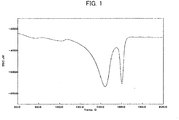
- Fig. 1 is an example of a DSC curve (DSC curve of Example 1) obtained by differential scanning calorimetry (DSC) carried out on polypropylene-based resin expanded particles in accordance with an embodiment of the present invention, in which the particles at a temperature of 40°C are heated to 220°C at a temperature increase rate of 10°C/minute.
- the horizontal axis represents temperature.
- the vertical axis represents heat absorption quantity.
- Patent Literature 1 The techniques disclosed in Patent Literature 1 are a known method of reducing frictional noise of a polyolefin-based resin foamed molded product.
- the inventor of the present invention found, however, that the polyolefin-based resin foamed molded product of Patent Literature 1 actually did produce frictional noise and had insufficient practical properties.
- a phenomenon called the "stick-slip phenomenon” is a known vibration phenomenon in which slipping and stopping repeatedly occur when two types of objects are slid while in contact with each other.
- Standard "VDA 230-206" of the German Association of the Automotive Industry is one example of a stick-slip test which is used as a method of evaluating the risk of noising occurring due to the stick-slip phenomenon.
- This evaluation method provides a noise occurrence risk index (RPN), which is determined from the values of vibration parameters (frictional force and acceleration) as observed when two types of objects are caused to slide while in contact with each other and with a certain load applied thereto.
- RPN noise occurrence risk index
- An embodiment of the present invention was achieved in view of the above problems.
- An object of an embodiment of the present invention is to obtain polyolefin-based resin expanded particles which enable a polyolefin-based resin in-mold foamed molded product that satisfies the following (a) and (b): (a) exhibits, in the long term, reduced occurrence of unpleasant, high-frequency frictional noise (squeaking sounds) in cases where friction occurs between polyolefin-based in-mold foamed molded products or between a polyolefin-based in-mold foamed molded product and some other plastic product, metallic product, or the like, and reduced possibility of noise occurring (noise occurrence risk) in such cases; and (b) has excellent surface glossiness and a high-quality appearance.
- Polyolefin-based resin expanded particles in accordance with an embodiment of the present invention include: a polyolefin-based resin (a); a product (b) containing: an olefin-based elastomer (Component 1); a copolymer (Component 2) which differs from the Component 1 and is a copolymer of ethylene and at least one type of vinyl monomer; and a higher fatty acid amide (Component 3); a butene copolymer polyethylene wax (c); and a water absorbing substance (d).
- a polyolefin-based resin a
- a product (b) containing: an olefin-based elastomer (Component 1); a copolymer (Component 2) which differs from the Component 1 and is a copolymer of ethylene and at least one type of vinyl monomer; and a higher fatty acid amide (Component 3); a butene copolymer polyethylene wax (c); and a
- the polyolefin-based resin (a) (hereinafter also referred to simply as a "polyolefin-based resin") used in an embodiment of the present invention is not limited to a particular resin, provided that it is a polymer compound synthesized with use of an olefin as a monomer.
- Possible examples of the polyolefin-based resin (a) include polyethylene-based resin and polypropylene-based resin. Each of these examples may be used alone, or in combinations of two or more.
- Examples of a polyethylene-based resin for use in an embodiment of the present invention include high-density polyethylene, medium-density polyethylene, low-density polyethylene, linear low-density polyethylene, and styrene-modified polyethylene-based resin. Each of these examples may be used alone, or in combinations of two or more.
- a polyethylene-based resin used in an embodiment of the present invention may include a comonomer which is (i) copolymerizable with ethylene and (ii) is not ethylene.
- a C4 to C18 ⁇ -olefin may be used, possible examples of which include 1-butene, 1-pentene, 1-hexene, 3,3-dimethyl-1-butene, 4-methyl-1-pentene, 4,4-dimethyl-1-pentene, and 1-octene. Each of these examples may be used alone, or in combinations of two or more.
- a copolymerization amount of the comonomer is preferably not less than approximately 1 weight% and not more than approximately 12 weight%.
- a melting point of the polyethylene-based resin used in an embodiment of the present invention is not particularly limited, but is, for example, preferably not lower than 110°C and not higher than 135°C, and more preferably not lower than 115°C and not higher than 130°C.
- the melting point of the polyethylene-based resin is less than 110°C, there is tendency for a foamed molded product to have reduced heat resistance.
- the melting point of the polyethylene-based resin exceeds 135°C, there tends to be difficulty in increasing the expansion ratio of expanded particles during production of the expanded particles.
- polyolefin as used in terms such as “polyolefin-based resin expanded particles” and “polyolefin-based resin in-mold foamed molded product” is dependent on the polyolefin-based resin which is used.
- expanded particles produced from the resin are polyethylene-based resin expanded particle
- an in-mold foamed molded product produced from the particles is a polyethylene-based resin in-mold foamed molded product.
- the melting point of a polyethylene-based resin refers to that measured via differential scanning calorimetry (hereinafter, "DSC").
- DSC differential scanning calorimetry
- a specific procedure is as follows: (1) 5 mg to 6 mg of polyethylene-based resin having a temperature of 40°C is heated to 220°C at a temperature increase rate of 10°C/minute, so that the resin is melted; (2) thereafter, the resin having a temperature of 220°C is cooled to 40°C at a temperature decrease rate of 10°C/minute, so that the resin crystalizes; (3) thereafter, the resin having a temperature of 40°C is heated to 220°C at a temperature increase rate of 10°C/minute.
- the melting point can be determined as being the temperature of the DSC curve peak (melting peak) obtained during the second temperature raise (i.e., the curve obtained during step (3)).
- a melt index (hereinafter, "MI") of the polyethylene-based resin used in an embodiment of the present invention is not particularly limited, but is preferably not less than 0.1 g/ 10 minutes and not more than 10 g/10 minutes, more preferably not less than 0.3 g/10 minutes and not more than 8 g/10 minutes, and even more preferably not less than 0.5 g/ 10 minutes and not more than 5 g/10 minutes.
- the MI of the polyethylene-based resin is less than 0.1 g/10 minutes, there tends to be difficulty in increasing the expansion ratio of expanded particles during production of the expanded particles, and there tends to be a deterioration in a surface property of a foamed molded product.
- the MI of the polyethylene-based resin exceeds 10 g/10 minutes, resultant expanded particles will have cells in communication with each other. As a result, there tends to be (a) a decrease in the compressive strength of a foamed molded product and/or (b) a deterioration of a surface property of the foamed molded product.
- MI Magnetic Ink Characterization
- a polypropylene-based resin used in an embodiment of the present invention is not particularly limited. Possible examples of the polypropylene-based resin include polypropylene homopolymers, ethylene/propylene random copolymers, butene-1/propylene random copolymers, ethylene/butene-1/propylene random copolymers, ethylene/propylene block copolymers, butene-1/propylene block copolymers, propylene-chlorinated vinyl copolymers, propylene/maleic anhydride copolymers, and styrene-modified polypropylene-based resins.
- ethylene/propylene random copolymers and ethylene/butene-1/propylene random copolymers are suitable in that they provide favorable expandability to expanded particles obtained therefrom, and favorable moldability to foamed molded products obtained therefrom.
- butene-1 above is synonymous with “1-butene”.
- Case A where, in the present production method, used as the polyolefin-based resin (a) is an ethylene/propylene random copolymer or an ethylene/butene-1/propylene random copolymer, each of which is a polypropylene-based resin.
- an amount of ethylene contained in the ethylene/propylene random copolymer or the ethylene/butene-1/propylene random copolymer is preferably not less than 0.2 weight% and not more than 10 weight%, with respect to the 100 weight% of the copolymer.
- an amount of butene contained in the ethylene/butene-1/propylene random copolymer is preferably not less than 0.2 weight% and not more than 10 weight%, with respect to 100 weight% of the copolymer.
- a combined amount of ethylene and butene-1 contained in the ethylene/propylene random copolymer or the ethylene/butene-1/propylene random copolymer is preferably not less than 0.5 weight% and not more than 10 weight%, with respect to 100 weight% of the copolymer.
- Case A in a case where the amount of ethylene or butene-1 contained in the ethylene/propylene random copolymer or the ethylene/butene-1/propylene random copolymer is less than 0.2 weight%, there tends to be (i) a deterioration in the expandability of expanded particles during production of the expanded particles and/or (ii) a deterioration in the moldability of resulting expanded particles.
- Case A in a case where the amount of ethylene or butene-1 contained in the ethylene/propylene random copolymer or the ethylene/butene-1/propylene random copolymer exceeds 10 weight%, there tends to be a deterioration in the mechanical properties of an in-mold foamed molded product.
- a polymerization catalyst to be used in synthesizing a polypropylene-based resin for use in an embodiment of the present invention is not limited to a particular kind. Possible examples of the polymerization catalyst polymerization catalyst include a Ziegler catalyst and a metallocene catalyst.
- a melting point of a polypropylene-based resin used in an embodiment of the present invention is not particularly limited, but is, for example, preferably not lower than 125°C and not higher than 160°C, and more preferably not lower than 130°C and not higher than 155°C.
- the melting point of the polypropylene-based resin is lower than 125°C, there is tendency for an in-mold foamed molded product to have reduced heat resistance.
- the melting point of the polyethylene-based resin exceeds 160°C, there tends to be difficulty in increasing the expansion ratio of expanded particles during production of the expanded particles.
- the melting point of a polypropylene-based resin refers to that measured via DSC.
- a specific procedure is as follows: (1) 5 mg to 6 mg of polypropylene-based resin having a temperature of 40°C is heated to 220°C at a temperature increase rate of 10°C/minute, so that the resin is melted; (2) thereafter, the resin having a temperature of 220°C is cooled to 40°C at a temperature decrease rate of 10°C/minute, so that the resin crystalizes; (3) thereafter, the resin having a temperature of 40°C is heated to 220°C at a temperature increase rate of 10°C/minute.
- the melting point can be determined as being the temperature of the DSC curve peak (melting peak) obtained during the second temperature raise (i.e., the curve obtained during step (3)).
- a crystal melting heat quantity of a polypropylene-based resin used in an embodiment of the present invention is not particularly limited, but is preferably not less than 50 J/g and not more than 110 J/g, and more preferably not less than 75 J/g and not more than 100 J/g.
- the crystal melting heat quantity of the polypropylene-based resin is less than 50 J/g, it becomes difficult for resultant expanded particles to maintain their shape in in-mold foam molding.
- the crystal melting heat quantity of the polypropylene-based resin exceeds 110 J/g, it becomes difficult to increase the expansion ratio of expanded particles during production of the expanded particles.
- the crystal melting heat quantity of the polypropylene-based resin refers to that measured by a DSC measurement method identical to the one used for measuring the melting point. Specifically, after the above-described steps (1) to (3) are carried out, the crystal melting heat quantity can be determined with use of the peak (melting peak) of a DSC curve obtained during the second temperature raise (i.e., the curve obtained during step (3)), via the following method.
- the crystal melting heat quantity can be determined as being the quantity of heat encompassed by (i) a first tangential line and (ii) the melting peak, where the first tangential line is tangential to a low temperature side differential curve and extends toward the low temperature side differential curve from an intersection of (i) a line extending from the melting peak toward a higher temperature side and (ii) the baseline of the high temperature side.
- An MI of a polypropylene-based resin used in an embodiment of the present invention is not particularly limited, but is preferably not less than 3 g/ 10 minutes and not more than 30 g/10 minutes, more preferably not less than 4 g/ 10 minutes and not more than 20 g/ 10 minutes, and even more preferably not less than 5 g/ 10 minutes and not more than 18 g/ 10 minutes.
- the MI of the polypropylene-based resin is less than 3 g/ 10 minutes, there tends to be difficulty in increasing the expansion ratio of expanded particles during production of the expanded particles.
- the MI of the polypropylene-based resin exceeds 30 g/10 minutes, expanded particles obtained from the polypropylene-based resin will have cells in communication with each other. As a result, there tends to be (a) a decrease in the compressive strength of a foamed molded product and/or (b) a deterioration of a surface property of the foamed molded product.
- MI Magnetic Ink Characterization
- Polyolefin-based resin particles in an embodiment of the present invention contain a product (b) which contains: an olefin-based elastomer (Component 1); a copolymer (Component 2) which differs from the Component 1 and is a copolymer of ethylene and at least one type of vinyl monomer; and a higher fatty acid amide (Component 3).
- this product may be referred to simply as "product (b)".
- the "olefin-based elastomer (Component 1)” may be referred to simply as “Component 1”
- the “copolymer (Component 2) which differs from the Component 1 and is a copolymer of ethylene and at least one type of vinyl monomer” may be referred to simply as “Component 2”
- the "higher fatty acid amide (Component 3)” may be referred to simply as “Component 3”.
- the olefin-based elastomer (Component 1) used in the product (b) is a component which exhibits affinity to the higher fatty acid amide of Component 3.
- Possible examples of the Component 1 include the following (a) through (c): (a) an ethylene- ⁇ -olefin copolymer rubber; (b) an ethylene- ⁇ -olefin-nonconjugated diene copolymer rubber; and (c) a graft copolymer whose backbone component is a polymer segment composed of, for example, an ethylene- ⁇ -olefin copolymer rubber and/or an ethylene- ⁇ -olefin-nonconjugated diene copolymer rubber, and whose side-chain component is a vinyl polymer segment formed from at least one type of vinyl-based monomer.
- Examples of ⁇ -olefins for forming a copolymer rubber include propylene, 1-butene, 1-pentene, 1-hexene, 1-octene, 1-decene, 2-methyl-1-propene, 3-methyl-1-pentene, 4-methyl-1-pentene, and 5-methyl-1-hexene.
- Each of these ⁇ -olefins can be used alone or in combinations of two or more.
- Examples of the nonconjugated diene (nonconjugated diene compound) include dicyclopentadiene, 1,4-hexadiene, cyclooctadiene, methylene norbornene, ethylidene norbornene, and vinyl norbornene.
- ethylene- ⁇ -olefin copolymer rubber examples include ethylene-propylene copolymer rubber, ethylene-1-butene copolymer rubber, ethylene-1-hexene copolymer rubber, and ethylene-1-octene copolymer rubber.
- ethylene-propylene copolymer rubber and ethylene-1-octene copolymer rubber are particularly preferable because they (i) have excellent affinity with the higher fatty acid amide of Component 3 and (ii) make it possible to obtain a foamed molded product having high elastic recovery.
- ethylene- ⁇ -olefin-nonconjugated diene copolymer rubber preferable examples include ethylene-1-butene-nonconjugated diene copolymer rubber and ethylene-propylene-nonconjugated diene copolymer rubber, and particularly preferable examples include ethylene-propylene-ethylidene norbornene copolymer rubber and ethylene-propylene-dicyclopentadiene copolymer rubber.
- These copolymer rubbers have excellent affinity with the higher fatty acid amide of Component 3 and make it possible to obtain a foamed molded product having high elastic recovery.
- Each of the above ethylene- ⁇ -olefin copolymer rubbers may be used alone or in combinations of two or more.
- Each of the above ethylene- ⁇ -olefin-nonconjugated diene copolymer rubbers may be used alone or in combinations of two or more. It is also possible to employ a combination of (i) one or more of the ethylene- ⁇ -olefin copolymer rubbers and (ii) one or more of the ethylene- ⁇ -olefin-nonconjugated diene copolymer rubbers.
- olefin-based elastomer an elastomer composed of a graft copolymer having (i) a backbone component which is a polymer segment composed of, for example, the above-described ethylene- ⁇ -olefin copolymer rubber and/or ethylene- ⁇ -olefin-nonconjugated diene copolymer rubber, and (ii) a side-chain component which is a vinyl polymer segment formed from at least one type of vinyl-based monomer.
- a backbone component which is a polymer segment composed of, for example, the above-described ethylene- ⁇ -olefin copolymer rubber and/or ethylene- ⁇ -olefin-nonconjugated diene copolymer rubber
- side-chain component which is a vinyl polymer segment formed from at least one type of vinyl-based monomer.
- a vinyl monomer which forms the vinyl-based polymer segment is formed from at least one type of vinyl monomer as described above.
- the vinyl monomer is at least one type of monomer selected from the group consisting of: (meth)acrylic acid alkyl ester whose alkyl chain length is 1 to 20 carbon atoms; a vinyl monomer having an acid group; a vinyl monomer having a hydroxyl group; a vinyl monomer having an epoxy group; a vinyl monomer having a cyano group; and styrene.
- (meth)acrylic is used as a collective term for both “acrylic” and “methacrylic”.
- vinyl monomer examples include methyl (meth)acrylate, ethyl (meth)acrylate, butyl (meth)acrylate, hexyl (meth)acrylate, 2-ethylhexyl (meth)acrylate, lauryl (meth)acrylate, stearyl (meth)acrylate, (meth)acrylic acid, maleic acid, maleic anhydride, 2-hydroxyethyl (meth)acrylate, 2-hydroxypropyl (meth)acrylate, glycidyl (meth)acrylate, (meth)acrylonitrile, and styrene.
- These examples are particularly preferable in that they have high interaction with the higher fatty acid amide of Component 3 and enable easy adjustment of a surface migration property of Component 3.
- the "surface migration property" of Component 3 refers to the degree to which Component 3 migrates to the surface of an in-mold foamed molded product which is ultimately obtained.
- the surface migration property of the Component 3 can affect the reduction of frictional noise and noise occurrence risk.
- the copolymer (Component 2) (which differs from Component 1 and is a copolymer of ethylene and at least one type of vinyl monomer) used in the product (b) is a component which has low affinity to the higher fatty acid amide of Component 3.
- Component 2 examples include an ethylene-acrylic acid copolymer, an ethylene-methyl acrylate copolymer, an ethylene-methyl methacrylate copolymer, an ethylene-ethyl acrylate copolymer, an ethylene-isobutyl acrylate copolymer, an ethylene-n-butyl acrylate copolymer, an ethylene-2-ethylhexyl acrylate copolymer, an ethylene-ethyl acrylate-maleic anhydride copolymer, an ethylene-ethyl acrylate-glycidyl methacrylate copolymer, an ethylene-glycidyl methacrylate copolymer, an ethylene-vinyl acetate-glycidyl methacrylate copolymer, an ethylene-vinyl acetate copolymer, and saponified products of any of these.
- Each of these examples of Component 2 may be used alone or in combinations of two or more.
- Component 2 a copolymer of ethylene and at least one type of vinyl monomer, in which copolymer the vinyl monomer is a (meth)acrylic acid ester having a C1 to C4 lower alkyl group or vinyl acetate.
- a copolymer is preferable in that (i) the polarity can be greatly changed and (ii) the copolymer has excellent non-affinity to the higher fatty acid amide of Component 3.
- Component 2 examples include an ethylene-methyl acrylate copolymer, an ethylene-methyl methacrylate copolymer, an ethylene-ethyl acrylate copolymer, an ethylene-n-butyl acrylate copolymer, an ethylene-vinyl acetate copolymer, and saponified products of any of these.
- the higher fatty acid amide (Component 3) used in the product (b) is preferably a substance formed with use of a C10 to C25 higher fatty acid as a base material. Possible examples of such a higher fatty acid amide include saturated fatty acid amides, unsaturated fatty acid amides, and bis fatty acid amides.
- a higher fatty acid amide (Component 3) formed with use of a higher fatty acid of less than C10 as a base material has insufficient compatibility with Component 1 and is not sufficiently effective as Component 3.
- a higher fatty acid of greater than C25 is difficult to obtain and is impractical.
- saturated fatty acid amides that can be suitably used as the higher fatty acid amide (Component 3) include lauric acid amide, palmitic acid amide, stearic acid amide, and behenic acid amide.
- unsaturated fatty acid amides that can be suitably used as the higher fatty acid amide (Component 3) include erucic acid amide, oleic acid amide, brassidic acid amide, and elaidic acid amide.
- Examples of bis fatty acid amides that can be suitably used as the higher fatty acid amide include methylene bis(stearic acid amide), methylene bis(lauric acid amide), ethylene bis(stearic acid amide), ethylene bis(lauric acid amide), methylene bis(oleic acid amide), methylene bis(erucic acid amide), ethylene bis(oleic acid amide), and ethylene bis(erucic acid amide).
- Each of these examples of the higher fatty acid amide may be used alone or in combinations of two or more.
- slip additives examples which particularly improve the effect of reducing frictional noise include stearic acid amide, behenic acid amide, oleic acid amide, erucic acid amide, ethylene bis(oleic acid amide) or ethylene bis(erucic acid amide) oleic acid amide and erucic acid amide.
- the product (b) is produced by heating, melting, and mixing Component 1, Component 2, and Component 3.
- a heating temperature used is determined as appropriate based on (i) the melting temperatures of Component 1 and Component 2 and (ii) the heat resistance temperature of the slip additive.
- the heating temperature is preferably 70°C to 300°C. In a case where the heating temperature is lower than 70°C, the rubber and/or copolymer may not be melted completely, and the melt viscosity may increase. As a result, Component 1, Component 2, and Component 3 will not be sufficiently mixed, and phase separation and/or laminar peeling may occur. A heating temperature of lower than 70°C is therefore not preferable.
- a heating temperature exceeding 300°C will cause severe decomposition of the rubber, copolymer, and/or slip additive and is therefore not preferable.
- a known method is employed as the method of melting and mixing. Possible examples of the method of melting and mixing include a kneading method utilizing a single-screw extruder, a twin-screw extruder, a Banbury mixer, a kneader, or a roll.
- An amount of the product (b) to be added to the polyolefin-based resin (a) is not less than 3 parts by weight and not more than 10 parts by weight, and preferably not less than 3 parts by weight and not more than 9 parts by weight. In a case where the added amount of the product (b) is less than 3 parts by weight, the product (b) will not bring about the effect of reducing noise occurrence risk in a foamed molded product. In a case where the added amount of the product (b) exceeds 10 parts by weight, wrinkling will occur in expanded particles due to contraction, and wrinkling will occur in the surface of the in-mold foamed molded product which is ultimately obtained.
- the proportions of Component 1, Component 2, and Component 3 in the product (b) are preferably as follows: 0.15 parts by weight to 9.5 parts by weight of Component 1, 0.15 parts by weight to 9.5 parts by weight of Component 2, and 0.15 parts by weight to 6.0 parts by weight of Component 3, each with respect to 100 parts by weight of the polyolefin-based resin (a). These proportions are more preferably 0.3 parts by weight to 9.0 parts by weight of Component 1, 0.3 parts by weight to 9.0 parts by weight of Component 2, and 0.3 parts by weight to 5.0 parts by weight of Component 3.
- polyolefin-based resin particles include the product (b) but do not include a butene copolymer polyethylene wax (c)
- the polyolefin-based resin particles include both the product (b) and the butene copolymer polyethylene wax (c)
- graft copolymer A refers to a graft copolymer having (i) a backbone component which is a polymer segment composed of ethylene octene copolymer rubber, and (ii) a side-chain component which is a vinyl polymer segment formed from methyl methacrylate, methacrylic acid, and butyl acrylate.
- Graft copolymer B refers to a graft copolymer having (i) a backbone component which is a polymer segment composed of ethylene propylene copolymer rubber and (ii) a side-chain component which is a vinyl polymer segment formed from styrene, butyl acrylate, and 2-hydroxypropyl methacrylate.
- Polyolefin-based resin particles in accordance with an embodiment of the present invention include the butene copolymer polyethylene wax (c).
- the butene copolymer polyethylene wax (c) used in an embodiment of the present invention is a wax which includes, as its monomer components, ethylene and butene.
- the amount of butene contained in the butene copolymer polyethylene wax is preferably not less than 2 weight% and not more than 12 weight%, more preferably not less than 5 weight% and not more than 10 weight%, and even more preferably not less than 7 weight% and not more than 9 weight%.
- the melting point of the butene copolymer polyethylene wax (c) used in an embodiment of the present invention is preferably not lower than 40°C and not higher than 130°C, even more preferably not lower than 80°C and not higher than 110°C, and particularly preferably not lower than 85°C and not higher than 110°C.
- the melting point of the butene copolymer polyethylene wax (c) is lower than 40°C, there tends to be unstable dispersion of polyolefin-based resin particles in a pressure-resistant vessel used when producing polyolefin-based resin pre-expanded particles. Furthermore, there also tends to be a decrease in the mechanical strength of a polyolefin-based resin composition which would be produced.
- the butene copolymer polyethylene wax (c) may not bring about a frictional noise reducing effect.
- the melting point of the butene copolymer polyethylene wax (c) refers to that measured via DSC.
- a specific procedure is as follows: (1) 5 mg to 6 mg of butene copolymer polyethylene wax having a temperature of 40°C is heated to 220°C at a temperature increase rate of 10°C/minute, so that the wax is melted; (2) thereafter, the wax having a temperature of 220°C is cooled to 40°C at a temperature decrease rate of 10°C/minute, so that the wax crystalizes; (3) thereafter, the wax having a temperature of 40°C is heated to 220°C at a temperature increase rate of 10°C/minute.
- the melting point can be determined as being the temperature of the DSC curve peak (melting peak) obtained during the second temperature raise (i.e., the curve obtained during step (3)).
- the butene copolymer polyethylene wax (c) used in an embodiment of the present invention preferably has a viscosity average molecular weight of not less than 1000 and not more than 5000. In a case where the viscosity average molecular weight is less than 1000, the butene copolymer polyethylene wax (c) is prone to being sticky. This impairs processability when the butene copolymer polyethylene wax (c) and polyolefin-based resin are melted and kneaded.
- the butene copolymer polyethylene wax (c) is less likely to appear at the surface of the polyolefin-based resin particles when the butene copolymer polyethylene wax (c) and polyolefin-based resin are melted and kneaded, and the butene copolymer polyethylene wax (c) may not bring about a frictional noise reducing effect.
- Examples of polymerization methods used during production of the butene copolymer polyethylene wax (c) include a Ziegler catalyst method and a metallocene catalyst method. Out of these, the metallocene catalyst method is particularly preferable because it results in a narrow distribution of molecular weight of the butene copolymer polyethylene wax (c) and makes it more likely for the butene copolymer polyethylene wax (c) to bring about a frictional noise reducing effect.
- An amount of the butene copolymer polyethylene wax (c) to be added to the polyolefin-based resin is not less than 2 parts by weight and not more than 10 parts by weight, and preferably not less than 3 parts by weight and not more than 9 parts by weight, with respect to 100 parts by weight of the polyolefin-based resin.
- the added amount of the butene copolymer polyethylene wax (c) is less than 2 parts by weight, there tends to be a deterioration of the frictional noise reducing effect in a foamed molded product, and there is no manifestation of a noise occurrence risk reducing effect by the butene copolymer polyethylene wax (c).
- the water absorbing substance (d) used in an embodiment of the present invention is a substance which increases the amount of moisture impregnated in polyolefin-based resin particles during production of the polyolefin-based resin expanded particles.
- the water absorbing substance (c) is able to impart expandability to the polyolefin resin particles in a case where water is used as an expanding agent. Furthermore, although the reasons are unclear, adding the water absorbing substance (d) allows the surface of the ultimately obtained in-mold foamed molded product to have excellent glossiness.
- water absorbing substance (d) used in an embodiment of the present invention examples include water-absorbing organic substances such as glycerin, diglycerin, polyethylene glycol, C12 to C18 fatty alcohols (e.g., pentaerythritol, cetyl alcohol, and stearyl alcohol), melamine, isocyanuric acid, and a melamine-isocyanuric acid condensate. These examples of water absorbing substances may be used in combinations of two or more.
- glycerin and polyethylene glycol are preferable in that they have a large effect of improving surface glossiness of a foamed molded product.
- An amount of the water absorbing substance (d) to be added in the polyolefin-based resin particles in accordance with an embodiment of the present invention is not less than 0.01 parts by weight and not more than 1 part by weight, preferably not less than 0.05 parts by weight and not more than 0.7 parts by weight, and even more preferably not less than 0.1 parts by weight and not more than 0.6 parts by weight, with respect to 100 parts by weight of the polyolefin-based resin (a).
- the water absorbing substance (d) does not bring about an effect of improving the surface glossiness.
- the added amount exceeds 1 part by weight, the expanded particles tend to contract.
- the polyolefin-based resin particles preferably contain an expansion nucleating agent that may become expansion nuclei at the time of expansion.
- expansion nucleating agent examples include silica (silicon dioxide), silicate, alumina, diatomaceous earth, calcium carbonate, magnesium carbonate, calcium phosphate, feldspar apatite, and barium sulfate.
- silicate examples include talc, magnesium silicate, kaolin, halloysite, dickite, aluminum silicate, and zeolite.
- An amount of the expansion nucleating agent contained in the polyolefin-based resin particles in accordance with an embodiment of the present invention is preferably not less than 0.005 parts by weight and not more than 2 parts by weight, more preferably not less than 0.01 parts by weight and not more than 1 part by weight, and most preferably not less than 0.03 parts by weight and not more than 0.5 parts by weight, with respect to 100 parts by weight of the polyolefin-based resin (a), in terms of uniformity of cell diameter.
- a coloring agent may be used to the extent that the coloring agent does not impair the effects of an embodiment of the present invention.
- the polyolefin-based resin particles in accordance with an embodiment of the present invention may contain a coloring agent.
- the coloring agent for use in an embodiment of the present invention include carbon black, ultramarine blue, cyanine pigment, azo pigment, quinacridone pigment cadmium yellow, chrome oxide, iron oxide, perylene pigment, and anthraquinone pigment.
- An amount of the coloring agent contained in the polyolefin-based resin particles in accordance with an embodiment of the present invention is preferably not less than 0.001 parts by weight and not more than 10 parts by weight, and more preferably not less than 0.01 parts by weight and not more than 8 parts by weight, with respect to 100 parts by weight of the polyolefin-based resin (a).
- the amount of the coloring agent is preferably not less than 1 part by weight and not more than 10 parts by weight, with respect to 100 parts by weight of the polyolefin-based resin (a).
- the polyolefin-based resin particles may contain additives such as an anti-static agent, a flame retarder, an antioxidant, a photo stabilizer, a crystal nucleating agent, an electrically conductive agent, and/or a lubricant/slip additive.
- additives can be directly added to a blended product or to a polyolefin-based resin composition during production of the polyolefin-based resin particles.
- the resin used in preparation of the masterbatch resin is preferably a polyolefin-based resin.
- the polyolefin-based resin particles can be prepared via a method involving the following steps (1) to (5): (1) preparing a blended product by blending together the polyolefin-based resin (a), the product (b), the butene copolymer polyethylene wax (c), the water absorbing substance (d), and as necessary, additive(s) (for example, another resin, an expansion nucleating agent, and/or a coloring agent); (2) introducing the blended product into an extruder and melting and kneading the blended product so as to prepare a polyolefin-based resin composition; (3) extruding the polyolefin-based resin composition from a die; (4) cooling the extruded polyolefin-based resin composition by, for example, passing it through water, so that the polyolefin-based resin composition solidifies; and (5) finely cutting the solidified polyolefin-based resin
- the polyolefin-based resin composition which has been melted and kneaded may be extruded directly into water from the die, and immediately thereafter cut into particles, cooled, and solidified. Melting and kneading a blended product in this manner makes it possible to obtain polyolefin-based resin particles which are more uniform.
- the polyolefin-based resin particles obtained in the above manner preferably have a particle weight of not less than 0.2 mg/particle and not more than 10 mg/particle, and more preferably not less than 0.5 mg/particle and not more than 5 mg/particle.
- the particle weight of the polyolefin-based resin particles is less than 0.2 mg/particle, there tends to be a decrease in the handleability of the polyolefin-based resin particles.
- the particle weight of the polyolefin-based resin particles exceeds 10 mg/particle, there tends to be a decrease in a mold-filling property during the process of in-mold foam molding.
- Polyolefin-based resin particles obtained in the above manner can be used to produce polyolefin-based resin expanded particles in accordance with an embodiment of the present invention.
- a method of producing polyolefin-based resin expanded particles in accordance with an embodiment of the present invention utilizes polyolefin-based resin particles and an expanding agent, the polyolefin-based resin expanded particles including: 100 parts by weight of a polyolefin-based resin (a); not less than 3 parts by weight and not more than 10 parts by weight of a product (b) containing: an olefin-based elastomer (Component 1); a copolymer (Component 2) which differs from the Component 1 and is a copolymer of ethylene and at least one type of vinyl monomer; and a higher fatty acid amide (Component 3); not less than 2 parts by weight and not more than 10 parts by weight of a butene copolymer polyethylene wax (c); and not less than 0.01 parts by weight and not more than 1 part by weight of a water absorbing substance (d), the expanding agent being an inorganic expanding agent.
- a more specific explanation of the present production method is as follows. (i) Placed into a pressure-resistant vessel are a dispersion slurry and an inorganic expanding agent, the dispersion slurry including the following at predetermined ratios: the polyolefin-based resin particles; an aqueous dispersion medium; a dispersing agent; and a dispersion auxiliary agent. (ii) The dispersion slurry is stirred so that the polyolefin-based resin particles in the dispersion slurry are dispersed in the pressure-resistant vessel.
- the temperature and pressure inside the pressure-resistant vessel are raised to a predetermined temperature (not lower than a softening temperature of the polyolefin-based resin particles) and a predetermined pressure.
- a predetermined temperature not lower than a softening temperature of the polyolefin-based resin particles
- a predetermined pressure not lower than a softening temperature of the polyolefin-based resin particles
- a predetermined pressure not lower than a softening temperature of the polyolefin-based resin particles
- the pressure-resistant vessel is maintained at the predetermined temperature for a period of longer than 0 minutes and not more than 120 minutes.
- the dispersion slurry in the pressure-resistant vessel is expelled into an area having a pressure lower than the internal pressure of the pressure-resistant vessel, so that the polyolefin-based resin particles are expanded and the polypropylene-based resin expanded particles are produced.
- step (ii) and subsequent steps a process of producing polyolefin-based resin expanded particles from polyolefin-based resin particles in this manner is referred to here as a "first-step expansion process," and the polyolefin-based resin expanded particles thus obtained are referred to as “first-step expanded particles”.
- the term "dispersion slurry” refers to a mixed slurry which: is in the pressure-resistant vessel; contains e.g.
- the polyolefin-based resin particles, the aqueous dispersion medium, the dispersing agent, the dispersion auxiliary agent, and the expanding agent and in which mixed slurry the polyolefin-based resin particles, the aqueous dispersion medium, the dispersing agent, the dispersion auxiliary agent, the expanding agent, and the like are dispersed by stirring.
- the temperature in the pressure-resistant vessel when raising the temperature in the pressure-resistant vessel to the softening temperature or higher, the temperature is preferably raised to a temperature which is not lower than 20°C below and not higher than 10°C above the melting point of the polyolefin-based resin, or not lower than 20°C below and not higher than 10°C above the melting point of the polyolefin-based resin particles, in order to ensure expandability of the expanded particles during the production of the expanded particles.
- the temperature to which the temperature is raised is decided as appropriate in accordance with (i) the type of polyolefin-based resin used as the base material and/or (ii) the desired expansion ratio of the polyolefin-based resin expanded particles, and further in accordance with, for example, the DSC ratio described later.
- the temperature to which the temperature is raised may also need to be changed depending on the expanding agent used.
- the melting point of the polyolefin-based resin particles is measured by a method similar to that for the polyolefin-based resin.
- the area having a pressure lower than the internal pressure of the pressure-resistant vessel is at atmospheric pressure.
- the aqueous dispersion medium used in an embodiment of the present invention is preferably only water. However, it is also possible to use a dispersion medium obtained by adding methanol, ethanol, ethylene glycol, and/or glycerin to water.
- An amount of the aqueous dispersion medium used in the dispersion slurry for an embodiment of the present invention is preferably not less than 100 parts by weight and not more than 400 parts by weight, with respect to 100 parts by weight of the polyolefin-based resin.
- Using the aqueous dispersion medium in an amount exceeding 400 parts by weight leads to a decrease in productivity.
- Using the aqueous dispersion medium in an amount less than 100 parts by weight tends to cause a decrease in the stability of the dispersion slurry (in other words, there tends to be poor dispersion of the polyolefin-based resin expanded particles).
- dispersing agent examples include inorganic dispersing agents such as tertiary calcium phosphate, tertiary magnesium phosphate, basic magnesium carbonate, calcium carbonate, barium sulfate, kaolin, talc, and clay. Each of these examples may be used alone, or in combinations of two or more.
- a dispersion auxiliary agent in order to increase the stability of the dispersion slurry in the pressure-resistant vessel.
- the dispersion auxiliary agent include sodium dodecylbenzene sulfonate, sodium alkane sulfonates, sodium alkyl sulfonates, sodium alkyl diphenyl ether disulfonates, and sodium ⁇ -olefin sulfonates. Each of these examples may be used alone, or in combinations of two or more.
- An amount of the dispersing agent used in the dispersion slurry for an embodiment of the present invention is preferably not less than 0.01 parts by weight and not more than 3.0 parts by weight, with respect to 100 parts by weight of the polyolefin-based resin. In a case where the used amount of the dispersing agent is less than 0.01 parts by weight, there tends to be poor dispersion. In a case where the used amount of the dispersing agent is 3.0 parts by weight or greater, there tends to be poor fusion between polyolefin-based resin expanded particles during in-mold foam molding.
- An amount of the dispersion auxiliary agent used in the dispersion slurry for an embodiment of the present invention is preferably not less than 0.001 parts by weight and not more than 0.2 parts by weight, with respect to 100 parts by weight of the polyolefin-based resin. In a case where the used amount of the dispersion auxiliary agent is less than 0.001 parts by weight or more than 0.2 parts by weight, there may be poor dispersion.
- a decrease in the stability of the dispersion slurry may result in a plurality of polyolefin-based resin particles agglomerating or forming lumps in the pressure-resistant vessel. This may result in, for example, (a) the production of agglomerated polyolefin-based resin expanded particles, (b) an inability to produce polyolefin-based resin expanded particles due to lumps of the polyolefin-based resin particles remaining in the pressure-resistant vessel, or (c) a decrease in productivity during production of polyolefin-based resin expanded particles.
- the expanding agent used is an inorganic expanding agent.
- the inorganic expanding agent include water, carbon dioxide, nitrogen, and air (a mixture of oxygen, nitrogen, and carbon dioxide). Each of these examples may be used alone, or in combinations of two or more.
- carbon dioxide is preferable in that it has an appropriately high plasticizing effect and makes it easy to improve the expandability of the expanded particles during production of the expanded particles.
- the used amount of the expanding agent is not limited, and may be adjusted as appropriate in accordance with the desired expansion ratio of the polyolefin-based resin expanded particles.
- the amount of the expanding agent used is preferably not less than 1 part by weight and not more than 10 parts by weight, with respect to 100 parts by weight of the polyolefin-based resin.
- water in the dispersion slurry in the pressure-resistant vessel can be used as the expanding agent.
- the polyolefin-based resin particles it is preferable for the polyolefin-based resin particles to contain a water absorbing substance in advance. This allows the polyolefin-based resin particles to more easily absorb the water in the dispersion slurry in the pressure-resistant vessel. As a result, it becomes easier to use the water as the expanding agent.
- the pressure-resistant vessel used during production of the polyolefin-based resin expanded particles is not limited to a particular vessel, and need only be a vessel which can withstand the internal pressure and temperatures which the pressure-resistant vessel is subjected to during production of the polyolefin-based resin expanded particles.
- Possible examples of the pressure-resistant vessel include an autoclave-type pressure-resistant vessel.
- Method 1 In order to obtain polyolefin-based resin expanded particles having a high expansion ratio, it is possible to use a method in which a large amount of the expanding agent is used during the first-step expansion process (this method is hereinafter referred to as "Method 1").
- Method 1 a method in which polyolefin-based resin expanded particles (first-step expanded particles) having a relatively low expansion ratio (an expansion ratio of approximately 2 to 35 times) are obtained in the first-step expansion process, and thereafter, the polyolefin-based resin expanded particles are expanded again to increase the expansion ratio (this method is hereinafter referred to as "Method 2").
- expansion ratio refers to an absolute expansion ratio which can be calculated from (i) a density of the polyolefin-based resin composition before expansion, (ii) a weight of the polyolefin-based resin expanded particles, and (iii) a volume of the polyolefin-based resin expanded particles found by submerging the polyolefin-based resin expanded particles in water (or in ethanol).
- Method 2 encompass a method including the following steps (i) to (iii).
- a first-step expansion process first-step expanded particles having an expansion ratio of 2 to 35 times are produced.
- the first-step expanded particles are placed into a pressure-resistant vessel, and the pressure inside the first-step expanded particles (hereinafter, also referred to as "internal pressure") is increased to greater than normal pressure by carrying out a pressure treatment at not less than 0.1 MPa (gage pressure) and not more than 0.6 MPa (gage pressure) with use of e.g. nitrogen, air, or carbon dioxide.
- the first-step expanded particles are further expanded by heating the particles with use of, for example, steam.
- Second-step expansion process a step of increasing the expansion ratio of first-step expanded particles as in Method 2 is referred to here as a "second-step expansion process", and the polyolefin-based resin expanded particles obtained via the Method 2 are referred to as “second-step expanded particles”.
- the pressure of the steam in the second-step expansion process is preferably adjusted to a range of not less than 0.03 MPa (gage pressure) and not more than 0.20 MPa (gage pressure), in accordance with the expansion ratio of the second-step expanded particles.
- the internal pressure of the nitrogen, air, carbon dioxide, or the like impregnated in the first-step expanded particles is preferably not less than 0.2 MPa (absolute pressure) and not more than 0.6 MPa (absolute pressure).
- the internal pressure of the nitrogen, air, carbon dioxide, or the like impregnated in the first-step expanded particles is less than 0.2 MPa (absolute pressure)
- the second-step expanded particles tend to agglomerate.
- the internal pressure of the nitrogen, air, carbon dioxide, or the like impregnated in the first-step expanded particles exceeds 0.6 MPa (absolute pressure)
- the second-step expanded particles tend to become an open-cell foam.
- an open-cell foam can also be described as having cells in communication with each other.
- the polyolefin-based resin expanded particles in accordance with an embodiment of the present invention preferably have a shape which is spherical or substantially spherical, in consideration of the ability of the polyolefin-based resin expanded particles to fill a mold when used in in-mold foam molding.
- the shape of the polyolefin-based resin expanded particles is not limited to being spherical or substantially spherical.
- a polyolefin-based resin in-mold foamed molded product is intentionally produced in a manner so as to have gaps therein, in order to impart permeability and/or sound absorbency to the polyolefin-based resin in-mold foamed molded product.
- an average diameter (also called average particle diameter) of the polyolefin-based resin expanded particles is not particularly limited.
- the average diameter of the polyolefin-based resin expanded particles in accordance with an embodiment of the present invention may change depending on for example, (i) the size of the polyolefin-based resin particles prior to expansion and (ii) the expansion ratio, but is preferably not less than 0.5 mm and not more than 10 mm, more preferably not less than 1 mm and not more than 7 mm, and even more preferably not less than 2 mm and not more than 5 mm.
- the average diameter of the polyolefin-based resin expanded particles refers to the arithmetic mean value of measured diameters of 20 arbitrarily selected polyolefin-based resin expanded particles
- the average diameter of the polyolefin-based resin expanded particles in accordance with an embodiment of the present invention is less than 0.5 mm, there tends to be a decrease in workability during in-mold foam molding using the polyolefin-based resin expanded particles.
- the average diameter exceeds 10 mm, there tend to be limitations to the shape of the polyolefin-based resin in-mold foamed molded product during in-mold foam molding using the polyolefin-based resin expanded particles.
- limitations to the shape of the molded product refers to, for example, cases where it becomes impossible to produce a polyolefin-based resin in-mold foamed molded product having thin portions.
- the polyolefin-based resin expanded particles in accordance with an embodiment of the present invention have an average weight which is approximately the same as that of the polyolefin-based resin particles used to produce the polyolefin-based resin expanded particles.
- the average weight of the polyolefin-based resin expanded particles is preferably not less than 0.1 mg/particle and not more than 100 mg/particle, and more preferably not less than 0.3 mg/particle and not more than 10 mg/particle.
- the average weight of the polyolefin-based resin expanded particles refers to the arithmetic mean value of measured weights of 10 arbitrarily selected polyolefin-based resin expanded particles
- An expansion ratio of the polyolefin-based resin expanded particles in accordance with an embodiment of the present invention is preferably not less than 2 times and not more than 60 times, and more preferably not less than 3 times and not more than 40 times.
- the polyolefin-based resin expanded particles in accordance with an embodiment of the present invention preferably have two or more melting peaks, as illustrated in Fig. 1 .
- Such polyolefin-based resin expanded particles having two or more melting peaks can be produced via a known method.
- the DSC curve of the polyolefin-based resin expanded particles refers to a curve obtained via DSC in which 5 mg to 6 mg of the polyolefin-based resin expanded particles at a temperature of 40°C are heated to 220°C at a temperature increase rate of 10°C/minute.
- a DSC curve is the DSC curve of Example 1 (described later) as shown in Fig. 1 .
- small endothermic peaks derived from the higher fatty acid amide and the butene copolymer polyethylene wax are observed at around 79°C and 102°C, respectively.
- the polyolefin-based resin expanded particles in an embodiment of the present invention have an average cell diameter which is preferably not less than 80 ⁇ m and not more than 500 ⁇ m, more preferably not less than 90 ⁇ m and not more than 400 ⁇ m, and even more preferably not less than 100 ⁇ m and not more than 350 ⁇ m. In a case where the polyolefin-based resin expanded particles have an average cell diameter of less than 80 ⁇ m, there tends to be a decrease in the compressive strength of the polyolefin-based resin in-mold foamed molded product.
- the mold cycle of the polyolefin-based resin in-mold foamed molded product tends to become longer and thus there is a tendency for productivity to decrease.
- the mold cycle refers to period from when in-mold foam molding commences to when the molding ends and the molded product that is obtained is ejected from the mold, which period occurs when in-mold foam molding is carried out using the polyolefin-based resin expanded particles so as to obtain a polyolefin-based resin in-mold molded product.
- the polyolefin-based resin in-mold foamed molded product in accordance with an embodiment of the present invention is produced by a typical method in which the polyolefin-based resin expanded particles are subjected to in-mold foam molding.
- Examples of methods for filling the polyolefin-based resin expanded particles into a form such as a mold when the polyolefin-based resin expanded particles are used in in-mold foam molding include the following mold-filling methods (A) to (C):
- examples of methods for producing the polyolefin-based resin in-mold foamed molded product from the polyolefin-based resin expanded particles encompass a method including the following steps (i) through (iv). (i) Filling the polyolefin-based resin expanded particles into a mold in a state where the mold is somewhat open, the mold being closeable but not sealable.
- step (ii) Fusing the polyolefin-based resin expanded particles together by heating the polyolefin-based resin expanded particles with use of a heating medium such as steam having a heating steam pressure of approximately 0.05 MPa (gage pressure) to approximately 0.5 MPa (gage pressure), for a period of approximately 3 seconds to approximately 30 seconds, (iii) Subsequently water-cooling the mold to a degree that allows reduced deformation of the polyolefin-based resin in-mold foamed molded product after the in-mold foamed molded product is removed from the mold. (iv) Opening the mold, and removing therefrom the polyolefin-based resin in-mold foamed molded product. Note that in step (i), the width to which the mold is opened prior to filling the polyolefin-based resin expanded particles may be referred to as a mold gap.
- the polyolefin-based resin in-mold foamed molded product obtained in this manner can be used suitably for a variety of applications, such as shock-absorbing packing materials, shipping materials, thermal insulating materials, civil engineering and construction materials, and automotive components.
- An embodiment of the present invention may be composed as follows.
- Polyolefin-based resin and additives used in the Examples and Comparative Examples are as follows.
- a silicon-based composition A was prepared via a method involving the below steps (1) to (5) in order, with use of a twin-screw extruder [TEK45, manufactured by O. N. Machinery Co., Ltd.].
- the polydimethylsiloxane with both ends terminated with dimethylvinylsiloxane described in step (2) was a polyorganosiloxane containing at least one silicon-atom-bound radical polymerizable functional group per molecule.
- the polydimethylsiloxane described in step (4) was a non-radical polymerizable polyorganosiloxane.
- a weight w (g) of approximately 50 cm 3 (bulk volume) of polyolefin-based resin expanded particles was determined.
- a volume v (cm 3 ) of the polyolefin-based resin expanded particles was determined by submerging the polyolefin-based resin expanded particles in ethanol.
- Polyolefin-based resin expanded particles were introduced gently into a 10 L container having a wide mouth, until the container was overflowing. Thereafter, the opening of the 10 L container was scraped so as to obtain 10 L of the polyolefin-based resin expanded particles. The weight of the polyolefin-based resin expanded particles in the 10 L container was measured. An apparent density was determined by dividing the weight by the volume of 10 L. The unit used for the apparent density was g/L.
- a length, width, and thickness of a polyolefin-based resin in-mold foamed molded product (thickness: 50 mm) that was produced were measured with calipers. From these measurements, a volume V (cm 3 ) of the polyolefin-based resin in-mold foamed molded product was calculated. Thereafter, a weight W (g) of the polyolefin-based resin in-mold foamed molded product (thickness: 50 mm) was measured. The weight was divided by the volume V (cm 3 ) so as to obtain a density of the polyolefin-based resin in-mold foamed molded product. The unit used for the volume of the polyolefin-based resin in-mold foamed molded product was g/L.
- test piece (A) and a test piece (B) Two test pieces (a test piece (A) and a test piece (B)) were cut out from a polyolefin-based resin in-mold foamed molded product that was produced.
- the test piece (A) had a size of 120 mm (length) ⁇ 60 mm (width) ⁇ 10 mm (thickness).
- the test piece (B) had a size of 50 mm (length) ⁇ 50 mm (width) ⁇ 10 mm (thickness).
- the test piece (A) and the test piece (B) each had a skin layer on one side thereof.
- skin layer refers to a portion of the surface of the test piece, specifically, a portion which formed a portion of the surface of the foamed molded product from which the test piece was taken.
- each test piece was cut out so that a portion of the surface of the foamed molded product from which the test piece was cut out is also a portion of the surface of the test piece itself.
- a surface property tester HIDON Type 14, manufactured Shinto Scientific Co., Ltd.
- a weight of 1.0 kg was placed on the test piece (B) so as to put a load on the test piece (B), and the weight was left to stand still in this state for 60 seconds.
- the test piece (A) was moved 10 mm back and forth at a rate of 3,000 mm/minute, so that the two test pieces were rubbed against each other.
- a microphone was used to pick up frictional noise. The microphone was placed 10 cm away from where the test pieces were rubbed together. The sound thus picked up was analyzed for frequency and sound pressure level with the use of a realtime analyzer DSSF3 Light, manufactured by Yoshimasa Electronic Inc.
- test piece (C) and a test piece (D) Two test pieces (a test piece (C) and a test piece (D)) were cut out from a polyolefin-based resin in-mold foamed molded product that was produced.
- the test piece (C) had a size of 60 mm (length) ⁇ 60 mm (width) ⁇ 5 mm (thickness).
- the test piece (D) had a size of 50 mm (length) ⁇ 25 mm (width) ⁇ 5 mm (thickness).
- the test piece (C) and the test piece (D) each had a skin layer on one side thereof.
- the noise occurrence risk index was determined by carrying out the test with the following conditions: pressing force of 40 N between the test pieces; rubbing motion speed of 1mm/s between the test pieces; and an amplitude of 20 mm.
- the noise occurrence risk index obtained in the first measurement was considered to be a short-term noise occurrence risk index.
- the noise occurrence risk index obtained in the 15th measurement was considered to be the noise occurrence risk index.
- the RPN is evaluated as follows.
- a blended product was prepared by mixing the polyolefin-based resin (a), the product (b), the butene copolymer polyethylene wax (c), the water absorbing substance (d) of the types and parts by weight indicated in Tables 1 and 2, along with 0.05 parts by weight of talc, and as necessary, carbon black or silicon-based composition A.
- the blended product was melted and kneaded (resin temperature of 210°C) with use of an extruder ( ⁇ 50 mm), so that a polyolefin-based resin composition was obtained.
- the polyolefin-based resin composition was extruded in strands from the tip of the extruder and then granulated by cutting, so as to produce polyolefin-based resin particles (1.2 mg/particle).
- a dispersion slurry including an expanding agent 100 parts by weight of the polyolefin-based resin particles obtained; 200 parts by weight of water as an aqueous dispersion medium; 0.3 parts by weight of kaolin as a dispersing agent; 0.004 parts by weight of sodium dodecylbenzenesulfonate as an dispersion auxiliary agent; and 2.6 parts by weight of carbon dioxide as an expanding agent.
- an expansion temperature (temperature inside the pressure-resistant vessel) was brought to 147°C to 149°C (for Examples 1 to 15 and Comparative Examples 1 to 16) or 123.5°C (for Example 16), and an expansion pressure (internal pressure of the vessel) was brought to 3.2 MPa (for all Examples and Comparative Examples).
- second-step expanded particles of a polyolefin-based resin were obtained via a method including the following steps (1) to (4) in the following order.
- (1) The first-step expanded particles obtained were supplied to a 1 m 3 pressure-resistant vessel.
- (2) Air pressurization was used to impart an internal pressure of 0.20 MPa to 0.30 MPa (absolute pressure) the first-step expanded particles thus supplied.
- (3) Next, the particles were transferred to a second-step expansion device.
- the first-step expanded particles were heated and further expanded with steam at 0.035 MPa to 0.060 MPa (gage pressure) so as to obtain second-step expanded particles which were substantially spherical.
- the second-step expanded particles thus obtained exhibited two peaks derived from the polyolefin-based resin (a) in a DSC curve obtained by DSC measurements.
- the second-step expanded particles had an average cell diameter of 100 ⁇ m to 120 ⁇ m.
- a polyolefin-based resin in-mold foamed molded product was prepared via a method including the following steps (1) to (4) in the following order.
- the second-step expanded particles obtained were imparted with internal pressure and then filled into a mold measuring 400 mm (length) ⁇ 300 mm (width) ⁇ 50 mm (thickness). Used as a filling method was the above-described method (A), and a mold gap of 5 mm was employed.
- the second-step expanded particles were heated with steam at 0.32 MPa (gage pressure).
- a polyolefin-based resin in-mold foamed molded product was obtained by the heat causing the second-step expanded particles to fuse together.
- the polyolefin-based resin in-mold foamed molded product was removed from the mold.
- Example 16 a polyolefin-based resin in-mold foamed molded product was prepared via a method including the following steps (1) to (4) in the following order.
- the second-step expanded particles obtained were filled into a mold measuring 400 mm (length) ⁇ 300 mm (width) ⁇ 50 mm (thickness), without imparting internal pressure to the particles. Used as a filling method was the above-described method (A), and a mold gap of 5 mm was employed.
- the second-step expanded particles were heated with steam at 0.10 MPa (gage pressure).
- a polyolefin-based resin in-mold foamed molded product was obtained by the heat causing the second-step expanded particles to fuse together.
- the polyolefin-based resin in-mold foamed molded product was removed from the mold.
- Table 1 indicates the types of materials used and amounts (used amounts) thereof in Examples 1 to 16, as well as the results of various evaluations.
- Table 2 indicates the types of materials used and amounts (used amounts) thereof in Comparative Example 1 to 16, as well as the results of various evaluations.
- Comparative Example 14 is a replications of PCT International Publication No. WO 2016/136875 .
- the silicon-based composition A was used to reduce frictional noise. From Comparative Example 14, it can be seen that not adding the product (b) and the butene copolymer polyethylene wax (c) results in insufficient performance, with a noise occurrence risk index of 10 points (high noise occurrence risk).
- Comparative Example 15 the product (b) and the silicon-based composition A were used, but the butene copolymer polyethylene wax (c) was not added.
- Comparative Example 16 the butene copolymer polyethylene wax (c) and the silicon-based composition A were used, but the product (b) was not added. From Comparative Examples 15 and 16, it can be seen that using the silicon-based composition A but omitting either the product (b) or the butene copolymer polyethylene wax (c) results in insufficient performance, with poor surface glossiness and a noise occurrence risk index of 9 points or greater (high noise occurrence risk).
- An embodiment of the present invention makes it possible to obtain polyolefin-based resin expanded particles which enable a polyolefin-based resin in-mold foamed molded product that (i) exhibits reduced frictional noise and noise occurrence risk in the long term and (ii) has excellent surface glossiness.
- a polyolefin-based resin in-mold foamed molded product obtained by in-mold foam molding with use of polypropylene-based resin expanded particles in accordance with an embodiment of the present invention can be suitably used in a variety of applications such as shock-absorbing packing materials, shipping materials, thermal insulating materials, civil engineering and construction materials, and automotive components.
Landscapes
- Chemical & Material Sciences (AREA)
- Health & Medical Sciences (AREA)
- Chemical Kinetics & Catalysis (AREA)
- Medicinal Chemistry (AREA)
- Polymers & Plastics (AREA)
- Organic Chemistry (AREA)
- Engineering & Computer Science (AREA)
- Materials Engineering (AREA)
- Emergency Medicine (AREA)
- Manufacture Of Porous Articles, And Recovery And Treatment Of Waste Products (AREA)
- Molding Of Porous Articles (AREA)
- Compositions Of Macromolecular Compounds (AREA)
Applications Claiming Priority (2)
| Application Number | Priority Date | Filing Date | Title |
|---|---|---|---|
| JP2017114241 | 2017-06-09 | ||
| PCT/JP2018/021206 WO2018225649A1 (ja) | 2017-06-09 | 2018-06-01 | ポリオレフィン系樹脂発泡粒子、ポリオレフィン系樹脂発泡粒子の製造方法、およびポリオレフィン系樹脂型内発泡成形体 |
Publications (2)
| Publication Number | Publication Date |
|---|---|
| EP3636699A1 true EP3636699A1 (de) | 2020-04-15 |
| EP3636699A4 EP3636699A4 (de) | 2021-02-17 |
Family
ID=64566668
Family Applications (1)
| Application Number | Title | Priority Date | Filing Date |
|---|---|---|---|
| EP18812826.8A Pending EP3636699A4 (de) | 2017-06-09 | 2018-06-01 | Auf polyolefin basierende expandierte harzperlen, herstellungsverfahren für expandierte harzperlen auf polyolefinbasis und durch in-mold-giessen gegossener harzschaumstoff auf polyolefinbasis |
Country Status (4)
| Country | Link |
|---|---|
| EP (1) | EP3636699A4 (de) |
| JP (1) | JP6990242B2 (de) |
| CN (1) | CN110709454B (de) |
| WO (1) | WO2018225649A1 (de) |
Cited By (2)
| Publication number | Priority date | Publication date | Assignee | Title |
|---|---|---|---|---|
| EP3862386A4 (de) * | 2018-10-03 | 2022-06-22 | Kaneka Corporation | Geschäumte polyolefinharzteilchen, verfahren zur herstellung geschäumter polyolefinharzteilchen und in-mold-formen eines geschäumten polyolefinharzes |
| EP4137532A4 (de) * | 2020-05-13 | 2024-04-24 | Sumitomo Chemical Company, Limited | Harzpellet auf polyolefinbasis und verfahren zur herstellung davon |
Families Citing this family (6)
| Publication number | Priority date | Publication date | Assignee | Title |
|---|---|---|---|---|
| WO2020158749A1 (ja) * | 2019-01-31 | 2020-08-06 | 株式会社カネカ | ポリオレフィン系樹脂発泡粒子の製造方法、ポリオレフィン系樹脂発泡粒子およびポリオレフィン系樹脂型内発泡成形体 |
| KR20240027024A (ko) | 2021-06-25 | 2024-02-29 | 가부시키가이샤 제이에스피 | 폴리프로필렌계 수지 발포 입자, 이의 제조 방법, 및 폴리프로필렌계 수지 발포 입자 성형체 |
| EP4342936A4 (de) * | 2021-06-25 | 2024-10-02 | JSP Corporation | Formkörper aus polypropylenharzschaumpartikeln und verfahren zur herstellung davon |
| CN114213762B (zh) * | 2021-11-23 | 2023-09-26 | 金发科技股份有限公司 | 一种高表面张力聚丙烯材料及其制备方法和应用 |
| CN114957784B (zh) * | 2022-05-18 | 2023-08-18 | 盛嘉伦橡塑(河源)有限公司 | 发泡剂母粒及其制备方法 |
| CN115124787B (zh) * | 2022-08-30 | 2022-11-25 | 江苏中科聚合新材料产业技术研究院有限公司 | 一种改性聚丙烯发泡材料及其制备方法和应用 |
Family Cites Families (19)
| Publication number | Priority date | Publication date | Assignee | Title |
|---|---|---|---|---|
| JPS59210954A (ja) * | 1983-05-17 | 1984-11-29 | Japan Styrene Paper Co Ltd | ポリプロピレン系樹脂発泡成形物の製造法 |
| JP2978524B2 (ja) * | 1990-03-19 | 1999-11-15 | 日本石油化学株式会社 | 難燃性発泡組成物 |
| JP3371578B2 (ja) * | 1994-10-14 | 2003-01-27 | ジェイエスアール株式会社 | 耐スクラッチ性熱可塑性エラストマー組成物。 |
| EP0864589A4 (de) * | 1995-12-01 | 2003-04-02 | Chisso Corp | Geformte harzgegenstände |
| US6231795B1 (en) | 1998-12-04 | 2001-05-15 | The Dow Chemical Company | Soft and flexible foams made from blends of alkenyl aromatic polymers and alpha-olefin/vinyl or vinylidene aromatic and/or sterically hindered aliphatic or cycloaliphatic vinyl or vinylidene interpolymers |
| JP4184171B2 (ja) | 2003-06-27 | 2008-11-19 | 積水化成品工業株式会社 | 発泡性熱可塑性樹脂粒子、予備発泡粒子及び発泡成形品 |
| JP2008138020A (ja) | 2006-11-30 | 2008-06-19 | Jsp Corp | 発泡粒子及び発泡成形体 |
| WO2008093877A1 (ja) * | 2007-01-31 | 2008-08-07 | Sumitomo Chemical Company, Limited | 発泡成形用樹脂組成物、発泡成形体の製造方法、発泡成形体、履き物用部材および履き物 |
| JP4953891B2 (ja) * | 2007-04-09 | 2012-06-13 | 株式会社カネカ | 黒色のポリプロピレン系樹脂予備発泡粒子 |
| JP5188144B2 (ja) * | 2007-11-07 | 2013-04-24 | 株式会社カネカ | 摩擦音のしないポリプロピレン系樹脂予備発泡粒子 |
| EP2221337B1 (de) * | 2007-12-11 | 2017-05-17 | Kaneka Corporation | Verfahren zur herstellung von expandiertem polyolefinharzteilchen und expandiertes polyolefinharzteilchen |
| JP5242321B2 (ja) | 2008-09-29 | 2013-07-24 | 株式会社カネカ | 摩擦音の低減されたポリプロピレン系樹脂予備発泡粒子 |
| JP2010180295A (ja) * | 2009-02-04 | 2010-08-19 | Kaneka Corp | 摩擦音の発生が抑制されたポリオレフィン系樹脂予備発泡粒子 |
| JP2010265424A (ja) | 2009-05-18 | 2010-11-25 | Kaneka Corp | ポリプロピレン系樹脂予備発泡粒子の製造方法 |
| JP5609245B2 (ja) * | 2010-04-28 | 2014-10-22 | 株式会社ジェイエスピー | 擦れ音抑制発泡樹脂成形体 |
| JP6146890B2 (ja) * | 2010-08-27 | 2017-06-14 | テクノポリマー株式会社 | 軋み音を低減した熱可塑性樹脂組成物製接触用部品 |
| JP5475149B2 (ja) | 2013-01-21 | 2014-04-16 | 株式会社カネカ | 摩擦音のしないポリプロピレン系樹脂予備発泡粒子 |
| JP6118749B2 (ja) | 2014-03-26 | 2017-04-19 | 積水化成品工業株式会社 | 発泡性複合樹脂粒子、予備発泡粒子、及び発泡成形体 |
| EP3263638B1 (de) * | 2015-02-26 | 2019-05-01 | Kaneka Corporation | Polyolefinharzschaumteilchen und herstellungsverfahren dafür |
-
2018
- 2018-06-01 WO PCT/JP2018/021206 patent/WO2018225649A1/ja not_active Ceased
- 2018-06-01 EP EP18812826.8A patent/EP3636699A4/de active Pending
- 2018-06-01 CN CN201880037332.3A patent/CN110709454B/zh active Active
- 2018-06-01 JP JP2019523508A patent/JP6990242B2/ja active Active
Cited By (2)
| Publication number | Priority date | Publication date | Assignee | Title |
|---|---|---|---|---|
| EP3862386A4 (de) * | 2018-10-03 | 2022-06-22 | Kaneka Corporation | Geschäumte polyolefinharzteilchen, verfahren zur herstellung geschäumter polyolefinharzteilchen und in-mold-formen eines geschäumten polyolefinharzes |
| EP4137532A4 (de) * | 2020-05-13 | 2024-04-24 | Sumitomo Chemical Company, Limited | Harzpellet auf polyolefinbasis und verfahren zur herstellung davon |
Also Published As
| Publication number | Publication date |
|---|---|
| CN110709454B (zh) | 2022-10-11 |
| EP3636699A4 (de) | 2021-02-17 |
| JPWO2018225649A1 (ja) | 2020-03-19 |
| JP6990242B2 (ja) | 2022-02-03 |
| CN110709454A (zh) | 2020-01-17 |
| WO2018225649A1 (ja) | 2018-12-13 |
Similar Documents
| Publication | Publication Date | Title |
|---|---|---|
| EP3636699A1 (de) | Auf polyolefin basierende expandierte harzperlen, herstellungsverfahren für expandierte harzperlen auf polyolefinbasis und durch in-mold-giessen gegossener harzschaumstoff auf polyolefinbasis | |
| EP3263638B1 (de) | Polyolefinharzschaumteilchen und herstellungsverfahren dafür | |
| EP3438171B1 (de) | Schäumbare partikel aus polypropylenharz, schaumformkörper aus polypropylenharz und herstellungsverfahren dafür | |
| JP7227526B1 (ja) | ポリエチレン系樹脂発泡粒子及びその製造方法 | |
| JP6547628B2 (ja) | ポリエチレン系樹脂発泡粒子およびポリエチレン系樹脂型内発泡成形体およびその製造方法 | |
| WO2013137411A1 (ja) | ポリプロピレン系樹脂発泡粒子およびポリプロピレン系樹脂発泡粒子からなる型内発泡成形体、並びに、これらの製造方法 | |
| JP7162051B2 (ja) | ポリプロピレン系樹脂発泡粒子の製造方法 | |
| CN107250232B (zh) | 具有防静电性能的聚乙烯系树脂发泡粒子和聚乙烯系树脂模内发泡成型体及其制造方法 | |
| JP5462439B2 (ja) | 樹脂組成物、発泡成形体およびその製造方法 | |
| JP2000095891A (ja) | ポリオレフィン系樹脂組成物予備発泡粒子の製造方法 | |
| BR112019014319B1 (pt) | Composição espumável, espuma, processo para preparar uma composição de espuma, e, cabo | |
| JP2008138020A (ja) | 発泡粒子及び発泡成形体 | |
| EP3862386A1 (de) | Geschäumte polyolefinharzteilchen, verfahren zur herstellung geschäumter polyolefinharzteilchen und in-mold-formen eines geschäumten polyolefinharzes | |
| JP7574082B2 (ja) | 発泡性ポリオレフィン組成物およびその方法 | |
| CN107312232A (zh) | 聚乙烯组合物和发泡珠粒及其制备方法以及发泡珠粒成型体 | |
| JP2008115274A (ja) | マスターバッチおよびそれを用いた成形体の製造方法 | |
| JP6759657B2 (ja) | 低温易加工性樹脂組成物 | |
| JP6847584B2 (ja) | 帯電防止性能を有するポリエチレン系樹脂発泡粒子及びポリエチレン系樹脂発泡成形体およびその製造方法 | |
| JP2005146184A (ja) | ポリオレフィン樹脂組成物及びポリオレフィン樹脂フィルム | |
| KR20110030153A (ko) | 폴리프로필렌 수지 발포 입자의 제조 방법 | |
| CN101195697A (zh) | 发泡粒子和发泡成型体 | |
| KR20080049395A (ko) | 발포 입자 및 발포 성형체 | |
| JPH08176334A (ja) | 発泡成形用ポリオレフィン系樹脂組成物およびその組成物を用いた発泡体 |
Legal Events
| Date | Code | Title | Description |
|---|---|---|---|
| STAA | Information on the status of an ep patent application or granted ep patent |
Free format text: STATUS: THE INTERNATIONAL PUBLICATION HAS BEEN MADE |
|
| PUAI | Public reference made under article 153(3) epc to a published international application that has entered the european phase |
Free format text: ORIGINAL CODE: 0009012 |
|
| STAA | Information on the status of an ep patent application or granted ep patent |
Free format text: STATUS: REQUEST FOR EXAMINATION WAS MADE |
|
| 17P | Request for examination filed |
Effective date: 20200109 |
|
| AK | Designated contracting states |
Kind code of ref document: A1 Designated state(s): AL AT BE BG CH CY CZ DE DK EE ES FI FR GB GR HR HU IE IS IT LI LT LU LV MC MK MT NL NO PL PT RO RS SE SI SK SM TR |
|
| AX | Request for extension of the european patent |
Extension state: BA ME |
|
| DAV | Request for validation of the european patent (deleted) | ||
| DAX | Request for extension of the european patent (deleted) | ||
| A4 | Supplementary search report drawn up and despatched |
Effective date: 20210120 |
|
| RIC1 | Information provided on ipc code assigned before grant |
Ipc: C08L 23/00 20060101ALI20210114BHEP Ipc: C08J 9/18 20060101AFI20210114BHEP Ipc: C08J 9/232 20060101ALI20210114BHEP Ipc: C08K 5/20 20060101ALI20210114BHEP |
|
| STAA | Information on the status of an ep patent application or granted ep patent |
Free format text: STATUS: EXAMINATION IS IN PROGRESS |
|
| 17Q | First examination report despatched |
Effective date: 20221215 |
|
| REG | Reference to a national code |
Ref country code: DE Ref legal event code: R079 Free format text: PREVIOUS MAIN CLASS: C08J0009180000 Ipc: C08J0009000000 |
|
| RIC1 | Information provided on ipc code assigned before grant |
Ipc: C08J 9/00 20060101AFI20250728BHEP Ipc: C08J 9/12 20060101ALI20250728BHEP Ipc: C08L 23/0807 20250101ALI20250728BHEP Ipc: C08L 23/14 20060101ALI20250728BHEP Ipc: C08J 9/18 20060101ALI20250728BHEP Ipc: C08J 9/232 20060101ALI20250728BHEP Ipc: C08K 5/20 20060101ALI20250728BHEP |
|
| GRAP | Despatch of communication of intention to grant a patent |
Free format text: ORIGINAL CODE: EPIDOSNIGR1 |
|
| STAA | Information on the status of an ep patent application or granted ep patent |
Free format text: STATUS: GRANT OF PATENT IS INTENDED |
|
| INTG | Intention to grant announced |
Effective date: 20251119 |