EP3569609A1 - Heterobifunctional inhibitors of e-selectins and cxcr4 chemokine receptors - Google Patents
Heterobifunctional inhibitors of e-selectins and cxcr4 chemokine receptors Download PDFInfo
- Publication number
- EP3569609A1 EP3569609A1 EP19181063.9A EP19181063A EP3569609A1 EP 3569609 A1 EP3569609 A1 EP 3569609A1 EP 19181063 A EP19181063 A EP 19181063A EP 3569609 A1 EP3569609 A1 EP 3569609A1
- Authority
- EP
- European Patent Office
- Prior art keywords
- compound
- cells
- groups
- chosen
- cancer
- Prior art date
- Legal status (The legal status is an assumption and is not a legal conclusion. Google has not performed a legal analysis and makes no representation as to the accuracy of the status listed.)
- Withdrawn
Links
- 0 CCCC(CC(CC(C)=C=C)*C(C(C)C(C)CC=C)[C@](*C(C(I)=CC=CC=C)=I)C(C)[I+])N Chemical compound CCCC(CC(CC(C)=C=C)*C(C(C)C(C)CC=C)[C@](*C(C(I)=CC=CC=C)=I)C(C)[I+])N 0.000 description 8
Images





Classifications
-
- C—CHEMISTRY; METALLURGY
- C07—ORGANIC CHEMISTRY
- C07H—SUGARS; DERIVATIVES THEREOF; NUCLEOSIDES; NUCLEOTIDES; NUCLEIC ACIDS
- C07H15/00—Compounds containing hydrocarbon or substituted hydrocarbon radicals directly attached to hetero atoms of saccharide radicals
- C07H15/26—Acyclic or carbocyclic radicals, substituted by hetero rings
-
- A—HUMAN NECESSITIES
- A61—MEDICAL OR VETERINARY SCIENCE; HYGIENE
- A61K—PREPARATIONS FOR MEDICAL, DENTAL OR TOILETRY PURPOSES
- A61K31/00—Medicinal preparations containing organic active ingredients
- A61K31/70—Carbohydrates; Sugars; Derivatives thereof
- A61K31/7028—Compounds having saccharide radicals attached to non-saccharide compounds by glycosidic linkages
- A61K31/7034—Compounds having saccharide radicals attached to non-saccharide compounds by glycosidic linkages attached to a carbocyclic compound, e.g. phloridzin
-
- A—HUMAN NECESSITIES
- A61—MEDICAL OR VETERINARY SCIENCE; HYGIENE
- A61P—SPECIFIC THERAPEUTIC ACTIVITY OF CHEMICAL COMPOUNDS OR MEDICINAL PREPARATIONS
- A61P29/00—Non-central analgesic, antipyretic or antiinflammatory agents, e.g. antirheumatic agents; Non-steroidal antiinflammatory drugs [NSAID]
-
- A—HUMAN NECESSITIES
- A61—MEDICAL OR VETERINARY SCIENCE; HYGIENE
- A61P—SPECIFIC THERAPEUTIC ACTIVITY OF CHEMICAL COMPOUNDS OR MEDICINAL PREPARATIONS
- A61P35/00—Antineoplastic agents
-
- A—HUMAN NECESSITIES
- A61—MEDICAL OR VETERINARY SCIENCE; HYGIENE
- A61P—SPECIFIC THERAPEUTIC ACTIVITY OF CHEMICAL COMPOUNDS OR MEDICINAL PREPARATIONS
- A61P35/00—Antineoplastic agents
- A61P35/04—Antineoplastic agents specific for metastasis
-
- A—HUMAN NECESSITIES
- A61—MEDICAL OR VETERINARY SCIENCE; HYGIENE
- A61P—SPECIFIC THERAPEUTIC ACTIVITY OF CHEMICAL COMPOUNDS OR MEDICINAL PREPARATIONS
- A61P43/00—Drugs for specific purposes, not provided for in groups A61P1/00-A61P41/00
-
- C—CHEMISTRY; METALLURGY
- C07—ORGANIC CHEMISTRY
- C07H—SUGARS; DERIVATIVES THEREOF; NUCLEOSIDES; NUCLEOTIDES; NUCLEIC ACIDS
- C07H15/00—Compounds containing hydrocarbon or substituted hydrocarbon radicals directly attached to hetero atoms of saccharide radicals
- C07H15/20—Carbocyclic rings
- C07H15/207—Cyclohexane rings not substituted by nitrogen atoms, e.g. kasugamycins
-
- C—CHEMISTRY; METALLURGY
- C07—ORGANIC CHEMISTRY
- C07H—SUGARS; DERIVATIVES THEREOF; NUCLEOSIDES; NUCLEOTIDES; NUCLEIC ACIDS
- C07H3/00—Compounds containing only hydrogen atoms and saccharide radicals having only carbon, hydrogen, and oxygen atoms
- C07H3/06—Oligosaccharides, i.e. having three to five saccharide radicals attached to each other by glycosidic linkages
Definitions
- compositions, and methods for treating cancer and inflammatory diseases and for enhancing retention of cells after releasing into circulating blood are disclosed herein.
- heterobifunctional compounds and compositions that inhibit E-selectins and CXCR4 chemokine receptors, and uses thereof are disclosed.
- a number of cancers are treatable before the cancer has moved beyond the primary site. However, once the cancer has spread beyond the primary site, the treatment options may be limited and the survival statistics may decline dramatically. Bones are a common location for cancer to infiltrate once leaving the primary tumor location. Breast and prostate cancer are examples of cancers that migrate to bones. Even leukemic cells that arise in the bloodstream may home to the bone marrow. Once cancer resides in bone, it may cause pain in an individual. Furthermore, once in the bone marrow, the cancer cells may also become resistant to chemotherapy. In addition, if the particular bone affected produces blood cells in the bone marrow, the individual may develop a variety of blood cell related disorders. Thus, it may be desirable to prevent cancer cells from leaving the primary site and/or to prevent extravasation of cancer cells from the bloodstream and infiltration into other tissues. Retention of cancer cells in the bloodstream makes the cells more susceptible to treatment, such as chemotherapy.
- Some cancers originate all or in part in bone. For such cancers, it may be desirable to mobilize cancer cells from bone to the bloodstream and/or to prevent those cells (as well as any cancer cells already in the bloodstream) from homing to bone or otherwise leaving the bloodstream. Retention of cancer cells in the bloodstream (or mobilization of cancer cells into the bloodstream and then retention therein) makes the cells more susceptible to treatment, such as chemotherapy.
- HSCs Hematopoietic stem cells
- HSCs also reside in the bone marrow and are a source of material for cellular therapy. HSCs adhere to the stroma within the bone marrow and in order to be harvested must break these adhesions and mobilize out of the bone marrow. Improved agents for increasing the number of HSCs available for harvesting may be desirable. Such HSCs may be useful for engraftment.
- compositions, and methods for treating diseases and for improving methods in which an E-selectin and a CXCR4 chemokine receptor may play a role are disclosed.
- Compounds disclosed herein are heterobifunctional, wherein an E-selectin inhibitor is linked to a CXCR4 chemokine receptor inhibitor.
- the compounds may be used to treat cancer in which the cancer cells may leave the primary site, to treat an inflammatory disease in which the adhesion or migration of cells occurs in the disease, and/or to release cells such as stem cells (e.g ., bone marrow progenitor cells) into circulating blood and enhance retention of the cells in the blood (e.g ., to mobilize cells out of bone marrow and maintain the cells in the peripheral bloodstream).
- stem cells e.g ., bone marrow progenitor cells
- heterobifunctional inhibitors of Formula (I) are disclosed: prodrugs of Formula (I), and pharmaceutically acceptable salts of any of the foregoing, wherein
- 'compound of Formula (I)' includes heterobifunctional inhibitors of Formula (I), pharmaceutically acceptable salts of heterobifunctional inhibitors of Formula (I), prodrugs of heterobifunctional inhibitors of Formula (I), and pharmaceutically acceptable salts of prodrugs of heterobifunctional inhibitors of Formula (I).
- compositions comprising at least one compound of Formula (I) and optionally at least one additional pharmaceutically acceptable ingredient are presented.
- a compound of Formula (I) and/or a pharmaceutical composition comprising at least one compound of Formula (I) may be used for the preparation and/or manufacture of a medicament for use in treating at least one of the diseases, disorders, and conditions described herein.
- a method for treatment and/or prevention of at least one cancer in which the cancer cells may leave the primary site comprising administering to a subject in need thereof an effective amount of at least one compound of Formula (I) and/or a pharmaceutical composition comprising at least one compound of Formula (I) and optionally at least one additional pharmaceutically acceptable ingredient.
- a method for treatment and/or prevention of at least one cancer in which it is desired to mobilize cancer cells from a site into the bloodstream and/or retain the cancer cells in the bloodstream comprising administering to a subject in need thereof an effective amount of at least one compound of Formula (I) and/or a pharmaceutical composition comprising at least one compound of Formula (I) and optionally at least one additional pharmaceutically acceptable ingredient.
- At least one compound of Formula (I) and/or a pharmaceutical composition comprising at least one compound of Formula (I) may be used in methods described herein for treatment and/or prevention of tumor metastasis.
- the tumor metastasis arises from pancreatic cancer.
- the tumor metastasis arises from prostate cancer.
- the tumor metastasis arises from pancreatic cancer.
- the tumor metastasis arises from breast cancer.
- at least one additional chemotherapy agent such as gemcitabine is administered to the individual.
- a method for releasing cells into circulating blood and enhancing retention of the cells in the blood comprising administering to a subject in need thereof an effective amount of at least one compound of Formula (I) and/or a pharmaceutical composition comprising at least one compound of Formula (I) and optionally at least one additional pharmaceutically acceptable ingredient is disclosed.
- the method further includes collecting the released cells.
- collecting the released cells utilizes apheresis.
- the released cells are stem cells (e.g., bone marrow progenitor cells).
- G-CSF is administered to the individual.
- a method for the treatment and/or prevention of an inflammatory disease in which the adhesion and/or migration of cells occurs in the diseases comprising administering to a subject in need thereof an effective amount of at least one compound of Formula (I) and/or a pharmaceutical composition comprising at least one compound of Formula (I) and optionally at least one additional pharmaceutically acceptable ingredient.
- the compounds have a variety of uses in vitro and in vivo.
- E-selectin inhibitors are known in the art. Some E-selectin inhibitors are specific for E-selectin only. Other E-selectin inhibitors have the ability to inhibit not only E-selectin but additionally P-selectin or L-selectin or both P-selectin and L-selectin. Examples of E-selectin inhibitors (specific for E-selectin or otherwise) are disclosed in U.S. Patent No. 7,060,685 ; U.S. Application Publication No. US-2007-0054870 ; U.S. Application Publication No. US-2008-0161546 ; and references cited in any of these patent or published application documents. Those examples are small organic molecules. Other known E-selectin inhibitors are amino acid-based, such as antibodies. For example, the humanized monoclonal antibody CDP850 is an E-selectin inhibitor.
- CXCR4 chemokine receptor inhibitors are known in the art. Such inhibitors will typically prevent the binding of stromal derived factor-1 (SDF-1) to a CXCR4 receptor.
- SDF-1 stromal derived factor-1
- Examples of CXCR4 chemokine receptor inhibitors are AMD-3100 ( Hendrix et al., Antimicrob. Agents Chemother. 44:1667-1673, 2000 ); ALX40-4C ( Doranz et al., AIDS Research and Human Retroviruses 17:475-486, 2001 ); and T134 ( Arakaki et al., J. Virol. 73:1719-1723, 1999 ). These examples include a small organic molecule and amino acid-based molecules, such as the T22 peptide.
- AMD-3100 is a bicyclam. Each of the two cyclam rings is attached to the same phenyl ring (each cyclam ring is para to the other) via a methylene group.
- Heterobifunctional compounds for inhibition of E-selectin and the CXCR4 chemokine receptor comprising E-selectin inhibitor-Linker-CXCR4 chemokine receptor inhibitor are known in the art. Examples are disclosed, for example, in U.S. Patent No. 8,410,066 .
- heterobifunctional inhibitors of Formula (I) prodrugs of Formula (I), and pharmaceutically acceptable salts of any of the foregoing, wherein
- R 1 is chosen from H, C 1-4 alkyl, and C 1-4 haloalkyl groups. In some embodiments, R 1 is chosen from H, methyl, ethyl, -CH 2 F, -CHF 2 , -CF 3 , -CH 2 CH 2 F, -CH 2 CHF 2 , and -CH 2 CF 3 . In some embodiments, R 1 is H. In some embodiments, R 1 is chosen from methyl and ethyl. In some embodiments, R 1 is methyl. In some embodiments, R 1 is ethyl.
- R 4 is chosen from cyclopropyl and cyclohexyl groups. In some embodiments, R 4 is chosen from and
- each R 5 is independently chosen from H, halo, C 1-8 alkyl, and C 1-8 haloalkyl groups, with the proviso that at least one R 5 is not H.
- at least one R 5 is halo.
- at least one R 5 is fluoro.
- at least one R 5 is chloro.
- at least one R 5 is bromo.
- at least one R 5 is iodo.
- n is 2. In some embodiments, n is 2 and R 5 is halo. In some embodiments, n is 2 and R 5 is bromo. In some embodiments, n is 1. In some embodiments, n is 1 and R 5 is halo. In some embodiments, n is 1 and R 5 is bromo.
- the compound is chosen from compounds of Formula (Ia):
- the compound is chosen from compounds of the following Formulae: and
- the compound is chosen from compounds of Formula (Ib):
- the compound is chosen from compounds of the following Formulae: and
- the compound is chosen from compounds of the following Formulae: and
- the compound is chosen from compounds of the following Formulae: and
- linker groups may be chosen from groups comprising spacer groups, such spacer groups as, for example, -(CH 2 ) p - and -O(CH 2 ) p -, wherein p is chosen from integers ranging from 1 to 20.
- spacer groups include carbonyl groups and carbonyl-containing groups such as, for example, amide groups.
- a non-limiting example of a spacer group is
- the linker group is chosen from and
- PEGs polyethylene glycols
- p is chosen from integers ranging from 1 to 20
- the compound is chosen from compounds of the following Formulas: and
- the compound is chosen from compounds of the following Formulae: and
- compositions comprising at least one compound of Formula (I). Such pharmaceutical compositions are described in greater detail herein. These compounds and compositions may be used in the methods described herein.
- At least one compound of Formula (I) and/or a pharmaceutical composition comprising at least one compound of Formula (I) may be used in methods described herein for treatment and/or prevention of a cancer in which the cancer cells may leave the primary site.
- a primary site may be, for example, solid tissue (e.g., breast, prostate, or pancreatic) or the bloodstream.
- infiltrating diseases include lung cancer and melanoma, as well as the hematological malignancies (e.g ., leukemias and myelomas).
- treatment includes for the disease or a complication associated with the disease.
- a complication associated with the cancer may not have presented itself in an individual with the disease, and a compound may be administered to prevent presentation of the complication in the individual.
- Complications associated with a cancer in which the cancer cells may leave the primary site include, for example, metastasis and infiltration of cancer cells to other tissues.
- AML acute myelogenous leukemia
- MM multiple myeloma
- Administration of a compound described herein may prevent adhesion or migration of cancer cells. Such prevention can result in making the cancer cells more susceptible to treatment with chemotherapy.
- Administration of a compound described herein in the context of prevention may be to an individual who is at risk of occurrence of a cancer for the first time, or for recurrence of a cancer.
- a brain cancer such as glioblastoma multiforme is typically treated with another type of therapy (such as radiation or chemotherapy) for the first occurrence, such therapy is usually not effective to prevent recurrence.
- At least one compound of Formula (I) and/or a pharmaceutical composition comprising at least one compound of Formula (I) may be used in methods described herein for treatment and/or prevention of a cancer in which it is desired to mobilize cancer cells from a site into the bloodstream and retain the cancer cells in the bloodstream.
- cancers for such treatment include leukemias and myelomas (e.g., AML and MM). Mobilizing cancer cells into the bloodstream from a site and retaining the cells therein can result in making the cancer cells more susceptible to treatment with chemotherapy.
- An example of a site from which to mobilize cancer cells is bone. Cancer cells may, for example, be in circulation and then home to bone. Once in bone, the cancer cells are protected from chemotherapy.
- a compound described herein may be used, for example, to mobilize cancer cells from bone into the bloodstream and prevent cancer cells from homing to bone, thereby retaining the cancer cells in the bloodstream.
- Administration of a compound described herein in the context of prevention may be to an individual who is at risk of occurrence of a cancer for the first time, or for recurrence of a cancer.
- a brain cancer such as glioblastoma multiforme
- another type of therapy such as radiation or chemotherapy
- At least one compound of Formula (I) and/or a pharmaceutical composition comprising at least one compound of Formula (I) may be used in methods for relasing cells (cush as hematopoietic stem cells) into circulating blood and enhancing retention of the cells in the blood.
- One use of the method is, for example, for stem cell harvesting.
- Stem cells may be needed, for example, after high-dose chemotherapy treatment.
- Many chemotherapies suppress bone marrow which disrupts the production of certain components of blood in an individual.
- the individual may develop a variety of blood cell related disorders and continuation of chemotherapy may be compromised.
- a compound described herein may be used, for example, to release stem cells into circulating blood and enhance retention of the stem cells in the blood.
- the method may include a further step of collecting cells that are released.
- released stem cells may be collected.
- a variety of techniques are known in the art for collecting cells. For example, apheresis may be utilized.
- An example of a stem cells is a bone marrow progenitor cell.
- the mobilized bone marrow progenitor cells may be collected from the blood.
- a use of such collected cells is to obtain healthy bone marrow progenitor cells from an individual prior to treatment of the individual in a manner such that bone marrow is suppressed.
- the individual can receive a bone marrow transplantation utilizing the bone marrow progenitor cells collected prior to treatment. This is useful, for example, where an individual needs to be subjected to a chemotherapy protocol that will suppress bone marrow.
- G-CSF granulocyte-colony stimulating factor
- a compound described herein aids in releasing stem cells into circulating blood.
- Stem cells produced in bone marrow and released into circulating blood, as a result of the combination of the administration (separately or together) of a compound described herein and G-CSF, may be collected as described above. Such collected stem cells may be, for example, administered to the individual after chemotherapy. The stem cells return to the bone marrow and produce blood cells.
- Application of a compound described herein to mobilization and harvesting of healthy bone marrow progenitor cells from bone marrow treated with G-CSF provides cells useful, for example, for bone marrow transplantation.
- At least one compound of Formula (I) and/or a pharmaceutical composition comprising at least one compound of Formula (I) may be used in methods described herein for treatment and/or prevention of tumor metastasis.
- the tumor metastasis arises from pancreatic cancer.
- the tumor metastasis arises from prostate cancer.
- the tumor metastasis arises from pancreatic cancer.
- the tumor metastasis arises from breast cancer.
- at least one additional chemotherapy agent such as gemcitabine is administered to the individual.
- At least one compound of Formula (I) and/or a pharmaceutical composition comprising at least one compound of Formula (I) may be used in methods for treatment and/or prevention of an inflammatory disease in which the adhesion or migration of cells occurs in the disease.
- inflammatory diseases include inflammatory skin disorders such as atopic dermatitis and psoriasis.
- the treatment may reduce (partially or totally) the disease or a complication associated therewith, such as pain.
- the treatment may be used in conjunction with one or more other therapies for such an inflammatory disease or a complication associated therewith.
- a compound of Formula (I) and/or a pharmaceutical composition comprising at least one compound of Formula (I) may be used for treating at least one of the diseases, disorders, and conditions described herein or for the preparation or manufacture of a medicament for use in treating at least one of the diseases, disorders, and/or conditions described herein.
- C 1-4 alkyl Whenever a term in the specification is identified as a range (e.g. , C 1-4 alkyl), the range independently discloses and includes each element of the range.
- C 1-4 alkyls includes, independently, C 1 alkyls, C 2 alkyls, C 3 alkyls, and C 4 alkyls.
- At least one refers to one or more, such as one, two, etc.
- at least one C 1-4 alkyl refers to one or more C 1-4 alkyl groups, such as one C 1-4 alkyl group, two C 1-4 alkyl groups, etc.
- alkyl includes saturated straight, branched, and cyclic (also identified as cycloalkyl), primary, secondary, and tertiary hydrocarbon groups.
- alkyl groups include methyl, ethyl, propyl, isopropyl, cyclopropyl, butyl, secbutyl, isobutyl, tertbutyl, cyclobutyl, 1-methylbutyl, 1,1-dimethylpropyl, pentyl, cyclopentyl, isopentyl, neopentyl, cyclopentyl, hexyl, isohexyl, and cyclohexyl. Unless stated otherwise specifically in the specification, an alkyl group may be optionally substituted.
- alkenyl includes straight, branched, and cyclic hydrocarbon groups comprising at least one double bond.
- the double bond of an alkenyl group can be unconjugated or conjugated with another unsaturated group.
- alkenyl groups include vinyl, allyl, butenyl, pentenyl, hexenyl, butadienyl, pentadienyl, hexadienyl, 2-ethylhexenyl, and cyclopent-1-en-1-yl. Unless stated otherwise specifically in the specification, an alkenyl group may be optionally substituted.
- alkynyl includes straight and branched hydrocarbon groups comprising at least one triple bonds.
- the triple bond of an alkynyl group can be unconjugated or conjugated with another unsaturated group.
- alkynyl groups include ethynyl, propynyl, butynyl, pentynyl, and hexynyl. Unless stated otherwise specifically in the specification, an alkynyl group may be optionally substituted.
- aryl includes hydrocarbon ring system group comprising 6 to 18 carbon ring atoms and at least one aromatic ring.
- the aryl group may be a monocyclic, bicyclic, tricyclic or tetracyclic ring system, which may include fused or bridged ring systems.
- Non-limiting examples of aryl groups include aryl groups derived from aceanthrylene, acenaphthylene, acephenanthrylene, anthracene, azulene, benzene, chrysene, fluoranthene, fluorene, as -indacene, s -indacene, indane, indene, naphthalene, phenalene, phenanthrene, pleiadene, pyrene, and triphenylene. Unless stated otherwise specifically in the specification, an aryl group may be optionally substituted.
- arylalkyl or “aralkyl” includes aryl groups, as described herein, appended to the parent molecular moiety through an alkyl group, as defined herein.
- Non-limiting examples of an arylalkyl or aralkyl group include benzyl, phenethyl, and diphenylmethyl. Unless stated otherwise specifically in the specification, an arylalkyl or aralkyl group may be optionally substituted.
- cycloalkyl or “carbocyclic ring” includes saturated monocyclic or polycyclic hydrocarbon group, which may include fused or bridged ring systems.
- Non-limiting examples of a cycloalkyl group include cyclopropyl, cyclobutyl, cyclopentyl, cyclohexyl, cycloheptyl, cyclooctyl, adamantyl, and norbornyl. Unless otherwise stated specifically in the specification, a cycloalkyl group may be optionally substituted.
- E-selectin antagonist includes inhibitors of E-selectin only, as well as inhibitors of E-selectin and either P-selectin or L-selectin, and inhibitors of E-selectin, P-selectin, and L-selectin.
- fused includes any ring structure described herein which is fused to an existing ring structure.
- the fused ring is a heterocyclyl ring or a heteroaryl ring
- any carbon atom on the existing ring structure which becomes part of the fused heterocyclyl ring or the fused heteroaryl ring may be replaced with a nitrogen atom.
- halo or halogen includes fluoro, chloro, bromo, and iodo
- haloalkyl includes alkyl groups, as defined herein, substituted by at least one halogen, as defined herein. Non-limiting examples include trifluoromethyl, difluoromethyl, trichloromethyl, 2,2,2-trifluoroethyl, 1,2-difluoroethyl, 3-bromo-2-fluoropropyl, and 1,2-dibromoethyl.
- a "fluoroalkyl” is a haloalkyl that is substituted with at least one fluoro group. Unless stated otherwise specifically in the specification, a haloalkyl group may be optionally substituted.
- haloalkenyl includes alkenyl groups, as defined herein, substituted by at least one halogen, as defined herein. Non-limiting examples include fluoroethenyl, 1,2-difluoroethenyl, 3-bromo-2-fluoropropenyl, and 1,2-dibromoethenyl.
- fluoroalkenyl is a haloalkenyl substituted with at least one fluoro group. Unless stated otherwise specifically in the specification, a haloalkenyl group may be optionally substituted.
- haloalkynyl includes alkynyl groups, as defined herein, substituted by at least one halogen, as defined herein. Non-limiting examples include fluoroethynyl, 1,2-difluoroethynyl, 3-bromo-2-fluoropropynyl, and 1,2-dibromoethynyl.
- a "fluoroalkynyl” is a haloalkynyl substituted with at least one fluoro group. Unless stated otherwise specifically in the specification, a haloalkynyl group may be optionally substituted.
- heterocyclyl or “heterocyclic ring” includes 3- to 18-membered saturated or partially unsaturated non-aromatic ring groups comprising 2 to 12 ring carbon atoms and 1 to 6 ring heteroatom(s) each independently chosen from N, O, and S.
- the heterocyclyl groups may be a monocyclic, bicyclic, tricyclic or tetracyclic ring system, which may include fused or bridged ring systems; and the nitrogen, carbon or sulfur atoms in the heterocyclyl group may be optionally oxidized; the nitrogen atom may be optionally quaternized; and the heterocyclyl group may be partially or fully saturated.
- Non-limiting examples include dioxolanyl, thienyl[1,3]dithianyl, decahydroisoquinolyl, imidazolinyl, imidazolidinyl, isothiazolidinyl, isoxazolidinyl, morpholinyl, octahydroindolyl, octahydroisoindolyl, 2-oxopiperazinyl, 2-oxopiperidinyl, 2-oxopyrrolidinyl, oxazolidinyl, piperidinyl, piperazinyl, 4-piperidonyl, pyrrolidinyl, pyrazolidinyl, quinuclidinyl, thiazolidinyl, tetrahydrofuryl, trithianyl, tetrahydropyranyl, thiomorpholinyl, thiamorpholinyl, 1-oxo-thiomorpholinyl, and 1,1-di
- heteroaryl includes 5- to 14-membered ring groups comprising 1 to 13 ring carbon atoms and 1 to 6 ring heteroatom(s) each independently chosen from N, O, and S, and at least one aromatic ring.
- the heteroaryl group may be a monocyclic, bicyclic, tricyclic or tetracyclic ring system, which may include fused or bridged ring systems; and the nitrogen, carbon or sulfur atoms in the heteroaryl radical may be optionally oxidized; the nitrogen atom may be optionally quaternized.
- Non-limiting examples include azepinyl, acridinyl, benzimidazolyl, benzothiazolyl, benzindolyl, benzodioxolyl, benzofuranyl, benzooxazolyl, benzothiazolyl, benzothiadiazolyl, benzo[ b ][1,4]dioxepinyl, 1,4-benzodioxanyl, benzonaphthofuranyl, benzoxazolyl, benzodioxolyl, benzodioxinyl, benzopyranyl, benzopyranonyl, benzofuranyl, benzofuranonyl, benzothienyl (benzothiophenyl), benzotriazolyl, benzo[4,6]imidazo[1,2-a]pyridinyl, carbazolyl, cinnolinyl, dibenzofuranyl, dibenzothiophenyl, furanyl,
- pharmaceutically acceptable salts includes both acid and base addition salts.
- pharmaceutically acceptable acid addition salts include chlorides, bromides, sulfates, nitrates, phosphates, sulfonates, methane sulfonates, formates, tartrates, maleates, citrates, benzoates, salicylates, and ascorbates.
- pharmaceutically acceptable base addition salts include sodium, potassium, lithium, ammonium (substituted and unsubstituted), calcium, magnesium, iron, zinc, copper, manganese, and aluminum salts.
- Pharmaceutically acceptable salts may, for example, be obtained using standard procedures well known in the field of pharmaceuticals.
- prodrug includes compounds that may be converted, for example, under physiological conditions or by solvolysis, to a biologically active compound described herein.
- prodrug includes metabolic precursors of compounds described herein that are pharmaceutically acceptable.
- a discussion of prodrugs can be found, for example, in Higuchi, T., et al., "Pro-drugs as Novel Delivery Systems," A.C.S. Symposium Series, Vol. 14 , and in Bioreversible Carriers in Drug Design, ed. Edward B. Roche, American Pharmaceutical Association and Pergamon Press, 1987 .
- prodrug also includes covalently bonded carriers that release the active compound(s) as described herein in vivo when such prodrug is administered to a subject.
- Non-limiting examples of prodrugs include ester and amide derivatives of hydroxy, carboxy, mercapto and amino functional groups in the compounds described herein.
- substituted includes the situation where, in any of the above groups, at least one hydrogen atom is replaced by a non-hydrogen atom such as, for example, a halogen atom such as F, Cl, Br, and I; an oxygen atom in groups such as hydroxyl groups, alkoxy groups, and ester groups; a sulfur atom in groups such as thiol groups, thioalkyl groups, sulfone groups, sulfonyl groups, and sulfoxide groups; a nitrogen atom in groups such as amines, amides, alkylamines, dialkylamines, arylamines, alkylarylamines, diarylamines, N-oxides, imides, and enamines; a silicon atom in groups such as trialkylsilyl groups, dialkylarylsilyl groups, alkyldiarylsilyl groups, and triarylsilyl groups; and other heteroatoms in various other groups.
- a non-hydrogen atom
- Substituted also includes the situation where, in any of the above groups, at least one hydrogen atom is replaced by a higher-order bond (e.g., a double- or triple-bond) to a heteroatom such as oxygen in oxo, carbonyl, carboxyl, and ester groups; and nitrogen in groups such as imines, oximes, hydrazones, and nitriles.
- a higher-order bond e.g., a double- or triple-bond
- nitrogen in groups such as imines, oximes, hydrazones, and nitriles.
- thioalkyl includes -SR a groups wherein R a is chosen from alkyl, alkenyl, and alkynyl groups, as defined herein. Unless stated otherwise specifically in the specification, a thioalkyl group may be optionally substituted.
- the present disclosure includes within its scope all the possible geometric isomers, e.g. , Z and E isomers ( cis and trans isomers), of the compounds as well as all the possible optical isomers, e.g. diastereomers and enantiomers, of the compounds. Furthermore, the present disclosure includes in its scope both the individual isomers and any mixtures thereof, e.g. racemic mixtures.
- the individual isomers may be obtained using the corresponding isomeric forms of the starling material or they may be separated after the preparation of the end compound according to conventional separation methods.
- conventional resolution methods e.g. fractional crystallization, may be used.
- the present disclosure includes within its scope all possible tautomers. Furthermore, the present disclosure includes in its scope both the individual tautomers and any mixtures thereof.
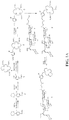
- Compounds of Formula (I) may be prepared according to General Reaction Schemes I and II below. It is understood that one of ordinary skill in the art may be able to make these compounds by similar methods or by combining other methods known to one of ordinary skill in the art. It is also understood that one of ordinary skill in the art would be able to make, in a similar manner as described below, other compounds of Formula (I) not specifically illustrated herein by using appropriate starting components and modifying the parameters of the synthesis as needed. In general, starting components may be obtained from sources such as Sigma Aldrich, Lancaster Synthesis, Inc., Maybridge, Matrix Scientific, TCI, and Fluorochem USA, etc. and/or synthesized according to sources known to those of ordinary skill in the art (see, for example, Advanced Organic Chemistry: Reactions, Mechanisms, and Structure, 5th edition (Wiley, December 2000 )) and/or prepared as described herein.
- the regioisomeric bromide can be prepared according to Scheme II.
- Oxidation of compound I gives the aldehyde IX.
- Reductive amination with a suitably tri-protected cyclam gives intermediate X.
- Deprotection provides XI which can be coupled with compound VI via reductive amination to provide XIII. Deprotection then gives a compound of the invention.
- the functional groups of intermediate compounds may need to be protected by at least one suitable protecting group.
- suitable protecting groups for hydroxy groups include trialkylsilyl and diarylalkylsilyl groups (for example, t-butyldimethylsilyl, t-butyldiphenylsilyl or trimethylsilyl), tetrahydropyranyl, and benzyl.
- Non-limiting examples of suitable protecting groups for aldehyde groups include 1,3-dioxanes and 1,3-dioxolanes.
- suitable protecting groups for amino, amidino and guanidino include t-butoxycarbonyl, benzyloxycarbonyl, allyloxycarbonyl, and trifluoracetyl groups.
- suitable protecting groups for mercapto include -C(O)-R" (where R" is alkyl, aryl or arylalkyl), p-methoxybenzyl, and trityl groups.
- suitable protecting groups for carboxylic acid include alkyl, aryl and arylalkyl esters.
- Protecting groups may be added or removed in accordance with standard techniques, which are known to one of ordinary skill in the art and as described herein.
- the use of protecting groups is, for example, described in detail in Green, T.W. and P.G.M. Wutz, Protective Groups in Organic Synthesis (1999), 3rd Ed., Wiley .
- the protecting group may also be a polymer resin such as a Wang resin, Rink resin or a 2-chlorotrityl-chloride resin.
- Biological activity of a heterobifuctional compound described herein may be determined, for example, by performing at least one in vitro and/or in vivo study routinely practiced in the art and described herein or in the art.
- In vitro assays include without limitation binding assays, immunoassays, competitive binding assays and cell based activity assays.
- An inhibition assay may be used to screen for antagonists of E-selectin.
- an assay may be performed to characterize the capability of a compound described herein to inhibit ( i.e. , reduce, block, decrease, or prevent in a statistically or biologically significant manner) interaction of E-selectin with sLe a or sLe x .
- the inhibition assay may be a competitive binding assay, which allows the determination of IC 50 values.
- E-selectin/Ig chimera may be immobilized onto a matrix (e.g ., a multi-well plate, which may be made from a polymer, such as polystyrene; a test tube, and the like); a composition may be added to reduce nonspecific binding (e.g ., a composition comprising non-fat dried milk or bovine serum albumin or other blocking buffer routinely used by a person skilled in the art); the immobilized E-selectin may be contacted with the candidate compound in the presence of sLe a comprising a reporter group under conditions and for a time sufficient to permit sLe a to bind to the immobilized E-selectin; the immobilized E-selectin may be washed; and the amount of sLe a bound to immobilized E-selectin may be detected. Variations of such steps can be readily and routinely accomplished by a person of ordinary skill in the art.
- An inhibition assay may be used to screen for antagonism of CXCR4 mediated chemotaxis.
- an assay may be performed to measure the ability of a glycomimetic CXCR4 antagonist to inhibit migration of CCRF-CEM cells, which express CXCR4 on their cell surfaces, across a membrane toward the CXCR4 ligand CXCL12 (SDF-1 ⁇ ).
- CCRF-CEM cells are human T lymphoblasts that express CXCR4 on the cell surface.
- the cells may be labeled with 3 uM Calcein AM to enable detection by fluorescence.
- the cells may be treated with a CXCR4 antagonist and placed into the upper chamber of a transwell insert.
- the transwells may be placed into the wells of a 24-well plate with each well containing 600 ul of RPMI 1640 plus 2% FBS and 50 ng/mL CXCL12 (SDF1 ⁇ ).
- the cells may be allowed to migrate across the membrane from the upper chamber into the lower chamber for 3 hours at 37°C in 5% CO2.
- the transwell inserts may be removed from the 24-well plate and the fluorescence in the lower chambers measured using a Molecular Devices FlexStation 3 with an excitation wavelength of 485 nm and an emission wavelength of 538 nm.
- an assay may be used to measure the ability of a glycomimetic CXCR4 antagonist to inhibit the binding of CXCL12 (SDF-1 ⁇ ) to CHO cells that have been genetically engineered to express CXCR4 on the cell surface.
- CXCL12 CXCL12
- Gi ligand binding
- the activated CXCR4 may bind to adenylyl cyclase, thus inactivating it, resulting in decreased levels of intracellular cAMP.
- Intracellular cAMP is usually low, so the decrease of the low level of cAMP by a Gi-coupled receptor will be hard to detect.
- Forskolin is added to the CHO cells to directly activate adenylyl cyclase (bypassing all GPCRs), thus raising the level of cAMP in the cell, so that a Gi response can be easily observed.
- CXCL12 interaction with CXCR4 decreases the intracellular level of cAMP and inhibition of CXCL12 interaction with CXCR4 by a CXCR4 antagonist increases the intracellular cAMP level, which is measured by luminescence.
- one skilled in the art may use an assay to measure the ability of a glycomimetic CXCR4 antagonist to block the binding of an anti-CXCR4 antibody to Jurkat cells, which express CXCR4 on the cell surface.
- Jurkat cells may be treated with a CXCR4 antagonist followed by a phycoerythrin-conjugated anti-CXCR4 antibody.
- the antibody may be allowed to bind to the cells for 1 hour at 4°C.
- the cells may be washed and the binding of the anti-CXCR4-PE antibody to the cells may be assessed by flow cytometry.
- Conditions for a particular assay include temperature, buffers (including salts, cations, media), and other components that maintain the integrity of any cell used in the assay and the compound, which a person of ordinary skill in the art will be familiar and/or which can be readily determined. A person of ordinary skill in the art also readily appreciates that appropriate controls can be designed and included when performing the in vitro methods and in vivo methods described herein.
- the source of a compound that is characterized by at least one assay and techniques described herein and in the art may be a biological sample that is obtained from a subject who has been treated with the compound.
- the cells that may be used in the assay may also be provided in a biological sample.
- a "biological sample” may include a sample from a subject, and may be a blood sample (from which serum or plasma may be prepared), a biopsy specimen, one or more body fluids (e.g ., lung lavage, ascites, mucosal washings, synovial fluid, urine), bone marrow, lymph nodes, tissue explant, organ culture, or any other tissue or cell preparation from the subject or a biological source.
- a biological sample may further include a tissue or cell preparation in which the morphological integrity or physical state has been disrupted, for example, by dissection, dissociation, solubilization, fractionation, homogenization, biochemical or chemical extraction, pulverization, lyophilization, sonication, or any other means for processing a sample derived from a subject or biological source.
- the subject or biological source may be a human or non-human animal, a primary cell culture (e.g ., immune cells), or culture adapted cell line, including but not limited to, genetically engineered cell lines that may contain chromosomally integrated or episomal recombinant nucleic acid sequences, immortalized or immortalizable cell lines, somatic cell hybrid cell lines, differentiated or differentiatable cell lines, transformed cell lines, and the like.
- a primary cell culture e.g ., immune cells
- culture adapted cell line including but not limited to, genetically engineered cell lines that may contain chromosomally integrated or episomal recombinant nucleic acid sequences, immortalized or immortalizable cell lines, somatic cell hybrid cell lines, differentiated or differentiatable cell lines, transformed cell lines, and the like.
- methods for characterizing heterobifunctional inhibitors include animal model studies.
- animal models for liquid cancers used in the art include multiple myeloma (see, e.g. , DeWeerdt, Nature 480:838-839 (15 December 2011) doi:10.1038/480S38a; Published online 14 December 2011 ; Mitsiades et al., Clin. Cancer Res. 2009 15:1210021 (2009 )); acute myeloid leukemia (AML) ( Zuber et al., Genes Dev. 2009 April 1; 23(7): 877-889 ).
- Animal models for acute lymphoblastic leukemia (ALL) have been used by persons of ordinary skill in the art for more than two decades. Numerous exemplary animal models for solid tumor cancers are routinely used and are well known to persons of ordinary skill in the art.
- therapeutic and/or prophylactic benefit includes, for example, an improved clinical outcome, wherein the object is to prevent or slow or retard (lessen) an undesired physiological change or disorder, or to prevent or slow or retard (lessen) the expansion or severity of such disorder.
- beneficial or desired clinical results from treating a subject include, but are not limited to, abatement, lessening, or alleviation of symptoms that result from or are associated with the disease, condition, or disorder to be treated; decreased occurrence of symptoms; improved quality of life; longer disease-free status (i.e. , decreasing the likelihood or the propensity that a subject will present symptoms on the basis of which a diagnosis of a disease is made); diminishment of extent of disease; stabilized ( i.e. , not worsening) state of disease; delay or slowing of disease progression; amelioration or palliation of the disease state; and remission (whether partial or total), whether detectable or undetectable; and/or overall survival.
- Treatment can include prolonging survival when compared to expected survival if a subject were not receiving treatment.
- Subjects in need of treatment include those who already have the disease, condition, or disorder as well as subjects prone to have or at risk of developing the disease, condition, or disorder, and those in which the disease, condition, or disorder is to be prevented ( i.e. , decreasing the likelihood of occurrence of the disease, disorder, or condition).
- the subject is a human. In some embodiments of the methods described herein, the subject is a non-human animal.
- a subject in need of treatment as described herein may exhibit at least one symptom or sequelae of the disease, disorder, or condition described herein or may be at risk of developing the disease, disorder, or condition.
- Non-human animals that may be treated include mammals, for example, non-human primates (e.g ., monkey, chimpanzee, gorilla, and the like), rodents ( e.g. , rats, mice, gerbils, hamsters, ferrets, rabbits), lagomorphs, swine ( e.g. , pig, miniature pig), equine, canine, feline, bovine, and other domestic, farm, and zoo animals.
- non-human primates e.g ., monkey, chimpanzee, gorilla, and the like
- rodents e.g. , rats, mice, gerbils,
- the effectiveness of the compounds of the present disclosure in treating and/or preventing a disease, disorder, or condition described herein can readily be determined by a person of ordinary skill in the medical and clinical arts. Determining and adjusting an appropriate dosing regimen (e.g ., adjusting the amount of compound per dose and/or number of doses and frequency of dosing) can also readily be performed by a person of ordinary skill in the medical and clinical arts.
- One or any combination of diagnostic methods, including physical examination, assessment and monitoring of clinical symptoms, and performance of analytical tests and methods described herein, may be used for monitoring the health status of the subject.
- compositions comprising at least one compound of Formula (I), In some embodiments, the pharmaceutical composition further comprises at least one additional pharmaceutically acceptable ingredient.
- any one or more of the compounds of the present disclosure may be administered in the form of a pharmaceutically acceptable derivative, such as a salt, and/or it/they may also be used alone and/or in appropriate association, as well as in combination, with other pharmaceutically active compounds.
- a pharmaceutically acceptable derivative such as a salt
- an effective amount or therapeutically effective amount refers to an amount of a compound of the present disclosure or a composition comprising at least one such compound that, when administered to a subject, either as a single dose or as part of a series of doses, is effective to produce at least one therapeutic effect.
- Optimal doses may generally be determined using experimental models and/or clinical trials. Design and execution of pre-clinical and clinical studies for each of the therapeutics (including when administered for prophylactic benefit) described herein are well within the skill of a person of ordinary skill in the relevant art.
- the optimal dose of a therapeutic may depend upon the body mass, weight, and/or blood volume of the subject.
- the amount of at least one compound of Formula (I) as described herein, that is present in a dose may range from about 0.01 ⁇ g to about 1000 ⁇ g per kg weight of the subject.
- the minimum dose that is sufficient to provide effective therapy may be used in some embodiments.
- Subjects may generally be monitored for therapeutic effectiveness using assays suitable for the disease or condition being treated or prevented, which assays will be familiar to those having ordinary skill in the art and are described herein.
- the level of a compound that is administered to a subject may be monitored by determining the level of the compound (or a metabolite of the compound) in a biological fluid, for example, in the blood, blood fraction ( e.g ., serum), and/or in the urine, and/or other biological sample from the subject. Any method practiced in the art to detect the compound, or metabolite thereof, may be used to measure the level of the compound during the course of a therapeutic regimen.
- the dose of a compound described herein may depend upon the subject's condition, that is, stage of the disease, severity of symptoms caused by the disease, general health status, as well as age, gender, and weight, and other factors apparent to a person of ordinary skill in the medical art. Similarly, the dose of the therapeutic for treating a disease or disorder may be determined according to parameters understood by a person of ordinary skill in the medical art.
- compositions may be administered in any manner appropriate to the disease or disorder to be treated as determined by persons of ordinary skill in the medical arts.
- An appropriate dose and a suitable duration and frequency of administration will be determined by such factors as discussed herein, including the condition of the patient, the type and severity of the patient's disease, the particular form of the active ingredient, and the method of administration.
- an appropriate dose (or effective dose) and treatment regimen provides the pharmaceutical composition(s) as described herein in an amount sufficient to provide therapeutic and/or prophylactic benefit (for example, an improved clinical outcome, such as more frequent complete or partial remissions, or longer disease-free and/or overall survival, or a lessening of symptom severity or other benefit as described in detail above).
- compositions described herein may be administered to a subject in need thereof by any one of several routes that effectively delivers an effective amount of the compound.
- suitable administrative routes include topical, oral, nasal, intrathecal, enteral, buccal, sublingual, transdermal, rectal, vaginal, intraocular, subconjunctival, sublingual, and parenteral administration, including subcutaneous, intravenous, intramuscular, intrasternal, intracavernous, intrameatal, and intraurethral injection and/or infusion.
- the pharmaceutical composition described herein may be sterile aqueous or sterile non-aqueous solutions, suspensions or emulsions, and may additionally comprise at least one pharmaceutically acceptable excipient (i.e. , a non-toxic material that does not interfere with the activity of the active ingredient).
- Such compositions may be in the form of a solid, liquid, or gas (aerosol).
- the compositions described herein may be formulated as a lyophilizate, or compounds described herein may be encapsulated within liposomes using technology known in the art.
- the pharmaceutical compositions may further comprise at least one additional pharmaceutical acceptable ingredient, which may be biologically active or inactive.
- Non-limiting examples of such ingredients include buffers (e.g ., neutral buffered saline or phosphate buffered saline), carbohydrates (e.g ., glucose, mannose, sucrose or dextrans), mannitol, proteins, polypeptides, amino acids ( e.g ., glycine), antioxidants, chelating agents (e.g ., EDTA and glutathione), stabilizers, dyes, flavoring agents, suspending agents, and preservatives.
- buffers e.g ., neutral buffered saline or phosphate buffered saline
- carbohydrates e.g ., glucose, mannose, sucrose or dextrans
- mannitol proteins
- polypeptides amino acids
- amino acids e.g ., glycine
- antioxidants e.g EDTA and glutathione
- stabilizers e.g EDTA and glutathione
- excipients or carrier known to those of ordinary skill in the art for use in pharmaceutical compositions may be employed in the compositions described herein.
- Excipients for therapeutic use are well known, and are described, for example, in Remington: The Science and Practice of Pharmacy (Gennaro, 21st Ed. Mack Pub. Co., Easton, PA (2005 )).
- the type of excipient is selected based on the mode of administration, as well as the chemical composition of the active ingredient(s).
- Pharmaceutical compositions may be formulated for the particular mode of administration.
- pharmaceutical compositions may further comprise water, saline, alcohols, fats, waxes, and buffers.
- compositions may further comprise at least one ingredient chosen, for example, from any of the aforementioned excipients, solid excipients and carriers, such as mannitol, lactose, starch, magnesium stearate, sodium saccharine, talcum, cellulose, kaolin, glycerin, starch dextrins, sodium alginate, carboxymethylcellulose, ethyl cellulose, glucose, sucrose, and magnesium carbonate.
- excipients such as mannitol, lactose, starch, magnesium stearate, sodium saccharine, talcum, cellulose, kaolin, glycerin, starch dextrins, sodium alginate, carboxymethylcellulose, ethyl cellulose, glucose, sucrose, and magnesium carbonate.
- the pharmaceutical compositions may be in the form of a liquid.
- a liquid pharmaceutical composition may include, for example, at least one the following: a sterile diluent such as water for injection, saline solution, preferably physiological saline, Ringer's solution, isotonic sodium chloride, fixed oils that may serve as the solvent or suspending medium, polyethylene glycols, glycerin, propylene glycol or other solvents; antibacterial agents; antioxidants; chelating agents; buffers and agents for the adjustment of tonicity such as sodium chloride or dextrose.
- a parenteral preparation can be enclosed in ampoules, disposable syringes or multiple dose vials made of glass or plastic.
- the pharmaceutical composition comprises physiological saline.
- the pharmaceutical composition an injectable pharmaceutical composition, and in some embodiments, the injectable pharmaceutical composition is sterile.
- At least one of the compounds of the present disclosure can be used alone or in combination with at least one additive appropriate to make tablets, powders, granules and/or capsules, for example, those chosen from conventional additives, disintegrators, lubricants, diluents, buffering agents, moistening agents, preservatives, coloring agents, and flavoring agents.
- the pharmaceutical compositions may be formulated to include at least one buffering agent, which may provide for protection of the active ingredient from low pH of the gastric environment and/or an enteric coating.
- a pharmaceutical composition may be formulated for oral delivery with at least one flavoring agent, e.g ., in a liquid, solid or semi-solid formulation and/or with an enteric coating.
- Oral formulations may be provided as gelatin capsules, which may contain the active compound or biological along with powdered carriers. Similar carriers and diluents may be used to make compressed tablets. Tablets and capsules can be manufactured as sustained release products to provide for continuous release of active ingredients over a period of time. Compressed tablets can be sugar coated or film coated to mask any unpleasant taste and protect the tablet from the atmosphere, or enteric coated for selective disintegration in the gastrointestinal tract.
- a pharmaceutical composition may be formulated for sustained or slow release.
- Such compositions may generally be prepared using well known technology and administered by, for example, oral, rectal or subcutaneous implantation, or by implantation at the desired target site.
- Sustained-release formulations may contain the active therapeutic dispersed in a carrier matrix and/or contained within a reservoir surrounded by a rate controlling membrane. Excipients for use within such formulations are biocompatible, and may also be biodegradable; preferably the formulation provides a relatively constant level of active component release. The amount of active therapeutic contained within a sustained release formulation depends upon the site of implantation, the rate and expected duration of release, and the nature of the condition to be treated or prevented.
- compositions described herein can be formulated as suppositories by mixing with a variety of bases such as emulsifying bases or water-soluble bases.
- bases such as emulsifying bases or water-soluble bases.
- the pharmaceutical compositions may be prepared as aerosol formulations to be administered via inhalation.
- the compositions may be formulated into pressurized acceptable propellants such as dichlorodifluoromethane, propane, nitrogen and the like.
- Topical formulations may be in the form of a transdermal patch, ointment, paste, lotion, cream, gel, and the like. Topical formulations may include one or more of a penetrating agent or enhancer (also call permeation enhancer), thickener, diluent, emulsifier, dispersing aid, or binder.
- Physical penetration enhancers include, for example, electrophoretic techniques such as iontophoresis, use of ultrasound (or "phonophoresis”), and the like.
- Chemical penetration enhancers are agents administered either prior to, with, or immediately following administration of the therapeutic, which increase the permeability of the skin, particularly the stratum corneum, to provide for enhanced penetration of the drug through the skin. Additional chemical and physical penetration enhancers are described in, for example, Transdermal Delivery of Drugs, A. F. Kydonieus (ED) 1987 CRL Press ; Percutaneous Penetration Enhancers, eds. Smith et al. (CRC Press, 1995 ); Lenneräs et al., J. Pharm. Pharmacol 54:499-508 (2002 ); Karande et al., Pharm. Res. 19:655-60 (2002 ); Vaddi et al., Int. J Pharm.
- Kits comprising unit doses of at least one compound of the present disclosure, for example in oral or injectable doses, are provided.
- Such kits may include a container comprising the unit dose, an informational package insert describing the use and attendant benefits of the therapeutic in treating the pathological condition of interest, and/or optionally an appliance or device for delivery of the at least one compound or composition comprising the same.
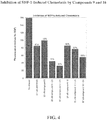
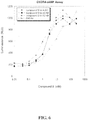
- CCRF-CEM cells are human T lymphoblasts that express CXCR4 on the cell surface.
- the cells were labeled with 3 uM Calcein AM for 15 minutes at 37°C to enable detection by fluorescence. Subsequently, the cells were pelleted at 250 x g for 10 minutes and resuspended to a final concentration of about 5 x 10 5 cells per mL in RPMI 1640 medium supplemented with 2% FBS.
- the treated cells were evaluated in duplicate, so 100 ul of the cells were placed into the upper chamber of each of two transwell inserts (Costar number 3421; 5.0 um pores; 6.5 mm diameter inserts).
- the transwells were place into the wells of a 24-well plate with each well containing 600 ul of RPMI 1640 plus 2% FBS and 50 ng/mL CXCL12. Negative control wells contained no CXCL12 in the lower chamber.
- the cells were allowed to migrate across the membrane from the upper chamber into the lower chamber for 3 hours at 37°C in 5% CO 2 .
- the transwell inserts were removed from the 24-well plate and the fluorescence in the lower chambers was measured using a Molecular Devices FlexStation 3 with an excitation wavelength of 485 nm and an emission wavelength of 538 nm. See Figure 4 .
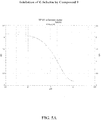
- E-selectin/Ig chimera was immobilized in 96 well microtiter plates by incubation at 37 °C for 2 hours. To reduce nonspecific binding, bovine serum albumin was added to each well and incubated at room temperature for 2 hours. The plate was washed and serial dilutions of the test compounds were added to the wells in the presence of conjugates of biotinylated, sLe a polyacrylamide with streptavidin/horseradish peroxidase and incubated for 2 hours at room temperature.
- the CXCR4-cAMP assay measures the ability of a glycomimetic CXCR4 antagonist to inhibit the binding of CXCL12 (SDF-1 ⁇ ) to CHO cells that have been genetically engineered to express CXCR4 on the cell surface.
- Assay kits may be purchased from DiscoveRx (95-0081E2CP2M; cAMP Hunter eXpress CXCR4 CHO-K1). The G i -coupled receptor antagonist response protocol described in the kit instruction manual was followed.
- GPCRs, such as CXCR4 are typically coupled to one of the 3 G-proteins: Gs, Gi or Gq. In the CHO cells supplied with the kit, CXCR4 is coupled to Gi.
- CXCR4 After activation of CXCR4 by ligand binding (CXCL12), Gi dissociates from the CXCR4 complex, becomes activated, and binds to adenylyl cyclase, thus inactivating it, resulting in decreased levels of intracellular cAMP.
- Intracellular cAMP is usually low, so the decrease of the low level of cAMP by a Gi-coupled receptor will be hard to detect.
- Forskolin is added to the CHO cells to directly activate adenylyl cyclase (bypassing all GPCRs), thus raising the level of cAMP in the cell, so that a Gi response can be easily observed.
- CXCL12 interaction with CXCR4 decreases the intracellular level of cAMP and inhibition of CXCL12 interaction with CXCR4 by a CXCR4 antagonist increases the intracellular cAMP level, which is measured by luminescence. See Figure 6 .
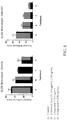
- Luciferase transfected PC3Luc cells were injected at 2 ⁇ 105 cells/10 ⁇ l of serum-free medium into the proximal tibiae of 4-week old male CD1 nu/nu mice.
- the development of metastases was monitored by using a Faxitron cabinet x-ray system and tumor burden evaluated by bioluminescence analyses (see below).
- the development of metastases was monitored by radiography using a Faxitron cabinet x-ray system (Faxitron x-ray corp., Wheeling, IL, USA). Radiographic analyses were performed at days 28, 35,42 and 50 after cell injection. No Faxitron analysis was performed after the 50th day since after this time the estimated risk of anesthesia-related mortality of mice was significantly increased.
- mice received 150 mg firefly luciferase (Synchem Ug and Co.KG, Felsberg-Altenburg, Germany) per kg body weight given intraperitoneally. Following anesthesia with ketamine/xylazine mixture mice were placed into a Hamamatsu imaging station (Hamamatsu photonics, Italian distributor, Rome Italy). Bioluminescence generated by the luciferin/luciferase reaction was used for quantification using a dedicated Living Image software on a red (high intensity/cell number) to blue (low intensity/cell number) visual scale. A digital grayscale animal image was acquired followed by acquisition and overlay of a pseudo-color image representing the spatial distribution of detected photon counts emerging from active luciferase within the animal.
- Signal intensity was quantified as the sum of all detected photons within the region of interest during a 1-minute luminescent integration time. Tumor incidence was scored on a dichotomous scale as being either positive or negative if animals had at least one lesion detected in either the humeri or tibia/femur region. See Figure 9 .
Landscapes
- Chemical & Material Sciences (AREA)
- Health & Medical Sciences (AREA)
- Organic Chemistry (AREA)
- Life Sciences & Earth Sciences (AREA)
- General Health & Medical Sciences (AREA)
- Molecular Biology (AREA)
- Engineering & Computer Science (AREA)
- Biochemistry (AREA)
- Biotechnology (AREA)
- Genetics & Genomics (AREA)
- Pharmacology & Pharmacy (AREA)
- Medicinal Chemistry (AREA)
- Animal Behavior & Ethology (AREA)
- Public Health (AREA)
- Veterinary Medicine (AREA)
- General Chemical & Material Sciences (AREA)
- Chemical Kinetics & Catalysis (AREA)
- Nuclear Medicine, Radiotherapy & Molecular Imaging (AREA)
- Epidemiology (AREA)
- Pain & Pain Management (AREA)
- Rheumatology (AREA)
- Oncology (AREA)
- Bioinformatics & Cheminformatics (AREA)
- Pharmaceuticals Containing Other Organic And Inorganic Compounds (AREA)
- Saccharide Compounds (AREA)
- Medicines That Contain Protein Lipid Enzymes And Other Medicines (AREA)
Applications Claiming Priority (3)
| Application Number | Priority Date | Filing Date | Title |
|---|---|---|---|
| US201462087085P | 2014-12-03 | 2014-12-03 | |
| PCT/US2015/063191 WO2016089872A1 (en) | 2014-12-03 | 2015-12-01 | Heterobifunctional inhibitors of e-selectins and cxcr4 chemokine receptors |
| EP15865762.7A EP3227310B1 (en) | 2014-12-03 | 2015-12-01 | Heterobifunctional inhibitors of e-selectins and cxcr4 chemokine receptors |
Related Parent Applications (2)
| Application Number | Title | Priority Date | Filing Date |
|---|---|---|---|
| EP15865762.7A Division-Into EP3227310B1 (en) | 2014-12-03 | 2015-12-01 | Heterobifunctional inhibitors of e-selectins and cxcr4 chemokine receptors |
| EP15865762.7A Division EP3227310B1 (en) | 2014-12-03 | 2015-12-01 | Heterobifunctional inhibitors of e-selectins and cxcr4 chemokine receptors |
Publications (1)
| Publication Number | Publication Date |
|---|---|
| EP3569609A1 true EP3569609A1 (en) | 2019-11-20 |
Family
ID=56092327
Family Applications (2)
| Application Number | Title | Priority Date | Filing Date |
|---|---|---|---|
| EP19181063.9A Withdrawn EP3569609A1 (en) | 2014-12-03 | 2015-12-01 | Heterobifunctional inhibitors of e-selectins and cxcr4 chemokine receptors |
| EP15865762.7A Active EP3227310B1 (en) | 2014-12-03 | 2015-12-01 | Heterobifunctional inhibitors of e-selectins and cxcr4 chemokine receptors |
Family Applications After (1)
| Application Number | Title | Priority Date | Filing Date |
|---|---|---|---|
| EP15865762.7A Active EP3227310B1 (en) | 2014-12-03 | 2015-12-01 | Heterobifunctional inhibitors of e-selectins and cxcr4 chemokine receptors |
Country Status (16)
| Country | Link |
|---|---|
| US (1) | US10519181B2 (enExample) |
| EP (2) | EP3569609A1 (enExample) |
| JP (2) | JP6689854B2 (enExample) |
| KR (1) | KR102542750B1 (enExample) |
| CN (1) | CN107108679B (enExample) |
| AU (1) | AU2015355136B2 (enExample) |
| CA (1) | CA2968391C (enExample) |
| CY (1) | CY1122038T1 (enExample) |
| DK (1) | DK3227310T3 (enExample) |
| ES (1) | ES2754549T3 (enExample) |
| HU (1) | HUE045542T2 (enExample) |
| LT (1) | LT3227310T (enExample) |
| PL (1) | PL3227310T3 (enExample) |
| PT (1) | PT3227310T (enExample) |
| SI (1) | SI3227310T1 (enExample) |
| WO (1) | WO2016089872A1 (enExample) |
Families Citing this family (21)
| Publication number | Priority date | Publication date | Assignee | Title |
|---|---|---|---|---|
| JP6689854B2 (ja) | 2014-12-03 | 2020-04-28 | グリコミメティクス, インコーポレイテッド | E−セレクチンおよびcxcr4ケモカイン受容体のヘテロ二官能性阻害剤 |
| CA3008279A1 (en) | 2015-12-14 | 2017-06-22 | X4 Pharmaceuticals, Inc. | Methods for treating cancer |
| WO2017151708A1 (en) | 2016-03-02 | 2017-09-08 | Glycomimetics, Inc. | Methods for the treatment and/or prevention of cardiovescular disease by inhibition of e-selectin |
| CA3019394A1 (en) | 2016-04-08 | 2017-10-12 | X4 Pharmaceuticals, Inc. | Methods for treating cancer |
| US11433086B2 (en) | 2016-08-08 | 2022-09-06 | Glycomimetics, Inc. | Combination of T-cell checkpoint inhibitors with inhibitors of e-selectin or CXCR4, or with heterobifunctional inhibitors of both E-selectin and CXCR4 |
| AU2017341065B2 (en) | 2016-10-07 | 2023-04-06 | Crescent Biopharma, Inc. | Highly potent multimeric E-selectin antagonists |
| EP3596096A1 (en) | 2017-03-15 | 2020-01-22 | GlycoMimetics, Inc. | Galactopyranosyl-cyclohexyl derivatives as e-selectin antagonists |
| JP7275131B2 (ja) * | 2017-11-30 | 2023-05-17 | グリコミメティクス, インコーポレイテッド | 骨髄浸潤リンパ球を動員する方法、およびその使用 |
| KR20200104889A (ko) * | 2017-12-29 | 2020-09-04 | 글리코미메틱스, 인크. | E-셀렉틴 및 갈렉틴-3의 이종이기능성 억제제 |
| KR20200128025A (ko) | 2018-03-05 | 2020-11-11 | 글리코미메틱스, 인크. | 급성 골수성 백혈병 및 관련 병태의 치료 방법 |
| EP3893936A2 (en) | 2018-12-10 | 2021-10-20 | GlycoMimetics, Inc. | Methods of treating hiv and aids and the elimination of latent reservoirs of hiv infection using selectin, galectin, and siglec antagonists |
| US11845771B2 (en) | 2018-12-27 | 2023-12-19 | Glycomimetics, Inc. | Heterobifunctional inhibitors of E-selectin and galectin-3 |
| WO2020150263A1 (en) | 2019-01-14 | 2020-07-23 | Magnani John L | Selectin or galectin antagonists for treating cytokine release syndrome and crs-induced neurotoxicity |
| JP2022529806A (ja) | 2019-04-24 | 2022-06-24 | グリコミメティクス, インコーポレイテッド | E-セレクチン、ガレクチン-3、および/またはcxcr4ケモカイン受容体のガラクトース連結型多量体糖模倣性阻害剤 |
| US20220265691A1 (en) | 2019-07-12 | 2022-08-25 | Glycomimetics, Inc. | Methods for use of gene expression as an indicator of e-selectin inhibitor efficacy and clinical outcome for multiple tumor types |
| ES3063748T3 (en) | 2019-07-31 | 2026-04-20 | Crescent Biopharma Inc | E-selectin antagonists for use in enhancing the survival of reconstituted, bone marrow-depleted hosts |
| CA3171250A1 (en) | 2020-03-10 | 2021-09-16 | E. Lynne KELLEY | Methods for treating neutropenia |
| US20230147312A1 (en) * | 2020-03-27 | 2023-05-11 | Glycomimetics, Inc. | Treatment of acute respiratory distress syndrome and related conditions with antagonists of e-selectin |
| WO2021247396A1 (en) | 2020-05-31 | 2021-12-09 | Magnani John L | Compounds and methods for reduction of cancer cell burden and protection of normal hematopoiesis |
| AU2021292458A1 (en) | 2020-06-14 | 2023-01-19 | GlycoMimetics | Compositions and methods for overcoming microenvironment-mediated resistance via e-selectin targeting |
| US20240269157A1 (en) | 2021-08-03 | 2024-08-15 | Glycomimetics, Inc. | Compositions and methods for overcoming microenvironment-mediated resistance via e-selectin targeting |
Citations (1)
| Publication number | Priority date | Publication date | Assignee | Title |
|---|---|---|---|---|
| WO2010126888A1 (en) * | 2009-05-01 | 2010-11-04 | Glycomimetics, Inc. | Heterobifunctional inhibitors of e-selectins and cxcr4 chemokine receptors |
Family Cites Families (238)
| Publication number | Priority date | Publication date | Assignee | Title |
|---|---|---|---|---|
| NL7409399A (nl) | 1973-07-19 | 1975-01-21 | Rhone Poulenc Sa | Werkwijze ter bereiding van thermostabiele har- sen en voorwerpen geheel of gedeeltelijk be- staande uit deze harsen. |
| US4471057A (en) | 1981-06-30 | 1984-09-11 | The Wistar Institute | Detection of colorectal carcinoma |
| DK17885D0 (da) | 1985-01-14 | 1985-01-14 | Karlsson Karl Anders | Antiviralt middel |
| US4876199A (en) | 1985-04-04 | 1989-10-24 | Fred Hutchinson Cancer Research Center | Hybridomas producing monoclonal antibodies to mono-, di-, and trifucosylated type 2 chain |
| US4851511A (en) | 1986-01-30 | 1989-07-25 | Fred Hutchinson Cancer Research Center | Monoclonal antibody that specifically binds to disialosyl Lea |
| US4925796A (en) | 1986-03-07 | 1990-05-15 | Massachusetts Institute Of Technology | Method for enhancing glycoprotein stability |
| ES2058070T3 (es) | 1986-05-09 | 1994-11-01 | Pulverer Gerhard | Utilizacion de monosacaridos especificos para la preparacion de un medicamento para impedir metastasis de tumores malignos. |
| US5538724A (en) | 1987-08-11 | 1996-07-23 | The Board Of Trustees For The Leland Stanford Junior Univ. | Method of control leukocyte extravasation |
| US5079353A (en) | 1987-12-02 | 1992-01-07 | Chembiomed, Ltd. | Sialic acid glycosides, antigens, immunoadsorbents, and methods for their preparation |
| US5632991A (en) | 1988-11-14 | 1997-05-27 | Brigham & Women's Hospital | Antibodies specific for E-selectin and the uses thereof |
| EP0381310A1 (en) | 1989-01-30 | 1990-08-08 | The Biomembrane Institute | Monoclonal antibodies directed to tumor-associated gangliosides and fucogangliosides and method for production thereof |
| US5464778A (en) | 1989-03-08 | 1995-11-07 | Board Of Regents Of The University Of Oklahoma | Glycoprotein ligand for P-selectin and methods of use thereof |
| US5272263A (en) | 1989-04-28 | 1993-12-21 | Biogen, Inc. | DNA sequences encoding vascular cell adhesion molecules (VCAMS) |
| EP0585963A1 (en) | 1989-05-23 | 1994-03-09 | Otsuka Pharmaceutical Co., Ltd. | Monoclonal antibodies to CMP-170 antigen on activated endothelial cells |
| US6033665A (en) | 1989-09-27 | 2000-03-07 | Elan Pharmaceuticals, Inc. | Compositions and methods for modulating leukocyte adhesion to brain endothelial cells |
| US6001988A (en) | 1990-06-11 | 1999-12-14 | Nexstar Pharmaceuticals, Inc. | High affinity nucleic acid ligands to lectins |
| US6280932B1 (en) | 1990-06-11 | 2001-08-28 | Gilead Sciences, Inc. | High affinity nucleic acid ligands to lectins |
| AU8007791A (en) | 1990-06-15 | 1992-01-07 | Cytel Corporation | Intercellular adhesion mediators |
| US5753631A (en) | 1990-06-15 | 1998-05-19 | Cytel Corporation | Intercellular adhesion mediators |
| US5576305A (en) | 1990-06-15 | 1996-11-19 | Cytel Corporation | Intercellular adhesion mediators |
| US6387884B1 (en) | 1990-06-18 | 2002-05-14 | Stanford University | Leukocyte homing modulation |
| US6391857B1 (en) | 1990-06-18 | 2002-05-21 | Stanford University | Methods and compositions for endothelial binding |
| ES2183851T3 (es) | 1990-07-17 | 2003-04-01 | Univ Oklahoma | Ligando de gmp-140. |
| US5648344A (en) | 1990-07-30 | 1997-07-15 | Glycomed Incorporated | Methods of treating inflammation using selection binding compounds |
| US5143712A (en) | 1990-07-30 | 1992-09-01 | Glycomed Incorporated | Method of determining a site of inflammation utilizing elam-1 ligands |
| US5211937A (en) | 1990-07-30 | 1993-05-18 | Glycomed Incorporated | Method of determining a site of inflammation utilizing elam-1 ligands |
| US5789573A (en) | 1990-08-14 | 1998-08-04 | Isis Pharmaceuticals, Inc. | Antisense inhibition of ICAM-1, E-selectin, and CMV IE1/IE2 |
| NZ240316A (en) | 1990-10-25 | 1996-12-20 | Univ Michigan | Compound for treating disease mediated by the elaboration of elam-1 on endothelial cells |
| CA2097617A1 (en) | 1990-11-23 | 1992-05-23 | Brian Seed | Inhibition of cell adhesion protein-carbohydrate interactions |
| US5151360A (en) | 1990-12-31 | 1992-09-29 | Biomembrane Institute | Effect of n,n,n-trimethylsphingosine on protein kinase-c activity, melanoma cell growth in vitro, metastatic potential in vivo and human platelet aggregation |
| US6309639B1 (en) | 1991-02-05 | 2001-10-30 | The Board Of Regents Of The University Of Oklahoma | Method for inhibiting an inflammatory response using antibodies to P-selectin glycoprotein ligand |
| US6124267A (en) | 1991-02-05 | 2000-09-26 | Southpac Trust Internationals, Inc. | O-glycan inhibitors of selectin mediated inflammation derived from PSGL-1 |
| US6121233A (en) | 1991-04-19 | 2000-09-19 | John L. Magnani | Methods for the inhibition of cancer metastasis mediated by endothelial adhesion molecules |
| WO1992019735A1 (en) | 1991-05-06 | 1992-11-12 | Genentech, Inc. | GLYCAM-1 (Sgp 50), A SELECTIN LIGAND |
| US5318890A (en) | 1991-05-06 | 1994-06-07 | The Regents Of The University Of California | Assays for inhibitors of leukocyte adhesion |
| US5352670A (en) | 1991-06-10 | 1994-10-04 | Alberta Research Council | Methods for the enzymatic synthesis of alpha-sialylated oligosaccharide glycosides |
| US5580858A (en) | 1991-06-10 | 1996-12-03 | Alberta Research Council | Immunosuppressive and tolerogenic modified Lewisx compounds |
| US5646123A (en) | 1991-06-10 | 1997-07-08 | Alberta Research Council | Time dependent administration of oligosaccharide glycosides related to blood group determinants having a type I or type II core structure in reducing inflammation in a sensitized mammal arising form exposure to an antigen |
| CA2118695A1 (en) | 1991-09-10 | 1993-03-18 | George A. Heavner | Peptide inhibitors of inflammation mediated by selectins |
| US5268364A (en) | 1991-12-12 | 1993-12-07 | The Biomembrane Institute | Method for inhibiting selectin-dependent adhesion of leukocytes and platelets by O-glycosylation modification |
| EP0602194A1 (en) | 1991-12-18 | 1994-06-22 | Centocor, Inc. | Peptide inhibitors of inflammation mediated by selectins |
| US5643873A (en) | 1992-05-06 | 1997-07-01 | Affymax Technologies N.V. | Peptides and compounds that bind selectins including endothelial leukocyte adhesion molecule 1 |
| US5591835A (en) | 1992-06-29 | 1997-01-07 | Glycomed Incorporated | Substituted lactose derivatives |
| CA2100412A1 (en) | 1992-07-15 | 1994-01-16 | Yutaka Yamada | Glycolipid derivatives |
| CA2144180A1 (en) | 1992-09-08 | 1994-03-17 | George A. Heavner | Peptide inhibitors of cellular adhesion |
| US5519008A (en) | 1992-09-10 | 1996-05-21 | Glycomed Incorporated | Derivatives of triterpenoid acids as inhibitors of cell-adhesion molecules ELAM-1 (E-selectin) and LECAM-1 (L-selectin) |
| AU4859793A (en) | 1992-09-11 | 1994-04-12 | Regents Of The University Of California, The | Sulfated ligands for l-selectins and use of chlorates and or sulfatases for the treatment of inflammation |
| US5695752A (en) | 1992-09-11 | 1997-12-09 | The Regents Of The University Of California | Treating inflammation via the administration of specific sulfatase enzymes and/or sulfation inhibitor |
| US5843707A (en) | 1992-10-23 | 1998-12-01 | Genetics Institute, Inc. | Nucleic acid encoding a novel P-selectin ligand protein |
| US6277975B1 (en) | 1992-10-23 | 2001-08-21 | Genetics Institute, Inc. | Fusions of P-selectin ligand protein and polynucleotides encoding same |
| EP0601417A3 (de) | 1992-12-11 | 1998-07-01 | Hoechst Aktiengesellschaft | Physiologisch verträglicher und physiologisch abbaubarer, Kohlenhydratrezeptorblocker auf Polymerbasis, ein Verfahren zu seiner Herstellung und seine Verwendung |
| WO1994014836A1 (en) | 1992-12-18 | 1994-07-07 | Centocor, Inc. | Peptide inhibitors of selectin binding |
| DK0695189T3 (da) | 1992-12-29 | 1999-08-09 | Genentech Inc | Behandling af inflammatorisk tarmsygdom med IFN-gammainhibitorer |
| US5412123A (en) | 1993-02-08 | 1995-05-02 | Glycomed Incorporated | Anthraquinone and anthracene derivatives as inhibitors of the cell-adhesion molecules of the immune system |
| JP2716657B2 (ja) | 1993-02-26 | 1998-02-18 | 株式会社ディ・ディ・エス研究所 | 接着分子elam‐1に特異的結合能を有する化合物 |
| CA2157489A1 (en) | 1993-03-04 | 1994-09-15 | Masaaki Numata | Lewis-associated compound, process for producing the same, and anti-inflammatory |
| US5527890A (en) | 1993-04-16 | 1996-06-18 | Glycomed Incorporated | Derivatives of triterpenoid acids and uses thereof |
| DE69326255T2 (de) | 1993-05-05 | 1999-12-30 | Affymax Technologies N.V., Willemstad | Elam-1 bindende peptide und zusammensetzungen |
| US5854218A (en) | 1993-05-14 | 1998-12-29 | Cytel Corporation | Sialyl Lex analogues as inhibitors of cellular adhesion |
| CZ298895A3 (en) | 1993-05-14 | 1996-04-17 | Cytel Corp | Compound analogous to sialyl lex, pharmaceutical composition containing thereof and process for preparing lactosammonium salt |
| US5811404A (en) | 1993-05-14 | 1998-09-22 | Cytel Corporation | Sialyl Lex analogues as inhibitors of cellular adhesion |
| SE9301677L (sv) | 1993-05-14 | 1994-11-18 | Kurt G I Nilsson | Syntesmetod |
| US5527785A (en) | 1993-05-14 | 1996-06-18 | The Regents Of The University Of California | Selectin receptor modulating compositions |
| ATE215094T1 (de) | 1993-05-17 | 2002-04-15 | Avant Immunotherapeutics Inc | Komplement verwandte proteine und kohlenhydrate enthaltende zusammensetzungen und methoden zur herstellung und verwendung dieser zusammensetzungen |
| US5976540A (en) | 1993-05-17 | 1999-11-02 | T Cell Sciences, Inc. | Compositions comprising complement related proteins and carbohydrates, and methods for producing and using said compositions |
| US5856300A (en) | 1994-05-12 | 1999-01-05 | T Cell Sciences, Inc. | Compositions comprising complement related proteins and carbohydrates, and methods for producing and using said compositions |
| US5646248A (en) | 1993-06-08 | 1997-07-08 | La Jolla Cancer Research Foundation | E-selection binding soluble lamp-1 polypeptide |
| US5658880A (en) | 1993-06-16 | 1997-08-19 | Glycomed Incorporated | Sialic acid/fucose based medicaments |
| US5750508A (en) | 1993-06-16 | 1998-05-12 | Glycomed Incorporated | Sialic acid/fucose based medicaments |
| US5837689A (en) | 1993-06-16 | 1998-11-17 | Glycomed Incorporated | Sialyl lewis-x mimetics containing naphthyl backbones |
| US5789385A (en) | 1993-06-16 | 1998-08-04 | Glycomed Incorporated | Sialyl Lewisx mimetics containing phenyl backbones |
| US5679321A (en) | 1993-06-17 | 1997-10-21 | Glycomed Incorporated | Sialic acid/fucose based medicaments |
| DK76193D0 (da) | 1993-06-25 | 1993-06-25 | Astra Ab | Kulhydratderivater |
| US5559103A (en) | 1993-07-21 | 1996-09-24 | Cytel Corporation | Bivalent sialyl X saccharides |
| US5508387A (en) | 1993-08-04 | 1996-04-16 | Glycomed Incorporated | Selectin binding glycopeptides |
| WO1995005830A1 (en) | 1993-08-20 | 1995-03-02 | The Regents Of The University Of California | Polyanion anti-inflammatory agents |
| US5464815A (en) | 1993-09-08 | 1995-11-07 | Genentech, Inc. | Inhibition of heparin-binding |
| WO1995010296A1 (en) | 1993-10-12 | 1995-04-20 | Glycomed Incorporated | A library of glyco-peptides useful for identification of cell adhesion inhibitors |
| US5783693A (en) | 1993-11-19 | 1998-07-21 | The Regents Of The University Of California | Methods for synthesizing sulfated disaccharide inhibitors of selectins |
| WO1995014787A1 (en) | 1993-11-22 | 1995-06-01 | Centocor, Inc. | Peptide inhibitors of selecting binding |
| US5663151A (en) | 1994-03-04 | 1997-09-02 | Bristol-Myers Squibb Company | Sulfated α-glycolipid derivatives as cell adhesion inhibitors |
| DE4408248A1 (de) | 1994-03-11 | 1995-09-14 | Hoechst Ag | Physiologisch verträgliche und physiologisch abbaubare Kohlenhydrat-Mimetika, ein Verfahren zur Herstellung und ihre Verwendung |
| EP0671409A3 (de) | 1994-03-11 | 1996-06-12 | Hoechst Ag | Malonsäurederivate mit antiadhäsiven Eigenschaften. |
| HUT77345A (hu) | 1994-04-29 | 1998-03-30 | Texas Biotechnology Corporation | E-szelektin, P-szelektin vagy L-szelektin szialil-Lewis x-hez vagy szialil-Lewis a-hoz kapcsolódását gátló mannopiranoziloxi-bifenil származékok és ezeket tartalmazó gyógyszerkészítmények |
| US5444050A (en) | 1994-04-29 | 1995-08-22 | Texas Biotechnology Corporation | Binding of E-selectin or P-selectin to sialyl Lewisx or sialyl-Lewisa |
| US5486536A (en) | 1994-08-15 | 1996-01-23 | The Regents Of The University Of Michigan | Sulfatides as anti-inflammatory compounds |
| JPH0899989A (ja) | 1994-09-30 | 1996-04-16 | Akira Hasegawa | 新規糖脂質誘導体およびその製造用中間体 |
| DE4436164A1 (de) | 1994-10-10 | 1996-04-11 | Hoechst Ag | Neue Kohlenhydratkonjugate als Inhibitoren der Zelladhäsion |
| US5686426A (en) | 1994-11-17 | 1997-11-11 | Bristol-Myers Squibb Company | Dicarboxymethylated glycolipid derivatives as cell adhesion inhibitors |
| US6492332B1 (en) | 1995-12-12 | 2002-12-10 | Omeros Corporation | Irrigation solution and methods for inhibition of tumor cell adhesion, pain and inflammation |
| US5639734A (en) | 1994-12-20 | 1997-06-17 | Esko; Jeffrey D. | Disaccharide inflammation inhibitors and uses thereof |
| MX9704893A (es) | 1994-12-28 | 1997-10-31 | Sumitomo Pharma | Derivados de lewis x y procesos para producir los mismos. |
| US20020040008A1 (en) | 1995-01-24 | 2002-04-04 | Wagner Denisa D. | Method for treating and preventing atherosclerosis |
| US5527936A (en) | 1995-02-17 | 1996-06-18 | E. I. Du Pont De Nemours And Company | Hydrosilylation of unsaturated compounds |
| GB9504065D0 (en) | 1995-03-01 | 1995-04-19 | Pharmacia Spa | Poly-pyrrolecarboxamidonaphthalenic acid derivatives |
| GB9511357D0 (en) | 1995-06-06 | 1995-08-02 | Johnson Matthey Plc | Improved antiviral compounds |
| US6506770B1 (en) | 1996-06-06 | 2003-01-14 | Anormed, Inc. | Antiviral compounds |
| AU6155896A (en) | 1995-06-07 | 1996-12-30 | Cytel Corporation | Humanized antibodies to e-selectin |
| US5736533A (en) | 1995-06-07 | 1998-04-07 | Neose Technologies, Inc. | Bacterial inhibition with an oligosaccharide compound |
| UA52607C2 (uk) | 1995-06-29 | 2003-01-15 | Тексіс Байотекнолоджі Корпорейшн | Похідні біфенілів, фармацевтична композиція на їх основі та спосіб інгібування (варіанти) |
| KR19990028543A (ko) | 1995-06-29 | 1999-04-15 | 한스 루돌프 하우스, 헨리테 브룬너, 베아트리체 귄터 | 시알릴-루이스 x 및 시알릴-루이스 a의 유사체로서의 디글리코실화 1,2-디올 |
| US5876715A (en) | 1995-08-17 | 1999-03-02 | The Biomembrane Institute | Antibodies that bind novel carbohydrate ligands (myelorollins) that cause E-selectin dependent cell rolling, and uses thereof |
| DE19532902A1 (de) | 1995-09-06 | 1997-03-13 | Hoechst Ag | Neuartige Glycomimetika als Selektin-Antagonisten und daraus hergestellte entzündungshemmend wirkende Arzneimittel |
| DE19537334A1 (de) | 1995-10-09 | 1997-04-10 | Hoechst Ag | Antiadhäsive Piperidin- und Pyrrolidin-Carbonsäuren |
| WO1997014707A1 (en) | 1995-10-18 | 1997-04-24 | Cytel Corporation | SIALYL Lex ANALOGUES AS INHIBITORS OF CELLULAR ADHESION |
| EP0859005A1 (en) | 1995-10-26 | 1998-08-19 | Kanebo, Ltd. | Fucose derivatives, drugs containing the same as active ingredient, and intermediates for producing the same |
| US5747463A (en) | 1995-11-13 | 1998-05-05 | Bristol-Myers Squibb Company | Malonate derivatives of glycolipids as cell adhesion inhibitors |
| JPH09176047A (ja) | 1995-12-25 | 1997-07-08 | Unitika Ltd | 外用医薬製剤 |
| DE19602355A1 (de) | 1996-01-24 | 1997-07-31 | Hoechst Ag | Mehrfach fucosylierte Dicarbonsäuren mit antiadhäsiven Eigenschaften |
| ATE357452T1 (de) | 1996-01-30 | 2007-04-15 | Glycomimetics Inc | Sialyl-lewisa und sialyl lewisx epitop-analoge |
| EP0886639B1 (en) | 1996-01-30 | 2008-05-28 | GlycoMimetics, Inc. | SIALYL-LEWISa AND SIALYL-LEWISx EPITOPE ANALOGUES |
| US5710023A (en) | 1996-03-01 | 1998-01-20 | Genetics Institute, Inc. | IL-13 cytokine receptor chain |
| CA2247115C (en) | 1996-03-01 | 2008-11-18 | The Regents Of The University Of California | Inhibition of selectin binding |
| US6344545B1 (en) | 1996-06-14 | 2002-02-05 | Progenics Pharmaceuticals, Inc. | Method for preventing HIV-1 infection of CD4+ cells |
| US5654412A (en) | 1996-05-29 | 1997-08-05 | Glycomed Incorporated | Processes for the synthesis of sialyl Lewisx compounds |
| US5994402A (en) | 1996-06-05 | 1999-11-30 | Rotstein; Ori D. | Anti-inflammatory and anti-pyretic method |
| US5919768A (en) | 1996-06-26 | 1999-07-06 | Texas Biotechnology Corporation | Di- and trivalent small molecule selectin inhibitors |
| IL127908A0 (en) | 1996-08-08 | 1999-11-30 | Novartis Ag | Modified oligosaccharides |
| US5830871A (en) | 1996-10-28 | 1998-11-03 | The Scripps Research Institute | Inhibitors of E-, P- and L-selectin binding |
| GB9618520D0 (en) | 1996-09-05 | 1996-10-16 | Chiroscience Ltd | Compounds and their therapeutic use |
| US6592872B1 (en) | 1996-09-17 | 2003-07-15 | The United States Of America As Represented By The Department Of Health And Human Services | Targeting antigens to the MHC class I processing pathway with an anthrax toxin fusion protein |
| ATE358492T1 (de) | 1996-09-27 | 2007-04-15 | Univ Columbia | Behandlung einer ischämischen störung und zur verbesserung des infarktergebnis |
| US6110897A (en) | 1996-10-10 | 2000-08-29 | Glycorex Ab | Antiinflammatory cell adhesion inhibitors |
| WO1998021334A2 (en) | 1996-11-13 | 1998-05-22 | Morphogenesis, Inc. | Antibody mg1 recognizing a small subset of human hematopoietic cells |
| AU733692B2 (en) | 1997-02-28 | 2001-05-24 | Regents Of The University Of California, The | Inhibition of cell-cell binding by lipid assemblies |
| US6120751A (en) | 1997-03-21 | 2000-09-19 | Imarx Pharmaceutical Corp. | Charged lipids and uses for the same |
| SE9701127D0 (sv) | 1997-03-26 | 1997-03-26 | Karolinska Innovations Ab | Antigenic fusionprotein carrying GALal, 3GAL epitopes |
| JP3720520B2 (ja) | 1997-03-27 | 2005-11-30 | タカラバイオ株式会社 | 糖と標的物との相互作用の測定方法 |
| US6413760B1 (en) | 1997-04-15 | 2002-07-02 | Genetics Institute, Inc. | Highly purified mocarhagin cobra venom protease polynucleotides endcoding same and related proteases and therapeutic uses thereof |
| US5916910A (en) | 1997-06-04 | 1999-06-29 | Medinox, Inc. | Conjugates of dithiocarbamates with pharmacologically active agents and uses therefore |
| US6193973B1 (en) | 1997-08-22 | 2001-02-27 | B. David Tuttle | Dietary supplement for boosting energy and increasing muscular strength |
| US5948628A (en) | 1997-09-05 | 1999-09-07 | The Board Of Regents Of The University Of Oklahoma | Methods of screening for compounds which mimic galectin-1 |
| US7018637B2 (en) | 1998-02-23 | 2006-03-28 | Aventis Pasteur, Inc | Multi-oligosaccharide glycoconjugate bacterial meningitis vaccines |
| AU8967998A (en) | 1998-02-25 | 1999-09-15 | Hsc Research & Development Limited Partnership | Antibiotic-ligand conjugates and methods of use thereof |
| WO1999043353A2 (en) | 1998-02-26 | 1999-09-02 | Boehringer Ingelheim Pharmaceuticals, Inc. | Combination anti-selectin and immunosuppressant therapy |
| US6458777B1 (en) | 1998-03-13 | 2002-10-01 | Mucosal Therapeutics Llc | Methods and compositions for treating and preventing mucositis |
| CA2245224A1 (en) | 1998-08-14 | 2000-02-14 | Jiang-Hong Giong | Chemokine receptor antagonists and chemotherapeutics |
| US6365365B1 (en) | 1998-03-20 | 2002-04-02 | The Regents Of The University Of California | Method of determining whether an agent modulates glycosyl sulfotransferase-3 |
| US6265192B1 (en) | 1998-03-20 | 2001-07-24 | The Regents Of The University Of California | Glycosly sulfortransferase-3 |
| US6037333A (en) | 1998-05-07 | 2000-03-14 | Trustees Of Tufts College | Microbe-inhibiting compositions |
| AU4093799A (en) | 1998-05-22 | 1999-12-13 | Board Of Trustees Of The Leland Stanford Junior University | Bifunctional molecules and therapies based thereon |
| JP2002518354A (ja) | 1998-06-16 | 2002-06-25 | ザ ボード オブ リージェンツ オブ ザ ユニヴァーシティー オブ オクラホマ | 糖硫酸ペプチド、その合成方法および使用方法 |
| US6004815A (en) | 1998-08-13 | 1999-12-21 | The Regents Of The University Of California | Bacteria expressing nonsecreted cytolysin as intracellular microbial delivery vehicles to eukaryotic cells |
| JP4553488B2 (ja) | 1998-09-21 | 2010-09-29 | 大塚製薬株式会社 | カルボキシメチルガラクトース誘導体 |
| US6960566B1 (en) | 1998-11-06 | 2005-11-01 | The Wister Institute of Anatomy and Biology | Compositions and methods for treatment of cancer |
| DE69941031D1 (de) | 1998-11-12 | 2009-08-06 | Novolytics Inc | Zusammensetzungen und verfahren zur erzeugung von gefässeokklusion |
| GB9904387D0 (en) | 1999-02-25 | 1999-04-21 | Pharmacia & Upjohn Spa | Antitumour synergistic composition |
| WO2000066112A1 (en) | 1999-05-03 | 2000-11-09 | Smithkline Beecham Corporation | Cxcr-4 receptor antagonists - thrombopoietin mimetics |
| US6515117B2 (en) | 1999-10-12 | 2003-02-04 | Bristol-Myers Squibb Company | C-aryl glucoside SGLT2 inhibitors and method |
| US6887842B1 (en) | 1999-11-19 | 2005-05-03 | The Board Of Trustees Of The Leland Stanford Junior University | Modulating a pharmacokinetic property of a drug by administering a bifunctional molecule containing the drug |
| US7204981B2 (en) | 2000-03-28 | 2007-04-17 | Eli Lilly And Company | Methods of treating diseases with activated protein C |
| US6683056B2 (en) | 2000-03-30 | 2004-01-27 | Bristol-Myers Squibb Company | O-aryl glucoside SGLT2 inhibitors and method |
| ES2336887T5 (es) | 2000-03-30 | 2019-03-06 | Whitehead Inst Biomedical Res | Mediadores de interferencia por ARN específicos de secuencias de ARN |
| DE60118362T2 (de) | 2000-05-19 | 2007-05-24 | The Center for Blood Research, Inc., Boston | VERFAHREN ZUR BEHANDLUNG VON HÄMOSTATISCHEN STÖRUNGEN DURCH LöSLICHES P-SELECTIN |
| US20020165178A1 (en) | 2000-06-28 | 2002-11-07 | Christian Schetter | Immunostimulatory nucleic acids for the treatment of anemia, thrombocytopenia, and neutropenia |
| EP1325123A4 (en) | 2000-09-12 | 2004-07-21 | Inst Genetics Llc | STENOSE- OR RESEARCH INHIBITION BY P-SELECTIN ANTAGONISTS |
| AU2440802A (en) | 2000-10-18 | 2002-04-29 | Massachusetts Inst Technology | Methods and products related to pulmonary delivery of polysaccharides |
| WO2002040049A2 (en) | 2000-11-14 | 2002-05-23 | The General Hospital Corporation | Blockade of t cell migration into epithelial gvhd target tissues |
| US7422733B2 (en) | 2000-11-29 | 2008-09-09 | Bracco International B.V. | Linkable sialyl Lewis X analogs |
| US20020132220A1 (en) | 2000-12-27 | 2002-09-19 | Berens Kurt L. | Use of selectin antagonists in organ preservation solutions |
| CN101694497B (zh) | 2001-03-28 | 2014-11-26 | 哈佛大学校长及研究员协会 | 将外源蛋白递送到胞质溶胶中的方法,及其用途 |
| US20030198639A1 (en) | 2002-04-16 | 2003-10-23 | Frenette Paul S. | Methods of treating sickle cell disease |
| US7087212B2 (en) | 2001-08-17 | 2006-08-08 | Mallinckrodt, Inc | Multicomponent assemblies having enhanced binding properties for diagnosis and therapy |
| AU2002337913A1 (en) | 2001-10-19 | 2003-04-28 | Richard D. Cummings | Glycosulfopeptide inhibitors and methods of use thereof |
| AU2002357072A1 (en) | 2001-12-07 | 2003-06-23 | Centocor, Inc. | Pseudo-antibody constructs |
| PL369856A1 (en) | 2001-12-21 | 2005-05-02 | Anormed Inc. | Chemokine receptor binding heterocyclic compounds with enhanced efficacy |
| US20030186942A1 (en) | 2002-01-16 | 2003-10-02 | Crooks Peter A. | Compounds of use in the treatment of epilepsy, seizure, and electroconvulsive disorders |
| US20040072796A1 (en) | 2002-04-18 | 2004-04-15 | Embury Stephen H. | Method and composition for preventing pain in sickle cell patients |
| WO2003097658A2 (en) | 2002-05-16 | 2003-11-27 | Glycomimetics, Inc. | Compounds and methods for inhibiting selectin-mediated function |
| JP2006502986A (ja) | 2002-07-03 | 2006-01-26 | グリコミメティクス, インコーポレイテッド | 新脈管形成に関与する医学的状態の診断および治療のための組成物および方法 |
| EP1572963A4 (en) | 2002-10-11 | 2007-08-22 | Univ Maryland Biotech Inst | SYNTHETIC VACCINES CARBOHYDRATE BASE AGAINST HIV |
| AU2003301209A1 (en) | 2002-12-20 | 2004-07-22 | Glycomimetics, Inc. | Oligosaccharides and conjugates thereof for the treatement of pseudomonas bacteria infection |
| US6844125B2 (en) | 2003-03-20 | 2005-01-18 | Kabushiki Kaisha Toshiba | Combination of developing agents, image forming apparatus, and method for forming image |
| US7332334B2 (en) | 2003-04-18 | 2008-02-19 | Oklahoma Medical Research Foundation | Hematopoietic stem cells treated by in vitro fucosylation and methods of use |
| US20040219158A1 (en) | 2003-05-02 | 2004-11-04 | Glycomimetics, Inc. | Compositions and methods for diagnosis and therapy of medical conditions involving infection with pseudomonas bacteria |
| US20050054614A1 (en) | 2003-08-14 | 2005-03-10 | Diacovo Thomas G. | Methods of inhibiting leukocyte accumulation |
| US7041226B2 (en) | 2003-11-04 | 2006-05-09 | Lexmark International, Inc. | Methods for improving flow through fluidic channels |
| AU2004289265A1 (en) | 2003-11-07 | 2005-05-26 | Brigham And Women's Hospital, Inc. | Antibodies to CD44 glycoforms and uses thereof |
| WO2005054264A2 (en) | 2003-11-19 | 2005-06-16 | Glycomimetics, Inc. | Glycomimetic antagonists for both e- and p-selectins |
| EP1763533B1 (en) | 2003-11-19 | 2008-01-09 | GlycoMimetics, Inc. | Specific antagonist for both e- and p-selectins |
| PT1709063E (pt) | 2003-12-18 | 2008-04-09 | Univ Bruxelles | Derivados de esteróides glicosilados com actividade anti-migratória |
| GB0404434D0 (en) | 2004-02-27 | 2004-03-31 | Novartis Ag | Organic compounds |
| WO2005116088A2 (en) | 2004-05-25 | 2005-12-08 | The Johns Hopkins University | Methods and compositions for treating diseases and disorders associated with siglec-8 expressing cells |
| EP1771733A2 (en) | 2004-06-24 | 2007-04-11 | The Scripps Research Institute | Arrays with cleavable linkers |
| WO2006017180A2 (en) | 2004-07-09 | 2006-02-16 | Progenics Pharmaceuticals, Inc. | Glycopeptide dimers and uses thereof |
| EP1790639B1 (en) | 2004-08-27 | 2014-03-26 | Ono Pharmaceutical Co., Ltd. | Spirocyclic compounds and their use as cxcr4-antagonists |
| WO2006062946A2 (en) | 2004-12-06 | 2006-06-15 | University Of Florida Research Foundation, Inc. | Incorporation of bone marrow derived stem cells in tumors |
| EP1838320B1 (en) | 2005-01-07 | 2014-07-16 | Emory University | Cxcr4 antagonists for the treatment of medical disorders |
| AU2006203826A1 (en) | 2005-01-07 | 2006-07-13 | Emory University | CXCR4 antagonists for the treatment of HIV infection |
| WO2006089106A2 (en) | 2005-02-17 | 2006-08-24 | Icos Corporation | Phosphoinositide 3-kinase inhibitors for inhibiting leukocyte accumulation |
| US20060217303A1 (en) | 2005-03-25 | 2006-09-28 | Wisconsin Alumni Research Foundation | Compounds and Methods for Treating Seizure Disorders |
| US20090036386A1 (en) | 2005-05-25 | 2009-02-05 | Glycomimetics, Inc | Heterobifunctional compounds for selectin inhibition |
| US20060287253A1 (en) | 2005-06-17 | 2006-12-21 | Kriegler Steven M | Compounds and methods for treating seizure disorders |
| MX2008000974A (es) | 2005-07-22 | 2008-03-27 | Univ California | Composiciones de heparina e inhibicion de selectina. |
| CN101291946B (zh) | 2005-08-09 | 2011-06-29 | 糖模拟物有限公司 | 对来自假单胞菌的pa-il凝集素、pa-iil凝集素或其两者的糖模拟物抑制剂 |
| KR20080052595A (ko) | 2005-08-15 | 2008-06-11 | 더 스크립스 리서치 인스티튜트 | 콜레스테롤 오존 산화 생성물의 효과를 중화시킴으로써죽상동맥경화증을 치료하고 예방하는데 유용한 치료제를규명하는 방법 |
| WO2007022385A2 (en) | 2005-08-18 | 2007-02-22 | Novartis Ag | Use of cxcr4 binding molecules for the treatment of whim syndrome |
| PL2264043T3 (pl) | 2005-09-02 | 2018-04-30 | Glycomimetics, Inc. | Heterobifunkcyjne inhibitory pan-selektyny |
| US20090117154A1 (en) | 2005-09-14 | 2009-05-07 | University Of Maryland Biotechnolgy Institute | Synthetic polyvalent carbohydrates as components of microbicides |
| US20090176717A1 (en) | 2006-06-01 | 2009-07-09 | Glycomimetics, Inc. | Galactosides and thiodigalactosides as inhibitors of pa-il lectin from pseudomonas |
| EP3461499A1 (en) | 2006-06-07 | 2019-04-03 | The Board of Trustees of The Leland Stanford Junior University | Anti-leukocyte recruitment therapy for the treatment of recurrence of epileptic seizures |
| WO2008002449A2 (en) | 2006-06-23 | 2008-01-03 | Glycomimetics, Inc. | Glycomimetic inhibitors of siglec-8 |
| WO2008008852A2 (en) | 2006-07-11 | 2008-01-17 | Emory University | Cxcr4 antagonists including heteroatoms for the treatment of medical disorders |
| US20080227799A1 (en) | 2006-07-11 | 2008-09-18 | Liotta Dennis C | CXCR4 Antagonists Including Heteroatoms for the Treatment of Medical Disorders |
| US8080659B2 (en) | 2006-07-11 | 2011-12-20 | Emory University | CXCR4 antagonists including diazine and triazine structures for the treatment of medical disorders |
| US7998740B2 (en) | 2006-07-18 | 2011-08-16 | Robert Sackstein | Cytokine induction of selectin ligands on cells |
| EP2074132B1 (en) | 2006-10-12 | 2013-05-15 | GlycoMimetics, Inc. | Glycomimetic replacements for hexoses and n-acetyl hexosamines |
| US20080306098A1 (en) | 2006-11-06 | 2008-12-11 | Mutz Mitchell W | Pharmacokinetics of protease inhibitors and other drugs |
| WO2008087259A1 (en) | 2007-01-18 | 2008-07-24 | Suomen Punainen Risti, Veripalvelu | Novel carbohydrate profile compositions from human cells and methods for analysis and modification thereof |
| AU2008216794A1 (en) | 2007-02-09 | 2008-08-21 | Glycomimetics, Inc. | Methods of use of glycomimetics with replacements for hexoses and N-acetyl hexosamines |
| US20080261978A1 (en) | 2007-03-08 | 2008-10-23 | Clark Michael P | Chemokine receptor modulators |
| US20090054334A1 (en) | 2007-05-23 | 2009-02-26 | Mutz Mitchell W | Combinatorial improvement of bifunctional drug properties |
| US8039442B2 (en) | 2007-07-18 | 2011-10-18 | Glycomimetics, Inc. | Compounds and methods for treatment of sickle cell disease or complications associated therewith |
| WO2009020201A1 (ja) | 2007-08-08 | 2009-02-12 | Kyowa Hakko Kirin Co., Ltd. | 単離された細胞集団 |
| US20100215575A1 (en) | 2007-10-12 | 2010-08-26 | Transmolecular, Inc. | Systemic Administration of Chlorotoxin Agents for the Diagnosis and Treatment of Tumors |
| FI20070853A0 (fi) | 2007-11-09 | 2007-11-09 | Glykos Finland Oy | Glykaania sitovat monoklonaaliset vasta-aineet |
| WO2009073911A1 (en) | 2007-12-10 | 2009-06-18 | Mater Medical Research Institute | Treatment and prophylaxis |
| WO2009126556A1 (en) | 2008-04-08 | 2009-10-15 | Glycomimetics, Inc. | Pan-selectin inhibitor with enhanced pharmacokinetic activity |
| CN102088983B (zh) | 2008-06-13 | 2013-01-30 | 糖模拟物有限公司 | 利用选择的糖模拟化合物的血液癌症的治疗 |
| WO2010025416A1 (en) * | 2008-08-29 | 2010-03-04 | Genzyme Corporation | Cxcr4 antagonists for kidney injury |
| US20100240773A1 (en) | 2009-03-23 | 2010-09-23 | Kenneth Korzekwa | Multifunctional linkers |
| FI20095459A0 (fi) | 2009-04-24 | 2009-04-24 | Suomen Punainen Risti Veripalv | Uusia määritysmenetelmiä |
| US20120093782A1 (en) | 2009-05-13 | 2012-04-19 | Grove Robert I | Enhanced Hematopoietic Stem Cell Engraftment |
| EP2555779A1 (en) | 2010-04-07 | 2013-02-13 | GlycoMimetics, Inc. | Glycomimetic compounds and methods to inhibit infection by hiv |
| US8921328B2 (en) | 2010-09-14 | 2014-12-30 | Glycomimetics, Inc. | E-selectin antagonists |
| WO2012047918A1 (en) | 2010-10-04 | 2012-04-12 | Glycomimetics, Inc. | Anti-epileptogenic agents |
| FI20106031A0 (fi) | 2010-10-06 | 2010-10-06 | Suomen Punainen Risti Veripalv | Menetelmä solujen eristämiseksi ja menetelmällä eristetty solupopulaatio |
| WO2012061662A1 (en) * | 2010-11-03 | 2012-05-10 | Glycomimetics, Inc. | Glycomimetic-peptidomimetic inhibitors of e-selectins and cxcr4 chemokine receptors |
| US8765126B2 (en) | 2011-05-05 | 2014-07-01 | Robert Sackstein | Methods of treating complications and disorders associated with G-CSF administration |
| KR102055958B1 (ko) * | 2011-12-22 | 2019-12-13 | 글리코미메틱스, 인크. | E-셀렉틴 길항제 화합물, 조성물, 및 이용 방법 |
| CA2888527A1 (en) | 2012-10-31 | 2014-05-08 | Glycomimetics, Inc. | E-selectin antagonists compounds and methods of use |
| US9867841B2 (en) | 2012-12-07 | 2018-01-16 | Glycomimetics, Inc. | Compounds, compositions and methods using E-selectin antagonists for mobilization of hematopoietic cells |
| WO2014149837A1 (en) | 2013-03-15 | 2014-09-25 | Glycomimetics, Inc. | Compounds and methods to enhance the oral availability of glycomimetics |
| WO2015048616A1 (en) | 2013-09-30 | 2015-04-02 | Glycomimetics, Inc. | Methods and compositions for treating and/or preventing mucositis |
| US20160333043A1 (en) | 2014-01-17 | 2016-11-17 | Glycomimetics, Inc. | E-Selectin Antagonists Modified By Macrocycle Formation to the Galactose |
| JP6689854B2 (ja) | 2014-12-03 | 2020-04-28 | グリコミメティクス, インコーポレイテッド | E−セレクチンおよびcxcr4ケモカイン受容体のヘテロ二官能性阻害剤 |
| WO2016164394A1 (en) | 2015-04-08 | 2016-10-13 | Glycomimetics, Inc. | 2-halo-galactose-containing selectin antagonists |
| US20200171005A9 (en) | 2015-12-02 | 2020-06-04 | Glycomimetics, Inc. | Heterobifunctional Pan-Selectin Antagonists Having a Triazole Linker |
-
2015
- 2015-12-01 JP JP2017529350A patent/JP6689854B2/ja not_active Expired - Fee Related
- 2015-12-01 KR KR1020177018135A patent/KR102542750B1/ko active Active
- 2015-12-01 CN CN201580073498.7A patent/CN107108679B/zh not_active Expired - Fee Related
- 2015-12-01 SI SI201530910T patent/SI3227310T1/sl unknown
- 2015-12-01 WO PCT/US2015/063191 patent/WO2016089872A1/en not_active Ceased
- 2015-12-01 ES ES15865762T patent/ES2754549T3/es active Active
- 2015-12-01 HU HUE15865762A patent/HUE045542T2/hu unknown
- 2015-12-01 EP EP19181063.9A patent/EP3569609A1/en not_active Withdrawn
- 2015-12-01 PT PT158657627T patent/PT3227310T/pt unknown
- 2015-12-01 AU AU2015355136A patent/AU2015355136B2/en not_active Ceased
- 2015-12-01 EP EP15865762.7A patent/EP3227310B1/en active Active
- 2015-12-01 LT LTEP15865762.7T patent/LT3227310T/lt unknown
- 2015-12-01 US US15/531,951 patent/US10519181B2/en not_active Expired - Fee Related
- 2015-12-01 CA CA2968391A patent/CA2968391C/en active Active
- 2015-12-01 PL PL15865762T patent/PL3227310T3/pl unknown
- 2015-12-01 DK DK15865762.7T patent/DK3227310T3/da active
-
2019
- 2019-09-17 CY CY20191100971T patent/CY1122038T1/el unknown
-
2020
- 2020-03-13 JP JP2020044383A patent/JP2020090553A/ja not_active Withdrawn
Patent Citations (1)
| Publication number | Priority date | Publication date | Assignee | Title |
|---|---|---|---|---|
| WO2010126888A1 (en) * | 2009-05-01 | 2010-11-04 | Glycomimetics, Inc. | Heterobifunctional inhibitors of e-selectins and cxcr4 chemokine receptors |
Also Published As
| Publication number | Publication date |
|---|---|
| DK3227310T3 (da) | 2019-09-30 |
| PL3227310T3 (pl) | 2020-02-28 |
| CN107108679B (zh) | 2020-10-23 |
| EP3227310A1 (en) | 2017-10-11 |
| PT3227310T (pt) | 2019-11-06 |
| JP2017536395A (ja) | 2017-12-07 |
| AU2015355136B2 (en) | 2020-06-25 |
| ES2754549T3 (es) | 2020-04-20 |
| EP3227310B1 (en) | 2019-07-31 |
| JP2020090553A (ja) | 2020-06-11 |
| NZ732034A (en) | 2022-03-25 |
| CA2968391C (en) | 2022-04-26 |
| CY1122038T1 (el) | 2020-10-14 |
| US20170305951A1 (en) | 2017-10-26 |
| LT3227310T (lt) | 2019-09-10 |
| CN107108679A (zh) | 2017-08-29 |
| SI3227310T1 (sl) | 2019-11-29 |
| CA2968391A1 (en) | 2016-06-09 |
| KR20170085594A (ko) | 2017-07-24 |
| HUE045542T2 (hu) | 2019-12-30 |
| JP6689854B2 (ja) | 2020-04-28 |
| EP3227310A4 (en) | 2018-07-25 |
| BR112017011446A2 (pt) | 2018-02-27 |
| US10519181B2 (en) | 2019-12-31 |
| AU2015355136A1 (en) | 2017-06-08 |
| KR102542750B1 (ko) | 2023-06-12 |
| WO2016089872A1 (en) | 2016-06-09 |
Similar Documents
| Publication | Publication Date | Title |
|---|---|---|
| EP3227310B1 (en) | Heterobifunctional inhibitors of e-selectins and cxcr4 chemokine receptors | |
| DK2928476T3 (en) | RELATIONSHIPS, COMPOSITIONS AND METHODS OF USING E-SELECTIN ANTAGONISTS FOR MOBILIZATION OF HEMATOPOIETIC CELLS | |
| US20150284420A1 (en) | E-selectin antagonist compounds and methods of use | |
| US20160243145A1 (en) | Methods and compositions for treating and/or preventing mucositis | |
| WO2015109049A1 (en) | E-selectin antagonists modified by macrocycle formation to the galactose | |
| WO2016164394A1 (en) | 2-halo-galactose-containing selectin antagonists | |
| HK1240233B (en) | Heterobifunctional inhibitors of e-selectins and cxcr4 chemokine receptors | |
| HK1240233A1 (en) | Heterobifunctional inhibitors of e-selectins and cxcr4 chemokine receptors | |
| NZ732034B2 (en) | Heterobifunctional inhibitors of e-selectins and cxcr4 chemokine receptors | |
| BR112017011446B1 (pt) | Composto, composição e uso dos mesmos | |
| CN117177979A (zh) | 环状双苄基四氢异喹啉类化合物及其制备方法和应用 | |
| WO2021222767A1 (en) | Cd33 ligands suitable for incorporation into carriers | |
| KR102906581B1 (ko) | 올레아난 신남아미드 유도체 및 이의 제조 방법과 용도 | |
| CN107011266A (zh) | 苯并吲唑类衍生物的前药及其制备方法、应用 |
Legal Events
| Date | Code | Title | Description |
|---|---|---|---|
| PUAI | Public reference made under article 153(3) epc to a published international application that has entered the european phase |
Free format text: ORIGINAL CODE: 0009012 |
|
| STAA | Information on the status of an ep patent application or granted ep patent |
Free format text: STATUS: THE APPLICATION HAS BEEN PUBLISHED |
|
| AC | Divisional application: reference to earlier application |
Ref document number: 3227310 Country of ref document: EP Kind code of ref document: P |
|
| AK | Designated contracting states |
Kind code of ref document: A1 Designated state(s): AL AT BE BG CH CY CZ DE DK EE ES FI FR GB GR HR HU IE IS IT LI LT LU LV MC MK MT NL NO PL PT RO RS SE SI SK SM TR |
|
| 18D | Application deemed to be withdrawn |
Effective date: 20200603 |