EP3554907B1 - Verfahren zur selbsttätigen einstellung der geschwindigkeit eines motorrads - Google Patents
Verfahren zur selbsttätigen einstellung der geschwindigkeit eines motorrads Download PDFInfo
- Publication number
- EP3554907B1 EP3554907B1 EP17805138.9A EP17805138A EP3554907B1 EP 3554907 B1 EP3554907 B1 EP 3554907B1 EP 17805138 A EP17805138 A EP 17805138A EP 3554907 B1 EP3554907 B1 EP 3554907B1
- Authority
- EP
- European Patent Office
- Prior art keywords
- motorcycle
- vehicle
- distance
- lateral distance
- control system
- Prior art date
- Legal status (The legal status is an assumption and is not a legal conclusion. Google has not performed a legal analysis and makes no representation as to the accuracy of the status listed.)
- Active
Links
Images
Classifications
-
- B—PERFORMING OPERATIONS; TRANSPORTING
- B60—VEHICLES IN GENERAL
- B60W—CONJOINT CONTROL OF VEHICLE SUB-UNITS OF DIFFERENT TYPE OR DIFFERENT FUNCTION; CONTROL SYSTEMS SPECIALLY ADAPTED FOR HYBRID VEHICLES; ROAD VEHICLE DRIVE CONTROL SYSTEMS FOR PURPOSES NOT RELATED TO THE CONTROL OF A PARTICULAR SUB-UNIT
- B60W30/00—Purposes of road vehicle drive control systems not related to the control of a particular sub-unit, e.g. of systems using conjoint control of vehicle sub-units
- B60W30/14—Adaptive cruise control
- B60W30/16—Control of distance between vehicles, e.g. keeping a distance to preceding vehicle
-
- B—PERFORMING OPERATIONS; TRANSPORTING
- B60—VEHICLES IN GENERAL
- B60W—CONJOINT CONTROL OF VEHICLE SUB-UNITS OF DIFFERENT TYPE OR DIFFERENT FUNCTION; CONTROL SYSTEMS SPECIALLY ADAPTED FOR HYBRID VEHICLES; ROAD VEHICLE DRIVE CONTROL SYSTEMS FOR PURPOSES NOT RELATED TO THE CONTROL OF A PARTICULAR SUB-UNIT
- B60W10/00—Conjoint control of vehicle sub-units of different type or different function
- B60W10/04—Conjoint control of vehicle sub-units of different type or different function including control of propulsion units
-
- B—PERFORMING OPERATIONS; TRANSPORTING
- B60—VEHICLES IN GENERAL
- B60W—CONJOINT CONTROL OF VEHICLE SUB-UNITS OF DIFFERENT TYPE OR DIFFERENT FUNCTION; CONTROL SYSTEMS SPECIALLY ADAPTED FOR HYBRID VEHICLES; ROAD VEHICLE DRIVE CONTROL SYSTEMS FOR PURPOSES NOT RELATED TO THE CONTROL OF A PARTICULAR SUB-UNIT
- B60W10/00—Conjoint control of vehicle sub-units of different type or different function
- B60W10/18—Conjoint control of vehicle sub-units of different type or different function including control of braking systems
- B60W10/184—Conjoint control of vehicle sub-units of different type or different function including control of braking systems with wheel brakes
-
- B—PERFORMING OPERATIONS; TRANSPORTING
- B60—VEHICLES IN GENERAL
- B60W—CONJOINT CONTROL OF VEHICLE SUB-UNITS OF DIFFERENT TYPE OR DIFFERENT FUNCTION; CONTROL SYSTEMS SPECIALLY ADAPTED FOR HYBRID VEHICLES; ROAD VEHICLE DRIVE CONTROL SYSTEMS FOR PURPOSES NOT RELATED TO THE CONTROL OF A PARTICULAR SUB-UNIT
- B60W30/00—Purposes of road vehicle drive control systems not related to the control of a particular sub-unit, e.g. of systems using conjoint control of vehicle sub-units
- B60W30/18—Propelling the vehicle
- B60W30/18009—Propelling the vehicle related to particular drive situations
- B60W30/18163—Lane change; Overtaking manoeuvres
-
- B—PERFORMING OPERATIONS; TRANSPORTING
- B60—VEHICLES IN GENERAL
- B60W—CONJOINT CONTROL OF VEHICLE SUB-UNITS OF DIFFERENT TYPE OR DIFFERENT FUNCTION; CONTROL SYSTEMS SPECIALLY ADAPTED FOR HYBRID VEHICLES; ROAD VEHICLE DRIVE CONTROL SYSTEMS FOR PURPOSES NOT RELATED TO THE CONTROL OF A PARTICULAR SUB-UNIT
- B60W2300/00—Indexing codes relating to the type of vehicle
- B60W2300/36—Cycles; Motorcycles; Scooters
-
- B—PERFORMING OPERATIONS; TRANSPORTING
- B60—VEHICLES IN GENERAL
- B60W—CONJOINT CONTROL OF VEHICLE SUB-UNITS OF DIFFERENT TYPE OR DIFFERENT FUNCTION; CONTROL SYSTEMS SPECIALLY ADAPTED FOR HYBRID VEHICLES; ROAD VEHICLE DRIVE CONTROL SYSTEMS FOR PURPOSES NOT RELATED TO THE CONTROL OF A PARTICULAR SUB-UNIT
- B60W2420/00—Indexing codes relating to the type of sensors based on the principle of their operation
- B60W2420/40—Photo, light or radio wave sensitive means, e.g. infrared sensors
- B60W2420/403—Image sensing, e.g. optical camera
-
- B—PERFORMING OPERATIONS; TRANSPORTING
- B60—VEHICLES IN GENERAL
- B60W—CONJOINT CONTROL OF VEHICLE SUB-UNITS OF DIFFERENT TYPE OR DIFFERENT FUNCTION; CONTROL SYSTEMS SPECIALLY ADAPTED FOR HYBRID VEHICLES; ROAD VEHICLE DRIVE CONTROL SYSTEMS FOR PURPOSES NOT RELATED TO THE CONTROL OF A PARTICULAR SUB-UNIT
- B60W2420/00—Indexing codes relating to the type of sensors based on the principle of their operation
- B60W2420/40—Photo, light or radio wave sensitive means, e.g. infrared sensors
- B60W2420/408—Radar; Laser, e.g. lidar
-
- B—PERFORMING OPERATIONS; TRANSPORTING
- B60—VEHICLES IN GENERAL
- B60W—CONJOINT CONTROL OF VEHICLE SUB-UNITS OF DIFFERENT TYPE OR DIFFERENT FUNCTION; CONTROL SYSTEMS SPECIALLY ADAPTED FOR HYBRID VEHICLES; ROAD VEHICLE DRIVE CONTROL SYSTEMS FOR PURPOSES NOT RELATED TO THE CONTROL OF A PARTICULAR SUB-UNIT
- B60W2554/00—Input parameters relating to objects
- B60W2554/80—Spatial relation or speed relative to objects
- B60W2554/801—Lateral distance
Definitions
- the invention relates to a method for automatically adjusting the speed of a motorcycle, as well as to a corresponding control device.
- the EP 2 241 498 B1 discloses a speed control device for a motorcycle that allows the motorcycle to be automatically maintained at a preset speed. Such speed control devices are also known as cruise control.
- Adaptive cruise control systems are also known from the automotive sector. These systems are additionally equipped with a radar-based distance detection system that detects the distance between the vehicle and a vehicle traveling ahead. The actual vehicle speed is adjusted adaptively depending on the set target speed and the detected distance to the vehicle traveling ahead.
- the DE 11 2015 003 610 T5 discloses a speed control system for a two-wheeler in which the longitudinal distance between the two-wheeler and a vehicle in front depending on the width of the vehicle.
- the method according to the invention relates to the automatic adjustment of the driving speed of a motorcycle taking into account the longitudinal distance and the lateral distance between the motorcycle and a vehicle traveling ahead in the same lane according to claim 1, and to a control device according to claim 7.
- the distance between the motorcycle and another vehicle is continuously determined, with the actual motorcycle speed depending on the current longitudinal and lateral distance between the motorcycle and the other vehicle. This ensures a speed-dependent safety distance between the motorcycle and the other vehicle.
- the minimum lateral distance to be maintained between the motorcycle and the other vehicle is determined depending on the type of the other vehicle.
- a distinction can be made between wider and narrower other vehicles, in particular between motor vehicles and two-wheelers such as motorcycles, which are also considered other vehicles within the meaning of the invention.
- the vehicle-type-dependent minimum lateral distance makes it possible to implement an adaptive cruise control function for a motorcycle that is adapted to the type of vehicle ahead.
- This approach allows, for example, the implementation of an adaptive cruise control system for motorcycles traveling in groups without running the risk of the motorcycle approaching a preceding motorcycle in a dangerous manner and possibly even overtaking without changing lanes. Dangerous driving situations can be detected via the vehicle type-dependent
- an adaptive cruise control system on a motorcycle that, as an environmental sensor, only has a distance detection system for detecting the longitudinal and lateral distance of the motorcycle from a vehicle traveling ahead and/or traveling to the side, but not a lane keeping system. Accordingly, relatively simple adaptive motorcycle cruise control systems can be implemented without compromising safety.
- the minimum lateral distance is greater for narrower other vehicles and smaller for wider other vehicles. If the other vehicle in front is a motorcycle with a correspondingly narrow width, a greater minimum lateral distance is prescribed, which must be maintained when overtaking. If the set motorcycle speed is greater than the speed of the other motorcycle in front, the motorcycle will approach, but overtaking is only possible if the minimum lateral distance between the motorcycle and the other motorcycle is maintained. This minimum lateral distance usually requires the approaching motorcycle, which is equipped with the motorcycle distance control system, to change lanes. This prevents the other motorcycle in front from being overtaken by the approaching motorcycle within the same lane. If the approaching motorcycle does not change lanes, the motorcycle's speed is automatically reduced to such an extent that the speed-dependent, prescribed minimum longitudinal distance between the motorcycle and the other motorcycle in front is maintained.
- the minimum lateral distance can be set to a smaller value, since overtaking the other vehicle is only possible by changing lanes.
- overtaking the other vehicle is smoother and can be completed in a shorter time.
- the larger minimum lateral distance which is preferably determined in the case of a leading motorcycle, can be in a value range between 1.60 m and 2.50 m.
- a smaller minimum lateral distance is advantageously determined for the following motorcycle, which, for example, is in a value range between 0.80 m and 1.50 m.
- the type of other vehicle traveling in front of the motorcycle is set by the motorcycle rider.
- the minimum lateral distance can be automatically determined in the distance control system and used as the basis for setting the motorcycle speed.
- the motorcyclist thus enters the type of vehicle traveling in front into the distance control system.
- the minimum lateral distance can also be selected directly by the rider in the distance control system.
- defined distance classes are stored, allowing selection.
- the vehicle type of the other vehicle driving ahead is automatically determined in the distance control system, in particular with the help of suitable environmental sensors, preferably a camera-based system that captures an image of the other vehicle driving ahead, which is then evaluated in the distance control system.
- suitable environmental sensors preferably a camera-based system that captures an image of the other vehicle driving ahead, which is then evaluated in the distance control system.
- the various process steps take place in a control unit that is part of the motorcycle's distance control system.
- the distance control system includes a distance detection system to determine the longitudinal and lateral distance between the motorcycle and the to determine the speed of a vehicle driving ahead or to the side.
- the distance control system generates control signals for automatically adjusting the motorcycle speed by controlling the motorcycle engine or the motorcycle brakes.
- the system has a corresponding input unit that can be operated by the driver. If the vehicle type in front is automatically detected, the adaptive cruise control system is equipped with appropriate environmental sensors, such as a camera system.
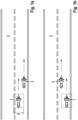
- FIG. 1a and 1b A motorcycle 1 is shown following a vehicle 2 driving ahead on a roadway 3.
- the vehicle 2 is in the Fig. 1a and 1b also a motorcycle (hereinafter:
- the motorcycle 1 is equipped with an adaptive cruise control system, which automatically maintains a set motorcycle speed while taking into account the distance between the motorcycle 1 and the other motorcycle 2.
- the cruise control system comprises a distance detection system, which is particularly radar-based and can be used to determine the distance between the motorcycle 1 and the other motorcycle 2.
- the distance detection system in the cruise control system allows, in particular, both the longitudinal distance and the lateral distance between the motorcycle 1 and the other motorcycle 2 to be determined.
- the distance control system in the motorcycle 1 Based on the detected distance between the motorcycle 1 and the other motorcycle 2 and taking into account the set motorcycle speed, the distance control system in the motorcycle 1 automatically intervenes in the motorcycle engine and the motorcycle brakes in order to maintain a sufficient safety distance both in the longitudinal and transverse directions from the other motorcycle 2 traveling ahead.
- the distance control system allows a minimum lateral distance to be specified and maintained between motorcycle 1 and other motorcycle 2, taking into account the vehicle type of other vehicle 2.
- the minimum lateral distance of motorcycle 1 is marked with b and depends on the vehicle type of other vehicle 2.
- the minimum lateral distance b is chosen to be relatively large and lies, for example, in a value range between 1.60 m and 2.50 m. This relatively large minimum lateral distance ensures that, in the case of a motorcycle 2 traveling ahead, overtaking with the distance control system activated is only possible if the motorcycle 1 changes lanes properly. However, it is not possible for the motorcycle 1 to change lanes to the left within the same lane when the distance control system is activated ( Fig. 1a ) or right ( Fig. 1b ) passes the other motorcycle 2, since the other motorcycle 2 would still be within the minimum lateral distance b of the motorcycle 1, which is detected by the distance control system.
- the speed of motorcycle 1 is measured when approaching the other motorcycle 2 in front and reaching the Minimum longitudinal distance, in particular to the same speed as the other motorcycle 2 traveling in front, which can be seen from the speed arrows of the same size in the longitudinal direction on motorcycle 1 and other motorcycle 2. Overtaking within the same lane is not possible and can only be carried out if motorcycle 1 changes from the right to the left lane.
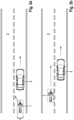
- FIG. 2a and 2b A driving situation is shown with a passenger car as other vehicle 2, which is followed by the motorcycle 1.
- the minimum lateral distance b of the motorcycle 1 is narrower than with Fig. 1a and 1b with a leading motorcycle. This is due to the greater width of the passenger car than other vehicle 2 compared to the leading motorcycle.
- a smaller minimum lateral distance b for motorcycle 1 for example, within a range of values between 0.80 m and 1.50 m, a swift and smooth overtaking maneuver is possible. Due to the greater width of the passenger car, overtaking other vehicle 2 is only possible if motorcycle 1 moves out into the overtaking lane.
- the adaptive cruise control system has an input unit through which the driver of the motorcycle 1 can enter the type of vehicle ahead.
- the driver of motorcycle 1 chooses a motorcycle as a third-party vehicle
- the driver of motorcycle 1 selects a motor vehicle as the other vehicle.
- the motorcycle's distance control system then automatically selects minimum lateral distances b as parameters and uses them as the basis for distance control.
Landscapes
- Engineering & Computer Science (AREA)
- Transportation (AREA)
- Mechanical Engineering (AREA)
- Automation & Control Theory (AREA)
- Chemical & Material Sciences (AREA)
- Combustion & Propulsion (AREA)
- Controls For Constant Speed Travelling (AREA)
- Control Of Driving Devices And Active Controlling Of Vehicle (AREA)
- Control Of Vehicle Engines Or Engines For Specific Uses (AREA)
- Traffic Control Systems (AREA)
Description
- Die Erfindung bezieht sich auf ein Verfahren zur selbsttätigen Einstellung der Geschwindigkeit eines Motorrads, sowie auf ein entsprechendes Steuergerät.
- Die
EP 2 241 498 B1 offenbart eine Geschwindigkeitsregelvorrichtung für ein Motorrad, die es erlaubt, das Motorrad selbsttätig auf einer voreingestellten Geschwindigkeit zu halten. Derartige Geschwindigkeitsregelvorrichtungen sind auch als Tempomat bekannt. - Aus dem Kraftfahrzeugbereich sind darüber hinaus adaptive Geschwindigkeitsregelvorrichtungen bekannt, die zusätzlich mit einem radargestützten Abstandserkennungssystem ausgestattet sind, mit dessen Hilfe der Abstand zwischen dem Fahrzeug und einem vorausfahrenden Fremdfahrzeug erkannt wird. Die tatsächliche Fahrzeuggeschwindigkeit wird adaptiv in Abhängigkeit der eingestellten Sollgeschwindigkeit und in Abhängigkeit des erkannten Abstandes zum vorausfahrenden Fremdfahrzeug eingestellt.
- Aus der
US 8,473,144 B1 ist es bekannt, für ein Motorrad, das sich einem vorausfahrenden Fahrzeug nähert, eine Trajektorie festzulegen, entlang der sich das Motorrad bei einem Überholvorgang bewegt, wobei der Seitenabstand zwischen dem überholenden Fahrzeug und einem überholten Fremdfahrzeug geschwindigkeitsabhängig festgelegt wird. - Die
DE 11 2015 003 610 T5 offenbart eine Geschwindigkeitsregelung für ein Zweirad, bei der der Längsabstand zwischen dem Zweirad und einem vorausfahrenden Fahrzeug in Abhängigkeit der Breite des Fahrzeugs festgelegt wird. - Das erfindungsgemäße Verfahren bezieht sich auf die selbsttätige Einstellung der Fahrgeschwindigkeit eines Motorrades unter Berücksichtigung des Längsabstandes sowie des Seitenabstandes zwischen dem Motorrad und einem in der selben Spur vorausfahrenden Fremdfahrzeug nach Anspruch 1, sowie auf ein Steuergerät nach Anspruch 7.
- Hierbei wird analog zu adaptiven Geschwindigkeitsregelsystemen in Kraftfahrzeugen fortlaufend der Abstand zwischen dem Motorrad und einem Fremdfahrzeug bestimmt, wobei die tatsächliche Motorradgeschwindigkeit vom aktuellen Längsabstand sowie dem aktuellen Seitenabstand zwischen dem Motorrad und dem Fremdfahrzeug abhängt. Hierdurch wird geschwindigkeitsabhängig ein Sicherheitsabstand zwischen dem Motorrad und dem Fremdfahrzeug gewährleistet.
- Bei dem erfindungsgemäßen Verfahren wird der einzuhaltende Mindestseitenabstand zwischen dem Motorrad und dem Fremdfahrzeug in Abhängigkeit des Fahrzeugtyps des Fremdfahrzeugs bestimmt. Es kann insbesondere zwischen breiteren und schmaleren Fremdfahrzeugen unterschieden werden, insbesondere zwischen Kraftfahrzeugen und Zweirädern wie zum Beispiel Motorrädern, die im Sinne der Erfindung ebenfalls als Fremdfahrzeug gelten.
- Der fahrzeugtypabhängige Mindestseitenabstand ermöglicht es, eine adaptive Tempomatfunktion für ein Motorrad zu realisieren, die auf den vorausfahrenden Fahrzeugtyp angepasst ist. Es ist insbesondere möglich, zwischen Motorrädern bzw. Zweirädern einerseits und Kraftfahrzeugen wie Personenkraftwagen oder Lastkraftwagen andererseits zu differenzieren.
- Diese Vorgehensweise erlaubt es beispielsweise, bei in Gruppen fahrenden Motorrädern ein adaptives Geschwindigkeitsregelsystem zu realisieren, ohne Gefahr zu laufen, dass das Motorrad sich einem vorausfahrenden Fremdmotorrad in einer gefährdenden Weise nähert und gegebenenfalls sogar ohne Fahrspurwechsel ein Überholvorgang durchgeführt wird. Derartige gefährdende Fahrsituationen können über den fahrzeugtypabhängigen
- Mindestseitenabstand zwischen dem Motorrad und dem Fremdfahrzeug vermieden werden.
- Es ist möglich, ein adaptives Abstandsregelsystem im Motorrad einzusetzen, das als Umfeldsensorik lediglich ein Abstandserkennungssystem zum Erkennen des Längsabstandes sowie des Seitenabstandes des Motorrads zu einem vorausfahrenden und/oder seitlich fahrenden Fremdfahrzeug aufweist, nicht jedoch ein Spurhaltesystem. Dementsprechend können ohne Sicherheitseinbußen verhältnismäßig einfach aufgebaute adaptive Motorrad-Abstandsregelsysteme realisiert werden.
- Der Mindestseitenabstand ist bei schmaleren Fremdfahrzeugen größer und bei breiteren Fremdfahrzeugen kleiner. Handelt es sich bei dem vorausfahrenden Fremdfahrzeug um ein Fremdmotorrad mit einer entsprechend geringen Breite, wird ein größerer Mindestseitenabstand vorgeschrieben, der bei einem Überholvorgang eingehalten werden muss. Ist die eingestellte Motorradgeschwindigkeit größer als die Geschwindigkeit des vorausfahrenden Fremdmotorrads, nähert sich das Motorrad an, wobei ein Überholvorgang nur möglich ist, wenn der Mindestseitenabstand zwischen dem Motorrad und dem Fremdmotorrad eingehalten wird. Dieser Mindestseitenabstand bedingt üblicherweise einen Fahrspurwechsel des auffahrenden Motorrades, das mit dem Motorrad-Abstandsregelsystem ausgestattet ist. Es wird somit verhindert, dass das vorausfahrende Fremdmotorrad innerhalb der gleichen Spur von dem auffahrenden Motorrad überholt werden kann. Sofern das auffahrende Motorrad die Fahrspur nicht wechselt, wird die Motorradgeschwindigkeit selbsttätig so weit reduziert, dass der geschwindigkeitsabhängige, vorgeschriebene Mindestlängsabstand zwischen Motorrad und vorausfahrendem Fremdmotorrad eingehalten wird.
- Handelt es sich dagegen bei dem vorausfahrenden Fremdfahrzeug um ein Kraftfahrzeug wie ein Personenkraftwagen oder ein Lastkraftwagen mit einer größeren Breite, so kann der Mindestseitenabstand auf einen kleineren Wert eingestellt werden, da ein Überholen des Fremdfahrzeugs ohnehin nur bei einem Fahrspurwechsel möglich ist. Indem ein kleinerer Mindestseitenabstand im Vergleich zu einem Fremdmotorrad gewählt wird, gestaltet sich der Überholvorgang des Fremdfahrzeugs flüssiger und kann in kürzerer Zeit durchgeführt werden.
- Es genügt grundsätzlich, dass genau zwei verschiedene Fahrzeugtypklassen und entsprechend zwei verschiedene Mindestseitenabstände eingestellt werden können, die einerseits einem Motorrad und andererseits einem Kraftfahrzeug entsprechen. Beispielsweise kann der größere Mindestseitenabstand, welcher vorzugsweise im Fall eines vorausfahrenden Fremdmotorrads bestimmt wird, in einem Wertebereich zwischen 1.60 m und 2.50 m liegen. Bei einem vorausfahrenden Kraftfahrzeug wird dagegen vorteilhafterweise im nachfolgenden Motorrad ein kleinerer Mindestseitenabstand bestimmt, der beispielsweise in einem Wertebereich zwischen 0.80 m und 1.50 m liegt.
- Es kann gegebenenfalls aber auch zweckmäßig sein, mehr als zwei verschiedene Fahrzeugtypklassen bzw. Mindestseitenabstände zu definieren, beispielsweise zwischen drei verschiedenen Fahrzeugtypklassen von Fremdfahrzeugen zu differenzieren, zum Beispiel zwischen einem Motorrad, einem Personenkraftwagen und einem Lastkraftwagen, und entsprechend die Mindestseitenabstände zu bestimmen. Des Weiteren ist es auch möglich, innerhalb eines zulässigen Wertebereichs pro Fahrzeugtyp einen größeren oder kleineren Mindestseitenabstand zu bestimmen.
- Gemäß noch einer weiteren zweckmäßigen Ausführung wird der Fahrzeugtyp des Fremdfahrzeugs, welches vor dem Motorrad fährt, vom Fahrer des Motorrads selbst eingestellt. Aus dem Fahrzeugtyp kann in dem Abstandsregelsystem selbsttätig der Mindestseitenabstand bestimmt und der Einstellung der Motorradgeschwindigkeit zugrunde gelegt werden. Somit gibt der Motorradfahrer den vor ihm fahrenden Fahrzeugtyp in das Abstandsregelsystem ein. Alternativ hierzu ist es auch möglich, dass der Mindestseitenabstand vom Fahrer unmittelbar im Abstandsregelsystem ausgewählt wird, wobei vorteilhafterweise definierte Abstandsklassen hinterlegt sind, zwischen denen ausgewählt werden kann.
- In einer alternativen Ausführung wird der Fahrzeugtyp des vorausfahrenden Fremdfahrzeugs selbsttätig im Abstandsregelsystem bestimmt, insbesondere mithilfe einer geeigneten Umfeldsensorik, vorzugweise über ein kamerabasiertes System, das ein Bild des vorausfahrenden Fremdfahrzeuges aufnimmt, welches in dem Abstandsregelsystem ausgewertet wird. Diese Vorgehensweise hat den Vorteil, dass keine Aktivität auf Seiten des Fahrers für die Bestimmung des Mindestseitenabstandes erforderlich ist.
- Die verschiedenen Verfahrensschritte laufen in einem Steuergerät ab, das Bestandteil des Abstandsregelsystems im Motorrad ist. Das Abstandsregelsystem umfasst ein Abstandserkennungssystem, um den Längsabstand sowie den Seitenabstand zwischen dem Motorrad und dem vorausfahrenden oder seitlich fahrenden Fremdfahrzeug zu bestimmen. Im Abstandsregelsystem werden Stellsignale zur selbsttätigen Einstellung der Motorradgeschwindigkeit über eine entsprechende Ansteuerung des Motorradmotors bzw. der Motorradbremsen erzeugt.
- Sofern der Fahrzeugtyp bzw. der Mindestseitenabstand vom Fahrer selbst in das Motorrad-Abstandsregelsystem eingegeben wird, verfügt dieses über eine entsprechende Eingabeeinheit, welche vom Fahrer betätigt werden kann. Bei einer selbsttätigen Erkennung des vorausfahrenden Fahrzeugtyps ist das Abstandsregelsystem mit einer entsprechenden Umfeldsensorik wie beispielsweise einem Kamerasystem ausgestattet.
- Weitere Vorteile und zweckmäßige Ausführungen sind den weiteren Ansprüchen, der Figurenbeschreibung und den Zeichnungen zu entnehmen. Es zeigen:
- Fig. 1a
- eine Fahrsituation eines Motorrades, das mit einem adaptiven Abstandsregelsystem ausgestattet ist, auf einer Straße mit einem vorausfahrenden Fremdmotorrad,
- Fig. 1b
- eine
Fig. 1a entsprechende Darstellung, jedoch mit dem Motorrad in einer anderen seitlichen Relativposition zum vorausfahrenden Fremdmotorrad, - Fig. 2a
- eine Fahrsituation eines Motorrads mit adaptivem Abstandsregelsystem und einem vorausfahrenden Fremd-Personenkraftwagen,
- Fig. 2b
- eine
Fig. 2a entsprechende Darstellung, jedoch mit dem Motorrad während eines Überholvorgangs auf der anderen Fahrspur. - In den Figuren sind gleiche Bauelemente und Funktionen mit gleichen Bezugszeichen versehen.
- In den
Fig. 1a und 1b ist ein Motorrad 1, das einem vorausfahrenden Fremdfahrzeug 2 auf einer Fahrbahn 3 folgt, dargestellt. Bei dem Fremdfahrzeug 2 handelt es sich in denFig. 1a und 1b ebenfalls um ein Motorrad (im Folgenden:
Fremdmotorrad). Das Motorrad 1 ist mit einem adaptiven Abstandsregelsystem ausgestattet, mit dem eine eingestellte Motorradgeschwindigkeit unter Berücksichtigung des Abstandes zwischen dem Motorrad 1 und dem Fremdmotorrad 2 selbsttätig eingehalten wird. Das Abstandsregelsystem umfasst ein Abstandserkennungssystem, das insbesondere radargestützt ausgeführt ist und mit dem der Abstand zwischen dem Motorrad 1 und dem Fremdmotorrad 2 ermittelt werden kann. Das Abstandserkennungssystem im Abstandsregelsystem erlaubt es insbesondere, sowohl den Längsabstand als auch den Seitenabstand zwischen dem Motorrad 1 und dem Fremdmotorrad 2 festzustellen. - Auf der Basis des erkannten Abstandes zwischen dem Motorrad 1 und dem Fremdmotorrad 2 sowie unter Berücksichtigung der eingestellten Motorradgeschwindigkeit greift das Abstandsregelsystem im Motorrad 1 in den Motorradmotor sowie in die Motorradbremsen selbsttätig ein, um einen ausreichenden Sicherheitsabstand sowohl in Längs- als auch in Querrichtung zu dem vorausfahrenden Fremdmotorrad 2 einzuhalten.
- Das Abstandsregelsystem erlaubt es, einen Mindestseitenabstand zwischen dem Motorrad 1 und dem Fremdmotorrad 2 unter Berücksichtigung des Fahrzeugtyps des Fremdfahrzeugs 2 vorzugeben und einzuhalten. Der Mindestseitenabstand des Motorrades 1 ist mit b gekennzeichnet und hängt vom Fahrzeugtyp des Fremdfahrzeugs 2 ab. Im Fall des Fremdmotorrades 2 bei
Fig. 1a und 1b wird der Mindestseitenabstand b verhältnismäßig groß gewählt und liegt beispielsweise in einem Wertebereich zwischen 1.60 m und 2.50 m. Dieser verhältnismäßig große Mindestseitenabstand gewährleistet, dass im Fall eines vorausfahrenden Fremdmotorrades 2 ein Überholen bei aktiviertem Abstandsregelsystem nur möglich ist, wenn das Motorrad 1 ordnungsgemäß die Fahrspur wechselt. Dagegen ist es nicht möglich, dass das Motorrad 1 bei aktiviertem Abstandsregelsystem innerhalb der gleichen Fahrspur links (Fig. 1a ) oder rechts (Fig. 1b ) an dem Fremdmotorrad 2 vorbeifährt, da das Fremdmotorrad 2 noch innerhalb des Mindestseitenabstandes b des Motorrades 1 liegen würde, was von dem Abstandsregelsystem erkannt wird. - Die Geschwindigkeit des Motorrads 1 wird bei Annäherung an das vorausfahrende Fremdmotorrad 2 und dem Erreichen des Mindestlängsabstandes gedrosselt, insbesondere auf die gleiche Geschwindigkeit wie das vorausfahrende Fremdmotorrad 2, was anhand der gleich großen Geschwindigkeitspfeile in Längsrichtung am Motorrad 1 und am Fremdmotorrad 2 zu erkennen ist. Ein Überholen innerhalb der gleichen Fahrspur ist nicht möglich und kann nur für den Fall durchgeführt werden, dass das Motorrad 1 von der rechten auf die linke Fahrspur wechselt.
- In den
Fig. 2a und 2b ist eine Fahrsituation mit einem Personenkraftwagen als Fremdfahrzeug 2 dargestellt, dem das Motorrad 1 folgt. Der Mindestseitenabstand b des Motorrades 1 ist schmaler als beiFig. 1a und 1b mit einem vorausfahrenden Fremdmotorrad. Der Grund liegt in der größeren Breite des Personenkraftwagens als Fremdfahrzeug 2 im Vergleich zu einem vorausfahrenden Fremdmotorrad. Indem der Mindestseitenabstand b des Motorrades 1 kleiner gewählt wird, beispielsweise innerhalb eines Wertebereiches zwischen 0.80 m und 1.50 m, ist ein zügiger und flüssig durchzuführender Überholvorgang möglich. Das Überholen des Fremdfahrzeuges 2 ist aufgrund der größeren Breite des Personenkraftwagens nur bei einem Ausscheren des Motorrades 1 auf die Überholspur möglich. - Vorteilhafterweise verfügt das adaptive Abstandsregelsystem über eine Eingabeeinheit, über die der Fahrer des Motorrades 1 den vorausfahrenden Fahrzeugtyp eingeben kann. Im Fall der
Fig. 1a und 1b wählt der Fahrer des Motorrades 1 ein Motorrad als Fremdfahrzeug, im Fall derFig. 2a und 2b wählt der Fahrer des Motorrades 1 ein Kraftfahrzeug als Fremdfahrzeug. Daraufhin werden selbsttätig in dem Abstandsregelsystem im Motorrad Mindestseitenabstände b als Parameter ausgewählt und der Abstandsregelung zugrunde gelegt.
Claims (10)
- Verfahren zur selbsttätigen Einstellung der Geschwindigkeit eines Motorrads (1) in Abhängigkeit des Längsabstands sowie des Seitenabstands des Motorrads (1) zu einem auf einer selben Fahrspur vorausfahrenden Fremdfahrzeug (2), wobei ein einzuhaltender Mindestseitenabstand (b) zwischen dem Motorrad (1) und dem Fremdfahrzeug (2) in Abhängigkeit des Fahrzeugtyps des Fremdfahrzeugs (2) bestimmt wird, dadurch gekennzeichnet, dass der Mindestseitenabstand (b) bei einem Fremdmotorrad als Fremdfahrzeug (2) in der Art gewählt ist, dass ein Überholen nur möglich ist, wenn das Motorrad (1) die Fahrspur wechselt.
- Verfahren nach Anspruch 1, dadurch gekennzeichnet, dass der Fahrzeugtyp des Fremdfahrzeugs (2) vom Fahrer eingestellt wird und aus dem eingestellten Fahrzeugtyp der Mindestseitenabstand (b) selbsttätig bestimmt wird.
- Verfahren nach einem der Ansprüche 1 oder 2, dadurch gekennzeichnet, dass genau zwei verschiedene Fahrzeugtypklassen bzw. Mindestseitenabstände (b) bestimmt werden.
- Verfahren nach einem der Ansprüche 1 bis 3, dadurch gekennzeichnet, dass als Umfeldinformationen nur der tatsächliche Längsabstand und Seitenabstand des Motorrads (1) zu dem Fremdfahrzeug (2) berücksichtigt wird.
- Verfahren nach einem der Ansprüche 1 bis 4, dadurch gekennzeichnet, dass der Mindestseitenabstand (b) bei einem vorausfahrenden Kraftfahrzeug, welches nicht ein Fremdmotorrad ist, in einem Wertebereich zwischen 0.80 m und 1.50 m liegt.
- Verfahren nach einem der Ansprüche 1 bis 5, dadurch gekennzeichnet, dass der Mindestseitenabstand (b) bei einem vorausfahrenden Fremdmotorrad in einem Wertebereich zwischen 1.60 m und 2.50 m liegt.
- Steuergerät zur Durchführung des Verfahrens nach einem der Ansprüche 1 bis 6.
- Motorrad-Abstandsregelsystem, mit einem Abstandserkennungssystem zum Erkennen des Längsabstands sowie des Seitenabstands des Motorrads (1) zu einem vorausfahrenden und/oder seitlich fahrenden Fremdfahrzeug (2) und mit einem Steuergerät nach Anspruch 7.
- Motorrad-Abstandsregelsystem nach Anspruch 8, dadurch gekennzeichnet, dass im Steuergerät verschiedene Mindestseitenabstände (b) hinterlegt sind, die jeweils einem bestimmtem Fahrzeugtyp zugeordnet sind.
- Motorrad-Abstandsregelsystem nach Anspruch 8 oder 9, dadurch gekennzeichnet, dass das Motorrad-Abstandsregelsystem eine Eingabeeinheit zur Eingabe eines bestimmten Fahrzeugtyps aufweist.
Applications Claiming Priority (2)
| Application Number | Priority Date | Filing Date | Title |
|---|---|---|---|
| DE102016224913.4A DE102016224913A1 (de) | 2016-12-14 | 2016-12-14 | Verfahren zur selbsttätigen Einstellung der Geschwindigkeit eines Motorrads |
| PCT/EP2017/079463 WO2018108436A1 (de) | 2016-12-14 | 2017-11-16 | Verfahren zur selbsttätigen einstellung der geschwindigkeit eines motorrads |
Publications (2)
| Publication Number | Publication Date |
|---|---|
| EP3554907A1 EP3554907A1 (de) | 2019-10-23 |
| EP3554907B1 true EP3554907B1 (de) | 2025-06-04 |
Family
ID=60484343
Family Applications (1)
| Application Number | Title | Priority Date | Filing Date |
|---|---|---|---|
| EP17805138.9A Active EP3554907B1 (de) | 2016-12-14 | 2017-11-16 | Verfahren zur selbsttätigen einstellung der geschwindigkeit eines motorrads |
Country Status (7)
| Country | Link |
|---|---|
| US (1) | US11247676B2 (de) |
| EP (1) | EP3554907B1 (de) |
| JP (1) | JP2020500784A (de) |
| CN (1) | CN110035938A (de) |
| DE (1) | DE102016224913A1 (de) |
| TW (1) | TW201821311A (de) |
| WO (1) | WO2018108436A1 (de) |
Families Citing this family (23)
| Publication number | Priority date | Publication date | Assignee | Title |
|---|---|---|---|---|
| US10882523B2 (en) * | 2018-02-12 | 2021-01-05 | Harley-Davidson Motor Company Group, LLC | Motorcycle adaptive cruise control target tracking |
| CN112888623A (zh) | 2018-08-20 | 2021-06-01 | 印度摩托车国际有限公司 | 轮式车辆通知系统及方法 |
| US11866042B2 (en) | 2018-08-20 | 2024-01-09 | Indian Motorcycle International, LLC | Wheeled vehicle adaptive speed control method and system |
| EP3841004A1 (de) * | 2018-08-20 | 2021-06-30 | Indian Motorcycle International, LLC | Verfahren und system zur adaptiven geschwindigkeitsregelung eines radfahrzeugs |
| JP2020029115A (ja) * | 2018-08-21 | 2020-02-27 | ロベルト・ボッシュ・ゲゼルシャフト・ミト・ベシュレンクテル・ハフツングRobert Bosch Gmbh | 制御装置及び制御方法 |
| JP2020091671A (ja) * | 2018-12-06 | 2020-06-11 | ロベルト・ボッシュ・ゲゼルシャフト・ミト・ベシュレンクテル・ハフツングRobert Bosch Gmbh | 鞍乗型車両のライダー支援システムのための処理装置及び処理方法、鞍乗型車両のライダー支援システム、及び、鞍乗型車両 |
| DE102019203132A1 (de) * | 2019-03-07 | 2020-09-10 | Robert Bosch Gmbh | Verfahren zur Kalibrierung eines Umfeldsensors in einem motorisierten Einspurfahrzeug |
| DE102020202986A1 (de) * | 2020-03-10 | 2021-09-16 | Robert Bosch Gesellschaft mit beschränkter Haftung | Verfahren und Vorrichtung zum Betreiben eines Motorrads |
| JP7145179B2 (ja) | 2020-03-24 | 2022-09-30 | 本田技研工業株式会社 | 鞍乗型車両及び制御装置 |
| DE112021007005T5 (de) * | 2021-02-04 | 2023-11-30 | Honda Motor Co., Ltd. | Grätschsitzfahrzeug, informationsverarbeitungsvorrichtung und informationsverarbeitungsverfahren |
| US20230068703A1 (en) * | 2021-08-24 | 2023-03-02 | Waymo Llc | Planning system for autonomously navigating around lane-sharing road agents |
| DE102021209512A1 (de) * | 2021-08-31 | 2023-03-02 | Robert Bosch Gesellschaft mit beschränkter Haftung | Verfahren und Vorrichtung zur Fahrerinformation bei einem aktivierten Abstands- und/oder Geschwindigkeitsregelungssystem |
| WO2023053331A1 (ja) * | 2021-09-30 | 2023-04-06 | 本田技研工業株式会社 | 運転支援制御装置 |
| DE102021211214A1 (de) | 2021-10-05 | 2023-04-06 | Robert Bosch Gesellschaft mit beschränkter Haftung | Verfahren zur Einstellung eines Gruppenfahrtmodus bei einem Geschwindigkeits- und/oder Abstandsregelungssystems eines einspurigen Kraftfahrzeugs |
| WO2023132892A1 (en) * | 2022-01-06 | 2023-07-13 | Indian Motorcycle International, LLC | Dynamically-adaptable proximity regions for a motorcycle |
| US20230234612A1 (en) * | 2022-01-25 | 2023-07-27 | GM Global Technology Operations LLC | System for predicting a location-based maneuver of a remote vehicle in an autonomous vehicle |
| US20250206307A1 (en) * | 2022-03-31 | 2025-06-26 | Robert Bosch Gmbh | Controller and control method for behavior of straddle-type vehicle |
| DE102022204994A1 (de) * | 2022-05-19 | 2023-11-23 | Robert Bosch Gesellschaft mit beschränkter Haftung | Verfahren zur Einstellung einer Tempomatfunktion mit automatischer Abstandseinstellung in einem Einspurfahrzeug |
| US20260159082A1 (en) * | 2022-06-30 | 2026-06-11 | Robert Bosch Gmbh | Controller and control method for rider-assistance system |
| CN120266179A (zh) | 2022-09-16 | 2025-07-04 | 印度摩托车国际有限公司 | 用户界面上的车辆邻近显示 |
| AT527121B1 (de) * | 2023-06-28 | 2024-11-15 | Avl List Gmbh | Verfahren und Vorrichtung zur Ermittlung und Einhaltung eines Seitenabstandes eines ersten Fahrzeugs zu einem zweiten Fahrzeug beim Überholvorgang |
| JPWO2025062620A1 (de) * | 2023-09-22 | 2025-03-27 | ||
| WO2025106777A1 (en) | 2023-11-17 | 2025-05-22 | Indian Motorcycle International, LLC | Adas camera and screen to replace side-mirrors |
Citations (1)
| Publication number | Priority date | Publication date | Assignee | Title |
|---|---|---|---|---|
| JP2010070061A (ja) * | 2008-09-18 | 2010-04-02 | Toyota Motor Corp | 車両走行支援装置 |
Family Cites Families (25)
| Publication number | Priority date | Publication date | Assignee | Title |
|---|---|---|---|---|
| EP1475765A3 (de) * | 2003-05-08 | 2006-05-24 | Robert Bosch Gmbh | Vorrichtung zur Bestimmung einer Durchfahrtsmöglichkeit für ein Fahrzeug |
| US8532862B2 (en) * | 2006-11-29 | 2013-09-10 | Ryan A. Neff | Driverless vehicle |
| DE102007053274B4 (de) | 2007-11-08 | 2020-12-10 | Robert Bosch Gmbh | Fahrerassistenzsystem für insbesondere motorisierte Zweiräder |
| JP2010247681A (ja) | 2009-04-16 | 2010-11-04 | Suzuki Motor Corp | 車両制御装置 |
| DE102009058154A1 (de) * | 2009-12-12 | 2011-06-16 | Wabco Gmbh | Fahrerassistenzsystem für ein Fahrzeug, insbesondere Nutzfahrzeug, sowie Verfahren zum Steuern eines Bremssystems |
| US8493196B2 (en) * | 2010-11-15 | 2013-07-23 | Bendix Commercial Vehicle Systems Llc | ACB following distance alert and warning adjustment as a function of forward vehicle size and host vehicle mass |
| DE102010061829A1 (de) * | 2010-11-24 | 2012-05-24 | Continental Teves Ag & Co. Ohg | Verfahren und Abstandskontrolleinrichtung zur Vermeidung von Kollisionen eines Kraftfahrzeugs in einer Fahrsituation mit geringem Seitenabstand |
| US9771070B2 (en) * | 2011-12-09 | 2017-09-26 | GM Global Technology Operations LLC | Method and system for controlling a host vehicle |
| JP5605381B2 (ja) * | 2012-02-13 | 2014-10-15 | 株式会社デンソー | クルーズ制御装置 |
| US8504233B1 (en) | 2012-04-27 | 2013-08-06 | Google Inc. | Safely navigating on roads through maintaining safe distance from other vehicles |
| JP6027365B2 (ja) * | 2012-07-30 | 2016-11-16 | 富士通テン株式会社 | レーダ装置、車両制御システム、および、信号処理方法 |
| US8473144B1 (en) * | 2012-10-30 | 2013-06-25 | Google Inc. | Controlling vehicle lateral lane positioning |
| US9254846B2 (en) * | 2013-05-03 | 2016-02-09 | Google Inc. | Predictive reasoning for controlling speed of a vehicle |
| EP3000104B1 (de) | 2013-05-21 | 2018-11-14 | Veoneer Sweden AB | Kollisionsminderungssysteme mit einstellbarer auslöserbreite |
| US9317752B2 (en) * | 2013-06-20 | 2016-04-19 | Xerox Corporation | Method for detecting large size and passenger vehicles from fixed cameras |
| US8825259B1 (en) * | 2013-06-21 | 2014-09-02 | Google Inc. | Detecting lane closures and lane shifts by an autonomous vehicle |
| JP5969534B2 (ja) | 2014-04-21 | 2016-08-17 | 株式会社デンソー | 走行支援装置 |
| JP6410509B2 (ja) * | 2014-08-04 | 2018-10-24 | 株式会社エフ・シー・シー | 鞍乗り型車両 |
| JP6323246B2 (ja) | 2014-08-11 | 2018-05-16 | 日産自動車株式会社 | 車両の走行制御装置及び方法 |
| JP6535194B2 (ja) | 2015-03-31 | 2019-06-26 | 株式会社デンソー | 車両制御装置、及び車両制御方法 |
| JP6380232B2 (ja) * | 2015-05-19 | 2018-08-29 | 株式会社デンソー | 物体検出装置、及び物体検出方法 |
| DE102015209246A1 (de) * | 2015-05-20 | 2016-11-24 | Robert Bosch Gmbh | System und Verfahren zur Durchführung von Einstellarbeiten an einem Kraftfahrzeug |
| JP6532786B2 (ja) * | 2015-08-07 | 2019-06-19 | 株式会社日立製作所 | 車両走行制御装置及び速度制御方法 |
| US10071748B2 (en) * | 2015-09-17 | 2018-09-11 | Sony Corporation | System and method for providing driving assistance to safely overtake a vehicle |
| US10032366B2 (en) * | 2015-10-12 | 2018-07-24 | The Chamberlain Group, Inc. | Remotely configurable sensor system and method of use |
-
2016
- 2016-12-14 DE DE102016224913.4A patent/DE102016224913A1/de active Pending
-
2017
- 2017-11-16 WO PCT/EP2017/079463 patent/WO2018108436A1/de not_active Ceased
- 2017-11-16 JP JP2019548525A patent/JP2020500784A/ja active Pending
- 2017-11-16 EP EP17805138.9A patent/EP3554907B1/de active Active
- 2017-11-16 US US16/469,478 patent/US11247676B2/en active Active
- 2017-11-16 CN CN201780077320.9A patent/CN110035938A/zh active Pending
- 2017-12-12 TW TW106143554A patent/TW201821311A/zh unknown
Patent Citations (1)
| Publication number | Priority date | Publication date | Assignee | Title |
|---|---|---|---|---|
| JP2010070061A (ja) * | 2008-09-18 | 2010-04-02 | Toyota Motor Corp | 車両走行支援装置 |
Also Published As
| Publication number | Publication date |
|---|---|
| US11247676B2 (en) | 2022-02-15 |
| CN110035938A (zh) | 2019-07-19 |
| JP2020500784A (ja) | 2020-01-16 |
| EP3554907A1 (de) | 2019-10-23 |
| WO2018108436A1 (de) | 2018-06-21 |
| US20200108830A1 (en) | 2020-04-09 |
| TW201821311A (zh) | 2018-06-16 |
| DE102016224913A1 (de) | 2018-06-14 |
Similar Documents
| Publication | Publication Date | Title |
|---|---|---|
| WO2018108436A1 (de) | Verfahren zur selbsttätigen einstellung der geschwindigkeit eines motorrads | |
| DE102018105783B4 (de) | Kollisionsvermeidungseinrichtung | |
| EP3908492B1 (de) | Verfahren und vorrichtung zur auswahl des zielobjekts für eine automatische abstandsregelung eines einspurigen kraftfahrzeugs | |
| DE102011016770B4 (de) | Verfahren zur Unterstützung eines Fahrers eines Fahrzeugs bei einem Fahrspurwechsel und Vorrichtung zur Durchführung des Verfahrens | |
| EP1292462A1 (de) | Verfahren zur abstandsregelung eines fahrzeugs zu einem vorausfahrenden fremdfahrzeug und abstandsregelsystem | |
| DE102011053855A1 (de) | Fahrzeugfahrtregelungsvorrichtung | |
| DE102011109697A1 (de) | Verfahren zum Betreiben eines Kraftfahrzeuges und Fahrerassistenzsystem zur Durchführung des Verfahrens | |
| DE102010002067A1 (de) | Fahrerassistenzverfahren für ein Kraftfahrzeug mit einer Spurführungsassistenzfunktion | |
| DE102014214389B4 (de) | Verfahren und System zum Signalisieren eines geeigneten optimalen Zeitpunktes zum Durchführen eines Manöverteils eines mehrteiligen Manövers eines Fahrzeuges | |
| DE102018213262A1 (de) | Verfahren zum Betreiben eines Kraftfahrzeugs, insbesondere eines Motorrads, Computerprogramm | |
| EP4412881B1 (de) | Verfahren zum manövrieren eines fahrzeugs auf einer mehrspurigen strasse unter berücksichtigung einer steigung in einem bereich einer ausfahrt der strasse, fahrerassistenzsystem sowie fahrzeug | |
| DE102017005320A1 (de) | Verfahren zum Betrieb eines Fahrzeugs | |
| EP2060466B1 (de) | Fahrerassistenzsystem für Kraftfahrzeuge | |
| DE102018215509A1 (de) | Verfahren und Vorrichtung zum Betrieb eines zumindest teilweise automatisiert betriebenen ersten Fahrzeugs | |
| DE112020005886T5 (de) | Fahrzeugsteuerungsvorrichtung | |
| DE102022002451B3 (de) | Verfahren zum automatischen Ansteuern eines Fahrtrichtungsanzeigers und Fahrzeug | |
| EP3395634B1 (de) | Verfahren zum erzeugen eines fahrverhaltens bei autonomen fahrzeugen | |
| WO2018177624A1 (de) | Verfahren und vorrichtung zur abstandsregelung für ein einspuriges kraftfahrzeug | |
| EP1195669B1 (de) | Verfahren zur Längsregelung eines Fahrzeuges bei dem Informationen eines Navigationssystems erfasst werden | |
| DE102022202714A1 (de) | Assistenzsystem sowie Verfahren zum Steuern eines | |
| DE102011103603A1 (de) | Unterstützen eines Fahrers eines Kraftfahrzeugs bei einem synchronen Überholen in einer Gegenverkehrssituation | |
| DE102016203968A1 (de) | Identifikation eines Fahrers eines Kraftfahrzeugs | |
| WO2022238219A1 (de) | Verfahren zum betreiben eines spurwechselassistenzsystems eines fahrzeugs mit geschwindigkeitsabhängiger differenzierung eines nachblinksignals, spurwechselassistenzsystem sowie fahrzeug | |
| DE102022104785A1 (de) | Verbessertes Überholmanöver zum Überholen eines vorausfahrenden Drittfahrzeugs | |
| EP4163176B1 (de) | Verfahren zur fahrerunterstützung in einem fahrzeug |
Legal Events
| Date | Code | Title | Description |
|---|---|---|---|
| STAA | Information on the status of an ep patent application or granted ep patent |
Free format text: STATUS: UNKNOWN |
|
| STAA | Information on the status of an ep patent application or granted ep patent |
Free format text: STATUS: THE INTERNATIONAL PUBLICATION HAS BEEN MADE |
|
| PUAI | Public reference made under article 153(3) epc to a published international application that has entered the european phase |
Free format text: ORIGINAL CODE: 0009012 |
|
| STAA | Information on the status of an ep patent application or granted ep patent |
Free format text: STATUS: REQUEST FOR EXAMINATION WAS MADE |
|
| 17P | Request for examination filed |
Effective date: 20190715 |
|
| AK | Designated contracting states |
Kind code of ref document: A1 Designated state(s): AL AT BE BG CH CY CZ DE DK EE ES FI FR GB GR HR HU IE IS IT LI LT LU LV MC MK MT NL NO PL PT RO RS SE SI SK SM TR |
|
| AX | Request for extension of the european patent |
Extension state: BA ME |
|
| DAV | Request for validation of the european patent (deleted) | ||
| DAX | Request for extension of the european patent (deleted) | ||
| RAP1 | Party data changed (applicant data changed or rights of an application transferred) |
Owner name: ROBERT BOSCH GMBH |
|
| STAA | Information on the status of an ep patent application or granted ep patent |
Free format text: STATUS: EXAMINATION IS IN PROGRESS |
|
| 17Q | First examination report despatched |
Effective date: 20220701 |
|
| GRAP | Despatch of communication of intention to grant a patent |
Free format text: ORIGINAL CODE: EPIDOSNIGR1 |
|
| STAA | Information on the status of an ep patent application or granted ep patent |
Free format text: STATUS: GRANT OF PATENT IS INTENDED |
|
| INTG | Intention to grant announced |
Effective date: 20250103 |
|
| GRAS | Grant fee paid |
Free format text: ORIGINAL CODE: EPIDOSNIGR3 |
|
| GRAA | (expected) grant |
Free format text: ORIGINAL CODE: 0009210 |
|
| STAA | Information on the status of an ep patent application or granted ep patent |
Free format text: STATUS: THE PATENT HAS BEEN GRANTED |
|
| AK | Designated contracting states |
Kind code of ref document: B1 Designated state(s): AL AT BE BG CH CY CZ DE DK EE ES FI FR GB GR HR HU IE IS IT LI LT LU LV MC MK MT NL NO PL PT RO RS SE SI SK SM TR |
|
| REG | Reference to a national code |
Ref country code: GB Ref legal event code: FG4D Free format text: NOT ENGLISH |
|
| REG | Reference to a national code |
Ref country code: CH Ref legal event code: EP |
|
| REG | Reference to a national code |
Ref country code: DE Ref legal event code: R096 Ref document number: 502017016877 Country of ref document: DE |
|
| REG | Reference to a national code |
Ref country code: IE Ref legal event code: FG4D Free format text: LANGUAGE OF EP DOCUMENT: GERMAN |
|
| REG | Reference to a national code |
Ref country code: NL Ref legal event code: MP Effective date: 20250604 |
|
| PG25 | Lapsed in a contracting state [announced via postgrant information from national office to epo] |
Ref country code: FI Free format text: LAPSE BECAUSE OF FAILURE TO SUBMIT A TRANSLATION OF THE DESCRIPTION OR TO PAY THE FEE WITHIN THE PRESCRIBED TIME-LIMIT Effective date: 20250604 Ref country code: ES Free format text: LAPSE BECAUSE OF FAILURE TO SUBMIT A TRANSLATION OF THE DESCRIPTION OR TO PAY THE FEE WITHIN THE PRESCRIBED TIME-LIMIT Effective date: 20250604 |
|
| REG | Reference to a national code |
Ref country code: LT Ref legal event code: MG9D |
|
| PG25 | Lapsed in a contracting state [announced via postgrant information from national office to epo] |
Ref country code: NO Free format text: LAPSE BECAUSE OF FAILURE TO SUBMIT A TRANSLATION OF THE DESCRIPTION OR TO PAY THE FEE WITHIN THE PRESCRIBED TIME-LIMIT Effective date: 20250904 Ref country code: GR Free format text: LAPSE BECAUSE OF FAILURE TO SUBMIT A TRANSLATION OF THE DESCRIPTION OR TO PAY THE FEE WITHIN THE PRESCRIBED TIME-LIMIT Effective date: 20250905 |
|
| PG25 | Lapsed in a contracting state [announced via postgrant information from national office to epo] |
Ref country code: PL Free format text: LAPSE BECAUSE OF FAILURE TO SUBMIT A TRANSLATION OF THE DESCRIPTION OR TO PAY THE FEE WITHIN THE PRESCRIBED TIME-LIMIT Effective date: 20250604 |
|
| PG25 | Lapsed in a contracting state [announced via postgrant information from national office to epo] |
Ref country code: BG Free format text: LAPSE BECAUSE OF FAILURE TO SUBMIT A TRANSLATION OF THE DESCRIPTION OR TO PAY THE FEE WITHIN THE PRESCRIBED TIME-LIMIT Effective date: 20250604 |
|
| PG25 | Lapsed in a contracting state [announced via postgrant information from national office to epo] |
Ref country code: HR Free format text: LAPSE BECAUSE OF FAILURE TO SUBMIT A TRANSLATION OF THE DESCRIPTION OR TO PAY THE FEE WITHIN THE PRESCRIBED TIME-LIMIT Effective date: 20250604 |
|
| PG25 | Lapsed in a contracting state [announced via postgrant information from national office to epo] |
Ref country code: RS Free format text: LAPSE BECAUSE OF FAILURE TO SUBMIT A TRANSLATION OF THE DESCRIPTION OR TO PAY THE FEE WITHIN THE PRESCRIBED TIME-LIMIT Effective date: 20250904 |
|
| PG25 | Lapsed in a contracting state [announced via postgrant information from national office to epo] |
Ref country code: LV Free format text: LAPSE BECAUSE OF FAILURE TO SUBMIT A TRANSLATION OF THE DESCRIPTION OR TO PAY THE FEE WITHIN THE PRESCRIBED TIME-LIMIT Effective date: 20250604 |
|
| PG25 | Lapsed in a contracting state [announced via postgrant information from national office to epo] |
Ref country code: NL Free format text: LAPSE BECAUSE OF FAILURE TO SUBMIT A TRANSLATION OF THE DESCRIPTION OR TO PAY THE FEE WITHIN THE PRESCRIBED TIME-LIMIT Effective date: 20250604 |
|
| PG25 | Lapsed in a contracting state [announced via postgrant information from national office to epo] |
Ref country code: PT Free format text: LAPSE BECAUSE OF FAILURE TO SUBMIT A TRANSLATION OF THE DESCRIPTION OR TO PAY THE FEE WITHIN THE PRESCRIBED TIME-LIMIT Effective date: 20251006 |
|
| PG25 | Lapsed in a contracting state [announced via postgrant information from national office to epo] |
Ref country code: IS Free format text: LAPSE BECAUSE OF FAILURE TO SUBMIT A TRANSLATION OF THE DESCRIPTION OR TO PAY THE FEE WITHIN THE PRESCRIBED TIME-LIMIT Effective date: 20251004 |
|
| PGFP | Annual fee paid to national office [announced via postgrant information from national office to epo] |
Ref country code: GB Payment date: 20251120 Year of fee payment: 9 |
|
| PG25 | Lapsed in a contracting state [announced via postgrant information from national office to epo] |
Ref country code: SM Free format text: LAPSE BECAUSE OF FAILURE TO SUBMIT A TRANSLATION OF THE DESCRIPTION OR TO PAY THE FEE WITHIN THE PRESCRIBED TIME-LIMIT Effective date: 20250604 |
|
| PG25 | Lapsed in a contracting state [announced via postgrant information from national office to epo] |
Ref country code: CZ Free format text: LAPSE BECAUSE OF FAILURE TO SUBMIT A TRANSLATION OF THE DESCRIPTION OR TO PAY THE FEE WITHIN THE PRESCRIBED TIME-LIMIT Effective date: 20250604 |
|
| PG25 | Lapsed in a contracting state [announced via postgrant information from national office to epo] |
Ref country code: EE Free format text: LAPSE BECAUSE OF FAILURE TO SUBMIT A TRANSLATION OF THE DESCRIPTION OR TO PAY THE FEE WITHIN THE PRESCRIBED TIME-LIMIT Effective date: 20250604 |
|
| PG25 | Lapsed in a contracting state [announced via postgrant information from national office to epo] |
Ref country code: RO Free format text: LAPSE BECAUSE OF FAILURE TO SUBMIT A TRANSLATION OF THE DESCRIPTION OR TO PAY THE FEE WITHIN THE PRESCRIBED TIME-LIMIT Effective date: 20250604 Ref country code: SK Free format text: LAPSE BECAUSE OF FAILURE TO SUBMIT A TRANSLATION OF THE DESCRIPTION OR TO PAY THE FEE WITHIN THE PRESCRIBED TIME-LIMIT Effective date: 20250604 |
|
| PG25 | Lapsed in a contracting state [announced via postgrant information from national office to epo] |
Ref country code: IT Free format text: LAPSE BECAUSE OF FAILURE TO SUBMIT A TRANSLATION OF THE DESCRIPTION OR TO PAY THE FEE WITHIN THE PRESCRIBED TIME-LIMIT Effective date: 20250604 |
|
| REG | Reference to a national code |
Ref country code: DE Ref legal event code: R097 Ref document number: 502017016877 Country of ref document: DE |
|
| PLBE | No opposition filed within time limit |
Free format text: ORIGINAL CODE: 0009261 |
|
| STAA | Information on the status of an ep patent application or granted ep patent |
Free format text: STATUS: NO OPPOSITION FILED WITHIN TIME LIMIT |
|
| PG25 | Lapsed in a contracting state [announced via postgrant information from national office to epo] |
Ref country code: DK Free format text: LAPSE BECAUSE OF FAILURE TO SUBMIT A TRANSLATION OF THE DESCRIPTION OR TO PAY THE FEE WITHIN THE PRESCRIBED TIME-LIMIT Effective date: 20250604 |
|
| PGFP | Annual fee paid to national office [announced via postgrant information from national office to epo] |
Ref country code: DE Payment date: 20260126 Year of fee payment: 9 |
|
| REG | Reference to a national code |
Ref country code: CH Ref legal event code: L10 Free format text: ST27 STATUS EVENT CODE: U-0-0-L10-L00 (AS PROVIDED BY THE NATIONAL OFFICE) Effective date: 20260416 |
|
| 26N | No opposition filed |
Effective date: 20260305 |
|
| REG | Reference to a national code |
Ref country code: CH Ref legal event code: H13 Free format text: ST27 STATUS EVENT CODE: U-0-0-H10-H13 (AS PROVIDED BY THE NATIONAL OFFICE) Effective date: 20260623 |
|
| PG25 | Lapsed in a contracting state [announced via postgrant information from national office to epo] |
Ref country code: LT Free format text: LAPSE BECAUSE OF FAILURE TO SUBMIT A TRANSLATION OF THE DESCRIPTION OR TO PAY THE FEE WITHIN THE PRESCRIBED TIME-LIMIT Effective date: 20250604 |
|
| PG25 | Lapsed in a contracting state [announced via postgrant information from national office to epo] |
Ref country code: MC Free format text: LAPSE BECAUSE OF FAILURE TO SUBMIT A TRANSLATION OF THE DESCRIPTION OR TO PAY THE FEE WITHIN THE PRESCRIBED TIME-LIMIT Effective date: 20250604 |
|
| PG25 | Lapsed in a contracting state [announced via postgrant information from national office to epo] |
Ref country code: LU Free format text: LAPSE BECAUSE OF NON-PAYMENT OF DUE FEES Effective date: 20251116 Ref country code: CH Free format text: LAPSE BECAUSE OF NON-PAYMENT OF DUE FEES Effective date: 20251130 |
|
| PG25 | Lapsed in a contracting state [announced via postgrant information from national office to epo] |
Ref country code: SE Free format text: LAPSE BECAUSE OF FAILURE TO SUBMIT A TRANSLATION OF THE DESCRIPTION OR TO PAY THE FEE WITHIN THE PRESCRIBED TIME-LIMIT Effective date: 20250604 |