EP3553588B1 - Système destiné à être utilisé dans l'imagerie de l'air - Google Patents
Système destiné à être utilisé dans l'imagerie de l'air Download PDFInfo
- Publication number
- EP3553588B1 EP3553588B1 EP17878470.8A EP17878470A EP3553588B1 EP 3553588 B1 EP3553588 B1 EP 3553588B1 EP 17878470 A EP17878470 A EP 17878470A EP 3553588 B1 EP3553588 B1 EP 3553588B1
- Authority
- EP
- European Patent Office
- Prior art keywords
- retroreflective
- transflective mirror
- sub
- polarized light
- light
- Prior art date
- Legal status (The legal status is an assumption and is not a legal conclusion. Google has not performed a legal analysis and makes no representation as to the accuracy of the status listed.)
- Active
Links
Images




Classifications
-
- G—PHYSICS
- G02—OPTICS
- G02B—OPTICAL ELEMENTS, SYSTEMS OR APPARATUS
- G02B5/00—Optical elements other than lenses
- G02B5/12—Reflex reflectors
-
- G—PHYSICS
- G02—OPTICS
- G02B—OPTICAL ELEMENTS, SYSTEMS OR APPARATUS
- G02B5/00—Optical elements other than lenses
- G02B5/12—Reflex reflectors
- G02B5/122—Reflex reflectors cube corner, trihedral or triple reflector type
- G02B5/124—Reflex reflectors cube corner, trihedral or triple reflector type plural reflecting elements forming part of a unitary plate or sheet
-
- G—PHYSICS
- G02—OPTICS
- G02B—OPTICAL ELEMENTS, SYSTEMS OR APPARATUS
- G02B1/00—Optical elements characterised by the material of which they are made; Optical coatings for optical elements
- G02B1/10—Optical coatings produced by application to, or surface treatment of, optical elements
- G02B1/11—Anti-reflection coatings
-
- G—PHYSICS
- G02—OPTICS
- G02B—OPTICAL ELEMENTS, SYSTEMS OR APPARATUS
- G02B27/00—Optical systems or apparatus not provided for by any of the groups G02B1/00 - G02B26/00, G02B30/00
- G02B27/10—Beam splitting or combining systems
- G02B27/14—Beam splitting or combining systems operating by reflection only
-
- G—PHYSICS
- G02—OPTICS
- G02B—OPTICAL ELEMENTS, SYSTEMS OR APPARATUS
- G02B30/00—Optical systems or apparatus for producing three-dimensional [3D] effects, e.g. stereoscopic images
- G02B30/20—Optical systems or apparatus for producing three-dimensional [3D] effects, e.g. stereoscopic images by providing first and second parallax images to an observer's left and right eyes
- G02B30/34—Stereoscopes providing a stereoscopic pair of separated images corresponding to parallactically displaced views of the same object, e.g. 3D slide viewers
- G02B30/35—Stereoscopes providing a stereoscopic pair of separated images corresponding to parallactically displaced views of the same object, e.g. 3D slide viewers using reflective optical elements in the optical path between the images and the observer
-
- G—PHYSICS
- G02—OPTICS
- G02B—OPTICAL ELEMENTS, SYSTEMS OR APPARATUS
- G02B30/00—Optical systems or apparatus for producing three-dimensional [3D] effects, e.g. stereoscopic images
- G02B30/50—Optical systems or apparatus for producing three-dimensional [3D] effects, e.g. stereoscopic images the image being built up from image elements distributed over a 3D volume, e.g. voxels
- G02B30/56—Optical systems or apparatus for producing three-dimensional [3D] effects, e.g. stereoscopic images the image being built up from image elements distributed over a 3D volume, e.g. voxels by projecting aerial or floating images
-
- G—PHYSICS
- G02—OPTICS
- G02B—OPTICAL ELEMENTS, SYSTEMS OR APPARATUS
- G02B5/00—Optical elements other than lenses
- G02B5/12—Reflex reflectors
- G02B5/122—Reflex reflectors cube corner, trihedral or triple reflector type
-
- G—PHYSICS
- G02—OPTICS
- G02B—OPTICAL ELEMENTS, SYSTEMS OR APPARATUS
- G02B5/00—Optical elements other than lenses
- G02B5/12—Reflex reflectors
- G02B5/126—Reflex reflectors including curved refracting surface
- G02B5/128—Reflex reflectors including curved refracting surface transparent spheres being embedded in matrix
-
- G—PHYSICS
- G02—OPTICS
- G02B—OPTICAL ELEMENTS, SYSTEMS OR APPARATUS
- G02B5/00—Optical elements other than lenses
- G02B5/12—Reflex reflectors
- G02B5/126—Reflex reflectors including curved refracting surface
- G02B5/13—Reflex reflectors including curved refracting surface plural curved refracting elements forming part of a unitary body
-
- G—PHYSICS
- G02—OPTICS
- G02B—OPTICAL ELEMENTS, SYSTEMS OR APPARATUS
- G02B5/00—Optical elements other than lenses
- G02B5/30—Polarising elements
- G02B5/3083—Birefringent or phase retarding elements
-
- G—PHYSICS
- G03—PHOTOGRAPHY; CINEMATOGRAPHY; ANALOGOUS TECHNIQUES USING WAVES OTHER THAN OPTICAL WAVES; ELECTROGRAPHY; HOLOGRAPHY
- G03B—APPARATUS OR ARRANGEMENTS FOR TAKING PHOTOGRAPHS OR FOR PROJECTING OR VIEWING THEM; APPARATUS OR ARRANGEMENTS EMPLOYING ANALOGOUS TECHNIQUES USING WAVES OTHER THAN OPTICAL WAVES; ACCESSORIES THEREFOR
- G03B21/00—Projectors or projection-type viewers; Accessories therefor
Definitions
- the present invention claims priority of Chinese Patent Application No. CN2016111240031 filed on December 8, 2016 , priority of Chinese Patent Application No. CN2017112704019 filed on December 5, 2017 , priority of Chinese Patent Application No. CN2017112712706 filed on December 5, 2017 , priority of Chinese Patent Application No. CN2017112692670 filed on December 5, 2017 and priority of Chinese Patent Application No. CN2017112712725 filed on December 5, 2017 .
- the present invention relates to the field of holographic imaging, and more particularly, to a system for imaging in air.
- a holographic technology is a technology of recording and reproducing a real three-dimensional image of an object on principles of interference and diffraction.
- a holographic image is produced on a principle of laser interference.
- Light emitted by a laser source is split into two beams, of which one beam is directly emitted to a sensitometric strip, and the other beam is reflected by a photographed object and then emitted to the sensitometric strip.
- the two beams are superimposed on the sensitometric strip to cause interference; and finally, the reproduced hologram is further processed using a basic principle of digital images, to remove digital noise and obtain a clear holographic image.
- the method has disadvantages of high requirements for monochromaticity and difficulty in implementing color imaging.
- a high-speed rotating reflective plate and a high-speed refresh projector are required to project an image onto the high-speed rotating reflective plate, so as to achieve a three-dimensional image.
- a rotary holographic projection show cabinet by using such type of technology is disclosed in a patent document No. CN105372926A .
- the technology is difficult to realize interaction, and has a strict demand on a site space.
- the image is either formed on a virtual reality or augmented reality tool, or formed on a high-speed rotating reflective plate, or formed on vapor particles in the air, none of which is really imaging in the air.
- US 6147805 discloses a head mounted display system including focusing optics to focus light from an image source, retro-reflector and beamsplitter.
- US 2015248014 discloses a retro-imaging system.
- a polarization beam splitter layer and a retarder layer placed in front of the retro-reflector array may be oriented such that polarized light is used as source, source input light is efficiently reflected at the polarization beam splitter layer toward the retro-reflective layer, and polarization is converted to circular upon first pass through retarder layer.
- US 2014055858 A discloses a retroreflective article.
- the retroreflective article includes a first transparent layer having a back surface with retroreflective prisms, and a planar front surface that has an index of refraction n1.
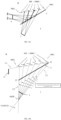
- FIG. 1 shows an imaging system according to an embodiment of the present invention.
- the system comprises an image source 1, a transflective mirror 2 and a retroreflective element 3.
- a plane where the transflective mirror 2 is located divides space into a first half region I and a second half region II, and both the image source 1 and the retroreflective element 3 are located in the first half region I.
- the embodiment described in this paragraph is to be considered merely as an example suitable for understanding the invention.
- Light emitted by the image source 1 is irradiated on the retroreflective element 3 after being reflected by the transflective mirror 2, and then the light is retroreflected by the retroreflective element 3, so that reflected light and incident light on the retroreflective element 3 are located in the same path, but in opposite directions. Therefore, the light is reflected by the retroreflective element 3 and then emerges along an original incident path (of course, as observed microscopically, a reflection path may be considered to be slightly offset from an incident path; however, as observed macroscopically, the two paths may be considered to coincide completely), and after being transmitted by the transflective mirror, then forms a real image 4 in the second half region II.
- the image source 1 may be a display imaging device, or may also be a virtual image or a real image formed by such a display imaging device.
- the display imaging device may be a liquid crystal screen, and a backlight source of the liquid crystal screen includes one or more selected from the group consisting of a laser, light emitting diode, an organic light-emitting diode, an stimulated fluorescence luminescence material and a quantum dot excitation light source;
- the display imaging device may also be an active luminous dot matrix screen composed of light-emitting point light source such as an LED, an OLED and a plasma light-emitting point;
- the display imaging device may also be a projection imaging system based on a projection technology, for example, DLP, LCOS and LCD, etc., which, as driven by light source such as an LED, an OLED, a laser, a fluorescent, or a combination thereof, causes light to be reflected or transmitted by a DMD, an LCOS and an LCD, etc., and then projected by a projection lens on a projection screen to form an image; or the display imaging device may also be a projection imaging system in which a laser beam scans
- the image source 1 may be a stereo image source.
- the stereo image source includes a three-dimensional stereoscopic display device which can display a three-dimensional stereo image, structure and video source.
- the three-dimensional stereoscopic display device usually includes a control module and a high-speed projection module or a high-speed display module.
- the control module controls the projection module or the display module to project or display a series of two-dimensional image slices onto a plurality of optical flats at a high speed, so that an observer observes a three-dimensional image, structure or video.
- the three-dimensional stereoscopic display device includes a translational scanning imaging system or a rotational scanning imaging system, ect.
- the transflective mirror may be made of various suitable transparent materials, for example, a PC resin, a PET resin, a PMMA resin, glass, quartz, and the like. Transmittance of the transflective mirror ranges from 20% to 80%; preferably, is about 50%. Reflectance of the transflective mirror also ranges from 20% to 80%; preferably, is also about 50%.
- the retroreflective element 3 is preferably a thin film, a curtain, a sheet or a resin which has micro-structures distributed thereon.
- the retroreflective element 3 preferably has a certain curvature and is curved toward the transflective mirror, so as to increase imaging luminance.
- the retroreflective element 3 will be described in detail below.
- a system comprises an image source 1, a transflective mirror 2 and a retroreflective element 3.
- a plane where the transflective mirror 2 is located divides space into a first half region I and a second half region II, the image source 1 is located in the first half region I, and the retroreflective element 3 is located in the second half region II.
- the embodiment described in this paragraph is to be considered merely as an example suitable for understanding the invention.
- Light emitted by the image source 1 is irradiated on the retroreflective element 3 after being transmitted by the transflective mirror 2, and then the light is reflected by the retroreflective element 3, so that reflected light and incident light on the retroreflective element 3 are located in the same path, but in opposite directions. Therefore, the light is reflected by the retroreflective element 3 and then emerges along an original incident path, and then forms a real image 4 in the second half region II after being reflected by the transflective mirror.
- the light emitted by the image source 1 is transmitted (rather than reflected) by the transflective mirror 2 and then reaches the retroreflective element 3. While the light reflected by the retroreflective element 3 is further reflected (rather than transmitted) by the transflective mirror 2, and then forms the real image 4.
- the finally formed real image 4 and the retroreflective element 3 are located in the same half region, rather than different half regions.
- the embodiment described in this paragraph is to be considered merely as an example suitable for understanding the invention.
- two image sources may be used. At this time, it is necessary to adjust positions of the two image sources as well as a transflective mirror and a retroreflective element, so that the finally formed real images completely overlap with each other in space.
- the retroreflective element in the present invention is a specially treated element, which includes, for example, a base material coated with a highly reflective coating, and, for example, retroreflective micro-structures evenly distributed on the base material.
- Reflectance of the highly reflective coating is as high as 60%, preferably, as high as 70%, 80% or 90%. It should be understood that, the highly reflective coating may also be attached onto the base material in other modes, for example, plating.
- the highly reflective coating may be attached, for example, onto a face of the micro-structure that faces the base material, or onto a region where the micro-structure borders the base material.
- distribution of the retroreflective micro-structures on the base material may also be uneven, even distribution may achieve a better imaging effect; however, some deliberately arranged uneven distributions may be used for special imaging purposes.
- the retroreflective element 3 includes a thin film or a curtain used as a base material 30.
- the base material 30 is coated with a highly reflective coating. Further, spherical micro-structures 31 are evenly distributed on the base material 30.
- the embodiment described in this paragraph is to be considered merely as an example suitable for understanding the invention.
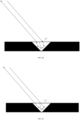
- FIG. 4 an enlarged view of the spherical micro-structure and a schematic diagram of a retroreflection path are shown.
- the embodiment described in this paragraph is to be considered merely as an example suitable for understanding the invention.
- Light from a transflective mirror is refracted by an upper surface of the spherical micro-structure 31, and then is irradiated on the highly reflective coating of the base material 30; after being reflected, the light is emitted back to the upper surface of the spherical micro-structure 31; and after being subjected to another refraction, the light is emitted to the transflective mirror.
- the structure of the spherical micro-structure 31 allows the light to return to the transflective mirror almost along the original path (as described above, as observed macroscopically, it may be considered that the light returns along the original path).
- a retroreflective element according to another embodiment of the present invention is shown.
- a base material 30 of the retroreflective element 3 further has right-angled vertex micro-structures 31' evenly distributed thereon.
- the right-angled vertex micro-structure 31' may be a transparent micro-structure body having at least one vertex whose three edges are at right angles to one another, that is embedded in the base material 30, for example, a micro-cube or a micro-cuboid, or a portion of at least one vertex thereof.
- the at least one vertex is definitely embedded in the base material 30 (with reference to FIG. 6A ).
- a right-angled vertex micro-structure 31' is a micro-triangular pyramid whose three edges are at right angles to one another, and a vertex is embedded in the base material 30 (with reference to FIG. 6B ); preferably, a bottom face opposite to the vertex is flush with the base material 30; and more preferably, an anti-reflective film is attached onto the bottom face.
- an included angle between at least one face of the three faces formed by the three edges and the bottom face is less than 54 degrees.
- the three edges may be equal in length, or may also be unequal in length.
- a length of the edge may be selected between 20 micrometers and 5 millimeters.
- a length of a longest edge does not exceed 10 times of the length of a shortest edge.
- the three faces formed by the three edges should also be perpendicular to one another, that is, a dihedral angle between any two of the three faces should be 90 degrees.
- a dihedral angle between any two of the three faces should be 90 degrees.
- the right-angled vertex micro-structure 31' may be a concave portion formed by imprinting a portion of one vertex of the above-described micro-structure body onto the base material 30 (with reference to FIG. 6C ).
- FIG. 6A , FIG. 6B and FIG. 6C show enlarged views of the right-angled vertex micro-structures in FIG. 5 and schematic diagrams of retroreflection paths.
- the right-angled vertex micro-structure 31' is a transparent micro-structure body.
- Light from a transflective mirror is refracted by an incident surface (for example, an upper surface) of the right-angled vertex micro-structure 31' and is irradiated on a highly reflective coating of a thin film or curtain 30; after being subjected to three reflections, the light is emitted back to an emergent surface (for example, the upper surface) of the right-angled vertex micro-structure 31'; thereafter, the light is retroreflected again, and then is emitted to the transflective mirror.
- an incident surface for example, an upper surface
- a highly reflective coating of a thin film or curtain 30 after being subjected to three reflections, the light is emitted back to an emergent surface (for example, the upper surface) of the right-angled vertex micro-structure 31'; thereafter, the light is retroreflected again, and then is emitted to the transflective mirror.
- the right-angled vertex micro-structure 31' is a concave portion; after being subjected to a transmission or a reflection of the transflective mirror, the light is directly incident on the concave portion, and after being subjected to three reflections, the light is emitted to the transflective mirror.
- the structure of the right-angled vertex micro-structure 31' allows the light to return to the transflective mirror almost along the original path (similarly, as observed macroscopically, it may be considered that the light returns along the original path).
- FIG. 7 shows a retroreflective element according to yet another embodiment of the present invention.
- a base material 30' of the retroreflective element 3 further has right-angled vertex micro-structures 31' evenly distributed thereon.
- the base material 30' itself is a transparent base material, and the right-angled vertex micro-structure 31' is also a transparent micro-structure body. Those faces of the right-angled vertex micro-structure 31' away from the base material 30' are coated with a highly reflective coating.
- the right-angled vertex micro-structure 31' is preferably formed integrally with the base material 30'; or certainly they may also be separately formed and then the right-angled vertex micro-structure is attached onto the base material 30'.
- the base material 30' and the right-angled vertex micro-structure 31' are made of the same material, or at least have the same refractive index.
- FIG. 8 shows an enlarged view of the right-angled vertex micro-structure in FIG. 7 and a schematic diagram of a retroreflection path.
- Light from a transflective mirror is refracted by an upper surface of the base material 30' and is irradiated on a highly reflective coating of the right-angled vertex micro-structure 31'; after being subjected to three reflections, the light is emitted back to the upper surface of the base material 30'; and after being subjected to another refraction, the light is emitted to the transflective mirror.
- the structure of the right-angled vertex micro-structure 31' allows the light to return to the transflective mirror almost along the original path (as described above, as observed macroscopically, it may be considered that the light returns along the original path).
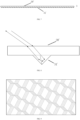
- FIG. 9 schematically shows a top view of distribution of micro-structures on a retroreflective element according to an embodiment of the present invention, for better understanding of the distribution of the micro-structures.
- a plurality of micro-structures are sequentially distributed, closely adjacent to one another, and extend on the retroreflective element. It should be understood that, only a portion of the retroreflective element is shown in the diagram, and the micro-structures may be distributed throughout the retroreflective element in this manner.
- micro-structure shown in the diagram is a concave portion resembling a cuboid, it should be understood that, a shape of the micro-structure is not limited thereto, and may be any type of the micro-structure as described above.
- the retroreflective element still causes a certain offset between a reflection path and an incident path of the light; and meanwhile, due to a diffraction effect of the light, the reflected light will have a certain divergence angle.
- These two points are two core factors that affect definition of imaging in the air according to the present invention, and these two factors are also mutually constrained.
- a relationship among a diameter of the micro-structure, a dot pitch of a pixel array of the source image, and an optical path from the real image to the retroreflective element is specifically designed in the present invention.
- an observation distance for an observer to observe the formed real image increases as the optical path from the real image to the retroreflective element increases, and preferably, the two are substantially linearly related to each other.
- a picture width of the formed real image is preferably, for example, 1 to 2 times of the observation distance; and if the observer wants to obtain a sufficiently clear real image, then it is necessary for the number of observed pixel points to reach a certain value, for example, at least 1024 pixel points are present in each dimension; and thus, the dot pitch of the selected image source may be derived (the dot pitch of the image source determines a light spot size of the formed real image).
- the diameter of the micro-structure is set to be the same order of magnitude as the dot pitch of the image source, which is, preferably, about 1/5, 1/4, 1/3, 1/2 of, or equal to the dot pitch of the image source. Therefore, the optical path and the dot pitch of the light source (in case of a matrix light source) may be selected according to the observation distance of an actual application scenario, so as to further select the size of the micro-structure.
- a relatively suitable observation distance is about 5 m
- an imaging system with an optical path of 2 m or slightly longer may be selected, and a relatively suitable picture length of the real image is about 5 m, at which time, if a resolution of 1024 pixels is desired, a dot matrix image source having a dot pitch of about 5 mm may be used, and it may be derived by calculation that a preferred size of the micro-structure ranges from 0.6 mm to 4.4 mm, and more preferably, is about 1.7 mm.
- a relatively suitable observation distance is about 1 m or more
- an imaging system with an optical path of about 0.5 m may be selected, and a relatively suitable picture length of the real image is about 2 m; at which time, if a resolution of 1024 pixels is desired, a dot matrix image source having a dot pitch of about 2 mm may be used, and it may be derived by calculation that a preferred size of the micro-structure ranges from 0.43 mm to 1.57 mm, and more preferably, is about 0.82 mm.
- a relatively suitable observation distance is about 0.5 m or less
- an imaging system with an optical path of about 0.1 m may be selected, and a relatively suitable picture length of the real image is about 1 m; at which time, if a resolution of 1024 pixels is desired, a dot matrix image source having a dot pitch of about 0.5 mm may be used, and it may be derived by calculation that a preferred size of the micro-structure ranges from 0.16 mm to 0.84 mm, and more preferably, is about 0.37 mm.
- the retroreflective element still causes a certain offset between a reflection path and an incident path of the light; and meanwhile, because of a diffraction effect of the light, the reflected light will have a certain divergence angle.
- An effect of light offset on the light spot size does not vary with an imaging distance, but varies linearly with a scale of the micro-structure. Therefore, it can be solved by using a method of reducing the size of a micro-structure unit, for example, ultra-fine processing, etc.
- a size of a spot caused by diffraction varies linearly with variation of the imaging distance, so it is a key factor to try to reduce light divergence caused by diffraction.
- incident light is refracted by an upper surface, and is irradiated on the right-angled triangular pyramid of the retroreflective unit; then the light is reflected thereon, and at a same time, due to Fraunhofer diffraction, diverges at a certain angle. Thereafter, the light is refracted by the upper surface of the retroreflective element, to form reflected light having a principal axis whose direction is opposite to that of the incident light, but with a small amount of offset and a certain divergence angle.
- a base portion of a retroreflective unit is divided into two main portions.
- a convex lens structure is used for forming a convex lens array on an upper portion of the base portion, that is, a side facing the transflective mirror.
- a right-angled triangular pyramid structure is used for forming a right-angled triangular pyramid array on a lower portion of the base portion, that is, a side away from the transflective mirror.
- a transparent base material is used throughout the base portion. Meanwhile, a thickness of the base portion is designed such that the right-angled triangular pyramid structure of the lower portion is arrayed on a focal plane of the convex lens of the upper portion.
- a highly reflective material layer is plated on a lower surface of the base portion, that is, a lower surface, or say, an outer side of the right-angled triangular pyramid structure.
- the incident light is refracted by an upper surface of the base portion, that is, an upper surface, or say, an outer side of the convex lens structure, and then is irradiated on the right-angled triangular pyramid; the light is reflected many times by the lower surface thereof, and at a same time, due to Fraunhofer diffraction, diverges at a certain angle; and thereafter, the light is refracted again on the upper surface of the retroreflective element.
- the refraction allows the light with a certain divergence angle to concentrate, and emit in a form of approximately parallel light.
- divergence caused by diffraction is reduced, and the spot size caused by diffraction can also be reduced even when the imaging distance is relatively long.
- each convex lens structure in the convex lens array has a diameter of about 1 mm, preferably less than 1 mm; and each right-angled triangular pyramid structure in the right-angled triangular pyramid array has an equilateral right-angled triangular pyramid structure, whose bottom face is an equilateral triangle; the bottom face has a side length of about 0.02 mm, and preferably less than 0.02 mm.
- one convex lens structure corresponds to dozens of right-angled triangular pyramid structures; however, a case where one convex lens structure corresponds to one right-angled triangular pyramid structure may also be taken into consideration.
- reflectance of a reflective material layer plated on the lower surface of the base portion is as high as 60%, and preferably, as high as 70%, 80% or 90%.
- the upper surface of the base portion is further plated with an anti-reflective material, such that transmittance of the surface is as high as 70%, and more preferably, as high as 80% or 90%.
- L 0 is the luminance of the image source
- T g and R g are respectively transmittance and reflectance of the transflective mirror
- ⁇ is a reflection luminous efficacy of the retroreflective element.
- a luminous efficacy of the transflective mirror is less than or equal to 1/4.
- FIG. 12 shows one embodiment of an imaging system for improving imaging luminance according to the technology.
- the system comprises an image source 1, a transflective mirror 2 and a retroreflective element 3.
- a plane where the transflective mirror 2 is located divides space into a first half region I and a second half region II, and both the image source 1 and the retroreflective element 3 are located in the first half region I.
- Light emitted by the image source 1 is reflected by the transflective mirror 2 and is irradiated on the retroreflective element 3, and then the light is retroreflected on the retroreflective element 3, so that reflected light and incident light on the retroreflective element 3 are located in the same path, but in opposite directions. Therefore, the light is reflected by the retroreflective element 3 and then emerges along an original incident path (of course, as observed microscopically, a reflection path may be considered to be slightly offset from an incident path; however, as observed macroscopically, the two paths may be considered to coincide completely), and after being transmitted by the transflective mirror, then forms a real image 4 in the second half region II.
- the image source 1 is an s-polarized light source; a selective transmissive film is plated on a side of the transflective mirror 2 that faces the image source 1, and the selective transmissive film is set to have higher reflectance with respect to s-polarized light, and higher transmittance with respect to p-polarized light.
- the selective transmissive film may be a single film layer, or may also be a plurality of film layers stacked.
- a component of the selective transmissive film is selected from special metal oxides, metal nitrides, metal oxynitride coatings, fluorides, and/or organic polymers; which may be one or more selected from the group consisting of tantalum pentoxide, titanium dioxide, magnesium oxide, zinc oxide, zirconium oxide, silicon dioxide, magnesium fluoride, silicon nitride, silicon oxynitride and aluminum fluoride.
- a side of the retroreflective element 3 that faces the transflective mirror 2 is further provided with a phase delay optical element 5, which is preferably a 1/4 wave plate, such that light of the s-polarized light source emitted from the transflective mirror 2 to the retroreflective element 3 becomes circularly polarized light after passing through the phase delay optical element 5.
- the circularly polarized light after being reflected by the retroreflective element 3, and then passing through the phase delay optical element 5, becomes the p-polarized light.
- Average reflectance of the selective transmissive film with respect to the s-polarized light is greater than 70%, preferably greater than 80%, or even greater than 90%; while average transmittance thereof with respect to the p-polarized light is greater than 70%, preferably greater than 80%, or even greater than 90%.
- the average reflectance of the selective transmissive film with respect to the s-polarized light is greater than 70%
- the average transmittance thereof with respect to the p-polarized light is also greater than 70% as an example.
- the result is nearly doubled as compared with the luminous efficacy of, for example, 25% in the above-described system. Then, the final imaging luminance is also nearly doubled.
- the image source 1 is selected to be an s-polarized light source emitting s-polarized light of a specific wavelength band
- the selective transmissive film is also set to have higher reflectance with respect to the s-polarized light of the specific wavelength band, and higher transmittance with respect to s-polarized light of other wavelength band and p-polarized light within a visible light band.
- average reflectance with respect to the s-polarized light of the specific wavelength band is greater than 80%, or even greater than 90%; while average transmittance with respect to s-polarized light of other wavelength band and p-polarized light within a visible light band is greater than 80%, or even greater than 90%.
- the specific wavelength band may be, for example, red light of 590 nm to 690 nm, green light of 500 nm to 565 nm, and blue light of 410 nm to 480 nm.
- the result is increased by nearly 1.6 times, as compared with the luminous efficacy of, for example, 25% in the above-described system. Then, the final imaging luminance is also increased by nearly 1.6 times.
- an anti-reflective film is further attached to a side of a transflective mirror 2 away from an image source 1, so as to increase light transmittance and improve a luminous efficacy.
- the anti-reflective film may increase the light transmittance by up to 3%, or even above 5%.
- the system comprises an image source 1, a transflective mirror 2 and a retroreflective element 3.
- a plane where the transflective mirror 2 is located divides space into a first half region I and a second half region II, the image source 1 is located in the first half region I, and the retroreflective element 3 is located in the second half region II.
- Light emitted by the image source 1 is irradiated on the retroreflective element 3 after being transmitted by the transflective mirror 2, and then the light is opposing reflected by the retroreflective element 3, so that reflected light and incident light on the retroreflective element 3 are located in the same path, but in opposite directions. Therefore, the light is reflected by the retroreflective element 3 and then emerges along an original incident path (of course, as observed microscopically, a reflection path may be considered to be slightly offset from an incident path; however, as observed macroscopically, the two paths may be considered to coincide completely), and after being reflected by the transflective mirror, then forms a real image 4 in the second half region II.
- the image source 1 adopts a p-polarized light source; a selective transmissive film is plated on a side of the transflective mirror 2 that faces the image source 1, and the selective transmissive film is set to have higher reflectance with respect to s-polarized light, and higher transmittance with respect to p-polarized light.
- the selective transmissive film may be a single film layer, or may also be a plurality of film layers stacked.
- a component of the selective transmissive film is selected from special metal oxides, metal nitrides, metal oxynitride coatings, fluorides, and/or organic polymers; which may be one or more selected from the group consisting of tantalum pentoxide, titanium dioxide, magnesium oxide, zinc oxide, zirconium oxide, silicon dioxide, magnesium fluoride, silicon nitride, silicon oxynitride and aluminum fluoride.
- a side of the retroreflective element 3 that faces the transflective mirror 2 is further provided with a phase delay optical element 5, which is preferably a 1/4 wave plate, such that light of the p-polarized light source emitted from the transflective mirror 2 to the retroreflective element 3 becomes circularly polarized light after passing through the phase delay optical element 5.
- the circularly polarized light after being reflected by the retroreflective element 3, and then passing through the phase delay optical element 5, becomes the s-polarized light.
- an anti-reflective film may also be used in the embodiment in FIG. 13 , so as to increase the light transmittance and improve the luminous efficacy.
- the anti-reflective film may increase the light transmittance by up to 3%, or even as high as 5%.
- the retroreflective element is divided into a plurality of small pieces (retroreflective sub-elements), which are discretely distributed on one side of the transflective mirror according to a certain rule, such that an included angle between incident light and a center line of a retroreflective unit is as small as possible, and an optical path from each of the retroreflective sub-elements to the real image is as short as possible, which is favorable for improving imaging luminance and definition.
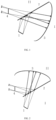
- FIG. 14a and FIG. 14b show an embodiment of an imaging system for improving imaging luminance and definition according to the technology.
- the system comprises: an image source 1, a transflective mirror 2 and a plurality of retroreflective sub-elements 300.
- a plane where the transflective mirror 2 is located divides space into a first half region I and a second half region II, and both the image source 1 and the retroreflective sub-elements 300 are located in the first half region I.
- the plurality of retroreflective sub-elements 300 form a retroreflective sub-element array 3000 (the reference sign 3000 and the reference sign 300 are noted in one position in the diagram for convenience).
- Light emitted by the image source 1 is irradiated on the retroreflective sub-element 300 after being reflected by the transflective mirror 2, and then the light is retroreflected by the retroreflective sub-element 300, so that reflected light and incident light on the retroreflective sub-element 300 are located in the same path, but in opposite directions. Therefore, the light is reflected by the retroreflective sub-element 300 and then emerges along an original incident path (of course, as observed microscopically, a reflection path may be considered to be slightly offset from an incident path; however, as observed macroscopically, the two paths may be considered to coincide completely), and after being transmitted by the transflective mirror, then forms a real image 4 in the second half region II.
- the retroreflective sub-element array 3000 includes an array first end 3001 and an array second end 3002. The array first end 3001 is closer to the transflective mirror 2 while the array second end 3002 is farther away from the transflective mirror 2.
- a reverse extension line of the vision domain boundary VDB1 intersects with the transflective mirror 2 at a transflective mirror first point 21 closer to the array first end 3001, while a reverse extension line of the vision domain boundary VDB2 intersects with the transflective mirror 2 at a transflective mirror second point 22 farther away from the array first end 3001.
- light emitted by the image source 1 has an Effective Exposure Region (EED) located between the image source 1 and the transflective mirror 2, the effective exposure region EED includes a first boundary L1 and a second boundary L2.
- the first boundary L1 is a connection line at a largest included angle to the transflective mirror 2 among connection lines from the transflective mirror first point 21 to respective light-emitting points of the image source 1
- the second boundary L2 is a connection line at a smallest included angle to the transflective mirror 2 among connection lines from the transflective mirror second point 22 to respective light-emitting points of the image source 1.
- each of the retroreflective sub-elements 300 includes a substantially planar base material, and a large number of retroreflective units (not shown) having a reflecting surface distributed on the base material.
- the retroreflective unit has a right-angled vertex micro-structure, the right-angled vertex micro-structure has at least one right-angled vertex, and three edges of the right-angled vertex are at right angles to one another.
- a straight line passing through the right-angled vertex and having equal included angles (each of which is about 54.7°) to the three edges of the right-angled vertex micro-structure is defined as a center line of the right-angled vertex micro-structure.
- an included angle between a center line of a right-angled vertex micro-structure and a normal of a base material plane is required to be as small as possible, which is, for example, less than 15°, less than 10°, less than 5°, or even 0°.
- each of the retroreflective sub-elements 300 includes a sub-element first end 301 and a sub-element second end 302.
- the sub-element first end 301 located above while the sub-element second end 302 is located below, so that the sub-element 300 is set vertically, or preferably, at a certain angle to a vertical direction.
- an angle of the retroreflective sub-element 300 to the vertical direction is adjusted such that an included angle between a connection line from a geometric center 303 (with reference to the partially enlarged portion in FIG. 14b ) of the retroreflective sub-element 300 to the vision domain point VDP and a center line of the right-angled vertex micro-structure on the retroreflective sub-element 300 is less than 15 degrees, preferably less than 10°, more preferably less than 5°, and most preferably, 0°; and thus, a reflected luminous efficacy is as high as possible.
- a retroreflective sub-element array 3000 is arranged such that each of the retroreflective sub-elements 300 does not shield light of the image source 1 that is emitted to the transflective mirror 2, which can ensure no imaging loss because the light from the image source 1 to the real image 4 is not shielded.
- each sub-element first end 301 and each sub-element second end 302 fall outside the effective exposure region EED, so that the light from the image source 1 to the real image 4 is not shielded. More preferably, each sub-element first end 301 falls on the first boundary L1, and each sub-element second end 302 falls outside the effective exposure region EED; which, thus, can further ensure that an optical path from the retroreflective sub-element 300 to the formed real image 4 is as short as possible.
- a retroreflective sub-element array 3000 is arranged such that reverse extension lines of all light rays forming a real image 4 can fall on a certain retroreflective sub-element 300, which, thus, can ensure no imaging loss because the light from the image source 1 to the real image 4 does not subjected to a reflection.
- all the retroreflective sub-elements 300 of the array 3000 are sequenced in a short-to-long order of a distance to the transflective mirror first point 21; a position of a retroreflective sub-element 300 having a shortest distance to the transflective mirror first point 21 is defined as the foremost, and a position of a retroreflective sub-element 300 having a longest distance to the transflective mirror first point 21 is defined as the last.
- connection line from a sub-element second end 302 of a former retroreflective sub-element 300 to the vision domain point VDP and the first boundary L1 form an intersection point
- a connection line from a sub-element first end 301 of a latter retroreflective sub-element 300 to the vision domain point VDP and the first boundary L1 also form an intersection point
- the former intersection point is located behind, or at least overlaps with the latter intersection point, which ensures all light rays emitted by the image source 1 that subject to a first reflection of the transflective mirror 2 to the array 3000 are reflected back in an opposite direction, without being missed.
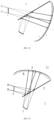
- FIG. 15a and FIG. 15b schematically show an imaging system for improving imaging luminance and definition according to another embodiment of the present invention.
- the system comprises an image source 1, a transflective mirror 2 and a plurality of retroreflective sub-elements 300.
- a plane where the transflective mirror 2 is located divides space into a first half region I and a second half region II, and the image source 1 is located in the first half region I, while the plurality of retroreflective sub-elements 300 are located in the second half region II.
- the plurality of retroreflective sub-elements 300 form a retroreflective sub-element array 3000 (the reference sign 3000 and the reference sign 300 are noted in one position in the diagram for convenience).
- Light emitted by the image source 1 is irradiated on the retroreflective sub-element 300 after being transmitted by the transflective mirror 2, and then the light is retroreflected by the retroreflective sub-element 300, so that reflected light and incident light on the retroreflective sub-element 300 are located in the same path, but in opposite directions. Therefore, the light is reflected by the retroreflective sub-element 300 and then emerges along an original incident path (of course, as observed microscopically, a reflection path may be considered to be slightly offset from an incident path; however, as observed macroscopically, the two paths may be considered to coincide completely), and after being reflected by the transflective mirror, then forms a real image 4 in the second half region II.
- the light emitted by the image source 1 is transmitted (rather than reflected) by the transflective mirror 2 and then reaches the retroreflective sub-element 300. While the light reflected by the retroreflective sub-element 300 is reflected (rather than transmitted) by the transflective mirror 2, and then forms the real image 4. The finally formed real image 4 and the retroreflective sub-element 300 are located in the same half region, rather than different half regions.
- the system in FIG. 15b also comprises a complete real image vision domain CRIVD, a vision domain point VDP, two vision domain boundaries VDB1 and VDB2 (not shown in FIG. 15b ); also comprises an effective exposure region EED, as well as a first boundary L1 and a second boundary L2; and further comprises an array first end 3001 and an array second end 3002 of the retroreflective sub-element array 3000, a transflective mirror first point 21 and a transflective mirror second point 22.
- the system in FIG. 14b is referred to for definitions of all these features. Configuration of the micro-structure in the system of FIG. 15b is also consistent with that according to the embodiment shown in FIG. 14b .
- a third boundary L3 is defined as a line that is mirror-symmetrical to the first boundary L1 with respect to the transflective mirror 2
- an effective imaging region EID is defined as a region that is mirror-symmetrical to the effective exposure region EED with respect to the transflective mirror 2
- a virtual vision domain point VVDP is defined as a point that is mirror-symmetrical to the vision domain point VDP with respect to the transflective mirror 2.
- a sub-element first end 301 of each of the retroreflective sub-elements 300 is on the right (closer to the transflective mirror 2), and a sub-element second end 302 is on the left (farther away from the transflective mirror 2), so that the sub-element 300 is arranged horizontally, or preferably at a certain angle to a horizontal direction.
- an angle of the retroreflective sub-element 300 to the horizontal direction is adjusted such that an included angle between a connection line from a geometric center 303 of the retroreflective sub-element 300 to the virtual vision domain point VVDP and a center line of the right-angled vertex micro-structure on the retroreflective sub-element 300 is less than 15 degrees, preferably less than 10°, more preferably less than 5°, and most preferably, 0°; and thus, a reflected luminous efficacy is as high as possible.
- the retroreflective sub-element array 3000 is arranged such that respective retroreflective sub-elements 300 do not shield light of the image source 1 that is emitted to the transflective mirror 2, which, thus, can ensure no imaging loss because the light from the image source 1 to the real image 4 is not shielded.
- each sub-element first end 301 and each sub-element second end 302 fall outside the effective imaging region EID, so that the light from the image source 1 to the real image 4 is not shielded. More preferably, each sub-element first end 301 falls on the first boundary L1, and each sub-element second end 302 falls outside the effective imaging region EID; which, thus, can further ensure that the optical path from the retroreflective sub-element 300 to the real image 4 is as short as possible.
- the retroreflective sub-element array 3000 is arranged such that extension lines of all light rays emitted by the image source 1 within the effective exposure region EED can fall on a certain retroreflective sub-element 300, which, thus, can ensure no imaging loss because the light from the image source 1 to the real image 4 does not escape a reflection.
- all the retroreflective sub-elements 300 of the array 3000 are sequenced in a short-to-long order of a distance to the transflective mirror first point 21; a position of a retroreflective sub-element 300 having a shortest distance to the transflective mirror first point 21 is defined as the foremost, and a position of a retroreflective sub-element 300 having a longest distance to the transflective mirror first point 21 is defined as the last.
- a connection line from a sub-element second end 302 of the former retroreflective sub-element 300 to a virtual vision domain point VVDP and a third boundary L3 form an intersection point
- a connection line from a sub-element first end 301 of the latter retroreflective sub-element 300 to the virtual vision domain point VVDP and the third boundary L3 also form an intersection point
- the former intersection point is located behind, or at least overlaps with the latter intersection point, which ensures all light rays emitted by the image source 1 that subject to a first transmittance of the transflective mirror 2 to the array 3000 are reflected back in an opposite direction, without being missed.
- the reflecting surface for example, the surface coated with the highly reflective coating
- the reflecting surface may also be considered as a portion attached onto the micro-structure.
- the retroreflective element may be divided into a large number of retroreflective units, each retroreflective unit includes a micro-structure having a reflecting surface; the micro-structure may be the spherical micro-structure or the right-angled vertex micro-structure as described above.
- the reflecting surface may even be described as an independent structural unit.
- each retroreflective unit includes a reflecting surface, and the reflecting surface may be attached onto at least one of the first material and the second material thereon; and the reflecting surface may be formed by one or more faces of the above-described micro-structure.
- an image may be formed directly in the air, or even in vacuum, neither with the help of an auxiliary device such as a helmet, nor with the help of an imaging screen or a particulate medium in the air. It is a real technology of imaging in the air.
- the image formed is suspended in the air, so a large number of interactions and applications may be developed, which is of epoch-making significance.
Landscapes
- Physics & Mathematics (AREA)
- General Physics & Mathematics (AREA)
- Optics & Photonics (AREA)
- Optical Elements Other Than Lenses (AREA)
- Lenses (AREA)
- Testing, Inspecting, Measuring Of Stereoscopic Televisions And Televisions (AREA)
Claims (15)
- Système d'imagerie dans l'air, comprenant : une source d'image (1), un élément rétroréfléchissant (3) et un miroir transflectif (2),la lumière émise par la source d'image (1) irradie l'élément rétroréfléchissant (3) après avoir été réfléchie par le miroir transflectif (2), la lumière est réfléchie par l'élément rétroréfléchissant (3) et ressort dans une direction opposée le long d'un chemin incident initial, et forme ensuite une image réelle (4) après avoir été transmise par le miroir transflectif (2) ;dans lequel un film transmissif sélectif est disposé sur un côté du miroir transflectif (2) faisant face à la source d'image (1), le film transmissif sélectif est conçu pour avoir un facteur de réflexion pour une première lumière polarisée linéairement supérieur à un facteur de réflexion pour une deuxième lumière polarisée linéairement, et un facteur de transmission pour la deuxième lumière polarisée linéairement supérieur à un facteur de transmission pour la première lumière polarisée linéairement, une direction de polarisation de la première lumière polarisée linéairement est perpendiculaire à une direction de polarisation de la deuxième lumière polarisée linéairement ; etun élément optique à retard de phase (5) est disposé sur un côté de l'élément rétroréfléchissant (3) faisant face au miroir transflectif (2) de telle sorte que la première lumière polarisée linéairement de la source d'image (1) incidente sur l'élément rétroréfléchissant (3) depuis le miroir transflectif (2) devient une lumière polarisée circulairement après avoir traversé l'élément optique à retard de phase (5),la source d'image (1) comprend une source de lumière polarisée, la source de lumière polarisée est une source de lumière polarisée s, la première lumière polarisée linéairement est une lumière polarisée s, la deuxième lumière polarisée linéairement est une lumière polarisée p, et la source de lumière polarisée s est située sur un côté du miroir transflectif (2) faisant face à l'élément rétroréfléchissant (3) ;caractérisé en ce queun composant du film transmissif sélectif comprend un élément parmi un film de revêtement en oxyde métallique, en nitrure métallique, en oxynitrure métallique, et un polymère organique ; ou bien le film transmissif sélectif comprend une ou plusieurs couches de film, et un composant de chaque couche de film comprend un élément parmi un film de revêtement en oxyde métallique, en nitrure métallique, en oxynitrure métallique, et un polymère organique ; et en ce quela lumière émise par la source d'image (1) est sélectionnée pour être une lumière polarisée s d'une bande de longueurs d'onde spécifique, et le film transmissif sélectif est conçu pour avoir un facteur de réflexion supérieur à 70 % pour la lumière polarisée s de la bande de longueurs d'onde spécifique, et un facteur de transmission supérieur à 70 % pour la lumière polarisée s d'autres bandes de longueurs d'onde et la lumière polarisée p à l'intérieur d'une bande de lumière visible, la bande de longueurs d'onde spécifique comprend la lumière rouge de 590 nm à 690 nm, la lumière verte de 500 nm à 565 nm, et la lumière bleue de 410 nm à 480 nm.
- Système selon la revendication 1, dans lequel le film transmissif sélectif a un facteur de réflexion moyen de plus de 80 % ou 90 % pour la lumière polarisée s.
- Système selon la revendication 1 ou 2, dans lequel le film transmissif sélectif a un facteur de transmission moyen de plus de 80 % ou 90 % pour la lumière polarisée p.
- Système selon l'une quelconque des revendications 1 à 3, dans lequel l'élément optique à retard de phase (5) est une lame 1/4 d'onde.
- Système selon l'une quelconque des revendications 1 à 4, dans lequel un film antireflet est fixé à un côté du miroir transflectif (2) à l'opposé de la source d'image (1).
- Système d'imagerie dans l'air, comprenant : une source d'image (1), un élément rétroréfléchissant (3) et un miroir transflectif (2),la lumière émise par la source d'image (1) irradie l'élément rétroréfléchissant (3) après avoir été transmise par le miroir transflectif (2), la lumière est réfléchie par l'élément rétroréfléchissant (3) et ressort dans une direction opposée le long d'un chemin incident initial, et forme ensuite une image réelle (4) après avoir été réfléchie par le miroir transflectif (2) ;dans lequel un film transmissif sélectif est disposé sur un côté du miroir transflectif (2) faisant face à la source d'image (1), le film transmissif sélectif est conçu pour avoir un facteur de réflexion pour une première lumière polarisée linéairement supérieur à un facteur de réflexion pour une deuxième lumière polarisée linéairement, et un facteur de transmission pour la deuxième lumière polarisée linéairement supérieur à un facteur de transmission pour la première lumière polarisée linéairement, une direction de polarisation de la première lumière polarisée linéairement est perpendiculaire à une direction de polarisation de la deuxième lumière polarisée linéairement ; etun élément optique à retard de phase (5) est disposé sur un côté de l'élément rétroréfléchissant (3) faisant face au miroir transflectif (2) de telle sorte que la deuxième lumière polarisée linéairement de la source d'image (1) incidente sur l'élément rétroréfléchissant (3) depuis le miroir transflectif (2) devient une lumière polarisée circulairement après avoir traversé l'élément optique à retard de phase (5),caractérisé en ce queun composant du film transmissif sélectif comprend un élément parmi un film de revêtement en oxyde métallique, en nitrure métallique, en oxynitrure métallique, et un polymère organique ; ou bien le film transmissif sélectif comprend une ou plusieurs couches de film, et un composant de chaque couche de film comprend un élément parmi un film de revêtement en oxyde métallique, en nitrure métallique, en oxynitrure métallique, et un polymère organique ;la source lumineuse d'image est une source de lumière polarisée p, la première lumière polarisée linéairement est une lumière polarisée s, la deuxième lumière polarisée linéairement est une lumière polarisée p, et la source de lumière polarisée p est située sur un côté du miroir transflectif (2) à l'opposé de l'élément rétroréfléchissant (3).
- Système selon l'une quelconque des revendications 1 à 6, dans lequel l'élément rétroréfléchissant (3) comprend une pluralité de microstructures (31, 31') de rétroréflexion, chaque microstructure (31, 31') comprend une unité de lentille convexe et une pluralité d'unités pyramidales triangulaires à angle droit, l'unité de lentille convexe est située sur un côté d'incidence de la lumière de la pluralité d'unités pyramidales triangulaires à angle droit, une surface de la pluralité d'unités pyramidales triangulaires à angle droit à l'opposé de l'unité de lentille convexe comprend une surface réfléchissante, et la pluralité d'unités pyramidales triangulaires à angle droit sont disposées sur un plan focal de l'unité de lentille convexe.
- Système selon la revendication 1, dans lequel l'élément rétroréfléchissant (3) comprend un réseau comportant une pluralité de sous-éléments rétroréfléchissants (300), chacun des sous-éléments rétroréfléchissants comprend un matériau de base (30'), et un grand nombre d'unités rétroréfléchissantes ayant une surface réfléchissante sont réparties sur le matériau de base (30') ; au moins une des unités rétroréfléchissantes est une microstructure à sommets à angle droit (31'), la microstructure à sommets à angle droit (31') a au moins un sommet à angle droit, trois bords du sommet à angle droit sont à angles droits les uns des autres ; et un angle inclus entre un axe de la microstructure à sommets à angle droit (31') et une normale à un plan du matériau de base (30') est inférieur à 15 degrés, l'axe est à angles inclus égaux de l'ensemble des trois bords de la microstructure à sommets à angle droit (31').
- Système selon la revendication 8, dans lequel il y a un domaine de vision d'image réelle complète (CRIVD) où l'image réelle est complètement visible quand on la regarde dans une vue de côté du système, le domaine de vision d'image réelle complète (CRIVD) a deux limites de domaine de vision (VDB1, VDB2) dont le point d'intersection est un point de domaine de vision (VDP) ; le réseau comporte une première extrémité de réseau (3001) plus proche du miroir transflectif (2) et une deuxième extrémité de réseau (3002) plus éloignée du miroir transflectif (2) ; des lignes d'extension inverse des limites de domaine de vision (VDB1, VDB2) croisent le miroir transflectif (2) à un premier point de miroir transflectif (21) plus proche de la première extrémité de réseau (3001) et un deuxième point de miroir transflectif (22) plus éloigné de la première extrémité de réseau (3001) ;la lumière émise par la source d'image (1) a une région d'exposition effective (EED) située entre la source d'image (1) et le miroir transflectif (2), la région d'exposition effective (EED) comporte une première limite (L1) et une deuxième limite (L2), la première limite (L1) est une ligne de connexion à un angle inclus le plus grand du miroir transflectif (2) parmi les lignes de connexion partant du premier point de miroir transflectif (21) jusqu'à des points d'émission de lumière respectifs de la source d'image (1), tandis que la deuxième limite (L2) est une ligne de connexion à un angle inclus le plus petit du miroir transflectif (2) parmi les lignes de connexion partant du deuxième point de miroir transflectif (22) jusqu'aux points d'émission de lumière respectifs de la source d'image (1) ;le réseau des sous-éléments rétroréfléchissants (300) est disposé de telle sorte que les sous-éléments rétroréfléchissants (300) ne bloquent pas la lumière de la source d'image (1) qui est incidente sur le miroir transflectif (2), et des lignes d'extension inverse de tous les rayons lumineux formant l'image réelle peuvent tomber sur un certain sous-élément rétroréfléchissant (300).
- Système selon la revendication 9 dans lequel, quand on le regarde dans la vue de côté du système, chacun des sous-éléments rétroréfléchissants (300) comporte une première extrémité de sous-élément (301) et une deuxième extrémité de sous-élément (302) ; chaque première extrémité de sous-élément (301) tombe sur la première limite (L1) ou tombe à l'extérieur de la région d'exposition effective (EED), tandis que chaque deuxième extrémité de sous-élément (302) tombe à l'extérieur de la région d'exposition effective (EED).
- Système selon la revendication 9 dans lequel, quand on les regarde dans la vue de côté du système, tous les sous-éléments rétroréfléchissants (300) du réseau sont disposés en séquence dans un ordre de distance de court à long jusqu'au premier point de miroir transflectif (21) ; une position d'un sous-élément rétroréfléchissant (300) ayant une distance la plus courte jusqu'au premier point de miroir transflectif (21) est définie comme la première, et une position d'un sous-élément rétroréfléchissant (300) ayant une distance la plus longue jusqu'au premier point de miroir transflectif (21) est définie comme la dernière ;
dans deux sous-éléments rétroréfléchissants adjacents (300), une deuxième extrémité de sous-élément (302) d'un premier sous-élément rétroréfléchissant (300) et une première extrémité de sous-élément (301) d'un dernier sous-élément rétroréfléchissant (300) sont disposées de telle sorte qu'un point d'intersection d'une ligne de connexion partant du premier sous-élément rétroréfléchissant (300) jusqu'au point de domaine de vision (VDP) et la première limite (L1) est situé derrière ou chevauche un point d'intersection d'une ligne de connexion partant du dernier sous-élément rétroréfléchissant (300) jusqu'au point de domaine de vision et la première limite (L1). - Système selon la revendication 6, dans lequel l'élément rétroréfléchissant (3) comprend un réseau comportant une pluralité de sous-éléments rétroréfléchissants (300), chacun des sous-éléments rétroréfléchissants comprend un matériau de base (30'), et un grand nombre d'unités rétroréfléchissantes ayant une surface réfléchissante sont réparties sur le matériau de base (30') ; au moins une des unités rétroréfléchissantes est une microstructure à sommets à angle droit (31'), la microstructure à sommets à angle droit (31') a au moins un sommet à angle droit, trois bords du sommet à angle droit sont à angles droits les uns des autres ; et un angle inclus entre un axe de la microstructure à sommets à angle droit (31') et une normale à un plan du matériau de base (30') est inférieur à 15 degrés, l'axe est à angles inclus égaux de l'ensemble des trois bords de la microstructure à sommets à angle droit (31').
- Système selon la revendication 12, dans lequel il y a un domaine de vision d'image réelle complète (CRIVD) où l'image réelle est complètement visible quand on la regarde dans une vue de côté du système, le domaine de vision d'image réelle complète (CRIVD) a deux limites de domaine de vision (VDB1, VDB2) dont le point d'intersection est un point de domaine de vision (VDP) ; le réseau comporte une première extrémité de réseau (3001) plus proche du miroir transflectif (2) et une deuxième extrémité de réseau (3002) plus éloignée du miroir transflectif (2) ; des lignes d'extension inverse des limites de domaine de vision (VDB1, VDB2) croisent le miroir transflectif (2) à un premier point de miroir transflectif (21) plus proche de la première extrémité de réseau (3001) et un deuxième point de miroir transflectif (22) plus éloigné de la première extrémité de réseau (3001) ;la lumière émise par la source d'image (1) a une région d'exposition effective (EED) située entre la source d'image (1) et le miroir transflectif (2), la région d'exposition effective (EED) comporte une première limite (L1) et une deuxième limite (L2), la première limite (L1) est une ligne de connexion à un angle inclus le plus grand du miroir transflectif (2) parmi les lignes de connexion partant du premier point de miroir transflectif (21) jusqu'à des points d'émission de lumière respectifs de la source d'image (1), tandis que la deuxième limite (L2) est une ligne de connexion à un angle inclus le plus petit du miroir transflectif (2) parmi les lignes de connexion partant du deuxième point de miroir transflectif (22) jusqu'aux points d'émission de lumière respectifs de la source d'image (1) ; une troisième limite (L3) est définie comme une ligne qui est en symétrie miroir de la première limite (L1) par rapport au miroir transflectif (2), une région d'imagerie effective (EID) est définie comme une région qui est en symétrie miroir de la région d'exposition effective (EED) par rapport au miroir transflectif (2), et un point de domaine de vision virtuelle (VVDP) est défini comme un point qui est en symétrie miroir du point de domaine de vision (VDP) par rapport au miroir transflectif (2) ;le réseau des sous-éléments rétroréfléchissants (300) est disposé de telle sorte que les sous-éléments rétroréfléchissants (300) ne bloquent pas la lumière émise depuis le miroir transflectif (2) pour former l'image réelle, et des lignes d'extension inverse de tous les rayons lumineux incidents sur le miroir transflectif (2) qui sont émis depuis le miroir transflectif (2) pour former l'image réelle peuvent tomber sur un certain sous-élément rétroréfléchissant (300).
- Système selon la revendication 13 dans lequel, quand on le regarde dans la vue de côté du système, chacun des sous-éléments rétroréfléchissants comporte une première extrémité de sous-élément et une deuxième extrémité de sous-élément ; chaque première extrémité de sous-élément tombe sur la troisième limite ou tombe à l'extérieur de la région d'imagerie effective, tandis que chaque deuxième extrémité de sous-élément tombe à l'extérieur de la région d'imagerie effective.
- Système selon la revendication 13 dans lequel, quand on les regarde dans la vue de côté du système, tous les sous-éléments rétroréfléchissants (300) du réseau sont disposés en séquence dans un ordre de distance de court à long jusqu'au premier point de miroir transflectif (21) ; une position d'un sous-élément rétroréfléchissant (300) ayant une distance la plus courte jusqu'au premier point de miroir transflectif (21) est définie comme la première, et une position d'un sous-élément rétroréfléchissant (300) ayant une distance la plus longue jusqu'au premier point de miroir transflectif (21) est définie comme la dernière ;
dans deux sous-éléments rétroréfléchissants adjacents (300), une deuxième extrémité de sous-élément (302) du premier sous-élément rétroréfléchissant (300) et une première extrémité de sous-élément (301) du dernier sous-élément rétroréfléchissant (300) sont disposées de telle sorte qu'un point d'intersection d'une ligne de connexion partant du premier sous-élément rétroréfléchissant (300) jusqu'au point de domaine de vision virtuelle (VVDP) et la troisième limite (L3) est situé derrière ou chevauche un point d'intersection d'une ligne de connexion partant du dernier sous-élément rétroréfléchissant (300) jusqu'au point de domaine de vision virtuelle (VVDP) et la troisième limite (L3).
Applications Claiming Priority (6)
| Application Number | Priority Date | Filing Date | Title |
|---|---|---|---|
| CN201611124003 | 2016-12-08 | ||
| CN201711269267.0A CN108181795A (zh) | 2016-12-08 | 2017-12-05 | 用于在空中成像的系统 |
| CN201711270401.9A CN108181715B (zh) | 2016-12-08 | 2017-12-05 | 用于在空中成像的系统 |
| CN201711271270.6A CN108181716B (zh) | 2016-12-08 | 2017-12-05 | 用于在空中成像的系统 |
| CN201711271272.5A CN108181717B (zh) | 2016-12-08 | 2017-12-05 | 用于在空中成像的系统 |
| PCT/CN2017/114851 WO2018103670A1 (fr) | 2016-12-08 | 2017-12-06 | Système destiné à être utilisé dans l'imagerie de l'air |
Publications (4)
| Publication Number | Publication Date |
|---|---|
| EP3553588A1 EP3553588A1 (fr) | 2019-10-16 |
| EP3553588A4 EP3553588A4 (fr) | 2020-08-05 |
| EP3553588B1 true EP3553588B1 (fr) | 2025-05-07 |
| EP3553588C0 EP3553588C0 (fr) | 2025-05-07 |
Family
ID=62489097
Family Applications (2)
| Application Number | Title | Priority Date | Filing Date |
|---|---|---|---|
| EP17879450.9A Pending EP3553589A4 (fr) | 2016-12-08 | 2017-12-05 | Système destiné à être utilisé en imagerie dans l'air |
| EP17878470.8A Active EP3553588B1 (fr) | 2016-12-08 | 2017-12-06 | Système destiné à être utilisé dans l'imagerie de l'air |
Family Applications Before (1)
| Application Number | Title | Priority Date | Filing Date |
|---|---|---|---|
| EP17879450.9A Pending EP3553589A4 (fr) | 2016-12-08 | 2017-12-05 | Système destiné à être utilisé en imagerie dans l'air |
Country Status (6)
| Country | Link |
|---|---|
| US (3) | US10684492B2 (fr) |
| EP (2) | EP3553589A4 (fr) |
| JP (4) | JP7018213B2 (fr) |
| KR (2) | KR102266550B1 (fr) |
| CN (7) | CN108181795A (fr) |
| WO (1) | WO2018103643A1 (fr) |
Families Citing this family (22)
| Publication number | Priority date | Publication date | Assignee | Title |
|---|---|---|---|---|
| US10684492B2 (en) | 2016-12-08 | 2020-06-16 | Futurus Technology Co., Ltd. | System for imaging in the air |
| CN108738222B (zh) * | 2018-06-21 | 2020-08-21 | 北京工业大学 | 一种基于反射式衰减片的等离子体不同光强区域原位同步成像方法 |
| CN108983423A (zh) * | 2018-07-26 | 2018-12-11 | 京东方科技集团股份有限公司 | 一种双目显示系统及车载抬头显示系统 |
| CN109799615B (zh) * | 2019-03-21 | 2021-08-20 | 合肥工业大学 | 一种高亮度的车载抬头显示装置 |
| CN110058420A (zh) * | 2019-04-08 | 2019-07-26 | 成都工业学院 | 一种逆反射立体投影显示装置 |
| WO2020233528A1 (fr) * | 2019-05-17 | 2020-11-26 | 未来(北京)黑科技有限公司 | Dispositif d'affichage tête haute et véhicule à moteur |
| CN112034672B (zh) * | 2019-05-17 | 2025-09-09 | 未来(北京)黑科技有限公司 | 一种抬头显示装置及机动车 |
| CN112034673B (zh) * | 2019-05-17 | 2025-09-09 | 未来(北京)黑科技有限公司 | 显示装置、抬头显示器以及机动车 |
| CN111948888A (zh) * | 2019-05-17 | 2020-11-17 | 未来(北京)黑科技有限公司 | 一种光线控制装置、被动发光像源、投影幕布和成像系统 |
| WO2020252700A1 (fr) * | 2019-06-19 | 2020-12-24 | 深圳盈天下视觉科技有限公司 | Système d'imagerie aérienne et procédé d'imagerie aérienne pour augmenter la portée visuelle |
| CN213457973U (zh) * | 2019-07-31 | 2021-06-15 | 未来(北京)黑科技有限公司 | 成像装置 |
| CN110764256B (zh) * | 2019-10-23 | 2023-03-21 | 浙江棱镜全息科技有限公司 | 一种用于空气成像的大景深平板透镜及空气成像系统 |
| CN111812859B (zh) * | 2020-04-16 | 2025-08-08 | 深圳盈天下视觉科技有限公司 | 全息显示装置 |
| CN111338015B (zh) * | 2020-04-17 | 2023-05-02 | 荆门市探梦科技有限公司 | 基于二维特征的反射式几何全息膜及其制备方法和应用 |
| JP7152449B2 (ja) * | 2020-08-05 | 2022-10-12 | 矢崎総業株式会社 | 車両用表示装置 |
| CN114651202B (zh) * | 2020-10-15 | 2024-09-06 | 亚斯卡奈特股份有限公司 | 空中像成像元件和空中像成像装置 |
| JP2022135253A (ja) * | 2021-03-05 | 2022-09-15 | マクセル株式会社 | 空間浮遊映像表示装置 |
| CN114217441B (zh) * | 2021-12-22 | 2023-11-03 | 深圳创维新世界科技有限公司 | 一种空中悬浮显示模组及其系统 |
| CN114578581A (zh) * | 2022-05-06 | 2022-06-03 | 北京中建慧能科技有限公司 | 一种具有阵列式反射单元的光学成像器件 |
| CN114815010B (zh) * | 2022-05-15 | 2024-02-09 | 佛山科学技术学院 | 一种用于3d悬浮成像的透镜阵列及其装置 |
| CN114779494B (zh) * | 2022-06-17 | 2022-09-02 | 深圳市文生科技有限公司 | 成像元件及成像装置 |
| WO2025070290A1 (fr) * | 2023-09-29 | 2025-04-03 | 京セラ株式会社 | Dispositif d'affichage d'image aérienne |
Citations (1)
| Publication number | Priority date | Publication date | Assignee | Title |
|---|---|---|---|---|
| JPH1164816A (ja) * | 1997-08-23 | 1999-03-05 | Nikon Corp | 光学装置及びこれに用いられる光学部品 |
Family Cites Families (88)
| Publication number | Priority date | Publication date | Assignee | Title |
|---|---|---|---|---|
| GB693922A (en) * | 1949-08-08 | 1953-07-08 | Christa Franke | Improvements in and relating to reflector devices |
| US4588258A (en) * | 1983-09-12 | 1986-05-13 | Minnesota Mining And Manufacturing Company | Cube-corner retroreflective articles having wide angularity in multiple viewing planes |
| GB9012667D0 (en) * | 1990-06-07 | 1990-08-01 | Emi Plc Thorn | Apparatus for displaying an image |
| GB2284680A (en) | 1993-12-13 | 1995-06-14 | Central Research Lab Ltd | Apparatus for displaying a suspended image |
| CA2188141C (fr) * | 1994-05-12 | 2003-05-20 | Vera L. Lightle | Article reflechissant et son procede de fabrication |
| US6147805A (en) * | 1994-08-24 | 2000-11-14 | Fergason; James L. | Head mounted display and viewing system using a remote retro-reflector and method of displaying and viewing an image |
| JPH08166561A (ja) * | 1994-10-14 | 1996-06-25 | Fuji Elelctrochem Co Ltd | 光アイソレータ用光学素子及び光アイソレータ |
| JPH08179312A (ja) * | 1994-12-22 | 1996-07-12 | Hosiden Corp | 液晶表示器 |
| US6379009B1 (en) * | 1996-04-24 | 2002-04-30 | James L. Fergason | Conjugate optics projection display with image enhancement |
| JP3601219B2 (ja) * | 1996-11-13 | 2004-12-15 | 松下電器産業株式会社 | 光ピックアップ用の平行プリズム |
| JPH11142896A (ja) * | 1997-11-12 | 1999-05-28 | Yazaki Corp | 分岐比可変型光分岐装置 |
| JPH11305011A (ja) * | 1998-04-22 | 1999-11-05 | Dainippon Printing Co Ltd | レンズフィルム及び面光源装置 |
| US6172810B1 (en) | 1999-02-26 | 2001-01-09 | 3M Innovative Properties Company | Retroreflective articles having polymer multilayer reflective coatings |
| JP2001013458A (ja) * | 1999-04-27 | 2001-01-19 | Samii Kk | 立体画像表示装置 |
| US6798579B2 (en) * | 1999-04-27 | 2004-09-28 | Optical Products Development Corp. | Real imaging system with reduced ghost imaging |
| KR100373209B1 (ko) | 1999-09-11 | 2003-02-25 | 주식회사 엘지화학 | 재귀 반사체 |
| JP2001177784A (ja) * | 1999-12-17 | 2001-06-29 | Samii Kk | 立体画像プロモーション装置 |
| JP3847593B2 (ja) | 2001-02-20 | 2006-11-22 | シャープ株式会社 | コーナーキューブアレイなどの光学素子及びそれを備える反射型表示装置 |
| US7053988B2 (en) * | 2001-05-22 | 2006-05-30 | Carl Zeiss Smt Ag. | Optically polarizing retardation arrangement, and microlithography projection exposure machine |
| JP3776039B2 (ja) | 2001-12-26 | 2006-05-17 | シャープ株式会社 | コーナーキューブアレイを有する表示装置 |
| US7364314B2 (en) * | 2002-05-15 | 2008-04-29 | Reflexite Corporation | Optical structures |
| JP4225042B2 (ja) * | 2002-12-02 | 2009-02-18 | 住友化学株式会社 | 半透過半反射性偏光フィルム並びにそれを用いた偏光光源装置及び液晶表示装置 |
| FR2847988B1 (fr) * | 2002-12-03 | 2005-02-25 | Essilor Int | Separateur de polarisation, procede pour sa fabrication et lentille ophtalmique presentant des inserts de projection le contenant |
| JP4596746B2 (ja) * | 2003-04-17 | 2010-12-15 | 富士フイルム株式会社 | 光学素子、光学系および投映プロジェクタ装置 |
| JP4089602B2 (ja) | 2003-11-25 | 2008-05-28 | 住友電装株式会社 | コネクタ |
| US7133207B2 (en) * | 2004-02-18 | 2006-11-07 | Icuiti Corporation | Micro-display engine |
| US7482996B2 (en) * | 2004-06-28 | 2009-01-27 | Honeywell International Inc. | Head-up display |
| JP2006317708A (ja) * | 2005-05-12 | 2006-11-24 | Yasuaki Tanaka | 空中浮遊映像投影装置 |
| US7445347B2 (en) * | 2005-11-09 | 2008-11-04 | Avery Dennison Corporation | Metallized cube corner retroreflective sheeting having a high measured daytime luminance factor |
| EP2009469B1 (fr) * | 2006-03-23 | 2018-10-24 | National Institute of Information and Communications Technology, Incorporated Administrative Agency | Element de traitement d'image et affichage |
| WO2007126007A1 (fr) * | 2006-04-28 | 2007-11-08 | Kazushi Yoshida | Dispositif d'affichage d'image |
| JP4614456B2 (ja) * | 2006-07-07 | 2011-01-19 | 国立大学法人 東京大学 | 再帰性反射材、投影装置、航空機、および航空機用シミュレータ |
| JP5082480B2 (ja) * | 2007-02-13 | 2012-11-28 | 住友化学株式会社 | 薄型偏光板及びそれを用いた画像表示装置 |
| KR100842617B1 (ko) | 2007-05-29 | 2008-06-30 | 삼성전자주식회사 | 프로젝터 |
| JP5177483B2 (ja) * | 2007-06-21 | 2013-04-03 | 独立行政法人情報通信研究機構 | 実鏡映像結像光学系 |
| KR101136231B1 (ko) * | 2007-07-30 | 2012-04-17 | 도쿠리츠 교세이 호진 죠호 츠신 켄큐 키코 | 다시점 공중 영상 표시 장치 |
| JP5178107B2 (ja) | 2007-09-14 | 2013-04-10 | オリンパス株式会社 | レーザー走査型顕微鏡 |
| JP5148960B2 (ja) * | 2007-09-21 | 2013-02-20 | 独立行政法人情報通信研究機構 | 体積走査型3次元空中映像ディスプレイ |
| JP2011510346A (ja) * | 2008-01-14 | 2011-03-31 | エーブリー デニソン コーポレイション | タッチスクリーンおよび位置感知システムの使用のための再帰反射体 |
| US9122005B2 (en) * | 2008-03-17 | 2015-09-01 | University Of Cincinnati | Electrowetting retroreflector devices, systems, and methods |
| US20110075257A1 (en) * | 2009-09-14 | 2011-03-31 | The Arizona Board Of Regents On Behalf Of The University Of Arizona | 3-Dimensional electro-optical see-through displays |
| CN101661163A (zh) * | 2009-09-27 | 2010-03-03 | 合肥工业大学 | 增强现实系统的立体头盔显示器 |
| JP5392613B2 (ja) * | 2009-09-28 | 2014-01-22 | スタンレー電気株式会社 | ヘッドアップディスプレイ |
| TWM388651U (en) | 2010-03-18 | 2010-09-11 | Dayu Optoelectronics Co Ltd | Optical retroreflective apparatus |
| CN101876538A (zh) * | 2010-05-07 | 2010-11-03 | 中国科学院光电技术研究所 | 一种接近式纳米光刻中的间隙测量方法 |
| JP2011244349A (ja) * | 2010-05-20 | 2011-12-01 | Nikon Corp | 表示装置および表示方法 |
| JP2012247458A (ja) * | 2011-05-25 | 2012-12-13 | National Institute Of Information & Communication Technology | 表示装置 |
| CN104808426A (zh) | 2012-04-10 | 2015-07-29 | 海信集团有限公司 | 一种投影显示光源 |
| US9678267B2 (en) * | 2012-05-18 | 2017-06-13 | Reald Spark, Llc | Wide angle imaging directional backlights |
| DE102012105170B3 (de) * | 2012-06-14 | 2013-09-26 | Martin Göbel | Vorrichtung zur Erzeugung eines virtuellen Lichtabbilds |
| US9651721B2 (en) * | 2012-08-27 | 2017-05-16 | Avery Dennison Corporation | Retroreflector with low refractive index backing |
| CN102928981B (zh) * | 2012-11-14 | 2016-08-03 | 中航华东光电有限公司 | 全息光波导头盔显示器光学系统 |
| TWI534475B (zh) * | 2012-12-21 | 2016-05-21 | 財團法人工業技術研究院 | 虛像顯示裝置 |
| CN103901706B (zh) | 2012-12-26 | 2015-12-09 | 深圳市光峰光电技术有限公司 | 合光光源及使用该合光光源的照明装置和投影显示装置 |
| CN203217230U (zh) | 2012-12-28 | 2013-09-25 | 深圳市绎立锐光科技开发有限公司 | 发光装置及投影系统 |
| CN103116422A (zh) | 2013-03-02 | 2013-05-22 | 刘昱 | 空气投影键盘 |
| JP6169383B2 (ja) * | 2013-03-25 | 2017-07-26 | スタンレー電気株式会社 | 発光モジュール及び光源装置 |
| JP5855047B2 (ja) * | 2013-05-31 | 2016-02-09 | 京セラドキュメントソリューションズ株式会社 | 導光体及び照明装置 |
| CN103335819B (zh) * | 2013-06-12 | 2015-08-05 | 中国科学院光电技术研究所 | 一种用于高精度角锥棱镜光学检测的装置与方法 |
| CN103792775B (zh) * | 2013-08-02 | 2017-11-21 | 杨毅 | 投影显示系统 |
| JP6162543B2 (ja) * | 2013-08-23 | 2017-07-12 | スタンレー電気株式会社 | 車両用前照灯 |
| US20150103392A1 (en) | 2013-10-11 | 2015-04-16 | Synopsys, Inc. | Display with retroreflective elements |
| CN103868596B (zh) * | 2014-02-21 | 2015-10-14 | 中国科学院光电研究院 | 一种大孔径空间外差干涉光谱成像方法及光谱仪 |
| US9798154B2 (en) * | 2014-02-28 | 2017-10-24 | Microsoft Technology Licensing, Llc | Control of polarization and diffractive artifact resolution in retro-imaging systems |
| CN103837988B (zh) * | 2014-03-05 | 2017-01-18 | 杭州科汀光学技术有限公司 | 一种微型近眼显示光学系统 |
| DE102014207492B4 (de) * | 2014-04-17 | 2017-02-09 | Carl Zeiss Smart Optics Gmbh | Anzeigevorrichtung |
| CN103995420B (zh) * | 2014-05-29 | 2016-03-30 | 深圳点石创新科技有限公司 | 光成像系统及具有该光成像系统的投影成像系统 |
| US9599757B2 (en) | 2014-10-10 | 2017-03-21 | Microsoft Technology Licensing, Llc | Increased accuracy corner cube arrays for high resolution retro-reflective imaging applications |
| CN104280121B (zh) * | 2014-10-21 | 2016-05-25 | 中国科学院光电研究院 | 一种大孔径空间外差干涉光谱成像仪装调方法 |
| JP6698990B2 (ja) * | 2014-12-01 | 2020-05-27 | 合同会社Snパートナーズ | 空中像表示装置 |
| TWI579591B (zh) * | 2015-04-02 | 2017-04-21 | 尚立光電股份有限公司 | 頭戴式顯示裝置 |
| US9823474B2 (en) * | 2015-04-02 | 2017-11-21 | Avegant Corp. | System, apparatus, and method for displaying an image with a wider field of view |
| CN105157840B (zh) * | 2015-05-29 | 2018-03-02 | 中国科学院光电研究院 | 一种宽谱段范围空间外差干涉光谱成像仪 |
| CN107710053B (zh) * | 2015-06-12 | 2020-12-18 | 日本电石工业株式会社 | 图像显示装置 |
| CN104977794B (zh) | 2015-06-19 | 2018-04-27 | 浙江吉利控股集团有限公司 | 一种便携空气投影装置 |
| CN105136022B (zh) * | 2015-09-14 | 2017-07-14 | 中国科学院上海光学精密机械研究所 | 自准直光栅干涉仪高光学细分结构 |
| CN105372926A (zh) | 2015-12-15 | 2016-03-02 | 重庆触视科技有限公司 | 转动式全息投影展示柜 |
| CN107203042B (zh) * | 2016-03-17 | 2021-12-24 | 未来(北京)黑科技有限公司 | 显示成像系统及方法、带该系统的交通工具 |
| JP6634330B2 (ja) * | 2016-04-05 | 2020-01-22 | 株式会社ジャパンディスプレイ | 表示装置 |
| CN107367897B (zh) * | 2016-05-12 | 2019-05-03 | 深圳光峰科技股份有限公司 | 一种投影屏幕 |
| CN205749964U (zh) * | 2016-06-01 | 2016-11-30 | 杭州飞像科技有限公司 | 基于空中成像的提词器 |
| CN106123769A (zh) * | 2016-06-13 | 2016-11-16 | 上海理工大学 | 无非线性误差的差分平面镜激光干涉装置 |
| US10001654B2 (en) | 2016-07-25 | 2018-06-19 | Disney Enterprises, Inc. | Retroreflector display system for generating floating image effects |
| US20190179062A1 (en) | 2016-08-31 | 2019-06-13 | Scivax Corporation | Optical image formation apparatus |
| JP7177475B2 (ja) * | 2016-08-31 | 2022-11-24 | 国立大学法人宇都宮大学 | 表示装置及び空中像の表示方法 |
| JP2018045183A (ja) * | 2016-09-16 | 2018-03-22 | 株式会社ジャパンディスプレイ | 表示装置 |
| US10684492B2 (en) | 2016-12-08 | 2020-06-16 | Futurus Technology Co., Ltd. | System for imaging in the air |
| JP6953150B2 (ja) | 2017-03-10 | 2021-10-27 | 株式会社ジャパンディスプレイ | 表示装置 |
-
2017
- 2017-01-04 US US15/398,194 patent/US10684492B2/en active Active
- 2017-12-05 CN CN201711269267.0A patent/CN108181795A/zh active Pending
- 2017-12-05 WO PCT/CN2017/114657 patent/WO2018103643A1/fr not_active Ceased
- 2017-12-05 CN CN202111072818.0A patent/CN113867000B/zh active Active
- 2017-12-05 CN CN201711271272.5A patent/CN108181717B/zh active Active
- 2017-12-05 CN CN201711271270.6A patent/CN108181716B/zh active Active
- 2017-12-05 EP EP17879450.9A patent/EP3553589A4/fr active Pending
- 2017-12-05 CN CN202111072721.XA patent/CN113885221B/zh active Active
- 2017-12-05 CN CN201711270401.9A patent/CN108181715B/zh active Active
- 2017-12-05 KR KR1020197019572A patent/KR102266550B1/ko active Active
- 2017-12-05 CN CN202111105934.8A patent/CN113866998B/zh active Active
- 2017-12-05 JP JP2019552325A patent/JP7018213B2/ja active Active
- 2017-12-06 KR KR1020197019630A patent/KR102231367B1/ko active Active
- 2017-12-06 EP EP17878470.8A patent/EP3553588B1/fr active Active
- 2017-12-06 JP JP2019552326A patent/JP6931863B2/ja active Active
- 2017-12-06 US US16/467,607 patent/US11630250B2/en active Active
-
2018
- 2018-06-25 US US16/017,020 patent/US10656435B2/en active Active
-
2021
- 2021-08-02 JP JP2021126377A patent/JP7320294B2/ja active Active
- 2021-08-02 JP JP2021126378A patent/JP7178128B2/ja active Active
Patent Citations (1)
| Publication number | Priority date | Publication date | Assignee | Title |
|---|---|---|---|---|
| JPH1164816A (ja) * | 1997-08-23 | 1999-03-05 | Nikon Corp | 光学装置及びこれに用いられる光学部品 |
Also Published As
Similar Documents
| Publication | Publication Date | Title |
|---|---|---|
| EP3553588B1 (fr) | Système destiné à être utilisé dans l'imagerie de l'air | |
| JP7067809B2 (ja) | 表示装置 | |
| US11340475B2 (en) | Display device for aerial image having retro-reflective part | |
| US9194995B2 (en) | Compact illumination module for head mounted display | |
| JPWO2018151220A1 (ja) | 光学装置 | |
| JP2012008301A (ja) | 体積走査型3次元映像表示装置 | |
| CN110297324A (zh) | 显示装置和交通工具 | |
| CN107861243A (zh) | 光学元件和显示装置 | |
| EP4094116B1 (fr) | Guide de lumière et dispositif d'affichage d'image virtuelle | |
| WO2018103670A1 (fr) | Système destiné à être utilisé dans l'imagerie de l'air | |
| JP7733949B2 (ja) | 浮遊画像用のスプライスディスプレイ装置及びそれを備えた多層表示機器 | |
| JP2014139596A (ja) | 指向性反射スクリーン、画層表示装置 | |
| JP4625945B2 (ja) | 画像表示装置 | |
| CN103728726B (zh) | 显示光源 |
Legal Events
| Date | Code | Title | Description |
|---|---|---|---|
| STAA | Information on the status of an ep patent application or granted ep patent |
Free format text: STATUS: THE INTERNATIONAL PUBLICATION HAS BEEN MADE |
|
| PUAI | Public reference made under article 153(3) epc to a published international application that has entered the european phase |
Free format text: ORIGINAL CODE: 0009012 |
|
| STAA | Information on the status of an ep patent application or granted ep patent |
Free format text: STATUS: REQUEST FOR EXAMINATION WAS MADE |
|
| 17P | Request for examination filed |
Effective date: 20190705 |
|
| AK | Designated contracting states |
Kind code of ref document: A1 Designated state(s): AL AT BE BG CH CY CZ DE DK EE ES FI FR GB GR HR HU IE IS IT LI LT LU LV MC MK MT NL NO PL PT RO RS SE SI SK SM TR |
|
| AX | Request for extension of the european patent |
Extension state: BA ME |
|
| DAV | Request for validation of the european patent (deleted) | ||
| DAX | Request for extension of the european patent (deleted) | ||
| REG | Reference to a national code |
Ref country code: DE Ref legal event code: R079 Free format text: PREVIOUS MAIN CLASS: G02B0027220000 Ipc: G02B0030350000 |
|
| A4 | Supplementary search report drawn up and despatched |
Effective date: 20200703 |
|
| RIC1 | Information provided on ipc code assigned before grant |
Ipc: G02B 5/124 20060101ALI20200629BHEP Ipc: G02B 5/128 20060101ALI20200629BHEP Ipc: G02B 30/35 20200101AFI20200629BHEP |
|
| STAA | Information on the status of an ep patent application or granted ep patent |
Free format text: STATUS: EXAMINATION IS IN PROGRESS |
|
| 17Q | First examination report despatched |
Effective date: 20210906 |
|
| GRAP | Despatch of communication of intention to grant a patent |
Free format text: ORIGINAL CODE: EPIDOSNIGR1 |
|
| STAA | Information on the status of an ep patent application or granted ep patent |
Free format text: STATUS: GRANT OF PATENT IS INTENDED |
|
| INTG | Intention to grant announced |
Effective date: 20240807 |
|
| GRAJ | Information related to disapproval of communication of intention to grant by the applicant or resumption of examination proceedings by the epo deleted |
Free format text: ORIGINAL CODE: EPIDOSDIGR1 |
|
| STAA | Information on the status of an ep patent application or granted ep patent |
Free format text: STATUS: EXAMINATION IS IN PROGRESS |
|
| GRAP | Despatch of communication of intention to grant a patent |
Free format text: ORIGINAL CODE: EPIDOSNIGR1 |
|
| STAA | Information on the status of an ep patent application or granted ep patent |
Free format text: STATUS: GRANT OF PATENT IS INTENDED |
|
| INTC | Intention to grant announced (deleted) | ||
| INTG | Intention to grant announced |
Effective date: 20241209 |
|
| GRAS | Grant fee paid |
Free format text: ORIGINAL CODE: EPIDOSNIGR3 |
|
| GRAA | (expected) grant |
Free format text: ORIGINAL CODE: 0009210 |
|
| STAA | Information on the status of an ep patent application or granted ep patent |
Free format text: STATUS: THE PATENT HAS BEEN GRANTED |
|
| AK | Designated contracting states |
Kind code of ref document: B1 Designated state(s): AL AT BE BG CH CY CZ DE DK EE ES FI FR GB GR HR HU IE IS IT LI LT LU LV MC MK MT NL NO PL PT RO RS SE SI SK SM TR |
|
| REG | Reference to a national code |
Ref country code: GB Ref legal event code: FG4D |
|
| REG | Reference to a national code |
Ref country code: CH Ref legal event code: EP |
|
| REG | Reference to a national code |
Ref country code: IE Ref legal event code: FG4D |
|
| U01 | Request for unitary effect filed |
Effective date: 20250514 |
|
| U07 | Unitary effect registered |
Designated state(s): AT BE BG DE DK EE FI FR IT LT LU LV MT NL PT RO SE SI Effective date: 20250519 |
|
| PG25 | Lapsed in a contracting state [announced via postgrant information from national office to epo] |
Ref country code: ES Free format text: LAPSE BECAUSE OF FAILURE TO SUBMIT A TRANSLATION OF THE DESCRIPTION OR TO PAY THE FEE WITHIN THE PRESCRIBED TIME-LIMIT Effective date: 20250507 |
|
| PG25 | Lapsed in a contracting state [announced via postgrant information from national office to epo] |
Ref country code: NO Free format text: LAPSE BECAUSE OF FAILURE TO SUBMIT A TRANSLATION OF THE DESCRIPTION OR TO PAY THE FEE WITHIN THE PRESCRIBED TIME-LIMIT Effective date: 20250807 Ref country code: GR Free format text: LAPSE BECAUSE OF FAILURE TO SUBMIT A TRANSLATION OF THE DESCRIPTION OR TO PAY THE FEE WITHIN THE PRESCRIBED TIME-LIMIT Effective date: 20250808 |
|
| PG25 | Lapsed in a contracting state [announced via postgrant information from national office to epo] |
Ref country code: PL Free format text: LAPSE BECAUSE OF FAILURE TO SUBMIT A TRANSLATION OF THE DESCRIPTION OR TO PAY THE FEE WITHIN THE PRESCRIBED TIME-LIMIT Effective date: 20250507 |
|
| PG25 | Lapsed in a contracting state [announced via postgrant information from national office to epo] |
Ref country code: HR Free format text: LAPSE BECAUSE OF FAILURE TO SUBMIT A TRANSLATION OF THE DESCRIPTION OR TO PAY THE FEE WITHIN THE PRESCRIBED TIME-LIMIT Effective date: 20250507 |
|
| PG25 | Lapsed in a contracting state [announced via postgrant information from national office to epo] |
Ref country code: RS Free format text: LAPSE BECAUSE OF FAILURE TO SUBMIT A TRANSLATION OF THE DESCRIPTION OR TO PAY THE FEE WITHIN THE PRESCRIBED TIME-LIMIT Effective date: 20250807 |
|
| PG25 | Lapsed in a contracting state [announced via postgrant information from national office to epo] |
Ref country code: IS Free format text: LAPSE BECAUSE OF FAILURE TO SUBMIT A TRANSLATION OF THE DESCRIPTION OR TO PAY THE FEE WITHIN THE PRESCRIBED TIME-LIMIT Effective date: 20250907 |