EP3492633A1 - Kupferfolie für stromsammler einer lithium-sekundärbatterie - Google Patents
Kupferfolie für stromsammler einer lithium-sekundärbatterie Download PDFInfo
- Publication number
- EP3492633A1 EP3492633A1 EP18199805.5A EP18199805A EP3492633A1 EP 3492633 A1 EP3492633 A1 EP 3492633A1 EP 18199805 A EP18199805 A EP 18199805A EP 3492633 A1 EP3492633 A1 EP 3492633A1
- Authority
- EP
- European Patent Office
- Prior art keywords
- copper foil
- secondary battery
- negative electrode
- electrodeposited
- comparative example
- Prior art date
- Legal status (The legal status is an assumption and is not a legal conclusion. Google has not performed a legal analysis and makes no representation as to the accuracy of the status listed.)
- Granted
Links
Images
Classifications
-
- H—ELECTRICITY
- H01—ELECTRIC ELEMENTS
- H01M—PROCESSES OR MEANS, e.g. BATTERIES, FOR THE DIRECT CONVERSION OF CHEMICAL ENERGY INTO ELECTRICAL ENERGY
- H01M4/00—Electrodes
- H01M4/02—Electrodes composed of, or comprising, active material
- H01M4/64—Carriers or collectors
- H01M4/66—Selection of materials
- H01M4/661—Metal or alloys, e.g. alloy coatings
-
- C—CHEMISTRY; METALLURGY
- C25—ELECTROLYTIC OR ELECTROPHORETIC PROCESSES; APPARATUS THEREFOR
- C25D—PROCESSES FOR THE ELECTROLYTIC OR ELECTROPHORETIC PRODUCTION OF COATINGS; ELECTROFORMING; APPARATUS THEREFOR
- C25D1/00—Electroforming
- C25D1/04—Wires; Strips; Foils
-
- C—CHEMISTRY; METALLURGY
- C25—ELECTROLYTIC OR ELECTROPHORETIC PROCESSES; APPARATUS THEREFOR
- C25D—PROCESSES FOR THE ELECTROLYTIC OR ELECTROPHORETIC PRODUCTION OF COATINGS; ELECTROFORMING; APPARATUS THEREFOR
- C25D3/00—Electroplating: Baths therefor
- C25D3/02—Electroplating: Baths therefor from solutions
- C25D3/38—Electroplating: Baths therefor from solutions of copper
-
- C—CHEMISTRY; METALLURGY
- C25—ELECTROLYTIC OR ELECTROPHORETIC PROCESSES; APPARATUS THEREFOR
- C25D—PROCESSES FOR THE ELECTROLYTIC OR ELECTROPHORETIC PRODUCTION OF COATINGS; ELECTROFORMING; APPARATUS THEREFOR
- C25D7/00—Electroplating characterised by the article coated
- C25D7/06—Wires; Strips; Foils
- C25D7/0614—Strips or foils
-
- C—CHEMISTRY; METALLURGY
- C25—ELECTROLYTIC OR ELECTROPHORETIC PROCESSES; APPARATUS THEREFOR
- C25D—PROCESSES FOR THE ELECTROLYTIC OR ELECTROPHORETIC PRODUCTION OF COATINGS; ELECTROFORMING; APPARATUS THEREFOR
- C25D7/00—Electroplating characterised by the article coated
- C25D7/06—Wires; Strips; Foils
- C25D7/0614—Strips or foils
- C25D7/0642—Anodes
-
- H—ELECTRICITY
- H01—ELECTRIC ELEMENTS
- H01M—PROCESSES OR MEANS, e.g. BATTERIES, FOR THE DIRECT CONVERSION OF CHEMICAL ENERGY INTO ELECTRICAL ENERGY
- H01M10/00—Secondary cells; Manufacture thereof
- H01M10/05—Accumulators with non-aqueous electrolyte
- H01M10/052—Li-accumulators
-
- H—ELECTRICITY
- H01—ELECTRIC ELEMENTS
- H01M—PROCESSES OR MEANS, e.g. BATTERIES, FOR THE DIRECT CONVERSION OF CHEMICAL ENERGY INTO ELECTRICAL ENERGY
- H01M4/00—Electrodes
- H01M4/02—Electrodes composed of, or comprising, active material
- H01M4/04—Processes of manufacture in general
- H01M4/043—Processes of manufacture in general involving compressing or compaction
-
- H—ELECTRICITY
- H01—ELECTRIC ELEMENTS
- H01M—PROCESSES OR MEANS, e.g. BATTERIES, FOR THE DIRECT CONVERSION OF CHEMICAL ENERGY INTO ELECTRICAL ENERGY
- H01M4/00—Electrodes
- H01M4/02—Electrodes composed of, or comprising, active material
- H01M4/04—Processes of manufacture in general
- H01M4/0438—Processes of manufacture in general by electrochemical processing
- H01M4/045—Electrochemical coating; Electrochemical impregnation
-
- H—ELECTRICITY
- H01—ELECTRIC ELEMENTS
- H01M—PROCESSES OR MEANS, e.g. BATTERIES, FOR THE DIRECT CONVERSION OF CHEMICAL ENERGY INTO ELECTRICAL ENERGY
- H01M4/00—Electrodes
- H01M4/02—Electrodes composed of, or comprising, active material
- H01M4/13—Electrodes for accumulators with non-aqueous electrolyte, e.g. for lithium-accumulators; Processes of manufacture thereof
- H01M4/139—Processes of manufacture
-
- H—ELECTRICITY
- H01—ELECTRIC ELEMENTS
- H01M—PROCESSES OR MEANS, e.g. BATTERIES, FOR THE DIRECT CONVERSION OF CHEMICAL ENERGY INTO ELECTRICAL ENERGY
- H01M4/00—Electrodes
- H01M4/02—Electrodes composed of, or comprising, active material
- H01M4/36—Selection of substances as active materials, active masses, active liquids
- H01M4/38—Selection of substances as active materials, active masses, active liquids of elements or alloys
-
- H—ELECTRICITY
- H01—ELECTRIC ELEMENTS
- H01M—PROCESSES OR MEANS, e.g. BATTERIES, FOR THE DIRECT CONVERSION OF CHEMICAL ENERGY INTO ELECTRICAL ENERGY
- H01M4/00—Electrodes
- H01M4/02—Electrodes composed of, or comprising, active material
- H01M2004/026—Electrodes composed of, or comprising, active material characterised by the polarity
- H01M2004/027—Negative electrodes
-
- H—ELECTRICITY
- H01—ELECTRIC ELEMENTS
- H01M—PROCESSES OR MEANS, e.g. BATTERIES, FOR THE DIRECT CONVERSION OF CHEMICAL ENERGY INTO ELECTRICAL ENERGY
- H01M2220/00—Batteries for particular applications
- H01M2220/20—Batteries in motive systems, e.g. vehicle, ship, plane
-
- Y—GENERAL TAGGING OF NEW TECHNOLOGICAL DEVELOPMENTS; GENERAL TAGGING OF CROSS-SECTIONAL TECHNOLOGIES SPANNING OVER SEVERAL SECTIONS OF THE IPC; TECHNICAL SUBJECTS COVERED BY FORMER USPC CROSS-REFERENCE ART COLLECTIONS [XRACs] AND DIGESTS
- Y02—TECHNOLOGIES OR APPLICATIONS FOR MITIGATION OR ADAPTATION AGAINST CLIMATE CHANGE
- Y02E—REDUCTION OF GREENHOUSE GAS [GHG] EMISSIONS, RELATED TO ENERGY GENERATION, TRANSMISSION OR DISTRIBUTION
- Y02E60/00—Enabling technologies; Technologies with a potential or indirect contribution to GHG emissions mitigation
- Y02E60/10—Energy storage using batteries
-
- Y—GENERAL TAGGING OF NEW TECHNOLOGICAL DEVELOPMENTS; GENERAL TAGGING OF CROSS-SECTIONAL TECHNOLOGIES SPANNING OVER SEVERAL SECTIONS OF THE IPC; TECHNICAL SUBJECTS COVERED BY FORMER USPC CROSS-REFERENCE ART COLLECTIONS [XRACs] AND DIGESTS
- Y10—TECHNICAL SUBJECTS COVERED BY FORMER USPC
- Y10T—TECHNICAL SUBJECTS COVERED BY FORMER US CLASSIFICATION
- Y10T428/00—Stock material or miscellaneous articles
- Y10T428/12—All metal or with adjacent metals
- Y10T428/12431—Foil or filament smaller than 6 mils
Definitions
- the present disclosure is directed to copper foils possessing a puncture strength making the foils suitable for a wide variety of uses. These copper foils find particular utility as current collectors in rechargeable secondary batteries, particularly in lithium secondary battery with high capacity. Methods of making the copper foils, method of producing negative electrode for use in lithium secondary battery and lithium secondary battery of high capacity are also described.
- EV electric vehicles
- HEVs hybrid electric vehicles
- PHEVs plug-in hybrid electric vehicles
- BEVs pure battery electric vehicles
- EV batteries are quite different from those used in consumer electronic devices, such as laptops and cellphones. They are required to handle high power (up to a hundred kW) and have high energy capacity (up to tens of kW) within a limited space and weight and at an affordable price.
- NiMH nickel metal hydride
- lithium secondary battery The current two major battery types used in EVs today are nickel metal hydride (NiMH) and lithium secondary battery. Nearly all HEVs available in the market today use NiMH batteries because of its mature technology. Due to the potential of obtaining higher specific energy and energy density, the adoption of lithium secondary batteries is expected to grow fast in EVs, particularly in PHEVs and BEVs.
- the negative electrode current collector of a lithium secondary battery is generally made using copper foil.
- the negative electrode is formed by coating the surface of the copper foil (current collector) with carbon powder, or other negative electrode active materials processed to a paste, drying this paste, then press flattening the negative electrode active materials by rolling or other pressure application.
- This composite of copper foil and compressed negative electrode active material is then, together with a separator, and an aluminum foil coated with a positive electrode active material, rolled up to form a cylindrical lithium secondary battery.
- An alternative form of the lithium secondary battery is the laminated type lithium secondary battery.
- a laminated type lithium secondary battery boasts of advanced heat dissipation as compared to conventional cylindrical batteries. Because the laminated type lithium secondary battery has a broad surface area, the laminated type lithium secondary battery is better able to dissipate heat, and increases in the overall temperature of the battery due to charging and discharging can be kept low. Therefore, electric vehicles that adopt batteries of laminated type can simplify countermeasures against heat.
- a metal alloy-based negative electrode active material containing silicon (“Si”), tin (“Sn”) or the like has several to several ten times the volumetric expansion higher than the conventional carbon material during the charging/discharging reaction.
- a puncture strength that is suitable for employing the copper foil as a current collector in rechargeable secondary batteries of high capacity. With suitable puncture strength, the likelihood or probability that the copper foil will fracture during the charging/discharging cycle will be reduced.
- the negative electrode active material is closely adhered to the copper foil. Therefore, it suffers from the disadvantage that a large stress acts upon the negative electrode when the active material layer expands in volume due to the repetition of the charging/discharging cycle.
- the charging/discharging cycle is repeated many times over the batteries' useful life repeatedly imparting stresses to the copper foil component of the electrode, whereby the negative electrode may be broken, resulting in a tremendous capacity reduction in the battery.
- the copper foil is more likely to break during the pressing step of the manufacturing process of compressing the negative electrode active materials onto the copper foil.
- copper foils suitable for use as current collectors in lithium secondary battery of high capacity must have a puncture strength within a range of values, but yet must not be too brittle as to fracture during the manufacturing of the consolidation of the negative electrode active material onto the copper foil by pressing.
- Various factors come into play when attempting to produce suitable copper foils for use in lithium secondary battery of high capacity as discussed in detail below. It is desirable to provide a rechargeable secondary battery, an electric tool, an electric vehicle, and a power storage system which can obtain an excellent battery capacity characteristic and cycle characteristics.
- the present inventors have produced copper foils having an acceptable puncture strength values suitable for use as current collectors in lithium secondary battery, but not being too brittle so as to fracture during the manufacturing process of consolidating the active materials onto the copper foil by pressing.
- the presence of an inorganic metal and/or organic additive in the liquid copper- containing electrolyte solution reduces the grain size difference between the deposit side and the drum side of the copper foil, and the number of voids produced by electrodeposition.
- the copper foils produced according to this disclosure have suitable puncture strength for use as current collectors in lithium secondary battery.
- the present inventors have also discovered that if the surface roughness (Rz) of the copper foil is large, it becomes difficult to coat the copper foil with the negative electrode active materials in uniform thickness. Therefore, it is desirable that the surface roughness (Rz) of the deposit side is 2.0 ⁇ m or less. If the surface roughness Rz of the deposit side is less than 0.4 ⁇ m, adhesion to a negative electrode material tends to decrease. Therefore, it is more preferable that the surface roughness Rz is 0.4 ⁇ m or more.
- a preferred range of surface roughness of the copper foil is 0.8 ⁇ m to 1.7 ⁇ m. A more preferred range is 1.0 ⁇ m to 1.6 ⁇ m.
- surface roughness is measured and provided as "Rz" standard, (utilizing JIS B 0601-1994, using an ⁇ -type surface roughness and contour measuring instrument manufactured by Kosaka Laboratory Ltd. (Model Type: SE1700), although there are other systems available to measure surface roughness. Not all measurement systems of surface roughness are equivalent. According to this Rz standard, the results are presented as an average of 10 points.
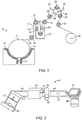
- a typical device 10 for manufacturing an electrodeposited copper foil is schematically illustrated.
- a rotatable metal negative electrode drum 11 is disposed in a partially submerged position with regard to a copper-containing electrolyte solution 12.
- An insoluble metal positive electrode 13, preferably insoluble in copper-containing electrolyte solution 12 is positioned in contact with copper-containing electrolyte solution 12.
- the insoluble metal positive electrode 13 is arranged at approximately the lower half of the metal negative electrode drum 11 and surrounds the metal negative electrode drum 11.
- the surface 14 of the rotatable metal negative electrode drum 11 can be polished to a mirror finish, thereby imparting the same finish to the drum side 15 of copper foil 21. Rollers 16, 17, 18 assist in stripping the copper foil from drum surface 14.
- Fig. 1 further illustrates a schematic embodiment where the copper foil 21 is further processed immediately after removal from the negative electrode drum 11.
- Copper foil 21 is passed over guide roller 17 and into an anti-tarnish treatment tank 22.
- treatment tank 22 is a treating solution, such as an organic agent, or alternatively, a solution which can contain zinc or chromium anti-tarnish agents, which are applied to copper foil 21 to prevent anti-tarnish and/or protect the property of the copper foil 21.
- Electrodes 23, 24 can be used in the case where electrolytic deposition of a metallic layer (such as one of the aforementioned anti- tarnish metals) onto the drum side 15 of copper foil 21 is desired.
- the copper-containing electrolyte solution 12 can be formed by adding copper wires to a sulfuric acid solution to prepare a copper sulfate containing solution.
- copper wire the copper content of the copper can be easily regulated to contain more than 99.9% pure copper.
- inorganic metal can be added, such as nickel, in the copper-containing electrolyte for the purpose of controlling the presence of voids in the electrodeposited copper foil 21. If the nickel content is too high, the aforementioned voids can easily be formed and the conductivity of the copper foil is reduced.
- Fig. 2 is a schematic representation of forming a battery component.
- a slurry of active materials and a binder is fed to a coating device 40 and deposited, continuously or discontinuously, onto copper foil 21.
- the deposited slurry is dried in an oven at an elevated temperature to remove the solvent in the slurry. Temperatures in the range of 140°C to 170°C, preferably 160°C are suitable with the residence time in the oven 42 being regulated to achieve the required degree of drying.
- a pressing apparatus such as the opposed rollers 43, 44 of roller press 45 apply elevated pressure to consolidate the active materials 41 onto copper foil 21 as they both pass through the nip of roller press 45.
- the copper foil 21, with consolidated active materials 46 are subjected to slitting to form individual negative electrode 47 for use in producing laminated type battery, or if deposited continuously upon copper foil 21, the consolidated material is wound as at continuous negative electrode 48 for use in producing cylindrical battery.
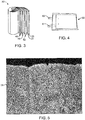
- Fig. 3 is illustrative of the formation of a cylindrical battery 50 in which the continuous negative electrode 48 is wound with an aluminum foil containing positive electrode material 52 with a separator 53, 54 between them and then seal in battery can 55 to form the cylindrical battery 50.
- the number of revolutions of the continuous negative electrode 48, the aluminum foil with positive electrode active material 52 and the separator 53 will determine the diameter of the final battery.
- Cylindrical lithium secondary batteries also known as wound type batteries
- Cylindrical battery thus has only two electrode strips which simplifies the construction of the battery considerably.
- the cylindrical design has good cycling ability, offers a long calendar life and is economical, but is heavy and has low packaging density due to it space cavities.
- the cylindrical battery is commonly used for portable applications.
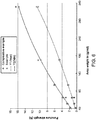
- Fig. 5 is a SEM at a magnification of 50,000 times.
- a Nova NanoLab 200 DB-FIB Dual- beam focused ion beam
- SEM Single Electron Microscope
- the SEM images of an area of 1 ⁇ m 2 , at a magnification of 50,000 times, the Nova NanoLab 200 DB-FIB, operated at 3kV using secondary electron detection are shown to measure the number of voids.
- the number of voids 71, 72, etc. as shown in Fig. 5 each having a 0.01 ⁇ m or more of a circle diameter were each counted in the sample.
- Puncture strength -A test piece with a size of 120 mm in length x 30 mm in width was tailored from each of the electrodeposited copper foils, and needle penetration test is performed using a universal testing machine (TKS-20N made by IMADA), measurement was performed at room temperature (15 ⁇ 35°C), with a needle (MS2-1R7 made by RENISHAW or Mitutoyo), entry speed being 50 mm/min.
- the maximum load acting on the copper foil when the specimen underwent penetration of the copper foil was read.
- a value obtained by the load of the specimen is determined as puncture strength (N).
- the measurement was performed 5 times each for the deposit side and for the drum side of each sample. Puncture strength for deposit side and for the drum side were then calculated by averaging the respective side's 5 measurements.
- the puncture strength of electrodeposited copper foil was then determined by taking average of the puncture strength values from each side. 2.
- Area weight and Thickness- A test piece with a size of 100 mm in length x 100 mm in width was tailored from each of the electrodeposited copper foils, and an AG-204 type microbalance manufactured by Mettler Toledo International Inc. was used to measure the test piece. For each of the test pieces, the numerical value in the reading taken was multiplied by 100 to obtain an area weight (g/m 2 ).
- a thickness of the electrodeposited copper foil means Mean average thickness using Test Method 2.4.18 of IPC-TM-650.
- Mean average thickness ⁇ m Weight of sample in grams / Area of sample in square meter ⁇ Density of electrodeposited copper The density of electrodeposited copper in present invention is 8.909 gm/cm 3 3.
- Grain size The cross-section of the copper foil is processed by CP ("Cross-section Polisher"), Gatan Ilion II. A specific section processed by CP is observed by EBSD ("Electron Back Scatter Diffraction") to measure the grain size of the copper foil.
- CP Cross-section Polisher
- EBSD Electron Back Scatter Diffraction
- N-methyl-2- pyrollidone NMP was used as a solvent for a positive electrode material (at a solid to liquid ratio of 195 wt.% (100 g of the positive electrode material: 195 g of NMP)) as shown in Table 1 below, so as to obtain a positive electrode slurry.
- NMP was used as a solvent for a negative electrode material (at a solid to liquid ratio of 60 wt.% (100 g of the negative electrode material: 60 g of NMP), so as to obtain a negative electrode slurry.
- Table 1 Positive electrode material formulation Based on the total weight of the positive electrode material Positive electrode active substance (LiCoO 2 ) 89 wt.% Conductive additive (Flaked graphite; KS6) 5 wt.% Conductive additive (Conductive carbon powder; Super P®) 1 wt.% Solvent-Based Binder (PVD1300) 5 wt.%
- Negative electrode material formulation Based on the total weight of the negative electrode material Negative electrode active substance (MGPA) 93.9 wt.% Conductive additive (Conductive carbon powder; Super P®) 1 wt.% Solvent-Based Binder (PVDF6020) 5 wt.% Oxalic acid 0.1 wt%
- the foregoing negative electrode active substance as a slurry, was coated on copper foil, and a positive electrode slurry was coated on an aluminum foil. After the solvents were evaporated, the positive electrode and negative electrode were individually pressed, and slitted into certain sizes. Afterwards, negative electrode and positive electrode are alternately stacked, with a separator (manufactured by Celgard Company) sandwiched between them, and placed in a container molded of laminate film. The container was filled with electrolyte, and sealed to form the battery. The size of the laminated type battery was 41 mm x 34 mm x53 mm.
- the charging mode was the constant current-constant voltage ("CCCV") mode, the charging voltage was 4.2 V, and the charging current constant was 5C.
- CCCV constant current-constant voltage
- the discharging mode was the constant current ("CC") mode, the discharging voltage was 2.8 V, and the discharging current was 5C.
- the charging-discharging test was conducted at an elevated temperature (at 55°C). Cycle life is defined as the number of charge-discharge cycles a battery can perform before its nominal capacity falls below 80% of its initial rated capacity. Cycle life test will be performed on a copper foil only if it has passed fracture of negative electrode test.
- Rz Surface roughness
- a negative electrode slurry was prepared using N- methyl-2-pyrollidone (NMP) as a solvent and the negative electrode materials listed in Table 2 below with a solid-liquid ratio of 60% (100 g of anode materials; 60 g of NMP). After the components of the negative electrode material formulation are mixed, the negative electrode slurry is coated on the surface of copper foil at a speed of 5 meters per minute ("mpm") to a thickness of 200 ⁇ m and then dried through a 160°C oven. The negative electrode (copper foil + negative electrode active material) was then pressed.
- NMP N- methyl-2-pyrollidone
- the dimension of the rollers of the pressing apparatus were ⁇ 250 mm in diameter x 250 mm in width, hardness of the rollers was 62 ⁇ 65 HRC, and the roller material was high-carbon chrome bearing steel (SUJ2).
- a 1 M/min ("meter per minute") pressing speed and 3000 psi pressure were used and then observed to see whether the interface between the copper foil and negative electrode active material was not broken (referred to in Table 4 as "OK"), or if it was broken (it was referred to in Table 4 as "NG").
- Negative Electrode Material % Based on Total Weight of Negative Electrode Materials Negative Electrode Active Material (Mesophase Graphite Powder Anode; MGPA) 93.9 wt.% Conductive Additive (Conductive Carbon Black; Super P®) 1 wt.% Solvent-Based Binder (PVDF6020, i.e., polyvinylidene fluoride) 5 wt.% Oxalic Acid 0.1 wt.%
- Table 3 illustrates the parameter condition for producing copper foils in the Examples and Comparative Examples.
- Table 4 illustrates the effect of varying parameter condition on the resulting properties of the copper foils produced in the Examples and Comparative Examples. It should be clearly understood that these are additional and more favorable conditions for achieving the electrodeposited copper foil for a lithium secondary battery according to the present invention. It should be understood within the scope of the present disclosure, the above-mentioned technical features and technical features mentioned below (such as example) can be combined freely and mutually to form new or preferred technical solutions, which are omitted for brevity.
- Example 1 300 100 50 33 45 1.00 1.45 1.35 498 1.5 0.5
- Example 2 300 100 50 33 45 1.00 1.45 1.35 207 1.5 0.5
- Example 3 300 100 50 33 45 1.00 0.65 1.35 498 1.5 0.5
- Example 4 300 100 50 33 45 1.00 0.65 1.35 207 1.5 0.5
- Example 5 300 100 50 33 45 1.45 1.45 1.35 498 1.5 0.5
- Example 6 300 100 50 33 45 1.45 1.45 1.35 207 1.5 0.5
- Example 7 300 100 50 33 45 1.45 0.65 1.35 498 1.5
- Example 8 300 100 50 33 45 1.45 0.65 1.35 207 1.5 0.5
- Comparative example 1 300 100 50 33 45 1.00 1.45 1.35 612 1.5 0.5 Comparative example 2 300 100 50 33 45
- the puncture strength of the electrodeposited copper foil must be high, but not too high such that the copper foil is brittle leading to failures of the copper foil during manufacture of a negative electrode by pressing the active materials onto the copper foil.
- the foil have too low puncture strength such that it fails during repeated charging-discharging cycles when used in a secondary battery.
- the copper foil must be manufactured without too many voids which also lead to battery failure.
- the area weight value (X axis) and puncture strength value of the electrodeposited copper foil (Y axis) at this time were subjected to polynomial regression analysis (in Fig-6), and the present inventors have found that acceptable electrodeposited copper foils must have an area weight of the electrodeposited copper foil in the range of 26.7-329.4 g/m 2 , and a puncture strength of the electrodeposited copper foil between Y1 (N) [Maximum], and Y2 (N) [Minimum].
- the electrolyte solution comprises nickel in the amount in the range of 200- 500 ppm.
- the electrodeposited copper foil contains less than 5 voids in an area of 1 ⁇ m 2 of the copper foil, wherein the voids are defined as each having a diameter of 0.01 ⁇ m or more.
- the grains constituting the drum side are preferable to be not only fine but also uniform. It is important that the grain size difference between the drum side and the deposit side of the copper foil be in the range of 0.05-0.55 ⁇ m.
- the uniform grains make a load applied on the foil disperse without concentration on specific grains and contribute to the strength enhancement. Note that, the grain size can be an average value of grain sizes determined from the grain diameters of grains present in a prescribed measurement visual field.
- any numerical range recited herein is intended to include all sub-ranges subsumed therein.
- a range of "1 to 10" is intended to include all sub-ranges between and including the recited minimum value of 1 and the recited maximum value of 10; that is, having a minimum value equal to or greater than 1 and a maximum value of equal to or less than 10. Because the disclosed numerical ranges are continuous, they include every value between the minimum and maximum values. Unless expressly indicated otherwise, the various numerical ranges specified in this application are approximations.
Landscapes
- Chemical & Material Sciences (AREA)
- Chemical Kinetics & Catalysis (AREA)
- Electrochemistry (AREA)
- Engineering & Computer Science (AREA)
- Materials Engineering (AREA)
- General Chemical & Material Sciences (AREA)
- Metallurgy (AREA)
- Organic Chemistry (AREA)
- Manufacturing & Machinery (AREA)
- Cell Electrode Carriers And Collectors (AREA)
- Battery Electrode And Active Subsutance (AREA)
- Secondary Cells (AREA)
Priority Applications (1)
| Application Number | Priority Date | Filing Date | Title |
|---|---|---|---|
| PL18199805T PL3492633T3 (pl) | 2017-12-04 | 2018-10-11 | Folia miedziana na kolektor prądu akumulatora litowego |
Applications Claiming Priority (1)
| Application Number | Priority Date | Filing Date | Title |
|---|---|---|---|
| US15/782,494 US10205170B1 (en) | 2017-12-04 | 2017-12-04 | Copper foil for current collector of lithium secondary battery |
Publications (2)
| Publication Number | Publication Date |
|---|---|
| EP3492633A1 true EP3492633A1 (de) | 2019-06-05 |
| EP3492633B1 EP3492633B1 (de) | 2021-11-24 |
Family
ID=63833886
Family Applications (1)
| Application Number | Title | Priority Date | Filing Date |
|---|---|---|---|
| EP18199805.5A Active EP3492633B1 (de) | 2017-12-04 | 2018-10-11 | Kupferfolie für stromsammler einer lithium-sekundärbatterie |
Country Status (9)
| Country | Link |
|---|---|
| US (2) | US10205170B1 (de) |
| EP (1) | EP3492633B1 (de) |
| JP (1) | JP7316772B2 (de) |
| KR (1) | KR102592302B1 (de) |
| CN (1) | CN109868490B (de) |
| ES (1) | ES2902023T3 (de) |
| HU (1) | HUE057603T2 (de) |
| PL (1) | PL3492633T3 (de) |
| TW (1) | TWI775920B (de) |
Cited By (2)
| Publication number | Priority date | Publication date | Assignee | Title |
|---|---|---|---|---|
| EP3757256A1 (de) * | 2019-06-27 | 2020-12-30 | Chang Chun Petrochemical Co., Ltd. | Galvanisch abgeschiedene kupferfolie |
| EP4657573A4 (de) * | 2023-03-03 | 2026-04-08 | Lg Energy Solution Ltd | Negativelektrodenstromkollektor und can-sekundärbatterie |
Families Citing this family (13)
| Publication number | Priority date | Publication date | Assignee | Title |
|---|---|---|---|---|
| US10581081B1 (en) | 2019-02-01 | 2020-03-03 | Chang Chun Petrochemical Co., Ltd. | Copper foil for negative electrode current collector of lithium ion secondary battery |
| KR102331091B1 (ko) * | 2019-02-01 | 2021-11-25 | 장 춘 페트로케미컬 컴퍼니 리미티드 | 캐리어가 있는 동박 및 동박적층판 |
| US10697082B1 (en) * | 2019-08-12 | 2020-06-30 | Chang Chun Petrochemical Co., Ltd. | Surface-treated copper foil |
| TWI700393B (zh) * | 2019-08-27 | 2020-08-01 | 長春石油化學股份有限公司 | 電解銅箔以及包含其之電極與鋰離子電池 |
| US12170375B2 (en) * | 2019-10-30 | 2024-12-17 | Chang Chun Petrochemical Co., Ltd. | Copper foil having excellent heat resistance property |
| CN110940306B (zh) * | 2019-12-17 | 2020-08-11 | 广东嘉元科技股份有限公司 | 一种电解铜箔厚度均匀性自动化测定系统 |
| CN111321437B (zh) * | 2020-03-31 | 2021-04-27 | 安徽铜冠铜箔集团股份有限公司 | 铜镍合金箔及其电沉积制备方法 |
| CA3172526A1 (en) * | 2021-10-07 | 2023-04-07 | Circuit Foil Luxembourg | Copper foil with high energy at break and secondary battery comprising the same |
| KR102405236B1 (ko) * | 2022-05-11 | 2022-06-07 | 고려아연 주식회사 | 전해 동박의 제조방법 |
| EP4632114A1 (de) * | 2022-12-06 | 2025-10-15 | SK Nexilis Co., Ltd. | Kupferfolie mit hoher festigkeit und hoher dehnfähigkeit, elektrode damit, sekundärbatterie damit und herstellungsverfahren dafür |
| CA3221847A1 (en) * | 2022-12-13 | 2024-06-13 | Sk Nexilis Co., Ltd. | Copper foil with high strength and high elongation, electrode comprising the same, secondary battery comprising the same, and method for manufacturing the same |
| KR20240096252A (ko) * | 2022-12-19 | 2024-06-26 | 주식회사 엘지에너지솔루션 | 구리 집전체 및 그 제조 방법 |
| CN119008837B (zh) * | 2023-05-19 | 2025-11-04 | 宁德时代新能源科技股份有限公司 | 一种负极片、极片组件、电池单体、电池、用电设备 |
Citations (5)
| Publication number | Priority date | Publication date | Assignee | Title |
|---|---|---|---|---|
| EP0649917A1 (de) * | 1993-10-22 | 1995-04-26 | Gould Electronics Inc. | Elektroplattierte Kupferfolie und Verfahren zu deren Herstellung |
| US20070134556A1 (en) * | 2005-12-12 | 2007-06-14 | Tdk Corporation | Lithium ion secondary battery |
| US20140199588A1 (en) * | 2011-06-30 | 2014-07-17 | Furukawa Electric Co., Ltd. | Electrolytic copper foil, method of producing electrolytic copper foil, lithium ion secondary cell using electrolytic copper foil as collector |
| EP3121885A1 (de) * | 2014-03-20 | 2017-01-25 | Iljin Materials Co., Ltd. | Elektrolytische kupferfolie und sammler, negativelektrode und lithiumbatterie damit |
| US20170115074A1 (en) * | 2015-10-27 | 2017-04-27 | Chang Chun Petrochemical Co., Ltd. | Heat-dissipating copper foil and graphene composite |
Family Cites Families (17)
| Publication number | Priority date | Publication date | Assignee | Title |
|---|---|---|---|---|
| KR100560672B1 (ko) * | 2003-08-30 | 2006-03-14 | 엘에스전선 주식회사 | 표면 처리 동박 및 그 제조 방법 |
| JP3963907B2 (ja) * | 2004-05-26 | 2007-08-22 | 三井金属鉱業株式会社 | 純銅被覆銅箔及びその製造方法、並びにtabテープ及びその製造方法 |
| CN1320672C (zh) * | 2005-07-25 | 2007-06-06 | 北京中科天华科技发展有限公司 | 一种适用于锂离子电池的纳米电解铜箔的制备方法 |
| CN100477343C (zh) * | 2005-12-12 | 2009-04-08 | Tdk株式会社 | 锂离子二次电池 |
| JP4743020B2 (ja) * | 2006-06-26 | 2011-08-10 | ソニー株式会社 | 電極集電体及びその製造方法、電池用電極及びその製造方法、並びに二次電池 |
| KR20090103010A (ko) * | 2008-03-27 | 2009-10-01 | 삼성에스디아이 주식회사 | 전극조립체 및 이를 구비하는 리튬 이차 전지 |
| JP5128695B2 (ja) * | 2010-06-28 | 2013-01-23 | 古河電気工業株式会社 | 電解銅箔、リチウムイオン二次電池用電解銅箔、該電解銅箔を用いたリチウムイオン二次電池用電極、該電極を使用したリチウムイオン二次電池 |
| DE102010040574A1 (de) * | 2010-09-10 | 2012-03-15 | Fraunhofer-Gesellschaft zur Förderung der angewandten Forschung e.V. | Stromleiter für elektrochemische Zellen |
| JP5981165B2 (ja) | 2011-12-27 | 2016-08-31 | 古河電気工業株式会社 | 銅箔、二次電池の負極電極、二次電池、並びにプリント回路基板 |
| JP5722813B2 (ja) * | 2012-03-02 | 2015-05-27 | Jx日鉱日石金属株式会社 | 電解銅箔及び二次電池用負極集電体 |
| WO2013157639A1 (ja) * | 2012-04-19 | 2013-10-24 | ディップソール株式会社 | 銅-ニッケル合金電気めっき浴及びめっき方法 |
| CN103490050A (zh) * | 2012-06-11 | 2014-01-01 | 上海一广新能源科技有限公司 | 一种多孔石墨烯制备方法及制成产物的应用 |
| JP5904096B2 (ja) * | 2012-10-31 | 2016-04-13 | Tdk株式会社 | リチウムイオン二次電池用集電体、およびそれを用いたリチウムイオン二次電池 |
| KR101500565B1 (ko) * | 2014-03-20 | 2015-03-12 | 일진머티리얼즈 주식회사 | 전해동박, 이를 포함하는 집전체, 음극 및 리튬전지 |
| US9397343B1 (en) * | 2015-10-15 | 2016-07-19 | Chang Chun Petrochemical Co., Ltd. | Copper foil exhibiting anti-swelling properties |
| KR20170050376A (ko) * | 2015-10-30 | 2017-05-11 | 엘에스엠트론 주식회사 | 전해동박, 그 제조방법, 그것을 포함하는 전극, 및 그것을 포함하는 이차전지 |
| CN106968000B (zh) * | 2017-03-21 | 2018-08-14 | 佛冈建滔实业有限公司 | 一种铜箔电解设备及其铜箔的生产方法 |
-
2017
- 2017-12-04 US US15/782,494 patent/US10205170B1/en active Active
-
2018
- 2018-08-14 TW TW107128309A patent/TWI775920B/zh active
- 2018-09-27 CN CN201811128826.0A patent/CN109868490B/zh active Active
- 2018-10-10 JP JP2018191627A patent/JP7316772B2/ja active Active
- 2018-10-11 PL PL18199805T patent/PL3492633T3/pl unknown
- 2018-10-11 ES ES18199805T patent/ES2902023T3/es active Active
- 2018-10-11 EP EP18199805.5A patent/EP3492633B1/de active Active
- 2018-10-11 HU HUE18199805A patent/HUE057603T2/hu unknown
- 2018-10-12 KR KR1020180121960A patent/KR102592302B1/ko active Active
- 2018-12-17 US US16/222,066 patent/US11962014B2/en active Active
Patent Citations (5)
| Publication number | Priority date | Publication date | Assignee | Title |
|---|---|---|---|---|
| EP0649917A1 (de) * | 1993-10-22 | 1995-04-26 | Gould Electronics Inc. | Elektroplattierte Kupferfolie und Verfahren zu deren Herstellung |
| US20070134556A1 (en) * | 2005-12-12 | 2007-06-14 | Tdk Corporation | Lithium ion secondary battery |
| US20140199588A1 (en) * | 2011-06-30 | 2014-07-17 | Furukawa Electric Co., Ltd. | Electrolytic copper foil, method of producing electrolytic copper foil, lithium ion secondary cell using electrolytic copper foil as collector |
| EP3121885A1 (de) * | 2014-03-20 | 2017-01-25 | Iljin Materials Co., Ltd. | Elektrolytische kupferfolie und sammler, negativelektrode und lithiumbatterie damit |
| US20170115074A1 (en) * | 2015-10-27 | 2017-04-27 | Chang Chun Petrochemical Co., Ltd. | Heat-dissipating copper foil and graphene composite |
Cited By (2)
| Publication number | Priority date | Publication date | Assignee | Title |
|---|---|---|---|---|
| EP3757256A1 (de) * | 2019-06-27 | 2020-12-30 | Chang Chun Petrochemical Co., Ltd. | Galvanisch abgeschiedene kupferfolie |
| EP4657573A4 (de) * | 2023-03-03 | 2026-04-08 | Lg Energy Solution Ltd | Negativelektrodenstromkollektor und can-sekundärbatterie |
Also Published As
| Publication number | Publication date |
|---|---|
| CN109868490B (zh) | 2022-01-04 |
| ES2902023T3 (es) | 2022-03-24 |
| JP2019099911A (ja) | 2019-06-24 |
| PL3492633T3 (pl) | 2022-02-14 |
| CN109868490A (zh) | 2019-06-11 |
| US11962014B2 (en) | 2024-04-16 |
| US20190173091A1 (en) | 2019-06-06 |
| HUE057603T2 (hu) | 2022-05-28 |
| US10205170B1 (en) | 2019-02-12 |
| KR20190065931A (ko) | 2019-06-12 |
| JP7316772B2 (ja) | 2023-07-28 |
| TWI775920B (zh) | 2022-09-01 |
| EP3492633B1 (de) | 2021-11-24 |
| KR102592302B1 (ko) | 2023-10-20 |
| TW201925537A (zh) | 2019-07-01 |
Similar Documents
| Publication | Publication Date | Title |
|---|---|---|
| EP3492633B1 (de) | Kupferfolie für stromsammler einer lithium-sekundärbatterie | |
| EP3808876B1 (de) | Elektrolytische kupferfolie, elektrode und lithiumionensekundärbatterie damit | |
| EP3483306B1 (de) | Galvanisch abgeschiedene kupferfolie und sekundäre batterie mit der galvanisch abgeschiedenen kupferfolie | |
| US10923730B2 (en) | Electrodeposited copper foil with anti-burr property | |
| KR101916984B1 (ko) | 리튬 이온 이차 전지의 부극재 제조 방법 및 리튬 이온 이차 전지용 부극재 | |
| KR102219847B1 (ko) | 전해 동박, 전극 및 이를 포함하는 리튬 이온 배터리 | |
| CN111279019B (zh) | 电解铜箔、该电解铜箔的制造方法及包含该电解铜箔的高容量锂二次电池用阳极 | |
| EP3919655A1 (de) | Gegen riss- und faltdefekte sicherer elektrolytischer kupferfolienschutz, elektrode damit, sekundärbatterie damit und herstellungsverfahren dafür | |
| WO2013047432A1 (ja) | リチウム二次電池 | |
| CN108574104B (zh) | 铜箔、包含其的电极、包含其的二次电池及其制造方法 | |
| EP3757256B1 (de) | Galvanisch abgeschiedene kupferfolie | |
| CN119852415A (zh) | 集流体及其制备方法、极片、二次电池及用电装置 | |
| US11456451B2 (en) | Method for preparing dry electrode | |
| CN115198319B (zh) | 电解铜箔及包含所述电解铜箔的电极与锂离子电池 | |
| EP4299795A1 (de) | Elektrolytische kupferfolie und elektrode und lithium-ionen-zelle damit | |
| JP2003068284A (ja) | リチウム二次電池用負極およびその製造方法、並びに、リチウム二次電池 | |
| JP2018041647A (ja) | 合金化度推定方法、蓄電素子用活物質の製造方法、及び蓄電素子用活物質製造装置 |
Legal Events
| Date | Code | Title | Description |
|---|---|---|---|
| PUAI | Public reference made under article 153(3) epc to a published international application that has entered the european phase |
Free format text: ORIGINAL CODE: 0009012 |
|
| STAA | Information on the status of an ep patent application or granted ep patent |
Free format text: STATUS: THE APPLICATION HAS BEEN PUBLISHED |
|
| AK | Designated contracting states |
Kind code of ref document: A1 Designated state(s): AL AT BE BG CH CY CZ DE DK EE ES FI FR GB GR HR HU IE IS IT LI LT LU LV MC MK MT NL NO PL PT RO RS SE SI SK SM TR |
|
| AX | Request for extension of the european patent |
Extension state: BA ME |
|
| STAA | Information on the status of an ep patent application or granted ep patent |
Free format text: STATUS: REQUEST FOR EXAMINATION WAS MADE |
|
| 17P | Request for examination filed |
Effective date: 20191205 |
|
| RBV | Designated contracting states (corrected) |
Designated state(s): AL AT BE BG CH CY CZ DE DK EE ES FI FR GB GR HR HU IE IS IT LI LT LU LV MC MK MT NL NO PL PT RO RS SE SI SK SM TR |
|
| STAA | Information on the status of an ep patent application or granted ep patent |
Free format text: STATUS: EXAMINATION IS IN PROGRESS |
|
| 17Q | First examination report despatched |
Effective date: 20200310 |
|
| GRAP | Despatch of communication of intention to grant a patent |
Free format text: ORIGINAL CODE: EPIDOSNIGR1 |
|
| STAA | Information on the status of an ep patent application or granted ep patent |
Free format text: STATUS: GRANT OF PATENT IS INTENDED |
|
| INTG | Intention to grant announced |
Effective date: 20210518 |
|
| GRAS | Grant fee paid |
Free format text: ORIGINAL CODE: EPIDOSNIGR3 |
|
| GRAA | (expected) grant |
Free format text: ORIGINAL CODE: 0009210 |
|
| STAA | Information on the status of an ep patent application or granted ep patent |
Free format text: STATUS: THE PATENT HAS BEEN GRANTED |
|
| AK | Designated contracting states |
Kind code of ref document: B1 Designated state(s): AL AT BE BG CH CY CZ DE DK EE ES FI FR GB GR HR HU IE IS IT LI LT LU LV MC MK MT NL NO PL PT RO RS SE SI SK SM TR |
|
| REG | Reference to a national code |
Ref country code: GB Ref legal event code: FG4D |
|
| REG | Reference to a national code |
Ref country code: DE Ref legal event code: R096 Ref document number: 602018027070 Country of ref document: DE |
|
| REG | Reference to a national code |
Ref country code: AT Ref legal event code: REF Ref document number: 1449940 Country of ref document: AT Kind code of ref document: T Effective date: 20211215 |
|
| REG | Reference to a national code |
Ref country code: IE Ref legal event code: FG4D |
|
| REG | Reference to a national code |
Ref country code: SE Ref legal event code: TRGR |
|
| REG | Reference to a national code |
Ref country code: NO Ref legal event code: T2 Effective date: 20211124 |
|
| REG | Reference to a national code |
Ref country code: SK Ref legal event code: T3 Ref document number: E 38933 Country of ref document: SK |
|
| REG | Reference to a national code |
Ref country code: ES Ref legal event code: FG2A Ref document number: 2902023 Country of ref document: ES Kind code of ref document: T3 Effective date: 20220324 |
|
| REG | Reference to a national code |
Ref country code: LT Ref legal event code: MG9D |
|
| REG | Reference to a national code |
Ref country code: NL Ref legal event code: MP Effective date: 20211124 |
|
| REG | Reference to a national code |
Ref country code: AT Ref legal event code: MK05 Ref document number: 1449940 Country of ref document: AT Kind code of ref document: T Effective date: 20211124 |
|
| PG25 | Lapsed in a contracting state [announced via postgrant information from national office to epo] |
Ref country code: RS Free format text: LAPSE BECAUSE OF FAILURE TO SUBMIT A TRANSLATION OF THE DESCRIPTION OR TO PAY THE FEE WITHIN THE PRESCRIBED TIME-LIMIT Effective date: 20211124 Ref country code: LT Free format text: LAPSE BECAUSE OF FAILURE TO SUBMIT A TRANSLATION OF THE DESCRIPTION OR TO PAY THE FEE WITHIN THE PRESCRIBED TIME-LIMIT Effective date: 20211124 Ref country code: FI Free format text: LAPSE BECAUSE OF FAILURE TO SUBMIT A TRANSLATION OF THE DESCRIPTION OR TO PAY THE FEE WITHIN THE PRESCRIBED TIME-LIMIT Effective date: 20211124 Ref country code: BG Free format text: LAPSE BECAUSE OF FAILURE TO SUBMIT A TRANSLATION OF THE DESCRIPTION OR TO PAY THE FEE WITHIN THE PRESCRIBED TIME-LIMIT Effective date: 20220224 Ref country code: AT Free format text: LAPSE BECAUSE OF FAILURE TO SUBMIT A TRANSLATION OF THE DESCRIPTION OR TO PAY THE FEE WITHIN THE PRESCRIBED TIME-LIMIT Effective date: 20211124 |
|
| REG | Reference to a national code |
Ref country code: HU Ref legal event code: AG4A Ref document number: E057603 Country of ref document: HU |
|
| PG25 | Lapsed in a contracting state [announced via postgrant information from national office to epo] |
Ref country code: IS Free format text: LAPSE BECAUSE OF FAILURE TO SUBMIT A TRANSLATION OF THE DESCRIPTION OR TO PAY THE FEE WITHIN THE PRESCRIBED TIME-LIMIT Effective date: 20220324 Ref country code: PT Free format text: LAPSE BECAUSE OF FAILURE TO SUBMIT A TRANSLATION OF THE DESCRIPTION OR TO PAY THE FEE WITHIN THE PRESCRIBED TIME-LIMIT Effective date: 20220324 Ref country code: NL Free format text: LAPSE BECAUSE OF FAILURE TO SUBMIT A TRANSLATION OF THE DESCRIPTION OR TO PAY THE FEE WITHIN THE PRESCRIBED TIME-LIMIT Effective date: 20211124 Ref country code: LV Free format text: LAPSE BECAUSE OF FAILURE TO SUBMIT A TRANSLATION OF THE DESCRIPTION OR TO PAY THE FEE WITHIN THE PRESCRIBED TIME-LIMIT Effective date: 20211124 Ref country code: HR Free format text: LAPSE BECAUSE OF FAILURE TO SUBMIT A TRANSLATION OF THE DESCRIPTION OR TO PAY THE FEE WITHIN THE PRESCRIBED TIME-LIMIT Effective date: 20211124 Ref country code: GR Free format text: LAPSE BECAUSE OF FAILURE TO SUBMIT A TRANSLATION OF THE DESCRIPTION OR TO PAY THE FEE WITHIN THE PRESCRIBED TIME-LIMIT Effective date: 20220225 |
|
| PG25 | Lapsed in a contracting state [announced via postgrant information from national office to epo] |
Ref country code: SM Free format text: LAPSE BECAUSE OF FAILURE TO SUBMIT A TRANSLATION OF THE DESCRIPTION OR TO PAY THE FEE WITHIN THE PRESCRIBED TIME-LIMIT Effective date: 20211124 Ref country code: RO Free format text: LAPSE BECAUSE OF FAILURE TO SUBMIT A TRANSLATION OF THE DESCRIPTION OR TO PAY THE FEE WITHIN THE PRESCRIBED TIME-LIMIT Effective date: 20211124 Ref country code: EE Free format text: LAPSE BECAUSE OF FAILURE TO SUBMIT A TRANSLATION OF THE DESCRIPTION OR TO PAY THE FEE WITHIN THE PRESCRIBED TIME-LIMIT Effective date: 20211124 Ref country code: DK Free format text: LAPSE BECAUSE OF FAILURE TO SUBMIT A TRANSLATION OF THE DESCRIPTION OR TO PAY THE FEE WITHIN THE PRESCRIBED TIME-LIMIT Effective date: 20211124 |
|
| REG | Reference to a national code |
Ref country code: DE Ref legal event code: R097 Ref document number: 602018027070 Country of ref document: DE |
|
| PLBE | No opposition filed within time limit |
Free format text: ORIGINAL CODE: 0009261 |
|
| STAA | Information on the status of an ep patent application or granted ep patent |
Free format text: STATUS: NO OPPOSITION FILED WITHIN TIME LIMIT |
|
| PG25 | Lapsed in a contracting state [announced via postgrant information from national office to epo] |
Ref country code: AL Free format text: LAPSE BECAUSE OF FAILURE TO SUBMIT A TRANSLATION OF THE DESCRIPTION OR TO PAY THE FEE WITHIN THE PRESCRIBED TIME-LIMIT Effective date: 20211124 |
|
| 26N | No opposition filed |
Effective date: 20220825 |
|
| PG25 | Lapsed in a contracting state [announced via postgrant information from national office to epo] |
Ref country code: SI Free format text: LAPSE BECAUSE OF FAILURE TO SUBMIT A TRANSLATION OF THE DESCRIPTION OR TO PAY THE FEE WITHIN THE PRESCRIBED TIME-LIMIT Effective date: 20211124 |
|
| PG25 | Lapsed in a contracting state [announced via postgrant information from national office to epo] |
Ref country code: MC Free format text: LAPSE BECAUSE OF FAILURE TO SUBMIT A TRANSLATION OF THE DESCRIPTION OR TO PAY THE FEE WITHIN THE PRESCRIBED TIME-LIMIT Effective date: 20211124 Ref country code: IT Free format text: LAPSE BECAUSE OF FAILURE TO SUBMIT A TRANSLATION OF THE DESCRIPTION OR TO PAY THE FEE WITHIN THE PRESCRIBED TIME-LIMIT Effective date: 20211124 |
|
| REG | Reference to a national code |
Ref country code: BE Ref legal event code: MM Effective date: 20221031 |
|
| PG25 | Lapsed in a contracting state [announced via postgrant information from national office to epo] |
Ref country code: BE Free format text: LAPSE BECAUSE OF NON-PAYMENT OF DUE FEES Effective date: 20221031 |
|
| PG25 | Lapsed in a contracting state [announced via postgrant information from national office to epo] |
Ref country code: IE Free format text: LAPSE BECAUSE OF NON-PAYMENT OF DUE FEES Effective date: 20221011 |
|
| PG25 | Lapsed in a contracting state [announced via postgrant information from national office to epo] |
Ref country code: CY Free format text: LAPSE BECAUSE OF FAILURE TO SUBMIT A TRANSLATION OF THE DESCRIPTION OR TO PAY THE FEE WITHIN THE PRESCRIBED TIME-LIMIT Effective date: 20211124 |
|
| PG25 | Lapsed in a contracting state [announced via postgrant information from national office to epo] |
Ref country code: MK Free format text: LAPSE BECAUSE OF FAILURE TO SUBMIT A TRANSLATION OF THE DESCRIPTION OR TO PAY THE FEE WITHIN THE PRESCRIBED TIME-LIMIT Effective date: 20211124 |
|
| PG25 | Lapsed in a contracting state [announced via postgrant information from national office to epo] |
Ref country code: MT Free format text: LAPSE BECAUSE OF FAILURE TO SUBMIT A TRANSLATION OF THE DESCRIPTION OR TO PAY THE FEE WITHIN THE PRESCRIBED TIME-LIMIT Effective date: 20211124 |
|
| PGFP | Annual fee paid to national office [announced via postgrant information from national office to epo] |
Ref country code: NO Payment date: 20250723 Year of fee payment: 8 |
|
| PGFP | Annual fee paid to national office [announced via postgrant information from national office to epo] |
Ref country code: PL Payment date: 20250916 Year of fee payment: 8 |
|
| PGFP | Annual fee paid to national office [announced via postgrant information from national office to epo] |
Ref country code: GB Payment date: 20250801 Year of fee payment: 8 |
|
| PGFP | Annual fee paid to national office [announced via postgrant information from national office to epo] |
Ref country code: FR Payment date: 20250725 Year of fee payment: 8 |
|
| PGFP | Annual fee paid to national office [announced via postgrant information from national office to epo] |
Ref country code: SE Payment date: 20250722 Year of fee payment: 8 |
|
| PGFP | Annual fee paid to national office [announced via postgrant information from national office to epo] |
Ref country code: CZ Payment date: 20250926 Year of fee payment: 8 |
|
| PGFP | Annual fee paid to national office [announced via postgrant information from national office to epo] |
Ref country code: SK Payment date: 20250917 Year of fee payment: 8 |
|
| REG | Reference to a national code |
Ref country code: CH Ref legal event code: U11 Free format text: ST27 STATUS EVENT CODE: U-0-0-U10-U11 (AS PROVIDED BY THE NATIONAL OFFICE) Effective date: 20251101 |
|
| PGFP | Annual fee paid to national office [announced via postgrant information from national office to epo] |
Ref country code: HU Payment date: 20251006 Year of fee payment: 8 |
|
| PGFP | Annual fee paid to national office [announced via postgrant information from national office to epo] |
Ref country code: LU Payment date: 20251024 Year of fee payment: 8 |
|
| PG25 | Lapsed in a contracting state [announced via postgrant information from national office to epo] |
Ref country code: TR Free format text: LAPSE BECAUSE OF FAILURE TO SUBMIT A TRANSLATION OF THE DESCRIPTION OR TO PAY THE FEE WITHIN THE PRESCRIBED TIME-LIMIT Effective date: 20211124 |
|
| PGFP | Annual fee paid to national office [announced via postgrant information from national office to epo] |
Ref country code: DE Payment date: 20250724 Year of fee payment: 8 |
|
| PGFP | Annual fee paid to national office [announced via postgrant information from national office to epo] |
Ref country code: CH Payment date: 20251101 Year of fee payment: 8 |
|
| PGFP | Annual fee paid to national office [announced via postgrant information from national office to epo] |
Ref country code: ES Payment date: 20251118 Year of fee payment: 8 |