EP3428097B1 - Spule aus thermoplastischem material und verfahren zu ihrer herstellung - Google Patents
Spule aus thermoplastischem material und verfahren zu ihrer herstellung Download PDFInfo
- Publication number
- EP3428097B1 EP3428097B1 EP17209031.8A EP17209031A EP3428097B1 EP 3428097 B1 EP3428097 B1 EP 3428097B1 EP 17209031 A EP17209031 A EP 17209031A EP 3428097 B1 EP3428097 B1 EP 3428097B1
- Authority
- EP
- European Patent Office
- Prior art keywords
- spool
- welding
- annular wall
- annular
- core
- Prior art date
- Legal status (The legal status is an assumption and is not a legal conclusion. Google has not performed a legal analysis and makes no representation as to the accuracy of the status listed.)
- Active
Links
Images

Classifications
-
- B—PERFORMING OPERATIONS; TRANSPORTING
- B65—CONVEYING; PACKING; STORING; HANDLING THIN OR FILAMENTARY MATERIAL
- B65H—HANDLING THIN OR FILAMENTARY MATERIAL, e.g. SHEETS, WEBS, CABLES
- B65H75/00—Storing webs, tapes, or filamentary material, e.g. on reels
- B65H75/02—Cores, formers, supports, or holders for coiled, wound, or folded material, e.g. reels, spindles, bobbins, cop tubes, cans, mandrels or chucks
- B65H75/04—Kinds or types
- B65H75/08—Kinds or types of circular or polygonal cross-section
- B65H75/14—Kinds or types of circular or polygonal cross-section with two end flanges
-
- B—PERFORMING OPERATIONS; TRANSPORTING
- B23—MACHINE TOOLS; METAL-WORKING NOT OTHERWISE PROVIDED FOR
- B23K—SOLDERING OR UNSOLDERING; WELDING; CLADDING OR PLATING BY SOLDERING OR WELDING; CUTTING BY APPLYING HEAT LOCALLY, e.g. FLAME CUTTING; WORKING BY LASER BEAM
- B23K20/00—Non-electric welding by applying impact or other pressure, with or without the application of heat, e.g. cladding or plating
- B23K20/12—Non-electric welding by applying impact or other pressure, with or without the application of heat, e.g. cladding or plating the heat being generated by friction; Friction welding
- B23K20/129—Non-electric welding by applying impact or other pressure, with or without the application of heat, e.g. cladding or plating the heat being generated by friction; Friction welding specially adapted for particular articles or workpieces
-
- B—PERFORMING OPERATIONS; TRANSPORTING
- B29—WORKING OF PLASTICS; WORKING OF SUBSTANCES IN A PLASTIC STATE IN GENERAL
- B29C—SHAPING OR JOINING OF PLASTICS; SHAPING OF MATERIAL IN A PLASTIC STATE, NOT OTHERWISE PROVIDED FOR; AFTER-TREATMENT OF THE SHAPED PRODUCTS, e.g. REPAIRING
- B29C65/00—Joining or sealing of preformed parts, e.g. welding of plastics materials; Apparatus therefor
- B29C65/02—Joining or sealing of preformed parts, e.g. welding of plastics materials; Apparatus therefor by heating, with or without pressure
- B29C65/08—Joining or sealing of preformed parts, e.g. welding of plastics materials; Apparatus therefor by heating, with or without pressure using ultrasonic vibrations
-
- B—PERFORMING OPERATIONS; TRANSPORTING
- B29—WORKING OF PLASTICS; WORKING OF SUBSTANCES IN A PLASTIC STATE IN GENERAL
- B29C—SHAPING OR JOINING OF PLASTICS; SHAPING OF MATERIAL IN A PLASTIC STATE, NOT OTHERWISE PROVIDED FOR; AFTER-TREATMENT OF THE SHAPED PRODUCTS, e.g. REPAIRING
- B29C65/00—Joining or sealing of preformed parts, e.g. welding of plastics materials; Apparatus therefor
- B29C65/02—Joining or sealing of preformed parts, e.g. welding of plastics materials; Apparatus therefor by heating, with or without pressure
- B29C65/10—Joining or sealing of preformed parts, e.g. welding of plastics materials; Apparatus therefor by heating, with or without pressure using hot gases (e.g. combustion gases) or flames coming in contact with at least one of the parts to be joined
-
- B—PERFORMING OPERATIONS; TRANSPORTING
- B29—WORKING OF PLASTICS; WORKING OF SUBSTANCES IN A PLASTIC STATE IN GENERAL
- B29C—SHAPING OR JOINING OF PLASTICS; SHAPING OF MATERIAL IN A PLASTIC STATE, NOT OTHERWISE PROVIDED FOR; AFTER-TREATMENT OF THE SHAPED PRODUCTS, e.g. REPAIRING
- B29C65/00—Joining or sealing of preformed parts, e.g. welding of plastics materials; Apparatus therefor
- B29C65/02—Joining or sealing of preformed parts, e.g. welding of plastics materials; Apparatus therefor by heating, with or without pressure
- B29C65/14—Joining or sealing of preformed parts, e.g. welding of plastics materials; Apparatus therefor by heating, with or without pressure using wave energy, i.e. electromagnetic radiation, or particle radiation
- B29C65/1403—Joining or sealing of preformed parts, e.g. welding of plastics materials; Apparatus therefor by heating, with or without pressure using wave energy, i.e. electromagnetic radiation, or particle radiation characterised by the type of electromagnetic or particle radiation
- B29C65/1412—Infrared [IR] radiation
-
- B—PERFORMING OPERATIONS; TRANSPORTING
- B29—WORKING OF PLASTICS; WORKING OF SUBSTANCES IN A PLASTIC STATE IN GENERAL
- B29C—SHAPING OR JOINING OF PLASTICS; SHAPING OF MATERIAL IN A PLASTIC STATE, NOT OTHERWISE PROVIDED FOR; AFTER-TREATMENT OF THE SHAPED PRODUCTS, e.g. REPAIRING
- B29C65/00—Joining or sealing of preformed parts, e.g. welding of plastics materials; Apparatus therefor
- B29C65/02—Joining or sealing of preformed parts, e.g. welding of plastics materials; Apparatus therefor by heating, with or without pressure
- B29C65/18—Joining or sealing of preformed parts, e.g. welding of plastics materials; Apparatus therefor by heating, with or without pressure using heated tools
- B29C65/20—Joining or sealing of preformed parts, e.g. welding of plastics materials; Apparatus therefor by heating, with or without pressure using heated tools with direct contact, e.g. using "mirror"
-
- B—PERFORMING OPERATIONS; TRANSPORTING
- B29—WORKING OF PLASTICS; WORKING OF SUBSTANCES IN A PLASTIC STATE IN GENERAL
- B29C—SHAPING OR JOINING OF PLASTICS; SHAPING OF MATERIAL IN A PLASTIC STATE, NOT OTHERWISE PROVIDED FOR; AFTER-TREATMENT OF THE SHAPED PRODUCTS, e.g. REPAIRING
- B29C65/00—Joining or sealing of preformed parts, e.g. welding of plastics materials; Apparatus therefor
- B29C65/48—Joining or sealing of preformed parts, e.g. welding of plastics materials; Apparatus therefor using adhesives, i.e. using supplementary joining material; solvent bonding
-
- B—PERFORMING OPERATIONS; TRANSPORTING
- B29—WORKING OF PLASTICS; WORKING OF SUBSTANCES IN A PLASTIC STATE IN GENERAL
- B29C—SHAPING OR JOINING OF PLASTICS; SHAPING OF MATERIAL IN A PLASTIC STATE, NOT OTHERWISE PROVIDED FOR; AFTER-TREATMENT OF THE SHAPED PRODUCTS, e.g. REPAIRING
- B29C66/00—General aspects of processes or apparatus for joining preformed parts
- B29C66/01—General aspects dealing with the joint area or with the area to be joined
- B29C66/05—Particular design of joint configurations
- B29C66/10—Particular design of joint configurations particular design of the joint cross-sections
- B29C66/12—Joint cross-sections combining only two joint-segments; Tongue and groove joints; Tenon and mortise joints; Stepped joint cross-sections
- B29C66/124—Tongue and groove joints
- B29C66/1244—Tongue and groove joints characterised by the male part, i.e. the part comprising the tongue
- B29C66/12441—Tongue and groove joints characterised by the male part, i.e. the part comprising the tongue being a single wall
-
- B—PERFORMING OPERATIONS; TRANSPORTING
- B29—WORKING OF PLASTICS; WORKING OF SUBSTANCES IN A PLASTIC STATE IN GENERAL
- B29C—SHAPING OR JOINING OF PLASTICS; SHAPING OF MATERIAL IN A PLASTIC STATE, NOT OTHERWISE PROVIDED FOR; AFTER-TREATMENT OF THE SHAPED PRODUCTS, e.g. REPAIRING
- B29C66/00—General aspects of processes or apparatus for joining preformed parts
- B29C66/01—General aspects dealing with the joint area or with the area to be joined
- B29C66/05—Particular design of joint configurations
- B29C66/302—Particular design of joint configurations the area to be joined comprising melt initiators
- B29C66/3022—Particular design of joint configurations the area to be joined comprising melt initiators said melt initiators being integral with at least one of the parts to be joined
- B29C66/30223—Particular design of joint configurations the area to be joined comprising melt initiators said melt initiators being integral with at least one of the parts to be joined said melt initiators being rib-like
-
- B—PERFORMING OPERATIONS; TRANSPORTING
- B29—WORKING OF PLASTICS; WORKING OF SUBSTANCES IN A PLASTIC STATE IN GENERAL
- B29C—SHAPING OR JOINING OF PLASTICS; SHAPING OF MATERIAL IN A PLASTIC STATE, NOT OTHERWISE PROVIDED FOR; AFTER-TREATMENT OF THE SHAPED PRODUCTS, e.g. REPAIRING
- B29C66/00—General aspects of processes or apparatus for joining preformed parts
- B29C66/01—General aspects dealing with the joint area or with the area to be joined
- B29C66/32—Measures for keeping the burr form under control; Avoiding burr formation; Shaping the burr
- B29C66/322—Providing cavities in the joined article to collect the burr
-
- B—PERFORMING OPERATIONS; TRANSPORTING
- B29—WORKING OF PLASTICS; WORKING OF SUBSTANCES IN A PLASTIC STATE IN GENERAL
- B29C—SHAPING OR JOINING OF PLASTICS; SHAPING OF MATERIAL IN A PLASTIC STATE, NOT OTHERWISE PROVIDED FOR; AFTER-TREATMENT OF THE SHAPED PRODUCTS, e.g. REPAIRING
- B29C66/00—General aspects of processes or apparatus for joining preformed parts
- B29C66/50—General aspects of joining tubular articles; General aspects of joining long products, i.e. bars or profiled elements; General aspects of joining single elements to tubular articles, hollow articles or bars; General aspects of joining several hollow-preforms to form hollow or tubular articles
- B29C66/51—Joining tubular articles, profiled elements or bars; Joining single elements to tubular articles, hollow articles or bars; Joining several hollow-preforms to form hollow or tubular articles
- B29C66/53—Joining single elements to tubular articles, hollow articles or bars
- B29C66/534—Joining single elements to open ends of tubular or hollow articles or to the ends of bars
- B29C66/5344—Joining single elements to open ends of tubular or hollow articles or to the ends of bars said single elements being substantially annular, i.e. of finite length, e.g. joining flanges to tube ends
-
- B—PERFORMING OPERATIONS; TRANSPORTING
- B29—WORKING OF PLASTICS; WORKING OF SUBSTANCES IN A PLASTIC STATE IN GENERAL
- B29C—SHAPING OR JOINING OF PLASTICS; SHAPING OF MATERIAL IN A PLASTIC STATE, NOT OTHERWISE PROVIDED FOR; AFTER-TREATMENT OF THE SHAPED PRODUCTS, e.g. REPAIRING
- B29C66/00—General aspects of processes or apparatus for joining preformed parts
- B29C66/50—General aspects of joining tubular articles; General aspects of joining long products, i.e. bars or profiled elements; General aspects of joining single elements to tubular articles, hollow articles or bars; General aspects of joining several hollow-preforms to form hollow or tubular articles
- B29C66/51—Joining tubular articles, profiled elements or bars; Joining single elements to tubular articles, hollow articles or bars; Joining several hollow-preforms to form hollow or tubular articles
- B29C66/53—Joining single elements to tubular articles, hollow articles or bars
- B29C66/534—Joining single elements to open ends of tubular or hollow articles or to the ends of bars
- B29C66/5346—Joining single elements to open ends of tubular or hollow articles or to the ends of bars said single elements being substantially flat
-
- B—PERFORMING OPERATIONS; TRANSPORTING
- B29—WORKING OF PLASTICS; WORKING OF SUBSTANCES IN A PLASTIC STATE IN GENERAL
- B29C—SHAPING OR JOINING OF PLASTICS; SHAPING OF MATERIAL IN A PLASTIC STATE, NOT OTHERWISE PROVIDED FOR; AFTER-TREATMENT OF THE SHAPED PRODUCTS, e.g. REPAIRING
- B29C66/00—General aspects of processes or apparatus for joining preformed parts
- B29C66/70—General aspects of processes or apparatus for joining preformed parts characterised by the composition, physical properties or the structure of the material of the parts to be joined; Joining with non-plastics material
- B29C66/71—General aspects of processes or apparatus for joining preformed parts characterised by the composition, physical properties or the structure of the material of the parts to be joined; Joining with non-plastics material characterised by the composition of the plastics material of the parts to be joined
- B29C66/712—General aspects of processes or apparatus for joining preformed parts characterised by the composition, physical properties or the structure of the material of the parts to be joined; Joining with non-plastics material characterised by the composition of the plastics material of the parts to be joined the composition of one of the parts to be joined being different from the composition of the other part
-
- B—PERFORMING OPERATIONS; TRANSPORTING
- B29—WORKING OF PLASTICS; WORKING OF SUBSTANCES IN A PLASTIC STATE IN GENERAL
- B29C—SHAPING OR JOINING OF PLASTICS; SHAPING OF MATERIAL IN A PLASTIC STATE, NOT OTHERWISE PROVIDED FOR; AFTER-TREATMENT OF THE SHAPED PRODUCTS, e.g. REPAIRING
- B29C66/00—General aspects of processes or apparatus for joining preformed parts
- B29C66/70—General aspects of processes or apparatus for joining preformed parts characterised by the composition, physical properties or the structure of the material of the parts to be joined; Joining with non-plastics material
- B29C66/73—General aspects of processes or apparatus for joining preformed parts characterised by the composition, physical properties or the structure of the material of the parts to be joined; Joining with non-plastics material characterised by the intensive physical properties of the material of the parts to be joined, by the optical properties of the material of the parts to be joined, by the extensive physical properties of the parts to be joined, by the state of the material of the parts to be joined or by the material of the parts to be joined being a thermoplastic or a thermoset
- B29C66/739—General aspects of processes or apparatus for joining preformed parts characterised by the composition, physical properties or the structure of the material of the parts to be joined; Joining with non-plastics material characterised by the intensive physical properties of the material of the parts to be joined, by the optical properties of the material of the parts to be joined, by the extensive physical properties of the parts to be joined, by the state of the material of the parts to be joined or by the material of the parts to be joined being a thermoplastic or a thermoset characterised by the material of the parts to be joined being a thermoplastic or a thermoset
- B29C66/7392—General aspects of processes or apparatus for joining preformed parts characterised by the composition, physical properties or the structure of the material of the parts to be joined; Joining with non-plastics material characterised by the intensive physical properties of the material of the parts to be joined, by the optical properties of the material of the parts to be joined, by the extensive physical properties of the parts to be joined, by the state of the material of the parts to be joined or by the material of the parts to be joined being a thermoplastic or a thermoset characterised by the material of the parts to be joined being a thermoplastic or a thermoset characterised by the material of at least one of the parts being a thermoplastic
- B29C66/73921—General aspects of processes or apparatus for joining preformed parts characterised by the composition, physical properties or the structure of the material of the parts to be joined; Joining with non-plastics material characterised by the intensive physical properties of the material of the parts to be joined, by the optical properties of the material of the parts to be joined, by the extensive physical properties of the parts to be joined, by the state of the material of the parts to be joined or by the material of the parts to be joined being a thermoplastic or a thermoset characterised by the material of the parts to be joined being a thermoplastic or a thermoset characterised by the material of at least one of the parts being a thermoplastic characterised by the materials of both parts being thermoplastics
-
- B—PERFORMING OPERATIONS; TRANSPORTING
- B65—CONVEYING; PACKING; STORING; HANDLING THIN OR FILAMENTARY MATERIAL
- B65H—HANDLING THIN OR FILAMENTARY MATERIAL, e.g. SHEETS, WEBS, CABLES
- B65H75/00—Storing webs, tapes, or filamentary material, e.g. on reels
- B65H75/02—Cores, formers, supports, or holders for coiled, wound, or folded material, e.g. reels, spindles, bobbins, cop tubes, cans, mandrels or chucks
- B65H75/18—Constructional details
-
- B—PERFORMING OPERATIONS; TRANSPORTING
- B65—CONVEYING; PACKING; STORING; HANDLING THIN OR FILAMENTARY MATERIAL
- B65H—HANDLING THIN OR FILAMENTARY MATERIAL, e.g. SHEETS, WEBS, CABLES
- B65H75/00—Storing webs, tapes, or filamentary material, e.g. on reels
- B65H75/50—Methods of making reels, bobbins, cop tubes, or the like by working an unspecified material, or several materials
-
- B—PERFORMING OPERATIONS; TRANSPORTING
- B29—WORKING OF PLASTICS; WORKING OF SUBSTANCES IN A PLASTIC STATE IN GENERAL
- B29C—SHAPING OR JOINING OF PLASTICS; SHAPING OF MATERIAL IN A PLASTIC STATE, NOT OTHERWISE PROVIDED FOR; AFTER-TREATMENT OF THE SHAPED PRODUCTS, e.g. REPAIRING
- B29C66/00—General aspects of processes or apparatus for joining preformed parts
- B29C66/01—General aspects dealing with the joint area or with the area to be joined
- B29C66/05—Particular design of joint configurations
- B29C66/10—Particular design of joint configurations particular design of the joint cross-sections
- B29C66/11—Joint cross-sections comprising a single joint-segment, i.e. one of the parts to be joined comprising a single joint-segment in the joint cross-section
- B29C66/112—Single lapped joints
- B29C66/1122—Single lap to lap joints, i.e. overlap joints
-
- B—PERFORMING OPERATIONS; TRANSPORTING
- B29—WORKING OF PLASTICS; WORKING OF SUBSTANCES IN A PLASTIC STATE IN GENERAL
- B29L—INDEXING SCHEME ASSOCIATED WITH SUBCLASS B29C, RELATING TO PARTICULAR ARTICLES
- B29L2031/00—Other particular articles
- B29L2031/704—Bobbins, spools
-
- B—PERFORMING OPERATIONS; TRANSPORTING
- B65—CONVEYING; PACKING; STORING; HANDLING THIN OR FILAMENTARY MATERIAL
- B65H—HANDLING THIN OR FILAMENTARY MATERIAL, e.g. SHEETS, WEBS, CABLES
- B65H2701/00—Handled material; Storage means
- B65H2701/50—Storage means for webs, tapes, or filamentary material
- B65H2701/51—Cores or reels characterised by the material
- B65H2701/512—Cores or reels characterised by the material moulded
- B65H2701/5122—Plastics
-
- B—PERFORMING OPERATIONS; TRANSPORTING
- B65—CONVEYING; PACKING; STORING; HANDLING THIN OR FILAMENTARY MATERIAL
- B65H—HANDLING THIN OR FILAMENTARY MATERIAL, e.g. SHEETS, WEBS, CABLES
- B65H2701/00—Handled material; Storage means
- B65H2701/50—Storage means for webs, tapes, or filamentary material
- B65H2701/51—Cores or reels characterised by the material
- B65H2701/513—Cores or reels characterised by the material assembled mainly from rigid elements of the same kind
- B65H2701/5134—Metal elements
-
- B—PERFORMING OPERATIONS; TRANSPORTING
- B65—CONVEYING; PACKING; STORING; HANDLING THIN OR FILAMENTARY MATERIAL
- B65H—HANDLING THIN OR FILAMENTARY MATERIAL, e.g. SHEETS, WEBS, CABLES
- B65H2701/00—Handled material; Storage means
- B65H2701/50—Storage means for webs, tapes, or filamentary material
- B65H2701/51—Cores or reels characterised by the material
- B65H2701/513—Cores or reels characterised by the material assembled mainly from rigid elements of the same kind
- B65H2701/5136—Moulded plastic elements
Definitions
- the invention relates to a spool made of thermoplastic material for winding winding material and to a method for its production.
- Spools with a hollow core made from several starting parts are known in many designs. They are used for winding and transporting winding material, e.g. cables, wires, threads, ropes or plastic tapes.
- Such spools usually consist of a single or multi-part cylindrical or conical spool core and two flange disks at both ends. The spools can be assembled in various ways.
- the DE 197 00 185 A1 describes a coil whose coil core converges from the two end flange discs on both sides to the middle and is split in the middle so that the two coil parts can be stacked to save space when transported empty.
- the two coil parts are connected using a type of bayonet lock, which allows the two parts to be connected with a certain pre-tension.
- the pre-tension prevents the two coil parts from easily turning back and separating, but this turning back is not necessarily prevented if the coil is subjected to rough handling or is subjected to vibrations for a long period of time, for example during transport.
- soldered metal coil for optical fibers or optical waveguides has become known, which fastens a coil core in a recess of a flange using solder.
- Soldering is used for this.
- Soldering is a thermal process for joining materials, whereby a liquid phase is created by melting a solder (melt soldering) or by diffusion at the interfaces (diffusion soldering). An alloy is created, but the workpiece is not melted in depth: the liquidus temperature of the base materials is not reached. After the solder has solidified, a material-locking connection is made of at least two materials - the solder and the workpiece.
- soldering point is formed in a ring-shaped depression in the flange close to the central through-hole, so that the solder runs through it, while the coil core rests on a step in the depression.
- soldering is disadvantageous in that it is prone to failure, so that no secure material-locking connection is made between the coil core and the coil flange.
- the material-locking connection is made via the solder material. Soldering always has the problem that defects may occur in the solder or that the solder does not bond sufficiently with the materials to be joined or diffuses into them. Finally, it must be kept in addition to the materials of the coil components and applied locally, which requires additional effort.
- the publication GB 2 020 629 A discloses a magnetic recording tape reel with a hub and two side flanges for computer tapes.
- the publication WO 92/ 20603 A1 discloses a coil according to the preamble of claim 1 and describes a coil body for thread-like winding material, which is produced by machining.
- the known coils with hollow cores can therefore be improved, since the connections between the ring flanges and the core were often unable to withstand increased stresses and complex processes were required for their production.
- the invention is therefore based on the object of creating a coil of the type mentioned at the beginning, which can be produced more easily, preferably automatically, and which offers a high level of security against unintentional dissolution of the coil into its individual components. offers.
- a spool made of thermoplastic material for winding strand-shaped material is provided, with flange disks with an outer flange surface and an inner flange surface with a central through-central bore which is surrounded by an annular recess with an annular wall running therein in the inner flange surface, and a tubular spool core, wherein the spool core consists of a tube whose end faces are materially connected in the annular recesses of the flange disks.
- the coil is constructed from only three individual parts, two of which are identical, it is possible to realize a wide variety of dimensions - ie different coil core diameters and different winding widths with only two basic parts - different ring flanges and coil core tubes.
- coil core tubes - e.g. plastic tubes - of different lengths and widths
- a wide variety of winding widths can be achieved. If increased bending strength of the coil cores is desired, tubes with reinforcing ribs can be used. Tubes with molded-in rods or filaments can also be used.
- connections for the plastic pipes here a circumferential ring wall/ring-shaped elevation in a ring-shaped depression of the flange discs, can be made with different flange dimensions and pipe flange diameters depending on requirements. It is irrelevant whether the flange has a constant thickness throughout or, for reasons of handling in winding machines and during transport, has a different thickness in the area of the central through hole than in other areas of the flange.
- the end faces of the coil core tube are connected to the ring wall of the flange inner surfaces by joining processes in which the liquidus temperature of the coil material is exceeded - namely welding, in particular laser beam welding and conventional joining processes such as ultrasonic, vibration or hot mirror welding, friction welding, heating element welding, hot air welding, contact plastic welding, infrared welding.
- welding in particular laser beam welding and conventional joining processes such as ultrasonic, vibration or hot mirror welding, friction welding, heating element welding, hot air welding, contact plastic welding, infrared welding.
- the annular recess can have an inner and an outer channel formed therein, as well as an annular wall separating the channels for molten material, which is connected therein to a coil core face.
- an annular wall runs approximately in the middle of the annular recess in the flange, with an inner and outer channel formed on both sides of this for the excess material that arises during connection (melt flow, such as weld beads).
- the coil core is an extruded plastic tube. This is advantageous because such tubes are easy to obtain and can be cut to the desired winding width using simple means, so that they can also be obtained at different assembly locations if necessary and can be attached to suitable flange discs. This saves transport costs for the pipes
- the outer surfaces of the flange discs can have driver recesses in the area of the central bore into which drivers of a spool drive or spool brake device can engage.
- the plastic pipe has approximately the same diameter as the ring wall in the inner flange surface.
- Typical coils have a core tube that is 150 - 700 mm long. The core diameters are then 110 to 500 mm.
- the central opening into which winding tools can engage can have a diameter between 55 and 130 mm in these designs
- the plastic tube of the coil core has approximately the same diameter and wall thickness as the ring wall in the flange recess and is firmly bonded to this elevation. Any welding beads or liquefied material that may occur runs into the outer and inner channel of the ring-shaped recess and supports the connection of the plastic tube of the coil core.
- the coils can have cores that are 150 - 700 mm long. In these cases, the core diameter is often between 110 and 500 mm. The central bore then often has a diameter of between 55 and 130 mm.
- the liquefaction of the coil material is done by welding processes.
- the procedure can be performed with metal or plastics.
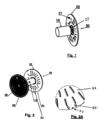
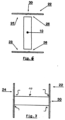
- Fig.1 are individual parts of a plastic coil according to the invention with a cylindrical coil core 10, at the end of which a flange disk 22 is arranged, shown in perspective. It can be seen that the coil core 10 is a tube. This is shown schematically in Fig.6
- the flange disk 22 has a central bore 30 and an annular recess 25 on the inside of the flange, which has a diameter substantially corresponding to the coil core tube
- Fig.2 an embodiment of a fully assembled coil according to the invention is shown.
- the flange disks 22, 23 winding material feedthrough openings 33 - as shown in detail in the Fig. 2A shown - and, if necessary, a centering notch 27.
- the flange disk 22 is arranged with an annular wall 26 in the annular recess 25 in relation to the coil core 10 in such a way that the coil core face rests on the annular wall 26 in the annular recess 25.
- a channel 32 is formed outside next to the annular wall 26, into which excess material arising during welding, such as weld beads, flows.
- channels 32 are formed inside and outside for the same purpose.
- the ring wall 26 is, as in Fig.4 shown in detail, in this embodiment welded to the coil core faces, as can be seen by the wavy lines in Fig.7 is indicated.
- the welding was carried out by means of heating element welding - a very reliable and common method.
- the plastic material emerging as a weld bead is received in the at least one channel 32 in the annular recess 25 in the flange 22 next to the ring wall 26. This avoids weld beads on the coil core 10 which impair the coil function.
- An inlet opening 31 for winding material (see Fig.5 ), e.g. for cables, in which the beginning of the strand is determined, is not blocked or narrowed uncontrollably, but remains barrier-free even after welding.
- the coil components 22, 24, 10 can be made entirely of plastic.
- the ring wall 26 for the coil core 10 can be molded directly onto the flange disks 22, 24, for example by injection molding.
- the tubular coil cores 10 can be manufactured by cutting sections of conventional plastic pipes in the desired length and then connected - welded - to the ring walls 26 at their end faces.
- the coil core 10, which forms the winding core for the winding material, can have openings through which the winding material can be treated from the inside of the coil core. For example, heated air can be passed through openings to dry the winding material. Treatment using gases or liquids is also possible.
- the flanges 22, 24 can be designed with openings and thinner sections to reduce weight and save material, as can be seen from Fig.2 There, a finished plastic coil is shown in perspective, where one can clearly see the reinforcing ribs and slots in the flanges for the purpose of saving weight and material.
- Such coils can also be made of metal if the operating conditions require it. The process steps must then be selected and adapted accordingly, as is familiar to the expert.
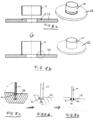
- FIG. 8a A method for producing a welded plastic coil is described in Fig. 8a to 8e shown schematically.
- Fig. 8a The plastic tube for the coil core 10 and a flange 22 with an annular recess 25 and an annular wall 26 running therein are shown in perspective and in longitudinal section.
- Fig. 8b the two components are pressed together in such a way that the ring wall 26 and the coil core tube face are on top of each other and then heated until the plastic material begins to flow ( Fig. 8d ) and finally liquefies ( Fig. 8e ) and flange wall 26 and plastic pipe 10 are welded together in a material-locking manner, forming a solidified material flow/weld bead in the channels 32 of the ring-shaped recess 25.
- the weld bead is essentially flush with the flange surface and does not interfere with the winding space. This makes it possible to produce smooth and trouble-free windings right up to the flange surface.
- the material-locking connection creates a highly tensile and resilient connection of the flanges to the coil core.
Landscapes
- Engineering & Computer Science (AREA)
- Mechanical Engineering (AREA)
- Physics & Mathematics (AREA)
- Electromagnetism (AREA)
- Health & Medical Sciences (AREA)
- Toxicology (AREA)
- Chemical & Material Sciences (AREA)
- Combustion & Propulsion (AREA)
- Storage Of Web-Like Or Filamentary Materials (AREA)
- Optics & Photonics (AREA)
Description
- Die Erfindung betrifft eine Spule aus thermoplastischem Material zum Aufwickeln von Wickelgut sowie Verfahren zu ihrer Herstellung.
- Aus mehreren Ausgangsteilen hergestellte Spulen mit hohlem Kern sind in vielen Ausführungsformen bekannt. Sie werden zum Aufwickeln und zum Transport von Wickelgut, z. B. Kabeln, Drähten, Fäden, Seilen oder Kunststoffbändern, verwendet. Derartige Spulen bestehen meist aus einem ein- oder mehrteiligen zylindrischen oder konischem Spulenkern und zwei Flanschscheiben an dessen beiden Enden. Die Spulen können auf verschiedene Art und Weise zusammengebaut sein.
- Zum Stand der Technik wird auf die
DE 197 00 185 A1 und dieDE 40 01 250 A1 bezug genommen. - Die
DE 197 00 185 A1 beschreibt eine Spule, deren Spulenkern von den beiden endseitigen Flanschscheiben beiderseits zur Mitte konisch zusammenläuft und in der Mitte geteilt ist, so dass die beiden Spulenteile im Falle des Leertransports platzsparend gestapelt werden können. Die Verbindung der beiden Spulenteile erfolgt mit Hilfe einer Art von Bajonettverschluss, der eine Verbindung der beiden Teile mit einer gewissen Vorspannung ermöglicht. Die Vorspannung verhindert, dass die beiden Spulenteile sich ohne weiteres zurückdrehen und trennen können, jedoch ist dieses Zurückdrehen nicht zwingend ausgeschlossen, wenn die Spule einer rauhen Behandlung ausgesetzt ist oder, etwa beim Transport, für längere Zeit Schwingungen unterworfen wird. - Aus dem
DE 20 2013 101 355 U ist eine teilbare Spule zum Aufwickeln von strangförmigem Wickelgut bekannt geworden, bei der die Einzelbestandteile durch ein Stecksystem miteinander verbunden werden. - Aus der
US 6036138 A ist eine gelötete Metallspule für optische Fasern bzw. Lichtwellenleiter bekannt geworden, welche einen Spulenkern mittels Lot in einer Vertiefung eines Flansches befestigt. Dazu wird Löten eingesetzt. Löten ist ein thermisches Verfahren zum Fügen von Werkstoffen, wobei eine flüssige Phase durch Schmelzen eines Lotes (Schmelzlöten) oder durch Diffusion an den Grenzflächen (Diffusionslöten) entsteht. Dabei wird eine Legierung erzeugt, das Werkstück in der Tiefe aber nicht aufgeschmolzen: Die Liquidustemperatur der Grundwerkstoffe wird nicht erreicht. Nach dem Erstarren des Lotes ist eine stoffschlüssige Verbindung aus mindestens zwei Materialien - dem Lot und dem Werkstück - hergestellt. Es wird dort vorgeschlagen, dass die Lötstelle sich in einer ringförmigen Vertiefung des Flansches nahe der Durchgangs-Zentralbohrung bildet, so daß das Lot darin verläuft, während der Spulenkern gerichtet auf einer Stufe in der Vertiefung ruht. Dadurch wird eine stoffschlüssige Verbindung, bei welcher verflüssigtes Material in einem Ringkanal aufgenommen wird gebildet. Verlöten ist aber insofern ungünstig, als es störanfällig ist, so dass keine sichere stoffschlüssige Verbindung zwischen Spulenkern und Spulenflansch erfolgt. Die stoffschlüssige Verbindung erfolgt über das Lotmaterial. Löten hat stets das Problem, dass möglicherweise im Lot Fehlstellen auftreten oder das Lot mit den zu verbindenden Materialien nur unzureichend bindet oder in diese eindiffundiert. Schließlich muss es zusätzlich zu den Materialien der Spulenbestandteile vorgehalten und lokal appliziert werden, was zusätzlichen Aufwand erfordert. - Die Druckschrift
GB 2 020 629 A - Die Druckschrift
WO 92/ 20603 A1 - In der Druckschrift
DE 200 21 819 U ist eine Spule zum Aufwickeln von Kabeln mit einem Wickelkern aus Pappe und endseitig angeordneten Flaschen aus Sperrholz daran offenbart. - Die bekannten Spulen mit hohlem Kern sind somit verbesserungsfähig, da die Verbindungen zwischen den Ringflanschen und dem Kern erhöhten Beanspruchungen häufig nicht widerstehen konnten und aufwändige Verfahren zu ihrer Herstellung benötigt wurden.
- Der Erfindung liegt daher die Aufgabe zugrunde, eine Spule der eingangs genannten Art zu schaffen, die einfacher, bevorzugt auch automatisch - herstellbar ist und eine hohe Sicherheit gegen unbeabsichtigte Auflösung der Spule in ihre Einzelkomponenten bietet.
- Die Aufgabe wird durch eine Spule nach Anspruch 1 sowie ein Verfahren nach Anspruch 6 gelöst. Vorteilhafte Weiterbildungen ergeben sich aus den abhängigen Ansprüchen.
- Erfindungsgemäß wird eine Spule aus thermoplastischem Material zum Aufwickeln von strangförmigem Gut (Wickelgut), mit Flanschscheiben mit einer Flanschaußenfläche und einer Flanschinnenfläche mit einer zentralen Durchgangs-Zentralbohrung, die von einer ringförmigen Vertiefung mit einer darin verlaufenden Ringwand in der Flanschinnenfläche umgeben ist, und einem rohrförmigen Spulenkern, geschaffen, wobei der Spulenkern aus einem Rohr besteht, dessen Stirnflächen in den ringförmigen Vertiefungen der Flanschscheiben stoffschlüssig verbunden sind.
- Dadurch, dass die Spule aus nur drei Einzelteilen, von denen zwei identisch sind, aufgebaut wird, ist es möglich, verschiedenste Abmessungen - d.h. unterschiedliche Spulenkerndurchmesser und verschiedene Wickelbreiten mit nur zwei Grundteilen - verschiedenen Ringflanschen sowie Spulenkernrohren - zu verwirklichen.
- Durch Auswahl von Spulenkernrohren - bspw. Kunststoffrohren - unterschiedlicher Längen und Weiten können verschiedenste Wickelbreiten realisiert werden. Falls eine erhöhte Biegefestigkeit der Spulenkerne erwünscht ist, können Rohre mit Verstärkungsrippen eingesetzt werden. Genauso können Rohre mit eingeformten Stäben oder Filamenten verwendet werden.
- Die Anschlüsse für die Kunststoffrohre, hier eine umlaufende Ringwand/ringförmige Erhebung in einer ringförmigen Vertiefung der Flanschscheiben können - je nach Anforderung - mit unterschiedlichen Flanschdimensionen und Rohrflanschdurchmessern realisiert werden. Es ist dabei unwesentlich, ob der Flansch eine durchgehend konstante Stärke aufweist oder aus Gründen der Handhabung in Wickelautomaten und beim Transport im Bereich der Durchgangs-Zentralbohrung eine andere Stärke als in anderen Bereichen des Flansches aufweist.
- Erfindungsgemäß erfolgt die Anbindung der Stirnflächen des Spulenkern-Rohrs an die Ringwand der Flanschinnenflächen durch Fügeverfahren, bei denen die Liquidustemperatur des Spulenmaterials überschritten wird - nämlich Schweißen, insbesondere Laserstrahlschweißen und konventionellen Fügeverfahren, wie Ultraschall-, Vibrations- oder Heißspiegelschweißen, Reibschweißen, Heizelementschweißen, Heißluftschweißen, Kontakt-Kunststoff schweißen, Infrarotschweißen. Dadurch wird kein zusätzliches Verbindungsmaterial für die stoffschlüssige Anbindung benötigt, es entsteht kein Abfall und die fertigen Spulen lassen sich leicht recyceln, da sie nur aus einem Material aufgebaut sind.
- Bspw. kann die ringförmige Vertiefung einen darin ausgebildeten Innen - und einen Außenkanal sowie eine die Kanäle für geschmolzenes Material trennende Ringwand aufweisen, die darin mit einer Spulenkernstirnfläche verbunden ist. In der ringförmigen Vertiefung im Flansch verläuft bei einer Ausführungsform in etwa mittig eine Ringwand, wobei beidseitig von dieser ein Innen- und Außenkanal für den beim Verbinden anfallende Materialüberschuß (Schmelzfluß, wie Schweißraupen) ausgebildet ist.
- Bei einer typischen Ausführungsform der Erfindung als Kunststoffspule ist der Spulenkern ein extrudiertes Kunststoffrohr. Dies ist günstig, denn derartige Rohre sind leicht zu beschaffen und auf die gewünschte Wickelbreite mit einfachen Mitteln zu trennen, so dass sie ggf. auch an verschiedenen Montageorten beschaffbar sind und dort an geeignete Flanschscheiben angebracht werden können. So können Transportkosten für die Rohre eingespart werden
- Die Außenflächen der Flanschscheiben können im Bereich der Zentralbohrung Mitnehmer-Rastausnehmungen aufweisen, in die Mitnehmer einer Spulenantriebs- oder Spulenbremseinrichtung eingreifen können.
- Bevorzugt hat das Kunststoffrohr in etwa gleichen Durchmesser wie die Ringwand in der Flanschinnenfläche.
- Typische Spulen haben ein Kernrohr, das 150 - 700 mm lang ist Die Kerndurchmesser betragen dann 110 bis 500 mm.
- Die Zentralöffnung, in die Wickelwerkzeuge eingreifen können, kann bei diesen Ausführungsformen dann einen Durchmesser zwischen 55 und 130 mm haben
- Bevorzugt weist das Kunststoffrohr des Spulenkerns in etwa gleichen Durchmesser und Wanddicke wie die Ringwand in der Flanschvertiefung auf und ist an diese Erhebung stoffschlüssig angebunden. Ggf. anfallende Schweißraupen oder verflüssigtes Material läuft in den Außen- und Innenkanal der ringförmigen Vertiefung und unterstützt dort die Anbindung des Kunststoffrohrs des Spulenkerns. Die Spulen können Kerne haben, die 150 - 700 mm lang sind. Häufig ist der Kerndurchmesser in diesen Fällen zwischen 110 bis 500 mm. Die Zentralbohrung hat dann häufig einen Durchmesser zwischen 55 und 130 mm.
- Ein Verfahren zur Herstellung einer erfindungsgemäßen Spule aus thermoplastischem Material zum Aufwickeln von strangförmigem Gut weist die Schritte auf:
- a)Vorlegen von:
- zwei Flanschscheiben mit einer Flanschaußenfläche und einer Flanschinnenfläche und einer zentralen Durchgangs-Zentralbohrung, die von einer ringförmigen Vertiefung in der Flanschinnenfläche umgeben ist, und einer Ringwand in der ringförmigen Vertiefung, wobei mindestens ein Kanal in der ringförmigen Vertiefung neben der Ringwand zur Aufnahme von verflüssigtem Verbindungsmaterial verläuft; und
- einem Spulenkern etwa gleichen Durchmessers und Wanddicke wie die Ringwand;
- b)Aufeinanderdrücken von Spulenkernrohr und Ringwand; und
- c) Verflüssigen des Materials im Kontaktbereich zwischen Spulenkernrohr und
- Ringwand unter Fließen von verflüssigtem Material in den mindestens einen Kanal unter stoffschlüssigem Verbinden von Ringwand und Spulenkernrohrstirnfläche.
- Das Verflüssigen des Spulenmaterials erfolgt durch Schweißverfahren.
- Das Verfahren kann mit Metall oder Kunststoffen durchgeführt werden.
- Dadurch, dass ein Modulsystem für den Spulenaufbau entwickelt wurde, können mit wenigen Flanschscheiben und üblichen Rohrabschnitten die unterschiedlichsten Spulen materialsparend zur Verfügung gestellt werden.
- Somit erzielt die Erfindung unter anderem die Vorteile:
- Aufbau mit einfach verfügbaren Mitteln
- Ausgereifte Verbindungsverfahren
- die Verbindungsverfahren sind seit mehr als zehn Jahren zuverlässig im Einsatz.
- Es kann Recycling-Kunststoff oder Metall eingesetzt werden
- durch den vollständigen Stoffschluß zwischen den Flansch- und Kernmaterialien ohne Lot/Kleber wird geringes Gewicht bei hoher Stabilität erzielt und die Spule lässt sich leicht recyclen, da sie nur aus wenigen, bevorzugt einem Material, besteht.
- Modulsystem, mit dem verschiedene Spulengeometrien (Wickelbreite, Flanschdurchmesser) realisiert werden können
- Im folgendem werden bevorzugte Ausführungsbeispiele der Erfindung, auf die sie keinesfalls eingeschränkt ist, anhand der beigefügten Zeichnung näher erläutert. Darin zeigen:
-
Fig. 1 eine perspektivische Explosionsansicht von Einzelkomponenten einer Spule; -
Fig. 2 eine perspektivische Ansicht einer fertig zusammengebauten Spule -
Fig. 2A ein Detail derFigur 2 mit einer Zentrierkerbe und Wickelgut-Durchführungsöffnungen -
Fig. 3 ein Detail der Flanschinnenfläche mit Spulenkernrohr vor dem Verbinden mit einer Ringwand auf der ringförmigen Vertiefung und einem Außenkanal -
Fig. 3 A ein Detail einer weiteren Ausführungsform der Flanschinnenfläche mit Spulenkernrohr vor dem Verbinden mit einer Ringwand auf der ringförmigen Vertiefung und einem Außen- und einem Innenkanal. -
Fig. 4 das Detail derFig. 3 und 3A nach Verschweißen von Flansch und Kern -
Fig.5 eine Eingangsöffnung für Wickelgut im Spulenkernrohr für vollautomatische Wickelanlagen -
Fig. 6 schematisch die Ausgangsprodukte einer Spule im Längsschnitt; -
Fig. 7 schematisch die fertige Spule im Längsschnitt; und -
Fig. 8a - 8e ein Verfahren zur Herstellung einer erfindungsgemäßen Kunststoffspule Nachfolgend werden Ausführungsbeispiele der Erfindung anhand einer Kunststoffspule beschrieben. Selbstverständlich sind die offenbarten Ausführungsformen nur beispielhaft und können alternative Formen annehmen. Die Figuren sind nicht notwendigerweise maßstäblich; so können einige Merkmale übertrieben oder minimiert sein, um Details einzelner Komponenten zu verdeutlichen. - Die Erfindung wird nachfolgend am Beispiel einer Kunststoffspule näher erläutert - sie kann aber mit jeglichem thermoplastischen Material verwirklicht werden.
- In
Fig. 1 sind Einzelteile einer erfindungsgemäßen Kunststoffspule mit einem zylindrischen Spulenkern 10, an dessen Ende eine Flanschscheibe 22 angeordnet ist, perspektivisch gezeigt. Es ist erkennbar, dass der Spulenkern 10 ein Rohr ist. Schematisch ist dies inFig. 6 dargestellt. Die Flanschscheibe 22 weist eine Zentralbohrung 30 und eine ringförmige Vertiefung 25 auf der Flanschinnenseite auf, welche einen im wesentlichen dem Spulenkern-Rohr entsprechenden Durchmesser hat - In
Fig. 2 ist eine Ausführungsform einer vollständig aufgebauten erfindungsgemäßen Spule gezeigt. In den Flanschscheiben 22, 23 können Wickelgutdurchführungsöffnungen 33 - wie im Detail derFig. 2A gezeigt - ausgebildet sein, sowie ggf. eine Zentrierkerbe 27. - Wie in
Fig. 3 schematisch im Detail dargestellt, ist die Flanschscheibe 22 mit einer Ringwand 26 in der ringförmigen Vertiefung 25 so zum Spulenkern 10 angeordnet, dass die Spulenkernstirnfläche auf der Ringwand 26 in der ringförmigen Vertiefung 25 aufliegt. Außen neben der Ringwand 26 ist bei dieser Ausführungsform ein Kanal 32 ausgebildet, in den beim Schweißen anfallendes überschüssiges Material, wie Schweißraupen, hineinläuft. Bei der Ausführungsform derFig. 3A sind neben der Ringwand 26 innen und außen Kanäle 32 für den gleichen Zweck ausgebildet. Die Ringwand 26 wird, wie inFig.4 im Detail gezeigt, bei dieser Ausführungsform mit den Spulenkernstirnflächen verschweißt, wie es auch durch die gewellten Linien inFig.7 angedeutet ist. Hier erfolgte das Verschweißen durch Heizelementschweißung - ein sehr zuverlässiges und übliches Verfahren. Das dabei als Schweißraupe austretende Kunststoffmaterial wird in dem mindestens einen Kanal 32 in der ringförmigen Vertiefung 25 im Flansch 22 neben der Ringwand 26 aufgenommen. Dadurch werden die Spulen-Funktion beeinträchtigende Schweißraupen auf dem Spulenkern 10 vermieden. Eine Eingangsöffnung 31 für Wickelgut (s.Fig. 5 ), bspw. für Kabel, in welcher der Anfang des Stranges festgelegt wird, wird so nicht zugesetzt oder unkontrolliert verengt, sondern bleibt auch nach dem Verschweißen barrierefrei durchgängig. - Die Spulenbestandteile 22, 24, 10 können insgesamt aus Kunststoff hergestellt werden. In diesem Fall kann beispielsweise die Ringwand 26 für den Spulenkern 10 unmittelbar an die Flanschscheiben 22, 24 angeformt sein, bspw. durch Spritzguss.
- Die rohrförmigen Spulenkerne 10 können durch Abtrennen von Abschnitten herkömmlicher Kunststoffrohre in der gewünschten Länge hergestellt werden und dann an ihren Stirnflächen mit den Ringwänden 26 verbunden - verschweißt -werden.
- Der Spulenkern 10, der den Wickelkern für das Wickelgut bildet, kann Durchbrechungen aufweisen, durch die das Wickelgut von der Innenseite des Spulenkerns behandelt werden kann. So kann beispielsweise über Durchbrechungen erwärmte Luft zur Trocknung des Wickelgutes hindurchgeführt werden. In Betracht kommt auch eine Behandlung mithilfe von Gasen oder Flüssigkeiten.
- Ebenso können die Flansche 22, 24 zur Gewichtsreduktion und Materialersparnis mit Durchbrüchen und dünneren Abschnitten ausgebildet werden, wie aus
Fig. 2 ersichtlich. Dort ist perspektivisch eine fertige Kunststoffspule gezeigt, wobei man deutlich Verstärkungsrippen und -Schlitze in den Flanschen zwecks Gewichts- und Materialersparnis erkennt. - Derartige Spulen können auch aus Metall aufgebaut werden, falls die Einsatzbedingungen dies erfordern. Die Verfahrensschritte sind dann, wie dem Fachmann geläufig, entsprechend auszuwählen und anzupassen.
- Ein Verfahren zur Herstellung einer verschweißten Kunststoffspule ist in
Fig. 8a bis 8e schematisch gezeigt. InFig. 8a ist perspektivisch und im Längsschnitt schematisch das Kunststoffrohr für den Spulenkern 10 und ein Flansch 22 mit ringförmiger Vertiefung 25 und einer darin verlaufenden Ringwand 26 gezeigt. InFig. 8b werden die beiden Bauteile gerichtet so aufeinandergedrückt, dass die Ringwand 26 und die Spulenkernrohrstirnfläche aufeinanderliegen und anschließend erwärmt, bis das Kunststoffmaterial zu fließen beginnt (Fig. 8d ) und sich schließlich verflüssigt (Fig. 8e ) und Flanschwand 26 und Kunststoffrohr 10 sich stoffschlüssig unter Ausbildung von erstarrtem Materialfluß/ Schweißraupe in den Kanälen 32 der ringförmigen Vertiefung 25 verschweißen. Durch die ringförmige Vertiefung 25 ist die Schweißraupe im wesentlichen bündig mit der Flanschoberfläche und stört im Wickelraum nicht. Dadurch ist es möglich, glatte und störungsfreie Wicklungen bis an die Flanschoberfläche herzustellen. Durch die stoffschlüssige Verbindung entsteht ein hoch-zugfester und belastbarer Anschluß der Flansche am Spulenkern. - Obwohl die Erfindung anhand von Ausführungsbeispielen mit Kunststoffteilen näher erläutert wurde, sind dem Fachmann viele Abwandlungen derselben aufgrund seines Fachwissens geläufig. Die Beschreibung der Erfindung ist daher lediglich exemplarisch und dem Fachmann geläufige Variationen fallen ebenfalls unter den Schutzumfang der Erfindung, wie er durch die Ansprüche definiert ist.
-
- 10 Spulenkern
- 22 Flanschscheibe
- 24 Flanschscheibe
- 21 Flanschinnenfläche
- 23 Flanschinnenfläche
- 25 ringförmige Vertiefung im Flansch um 30
- 26 umlaufende Ringwand in 25
- 27 Zentrierkerbe
- 30 Durchgangs-Zentralbohrung
- 31 Eingangsöffnung für Wickelgut
- 32 Kanal
- 33 Wickelgutdurchführungsöffnung
Claims (7)
- Spule aus thermoplastischem Material zum Aufwickeln von strangförmigem Gut, mit Flanschscheiben (22, 24) mit einer Flanschaußenfläche und einer Flanschinnenfläche (21, 23) mit jeweils einer zentralen Durchgangs-Zentralbohrung (30), die von einer ringförmigen Vertiefung (25) mit einer darin befindlichen Ringwand (26) in der Flanschinnenfläche umgeben ist, undeinem rohrförmigen Spulenkern (10),wobei der Spulenkern (10) aus einem Rohr besteht, dessen Stirnflächen mit einer Ringwand (26) in den ringförmigen Vertiefungen (25) der Flanschscheiben (22, 24) stoffschlüssig verbunden sind,wobei der Spulenkern (10) in etwa gleichen Durchmesser wie die Ringwand (26) in der ringförmigen Vertiefung (25) hatund die stoffschlüssige Anbindung des Spulenkerns (10) an der Ringwand (26) der Flanschinnenflächen (21, 23) durch Schweißen, insbesondere Heissluftschweißen, Kontaktschweißen, Ultraschallschweißen, Infrarotschweissen, Rohrspiegelschweißen, Heizelementschweißen erfolgt ist, dadurch gekennzeichnet, dass neben der Ringwand (26) mindestens ein Kanal in der ringförmigen Vertiefung (25) zur Aufnahme von verflüssigtem Verbindungsmaterial vorgesehen ist.
- Spule nach Anspruch 1, dadurch gekennzeichnet, dass der Spulenkern (10) ein extrudiertes Kunststoffrohr ist.
- Spule nach einem der vorangehenden Ansprüche dadurch gekennzeichnet, dass der Spulenkern (10) 150 - 700 mm lang ist.
- Spule nach einem der vorangehenden Ansprüche, dadurch gekennzeichnet, dass der Durchmesser des Spulenkerns (10) 110 bis 500 mm beträgt.
- Spule nach einem der vorangehenden Ansprüche, dadurch gekennzeichnet, dass die Zentralöffnung (30) der Flanschscheiben (22, 24) einen Durchmesser zwischen 55 und 130 mm hat.
- Verfahren zur Herstellung einer gebauten Spule aus thermoplastischem Material zum Aufwickeln von strangförmigem Gut nach einem der vorangehenden Ansprüche, gekennzeichnet durch:a. Vorlegen von zwei Flanschscheiben mit einer Flanschaußenfläche und einer Flanschinnenfläche mit jeweils einer zentralen Durchgangs-Zentralbohrung, die von einer ringförmigen Vertiefung in der Flanschinnenfläche umgeben ist, wobei in der ringförmigen Vertiefung eine Ringwand unter Ausbildung mindestens eines Kanals in der ringförmigen Vertiefung neben der Ringwand verläuft, und
einem Spulenkern etwa gleichen Durchmessers wie die Ringwand;b. Drücken des Spulenkerns auf die Ringwand in der ringförmigen Vertiefung der Flanschinnenfläche; undc. Verflüssigen des Materials im Kontaktbereich zwischen Spulenkernrohr und ringförmiger Erhebung unter Fließen von verflüssigtem Material in den mindestens einen Kanal und Ausbildung einer stoffschlüssigen Verbindung zwischen der Ringwand und dem Spulenkern, wobei das temporäre Verflüssigen des Materials im Kontaktbereich durch Schweißen durchgeführt wird. - Verfahren nach Anspruch 6 ,
dadurch gekennzeichnet, dass
die Spule aus Metall oder Kunststoff hergestellt wird.
Priority Applications (3)
| Application Number | Priority Date | Filing Date | Title |
|---|---|---|---|
| CA2993722A CA2993722A1 (en) | 2017-07-14 | 2018-01-31 | Spool and method for its manufacture |
| MX2018001944A MX2018001944A (es) | 2017-07-14 | 2018-02-15 | Bobina y metodo para su produccion. |
| US15/903,099 US10919728B2 (en) | 2017-07-14 | 2018-02-23 | Spool made of a thermoplastic material for the winding of winding material, as well as to a method for manufacturing the same |
Applications Claiming Priority (1)
| Application Number | Priority Date | Filing Date | Title |
|---|---|---|---|
| DE202017104227.8U DE202017104227U1 (de) | 2017-07-14 | 2017-07-14 | Spule zum Aufwickeln von Wickelgut |
Publications (3)
| Publication Number | Publication Date |
|---|---|
| EP3428097A1 EP3428097A1 (de) | 2019-01-16 |
| EP3428097C0 EP3428097C0 (de) | 2024-07-17 |
| EP3428097B1 true EP3428097B1 (de) | 2024-07-17 |
Family
ID=59701101
Family Applications (1)
| Application Number | Title | Priority Date | Filing Date |
|---|---|---|---|
| EP17209031.8A Active EP3428097B1 (de) | 2017-07-14 | 2017-12-20 | Spule aus thermoplastischem material und verfahren zu ihrer herstellung |
Country Status (6)
| Country | Link |
|---|---|
| US (1) | US10919728B2 (de) |
| EP (1) | EP3428097B1 (de) |
| CA (1) | CA2993722A1 (de) |
| DE (1) | DE202017104227U1 (de) |
| MX (1) | MX2018001944A (de) |
| PL (1) | PL3428097T3 (de) |
Families Citing this family (3)
| Publication number | Priority date | Publication date | Assignee | Title |
|---|---|---|---|---|
| CN107848729B (zh) * | 2015-08-10 | 2019-08-09 | 迪睿合株式会社 | 卷轴部件、膜收纳体以及卷轴部件的制造方法 |
| CN114508621A (zh) * | 2022-01-26 | 2022-05-17 | 广东威灵电机制造有限公司 | 阀体组件和电子膨胀阀 |
| WO2024243305A2 (en) * | 2023-05-23 | 2024-11-28 | Vandor Corporation | Induction bonded reel |
Citations (1)
| Publication number | Priority date | Publication date | Assignee | Title |
|---|---|---|---|---|
| DE20021819U1 (de) * | 2000-12-22 | 2001-03-29 | Vogt, Herbert, 30938 Burgwedel | Spule zum Aufwickeln von Kabeln o.dgl. |
Family Cites Families (10)
| Publication number | Priority date | Publication date | Assignee | Title |
|---|---|---|---|---|
| US3501110A (en) * | 1967-01-24 | 1970-03-17 | Nicholson File Co | Plastic spool and method of making same |
| US4184650A (en) * | 1978-05-08 | 1980-01-22 | Minnesota Mining And Manufacturing Company | Plastic tape reel |
| DE4001250A1 (de) | 1990-01-18 | 1991-07-25 | Industriebedarf Eisele & Co Gm | Spule |
| DE4116139C3 (de) | 1991-05-17 | 1998-05-20 | Hildebrandt Spulen Bobbins Gmb | Spulenkörper aus Leichtmetall für fadenförmiges Wickelgut |
| DE19700185B4 (de) | 1997-01-04 | 2005-06-23 | SCHÜCO International KG | Spule zur Aufnahme von wickelbarem Strangmaterial |
| JPH1125643A (ja) * | 1997-07-02 | 1999-01-29 | Fuji Photo Film Co Ltd | 磁気テープカートリッジ用リールの溶着方法 |
| US6036138A (en) * | 1998-05-06 | 2000-03-14 | Mckechnie Plastic Components, Inc. | Spool for holding windings of optical fiber |
| JP2004202828A (ja) * | 2002-12-25 | 2004-07-22 | Sony Corp | 超音波溶着ホーン、超音波溶着装置及びテープリールの製造方法 |
| US7534316B2 (en) * | 2004-06-17 | 2009-05-19 | Ripplinger Jacob F | Cross-grade spin welding apparatus and method |
| DE202013101355U1 (de) | 2013-03-28 | 2013-04-12 | Häfner & Krullmann Gmbh | Teilbare Spule |
-
2017
- 2017-07-14 DE DE202017104227.8U patent/DE202017104227U1/de active Active
- 2017-12-20 EP EP17209031.8A patent/EP3428097B1/de active Active
- 2017-12-20 PL PL17209031.8T patent/PL3428097T3/pl unknown
-
2018
- 2018-01-31 CA CA2993722A patent/CA2993722A1/en active Pending
- 2018-02-15 MX MX2018001944A patent/MX2018001944A/es unknown
- 2018-02-23 US US15/903,099 patent/US10919728B2/en active Active
Patent Citations (1)
| Publication number | Priority date | Publication date | Assignee | Title |
|---|---|---|---|---|
| DE20021819U1 (de) * | 2000-12-22 | 2001-03-29 | Vogt, Herbert, 30938 Burgwedel | Spule zum Aufwickeln von Kabeln o.dgl. |
Also Published As
| Publication number | Publication date |
|---|---|
| US10919728B2 (en) | 2021-02-16 |
| PL3428097T3 (pl) | 2024-11-25 |
| EP3428097A1 (de) | 2019-01-16 |
| CA2993722A1 (en) | 2019-01-14 |
| EP3428097C0 (de) | 2024-07-17 |
| US20190016555A1 (en) | 2019-01-17 |
| DE202017104227U1 (de) | 2017-08-04 |
| MX2018001944A (es) | 2019-02-08 |
Similar Documents
| Publication | Publication Date | Title |
|---|---|---|
| DE60105367T2 (de) | Giessform, Verfahren zur Verstärkung einer Glasfaserverbindung, und faseroptisches Kabel | |
| DE3888802T2 (de) | Wiederbeschichtete Spleisslängen von optischen Fasern und Verfahren zu deren Herstellung. | |
| EP1815904B1 (de) | Mischelement für einen statischen Mischer, statischer Mischer sowie Verfahren zum Herstellen eines dergestalten Mischelements | |
| EP3428097B1 (de) | Spule aus thermoplastischem material und verfahren zu ihrer herstellung | |
| DE2557660A1 (de) | Verfahren und vorrichtung zum spleissen optischer fasern | |
| DE102008002744A1 (de) | Ultraschallschwingeinheit mit Halterung | |
| WO1992020603A1 (de) | Spulenkörper für fadenförmiges wickelgut und herstellungsverfahren hierzu | |
| EP0240732B1 (de) | Schweisselement zum Verschweissen stumpfgestossener Rohre aus Kunststoff | |
| DE3107590A1 (de) | Bandspule | |
| DE2141797A1 (de) | Verfahren und Vorrichtung zur Herstellung kontinuierliche* Harzrohre | |
| DE69528936T2 (de) | Vorrichtung zum Verbinden von Metallmänteln optischer Kabel und Verfahren zum Verbinden oder Spleissen zweier optischer Kabel | |
| DE3922335C1 (de) | ||
| DE19719071A1 (de) | Sammeltank für Wasser sowie Verfahren zu dessen Herstellung | |
| DE102012211651A1 (de) | Verfahren zur Herstellung eines Wickelrohrs | |
| DE3334309A1 (de) | Bandspule fuer ein magnetband | |
| DE10211507B4 (de) | Wickelverfahren für eine innenabwickelnde Lichtwellenleiterspule | |
| EP2159435B1 (de) | Verfahren zur Ummantelung zylindrischer Körper und Distanzschelle zur Aufnahme zweier Rohrhälften | |
| DE2801822C2 (de) | Bandspule für magnetisches Aufzeichnungsband | |
| DE10123957B4 (de) | Fügeverbindungseinrichtung und Verfahren zur Herstellung einer Fügeverbindungseinrichtung | |
| DE10045945A1 (de) | Kern für eine Spinnspule und Verfahren zur Herstellung des Kerns | |
| DE2431791A1 (de) | Aufspulhuelse | |
| DE3307385A1 (de) | Computerbandspule | |
| EP2896575A1 (de) | Kombinationsfass aus zwei Kunststofffässern | |
| DE10113734A1 (de) | Spule zum Aufwickeln von Kabeln oder dergleichen | |
| DE102019214030A1 (de) | Verfahren zum Einbringen eines Befestigungselements in einen Faserverbundwerkstoff, sowie Befestigungselement zum Einbringen in einem Faserverbundwerkstoff |
Legal Events
| Date | Code | Title | Description |
|---|---|---|---|
| PUAI | Public reference made under article 153(3) epc to a published international application that has entered the european phase |
Free format text: ORIGINAL CODE: 0009012 |
|
| STAA | Information on the status of an ep patent application or granted ep patent |
Free format text: STATUS: THE APPLICATION HAS BEEN PUBLISHED |
|
| AK | Designated contracting states |
Kind code of ref document: A1 Designated state(s): AL AT BE BG CH CY CZ DE DK EE ES FI FR GB GR HR HU IE IS IT LI LT LU LV MC MK MT NL NO PL PT RO RS SE SI SK SM TR |
|
| AX | Request for extension of the european patent |
Extension state: BA ME |
|
| STAA | Information on the status of an ep patent application or granted ep patent |
Free format text: STATUS: REQUEST FOR EXAMINATION WAS MADE |
|
| 17P | Request for examination filed |
Effective date: 20190712 |
|
| RBV | Designated contracting states (corrected) |
Designated state(s): AL AT BE BG CH CY CZ DE DK EE ES FI FR GB GR HR HU IE IS IT LI LT LU LV MC MK MT NL NO PL PT RO RS SE SI SK SM TR |
|
| STAA | Information on the status of an ep patent application or granted ep patent |
Free format text: STATUS: EXAMINATION IS IN PROGRESS |
|
| 17Q | First examination report despatched |
Effective date: 20200803 |
|
| RAP3 | Party data changed (applicant data changed or rights of an application transferred) |
Owner name: PURUS PLASTICS GMBH |
|
| GRAP | Despatch of communication of intention to grant a patent |
Free format text: ORIGINAL CODE: EPIDOSNIGR1 |
|
| STAA | Information on the status of an ep patent application or granted ep patent |
Free format text: STATUS: GRANT OF PATENT IS INTENDED |
|
| RIC1 | Information provided on ipc code assigned before grant |
Ipc: B29C 65/48 20060101ALI20240129BHEP Ipc: B29C 65/20 20060101ALI20240129BHEP Ipc: B29C 65/14 20060101ALI20240129BHEP Ipc: B29C 65/10 20060101ALI20240129BHEP Ipc: B29C 65/08 20060101ALI20240129BHEP Ipc: B29C 65/00 20060101ALI20240129BHEP Ipc: B23K 33/00 20060101ALI20240129BHEP Ipc: B65H 75/50 20060101ALI20240129BHEP Ipc: B65H 75/14 20060101AFI20240129BHEP |
|
| INTG | Intention to grant announced |
Effective date: 20240304 |
|
| GRAS | Grant fee paid |
Free format text: ORIGINAL CODE: EPIDOSNIGR3 |
|
| GRAA | (expected) grant |
Free format text: ORIGINAL CODE: 0009210 |
|
| STAA | Information on the status of an ep patent application or granted ep patent |
Free format text: STATUS: THE PATENT HAS BEEN GRANTED |
|
| AK | Designated contracting states |
Kind code of ref document: B1 Designated state(s): AL AT BE BG CH CY CZ DE DK EE ES FI FR GB GR HR HU IE IS IT LI LT LU LV MC MK MT NL NO PL PT RO RS SE SI SK SM TR |
|
| REG | Reference to a national code |
Ref country code: GB Ref legal event code: FG4D Free format text: NOT ENGLISH |
|
| REG | Reference to a national code |
Ref country code: CH Ref legal event code: EP |
|
| REG | Reference to a national code |
Ref country code: DE Ref legal event code: R096 Ref document number: 502017016258 Country of ref document: DE |
|
| REG | Reference to a national code |
Ref country code: IE Ref legal event code: FG4D Free format text: LANGUAGE OF EP DOCUMENT: GERMAN |
|
| U01 | Request for unitary effect filed |
Effective date: 20240801 |
|
| U07 | Unitary effect registered |
Designated state(s): AT BE BG DE DK EE FI FR IT LT LU LV MT NL PT SE SI Effective date: 20240813 |
|
| U20 | Renewal fee for the european patent with unitary effect paid |
Year of fee payment: 8 Effective date: 20241002 |
|
| PG25 | Lapsed in a contracting state [announced via postgrant information from national office to epo] |
Ref country code: NO Free format text: LAPSE BECAUSE OF FAILURE TO SUBMIT A TRANSLATION OF THE DESCRIPTION OR TO PAY THE FEE WITHIN THE PRESCRIBED TIME-LIMIT Effective date: 20241017 |
|
| PG25 | Lapsed in a contracting state [announced via postgrant information from national office to epo] |
Ref country code: GR Free format text: LAPSE BECAUSE OF FAILURE TO SUBMIT A TRANSLATION OF THE DESCRIPTION OR TO PAY THE FEE WITHIN THE PRESCRIBED TIME-LIMIT Effective date: 20241018 |
|
| PGFP | Annual fee paid to national office [announced via postgrant information from national office to epo] |
Ref country code: PL Payment date: 20241126 Year of fee payment: 8 |
|
| PGFP | Annual fee paid to national office [announced via postgrant information from national office to epo] |
Ref country code: GB Payment date: 20241220 Year of fee payment: 8 |
|
| PG25 | Lapsed in a contracting state [announced via postgrant information from national office to epo] |
Ref country code: IS Free format text: LAPSE BECAUSE OF FAILURE TO SUBMIT A TRANSLATION OF THE DESCRIPTION OR TO PAY THE FEE WITHIN THE PRESCRIBED TIME-LIMIT Effective date: 20241117 |
|
| PG25 | Lapsed in a contracting state [announced via postgrant information from national office to epo] |
Ref country code: HR Free format text: LAPSE BECAUSE OF FAILURE TO SUBMIT A TRANSLATION OF THE DESCRIPTION OR TO PAY THE FEE WITHIN THE PRESCRIBED TIME-LIMIT Effective date: 20240717 |
|
| PG25 | Lapsed in a contracting state [announced via postgrant information from national office to epo] |
Ref country code: ES Free format text: LAPSE BECAUSE OF FAILURE TO SUBMIT A TRANSLATION OF THE DESCRIPTION OR TO PAY THE FEE WITHIN THE PRESCRIBED TIME-LIMIT Effective date: 20240717 Ref country code: RS Free format text: LAPSE BECAUSE OF FAILURE TO SUBMIT A TRANSLATION OF THE DESCRIPTION OR TO PAY THE FEE WITHIN THE PRESCRIBED TIME-LIMIT Effective date: 20241017 |
|
| PG25 | Lapsed in a contracting state [announced via postgrant information from national office to epo] |
Ref country code: RS Free format text: LAPSE BECAUSE OF FAILURE TO SUBMIT A TRANSLATION OF THE DESCRIPTION OR TO PAY THE FEE WITHIN THE PRESCRIBED TIME-LIMIT Effective date: 20241017 Ref country code: NO Free format text: LAPSE BECAUSE OF FAILURE TO SUBMIT A TRANSLATION OF THE DESCRIPTION OR TO PAY THE FEE WITHIN THE PRESCRIBED TIME-LIMIT Effective date: 20241017 Ref country code: IS Free format text: LAPSE BECAUSE OF FAILURE TO SUBMIT A TRANSLATION OF THE DESCRIPTION OR TO PAY THE FEE WITHIN THE PRESCRIBED TIME-LIMIT Effective date: 20241117 Ref country code: HR Free format text: LAPSE BECAUSE OF FAILURE TO SUBMIT A TRANSLATION OF THE DESCRIPTION OR TO PAY THE FEE WITHIN THE PRESCRIBED TIME-LIMIT Effective date: 20240717 Ref country code: GR Free format text: LAPSE BECAUSE OF FAILURE TO SUBMIT A TRANSLATION OF THE DESCRIPTION OR TO PAY THE FEE WITHIN THE PRESCRIBED TIME-LIMIT Effective date: 20241018 Ref country code: ES Free format text: LAPSE BECAUSE OF FAILURE TO SUBMIT A TRANSLATION OF THE DESCRIPTION OR TO PAY THE FEE WITHIN THE PRESCRIBED TIME-LIMIT Effective date: 20240717 |
|
| PG25 | Lapsed in a contracting state [announced via postgrant information from national office to epo] |
Ref country code: SM Free format text: LAPSE BECAUSE OF FAILURE TO SUBMIT A TRANSLATION OF THE DESCRIPTION OR TO PAY THE FEE WITHIN THE PRESCRIBED TIME-LIMIT Effective date: 20240717 |
|
| PG25 | Lapsed in a contracting state [announced via postgrant information from national office to epo] |
Ref country code: CZ Free format text: LAPSE BECAUSE OF FAILURE TO SUBMIT A TRANSLATION OF THE DESCRIPTION OR TO PAY THE FEE WITHIN THE PRESCRIBED TIME-LIMIT Effective date: 20240717 |
|
| PG25 | Lapsed in a contracting state [announced via postgrant information from national office to epo] |
Ref country code: SK Free format text: LAPSE BECAUSE OF FAILURE TO SUBMIT A TRANSLATION OF THE DESCRIPTION OR TO PAY THE FEE WITHIN THE PRESCRIBED TIME-LIMIT Effective date: 20240717 |
|
| PLBE | No opposition filed within time limit |
Free format text: ORIGINAL CODE: 0009261 |
|
| STAA | Information on the status of an ep patent application or granted ep patent |
Free format text: STATUS: NO OPPOSITION FILED WITHIN TIME LIMIT |
|
| 26N | No opposition filed |
Effective date: 20250422 |
|
| PG25 | Lapsed in a contracting state [announced via postgrant information from national office to epo] |
Ref country code: MC Free format text: LAPSE BECAUSE OF FAILURE TO SUBMIT A TRANSLATION OF THE DESCRIPTION OR TO PAY THE FEE WITHIN THE PRESCRIBED TIME-LIMIT Effective date: 20240717 |
|
| REG | Reference to a national code |
Ref country code: CH Ref legal event code: PL |
|
| PG25 | Lapsed in a contracting state [announced via postgrant information from national office to epo] |
Ref country code: CH Free format text: LAPSE BECAUSE OF NON-PAYMENT OF DUE FEES Effective date: 20241231 |
|
| PG25 | Lapsed in a contracting state [announced via postgrant information from national office to epo] |
Ref country code: IE Free format text: LAPSE BECAUSE OF NON-PAYMENT OF DUE FEES Effective date: 20241220 |
|
| PG25 | Lapsed in a contracting state [announced via postgrant information from national office to epo] |
Ref country code: RO Free format text: LAPSE BECAUSE OF FAILURE TO SUBMIT A TRANSLATION OF THE DESCRIPTION OR TO PAY THE FEE WITHIN THE PRESCRIBED TIME-LIMIT Effective date: 20240717 |