EP3383363B1 - Topical pharmaceutical formulations for treating inflammatory-related conditions - Google Patents
Topical pharmaceutical formulations for treating inflammatory-related conditions Download PDFInfo
- Publication number
- EP3383363B1 EP3383363B1 EP16805522.6A EP16805522A EP3383363B1 EP 3383363 B1 EP3383363 B1 EP 3383363B1 EP 16805522 A EP16805522 A EP 16805522A EP 3383363 B1 EP3383363 B1 EP 3383363B1
- Authority
- EP
- European Patent Office
- Prior art keywords
- exemplary embodiment
- pharmaceutical formulation
- topical pharmaceutical
- concentration
- crisaborole
- Prior art date
- Legal status (The legal status is an assumption and is not a legal conclusion. Google has not performed a legal analysis and makes no representation as to the accuracy of the status listed.)
- Active
Links
Images


Classifications
-
- A—HUMAN NECESSITIES
- A61—MEDICAL OR VETERINARY SCIENCE; HYGIENE
- A61K—PREPARATIONS FOR MEDICAL, DENTAL OR TOILETRY PURPOSES
- A61K31/00—Medicinal preparations containing organic active ingredients
- A61K31/69—Boron compounds
-
- A—HUMAN NECESSITIES
- A61—MEDICAL OR VETERINARY SCIENCE; HYGIENE
- A61K—PREPARATIONS FOR MEDICAL, DENTAL OR TOILETRY PURPOSES
- A61K45/00—Medicinal preparations containing active ingredients not provided for in groups A61K31/00 - A61K41/00
- A61K45/06—Mixtures of active ingredients without chemical characterisation, e.g. antiphlogistics and cardiaca
-
- A—HUMAN NECESSITIES
- A61—MEDICAL OR VETERINARY SCIENCE; HYGIENE
- A61K—PREPARATIONS FOR MEDICAL, DENTAL OR TOILETRY PURPOSES
- A61K47/00—Medicinal preparations characterised by the non-active ingredients used, e.g. carriers or inert additives; Targeting or modifying agents chemically bound to the active ingredient
- A61K47/06—Organic compounds, e.g. natural or synthetic hydrocarbons, polyolefins, mineral oil, petrolatum or ozokerite
-
- A—HUMAN NECESSITIES
- A61—MEDICAL OR VETERINARY SCIENCE; HYGIENE
- A61K—PREPARATIONS FOR MEDICAL, DENTAL OR TOILETRY PURPOSES
- A61K47/00—Medicinal preparations characterised by the non-active ingredients used, e.g. carriers or inert additives; Targeting or modifying agents chemically bound to the active ingredient
- A61K47/06—Organic compounds, e.g. natural or synthetic hydrocarbons, polyolefins, mineral oil, petrolatum or ozokerite
- A61K47/08—Organic compounds, e.g. natural or synthetic hydrocarbons, polyolefins, mineral oil, petrolatum or ozokerite containing oxygen, e.g. ethers, acetals, ketones, quinones, aldehydes, peroxides
- A61K47/10—Alcohols; Phenols; Salts thereof, e.g. glycerol; Polyethylene glycols [PEG]; Poloxamers; PEG/POE alkyl ethers
-
- A—HUMAN NECESSITIES
- A61—MEDICAL OR VETERINARY SCIENCE; HYGIENE
- A61K—PREPARATIONS FOR MEDICAL, DENTAL OR TOILETRY PURPOSES
- A61K47/00—Medicinal preparations characterised by the non-active ingredients used, e.g. carriers or inert additives; Targeting or modifying agents chemically bound to the active ingredient
- A61K47/06—Organic compounds, e.g. natural or synthetic hydrocarbons, polyolefins, mineral oil, petrolatum or ozokerite
- A61K47/08—Organic compounds, e.g. natural or synthetic hydrocarbons, polyolefins, mineral oil, petrolatum or ozokerite containing oxygen, e.g. ethers, acetals, ketones, quinones, aldehydes, peroxides
- A61K47/14—Esters of carboxylic acids, e.g. fatty acid monoglycerides, medium-chain triglycerides, parabens or PEG fatty acid esters
-
- A—HUMAN NECESSITIES
- A61—MEDICAL OR VETERINARY SCIENCE; HYGIENE
- A61K—PREPARATIONS FOR MEDICAL, DENTAL OR TOILETRY PURPOSES
- A61K47/00—Medicinal preparations characterised by the non-active ingredients used, e.g. carriers or inert additives; Targeting or modifying agents chemically bound to the active ingredient
- A61K47/06—Organic compounds, e.g. natural or synthetic hydrocarbons, polyolefins, mineral oil, petrolatum or ozokerite
- A61K47/16—Organic compounds, e.g. natural or synthetic hydrocarbons, polyolefins, mineral oil, petrolatum or ozokerite containing nitrogen, e.g. nitro-, nitroso-, azo-compounds, nitriles, cyanates
- A61K47/18—Amines; Amides; Ureas; Quaternary ammonium compounds; Amino acids; Oligopeptides having up to five amino acids
- A61K47/183—Amino acids, e.g. glycine, EDTA or aspartame
-
- A—HUMAN NECESSITIES
- A61—MEDICAL OR VETERINARY SCIENCE; HYGIENE
- A61K—PREPARATIONS FOR MEDICAL, DENTAL OR TOILETRY PURPOSES
- A61K47/00—Medicinal preparations characterised by the non-active ingredients used, e.g. carriers or inert additives; Targeting or modifying agents chemically bound to the active ingredient
- A61K47/06—Organic compounds, e.g. natural or synthetic hydrocarbons, polyolefins, mineral oil, petrolatum or ozokerite
- A61K47/28—Steroids, e.g. cholesterol, bile acids or glycyrrhetinic acid
-
- A—HUMAN NECESSITIES
- A61—MEDICAL OR VETERINARY SCIENCE; HYGIENE
- A61K—PREPARATIONS FOR MEDICAL, DENTAL OR TOILETRY PURPOSES
- A61K47/00—Medicinal preparations characterised by the non-active ingredients used, e.g. carriers or inert additives; Targeting or modifying agents chemically bound to the active ingredient
- A61K47/44—Oils, fats or waxes according to two or more groups of A61K47/02-A61K47/42; Natural or modified natural oils, fats or waxes, e.g. castor oil, polyethoxylated castor oil, montan wax, lignite, shellac, rosin, beeswax or lanolin
-
- A—HUMAN NECESSITIES
- A61—MEDICAL OR VETERINARY SCIENCE; HYGIENE
- A61K—PREPARATIONS FOR MEDICAL, DENTAL OR TOILETRY PURPOSES
- A61K9/00—Medicinal preparations characterised by special physical form
- A61K9/0012—Galenical forms characterised by the site of application
- A61K9/0014—Skin, i.e. galenical aspects of topical compositions
-
- A—HUMAN NECESSITIES
- A61—MEDICAL OR VETERINARY SCIENCE; HYGIENE
- A61K—PREPARATIONS FOR MEDICAL, DENTAL OR TOILETRY PURPOSES
- A61K9/00—Medicinal preparations characterised by special physical form
- A61K9/06—Ointments; Bases therefor; Other semi-solid forms, e.g. creams, sticks, gels
-
- A—HUMAN NECESSITIES
- A61—MEDICAL OR VETERINARY SCIENCE; HYGIENE
- A61P—SPECIFIC THERAPEUTIC ACTIVITY OF CHEMICAL COMPOUNDS OR MEDICINAL PREPARATIONS
- A61P17/00—Drugs for dermatological disorders
-
- A—HUMAN NECESSITIES
- A61—MEDICAL OR VETERINARY SCIENCE; HYGIENE
- A61P—SPECIFIC THERAPEUTIC ACTIVITY OF CHEMICAL COMPOUNDS OR MEDICINAL PREPARATIONS
- A61P17/00—Drugs for dermatological disorders
- A61P17/06—Antipsoriatics
-
- A—HUMAN NECESSITIES
- A61—MEDICAL OR VETERINARY SCIENCE; HYGIENE
- A61P—SPECIFIC THERAPEUTIC ACTIVITY OF CHEMICAL COMPOUNDS OR MEDICINAL PREPARATIONS
- A61P29/00—Non-central analgesic, antipyretic or antiinflammatory agents, e.g. antirheumatic agents; Non-steroidal antiinflammatory drugs [NSAID]
-
- A—HUMAN NECESSITIES
- A61—MEDICAL OR VETERINARY SCIENCE; HYGIENE
- A61P—SPECIFIC THERAPEUTIC ACTIVITY OF CHEMICAL COMPOUNDS OR MEDICINAL PREPARATIONS
- A61P37/00—Drugs for immunological or allergic disorders
- A61P37/08—Antiallergic agents
-
- C—CHEMISTRY; METALLURGY
- C07—ORGANIC CHEMISTRY
- C07F—ACYCLIC, CARBOCYCLIC OR HETEROCYCLIC COMPOUNDS CONTAINING ELEMENTS OTHER THAN CARBON, HYDROGEN, HALOGEN, OXYGEN, NITROGEN, SULFUR, SELENIUM OR TELLURIUM
- C07F5/00—Compounds containing elements of Groups 3 or 13 of the Periodic Table
- C07F5/02—Boron compounds
- C07F5/025—Boronic and borinic acid compounds
-
- A—HUMAN NECESSITIES
- A61—MEDICAL OR VETERINARY SCIENCE; HYGIENE
- A61K—PREPARATIONS FOR MEDICAL, DENTAL OR TOILETRY PURPOSES
- A61K2300/00—Mixtures or combinations of active ingredients, wherein at least one active ingredient is fully defined in groups A61K31/00 - A61K41/00
-
- C—CHEMISTRY; METALLURGY
- C07—ORGANIC CHEMISTRY
- C07B—GENERAL METHODS OF ORGANIC CHEMISTRY; APPARATUS THEREFOR
- C07B2200/00—Indexing scheme relating to specific properties of organic compounds
- C07B2200/13—Crystalline forms, e.g. polymorphs
Definitions
- Topical pharmaceutical formulations which are useful in the treatment of inflammatory-related conditions, such as atopic dermatitis and/or psoriasis, are known in the art. Topical pharmaceutical formulations which more quickly reduce the condition symptoms and/or resolve the underlying causes of the condition would be a significant advance in the art.
- 5-(4-cyanophenoxy)-1,3-dihydro-1-hydroxy-2,1-benzoxaborole is a non-steroidal PDE4 inhibitor useful in the treatment of inflammatory skin deseases, including mild to moderate atopic dermatitis and psoriasis.
- Crisaborole (tradename) is 2% 5-(4-cyanophenoxy)-1,3-dihydro-1-hydroxy-2,1-benzoxaborole and is the first topical ointment PDE4 inhibitor for mild to moderate atopic dermatitis (AD) for patients two years of age and older and is recommended for twice daily application to the affected areas for about 28 days and up to an additional 48 weeks.
- Crisaborole began with ointment and cream formulations for Phase I and Phase 2 clinical studies. It was determined that an ointment formulation was preferable for the treatment of inflammatory skin diseases, in part due to the beneficial emollient properties of an ointment. Early formulations were comprised of a partial suspension of Crisaborole, but chemical and physical stability issues became problematic requiring a different approach.
- the present invention is directed to pharmaceutical compositions containing crisaborole, combinations of crisaborole and other active agents, and methods of using thereof.
- the invention provides a topical pharmaceutical formulation comprising:
- the invention provides additional topical pharmaceutical formulations, as well as methods for their production, their use in treating inflammatory-related conditions, and combinations thereof.
- crystalline forms or a non-crystalline form of 5-(4-cyanophenoxy)-1,3-dihydro-1-hydroxy-2,1-benzoxaborole are also disclosed. Also disclosed are combinations of active ingredients for the treatment of atopic dermatitis.
- an active agent includes a single active agent as well as two or more different active agents in combination. It is to be understood that present teaching is not limited to the specific dosage forms, carriers, or the like, disclosed herein and as such may vary.
- the present invention relates to topical pharmaceutical formulations. These formulations can be useful in the treatment of inflammatory-related conditions.
- the formulation contains an active agent.
- a formulation that does not contain an active agent are useful in the treatment and/or prevention of atopic dermatitis and/or psoriasis.
- a topical pharmaceutical formulation comprising:
- all of the components of pharmaceutical formulations are pharmaceutically acceptable.
- the active agent is crisaborole, also known as 5-(4-cyanophenoxy)-1,3-dihydro-1-hydroxy-2,1-benzoxaborole, or a pharmaceutically acceptable salt, hydrate, or solvate thereof.
- the active agent is present in a concentration of about 0.1% to about 3.0% (w/w). In an exemplary embodiment, the active agent is present in a concentration of about 0.1% to about 2.0% (w/w). In an exemplary embodiment, the active agent is present in a concentration of about 0.1% to about 1.0% (w/w). In an exemplary embodiment, the active agent is present in a concentration of about 1.0% to about 2.0% (w/w). In an exemplary embodiment, the active agent is present in a concentration of about 1.5% to about 2.0% (w/w). In an exemplary embodiment, the active agent is present in a concentration of about 1.5% to about 2.5% (w/w).
- the active agent is present in a concentration of about 1.0% to about 3.0% (w/w). In an exemplary embodiment, the active agent is present in a concentration of about 2.0% (w/w). In an exemplary embodiment, the active agent is present in a concentration of 2.0% (w/w).
- an active agent described herein, or a salt, hydrate or solvate thereof, or a combination thereof is also disclosed.
- a combination of crisaborole as one active agent and a second active agent useful for the treatment of atopic dermatitis or psoriasis may be comprised of an admixture or co-formulation of the two active ingredients.
- the combination may be packaged in a dispenser wherein one active agent is in one chamber and another active ingredient is in a second chamber, but upon dispensing the two active agents are simultaneously delivered together such that administration of the combination may occur in one application.
- the active agents may individually be administered with the other active agent, wherein the second active agent may be administered either orally or topically.
- second active agents that are contemplated in combination with crisaborole include but are not limited to:
- the invention provides an active agent described herein, or a pharmaceutically acceptable salt, hydrate or solvate thereof.
- the invention provides an active agent described herein, or a pharmaceutically acceptable salt thereof.
- the invention provides an active agent described herein, or a hydrate thereof.
- the invention provides an active agent described herein, or a solvate thereof.
- the invention provides an active agent described herein.
- the invention provides a pharmaceutically acceptable salt of an active agent described herein.
- the invention provides a hydrate of an active agent described herein.
- the invention provides a solvate of an active agent described herein.
- the topical pharmaceutical formulation comprises the solvent propylene glycol.
- the solvent is propylene glycol USP.
- the solvent is butylene glycol is also disclosed.
- the solvent is present in a concentration of about 5.0% (w/w) to about 15.0% (w/w). In an exemplary embodiment, the solvent is present in a concentration of about 6.0% (w/w) to about 10.0% (w/w). In an exemplary embodiment, the solvent is present in a concentration of about 6.5% (w/w) to about 11.5% (w/w). In an exemplary embodiment, the solvent is present in a concentration of about 7.0% (w/w) to about 11.0% (w/w). In an exemplary embodiment, the solvent is present in a concentration of about 7.5% (w/w) to about 10.5% (w/w). In an exemplary embodiment, the solvent is present in a concentration of about 7.5% (w/w) to about 9.5% (w/w).
- the solvent is present in a concentration of about 8.5% (w/w) to about 9.5% (w/w). In an exemplary embodiment, the solvent is present in a concentration of about 8.0% (w/w) to about 10.0% (w/w). In an exemplary embodiment, the solvent is present in a concentration of about 9.0% (w/w). In an exemplary embodiment, the solvent is present in a concentration of 9.0% (w/w).
- the topical pharmaceutical formulation comprises the ointment base white petrolatum.
- the ointment base is white petrolatum USP.
- the ointment base is white petrolatum jelly or white soft paraffin.
- the amount of base in the topical pharmaceutical formulations will be dependent on the amounts of the other components. More base may be added to compensate for smaller amounts of other components in the desired topical pharmaceutical formulation.
- the base is present in a quantum satis, q.s., concentration.
- the base is present in a concentration of from about 65% (w/w) to about 90% (w/w).
- the base is present in a concentration of from about 65% (w/w) to about 85% (w/w).
- the base is present in a concentration of from about 67.955% (w/w) to about 89.8999% (w/w).
- the base is present in a concentration of from about 50% (w/w) to about 60% (w/w). In an exemplary embodiment, the base is present in a concentration of from about 60% (w/w) to about 70% (w/w). In an exemplary embodiment, the base is present in a concentration of from about 70% (w/w) to about 80% (w/w). In an exemplary embodiment, the base is present in a concentration of from about 72% (w/w) to about 82% (w/w). In an exemplary embodiment, the base is present in a concentration of from about 74% (w/w) to about 81% (w/w).
- the base is present in a concentration of from about 78% (w/w) to about 82% (w/w). In an exemplary embodiment, the base is present in a concentration of from about 75% (w/w) to about 80% (w/w). In an exemplary embodiment, the base is present in a concentration of from about 75% (w/w) to about 79% (w/w). In an exemplary embodiment, the base is present in a concentration of from about 76% (w/w) to about 79% (w/w). In an exemplary embodiment, the base is present in a concentration of from about 76% (w/w) to about 77% (w/w).
- the base is present in a concentration of from about 76.8% (w/w) to about 77% (w/w). In an exemplary embodiment, the base is present in a concentration of from about 78% (w/w) to about 79% (w/w). In an exemplary embodiment, the base is present in a concentration of from about 76.8% (w/w) to about 76.9% (w/w). In an exemplary embodiment, the base is present in a concentration of from about 76.89% (w/w) to about 76.9% (w/w). In an exemplary embodiment, the base is present in a concentration of about 76.80% (w/w).
- the base is present in a concentration of about 76.855% (w/w). In an exemplary embodiment, the base is present in a concentration of about 76.8965% (w/w). In an exemplary embodiment, the base is present in a concentration of about 76.8976% (w/w). In an exemplary embodiment, the base is present in a concentration of about 76.981% (w/w). In an exemplary embodiment, the base is present in a concentration of about 76.90% (w/w). In an exemplary embodiment, the base is present in a concentration of from about 78.89% (w/w) to about 78.9% (w/w).
- the base is present in a concentration of about 78.80% (w/w). In an exemplary embodiment, the base is present in a concentration of about 78.855% (w/w). In an exemplary embodiment, the base is present in a concentration of about 78.8965% (w/w). In an exemplary embodiment, the base is present in a concentration of about 78.8976% (w/w). In an exemplary embodiment, the base is present in a concentration of about 78.981% (w/w). In an exemplary embodiment, the base is present in a concentration of about 78.90% (w/w).
- the topical pharmaceutical formulation further comprises the antioxidant butylated hydroxytoluene.
- the antioxidant is butylated hydroxytoluene NF.
- the antioxidant is present in a concentration of about 0.01% (w/w) to about 1% (w/w). In an exemplary embodiment, the antioxidant is present in a concentration of about 0.01% (w/w) to about 0.5% (w/w). In an exemplary embodiment, the antioxidant is present in a concentration of about 0.05% (w/w) to about 0.5% (w/w). In an exemplary embodiment, the antioxidant is present in a concentration of about 0.05% (w/w) to about 0.4% (w/w). In an exemplary embodiment, the antioxidant is present in a concentration of about 0.05% (w/w) to about 0.3% (w/w).
- the antioxidant is present in a concentration of about 0.07% (w/w) to about 0.2% (w/w). In an exemplary embodiment, the antioxidant is present in a concentration of about 0.05% (w/w) to about 0.15% (w/w). In an exemplary embodiment, the antioxidant is present in a concentration of about 0.1% (w/w). In an exemplary embodiment, the antioxidant is present in a concentration of 0.1% (w/w).
- the topical pharmaceutical formulation further comprises the stabilizer edetate calcium disodium.
- the stabilizer is edetate calcium disodium USP.
- the stabilizer is present in a concentration of about 0.000010% (w/w) to about 0.0450% (w/w). In an exemplary embodiment, the stabilizer is present in a concentration of about 0.0010% (w/w) to about 0.0450% (w/w). In an exemplary embodiment, the stabilizer is present in a concentration of about 0.0010% (w/w) to about 0.0400% (w/w). In an exemplary embodiment, the stabilizer is present in a concentration of about 0.0010% (w/w) to about 0.0350% (w/w). In an exemplary embodiment, the stabilizer is present in a concentration of about 0.0010% (w/w) to about 0.0300% (w/w).
- the stabilizer is present in a concentration of about 0.0010% (w/w) to about 0.0250% (w/w). In an exemplary embodiment, the stabilizer is present in a concentration of about 0.0010% (w/w) to about 0.0200% (w/w). In an exemplary embodiment, the stabilizer is present in a concentration of about 0.0010% (w/w) to about 0.0150% (w/w). In an exemplary embodiment, the stabilizer is present in a concentration of about 0.00010% (w/w) to about 0.0100% (w/w). In an exemplary embodiment, the stabilizer is present in a concentration of about 0.0010% (w/w) to about 0.0090% (w/w).
- the stabilizer is present in a concentration of about 0.000010% (w/w) to about 0.0100% (w/w). In an exemplary embodiment, the stabilizer is present in a concentration of about 0.0010% (w/w) to about 0.0100% (w/w). In an exemplary embodiment, the stabilizer is present in a concentration of about 0.0020% (w/w) to about 0.0100% (w/w). In an exemplary embodiment, the stabilizer is present in a concentration of about 0.0024% (w/w) to about 0.0100% (w/w). In an exemplary embodiment, the stabilizer is present in a concentration of about 0.0024% (w/w) to about 0.0090% (w/w).
- the stabilizer is present in a concentration of about 0.0035% (w/w) to about 0.0100% (w/w). In an exemplary embodiment, the stabilizer is present in a concentration of about 0.0035% (w/w) to about 0.0090% (w/w). In an exemplary embodiment, the stabilizer is present in a concentration of about 0.0010% (w/w) to about 0.0080% (w/w). In an exemplary embodiment, the stabilizer is present in a concentration of about 0.0010% (w/w) to about 0.0060% (w/w). In an exemplary embodiment, the stabilizer is present in a concentration of about 0.0010% (w/w) to about 0.0050% (w/w).
- the stabilizer is present in a concentration of about 0.0020% (w/w) to about 0.0060% (w/w). In an exemplary embodiment, the stabilizer is present in a concentration of about 0.0015% (w/w) to about 0.0045% (w/w). In an exemplary embodiment, the stabilizer is present in a concentration of about 0.0025% (w/w) to about 0.0045% (w/w). In an exemplary embodiment, the stabilizer is present in a concentration of about 0.0030% (w/w) to about 0.0040% (w/w). In an exemplary embodiment, the stabilizer is present in a concentration of about 0.0035% (w/w). In an exemplary embodiment, the stabilizer is present in a concentration of 0.0035% (w/w).
- the topical pharmaceutical formulation further comprises an emulsifying agent in the form of a glyceride blend, wherein the glyceride blend comprises a monoglyceride and a diglyceride.
- the emulsifying agent is a glyceride blend, wherein the glyceride blend comprises a monoglyceride, a diglyceride, and a triglyceride.
- the emulsifying agent is a glyceride blend, wherein the glyceride blend comprises a monoglyceride and a diglyceride, and wherein from about 40% (w/w) to about 55% (w/w) of the glyceride blend is a monoglyceride.
- the emulsifying agent is a glyceride blend, wherein the glyceride blend comprises a monoglyceride, a diglyceride, and a triglyceride, and wherein from about 40% (w/w) to about 55% (w/w) of the glyceride blend is a monoglyceride.
- the emulsifying agent is a glyceride blend, wherein the glyceride blend is Mono- and Di-glyceride NF.
- the monoglyceride is selected from the group consisting of glyceryl monostearate, glyceryl monopalmitate, glyceryl monooleate, or combinations thereof.
- the monoglyceride is a monoglyceryl ester of a long chain, saturated or unsaturated fatty acid.
- the monoglyceride is an alpha-monoglyceride.
- the diglyceride is a diglyceryl ester of a long chain, saturated or unsaturated fatty acid.
- the glyceride blend is present in a concentration of about 3.0% (w/w) to about 10.0% (w/w). In an exemplary embodiment, the glyceride blend is present in a concentration of about 5.0% (w/w) to about 10.0% (w/w). In an exemplary embodiment, the glyceride blend is present in a concentration of about 6.0% (w/w) to about 9.0% (w/w). In an exemplary embodiment, the glyceride blend is present in a concentration of about 5.0% (w/w) to about 8.0% (w/w). In an exemplary embodiment, the glyceride blend is present in a concentration of about 6.0% (w/w) to about 8.0% (w/w).
- the glyceride blend is present in a concentration of about 6.5% (w/w) to about 7.5% (w/w). In an exemplary embodiment, the glyceride blend is present in a concentration of about 7.0% (w/w). In an exemplary embodiment, the glyceride blend is present in a concentration of 7.0% (w/w).
- the topical pharmaceutical formulation further comprises the stiffening agent paraffin wax.
- the stiffening agent is paraffin wax NF.
- the stiffening agent is present in a concentration of about 2.0% (w/w) to about 6.0% (w/w). In an exemplary embodiment, the stiffening agent is present in a concentration of about 2.0% (w/w) to about 8.0% (w/w). In an exemplary embodiment, the stiffening agent is present in a concentration of about 3.0% (w/w) to about 5.0% (w/w). In an exemplary embodiment, the stiffening agent is present in a concentration of about 4.0% (w/w) to about 6.0% (w/w). In an exemplary embodiment, the stiffening agent is present in a concentration of about 4.0% (w/w) to about 5.0% (w/w).
- the stiffening agent is present in a concentration of about 4.5% (w/w) to about 5.5% (w/w). In an exemplary embodiment, the stiffening agent is present in a concentration of about 5.0% (w/w). In an exemplary embodiment, the stiffening agent is present in a concentration of 5.0% (w/w).
- the topical pharmaceutical formulation comprises:
- the topical pharmaceutical formulation comprises:
- the topical pharmaceutical formulation comprises:
- the topical pharmaceutical formulation consists of:
- the topical pharmaceutical formulation consists essentially of:
- the topical pharmaceutical formulation consists essentially of:
- the topical pharmaceutical formulation consists essentially of:
- the topical pharmaceutical formulation consists essentially of:
- the topical pharmaceutical formulation consists essentially of:
- the topical pharmaceutical formulation consists essentially of:
- the topical pharmaceutical formulation consists essentially of:
- the topical pharmaceutical formulation consists essentially of:
- the topical pharmaceutical formulation consists essentially of:
- the topical pharmaceutical formulation consists essentially of:
- the topical pharmaceutical formulation consists essentially of:
- the topical pharmaceutical formulation consists essentially of:
- the topical pharmaceutical formulation consists of:
- Topical pharmaceutical formulation without an active agent disclosed herein Topical pharmaceutical formulation without an active agent disclosed herein
- topical pharmaceutical formulation which does not comprise an active agent which is useful in the treatment of inflammatory-related conditions. These topical pharmaceutical formulations which do not contain an active agent are also useful in the treatment of inflammatory conditions such as atopic dermatitis and/or psoriasis. These topical pharmaceutical formulation do not contain one or more of the active agents listed herein.
- the topical pharmaceutical formulation without an active agent further comprises up to about 0.5% (w/w) water.
- the topical pharmaceutical formulation without an active agent further comprises up to about 0.1% (w/w) water.
- the topical pharmaceutical formulation without an active agent further comprises up to about 0.01% (w/w) water.
- the topical pharmaceutical formulation without an active agent may optionally contain a solvent, a base, an antioxidant, a stabilizer, an emulsifying agent, and a stiffening agent.
- the identity and concentrations for each of these components in the topical pharmaceutical formulation without an active agent may be found in sections II. a. i.; II. a. ii.; II. a. iii.; II. a. iv.; II. a. v.; II. a. vi.; II. a. vii.; and II. a. viii. of this document.
- the topical pharmaceutical formulation comprises:
- the topical pharmaceutical formulation comprises:
- the topical pharmaceutical formulation comprises:
- the topical pharmaceutical formulation comprises:
- the topical pharmaceutical formulation comprises:
- the topical pharmaceutical formulation comprises:
- the topical pharmaceutical formulation comprises:
- the topical pharmaceutical formulation comprises:
- the topical pharmaceutical formulation consists of:
- the topical pharmaceutical formulation consists essentially of:
- the topical pharmaceutical formulation consists essentially of:
- the topical pharmaceutical formulation consists essentially of:
- the topical pharmaceutical formulation consists essentially of:
- the topical pharmaceutical formulation consists essentially of:
- the topical pharmaceutical formulation consists essentially of:
- the topical pharmaceutical formulation consists essentially of:
- the topical pharmaceutical formulation consists essentially of:
- the topical pharmaceutical formulation consists essentially of:
- the topical pharmaceutical formulation consists of:
- the animal being administered a topical pharmaceutical formulation described herein is not otherwise in need of treatment with the topical pharmaceutical formulation described herein.
- the animal being administered a topical pharmaceutical formulation described herein is in need of treatment with the topical pharmaceutical formulation described herein.
- Also disclosed is a method of decreasing the release of a cytokine and/or a chemokine the method comprising contacting a cell with an active agent described herein, or a pharmaceutically acceptable salt, or a hydrate or a solvate thereof. Also disclosed is a method of decreasing the release of a cytokine and/or a chemokine, the method comprising contacting a cell with a topical pharmaceutical formulation with an active agent described herein, or a pharmaceutically acceptable salt, or a hydrate or a solvate thereof.
- Also disclosed is a method of decreasing the release of a cytokine and/or a chemokine comprising contacting a cell with a topical pharmaceutical formulation without an active agent, described herein, or a pharmaceutically acceptable salt, or a hydrate or a solvate thereof.
- a topical pharmaceutical formulation without an active agent, described herein, or a pharmaceutically acceptable salt, or a hydrate or a solvate thereof for any of the methods provided herein, the release of the cytokine and/or chemokine is decreased.
- the cytokine and/or chemokine is decreased.
- Also disclosed is a method of decreasing the release of a cytokine and/or a chemokine from a cell comprising contacting the cell with an active agent described herein, or a pharmaceutically acceptable salt, or a hydrate or a solvate thereof. Also disclosed, the active agent contacts the cell through administration of a topical pharmaceutical formulation described herein. Also disclosed is a method of decreasing the release of a cytokine and/or a chemokine from a cell, the method comprising: contacting the cell with a topical pharmaceutical formulation without an active agent, described herein, or a pharmaceutically acceptable salt, or a hydrate or a solvate thereof. Also disclosed, the release of the cytokine and/or chemokine by the cell is decreased. Also disclosed, the cell is a skin cell.
- Also disclosed is a method of decreasing the release of a cytokine and/or a chemokine from a cell comprising contacting the cell with a topical pharmaceutical formulation without an active agent, described herein. Also disclosed, the release of the cytokine and/or chemokine by the cell is decreased. Also disclosed, the cell is a skin cell.
- Also disclosed is a method of decreasing the release of a cytokine and/or a chemokine by a skin cell comprising contacting the skin cell with an active agent by administering a topical pharmaceutical formulation described herein. Also disclosed, the release of the cytokine and/or chemokine by the skin cell is decreased.
- Also disclosed is a method of decreasing the release of a cytokine and/or a chemokine by a skin cell comprising contacting the skin cell with a topical pharmaceutical formulation described herein. Also disclosed, the release of the cytokine and/or chemokine by the skin cell is decreased.
- Also disclosed is a method of decreasing the release of a cytokine and/or a chemokine by a skin cell comprising contacting the skin cell with a topical pharmaceutical formulation without an active agent, described herein. Also disclosed, the release of the cytokine and/or chemokine by the skin cell is decreased.
- the cytokine and/or chemokine is selected from the group consisting of TNF- ⁇ , IFN- ⁇ , IL-2, IL-4, IL-5, IL-13, IL-22, IL-23, and IL-31. Also disclosed, the cytokine and/or chemokine is TNF- ⁇ . Also disclosed, the cytokine and/or chemokine is IL-23. Also disclosed, the cytokine and/or chemokine is IL-2. Also disclosed, the cytokine and/or chemokine is IL-17.
- the active agent or the topical pharmaceutical formulation is present in an amount which decreases the release of a cytokine and/or chemokine described herein by at least about 5 to about 100%, or at least about 30 to about 100%, 40 to about 100%, or at least about 50 to about 100%, or at least about 60 to about 100%, or at least about 70 to about 100%, or at least about 80 to about 100%, or at least about 90 to about 100%, or at least about 30 to about 70%, or at least about 40 to about 90%, or at least about 45 to about 80%, or at least about 55 to about 75%, or at least about 75 to about 98%, or at least about 55 to about 99%, or at least about 5% to about 20% or at least about 10% to about 25%.
- PDE phosphodiesterase
- Also disclosed is a method of inhibiting a phosphodiesterase (PDE) in a cell comprising contacting the cell with a topical pharmaceutical formulation with an active agent described herein, or a pharmaceutically acceptable salt, or a hydrate or a solvate thereof. Also disclosed is a method of inhibiting a phosphodiesterase (PDE) in a cell, the method comprising contacting the cell with a topical pharmaceutical formulation without an active agent described herein, or a pharmaceutically acceptable salt, or a hydrate or a solvate thereof. Also disclosed, the amount of the active agent is a therapeutically effective amount. Also disclosed, the amount of the topical pharmaceutical formulation with an active agent is a therapeutically effective amount.
- the amount of the topical pharmaceutical formulation without an active agent is a therapeutically effective amount.
- the cell is a skin cell. Also disclosed, for any of the methods described herein, the phosphodiesterase is inhibited.
- the phosphodiesterase is selected from the group consisting of PDE1, PDE2, PDE3, PDE4, PDE5, PDE6, PDE7, PDE8, PDE9, PDE10 and PDE11. Also disclosed, the phosphodiesterase is PDE4. Also disclosed, the PDE4 is selected from the group consisting of PDE4A, PDE4B, PDE4C and PDE4D. Also disclosed, the PDE4 is PDE4B. Also disclosed, the phosphodiesterase is PDE7.
- PDE4 phosphodiesterase4
- PDE4 phosphodiesterase4
- the active agent or the topical pharmaceutical formulation is present in an amount which inhibits a phosphodiesterase described herein by at least about 5 to about 100%, or at least about 30 to about 100%, 40 to about 100%, or at least about 50 to about 100%, or at least about 60 to about 100%, or at least about 70 to about 100%, or at least about 80 to about 100%, or at least about 90 to about 100%, or at least about 30 to about 70%, or at least about 40 to about 90%, or at least about 45 to about 80%, or at least about 55 to about 75%, or at least about 75 to about 98%, or at least about 55 to about 99%, or at least about 5% to about 20% or at least about 10% to about 25%.
- Also disclosed is a method of treating and/or preventing a condition in an animal comprising administering to the animal a therapeutically effective and/or prophylactically effective amount of a topical pharmaceutical formulation with an active agent, described herein.
- the condition is treated and/or prevented.
- the animal is in need of treatment and/or prophylaxis thereof.
- the animal is not otherwise in need of treatment and/or prophylaxis thereof.
- the condition is a condition of the skin. Also disclosed, the condition is pruritis.
- Also disclosed is a method of treating and/or preventing a condition in an animal comprising administering to the animal, a therapeutically effective and/or prophylactically effective amount of a topical pharmaceutical formulation without an active agent, described herein. Also disclosed, the condition is treated and/or prevented. Also disclosed, the animal is in need of treatment and/or prophylaxis thereof. Also disclosed, the condition is a condition of the skin. Also disclosed, the condition is pruritis.
- the invention provides a topical pharmaceutical formulation of the invention for use in treating an inflammatory-related condition in an animal.
- the inflammatory-related condition is treated and/or prevented.
- the animal is in need of treatment and/or prophylaxis thereof.
- the animal is not otherwise in need of treatment and/or prophylaxis thereof.
- the inflammatory-related condition is a condition of the skin.
- Also disclosed is a method of treating and/or preventing an inflammatory-related condition in an animal comprising administering to the animal, a therapeutically effective and/or prophylactically effective amount of a topical pharmaceutical formulation without an active agent, described herein. Also disclosed, the inflammatory-related condition is treated and/or prevented. Also disclosed, the animal is in need of treatment and/or prophylaxis thereof.
- the inflammatory-related condition is psoriasis.
- the inflammatory-related condition is plaque psoriasis or flexural psoriasis (inverse psoriasis) or guttate psoriasis or pustular psoriasis or nail psoriasis or psoriatic arthritis or erythrodermic psoriasis.
- the inflammatory-related condition is plaque psoriasis.
- the inflammatory-related condition is nail psoriasis.
- the inflammatory-related condition is dermatitis.
- the inflammatory-related condition is contact dermatitis or atopic dermatitis or nummular dermatitis or seborrheic dermatitis or stasis dermatitis.
- the inflammatory-related condition is atopic dermatitis.
- the inflammatory-related condition is eczema.
- the animal is selected from the group consisting of human, cattle, deer, reindeer, goat, honey bee, pig, sheep, horse, cow, bull, dog, guinea pig, gerbil, rabbit, cat, camel, yak, elephant, ostrich, otter, chicken, duck, goose, guinea fowl, pigeon, swan, and turkey.
- the animal is selected from the group consisting of a human, cattle, goat, pig, sheep, horse, cow, bull, dog, guinea pig, gerbil, rabbit, cat, chicken and turkey.
- the animal is a human.
- the invention provides a topical pharmaceutical formulation of the invention for use in preventing psoriasis in an animal. In an exemplary embodiment, the psoriasis is prevented. Also disclosed is a method of preventing psoriasis by administering a topical pharmaceutical formulation without an active agent, described herein, to an animal. In another exemplary embodiment, the invention provides a topical pharmaceutical formulation of the invention for use in treating psoriasis in an animal. In an exemplary embodiment, the psoriasis is treated.
- the method involves treating psoriasis by administering a topical pharmaceutical formulation without an active agent, described herein, to an animal.
- the invention provides a topical pharmaceutical formulation of the invention for use in preventing plaque psoriasis in an animal.
- the plaque psoriasis is prevented.
- the method involves preventing plaque psoriasis by administering a topical pharmaceutical formulation without an active agent, described herein, to an animal.
- the invention provides a topical pharmaceutical formulation of the invention for use in treating plaque psoriasis in an animal.
- the plaque psoriasis is treated.
- the method involves treating plaque psoriasis by administering a topical pharmaceutical formulation without an active agent, described herein, to an animal.
- the invention provides a topical pharmaceutical formulation of the invention for use in preventing nail psoriasis in an animal.
- the nail psoriasis is prevented.
- the method involves preventing nail psoriasis by administering a topical pharmaceutical formulation without an active agent, described herein, to an animal.
- the invention provides a topical pharmaceutical formulation of the invention for use in treating nail psoriasis by administering a topical pharmaceutical formulation with an active agent, described herein, to an animal.
- the nail psoriasis is treated.
- the method involves treating nail psoriasis by administering a topical pharmaceutical formulation without an active agent, described herein, to an animal.
- the invention provides a topical pharmaceutical formulation of the invention for use in preventing atopic dermatitis in an animal.
- the atopic dermatitis is prevented.
- the method involves preventing atopic dermatitis by administering a topical pharmaceutical formulation without an active agent, described herein, to an animal.
- the invention provides a topical pharmaceutical formulation of the invention for use in treating atopic dermatitis in an animal.
- the atopic dermatitis is treated.
- the method involves treating atopic dermatitis by administering a topical pharmaceutical formulation without an active agent, described herein, to an animal.
- atopic dermatitis is treated.
- the invention provides a topical pharmaceutical formulation comprising: a) an active agent which treats an inflammatory-related condition, or a pharmaceutically acceptable salt, or a hydrate or a solvate thereof; b) from about 5% (w/w) to about 15% (w/w) propylene glycol; and c) petrolatum.
- the formulation comprises no more than about 0.5% (w/w) water.
- the amount of the propylene glycol is from about 7% (w/w) to about 11% (w/w).
- the amount of the propylene glycol is from about 6% (w/w) to about 10% (w/w). In an exemplary embodiment, according to any of the above paragraphs, the amount of the propylene glycol is from about 8% (w/w) to about 10% (w/w).
- the amount of the propylene glycol is about 9% (w/w).
- the amount of the propylene glycol is 9% (w/w).
- the propylene glycol is propylene glycol USP.
- the topical pharmaceutical formulation further comprises an emulsifying agent.
- the emulsifying agent is a glyceride blend.
- the emulsifying agent is a glyceride blend
- the glyceride blend comprises a monoglyceride and a diglyceride.
- the amount of the glyceride blend is from about 3% (w/w) to about 10% (w/w).
- the amount of the glyceride blend is from about 5% (w/w) to about 8% (w/w).
- the amount of the glyceride blend is from about 6% (w/w) to about 8% (w/w).
- the amount of the glyceride blend is about 7% (w/w).
- the amount of the glyceride blend is 7% (w/w). In an exemplary embodiment, according to any of the above paragraphs, the glyceride blend is is Mono- and Di-glyceride NF.
- from about 40% (w/w) to about 55% (w/w) of the glyceride blend is a monoglyceride.
- the topical pharmaceutical formulation further comprises a stabilizer.
- the stabilizer is ethylenediaminetetraacetic acid, or a pharmaceutically acceptable salt thereof.
- a sodium salt or a potassium salt or a calcium salt, or a mixture thereof, of ethylenediaminetetraacetic acid in an exemplary embodiment, according to any of the above paragraphs, further comprising a sodium salt or a calcium salt, or a mixture thereof, of ethylenediaminetetraacetic acid.
- the amount of the ethylenediaminetetraacetic acid, or a pharmaceutically acceptable salt thereof is from about 0.0001% (w/w) to about 0.01% (w/w). In an exemplary embodiment, according to any of the above paragraphs, the amount of the ethylenediaminetetraacetic acid, or a pharmaceutically acceptable salt thereof, is from about 0.001% (w/w) to about 0.01% (w/w).
- the amount of the ethylenediaminetetraacetic acid, or a pharmaceutically acceptable salt thereof is from about 0.001% (w/w) to about 0.005% (w/w).
- the amount of the ethylenediaminetetraacetic acid, or a pharmaceutically acceptable salt thereof is from about 0.0025% (w/w) to about 0.0045% (w/w).
- the amount of the ethylenediaminetetraacetic acid, or a pharmaceutically acceptable salt thereof is about 0.0035% (w/w).
- the amount of the ethylenediaminetetraacetic acid, or a pharmaceutically acceptable salt thereof is 0.0035% (w/w).
- the amount of the edetate calcium disodium USP is 0.0035% (w/w).
- the antioxidant is selected from the group consisting of butylated hydroxytoluene, ascorbic acid or a pharmaceutically acceptable salt thereof, ascorbic palmitate, butylated hydroxyanisole, 2,4,5-trihydroxybutyrophenone, 4-hydroxymethyl-2,6-di-tertbutylphenol, erythorbic acid, gum guaiac, propyl gallate, thiodipropionic acid, dilauryl thiodipropionate, tert-butylhydroquinone and tocopherols such as vitamin E, and the like, including pharmaceutically acceptable salts and esters thereof, and mixtures thereof.
- the antioxidant is butylated hydroxytoluene.
- the amount of the antioxidant is from about 0.01% (w/w) to about 1% (w/w).
- the amount of the antioxidant is from about 0.05% (w/w) to about 0.5% (w/w).
- the amount of the antioxidant is about 0.1% (w/w).
- the amount of the antioxidant is 0.1% (w/w).
- the antioxidant is butylated hydroxytoluene.
- the antioxidant is butylated hydroxytoluene NF.
- the amount of the stiffening agent is from about 2% (w/w) to about 8% (w/w).
- the amount of the stiffening agent is from about 4% (w/w) to about 6% (w/w). In an exemplary embodiment, according to any of the above paragraphs, the amount of the stiffening agent is about 5% (w/w).
- the amount of the stiffening agent is 5% (w/w).
- the stiffening agent is selected from the group consisting of beeswax, paraffin wax, wax, and spermaceti wax.
- the stiffening agent is paraffin wax.
- the stiffening agent is paraffin wax NF.
- the stiffening agent is 5% (w/w) paraffin wax NF.
- the active agent is 5-(4-cyanophenoxy)-1,3-dihydro-1-hydroxy-2,1-benzoxaborole.
- the amount of the active agent is from about 0.1% (w/w) to about 2.0% (w/w).
- the amount of the 5-(4-cyanophenoxy)-1,3-dihydro-1-hydroxy-2,1-benzoxaborole is from about 0.1% (w/w) to about 2.0% (w/w).
- the amount of the 5-(4-cyanophenoxy)-1,3-dihydro-1-hydroxy-2,1-benzoxaborole is 2.0% (w/w).
- the remainder of the formulation is petrolatum. In an exemplary embodiment, according to any of the above paragraphs, the remainder of the formulation is White Petrolatum.
- the remainder of the formulation is White Petrolatum USP.
- the topical pharmaceutical formulation consists of: a) 5-(4-cyanophenoxy)-1,3-dihydro-1-hydroxy-2,1-benzoxaborole; b) propylene glycol; c) butylated hydroxytoluene; d) edetate calcium disodium; e) mono- and di- glycerides; f) paraffin wax; and g) white petrolatum.
- the topical pharmaceutical formulation consists essentially of: a) 5-(4-cyanophenoxy)-1,3-dihydro-1-hydroxy-2,1-benzoxaborole; b) propylene glycol; c) butylated hydroxytoluene; d) edetate calcium disodium; e) mono-and di- glycerides; f) paraffin wax; and g) white petrolatum.
- the topical pharmaceutical formulation comprises: a) 5-(4-cyanophenoxy)-1,3-dihydro-1-hydroxy-2,1-benzoxaborole; b) propylene glycol; c) butylated hydroxytoluene; d) edetate calcium disodium; e) mono- and di- glycerides; f) paraffin wax; and g) white petrolatum.
- the topical pharmaceutical formulation consists of: a) 2% (w/w) 5-(4-cyanophenoxy)-1,3-dihydro-1-hydroxy-2,1-benzoxaborole; b) 9% (w/w) propylene glycol; c) 0.1% (w/w) butylated hydroxytoluene; d) 0.0035% (w/w) edetate calcium disodium; e) 7% (w/w) mono- and di- glycerides; f) 5% (w/w) paraffin wax; and g) 76.8965% (w/w) white petrolatum.
- the topical pharmaceutical formulation consists essentially of: a) 2% (w/w) 5-(4-cyanophenoxy)-1,3-dihydro-1-hydroxy-2,1-benzoxaborole; b) 9% (w/w) propylene glycol; c) 0.1% (w/w) butylated hydroxytoluene; d) 0.0035% (w/w) edetate calcium disodium; e) 7% (w/w) mono- and di- glycerides, wherein between 40% and 55% is the monoglyceride; f) 5% (w/w) paraffin wax; and g) 76.8965% (w/w) white petrolatum.
- the topical pharmaceutical formulation consists essentially of: a) about 2% (w/w) 5-(4-cyanophenoxy)-1,3-dihydro-1-hydroxy-2,1-benzoxaborole; b) about 9% (w/w) propylene glycol; c) about 0.1% (w/w) butylated hydroxytoluene; d) about 0.0035% (w/w) edetate calcium disodium; e) about 7% (w/w) mono- and di- glycerides, wherein between 40% and 55% is the monoglyceride; f) about 5% (w/w) paraffin wax; and g) about 76.8965% (w/w) white petrolatum.
- the topical pharmaceutical formulation consists of: a) about 2% (w/w) 5-(4-cyanophenoxy)-1,3-dihydro-1-hydroxy-2,1-benzoxaborole; b) about 9% (w/w) propylene glycol; c) about 0.1% (w/w) butylated hydroxytoluene; d) about 0.0035% (w/w) edetate calcium disodium; e) about 7% (w/w) mono- and di-glycerides, wherein between 40% and 55% is the monoglyceride; f) about 5% (w/w) paraffin wax; and g) about 76.8965% (w/w) white petrolatum.
- the invention provides a topical pharmaceutical formulation of the invention according to any of the above paragraphs for use in treating an inflammatory-related condition in an animal.
- the inflammatory-related condition is psoriasis.
- the inflammatory-related condition is atopic dermatitis.
- the animal is a human.
- the invention provides a topical pharmaceutical formulation of the invention according to any of the above paragraphs for use in treating atopic dermatitis in a human.
- the invention provides a topical pharmaceutical formulation of the invention according to any of the above paragraphs for use in treating psoriasis in a human.
- Different crystalline solid forms of the same compound often possess different solid-state properties such as melting point, solubility, dissolution rate, hygroscopicity, powder flow, mechanical properties, chemical stability and physical stability. These solid-state properties may offer advantages in filtration, drying, and dosage form manufacturing unit operations. Thus, once different crystalline solid forms of the same compound have been identified, the optimum crystalline solid form under any given set of processing and manufacturing conditions may be determined as well as the different solid-state properties of each crystalline solid form.
- Polymorphs of a molecule can be obtained by a number of methods known in the art. Such methods include, but are not limited to, melt recrystallization, melt cooling, solvent recrystallization, desolvation, rapid evaporation, rapid cooling, slow cooling, vapor diffusion and sublimation. Polymorphs can be detected, identified, classified and characterized using well-known techniques such as, but not limited to, differential scanning calorimetry (DSC), thermogravimetry (TGA), X-ray powder diffractometry (XRPD), single crystal X-ray diffractometry, solid state nuclear magnetic resonance (NMR), infrared (IR) spectroscopy, Raman spectroscopy, and hot-stage optical microscopy.
- DSC differential scanning calorimetry
- TGA thermogravimetry
- XRPD X-ray powder diffractometry
- NMR nuclear magnetic resonance
- IR infrared
- X-ray powder diffraction is a suitable technique for differentiating amorphous solid forms from crystalline solid forms and for characterizing and identifying crystalline solid forms of a compound.
- X-ray powder diffraction is also suitable for quantifying the amount of a crystalline solid form (or forms) in a mixture.
- X-ray powder diffraction In X-ray powder diffraction, X-rays are directed onto a crystal and the intensity of the diffracted X-rays is measured as a function of twice the angle between the X-ray source and the beam diffracted by the sample.
- the intensity of these diffracted X-rays can be plotted on a graph as peaks with the x-axis being twice the angle (this is known as the "2 ⁇ " angle) between the X-ray source and the diffracted X-rays and with the y-axis being the intensity of the diffracted X-rays.
- This graph is called an X-ray powder diffraction pattern or powder pattern.
- Different crystalline solid forms exhibit different powder patterns because the location of the peaks on the x-axis is a property of the solid-state structure of the crystal.
- Such powder patterns, or portions thereof, can be used as an identifying fingerprint for a crystalline solid form.
- a powder pattern of an unknown sample and compare that powder pattern with a reference powder pattern.
- a positive match would mean that the unknown sample is of the same crystalline solid form as that of the reference.
- peaks in a powder pattern to characterize a crystalline solid form or when using a reference powder pattern to identify a form one identifies a peak or collection of peaks in one form that are not present in the other solid forms.
- characterize means to select an appropriate set of data capable of distinguishing one solid form from another. That set of data in X-ray powder diffraction is the position of one or more peaks. Selecting which X-ray powder diffraction peaks define a particular form is said to characterize that form.
- identify means taking a selection of characteristic data for a solid form and using those data to determine whether that form is present in a sample.
- those data are the x-axis positions of the one or more peaks characterizing the form in question as discussed above. For example, once one determines that a select number of X-ray diffraction peaks characterize a particular solid form, one can use those peaks to determine whether that form is present in a sample.
- X-ray powder diffraction is just one of several analytical techniques one may use to characterize and/or identify crystalline solid forms.
- Spectroscopic techniques such as Raman (including microscopic Raman), infrared, and solid state NMR spectroscopies may be used to characterize and/or identify crystalline solid forms. These techniques may also be used to quantify the amount of one or more crystalline solid forms in a mixture and peak values can also be reported with the modifier "about" in front of the peak values.
- a typical variability for a peak value associated with an FT-Raman and FT-Infrared measurement is on the order of plus or minus 2 cm -1 .
- a typical variability for a peak value associated with a 13 C chemical shift is on the order of plus or minus 0.2 ppm for crystalline material.
- a typical variability for a value associated with a differential scanning calorimetry onset temperature is on the order of plus or minus 5° C.
- room temperature refers to the temperature range of 20 °C to 23 °C..
- Powder X-ray diffraction analysis was conducted using a Bruker AXS D8 ADVANCE diffractometer equipped with a Cu radiation source (K- ⁇ average). The system is equipped with a 2.5 axial Soller slits on the primary side. The secondary side utilizes 2.5 axial Soller slits and motorized slits. Diffracted radiation was detected by a Lynx Eye XE detector. The X-ray tube voltage and amperage were set to 40 kV and 40 mA respectively. Data was collected in the Theta-Theta goniometer at the Cu wavelength from 3.0 to 40.0 degrees 2-Theta using a step size of 0.037 degrees and a step time of 1920 seconds. Samples were prepared by placing them in a low background holder and rotated during collection. Data were collected using Bruker DIFFRAC Plus software (Version 9.0.0.2) and analysis was performed by EVA diffract plus software.
- the PXRD data file was not processed prior to peak searching.
- peaks selected with a threshold value of 1 and a width value of 0.3 were used to make preliminary peak assignments.
- the output of automated assignments was visually checked to ensure validity and adjustments were manually made if necessary. Peaks with relative intensity of ⁇ 2% were generally chosen. The peaks which were not resolved or were consistent with noise were not selected.
- a typical error associated with the peak position from PXRD stated in USP up to +/- 0.2° 2-Theta (USP-941).
- the peak fitting associated with Forms 1, 2 and 3 are listed in Tables 1-3; Table 4 lists the peaks for Form 1 that can be distinguished from the placebo drug product.
- 6.0, 12.1, 14.1, and 15.4 peaks are associated with crisaborole.
- peaks 6.0 and 15.4 are preferred associated peaks.
- Table 1 PXRD peak list for Form 1API. Asterisked peak positions represent characteristic peaks. Angle Rel.
- Crisaborole was dissolved in acetic acid ( ⁇ 3.5 vol) at 70°C followed by the addition of about 0.75 vol water. The mixture was cooled to ⁇ 61°C (range: between 58°C and 63°C), seeded with crisaborole (1% seeding ⁇ 1%) and maintained at that temperature for approximately 15 minutes. The reaction mixture was then cooled to 50°C ( ⁇ 3°C) over a 45 to 60 minute period and monitored by Raman Spectroscopy until the appropriate end point was reached. The reaction mixture was then further cooled to 20°C ( ⁇ 5°C) over 3 to 5 hours (target: 4 hours) and monitored by Raman Spectroscopy until the appropriate end point is reached.
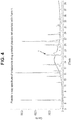
- Polymorphic Form 3 was typically only found during polymorph screening utilizing fast evaporation studies from solvents such as ethyl acetate, methyl ethyl ketone, and methyl tert-butyl ether. Approximately 1 g of Crisaborole was dissolved in acetonitrile at 75°C, followed by filtration. Water was added to the filtrate as an anti-solvent at 75°C. The resulting mixture was a clear solution, and it was seeded with approximately 2 mg of Form III seed crystal. The mixtures were then cooled to ambient temperature at 20 °C/h and stirred overnight. The solids were isolated by filtration and washed with approximately 2 mL of water. The solids were dried under vacuum at ambient temperature for 20 hours, which was then analyzed by XRPD to confirm the formation of Form III. See Figure 2 : PXRD spectrum of Forms 1, 2 and 3.
- One of the key aspects encountered in reformulating crisaborole was that the active agent be fully dissolved within its solvent.
- a selection criterion of greater than 10% w/w crisaborole solubility was used to select solvents capable of carrying at least 1% crisaborole in a final drug product formulation, assuming the drug product contained 10% solvent.
- the solubility of crisaborole in ten solvents was evaluated to identify those with crisaborole solubility greater than 10% w/w by visual assessment. The equilibrium solubity of the best solvents was subsequently verified by HPLC. See Table 5.
- the solvents that satisfied the greater than 10% w/w solubility requirement were also evaluated for crisaborole compatibility by assessing degradant formation in crisaborole solutions at 80% saturation after storage at 50° C and 40 ° C/75% RH for seven days.
- Crisaborole solutions of three of the seven evaluated solvents exhibited two main degradants, including Impurity 1. Of these three, the propylene glycol solutions had the lowest overall degradation and the highest crisaborole solubility. Crisaborole solutions of the four remaining solvents all exhibited an additional degradant and, therefore, were excluded from development. (See Table 6)
- HLB hydrophilic-lipophilic balance
- Crisaborole was dissolved in propylene glycol to which each emulsifier was added, forming either a solution or partial suspension.
- the levels of each were approximately equivalent to levels in an ointment formulation containg 10% propylene glycol, 2% crisaborole and 5% emulsifier.
- the samples were stored at 50° C for 7 days before they were analyzed for degradation of crisaborole. The compatibility results are summarized in Table 7.
- the MDG grade initially evaluated for crisaborole compatibility was non-compendial and identified as glycerol monostearate, purified. Testing demonstrated, however, that the material conformed more closely to the mono- and di-glycerides, NF compendial specification than to the glyceryl monostearate, NF (GMS) compendial specifications. It is, therefore described herein, as MDG.
- the non-compendial MDG was replaced with a compendial grade of glyceryl monostearate, NF (Sasol Imwitor® 491). Sasol Imwitor® 491, however, exhibited poor emulsifying properties, likely due to different proportions of mono-glyceride and di-gyceride that is inherent between MDG and GMS.
- NF mono- and di-glycerides
- Gattefosse Gattefosse
- Alfa Aesar Glycerol monostearate
- Sasol Imwitor® 491
- Sasol Imwitor® 900K
- Caravan BFP® 74K
- Caravan BFP® 74E
- Abitec Capmul® MCM NF
- Cognis Cutina® GMS V PH.
- Mono- and di-glycerides, NF was selected to be the emulsifier for Crisaborole Topical Ointment, 2% on the basis of compendial status, HLB value, chemical compatibility, and established emulsifying capability.
- Edetate calcium disodium was evaluated as a stabilizer at various levels within drug product formulations utilizing the same excipients used in Crisaborole Topical Ointment, 2%.
- the drug product formulations were evaluated in multiple candidate tubes, including 60-g laminate tubes equivalent to the commercial primary container closure system (with the exception of not having an orifice seal), at both 25°C/60% RH and 40°C/75% RH.
- the evaluated formulations differed from Crisaborole Topical Ointment, 2% only in the stabilizers used: 0 ppm EDTA, Z10, 24 ppm EDTA (Ointment Z7 ), 90 ppm EDTA, 450 ppm EDTA, and 0.09% water with 0.10% boric acid (equivalent to Ointment Z6, but utilizing MDG rather than GMS).
- Results from the evaluation in the 60-g laminate tubes are presented in Tables 5 and 6. After six months, the formulation without stabilizer exhibited the greatest total crisaborole degradation and lowest assay at the 40°C/75% RH condition, followed by the Ointment Z6 formulation (water and boric acid as stabilizer). The greatest stabilizing effect was observed at the 24 ppm EDTA and 90 ppm EDTA levels.
- the 24 ppm EDTA formulation (Ointment Z7 ) was subsequently utilized in clinical studies
- edetate calcium disodium was added to propylene glycol with continuous propeller mixing while being heated to 40-46°C. The temperature of this mixture was maintained at 40-46°C with the mixture appearing visually dissolved and uniform. With continuous mixing, crisaborole was added to dissolve while maintaining the temperature at 40-46°C.
- the drug solution phase was filtered through 80 mesh filter and added to the oil phase. It was then homogenized for 10 minutes while maintaining the temperature at 40-46°C. The final composition was cooled to 25°C with propeller mixing until a homogenous ointment was obtained.
- edetate calcium disodium was added to propylene glycol with continuous propeller mixing while being heated to 40-46 °C. The temperature of this mixture was maintained at 40-46 °C with the mixture appearing visually dissolved and uniform.
- the solvent phase was filtered through 80 mesh filter and added to the oil phase. It was then homogenized for 10 minutes while maintaining the temperature at 40-46°C. The final composition was cooled to 25°C with propeller mixing until a homogenous ointment was obtained.
- the 2% ointment formulation, Y was produced according to the procedure above and had the following components: Component Y % w/w Propylene Glycol 9.000 Butylated Hydroxytoluene 0.100 Mono- and Di- glycerides 7.000 Paraffin Wax 5.000 White Petrolatum 78.8965 Edetate Calcium Disodium 0.0035
- Percutaneous penetration was measured using the in vitro cadaver skin finite dose technique. Human, ex vivo, trunk skin, within 1 year of collection without obvious signs of skin disease was used in this study. It was dermatomed, prepared for cryopreservation, sealed in a water impermeable plastic bag, and stored at ⁇ -70°C until the day of the experiment. Prior to use it was thawed in ⁇ 37°C water, then rinsed in water to remove any adherent blood or other material from the surface.
- Skin from a single donor was cut into multiple smaller sections large enough to fit on static 1.0 cm 2 Franz diffusion cells.
- the dermal chamber was filled to capacity with a reservoir solution of phosphate-buffered isotonic saline (PBS), pH 7.4 ⁇ 0.1, and the epidermal cell (chimney) left open to ambient laboratory conditions. All cells were mounted in a diffusion apparatus in which the dermal bathing solution was stirred magnetically at approximately 600 RPM and the skin surface temperature maintained at 32.0 ⁇ 1.0 °C.
- the chambers were arranged in formulation groups so that there was an even raked distribution of the chambers with associated water penetration within each group for each formulation.
- the surfaces were washed twice (0.5 mL volume each) with acetonitrile to collect un-absorbed formulation from the surface of the skin.
- the skin was tape stripped (Transpore® Tape, 3M) no more than 10 times to remove the stratum corneum. The tape strips were extracted overnight in acetonitrile.
- the skin was then removed from the chamber, split into epidermis and dermis. Each was extracted overnight in acetonitrile.
- the chamber parts (dosing chimney and reservoir chamber) were rinsed separately with acetonitrile and the samples retained for analysis.
- Example 2 The composition of the 2% crisaborole cream, Z1 , is described in Example 2.
- the composition of the 2% crisaborole ointment, Z is described in Example 1.
- Human ex vivo cadaver skin was supplied by Allosource (6278 South Troy Circle, Centennial, CO) and stored at -80°C until use. The thickness of dermatomed skin was approximately 500 ⁇ m. Human cadaver skin without obvious signs of skin disease from three donors was used during the study.
- Receiving media 90:10 water:propylene glycol v/v that was pre-warmed to 37°C, and a stir bar, were added to each diffusion cell and allowed to equilibrate for a minimum of 30 minutes. A section of skin was placed on top of each cell, and cells were assembled using clamps to secure the skin in place. Any air bubbles that were introduced during the assembly of the cells were removed. Skin and media were allowed to equilibrate for a minimum of thirty minutes after assembly of the cells.
- a 400 ⁇ L pre-dose sample of receptor media was collected for analysis, and an equal volume was replaced with pre-warmed fresh media.
- Formulations were warmed to 31 ⁇ 1°C and equilibrated for approximately 1 hour prior to dosing. Immediately prior to dosing, formulations were briefly mixed using the pipette tip. At one minute intervals, each cell was dosed once with approximately 5 ⁇ L/cm 2 of respective formulation using a positive displacement pipette.
- a glass rod was used to spread the formulation evenly covering the entire surface area of the skin. The sampling port was occluded with parafilm to prevent evaporation of the receptor media during the study. Each glass rod was saved and the tip extracted overnight in 400 ⁇ L extraction solution (0.1% formic acid in acetonitrile).
- the cells were disassembled and the skin was carefully removed from each cell.
- Each skin section was washed twice with 0.5 mL of extraction solution (0.1% formic acid in acetonitrile) to collect un-absorbed formulation from the surface of the skin.
- the skin surface was gently cleansed with lab tissue to remove any residual liquid from the wash.
- Tissues were tape stripped 1-2 times with 3M Transpore tape to collect the stratum corneum. Tape strips were collected, combined, and extracted in 1 mL extraction solvent (0.1% formic acid in acetonitrile).
- Tissues were homogenized using a bead homogenizer (Omni BeadRuptor with 2 mL micro tubes containing 2.8 mm ceramic beads) at the following settings: Speed: 7.45 m/sec; Cycle time: 15 sec; # of Cycles: 2; Dwell time: 1 min
- the receiving medium collected from the diffusion cell assemblies was aliquotted into 96 well plates and frozen at -20°C. Epidermis and dermis homogenates and tape strip extracts of stratum corneum prepared at the conclusion of the experiment were also frozen at -20°C.
- the receiving medium collected from the diffusion cell assemblies was aliquotted into 96 well plates and frozen at -20°C.
- the penetration of Z into and through human skin is greater than the penetration of Z1.
- Human ex vivo cadaver skin without obvious signs of skin disease was used in the study. It was stored at ⁇ -70°C until use. It was dermatomed, prepared for cryopreservation, sealed in a water impermeable plastic bag, and stored at ⁇ -70°C until the day of the experiment.
- Human ex vivo cadaver skin was stored at ⁇ -70°C until the morning of the study. Skin was thawed by submerging in pre-warmed water (37°C), and was inspected for any visible holes or damage. Skin from a single donor was cut into multiple smaller sections large enough to fit on nominal 1.0 cm 2 static Franz diffusion cells.
- Skin from a single donor was cut into multiple smaller sections large enough to fit on nominal 1.0 cm 2 static Franz diffusion cells.
- the dermal chamber was filled to capacity with a reservoir solution of phosphate-buffered isotonic saline (PBS), pH 7.4 ⁇ 0.1, and the epidermal cell (chimney) left open to ambient laboratory conditions. All cells were mounted in a diffusion apparatus in which the dermal bathing solution was stirred magnetically at approximately 600 RPM and the skin surface temperature maintained at 32.0 ⁇ 1.0 °C.
- a water integrity test was determined before application of the test products. Following a brief (0.5-1 hour) equilibrium period, 3 H 2 O (Perkin Elmer, sp. Act. ⁇ 0.5 ⁇ Ci/mL) was layered across the top of the skin so that the entire exposed surface was covered (approximately 250 - 500 ⁇ L). After 5 minutes the 3 H 2 O aqueous layer was removed. At 30 minutes the receptor solution was collected and analyzed for radioactive content by liquid scintillation counting. Skin specimens in which absorption of 3 H 2 O was less than 1.56 ⁇ L-equ/cm 2 were considered acceptable.
- the reservoir solution was replaced with a fresh solution of distilled deionized water (ddH 2 O) with 80 ⁇ g/mL gentamicin.
- ddH 2 O distilled deionized water
- the chimney was removed from the Franz Cell to allow full access to the epidermal surface of the skin.
- the test formulations were warmed slightly at a controlled temperature of 30 ⁇ 2 °C and equilibrated at the maintained temperature for approximately 2 hours prior to dosing.
- the product was applied to five replicate sections of the same donor skin. Dosing was performed using a positive displacement pipette set to deliver 5 ⁇ L formulation/cm 2 , or by weight (5 mg/cm 2 ) if not of sufficient viscosity to pipette.
- Flux of crisaborole through the skin was surprisingly greater with Z6 than with Z3.
- composition Z5 contained the following ingredients: Component Z5 % w/w Crisaborole 2.00 Propylene Glycol 8.91 Boric Acid 0.10 Purified Water 0.09 Butylated Hydroxytoluene 0.10 Mono- and Di- Glycerides, 90% Monoglycerides 7.00 Paraffin wax 5.00 White Petrolatum 76.80 and was prepared as described in Example 1 above, but with boric acid and water being added in Step 2A instead of EDTA.
- composition Z6 contained the following ingredients: Component Z6 % w/w Crisaborole 2.00 Propylene Glycol 8.91 Boric Acid 0.10 Purified Water 0.09 Butylated Hydroxytoluene 0.10 Mono- and Di- Glycerides, 40-55% Monoglycerides 7.00 Paraffin wax 5.00 White Petrolatum 76.80 and was prepared as described for Z5 above.
- the volume of material that physically separated was determined by measuring the height of the separated phase and calculating the volume using the equation provided in Figure 1 .
- the percent of the total sample that separated was then calculated by dividing the volume of the separated phase by the total ointment volume.
- Z6 measured 0% internal volume separation while Z5 measured 1.4% internal volume separation. The ointments were next spun for an additional 1.5 hours (3.0 hours total), and the percentage of internal volume separation was measured again. Z6 measured 0% internal volume separation while Z5 measured 1.5% internal volume separation.
- MDG mono- and di- glycerides
- Impurities in stability batches have been observed and monitored, including Impurity 1, which is believed to be a stability protodeboronation product of crisaborole.
- Impurity 1 was characterized with nuclear magnetic resonance spectroscopy (NMR), mass spectrometry (MS) and the retention time of high-performance chromatography (HPLC) was confirmed against the standard.
- NMR nuclear magnetic resonance spectroscopy
- MS mass spectrometry
- HPLC high-performance chromatography
- the proposed acceptance criterion to the FDA for Impurity 1 is not more than 2.0% crisaborole label strength, based upon stability data. Impurity 1 levels were observed to increase over time, up to 1.2% label strength and 1.4% label strength for the primary and supporting stability lots under long-term (25° C, 60% relative humidity) and accelerated (40° C, 75% relative humidity) storage conditions, respectively.
- compositions of Z and Z6 are described herein.
- the 2% ointment formulations Z7, Z8, Z9, and Z10 have the following components and were produced according to the methods described herein: Component Z7 % w/w Z8 % w/w Z9 % w/w Z10 % w/w Crisaborole 2.000 2.000 2.000 2.000 Propylene Glycol 9.000 9.000 9.000 9.000 Butylated Hydroxytoluene 0.100 0.100 0.100 0.100 Mono- and Di- glycerides 7.000 7.000 7.000 7.000 Paraffin Wax 5.000 5.000 5.000 5.000 White Petrolatum 76.8976 76.9810 76.855 76.900 Edetate Calcium Disodium 0.0024 0.0090 0.0450 0.0000
- these formulations contain the following types and amounts of stabilizers.
- Z6 Stabilizer: Boric Acid; Water Amt: 0.1% w/w; 0.09% w/w
- Z7 Stabilizer: Edetate Calcium Disodium Amt: 0.0024% w/w
- Z8 Stabilizer: Edetate Calcium Disodium Amt: 0.0090% w/w
- Z9 Stabilizer: Edetate Calcium Disodium Amt: 0.0450% w/w
- Z10 Stabilizer: None
- Stabilizer Edetate Calcium Disodium Amt: 0.0035% w/w
- Crisaborole containing ointments are assayed using a reverse phase HPLC method using a BDS Hypersil C18 column (150x4.6mm, 5 micron) and a 1.0 mL/min flow rate, a 10 ⁇ L injection volume, with UV detection at 254 nm.
- the mobile phase (gradient) are described below:
- Table 5 Effect of Stabilizer on Impurity 1 formation in ointments under various conditions Impurity 1 (%) Time (Months ) Z6 Z7 Z8 Z9 Z10 0 0.07 0.12 ND 40 °C/75% RH 1 3 6 0.31 0.88 1.73 0.16 0.53 1.07 0.18 0.64 1.25 0.27 0.88 1.63 0.35 1.13 2.08 25 °C/60% RH 1 3 6 0.07 0.14 0.25 0.03 0.09 0.18 0.04 0.10 0.20 0.06 0.15 0.29 0.08 0.17 0.30 ND, not detected; RH, relative humidity.
- Table 5 demonstrates that among these recited formulations, the formulation without stabilizer, Z10, exhibited the highest Impurity 1 levels. The greatest stabilizing effect was observed at the 24 ppm EDTA ( Z7 ) and 90 ppm EDTA ( Z8 ) levels.
- the objective of the trial was to determine the safety and efficacy of Z applied twice daily (BID) compared to Y in the treatment of mild-to-moderate atopic dermatitis (AD) in children, adolescents, and adults (ages 2 years and older).
- the composition of Z is: Component Z % w/w Crisaborole 2.000 Propylene Glycol 9.000 Butylated Hydroxytoluene 0.100 Mono- and Di- glycerides 7.000 Paraffin Wax 5.000 White Petrolatum 76.8965 Edetate Calcium Disodium 0.0035
- composition of Y is: Component Y % w/w Propylene Glycol 9.000 Butylated Hydroxytoluene 0.100 Mono- and Di- glycerides 7.000 Paraffin Wax 5.000 White Petrolatum 78.8965 Edetate Calcium Disodium 0.0035
- the primary efficacy endpoint was defined as the achievement of "Clear” (0) or “Almost Clear” (1) status, with 2 or greater grade improvement from baseline, at Day 29 according to the Investigator's Static Global Assessment (ISGA).
- the secondary efficacy endpoint was defined as the achievement of "Clear” (0) or “Almost Clear” (1) status, irrespective of improvement from baseline, at Day 29 according to the Investigator's Static Global Assessment (ISGA).
Landscapes
- Health & Medical Sciences (AREA)
- Chemical & Material Sciences (AREA)
- Life Sciences & Earth Sciences (AREA)
- Veterinary Medicine (AREA)
- Public Health (AREA)
- General Health & Medical Sciences (AREA)
- Medicinal Chemistry (AREA)
- Animal Behavior & Ethology (AREA)
- Pharmacology & Pharmacy (AREA)
- Epidemiology (AREA)
- Chemical Kinetics & Catalysis (AREA)
- General Chemical & Material Sciences (AREA)
- Engineering & Computer Science (AREA)
- Oil, Petroleum & Natural Gas (AREA)
- Organic Chemistry (AREA)
- Dermatology (AREA)
- Nuclear Medicine, Radiotherapy & Molecular Imaging (AREA)
- Bioinformatics & Cheminformatics (AREA)
- Proteomics, Peptides & Aminoacids (AREA)
- Rheumatology (AREA)
- Pain & Pain Management (AREA)
- Pulmonology (AREA)
- Immunology (AREA)
- Medicinal Preparation (AREA)
- Pharmaceuticals Containing Other Organic And Inorganic Compounds (AREA)
- Acyclic And Carbocyclic Compounds In Medicinal Compositions (AREA)
- Medicines That Contain Protein Lipid Enzymes And Other Medicines (AREA)
- Medicines Containing Antibodies Or Antigens For Use As Internal Diagnostic Agents (AREA)
- Peptides Or Proteins (AREA)
Priority Applications (3)
| Application Number | Priority Date | Filing Date | Title |
|---|---|---|---|
| EP20215322.7A EP3831389A1 (en) | 2015-11-30 | 2016-11-23 | Topical pharmaceutical formulations comprising crisaborole for treating inflammatory-related conditions |
| PL16805522T PL3383363T3 (pl) | 2015-11-30 | 2016-11-23 | Preparaty farmaceutyczne do stosowania miejscowego do leczenia stanów związanych z zapaleniem |
| SI201631089T SI3383363T1 (sl) | 2015-11-30 | 2016-11-23 | Topične farmacevtske formulacije za zdravljenje vnetnih bolezenskih stanj |
Applications Claiming Priority (3)
| Application Number | Priority Date | Filing Date | Title |
|---|---|---|---|
| US201562260716P | 2015-11-30 | 2015-11-30 | |
| US201662420987P | 2016-11-11 | 2016-11-11 | |
| PCT/IB2016/057073 WO2017093857A1 (en) | 2015-11-30 | 2016-11-23 | Topical pharmaceutical formulations for treating inflammatory-related conditions |
Related Child Applications (1)
| Application Number | Title | Priority Date | Filing Date |
|---|---|---|---|
| EP20215322.7A Division EP3831389A1 (en) | 2015-11-30 | 2016-11-23 | Topical pharmaceutical formulations comprising crisaborole for treating inflammatory-related conditions |
Publications (2)
| Publication Number | Publication Date |
|---|---|
| EP3383363A1 EP3383363A1 (en) | 2018-10-10 |
| EP3383363B1 true EP3383363B1 (en) | 2021-01-06 |
Family
ID=57471943
Family Applications (2)
| Application Number | Title | Priority Date | Filing Date |
|---|---|---|---|
| EP16805522.6A Active EP3383363B1 (en) | 2015-11-30 | 2016-11-23 | Topical pharmaceutical formulations for treating inflammatory-related conditions |
| EP20215322.7A Withdrawn EP3831389A1 (en) | 2015-11-30 | 2016-11-23 | Topical pharmaceutical formulations comprising crisaborole for treating inflammatory-related conditions |
Family Applications After (1)
| Application Number | Title | Priority Date | Filing Date |
|---|---|---|---|
| EP20215322.7A Withdrawn EP3831389A1 (en) | 2015-11-30 | 2016-11-23 | Topical pharmaceutical formulations comprising crisaborole for treating inflammatory-related conditions |
Country Status (24)
| Country | Link |
|---|---|
| US (2) | US20170152273A1 (https=) |
| EP (2) | EP3383363B1 (https=) |
| JP (1) | JP6725403B2 (https=) |
| KR (1) | KR102106230B1 (https=) |
| CN (1) | CN108366958A (https=) |
| AU (1) | AU2016362668C1 (https=) |
| BR (1) | BR112018010464B1 (https=) |
| CA (1) | CA2949614C (https=) |
| CY (1) | CY1123845T1 (https=) |
| DK (1) | DK3383363T3 (https=) |
| ES (1) | ES2858311T3 (https=) |
| HK (1) | HK1257818A1 (https=) |
| HU (1) | HUE053115T2 (https=) |
| IL (1) | IL259693B2 (https=) |
| MX (1) | MX378145B (https=) |
| NZ (1) | NZ742208A (https=) |
| PL (1) | PL3383363T3 (https=) |
| PT (1) | PT3383363T (https=) |
| RU (1) | RU2724053C2 (https=) |
| SG (2) | SG10202112628UA (https=) |
| SI (1) | SI3383363T1 (https=) |
| TW (1) | TWI627974B (https=) |
| WO (1) | WO2017093857A1 (https=) |
| ZA (1) | ZA201802920B (https=) |
Families Citing this family (68)
| Publication number | Priority date | Publication date | Assignee | Title |
|---|---|---|---|---|
| US10265265B2 (en) | 2007-03-15 | 2019-04-23 | Drug Delivery Solutions Limited | Topical composition |
| ES2824552T3 (es) | 2015-03-04 | 2021-05-12 | Vanda Pharmaceuticals Inc | Método de tratamiento con tradipitant |
| US11512092B2 (en) | 2015-10-16 | 2022-11-29 | Abbvie Inc. | Processes for the preparation of (3S,4R)-3-ethyl-4-(3H-imidazo[1,2-a]pyrrolo[2,3-e]-pyrazin-8-yl)-n-(2,2,2-trifluoroethyl)pyrrolidine-1-carboxamide and solid state forms thereof |
| US10550126B2 (en) | 2015-10-16 | 2020-02-04 | Abbvie Inc. | Processes for the preparation of (3S,4R)-3-ethyl-4-(3H-imidazo[1,2-A]pyrrolo[2,3-e]-pyrazin-8-yl)-N-(2,2,2-trifluoroethyl)pyrrolidine-1-carboxamide and solid state forms thereof |
| US11773106B2 (en) | 2015-10-16 | 2023-10-03 | Abbvie Inc. | Processes for the preparation of (3S,4R)-3-ethyl-4-(3H-imidazo[1,2-a]pyrrolo[2,3-e]-pyrazin-8-yl)-N-(2,2,2-trifluoroethyl)pyrrolidine-1-carboxamide and solid state forms thereof |
| US11365198B2 (en) | 2015-10-16 | 2022-06-21 | Abbvie Inc. | Processes for the preparation of (3S,4R)-3-ethyl-4-(3H-imidazo[1,2-a]pyrrolo[2,3-e]-pyrazin-8-yl)-N-(2,2,2-trifluoroethyl)pyrrolidine-1-carboxamide and solid state forms thereof |
| US11524964B2 (en) | 2015-10-16 | 2022-12-13 | Abbvie Inc. | Processes for the preparation of (3S,4R)-3-ethyl-4-(3H-imidazo[1,2-a]pyrrolo[2,3-e]-pyrazin-8-yl)-n-(2,2,2-trifluoroethyl)pyrrolidine-1-carboxamide and solid state forms thereof |
| US12365689B2 (en) | 2015-10-16 | 2025-07-22 | Abbvie Inc. | Processes for the preparation of (3S,4R)-3-ethyl-4-(3H-imidazo[1,2-a]pyrrolo[2,3-e]-pyrazin-8-yl)-n-(2,2,2-trifluoroethyl)pyrrolidine-1-carboxamide and solid state forms thereof |
| SG10201913990RA (en) | 2015-10-16 | 2020-03-30 | Abbvie Inc | PROCESSES FOR THE PREPARATION OF (3S,4R)-3-ETHYL-4-(3H-IMIDAZO[1,2-a]PYRROLO[2,3-e]-PYRAZIN-8-YL)-N-(2,2,2-TRIFLUOROETHYL)PYRROLIDINE-1-CARBOXAMIDE AND SOLID STATE FORMS THEREOF |
| US20210228575A1 (en) * | 2019-09-30 | 2021-07-29 | Abbvie Inc. | Treating spondyloarthritic and psoriatic conditions with upadacitinib |
| US11447506B2 (en) | 2016-05-09 | 2022-09-20 | Anacor Pharmaceuticals, Inc. | Crystal forms of crisaborole in free form and preparation method and use thereof |
| WO2017193914A1 (zh) * | 2016-05-09 | 2017-11-16 | 苏州科睿思制药有限公司 | 克立硼罗游离形式的晶型及其制备方法和用途 |
| WO2017203514A1 (en) * | 2016-05-26 | 2017-11-30 | Perrigo Api Ltd | Polymorphs of crisaborole and production processes therefor |
| GB201701583D0 (en) | 2017-01-31 | 2017-03-15 | Drug Delivery Solutions Ltd | Topical composition |
| WO2018224923A1 (en) * | 2017-06-05 | 2018-12-13 | Glenmark Pharmaceuticals Limited | Process for preparation of crisaborole |
| US20210161870A1 (en) | 2017-06-07 | 2021-06-03 | Arcutis Biotherapeutics, Inc. | Roflumilast formulations with an improved pharmacokinetic profile |
| US12011437B1 (en) | 2017-06-07 | 2024-06-18 | Arcutis Biotherapeutics, Inc. | Roflumilast formulations with an improved pharmacokinetic profile |
| US20200155524A1 (en) * | 2018-11-16 | 2020-05-21 | Arcutis, Inc. | Method for reducing side effects from administration of phosphodiesterase-4 inhibitors |
| US11129818B2 (en) | 2017-06-07 | 2021-09-28 | Arcutis Biotherapeutics, Inc. | Topical roflumilast formulation having improved delivery and plasma half life |
| US9895359B1 (en) | 2017-06-07 | 2018-02-20 | Arcutis, Inc. | Inhibition of crystal growth of roflumilast |
| US12042487B2 (en) | 2018-11-16 | 2024-07-23 | Arcutis Biotherapeutics, Inc. | Method for reducing side effects from administration of phosphodiesterase-4 inhibitors |
| US11534493B2 (en) | 2017-09-22 | 2022-12-27 | Arcutis Biotherapeutics, Inc. | Pharmaceutical compositions of roflumilast in aqueous blends of water-miscible, pharmaceutically acceptable solvents |
| US10329311B1 (en) | 2017-12-21 | 2019-06-25 | Olon S.P.A. | Process for the preparation of crisaborole |
| IL315310A (en) | 2017-12-26 | 2024-10-01 | Kymera Therapeutics Inc | Irak degraders and uses thereof |
| CN109985000B (zh) * | 2017-12-29 | 2022-09-02 | 苏州旺山旺水生物医药有限公司 | 克立硼罗微乳组合物 |
| PL3737685T3 (pl) * | 2018-01-09 | 2023-10-02 | Halcyon Labs Private Limited | Sposób wytwarzania kryzaborolu i jego związków pośrednich |
| US10597410B2 (en) | 2018-02-02 | 2020-03-24 | Dipharma Francis S.R.L. | Intermediates and process for the preparation of a crystalline form of a topical anti-inflammatory agent |
| JP7777921B2 (ja) * | 2018-02-09 | 2025-12-01 | ガルデルマ ホールディング エスエー | 中等度から重度の掻破痕を有するアトピー性皮膚炎の治療におけるネモリズマブ |
| EP3542788A1 (en) | 2018-03-19 | 2019-09-25 | MC2 Therapeutics Limited | Topical composition comprising calcipotriol and betamethasone dipropionate |
| CN108210462A (zh) * | 2018-03-29 | 2018-06-29 | 苏州尚宜佳生物科技有限公司 | 一种克立硼罗局部缓释脂质体的制法与应用 |
| CN108324724A (zh) * | 2018-04-10 | 2018-07-27 | 苏州芝宇生物科技有限公司 | 一种克立硼罗可溶性膜制剂的制法及其应用 |
| CN110464702A (zh) * | 2018-05-09 | 2019-11-19 | 上海键合医药科技有限公司 | 一种克立硼罗的软膏剂及其制备方法 |
| EP3801461A2 (en) | 2018-06-04 | 2021-04-14 | Arcutis, Inc. | Method and formulation for improving roflumilast skin penetration lag time |
| CN108992454B (zh) | 2018-06-20 | 2020-06-02 | 合肥医工医药股份有限公司 | 一种治疗皮肤炎症性疾病的复方药物组合物 |
| CN108785379A (zh) * | 2018-06-26 | 2018-11-13 | 苏州尚宜佳生物科技有限公司 | 一种克立硼罗清凉缓释膜及其制备方法 |
| CN108524648A (zh) * | 2018-06-26 | 2018-09-14 | 苏州尚宜佳生物科技有限公司 | 一种克立硼罗复合保健缓释膜及其制备方法 |
| CN108938603A (zh) * | 2018-06-27 | 2018-12-07 | 苏州尚宜佳生物科技有限公司 | 一种缓释效果好的克立硼罗缓释膜及其制备方法 |
| CN108785372A (zh) * | 2018-06-27 | 2018-11-13 | 苏州尚宜佳生物科技有限公司 | 一种克立硼罗燥湿利尿缓释膜及其制备方法 |
| CN108926547A (zh) * | 2018-07-02 | 2018-12-04 | 苏州尚宜佳生物科技有限公司 | 一种粘贴效果好的克立硼罗缓释膜及其制备方法 |
| CN108938602A (zh) * | 2018-07-02 | 2018-12-07 | 苏州尚宜佳生物科技有限公司 | 一种吸收效果好的克立硼罗缓释膜及其制备方法 |
| CN108853063A (zh) * | 2018-07-04 | 2018-11-23 | 苏州尚宜佳生物科技有限公司 | 一种透气效果好的克立硼罗缓释膜的制备方法 |
| CN108853062A (zh) * | 2018-07-04 | 2018-11-23 | 苏州尚宜佳生物科技有限公司 | 一种肤感克立硼罗缓释膜的制备方法 |
| CN108853064A (zh) * | 2018-07-09 | 2018-11-23 | 苏州尚宜佳生物科技有限公司 | 一种防水透气克立硼罗缓释膜的制备方法 |
| CN108653246A (zh) * | 2018-07-09 | 2018-10-16 | 苏州尚宜佳生物科技有限公司 | 一种防水效果好的克立硼罗缓释膜的制备方法 |
| JP7268132B2 (ja) | 2018-07-31 | 2023-05-02 | エムシー2・セラピューティクス・リミテッド | 局所用組成物 |
| WO2020051230A1 (en) * | 2018-09-04 | 2020-03-12 | X-Rx, Inc. | Amorphous pharmaceutical compositions and uses thereof |
| CN112770756A (zh) * | 2018-09-29 | 2021-05-07 | 苏州科睿思制药有限公司 | 一种Upadacitinib的晶型及其制备方法和用途 |
| CN111217819B (zh) * | 2018-11-27 | 2021-05-14 | 杭州科巢生物科技有限公司 | 乌帕替尼的合成方法 |
| CA3119773A1 (en) | 2018-11-30 | 2020-06-04 | Kymera Therapeutics, Inc. | Irak degraders and uses thereof |
| PH12022500002A1 (en) | 2019-06-28 | 2023-04-03 | Kymera Therapeutics Inc | Irak degraders and uses thereof |
| WO2021011868A1 (en) | 2019-07-17 | 2021-01-21 | Kymera Therapeutics, Inc. | Irak degraders and uses thereof |
| WO2021119159A1 (en) | 2019-12-10 | 2021-06-17 | Kymera Therapeutics, Inc. | Irak degraders and uses thereof |
| KR20220145325A (ko) | 2019-12-17 | 2022-10-28 | 카이메라 쎄라퓨틱스 인코포레이티드 | Irak 분해제 및 이의 용도 |
| EP4140480A4 (en) * | 2020-04-23 | 2024-06-12 | Natural Medicine Institute Of Zhejiang Yangshengtang Co., Ltd. | DRUG COMBINATION AND USE |
| WO2021257914A1 (en) * | 2020-06-17 | 2021-12-23 | Kymera Therapeutics, Inc. | Irak degraders and uses thereof |
| JP2023538362A (ja) * | 2020-08-20 | 2023-09-07 | ファイザー・インク | 1(r)-4-(5-(4-メトキシ-3-プロポキシフェニル)ピリジン-3-イル)-1,2-オキサボロラン-2-オールの安定な局所製剤 |
| CN112168774A (zh) * | 2020-11-04 | 2021-01-05 | 南京康川济医药科技有限公司 | 一种巴瑞克替尼乳膏及其制备方法和应用 |
| US11707454B2 (en) | 2020-12-04 | 2023-07-25 | Arcutis Biotherapeutics, Inc. | Topical roflumilast formulation having antifungal properties |
| CN116867758A (zh) | 2020-12-30 | 2023-10-10 | 凯麦拉医疗公司 | Irak降解剂和其用途 |
| CN116867494A (zh) | 2021-02-15 | 2023-10-10 | 凯麦拉医疗公司 | Irak4降解剂和其用途 |
| CA3236265A1 (en) | 2021-10-29 | 2023-05-04 | William Leong | Irak4 degraders and synthesis thereof |
| CN118765194A (zh) | 2021-12-28 | 2024-10-11 | 阿尔库缇斯生物疗法股份有限公司 | 局部罗氟司特气溶胶泡沫 |
| CA3248817A1 (en) * | 2022-01-20 | 2023-07-27 | Renata Pharmaceutical (Ireland) Limited | Extended-release pharmaceutical composition of Upadacitinib |
| CA3243560A1 (en) | 2022-01-31 | 2023-08-03 | Kymera Therapeutics, Inc. | Iraqi Degradation Agents and Their Uses |
| WO2024058848A1 (en) | 2022-09-15 | 2024-03-21 | Arcutis Biotherapeutics, Inc. | Pharmaceutical compositions of roflumilast and solvents capable of dissolving high amounts of the drug |
| CN115417890A (zh) * | 2022-09-24 | 2022-12-02 | 中山万远新药研发有限公司 | 克立硼罗的新晶型及其制备方法与用途 |
| CN116715687A (zh) * | 2023-05-25 | 2023-09-08 | 福建南方制药股份有限公司 | 一种工业化制备克立硼罗晶型i的方法 |
| CN119345120B (zh) * | 2024-12-26 | 2025-03-14 | 新基元(北京)医药科技有限公司 | 一种克立硼罗软膏及其制备方法 |
Family Cites Families (8)
| Publication number | Priority date | Publication date | Assignee | Title |
|---|---|---|---|---|
| US4282216A (en) * | 1977-04-20 | 1981-08-04 | Johnson & Johnson | Topical anti-inflammatory drug therapy |
| EP2343304B1 (en) * | 2005-02-16 | 2015-06-10 | Anacor Pharmaceuticals, Inc. | Biocidal boronophthalide compounds |
| PT1988779E (pt) | 2006-02-16 | 2015-09-04 | Anacor Pharmaceuticals Inc | Moléculas pequenas contendo boro como agentes antiinflamatórios |
| JP5745279B2 (ja) * | 2008-01-09 | 2015-07-08 | アナコール ファーマシューティカルズ,インコーポレイテッド | 抗炎症剤としてのホウ素含有小分子 |
| WO2009111676A2 (en) | 2008-03-06 | 2009-09-11 | Anacor Pharmaceuticals, Inc | Boron-containing small molecules as anti-inflammatory agents |
| KR20150065941A (ko) * | 2008-03-06 | 2015-06-15 | 아나코르 파마슈티칼스 인코포레이티드 | 소염제로써 붕소가 함유된 소분자 |
| WO2011094450A1 (en) | 2010-01-27 | 2011-08-04 | Anacor Pharmaceuticals, Inc | Boron-containing small molecules |
| GB201402070D0 (en) * | 2014-02-07 | 2014-03-26 | Galapagos Nv | Pharmaceutical compositions for the treatment of inflammatory disorders |
-
2016
- 2016-11-23 SG SG10202112628UA patent/SG10202112628UA/en unknown
- 2016-11-23 KR KR1020187018210A patent/KR102106230B1/ko active Active
- 2016-11-23 IL IL259693A patent/IL259693B2/en unknown
- 2016-11-23 RU RU2018119295A patent/RU2724053C2/ru active
- 2016-11-23 HU HUE16805522A patent/HUE053115T2/hu unknown
- 2016-11-23 PT PT168055226T patent/PT3383363T/pt unknown
- 2016-11-23 HK HK19100162.1A patent/HK1257818A1/zh unknown
- 2016-11-23 WO PCT/IB2016/057073 patent/WO2017093857A1/en not_active Ceased
- 2016-11-23 MX MX2018006578A patent/MX378145B/es unknown
- 2016-11-23 PL PL16805522T patent/PL3383363T3/pl unknown
- 2016-11-23 SI SI201631089T patent/SI3383363T1/sl unknown
- 2016-11-23 DK DK16805522.6T patent/DK3383363T3/da active
- 2016-11-23 ES ES16805522T patent/ES2858311T3/es active Active
- 2016-11-23 EP EP16805522.6A patent/EP3383363B1/en active Active
- 2016-11-23 SG SG11201803728YA patent/SG11201803728YA/en unknown
- 2016-11-23 BR BR112018010464-7A patent/BR112018010464B1/pt active IP Right Grant
- 2016-11-23 EP EP20215322.7A patent/EP3831389A1/en not_active Withdrawn
- 2016-11-23 NZ NZ742208A patent/NZ742208A/en unknown
- 2016-11-23 AU AU2016362668A patent/AU2016362668C1/en active Active
- 2016-11-23 CN CN201680069997.3A patent/CN108366958A/zh active Pending
- 2016-11-25 CA CA2949614A patent/CA2949614C/en active Active
- 2016-11-28 JP JP2016229721A patent/JP6725403B2/ja active Active
- 2016-11-29 TW TW105139318A patent/TWI627974B/zh active
- 2016-11-30 US US15/364,347 patent/US20170152273A1/en not_active Abandoned
-
2018
- 2018-05-04 ZA ZA2018/02920A patent/ZA201802920B/en unknown
-
2019
- 2019-06-25 US US16/451,107 patent/US20190308994A1/en not_active Abandoned
-
2021
- 2021-02-25 CY CY20211100160T patent/CY1123845T1/el unknown
Non-Patent Citations (1)
| Title |
|---|
| None * |
Also Published As
Similar Documents
| Publication | Publication Date | Title |
|---|---|---|
| EP3383363B1 (en) | Topical pharmaceutical formulations for treating inflammatory-related conditions | |
| US12564593B2 (en) | Topical formulation for a JAK inhibitor | |
| CN103459394B (zh) | 结晶和非结晶形式的托法替尼,以及包含托法替尼和渗透增强剂的药物组合物 | |
| DE69031033T2 (de) | Verwendung von eicosapentaensäure zur behandlung der kachexie | |
| Lee et al. | Cerivastatin nanoliposome as a potential disease modifying approach for the treatment of pulmonary arterial hypertension | |
| Cheng et al. | Preclinical pharmacokinetics study of R-and S-enantiomers of the histone deacetylase inhibitor, AR-42 (NSC 731438), in rodents | |
| Koshman et al. | Automated blood sampling in canine telemetry studies: Enabling enhanced assessments of cardiovascular liabilities and safety margins | |
| US20090012051A1 (en) | External preparation | |
| WO2017165315A1 (en) | Onapristone metabolite compositions and methods | |
| WO2023016583A1 (zh) | 一种芦可替尼组合物及其用途 | |
| US20240092778A1 (en) | Topical pharmaceutical compositions and methods | |
| Sassi et al. | HPLC Method for Quantification of Halofuginone in Human Ureter: Ex-Vivo Application | |
| HK1182313B (en) | Topical formulation for a jak inhibitor |
Legal Events
| Date | Code | Title | Description |
|---|---|---|---|
| STAA | Information on the status of an ep patent application or granted ep patent |
Free format text: STATUS: UNKNOWN |
|
| STAA | Information on the status of an ep patent application or granted ep patent |
Free format text: STATUS: THE INTERNATIONAL PUBLICATION HAS BEEN MADE |
|
| TPAC | Observations filed by third parties |
Free format text: ORIGINAL CODE: EPIDOSNTIPA |
|
| PUAI | Public reference made under article 153(3) epc to a published international application that has entered the european phase |
Free format text: ORIGINAL CODE: 0009012 |
|
| STAA | Information on the status of an ep patent application or granted ep patent |
Free format text: STATUS: REQUEST FOR EXAMINATION WAS MADE |
|
| 17P | Request for examination filed |
Effective date: 20180702 |
|
| AK | Designated contracting states |
Kind code of ref document: A1 Designated state(s): AL AT BE BG CH CY CZ DE DK EE ES FI FR GB GR HR HU IE IS IT LI LT LU LV MC MK MT NL NO PL PT RO RS SE SI SK SM TR |
|
| AX | Request for extension of the european patent |
Extension state: BA ME |
|
| DAV | Request for validation of the european patent (deleted) | ||
| DAX | Request for extension of the european patent (deleted) | ||
| STAA | Information on the status of an ep patent application or granted ep patent |
Free format text: STATUS: EXAMINATION IS IN PROGRESS |
|
| 17Q | First examination report despatched |
Effective date: 20190906 |
|
| GRAP | Despatch of communication of intention to grant a patent |
Free format text: ORIGINAL CODE: EPIDOSNIGR1 |
|
| STAA | Information on the status of an ep patent application or granted ep patent |
Free format text: STATUS: GRANT OF PATENT IS INTENDED |
|
| INTG | Intention to grant announced |
Effective date: 20200403 |
|
| GRAJ | Information related to disapproval of communication of intention to grant by the applicant or resumption of examination proceedings by the epo deleted |
Free format text: ORIGINAL CODE: EPIDOSDIGR1 |
|
| STAA | Information on the status of an ep patent application or granted ep patent |
Free format text: STATUS: EXAMINATION IS IN PROGRESS |
|
| GRAJ | Information related to disapproval of communication of intention to grant by the applicant or resumption of examination proceedings by the epo deleted |
Free format text: ORIGINAL CODE: EPIDOSDIGR1 |
|
| GRAP | Despatch of communication of intention to grant a patent |
Free format text: ORIGINAL CODE: EPIDOSNIGR1 |
|
| INTC | Intention to grant announced (deleted) | ||
| GRAP | Despatch of communication of intention to grant a patent |
Free format text: ORIGINAL CODE: EPIDOSNIGR1 |
|
| STAA | Information on the status of an ep patent application or granted ep patent |
Free format text: STATUS: GRANT OF PATENT IS INTENDED |
|
| INTG | Intention to grant announced |
Effective date: 20200911 |
|
| GRAS | Grant fee paid |
Free format text: ORIGINAL CODE: EPIDOSNIGR3 |
|
| GRAA | (expected) grant |
Free format text: ORIGINAL CODE: 0009210 |
|
| STAA | Information on the status of an ep patent application or granted ep patent |
Free format text: STATUS: THE PATENT HAS BEEN GRANTED |
|
| AK | Designated contracting states |
Kind code of ref document: B1 Designated state(s): AL AT BE BG CH CY CZ DE DK EE ES FI FR GB GR HR HU IE IS IT LI LT LU LV MC MK MT NL NO PL PT RO RS SE SI SK SM TR |
|
| REG | Reference to a national code |
Ref country code: GB Ref legal event code: FG4D |
|
| REG | Reference to a national code |
Ref country code: AT Ref legal event code: REF Ref document number: 1351568 Country of ref document: AT Kind code of ref document: T Effective date: 20210115 Ref country code: CH Ref legal event code: NV Representative=s name: E. BLUM AND CO. AG PATENT- UND MARKENANWAELTE , CH Ref country code: CH Ref legal event code: EP |
|
| REG | Reference to a national code |
Ref country code: DK Ref legal event code: T3 Effective date: 20210113 |
|
| REG | Reference to a national code |
Ref country code: DE Ref legal event code: R096 Ref document number: 602016051113 Country of ref document: DE |
|
| REG | Reference to a national code |
Ref country code: FI Ref legal event code: FGE |
|
| REG | Reference to a national code |
Ref country code: IE Ref legal event code: FG4D |
|
| REG | Reference to a national code |
Ref country code: SE Ref legal event code: TRGR |
|
| REG | Reference to a national code |
Ref country code: PT Ref legal event code: SC4A Ref document number: 3383363 Country of ref document: PT Date of ref document: 20210303 Kind code of ref document: T Free format text: AVAILABILITY OF NATIONAL TRANSLATION Effective date: 20210223 |
|
| REG | Reference to a national code |
Ref country code: RO Ref legal event code: EPE |
|
| REG | Reference to a national code |
Ref country code: NL Ref legal event code: FP |
|
| REG | Reference to a national code |
Ref country code: SK Ref legal event code: T3 Ref document number: E 36623 Country of ref document: SK |
|
| REG | Reference to a national code |
Ref country code: GR Ref legal event code: EP Ref document number: 20210400581 Country of ref document: GR Effective date: 20210416 |
|
| REG | Reference to a national code |
Ref country code: EE Ref legal event code: FG4A Ref document number: E020517 Country of ref document: EE Effective date: 20210303 |
|
| REG | Reference to a national code |
Ref country code: HU Ref legal event code: AG4A Ref document number: E053115 Country of ref document: HU |
|
| REG | Reference to a national code |
Ref country code: LT Ref legal event code: MG9D |
|
| PG25 | Lapsed in a contracting state [announced via postgrant information from national office to epo] |
Ref country code: HR Free format text: LAPSE BECAUSE OF FAILURE TO SUBMIT A TRANSLATION OF THE DESCRIPTION OR TO PAY THE FEE WITHIN THE PRESCRIBED TIME-LIMIT Effective date: 20210106 Ref country code: NO Free format text: LAPSE BECAUSE OF FAILURE TO SUBMIT A TRANSLATION OF THE DESCRIPTION OR TO PAY THE FEE WITHIN THE PRESCRIBED TIME-LIMIT Effective date: 20210406 Ref country code: LT Free format text: LAPSE BECAUSE OF FAILURE TO SUBMIT A TRANSLATION OF THE DESCRIPTION OR TO PAY THE FEE WITHIN THE PRESCRIBED TIME-LIMIT Effective date: 20210106 |
|
| REG | Reference to a national code |
Ref country code: AT Ref legal event code: UEP Ref document number: 1351568 Country of ref document: AT Kind code of ref document: T Effective date: 20210106 |
|
| PG25 | Lapsed in a contracting state [announced via postgrant information from national office to epo] |
Ref country code: LV Free format text: LAPSE BECAUSE OF FAILURE TO SUBMIT A TRANSLATION OF THE DESCRIPTION OR TO PAY THE FEE WITHIN THE PRESCRIBED TIME-LIMIT Effective date: 20210106 Ref country code: RS Free format text: LAPSE BECAUSE OF FAILURE TO SUBMIT A TRANSLATION OF THE DESCRIPTION OR TO PAY THE FEE WITHIN THE PRESCRIBED TIME-LIMIT Effective date: 20210106 |
|
| PG25 | Lapsed in a contracting state [announced via postgrant information from national office to epo] |
Ref country code: IS Free format text: LAPSE BECAUSE OF FAILURE TO SUBMIT A TRANSLATION OF THE DESCRIPTION OR TO PAY THE FEE WITHIN THE PRESCRIBED TIME-LIMIT Effective date: 20210506 |
|
| REG | Reference to a national code |
Ref country code: ES Ref legal event code: FG2A Ref document number: 2858311 Country of ref document: ES Kind code of ref document: T3 Effective date: 20210930 |
|
| REG | Reference to a national code |
Ref country code: DE Ref legal event code: R097 Ref document number: 602016051113 Country of ref document: DE |
|
| PG25 | Lapsed in a contracting state [announced via postgrant information from national office to epo] |
Ref country code: SM Free format text: LAPSE BECAUSE OF FAILURE TO SUBMIT A TRANSLATION OF THE DESCRIPTION OR TO PAY THE FEE WITHIN THE PRESCRIBED TIME-LIMIT Effective date: 20210106 |
|
| PLBE | No opposition filed within time limit |
Free format text: ORIGINAL CODE: 0009261 |
|
| STAA | Information on the status of an ep patent application or granted ep patent |
Free format text: STATUS: NO OPPOSITION FILED WITHIN TIME LIMIT |
|
| 26N | No opposition filed |
Effective date: 20211007 |
|
| PG25 | Lapsed in a contracting state [announced via postgrant information from national office to epo] |
Ref country code: AL Free format text: LAPSE BECAUSE OF FAILURE TO SUBMIT A TRANSLATION OF THE DESCRIPTION OR TO PAY THE FEE WITHIN THE PRESCRIBED TIME-LIMIT Effective date: 20210106 |
|
| PG25 | Lapsed in a contracting state [announced via postgrant information from national office to epo] |
Ref country code: IS Free format text: LAPSE BECAUSE OF FAILURE TO SUBMIT A TRANSLATION OF THE DESCRIPTION OR TO PAY THE FEE WITHIN THE PRESCRIBED TIME-LIMIT Effective date: 20210506 |
|
| PG25 | Lapsed in a contracting state [announced via postgrant information from national office to epo] |
Ref country code: MC Free format text: LAPSE BECAUSE OF FAILURE TO SUBMIT A TRANSLATION OF THE DESCRIPTION OR TO PAY THE FEE WITHIN THE PRESCRIBED TIME-LIMIT Effective date: 20210106 |
|
| REG | Reference to a national code |
Ref country code: DE Ref legal event code: R081 Ref document number: 602016051113 Country of ref document: DE Owner name: ANACOR PHARMACEUTICALS, LLC (N.D.GES.D. STAATE, US Free format text: FORMER OWNER: ANACOR PHARMACEUTICALS, INC., NEW YORK, NY, US |
|
| REG | Reference to a national code |
Ref country code: NL Ref legal event code: PD Owner name: ANACOR PHARMACEUTICALS, LLC; US Free format text: DETAILS ASSIGNMENT: CHANGE OF OWNER(S), CHANGE OF LEGAL ENTITY; FORMER OWNER NAME: ANACOR PHARMACEUTICALS, INC. Effective date: 20220901 |
|
| REG | Reference to a national code |
Ref country code: EE Ref legal event code: HC1A Ref document number: E020517 Country of ref document: EE |
|
| REG | Reference to a national code |
Ref country code: FI Ref legal event code: PCE Owner name: ANACOR PHARMACEUTICALS, LLC |
|
| REG | Reference to a national code |
Ref country code: LU Ref legal event code: HC Owner name: ANACOR PHARMACEUTICALS, LLC; US Free format text: FORMER OWNER: ANACOR PHARMACEUTICALS, INC. Effective date: 20220902 |
|
| REG | Reference to a national code |
Ref country code: BE Ref legal event code: HC Owner name: ANACOR PHARMACEUTICALS, LLC; US Free format text: DETAILS ASSIGNMENT: CHANGE OF OWNER(S), CHANGE OF OWNER(S) NAME; FORMER OWNER NAME: ANACOR PHARMACEUTICALS, INC. Effective date: 20220909 |
|
| REG | Reference to a national code |
Ref country code: HU Ref legal event code: GB9C Owner name: ANACOR PHARMACEUTICALS, LLC, US Free format text: FORMER OWNER(S): ANACOR PHARMACEUTICALS, INC., US Ref country code: HU Ref legal event code: FH1C Free format text: FORMER REPRESENTATIVE(S): DANUBIA SZABADALMI ES JOGI IRODA KFT., HU Representative=s name: DANUBIA SZABADALMI ES JOGI IRODA KFT., HU |
|
| REG | Reference to a national code |
Ref country code: ES Ref legal event code: PC2A Owner name: ANACOR PHARMACEUTICALS, LLC Effective date: 20221122 |
|
| REG | Reference to a national code |
Ref country code: SI Ref legal event code: SP73 Owner name: ANACOR PHARMACEUTICALS, LLC; US Effective date: 20221018 |
|
| REG | Reference to a national code |
Ref country code: SK Ref legal event code: TC4A Ref document number: E 36623 Country of ref document: SK Owner name: ANACOR PHARMACEUTICALS, LLC, NEW YORK, NY, US Effective date: 20221129 |
|
| REG | Reference to a national code |
Ref country code: AT Ref legal event code: HC Ref document number: 1351568 Country of ref document: AT Kind code of ref document: T Owner name: ANACOR PHARMACEUTICALS, LLC, US Effective date: 20221220 |
|
| REG | Reference to a national code |
Ref country code: LU Ref legal event code: HC Owner name: ANACOR PHARMACEUTICALS, LLC; US Free format text: FORMER OWNER: ANACOR PHARMACEUTICALS, LLC Effective date: 20230317 |
|
| REG | Reference to a national code |
Ref country code: SK Ref legal event code: TC4A Ref document number: E 36623 Country of ref document: SK Owner name: ANACOR PHARMACEUTICALS, LLC, NEW YORK, NY, US Effective date: 20230502 |
|
| P01 | Opt-out of the competence of the unified patent court (upc) registered |
Effective date: 20230321 |
|
| REG | Reference to a national code |
Ref country code: HU Ref legal event code: HC9C Owner name: ANACOR PHARMACEUTICALS, LLC, US Free format text: FORMER OWNER(S): ANACOR PHARMACEUTICALS, INC., US; ANACOR PHARMACEUTICALS, LLC, US |
|
| REG | Reference to a national code |
Ref country code: SI Ref legal event code: SP73 Owner name: ANACOR PHARMACEUTICALS, LLC; US Effective date: 20231123 |
|
| PG25 | Lapsed in a contracting state [announced via postgrant information from national office to epo] |
Ref country code: MK Free format text: LAPSE BECAUSE OF FAILURE TO SUBMIT A TRANSLATION OF THE DESCRIPTION OR TO PAY THE FEE WITHIN THE PRESCRIBED TIME-LIMIT Effective date: 20210106 |
|
| PG25 | Lapsed in a contracting state [announced via postgrant information from national office to epo] |
Ref country code: MT Free format text: LAPSE BECAUSE OF FAILURE TO SUBMIT A TRANSLATION OF THE DESCRIPTION OR TO PAY THE FEE WITHIN THE PRESCRIBED TIME-LIMIT Effective date: 20210106 |
|
| PGFP | Annual fee paid to national office [announced via postgrant information from national office to epo] |
Ref country code: PL Payment date: 20250917 Year of fee payment: 10 |
|
| PGFP | Annual fee paid to national office [announced via postgrant information from national office to epo] |
Ref country code: BG Payment date: 20250924 Year of fee payment: 10 |
|
| PGFP | Annual fee paid to national office [announced via postgrant information from national office to epo] |
Ref country code: LU Payment date: 20251014 Year of fee payment: 10 Ref country code: NL Payment date: 20251015 Year of fee payment: 10 |
|
| REG | Reference to a national code |
Ref country code: CH Ref legal event code: U11 Free format text: ST27 STATUS EVENT CODE: U-0-0-U10-U11 (AS PROVIDED BY THE NATIONAL OFFICE) Effective date: 20251201 |
|
| PGFP | Annual fee paid to national office [announced via postgrant information from national office to epo] |
Ref country code: PT Payment date: 20251028 Year of fee payment: 10 |
|
| PGFP | Annual fee paid to national office [announced via postgrant information from national office to epo] |
Ref country code: HU Payment date: 20251106 Year of fee payment: 10 |
|
| PGFP | Annual fee paid to national office [announced via postgrant information from national office to epo] |
Ref country code: DE Payment date: 20251013 Year of fee payment: 10 |
|
| PGFP | Annual fee paid to national office [announced via postgrant information from national office to epo] |
Ref country code: GB Payment date: 20251009 Year of fee payment: 10 |
|
| PGFP | Annual fee paid to national office [announced via postgrant information from national office to epo] |
Ref country code: AT Payment date: 20251028 Year of fee payment: 10 |
|
| PGFP | Annual fee paid to national office [announced via postgrant information from national office to epo] |
Ref country code: FI Payment date: 20251029 Year of fee payment: 10 Ref country code: DK Payment date: 20251029 Year of fee payment: 10 Ref country code: IT Payment date: 20251114 Year of fee payment: 10 |
|
| PGFP | Annual fee paid to national office [announced via postgrant information from national office to epo] |
Ref country code: FR Payment date: 20251013 Year of fee payment: 10 |
|
| PGFP | Annual fee paid to national office [announced via postgrant information from national office to epo] |
Ref country code: TR Payment date: 20251120 Year of fee payment: 10 Ref country code: GR Payment date: 20251029 Year of fee payment: 10 Ref country code: BE Payment date: 20251015 Year of fee payment: 10 |
|
| PGFP | Annual fee paid to national office [announced via postgrant information from national office to epo] |
Ref country code: SE Payment date: 20251111 Year of fee payment: 10 Ref country code: CH Payment date: 20251201 Year of fee payment: 10 |
|
| PGFP | Annual fee paid to national office [announced via postgrant information from national office to epo] |
Ref country code: IE Payment date: 20251013 Year of fee payment: 10 Ref country code: CY Payment date: 20251014 Year of fee payment: 10 Ref country code: CZ Payment date: 20251017 Year of fee payment: 10 |
|
| PGFP | Annual fee paid to national office [announced via postgrant information from national office to epo] |
Ref country code: EE Payment date: 20251020 Year of fee payment: 10 |
|
| PGFP | Annual fee paid to national office [announced via postgrant information from national office to epo] |
Ref country code: RO Payment date: 20251103 Year of fee payment: 10 Ref country code: SK Payment date: 20251013 Year of fee payment: 10 |
|
| PGFP | Annual fee paid to national office [announced via postgrant information from national office to epo] |
Ref country code: SI Payment date: 20251014 Year of fee payment: 10 Ref country code: ES Payment date: 20251209 Year of fee payment: 10 |