EP3334566B1 - Wafer chuck featuring reduced friction support surface - Google Patents
Wafer chuck featuring reduced friction support surface Download PDFInfo
- Publication number
- EP3334566B1 EP3334566B1 EP16837531.9A EP16837531A EP3334566B1 EP 3334566 B1 EP3334566 B1 EP 3334566B1 EP 16837531 A EP16837531 A EP 16837531A EP 3334566 B1 EP3334566 B1 EP 3334566B1
- Authority
- EP
- European Patent Office
- Prior art keywords
- wafer
- wafer chuck
- scratches
- chuck
- friction
- Prior art date
- Legal status (The legal status is an assumption and is not a legal conclusion. Google has not performed a legal analysis and makes no representation as to the accuracy of the status listed.)
- Active
Links
Images




Classifications
-
- H—ELECTRICITY
- H10—SEMICONDUCTOR DEVICES; ELECTRIC SOLID-STATE DEVICES NOT OTHERWISE PROVIDED FOR
- H10P—GENERIC PROCESSES OR APPARATUS FOR THE MANUFACTURE OR TREATMENT OF DEVICES COVERED BY CLASS H10
- H10P72/00—Handling or holding of wafers, substrates or devices during manufacture or treatment thereof
- H10P72/70—Handling or holding of wafers, substrates or devices during manufacture or treatment thereof for supporting or gripping
- H10P72/76—Handling or holding of wafers, substrates or devices during manufacture or treatment thereof for supporting or gripping using mechanical means, e.g. clamps or pinches
- H10P72/7604—Handling or holding of wafers, substrates or devices during manufacture or treatment thereof for supporting or gripping using mechanical means, e.g. clamps or pinches the wafers being placed on a susceptor, stage or support
- H10P72/7611—Handling or holding of wafers, substrates or devices during manufacture or treatment thereof for supporting or gripping using mechanical means, e.g. clamps or pinches the wafers being placed on a susceptor, stage or support characterised by edge profile or support profile
-
- B—PERFORMING OPERATIONS; TRANSPORTING
- B24—GRINDING; POLISHING
- B24B—MACHINES, DEVICES, OR PROCESSES FOR GRINDING OR POLISHING; DRESSING OR CONDITIONING OF ABRADING SURFACES; FEEDING OF GRINDING, POLISHING, OR LAPPING AGENTS
- B24B37/00—Lapping machines or devices; Accessories
- B24B37/11—Lapping tools
- B24B37/12—Lapping plates for working plane surfaces
- B24B37/14—Lapping plates for working plane surfaces characterised by the composition or properties of the plate materials
-
- B—PERFORMING OPERATIONS; TRANSPORTING
- B24—GRINDING; POLISHING
- B24B—MACHINES, DEVICES, OR PROCESSES FOR GRINDING OR POLISHING; DRESSING OR CONDITIONING OF ABRADING SURFACES; FEEDING OF GRINDING, POLISHING, OR LAPPING AGENTS
- B24B37/00—Lapping machines or devices; Accessories
- B24B37/11—Lapping tools
- B24B37/12—Lapping plates for working plane surfaces
- B24B37/16—Lapping plates for working plane surfaces characterised by the shape of the lapping plate surface, e.g. grooved
-
- B—PERFORMING OPERATIONS; TRANSPORTING
- B24—GRINDING; POLISHING
- B24B—MACHINES, DEVICES, OR PROCESSES FOR GRINDING OR POLISHING; DRESSING OR CONDITIONING OF ABRADING SURFACES; FEEDING OF GRINDING, POLISHING, OR LAPPING AGENTS
- B24B37/00—Lapping machines or devices; Accessories
- B24B37/27—Work carriers
- B24B37/30—Work carriers for single side lapping of plane surfaces
-
- G—PHYSICS
- G03—PHOTOGRAPHY; CINEMATOGRAPHY; ANALOGOUS TECHNIQUES USING WAVES OTHER THAN OPTICAL WAVES; ELECTROGRAPHY; HOLOGRAPHY
- G03F—PHOTOMECHANICAL PRODUCTION OF TEXTURED OR PATTERNED SURFACES, e.g. FOR PRINTING, FOR PROCESSING OF SEMICONDUCTOR DEVICES; MATERIALS THEREFOR; ORIGINALS THEREFOR; APPARATUS SPECIALLY ADAPTED THEREFOR
- G03F7/00—Photomechanical, e.g. photolithographic, production of textured or patterned surfaces, e.g. printing surfaces; Materials therefor, e.g. comprising photoresists; Apparatus specially adapted therefor
- G03F7/70—Microphotolithographic exposure; Apparatus therefor
- G03F7/70691—Handling of masks or workpieces
- G03F7/707—Chucks, e.g. chucking or un-chucking operations or structural details
-
- H—ELECTRICITY
- H10—SEMICONDUCTOR DEVICES; ELECTRIC SOLID-STATE DEVICES NOT OTHERWISE PROVIDED FOR
- H10P—GENERIC PROCESSES OR APPARATUS FOR THE MANUFACTURE OR TREATMENT OF DEVICES COVERED BY CLASS H10
- H10P72/00—Handling or holding of wafers, substrates or devices during manufacture or treatment thereof
- H10P72/70—Handling or holding of wafers, substrates or devices during manufacture or treatment thereof for supporting or gripping
- H10P72/76—Handling or holding of wafers, substrates or devices during manufacture or treatment thereof for supporting or gripping using mechanical means, e.g. clamps or pinches
- H10P72/7604—Handling or holding of wafers, substrates or devices during manufacture or treatment thereof for supporting or gripping using mechanical means, e.g. clamps or pinches the wafers being placed on a susceptor, stage or support
- H10P72/7614—Handling or holding of wafers, substrates or devices during manufacture or treatment thereof for supporting or gripping using mechanical means, e.g. clamps or pinches the wafers being placed on a susceptor, stage or support characterised by a plurality of individual support members, e.g. support posts or protrusions
-
- H—ELECTRICITY
- H10—SEMICONDUCTOR DEVICES; ELECTRIC SOLID-STATE DEVICES NOT OTHERWISE PROVIDED FOR
- H10P—GENERIC PROCESSES OR APPARATUS FOR THE MANUFACTURE OR TREATMENT OF DEVICES COVERED BY CLASS H10
- H10P72/00—Handling or holding of wafers, substrates or devices during manufacture or treatment thereof
- H10P72/70—Handling or holding of wafers, substrates or devices during manufacture or treatment thereof for supporting or gripping
- H10P72/76—Handling or holding of wafers, substrates or devices during manufacture or treatment thereof for supporting or gripping using mechanical means, e.g. clamps or pinches
- H10P72/7604—Handling or holding of wafers, substrates or devices during manufacture or treatment thereof for supporting or gripping using mechanical means, e.g. clamps or pinches the wafers being placed on a susceptor, stage or support
- H10P72/7616—Handling or holding of wafers, substrates or devices during manufacture or treatment thereof for supporting or gripping using mechanical means, e.g. clamps or pinches the wafers being placed on a susceptor, stage or support characterised by a coating, a hardness or a material
-
- B—PERFORMING OPERATIONS; TRANSPORTING
- B23—MACHINE TOOLS; METAL-WORKING NOT OTHERWISE PROVIDED FOR
- B23B—TURNING; BORING
- B23B31/00—Chucks; Expansion mandrels; Adaptations thereof for remote control
- B23B31/02—Chucks
- B23B31/24—Chucks characterised by features relating primarily to remote control of the gripping means
- B23B31/28—Chucks characterised by features relating primarily to remote control of the gripping means using electric or magnetic means in the chuck
-
- B—PERFORMING OPERATIONS; TRANSPORTING
- B23—MACHINE TOOLS; METAL-WORKING NOT OTHERWISE PROVIDED FOR
- B23B—TURNING; BORING
- B23B31/00—Chucks; Expansion mandrels; Adaptations thereof for remote control
- B23B31/02—Chucks
- B23B31/24—Chucks characterised by features relating primarily to remote control of the gripping means
- B23B31/30—Chucks characterised by features relating primarily to remote control of the gripping means using fluid-pressure means in the chuck
- B23B31/307—Vacuum chucks
Definitions
- the present disclosure relates to a method for processing a chuck that handles semiconductor wafers, and a chuck prepared or resulting from such a method.
- the processed chuck features reduced friction between itself and the wafer, permitting the wafer to settle to a "flat" condition.
- the silicon wafers upon which are to be manufactured the microprocessor chips must be precisely placed in the processing machines.
- the wafers typically are handled by vacuum handling equipment.
- the wafers droop, ever-so-slightly under their own weight.
- the drooping wafer "wants" to flatten out, but may be hindered from doing so by friction between the wafer and chuck. This is sometimes referred to as a "stickiness" problem.
- Metal oxides are notable in this regard, and silicon dioxide is no exception.
- This particular engineering solution may take the form of designing a plurality of "plateaus" of uniform height, typically regularly spaced, into the wafer. These plateaus exist in many geometries, and go by many names including pins, burls, mesas, bumps, proud lands, proud rings, etc.
- the pins help in reducing the friction so that the wafer can move laterally across the pins as it flattens out upon settling on the pins.
- the pins help to reduce wafer sticking, but further improvements in this regard are needed.
- wafers lie flat against the support surface(s) of the chuck. Otherwise, the circuit pattern images that are projected onto the wafer may be out-of-focus. Furthermore, wafer lithography may involve multiple exposures, with re-location of the wafer between exposures. Thus, it is critical that there be a way to precisely re-align the wafer on the chuck relative to its first positioning so that the subsequent exposures will take place in the correct position on the wafer.
- NL 1 031 985 C2 discloses a method for manufacturing a device for supporting a substrate during the manufacture of semiconductor components, which device comprises a substantially flat plate having an upper surface, on which the substrate is to be positioned, the upper surface of which plate initially has a flat surface, whilst at least that part of said upper surface on which the substrate is to be positioned has a surface roughness.
- the surface roughness is formed contactless by pulsed electromagnetic radiation in the initial flat surface of the upper surface of the flat plate.
- the surface roughness is more in the form of a specific texture.
- the consists of a pattern of evenly distributed indentations, which are separated from each other by an upright material edge. It is also possible to realize a different texture form in the upper surface.
- ridges may function as supporting edges, for example, whilst the grooves present therebetween may function to pass a process gas therethrough, for example for cooling purposes.
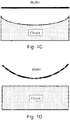
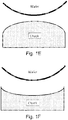
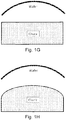
- wafer chucks are never perfectly flat and often have a slight curvature in a random manner, such as orientations that are upwards (bowl) or downwards (dome) in shape.
- Figure 1 shows the various possibilities between the wafer and chuck for orientations that are flat, curved up, or curved down.
- wafers When wafers are located on the wafer chuck that have picked up a curvature due to normal process, they are required to return to the original clamping location by settling to flat. As discussed earlier, the wafer is required to relax in a manner that is predominately radial.
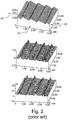
- the friction between two opposing and contacting surfaces depends not only on the roughness of the surfaces, but also on the contour or "shape" or topography of the roughness. For example, if the roughness has a directionality, the friction likely will also possess a directionality.
- the top or (a) plot is a profilometer trace of surface roughness for aligned grooves (a "ruling").
- the second (b) plot shows the slope of the surface roughness of the first plot.
- the third (c) plot is a map of friction force. The second and third plots show that friction force is proportional to the slope of the roughness.
- the top graph shows that friction will be least where a contacting surface is moving front-to-back (along axis 21), will be greater when the contacting surface is moving right-to-left (along axis 23), and will be greatest when the contacting surface is moving left-to-right (along axis 25), due to the directionality and asymmetry of the roughness in the bottom surface.
- the current designs are limited in that as the surface area is reduced by making more and more scratches, under this condition the wafer chuck becomes more susceptible to wear due to the higher localized pressure and reduced bearing area. The rougher the surface, the greater the likelihood of increased wear.
- the instant disclosure addresses these issues, and provides a solution.
- Grinding, lapping and polishing basically work by making scratches in the body being ground, lapped or polished.
- the scratches typically are linear.
- the scratches gives rise to a directionality component of friction: the friction coefficient is less in the direction along the scratch than in a direction orthogonal, or across, the scratch.
- Grinding, lapping and polishing basically work by making scratches in the body being ground, lapped or polished.
- the scratches typically are linear.
- the scratches gives rise to a directionality component of friction: the friction coefficient is less in the direction along the scratch than in a direction orthogonal, or across, the scratch.
- a typical pin's bearing surface is fabricated by methods such as grinding, lapping or polishing, which intentionally generate random scratches in the surface where the wafer is in contact. These scratches in the surface are aligned in a more or less random manner; therefore, there is no preferential direction with less friction.
- a typical lapped pin is shown below in Figure 3 . When the data are clipped to show just the bearing surface where the wafer contacts the wafer chuck, the randomness of the scratching is more evident as shown in Figure 4 . Figure Cartesian space and the slope in the X and Y orthogonal directions is plotted.
- the tool here used to accomplish lapping is termed a "treatment tool".
- the treatment tool may have about the same hardness as the chuck, or at least the chuck surface that supports a wafer.
- One way to accomplish this is to fabricate the treatment tool from the same, or similar material as used to fabricate the chuck or chuck support surface.
- a popular choice in such materials is a ceramic such as silicon carbide (SiC), which may be in the form of a SiC-containing composite material such as reaction bonded SiC (“RB-SiC").
- the treatment tool typically features a flat surface (or one that appears flat visually) that is intended to mechanically or physically contact the surface of the work piece, for example, a wafer chuck.
- the treatment tool may be shaped as a ring or annulus. The tool is moved over the chuck surface while in physical contact with it, thus removing material by abrasion.
- the treatment tool is 27 mm in diameter.
- the contact surface appears to be a flat disc, but in reality it has a slight toroidal shape so that when it is brought into contact with the flat surface, the area of contact is not that of a disc but instead is a circle or annulus. If the contacting surface of the treatment tool is shaped as an annulus or ring, it, too, may feature a slightly toroidal shape.
- a wafer surface is populated with dies, or regions where a microprocessor will be formed by lithography.
- the size of a die may range from about 3 millimeters to about 28 millimeters.
- the size, diameter, or "effective diameter" of the treatment tool may be scaled to correspond to the die size on the wafer that is to undergo lithography. Thus, where the die size is 28 mm long, a 28 mm diameter lapping tool would be appropriate.
- the lapping that was carried out according to the instant disclosure made use of a 28 millimeter toroidal-shaped SiC-containing treatment tool under a dead weight load of about 180 grams, and operated at an average velocity of about 3 meters per minute. Visually, the treatment tool appeared disc-shaped; however, the edge and center regions of the disc were elevated away from flat to give the treatment tool a slightly toroidal shape.
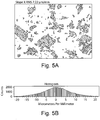
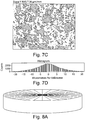
- Figure 5 features histograms showing the slope of the surface roughness in X ( Figures 5B ) and Y ( Figures 5D ) directions.
- the images ( Figures 5A and 5C ) above each histogram ( Figures 5B and 5D ) are photomicrographs of the surfaces where the surface roughness was measured.
- the RMS slope of surface roughness in the X-direction was 7.22 microns per millimeter.
- the RMS slope of surface roughness in the Y-direction, orthogonal to the X-direction was 7.24 microns per millimeter. Thus, the slopes are about the same, indicating a lack of directionality to the surface roughness.
- the movement of the treatment tool was modified to see if the tool could impart a directionality to the surface roughness.
- the final strokes or passes of the treatment tool were made along a specific axis, namely, the Y-axis.
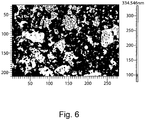
- the scratches imparted by the tool have a directionality, as seen in the photomicrograph that is Figure 6 .
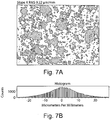
- Figures 7A-7D further document and quantify this directionality.
- Figures 7A and 7C are optical photomicrographs corresponding to the histograms of Figures 7B and 7D .
- the histograms report the distribution of slopes of the surface elevation.
- the slope in the Y-direction, along the direction of lapping was about the same as before, for the randomized lapping situation.
- the RMS slope in the X-direction, orthogonal to the Y-direction was much higher, at 9.26 microns per millimeter. Since frictional force is proportional to the slope of the elevation, the friction in the X-direction is expected to be greater than the friction in the Y-direction.
- a method to generate the features is by traveling across the wafer chuck through the center, as shown in Figure 8 . This may take compensation by changing the velocity and or the pressure to minimize the variation in the radial direction of the material that is removed.
- an alternate means to generate scratches that are very nearly radial is to have the final passes of the treatment tool describe a multi-pointed star pattern, with the next point of the star to be formed immediately after its adjacent star point.
- the treatment tool in its final passes takes a zig-zag path along the circumference of the wafer chuck, with the zigs and zags being toward and away from the center. In this way, the scratches formed by the treatment tool in its final passes will be close to radial directions.
- This design solves the stickiness problem by making small marks (e.g., scratches) on the bearing surface in a direction such that the surface is less restrictive and allows the wafer to relax.
- the preferred method to generate these scratches is a with a small tool lap, this lap can be more or less annular in shape to conformally "float" over the surface, thus minimally impacting gross curvature.
- One technique for accomplishing this behavior is to arrange that the treatment tool be minimally constrained in its attachment to its holder in the lapping machine, for example, by means of a ball-and-socket joint.
- the instant disclosure can be used in new wafer chucks that have not yet been placed in service. It can be used to repair wafer chucks that have already seen service. Furthermore, the repair of wafer chucks can take place in-situ; that is, without having to remove the wafer chuck from the lithography machine.
Landscapes
- Engineering & Computer Science (AREA)
- Mechanical Engineering (AREA)
- Physics & Mathematics (AREA)
- General Physics & Mathematics (AREA)
- Mechanical Treatment Of Semiconductor (AREA)
- Container, Conveyance, Adherence, Positioning, Of Wafer (AREA)
- Jigs For Machine Tools (AREA)
- Constituent Portions Of Griding Lathes, Driving, Sensing And Control (AREA)
Applications Claiming Priority (2)
| Application Number | Priority Date | Filing Date | Title |
|---|---|---|---|
| US201562205425P | 2015-08-14 | 2015-08-14 | |
| PCT/US2016/046436 WO2017030873A1 (en) | 2015-08-14 | 2016-08-10 | Wafer chuck featuring reduced friction support surface |
Publications (3)
| Publication Number | Publication Date |
|---|---|
| EP3334566A1 EP3334566A1 (en) | 2018-06-20 |
| EP3334566A4 EP3334566A4 (en) | 2019-06-19 |
| EP3334566B1 true EP3334566B1 (en) | 2021-11-24 |
Family
ID=58050865
Family Applications (1)
| Application Number | Title | Priority Date | Filing Date |
|---|---|---|---|
| EP16837531.9A Active EP3334566B1 (en) | 2015-08-14 | 2016-08-10 | Wafer chuck featuring reduced friction support surface |
Country Status (4)
| Country | Link |
|---|---|
| US (1) | US10790181B2 (enExample) |
| EP (1) | EP3334566B1 (enExample) |
| JP (1) | JP7041051B2 (enExample) |
| WO (1) | WO2017030873A1 (enExample) |
Families Citing this family (2)
| Publication number | Priority date | Publication date | Assignee | Title |
|---|---|---|---|---|
| CN112969966B (zh) * | 2018-11-05 | 2024-12-03 | Asml控股股份有限公司 | 在硬陶瓷涂层中制造纳米脊的方法 |
| JP7839909B2 (ja) * | 2024-01-24 | 2026-04-02 | 日本碍子株式会社 | 半導体製造装置用部材 |
Family Cites Families (51)
| Publication number | Priority date | Publication date | Assignee | Title |
|---|---|---|---|---|
| US4551192A (en) | 1983-06-30 | 1985-11-05 | International Business Machines Corporation | Electrostatic or vacuum pinchuck formed with microcircuit lithography |
| US4692836A (en) * | 1983-10-31 | 1987-09-08 | Toshiba Kikai Kabushiki Kaisha | Electrostatic chucks |
| US5342068A (en) * | 1993-08-26 | 1994-08-30 | Texas Instruments Incorporated | Laminar flow vacuum chuck |
| JPH07171747A (ja) | 1993-12-21 | 1995-07-11 | Ricoh Co Ltd | 研削研磨装置 |
| US5692873A (en) | 1995-03-31 | 1997-12-02 | Motorola, Inc. | Apparatus for holding a piece of semiconductor |
| JPH0936070A (ja) | 1995-07-21 | 1997-02-07 | Nippon Steel Corp | 半導体ウエハの研磨装置 |
| JPH09191015A (ja) * | 1996-01-11 | 1997-07-22 | Canon Inc | 熱処理装置 |
| JPH1071562A (ja) * | 1996-05-10 | 1998-03-17 | Canon Inc | 化学機械研磨装置および方法 |
| US6179695B1 (en) | 1996-05-10 | 2001-01-30 | Canon Kabushiki Kaisha | Chemical mechanical polishing apparatus and method |
| US6217655B1 (en) | 1997-01-31 | 2001-04-17 | Applied Materials, Inc. | Stand-off pad for supporting a wafer on a substrate support chuck |
| US6063202A (en) * | 1997-09-26 | 2000-05-16 | Novellus Systems, Inc. | Apparatus for backside and edge exclusion of polymer film during chemical vapor deposition |
| JP2000061842A (ja) * | 1998-08-18 | 2000-02-29 | Toshiba Mach Co Ltd | 研磨装置 |
| US6215642B1 (en) | 1999-03-11 | 2001-04-10 | Nikon Corporation Of Japan | Vacuum compatible, deformable electrostatic chuck with high thermal conductivity |
| US6264467B1 (en) * | 1999-04-14 | 2001-07-24 | Applied Materials, Inc. | Micro grooved support surface for reducing substrate wear and slip formation |
| US6439986B1 (en) | 1999-10-12 | 2002-08-27 | Hunatech Co., Ltd. | Conditioner for polishing pad and method for manufacturing the same |
| US6353271B1 (en) | 1999-10-29 | 2002-03-05 | Euv, Llc | Extreme-UV scanning wafer and reticle stages |
| DE60125935T2 (de) | 2000-01-28 | 2007-08-02 | Hitachi Tokyo Electronics Co. Ltd., Ome | Wafer-spannfutter, belichtungssystem und verfahren zur herstellung eines halbleiterbauelements |
| JP2002057209A (ja) * | 2000-06-01 | 2002-02-22 | Tokyo Electron Ltd | 枚葉式処理装置および枚葉式処理方法 |
| JP3859937B2 (ja) | 2000-06-02 | 2006-12-20 | 住友大阪セメント株式会社 | 静電チャック |
| US6717159B2 (en) | 2000-10-18 | 2004-04-06 | Nikon Corporation | Low distortion kinematic reticle support |
| KR100422444B1 (ko) | 2001-05-29 | 2004-03-12 | 삼성전자주식회사 | 정전 척에 설치되는 웨이퍼 공간 지지장치 및 그 제조방법 |
| JP4988202B2 (ja) | 2002-12-20 | 2012-08-01 | マトソン テクノロジー カナダ インコーポレイテッド | 工作物の支持及び熱処理の方法とシステム |
| CN100467210C (zh) * | 2004-03-25 | 2009-03-11 | 揖斐电株式会社 | 真空卡盘和吸附板 |
| US7150677B2 (en) | 2004-09-22 | 2006-12-19 | Mitsubishi Materials Corporation | CMP conditioner |
| JP4049172B2 (ja) | 2005-07-13 | 2008-02-20 | 住友電気工業株式会社 | ウェハプローバ用ウェハ保持体およびそれを搭載したウェハプローバ |
| JP4756583B2 (ja) | 2005-08-30 | 2011-08-24 | 株式会社東京精密 | 研磨パッド、パッドドレッシング評価方法、及び研磨装置 |
| TWI327761B (en) * | 2005-10-07 | 2010-07-21 | Rohm & Haas Elect Mat | Method for making semiconductor wafer and wafer holding article |
| US8057633B2 (en) * | 2006-03-28 | 2011-11-15 | Tokyo Electron Limited | Post-etch treatment system for removing residue on a substrate |
| WO2007145505A1 (en) * | 2006-06-12 | 2007-12-21 | Xycarb Ceramics B.V. | Method for manufacturing a device for supporting a substrate during the manufacture of semiconductor components, as well as such a device |
| NL1031985C2 (nl) * | 2006-06-12 | 2007-12-13 | Xycarb Ceramics B V | Werkwijze voor het vervaardigen van een inrichting voor het ondersteunen van een substraat tijdens de vervaardiging van halfgeleider-componenten alsmede een dergelijke inrichting. |
| US20080100812A1 (en) * | 2006-10-26 | 2008-05-01 | Nikon Corporation | Immersion lithography system and method having a wafer chuck made of a porous material |
| JP5099476B2 (ja) | 2006-12-28 | 2012-12-19 | 株式会社ニコン | 清掃装置及び清掃システム、パターン形成装置、清掃方法及び露光方法、並びにデバイス製造方法 |
| JP4864757B2 (ja) * | 2007-02-14 | 2012-02-01 | 東京エレクトロン株式会社 | 基板載置台及びその表面処理方法 |
| JP5018249B2 (ja) | 2007-06-04 | 2012-09-05 | 株式会社ニコン | クリーニング装置、クリーニング方法、露光装置、及びデバイス製造方法 |
| JP5428171B2 (ja) * | 2008-03-12 | 2014-02-26 | 東ソー株式会社 | 研磨方法 |
| JP2010153407A (ja) | 2008-12-23 | 2010-07-08 | Nikon Corp | 清掃方法及び装置、並びに露光方法及び装置 |
| JP5402391B2 (ja) * | 2009-01-27 | 2014-01-29 | 信越化学工業株式会社 | 半導体用合成石英ガラス基板の加工方法 |
| NL2004153A (en) | 2009-02-24 | 2010-08-25 | Asml Netherlands Bv | Lithographic apparatus, a method for removing material of one or more protrusions on a support surface, and an article support system. |
| US20100330890A1 (en) | 2009-06-30 | 2010-12-30 | Zine-Eddine Boutaghou | Polishing pad with array of fluidized gimballed abrasive members |
| JP5810517B2 (ja) | 2010-12-02 | 2015-11-11 | 富士電機株式会社 | 吸着装置および吸着方法 |
| JP2013095973A (ja) | 2011-11-02 | 2013-05-20 | Tocalo Co Ltd | 半導体製造装置用部材 |
| CN104271474B (zh) * | 2011-12-16 | 2018-01-09 | 布鲁克斯自动化公司 | 输送设备 |
| CN104081285B (zh) | 2012-02-03 | 2017-06-13 | Asml荷兰有限公司 | 衬底保持器和制造衬底保持器的方法 |
| JP6085152B2 (ja) | 2012-11-22 | 2017-02-22 | 日本特殊陶業株式会社 | 真空チャック |
| US20140184003A1 (en) | 2012-12-31 | 2014-07-03 | Cascade Microtech, Inc. | Systems and methods for rotational alignment of a device under test |
| JP6034717B2 (ja) | 2013-02-22 | 2016-11-30 | 株式会社荏原製作所 | ドレッサの研磨部材上の摺動距離分布の取得方法、ドレッサの研磨部材上の摺動ベクトル分布の取得方法、および研磨装置 |
| JP2014128877A (ja) | 2014-03-03 | 2014-07-10 | Femutekku:Kk | 表面加工装置及び方法 |
| NL2014516A (en) * | 2014-04-30 | 2016-03-08 | Asml Netherlands Bv | Support table for a lithographic apparatus, lithographic apparatus and device manufacturing method. |
| JP2016058675A (ja) | 2014-09-12 | 2016-04-21 | 株式会社東芝 | 研磨装置および半導体ウェハの研磨方法 |
| EP3221750A1 (en) * | 2014-11-23 | 2017-09-27 | M Cubed Technologies | Wafer pin chuck fabrication and repair |
| WO2016135565A1 (en) * | 2015-02-23 | 2016-09-01 | M Cubed Technologies, Inc. | Film electrode for electrostatic chuck |
-
2016
- 2016-08-10 US US15/567,935 patent/US10790181B2/en active Active
- 2016-08-10 JP JP2018507638A patent/JP7041051B2/ja active Active
- 2016-08-10 WO PCT/US2016/046436 patent/WO2017030873A1/en not_active Ceased
- 2016-08-10 EP EP16837531.9A patent/EP3334566B1/en active Active
Also Published As
| Publication number | Publication date |
|---|---|
| US10790181B2 (en) | 2020-09-29 |
| JP2018526822A (ja) | 2018-09-13 |
| JP7041051B2 (ja) | 2022-03-23 |
| EP3334566A4 (en) | 2019-06-19 |
| WO2017030873A1 (en) | 2017-02-23 |
| EP3334566A1 (en) | 2018-06-20 |
| US20180122684A1 (en) | 2018-05-03 |
Similar Documents
| Publication | Publication Date | Title |
|---|---|---|
| US9941148B2 (en) | Wafer pin chuck fabrication and repair | |
| TWI720208B (zh) | 積層裝置及積層方法 | |
| JP2022174267A (ja) | 基板のボンディング装置及び方法 | |
| US10964560B2 (en) | Substrate chuck and substrate bonding system including the same | |
| CN105372933B (zh) | 压印光刻法的矩形基材和制备方法 | |
| KR102127547B1 (ko) | 금속제 연마 패드 및 그 제조 방법 | |
| CN101161412B (zh) | 用于化学机械研磨的基底固定环 | |
| US8695990B2 (en) | Wafer flattening apparatus and method | |
| KR20210091295A (ko) | 웨이퍼의 제조 방법 및 웨이퍼 | |
| US10790181B2 (en) | Wafer chuck featuring reduced friction support surface | |
| US9259822B2 (en) | Chemical mechanical polishing conditioner and manufacturing methods thereof | |
| US20190084122A1 (en) | Carrier ring, grinding device, and grinding method | |
| TWI459504B (zh) | 一種提供夾具平台空氣區的系統及方法 | |
| US9744641B2 (en) | Wafer polishing apparatus | |
| US20040123951A1 (en) | Retaining ring having reduced wear and contamination rate for a polishing head of a CMP tool | |
| JP2013067544A (ja) | 成形面加工用パンチ工具、マイクロレンズアレイ用成形型の製造方法、マイクロレンズアレイ用成形型及びマイクロレンズアレイ | |
| CN213845245U (zh) | 用于竖直地保持半导体晶圆的优化的基板夹持器组件 | |
| EP3334564B1 (en) | Method for deterministic finishing of a chuck surface | |
| KR102699594B1 (ko) | 연마 플래튼들 및 연마 플래튼 제조 방법들 | |
| EP3334560B1 (en) | Method for removing contamination from a chuck surface | |
| US20150306728A1 (en) | Systems for, methods of, and apparatus for processing substrate surfaces | |
| JP2018526822A5 (enExample) | ||
| CN214237744U (zh) | 用于倒棱机的固定装置及倒棱机 | |
| KR102396219B1 (ko) | 캐리어 필름 클램프 장치 및 그 작동 방법 | |
| TW202438220A (zh) | 修整設備、修整工具及修整方法 |
Legal Events
| Date | Code | Title | Description |
|---|---|---|---|
| STAA | Information on the status of an ep patent application or granted ep patent |
Free format text: STATUS: THE INTERNATIONAL PUBLICATION HAS BEEN MADE |
|
| PUAI | Public reference made under article 153(3) epc to a published international application that has entered the european phase |
Free format text: ORIGINAL CODE: 0009012 |
|
| STAA | Information on the status of an ep patent application or granted ep patent |
Free format text: STATUS: REQUEST FOR EXAMINATION WAS MADE |
|
| 17P | Request for examination filed |
Effective date: 20180313 |
|
| AK | Designated contracting states |
Kind code of ref document: A1 Designated state(s): AL AT BE BG CH CY CZ DE DK EE ES FI FR GB GR HR HU IE IS IT LI LT LU LV MC MK MT NL NO PL PT RO RS SE SI SK SM TR |
|
| AX | Request for extension of the european patent |
Extension state: BA ME |
|
| DAV | Request for validation of the european patent (deleted) | ||
| DAX | Request for extension of the european patent (deleted) | ||
| A4 | Supplementary search report drawn up and despatched |
Effective date: 20190522 |
|
| RIC1 | Information provided on ipc code assigned before grant |
Ipc: B24B 37/30 20120101ALI20190516BHEP Ipc: B24B 37/16 20120101ALI20190516BHEP Ipc: B24B 37/14 20120101AFI20190516BHEP Ipc: G03F 7/20 20060101ALI20190516BHEP Ipc: H01L 21/687 20060101ALI20190516BHEP Ipc: H01L 21/683 20060101ALI20190516BHEP |
|
| GRAP | Despatch of communication of intention to grant a patent |
Free format text: ORIGINAL CODE: EPIDOSNIGR1 |
|
| STAA | Information on the status of an ep patent application or granted ep patent |
Free format text: STATUS: GRANT OF PATENT IS INTENDED |
|
| INTG | Intention to grant announced |
Effective date: 20210709 |
|
| GRAS | Grant fee paid |
Free format text: ORIGINAL CODE: EPIDOSNIGR3 |
|
| GRAA | (expected) grant |
Free format text: ORIGINAL CODE: 0009210 |
|
| STAA | Information on the status of an ep patent application or granted ep patent |
Free format text: STATUS: THE PATENT HAS BEEN GRANTED |
|
| AK | Designated contracting states |
Kind code of ref document: B1 Designated state(s): AL AT BE BG CH CY CZ DE DK EE ES FI FR GB GR HR HU IE IS IT LI LT LU LV MC MK MT NL NO PL PT RO RS SE SI SK SM TR |
|
| REG | Reference to a national code |
Ref country code: GB Ref legal event code: FG4D |
|
| REG | Reference to a national code |
Ref country code: AT Ref legal event code: REF Ref document number: 1449489 Country of ref document: AT Kind code of ref document: T Effective date: 20211215 |
|
| REG | Reference to a national code |
Ref country code: DE Ref legal event code: R096 Ref document number: 602016066646 Country of ref document: DE |
|
| REG | Reference to a national code |
Ref country code: IE Ref legal event code: FG4D |
|
| REG | Reference to a national code |
Ref country code: LT Ref legal event code: MG9D |
|
| REG | Reference to a national code |
Ref country code: NL Ref legal event code: MP Effective date: 20211124 |
|
| REG | Reference to a national code |
Ref country code: AT Ref legal event code: MK05 Ref document number: 1449489 Country of ref document: AT Kind code of ref document: T Effective date: 20211124 |
|
| PG25 | Lapsed in a contracting state [announced via postgrant information from national office to epo] |
Ref country code: RS Free format text: LAPSE BECAUSE OF FAILURE TO SUBMIT A TRANSLATION OF THE DESCRIPTION OR TO PAY THE FEE WITHIN THE PRESCRIBED TIME-LIMIT Effective date: 20211124 Ref country code: LT Free format text: LAPSE BECAUSE OF FAILURE TO SUBMIT A TRANSLATION OF THE DESCRIPTION OR TO PAY THE FEE WITHIN THE PRESCRIBED TIME-LIMIT Effective date: 20211124 Ref country code: FI Free format text: LAPSE BECAUSE OF FAILURE TO SUBMIT A TRANSLATION OF THE DESCRIPTION OR TO PAY THE FEE WITHIN THE PRESCRIBED TIME-LIMIT Effective date: 20211124 Ref country code: BG Free format text: LAPSE BECAUSE OF FAILURE TO SUBMIT A TRANSLATION OF THE DESCRIPTION OR TO PAY THE FEE WITHIN THE PRESCRIBED TIME-LIMIT Effective date: 20220224 Ref country code: AT Free format text: LAPSE BECAUSE OF FAILURE TO SUBMIT A TRANSLATION OF THE DESCRIPTION OR TO PAY THE FEE WITHIN THE PRESCRIBED TIME-LIMIT Effective date: 20211124 |
|
| PG25 | Lapsed in a contracting state [announced via postgrant information from national office to epo] |
Ref country code: IS Free format text: LAPSE BECAUSE OF FAILURE TO SUBMIT A TRANSLATION OF THE DESCRIPTION OR TO PAY THE FEE WITHIN THE PRESCRIBED TIME-LIMIT Effective date: 20220324 Ref country code: SE Free format text: LAPSE BECAUSE OF FAILURE TO SUBMIT A TRANSLATION OF THE DESCRIPTION OR TO PAY THE FEE WITHIN THE PRESCRIBED TIME-LIMIT Effective date: 20211124 Ref country code: PT Free format text: LAPSE BECAUSE OF FAILURE TO SUBMIT A TRANSLATION OF THE DESCRIPTION OR TO PAY THE FEE WITHIN THE PRESCRIBED TIME-LIMIT Effective date: 20220324 Ref country code: PL Free format text: LAPSE BECAUSE OF FAILURE TO SUBMIT A TRANSLATION OF THE DESCRIPTION OR TO PAY THE FEE WITHIN THE PRESCRIBED TIME-LIMIT Effective date: 20211124 Ref country code: NO Free format text: LAPSE BECAUSE OF FAILURE TO SUBMIT A TRANSLATION OF THE DESCRIPTION OR TO PAY THE FEE WITHIN THE PRESCRIBED TIME-LIMIT Effective date: 20220224 Ref country code: NL Free format text: LAPSE BECAUSE OF FAILURE TO SUBMIT A TRANSLATION OF THE DESCRIPTION OR TO PAY THE FEE WITHIN THE PRESCRIBED TIME-LIMIT Effective date: 20211124 Ref country code: LV Free format text: LAPSE BECAUSE OF FAILURE TO SUBMIT A TRANSLATION OF THE DESCRIPTION OR TO PAY THE FEE WITHIN THE PRESCRIBED TIME-LIMIT Effective date: 20211124 Ref country code: HR Free format text: LAPSE BECAUSE OF FAILURE TO SUBMIT A TRANSLATION OF THE DESCRIPTION OR TO PAY THE FEE WITHIN THE PRESCRIBED TIME-LIMIT Effective date: 20211124 Ref country code: GR Free format text: LAPSE BECAUSE OF FAILURE TO SUBMIT A TRANSLATION OF THE DESCRIPTION OR TO PAY THE FEE WITHIN THE PRESCRIBED TIME-LIMIT Effective date: 20220225 Ref country code: ES Free format text: LAPSE BECAUSE OF FAILURE TO SUBMIT A TRANSLATION OF THE DESCRIPTION OR TO PAY THE FEE WITHIN THE PRESCRIBED TIME-LIMIT Effective date: 20211124 |
|
| PG25 | Lapsed in a contracting state [announced via postgrant information from national office to epo] |
Ref country code: SM Free format text: LAPSE BECAUSE OF FAILURE TO SUBMIT A TRANSLATION OF THE DESCRIPTION OR TO PAY THE FEE WITHIN THE PRESCRIBED TIME-LIMIT Effective date: 20211124 Ref country code: SK Free format text: LAPSE BECAUSE OF FAILURE TO SUBMIT A TRANSLATION OF THE DESCRIPTION OR TO PAY THE FEE WITHIN THE PRESCRIBED TIME-LIMIT Effective date: 20211124 Ref country code: RO Free format text: LAPSE BECAUSE OF FAILURE TO SUBMIT A TRANSLATION OF THE DESCRIPTION OR TO PAY THE FEE WITHIN THE PRESCRIBED TIME-LIMIT Effective date: 20211124 Ref country code: EE Free format text: LAPSE BECAUSE OF FAILURE TO SUBMIT A TRANSLATION OF THE DESCRIPTION OR TO PAY THE FEE WITHIN THE PRESCRIBED TIME-LIMIT Effective date: 20211124 Ref country code: DK Free format text: LAPSE BECAUSE OF FAILURE TO SUBMIT A TRANSLATION OF THE DESCRIPTION OR TO PAY THE FEE WITHIN THE PRESCRIBED TIME-LIMIT Effective date: 20211124 Ref country code: CZ Free format text: LAPSE BECAUSE OF FAILURE TO SUBMIT A TRANSLATION OF THE DESCRIPTION OR TO PAY THE FEE WITHIN THE PRESCRIBED TIME-LIMIT Effective date: 20211124 |
|
| REG | Reference to a national code |
Ref country code: DE Ref legal event code: R097 Ref document number: 602016066646 Country of ref document: DE |
|
| PLBE | No opposition filed within time limit |
Free format text: ORIGINAL CODE: 0009261 |
|
| STAA | Information on the status of an ep patent application or granted ep patent |
Free format text: STATUS: NO OPPOSITION FILED WITHIN TIME LIMIT |
|
| PG25 | Lapsed in a contracting state [announced via postgrant information from national office to epo] |
Ref country code: AL Free format text: LAPSE BECAUSE OF FAILURE TO SUBMIT A TRANSLATION OF THE DESCRIPTION OR TO PAY THE FEE WITHIN THE PRESCRIBED TIME-LIMIT Effective date: 20211124 |
|
| 26N | No opposition filed |
Effective date: 20220825 |
|
| PG25 | Lapsed in a contracting state [announced via postgrant information from national office to epo] |
Ref country code: SI Free format text: LAPSE BECAUSE OF FAILURE TO SUBMIT A TRANSLATION OF THE DESCRIPTION OR TO PAY THE FEE WITHIN THE PRESCRIBED TIME-LIMIT Effective date: 20211124 |
|
| PG25 | Lapsed in a contracting state [announced via postgrant information from national office to epo] |
Ref country code: MC Free format text: LAPSE BECAUSE OF FAILURE TO SUBMIT A TRANSLATION OF THE DESCRIPTION OR TO PAY THE FEE WITHIN THE PRESCRIBED TIME-LIMIT Effective date: 20211124 |
|
| REG | Reference to a national code |
Ref country code: CH Ref legal event code: PL |
|
| GBPC | Gb: european patent ceased through non-payment of renewal fee |
Effective date: 20220810 |
|
| PG25 | Lapsed in a contracting state [announced via postgrant information from national office to epo] |
Ref country code: LU Free format text: LAPSE BECAUSE OF NON-PAYMENT OF DUE FEES Effective date: 20220810 Ref country code: LI Free format text: LAPSE BECAUSE OF NON-PAYMENT OF DUE FEES Effective date: 20220831 Ref country code: CH Free format text: LAPSE BECAUSE OF NON-PAYMENT OF DUE FEES Effective date: 20220831 |
|
| REG | Reference to a national code |
Ref country code: BE Ref legal event code: MM Effective date: 20220831 |
|
| PG25 | Lapsed in a contracting state [announced via postgrant information from national office to epo] |
Ref country code: IT Free format text: LAPSE BECAUSE OF FAILURE TO SUBMIT A TRANSLATION OF THE DESCRIPTION OR TO PAY THE FEE WITHIN THE PRESCRIBED TIME-LIMIT Effective date: 20211124 |
|
| P01 | Opt-out of the competence of the unified patent court (upc) registered |
Effective date: 20230514 |
|
| PG25 | Lapsed in a contracting state [announced via postgrant information from national office to epo] |
Ref country code: IE Free format text: LAPSE BECAUSE OF NON-PAYMENT OF DUE FEES Effective date: 20220810 Ref country code: FR Free format text: LAPSE BECAUSE OF NON-PAYMENT OF DUE FEES Effective date: 20220831 |
|
| PG25 | Lapsed in a contracting state [announced via postgrant information from national office to epo] |
Ref country code: BE Free format text: LAPSE BECAUSE OF NON-PAYMENT OF DUE FEES Effective date: 20220831 |
|
| PG25 | Lapsed in a contracting state [announced via postgrant information from national office to epo] |
Ref country code: GB Free format text: LAPSE BECAUSE OF NON-PAYMENT OF DUE FEES Effective date: 20220810 |
|
| PG25 | Lapsed in a contracting state [announced via postgrant information from national office to epo] |
Ref country code: HU Free format text: LAPSE BECAUSE OF FAILURE TO SUBMIT A TRANSLATION OF THE DESCRIPTION OR TO PAY THE FEE WITHIN THE PRESCRIBED TIME-LIMIT; INVALID AB INITIO Effective date: 20160810 |
|
| PG25 | Lapsed in a contracting state [announced via postgrant information from national office to epo] |
Ref country code: CY Free format text: LAPSE BECAUSE OF FAILURE TO SUBMIT A TRANSLATION OF THE DESCRIPTION OR TO PAY THE FEE WITHIN THE PRESCRIBED TIME-LIMIT Effective date: 20211124 |
|
| PG25 | Lapsed in a contracting state [announced via postgrant information from national office to epo] |
Ref country code: MK Free format text: LAPSE BECAUSE OF FAILURE TO SUBMIT A TRANSLATION OF THE DESCRIPTION OR TO PAY THE FEE WITHIN THE PRESCRIBED TIME-LIMIT Effective date: 20211124 |
|
| REG | Reference to a national code |
Ref country code: DE Ref legal event code: R081 Ref document number: 602016066646 Country of ref document: DE Owner name: II-VI DELAWARE, INC., WILMINGTON, US Free format text: FORMER OWNER: M CUBED TECHNOLOGIES INC., NEWTOWN, CT, US |
|
| PG25 | Lapsed in a contracting state [announced via postgrant information from national office to epo] |
Ref country code: MT Free format text: LAPSE BECAUSE OF FAILURE TO SUBMIT A TRANSLATION OF THE DESCRIPTION OR TO PAY THE FEE WITHIN THE PRESCRIBED TIME-LIMIT Effective date: 20211124 |
|
| PGFP | Annual fee paid to national office [announced via postgrant information from national office to epo] |
Ref country code: DE Payment date: 20250618 Year of fee payment: 10 |
|
| PG25 | Lapsed in a contracting state [announced via postgrant information from national office to epo] |
Ref country code: TR Free format text: LAPSE BECAUSE OF FAILURE TO SUBMIT A TRANSLATION OF THE DESCRIPTION OR TO PAY THE FEE WITHIN THE PRESCRIBED TIME-LIMIT Effective date: 20211124 |