EP3242884B1 - Cationic neurotoxins - Google Patents
Cationic neurotoxins Download PDFInfo
- Publication number
- EP3242884B1 EP3242884B1 EP15701379.8A EP15701379A EP3242884B1 EP 3242884 B1 EP3242884 B1 EP 3242884B1 EP 15701379 A EP15701379 A EP 15701379A EP 3242884 B1 EP3242884 B1 EP 3242884B1
- Authority
- EP
- European Patent Office
- Prior art keywords
- clostridial toxin
- amino acid
- engineered
- engineered clostridial
- bont
- Prior art date
- Legal status (The legal status is an assumption and is not a legal conclusion. Google has not performed a legal analysis and makes no representation as to the accuracy of the status listed.)
- Active
Links
Images





Classifications
-
- C—CHEMISTRY; METALLURGY
- C07—ORGANIC CHEMISTRY
- C07K—PEPTIDES
- C07K14/00—Peptides having more than 20 amino acids; Gastrins; Somatostatins; Melanotropins; Derivatives thereof
- C07K14/195—Peptides having more than 20 amino acids; Gastrins; Somatostatins; Melanotropins; Derivatives thereof from bacteria
- C07K14/33—Peptides having more than 20 amino acids; Gastrins; Somatostatins; Melanotropins; Derivatives thereof from bacteria from Clostridium (G)
-
- A—HUMAN NECESSITIES
- A61—MEDICAL OR VETERINARY SCIENCE; HYGIENE
- A61K—PREPARATIONS FOR MEDICAL, DENTAL OR TOILETRY PURPOSES
- A61K8/00—Cosmetics or similar toiletry preparations
- A61K8/18—Cosmetics or similar toiletry preparations characterised by the composition
- A61K8/96—Cosmetics or similar toiletry preparations characterised by the composition containing materials, or derivatives thereof of undetermined constitution
- A61K8/99—Cosmetics or similar toiletry preparations characterised by the composition containing materials, or derivatives thereof of undetermined constitution from microorganisms other than algae or fungi, e.g. protozoa or bacteria
-
- A—HUMAN NECESSITIES
- A61—MEDICAL OR VETERINARY SCIENCE; HYGIENE
- A61K—PREPARATIONS FOR MEDICAL, DENTAL OR TOILETRY PURPOSES
- A61K38/00—Medicinal preparations containing peptides
- A61K38/16—Peptides having more than 20 amino acids; Gastrins; Somatostatins; Melanotropins; Derivatives thereof
- A61K38/43—Enzymes; Proenzymes; Derivatives thereof
- A61K38/46—Hydrolases (3)
- A61K38/48—Hydrolases (3) acting on peptide bonds (3.4)
- A61K38/4886—Metalloendopeptidases (3.4.24), e.g. collagenase
- A61K38/4893—Botulinum neurotoxin (3.4.24.69)
-
- A—HUMAN NECESSITIES
- A61—MEDICAL OR VETERINARY SCIENCE; HYGIENE
- A61K—PREPARATIONS FOR MEDICAL, DENTAL OR TOILETRY PURPOSES
- A61K8/00—Cosmetics or similar toiletry preparations
- A61K8/18—Cosmetics or similar toiletry preparations characterised by the composition
- A61K8/30—Cosmetics or similar toiletry preparations characterised by the composition containing organic compounds
- A61K8/64—Proteins; Peptides; Derivatives or degradation products thereof
-
- A—HUMAN NECESSITIES
- A61—MEDICAL OR VETERINARY SCIENCE; HYGIENE
- A61P—SPECIFIC THERAPEUTIC ACTIVITY OF CHEMICAL COMPOUNDS OR MEDICINAL PREPARATIONS
- A61P17/00—Drugs for dermatological disorders
-
- A—HUMAN NECESSITIES
- A61—MEDICAL OR VETERINARY SCIENCE; HYGIENE
- A61P—SPECIFIC THERAPEUTIC ACTIVITY OF CHEMICAL COMPOUNDS OR MEDICINAL PREPARATIONS
- A61P25/00—Drugs for disorders of the nervous system
- A61P25/06—Antimigraine agents
-
- A—HUMAN NECESSITIES
- A61—MEDICAL OR VETERINARY SCIENCE; HYGIENE
- A61P—SPECIFIC THERAPEUTIC ACTIVITY OF CHEMICAL COMPOUNDS OR MEDICINAL PREPARATIONS
- A61P25/00—Drugs for disorders of the nervous system
- A61P25/08—Antiepileptics; Anticonvulsants
-
- A—HUMAN NECESSITIES
- A61—MEDICAL OR VETERINARY SCIENCE; HYGIENE
- A61P—SPECIFIC THERAPEUTIC ACTIVITY OF CHEMICAL COMPOUNDS OR MEDICINAL PREPARATIONS
- A61P25/00—Drugs for disorders of the nervous system
- A61P25/14—Drugs for disorders of the nervous system for treating abnormal movements, e.g. chorea, dyskinesia
- A61P25/16—Anti-Parkinson drugs
-
- A—HUMAN NECESSITIES
- A61—MEDICAL OR VETERINARY SCIENCE; HYGIENE
- A61Q—SPECIFIC USE OF COSMETICS OR SIMILAR TOILETRY PREPARATIONS
- A61Q19/00—Preparations for care of the skin
- A61Q19/08—Anti-ageing preparations
-
- C—CHEMISTRY; METALLURGY
- C12—BIOCHEMISTRY; BEER; SPIRITS; WINE; VINEGAR; MICROBIOLOGY; ENZYMOLOGY; MUTATION OR GENETIC ENGINEERING
- C12Y—ENZYMES
- C12Y304/00—Hydrolases acting on peptide bonds, i.e. peptidases (3.4)
- C12Y304/24—Metalloendopeptidases (3.4.24)
- C12Y304/24069—Bontoxilysin (3.4.24.69), i.e. botulinum neurotoxin
-
- A—HUMAN NECESSITIES
- A61—MEDICAL OR VETERINARY SCIENCE; HYGIENE
- A61K—PREPARATIONS FOR MEDICAL, DENTAL OR TOILETRY PURPOSES
- A61K38/00—Medicinal preparations containing peptides
Definitions
- the present disclosure relates to engineered clostridial toxins comprising at least one amino acid modification, and the use of such engineered clostridial toxins in medicine and therapy.
- Clostridia Bacteria in the genus Clostridia produce highly potent and specific protein toxins, which can poison neurons and other cells to which they are delivered. Examples of such clostridial toxins include the neurotoxins produced by C. tetani (TeNT) and by C . botulinum (BoNT) serotypes A-G, as well as those produced by C. baratii and C. butyricum.
- TeNT C. tetani
- BoNT botulinum serotypes A-G
- botulinum neurotoxins have median lethal dose (LD 50 ) values for mice ranging from 0.5 to 5 ng/kg, depending on the serotype. Both tetanus and botulinum toxins act by inhibiting the function of affected neurons, specifically the release of neurotransmitters. While botulinum toxin acts at the neuromuscular junction and inhibits cholinergic transmission in the peripheral nervous system, tetanus toxin acts in the central nervous system.
- clostridial toxins are synthesised as a single-chain polypeptide that is modified post-translationally by a proteolytic cleavage event to form two polypeptide chains joined together by a disulphide bond. Cleavage occurs at a specific cleavage site, often referred to as the activation site, that is located between the cysteine residues that provide the inter-chain disulphide bond. It is this di-chain form that is the active form of the toxin.
- the two chains are termed the heavy chain (H-chain), which has a molecular mass of approximately 100 kDa, and the light chain (L-chain), which has a molecular mass of approximately 50 kDa.
- the H-chain comprises an N-terminal translocation component (H N domain) and a C-terminal targeting component (H C domain).
- the cleavage site is located between the L-chain and the translocation domain components.
- the H N domain translocates the L-chain across the endosomal membrane and into the cytosol, and the L-chain provides a protease function (also known as a non-cytotoxic protease).
- Non-cytotoxic proteases act by proteolytically cleaving intracellular transport proteins known as SNARE proteins (e.g. SNAP-25, VAMP, or Syntaxin) - see Gerald K (2002) "Cell and Molecular Biology” (4th edition) John Wiley & Sons, Inc.
- SNARE derives from the term S oluble N SF A ttachment Re ceptor, where NSF means N -ethylmaleimide- S ensitive F actor.
- SNARE proteins are integral to intracellular vesicle fusion, and thus to secretion of molecules via vesicle transport from a cell.
- the protease function is a zinc-dependent endopeptidase activity and exhibits a high substrate specificity for SNARE proteins. Accordingly, once delivered to a desired target cell, the non-cytotoxic protease is capable of inhibiting cellular secretion from the target cell.
- the L-chain proteases of clostridial toxins are non-cytotoxic proteases that cleave SNARE proteins.
- clostridial toxins such as botulinum toxin have been successfully employed in a wide range of therapies.
- Botulinum Toxin Slack, Inc., 2004
- BoNTs botulinum neurotoxins
- BoNT/A botulinum neurotoxins
- BoNT/E BoNT/F
- BoNT/G tetanus neurotoxin
- marketed botulinum toxin products are currently approved as therapeutics for indications including focal spasticity, upper limb spasticity, lower limb spasticity, cervical dystonia, blepharospasm, hemifacial spasm, hyperhidrosis of the axillae, chronic migraine, neurogenic detrusor overactivity, glabellar lines, and severe lateral canthal lines.
- clostridial toxin therapies are described for treating neuromuscular disorders (see US 6,872,397 ); for treating uterine disorders (see US 2004/0175399 ); for treating ulcers and gastroesophageal reflux disease (see US 2004/0086531 ); for treating dystonia (see US 6,319,505 ); for treating eye disorders (see US 2004/0234532 ); for treating blepharospasm (see US 2004/0151740 ); for treating strabismus (see US 2004/0126396 ); for treating pain (see US 6,869,610 , US 6,641,820 , US 6,464,986 , and US 6,113,915 ); for treating fibromyalgia (see US 6,623,742 , US 2004/0062776 ); for treating lower back pain (see US 2004/0037852 ); for treating muscle injuries (see US 6,423,319 ); for treating sinus headache (see US 6,838,434 ); for treating tension headache (see US 6,87
- WO 97/32599 A1 describes chemically-modified clostridia toxin with allegedly improved properties. Lacy et al (1999), J Mol Biol, 291, 1091-1104 describes sequence homology and structural analysis of the clostridial neurotoxins. WO 2015/004461 A1 describes cationic neurotoxins. WO 2010/094905 A1 describes modified non-cytotoxic proteases. UniProt Accession No. K4LN57 describes a botulinum neurotoxin. Mazuet et al (2012), J Clinical Microbiology, 50, 12, 4091-4094 describes toxin detection in patients' sera by mass spectrometry during two outbreaks of type A botulism in France.
- non-cytotoxic proteases such as clostridial toxins (e.g. BoNTs and TeNT) in therapeutic and cosmetic treatments of humans and other mammals is anticipated to expand to an ever-widening range of diseases and ailments that can benefit from the properties of these toxins.
- clostridial toxin therapies utilise direct administration of the clostridial toxin therapeutic to a given target site (such as a target tissue).
- a target site such as a target tissue
- a problem when administering clostridial toxin-based therapeutics in this fashion is the spread of toxin away from the administration site and into surrounding tissue or systemic circulation. The diffusion of toxin away from the target tissue is believed to be responsible for undesirable side effects that in extreme cases may be life threatening. This can be a particular concern when using clostridial toxin therapeutics (such as BoNT therapeutics) at high doses, concentrations and injection volumes.
- Adverse effects associated with this problem that have been reported for commercial BoNT/A therapeutics include asthenia, generalised muscle weakness, diplopia, ptosis, dysphagia, dysphonia, dysarthria, urinary incontinence, and breathing difficulties. Swallowing and breathing difficulties can be life threatening and there have been reported deaths related to the spread of toxin effects.
- the present invention solves the above problem by providing engineered clostridial toxins, as specified in the claims.
- the invention provides an engineered clostridial toxin, wherein said engineered clostridial toxin is an engineered botulinum neurotoxin A (BoNT/A) comprising:
- the engineered clostridial toxins of the invention do not comprise any amino acid modifications located in the clostridial toxin H C domain.
- said at least one amino acid modification is not located in the clostridial toxin H C domain.
- said at least one amino acid modification increases the pI of the engineered clostridial toxin to a value that is at least 0.4 pI units higher than the pI of an otherwise identical clostridial toxin lacking said at least one amino acid modification. In one embodiment, said at least one amino acid modification increases the pI of the engineered clostridial toxin to a value that is at least 0.5 pI units higher than the pI of an otherwise identical clostridial toxin lacking said at least one amino acid modification.
- said at least one amino acid modification increases the pI of the engineered clostridial toxin to a value that is at least 0.6 pI units higher than the pI of an otherwise identical clostridial toxin lacking said at least one amino acid modification. In one embodiment, said at least one amino acid modification increases the pI of the engineered clostridial toxin to a value that is at least 0.8 pI units higher than the pI of an otherwise identical clostridial toxin lacking said at least one amino acid modification.
- said at least one amino acid modification increases the pI of the engineered clostridial toxin to a value that is at least 1 pI unit higher than the pI of an otherwise identical clostridial toxin lacking said at least one amino acid modification.
- the engineered clostridial toxin comprises at least 2, 3, 4, 5, 10, 1 5, 20, 25, 30, 35, 40, 45, 50, 55, 60, 65, 70, 75, 80, 85 or 90 amino acid modifications.
- said at least one amino acid modification increases the pI of the engineered clostridial toxin to a value that is at least 2, 3, 4 or 5 pI units higher than the pI of an otherwise identical clostridial toxin lacking said at least one amino acid modification.
- the engineered clostridial toxin comprises at least 3 amino acid modifications, and said at least 3 amino acid modifications increase the pI of the engineered clostridial toxin to a value that is at least 0.2 pI units higher than the pI of an otherwise identical clostridial toxin lacking said at least 3 amino acid modifications.
- the engineered clostridial toxin comprises at least 5 amino acid modifications, and said at least 5 amino acid modifications increase the pI of the engineered clostridial toxin to a value that is at least 0.5 pI units higher than the pI of an otherwise identical clostridial toxin lacking said at least 5 amino acid modifications.
- the present inventors have found that by increasing the pI of a clostridial toxin, for example, by at least 0.2 pI units, or 0.5 pI units, or one pI unit (through the introduction into the clostridial toxin protein of at least one amino acid modification as claimed), the resultant engineered clostridial toxin advantageously demonstrates properties of increased tissue retention and reduced diffusion away from sites of administration, while retaining abilities of target cell binding, translocation, and cleavage of target SNARE protein(s).
- the spread of clostridial toxin from the site of administration is significantly reduced, as compared to an otherwise identical clostridial toxin lacking said at least one amino acid modification.
- the engineered clostridial toxins of the invention are suitable for use in any of the therapies described above, and advantageously may demonstrate a reduction in, or absence of, side effects compared to the use of known clostridial toxin therapeutics.
- the increased tissue retention properties of the engineered clostridial toxins of the invention also provide increased potency and/or duration of action, and can allow for reduced dosages to be used compared to known clostridial toxin therapeutics (or increased dosages without any additional adverse effects), thus providing further advantages.
- an engineered clostridial toxin of the invention has increased potency, increased tissue retention, and/or increased duration of action, as compared to the corresponding unmodified clostridial toxin.
- the increase in pI provided by the at least one amino acid modification as claimed means that an engineered clostridial toxin of the invention has, at a given pH, a net charge that is more positive than the net charge on an otherwise identical clostridial toxin lacking said at least one amino acid modification.
- this increased positive charge allows the engineered clostridial toxins of the present invention to display longer tissue retention times at the site of administration due to favourable electrostatic interactions between the engineered clostridial toxin and anionic extracellular components (such as cell membranes and heparin sulphate proteoglycans) at the site of administration. These improved electrostatic interactions serve to reduce the diffusion of the engineered clostridial toxin away from the site of administration, thus improving tissue retention.
- the improved tissue retention properties of an engineered clostridial toxin of the invention may allow for (i) higher doses into individual muscles, such as the sternocleidomastoid, without spreading into nearby muscles in the neck to cause difficult swallowing, and (ii) higher total doses (to all muscles) in a single treatment, without spreading into the circulation and causing systemic effects such as difficult breathing.
- Advantages to patients may include more effective treatment of large muscles such as the sternocleidomastoid muscle, increased opportunity to inject several different muscles during each treatment, and possible longer duration of effective treatment (longer before re-treatment is necessary) because of higher dosing.
- an engineered clostridial toxin of the invention has, in use, a positive net charge (for example, when the engineered clostridial toxin, in use, is located at a desired administration site in a tissue).
- the isoelectric point (pI) is a specific property of a given protein.
- proteins are made from a specific sequence of amino acids (also referred to when in a protein as amino acid residues). Each amino acid of the standard set of twenty has a different side chain (or R group), meaning that each amino acid residue in a protein displays different chemical properties such as charge and hydrophobicity. These properties may be influenced by the surrounding chemical environment, such as the temperature and pH. The overall chemical characteristics of a protein will depend on the sum of these various factors.
- Certain amino acid residues possess ionisable side chains that may display an electric charge depending on the surrounding pH. Whether such a side chain is charged or not at a given pH depends on the pKa of the relevant ionisable moiety, wherein pKa is the negative logarithm of the acid dissociation constant (Ka) for a specified proton from a conjugate base.
- acidic residues such as aspartic acid and glutamic acid have side chain carboxylic acid groups with pKa values of approximately 4.1 (precise pKa values may depend on temperature, ionic strength and the microenvironment of the ionisable group).
- pKa values may depend on temperature, ionic strength and the microenvironment of the ionisable group.
- these side chains exhibit a negative charge at a pH of 7.4 (often referred to as "physiological pH").
- physiological pH of 7.4
- these side chains will become protonated and lose their charge.
- the overall (net) charge of a protein molecule therefore depends on the number of acidic and basic residues present in the protein (and their degree of surface exposure) and on the surrounding pH. Changing the surrounding pH changes the overall charge on the protein. Accordingly, for every protein there is a given pH at which the number of positive and negative charges is equal and the protein displays no overall net charge. This point is known as the isoelectric point (pI).
- the isoelectric point is a standard concept in protein biochemistry with which the skilled person would be familiar.
- the isoelectric point (pI) is therefore defined as the pH value at which a protein displays a net charge of zero.
- An increase in pI means that a higher pH value is required for the protein to display a net charge of zero.
- an increase in pI represents an increase in the net positive charge of a protein at a given pH.
- a decrease in pI means that a lower pH value is required for the protein to display a net charge of zero.
- a decrease in pI represents a decrease in the net positive charge of a protein at a given pH.
- the pI of a protein can be calculated from the average pKa values of each amino acid present in the protein ("calculated pI"). Such calculations can be performed using computer programs known in the art; preferred example computer programs for calculating pI values include Protein Calculator from the Scripps Research Institute and Compute pI/MW Tool from ExPASy. Comparisons of pI values between different molecules should be made using the same calculation technique/program.
- the calculated pI of a protein can be confirmed experimentally using the technique of isoelectric focusing ("observed pI").
- This technique uses electrophoresis to separate proteins according to their pI.
- Isoelectric focusing is typically performed using a gel that has an immobilised pH gradient. When an electric field is applied, the protein migrates through the pH gradient until it reaches the pH at which it has zero net charge, this point being the pI of the protein.
- Results provided by isoelectric focusing are typically relatively low-resolution in nature, and thus the present inventors believe that results provided by calculated pI (as described above) are more appropriate to use.
- pI means “calculated pI” unless otherwise stated.
- the pI of a protein may be increased or decreased by altering the number of basic and/or acidic groups displayed on its surface. This can be achieved by modifying one or more amino acids of the protein. For example, an increase in pI may be provided by reducing the number of acidic residues, or by increasing the number of basic residues. Such amino acid modifications are discussed in more detail below.
- Native (unmodified) clostridial toxins have a pI of approximately 5-6. Thus, at a pH of 7.4, native botulinum toxins possess a negative net charge.
- the pI of BoNT/A is 6.4, and a BoNT/A molecule has a net charge at pH 7.4 of -8. These pI values are calculated as described above. TABLE 1: CLOSTRIDIAL TOXIN pI BoNT/A 6.4 BoNT/B 5.3 BoNT/C 1 5.5 BoNT/D 5.5 BoNT/E 6.0 BoNT/F 5.6 BoNT/G 5.2 TeNT 5.8
- an engineered clostridial toxin of the present invention comprises at least one amino acid modification as claimed, wherein said at least one amino acid modification increases the isoelectric point (pI) of the engineered clostridial toxin to a value that is at least 0.2 pI units higher than the pI of an otherwise identical clostridial toxin lacking said at least one amino acid modification.
- pI isoelectric point
- an increase in pI of 0.2 units in the context of an engineered BoNT/A clostridial toxin would be an increase in pI from 6.4 to 6.6.
- an engineered clostridial toxin of the present invention comprises at least one amino acid modification, wherein said at least one amino acid modification increases the isoelectric point (pI) of the engineered clostridial toxin to a value that is at least one pI unit higher than the pI of an otherwise identical clostridial toxin lacking said at least one amino acid modification.
- pI isoelectric point
- an increase in pI of 1 unit in the context of an engineered BoNT/A clostridial toxin would be an increase in pI from 6.4 to 7.4.
- the engineered clostridial toxin has a pI of at least 7, at least 8, or at least 9.
- the engineered clostridial toxin has a pI of at least 7.
- the engineered clostridial toxins of the present invention have increased tissue retention properties that also provide increased potency and/or duration of action, and can allow for reduced dosages to be used compared to known clostridial toxin therapeutics (or increased dosages without any additional effects).
- One way in which these advantageous properties (which represent an increase in the therapeutic index) may be defined is in terms of the Safety Ratio of the engineered clostridial toxin.
- undesired effects of a clostridial toxin (caused by diffusion of the toxin away from the site of administration) can be assessed experimentally by measuring percentage bodyweight loss in a relevant animal model (e.g. a mouse, where loss of bodyweight is detected within seven days of administration).
- DAS Digital Abduction Score
- mice are suspended briefly by the tail in order to elicit a characteristic startle response in which the mouse extends its hind limbs and abducts its hind digits.
- the Safety Ratio of a clostridial toxin may then be expressed as the ratio between the amount of toxin required for a 10% drop in a bodyweight (measured at peak effect within the first seven days after dosing in a mouse) and the amount of toxin required for a DAS score of 2. High Safety Ratio scores are therefore desired, and indicate a toxin that is able to effectively paralyse a target muscle with little undesired off-target effects.
- An engineered toxin of the present invention has a Safety Ratio that is higher than the Safety Ratio of an equivalent unmodified (native) botulinum toxin.
- an engineered clostridial toxin of the present invention has a Safety Ratio of at least 10. In one embodiment, an engineered clostridial toxin of the present invention has a Safety Ratio of at least 15.
- An engineered clostridial toxin of the present invention comprises at least one amino acid modification as claimed. Said at least one amino acid modification increases the pI of the clostridial toxin, as discussed above.
- an amino acid modification is a modification of the amino acid sequence of a clostridial toxin.
- Such a modification is effected by replacing one amino acid in the sequence with another (i.e. a substitution).
- amino acids incorporated into an amino acid sequence in a protein are also referred to as amino acid residues.
- amino acids are considered charged amino acids: aspartic acid (negative), glutamic acid (negative), arginine (positive), and lysine (positive).
- the side chains of aspartic acid (pKa 3.1) and glutamic acid (pKa 4.1) have a negative charge
- the side chains of arginine (pKa 12.5) and lysine (pKa 10.8) have a positive charge
- Aspartic acid and glutamic acid are referred to as acidic amino acid residues
- Arginine and lysine are referred to as basic amino acid residues.
- amino acids are considered uncharged, polar (meaning they can participate in hydrogen bonding) amino acids: asparagine, glutamine, histidine, serine, threonine, tyrosine, cysteine, methionine, tryptophan.
- amino acids are considered uncharged, hydrophobic amino acids: alanine, valine, leucine, isoleucine, phenylalanine, proline, and glycine.
- An increase in the pI of a clostridial toxin can be effected by introducing into the clostridial toxin one or more amino acid modifications that increases the ratio of positive to negative charges in the clostridial toxin.
- an amino acid residue that forms part of the clostridial toxin amino acid sequence is replaced with a different amino acid residue as claimed.
- amino acid modifications may be introduced by modification of a DNA sequence encoding a clostridial toxin. This can be achieved using standard molecular cloning techniques, for example by site-directed mutagenesis where short strands of DNA (oligonucleotides) coding for the desired amino acid(s) are used to replace the original coding sequence using a polymerase enzyme, or by inserting/deleting parts of the gene with various enzymes (e.g., ligases and restriction endonucleases). Alternatively a modified gene sequence can be chemically synthesised.
- the at least one amino acid modification is a substitution, which advantageously maintains the same number of amino acid residues in the clostridial toxin.
- an engineered clostridial toxin of the invention may comprise more than one amino acid modification.
- the engineered clostridial toxin (as described above) comprises between 1 and 90 amino acid modifications (for example, between 1 and 80, between 1 and 70, between 1 and 60, between 1 and 50, between 1 and 40, between 1 and 30, between 1 and 20, between 1 and 10, between 3 and 50, between 3 and 40, between 3 and 30, between 4 and 40, between 4 and 30, between 5 and 40, between 5 and 30, or between 10 and 25 amino acid modifications).
- the engineered clostridial toxin comprises between 1 and 20 amino acid modifications.
- the engineered clostridial toxin comprises between 1 and 10 amino acid modifications. In one embodiment, the engineered clostridial toxin (as described above) comprises between 2 and 20 amino acid modifications. In one embodiment, the engineered clostridial toxin (as described above) comprises between 2 and 15 amino acid modifications. In one embodiment, the engineered clostridial toxin (as described above) comprises between 2 and 10 amino acid modifications. In one embodiment, the engineered clostridial toxin (as described above) comprises between 3 and 20 amino acid modifications. In one embodiment, the engineered clostridial toxin (as described above) comprises between 3 and 15 amino acid modifications.
- the engineered clostridial toxin comprises between 3 and 10 amino acid modifications. In one embodiment, the engineered clostridial toxin (as described above) comprises between 4 and 40 amino acid modifications. In one embodiment, the engineered clostridial toxin comprises at least 2, at least 3, at least 4, at least 5, at least 6, at least 7, at least 8, at least 9, or at least 10 amino acid modifications. In one embodiment, the engineered clostridial toxin comprises at least 3 amino acid modifications (for example, at least 3 amino acid substitutions). In one embodiment, the engineered clostridial toxin comprises at least 4 amino acid modifications (for example, at least 4 amino acid substitutions). Each of said amino acid modifications is an amino acid modification as described above. Thus, each of said amino acid modifications contributes to the increase in pI of the engineered clostridial toxin (as compared to the pI of an otherwise identical clostridial toxin lacking said amino acid modifications).
- Preferred target amino acids may possess certain qualities.
- a preferred target amino acid may be: (i) a surface exposed amino acid; (ii) located outside of a clostridial toxin protein secondary structure; (iii) located in a clostridial toxin protein region that is non-essential for protein function; (iv) an amino acid whose identity is not conserved between clostridial toxin types, subtypes, or serotypes; (iv) an amino acid whose modification does not create a predicted ubiquitination site; or (v) any combination of the foregoing.
- the engineered clostridial toxins of the invention feature one or more amino acid modifications located in the clostridial toxin H N translocation domain.
- clostridial toxin light chain reference sequences include:
- clostridial toxin H N domain reference sequences include:
- clostridial toxin H C domain reference sequences include:
- Said at least one amino acid modification claimed is not located in the clostridial toxin belt region.
- the clostridial toxin belt region (as determined by visual inspection of structures and models) is defined as follows:
- the at least one amino acid modification is a modification of a surface exposed amino acid residue.
- Surface exposed amino acid residues are those present on the exterior of a folded protein and so accessible to the surrounding solvent, in contrast to those amino acid residues that are located in the interior of a folded protein.
- the degree of surface exposure of an amino acid residue and thus its exposure to the surrounding solvent depends on its position within the folded protein, and also on the conformation adopted by the protein. Modification of an amino acid residue with a high degree of surface exposure may therefore have a greater effect on the protein's isoelectric point than modification of an amino acid residue with a low degree of surface exposure. Methods for determining the degree of surface exposure of an amino acid residue are known in the art.
- the computer program AreaIMol (part of the CCP4 suite of computer programs) can be used to calculate the degree of surface exposure of amino acid residues in a given protein.
- Surface exposed amino acid residues may also be identified by visual inspection of a protein crystal structure (such as provided by X-ray crystallography).
- a surface exposed amino acid residue has a sum AreaIMol value of at least 40.
- the engineered clostridial toxin is a BoNT/A.
- a reference BoNT/A sequence has the UniProtKB Accession Number P10845.
- the engineered clostridial toxin is a BoNT/A.
- the present inventors have identified certain amino acids that represent preferred targets for amino acid modification in a BoNT/A clostridial toxin H N domain.
- the engineered clostridial toxin is a BoNT/A
- said engineered BoNT/A as claimed comprises a modification of at least one (for example, at least 1, 2, 3, 4, 5, 10, 15 or all 17) amino acid selected from: N476, S564, N578, E599, L647, D650, D651, V675, I685, N687, T755, E757, N761, N763, I831, T847, and I849; and said amino acid modification(s) increase(s) the isoelectric point (pI) of the engineered BoNT/A to a value that is at least 0.2 (for example, at least 0.2, 0.3, 0.4, 0.5, 0.6, 0.7, 0.8, 0.9 or 1) pI units higher than the pI of an otherwise identical BoNT/A lacking said amino acid modification(s).
- Said modification comprises substitution of the amino acid with a lysine residue or an arginine residue. In one embodiment, said modification comprises substitution of the amino acid with a lysine residue. In one embodiment, said modification comprises substitution of the amino acid with an arginine residue.
- said engineered BoNT/A as claimed comprises a modification of at least one (for example, at least 1, 2, 3, 4, 5 or all 6) amino acid selected from: S564, L647, D650, D651, T847, and I849; and said amino acid modification(s) increase(s) the isoelectric point (pI) of the engineered BoNT/A to a value that is at least 0.2 (for example, at least 0.2, 0.3, 0.4, 0.5, 0.6, 0.7, 0.8, 0.9 or 1) pI units higher than the pI of an otherwise identical BoNT/A lacking said amino acid modification(s).
- Said modification comprises substitution of the amino acid with a lysine residue or an arginine residue.
- said modification comprises substitution of the amino acid with a lysine residue.
- said modification comprises substitution of the amino acid with an arginine residue.
- said engineered BoNT/A as claimed comprises a modification of at least one (for example, at least 1, 2, 3, 4, 5 or all 6) amino acid selected from: N476, N763, N687, E599, I831, and N761; and said amino acid modification(s) increase(s) the isoelectric point (pI) of the engineered BoNT/A to a value that is at least 0.2 (for example, at least 0.2, 0.3, 0.4, 0.5, 0.6, 0.7, 0.8, 0.9 or 1) pI units higher than the pI of an otherwise identical BoNT/A lacking said amino acid modification(s).
- Said modification comprises substitution of the amino acid with a lysine residue or an arginine residue.
- said modification comprises substitution of the amino acid with a lysine residue.
- said modification comprises substitution of the amino acid with an arginine residue.
- said engineered BoNT/A as claimed comprises a modification of at least one (for example, at least 1, 2, 3, 4, or all 5) amino acid selected from: N578, V675, I685, T755, and E757; and said amino acid modification(s) increase(s) the isoelectric point (pI) of the engineered BoNT/A to a value that is at least 0.2 (for example, at least 0.2, 0.3, 0.4, 0.5, 0.6, 0.7, 0.8, 0.9 or 1) pI units higher than the pI of an otherwise identical BoNT/A lacking said amino acid modification(s).
- Said modification comprises substitution of the amino acid with a lysine residue or an arginine residue.
- said modification comprises substitution of the amino acid with a lysine residue.
- said modification comprises substitution of the amino acid with an arginine residue.
- clostridial toxin embraces toxins produced by C . botulinum (botulinum neurotoxin serotypes A, B, C 1 , D, E, F and G), C . tetani (tetanus neurotoxin), C. butyricum (botulinum neurotoxin serotype E), and C. baratii (botulinum neurotoxin serotype F), as well as modified clostridial toxins or derivatives derived from any of the foregoing.
- the term “clostridial toxin” also embraces botulinum neurotoxin serotype H.
- Botulinum neurotoxin is produced by C. botulinum in the form of a large protein complex, consisting of BoNT itself complexed to a number of accessory proteins.
- There are at present eight different classes of botulinum neurotoxin namely: botulinum neurotoxin serotypes A, B, C 1 , D, E, F, G, and H, all of which share similar structures and modes of action.
- botulinum neurotoxin serotypes can be distinguished based on inactivation by specific neutralising anti-sera, with such classification by serotype correlating with percentage sequence identity at the amino acid level.
- BoNT proteins of a given serotype are further divided into different subtypes on the basis of amino acid percentage sequence identity.
- BoNTs are absorbed in the gastrointestinal tract, and, after entering the general circulation, bind to the presynaptic membrane of cholinergic nerve terminals and prevent the release of their neurotransmitter acetylcholine.
- BoNT/B, BoNT/D, BoNT/F and BoNT/G cleave synaptobrevin/vesicle-associated membrane protein (VAMP);
- VAMP synaptobrevin/vesicle-associated membrane protein
- BoNT/C 1 , BoNT/A and BoNT/E cleave the synaptosomal-associated protein of 25 kDa (SNAP-25); and BoNT/C 1 cleaves syntaxin.
- Tetanus toxin is produced in a single serotype by C. tetani, C. butyricum produces BoNT/E, while C. baratii produces BoNT/F.
- clostridial toxin is also intended to embrace modified clostridial toxins and derivatives thereof, including but not limited to those described below.
- a modified clostridial toxin or derivative may contain one or more amino acids that has been modified as compared to the native (unmodified) form of the clostridial toxin, or may contain one or more inserted amino acids that are not present in the native (unmodified) form of the clostridial toxin.
- a modified clostridial toxin may have modified amino acid sequences in one or more domains relative to the native (unmodified) clostridial toxin sequence. Such modifications may modify functional aspects of the toxin, for example biological activity or persistence.
- an engineered modified clostridial toxin, or an engineered modified clostridial toxin derivative, or an engineered clostridial toxin derivative is described herein.
- a modified clostridial toxin may have one or more modifications in the amino acid sequence of the heavy chain (such as a modified H C domain), wherein said modified heavy chain binds to target nerve cells with a higher or lower affinity than the native (unmodified) clostridial toxin.
- modifications in the H C domain can include modifying residues in the ganglioside binding site of the H C domain or in the protein (SV2 or synaptotagmin) binding site that alter binding to the ganglioside receptor and/or the protein receptor of the target nerve cell. Examples of such modified clostridial toxins are described in WO 2006/027207 and WO 2006/114308 .
- a modified clostridial toxin may have one or more modifications in the amino acid sequence of the light chain, for example modifications in the substrate binding or catalytic domain which may alter or modify the SNARE protein specificity of the modified LC.
- modifications in the substrate binding or catalytic domain which may alter or modify the SNARE protein specificity of the modified LC.
- modified clostridial toxins are described in WO 2010/120766 and US 2011/0318385 .
- a modified clostridial toxin may comprise one or more modifications that increases or decreases the biological activity and/or the biological persistence of the modified clostridial toxin.
- a modified clostridial toxin may comprise a leucine- or tyrosine-based motif, wherein said motif increases or decreases the biological activity and/or the biological persistence of the modified clostridial toxin.
- Suitable leucine-based motifs include xDxxxLL, xExxxLL, xExxxIL, and xExxxLM (wherein x is any amino acid).
- Suitable tyrosine-based motifs include Y-x-x-Hy (wherein Hy is a hydrophobic amino acid). Examples of modified clostridial toxins comprising leucine- and tyrosine-based motifs are described in WO 2002/08268 .
- clostridial toxin is intended to embrace hybrid and chimeric clostridial toxins.
- a hybrid clostridial toxin comprises at least a portion of a light chain from one clostridial toxin or subtype thereof, and at least a portion of a heavy chain from another clostridial toxin or clostridial toxin subtype.
- a hybrid clostridial toxin containing the entire light chain from one clostridial toxin subtype and the heavy chain from another clostridial toxin subtype is described herein.
- a chimeric clostridial toxin containing a portion e.g.
- the binding domain) of the heavy chain of one clostridial toxin subtype, with another portion of the heavy chain being from another clostridial toxin subtype is described herein.
- the therapeutic element may comprise light chain portions from different clostridial toxins.
- hybrid or chimeric clostridial toxins are useful, for example, as a means of delivering the therapeutic benefits of such clostridial toxins to patients who are immunologically resistant to a given clostridial toxin subtype, to patients who may have a lower than average concentration of receptors to a given clostridial toxin heavy chain binding domain, or to patients who may have a protease-resistant variant of the membrane or vesicle toxin substrate (e.g., SNAP-25, VAMP and syntaxin).
- Hybrid and chimeric clostridial toxins are described in US 8,071,110 . Thus, an engineered hybrid clostridial toxin, or an engineered chimeric clostridial toxin is described herein.
- clostridial toxin is intended to embrace re-targeted clostridial toxins.
- the clostridial toxin is modified to include an exogenous ligand known as a Targeting Moiety (TM).
- TM is selected to provide binding specificity for a desired target cell, and as part of the re-targeting process the native binding portion of the clostridial toxin (e.g. the H C domain, or the H CC domain) may be removed.
- Re-targeting technology is described, for example, in: EP-B-0689459 ; WO 1994/021300 ; EP-B-0939818 ; US 6,461,617 ; US 7,192,596 ; WO 1998/007864 ; EP-B-0826051 ; US 5,989,545 ; US 6,395,513 ; US 6,962,703 ; WO 1996/033273 ; EP-B-0996468 ; US 7,052,702 ; WO 1999/017806 ; EP-B-1107794 ; US 6,632,440 ; WO 2000/010598 ; WO 2001/21213 ; WO 2006/059093 ; WO 2000/62814 ; WO 2000/04926 ; WO 1993/15766 ; WO 2000/61192 ; and WO 1999/58571 .
- an engineered re-targeted clostridial toxin is described herein.
- the present invention also embraces clostridial toxins that have a non-native protease cleavage site.
- the native protease cleavage site also known as the activation site, as described above
- a protease cleavage site that is not native to that clostridial toxin (i.e. an exogenous cleavage site).
- an exogenous cleavage site Such a site will require an exogenous protease for cleavage, which allows for improved control over the timing and location of cleavage events.
- Non-native protease cleavage sites that may be employed in clostridial toxins include: Enterokinase (DDDDK ⁇ ) Factor Xa (IEGR ⁇ / IDGR ⁇ ) TEV(Tobacco Etch virus) (ENLYFQ ⁇ G) Thrombin (LVPR ⁇ GS) PreScission (LEVLFQ ⁇ GP).
- Additional protease cleavage sites include recognition sequences that are cleaved by a non-cytotoxic protease, for example by the light chain of a clostridial neurotoxin.
- a non-cytotoxic protease for example by the light chain of a clostridial neurotoxin.
- These include the SNARE (e.g. SNAP-25, syntaxin, VAMP) protein recognition sequences that are cleaved by non-cytotoxic proteases such as the light chain of a clostridial neurotoxin.
- Clostridial toxins comprising non-native protease cleavage sites are described in US 7,132,259 , EP 1206554-B2 and US 2007/0166332 .
- protease cleavage site is an intern, which is a self-cleaving sequence. The self-splicing reaction is controllable, for example by varying the concentration of reducing agent present.
- the present invention also embraces clostridial toxins comprising a "destructive cleavage site".
- a non-native protease cleavage site is incorporated into the clostridial toxin, at a location chosen such that cleavage at said site will decrease the activity of, or inactivate, the clostridial toxin.
- the destructive protease cleavage site can be susceptible to cleavage by a local protease, in the event that the clostridial toxin, following administration, migrates to a non-target location. Suitable non-native protease cleavage sites include those described above.
- Clostridial toxins comprising a destructive cleavage site are described in WO 2010/094905 and WO 2002/044199 .
- the engineered clostridial toxins of the present invention may be PEGylated - this may help to increase stability, for example duration of action of the light chain component.
- PEGylation is particularly preferred when the light chain comprises a BoNT/A, B or C 1 protease.
- PEGylation preferably includes the addition of PEG to the N-terminus of the light chain component.
- the N-terminus of a light chain may be extended with one or more amino acid (e.g. cysteine) residues, which may be the same or different.
- one or more of said amino acid residues may have its own PEG molecule attached (e.g. covalently attached) thereto.
- An example of this technology is described in WO2007/104567 .
- the engineered clostridial toxins of the present invention may be free from the complexing proteins that are present in a naturally occurring clostridial toxin complex.
- An engineered clostridial toxin of the present invention may also comprise a limited number of non-standard amino acids.
- non-standard amino acids such as 4-hydroxyproline, 6-N-methyl lysine, 2-aminoisobutyric acid, isovaline and ⁇ -methyl serine
- a limited number of non-conservative amino acids, amino acids that are not encoded by the genetic code, and unnatural amino acids may be substituted for clostridial polypeptide amino acid residues.
- the engineered clostridial toxins of the present invention can also comprise non-naturally occurring amino acid residues.
- Non-naturally occurring amino acids include, without limitation, trans-3-methylproline, 2,4-methano-proline, cis-4-hydroxyproline, trans-4-hydroxy-proline, N-methylglycine, allo-threonine, methyl-threonine, hydroxy-ethyl cysteine, hydroxyethylhomo-cysteine, nitro-glutamine, homoglutamine, pipecolic acid, tert-leucine, norvaline, 2-azaphenylalanine, 3-azaphenyl-alanine, 4-azaphenyl-alanine, and 4-fluorophenylalanine.
- Several methods are known in the art for incorporating non-naturally occurring amino acid residues into proteins.
- an in vitro system can be employed wherein nonsense mutations are suppressed using chemically aminoacylated suppressor tRNAs.
- Methods for synthesizing amino acids and aminoacylating tRNA are known in the art. Transcription and translation of plasmids containing nonsense mutations is carried out in a cell free system comprising an E. coli S30 extract and commercially available enzymes and other reagents. Proteins are purified by chromatography. See, for example, Robertson et al., J. Am. Chem. Soc. 113:2722, 1991 ; Ellman et al., Methods Enzymol.
- coli cells are cultured in the absence of a natural amino acid that is to be replaced (e.g., phenylalanine) and in the presence of the desired non-naturally occurring amino acid(s) (e.g., 2-azaphenylalanine, 3-azaphenylalanine, 4-azaphenylalanine, or 4-fluorophenylalanine).
- a natural amino acid that is to be replaced e.g., phenylalanine
- the desired non-naturally occurring amino acid(s) e.g., 2-azaphenylalanine, 3-azaphenylalanine, 4-azaphenylalanine, or 4-fluorophenylalanine.
- the non-naturally occurring amino acid is incorporated into the polypeptide in place of its natural counterpart. See, Koide et al., Biochem. 33:7470-6, 1994 .
- an engineered clostridial toxin (as described above) is a recombinant engineered clostridial toxin.
- the present invention provides a nucleic acid (for example, a DNA) comprising a nucleic acid sequence encoding an engineered clostridial toxin as claimed.
- a nucleic acid for example, a DNA
- the nucleic acid sequence is prepared as part of a DNA vector comprising a promoter and a terminator.
- the vector has a promoter selected from: Promoter Induction Agent Typical Induction Condition Tac (hybrid) IPTG 0.2 mM (0.05-2.0mM) AraBAD L-arabinose 0.2% (0.002-0.4%) T7-lac operator IPTG 0.2 mM (0.05-2.0mM)
- promoter selected from: Promoter Induction Agent Typical Induction Condition Tac (hybrid) IPTG 0.2 mM (0.05-2.0mM) AraBAD L-arabinose 0.2% (0.002-0.4%) T7-lac operator IPTG 0.2 mM (0.05-2.0mM)
- the vector has a promoter selected from: Promoter Induction Agent Typical Induction Condition Tac (hybrid) IPTG 0.2 mM (0.05-2.0mM) AraBAD L-arabinose 0.2% (0.002-0.4%) T7-lac operator IPTG 0.2 mM (0.05-2.0mM) T5-lac operator IPTG 0.2 mM (0.05-2.0mM)
- promoter selected from: Promoter Induction Agent Typical Induction Condition Tac (hybrid) IPTG 0.2 mM (0.05-2.0mM) AraBAD L-arabinose 0.2% (0.002-0.4%) T7-lac operator IPTG 0.2 mM (0.05-2.0mM) T5-lac operator IPTG 0.2 mM (0.05-2.0mM)
- nucleic acid molecules of the invention may be made using any suitable process known in the art.
- the nucleic acid molecules may be made using chemical synthesis techniques.
- the nucleic acid molecules of the invention may be made using molecular biology techniques.
- the DNA construct of the present invention is preferably designed in silico, and then synthesised by conventional DNA synthesis techniques.
- nucleic acid sequence information is optionally modified for codon-biasing according to the ultimate host cell (e.g. E. coli ) expression system that is to be employed.
- ultimate host cell e.g. E. coli
- the nucleic acid sequence encoding an engineered clostridial toxin as described above is a nucleic acid sequence having at least 90, 95, 97, 98 or 99% sequence identity to a nucleic acid sequence selected from SEQ ID NOs: 2, 4, and 6.
- the present invention also provides polypeptides encoded by nucleic acid sequences as described above.
- the present invention provides a polypeptide as claimed comprising an amino acid sequence having at least 90% sequence identity to an amino acid sequence selected from SEQ ID NOs: 1, 3 and 5.
- the engineered clostridial toxin of the invention is an engineered BoNT/A as described above, and said engineered BoNT/A comprises (or consists of) an amino acid sequence having at least 95, 97, 98, 99, 99.5 or 99.9% sequence identity to an amino acid sequence selected from SEQ ID NOs: 1, 3 and 5.
- the engineered clostridial toxin of the invention is an engineered BoNT/A as described above, and said engineered BoNT/A comprises (or consists of) the amino acid sequence of SEQ ID NO: 1, 3 or 5.
- the nucleic acid comprises (or consists of) the nucleic acid sequence of SEQ ID NO: 2, 4 or 6.
- the "percent sequence identity" between two or more nucleic acid or amino acid sequences is a function of the number of identical positions shared by the sequences. Thus, % identity may be calculated as the number of identical nucleotides / amino acids divided by the total number of nucleotides / amino acids, multiplied by 100. Calculations of % sequence identity may also take into account the number of gaps, and the length of each gap that needs to be introduced to optimize alignment of two or more sequences. Sequence comparisons and the determination of percent identity between two or more sequences can be carried out using specific mathematical algorithms, such as BLAST, which will be familiar to a skilled person.
- the present invention provides a method of producing a single-chain engineered clostridial toxin protein as claimed having a light chain and a heavy chain, the method comprising expressing a nucleic acid (said nucleic acid being as claimed) in a suitable host cell, lysing the host cell to provide a host cell homogenate containing the single-chain engineered clostridial toxin protein, and isolating the single-chain engineered clostridial toxin protein.
- the present invention provides a method of activating an engineered clostridial toxin, the method comprising providing a single-chain engineered clostridial toxin protein obtainable by the method of producing a single-chain engineered clostridial toxin protein as claimed, contacting the polypeptide with a protease that cleaves the polypeptide at a recognition site (cleavage site) located between the light chain and heavy chain, thereby converting the polypeptide into a di-chain polypeptide wherein the light chain and heavy chain are joined together by a disulphide bond.
- the engineered clostridial toxins of the invention may be used to prevent or treat certain medical or cosmetic diseases and conditions.
- the present invention provides an engineered clostridial toxin as described above, for use in medicine.
- the present invention provides an engineered clostridial toxin as described above, for use in the prevention or treatment of a disease or condition selected from: strabismus, blepharospasm, squint, dystonia (e.g. spasmodic dystonia, oromandibular dystonia, focal dystonia, tardive dystonia, laryngeal dystonia, limb dystonia, cervical dystonia), torticollis (e.g. spasmodic torticollis), beauty therapy (cosmetic) applications benefiting from cell/muscle incapacitation (via SNARE down-regulation or inactivation), neuromuscular disorder or condition of ocular motility (e.g.
- strabismus concomitant strabismus, vertical strabismus, lateral rectus palsy, nystagmus, dysthyroid myopathy), writer's cramp, bruxism, Wilson's disease, tremor, tics, segmental myoclonus, spasms, spasticity due to chronic multiple sclerosis, spasticity resulting in abnormal bladder control, animus, back spasm, charley horse, tension headaches, levator pelvic syndrome, spina bifida, tardive dyskinesia, Parkinson's disease, stuttering, hemifacial spasm, eyelid disorder, cerebral palsy, focal spasticity, spasmodic colitis, neurogenic bladder, anismus, limb spasticity, anal fissure, achalasia, dysphagia, lacrimation, hyperhydrosis, excessive salivation, excessive gastrointestinal secretions, muscle pain (e.g.
- headache pain e.g. tension headache
- brow furrows skin wrinkles
- cancer e.g., uterine disorders
- uro-genital disorders e.g., urogenital-neurological disorders
- chronic neurogenic inflammation e.g., chronic neurogenic inflammation, and a smooth muscle disorder.
- the present invention employs a pharmaceutical composition, comprising an engineered clostridial toxin, together with at least one component selected from a pharmaceutically acceptable carrier, excipient, adjuvant, propellant and/or salt.
- the engineered clostridial toxins of the present invention may be formulated for oral, parenteral, continuous infusion, inhalation or topical application.
- Compositions suitable for injection may be in the form of solutions, suspensions or emulsions, or dry powders which are dissolved or suspended in a suitable vehicle prior to use.
- the engineered clostridial toxin may be formulated as a cream (e.g. for topical application), or for sub-dermal injection.
- Local delivery means may include an aerosol, or other spray (e.g. a nebuliser).
- an aerosol formulation of an engineered clostridial toxin enables delivery to the lungs and/or other nasal and/or bronchial or airway passages.
- Engineered clostridial toxins of the invention may be administered to a patient by intrathecal or epidural injection in the spinal column at the level of the spinal segment involved in the innervation of an affected organ.
- a preferred route of administration is via laparoscopic and/or localised, particularly intramuscular, injection.
- the dosage ranges for administration of the engineered clostridial toxins of the present invention are those to produce the desired therapeutic effect. It will be appreciated that the dosage range required depends on the precise nature of the engineered clostridial toxin or composition, the route of administration, the nature of the formulation, the age of the patient, the nature, extent or severity of the patient's condition, contraindications, if any, and the judgement of the attending physician. Variations in these dosage levels can be adjusted using standard empirical routines for optimisation.
- Suitable daily dosages are in the range 0.0001-1 ng/kg, preferably 0.0001-0.5 ng/kg, more preferably 0.002-0.5 ng/kg, and particularly preferably 0.004-0.5 ng/kg.
- the unit dosage can vary from less than 1 picogram to 30ng, but typically will be in the region of 0.01 to 1 ng per dose, which may be administered daily or preferably less frequently, such as weekly or six monthly.
- a particularly preferred dosing regimen is based on 0.05 ng of engineered clostridial toxin as the 1X dose. In this regard, preferred dosages are in the range 1X-100X (i.e. 0.05-5 ng).
- Fluid dosage forms are typically prepared utilising the engineered clostridial toxin and a pyrogen-free sterile vehicle.
- the engineered clostridial toxin depending on the vehicle and concentration used, can be either dissolved or suspended in the vehicle.
- the engineered clostridial toxin can be dissolved in the vehicle, the solution being made isotonic if necessary by addition of sodium chloride and sterilised by filtration through a sterile filter using aseptic techniques before filling into suitable sterile vials or ampoules and sealing.
- solution stability is adequate, the solution in its sealed containers may be sterilised by autoclaving.
- Advantageously additives such as buffering, solubilising, stabilising, preservative or bactericidal, suspending or emulsifying agents and or local anaesthetic agents may be dissolved in the vehicle.
- Dry powders which are dissolved or suspended in a suitable vehicle prior to use, may be prepared by filling pre-sterilised ingredients into a sterile container using aseptic technique in a sterile area. Alternatively the ingredients may be dissolved into suitable containers using aseptic technique in a sterile area. The product is then freeze dried and the containers are sealed aseptically.
- Parenteral suspensions suitable for intramuscular, subcutaneous or intradermal injection, are prepared in substantially the same manner, except that the sterile components are suspended in the sterile vehicle, instead of being dissolved and sterilisation cannot be accomplished by filtration.
- the components may be isolated in a sterile state or alternatively it may be sterilised after isolation, e.g. by gamma irradiation.
- a suspending agent for example polyvinylpyrrolidone is included in the composition(s) to facilitate uniform distribution of the components.
- Administration in accordance with the present invention may take advantage of a variety of delivery technologies including microparticle encapsulation, viral delivery systems or high-pressure aerosol impingement.
- amino acids identified as suitable candidates for modification were selected using a number of different criteria.
- Exposed residues were determined using AreaIMol from the CCP4 suite. Each structure was analysed by AreaIMol, and exposed residues were identified as having a sum value greater than 55.
- BoNT/A P10845
- BoNT/B P10844
- BoNT/C 1 P18640
- BoNT/D P19321
- BoNT/E Q00496
- BoNT/F YP_001390123
- BoNT/G Q60393
- BoNT/A BoNT/A (3BTA.pdb), BoNT/B (1EPW), and BoNT/E (3FFZ.pdb) obtained from RCSB.
- BoNT/C 1 , BoNT/D, BoNT/F, and BoNT/G Homology modelling of BoNT/C 1 , BoNT/D, BoNT/F, and BoNT/G performed using LOOPP and the following sequences, respectively: P18640, P19321, YP_001390123, and Q60393.
- Preferred clostridial toxin amino acid residues for modification in the BoNT/E light chain N5, N8, N10, D11, N14, D15, Q27, E28, N72, Q75, N118, D121, N122, Q123, N138, Q237, Q290, N297, N362, N365, D366, N378, and N379.
- CatH N _v1 From the 17 residues selected, 3 constructs were made: CatH N _v1, CatH N _v2 and CatH N _v3.
- the mutations for the CatH N constructs are shown in Table 3 below: Table 3: CatH N constructs with mutations listed and calculated pI.
- DNA constructs encoding the engineered BoNT/A molecules described in Example 2 were synthesised, cloned into the pJ401 expression vector and then transformed into BL21 (DE3) E. coli. This allowed for soluble over-expression of the recombinant engineered BoNT/A molecules in E. coli.
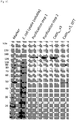
- the recombinant engineered BoNTs were purified using classical chromatography techniques from the E. coli lysates. An initial purification step using a cation-exchange resin was employed, followed by an intermediate purification step using a hydrophobic interaction resin. The recombinant engineered BoNT single-chain was then cleaved by proteolysis, resulting in the activated di-chain engineered BoNT. A final purification step was then employed to remove remaining contaminants.
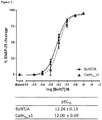
- the ability of the engineered BoNTs to enter neurons and cleave SNAP-25 was assessed using rat embryonic spinal cord neurons (eSCN). Potency of the engineered BoNTs was further assessed using the mouse phrenic nerve hemi-diaphragm assay (mPNHD).
- mPNHD mouse phrenic nerve hemi-diaphragm assay
- the CatH N_ v3 molecule was tested in the eSCN SNAP-25 cleavage assay, and found to retain the ability to enter the cells and cleave SNAP-25. Similarly, a positive result was also demonstrated in the mPNHD assay ( Figures 6 and 7 ).
- BoNT/E light chain construct with an N-terminal maltose binding protein (MBP) tag and a C-terminal 6 histidine tag (6HT) was used as a surrogate to assay BoNT/E activity when mutated and characterised.
- MBP maltose binding protein
- 6HT C-terminal 6 histidine tag
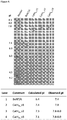
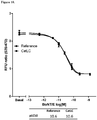
- a BoNT/E light chain construct (“CatLC”) was prepared having the mutations shown in table below. Table 4: Construct with mutations listed, calculated pI and calculated ⁇ pI. Mutations Number of Mutations Calculated pI Calculated ⁇ pI relative to MBP-LC/E (pI 6.3) CatLC Q123K 3 6.6 0.3 N138K Q237K
- the construct was expressed in BL21 DE3 cells and purified using affinity chromatography. Purification is shown in Figure 9 .
Landscapes
- Health & Medical Sciences (AREA)
- Life Sciences & Earth Sciences (AREA)
- Chemical & Material Sciences (AREA)
- General Health & Medical Sciences (AREA)
- Organic Chemistry (AREA)
- Engineering & Computer Science (AREA)
- Animal Behavior & Ethology (AREA)
- Public Health (AREA)
- Veterinary Medicine (AREA)
- Bioinformatics & Cheminformatics (AREA)
- Medicinal Chemistry (AREA)
- Pharmacology & Pharmacy (AREA)
- General Chemical & Material Sciences (AREA)
- Chemical Kinetics & Catalysis (AREA)
- Nuclear Medicine, Radiotherapy & Molecular Imaging (AREA)
- Neurosurgery (AREA)
- Neurology (AREA)
- Biomedical Technology (AREA)
- Epidemiology (AREA)
- Genetics & Genomics (AREA)
- Gastroenterology & Hepatology (AREA)
- Proteomics, Peptides & Aminoacids (AREA)
- Biochemistry (AREA)
- Birds (AREA)
- Dermatology (AREA)
- Pain & Pain Management (AREA)
- Immunology (AREA)
- Wood Science & Technology (AREA)
- General Engineering & Computer Science (AREA)
- Biotechnology (AREA)
- Toxicology (AREA)
- Zoology (AREA)
- Tropical Medicine & Parasitology (AREA)
- Molecular Biology (AREA)
- Biophysics (AREA)
- Gerontology & Geriatric Medicine (AREA)
- Psychology (AREA)
- Peptides Or Proteins (AREA)
- Medicines That Contain Protein Lipid Enzymes And Other Medicines (AREA)
- Preparation Of Compounds By Using Micro-Organisms (AREA)
Priority Applications (3)
| Application Number | Priority Date | Filing Date | Title |
|---|---|---|---|
| HUE15701379A HUE053935T2 (hu) | 2015-01-09 | 2015-01-09 | Kationos neurotoxinok |
| PL15701379T PL3242884T3 (pl) | 2015-01-09 | 2015-01-09 | Kationowe neurotoksyny |
| EP20210686.0A EP3822286A1 (en) | 2015-01-09 | 2015-01-09 | Cationic neurotoxins |
Applications Claiming Priority (1)
| Application Number | Priority Date | Filing Date | Title |
|---|---|---|---|
| PCT/GB2015/050043 WO2016110662A1 (en) | 2015-01-09 | 2015-01-09 | Cationic neurotoxins |
Related Child Applications (2)
| Application Number | Title | Priority Date | Filing Date |
|---|---|---|---|
| EP20210686.0A Division-Into EP3822286A1 (en) | 2015-01-09 | 2015-01-09 | Cationic neurotoxins |
| EP20210686.0A Division EP3822286A1 (en) | 2015-01-09 | 2015-01-09 | Cationic neurotoxins |
Publications (2)
| Publication Number | Publication Date |
|---|---|
| EP3242884A1 EP3242884A1 (en) | 2017-11-15 |
| EP3242884B1 true EP3242884B1 (en) | 2021-02-24 |
Family
ID=52424029
Family Applications (2)
| Application Number | Title | Priority Date | Filing Date |
|---|---|---|---|
| EP15701379.8A Active EP3242884B1 (en) | 2015-01-09 | 2015-01-09 | Cationic neurotoxins |
| EP20210686.0A Pending EP3822286A1 (en) | 2015-01-09 | 2015-01-09 | Cationic neurotoxins |
Family Applications After (1)
| Application Number | Title | Priority Date | Filing Date |
|---|---|---|---|
| EP20210686.0A Pending EP3822286A1 (en) | 2015-01-09 | 2015-01-09 | Cationic neurotoxins |
Country Status (12)
| Country | Link |
|---|---|
| US (3) | US10647750B2 (enExample) |
| EP (2) | EP3242884B1 (enExample) |
| JP (1) | JP6601922B2 (enExample) |
| CN (2) | CN116333068A (enExample) |
| DK (1) | DK3242884T3 (enExample) |
| ES (1) | ES2873479T3 (enExample) |
| HU (1) | HUE053935T2 (enExample) |
| PL (1) | PL3242884T3 (enExample) |
| PT (1) | PT3242884T (enExample) |
| RU (1) | RU2733493C2 (enExample) |
| TW (1) | TWI700289B (enExample) |
| WO (1) | WO2016110662A1 (enExample) |
Families Citing this family (21)
| Publication number | Priority date | Publication date | Assignee | Title |
|---|---|---|---|---|
| TW201718627A (zh) * | 2015-06-11 | 2017-06-01 | 梅茲製藥有限兩合公司 | 重組梭菌神經毒素及其使用與形成方法、包括其之醫藥組合物及對應其之前驅物、編碼前驅物之核酸序列及其獲得方法與前驅物之形成方法、載體與包括核酸序列之重組宿主細胞 |
| GB201517450D0 (en) * | 2015-10-02 | 2015-11-18 | Ipsen Biopharm Ltd | Method |
| MX395130B (es) | 2016-03-02 | 2025-03-24 | Merz Pharma Gmbh & Co Kgaa | Composicion que comprende toxina botulinica |
| GB201607901D0 (en) * | 2016-05-05 | 2016-06-22 | Ipsen Biopharm Ltd | Chimeric neurotoxins |
| EP3481852B1 (en) * | 2016-07-08 | 2022-12-07 | Children's Medical Center Corporation | A novel botulinum neurotoxin and its derivatives |
| TW201814045A (zh) * | 2016-09-16 | 2018-04-16 | 英商艾普森生物製藥有限公司 | 製造雙鏈梭狀芽孢桿菌神經毒素之方法 |
| CA3057302A1 (en) * | 2017-03-22 | 2018-09-27 | Bonti, Inc. | Botulinum neurotoxin serotype e for use in cosmetic treatment |
| EP3642222A1 (en) | 2017-06-20 | 2020-04-29 | Merz Pharma GmbH & Co. KGaA | Novel recombinant botulinum toxin with increased duration of effect |
| US11155802B2 (en) | 2017-07-06 | 2021-10-26 | Merz Pharma Gmbh & Co. Kgaa | Recombinant botulinum neurotoxins with increased duration of effect |
| GB201815817D0 (en) | 2018-09-28 | 2018-11-14 | Ispen Biopharm Ltd | Clostridial neurotoxins comprising and exogenous activation loop |
| US20220016221A1 (en) | 2018-12-05 | 2022-01-20 | Ipsen Biopharm Limited | Treatment of symptoms of traumatic brain injury |
| MX2021009993A (es) * | 2019-02-20 | 2021-10-26 | Regresar Medical Inc | Metodos y dispositivos para localizar composiciones. |
| GB201914034D0 (en) | 2019-09-30 | 2019-11-13 | Ipsen Biopharm Ltd | Treatment of neurological disorders |
| GB202001353D0 (en) | 2020-01-31 | 2020-03-18 | Ipsen Biopharm Ltd | Treatment of skin conditions |
| GB202100566D0 (en) | 2021-01-15 | 2021-03-03 | Ipsen Biopharm Ltd | Treatment of brain damage |
| JP2024513191A (ja) | 2021-03-30 | 2024-03-22 | イプセン バイオファーム リミテッド | 疼痛及び炎症性障害の処置 |
| CN117396217A (zh) | 2021-03-30 | 2024-01-12 | 益普生生物制药有限公司 | 无催化活性的梭菌神经毒素用于疼痛和炎性疾病的治疗 |
| GB202116795D0 (en) | 2021-11-22 | 2022-01-05 | Ipsen Biopharm Ltd | Treatment of visceral pain |
| GB202213479D0 (en) | 2022-09-14 | 2022-10-26 | Ipsen Biopharm Ltd | Cell-free clostridial neurotoxin assays |
| GB202320108D0 (en) | 2023-12-28 | 2024-02-14 | Ipsen Biopharm Ltd | Biosensor |
| GB202404021D0 (en) | 2024-03-20 | 2024-05-01 | Ipsen Biopharm Ltd | Cell-based neurotoxin assay |
Citations (1)
| Publication number | Priority date | Publication date | Assignee | Title |
|---|---|---|---|---|
| WO2010094905A1 (en) * | 2009-02-23 | 2010-08-26 | Syntaxin Limited | Modified non-cytotoxic proteases |
Family Cites Families (71)
| Publication number | Priority date | Publication date | Assignee | Title |
|---|---|---|---|---|
| AU3658093A (en) | 1992-02-10 | 1993-09-03 | Seragen, Inc. | Desensitization to specific allergens |
| GB9305735D0 (en) | 1993-03-19 | 1993-05-05 | North John R | Novel agent for controlling cell activity |
| ES2341140T3 (es) | 1993-06-10 | 2010-06-15 | Allergan, Inc. | Tratamiento de trastornos y afecciones neuromusculares con un seropositivo botulinico diferente. |
| US5437291A (en) | 1993-08-26 | 1995-08-01 | Univ Johns Hopkins | Method for treating gastrointestinal muscle disorders and other smooth muscle dysfunction |
| WO2000067700A2 (en) * | 1999-05-12 | 2000-11-16 | United States Army Medical Research & Materiel Cmd | Recombinant vaccine against botulinum neurotoxin |
| US6974578B1 (en) | 1993-12-28 | 2005-12-13 | Allergan, Inc. | Method for treating secretions and glands using botulinum toxin |
| US20040126396A1 (en) | 1993-12-28 | 2004-07-01 | Allergan, Inc. | Botulinum toxin treatment for strabismus |
| US5670484A (en) | 1994-05-09 | 1997-09-23 | Binder; William J. | Method for treatment of skin lesions associated with cutaneous cell-proliferative disorders |
| US5714469A (en) | 1994-09-01 | 1998-02-03 | Smithkline Beecham Corporation | Method of treating sepsis |
| GB9508204D0 (en) | 1995-04-21 | 1995-06-07 | Speywood Lab Ltd | A novel agent able to modify peripheral afferent function |
| WO1996039166A1 (en) * | 1995-06-06 | 1996-12-12 | Wisconsin Alumni Research Foundation | Analogs of botulinum toxin and pharmaceutical compositions of botulinum toxin |
| WO1997032599A1 (en) * | 1996-03-08 | 1997-09-12 | The Regents Of The University Of California | Chemically-modified clostridiatoxin with improved properties |
| US7192596B2 (en) | 1996-08-23 | 2007-03-20 | The Health Protection Agency Ipsen Limited | Recombinant toxin fragments |
| GB9617671D0 (en) | 1996-08-23 | 1996-10-02 | Microbiological Res Authority | Recombinant toxin fragments |
| US6063768A (en) | 1997-09-04 | 2000-05-16 | First; Eric R. | Application of botulinum toxin to the management of neurogenic inflammatory disorders |
| GB9721189D0 (en) | 1997-10-08 | 1997-12-03 | Speywood Lab The Limited | Analgesic conjugates |
| KR100580541B1 (ko) | 1998-05-13 | 2006-05-16 | 비오테크콘 게젤샤프트 퓌어 비오테크놀로지셰 엔트리클룽 운트 콘술팅 엠베하 | 비만세포의 과립소실을 억제하기 위한 혼성 단백질 및 그사용방법 |
| WO2000004926A2 (en) | 1998-07-22 | 2000-02-03 | Osprey Pharmaceuticals Limited | Conjugates for treating inflammatory disorders and associated tissue damage |
| GB9818548D0 (en) | 1998-08-25 | 1998-10-21 | Microbiological Res Authority | Treatment of mucas hypersecretion |
| US6776990B2 (en) | 1999-04-08 | 2004-08-17 | Allergan, Inc. | Methods and compositions for the treatment of pancreatitis |
| US6358697B2 (en) | 1999-04-21 | 2002-03-19 | Children's Hospital Medical Center | Intracellular pharmaceutical targeting |
| US6767544B2 (en) | 2002-04-01 | 2004-07-27 | Allergan, Inc. | Methods for treating cardiovascular diseases with botulinum toxin |
| US6358917B1 (en) | 1999-08-24 | 2002-03-19 | Jean D. A. Carruthers | Cosmetic use of botulinum toxin for treatment of downturned mouth |
| EP2267008B1 (en) | 1999-08-25 | 2014-07-02 | Allergan, Inc. | Activatable recombinant neurotoxins |
| GB9922554D0 (en) | 1999-09-23 | 1999-11-24 | Microbiological Res Authority | Inhibition of secretion from non-neuronal cells |
| US6113915A (en) | 1999-10-12 | 2000-09-05 | Allergan Sales, Inc. | Methods for treating pain |
| US6265379B1 (en) | 1999-10-13 | 2001-07-24 | Allergan Sales, Inc. | Method for treating otic disorders |
| US6139845A (en) | 1999-12-07 | 2000-10-31 | Allergan Sales, Inc. | Method for treating cancer with a neurotoxin |
| US7838008B2 (en) | 1999-12-07 | 2010-11-23 | Allergan, Inc. | Methods for treating diverse cancers |
| US6143306A (en) | 2000-01-11 | 2000-11-07 | Allergan Sales, Inc. | Methods for treating pancreatic disorders |
| US6337075B1 (en) | 2000-01-11 | 2002-01-08 | Allergan Sales, Inc. | Methods for treating diabetes |
| US6261572B1 (en) | 2000-01-11 | 2001-07-17 | Allergan Sales, Inc. | Method for treating a pancreatic disorder with a neurotoxin |
| US6641820B1 (en) | 2000-01-19 | 2003-11-04 | Allergan, Inc. | Clostridial toxin derivatives and methods to treat pain |
| US6524580B1 (en) | 2000-02-15 | 2003-02-25 | Allergan Sales, Inc. | Method for treating thyroid disorders |
| US6464986B1 (en) | 2000-04-14 | 2002-10-15 | Allegan Sales, Inc. | Method for treating pain by peripheral administration of a neurotoxin |
| US6299893B1 (en) | 2000-04-17 | 2001-10-09 | Marvin Schwartz | Method to reduce hair loss and stimulate hair regrowth |
| US6565870B1 (en) | 2000-04-28 | 2003-05-20 | Allergan, Inc. | Methods for treating bone tumors |
| US6306403B1 (en) | 2000-06-14 | 2001-10-23 | Allergan Sales, Inc. | Method for treating parkinson's disease with a botulinum toxin |
| US6903187B1 (en) | 2000-07-21 | 2005-06-07 | Allergan, Inc. | Leucine-based motif and clostridial neurotoxins |
| US6423319B1 (en) | 2000-10-04 | 2002-07-23 | Allergan Sales, Inc. | Methods for treating muscle injuries |
| US6827931B1 (en) | 2000-10-20 | 2004-12-07 | Allergan, Inc. | Method for treating endocrine disorders |
| US20020127247A1 (en) | 2000-11-17 | 2002-09-12 | Allergen Sales, Inc. | Modified clostridial neurotoxins with altered biological persistence |
| US7273722B2 (en) | 2000-11-29 | 2007-09-25 | Allergan, Inc. | Neurotoxins with enhanced target specificity |
| US7255866B2 (en) | 2001-09-17 | 2007-08-14 | Allergan, Inc. | Botulinum toxin therapy for fibromyalgia |
| US6623742B2 (en) | 2001-09-17 | 2003-09-23 | Allergan, Inc. | Methods for treating fibromyalgia |
| US6921538B2 (en) | 2002-05-10 | 2005-07-26 | Allergan, Inc. | Therapeutic treatments for neuropsychiatric disorders |
| MXPA05003936A (es) | 2002-10-15 | 2005-06-17 | Allergan Inc | Terapias y procedimientos odontologicos con toxina botulinica. |
| US7238357B2 (en) | 2002-11-05 | 2007-07-03 | Allergan, Inc. | Methods for treating ulcers and gastroesophageal reflux disease |
| US8071550B2 (en) | 2003-03-03 | 2011-12-06 | Allergan, Inc. | Methods for treating uterine disorders |
| US6838434B2 (en) | 2003-05-02 | 2005-01-04 | Allergan, Inc. | Methods for treating sinus headache |
| US7220422B2 (en) | 2003-05-20 | 2007-05-22 | Allergan, Inc. | Methods and compositions for treating eye disorders |
| US7172764B2 (en) | 2003-11-17 | 2007-02-06 | Allergan, Inc. | Rescue agents for treating botulinum toxin intoxications |
| WO2006017749A2 (en) | 2004-08-04 | 2006-02-16 | Allergan, Inc. | Optimizing expression of active botulinum toxin type a |
| DE102004043009A1 (de) | 2004-09-06 | 2006-03-23 | Toxogen Gmbh | Transportprotein zum Einbringen chemischer Verbindungen in Nervenzellen |
| CA2595115C (en) | 2004-12-01 | 2014-01-21 | Health Protection Agency | Fusion proteins for treating, preventing or ameliorating pain |
| DE102005002978B4 (de) * | 2005-01-21 | 2013-04-25 | Merz Pharma Gmbh & Co. Kgaa | Rekombinante Expression von Proteinen in einer disulfidverbrückten, zweikettigen Form |
| JP5167473B2 (ja) * | 2005-03-03 | 2013-03-21 | コヴェックス・テクノロジーズ・アイルランド・リミテッド | 抗血管新生化合物 |
| KR20070110402A (ko) * | 2005-03-03 | 2007-11-16 | 레반스 테라퓨틱스 | 보툴리눔 독소의 국소 적용 및 경피 전달을 위한 조성물 및방법 |
| DE102005019302A1 (de) | 2005-04-26 | 2006-11-16 | Toxogen Gmbh | Carrier zum Targeting von Nervenzellen |
| DK2154151T3 (da) | 2005-09-19 | 2011-09-05 | Allergan Inc | Clostridiumtoksinaktiverbare clostridiumtoksiner |
| EP1834962A1 (de) | 2006-03-15 | 2007-09-19 | Biotecon Therapeutics GmbH | PEGyliertes mutiertes Clostridium botulinum Toxin |
| AU2007347781B2 (en) * | 2006-07-11 | 2013-10-03 | Allergan, Inc. | Modified clostridial toxins with enhanced translocation capability and enhanced targeting activity |
| WO2008008805A2 (en) | 2006-07-11 | 2008-01-17 | Allergan, Inc. | Modified clostridial toxins with enhanced translocation capabilities and altered targeting activity for non-clostridial toxin target cells |
| WO2010120766A1 (en) | 2009-04-14 | 2010-10-21 | Mcw Research Foundation, Inc. | Engineered botulinum neurotoxin |
| AU2010267963B2 (en) | 2009-07-02 | 2015-09-24 | Merz Pharma Gmbh & Co. Kgaa | Neurotoxins exhibiting shortened biological activity |
| SI2528940T1 (sl) | 2010-01-25 | 2014-07-31 | Allergan, Inc. | Metode znotrajcelične pretvorbe enoverižnih beljakovin v njihovo dvoverižno obliko |
| US8853360B2 (en) | 2010-06-23 | 2014-10-07 | Wisconsin Alumni Research Foundation | Engineered botulinum neurotoxin C1 with selective substrate specificity |
| JP6162135B2 (ja) * | 2011-11-09 | 2017-07-12 | メルツ ファルマ ゲーエムベーハー ウント コンパニー カーゲーアーアー | 短縮された生物活性を示す神経毒 |
| WO2014117148A1 (en) * | 2013-01-28 | 2014-07-31 | New York University | Treatment methods using atoxic neurotoxin derivatives |
| US20140242110A1 (en) * | 2013-02-28 | 2014-08-28 | Dt Scimed, Llc | Dose, localization, and formulation of botulinum toxins in skin and muscle |
| GB201312317D0 (en) * | 2013-07-09 | 2013-08-21 | Syntaxin Ltd | Cationic neurotoxins |
-
2015
- 2015-01-09 WO PCT/GB2015/050043 patent/WO2016110662A1/en not_active Ceased
- 2015-01-09 US US15/540,637 patent/US10647750B2/en active Active
- 2015-01-09 DK DK15701379.8T patent/DK3242884T3/da active
- 2015-01-09 CN CN202211012695.6A patent/CN116333068A/zh active Pending
- 2015-01-09 PT PT157013798T patent/PT3242884T/pt unknown
- 2015-01-09 EP EP15701379.8A patent/EP3242884B1/en active Active
- 2015-01-09 PL PL15701379T patent/PL3242884T3/pl unknown
- 2015-01-09 RU RU2017128211A patent/RU2733493C2/ru active
- 2015-01-09 EP EP20210686.0A patent/EP3822286A1/en active Pending
- 2015-01-09 JP JP2017536513A patent/JP6601922B2/ja active Active
- 2015-01-09 ES ES15701379T patent/ES2873479T3/es active Active
- 2015-01-09 CN CN201580071947.4A patent/CN107108703B/zh active Active
- 2015-01-09 HU HUE15701379A patent/HUE053935T2/hu unknown
- 2015-12-30 TW TW104144440A patent/TWI700289B/zh active
-
2020
- 2020-02-25 US US16/800,109 patent/US11014968B2/en active Active
-
2021
- 2021-04-19 US US17/301,897 patent/US12037369B2/en active Active
Patent Citations (1)
| Publication number | Priority date | Publication date | Assignee | Title |
|---|---|---|---|---|
| WO2010094905A1 (en) * | 2009-02-23 | 2010-08-26 | Syntaxin Limited | Modified non-cytotoxic proteases |
Non-Patent Citations (5)
| Title |
|---|
| BINZ T ET AL: "THE COMPLETE SEQUENCE OF BOTULINUM NEUROTOXIN TYPE A AND COMPARISON WITH OTHER CLOSTRIDIAL NEUROTOXINS", JOURNAL OF BIOLOGICAL CHEMISTRY, AMERICAN SOCIETY FOR BIOCHEMISTRY AND MOLECULAR BIOLOGY, US, vol. 265, no. 16, 5 June 1990 (1990-06-05), pages 9153 - 9158, XP002009348, ISSN: 0021-9258 * |
| C. MAZUET ET AL: "Toxin Detection in Patients' Sera by Mass Spectrometry during Two Outbreaks of Type A Botulism in France", JOURNAL OF CLINICAL MICROBIOLOGY, vol. 50, no. 12, 16 November 2012 (2012-11-16), US, pages 4091 - 4094, XP055567236, ISSN: 0095-1137, DOI: 10.1128/JCM.02392-12 * |
| DATABASE UniProt [online] 1 July 1989 (1989-07-01), "RecName: Full=Botulinum neurotoxin type A; Short=BoNT/A; EC=3.4.24.69; AltName: Full=Bontoxilysin-A; Short=BOTOX; Contains: RecName: Full=Botulinum neurotoxin A light chain;", retrieved from EBI accession no. UNIPROT:P10845 Database accession no. P10845 * |
| DATABASE UniProt [online] 23 January 2015 (2015-01-23), "RecName: Full=Botulinum neurotoxin type A; Short=BoNT/A; EC=3.4.24.69; AltName: Full=Bontoxilysin-A; Short=BOTOX; Contains: RecName: Full=Botulinum neurotoxin A light chain;", retrieved from EBI accession no. UNIPROT:P10845 Database accession no. P10845 * |
| DATABASE UniProt [online] 7 January 2015 (2015-01-07), "SubName: Full=Botulinum neurotoxin {ECO:0000313|EMBL:AFV13854.1};", retrieved from EBI accession no. UNIPROT:K4LN57 Database accession no. K4LN57 * |
Also Published As
| Publication number | Publication date |
|---|---|
| RU2733493C2 (ru) | 2020-10-02 |
| US11014968B2 (en) | 2021-05-25 |
| WO2016110662A1 (en) | 2016-07-14 |
| US20210246175A1 (en) | 2021-08-12 |
| US20180141982A1 (en) | 2018-05-24 |
| CN107108703B (zh) | 2022-09-23 |
| CN107108703A (zh) | 2017-08-29 |
| EP3822286A1 (en) | 2021-05-19 |
| RU2017128211A3 (enExample) | 2019-02-11 |
| HK1245292A1 (en) | 2018-08-24 |
| EP3242884A1 (en) | 2017-11-15 |
| DK3242884T3 (da) | 2021-04-19 |
| PL3242884T3 (pl) | 2021-08-16 |
| JP2018502580A (ja) | 2018-02-01 |
| US12037369B2 (en) | 2024-07-16 |
| PT3242884T (pt) | 2021-04-22 |
| US20200291073A1 (en) | 2020-09-17 |
| TWI700289B (zh) | 2020-08-01 |
| US10647750B2 (en) | 2020-05-12 |
| RU2017128211A (ru) | 2019-02-11 |
| TW201629092A (zh) | 2016-08-16 |
| CN116333068A (zh) | 2023-06-27 |
| HUE053935T2 (hu) | 2021-08-30 |
| JP6601922B2 (ja) | 2019-11-06 |
| ES2873479T3 (es) | 2021-11-03 |
Similar Documents
| Publication | Publication Date | Title |
|---|---|---|
| US11014968B2 (en) | Cationic neurotoxins | |
| US11034947B2 (en) | Cationic neurotoxins | |
| JP7328275B2 (ja) | 陽イオン性神経毒 | |
| HK40051365A (en) | Cationic neurotoxins | |
| HK40067457A (en) | Cationic neurotoxins | |
| HK1245292B (en) | Cationic neurotoxins | |
| HK40093206A (en) | Cationic neurotoxins | |
| HK1222795B (en) | Cationic neurotoxins | |
| HK1242703A1 (en) | Cationic neurotoxins | |
| HK1242703B (en) | Cationic neurotoxins |
Legal Events
| Date | Code | Title | Description |
|---|---|---|---|
| STAA | Information on the status of an ep patent application or granted ep patent |
Free format text: STATUS: THE INTERNATIONAL PUBLICATION HAS BEEN MADE |
|
| PUAI | Public reference made under article 153(3) epc to a published international application that has entered the european phase |
Free format text: ORIGINAL CODE: 0009012 |
|
| STAA | Information on the status of an ep patent application or granted ep patent |
Free format text: STATUS: REQUEST FOR EXAMINATION WAS MADE |
|
| 17P | Request for examination filed |
Effective date: 20170809 |
|
| AK | Designated contracting states |
Kind code of ref document: A1 Designated state(s): AL AT BE BG CH CY CZ DE DK EE ES FI FR GB GR HR HU IE IS IT LI LT LU LV MC MK MT NL NO PL PT RO RS SE SI SK SM TR |
|
| AX | Request for extension of the european patent |
Extension state: BA ME |
|
| DAX | Request for extension of the european patent (deleted) | ||
| STAA | Information on the status of an ep patent application or granted ep patent |
Free format text: STATUS: EXAMINATION IS IN PROGRESS |
|
| 17Q | First examination report despatched |
Effective date: 20180704 |
|
| REG | Reference to a national code |
Ref country code: HK Ref legal event code: DE Ref document number: 1245292 Country of ref document: HK |
|
| GRAP | Despatch of communication of intention to grant a patent |
Free format text: ORIGINAL CODE: EPIDOSNIGR1 |
|
| STAA | Information on the status of an ep patent application or granted ep patent |
Free format text: STATUS: GRANT OF PATENT IS INTENDED |
|
| INTG | Intention to grant announced |
Effective date: 20200729 |
|
| RIC1 | Information provided on ipc code assigned before grant |
Ipc: A61P 25/06 20060101ALI20200717BHEP Ipc: C07K 14/33 20060101AFI20200717BHEP Ipc: A61Q 19/08 20060101ALI20200717BHEP Ipc: A61K 8/99 20170101ALI20200717BHEP Ipc: A61K 8/64 20060101ALI20200717BHEP Ipc: A61K 39/08 20060101ALI20200717BHEP Ipc: A61P 25/08 20060101ALI20200717BHEP Ipc: A61K 38/00 20060101ALI20200717BHEP Ipc: A61P 17/00 20060101ALI20200717BHEP Ipc: A61K 38/48 20060101ALI20200717BHEP Ipc: A61K 49/00 20060101ALI20200717BHEP Ipc: A61P 25/16 20060101ALI20200717BHEP |
|
| GRAS | Grant fee paid |
Free format text: ORIGINAL CODE: EPIDOSNIGR3 |
|
| RAP1 | Party data changed (applicant data changed or rights of an application transferred) |
Owner name: IPSEN BIOINNOVATION LIMITED |
|
| RIN1 | Information on inventor provided before grant (corrected) |
Inventor name: HACKETT, GAVIN STEPHEN Inventor name: ANDERSON, DINA BRADY Inventor name: LIU, SAI MAN |
|
| GRAA | (expected) grant |
Free format text: ORIGINAL CODE: 0009210 |
|
| STAA | Information on the status of an ep patent application or granted ep patent |
Free format text: STATUS: THE PATENT HAS BEEN GRANTED |
|
| AK | Designated contracting states |
Kind code of ref document: B1 Designated state(s): AL AT BE BG CH CY CZ DE DK EE ES FI FR GB GR HR HU IE IS IT LI LT LU LV MC MK MT NL NO PL PT RO RS SE SI SK SM TR |
|
| REG | Reference to a national code |
Ref country code: GB Ref legal event code: FG4D |
|
| REG | Reference to a national code |
Ref country code: CH Ref legal event code: EP |
|
| REG | Reference to a national code |
Ref country code: AT Ref legal event code: REF Ref document number: 1364320 Country of ref document: AT Kind code of ref document: T Effective date: 20210315 |
|
| REG | Reference to a national code |
Ref country code: IE Ref legal event code: FG4D |
|
| REG | Reference to a national code |
Ref country code: DE Ref legal event code: R096 Ref document number: 602015065940 Country of ref document: DE |
|
| REG | Reference to a national code |
Ref country code: CH Ref legal event code: NV Representative=s name: MICHELI AND CIE SA, CH |
|
| REG | Reference to a national code |
Ref country code: DK Ref legal event code: T3 Effective date: 20210415 |
|
| REG | Reference to a national code |
Ref country code: PT Ref legal event code: SC4A Ref document number: 3242884 Country of ref document: PT Date of ref document: 20210422 Kind code of ref document: T Free format text: AVAILABILITY OF NATIONAL TRANSLATION Effective date: 20210416 |
|
| REG | Reference to a national code |
Ref country code: RO Ref legal event code: EPE |
|
| REG | Reference to a national code |
Ref country code: NL Ref legal event code: FP |
|
| REG | Reference to a national code |
Ref country code: FI Ref legal event code: FGE |
|
| REG | Reference to a national code |
Ref country code: SE Ref legal event code: TRGR |
|
| REG | Reference to a national code |
Ref country code: GR Ref legal event code: EP Ref document number: 20210401000 Country of ref document: GR Effective date: 20210519 |
|
| REG | Reference to a national code |
Ref country code: NO Ref legal event code: T2 Effective date: 20210224 |
|
| REG | Reference to a national code |
Ref country code: LT Ref legal event code: MG9D |
|
| PG25 | Lapsed in a contracting state [announced via postgrant information from national office to epo] |
Ref country code: LT Free format text: LAPSE BECAUSE OF FAILURE TO SUBMIT A TRANSLATION OF THE DESCRIPTION OR TO PAY THE FEE WITHIN THE PRESCRIBED TIME-LIMIT Effective date: 20210224 Ref country code: HR Free format text: LAPSE BECAUSE OF FAILURE TO SUBMIT A TRANSLATION OF THE DESCRIPTION OR TO PAY THE FEE WITHIN THE PRESCRIBED TIME-LIMIT Effective date: 20210224 Ref country code: BG Free format text: LAPSE BECAUSE OF FAILURE TO SUBMIT A TRANSLATION OF THE DESCRIPTION OR TO PAY THE FEE WITHIN THE PRESCRIBED TIME-LIMIT Effective date: 20210524 |
|
| REG | Reference to a national code |
Ref country code: HU Ref legal event code: AG4A Ref document number: E053935 Country of ref document: HU |
|
| PG25 | Lapsed in a contracting state [announced via postgrant information from national office to epo] |
Ref country code: RS Free format text: LAPSE BECAUSE OF FAILURE TO SUBMIT A TRANSLATION OF THE DESCRIPTION OR TO PAY THE FEE WITHIN THE PRESCRIBED TIME-LIMIT Effective date: 20210224 Ref country code: LV Free format text: LAPSE BECAUSE OF FAILURE TO SUBMIT A TRANSLATION OF THE DESCRIPTION OR TO PAY THE FEE WITHIN THE PRESCRIBED TIME-LIMIT Effective date: 20210224 |
|
| PG25 | Lapsed in a contracting state [announced via postgrant information from national office to epo] |
Ref country code: IS Free format text: LAPSE BECAUSE OF FAILURE TO SUBMIT A TRANSLATION OF THE DESCRIPTION OR TO PAY THE FEE WITHIN THE PRESCRIBED TIME-LIMIT Effective date: 20210624 |
|
| PG25 | Lapsed in a contracting state [announced via postgrant information from national office to epo] |
Ref country code: EE Free format text: LAPSE BECAUSE OF FAILURE TO SUBMIT A TRANSLATION OF THE DESCRIPTION OR TO PAY THE FEE WITHIN THE PRESCRIBED TIME-LIMIT Effective date: 20210224 Ref country code: SM Free format text: LAPSE BECAUSE OF FAILURE TO SUBMIT A TRANSLATION OF THE DESCRIPTION OR TO PAY THE FEE WITHIN THE PRESCRIBED TIME-LIMIT Effective date: 20210224 |
|
| REG | Reference to a national code |
Ref country code: ES Ref legal event code: FG2A Ref document number: 2873479 Country of ref document: ES Kind code of ref document: T3 Effective date: 20211103 |
|
| REG | Reference to a national code |
Ref country code: AT Ref legal event code: UEP Ref document number: 1364320 Country of ref document: AT Kind code of ref document: T Effective date: 20210224 |
|
| REG | Reference to a national code |
Ref country code: DE Ref legal event code: R097 Ref document number: 602015065940 Country of ref document: DE |
|
| PG25 | Lapsed in a contracting state [announced via postgrant information from national office to epo] |
Ref country code: SK Free format text: LAPSE BECAUSE OF FAILURE TO SUBMIT A TRANSLATION OF THE DESCRIPTION OR TO PAY THE FEE WITHIN THE PRESCRIBED TIME-LIMIT Effective date: 20210224 |
|
| PLBE | No opposition filed within time limit |
Free format text: ORIGINAL CODE: 0009261 |
|
| STAA | Information on the status of an ep patent application or granted ep patent |
Free format text: STATUS: NO OPPOSITION FILED WITHIN TIME LIMIT |
|
| PG25 | Lapsed in a contracting state [announced via postgrant information from national office to epo] |
Ref country code: AL Free format text: LAPSE BECAUSE OF FAILURE TO SUBMIT A TRANSLATION OF THE DESCRIPTION OR TO PAY THE FEE WITHIN THE PRESCRIBED TIME-LIMIT Effective date: 20210224 |
|
| 26N | No opposition filed |
Effective date: 20211125 |
|
| PG25 | Lapsed in a contracting state [announced via postgrant information from national office to epo] |
Ref country code: SI Free format text: LAPSE BECAUSE OF FAILURE TO SUBMIT A TRANSLATION OF THE DESCRIPTION OR TO PAY THE FEE WITHIN THE PRESCRIBED TIME-LIMIT Effective date: 20210224 |
|
| PG25 | Lapsed in a contracting state [announced via postgrant information from national office to epo] |
Ref country code: IS Free format text: LAPSE BECAUSE OF FAILURE TO SUBMIT A TRANSLATION OF THE DESCRIPTION OR TO PAY THE FEE WITHIN THE PRESCRIBED TIME-LIMIT Effective date: 20210624 |
|
| PG25 | Lapsed in a contracting state [announced via postgrant information from national office to epo] |
Ref country code: MC Free format text: LAPSE BECAUSE OF FAILURE TO SUBMIT A TRANSLATION OF THE DESCRIPTION OR TO PAY THE FEE WITHIN THE PRESCRIBED TIME-LIMIT Effective date: 20210224 |
|
| PG25 | Lapsed in a contracting state [announced via postgrant information from national office to epo] |
Ref country code: LU Free format text: LAPSE BECAUSE OF NON-PAYMENT OF DUE FEES Effective date: 20220109 |
|
| P01 | Opt-out of the competence of the unified patent court (upc) registered |
Effective date: 20230520 |
|
| PG25 | Lapsed in a contracting state [announced via postgrant information from national office to epo] |
Ref country code: MK Free format text: LAPSE BECAUSE OF FAILURE TO SUBMIT A TRANSLATION OF THE DESCRIPTION OR TO PAY THE FEE WITHIN THE PRESCRIBED TIME-LIMIT Effective date: 20210224 Ref country code: CY Free format text: LAPSE BECAUSE OF FAILURE TO SUBMIT A TRANSLATION OF THE DESCRIPTION OR TO PAY THE FEE WITHIN THE PRESCRIBED TIME-LIMIT Effective date: 20210224 |
|
| PG25 | Lapsed in a contracting state [announced via postgrant information from national office to epo] |
Ref country code: MT Free format text: LAPSE BECAUSE OF FAILURE TO SUBMIT A TRANSLATION OF THE DESCRIPTION OR TO PAY THE FEE WITHIN THE PRESCRIBED TIME-LIMIT Effective date: 20210224 |
|
| PGFP | Annual fee paid to national office [announced via postgrant information from national office to epo] |
Ref country code: GB Payment date: 20251204 Year of fee payment: 12 |
|
| PGFP | Annual fee paid to national office [announced via postgrant information from national office to epo] |
Ref country code: FI Payment date: 20251230 Year of fee payment: 12 |
|
| PGFP | Annual fee paid to national office [announced via postgrant information from national office to epo] |
Ref country code: FR Payment date: 20251208 Year of fee payment: 12 Ref country code: NL Payment date: 20251215 Year of fee payment: 12 |
|
| PGFP | Annual fee paid to national office [announced via postgrant information from national office to epo] |
Ref country code: GR Payment date: 20251210 Year of fee payment: 12 |
|
| PGFP | Annual fee paid to national office [announced via postgrant information from national office to epo] |
Ref country code: SE Payment date: 20251210 Year of fee payment: 12 |
|
| PGFP | Annual fee paid to national office [announced via postgrant information from national office to epo] |
Ref country code: IE Payment date: 20251209 Year of fee payment: 12 Ref country code: CZ Payment date: 20251219 Year of fee payment: 12 |
|
| PGFP | Annual fee paid to national office [announced via postgrant information from national office to epo] |
Ref country code: PL Payment date: 20251212 Year of fee payment: 12 |
|
| PGFP | Annual fee paid to national office [announced via postgrant information from national office to epo] |
Ref country code: RO Payment date: 20251223 Year of fee payment: 12 |
|
| REG | Reference to a national code |
Ref country code: CH Ref legal event code: U11 Free format text: ST27 STATUS EVENT CODE: U-0-0-U10-U11 (AS PROVIDED BY THE NATIONAL OFFICE) Effective date: 20260201 |
|
| PGFP | Annual fee paid to national office [announced via postgrant information from national office to epo] |
Ref country code: HU Payment date: 20260112 Year of fee payment: 12 |
|
| PGFP | Annual fee paid to national office [announced via postgrant information from national office to epo] |
Ref country code: ES Payment date: 20260213 Year of fee payment: 12 |
|
| PGFP | Annual fee paid to national office [announced via postgrant information from national office to epo] |
Ref country code: DE Payment date: 20251203 Year of fee payment: 12 Ref country code: DK Payment date: 20260113 Year of fee payment: 12 Ref country code: NO Payment date: 20260109 Year of fee payment: 12 |
|
| PGFP | Annual fee paid to national office [announced via postgrant information from national office to epo] |
Ref country code: AT Payment date: 20251230 Year of fee payment: 12 |
|
| PGFP | Annual fee paid to national office [announced via postgrant information from national office to epo] |
Ref country code: BE Payment date: 20260106 Year of fee payment: 12 Ref country code: IT Payment date: 20251219 Year of fee payment: 12 |
|
| PGFP | Annual fee paid to national office [announced via postgrant information from national office to epo] |
Ref country code: TR Payment date: 20260108 Year of fee payment: 12 |
|
| PGFP | Annual fee paid to national office [announced via postgrant information from national office to epo] |
Ref country code: PT Payment date: 20260107 Year of fee payment: 12 Ref country code: CH Payment date: 20260201 Year of fee payment: 12 |