EP3240403B1 - Mikrobielle zusammensetzungen und verfahren zur förderung des pflanzenwachstums und behandlung von pflanzenkrankheiten - Google Patents
Mikrobielle zusammensetzungen und verfahren zur förderung des pflanzenwachstums und behandlung von pflanzenkrankheiten Download PDFInfo
- Publication number
- EP3240403B1 EP3240403B1 EP15831258.7A EP15831258A EP3240403B1 EP 3240403 B1 EP3240403 B1 EP 3240403B1 EP 15831258 A EP15831258 A EP 15831258A EP 3240403 B1 EP3240403 B1 EP 3240403B1
- Authority
- EP
- European Patent Office
- Prior art keywords
- plant
- rti301
- rti477
- composition
- growth
- Prior art date
- Legal status (The legal status is an assumption and is not a legal conclusion. Google has not performed a legal analysis and makes no representation as to the accuracy of the status listed.)
- Active
Links
Images



Classifications
-
- C—CHEMISTRY; METALLURGY
- C05—FERTILISERS; MANUFACTURE THEREOF
- C05F—ORGANIC FERTILISERS NOT COVERED BY SUBCLASSES C05B, C05C, e.g. FERTILISERS FROM WASTE OR REFUSE
- C05F11/00—Other organic fertilisers
- C05F11/08—Organic fertilisers containing added bacterial cultures, mycelia or the like
-
- C—CHEMISTRY; METALLURGY
- C12—BIOCHEMISTRY; BEER; SPIRITS; WINE; VINEGAR; MICROBIOLOGY; ENZYMOLOGY; MUTATION OR GENETIC ENGINEERING
- C12N—MICROORGANISMS OR ENZYMES; COMPOSITIONS THEREOF; PROPAGATING, PRESERVING, OR MAINTAINING MICROORGANISMS; MUTATION OR GENETIC ENGINEERING; CULTURE MEDIA
- C12N1/00—Microorganisms, e.g. protozoa; Compositions thereof; Processes of propagating, maintaining or preserving microorganisms or compositions thereof; Processes of preparing or isolating a composition containing a microorganism; Culture media therefor
- C12N1/20—Bacteria; Culture media therefor
-
- A—HUMAN NECESSITIES
- A01—AGRICULTURE; FORESTRY; ANIMAL HUSBANDRY; HUNTING; TRAPPING; FISHING
- A01N—PRESERVATION OF BODIES OF HUMANS OR ANIMALS OR PLANTS OR PARTS THEREOF; BIOCIDES, e.g. AS DISINFECTANTS, AS PESTICIDES OR AS HERBICIDES; PEST REPELLANTS OR ATTRACTANTS; PLANT GROWTH REGULATORS
- A01N25/00—Biocides, pest repellants or attractants, or plant growth regulators, characterised by their forms, or by their non-active ingredients or by their methods of application, e.g. seed treatment or sequential application; Substances for reducing the noxious effect of the active ingredients to organisms other than pests
-
- A—HUMAN NECESSITIES
- A01—AGRICULTURE; FORESTRY; ANIMAL HUSBANDRY; HUNTING; TRAPPING; FISHING
- A01N—PRESERVATION OF BODIES OF HUMANS OR ANIMALS OR PLANTS OR PARTS THEREOF; BIOCIDES, e.g. AS DISINFECTANTS, AS PESTICIDES OR AS HERBICIDES; PEST REPELLANTS OR ATTRACTANTS; PLANT GROWTH REGULATORS
- A01N25/00—Biocides, pest repellants or attractants, or plant growth regulators, characterised by their forms, or by their non-active ingredients or by their methods of application, e.g. seed treatment or sequential application; Substances for reducing the noxious effect of the active ingredients to organisms other than pests
- A01N25/12—Powders or granules
-
- A—HUMAN NECESSITIES
- A01—AGRICULTURE; FORESTRY; ANIMAL HUSBANDRY; HUNTING; TRAPPING; FISHING
- A01N—PRESERVATION OF BODIES OF HUMANS OR ANIMALS OR PLANTS OR PARTS THEREOF; BIOCIDES, e.g. AS DISINFECTANTS, AS PESTICIDES OR AS HERBICIDES; PEST REPELLANTS OR ATTRACTANTS; PLANT GROWTH REGULATORS
- A01N25/00—Biocides, pest repellants or attractants, or plant growth regulators, characterised by their forms, or by their non-active ingredients or by their methods of application, e.g. seed treatment or sequential application; Substances for reducing the noxious effect of the active ingredients to organisms other than pests
- A01N25/12—Powders or granules
- A01N25/14—Powders or granules wettable
-
- A—HUMAN NECESSITIES
- A01—AGRICULTURE; FORESTRY; ANIMAL HUSBANDRY; HUNTING; TRAPPING; FISHING
- A01N—PRESERVATION OF BODIES OF HUMANS OR ANIMALS OR PLANTS OR PARTS THEREOF; BIOCIDES, e.g. AS DISINFECTANTS, AS PESTICIDES OR AS HERBICIDES; PEST REPELLANTS OR ATTRACTANTS; PLANT GROWTH REGULATORS
- A01N53/00—Biocides, pest repellants or attractants, or plant growth regulators containing cyclopropane carboxylic acids or derivatives thereof
-
- A—HUMAN NECESSITIES
- A01—AGRICULTURE; FORESTRY; ANIMAL HUSBANDRY; HUNTING; TRAPPING; FISHING
- A01N—PRESERVATION OF BODIES OF HUMANS OR ANIMALS OR PLANTS OR PARTS THEREOF; BIOCIDES, e.g. AS DISINFECTANTS, AS PESTICIDES OR AS HERBICIDES; PEST REPELLANTS OR ATTRACTANTS; PLANT GROWTH REGULATORS
- A01N63/00—Biocides, pest repellants or attractants, or plant growth regulators containing microorganisms, viruses, microbial fungi, animals or substances produced by, or obtained from, microorganisms, viruses, microbial fungi or animals, e.g. enzymes or fermentates
- A01N63/20—Bacteria; Substances produced thereby or obtained therefrom
- A01N63/22—Bacillus
-
- C—CHEMISTRY; METALLURGY
- C05—FERTILISERS; MANUFACTURE THEREOF
- C05G—MIXTURES OF FERTILISERS COVERED INDIVIDUALLY BY DIFFERENT SUBCLASSES OF CLASS C05; MIXTURES OF ONE OR MORE FERTILISERS WITH MATERIALS NOT HAVING A SPECIFIC FERTILISING ACTIVITY, e.g. PESTICIDES, SOIL-CONDITIONERS, WETTING AGENTS; FERTILISERS CHARACTERISED BY THEIR FORM
- C05G5/00—Fertilisers characterised by their form
- C05G5/20—Liquid fertilisers
- C05G5/23—Solutions
-
- C—CHEMISTRY; METALLURGY
- C05—FERTILISERS; MANUFACTURE THEREOF
- C05G—MIXTURES OF FERTILISERS COVERED INDIVIDUALLY BY DIFFERENT SUBCLASSES OF CLASS C05; MIXTURES OF ONE OR MORE FERTILISERS WITH MATERIALS NOT HAVING A SPECIFIC FERTILISING ACTIVITY, e.g. PESTICIDES, SOIL-CONDITIONERS, WETTING AGENTS; FERTILISERS CHARACTERISED BY THEIR FORM
- C05G5/00—Fertilisers characterised by their form
- C05G5/20—Liquid fertilisers
- C05G5/27—Dispersions, e.g. suspensions or emulsions
-
- C—CHEMISTRY; METALLURGY
- C12—BIOCHEMISTRY; BEER; SPIRITS; WINE; VINEGAR; MICROBIOLOGY; ENZYMOLOGY; MUTATION OR GENETIC ENGINEERING
- C12N—MICROORGANISMS OR ENZYMES; COMPOSITIONS THEREOF; PROPAGATING, PRESERVING, OR MAINTAINING MICROORGANISMS; MUTATION OR GENETIC ENGINEERING; CULTURE MEDIA
- C12N1/00—Microorganisms, e.g. protozoa; Compositions thereof; Processes of propagating, maintaining or preserving microorganisms or compositions thereof; Processes of preparing or isolating a composition containing a microorganism; Culture media therefor
- C12N1/20—Bacteria; Culture media therefor
- C12N1/205—Bacterial isolates
-
- C—CHEMISTRY; METALLURGY
- C12—BIOCHEMISTRY; BEER; SPIRITS; WINE; VINEGAR; MICROBIOLOGY; ENZYMOLOGY; MUTATION OR GENETIC ENGINEERING
- C12R—INDEXING SCHEME ASSOCIATED WITH SUBCLASSES C12C - C12Q, RELATING TO MICROORGANISMS
- C12R2001/00—Microorganisms ; Processes using microorganisms
- C12R2001/01—Bacteria or Actinomycetales ; using bacteria or Actinomycetales
- C12R2001/07—Bacillus
-
- C—CHEMISTRY; METALLURGY
- C12—BIOCHEMISTRY; BEER; SPIRITS; WINE; VINEGAR; MICROBIOLOGY; ENZYMOLOGY; MUTATION OR GENETIC ENGINEERING
- C12R—INDEXING SCHEME ASSOCIATED WITH SUBCLASSES C12C - C12Q, RELATING TO MICROORGANISMS
- C12R2001/00—Microorganisms ; Processes using microorganisms
- C12R2001/01—Bacteria or Actinomycetales ; using bacteria or Actinomycetales
- C12R2001/07—Bacillus
- C12R2001/125—Bacillus subtilis ; Hay bacillus; Grass bacillus
-
- Y—GENERAL TAGGING OF NEW TECHNOLOGICAL DEVELOPMENTS; GENERAL TAGGING OF CROSS-SECTIONAL TECHNOLOGIES SPANNING OVER SEVERAL SECTIONS OF THE IPC; TECHNICAL SUBJECTS COVERED BY FORMER USPC CROSS-REFERENCE ART COLLECTIONS [XRACs] AND DIGESTS
- Y02—TECHNOLOGIES OR APPLICATIONS FOR MITIGATION OR ADAPTATION AGAINST CLIMATE CHANGE
- Y02A—TECHNOLOGIES FOR ADAPTATION TO CLIMATE CHANGE
- Y02A40/00—Adaptation technologies in agriculture, forestry, livestock or agroalimentary production
- Y02A40/10—Adaptation technologies in agriculture, forestry, livestock or agroalimentary production in agriculture
-
- Y—GENERAL TAGGING OF NEW TECHNOLOGICAL DEVELOPMENTS; GENERAL TAGGING OF CROSS-SECTIONAL TECHNOLOGIES SPANNING OVER SEVERAL SECTIONS OF THE IPC; TECHNICAL SUBJECTS COVERED BY FORMER USPC CROSS-REFERENCE ART COLLECTIONS [XRACs] AND DIGESTS
- Y02—TECHNOLOGIES OR APPLICATIONS FOR MITIGATION OR ADAPTATION AGAINST CLIMATE CHANGE
- Y02E—REDUCTION OF GREENHOUSE GAS [GHG] EMISSIONS, RELATED TO ENERGY GENERATION, TRANSMISSION OR DISTRIBUTION
- Y02E50/00—Technologies for the production of fuel of non-fossil origin
- Y02E50/30—Fuel from waste, e.g. synthetic alcohol or diesel
-
- Y—GENERAL TAGGING OF NEW TECHNOLOGICAL DEVELOPMENTS; GENERAL TAGGING OF CROSS-SECTIONAL TECHNOLOGIES SPANNING OVER SEVERAL SECTIONS OF THE IPC; TECHNICAL SUBJECTS COVERED BY FORMER USPC CROSS-REFERENCE ART COLLECTIONS [XRACs] AND DIGESTS
- Y02—TECHNOLOGIES OR APPLICATIONS FOR MITIGATION OR ADAPTATION AGAINST CLIMATE CHANGE
- Y02W—CLIMATE CHANGE MITIGATION TECHNOLOGIES RELATED TO WASTEWATER TREATMENT OR WASTE MANAGEMENT
- Y02W30/00—Technologies for solid waste management
- Y02W30/40—Bio-organic fraction processing; Production of fertilisers from the organic fraction of waste or refuse
Definitions
- compositions comprising isolated microbial strains for application to plants, plant seeds, and the soil surrounding plants to benefit plant growth and to treat plant disease.
- the microbial strains are delivered to the plants, plant seeds, and the soil surrounding plants in combination with a chemical active agent having antimicrobial properties.
- a number of microorganisms having beneficial effects on plant growth and health are known to be present in the soil, to live in association with plants specifically in the root zone (Plant Growth Promoting Rhizobacteria "PGPR"), or to reside as endophytes within the plant.
- PGPR Plant Growth Promoting Rhizobacteria
- Their beneficial plant growth promoting properties include nitrogen fixation, iron chelation, phosphate solubilization, inhibition of non-beneficial microrganisms, resistance to pests, Induced Systemic Resistance (ISR), Systemic Acquired Resistance (SAR), decomposition of plant material in soil to increase useful soil organic matter, and synthesis of phytohormones such as indole-acetic acid (IAA), acetoin and 2,3-butanediol that stimulate plant growth, development and responses to environmental stresses such as drought.
- IAA indole-acetic acid
- acetoin acetoin
- 2,3-butanediol phytohormones
- these microorganisms can interfere with a plant's ethylene stress response by breaking down the precursor molecule, 1-aminocyclopropane-1-carboxylate (ACC), thereby stimulating plant growth and slowing fruit ripening.
- ACC 1-aminocyclopropane-1-carboxylate
- microorganisms can improve soil quality, plant growth, yield, and quality of crops.
- Various microorganisms exhibit biological activity such as to be useful to control plant diseases.
- biopesticides living organisms and the compounds naturally produced by these organisms
- Botrytis spp. e.g. Botrytis cinerea
- Fusarium spp. e.g. F. oxysporum and F. graminearum
- Rhizoctonia spp. e.g. R. solani
- Magnaporthe spp. Mycosphaerella spp.
- Puccinia spp. e.g. P. recondita
- Phytopthora spp. and Phakopsora spp. e.g. P. pachyrhizi
- P. pachyrhizi are one type of plant pest that can cause servere economic losses in the agricultural and horticultural industries.
- Chemical agents can be used to control fungal phytopathogens, but the use of chemical agents suffers from disadvantages including high cost, lack of efficacy, emergence of resistant strains of the fungi, and undesirable environmental impacts. In addition, such chemical treatments tend to be indiscriminant and may adversely affect beneficial bacteria, fungi, and arthropods in addition to the plant pathogen at which the treatments are targeted.
- a second type of plant pest are bacterial pathogens, including but not limited to Erwinia spp. (such as Erwinia chrysanthemi ), Pantoea spp. (such as P. citrea ), Xanthomonas (e.g.
- Viruses and virus-like organisms comprise a third type of plant disease-causing agent that is hard to control, but to which bacterial microorganisms can provide resistance in plants via induced systemic resistance (ISR).
- ISR induced systemic resistance
- microorganisms that can be applied as biofertilizer and/or biopesticide to control pathogenic fungi, viruses, and bacteria are desirable and in high demand to improve agricultural sustainability.
- a final type of plant pathogen includes plant pathogenic nematodes and insects, which can cause severe damage and loss of plants.
- strains currently being used in commercial biocontrol products include: Bacillus pumilus strain QST2808, used as active ingredient in SONATA and BALLAD-PLUS, produced by BAYER CROP SCIENCE; Bacillus pumilus strain GB34, used as active ingredient in YIELDSHIELD, produced by BAYER CROP SCIENCE; Bacillus subtilis strain QST713, used as the active ingredient of SERENADE, produced by BAYER CROP SCIENCE; Bacillus subtilis strain GBO3, used as the active ingredient in KODIAK and SYSTEM3, produced by HELENA CHEMICAL COMPANY.
- Bacillus strains currently being used in commercial biostimulant products include: Bacillus amyloliquefaciens strain FZB42 used as the active ingredient in RHIZOVITAL 42, produced by ABiTEP GmbH, as well as various other Bacillus subtilus species that are included as whole cells including their fermentation extract in biostimulant products, such as FULZYME produced by JHBiotech Inc.
- US 2013/0236522 discloses granules of viable spores of Bacillus amyloliquefaciens and/or Bacillus subtilis, e.g. Bacillus sp. D747, with a shell of a metal-containing compound.
- Kumar et al. (ARPH Journal of Agricultural and Biological Science, Vol 1, 1 January 2012, pages 509-519 ) discloses that Bacillus subtilis and Bacillus amyloliquefaciens, respectively, have plant growth promoting and phytostimulatory potential.
- the presently disclosed subject matter provides microbial compositions and methods for their use in benefiting plant growth and treating plant disease.
- a composition for benefiting plant growth and/or plant health, the composition comprising: a biologically pure culture of Bacillus amyloliquefaciens RTI301 deposited as ATCC No. PTA-121165; and a biologically pure culture of Bacillus subtilis RTI477 deposited as ATCC No. PTA-121167, wherein application of the composition to seed of the plant, roots of the plant, or soil surrounding the plant benefits plant growth and/or plant health.
- a method for benefiting plant growth and/or plant health comprising delivering to seed of a plant, roots of a plant, or soil surrounding a plant a composition comprising: a biologically pure culture of a Bacillus amyloliquefaciens RTI301 deposited as ATCC No. PTA-121165; and a biologically pure culture of a Bacillus subtilis RTI477 deposited as ATCC No. PTA-121167, wherein delivery of the composition benefits the plant growth and/or plant health.
- a plant seed is provided, wherein the plant seed is coated with the composition defined hereinbefore.
- a method for benefiting plant growth and/or plant health, the method comprising planting a seed of a plant in a suitable growth medium, wherein the seed has been coated with a composition comprising: spores of a biologically pure culture of Bacillus amyloliquefaciens RTI301 deposited as ATCC No. PTA-121165; and spores of a biologically pure culture of Bacillus subtilis RTI477 deposited as ATCC No. PTA-121167, present in an amount suitable to benefit the plant growth and/or plant health.
- a product comprising: a first composition as defined hereinabove; a second composition comprising one or a combination of a microbial, a biological, or a chemical insecticide, fungicide, nematicide, bacteriocide, herbicide, plant extract, plant growth regulator, or fertilizer, wherein the first and second composition are separately packaged; and, instructions for delivering in an amount suitable to benefit plant growth, a combination of the first and second compositions to: foliage of the plant, bark of the plant, fruit of the plant, flowers of the plant, seed of the plant, roots of the plant, a cutting of the plant, a graft of the plant, callus tissue of the plant; soil or growth medium surrounding the plant; soil or growth medium before sowing seed of the plant in the soil or growth medium; or soil or growth medium before planting the plant, the plant cutting, the plant graft, or the plant callus tissue in the soil or growth medium.
- compositions and methods are provided for benefiting plant growth and/or plant health.
- a composition is provided for benefiting plant growth and/or plant health, the composition including two or more compatible microorganisms, where a first microorganism with antimicrobial properties is used to create a niche by inhibiting the growth and development of endogenous microorganisms present in the soil or living in association with the plant.
- the second microorganism has properties beneficial to plant growth and/or plant health and is compatible with growth of the first microorganism.
- the second microorganism is present in an amount sufficient to become established and to benefit the plant growth and/or plant health.
- compositions to seed of the plant, roots of the plant, or soil surrounding the plant benefits plant growth and/or plant health.
- the properties of the second microorganism that are beneficial to plant growth and/or plant health include one of increased plant yield, improved seedling vigor, improved root development, improved plant growth, improved plant health, improved appearance, improved resistance to plant pathogens, reduced pathogenic infection, or a combination thereof.
- the plant pathogen can include one or a combination of insects, nematodes, plant pathogenic fungi, or plant pathogenic bacteria.
- a method for benefiting plant growth and/or plant health comprising delivering to seed of a plant, roots of a plant, or soil surrounding a plant, a composition that includes two or more compatible microorganisms.
- the composition includes at least one biologically pure culture of a first microorganism having antimicrobial properties and present in an amount suitable for inhibiting growth of endogenous microorganisms present in soil surrounding or living in association with the plant. This is to establish a niche for a second microorganism to become established.
- the composition also includes at least one biologically pure culture of a second microorganism having properties beneficial to plant growth and/or plant health, wherein growth of the second microorganism is compatible with growth of the first microorganism, and wherein the second microorganism is present in an amount suitable to become established and to benefit the plant growth and/or plant health. Delivery of the composition to seed of the plant, roots of the plant, or soil surrounding the plant benefits the plant growth and/or plant health.
- the growth of the second microorganism can be faster than that of the first microorganism and the second microorganism can be characterized by a swarming and high motility phenotype.
- compositions and methods include use with any type of plant including, for example, monocots, dicots, Cereals, Corn, Sweet Corn, Popcorn, Seed Corn, Silage Corn, Field Corn, Rice, Wheat, Barley, Sorghum, Asparagus, Berry, Blueberry, Blackberry, Raspberry, Loganberry, Huckleberry, Cranberry, gooseberry, Elderberry, Currant, Caneberry, Bushberry, Brassica Vegetables, Broccoli, Cabbage, Cauliflower, Brussels Sprouts, Collards, Kale, Mustard Greens, Kohlrabi, Cucurbit Vegetables, Cucumber, Cantaloupe, Melon, Muskmelon, Squash, Watermelon, Pumpkin, Eggplant, Bulb Vegetables, Onion, Garlic, Shallots, Citrus, Orange, Grapefruit, Lemon, Tangerine, Tangelo, Pummelo, Fruiting Vegetables, Pepper, Tomato, Ground Cherry, Tomatillo, Okra, Grape, Herbs/ Spices, Leafy Ve
- the terms “antagonistic” and “antimicrobial” are used interchangeably herein for the purposes of the specification and claims.
- the properties beneficial to plant growth and/or plant health can be one or both of growth promoting properties and antagonistic properties to confer protection against plant pathogenic infections and/or to treat or control plant pathogenic infections.
- a plant-associated bacterium identified as belonging to the species Bacillus subtilis, was isolated from the root of Moringa oleifera grown in North Carolina and subsequently tested for plant growth promoting and plant pathogen antagonistic properties. More specifically, the isolated bacterial strain was identified as being a new strain of Bacillus subtilis through sequence analysis of highly conserved 16S rRNA and rpoB genes (see EXAMPLE 1).
- the 16S RNA sequence of the new bacterial isolate (designated "Bacillus subtilis RTI477 " ) was determined to be identical to the 16S rRNA gene sequence of three other known strains of Bacillus subtilis, Bacillus amyloliquefaciens strain NS6 (KF177175), and Bacillus subtilis subsp. subtilis strain DSM 10 (NR_027552).
- the rpoB sequence of RTI477 has the highest level of sequence similarity to the known Bacillus subtilis PY79 (CP006881) or Bacillus subtilis subsp.
- subtilis 6051-HGW (CP003329) strains (i.e., 99% sequence identity; 9 bp difference) or Bacillus subtilis subsp. subtilis BAB-1a (CP004405) (i.e., 99% sequence identity; 10 bp difference).
- the differences in sequence for the rpoB gene at the DNA level indicate that RTI477 is a new strain of Bacillus subtilis.
- the strain of Bacillus subtilis RTI477 was deposited on 17 April 2014 under the terms of the Budapest Treaty on the International Recognition of the Deposit of Microorganisms for the Purposes of Patent Procedure at the American Type Culture Collection (ATCC) in Manassas, Virginia, USA and bears the Patent Accession No. PTA-121167.
- the first microorganism is a plant-associated bacterium, identified as belonging to the species Bacillus amyloliquefaciens, isolated from the rhizosphere soil of grape vines growing at a vineyard in NY and subsequently tested for plant pathogen antagonistic properties.
- the isolated bacterial strain was identified as being a new strain of Bacillus amyloliquefaciens through sequence analysis of highly conserved 16S rRNA and rpoB genes (see EXAMPLE 2).
- the 16S RNA sequence of the new bacterial isolate (designated “Bacillus amyloliquefaciens RTI301") was determined to be identical to the 16S rRNA gene sequence of three other known strains of Bacillus amyloliquefaciens, Bacillus amyloliquefaciens strain NS6 (KF177175), Bacillus amyloliquefaciens strain FZB42 (NR_075005), and Bacillus subtilis subsp. subtilis strain DSM 10 (NR_027552). It was also determined that the rpoB gene sequence of the RTI301 strain has sequence similarity to the same gene in Bacillus amyloliquefaciens subsp.
- the strain of Bacillus amyloliquefaciens RTI301 was deposited on 17 April 2014 under the terms of the Budapest Treaty on the International Recognition of the Deposit of Microorganisms for the Purposes of Patent Procedure at the American Type Culture Collection (ATCC) in Manassas, Virginia, USA and bears the Patent Accession No. PTA-121165.
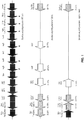
- FIG. 1 shows a schematic diagram of the genomic organization of the unique lantibiotic biosynthetic cluster found in Bacillus amyloliquefaciens RTI301 and the corresponding region for two known Bacillus amyloliquefaciens reference strains, FZB42 (middle) and TrigoCor1448 (bottom), shown below the RTI301 strain. It can be observed from FIG.
- FZB42 and TrigoCor1448 strains lack many of the genes present in this cluster, and there is a low degree of sequence identity within a number of the genes that are present.
- BLASTn analysis of this cluster against the non-redundant (nr) nucleotide database at NCBI showed high homology to the 5' and 3' flanking regions (analogous to the high % similarity in FIG. 1 ) to B. amyloliquefaciens strains.
- the lantipeptide biosynthetic cluster was unique to RTI301, and no significant homology to any previously sequenced DNA in the NCBI nr database was observed. The data indicate that the newly identified RTI301 has a unique lantibiotic biosynthesis pathway.
- the RTI477 strain has biosynthetic pathways for subtilosin, fengycins, surfactin, difficidin, bacillaene, bacilysin, and bacillomycin, but complete biosynthetic pathways for iturins, lantibiotics, and amylocyclicins were not observed.
- EXAMPLE 4 describes the antagonistic activity of the Bacillus subtilis RTI477 isolate against major plant pathogens as measured in plate assays.
- EXAMPLE 5 describes measurement of various phenotypic traits of the Bacillus subtilis RTI477 isolate and shows that this isolate has a fast growing and strong swarming phenotype.
- EXAMPLE 6 describes the growth promoting activity of the RTI477 isolate in wheat.
- Germinated wheat seeds were inoculated for 2 days in a suspension of ⁇ 2x10 7 CFU/ml of the RTI477 strain and subsequently planted in pots. Photographs of the extracted plants after 13 days' growth are shown in FIG. 2.
- FIG. 2A shows control plants and FIG. 2B shows plants inoculated with RTI477. Dry weight of the wheat seedlings was determined resulting in a total average dry plant weight equal to 35.41mg for the plants inoculated with the Bacillus subtilis RTI477 strain versus a weight equal to 33.38mg for the non-inoculated control which is a 6% increase in dry weight over the non-inoculated control for the RTI477 treated plants.
- EXAMPLE 4 describes the antagonistic activity of the amyloliquefaciens RTI301 isolate against major plant pathogens as measured in plate assays.
- the RTI301 strain showed superior antagonistic properties against a wide range of plant pathogenic microorganisms in comparison to the RTI477 strain.
- EXAMPLE 5 describes measurement of various phenotypic traits of the amyloliquefaciens RTI301 isolate. Notably, as compared to RTI301, RTI477 grows faster and has a strong swarming phenotype.
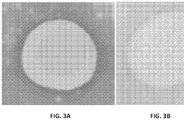
- FIGs. 3A-3B are images showing the growth compatibility between strains Bacillus amyloliquefaciens RTI301 and Bacillus subtilis RTI477 and a lack of compatibility between the RTI301 strain with another Bacillus amyloliquefaciens strain, Bacillus amyloliquefaciens RTI472 deposited as PTA-121166 with the American Type Culture Collection (ATCC).
- ATCC American Type Culture Collection
- Subtilosin is a bacteriocin, a class of proteinaceous toxins produced by bacteria to inhibit the growth of similar or closely related bacterial strain(s). Therefore, it was postulated that the subtilosin synthesized by Bacillus amyloliquefaciens RTI301 could be the inhibitor of the growth of Bacillus amyloliquefaciens RTI472. In contrast, the Bacillus subtilis RTI477 strain is not inhibited by RTI301, because the RTI477 strain produces its own subtilosin and is thus resistant to the compound.
- the differences in strain morphology between the Bacillus amyloliquefaciens RTI301 and Bacillus subtilis RTI477 strains were also analyzed. Images showing the morphology of each of these strains are shown in FIG. 4 : Bacillus amyloliquefaciens RTI301 ( FIG. 4A ) and Bacillus subtilis RTI477 ( FIG. 4B ).
- the colony morphology of the Bacillus amyloliquefaciens RTI301 and Bacillus subtilis RTI477 strains shown in FIGs. 4A-4B indicate a potential difference in strain behavior when it comes to motility. Motility is a key trait for rhizosphere colonization by plant associated bacteria.
- Bacillus amyloliquefaciens RTI301 grows as well-defined, round colonies.
- Bacillus subtilis RTI477 grows as a fluffy colony, a morphology which is indicative of swarming and motility. Swarming and motility are relevant phenotypes for the rapid colonization of the rhizosphere and the surface of the plant root. Again, without being limited to any particular mechanism of action, it was postulated that the strong swarming phenotype associated with the morphology of the Bacillus subtilis RTI477 strain, causes this strain to be a more efficient colonizer of the rhizosphere than Bacillus amyloliquefaciens RTI301.
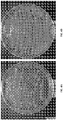
- FIGs. 5A and 5B Images of the positive effects of inoculation of the seed with the RTI301 plus RTI477 spores at this ratio of 3:1 are shown in FIGs. 5A and 5B (A - Control plants; B - plants inoculated with RTI301 plus RTI477 (ratio 3:1) at 10 6 cfu/ml).
- the effects were especially positive with regards to root formation and architecture, as shown in FIG.s 5A-5B .
- Fine root hairs are important in the uptake of water, nutrients and plant interaction with other microorganisms in the rhizosphere.
- EXAMPLE 9 describes the benefits of seed treatment with a combination of the Bacillus subtilis RTI477 and Bacillus amyloliquefaciens RTI301 strains in corn.
- the data are summarized in Table VII and the set-up was as follows: 1) seed was untreated ("UTC”); 2) seed was treated with a combination of 3 commonly used chemical active agents referred to as "CHEM CONTROL” (or "CC”); and 3) seed was treated with CHEM CONTROL plus a combination of 5.0x10 +5 cfu/seed of each of strains RTI301 and RTI477 ("CC+RTI 301/477 1:1"). Two trials were performed under conditions of natural disease pressure or inoculation of the soil with Rhizoctonia.
- EXAMPLE 10 describes experiments showing the effect on emergence and yield in soybean when seeds are treated with a combination of the RTI301 and RTI477 strains in addition to chemical active agents for pathogen control. Specifically, an experiment in soybean was set up as follows: 1) seed was untreated (UTC); 2) seed was treated with a combination of 3 commonly used chemical active agents referred to as "CHEM CONTROL”); 3) seed was treated with VIBRANCE (active ingredient Sedaxane; SYNGENTA CROP PROTECTION, INC; and 4) seed was treated with CHEM CONTROL plus 5.0x10 +5 cfu/seed of each of strain RTI301 and RTI477.
- EXAMPLE 11 describes the benefits of drip irrigation with a combination of the Bacillus subtilis RTI477 and the Bacillus amyloliquefaciens RTI301 strains on squash, tomato and pepper. Disease pressure caused by soil-borne fungi was not recorded for any of the trails. In the squash trial, spores were applied at a rate of 3.75 X 10 12 CFU/hectare for Bacillus amyloliquefaciens RTI301 and 0.625 X 10 12 CFU/hectare for Bacillus subtilis RTI477 at the time of planting via a root-zone drench, without further application via drip irrigation.
- ACCOMPLISH LM (LOVELAND PRODUCTS) was used as the commercial control and applied in the same manner as described for the RTI301+RTI477 combination at a rate of 2340 ml/Ha.
- This product contains a blend of Acidovorax facilis (1x10 3 cfu/ml), Bacillus licheniformis (1x10 3 cfu/ml), Bacillus subtilis (1x10 3 cfu/ml), Bacillus oleronius (1x10 3 cfu/ml), Bacillus marinus (1x10 3 cfu/ml), Bacillus megaterium (1x10 3 cfu/ml), and Rhodococcus rhodochrous (1x10 3 cfu/ml).
- RTI301 plus RTI477 spores resulted in an increase in both total and marketable yield for squash compared to untreated control plants in which bacterial spores were not included in the drench, as well as in comparison to the commercial control plants.
- RTI301+RTI477 treated plants resulted in a total of 873.4 kg/Ha squash, as compared to 838.3 kg/Ha and 836.1 kg/Ha for the untreated control plants and the plants treated with ACCOMPLISH, respectively, representing a 4.2% and 4.5% respective increase in weight of total squash.
- spores were applied at a rate of 0.625 X 10 12 CFU/hectare for Bacillus amyloliquefaciens RTI301 and 3.75 X 10 12 CFU/hectare for Bacillus subtilis RTI477 at the time of planting via a root-zone drench, followed by two drip applications of the same rate at 17 and 35 days after transplanting.
- ACCOMPLISH LM was used as the commercial control and applied in the same manner as described for the RTI301+RTI477 combination at a rate of 2340 ml/Ha.
- RTI301 plus RTI477 spores resulted in an increase in both total and marketable yield for tomatoes compared to untreated control plants in which bacterial spores were not included in the drench and the irrigation, as well as in comparison to the commercial control plants.
- RTI301+RTI477 treated plants resulted in a total of 21,824 kg/Ha marketable tomatoes, as compared to 16,765 kg/Ha and 21,420 kg/Ha for the untreated control plants and the plants treated with ACCOMPLISH, respectively, representing a 30.2% and 1.9% respective increase in weight of marketable tomatoes.
- RTI301 plus RTI477 spores resulted in an increase in yield for jalapeno peppers as compared to untreated control plants in which bacterial spores were not applied, as well as in comparison to the commercial control plants.
- RTI301+RTI477 treated plants resulted in a total of 4154 kg/Ha marketable peppers, as compared to 3455 kg/Ha and 3930 kg/Ha for the untreated control plants and the plants treated with ACCOMPLISH, respectively, representing a 20% and a 5.7% respective increase in weight of marketable peppers.
- EXAMPLE 12 Antimicrobial metabolites produced by the RTI301 and FTI477 strains are identified in EXAMPLE 12 and illustrated in FIG. 6 .
- EXAMPLE 12 describes the investigation of the cyclic lipopeptides, Fengycins and Dehydroxyfengycins, produced by the RTI301 and RTI477 strains, and surprisingly, the identification of several previously unreported classes of these molecules. It was determined that Bacillus amyloliquefaciens RTI301 produces the previously reported Fengycin A, B and C compounds and the Dehydroxyfengycin A, B and C compounds.
- the RTI301 strain also produces previously unidentified derivatives of these compounds where the L-isoleucine at position 8 of the cyclic peptide chain (referred to as X 3 in FIG. 6 ) is replaced by L-methionine.
- the new classes of Fengycin and Dehydroxyfengycin are referred to herein as MA, MB and MC, referring to derivatives of classes A, B and C in which the L-isoleucine at X 3 in FIG. 6 has been replaced by L-methionine.
- the newly identified molecules are shown in FIG. 6 and in Table IX in bold font.
- the newly identified Fengycin MA, MB and MC compounds were also observed for the RTI477 strain, however the corresponding Dehydroxyfengycin MA, MB and MC compounds were not observed for the RTI477 strain (see Table IX).
- the RTI301 strain produces an additional class of Fengycin and Dehydroxyfengycin that has not been previously identified.
- the L-isoleucine of Fengycin B and Dehydroxyfengycin B (position X 3 in FIG. 6 ) is replaced by L-homo-cysteine (Hcy).
- Hcy L-homo-cysteine
- Fengycin H and Dehydroxyfengycin H are shown in FIG. 6 and Table IX.
- the newly identified Fengycin H compound was also observed for the RTI477 strain, however the corresponding Dehydroxyfengycin H compound was not observed for the RTI477 strain (Table IX).
- the RTI301 strain produces an additional previously unidentified class of Fengycin and Dehydroxyfengycin metabolites.
- this class the amino acid at position 4 of the cyclic peptide backbone structure (position X 1 in FIG. 6 ) is replaced by L-isoleucine.
- These previously unidentified metabolites are referred to herein as Fengicin I and Dehydroxyfengicin I and are shown in FIG. 6 and in Table IX. Both the newly identified Fengycin I and Dehydroxyfengycin I compounds were also observed for the RTI477 strain (Table IX).
- the plant can include soybean or corn and the plant growth benefit can be exhibited by increased yield.
- the properties of the second microorganism that are beneficial to the plant growth and/or plant health include one of increased plant yield, improved seedling vigor, improved root development, improved plant growth, improved plant health, improved appearance, improved resistance to plant pathogens, reduced pathogenic infection, or a combination thereof.
- the plant pathogen can include one or a combination of insects, nematodes, plant pathogenic fungi, or plant pathogenic bacteria.
- composition is provided as defined herein.
- Application of the composition to seed of the plant, roots of the plant, or soil surrounding the plant benefits plant growth and/or plant health.
- a biologically pure culture of a bacterial strain refers to one or a combination of: spores of the biologically pure fermentation culture of a bacterial strain, vegetative cells of the biologically pure fermentation culture of a bacterial strain, one or more products of the biologically pure fermentation culture of a bacterial strain, a culture solid of the biologically pure fermentation culture of a bacterial strain, a culture supernatant of the biologically pure fermentation culture of a bacterial strain, an extract of the biologically pure fermentation culture of the bacterial strain, and one or more metabolites of the biologically pure fermentation culture of a bacterial strain.
- compositions are in the form of a planting matrix.
- the planting matrix can be in the form of a potting soil.
- compositions further include one or a combination of a carrier, a dispersant or a yeast extract.
- compositions further comprise one or a combination of a microbial, a biological, or a chemical insecticide, fungicide, nematicide, bacteriocide, herbicide, plant extract, plant growth regulator, or fertilizer present in an amount suitable to benefit plant growth and/or to confer protection against a pathogenic infection in the plant.
- composition as defined herein includes a bifenthrin insecticide.
- the composition and bifenthrin insecticide is in a formulation compatible with a liquid fertilizer.
- the formulation compatible with a liquid fertilizer can comprise a hydrated aluminum-magnesium silicate and at least one dispersant.
- the bifenthrin insecticide can be present at a concentration ranging from 0.1g/ml to 0.2g/ml.
- the bifenthrin insecticide can be present at a concentration of about 0.1715g/ml.
- the term "in a formulation compatible with a liquid fertilizer" as used throughout the specification and claims is intended to mean that the formulation is capable of dissolution or dispersion or emulsion in an aqueous solution to allow for mixing with a fertilizer for delivery to plants in a liquid formulation.
- a method for benefiting plant growth and/or plant health as defined herein. , optionally as a combination of: a first composition comprising a biologically pure culture of a Bacillus amyloliquefaciens RTI301 deposited as ATCC No. PTA-121165,; and a second composition comprising a biologically pure culture of a Bacillus subtilis RTI477 deposited as ATCC No. PTA-121167, wherein delivery of the combination benefits the plant growth and/or plant health.
- compositions comprising the microorganisms can be in the form of a liquid, an oil dispersion, a dust, a dry wettable powder, a spreadable granule, or a dry wettable granule.
- the microorganisms can be present in the form of spores or vegetative cells.
- the composition can be in the form of a liquid and each of the Bacillus subtilis RTI477 and the Bacillus amyloliquefaciens RTI301 can be present at a concentration of from about 1.0x10 8 CFU/ml to about 1.0x10 12 CFU/ml.
- the composition can be in the form of a dust, a dry wettable powder, a spreadable granule, or a dry wettable granule and each of the Bacillus subtilis RTI477 and the Bacillus amyloliquefaciens RTI301 can be present in an amount of from about 1.0x10 8 CFU/g to about 1.0x10 12 CFU/g.
- the composition can be in the form of an oil dispersion and each of the the Bacillus subtilis RTI477 and the Bacillus amyloliquefaciens RTI301 can be present at a concentration of from about 1.0x10 8 CFU/ml to about 1.0x10 12 CFU/ml.
- compositions comprising the microorganisms may further comprise one or a combination of a carrier, a dispersant or a yeast extract.
- a plant seed is provided that is coated with a composition as defined herein.
- a plant seed is provided coated with a composition for benefiting plant growth and/or plant health, the composition comprising: spores of a biologically pure culture of Bacillus amyloliquefaciens RTI301 deposited as ATCC No. PTA-121165; and spores of a biologically pure culture of Bacillus subtilis RTI477 deposited as ATCC No. PTA-121167, present in an amount suitable to benefit the plant growth and/or plant health.
- the Bacillus subtilis RTI477 and the Bacillus amyloliquefaciens RTI301 are each present in an amount ranging from about 1.0x10 2 CFU/seed to about 1.0x10 9 CFU/seed.
- the plant seed further comprises one or a combination of a microbial, a biological, or a chemical insecticide, fungicide, nematicide, bacteriocide, herbicide, plant extract, plant growth regulator, or fertilizer present in an amount suitable to benefit plant growth and/or to confer protection against a pathogenic infection in the plant.
- the insecticide comprises bifenthrin.
- a plant seed is provided, wherein the plant seed is coated with a composition as defined herein, and with a bifenthrin insecticide.
- a method for benefiting plant growth and/or plant health comprising planting a seed of a plant in a suitable growth medium, wherein the seed has been coated with a composition comprising: spores of a biologically pure culture of Bacillus amyloliquefaciens RTI301 deposited as ATCC No. PTA-121165; and spores of a biologically pure culture of Bacillus subtilis RTI477 deposited as ATCC No. PTA-121167f, wherein the coating comprising the spores of the RTI301 and the RTI477 benefits the plant growth and/or plant health.
- the coated seed of the present invention can be a seed from a wide variety of plants including, for example, comprises the seed of monocots, dicots, Cereals, Corn, Sweet Corn, Popcorn, Seed Corn, Silage Corn, Field Corn, Rice, Wheat, Barley, Sorghum, Brassica Vegetables, Broccoli, Cabbage, Cauliflower, Brussels Sprouts, Collards, Kale, Mustard Greens, Kohlrabi, Bulb Vegetables, Onion, Garlic, Shallots, Fruiting Vegetables, Pepper, Tomato, Ground Cherry, Tomatillo, Okra, Grape, Herbs/ Spices, Cucurbit Vegetables, Cucumber, Cantaloupe, Melon, Muskmelon, Squash, Watermelon, Pumpkin, Eggplant, Leafy Vegetables, Lettuce, Celery, Spinach, Parsley, Radicchio, Legumes/Vegetables (succulent and dried beans and peas), Beans, Green beans, Snap beans,
- the coated plant seed can be corn or soybean and the plant growth benefit can be exhibited by increased yield.
- the properties of the second microorganism beneficial to plant growth and/or plant health include one or more of increased yield, improved seedling vigor, improved root development, improved plant growth, improved plant health, improved appearance, improved resistance to plant pathogens, or reduced pathogenic infection, or a combination thereof.
- the plant pathogen can include one or a combination of insects, nematodes, plant pathogenic fungi, or plant pathogenic bacteria.
- the growth of the second microorganism can be faster than that of the first microorganism and the second microorganism can be characterized by a swarming and high motility phenotype.
- the composition coated onto the plant seed can include an amount of spores of each of the first microorganism and the second microorganism from about 1.0x10 2 CFU/seed to about 1.0x10 9 CFU/seed.
- the properties of the microorganism beneficial to plant growth and/or plant health can include increased yield, improved seedling vigor, improved root development, improved plant growth, improved plant health, improved appearance, improved resistance to plant pathogens, reduced pathogenic infection, or a combination thereof.
- the plant pathogens can include one or a combination of insects, nematodes, plant pathogenic fungi, or plant pathogenic bacteria.
- the one or more chemical active agents for creating the niche can include, for example, but are not limited to strobilurine, a triazole, flutriafol, tebuconazole, prothiaconazole, expoxyconazole, fluopyram, chlorothalonil, thiophanate-methyl, a copper-based fungicide, copper hydroxide fungicide, an EDBC-based fungicide, mancozeb, a succinase dehydrogenase (SDHI) fungicide, bixafen, iprodione, dimethomorph, or valifenalate.
- SDHI succinase dehydrogenase
- the one or more chemical active agents can include a fumigant such as, for example, chloropicrin, Dazomet, 1,3-dichloropropene (Telone), dimethyl disulfide, metam sodium/potassium, methyl bromide.
- a fumigant such as, for example, chloropicrin, Dazomet, 1,3-dichloropropene (Telone), dimethyl disulfide, metam sodium/potassium, methyl bromide.
- compositions can further include one or a combination of a microbial, a biological, or a chemical insecticide, fungicide, nematicide, bacteriocide, herbicide, plant extract, plant growth regulator, or fertilizer present in an amount suitable to benefit plant growth and/or to confer protection against a pathogenic infection in the plant.
- the fungicide can include an extract from Lupinus albus doce.
- the fungicide can include a BLAD polypeptide.
- the BLAD polypeptide can be a fragment of the naturally occurring seed storage protein from sweet lupine ( Lupinus albus doce ) that acts on susceptible fungal pathogens by causing damage to the fungal cell wall and disrupting the inner cell membrane.
- the compositions can include about 20% of the BLAD polypeptide.
- the insecticide can comprise bifenthrin.
- the nematicide can comprise cadusafos.
- the composition can be formulated as a liquid, a powder, a wettable dissolvable granule, or as spreadable granules.
- the insecticide can comprise bifenthrin and clothianidin.
- the insecticide can comprise bifenthrin and clothianidin and the composition can be formulated for compatibility with a liquid fertilizer.
- the insecticide can comprise bifenthrin or zeta-cypermethrin.
- the nematicide can comprise cadusafos.
- the insecticide can comprise bifenthrin and clothianidin.
- the composition can be formulated as a liquid and the insecticide can comprise bifenthrin or zeta-cypermethrin.
- the method can further include applying a liquid fertilizer to: soil or growth medium surrounding the plant; soil or growth medium before sowing seed of the plant in the soil or growth medium; or soil or growth medium before planting the plant in the soil or growth medium.
- the bifenthrin composition can comprise: bifenthrin; a hydrated aluminum-magnesium silicate; and at least one dispersant selected from a sucrose ester, a lignosulfonate, an alkylpolyglycoside, a naphthalenesulfonic acid formaldehyde condensate and a phosphate ester.
- the bifenthrin can be preferably present in a concentration of from 1.0% by weight to 35% by weight, more particularly, from 15% by weight to 25% by weight based upon the total weight of all components in the composition.
- the bifenthrin insecticide composition can be present in the liquid formulation at a concentration ranging from 0.1g/ml to 0.2g/ml.
- the bifenthrin insecticide may be present in the liquid formulation at a concentration of about 0.1715g/ml.
- the dispersant or dispersants can preferably be present in a total concentration of from about 0.02% by weight to about 20% by weight based upon the total weight of all components in the composition.
- the hydrated aluminum-magnesium silicate may be selected from the group consisting of montmorillonite and attapulgite.
- the phosphate ester may be selected from a nonyl phenol phosphate ester and a tridecyl alcohol ethoxylated phosphate potassium salt.
- inventions may further include at least one of an anti-freeze agent, an antifoam agent and a biocide.
- a composition for benefiting plant growth, the composition as defined herein and an insecticide, wherein the composition is in a formulation compatible with a liquid fertilizer.
- the insecticide can be one or a combination of pyrethroids, bifenthrin, tefluthrin, zeta-cypermethrin, organophosphates, chlorethoxyfos, chlorpyrifos, tebupirimfos, cyfluthrin, fiproles, fipronil, nicotinoids, or clothianidin.
- the insecticide can include bifenthrin.
- the composition can include a bifenthrin insecticide and a hydrated aluminum-magnesium silicate and at least one dispersant.
- the bifenthrin insecticide can be present at a concentration ranging from 0.1g/ml to 0.2g/ml.
- the bifenthrin insecticide can be present at a concentration of about 0.1715g/ml.
- suitable insecticides, herbicides, fungicides, and nematicides of the compositions and methods of the present invention can include the following: Insecticides: A0) various insecticides, including agrigata, al-phosphide, amblyseius, aphelinus, aphidius, aphidoletes, artimisinin, autographa californica NPV, azocyclotin, Bacillus subtilis, Bacillus thuringiensis- spp. aizawai, Bacillus thuringiensis spp.
- Insecticides A0
- various insecticides including agrigata, al-phosphide, amblyseius, aphelinus, aphidius, aphidoletes, artimisinin, autographa californica NPV, azocyclotin, Bacillus subtilis, Bacillus thuringiensis- spp
- israeltaki Bacillus thuringiensis, Beauveria, Beauveria bassiana, betacyfluthrin, biologicals, bisultap, brofluthrinate, bromophos-e, bromopropylate, Bt-Corn-GM, Bt-Soya-GM, capsaicin, cartap, celastrus-extract, chlorantraniliprole, chlorbenzuron, chlorethoxyfos, chlorfluazuron, chlorpyrifos-e, cnidiadin, cryolite, cyanophos, cyantraniliprole, cyhalothrin, cyhexatin, cypermethrin, dacnusa, DCIP, dichloropropene, dicofol, diglyphus, diglyphus+dacnusa, dimethacarb, dithioether, dodecyl-acetate, emamectin, encarsia,
- Fungicides B0) benzovindiflupyr, anitiperonosporic, ametoctradin, amisulbrom, copper salts (e.g., copper hydroxide, copper oxychloride, copper sulfate, copper persulfate), boscalid, thiflumazide, flutianil, furalaxyl, thiabendazole, benodanil, mepronil, isofetamid, fenfuram, bixafen, fluxapyroxad, penflufen, sedaxane, coumoxystrobin, enoxastrobin, flufenoxystrobin, pyraoxystrobin, pyrametostrobin, triclopyricarb, fenaminstrobin, metominostrobin, pyribencarb, meptyldinocap, fentin acetate, fentin chloride, fentin hydroxide, oxytetracycline, chl
- acetyl-CoA carboxylase inhibitors for example cyclohexenone oxime ethers, such as alloxydim, clethodim, cloproxydim, cycloxydim, sethoxydim, tralkoxydim, butroxydim, clefoxydim or tepraloxydim; phenoxyphenoxypropionic esters, such as clodinafop-propargyl, cyhalofop-butyl, diclofop-methyl, fenoxaprop-ethyl, fenoxaprop-P-ethyl, fenthiapropethyl, fluazifop-butyl, fluazifop-P-butyl, haloxyfop-ethoxyethyl, haloxyfop-methyl, haloxyfop-P-methyl, isoxapyrifop, propaqui
- ACC acetyl
- sulfonamides such as florasulam, flumetsulam or metosulam
- sulfonylureas such as amidosulfuron, azimsulfuron, bensulfuron-methyl, chlorimuron-ethyl, chlorsulfuron, cinosulfuron, cyclosulfamuron, ethametsulfuron-methyl, ethoxysulfuron, flazasulfuron, halosulfuron-methyl, imazosulfuron, metsulfuron-methyl, nicosulfuron, primisulfuron-methyl, prosulfuron, pyrazosulfuron-ethyl, rimsulfuron, sulfometuron-methyl, thifensulfuron-methyl, triasulfuron, tribenuron-methyl, triflusulfuron-methyl, tritosulfuron,
- auxin herbicides for example pyridinecarboxylic acids, such as clopyralid or picloram; or 2,4-D or benazolin; C5) auxin transport inhibitors, for example naptalame or diflufenzopyr; C6) carotenoid biosynthesis inhibitors, for example benzofenap, clomazone (dimethazone), diflufenican, fluorochloridone, fluridone, pyrazolynate, pyrazoxyfen, isoxaflutole, isoxachlortole, mesotrione, sulcotrione (chlormesulone), ketospiradox, flurtamone, norflurazon or amitrol; C7) enolpyruvylshikimate-3-phosphate synthase inhibitors (EPSPS), for example glyphosate or s
- EPSPS enolpyruvylshikimate-3-phosphate synthase inhibitors
- mitosis inhibitors for example carbamates, such as asulam, carbetamid, chlorpropham, orbencarb, pronamid (propyzamid), propham or tiocarbazil; dinitroanilines, such as benefin, butralin, dinitramin, ethalfluralin, fluchloralin, oryzalin, pendimethalin, prodiamine or trifluralin; pyridines, such as dithiopyr or thiazopyr; or butamifos, chlorthal-dimethyl (DCPA) or maleic hydrazide; C11) protoporphyrinogen IX oxidase inhibitors, for example diphenyl ethers, such as acifluorf
- Suitable plant growth regulators of the present invention include the following: Plant Growth Regulators: D1) Antiauxins, such as clofibric acid, 2,3,5-tri-iodobenzoic acid; D2) Auxins such as 4-CPA, 2,4-D, 2,4-DB, 2,4-DEP, dichlorprop, fenoprop , IAA ,IBA, naphthaleneacetamide, ⁇ -naphthaleneacetic acids, 1-naphthol, naphthoxyacetic acids, potassium naphthenate, sodium naphthenate, 2,4,5-T; D3) cytokinins, such as 2iP, benzyladenine, 4-hydroxyphenethyl alcohol, kinetin, zeatin; D4) defoliants, such as calcium cyanamide, dimethipin, endothal, ethephon, merphos, metoxuron, pentachlorophenol, thidiazuron, tribufos; D5)
- the fertilizer can be a liquid fertilizer.
- liquid fertilizer refers to a fertilizer in a fluid or liquid form containing various ratios of nitrogen, phosphorous and potassium (for example, but not limited to, 10% nitrogen, 34% phosphorous and 0% potassium) and micronutrients, commonly known as starter fertilizers that are high in phosphorus and promote rapid and vigorous root growth.
- Chemical formulations of the present invention can be in any appropriate conventional form, for example an emulsion concentrate (EC), a suspension concentrate (SC), a suspo-emulsion (SE), a capsule suspension (CS), a water dispersible granule (WG), an emulsifiable granule (EG), a water in oil emulsion (EO), an oil in water emulsion (EW), a micro-emulsion (ME), an oil dispersion (OD), an oil miscible flowable (OF), an oil miscible liquid (OL), a soluble concentrate (SL), an ultra-low volume suspension (SU), an ultra-low volume liquid (UL), a dispersible concentrate (DC), a wettable powder (WP) or any technically feasible formulation in combination with agriculturally acceptable adjuvants.
- EC emulsion concentrate
- SC suspension concentrate
- SE suspo-emulsion
- CS capsule suspension
- WG water dispersible granule
- EG emulsifiable
- a product comprising: a first composition comprising a biologically pure culture of Bacillus amyloliquefaciens RTI301 deposited as ATCC No. PTA-121165, and a biologically pure culture of Bacillus amyloliquefaciens RTI477 deposited as ATCC No.
- PTA-121167 a second composition comprising one or a combination of a microbial, a biological, or a chemical insecticide, fungicide, nematicide, bacteriocide, herbicide, plant extract, plant growth regulator, or fertilizer, wherein the first and second composition are separately packaged; and instructions for delivering in an amount suitable to benefit plant growth, a combination of the first and second compositions to: foliage of the plant, bark of the plant, fruit of the plant, flowers of the plant, seed of the plant, roots of the plant, a cutting of the plant, a graft of the plant, callus tissue of the plant; soil or growth medium surrounding the plant; soil or growth medium before sowing seed of the plant in the soil or growth medium; or soil or growth medium before planting the plant, the plant cutting, the plant graft, or the plant callus tissue in the soil or growth medium.
- the first composition further comprises one or a combination of a carrier, a dispersant, or a yeast extract.
- the insecticide can be one or a combination of pyrethroids, bifenthrin, tefluthrin, zeta-cypermethrin, organophosphates, chlorethoxyphos, chlorpyrifos, tebupirimphos, cyfluthrin, fiproles, fipronil, nicotinoids, or clothianidin.
- the insecticide in the second composition of the product comprises bifenthrin.
- the insecticide in the second composition of the product comprises bifenthrin and it is in a formulation compatible with a liquid fertilizer.
- a plant associated bacterial strain designated herein as RTI477, was isolated from the root of Moringa oleifera grown in North Carolina.
- the 16S rRNA and the rpoB genes of the RTI477 strain were sequenced and subsequently compared to other known bacterial strains in the NCBI and RDP databases using BLAST. It was determined that the 16S RNA partial sequence of RTI477 (SEQ ID NO: 1) is identical to the partial 16S rRNA gene sequence of Bacillus subtilis strain BSn5 (CP002468), Bacillus amyloliquefaciens strain NS6 (KF177175), and Bacillus subtilis subsp. subtilis strain DSM 10 (NR_027552).
- the rpoB sequence of RTI477 has 99% sequence identity to known strains Bacillus subtilis PY79 (CP006881), Bacillus subtilis subsp. subtilis 6051-HGW (CP003329) (i.e., 99% sequence identity; 9 bp difference), and Bacillus subtilis subsp. subtilis BAB-1a (CP004405) (i.e., 99% sequence identity; 10 bp difference).
- the RTI477 strain was identified as a strain of Bacillus subtilis.
- the differences in sequence for the rpoB gene at the DNA level indicate that RTI477 is a new strain of Bacillus subtilis.
- a plant associated bacterial strain designated herein as RTI301, was isolated from the rhizosphere soil of grape vines growing at a vineyard in NY.
- The16S rRNA and the rpoB genes of the RTI301 strain were sequenced and subsequently compared to other known bacterial strains in the NCBI and RDP databases using BLAST. It was determined that the 16S RNA partial sequence of RTI301 (SEQ ID NO: 3) is identical to the 16S rRNA gene sequence of Bacillus amyloliquefaciens strain NS6 (KF177175), Bacillus amyloliquefaciens strain FZB42 (NR_075005), and Bacillus subtilis subsp. subtilis strain DSM 10 (NR_027552).
- RTI301 has sequence similarity to the same gene in Bacillus amyloliquefaciens subsp. plantarum TrigoCor1448 (CP007244) (99% sequence identity; 3 base pair difference); Bacillus amyloliquefaciens subsp. plantarum AS43.3 (CP003838) (99% sequence identity; 7 base pair difference); Bacillus amyloliquefaciens CC178 (CP006845) (99% sequence identity; 8 base pair difference), and Bacillus amyloliquefaciens FZB42 (CP000560) (99% sequence identity; 8 base pair difference).
- the RTI301 strain was identified as a Bacillus amyloliquefaciens. The differences in sequence for the rpoB gene at the DNA level indicate that RTI301 is a new strain of Bacillus amyloliquefaciens.
- the strain of Bacillus amyloliquefaciens RTI301 was deposited on 17 April 2014 under the terms of the Budapest Treaty on the International Recognition of the Deposit of Microorganisms for the Purposes of Patent Procedure at the American Type Culture Collection (ATCC) in Manassas, Virginia, USA and bears the Patent Accession No. PTA-121165.
- FIG. 1 shows a schematic diagram of the genomic organization surrounding and including the lantibiotic biosynthesis operon found in Bacillus amyloliquefaciens RTI301.
- the top set of arrows represents protein coding regions for the RTI301 strain with relative direction of transcription indicated.
- the corresponding regions for two Bacillus amyloliquefaciens reference strains, FZB42 and TrigoCor1448, are shown below the RTI301 strain.
- the genes in the lantibiotic synthesis operon in the RTI301 strain were initially identified using RAST and their identities then refined using BLASTp.
- the degree of amino acid identity of the proteins encoded by the genes of the RTI301 strain as compared to the two reference strains is indicated both by the degree of shading of the representative arrows as well as a percentage identity indicated within the arrow. It can be observed from FIG. 1 that there is a high degree of sequence identity in the genes from the 3 different strains in the regions surrounding the lantibiotic synthesis operon, but only a low degree of sequence identity within the lantibiotic synthesis operon (i.e., less than 40% within the lantibiotic synthesis operon but greater than 99% in the surrounding regions).
- RTI477 strain In contrast to the RTI301 strain with its wide range of antimicrobial biosynthetic pathways, further sequence analysis of the RTI477 strain revealed that this strain has genes related to biosynthetic pathways for a more limited group of molecules having antimicrobial properties.
- the RTI477 strain has biosynthetic pathways for subtilosin, fengycins, surfactin, difficidin, bacillaene, bacilysin, and bacillomycin, but complete biosynthetic pathways for iturins, lantibiotics, and amylocyclicins were not observed.
- the antagonistic ability of the Bacillus subtilis RTI477 and Bacillus amyloliquefaciens RTI301 isolates against major plant pathogens was measured in plate assays.
- a plate assay for evaluation of antagonism against plant fungal pathogens was performed by growing the bacterial isolate and pathogenic fungi side by side on 869 agar plates at a distance of 4 cm. Plates were incubated at room temperature and checked regularly for up to two weeks for growth behaviors such as growth inhibition, niche occupation, or no effect.
- the pathogen was first spread as a lawn on 869 agar plates.
- Antagonistic properties of Bacillus subtilis RTI477 isolate against major plant pathogens Anti-Microbial Assays RTI477 Alternaria solani +++ Aspergillus flavus + Aspergillus nomius +- Botrytis cinerea ++ Cercospora sojina ++/+++ Fusarium colmorum + Fusarium graminearum +++ Fusarium oxysporum f. sp. Lycopersici + Fusarium oxysporum f. sp.
- Acetoin Test 20 ⁇ l of a starter culture in rich 869 media was transferred to 1ml Methy Red - Voges Proskauer media (Sigma Aldrich 39484). Cultures were incubated for 2 days at 30C 200rpm. 0.5ml culture was transferred and 50 ⁇ l 0.2g/l methyl red was added. Red color indicated acid production. The remaining 0.5ml culture was mixed with 0.3ml 5% alpha-napthol (Sigma Aldrich N1000) followed by 0.1ml 40%KOH. Samples were interpreted after 30 minutes of incubation. Development of a red color indicated acetoin production. For both acid and acetoin tests non-inoculated media was used as a negative control ( Sokol et al., 1979, Journal of Clinical Microbiology. 9: 538-540 ).
- Phosphate Solubilizing Test Bacteria were plated on Pikovskaya (PVK) agar medium consisting of 10g glucose, 5g calcium triphosphate, 0.2g potassium chloride, 0.5g ammonium sulfate, 0.2g sodium chloride, 0.1g magnesium sulfate heptahydrate, 0.5g yeast extract, 2mg manganese sulfate, 2mg iron sulfate and 15g agar per liter, pH7, autoclaved. Zones of clearing were indicative of phosphate solubilizing bacteria ( Sharma et al., 2011, Journal of Microbiology and Biotechnology Research 1: 90-95 ).
- Chitinase activity 10% wet weight colloidal chitin was added to modified PVK agar medium (10g glucose, 0.2g potassium chloride, 0.5g ammonium sulfate, 0.2g sodium chloride, 0.1g magnesium sulfate heptahydrate, 0.5g yeast extract, 2mg manganese sulfate, 2mg iron sulfate and 15g agar per liter, pH7, autoclaved). Bacteria were plated on these chitin plates; zones of clearing indicated chitinase activity ( N. K. S. Murthy & Bleakley., 2012. "Simplified Method of Preparing Colloidal Chitin Used for Screening of Chitinase Producing Microorganisms". The Internet Journal of Microbiology. 10(2 )).
- Protease Activity Bacteria were plated on 869 agar medium supplemented with 10% milk. Clearing zones indicated the ability to break down proteins suggesting protease activity ( Sokol et al., 1979, Journal of Clinical Microbiology. 9: 538-540 ).
- the effect of application of the bacterial isolate RTI477 on early plant growth and vigor in wheat was determined.
- the experiment was performed by inoculating surface sterilized germinated wheat seeds for 2 days in a suspension of ⁇ 2x10 7 CFU/ml of the bacterium at room temperature under aeration in the dark (a control was also performed without bacteria). Subsequently, the inoculated and control seeds were planted in 6" pots filled with sand. 10 seeds per pot and 1 pot per treatment were planted and watered as needed alternating with water and Modified Hoagland's solution. Pots were incubated in a lab windowsill at approximately 21°C providing natural light/dark cycles for 13 days at which point plants were recovered and parameters measured.
- Dry weight was determined as a total weight per 9 plants resulting in a total average dry plant weight equal to 35.41mg for the plants inoculated with the Bacillus subtilis RTI477 strain versus a weight equal to 33.38mg for the non-inoculated control which is a 6% increase in dry weight over the non-inoculated control. Photographs of the extracted plants after 13 days' growth are shown in FIG. 2.
- FIG. 2A shows control plants and FIG. 2B shows plants inoculated with RTI477.
- FIGs. 3A-3B are images showing the growth compatibility between strains Bacillus amyloliquefaciens RTI301 and Bacillus subtilis RTI477 and a lack of compatibility between the RTI301 strain with another Bacillus amyloliquefaciens strain, Bacillus amyloliquefaciens RTI472 deposited as PTA-121166 with the American Type Culture Collection (ATCC).
- ATCC American Type Culture Collection
- Subtilosin is a bacteriocin, a class of proteinaceous toxins produced by bacteria to inhibit the growth of similar or closely related bacterial strain(s). Therefore, it was postulated that the subtilosin synthesized by Bacillus amyloliquefaciens RTI301 could be the inhibitor of the growth of Bacillus amyloliquefaciens RTI472. In contrast, the Bacillus subtilis RTI477 strain is not inhibited by RTI301, because the RTI477 strain produces its own subtilosin and is thus resistant to the compound.
- the differences in strain morphology between the Bacillus amyloliquefaciens RTI301 and Bacillus subtilis RTI477 strains were also analyzed. Images showing the morphology of each of these strains are shown in FIG. 4 : Bacillus amyloliquefaciens RTI301 ( FIG. 4A ) and Bacillus subtilis RTI477 ( FIG. 4B ).
- the colony morphology of the Bacillus amyloliquefaciens RTI301 and Bacillus subtilis RTI477 strains shown in FIGs. 4A-4B indicate a potential difference in strain behavior when it comes to motility. Motility is a key trait for rhizosphere colonization by plant associated bacteria.
- Bacillus amyloliquefaciens RTI301 grows as well-defined, round colonies.
- Bacillus subtilis RTI477 grows as a fluffy colony, a morphology which is indicative of swarming and motility. Swarming and motility are potentially important phenotypes for the rapid colonization of the rhizosphere and the surface of the plant root. Again, without being limited to any particular mechanism of action, it was postulated that the strong swarming phenotype suggested by the morphology of the Bacillus subtilis RTI477 strain, could cause this strain to be a more efficient colonizer of the rhizosphere than Bacillus amyloliquefaciens RTI301.
- FIGs. 5A and 5B images of the positive effects of inoculation of the seed with the RTI301 plus RTI477 spores (ratio 3:1) are shown in FIGs. 5A and 5B (A - Control plants; B - plants inoculated with RTI301 plus RTI477 (ratio 3:1) at 10 6 cfu/ml).
- the effects were especially positive with regards to root formation and architecture, as shown in FIG.s 5A-5B .
- Fine root hairs are important in the uptake of water, nutrients and plant interaction with other microorganisms in the rhizosphere.
- Bacillus amyloliquefaciens RTI301 produces a wide range of antagonistic metabolites, such as subtilosin, that can inhibit the growth and development of competing strains both fungi and bacteria, including closely related Bacillus species. By doing so, the RTI301 strain when applied to a plant alone could open a niche / space for its establishment in the rhizosphere. However, data do not support strong plant growth promoting properties for Bacillus amyloliquefaciens RTI301.
- Bacillus subtilis RTI477 appears to have a narrower range of antagonism than Bacillus amyloliquefaciens RTI301 and, thus, could be expected to be less efficient in opening a niche in which to become established when it is applied to plant seed alone. As a result, the strain could more easily fail to become established in the rhizosphere of soybean which could result in a lack of a beneficial effect on plant growth. This is confirmed by the observed lack of an increase in yield for soybean after seed treatment with Bacillus subtilis RTI477 alone.
- Rhizoctonia was grown separately on moistened autoclaved grain seed and then air dried. The dried inoculum was mixed with the seed at planting at a prescribed rate to provide infection when the seed commenced to grow.
- the average corn yield results (bushels per acre) for the field trials are presented in Table IX below, with trial field sites being located in Shawneetown, Illinois.
- seed treatment with the combination of RTI301 and RTI477 can provide significant improvement in yields in soybean, even under conditions of severe pathogen pressure.
- Table VIII. Average results on soybean emergence and yield in field trials with plants artificially inoculated with Rhizoctonia solani with treatment of the soybean seed with a combination of B. amyloliquefaciens RTI301 and B. subtilis RTI477 in addition to chemical active agent treatment for soybean seeds.
- a field trial was performed for pepper plants (jalapeno pepper) where spores were applied at a rate of 1.25 X 10 12 CFU/hectare per strain of both Bacillus amyloliquefaciens RTI301 and Bacillus subtilis RTI477 at the time of planting via a root-zone drench, followed by two drip applications of the same rate at 17 and 35 days after transplanting.
- ACCOMPLISH LM LOVELAND PRODUCTS
- This product contains a blend of Acidovorax facilis (1x10 3 cfu/ml), Bacillus licheniformis (1x10 3 cfu/ml), Bacillus subtilis (1x10 3 cfu/ml), Bacillus oleronius (1x10 3 cfu/ml), Bacillus marinus (1x10 3 cfu/ml), Bacillus megaterium (1x10 3 cfu/ml), and Rhodococcus rhodochrous (1x10 3 cfu/ml).
- RTI301 plus RTI477 spores resulted in an increase in yield for jalapeno peppers as compared to untreated control plants in which bacterial spores were not applied, as well as in comparison to the commercial control plants.
- RTI301+RTI477 treated plants resulted in a total of 4154 kg/Ha marketable peppers, as compared to 3455 kg/Ha and 3930 kg/Ha for the untreated control plants and the plants treated with ACCOMPLISH, respectively, representing a 20% and a 5.7% respective increase in weight of marketable peppers.
- RTI301 plus RTI477 spores resulted in an increase in both total and marketable yield for tomatoes compared to untreated control plants in which bacterial spores were not included in the drench and the irrigation, as well as in comparison to the commercial control plants.
- RTI301+RTI477 treated plants resulted in a total of 21,824 kg/Ha marketable tomatoes, as compared to 16,765 kg/Ha and 21,420 kg/Ha for the untreated control plants and the plants treated with ACCOMPLISH, respectively, representing a 30.2% and 1.9% respective increase in weight of marketable tomatoes.
- RTI301 plus RTI477 spores resulted in an increase in both total and marketable yield for squash compared to untreated control plants in which bacterial spores were not included in the drench, as well as in comparison to the commercial control plants.
- RTI301+RTI477 treated plants resulted in a total of 873.4 kg/Ha squash, as compared to 838.3 kg/Ha and 836.1 kg/Ha for the untreated control plants and the plants treated with ACCOMPLISH, respectively, representing a 4.2% and 4.5% respective increase in weight of total squash.
- Fengycin-type metabolites and Dehydroxyfengycin-type metabolites are produced by microbial species including Bacillus subtilis and Bacillus amyloliquefaciens (see, for example, Li, Xing-Yu, et al., 2013, J. Microbiol. Biotechnol. 23(3), 313-321 ; Pecci Y, et al. 2010, Mass Spectrom., 45(7):772-77 ). These metabolites are cyclic peptide molecules that also contain a fatty acid group.
- the five classes of Fengycin- and Dehydroxyfengycin-type metabolites are referred to as A, B, C, D and S.
- Plipastatin A and B are similar in molecular weight to Fengycin A and B, and only differ in the aspect that the Tyrosine residue at position 3 of the peptide ring is the D-form in the Fengycins and the L-form in the Plipastatins, and the Tyrosine residue at position 9 of the peptide ring is the L-form in the Fengycins and the D-form in the Plipastatins.
- the Fengycin- and Dehydroxyfengycin-type metabolites produced by Bacillus subtilis RTI477 and Bacillus amyloliquefaciens RTI301 were analyzed using UHPLC-TOF MS.
- the molecular weights of the these metabolites produced by the strains after 6 days' growth in 869 medium or 2x SG medium at 30°C were compared to the theoretical molecular weights expected for the Fengycin- and Dehydroxyfengycin-type metabolites.
- the Bacillus amyloliquefaciens RTI301 strain produces Fengycin-like and Dehydroxyfengycin-like compounds where the L-isoleucine at position 8 of the cyclic peptide chain (referred to as X 3 in FIG. 6 ) is replaced by L-methionine.
- the new classes of Fengycin and Dehydroxyfengycin are referred to herein as MA, MB and MC, referring to derivatives of classes A, B and C in which the L-isoleucine at X 3 in FIG. 6 has been replaced by L-methionine.
- the newly identified molecules are shown in FIG. 6 and in Table IX below.
- the newly identified Fengycin MA, MB and MC compounds were also observed for the RTI477 strain, however the corresponding Dehydroxyfengycin MA, MB and MC compounds were not observed for the RTI477 strain (Table IX).
- the RTI301 strain produces an additional class of Fengycin and Dehydroxyfengycin that has not been previously identified.
- the L-isoleucine of Fengycin B and Dehydroxyfengycin B (position X 3 in FIG. 6 ) is replaced by L-homo-cysteine (Hcy).
- Hcy L-homo-cysteine
- Fengycin H and Dehydroxyfengycin H are shown in in FIG. 6 and Table IX.
- the newly identified Fengycin H compound was also observed for the RTI477 strain, however the corresponding Dehydroxyfengycin H compound was not observed for the RTI477 strain (Table IX).
- the RTI301 strain produces an additional class of previously unidentified Fengycin and Dehydroxyfengycin metabolites.
- this class the amino acid at position 4 of the cyclic peptide backbone structure (position X 1 in FIG. 6 ) is replaced by L-isoleucine.
- Fengicin I and Dehydroxyfengicin I are shown in FIG. 6 and in Table IX.
- Table IX Both the newly identified Fengycin I and Dehydroxyfengycin I compounds were also observed for the RTI477 strain (Table IX).
Landscapes
- Life Sciences & Earth Sciences (AREA)
- Health & Medical Sciences (AREA)
- Chemical & Material Sciences (AREA)
- Engineering & Computer Science (AREA)
- General Health & Medical Sciences (AREA)
- Zoology (AREA)
- Pest Control & Pesticides (AREA)
- Organic Chemistry (AREA)
- Wood Science & Technology (AREA)
- Dentistry (AREA)
- Plant Pathology (AREA)
- Environmental Sciences (AREA)
- Agronomy & Crop Science (AREA)
- Biotechnology (AREA)
- Virology (AREA)
- Microbiology (AREA)
- Biochemistry (AREA)
- Bioinformatics & Cheminformatics (AREA)
- Genetics & Genomics (AREA)
- Dispersion Chemistry (AREA)
- Toxicology (AREA)
- Tropical Medicine & Parasitology (AREA)
- Medicinal Chemistry (AREA)
- Biomedical Technology (AREA)
- General Engineering & Computer Science (AREA)
- Agricultural Chemicals And Associated Chemicals (AREA)
- Micro-Organisms Or Cultivation Processes Thereof (AREA)
- Pretreatment Of Seeds And Plants (AREA)
- Peptides Or Proteins (AREA)
Claims (13)
- Eine Zusammensetzung zur Begünstigung des Pflanzenwachstums und/oder der Pflanzengesundheit, wobei die Zusammensetzung Folgendes beinhaltet:eine biologisch reine Kultur von Bacillus amyloliquefaciens RTI301, das als ATCC-Nr. PTA-121165 abgelegt ist; undeine biologisch reine Kultur von Bacillus subtilis RTI477, das als ATCC-Nr. PTA-121167 abgelegt ist,wobei die Anwendung der Zusammensetzung auf Samen der Pflanze, Wurzeln der Pflanze oder Boden, der die Pflanze umgibt, das Pflanzenwachstum und/oder die Pflanzengesundheit begünstigt.
- Zusammensetzung gemäß Anspruch 1, wobei die Zusammensetzung in Form einer Flüssigkeit vorliegt und das Bacillus subtilis RTI477 und das Bacillus amyloliquefaciens RTI301 jeweils mit einer Konzentration von 1,0 x 10⁸ KBE/ml bis 1,0 x 10¹² KBE/ml vorhanden sind.
- Zusammensetzung gemäß Anspruch 1, wobei die Zusammensetzung in Form eines Staubs, eines trockenen benetzbaren Pulvers, eines verteilbaren Granulats oder eines trockenen benetzbaren Granulats vorliegt und das Bacillus subtilis RTI477 und das Bacillus amyloliquefaciens RTI301 jeweils in einer Menge von 1,0 x 10⁸ KBE/g bis 1,0 x 10¹² KBE/g vorhanden sind.
- Zusammensetzung gemäß Anspruch 1, wobei die Zusammensetzung in Form einer Öldispersion vorliegt und das Bacillus subtilis RTI477 und das Bacillus amyloliquefaciens RTI301 jeweils mit einer Konzentration von 1,0 x 10⁸ KBE/ml bis 1,0 x 10¹² KBE/ml vorhanden sind.
- Zusammensetzung gemäß Anspruch 1, die ferner eines oder eine Kombination von Folgendem beinhaltet: ein mikrobielles, biologisches oder chemisches Insektizid, Fungizid, Nematizid, Bakteriozid, Herbizid, Pflanzenextrakt, einen Pflanzenwachstumsregulator oder Dünger, vorhanden in einer Menge, die geeignet ist, um das Pflanzenwachstum zu begünstigen und/oder Schutz gegen eine pathogene Infektion in der Pflanze zu verleihen.
- Ein Pflanzensamen, der mit der Zusammensetzung gemäß Anspruch 1 beschichtet ist.
- Ein Verfahren zur Begünstigung des Pflanzenwachstums und/oder der Pflanzengesundheit, wobei das Verfahren Folgendes beinhaltet:
Verabreichen an Samen einer Pflanze, Wurzeln einer Pflanze oder Boden, der eine Pflanze umgibt, einer Zusammensetzung, die Folgendes beinhaltet:eine biologisch reine Kultur eines Bacillus amyloliquefaciens RTI301, das als ATCC-Nr. PTA-121165 abgelegt ist; undeine biologisch reine Kultur eines Bacillus subtilis RTI477, das als ATCC-Nr. PTA-121167 abgelegt ist,wobei die Verabreichung der Zusammensetzung das Pflanzenwachstum und/oder die Pflanzengesundheit begünstigt. - Ein Verfahren zur Begünstigung des Pflanzenwachstums und/oder der Pflanzengesundheit, wobei das Verfahren Folgendes beinhaltet:
Pflanzen eines Samens einer Pflanze in einem geeigneten Wachstumsmedium, wobei der Samen mit einer Zusammensetzung beschichtet wurde, die Folgendes beinhaltet:Sporen einer biologisch reinen Kultur von Bacillus amyloliquefaciens RTI301, das als ATCC-Nr. PTA-121165 abgelegt ist; undSporen einer biologisch reinen Kultur von Bacillus subtilis RTI477, das als ATCC-Nr. PTA-121167 abgelegt ist,wobei das Bacillus amyloliquefaciens RTI301 und das Bacillus subtilis RTI477 in einer Menge vorhanden sind, die geeignet ist, um das Pflanzenwachstum und/oder die Pflanzengesundheit zu begünstigen. - Ein Produkt, das Folgendes beinhaltet:eine erste Zusammensetzung, welche die Zusammensetzung gemäß Anspruch 1 ist;eine zweite Zusammensetzung, die eines oder eine Kombination von Folgendem beinhaltet: ein mikrobielles, biologisches oder chemisches Insektizid, Fungizid, Nematizid, Bakteriozid, Herbizid, Pflanzenextrakt, einen Pflanzenwachstumsregulator oder Dünger, wobei die erste und die zweite Zusammensetzung getrennt verpackt sind; undAnweisungen zum Verabreichen einer Kombination der ersten und der zweiten Zusammensetzung in einer Menge, die geeignet ist, um das Pflanzenwachstum zu begünstigen, an Folgendes: Blätter der Pflanze, Rinde der Pflanze, Früchte der Pflanze, Blüten der Pflanze, Samen der Pflanze, Wurzeln der Pflanze, einen Ableger der Pflanze, ein Pfropfreis der Pflanze, Kallusgewebe der Pflanze; Boden oder Wachstumsmedium, der/das die Pflanze umgibt; Boden oder Wachstumsmedium, bevor Samen der Pflanze in dem Boden oder dem Wachstumsmedium gesät werden;oder Boden oder Wachstumsmedium, bevor die Pflanze, der Pflanzenableger, das Pflanzenpfropfreis oder das Pflanzenkallusgewebe in dem Boden oder dem Wachstumsmedium gepflanzt werden.
- Produkt gemäß Anspruch 9, wobei das Insektizid eines oder eine Kombination von Folgendem ist: Pyrethroiden, Bifenthrin, Tefluthrin, Zeta-Cypermethrin, Organophosphaten, Chlorethoxyfos, Chlorpyrifos, Tebupirimfos, Cyfluthrin, Fiprolen, Fipronil, Nicotinoiden oder Clothianidin.
- Produkt gemäß Anspruch 9, wobei die erste Zusammensetzung in Form einer Flüssigkeit vorliegt und das Bacillus amyloliquefaciens RTI301 und das Bacillus subtilis RTI477 jeweils mit einer Konzentration von 1,0 x 10⁸ KBE/ml bis 1,0 x 10¹² KBE/ml vorhanden sind.
- Produkt gemäß Anspruch 9, wobei die erste Zusammensetzung in Form eines Staubs, eines trockenen benetzbaren Pulvers, eines verteilbaren Granulats oder eines trockenen benetzbaren Granulats vorliegt und das Bacillus amyloliquefaciens RTI301 und das Bacillus subtilis RTI477 jeweils in einer Menge von 1,0 x 10⁸ KBE/g bis 1,0 x 10¹² KBE/g vorhanden sind.
- Produkt gemäß Anspruch 9, wobei die erste Zusammensetzung in Form einer Öldispersion vorliegt und das Bacillus amyloliquefaciens RTI301 und das Bacillus subtilis RTI477 jeweils mit einer Konzentration von 1,0 x 10⁸ KBE/ml bis 1,0 x 10¹² KBE/ml vorhanden sind.
Priority Applications (1)
| Application Number | Priority Date | Filing Date | Title |
|---|---|---|---|
| PL15831258T PL3240403T3 (pl) | 2014-12-29 | 2015-12-28 | Kompozycje mikrobiologiczne i sposoby zastosowania w celu sprzyjania wzrostowi roślin i leczeniu chorób roślin |
Applications Claiming Priority (2)
| Application Number | Priority Date | Filing Date | Title |
|---|---|---|---|
| US201462097287P | 2014-12-29 | 2014-12-29 | |
| PCT/US2015/067668 WO2016109424A1 (en) | 2014-12-29 | 2015-12-28 | Microbial compositions and methods of use for benefiting plant growth and treating plant disease |
Publications (2)
| Publication Number | Publication Date |
|---|---|
| EP3240403A1 EP3240403A1 (de) | 2017-11-08 |
| EP3240403B1 true EP3240403B1 (de) | 2019-11-13 |
Family
ID=55300762
Family Applications (1)
| Application Number | Title | Priority Date | Filing Date |
|---|---|---|---|
| EP15831258.7A Active EP3240403B1 (de) | 2014-12-29 | 2015-12-28 | Mikrobielle zusammensetzungen und verfahren zur förderung des pflanzenwachstums und behandlung von pflanzenkrankheiten |
Country Status (16)
| Country | Link |
|---|---|
| US (2) | US10375964B2 (de) |
| EP (1) | EP3240403B1 (de) |
| JP (1) | JP6758296B2 (de) |
| CN (2) | CN114617136B (de) |
| AR (1) | AR103287A1 (de) |
| BR (1) | BR112017014053B1 (de) |
| CA (1) | CA2970688C (de) |
| ES (1) | ES2759336T3 (de) |
| MX (2) | MX387554B (de) |
| PL (1) | PL3240403T3 (de) |
| PT (1) | PT3240403T (de) |
| RU (1) | RU2721966C2 (de) |
| TW (1) | TW201641020A (de) |
| UA (1) | UA124376C2 (de) |
| UY (1) | UY36478A (de) |
| WO (1) | WO2016109424A1 (de) |
Families Citing this family (75)
| Publication number | Priority date | Publication date | Assignee | Title |
|---|---|---|---|---|
| PL3240403T3 (pl) | 2014-12-29 | 2020-03-31 | Fmc Corporation | Kompozycje mikrobiologiczne i sposoby zastosowania w celu sprzyjania wzrostowi roślin i leczeniu chorób roślin |
| US11173184B2 (en) | 2016-05-31 | 2021-11-16 | Evonik Operations Gmbh | Bacillus subtilis strain with probiotic activity |
| US12329053B2 (en) | 2016-07-06 | 2025-06-17 | Crop Enhancement, Inc. | Nontoxic coating concentrates for agricultural uses |
| AU2017292783B2 (en) | 2016-07-06 | 2020-06-18 | Crop Enhancement, Inc. | Nontoxic coating concentrates for agricultural uses |
| CN108285875A (zh) * | 2017-01-10 | 2018-07-17 | 中国科学院微生物研究所 | 一株特基拉芽孢杆菌及其应用 |
| CN107338204B (zh) * | 2017-07-14 | 2020-10-09 | 南京林业大学 | 一株枯草芽孢杆菌jk-xz8及其在防治樱花根癌病中的应用 |
| EP3447122A1 (de) * | 2017-08-24 | 2019-02-27 | Evonik Degussa GmbH | Bacillus-subtilis-stamm mit probiotischer aktivität |
| WO2019038153A1 (en) * | 2017-08-24 | 2019-02-28 | Evonik Degussa Gmbh | DEBACILLUS SUBTILIS STRAIN HAVING PROBIOTIC ACTIVITY |
| CN107637590A (zh) * | 2017-09-20 | 2018-01-30 | 陕西嘉益蓝德生物工程有限公司 | 一种丁香菌酯颗粒剂及其应用 |
| CN107699523B (zh) * | 2017-11-03 | 2020-06-05 | 南京农业大学 | 一株能够降解杀虫剂噻嗪酮和联苯菊酯的细菌及其生产的菌剂 |
| US11186816B2 (en) * | 2018-01-10 | 2021-11-30 | Bayer Cropscience Lp | Microbes and methods for producing the same |
| WO2019175774A1 (en) | 2018-03-12 | 2019-09-19 | Better Air International Limited | Electronic safety feature for an automated aerosol dispensing device |
| WO2019175782A1 (en) * | 2018-03-12 | 2019-09-19 | Better Air International Limited | Compositions comprising bacterial strains and use thereof in controlling pathogenic microorganisms |
| US12121649B2 (en) | 2018-03-12 | 2024-10-22 | Ecological Balancing Technologies Corporation | Cartridge for an automated aerosol dispensing device |
| WO2019224691A1 (en) | 2018-05-21 | 2019-11-28 | Better Air North America, Llc | Automated device and method for spreading environmental friendly microbes on a surface |
| CN108690818A (zh) * | 2018-05-30 | 2018-10-23 | 吉林省利泽生物科技有限公司 | 一种微生物菌剂及其制备方法 |
| CN109122722A (zh) * | 2018-07-24 | 2019-01-04 | 江苏师范大学 | 大蒜内生菌枯草芽孢杆菌在促进大蒜生长中的应用 |
| WO2020023808A1 (en) * | 2018-07-25 | 2020-01-30 | Regents Of The University Of Minnesota | Platform for developing soil-borne plant pathogen inhibiting microbial consortia |
| BR102018068118A2 (pt) * | 2018-09-06 | 2020-03-24 | Agrivalle Brasil Industria E Comércio De Produtos Agrícolas Ltda | Composição para o recobrimento e incrustação sementes industriais ou não para o controle biológico de fitonematóides e fitopatógenos |
| US20200085069A1 (en) * | 2018-09-17 | 2020-03-19 | BiOWiSH Technologies, Inc. | Antifungal composition and method of use |
| KR102791435B1 (ko) * | 2018-09-28 | 2025-04-08 | 에프엠씨 코포레이션 | 바실러스 아밀로리퀘파시엔스(Bacillus amyloliquefaciens) FCC1256 조성물 및 식물 병원체 방제 방법 |
| CN109762759B (zh) * | 2018-12-29 | 2022-07-05 | 贵州大学 | 贝莱斯芽胞杆菌gual203及其应用 |
| CN109673671A (zh) * | 2019-01-22 | 2019-04-26 | 河北省农林科学院植物保护研究所 | 一种防治马铃薯黄萎病的微生物种子处理剂及制备方法 |
| JP2022523685A (ja) | 2019-01-25 | 2022-04-26 | アムバック・ホンコン・リミテッド | ミクロフィブリル化セルロースを含む農業用アジュバント |
| EP3923737A1 (de) * | 2019-02-11 | 2021-12-22 | Evonik Operations GmbH | Zusammensetzungen mit bacillaen-produzierenden bakterien oder präparate daraus |
| EP3707993A1 (de) * | 2019-03-12 | 2020-09-16 | Perpetuum CropScience BVBA | Herstellung von isothiocyanaten aus kallus-suspensionskulturen |
| CN109810924B (zh) * | 2019-03-15 | 2021-09-28 | 中国科学院成都生物研究所 | 一种重度盐碱地改良方法 |
| CN110050799A (zh) * | 2019-03-26 | 2019-07-26 | 贵州省烟草公司贵阳市公司 | 一种含有木醋液的生防制剂及其应用、制备和使用方法 |
| CN110178672A (zh) * | 2019-05-05 | 2019-08-30 | 双鸭山东昊农业科技有限责任公司 | 一种茄链格孢引起的胡萝卜根腐病或叶斑病的防治方法 |
| CN110122483A (zh) | 2019-05-17 | 2019-08-16 | 卢志军 | 贝莱斯芽孢杆菌可溶粒剂及其制备方法 |
| CN110305796B (zh) * | 2019-05-28 | 2020-06-12 | 山东省花生研究所 | 一株不产黄曲霉毒素的黄曲霉菌paf-1及其用途 |
| CN110129239B (zh) * | 2019-05-31 | 2021-06-04 | 河南科技大学 | 具有多种防病作用的贝莱斯芽孢杆菌及其应用、生防菌剂 |
| CN110205273B (zh) * | 2019-06-11 | 2021-02-09 | 山东碧蓝生物科技有限公司 | 一种具有促生长及抗病作用的解淀粉芽孢杆菌及其应用 |
| BR112021026165A2 (pt) * | 2019-06-24 | 2022-02-15 | Univ Auburn | Cepa bacillus e métodos de seu uso para promoção do crescimento de planta |
| CN110200067B (zh) * | 2019-07-08 | 2021-08-27 | 桂林理工大学 | 一种黄秋葵的保鲜方法 |
| CN110343644B (zh) * | 2019-08-08 | 2021-04-06 | 北京农学院 | 一种菌剂及其培养方法、应用 |
| MX2022001506A (es) * | 2019-08-09 | 2022-03-11 | Boost Biomes Inc | Composiciones microbianas para uso con plantas para la prevencion o reduccion de patogenos fungicos. |
| EP4038092A1 (de) * | 2019-08-29 | 2022-08-10 | Chr. Hansen A/S | Neuartige temperaturoptimierte bacilli |
| CN112438171B (zh) * | 2019-09-02 | 2022-08-26 | 北京中科金株生物科技有限公司 | 一种枯草芽孢杆菌hf1在黄芪种植中的应用 |
| CN111004736B (zh) * | 2019-09-05 | 2021-08-24 | 华南农业大学 | 一种巨大芽孢杆菌及其降解拟除虫菊酯类杀虫剂的应用 |
| CN110612979A (zh) * | 2019-10-12 | 2019-12-27 | 扬州大学 | 抗病促生复合芽孢杆菌水分散粒剂及其制备方法和应用 |
| CN110786193B (zh) * | 2019-11-01 | 2022-07-29 | 山东省农业科学院植物保护研究所 | 一种生物熏蒸协同化学熏蒸防治土传病害的方法 |
| CN111567563B (zh) * | 2020-06-22 | 2021-11-02 | 上海市农业科学院 | 一种玉米微生物种衣剂及其制备方法 |
| EP4199718A1 (de) * | 2020-08-18 | 2023-06-28 | Bayer CropScience LP | Zusammensetzungen und verfahren zur bekämpfung von pilzerkrankungen bei pflanzen |
| CN111925966B (zh) * | 2020-08-28 | 2022-04-08 | 山东省果树研究所 | 一株贝莱斯芽孢杆菌及其培养方法与应用 |
| CN112166851A (zh) * | 2020-10-12 | 2021-01-05 | 潍坊郭牌农业科技有限公司 | 一种厚皮甜瓜嫁接育苗方法 |
| CN112375717B (zh) * | 2020-12-02 | 2022-03-11 | 安徽农业大学 | 一种玉米用溶磷菌剂及其制备方法和应用 |
| RU2752903C1 (ru) * | 2021-02-11 | 2021-08-11 | Акционерное общество "Щелково Агрохим" | Смесь бактериальных штаммов, обладающая целлюлозолитической и фунгицидной активностью |
| CN112940976B (zh) * | 2021-03-01 | 2022-05-17 | 河北科技大学 | 海洋巨大芽孢杆菌、微生物肥料及发酵液和应用 |
| MX2021003059A (es) * | 2021-03-12 | 2022-09-13 | Carranza Luis Rodrigo Becerra | Mezclas y metodo, para el control de fitopatogenos que atacan a semillas vegetales durante su germinacion. |
| CN113966747B (zh) * | 2021-06-30 | 2022-04-29 | 中国热带农业科学院环境与植物保护研究所 | 一种防治莲雾果实拟盘多毛孢果腐病及炭疽病的纳米银复合芽孢杆菌菌剂及其制作方法 |
| CN113980834B (zh) * | 2021-09-23 | 2022-08-30 | 中化农业(临沂)研发中心有限公司 | 枯草芽孢杆菌及其在肥料中的应用 |
| KR102769320B1 (ko) * | 2021-10-27 | 2025-02-18 | 전라남도 | 쌍별귀뚜라미의 생육 증진 및 외피각을 분해하는 쌍별귀뚜라미 장내미생물인 바실러스 벨레젠시스 jnir1 균주 및 이의 용도 |
| KR102656677B1 (ko) * | 2021-11-11 | 2024-04-12 | (주)에코비즈넷 | 식물병 방제 효능이 우수한 바실러스 서브틸리스 bc-6 균주 및 이의 용도 |
| US20250008961A1 (en) | 2021-11-22 | 2025-01-09 | Basf Se | Paenibacillus strains producing low amounts of dab comprising compounds |
| CN114561297B (zh) * | 2021-12-09 | 2023-09-22 | 杨凌未来中科环保科技有限公司 | 一种黄曲霉菌及其应用 |
| KR102641016B1 (ko) * | 2021-12-13 | 2024-02-28 | 대한민국 | 신규 바실러스 벨레젠시스 균주 및 이의 이용 |
| CN114015624B (zh) * | 2021-12-15 | 2023-07-07 | 郑州轻工业大学 | 一种芽孢杆菌及其在鹰嘴豆种子培育中的应用 |
| CN115353997B (zh) * | 2022-08-29 | 2023-08-22 | 山西农业大学高粱研究所 | 一种复合菌剂及其在降解土壤中烟嘧磺隆的应用 |
| CN115595352B (zh) * | 2022-12-16 | 2023-03-28 | 南京师范大学 | 提高赤霉菌中赤霉素ga3含量的方法 |
| CN116478238B (zh) * | 2023-03-15 | 2024-02-06 | 北京衍微科技有限公司 | 用于促进根瘤生长的脂肽组合物 |
| CN116555078B (zh) * | 2023-03-20 | 2024-05-31 | 四川农业大学 | 一株有效降解氯氰菊酯的枯草芽孢杆菌及其应用 |
| CN116240149B (zh) * | 2023-04-07 | 2023-10-17 | 黑龙江八一农垦大学 | 一种解淀粉芽胞杆菌及其防治芸豆普通细菌性疫病的应用 |
| CN116731932B (zh) * | 2023-07-20 | 2024-01-23 | 中国农业科学院郑州果树研究所 | 一株贝莱斯芽孢杆菌nbt78-2及其应用 |
| WO2025117761A1 (en) * | 2023-11-29 | 2025-06-05 | Ohio State Innovation Foundation | Utilizing dust for sustainable agriculture |
| WO2025131903A1 (en) | 2023-12-21 | 2025-06-26 | Chr. Hansen A/S | Priestia megaterium and uses thereof |
| WO2025157988A1 (en) | 2024-01-26 | 2025-07-31 | Chr. Hansen A/S | Phytoprotective combinations of bacilli that thrive under low temperature conditions |
| US12491220B2 (en) | 2024-02-23 | 2025-12-09 | Imvela Corp. | Compositions containing indole-derived metabolites and methods of use thereof |
| CN117981758B (zh) * | 2024-04-02 | 2024-06-25 | 中国农业科学院作物科学研究所 | 一种喷施处理提高小麦抗假禾谷镰刀菌引起的茎基腐病害的杀菌剂及应用 |
| CN118389298B (zh) * | 2024-05-23 | 2024-10-01 | 江苏农林职业技术学院 | 木生红曲霉菌及其应用 |
| WO2026003713A1 (en) | 2024-06-24 | 2026-01-02 | FMC Agricultural Solutions A/S | Microbial compositions and methods of use for benefiting plant growth and treating plant disease |
| CN119162037B (zh) * | 2024-09-29 | 2025-04-25 | 中国农业科学院特产研究所 | 一株枯草芽孢杆菌及其在人参抗铝胁迫中的应用 |
| CN119351269A (zh) * | 2024-12-03 | 2025-01-24 | 沈阳农业大学 | 一株芽孢杆菌d79、复配菌剂及其在促进果树生长中的应用 |
| CN119432680B (zh) * | 2024-12-20 | 2025-09-05 | 山东碧蓝生物科技有限公司 | 一株耐盐碱的卡伍尔链霉菌及其应用 |
| KR102911347B1 (ko) * | 2025-01-24 | 2026-01-14 | 국립경국대학교 산학협력단 | 신규 바실러스 벨레젠시스 균주 및 이를 이용한 식물병 방제용 조성물 |
Family Cites Families (120)
| Publication number | Priority date | Publication date | Assignee | Title |
|---|---|---|---|---|
| US3004774A (en) | 1959-06-04 | 1961-10-17 | Lokka Jens Leif | Interconnection between trailer and hauling vehicle |
| GB8701234D0 (en) | 1987-01-21 | 1987-02-25 | Agricultural Genetics Co | Strain of microorganism |
| US4931398A (en) | 1987-02-05 | 1990-06-05 | Morinaga & Co., Ltd. | Bacillus subtilis strain and prevention of aflatoxin contamination in cereals and nuts |
| GB8805394D0 (en) | 1988-03-07 | 1988-04-07 | Agricultural Genetics Co | Antibiotic |
| DK0537418T3 (da) | 1991-07-01 | 1998-10-12 | Ahc Inc | Hidtil ukendt bacillusbakterie og anvendelse heraf |
| US5215747A (en) | 1992-02-07 | 1993-06-01 | Uniroyal Chemical Company, Inc. | Composition and method for protecting plants from phytopathogenic fungi |
| GB9206645D0 (en) | 1992-03-26 | 1992-05-06 | Mini Agriculture & Fisheries | Biological control of post harvest pests |
| DE69420411T2 (de) | 1994-10-06 | 2000-04-06 | Susumu Hibino | Bakterielle Mittel zur Landwirtschaftlichen Verwendung |
| US5650372A (en) | 1995-05-30 | 1997-07-22 | Micro Flo Company | Plant treatment with bacillus strain ATCC |
| US20010004460A1 (en) | 1995-06-08 | 2001-06-21 | Carla Rasmussen Klittich | Process for the preparation of rice seed for sowing |
| US5994117A (en) | 1995-12-29 | 1999-11-30 | The United States Of America As Represented By The Department Of Agriculture | Use of Bacillus Subtilis as an endophyte for the control of diseases caused by fungi |
| US5753222A (en) | 1996-11-18 | 1998-05-19 | Agritope, Inc. | Antibiotic-producing strain of bacillus and methods for controlling plant diseases |
| US5733544A (en) | 1996-11-18 | 1998-03-31 | University Of Saskatchewan | Nematicidal bacillus strain and metabolite and methods of use thereof |
| CA2289916C (en) | 1997-05-09 | 2010-06-08 | Agraquest, Inc. | A novel strain of bacillus for controlling plant diseases and corn rootworm |
| US6103228A (en) | 1997-05-09 | 2000-08-15 | Agraquest, Inc. | Compositions and methods for controlling plant pests |
| US6896883B2 (en) | 1997-07-22 | 2005-05-24 | Cornell Research Foundation, Inc. | Biocontrol for plants with Bacillus subtilis, Pseudomonas putida, and Sporobolomyces roseus |
| US6015553A (en) | 1997-08-22 | 2000-01-18 | Agraquest, Inc. | Bacillus subtilis strain for controlling insect and nematode pests |
| US6183736B1 (en) | 1998-04-07 | 2001-02-06 | Usda/Ars Southern Regional Research Center | Small peptides with antipathogenic activity, treated plants and methods for treating same |
| AU1890599A (en) | 1999-01-14 | 2000-08-01 | Takemi Aonuma | Novel microorganism and use thereof |
| US6524998B1 (en) * | 1999-03-01 | 2003-02-25 | Auburn University | Biological compositions and methods for enhancing plant growth and health and producing disease-suppressive plants |
| TR200201744T2 (tr) | 1999-03-30 | 2002-10-21 | Agraquest, Inc. | Bitki hastalıklarının kontrol edilmesi için bacillus pumilus soyu |
| US6808917B1 (en) | 2001-02-02 | 2004-10-26 | Thomas D. Johnson | Controlling plant pathogens with fungal/bacterial anatagonist combinations |
| EP1241247A1 (de) | 2001-03-13 | 2002-09-18 | C.C.H. S.A. | Isolierte Bakterien zum Schutz von Pflanzen gegen phytopathogene Pilze und Bakterien |
| US7097830B2 (en) | 2001-09-04 | 2006-08-29 | Council Of Scientific And Industrial Research | Synergistic bioinoculant composition comprising bacterial strains of accession Nos. NRRL B-30486, NRRL B-30487, and NRRL B-30488 and a method of producing said composition thereof |
| FR2829362B1 (fr) | 2001-09-10 | 2003-11-07 | Aventis Cropscience Sa | Composition fongicide a base de derives d'arylamidine et de composes fongicides connus |
| US6589524B1 (en) * | 2002-02-07 | 2003-07-08 | Ecomicrobials, Llc | Strains of Bacillus for biological control of pathogenic fungi |
| US20030228679A1 (en) | 2002-03-27 | 2003-12-11 | Smith Donald L. | Compositions and methods for increasing plant growth by inoculation with bacillus strains |
| US6960342B2 (en) | 2002-09-12 | 2005-11-01 | National Taiwan University | Method for inhibiting pathogenic fungi in plants using Bacillus amyloliquefaciens |
| ES2316804T3 (es) | 2002-09-24 | 2009-04-16 | Showa Denko K.K. | Procedimiento de produccion para iturina a y sus homologos. |
| KR100535912B1 (ko) | 2003-12-17 | 2005-12-09 | 주식회사 케이티앤지 | 신규한 미생물 바실러스 아밀로리쿼페이션스 케이티지비0202 및 이를 이용한 식물병원균의 방제방법 |
| JP3776919B2 (ja) | 2004-02-27 | 2006-05-24 | 株式会社 イツキ | バチルス属細菌を用いた植物病害の防除方法および防除剤 |
| KR100587447B1 (ko) | 2004-03-24 | 2006-06-12 | 한국화학연구원 | 바실러스 서브틸리스 eb120 균주, 이를 포함하는 식물병 방제용 미생물 제제 및 이를 이용하여 식물병을 방제하는방법 |
| GB0418047D0 (en) | 2004-08-12 | 2004-09-15 | Syngenta Participations Ag | Fungicidal compositions |
| NZ554528A (en) | 2004-09-24 | 2010-04-30 | Bionext | Compositions for biocontrol of pathogens containing calcium salts and select Candida spp. |
| GB0422400D0 (en) | 2004-10-08 | 2004-11-10 | Syngenta Participations Ag | Fungicidal compositions |
| HUE025372T2 (en) | 2005-07-21 | 2016-02-29 | Inst Superior Agronomia | Nucleotide sequence encoding an antifungal polypeptide |
| JP3902215B1 (ja) | 2005-09-30 | 2007-04-04 | サントリー株式会社 | サーファクチンを含有する農作物のそうか病防除用組成物 |
| KR100767437B1 (ko) | 2005-10-07 | 2007-10-17 | 염규진 | 바실러스 서브틸리스 kccm 10639 또는 kccm10640을 포함하는 식물병 방제용 조성물 및 이들을 이용한식물병 방제 방법 |
| NZ608755A (en) | 2006-02-27 | 2014-11-28 | Univ Northwest | Plant support formulation, vehicle for the delivery and translocation of phytologically beneficial substances and compositions containing same |
| BRPI0603879B1 (pt) | 2006-08-29 | 2018-02-06 | Empresa Brasileira De Pesquisa Agropecuária - Embrapa | COMPOSIÇÃO BASEADA EM BACILLUS spp. E GÊNEROS CORRELATOS E SEU USO NO CONTROLE DE PRAGAS |
| CU23590A1 (es) | 2007-04-30 | 2010-10-30 | Ct Ingenieria Genetica Biotech | Composición biofertilizante |
| WO2008155514A2 (en) | 2007-06-20 | 2008-12-24 | Ultra Biotech Limited | Microbial formulation and method of using the same promote plant growth |
| PL2011858T3 (pl) | 2007-07-06 | 2012-11-30 | Chr Hansen As | Oporna na żółć kompozycja Bacillus wydzielająca duże ilości fitazy |
| WO2009091557A1 (en) | 2008-01-15 | 2009-07-23 | Michigan State University | Polymicrobial formulations for enhancing plant productivity |
| CL2008000602A1 (es) | 2008-02-27 | 2008-06-27 | Univ Austral De Chile | Cepa de bacillus subtilis con deposito pta-8805 con actividad antagonista sobre rhizoctonia solani; formulacion de bioproductos encapsulado y liquido concentrado que comprende dicha bacteria; uso de los bioproductos para reducir y controlar biologica |
| WO2009126473A1 (en) | 2008-04-07 | 2009-10-15 | Bayer Cropscience Lp | Stable aqueous spore-containing formulation |
| EP2698063A1 (de) | 2008-04-07 | 2014-02-19 | Bayer CropScience AG | Kombination aus biologischen Steuerungsmitteln und Insektiziden oder Fungiziden |
| EP2311936B1 (de) | 2008-07-11 | 2014-08-06 | University of Yamanashi | Neuartiger mikroorganismus und pflanzenschädlingsbekämpfungsmittel mit dem mikroorganismus |
| US20100143316A1 (en) | 2008-12-05 | 2010-06-10 | Taiwan Agricultural Chemicals And Toxic Substances Research Institute, | Novel strain of bacillus amyloliquefaciens and its use |
| AU2010227493A1 (en) | 2009-03-26 | 2011-10-20 | Bayer Cropscience Lp | Use of synthetic and biological fungicides in combination for controlling harmful fungi |
| US8551919B2 (en) | 2009-04-13 | 2013-10-08 | University Of Delaware | Methods for promoting plant health |
| KR101992087B1 (ko) | 2009-05-06 | 2019-06-21 | 바이엘 크롭사이언스 엘피 | 본질적으로 병원체 압력의 비-존재 하에서 농업 식물의 활기 및/또는 작물 수확량을 증가시키는 방법 |
| BRPI1008143A2 (pt) | 2009-06-05 | 2015-08-25 | Basf Se | Mistura composição agroquimica metodo para o combatre de fungos novicios fitopatogenicos e material de propagação de planta |
| CL2009001395A1 (es) | 2009-06-11 | 2009-09-11 | Bio Insumos Nativa Spa | Composición fungicida y bactericida biológica, libre de antibioticos que comprende brevibacillus parabrevis nrrl b50390, bacillus subtilis nrrl b50391, bacillus cereus nrrl b50392 y bacillus cereus nrrl b50393; método de tratamiento antifúngico y/o bactericida de plantas; y mezcla bactericida y fungicida. |
| CN101659934B (zh) | 2009-09-18 | 2010-10-06 | 南京农业大学资产经营有限公司 | 用于防除连作香蕉巴拿马枯萎病的拮抗菌及其微生物有机肥料 |
| WO2011100424A1 (en) | 2010-02-12 | 2011-08-18 | Bayer Croscience Lp | Methods for reducing nematode damage to plants |
| EP2538789A1 (de) | 2010-02-25 | 2013-01-02 | Syngenta Participations AG | Pestizidmischungen mit isoxazolderivaten und einem fungizid |
| AU2011223835B2 (en) | 2010-03-01 | 2015-06-18 | University Of Delaware | Compositions and methods for increasing biomass, iron concentration, and tolerance to pathogens in plants |
| WO2011114280A2 (en) | 2010-03-18 | 2011-09-22 | Basf Se | Fungicidal compositions comprising comprising a phosphate solubilizing microorganism and a fungicidally active compound |
| US9234251B2 (en) | 2010-03-19 | 2016-01-12 | Novozymes Biologicals, Inc. | Bacillus amyloliquefaciens strain |
| WO2011117271A2 (en) | 2010-03-26 | 2011-09-29 | Basf Se | Fungicidal mixtures based on azolopyrimidinylamines |
| JP5764200B2 (ja) | 2010-04-14 | 2015-08-12 | バイエル・インテレクチュアル・プロパティ・ゲゼルシャフト・ミット・ベシュレンクテル・ハフツングBayer Intellectual Property GmbH | 活性化合物の組み合わせ |
| JP2013527154A (ja) | 2010-04-15 | 2013-06-27 | ビーエーエスエフ ソシエタス・ヨーロピア | キナゾリンを含む殺菌性混合物i |
| KR101861868B1 (ko) | 2010-05-28 | 2018-05-28 | 바스프 에스이 | 살충 혼합물 |
| US20130261069A1 (en) | 2010-06-09 | 2013-10-03 | Syngenta Crop Protection Llc | Pesticidal mixtures comprising isoxazoline derivatives |
| BR112013002538A2 (pt) | 2010-08-03 | 2016-05-31 | Basf Se | composições fungicidas, métodos para controlar fungos fitopatogênicos e proteger as plantas e para a proteção de material de propagação de planta, uso da composição e material de propagação de planta |
| WO2012038480A2 (en) | 2010-09-22 | 2012-03-29 | Bayer Cropscience Ag | Use of biological or chemical control agents for controlling insects and nematodes in resistant crops |
| KR101334742B1 (ko) | 2010-11-09 | 2013-12-02 | 한국생명공학연구원 | 신규의 바실러스 서브틸리스 균주 및 이의 식물 뿌리썩음병 방지 용도 |
| MX345297B (es) | 2010-11-10 | 2017-01-24 | Kumiai Chemical Industry Co | Composición agroquímica biológica. |
| EP2460407A1 (de) | 2010-12-01 | 2012-06-06 | Bayer CropScience AG | Wirkstoffkombinationen umfassend Pyridylethylbenzamide und weitere Wirkstoffe |
| CN103260410A (zh) | 2010-12-08 | 2013-08-21 | 巴斯夫欧洲公司 | 农药混合物 |
| AR084247A1 (es) | 2010-12-10 | 2013-05-02 | Univ Auburn | Inoculantes que incluyen bacterias bacillus para inducir la produccion de compuestos organicos volatiles en plantas |
| WO2012080415A1 (en) | 2010-12-15 | 2012-06-21 | Syngenta Participations Ag | Pesticidal mixtures |
| NZ613449A (en) | 2011-01-14 | 2015-08-28 | Sds Biotech Corp | Agri-horticultural pest control compositions comprising 4-(3-butynyl)aminopyrimidine derivatives |
| ES2632934T3 (es) * | 2011-02-28 | 2017-09-18 | Basf Corporation | Composición que comprende un plaguicida, un alcoxilato de 2- propilheptilamina y un tensioactivo adicional |
| DE102011015803A1 (de) | 2011-04-01 | 2012-10-04 | Abitep Gmbh | Mittel zur Behandlung von mikrobiellen Erkrankungen bei Kulturpflanzen |
| CA2832710C (en) | 2011-04-15 | 2021-05-04 | Palle Pedersen | Method for controlling nematode pests |
| BR112013026394B1 (pt) | 2011-04-15 | 2019-12-24 | Syngenta Participations Ag | método de proteção de um material de propagação de plantas, uma planta, uma parte de uma planta e/ou um órgão da planta contra danos causados por pragas |
| GB201106745D0 (en) | 2011-04-20 | 2011-06-01 | Exosect Ltd | Coating compositons for pathogen control in ornamentals |
| MX347345B (es) | 2011-05-24 | 2017-04-21 | Bayer Cropscience Lp | Combinaciones sinergicasde fungicidas polienicos y peptidos no ribosomales y metodos de uso relacionados. |
| MX348159B (es) | 2011-05-26 | 2017-05-31 | Sds Biotech Corp | Cepa que pertenece al genero bacillus, agente microbiologico y metodo de cultivo de la planta. |
| PL2720543T3 (pl) | 2011-06-14 | 2019-03-29 | Bayer Cropscience Ag | Zastosowanie związku enaminokarbonylowego w kombinacji ze środkiem kontroli biologicznej |
| CN103607890A (zh) * | 2011-06-17 | 2014-02-26 | 巴斯夫欧洲公司 | 包含杀真菌的取代二噻二烯和其他活性物的组合物 |
| WO2013016361A2 (en) | 2011-07-25 | 2013-01-31 | Synthetic Genomics, Inc. | Compositions and methods for controlling head blight disease |
| EP2736340B1 (de) | 2011-07-25 | 2017-12-20 | Bayer Cropscience LP | Biokontrolle von nematoden |
| AU2012304197B2 (en) | 2011-09-01 | 2016-02-11 | Thinkbio Pty Ltd | Microbial composition, method and kit for enhancing plant growth |
| HUP1100495A2 (en) | 2011-09-08 | 2013-03-28 | Univ Szegedi | Synergistic biocontrol compounds against xanthomonas infections |
| US9615503B2 (en) | 2011-09-23 | 2017-04-11 | Basf Se | Method for cultivating sugar cane |
| TWI577286B (zh) * | 2011-10-13 | 2017-04-11 | 杜邦股份有限公司 | 殺線蟲磺醯胺之固體形態 |
| ES2402726B1 (es) | 2011-10-28 | 2014-03-13 | Investigaciones Y Aplicaciones Biotecnologicas, S.L. | Nueva cepa de bacillus subtilis destinada a luchar contra las enfermedades de las plantas. |
| EP2604118A1 (de) * | 2011-12-15 | 2013-06-19 | Bayer CropScience AG | Wirkstoffkombinationen mit insektiziden und akariziden Eigenschaften |
| KR101184296B1 (ko) | 2011-12-28 | 2012-09-19 | (주)한국바이오케미칼 | 바실러스 서브틸리스 kbc1010 균주 및 이의 배양액을 유효성분으로 함유하는 식물 병원균 방제용 조성물 |
| EP2806740B1 (de) | 2012-01-25 | 2018-01-10 | Bayer Intellectual Property GmbH | Wirkstoffkombinationen enhaltend fluopyram, bacillus und ein biologisches bekämpfungsmittel |
| WO2013152353A1 (en) | 2012-04-06 | 2013-10-10 | Bayer Cropscience Lp | Biocontrol of nematodes |
| WO2013165607A1 (en) | 2012-04-30 | 2013-11-07 | Board Of Trustees Of Michigan State University | Novel bacillus amyloliquefaciens strain bac03 and methods of using same |
| AU2013269663B2 (en) | 2012-05-30 | 2016-12-01 | Bayer Cropscience Ag | Compositions comprising a biological control agent and an insecticide |
| BR122019010603B1 (pt) | 2012-05-30 | 2020-06-30 | Bayer Cropscience Ag | composição compreendendo um agente de controle biológico e um fungicida, seus usos, semente resistente a fitopatógenos, e método para reduzir o dano total das plantas e partes de plantas |
| EP3360418A1 (de) | 2012-05-30 | 2018-08-15 | Bayer CropScience Aktiengesellschaft | Zusammensetzung mit einem biologischen bekämpfungsmittel und einem fungizid |
| US9125419B2 (en) | 2012-08-14 | 2015-09-08 | Marrone Bio Innovations, Inc. | Bacillus sp. strain with antifungal, antibacterial and growth promotion activity |
| AR092435A1 (es) | 2012-09-12 | 2015-04-22 | Bayer Cropscience Lp | Composiciones y metodos para controlar los nematodos parasitos de plantas |
| EP2903442A1 (de) | 2012-10-01 | 2015-08-12 | Basf Se | Pestizide wirkstoffmischungen mit anthranilamidverbindungen |
| PL2908643T3 (pl) | 2012-10-19 | 2019-08-30 | Bayer Cropscience Ag | Kombinacje związku aktywnego zawierające pochodne karboksyamidów i środek kontroli biologicznej |
| WO2014066907A1 (en) | 2012-10-26 | 2014-05-01 | Bayer Cropscience Lp, A Delaware Limited Partnership | Biocontrol of nematodes |
| WO2014066878A1 (en) | 2012-10-26 | 2014-05-01 | Bayer Cropscience Lp | Compositions comprising a biological control agent and an insecticide |
| US20160289130A1 (en) | 2012-11-15 | 2016-10-06 | Basf Corporation | Mulch and Potting Soil Compositions Containing Microorganisms and Related Methods |
| WO2014079813A1 (en) | 2012-11-23 | 2014-05-30 | Basf Se | Pesticidal mixtures |
| WO2014086853A1 (en) | 2012-12-04 | 2014-06-12 | Basf Agro B.V., Arnhem (Nl) | Compositions comprising a quillay extract and a fungicidal compound |
| WO2014086848A1 (en) | 2012-12-04 | 2014-06-12 | Basf Agro B.V., Arnhem (Nl) | Compositions comprising a quillay extract and an insecticidal active ingredient |
| WO2014086854A1 (en) | 2012-12-04 | 2014-06-12 | Basf Agro B.V., Arnhem (Nl) | Compositions comprising a quillay extract and a plant growth regulator |
| WO2014086856A1 (en) | 2012-12-04 | 2014-06-12 | Basf Agro B.V., Arnhem (Nl) | Compositions comprising a quillay extract and a biopesticide |
| MX360582B (es) | 2012-12-13 | 2018-11-07 | Inst De Ecologia A C Star | Biocontrol de nemátodos fitoparásitos mediante paecilomyces. |
| ES2490395B1 (es) | 2013-01-31 | 2015-06-16 | Investigaciones Y Aplicaciones Biotecnologicas, S.L. | Composición microbiana útil contra nematodos de cultivos vegetales |
| UY35327A (es) * | 2013-02-15 | 2014-09-30 | Monsanto Technology Llc | ?4,5-dihidro-1,2,4-oxadiazoles disustituidos en 3,5 y composiciones y métodos para controlar plagas de nematodos?. |
| US20160205943A1 (en) | 2013-02-21 | 2016-07-21 | Korea Bio Chemical Co., Ltd. | Technique, Method, and Composition for Controlling Plant Pathogens |
| US9392796B2 (en) | 2013-03-15 | 2016-07-19 | Spogen Biotech Inc. | Plant growth-promoting bacteria and methods of use |
| US20160278384A1 (en) | 2013-03-20 | 2016-09-29 | Basf Corporation | Synergistic compositions comprising a bacillus subtilis strain and a biopesticide |
| CA2899627C (en) | 2013-03-20 | 2022-09-13 | Basf Corporation | Synergistic compositions comprising a bacillus subtilis strain and a pesticide |
| EP3251512A1 (de) | 2013-08-12 | 2017-12-06 | Bio-Cat Microbials LLC | Zusammensetzungen mit bacillus-stämmen und verfahren zur verwendung zur unterdrückung der aktivitäten und des wachstums von fungalen pflanzenpathogenen |
| MX2017008736A (es) | 2014-12-29 | 2017-10-31 | Fmc Corp | Composiciones de bacillus amyloliquefaciens rti301 y metodos de uso para favorecer el crecimiento de las plantas y para el tratamiento de las enfermedades de las plantas. |
| PL3240403T3 (pl) | 2014-12-29 | 2020-03-31 | Fmc Corporation | Kompozycje mikrobiologiczne i sposoby zastosowania w celu sprzyjania wzrostowi roślin i leczeniu chorób roślin |
-
2015
- 2015-12-28 PL PL15831258T patent/PL3240403T3/pl unknown
- 2015-12-28 PT PT158312587T patent/PT3240403T/pt unknown
- 2015-12-28 WO PCT/US2015/067668 patent/WO2016109424A1/en not_active Ceased
- 2015-12-28 UA UAA201707891A patent/UA124376C2/uk unknown
- 2015-12-28 BR BR112017014053-5A patent/BR112017014053B1/pt active IP Right Grant
- 2015-12-28 AR ARP150104302A patent/AR103287A1/es active IP Right Grant
- 2015-12-28 US US15/539,991 patent/US10375964B2/en active Active
- 2015-12-28 MX MX2017008728A patent/MX387554B/es unknown
- 2015-12-28 EP EP15831258.7A patent/EP3240403B1/de active Active
- 2015-12-28 CA CA2970688A patent/CA2970688C/en active Active
- 2015-12-28 UY UY0001036478A patent/UY36478A/es active IP Right Grant
- 2015-12-28 CN CN202111356370.5A patent/CN114617136B/zh active Active
- 2015-12-28 JP JP2017534821A patent/JP6758296B2/ja active Active
- 2015-12-28 US US14/980,961 patent/US9622484B2/en active Active
- 2015-12-28 CN CN201580077146.9A patent/CN107960103B/zh active Active
- 2015-12-28 RU RU2017127137A patent/RU2721966C2/ru active
- 2015-12-28 ES ES15831258T patent/ES2759336T3/es active Active
- 2015-12-29 TW TW104144291A patent/TW201641020A/zh unknown
-
2017
- 2017-06-29 MX MX2021013323A patent/MX2021013323A/es unknown
Non-Patent Citations (1)
| Title |
|---|
| None * |
Also Published As
| Publication number | Publication date |
|---|---|
| CN114617136B (zh) | 2024-03-22 |
| WO2016109424A1 (en) | 2016-07-07 |
| CA2970688C (en) | 2023-08-08 |
| MX2017008728A (es) | 2017-10-31 |
| RU2721966C2 (ru) | 2020-05-25 |
| US20160183538A1 (en) | 2016-06-30 |
| US20170367347A1 (en) | 2017-12-28 |
| CN107960103A (zh) | 2018-04-24 |
| UY36478A (es) | 2017-07-31 |
| US10375964B2 (en) | 2019-08-13 |
| BR112017014053A2 (pt) | 2018-01-16 |
| UA124376C2 (uk) | 2021-09-08 |
| RU2017127137A (ru) | 2019-02-06 |
| CN107960103B (zh) | 2021-12-03 |
| TW201641020A (zh) | 2016-12-01 |
| JP2018508471A (ja) | 2018-03-29 |
| US9622484B2 (en) | 2017-04-18 |
| ES2759336T3 (es) | 2020-05-08 |
| PT3240403T (pt) | 2019-12-11 |
| BR112017014053B1 (pt) | 2022-06-21 |
| JP6758296B2 (ja) | 2020-09-23 |
| CA2970688A1 (en) | 2016-07-07 |
| MX2021013323A (es) | 2021-11-17 |
| AR103287A1 (es) | 2017-04-26 |
| RU2017127137A3 (de) | 2019-04-08 |
| EP3240403A1 (de) | 2017-11-08 |
| CN114617136A (zh) | 2022-06-14 |
| PL3240403T3 (pl) | 2020-03-31 |
| MX387554B (es) | 2025-03-18 |
Similar Documents
| Publication | Publication Date | Title |
|---|---|---|
| EP3240403B1 (de) | Mikrobielle zusammensetzungen und verfahren zur förderung des pflanzenwachstums und behandlung von pflanzenkrankheiten | |
| US20190216091A1 (en) | Bacillus licheniformis rti184 compositions and methods of use for benefiting plant growth | |
| US20180195138A1 (en) | Bacillus amyloliquefaciens rti301 compositions and methods of use for benefiting plant growth and treating plant disease | |
| US20180020676A1 (en) | Bacillus velezensis rti301 compositions and methods of use for benefiting plant growth and treating plant disease | |
| US20170196226A1 (en) | Bacillus amyloliquefaciens rti472 compositions and methods of use for benefiting plant growth and treating plant disease | |
| EP3522706B1 (de) | Bacillus thuringiensis rti545 zusammensetzungen und verfahren zur verwendung zur förderung des pflanzenwachstums und zur bekämpfung von pflanzenschädlingen | |
| AU2020204065B2 (en) | Compositions and methods for use of insecticides with bacillus sp. d747 | |
| US20160183532A1 (en) | Microbial compositions for use in combination with soil insecticides for benefiting plant growth | |
| US20160183535A1 (en) | Bacillus pumilus rti279 compositions and methods of use for benefiting plant growth | |
| US20190191707A1 (en) | Compositions comprising bacillus licheniformis and bacillus subtilis and methods of use for controlling fungal pathogens | |
| WO2026003713A1 (en) | Microbial compositions and methods of use for benefiting plant growth and treating plant disease | |
| CA2972579C (en) | Compositions and methods for use of insecticide with bacillus sp. d747 |
Legal Events
| Date | Code | Title | Description |
|---|---|---|---|
| STAA | Information on the status of an ep patent application or granted ep patent |
Free format text: STATUS: THE INTERNATIONAL PUBLICATION HAS BEEN MADE |
|
| PUAI | Public reference made under article 153(3) epc to a published international application that has entered the european phase |
Free format text: ORIGINAL CODE: 0009012 |
|
| STAA | Information on the status of an ep patent application or granted ep patent |
Free format text: STATUS: REQUEST FOR EXAMINATION WAS MADE |
|
| 17P | Request for examination filed |
Effective date: 20170615 |
|
| AK | Designated contracting states |
Kind code of ref document: A1 Designated state(s): AL AT BE BG CH CY CZ DE DK EE ES FI FR GB GR HR HU IE IS IT LI LT LU LV MC MK MT NL NO PL PT RO RS SE SI SK SM TR |
|
| AX | Request for extension of the european patent |
Extension state: BA ME |
|
| DAV | Request for validation of the european patent (deleted) | ||
| DAX | Request for extension of the european patent (deleted) | ||
| RAP1 | Party data changed (applicant data changed or rights of an application transferred) |
Owner name: FMC CORPORATION |
|
| STAA | Information on the status of an ep patent application or granted ep patent |
Free format text: STATUS: EXAMINATION IS IN PROGRESS |
|
| 17Q | First examination report despatched |
Effective date: 20180807 |
|
| REG | Reference to a national code |
Ref country code: DE Ref legal event code: R079 Ref document number: 602015041775 Country of ref document: DE Free format text: PREVIOUS MAIN CLASS: A01N0025000000 Ipc: C12R0001070000 |
|
| GRAP | Despatch of communication of intention to grant a patent |
Free format text: ORIGINAL CODE: EPIDOSNIGR1 |
|
| RIC1 | Information provided on ipc code assigned before grant |
Ipc: C05G 3/00 20060101ALI20190718BHEP Ipc: A01N 63/00 20060101ALI20190718BHEP Ipc: C12R 1/07 20060101AFI20190718BHEP Ipc: C12R 1/125 20060101ALI20190718BHEP Ipc: C05F 11/08 20060101ALI20190718BHEP |
|
| STAA | Information on the status of an ep patent application or granted ep patent |
Free format text: STATUS: GRANT OF PATENT IS INTENDED |
|
| INTG | Intention to grant announced |
Effective date: 20190822 |
|
| GRAS | Grant fee paid |
Free format text: ORIGINAL CODE: EPIDOSNIGR3 |
|
| GRAA | (expected) grant |
Free format text: ORIGINAL CODE: 0009210 |
|
| STAA | Information on the status of an ep patent application or granted ep patent |
Free format text: STATUS: THE PATENT HAS BEEN GRANTED |
|
| AK | Designated contracting states |
Kind code of ref document: B1 Designated state(s): AL AT BE BG CH CY CZ DE DK EE ES FI FR GB GR HR HU IE IS IT LI LT LU LV MC MK MT NL NO PL PT RO RS SE SI SK SM TR |
|
| REG | Reference to a national code |
Ref country code: CH Ref legal event code: EP Ref country code: AT Ref legal event code: REF Ref document number: 1201706 Country of ref document: AT Kind code of ref document: T Effective date: 20191115 |
|
| REG | Reference to a national code |
Ref country code: DE Ref legal event code: R096 Ref document number: 602015041775 Country of ref document: DE |
|
| REG | Reference to a national code |
Ref country code: IE Ref legal event code: FG4D Ref country code: PT Ref legal event code: SC4A Ref document number: 3240403 Country of ref document: PT Date of ref document: 20191211 Kind code of ref document: T Free format text: AVAILABILITY OF NATIONAL TRANSLATION Effective date: 20191128 |
|
| REG | Reference to a national code |
Ref country code: NL Ref legal event code: FP |
|
| REG | Reference to a national code |
Ref country code: LT Ref legal event code: MG4D |
|
| REG | Reference to a national code |
Ref country code: GR Ref legal event code: EP Ref document number: 20190403736 Country of ref document: GR Effective date: 20200318 |
|
| PG25 | Lapsed in a contracting state [announced via postgrant information from national office to epo] |
Ref country code: LT Free format text: LAPSE BECAUSE OF FAILURE TO SUBMIT A TRANSLATION OF THE DESCRIPTION OR TO PAY THE FEE WITHIN THE PRESCRIBED TIME-LIMIT Effective date: 20191113 Ref country code: SE Free format text: LAPSE BECAUSE OF FAILURE TO SUBMIT A TRANSLATION OF THE DESCRIPTION OR TO PAY THE FEE WITHIN THE PRESCRIBED TIME-LIMIT Effective date: 20191113 Ref country code: NO Free format text: LAPSE BECAUSE OF FAILURE TO SUBMIT A TRANSLATION OF THE DESCRIPTION OR TO PAY THE FEE WITHIN THE PRESCRIBED TIME-LIMIT Effective date: 20200213 Ref country code: LV Free format text: LAPSE BECAUSE OF FAILURE TO SUBMIT A TRANSLATION OF THE DESCRIPTION OR TO PAY THE FEE WITHIN THE PRESCRIBED TIME-LIMIT Effective date: 20191113 Ref country code: FI Free format text: LAPSE BECAUSE OF FAILURE TO SUBMIT A TRANSLATION OF THE DESCRIPTION OR TO PAY THE FEE WITHIN THE PRESCRIBED TIME-LIMIT Effective date: 20191113 Ref country code: BG Free format text: LAPSE BECAUSE OF FAILURE TO SUBMIT A TRANSLATION OF THE DESCRIPTION OR TO PAY THE FEE WITHIN THE PRESCRIBED TIME-LIMIT Effective date: 20200213 |
|
| REG | Reference to a national code |
Ref country code: ES Ref legal event code: FG2A Ref document number: 2759336 Country of ref document: ES Kind code of ref document: T3 Effective date: 20200508 |
|
| PG25 | Lapsed in a contracting state [announced via postgrant information from national office to epo] |
Ref country code: RS Free format text: LAPSE BECAUSE OF FAILURE TO SUBMIT A TRANSLATION OF THE DESCRIPTION OR TO PAY THE FEE WITHIN THE PRESCRIBED TIME-LIMIT Effective date: 20191113 Ref country code: IS Free format text: LAPSE BECAUSE OF FAILURE TO SUBMIT A TRANSLATION OF THE DESCRIPTION OR TO PAY THE FEE WITHIN THE PRESCRIBED TIME-LIMIT Effective date: 20200313 Ref country code: HR Free format text: LAPSE BECAUSE OF FAILURE TO SUBMIT A TRANSLATION OF THE DESCRIPTION OR TO PAY THE FEE WITHIN THE PRESCRIBED TIME-LIMIT Effective date: 20191113 |
|
| PG25 | Lapsed in a contracting state [announced via postgrant information from national office to epo] |
Ref country code: AL Free format text: LAPSE BECAUSE OF FAILURE TO SUBMIT A TRANSLATION OF THE DESCRIPTION OR TO PAY THE FEE WITHIN THE PRESCRIBED TIME-LIMIT Effective date: 20191113 |
|
| PG25 | Lapsed in a contracting state [announced via postgrant information from national office to epo] |
Ref country code: EE Free format text: LAPSE BECAUSE OF FAILURE TO SUBMIT A TRANSLATION OF THE DESCRIPTION OR TO PAY THE FEE WITHIN THE PRESCRIBED TIME-LIMIT Effective date: 20191113 Ref country code: DK Free format text: LAPSE BECAUSE OF FAILURE TO SUBMIT A TRANSLATION OF THE DESCRIPTION OR TO PAY THE FEE WITHIN THE PRESCRIBED TIME-LIMIT Effective date: 20191113 Ref country code: CZ Free format text: LAPSE BECAUSE OF FAILURE TO SUBMIT A TRANSLATION OF THE DESCRIPTION OR TO PAY THE FEE WITHIN THE PRESCRIBED TIME-LIMIT Effective date: 20191113 Ref country code: RO Free format text: LAPSE BECAUSE OF FAILURE TO SUBMIT A TRANSLATION OF THE DESCRIPTION OR TO PAY THE FEE WITHIN THE PRESCRIBED TIME-LIMIT Effective date: 20191113 |
|
| REG | Reference to a national code |
Ref country code: CH Ref legal event code: PL |
|
| REG | Reference to a national code |
Ref country code: DE Ref legal event code: R097 Ref document number: 602015041775 Country of ref document: DE |
|
| REG | Reference to a national code |
Ref country code: AT Ref legal event code: MK05 Ref document number: 1201706 Country of ref document: AT Kind code of ref document: T Effective date: 20191113 |
|
| REG | Reference to a national code |
Ref country code: BE Ref legal event code: MM Effective date: 20191231 |
|
| PG25 | Lapsed in a contracting state [announced via postgrant information from national office to epo] |
Ref country code: SM Free format text: LAPSE BECAUSE OF FAILURE TO SUBMIT A TRANSLATION OF THE DESCRIPTION OR TO PAY THE FEE WITHIN THE PRESCRIBED TIME-LIMIT Effective date: 20191113 Ref country code: MC Free format text: LAPSE BECAUSE OF FAILURE TO SUBMIT A TRANSLATION OF THE DESCRIPTION OR TO PAY THE FEE WITHIN THE PRESCRIBED TIME-LIMIT Effective date: 20191113 Ref country code: SK Free format text: LAPSE BECAUSE OF FAILURE TO SUBMIT A TRANSLATION OF THE DESCRIPTION OR TO PAY THE FEE WITHIN THE PRESCRIBED TIME-LIMIT Effective date: 20191113 |
|
| PLBE | No opposition filed within time limit |
Free format text: ORIGINAL CODE: 0009261 |
|
| STAA | Information on the status of an ep patent application or granted ep patent |
Free format text: STATUS: NO OPPOSITION FILED WITHIN TIME LIMIT |
|
| 26N | No opposition filed |
Effective date: 20200814 |
|
| PG25 | Lapsed in a contracting state [announced via postgrant information from national office to epo] |
Ref country code: LU Free format text: LAPSE BECAUSE OF NON-PAYMENT OF DUE FEES Effective date: 20191228 |
|
| PG25 | Lapsed in a contracting state [announced via postgrant information from national office to epo] |
Ref country code: SI Free format text: LAPSE BECAUSE OF FAILURE TO SUBMIT A TRANSLATION OF THE DESCRIPTION OR TO PAY THE FEE WITHIN THE PRESCRIBED TIME-LIMIT Effective date: 20191113 Ref country code: LI Free format text: LAPSE BECAUSE OF NON-PAYMENT OF DUE FEES Effective date: 20191231 Ref country code: CH Free format text: LAPSE BECAUSE OF NON-PAYMENT OF DUE FEES Effective date: 20191231 Ref country code: BE Free format text: LAPSE BECAUSE OF NON-PAYMENT OF DUE FEES Effective date: 20191231 Ref country code: AT Free format text: LAPSE BECAUSE OF FAILURE TO SUBMIT A TRANSLATION OF THE DESCRIPTION OR TO PAY THE FEE WITHIN THE PRESCRIBED TIME-LIMIT Effective date: 20191113 |
|
| PG25 | Lapsed in a contracting state [announced via postgrant information from national office to epo] |
Ref country code: CY Free format text: LAPSE BECAUSE OF FAILURE TO SUBMIT A TRANSLATION OF THE DESCRIPTION OR TO PAY THE FEE WITHIN THE PRESCRIBED TIME-LIMIT Effective date: 20191113 |
|
| PG25 | Lapsed in a contracting state [announced via postgrant information from national office to epo] |
Ref country code: MT Free format text: LAPSE BECAUSE OF FAILURE TO SUBMIT A TRANSLATION OF THE DESCRIPTION OR TO PAY THE FEE WITHIN THE PRESCRIBED TIME-LIMIT Effective date: 20191113 Ref country code: HU Free format text: LAPSE BECAUSE OF FAILURE TO SUBMIT A TRANSLATION OF THE DESCRIPTION OR TO PAY THE FEE WITHIN THE PRESCRIBED TIME-LIMIT; INVALID AB INITIO Effective date: 20151228 |
|
| PG25 | Lapsed in a contracting state [announced via postgrant information from national office to epo] |
Ref country code: MK Free format text: LAPSE BECAUSE OF FAILURE TO SUBMIT A TRANSLATION OF THE DESCRIPTION OR TO PAY THE FEE WITHIN THE PRESCRIBED TIME-LIMIT Effective date: 20191113 |
|
| P01 | Opt-out of the competence of the unified patent court (upc) registered |
Effective date: 20230530 |
|
| PGFP | Annual fee paid to national office [announced via postgrant information from national office to epo] |
Ref country code: DE Payment date: 20241227 Year of fee payment: 10 |
|
| PGFP | Annual fee paid to national office [announced via postgrant information from national office to epo] |
Ref country code: ES Payment date: 20250102 Year of fee payment: 10 |
|
| PGFP | Annual fee paid to national office [announced via postgrant information from national office to epo] |
Ref country code: GB Payment date: 20251229 Year of fee payment: 11 |
|
| PGFP | Annual fee paid to national office [announced via postgrant information from national office to epo] |
Ref country code: PT Payment date: 20251211 Year of fee payment: 11 |
|
| PGFP | Annual fee paid to national office [announced via postgrant information from national office to epo] |
Ref country code: IT Payment date: 20251219 Year of fee payment: 11 |
|
| PGFP | Annual fee paid to national office [announced via postgrant information from national office to epo] |
Ref country code: NL Payment date: 20251226 Year of fee payment: 11 Ref country code: FR Payment date: 20251226 Year of fee payment: 11 |
|
| PGFP | Annual fee paid to national office [announced via postgrant information from national office to epo] |
Ref country code: TR Payment date: 20251216 Year of fee payment: 11 Ref country code: GR Payment date: 20251230 Year of fee payment: 11 |
|
| PGFP | Annual fee paid to national office [announced via postgrant information from national office to epo] |
Ref country code: IE Payment date: 20251229 Year of fee payment: 11 |
|
| PGFP | Annual fee paid to national office [announced via postgrant information from national office to epo] |
Ref country code: PL Payment date: 20251209 Year of fee payment: 11 |