EP3125872B1 - Amorphous solid dispersion comprising taxane, tablet comprising the same, and method for preparing the same - Google Patents
Amorphous solid dispersion comprising taxane, tablet comprising the same, and method for preparing the same Download PDFInfo
- Publication number
- EP3125872B1 EP3125872B1 EP15773354.4A EP15773354A EP3125872B1 EP 3125872 B1 EP3125872 B1 EP 3125872B1 EP 15773354 A EP15773354 A EP 15773354A EP 3125872 B1 EP3125872 B1 EP 3125872B1
- Authority
- EP
- European Patent Office
- Prior art keywords
- solid dispersion
- taxane
- amount
- further embodiments
- paclitaxel
- Prior art date
- Legal status (The legal status is an assumption and is not a legal conclusion. Google has not performed a legal analysis and makes no representation as to the accuracy of the status listed.)
- Active
Links
Images



Classifications
-
- A—HUMAN NECESSITIES
- A61—MEDICAL OR VETERINARY SCIENCE; HYGIENE
- A61K—PREPARATIONS FOR MEDICAL, DENTAL OR TOILETRY PURPOSES
- A61K31/00—Medicinal preparations containing organic active ingredients
- A61K31/33—Heterocyclic compounds
- A61K31/335—Heterocyclic compounds having oxygen as the only ring hetero atom, e.g. fungichromin
- A61K31/337—Heterocyclic compounds having oxygen as the only ring hetero atom, e.g. fungichromin having four-membered rings, e.g. taxol
-
- A—HUMAN NECESSITIES
- A61—MEDICAL OR VETERINARY SCIENCE; HYGIENE
- A61K—PREPARATIONS FOR MEDICAL, DENTAL OR TOILETRY PURPOSES
- A61K47/00—Medicinal preparations characterised by the non-active ingredients used, e.g. carriers or inert additives; Targeting or modifying agents chemically bound to the active ingredient
- A61K47/06—Organic compounds, e.g. natural or synthetic hydrocarbons, polyolefins, mineral oil, petrolatum or ozokerite
- A61K47/08—Organic compounds, e.g. natural or synthetic hydrocarbons, polyolefins, mineral oil, petrolatum or ozokerite containing oxygen, e.g. ethers, acetals, ketones, quinones, aldehydes, peroxides
- A61K47/14—Esters of carboxylic acids, e.g. fatty acid monoglycerides, medium-chain triglycerides, parabens or PEG fatty acid esters
-
- A—HUMAN NECESSITIES
- A61—MEDICAL OR VETERINARY SCIENCE; HYGIENE
- A61K—PREPARATIONS FOR MEDICAL, DENTAL OR TOILETRY PURPOSES
- A61K47/00—Medicinal preparations characterised by the non-active ingredients used, e.g. carriers or inert additives; Targeting or modifying agents chemically bound to the active ingredient
- A61K47/06—Organic compounds, e.g. natural or synthetic hydrocarbons, polyolefins, mineral oil, petrolatum or ozokerite
- A61K47/20—Organic compounds, e.g. natural or synthetic hydrocarbons, polyolefins, mineral oil, petrolatum or ozokerite containing sulfur, e.g. dimethyl sulfoxide [DMSO], docusate, sodium lauryl sulfate or aminosulfonic acids
-
- A—HUMAN NECESSITIES
- A61—MEDICAL OR VETERINARY SCIENCE; HYGIENE
- A61K—PREPARATIONS FOR MEDICAL, DENTAL OR TOILETRY PURPOSES
- A61K47/00—Medicinal preparations characterised by the non-active ingredients used, e.g. carriers or inert additives; Targeting or modifying agents chemically bound to the active ingredient
- A61K47/06—Organic compounds, e.g. natural or synthetic hydrocarbons, polyolefins, mineral oil, petrolatum or ozokerite
- A61K47/26—Carbohydrates, e.g. sugar alcohols, amino sugars, nucleic acids, mono-, di- or oligo-saccharides; Derivatives thereof, e.g. polysorbates, sorbitan fatty acid esters or glycyrrhizin
-
- A—HUMAN NECESSITIES
- A61—MEDICAL OR VETERINARY SCIENCE; HYGIENE
- A61K—PREPARATIONS FOR MEDICAL, DENTAL OR TOILETRY PURPOSES
- A61K47/00—Medicinal preparations characterised by the non-active ingredients used, e.g. carriers or inert additives; Targeting or modifying agents chemically bound to the active ingredient
- A61K47/30—Macromolecular organic or inorganic compounds, e.g. inorganic polyphosphates
- A61K47/32—Macromolecular compounds obtained by reactions only involving carbon-to-carbon unsaturated bonds, e.g. carbomers, poly(meth)acrylates, or polyvinyl pyrrolidone
-
- A—HUMAN NECESSITIES
- A61—MEDICAL OR VETERINARY SCIENCE; HYGIENE
- A61K—PREPARATIONS FOR MEDICAL, DENTAL OR TOILETRY PURPOSES
- A61K9/00—Medicinal preparations characterised by special physical form
- A61K9/10—Dispersions; Emulsions
-
- A—HUMAN NECESSITIES
- A61—MEDICAL OR VETERINARY SCIENCE; HYGIENE
- A61K—PREPARATIONS FOR MEDICAL, DENTAL OR TOILETRY PURPOSES
- A61K9/00—Medicinal preparations characterised by special physical form
- A61K9/14—Particulate form, e.g. powders, Processes for size reducing of pure drugs or the resulting products, Pure drug nanoparticles
- A61K9/141—Intimate drug-carrier mixtures characterised by the carrier, e.g. ordered mixtures, adsorbates, solid solutions, eutectica, co-dried, co-solubilised, co-kneaded, co-milled, co-ground products, co-precipitates, co-evaporates, co-extrudates, co-melts; Drug nanoparticles with adsorbed surface modifiers
- A61K9/145—Intimate drug-carrier mixtures characterised by the carrier, e.g. ordered mixtures, adsorbates, solid solutions, eutectica, co-dried, co-solubilised, co-kneaded, co-milled, co-ground products, co-precipitates, co-evaporates, co-extrudates, co-melts; Drug nanoparticles with adsorbed surface modifiers with organic compounds
-
- A—HUMAN NECESSITIES
- A61—MEDICAL OR VETERINARY SCIENCE; HYGIENE
- A61K—PREPARATIONS FOR MEDICAL, DENTAL OR TOILETRY PURPOSES
- A61K9/00—Medicinal preparations characterised by special physical form
- A61K9/14—Particulate form, e.g. powders, Processes for size reducing of pure drugs or the resulting products, Pure drug nanoparticles
- A61K9/141—Intimate drug-carrier mixtures characterised by the carrier, e.g. ordered mixtures, adsorbates, solid solutions, eutectica, co-dried, co-solubilised, co-kneaded, co-milled, co-ground products, co-precipitates, co-evaporates, co-extrudates, co-melts; Drug nanoparticles with adsorbed surface modifiers
- A61K9/146—Intimate drug-carrier mixtures characterised by the carrier, e.g. ordered mixtures, adsorbates, solid solutions, eutectica, co-dried, co-solubilised, co-kneaded, co-milled, co-ground products, co-precipitates, co-evaporates, co-extrudates, co-melts; Drug nanoparticles with adsorbed surface modifiers with organic macromolecular compounds
-
- A—HUMAN NECESSITIES
- A61—MEDICAL OR VETERINARY SCIENCE; HYGIENE
- A61K—PREPARATIONS FOR MEDICAL, DENTAL OR TOILETRY PURPOSES
- A61K9/00—Medicinal preparations characterised by special physical form
- A61K9/14—Particulate form, e.g. powders, Processes for size reducing of pure drugs or the resulting products, Pure drug nanoparticles
- A61K9/16—Agglomerates; Granulates; Microbeadlets ; Microspheres; Pellets; Solid products obtained by spray drying, spray freeze drying, spray congealing,(multiple) emulsion solvent evaporation or extraction
- A61K9/1605—Excipients; Inactive ingredients
- A61K9/1617—Organic compounds, e.g. phospholipids, fats
-
- A—HUMAN NECESSITIES
- A61—MEDICAL OR VETERINARY SCIENCE; HYGIENE
- A61K—PREPARATIONS FOR MEDICAL, DENTAL OR TOILETRY PURPOSES
- A61K9/00—Medicinal preparations characterised by special physical form
- A61K9/14—Particulate form, e.g. powders, Processes for size reducing of pure drugs or the resulting products, Pure drug nanoparticles
- A61K9/16—Agglomerates; Granulates; Microbeadlets ; Microspheres; Pellets; Solid products obtained by spray drying, spray freeze drying, spray congealing,(multiple) emulsion solvent evaporation or extraction
- A61K9/1605—Excipients; Inactive ingredients
- A61K9/1629—Organic macromolecular compounds
- A61K9/1635—Organic macromolecular compounds obtained by reactions only involving carbon-to-carbon unsaturated bonds, e.g. polyvinyl pyrrolidone, poly(meth)acrylates
-
- A—HUMAN NECESSITIES
- A61—MEDICAL OR VETERINARY SCIENCE; HYGIENE
- A61K—PREPARATIONS FOR MEDICAL, DENTAL OR TOILETRY PURPOSES
- A61K9/00—Medicinal preparations characterised by special physical form
- A61K9/14—Particulate form, e.g. powders, Processes for size reducing of pure drugs or the resulting products, Pure drug nanoparticles
- A61K9/16—Agglomerates; Granulates; Microbeadlets ; Microspheres; Pellets; Solid products obtained by spray drying, spray freeze drying, spray congealing,(multiple) emulsion solvent evaporation or extraction
- A61K9/1682—Processes
- A61K9/1694—Processes resulting in granules or microspheres of the matrix type containing more than 5% of excipient
-
- A—HUMAN NECESSITIES
- A61—MEDICAL OR VETERINARY SCIENCE; HYGIENE
- A61K—PREPARATIONS FOR MEDICAL, DENTAL OR TOILETRY PURPOSES
- A61K9/00—Medicinal preparations characterised by special physical form
- A61K9/20—Pills, tablets, discs, rods
-
- A—HUMAN NECESSITIES
- A61—MEDICAL OR VETERINARY SCIENCE; HYGIENE
- A61K—PREPARATIONS FOR MEDICAL, DENTAL OR TOILETRY PURPOSES
- A61K9/00—Medicinal preparations characterised by special physical form
- A61K9/20—Pills, tablets, discs, rods
- A61K9/2004—Excipients; Inactive ingredients
- A61K9/2013—Organic compounds, e.g. phospholipids, fats
-
- A—HUMAN NECESSITIES
- A61—MEDICAL OR VETERINARY SCIENCE; HYGIENE
- A61K—PREPARATIONS FOR MEDICAL, DENTAL OR TOILETRY PURPOSES
- A61K9/00—Medicinal preparations characterised by special physical form
- A61K9/20—Pills, tablets, discs, rods
- A61K9/2004—Excipients; Inactive ingredients
- A61K9/2022—Organic macromolecular compounds
- A61K9/2027—Organic macromolecular compounds obtained by reactions only involving carbon-to-carbon unsaturated bonds, e.g. polyvinyl pyrrolidone, poly(meth)acrylates
-
- A—HUMAN NECESSITIES
- A61—MEDICAL OR VETERINARY SCIENCE; HYGIENE
- A61K—PREPARATIONS FOR MEDICAL, DENTAL OR TOILETRY PURPOSES
- A61K9/00—Medicinal preparations characterised by special physical form
- A61K9/20—Pills, tablets, discs, rods
- A61K9/2004—Excipients; Inactive ingredients
- A61K9/2022—Organic macromolecular compounds
- A61K9/205—Polysaccharides, e.g. alginate, gums; Cyclodextrin
- A61K9/2054—Cellulose; Cellulose derivatives, e.g. hydroxypropyl methylcellulose
-
- A—HUMAN NECESSITIES
- A61—MEDICAL OR VETERINARY SCIENCE; HYGIENE
- A61K—PREPARATIONS FOR MEDICAL, DENTAL OR TOILETRY PURPOSES
- A61K9/00—Medicinal preparations characterised by special physical form
- A61K9/20—Pills, tablets, discs, rods
- A61K9/2072—Pills, tablets, discs, rods characterised by shape, structure or size; Tablets with holes, special break lines or identification marks; Partially coated tablets; Disintegrating flat shaped forms
- A61K9/2077—Tablets comprising drug-containing microparticles in a substantial amount of supporting matrix; Multiparticulate tablets
-
- A—HUMAN NECESSITIES
- A61—MEDICAL OR VETERINARY SCIENCE; HYGIENE
- A61K—PREPARATIONS FOR MEDICAL, DENTAL OR TOILETRY PURPOSES
- A61K9/00—Medicinal preparations characterised by special physical form
- A61K9/20—Pills, tablets, discs, rods
- A61K9/2095—Tabletting processes
-
- A—HUMAN NECESSITIES
- A61—MEDICAL OR VETERINARY SCIENCE; HYGIENE
- A61P—SPECIFIC THERAPEUTIC ACTIVITY OF CHEMICAL COMPOUNDS OR MEDICINAL PREPARATIONS
- A61P35/00—Antineoplastic agents
Definitions
- the present invention relates to an amorphous solid dispersion comprising a taxane or a pharmaceutically acceptable salt thereof, polyvinylpyrrolidone, polysorbate, and sodium lauryl sulfate; a tablet comprising the same; and the methods for preparing the solid dispersion and the tablet.
- Taxanes are diterpenes produced by the plants of the genus Taxus , and are widely used as chemotherapy agents. Examples of taxanes include paclitaxel (Taxol®), docetaxel (Taxotere® or Docecad), cabazitaxel, larotaxel, ortataxel, tesetaxel and the like.
- Taxanes include paclitaxel (Taxol®), docetaxel (Taxotere® or Docecad), cabazitaxel, larotaxel, ortataxel, tesetaxel and the like.
- paclitaxel is one of the most effective antineoplastic agents that has been widely prescribed to treat a wide variety of tumors, including ovarian carcinoma, breast cancer, head and neck cancers, non-small lung cancer, prostatic cancer, and advanced forms of Kaposi's sarcoma.
- One of the major limitations associated with this potent drug is its low aqueous solubility due to its extremely hydrophobic nature.
- paclitaxel The water solubility of paclitaxel is -10 ⁇ g/mL and the lack of functional groups in its chemical structure precluded any possible salt formation to improve its solubility. Therefore, various approaches to solubilize paclitaxel have been carried out for more than a decade and the most successful one is Taxol® (Bristol-Myers Squibb), the commercially available formulation for intravenous administration, which is 6 mg/mL of paclitaxel in a 50:50% v/v mixture of Cremophor EL® and dehydrated ethanol.
- Taxol® Billristol-Myers Squibb
- Taxol® encountered many problems, including serious or even fatal hypersensitivity episodes due to histamine induction by Cremophor EL® and possible precipitation after dilution and leaching of the diethylhexyl phthalate (DEHP) from polyvinylchloride (PVC) infusion sets, necessitating the use of plasticizer-free containers or bags and causing inconvenience to medical staff and pain to patients.
- DEHP diethylhexyl phthalate
- PVC polyvinylchloride
- an oral formulation is preferred because of the several advantages over other methods of administration, especially intravenous administration.
- oral formulations are inexpensive, convenient and have higher rate of compliance.
- compositions of a taxane including paclitaxel that are easy to prepare and have enhanced solubility and bioavailability.
- WO 2010/020799 discloses solid dispersions for oral administration comprising either docetaxel, polyvinylpyrrolidone K 30 (PVP-K30) and polysorbate 80, or docetaxel, (PVP-K30) and sodium dodecyl sulfate (SDS).
- the present invention relates to an amorphous solid dispersion, as disclosed in the claims, comprising a taxane (e.g ., paclitaxel or docetaxel) with enhanced solubility, stability, and/or bioavailability.
- a taxane e.g ., paclitaxel or docetaxel
- the present invention also relates to an oral formulation (e . g ., a tablet) comprising a taxane with desirable solubility, bioavailability and/or stability, wherein the taxane is in an amorphous solid dispersion.
- an oral formulation e . g ., a tablet
- a taxane with desirable solubility, bioavailability and/or stability wherein the taxane is in an amorphous solid dispersion.
- the present invention also relates to a method for preparing the amorphous solid dispersion.
- the present invention also relates to a method for preparing the oral formulation (e . g ., a tablet).
- a method for treating a cell proliferative disease e . g ., a cancer
- said method comprising administering a therapeutically effective amount of the solid dispersion or the oral formulation of the present invention to a subject in need thereof.
- the scope of the invention is defined by the claims. Any references in the description to methods of treatment refer to the compounds, pharmaceutical compositions and medicaments of the present invention for use in a method for treatment of the human (or animal) body by therapy (or for diagnosis).
- a cell proliferative disease e . g ., a cancer
- solid dispersion or the oral formulation of the present invention in the manufacture of a medicament for treating a cell proliferative disease (e . g ., a cancer) is also disclosed.
- a cell proliferative disease e . g ., a cancer
- the amorphous solid dispersion comprises a taxane or a pharmaceutically acceptable salt thereof, a pharmaceutically acceptable polymer, and a pharmaceutically acceptable surfactant.
- the oral formulation (e . g ., a tablet) comprises the amorphous solid dispersion, an intragranular excipient, and an extragranular excipient.
- the method for preparing the amorphous solid dispersion comprises the steps:
- the drying in step (b) is carried out by spray drying.
- the spray drying is conducted in a fluid bed.
- the fluid bed comprises an intragranular excipient.
- the method for preparing the oral formulation comprises the steps:
- the drying in step (b) is carried out by spray drying.
- the spray drying is conducted in a fluid bed.
- the fluid bed comprises an intragranular excipient.
- the present invention provides an amorphous solid dispersion comprising a taxane or a pharmaceutically acceptable salt thereof, as described in the claims, a pharmaceutically acceptable polymer, and a pharmaceutically acceptable surfactant, and a method for preparing the amorphous solid dispersion.
- the present invention provides an oral formulation comprising the amorphous solid dispersion, an intragranular excipient, and an extragranular excipient, and a method for preparing the oral formulation.
- the amorphous solid dispersion, the tablet comprising the same, and the methods for preparing the solid dispersion and the oral formulation are described in more detail below.
- the solid dispersion used for delivering a taxane in vivo.
- the solid dispersion comprises a taxane or a pharmaceutically acceptable salt thereof, a pharmaceutically acceptable polymer, and a pharmaceutically acceptable surfactant.
- a taxane employable in the solid dispersion of the present invention includes, but is not limited to, paclitaxel (Taxol), docetaxel (Taxotere), cabazitaxel, larotaxel, ortataxel, tesetaxel, and a combination thereof.
- a taxane is paclitaxel or docetaxel.
- the taxane is paclitaxel.
- the pharmaceutically acceptable salts of a taxane suitable for use in the solid dispersion of the present invention are conventional non-toxic salts and can include a salt with a base or an acid addition, such as a salt with an inorganic base, for example, an alkali metal salt (e . g ., lithium salt, sodium salt, potassium salt, etc .), an alkaline earth metal salt ( e . g ., calcium salt, magnesium salt, etc .), an ammonium salt; a salt with an organic base, for example, an organic amine salt ( e .
- a salt with an inorganic base for example, an alkali metal salt ( e . g ., lithium salt, sodium salt, potassium salt, etc .), an alkaline earth metal salt ( e . g ., calcium salt, magnesium salt, etc .), an ammonium salt
- a salt with an organic base for example, an organic amine salt ( e .
- triethylamine salt pyridine salt, picoline salt, ethanolamine salt, triethanolamine salt, dicyclohexylamine salt, N,N'- dibenzylethylene diamine salt, etc .
- an inorganic acid addition salt e . g ., hydrochloride, hydrobromide, sulfate, phosphate, etc .
- an organic carboxylic or sulfonic acid addition salt e .
- g . formate, acetate, trifluoroacetate, maleate, tartrate, methanesulfonate, benzenesulfonate, p-toluenesulfonate, etc .); a salt with a basic or acidic amino acid (e . g ., arginine, aspartic acid, glutamic acid, etc .); and the like.
- a basic or acidic amino acid e . g ., arginine, aspartic acid, glutamic acid, etc .
- the solid dispersion comprises a taxane (e . g ., paclitaxel or docetaxel) in the amount of 25-35 mg, 28-32 mg, or 29-31 mg. In further embodiments, the solid dispersion comprises about 30 mg ( e . g ., 29.5-30.5 mg) taxane.
- a taxane e . g ., paclitaxel or docetaxel
- the solid dispersion comprises about 30 mg ( e . g ., 29.5-30.5 mg) taxane.
- a pharmaceutically acceptable polymer employable as an additive in the solid dispersion may be a hydrophilic carrier polymer, which includes, but is not limited to, cellulose based polymers (e . g ., hydroxypropylmethyl cellulose (HPMC, hypromellose), ethyl cellulose, hydroxyethyl cellulose, hydroxyethylmethyl cellulose, hydroxypropyl cellulose, hypromellose phthalate, cellulose acetate, cellulose acetate phthalate, methylcellulose, ethylcellulose, cellulose, carboxymethylcellulose, microcrystalline cellulose, silicified microcrystalline cellulose, etc .), starch based polymers ( e .
- cellulose based polymers e . g ., hydroxypropylmethyl cellulose (HPMC, hypromellose), ethyl cellulose, hydroxyethyl cellulose, hydroxyethylmethyl cellulose, hydroxypropyl cellulose, hypromellose phthalate
- hydroxypropyl starch starches (including starches from any source, such as corn, potato, rice, wheat, which can be fully pregelatinized and partially gelatinized)), polyethylene glycol, polyacrylic acid, polyacrylamide, polyethylene oxide, polyvinylpyrrolidone, polyvinylalcohol, polyglycolized glycerides, polymethacrylates, hydrocolloids ( e . g ., carrageenan, chitosan, alginic acid, hyaluronic acid, pectinic acid, etc .).
- starches including starches from any source, such as corn, potato, rice, wheat, which can be fully pregelatinized and partially gelatinized
- polyethylene glycol polyacrylic acid
- polyacrylamide polyethylene oxide
- polyvinylpyrrolidone polyvinylalcohol
- polyglycolized glycerides polymethacrylates
- hydrocolloids e . g ., carrageenan, chi
- polyvinylpyrrolidone may be employed as a representative pharmaceutically acceptable polymer in the solid dispersion of the present invention.
- the polyvinylpyrrolidone may be a water-soluble polyvinylpyrrolidone having an average molecular weight of 2,000 or more, preferably 20,000 or more.
- Examples of the polyvinylpyrrolidone used in the present invention include Kollidon 12 PF (BASF, M.W. 2,000 ⁇ 3,000), PVP K-15 (Ashland, M.W. 6,000 ⁇ 15,000), Kollidon 25 (M.W. 28,000 ⁇ 34,000), Kollidon 25 (M.W. 44,000 ⁇ 54,000), PVP K-30 (M.W.
- the polyvinylpyrrolidone is Kollidon 25, Kollidon 25 or polyvinylpyrrolidone K-30 (PVP K-30), in particular PVP K-30 which can be obtained commercially.
- the weight ratio of the pharmaceutically acceptable polymer (e . g ., polyvinylpyrrolidone) and the taxane (e . g ., paclitaxel) may be in the range of 2:1 to 9:1, 2:1 to 5:1,2:1 to 4:1, 2.5:1 to 3.5:1, 2.6:1 to 3.4:1, 2.7:1 to 3.3:1, 2.8:1 to 3.2:1, or 2.9:1 to 3.1:1. In further embodiments, the weight ratio is 2.8:1 to 3.2:1 or 2.9:1 to 3.1:1. In further embodiments, the weight ratio is about 3:1.
- the pharmaceutically acceptable polymer e . g ., polyvinylpyrrolidone
- the polyvinylpyrrolidone is employed in an amount of 40% to 60% by weight based on the total amount of the solid dispersion.
- the polyvinylpyrrolidone is employed in an amount of about 50% ( e . g ., 45% to 55%) by weight based on the total amount of the solid dispersion.
- the solid dispersion comprises a pharmaceutically acceptable polymer (e . g ., polyvinylpyrrolidone) in the amount of 60-180 mg, 70-150 mg, 80-120 mg, or 85-100 mg. In further embodiments, the solid dispersion comprises about 90 mg (e.g., 85-95 mg) pharmaceutically acceptable polymer.
- a pharmaceutically acceptable polymer e.g., polyvinylpyrrolidone
- the solid dispersion comprises about 90 mg (e.g., 85-95 mg) pharmaceutically acceptable polymer.
- a pharmaceutically acceptable surfactant employable as an additive in the solid dispersion includes, but is not limited to, polysorbate ( e . g ., polysorbate 20, polysorbate 40, polysorbate 80, polysorbate 85, polysorbate 60, etc .), polyoxyl 20 stearate, polyoxyl 35 castor oil, poloxamer, polyoxyethylene sorbitan monoisostearate, polyethylene glycol 40 sorbitan diisostearate, polyoxyl 40 hydrogenated castor oil, poloxamer 331, polyoxyethylene fatty acid esters, polyoxyl 40 castor oil, poloxamer 188, polyoxyethylene polyoxypropylene 1800, oleic acid, sodium desoxycholate, sodium lauryl sulfate, sorbitan monolaurate, sorbitan monooleate, sorbitan monopalmitate, sorbitan trioleate, N-carbamoyl methoxypolyethylene glycol 2000-1,2-distearol, myristic acid
- the pharmaceutically acceptable surfactant is Labrasol, polysorbate 20, polysorbate 80, PEG-Vitamin E, sodium lauryl sulfate, or cremophor, or a mixture thereof.
- the pharmaceutically acceptable surfactant is polysorbate or sodium lauryl sulfate, or a mixture thereof.
- the pharmaceutically acceptable surfactant is polysorbate 80 or sodium lauryl sulfate, or a mixture thereof.
- the pharmaceutically acceptable surfactant is a mixture of polysorbate, for example polysorbate 80, and sodium lauryl sulfate.
- the weight ratio of polysorbate to sodium lauryl sulfate may be in the range of 5:1 to 1:5, 4:1 to 1:4, 3:1 to 1:3, 2.5:1 to 1:2.5, 2:1 to 1:2, 1.8:1 to 1:1.8, 1.5:1 to 1:1.5, 1.2:1 to 1:1.2, or 1.1:1 to 1:1.1. In some embodiments, the weight ratio is 1.5:1 to 1:1.5, 1.2:1 to 1:1.2, or 1.1:1 to 1:1.1. In further embodiments, the weight ratio is 1.1:1 to 1:1.1. In further embodiments, the weight ratio is about 1:1.
- the weight ratio of the taxane to the pharmaceutically acceptable surfactant may be in the range of 1:1 to 1:3, 1:1.5 to 1:2.5, 1:1.8 to 1:2.2, or 1:1.9 to 1:2.1. In further embodiments, the weight ratio is 1:1.8 to 1:2.2 or 1:1.9 to 1:2.1. In further embodiments, the weight ratio is about 1:2.
- the weight of the pharmaceutically acceptable surfactant may be 10% to 50% based on the total amount of the solid dispersion. In some embodiments, the weight of the pharmaceutically acceptable surfactant ( e . g ., the combined weight of polysorbate and sodium lauryl sulfate) is 20% to 40% based on the total amount of the solid dispersion. In further embodiments, the weight of the pharmaceutically acceptable surfactant ( e . g ., the combined weight of polysorbate and sodium lauryl sulfate) is 30% to 40% based on the total amount of the solid dispersion.
- the weight of the pharmaceutically acceptable surfactant (e.g., the combined weight of polysorbate and sodium lauryl sulfate) is about 33% ( e . g ., 30% to 36%) based on the total amount of the solid dispersion.
- the weight ratio among the taxane, the polysorbate (e.g., polysorbate 80), and sodium lauryl sulfate is 1:1:1 to 1:1:3, 1:2:1 to 1:2:3, 1:3:1 to 1:3:3, 1:1:1 to 1:3:1, 1:1:2 to 1:3:2, or 1:1:3 to 1:3:3.
- the weight ratio is 1:1:1 to 1:1:2, 1:1:1 to 1:1:1.5, 1:1:1 to 1:1:1.2, or 1:1:1 to 1:1:1.1.
- the weight ratio is 1:2:1 to 1:2:2, 1:2:1 to 1:2:1.5, 1:2:1 to 1:2:1.2, or 1:2:1 to 1:2:1.1.
- the weight ratio is 1:3:1 to 1:3:2, 1:3:1 to 1:3:1.5, 1:3:1 to 1:3:1.2, or 1:3:1 to 1:3:1.1. In other further embodiments, the weight ratio is 1:1:1 to 1:2:1, 1:1:1 to 1:1.5:1, 1:1:1 to 1:1.2:1, or 1:1:1 to 1:1.1:1. In other further embodiments, the weight ratio is 1:1:2 to 1:2:2, 1:1:2 to 1:1.5:2, 1:1:2 to 1:1.2:2, or 1:1:2 to 1:1.1:2. In other further embodiments, the weight ratio is 1:1:3 to 1:2:3, 1:1:3 to 1:1.5:3, 1:1:3 to 1:1.2:3, or 1:1:3 to 1:1.1:3. In further embodiments, the weight ratio is about 1:1:1.
- the solid dispersion comprises a pharmaceutically acceptable surfactant in the amount of 30-90 mg, 45-75 mg, 50-70 mg, or 55-65 mg. In further embodiments, the solid dispersion comprises about 60 mg ( e . g ., 58-62 mg) pharmaceutically acceptable surfactant.
- the solid dispersion comprises a polysorbate (e . g ., polysorbate 80) in the amount of 0-60 mg, 15-45 mg, 20-40 mg, or 25-35 mg. In further embodiments, the solid dispersion comprises about 30 mg ( e . g ., 28-32 mg) polysorbate ( e . g ., polysorbate 80).
- the solid dispersion comprises sodium lauryl sulfate in the amount of 0-60 mg, 15-45 mg, 20-40 mg, or 25-35 mg. In further embodiments, the solid dispersion comprises about 30 mg ( e . g ., 28-32 mg) sodium lauryl sulfate.
- the solid dispersion comprises a taxane or a pharmaceutically acceptable salt thereof, a pharmaceutically acceptable polymer, and a pharmaceutically acceptable surfactant, wherein the weight ratio of the pharmaceutically acceptable polymer to the taxane is in the range of 2:1 to 9:1 and the weight ratio of the taxane to the pharmaceutically acceptable surfactant is in the range of 1:1 to 1:3, 1:1.5 to 1:2.5, 1:1.8 to 1:2.2, or 1:1.9 to 1:2.1. In further embodiments, the weight ratio of the pharmaceutically acceptable polymer to the taxane is in the range of 2:1 to 5:1. In further embodiments, the weight ratio of the pharmaceutically acceptable polymer to the taxane is in the range of 2:1 to 4:1.
- the weight ratio of the pharmaceutically acceptable polymer to the taxane is in the range of 2.5:1 to 3.5:1. In further embodiments, the weight ratio of the pharmaceutically acceptable polymer to the taxane is in the range of 2.6:1 to 3.4:1. In further embodiments, the weight ratio of the pharmaceutically acceptable polymer to the taxane is in the range of 2.7:1 to 3.3:1. In further embodiments, the weight ratio of the pharmaceutically acceptable polymer to the taxane is in the range of 2.8:1 to 3.2:1. In further embodiments, the weight ratio of the pharmaceutically acceptable polymer to the taxane is in the range of 2.9:1 to 3.1:1. In further embodiments, the weight ratio of the pharmaceutically acceptable polymer to the taxane is about 3:1.
- the solid dispersion comprises a taxane or a pharmaceutically acceptable salt thereof, a pharmaceutically acceptable polymer, and a pharmaceutically acceptable surfactant, wherein the weight ratio of the pharmaceutically acceptable polymer to the taxane is in the range of 2:1 to 9:1, 2:1 to 5:1, 2:1 to 4:1, 2.5:1 to 3.5:1, 2.6:1 to 3.4:1, 2.7:1 to 3.3:1, 2.8:1 to 3.2:1, or 2.9:1 to 3.1:1 and the weight ratio of the taxane to the pharmaceutically acceptable surfactant is in the range of 1:1 to 1:3. In further embodiments, the weight ratio of the taxane to the pharmaceutically acceptable surfactant is 1:1.5 to 1:2.5.
- the weight ratio of the taxane to the pharmaceutically acceptable surfactant is 1:1.8 to 1:2.2. In further embodiments, the weight ratio of the taxane to the pharmaceutically acceptable surfactant is 1:1.9 to 1:2.1. In further embodiments, the weight ratio of the taxane to the pharmaceutically acceptable surfactant is about 1:2.
- the solid dispersion comprises a taxane or a pharmaceutically acceptable salt thereof, a pharmaceutically acceptable polymer, and a pharmaceutically acceptable surfactant, wherein the weight ratio of the pharmaceutically acceptable polymer to the taxane is about 3:1 and the weight ratio of the taxane to the pharmaceutically acceptable surfactant is about 1:2.
- the solid dispersion comprises a taxane (e . g ., paclitaxel or docetaxel) in the amount of 25-35 mg, a pharmaceutically acceptable polymer (e . g ., polyvinylpyrrolidone) in the amount of 60-180 mg, a polysorbate ( e . g ., polysorbate 80) in the amount of 0-60 mg, and sodium lauryl sulfate in the amount of 0-60 mg.
- the solid dispersion comprises a taxane (e . g ., paclitaxel or docetaxel) in the amount of 28-32 mg.
- the solid dispersion comprises a taxane (e.g., paclitaxel or docetaxel) in the amount of 29-31 mg. In further embodiments, the solid dispersion comprises about 30 mg ( e . g ., 29.5-30.5 mg) taxane.
- a taxane e.g., paclitaxel or docetaxel
- the solid dispersion comprises about 30 mg ( e . g ., 29.5-30.5 mg) taxane.
- the solid dispersion comprises a taxane (e . g ., paclitaxel or docetaxel) in the amount of 25-35 mg, a pharmaceutically acceptable polymer (e . g ., polyvinylpyrrolidone) in the amount of 70-150 mg, a polysorbate ( e . g ., polysorbate 80) in the amount of 0-60 mg, and sodium lauryl sulfate in the amount of 0-60 mg.
- the solid dispersion comprises a taxane (e . g ., paclitaxel or docetaxel) in the amount of 28-32 mg.
- the solid dispersion comprises a taxane (e . g ., paclitaxel or docetaxel) in the amount of 29-31 mg. In further embodiments, the solid dispersion comprises about 30 mg ( e . g ., 29.5-30.5 mg) taxane.
- a taxane e . g ., paclitaxel or docetaxel
- the solid dispersion comprises about 30 mg ( e . g ., 29.5-30.5 mg) taxane.
- the solid dispersion comprises a taxane (e . g ., paclitaxel or docetaxel) in the amount of 25-35 mg, a pharmaceutically acceptable polymer (e . g ., polyvinylpyrrolidone) in the amount of 80-120 mg, a polysorbate ( e . g ., polysorbate 80) in the amount of 0-60 mg, and sodium lauryl sulfate in the amount of 0-60 mg.
- the solid dispersion comprises a taxane (e . g ., paclitaxel or docetaxel) in the amount of 28-32 mg.
- the solid dispersion comprises a taxane (e . g ., paclitaxel or docetaxel) in the amount of 25-35 mg, a pharmaceutically acceptable polymer (e . g ., polyvinylpyrrolidone) in the amount of 85-100 mg, a polysorbate ( e . g ., polysorbate 80) in the amount of 0-60 mg, and sodium lauryl sulfate in the amount of 0-60 mg.
- the solid dispersion comprises a taxane (e . g ., paclitaxel or docetaxel) in the amount of 28-32 mg.
- the solid dispersion comprises a taxane (e . g ., paclitaxel or docetaxel) in the amount of 29-31 mg. In further embodiments, the solid dispersion comprises about 30 mg ( e . g ., 29.5-30.5 mg) taxane.
- a taxane e . g ., paclitaxel or docetaxel
- the solid dispersion comprises about 30 mg ( e . g ., 29.5-30.5 mg) taxane.
- the solid dispersion comprises a taxane (e . g ., paclitaxel or docetaxel) in the amount of 25-35 mg, a pharmaceutically acceptable polymer (e . g ., polyvinylpyrrolidone) in the amount of about 90 mg ( e . g ., 85-95 mg), a polysorbate ( e . g., polysorbate 80) in the amount of 0-60 mg, and sodium lauryl sulfate in the amount of 0-60 mg.
- the solid dispersion comprises a taxane (e . g ., paclitaxel or docetaxel) in the amount of 28-32 mg.
- the solid dispersion comprises a taxane (e . g ., paclitaxel or docetaxel) in the amount of 29-31 mg. In further embodiments, the solid dispersion comprises about 30 mg ( e . g ., 29.5-30.5 mg) taxane.
- a taxane e . g ., paclitaxel or docetaxel
- the solid dispersion comprises about 30 mg ( e . g ., 29.5-30.5 mg) taxane.
- the solid dispersion comprises a taxane (e . g ., paclitaxel or docetaxel) in the amount of 29-31 mg. In further embodiments, the solid dispersion comprises about 30 mg ( e . g ., 29.5-30.5 mg) taxane.
- a taxane e . g ., paclitaxel or docetaxel
- the solid dispersion comprises about 30 mg ( e . g ., 29.5-30.5 mg) taxane.
- the solid dispersion comprises a taxane (e . g ., paclitaxel or docetaxel) in the amount of 25-35 mg, a pharmaceutically acceptable polymer (e . g ., polyvinylpyrrolidone) in the amount of 60-180 mg, a polysorbate ( e . g ., polysorbate 80) in the amount of 20-40 mg, and sodium lauryl sulfate in the amount of 0-60 mg.
- the solid dispersion comprises a taxane (e . g ., paclitaxel or docetaxel) in the amount of 28-32 mg.
- the solid dispersion comprises a taxane (e . g ., paclitaxel or docetaxel) in the amount of 29-31 mg. In further embodiments, the solid dispersion comprises about 30 mg ( e . g ., 29.5-30.5 mg) taxane.
- a taxane e . g ., paclitaxel or docetaxel
- the solid dispersion comprises about 30 mg ( e . g ., 29.5-30.5 mg) taxane.
- the solid dispersion comprises a taxane (e . g ., paclitaxel or docetaxel) in the amount of 25-35 mg, a pharmaceutically acceptable polymer (e . g ., polyvinylpyrrolidone) in the amount of 60-180 mg, a polysorbate ( e . g ., polysorbate 80) in the amount of 25-35 mg, and sodium lauryl sulfate in the amount of 0-60 mg.
- the solid dispersion comprises a taxane (e . g ., paclitaxel or docetaxel) in the amount of 28-32 mg.
- the solid dispersion comprises a taxane (e . g ., paclitaxel or docetaxel) in the amount of 29-31 mg. In further embodiments, the solid dispersion comprises about 30 mg ( e . g ., 29.5-30.5 mg) taxane.
- a taxane e . g ., paclitaxel or docetaxel
- the solid dispersion comprises about 30 mg ( e . g ., 29.5-30.5 mg) taxane.
- the solid dispersion comprises a taxane (e . g ., paclitaxel or docetaxel) in the amount of 25-35 mg, a pharmaceutically acceptable polymer (e . g ., polyvinylpyrrolidone) in the amount of 60-180 mg, a polysorbate ( e . g ., polysorbate 80) in the amount of about 30 mg ( e . g ., 28-32 mg), and sodium lauryl sulfate in the amount of 0-60 mg.
- the solid dispersion comprises a taxane (e . g ., paclitaxel or docetaxel) in the amount of 28-32 mg.
- the solid dispersion comprises a taxane (e . g ., paclitaxel or docetaxel) in the amount of 29-31 mg. In further embodiments, the solid dispersion comprises about 30 mg ( e . g., 29.5-30.5 mg) taxane.
- a taxane e . g ., paclitaxel or docetaxel
- the solid dispersion comprises about 30 mg ( e . g., 29.5-30.5 mg) taxane.
- the solid dispersion comprises a taxane (e . g ., paclitaxel or docetaxel) in the amount of 25-35 mg, a pharmaceutically acceptable polymer (e . g ., polyvinylpyrrolidone) in the amount of 60-180 mg, a polysorbate ( e . g ., polysorbate 80) in the amount of 0-60 mg, and sodium lauryl sulfate in the amount of 15-45 mg.
- the solid dispersion comprises a taxane (e . g ., paclitaxel or docetaxel) in the amount of 28-32 mg.
- the solid dispersion comprises a taxane (e . g ., paclitaxel or docetaxel) in the amount of 29-31 mg. In further embodiments, the solid dispersion comprises about 30 mg ( e . g ., 29.5-30.5 mg) taxane.
- a taxane e . g ., paclitaxel or docetaxel
- the solid dispersion comprises about 30 mg ( e . g ., 29.5-30.5 mg) taxane.
- the solid dispersion comprises a taxane (e . g ., paclitaxel or docetaxel) in the amount of 25-35 mg, a pharmaceutically acceptable polymer (e . g ., polyvinylpyrrolidone) in the amount of 60-180 mg, a polysorbate ( e . g ., polysorbate 80) in the amount of 0-60 mg, and sodium lauryl sulfate in the amount of 20-40 mg.
- the solid dispersion comprises a taxane (e . g ., paclitaxel or docetaxel) in the amount of 28-32 mg.
- the solid dispersion comprises a taxane (e . g ., paclitaxel or docetaxel) in the amount of 29-31 mg. In further embodiments, the solid dispersion comprises about 30 mg ( e . g ., 29.5-30.5 mg) taxane.
- a taxane e . g ., paclitaxel or docetaxel
- the solid dispersion comprises about 30 mg ( e . g ., 29.5-30.5 mg) taxane.
- the solid dispersion comprises a taxane (e.g., paclitaxel or docetaxel) in the amount of 29-31 mg. In further embodiments, the solid dispersion comprises about 30 mg ( e . g ., 29.5-30.5 mg) taxane.
- a taxane e.g., paclitaxel or docetaxel
- the solid dispersion comprises about 30 mg ( e . g ., 29.5-30.5 mg) taxane.
- the solid dispersion comprises a taxane (e . g ., paclitaxel or docetaxel) in the amount of 25-35 mg, a pharmaceutically acceptable polymer (e . g ., polyvinylpyrrolidone) in the amount of 60-180 mg, a polysorbate ( e . g ., polysorbate 80) in the amount of 0-60 mg, and sodium lauryl sulfate in the amount of about 30 mg ( e . g ., 28-32 mg).
- the solid dispersion comprises a taxane (e . g ., paclitaxel or docetaxel) in the amount of 28-32 mg.
- the solid dispersion comprises a taxane (e . g ., paclitaxel or docetaxel) in the amount of 29-31 mg. In further embodiments, the solid dispersion comprises about 30 mg ( e . g ., 29.5-30.5 mg) taxane.
- a taxane e . g ., paclitaxel or docetaxel
- the solid dispersion comprises about 30 mg ( e . g ., 29.5-30.5 mg) taxane.
- the solid dispersion comprises a taxane (e . g ., paclitaxel or docetaxel) in the amount of 25-35 mg, a pharmaceutically acceptable polymer (e . g ., polyvinylpyrrolidone) in the amount of 85-100 mg, a polysorbate ( e . g ., polysorbate 80) in the amount of 25-35 mg, and sodium lauryl sulfate in the amount of 25-35 mg.
- the solid dispersion comprises a taxane (e . g ., paclitaxel or docetaxel) in the amount of 28-32 mg.
- the solid dispersion comprises a taxane (e . g ., paclitaxel or docetaxel) in the amount of 29-31 mg. In further embodiments, the solid dispersion comprises about 30 mg (e.g., 29.5-30.5 mg) taxane.
- a taxane e . g ., paclitaxel or docetaxel
- the solid dispersion comprises about 30 mg (e.g., 29.5-30.5 mg) taxane.
- the solid dispersion comprises a taxane (e . g ., paclitaxel or docetaxel) in the amount of 25-35 mg, a pharmaceutically acceptable polymer (e . g ., polyvinylpyrrolidone) in the amount of about 90 mg ( e . g ., 85-95 mg), a polysorbate ( e . g ., polysorbate 80) in the amount of about 30 mg ( e . g ., 28-32 mg), and sodium lauryl sulfate in the amount of about 30 mg ( e . g ., 28-32 mg).
- the solid dispersion comprises a taxane ( e .
- the solid dispersion comprises a taxane ( e . g ., paclitaxel or docetaxel) in the amount of 29-31 mg. In further embodiments, the solid dispersion comprises about 30 mg ( e . g ., 29.5-30.5 mg) taxane.
- the solid dispersion comprises a taxane (e . g ., paclitaxel or docetaxel) in the amount of 25-35 mg, a pharmaceutically acceptable polymer (e . g ., polyvinylpyrrolidone) in the amount of 90 mg, a polysorbate ( e . g ., polysorbate 80) in the amount of 30 mg, and sodium lauryl sulfate in the amount of 30 mg.
- the solid dispersion comprises a taxane ( e . g ., paclitaxel or docetaxel) in the amount of 28-32 mg.
- the solid dispersion comprises a taxane ( e .
- the solid dispersion comprises about 30 mg ( e . g ., 29.5-30.5 mg) taxane. In further embodiments, the solid dispersion comprises 30 mg taxane.
- the solid dispersion has a total weight of 150-210 mg, 160-200 mg, or 170-190 mg. In further embodiments, the solid dispersion has a total weight of about 180 mg ( e . g ., 175-185 mg).
- the solid dispersion of the present invention possesses various advantageous properties.
- the solid dispersion of the present invention has improved storage stability (e . g ., at 60°C).
- the solid dispersion of the present invention comprises less than 1%, 0.7%, 0.6%, or 0.5% impurities after 4 weeks of storage at 60°C.
- the solid dispersion of the present invention comprises less than 0.2% baccatin III after 4 weeks of storage at 60°C.
- the solid dispersion of the present invention comprises less than 0.05%, 0.02%, or 0.01% 10-deacetylpaclitaxel after 4 weeks of storage at 60°C.
- the solid dispersion of the present invention comprises less than 0.2%, 0.15% or 0.1% 2-debenzonyl docetaxel-2-pentenoate after 4 weeks of storage at 60°C. In some embodiments, the solid dispersion of the present invention comprises less than 0.005%, 0.002%, or 0.001% 2-debenzonylpaclitaxel-2-pentenoate after 4 weeks of storage at 60°C. In some embodiments, the solid dispersion of the present invention comprises less than 0.005%, 0.002%, or 0.001% 10-deacetyl-7-epipaclitaxel after 4 weeks of storage at 60°C. In some embodiments, the solid dispersion of the present invention comprises less than 0.4% 7-epipaclitaxel after 4 weeks of storage at 60°C.
- the method of the present application for preparing an amorphous taxane solid dispersion comprises dissolving a taxane in a sufficient amount of an organic solvent, and mixing the resultant solution with a solution containing a pharmaceutically acceptable polymer and a pharmaceutically acceptable surfactant, thereby preparing a spray solution.
- the solvent may then be evaporated away, leaving the drug dispersed/dissolved in the matrix.
- the solid matrix has a taxane finely dispersed (molecular dispersion) in such a way that the dissolution of a taxane is maximized, thus improving the bioavailability of a taxane.
- the method comprises the steps of:
- Step (a) comprises: dissolving a taxane in a sufficient amount of an organic solvent; dissolving a pharmaceutically acceptable polymer and a pharmaceutically acceptable surfactant in a solvent; and mixing the two solution.
- Step (b) comprises spray drying. In further embodiments, Step (b) comprises spray drying in combination with a fluid bed.
- the method may further comprise a step of drying the solid dispersion.
- the method for the preparation of an amorphous taxane solid dispersion by the spray drying technique of the present invention comprises the following steps:
- Step 1 Preparation of the spray solution containing a taxane, a pharmaceutically acceptable polymer and a pharmaceutically acceptable surfactant
- Step 1) the spray solution for producing a solid dispersion is prepared by mixing Solution A: an organic solvent solution containing a taxane, and Solution B: an aqueous-organic solvent solution containing a pharmaceutically acceptable polymer and a pharmaceutically acceptable surfactant.
- the organic solvent for dissolving a taxane in Solution A includes, but is not limited to, an alcohol, a haloalkane, ethyl acetate, N,N-dimethylformamide, DMSO, tetrahydrofuran, or a mixture thereof.
- the alcohol is a C 1 -C 3 alcohol, such as methanol, ethanol, propanol or isoprapanol.
- the alchohol is ethanol.
- the haloalkane is a C 1 -C 3 alkane ( e . g ., methane, ethane or propane) substituted with 1, 2, 3 or 4 halogen.
- the haloalkane is a C 1 -C 3 alkane ( e . g ., methane, ethane or propane) substituted with 1, 2, 3 or 4 chlorine. More preferably, the haloalkane is dichloromethane, chloroform or carbon tetrachloride.
- the organic solvent used in the aqueous-organic solvent for dissolving a pharmaceutically acceptable polymer and a pharmaceutically acceptable surfactant in Solution B includes, but is not limited to, an alcohol, a haloalkane, ethyl acetate, N,N-dimethylformamide, DMSO, or tetrahydrofuran, or a mixture thereof.
- the organic solvent in Solution B is the same as the organic solvent in Solution A.
- the organic solvent in Solution B is different from the organic solvent in Solution A.
- the organic solvent in Solution B is an alchohol.
- the alcohol is a C 1 -C 3 alchohol, such as methanol, ethanol, propanol or isoprapanol. More preferably, the alchohol is ethanol.
- the aqueous-organic solvent in Solution B includes, but is not limited to, ethanol/water, methanol/water or isopropanol/water, preferably ethanol/water. Since the above two solvent systems can easily mix with each other, a mixture thereof forms a homogenous solution.
- the wt/wt ratio between the organic solvent in Solution A and the aqueous-organic solvent in Solution B is 9:1 to 1:9, 8:2 to 2:8, 7:3 to 3:7, or 6:4 to 4:6. In some embodiments, the wt/wt ratio is 8:2 to 2:8, 7:3 to 3:7, or 6:4 to 4:6. In further embodiments, the wt/wt ratio is 7:3 to 3:7 or 6:4 to 4:6. In further embodiments, the wt/wt ratio is about 4:6.
- Solution A and Solution B can be mixed by adding Solution A to Solution B, or by adding Solution B to Solution A.
- Solution A is slowly added to Solution B.
- Solution B is slowly added to Solution A.
- Step 2 Formation of solid dispersion by spraying the solution obtained in Step 1
- the solvent may be removed by evaporation by spray drying technique.
- spray-drying is used conventionally and broadly refers to processes involving breaking up liquid mixtures into small droplets (atomization) and rapidly removing solvent from the mixture in a spray-drying apparatus where there is a strong driving force for evaporation of solvent from the droplets.
- the feed liquid may be a solution, slurry, emulsion, gel or paste, provided it is pumpable and capable of being atomized.
- the process according to the present invention is generally carried out by conventional spray drying technique.
- Spray-drying processes and spray-drying equipment are described generally in Perry's Chemical Engineers' Handbook, pages 20-54 to 20-57 (Sixth Edition 1984 ). More details on spray-drying processes and equipment are reviewed by Marshall, "Atomization and Spray-Drying," 50 Chem. Eng. Prog. Monogr. Series 2 (1954 ), and Masters, Spray Drying Handbook (Fourth Edition 1985 ).
- the driving force for solvent elimination or evaporation is usually provided by keeping the partial pressure of solvent in the spray-drying equipment substantially below the vapor pressure of the solvent at the temperature of the drying droplets.
- the process of producing a solid dispersion is a combination of fluid bed technology and spray-drying technology.
- this process comprises a) introducing carrier excipients, into a fluidized bed drier; b) spraying of solution prepared in Step 1) onto the fluidized bed of excipients.
- the carrier excipients are in the form of a dry powder when introduced into the fluid bed.
- the fluid bed is kept at from about 20°C to about 80°C, preferably about 25°C to about 50°C, in particular about 27°C to about 45°C.
- the fluid bed dryer may contain pharmaceutical excipients during the process of spray drying. This enables the drying and formation of solid dispersions on the pharmaceutical excipients inside the fluid bed dryer.
- the pharmaceutical excipients in accordance with the invention include, but not limited to, fillers, disintegrants, surfactants, adsorbents, and lubricants.
- Fillers which are useable in accordance with the invention include, but are not limited to, lactose (anhydrous), lactose monohydrate, spray-dried lactose; compressible sugar, dextrose, dextrates; starches (including starches from any source, such as corn, potato, rice, wheat, which can be fully pregelatinized and partially gelatinized); cellulose; inorganic salts such as calcium phosphate, tribasic calcium and calcium sulfate; and polyols such as mannitol, sorbitol and xylitol.
- microcrystalline cellulose is used in fluid bed of the fluid bed dryer when the solid dispersion solution containing a taxane or its salt thereof is sprayed into the fluid bed.
- the weight ratio of solid dispersion to the filler in the fluid bed may be 1:1 to 1:10. In further embodiments, the weight ratio may be 1:1 to 1:5.
- Disintegrants which are useable in accordance with the invention include, but are not limited to, croscarmellose sodium, sodium starch glycolate, starches (including starches from any source, such as corn, potato, rice, wheat, which can be fully pregelatinized and partially gelatinized), crospovidone, alginates such as calcium alginate and sodium alginate, alginic acid, and magnesium aluminum silicate.
- croscarmellose sodium may be used in fluid bed of the fluid bed dryer when the solid dispersion solution containing a taxane or its salt thereof is sprayed into the fluid bed.
- the weight ratio of the solid dispersion to the disintegrant in the fluid bed may be 1:1 to 1:10. In further embodiments, the weight ratio may be 1:1 to 1:5. In further embodiments, the weight ratio may be 1:1 to 1:2, 1:1.5 to 1:1.8, or 1:1.7 to 1:1.8. In further embodiments, the weight ratio may be 1:1.7 to 1:1.8.
- a combination of microcrystalline cellulose and croscarmellose sodium is used in fluid bed of the fluid bed dryer when the solid dispersion containing a taxane or its salt thereof solution is sprayed into the fluid bed.
- the weight ratio of filler to disintegrant in the fluid bed may be 1:1 to 1:10. In further embodiments, the weight ratio may be 1:2 to 1:5.
- Surfactants which are employable in accordance with the present invention include, but not limited to, polysorbates, poloxamers, polyethylene glycols, bile salts, sodium desoxycholate, sodium lauryl sulfate, tocopherol, polyoxyl castor oil, lecithin, lauryl sulfate, Vitamin E, egg yolk phosphatides, docusate sodium, Capryol 90 (propylene glycol monocaprylate), Capryol PGMC (propylene glycol monocaprylate), deoxycholate, and cholesterol.
- the surfactant is sodium lauryl sulfate, Labrasol, polysorbate 20, polysorbate 80, PEG-Vitamin E, or mixtures thereof.
- the surfactant is sodium lauryl sulfate.
- the weight ratio of the solid dispersion to the surfactant in the fluid bed may be 20:1 to 1:10. In further embodiments, the weight ratio may be 20:1 to 1:5. In further embodiments, the weight ratio may be 20:1 to 1:1. In further embodiments, the weight ratio may be 20:1 to 5:1. In further embodiments, the weight ratio may be 15:1 to 5:1. In further embodiments, the weight ratio may be 15:1 to 10:1. In further embodiments, the weight ratio may be 15:1 to 12:1. In further embodiments, the weight ratio may be about 12:1 ( e . g ., 13:1 to 11:1).
- the amount of the surfactant in the fluid bed may be 1-100 mg, 2-80 mg, 3-50 mg, 4-40 mg, 5-30 mg, 6-20 mg, or 8-15 mg. In further embodiments, the amount of the surfactant in the fluid bed may be about 14 mg ( e . g ., 13-15 mg).
- Step 3 Collection of spray dried solid dispersion
- the feed and atomization are stopped, and the resultant solid dispersion is collected and dried further if necessary in an oven at 40 ⁇ 60°C, more preferably at 40 ⁇ 50°C.
- the present invention provides a tablet comprising the amorphous solid dispersion of the present invention, an intragranular excipient, and an extragranular excipient.
- the tablet containing the solid dispersion of this invention can be prepared by mixing the amorphous solid dispersion with an intragranular excipient, and an extragranular excipient, and then by compressing the resulting mixture to form a tablet.
- the amorphous solid dispersion may be employed in an amount of 15 to 50% by weight, based on the total weight of the tablet. In some embodiments, the amorphous solid dispersion is employed in an amount of 20 to 30% by weight, based on total tablet weight. In further embodiments, the amorphous solid dispersion is employed in an amount of about 25% ( e . g ., 24-28%) by weight, based on total tablet weight.
- Fillers which are useable in accordance with the invention include, but are not limited to, lactose (anhydrous), lactose monohydrate, spray-dried lactose; compressible sugar, dextrose, dextrates; starches (including starches from any source, such as corn, potato, rice, wheat, which can be fully pregelatinized and partially gelatinized); cellulose; inorganic salts such as calcium phosphate, tribasic calcium and calcium sulfate; and polyols such as mannitol, sorbitol and xylitol.
- the filler is microcrystalline cellulose.
- the extragranular excipient comprises microcrystalline cellulose.
- the filler may be in an amount of 10% to 40% by weight based on the total weight of tablet. In further embodiments, the filler may be in an amount of 15% to 35%. In further embodiments, the filler may be in an amount of 20% to 30%. In further embodiments, the filler may be in an amount of about 28% ( e . g ., 26%-30%).
- the filler may be in an amount of 70-300 mg. In further embodiments, the filler may be in an amount of 100-250 mg. In further embodiments, the filler may be in an amount of 150-230 mg. In further embodiments, the filler may be in an amount of about 210 mg (e.g., 200-220 mg).
- Lubricants which are useable according to the invention include, but are not limited to, magnesium stearate, calcium stearate, zinc stearate, stearic acid, sodium stearyl fumarate, hydrogenated vegetable oils, mineral oil, polyethylene glycols, talc, glyceryl behenate, glyceryl monostearate, glyceryl palmitostearate, leucine, and magnesium lauryl sulfate.
- the lubricant is sodium stearyl fumarate.
- the extragranular excipient comprises sodium stearyl fumarate.
- the lubricant may be in an amount of 0.5% to 2% by weight based on the total weight of tablet. In further embodiments, the lubricant may be in an amount of 0.75% to 1%. In further embodiments, the lubricant may be in an amount of about 0.8% ( e . g ., 0.72%-0.88% or 0.77%-0.84%).
- the lubricant may be in an amount of 3-15 mg. In further embodiments, the lubricant may be in an amount of 5-7 mg. In further embodiments, the lubricant may be in an amount of about 6 mg ( e . g ., 5.5-6.5 mg).
- Disintegrants which are useable in accordance with the invention include, but are not limited to, croscarmellose sodium, sodium starch glycolate, starches (including starches from any source, such as corn, potato, rice, wheat, fully pregelatinized and partially gelatinized), crospovidone, alginates such as calcium alginate and sodium alginate, alginic acid, and magnesium aluminum silicate.
- the disintegrant is croscarmellose sodium.
- the intragranular excipient comprises croscarmellose sodium.
- the disintegrant may be in an amount of 30% to 60% by weight based on the total weight of tablet. In further embodiments, the disintegrant may be in an amount of 35% to 50%. In further embodiments, the disintegrant may be in an amount of about 40% ( e . g ., 38%-44%).
- the disintegrant may be in an amount of 250-350 mg. In further embodiments, the disintegrant may be in an amount of 280-330 mg. In further embodiments, the disintegrant may be in an amount of 290-320 mg. In further embodiments, the disintegrant may be in an amount of about 310 mg ( e . g ., 300-320 mg).
- the surfactants employable as an additive in the present invention include, but are not limited to, polysorbate, poloxamer, sodium lauryl sulfate, tocopherol, lecithin, lauryl sulfate, Vitamin E, egg yolk phosphatides, docusate sodium, Capryol, Labrafil, Labrasol, Lauroglycol, Solutol (Macrogol-15 hydroxystearate), and mixtures thereof.
- surfactants include polysorbates, sodium lauryl sulfate, labrasol, and lecithin.
- the surfactant is sodium lauryl sulfate.
- the intragranular excipient comprises sodium lauryl sulfate.
- the surfactant may be in an amount of 1% to 3%. In further embodiments, the surfactant may be in an amount of 1.5% to 2.5%. In further embodiments, the surfactant may be in an amount of about 1.8% ( e . g ., 1.7% to 1.9%).
- the surfactant may be in an amount of 4-40 mg. In further embodiments, the surfactant may be in an amount of 5-30 mg. In further embodiments, the surfactant may be in an amount of 6-20 mg. In further embodiments, the surfactant may be in an amount of 8-15 mg. In further embodiments, the surfactant may be in an amount of about 14 mg ( e . g ., 13-15 mg).
- the intragranular excipient may be selected from the group consisting of microcrystalline cellulose, croscarmellose sodium, sodium lauryl sulfate, and a mixture thereof, and the extragranular excipient may be selected from the group consisting of microcrystalline cellulose, croscarmellose sodium, sodium stearyl fumarate, and a mixture thereof.
- the intragranular excipient may be selected from the group consisting of croscarmellose sodium, sodium lauryl sulfate, and a mixture thereof
- the extragranular excipient may be selected from the group consisting of microcrystalline cellulose, sodium stearyl fumarate, and a mixture thereof.
- the extragranular excipient comprises microcrystalline cellulose and sodium stearyl fumarate. In further embodiments, the extragranular excipient comprises microcrystalline cellulose in an amount of 10% to 40% and sodium stearyl fumarate in an amount of 0.5% to 2% by weight based on the total weight of tablet. In further embodiments, the extragranular excipient comprises microcrystalline cellulose in an amount of 15% to 35% and sodium stearyl fumarate in an amount of 0.75% to 1% by weight based on the total weight of tablet. In further embodiments, the extragranular excipient comprises microcrystalline cellulose in an amount of about 25% and sodium stearyl fumarate in an amount of about 0.8% by weight based on the total weight of tablet.
- the amorphous solid dispersion is in an amount of 15% to 50% by weight, based on the total weight of the tablet. In further embodiments, the amorphous solid dispersion is in an amount of 18% to 40% by weight, based on the total weight of the tablet. In further embodiments, the amorphous solid dispersion is in an amount of 20% to 30% by weight, based on the total weight of the tablet. In further embodiments, the amorphous solid dispersion is in an amount of about 25% ( e . g ., 23% to 27%) by weight, based on the total weight of the tablet.
- the amorphous solid dispersion in the tablet has a total weight of 150-210 mg, 160-200 mg, or 170-190 mg. In further embodiments, the solid dispersion has a total weight of about 180 mg ( e . g ., 175-185 mg).
- the extragranular excipient comprises microcrystalline cellulose and sodium stearyl fumarate. In further embodiments, the extragranular excipient comprises microcrystalline cellulose in an amount of 70-300 mg and sodium stearyl fumarate in an amount of 3-15 mg. In further embodiments, the extragranular excipient comprises microcrystalline cellulose in an amount of 100-250 mg and sodium stearyl fumarate in an amount of 5-7 mg. In further embodiments, the extragranular excipient comprises microcrystalline cellulose in an amount of 150-230 mg and sodium stearyl fumarate in an amount of 5-7 mg. In further embodiments, the extragranular excipient comprises microcrystalline cellulose in an amount of about 210 mg and sodium stearyl fumarate in an amount of about 6 mg.
- the intragranular excipient comprises croscarmellose sodium and sodium lauryl sulfate. In further embodiments, the intragranular excipient comprises croscarmellose sodium in an amount of 30% to 60% and sodium lauryl sulfate in an amount of 1% to 3% by weight based on the total weight of tablet. In further embodiments, the intragranular excipient comprises croscarmellose sodium in an amount of 35% to 50% and sodium lauryl sulfate in an amount of 1.5% to 2.5% by weight based on the total weight of tablet. In further embodiments, the intragranular excipient comprises croscarmellose sodium in an amount of about 40% and sodium lauryl sulfate in an amount of about 1.8% by weight based on the total weight of tablet.
- the intragranular excipient comprises croscarmellose sodium and sodium lauryl sulfate. In further embodiments, the intragranular excipient comprises croscarmellose sodium in an amount of 250-350 mg and sodium lauryl sulfate in an amount of 4-40 mg. In further embodiments, the intragranular excipient comprises croscarmellose sodium in an amount of 280-330 mg and sodium lauryl sulfate in an amount of 5-30 mg. In further embodiments, the intragranular excipient comprises croscarmellose sodium in an amount of 290-320 mg and sodium lauryl sulfate in an amount of 6-20 mg. In further embodiments, the intragranular excipient comprises croscarmellose sodium in an amount of about 310 mg and sodium lauryl sulfate in an amount of about 14 mg.
- the tablet of the present invention may further comprise a weak acid.
- Weak acids employable as an additive in the tablet include, but are not limited to, citric acid, ascorbic acid, acetic acid, and lactic acid.
- the weak acid is citric acid or ascorbic acid, or a mixture thereof.
- the weak acid is a mixture of citric acid and ascorbic acid.
- the ratio between citric acid and ascorbic acid is 0:1 to 1:0. In further embodiments, the ratio is about 1:1.
- the oral formulation of the present invention may further comprise a coating agent such as sugar-based coating agents, water-soluble film coating agents, enteric coating agents and delayed release coating agents or a coating composition comprising any combination thereof.
- a coating agent such as sugar-based coating agents, water-soluble film coating agents, enteric coating agents and delayed release coating agents or a coating composition comprising any combination thereof.
- the coating agent can be any coating agent known in the art.
- coating agents include, but are not limited to, saccharose used alone or together with any of the agents such as talc, calcium carbonate, calcium phosphate, calcium sulphate, gelatine, gum arabic, polyvinylpyrrolidone and pullulan or any combination thereof; cellulose derivatives such as hydroxypropyl cellulose, hydroxypropyl methyl cellulose, hydroxyethyl cellulose, methyl hydroxyethyl cellulose and sodium carboxymethyl cellulose; synthetic polymers such as polyvinyl acetal diethyl amino acetate, aminoalkyl methacrylate copolymers and polyvinylpyrrolidone; polysaccharides such as pullulan; hydroxypropyl methyl cellulose phthalate; hydroxypropyl methyl cellulose acetate succinate; carboxymethyl ethyl cellulose; cellulose acetate phthalate; acrylic acid derivatives such as methacrylic acid copolymer L, methacrylic acid copolymer LD and meth
- the coating agent is selected from hydroxypropyl cellulose, hydroxypropyl methyl cellulose, hydroxyethyl cellulose, methyl hydroxyethyl cellulose, sodium carboxymethyl cellulose, polyvinyl acetal diethyl amino acetate, polyvinyl alcohol, polyethylene glycol, and lecithin, or a combination thereof.
- the coating agent is Opadry®.
- the coating agent may be in an amount of 1% to 5%. In further embodiments, the coating agent may be in an amount of 1.5% to 3.5% by weight based on the total weight of tablet. In further embodiments, the coating agent may be in an amount of about 2.8% (e.g., 2.6% to 3.0%).
- the coating agent may be in an amount of 10-50 mg. In further embodiments, the coating agent may be in an amount of 15-40 mg. In further embodiments, the coating agent may be in an amount of 18-30 mg. In further embodiments, the coating agent may be in an amount of 18-25 mg. In further embodiments, the coating agent may be in an amount of about 21 mg ( e . g ., 19-23 mg).
- the tablet of the present invention comprises a solid taxane dispersion as disclosed herein, an intragranular excipient as disclosed herein, and an extragranular excipient as disclosed herein.
- the tablet of the present invention comprises (1) a solid taxane dispersion comprising a taxane (e . g ., paclitaxel or docetaxel) in the amount of about 30 mg, a pharmaceutically acceptable polymer ( e . g ., polyvinylpyrrolidone) in the amount of about 90 mg, a polysorbate ( e .
- a solid taxane dispersion comprising a taxane (e . g ., paclitaxel or docetaxel) in the amount of about 30 mg, a pharmaceutically acceptable polymer ( e . g ., polyvinylpyrrolidone) in the amount of about 90 mg, a polysorbate ( e .
- polysorbate 80 in the amount of about 30 mg, and sodium lauryl sulfate in the amount of about 30 mg, (2) an intragranular excipient comprising croscarmellose sodium in an amount of about 310 mg and sodium lauryl sulfate in an amount of about 14 mg, and (3) and extragranular excipient comprising microcrystalline cellulose in an amount of about 210 mg and sodium stearyl fumarate in an amount of about 6 mg.
- a tablet comprising the amorphous solid dispersion of a taxane of the present invention can be prepared by the method which comprises the steps of:
- Step (a) comprises: dissolving a taxane in a sufficient amount of an organic solvent; dissolving a pharmaceutically acceptable polymer and a pharmaceutically acceptable surfactant in a solvent; and mixing the two solution.
- Step (a) comprises spray drying. In further embodiments, Step (a) comprises spray drying in combination with a fluid bed. In further embodiments, the fluid bed comprises the intragranular excipient.
- a tablet comprising the amorphous solid dispersion of a taxane of the present invention can be prepared by the method which comprises the steps of:
- Step (a) comprises: dissolving a taxane in a sufficient amount of an organic solvent; dissolving a pharmaceutically acceptable polymer and a pharmaceutically acceptable surfactant in a solvent; and mixing the two solution.
- the solid dispersion is mixed with the intragranular excipient in a fluid bed.
- the intragranular excipient is added to the fluid bed before being mixed with the solid dispersion.
- the intragranular excipient is added to the fluid bed when the spray solution in Step (a) is sprayed into a fluid bed.
- a tablet comprising the amorphous solid dispersion of a taxane of the present invention can be prepared by the method which comprises the steps of:
- Tablets one example of solid oral dosage forms, particularly useful in the practice of the present invention include those selected from the group consisting of IR tablets, CR tablets, SR tablets, coated IR tablets, matrix tablets, coated matrix tablets, multilayer tablets, coated multilayer tablets, multilayer matrix tablets and coated multilayer matrix tablets.
- a preferred solid oral dosage form is an immediate release dosage form, which disintegrates immediately in the stomach cavity, and releases the drug and excipients in the gastric region for enhanced absorption by the intestinal cells.
- a preferred tablet dosage form is a film coated tablet dosage form.
- the tablet of the present invention may be film-coated with a coating agent.
- a coating agent examples include hydroxypropyl methyl cellulose, ethyl cellulose, etc.
- the coating agent may contain, for example, an opaquing agent such as titanium oxide or a plasticizer such as polyethylene glycol.
- a method for administering a taxane to a subject in need thereof comprising: providing a pharmaceutical oral solid dosage formulation comprising: a taxane or a pharmaceutically acceptable salt thereof, a pharmaceutically acceptable polymer and a pharmaceutically acceptable surfactant prepared as a solid dispersion, and administering the pharmaceutical formulation in a therapeutically effective amount to a subject in need thereof.
- the method may be used for administering a taxane orally to patients with a cell proliferative disease such as cancer including, but not limited to, human ovarian cancer, breast cancer, malignant lymphoma, lung cancer, melanoma, and Kaposi's sarcoma.
- a cell proliferative disease such as cancer including, but not limited to, human ovarian cancer, breast cancer, malignant lymphoma, lung cancer, melanoma, and Kaposi's sarcoma.
- cell proliferative disorder refers to conditions in which unregulated or abnormal growth, or both, of cells can lead to the development of an unwanted condition or disease, which may or may not be cancerous.
- Exemplary cell proliferative disorders of the invention encompass a variety of conditions wherein cell division is deregulated.
- Exemplary cell proliferative disorder include, but are not limited to, neoplasms, benign tumors, malignant tumors, pre-cancerous conditions, in situ tumors, encapsulated tumors, metastatic tumors, liquid tumors, solid tumors, immunological tumors, hematological tumors, cancers, carcinomas, leukemias, lymphomas, sarcomas, and rapidly dividing cells.
- a cell proliferative disorder includes a precancer or a precancerous condition.
- a cell proliferative disorder includes cancer.
- the methods provided herein are used to treat or alleviate a symptom of cancer.
- cancer includes solid tumors, as well as, hematologic tumors and/or malignancies.
- precancer cell or “precancerous cell” is a cell manifesting a cell proliferative disorder that is a precancer or a precancerous condition.
- cancer cell or "cancerous cell” is a cell manifesting a cell proliferative disorder that is a cancer. Any reproducible means of measurement may be used to identify cancer cells or precancerous cells. Cancer cells or precancerous cells can be identified by histological typing or grading of a tissue sample (e.g., a biopsy sample). Cancer cells or precancerous cells can be identified through the use of appropriate molecular markers.
- non-cancerous conditions or disorders include, but are not limited to, rheumatoid arthritis; inflammation; autoimmune disease; lymphoproliferative conditions; acromegaly; rheumatoid spondylitis; osteoarthritis; gout, other arthritic conditions; sepsis; septic shock; endotoxic shock; gram-negative sepsis; toxic shock syndrome; asthma; adult respiratory distress syndrome; chronic obstructive pulmonary disease; chronic pulmonary inflammation; inflammatory bowel disease; Crohn's disease; psoriasis; eczema; ulcerative colitis; pancreatic fibrosis; hepatic fibrosis; acute and chronic renal disease; irritable bowel syndrome; pyresis; restenosis; cerebral malaria; stroke and ischemic injury; neural trauma; Alzheimer's disease; Huntington's disease; Parkinson's disease; acute and chronic pain; allergic rhinitis; allergic conjunctivitis; chronic heart failure; acute heart
- Exemplary cancers include, but are not limited to, adrenocortical carcinoma, AIDS-related cancers, AIDS-related lymphoma, anal cancer, anorectal cancer, cancer of the anal canal, appendix cancer, childhood cerebellar astrocytoma, childhood cerebral astrocytoma, basal cell carcinoma, skin cancer (non-melanoma), biliary cancer, extrahepatic bile duct cancer, intrahepatic bile duct cancer, bladder cancer, uringary bladder cancer, bone and joint cancer, osteosarcoma and malignant fibrous histiocytoma, brain cancer, brain tumor, brain stem glioma, cerebellar astrocytoma, cerebral astrocytoma/malignant glioma, ependymoma, medulloblastoma, supratentorial primitive neuroectodeimal tumors, visual pathway and hypothalamic glioma, breast cancer, bronchial adenomas
- a taxane is administered alone or in combination with other therapeutic agents which can act synergistically with a taxane.
- the invention encompasses methods of orally administering a tablet comprising the amorphous solid dispersion containing a taxane, and an additional therapeutic agent. In a further embodiment, the invention encompasses methods of orally administering a tablet comprising the amorphous solid dispersion containing a taxane to a patient in need thereof, an additional therapeutic agent, and a p-glycoprotein inhibitor.
- a "subject” includes mammals, e.g ., humans, companion animals (e . g ., dogs, cats, birds, and the like), farm animals (e . g ., cows, sheep, pigs, horses, fowl, and the like) and laboratory animals (e . g ., rats, mice, guinea pigs, birds, and the like).
- the subject is human.
- the subject is human child ( e . g ., between about 30 kg to about 70 kg).
- the human child has had a Kasai procedure, where the Kasai procedure effectively gives them a functional bile duct when they born either without a bile duct or a bile duct completely blocked at birth.
- the term "about” or “approximately”, or the like means that the value to which it refers to may vary to some extent. For example, the value may vary by 10%, 5%, 2%, or 1%. In some embodiments, the value may vary by 5%, 2%, or 1%. For example, “about 5" is meant to include any value between 4.5 and 5.5, or between 4.75 and 5.25, or between 4.9 and 5.1, or between 4.95 and 5.05.
- the phrase "pharmaceutically acceptable” refers to those compounds, materials, compositions, carriers, and/or dosage forms which are, within the scope of sound medical judgment, suitable for use in contact with the tissues of human beings and animals without excessive toxicity, irritation, allergic response, or other problem or complication, commensurate with a reasonable benefit/risk ratio.
- Treating includes any effect, e.g., lessening, reducing, modulating, or eliminating, that results in the improvement of the condition, disease, disorder, etc.
- Treating or “treatment” of a disease state includes: inhibiting the disease state, i.e., arresting the development of the disease state or its clinical symptoms; or relieving the disease state, i.e., causing temporary or permanent regression of the disease state or its clinical symptoms.
- obeticholic acid e.g., an FXR-activating ligand
- the effect includes the prevention, correction, inhibition, or reversal of the symptoms, signs and underlying pathology of a disease/condition (e.g., fibrosis of the liver, kidney, or intestine) and related complications to any detectable extent.
- a disease/condition e.g., fibrosis of the liver, kidney, or intestine
- a therapeutically effective amount means the amount of obeticholic acid that, when administered to a mammal for treating a disease, is sufficient to effect such treatment for the disease.
- the “therapeutically effective amount” will vary depending on obeticholic acid, the disease and its severity and the age, weight, etc., of the mammal to be treated.
- the therapeutically effective amount can be estimated initially either in cell culture assays or in animal models, usually rats, mice, rabbits, dogs, or pigs.
- the animal model may also be used to determine the appropriate concentration range and route of administration. Such information can then be used to determine useful doses and routes for administration in humans.
- Therapeutic/prophylactic efficacy and toxicity may be determined by standard pharmaceutical procedures in cell cultures or experimental animals, e.g., ED50 (the dose therapeutically effective in 50% of the population) and LD50 (the dose lethal to 50% of the population).
- the dose ratio between toxic and therapeutic effects is the therapeutic index, and it can be expressed as the ratio, LD50/ED50.
- Pharmaceutical compositions that exhibit large therapeutic indices are preferred.
- the dosage may vary within this range depending upon the dosage form employed, sensitivity of the patient, and the route of administration.
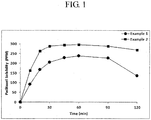
- Example 1 The solid dispersions of Examples 1 and 2 presented in Table 1 were prepared by the traditional spray drying method using a traditional spray dryer. Two different polymers, HPMC and PVP, were used to prepare the paclitaxel solid dispersions.
- Example 1 Paclitaxel 30 30 HPMC2910 150 - PVP-K30 - 150 Sodium lauryl sulfate 30 30 Cremophor EL 30 30 EtOH 2100 2100 Water 900 900 Total 240 240
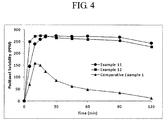
- Example 11 The solid dispersion of Example 11 as presented in Table 4 was prepared using the traditional spray drying method as mentioned in Example 1. The final solid dispersion contained 30 mg equivalent paclitaxel per 210 mg of powder mixture.
- Table 4> Ingredients (mg) Example 11 Paclitaxel 30 PVP-K30 90 Sodium lauryl sulfate 30 Tween 80 60 EtOH (2100) Water (900) Total 210
- Example 12-1 The solid dispersion of Example 12-1 as presented in Table 5 was prepared using the fluid bed spray drying technology.
- Spray solution was prepared by dissolving paclitaxel, PVP-K30, polysorbate 80 and sodium lauryl sulfate in ethanol/water solvent system. The solution was sprayed into 434 g mixture of excipients as shown in Table 5 in fluid bed system. The spray rate was 15 ⁇ 25 mL/min using one top gun.
- the static inlet pressure was 2.5-5 bar (250-500 kPa).
- the inlet temperature was 65 ⁇ 70°C and the product temperature was 30-40°C.
- the resulting paclitaxel powder mixture was free-flowing and contained 30 mg paclitaxel per 644 mg of final mixture.
- Example 12-1 Paclitaxel 30 PVP-K30 90 Sodium lauryl sulfate 30 Tween 80 60 EtOH (2100) Water (900) Subtotal 210 Avicel PH101 210 Cross CMC Na 210 Sodium lauryl sulfate 14 Total 644
- the solid dispersions of Examples 12-2 to 12-4 containing taxanes other than paclitaxel as presented in Table 6 were prepared using the fluid bed spray drying technology.
- Spray solution was prepared by dissolving docetaxel (cabazitaxel, or tesetaxel), PVP-K30, polysorbate 80 and sodium lauryl sulfate in ethanol/water solvent system.
- the solution was sprayed into 434 g mixture of excipients as shown in Table 6 in fluid bed system.
- the spray rate was 15 ⁇ 25 mL/min using one top gun.
- the static inlet pressure was 2.5-5 bar (250-500 kPa).
- the inlet temperature was 65 ⁇ 70°C and the product temperature was 30-40°C.
- the liquid formulation containing paclitaxel was prepared using the ingredients shown in Table 7. Specifically, paclitaxel as an active ingredient was completely dissolved in Tween 80 as a surfactant using a magnetic stirrer bar. ⁇ Table 7> Ingredients (mg) Comp. Ex. 1 Paclitaxel 30 Tween 80 350 Total 380
- Example 13 Preparation of tablet containing the solid dispersion of Example 11
- the tablet was prepared using the solid dispersion of Example 11, as shown in Table 8.
- Example 11 Solid dispersion of Example 11 210 Microcrystalline cellulose 210 Croscarmellose sodium 310 Sodium lauryl sulfate 14 Sodium stearyl fumarate 6 Total 750
- Example 14 Preparation of tablet containing the solid dispersion of Example 12
- Example 14-1 Preparation tablet containing the solid dispersion of Example 12-1
- the tablet was prepared using the solid dispersion of Example 12-1, as shown in Table 9.
- Example 14-1 Solid dispersion of Example 12-1 210 Microcrystalline cellulose 210 Croscarmellose sodium 310 Sodium lauryl sulfate 14 Sodium stearyl fumarate 6 Total 750
- the tablets were prepared using the solid dispersions of Examples 12-2 to 12-4, as shown in Table 10.
- part of the lubricant was added to the granule mixture and tablets were produced for the slugging process with a hardness of less than 2 kp.
- the slug was then passed through sieve #20. Remaining amount of lubricant was then added to this slug and mixed well, and the final tablets were made by the tablet machine.
- the tablets prepared were oblong with a thickness of around 6.90 mm, diameter of around 15.83 mm, and a hardness of around 2-5 kp.
- Example 14-2 Example 14-3
- Example 14-4 Solid dispersion of Example 12-2
- Solid dispersion of Example 12-4 210
- Microcrystalline cellulose 210 210
- 14 14 Sodium stearyl fumarate 6 6 6
- Comparative Example 2 Preparation of tablet containing the solid dispersion of paclitaxel by fluid bed spray drying technology with paclitaxel : polymer ratio of 1:9 with SLS only
- the resulting granules were free-flowing containing amorphous paclitaxel coated on to the excipients' surface.
- the resulting paclitaxel granules were free-flowing and contained 30 mg equivalent paclitaxel.
- the conventional tablet containing paclitaxel was prepared using the ingredients shown in Table 12.
- paclitaxel was mixed with PVP K-30, sodium lauryl sulfate, and Polysorbate 80 (Tween 80) as intragranular excipients and wet granulated to form granules. After drying the granules, microcrystalline cellulose, croscarmellose sodium, and sodium lauryl sulfate and sodium stearyl fumarate as extragranular excipients were mixed, and the final tablets were made by the tablet machine. The tablets prepared were oblong with a thickness of around 6.90 mm, diameter of around 15.83 mm, and a hardness of around 2 ⁇ 5 kp. ⁇ Table 12> Ingredients (mg) Comp. Ex.
- Test Example 1 Solubility study of solid dispersions of Examples 1 and 2
- the solubilities of the solid dispersions of Examples 1 and 2 were investigated using USP XXIII, dissolution apparatus II with 300 mL of pH 1.2 buffer as dissolution medium at 37 ⁇ 0.5°C with paddle speed of 50 rpm.
- the solid dispersions of paclitaxel (90 mg as of paclitaxel) were introduced into dissolution tester (Labfine, Korea). At predetermined time intervals, an aliquot of 5 mL was collected, filtered, and analyzed for the content of paclitaxel by the HPLC method. An equivalent volume (5 mL) of fresh dissolution medium was replaced to compensate the loss due to sampling, and the sink condition was maintained throughout the study.
- the theoretical concentration of paclitaxel in the medium is 300 PPM (90 mg paclitaxel in 300 mL medium). The results are shown in FIG. 1 .
- Test Example 2 Solubility study of solid dispersions of Examples 3 to 6
- Test Example 3 Solubility study of solid dispersions of Examples 7 to 10
- the solubilities of the solid dispersions of Example 7 to 10 were investigated using the same conditions discussed in Test Example 1.
- the effect of the amount of polymer on the solubility of paclitaxel was investigated in this study.
- the amount of PVP K30 polymer ranging of 30 ⁇ 270 mg was used to prepare the solid dispersions.
- the results are shown in FIG. 3 .
- the weight ratio of paclitaxel to PVP K-30 used were 1:9 (30:270), 1:6 (30:180), 1:3 (30:90), and 1:1 (30:30).
- Test Example 4 Solubility test of solid dispersions of Example 11 and 12-1, and Comparative Example 1
- the solid dispersions of paclitaxel (90 mg as of paclitaxel) were introduced into dissolution tester (Labfine, Korea). At predetermined time intervals, an aliquot of 5 mL was collected, filtered, and analyzed for the content of paclitaxel by the HPLC method. An equivalent volume (5 mL) of fresh dissolution medium was replaced to compensate the loss due to sampling, and the sink condition was maintained throughout the study.
- the theoretical concentration of paclitaxel in the medium is 300 PPM (90 mg paclitaxel in 300 mL medium).
- Test Example 5 Solubility study of tablets of Examples 13 and 14-1, and Comparative Example 2
- Example 14-1 prepared by the fluid bed spray dry technology, showed the fastest and highest solubility.
- the dissolution rate was very fast and highest dissolution/solubility occurred within 20 min. This could be due to faster disintegration of tablet attributed to the process of preparation and faster dissolution of amorphous paclitaxel by the solid dispersion containing hydrophilic polymer and surfactants.
- the tablet of Example 13 prepared by the traditional spray drying technology, showed comparatively slower and lower dissolution and solubility profile compared to that of Example 14-1, and complete dissolution occurred around 40 min.
- the tablet of Comparative Example 2 prepared by fluid bed spray drying technology and with highest amount of polymer content, showed the slowest disintegration and dissolution compared to other formulations tested. Despite being amorphous, the slow release and low solubility could be attributable to the highest polymer content that prevents fast hydration and release.
- Test Example 6 Disintegration test of tablets of Examples 13 and 14-1 and Comparative Examples 2 and 3
- Example 13 prepared by the traditional spray drying technology
- the tablet of Example 14-1 prepared by the fluid bed spray drying technology
- the tablet of Comparative Example 2 with the highest polymer ratio and only SLS prepared by the fluid bed spray drying technology
- the conventional tablet of Comparative Example 3 were subjected to disintegration test as per United States Pharmacopoeia (USP).
- USP United States Pharmacopoeia
- Example 14-1 showed shorter disintegration time compared to that of Example 13.
- the disintegration time for Comparative Example 2 with highest polymer ratio and only SLS was highest.
- the faster disintegration of Example 14-1 could be attributable to the fluid bed process technology which imparts lower density granules with highly porous surface which are easily wettable and so faster disintegration.
- Test Example 8 Comparison of in vivo PK parameters and bioavailability of tablets of Examples 13 and 14-1, and Comparative Example 3 in beagle dogs
- Dogs (beagle dogs weighing around 10 ⁇ 15 kg) were fasted overnight prior to dosing, but are permitted water ad libitum. The dogs were separated into three groups for Examples 13 and 14-1, and Comparative Example 3, and each dog received 30 mg of Pgp inhibitor orally approximately 30 minutes prior to dosing of paclitaxel formulations.
- FIG. 7 shows the pharmacokinetic profiles of the tablets of Examples 13 and 14-1, and Comparative Example 3 in beagle dogs. All data were listed as mean of six with standard deviation. The profiles were plotted with plasma concentration (ng/mL) against time. The FIG. 7 and Table 14 show that the tablet of Example 14-1 demonstrated highest bioavailability with highest C max . While, the Comparative Example 3 prepared by conventional method showed lowest bioavailability.
- the enhanced C max and AUC coupled with reduced T max could be due to the matrix of water soluble polymer and amorphous drug that enhances the solubility in vivo and preventing precipitation leading to enhanced absorption of paclitaxel.
- Test Example 9 Stability of tablet of Example 14-1 at accelerated condition
- Example 14-1 The tablet of Example 14-1 was stored under accelerated conditions according to the following protocol. The amount of degradation products of each active ingredient was measured to compare the stability of the composite formulations. The results are shown in Table 16.
- Example 14-1 the stability of the tablet solid dosage formulation of Example 14-1 was excellent for up to 3 months in the accelerated condition. All known and unknown impurities were within the specified limits mentioned in USP.
Landscapes
- Health & Medical Sciences (AREA)
- Chemical & Material Sciences (AREA)
- Life Sciences & Earth Sciences (AREA)
- Medicinal Chemistry (AREA)
- Veterinary Medicine (AREA)
- Public Health (AREA)
- General Health & Medical Sciences (AREA)
- Pharmacology & Pharmacy (AREA)
- Animal Behavior & Ethology (AREA)
- Epidemiology (AREA)
- Engineering & Computer Science (AREA)
- Bioinformatics & Cheminformatics (AREA)
- Molecular Biology (AREA)
- Chemical Kinetics & Catalysis (AREA)
- General Chemical & Material Sciences (AREA)
- Oil, Petroleum & Natural Gas (AREA)
- Biophysics (AREA)
- Biochemistry (AREA)
- Dispersion Chemistry (AREA)
- Inorganic Chemistry (AREA)
- Nuclear Medicine, Radiotherapy & Molecular Imaging (AREA)
- Organic Chemistry (AREA)
- Pharmaceuticals Containing Other Organic And Inorganic Compounds (AREA)
- Medicinal Preparation (AREA)
Priority Applications (2)
| Application Number | Priority Date | Filing Date | Title |
|---|---|---|---|
| PL15773354T PL3125872T3 (pl) | 2014-03-31 | 2015-03-20 | Amorficzna stała dyspersja zawierająca taksan, zawierająca ją tabletka i sposób ich wytwarzania |
| SI201530891T SI3125872T1 (sl) | 2014-03-31 | 2015-03-20 | Amorfna trdna disperzija, ki vsebuje taksan, tableta vsebujoča isto in postopek za pripravo iste |
Applications Claiming Priority (2)
| Application Number | Priority Date | Filing Date | Title |
|---|---|---|---|
| PCT/KR2014/002734 WO2015152433A1 (en) | 2014-03-31 | 2014-03-31 | Amorphous solid dispersion comprising paclitaxel, tablet comprising the same, and method for preparing the same |
| PCT/KR2015/002756 WO2015152544A1 (en) | 2014-03-31 | 2015-03-20 | Amorphous solid dispersion comprising taxane, tablet comprising the same, and method for preparing the same |
Publications (3)
| Publication Number | Publication Date |
|---|---|
| EP3125872A1 EP3125872A1 (en) | 2017-02-08 |
| EP3125872A4 EP3125872A4 (en) | 2017-10-11 |
| EP3125872B1 true EP3125872B1 (en) | 2019-08-14 |
Family
ID=54240734
Family Applications (1)
| Application Number | Title | Priority Date | Filing Date |
|---|---|---|---|
| EP15773354.4A Active EP3125872B1 (en) | 2014-03-31 | 2015-03-20 | Amorphous solid dispersion comprising taxane, tablet comprising the same, and method for preparing the same |
Country Status (34)
| Country | Link |
|---|---|
| US (1) | US9867801B2 (pl) |
| EP (1) | EP3125872B1 (pl) |
| JP (1) | JP6539675B2 (pl) |
| KR (1) | KR101851571B1 (pl) |
| CN (1) | CN106255496B (pl) |
| AR (1) | AR099886A1 (pl) |
| AU (1) | AU2015242738B2 (pl) |
| BR (1) | BR112016022528B1 (pl) |
| CA (1) | CA2944438C (pl) |
| CL (1) | CL2016002441A1 (pl) |
| CU (1) | CU24486B1 (pl) |
| DK (1) | DK3125872T3 (pl) |
| DO (1) | DOP2016000262A (pl) |
| ES (1) | ES2748686T3 (pl) |
| GT (1) | GT201600208A (pl) |
| HU (1) | HUE046616T2 (pl) |
| IL (1) | IL247977B (pl) |
| LT (1) | LT3125872T (pl) |
| MA (1) | MA39361B1 (pl) |
| MX (1) | MX373189B (pl) |
| MY (1) | MY175387A (pl) |
| PE (1) | PE20161477A1 (pl) |
| PH (1) | PH12016501825B1 (pl) |
| PL (1) | PL3125872T3 (pl) |
| PT (1) | PT3125872T (pl) |
| PY (1) | PY1513631A (pl) |
| RU (1) | RU2684632C2 (pl) |
| SA (1) | SA516371952B1 (pl) |
| SG (1) | SG11201607456RA (pl) |
| SI (1) | SI3125872T1 (pl) |
| TW (1) | TWI706793B (pl) |
| UA (1) | UA117610C2 (pl) |
| UY (1) | UY36055A (pl) |
| WO (2) | WO2015152433A1 (pl) |
Families Citing this family (16)
| Publication number | Priority date | Publication date | Assignee | Title |
|---|---|---|---|---|
| US20180344646A1 (en) * | 2015-11-25 | 2018-12-06 | Patheon Development Services Inc. | Amorphous dispersion granules and oral dosage forms |
| CN109069460A (zh) * | 2016-05-09 | 2018-12-21 | 分散技术有限责任公司 | 改进的药物制剂 |
| CN110742895A (zh) * | 2017-03-30 | 2020-02-04 | 复旦大学附属中山医院 | Fxr激动剂在制备治疗脂肪肉瘤药物中的用途 |
| TWI833710B (zh) * | 2017-10-06 | 2024-03-01 | 香港商慧源香港創新有限公司 | 高單位含量口服型紫杉烷組合物及方法 |
| WO2019094688A1 (en) * | 2017-11-10 | 2019-05-16 | Dispersol Technologies, Llc | Improved drug formulations |
| TWI849043B (zh) * | 2019-01-25 | 2024-07-21 | 英屬開曼群島商百濟神州有限公司 | B-raf激酶二聚體抑制劑之穩定固體分散體、製備方法及其用途 |
| CN109851593B (zh) * | 2019-02-01 | 2021-04-16 | 沈阳药科大学 | 基于淋巴介导转运的甘油三酯前药及其制备方法 |
| CN110105368B (zh) * | 2019-05-09 | 2022-01-07 | 上海大学 | 去氧紫杉烷类似物及其制备方法 |
| WO2021041348A1 (en) | 2019-08-26 | 2021-03-04 | Arvinas Operations, Inc. | Methods of treating breast cancer with tetrahydronaphthalene derivatives as estrogen receptor degraders |
| KR20220109430A (ko) | 2019-12-02 | 2022-08-04 | 아스트라제네카 아베 | 6-(2-클로로-6-메틸피리딘-4-일)-5-(4-플루오로페닐)-1,2,4-트리아진-3-아민의 고체 약학 제형 |
| WO2021177930A1 (en) * | 2020-03-06 | 2021-09-10 | Vyshnevskyy Ihor Anatoliyovych | Pharmaceutical composition with increased solubility of gesperidine and method of its preparation |
| WO2022076663A1 (en) | 2020-10-07 | 2022-04-14 | Athenex, Inc. | Acetamido-phenyltetrazole derivatives and methods of using the same |
| EP4358942A1 (en) * | 2021-06-23 | 2024-05-01 | Blueprint Medicines Corporation | Pharmaceutical compositions of an epidermal growth factor receptor inhibitor |
| EP4479092A4 (en) * | 2022-02-14 | 2026-03-04 | Purdue Research Foundation | POLYMERIC SALTS INTENDED TO IMPROVE THE ADMINISTRATION OF MEDICATION FROM AMORPHIC SOLID DISPERSIONS |
| WO2023171894A1 (ko) * | 2022-03-08 | 2023-09-14 | 주식회사 위바이오트리 | 도세탁셀 또는 이의 약학적으로 허용 가능한 염을 포함하는 약학적 조성물 및 이의 제조방법 |
| CN115429766B (zh) * | 2022-09-08 | 2023-10-27 | 江苏集萃新型药物制剂技术研究所有限公司 | 淫羊藿苷固体分散体、复方药物双层片剂及其制备方法与应用 |
Family Cites Families (19)
| Publication number | Priority date | Publication date | Assignee | Title |
|---|---|---|---|---|
| WO1999000113A1 (en) * | 1997-06-27 | 1999-01-07 | Vivorx Pharmaceuticals, Inc. | Novel formulations of pharmacological agents, methods for the preparation thereof and methods for the use thereof |
| US6610317B2 (en) * | 1999-05-27 | 2003-08-26 | Acusphere, Inc. | Porous paclitaxel matrices and methods of manufacture thereof |
| KR20030041577A (ko) * | 2001-11-20 | 2003-05-27 | 디디에스텍주식회사 | 난용성 약물과 치환된 시클로덱스트린을 함유하는고체분산체 및 이를 함유하는 약제학적 조성물 |
| WO2005030257A2 (en) * | 2003-09-30 | 2005-04-07 | Solubest Ltd. | Water soluble nanoparticles inclusion complexes |
| KR20070072888A (ko) * | 2004-10-25 | 2007-07-06 | 니뽄 다바코 산교 가부시키가이샤 | 용해성 및 안정성이 개선된 고형 제제 및 그의 제조 방법 |
| CN1840196A (zh) * | 2006-01-27 | 2006-10-04 | 无锡杰西医药科技有限公司 | 一种适用于难溶性药物的分散剂 |
| WO2007073389A1 (en) * | 2005-12-22 | 2007-06-28 | Teva Pharmaceutical Industries Ltd. | Compressed solid dosage forms with drugs of low solubility and process for making the same |
| US9833510B2 (en) * | 2007-06-12 | 2017-12-05 | Johnson & Johnson Consumer Inc. | Modified release solid or semi-solid dosage forms |
| WO2010020799A2 (en) * | 2008-08-22 | 2010-02-25 | Slotervaart Participaties Bv | Composition |
| KR101544498B1 (ko) * | 2007-08-24 | 2015-08-17 | 스티칭 허트 네덜란드 칸커 인스티튜트 | 종양성 질환의 치료를 위한 조성물 |
| GB0716591D0 (en) * | 2007-08-24 | 2007-10-03 | Vereniging Het Nl Kanker I | Composition |
| US9089544B2 (en) * | 2007-08-24 | 2015-07-28 | Slotervaart Participaties Bv | Composition |
| TWI454288B (zh) * | 2008-01-25 | 2014-10-01 | Gruenenthal Chemie | 藥物劑型 |
| CN101632630A (zh) * | 2008-07-24 | 2010-01-27 | 北京诺美医药科技有限公司 | 一种普罗布考固体分散体 |
| JP5751868B2 (ja) * | 2010-03-30 | 2015-07-22 | 日東電工株式会社 | フィルム状製剤及びその製造方法 |
| RU2566716C2 (ru) * | 2010-06-09 | 2015-10-27 | Эббви Бахамаз Лтд. | Твердые дисперсии, содержащие ингибиторы киназ |
| NZ610729A (en) * | 2010-11-19 | 2015-10-30 | Gilead Sciences Inc | Therapeutic compositions comprising rilpivirine hcl and tenofovir disoproxil fumarate |
| EP2755637B1 (en) * | 2011-09-13 | 2020-08-12 | ISP Investments LLC | Solid dispersion of poorly soluble compounds comprising crospovidone and at least one water-soluble polymer |
| CN102357075A (zh) * | 2011-09-30 | 2012-02-22 | 武汉平华生物医药科技有限公司 | 一种多西他赛纳米制剂及其制备方法 |
-
2014
- 2014-03-31 WO PCT/KR2014/002734 patent/WO2015152433A1/en not_active Ceased
-
2015
- 2015-03-20 DK DK15773354.4T patent/DK3125872T3/da active
- 2015-03-20 KR KR1020167027373A patent/KR101851571B1/ko active Active
- 2015-03-20 LT LTEP15773354.4T patent/LT3125872T/lt unknown
- 2015-03-20 UA UAA201609267A patent/UA117610C2/uk unknown
- 2015-03-20 CA CA2944438A patent/CA2944438C/en active Active
- 2015-03-20 US US15/300,515 patent/US9867801B2/en active Active
- 2015-03-20 WO PCT/KR2015/002756 patent/WO2015152544A1/en not_active Ceased
- 2015-03-20 JP JP2016559161A patent/JP6539675B2/ja active Active
- 2015-03-20 MX MX2016012596A patent/MX373189B/es active IP Right Grant
- 2015-03-20 CU CU2016000144A patent/CU24486B1/es unknown
- 2015-03-20 ES ES15773354T patent/ES2748686T3/es active Active
- 2015-03-20 CN CN201580016355.2A patent/CN106255496B/zh active Active
- 2015-03-20 HU HUE15773354A patent/HUE046616T2/hu unknown
- 2015-03-20 AU AU2015242738A patent/AU2015242738B2/en active Active
- 2015-03-20 SG SG11201607456RA patent/SG11201607456RA/en unknown
- 2015-03-20 PE PE2016001849A patent/PE20161477A1/es unknown
- 2015-03-20 SI SI201530891T patent/SI3125872T1/sl unknown
- 2015-03-20 PT PT157733544T patent/PT3125872T/pt unknown
- 2015-03-20 RU RU2016136636A patent/RU2684632C2/ru active
- 2015-03-20 BR BR112016022528-7A patent/BR112016022528B1/pt not_active IP Right Cessation
- 2015-03-20 EP EP15773354.4A patent/EP3125872B1/en active Active
- 2015-03-20 MA MA39361A patent/MA39361B1/fr unknown
- 2015-03-20 PL PL15773354T patent/PL3125872T3/pl unknown
- 2015-03-20 MY MYPI2016001721A patent/MY175387A/en unknown
- 2015-03-25 PY PY201501513631A patent/PY1513631A/es unknown
- 2015-03-27 UY UY0001036055A patent/UY36055A/es not_active Application Discontinuation
- 2015-03-30 TW TW104110283A patent/TWI706793B/zh active
- 2015-03-30 AR ARP150100942A patent/AR099886A1/es unknown
-
2016
- 2016-09-19 PH PH12016501825A patent/PH12016501825B1/en unknown
- 2016-09-22 IL IL247977A patent/IL247977B/en active IP Right Grant
- 2016-09-27 DO DO2016000262A patent/DOP2016000262A/es unknown
- 2016-09-28 CL CL2016002441A patent/CL2016002441A1/es unknown
- 2016-09-29 SA SA516371952A patent/SA516371952B1/ar unknown
- 2016-09-30 GT GT201600208A patent/GT201600208A/es unknown
Non-Patent Citations (1)
| Title |
|---|
| None * |
Also Published As
Similar Documents
| Publication | Publication Date | Title |
|---|---|---|
| US9867801B2 (en) | Amorphous solid dispersion comprising taxane, tablet comprising the same, and method for preparing the same | |
| CN107405349B (zh) | Parp抑制剂固体药物剂型及其应用 | |
| KR101737250B1 (ko) | 개선된 생체이용률을 갖는 약학 조성물 | |
| KR20130076818A (ko) | 약학 조성물 | |
| JP7597984B2 (ja) | 高強度経口タキサン組成物及び方法 | |
| KR20230097021A (ko) | 약학 조성물 | |
| JP2010510980A (ja) | 腸送達系のためのナフトキノンベース化合物を含有する医薬組成物 | |
| ES2929730T3 (es) | Dispersión sólida | |
| NZ723991B2 (en) | Amorphous solid dispersion comprising taxane, tablet comprising the same, and method for preparing the same | |
| HK1226955B (en) | Amorphous solid dispersion comprising taxane, tablet comprising the same, and method for preparing the same | |
| HK1226955A1 (en) | Amorphous solid dispersion comprising taxane, tablet comprising the same, and method for preparing the same | |
| WO2024111552A1 (ja) | 経口固形製剤 | |
| HK40047361A (en) | Pharmaceutical composition with improved bioavailability | |
| HK40045939A (en) | Pharmaceutical composition with improved bioavailability |
Legal Events
| Date | Code | Title | Description |
|---|---|---|---|
| STAA | Information on the status of an ep patent application or granted ep patent |
Free format text: STATUS: THE INTERNATIONAL PUBLICATION HAS BEEN MADE |
|
| PUAI | Public reference made under article 153(3) epc to a published international application that has entered the european phase |
Free format text: ORIGINAL CODE: 0009012 |
|
| STAA | Information on the status of an ep patent application or granted ep patent |
Free format text: STATUS: REQUEST FOR EXAMINATION WAS MADE |
|
| 17P | Request for examination filed |
Effective date: 20161014 |
|
| AK | Designated contracting states |
Kind code of ref document: A1 Designated state(s): AL AT BE BG CH CY CZ DE DK EE ES FI FR GB GR HR HU IE IS IT LI LT LU LV MC MK MT NL NO PL PT RO RS SE SI SK SM TR |
|
| AX | Request for extension of the european patent |
Extension state: BA ME |
|
| DAV | Request for validation of the european patent (deleted) | ||
| DAX | Request for extension of the european patent (deleted) | ||
| A4 | Supplementary search report drawn up and despatched |
Effective date: 20170911 |
|
| RIC1 | Information provided on ipc code assigned before grant |
Ipc: A61K 31/335 20060101ALI20170905BHEP Ipc: A61K 9/20 20060101AFI20170905BHEP Ipc: A61K 9/14 20060101ALI20170905BHEP Ipc: A61K 31/337 20060101ALI20170905BHEP Ipc: A61K 9/16 20060101ALI20170905BHEP Ipc: A61K 9/30 20060101ALI20170905BHEP |
|
| GRAP | Despatch of communication of intention to grant a patent |
Free format text: ORIGINAL CODE: EPIDOSNIGR1 |
|
| STAA | Information on the status of an ep patent application or granted ep patent |
Free format text: STATUS: GRANT OF PATENT IS INTENDED |
|
| RIC1 | Information provided on ipc code assigned before grant |
Ipc: A61K 9/14 20060101ALI20190206BHEP Ipc: A61K 31/335 20060101ALI20190206BHEP Ipc: A61K 9/20 20060101AFI20190206BHEP Ipc: A61K 31/337 20060101ALI20190206BHEP Ipc: A61K 9/16 20060101ALI20190206BHEP Ipc: A61K 9/30 20060101ALI20190206BHEP |
|
| RIN1 | Information on inventor provided before grant (corrected) |
Inventor name: WOO, JONG SOO Inventor name: KIM, YONG IL Inventor name: IM, HO TAEK Inventor name: PARK, JAE HYUN Inventor name: YOON, YOUNG SU Inventor name: SRINIVASAN, SHANMUGAM |
|
| INTG | Intention to grant announced |
Effective date: 20190313 |
|
| GRAS | Grant fee paid |
Free format text: ORIGINAL CODE: EPIDOSNIGR3 |
|
| GRAA | (expected) grant |
Free format text: ORIGINAL CODE: 0009210 |
|
| STAA | Information on the status of an ep patent application or granted ep patent |
Free format text: STATUS: THE PATENT HAS BEEN GRANTED |
|
| AK | Designated contracting states |
Kind code of ref document: B1 Designated state(s): AL AT BE BG CH CY CZ DE DK EE ES FI FR GB GR HR HU IE IS IT LI LT LU LV MC MK MT NL NO PL PT RO RS SE SI SK SM TR |
|
| REG | Reference to a national code |
Ref country code: GB Ref legal event code: FG4D |
|
| REG | Reference to a national code |
Ref country code: CH Ref legal event code: EP Ref country code: AT Ref legal event code: REF Ref document number: 1166180 Country of ref document: AT Kind code of ref document: T Effective date: 20190815 |
|
| REG | Reference to a national code |
Ref country code: IE Ref legal event code: FG4D |
|
| REG | Reference to a national code |
Ref country code: DE Ref legal event code: R096 Ref document number: 602015035873 Country of ref document: DE |
|
| REG | Reference to a national code |
Ref country code: CH Ref legal event code: NV Representative=s name: SERVOPATENT GMBH, CH |
|
| REG | Reference to a national code |
Ref country code: DK Ref legal event code: T3 Effective date: 20191010 |
|
| REG | Reference to a national code |
Ref country code: SE Ref legal event code: TRGR |
|
| REG | Reference to a national code |
Ref country code: NL Ref legal event code: FP |
|
| REG | Reference to a national code |
Ref country code: PT Ref legal event code: SC4A Ref document number: 3125872 Country of ref document: PT Date of ref document: 20191024 Kind code of ref document: T Free format text: AVAILABILITY OF NATIONAL TRANSLATION Effective date: 20191001 |
|
| REG | Reference to a national code |
Ref country code: NO Ref legal event code: T2 Effective date: 20190814 |
|
| REG | Reference to a national code |
Ref country code: GR Ref legal event code: EP Ref document number: 20190402908 Country of ref document: GR Effective date: 20191128 |
|
| PG25 | Lapsed in a contracting state [announced via postgrant information from national office to epo] |
Ref country code: BG Free format text: LAPSE BECAUSE OF FAILURE TO SUBMIT A TRANSLATION OF THE DESCRIPTION OR TO PAY THE FEE WITHIN THE PRESCRIBED TIME-LIMIT Effective date: 20191114 Ref country code: HR Free format text: LAPSE BECAUSE OF FAILURE TO SUBMIT A TRANSLATION OF THE DESCRIPTION OR TO PAY THE FEE WITHIN THE PRESCRIBED TIME-LIMIT Effective date: 20190814 Ref country code: FI Free format text: LAPSE BECAUSE OF FAILURE TO SUBMIT A TRANSLATION OF THE DESCRIPTION OR TO PAY THE FEE WITHIN THE PRESCRIBED TIME-LIMIT Effective date: 20190814 |
|
| PG25 | Lapsed in a contracting state [announced via postgrant information from national office to epo] |
Ref country code: AL Free format text: LAPSE BECAUSE OF FAILURE TO SUBMIT A TRANSLATION OF THE DESCRIPTION OR TO PAY THE FEE WITHIN THE PRESCRIBED TIME-LIMIT Effective date: 20190814 Ref country code: RS Free format text: LAPSE BECAUSE OF FAILURE TO SUBMIT A TRANSLATION OF THE DESCRIPTION OR TO PAY THE FEE WITHIN THE PRESCRIBED TIME-LIMIT Effective date: 20190814 Ref country code: LV Free format text: LAPSE BECAUSE OF FAILURE TO SUBMIT A TRANSLATION OF THE DESCRIPTION OR TO PAY THE FEE WITHIN THE PRESCRIBED TIME-LIMIT Effective date: 20190814 |
|
| REG | Reference to a national code |
Ref country code: ES Ref legal event code: FG2A Ref document number: 2748686 Country of ref document: ES Kind code of ref document: T3 Effective date: 20200317 |
|
| REG | Reference to a national code |
Ref country code: HU Ref legal event code: AG4A Ref document number: E046616 Country of ref document: HU |
|
| PG25 | Lapsed in a contracting state [announced via postgrant information from national office to epo] |
Ref country code: RO Free format text: LAPSE BECAUSE OF FAILURE TO SUBMIT A TRANSLATION OF THE DESCRIPTION OR TO PAY THE FEE WITHIN THE PRESCRIBED TIME-LIMIT Effective date: 20190814 Ref country code: EE Free format text: LAPSE BECAUSE OF FAILURE TO SUBMIT A TRANSLATION OF THE DESCRIPTION OR TO PAY THE FEE WITHIN THE PRESCRIBED TIME-LIMIT Effective date: 20190814 |
|
| PG25 | Lapsed in a contracting state [announced via postgrant information from national office to epo] |
Ref country code: SK Free format text: LAPSE BECAUSE OF FAILURE TO SUBMIT A TRANSLATION OF THE DESCRIPTION OR TO PAY THE FEE WITHIN THE PRESCRIBED TIME-LIMIT Effective date: 20190814 Ref country code: SM Free format text: LAPSE BECAUSE OF FAILURE TO SUBMIT A TRANSLATION OF THE DESCRIPTION OR TO PAY THE FEE WITHIN THE PRESCRIBED TIME-LIMIT Effective date: 20190814 |
|
| REG | Reference to a national code |
Ref country code: DE Ref legal event code: R097 Ref document number: 602015035873 Country of ref document: DE |
|
| REG | Reference to a national code |
Ref country code: CH Ref legal event code: PCAR Free format text: NEW ADDRESS: WANNERSTRASSE 9/1, 8045 ZUERICH (CH) |
|
| PLBE | No opposition filed within time limit |
Free format text: ORIGINAL CODE: 0009261 |
|
| STAA | Information on the status of an ep patent application or granted ep patent |
Free format text: STATUS: NO OPPOSITION FILED WITHIN TIME LIMIT |
|
| 26N | No opposition filed |
Effective date: 20200603 |
|
| PG25 | Lapsed in a contracting state [announced via postgrant information from national office to epo] |
Ref country code: MC Free format text: LAPSE BECAUSE OF FAILURE TO SUBMIT A TRANSLATION OF THE DESCRIPTION OR TO PAY THE FEE WITHIN THE PRESCRIBED TIME-LIMIT Effective date: 20190814 |
|
| PG25 | Lapsed in a contracting state [announced via postgrant information from national office to epo] |
Ref country code: LU Free format text: LAPSE BECAUSE OF NON-PAYMENT OF DUE FEES Effective date: 20200320 |
|
| PG25 | Lapsed in a contracting state [announced via postgrant information from national office to epo] |
Ref country code: MT Free format text: LAPSE BECAUSE OF FAILURE TO SUBMIT A TRANSLATION OF THE DESCRIPTION OR TO PAY THE FEE WITHIN THE PRESCRIBED TIME-LIMIT Effective date: 20190814 Ref country code: CY Free format text: LAPSE BECAUSE OF FAILURE TO SUBMIT A TRANSLATION OF THE DESCRIPTION OR TO PAY THE FEE WITHIN THE PRESCRIBED TIME-LIMIT Effective date: 20190814 |
|
| PG25 | Lapsed in a contracting state [announced via postgrant information from national office to epo] |
Ref country code: MK Free format text: LAPSE BECAUSE OF FAILURE TO SUBMIT A TRANSLATION OF THE DESCRIPTION OR TO PAY THE FEE WITHIN THE PRESCRIBED TIME-LIMIT Effective date: 20190814 |
|
| REG | Reference to a national code |
Ref country code: AT Ref legal event code: UEP Ref document number: 1166180 Country of ref document: AT Kind code of ref document: T Effective date: 20190814 |
|
| REG | Reference to a national code |
Ref country code: FR Ref legal event code: PLFP Year of fee payment: 9 |
|
| PGFP | Annual fee paid to national office [announced via postgrant information from national office to epo] |
Ref country code: NO Payment date: 20221220 Year of fee payment: 9 Ref country code: SE Payment date: 20221221 Year of fee payment: 9 |
|
| PGFP | Annual fee paid to national office [announced via postgrant information from national office to epo] |
Ref country code: PT Payment date: 20221221 Year of fee payment: 9 Ref country code: PL Payment date: 20221220 Year of fee payment: 9 Ref country code: GR Payment date: 20221220 Year of fee payment: 9 |
|
| PGFP | Annual fee paid to national office [announced via postgrant information from national office to epo] |
Ref country code: LT Payment date: 20230123 Year of fee payment: 9 Ref country code: CZ Payment date: 20230316 Year of fee payment: 9 |
|
| PGFP | Annual fee paid to national office [announced via postgrant information from national office to epo] |
Ref country code: TR Payment date: 20230104 Year of fee payment: 9 Ref country code: SI Payment date: 20221228 Year of fee payment: 9 Ref country code: IS Payment date: 20230105 Year of fee payment: 9 Ref country code: HU Payment date: 20230220 Year of fee payment: 9 |
|
| REG | Reference to a national code |
Ref country code: LT Ref legal event code: MM4D Effective date: 20240320 |
|
| PG25 | Lapsed in a contracting state [announced via postgrant information from national office to epo] |
Ref country code: PT Free format text: LAPSE BECAUSE OF NON-PAYMENT OF DUE FEES Effective date: 20240920 |
|
| PG25 | Lapsed in a contracting state [announced via postgrant information from national office to epo] |
Ref country code: CZ Free format text: LAPSE BECAUSE OF NON-PAYMENT OF DUE FEES Effective date: 20240320 |
|
| REG | Reference to a national code |
Ref country code: SE Ref legal event code: EUG |
|
| PG25 | Lapsed in a contracting state [announced via postgrant information from national office to epo] |
Ref country code: PT Free format text: LAPSE BECAUSE OF NON-PAYMENT OF DUE FEES Effective date: 20240920 Ref country code: CZ Free format text: LAPSE BECAUSE OF NON-PAYMENT OF DUE FEES Effective date: 20240320 |
|
| PG25 | Lapsed in a contracting state [announced via postgrant information from national office to epo] |
Ref country code: HU Free format text: LAPSE BECAUSE OF NON-PAYMENT OF DUE FEES Effective date: 20240321 |
|
| PG25 | Lapsed in a contracting state [announced via postgrant information from national office to epo] |
Ref country code: HU Free format text: LAPSE BECAUSE OF NON-PAYMENT OF DUE FEES Effective date: 20240321 |
|
| PG25 | Lapsed in a contracting state [announced via postgrant information from national office to epo] |
Ref country code: LT Free format text: LAPSE BECAUSE OF NON-PAYMENT OF DUE FEES Effective date: 20240320 |
|
| PG25 | Lapsed in a contracting state [announced via postgrant information from national office to epo] |
Ref country code: NO Free format text: LAPSE BECAUSE OF NON-PAYMENT OF DUE FEES Effective date: 20240331 |
|
| PG25 | Lapsed in a contracting state [announced via postgrant information from national office to epo] |
Ref country code: GR Free format text: LAPSE BECAUSE OF NON-PAYMENT OF DUE FEES Effective date: 20241004 |
|
| PG25 | Lapsed in a contracting state [announced via postgrant information from national office to epo] |
Ref country code: NO Free format text: LAPSE BECAUSE OF NON-PAYMENT OF DUE FEES Effective date: 20240331 Ref country code: LT Free format text: LAPSE BECAUSE OF NON-PAYMENT OF DUE FEES Effective date: 20240320 Ref country code: GR Free format text: LAPSE BECAUSE OF NON-PAYMENT OF DUE FEES Effective date: 20241004 |
|
| PG25 | Lapsed in a contracting state [announced via postgrant information from national office to epo] |
Ref country code: PL Free format text: LAPSE BECAUSE OF NON-PAYMENT OF DUE FEES Effective date: 20240320 |
|
| REG | Reference to a national code |
Ref country code: SI Ref legal event code: KO00 Effective date: 20240321 |
|
| PG25 | Lapsed in a contracting state [announced via postgrant information from national office to epo] |
Ref country code: SE Free format text: LAPSE BECAUSE OF NON-PAYMENT OF DUE FEES Effective date: 20240321 |
|
| PGFP | Annual fee paid to national office [announced via postgrant information from national office to epo] |
Ref country code: FR Payment date: 20251223 Year of fee payment: 12 Ref country code: NL Payment date: 20251223 Year of fee payment: 12 |
|
| PGFP | Annual fee paid to national office [announced via postgrant information from national office to epo] |
Ref country code: BE Payment date: 20251229 Year of fee payment: 12 |
|
| REG | Reference to a national code |
Ref country code: CH Ref legal event code: U11 Free format text: ST27 STATUS EVENT CODE: U-0-0-U10-U11 (AS PROVIDED BY THE NATIONAL OFFICE) Effective date: 20260401 |
|
| PGFP | Annual fee paid to national office [announced via postgrant information from national office to epo] |
Ref country code: GB Payment date: 20260108 Year of fee payment: 12 |
|
| PGFP | Annual fee paid to national office [announced via postgrant information from national office to epo] |
Ref country code: DE Payment date: 20251222 Year of fee payment: 12 Ref country code: DK Payment date: 20260109 Year of fee payment: 12 Ref country code: IE Payment date: 20260105 Year of fee payment: 12 |
|
| PGFP | Annual fee paid to national office [announced via postgrant information from national office to epo] |
Ref country code: AT Payment date: 20260105 Year of fee payment: 12 |
|
| PGFP | Annual fee paid to national office [announced via postgrant information from national office to epo] |
Ref country code: IT Payment date: 20251223 Year of fee payment: 12 |
|
| PG25 | Lapsed in a contracting state [announced via postgrant information from national office to epo] |
Ref country code: SI Free format text: LAPSE BECAUSE OF NON-PAYMENT OF DUE FEES Effective date: 20240321 |
|
| PG25 | Lapsed in a contracting state [announced via postgrant information from national office to epo] |
Ref country code: TR Free format text: LAPSE BECAUSE OF NON-PAYMENT OF DUE FEES Effective date: 20240320 |
|
| PGFP | Annual fee paid to national office [announced via postgrant information from national office to epo] |
Ref country code: ES Payment date: 20260424 Year of fee payment: 12 |
|
| PGFP | Annual fee paid to national office [announced via postgrant information from national office to epo] |
Ref country code: CH Payment date: 20260401 Year of fee payment: 12 |
|
| PG25 | Lapsed in a contracting state [announced via postgrant information from national office to epo] |
Ref country code: IS Free format text: LAPSE BECAUSE OF NON-PAYMENT OF DUE FEES Effective date: 20241002 |