EP3109353B1 - Feuchtigkeitsabsorbierendes wärmeerzeugendes schnelltrocknendes feuchtigkeitsbindendes thermisches gewebe und herstellungsverfahren dafür - Google Patents
Feuchtigkeitsabsorbierendes wärmeerzeugendes schnelltrocknendes feuchtigkeitsbindendes thermisches gewebe und herstellungsverfahren dafür Download PDFInfo
- Publication number
- EP3109353B1 EP3109353B1 EP15748772.9A EP15748772A EP3109353B1 EP 3109353 B1 EP3109353 B1 EP 3109353B1 EP 15748772 A EP15748772 A EP 15748772A EP 3109353 B1 EP3109353 B1 EP 3109353B1
- Authority
- EP
- European Patent Office
- Prior art keywords
- yarn
- fabric
- knitting
- way
- moisture
- Prior art date
- Legal status (The legal status is an assumption and is not a legal conclusion. Google has not performed a legal analysis and makes no representation as to the accuracy of the status listed.)
- Active
Links
Images



Classifications
-
- D—TEXTILES; PAPER
- D04—BRAIDING; LACE-MAKING; KNITTING; TRIMMINGS; NON-WOVEN FABRICS
- D04B—KNITTING
- D04B1/00—Weft knitting processes for the production of fabrics or articles not dependent on the use of particular machines; Fabrics or articles defined by such processes
- D04B1/14—Other fabrics or articles characterised primarily by the use of particular thread materials
-
- D—TEXTILES; PAPER
- D02—YARNS; MECHANICAL FINISHING OF YARNS OR ROPES; WARPING OR BEAMING
- D02G—CRIMPING OR CURLING FIBRES, FILAMENTS, THREADS, OR YARNS; YARNS OR THREADS
- D02G3/00—Yarns or threads, e.g. fancy yarns; Processes or apparatus for the production thereof, not otherwise provided for
- D02G3/02—Yarns or threads characterised by the material or by the materials from which they are made
- D02G3/04—Blended or other yarns or threads containing components made from different materials
-
- D—TEXTILES; PAPER
- D06—TREATMENT OF TEXTILES OR THE LIKE; LAUNDERING; FLEXIBLE MATERIALS NOT OTHERWISE PROVIDED FOR
- D06B—TREATING TEXTILE MATERIALS USING LIQUIDS, GASES OR VAPOURS
- D06B21/00—Successive treatments of textile materials by liquids, gases or vapours
-
- D—TEXTILES; PAPER
- D06—TREATMENT OF TEXTILES OR THE LIKE; LAUNDERING; FLEXIBLE MATERIALS NOT OTHERWISE PROVIDED FOR
- D06B—TREATING TEXTILE MATERIALS USING LIQUIDS, GASES OR VAPOURS
- D06B3/00—Passing of textile materials through liquids, gases or vapours to effect treatment, e.g. washing, dyeing, bleaching, sizing, impregnating
- D06B3/24—Passing of textile materials through liquids, gases or vapours to effect treatment, e.g. washing, dyeing, bleaching, sizing, impregnating of fabrics in roped form
-
- D—TEXTILES; PAPER
- D06—TREATMENT OF TEXTILES OR THE LIKE; LAUNDERING; FLEXIBLE MATERIALS NOT OTHERWISE PROVIDED FOR
- D06P—DYEING OR PRINTING TEXTILES; DYEING LEATHER, FURS OR SOLID MACROMOLECULAR SUBSTANCES IN ANY FORM
- D06P3/00—Special processes of dyeing or printing textiles, or dyeing leather, furs, or solid macromolecular substances in any form, classified according to the material treated
- D06P3/82—Textiles which contain different kinds of fibres
-
- D—TEXTILES; PAPER
- D10—INDEXING SCHEME ASSOCIATED WITH SUBLASSES OF SECTION D, RELATING TO TEXTILES
- D10B—INDEXING SCHEME ASSOCIATED WITH SUBLASSES OF SECTION D, RELATING TO TEXTILES
- D10B2401/00—Physical properties
- D10B2401/02—Moisture-responsive characteristics
-
- D—TEXTILES; PAPER
- D10—INDEXING SCHEME ASSOCIATED WITH SUBLASSES OF SECTION D, RELATING TO TEXTILES
- D10B—INDEXING SCHEME ASSOCIATED WITH SUBLASSES OF SECTION D, RELATING TO TEXTILES
- D10B2403/00—Details of fabric structure established in the fabric forming process
- D10B2403/01—Surface features
- D10B2403/011—Dissimilar front and back faces
- D10B2403/0111—One hairy surface, e.g. napped or raised
-
- D—TEXTILES; PAPER
- D10—INDEXING SCHEME ASSOCIATED WITH SUBLASSES OF SECTION D, RELATING TO TEXTILES
- D10B—INDEXING SCHEME ASSOCIATED WITH SUBLASSES OF SECTION D, RELATING TO TEXTILES
- D10B2403/00—Details of fabric structure established in the fabric forming process
- D10B2403/01—Surface features
- D10B2403/011—Dissimilar front and back faces
- D10B2403/0114—Dissimilar front and back faces with one or more yarns appearing predominantly on one face, e.g. plated or paralleled yarns
-
- D—TEXTILES; PAPER
- D10—INDEXING SCHEME ASSOCIATED WITH SUBLASSES OF SECTION D, RELATING TO TEXTILES
- D10B—INDEXING SCHEME ASSOCIATED WITH SUBLASSES OF SECTION D, RELATING TO TEXTILES
- D10B2501/00—Wearing apparel
- D10B2501/04—Outerwear; Protective garments
Definitions
- the invention relates to the technical field of knitted dress fabric, and more particularly to a moisture-absorbing heat-generating quick-drying moisture-retaining thermal fabric and manufacturing method thereof.
- the knitted dress fabric mainly adopts the cellulose fibers, the protein fiber, the regenerated cellulose fiber and a mixture thereof, such as cotton, modal, rayon, wool cashmere, mulberry silk and linen. It has a function of natural moisture-absorbing, antibacterial, warm-keeping and skin protection. With the help of the introduction of spandex elastomeric yarns, the knitted dress has a better body fitting and a function of free stretching. However, these fabrics have the following defects. The wet permeability and moisture liberation are poor.
- evaporation rate and the amount of water vapor permeability are two characteristic indexes for the quick-drying performance of the fabric. They represent the evaporation rate and the amount of water vapor permeability of the whole fabric. The differences between the quick-drying performance of the inner layer of the fabric and that of the outer layer of the fabric can not be represented. In fact, a lot of moisture-absorbing quick-drying products have been developed by the developer for the knitted fabrics.
- the sweat permeates from the inner layer of the fabric to the outer layer of the fabric rapidly. As the sweat transfers from the inner layer to the outer layer rapidly with such method, the skin is dry and comfortable.
- the idea is rarely applied to the development of the knitted underwear fabric.
- most of the thermal knitted underwear is made by a knitting process which adopts air layer silk. Thus, the elasticity of the fabric is poor and the pilling of polyester fiber low stretch yarn will come out, so that the appearance and the performance of the underwear will be greatly affected.
- Document US 2010/0305535 A1 discloses improved compression bandage structures.
- Document CN 103 564 663 relates to a kind of socks and a preparation method thereof.
- the object of this invention is providing a moisture-absorbing heat-generating quick-drying moisture-retaining thermal fabric.
- the moisture-absorbing heating value of the fabric far exceeds the national standard. Also, it has a good moisture-absorbing quick-drying performance and the heat preservation rate meets the national requirements on the thermal knitted underwear.
- the fabric has a comfortable resilience, and a soft, smooth feel of the surface contacting the skin.
- the moisture-absorbing heat-generating quick-drying moisture-retaining thermal fabric is knitted by a first yarn, a second yarn, a third yarn an a fourth yarn, wherein the first yarn is a regenerated cellulose fiber-type blended yarn made by blending regenerated cellulose fiber with linen, wool, cashmere, cotton fiber, or a mixture thereof , or is a regenerated cellulose filament yarn or regenerated cellulose staple yarn; the second yarn is a modified polyester fiber yarn having a non-circular cross section; the third yarn is a cotton fiber-type blended yarn made by blending cotton fiber with polyester staple fiber, polyacrylonitrile fiber, or mixture thereof, or is all-cotton yarn; and the fourth yarn is polyurethane fiber yarn.
- the cross section of the modified polyester fiber yarn having a non-circular cross section is a cross-shape cross section, a Y-shaped cross section or a ⁇ -shaped cross section.
- the fabric is consisted of an outer layer, a middle layer and an inner layer, the outer layer is knitted by the first yarn and the fourth yarn, the middle layer is knitted by the second yarn and the fourth yarn, the inner layer is knitted by the second yarn, the third yarn and the fourth yarn.
- the weight percentage of the regenerated cellulose fiber in the regenerated cellulose fiber-type blended yarn is 50-80%, and the weight percentage of the cotton fiber in the cotton fiber-type blended yarn is 60-90%.
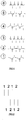
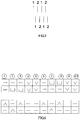
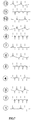
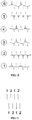
- the knitting method comprises: introducing the first yarn and the fourth yarn in the form of a single knitting in which all dial knitting needles are used to knit to form the outer layer of the fabric; introducing the second yarn and the fourth yarn in the form of double knitting in which half of the cylinder knitting needles are used at regular intervals to form a looping knitting and half of the dial knitting needles are used at regular intervals to form a tucking knitting; introducing the third yarn in the form of the single knitting in which the cylinder knitting needles are used to knit; wherein the looping knitting portion made by the second yarn and the fourth yarn constitutes the middle layer of the fabric, the single knitting of the third yarn together with the looping knitting portion made by the second yarn and the fourth yarn constitute the inner layer of the fabric; or introducing the first yarn and the fourth yarn in the form of the single knitting in which all cylinder knitting needles are used to knit to form the outer layer of the fabric; introducing the second yarn and the fourth yarn in the form of the double knitting in which half of the dial knitting
- the liquor ratio in the step 6) is between 1:5 and 1:15.
- the temperature of the dyeing liquor is controlled between 110°C and 130°C
- the heat preservation time is between 20 min and 45min
- the heating rate and the cooling rate of the dyeing liquor are controlled between 0.5°C /min and 1°C /min
- the dyeing liquor is a mixture of a disperse dye and a dye auxiliary agent, wherein the dye auxiliary agent includes chelating dispersant with a content of 0.5-1.5 g/L, anti-creasing agent with a content of 0.5-2 g/L, high-temperature leveling agent with a content of 0.5-1 g/L and ethylic acid with a content of 0.5-1 g/L.
- the reductive cleaning solution is a mixture of anti-creasing agent, sodium hyposulfite and sodium carbonate solution, wherein the content of the anti-creasing agent is 1-2 g/L, the content of the sodium hyposulfite is 0.5-1 g/L, the content of the sodium carbonate is 0.5-2 g/L.
- the dosage of the hydrophilic softener accounts for 0.5-2% of the weight of the fabric blanks to be dyed
- the dosage of the hydrophilic soft olein accounts for 3-5% of the weight of the fabric blanks to be dyed.
- the acid washing is conducted on the fabric semi-finished products for 10-20 min before applying the hydrophilic softener and the hydrophilic soft olein.
- the moisture-absorbing thermal, moisture-absorbing quick-drying, moisture and thermal principles of the fabric are as follows.
- the moisture-absorbing and heat-generating principle is as follows.
- the components of the moisture-absorbing heat-generating fabric have a better hydrophily or a strong wicking and moisture transferring function.
- the materials of this invention mainly are the regenerated cellulose fiber enriched with a lot of hydrophilic groups and the cotton fiber, so that the fabric has a better moisture absorption performance.
- the specific surface area and the specific surface energy of the modified polyester fiber yarn having a non-circular cross section such as the cross-type cross section, the Y-type cross section or the oo-type cross section
- a common polyester fiber yarn having a circular cross section it has a strong wicking and wet permeability function, so that the water absorption rate of the fabric meets the requirements of the national standards or exceeds it.
- the fabric can not be called as the moisture-absorbing and thermal fabric.
- the first yarn whose main component is the regenerated cellulose fiber is placed on the outer layer of the fabric and the third yarn whose main component is the cotton fiber is placed on the inner layer of the fabric, so that water molecules in the fabric will transfer from inside to outside due to the different hygroscopicities after the moisture absorption.
- the water molecules continuously transfer and acutely move in the fabric, and thus the integral heat and the differential heat will be produced and the kinetic energy will convert to heat energy, thereby generating heat.
- the fabric must have an enough height to prevent from the heat loss or have much hollowness and still air.
- the outer layer of the fabric is formed by the first yarn and the fourth yarn via a full-needle single knitting method.
- the outer layer fabric is compact, so that it can effectively prevent from the heat loss.
- the main components of the inner layer of the fabric are formed by the single knitting in which half of stitches of the third yarn are used at regular intervals without the polyurethane fiber yarn of the fourth yarn, so that the fabric is sparse.
- a lot of micro gaps are caused by the raising and pilling in the following process and more still air exists in the fabric, so that the heat converted by the moisture-absorbing water molecular motion is not easy to be lost and the highest heating value and the average heating value of the moisture-absorbing can meet the requirements of the national standard.
- the moisture-absorbing and quick-drying principle is as follows.
- the characteristics of the moisture-absorbing defined by the national standard are shown in the following three indexes, namely the water absorption rate, the dripping water diffusion time and the wicking height.
- the characteristics of the quick-drying are shown in the following two indexes, namely the evaporation rate and the mositure permeability.
- the above five indexes have a certain limitation on the quick-absorbing and quick-drying characteristic, so that they can only represent the moisture-absorbing and quick-drying performance of the whole fabric rather than the differences in the moisture-absorbing and quick-drying performance of the inner and outer layer of the fabric.
- the conventional moisture regains of the inner layer of the fabric is different from that of the outer layer of the fabric.
- the material of the inner layer is also hydrophilic and the weighted average conventional moisture regains is relatively low.
- the material of the outer layer is hydrophilic and the weighted average conventional moisture regains is far higher than that of the material of the inner layer.
- the quick-drying of the inner layer not only passes through the natural evaporation quick-drying channel of the surface layer, but also passes through the strong moisture absorption channel of the material of the outer layer, and thus the moisture absorbed by the inner layer is transferred to the outer layer quickly and diffuses rapidly via a middle wicking and moisture transferring layer, so that the quick-drying performance of the inner layer is superior to that of the outer layer.
- Moisturizing principle is as follows.
- the middle layer of the fabric is knitted by the second yarn which is the modified polyester fiber yarn having a non-circular cross section and the fourth yarn which is polyurethane fiber yarn.
- the modified polyester fiber yarn having the non-circular section has a larger specific surface area, it has a stronger wicking and moisture transferring function.
- the wicking and moisture transferring function is bidirectional, which not only can exhaust the moisture from the inner layer of the fabric to the outer layer thereof, but also can exhaust the moisture from the outer layer of the fabric to the inner layer thereof.
- the weighted average conventional moisture regains of the material of the outer layer of the fabric is large and the material contains a lot of hydrophilic groups, so that it has a strong function of capturing the water molecules in the air.
- the outer layer of the fabric When a certain amount of water molecules exist in the air, the outer layer of the fabric will adsorb a lot of water molecules and the water molecules can further be transferred to the inner layer via the middle layer of the fabric so as to keep a balance of the moisture absorption and get the goal of moisture-retaining and anti-aging.
- the sweat When perspiring, the sweat will transfer to the outer layer of the fabric rapidly. Due to the hydrophilic groups in the outer layer of the fabric, the evaporation rate of the moisture is relatively low and the sufficient moisture in the outer layer creates a condition for the moisturization of the inner layer.
- the outer layer When the skin becomes dry, the outer layer will capture the moisture from the air or from non-evaporation and non-volatilization moisture before the moisture absorption and moisture storage, and the bidirectional moisture transferring function of the middle layer of the fabric will help to transfer the moisture to the inner layer of the fabric to keep a balance of the moisture absorption, thereby retaining moisture.
- Thermal principle is as follows.
- the hollow design of the fabric is not obvious to the improvement on the warmth retention of the fabric having the polyurethane fiber.
- the fleece design of the inner layer of the fabric very notably improves the warmth retention.
- a lot of micro gaps will be brought in the inner layer of the fabric, a lot of still airs exist in the fabric and the polyurethane fiber yarn of the outer layer of the fabric is introduced, the outer layer is relatively compact, so that it can effectively prevent the air from flowing between the human body and the outer layer of the fabric, thereby greatly improving the warmth retention of the fabric via the possessing capacity of the still airs.
- a lot of micro gaps are brought in the fabric after the fleece of the inner layer and a lot of still airs exist in the micro gaps.
- the first yarn and the fourth yarn are knitted by a method of full-needle knitting.
- the polyurethane fiber yarn of the fourth yarn has a good elasticity and shrinkage performance
- the outer layer of the fabric is relatively compact due to the introduction of the full-needle and the fourth yarn and it can prevent the loss of the energy, the fabric can keep warm.
- the design of the knitting process diagram is based on the following principles. Firstly, the moisture-absorbing and quick-drying performance of each component is made full use to the greatest extent, especially the performance of the moisture discharging from the inner layer to the outer layer.
- the polyurethane fiber yarn is not added to the third yarn of this invention.
- the single knitting in which half of the purl stitches or the knit stitches are used at regular intervals to make the structure of the fabric sparser after the fleece and facilitate the moisture-permeating and quick-drying of the inner layer.
- the outer layer of the fabric adopts the knitting in which all the knit stitches or the purl stitches of the first yarn and the fourth yarn are used, so that the fabric is compact, which facilitates the quick outside transferring and gathering of the moisture gas in the inner layer.
- the ratio of each component are changed to optimize the textile process, reduce the weighted average moisture regain of the inner layer of the fabric to the greatest extent, increase the weighted average moisture regain of each component in the outer layer of the fabric.
- half of the knit stitches and or the purl stitches of the second yarn and the fourth yarn are used at regular intervals to form the looping knitting.
- Half of the corresponding purl stitches or knit stitches are used at regular intervals to form the tucking knitting.
- the above knitting joins the design of the inner layer and the middle layer of the fabric rather than the design of the outer layer of the fabric, so that it can effectively reduce the weighted average official moisture regain of each component of the outer layer and is convenient to the moisture permeating, the moisture transporting and quick drying since the official moisture regain of the modified polyester fiber low stretch yarn is low.
- it must facilitate the fleece and napping of the inner layer and ensure that the root portion of the fleece will not fall off.
- This invention adjusts the design by each yarn feeding way and applies the coil index theory in the field of textile engineering, so that the napping and the loop forming coil of the third yarn becomes longer and longer and protrudes on the surface of the fabric, thereby facilitating the fleece and the napping and locking the napping.
- the second yarn and the fourth yarn loop forming coil of the third yarn coil root which joins the inner layer becomes smaller and caves in to avoid the linting.
- the third yarn can be fixed in the single knitting in which half of the needles are used and the single knitting in which half of two kinds of knitting needles are used at regular intervals. In each way, the first yarn and the fourth yarn form the single knitting in which all the needles are used and the third yarn forms the single knitting in which half of the needles are used.
- the fabric corresponds to the looping knitting in which half stitches of the second yarn and the fourth yarn are used at regular intervals and the tucking knitting of the double knitting in which the inner layer and the outer layer are connected.
- half of the knitting needles of other disk are used at regular intervals to form the tucking knitting.
- the knitting needles of the double knitting which participates in the looping kintting are same with the knitting needle of the half needle single knitting of the third yarn, so that the coil formed by the looping knitting of the double knitting locks the root of the coil formed by the third yarn firmly, thereby creating a condition for the fleece of the subsequent process.
- the fabric is comfortable and has elasticity.
- the polyurethane fiber yarn is not introduced into the yarn-feeding way of the third yarn except for the fleece and the napping.
- the polyurethane fiber yarn is introduced or guided to other yarn feeding way.
- the polyurethane fiber yarn has a good tensile performance and restorability.
- the polyurethane fiber yarn is not introduced in the yarn feeding way of the third yarn which has been conduct with the napping and the fleece to facilitate the napping in the subsequent process, so that it can ensure that the fabric has enough elasticity and the fleece and the napping of the inner layer will not be affected.
- the reductive cleaning process is conducted after the middle and dark color are dyed.
- the main object is removing the dye floating color adhere to the modified polyester fiber after the high-temperature sublimation and the floating color of other disperse dye adhere to other materials, so that it can improve the colorfastness of the whole fabric.
- the thermal washing and the cool washing are conducted to prepare for the dyeing of the regenerated cellulose fibre, the cotton fiber and other fibers.
- the reactive dye or other dye and the auxiliary agent are adopted to dye the regenerated cellulose fiber, the cotton fiber and other fiber according to the components of the fabric blanks which have not been dyed and the dye process curve.
- the cool washing and the acid washing are conducted.
- the cool water is added slowly to the vat to reduce the temperature.
- the water is released.
- the acid washing is conducted under the normal temperature according to the water level required by the liquor ratio.
- the object is mainly neutralizing the residual alkali on the cloth.
- the soaping agent is used to soap to remove all the dye floating color to the greatest extent until the dye floating color are cleaned. Then, the cool water is added slowly.
- a cylinder of water is added for cool washing. After the cool washing, a cylinder of water is added according to the required liquor ratio.
- the hydrophilic softener and the hydrophilic soft olein are added to the cleaned fabric semi-finished products by soaping and cool washing the floating color.
- the cleaned fabric semi-finished products are kept in the vat.
- the hydrophilic softener and the hydrophilic soft olein are added to the vat.
- the fabric semi-finished products are soaked circularly under the normal temperature.
- the weak acid is used to acid wash the fabric semi-finished products for 10 ⁇ 20min.
- the PH value of the dye liquor is adjusted to 4.5-6 and the dye liquor exhibits the weak acidity.
- the adding of the hydrophilic softener aims at the hydrophilic soft finishing of the modified polyester yarn having a non-circular section or the polyester staple fiber.
- the adding of the hydrophilic soft olein aims at the hydrophilic soft finishing of the cotton fiber in the third yarn and the first yarn or the linen, the wool or the cashmere and the regenerated cellulose fiber.
- the surface of the cloth being treated with the hydrophilic soften has a soft feel, a good hydrophilic effect and the fluffy cotton fiber to facilitate the napping and the fleece of the subsequent process.
- a tensile shrinkage drying machine is used to dry the fabric semi-finished products which have been conducted with hydrophilic treatment.
- the raising machine is used to nap the dried fabric semi-finished product. After the napping, the fabric has a uniform delicate touch.
- the napping process directly relates to the quality of the fabric and the achievement of the heat preservation rate of the fabric.
- the repeated setting is conduct to the fabric semi-finished product which has been napped.
- the temperature of the repeated setting is no more than 160° C to avoid forming the floating color caused by the sublimation and dissociation of the disperse dye molecules on the polyester fiber which will reduce the dye colorfastness of the fabric.
- a moisture-absorbing heat-generating quick-drying moisture-retaining thermal fabric is knitted by four yarns.
- the first yarn is the regenerated cellulose fiber-type blended yarn J40S lenzing modal/cotton 50/50 blended yarn made by the cotton fiber and the regenerated cellulose fiber.
- the weight percentage of the regenerated cellulose fiber accounts for 50%.
- the second yarn is the modified polyester fiber yarn COOLDRY75D/72F having a cross-shaped cross section produced by Shanghai Haitianying textile technology Co., Ltd.
- the third yarn is 20S pure cotton high proportion distributed carded yarn.
- the fourth yarn is 30D polyurethane fibre yarn produced by Hangzhou Asahikasei Spandex Co., Ltd.
- a preparation method of the moisture-absorbing heat-generating quick-drying moisture-retaining thermal fabric comprises the following steps:
- the fabric obtained from the embodiment 1 is sent to National Knitting Quality Supervisor & Inspection Center for inspecting the heat preservation rate of the fabric according to the standard GB/T 11048-1989 (Method A), inspecting the moisture-absorbing and thermal heating value according to the standard FZ/T73036-2010 and inspecting the moisture-absorbing performance and quick-drying performance according to the standard GB/T 21655.1-2008.
- Method A National Knitting Quality Supervisor & Inspection Center
- a moisture-absorbing heat-generating quick-drying moisture-retaining thermal fabric is knitted by four yarns.
- the first yarn is the regenerated cellulose staple yarn J45S100% lenzing modal.
- the second yarn is CLEANCOOL fibre low strench yarn of the modified polyester fibre yarn 75D/72F having a cross-shaped cross section and nanometer sliver ion produced by Shanghai Sinotextiles Corporation Limited.
- the third yarn is 20S pure cotton high proportion distributed carded yarn.
- the fourth yarn is 20D and 40D polyurethane fibre yarn produced by Korea Xiaoxing Spandex Limited Corporation (Jiaxing).
- a preparation method of the moisture-absorbing heat-generating quick-drying moisture-retaining thermal fabric comprises the following steps:
- the fabric obtained from the embodiment 2 is sent to National Knitting Quality Supervisor & Inspection Center for inspecting the heat preservation rate of the fabric according to the same national standard of embodiment 1. The results are shown as follows.
- a moisture-absorbing heat-generating quick-drying moisture-retaining thermal fabric is knitted by four yarns.
- the first yarn is the regenerated cellulose fibre-type blended yarn J40S80S wool 30/bleached deguming linen 20/super-fine lenzing modal 50 compact blended yarn made by blending the wool and the regenerated cellulose fiber, wherein the weight percentage of the regenerated cellulose fiber is 50%.
- the second yarn is CLEANCOOL fiber low stretch yarn of the modified polyester fiber yarn 75D/72F having a cross-shaped cross section and nanometer sliver ion produced by Shanghai Sinotextiles Corporation Limited.
- the third yarn is cotton fiber-type blended yarn J40S milk protein fiber 30/combed cotton 70 Siro compact blended yarn made by blending the polyacrylonitrile fiber and the cotton fiber, wherein the weight percentage of the cotton fiber is 70%.
- the fourth yarn is 30D and 40D polyurethane fiber yarn produced by Invista Fibers (Shanghai) Co. Ltd.
- a preparation method of the moisture-absorbing heat-generating quick-drying moisture-retaining thermal fabric comprises the following steps:
- the fabric obtained from the embodiment 3 is sent to National Knitting Quality Supervisor & Inspection Center for inspecting the heat preservation rate of the fabric according to the same national standard of embodiment 1. The results are shown as follows.
- a moisture-absorbing heat-generating quick-drying moisture-retaining thermal fabric is knitted by four yarns.
- the first yarn is regenerated cellulose fiber-type blended yarn J32S cotton fibre/Jutecell30/70 blended yarn which is blended by the cotton fiber and the regenerated cellulose fiber.
- the weight percentage of the regenerated cellulose fiber is 70%.
- the second yarn is the modified polyester fiber yarn J40SCOOLDRY staple yarn having a cross-shaped cross section produced by Shanghai Haitianyingjie Textile Technology Co., Ltd.
- the third yarn is the cotton fiber-type blended yarn J32S60/40 cotton/COOLDRY blended yarn which is blended by polyester staple fibre and the cotton fiber.
- the weight percentage of the cotton fiber is 60%.
- the fourth yarn is 30D polyurethane fibre yarn produced by Hangzhou Asahikasei Spandex Co., Ltd.
- a preparation method of the moisture-absorbing heat-generating quick-drying moisture-retaining thermal fabric comprises the following steps:
- the fabric obtained from the embodiment 4 is sent to National Knitting Quality Supervisor & Inspection Center for inspecting the heat preservation rate of the fabric according to the same national standard of embodiment 1. The results are shown as follows.
- a moisture-absorbing heat-generating quick-drying moisture-retaining thermal fabric is knitted by four yarns.
- the first yarn is the regenerated cellulose filament yarn 120D viscose filament yarn.
- the second yarn is modified polyester fibre yarn SUPERCOOL75D/72F polyestet fiber low stretch yarn having Y-type cross section and grafting the hydrophilic group.
- the second yarn is produced by Shanghai Guida Technology Co., Ltd.
- the third yarn is the cotton fibre-type blended fiber J32S20/80SUPERCOOL/cotton blended yarn which is blended by the polyester fiber and the cotton fiber.
- the weight percentage of the cotton fiber is 80%.
- the fourth yarn is 30D polyurethane fiber yarn produced by Hangzhou Asahikasei Spandex Co., Ltd.
- a preparation method of the moisture-absorbing heat-generating quick-drying moisture-retaining thermal fabric comprises the following steps:
- the fabric obtained from the embodiment 5 is sent to National Knitting Quality Supervisor & Inspection Center for inspecting the heat preservation rate of the fabric according to the same national standard of embodiment 1. The results are shown as follows.
Landscapes
- Engineering & Computer Science (AREA)
- Textile Engineering (AREA)
- Chemical & Material Sciences (AREA)
- Materials Engineering (AREA)
- Mechanical Engineering (AREA)
- Knitting Of Fabric (AREA)
- Treatment Of Fiber Materials (AREA)
- Woven Fabrics (AREA)
Claims (11)
- Feuchtigkeitsabsorbierendes, wärmeerzeugendes, schnell trocknendes, feuchtigkeitsbindendes Thermotextil, wobei das Textil aus einem ersten Garn, einem zweiten Garn, einem dritten Garn und einem vierten Garn gestrickt wird;
das erste Garn ein Mischgarn vom Typ regenerierte Cellulosefaser ist, das durch Mischen von regenerierter Cellulosefaser mit Leinen, Wolle, Kaschmir, Baumwollfaser oder einer Mischung davon hergestellt wird, oder ein regeneriertes Cellulosefilamentgarn oder ein regeneriertes Cellulosestapelfasergarn ist;
das zweite Garn ein modifiziertes Polyesterfasergarn mit einem nicht kreisförmigen Querschnitt ist;
das dritte Garn ein Mischgarn vom Typ Baumwollfaser ist, das durch Mischen von Baumwollfasern mit Polyesterstapelfasern, Polyacrylnitrilfasern oder Mischungen davon hergestellt wird, oder ein Vollbaumwollgarn ist;
das vierte Garn Polyurethanfasergarn ist; und
der Querschnitt des modifizierten Polyesterfasergarns mit einem nicht kreisförmigen Querschnitt ein kreuzförmiger Querschnitt, ein Y-förmiger Querschnitt oder ein ∞-förmiger Querschnitt ist,
dadurch gekennzeichnet, dass das Textil aus einer äußeren Lage, einer mittleren Lage und einer inneren Lage besteht, wobei die äußere Lage aus dem ersten Garn und dem vierten Garn gestrickt ist, die mittlere Lage aus dem zweiten Garn und dem vierten Garn gestrickt ist, die innere Lage aus dem zweiten Garn, dem dritten Garn und dem vierten Garn gestrickt ist. - Textil nach Anspruch 1, dadurch gekennzeichnet, dass der Gewichtsprozentsatz an regenerierter Cellulosefaser in dem Mischgarn vom Typ regenerierte Cellulosefaser 50∼80 % beträgt.
- Textil nach Anspruch 1, dadurch gekennzeichnet, dass der Gewichtsprozentsatz an Baumwollfaser in dem Mischgarn vom Typ Baumwollfaser 60∼90 % beträgt.
- Herstellungsverfahren für das feuchtigkeitsabsorbierende wärmeerzeugende, schnelltrocknende, feuchtigkeitsbindende Thermotextil nach Anspruch 1, wobei das Verfahren die folgenden Schritte umfasst:1) Auswählen der Materialien des ersten Garns, des zweiten Garns, des dritten Garns und des vierten Garns auf Basis eines entworfenen Textils;2) Anordnen der Materialien auf einer Strickmaschine und Vorhalten einer Schnittlinie für ein Schwingen und Einstellen des folgenden Prozesses, beim Stricken, um Textilrohlinge zu erhalten;3) Schneiden der erhaltenen Textilrohlinge entlang der Schnittlinie, Durchführen einer vollständigen Inspektion und Senden an das Lager;4) Verpacken und Abwickeln der qualifizierten Textilrohlinge zum Laden auf einen Stoffwagen und anschließendes Verbinden zu einer durchgehenden Form;5) Voreinrichten der verbundenen Textilrohlinge des Wagens, wobei eine Voreinrichtungstemperatur zwischen 170 °C und 200 °C liegt, eine Geschwindigkeit des Wagens zwischen 5 m/min und 25 m/min beträgt, ein Voreilungsstoffverbrauch zwischen 15 und 40 % liegt;6) Zuführen von Wasser zu einem Färbebottich auf Basis des Gewichts der Textilrohlinge eines konfigurierten Bottichs und eines Flottenverhältnisses und nach Zuführen der voreingerichteten Textilrohlinge in den Bottich, Zusammennähen von Tuchanfang und Tuchende, um eine Schlauchringform zu bilden, wodurch ein kontinuierliches Durchlaufen des Färbebottichs ermöglicht wird;7) Durchführen einer Färbe- und Ausrüstungsvorbehandlung an den Textilrohlingen in dem Bottich, um Textil-Halbfabrikate zu erhalten;8) Färben des modifizierten Polyesterfasergarns mit nicht kreisförmigem Querschnitt in den Textil-Halbfabrikaten mit einer Färbeflotte;9) reduktives Reinigen der mit einer Lösung zum reduktiven Reinigen gefärbten Textil-Halbfabrikate, wobei eine Temperatur der reduktiven Reinigung zwischen 85 °C und 100 °C beträgt, eine Warmhaltezeit zwischen 15 min und 30 min eingestellt wird;10) thermisches Waschen der Textil-Halbfabrikate, wobei eine Temperatur der thermischen Wäsche zwischen 85 °C und 98 °C beträgt, eine Warmhaltezeit zwischen 10 min und 20 min eingestellt wird und dann Kaltwaschen für 10∼20 min durch Zuführen von Wasser;11) erneutes Färben anderer Fasern des Textil-Halbfabrikats;12) Kaltwaschen und Säurewaschen der Textil-Halbfabrikate, die erneut gefärbt wurden;13) Seifen der Textil-Halbfabrikate und erneutes Kaltwaschen bis die Färbeflotte sauber ist;14) Aufbringen eines hydrophilen Weichmachers und eines hydrophilen weichen Oleins auf die Textil-Halbfabrikate;15) Durchführen einer Aufraubehandlung nach dem Trocknen der Textil-Halbfabrikate;16) Neueinrichten der Textil-Halbfabrikate, um ein Rohtextil zu erhalten, wobei die Temperatur der Neueinrichtung zwischen 150 °C und 160 °C beträgt, eine Geschwindigkeit des Wagens zwischen 15 m/min und 25 m/min liegt, ein Voreilungstextilverbrauch zwischen 25 % und 50 % liegt;17) Vollständige Inspektion des erhaltenen Rohtextils und Versand in Rollen an das Lager wobei das Strickverfahren in Schritt 2) ferner umfasst:Einführen des ersten Garns und des vierten Garns in Form eines einflächigen Gestricks, wobei alle Rippnadeln zum Stricken verwendet werden, um die äußere Lage des Textils zu bilden;Einführen des zweiten Garns und des vierten Garns in Form eines doppelflächigen Gestricks, wobei die Hälfte aller Zylindernadeln in regelmäßigen Abständen zum Bilden eines Schlingengestricks verwendet wird und die Hälfte der Rippnadeln in regelmäßigen Abständen zum Bilden eines Fanggestricks verwendet wird;Einführen des dritten Garns in Form des einflächigen Gestricks, wobei die Zylindernadeln zum Stricken verwendet werden; wobei der Schlingengestrickabschnitt, der aus dem zweiten Garn und dem vierten Garn hergestellt wird, die mittlere Lage des Textils bildet, das einflächige Gewebe aus dem dritten Garn zusammen mit dem Schlingengestrickabschnitt, der aus dem zweiten Garn und dem vierten Garn hergestellt wird, die innere Lage des Textils bildet; oderEinführen des ersten Garns und des vierten Garns in Form des einflächigen Gestricks, wobei alle Zylindernadeln zum Stricken verwendet werden, um die äußere Lage des Textils zu bilden;Einführen des zweiten Garns und des vierten Garns in Form des doppelflächigen Gestricks, wobei die Hälfte der Rippnadeln in regelmäßigen Abständen zum Bilden des Schlingengestricks verwendet wird und die Hälfte der Zylindernadeln in regelmäßigen Abständen zum Bilden des Fanggestricks verwendet wird;Einführen des dritten Garns in Form des einflächigen Gestricks, wobei die Rippnadeln zum Stricken verwendet werden; wobei der Fanggestrickabschnitt, der aus dem zweiten Garn und dem vierten Garn hergestellt wird, die mittlere Lage des Textils bildet, das einflächige Gestrick aus dem dritten Garn zusammen mit dem Schlingengestrick, das aus dem zweiten Garn und dem vierten Garn hergestellt wird, die innere Lage des Textils bildet.
- Verfahren nach Anspruch 4, dadurch gekennzeichnet, dass das Flottenverhältnis in Schritt 6) zwischen 1:5 und 1:15 liegt.
- Verfahren nach Anspruch 4, dadurch gekennzeichnet, dass in Schritt 8), wenn gefärbt wird, die Temperatur der Färbeflotte zwischen 110 °C und 130 °C eingestellt wird, die Warmhaltezeit zwischen 20 min und 45 min beträgt, die Aufheizrate und die Abkühlrate der Färbeflotte zwischen 0,5 °C/min und 1 °C/min eingestellt werden.
- Verfahren nach Anspruch 4, dadurch gekennzeichnet, dass in Schritt 8) die Färbeflotte eine Mischung aus einem Dispersionsfarbstoff und einem Farbhilfsmittel ist, wobei das Farbhilfsmittel ein Chelatdispergiermittel in einem Anteil von 0,5∼1,5 g/l, ein Knitterschutzmittel in einem Anteil von 0,5∼2 g/l, ein Hochtemperatur-Egalisierungsmittel mit einem Anteil von 0,5∼1 g/l und eine Ethylsäure mit einem Anteil von 0,5∼1 g/l enthält.
- Verfahren nach Anspruch 4, dadurch gekennzeichnet, dass in Schritt 9) die Lösung zum reduktiven Reinigen eine Mischung aus Knitterschutzmittel, Natriumhyposulfit und Natriumcarbonatlösung ist, wobei der Anteil an Knitterschutzmittel 1∼2 g/l beträgt, der Anteil an Natriumhyposulfit 0,5∼1 g/l beträgt, der Anteil an Natriumcarbonat 0,5∼2 g/l beträgt.
- Verfahren nach Anspruch 4, dadurch gekennzeichnet, dass in Schritt 13) das Seifmittel, das in dem Seifschritt verwendet wird, eine Mischung aus Reinigungsmittel und Chelatdispergiermittel ist, wobei der Anteil des Reinigungsmittels 1∼3 g/l beträgt, der Anteil des Chelatdispergiermittels 1∼2 g/l beträgt.
- Verfahren nach Anspruch 4, dadurch gekennzeichnet, dass in Schritt 14) die Dosierung des hydrophilen Weichmachers 0,5∼2 % des Gewichts der zu färbenden Textilrohlinge ausmacht, die Dosierung des hydrophilen weichen Oleins 3∼5 % des Gewichts der zu färbenden Textilrohlinge ausmacht.
- Verfahren nach Anspruch 4, dadurch gekennzeichnet, dass in Schritt 14) die Säurewäsche an den Textil-Halbfabrikaten für 10∼20 min durchgeführt wird, bevor der hydrophile Weichmacher und das hydrophile weiche Olein aufgebracht werden.
Applications Claiming Priority (2)
| Application Number | Priority Date | Filing Date | Title |
|---|---|---|---|
| CN201410052915.7A CN103952845B (zh) | 2014-02-17 | 2014-02-17 | 吸湿发热快干保湿保暖面料及其制备方法 |
| PCT/CN2015/070619 WO2015120760A1 (zh) | 2014-02-17 | 2015-01-13 | 吸湿发热快干保湿保暖面料及其制备方法 |
Publications (3)
| Publication Number | Publication Date |
|---|---|
| EP3109353A1 EP3109353A1 (de) | 2016-12-28 |
| EP3109353A4 EP3109353A4 (de) | 2017-10-04 |
| EP3109353B1 true EP3109353B1 (de) | 2019-08-07 |
Family
ID=51330186
Family Applications (1)
| Application Number | Title | Priority Date | Filing Date |
|---|---|---|---|
| EP15748772.9A Active EP3109353B1 (de) | 2014-02-17 | 2015-01-13 | Feuchtigkeitsabsorbierendes wärmeerzeugendes schnelltrocknendes feuchtigkeitsbindendes thermisches gewebe und herstellungsverfahren dafür |
Country Status (3)
| Country | Link |
|---|---|
| EP (1) | EP3109353B1 (de) |
| CN (1) | CN103952845B (de) |
| WO (1) | WO2015120760A1 (de) |
Families Citing this family (32)
| Publication number | Priority date | Publication date | Assignee | Title |
|---|---|---|---|---|
| CN103952845B (zh) * | 2014-02-17 | 2015-10-28 | 武汉爱帝高级服饰有限公司 | 吸湿发热快干保湿保暖面料及其制备方法 |
| US20220401376A1 (en) * | 2014-10-30 | 2022-12-22 | Textile-Based Delivery, Inc. | Delivery systems for release of active compounds |
| CN104652029A (zh) * | 2015-02-11 | 2015-05-27 | 泉州海天材料科技股份有限公司 | 一种瓷磨碳刷工艺生产的仿棉感面料及其生产方法 |
| CN104846538A (zh) * | 2015-05-28 | 2015-08-19 | 句容市申兔工艺针织厂 | 一种抗起球针织面料及其后整理方法 |
| CN105177845A (zh) * | 2015-08-28 | 2015-12-23 | 太仓市鑫泰针织有限公司 | 一种吸汗排湿针织面料 |
| CN105113042A (zh) * | 2015-09-15 | 2015-12-02 | 苏州顺唐化纤有限公司 | 一种吸湿性聚丙烯腈纤维 |
| CN105220336B (zh) * | 2015-10-21 | 2017-05-31 | 武汉爱帝针织工程技术研究有限公司 | 轻薄热湿舒适性多功能针织面料及其制备方法 |
| CN105332154A (zh) * | 2015-12-15 | 2016-02-17 | 苏州紫澜实业有限公司 | 一种羊毛针织服装的制作工艺 |
| CN105544078B (zh) * | 2016-02-14 | 2018-07-17 | 广东溢达纺织有限公司 | 一种棉/氨纶空气层保暖面料及其制造方法 |
| CN105768248B (zh) * | 2016-04-15 | 2017-08-25 | 上海喜眠服饰有限公司 | 不着凉内衣及其制备方法 |
| CN107142599A (zh) * | 2017-04-14 | 2017-09-08 | 江南大学 | 一种石墨烯毛针织面料的生产方法 |
| CN107097495A (zh) * | 2017-04-28 | 2017-08-29 | 泉州市众科专利技术标准化研究院有限责任公司 | 一种一次性口罩面料及其制备方法 |
| CN107354564B (zh) * | 2017-08-21 | 2023-05-05 | 无锡恒诺纺织科技有限公司 | 一种导湿速干针织纬编面料及其加工工艺 |
| CN107723909A (zh) * | 2017-10-31 | 2018-02-23 | 湖州创新丝蚕桑发展有限公司 | 一种桑蚕丝保暖内衣面料的生产工艺 |
| CN108754808B (zh) * | 2018-05-23 | 2022-09-16 | 清远万家丽高新科技有限公司 | 一种银线金属纱通透三明治布及染色工艺 |
| CN108950832B (zh) * | 2018-09-21 | 2024-02-23 | 无锡红豆纺织服装有限公司 | 一种发热红豆绒面料 |
| CN111267426B (zh) * | 2020-03-02 | 2020-12-18 | 东华大学 | 一种吸湿匀发热保暖结构的舒适性面料及其织造方法 |
| CN111996652B (zh) * | 2020-07-23 | 2022-01-04 | 汕头市新茂丰纺织实业有限公司 | 一种吸湿快干轻薄透气双层面料 |
| PL435282A1 (pl) * | 2020-09-14 | 2022-03-21 | Ffmed Spółka Z Ograniczoną Odpowiedzialnością | Sposób wytwarzania opatrunku z przędzy lnianej i opatrunek z przędzy lnianej |
| CN112267200A (zh) * | 2020-09-22 | 2021-01-26 | 石家庄宏维达纺织有限公司 | 一种双珠地棉盖涤纶面料及其制作工艺 |
| US20230373188A1 (en) * | 2020-12-23 | 2023-11-23 | Lululemon Athletica Canada Inc. | Fabric with Moisture Management Function |
| CN112779654B (zh) * | 2020-12-24 | 2022-02-18 | 东华大学 | 发热温度长时间可控型的吸湿发热针织面料及其制备方法 |
| CN112981677B (zh) * | 2021-02-01 | 2024-08-27 | 浙江领汇实业股份有限公司 | 一种三色提花针织面料的生产工艺 |
| CN113243577A (zh) * | 2021-05-11 | 2021-08-13 | 王祥宇 | 具有吸湿排汗功能的远红外自发热拉毛保暖连裤袜的生产方法 |
| CN114045604A (zh) * | 2021-11-24 | 2022-02-15 | 广州市凯权服饰有限公司 | 一种环保棉感面料 |
| CN114703592B (zh) * | 2021-11-22 | 2024-03-22 | 江苏鼎新印染有限公司 | 单向导湿抗紫外针织运动面料及其生产方法 |
| CN114197103A (zh) * | 2021-12-29 | 2022-03-18 | 浙江森马服饰股份有限公司 | 一种具有吸光蓄热和抗菌功能的抓毛摇粒打鸡双面布 |
| CN116200865A (zh) * | 2023-03-07 | 2023-06-02 | 上海嘉乐股份有限公司 | 一种正面仿麂皮绒反面摇粒绒一体面料 |
| CN116623351B (zh) * | 2023-05-09 | 2025-06-03 | 鲁泰纺织股份有限公司 | 单面夏季针织外裤面料的生产工艺 |
| CN116905174A (zh) * | 2023-07-12 | 2023-10-20 | 红豆集团无锡红豆童装有限公司 | 一种儿童空气层内衣及其制备工艺 |
| CN117230564B (zh) * | 2023-09-22 | 2026-02-06 | 联润翔(青岛)纺织科技有限公司 | 一种汗液导出横编鞋面织物及编织方法 |
| CN118342867A (zh) * | 2024-04-11 | 2024-07-16 | 南通牧野织物有限公司 | 一种高密细旦双面双层涤纶长丝面料及其制备方法 |
Family Cites Families (14)
| Publication number | Priority date | Publication date | Assignee | Title |
|---|---|---|---|---|
| US5312667A (en) * | 1991-05-23 | 1994-05-17 | Malden Mills Industries, Inc. | Composite sweatshirt fabric |
| GB9325729D0 (en) * | 1993-12-16 | 1994-02-16 | Seton Heathcare Group Plc | Bandages |
| JP2003064558A (ja) * | 2001-08-23 | 2003-03-05 | Unitica Fibers Ltd | 快適性編物 |
| JP4264800B2 (ja) * | 2001-08-30 | 2009-05-20 | 東洋紡績株式会社 | 吸湿/吸水発熱性構造体 |
| WO2006125083A2 (en) * | 2005-05-18 | 2006-11-23 | Mckinnon-Land, Llc | Flame resistant matelasse fabrics utilizing spun and filament flame resistant yarns |
| GB0724028D0 (en) * | 2007-12-07 | 2008-01-16 | Medlock Medical Ltd | Improved compression bandage structures |
| CN202000067U (zh) * | 2011-03-29 | 2011-10-05 | 上海嘉麟杰纺织品股份有限公司 | 一种具有保暖吸湿排汗和抗菌多重功能的针织面料 |
| CN102162125B (zh) * | 2011-05-12 | 2012-06-13 | 石金精密科技(深圳)有限公司 | 多晶硅铸锭炉热场结构 |
| CN102505310B (zh) * | 2011-10-26 | 2014-05-14 | 青岛雪达集团有限公司 | 复合功效型芦荟纤维针织织物及其织造方法 |
| CN102877196B (zh) * | 2012-07-20 | 2014-05-07 | 上海嘉乐股份有限公司 | 一种吸湿发热型无碱丝光面料及其加工方法 |
| CN102943341B (zh) * | 2012-11-26 | 2014-03-12 | 武汉爱帝高级服饰有限公司 | 吸湿快干抗菌面料及其制备方法 |
| CN103015016A (zh) * | 2012-12-24 | 2013-04-03 | 青岛雪达集团有限公司 | 一种健肤功能舒适性针织织物及其织造方法 |
| CN103564663B (zh) * | 2013-09-26 | 2015-07-01 | 浙江和也健康科技有限公司 | 一种袜子及其制备方法 |
| CN103952845B (zh) * | 2014-02-17 | 2015-10-28 | 武汉爱帝高级服饰有限公司 | 吸湿发热快干保湿保暖面料及其制备方法 |
-
2014
- 2014-02-17 CN CN201410052915.7A patent/CN103952845B/zh active Active
-
2015
- 2015-01-13 WO PCT/CN2015/070619 patent/WO2015120760A1/zh not_active Ceased
- 2015-01-13 EP EP15748772.9A patent/EP3109353B1/de active Active
Non-Patent Citations (1)
| Title |
|---|
| None * |
Also Published As
| Publication number | Publication date |
|---|---|
| CN103952845B (zh) | 2015-10-28 |
| EP3109353A1 (de) | 2016-12-28 |
| WO2015120760A1 (zh) | 2015-08-20 |
| EP3109353A4 (de) | 2017-10-04 |
| CN103952845A (zh) | 2014-07-30 |
Similar Documents
| Publication | Publication Date | Title |
|---|---|---|
| EP3109353A1 (de) | Feuchtigkeitsabsorbierendes wärmeerzeugendes schnelltrocknendes feuchtigkeitsbindendes thermisches gewebe und herstellungsverfahren dafür | |
| CN105220336B (zh) | 轻薄热湿舒适性多功能针织面料及其制备方法 | |
| CN102943341B (zh) | 吸湿快干抗菌面料及其制备方法 | |
| CN104131408B (zh) | 一种含棉经编面料及其加工方法 | |
| CN104278421A (zh) | 抗菌安全吸湿速干面料及其制备方法 | |
| CN205295630U (zh) | 轻薄热湿舒适性多功能针织面料 | |
| CN104878516B (zh) | 一种针织面料及制备方法 | |
| CN103382618A (zh) | 一种立体保暖针织面料及其制备方法 | |
| CN113005614B (zh) | 一种冰爽高保形棉锦面料及其制造方法 | |
| JP6196654B2 (ja) | 環境に優しいデニム生地の製造方法及びその製造ライン | |
| JP7045412B2 (ja) | パイル地及びその製造方法 | |
| CN107190403A (zh) | 一种仿烂花针织呢的加工方法 | |
| CN105696181A (zh) | 一种功能性咖啡炭面料及其生产工艺 | |
| CN103757789A (zh) | 一种超高支轻薄全毛面料的制备方法 | |
| CN109281174A (zh) | 一种抗起球仿毛针织面料及其制备方法 | |
| CN110952205A (zh) | 一种汉麻弹性包覆纱以及汉麻复合纬弹皱感面料 | |
| CN121344939A (zh) | 莱赛尔混纺纱线的无张力抗原纤化染色方法 | |
| CN112410988B (zh) | 亚麻针织服装面料的生产方法 | |
| CN113846406B (zh) | 一种持久柔软快干毛圈织物及其生产方法 | |
| CN102936814B (zh) | 一种水晶棉三丝光面料及其加工方法 | |
| CN114481422A (zh) | 一种具有单向导湿效果的织物面料及其制备方法 | |
| CN103924369A (zh) | 超仿棉针织面料 | |
| CN113445187A (zh) | 3a级天然抗菌防螨木棉面料及其制备方法 | |
| CN107574547A (zh) | 一种宽幅薄型单面组织针织布的制备方法 | |
| CN111350018A (zh) | 一种健康透气干爽棉面料及其后整理方法 |
Legal Events
| Date | Code | Title | Description |
|---|---|---|---|
| PUAI | Public reference made under article 153(3) epc to a published international application that has entered the european phase |
Free format text: ORIGINAL CODE: 0009012 |
|
| STAA | Information on the status of an ep patent application or granted ep patent |
Free format text: STATUS: REQUEST FOR EXAMINATION WAS MADE |
|
| 17P | Request for examination filed |
Effective date: 20160919 |
|
| AK | Designated contracting states |
Kind code of ref document: A1 Designated state(s): AL AT BE BG CH CY CZ DE DK EE ES FI FR GB GR HR HU IE IS IT LI LT LU LV MC MK MT NL NO PL PT RO RS SE SI SK SM TR |
|
| AX | Request for extension of the european patent |
Extension state: BA ME |
|
| DAX | Request for extension of the european patent (deleted) | ||
| A4 | Supplementary search report drawn up and despatched |
Effective date: 20170905 |
|
| RIC1 | Information provided on ipc code assigned before grant |
Ipc: D04B 1/04 20060101ALI20170825BHEP Ipc: D06C 7/02 20060101ALI20170825BHEP Ipc: D04B 1/14 20060101AFI20170825BHEP Ipc: D06C 11/00 20060101ALI20170825BHEP Ipc: D06P 3/82 20060101ALI20170825BHEP |
|
| GRAP | Despatch of communication of intention to grant a patent |
Free format text: ORIGINAL CODE: EPIDOSNIGR1 |
|
| STAA | Information on the status of an ep patent application or granted ep patent |
Free format text: STATUS: GRANT OF PATENT IS INTENDED |
|
| INTG | Intention to grant announced |
Effective date: 20190228 |
|
| GRAS | Grant fee paid |
Free format text: ORIGINAL CODE: EPIDOSNIGR3 |
|
| GRAA | (expected) grant |
Free format text: ORIGINAL CODE: 0009210 |
|
| STAA | Information on the status of an ep patent application or granted ep patent |
Free format text: STATUS: THE PATENT HAS BEEN GRANTED |
|
| AK | Designated contracting states |
Kind code of ref document: B1 Designated state(s): AL AT BE BG CH CY CZ DE DK EE ES FI FR GB GR HR HU IE IS IT LI LT LU LV MC MK MT NL NO PL PT RO RS SE SI SK SM TR |
|
| REG | Reference to a national code |
Ref country code: GB Ref legal event code: FG4D |
|
| REG | Reference to a national code |
Ref country code: CH Ref legal event code: EP Ref country code: AT Ref legal event code: REF Ref document number: 1164028 Country of ref document: AT Kind code of ref document: T Effective date: 20190815 |
|
| REG | Reference to a national code |
Ref country code: DE Ref legal event code: R096 Ref document number: 602015035307 Country of ref document: DE |
|
| REG | Reference to a national code |
Ref country code: IE Ref legal event code: FG4D |
|
| REG | Reference to a national code |
Ref country code: NL Ref legal event code: MP Effective date: 20190807 |
|
| REG | Reference to a national code |
Ref country code: LT Ref legal event code: MG4D |
|
| PG25 | Lapsed in a contracting state [announced via postgrant information from national office to epo] |
Ref country code: LT Free format text: LAPSE BECAUSE OF FAILURE TO SUBMIT A TRANSLATION OF THE DESCRIPTION OR TO PAY THE FEE WITHIN THE PRESCRIBED TIME-LIMIT Effective date: 20190807 Ref country code: HR Free format text: LAPSE BECAUSE OF FAILURE TO SUBMIT A TRANSLATION OF THE DESCRIPTION OR TO PAY THE FEE WITHIN THE PRESCRIBED TIME-LIMIT Effective date: 20190807 Ref country code: FI Free format text: LAPSE BECAUSE OF FAILURE TO SUBMIT A TRANSLATION OF THE DESCRIPTION OR TO PAY THE FEE WITHIN THE PRESCRIBED TIME-LIMIT Effective date: 20190807 Ref country code: SE Free format text: LAPSE BECAUSE OF FAILURE TO SUBMIT A TRANSLATION OF THE DESCRIPTION OR TO PAY THE FEE WITHIN THE PRESCRIBED TIME-LIMIT Effective date: 20190807 Ref country code: PT Free format text: LAPSE BECAUSE OF FAILURE TO SUBMIT A TRANSLATION OF THE DESCRIPTION OR TO PAY THE FEE WITHIN THE PRESCRIBED TIME-LIMIT Effective date: 20191209 Ref country code: NO Free format text: LAPSE BECAUSE OF FAILURE TO SUBMIT A TRANSLATION OF THE DESCRIPTION OR TO PAY THE FEE WITHIN THE PRESCRIBED TIME-LIMIT Effective date: 20191107 Ref country code: BG Free format text: LAPSE BECAUSE OF FAILURE TO SUBMIT A TRANSLATION OF THE DESCRIPTION OR TO PAY THE FEE WITHIN THE PRESCRIBED TIME-LIMIT Effective date: 20191107 Ref country code: NL Free format text: LAPSE BECAUSE OF FAILURE TO SUBMIT A TRANSLATION OF THE DESCRIPTION OR TO PAY THE FEE WITHIN THE PRESCRIBED TIME-LIMIT Effective date: 20190807 |
|
| REG | Reference to a national code |
Ref country code: AT Ref legal event code: MK05 Ref document number: 1164028 Country of ref document: AT Kind code of ref document: T Effective date: 20190807 |
|
| PG25 | Lapsed in a contracting state [announced via postgrant information from national office to epo] |
Ref country code: IS Free format text: LAPSE BECAUSE OF FAILURE TO SUBMIT A TRANSLATION OF THE DESCRIPTION OR TO PAY THE FEE WITHIN THE PRESCRIBED TIME-LIMIT Effective date: 20191207 Ref country code: RS Free format text: LAPSE BECAUSE OF FAILURE TO SUBMIT A TRANSLATION OF THE DESCRIPTION OR TO PAY THE FEE WITHIN THE PRESCRIBED TIME-LIMIT Effective date: 20190807 Ref country code: LV Free format text: LAPSE BECAUSE OF FAILURE TO SUBMIT A TRANSLATION OF THE DESCRIPTION OR TO PAY THE FEE WITHIN THE PRESCRIBED TIME-LIMIT Effective date: 20190807 Ref country code: ES Free format text: LAPSE BECAUSE OF FAILURE TO SUBMIT A TRANSLATION OF THE DESCRIPTION OR TO PAY THE FEE WITHIN THE PRESCRIBED TIME-LIMIT Effective date: 20190807 Ref country code: AL Free format text: LAPSE BECAUSE OF FAILURE TO SUBMIT A TRANSLATION OF THE DESCRIPTION OR TO PAY THE FEE WITHIN THE PRESCRIBED TIME-LIMIT Effective date: 20190807 Ref country code: GR Free format text: LAPSE BECAUSE OF FAILURE TO SUBMIT A TRANSLATION OF THE DESCRIPTION OR TO PAY THE FEE WITHIN THE PRESCRIBED TIME-LIMIT Effective date: 20191108 |
|
| PG25 | Lapsed in a contracting state [announced via postgrant information from national office to epo] |
Ref country code: TR Free format text: LAPSE BECAUSE OF FAILURE TO SUBMIT A TRANSLATION OF THE DESCRIPTION OR TO PAY THE FEE WITHIN THE PRESCRIBED TIME-LIMIT Effective date: 20190807 |
|
| PG25 | Lapsed in a contracting state [announced via postgrant information from national office to epo] |
Ref country code: AT Free format text: LAPSE BECAUSE OF FAILURE TO SUBMIT A TRANSLATION OF THE DESCRIPTION OR TO PAY THE FEE WITHIN THE PRESCRIBED TIME-LIMIT Effective date: 20190807 Ref country code: DK Free format text: LAPSE BECAUSE OF FAILURE TO SUBMIT A TRANSLATION OF THE DESCRIPTION OR TO PAY THE FEE WITHIN THE PRESCRIBED TIME-LIMIT Effective date: 20190807 Ref country code: PL Free format text: LAPSE BECAUSE OF FAILURE TO SUBMIT A TRANSLATION OF THE DESCRIPTION OR TO PAY THE FEE WITHIN THE PRESCRIBED TIME-LIMIT Effective date: 20190807 Ref country code: EE Free format text: LAPSE BECAUSE OF FAILURE TO SUBMIT A TRANSLATION OF THE DESCRIPTION OR TO PAY THE FEE WITHIN THE PRESCRIBED TIME-LIMIT Effective date: 20190807 Ref country code: IT Free format text: LAPSE BECAUSE OF FAILURE TO SUBMIT A TRANSLATION OF THE DESCRIPTION OR TO PAY THE FEE WITHIN THE PRESCRIBED TIME-LIMIT Effective date: 20190807 Ref country code: RO Free format text: LAPSE BECAUSE OF FAILURE TO SUBMIT A TRANSLATION OF THE DESCRIPTION OR TO PAY THE FEE WITHIN THE PRESCRIBED TIME-LIMIT Effective date: 20190807 |
|
| PG25 | Lapsed in a contracting state [announced via postgrant information from national office to epo] |
Ref country code: IS Free format text: LAPSE BECAUSE OF FAILURE TO SUBMIT A TRANSLATION OF THE DESCRIPTION OR TO PAY THE FEE WITHIN THE PRESCRIBED TIME-LIMIT Effective date: 20200224 Ref country code: SM Free format text: LAPSE BECAUSE OF FAILURE TO SUBMIT A TRANSLATION OF THE DESCRIPTION OR TO PAY THE FEE WITHIN THE PRESCRIBED TIME-LIMIT Effective date: 20190807 Ref country code: CZ Free format text: LAPSE BECAUSE OF FAILURE TO SUBMIT A TRANSLATION OF THE DESCRIPTION OR TO PAY THE FEE WITHIN THE PRESCRIBED TIME-LIMIT Effective date: 20190807 Ref country code: SK Free format text: LAPSE BECAUSE OF FAILURE TO SUBMIT A TRANSLATION OF THE DESCRIPTION OR TO PAY THE FEE WITHIN THE PRESCRIBED TIME-LIMIT Effective date: 20190807 |
|
| REG | Reference to a national code |
Ref country code: DE Ref legal event code: R097 Ref document number: 602015035307 Country of ref document: DE |
|
| PLBE | No opposition filed within time limit |
Free format text: ORIGINAL CODE: 0009261 |
|
| STAA | Information on the status of an ep patent application or granted ep patent |
Free format text: STATUS: NO OPPOSITION FILED WITHIN TIME LIMIT |
|
| PG2D | Information on lapse in contracting state deleted |
Ref country code: IS |
|
| 26N | No opposition filed |
Effective date: 20200603 |
|
| PG25 | Lapsed in a contracting state [announced via postgrant information from national office to epo] |
Ref country code: SI Free format text: LAPSE BECAUSE OF FAILURE TO SUBMIT A TRANSLATION OF THE DESCRIPTION OR TO PAY THE FEE WITHIN THE PRESCRIBED TIME-LIMIT Effective date: 20190807 Ref country code: MC Free format text: LAPSE BECAUSE OF FAILURE TO SUBMIT A TRANSLATION OF THE DESCRIPTION OR TO PAY THE FEE WITHIN THE PRESCRIBED TIME-LIMIT Effective date: 20190807 |
|
| REG | Reference to a national code |
Ref country code: CH Ref legal event code: PL |
|
| GBPC | Gb: european patent ceased through non-payment of renewal fee |
Effective date: 20200113 |
|
| REG | Reference to a national code |
Ref country code: BE Ref legal event code: MM Effective date: 20200131 |
|
| PG25 | Lapsed in a contracting state [announced via postgrant information from national office to epo] |
Ref country code: LU Free format text: LAPSE BECAUSE OF NON-PAYMENT OF DUE FEES Effective date: 20200113 Ref country code: GB Free format text: LAPSE BECAUSE OF NON-PAYMENT OF DUE FEES Effective date: 20200113 Ref country code: FR Free format text: LAPSE BECAUSE OF NON-PAYMENT OF DUE FEES Effective date: 20200131 |
|
| PG25 | Lapsed in a contracting state [announced via postgrant information from national office to epo] |
Ref country code: BE Free format text: LAPSE BECAUSE OF NON-PAYMENT OF DUE FEES Effective date: 20200131 Ref country code: LI Free format text: LAPSE BECAUSE OF NON-PAYMENT OF DUE FEES Effective date: 20200131 Ref country code: CH Free format text: LAPSE BECAUSE OF NON-PAYMENT OF DUE FEES Effective date: 20200131 |
|
| PG25 | Lapsed in a contracting state [announced via postgrant information from national office to epo] |
Ref country code: IE Free format text: LAPSE BECAUSE OF NON-PAYMENT OF DUE FEES Effective date: 20200113 |
|
| REG | Reference to a national code |
Ref country code: DE Ref legal event code: R081 Ref document number: 602015035307 Country of ref document: DE Owner name: WUHAN WINSOME KNITTING INDUSTRIAL CO.,LTD., CN Free format text: FORMER OWNER: WUHAN LOVE GOD HIGH-LEVEL DRESS & ADORNMENTS CO. LTD, WUHAN, HUBEI, CN |
|
| PG25 | Lapsed in a contracting state [announced via postgrant information from national office to epo] |
Ref country code: MT Free format text: LAPSE BECAUSE OF FAILURE TO SUBMIT A TRANSLATION OF THE DESCRIPTION OR TO PAY THE FEE WITHIN THE PRESCRIBED TIME-LIMIT Effective date: 20190807 Ref country code: CY Free format text: LAPSE BECAUSE OF FAILURE TO SUBMIT A TRANSLATION OF THE DESCRIPTION OR TO PAY THE FEE WITHIN THE PRESCRIBED TIME-LIMIT Effective date: 20190807 |
|
| PG25 | Lapsed in a contracting state [announced via postgrant information from national office to epo] |
Ref country code: MK Free format text: LAPSE BECAUSE OF FAILURE TO SUBMIT A TRANSLATION OF THE DESCRIPTION OR TO PAY THE FEE WITHIN THE PRESCRIBED TIME-LIMIT Effective date: 20190807 |
|
| PGFP | Annual fee paid to national office [announced via postgrant information from national office to epo] |
Ref country code: DE Payment date: 20260131 Year of fee payment: 12 |