EP3102392B1 - Fiber reinforced composites - Google Patents
Fiber reinforced composites Download PDFInfo
- Publication number
- EP3102392B1 EP3102392B1 EP15706573.1A EP15706573A EP3102392B1 EP 3102392 B1 EP3102392 B1 EP 3102392B1 EP 15706573 A EP15706573 A EP 15706573A EP 3102392 B1 EP3102392 B1 EP 3102392B1
- Authority
- EP
- European Patent Office
- Prior art keywords
- fiber reinforcement
- polyamide
- fibers
- chemical treatment
- fabric
- Prior art date
- Legal status (The legal status is an assumption and is not a legal conclusion. Google has not performed a legal analysis and makes no representation as to the accuracy of the status listed.)
- Active
Links
Images



Classifications
-
- B—PERFORMING OPERATIONS; TRANSPORTING
- B29—WORKING OF PLASTICS; WORKING OF SUBSTANCES IN A PLASTIC STATE IN GENERAL
- B29B—PREPARATION OR PRETREATMENT OF THE MATERIAL TO BE SHAPED; MAKING GRANULES OR PREFORMS; RECOVERY OF PLASTICS OR OTHER CONSTITUENTS OF WASTE MATERIAL CONTAINING PLASTICS
- B29B15/00—Pretreatment of the material to be shaped, not covered by groups B29B7/00 - B29B13/00
- B29B15/08—Pretreatment of the material to be shaped, not covered by groups B29B7/00 - B29B13/00 of reinforcements or fillers
- B29B15/10—Coating or impregnating independently of the moulding or shaping step
- B29B15/12—Coating or impregnating independently of the moulding or shaping step of reinforcements of indefinite length
- B29B15/122—Coating or impregnating independently of the moulding or shaping step of reinforcements of indefinite length with a matrix in liquid form, e.g. as melt, solution or latex
-
- D—TEXTILES; PAPER
- D06—TREATMENT OF TEXTILES OR THE LIKE; LAUNDERING; FLEXIBLE MATERIALS NOT OTHERWISE PROVIDED FOR
- D06M—TREATMENT, NOT PROVIDED FOR ELSEWHERE IN CLASS D06, OF FIBRES, THREADS, YARNS, FABRICS, FEATHERS OR FIBROUS GOODS MADE FROM SUCH MATERIALS
- D06M15/00—Treating fibres, threads, yarns, fabrics, or fibrous goods made from such materials, with macromolecular compounds; Such treatment combined with mechanical treatment
- D06M15/19—Treating fibres, threads, yarns, fabrics, or fibrous goods made from such materials, with macromolecular compounds; Such treatment combined with mechanical treatment with synthetic macromolecular compounds
- D06M15/37—Macromolecular compounds obtained otherwise than by reactions only involving carbon-to-carbon unsaturated bonds
- D06M15/59—Polyamides; Polyimides
-
- B—PERFORMING OPERATIONS; TRANSPORTING
- B29—WORKING OF PLASTICS; WORKING OF SUBSTANCES IN A PLASTIC STATE IN GENERAL
- B29B—PREPARATION OR PRETREATMENT OF THE MATERIAL TO BE SHAPED; MAKING GRANULES OR PREFORMS; RECOVERY OF PLASTICS OR OTHER CONSTITUENTS OF WASTE MATERIAL CONTAINING PLASTICS
- B29B15/00—Pretreatment of the material to be shaped, not covered by groups B29B7/00 - B29B13/00
- B29B15/08—Pretreatment of the material to be shaped, not covered by groups B29B7/00 - B29B13/00 of reinforcements or fillers
- B29B15/10—Coating or impregnating independently of the moulding or shaping step
- B29B15/12—Coating or impregnating independently of the moulding or shaping step of reinforcements of indefinite length
-
- C—CHEMISTRY; METALLURGY
- C03—GLASS; MINERAL OR SLAG WOOL
- C03C—CHEMICAL COMPOSITION OF GLASSES, GLAZES OR VITREOUS ENAMELS; SURFACE TREATMENT OF GLASS; SURFACE TREATMENT OF FIBRES OR FILAMENTS MADE FROM GLASS, MINERALS OR SLAGS; JOINING GLASS TO GLASS OR OTHER MATERIALS
- C03C25/00—Surface treatment of fibres or filaments made from glass, minerals or slags
- C03C25/10—Coating
- C03C25/1095—Coating to obtain coated fabrics
-
- B—PERFORMING OPERATIONS; TRANSPORTING
- B29—WORKING OF PLASTICS; WORKING OF SUBSTANCES IN A PLASTIC STATE IN GENERAL
- B29B—PREPARATION OR PRETREATMENT OF THE MATERIAL TO BE SHAPED; MAKING GRANULES OR PREFORMS; RECOVERY OF PLASTICS OR OTHER CONSTITUENTS OF WASTE MATERIAL CONTAINING PLASTICS
- B29B11/00—Making preforms
- B29B11/14—Making preforms characterised by structure or composition
- B29B11/16—Making preforms characterised by structure or composition comprising fillers or reinforcement
-
- B—PERFORMING OPERATIONS; TRANSPORTING
- B32—LAYERED PRODUCTS
- B32B—LAYERED PRODUCTS, i.e. PRODUCTS BUILT-UP OF STRATA OF FLAT OR NON-FLAT, e.g. CELLULAR OR HONEYCOMB, FORM
- B32B5/00—Layered products characterised by the non- homogeneity or physical structure, i.e. comprising a fibrous, filamentary, particulate or foam layer; Layered products characterised by having a layer differing constitutionally or physically in different parts
- B32B5/02—Layered products characterised by the non- homogeneity or physical structure, i.e. comprising a fibrous, filamentary, particulate or foam layer; Layered products characterised by having a layer differing constitutionally or physically in different parts characterised by structural features of a fibrous or filamentary layer
-
- B—PERFORMING OPERATIONS; TRANSPORTING
- B32—LAYERED PRODUCTS
- B32B—LAYERED PRODUCTS, i.e. PRODUCTS BUILT-UP OF STRATA OF FLAT OR NON-FLAT, e.g. CELLULAR OR HONEYCOMB, FORM
- B32B5/00—Layered products characterised by the non- homogeneity or physical structure, i.e. comprising a fibrous, filamentary, particulate or foam layer; Layered products characterised by having a layer differing constitutionally or physically in different parts
- B32B5/22—Layered products characterised by the non- homogeneity or physical structure, i.e. comprising a fibrous, filamentary, particulate or foam layer; Layered products characterised by having a layer differing constitutionally or physically in different parts characterised by the presence of two or more layers which are next to each other and are fibrous, filamentary, formed of particles or foamed
- B32B5/24—Layered products characterised by the non- homogeneity or physical structure, i.e. comprising a fibrous, filamentary, particulate or foam layer; Layered products characterised by having a layer differing constitutionally or physically in different parts characterised by the presence of two or more layers which are next to each other and are fibrous, filamentary, formed of particles or foamed one layer being a fibrous or filamentary layer
- B32B5/26—Layered products characterised by the non- homogeneity or physical structure, i.e. comprising a fibrous, filamentary, particulate or foam layer; Layered products characterised by having a layer differing constitutionally or physically in different parts characterised by the presence of two or more layers which are next to each other and are fibrous, filamentary, formed of particles or foamed one layer being a fibrous or filamentary layer another layer next to it also being fibrous or filamentary
-
- B—PERFORMING OPERATIONS; TRANSPORTING
- B32—LAYERED PRODUCTS
- B32B—LAYERED PRODUCTS, i.e. PRODUCTS BUILT-UP OF STRATA OF FLAT OR NON-FLAT, e.g. CELLULAR OR HONEYCOMB, FORM
- B32B7/00—Layered products characterised by the relation between layers; Layered products characterised by the relative orientation of features between layers, or by the relative values of a measurable parameter between layers, i.e. products comprising layers having different physical, chemical or physicochemical properties; Layered products characterised by the interconnection of layers
- B32B7/04—Interconnection of layers
- B32B7/12—Interconnection of layers using interposed adhesives or interposed materials with bonding properties
-
- C—CHEMISTRY; METALLURGY
- C03—GLASS; MINERAL OR SLAG WOOL
- C03C—CHEMICAL COMPOSITION OF GLASSES, GLAZES OR VITREOUS ENAMELS; SURFACE TREATMENT OF GLASS; SURFACE TREATMENT OF FIBRES OR FILAMENTS MADE FROM GLASS, MINERALS OR SLAGS; JOINING GLASS TO GLASS OR OTHER MATERIALS
- C03C25/00—Surface treatment of fibres or filaments made from glass, minerals or slags
- C03C25/10—Coating
-
- C—CHEMISTRY; METALLURGY
- C03—GLASS; MINERAL OR SLAG WOOL
- C03C—CHEMICAL COMPOSITION OF GLASSES, GLAZES OR VITREOUS ENAMELS; SURFACE TREATMENT OF GLASS; SURFACE TREATMENT OF FIBRES OR FILAMENTS MADE FROM GLASS, MINERALS OR SLAGS; JOINING GLASS TO GLASS OR OTHER MATERIALS
- C03C25/00—Surface treatment of fibres or filaments made from glass, minerals or slags
- C03C25/10—Coating
- C03C25/24—Coatings containing organic materials
- C03C25/25—Non-macromolecular compounds
-
- C—CHEMISTRY; METALLURGY
- C03—GLASS; MINERAL OR SLAG WOOL
- C03C—CHEMICAL COMPOSITION OF GLASSES, GLAZES OR VITREOUS ENAMELS; SURFACE TREATMENT OF GLASS; SURFACE TREATMENT OF FIBRES OR FILAMENTS MADE FROM GLASS, MINERALS OR SLAGS; JOINING GLASS TO GLASS OR OTHER MATERIALS
- C03C25/00—Surface treatment of fibres or filaments made from glass, minerals or slags
- C03C25/10—Coating
- C03C25/24—Coatings containing organic materials
- C03C25/26—Macromolecular compounds or prepolymers
- C03C25/32—Macromolecular compounds or prepolymers obtained otherwise than by reactions involving only carbon-to-carbon unsaturated bonds
- C03C25/328—Polyamides
-
- C—CHEMISTRY; METALLURGY
- C03—GLASS; MINERAL OR SLAG WOOL
- C03C—CHEMICAL COMPOSITION OF GLASSES, GLAZES OR VITREOUS ENAMELS; SURFACE TREATMENT OF GLASS; SURFACE TREATMENT OF FIBRES OR FILAMENTS MADE FROM GLASS, MINERALS OR SLAGS; JOINING GLASS TO GLASS OR OTHER MATERIALS
- C03C25/00—Surface treatment of fibres or filaments made from glass, minerals or slags
- C03C25/10—Coating
- C03C25/48—Coating with two or more coatings having different compositions
-
- C—CHEMISTRY; METALLURGY
- C03—GLASS; MINERAL OR SLAG WOOL
- C03C—CHEMICAL COMPOSITION OF GLASSES, GLAZES OR VITREOUS ENAMELS; SURFACE TREATMENT OF GLASS; SURFACE TREATMENT OF FIBRES OR FILAMENTS MADE FROM GLASS, MINERALS OR SLAGS; JOINING GLASS TO GLASS OR OTHER MATERIALS
- C03C25/00—Surface treatment of fibres or filaments made from glass, minerals or slags
- C03C25/62—Surface treatment of fibres or filaments made from glass, minerals or slags by application of electric or wave energy; by particle radiation or ion implantation
-
- C—CHEMISTRY; METALLURGY
- C03—GLASS; MINERAL OR SLAG WOOL
- C03C—CHEMICAL COMPOSITION OF GLASSES, GLAZES OR VITREOUS ENAMELS; SURFACE TREATMENT OF GLASS; SURFACE TREATMENT OF FIBRES OR FILAMENTS MADE FROM GLASS, MINERALS OR SLAGS; JOINING GLASS TO GLASS OR OTHER MATERIALS
- C03C25/00—Surface treatment of fibres or filaments made from glass, minerals or slags
- C03C25/62—Surface treatment of fibres or filaments made from glass, minerals or slags by application of electric or wave energy; by particle radiation or ion implantation
- C03C25/6293—Plasma or corona discharge
-
- C—CHEMISTRY; METALLURGY
- C08—ORGANIC MACROMOLECULAR COMPOUNDS; THEIR PREPARATION OR CHEMICAL WORKING-UP; COMPOSITIONS BASED THEREON
- C08J—WORKING-UP; GENERAL PROCESSES OF COMPOUNDING; AFTER-TREATMENT NOT COVERED BY SUBCLASSES C08B, C08C, C08F, C08G or C08H
- C08J5/00—Manufacture of articles or shaped materials containing macromolecular substances
- C08J5/04—Reinforcing macromolecular compounds with loose or coherent fibrous material
-
- C—CHEMISTRY; METALLURGY
- C08—ORGANIC MACROMOLECULAR COMPOUNDS; THEIR PREPARATION OR CHEMICAL WORKING-UP; COMPOSITIONS BASED THEREON
- C08J—WORKING-UP; GENERAL PROCESSES OF COMPOUNDING; AFTER-TREATMENT NOT COVERED BY SUBCLASSES C08B, C08C, C08F, C08G or C08H
- C08J5/00—Manufacture of articles or shaped materials containing macromolecular substances
- C08J5/04—Reinforcing macromolecular compounds with loose or coherent fibrous material
- C08J5/0405—Reinforcing macromolecular compounds with loose or coherent fibrous material with inorganic fibres
- C08J5/043—Reinforcing macromolecular compounds with loose or coherent fibrous material with inorganic fibres with glass fibres
-
- C—CHEMISTRY; METALLURGY
- C08—ORGANIC MACROMOLECULAR COMPOUNDS; THEIR PREPARATION OR CHEMICAL WORKING-UP; COMPOSITIONS BASED THEREON
- C08J—WORKING-UP; GENERAL PROCESSES OF COMPOUNDING; AFTER-TREATMENT NOT COVERED BY SUBCLASSES C08B, C08C, C08F, C08G or C08H
- C08J5/00—Manufacture of articles or shaped materials containing macromolecular substances
- C08J5/04—Reinforcing macromolecular compounds with loose or coherent fibrous material
- C08J5/06—Reinforcing macromolecular compounds with loose or coherent fibrous material using pretreated fibrous materials
- C08J5/08—Reinforcing macromolecular compounds with loose or coherent fibrous material using pretreated fibrous materials glass fibres
-
- C—CHEMISTRY; METALLURGY
- C08—ORGANIC MACROMOLECULAR COMPOUNDS; THEIR PREPARATION OR CHEMICAL WORKING-UP; COMPOSITIONS BASED THEREON
- C08L—COMPOSITIONS OF MACROMOLECULAR COMPOUNDS
- C08L77/00—Compositions of polyamides obtained by reactions forming a carboxylic amide link in the main chain; Compositions of derivatives of such polymers
-
- D—TEXTILES; PAPER
- D06—TREATMENT OF TEXTILES OR THE LIKE; LAUNDERING; FLEXIBLE MATERIALS NOT OTHERWISE PROVIDED FOR
- D06M—TREATMENT, NOT PROVIDED FOR ELSEWHERE IN CLASS D06, OF FIBRES, THREADS, YARNS, FABRICS, FEATHERS OR FIBROUS GOODS MADE FROM SUCH MATERIALS
- D06M13/00—Treating fibres, threads, yarns, fabrics or fibrous goods made from such materials, with non-macromolecular organic compounds; Such treatment combined with mechanical treatment
- D06M13/322—Treating fibres, threads, yarns, fabrics or fibrous goods made from such materials, with non-macromolecular organic compounds; Such treatment combined with mechanical treatment with compounds containing nitrogen
- D06M13/325—Amines
-
- D—TEXTILES; PAPER
- D06—TREATMENT OF TEXTILES OR THE LIKE; LAUNDERING; FLEXIBLE MATERIALS NOT OTHERWISE PROVIDED FOR
- D06M—TREATMENT, NOT PROVIDED FOR ELSEWHERE IN CLASS D06, OF FIBRES, THREADS, YARNS, FABRICS, FEATHERS OR FIBROUS GOODS MADE FROM SUCH MATERIALS
- D06M15/00—Treating fibres, threads, yarns, fabrics, or fibrous goods made from such materials, with macromolecular compounds; Such treatment combined with mechanical treatment
- D06M15/19—Treating fibres, threads, yarns, fabrics, or fibrous goods made from such materials, with macromolecular compounds; Such treatment combined with mechanical treatment with synthetic macromolecular compounds
- D06M15/21—Macromolecular compounds obtained by reactions only involving carbon-to-carbon unsaturated bonds
- D06M15/227—Macromolecular compounds obtained by reactions only involving carbon-to-carbon unsaturated bonds of hydrocarbons, or reaction products thereof, e.g. afterhalogenated or sulfochlorinated
- D06M15/233—Macromolecular compounds obtained by reactions only involving carbon-to-carbon unsaturated bonds of hydrocarbons, or reaction products thereof, e.g. afterhalogenated or sulfochlorinated aromatic, e.g. styrene
-
- D—TEXTILES; PAPER
- D06—TREATMENT OF TEXTILES OR THE LIKE; LAUNDERING; FLEXIBLE MATERIALS NOT OTHERWISE PROVIDED FOR
- D06M—TREATMENT, NOT PROVIDED FOR ELSEWHERE IN CLASS D06, OF FIBRES, THREADS, YARNS, FABRICS, FEATHERS OR FIBROUS GOODS MADE FROM SUCH MATERIALS
- D06M15/00—Treating fibres, threads, yarns, fabrics, or fibrous goods made from such materials, with macromolecular compounds; Such treatment combined with mechanical treatment
- D06M15/19—Treating fibres, threads, yarns, fabrics, or fibrous goods made from such materials, with macromolecular compounds; Such treatment combined with mechanical treatment with synthetic macromolecular compounds
- D06M15/37—Macromolecular compounds obtained otherwise than by reactions only involving carbon-to-carbon unsaturated bonds
- D06M15/53—Polyethers
-
- D—TEXTILES; PAPER
- D06—TREATMENT OF TEXTILES OR THE LIKE; LAUNDERING; FLEXIBLE MATERIALS NOT OTHERWISE PROVIDED FOR
- D06M—TREATMENT, NOT PROVIDED FOR ELSEWHERE IN CLASS D06, OF FIBRES, THREADS, YARNS, FABRICS, FEATHERS OR FIBROUS GOODS MADE FROM SUCH MATERIALS
- D06M15/00—Treating fibres, threads, yarns, fabrics, or fibrous goods made from such materials, with macromolecular compounds; Such treatment combined with mechanical treatment
- D06M15/19—Treating fibres, threads, yarns, fabrics, or fibrous goods made from such materials, with macromolecular compounds; Such treatment combined with mechanical treatment with synthetic macromolecular compounds
- D06M15/37—Macromolecular compounds obtained otherwise than by reactions only involving carbon-to-carbon unsaturated bonds
- D06M15/61—Polyamines polyimines
-
- B—PERFORMING OPERATIONS; TRANSPORTING
- B29—WORKING OF PLASTICS; WORKING OF SUBSTANCES IN A PLASTIC STATE IN GENERAL
- B29K—INDEXING SCHEME ASSOCIATED WITH SUBCLASSES B29B, B29C OR B29D, RELATING TO MOULDING MATERIALS OR TO MATERIALS FOR MOULDS, REINFORCEMENTS, FILLERS OR PREFORMED PARTS, e.g. INSERTS
- B29K2077/00—Use of PA, i.e. polyamides, e.g. polyesteramides or derivatives thereof, as moulding material
-
- B—PERFORMING OPERATIONS; TRANSPORTING
- B29—WORKING OF PLASTICS; WORKING OF SUBSTANCES IN A PLASTIC STATE IN GENERAL
- B29K—INDEXING SCHEME ASSOCIATED WITH SUBCLASSES B29B, B29C OR B29D, RELATING TO MOULDING MATERIALS OR TO MATERIALS FOR MOULDS, REINFORCEMENTS, FILLERS OR PREFORMED PARTS, e.g. INSERTS
- B29K2309/00—Use of inorganic materials not provided for in groups B29K2303/00 - B29K2307/00, as reinforcement
- B29K2309/08—Glass
-
- B—PERFORMING OPERATIONS; TRANSPORTING
- B32—LAYERED PRODUCTS
- B32B—LAYERED PRODUCTS, i.e. PRODUCTS BUILT-UP OF STRATA OF FLAT OR NON-FLAT, e.g. CELLULAR OR HONEYCOMB, FORM
- B32B2260/00—Layered product comprising an impregnated, embedded, or bonded layer wherein the layer comprises an impregnation, embedding, or binder material
- B32B2260/02—Composition of the impregnated, bonded or embedded layer
- B32B2260/021—Fibrous or filamentary layer
-
- B—PERFORMING OPERATIONS; TRANSPORTING
- B32—LAYERED PRODUCTS
- B32B—LAYERED PRODUCTS, i.e. PRODUCTS BUILT-UP OF STRATA OF FLAT OR NON-FLAT, e.g. CELLULAR OR HONEYCOMB, FORM
- B32B2260/00—Layered product comprising an impregnated, embedded, or bonded layer wherein the layer comprises an impregnation, embedding, or binder material
- B32B2260/04—Impregnation, embedding, or binder material
- B32B2260/046—Synthetic resin
-
- B—PERFORMING OPERATIONS; TRANSPORTING
- B32—LAYERED PRODUCTS
- B32B—LAYERED PRODUCTS, i.e. PRODUCTS BUILT-UP OF STRATA OF FLAT OR NON-FLAT, e.g. CELLULAR OR HONEYCOMB, FORM
- B32B2262/00—Composition or structural features of fibres which form a fibrous or filamentary layer or are present as additives
- B32B2262/10—Inorganic fibres
- B32B2262/101—Glass fibres
-
- B—PERFORMING OPERATIONS; TRANSPORTING
- B32—LAYERED PRODUCTS
- B32B—LAYERED PRODUCTS, i.e. PRODUCTS BUILT-UP OF STRATA OF FLAT OR NON-FLAT, e.g. CELLULAR OR HONEYCOMB, FORM
- B32B2457/00—Electrical equipment
- B32B2457/08—PCBs, i.e. printed circuit boards
-
- B—PERFORMING OPERATIONS; TRANSPORTING
- B32—LAYERED PRODUCTS
- B32B—LAYERED PRODUCTS, i.e. PRODUCTS BUILT-UP OF STRATA OF FLAT OR NON-FLAT, e.g. CELLULAR OR HONEYCOMB, FORM
- B32B2605/00—Vehicles
- B32B2605/12—Ships
-
- C—CHEMISTRY; METALLURGY
- C08—ORGANIC MACROMOLECULAR COMPOUNDS; THEIR PREPARATION OR CHEMICAL WORKING-UP; COMPOSITIONS BASED THEREON
- C08J—WORKING-UP; GENERAL PROCESSES OF COMPOUNDING; AFTER-TREATMENT NOT COVERED BY SUBCLASSES C08B, C08C, C08F, C08G or C08H
- C08J2300/00—Characterised by the use of unspecified polymers
- C08J2300/24—Thermosetting resins
-
- C—CHEMISTRY; METALLURGY
- C08—ORGANIC MACROMOLECULAR COMPOUNDS; THEIR PREPARATION OR CHEMICAL WORKING-UP; COMPOSITIONS BASED THEREON
- C08J—WORKING-UP; GENERAL PROCESSES OF COMPOUNDING; AFTER-TREATMENT NOT COVERED BY SUBCLASSES C08B, C08C, C08F, C08G or C08H
- C08J2377/00—Characterised by the use of polyamides obtained by reactions forming a carboxylic amide link in the main chain; Derivatives of such polymers
Definitions
- the present invention relates to a method for treating reinforcement materials for compatibility with matrices for which the reinforcement materials were not originally designed.
- Reinforcement fabrics manufactured from reinforcing materials such as glass or carbon fibers are commonly known in the art. Such fabrics are traditionally used in composite products, such as printed circuit boards, skis, rail car tanks, boat hulls, and the like. Yarns of glass, carbon, and/or graphite are typically formed into fabrics. A plurality of layers of fabric are stacked and cut into dry fabric preforms. The preform is then placed in a mold and injected with a suitable matrix material to make a reinforced polymer composite.
- a sizing composition may be applied to the fibers in the forming operation, wherein the sizing composition contains one or more components (lubricants, binders, or coupling agents) designed to protect the fibers and/or promote compatibility with a desired matrix material.
- sizing compositions are often specifically designed for compatibility with a particular matrix material or family of materials ⁇ e.g., polyamide, polypropylene, epoxy, UP).
- a particular matrix material or family of materials e.g., polyamide, polypropylene, epoxy, UP.
- Such customized sizing compositions lead to a wide variation in sizing compositions and a consequent complexity in the plant and supply chain organization.
- US 5,804,313 discloses glass fibers strands obtained by applying a sizing composition onto glass fibers.
- the reinforced composite includes at least one fiber reinforcement formed from a plurality of fibers coated with a thermoset-compatible sizing composition, said fiber reinforcement having a first side and a second side, a chemical treatment coated on at least one of the first side and second side of the fiber reinforcement, and a thermoplastic matrix material comprising a polyamide.
- the chemical treatment includes one or more of a polyamide having a melting point less than 250 °C and a reactive compound selected from a primary amine, a primary amide, styrene-maleic anhydride and mixtures thereof.
- the chemical treatment may increase the compatibility between the sizing composition and the matrix material.
- the chemical treatment is coated in an amount from 1.0 to 20 weight percent of the fiber reinforcement.
- Various exemplary embodiments of the present invention are further directed to a method for forming a reinforced composite.
- the method includes forming a fiber reinforcement from a plurality of fibers coated with a thermoset-compatible sizing composition, said fiber reinforcement having a first side and a second side, coating at least one of the first side and second side of the fiber reinforcement with a chemical treatment, and impregnating the coated fiber reinforcement with a thermoplastic matrix material comprising a polyamide.
- the chemical treatment includes one or more of polyamide having a melting point less than 250 °C and a reactive compound selected from a primary amine, a primary amide, styrene-maleic anhydride and mixtures thereof.
- the chemical treatment may increase the compatibility between the sizing composition and the matrix material.
- the chemical treatment is coated in an amount from 1.0 to 20 weight percent of the fiber reinforcement.
- sizing composition or “sizing” are used interchangeably and refer collectively to compositions used in the manufacture of fibers as a coating to protect the integrity of fibers, provide enhanced interfacial interactions between a fiber and a matrix material in a composite, and/or alter and/or enhance particular properties of the fibers.
- fiber or “fiber material” refers to any material which has a fibrous structure as its elemental structural component.
- the terms encompass fibers, filaments, yarns, tows, tapes, woven and non-woven fabrics, plies, mats, and the like.
- postponed differentiation is used to describe a process that starts by making a generic fiber reinforcement material that is later differentiated into a specific fiber reinforcement material to be used to reinforce a specific matrix (or composite).
- the process uses a chemical treatment that is used to increase the compatibility between a sizing composition and a matrix material.
- the general inventive concepts relate to a method for delaying the differentiation of reinforcement materials by expanding the compatibility of the reinforcement materials to a variety of matrices, rather than a single type of material.
- reinforcement materials such as fibers, designed for use in thermoset applications may be treated in accordance with the present invention, for compatibility in a thermoplastic matrix.
- the forming process may become more standardized, which leads to reduced costs and improved mechanical performance.
- the reinforcement materials include any of glass fibers, carbon fibers, mineral fibers, ceramic fibers, natural fibers, and/or synthetic fibers.
- the glass fibers can be made from any type of glass. Examples of glass fibers include A-type glass fibers, C-type glass fibers, E-type glass fibers, S-type glass fibers, ECR-type glass fibers (e.g., Advantex® glass fibers commercially available from Owens Corning), Hiper-texTM glass fibers, wool glass fibers, and combinations thereof.
- the term "natural fiber” as used in conjunction with the present invention refers to plant fibers extracted from any part of a plant, including, but not limited to, the stem, seeds, leaves, roots, or phloem.
- Examples of natural fibers which may be suitable for use as the reinforcing fiber material include basalt, cotton, jute, bamboo, ramie, bagasse, hemp, coir, linen, kenaf, sisal, flax, henequen, and combinations thereof.
- the term "synthetic fiber,” as used herein is meant to indicate any man-made fiber having suitable reinforcing characteristics, such as polyester, polyethylene, polyethylene terephthalate, polypropylene, polyamide, aramid, and polyaramid fibers, as well as combinations thereof.
- the glass fibers may be formed by conventional methods known to those skilled in the art.
- the glass fibers may be formed by a continuous manufacturing process in which molten glass passes through the holes of a "bushing," the streams of molten glass thereby formed are solidified into filaments, and the filaments are combined together to form a "fiber,” "roving,” “strand,” or the like.
- a sizing composition may optionally be applied to the fibers.
- the sizing composition is not limited, and may be any sizing composition known to those of skill in the art.
- sizing compositions contain a lubricant to protect the fibers from damage by abrasion, a film-forming resin to help bond the fibers to the polymer forming the body or matrix of the composite in which the fibers will be used, and a coupling agent to improve the adhesion of the film-forming resin to the surfaces of the glass fibers.
- the sizing composition may be applied by conventional methods such as by an application roller or by spraying the sizing directly onto the fibers. The sizing protects the glass fibers from breakage during subsequent processing, helps to retard interfilament abrasion, ensures the integrity of the strands of glass fibers, promotes the interconnection of the glass filaments that form the strand, etc.
- the glass reinforcement is preferably chosen from glass wovens; nonwovens of complex type; veils; mats; glass scrims, especially for a building application; unitary strands sized or converted beforehand; and compound strands.
- the glass reinforcements are yarns that may be weaved to form a reinforcing fabric.
- the reinforcing fabric may then be impregnated with a matrix material to form the reinforced composite.
- chemical treatment compositions are typically designed for compatibility with the particular matrix material that will be subsequently applied to the sized fiber or formed fabric.
- the sizing composition serves to improve the bonding relationship between the glass fibers and the thermoset or thermoplastic matrix material.
- the thermoplastic matrix material comprises polyamide and may include, for example, acrylonitrile butadiene styrene (ABS), polycarbonate (PC), polycarbonate/acrylonitrile butadiene styrene (PC/ABS), polysulfones, polyacrylic, polyethylene (PE), polycarbonates, polyphenylene oxides, polysulfides, polyether ether ketones (PEEK), poly ether ketone (PEK), polyphenylene sulfide (PPS), polyurethane (PU), polystyrene, polyether sulfones, polyamide-imides, polyetherimides, polyimides, polyarylates, polyphthalamide, acrylic styrene acrylonitrile, polyphenylene ether, polyolefms, polyester, rubber (SBR), butadiene nitrile rubber (BNR), ethylene propylene diene monomer rubber (EPDM), fluoropolymer (FP), liquid crystalline polyester,
- the reinforcement materials include continuous glass fibers that have been coated with sizing compositions designed to be compatible with thermoset materials.
- the sizing composition may include OC® SE 1200 or OC® SE 1500.
- OC® SE 1500 is not typically recommended for use with any resins other than epoxy resins.
- OC® SE 1200 is designed for use with epoxy, polyesters and vinyl ester matrices. Since sizing compositions such as OC® SE 1500 and OC® SE 1200 are designed mainly for use with a thermoset matrix material, they lack adequate chemical properties to generate good compatibility and/or good chemical reactivity with thermoplastic matrix materials, such as polyamide.
- thermoset matrix materials particularly OC® SE 1500 and OC® SE 1200
- any sizing composition may alternatively be used.
- reinforced composites are produced by utilizing postponed differentiated reinforcements by a chemical treatment process.
- Such postponed differentiation improves the compatibility and reactivity of the glass fibers with a broader range of matrix materials, as compared to glass fibers that were originally coated with sizing compositions dedicated for use with only one type of matrix material. Additionally, it has been discovered that such chemical and/or physical treatment processes result in fabric reinforced composites with improved mechanical and/or physical properties.
- chemical treatments are provided for use with fibers and fabrics sized with a sizing composition specifically designed for a particular matrix.
- the chemical treatment is able to improve the mechanical properties by at least 15% over conventional composites that include fibers and/or fabrics coated with sizing compositions, but not chemically treated.
- the invention includes chemically treating the surface of glass fibers to improve the compatibility between a sizing composition and matrix material.
- a chemical treatment is dependent on the nature of the sizing composition and the matrix material.
- the chemical treatment may include a compatibilizer between epoxy and polyamide.
- the chemical treatment may be applied to the fibers at any time during the formation of a fabric reinforced composite.
- the chemical treatment may be applied as a post-sizing treatment step, as a treatment applied to any fabric or other reinforcement material formed with the fibers, or it may be applied during impregnation with a matrix material.
- the chemical treatment may be in the form of a liquid, such that it is deposited via a rolling, spraying, dipping, or the like, or it may be in the form of a powder, such that it is applied via a powder spray gun, powder deposition tool, and the like.
- the chemical treatment may also be in the form of plasma, wherein a fabric or other reinforcement material passes through a plasma chamber where the chemical treatment is deposited.
- the chemical treatment is applied in an amount from 1.0 to 20 weight percent of the glass fibers, including 1.0 to 10 weight percent, including 1.0 to 5 weight percent, including about 1.0 to 2 weight percent, and including 1.0 to 1.5 weight percent of the glass fibers.
- the chemical treatment includes one or more polyamides having a melting point that is less than 250 °C, or less than about 230 °C.
- the low melting point allows the polyamide to remain in the liquid state before the matrix polymer reaches its own melting point.
- the polyamide chemical treatment is compatible with the matrix polymer and acts as a high temperature solvent to partially solubilize the matrix.
- the polyamide chemical treatment may have the same polymer nature and chemical functions. Partial solubilization of the matrix material may decrease the final melting point of the matrix material and increase its fluidity. Such an increased fluidity may also improve the matrix polymer's impregnation capability.
- the low melting point polyamide is PA6 or PA 12.
- the chemical treatment comprises one or more reactive compounds that have reactive functionality with both the sizing composition and the matrix material and are capable of covalently bonding the sizing composition to the matrix material.
- the covalent bonding generates significantly higher mechanical and chemical resistance for the final composite.
- the reactive compound may include one or more reactive primary amines or amides.
- Reactive primary amines and/or amides are reactive with polyamide as well as with other epoxies and act as cross-linking agents in composites or polymer synthesis.
- the reactive amines or amides may include, for example, one or more of polyamidoamine, polyamine, 4,4'-methylenebis-(cyclohexylamine), polyoxypropylene diamine, triethyleneglycol diamine, trimethylopropane-polyoxypropylene triamine, bis(2-aminopropyl)ether, aminopropylvinyl ether, polybutadiene diamine, and the like.
- the reactive compound may also include a styrene maleic anhydride (SMA).
- SMA styrene maleic anhydride
- Such compounds have chemical reactivity with both epoxides in the sizing composition and a good compatibility with a polyamide matrix. The compounds act as chain extenders and improve fabric wetting.
- the reactive functional copolymer may have a low melting point, such as in the range of about 100 °C to about 250 °C. The low melting point may also work to solubilize the matrix material, decreasing the final melting point of the matrix material. Therefore, the copolymer with a lower melting point than the matrix itself may act as a "high temperature solvent” or "melting accelerator.”
- any combination of one or more of the above described chemical treatments may be used.
- the polyamide chemical treatment may be used in combination with a reactive amino component in order to increase the chemical reactions with the epoxy groups.
- the combination of chemical treatments may be formulated using products of the same family or between products exhibiting different reactive functions, such as a combination of a styrene maleic anhydride (polyfunctional) and a diamine.
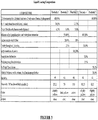
- Figure 1 illustrates the mechanical properties demonstrated by three different thermoplastic fabric-reinforced composites.
- Composite A was formed using glass fibers sized with SE 1500, which is specifically designed for use with thermoset matrix materials.
- Composite B was formed using glass fibers sized with SE 4531, which is specifically designed for use with thermoplastic matrix materials.
- Composite C was formed using SE 1500-sized fibers that were also treated with a primary amine (polyetheramine) chemical treatment.
- Composite C the chemically treated fabric reinforced composite demonstrated physical properties superior to Composite A, which lacked any chemical treatment. Additionally, Composite C demonstrated comparable properties to Composite B, which was formed using a sizing composition specifically designed for use with a thermoplastic matrix material.
- Fabric-reinforced laminates were manufactured having a thickness of 1.5 mm reinforced by three 600 g/m 2 fabric plies.
- the laminates included a glass content of about 65-70 percent by weight of the laminates.
- the different fabric layers were compiled as illustrated in Figure 2 .
- Each laminate produced is listed in Table 1 , including type of chemical treatment, percentage of chemical treatment based on the total weight percent of glass, and consolidation parameters.
- Two samples were prepared as comparative samples.
- the fabric of Sample 1 was sized with SE 1500 and untreated and the fabric of Sample 2 was sized with SE 4531 and untreated.
- the glass fibers were sized with OC® SE 1500.
- the fabric layers were coated on each side with various chemical treatments and consolidated with a polyamide matrix material.
- the chemical treatments tested included low melting point polyamides, including both polyamide 6 and polyamide 12, in amounts from about 5 to about 15 weight percent based on the weight of the glass fibers. Both had a positive effect on the laminate's surface aspect meaning that the laminates demonstrated low porosity and low blister levels. It is believed that treatment with a polyamide enhances the softening speed of the matrix material and lowers its melting point.
- the chemical treatments further included amino functional and styrene-maleic anhydride copolymers, modified or not with reactive amino compounds. The styrene-maleic anhydride had a positive effect on the laminate's surface aspect and also was able to obtain good results in less consolidation time.
- results demonstrate that manufacturing process variables, such as consolidation pressure and time also affect the quality of the laminate produced.
- the results also indicate that a minimal pressure of 20 bars is important for obtaining a good desired surface aspect without too many blisters. At a lower pressure, the surface aspect begins to degrade and blisters develop.
- results indicate that a minimum delay of 2 minutes allows sufficient time to transfer the temperature at 290 °C from the press plates to the laminate. Additional time delay may further lower the blister quantity, although it may increase the presence of a surface porosity.
- Table 2 illustrates the mechanical properties of sample laminates (Samples 3, 4, 13, 18, 20, 25-26, 30, 32, 35 and 36) made with glass fibers sized with SE 1500, as compared to Samples 1 and 2 that did not include any chemical treatment.
- each laminate that included a chemical treatment demonstrated increased strength and modulus, as compared to the laminates that did not include any chemical treatment.
- the chemically treated laminates additionally demonstrate reduced elongation in both the warp and weft direction, as compared to the untreated laminates.
- the chemical treatment polyamide 6 is multifunctional, in that it also induces a lower melting point of the matrix, and is able to significantly improve mechanical performance (Samples 32, 35, and 36 vs. Sample 1) even with short consolidation time (2 min). This performance was close to the mechanical performance of a product with a specific sizing for a polyamide matrix (Sample 2). Compositions inducing higher chemical bonding also generated significant improvement (Samples 25, 26, and 30 vs. Sample 1). A surface treatment to improve wetting properties between the sizing and the matrix may improve composite performance (Samples 13 vs. Sample 1). A mixture of amines (Sample 30) also represented an improvement in comparison with the reference Sample 1.
- Fabric laminates were produced using glass fibers sized with SE 4002, which is based on polyurethane polymer emulsions and amino coupling agents.
- SE 4002 is specifically designed for use with polyamide matrix materials.
- the fabrics were treated with four chemical treatments: a) 75% styrene-maleic anhydride ("SMA1000H”) and 25% styrene-maleic anhydride ("SMA 30001”); b) 66% styrene-maleic anhydride ("SMA1000P) and 33% primary diamine (EDR 600); c) polyamide 6; and d) polyamide 12.
- the fabric composites were formed using a polyamide 6 matrix material. The composites were compressed at a temperature of 290 °C at a pressure of 20 bars. Note: These composites were prepared according to two different processes:
- Figure 4 illustrates the effect that the various chemical treatments have on bending stress compared to two reference rovings.
- the polyamide 6 treated fabrics resulted in a high stress value at a treatment time of about 89 seconds (accelerated melting) and at 55 seconds even if all the values are globally lower.
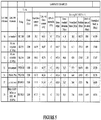
- Figure 5 illustrates exemplary laminates formed to further demonstrate the effects of chemically treating a fabric compared to untreated fabric.
- Laminates were formed using a PA6 matrix material with three layers of fabric. The laminates were compressed at 290 °C at a pressure of 20 bar. Three sets of laminates were prepared, with each set including one laminate without any chemical treatment.
- the first set (Laminates 50-52) included glass fibers sized with SE 1500 (designed for use with thermoset matrix materials).
- Laminate 51 included fabric chemically treated with maleic anhydride at a quantity of 0.70% of the fabric weight and the fabric used in Laminate 52 was chemically treated with maleic anhydride at a quantity of 2.34% of the fabric weight.
- the second set included glass fiber fabric made with PPG roving product PPG 4510 (designed for use with thermoplastic polyamide matrix materials).
- Laminate 54 included fabric that was chemically treated with polyamide 6 at a quantity of 6.3% of the fabric weight.
- the third set included glass fiber fabrics made with Owens Corning roving product SE 4002-5 (designed for use with thermoplastic matrix materials).
- Laminate 56 included fabric that had been chemically treated with styrene maleic anhydride and an amine at a quantity of 0.81% of the fabric weight.
- each laminate The flexural properties of each laminate are listed in Figure 5 .
- the treatments with maleic anhydride improved stress values and modulus properties over the untreated control.
- Such an improvement in properties can also be seen in the second and third set, which included glass fibers sized with a polyamide complementary sizing composition.
- the chemical treatment provided an additional improvement in both stress values and in modulus values.
- the fabric treated with the SMA and primary amine demonstrated the highest stress value, even as compared to the control (Laminate 55) due to enhanced chemical bonding.
Landscapes
- Chemical & Material Sciences (AREA)
- Engineering & Computer Science (AREA)
- Life Sciences & Earth Sciences (AREA)
- Chemical Kinetics & Catalysis (AREA)
- Materials Engineering (AREA)
- Organic Chemistry (AREA)
- General Life Sciences & Earth Sciences (AREA)
- General Chemical & Material Sciences (AREA)
- Geochemistry & Mineralogy (AREA)
- Health & Medical Sciences (AREA)
- Medicinal Chemistry (AREA)
- Polymers & Plastics (AREA)
- Manufacturing & Machinery (AREA)
- Textile Engineering (AREA)
- Physics & Mathematics (AREA)
- Plasma & Fusion (AREA)
- Mechanical Engineering (AREA)
- Inorganic Chemistry (AREA)
- Reinforced Plastic Materials (AREA)
- Treatments For Attaching Organic Compounds To Fibrous Goods (AREA)
- Woven Fabrics (AREA)
Priority Applications (1)
| Application Number | Priority Date | Filing Date | Title |
|---|---|---|---|
| PL15706573T PL3102392T3 (pl) | 2014-02-06 | 2015-02-04 | Kompozyty wzmocnione włóknem |
Applications Claiming Priority (2)
| Application Number | Priority Date | Filing Date | Title |
|---|---|---|---|
| US201461936388P | 2014-02-06 | 2014-02-06 | |
| PCT/US2015/014350 WO2015119984A2 (en) | 2014-02-06 | 2015-02-04 | Postponed differentiation of reinforced composites |
Publications (2)
| Publication Number | Publication Date |
|---|---|
| EP3102392A2 EP3102392A2 (en) | 2016-12-14 |
| EP3102392B1 true EP3102392B1 (en) | 2021-04-07 |
Family
ID=52589760
Family Applications (1)
| Application Number | Title | Priority Date | Filing Date |
|---|---|---|---|
| EP15706573.1A Active EP3102392B1 (en) | 2014-02-06 | 2015-02-04 | Fiber reinforced composites |
Country Status (13)
| Country | Link |
|---|---|
| US (1) | US11534942B2 (enExample) |
| EP (1) | EP3102392B1 (enExample) |
| JP (1) | JP6712227B2 (enExample) |
| KR (1) | KR102295134B1 (enExample) |
| CN (1) | CN106103837B (enExample) |
| BR (1) | BR112016018093B1 (enExample) |
| CA (1) | CA2938874C (enExample) |
| DK (1) | DK3102392T3 (enExample) |
| ES (1) | ES2875924T3 (enExample) |
| MX (1) | MX392564B (enExample) |
| PL (1) | PL3102392T3 (enExample) |
| RU (1) | RU2681612C2 (enExample) |
| WO (1) | WO2015119984A2 (enExample) |
Families Citing this family (5)
| Publication number | Priority date | Publication date | Assignee | Title |
|---|---|---|---|---|
| EP3508459A1 (en) * | 2018-01-09 | 2019-07-10 | OCV Intellectual Capital, LLC | Fiber reinforced materials with improved fatigue performance |
| ES2962144T3 (es) * | 2018-04-25 | 2024-03-15 | Asahi Chemical Ind | Moldeado de resina reforzado con fibra continua y método para la fabricación de la misma |
| RU2752627C1 (ru) * | 2020-03-16 | 2021-07-29 | Федеральное государственное бюджетное образовательное учреждение высшего образования «Кабардино-Балкарский государственный университет им. Х.М. Бербекова» (КБГУ) | Полимерный композит на основе полиэфирэфиркетона и углеволокна и способ его получения |
| RU2752625C1 (ru) * | 2020-03-18 | 2021-07-29 | Федеральное государственное бюджетное образовательное учреждение высшего образования «Кабардино-Балкарский государственный университет им. Х.М. Бербекова» (КБГУ) | Полимерный композиционный материал на основе полиэфирэфиркетона и углеволокна и способ его получения |
| KR102134593B1 (ko) * | 2020-04-10 | 2020-07-17 | 주식회사 정석케미칼 | 장기간 내구성이 우수하고 노면 표지용 도료와 부착성이 향상된 아스콘 균열 보수재 |
Citations (2)
| Publication number | Priority date | Publication date | Assignee | Title |
|---|---|---|---|---|
| US5804313A (en) * | 1996-07-15 | 1998-09-08 | Ppg Industries, Inc. | Polyamide and acrylic polymer coated glass fiber reinforcements, reinforced polymeric composites and a method of reinforcing a polymeric material |
| US8318264B2 (en) * | 2006-03-31 | 2012-11-27 | Saint-Gobain Adfors | Process for functionalizing a glass reinforcement for composite material |
Family Cites Families (38)
| Publication number | Priority date | Publication date | Assignee | Title |
|---|---|---|---|---|
| US3391791A (en) | 1964-05-12 | 1968-07-09 | C B Trapp Co Ltd | Trap apparatus for drainage pipes |
| US3416990A (en) | 1965-08-06 | 1968-12-17 | Hercules Inc | Glass fiber-reinforced polymers |
| GB1277756A (en) | 1969-07-02 | 1972-06-14 | British Insulated Callenders | Improvements in or relating to swaging tools |
| US3863758A (en) | 1971-11-02 | 1975-02-04 | Hercules Inc | Molding compositions |
| US4179331A (en) * | 1977-11-15 | 1979-12-18 | Gaf Corporation | Glass fiber dispersions for making uniform glass fiber mats by the wet-laid process |
| US4469543A (en) | 1978-11-29 | 1984-09-04 | Allied Corporation | Lamination of highly reinforced thermoplastic composites |
| US4277531A (en) | 1979-08-06 | 1981-07-07 | Ppg Industries, Inc. | High strength fiber glass reinforced thermoplastic sheets and method of manufacturing same involving a reverse barb needling procedure |
| FR2579133B1 (fr) | 1985-03-25 | 1987-09-25 | Atochem | Materiau composite polymere thermoplastique renforce de fibres, son procede de fabrication |
| US4810576A (en) * | 1985-09-30 | 1989-03-07 | Ppg Industries, Inc. | Treated glass fibers and aqueous dispersion and nonwoven mat of the glass fibers |
| CN87104425A (zh) | 1987-06-23 | 1988-04-06 | 哈尔滨工业大学 | 纤维、织物及薄膜表面冷等离子体连续处理工艺 |
| DE3934091A1 (de) | 1989-10-12 | 1991-04-18 | Huels Chemische Werke Ag | Bauteile aus endlosfaserverstaerkten polyamid-formmassen und gummi sowie verfahren zu ihre herstellung |
| US5045367A (en) | 1990-02-28 | 1991-09-03 | Phillips Petroleum Company | Reinforced plastic comprising fibrous reinforcement treated with poly(arylene sulfide sulfone) polymer containing ether groups |
| US5380477A (en) | 1993-05-25 | 1995-01-10 | Basf Corporation | Process of making fiber reinforced laminates |
| DE4317649A1 (de) | 1993-05-27 | 1994-12-01 | Hoechst Ag | Glasfaserverstärkter Verbundwerkstoff und Verfahren zu seiner Herstellung |
| JP3338124B2 (ja) | 1993-05-31 | 2002-10-28 | 三菱化学株式会社 | プロピレン系耐熱樹脂成形材料及びその成形体 |
| JP2987052B2 (ja) | 1994-05-02 | 1999-12-06 | 住友ゴム工業株式会社 | 繊維強化構造材料 |
| JPH07329059A (ja) * | 1994-06-13 | 1995-12-19 | Nitto Boseki Co Ltd | 成形用シート材料の製造方法 |
| US5824413A (en) | 1996-07-15 | 1998-10-20 | Ppg Industries, Inc. | Secondary coating for fiber strands, coated strand reinforcements, reinforced polymeric composites and a method of reinforcing a polymeric material |
| CN1228050A (zh) | 1996-08-12 | 1999-09-08 | 欧文斯-科尔宁格公司 | 模制纤维增强热塑性复合制品的纤维和涂丝复合股线的化学处理剂 |
| DE19738388A1 (de) | 1997-09-03 | 1998-02-26 | Inst Verbundwerkstoffe Gmbh | Dickenadaptives, flächiges, textilverstärktes Halbzeug mit thermoplastischer Matrix |
| WO2000000351A1 (de) | 1998-06-30 | 2000-01-06 | Symalit Ag | Verfahren zur herstellung eines verbundkörpers aus faserverstärktem kunststoff und nach diesem verfahren hergestellter verbundkörper |
| DE19932274A1 (de) | 1999-07-05 | 2001-01-18 | Inst Polymerforschung Dresden | Faserverbundwerkstoff und Verfahren zu seiner Herstellung |
| US6294253B1 (en) * | 1999-08-11 | 2001-09-25 | Johns Manville International, Inc. | Uniformly dispersing fibers |
| DE10117715B4 (de) | 2000-04-14 | 2008-09-25 | Asahi Kasei Kabushiki Kaisha | Glasfaserverstärkte Polyamidharz-Zusammensetzung |
| JP4678979B2 (ja) | 2000-04-14 | 2011-04-27 | 旭化成ケミカルズ株式会社 | ガラス繊維強化ポリアミド樹脂組成物 |
| DK1305268T3 (da) | 2000-07-26 | 2010-12-20 | Ballard Power Systems | Carbonmatrix-kompositsammensætninger og dertil relaterede fremgangsmåder |
| US20020086598A1 (en) * | 2000-09-18 | 2002-07-04 | Vedagiri Velpari | Fabrics comprising resin compatible yarn with defined shape factor |
| GB0028341D0 (en) | 2000-11-21 | 2001-01-03 | Cytec Tech Corp | Thermally stable resin binder composition and method for binding fibres |
| US6803096B2 (en) | 2001-02-05 | 2004-10-12 | Avc Holdings Inc. | Engineering thermoplastic polyurethane reinforced with glass mat |
| WO2002065670A1 (fr) | 2001-02-15 | 2002-08-22 | Compagnie Des Inventions De L'atelier De L'innovation | Systeme de communication par voie optique vers des terminaux passifs et emetteur pour un tel systeme |
| US7585563B2 (en) * | 2001-05-01 | 2009-09-08 | Ocv Intellectual Capital, Llc | Fiber size, sized reinforcements, and articles reinforced with such reinforcements |
| CA2478590C (en) | 2002-03-08 | 2011-04-05 | Owens Corning | Continuous filament mat binder system |
| CA2565035C (en) | 2004-05-14 | 2013-04-23 | Sartomer Technology Co., Inc. | Method for adhering fabric to rubber, treated fabric, and fabric-rubber composites |
| DK1791997T3 (da) | 2004-08-31 | 2012-08-13 | Obermeyer Henry K | Højstyrkeforbindelsessystem til fiberforstærkede kompositmaterialer |
| US20070154697A1 (en) * | 2005-12-30 | 2007-07-05 | Cossement Marc R | Two-part sizing composition for reinforcement fibers |
| BRPI0720312A2 (pt) | 2006-12-15 | 2013-12-24 | Ppg Ind Ohio Inc | Composição de engomagem, fibra de vidro, composição combinada e método para produzir um composto reforçado com fibra de vidro. |
| US8080171B2 (en) * | 2007-06-01 | 2011-12-20 | Ocv Intellectual Capital, Llc | Wet-laid chopped strand fiber mat for roofing mat |
| FR2947823B1 (fr) | 2009-07-09 | 2012-12-28 | Rhodia Operations | Article polyamide composite |
-
2015
- 2015-02-04 JP JP2016550497A patent/JP6712227B2/ja active Active
- 2015-02-04 MX MX2016010055A patent/MX392564B/es unknown
- 2015-02-04 WO PCT/US2015/014350 patent/WO2015119984A2/en not_active Ceased
- 2015-02-04 KR KR1020167024618A patent/KR102295134B1/ko active Active
- 2015-02-04 CN CN201580012649.8A patent/CN106103837B/zh active Active
- 2015-02-04 ES ES15706573T patent/ES2875924T3/es active Active
- 2015-02-04 DK DK15706573.1T patent/DK3102392T3/da active
- 2015-02-04 BR BR112016018093-3A patent/BR112016018093B1/pt active IP Right Grant
- 2015-02-04 US US15/115,981 patent/US11534942B2/en active Active
- 2015-02-04 CA CA2938874A patent/CA2938874C/en active Active
- 2015-02-04 PL PL15706573T patent/PL3102392T3/pl unknown
- 2015-02-04 RU RU2016134942A patent/RU2681612C2/ru active
- 2015-02-04 EP EP15706573.1A patent/EP3102392B1/en active Active
Patent Citations (2)
| Publication number | Priority date | Publication date | Assignee | Title |
|---|---|---|---|---|
| US5804313A (en) * | 1996-07-15 | 1998-09-08 | Ppg Industries, Inc. | Polyamide and acrylic polymer coated glass fiber reinforcements, reinforced polymeric composites and a method of reinforcing a polymeric material |
| US8318264B2 (en) * | 2006-03-31 | 2012-11-27 | Saint-Gobain Adfors | Process for functionalizing a glass reinforcement for composite material |
Also Published As
| Publication number | Publication date |
|---|---|
| CA2938874A1 (en) | 2015-08-13 |
| RU2016134942A (ru) | 2018-03-07 |
| US11534942B2 (en) | 2022-12-27 |
| CN106103837B (zh) | 2020-09-08 |
| WO2015119984A3 (en) | 2015-11-26 |
| RU2681612C2 (ru) | 2019-03-11 |
| KR20160119818A (ko) | 2016-10-14 |
| JP6712227B2 (ja) | 2020-06-17 |
| CN106103837A (zh) | 2016-11-09 |
| JP2017506278A (ja) | 2017-03-02 |
| MX392564B (es) | 2025-03-24 |
| CA2938874C (en) | 2022-05-31 |
| BR112016018093B1 (pt) | 2021-11-30 |
| EP3102392A2 (en) | 2016-12-14 |
| BR112016018093A8 (pt) | 2020-06-23 |
| US20170008195A1 (en) | 2017-01-12 |
| RU2016134942A3 (enExample) | 2018-08-02 |
| PL3102392T3 (pl) | 2021-10-18 |
| MX2016010055A (es) | 2017-10-26 |
| KR102295134B1 (ko) | 2021-08-31 |
| DK3102392T3 (da) | 2021-07-05 |
| WO2015119984A2 (en) | 2015-08-13 |
| BR112016018093A2 (pt) | 2017-08-08 |
| ES2875924T3 (es) | 2021-11-11 |
Similar Documents
| Publication | Publication Date | Title |
|---|---|---|
| CN111094407B (zh) | 纤维强化热塑性树脂成型品 | |
| EP3058126B1 (en) | Flexible non-woven mat | |
| JPH0346415B2 (enExample) | ||
| US20140038481A1 (en) | Fiberglass reinforced composites | |
| US11534942B2 (en) | Postponed differentiation of reinforced composites | |
| JP2017531743A (ja) | ハイブリッド長繊維熱可塑性複合体 | |
| CA2670816A1 (en) | Sizing composition for glass fibers | |
| EP2851464B1 (en) | Reinforcing carbon fiber bundle, manufacturing process therefor, and composite-manufacturing process using same | |
| RU2427594C1 (ru) | Препрег и изделие, выполненное из него | |
| KR20070083584A (ko) | 셀룰로오즈성 스펀 섬유에 기초하는 자유 유동 펠렛, 이의제조방법, 및 이의 용도 | |
| US20110129608A1 (en) | Methods of applying matrix resins to glass fibers | |
| US7896991B2 (en) | Method for manufacturing resin mats | |
| Yang et al. | Simple manufacturing method for a thermoplastic composite using PP-Straw | |
| Grozdanov et al. | Carbon fibers/polyamide 6 composites based on hybrid yarns | |
| JP2018529851A (ja) | 繊維強化樹脂複合材の製造方法、繊維強化樹脂複合材及び成形品 | |
| DE60303593T2 (de) | Bindemittel für endlos-vliesbahnen | |
| KR101639982B1 (ko) | 고강도 하이브리드 일방향 프리프레그의 제조방법 | |
| US6828024B1 (en) | Epoxy film former string binder | |
| RU2641125C1 (ru) | Текстолит многофункционального назначения |
Legal Events
| Date | Code | Title | Description |
|---|---|---|---|
| PUAI | Public reference made under article 153(3) epc to a published international application that has entered the european phase |
Free format text: ORIGINAL CODE: 0009012 |
|
| STAA | Information on the status of an ep patent application or granted ep patent |
Free format text: STATUS: REQUEST FOR EXAMINATION WAS MADE |
|
| 17P | Request for examination filed |
Effective date: 20160905 |
|
| AK | Designated contracting states |
Kind code of ref document: A2 Designated state(s): AL AT BE BG CH CY CZ DE DK EE ES FI FR GB GR HR HU IE IS IT LI LT LU LV MC MK MT NL NO PL PT RO RS SE SI SK SM TR |
|
| AX | Request for extension of the european patent |
Extension state: BA ME |
|
| DAX | Request for extension of the european patent (deleted) | ||
| STAA | Information on the status of an ep patent application or granted ep patent |
Free format text: STATUS: EXAMINATION IS IN PROGRESS |
|
| PUAG | Search results despatched under rule 164(2) epc together with communication from examining division |
Free format text: ORIGINAL CODE: 0009017 |
|
| 17Q | First examination report despatched |
Effective date: 20190214 |
|
| B565 | Issuance of search results under rule 164(2) epc |
Effective date: 20190214 |
|
| RIC1 | Information provided on ipc code assigned before grant |
Ipc: D04H 13/00 20060101ALI20190211BHEP Ipc: D03D 15/00 20060101ALI20190211BHEP Ipc: D04H 1/00 20060101ALI20190211BHEP Ipc: D03D 1/00 20060101ALI20190211BHEP Ipc: C08J 5/04 20060101ALI20190211BHEP Ipc: C03C 25/48 20060101ALI20190211BHEP Ipc: C03C 25/328 20180101ALI20190211BHEP Ipc: C03C 25/25 20180101ALI20190211BHEP Ipc: C03C 25/6293 20180101ALI20190211BHEP Ipc: C08J 5/08 20060101ALI20190211BHEP Ipc: C03C 25/1095 20180101ALI20190211BHEP Ipc: C03C 25/32 20180101ALI20190211BHEP Ipc: C03C 25/10 20180101ALI20190211BHEP Ipc: B29C 70/16 20060101AFI20190211BHEP Ipc: C03C 25/62 20180101ALI20190211BHEP Ipc: C03C 25/24 20180101ALI20190211BHEP |
|
| GRAP | Despatch of communication of intention to grant a patent |
Free format text: ORIGINAL CODE: EPIDOSNIGR1 |
|
| STAA | Information on the status of an ep patent application or granted ep patent |
Free format text: STATUS: GRANT OF PATENT IS INTENDED |
|
| INTG | Intention to grant announced |
Effective date: 20201015 |
|
| GRAS | Grant fee paid |
Free format text: ORIGINAL CODE: EPIDOSNIGR3 |
|
| GRAA | (expected) grant |
Free format text: ORIGINAL CODE: 0009210 |
|
| STAA | Information on the status of an ep patent application or granted ep patent |
Free format text: STATUS: THE PATENT HAS BEEN GRANTED |
|
| RAP1 | Party data changed (applicant data changed or rights of an application transferred) |
Owner name: OWENS CORNING INTELLECTUAL CAPITAL, LLC |
|
| AK | Designated contracting states |
Kind code of ref document: B1 Designated state(s): AL AT BE BG CH CY CZ DE DK EE ES FI FR GB GR HR HU IE IS IT LI LT LU LV MC MK MT NL NO PL PT RO RS SE SI SK SM TR |
|
| REG | Reference to a national code |
Ref country code: GB Ref legal event code: FG4D |
|
| REG | Reference to a national code |
Ref country code: AT Ref legal event code: REF Ref document number: 1379124 Country of ref document: AT Kind code of ref document: T Effective date: 20210415 Ref country code: CH Ref legal event code: EP |
|
| REG | Reference to a national code |
Ref country code: DE Ref legal event code: R096 Ref document number: 602015067718 Country of ref document: DE |
|
| REG | Reference to a national code |
Ref country code: IE Ref legal event code: FG4D |
|
| REG | Reference to a national code |
Ref country code: DK Ref legal event code: T3 Effective date: 20210702 |
|
| REG | Reference to a national code |
Ref country code: LT Ref legal event code: MG9D |
|
| REG | Reference to a national code |
Ref country code: NL Ref legal event code: MP Effective date: 20210407 Ref country code: AT Ref legal event code: MK05 Ref document number: 1379124 Country of ref document: AT Kind code of ref document: T Effective date: 20210407 |
|
| PG25 | Lapsed in a contracting state [announced via postgrant information from national office to epo] |
Ref country code: FI Free format text: LAPSE BECAUSE OF FAILURE TO SUBMIT A TRANSLATION OF THE DESCRIPTION OR TO PAY THE FEE WITHIN THE PRESCRIBED TIME-LIMIT Effective date: 20210407 Ref country code: NL Free format text: LAPSE BECAUSE OF FAILURE TO SUBMIT A TRANSLATION OF THE DESCRIPTION OR TO PAY THE FEE WITHIN THE PRESCRIBED TIME-LIMIT Effective date: 20210407 Ref country code: LT Free format text: LAPSE BECAUSE OF FAILURE TO SUBMIT A TRANSLATION OF THE DESCRIPTION OR TO PAY THE FEE WITHIN THE PRESCRIBED TIME-LIMIT Effective date: 20210407 Ref country code: HR Free format text: LAPSE BECAUSE OF FAILURE TO SUBMIT A TRANSLATION OF THE DESCRIPTION OR TO PAY THE FEE WITHIN THE PRESCRIBED TIME-LIMIT Effective date: 20210407 Ref country code: AT Free format text: LAPSE BECAUSE OF FAILURE TO SUBMIT A TRANSLATION OF THE DESCRIPTION OR TO PAY THE FEE WITHIN THE PRESCRIBED TIME-LIMIT Effective date: 20210407 Ref country code: BG Free format text: LAPSE BECAUSE OF FAILURE TO SUBMIT A TRANSLATION OF THE DESCRIPTION OR TO PAY THE FEE WITHIN THE PRESCRIBED TIME-LIMIT Effective date: 20210707 |
|
| REG | Reference to a national code |
Ref country code: ES Ref legal event code: FG2A Ref document number: 2875924 Country of ref document: ES Kind code of ref document: T3 Effective date: 20211111 |
|
| PG25 | Lapsed in a contracting state [announced via postgrant information from national office to epo] |
Ref country code: RS Free format text: LAPSE BECAUSE OF FAILURE TO SUBMIT A TRANSLATION OF THE DESCRIPTION OR TO PAY THE FEE WITHIN THE PRESCRIBED TIME-LIMIT Effective date: 20210407 Ref country code: SE Free format text: LAPSE BECAUSE OF FAILURE TO SUBMIT A TRANSLATION OF THE DESCRIPTION OR TO PAY THE FEE WITHIN THE PRESCRIBED TIME-LIMIT Effective date: 20210407 Ref country code: NO Free format text: LAPSE BECAUSE OF FAILURE TO SUBMIT A TRANSLATION OF THE DESCRIPTION OR TO PAY THE FEE WITHIN THE PRESCRIBED TIME-LIMIT Effective date: 20210707 Ref country code: PT Free format text: LAPSE BECAUSE OF FAILURE TO SUBMIT A TRANSLATION OF THE DESCRIPTION OR TO PAY THE FEE WITHIN THE PRESCRIBED TIME-LIMIT Effective date: 20210809 Ref country code: GR Free format text: LAPSE BECAUSE OF FAILURE TO SUBMIT A TRANSLATION OF THE DESCRIPTION OR TO PAY THE FEE WITHIN THE PRESCRIBED TIME-LIMIT Effective date: 20210708 Ref country code: LV Free format text: LAPSE BECAUSE OF FAILURE TO SUBMIT A TRANSLATION OF THE DESCRIPTION OR TO PAY THE FEE WITHIN THE PRESCRIBED TIME-LIMIT Effective date: 20210407 Ref country code: IS Free format text: LAPSE BECAUSE OF FAILURE TO SUBMIT A TRANSLATION OF THE DESCRIPTION OR TO PAY THE FEE WITHIN THE PRESCRIBED TIME-LIMIT Effective date: 20210807 |
|
| REG | Reference to a national code |
Ref country code: DE Ref legal event code: R097 Ref document number: 602015067718 Country of ref document: DE |
|
| PG25 | Lapsed in a contracting state [announced via postgrant information from national office to epo] |
Ref country code: SM Free format text: LAPSE BECAUSE OF FAILURE TO SUBMIT A TRANSLATION OF THE DESCRIPTION OR TO PAY THE FEE WITHIN THE PRESCRIBED TIME-LIMIT Effective date: 20210407 Ref country code: SK Free format text: LAPSE BECAUSE OF FAILURE TO SUBMIT A TRANSLATION OF THE DESCRIPTION OR TO PAY THE FEE WITHIN THE PRESCRIBED TIME-LIMIT Effective date: 20210407 Ref country code: CZ Free format text: LAPSE BECAUSE OF FAILURE TO SUBMIT A TRANSLATION OF THE DESCRIPTION OR TO PAY THE FEE WITHIN THE PRESCRIBED TIME-LIMIT Effective date: 20210407 Ref country code: EE Free format text: LAPSE BECAUSE OF FAILURE TO SUBMIT A TRANSLATION OF THE DESCRIPTION OR TO PAY THE FEE WITHIN THE PRESCRIBED TIME-LIMIT Effective date: 20210407 Ref country code: RO Free format text: LAPSE BECAUSE OF FAILURE TO SUBMIT A TRANSLATION OF THE DESCRIPTION OR TO PAY THE FEE WITHIN THE PRESCRIBED TIME-LIMIT Effective date: 20210407 |
|
| PLBE | No opposition filed within time limit |
Free format text: ORIGINAL CODE: 0009261 |
|
| STAA | Information on the status of an ep patent application or granted ep patent |
Free format text: STATUS: NO OPPOSITION FILED WITHIN TIME LIMIT |
|
| 26N | No opposition filed |
Effective date: 20220110 |
|
| PG25 | Lapsed in a contracting state [announced via postgrant information from national office to epo] |
Ref country code: IS Free format text: LAPSE BECAUSE OF FAILURE TO SUBMIT A TRANSLATION OF THE DESCRIPTION OR TO PAY THE FEE WITHIN THE PRESCRIBED TIME-LIMIT Effective date: 20210807 Ref country code: AL Free format text: LAPSE BECAUSE OF FAILURE TO SUBMIT A TRANSLATION OF THE DESCRIPTION OR TO PAY THE FEE WITHIN THE PRESCRIBED TIME-LIMIT Effective date: 20210407 |
|
| PG25 | Lapsed in a contracting state [announced via postgrant information from national office to epo] |
Ref country code: IT Free format text: LAPSE BECAUSE OF FAILURE TO SUBMIT A TRANSLATION OF THE DESCRIPTION OR TO PAY THE FEE WITHIN THE PRESCRIBED TIME-LIMIT Effective date: 20210407 |
|
| PG25 | Lapsed in a contracting state [announced via postgrant information from national office to epo] |
Ref country code: MC Free format text: LAPSE BECAUSE OF FAILURE TO SUBMIT A TRANSLATION OF THE DESCRIPTION OR TO PAY THE FEE WITHIN THE PRESCRIBED TIME-LIMIT Effective date: 20210407 |
|
| REG | Reference to a national code |
Ref country code: CH Ref legal event code: PL |
|
| PG25 | Lapsed in a contracting state [announced via postgrant information from national office to epo] |
Ref country code: LU Free format text: LAPSE BECAUSE OF NON-PAYMENT OF DUE FEES Effective date: 20220204 |
|
| PG25 | Lapsed in a contracting state [announced via postgrant information from national office to epo] |
Ref country code: LI Free format text: LAPSE BECAUSE OF NON-PAYMENT OF DUE FEES Effective date: 20220228 Ref country code: IE Free format text: LAPSE BECAUSE OF NON-PAYMENT OF DUE FEES Effective date: 20220204 Ref country code: CH Free format text: LAPSE BECAUSE OF NON-PAYMENT OF DUE FEES Effective date: 20220228 |
|
| REG | Reference to a national code |
Ref country code: DE Ref legal event code: R082 Ref document number: 602015067718 Country of ref document: DE Representative=s name: CBDL PATENTANWAELTE GBR, DE Ref country code: DE Ref legal event code: R082 Ref document number: 602015067718 Country of ref document: DE Representative=s name: CBDL PATENTANWAELTE EGBR, DE |
|
| P01 | Opt-out of the competence of the unified patent court (upc) registered |
Effective date: 20230516 |
|
| PG25 | Lapsed in a contracting state [announced via postgrant information from national office to epo] |
Ref country code: HU Free format text: LAPSE BECAUSE OF FAILURE TO SUBMIT A TRANSLATION OF THE DESCRIPTION OR TO PAY THE FEE WITHIN THE PRESCRIBED TIME-LIMIT; INVALID AB INITIO Effective date: 20150204 |
|
| PG25 | Lapsed in a contracting state [announced via postgrant information from national office to epo] |
Ref country code: MK Free format text: LAPSE BECAUSE OF FAILURE TO SUBMIT A TRANSLATION OF THE DESCRIPTION OR TO PAY THE FEE WITHIN THE PRESCRIBED TIME-LIMIT Effective date: 20210407 Ref country code: CY Free format text: LAPSE BECAUSE OF FAILURE TO SUBMIT A TRANSLATION OF THE DESCRIPTION OR TO PAY THE FEE WITHIN THE PRESCRIBED TIME-LIMIT Effective date: 20210407 |
|
| PG25 | Lapsed in a contracting state [announced via postgrant information from national office to epo] |
Ref country code: MT Free format text: LAPSE BECAUSE OF FAILURE TO SUBMIT A TRANSLATION OF THE DESCRIPTION OR TO PAY THE FEE WITHIN THE PRESCRIBED TIME-LIMIT Effective date: 20210407 |
|
| PG25 | Lapsed in a contracting state [announced via postgrant information from national office to epo] |
Ref country code: TR Free format text: LAPSE BECAUSE OF FAILURE TO SUBMIT A TRANSLATION OF THE DESCRIPTION OR TO PAY THE FEE WITHIN THE PRESCRIBED TIME-LIMIT Effective date: 20210407 |
|
| PGFP | Annual fee paid to national office [announced via postgrant information from national office to epo] |
Ref country code: FR Payment date: 20251225 Year of fee payment: 12 |
|
| PGFP | Annual fee paid to national office [announced via postgrant information from national office to epo] |
Ref country code: GB Payment date: 20260122 Year of fee payment: 12 |
|
| PGFP | Annual fee paid to national office [announced via postgrant information from national office to epo] |
Ref country code: ES Payment date: 20260310 Year of fee payment: 12 |
|
| PGFP | Annual fee paid to national office [announced via postgrant information from national office to epo] |
Ref country code: DE Payment date: 20260226 Year of fee payment: 12 Ref country code: DK Payment date: 20260226 Year of fee payment: 12 |
|
| PGFP | Annual fee paid to national office [announced via postgrant information from national office to epo] |
Ref country code: BE Payment date: 20260123 Year of fee payment: 12 |
|
| PGFP | Annual fee paid to national office [announced via postgrant information from national office to epo] |
Ref country code: PL Payment date: 20260109 Year of fee payment: 12 |