EP2970356B1 - Modified nucleosides or nucleotides - Google Patents
Modified nucleosides or nucleotides Download PDFInfo
- Publication number
- EP2970356B1 EP2970356B1 EP13711333.8A EP13711333A EP2970356B1 EP 2970356 B1 EP2970356 B1 EP 2970356B1 EP 13711333 A EP13711333 A EP 13711333A EP 2970356 B1 EP2970356 B1 EP 2970356B1
- Authority
- EP
- European Patent Office
- Prior art keywords
- hydrogen
- modified nucleotide
- optionally substituted
- nucleotide
- molecule
- Prior art date
- Legal status (The legal status is an assumption and is not a legal conclusion. Google has not performed a legal analysis and makes no representation as to the accuracy of the status listed.)
- Active
Links
Images


Classifications
-
- C—CHEMISTRY; METALLURGY
- C07—ORGANIC CHEMISTRY
- C07H—SUGARS; DERIVATIVES THEREOF; NUCLEOSIDES; NUCLEOTIDES; NUCLEIC ACIDS
- C07H19/00—Compounds containing a hetero ring sharing one ring hetero atom with a saccharide radical; Nucleosides; Mononucleotides; Anhydro-derivatives thereof
- C07H19/02—Compounds containing a hetero ring sharing one ring hetero atom with a saccharide radical; Nucleosides; Mononucleotides; Anhydro-derivatives thereof sharing nitrogen
- C07H19/04—Heterocyclic radicals containing only nitrogen atoms as ring hetero atom
- C07H19/06—Pyrimidine radicals
- C07H19/073—Pyrimidine radicals with 2-deoxyribosyl as the saccharide radical
-
- C—CHEMISTRY; METALLURGY
- C12—BIOCHEMISTRY; BEER; SPIRITS; WINE; VINEGAR; MICROBIOLOGY; ENZYMOLOGY; MUTATION OR GENETIC ENGINEERING
- C12Q—MEASURING OR TESTING PROCESSES INVOLVING ENZYMES, NUCLEIC ACIDS OR MICROORGANISMS; COMPOSITIONS OR TEST PAPERS THEREFOR; PROCESSES OF PREPARING SUCH COMPOSITIONS; CONDITION-RESPONSIVE CONTROL IN MICROBIOLOGICAL OR ENZYMOLOGICAL PROCESSES
- C12Q1/00—Measuring or testing processes involving enzymes, nucleic acids or microorganisms; Compositions therefor; Processes of preparing such compositions
- C12Q1/68—Measuring or testing processes involving enzymes, nucleic acids or microorganisms; Compositions therefor; Processes of preparing such compositions involving nucleic acids
- C12Q1/6869—Methods for sequencing
-
- C—CHEMISTRY; METALLURGY
- C07—ORGANIC CHEMISTRY
- C07H—SUGARS; DERIVATIVES THEREOF; NUCLEOSIDES; NUCLEOTIDES; NUCLEIC ACIDS
- C07H19/00—Compounds containing a hetero ring sharing one ring hetero atom with a saccharide radical; Nucleosides; Mononucleotides; Anhydro-derivatives thereof
- C07H19/02—Compounds containing a hetero ring sharing one ring hetero atom with a saccharide radical; Nucleosides; Mononucleotides; Anhydro-derivatives thereof sharing nitrogen
- C07H19/04—Heterocyclic radicals containing only nitrogen atoms as ring hetero atom
- C07H19/06—Pyrimidine radicals
- C07H19/10—Pyrimidine radicals with the saccharide radical esterified by phosphoric or polyphosphoric acids
-
- C—CHEMISTRY; METALLURGY
- C07—ORGANIC CHEMISTRY
- C07H—SUGARS; DERIVATIVES THEREOF; NUCLEOSIDES; NUCLEOTIDES; NUCLEIC ACIDS
- C07H19/00—Compounds containing a hetero ring sharing one ring hetero atom with a saccharide radical; Nucleosides; Mononucleotides; Anhydro-derivatives thereof
- C07H19/02—Compounds containing a hetero ring sharing one ring hetero atom with a saccharide radical; Nucleosides; Mononucleotides; Anhydro-derivatives thereof sharing nitrogen
- C07H19/04—Heterocyclic radicals containing only nitrogen atoms as ring hetero atom
- C07H19/14—Pyrrolo-pyrimidine radicals
-
- C—CHEMISTRY; METALLURGY
- C07—ORGANIC CHEMISTRY
- C07H—SUGARS; DERIVATIVES THEREOF; NUCLEOSIDES; NUCLEOTIDES; NUCLEIC ACIDS
- C07H19/00—Compounds containing a hetero ring sharing one ring hetero atom with a saccharide radical; Nucleosides; Mononucleotides; Anhydro-derivatives thereof
- C07H19/02—Compounds containing a hetero ring sharing one ring hetero atom with a saccharide radical; Nucleosides; Mononucleotides; Anhydro-derivatives thereof sharing nitrogen
- C07H19/04—Heterocyclic radicals containing only nitrogen atoms as ring hetero atom
- C07H19/16—Purine radicals
- C07H19/173—Purine radicals with 2-deoxyribosyl as the saccharide radical
-
- C—CHEMISTRY; METALLURGY
- C07—ORGANIC CHEMISTRY
- C07H—SUGARS; DERIVATIVES THEREOF; NUCLEOSIDES; NUCLEOTIDES; NUCLEIC ACIDS
- C07H19/00—Compounds containing a hetero ring sharing one ring hetero atom with a saccharide radical; Nucleosides; Mononucleotides; Anhydro-derivatives thereof
- C07H19/02—Compounds containing a hetero ring sharing one ring hetero atom with a saccharide radical; Nucleosides; Mononucleotides; Anhydro-derivatives thereof sharing nitrogen
- C07H19/04—Heterocyclic radicals containing only nitrogen atoms as ring hetero atom
- C07H19/16—Purine radicals
- C07H19/20—Purine radicals with the saccharide radical esterified by phosphoric or polyphosphoric acids
-
- C—CHEMISTRY; METALLURGY
- C12—BIOCHEMISTRY; BEER; SPIRITS; WINE; VINEGAR; MICROBIOLOGY; ENZYMOLOGY; MUTATION OR GENETIC ENGINEERING
- C12Q—MEASURING OR TESTING PROCESSES INVOLVING ENZYMES, NUCLEIC ACIDS OR MICROORGANISMS; COMPOSITIONS OR TEST PAPERS THEREFOR; PROCESSES OF PREPARING SUCH COMPOSITIONS; CONDITION-RESPONSIVE CONTROL IN MICROBIOLOGICAL OR ENZYMOLOGICAL PROCESSES
- C12Q1/00—Measuring or testing processes involving enzymes, nucleic acids or microorganisms; Compositions therefor; Processes of preparing such compositions
- C12Q1/68—Measuring or testing processes involving enzymes, nucleic acids or microorganisms; Compositions therefor; Processes of preparing such compositions involving nucleic acids
- C12Q1/6876—Nucleic acid products used in the analysis of nucleic acids, e.g. primers or probes
-
- Y—GENERAL TAGGING OF NEW TECHNOLOGICAL DEVELOPMENTS; GENERAL TAGGING OF CROSS-SECTIONAL TECHNOLOGIES SPANNING OVER SEVERAL SECTIONS OF THE IPC; TECHNICAL SUBJECTS COVERED BY FORMER USPC CROSS-REFERENCE ART COLLECTIONS [XRACs] AND DIGESTS
- Y02—TECHNOLOGIES OR APPLICATIONS FOR MITIGATION OR ADAPTATION AGAINST CLIMATE CHANGE
- Y02P—CLIMATE CHANGE MITIGATION TECHNOLOGIES IN THE PRODUCTION OR PROCESSING OF GOODS
- Y02P20/00—Technologies relating to chemical industry
- Y02P20/50—Improvements relating to the production of bulk chemicals
- Y02P20/55—Design of synthesis routes, e.g. reducing the use of auxiliary or protecting groups
Definitions
- Some embodiments described herein relate to modified nucleotides or nucleosides comprising 3'-hydroxy protecting groups and their use in polynucleotide sequencing methods. Some embodiments described herein relate to method of preparing the 3'-hydroxy protected nucleotides or nucleosides.
- nucleic acids An example of the technologies that have improved the study of nucleic acids is the development of fabricated arrays of immobilized nucleic acids. These arrays consist typically of a high-density matrix of polynucleotides immobilized onto a solid support material. See, e.g., Fodor et al., Trends Biotech. 12: 19-26, 1994 , which describes ways of assembling the nucleic acids using a chemically sensitized glass surface protected by a mask, but exposed at defined areas to allow attachment of suitably modified nucleotide phosphoramidites.
- Fabricated arrays can also be manufactured by the technique of "spotting" known polynucleotides onto a solid support at predetermined positions (e.g., Stimpson et al., Proc. Natl. Acad. Sci. 92: 6379-6383, 1995 ).
- SBS Sequence sequencing by synthesis
- This technique for determining the sequence of DNA ideally requires the controlled (i.e., one at a time) incorporation of the correct complementary nucleotide opposite the nucleic acid being sequenced. This allows for accurate sequencing by adding nucleotides in multiple cycles as each nucleotide residue is sequenced one at a time, thus preventing an uncontrolled series of incorporations occurring.
- the incorporated nucleotide is read using an appropriate label attached thereto before removal of the label moiety and the subsequent next round of sequencing.
- a structural modification (“protecting group") is added to each labeled nucleotide that is added to the growing chain to ensure that only one nucleotide is incorporated.
- the protecting group is then removed, under reaction conditions which do not interfere with the integrity of the DNA being sequenced. The sequencing cycle can then continue with the incorporation of the next protected, labeled nucleotide.
- nucleotides and more usually nucleotide triphosphates, generally require a 3'-hydroxy protecting group so as to prevent the polymerase used to incorporate it into a polynucleotide chain from continuing to replicate once the base on the nucleotide is added.
- a 3'-hydroxy protecting group There are many limitations on types of groups that can be added onto a nucleotide and still be suitable.
- the protecting group should prevent additional nucleotide molecules from being added to the polynucleotide chain whilst simultaneously being easily removable from the sugar moiety without causing damage to the polynucleotide chain.
- the modified nucleotide needs to be tolerated by the polymerase or other appropriate enzyme used to incorporate it into the polynucleotide chain.
- the ideal protecting group therefore exhibits long term stability, be efficiently incorporated by the polymerase enzyme, cause blocking of secondary or further nucleotide incorporation and have the ability to be removed under mild conditions that do not cause damage to the polynucleotide structure, preferably under aqueous conditions.
- WO 2002/029003 describes a sequencing method which may include the use of an allyl protecting group to cap the 3'-OH group on a growing strand of DNA in a polymerase reaction.
- WO 2012/162429 and WO 2012/083249 disclose modified nucleosides and nucleotides comprising a purine or pyrimidine base and a ribose or deoxyribose sugar moiety having a removable 3'-hydroxy protecting group.
- Some embodiments described herein relate to a method of preparing a growing polynucleotide complementary to a target single-stranded polynucleotide in a sequencing reaction, comprising incorporating a modified nucleotide molecule described herein into the growing complementary polynucleotide, wherein the incorporation of the modified nucleotide prevents the introduction of any subsequent nucleotide into the growing complementary polynucleotide.
- Some embodiments described herein relate to a method for determining the sequence of a target single-stranded polynucleotide, comprising monitoring the sequential incorporation of complementary nucleotides, wherein at least one complementary nucleotide incorporated is a modified nucleotide molecule described herein; and detecting the identity of the modified nucleotide molecule.
- the incorporation of the modified nucleotide molecule is accomplished by a terminal transferase, a terminal polymerase or a reverse transcriptase.
- kits comprising a plurality of modified nucleotide or nucleoside molecule described herein, and packaging materials therefor.
- the identity of the modified nucleotide is determined by detecting the detectable label linked to the base.
- the 3'-hydroxy protecting group and the detectable label are removed prior to introducing the next complementary nucleotide.
- the 3'-hydroxy protecting group and the detectable label are removed in a single step of chemical reaction.
- a modified nucleotide or nucleoside comprising a 3'-OH protecting group.
- the 3'-OH protecting group is a monofluoromethyl substituted azidomethyl protecting group.
- the 3'-OH protecting group is a C-amido substituted azidomethyl protecting group.
- Still another variant relates to modified nucleotides having difluoromethyl substituted azidomethyl 3'-OH protecting groups.
- the above terms are to be interpreted synonymously with the phrases “having at least” or “including at least.”
- the term “comprising” means that the process includes at least the recited steps, but may include additional steps.
- the term “comprising” means that the compound, composition, or device includes at least the recited features or components, but may also include additional features or components.
- an array refers to a population of different probe molecules that are attached to one or more substrates such that the different probe molecules can be differentiated from each other according to relative location.
- An array can include different probe molecules that are each located at a different addressable location on a substrate.
- an array can include separate substrates each bearing a different probe molecule, wherein the different probe molecules can be identified according to the locations of the substrates on a surface to which the substrates are attached or according to the locations of the substrates in a liquid.
- Exemplary arrays in which separate substrates are located on a surface include, without limitation, those including beads in wells as described, for example, in U.S. Patent No.
- covalently attached refers to the forming of a chemical bonding that is characterized by the sharing of pairs of electrons between atoms.
- a covalently attached polymer coating refers to a polymer coating that forms chemical bonds with a functionalized surface of a substrate, as compared to attachment to the surface via other means, for example, adhesion or electrostatic interaction. It will be appreciated that polymers that are attached covalently to a surface can also be bonded via means in addition to covalent attachment.
- any "R” group(s) such as, without limitation, R 2 , R 3 , R 4 , R 5 , R 6 , R 7 , and R 8 represent substituents that can be attached to the indicated atom.
- An R group may be substituted or unsubstituted. If two "R” groups are described as being “taken together" the R groups and the atoms they are attached to can form a cycloalkyl, aryl, heteroaryl, or heterocycle.
- R 2 and R 3 , or R 2 , R 3 , or R 4 , and the atom to which it is attached are indicated to be “taken together” or “joined together” it means that they are covalently bonded to one another to form a ring, an example of which is set forth below:
- the indicated “optionally substituted” or “substituted” group may be individually and independently substituted with one or more group(s) individually and independently selected from a group of functionalies including, but not limited to, alkyl, alkenyl, alkynyl, cycloalkyl, cycloalkenyl, cycloalkynyl, aryl, heteroaryl, heteroalicyclyl, aralkyl, heteroaralkyl, (heteroalicyclyl)alkyl, hydroxy, protected hydroxyl, alkoxy, aryloxy, acyl, mercapto, alkylthio, arylthio, cyano, halogen, thiocarbonyl, O-carbamyl, N-carbamyl, O-thiocarbamyl, N-thiocarbamyl, C-amido, N-amido, S-sulfonamido, N-sulfonamids, N-sulfonamid
- alkyl refers to a straight or branched hydrocarbon chain that comprises a fully saturated (no double or triple bonds) hydrocarbon group.
- the alkyl group may have 1 to 20 carbon atoms (whenever it appears herein, a numerical range such as “1 to 20” refers to each integer in the given range inclusive of the endpopints; e.g., "1 to 20 carbon atoms” means that the alkyl group may consist of 1 carbon atom, 2 carbon atoms, 3 carbon atoms, etc., up to and including 20 carbon atoms, although the present definition also covers the occurrence of the term "alkyl” where no numerical range is designated).
- the alkyl group may also be a medium size alkyl having about 7 to about 10 carbon atoms.
- the alkyl group can also be a lower alkyl having 1 to 6 carbon atoms.
- the alkyl group of the compounds may be designated as "C 1 -C 4 alkyl” or similar designations.
- “C 1 -C 4 alkyl” indicates that there are one to four carbon atoms in the alkyl chain, i.e., the alkyl chain is selected from methyl, ethyl, propyl, iso-propyl, n-butyl, iso-butyl, sec-butyl, and t-butyl.
- Typical alkyl groups include, but are in no way limited to, methyl, ethyl, propyl, isopropyl, butyl, isobutyl, tertiary butyl, pentyl, and hexyls.
- the alkyl group may be substituted or unsubstituted.
- alkenyl refers to an alkyl group that contains in the straight or branched hydrocarbon chain one or more double bonds.
- An alkenyl group may be unsubstituted or substituted.
- alkynyl refers to an alkyl group that contains in the straight or branched hydrocarbon chain one or more triple bonds.
- An alkynyl group may be unsubstituted or substituted.
- cycloalkyl refers to a completely saturated (no double or triple bonds) mono- or multi- cyclic hydrocarbon ring system. When composed of two or more rings, the rings may be joined together in a fused fashion. Cycloalkyl groups can contain 3 to 10 atoms in the ring(s). In some embodiments, cycloalkyl groups can contain 3 to 8 atoms in the ring(s). A cycloalkyl group may be unsubstituted or substituted.
- Typical cycloalkyl groups include, but are in no way limited to, cyclopropyl, cyclobutyl, cyclopentyl, cyclohexyl, cycloheptyl, and cyclooctyl.
- aryl refers to a carbocyclic (all carbon) monocyclic or multicyclic aromatic ring system (including, e.g., fused, bridged, or spiro ring systems where two carbocyclic rings share a chemical bond, e.g., one or more aryl rings with one or more aryl or non-aryl rings) that has a fully delocalized pi-electron system throughout at least one of the rings.
- the number of carbon atoms in an aryl group can vary.
- the aryl group can be a C 6 -C 14 aryl group, a C 6 -C 10 aryl group, or a C 6 aryl group.
- Examples of aryl groups include, but are not limited to, benzene, naphthalene, and azulene.
- An aryl group may be substituted or unsubstituted.
- heterocyclyl refers to ring systems including at least one heteroatom (e.g., O, N, S). Such systems can be unsaturated, can include some unsaturation, or can contain some aromatic portion, or be all aromatic. A heterocyclyl group may be unsubstituted or substituted.
- heteroaryl refers to a monocyclic or multicyclic aromatic ring system (a ring system having a least one ring with a fully delocalized pi-electron system) that contain(s) one or more heteroatoms, that is, an element other than carbon, including but not limited to, nitrogen, oxygen, and sulfur, and at least one aromatic ring.
- the number of atoms in the ring(s) of a heteroaryl group can vary.
- a heteroaryl group can contain 4 to 14 atoms in the ring(s), 5 to 10 atoms in the ring(s) or 5 to 6 atoms in the ring(s).
- heteroaryl includes fused ring systems where two rings, such as at least one aryl ring and at least one heteroaryl ring, or at least two heteroaryl rings, share at least one chemical bond.
- heteroaryl rings include, but are not limited to, furan, furazan, thiophene, benzothiophene, phthalazine, pyrrole, oxazole, benzoxazole, 1,2,3-oxadiazole, 1,2,4-oxadiazole, thiazole, 1,2,3-thiadiazole, 1,2,4-thiadiazole, benzothiazole, imidazole, benzimidazole, indole, indazole, pyrazole, benzopyrazole, isoxazole, benzoisoxazole, isothiazole, triazole, benzotriazole, thiadiazole, tetrazole, pyridine, pyridazine, pyrimidine
- heteroalicyclic or “heteroalicyclyl” refers to three-, four-, five-, six-, seven-, eight-, nine-, ten-, up to 18-membered monocyclic, bicyclic, and tricyclic ring system wherein carbon atoms together with from 1 to 5 heteroatoms constitute said ring system.
- a heterocycle may optionally contain one or more unsaturated bonds situated in such a way, however, that a fully delocalized pi-electron system does not occur throughout all the rings.
- the heteroatoms are independently selected from oxygen, sulfur, and nitrogen.
- a heterocycle may further contain one or more carbonyl or thiocarbonyl functionalities, so as to make the definition include oxo-systems and thio-systems such as lactams, lactones, cyclic imides, cyclic thioimides, and cyclic carbamates. When composed of two or more rings, the rings may be joined together in a fused fashion. Additionally, any nitrogens in a heteroalicyclic may be quaternized. Heteroalicyclyl or hetcroalicyclic groups may be unsubstituted or substituted.
- heteroalicyclic or “heteroalicyclyl” groups include but are not limited to, 1,3-dioxin, 1,3-dioxane, 1,4-dioxane, 1,2-dioxolane, 1,3-dioxolane, 1,4-dioxolane, 1,3-oxathiane, 1,4-oxathiin, 1,3-oxathiolane, 1,3-dithiole, 1,3-dithiolane, 1,4-oxathiane, tetrahydro-1,4-thiazine, 2H-1,2-oxazine, maleimide, succinimide, barbituric acid, thiobarbituric acid, dioxopiperazine, hydantoin, dihydrouracil, trioxane, hexahydro-1,3,5-triazine, imidazoline, imidazolidine, isoxazoline, isoxazol
- aralkyl and “aryl(alkyl)” refer to an aryl group connected, as a substituent, via a lower alkylene group.
- the lower alkylene and aryl group of an aralkyl may be substituted or unsubstituted. Examples include but are not limited to benzyl, 2-phenylalkyl, 3-phenylalkyl, and naphthylalkyl.
- heteroarylkyl and “heteroaryl(alkyl)” refer to a heteroaryl group connected, as a substituent, via a lower alkylene group.
- the lower alkylene and heteroaryl group of heteroaralkyl may be substituted or unsubstituted. Examples include but are not limited to 2-thienylalkyl, 3-thienylalkyl, furylalkyl, thienylalkyl, pyrrolylalkyl, pyridylalkyl, isoxazolylalkyl, and imidazolylalkyl, and their benzo-fused analogs.
- alkoxy refers to the formula -OR wherein R is an alkyl, an alkenyl, an alkynyl, a cycloalkyl, a cycloalkenyl or a cycloalkynyl is defined as above.
- R is an alkyl, an alkenyl, an alkynyl, a cycloalkyl, a cycloalkenyl or a cycloalkynyl is defined as above.
- a non-limiting list of alkoxys is methoxy, ethoxy, n-propoxy, 1-methylethoxy (isopropoxy), n-butoxy, iso-butoxy, sec-butoxy, and tert-butoxy.
- An alkoxy may be substituted or unsubstituted.
- a C-amido may be substituted or unsubstituted.
- An N-amido may be substituted or unsubstituted.
- halogen atom means any one of the radio-stable atoms of column 7 of the Periodic Table of the Elements, such as, fluorine, chlorine, bromine, and iodine.
- amine refers to a -NH 2 group wherein one or more hydrogen can be optionally substituted by a R group.
- R can be independently hydrogen, alkyl, alkenyl, alkynyl, cycloalkyl, cycloalkenyl, cycloalkynyl, aryl, heteroaryl, heteroalicyclyl, aralkyl, or (heteroalicyclyl)alkyl.
- aldehyde refers to a -R c -C(O)H group, wherein R c can be absent or independently selected from alkylene, alkenylene, alkynylene, cycloalkylene, cycloalkenylene, cycloalkynylene, arylene, heteroarylene, heteroalicyclylene, aralkylene, or (heteroalicyclyl)alkylene.
- amino refers to a -NH 2 group.
- hydroxy refers to a -OH group.
- cyano refers to a "-CN” group.
- azido refers to a -N 3 group.
- thiol refers to a -SH group.
- carboxylic acid refers to -C(O)OH.
- oxo-amine refers to -O-NH 2 group, wherein one or more hydrogen of the -NH 2 can be optionally substituted by a R group.
- R can be independently hydrogen, alkyl, alkenyl, alkynyl, cycloalkyl, cycloalkenyl, cycloalkynyl, aryl, heteroaryl, heteroalicyclyl, aralkyl, or (heteroalicyclyl)alkyl.
- a "nucleotide” includes a nitrogen containing heterocyclic base, a sugar, and one or more phosphate groups. They are monomeric units of a nucleic acid sequence.
- the sugar is a ribose
- a deoxyribose i.e. a sugar lacking a hydroxyl group that is present in ribose.
- the nitrogen containing heterocyclic base can be purine or pyrimidine base.
- Purine bases include adenine (A) and guanine (G), and modified derivatives or analogs thereof.
- Pyrimidine bases include cytosine (C), thymine (T), and uracil (U), and modified derivatives or analogs thereof.
- the C-1 atom of deoxyribose is bonded to N-1 of a pyrimidine or N-9 of a purine.
- nucleoside is structurally similar to a nucleotide, but is missing the phosphate moieties.
- An example of a nucleoside analogue would be one in which the label is linked to the base and there is no phosphate group attached to the sugar molecule.
- nucleoside is used herein in its ordinary sense as understood by those skilled in the art. Examples include, but are not limited to, a ribonucleoside comprising a ribose moiety and a deoxyribonucleoside comprising a deoxyribose moiety.
- a modified pentose moiety is a pentose moiety in which an oxygen atom has been replaced with a carbon and/or a carbon has been replaced with a sulfur or an oxygen atom.
- a "nucleoside” is a monomer that can have a substituted base and/or sugar moiety. Additionally, a nucleoside can be incorporated into larger DNA and/or RNA polymers and oligomers.
- purine base is used herein in its ordinary sense as understood by those skilled in the art, and includes its tautomers.
- pyrimidine base is used herein in its ordinary sense as understood by those skilled in the art, and includes its tautomers.
- a non-limiting list of optionally substituted purine-bases includes purine, adenine, guanine, hypoxanthine, xanthine, alloxanthine, 7-alkylguanine (e.g. 7-methylguanine), theobromine, caffeine, uric acid and isoguanine.
- pyrimidine bases include, but are not limited to, cytosine, thymine, uracil, 5,6-dihydrouracil and 5-alkylcytosine (e.g., 5-methylcytosine).
- “derivative” or “analogue” means a synthetic nucleotide or nucleoside derivative having modified base moieties and/or modified sugar moieties. Such derivatives and analogs are discussed in, e.g., Scheit, Nucleotide Analogs (John Wiley & Son, 1980 ) and Uhlman et al., Chemical Reviews 90:543-584, 1990 . Nucleotide analogs can also comprise modified phosphodiester linkages, including phosphorothioate, phosphorodithioate, alkyl-phosphonate, phosphoranilidate and phosphoramidate linkages. "Derivative”, “analog” and “modified” as used herein, may be used interchangeably, and are encompassed by the terms “nucleotide” and “nucleoside” defined herein.
- phosphate is used in its ordinary sense as understood by those skilled in the art, and includes its protonated forms (for example, as used herein, the terms “monophosphate,” “diphosphate,” and “triphosphate” are used in their ordinary sense as understood by those skilled in the art, and include protonated forms.
- protecting group and “protecting groups” as used herein refer to any atom or group of atoms that is added to a molecule in order to prevent existing groups in the molecule from undergoing unwanted chemical reactions. Sometimes, “protecting group” and “blocking group” can be used interchangeably.
- photo or "photo-” mean relating to light or electromagnetic radiation.
- the term can encompass all or part of the electromagnetic spectrum including, but not limited to, one or more of the ranges commonly known as the radio, microwave, infrared, visible, ultraviolet, X-ray or gamma ray parts of the spectrum.
- the part of the spectrum can be one that is blocked by a metal region of a surface such as those metals set forth herein.
- the part of the spectrum can be one that passes through an interstitial region of a surface such as a region made of glass, plastic, silica, or other material set forth herein.
- radiation can be used that is capable of passing through a metal.
- radiation can be used that is masked by glass, plastic, silica, or other material set forth herein.
- the term "phasing” refers to phenomena in SBS that is caused by incomplete removal of the 3' terminators and fluorophores, and failure to complete the incorporation of a portion of DNA strands within clusters by polymerases at a given sequencing cycle. Pre-phasing is caused by the incorporation of nucleotides without effective 3' terminators and the incorporation event goes 1 cycle ahead. Phasing and pre-phasing cause the extracted intensities for a specific cycle to consist of the signal of the current cycle as well as noise from the preceding and following cycles. As the number of cycles increases, the fraction of sequences per cluster affected by phasing increases, hampering the identification of the correct base.
- Pre-phasing can be caused by the presence of a trace amount of unprotected or unblocked 3'-OH nucleotides during sequencing by synthesis (SBS).
- SBS sequencing by synthesis
- the unprotected 3'-OH nucleotides could be generated during the manufacturing processes or possibly during the storage and reagent handling processes.
- nucleotide analogues which decrease the incidence of pre-phasing is surprising and provides a great advantage in SBS applications over existing nucleotide analogues.
- the nucleotide analogues provided can result in faster SBS cycle time, lower phasing and pre-phasing values, and longer sequencing read length.
- one of R is hydrogen and the other R is -C(R 1 ) m (R 2 ) n .
- -C(R 1 ) m (R 2 ) n is selected from -CHF 2 , -CH 2 F, -CHCl 2 or -CH 2 Cl.
- -C(R 1 ) m (R 2 ) n is -CHF 2 .
- -C(R 1 ) m (R 2 ) n is -CH 2 F.
- R 3 is hydrogen.
- both R 4 and R 5 are hydrogen.
- R 4 is hydrogen and R 5 is C 1-6 alkyl.
- both R 4 and R 5 are C 1-6 alkyl.
- R 5 is n-butyl.
- both R 4 and R 5 are methyl.
- one of R is hydrogen and the other R is-C(R 6 ) 2 O(CH 2 ) p NR 7 R 8 .
- both R 6 are hydrogen.
- both R 7 and R 8 are hydrogen.
- p is 0. In some other such embodiment, p is 6.
- both R 9 are hydrogen.
- both R 10 and R 11 are hydrogen.
- R 10 is hydrogen and R 11 is a substituted alkyl.
- R 11 is an amino substituted alkyl.
- the 3'-OH protecting group is removed in a deprotecting reaction with a phosphine.
- the azido group in -C(R) 2 N 3 can be converted to an amino group by contacting the modified nucleotide or nucleoside molecules with a phosphine.
- the azido group in -C(R) 2 N 3 may be converted to an amino group by contacting such molecules with the thiols, in particular water-soluble thiols such as dithiothreitol (DTT).
- the phosphine is tris(hydroxymethyl)phosphine (THP).
- THP tris(hydroxymethyl)phosphine
- Detection can be carried out by any suitable method, including fluorescence spectroscopy or by other optical means.
- the preferred label is a fluorophore, which, after absorption of energy, emits radiation at a defined wavelength.
- Many suitable fluorescent labels are known. For example, Welch et al. (Chem. Eur. J. 5(3):951-960, 1999 ) discloses dansyl-functionalised fluorescent moieties that can be used in the present invention. Zhu et al. (Cytometry 28:206-211, 1997 ) describes the use of the fluorescent labels Cy3 and Cy5, which can also be used in the present invention. Labels suitable for use are also disclosed in Prober et al.
- fluorescent labels include, but are not limited to, fluorescein, rhodamine (including TMR, texas red and Rox), alexa, bodipy, acridine, coumarin, pyrene, benzanthracene and the cyanins.
- Multi-fluor dendrimeric systems J. Am. Chem. Soc. 123:8101-8108, 2001
- fluorescent labels are preferred, other forms of detectable labels will be apparent as useful to those of ordinary skill in the art.
- microparticles including quantum dots ( Empodocles et al., Nature 399:126-130, 1999 ), gold nanoparticles ( Reichcrt et al., Anal. Chem. 72:6025-6029, 2000 ) and microbeads ( Lacoste et al., Proc. Natl. Acad. Sci USA 97(17):9461-9466, 2000 ) can all be used.
- Multi-component labels can also be used in the present application.
- a multi-component label is one which is dependent on the interaction with a further compound for detection.
- the most common multi-component label used in biology is the biotin-streptavidin system. Biotin is used as the label attached to the nucleotide base. Streptavidin is then added separately to enable detection to occur.
- Other multi-component systems are available. For example, dinitrophenol has a commercially available fluorescent antibody that can be used for detection.
- nucleotides are also intended to be applicable to nucleosides.
- the present application will also be further described with reference to DNA, although the description will also be applicable to RNA, PNA, and other nucleic acids, unless otherwise indicated.
- the purine or pyrimidine base of the modified nucleotide or nucleoside molecules can be linked to a detectable label as described above.
- the linkers used are cleavable. The use of a cleavable linker ensures that the label can, if required, be removed after detection, avoiding any interfering signal with any labeled nucleotide or nucleoside incorporated subsequently.
- the linkers used are non-cleavable. Since in each instance where a labeled nucleotide of the invention is incorporated, no nucleotides need to be subsequently incorporated and thus the label need not be removed from the nucleotide.
- Sanger and Sanger-type methods generally operate by the conducting of an experiment in which eight types of nucleotides are provided, four of which contain a 3'-OH group; and four of which omit the OH group and which are labeled differently from each other.
- the nucleotides used which omit the 3'-OH group - dideoxy nucleotides (ddNTPs).
- ddNTPs dideoxy nucleotides
- nucleotides of the present application may be of utility in Sanger methods and related protocols since the same effect achieved by using ddNTPs may be achieved by using the 3'-OH protecting groups described herein: both prevent incorporation of subsequent nucleotides.
- monitoring of the incorporation of 3'-OH protected nucleotides may be determined by use of radioactive 32 P in the phosphate groups attached. These may be present in either the ddNTPs themselves or in the primers used for extension.
- Cleavable linkers are known in the art, and conventional chemistry can be applied to attach a linker to a nucleotide base and a label.
- the linker can be cleaved by any suitable method, including exposure to acids, bases, nucleophiles, electrophiles, radicals, metals, reducing or oxidizing agents, light, temperature, enzymes etc.
- the linker as discussed herein may also be cleaved with the same catalyst used to cleave the 3'-O-protecting group bond.
- Suitable linkers can be adapted from standard chemical protecting groups, as disclosed in Greene & Wuts, Protective Groups in Organic Synthesis, John Wiley & Sons . Further suitable cleavable linkers used in solid-phase synthesis are disclosed in Guillier et al. (Chem. Rev. 100:2092-2157, 2000 ).
- nucleoside cleavage site can be located at a position on the linker that ensures that part of the linker remains attached to the nucleotide base after cleavage.
- the linker can be attached at any position on the nucleotide base provided that Watson-Crick base pairing can still be carried out.
- the linker is attached via the 7-position of the purine or the preferred deazapurine analogue, via an 8-modified purine, via an N-6 modified adenosine or an N-2 modified guanine.
- attachment is preferably via the 5-position on cytosine, thymidine or uracil and the N-4 position on cytosine.
- Electrophilically cleaved linkers are typically cleaved by protons and include cleavages sensitive to acids.
- Suitable linkers include the modified benzylic systems such as trityl, p-alkoxybenzyl esters and p-alkoxybenzyl amides.
- Other suitable linkers include tert-butyloxycarbonyl (Boc) groups and the acetal system.
- thiophilic metals such as nickel, silver or mercury
- thioacetal or other sulfur-containing protecting groups can also be considered for the preparation of suitable linker molecules.
- Nucleophilic cleavage is also a well recognised method in the preparation of linker molecules.
- Groups such as esters that are labile in water (i.e., can be cleaved simply at basic pH) and groups that are labile to non-aqueous nucleophiles, can be used.
- Fluoride ions can be used to cleave silicon-oxygen bonds in groups such as triisopropyl silane (TIPS) or t-butyldimethyl silane (TBDMS).
- Photocleavable linkers have been used widely in carbohydrate chemistry. It is preferable that the light required to activate cleavage does not affect the other components of the modified nucleotides. For example, if a fluorophore is used as the label, it is preferable if this absorbs light of a different wavelength to that required to cleave the linker molecule.
- Suitable linkers include those based on O-nitrobenzyl compounds and nitroveratryl compounds. Linkers based on benzoin chemistry can also be used ( Lee et al., J. Org. Chem. 64:3454-3460, 1999 ).
- linkers There are many linkers known that are susceptible to reductive cleavage. Catalytic hydrogenation using palladium-based catalysts has been used to cleave benzyl and benzyloxycarbonyl groups. Disulfide bond reduction is also known in the art.
- Oxidation-based approaches are well known in the art. These include oxidation of p-alkoxybenzyl groups and the oxidation of sulfur and selenium linkers.
- aqueous iodine to cleave disulfides and other sulfur or selenium-based linkers is also within the scope of the invention.
- Safety-catch linkers are those that cleave in two steps.
- the first step is the generation of a reactive nucleophilic center followed by a second step involving an intra-molecular cyclization that results in cleavage.
- levulinic ester linkages can be treated with hydrazine or photochemistry to release an active amine, which can then be cyclised to cleave an ester elsewhere in the molecule ( Burgess et al., J. Org. Chem. 62:5165-5168, 1997 ).
- Elimination reactions can also be used.
- the base-catalysed elimination of groups such as Fmoc and cyanoethyl, and palladium-catalysed reductive elimination of allylic systems can be used.
- the linker can comprise a spacer unit.
- the length of the linker is unimportant provided that the label is held a sufficient distance from the nucleotide so as not to interfere with any interaction between the nucleotide and an enzyme.
- the linker may consist of the similar functionality as the 3'-OH protecting group. This will make the deprotection and deprotecting process more efficient, as only a single treatment will be required to remove both the label and the protecting group.
- Particularly preferred linkers are phosphine-cleavable azide containing linkers.
- modified nucleosides or nucleotides described herein can be used in conjunction with a variety of sequencing techniques.
- the process to determine the nucleotide sequence of a target nucleic acid can be an automated process.
- the nucleotide analogues presented herein can be used in a sequencing procedure, such as a sequencing-by-synthesis (SBS) technique.
- SBS can be initiated by contacting the target nucleic acids with one or more labeled nucleotides, DNA polymerase, etc.
- Those features where a primer is extended using the target nucleic acid as template will incorporate a labeled nucleotide that can be detected.
- the labeled nucleotides can further include a reversible termination property that terminates further primer extension once a nucleotide has been added to a primer.
- a nucleotide analog having a reversible terminator moiety can be added to a primer such that subsequent extension cannot occur until a deblocking agent is delivered to remove the moiety.
- a deblocking reagent can be delivered to the flow cell (before or after detection occurs). Washes can be carried out between the various delivery steps. The cycle can then be repeated n times to extend the primer by n nucleotides, thereby detecting a sequence of length n.
- Pyrosequencing detects the release of inorganic pyrophosphate (PPi) as particular nucleotides are incorporated into a nascent nucleic acid strand ( Ronaghi, et al., Analytical Biochemistry 242(1), 84-9 (1996 ); Ronaghi, Genome Res. 11(1), 3-11 (2001 ); Ronaghi et al. Science 281(5375), 363 (1998 ); US Pat. Nos. 6,210,891 ; 6,258,568 and 6,274,320 ).
- PPi inorganic pyrophosphate
- pyrosequencing In pyrosequencing, released PPi can be detected by being converted to adenosine triphosphate (ATP) by ATP sulfurylase, and the resulting ATP can be detected via luciferase-produced photons.
- the sequencing reaction can be monitored via a luminescence detection system.
- Excitation radiation sources used for fluorescence based detection systems are not necessary for pyrosequencing procedures.
- Useful fluidic systems, detectors and procedures that can be used for application of pyrosequencing to arrays of the present disclosure are described, for example, in WIPO Pat. App. Ser. No. PCT/US11/57111 , US Pat. App. Pub. No. 2005/0191698 A1 , US Pat. No. 7,595,883 , and US Pat. No. 7,244,559 .
- Sequencing-by-ligation reactions are also useful including, for example, those described in Shendure et al. Science 309:1728-1732 (2005 ); US Pat. No. 5,599,675 ; and US Pat. No. 5,750,341 .
- Some embodiments can include sequencing-by-hybridization procedures as described, for example, in Bains et al., Journal of Theoretical Biology 135(3), 303-7 (1988 ); Drmanac et al., Nature Biotechnology 16, 54-58 (1998 ); Fodor et al., Science 251(4995), 767-773 (1995 ); and WO 1989/10977 .
- nucleic acids that are present in gel-containing wells are subjected to repeated cycles of oligonucleotide delivery and detection.
- Fluidic systems for SBS methods as set forth herein, or in references cited herei can be readily adapted for delivery of reagents for sequencing-by-ligation or sequencing-by-hybridization procedures.
- the oligonucleotides are fluorescently labeled and can be detected using fluorescence detectors similar to those described with regard to SBS procedures herein or in references cited herein.
- nucleotide incorporations can be detected through fluorescence resonance energy transfer (FRET) interactions between a fluorophore-bearing polymerase and ⁇ -phosphate-labeled nucleotides, or with zeromode waveguides.
- FRET fluorescence resonance energy transfer
- Techniques and reagents for FRET-based sequencing are described, for example, in Levene et al. Science 299, 682-686 (2003 ); Lundquist et al. Opt. Lett. 33, 1026-1028 (2008 ); Korlach et al. Proc. Natl. Acad. Sci. USA 105, 1176-1181 (2008 ).
- SBS variants include detection of a proton released upon incorporation of a nucleotide into an extension product.
- sequencing based on detection of released protons can use an electrical detector and associated techniques that are commercially available from Ion Torrent (Guilford, CT, a Life Technologies subsidiary) or sequencing methods and systems described in US Pat. App. Pub. Nos. 2009/0026082 A1 ; 2009/0127589 A1 ; 2010/0137143 A1 ; or 2010/0282617 A1 .
- Scheme 1 illustrates a synthetic route for the preparation of the modified nucleotides with monofluoromethyl substituted azidomethyl as 3'-OH protecting groups.
- Compounds 1a-1f employ a modified thymine (T-PA) as the base.
- T-PA modified thymine
- Other non-limiting examples of the bases that can be used include Cbz-PA, ADMF-PA, and GPac-PA, the structures of which are shown above in Scheme 1.
- Crude product 1c was purified by Biotag silica gel column (50g) using a gradient of petroleum ether to petroleum cther:EtOAc 1:1 (v/v) to afford 1.63g nucleoside 1b as a pale yellow foam (diastereomers, 82% yield).
- the starting material 1c (isomer A) (500 mg, 0.71 mmol) was dissolved in THF (3 mL) and cooled to 4°C in ice-bath. Then TBAF (1.0 M in THF, 5 wt.% water, 1.07 mL, 1.07 mmol) was added slowly over a period of 5 mins. The reaction mixture was slowly warmed up to room temperature. Reaction progress was monitored by TLC (petroleum ether: EtOAc 3:7 (v/v)). The reaction was stopped after 1 hour when no more starting material was visible by TLC. The reaction solution was dissolved in EtOAc (50 mL) and added to NaHCO 3 (60 mL).
- Scheme 2 illustrates a synthetic route for the preparation of the modified nucleotides with C-amido substituted azidomethyl as 3'-OH protecting groups.
- Compounds 2a-2i employ a modified thymine (T-PA) as the base.
- T-PA modified thymine
- Other non-limiting examples of the bases that can be used include Cbz-PA, ADMF-PA, and GPac-PA, the structures of which are shown above in Scheme 1.
- Crude product 2b was purified by a Biotag silica gel column (100 g) using a gradient of petroleum ether to petroleum ether: EtOAc 2:8 (v/v) as a pale yellow foam (4.17g, yield: 74%, diastereoisomers).
- the organic layer was evaporated under reduced pressure without drying over MgSO 4 in order to prevent the product from precipitating out.
- the crude product 2e was purified by a Biotag silica gel column (10 g) using a gradient of petroleum ether: EtOAc (1:1) (v/v) to EtOAc to MeOH: EtOAc (1:9) as a pale yellow foam (isomer A, 482 mg, 68% yield).
- the starting material 2f (mixture of isomer A and B) (455 mg, 0.61 mmol) was dissolved in THF (2 mL) and cooled to 4°C with ice-bath. Then, TBAF (1.0 M in THF, 5 wt.% water, 1.0 mL, 1.0 mmol) was added slowly over a period of 5 min. The reaction mixture was slowly warmed up to room temperature. The reaction progress was monitored by TLC (EtOAc). The reaction was stopped after 1 hour when no more starting material was visible by TLC. The reaction solution was dissolved in DCM (30 mL) and added to NaHCO 3 (30 mL). The two layers were separated and the aqueous layer was extracted with additional DCM (30 mL ⁇ 2).
- Scheme 3 illustrates a synthetic route for the preparation of modified nucleotides with difluoromethyl substituted azidomethyl 3'-OH protecting groups.
- Compounds 3a-3i employ a modified thymine (T-PA) as the base.
- T-PA modified thymine
- Other non-limiting examples of the bases that can be used include Cbz-PA, ADMF-PA, and GPac-PA, the structures of which are shown above in Scheme 1. The procedure for the synthesis of 3b , 3c and 3d were described in Example 2.
- the reaction mixture was partitioned between DCM:NaHCO 3 (1:1) (50 mL). The aqueous layer was further extracted into DCM (2 ⁇ 30 mL). The organic extractions were combined, dried (MgSO 4 ), filtered, and evaporated to give a yellow oil.
- the crude product 3c was purified by a Biotag silica gel column (10 g) using a gradient of petroleum ether: EtOAc (8:2) (v/v) to petroleum ether: EtOAc (2:8) (v/v) as a pale yellow foam (isomer A, 250 mg, 51% yield).
- the starting material 3f (124 mg, 0.17 mmol) was dissolved in THF (2 mL) and cooled to 4°C with an ice bath. Then, TBAF (1.0 M in THF, 5 wt.% water, 255 ⁇ L, 10.255 mmol) was added slowly over a period of 5 min. The reaction mixture was slowly warmed up to room temperature. The reaction progress was monitored by TLC (EtOAc). The reaction was stopped after 1 hour when no more starting material was visible by TLC. The reaction solution was dissolved in DCM (30 mL) and added to NaHCO 3 (30 mL). The two layers were separated and the aqueous layer was extracted with additional DCM (30 mL ⁇ 2).
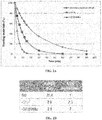
- FIG. 1A A variety of 3'-OH protecting groups were investigated in regard to their thermal stability.
- Various times points were taken and HPLC was used to analyze the formation of un-blocked materials.
- the stabilities of -CH 2 F and -C(O)NHBu were found to be about 2-fold greater than the standard azidomethyl (-CH 2 N 3 ) protecting group.
- the stability of -CF 2 H group was found to be about 10-fold greater than the standard ( FIG. 1B ).
- the deprotecting reaction rates of several 3'-OH protecting groups were also studied.
- the deprotection rate of the standard azidomethyl protecting group was compared with the -CH 2 F substituted azidomethyl and -C(O)NHBu substituted azidomethyl. It was observed that both of the more thermally stable 3'-OH blocking groups were removed faster than the standard azidomethyl protecting group using phosphines (1mM THP) as the deprotecting agent. See FIG. 2A .
- the half-life of-CH 2 F and -C(O)NHBu was 8.9 minutes and 2.9 minutes respectively, compared to the 20.4 minutes half-life of azidomethyl ( FIG. 2B ).
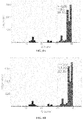
- Modified nucleotides with -CH 2 F (mono-F) substituted azidomethyl 3'-OH protecting group were prepared and their sequencing performance was evaluated on Miseq platforms. It was envisaged that increased thermal stability of 3'-OH protecting groups would lead to a higher quality of nucleotides for sequencing chemistry with less contaminated 3'-unblocked nucleotides. The presence of 3'-unblocked nucleotides in the SBS-sequencing kits would therefore result in pre-phasing events, which were numerated as pre-phasing values.
- Mono-F substituted azidomethyl protected ffNs were used according to the following concentration: ffA-dye 1 (2uM); ffT-dye 2 (10uM), ffC-dye 3 (2uM) and ffG-dye 4 (5uM).
- Mono-F substituted azidomethyl group comprises both isomer A and B.
- Two dyes - dye 2 as in standard Miseq kits and dye 5 were used to label ffT.
- Table 1 shows various nucleotide combinations with A and B isomers of mono-F substituted azidomethyl that were evaluated in regard to phasing and pre-phasing impacts.
- 2 ⁇ 400bp sequencing was carried out on Miseq to evaluate the potential of these nucleotides for sequencing quality improvement.
- the sequencing run was performed according to manufacturer's instructions (Illumina Inc., San Diego, CA).
- the standard incorporation buffer was replaced with an incorporation buffer containing all mono-F blocked FFNs, each with a separate dye label: ffA-dye 1 (2uM), ffT-dye 2 (1uM), ffC-dye 3 (2uM) and ffG-dye 4 (5uM).
- the DNA library used was made following the standard TruSeq HT protocol from B cereus genomic DNA.
Landscapes
- Chemical & Material Sciences (AREA)
- Organic Chemistry (AREA)
- Life Sciences & Earth Sciences (AREA)
- Engineering & Computer Science (AREA)
- Health & Medical Sciences (AREA)
- Biochemistry (AREA)
- Biotechnology (AREA)
- General Health & Medical Sciences (AREA)
- Genetics & Genomics (AREA)
- Molecular Biology (AREA)
- Proteomics, Peptides & Aminoacids (AREA)
- Wood Science & Technology (AREA)
- Zoology (AREA)
- Analytical Chemistry (AREA)
- Immunology (AREA)
- Microbiology (AREA)
- Biophysics (AREA)
- Physics & Mathematics (AREA)
- Bioinformatics & Cheminformatics (AREA)
- General Engineering & Computer Science (AREA)
- Measuring Or Testing Involving Enzymes Or Micro-Organisms (AREA)
- Saccharide Compounds (AREA)
- Apparatus Associated With Microorganisms And Enzymes (AREA)
- Preparation Of Compounds By Using Micro-Organisms (AREA)
Priority Applications (1)
| Application Number | Priority Date | Filing Date | Title |
|---|---|---|---|
| EP18174644.7A EP3388442A1 (en) | 2013-03-15 | 2013-03-15 | Modified nucleosides or nucleotides |
Applications Claiming Priority (1)
| Application Number | Priority Date | Filing Date | Title |
|---|---|---|---|
| PCT/EP2013/055466 WO2014139596A1 (en) | 2013-03-15 | 2013-03-15 | Modified nucleosides or nucleotides |
Related Child Applications (1)
| Application Number | Title | Priority Date | Filing Date |
|---|---|---|---|
| EP18174644.7A Division EP3388442A1 (en) | 2013-03-15 | 2013-03-15 | Modified nucleosides or nucleotides |
Publications (2)
| Publication Number | Publication Date |
|---|---|
| EP2970356A1 EP2970356A1 (en) | 2016-01-20 |
| EP2970356B1 true EP2970356B1 (en) | 2018-05-30 |
Family
ID=47915189
Family Applications (2)
| Application Number | Title | Priority Date | Filing Date |
|---|---|---|---|
| EP13711333.8A Active EP2970356B1 (en) | 2013-03-15 | 2013-03-15 | Modified nucleosides or nucleotides |
| EP18174644.7A Withdrawn EP3388442A1 (en) | 2013-03-15 | 2013-03-15 | Modified nucleosides or nucleotides |
Family Applications After (1)
| Application Number | Title | Priority Date | Filing Date |
|---|---|---|---|
| EP18174644.7A Withdrawn EP3388442A1 (en) | 2013-03-15 | 2013-03-15 | Modified nucleosides or nucleotides |
Country Status (11)
| Country | Link |
|---|---|
| US (3) | US9593373B2 (enExample) |
| EP (2) | EP2970356B1 (enExample) |
| JP (1) | JP6333297B2 (enExample) |
| KR (2) | KR101874680B1 (enExample) |
| CN (2) | CN105377869B (enExample) |
| AU (1) | AU2013382358B2 (enExample) |
| BR (1) | BR112015022448B1 (enExample) |
| CA (1) | CA2903095C (enExample) |
| DK (1) | DK2970356T3 (enExample) |
| ES (1) | ES2685549T3 (enExample) |
| WO (1) | WO2014139596A1 (enExample) |
Families Citing this family (80)
| Publication number | Priority date | Publication date | Assignee | Title |
|---|---|---|---|---|
| GB0129012D0 (en) | 2001-12-04 | 2002-01-23 | Solexa Ltd | Labelled nucleotides |
| US11008359B2 (en) | 2002-08-23 | 2021-05-18 | Illumina Cambridge Limited | Labelled nucleotides |
| AU2003259350A1 (en) | 2002-08-23 | 2004-03-11 | Solexa Limited | Modified nucleotides for polynucleotide sequencing |
| US7414116B2 (en) | 2002-08-23 | 2008-08-19 | Illumina Cambridge Limited | Labelled nucleotides |
| ES2685549T3 (es) | 2013-03-15 | 2018-10-09 | Illumina Cambridge Limited | Nucleósidos o nucleótidos modificados |
| US10190162B2 (en) | 2014-10-23 | 2019-01-29 | Complete Genomics, Inc. | Signal confinement sequencing (SCS) and nucleotide analogues for signal confinement sequencing |
| PT3212684T (pt) * | 2014-10-31 | 2020-02-03 | Illumina Cambridge Ltd | Revestimentos de polímeros e de copolímero de dna |
| CN108779138B (zh) | 2015-09-28 | 2022-06-17 | 哥伦比亚大学董事会 | 用作dna合成测序的可逆终止物的基于新的二硫键接头的核苷酸的设计与合成 |
| CN116656795A (zh) | 2016-05-23 | 2023-08-29 | 纽约哥伦比亚大学董事会 | 核苷酸衍生物及其使用方法 |
| US10385214B2 (en) | 2016-09-30 | 2019-08-20 | Illumina Cambridge Limited | Fluorescent dyes and their uses as biomarkers |
| CN109983136B (zh) * | 2016-12-13 | 2022-07-22 | 深圳华大智造科技股份有限公司 | 提纯可逆阻断脱氧核糖核苷三磷酸的方法和测序方法 |
| CN109476674B (zh) | 2016-12-22 | 2021-12-10 | 伊鲁米纳剑桥有限公司 | 香豆素化合物及其作为荧光标记物的用途 |
| CN108239669B (zh) * | 2016-12-23 | 2021-03-16 | 深圳华大智造科技股份有限公司 | 检测可逆性阻断dNTP中非阻断杂质含量的方法和试剂盒 |
| WO2018165207A1 (en) | 2017-03-06 | 2018-09-13 | Singular Genomic Systems, Inc. | Nucleic acid sequencing-by-synthesis (sbs) methods that combine sbs cycle steps |
| CN119639879A (zh) | 2017-03-28 | 2025-03-18 | 哥伦比亚大学董事会 | 用于连接荧光标记与用于dna合成测序的碱基的具有不同可裂解连接子的3'-o-改性的核苷酸类似物 |
| EP3842545B1 (en) | 2017-04-23 | 2022-11-30 | Illumina, Inc. | Compositions and methods for improving sample identification in indexed nucleic acid libraries |
| WO2018197945A1 (en) | 2017-04-23 | 2018-11-01 | Illumina Cambridge Limited | Compositions and methods for improving sample identification in indexed nucleic acid libraries |
| WO2018197950A1 (en) | 2017-04-23 | 2018-11-01 | Illumina Cambridge Limited | Compositions and methods for improving sample identification in indexed nucleic acid libraries |
| WO2019023951A1 (zh) | 2017-08-01 | 2019-02-07 | 深圳华大智造科技有限公司 | 核酸测序方法 |
| GB201716931D0 (en) | 2017-10-16 | 2017-11-29 | Illumina Cambridge Ltd | New fluorescent compounds and their use as biomarkers |
| WO2019164977A1 (en) * | 2018-02-21 | 2019-08-29 | Singular Genomics Systems, Inc. | Fluorinated nucleotides and uses thereof |
| US12188086B2 (en) | 2018-03-15 | 2025-01-07 | The Trustees Of Columbia University In The City Of New York | Nucleotide analogues and use thereof for nucleic acid sequencing and analysis preliminary class |
| US10755676B2 (en) | 2018-03-15 | 2020-08-25 | Magic Leap, Inc. | Image correction due to deformation of components of a viewing device |
| IL316537A (en) | 2018-05-15 | 2024-12-01 | Illumina Inc | Compositions and methods for chemical removal and deprotection of surface-bound oligonucleotides |
| US12145960B2 (en) | 2018-10-25 | 2024-11-19 | Singular Genomics Systems, Inc. | Nucleotide analogues |
| JP7332235B2 (ja) | 2018-11-07 | 2023-08-23 | イージーアイ テック (シェン チェン) カンパニー, リミテッド | ポリヌクレオチドを配列決定する方法 |
| EP3891275A2 (en) | 2018-12-05 | 2021-10-13 | Illumina, Inc. | Polymerases, compositions, and methods of use |
| WO2020126593A1 (en) * | 2018-12-17 | 2020-06-25 | Illumina Cambridge Limited | Compositions for use in polyunucleotide sequencing |
| JP7153140B2 (ja) * | 2018-12-19 | 2022-10-13 | エフ.ホフマン-ラ ロシュ アーゲー | 3’保護ヌクレオチド |
| US11293061B2 (en) | 2018-12-26 | 2022-04-05 | Illumina Cambridge Limited | Sequencing methods using nucleotides with 3′ AOM blocking group |
| US11970735B2 (en) | 2019-01-08 | 2024-04-30 | Singular Genomics Systems, Inc. | Nucleotide cleavable linkers and uses thereof |
| WO2020178231A1 (en) | 2019-03-01 | 2020-09-10 | Illumina, Inc. | Multiplexed fluorescent detection of analytes |
| CA3103636A1 (en) | 2019-03-01 | 2020-09-10 | Illumina Cambridge Limited | Tertiary amine substituted coumarin compounds and their uses as fluorescent labels |
| CN112654681B (zh) | 2019-03-01 | 2023-01-06 | 伊卢米纳剑桥有限公司 | 环外胺取代的香豆素化合物及其作为荧光标记物的用途 |
| NL2023327B1 (en) | 2019-03-01 | 2020-09-17 | Illumina Inc | Multiplexed fluorescent detection of analytes |
| US11421271B2 (en) | 2019-03-28 | 2022-08-23 | Illumina Cambridge Limited | Methods and compositions for nucleic acid sequencing using photoswitchable labels |
| KR102843262B1 (ko) | 2019-05-15 | 2025-08-06 | 칭다오 엠쥐아이 테크 컴퍼니 리미티드 | 자가-발광을 기초로 하는 단일-채널 시퀀싱 방법 |
| EP4047098A4 (en) | 2019-08-20 | 2023-06-07 | EGI Tech (Shen Zhen) Co., Limited | PROCEDURE FOR SEQUENCING POLYNUCLEOTIDS BASED ON OPTICAL SIGNAL DYNAMICS OF A LUMINESCENT LABEL AND SECONDARY LUMINESCENT SIGNAL |
| MY208607A (en) | 2019-11-27 | 2025-05-20 | Illumina Cambridge Ltd | Cyclooctatetraene containing dyes and compositions |
| EP4117682B1 (en) | 2020-04-24 | 2025-06-04 | Singular Genomics Systems, Inc. | Modified nucleotides and uses thereof |
| IL297992B2 (en) | 2020-06-22 | 2025-03-01 | Illumina Cambridge Ltd | Nucleosides and nucleotides with 3' acetal blocking group |
| EP4164691A4 (en) * | 2020-07-07 | 2024-06-26 | Cyclarity Therapeutics, Inc. | CYCLODEXTRIN DIMERS AND THEIR USES |
| US11981964B2 (en) | 2020-07-28 | 2024-05-14 | Illumina Cambridge Limited | Substituted coumarin dyes and uses as fluorescent labels |
| KR20230107259A (ko) * | 2020-10-21 | 2023-07-14 | 비지아이 션전 | 변형된 뉴클레오사이드 또는 뉴클레오타이드 |
| US20220195196A1 (en) | 2020-12-17 | 2022-06-23 | Illumina Cambridge Limited | Alkylpyridinium coumarin dyes and uses in sequencing applications |
| US20220195517A1 (en) | 2020-12-17 | 2022-06-23 | Illumina Cambridge Limited | Long stokes shift chromenoquinoline dyes and uses in sequencing applications |
| US20220195516A1 (en) | 2020-12-17 | 2022-06-23 | Illumina Cambridge Limited | Methods, systems and compositions for nucleic acid sequencing |
| US20220195518A1 (en) | 2020-12-22 | 2022-06-23 | Illumina Cambridge Limited | Methods and compositions for nucleic acid sequencing |
| KR102884006B1 (ko) | 2021-05-05 | 2025-11-10 | 일루미나 케임브리지 리미티드 | 비스-붕소 융합 헤테로사이클을 함유하는 형광 염료 및 서열분석에서의 용도 |
| KR20240026950A (ko) * | 2021-05-26 | 2024-02-29 | 일루미나, 인코포레이티드 | 3'-차단된 뉴클레오티드의 정제 및 중합 |
| WO2022272260A1 (en) | 2021-06-23 | 2022-12-29 | Illumina, Inc. | Compositions, methods, kits, cartridges, and systems for sequencing reagents |
| US12435369B2 (en) | 2021-08-13 | 2025-10-07 | Singular Genomcis Systems, Inc. | Nucleotide analogs and uses thereof |
| US12077789B2 (en) | 2021-08-14 | 2024-09-03 | Illumina, Inc. | Polymerases, compositions, and methods of use |
| WO2023035108A1 (zh) | 2021-09-07 | 2023-03-16 | 深圳华大智造科技股份有限公司 | 一种用于分析靶多核苷酸的序列的方法 |
| KR20240052975A (ko) | 2021-09-07 | 2024-04-23 | 엠쥐아이 테크 컴퍼니 엘티디. | 표적 폴리뉴클레오티드의 서열을 분석하기 위한 방법 |
| WO2023069865A1 (en) | 2021-10-15 | 2023-04-27 | Codexis, Inc. | Engineered terminal deoxynucleotidyl transferase variants |
| WO2023107673A2 (en) | 2021-12-10 | 2023-06-15 | Singular Genomics Systems, Inc. | Cleavable disulfide linkers and uses thereof |
| JP7843031B2 (ja) * | 2022-03-08 | 2026-04-09 | 国立大学法人東海国立大学機構 | ビスホスホリル架橋スチルベン化合物及び油滴染色剤 |
| US20230304086A1 (en) | 2022-03-28 | 2023-09-28 | Illumina Cambridge Limited | Labeled avidin and methods for sequencing |
| US20230314322A1 (en) | 2022-03-29 | 2023-10-05 | Illumina, Inc. | Systems and methods of sequencing polynucleotides |
| CA3223128A1 (en) | 2022-03-31 | 2023-10-05 | Illumina, Inc. | Compositions and methods for improving sequencing signals |
| EP4499659A1 (en) | 2022-03-31 | 2025-02-05 | Illumina, Inc. | Nucleosides and nucleotides with 3' vinyl blocking group useful in sequencing by synthesis |
| US20230383342A1 (en) | 2022-05-31 | 2023-11-30 | Illumina Cambridge Limited | Compositions and methods for nucleic acid sequencing |
| CA3259955A1 (en) | 2022-06-28 | 2024-01-04 | Illumina, Inc. | FLUORESCENT DYES CONTAINING A FUSIONED BIS-TETRACYCLIC BORON HETEROCYCLE AND THEIR USES IN SEQUENCED |
| EP4594428A2 (en) | 2022-09-30 | 2025-08-06 | Illumina, Inc. | Compositions and methods for reducing photo damage during sequencing |
| WO2024123866A1 (en) | 2022-12-09 | 2024-06-13 | Illumina, Inc. | Nucleosides and nucleotides with 3´ blocking groups and cleavable linkers |
| US20240271206A1 (en) | 2022-12-27 | 2024-08-15 | Illumina, Inc. | Methods of sequencing using 3' allyl blocked nucleotides |
| US20240327910A1 (en) | 2023-03-29 | 2024-10-03 | Illumina, Inc. | Naphthalimide dyes and uses in nucleic acid sequencing |
| CN119061122A (zh) | 2023-05-30 | 2024-12-03 | 深圳市真迈生物科技有限公司 | 单分子测序方法 |
| US20250075269A1 (en) | 2023-08-31 | 2025-03-06 | Illumina, Inc. | Compositions and methods for nucleic acid sequencing |
| US20250137048A1 (en) | 2023-10-26 | 2025-05-01 | Illumina, Inc. | 4,5-substituted naphthalimide dyes and uses in nucleic acid sequencing |
| US20250163505A1 (en) | 2023-11-17 | 2025-05-22 | Illumina, Inc. | Conjugated polymers or polymer dots as fluorescent labels |
| WO2025136890A1 (en) | 2023-12-18 | 2025-06-26 | Illumina, Inc. | Hydrogel nanoparticles as labeling scaffold in sequencing |
| CN117867664B (zh) * | 2023-12-25 | 2024-11-26 | 康龙化成(宁波)科技发展有限公司 | 一种On-DNA亚磺酰亚胺类化合物及其合成方法 |
| US20250215493A1 (en) | 2023-12-28 | 2025-07-03 | Illumina, Inc. | Nucleotides with enzymatically cleavable 3'-o-glycoside blocking groups for sequencing |
| WO2025144711A1 (en) | 2023-12-29 | 2025-07-03 | Illumina, Inc. | Tricyclic polymethine dyes for nucleic acid sequencing |
| CN117886850B (zh) * | 2024-03-14 | 2024-07-05 | 深圳赛陆医疗科技有限公司 | 一种叠氮化合物的制备方法 |
| WO2025221895A1 (en) | 2024-04-19 | 2025-10-23 | Illumina, Inc. | Water soluble polymer scaffolds for dye labeling |
| WO2025230914A1 (en) | 2024-04-29 | 2025-11-06 | Illumina, Inc. | Nucleotides with enzyme-triggered self-immolative linkers for sequencing by synthesis |
| WO2026035914A1 (en) | 2024-08-09 | 2026-02-12 | Illumina, Inc. | Nucleotides having 3'-hydroxy blocking groups |
Family Cites Families (178)
| Publication number | Priority date | Publication date | Assignee | Title |
|---|---|---|---|---|
| US4711955A (en) | 1981-04-17 | 1987-12-08 | Yale University | Modified nucleotides and methods of preparing and using same |
| US5175269A (en) | 1984-01-30 | 1992-12-29 | Enzo Diagnostics, Inc. | Compound and detectable molecules having an oligo- or polynucleotide with modifiable reactive group |
| US5118605A (en) | 1984-10-16 | 1992-06-02 | Chiron Corporation | Polynucleotide determination with selectable cleavage sites |
| US4824775A (en) | 1985-01-03 | 1989-04-25 | Molecular Diagnostics, Inc. | Cells labeled with multiple Fluorophores bound to a nucleic acid carrier |
| US4772691A (en) | 1985-06-05 | 1988-09-20 | The Medical College Of Wisconsin, Inc. | Chemically cleavable nucleotides |
| US4863849A (en) | 1985-07-18 | 1989-09-05 | New York Medical College | Automatable process for sequencing nucleotide |
| US4888274A (en) | 1985-09-18 | 1989-12-19 | Yale University | RecA nucleoprotein filament and methods |
| US5151507A (en) | 1986-07-02 | 1992-09-29 | E. I. Du Pont De Nemours And Company | Alkynylamino-nucleotides |
| US5047519A (en) | 1986-07-02 | 1991-09-10 | E. I. Du Pont De Nemours And Company | Alkynylamino-nucleotides |
| US5242796A (en) | 1986-07-02 | 1993-09-07 | E. I. Du Pont De Nemours And Company | Method, system and reagents for DNA sequencing |
| US4900686A (en) | 1987-04-02 | 1990-02-13 | Polaroid Corporation | Fluorescent conjugates and biological diagnostic assay |
| GB8810400D0 (en) | 1988-05-03 | 1988-06-08 | Southern E | Analysing polynucleotide sequences |
| SE8801070D0 (sv) | 1988-03-23 | 1988-03-23 | Pharmacia Ab | Method for immobilizing a dna sequence on a solid support |
| US4971903A (en) | 1988-03-25 | 1990-11-20 | Edward Hyman | Pyrophosphate-based method and apparatus for sequencing nucleic acids |
| US5174962A (en) | 1988-06-20 | 1992-12-29 | Genomyx, Inc. | Apparatus for determining DNA sequences by mass spectrometry |
| GB8822228D0 (en) | 1988-09-21 | 1988-10-26 | Southern E M | Support-bound oligonucleotides |
| GB8910880D0 (en) | 1989-05-11 | 1989-06-28 | Amersham Int Plc | Sequencing method |
| US5547839A (en) | 1989-06-07 | 1996-08-20 | Affymax Technologies N.V. | Sequencing of surface immobilized polymers utilizing microflourescence detection |
| US5800992A (en) | 1989-06-07 | 1998-09-01 | Fodor; Stephen P.A. | Method of detecting nucleic acids |
| US6346413B1 (en) | 1989-06-07 | 2002-02-12 | Affymetrix, Inc. | Polymer arrays |
| DE3924454A1 (de) | 1989-07-24 | 1991-02-07 | Cornelis P Prof Dr Hollenberg | Die anwendung von dna und dna-technologie fuer die konstruktion von netzwerken zur verwendung in der chip-konstruktion und chip-produktion (dna chips) |
| US5302509A (en) | 1989-08-14 | 1994-04-12 | Beckman Instruments, Inc. | Method for sequencing polynucleotides |
| WO1991006678A1 (en) | 1989-10-26 | 1991-05-16 | Sri International | Dna sequencing |
| AU2674092A (en) | 1991-09-09 | 1993-04-05 | Baylor College Of Medicine | Method and device for rapid dna or rna sequencing determination by a base addition sequencing scheme |
| EP0604552B1 (en) | 1991-09-18 | 1997-02-12 | Affymax Technologies N.V. | Method of synthesizing diverse collections of oligomers |
| DE69233087T2 (de) | 1991-11-22 | 2003-12-24 | Affymetrix, Inc. (N.D.Ges.D.Staates Delaware) | Verfahren zur Herstellung von Polymerarrays |
| DE4141178A1 (de) | 1991-12-13 | 1993-06-17 | Europ Lab Molekularbiolog | Verfahren zur sequenzierung von nukleinsaeuren |
| EP1382386A3 (en) | 1992-02-19 | 2004-12-01 | The Public Health Research Institute Of The City Of New York, Inc. | Novel oligonucleotide arrays and their use for sorting, isolating, sequencing, and manipulating nucleic acids |
| GB9208733D0 (en) | 1992-04-22 | 1992-06-10 | Medical Res Council | Dna sequencing method |
| GB9210176D0 (en) | 1992-05-12 | 1992-06-24 | Cemu Bioteknik Ab | Chemical method |
| US5583211A (en) | 1992-10-29 | 1996-12-10 | Beckman Instruments, Inc. | Surface activated organic polymers useful for location - specific attachment of nucleic acids, peptides, proteins and oligosaccharides |
| US5516664A (en) | 1992-12-23 | 1996-05-14 | Hyman; Edward D. | Enzymatic synthesis of repeat regions of oligonucleotides |
| US5436143A (en) | 1992-12-23 | 1995-07-25 | Hyman; Edward D. | Method for enzymatic synthesis of oligonucleotides |
| US6074823A (en) | 1993-03-19 | 2000-06-13 | Sequenom, Inc. | DNA sequencing by mass spectrometry via exonuclease degradation |
| FR2703052B1 (fr) | 1993-03-26 | 1995-06-02 | Pasteur Institut | Nouvelle méthode de séquençage d'acides nucléiques. |
| WO1995011995A1 (en) | 1993-10-26 | 1995-05-04 | Affymax Technologies N.V. | Arrays of nucleic acid probes on biological chips |
| US5959089A (en) | 1993-07-19 | 1999-09-28 | Hannessian; Stephen | Amino-cyclodextrin syntheses |
| GB9315847D0 (en) | 1993-07-30 | 1993-09-15 | Isis Innovation | Tag reagent and assay method |
| US5547859A (en) | 1993-08-02 | 1996-08-20 | Goodman; Myron F. | Chain-terminating nucleotides for DNA sequencing methods |
| US5472672A (en) | 1993-10-22 | 1995-12-05 | The Board Of Trustees Of The Leland Stanford Junior University | Apparatus and method for polymer synthesis using arrays |
| US6156501A (en) | 1993-10-26 | 2000-12-05 | Affymetrix, Inc. | Arrays of modified nucleic acid probes and methods of use |
| US5429807A (en) | 1993-10-28 | 1995-07-04 | Beckman Instruments, Inc. | Method and apparatus for creating biopolymer arrays on a solid support surface |
| EP0765401B1 (en) | 1993-11-17 | 2001-02-21 | Amersham Pharmacia Biotech UK Limited | Primer extension mass spectroscopy nucleic acid sequencing method |
| US5552278A (en) | 1994-04-04 | 1996-09-03 | Spectragen, Inc. | DNA sequencing by stepwise ligation and cleavage |
| US5807522A (en) | 1994-06-17 | 1998-09-15 | The Board Of Trustees Of The Leland Stanford Junior University | Methods for fabricating microarrays of biological samples |
| US5763594A (en) | 1994-09-02 | 1998-06-09 | Andrew C. Hiatt | 3' protected nucleotides for enzyme catalyzed template-independent creation of phosphodiester bonds |
| US5808045A (en) | 1994-09-02 | 1998-09-15 | Andrew C. Hiatt | Compositions for enzyme catalyzed template-independent creation of phosphodiester bonds using protected nucleotides |
| US6232465B1 (en) | 1994-09-02 | 2001-05-15 | Andrew C. Hiatt | Compositions for enzyme catalyzed template-independent creation of phosphodiester bonds using protected nucleotides |
| US6214987B1 (en) | 1994-09-02 | 2001-04-10 | Andrew C. Hiatt | Compositions for enzyme catalyzed template-independent formation of phosphodiester bonds using protected nucleotides |
| US5872244A (en) | 1994-09-02 | 1999-02-16 | Andrew C. Hiatt | 3' protected nucleotides for enzyme catalyzed template-independent creation of phosphodiester bonds |
| US6013445A (en) | 1996-06-06 | 2000-01-11 | Lynx Therapeutics, Inc. | Massively parallel signature sequencing by ligation of encoded adaptors |
| US5604097A (en) | 1994-10-13 | 1997-02-18 | Spectragen, Inc. | Methods for sorting polynucleotides using oligonucleotide tags |
| EP0785941B1 (en) | 1994-10-14 | 2000-04-19 | Stratagene | Porphyrin labeling of polynucleotides |
| US5556752A (en) | 1994-10-24 | 1996-09-17 | Affymetrix, Inc. | Surface-bound, unimolecular, double-stranded DNA |
| US5681940A (en) | 1994-11-02 | 1997-10-28 | Icn Pharmaceuticals | Sugar modified nucleosides and oligonucleotides |
| DE4438918A1 (de) | 1994-11-04 | 1996-05-09 | Hoechst Ag | Modifizierte Oligonukleotide, deren Herstellung sowie deren Verwendung |
| SE9500342D0 (sv) | 1995-01-31 | 1995-01-31 | Marek Kwiatkowski | Novel chain terminators, the use thereof for nucleic acid sequencing and synthesis and a method of their preparation |
| WO1996027025A1 (en) | 1995-02-27 | 1996-09-06 | Ely Michael Rabani | Device, compounds, algorithms, and methods of molecular characterization and manipulation with molecular parallelism |
| US5750341A (en) | 1995-04-17 | 1998-05-12 | Lynx Therapeutics, Inc. | DNA sequencing by parallel oligonucleotide extensions |
| US5624711A (en) | 1995-04-27 | 1997-04-29 | Affymax Technologies, N.V. | Derivatization of solid supports and methods for oligomer synthesis |
| EP0745686A1 (en) | 1995-06-01 | 1996-12-04 | Roche Diagnostics GmbH | The use of DNA polymerase 3'-intrinsic editing activity |
| US5545531A (en) | 1995-06-07 | 1996-08-13 | Affymax Technologies N.V. | Methods for making a device for concurrently processing multiple biological chip assays |
| US5728528A (en) | 1995-09-20 | 1998-03-17 | The Regents Of The University Of California | Universal spacer/energy transfer dyes |
| ATE496288T1 (de) | 1995-10-11 | 2011-02-15 | Luminex Corp | Gleichzeitige mehrfachanalyse klinischer proben |
| US5658734A (en) | 1995-10-17 | 1997-08-19 | International Business Machines Corporation | Process for synthesizing chemical compounds |
| US6312893B1 (en) | 1996-01-23 | 2001-11-06 | Qiagen Genomics, Inc. | Methods and compositions for determining the sequence of nucleic acid molecules |
| EP0992511B1 (en) | 1996-01-23 | 2009-03-11 | Operon Biotechnologies, Inc. | Methods and compositions for determining the sequence of nucleic acid molecules |
| US6613508B1 (en) | 1996-01-23 | 2003-09-02 | Qiagen Genomics, Inc. | Methods and compositions for analyzing nucleic acid molecules utilizing sizing techniques |
| US6458530B1 (en) | 1996-04-04 | 2002-10-01 | Affymetrix Inc. | Selecting tag nucleic acids |
| US6005125A (en) | 1996-05-06 | 1999-12-21 | Rutgers The State University Of New Jersey | Universal allyl linker for solid-phase nucleic acid synthesis |
| US5821356A (en) | 1996-08-12 | 1998-10-13 | The Perkin Elmer Corporation | Propargylethoxyamino nucleotides |
| US5921971A (en) | 1996-09-13 | 1999-07-13 | Boston Scientific Corporation | Single operator exchange biliary catheter |
| GB9620209D0 (en) | 1996-09-27 | 1996-11-13 | Cemu Bioteknik Ab | Method of sequencing DNA |
| US5885775A (en) | 1996-10-04 | 1999-03-23 | Perseptive Biosystems, Inc. | Methods for determining sequences information in polynucleotides using mass spectrometry |
| GB9626815D0 (en) | 1996-12-23 | 1997-02-12 | Cemu Bioteknik Ab | Method of sequencing DNA |
| CA2277545A1 (en) | 1997-01-08 | 1998-07-16 | Proligo Llc | Bioconjugation of oligonucleotides |
| US6046005A (en) | 1997-01-15 | 2000-04-04 | Incyte Pharmaceuticals, Inc. | Nucleic acid sequencing with solid phase capturable terminators comprising a cleavable linking group |
| US6297006B1 (en) | 1997-01-16 | 2001-10-02 | Hyseq, Inc. | Methods for sequencing repetitive sequences and for determining the order of sequence subfragments |
| WO1998033939A1 (en) | 1997-01-31 | 1998-08-06 | Hitachi, Ltd. | Method for determining nucleic acid base sequence and apparatus therefor |
| IL156002A0 (en) | 1997-02-12 | 2003-12-23 | Eugene Y Chan | Methods and products for analyzing polymers |
| US6544797B1 (en) | 1997-04-09 | 2003-04-08 | Biosite Diagnostics, Inc. | Compositions and methods for inhibiting light-induced inactivation of biological reagents |
| JP3489991B2 (ja) | 1997-07-07 | 2004-01-26 | 理化学研究所 | 3’−デオキシリボヌクレオチド誘導体 |
| WO1999005315A2 (en) | 1997-07-28 | 1999-02-04 | Medical Biosystems Ltd. | Nucleic acid sequence analysis |
| US6008379A (en) | 1997-10-01 | 1999-12-28 | The Perkin-Elmer Corporation | Aromatic-substituted xanthene dyes |
| US6511803B1 (en) | 1997-10-10 | 2003-01-28 | President And Fellows Of Harvard College | Replica amplification of nucleic acid arrays |
| JP2001519538A (ja) | 1997-10-10 | 2001-10-23 | プレジデント・アンド・フェローズ・オブ・ハーバード・カレッジ | 核酸アレイのレプリカ増幅 |
| US6485944B1 (en) | 1997-10-10 | 2002-11-26 | President And Fellows Of Harvard College | Replica amplification of nucleic acid arrays |
| GB9815163D0 (en) | 1998-07-13 | 1998-09-09 | Brax Genomics Ltd | Compounds |
| US6087102A (en) | 1998-01-07 | 2000-07-11 | Clontech Laboratories, Inc. | Polymeric arrays and methods for their use in binding assays |
| US6287776B1 (en) | 1998-02-02 | 2001-09-11 | Signature Bioscience, Inc. | Method for detecting and classifying nucleic acid hybridization |
| JP3944996B2 (ja) | 1998-03-05 | 2007-07-18 | 株式会社日立製作所 | Dnaプローブアレー |
| US6232103B1 (en) | 1998-03-23 | 2001-05-15 | Invitrogen Corporation | Methods useful for nucleic acid sequencing using modified nucleotides comprising phenylboronic acid |
| US6780591B2 (en) | 1998-05-01 | 2004-08-24 | Arizona Board Of Regents | Method of determining the nucleotide sequence of oligonucleotides and DNA molecules |
| JP3813818B2 (ja) | 1998-05-01 | 2006-08-23 | アリゾナ ボード オブ リージェンツ | オリゴヌクレオチドおよびdna分子のヌクレオチド配列の決定方法 |
| US6096875A (en) | 1998-05-29 | 2000-08-01 | The Perlein-Elmer Corporation | Nucleotide compounds including a rigid linker |
| US6218530B1 (en) | 1998-06-02 | 2001-04-17 | Ambergen Inc. | Compounds and methods for detecting biomolecules |
| US6287821B1 (en) | 1998-06-11 | 2001-09-11 | Orchid Biosciences, Inc. | Nucleotide analogues with 3'-pro-fluorescent fluorophores in nucleic acid sequence analysis |
| US6031078A (en) | 1998-06-16 | 2000-02-29 | Millennium Pharmaceuticals, Inc. | MTbx protein and nucleic acid molecules and uses therefor |
| US6335155B1 (en) | 1998-06-26 | 2002-01-01 | Sunesis Pharmaceuticals, Inc. | Methods for rapidly identifying small organic molecule ligands for binding to biological target molecules |
| US6218118B1 (en) | 1998-07-09 | 2001-04-17 | Agilent Technologies, Inc. | Method and mixture reagents for analyzing the nucleotide sequence of nucleic acids by mass spectrometry |
| GB0002310D0 (en) | 2000-02-01 | 2000-03-22 | Solexa Ltd | Polynucleotide sequencing |
| US6787308B2 (en) | 1998-07-30 | 2004-09-07 | Solexa Ltd. | Arrayed biomolecules and their use in sequencing |
| AU770831B2 (en) | 1998-07-30 | 2004-03-04 | Solexa Ltd. | Arrayed biomolecules and their use in sequencing |
| DE19844931C1 (de) | 1998-09-30 | 2000-06-15 | Stefan Seeger | Verfahren zur DNS- oder RNS-Sequenzierung |
| US6277628B1 (en) | 1998-10-02 | 2001-08-21 | Incyte Genomics, Inc. | Linear microarrays |
| US6221592B1 (en) | 1998-10-20 | 2001-04-24 | Wisconsin Alumi Research Foundation | Computer-based methods and systems for sequencing of individual nucleic acid molecules |
| US6451525B1 (en) | 1998-12-03 | 2002-09-17 | Pe Corporation (Ny) | Parallel sequencing method |
| WO2000036152A1 (en) | 1998-12-14 | 2000-06-22 | Li-Cor, Inc. | A system and methods for nucleic acid sequencing of single molecules by polymerase synthesis |
| US6380378B1 (en) | 1998-12-24 | 2002-04-30 | Toagosei Company, Ltd. | Nucleotide compound, nucleotide block oligonucleotide, and method for producing them |
| US6087112A (en) | 1998-12-30 | 2000-07-11 | Oligos Etc. Inc. | Arrays with modified oligonucleotide and polynucleotide compositions |
| ATE508200T1 (de) | 1999-02-23 | 2011-05-15 | Caliper Life Sciences Inc | Sequenzierung durch inkorporation |
| AU3174600A (en) | 1999-03-10 | 2000-09-28 | Asm Scientific, Inc. | A method for direct nucleic acid sequencing |
| US6355431B1 (en) | 1999-04-20 | 2002-03-12 | Illumina, Inc. | Detection of nucleic acid amplification reactions using bead arrays |
| DE60040741D1 (de) | 1999-04-20 | 2008-12-18 | Illumina Inc | Detektion von nukleinsäurereaktionen auf kügelchen-arrays |
| US20050244870A1 (en) | 1999-04-20 | 2005-11-03 | Illumina, Inc. | Nucleic acid sequencing using microsphere arrays |
| US7037654B2 (en) | 1999-04-30 | 2006-05-02 | Aclara Biosciences, Inc. | Methods and compositions for enhancing detection in determinations employing cleavable electrophoretic tag reagents |
| US7056661B2 (en) | 1999-05-19 | 2006-06-06 | Cornell Research Foundation, Inc. | Method for sequencing nucleic acid molecules |
| US6750357B1 (en) | 1999-06-25 | 2004-06-15 | Syngen, Inc. | Rhodamine-based fluorophores useful as labeling reagents |
| US6818395B1 (en) | 1999-06-28 | 2004-11-16 | California Institute Of Technology | Methods and apparatus for analyzing polynucleotide sequences |
| US6242193B1 (en) | 1999-07-30 | 2001-06-05 | Hitachi, Ltd. | Apparatus for determining base sequence of nucleic acid |
| US6982146B1 (en) | 1999-08-30 | 2006-01-03 | The United States Of America As Represented By The Department Of Health And Human Services | High speed parallel molecular nucleic acid sequencing |
| WO2001016375A2 (en) | 1999-08-30 | 2001-03-08 | The Government Of The United States Of America, As Represented By The Secretary, Department Of Health And Human Services | High speed parallel molecular nucleic acid sequencing |
| US6274320B1 (en) | 1999-09-16 | 2001-08-14 | Curagen Corporation | Method of sequencing a nucleic acid |
| US7244559B2 (en) | 1999-09-16 | 2007-07-17 | 454 Life Sciences Corporation | Method of sequencing a nucleic acid |
| WO2001023610A2 (en) | 1999-09-29 | 2001-04-05 | Solexa Ltd. | Polynucleotide sequencing |
| US6309836B1 (en) | 1999-10-05 | 2001-10-30 | Marek Kwiatkowski | Compounds for protecting hydroxyls and methods for their use |
| WO2001032930A1 (en) | 1999-11-04 | 2001-05-10 | California Institute Of Technology | Methods and apparatuses for analyzing polynucleotide sequences |
| AU3015801A (en) | 1999-12-23 | 2001-07-09 | Axaron Bioscience Ag | Method for carrying out the parallel sequencing of a nucleic acid mixture on a surface |
| GB0002389D0 (en) | 2000-02-02 | 2000-03-22 | Solexa Ltd | Molecular arrays |
| US6770441B2 (en) | 2000-02-10 | 2004-08-03 | Illumina, Inc. | Array compositions and methods of making same |
| SK11922002A3 (sk) | 2000-02-18 | 2003-06-03 | Shire Biochem Inc. | Použitie analógov nukleozidov na liečenie alebo prevenciu infekcií spôsobených flavivírusom |
| JP4721606B2 (ja) | 2000-03-30 | 2011-07-13 | トヨタ自動車株式会社 | 単一核酸分子の塩基配列決定法 |
| GB0013276D0 (en) | 2000-06-01 | 2000-07-26 | Amersham Pharm Biotech Uk Ltd | Nucleotide analogues |
| GB0016473D0 (en) | 2000-07-05 | 2000-08-23 | Amersham Pharm Biotech Uk Ltd | Sequencing method |
| EP2100971A3 (en) | 2000-07-07 | 2009-11-25 | Visigen Biotechnologies, Inc. | Real-time sequence determination |
| DE10041539A1 (de) | 2000-08-24 | 2002-03-07 | Febit Ferrarius Biotech Gmbh | Neue Amiditderivate zur Synthese von Polymeren auf Oberflächen |
| JP2004508838A (ja) | 2000-09-11 | 2004-03-25 | ザ・トラスティーズ・オブ・コランビア・ユニバーシティー・イン・ザ・シティー・オブ・ニューヨーク | 組合せ蛍光エネルギー移動タグ及びそれらの使用 |
| EP3034627B1 (en) | 2000-10-06 | 2019-01-30 | The Trustees of Columbia University in the City of New York | Massive parallel method for decoding dna and rna |
| CN1481441A (zh) | 2000-10-20 | 2004-03-10 | 斯坦福大学受托管理委员会 | 根据瞬时电信号表征样品中分子间相互作用和运动的方法和设备 |
| US7211414B2 (en) | 2000-12-01 | 2007-05-01 | Visigen Biotechnologies, Inc. | Enzymatic nucleic acid synthesis: compositions and methods for altering monomer incorporation fidelity |
| JP2004523243A (ja) | 2001-03-12 | 2004-08-05 | カリフォルニア インスティチュート オブ テクノロジー | 非同期性塩基伸長によってポリヌクレオチド配列を分析するための方法および装置 |
| US20030027140A1 (en) | 2001-03-30 | 2003-02-06 | Jingyue Ju | High-fidelity DNA sequencing using solid phase capturable dideoxynucleotides and mass spectrometry |
| DE10120798B4 (de) | 2001-04-27 | 2005-12-29 | Genovoxx Gmbh | Verfahren zur Bestimmung der Genexpression |
| DE10120797B4 (de) | 2001-04-27 | 2005-12-22 | Genovoxx Gmbh | Verfahren zur Analyse von Nukleinsäureketten |
| US6613523B2 (en) | 2001-06-29 | 2003-09-02 | Agilent Technologies, Inc. | Method of DNA sequencing using cleavable tags |
| WO2003006625A2 (en) | 2001-07-13 | 2003-01-23 | Ambergen, Inc. | Nucleotide compositions comprising photocleavable markers and methods of preparation thereof |
| DE10239504A1 (de) | 2001-08-29 | 2003-04-24 | Genovoxx Gmbh | Verfahren zur Analyse von Nukleinsäurekettensequenzen und der Genexpression |
| GB0128526D0 (en) | 2001-11-29 | 2002-01-23 | Amersham Pharm Biotech Uk Ltd | Nucleotide analogues |
| GB0129012D0 (en) | 2001-12-04 | 2002-01-23 | Solexa Ltd | Labelled nucleotides |
| US7057026B2 (en) | 2001-12-04 | 2006-06-06 | Solexa Limited | Labelled nucleotides |
| WO2003066812A2 (en) | 2002-02-05 | 2003-08-14 | Baylor College Of Medecine | Substituted 4,4-difluoro-4-bora-3a, 4a-diaza-s-indacene compounds for 8-color dna sequencing |
| CA2481495C (en) | 2002-04-04 | 2011-08-30 | Biotage Ab | Primer extension based method employing nucleotides labelled via cleavable linkers |
| EP1497304B1 (en) | 2002-04-12 | 2014-06-25 | Catalyst Assets LLC | Dual-labeled nucleotides |
| US7074597B2 (en) | 2002-07-12 | 2006-07-11 | The Trustees Of Columbia University In The City Of New York | Multiplex genotyping using solid phase capturable dideoxynucleotides and mass spectrometry |
| AU2003259350A1 (en) | 2002-08-23 | 2004-03-11 | Solexa Limited | Modified nucleotides for polynucleotide sequencing |
| EP3147292B1 (en) | 2002-08-23 | 2018-09-26 | Illumina Cambridge Limited | Labelled nucleotides |
| US7414116B2 (en) | 2002-08-23 | 2008-08-19 | Illumina Cambridge Limited | Labelled nucleotides |
| US7595883B1 (en) | 2002-09-16 | 2009-09-29 | The Board Of Trustees Of The Leland Stanford Junior University | Biological analysis arrangement and approach therefor |
| GB0321306D0 (en) | 2003-09-11 | 2003-10-15 | Solexa Ltd | Modified polymerases for improved incorporation of nucleotide analogues |
| US7622279B2 (en) | 2004-03-03 | 2009-11-24 | The Trustees Of Columbia University In The City Of New York | Photocleavable fluorescent nucleotides for DNA sequencing on chip constructed by site-specific coupling chemistry |
| US7315019B2 (en) | 2004-09-17 | 2008-01-01 | Pacific Biosciences Of California, Inc. | Arrays of optical confinements and uses thereof |
| US7393533B1 (en) | 2004-11-08 | 2008-07-01 | La Jolla Institute For Allergy And Immunology | H3L envelope protein immunization methods and H3L envelope passive protection methods |
| GB0517097D0 (en) | 2005-08-19 | 2005-09-28 | Solexa Ltd | Modified nucleosides and nucleotides and uses thereof |
| US7405281B2 (en) | 2005-09-29 | 2008-07-29 | Pacific Biosciences Of California, Inc. | Fluorescent nucleotide analogs and uses therefor |
| SG170802A1 (en) | 2006-03-31 | 2011-05-30 | Solexa Inc | Systems and devices for sequence by synthesis analysis |
| EP2089517A4 (en) | 2006-10-23 | 2010-10-20 | Pacific Biosciences California | POLYMERASEENZYME AND REAGENTS FOR ADVANCED NUCKIC ACID SEQUENCING |
| US8349167B2 (en) | 2006-12-14 | 2013-01-08 | Life Technologies Corporation | Methods and apparatus for detecting molecular interactions using FET arrays |
| EP2677309B9 (en) | 2006-12-14 | 2014-11-19 | Life Technologies Corporation | Methods for sequencing a nucleic acid using large scale FET arrays, configured to measure a limited pH range |
| US8262900B2 (en) | 2006-12-14 | 2012-09-11 | Life Technologies Corporation | Methods and apparatus for measuring analytes using large scale FET arrays |
| US8481259B2 (en) | 2007-02-05 | 2013-07-09 | Intelligent Bio-Systems, Inc. | Methods and devices for sequencing nucleic acids in smaller batches |
| US8612161B2 (en) | 2008-03-19 | 2013-12-17 | Intelligent Biosystems Inc. | Methods and compositions for base calling nucleic acids |
| EP2209911B1 (en) * | 2007-10-19 | 2013-10-16 | The Trustees of Columbia University in the City of New York | Dna sequencing with non-fluorescent nucleotide reversible terminators and cleavable label modified nucleotide terminators and a deoxyinosine analogue with a reversible terminator group |
| US20100137143A1 (en) | 2008-10-22 | 2010-06-03 | Ion Torrent Systems Incorporated | Methods and apparatus for measuring analytes |
| US9309569B2 (en) | 2010-08-26 | 2016-04-12 | Intelligent Bio-Systems, Inc. | Methods and compositions for sequencing nucleic acid using charge |
| CN103282518B (zh) * | 2010-12-17 | 2016-11-16 | 纽约哥伦比亚大学理事会 | 使用经修饰的核苷酸和纳米孔检测的dna边合成边测序 |
| WO2012162429A2 (en) * | 2011-05-23 | 2012-11-29 | The Trustees Of Columbia University In The City Of New York | Dna sequencing by synthesis using raman and infrared spectroscopy detection |
| US9453258B2 (en) | 2011-09-23 | 2016-09-27 | Illumina, Inc. | Methods and compositions for nucleic acid sequencing |
| ES2685549T3 (es) | 2013-03-15 | 2018-10-09 | Illumina Cambridge Limited | Nucleósidos o nucleótidos modificados |
-
2013
- 2013-03-15 ES ES13711333.8T patent/ES2685549T3/es active Active
- 2013-03-15 EP EP13711333.8A patent/EP2970356B1/en active Active
- 2013-03-15 US US14/771,481 patent/US9593373B2/en not_active Expired - Fee Related
- 2013-03-15 JP JP2015561957A patent/JP6333297B2/ja not_active Expired - Fee Related
- 2013-03-15 BR BR112015022448-2A patent/BR112015022448B1/pt active IP Right Grant
- 2013-03-15 AU AU2013382358A patent/AU2013382358B2/en not_active Ceased
- 2013-03-15 WO PCT/EP2013/055466 patent/WO2014139596A1/en not_active Ceased
- 2013-03-15 KR KR1020157029560A patent/KR101874680B1/ko not_active Expired - Fee Related
- 2013-03-15 DK DK13711333.8T patent/DK2970356T3/en active
- 2013-03-15 EP EP18174644.7A patent/EP3388442A1/en not_active Withdrawn
- 2013-03-15 CN CN201380076386.8A patent/CN105377869B/zh not_active Expired - Fee Related
- 2013-03-15 KR KR1020187018020A patent/KR102230831B1/ko not_active Expired - Fee Related
- 2013-03-15 CA CA2903095A patent/CA2903095C/en active Active
- 2013-03-15 CN CN201810612398.2A patent/CN108864232B/zh not_active Expired - Fee Related
-
2017
- 2017-02-28 US US15/444,826 patent/US10407721B2/en active Active
-
2019
- 2019-09-06 US US16/563,443 patent/US10982277B2/en not_active Expired - Fee Related
Non-Patent Citations (1)
| Title |
|---|
| None * |
Also Published As
| Publication number | Publication date |
|---|---|
| HK1220463A1 (en) | 2017-05-05 |
| US20200087725A1 (en) | 2020-03-19 |
| KR101874680B1 (ko) | 2018-07-04 |
| CN105377869A (zh) | 2016-03-02 |
| BR112015022448A2 (pt) | 2017-07-18 |
| KR102230831B1 (ko) | 2021-03-22 |
| CN108864232B (zh) | 2022-01-04 |
| EP3388442A1 (en) | 2018-10-17 |
| ES2685549T3 (es) | 2018-10-09 |
| CN105377869B (zh) | 2018-07-10 |
| AU2013382358A1 (en) | 2015-09-17 |
| WO2014139596A1 (en) | 2014-09-18 |
| US9593373B2 (en) | 2017-03-14 |
| JP2016512206A (ja) | 2016-04-25 |
| CA2903095A1 (en) | 2014-09-18 |
| US10407721B2 (en) | 2019-09-10 |
| KR20180077296A (ko) | 2018-07-06 |
| CA2903095C (en) | 2018-02-13 |
| DK2970356T3 (en) | 2018-08-27 |
| US20170166961A1 (en) | 2017-06-15 |
| AU2013382358B2 (en) | 2017-01-12 |
| JP6333297B2 (ja) | 2018-05-30 |
| BR112015022448B1 (pt) | 2020-12-08 |
| KR20150132474A (ko) | 2015-11-25 |
| CN108864232A (zh) | 2018-11-23 |
| US10982277B2 (en) | 2021-04-20 |
| US20160002721A1 (en) | 2016-01-07 |
| EP2970356A1 (en) | 2016-01-20 |
Similar Documents
| Publication | Publication Date | Title |
|---|---|---|
| US10982277B2 (en) | Modified nucleosides or nucleotides | |
| JP7726707B2 (ja) | 修飾ヌクレオチドリンカー | |
| EP3902814B1 (en) | Nucleosides and nucleotides with 3'-hydroxy blocking groups and their use in polynucleotide sequencing methods | |
| EP3091026B1 (en) | Disulfide-linked reversible terminators | |
| HK1256227A1 (en) | Modified nucleosides or nucleotides | |
| HK1220463B (en) | Modified nucleosides or nucleotides | |
| JP6868541B2 (ja) | 修飾ヌクレオシドまたは修飾ヌクレオチド | |
| HK1233269B (en) | Modified nucleotide linkers | |
| HK1233269A1 (en) | Modified nucleotide linkers |
Legal Events
| Date | Code | Title | Description |
|---|---|---|---|
| PUAI | Public reference made under article 153(3) epc to a published international application that has entered the european phase |
Free format text: ORIGINAL CODE: 0009012 |
|
| 17P | Request for examination filed |
Effective date: 20150909 |
|
| AK | Designated contracting states |
Kind code of ref document: A1 Designated state(s): AL AT BE BG CH CY CZ DE DK EE ES FI FR GB GR HR HU IE IS IT LI LT LU LV MC MK MT NL NO PL PT RO RS SE SI SK SM TR |
|
| AX | Request for extension of the european patent |
Extension state: BA ME |
|
| DAX | Request for extension of the european patent (deleted) | ||
| REG | Reference to a national code |
Ref country code: HK Ref legal event code: DE Ref document number: 1220463 Country of ref document: HK |
|
| STAA | Information on the status of an ep patent application or granted ep patent |
Free format text: STATUS: EXAMINATION IS IN PROGRESS |
|
| 17Q | First examination report despatched |
Effective date: 20170601 |
|
| GRAP | Despatch of communication of intention to grant a patent |
Free format text: ORIGINAL CODE: EPIDOSNIGR1 |
|
| STAA | Information on the status of an ep patent application or granted ep patent |
Free format text: STATUS: GRANT OF PATENT IS INTENDED |
|
| INTG | Intention to grant announced |
Effective date: 20171207 |
|
| GRAS | Grant fee paid |
Free format text: ORIGINAL CODE: EPIDOSNIGR3 |
|
| GRAA | (expected) grant |
Free format text: ORIGINAL CODE: 0009210 |
|
| STAA | Information on the status of an ep patent application or granted ep patent |
Free format text: STATUS: THE PATENT HAS BEEN GRANTED |
|
| AK | Designated contracting states |
Kind code of ref document: B1 Designated state(s): AL AT BE BG CH CY CZ DE DK EE ES FI FR GB GR HR HU IE IS IT LI LT LU LV MC MK MT NL NO PL PT RO RS SE SI SK SM TR |
|
| REG | Reference to a national code |
Ref country code: GB Ref legal event code: FG4D |
|
| REG | Reference to a national code |
Ref country code: CH Ref legal event code: EP |
|
| REG | Reference to a national code |
Ref country code: AT Ref legal event code: REF Ref document number: 1003490 Country of ref document: AT Kind code of ref document: T Effective date: 20180615 |
|
| REG | Reference to a national code |
Ref country code: IE Ref legal event code: FG4D |
|
| REG | Reference to a national code |
Ref country code: DE Ref legal event code: R096 Ref document number: 602013038113 Country of ref document: DE |
|
| REG | Reference to a national code |
Ref country code: CH Ref legal event code: NV Representative=s name: TROESCH SCHEIDEGGER WERNER AG, CH |
|
| REG | Reference to a national code |
Ref country code: DK Ref legal event code: T3 Effective date: 20180820 |
|
| REG | Reference to a national code |
Ref country code: SE Ref legal event code: TRGR |
|
| REG | Reference to a national code |
Ref country code: NL Ref legal event code: FP |
|
| REG | Reference to a national code |
Ref country code: NO Ref legal event code: CREP Representative=s name: GOTAPATENT AB, BOX 3127, SE-55003 JOENKOEPING |
|
| REG | Reference to a national code |
Ref country code: ES Ref legal event code: FG2A Ref document number: 2685549 Country of ref document: ES Kind code of ref document: T3 Effective date: 20181009 |
|
| REG | Reference to a national code |
Ref country code: LT Ref legal event code: MG4D |
|
| REG | Reference to a national code |
Ref country code: NO Ref legal event code: T2 Effective date: 20180530 |
|
| PG25 | Lapsed in a contracting state [announced via postgrant information from national office to epo] |
Ref country code: BG Free format text: LAPSE BECAUSE OF FAILURE TO SUBMIT A TRANSLATION OF THE DESCRIPTION OR TO PAY THE FEE WITHIN THE PRESCRIBED TIME-LIMIT Effective date: 20180830 Ref country code: LT Free format text: LAPSE BECAUSE OF FAILURE TO SUBMIT A TRANSLATION OF THE DESCRIPTION OR TO PAY THE FEE WITHIN THE PRESCRIBED TIME-LIMIT Effective date: 20180530 Ref country code: CY Free format text: LAPSE BECAUSE OF FAILURE TO SUBMIT A TRANSLATION OF THE DESCRIPTION OR TO PAY THE FEE WITHIN THE PRESCRIBED TIME-LIMIT Effective date: 20180530 |
|
| PG25 | Lapsed in a contracting state [announced via postgrant information from national office to epo] |
Ref country code: RS Free format text: LAPSE BECAUSE OF FAILURE TO SUBMIT A TRANSLATION OF THE DESCRIPTION OR TO PAY THE FEE WITHIN THE PRESCRIBED TIME-LIMIT Effective date: 20180530 Ref country code: LV Free format text: LAPSE BECAUSE OF FAILURE TO SUBMIT A TRANSLATION OF THE DESCRIPTION OR TO PAY THE FEE WITHIN THE PRESCRIBED TIME-LIMIT Effective date: 20180530 Ref country code: GR Free format text: LAPSE BECAUSE OF FAILURE TO SUBMIT A TRANSLATION OF THE DESCRIPTION OR TO PAY THE FEE WITHIN THE PRESCRIBED TIME-LIMIT Effective date: 20180831 Ref country code: HR Free format text: LAPSE BECAUSE OF FAILURE TO SUBMIT A TRANSLATION OF THE DESCRIPTION OR TO PAY THE FEE WITHIN THE PRESCRIBED TIME-LIMIT Effective date: 20180530 |
|
| PG25 | Lapsed in a contracting state [announced via postgrant information from national office to epo] |
Ref country code: SK Free format text: LAPSE BECAUSE OF FAILURE TO SUBMIT A TRANSLATION OF THE DESCRIPTION OR TO PAY THE FEE WITHIN THE PRESCRIBED TIME-LIMIT Effective date: 20180530 Ref country code: RO Free format text: LAPSE BECAUSE OF FAILURE TO SUBMIT A TRANSLATION OF THE DESCRIPTION OR TO PAY THE FEE WITHIN THE PRESCRIBED TIME-LIMIT Effective date: 20180530 Ref country code: PL Free format text: LAPSE BECAUSE OF FAILURE TO SUBMIT A TRANSLATION OF THE DESCRIPTION OR TO PAY THE FEE WITHIN THE PRESCRIBED TIME-LIMIT Effective date: 20180530 Ref country code: CZ Free format text: LAPSE BECAUSE OF FAILURE TO SUBMIT A TRANSLATION OF THE DESCRIPTION OR TO PAY THE FEE WITHIN THE PRESCRIBED TIME-LIMIT Effective date: 20180530 Ref country code: EE Free format text: LAPSE BECAUSE OF FAILURE TO SUBMIT A TRANSLATION OF THE DESCRIPTION OR TO PAY THE FEE WITHIN THE PRESCRIBED TIME-LIMIT Effective date: 20180530 |
|
| PG25 | Lapsed in a contracting state [announced via postgrant information from national office to epo] |
Ref country code: SM Free format text: LAPSE BECAUSE OF FAILURE TO SUBMIT A TRANSLATION OF THE DESCRIPTION OR TO PAY THE FEE WITHIN THE PRESCRIBED TIME-LIMIT Effective date: 20180530 |
|
| REG | Reference to a national code |
Ref country code: DE Ref legal event code: R097 Ref document number: 602013038113 Country of ref document: DE |
|
| PLBE | No opposition filed within time limit |
Free format text: ORIGINAL CODE: 0009261 |
|
| STAA | Information on the status of an ep patent application or granted ep patent |
Free format text: STATUS: NO OPPOSITION FILED WITHIN TIME LIMIT |
|
| 26N | No opposition filed |
Effective date: 20190301 |
|
| PG25 | Lapsed in a contracting state [announced via postgrant information from national office to epo] |
Ref country code: SI Free format text: LAPSE BECAUSE OF FAILURE TO SUBMIT A TRANSLATION OF THE DESCRIPTION OR TO PAY THE FEE WITHIN THE PRESCRIBED TIME-LIMIT Effective date: 20180530 |
|
| PG25 | Lapsed in a contracting state [announced via postgrant information from national office to epo] |
Ref country code: MC Free format text: LAPSE BECAUSE OF FAILURE TO SUBMIT A TRANSLATION OF THE DESCRIPTION OR TO PAY THE FEE WITHIN THE PRESCRIBED TIME-LIMIT Effective date: 20180530 |
|
| PG25 | Lapsed in a contracting state [announced via postgrant information from national office to epo] |
Ref country code: AL Free format text: LAPSE BECAUSE OF FAILURE TO SUBMIT A TRANSLATION OF THE DESCRIPTION OR TO PAY THE FEE WITHIN THE PRESCRIBED TIME-LIMIT Effective date: 20180530 Ref country code: LU Free format text: LAPSE BECAUSE OF NON-PAYMENT OF DUE FEES Effective date: 20190315 |
|
| PG25 | Lapsed in a contracting state [announced via postgrant information from national office to epo] |
Ref country code: TR Free format text: LAPSE BECAUSE OF FAILURE TO SUBMIT A TRANSLATION OF THE DESCRIPTION OR TO PAY THE FEE WITHIN THE PRESCRIBED TIME-LIMIT Effective date: 20180530 |
|
| PG25 | Lapsed in a contracting state [announced via postgrant information from national office to epo] |
Ref country code: PT Free format text: LAPSE BECAUSE OF FAILURE TO SUBMIT A TRANSLATION OF THE DESCRIPTION OR TO PAY THE FEE WITHIN THE PRESCRIBED TIME-LIMIT Effective date: 20181001 Ref country code: MT Free format text: LAPSE BECAUSE OF NON-PAYMENT OF DUE FEES Effective date: 20190315 |
|
| REG | Reference to a national code |
Ref country code: AT Ref legal event code: UEP Ref document number: 1003490 Country of ref document: AT Kind code of ref document: T Effective date: 20180530 |
|
| PG25 | Lapsed in a contracting state [announced via postgrant information from national office to epo] |
Ref country code: HU Free format text: LAPSE BECAUSE OF FAILURE TO SUBMIT A TRANSLATION OF THE DESCRIPTION OR TO PAY THE FEE WITHIN THE PRESCRIBED TIME-LIMIT; INVALID AB INITIO Effective date: 20130315 |
|
| PG25 | Lapsed in a contracting state [announced via postgrant information from national office to epo] |
Ref country code: MK Free format text: LAPSE BECAUSE OF FAILURE TO SUBMIT A TRANSLATION OF THE DESCRIPTION OR TO PAY THE FEE WITHIN THE PRESCRIBED TIME-LIMIT Effective date: 20180530 |
|
| REG | Reference to a national code |
Ref country code: FR Ref legal event code: PLFP Year of fee payment: 11 |
|
| PGFP | Annual fee paid to national office [announced via postgrant information from national office to epo] |
Ref country code: IE Payment date: 20230110 Year of fee payment: 11 Ref country code: FR Payment date: 20230110 Year of fee payment: 11 Ref country code: FI Payment date: 20230315 Year of fee payment: 11 Ref country code: DK Payment date: 20230314 Year of fee payment: 11 Ref country code: AT Payment date: 20230227 Year of fee payment: 11 |
|
| PGFP | Annual fee paid to national office [announced via postgrant information from national office to epo] |
Ref country code: SE Payment date: 20230110 Year of fee payment: 11 Ref country code: IT Payment date: 20230213 Year of fee payment: 11 Ref country code: IS Payment date: 20230208 Year of fee payment: 11 Ref country code: GB Payment date: 20230119 Year of fee payment: 11 Ref country code: DE Payment date: 20230117 Year of fee payment: 11 Ref country code: BE Payment date: 20230216 Year of fee payment: 11 |
|
| P01 | Opt-out of the competence of the unified patent court (upc) registered |
Effective date: 20230505 |
|
| PGFP | Annual fee paid to national office [announced via postgrant information from national office to epo] |
Ref country code: NL Payment date: 20230113 Year of fee payment: 11 |
|
| PGFP | Annual fee paid to national office [announced via postgrant information from national office to epo] |
Ref country code: ES Payment date: 20230405 Year of fee payment: 11 Ref country code: CH Payment date: 20230402 Year of fee payment: 11 |
|
| PGFP | Annual fee paid to national office [announced via postgrant information from national office to epo] |
Ref country code: NO Payment date: 20240227 Year of fee payment: 12 |
|
| REG | Reference to a national code |
Ref country code: DE Ref legal event code: R119 Ref document number: 602013038113 Country of ref document: DE |
|
| PG25 | Lapsed in a contracting state [announced via postgrant information from national office to epo] |
Ref country code: FI Free format text: LAPSE BECAUSE OF NON-PAYMENT OF DUE FEES Effective date: 20240315 |
|
| REG | Reference to a national code |
Ref country code: DK Ref legal event code: EBP Effective date: 20240331 |
|
| REG | Reference to a national code |
Ref country code: SE Ref legal event code: EUG |
|
| PG25 | Lapsed in a contracting state [announced via postgrant information from national office to epo] |
Ref country code: FI Free format text: LAPSE BECAUSE OF NON-PAYMENT OF DUE FEES Effective date: 20240315 |
|
| REG | Reference to a national code |
Ref country code: CH Ref legal event code: PL |
|
| REG | Reference to a national code |
Ref country code: NL Ref legal event code: MM Effective date: 20240401 |
|
| REG | Reference to a national code |
Ref country code: AT Ref legal event code: MM01 Ref document number: 1003490 Country of ref document: AT Kind code of ref document: T Effective date: 20240315 |
|
| GBPC | Gb: european patent ceased through non-payment of renewal fee |
Effective date: 20240315 |
|
| PG25 | Lapsed in a contracting state [announced via postgrant information from national office to epo] |
Ref country code: NL Free format text: LAPSE BECAUSE OF NON-PAYMENT OF DUE FEES Effective date: 20240401 |
|
| REG | Reference to a national code |
Ref country code: BE Ref legal event code: MM Effective date: 20240331 |
|
| PG25 | Lapsed in a contracting state [announced via postgrant information from national office to epo] |
Ref country code: NL Free format text: LAPSE BECAUSE OF NON-PAYMENT OF DUE FEES Effective date: 20240401 |
|
| PG25 | Lapsed in a contracting state [announced via postgrant information from national office to epo] |
Ref country code: DE Free format text: LAPSE BECAUSE OF NON-PAYMENT OF DUE FEES Effective date: 20241001 |
|
| PG25 | Lapsed in a contracting state [announced via postgrant information from national office to epo] |
Ref country code: BE Free format text: LAPSE BECAUSE OF NON-PAYMENT OF DUE FEES Effective date: 20240331 |
|
| PG25 | Lapsed in a contracting state [announced via postgrant information from national office to epo] |
Ref country code: GB Free format text: LAPSE BECAUSE OF NON-PAYMENT OF DUE FEES Effective date: 20240315 |
|
| PG25 | Lapsed in a contracting state [announced via postgrant information from national office to epo] |
Ref country code: FR Free format text: LAPSE BECAUSE OF NON-PAYMENT OF DUE FEES Effective date: 20240331 |
|
| PG25 | Lapsed in a contracting state [announced via postgrant information from national office to epo] |
Ref country code: AT Free format text: LAPSE BECAUSE OF NON-PAYMENT OF DUE FEES Effective date: 20240315 |
|
| PG25 | Lapsed in a contracting state [announced via postgrant information from national office to epo] |
Ref country code: IE Free format text: LAPSE BECAUSE OF NON-PAYMENT OF DUE FEES Effective date: 20240315 |
|
| PG25 | Lapsed in a contracting state [announced via postgrant information from national office to epo] |
Ref country code: IE Free format text: LAPSE BECAUSE OF NON-PAYMENT OF DUE FEES Effective date: 20240315 Ref country code: GB Free format text: LAPSE BECAUSE OF NON-PAYMENT OF DUE FEES Effective date: 20240315 Ref country code: FR Free format text: LAPSE BECAUSE OF NON-PAYMENT OF DUE FEES Effective date: 20240331 Ref country code: DE Free format text: LAPSE BECAUSE OF NON-PAYMENT OF DUE FEES Effective date: 20241001 Ref country code: BE Free format text: LAPSE BECAUSE OF NON-PAYMENT OF DUE FEES Effective date: 20240331 Ref country code: AT Free format text: LAPSE BECAUSE OF NON-PAYMENT OF DUE FEES Effective date: 20240315 Ref country code: CH Free format text: LAPSE BECAUSE OF NON-PAYMENT OF DUE FEES Effective date: 20240331 |
|
| PG25 | Lapsed in a contracting state [announced via postgrant information from national office to epo] |
Ref country code: DK Free format text: LAPSE BECAUSE OF NON-PAYMENT OF DUE FEES Effective date: 20240331 |
|
| PG25 | Lapsed in a contracting state [announced via postgrant information from national office to epo] |
Ref country code: IT Free format text: LAPSE BECAUSE OF NON-PAYMENT OF DUE FEES Effective date: 20240315 |
|
| REG | Reference to a national code |
Ref country code: ES Ref legal event code: FD2A Effective date: 20250506 |
|
| PG25 | Lapsed in a contracting state [announced via postgrant information from national office to epo] |
Ref country code: ES Free format text: LAPSE BECAUSE OF NON-PAYMENT OF DUE FEES Effective date: 20240316 |
|
| PG25 | Lapsed in a contracting state [announced via postgrant information from national office to epo] |
Ref country code: SE Free format text: LAPSE BECAUSE OF NON-PAYMENT OF DUE FEES Effective date: 20240316 |
|
| PG25 | Lapsed in a contracting state [announced via postgrant information from national office to epo] |
Ref country code: NO Free format text: LAPSE BECAUSE OF NON-PAYMENT OF DUE FEES Effective date: 20250331 |
|
| PG25 | Lapsed in a contracting state [announced via postgrant information from national office to epo] |
Ref country code: IS Free format text: LAPSE BECAUSE OF NON-PAYMENT OF DUE FEES Effective date: 20241002 |