EP2943589B1 - Methods and solid supports for sample preparation using transposomes - Google Patents
Methods and solid supports for sample preparation using transposomes Download PDFInfo
- Publication number
- EP2943589B1 EP2943589B1 EP14728620.7A EP14728620A EP2943589B1 EP 2943589 B1 EP2943589 B1 EP 2943589B1 EP 14728620 A EP14728620 A EP 14728620A EP 2943589 B1 EP2943589 B1 EP 2943589B1
- Authority
- EP
- European Patent Office
- Prior art keywords
- polynucleotide
- immobilized
- dna
- transposome
- solid support
- Prior art date
- Legal status (The legal status is an assumption and is not a legal conclusion. Google has not performed a legal analysis and makes no representation as to the accuracy of the status listed.)
- Active
Links
Images








Classifications
-
- C—CHEMISTRY; METALLURGY
- C12—BIOCHEMISTRY; BEER; SPIRITS; WINE; VINEGAR; MICROBIOLOGY; ENZYMOLOGY; MUTATION OR GENETIC ENGINEERING
- C12N—MICROORGANISMS OR ENZYMES; COMPOSITIONS THEREOF; PROPAGATING, PRESERVING, OR MAINTAINING MICROORGANISMS; MUTATION OR GENETIC ENGINEERING; CULTURE MEDIA
- C12N15/00—Mutation or genetic engineering; DNA or RNA concerning genetic engineering, vectors, e.g. plasmids, or their isolation, preparation or purification; Use of hosts therefor
- C12N15/09—Recombinant DNA-technology
- C12N15/10—Processes for the isolation, preparation or purification of DNA or RNA
- C12N15/1034—Isolating an individual clone by screening libraries
- C12N15/1065—Preparation or screening of tagged libraries, e.g. tagged microorganisms by STM-mutagenesis, tagged polynucleotides, gene tags
-
- B—PERFORMING OPERATIONS; TRANSPORTING
- B01—PHYSICAL OR CHEMICAL PROCESSES OR APPARATUS IN GENERAL
- B01J—CHEMICAL OR PHYSICAL PROCESSES, e.g. CATALYSIS OR COLLOID CHEMISTRY; THEIR RELEVANT APPARATUS
- B01J19/00—Chemical, physical or physico-chemical processes in general; Their relevant apparatus
- B01J19/0046—Sequential or parallel reactions, e.g. for the synthesis of polypeptides or polynucleotides; Apparatus and devices for combinatorial chemistry or for making molecular arrays
-
- C—CHEMISTRY; METALLURGY
- C12—BIOCHEMISTRY; BEER; SPIRITS; WINE; VINEGAR; MICROBIOLOGY; ENZYMOLOGY; MUTATION OR GENETIC ENGINEERING
- C12N—MICROORGANISMS OR ENZYMES; COMPOSITIONS THEREOF; PROPAGATING, PRESERVING, OR MAINTAINING MICROORGANISMS; MUTATION OR GENETIC ENGINEERING; CULTURE MEDIA
- C12N15/00—Mutation or genetic engineering; DNA or RNA concerning genetic engineering, vectors, e.g. plasmids, or their isolation, preparation or purification; Use of hosts therefor
- C12N15/09—Recombinant DNA-technology
- C12N15/10—Processes for the isolation, preparation or purification of DNA or RNA
- C12N15/1034—Isolating an individual clone by screening libraries
- C12N15/1093—General methods of preparing gene libraries, not provided for in other subgroups
-
- C—CHEMISTRY; METALLURGY
- C12—BIOCHEMISTRY; BEER; SPIRITS; WINE; VINEGAR; MICROBIOLOGY; ENZYMOLOGY; MUTATION OR GENETIC ENGINEERING
- C12Q—MEASURING OR TESTING PROCESSES INVOLVING ENZYMES, NUCLEIC ACIDS OR MICROORGANISMS; COMPOSITIONS OR TEST PAPERS THEREFOR; PROCESSES OF PREPARING SUCH COMPOSITIONS; CONDITION-RESPONSIVE CONTROL IN MICROBIOLOGICAL OR ENZYMOLOGICAL PROCESSES
- C12Q1/00—Measuring or testing processes involving enzymes, nucleic acids or microorganisms; Compositions therefor; Processes of preparing such compositions
- C12Q1/68—Measuring or testing processes involving enzymes, nucleic acids or microorganisms; Compositions therefor; Processes of preparing such compositions involving nucleic acids
- C12Q1/6813—Hybridisation assays
- C12Q1/6834—Enzymatic or biochemical coupling of nucleic acids to a solid phase
-
- C—CHEMISTRY; METALLURGY
- C12—BIOCHEMISTRY; BEER; SPIRITS; WINE; VINEGAR; MICROBIOLOGY; ENZYMOLOGY; MUTATION OR GENETIC ENGINEERING
- C12Q—MEASURING OR TESTING PROCESSES INVOLVING ENZYMES, NUCLEIC ACIDS OR MICROORGANISMS; COMPOSITIONS OR TEST PAPERS THEREFOR; PROCESSES OF PREPARING SUCH COMPOSITIONS; CONDITION-RESPONSIVE CONTROL IN MICROBIOLOGICAL OR ENZYMOLOGICAL PROCESSES
- C12Q1/00—Measuring or testing processes involving enzymes, nucleic acids or microorganisms; Compositions therefor; Processes of preparing such compositions
- C12Q1/68—Measuring or testing processes involving enzymes, nucleic acids or microorganisms; Compositions therefor; Processes of preparing such compositions involving nucleic acids
- C12Q1/6869—Methods for sequencing
-
- C—CHEMISTRY; METALLURGY
- C12—BIOCHEMISTRY; BEER; SPIRITS; WINE; VINEGAR; MICROBIOLOGY; ENZYMOLOGY; MUTATION OR GENETIC ENGINEERING
- C12Q—MEASURING OR TESTING PROCESSES INVOLVING ENZYMES, NUCLEIC ACIDS OR MICROORGANISMS; COMPOSITIONS OR TEST PAPERS THEREFOR; PROCESSES OF PREPARING SUCH COMPOSITIONS; CONDITION-RESPONSIVE CONTROL IN MICROBIOLOGICAL OR ENZYMOLOGICAL PROCESSES
- C12Q1/00—Measuring or testing processes involving enzymes, nucleic acids or microorganisms; Compositions therefor; Processes of preparing such compositions
- C12Q1/68—Measuring or testing processes involving enzymes, nucleic acids or microorganisms; Compositions therefor; Processes of preparing such compositions involving nucleic acids
- C12Q1/6869—Methods for sequencing
- C12Q1/6874—Methods for sequencing involving nucleic acid arrays, e.g. sequencing by hybridisation
-
- B—PERFORMING OPERATIONS; TRANSPORTING
- B01—PHYSICAL OR CHEMICAL PROCESSES OR APPARATUS IN GENERAL
- B01J—CHEMICAL OR PHYSICAL PROCESSES, e.g. CATALYSIS OR COLLOID CHEMISTRY; THEIR RELEVANT APPARATUS
- B01J2219/00—Chemical, physical or physico-chemical processes in general; Their relevant apparatus
- B01J2219/00274—Sequential or parallel reactions; Apparatus and devices for combinatorial chemistry or for making arrays; Chemical library technology
- B01J2219/00277—Apparatus
- B01J2219/00279—Features relating to reactor vessels
- B01J2219/00281—Individual reactor vessels
- B01J2219/00286—Reactor vessels with top and bottom openings
-
- B—PERFORMING OPERATIONS; TRANSPORTING
- B01—PHYSICAL OR CHEMICAL PROCESSES OR APPARATUS IN GENERAL
- B01J—CHEMICAL OR PHYSICAL PROCESSES, e.g. CATALYSIS OR COLLOID CHEMISTRY; THEIR RELEVANT APPARATUS
- B01J2219/00—Chemical, physical or physico-chemical processes in general; Their relevant apparatus
- B01J2219/00274—Sequential or parallel reactions; Apparatus and devices for combinatorial chemistry or for making arrays; Chemical library technology
- B01J2219/00583—Features relative to the processes being carried out
- B01J2219/00603—Making arrays on substantially continuous surfaces
- B01J2219/00605—Making arrays on substantially continuous surfaces the compounds being directly bound or immobilised to solid supports
- B01J2219/00608—DNA chips
-
- B—PERFORMING OPERATIONS; TRANSPORTING
- B01—PHYSICAL OR CHEMICAL PROCESSES OR APPARATUS IN GENERAL
- B01J—CHEMICAL OR PHYSICAL PROCESSES, e.g. CATALYSIS OR COLLOID CHEMISTRY; THEIR RELEVANT APPARATUS
- B01J2219/00—Chemical, physical or physico-chemical processes in general; Their relevant apparatus
- B01J2219/00274—Sequential or parallel reactions; Apparatus and devices for combinatorial chemistry or for making arrays; Chemical library technology
- B01J2219/00718—Type of compounds synthesised
- B01J2219/0072—Organic compounds
- B01J2219/00722—Nucleotides
-
- C—CHEMISTRY; METALLURGY
- C12—BIOCHEMISTRY; BEER; SPIRITS; WINE; VINEGAR; MICROBIOLOGY; ENZYMOLOGY; MUTATION OR GENETIC ENGINEERING
- C12Q—MEASURING OR TESTING PROCESSES INVOLVING ENZYMES, NUCLEIC ACIDS OR MICROORGANISMS; COMPOSITIONS OR TEST PAPERS THEREFOR; PROCESSES OF PREPARING SUCH COMPOSITIONS; CONDITION-RESPONSIVE CONTROL IN MICROBIOLOGICAL OR ENZYMOLOGICAL PROCESSES
- C12Q2521/00—Reaction characterised by the enzymatic activity
- C12Q2521/50—Other enzymatic activities
- C12Q2521/543—Immobilised enzyme(s)
-
- C—CHEMISTRY; METALLURGY
- C12—BIOCHEMISTRY; BEER; SPIRITS; WINE; VINEGAR; MICROBIOLOGY; ENZYMOLOGY; MUTATION OR GENETIC ENGINEERING
- C12Q—MEASURING OR TESTING PROCESSES INVOLVING ENZYMES, NUCLEIC ACIDS OR MICROORGANISMS; COMPOSITIONS OR TEST PAPERS THEREFOR; PROCESSES OF PREPARING SUCH COMPOSITIONS; CONDITION-RESPONSIVE CONTROL IN MICROBIOLOGICAL OR ENZYMOLOGICAL PROCESSES
- C12Q2525/00—Reactions involving modified oligonucleotides, nucleic acids, or nucleotides
- C12Q2525/10—Modifications characterised by
- C12Q2525/191—Modifications characterised by incorporating an adaptor
-
- C—CHEMISTRY; METALLURGY
- C12—BIOCHEMISTRY; BEER; SPIRITS; WINE; VINEGAR; MICROBIOLOGY; ENZYMOLOGY; MUTATION OR GENETIC ENGINEERING
- C12Q—MEASURING OR TESTING PROCESSES INVOLVING ENZYMES, NUCLEIC ACIDS OR MICROORGANISMS; COMPOSITIONS OR TEST PAPERS THEREFOR; PROCESSES OF PREPARING SUCH COMPOSITIONS; CONDITION-RESPONSIVE CONTROL IN MICROBIOLOGICAL OR ENZYMOLOGICAL PROCESSES
- C12Q2535/00—Reactions characterised by the assay type for determining the identity of a nucleotide base or a sequence of oligonucleotides
- C12Q2535/122—Massive parallel sequencing
-
- C—CHEMISTRY; METALLURGY
- C12—BIOCHEMISTRY; BEER; SPIRITS; WINE; VINEGAR; MICROBIOLOGY; ENZYMOLOGY; MUTATION OR GENETIC ENGINEERING
- C12Q—MEASURING OR TESTING PROCESSES INVOLVING ENZYMES, NUCLEIC ACIDS OR MICROORGANISMS; COMPOSITIONS OR TEST PAPERS THEREFOR; PROCESSES OF PREPARING SUCH COMPOSITIONS; CONDITION-RESPONSIVE CONTROL IN MICROBIOLOGICAL OR ENZYMOLOGICAL PROCESSES
- C12Q2565/00—Nucleic acid analysis characterised by mode or means of detection
- C12Q2565/50—Detection characterised by immobilisation to a surface
- C12Q2565/518—Detection characterised by immobilisation to a surface characterised by the immobilisation of the nucleic acid sample or target
-
- C—CHEMISTRY; METALLURGY
- C40—COMBINATORIAL TECHNOLOGY
- C40B—COMBINATORIAL CHEMISTRY; LIBRARIES, e.g. CHEMICAL LIBRARIES
- C40B40/00—Libraries per se, e.g. arrays, mixtures
- C40B40/04—Libraries containing only organic compounds
- C40B40/06—Libraries containing nucleotides or polynucleotides, or derivatives thereof
- C40B40/08—Libraries containing RNA or DNA which encodes proteins, e.g. gene libraries
-
- C—CHEMISTRY; METALLURGY
- C40—COMBINATORIAL TECHNOLOGY
- C40B—COMBINATORIAL CHEMISTRY; LIBRARIES, e.g. CHEMICAL LIBRARIES
- C40B50/00—Methods of creating libraries, e.g. combinatorial synthesis
- C40B50/14—Solid phase synthesis, i.e. wherein one or more library building blocks are bound to a solid support during library creation; Particular methods of cleavage from the solid support
-
- C—CHEMISTRY; METALLURGY
- C40—COMBINATORIAL TECHNOLOGY
- C40B—COMBINATORIAL CHEMISTRY; LIBRARIES, e.g. CHEMICAL LIBRARIES
- C40B50/00—Methods of creating libraries, e.g. combinatorial synthesis
- C40B50/14—Solid phase synthesis, i.e. wherein one or more library building blocks are bound to a solid support during library creation; Particular methods of cleavage from the solid support
- C40B50/18—Solid phase synthesis, i.e. wherein one or more library building blocks are bound to a solid support during library creation; Particular methods of cleavage from the solid support using a particular method of attachment to the solid support
Definitions
- dsDNA double-stranded DNA
- the purpose is to generate smaller DNA molecules (e.g., DNA fragments) from larger dsDNA molecules for use as templates in DNA sequencing reactions.
- WO 2012/1106546 A2 discloses methods that include treating a target DNA sequence with a transposase resulting in one or more fragmentation or insertion events; adding or inserting one or more recognition sequences to the target DNA sequence (i) during the transposase treatment of (ii) during a subsequent amplification; sequencing the treated DNA; and capturing contiguity information by identifying target DNA sequences or recognition sequences having a shared property.
- WO 2010/048605 A1 discloses methods, compositions and kits for using a transposase and a transposon end for generating extensive fragmentation and 5'-tagging of double-stranded target DNA in vitro, then using a DNA polymerase for generating 5'- and 3'-tagged single-stranded DNA fragments without performing a PCR amplification reaction, wherein the first tag on the 5'-ends exhibits the sequence of the transferred transposon end and optionally, an additional arbitrary sequence, and the second tag on the 3'-ends exhibits a different sequence from the sequence exhibited by the first tag.
- WO 2012/103545 A1 discloses method for adding one or more tags to the double-stranded product of a tagmentation reaction.
- the method involves providing a double- stranded target nucleic acid and a transposome having a transposase with two transposon end sequences: a "transferred strand” and a "non-transferred strand”.
- the transposome breaks the target nucleic acid into fragments while covalently transferring the transferred strand to a first strand of the fragment; the non-transferred strand of the transposome remains hybridized to the transferred strand.
- Adey et al. disclose an ultra-low-input, tagmentation-based whole-genome bisulfite sequencing method in Genome Research, 22:1139-1143, 2012 .
- US 2012/0530630 A1 discloses a method for sequencing polynucleotide molecules.
- the method includes the steps of providing a plurality of polynucleotide molecules attached to a surface, wherein a first portion of each polynucleotide molecule is attached to a first location of the surface and a second portion of each polynucleotide molecule is attached to a second location of the surface, the relative proximity of the first and second locations being correlated with the probability that the first and second portions are paired, separating the first and second portions of the polynucleotide molecules on the surface, determining the sequences of the first and second portions of the polynucleotide molecules and comparing the relative proximities and the sequences to determine which first and second portions are paired and to determine the sequence of the target polynucleotide molecules.
- the present invention relates to preparation of linear ssDNA fragments on a solid support from target DNA comprising any dsDNA of interest (including double-stranded cDNA prepared from RNA), from any source, for genomic, subgenomic, transcriptomic, or metagenomic analysis, or analysis of RNA expression.
- the transposome complexes comprise a second polynucleotide comprising a region complementary to said transposon end sequence.
- the methods can further comprise (c) providing transposome complexes in solution and contacting the transposome complexes with the immobilized fragments under conditions whereby the target DNA is fragmented by the transposome complexes in solution; thereby obtaining immobilized nucleic acid fragments having one end in solution.
- the transposome complexes in solution can comprise a second tag, such that the method generates immobilized nucleic acid fragments having a second tag, the second tag in solution.
- the first and second tags can be different or the same.
- solid supports as defined in the claims having a library of tagged DNA fragments immobilized thereon prepared according to the above methods or other methods are presented herein.
- the transposome complexes comprise a transposase bound to a first polynucleotide, the polynucleotide comprising (i) a 3' portion comprising a transposon end sequence, and (ii) a first tag comprising a first tag domain.
- the methods can further comprise providing a solid support having a plurality the first polynucleotides immobilized thereon, and contacting the solid support with transposase holoenzyme and a second polynucleotide, the second polynucleotide comprising a region complementary to the transposon end sequence.
- immobilizing comprises (a) providing a solid support having amplification primers coupled thereto; (b) hybridizing a second polynucleotide to one of the amplification primers, the second oligonucleotide comprising a region complementary to a transposon end sequence and a region complementary to the first tag; (c) extending the amplification primer using a polymerase to generate a duplex comprising the first polynucleotide hybridized to the second polynucleotide, the first polynucleotide immobilized directly to the solid support; and (d) contacting the solid support with transposase holoenzyme, thereby assembling a transposome complex on the solid support.
- Also disclosed herein is a population of microparticles having transposome complexes immobilized thereto, the transposome complexes comprising a transposase bound to a first polynucleotide and a second polynucleotide; wherein the first polynucleotide is immobilized at its 5' end to the surface of the microparticle and the second polynucleotide is hybridized to the 3' end of the first polynucleotide; and wherein the first polynucleotide comprises: (i) a 3' portion comprising a transposon end sequence, and (ii) a first tag comprising a first tag domain. Also presented herein are methods of producing an immobilized library of tagged DNA fragments comprising contacting a target DNA with the above population of microparticles to generate immobilized tagged DNA fragments.
- the first polynucleotide can be immobilized at its 5' end to the surface of the microparticle and the second polynucleotide can be hybridized to the 3' end of the first polynucleotide; and wherein the first polynucleotide comprises: (i) a 3' portion comprising a transposon end sequence, and (ii) the index domain; and wherein the population of microparticles comprises at least a plurality of index domains, and wherein the first polynucleotides on an individual microparticle share the same index domain.
- Also disclosed herein is a method for sequencing a plurality of target DNA molecules, comprising: applying a plurality of target DNA to a solid support having transposome complexes immobilized thereon under conditions whereby the target DNA is fragmented by the transposome complexes; thereby producing an immobilized library of double-stranded fragments, wherein a first portion of each target DNA is attached to said solid support at a first location on said solid support and a second portion of each target DNA is attached to said solid support at a second location on said solid support; and mapping said immobilized library of double-stranded fragments to generate a set of locations that are linked by each target DNA; determining the sequences of said first and second portions of the target DNA; and correlating said set of locations to determine which first and second portions are linked by said target DNA and to determine the sequence of the target DNA molecules.
- the transposome complexes are present on the solid support at a density of at least 10 3 , 10 4 , 10 5 , 10 6 complexes per mm 2 .
- the transposome complex comprises a hyperactive transposase, such as Tn5 transposase.
- the tag domain can comprise, for example, a region for cluster amplification. In some embodiments, the tag domain can comprise a region for priming a sequencing reaction.
- the solid support can comprise, for example, microparticles, a patterned surface, wells and the like.
- the transposome complexes are randomly distributed upon the solid support. In some embodiments, the transposome complexes are distributed on a patterned surface.
- each template contains an adaptor at either end of the insert and often a number of steps are required to both modify the DNA or RNA and to purify the desired products of the modification reactions. These steps are performed in solution prior to the addition of the adapted fragments to a flowcell where they are coupled to the surface by a primer extension reaction that copies the hybridized fragment onto the end of a primer covalently attached to the surface. These 'seeding' templates then give rise to monoclonal clusters of copied templates through several cycles of amplification.
- transposase mediated fragmentation and tagging The number of steps required to transform DNA into adaptor-modified templates in solution ready for cluster formation and sequencing can be minimized by the use of transposase mediated fragmentation and tagging.
- This process referred to herein as 'tagmentation,' often involves the modification of DNA by a transposome complex comprising transposase enzyme complexed with adaptors comprising transposon end sequence. Tagmentation results in the simultaneous fragmentation of the DNA and ligation of the adaptors to the 5' ends of both strands of duplex fragments.
- additional sequences are added to the ends of the adapted fragments by PCR.
- Solution-based tagmentation has drawbacks and requires several labor-intensive steps. Additionally, bias can be introduced during PCR amplification steps.
- the methods and compositions presented herein overcome those drawbacks and allow unbiased sample preparation, cluster formation and sequencing to occur on a single solid support with minimal requirements for sample manipulation or transfer.
- transposome complexes pre-coupled to the surface of a flowcell can effectively fragment, tag and immobilize intact DNA within the flowcell.
- one or more of the strands that comprise the transposome adaptors are attached to the surface of the flowcell via their 5' end.
- the tagmentation reaction occurs in the same manner as occurs in solution-based tagmentation reactions, but the resulting product fragments are physically attached to the surface of the flowcell by their ends.
- the transposome adaptor sequences can contain sequences that enable subsequent cluster generation and sequencing.
- compositions presented herein provide several advantages over solution-based tagmentation methods.
- purified, partially purified or even unpurified intact DNA template can be loaded directly onto a flowcell for generation of clusters, without prior sample preparation.
- the contiguity of sequence information in the original intact DNA can be physically preserved by the juxtaposition of tagmented fragments on the surface of the flowcell.
- DNA is physically linked to the surface of the flowcell so purification of reagents following further manipulation of the DNA can be achieved by flow-through buffer exchange in the flowcell channel.
- the methods comprise: (a) providing a solid support having transposome complexes immobilized thereon, wherein the transposome complexes comprise a transposase bound to a first polynucleotide, the first polynucleotide comprising (i) a 3' portion comprising a transposon end sequence, and (ii) a first tag comprising a first tag domain; and (b) applying a target DNA to the solid support under conditions whereby the target DNA is fragmented by the transposome complexes, and the 3' transposon end sequence of the first polynucleotide is transferred to a 5' end of at least one strand of the fragments; thereby producing an immobilized library of double-stranded fragments wherein at least one strand is 5'- tagged with the first tag.
- transposome complex refers generally to a transposase enzyme non-covalently bound to a double stranded nucleic acid.
- the complex can be a transposase enzyme preincubated with double-stranded transposon DNA under conditions that support non-covalent complex formation.
- Double-stranded transposon DNA can include, without limitation, Tn5 DNA, a portion of Tn5 DNA, a transposon end composition, a mixture of transposon end compositions or other double-stranded DNAs capable of interacting with a transposase such as the hyperactive Tn5 transposase.
- transposase means an enzyme that is capable of forming a functional complex with a transposon end-containing composition (e.g., transposons, transposon ends, transposon end compositions) and catalyzing insertion or transposition of the transposon end-containing composition into the double-stranded target DNA with which it is incubated, for example, in an in vitro transposition reaction.
- a transposase as presented herein can also include integrases from retrotransposons and retroviruses.
- Transposases, transposomes and transposome complexes are generally known to those of skill in the art, as exemplified by the disclosure of US 2010/0120098 .
- Tn5 transposase and/or hyperactive Tn5 transposase any transposition system that is capable of inserting a transposon end with sufficient efficiency to 5'-tag and fragment a target DNA for its intended purpose can be used in the present invention.
- a preferred transposition system is capable of inserting the transposon end in a random or in an almost random manner to 5'-tag and fragment the target DNA.
- transposon end refers to a double-stranded nucleic acid DNA that exhibits only the nucleotide sequences (the "transposon end sequences") that are necessary to form the complex with the transposase or integrase enzyme that is functional in an in vitro transposition reaction.
- a transposon end is capable of forming a functional complex with the transposase in a transposition reaction.
- transposon ends can include the 19-bp outer end (“OE") transposon end, inner end (“IE”) transposon end, or “mosaic end” (“ME”) transposon end recognized by a wild-type or mutant Tn5 transposase, or the R1 and R2 transposon end as set forth in the disclosure of US 2010/0120098 .
- Transposon ends can comprise any nucleic acid or nucleic acid analogue suitable for forming a functional complex with the transposase or integrase enzyme in an in vitro transposition reaction.
- the transposon end can comprise DNA, RNA, modified bases, non-natural bases, modified backbone, and can comprise nicks in one or both strands.
- DNA is used throughout the present disclosure in connection with the composition of transposon ends, it should be understood that any suitable nucleic acid or nucleic acid analogue can be utilized in a transposon end.
- transferred strand refers to the transferred portion of both transposon ends.
- non-transferred strand refers to the non-transferred portion of both “transposon ends.”
- the 3'-end of a transferred strand is joined or transferred to target DNA in an in vitro transposition reaction.
- the non-transferred strand which exhibits a transposon end sequence that is complementary to the transferred transposon end sequence, is not joined or transferred to the target DNA in an in vitro transposition reaction.
- the transferred strand and non-transferred strand are covalently joined.
- the transferred and non-transferred strand sequences are provided on a single oligonucleotide, e.g., in a hairpin configuration.
- the non-transferred strand becomes attached to the DNA fragment indirectly, because the non-transferred strand is linked to the transferred strand by the loop of the hairpin structure. Additional examples of transposome structure and methods of preparing and using transposomes can be found in the disclosure of US 2010/0120098 .
- tag and “tag domain” as used herein refer to a portion or domain of a polynucleotide that exhibits a sequence for a desired intended purpose or application.
- Some embodiments presented herein include a transposome complex comprising a polynucleotide having a 3' portion comprising a transposon end sequence, and tag comprising a tag domain.
- Tag domains can comprise any sequence provided for any desired purpose.
- a tag domain comprises one or more restriction endonuclease recognition sites.
- a tag domain comprises one or more regions suitable for hybridization with a primer for a cluster amplification reaction.
- a tag domain comprises one or more regions suitable for hybridization with a primer for a sequencing reaction. It will be appreciated that any other suitable feature can be incorporated into a tag domain.
- the tag domain comprises a sequence having a length between 5 and 200 bp. In some embodiments, the tag domain comprises a sequence having a length between 10 and 100 bp. In some embodiments, the tag domain comprises a sequence having a length between 20 and 50 bp. In some embodiments, the tag domain comprises a sequence having a length between 5, 6, 7, 8, 9, 10, 20, 30, 40, 50, 60, 70, 80, 90, 100, 150 and 200 bp.
- transposome complexes arc immobilized to the solid support.
- the transposome complexes are immobilized to the support via one or more polynucleotides, such as a polynucleotide comprising a transposon end sequence.
- the transposome complex may be immobilized via a linker molecule coupling the transposase enzyme to the solid support.
- both the transposase enzyme and the polynucleotide are immobilized to the solid support.
- nucleic acids to a solid support
- immobilized and attached are used interchangeably herein and both terms are intended to encompass direct or indirect, covalent or non-covalent attachment, unless indicated otherwise, either explicitly or by context.
- covalent attachment may be preferred, but generally all that is required is that the molecules (e.g. nucleic acids) remain immobilized or attached to the support under the conditions in which it is intended to use the support, for example in applications requiring nucleic acid amplification and/or sequencing.
- Certain embodiments of the invention may make use of solid supports comprised of an inert substrate or matrix (e.g. glass slides, polymer beads etc.) which has been functionalized, for example by application of a layer or coating of an intermediate material comprising reactive groups which permit covalent attachment to biomolecules, such as polynucleotides.
- supports include, but are not limited to, polyacrylamide hydrogels supported on an inert substrate such as glass, particularly polyacrylamide hydrogels as described in WO 2005/065814 and US 2008/0280773 .
- the biomolecules e.g. polynucleotides
- the intermediate material e.g. the hydrogel
- the intermediate material may itself be non-covalcntly attached to the substrate or matrix (e.g. the glass substrate).
- covalent attachment to a solid support is to be interpreted accordingly as encompassing this type of arrangement.
- solid surface refers to any material that is appropriate for or can be modified to be appropriate for the attachment of the transposome complexes. As will be appreciated by those in the art, the number of possible substrates is very large.
- Possible substrates include, but are not limited to, glass and modified or functionalized glass, plastics (including acrylics, polystyrene and copolymcrs of styrene and other materials, polypropylene, polyethylene, polybutylene, polyurethanes, TeflonTM, etc.), polysaccharides, nylon or nitrocellulose, ceramics, resins, silica or silica-based materials including silicon and modified silicon, carbon, metals, inorganic glasses, plastics, optical fiber bundles, and a variety of other polymers. Particularly useful solid supports and solid surfaces for some embodiments arc located within a flow cell apparatus. Exemplary flow cells are set forth in further detail below.
- the solid support comprises a patterned surface suitable for immobilization of transposome complexes in an ordered pattern.
- a "patterned surface" refers to an arrangement of different regions in or on an exposed layer of a solid support.
- one or more of the regions can be features where one or more transposome complexes are present.
- the features can be separated by interstitial regions where transposome complexes are not present.
- the pattern can be an x-y format of features that are in rows and columns.
- the pattern can be a repeating arrangement of features and/or interstitial regions.
- the pattern can be a random arrangement of features and/or interstitial regions.
- the transposome complexes are randomly distributed upon the solid support. In some embodiments, the transposome complexes are distributed on a patterned surface. Exemplary patterned surfaces that can be used in the methods and compositions set forth herein are described in US Ser. No. 13/661,524 or US Pat. App. Publ. No. 2012/0316086 A1 .
- the solid support comprises an array of wells or depressions in a surface.
- This may be fabricated as is generally known in the art using a variety of techniques, including, but not limited to, photolithography, stamping techniques, molding techniques and microetching techniques. As will be appreciated by those in the art, the technique used will depend on the composition and shape of the array substrate.
- the composition and geometry of the solid support can vary with its use.
- the solid support is a planar structure such as a slide, chip, microchip and/or array.
- the surface of a substrate can be in the form of a planar layer.
- the solid support comprises one or more surfaces of a flowcell.
- flowcell refers to a chamber comprising a solid surface across which one or more fluid reagents can be flowed.
- the solid support or its surface is non-planar, such as the inner or outer surface of a tube or vessel.
- the solid support comprises microspheres or beads.
- microspheres or “beads” or “particles” or grammatical equivalents herein is meant small discrete particles.
- Suitable bead compositions include, but are not limited to, plastics, ceramics, glass, polystyrene, methylstyrene, acrylic polymers, paramagnetic materials, thoria sol, carbon graphite, titanium dioxide, latex or cross-linked dextrans such as Sepharose, cellulose, nylon, cross-linked micelles and teflon, as well as any other materials outlined herein for solid supports may all be used.
- "Microsphere Detection Guide” from Bangs Laboratories, Fishers Ind. is a helpful guide.
- the microspheres are magnetic microspheres or beads.
- the beads need not be spherical; irregular particles may be used. Alternatively or additionally, the beads may be porous.
- the bead sizes range from nanometers, i.e. 100 nm, to millimeters, i.e. 1 mm, with beads from about 0.2 micron to about 200 microns being preferred, and from about 0.5 to about 5 micron being particularly preferred, although in some embodiments smaller or larger beads may be used.
- FIGS 1a and 1b generally illustrate the method according to one embodiment.
- a solid support coated with grafted oligonucleotides is shown, some of which contain the ME sequences, will form active transposome complexes that are physically coupled to the solid support in the presence of Tn5.
- the density of these surface bound transposomes can be modulated by varying the density of the grafted oligonucleotides containing the ME sequence or by the amount of transposase added to the solid support.
- the transposome complexes are present on the solid support at a density of at least 10 3 , 10 4 , 10 5 , or at least 10 6 complexes per mm 2 .
- the transposome complexes When double stranded DNA is added to the solid support, the transposome complexes will tagment added DNA, thus generating ds fragments coupled at both ends to the surface.
- the length of bridged fragments can be varied by changing the density of the transposome complexes on the surface.
- the length of the resulting bridged fragments is less than 100 bp, 200 bp, 300 bp, 400 bp, 500 bp, 600 bp, 700 bp, 800 bp, 900 bp, 1000 bp, 1100 bp, 1200 bp, 1300 bp, 1400 bp, 1500 bp, 1600 bp, 1700 bp, 1800 bp, 1900 bp, 2000 bp, 2100 bp, 2200 bp, 2300 bp, 2400 bp, 2500 bp, 2600 bp, 2700 bp, 2800 bp, 2900 bp, 3000 bp, 3100 bp, 3200 bp, 3300 bp, 3400 bp, 3500 bp, 3600 bp, 3700 bp, 3800 bp, 3900 bp, 4000 bp, 4100 bp, 4200 bp,
- the length of the templates is longer than what can be suitably amplified using standard cluster chemistry.
- the length of templates is longer than 100 bp, 200 bp, 300 bp, 400 bp, 500 bp, 600 bp, 700 bp, 800 bp, 900 bp, 1000 bp, 1100 bp, 1200 bp, 1300 bp, 1400 bp, 1500 bp, 1600 bp, 1700 bp, 1800 bp, 1900 bp, 2000 bp, 2100 bp, 2200 bp, 2300 bp, 2400 bp, 2500 bp, 2600 bp, 2700 bp, 2800 bp, 2900 bp, 3000 bp, 3100 bp, 3200 bp, 3300 bp, 3400 bp, 3500 bp, 3600 bp, 3700 bp, 3800 bp, 3800 bp,
- a second tagmentation reaction can be performed by adding transposomes from solution that further fragment the bridges, as illustrated, for example, in Figure 4a .
- the second tagmentation reaction can thus remove the internal span of the bridges, leaving short stumps anchored to the surface that can converted into clusters ready for further sequencing steps.
- the length of the template can be within a range defined by an upper and lower limit selected from those exemplified above.
- the DNA immobilized by surface tagmentation can be imaged.
- the immobilized DNA can be stained with an interchelating dye and imaged to preserve a record of the position of the backbone of the DNA molecule on the surface.
- the coordinates of clusters can be associated with their position on the original backbone, thus assisting in alignment of reads along a molecule and genome assembly.
- the step of applying a target DNA can comprise adding a biological sample to said solid support.
- the biological sample can be any type that comprises DNA and which can be deposited onto the solid surface for tagmentation.
- the sample can comprise DNA in a variety of states of purification, including purified DNA.
- the sample need not be completely purified, and can comprise, for example, DNA mixed with protein, other nucleic acid species, other cellular components and/or any other contaminant.
- the biological sample comprises a mixture of DNA, protein, other nucleic acid species, other cellular components and/or any other contaminant present in approximately the same proportion as found in vivo.
- the components can be found in the same proportion as found in an intact cell.
- the biological sample can hava a 260/280 ratio of less than 2.0, 1.9, 1.8, 1.7, 1.6, 1.5, 1.4, 1.3, 1.2, 1.1, 1.0, 0.9, 0.8, 0.7, or less than 0.60.
- the biological sample can have a 260/280 ratio of at least 2.0, 1.9, 1.8, 1.7, 1.6, 1.5, 1.4, 1.3, 1.2, 1.1, 1.0, 0.9, 0.8, 0.7, or at least 0.60. Because the methods provided herein allow DNA to be bound to a solid support, other contaminants can be removed merely by washing the solid support after surface bound tagmentation occurs.
- the biological sample can comprise, for example, a crude cell lysate or whole cells.
- a crude cell lysate that is applied to a solid support in a method set forth herein need not have been subjected to one or more of the separation steps that are traditionally used to isolate nucleic acids from other cellular components.
- Exemplary separation steps are set forth in Maniatis et al., Molecular Cloning: A Laboratory Manual, 2d Edition, 1989 , and Short Protocols in Molecular Biology, ed. Ausubel , et al.
- the biological sample can comprise, for example, blood, plasma, serum, lymph, mucus, sputum, urine, semen, cerebrospinal fluid, bronchial aspirate, feces, and macerated tissue, or a lysate thereof, or any other biological specimen comprising DNA.
- a biological sample can be added to the flowcell and subsequent lysis and purification steps can all occur in the flowcell without further transfer or handling steps, simply by flowing the necessary reagents into the flowcell. Examples 1 and 2 below demonstrate successful application of crude cell lysates to the methods and compositions provided herein.
- transposomes comprise a dimer of Tn5 with each monomer binding a double stranded molecule, i.e. the ME adaptor.
- One strand of the ME adaptor is covalently attached to the surface of a flowcell.
- Transposomes bind target DNA and generate two nicks in the DNA backbone, 9 bases apart on either strand.
- Figure 2a shows a 9 bp gap between nicks, in other embodiments, the transposome can generate a gap of 7, 8, 9, 10, 11, or 12 bp between nicks.
- Only one of the two strands of each ME adaptor is ligated to the 5' strand at each nick position. This strand 'the transferred strand' is grafted to the surface of the flowcell via its 5' end.
- the resulting bridge of the surface tagmentation is redrawn in Figure 2b to clarify the nature of the resulting bridge.
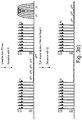
- FIGS 3a and 3b illustrate an example of the invention put into practice.
- Two forms of transposome are assembled on the surface of a flowcell.
- the first form comprises a P7 transposome in which the 'transfer strand' of the ME adaptor comprises an extended oligonucleotide sequence linking the transposome to the surface including an amplification domain (P7) and a sequencing primer (S2).
- the second form comprises a P5 transposome in which the 'transfer strand' of the ME adaptor comprises an extended oligonucleotide sequence linking the transposome to the surface including an amplification domain (P5) and a sequencing primer (S1).
- Addition of DNA to the flowcell results in tagmentation and coupling of the DNA to the transposomes.
- P5-P5, P7-P7 and P5-P7 Three types of bridges result: P5-P5, P7-P7 and P5-P7. Following cluster formation and linearization ( Figure 3b ), either P5-P5 or P7-P7 clusters are removed (depending on linearization). As shown in Figure 3b , if linearization happens via P5, then only the P5-P7 and P7-P7 bridges remain. P7-P7 clusters are not linearized by this reaction and therefore will not sequence. P7-P7 clusters are subsequently removed during Read 2 linearization for sequencing.
- the method presented herein can further comprise an additional step of providing transposome complexes in solution and contacting the solution-phase transposome complexes with the immobilized fragments under conditions whereby the target DNA is fragmented by the transposome complexes solution; thereby obtaining immobilized nucleic acid fragments having one end in solution.
- the transposome complexes in solution can comprise a second tag, such that the method generates immobilized nucleic acid fragments having a second tag, the second tag in solution.
- the first and second tags can be different or the same.
- one form of surface bound transposome is predominantly present on the solid support.
- at least 50%, 55%, 60%, 65%, 70%, 75%, 80%, 85%, 90%, 95%, 96%, 97%, 98%, or at least 99% of the tags present on said solid support comprise the same tag domain.
- after an initial tagmentation reaction with surface bound transposomes at least 50%, 55%, 60%, 65%, 70%, 75%, 80%, 85%, 90%, 95%, 96%, 97%, 98%, or at least 99% of the bridge structures comprise the same tag domain at each end of the bridge.
- a second tagmentation reaction can be performed by adding transposomes from solution that further fragment the bridges.
- most or all of the solution phase transposomes comprise a tag domain that differs from the tag domain present on the bridge structures generated in the first tagmentation reaction.
- the tags present in the solution phase transposomes comprise the a tag domain that differs from the tag domain present on The bridge structures generated in the first tagmentation reaction.
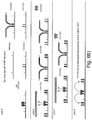
- FIGs 4a and 4b illustrate this embodiment.
- the solid support shown in Figure 4a comprises only surface bound transposome comprising a single type of tag sequence (e.g. P5 transposome).
- all tagmented bridges are P5-P5 bridges.
- a P7 transposome is added from solution and tagments into the bridges making all surface bound molecules P5-P7 templates.
- the surface bound fragments can be subsequently converted into clusters (see, for example, Figure 4b ).
- a pair of clusters will result from each transposome stump which represent the two adjacent fragments in the original intact DNA sample ( Figure 4b ).
- solid supports having a library of tagged DNA fragments immobilized thereon prepared according to the above methods.
- the methods can advantageously be exploited to identify clusters likely to contain linked sequences (i.e., the first and second portions from the same target polynucleotide molecule).
- the relative proximity of any two clusters resulting from an immobilized polynucleotide thus provides information useful for alignment of sequence information obtained from the two clusters.
- the distance between any two given clusters on a solid surface is positively correlated with the probability that the two clusters are from the same target polynucleotide molecule, as described in greater detail in WO 2012/025250 .
- dsDNA molecules stretching out over the surface of a flowcell can be tagmented in situ, resulting in a line of connected dsDNA bridges across the surface of the flowcell.
- a physical map of the immobilized DNA can then be generated.
- the physical map thus correlates the physical relationship of clusters after immobilized DNA is amplified. Specifically, the physical map is used to calculate the probability that sequence data obtained from any two clusters are linked, as described in WO 2012/025250 .
- the physical map can be generated by imaging the DNA to establish the location of the immobilized DNA molecules across a solid surface.
- the immobilized DNA can be imaged by adding an imaging agent to the solid support and detecting a signal from the imaging agent.
- the imaging agent can be a detectable label. Suitable detectable labels, include, but arc not limited to, protons, haptens, radionuclides, enzymes, fluorescent labels, chemiluminescent labels, and/or chromogenic agents.
- the imaging agent can be an intercalating dye or non-intercalating DNA binding agent. Any suitable intercalating dye or non-intercalating DNA binding agent as are known in the art can be used, including, but not limited to those set forth in U.S. 2012/0282617 .
- the immobilized double stranded fragments are further fragmented to liberate a free end (see Figure 4a ) prior to cluster generation ( Figure 4b ).
- Cleaving bridged structures can be performed using any suitable methodology as is known in the art, as exemplified by WO 2012/025250 .
- cleavage can occur by incorporation of a modified nucleotide, such as uracil as described in WO 2012/025250 , by incorporation of a restriction endonuclease site, or by applying solution-phase transposome complexes to the bridged DNA structures, as described elsewhere herein.
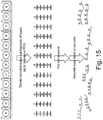
- a plurality of target DNA molecules can be flowed onto a flowcell comprising a plurality of nano-channels, the nano-channel having a plurality of transposome complexes immobilized thereto.
- the term nano-channel refers to a narrow channel into which a long linear DNA molecule is flown. In some embodiments, no more than 1, 2, 3, 4, 5, 6, 7, 8, 9, 10, 11, 12, 13, 14, 15, 16, 17, 18, 19, 20, 30, 40, 50, 60 70, 80, 90, 100, 200, 300, 400, 500, 600, 700, 800, 900 or no more than 1000 individual long strands of target DNA are flowed into each nano-channel.
- the individual nano-channels can be separated by a physical barrier which prevents individual long strands of target DNA from interacting with multiple nano-channels.
- the solid support can comprise at least 10, 50, 100, 200, 500, 1000, 3000, 5000, 10000, 30000, 50000, 80000 or at least 100000 nano-channels.
- Transposomes bound to the surface of a nano-channel tagment the DNA. Contiguity mapping can then be performed, for example, by following the clusters down the length of one of these channels.
- the long strand of target DNA can be at least 0.1kb, 1kb, 2kb, 3kb, 4kb, 5kb, 6kb, 7kb, 8kb, 9kb, 10kb, 15kb, 20kb, 25kb, 30kb, 35kb, 40kb, 45kb, 50kb, 55kb, 60kb, 65kb, 70kb, 75kb, 80kb, 85kb, 90kb, 95kb, 100kb, 150kb, 200kb, 250kb, 300kb, 350kb, 400kb, 450kb, 500kb, 550kb, 600kb, 650kb, 700kb, 750kb, 800kb, 850kb, 900kb, 950kb, 1000kb, 5000kb, 10000kb, 20000kb, 30000kb, or at least 50000kb in length.
- the long strand of target DNA can be no more than 0.1kb, 1kb, 2kb, 3kb, 4kb, 5kb, 6kb, 7kb, 8kb, 9kb, 10kb, 15kb, 20kb, 25kb, 30kb, 35kb, 40kb, 45kb, 50kb, 55kb, 60kb, 65kb, 70kb, 75kb, 80kb, 85kb, 90kb, 95kb, 100kb, 150kb, 200kb, 250kb, 300kb, 350kb, 400kb, 450kb, 500kb, 550kb, 600kb, 650kb, 700kb, 750kb, 800kb, 850kb, 900kb, 950kb, or no more than 1000kb in length.
- a flowcell having 1000 or more nano-channels with mapped immobilized tagmentation products in the nano-channels can be used to sequence the genome of an organism with short 'positioned' reads.
- Mapped immobilized tagmentation products in the nano-channels can be used resolve haplotypes.
- Mapped immobilized tagmentation products in the nano-channels can be used to resolve phasing issues.
- the present disclosure further relates to amplification of the immobilized DNA fragments produced according to the methods provided herein.
- the immobilized DNA fragments produced by surface bound transposome mediated tagmentation can be amplified according to any suitable amplification methodology known in the art.
- the immobilized DNA fragments are amplified on a solid support.
- the solid support is the same solid support upon which the surface bound tagmentation occurs.
- the methods and compositions provided herein allow sample preparation to proceed on the same solid support from the initial sample introduction step through amplification and optionally through a sequencing step.
- the immobilized DNA fragments are amplified using cluster amplification methodologies as exemplified by the disclosures of US Patent Nos. 7,985,565 and 7,115,400 .
- US Patent Nos. 7,985,565 and 7,115,400 describe methods of solid-phase nucleic acid amplification which allow amplification products to be immobilized on a solid support in order to form arrays comprised of clusters or "colonies" of immobilized nucleic acid molecules.
- Each cluster or colony on such an array is formed from a plurality of identical immobilized polynucleotide strands and a plurality of identical immobilized complementary polynucleotide strands.
- the arrays so-formed are generally referred to herein as "clustered arrays".
- the products of solid-phase amplification reactions such as those described in US Patent Nos. 7,985,565 and 7,115,400 are so-called "bridged" structures formed by annealing of pairs of immobilized polynucleotide strands and immobilized complementary strands, both strands being immobilized on the solid support at the 5' end, preferably via a covalent attachment.
- Cluster amplification methodologies are examples of methods wherein an immobilized nucleic acid template is used to produce immobilized amplicons.
- Other suitable methodologies can also be used to produce immobilized amplicons from immobilized DNA fragments produced according to the methods provided herein. For example one or more clusters or colonies can be formed via solid-phase PCR whether one or both primers of each pair of amplification primers are immobilized.
- the immobilized DNA fragments can be amplified in solution.
- the immobilized DNA fragments can be cleaved or otherwise liberated from the solid support and amplification primers are then hybridized in solution to the liberated molecules.
- Amplification primers can be hybridized to the immobilized DNA fragments for one or more initial amplification steps, followed by subsequent amplification steps in solution.
- an immobilized nucleic acid template can be used to produce solution-phase amplicons.
- amplification methodologies described herein or generally known in the art can be utilized with universal or target-specific primers to amplify immobilized DNA fragments.
- Suitable methods for amplification include, but are not limited to, the polymerase chain reaction (PCR), strand displacement amplification (SDA), transcription mediated amplification (TMA) and nucleic acid sequence based amplification (NASBA), as described in U.S. Patent No. 8,003,354 .
- PCR polymerase chain reaction
- SDA strand displacement amplification
- TMA transcription mediated amplification
- NASBA nucleic acid sequence based amplification
- the above amplification methods can be employed to amplify one or more nucleic acids of interest.
- PCR including multiplex PCR, SDA, TMA, NASBA and the like can be utilized to amplify immobilized DNA fragments.
- primers directed specifically to the nucleic acid of interest are included in the amplification reaction.
- oligonucleotide extension and ligation can include oligonucleotide extension and ligation, rolling circle amplification (RCA) ( Lizardi et al., Nat. Genet. 19:225-232 (1998 )) and oligonucleotide ligation assay (OLA) (See generally U.S. Pat. Nos. 7,582,420 , 5,185,243 , 5,679,524 and 5,573,907 ; EP 0 320 308 B1 ; EP 0 336 731 B1 ; EP 0 439 182 B1 ; WO 90/01069 ; WO 89/12696 ; and WO 89/0983 ) technologies.
- RCA rolling circle amplification
- OVA oligonucleotide ligation assay
- the amplification method can include ligation probe amplification or oligonucleotide ligation assay (OLA) reactions that contain primers directed specifically to the nucleic acid of interest.
- the amplification method can include a primer extension-ligation reaction that contains primers directed specifically to the nucleic acid of interest.
- primer extension and ligation primers that can be specifically designed to amplify a nucleic acid of interest, the amplification can include primers used for the GoldenGate assay (Illumina, Inc., San Diego, CA) as exemplified by U.S. Pat. No. 7,582,420 and 7,611,869 .
- Exemplary isothermal amplification methods that can be used in a method of the present disclosure include, but are not limited to, Multiple Displacement Amplification (MDA) as exemplified by, for example Dean et al., Proc. Natl. Acad. Sci. USA 99:5261-66 (2002 ) or isothermal strand displacement nucleic acid amplification exemplified by, for example U.S. Pat. No. 6,214,587 .
- MDA Multiple Displacement Amplification
- Other non-PCR-based methods that can be used in the present disclosure include, for example, strand displacement amplification (SDA) which is described in, for example Walker et al., Molecular Methods for Virus Detection, Academic Press, Inc., 1995 ; U.S. Pat. Nos.
- Tagged PCR Another nucleic acid amplification method that is useful in the present disclosure is Tagged PCR which uses a population of two-domain primers having a constant 5' region followed by a random 3' region as described, for example, in Grothues ct al. Nucleic Acids Res. 21(5):1321-2 (1993 ).
- the first rounds of amplification arc carried out to allow a multitude of initiations on heat denatured DNA based on individual hybridization from the randomly-synthesized 3' region. Due to the nature of the 3' region, the sites of initiation are contemplated to be random throughout The genome. Thereafter, the unbound primers can be removed and further replication can take place using primers complementary to the constant 5' region.
- the present disclosure further relates to sequencing of the immobilized DNA fragments produced according to the methods provided herein.
- the immobilized DNA fragments produced by surface bound transposome mediated tagmentation can be sequenced according to any suitable sequencing methodology, such as direct sequencing, including sequencing by synthesis, sequencing by ligation, sequencing by hybridization, nanopore sequencing and the like.
- the immobilized DNA fragments can be sequenced on a solid support.
- the solid support for sequencing can be the same solid support upon which the surface bound tagmentation occurs.
- the solid support for sequencing can be the same solid support upon which the amplification occurs.
- SBS sequencing-by-synthesis
- extension of a nucleic acid primer along a nucleic acid template e.g. a target nucleic acid or amplicon thereof
- the underlying chemical process can be polymerization (e.g. as catalyzed by a polymerase enzyme).
- fluorescently labeled nucleotides are added to a primer (thereby extending the primer) in a template dependent fashion such that detection of the order and type of nucleotides added to the primer can be used to determine the sequence of the template.
- Flow cells provide a convenient solid support for housing amplified DNA fragments produced by the methods of the present disclosure.
- One or more amplified DNA fragments in such a format can be subjected to an SBS or other detection technique that involves repeated delivery of reagents in cycles.
- SBS SBS
- one or more labeled nucleotides, DNA polymerase, etc. can be flowed into/through a flow cell that houses one or more amplified nucleic acid molecules. Those sites where primer extension causes a labeled nucleotide to be incorporated can be detected.
- the nucleotides can further include a reversible termination property that terminates further primer extension once a nucleotide has been added to a primer.
- a nucleotide analog having a reversible terminator moiety can be added to a primer such that subsequent extension cannot occur until a deblocking agent is delivered to remove the moiety.
- a deblocking reagent can be delivered to the flow cell (before or after detection occurs). Washes can be carried out between The various delivery steps. The cycle can then be repeated n times to extend the primer by n nucleotides, thereby detecting a sequence of length n.
- pyroscquencing detects the release of inorganic pyrophosphate (PPi) as particular nucleotides are incorporated into a nascent nucleic acid strand ( Ronaghi, et al., Analytical Biochemistry 242(1), 84-9 (1996 ); Ronaghi, Genome Res. 11(1), 3-11 (2001 ); Ronaghi et al. Science 281(5375), 363 (1998 ); US 6,210,891 ; US 6,258,568 and US. 6,274,320 ).
- PPi inorganic pyrophosphate
- PPi can be detected by being immediately converted to adenosine triphosphate (ATP) by ATP sulfurylase, and the level of ATP generated can be detected via luciferase-produced photons.
- ATP adenosine triphosphate
- the sequencing reaction can be monitored via a luminescence detection system.
- Excitation radiation sources used for fluorescence based detection systems are not necessary for pyrosequencing procedures.
- Useful fluidic systems, detectors and procedures that can be adapted for application of pyrosequencing to amplicons produced according to the present disclosure are described, for example, in WIPO Pat. App. Ser. No. PCT/US11/57111 , US 2005/0191698 A1 , US 7,595,883 , and US 7,244,559 .
- nucleotide incorporations can be detected through fluorescence resonance energy transfer (FRET) interactions between a fluorophore-bearing polymerase and ⁇ -phosphate-labeled nucleotides, or with zeromode waveguides (ZMWs).
- FRET fluorescence resonance energy transfer
- ZMWs zeromode waveguides
- Some SBS methods include detection of a proton released upon incorporation of a nucleotide into an extension product.
- sequencing based on detection of released protons can use an electrical detector and associated techniques that are commercially available from Ion Torrent (Guilford, CT, a Life Technologies subsidiary) or sequencing methods and systems described in US 2009/0026082 A1 ; US 2009/0127589 A1 ; US 2010/0137143 A1 ; or US 2010/0282617 A1 .
- Methods set forth herein for amplifying target nucleic acids using kinetic exclusion can be readily applied to substrates used for detecting protons. More specifically, methods set forth herein can be used to produce clonal populations of amplicons that are used to detect protons.
- nanopore sequencing Another useful sequencing technique is nanopore sequencing (see, for example, Deamer et al. Trends Biotechnol. 18, 147-151 (2000 ); Deamer et al. Acc. Chem. Res. 35:817-825 (2002 ); Li et al. Nat. Mater. 2:611-615 (2003 )).
- the target nucleic acid or individual nucleotides removed from a target nucleic acid pass through a nanopore.
- each nucleotide type can be identified by measuring fluctuations in the electrical conductance of the pore.
- U.S. Patent No. 7,001,792 Soni et al. Clin. Chem. 53, 1996-2001 (2007 ); Healy, Nanomed. 2, 459-481 (2007 ); Cockroft et al. J. Am. Chem. Soc. 130, 818-820 (2008 )).
- an advantage of the methods set forth herein is that they provide for rapid and efficient detection of a plurality of target nucleic acid in parallel. Accordingly the present disclosure provides integrated systems capable of preparing and detecting nucleic acids using techniques known in the art such as those exemplified above.
- an integrated system of the present disclosure can include fluidic components capable of delivering amplification reagents and/or sequencing reagents to one or more immobilized DNA fragments, the system comprising components such as pumps, valves, reservoirs, fluidic lines and the like.
- a flow cell can be configured and/or used in an integrated system for detection of target nucleic acids. Exemplary flow cells are described, for example, in US 2010/0111768 A1 and US Ser. No. 13/273,666 .
- one or more of the fluidic components of an integrated system can be used for an amplification method and for a detection method.
- one or more of the fluidic components of an integrated system can be used for an amplification method set forth herein and for the delivery of sequencing reagents in a sequencing method such as those exemplified above.
- an integrated system can include separate fluidic systems to carry out amplification methods and to carry out detection methods. Examples of integrated sequencing systems that are capable of creating amplified nucleic acids and also determining the sequence of the nucleic acids include, without limitation, the MiSeqTM platform (Illumina, Inc., San Diego, CA) and devices described in US Ser. No. 13/273,666 .
- transposome complexes include solid supports, such as flowcells, having transposome complexes immobilized thereon.
- the transposome complexes comprise a transposase bound to a first polynucleotide, the polynucleotide comprising (i) a 3' portion comprising a transposon end sequence, and (ii) a first tag comprising a first tag domain.
- the density of these surface bound transposomes can vary.
- the transposome complexes are present on the solid support at a density of at least 10 3 , 10 4 , 10 5 , or at least 10 6 complexes per mm 2 .
- the methods can comprise, for example, immobilizing a plurality of transposome complexes to a solid support, the transposome complexes comprising a transposase bound to a first polynucleotide, the first polynucleotide comprising (i) a 3' portion comprising a transposon end sequence, and (ii) a first tag comprising a first tag domain.
- Transposome complexes can be immobilized to a solid support in a variety of methods, which will be appreciated by one of skill in the art.
- the method comprises providing a solid support having a plurality of first polynucleotides immobilized thereon, and contacting the solid support with transposase holoenzyme and a second polynucleotide, the second polynucleotide comprising a region complementary to the transposon end sequence.
- the second polynucleotide is hybridized to the immobilized first polynucleotide before the transposase holoenzyme is added.
- the second polynucleotide and the transposase holoenzyme are provided together.
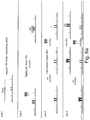
- Figure 5a shows one embodiment of this method for assembling the surface bound transposome complexes.
- transposase holoenzyme is added along with the non-transferred strand of the ME adaptor to a flowcell containing oligonucleotides comprising from the 5' surface grafted end: a cluster amplification primer (A.pr) and sequencing primer (S.pr) and the ME sequence ( Figure 5a ).
- the non-transferred ME' strand can hybridized to the surface grafted ME strand first and then the transposase added to the flowcell.
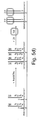
- the transposome complexes can be assembled in solution and immobilizing can comprise a further step of ligating the first polynucleotide to a splint oligonucleotide coupled to the solid support. This is illustrated in Figure 5b .
- the splint oligonucleotide can be extended using a polymerase before a ligating step occurs.
- Transposome dimer can be assembled by hybridizing a looped oligonucleotide to an immobilized first polynucleotide.
- a looped oligonucleotide can comprise a first end and a second end, with the first end being complementary to the transposon end sequence of the first polynucleotide.
- the second end of the looped oligonucleotide can be complementary to a second transposon end sequence.
- the second transposon end sequence can be, for example, part of a solution-phase first polynucleotide.
- the immobilized first polynucleotide and the solution-phase first polynucleotide can comprise dissimilar transposon end sequences or complements thereof.
- the looped oligonucleotide can comprise sequences complementary to each of the dissimilar transposon end sequences at the first and second ends.
- An illustration of this is shown in Figure 5c .
- a contiguous adaptor pair is generated by hybridizing two oligonucleotides to the surface bound oligonucleotide. This can be achieved by employing two dissimilar transposon end sequences (ME1 and ME2). Addition of transposase holoenzyme reconstitutes an active 'looped' transposome complex, where only one of the two adaptors of each transposome is coupled to the surface Figure 5c .
- Transposome complexes can be assembled on a standard paired end flow cell with amplification primers immobilized thereto (e.g. a HiSeq flow cell or MiSeq flow cell sold by Illumina Inc, San Diego, CA). This can be accomplished by, for example, hybridization of a 'splint' oligonucleotide that anneals to one or both species of surface grafted amplification primer. The splint acts as a template to then extend the grafted surface primer with a polymerase and dNTPs to form an oligonucleotide duplex that contains a surface amplification primer, a sequencing primer and the transposon end sequences of the transposase. Addition of transposase assembles a transposome of the surface. This embodiment is illustrated in Figure 5d .
- transposome complexes may be homodimers, or heterodimers.
- a homodimeric transposome would comprise two P5-ME adaptors at both sites or alternatively, two P7-ME adaptors.
- a heterodimeric transposome complex would comprise both P5-ME and P7-ME adaptors, as shown in Figure 11 .
- One embodiment presented herein is a population of microparticles having transposome complexes immobilized thereto.
- a solid support such as beads can provide several advantages over solution-based tagmentation. For example, in standard solution-based tagmentation, it is difficult to control the final fragment size of the tagmentation reaction. Fragment size is a function of the ratio of transposomes to the amount and size of DNA and to the duration of the reaction. Even if these parameters are controlled, size selection fractionation is commonly required as an additional step to remove excess small fragments shorter than the combined paired-read lengths. The methods provided herein avoid those disadvantages.
- bead-immobilized transposomes allow for selection of final fragment size as a function of the spatial separation of the bound transposomes, independent of the quantity of transposome beads added to the tagmentation reaction.
- An additional limitation of solution-based tagmentation is that it is typically necessary to do some form of purification of the products of the tagmentation reaction both before and after PCR amplification. This typically necessitates some transfer of reactions from tube to tube.
- tagmentation products on the bead based transposomes can be washed and later released for amplification or other downstream processing, thus avoiding the need for sample transfer.
- tagmentation and downstream processing can all be performed in a single tube, vessel, droplet or other container.
- Tagmentation and downstream processing of samples can take place on a microfluidic droplet based device, as exemplified in the disclosure of U.S. Application Ser. No. 13/670,318, filed on November 6, 2012 entitled " INTEGRATED SEQUENCING APPARATUSES AND METHODS OF USE”.
- a droplet containing target nucleic acid, wash buffer or other reagents may be passed over a surface comprising immobilized transposome complexes.
- a droplet comprising beads having transposomes immobilized thereon may be contacted with target nucleic acid, wash buffer or other reagents in a microfluidic droplet based device.
- the immobilized transposome complexes comprise a transposase bound to a first polynucleotide and a second polynucleotide; wherein the first polynucleotide is immobilized at its 5' end to the surface of the microparticle and the second polynucleotide is hybridized to the 3' end of the first polynucleotide; and wherein the first polynucleotide comprises: (i) a 3' portion comprising a transposon end sequence, and (ii) a first tag comprising a first tag domain.
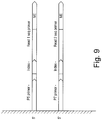
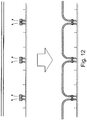
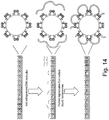
- Figures 9-12 provide an illustration of transposomes assembled on the surface of paramagnetic beads.
- Figure 9 shows a bead surface with two different first polynucleotides immobilized thereto.
- the first polynucleotides that are shown comprise a transposon end sequence (ME).
- One of the first polynucleotides shown in comprises a tag domain comprising an amplification primer sequence (P5) and a sequencing primer sequence (Read 1).
- the other polynucleotide shown in Figure 9 comprises a different amplification primer sequence (P7) and a sequencing primer sequence (Read 2).
- the first polynucleotides may also comprise an index tag.
- the index tag may be unique to the bead, or it may be shared with one or more other beads in the population.
- a single bead may have only a single index tag immobilized thereto, or it may have a plurality of index tags immobilized thereto.
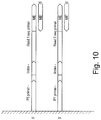
- Figure 10 shows a second polynucleotide hybridized to each first polynucleotide.
- the second polynucleotide comprises a region complementary to the transposon end sequence of the first polynucleotide.
- the second polynucleotide can be 15 bp in length.
- the second polynucleotide can be approximately 10, 11, 12, 13, 14, 15, 16, 17, 18, 19, 20 bp or more than 20 bp in length.
- the second polynucleotide can be phosphorylated at its 5' end.
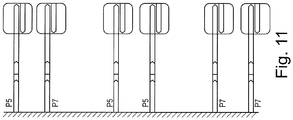
- Figure 11 illustrates assembly of transposomes on the surface of the bead, where transposase enzyme is contacted with the immobilized oligonucleotides.
- transposase enzyme is contacted with the immobilized oligonucleotides.
- three types of transposome complexes are formed: a P5:P5, a P7:P7, and a P5:P7 complex ( Figure 11 ).
- transposome beads When the transposome beads are added to a solution of target DNA in a tagmentation buffer, tagmentation takes place, linking the DNA to the surface of the beads. An immobilized library of tagged DNA fragments is generated.
- Figure 12 illustrates an embodiment where successive tagmentation into the DNA results in bridged molecules between transposomes. Where three types of transposomes are present (as in Figure 11 ), three types of bridge complexes result: a P5:P5, P7:P7 and P5:P7 complex in a ratio of 25:25:50, respectively.
- the length of the bridged fragments can be dictated by the density of the transposomes on the surface of the bead. This density is tunable via the amount of oligonucleotide on the surface, the amount of duplex transposon end complexes on the surface and the amount of transposase enzyme added during the transposome assembly.
- the P5:P7 tagmentation products can be liberated from the surface of the bead using any suitable method.
- the tagmentation products can be liberated from the beads using an amplification method such as suppression PCR, step-out PCR and the like.
- the tagmentation products can be liberated from the beads by cleavage.
- the cleavage can be, for example, chemical, enzymatic, photochemical or a combination thereof. It will be appreciated that any suitable method for releasing one or more tagmentation products from a solid support can be utilized in the methods provided herein.
- DNA can be efficiently contacted with surface bound transposomes using any suitable method for increasing the probability of contact.
- precipitation of DNA onto the solid surface can be utilized to increase contact between the target DNA and the transposome complexes on the solid surface.
- Any one of a number of methods that are known in the art for contacting DNA with a solid support can be utilized, as exemplified by the disclosure of WO 2010/115122 .
- DNA can be precipitated onto a solid support by the addition of PEG, ethanol or any one of a variety of other agents known to precipitate DNA onto surfaces, including, for example, any one of a number of buffers used in solid phase reversible immobilization (SPRI) technology.
- SPRI solid phase reversible immobilization
- a population of beads bearing immobilized transposome complexes can be mixed with an excess of beads that bear no transposomes or oligonucleotides, thereby reducing the likelihood of tagmentation across two or more different beads.
- Another method to reduce the likelihood of tagmentation across two or more different beads includes immobilizing beads so contact between beads is minimized. Immobilization of beads can be accomplished by any of a number of techniques known in the art, including, for example, immobilizing the beads via magnetism to the sides of a solid surface such as a microcentrifuge tube, or any other immobilization technique as exemplified by WO 2010/115122 .
- Transposome beads can be used to isolate and identify nucleic acids from a single cell, such as a prokaryotic or eukaryotic cell.
- particles such as beads can be coated with indexed transposomes which share the same index (all of the transposomes present on a particular bead carry the same index, which is different from the index present on another bead).
- the beads can then be placed inside cells through any one of variety of methodologies known in the art.
- methods for delivering beads inside cells include, but are not limited to gene guns, photothermal nanoblades ( Wu et al. Anal Chem. (2011) 4:1321-7 ), and peptides used in conjunction with cell permeabilizing substances ( Nitin et al Ann Biomed Eng. (2009) 37:2018-2027 ) and the like. It will be appreciated that any suitable method for associating DNA from a single cell with a particle bearing indexed transposomes can be used in the methods presented herein.
- Transposomes can be covalently attached to the beads as described in detail hereinabove. Additionally or alternatively, transposomes can be released from the beads upon the application of a chemical or physical stimulus. Some examples of stimuli which can trigger release of transposome from a solid support include light and/or temperature changes. The transposomes can be released from the solid support using the activity of an enzyme such as a restriction endonuclease. The transposomes can be detached from the beads and move freely inside the cell. Once the beads (or alternatively, the released transposomes) come into contact with chromatin or DNA, tagmentation can take place. It will be understood that in eukaryotic and prokaryotic systems, not all genomic DNA will always be accessible and/or available for tagmentation.
- a cross-linking step can be performed to cross-link cellular DNA while it is still inside the cell's nucleus. Such a step ensures that the DNA from a single cell is held together. After extracting the DNA from cells, it can then mixed with the indexed beads and subjected to tagmentation as described in detail hereinabove. Additionally or alternatively, variations of the method include the tagmentation of flow sorted chromosomes. Flow sorted chromosomes can be mixed with the indexed beads described above. A particular chromosome would adhere to one bead and the fragments generated through tagmentation would contain the same index. This could enable phasing of SNPs from whole chromosomes (haplotyping).
- the total number of indices can be greater than the total number of cells that are successfully tagmented.
- An approach can be used to ensure that an individual cell is not tagmented by multiple beads. For example, one approach is to use beads of a size which is similar to that of the cell. This would ensure that a cell would not be able to accommodate multiple beads. Additionally or alternatively, another approach is to make use of a cell to bead ratio which favors single cell targeting. For example, if there are far more cells than beads, then the poisson distribution of beads inside the cells means that the cells that have taken up a single bead far outnumber the cells that have taken up two or more beads.
- the single cell approach described above can be used to determine whether two SNPs (or structural rearrangements) arc present in the same cell. For example, in the case of heterogeneous populations of cancer cells, knowing whether two SNPs are present in the same cell or in different cells could aid in implementing the right cancer therapy.
- RNA messenger RNA
- suitable enzymes i.e. reverse transcriptase
- oligonucleotides for a reverse transcription step
- gene expression at the single cell level can be analyzed.
- the cytoplasmic RNA can be converted into cDNA, tagged and prepared inside the cells.
- Barcode-assisted assembly of DNA fragments enables isolation of individual long DNA molecules within a population of DNA molecules and conversion of each molecule into a uniquely barcoded sub-fragment library. When the entire population of sub-fragmented DNA molecules is sequenced, the subfragments can be assembled back into their original long molecule by reference to the barcodes they contain.
- the 'dilution method isolates individual long molecules by extreme dilution and aliquoting into separate compartments (e.g., wells of a plate), such that each well contains only one or just a few molecules of DNA. Because each well is physically separate, a library preparation can be done in each well with a unique barcode. Thereafter the contents of the wells are pooled and sequenced.
- Another method employs an emulsion wherein each droplet contains long DNA molecules, library preparation reagents and a barcode unique to each droplet.
- Another approach uses a large library of indexed looped transposome complexes to insert multiple twin barcodes along the length of the DNA while preserving the intactness of the molecule.
- the methods presented herein achieve advantages of physical isolation similar to the emulsion method without using emulsions, and at the same time provide a complexity that is much greater than that provided by the large number of 'wells' used in the dilution method.
- the unique barcodes of the present methods are in some ways analogous to the 'wells' of the dilution method except that the number of beads in the bead-based method can often be much higher than the number of wells in the dilution method.
- the barcodes are deterministically distributed (i.e., one barcode per bead) and not random (i.e. Poisson distributed).
- the methods presented herein also achieve the same initial preservation of molecule intactness and contiguity but without the need for looped transposome complexes as used in some other methods. Additionally, the methods presented herein do not require as large a code space as used in some other methods.
- barcoding method can comprise providing a population of microparticles having transposome complexes immobilized thereto, the transposome complexes comprising a transposase bound to a first polynucleotide and second polynucleotide.
- the first polynucleotide can comprise an index domain associated with the microparticle.
- the index domain can be unique to the microparticle.
- the population of microparticles can comprise at least a plurality of index domains.
- the index domain can be present on more than one microparticle in the population of microparticles.
- a microparticle in the population of microparticles can comprise more than one index domain.
- the barcoding methods presented herein further comprise applying a target DNA to the population of microparticles, thereby generating immobilized DNA fragments that are tagged with the index domain.
- DNA can be efficiently contacted with surface bound transposomes using any suitable method for increasing the probability of contact as discussed hereinabove, as exemplified by WO 2010/115122 .
- the methods can be performed using any one of a variety of known formats, for example, with a combination of tagmentation reagents and a bead array for the library preparation, followed by an indexed sequencing run and bespoke data analysis.
- Any other suitable method that maintains beads in static separation from one another can be used for surface tagmentation and indexing of samples.
- physical configurations such as wells or small depressions in the substrate that can retain the beads, such that a microsphere can rest in the well, or the use of other forces (magnetic or compressive), or chemically altered or active sites, such as chemically functionalized sites, electrostatically altered sites, hydrophobically and/or hydrophilically functionalized sites, or spots of adhesive.
- microspheres can be non-covalently associated in the wells, although the wells may additionally be chemically functionalized as is generally described below, cross-linking agents may be used, or a physical barrier may be used, e.g., a film or membrane over the beads.
- the surface of the substrate can be modified to contain chemically modified sites that can be used to attach, either covalently or non-covalently, the microspheres of the invention to the discrete sites or locations on the substrate.
- "Chemically modified sites” in this context includes, but is not limited to, the addition of a pattern of chemical functional groups including amino groups, carboxy groups, oxo groups and thiol groups, that can be used to covalently attach microspheres, which generally also contain corresponding reactive functional groups; the addition of a pattern of adhesive that can be used to bind the microspheres (either by prior chemical functionalization for the addition of the adhesive or direct addition of the adhesive); the addition of a pattern of charged groups (similar to the chemical functionalities) for the electrostatic attachment of the microspheres, e.g., when the microspheres comprise charged groups opposite to the sites; the addition of a pattern of chemical functional groups that renders the sites differentially hydrophobic or hydrophilic, such that the addition of similarly hydrophobic or hydrophilic microspheres under suitable experimental
- pattern in this sense includes the use of a uniform treatment of the surface to allow attachment of the beads at discrete sites, as well as treatment of the surface resulting in discrete sites. As will be appreciated by those in the art, this may be accomplished in a variety of ways.
- a multitude of beads comprising surface bound transposomes can be generated, wherein each bead contains many transposomes but all transposomes on any given bead all contain the same barcode.
- the generation of a population of monoclonal barcoded transposome oligonucleotides on beads can be performed according to any one of a number of techniques as is known in the art, as exemplified by the disclosure of U.S. 5,604,097 .
- Figure 13 illustrates one embodiment, where a surface bound transposome contains long oligonucleotides attached to the surface via their 5' end.
- the 3' end of the oligonucleotide comprises the Mosaic End (METS) sequences of the Tn5 transposase enzyme. Upstream of this sequence (closer to the 5' end) is a barcode sequence of typically 6-8 bases in length. Further upstream is a primer sequence.
- the oligonucleotide can further comprise a cleavage site to enable the oligonucleotide to be cleaved off the surface: its presence in the oligonucleotide is optional to the overall method.
- a second short oligonucleotide (the non-transferred strand, MENTS) is hybridized to the METS sequence at the 3' end of the long surface grafted oligonucleotide.
- MENTS non-transferred strand
- a transposase dimer is assembled at the 3' end of the oligonucleotides to form a functional transposome.
- Figure 14 illustrates barcoding on beads in an array of wells.
- a given molecule encounters a bead and gets tagmented many times by the transposomes on the bead.
- Each fragment becomes immobilized to the bead and tagged with the barcode associated with that bead.
- the physical separation of beads in the array chip prevents a DNA molecule from reaching between two beads.
- the beads are in close contact and one or more DNA molecules may stretch between two or more beads.
- more than one DNA molecule can be tagmented per bead.
- the probability of two alleles being tagmented onto the same bead is low and is a function of the concentration of the DNA added, the number of beads and the number of barcodes. For example, to avoid two alleles occurring in the same well, 0.1x haplome equivalents (50,000 genomes equivalents) would need to be loaded to 1 million beads each with a unique barcode.
- Figure 15 illustrates transfer of barcoded tagged molecules to a sequencing reaction. As shown in Figure 15 , once the tagmentation is complete the DNA is transferred from the bead surface to solution so that individual fragments can be pooled and prepared for sequencing. Sequencing and assembly by reference to the barcodes enables the sequence of the original long tagmented DNA molecules to be re-created, thus enabling long or pseudo-long reads and phasing of SNPs.
- the tagmented molecules can be cleaved off the surface of the beads via a cleavage moiety present at the 5' end of the surface bound oligonucleotides (see Figure 13 ).
- the cleavage moiety can be any moiety suitable for cleavage of a nucleic acid strand from a solid support.
- cleavage moiety examples include, but are not limited to, restriction endonuclease cleavage, chemical cleavage, RNase cleavage, photochemical cleavage, and the like, including those cleavage methods and cleavage moieties set forth in WO 2006/064199 .
- Primer regions can be used as hybridization points to hybridize PCR step-out primers that enable additional sequences to be added such as amplification and sequencing primers.
- amplification primers P5 and P7 can be added.
- suppression PCR can be used, for example, to enrich for molecules that have P5 adaptors on one end and P7 on the other.
- each bead can have two types of surface grafted oligonucleotides where the primer sequence (as in Figure 13 ) is either P5-Read1 sequencing primer or P7-Read 2 sequencing primer. This will result in mixed P5-P7 transposomes. These can either be cleaved off the beads and followed by suppression PCR to enrich the P5/P7 molecules or amplified directly off the beads, as described above.
- a single transposome type (e.g. P5-Read 1-barcode) may be present on the surface of the bead.
- a second transposome bearing a different amplification and/or sequencing primer can be added in solution to cleave the bridged molecules. This yields all molecules with the same adaptor format that can either be cleaved or amplified off the bead surface.
- An additional sample-specific barcode could be added to the solution transposome such that multiple samples can be pooled by the method.
- Figure 16 is an illustration of this embodiment. As shown in Figure 16 , solution-phase transposomes bearing a P7 amplification primer sequence are added to a bead with immobilized bridged tagmentation products.
- the immobilized fragments arc tagged with a polynucleotide sequence comprising a P5 amplification primer sequence and an barcode index tag (i9) that is unique to the bead.
- a polynucleotide sequence comprising a P5 amplification primer sequence and an barcode index tag (i9) that is unique to the bead.
- each fragment has a free end bearing a P7 primer sequence and an immobilized end bearing a P5 primer sequence.
- E. coli sample (5mm by 2mm scrape from a lawn on an agar plate) was scraped and resuspended in a tube containing water and glass beads.
- the suspended cells and beads were mixed using a vortex mixer to break open the cells and then centrifuged to pellet cellular debris.
- the supernatant (containing the cell lysate, including proteins and nucleic acids) was removed and added to a Genome Analyzer flowcell (Illumina, Inc., San Diego, CA) having immobilized transposomes according to the protocol described in Example 1.
- Cluster generation was performed on the flowcell using a Cluster Station sample preparation device (Illumina, Inc., San Diego, CA). After cluster generation, a paired-end sequencing run was performed with reads of 36 bases in each direction.
- This example describes methods to avoid tagmentation of surface-bound oligonucleotide duplexes when solution phase transposomes are added to a flowcell.
- One method for assembling transposomes on the surface of a flow cell is to take a standard paired end flow cell, hybridize a 'splint' oligonucleotide against the P5 and/or P7 surface grafted oligonucleotides forming an extendable overhang that can be extended with a polymerase to make a duplex containing a double stranded ME sequence.
- transposase enzyme can be added to form a functional surface bound transposome ( figure 5d ). If only a portion of the duplexes form a transposome, remaining 'naked' ME duplexes may subsequently become targets for tagmentation by either nearby surface-bound transposomes or transposomes added from solution.
- fully assembled surface transposomes contain dsDNA portions upstream of the ME sequences that can also become targets for tagmentation by nearby surface-bound transposomes or transposomes added from solution. This undesired tagmentation manifests itself in a reduction of the percentage of clusters passing purity filters that align to the target genome.
- transposome assembly was done as indicated in Figure 17 .
- a 'splint' oligonucleotide was first hybridized against the P5 and/or P7 surface grafted oligonucleotides forming an extendable overhang that could be extended with a polymerase to make a duplex containing a double stranded ME sequence.
- the splint oligonucleotide was removed by de-annealing and washing away, and then was replaced by hybridizing a shorter oligonucleotide as little as 12 bases long but preferably 16 bases long to the 3' end of the surface attached ME oligonucleotide.
- Transposase was added to assemble a transposome that did not contain any exposed dsDNA. Any 'naked' duplexes that did not contain a bound transposase were removed by incubating the flow cell at 60°C and washing under flow conditions to selectively de-anneal and remove the short duplex DNA.
Landscapes
- Chemical & Material Sciences (AREA)
- Life Sciences & Earth Sciences (AREA)
- Organic Chemistry (AREA)
- Health & Medical Sciences (AREA)
- Engineering & Computer Science (AREA)
- Genetics & Genomics (AREA)
- Zoology (AREA)
- Wood Science & Technology (AREA)
- Proteomics, Peptides & Aminoacids (AREA)
- Bioinformatics & Cheminformatics (AREA)
- Biotechnology (AREA)
- General Engineering & Computer Science (AREA)
- Molecular Biology (AREA)
- Biochemistry (AREA)
- General Health & Medical Sciences (AREA)
- Microbiology (AREA)
- Biophysics (AREA)
- Physics & Mathematics (AREA)
- Biomedical Technology (AREA)
- Immunology (AREA)
- Analytical Chemistry (AREA)
- Chemical Kinetics & Catalysis (AREA)
- Bioinformatics & Computational Biology (AREA)
- Crystallography & Structural Chemistry (AREA)
- Plant Pathology (AREA)
- Structural Engineering (AREA)
- General Chemical & Material Sciences (AREA)
- Medicinal Chemistry (AREA)
- Measuring Or Testing Involving Enzymes Or Micro-Organisms (AREA)
- Apparatus Associated With Microorganisms And Enzymes (AREA)
- Immobilizing And Processing Of Enzymes And Microorganisms (AREA)
- Enzymes And Modification Thereof (AREA)
- Investigating Or Analysing Biological Materials (AREA)
- Sampling And Sample Adjustment (AREA)
Priority Applications (7)
| Application Number | Priority Date | Filing Date | Title |
|---|---|---|---|
| SM20180582T SMT201800582T1 (it) | 2013-01-09 | 2014-01-08 | Procedimenti e supporto solido per la preparazione di campioni con l'uso di transposomi |
| RS20181343A RS57954B1 (sr) | 2013-01-09 | 2014-01-08 | Postupci i čvrsti nosači za pripremanje uzoraka upotrebom transpozoma |
| EP18198695.1A EP3486331B1 (en) | 2013-01-09 | 2014-01-08 | Sample preparation on a solid support |
| SI201430952T SI2943589T1 (sl) | 2013-01-09 | 2014-01-08 | Metode in trdni nosilci za pripravo vzorca z uporabo transposomov |
| EP24170181.2A EP4417692A3 (en) | 2013-01-09 | 2014-01-08 | Sample preparation on a solid support |
| PL14728620T PL2943589T3 (pl) | 2013-01-09 | 2014-01-08 | Sposoby i podłoża stałe do wytwarzania próbek przy użyciu transposomów |
| HRP20181725TT HRP20181725T1 (hr) | 2013-01-09 | 2014-01-08 | Postupak i čvrsti nosači namijenjeni pripravi uzoraka uz upotrebu transposoma |
Applications Claiming Priority (2)
| Application Number | Priority Date | Filing Date | Title |
|---|---|---|---|
| US201361750682P | 2013-01-09 | 2013-01-09 | |
| PCT/IB2014/000610 WO2014108810A2 (en) | 2013-01-09 | 2014-01-08 | Sample preparation on a solid support |
Related Child Applications (2)
| Application Number | Title | Priority Date | Filing Date |
|---|---|---|---|
| EP18198695.1A Division EP3486331B1 (en) | 2013-01-09 | 2014-01-08 | Sample preparation on a solid support |
| EP24170181.2A Division EP4417692A3 (en) | 2013-01-09 | 2014-01-08 | Sample preparation on a solid support |
Publications (2)
| Publication Number | Publication Date |
|---|---|
| EP2943589A2 EP2943589A2 (en) | 2015-11-18 |
| EP2943589B1 true EP2943589B1 (en) | 2018-10-10 |
Family
ID=50896340
Family Applications (3)
| Application Number | Title | Priority Date | Filing Date |
|---|---|---|---|
| EP14728620.7A Active EP2943589B1 (en) | 2013-01-09 | 2014-01-08 | Methods and solid supports for sample preparation using transposomes |
| EP18198695.1A Active EP3486331B1 (en) | 2013-01-09 | 2014-01-08 | Sample preparation on a solid support |
| EP24170181.2A Pending EP4417692A3 (en) | 2013-01-09 | 2014-01-08 | Sample preparation on a solid support |
Family Applications After (2)
| Application Number | Title | Priority Date | Filing Date |
|---|---|---|---|
| EP18198695.1A Active EP3486331B1 (en) | 2013-01-09 | 2014-01-08 | Sample preparation on a solid support |
| EP24170181.2A Pending EP4417692A3 (en) | 2013-01-09 | 2014-01-08 | Sample preparation on a solid support |
Country Status (19)
| Country | Link |
|---|---|
| US (5) | US9683230B2 (enExample) |
| EP (3) | EP2943589B1 (enExample) |
| JP (5) | JP6453232B2 (enExample) |
| KR (4) | KR20230157538A (enExample) |
| CN (2) | CN106701715B (enExample) |
| BR (1) | BR112015016005B1 (enExample) |
| CA (1) | CA2895260A1 (enExample) |
| CY (1) | CY1121101T1 (enExample) |
| DK (1) | DK2943589T3 (enExample) |
| ES (2) | ES2979286T3 (enExample) |
| HR (1) | HRP20181725T1 (enExample) |
| HU (1) | HUE041854T2 (enExample) |
| LT (1) | LT2943589T (enExample) |
| PL (1) | PL2943589T3 (enExample) |
| PT (1) | PT2943589T (enExample) |
| RS (1) | RS57954B1 (enExample) |
| SI (1) | SI2943589T1 (enExample) |
| SM (1) | SMT201800582T1 (enExample) |
| WO (1) | WO2014108810A2 (enExample) |
Families Citing this family (224)
| Publication number | Priority date | Publication date | Assignee | Title |
|---|---|---|---|---|
| US8583380B2 (en) | 2008-09-05 | 2013-11-12 | Aueon, Inc. | Methods for stratifying and annotating cancer drug treatment options |
| WO2010086622A1 (en) | 2009-01-30 | 2010-08-05 | Oxford Nanopore Technologies Limited | Adaptors for nucleic acid constructs in transmembrane sequencing |
| GB0905140D0 (en) | 2009-03-25 | 2009-05-06 | Isis Innovation | Method |
| US8835358B2 (en) | 2009-12-15 | 2014-09-16 | Cellular Research, Inc. | Digital counting of individual molecules by stochastic attachment of diverse labels |
| US9029103B2 (en) | 2010-08-27 | 2015-05-12 | Illumina Cambridge Limited | Methods for sequencing polynucleotides |
| RU2565550C2 (ru) | 2010-09-24 | 2015-10-20 | Те Борд Оф Трастиз Оф Те Лилэнд Стэнфорд Джуниор Юниверсити | Прямой захват, амплификация и секвенирование днк-мишени с использованием иммобилизированных праймеров |
| US9074251B2 (en) | 2011-02-10 | 2015-07-07 | Illumina, Inc. | Linking sequence reads using paired code tags |
| WO2012103545A1 (en) * | 2011-01-28 | 2012-08-02 | Illumina, Inc. | Oligonucleotide replacement for di-tagged and directional libraries |
| WO2012106546A2 (en) | 2011-02-02 | 2012-08-09 | University Of Washington Through Its Center For Commercialization | Massively parallel continguity mapping |
| IN2014DN00221A (enExample) | 2011-07-25 | 2015-06-05 | Oxford Nanopore Tech Ltd | |
| CA2865575C (en) | 2012-02-27 | 2024-01-16 | Cellular Research, Inc. | Compositions and kits for molecular counting |
| EP3305918B1 (en) | 2012-03-05 | 2020-06-03 | President and Fellows of Harvard College | Methods for epigenetic sequencing |
| JP6271505B2 (ja) | 2012-04-10 | 2018-01-31 | オックスフォード ナノポール テクノロジーズ リミテッド | 変異体ライセニンポア |
| WO2014013259A1 (en) | 2012-07-19 | 2014-01-23 | Oxford Nanopore Technologies Limited | Ssb method |
| US10323279B2 (en) | 2012-08-14 | 2019-06-18 | 10X Genomics, Inc. | Methods and systems for processing polynucleotides |
| US10752949B2 (en) | 2012-08-14 | 2020-08-25 | 10X Genomics, Inc. | Methods and systems for processing polynucleotides |
| JP6367196B2 (ja) | 2012-08-14 | 2018-08-01 | テンエックス・ジェノミクス・インコーポレイテッド | マイクロカプセル組成物および方法 |
| US10584381B2 (en) | 2012-08-14 | 2020-03-10 | 10X Genomics, Inc. | Methods and systems for processing polynucleotides |
| US10273541B2 (en) | 2012-08-14 | 2019-04-30 | 10X Genomics, Inc. | Methods and systems for processing polynucleotides |
| US9951386B2 (en) | 2014-06-26 | 2018-04-24 | 10X Genomics, Inc. | Methods and systems for processing polynucleotides |
| US9701998B2 (en) | 2012-12-14 | 2017-07-11 | 10X Genomics, Inc. | Methods and systems for processing polynucleotides |
| US10221442B2 (en) | 2012-08-14 | 2019-03-05 | 10X Genomics, Inc. | Compositions and methods for sample processing |
| US11591637B2 (en) | 2012-08-14 | 2023-02-28 | 10X Genomics, Inc. | Compositions and methods for sample processing |
| EP3567116A1 (en) | 2012-12-14 | 2019-11-13 | 10X Genomics, Inc. | Methods and systems for processing polynucleotides |
| US10533221B2 (en) | 2012-12-14 | 2020-01-14 | 10X Genomics, Inc. | Methods and systems for processing polynucleotides |
| US9683230B2 (en) | 2013-01-09 | 2017-06-20 | Illumina Cambridge Limited | Sample preparation on a solid support |
| KR102190198B1 (ko) | 2013-02-08 | 2020-12-14 | 10엑스 제노믹스, 인크. | 폴리뉴클레오티드 바코드 생성 |
| BR112015021788B1 (pt) | 2013-03-08 | 2023-02-28 | Oxford Nanopore Technologies Plc | Métodos para mover uma ou mais helicases imobilizadas, para controlar o movimento de um polinucleotídeo alvo, para caracterizar um polinucleotídeo alvo e para controlar o carregamento de uma ou mais helicases em um polinucleotídeo alvo, uso de um poro de transmembrana e de um potencial aplicado e de um ou mais espaçadores, complexo, e, kit |
| GB201314695D0 (en) | 2013-08-16 | 2013-10-02 | Oxford Nanopore Tech Ltd | Method |
| EP3553175B1 (en) * | 2013-03-13 | 2021-07-14 | Illumina, Inc. | Method of preparing a nucleic acid sequencing library |
| US9328382B2 (en) * | 2013-03-15 | 2016-05-03 | Complete Genomics, Inc. | Multiple tagging of individual long DNA fragments |
| GB201313477D0 (en) | 2013-07-29 | 2013-09-11 | Univ Leuven Kath | Nanopore biosensors for detection of proteins and nucleic acids |
| EP4617376A3 (en) | 2013-05-23 | 2025-12-10 | The Board of Trustees of the Leland Stanford Junior University | Transposition into native chromatin for personal epigenomics |
| US9567645B2 (en) | 2013-08-28 | 2017-02-14 | Cellular Research, Inc. | Massively parallel single cell analysis |
| US10395758B2 (en) | 2013-08-30 | 2019-08-27 | 10X Genomics, Inc. | Sequencing methods |
| US9824068B2 (en) | 2013-12-16 | 2017-11-21 | 10X Genomics, Inc. | Methods and apparatus for sorting data |
| US10246746B2 (en) | 2013-12-20 | 2019-04-02 | Illumina, Inc. | Preserving genomic connectivity information in fragmented genomic DNA samples |
| US10537889B2 (en) | 2013-12-31 | 2020-01-21 | Illumina, Inc. | Addressable flow cell using patterned electrodes |
| CA2937411C (en) | 2014-01-22 | 2023-09-26 | Oxford Nanopore Technologies Limited | Method for attaching one or more polynucleotide binding proteins to a target polynucleotide |
| US20170009288A1 (en) | 2014-02-03 | 2017-01-12 | Thermo Fisher Scientific Baltics Uab | Method for controlled dna fragmentation |
| US11136576B2 (en) * | 2014-02-03 | 2021-10-05 | Thermo Fisher Scientific Baltics Uab | Method for controlled DNA fragmentation |
| GB201403096D0 (en) | 2014-02-21 | 2014-04-09 | Oxford Nanopore Tech Ltd | Sample preparation method |
| CA2943624A1 (en) | 2014-04-10 | 2015-10-15 | 10X Genomics, Inc. | Fluidic devices, systems, and methods for encapsulating and partitioning reagents, and applications of same |
| LT3134536T (lt) | 2014-04-21 | 2020-05-11 | President And Fellows Of Harvard College | Sistemos ir būdai, skirti nukleorūgščių brūkšniniam kodavimui |
| EP3137627B1 (en) | 2014-05-02 | 2025-07-30 | Oxford Nanopore Technologies plc | Method of improving the movement of a target polynucleotide with respect to a transmembrane pore |
| WO2015189636A1 (en) | 2014-06-13 | 2015-12-17 | Illumina Cambridge Limited | Methods and compositions for preparing sequencing libraries |
| WO2015200869A1 (en) | 2014-06-26 | 2015-12-30 | 10X Genomics, Inc. | Analysis of nucleic acid sequences |
| US12312640B2 (en) | 2014-06-26 | 2025-05-27 | 10X Genomics, Inc. | Analysis of nucleic acid sequences |
| US10017759B2 (en) | 2014-06-26 | 2018-07-10 | Illumina, Inc. | Library preparation of tagged nucleic acid |
| EP4574974A3 (en) | 2014-06-26 | 2025-10-08 | 10x Genomics, Inc. | Methods of analyzing nucleic acids from individual cells or cell populations |
| WO2016003814A1 (en) | 2014-06-30 | 2016-01-07 | Illumina, Inc. | Methods and compositions using one-sided transposition |
| EP3169803B1 (en) | 2014-07-18 | 2019-11-20 | Illumina, Inc. | Non-invasive prenatal diagnosis of fetal genetic condition using cellular dna and cell free dna |
| KR20170042794A (ko) | 2014-09-01 | 2017-04-19 | 브이아이비 브이지더블유 | 돌연변이체 csgg 포어 |
| CN107075513B (zh) * | 2014-09-12 | 2020-11-03 | 深圳华大智造科技有限公司 | 分离的寡核苷酸及其在核酸测序中的用途 |
| GB201418159D0 (en) | 2014-10-14 | 2014-11-26 | Oxford Nanopore Tech Ltd | Method |
| CN114045282B (zh) * | 2014-10-17 | 2025-03-07 | 伊卢米纳剑桥有限公司 | 接近性保留性转座 |
| JP6808617B2 (ja) * | 2014-10-17 | 2021-01-06 | イルミナ ケンブリッジ リミテッド | 連続性を維持した転位 |
| WO2016069939A1 (en) | 2014-10-29 | 2016-05-06 | 10X Genomics, Inc. | Methods and compositions for targeted nucleic acid sequencing |
| ES2768762T3 (es) | 2014-11-05 | 2020-06-23 | Illumina Cambridge Ltd | Reducción del daño al ADN durante la preparación de muestras y secuenciación usando agentes quelantes sideróforos |
| DK3215618T3 (da) | 2014-11-05 | 2019-10-14 | Illumina Inc | Transposasesammensætninger til reduktion af insertionsbias |
| US9975122B2 (en) | 2014-11-05 | 2018-05-22 | 10X Genomics, Inc. | Instrument systems for integrated sample processing |
| CN107427808B (zh) | 2015-01-12 | 2020-10-23 | 10X基因组学有限公司 | 用于制备核酸测序文库的方法和系统以及用其制备的文库 |
| CN107532202A (zh) | 2015-02-24 | 2018-01-02 | 10X 基因组学有限公司 | 用于靶向核酸序列覆盖的方法 |
| WO2016138035A1 (en) * | 2015-02-24 | 2016-09-01 | Agilent Technologies, Inc. | Preparation of long synthetic oligonucleotides by squarate conjugation chemistry |
| EP3262407B1 (en) | 2015-02-24 | 2023-08-30 | 10X Genomics, Inc. | Partition processing methods and systems |
| CN107208158B (zh) | 2015-02-27 | 2022-01-28 | 贝克顿迪金森公司 | 空间上可寻址的分子条形编码 |
| EP3835431B1 (en) | 2015-03-30 | 2022-11-02 | Becton, Dickinson and Company | Methods for combinatorial barcoding |
| EP3283629A4 (en) | 2015-04-17 | 2018-08-29 | President and Fellows of Harvard College | Barcoding systems and methods for gene sequencing and other applications |
| US11390914B2 (en) | 2015-04-23 | 2022-07-19 | Becton, Dickinson And Company | Methods and compositions for whole transcriptome amplification |
| EP4603581A3 (en) * | 2015-05-28 | 2025-11-12 | Illumina Cambridge Limited | Surface-based tagmentation |
| JP6609641B2 (ja) * | 2015-05-29 | 2019-11-20 | イルミナ ケンブリッジ リミテッド | クラスターにおける表面プライマーの高度な利用 |
| WO2016196358A1 (en) | 2015-05-29 | 2016-12-08 | Epicentre Technologies Corporation | Methods of analyzing nucleic acids |
| WO2016196229A1 (en) | 2015-06-01 | 2016-12-08 | Cellular Research, Inc. | Methods for rna quantification |
| US9771575B2 (en) | 2015-06-19 | 2017-09-26 | Agilent Technologies, Inc. | Methods for on-array fragmentation and barcoding of DNA samples |
| WO2017019456A2 (en) * | 2015-07-27 | 2017-02-02 | Illumina, Inc. | Spatial mapping of nucleic acid sequence information |
| WO2017023952A1 (en) * | 2015-08-03 | 2017-02-09 | Shiguo Zhou | Methods for the generation of multiple ordered next-generation sequencing reads along large single dna molecules |
| US10689690B2 (en) * | 2015-08-13 | 2020-06-23 | Centrillion Technology Holdings Corporation | Library construction using Y-adapters and vanishing restriction sites |
| US11479805B2 (en) | 2015-08-21 | 2022-10-25 | The General Hospital Corporation | Combinatorial single molecule analysis of chromatin |
| AU2016316773B2 (en) | 2015-08-28 | 2020-01-30 | Illumina, Inc. | Nucleic acid sequence analysis from single cells |
| JP6940484B2 (ja) | 2015-09-11 | 2021-09-29 | セルラー リサーチ, インコーポレイテッド | ライブラリー正規化のための方法および組成物 |
| US11371094B2 (en) | 2015-11-19 | 2022-06-28 | 10X Genomics, Inc. | Systems and methods for nucleic acid processing using degenerate nucleotides |
| SG10202108763UA (en) | 2015-12-04 | 2021-09-29 | 10X Genomics Inc | Methods and compositions for nucleic acid analysis |
| SG11201806757XA (en) | 2016-02-11 | 2018-09-27 | 10X Genomics Inc | Systems, methods, and media for de novo assembly of whole genome sequence data |
| EP3423598B1 (en) * | 2016-03-01 | 2024-05-01 | Universal Sequencing Technology Corporation | Methods and kits for tracking nucleic acid target origin for nucleic acid sequencing |
| AU2017225374B2 (en) | 2016-03-02 | 2020-03-05 | Oxford Nanopore Technologies Limited | Mutant pore |
| EP4122949B1 (en) | 2016-04-06 | 2024-06-05 | Oxford Nanopore Technologies plc | Mutant pore |
| EP3452614B1 (en) | 2016-05-02 | 2023-06-28 | Becton, Dickinson and Company | Accurate molecular barcoding |
| WO2017197343A2 (en) | 2016-05-12 | 2017-11-16 | 10X Genomics, Inc. | Microfluidic on-chip filters |
| WO2017197338A1 (en) | 2016-05-13 | 2017-11-16 | 10X Genomics, Inc. | Microfluidic systems and methods of use |
| GB201609220D0 (en) | 2016-05-25 | 2016-07-06 | Oxford Nanopore Tech Ltd | Method |
| US10301677B2 (en) | 2016-05-25 | 2019-05-28 | Cellular Research, Inc. | Normalization of nucleic acid libraries |
| US10640763B2 (en) | 2016-05-31 | 2020-05-05 | Cellular Research, Inc. | Molecular indexing of internal sequences |
| US10202641B2 (en) | 2016-05-31 | 2019-02-12 | Cellular Research, Inc. | Error correction in amplification of samples |
| KR102475710B1 (ko) * | 2016-07-22 | 2022-12-08 | 오레곤 헬스 앤드 사이언스 유니버시티 | 단일 세포 전체 게놈 라이브러리 및 이의 제조를 위한 조합 인덱싱 방법 |
| EP3497219A4 (en) * | 2016-08-10 | 2020-08-19 | President and Fellows of Harvard College | NOVO ASSEMBLY PROCESSES FROM GENOMIC DNA BARCODE FRAGMENTS |
| EP3507379A4 (en) * | 2016-08-31 | 2020-05-13 | President and Fellows of Harvard College | METHOD FOR DIGITAL TOTAL GENOM AMPLIFICATION |
| AU2017331459B2 (en) | 2016-09-26 | 2023-04-13 | Becton, Dickinson And Company | Measurement of protein expression using reagents with barcoded oligonucleotide sequences |
| US10550429B2 (en) | 2016-12-22 | 2020-02-04 | 10X Genomics, Inc. | Methods and systems for processing polynucleotides |
| US10815525B2 (en) | 2016-12-22 | 2020-10-27 | 10X Genomics, Inc. | Methods and systems for processing polynucleotides |
| US10011872B1 (en) | 2016-12-22 | 2018-07-03 | 10X Genomics, Inc. | Methods and systems for processing polynucleotides |
| CA3048863A1 (en) | 2016-12-29 | 2018-07-05 | Illumina, Inc. | Analysis system for orthogonal access to and tagging of biomolecules in cellular compartments |
| CN108265101A (zh) * | 2016-12-30 | 2018-07-10 | 天津强微特生物科技有限公司 | 一种快速稳定的Tn5转座酶酶活测定方法 |
| EP4310183B1 (en) | 2017-01-30 | 2025-07-09 | 10X Genomics, Inc. | Methods and systems for droplet-based single cell barcoding |
| US12264411B2 (en) | 2017-01-30 | 2025-04-01 | 10X Genomics, Inc. | Methods and systems for analysis |
| CN110382708A (zh) | 2017-02-01 | 2019-10-25 | 赛卢拉研究公司 | 使用阻断性寡核苷酸进行选择性扩增 |
| US10995333B2 (en) | 2017-02-06 | 2021-05-04 | 10X Genomics, Inc. | Systems and methods for nucleic acid preparation |
| CN110914418A (zh) * | 2017-02-14 | 2020-03-24 | 斯库维尔公司 | 用于对核酸进行测序的组合物和方法 |
| FI3452621T3 (fi) | 2017-02-21 | 2022-12-15 | Tagmentaatio käyttäen immobilisoituja transposomeja linkkereillä | |
| GB201707122D0 (en) | 2017-05-04 | 2017-06-21 | Oxford Nanopore Tech Ltd | Pore |
| US10844372B2 (en) | 2017-05-26 | 2020-11-24 | 10X Genomics, Inc. | Single cell analysis of transposase accessible chromatin |
| CN109526228B (zh) | 2017-05-26 | 2022-11-25 | 10X基因组学有限公司 | 转座酶可接近性染色质的单细胞分析 |
| WO2018226293A1 (en) | 2017-06-05 | 2018-12-13 | Becton, Dickinson And Company | Sample indexing for single cells |
| CN117106037B (zh) | 2017-06-30 | 2025-07-25 | 弗拉芒区生物技术研究所 | 新颖蛋白孔 |
| FI3662083T3 (fi) | 2017-08-01 | 2024-11-20 | Illumina Inc | Geneettisen materiaalin ja kirjastovalmisteen spatiaalinen indeksointi hydrogeelihelmiä ja virtauskennoja käyttämällä |
| US10837047B2 (en) | 2017-10-04 | 2020-11-17 | 10X Genomics, Inc. | Compositions, methods, and systems for bead formation using improved polymers |
| WO2019084043A1 (en) | 2017-10-26 | 2019-05-02 | 10X Genomics, Inc. | METHODS AND SYSTEMS FOR NUCLEIC ACID PREPARATION AND CHROMATIN ANALYSIS |
| CN111479631B (zh) | 2017-10-27 | 2022-02-22 | 10X基因组学有限公司 | 用于样品制备和分析的方法和系统 |
| CN111051523B (zh) | 2017-11-15 | 2024-03-19 | 10X基因组学有限公司 | 功能化凝胶珠 |
| US10829815B2 (en) | 2017-11-17 | 2020-11-10 | 10X Genomics, Inc. | Methods and systems for associating physical and genetic properties of biological particles |
| WO2019108851A1 (en) | 2017-11-30 | 2019-06-06 | 10X Genomics, Inc. | Systems and methods for nucleic acid preparation and analysis |
| CN111699388B (zh) | 2017-12-12 | 2024-08-02 | 10X基因组学有限公司 | 用于单细胞处理的系统和方法 |
| WO2019126209A1 (en) | 2017-12-19 | 2019-06-27 | Cellular Research, Inc. | Particles associated with oligonucleotides |
| NZ759626A (en) * | 2017-12-21 | 2023-03-31 | Illumina Inc | Flow cells with hydrogel coating |
| CN111712579B (zh) | 2017-12-22 | 2024-10-15 | 10X基因组学有限公司 | 用于处理来自一个或多个细胞的核酸分子的系统和方法 |
| EP3749740B1 (en) | 2018-02-05 | 2023-08-30 | The Board Of Trustees Of The Leland Stanford Junior University | Systems and methods for multiplexed measurements in single and ensemble cells |
| SG11202007686VA (en) | 2018-02-12 | 2020-09-29 | 10X Genomics Inc | Methods characterizing multiple analytes from individual cells or cell populations |
| US11639928B2 (en) | 2018-02-22 | 2023-05-02 | 10X Genomics, Inc. | Methods and systems for characterizing analytes from individual cells or cell populations |
| WO2019169028A1 (en) | 2018-02-28 | 2019-09-06 | 10X Genomics, Inc. | Transcriptome sequencing through random ligation |
| KR20230128411A (ko) | 2018-03-22 | 2023-09-04 | 일루미나, 인코포레이티드 | Rna 및 dna로부터의 핵산 라이브러리의 제조 |
| WO2019195166A1 (en) | 2018-04-06 | 2019-10-10 | 10X Genomics, Inc. | Systems and methods for quality control in single cell processing |
| CN112469852A (zh) * | 2018-04-14 | 2021-03-09 | 生捷科技控股公司 | 用于捕获dna分子的dna桥方法 |
| WO2019213254A1 (en) * | 2018-05-02 | 2019-11-07 | The General Hospital Corporation | High-resolution spatial macromolecule abundance assessment |
| EP3788171B1 (en) | 2018-05-03 | 2023-04-05 | Becton, Dickinson and Company | High throughput multiomics sample analysis |
| EP3788170B1 (en) | 2018-05-03 | 2025-01-01 | Becton, Dickinson and Company | Molecular barcoding on opposite transcript ends |
| WO2019217452A1 (en) | 2018-05-08 | 2019-11-14 | Mgi Tech Co., Ltd. | Single tube bead-based dna co-barcoding for accurate and cost-effective sequencing, haplotyping, and assembly |
| WO2019217758A1 (en) | 2018-05-10 | 2019-11-14 | 10X Genomics, Inc. | Methods and systems for molecular library generation |
| GB201807793D0 (en) | 2018-05-14 | 2018-06-27 | Oxford Nanopore Tech Ltd | Method |
| KR102640255B1 (ko) | 2018-05-17 | 2024-02-27 | 일루미나, 인코포레이티드 | 감소된 증폭 편향을 갖는 고속-대량 단일 세포 서열분석 |
| US11932899B2 (en) | 2018-06-07 | 2024-03-19 | 10X Genomics, Inc. | Methods and systems for characterizing nucleic acid molecules |
| US11703427B2 (en) | 2018-06-25 | 2023-07-18 | 10X Genomics, Inc. | Methods and systems for cell and bead processing |
| AU2019275675A1 (en) * | 2018-06-29 | 2020-01-16 | Illumina Cambridge Limited | Flow cells |
| US12188014B1 (en) | 2018-07-25 | 2025-01-07 | 10X Genomics, Inc. | Compositions and methods for nucleic acid processing using blocking agents |
| US20200032335A1 (en) | 2018-07-27 | 2020-01-30 | 10X Genomics, Inc. | Systems and methods for metabolome analysis |
| SG11202101164TA (en) | 2018-08-03 | 2021-03-30 | 10X Genomics Inc | Methods and systems to minimize barcode exchange |
| WO2020041148A1 (en) | 2018-08-20 | 2020-02-27 | 10X Genomics, Inc. | Methods and systems for detection of protein-dna interactions using proximity ligation |
| US12065688B2 (en) | 2018-08-20 | 2024-08-20 | 10X Genomics, Inc. | Compositions and methods for cellular processing |
| WO2020072380A1 (en) | 2018-10-01 | 2020-04-09 | Cellular Research, Inc. | Determining 5' transcript sequences |
| EP3877520B1 (en) | 2018-11-08 | 2025-03-19 | Becton, Dickson And Company | Whole transcriptome analysis of single cells using random priming |
| MX2021003771A (es) | 2018-11-30 | 2021-05-27 | Illumina Inc | Analisis de analitos multiples usando un ensayo unico. |
| US11459607B1 (en) | 2018-12-10 | 2022-10-04 | 10X Genomics, Inc. | Systems and methods for processing-nucleic acid molecules from a single cell using sequential co-partitioning and composite barcodes |
| EP4745247A2 (en) | 2018-12-13 | 2026-05-20 | Becton Dickinson Co | SELECTIVE EXTENSION IN A SINGLE-CELL WHOLE-TRANSCRIPTOME ANALYSIS |
| CA3115155A1 (en) * | 2018-12-17 | 2020-06-25 | Illumina, Inc. | Methods and means for preparing a library for sequencing |
| US12169198B2 (en) | 2019-01-08 | 2024-12-17 | 10X Genomics, Inc. | Systems and methods for sample analysis |
| US11845983B1 (en) | 2019-01-09 | 2023-12-19 | 10X Genomics, Inc. | Methods and systems for multiplexing of droplet based assays |
| BR112021006038A2 (pt) | 2019-01-11 | 2021-10-26 | Illumina Cambridge Limited | Complexos de stranspossomas ligados à superfície do complexo |
| WO2020150356A1 (en) | 2019-01-16 | 2020-07-23 | Becton, Dickinson And Company | Polymerase chain reaction normalization through primer titration |
| CN113574178B (zh) | 2019-01-23 | 2024-10-29 | 贝克顿迪金森公司 | 与抗体关联的寡核苷酸 |
| TWI873119B (zh) | 2019-01-29 | 2025-02-21 | 美商伊路米納有限公司 | 流通槽及製備其之方法 |
| CN113366115B (zh) * | 2019-01-29 | 2024-07-05 | 深圳华大智造科技股份有限公司 | 高覆盖率stlfr |
| TWI857001B (zh) | 2019-01-29 | 2024-10-01 | 美商伊路米納有限公司 | 定序套組 |
| TWI857000B (zh) | 2019-01-29 | 2024-10-01 | 美商伊路米納有限公司 | 流體槽以及將複合物引入至流體槽之方法 |
| SG11202012938YA (en) | 2019-02-04 | 2021-01-28 | Illumina Inc | Microfluidic droplet generators |
| US11467153B2 (en) | 2019-02-12 | 2022-10-11 | 10X Genomics, Inc. | Methods for processing nucleic acid molecules |
| US11851683B1 (en) | 2019-02-12 | 2023-12-26 | 10X Genomics, Inc. | Methods and systems for selective analysis of cellular samples |
| US12275993B2 (en) | 2019-02-12 | 2025-04-15 | 10X Genomics, Inc. | Analysis of nucleic acid sequences |
| WO2020167866A1 (en) | 2019-02-12 | 2020-08-20 | 10X Genomics, Inc. | Systems and methods for transposon loading |
| EP3924505B1 (en) | 2019-02-12 | 2025-12-17 | 10X Genomics, Inc. | Methods for processing nucleic acid molecules |
| US12305239B2 (en) | 2019-02-12 | 2025-05-20 | 10X Genomics, Inc. | Analysis of nucleic acid sequences |
| WO2020167862A1 (en) | 2019-02-12 | 2020-08-20 | 10X Genomics, Inc. | Systems and methods for transfer of reagents between droplets |
| CN120099139A (zh) | 2019-02-14 | 2025-06-06 | 贝克顿迪金森公司 | 杂合体靶向和全转录物组扩增 |
| US11655499B1 (en) | 2019-02-25 | 2023-05-23 | 10X Genomics, Inc. | Detection of sequence elements in nucleic acid molecules |
| US11920183B2 (en) | 2019-03-11 | 2024-03-05 | 10X Genomics, Inc. | Systems and methods for processing optically tagged beads |
| EP3947722A1 (en) | 2019-03-27 | 2022-02-09 | 10X Genomics, Inc. | Systems and methods for processing rna from cells |
| CN112888791A (zh) | 2019-04-29 | 2021-06-01 | 伊鲁米那股份有限公司 | 通过快速温育和核酸富集来鉴定和分析微生物样本 |
| US20220230706A1 (en) | 2019-05-31 | 2022-07-21 | Nec Corporation | Information processing apparatus, information processing method and information processing program |
| SG11202105836XA (en) * | 2019-07-12 | 2021-07-29 | Illumina Cambridge Ltd | Compositions and methods for preparing nucleic acid sequencing libraries using crispr/cas9 immobilized on a solid support |
| AU2020312787A1 (en) | 2019-07-12 | 2021-06-17 | Illumina Cambridge Limited | Nucleic acid library preparation using electrophoresis |
| CN120099137A (zh) | 2019-07-22 | 2025-06-06 | 贝克顿迪金森公司 | 单细胞染色质免疫沉淀测序测定 |
| US12235262B1 (en) | 2019-09-09 | 2025-02-25 | 10X Genomics, Inc. | Methods and systems for single cell protein analysis |
| EP4055160B1 (en) | 2019-11-08 | 2024-04-10 | Becton Dickinson and Company | Using random priming to obtain full-length v(d)j information for immune repertoire sequencing |
| CA3131632A1 (en) | 2019-12-04 | 2021-06-10 | Tong Liu | Preparation of dna sequencing libraries for detection of dna pathogens in plasma |
| EP3969178A2 (en) | 2019-12-20 | 2022-03-23 | Illumina, Inc. | Flow cells |
| WO2021146219A1 (en) | 2020-01-13 | 2021-07-22 | Becton, Dickinson And Company | Cell capture using du-containing oligonucleotides |
| EP4090763B1 (en) | 2020-01-13 | 2024-12-04 | Becton Dickinson and Company | Methods and compositions for quantitation of proteins and rna |
| KR20220131819A (ko) * | 2020-01-27 | 2022-09-29 | 일루미나, 인코포레이티드 | 키트, 시스템 및 유동 셀 |
| ES2993319T3 (en) | 2020-01-29 | 2024-12-27 | Becton Dickinson Co | Barcoded wells for spatial mapping of single cells through sequencing |
| US12449419B1 (en) | 2020-02-12 | 2025-10-21 | 10X Genomics, Inc. | Methods for detecting binding of peptide-MHC monomers to T cells |
| CN115151810A (zh) | 2020-02-25 | 2022-10-04 | 贝克顿迪金森公司 | 实现使用单细胞样品作为单色补偿对照的双特异性探针 |
| CN115210815A (zh) | 2020-03-11 | 2022-10-18 | 因美纳有限公司 | 核酸序列的增量二级分析 |
| US20230203592A1 (en) | 2020-05-05 | 2023-06-29 | Akershus Universitetssykehus Hf | Compositions and methods for characterizing bowel cancer |
| US11851700B1 (en) | 2020-05-13 | 2023-12-26 | 10X Genomics, Inc. | Methods, kits, and compositions for processing extracellular molecules |
| US11661625B2 (en) | 2020-05-14 | 2023-05-30 | Becton, Dickinson And Company | Primers for immune repertoire profiling |
| CN115803445A (zh) | 2020-06-02 | 2023-03-14 | 贝克顿迪金森公司 | 用于5撇基因表达测定的寡核苷酸和珠 |
| US11760994B2 (en) * | 2020-07-06 | 2023-09-19 | Illumina, Inc. | Separating polynucleotide fragments |
| BR112023000073A2 (pt) * | 2020-07-08 | 2023-04-11 | Illumina Inc | Microesferas como transportadores de transpossomos |
| US11932901B2 (en) | 2020-07-13 | 2024-03-19 | Becton, Dickinson And Company | Target enrichment using nucleic acid probes for scRNAseq |
| WO2022026909A1 (en) | 2020-07-31 | 2022-02-03 | Becton, Dickinson And Company | Single cell assay for transposase-accessible chromatin |
| CA3190588A1 (en) * | 2020-08-06 | 2022-02-10 | Illumina, Inc. | Preparation of rna and dna sequencing libraries using bead-linked transposomes |
| IL299783A (en) | 2020-08-18 | 2023-03-01 | Illumina Inc | Sequence-Specific Targeted Transposition, Selection and Sorting of Nucleic Acids |
| AU2021366658A1 (en) | 2020-10-21 | 2023-06-22 | Illumina Cambridge Limited | Sequencing templates comprising multiple inserts and compositions and methods for improving sequencing throughput |
| US12084715B1 (en) | 2020-11-05 | 2024-09-10 | 10X Genomics, Inc. | Methods and systems for reducing artifactual antisense products |
| US12480158B1 (en) | 2020-11-05 | 2025-11-25 | 10X Genomics, Inc. | Methods and systems for processing polynucleotides |
| US11739443B2 (en) | 2020-11-20 | 2023-08-29 | Becton, Dickinson And Company | Profiling of highly expressed and lowly expressed proteins |
| US12392771B2 (en) | 2020-12-15 | 2025-08-19 | Becton, Dickinson And Company | Single cell secretome analysis |
| US12398262B1 (en) | 2021-01-22 | 2025-08-26 | 10X Genomics, Inc. | Triblock copolymer-based cell stabilization and fixation system and methods of use thereof |
| KR20230154303A (ko) * | 2021-01-29 | 2023-11-07 | 일루미나, 인코포레이티드 | 폴리뉴클레오티드로 플로우 셀의 시딩 효율을 개선하기위한 방법, 조성물 및 키트 |
| CN120158497A (zh) | 2021-02-23 | 2025-06-17 | 10X基因组学有限公司 | 基于探针的核酸和蛋白质分析 |
| JP2024511766A (ja) | 2021-03-29 | 2024-03-15 | イルミナ インコーポレイテッド | 改善されたライブラリ調製方法 |
| MX2023010495A (es) | 2021-03-30 | 2023-09-18 | Illumina Inc | Metodos mejorados de preparacion de genoteca y adn complementarios isotermicos. |
| KR20230164668A (ko) | 2021-03-31 | 2023-12-04 | 일루미나, 인코포레이티드 | 오류 수정을 위한 고유 분자 식별자를 이용한 트랜스포존-기반 기술을 사용하는 방향성 태그먼트화 시퀀싱 라이브러리 제조 방법 |
| US20240336913A1 (en) * | 2021-06-01 | 2024-10-10 | Derek BOGDANOFF | Method for producing a population of symmetrically barcoded transposomes |
| JP7729748B2 (ja) | 2021-07-19 | 2025-08-26 | 株式会社キャタラー | 排ガス浄化用触媒 |
| WO2023056328A2 (en) | 2021-09-30 | 2023-04-06 | Illumina, Inc. | Solid supports and methods for depleting and/or enriching library fragments prepared from biosamples |
| AU2022417519A1 (en) * | 2021-12-23 | 2024-07-04 | Illumina, Inc. | Flow cells and methods |
| KR102616807B1 (ko) | 2022-01-10 | 2023-12-21 | 김정운 | 이중 구형 자동 변기세정기 |
| AU2023275773A1 (en) * | 2022-05-26 | 2024-12-05 | Illumina, Inc. | Preparation of long read nucleic acid libraries |
| EP4519457A4 (en) * | 2022-06-18 | 2025-09-03 | Nanogami GmbH | SINGLE CELL SEQUENCING AND ERROR RATE REDUCTION METHODS |
| WO2024077162A2 (en) | 2022-10-06 | 2024-04-11 | Illumina, Inc. | Probes for improving coronavirus sample surveillance |
| EP4599080A2 (en) | 2022-10-06 | 2025-08-13 | Illumina, Inc. | Probes for improving environmental sample surveillance |
| WO2024254003A1 (en) | 2023-06-05 | 2024-12-12 | Illumina, Inc. | Identification and mapping of methylation sites |
| AU2024311047A1 (en) * | 2023-06-30 | 2025-12-11 | Illumina, Inc. | Using flowcell spatial coordinates to link reads for improved genome analysis |
| WO2025075875A1 (en) * | 2023-10-06 | 2025-04-10 | Illumina, Inc. | Tagmentation methods and kits |
| WO2025117738A1 (en) | 2023-11-28 | 2025-06-05 | Illumina, Inc. | Methods of improving unique molecular index ligation efficiency |
| WO2025136701A1 (en) * | 2023-12-22 | 2025-06-26 | Illumina, Inc. | Passive encapsulated workflows |
Family Cites Families (133)
| Publication number | Priority date | Publication date | Assignee | Title |
|---|---|---|---|---|
| AU622426B2 (en) | 1987-12-11 | 1992-04-09 | Abbott Laboratories | Assay using template-dependent nucleic acid probe reorganization |
| GB8810400D0 (en) | 1988-05-03 | 1988-06-08 | Southern E | Analysing polynucleotide sequences |
| CA1341584C (en) | 1988-04-06 | 2008-11-18 | Bruce Wallace | Method of amplifying and detecting nucleic acid sequences |
| AU3539089A (en) | 1988-04-08 | 1989-11-03 | Salk Institute For Biological Studies, The | Ligase-based amplification method |
| US5130238A (en) | 1988-06-24 | 1992-07-14 | Cangene Corporation | Enhanced nucleic acid amplification process |
| ATE144556T1 (de) | 1988-06-24 | 1996-11-15 | Amgen Inc | Verfahren und mittel zum nachweis von nukleinsäuresequenzen |
| WO1990001069A1 (en) | 1988-07-20 | 1990-02-08 | Segev Diagnostics, Inc. | Process for amplifying and detecting nucleic acid sequences |
| US5185243A (en) | 1988-08-25 | 1993-02-09 | Syntex (U.S.A.) Inc. | Method for detection of specific nucleic acid sequences |
| EP0450060A1 (en) | 1989-10-26 | 1991-10-09 | Sri International | Dna sequencing |
| DE69118930T2 (de) | 1990-01-26 | 1997-01-09 | Abbott Lab | Verbessertes Verfahren zur Amplifikation von Nuklein säurezielsequenz, einsetzbar für die Polymerase und Ligasekettenreaktion |
| US5573907A (en) | 1990-01-26 | 1996-11-12 | Abbott Laboratories | Detecting and amplifying target nucleic acids using exonucleolytic activity |
| US5223414A (en) | 1990-05-07 | 1993-06-29 | Sri International | Process for nucleic acid hybridization and amplification |
| US5455166A (en) | 1991-01-31 | 1995-10-03 | Becton, Dickinson And Company | Strand displacement amplification |
| DE69531542T2 (de) | 1994-02-07 | 2004-06-24 | Beckman Coulter, Inc., Fullerton | Ligase/polymerase-vermittelte analyse genetischer elemente von einzelnukleotid-polymorphismen und ihre verwendung in der genetischen analyse |
| US5677170A (en) | 1994-03-02 | 1997-10-14 | The Johns Hopkins University | In vitro transposition of artificial transposons |
| JPH09510351A (ja) | 1994-03-16 | 1997-10-21 | ジェン−プローブ・インコーポレイテッド | 等温鎖置換核酸増幅法 |
| US5552278A (en) | 1994-04-04 | 1996-09-03 | Spectragen, Inc. | DNA sequencing by stepwise ligation and cleavage |
| US5641658A (en) | 1994-08-03 | 1997-06-24 | Mosaic Technologies, Inc. | Method for performing amplification of nucleic acid with two primers bound to a single solid support |
| US5604097A (en) | 1994-10-13 | 1997-02-18 | Spectragen, Inc. | Methods for sorting polynucleotides using oligonucleotide tags |
| DE69526377T2 (de) | 1994-12-09 | 2002-11-07 | Microscience Ltd | Virulenzgene in der VGC2-Region von Salmonella |
| US5750341A (en) | 1995-04-17 | 1998-05-12 | Lynx Therapeutics, Inc. | DNA sequencing by parallel oligonucleotide extensions |
| US5965443A (en) | 1996-09-09 | 1999-10-12 | Wisconsin Alumni Research Foundation | System for in vitro transposition |
| US5925545A (en) | 1996-09-09 | 1999-07-20 | Wisconsin Alumni Research Foundation | System for in vitro transposition |
| GB9620209D0 (en) | 1996-09-27 | 1996-11-13 | Cemu Bioteknik Ab | Method of sequencing DNA |
| US5858671A (en) | 1996-11-01 | 1999-01-12 | The University Of Iowa Research Foundation | Iterative and regenerative DNA sequencing method |
| GB9626815D0 (en) | 1996-12-23 | 1997-02-12 | Cemu Bioteknik Ab | Method of sequencing DNA |
| EP1498494A3 (en) | 1997-04-01 | 2007-06-20 | Solexa Ltd. | Method of nucleic acid sequencing |
| EP1591541B1 (en) | 1997-04-01 | 2012-02-15 | Illumina Cambridge Limited | Method of nucleic acid sequencing |
| FI103809B1 (fi) | 1997-07-14 | 1999-09-30 | Finnzymes Oy | In vitro -menetelmä templaattien tuottamiseksi DNA-sekventointia varten |
| AR021833A1 (es) | 1998-09-30 | 2002-08-07 | Applied Research Systems | Metodos de amplificacion y secuenciacion de acido nucleico |
| US6480791B1 (en) | 1998-10-28 | 2002-11-12 | Michael P. Strathmann | Parallel methods for genomic analysis |
| US20010046669A1 (en) | 1999-02-24 | 2001-11-29 | Mccobmie William R. | Genetically filtered shotgun sequencing of complex eukaryotic genomes |
| US6261782B1 (en) | 1999-04-06 | 2001-07-17 | Yale University | Fixed address analysis of sequence tags |
| US20060275782A1 (en) | 1999-04-20 | 2006-12-07 | Illumina, Inc. | Detection of nucleic acid reactions on bead arrays |
| US6355431B1 (en) | 1999-04-20 | 2002-03-12 | Illumina, Inc. | Detection of nucleic acid amplification reactions using bead arrays |
| US20050191698A1 (en) | 1999-04-20 | 2005-09-01 | Illumina, Inc. | Nucleic acid sequencing using microsphere arrays |
| JP2003527087A (ja) | 1999-08-13 | 2003-09-16 | イェール・ユニバーシティ | バイナリーコード化配列タグ |
| US6274320B1 (en) | 1999-09-16 | 2001-08-14 | Curagen Corporation | Method of sequencing a nucleic acid |
| US7244559B2 (en) | 1999-09-16 | 2007-07-17 | 454 Life Sciences Corporation | Method of sequencing a nucleic acid |
| US6913884B2 (en) | 2001-08-16 | 2005-07-05 | Illumina, Inc. | Compositions and methods for repetitive use of genomic DNA |
| AU2001238068A1 (en) | 2000-02-07 | 2001-08-14 | Illumina, Inc. | Nucleic acid detection methods using universal priming |
| US7611869B2 (en) | 2000-02-07 | 2009-11-03 | Illumina, Inc. | Multiplexed methylation detection methods |
| US7582420B2 (en) | 2001-07-12 | 2009-09-01 | Illumina, Inc. | Multiplex nucleic acid reactions |
| US7955794B2 (en) | 2000-09-21 | 2011-06-07 | Illumina, Inc. | Multiplex nucleic acid reactions |
| US7001792B2 (en) | 2000-04-24 | 2006-02-21 | Eagle Research & Development, Llc | Ultra-fast nucleic acid sequencing device and a method for making and using the same |
| US6828098B2 (en) | 2000-05-20 | 2004-12-07 | The Regents Of The University Of Michigan | Method of producing a DNA library using positional amplification based on the use of adaptors and nick translation |
| ATE377093T1 (de) | 2000-07-07 | 2007-11-15 | Visigen Biotechnologies Inc | Sequenzbestimmung in echtzeit |
| US6846658B1 (en) | 2000-10-12 | 2005-01-25 | New England Biolabs, Inc. | Method for cloning and producing the Msel restriction endonuclease |
| US7211414B2 (en) | 2000-12-01 | 2007-05-01 | Visigen Biotechnologies, Inc. | Enzymatic nucleic acid synthesis: compositions and methods for altering monomer incorporation fidelity |
| AR031640A1 (es) | 2000-12-08 | 2003-09-24 | Applied Research Systems | Amplificacion isotermica de acidos nucleicos en un soporte solido |
| US20040110191A1 (en) | 2001-01-31 | 2004-06-10 | Winkler Matthew M. | Comparative analysis of nucleic acids using population tagging |
| US7138267B1 (en) | 2001-04-04 | 2006-11-21 | Epicentre Technologies Corporation | Methods and compositions for amplifying DNA clone copy number |
| US6777187B2 (en) | 2001-05-02 | 2004-08-17 | Rubicon Genomics, Inc. | Genome walking by selective amplification of nick-translate DNA library and amplification from complex mixtures of templates |
| GB0115194D0 (en) | 2001-06-21 | 2001-08-15 | Leuven K U Res & Dev | Novel technology for genetic mapping |
| US7057026B2 (en) | 2001-12-04 | 2006-06-06 | Solexa Limited | Labelled nucleotides |
| US7399590B2 (en) | 2002-02-21 | 2008-07-15 | Asm Scientific, Inc. | Recombinase polymerase amplification |
| US20040002090A1 (en) | 2002-03-05 | 2004-01-01 | Pascal Mayer | Methods for detecting genome-wide sequence variations associated with a phenotype |
| EP2607369B1 (en) | 2002-08-23 | 2015-09-23 | Illumina Cambridge Limited | Modified nucleotides for polynucleotide sequencing |
| US7595883B1 (en) | 2002-09-16 | 2009-09-29 | The Board Of Trustees Of The Leland Stanford Junior University | Biological analysis arrangement and approach therefor |
| WO2004042078A1 (en) | 2002-11-05 | 2004-05-21 | The University Of Queensland | Nucleotide sequence analysis by quantification of mutagenesis |
| US7575865B2 (en) | 2003-01-29 | 2009-08-18 | 454 Life Sciences Corporation | Methods of amplifying and sequencing nucleic acids |
| JP2006517104A (ja) | 2003-02-10 | 2006-07-20 | マックス−デルブルック−セントラム フユール モレクラーレ メディツィン(エムディーシー) | トランスポゾンに基づく標的化システム |
| EP1636337A4 (en) | 2003-06-20 | 2007-07-04 | Illumina Inc | METHODS AND COMPOSITIONS USEFUL FOR THE AMPLIFICATION AND GENOTYPING OF THE GENOME |
| EP1682680B2 (en) | 2003-10-31 | 2018-03-21 | AB Advanced Genetic Analysis Corporation | Methods for producing a paired tag from a nucleic acid sequence and methods of use thereof |
| US7169560B2 (en) | 2003-11-12 | 2007-01-30 | Helicos Biosciences Corporation | Short cycle methods for sequencing polynucleotides |
| US20110059865A1 (en) | 2004-01-07 | 2011-03-10 | Mark Edward Brennan Smith | Modified Molecular Arrays |
| US7595160B2 (en) | 2004-01-13 | 2009-09-29 | U.S. Genomics, Inc. | Analyte detection using barcoded polymers |
| WO2005100585A2 (en) | 2004-03-30 | 2005-10-27 | Epicentre | Methods for obtaining directionally truncated polypeptides |
| WO2006047183A2 (en) | 2004-10-21 | 2006-05-04 | New England Biolabs, Inc. | Recombinant dna nicking endonuclease and uses thereof |
| US20060062531A1 (en) | 2004-09-17 | 2006-03-23 | Stephen Turner | Fabrication of optical confinements |
| GB0427236D0 (en) | 2004-12-13 | 2005-01-12 | Solexa Ltd | Improved method of nucleotide detection |
| EP1828412B2 (en) | 2004-12-13 | 2019-01-09 | Illumina Cambridge Limited | Improved method of nucleotide detection |
| US7449297B2 (en) | 2005-04-14 | 2008-11-11 | Euclid Diagnostics Llc | Methods of copying the methylation pattern of DNA during isothermal amplification and microarrays |
| CA2615323A1 (en) | 2005-06-06 | 2007-12-21 | 454 Life Sciences Corporation | Paired end sequencing |
| AU2006259565B2 (en) | 2005-06-15 | 2011-01-06 | Complete Genomics, Inc. | Single molecule arrays for genetic and chemical analysis |
| US7405281B2 (en) | 2005-09-29 | 2008-07-29 | Pacific Biosciences Of California, Inc. | Fluorescent nucleotide analogs and uses therefor |
| GB0522310D0 (en) | 2005-11-01 | 2005-12-07 | Solexa Ltd | Methods of preparing libraries of template polynucleotides |
| US20070128610A1 (en) * | 2005-12-02 | 2007-06-07 | Buzby Philip R | Sample preparation method and apparatus for nucleic acid sequencing |
| WO2007087312A2 (en) | 2006-01-23 | 2007-08-02 | Population Genetics Technologies Ltd. | Molecular counting |
| US20070172839A1 (en) | 2006-01-24 | 2007-07-26 | Smith Douglas R | Asymmetrical adapters and methods of use thereof |
| EP2021503A1 (en) | 2006-03-17 | 2009-02-11 | Solexa Ltd. | Isothermal methods for creating clonal single molecule arrays |
| WO2007123744A2 (en) | 2006-03-31 | 2007-11-01 | Solexa, Inc. | Systems and devices for sequence by synthesis analysis |
| EP2032686B1 (en) | 2006-06-23 | 2022-01-12 | Illumina, Inc. | System and method for creation of dna cluster arrays |
| EP2038429B1 (en) | 2006-06-30 | 2013-08-21 | Nugen Technologies, Inc. | Methods for fragmentation and labeling of nucleic acids |
| US7754429B2 (en) | 2006-10-06 | 2010-07-13 | Illumina Cambridge Limited | Method for pair-wise sequencing a plurity of target polynucleotides |
| US8343746B2 (en) | 2006-10-23 | 2013-01-01 | Pacific Biosciences Of California, Inc. | Polymerase enzymes and reagents for enhanced nucleic acid sequencing |
| US20080242560A1 (en) | 2006-11-21 | 2008-10-02 | Gunderson Kevin L | Methods for generating amplified nucleic acid arrays |
| EP2639578B1 (en) | 2006-12-14 | 2016-09-14 | Life Technologies Corporation | Apparatus for measuring analytes using large scale fet arrays |
| US8262900B2 (en) | 2006-12-14 | 2012-09-11 | Life Technologies Corporation | Methods and apparatus for measuring analytes using large scale FET arrays |
| US8349167B2 (en) | 2006-12-14 | 2013-01-08 | Life Technologies Corporation | Methods and apparatus for detecting molecular interactions using FET arrays |
| DK2258871T3 (da) | 2007-01-19 | 2014-08-11 | Epigenomics Ag | Fremgangsmåder og nukleinsyrer til analyse af celleproliferative lidelser |
| BRPI0813718A2 (pt) | 2007-07-13 | 2014-12-30 | Univ Leland Stanford Junior | Método e aparelho que utilizam um campo elétrico para ensaios biológicos aperfeiçoados |
| WO2009024019A1 (en) | 2007-08-15 | 2009-02-26 | The University Of Hong Kong | Methods and compositions for high-throughput bisulphite dna-sequencing and utilities |
| US8415099B2 (en) | 2007-11-05 | 2013-04-09 | Complete Genomics, Inc. | Efficient base determination in sequencing reactions |
| WO2009092035A2 (en) | 2008-01-17 | 2009-07-23 | Sequenom, Inc. | Methods and compositions for the analysis of biological molecules |
| EP3269824A1 (en) | 2008-03-28 | 2018-01-17 | Pacific Biosciences Of California, Inc. | Compositions and methods for nucleic acid sequencing |
| EP2644710B1 (en) | 2008-04-30 | 2016-12-21 | Integrated Dna Technologies, Inc. | Rnase-h-based assays utilizing modified rna monomers |
| CA3062190C (en) | 2008-06-30 | 2023-03-28 | Bionano Genomics, Inc. | Methods and devices for single-molecule whole genome analysis |
| US8383345B2 (en) | 2008-09-12 | 2013-02-26 | University Of Washington | Sequence tag directed subassembly of short sequencing reads into long sequencing reads |
| US20100137143A1 (en) | 2008-10-22 | 2010-06-03 | Ion Torrent Systems Incorporated | Methods and apparatus for measuring analytes |
| ES2743029T3 (es) * | 2008-10-24 | 2020-02-18 | Epicentre Tech Corporation | Composiciones de extremo del transposón y métodos para modificar ácidos nucleicos |
| US9080211B2 (en) * | 2008-10-24 | 2015-07-14 | Epicentre Technologies Corporation | Transposon end compositions and methods for modifying nucleic acids |
| CN102421902A (zh) | 2009-02-25 | 2012-04-18 | 约翰·霍普金斯大学 | Piggybac转座子变异及其使用方法 |
| US8709717B2 (en) | 2009-04-03 | 2014-04-29 | Illumina, Inc. | Generation of uniform fragments of nucleic acids using patterned substrates |
| WO2010127186A1 (en) | 2009-04-30 | 2010-11-04 | Prognosys Biosciences, Inc. | Nucleic acid constructs and methods of use |
| US8148515B1 (en) | 2009-06-02 | 2012-04-03 | Biotium, Inc. | Detection using a dye and a dye modifier |
| DK2539450T3 (da) | 2010-02-25 | 2016-05-30 | Advanced Liquid Logic Inc | Fremgangsmåde til fremstilling af nukleinsyrebiblioteker |
| MX2013001799A (es) | 2010-08-27 | 2013-05-20 | Genentech Inc | Metodos para la captura y secuenciacion de acido nucleico |
| US9029103B2 (en) | 2010-08-27 | 2015-05-12 | Illumina Cambridge Limited | Methods for sequencing polynucleotides |
| RU2565550C2 (ru) * | 2010-09-24 | 2015-10-20 | Те Борд Оф Трастиз Оф Те Лилэнд Стэнфорд Джуниор Юниверсити | Прямой захват, амплификация и секвенирование днк-мишени с использованием иммобилизированных праймеров |
| EP2632593B1 (en) | 2010-10-27 | 2021-09-29 | Illumina, Inc. | Flow cells for biological or chemical analysis |
| US9074251B2 (en) | 2011-02-10 | 2015-07-07 | Illumina, Inc. | Linking sequence reads using paired code tags |
| US8829171B2 (en) | 2011-02-10 | 2014-09-09 | Illumina, Inc. | Linking sequence reads using paired code tags |
| EP2635679B1 (en) | 2010-11-05 | 2017-04-19 | Illumina, Inc. | Linking sequence reads using paired code tags |
| US8951781B2 (en) | 2011-01-10 | 2015-02-10 | Illumina, Inc. | Systems, methods, and apparatuses to image a sample for biological or chemical analysis |
| WO2012103545A1 (en) | 2011-01-28 | 2012-08-02 | Illumina, Inc. | Oligonucleotide replacement for di-tagged and directional libraries |
| WO2012106546A2 (en) | 2011-02-02 | 2012-08-09 | University Of Washington Through Its Center For Commercialization | Massively parallel continguity mapping |
| WO2012108864A1 (en) | 2011-02-08 | 2012-08-16 | Illumina, Inc. | Selective enrichment of nucleic acids |
| US9074204B2 (en) | 2011-05-20 | 2015-07-07 | Fluidigm Corporation | Nucleic acid encoding reactions |
| US8778848B2 (en) | 2011-06-09 | 2014-07-15 | Illumina, Inc. | Patterned flow-cells useful for nucleic acid analysis |
| US20130017978A1 (en) | 2011-07-11 | 2013-01-17 | Finnzymes Oy | Methods and transposon nucleic acids for generating a dna library |
| NO2694769T3 (enExample) | 2012-03-06 | 2018-03-03 | ||
| US9968901B2 (en) | 2012-05-21 | 2018-05-15 | The Scripps Research Institute | Methods of sample preparation |
| US9840732B2 (en) | 2012-05-21 | 2017-12-12 | Fluidigm Corporation | Single-particle analysis of particle populations |
| US9012022B2 (en) | 2012-06-08 | 2015-04-21 | Illumina, Inc. | Polymer coatings |
| US8895249B2 (en) | 2012-06-15 | 2014-11-25 | Illumina, Inc. | Kinetic exclusion amplification of nucleic acid libraries |
| US9644199B2 (en) * | 2012-10-01 | 2017-05-09 | Agilent Technologies, Inc. | Immobilized transposase complexes for DNA fragmentation and tagging |
| US9683230B2 (en) | 2013-01-09 | 2017-06-20 | Illumina Cambridge Limited | Sample preparation on a solid support |
| KR102190198B1 (ko) | 2013-02-08 | 2020-12-14 | 10엑스 제노믹스, 인크. | 폴리뉴클레오티드 바코드 생성 |
| US10550426B2 (en) | 2013-03-07 | 2020-02-04 | Sekisui Medical Co., Ltd. | Method for detecting methylated DNA |
| EP3553175B1 (en) | 2013-03-13 | 2021-07-14 | Illumina, Inc. | Method of preparing a nucleic acid sequencing library |
| EP4617376A3 (en) | 2013-05-23 | 2025-12-10 | The Board of Trustees of the Leland Stanford Junior University | Transposition into native chromatin for personal epigenomics |
| US10246746B2 (en) | 2013-12-20 | 2019-04-02 | Illumina, Inc. | Preserving genomic connectivity information in fragmented genomic DNA samples |
-
2013
- 2013-03-08 US US13/790,220 patent/US9683230B2/en active Active
-
2014
- 2014-01-08 ES ES18198695T patent/ES2979286T3/es active Active
- 2014-01-08 JP JP2015551238A patent/JP6453232B2/ja active Active
- 2014-01-08 SM SM20180582T patent/SMT201800582T1/it unknown
- 2014-01-08 DK DK14728620.7T patent/DK2943589T3/en active
- 2014-01-08 EP EP14728620.7A patent/EP2943589B1/en active Active
- 2014-01-08 HR HRP20181725TT patent/HRP20181725T1/hr unknown
- 2014-01-08 HU HUE14728620A patent/HUE041854T2/hu unknown
- 2014-01-08 BR BR112015016005-0A patent/BR112015016005B1/pt active IP Right Grant
- 2014-01-08 KR KR1020237038597A patent/KR20230157538A/ko active Pending
- 2014-01-08 ES ES14728620T patent/ES2699262T3/es active Active
- 2014-01-08 WO PCT/IB2014/000610 patent/WO2014108810A2/en not_active Ceased
- 2014-01-08 PT PT14728620T patent/PT2943589T/pt unknown
- 2014-01-08 KR KR1020217016957A patent/KR102414127B1/ko active Active
- 2014-01-08 EP EP18198695.1A patent/EP3486331B1/en active Active
- 2014-01-08 PL PL14728620T patent/PL2943589T3/pl unknown
- 2014-01-08 CN CN201611198211.6A patent/CN106701715B/zh active Active
- 2014-01-08 EP EP24170181.2A patent/EP4417692A3/en active Pending
- 2014-01-08 CN CN201480004440.2A patent/CN104968805B/zh active Active
- 2014-01-08 CA CA2895260A patent/CA2895260A1/en active Pending
- 2014-01-08 KR KR1020157018788A patent/KR102262995B1/ko active Active
- 2014-01-08 KR KR1020227021329A patent/KR102602143B1/ko active Active
- 2014-01-08 RS RS20181343A patent/RS57954B1/sr unknown
- 2014-01-08 LT LTEP14728620.7T patent/LT2943589T/lt unknown
- 2014-01-08 SI SI201430952T patent/SI2943589T1/sl unknown
-
2015
- 2015-03-27 US US14/671,071 patent/US10041066B2/en active Active
-
2018
- 2018-07-03 US US16/027,052 patent/US10988760B2/en active Active
- 2018-11-13 CY CY181101197T patent/CY1121101T1/el unknown
- 2018-12-12 JP JP2018232885A patent/JP6878387B2/ja active Active
-
2021
- 2021-03-10 US US17/197,852 patent/US11970695B2/en active Active
- 2021-04-28 JP JP2021076181A patent/JP7203893B2/ja active Active
-
2022
- 2022-12-27 JP JP2022209385A patent/JP7498254B2/ja active Active
-
2024
- 2024-03-27 US US18/617,889 patent/US20240301401A1/en active Pending
- 2024-05-30 JP JP2024087622A patent/JP7824354B2/ja active Active
Non-Patent Citations (1)
| Title |
|---|
| None * |
Also Published As
Similar Documents
| Publication | Publication Date | Title |
|---|---|---|
| US20240301401A1 (en) | Sample Preparation on a Solid Support | |
| AU2020314224B2 (en) | Compositions and methods for preparing nucleic acid sequencing libraries using CRISPR/Cas9 immobilized on a solid support | |
| HK40114869A (en) | Sample preparation on a solid support | |
| HK40007783A (en) | Sample preparation on a solid support | |
| HK1216776B (en) | Methods and solid supports for sample preparation using transposomes |
Legal Events
| Date | Code | Title | Description |
|---|---|---|---|
| PUAI | Public reference made under article 153(3) epc to a published international application that has entered the european phase |
Free format text: ORIGINAL CODE: 0009012 |
|
| 17P | Request for examination filed |
Effective date: 20150616 |
|
| AK | Designated contracting states |
Kind code of ref document: A2 Designated state(s): AL AT BE BG CH CY CZ DE DK EE ES FI FR GB GR HR HU IE IS IT LI LT LU LV MC MK MT NL NO PL PT RO RS SE SI SK SM TR |
|
| AX | Request for extension of the european patent |
Extension state: BA ME |
|
| DAX | Request for extension of the european patent (deleted) | ||
| REG | Reference to a national code |
Ref country code: HK Ref legal event code: DE Ref document number: 1216776 Country of ref document: HK |
|
| STAA | Information on the status of an ep patent application or granted ep patent |
Free format text: STATUS: EXAMINATION IS IN PROGRESS |
|
| 17Q | First examination report despatched |
Effective date: 20170314 |
|
| REG | Reference to a national code |
Ref country code: DE Ref legal event code: R079 Ref document number: 602014033779 Country of ref document: DE Free format text: PREVIOUS MAIN CLASS: C12Q0001680000 Ipc: C12Q0001686900 |
|
| GRAP | Despatch of communication of intention to grant a patent |
Free format text: ORIGINAL CODE: EPIDOSNIGR1 |
|
| STAA | Information on the status of an ep patent application or granted ep patent |
Free format text: STATUS: GRANT OF PATENT IS INTENDED |
|
| RIC1 | Information provided on ipc code assigned before grant |
Ipc: C12Q 1/6869 20180101AFI20180503BHEP Ipc: C12Q 1/6834 20180101ALI20180503BHEP |
|
| INTG | Intention to grant announced |
Effective date: 20180522 |
|
| GRAS | Grant fee paid |
Free format text: ORIGINAL CODE: EPIDOSNIGR3 |
|
| GRAJ | Information related to disapproval of communication of intention to grant by the applicant or resumption of examination proceedings by the epo deleted |
Free format text: ORIGINAL CODE: EPIDOSDIGR1 |
|
| GRAL | Information related to payment of fee for publishing/printing deleted |
Free format text: ORIGINAL CODE: EPIDOSDIGR3 |
|
| STAA | Information on the status of an ep patent application or granted ep patent |
Free format text: STATUS: EXAMINATION IS IN PROGRESS |
|
| GRAR | Information related to intention to grant a patent recorded |
Free format text: ORIGINAL CODE: EPIDOSNIGR71 |
|
| INTC | Intention to grant announced (deleted) | ||
| STAA | Information on the status of an ep patent application or granted ep patent |
Free format text: STATUS: GRANT OF PATENT IS INTENDED |
|
| GRAA | (expected) grant |
Free format text: ORIGINAL CODE: 0009210 |
|
| STAA | Information on the status of an ep patent application or granted ep patent |
Free format text: STATUS: THE PATENT HAS BEEN GRANTED |
|
| INTG | Intention to grant announced |
Effective date: 20180829 |
|
| AK | Designated contracting states |
Kind code of ref document: B1 Designated state(s): AL AT BE BG CH CY CZ DE DK EE ES FI FR GB GR HR HU IE IS IT LI LT LU LV MC MK MT NL NO PL PT RO RS SE SI SK SM TR |
|
| REG | Reference to a national code |
Ref country code: GB Ref legal event code: FG4D |
|
| REG | Reference to a national code |
Ref country code: CH Ref legal event code: EP Ref country code: AT Ref legal event code: REF Ref document number: 1051298 Country of ref document: AT Kind code of ref document: T Effective date: 20181015 |
|
| REG | Reference to a national code |
Ref country code: HR Ref legal event code: TUEP Ref document number: P20181725 Country of ref document: HR |
|
| REG | Reference to a national code |
Ref country code: IE Ref legal event code: FG4D |
|
| REG | Reference to a national code |
Ref country code: DE Ref legal event code: R096 Ref document number: 602014033779 Country of ref document: DE |
|
| REG | Reference to a national code |
Ref country code: PT Ref legal event code: SC4A Ref document number: 2943589 Country of ref document: PT Date of ref document: 20181126 Kind code of ref document: T Free format text: AVAILABILITY OF NATIONAL TRANSLATION Effective date: 20181112 Ref country code: DK Ref legal event code: T3 Effective date: 20181119 |
|
| REG | Reference to a national code |
Ref country code: SE Ref legal event code: TRGR |
|
| REG | Reference to a national code |
Ref country code: NL Ref legal event code: FP |
|
| REG | Reference to a national code |
Ref country code: HR Ref legal event code: ODRP Ref document number: P20181725 Country of ref document: HR Payment date: 20181212 Year of fee payment: 6 |
|
| REG | Reference to a national code |
Ref country code: RO Ref legal event code: EPE |
|
| REG | Reference to a national code |
Ref country code: NO Ref legal event code: T2 Effective date: 20181010 |
|
| REG | Reference to a national code |
Ref country code: ES Ref legal event code: FG2A Ref document number: 2699262 Country of ref document: ES Kind code of ref document: T3 Effective date: 20190208 Ref country code: HR Ref legal event code: T1PR Ref document number: P20181725 Country of ref document: HR |
|
| REG | Reference to a national code |
Ref country code: SK Ref legal event code: T3 Ref document number: E 29120 Country of ref document: SK |
|
| REG | Reference to a national code |
Ref country code: EE Ref legal event code: FG4A Ref document number: E016824 Country of ref document: EE Effective date: 20190103 |
|
| REG | Reference to a national code |
Ref country code: GR Ref legal event code: EP Ref document number: 20180403598 Country of ref document: GR Effective date: 20190404 |
|
| REG | Reference to a national code |
Ref country code: HU Ref legal event code: AG4A Ref document number: E041854 Country of ref document: HU |
|
| REG | Reference to a national code |
Ref country code: DE Ref legal event code: R097 Ref document number: 602014033779 Country of ref document: DE |
|
| PLBE | No opposition filed within time limit |
Free format text: ORIGINAL CODE: 0009261 |
|
| STAA | Information on the status of an ep patent application or granted ep patent |
Free format text: STATUS: NO OPPOSITION FILED WITHIN TIME LIMIT |
|
| 26N | No opposition filed |
Effective date: 20190711 |
|
| REG | Reference to a national code |
Ref country code: HR Ref legal event code: ODRP Ref document number: P20181725 Country of ref document: HR Payment date: 20191211 Year of fee payment: 7 |
|
| REG | Reference to a national code |
Ref country code: HR Ref legal event code: ODRP Ref document number: P20181725 Country of ref document: HR Payment date: 20201210 Year of fee payment: 8 |
|
| REG | Reference to a national code |
Ref country code: AT Ref legal event code: UEP Ref document number: 1051298 Country of ref document: AT Kind code of ref document: T Effective date: 20181010 |
|
| REG | Reference to a national code |
Ref country code: HR Ref legal event code: ODRP Ref document number: P20181725 Country of ref document: HR Payment date: 20211228 Year of fee payment: 9 |
|
| REG | Reference to a national code |
Ref country code: HR Ref legal event code: ODRP Ref document number: P20181725 Country of ref document: HR Payment date: 20221228 Year of fee payment: 10 |
|
| PGFP | Annual fee paid to national office [announced via postgrant information from national office to epo] |
Ref country code: SM Payment date: 20221220 Year of fee payment: 10 Ref country code: SK Payment date: 20221213 Year of fee payment: 10 Ref country code: RS Payment date: 20221212 Year of fee payment: 10 Ref country code: RO Payment date: 20221223 Year of fee payment: 10 Ref country code: MC Payment date: 20221229 Year of fee payment: 10 Ref country code: LV Payment date: 20221205 Year of fee payment: 10 Ref country code: LU Payment date: 20221230 Year of fee payment: 10 Ref country code: IE Payment date: 20221209 Year of fee payment: 10 Ref country code: EE Payment date: 20221205 Year of fee payment: 10 Ref country code: CZ Payment date: 20221215 Year of fee payment: 10 Ref country code: BG Payment date: 20221212 Year of fee payment: 10 |
|
| PGFP | Annual fee paid to national office [announced via postgrant information from national office to epo] |
Ref country code: PL Payment date: 20221205 Year of fee payment: 10 Ref country code: IS Payment date: 20221213 Year of fee payment: 10 Ref country code: HR Payment date: 20221228 Year of fee payment: 10 Ref country code: GR Payment date: 20221213 Year of fee payment: 10 |
|
| PGFP | Annual fee paid to national office [announced via postgrant information from national office to epo] |
Ref country code: MK Payment date: 20221207 Year of fee payment: 10 |
|
| PGFP | Annual fee paid to national office [announced via postgrant information from national office to epo] |
Ref country code: LT Payment date: 20230102 Year of fee payment: 10 Ref country code: FI Payment date: 20230109 Year of fee payment: 10 Ref country code: AT Payment date: 20221228 Year of fee payment: 10 |
|
| PGFP | Annual fee paid to national office [announced via postgrant information from national office to epo] |
Ref country code: TR Payment date: 20230106 Year of fee payment: 10 Ref country code: SI Payment date: 20221212 Year of fee payment: 10 Ref country code: PT Payment date: 20230109 Year of fee payment: 10 Ref country code: HU Payment date: 20221212 Year of fee payment: 10 Ref country code: CY Payment date: 20221206 Year of fee payment: 10 |
|
| P01 | Opt-out of the competence of the unified patent court (upc) registered |
Effective date: 20230505 |
|
| PGFP | Annual fee paid to national office [announced via postgrant information from national office to epo] |
Ref country code: MT Payment date: 20230123 Year of fee payment: 10 |
|
| PGFP | Annual fee paid to national office [announced via postgrant information from national office to epo] |
Ref country code: AL Payment date: 20230105 Year of fee payment: 10 |
|
| PGFP | Annual fee paid to national office [announced via postgrant information from national office to epo] |
Ref country code: NL Payment date: 20240123 Year of fee payment: 11 |
|
| PGFP | Annual fee paid to national office [announced via postgrant information from national office to epo] |
Ref country code: CH Payment date: 20240202 Year of fee payment: 11 |
|
| PGFP | Annual fee paid to national office [announced via postgrant information from national office to epo] |
Ref country code: SE Payment date: 20240123 Year of fee payment: 11 Ref country code: NO Payment date: 20240122 Year of fee payment: 11 Ref country code: DK Payment date: 20240123 Year of fee payment: 11 Ref country code: BE Payment date: 20240122 Year of fee payment: 11 |
|
| REG | Reference to a national code |
Ref country code: HR Ref legal event code: PBON Ref document number: P20181725 Country of ref document: HR Effective date: 20240108 |
|
| PG25 | Lapsed in a contracting state [announced via postgrant information from national office to epo] |
Ref country code: CZ Free format text: LAPSE BECAUSE OF NON-PAYMENT OF DUE FEES Effective date: 20240108 |
|
| PG25 | Lapsed in a contracting state [announced via postgrant information from national office to epo] |
Ref country code: CZ Free format text: LAPSE BECAUSE OF NON-PAYMENT OF DUE FEES Effective date: 20240108 |
|
| REG | Reference to a national code |
Ref country code: LT Ref legal event code: MM4D Effective date: 20240108 |
|
| REG | Reference to a national code |
Ref country code: EE Ref legal event code: MM4A Ref document number: E016824 Country of ref document: EE Effective date: 20240131 |
|
| PG25 | Lapsed in a contracting state [announced via postgrant information from national office to epo] |
Ref country code: MC Free format text: LAPSE BECAUSE OF NON-PAYMENT OF DUE FEES Effective date: 20240131 |
|
| REG | Reference to a national code |
Ref country code: SK Ref legal event code: MM4A Ref document number: E 29120 Country of ref document: SK Effective date: 20240108 |
|
| PG25 | Lapsed in a contracting state [announced via postgrant information from national office to epo] |
Ref country code: MC Free format text: LAPSE BECAUSE OF NON-PAYMENT OF DUE FEES Effective date: 20240131 |
|
| REG | Reference to a national code |
Ref country code: AT Ref legal event code: MM01 Ref document number: 1051298 Country of ref document: AT Kind code of ref document: T Effective date: 20240108 |
|
| PG25 | Lapsed in a contracting state [announced via postgrant information from national office to epo] |
Ref country code: LU Free format text: LAPSE BECAUSE OF NON-PAYMENT OF DUE FEES Effective date: 20240108 |
|
| PG25 | Lapsed in a contracting state [announced via postgrant information from national office to epo] |
Ref country code: LU Free format text: LAPSE BECAUSE OF NON-PAYMENT OF DUE FEES Effective date: 20240108 |
|
| PG25 | Lapsed in a contracting state [announced via postgrant information from national office to epo] |
Ref country code: BG Free format text: LAPSE BECAUSE OF NON-PAYMENT OF DUE FEES Effective date: 20240108 |
|
| PG25 | Lapsed in a contracting state [announced via postgrant information from national office to epo] |
Ref country code: FI Free format text: LAPSE BECAUSE OF NON-PAYMENT OF DUE FEES Effective date: 20240108 Ref country code: HR Free format text: LAPSE BECAUSE OF NON-PAYMENT OF DUE FEES Effective date: 20240108 Ref country code: LT Free format text: LAPSE BECAUSE OF NON-PAYMENT OF DUE FEES Effective date: 20240108 |
|
| PG25 | Lapsed in a contracting state [announced via postgrant information from national office to epo] |
Ref country code: GR Free format text: LAPSE BECAUSE OF NON-PAYMENT OF DUE FEES Effective date: 20240802 |
|
| PG25 | Lapsed in a contracting state [announced via postgrant information from national office to epo] |
Ref country code: PT Free format text: LAPSE BECAUSE OF NON-PAYMENT OF DUE FEES Effective date: 20240708 Ref country code: SM Free format text: LAPSE BECAUSE OF NON-PAYMENT OF DUE FEES Effective date: 20240807 |
|
| PG25 | Lapsed in a contracting state [announced via postgrant information from national office to epo] |
Ref country code: EE Free format text: LAPSE BECAUSE OF NON-PAYMENT OF DUE FEES Effective date: 20240131 |
|
| PG25 | Lapsed in a contracting state [announced via postgrant information from national office to epo] |
Ref country code: AT Free format text: LAPSE BECAUSE OF NON-PAYMENT OF DUE FEES Effective date: 20240108 |
|
| PG25 | Lapsed in a contracting state [announced via postgrant information from national office to epo] |
Ref country code: CY Free format text: LAPSE BECAUSE OF NON-PAYMENT OF DUE FEES Effective date: 20240108 |
|
| PG25 | Lapsed in a contracting state [announced via postgrant information from national office to epo] |
Ref country code: SI Free format text: LAPSE BECAUSE OF NON-PAYMENT OF DUE FEES Effective date: 20240109 Ref country code: SK Free format text: LAPSE BECAUSE OF NON-PAYMENT OF DUE FEES Effective date: 20240108 Ref country code: HU Free format text: LAPSE BECAUSE OF NON-PAYMENT OF DUE FEES Effective date: 20240109 |
|
| PG25 | Lapsed in a contracting state [announced via postgrant information from national office to epo] |
Ref country code: LV Free format text: LAPSE BECAUSE OF NON-PAYMENT OF DUE FEES Effective date: 20240108 |
|
| PG25 | Lapsed in a contracting state [announced via postgrant information from national office to epo] |
Ref country code: SM Free format text: LAPSE BECAUSE OF NON-PAYMENT OF DUE FEES Effective date: 20240807 Ref country code: SK Free format text: LAPSE BECAUSE OF NON-PAYMENT OF DUE FEES Effective date: 20240108 Ref country code: SI Free format text: LAPSE BECAUSE OF NON-PAYMENT OF DUE FEES Effective date: 20240109 Ref country code: RO Free format text: LAPSE BECAUSE OF NON-PAYMENT OF DUE FEES Effective date: 20240108 Ref country code: PT Free format text: LAPSE BECAUSE OF NON-PAYMENT OF DUE FEES Effective date: 20240708 Ref country code: LV Free format text: LAPSE BECAUSE OF NON-PAYMENT OF DUE FEES Effective date: 20240108 Ref country code: LT Free format text: LAPSE BECAUSE OF NON-PAYMENT OF DUE FEES Effective date: 20240108 Ref country code: HU Free format text: LAPSE BECAUSE OF NON-PAYMENT OF DUE FEES Effective date: 20240109 Ref country code: HR Free format text: LAPSE BECAUSE OF NON-PAYMENT OF DUE FEES Effective date: 20240108 Ref country code: GR Free format text: LAPSE BECAUSE OF NON-PAYMENT OF DUE FEES Effective date: 20240802 Ref country code: FI Free format text: LAPSE BECAUSE OF NON-PAYMENT OF DUE FEES Effective date: 20240108 Ref country code: EE Free format text: LAPSE BECAUSE OF NON-PAYMENT OF DUE FEES Effective date: 20240131 Ref country code: CY Free format text: LAPSE BECAUSE OF NON-PAYMENT OF DUE FEES Effective date: 20240108 Ref country code: BG Free format text: LAPSE BECAUSE OF NON-PAYMENT OF DUE FEES Effective date: 20240108 Ref country code: AT Free format text: LAPSE BECAUSE OF NON-PAYMENT OF DUE FEES Effective date: 20240108 Ref country code: RS Free format text: LAPSE BECAUSE OF NON-PAYMENT OF DUE FEES Effective date: 20240108 |
|
| REG | Reference to a national code |
Ref country code: SI Ref legal event code: KO00 Effective date: 20241001 |
|
| PG25 | Lapsed in a contracting state [announced via postgrant information from national office to epo] |
Ref country code: IE Free format text: LAPSE BECAUSE OF NON-PAYMENT OF DUE FEES Effective date: 20240108 |
|
| PG25 | Lapsed in a contracting state [announced via postgrant information from national office to epo] |
Ref country code: IE Free format text: LAPSE BECAUSE OF NON-PAYMENT OF DUE FEES Effective date: 20240108 |
|
| PG25 | Lapsed in a contracting state [announced via postgrant information from national office to epo] |
Ref country code: PL Free format text: LAPSE BECAUSE OF NON-PAYMENT OF DUE FEES Effective date: 20240108 |
|
| REG | Reference to a national code |
Ref country code: DK Ref legal event code: EBP Effective date: 20250131 |
|
| REG | Reference to a national code |
Ref country code: CH Ref legal event code: PL |
|
| REG | Reference to a national code |
Ref country code: SE Ref legal event code: EUG |
|
| REG | Reference to a national code |
Ref country code: NL Ref legal event code: MM Effective date: 20250201 |
|
| PG25 | Lapsed in a contracting state [announced via postgrant information from national office to epo] |
Ref country code: NO Free format text: LAPSE BECAUSE OF NON-PAYMENT OF DUE FEES Effective date: 20250131 |
|
| PG25 | Lapsed in a contracting state [announced via postgrant information from national office to epo] |
Ref country code: NL Free format text: LAPSE BECAUSE OF NON-PAYMENT OF DUE FEES Effective date: 20250201 |
|
| PG25 | Lapsed in a contracting state [announced via postgrant information from national office to epo] |
Ref country code: BE Free format text: LAPSE BECAUSE OF NON-PAYMENT OF DUE FEES Effective date: 20250131 |
|
| PG25 | Lapsed in a contracting state [announced via postgrant information from national office to epo] |
Ref country code: CH Free format text: LAPSE BECAUSE OF NON-PAYMENT OF DUE FEES Effective date: 20250131 |
|
| REG | Reference to a national code |
Ref country code: BE Ref legal event code: MM Effective date: 20250131 |
|
| PG25 | Lapsed in a contracting state [announced via postgrant information from national office to epo] |
Ref country code: DK Free format text: LAPSE BECAUSE OF NON-PAYMENT OF DUE FEES Effective date: 20250131 |
|
| PGFP | Annual fee paid to national office [announced via postgrant information from national office to epo] |
Ref country code: GB Payment date: 20260126 Year of fee payment: 13 |
|
| PGFP | Annual fee paid to national office [announced via postgrant information from national office to epo] |
Ref country code: ES Payment date: 20260210 Year of fee payment: 13 |
|
| PGFP | Annual fee paid to national office [announced via postgrant information from national office to epo] |
Ref country code: DE Payment date: 20260127 Year of fee payment: 13 |
|
| PGFP | Annual fee paid to national office [announced via postgrant information from national office to epo] |
Ref country code: IT Payment date: 20260123 Year of fee payment: 13 |
|
| PGFP | Annual fee paid to national office [announced via postgrant information from national office to epo] |
Ref country code: FR Payment date: 20260126 Year of fee payment: 13 |