EP2865656A1 - Verfahren zur herstellung einer glasplatte mit einem gekrümmten teil und glasplatte mit einem gekrümmten teil - Google Patents
Verfahren zur herstellung einer glasplatte mit einem gekrümmten teil und glasplatte mit einem gekrümmten teil Download PDFInfo
- Publication number
- EP2865656A1 EP2865656A1 EP13803490.5A EP13803490A EP2865656A1 EP 2865656 A1 EP2865656 A1 EP 2865656A1 EP 13803490 A EP13803490 A EP 13803490A EP 2865656 A1 EP2865656 A1 EP 2865656A1
- Authority
- EP
- European Patent Office
- Prior art keywords
- glass sheet
- bent portion
- flattened
- bent
- heat
- Prior art date
- Legal status (The legal status is an assumption and is not a legal conclusion. Google has not performed a legal analysis and makes no representation as to the accuracy of the status listed.)
- Withdrawn
Links
Images


Classifications
-
- C—CHEMISTRY; METALLURGY
- C03—GLASS; MINERAL OR SLAG WOOL
- C03B—MANUFACTURE, SHAPING, OR SUPPLEMENTARY PROCESSES
- C03B23/00—Re-forming shaped glass
- C03B23/02—Re-forming glass sheets
- C03B23/023—Re-forming glass sheets by bending
- C03B23/03—Re-forming glass sheets by bending by press-bending between shaping moulds
- C03B23/0307—Press-bending involving applying local or additional heating, cooling or insulating means
-
- C—CHEMISTRY; METALLURGY
- C03—GLASS; MINERAL OR SLAG WOOL
- C03B—MANUFACTURE, SHAPING, OR SUPPLEMENTARY PROCESSES
- C03B23/00—Re-forming shaped glass
- C03B23/02—Re-forming glass sheets
- C03B23/023—Re-forming glass sheets by bending
-
- C—CHEMISTRY; METALLURGY
- C03—GLASS; MINERAL OR SLAG WOOL
- C03B—MANUFACTURE, SHAPING, OR SUPPLEMENTARY PROCESSES
- C03B23/00—Re-forming shaped glass
- C03B23/0066—Re-forming shaped glass by bending
-
- C—CHEMISTRY; METALLURGY
- C03—GLASS; MINERAL OR SLAG WOOL
- C03B—MANUFACTURE, SHAPING, OR SUPPLEMENTARY PROCESSES
- C03B23/00—Re-forming shaped glass
- C03B23/02—Re-forming glass sheets
- C03B23/023—Re-forming glass sheets by bending
- C03B23/025—Re-forming glass sheets by bending by gravity
- C03B23/0256—Gravity bending accelerated by applying mechanical forces, e.g. inertia, weights or local forces
-
- C—CHEMISTRY; METALLURGY
- C03—GLASS; MINERAL OR SLAG WOOL
- C03B—MANUFACTURE, SHAPING, OR SUPPLEMENTARY PROCESSES
- C03B23/00—Re-forming shaped glass
- C03B23/02—Re-forming glass sheets
- C03B23/023—Re-forming glass sheets by bending
- C03B23/025—Re-forming glass sheets by bending by gravity
- C03B23/0258—Gravity bending involving applying local or additional heating, cooling or insulating means
-
- C—CHEMISTRY; METALLURGY
- C03—GLASS; MINERAL OR SLAG WOOL
- C03B—MANUFACTURE, SHAPING, OR SUPPLEMENTARY PROCESSES
- C03B23/00—Re-forming shaped glass
- C03B23/02—Re-forming glass sheets
- C03B23/023—Re-forming glass sheets by bending
- C03B23/03—Re-forming glass sheets by bending by press-bending between shaping moulds
- C03B23/0302—Re-forming glass sheets by bending by press-bending between shaping moulds between opposing full-face shaping moulds
-
- C—CHEMISTRY; METALLURGY
- C03—GLASS; MINERAL OR SLAG WOOL
- C03B—MANUFACTURE, SHAPING, OR SUPPLEMENTARY PROCESSES
- C03B40/00—Preventing adhesion between glass and glass or between glass and the means used to shape it, hold it or support it
- C03B40/005—Fabrics, felts or loose covers
-
- C—CHEMISTRY; METALLURGY
- C03—GLASS; MINERAL OR SLAG WOOL
- C03C—CHEMICAL COMPOSITION OF GLASSES, GLAZES OR VITREOUS ENAMELS; SURFACE TREATMENT OF GLASS; SURFACE TREATMENT OF FIBRES OR FILAMENTS MADE FROM GLASS, MINERALS OR SLAGS; JOINING GLASS TO GLASS OR OTHER MATERIALS
- C03C3/00—Glass compositions
- C03C3/04—Glass compositions containing silica
- C03C3/076—Glass compositions containing silica with 40% to 90% silica, by weight
- C03C3/083—Glass compositions containing silica with 40% to 90% silica, by weight containing aluminium oxide or an iron compound
-
- C—CHEMISTRY; METALLURGY
- C03—GLASS; MINERAL OR SLAG WOOL
- C03C—CHEMICAL COMPOSITION OF GLASSES, GLAZES OR VITREOUS ENAMELS; SURFACE TREATMENT OF GLASS; SURFACE TREATMENT OF FIBRES OR FILAMENTS MADE FROM GLASS, MINERALS OR SLAGS; JOINING GLASS TO GLASS OR OTHER MATERIALS
- C03C3/00—Glass compositions
- C03C3/04—Glass compositions containing silica
- C03C3/076—Glass compositions containing silica with 40% to 90% silica, by weight
- C03C3/083—Glass compositions containing silica with 40% to 90% silica, by weight containing aluminium oxide or an iron compound
- C03C3/085—Glass compositions containing silica with 40% to 90% silica, by weight containing aluminium oxide or an iron compound containing an oxide of a divalent metal
-
- C—CHEMISTRY; METALLURGY
- C03—GLASS; MINERAL OR SLAG WOOL
- C03C—CHEMICAL COMPOSITION OF GLASSES, GLAZES OR VITREOUS ENAMELS; SURFACE TREATMENT OF GLASS; SURFACE TREATMENT OF FIBRES OR FILAMENTS MADE FROM GLASS, MINERALS OR SLAGS; JOINING GLASS TO GLASS OR OTHER MATERIALS
- C03C3/00—Glass compositions
- C03C3/04—Glass compositions containing silica
- C03C3/076—Glass compositions containing silica with 40% to 90% silica, by weight
- C03C3/083—Glass compositions containing silica with 40% to 90% silica, by weight containing aluminium oxide or an iron compound
- C03C3/085—Glass compositions containing silica with 40% to 90% silica, by weight containing aluminium oxide or an iron compound containing an oxide of a divalent metal
- C03C3/087—Glass compositions containing silica with 40% to 90% silica, by weight containing aluminium oxide or an iron compound containing an oxide of a divalent metal containing calcium oxide, e.g. common sheet or container glass
-
- C—CHEMISTRY; METALLURGY
- C03—GLASS; MINERAL OR SLAG WOOL
- C03C—CHEMICAL COMPOSITION OF GLASSES, GLAZES OR VITREOUS ENAMELS; SURFACE TREATMENT OF GLASS; SURFACE TREATMENT OF FIBRES OR FILAMENTS MADE FROM GLASS, MINERALS OR SLAGS; JOINING GLASS TO GLASS OR OTHER MATERIALS
- C03C3/00—Glass compositions
- C03C3/04—Glass compositions containing silica
- C03C3/076—Glass compositions containing silica with 40% to 90% silica, by weight
- C03C3/089—Glass compositions containing silica with 40% to 90% silica, by weight containing boron
- C03C3/091—Glass compositions containing silica with 40% to 90% silica, by weight containing boron containing aluminium
-
- C—CHEMISTRY; METALLURGY
- C03—GLASS; MINERAL OR SLAG WOOL
- C03C—CHEMICAL COMPOSITION OF GLASSES, GLAZES OR VITREOUS ENAMELS; SURFACE TREATMENT OF GLASS; SURFACE TREATMENT OF FIBRES OR FILAMENTS MADE FROM GLASS, MINERALS OR SLAGS; JOINING GLASS TO GLASS OR OTHER MATERIALS
- C03C3/00—Glass compositions
- C03C3/04—Glass compositions containing silica
- C03C3/076—Glass compositions containing silica with 40% to 90% silica, by weight
- C03C3/089—Glass compositions containing silica with 40% to 90% silica, by weight containing boron
- C03C3/091—Glass compositions containing silica with 40% to 90% silica, by weight containing boron containing aluminium
- C03C3/093—Glass compositions containing silica with 40% to 90% silica, by weight containing boron containing aluminium containing zinc or zirconium
-
- C—CHEMISTRY; METALLURGY
- C03—GLASS; MINERAL OR SLAG WOOL
- C03C—CHEMICAL COMPOSITION OF GLASSES, GLAZES OR VITREOUS ENAMELS; SURFACE TREATMENT OF GLASS; SURFACE TREATMENT OF FIBRES OR FILAMENTS MADE FROM GLASS, MINERALS OR SLAGS; JOINING GLASS TO GLASS OR OTHER MATERIALS
- C03C3/00—Glass compositions
- C03C3/04—Glass compositions containing silica
- C03C3/076—Glass compositions containing silica with 40% to 90% silica, by weight
- C03C3/097—Glass compositions containing silica with 40% to 90% silica, by weight containing phosphorus, niobium or tantalum
-
- C—CHEMISTRY; METALLURGY
- C03—GLASS; MINERAL OR SLAG WOOL
- C03C—CHEMICAL COMPOSITION OF GLASSES, GLAZES OR VITREOUS ENAMELS; SURFACE TREATMENT OF GLASS; SURFACE TREATMENT OF FIBRES OR FILAMENTS MADE FROM GLASS, MINERALS OR SLAGS; JOINING GLASS TO GLASS OR OTHER MATERIALS
- C03C3/00—Glass compositions
- C03C3/04—Glass compositions containing silica
- C03C3/076—Glass compositions containing silica with 40% to 90% silica, by weight
- C03C3/11—Glass compositions containing silica with 40% to 90% silica, by weight containing halogen or nitrogen
-
- C—CHEMISTRY; METALLURGY
- C03—GLASS; MINERAL OR SLAG WOOL
- C03C—CHEMICAL COMPOSITION OF GLASSES, GLAZES OR VITREOUS ENAMELS; SURFACE TREATMENT OF GLASS; SURFACE TREATMENT OF FIBRES OR FILAMENTS MADE FROM GLASS, MINERALS OR SLAGS; JOINING GLASS TO GLASS OR OTHER MATERIALS
- C03C3/00—Glass compositions
- C03C3/04—Glass compositions containing silica
- C03C3/076—Glass compositions containing silica with 40% to 90% silica, by weight
- C03C3/11—Glass compositions containing silica with 40% to 90% silica, by weight containing halogen or nitrogen
- C03C3/112—Glass compositions containing silica with 40% to 90% silica, by weight containing halogen or nitrogen containing fluorine
- C03C3/115—Glass compositions containing silica with 40% to 90% silica, by weight containing halogen or nitrogen containing fluorine containing boron
- C03C3/118—Glass compositions containing silica with 40% to 90% silica, by weight containing halogen or nitrogen containing fluorine containing boron containing aluminium
-
- G—PHYSICS
- G06—COMPUTING OR CALCULATING; COUNTING
- G06F—ELECTRIC DIGITAL DATA PROCESSING
- G06F1/00—Details not covered by groups G06F3/00 - G06F13/00 and G06F21/00
- G06F1/16—Constructional details or arrangements
- G06F1/1613—Constructional details or arrangements for portable computers
- G06F1/1626—Constructional details or arrangements for portable computers with a single-body enclosure integrating a flat display, e.g. Personal Digital Assistants [PDAs]
-
- G—PHYSICS
- G06—COMPUTING OR CALCULATING; COUNTING
- G06F—ELECTRIC DIGITAL DATA PROCESSING
- G06F1/00—Details not covered by groups G06F3/00 - G06F13/00 and G06F21/00
- G06F1/16—Constructional details or arrangements
- G06F1/1613—Constructional details or arrangements for portable computers
- G06F1/1633—Constructional details or arrangements of portable computers not specific to the type of enclosures covered by groups G06F1/1615 - G06F1/1626
- G06F1/1637—Details related to the display arrangement, including those related to the mounting of the display in the housing
-
- H—ELECTRICITY
- H04—ELECTRIC COMMUNICATION TECHNIQUE
- H04M—TELEPHONIC COMMUNICATION
- H04M1/00—Substation equipment, e.g. for use by subscribers
- H04M1/02—Constructional features of telephone sets
- H04M1/0202—Portable telephone sets, e.g. cordless phones, mobile phones or bar type handsets
- H04M1/026—Details of the structure or mounting of specific components
- H04M1/0266—Details of the structure or mounting of specific components for a display module assembly
-
- H—ELECTRICITY
- H05—ELECTRIC TECHNIQUES NOT OTHERWISE PROVIDED FOR
- H05K—PRINTED CIRCUITS; CASINGS OR CONSTRUCTIONAL DETAILS OF ELECTRIC APPARATUS; MANUFACTURE OF ASSEMBLAGES OF ELECTRICAL COMPONENTS
- H05K5/00—Casings, cabinets or drawers for electric apparatus
- H05K5/02—Details
- H05K5/03—Covers
-
- Y—GENERAL TAGGING OF NEW TECHNOLOGICAL DEVELOPMENTS; GENERAL TAGGING OF CROSS-SECTIONAL TECHNOLOGIES SPANNING OVER SEVERAL SECTIONS OF THE IPC; TECHNICAL SUBJECTS COVERED BY FORMER USPC CROSS-REFERENCE ART COLLECTIONS [XRACs] AND DIGESTS
- Y10—TECHNICAL SUBJECTS COVERED BY FORMER USPC
- Y10T—TECHNICAL SUBJECTS COVERED BY FORMER US CLASSIFICATION
- Y10T428/00—Stock material or miscellaneous articles
- Y10T428/24—Structurally defined web or sheet [e.g., overall dimension, etc.]
- Y10T428/2419—Fold at edge
- Y10T428/24264—Particular fold structure [e.g., beveled, etc.]
Definitions
- This invention relates to a method for producing a glass sheet with a bent portion and a glass sheet with a bent portion.
- a glass sheet is used as a front surface layer of a mobile flat panel display.
- Patent Literature 1 JP-A-2010-30859
- a conceivable method for producing a glass sheet with a bent portion is a method of press-forming a flat glass sheet as described in, for example, Patent Literature 1.
- press forming is performed by heating the entire flat glass sheet to its softening point or above and pressing the entire glass sheet using forming dies, so that the flattened portion of the resultant glass sheet may be likely to have low flatness and low smoothness.
- a principal object of the present invention is to provide a method capable of producing a glass sheet with a bent portion in which a flattened portion has high flatness and high smoothness.
- a method for producing a glass sheet with a bent portion according to the present invention is directed to a method for producing a glass sheet including a flattened portion and a bent portion continued to the flattened portion.
- a flat glass sheet is radiationally heated with a first portion of the flat glass sheet held between first and second heat-insulating members. And then, a second portion of the flat glass sheet not held between the first and second heat-insulating members is bent.
- the flat glass sheet is preferably heated so that the first portion thereof has a temperature below the softening point of the flat glass sheet.
- the flat glass sheet is preferably heated so that the second portion of the flat glass sheet reaches a higher temperature than the first portion thereof.
- an entire region of the second portion is preferably heated.
- the flat glass sheet used is preferably a flat glass sheet having a linear coefficient of thermal expansion of 120 ⁇ 10 -7 /°C or less at 30°C to 380°C.
- the heat-insulating member include a through hole and the heating and bending be performed while a coolant is fed through the through hole.
- the heat-insulating members preferably have a lower thermal conductivity than the flat glass sheet.
- the heat-insulating members are preferably formed of ceramic material.
- the second portion is preferably bent with the flat glass sheet pressed by the first and second heat-insulating members.
- a glass sheet with a bent portion includes: a flattened portion substantially in the shape of a flat sheet; and a bent portion continued to an end region of the flattened portion in a transverse direction thereof.
- a flattened portion substantially in the shape of a flat sheet
- a bent portion continued to an end region of the flattened portion in a transverse direction thereof.
- Front and back surfaces of the flattened portion are preferably unground surfaces.
- a front surface of the end region of the flattened portion in the transverse direction is preferably flush with a front surface of the middle region of the flattened portion in the transverse direction.
- the end region of the flattened portion in the transverse direction may be provided to extend along a direction inclined toward a bent-away side of the bent portion relative to a direction of extension of the middle region of the flattened portion in the transverse direction.
- the back surface of the flattened portion may be formed of a curved surface having a radius of curvature of 1000 mm or more.
- the glass sheet with a bent portion according to the present invention may further includes a flange continued to an opposite end of the bent portion to the flattened portion and having a shape of a substantially flat sheet.
- the angle formed between a direction of extension of a back surface of the flange and a direction of extension of a back surface of the end region of the flattened portion in the transverse direction may be larger than 90°.
- the present invention can provide a method capable of producing a glass sheet with a bent portion in which a flattened portion has high flatness and high smoothness.
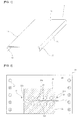
- the glass sheet 1 includes first to third flattened portions 11 to 13 and first and second bent portions 14, 15. One edge of the first flattened portion 11 in the transverse direction thereof and the second flattened portion 12 are connected by the first bent portion 14. The other edge of the first flattened portion 11 in the transverse direction thereof and the third flattened portion 13 are connected by the second bent portion 15.
- the first and second bent portions 14, 15 may have a cross-sectional shape of, for example, an arc or an elliptic arc.
- the thickness of the first and second bent portions 14, 15 is preferably substantially equal to that of the first to third flattened portions 11 to 13.
- the glass sheet 1 can be used as a housing of a mobile flat panel display, such as a smartphone or a tablet personal computer (tablet PC).
- the thickness of the glass sheet 1 can be, for example, about 0.2 mm to about 2 mm and preferably about 0.3 mm to about 1.8 mm.
- the surface roughness (Ra) of the outside surfaces of the bent portions 14, 15 and flattened portions 12, 13 located laterally of the mobile display body is preferably at least partly larger than the surface roughness (Ra) of the outside surface of the first flattened portion 11 located at the top of the display.
- the mobile display can be improved in graspability.
- the surface roughness (Ra) of at least part of the outside surfaces of the bent portions 14, 15 and the flattened portions 12, 13 is preferably equal to or more than 100 times the surface roughness (Ra) of the outside surface of the first flattened portion 11 and more preferably equal to or more than 200 times that surface roughness.
- the surface roughness (Ra) of at least part of the outside surfaces of the bent portions 14, 15 and the flattened portions 12, 13 is preferably 0.5 ⁇ m or more and more preferably 0.8 ⁇ m or more.
- the surface roughness (Ra) of the first flattened portion 11 is preferably 0.01 ⁇ m or less and more preferably 0.008 ⁇ m or less.
- the surface roughness (Ra) used herein refers to the arithmetic mean roughness (Ra) defined in JIS B0601-2001.
- the graspability of the mobile display may be improved by providing irregularities on at least part of the outside surfaces of the bent portions 14, 15 and the flattened portions 12, 13.
- the distance between the top and foot of the irregularities in the normal direction of the flattened portions 12, 13 is preferably 50 ⁇ m or more and more preferably 70 ⁇ m or more.
- the distance between the top and foot of the irregularities is preferably not more than 1/2 of the average thickness of the flattened portions 12, 13.
- the irregularities may be linear or may be formed in the shape of a pyramid, a cone, a truncated pyramid, a prism or a column.
- the surface roughness (Ra) of at least part of the outside surfaces of the bent portions 14, 15 and the flattened portions 12, 13 is larger than the surface roughness (Ra) of the outside surface of the first flattened portion 11 located at the top of the display.
- the glass sheet 1 can be formed of, for example, silicate glass or borosilicate glass. More specifically, a glass sheet 1 can be used which has a composition, in % by mass, of 50 to 80% SiO 2 , 5 to 25% Al 2 O 3 , 0 to 15% B 2 O 3 , 0 to 3.5% Li 2 O, 1 to 20% Na 2 O, 0 to 10% K 2 O, 5 to 25% Li 2 O+Na 2 O+K 2 O, 0 to 12% MgO, 0 to 10% CaO, 0 to 5% SrO, 0 to 5% BaO, 0 to 6% ZnO, 0 to 10% ZrO 2 , 0 to 10% P 2 O 5 , and 0 to 3% As 2 O 3 +Sb 2 O 3 +SnO 2 +F+Cl+SO 3 .
- a flat glass sheet 20 shown in Fig. 2 is prepared.
- the flat glass sheet 20 is a glass sheet for use in forming a glass sheet 1.
- the thickness of the flat glass sheet 20 is substantially equal to the thickness of the glass sheet 1.
- the flat glass sheet 20 is radiationally heated with a first portion 21 thereof held between first and second heat-insulating members 31, 32. And then, second portions 22a, 22b of the flat glass sheet 20 not held between the first and second heat-insulating members 31, 32 are bent by pressing them using pressing tools 51, 52.
- a glass sheet 1 can be obtained which has bent portions 14, 15 formed at least partly of the second portions 22a, 22b, respectively, and a first flattened portion 11 formed of the first portion 21.
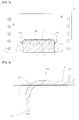
- the method for producing the glass sheet 1 will be described in further detail below. First, a forming apparatus 30 for use in producing the glass sheet 1 is described.
- the forming apparatus 30 includes a forming chamber 33.
- the forming chamber 33 is internally provided with a heater 41.
- the heater 41 radiates heat rays. Therefore, the forming apparatus 30 can radiationally heat an object placed in the forming chamber 33.
- the first and second heat-insulating members 31, 32 are disposed in the forming chamber 33.
- the first and second heat-insulating members 31, 32 are members for reducing the transfer of radiation heat to the first portion 21 of the flat glass sheet 20.
- the first and second heat-insulating members 31, 32 preferably have a lower thermal conductivity than the flat glass sheet 20.
- the first and second heat-insulating members 31, 32 preferably block heat rays emitted from the heater 4 1.
- the first and second heat-insulating members 31, 32 can be formed of, for example, ceramic material containing as a major ingredient alumina, silicon carbide or diatomite.
- Each of the heat-insulating members 31, 32 includes at least one through hole 31a, 32a.
- a coolant, such as air, is fed through these through holes 31a, 32a during heating and forming.
- the temperature of the heat-insulating members 31, 32 can be controlled. For example, an undesirable temperature rise of the heat-insulating members 31, 32 can be prevented.
- both the two heat-insulating members are provided with their respective through holes through which a coolant is to be fed.
- the present invention is not limited to this configuration. Only one of the two heat-insulating members may be provided with such a through hole or none of the two heat-insulating members may be provided with such a through hole.
- the flat glass sheet 20 is placed between the first heat-insulating member 31 and the second heat-insulating member 32 and the first portion 21 of the flat glass sheet 20 is held between the first and second heat-insulating members 31, 32. Portions of the flat glass sheet 20 other than the first portion 21, which are not held between the first and second heat-insulating members 31, 32, form the second portions 22a, 22b.
- the heater 41 is actuated to radiationally heat the flat glass sheet 20 (heating step).
- the second portions 22a, 22b are bent by pressing them using the pressing tools 51, 52 provided on both sides of the first and second heat-insulating members 31, 32 (forming step).
- the glass sheet 1 shown in Fig. 1 can be obtained.
- Each pressing tool 51, 52 may be formed of, for example, a rod.
- the second portions 22a, 22b may be bent, for example, under their own weights.
- the flat glass sheet 20 is radiationally heated with the first portion 21 thereof held between the first and second heat-insulating members 31, 32. Therefore, the temperature rise of the first portion 21 can be reduced. Thus, it can be easily implemented to increase the temperature of the second portions 22a, 22b not held between the first and second heat-insulating members 31, 32 while reducing the temperature rise of the first portion 21. In addition, even if the second portions 22a, 22b reach a deformable temperature, the first portion 21 can be held at a low temperature so as not to change the surface condition. Hence, a glass sheet 1 can be produced in which the first flattened portion 11 has high flatness and high smoothness. Furthermore, since the first flattened portion 11 has high flatness and high smoothness, the front and back surfaces of the first flattened portion 11 can be unground surfaces. Thus, a glass sheet 1 having high mechanical strength can be produced.
- the flat glass sheet 20 is preferably heated so that the first portion 21 thereof reaches a temperature equal to or higher than the strain point of the flat glass sheet 20.
- the flat glass sheet 20 is preferably heated so that the first portion 21 has a temperature below the softening point of the flat glass sheet 20 and, more preferably, the flat glass sheet 20 is heated so that the first portion 21 has a temperature equal to or lower than the glass transition point of the flat glass sheet 20 plus 100°C.
- the flat glass sheet 20 is preferably heated so that the second portions 22a, 22b reach a higher temperature than the first portion 21.
- the entire regions of the second portions 22a 22b are preferably heated.
- the second portions 22a, 22b can be bent, using the pressing tools 51, 52, at a relatively low temperature within a temperature range in which the flat glass sheet 20 can be deformed. Therefore, it can be prevented that indentations are produced on the second portions 22a, 22b by the pressing tools 51, 52.
- the time taken for the second portions 22a, 22b to reach a deformable temperature is shorter than the time for the first portion 21 to reach a temperature equal to or higher than the strain point of the flat glass sheet 20. Therefore, it is necessary to continue to heat the flat glass sheet 20 until the first portion 21 reaches a temperature equal to or higher than the strain point of the flat glass sheet 20.
- a coolant be fed through the through holes 31a, 32a to reduce the temperature rise of the first and second heat-insulating members 31, 32. This makes it easy to heat the flat glass sheet 20 to avoid that the temperature of the first portion 21 is above the softening point of the flat glass sheet 20, and thus makes it easy to further increase the flatness and smoothness of the first flattened portion 11.
- the first portion 21 becomes different in amount of thermal expansion from the second portions 22a, 22b. Specifically, the amount of thermal expansion of the first portion 21 becomes lower than that of the second portions 22a, 22b. Owing to this difference in amount of thermal expansion, the flat glass sheet 20 may cause distortion, such as warpage or waviness. Therefore, from the viewpoint of reducing the distortion of the flat glass sheet 20 to obtain a glass sheet 1 having a high shape accuracy, the flat glass sheet 20 preferably has a small coefficient of thermal expansion.
- the linear coefficient of thermal expansion of the flat glass sheet 20 at 30°C to 380°C is preferably 120 ⁇ 10 -7 /°C or less, more preferably 105 ⁇ 10 -7 /°C or less, still more preferably 100 ⁇ 10 -7 /°C or less, even more preferably 90 ⁇ 10 -7 /°C, particularly preferably 85 ⁇ 10 -7 /°C, and most preferably 80 ⁇ 10 -7 /°C.
- the flat glass sheet 20 placed on the second heat-insulating member 32 is bent using the pressing tools 51, 52.
- the flat glass sheet 20 will not be given a shape fully conforming to the second heat-insulating member 32, because of the rigidity of the flat glass sheet 20.
- the flat glass sheet 20 will be given a shape in which the ends of the first flattened portion 111 next to the bent portions 114, 115 are raised from the second heat-insulating member 32.
- the flat glass sheet 20 is given a shape in which the ends of the first flattened portion 111 next to the bent portions 114, 115 are raised from the second heat-insulating member 32, and when the resultant glass sheet 100 is used as a display and the ends of the first flattened portion 111 are located in the display region, the display quality of the display will be decreased. On the other hand, when the ends of the first flattened portion 111 are located outside the display region, the area ratio of the display region in the display will be decreased.
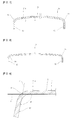
- the second portions 22a, 22b of the flat glass sheet 20 are bent with the first portion 21 thereof held between the first and second heat-insulating members 31, 32. Therefore, the temperature rise of the first portion 21 is reduced. The first portion 21 is less likely to reach a deformable temperature. In addition, the deformation of the first portion 21 is restricted by the first and second heat-insulating members 31, 32. Therefore, the first portion 21 can be held in a shape conforming to the second heat-insulating member 32. Thus, as shown in Fig.
- the first flattened portion 11 when viewed in cross section along the thickness direction, no gap is created between the imaginary line L tangent to the back surface of a middle region of the first flattened portion 11 in the transverse direction and end regions 11a of the first flattened portion 11 in the transverse direction.
- the back surface of the middle region of the first flattened portion 11 in the transverse direction is substantially flush with the back surfaces of the end regions 11a.
- the front surface of the middle region of the first flattened portion 11 in the transverse direction is substantially flush with the front surfaces of the end regions 11a.
- the first flattened portion 11 has high flatness and high smoothness and, therefore, the front and back surfaces of the first flattened portion 11 can be unground surfaces.
- a glass sheet 1 having high mechanical strength can be provided.
- a display can be obtained which has high mechanical strength and in which even if the end regions 11a of the first flattened portion 11 are located in the display region, the display quality is less likely to be decreased and superior and the area ratio of the display region is high.
- each end region 11a of the first flattened portion 11 in the transverse direction is preferably provided to extend along a direction inclined toward a bent-away side of the associated bent portion 14, 15 (along the direction y inclined downward in Fig. 7 ) relative to the direction x of extension of the middle region of the first flattened portion 11 in the transverse direction.
- the angle formed between the directions x and y is preferably 178° to 180° and more preferably 179° to 180°.
- the angle formed between the directions x and y is too large, this makes it less likely to achieve the effect of more reliably avoiding the creation of a gap between the imaginary line L and the end regions 11a of the first flattened portion 11 in the transverse direction. If the angle formed between the directions x and y is too small, the resultant glass sheet may be inadequate for use as a display.
- the shape of the second heat-insulating member 32 is preferably made different from that in the above embodiment and, for example, as shown in Fig. 8 , the back surface of the first flattened portion 11 is preferably formed of a gently curved surface raised opposite to the direction of extension of the second and third flattened portions 12, 13 and having a radius of curvature of not less than 1000 mm and more preferably not less than 5000 mm.
- the radius of curvature of the back surface of the first flattened portion 11 is preferably not more than 10000 mm and more preferably not more than 6000 mm.
- a surface having a radius of curvature of not less than 800 mm is considered as a flat surface and a sheet portion whose principal surface has a radius of curvature of not less than 800 mm is considered as a flattened portion.
- the shape of the second heat-insulating member 32 is preferably made different from that in the above embodiment and, for example, as shown in Fig. 9 , the angle ⁇ formed between the direction of extension of each of the back surfaces of the flattened portions 12, 13 and the direction of extension of the back surface of the associated end region 11a of the first flattened portion 11 in the transverse direction (the angle formed between the tangent line Z of each of the back surfaces of the second and third flattened portion 12, 13 and the imaginary line L) is preferably larger than 90° and is more preferably 90.1° or more.
- the angle formed between the direction of extension of each of the back surfaces of the flattened portions (flanges) 12, 13 and the direction of extension of the back surface of the associated end region 11a of the first flattened portion 11 in the transverse direction is preferably not more than 95° and more preferably not more than 93° .
- a pressing mechanism 60 be provided and the second portions 22a, 22b be deformed with the flat glass sheet 20 pressed by the first and second heat-insulating members 31, 32.
- the pressing tools 51, 52 are preferably made of a heat-insulating material, such as ceramic material. From the viewpoint of preventing breakage due to thermal shock, the pressing tools 51, 52 are preferably preheated to a temperature near the temperature of the flat glass sheet 20 prior to the pressing.
- the shape of the bent portions 14, 15 is generally determined depending upon the shape of the corners of the second heat-insulating member 32. Therefore, the shape of the bent portions 14, 15 can be easily changed by appropriately changing the shape of the corners of the second heat-insulating member 32.
- the present invention is not limited to this configuration.
- the glass sheet produced by the present invention may have a single bent portion.
Landscapes
- Engineering & Computer Science (AREA)
- Chemical & Material Sciences (AREA)
- Materials Engineering (AREA)
- Organic Chemistry (AREA)
- Life Sciences & Earth Sciences (AREA)
- Geochemistry & Mineralogy (AREA)
- General Chemical & Material Sciences (AREA)
- Chemical Kinetics & Catalysis (AREA)
- Theoretical Computer Science (AREA)
- Computer Hardware Design (AREA)
- Human Computer Interaction (AREA)
- General Physics & Mathematics (AREA)
- General Engineering & Computer Science (AREA)
- Physics & Mathematics (AREA)
- Signal Processing (AREA)
- Mechanical Engineering (AREA)
- Microelectronics & Electronic Packaging (AREA)
- Ceramic Engineering (AREA)
- Re-Forming, After-Treatment, Cutting And Transporting Of Glass Products (AREA)
- Liquid Crystal (AREA)
Applications Claiming Priority (5)
| Application Number | Priority Date | Filing Date | Title |
|---|---|---|---|
| JP2012134453 | 2012-06-14 | ||
| JP2012170995 | 2012-08-01 | ||
| JP2012275303 | 2012-12-18 | ||
| JP2013108162 | 2013-05-22 | ||
| PCT/JP2013/065152 WO2013187255A1 (ja) | 2012-06-14 | 2013-05-31 | 屈曲部を有するガラス板の製造方法及び屈曲部を有するガラス板 |
Publications (2)
| Publication Number | Publication Date |
|---|---|
| EP2865656A1 true EP2865656A1 (de) | 2015-04-29 |
| EP2865656A4 EP2865656A4 (de) | 2016-04-27 |
Family
ID=49756169
Family Applications (1)
| Application Number | Title | Priority Date | Filing Date |
|---|---|---|---|
| EP13803490.5A Withdrawn EP2865656A4 (de) | 2012-06-14 | 2013-05-31 | Verfahren zur herstellung einer glasplatte mit einem gekrümmten teil und glasplatte mit einem gekrümmten teil |
Country Status (7)
| Country | Link |
|---|---|
| US (2) | US9376337B2 (de) |
| EP (1) | EP2865656A4 (de) |
| JP (2) | JP5435166B1 (de) |
| KR (2) | KR101353756B1 (de) |
| CN (1) | CN104364207B (de) |
| TW (1) | TWI564259B (de) |
| WO (1) | WO2013187255A1 (de) |
Families Citing this family (59)
| Publication number | Priority date | Publication date | Assignee | Title |
|---|---|---|---|---|
| DE102009012018B4 (de) * | 2009-03-10 | 2018-11-22 | Schott Ag | Verfahren zur Herstellung von abgewinkelten Glaskeramikbauteilen und nach einem solchen Verfahren hergestelltes Glaskeramikbauteil |
| WO2013055587A1 (en) * | 2011-10-10 | 2013-04-18 | Corning Incorporated | Apparatus and method for tight bending thin glass sheets |
| US8833106B2 (en) * | 2012-09-18 | 2014-09-16 | Corning Incorporated | Thermo-mechanical reforming method and system and mechanical reforming tool |
| USD725650S1 (en) | 2012-12-06 | 2015-03-31 | Intel Corporation | Computing device |
| CN105793203B (zh) * | 2013-02-20 | 2022-03-01 | 康宁股份有限公司 | 用于形成具有形状的玻璃制品的方法和设备 |
| USD747302S1 (en) * | 2013-06-14 | 2016-01-12 | Lg Electronics Inc. | Mobile phone |
| USD744973S1 (en) * | 2013-06-14 | 2015-12-08 | Lg Electronics Inc. | Mobile phone |
| USD748082S1 (en) * | 2013-06-14 | 2016-01-26 | Lg Electronics Inc. | Mobile phone |
| KR20150001964A (ko) * | 2013-06-28 | 2015-01-07 | 삼성디스플레이 주식회사 | 글래스 성형 장치 |
| USD749535S1 (en) * | 2013-06-28 | 2016-02-16 | Lg Electronics Inc. | Mobile phone |
| USD741281S1 (en) * | 2013-06-28 | 2015-10-20 | Lg Electronics Inc. | Mobile phone |
| JP5582232B1 (ja) * | 2013-07-30 | 2014-09-03 | 日本電気硝子株式会社 | 曲面形状を有するガラス板の製造方法、曲面形状を有するガラス板及び曲面形状を有するガラス板の製造装置 |
| USD761786S1 (en) | 2013-08-21 | 2016-07-19 | Intel Corporation | Electronic device |
| USD754123S1 (en) * | 2013-08-21 | 2016-04-19 | Intel Corporation | Electronic device |
| CN104754897A (zh) * | 2013-12-26 | 2015-07-01 | 富泰华精密电子(郑州)有限公司 | 移动终端壳体及其制造方法 |
| CA2876688C (en) | 2014-06-20 | 2018-02-20 | Illen Products Ltd. | Display holder system |
| USD778366S1 (en) | 2014-11-21 | 2017-02-07 | Illen Products Ltd. | Display holder cover |
| USD840392S1 (en) | 2014-12-27 | 2019-02-12 | Intel Corporation | Computing device |
| JP6742593B2 (ja) * | 2015-01-05 | 2020-08-19 | 日本電気硝子株式会社 | 支持ガラス基板の製造方法及び積層体の製造方法 |
| CN111410421B (zh) | 2015-02-05 | 2022-06-24 | Agc株式会社 | 曲面保护玻璃及其制造方法、以及车载用显示构件 |
| KR20170006900A (ko) * | 2015-07-10 | 2017-01-18 | 삼성전자주식회사 | 성형장치 및 이를 이용한 성형방법 |
| KR101584492B1 (ko) * | 2015-08-17 | 2016-01-12 | (주)육일씨엔에쓰 | 휴대용 단말기의 터치 윈도우 글래스 가공방법 |
| KR102432352B1 (ko) * | 2015-08-31 | 2022-08-16 | 삼성디스플레이 주식회사 | 윈도우용 글래스 성형 장치 및 윈도우를 갖는 전자장치의 제조 방법 |
| KR102368787B1 (ko) * | 2015-10-08 | 2022-03-03 | 삼성디스플레이 주식회사 | 열성형 방법 및 열성형 장치 |
| KR102541450B1 (ko) * | 2015-10-29 | 2023-06-09 | 삼성디스플레이 주식회사 | 표시 장치의 제조장치 및 표시 장치의 제조방법 |
| USD791111S1 (en) * | 2015-10-29 | 2017-07-04 | Samsung Electronics Co., Ltd. | Electronic device |
| KR20180074780A (ko) * | 2015-10-30 | 2018-07-03 | 코닝 인코포레이티드 | 3d 성형된 유리-기반 제품과, 그를 성형하기 위한 방법 및 장치 |
| CN106231829B (zh) * | 2016-08-03 | 2024-06-21 | 安徽精卓光显技术有限责任公司 | 电子产品、玻璃外壳及其制造设备和方法 |
| KR102606798B1 (ko) | 2017-01-03 | 2023-11-29 | 코닝 인코포레이티드 | 만곡된 커버 유리 및 디스플레이 또는 터치 패널을 갖는 차량 인테리어 시스템 및 이를 형성시키는 방법 |
| USD862297S1 (en) * | 2017-05-04 | 2019-10-08 | Lg Electronics Inc. | Television receiver |
| USD863121S1 (en) * | 2017-05-04 | 2019-10-15 | Lg Electronics Inc. | Television receiver |
| USD862301S1 (en) * | 2017-05-04 | 2019-10-08 | Lg Electronics Inc. | Television receiver |
| USD862304S1 (en) * | 2017-05-04 | 2019-10-08 | Lg Electronics Inc. | Television receiver |
| USD863122S1 (en) * | 2017-05-04 | 2019-10-15 | Lg Electronics Inc. | Television receiver |
| USD862303S1 (en) * | 2017-05-04 | 2019-10-08 | Lg Electronics Inc. | Television receiver |
| USD862300S1 (en) * | 2017-05-04 | 2019-10-08 | Lg Electronics Inc. | Television receiver |
| USD862295S1 (en) * | 2017-05-04 | 2019-10-08 | Lg Electronics Inc. | Television receiver |
| USD862302S1 (en) * | 2017-05-04 | 2019-10-08 | Lg Electronics Inc. | Television receiver |
| USD862296S1 (en) * | 2017-05-04 | 2019-10-08 | Lg Electronics Inc. | Television receiver |
| USD862298S1 (en) * | 2017-05-04 | 2019-10-08 | Lg Electronics Inc. | Television receiver |
| USD886815S1 (en) * | 2017-05-04 | 2020-06-09 | Lg Electronics Inc. | Television receiver |
| USD862299S1 (en) * | 2017-05-04 | 2019-10-08 | Lg Electronics Inc. | Television receiver |
| USD886814S1 (en) * | 2017-05-04 | 2020-06-09 | Lg Electronics Inc. | Television receiver |
| CN108863031B (zh) * | 2017-05-12 | 2023-07-07 | Agc株式会社 | 弯曲基材的制造方法及弯曲基材 |
| KR102558993B1 (ko) * | 2017-05-15 | 2023-07-24 | 코닝 인코포레이티드 | 윤곽 유리 제품 및 그 제조 방법 |
| US20180367182A1 (en) * | 2017-06-20 | 2018-12-20 | Wing Tak Lee Silicone Rubber Technology (Shenzhen) Co., Ltd | Method and device for manufacturing curved glass for screen protector |
| CN111094050B (zh) | 2017-07-18 | 2023-11-07 | 康宁公司 | 复杂弯曲玻璃制品的冷成型 |
| CN109422446A (zh) * | 2017-08-24 | 2019-03-05 | 秦文隆 | 模造立体玻璃模具及模造立体玻璃成型方法 |
| WO2019055469A1 (en) | 2017-09-12 | 2019-03-21 | Corning Incorporated | INSULATING SCREEN FOR DISPLAY DEVICES COMPRISING A TOUCH PANEL ON DECORATIVE GLASS AND ASSOCIATED METHODS |
| US11065960B2 (en) | 2017-09-13 | 2021-07-20 | Corning Incorporated | Curved vehicle displays |
| TWI844520B (zh) | 2017-10-10 | 2024-06-11 | 美商康寧公司 | 具有改善可靠性的彎曲的覆蓋玻璃的車輛內部系統及其形成方法 |
| KR102461107B1 (ko) * | 2017-12-14 | 2022-10-31 | 삼성디스플레이 주식회사 | 커버 글래스 및 이의 제조 방법 |
| CN108737603B (zh) * | 2018-05-25 | 2020-09-11 | Oppo广东移动通信有限公司 | 壳体和电子装置 |
| CN108712531A (zh) * | 2018-05-25 | 2018-10-26 | Oppo广东移动通信有限公司 | 壳体、电子装置和壳体的制造方法 |
| KR102621625B1 (ko) * | 2019-01-04 | 2024-01-05 | 삼성전자주식회사 | 하우징을 포함하는 전자 장치 |
| KR102159120B1 (ko) * | 2019-02-22 | 2020-09-23 | 코세스지티 주식회사 | 곡면 글래스 성형틀 및 이를 이용한 곡면 글래스 성형방법 |
| KR102769167B1 (ko) * | 2019-09-09 | 2025-02-19 | 삼성전자주식회사 | 글래스 부재 및 그를 포함하는 전자 장치 |
| KR102822940B1 (ko) | 2020-11-04 | 2025-06-20 | 삼성디스플레이 주식회사 | 윈도우 성형 장치 및 이를 이용한 윈도우 성형 방법 |
| USD1052565S1 (en) * | 2020-11-12 | 2024-11-26 | Samsung Display Co., Ltd. | Cover window |
Family Cites Families (50)
| Publication number | Priority date | Publication date | Assignee | Title |
|---|---|---|---|---|
| FR2338229A1 (fr) * | 1976-01-14 | 1977-08-12 | Bfg Glassgroup | Procede pour le pliage de feuilles de verre, dispositif et installation pour la mise en oeuvre du procede |
| US4229200A (en) * | 1979-06-01 | 1980-10-21 | Ppg Industries, Inc. | Drop forming glass sheets with auxiliary shaping means |
| JPS61227931A (ja) | 1985-04-02 | 1986-10-11 | Nippon Sheet Glass Co Ltd | ガラス製品の成形装置 |
| JPS61227932A (ja) * | 1985-04-02 | 1986-10-11 | Nippon Sheet Glass Co Ltd | ガラス製品の成形方法 |
| DE3527558A1 (de) * | 1985-08-01 | 1987-02-05 | Ver Glaswerke Gmbh | Verfahren und vorrichtungen zum biegen einer glasscheibe |
| JPS62212237A (ja) | 1986-03-11 | 1987-09-18 | Nippon Sheet Glass Co Ltd | ガラス製品の成形方法 |
| JPH0649582B2 (ja) | 1987-11-06 | 1994-06-29 | 日本板硝子株式会社 | 平滑面を有する深絞りガラス製品の成形方法 |
| JPH0649581B2 (ja) | 1987-11-06 | 1994-06-29 | 日本板硝子株式会社 | 平滑面を有するガラス製品の成形方法 |
| US4891055A (en) * | 1987-11-06 | 1990-01-02 | Nippon Sheet Glass Co., Ltd. | Method of forming glass product having smooth surface |
| JP2565974B2 (ja) * | 1988-03-24 | 1996-12-18 | 日本板硝子株式会社 | ガラス製品の成形方法 |
| US5176733A (en) * | 1988-12-27 | 1993-01-05 | Ford Motor Company | Method and apparatus for directed energy glass heating |
| FR2648803B1 (fr) * | 1989-06-22 | 1993-07-16 | Saint Gobain Vitrage | Procede et dispositif pour le bombage et la trempe par contact |
| JPH0753588B2 (ja) | 1992-06-12 | 1995-06-07 | 本田工業株式会社 | 平板ガラスの局部曲げ加工装置並びに模様型板ガラスの加工装置 |
| JP2931726B2 (ja) * | 1992-09-18 | 1999-08-09 | サンテックコーポレーション株式会社 | 板ガラス成形体及びその製造法 |
| GB9407609D0 (en) * | 1994-04-15 | 1994-06-08 | Pilkington Glass Ltd | Bending and tempering glass sheets |
| FR2777559B1 (fr) * | 1998-04-16 | 2000-07-13 | En Nom Collectif Eurokera Soc | Fabrication de plaques vitroceramiques a ouverture(s) au pourtour deforme ; plaques vitroceramiques deformees |
| JP4111408B2 (ja) * | 1998-05-13 | 2008-07-02 | 東ソー・クォーツ株式会社 | 石英ガラス部材の曲げ加工機 |
| ATE244688T1 (de) | 1999-03-23 | 2003-07-15 | Schott Glas | Verfahren zur formgebung von glaskeramikteilen und/oder glasteilen |
| KR19990068730A (ko) | 1999-06-15 | 1999-09-06 | 성필호 | 평판디스플레이의커버그라스 |
| US20020116951A1 (en) * | 2001-02-27 | 2002-08-29 | Dunifon Thomas A. | Conformally heated male mold |
| DE10118260A1 (de) * | 2001-04-11 | 2002-10-24 | Schott Glas | Verfahren und Vorrichtung zum Umformen von Gläsern und/oder Glaskeramiken |
| JP4178444B2 (ja) | 2002-07-08 | 2008-11-12 | 旭硝子株式会社 | 薄板ガラスの製造装置及び製造方法 |
| US20050178159A1 (en) | 2002-07-08 | 2005-08-18 | Asahi Glass Company, Limited | Apparatus for manufacturing sheet glass |
| EP1678091B1 (de) | 2003-10-28 | 2011-09-28 | Schott AG | Verfahren zum herstellen eines glasformteiles mit mindestens einem abgewinkelten schenkel |
| FR2877257B1 (fr) * | 2004-10-29 | 2008-10-17 | Crea Diffusion Sarl | Procede et dispositif de pliage d'une plaque en materiau synthetique charge de trihydrate d'alumine |
| FR2909372B1 (fr) * | 2006-12-05 | 2012-10-19 | Snc Eurokera | Procede de fabrication de produits non plans en vitroceramique |
| JP2010030859A (ja) | 2008-07-30 | 2010-02-12 | Asahi Glass Co Ltd | ガラス板の曲げ成形装置及び曲げ成形方法 |
| JP2011529406A (ja) * | 2008-07-31 | 2011-12-08 | メイ エス.アール.エル. | 眼鏡フレームを製造するための方法および装置、ならびにそれを用いて作製される眼鏡フレーム |
| US20100126222A1 (en) * | 2008-11-25 | 2010-05-27 | Thierry Luc Alain Dannoux | Method and apparatus for forming and cutting a shaped article from a sheet of material |
| US8281619B2 (en) * | 2009-05-29 | 2012-10-09 | Corning Incorporated | Stack progressive pressing for making shaped articles |
| US20110067450A1 (en) * | 2009-09-23 | 2011-03-24 | Allan Mark Fredholm | Method and apparatus for forming shaped articles from sheet material |
| TWI499564B (zh) * | 2010-08-30 | 2015-09-11 | Corning Inc | 用於塑形玻璃基材的設備及方法 |
| JP5605176B2 (ja) * | 2010-11-10 | 2014-10-15 | 旭硝子株式会社 | フラットパネルディスプレイ用カバーガラス及びその製造方法 |
| EP2457881B1 (de) * | 2010-11-30 | 2019-05-08 | Corning Incorporated | Verfahren und Vorrichtung zum Biegen einer Materialplatte in einen Formgegenstand |
| US8796165B2 (en) * | 2010-11-30 | 2014-08-05 | Corning Incorporated | Alkaline earth alumino-borosilicate crack resistant glass |
| US8397540B2 (en) * | 2011-05-05 | 2013-03-19 | Corning Incorporated | Methods and apparatus for reforming a glass sheet |
| EP2766315B1 (de) | 2011-10-10 | 2018-10-03 | Corning Incorporated | Umformung dünner glasscheiben |
| WO2013055587A1 (en) * | 2011-10-10 | 2013-04-18 | Corning Incorporated | Apparatus and method for tight bending thin glass sheets |
| CN104203847B (zh) | 2011-10-13 | 2017-09-22 | 康宁股份有限公司 | 热机械再成型方法和系统以及机械再成型工具 |
| US8816252B2 (en) * | 2011-11-22 | 2014-08-26 | Corning Incorporated | Methods and apparatus for localized heating and deformation of glass sheets |
| CN103182894A (zh) * | 2011-12-29 | 2013-07-03 | 深圳富泰宏精密工业有限公司 | 玻璃件及其制作方法 |
| US9611165B2 (en) * | 2012-06-08 | 2017-04-04 | Corning Incorporated | Method and apparatus for bending a glass sheet and an electronic device casing |
| WO2013187199A1 (ja) * | 2012-06-14 | 2013-12-19 | 日本電気硝子株式会社 | 屈曲部を有するガラス板の製造方法及び屈曲部を有するガラス板 |
| JP5472521B1 (ja) * | 2012-10-10 | 2014-04-16 | 日本電気硝子株式会社 | モバイルディスプレイ用カバーガラスの製造方法 |
| JP2014139122A (ja) * | 2012-11-07 | 2014-07-31 | Nippon Electric Glass Co Ltd | ディスプレイ用カバーガラスの製造方法及びディスプレイ用カバーガラスの製造装置 |
| JP2014139121A (ja) * | 2012-11-07 | 2014-07-31 | Nippon Electric Glass Co Ltd | ディスプレイ用カバーガラスの製造方法及びディスプレイ用カバーガラスの製造装置 |
| JP5510693B1 (ja) * | 2012-12-07 | 2014-06-04 | 日本電気硝子株式会社 | 屈曲部を有する強化ガラス板の製造方法及び屈曲部を有する強化ガラス板 |
| CN105793203B (zh) * | 2013-02-20 | 2022-03-01 | 康宁股份有限公司 | 用于形成具有形状的玻璃制品的方法和设备 |
| CN105377781B (zh) * | 2013-05-07 | 2019-04-16 | 康宁股份有限公司 | 制备成型玻璃制品的方法和设备 |
| JP2014224012A (ja) * | 2013-05-16 | 2014-12-04 | 日本電気硝子株式会社 | 強化ガラスの製造方法及び強化ガラス |
-
2013
- 2013-05-31 EP EP13803490.5A patent/EP2865656A4/de not_active Withdrawn
- 2013-05-31 JP JP2013115037A patent/JP5435166B1/ja not_active Expired - Fee Related
- 2013-05-31 CN CN201380031672.2A patent/CN104364207B/zh not_active Expired - Fee Related
- 2013-05-31 WO PCT/JP2013/065152 patent/WO2013187255A1/ja not_active Ceased
- 2013-06-13 US US13/916,686 patent/US9376337B2/en not_active Expired - Fee Related
- 2013-06-14 TW TW102121238A patent/TWI564259B/zh not_active IP Right Cessation
- 2013-06-14 KR KR1020130068489A patent/KR101353756B1/ko not_active Expired - Fee Related
- 2013-10-22 JP JP2013219029A patent/JP2015003854A/ja active Pending
- 2013-11-15 KR KR1020130139079A patent/KR20140001802A/ko not_active Withdrawn
-
2016
- 2016-05-02 US US15/143,868 patent/US20160244353A1/en not_active Abandoned
Also Published As
| Publication number | Publication date |
|---|---|
| KR101353756B1 (ko) | 2014-01-21 |
| TW201404730A (zh) | 2014-02-01 |
| KR20130140588A (ko) | 2013-12-24 |
| JP5435166B1 (ja) | 2014-03-05 |
| US20160244353A1 (en) | 2016-08-25 |
| US9376337B2 (en) | 2016-06-28 |
| TWI564259B (zh) | 2017-01-01 |
| JP2014210692A (ja) | 2014-11-13 |
| JP2015003854A (ja) | 2015-01-08 |
| CN104364207B (zh) | 2017-12-08 |
| EP2865656A4 (de) | 2016-04-27 |
| WO2013187255A1 (ja) | 2013-12-19 |
| US20130337224A1 (en) | 2013-12-19 |
| CN104364207A (zh) | 2015-02-18 |
| KR20140001802A (ko) | 2014-01-07 |
Similar Documents
| Publication | Publication Date | Title |
|---|---|---|
| US9376337B2 (en) | Method for producing glass sheet with bent portion and glass sheet with bent portion | |
| EP2226299B1 (de) | Glasherstellungssystem und Verfahren zur Formung einer hochqualitativen, dünnen Glasscheibe | |
| CN105377781B (zh) | 制备成型玻璃制品的方法和设备 | |
| US9701562B2 (en) | Mobile-display cover glass and method for manufacturing same | |
| JP2016145968A (ja) | カバー部材、これを有する携帯情報端末及び表示装置、並びにカバーガラスの製造方法 | |
| CN107428583A (zh) | 成形玻璃制品和用于生产这种成形玻璃制品的方法 | |
| US20150274570A1 (en) | Method for manufacturing cover glass for display and device for manufacturing cover glass for display | |
| WO2013078001A1 (en) | Methods and apparatus for localized heating and deformation of glass sheets | |
| JP2019043835A (ja) | 3dカバーガラスの製造方法 | |
| CN102757169B (zh) | 一种用于弯曲玻璃板的弯曲炉和方法 | |
| JP6749997B2 (ja) | 熱強化された消費家電用ガラスおよびその関連するシステムと方法 | |
| CN106045285A (zh) | 平板玻璃的弯曲成形装置以及弯曲成形方法 | |
| WO2013187199A1 (ja) | 屈曲部を有するガラス板の製造方法及び屈曲部を有するガラス板 | |
| WO2023181719A1 (ja) | ガラス板の製造方法 | |
| US12371363B2 (en) | Apparatus for manufacturing glass article, method for manufacturing glass article, glass article, and display device including the same | |
| CN219363498U (zh) | 热弯模具 | |
| JP2013256423A (ja) | 屈曲部を有するガラス板の製造方法 | |
| CN204644120U (zh) | 微晶玻璃生产线 | |
| JP4873166B2 (ja) | ガラス基板熱処理用セッター | |
| CN211770923U (zh) | 一种曲面玻璃轮廓成型装置 | |
| JP2023110893A (ja) | ガラス板の製造方法、及びガラス板の成形装置 | |
| JP2016037425A (ja) | 屈曲部を有するガラス板の熱処理方法 | |
| CN111328322A (zh) | 弯曲基材的制造方法和弯曲基材的成型模具 |
Legal Events
| Date | Code | Title | Description |
|---|---|---|---|
| PUAI | Public reference made under article 153(3) epc to a published international application that has entered the european phase |
Free format text: ORIGINAL CODE: 0009012 |
|
| 17P | Request for examination filed |
Effective date: 20141210 |
|
| AK | Designated contracting states |
Kind code of ref document: A1 Designated state(s): AL AT BE BG CH CY CZ DE DK EE ES FI FR GB GR HR HU IE IS IT LI LT LU LV MC MK MT NL NO PL PT RO RS SE SI SK SM TR |
|
| AX | Request for extension of the european patent |
Extension state: BA ME |
|
| DAX | Request for extension of the european patent (deleted) | ||
| RA4 | Supplementary search report drawn up and despatched (corrected) |
Effective date: 20160331 |
|
| RIC1 | Information provided on ipc code assigned before grant |
Ipc: G06F 1/16 20060101ALI20160323BHEP Ipc: H04M 1/02 20060101ALI20160323BHEP Ipc: C03B 23/025 20060101ALI20160323BHEP Ipc: C03B 40/00 20060101ALI20160323BHEP Ipc: C03B 23/03 20060101ALI20160323BHEP Ipc: C03B 23/023 20060101AFI20160323BHEP |
|
| STAA | Information on the status of an ep patent application or granted ep patent |
Free format text: STATUS: EXAMINATION IS IN PROGRESS |
|
| 17Q | First examination report despatched |
Effective date: 20170227 |
|
| GRAP | Despatch of communication of intention to grant a patent |
Free format text: ORIGINAL CODE: EPIDOSNIGR1 |
|
| STAA | Information on the status of an ep patent application or granted ep patent |
Free format text: STATUS: GRANT OF PATENT IS INTENDED |
|
| RIC1 | Information provided on ipc code assigned before grant |
Ipc: C03C 3/085 20060101ALI20180312BHEP Ipc: G06F 1/16 20060101ALI20180312BHEP Ipc: C03B 23/025 20060101ALI20180312BHEP Ipc: H04M 1/02 20060101ALI20180312BHEP Ipc: C03C 3/11 20060101ALI20180312BHEP Ipc: C03C 3/091 20060101ALI20180312BHEP Ipc: C03B 23/03 20060101ALI20180312BHEP Ipc: C03C 3/083 20060101AFI20180312BHEP Ipc: C03C 3/093 20060101ALI20180312BHEP Ipc: C03C 3/087 20060101ALI20180312BHEP Ipc: C03B 40/00 20060101ALI20180312BHEP Ipc: C03C 3/097 20060101ALI20180312BHEP Ipc: C03C 3/118 20060101ALI20180312BHEP |
|
| INTG | Intention to grant announced |
Effective date: 20180328 |
|
| STAA | Information on the status of an ep patent application or granted ep patent |
Free format text: STATUS: THE APPLICATION IS DEEMED TO BE WITHDRAWN |
|
| 18D | Application deemed to be withdrawn |
Effective date: 20180808 |