EP2814948B1 - Feeder-free method for culture of bovine and porcine spermatogonial stem cells - Google Patents
Feeder-free method for culture of bovine and porcine spermatogonial stem cells Download PDFInfo
- Publication number
- EP2814948B1 EP2814948B1 EP13706134.7A EP13706134A EP2814948B1 EP 2814948 B1 EP2814948 B1 EP 2814948B1 EP 13706134 A EP13706134 A EP 13706134A EP 2814948 B1 EP2814948 B1 EP 2814948B1
- Authority
- EP
- European Patent Office
- Prior art keywords
- cells
- media
- bovine
- culture
- feeder
- Prior art date
- Legal status (The legal status is an assumption and is not a legal conclusion. Google has not performed a legal analysis and makes no representation as to the accuracy of the status listed.)
- Not-in-force
Links
Images
Classifications
-
- C—CHEMISTRY; METALLURGY
- C12—BIOCHEMISTRY; BEER; SPIRITS; WINE; VINEGAR; MICROBIOLOGY; ENZYMOLOGY; MUTATION OR GENETIC ENGINEERING
- C12N—MICROORGANISMS OR ENZYMES; COMPOSITIONS THEREOF; PROPAGATING, PRESERVING, OR MAINTAINING MICROORGANISMS; MUTATION OR GENETIC ENGINEERING; CULTURE MEDIA
- C12N5/00—Undifferentiated human, animal or plant cells, e.g. cell lines; Tissues; Cultivation or maintenance thereof; Culture media therefor
- C12N5/06—Animal cells or tissues; Human cells or tissues
- C12N5/0602—Vertebrate cells
- C12N5/0608—Germ cells
- C12N5/061—Sperm cells, spermatogonia
-
- A—HUMAN NECESSITIES
- A01—AGRICULTURE; FORESTRY; ANIMAL HUSBANDRY; HUNTING; TRAPPING; FISHING
- A01K—ANIMAL HUSBANDRY; AVICULTURE; APICULTURE; PISCICULTURE; FISHING; REARING OR BREEDING ANIMALS, NOT OTHERWISE PROVIDED FOR; NEW BREEDS OF ANIMALS
- A01K67/00—Rearing or breeding animals, not otherwise provided for; New or modified breeds of animals
- A01K67/027—New or modified breeds of vertebrates
- A01K67/0271—Chimeric vertebrates, e.g. comprising exogenous cells
-
- A—HUMAN NECESSITIES
- A61—MEDICAL OR VETERINARY SCIENCE; HYGIENE
- A61B—DIAGNOSIS; SURGERY; IDENTIFICATION
- A61B17/00—Surgical instruments, devices or methods
- A61B17/42—Gynaecological or obstetrical instruments or methods
- A61B17/425—Gynaecological or obstetrical instruments or methods for reproduction or fertilisation
-
- A—HUMAN NECESSITIES
- A61—MEDICAL OR VETERINARY SCIENCE; HYGIENE
- A61D—VETERINARY INSTRUMENTS, IMPLEMENTS, TOOLS, OR METHODS
- A61D19/00—Instruments or methods for reproduction or fertilisation
-
- A—HUMAN NECESSITIES
- A61—MEDICAL OR VETERINARY SCIENCE; HYGIENE
- A61K—PREPARATIONS FOR MEDICAL, DENTAL OR TOILETRY PURPOSES
- A61K35/00—Medicinal preparations containing materials or reaction products thereof with undetermined constitution
- A61K35/12—Materials from mammals; Compositions comprising non-specified tissues or cells; Compositions comprising non-embryonic stem cells; Genetically modified cells
- A61K35/48—Reproductive organs
- A61K35/52—Sperm; Prostate; Seminal fluid; Leydig cells of testes
-
- A—HUMAN NECESSITIES
- A61—MEDICAL OR VETERINARY SCIENCE; HYGIENE
- A61P—SPECIFIC THERAPEUTIC ACTIVITY OF CHEMICAL COMPOUNDS OR MEDICINAL PREPARATIONS
- A61P15/00—Drugs for genital or sexual disorders; Contraceptives
- A61P15/08—Drugs for genital or sexual disorders; Contraceptives for gonadal disorders or for enhancing fertility, e.g. inducers of ovulation or of spermatogenesis
-
- C—CHEMISTRY; METALLURGY
- C12—BIOCHEMISTRY; BEER; SPIRITS; WINE; VINEGAR; MICROBIOLOGY; ENZYMOLOGY; MUTATION OR GENETIC ENGINEERING
- C12M—APPARATUS FOR ENZYMOLOGY OR MICROBIOLOGY; APPARATUS FOR CULTURING MICROORGANISMS FOR PRODUCING BIOMASS, FOR GROWING CELLS OR FOR OBTAINING FERMENTATION OR METABOLIC PRODUCTS, i.e. BIOREACTORS OR FERMENTERS
- C12M21/00—Bioreactors or fermenters specially adapted for specific uses
-
- C—CHEMISTRY; METALLURGY
- C12—BIOCHEMISTRY; BEER; SPIRITS; WINE; VINEGAR; MICROBIOLOGY; ENZYMOLOGY; MUTATION OR GENETIC ENGINEERING
- C12N—MICROORGANISMS OR ENZYMES; COMPOSITIONS THEREOF; PROPAGATING, PRESERVING, OR MAINTAINING MICROORGANISMS; MUTATION OR GENETIC ENGINEERING; CULTURE MEDIA
- C12N15/00—Mutation or genetic engineering; DNA or RNA concerning genetic engineering, vectors, e.g. plasmids, or their isolation, preparation or purification; Use of hosts therefor
- C12N15/09—Recombinant DNA-technology
- C12N15/87—Introduction of foreign genetic material using processes not otherwise provided for, e.g. co-transformation
- C12N15/873—Techniques for producing new embryos, e.g. nuclear transfer, manipulation of totipotent cells or production of chimeric embryos
-
- C—CHEMISTRY; METALLURGY
- C12—BIOCHEMISTRY; BEER; SPIRITS; WINE; VINEGAR; MICROBIOLOGY; ENZYMOLOGY; MUTATION OR GENETIC ENGINEERING
- C12N—MICROORGANISMS OR ENZYMES; COMPOSITIONS THEREOF; PROPAGATING, PRESERVING, OR MAINTAINING MICROORGANISMS; MUTATION OR GENETIC ENGINEERING; CULTURE MEDIA
- C12N5/00—Undifferentiated human, animal or plant cells, e.g. cell lines; Tissues; Cultivation or maintenance thereof; Culture media therefor
- C12N5/06—Animal cells or tissues; Human cells or tissues
- C12N5/0602—Vertebrate cells
-
- C—CHEMISTRY; METALLURGY
- C12—BIOCHEMISTRY; BEER; SPIRITS; WINE; VINEGAR; MICROBIOLOGY; ENZYMOLOGY; MUTATION OR GENETIC ENGINEERING
- C12N—MICROORGANISMS OR ENZYMES; COMPOSITIONS THEREOF; PROPAGATING, PRESERVING, OR MAINTAINING MICROORGANISMS; MUTATION OR GENETIC ENGINEERING; CULTURE MEDIA
- C12N5/00—Undifferentiated human, animal or plant cells, e.g. cell lines; Tissues; Cultivation or maintenance thereof; Culture media therefor
- C12N5/06—Animal cells or tissues; Human cells or tissues
- C12N5/0602—Vertebrate cells
- C12N5/0603—Embryonic cells ; Embryoid bodies
-
- C—CHEMISTRY; METALLURGY
- C12—BIOCHEMISTRY; BEER; SPIRITS; WINE; VINEGAR; MICROBIOLOGY; ENZYMOLOGY; MUTATION OR GENETIC ENGINEERING
- C12N—MICROORGANISMS OR ENZYMES; COMPOSITIONS THEREOF; PROPAGATING, PRESERVING, OR MAINTAINING MICROORGANISMS; MUTATION OR GENETIC ENGINEERING; CULTURE MEDIA
- C12N5/00—Undifferentiated human, animal or plant cells, e.g. cell lines; Tissues; Cultivation or maintenance thereof; Culture media therefor
- C12N5/06—Animal cells or tissues; Human cells or tissues
- C12N5/0602—Vertebrate cells
- C12N5/0652—Cells of skeletal and connective tissues; Mesenchyme
- C12N5/0656—Adult fibroblasts
-
- C—CHEMISTRY; METALLURGY
- C12—BIOCHEMISTRY; BEER; SPIRITS; WINE; VINEGAR; MICROBIOLOGY; ENZYMOLOGY; MUTATION OR GENETIC ENGINEERING
- C12N—MICROORGANISMS OR ENZYMES; COMPOSITIONS THEREOF; PROPAGATING, PRESERVING, OR MAINTAINING MICROORGANISMS; MUTATION OR GENETIC ENGINEERING; CULTURE MEDIA
- C12N5/00—Undifferentiated human, animal or plant cells, e.g. cell lines; Tissues; Cultivation or maintenance thereof; Culture media therefor
- C12N5/06—Animal cells or tissues; Human cells or tissues
- C12N5/0602—Vertebrate cells
- C12N5/0681—Cells of the genital tract; Non-germinal cells from gonads
- C12N5/0683—Cells of the male genital tract, e.g. prostate, epididymis; Non-germinal cells from testis, e.g. Leydig cells, Sertoli cells
-
- A—HUMAN NECESSITIES
- A01—AGRICULTURE; FORESTRY; ANIMAL HUSBANDRY; HUNTING; TRAPPING; FISHING
- A01K—ANIMAL HUSBANDRY; AVICULTURE; APICULTURE; PISCICULTURE; FISHING; REARING OR BREEDING ANIMALS, NOT OTHERWISE PROVIDED FOR; NEW BREEDS OF ANIMALS
- A01K2207/00—Modified animals
- A01K2207/12—Animals modified by administration of exogenous cells
-
- A—HUMAN NECESSITIES
- A01—AGRICULTURE; FORESTRY; ANIMAL HUSBANDRY; HUNTING; TRAPPING; FISHING
- A01K—ANIMAL HUSBANDRY; AVICULTURE; APICULTURE; PISCICULTURE; FISHING; REARING OR BREEDING ANIMALS, NOT OTHERWISE PROVIDED FOR; NEW BREEDS OF ANIMALS
- A01K2227/00—Animals characterised by species
- A01K2227/10—Mammal
- A01K2227/101—Bovine
-
- A—HUMAN NECESSITIES
- A01—AGRICULTURE; FORESTRY; ANIMAL HUSBANDRY; HUNTING; TRAPPING; FISHING
- A01K—ANIMAL HUSBANDRY; AVICULTURE; APICULTURE; PISCICULTURE; FISHING; REARING OR BREEDING ANIMALS, NOT OTHERWISE PROVIDED FOR; NEW BREEDS OF ANIMALS
- A01K2227/00—Animals characterised by species
- A01K2227/10—Mammal
- A01K2227/108—Swine
-
- A—HUMAN NECESSITIES
- A01—AGRICULTURE; FORESTRY; ANIMAL HUSBANDRY; HUNTING; TRAPPING; FISHING
- A01K—ANIMAL HUSBANDRY; AVICULTURE; APICULTURE; PISCICULTURE; FISHING; REARING OR BREEDING ANIMALS, NOT OTHERWISE PROVIDED FOR; NEW BREEDS OF ANIMALS
- A01K2267/00—Animals characterised by purpose
- A01K2267/02—Animal zootechnically ameliorated
-
- C—CHEMISTRY; METALLURGY
- C12—BIOCHEMISTRY; BEER; SPIRITS; WINE; VINEGAR; MICROBIOLOGY; ENZYMOLOGY; MUTATION OR GENETIC ENGINEERING
- C12N—MICROORGANISMS OR ENZYMES; COMPOSITIONS THEREOF; PROPAGATING, PRESERVING, OR MAINTAINING MICROORGANISMS; MUTATION OR GENETIC ENGINEERING; CULTURE MEDIA
- C12N2500/00—Specific components of cell culture medium
- C12N2500/05—Inorganic components
-
- C—CHEMISTRY; METALLURGY
- C12—BIOCHEMISTRY; BEER; SPIRITS; WINE; VINEGAR; MICROBIOLOGY; ENZYMOLOGY; MUTATION OR GENETIC ENGINEERING
- C12N—MICROORGANISMS OR ENZYMES; COMPOSITIONS THEREOF; PROPAGATING, PRESERVING, OR MAINTAINING MICROORGANISMS; MUTATION OR GENETIC ENGINEERING; CULTURE MEDIA
- C12N2500/00—Specific components of cell culture medium
- C12N2500/05—Inorganic components
- C12N2500/10—Metals; Metal chelators
- C12N2500/20—Transition metals
- C12N2500/24—Iron; Fe chelators; Transferrin
-
- C—CHEMISTRY; METALLURGY
- C12—BIOCHEMISTRY; BEER; SPIRITS; WINE; VINEGAR; MICROBIOLOGY; ENZYMOLOGY; MUTATION OR GENETIC ENGINEERING
- C12N—MICROORGANISMS OR ENZYMES; COMPOSITIONS THEREOF; PROPAGATING, PRESERVING, OR MAINTAINING MICROORGANISMS; MUTATION OR GENETIC ENGINEERING; CULTURE MEDIA
- C12N2500/00—Specific components of cell culture medium
- C12N2500/05—Inorganic components
- C12N2500/10—Metals; Metal chelators
- C12N2500/20—Transition metals
- C12N2500/24—Iron; Fe chelators; Transferrin
- C12N2500/25—Insulin-transferrin; Insulin-transferrin-selenium
-
- C—CHEMISTRY; METALLURGY
- C12—BIOCHEMISTRY; BEER; SPIRITS; WINE; VINEGAR; MICROBIOLOGY; ENZYMOLOGY; MUTATION OR GENETIC ENGINEERING
- C12N—MICROORGANISMS OR ENZYMES; COMPOSITIONS THEREOF; PROPAGATING, PRESERVING, OR MAINTAINING MICROORGANISMS; MUTATION OR GENETIC ENGINEERING; CULTURE MEDIA
- C12N2500/00—Specific components of cell culture medium
- C12N2500/30—Organic components
- C12N2500/32—Amino acids
-
- C—CHEMISTRY; METALLURGY
- C12—BIOCHEMISTRY; BEER; SPIRITS; WINE; VINEGAR; MICROBIOLOGY; ENZYMOLOGY; MUTATION OR GENETIC ENGINEERING
- C12N—MICROORGANISMS OR ENZYMES; COMPOSITIONS THEREOF; PROPAGATING, PRESERVING, OR MAINTAINING MICROORGANISMS; MUTATION OR GENETIC ENGINEERING; CULTURE MEDIA
- C12N2500/00—Specific components of cell culture medium
- C12N2500/30—Organic components
- C12N2500/38—Vitamins
-
- C—CHEMISTRY; METALLURGY
- C12—BIOCHEMISTRY; BEER; SPIRITS; WINE; VINEGAR; MICROBIOLOGY; ENZYMOLOGY; MUTATION OR GENETIC ENGINEERING
- C12N—MICROORGANISMS OR ENZYMES; COMPOSITIONS THEREOF; PROPAGATING, PRESERVING, OR MAINTAINING MICROORGANISMS; MUTATION OR GENETIC ENGINEERING; CULTURE MEDIA
- C12N2500/00—Specific components of cell culture medium
- C12N2500/30—Organic components
- C12N2500/44—Thiols, e.g. mercaptoethanol
-
- C—CHEMISTRY; METALLURGY
- C12—BIOCHEMISTRY; BEER; SPIRITS; WINE; VINEGAR; MICROBIOLOGY; ENZYMOLOGY; MUTATION OR GENETIC ENGINEERING
- C12N—MICROORGANISMS OR ENZYMES; COMPOSITIONS THEREOF; PROPAGATING, PRESERVING, OR MAINTAINING MICROORGANISMS; MUTATION OR GENETIC ENGINEERING; CULTURE MEDIA
- C12N2500/00—Specific components of cell culture medium
- C12N2500/30—Organic components
- C12N2500/46—Amines, e.g. putrescine
-
- C—CHEMISTRY; METALLURGY
- C12—BIOCHEMISTRY; BEER; SPIRITS; WINE; VINEGAR; MICROBIOLOGY; ENZYMOLOGY; MUTATION OR GENETIC ENGINEERING
- C12N—MICROORGANISMS OR ENZYMES; COMPOSITIONS THEREOF; PROPAGATING, PRESERVING, OR MAINTAINING MICROORGANISMS; MUTATION OR GENETIC ENGINEERING; CULTURE MEDIA
- C12N2500/00—Specific components of cell culture medium
- C12N2500/70—Undefined extracts
- C12N2500/80—Undefined extracts from animals
- C12N2500/84—Undefined extracts from animals from mammals
-
- C—CHEMISTRY; METALLURGY
- C12—BIOCHEMISTRY; BEER; SPIRITS; WINE; VINEGAR; MICROBIOLOGY; ENZYMOLOGY; MUTATION OR GENETIC ENGINEERING
- C12N—MICROORGANISMS OR ENZYMES; COMPOSITIONS THEREOF; PROPAGATING, PRESERVING, OR MAINTAINING MICROORGANISMS; MUTATION OR GENETIC ENGINEERING; CULTURE MEDIA
- C12N2500/00—Specific components of cell culture medium
- C12N2500/90—Serum-free medium, which may still contain naturally-sourced components
-
- C—CHEMISTRY; METALLURGY
- C12—BIOCHEMISTRY; BEER; SPIRITS; WINE; VINEGAR; MICROBIOLOGY; ENZYMOLOGY; MUTATION OR GENETIC ENGINEERING
- C12N—MICROORGANISMS OR ENZYMES; COMPOSITIONS THEREOF; PROPAGATING, PRESERVING, OR MAINTAINING MICROORGANISMS; MUTATION OR GENETIC ENGINEERING; CULTURE MEDIA
- C12N2501/00—Active agents used in cell culture processes, e.g. differentation
- C12N2501/10—Growth factors
- C12N2501/115—Basic fibroblast growth factor (bFGF, FGF-2)
-
- C—CHEMISTRY; METALLURGY
- C12—BIOCHEMISTRY; BEER; SPIRITS; WINE; VINEGAR; MICROBIOLOGY; ENZYMOLOGY; MUTATION OR GENETIC ENGINEERING
- C12N—MICROORGANISMS OR ENZYMES; COMPOSITIONS THEREOF; PROPAGATING, PRESERVING, OR MAINTAINING MICROORGANISMS; MUTATION OR GENETIC ENGINEERING; CULTURE MEDIA
- C12N2501/00—Active agents used in cell culture processes, e.g. differentation
- C12N2501/10—Growth factors
- C12N2501/125—Stem cell factor [SCF], c-kit ligand [KL]
-
- C—CHEMISTRY; METALLURGY
- C12—BIOCHEMISTRY; BEER; SPIRITS; WINE; VINEGAR; MICROBIOLOGY; ENZYMOLOGY; MUTATION OR GENETIC ENGINEERING
- C12N—MICROORGANISMS OR ENZYMES; COMPOSITIONS THEREOF; PROPAGATING, PRESERVING, OR MAINTAINING MICROORGANISMS; MUTATION OR GENETIC ENGINEERING; CULTURE MEDIA
- C12N2501/00—Active agents used in cell culture processes, e.g. differentation
- C12N2501/10—Growth factors
- C12N2501/13—Nerve growth factor [NGF]; Brain-derived neurotrophic factor [BDNF]; Cilliary neurotrophic factor [CNTF]; Glial-derived neurotrophic factor [GDNF]; Neurotrophins [NT]; Neuregulins
-
- C—CHEMISTRY; METALLURGY
- C12—BIOCHEMISTRY; BEER; SPIRITS; WINE; VINEGAR; MICROBIOLOGY; ENZYMOLOGY; MUTATION OR GENETIC ENGINEERING
- C12N—MICROORGANISMS OR ENZYMES; COMPOSITIONS THEREOF; PROPAGATING, PRESERVING, OR MAINTAINING MICROORGANISMS; MUTATION OR GENETIC ENGINEERING; CULTURE MEDIA
- C12N2501/00—Active agents used in cell culture processes, e.g. differentation
- C12N2501/20—Cytokines; Chemokines
- C12N2501/21—Chemokines, e.g. MIP-1, MIP-2, RANTES, MCP, PF-4
-
- C—CHEMISTRY; METALLURGY
- C12—BIOCHEMISTRY; BEER; SPIRITS; WINE; VINEGAR; MICROBIOLOGY; ENZYMOLOGY; MUTATION OR GENETIC ENGINEERING
- C12N—MICROORGANISMS OR ENZYMES; COMPOSITIONS THEREOF; PROPAGATING, PRESERVING, OR MAINTAINING MICROORGANISMS; MUTATION OR GENETIC ENGINEERING; CULTURE MEDIA
- C12N2501/00—Active agents used in cell culture processes, e.g. differentation
- C12N2501/70—Enzymes
- C12N2501/72—Transferases [EC 2.]
- C12N2501/727—Kinases (EC 2.7.)
-
- C—CHEMISTRY; METALLURGY
- C12—BIOCHEMISTRY; BEER; SPIRITS; WINE; VINEGAR; MICROBIOLOGY; ENZYMOLOGY; MUTATION OR GENETIC ENGINEERING
- C12N—MICROORGANISMS OR ENZYMES; COMPOSITIONS THEREOF; PROPAGATING, PRESERVING, OR MAINTAINING MICROORGANISMS; MUTATION OR GENETIC ENGINEERING; CULTURE MEDIA
- C12N2502/00—Coculture with; Conditioned medium produced by
- C12N2502/13—Coculture with; Conditioned medium produced by connective tissue cells; generic mesenchyme cells, e.g. so-called "embryonic fibroblasts"
-
- C—CHEMISTRY; METALLURGY
- C12—BIOCHEMISTRY; BEER; SPIRITS; WINE; VINEGAR; MICROBIOLOGY; ENZYMOLOGY; MUTATION OR GENETIC ENGINEERING
- C12N—MICROORGANISMS OR ENZYMES; COMPOSITIONS THEREOF; PROPAGATING, PRESERVING, OR MAINTAINING MICROORGANISMS; MUTATION OR GENETIC ENGINEERING; CULTURE MEDIA
- C12N2502/00—Coculture with; Conditioned medium produced by
- C12N2502/24—Genital tract cells, non-germinal cells from gonads
- C12N2502/246—Cells of the male genital tract, non-germinal testis cells
-
- C—CHEMISTRY; METALLURGY
- C12—BIOCHEMISTRY; BEER; SPIRITS; WINE; VINEGAR; MICROBIOLOGY; ENZYMOLOGY; MUTATION OR GENETIC ENGINEERING
- C12N—MICROORGANISMS OR ENZYMES; COMPOSITIONS THEREOF; PROPAGATING, PRESERVING, OR MAINTAINING MICROORGANISMS; MUTATION OR GENETIC ENGINEERING; CULTURE MEDIA
- C12N2510/00—Genetically modified cells
- C12N2510/04—Immortalised cells
-
- C—CHEMISTRY; METALLURGY
- C12—BIOCHEMISTRY; BEER; SPIRITS; WINE; VINEGAR; MICROBIOLOGY; ENZYMOLOGY; MUTATION OR GENETIC ENGINEERING
- C12N—MICROORGANISMS OR ENZYMES; COMPOSITIONS THEREOF; PROPAGATING, PRESERVING, OR MAINTAINING MICROORGANISMS; MUTATION OR GENETIC ENGINEERING; CULTURE MEDIA
- C12N2533/00—Supports or coatings for cell culture, characterised by material
- C12N2533/90—Substrates of biological origin, e.g. extracellular matrix, decellularised tissue
Definitions
- Stem cells are undifferentiated cells that possess two hallmark properties; self-renewal and the ability to differentiate into one or more different cell lineages.
- the process of self-renewal involves the self-replication of a stem cell to allow for propagation and expansion, wherein the stem cell remains in an undifferentiated state.
- Progenitor cells are also undifferentiated cells that have the ability to differentiate into one or more cell lineages, but have limited or no ability to self-renew.
- undifferentiated cells such as stem or progenitor cells, can undergo spontaneous differentiation, thereby losing the desired, undifferentiated cell phenotype.
- culture methods that minimize spontaneous differentiation in order to maintain the undifferentiated stem or progenitor cell state are needed.
- undifferentiated cells in an undifferentiated state is critical to their use, e.g., in industry and medicine, since a major scientific and therapeutic usefulness of these cells lies in their ability to expand into homogenous populations that can further proliferate or differentiate into mature cells as needed, e.g., for scientific study or to repair damage to cells or tissues of a patient. Once they have spontaneously differentiated in cell culture, the cells are less proliferative and less able to differentiate into different types of cells as needed. A homogenous culture of undifferentiated stem cells is therefore a highly sought after but unrealized goal of research scientists and industry.
- FGF2 fibroblast growth factor 2
- feeding fibroblast growth factor 2
- FGF2 has been shown to promote self-renewal of stem cells by inhibiting differentiation of the stem cell; however this inhibition is incomplete, and the stem cell cultures tend to gradually differentiate, thereby diminishing usefulness of the stem cell culture.
- stem cells such as embryonic or spermatogonial stem cells, typically need to be grown on mouse embryonic fibroblast (MEF) feeder cells. This is a cumbersome step that is desirable to remove and results in a population of cells stem cells contaminated with the feeder cells that cannot be used in various fertilization protocols and production of gametes.
- MEF mouse embryonic fibroblast
- mice and rat were chosen as species for these studies due to their popularity as laboratory animal models for the study of human health and disease, and due to the lack of protocols for genetically modifying the rat germline using clonally expanded stem cells from culture. See Hamra et al., Proc Natl Acad Sci USA 2002; 99:14931-14936 . Considering the many potential applications of the laboratory rat as a research model, a cost-effective and easy-to-prepare culture medium was sought in this study for the derivation and continuous proliferation of primary rat spermatogonial stem cell lines in vitro.
- the present invention comprises compositions and methods for culturing spematogonial stem cells in accordance with the claims.
- Applicants have developed a feeder-free culture system that allows for cultured spermatogonial stem cells to remain in an undifferentiated state and to remain viable in culture for long periods of time.
- Procedures to isolate undifferentiated spermatogonia from testicular tissue, the identification of specific serum-free media that supports survival of undifferentiated spermatogonia in vitro, substrates for coating of plastic culture wells that undifferentiated spermatogonia adhere to, and specific growth factors for the supplementation of feeder cell conditioned media that promotes maintenance and growth of bovine undifferentiated spermatogoinia are taught herein. While the methods and examples disclose bovine cells, the invention is not so limited and is applicable to all livestock species including porcine.
- Applicants have identified specific proprietary cell lines including a bovine embryonic fibroblast cell line, and a bovine somatic cell line isolated from bovine testis. These specific cell lines are used as feeder support cells to condition culture media prior to cultivation of any SSCs.
- the pre-cultivation technique allows for feeder free cultivation enabling the generation of pure populations of putative bovine SSCs for transplant or other uses.
- Applicants' cultured cells are free from contamination with other feeder cell lines and their deleterious effects, including potential host immune response, limited colonizing ability, and eventual differentiation over time.
- a method of isolating undifferentiated spermatogonia, of which spermatogonial stem cells (SSCs) are a component, from testicular tissue containing at least one SSC is taught herein.
- the method includes obtaining bovine testicular tissue which includes at least one SSC, contacting said tissue with collagenase, separating seminiferous tubules from other cell types, and thereafter contacting said seminiferous tubules with trypsin to yield a cell suspension enriched in spermatogonia and Sertoli cells.
- the method may also be applied to SSCs generated from induced pluripotent stem cells or even embryonic stem cells that have been manipulated to be SSCs.
- the present invention provides a method of enriching bovine spermatogonial stem cells (SSCs) from a population of testis-derived cells containing at least one SSC, said method comprising:
- the invention features a method of enriching and maintaining a pure culture of undifferentiated spermatogonial cells containing at least one SSC, wherein the method includes providing a specific serum-free media with serum replacement, further providing culture cell wells that are pre-coated with Matrigel, and adding specific growth factors of GDNF, FGF2, SDF-1, and CSF-1 to pre-conditioned media all work together to provide for the first time a feeder-free culture of spermatogonial cells, preferably bovine spermatogonial cells.
- Novel support cell lines which have been developed and which allow for the pre-conditioning of media to provide for the feeder free culture method are also taught herein.
- the cell lines include cell line bovine embryonic fibroblast 1 (or BEF1, previously BEF) derived from a 35 day old male Holstein fetus, and the second, cell lines bovine somatic cell 1 (or BSC1, previously BSC) derived from somatic cells isolated from the testis of a 4 month old Holstein bull. Together these cell lines may be used to pre-incubate culture media and will provide necessary secreted soluble factors for survival and proliferation of SSCs without the addition of feeder cells once the SSC have been introduced.
- the media is first pre-conditioned with these cells and after a sufficient period of time, the feeder precondition cells are removed so that SSC cells may then be cultured.
- the SSC of the present invention is a bovine SSC.
- cells are derived from any source of bovine spermatogonial stem cells including a source selected from the group consisting of wild type adult testis, calf testis, neonate testis, and cryptorchid adult testis.
- the cells may be derived from induced pluripotent stem cells or embryonic stem cells to become spermatogonial stem cells, which then may become a source of the same.
- a feeder-free culture system for support of SSC maintenance comprising enriched SSCs, serum-free defined culture medium, and media preconditioned with feeder cells is taught herein.
- a feeder-free culture system for support of SSC proliferation comprising at least one SSC, serum-free defined culture medium with serum replacement supplement (StemPro), and which has been preconditioned with the proprietary fibroblast cell line BEF1 and proprietary BSC1 feeder cells is also taught herein.
- a culture system further comprises growth factors of GDNF, FGF2, SDF-1, and CSF-1.
- a culture medium comprises at least one medium selected from the group consisting of Dulbecco's MEM: Ham's Nutrient Mixture F-12 (DMEM/F12) and StemPro serum replacement supplement.
- a culture system further comprises growth plastic culture wells that are pre-coated with a commercially available matrix such as Matrigel (growth factor reduced version). Without such coating the cells do not attach to the plastic well and cannot be maintained long-term in culture.
- a commercially available matrix such as Matrigel (growth factor reduced version).
- a composition comprising a population of pure, enriched SSCs, wherein the enriched population of SSCs is free of embryonic fibroblast cells or other types of feeder cells is disclosed herein.
- a composition comprising a population of enriched SSCs which express a specific marker of undifferentiated spermatogonia and a morphology that is similar to that of cultured SSC cells is also disclosed herein.
- the population of SSCs is substantially homogeneous for SSCs.
- kits for maintaining at least one SSC in a feeder-free culture system includes a culture system comprising serum-free defined culture medium, proprietary BSC1 and BEF1 cells for pre-conditioning culture medium, (or medium that has already been preconditioned with the same), an applicator, and instructional material, wherein the instructional material comprises instructions for the use of the kit to maintain at least one SSC in the feeder-free culture system.
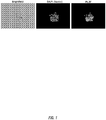
- Figure 1 shows the Maintenance of bovine undifferentiated spermatogonia in feeder-free culture.
- Left image is representative of a germ cell clump formed during feeder-free culture on Matrigel coated culture wells with BEF1 conditioned media.
- the middle image is the clumps stained with DAPI to label nuclei of individual cells.
- the right image is immunostaining for the undifferentiated spermatogonial marker PLZF.
- an element means one element or more than one element.
- the terms "gene” and “recombinant gene” refer to nucleic acid molecules comprising an open reading frame encoding a polypeptide.
- Such natural allelic variations can typically result in 1-5% variance in the nucleotide sequence of a given gene.
- Alternative alleles can be identified by sequencing the gene of interest in a number of different individuals. This can be readily carried out by using hybridization probes to identify the same genetic locus in a variety of individuals. Any and all such nucleotide variations and resulting amino acid polymorphisms or variations that are the result of natural allelic variation and that do not alter the functional activity are intended to be within the scope of the invention.
- nucleic acid molecules encoding proteins from other species which have a nucleotide sequence which differs from that of the proteins described herein are within the scope of the invention.
- Nucleic acid molecules corresponding to natural allelic variants and homologs of a cDNA of the invention can be isolated based on their identity to nucleic acid molecules using the human cDNAs, or a portion thereof, as a hybridization probe according to standard hybridization techniques under stringent hybridization conditions.
- modulation of a biological process refers to the alteration of the normal course of the biological process.
- modulation of the activity of a spermatogonial stem cell may be an increase in the activity of the cell.
- modulation of the activity of a spermatogonial stem cell may be a decrease in the activity of the cell.
- Enriching refers to the process by which the concentration, number, or activity of something is increased from a prior state. For example, a population of 100 spermatogonial stem cells is considered to be “enriched” in spermatogonial stem cells if the population previously contained only 50 spermatogonial stem cells. Similarly, a population of 100 spermatogonial stem cells is also considered to be “enriched” in spermatogonial stem cells if the population previously contained 99 spermatogonial stem cells. Likewise, a population of 100 spermatogonial stem cells is also considered to be “enriched” in spermatogonial stem cells even if the population previously contained zero spermatogonial stem cells.
- population refers to two or more cells.
- substantially separated from refers to the characteristic of a population of first substances being removed from the proximity of a population of second substances, wherein the population of first substances is not necessarily devoid of the second substance, and the population of second substances is not necessarily devoid of the first substance.
- a population of first substances that is "substantially separated from” a population of second substances has a measurably lower content of second substances as compared to the non-separated mixture of first and second substances.
- a first substance is substantially separated from a second substance if the ratio of the concentration of the first substance to the concentration of the second substance is greater than about 1. In another aspect, a first substance is substantially separated from a second substance if the ratio of the concentration of the first substance to the concentration of the second substance is greater than about 2. In yet another aspect, a first substance is substantially separated from a second substance if the ratio of the concentration of the first substance to the concentration of the second substance is greater than about 5. In another aspect, a first substance is substantially separated from a second substance if the ratio of the concentration of the first substance to the concentration of the second substance is greater than about 10.
- a first substance is substantially separated from a second substance if the ratio of the concentration of the first substance to the concentration of the second substance is greater than about 50. In another aspect, a first substance is substantially separated from a second substance if the ratio of the concentration of the first substance to the concentration of the second substance is greater than about 100. In still another aspect, a first substance is substantially separated from a second substance if there is no detectable level of the second substance in the composition containing the first substance.
- substantially homogeneous refers to a population of a substance that is comprised primarily of that substance, and one in which impurities have been minimized.
- “Maintenance” of a cell or a population of cells refers to the condition in which a living cell or living cell population is neither increasing nor decreasing in total number of cells in a culture.
- “proliferation” of a cell or population of cells refers to the condition in which the number of living cells increases as a function of time with respect to the original number of cells in the culture.
- a “defined culture medium” as the term is used herein refers to a cell culture medium with a known composition.
- apper any device including, but not limited to, a hypodermic syringe, a pipette, a bronchoscope, a nebulizer, and the like, for administering a composition of the invention to a mammal.
- an "instructional material” includes a publication, a recording, a diagram, or any other medium of expression which can be used to communicate the usefulness of a method and/or composition of the invention in a kit for maintaining, proliferating, or administering any composition recited herein.
- the instructional material of the kit of the invention may, for example, be affixed to a container which contains a composition of the invention or may be shipped together with a container which contains a composition. Alternatively, the instructional material may be shipped separately from the container with the intention that the instructional material and the compound be used cooperatively by the recipient.
- a cell is said to be "eliminated" from a population of cells, or from a culture medium, when the cell no longer exerts one or more of a physical, biological or chemical effect on the population of cells or culture medium.
- a cell may be eliminated from a culture medium by physically removing the cell using FACS or by using an antibody specific for a cell surface marker unique to that cell.
- a cell may also be eliminated from a culture medium by rendering the biological activity of that cell inert, such as, for example, by using a neutralizing antibody that is specific for that cell.
- a cell is "essentially eliminated" from a population of cells, or from a culture medium, when most, but not all of the total number of such cells no longer exerts one or more of a physical, biological or chemical effect on the population of cells or culture medium.
- a particular type of cell may be essentially eliminated from a culture medium if at least 75% of the cells of that type are removed from the culture medium by using an antibody specific for a cell surface marker unique to that cell. More preferably, at least 80% of the cells are eliminated from the culture medium, even more preferably, at least 85%, more preferably, at least 90%, and even more preferably, at least 95% of the cells are eliminated from the culture medium.
- testis-derived cell is a "testis-derived" cell, as the term is used herein, if the cell is derived from a testis.
- testis-derived cells include a spermatogonial stem cell, a somatic cell, and a germ cell.
- the present invention features a method of enriching spermatogonial stem cells (SSCs). It has been shown for the first time herein that, SSCs may be cultured in a feeder free protocol with long term survival to enrich a population of cells. An SSC is obtained from a bovine. Stem cell enrichment is useful for various purposes in the field of medical treatment, diagnosis and research, including stem-cell based therapies for repopulation of the cells in an organism, as well as laboratory research to identify growth factors responsible for control of the maintenance and proliferation of stem cells as well as for artificial insemination.
- SSCs spermatogonial stem cells
- the present invention comprises compositions and methods for culturing spematogonial stem cells.
- Applicants have developed a feeder free culture system that allows for isolated bovine spermatogonial stem cells to remain in an undifferentiated state and to remain viable in culture for long periods of time. Procedures to isolate undifferentiated spermatogonia from bovine testicular tissue, the identification of specific serum-free media that supports survival of bovine undifferentiated spermatogonia in vitro, substrates for coating of plastic culture wells that cultured bovine undifferentiated spermatogonia adhere to, and specific growth factors for the supplementation of feeder cell conditioned media that promotes maintenance and growth of bovine undifferentiated spermatogoinia are taught herein.
- Specific proprietary cell lines including a fibroblast bovine embryonic cell line, and a bovine somatic cell line isolated from bovine testis or otherwise obtained are disclosed herein. These specific cell lines are used as feeder support cells to condition culture media prior to cultivation of any SSCs.
- the pre-cultivation technique allows for feeder free cultivation enabling the generation of pure populations of bovine spermatogonial SSCs for transplant or other uses without contamination from other feeder cell lines and their deleterious effects including potential host immune response, limiting the colonizing ability of the SSCs.
- a method of isolating spermatogonial stem cells (SSCs) from bovine testicular tissue containing at least one SSC is taught herein.
- the method includes obtaining bovine testicular tissue which includes at least one SSC, contacting said tissue with collagenase, separating seminiferous tubules from other cell types, and thereafter contacting said seminiferous tubules with trypsin to yield a cell suspension enriched in spermatogonia and Sertoli cells.
- the present invention provides a method of enriching bovine spermatogonial stem cells (SSCs) from a population of testis-derived cells containing at least one SSC, said method comprising:
- the invention features a method of enriching and maintaining a pure culture of spermatogonial stem cells (SSCs) from a population of testis-derived, induced pluripotent stem cells, or embryonic stem cells containing at least one SSC, wherein the method includes providing a specific serum-free media with serum replacement, further providing culture cell wells that are pre-coated with Matrigel, and adding specific growth factors of GDNF, FGF2, SDF-1, and CSF-1 to pre-conditioned media all work together to provide for the first time a feeder-free culture of spermatogonial cells, preferably bovine spermatogonial cells.
- SSCs spermatogonial stem cells
- Novel support cell lines which have been developed and which allow for the pre-conditioning of media to provide a feeder free culture method are also taught herein.
- the cell lines include cell line BEF1 derived from a 35 day old male Holstein fetus, and the second, cell lines BSC1 derived from somatic cells isolated from the testis of a 4 month old Holstein bull. Together these cell lines may be used to pre-incubate culture media and will provide necessary secretion factors for survival and proliferation of SSCs without the addition of feeder cells to the incubating SSCs.
- An SSC of the present invention is a bovine SSC.
- cells are derived from a source selected from the group consisting of wild type adult testis, calf testis, neonate testis, induced pluripotent cells, embryonic stem cells, and/or cryptorchid adult testis.
- a serum-free culture system for support of SSC maintenance comprising enriched SSCs, serum-free defined culture medium, and media preconditioned with feeder cells is disclosed herein.
- a serum-free culture system for support of SSC proliferation comprising at least one SSC, serum-free defined culture medium with serum replacement supplement (StemPro), and which has been preconditioned with the proprietary fibroblast cell line BEF1 and proprietary BSC1 feeder cells is taught herein.
- a culture system may further comprise growth factors of GDNF, FGF2, SDF-1, and CSF-1.
- a culture medium may comprise at least one medium selected from the group consisting of Dulbecco's MEM: Ham's Nutrient Mixture F-12 (DMEM/F12) and StemPro serum replacement supplement.
- a culture system may further comprise growth plastic culture wells that are pre-coated with a commercially available matrix such as Matrigel (growth factor reduced version). Without such coating the cells do not attach to the plastic well and cannot be maintained long-term in culture.
- a commercially available matrix such as Matrigel (growth factor reduced version).
- composition comprising a population of pure, enriched SSCs, wherein the enriched population of SSCs is free of embryonic fibroblast cells or other types of feeder cells is taught herein.
- a composition comprising a population of enriched SSCs which express a specific marker of undifferentiated spermatogonia and a morphology that is similar to that of cultured SSC cells is also disclosed herein.
- a population of SSCs is substantially homogeneous for SSCs.
- kits for maintaining at least one SSC in a feeder-free culture system includes a culture system comprising serum-free defined culture medium, proprietary BSC1 and BEF1 cells for pre-conditioning culture medium, an applicator, and instructional material, wherein the instructional material comprises instructions for the use of the kit to maintain at least one SSC in the feeder-free culture system.
- a library may be provided of cells of a spermatogonial stem cell line that is derived from mammal testes, induced from pluripotent stem cells, or created from embryonic stem cells.
- a library may contain a plurality of gene knockout or "knockin" mutant stem cells.
- a medium for growing spermatogonial stem cells is provided, in addition to methods for culturing spermatogonial stem cells.
- a feeder-free culture system for the in vitro maintenance and proliferation of SSCs is taught herein. This is because it has been shown herein for the first time that bovine undifferentiated spermatogonia, of which SSCs are a component of, can be maintained and proliferated in media that has been pre-conditioned with feeder cells, but that does not contain feeder cells in vitro.
- a culture system having minimal, defined conditions has been established for the in vitro culturing of bovine SSCs, which system provides the ability investigate SSC biology in a defined way, as well as the ability to identify individual factors required for maintenance and expansion of SSCs.
- the feeder free culture method allows for generation of a population of SSC cells that is free from contamination by feeder cells for use in in vitro fertilization and other aspects of commercial bovine production.
- the feeder-free SSC culture system may include a preconditioned feeder medium.
- the preconditioning feeder cells may be Applicants' proprietary cell lines including the bovine embryonic fibroblast lines BEF1 and the bovine somatic cell line BSC1.
- the preconditioning feeder cells may include, but are not limited to, elements derived from these lines, including cells, components thereof, and the like.
- the medium for culture and preconditioning may be a serum-free defined medium includes minimal essential medium- ⁇ (MEM ⁇ ).
- the serum-free defined medium may include Ham's F10 culture medium.
- the serum-free defined medium may be Dulbecco's MEM: Ham's Nutrient Mixture F-12 (DMEM/F12).
- DMEM/F12 Ham's Nutrient Mixture F-12
- a composition including a defined medium that has been preconditioned with one or more feeder cell lines for the maintenance or proliferation of SSCs is taught herein.
- the culture system is useful for the maintenance or expansion of SSCs.
- SSCs useful in the culture system may be SSCs enriched using the method of the present invention.
- SSCs useful in the culture system may be SSCs that have not been previously enriched according to the methods or compositions of the present invention.
- a feeder-free defined medium may further include SSCs.
- SSCs from any source may be maintained or expanded using the feeder-free culture system disclosed herein. That is, SSCs obtained from a population of testis-derived cells can be obtained from testis cells derived from any mammalian source including, but not limited to, human testis, rat testis, mouse testis, and preferably, cow or bovine testes. Sources of SSCs further include wild type adult testis, induced pluripotent stem cells, embryonic stem cells, adult testis having one or more genetic mutations, juvenile testis, neonate testis, and/or cryptorchid adult testis. Methods for introduction of genetic mutations to the DNA in a cell, such as an SSC, are well-known in the art and will not be discussed further herein.
- a sterile male can be a source for SSCs. Therefore, a sterile male may be a source of SSCs of the present invention.
- the basic feeder-free defined medium for use in the present invention may further include any components known by the skilled artisan to be useful in the culturing of cells.
- a feeder-free defined medium includes at least one growth factor.
- Growth factors useful in the present invention include, but are not limited to, stem cell factor (including mouse SCF), glial cell line-derived neurotrophic factor (GDNF), GDNF-family receptor (including GFR.alpha.1), leukemia inhibitory factor (LIF), basic fibroblast growth factor (including human bFGF), acidic fibroblast growth factor (aFGF), colony stimulating factor (CSF), stromal derived factor 1 (SDF-1), epidermal growth factor (EGF), insulin-like growth factor (including IGF-I), platelet-derived growth factor (PDGF), and transforming growth factor (including TGF- ⁇ I through III, as well as the TGF ⁇ . superfamily BMP-1 through 12, GDF 1 through 8, dpp, 60A, BIP, OF).
- the growth factors include GD
- the present invention provides a method of maintaining or proliferating SSCs in a feeder-free defined culture medium as defined in claim 1.
- the invention features a method of maintaining SSCs in a feeder-free culture system.
- the method includes providing at least one SSC in a feeder-free culture system as defined in detail elsewhere herein.
- An SSC may be identified as being "maintained” in the feeder-free defined culture system by assessing the activity of an SSC at various time points in the culture medium and comparing the activity with the activity of the SSCs at the start of the culture period. As will be understood by the skilled artisan, little or no loss of activity is an indication that SSCs have been maintained in culture. Methods of measuring the activity of SSCs are described in detail elsewhere herein.
- the invention features a method of proliferating SSCs in a feeder-free culture system.
- the method includes providing at least one SSC in a feeder-free culture system as defined in detail elsewhere herein.
- a SSC may be identified as being "proliferated" in the feeder-free defined culture system by assessing the SSC activity at various time points in the culturing process and comparing the activity with the activity of the SSC at the start of the culture period. An increase in the activity between the start of the culture period and any later time point is an indication that SSCs have been proliferated. Methods of measuring the activity of SSCs are described in detail elsewhere herein.
- SSCs that can be proliferated according to the present invention include, but are not limited to, bovine SSC, human SSC, mouse SSC and rat SSC.
- the degree of proliferation of SSCs in a feeder-free culture system of the present invention may be assessed by counting the number of cells present at a specific point in time during SSC cell culture and comparing the value to the number of cells present at the start of the culture period. Based on the disclosure set forth herein, the skilled artisan will understand that these and other methods of assessing SSC maintenance and proliferation may be used. These methods include, but are not limited to, FACS and MACS.
- kits which comprise a feeder free culture system for the maintenance or proliferation of at least one SSC are taught herein. Although exemplary kits are described below, the contents of other useful kits will be apparent to the skilled artisan in light of the present disclosure.
- a kit for maintaining at least one SSC in a feeder-free culture system comprising a culture system comprising serum-free defined culture medium and pre-conditioning feeder cells from one or more proprietary cell lines including cell in BEF1 and cell line BSC1, an applicator, and instructional material, wherein the instructional material comprises instructions for the use of the kit to maintain at least one SSC in the feeder-free culture system is taught herein.
- a kit for proliferating at least one SSC in a feeder-free culture system comprising a culture system comprising serum-free defined culture medium and preconditioning feeder cells, or media that has already been pre-conditioned, an applicator, and instructional material, wherein the instructional material comprises instructions for the use of the kit to proliferate at least one SSC in the feeder-free culture system is also taught herein.
- compositions and methods for the isolation, purification, enrichment, proliferation and maintenance of SSC are described in detail elsewhere herein.
- the cells can be maintained in these conditions for greater than 6 months and form clumps with morphology as shown in Figure 1 .
- the cells retain expression of molecular makers of undifferentiated spermatogonia including the transcription factor PLZF.
- BEF Bovine Embryonic Fibroblast
Landscapes
- Health & Medical Sciences (AREA)
- Life Sciences & Earth Sciences (AREA)
- Engineering & Computer Science (AREA)
- Biomedical Technology (AREA)
- Zoology (AREA)
- Chemical & Material Sciences (AREA)
- Genetics & Genomics (AREA)
- Wood Science & Technology (AREA)
- Organic Chemistry (AREA)
- Bioinformatics & Cheminformatics (AREA)
- Biotechnology (AREA)
- General Health & Medical Sciences (AREA)
- Reproductive Health (AREA)
- Cell Biology (AREA)
- General Engineering & Computer Science (AREA)
- Microbiology (AREA)
- Biochemistry (AREA)
- Animal Behavior & Ethology (AREA)
- Developmental Biology & Embryology (AREA)
- Veterinary Medicine (AREA)
- Public Health (AREA)
- Environmental Sciences (AREA)
- Molecular Biology (AREA)
- Gynecology & Obstetrics (AREA)
- Pharmacology & Pharmacy (AREA)
- Medicinal Chemistry (AREA)
- Surgery (AREA)
- Nuclear Medicine, Radiotherapy & Molecular Imaging (AREA)
- Rheumatology (AREA)
- Pregnancy & Childbirth (AREA)
- Immunology (AREA)
- Virology (AREA)
- Epidemiology (AREA)
- Animal Husbandry (AREA)
- Biodiversity & Conservation Biology (AREA)
- Sustainable Development (AREA)
- Medical Informatics (AREA)
- Heart & Thoracic Surgery (AREA)
- Physics & Mathematics (AREA)
- Biophysics (AREA)
Priority Applications (1)
| Application Number | Priority Date | Filing Date | Title |
|---|---|---|---|
| EP17172768.8A EP3243903A1 (en) | 2012-02-14 | 2013-02-11 | Feeder-free method for culture of bovine and porcine spermatogonial stem cells |
Applications Claiming Priority (2)
| Application Number | Priority Date | Filing Date | Title |
|---|---|---|---|
| US201261598437P | 2012-02-14 | 2012-02-14 | |
| PCT/US2013/025537 WO2013122864A1 (en) | 2012-02-14 | 2013-02-11 | Feeder-free method for culture of bovine and porcine spermatogonial stem cells |
Related Child Applications (2)
| Application Number | Title | Priority Date | Filing Date |
|---|---|---|---|
| EP17172768.8A Division-Into EP3243903A1 (en) | 2012-02-14 | 2013-02-11 | Feeder-free method for culture of bovine and porcine spermatogonial stem cells |
| EP17172768.8A Division EP3243903A1 (en) | 2012-02-14 | 2013-02-11 | Feeder-free method for culture of bovine and porcine spermatogonial stem cells |
Publications (2)
| Publication Number | Publication Date |
|---|---|
| EP2814948A1 EP2814948A1 (en) | 2014-12-24 |
| EP2814948B1 true EP2814948B1 (en) | 2017-07-26 |
Family
ID=47750061
Family Applications (2)
| Application Number | Title | Priority Date | Filing Date |
|---|---|---|---|
| EP13706134.7A Not-in-force EP2814948B1 (en) | 2012-02-14 | 2013-02-11 | Feeder-free method for culture of bovine and porcine spermatogonial stem cells |
| EP17172768.8A Withdrawn EP3243903A1 (en) | 2012-02-14 | 2013-02-11 | Feeder-free method for culture of bovine and porcine spermatogonial stem cells |
Family Applications After (1)
| Application Number | Title | Priority Date | Filing Date |
|---|---|---|---|
| EP17172768.8A Withdrawn EP3243903A1 (en) | 2012-02-14 | 2013-02-11 | Feeder-free method for culture of bovine and porcine spermatogonial stem cells |
Country Status (11)
| Country | Link |
|---|---|
| US (3) | US8998793B2 (enExample) |
| EP (2) | EP2814948B1 (enExample) |
| JP (1) | JP5782200B2 (enExample) |
| CN (2) | CN109486751B (enExample) |
| AU (1) | AU2013221839B2 (enExample) |
| BR (1) | BR112014020183A8 (enExample) |
| CA (1) | CA2864510C (enExample) |
| EA (1) | EA034065B1 (enExample) |
| MX (1) | MX357280B (enExample) |
| NZ (1) | NZ627835A (enExample) |
| WO (1) | WO2013122864A1 (enExample) |
Families Citing this family (19)
| Publication number | Priority date | Publication date | Assignee | Title |
|---|---|---|---|---|
| MX357280B (es) | 2012-02-14 | 2018-07-03 | Univ Washington State | Método sin alimentadoras para cultivo de células madre espermatogonias de bovino y porcino. |
| US9670458B2 (en) * | 2013-07-13 | 2017-06-06 | Aggenetics, Inc. | Methods for spermatogonial stem cell (SSC) transfer |
| KR101777160B1 (ko) * | 2014-03-31 | 2017-09-11 | 강원대학교산학협력단 | 포유동물 유래 정원줄기세포의 분리방법 |
| KR101618237B1 (ko) * | 2014-07-09 | 2016-05-09 | 건국대학교 산학협력단 | 개의 정원줄기세포를 체외배양하는 방법 |
| CN104830756A (zh) * | 2015-05-07 | 2015-08-12 | 湖州师范学院 | 翘嘴红鲌精原干细胞分离培养方法 |
| CN105316282B (zh) * | 2015-12-09 | 2018-10-30 | 中国水产科学研究院长江水产研究所 | 一种达氏鲟精原细胞培养液及应用 |
| US20170258495A1 (en) | 2016-02-29 | 2017-09-14 | The Curators Of The University Of Missouri | Medium supplement to increase the efficiency of oocyte maturation and embryo culture in vitro |
| WO2018160920A1 (en) * | 2017-03-02 | 2018-09-07 | Orig3N, Inc. | Systems and methods of assisted reproduction and prevention of genetic defects in offspring using induced pluripotent stem cells |
| CN109055306A (zh) * | 2018-06-25 | 2018-12-21 | 佛山科学技术学院 | 一种无饲养层无血清培养小鼠精原干细胞的体系及方法 |
| CN109182269B (zh) * | 2018-07-26 | 2022-07-05 | 佛山科学技术学院 | 一种使精原干细胞高效向神经细胞分化的培养体系和方法 |
| CN109402045A (zh) * | 2018-10-15 | 2019-03-01 | 卢克焕 | 一种水牛精原干细胞样细胞的体外培养及传代方法 |
| CN109385395A (zh) * | 2018-10-15 | 2019-02-26 | 卢克焕 | 一种用于体外培养的水牛精原干细胞样细胞的纯化方法 |
| US20210386792A1 (en) * | 2018-12-19 | 2021-12-16 | Dong Ha Bhang | A method for increasing population of spermatogonial stem cells |
| US20230287340A1 (en) * | 2020-07-27 | 2023-09-14 | Washington State University | Methods for spermatogonial culture |
| CN113957039A (zh) * | 2021-09-06 | 2022-01-21 | 西南民族大学 | 一种冷冻保存的牛生精细胞体外培养方法 |
| WO2024177532A1 (ru) * | 2023-02-20 | 2024-08-29 | Федеральное государственное бюджетное образовательное учреждение высшего образования "Московский государственный университет имени М.В. Ломоносова" | Тест-система для оценки секреторной активности модельных клеток |
| WO2024218715A1 (en) | 2023-04-19 | 2024-10-24 | Btl Healthcare Technologies A.S. | Culture media based on protein hydrolysate and a process for preparing thereof |
| CN116904396A (zh) * | 2023-08-31 | 2023-10-20 | 中国农业科学院兰州畜牧与兽药研究所 | 牦牛睾丸间质细胞的分离纯化方法 |
| US12668774B2 (en) | 2023-10-12 | 2026-06-30 | Btl Healthcare Technologies A.S. | Product, system and method of cell cultivation |
Citations (2)
| Publication number | Priority date | Publication date | Assignee | Title |
|---|---|---|---|---|
| WO2004055155A2 (en) * | 2002-12-16 | 2004-07-01 | Technion Research & Development Foundation Ltd. | Methods of preparing feeder cells-free, xeno-free human embryonic stem cells and stem cell cultures prepared using same |
| WO2006070370A2 (en) * | 2004-12-29 | 2006-07-06 | Hadasit Medical Research Services & Development Limited | Stem cells culture systems |
Family Cites Families (15)
| Publication number | Priority date | Publication date | Assignee | Title |
|---|---|---|---|---|
| US5858354A (en) | 1991-12-06 | 1999-01-12 | The Trustees Of The University Of Pennsylvania | Repopulation of testicular Seminiferous tubules with foreign cells, corresponding resultant germ cells, and corresponding resultant animals and progeny |
| EP1616944A4 (en) * | 2003-04-15 | 2007-10-10 | Univ Kyoto | PROCESS FOR THE GROWING OF SPERMASTAMM CELLS IN VITRO, SPERMASTAMM CELLS TREATED WITH THIS METHOD AND MEDIATIVE ADDITIVE KIT TO BE USED IN VITRO SPERMASTAMM CELLS |
| AU2004318461B9 (en) * | 2004-03-30 | 2009-02-26 | Kyoto University | Process for producing multipotential stem cell originating in testoid cell |
| WO2005105984A2 (en) * | 2004-04-12 | 2005-11-10 | The Trustees Of The University Of Pennsylvania | Culture conditions and growth factors affecting fate determination, self-renewal and expansion of mouse spermatogonial stem cells |
| JP2006115767A (ja) * | 2004-10-21 | 2006-05-11 | Kyoto Univ | フィーダー細胞の不在下で精原幹細胞を増殖させる方法 |
| CA2694956C (en) * | 2007-07-31 | 2017-12-19 | Lifescan, Inc. | Pluripotent stem cell differentiation by using human feeder cells |
| KR20100093513A (ko) * | 2007-08-07 | 2010-08-25 | 프라임젠 바이오테크 엘엘씨 | 생식계 줄기 세포의 분리, 특성 규명 및 증식 |
| CN102131919B (zh) * | 2008-03-31 | 2017-05-03 | 东方酵母工业株式会社 | 一种增殖多能性干细胞的方法 |
| US7939322B2 (en) * | 2008-04-24 | 2011-05-10 | Centocor Ortho Biotech Inc. | Cells expressing pluripotency markers and expressing markers characteristic of the definitive endoderm |
| KR20120120157A (ko) * | 2009-11-05 | 2012-11-01 | 조니 융-치옹 초우 | 생식줄기세포 보관 시스템 |
| CN101818127B (zh) * | 2010-03-31 | 2011-12-28 | 安徽农业大学 | 一种小鼠精原干细胞分离培养方法 |
| CN102031242A (zh) * | 2010-11-19 | 2011-04-27 | 西北农林科技大学 | 用于提高动物精原干细胞增殖率的培养液体系和使用方法 |
| CN102344909B (zh) * | 2011-10-20 | 2013-09-11 | 上海交通大学医学院附属仁济医院 | 一种分离人精原干细胞的方法 |
| MX357280B (es) * | 2012-02-14 | 2018-07-03 | Univ Washington State | Método sin alimentadoras para cultivo de células madre espermatogonias de bovino y porcino. |
| AU2012100720A4 (en) * | 2012-05-22 | 2012-06-14 | Kaul, Gautam Dr | Immunomagnetic microbeads for enrichment of CD9+ spermatogonial stem cells |
-
2013
- 2013-02-11 MX MX2014009306A patent/MX357280B/es active IP Right Grant
- 2013-02-11 CN CN201811374672.3A patent/CN109486751B/zh not_active Expired - Fee Related
- 2013-02-11 AU AU2013221839A patent/AU2013221839B2/en not_active Ceased
- 2013-02-11 US US13/763,908 patent/US8998793B2/en not_active Expired - Fee Related
- 2013-02-11 NZ NZ627835A patent/NZ627835A/en not_active IP Right Cessation
- 2013-02-11 JP JP2014557708A patent/JP5782200B2/ja not_active Expired - Fee Related
- 2013-02-11 EP EP13706134.7A patent/EP2814948B1/en not_active Not-in-force
- 2013-02-11 EP EP17172768.8A patent/EP3243903A1/en not_active Withdrawn
- 2013-02-11 CA CA2864510A patent/CA2864510C/en active Active
- 2013-02-11 CN CN201380009380.9A patent/CN104350145B/zh not_active Expired - Fee Related
- 2013-02-11 WO PCT/US2013/025537 patent/WO2013122864A1/en not_active Ceased
- 2013-02-11 EA EA201491526A patent/EA034065B1/ru not_active IP Right Cessation
- 2013-02-11 BR BR112014020183A patent/BR112014020183A8/pt not_active IP Right Cessation
-
2015
- 2015-03-05 US US14/639,454 patent/US9434922B2/en not_active Expired - Fee Related
-
2016
- 2016-08-25 US US15/247,564 patent/US10280397B2/en not_active Expired - Fee Related
Patent Citations (2)
| Publication number | Priority date | Publication date | Assignee | Title |
|---|---|---|---|---|
| WO2004055155A2 (en) * | 2002-12-16 | 2004-07-01 | Technion Research & Development Foundation Ltd. | Methods of preparing feeder cells-free, xeno-free human embryonic stem cells and stem cell cultures prepared using same |
| WO2006070370A2 (en) * | 2004-12-29 | 2006-07-06 | Hadasit Medical Research Services & Development Limited | Stem cells culture systems |
Non-Patent Citations (4)
| Title |
|---|
| APONTE P M ET AL: "Basic features of bovine spermatogonial culture and effects of glial cell line-derived neurotrophic factor", THERIOGENOLOGY, LOS ALTOS, CA, US, vol. 65, no. 9, 1 June 2006 (2006-06-01), pages 1828 - 1847, XP025076339, ISSN: 0093-691X, [retrieved on 20060601], DOI: 10.1016/J.THERIOGENOLOGY.2005.10.020 * |
| J. M. OATLEY ET AL: "Biological Activity of Cryopreserved Bovine Spermatogonial Stem Cells During In Vitro Culture", BIOLOGY OF REPRODUCTION, vol. 71, no. 3, 1 September 2004 (2004-09-01), US, pages 942 - 947, XP055257696, ISSN: 0006-3363, DOI: 10.1095/biolreprod.104.028894 * |
| NOELIA LOSINO ET AL: "Maintenance of Murine Embryonic Stem Cells' Self-Renewal and Pluripotency with Increase in Proliferation Rate by a Bovine Granulosa Cell Line-Conditioned Medium", STEM CELLS AND DEVELOPMENT, vol. 20, no. 8, 1 August 2011 (2011-08-01), pages 1439 - 1449, XP055096894, ISSN: 1547-3287, DOI: 10.1089/scd.2010.0336 * |
| XU C ET AL: "Feeder-free growth of undifferentiated human embryonic stem cells", NATURE BIOTECHNOLOGY, NATURE PUBLISHING GROUP, US, vol. 19, no. 10, 1 October 2001 (2001-10-01), pages 971 - 974, XP002672078, ISSN: 1087-0156 * |
Also Published As
| Publication number | Publication date |
|---|---|
| BR112014020183A8 (pt) | 2017-07-11 |
| US10280397B2 (en) | 2019-05-07 |
| EA201491526A1 (ru) | 2014-12-30 |
| CN109486751B (zh) | 2022-04-26 |
| CA2864510A1 (en) | 2013-08-22 |
| US9434922B2 (en) | 2016-09-06 |
| EP2814948A1 (en) | 2014-12-24 |
| JP5782200B2 (ja) | 2015-09-24 |
| US20160362656A1 (en) | 2016-12-15 |
| US20150175957A1 (en) | 2015-06-25 |
| EA034065B1 (ru) | 2019-12-24 |
| EP3243903A1 (en) | 2017-11-15 |
| US8998793B2 (en) | 2015-04-07 |
| AU2013221839A1 (en) | 2014-08-14 |
| CN104350145B (zh) | 2018-11-27 |
| US20130211186A1 (en) | 2013-08-15 |
| CN109486751A (zh) | 2019-03-19 |
| JP2015508653A (ja) | 2015-03-23 |
| NZ627835A (en) | 2016-05-27 |
| CN104350145A (zh) | 2015-02-11 |
| CA2864510C (en) | 2020-09-22 |
| AU2013221839B2 (en) | 2015-07-30 |
| MX357280B (es) | 2018-07-03 |
| WO2013122864A1 (en) | 2013-08-22 |
| EA201491526A8 (ru) | 2017-10-31 |
| MX2014009306A (es) | 2014-10-30 |
| BR112014020183A2 (enExample) | 2017-06-20 |
Similar Documents
| Publication | Publication Date | Title |
|---|---|---|
| US10280397B2 (en) | Feeder-free method for culture of bovine and porcine spermatogonial stem cells | |
| JP5227318B2 (ja) | 細胞増殖培地 | |
| JP6983762B2 (ja) | 臨床グレードの網膜色素上皮細胞の再現性のある分化のための方法 | |
| JP2023162277A (ja) | Macsを用いた幹細胞由来網膜色素上皮の精製 | |
| DK3196296T3 (en) | Cultivation of human embryonic stem cells | |
| CA2569978A1 (en) | Neural stem cells | |
| Wiley et al. | Generation of xeno‐free, cGMP‐compliant patient‐specific iPSCs from skin biopsy | |
| Priyabrat Swain et al. | Basic techniques and limitations in establishing cell culture: a mini review. | |
| CN116769695A (zh) | 从畸胎瘤、类器官和拟胚体中产生人细胞和组织的培养基和方法 | |
| AU2015225014A1 (en) | Feeder-free method for culture of bovine and porcine spermatogonial stem cells | |
| EP4114919B1 (en) | Automated method for preparing keratinocytes | |
| KR20240056604A (ko) | 수임 심장 전구세포의 제조 방법 | |
| Saxena et al. | Role of stem cell research in therapeutic purpose--a hope for new horizon in medical biotechnology. | |
| Li et al. | Bovine male germline stem-like cells cultured in serum-and feeder-free medium | |
| EP1715033A1 (en) | Medium for preparing feeder cells for embryonic stem cells and feeder cells | |
| WO2025123144A1 (en) | Derivation of bovine naïve stem cells using feeder cells | |
| Ronnett | Development of human neuronal cell lines | |
| Rajala | Development of Human Stem Cell Culture Conditions for Clinical Cell Therapy | |
| Vassiliev et al. | Effect of cytochalasin types on the production of heterozygous parthenogenetic porcine embryos and the isolation of putative parthenogenetic embryonic stem cells | |
| Harness et al. | Equivalence of Conventionally-Derived and Parthenote-Derived Human Embryonic | |
| Swain et al. | Advances in Animal and Veterinary Sciences |
Legal Events
| Date | Code | Title | Description |
|---|---|---|---|
| PUAI | Public reference made under article 153(3) epc to a published international application that has entered the european phase |
Free format text: ORIGINAL CODE: 0009012 |
|
| 17P | Request for examination filed |
Effective date: 20140915 |
|
| AK | Designated contracting states |
Kind code of ref document: A1 Designated state(s): AL AT BE BG CH CY CZ DE DK EE ES FI FR GB GR HR HU IE IS IT LI LT LU LV MC MK MT NL NO PL PT RO RS SE SI SK SM TR |
|
| AX | Request for extension of the european patent |
Extension state: BA ME |
|
| RAP1 | Party data changed (applicant data changed or rights of an application transferred) |
Owner name: WASHINGTON STATE UNIVERSITY |
|
| DAX | Request for extension of the european patent (deleted) | ||
| 17Q | First examination report despatched |
Effective date: 20150910 |
|
| STAA | Information on the status of an ep patent application or granted ep patent |
Free format text: STATUS: EXAMINATION IS IN PROGRESS |
|
| GRAP | Despatch of communication of intention to grant a patent |
Free format text: ORIGINAL CODE: EPIDOSNIGR1 |
|
| STAA | Information on the status of an ep patent application or granted ep patent |
Free format text: STATUS: GRANT OF PATENT IS INTENDED |
|
| INTG | Intention to grant announced |
Effective date: 20170215 |
|
| GRAS | Grant fee paid |
Free format text: ORIGINAL CODE: EPIDOSNIGR3 |
|
| GRAA | (expected) grant |
Free format text: ORIGINAL CODE: 0009210 |
|
| STAA | Information on the status of an ep patent application or granted ep patent |
Free format text: STATUS: THE PATENT HAS BEEN GRANTED |
|
| AK | Designated contracting states |
Kind code of ref document: B1 Designated state(s): AL AT BE BG CH CY CZ DE DK EE ES FI FR GB GR HR HU IE IS IT LI LT LU LV MC MK MT NL NO PL PT RO RS SE SI SK SM TR |
|
| REG | Reference to a national code |
Ref country code: GB Ref legal event code: FG4D |
|
| REG | Reference to a national code |
Ref country code: CH Ref legal event code: EP |
|
| REG | Reference to a national code |
Ref country code: AT Ref legal event code: REF Ref document number: 912403 Country of ref document: AT Kind code of ref document: T Effective date: 20170815 |
|
| REG | Reference to a national code |
Ref country code: IE Ref legal event code: FG4D |
|
| REG | Reference to a national code |
Ref country code: DE Ref legal event code: R096 Ref document number: 602013023997 Country of ref document: DE |
|
| RAP2 | Party data changed (patent owner data changed or rights of a patent transferred) |
Owner name: WASHINGTON STATE UNIVERSITY |
|
| REG | Reference to a national code |
Ref country code: NL Ref legal event code: FP |
|
| REG | Reference to a national code |
Ref country code: LT Ref legal event code: MG4D |
|
| REG | Reference to a national code |
Ref country code: AT Ref legal event code: MK05 Ref document number: 912403 Country of ref document: AT Kind code of ref document: T Effective date: 20170726 |
|
| REG | Reference to a national code |
Ref country code: FR Ref legal event code: PLFP Year of fee payment: 6 |
|
| PG25 | Lapsed in a contracting state [announced via postgrant information from national office to epo] |
Ref country code: AT Free format text: LAPSE BECAUSE OF FAILURE TO SUBMIT A TRANSLATION OF THE DESCRIPTION OR TO PAY THE FEE WITHIN THE PRESCRIBED TIME-LIMIT Effective date: 20170726 Ref country code: LT Free format text: LAPSE BECAUSE OF FAILURE TO SUBMIT A TRANSLATION OF THE DESCRIPTION OR TO PAY THE FEE WITHIN THE PRESCRIBED TIME-LIMIT Effective date: 20170726 Ref country code: FI Free format text: LAPSE BECAUSE OF FAILURE TO SUBMIT A TRANSLATION OF THE DESCRIPTION OR TO PAY THE FEE WITHIN THE PRESCRIBED TIME-LIMIT Effective date: 20170726 Ref country code: SE Free format text: LAPSE BECAUSE OF FAILURE TO SUBMIT A TRANSLATION OF THE DESCRIPTION OR TO PAY THE FEE WITHIN THE PRESCRIBED TIME-LIMIT Effective date: 20170726 Ref country code: HR Free format text: LAPSE BECAUSE OF FAILURE TO SUBMIT A TRANSLATION OF THE DESCRIPTION OR TO PAY THE FEE WITHIN THE PRESCRIBED TIME-LIMIT Effective date: 20170726 Ref country code: NO Free format text: LAPSE BECAUSE OF FAILURE TO SUBMIT A TRANSLATION OF THE DESCRIPTION OR TO PAY THE FEE WITHIN THE PRESCRIBED TIME-LIMIT Effective date: 20171026 |
|
| PG25 | Lapsed in a contracting state [announced via postgrant information from national office to epo] |
Ref country code: GR Free format text: LAPSE BECAUSE OF FAILURE TO SUBMIT A TRANSLATION OF THE DESCRIPTION OR TO PAY THE FEE WITHIN THE PRESCRIBED TIME-LIMIT Effective date: 20171027 Ref country code: BG Free format text: LAPSE BECAUSE OF FAILURE TO SUBMIT A TRANSLATION OF THE DESCRIPTION OR TO PAY THE FEE WITHIN THE PRESCRIBED TIME-LIMIT Effective date: 20171026 Ref country code: RS Free format text: LAPSE BECAUSE OF FAILURE TO SUBMIT A TRANSLATION OF THE DESCRIPTION OR TO PAY THE FEE WITHIN THE PRESCRIBED TIME-LIMIT Effective date: 20170726 Ref country code: LV Free format text: LAPSE BECAUSE OF FAILURE TO SUBMIT A TRANSLATION OF THE DESCRIPTION OR TO PAY THE FEE WITHIN THE PRESCRIBED TIME-LIMIT Effective date: 20170726 Ref country code: IS Free format text: LAPSE BECAUSE OF FAILURE TO SUBMIT A TRANSLATION OF THE DESCRIPTION OR TO PAY THE FEE WITHIN THE PRESCRIBED TIME-LIMIT Effective date: 20171126 Ref country code: ES Free format text: LAPSE BECAUSE OF FAILURE TO SUBMIT A TRANSLATION OF THE DESCRIPTION OR TO PAY THE FEE WITHIN THE PRESCRIBED TIME-LIMIT Effective date: 20170726 Ref country code: PL Free format text: LAPSE BECAUSE OF FAILURE TO SUBMIT A TRANSLATION OF THE DESCRIPTION OR TO PAY THE FEE WITHIN THE PRESCRIBED TIME-LIMIT Effective date: 20170726 |
|
| PG25 | Lapsed in a contracting state [announced via postgrant information from national office to epo] |
Ref country code: RO Free format text: LAPSE BECAUSE OF FAILURE TO SUBMIT A TRANSLATION OF THE DESCRIPTION OR TO PAY THE FEE WITHIN THE PRESCRIBED TIME-LIMIT Effective date: 20170726 Ref country code: CZ Free format text: LAPSE BECAUSE OF FAILURE TO SUBMIT A TRANSLATION OF THE DESCRIPTION OR TO PAY THE FEE WITHIN THE PRESCRIBED TIME-LIMIT Effective date: 20170726 Ref country code: DK Free format text: LAPSE BECAUSE OF FAILURE TO SUBMIT A TRANSLATION OF THE DESCRIPTION OR TO PAY THE FEE WITHIN THE PRESCRIBED TIME-LIMIT Effective date: 20170726 |
|
| REG | Reference to a national code |
Ref country code: DE Ref legal event code: R097 Ref document number: 602013023997 Country of ref document: DE |
|
| PG25 | Lapsed in a contracting state [announced via postgrant information from national office to epo] |
Ref country code: SM Free format text: LAPSE BECAUSE OF FAILURE TO SUBMIT A TRANSLATION OF THE DESCRIPTION OR TO PAY THE FEE WITHIN THE PRESCRIBED TIME-LIMIT Effective date: 20170726 Ref country code: SK Free format text: LAPSE BECAUSE OF FAILURE TO SUBMIT A TRANSLATION OF THE DESCRIPTION OR TO PAY THE FEE WITHIN THE PRESCRIBED TIME-LIMIT Effective date: 20170726 Ref country code: EE Free format text: LAPSE BECAUSE OF FAILURE TO SUBMIT A TRANSLATION OF THE DESCRIPTION OR TO PAY THE FEE WITHIN THE PRESCRIBED TIME-LIMIT Effective date: 20170726 |
|
| PLBE | No opposition filed within time limit |
Free format text: ORIGINAL CODE: 0009261 |
|
| STAA | Information on the status of an ep patent application or granted ep patent |
Free format text: STATUS: NO OPPOSITION FILED WITHIN TIME LIMIT |
|
| 26N | No opposition filed |
Effective date: 20180430 |
|
| PG25 | Lapsed in a contracting state [announced via postgrant information from national office to epo] |
Ref country code: SI Free format text: LAPSE BECAUSE OF FAILURE TO SUBMIT A TRANSLATION OF THE DESCRIPTION OR TO PAY THE FEE WITHIN THE PRESCRIBED TIME-LIMIT Effective date: 20170726 |
|
| REG | Reference to a national code |
Ref country code: CH Ref legal event code: PL |
|
| PG25 | Lapsed in a contracting state [announced via postgrant information from national office to epo] |
Ref country code: MC Free format text: LAPSE BECAUSE OF FAILURE TO SUBMIT A TRANSLATION OF THE DESCRIPTION OR TO PAY THE FEE WITHIN THE PRESCRIBED TIME-LIMIT Effective date: 20170726 |
|
| REG | Reference to a national code |
Ref country code: BE Ref legal event code: MM Effective date: 20180228 |
|
| PG25 | Lapsed in a contracting state [announced via postgrant information from national office to epo] |
Ref country code: LU Free format text: LAPSE BECAUSE OF NON-PAYMENT OF DUE FEES Effective date: 20180211 Ref country code: LI Free format text: LAPSE BECAUSE OF NON-PAYMENT OF DUE FEES Effective date: 20180228 Ref country code: CH Free format text: LAPSE BECAUSE OF NON-PAYMENT OF DUE FEES Effective date: 20180228 |
|
| PG25 | Lapsed in a contracting state [announced via postgrant information from national office to epo] |
Ref country code: BE Free format text: LAPSE BECAUSE OF NON-PAYMENT OF DUE FEES Effective date: 20180228 |
|
| PG25 | Lapsed in a contracting state [announced via postgrant information from national office to epo] |
Ref country code: MT Free format text: LAPSE BECAUSE OF NON-PAYMENT OF DUE FEES Effective date: 20180211 |
|
| PG25 | Lapsed in a contracting state [announced via postgrant information from national office to epo] |
Ref country code: TR Free format text: LAPSE BECAUSE OF FAILURE TO SUBMIT A TRANSLATION OF THE DESCRIPTION OR TO PAY THE FEE WITHIN THE PRESCRIBED TIME-LIMIT Effective date: 20170726 |
|
| PG25 | Lapsed in a contracting state [announced via postgrant information from national office to epo] |
Ref country code: HU Free format text: LAPSE BECAUSE OF FAILURE TO SUBMIT A TRANSLATION OF THE DESCRIPTION OR TO PAY THE FEE WITHIN THE PRESCRIBED TIME-LIMIT; INVALID AB INITIO Effective date: 20130211 Ref country code: PT Free format text: LAPSE BECAUSE OF FAILURE TO SUBMIT A TRANSLATION OF THE DESCRIPTION OR TO PAY THE FEE WITHIN THE PRESCRIBED TIME-LIMIT Effective date: 20170726 |
|
| PG25 | Lapsed in a contracting state [announced via postgrant information from national office to epo] |
Ref country code: MK Free format text: LAPSE BECAUSE OF NON-PAYMENT OF DUE FEES Effective date: 20170726 Ref country code: CY Free format text: LAPSE BECAUSE OF FAILURE TO SUBMIT A TRANSLATION OF THE DESCRIPTION OR TO PAY THE FEE WITHIN THE PRESCRIBED TIME-LIMIT Effective date: 20170726 |
|
| PG25 | Lapsed in a contracting state [announced via postgrant information from national office to epo] |
Ref country code: AL Free format text: LAPSE BECAUSE OF FAILURE TO SUBMIT A TRANSLATION OF THE DESCRIPTION OR TO PAY THE FEE WITHIN THE PRESCRIBED TIME-LIMIT Effective date: 20170726 |
|
| REG | Reference to a national code |
Ref country code: DE Ref legal event code: R082 Ref document number: 602013023997 Country of ref document: DE Representative=s name: D YOUNG & CO LLP, DE |
|
| PGFP | Annual fee paid to national office [announced via postgrant information from national office to epo] |
Ref country code: IE Payment date: 20220225 Year of fee payment: 10 Ref country code: GB Payment date: 20220225 Year of fee payment: 10 Ref country code: DE Payment date: 20220225 Year of fee payment: 10 |
|
| PGFP | Annual fee paid to national office [announced via postgrant information from national office to epo] |
Ref country code: NL Payment date: 20220224 Year of fee payment: 10 Ref country code: IT Payment date: 20220222 Year of fee payment: 10 Ref country code: FR Payment date: 20220223 Year of fee payment: 10 |
|
| P01 | Opt-out of the competence of the unified patent court (upc) registered |
Effective date: 20230519 |
|
| REG | Reference to a national code |
Ref country code: DE Ref legal event code: R119 Ref document number: 602013023997 Country of ref document: DE |
|
| REG | Reference to a national code |
Ref country code: NL Ref legal event code: MM Effective date: 20230301 |
|
| GBPC | Gb: european patent ceased through non-payment of renewal fee |
Effective date: 20230211 |
|
| PG25 | Lapsed in a contracting state [announced via postgrant information from national office to epo] |
Ref country code: NL Free format text: LAPSE BECAUSE OF NON-PAYMENT OF DUE FEES Effective date: 20230301 |
|
| REG | Reference to a national code |
Ref country code: IE Ref legal event code: MM4A |
|
| PG25 | Lapsed in a contracting state [announced via postgrant information from national office to epo] |
Ref country code: GB Free format text: LAPSE BECAUSE OF NON-PAYMENT OF DUE FEES Effective date: 20230211 |
|
| PG25 | Lapsed in a contracting state [announced via postgrant information from national office to epo] |
Ref country code: IT Free format text: LAPSE BECAUSE OF NON-PAYMENT OF DUE FEES Effective date: 20230211 Ref country code: IE Free format text: LAPSE BECAUSE OF NON-PAYMENT OF DUE FEES Effective date: 20230211 Ref country code: GB Free format text: LAPSE BECAUSE OF NON-PAYMENT OF DUE FEES Effective date: 20230211 Ref country code: FR Free format text: LAPSE BECAUSE OF NON-PAYMENT OF DUE FEES Effective date: 20230228 Ref country code: DE Free format text: LAPSE BECAUSE OF NON-PAYMENT OF DUE FEES Effective date: 20230901 |