EP2785725B1 - Process for preparing trialkyl compounds of metals of group iiia - Google Patents
Process for preparing trialkyl compounds of metals of group iiia Download PDFInfo
- Publication number
- EP2785725B1 EP2785725B1 EP12798251.0A EP12798251A EP2785725B1 EP 2785725 B1 EP2785725 B1 EP 2785725B1 EP 12798251 A EP12798251 A EP 12798251A EP 2785725 B1 EP2785725 B1 EP 2785725B1
- Authority
- EP
- European Patent Office
- Prior art keywords
- process according
- temperature
- reaction mixture
- separator
- metal
- Prior art date
- Legal status (The legal status is an assumption and is not a legal conclusion. Google has not performed a legal analysis and makes no representation as to the accuracy of the status listed.)
- Active
Links
- 150000001875 compounds Chemical class 0.000 title claims description 57
- 229910052751 metal Inorganic materials 0.000 title claims description 27
- 239000002184 metal Substances 0.000 title claims description 27
- 238000004519 manufacturing process Methods 0.000 title claims description 5
- 150000002739 metals Chemical class 0.000 title description 3
- 238000000034 method Methods 0.000 claims description 78
- 239000011541 reaction mixture Substances 0.000 claims description 53
- 238000006243 chemical reaction Methods 0.000 claims description 48
- XCZXGTMEAKBVPV-UHFFFAOYSA-N trimethylgallium Chemical group C[Ga](C)C XCZXGTMEAKBVPV-UHFFFAOYSA-N 0.000 claims description 48
- FAPWRFPIFSIZLT-UHFFFAOYSA-M Sodium chloride Chemical compound [Na+].[Cl-] FAPWRFPIFSIZLT-UHFFFAOYSA-M 0.000 claims description 40
- 239000000203 mixture Substances 0.000 claims description 35
- 239000000047 product Substances 0.000 claims description 33
- WCUXLLCKKVVCTQ-UHFFFAOYSA-M Potassium chloride Chemical compound [Cl-].[K+] WCUXLLCKKVVCTQ-UHFFFAOYSA-M 0.000 claims description 23
- 125000005234 alkyl aluminium group Chemical group 0.000 claims description 21
- 239000011780 sodium chloride Substances 0.000 claims description 20
- 239000002585 base Substances 0.000 claims description 19
- 229910052733 gallium Inorganic materials 0.000 claims description 19
- RGGPNXQUMRMPRA-UHFFFAOYSA-N triethylgallium Chemical group CC[Ga](CC)CC RGGPNXQUMRMPRA-UHFFFAOYSA-N 0.000 claims description 17
- 238000010438 heat treatment Methods 0.000 claims description 15
- 229910018957 MClx Inorganic materials 0.000 claims description 13
- 239000007858 starting material Substances 0.000 claims description 13
- 238000000926 separation method Methods 0.000 claims description 12
- 238000009835 boiling Methods 0.000 claims description 11
- 235000011164 potassium chloride Nutrition 0.000 claims description 11
- 239000001103 potassium chloride Substances 0.000 claims description 11
- 238000004821 distillation Methods 0.000 claims description 10
- 239000007788 liquid Substances 0.000 claims description 10
- GYHNNYVSQQEPJS-UHFFFAOYSA-N Gallium Chemical compound [Ga] GYHNNYVSQQEPJS-UHFFFAOYSA-N 0.000 claims description 8
- 239000007795 chemical reaction product Substances 0.000 claims description 7
- 125000002496 methyl group Chemical group [H]C([H])([H])* 0.000 claims description 7
- IBEFSUTVZWZJEL-UHFFFAOYSA-N trimethylindium Chemical group C[In](C)C IBEFSUTVZWZJEL-UHFFFAOYSA-N 0.000 claims description 7
- VSCWAEJMTAWNJL-UHFFFAOYSA-K aluminium trichloride Chemical compound Cl[Al](Cl)Cl VSCWAEJMTAWNJL-UHFFFAOYSA-K 0.000 claims description 6
- 150000003839 salts Chemical class 0.000 claims description 6
- 238000010924 continuous production Methods 0.000 claims description 5
- 229910052738 indium Inorganic materials 0.000 claims description 5
- 150000002736 metal compounds Chemical class 0.000 claims description 5
- CWEHKOAQFGHCFQ-UHFFFAOYSA-N methylalumane Chemical compound [AlH2]C CWEHKOAQFGHCFQ-UHFFFAOYSA-N 0.000 claims description 5
- 238000000746 purification Methods 0.000 claims description 5
- 229910001508 alkali metal halide Inorganic materials 0.000 claims description 4
- 150000008045 alkali metal halides Chemical class 0.000 claims description 4
- 125000001495 ethyl group Chemical group [H]C([H])([H])C([H])([H])* 0.000 claims description 4
- MGDOJPNDRJNJBK-UHFFFAOYSA-N ethylaluminum Chemical compound [Al].C[CH2] MGDOJPNDRJNJBK-UHFFFAOYSA-N 0.000 claims description 4
- 230000000737 periodic effect Effects 0.000 claims description 4
- 239000002243 precursor Substances 0.000 claims description 4
- 125000006527 (C1-C5) alkyl group Chemical group 0.000 claims description 3
- 125000000217 alkyl group Chemical group 0.000 claims description 3
- OTRPZROOJRIMKW-UHFFFAOYSA-N triethylindigane Chemical group CC[In](CC)CC OTRPZROOJRIMKW-UHFFFAOYSA-N 0.000 claims description 3
- APFVFJFRJDLVQX-UHFFFAOYSA-N indium atom Chemical compound [In] APFVFJFRJDLVQX-UHFFFAOYSA-N 0.000 claims description 2
- 238000005229 chemical vapour deposition Methods 0.000 claims 2
- UPWPDUACHOATKO-UHFFFAOYSA-K gallium trichloride Chemical compound Cl[Ga](Cl)Cl UPWPDUACHOATKO-UHFFFAOYSA-K 0.000 description 25
- 238000002360 preparation method Methods 0.000 description 23
- XKRFYHLGVUSROY-UHFFFAOYSA-N Argon Chemical compound [Ar] XKRFYHLGVUSROY-UHFFFAOYSA-N 0.000 description 18
- 239000003153 chemical reaction reagent Substances 0.000 description 16
- 229910005267 GaCl3 Inorganic materials 0.000 description 15
- 230000002152 alkylating effect Effects 0.000 description 13
- 238000002955 isolation Methods 0.000 description 13
- 239000011734 sodium Substances 0.000 description 11
- 238000003756 stirring Methods 0.000 description 10
- 229910052786 argon Inorganic materials 0.000 description 9
- JLTRXTDYQLMHGR-UHFFFAOYSA-N trimethylaluminium Chemical compound C[Al](C)C JLTRXTDYQLMHGR-UHFFFAOYSA-N 0.000 description 9
- 238000005160 1H NMR spectroscopy Methods 0.000 description 8
- IJGRMHOSHXDMSA-UHFFFAOYSA-N Atomic nitrogen Chemical compound N#N IJGRMHOSHXDMSA-UHFFFAOYSA-N 0.000 description 6
- YXFVVABEGXRONW-UHFFFAOYSA-N Toluene Chemical compound CC1=CC=CC=C1 YXFVVABEGXRONW-UHFFFAOYSA-N 0.000 description 6
- -1 gallium halides Chemical class 0.000 description 6
- 238000002488 metal-organic chemical vapour deposition Methods 0.000 description 6
- XLYOFNOQVPJJNP-UHFFFAOYSA-N water Substances O XLYOFNOQVPJJNP-UHFFFAOYSA-N 0.000 description 6
- 239000011261 inert gas Substances 0.000 description 5
- 239000004065 semiconductor Substances 0.000 description 5
- 229910001514 alkali metal chloride Inorganic materials 0.000 description 4
- 230000029936 alkylation Effects 0.000 description 4
- 238000005804 alkylation reaction Methods 0.000 description 4
- OWQWEJKPOUNPPG-UHFFFAOYSA-M chloro(dimethyl)gallane Chemical compound C[Ga](C)Cl OWQWEJKPOUNPPG-UHFFFAOYSA-M 0.000 description 4
- 239000012535 impurity Substances 0.000 description 4
- ZMANZCXQSJIPKH-UHFFFAOYSA-N Triethylamine Chemical compound CCN(CC)CC ZMANZCXQSJIPKH-UHFFFAOYSA-N 0.000 description 3
- HCHKCACWOHOZIP-UHFFFAOYSA-N Zinc Chemical compound [Zn] HCHKCACWOHOZIP-UHFFFAOYSA-N 0.000 description 3
- HYZXMVILOKSUKA-UHFFFAOYSA-K chloro(dimethyl)alumane;dichloro(methyl)alumane Chemical compound C[Al](C)Cl.C[Al](Cl)Cl HYZXMVILOKSUKA-UHFFFAOYSA-K 0.000 description 3
- 230000000052 comparative effect Effects 0.000 description 3
- 229910052753 mercury Inorganic materials 0.000 description 3
- 229910001507 metal halide Inorganic materials 0.000 description 3
- 150000005309 metal halides Chemical class 0.000 description 3
- 230000001035 methylating effect Effects 0.000 description 3
- VLKZOEOYAKHREP-UHFFFAOYSA-N n-Hexane Chemical compound CCCCCC VLKZOEOYAKHREP-UHFFFAOYSA-N 0.000 description 3
- 229910052757 nitrogen Inorganic materials 0.000 description 3
- 239000003960 organic solvent Substances 0.000 description 3
- 125000002524 organometallic group Chemical group 0.000 description 3
- 239000007787 solid Substances 0.000 description 3
- 229910052725 zinc Inorganic materials 0.000 description 3
- 239000011701 zinc Substances 0.000 description 3
- 229910001218 Gallium arsenide Inorganic materials 0.000 description 2
- DGAQECJNVWCQMB-PUAWFVPOSA-M Ilexoside XXIX Chemical compound C[C@@H]1CC[C@@]2(CC[C@@]3(C(=CC[C@H]4[C@]3(CC[C@@H]5[C@@]4(CC[C@@H](C5(C)C)OS(=O)(=O)[O-])C)C)[C@@H]2[C@]1(C)O)C)C(=O)O[C@H]6[C@@H]([C@H]([C@@H]([C@H](O6)CO)O)O)O.[Na+] DGAQECJNVWCQMB-PUAWFVPOSA-M 0.000 description 2
- OFBQJSOFQDEBGM-UHFFFAOYSA-N Pentane Chemical compound CCCCC OFBQJSOFQDEBGM-UHFFFAOYSA-N 0.000 description 2
- 230000002411 adverse Effects 0.000 description 2
- 230000015572 biosynthetic process Effects 0.000 description 2
- 230000000694 effects Effects 0.000 description 2
- PSCMQHVBLHHWTO-UHFFFAOYSA-K indium(iii) chloride Chemical compound Cl[In](Cl)Cl PSCMQHVBLHHWTO-UHFFFAOYSA-K 0.000 description 2
- QSHDDOUJBYECFT-UHFFFAOYSA-N mercury Chemical compound [Hg] QSHDDOUJBYECFT-UHFFFAOYSA-N 0.000 description 2
- 238000010517 secondary reaction Methods 0.000 description 2
- 229910052708 sodium Inorganic materials 0.000 description 2
- PUZPDOWCWNUUKD-UHFFFAOYSA-M sodium fluoride Chemical compound [F-].[Na+] PUZPDOWCWNUUKD-UHFFFAOYSA-M 0.000 description 2
- 239000002904 solvent Substances 0.000 description 2
- 238000003786 synthesis reaction Methods 0.000 description 2
- VOITXYVAKOUIBA-UHFFFAOYSA-N triethylaluminium Chemical compound CC[Al](CC)CC VOITXYVAKOUIBA-UHFFFAOYSA-N 0.000 description 2
- OCJBOOLMMGQPQU-UHFFFAOYSA-N 1,4-dichlorobenzene Chemical compound ClC1=CC=C(Cl)C=C1 OCJBOOLMMGQPQU-UHFFFAOYSA-N 0.000 description 1
- KAXRWMOLNJZCEW-UHFFFAOYSA-N 2-amino-4-(2-aminophenyl)-4-oxobutanoic acid;sulfuric acid Chemical compound OS(O)(=O)=O.OC(=O)C(N)CC(=O)C1=CC=CC=C1N KAXRWMOLNJZCEW-UHFFFAOYSA-N 0.000 description 1
- 239000007818 Grignard reagent Substances 0.000 description 1
- 238000005481 NMR spectroscopy Methods 0.000 description 1
- 206010034960 Photophobia Diseases 0.000 description 1
- 229910001515 alkali metal fluoride Inorganic materials 0.000 description 1
- 229910001617 alkaline earth metal chloride Inorganic materials 0.000 description 1
- 150000001342 alkaline earth metals Chemical class 0.000 description 1
- 150000001350 alkyl halides Chemical class 0.000 description 1
- 229910052782 aluminium Inorganic materials 0.000 description 1
- 239000004411 aluminium Substances 0.000 description 1
- XAGFODPZIPBFFR-UHFFFAOYSA-N aluminium Chemical compound [Al] XAGFODPZIPBFFR-UHFFFAOYSA-N 0.000 description 1
- FOJZPLNOZUNMJO-UHFFFAOYSA-M chloro(dimethyl)indigane Chemical compound [Cl-].C[In+]C FOJZPLNOZUNMJO-UHFFFAOYSA-M 0.000 description 1
- 229940117389 dichlorobenzene Drugs 0.000 description 1
- SPIUPAOJDZNUJH-UHFFFAOYSA-N diethylmercury Chemical compound CC[Hg]CC SPIUPAOJDZNUJH-UHFFFAOYSA-N 0.000 description 1
- JGHYBJVUQGTEEB-UHFFFAOYSA-M dimethylalumanylium;chloride Chemical compound C[Al](C)Cl JGHYBJVUQGTEEB-UHFFFAOYSA-M 0.000 description 1
- ATZBPOVXVPIOMR-UHFFFAOYSA-N dimethylmercury Chemical compound C[Hg]C ATZBPOVXVPIOMR-UHFFFAOYSA-N 0.000 description 1
- 150000002170 ethers Chemical class 0.000 description 1
- 230000007717 exclusion Effects 0.000 description 1
- 238000002474 experimental method Methods 0.000 description 1
- 239000007789 gas Substances 0.000 description 1
- 150000004795 grignard reagents Chemical class 0.000 description 1
- 231100000086 high toxicity Toxicity 0.000 description 1
- 238000009776 industrial production Methods 0.000 description 1
- 239000000543 intermediate Substances 0.000 description 1
- 208000013469 light sensitivity Diseases 0.000 description 1
- AUHZEENZYGFFBQ-UHFFFAOYSA-N mesitylene Substances CC1=CC(C)=CC(C)=C1 AUHZEENZYGFFBQ-UHFFFAOYSA-N 0.000 description 1
- 125000001827 mesitylenyl group Chemical group [H]C1=C(C(*)=C(C([H])=C1C([H])([H])[H])C([H])([H])[H])C([H])([H])[H] 0.000 description 1
- 229910001510 metal chloride Inorganic materials 0.000 description 1
- JOTBHEPHROWQDJ-UHFFFAOYSA-N methylgallium Chemical compound [Ga]C JOTBHEPHROWQDJ-UHFFFAOYSA-N 0.000 description 1
- 238000004377 microelectronic Methods 0.000 description 1
- 238000002156 mixing Methods 0.000 description 1
- 230000004048 modification Effects 0.000 description 1
- 238000012986 modification Methods 0.000 description 1
- 238000005580 one pot reaction Methods 0.000 description 1
- 230000003287 optical effect Effects 0.000 description 1
- 150000002902 organometallic compounds Chemical class 0.000 description 1
- 230000001681 protective effect Effects 0.000 description 1
- 238000004064 recycling Methods 0.000 description 1
- 238000010992 reflux Methods 0.000 description 1
- 239000011833 salt mixture Substances 0.000 description 1
- 235000013024 sodium fluoride Nutrition 0.000 description 1
- 239000011775 sodium fluoride Substances 0.000 description 1
- 230000002269 spontaneous effect Effects 0.000 description 1
- 229910001220 stainless steel Inorganic materials 0.000 description 1
- 239000010935 stainless steel Substances 0.000 description 1
- 239000000126 substance Substances 0.000 description 1
- 231100000331 toxic Toxicity 0.000 description 1
- 230000002588 toxic effect Effects 0.000 description 1
- MCULRUJILOGHCJ-UHFFFAOYSA-N triisobutylaluminium Chemical compound CC(C)C[Al](CC(C)C)CC(C)C MCULRUJILOGHCJ-UHFFFAOYSA-N 0.000 description 1
- JHUXFIPODALNAN-UHFFFAOYSA-N tris(2-methylpropyl)gallane Chemical compound CC(C)C[Ga](CC(C)C)CC(C)C JHUXFIPODALNAN-UHFFFAOYSA-N 0.000 description 1
Images
Classifications
-
- C—CHEMISTRY; METALLURGY
- C07—ORGANIC CHEMISTRY
- C07F—ACYCLIC, CARBOCYCLIC OR HETEROCYCLIC COMPOUNDS CONTAINING ELEMENTS OTHER THAN CARBON, HYDROGEN, HALOGEN, OXYGEN, NITROGEN, SULFUR, SELENIUM OR TELLURIUM
- C07F5/00—Compounds containing elements of Groups 3 or 13 of the Periodic Table
-
- C—CHEMISTRY; METALLURGY
- C23—COATING METALLIC MATERIAL; COATING MATERIAL WITH METALLIC MATERIAL; CHEMICAL SURFACE TREATMENT; DIFFUSION TREATMENT OF METALLIC MATERIAL; COATING BY VACUUM EVAPORATION, BY SPUTTERING, BY ION IMPLANTATION OR BY CHEMICAL VAPOUR DEPOSITION, IN GENERAL; INHIBITING CORROSION OF METALLIC MATERIAL OR INCRUSTATION IN GENERAL
- C23C—COATING METALLIC MATERIAL; COATING MATERIAL WITH METALLIC MATERIAL; SURFACE TREATMENT OF METALLIC MATERIAL BY DIFFUSION INTO THE SURFACE, BY CHEMICAL CONVERSION OR SUBSTITUTION; COATING BY VACUUM EVAPORATION, BY SPUTTERING, BY ION IMPLANTATION OR BY CHEMICAL VAPOUR DEPOSITION, IN GENERAL
- C23C16/00—Chemical coating by decomposition of gaseous compounds, without leaving reaction products of surface material in the coating, i.e. chemical vapour deposition [CVD] processes
-
- C—CHEMISTRY; METALLURGY
- C23—COATING METALLIC MATERIAL; COATING MATERIAL WITH METALLIC MATERIAL; CHEMICAL SURFACE TREATMENT; DIFFUSION TREATMENT OF METALLIC MATERIAL; COATING BY VACUUM EVAPORATION, BY SPUTTERING, BY ION IMPLANTATION OR BY CHEMICAL VAPOUR DEPOSITION, IN GENERAL; INHIBITING CORROSION OF METALLIC MATERIAL OR INCRUSTATION IN GENERAL
- C23C—COATING METALLIC MATERIAL; COATING MATERIAL WITH METALLIC MATERIAL; SURFACE TREATMENT OF METALLIC MATERIAL BY DIFFUSION INTO THE SURFACE, BY CHEMICAL CONVERSION OR SUBSTITUTION; COATING BY VACUUM EVAPORATION, BY SPUTTERING, BY ION IMPLANTATION OR BY CHEMICAL VAPOUR DEPOSITION, IN GENERAL
- C23C16/00—Chemical coating by decomposition of gaseous compounds, without leaving reaction products of surface material in the coating, i.e. chemical vapour deposition [CVD] processes
- C23C16/06—Chemical coating by decomposition of gaseous compounds, without leaving reaction products of surface material in the coating, i.e. chemical vapour deposition [CVD] processes characterised by the deposition of metallic material
- C23C16/18—Chemical coating by decomposition of gaseous compounds, without leaving reaction products of surface material in the coating, i.e. chemical vapour deposition [CVD] processes characterised by the deposition of metallic material from metallo-organic compounds
-
- C—CHEMISTRY; METALLURGY
- C23—COATING METALLIC MATERIAL; COATING MATERIAL WITH METALLIC MATERIAL; CHEMICAL SURFACE TREATMENT; DIFFUSION TREATMENT OF METALLIC MATERIAL; COATING BY VACUUM EVAPORATION, BY SPUTTERING, BY ION IMPLANTATION OR BY CHEMICAL VAPOUR DEPOSITION, IN GENERAL; INHIBITING CORROSION OF METALLIC MATERIAL OR INCRUSTATION IN GENERAL
- C23C—COATING METALLIC MATERIAL; COATING MATERIAL WITH METALLIC MATERIAL; SURFACE TREATMENT OF METALLIC MATERIAL BY DIFFUSION INTO THE SURFACE, BY CHEMICAL CONVERSION OR SUBSTITUTION; COATING BY VACUUM EVAPORATION, BY SPUTTERING, BY ION IMPLANTATION OR BY CHEMICAL VAPOUR DEPOSITION, IN GENERAL
- C23C16/00—Chemical coating by decomposition of gaseous compounds, without leaving reaction products of surface material in the coating, i.e. chemical vapour deposition [CVD] processes
- C23C16/22—Chemical coating by decomposition of gaseous compounds, without leaving reaction products of surface material in the coating, i.e. chemical vapour deposition [CVD] processes characterised by the deposition of inorganic material, other than metallic material
- C23C16/30—Deposition of compounds, mixtures or solid solutions, e.g. borides, carbides, nitrides
- C23C16/301—AIII BV compounds, where A is Al, Ga, In or Tl and B is N, P, As, Sb or Bi
-
- Y—GENERAL TAGGING OF NEW TECHNOLOGICAL DEVELOPMENTS; GENERAL TAGGING OF CROSS-SECTIONAL TECHNOLOGIES SPANNING OVER SEVERAL SECTIONS OF THE IPC; TECHNICAL SUBJECTS COVERED BY FORMER USPC CROSS-REFERENCE ART COLLECTIONS [XRACs] AND DIGESTS
- Y02—TECHNOLOGIES OR APPLICATIONS FOR MITIGATION OR ADAPTATION AGAINST CLIMATE CHANGE
- Y02P—CLIMATE CHANGE MITIGATION TECHNOLOGIES IN THE PRODUCTION OR PROCESSING OF GOODS
- Y02P20/00—Technologies relating to chemical industry
- Y02P20/50—Improvements relating to the production of bulk chemicals
- Y02P20/582—Recycling of unreacted starting or intermediate materials
Definitions
- the invention relates to a process for the inexpensive and environmentally friendly preparation of trialkyl compounds of metals of group IIIA of the Periodic Table.
- the compounds have the general formula R 3 M where M is a metal of group IIIA of the Periodic Table of the Elements (PTE), preferably gallium (Ga) or indium (In), and R is a C 1 -C 5 -alkyl group, preferably methyl or ethyl.
- the process is based on the reaction of metal trichloride (MCl 3 ) with an alkylaluminium sesquichloride (R 3 Al 2 Cl 3 ) in the presence of at least one alkali metal halide as auxiliary base in a one-pot process.
- the reaction mixture is heated to a defined temperature and the trialkylmetal compound is separated off from the reaction mixture via a separator, with partially alkylated products simultaneously being recirculated to the reaction mixture.
- the present invention makes a more rapid process possible, in particular in the preparation of trimethylgallium.
- the targeted use of inexpensive starting materials for example alkylaluminium sesquichloride
- the yields are significantly improved.
- trialkyl compounds of the type R 3 M preferably trimethylgallium, triethylgallium, trimethylindium and triethylindium, prepared according to the invention are suitable as precursors for metal organic chemical vapour deposition (MOCVD), a process which is widespread in, for example, the semiconductor and microelectronics industry.
- MOCVD metal organic chemical vapour deposition
- gallium alkyl compounds are prepared from gallium halide and trialkylaluminium as alkylating reagent are known.
- Trialkylaluminium compounds are not toxic or light sensitive and are more thermally stable than corresponding mercury dialkyls or zinc dialkyls.
- known processes usually proceed in two or more stages since starting materials or the product produced have to be purified or isolated in a complicated manner.
- only small yields of gallium alkyl or indium alkyl compounds are frequently achieved by means of the known processes.
- trimethylgallium is at present usually prepared from gallium trichloride and an excess of trimethylaluminium as methylating reagent.
- the use of trimethylaluminium has the disadvantage that it has to be purified in a complicated manner before use as starting material, which makes the process for producing TMG expensive and time-consuming.
- US 2006/0075959 A1 describes a process for preparing trimethylgallium using trimethylaluminium.
- EP 1 489 085 A1 discloses the preparation of TMG by reaction of gallium trichloride with trimethylaluminium in organic solvents such as mesitylene or dichlorobenzene.
- J. J. Eisch et al. describe a process for the preparation of triethylgallium and triisobutylgallium in hexane or pentane.
- Potassium chloride is added in a virtually equimolar ratio to triethylaluminium or triisobutylaluminium in order to complex the dialkylaluminium, so that gallium chloride can be alkylated further.
- the products are subsequently purified by redistillation over alkali metal fluorides in a further step ( Eisch, J. J., J. Amer. Chem. Soc., 1962, 84, 3605-3610 ).
- US 5043462 shows a method for preparation of trimethylgallium wherein a mixture of Me 3 Al 2 Cl 3 , AlCl 3 , NaCl an KCI are melted in an inert gas atmosphere and gallium chloride is added in the course of the heating scheme at 110°C to 120°C, heated to 350°C for about 0.5 to 2 hours and achieves yields of Me 3 Ga in the range of 10 % to less than 50 %.
- Gaines et al. refer to the preparation of trimethylgallium from trimethylaluminium and also a subsequent distillation over sodium fluoride followed by redistillation. The yield is only about 63% ( Gaines, D. F., Borlin, J., Fody, E. P., in: Inorganic Syntheses, 1974, 15, 203-207 ).
- DE 1158 977 describes the reaction of gallium trichloride with trialkylaluminium or trialkylaluminium etherate.
- the trialkylgallium obtained is separated off by distillation and subsequently purified by rectification.
- WO 00/37475 A1 discloses a continuous process for preparing TMG from trimethylaluminium and gallium trichloride in toluene.
- EP1303336 describes a continuous process for preparing metal-organic compounds.
- Starowieyski et al. describe the preparation of TMG from gallium trichloride and dimethylaluminium chloride in the presence of sodium chloride ( Starowieyski K.B. et al, Applied Organometallic Chemistry, 2000, 14, 10, 616-622 ).
- DE 40 05 726 A1 describes a process for preparing trialkylgallium compounds using alkylaluminium halides and in the presence of alkaline earth metal or alkali metal chlorides as auxiliary bases forming a salt melt at the reaction temperature.
- DE 40 05 726 A1 refers to the use of alkylaluminium sesquichlorides (R 3 Al 2 Cl 3 ) for preparing gallium alkyl compounds. The process is carried out without recirculation (separator) of the partially alkylated products, and the yields of fully alkylated products are from 10 to 48% (direct yield).
- the process should preferably be suitable for preparing trimethylgallium, triethylgallium, trimethylindium, and triethylindium. It should particularly preferably be suitable for preparing trimethylgallium and triethylgallium.
- the process should be based on the use of industrially readily available starting materials and ensure high yields and a high efficiency in respect of the use of the expensive metal starting materials.
- the object of the present invention is achieved by the subject matter according to the present claims.
- the object is achieved by an improved process which is, inter alia, characterized by the starting substances used (e.g. alkylaluminium sesquichlorides) and the particular way of carrying out the reaction using a separator.
- the present invention provides a process for preparing trialkylmetal compounds of the general formula R 3 M where
- the process is based generally on the reaction of a metal trichloride (MCl 3 type) with an alkylating reagent.
- MCl 3 type metal trichloride
- the reaction takes place in a reactor which is advantageously operated batchwise.
- a continuous process is also conceivable.
- specific flow reactors and/or microreactors may be employed. Suitable reactor types and process-relevant modifications are known to the person skilled in the art.
- the reaction preferably proceeds in an inert gas atmosphere (argon or nitrogen).
- alkylaluminium sesquichlorides preferably methylaluminium sesquichloride (Me 3 Al 2 Cl 3 ) and ethylaluminium sesquichloride (Et 3 Al 2 Cl 3 ).
- Me 3 Al 2 Cl 3 methylaluminium sesquichloride
- Et 3 Al 2 Cl 3 ethylaluminium sesquichloride
- These starting materials have the advantage that they are formed as intermediates in the preparation of trimethylaluminium or triethylaluminium and do not require complicated purification.
- Such products are commercially available from various manufacturers (for example from Chemtura Organometallics GmbH, Bergkamen, DE).
- the use of these alkylating reagents thus makes a more inexpensive and resource-sparing preparation possible compared to the conventional use of trimethylaluminium as starting material. It has surprisingly been found that, for example when using methylaluminium sesquichloride as methylating reagent in the process of the invention, high
- trialkylmetal compounds preference is given to using from 1 to 10 equivalents of alkylaluminium sesquichloride per equivalent of metal trichloride. Further preference is given to using from 1 to 4 equivalents and particularly preferably from 1 to 2 equivalents of alkylaluminium sesquichloride per equivalent of metal trichloride. In a particularly preferred embodiment, 3 equivalents of alkylaluminium sesquichloride are used per equivalent of metal trichloride. In this way, particularly high yields of trialkylmetal compounds can be achieved.
- the term "equivalent” as used in the present patent application refers to the molar ratios based on the molar amounts of the starting materials.
- the reaction takes place in the presence of at least one auxiliary base.
- the auxiliary base comprises at least one alkali metal halide, preferably at least one alkali metal chloride. Further preference is given to the alkali metal chlorides sodium chloride (NaCl) and potassium chloride (KCl) and mixtures thereof since these salts together with the Al-containing reaction products, in particular AlCl 3 , form a salt melt which is liquid at the reaction temperature. The use of additional organic solvents can therefore be dispensed with.
- the alkali metal chloride is preferably water-free.
- water-free means a water content of ⁇ 10 ppm, more preferably ⁇ 8 ppm and particularly preferably ⁇ 5 ppm.
- a water content of > 10 ppm can lead to secondary reactions and reduce the yield of trialkylmetal compound.
- the auxiliary base particularly preferably comprises a mixture of potassium chloride and sodium chloride in which the molar ratio of sodium chloride to potassium chloride is in the range from 6:4 to 8:2, more preferably from 6:3 to 8:3 and particularly preferably from 6.5:3 to 7.5:3. Adherence to such a molar ratio surprisingly leads to particularly high yields of TMG despite the high proportion of sodium. In a particularly preferred embodiment, the molar ratio of sodium chloride to potassium chloride is 7:3.
- the ratio of equivalents of the sum of sodium chloride and potassium chloride used to the number of equivalents of the alkylating reagent used is preferably from 1.5:1 to 2.5:1, more preferably from 1.75:1 to 2.25:1. In a particularly preferred embodiment, the ratio of the equivalents of the sum of sodium chloride and potassium chloride used to the number of equivalents of the methylating reagent used is 2:1. This makes it possible to prepare the trialkylmetal compounds in a particularly high yield.
- the introduction of the starting materials for example gallium trichloride and methylaluminium sesquichloride (Me 3 Al 2 Cl 3 ), into the reactor is preferably time offset.
- the starting materials for example gallium trichloride and methylaluminium sesquichloride (Me 3 Al 2 Cl 3 )
- the auxiliary base and the metal halide can simply be weighed into the reactor.
- Auxiliary base and gallium halide are preferably present in the solid state. Controlled addition of the liquid alkylating reagent can subsequently be carried out.
- the addition of the alkylating reagent to the mixture of metal trichloride and auxiliary base is generally carried out via a dropping funnel.
- the addition of the alkylating reagent is preferably carried out with stirring of the mixture of metal halide and auxiliary base in order to ensure satisfactory mixing and quantitative conversion.
- the temperature during the addition of the alkylating reagent is preferably below 130°C. Particular preference is given to a temperature of 130°C not being exceeded during the addition of the alkylating reagent in order to avoid undesirable secondary reactions. Since the reaction is strongly exothermic, it is preferably controlled via the speed of addition and the partial amounts of the alkylating reagent which are added in each case.
- a mixture comprising metal trichloride and auxiliary base is initially charged and alkylaluminium sesquichloride (R 3 Al 2 Cl 3 ) is subsequently added to this mixture with a time offset in step a).
- a mixture comprising alkylaluminium sesquichloride (R 3 Al 2 Cl 3 ) and auxiliary base is initially charged and metal trichloride is subsequently added to this mixture with a time offset in step a).
- the reaction mixture After the reaction of the metal chloride with the alkylating reagent, the reaction mixture is heated to a temperature above 120°C, preferably above 130°C, and the trialkylmetal compound (R 3 M) is separated off from the reaction mixture.
- This separation is not quantitative; it preferably serves to remove the reaction product from the reaction mixture and thus shift the equilibrium in the direction of the reaction products.
- R 3 M trialkylmetal compound
- This separation is not quantitative; it preferably serves to recirculate the partially alkylated products to the reaction mixture in order to complete alkylation.
- the removal of the reaction product (trialkylmetal compound R 3 M) from the reaction mixture shifts the equilibrium in the direction of the reaction products.
- the process of the invention differs from the process previously disclosed in DE 40 05 726 in a modified way of carrying out the reaction and in particular in the use of a "separator".
- the use of this separator according to the invention surprisingly enables the desired trialkylgallium compound to be obtained in a significantly higher direct yield under comparable reaction conditions.
- reaction equation (1) indicates the way in which the reaction proceeds only imprecisely and incompletely.
- dimethyl gallium chloride Me 2 GaCl
- equation (2) initially takes place at temperatures below 120°C: GaCl 3 + Me 3 Al 2 Cl 3 + 2 Na/KCl ⁇ Me 2 GaCl + Na/KMeAlCl 3 + Na/KAlCl 4 (2)
- the second alkylation step does not take place and only Me 2 GaCl can be isolated as product immediately after the addition of GaCl 3 to the Me 3 Al 2 Cl 3 .
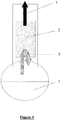
- reaction can be carried out in a 4-neck flask provided with stirrer, dropping funnel, a separator and a further outlet.
- Corresponding pilot plants can, for example, be constructed in stainless steel.
- the trialkylmetal compound (R 3 M) formed in reaction step a) is isolated from the residual mixture remaining in the reactor.
- the isolation is preferably carried out by distillation using a separator which in principle represents a heated separation element.
- a separator which in principle represents a heated separation element.
- a heated packed column or a heated reflux condenser can be used on the laboratory scale.
- the separator is generally operated at atmospheric pressure (1000 +-200 hPa) and heated to a temperature which is from 5 to 40°C above, preferably from 10 to 25°C above, the boiling point of the trialkylmetal compound R 3 M formed in the reaction mixture.
- the separator is heated to a temperature in the range from 60 to 90°C, preferably to a temperature in the range from 70 to 80°C. It is particularly preferably operated at about 70°C. This temperature is 14°C above the boiling point of TMG and 98°C below the boiling point of dimethylgallium chloride (b.p. 168°C).
- the isolation by distillation via the separator is preferably carried out under atmospheric pressure.
- the separator is heated to a temperature in the range from 150 to 180°C, preferably to a temperature in the range from 155 to 170°C when carrying out the process at atmospheric pressure (1000 +-200 hPa).
- the process of the invention is preferably carried out under reduced pressure in step b) and the temperature of the separator is adapted to the reduced boiling point of the partially alkylated product.
- the boiling point of diethylgallium chloride is 60-62°C (at 3 hPa).
- a separator temperature in the range from 100 to 160°C, preferably in the range from 120 to 150°C, at a reduced pressure in the range to 1 hPa (10 -3 hPa) has been found to be useful in the process of the invention.
- the reaction mixture is in step c), heated further to a temperature in the range from 165°C to 350°C, preferably to a temperature in the range from 180°C to 300°C.
- the remaining trialkylmetal compound (R 3 M) and the partially alkylated products (MCl x R y ) are separated off from the reaction mixture.
- This isolation is preferably carried out by distillation with application of a reduced pressure. Preference is given to selecting a fine to high vacuum in the range from 10 -1 to 10 -4 hPa. The reduced pressure makes it possible to use comparatively low temperatures, so that an inexpensive process is possible.
- the isolation of the residue is preferably effected via a separate outlet on the reactor.
- the trialkylmetal compounds (R 3 M) and the partially alkylated products (MCl x R y ) isolated by the separation in step c) are re-used in a subsequent batch and added to the fresh reaction mixture (cf. step d) of the process of the invention).
- step d) If an excess of alkylating reagent ( ⁇ 3 equivalents of alkylaluminium sesquichloride) is employed, reuse as per step d) can be dispensed with and the reaction product from step c) can be passed directly to fine purification.
- This optional recycling of the expensive metal compounds makes the process of the invention particularly economical.
- the gallium utilization and the TMG yield can be increased further.
- a salt melt which is liquid at the reaction temperature preferably remains as residual mixture after carrying out steps a) to c).
- no pyrophoric alkyl metal compounds remain in the residual mixture.
- the residual mixture particularly preferably comprises compounds selected from among Na/K[AlCl 4 ], Na/K[MeAlCl 3 ] and mixtures thereof.
- direct yields in the range from 60 to 90% can surprisingly be achieved by means of the process of the invention.
- the direct yield or "crude yield” is the yield after step b) of the process.
- the trialkylmetal compounds obtained in the direct yield generally still contain from 0.1 to 1% by weight of the dimethylated products (measured by means of 1 H-NMR).
- the heating step c) is optional and may be dispensed with.
- the direct yield or "crude yield" of trialkyl metal compound after step b) is obtained.
- the trialkylmetal compounds obtained in steps b) and optionally c) of the process are generally subjected to a fine purification in a subsequent step. This is generally a rectification and/or a distillation, optionally in a plurality of steps. Highly pure trialkylmetal compounds which meet the requirements of the MOCVD industry are obtained in this way
- trialkylmetal compounds in particular trimethylgallium (TMG) or triethylgallium (TEG), prepared by the process of the invention are particularly suitable as metal organic precursor for metal organic chemical vapour deposition (MOCVD), for example for producing semiconductor layers composed of GaAs.
- MOCVD metal organic chemical vapour deposition
- semiconductor layers III/V semiconductors, etc. ultimately produced therefrom have a variety of industrial uses.
- the products and the sesquichlorides used in the synthesis are pyrophoric. All work is therefore carried out with rigorous exclusion of air and moisture under protective gas (argon, nitrogen).
- TMG trimethylgallium
- Me 3 Ga can be isolated above 155°C.
- the reaction temperature reaches 180°C, isolation of the product via the separator is stopped. This gives a total of 89.0 g of Me 3 Ga (corresponding to a direct yield of 68%).
- the Me 3 Ga present in the direct yield contains 0.5% by weight of Me 2 GaCl (measured by means of 1 H-NMR).
- a reduced pressure (to 10 -3 hPa, oil pump) is applied and the remaining Ga-containing compounds (47 g, mixture of Me 3 Ga and Me 2 GaCl) are removed from the reaction mixture via a second outlet.
- the total yield is 72.2% of Me 3 Ga. Taking into account 27.4% of Me 2 GaCl, the total conversion based on Ga is thus 99.6%.
- the Me 3 Ga present in the direct yield contains 0.5% by weight of Me 2 GaCl (measured by means of 1 H-NMR).
- the mixture of Me 3 Ga and Me 2 GaCl is reused in other batches (cf. Example 2).
- the isolation of the product via the separator is stopped and the remaining Ga-containing compounds (residue) are isolated from the residual mixture via the second outlet with application of a reduced pressure (70.0 g, mixture of Me 3 Ga and Me 2 GaCl).
- the total yield is 64.0% of Me 3 Ga. Taking into account 35.8% of Me 2 GaCl, the total conversion (based on Ga) is 99.8%.
- the isolated crude Me 3 Ga from the direct yield contains 0.8% by weight of Me 2 GaCl (measured by means of 1 H-NMR).
- the mixture of Me 3 Ga and Me 2 GaCl is recirculated as starting material instead of GaCl 3 in a further pass.
- the isolation of the product via the separator is stopped and the remaining Ga-containing compounds are removed from the residual mixture via a second outlet with application of a reduced pressure (6.9 g).
- a reduced pressure (6.9 g).
- 99.0% of Me 3 Ga and 0.9% of Me 2 GaCl are isolated, and the total conversion (based on Ga) is 99.9%.
- the isolated crude TMG contains 0.7% by weight of Me 2 GaCl and 1.4% by weight of Me 2 AlCl (measured by means of 1 H-NMR).
- Et 3 Ga In total, 80.9% of Et 3 Ga and 19% of Et 2 GaCl are isolated, and the total yield (based on Ga) is 99.9%.
- the isolated crude Et 3 Ga contains 2.6% by weight of Et 2 GaCl (measured by means of 1 H-NMR).
- Example 6 The experimental conditions are identical to Example 6, but the experiment is carried out without use of a separator.
- a 500 ml 4-neck flask equipped with stirrer, thermocouple and dropping funnel is charged with GaCl 3 (50.0 g, 0.28 mol) and methylaluminum sesquichloride (58.3 g, 0.28 mol, 1 equivalent) is added dropwise via the dropping funnel.
- the flask is transferred to a glovebox and dry NaCl (23.2 g, 0.40 mol, 1.4 equivalents) and dry KCI (12.7 g, 0.17 mol, 0,6 equivalent) are added.
- the dropping funnel is replaced with a CLAISEN head with attached cold-trap. The apparatus is taken out of the glovebox and the reaction mixture is slowly heated under constant stirring to 350°C.
- a 250 ml 4-neck flask equipped with stirrer, thermocouple, dropping funnel and separator with an attached cold-trap is charged in a glovebox with InCl 3 (10.0 g, 45.2 mmol), dry NaCl (3.67 g, 63.3 mmol, 1.40 equivalents) and dry KCI (2.02 g, 27.1 mmol, 0.6 equivalents) and the dropping funnel is charged with methylaluminum sesquichloride (9.29 g, 45.2 mmol, 1.0 equivalent).
- the apparatus is transferred out of the glovebox and methylaluminum sesquichloride is added to the salt mixture.
- the reaction mixture is then slowly heated to 150°C under constant stirring with the temperature of the separator set to 80°C.
- the cold-trap When the reaction mixture is completely liquid, the cold-trap is cooled with liquid nitrogen and by applying a vacuum (10 -3 hPa) to the apparatus, trimethylindium is sublimed into the cold-trap. When all trimethylindium is sublimed out of the reaction flask the product isolation via the separator is stopped, a new cold-trap is attached directly to the reaction flask and the remaining dimethylindium chloride in the reaction mixture is sublimed out by raising the temperature up to 250°C.
Landscapes
- Chemical & Material Sciences (AREA)
- Organic Chemistry (AREA)
- General Chemical & Material Sciences (AREA)
- Chemical Kinetics & Catalysis (AREA)
- Engineering & Computer Science (AREA)
- Materials Engineering (AREA)
- Mechanical Engineering (AREA)
- Metallurgy (AREA)
- Inorganic Chemistry (AREA)
- Chemical Vapour Deposition (AREA)
- Catalysts (AREA)
Applications Claiming Priority (3)
| Application Number | Priority Date | Filing Date | Title |
|---|---|---|---|
| DE102011119487 | 2011-11-28 | ||
| DE201210013941 DE102012013941A1 (de) | 2012-07-16 | 2012-07-16 | Verfahren zur Herstellung von Galliumtrialkylverbindungen |
| PCT/EP2012/073771 WO2013083449A1 (en) | 2011-11-28 | 2012-11-28 | Process for preparing trialkyl compounds of metals of group iiia |
Publications (2)
| Publication Number | Publication Date |
|---|---|
| EP2785725A1 EP2785725A1 (en) | 2014-10-08 |
| EP2785725B1 true EP2785725B1 (en) | 2017-10-11 |
Family
ID=47278289
Family Applications (2)
| Application Number | Title | Priority Date | Filing Date |
|---|---|---|---|
| EP12798251.0A Active EP2785725B1 (en) | 2011-11-28 | 2012-11-28 | Process for preparing trialkyl compounds of metals of group iiia |
| EP12794701.8A Active EP2785724B1 (en) | 2011-11-28 | 2012-11-28 | Process for preparing trialkylgallium compounds |
Family Applications After (1)
| Application Number | Title | Priority Date | Filing Date |
|---|---|---|---|
| EP12794701.8A Active EP2785724B1 (en) | 2011-11-28 | 2012-11-28 | Process for preparing trialkylgallium compounds |
Country Status (9)
| Country | Link |
|---|---|
| US (2) | US9695201B2 (enExample) |
| EP (2) | EP2785725B1 (enExample) |
| JP (6) | JP6165160B2 (enExample) |
| KR (3) | KR102231740B1 (enExample) |
| CN (5) | CN103958529A (enExample) |
| IN (1) | IN2014CN02940A (enExample) |
| RU (2) | RU2014126212A (enExample) |
| TW (2) | TWI632149B (enExample) |
| WO (2) | WO2013083450A1 (enExample) |
Families Citing this family (9)
| Publication number | Priority date | Publication date | Assignee | Title |
|---|---|---|---|---|
| TWI632149B (zh) | 2011-11-28 | 2018-08-11 | 烏明克股份有限兩合公司 | 第iii a族金屬的三烷基化合物之製法 |
| US8513447B1 (en) * | 2012-02-01 | 2013-08-20 | Chemtura Corporation | Preparation of tri-alkyl gallium or tri-alkyl indium compounds |
| CN105473599B (zh) * | 2013-08-22 | 2018-08-28 | 优美科股份公司及两合公司 | 用于生产烷基铟化合物的方法及其用途 |
| WO2015024894A1 (de) | 2013-08-22 | 2015-02-26 | Umicore Ag & Co. Kg | Verfahren zur herstellung von alkylindium-verbindungen und deren verwendung |
| JP6413801B2 (ja) * | 2014-02-07 | 2018-10-31 | 宇部興産株式会社 | トリアルキルガリウムの製造方法 |
| JP6742921B2 (ja) | 2014-03-14 | 2020-08-19 | ユミコア・アクチエンゲゼルシャフト・ウント・コムパニー・コマンディットゲゼルシャフトUmicore AG & Co.KG | トリアルキルガリウム化合物の調製及びその使用 |
| EP3409676B1 (de) * | 2017-05-29 | 2020-10-14 | Umicore Ag & Co. Kg | Herstellung von trialkylindiumverbindungen in gegenwart von carboxylaten |
| KR102228897B1 (ko) * | 2017-10-31 | 2021-03-17 | 누리온 케미칼즈 인터내셔널 비.브이. | 갈륨 클로라이드의 저장 및/또는 수송 방법 |
| WO2019115377A1 (en) * | 2017-12-13 | 2019-06-20 | Akzo Nobel Chemicals International B.V. | Process for purification of dimethyl aluminium chloride |
Family Cites Families (25)
| Publication number | Priority date | Publication date | Assignee | Title |
|---|---|---|---|---|
| NL264689A (enExample) | 1960-05-14 | |||
| DE4005726A1 (de) * | 1989-04-28 | 1990-10-31 | Messer Griesheim Gmbh | Verfahren zur herstellung von galliumalkylverbindungen |
| US5043462A (en) * | 1989-04-28 | 1991-08-27 | Messer Greisheim | Process for the production of gallium-alkyl compounds |
| US5473090A (en) | 1992-07-02 | 1995-12-05 | Air Products And Chemicals, Inc. | Process for the preparation of trialkyl compounds of group 3a metals |
| US5350869A (en) | 1993-07-27 | 1994-09-27 | Cvd, Incorporated | Purification of trialkylgallium, synthesis of trialkylgallium |
| US5756786A (en) | 1997-06-25 | 1998-05-26 | Morton International, Inc. | High purity trimethylindium, method of synthesis |
| JP2000005503A (ja) | 1998-06-24 | 2000-01-11 | Nippon Shokubai Co Ltd | 反応蒸留装置および反応蒸留方法 |
| GB2344822A (en) | 1998-12-19 | 2000-06-21 | Epichem Ltd | Organometallic compound production using distillation |
| GB0017968D0 (en) | 2000-07-22 | 2000-09-13 | Epichem Ltd | An improved process and apparatus for the isolation of pure,or substantially pure,organometallic compounds |
| KR100852361B1 (ko) * | 2001-04-06 | 2008-08-14 | 롬 앤드 하스 일렉트로닉 머트어리얼즈, 엘.엘.씨 | 트리알킬 va족 금속 화합물 |
| US6770769B2 (en) | 2002-04-06 | 2004-08-03 | Shipley Company, L.L.C. | Trialkylindium preparation |
| JP4054997B2 (ja) | 2003-06-19 | 2008-03-05 | 信越化学工業株式会社 | 高純度アルキルガリウムの製造方法 |
| TW200619222A (en) | 2004-09-02 | 2006-06-16 | Rohm & Haas Elect Mat | Method for making organometallic compounds |
| JP4470682B2 (ja) | 2004-10-13 | 2010-06-02 | 住友化学株式会社 | トリメチルガリウムの製造方法 |
| JP4774776B2 (ja) | 2005-03-23 | 2011-09-14 | 日亜化学工業株式会社 | トリアルキルガリウムの製造方法 |
| US7667063B2 (en) | 2005-03-23 | 2010-02-23 | Nichia Corporation | Method for producing trialkyl gallium |
| CN1872861A (zh) | 2005-06-03 | 2006-12-06 | 大连保税区科利德化工科技开发有限公司 | 三甲基镓生产方法及设备 |
| CN1872862A (zh) | 2005-06-03 | 2006-12-06 | 大连保税区科利德化工科技开发有限公司 | 三甲基镓制备和提纯方法 |
| JP4784729B2 (ja) | 2005-06-09 | 2011-10-05 | 信越化学工業株式会社 | トリメチルガリウムの製造方法 |
| JP2009007786A (ja) * | 2007-06-26 | 2009-01-15 | Miracle Three Corporation | 階段室型共同住宅の増築方法及びこの方法で増築された建築物 |
| US20090054717A1 (en) * | 2007-08-21 | 2009-02-26 | The Nippon Synthetic Chemical Industry Co., Ltd. | Method of Producing 3,4-Diacyloxy-1-Butene |
| US20090149008A1 (en) | 2007-10-05 | 2009-06-11 | Applied Materials, Inc. | Method for depositing group iii/v compounds |
| JP2009126835A (ja) | 2007-11-27 | 2009-06-11 | Ube Ind Ltd | 高純度トリアルキルガリウム及びその製法 |
| JP5423039B2 (ja) | 2009-02-23 | 2014-02-19 | 宇部興産株式会社 | 高純度トリアルキルガリウム及びその製造方法 |
| TWI632149B (zh) | 2011-11-28 | 2018-08-11 | 烏明克股份有限兩合公司 | 第iii a族金屬的三烷基化合物之製法 |
-
2012
- 2012-11-27 TW TW101144306A patent/TWI632149B/zh active
- 2012-11-27 TW TW106104275A patent/TWI632151B/zh not_active IP Right Cessation
- 2012-11-28 WO PCT/EP2012/073772 patent/WO2013083450A1/en not_active Ceased
- 2012-11-28 KR KR1020207012873A patent/KR102231740B1/ko active Active
- 2012-11-28 EP EP12798251.0A patent/EP2785725B1/en active Active
- 2012-11-28 US US14/358,069 patent/US9695201B2/en active Active
- 2012-11-28 CN CN201280058149.4A patent/CN103958529A/zh active Pending
- 2012-11-28 KR KR1020147011627A patent/KR102071084B1/ko not_active Expired - Fee Related
- 2012-11-28 CN CN201280058143.7A patent/CN103958528A/zh active Pending
- 2012-11-28 JP JP2014542886A patent/JP6165160B2/ja not_active Expired - Fee Related
- 2012-11-28 RU RU2014126212A patent/RU2014126212A/ru not_active Application Discontinuation
- 2012-11-28 IN IN2940CHN2014 patent/IN2014CN02940A/en unknown
- 2012-11-28 JP JP2014542885A patent/JP6165159B2/ja not_active Expired - Fee Related
- 2012-11-28 EP EP12794701.8A patent/EP2785724B1/en active Active
- 2012-11-28 RU RU2014126213A patent/RU2014126213A/ru not_active Application Discontinuation
- 2012-11-28 CN CN201810250898.6A patent/CN108341834B/zh not_active Expired - Fee Related
- 2012-11-28 KR KR1020147011622A patent/KR102109904B1/ko not_active Expired - Fee Related
- 2012-11-28 CN CN201710084832.XA patent/CN107021973A/zh active Pending
- 2012-11-28 US US13/261,859 patent/US9108985B2/en active Active
- 2012-11-28 CN CN201811396095.8A patent/CN109456345A/zh active Pending
- 2012-11-28 WO PCT/EP2012/073771 patent/WO2013083449A1/en not_active Ceased
-
2017
- 2017-03-21 JP JP2017054178A patent/JP6644726B2/ja not_active Expired - Fee Related
- 2017-03-21 JP JP2017054179A patent/JP6679527B2/ja not_active Expired - Fee Related
-
2019
- 2019-11-08 JP JP2019203284A patent/JP6983851B2/ja not_active Expired - Fee Related
-
2021
- 2021-07-29 JP JP2021124454A patent/JP2021169529A/ja active Pending
Non-Patent Citations (1)
| Title |
|---|
| None * |
Also Published As
Similar Documents
| Publication | Publication Date | Title |
|---|---|---|
| EP2785725B1 (en) | Process for preparing trialkyl compounds of metals of group iiia | |
| US10239892B2 (en) | Method for producing alkyl-indium compounds and the use thereof | |
| US10385073B2 (en) | Process for preparing alkyl-indium compounds and the use thereof | |
| TWI662044B (zh) | 三烷基鎵化合物之製備及其用途 |
Legal Events
| Date | Code | Title | Description |
|---|---|---|---|
| PUAI | Public reference made under article 153(3) epc to a published international application that has entered the european phase |
Free format text: ORIGINAL CODE: 0009012 |
|
| 17P | Request for examination filed |
Effective date: 20140630 |
|
| AK | Designated contracting states |
Kind code of ref document: A1 Designated state(s): AL AT BE BG CH CY CZ DE DK EE ES FI FR GB GR HR HU IE IS IT LI LT LU LV MC MK MT NL NO PL PT RO RS SE SI SK SM TR |
|
| DAX | Request for extension of the european patent (deleted) | ||
| 17Q | First examination report despatched |
Effective date: 20170111 |
|
| GRAP | Despatch of communication of intention to grant a patent |
Free format text: ORIGINAL CODE: EPIDOSNIGR1 |
|
| INTG | Intention to grant announced |
Effective date: 20170426 |
|
| GRAS | Grant fee paid |
Free format text: ORIGINAL CODE: EPIDOSNIGR3 |
|
| GRAA | (expected) grant |
Free format text: ORIGINAL CODE: 0009210 |
|
| RIN1 | Information on inventor provided before grant (corrected) |
Inventor name: DOPPIU, ANGELINO Inventor name: FREY, ANNIKA Inventor name: KARCH, RALF Inventor name: BURKERT, TOBIAS Inventor name: RIVAS-NASS, ANDREAS Inventor name: WOERNER, EILEEN |
|
| AK | Designated contracting states |
Kind code of ref document: B1 Designated state(s): AL AT BE BG CH CY CZ DE DK EE ES FI FR GB GR HR HU IE IS IT LI LT LU LV MC MK MT NL NO PL PT RO RS SE SI SK SM TR |
|
| REG | Reference to a national code |
Ref country code: GB Ref legal event code: FG4D |
|
| REG | Reference to a national code |
Ref country code: CH Ref legal event code: EP |
|
| REG | Reference to a national code |
Ref country code: IE Ref legal event code: FG4D |
|
| REG | Reference to a national code |
Ref country code: AT Ref legal event code: REF Ref document number: 935913 Country of ref document: AT Kind code of ref document: T Effective date: 20171115 |
|
| REG | Reference to a national code |
Ref country code: DE Ref legal event code: R096 Ref document number: 602012038465 Country of ref document: DE |
|
| REG | Reference to a national code |
Ref country code: NL Ref legal event code: MP Effective date: 20171011 |
|
| REG | Reference to a national code |
Ref country code: LT Ref legal event code: MG4D |
|
| REG | Reference to a national code |
Ref country code: AT Ref legal event code: MK05 Ref document number: 935913 Country of ref document: AT Kind code of ref document: T Effective date: 20171011 |
|
| PG25 | Lapsed in a contracting state [announced via postgrant information from national office to epo] |
Ref country code: NL Free format text: LAPSE BECAUSE OF FAILURE TO SUBMIT A TRANSLATION OF THE DESCRIPTION OR TO PAY THE FEE WITHIN THE PRESCRIBED TIME-LIMIT Effective date: 20171011 |
|
| PG25 | Lapsed in a contracting state [announced via postgrant information from national office to epo] |
Ref country code: FI Free format text: LAPSE BECAUSE OF FAILURE TO SUBMIT A TRANSLATION OF THE DESCRIPTION OR TO PAY THE FEE WITHIN THE PRESCRIBED TIME-LIMIT Effective date: 20171011 Ref country code: ES Free format text: LAPSE BECAUSE OF FAILURE TO SUBMIT A TRANSLATION OF THE DESCRIPTION OR TO PAY THE FEE WITHIN THE PRESCRIBED TIME-LIMIT Effective date: 20171011 Ref country code: NO Free format text: LAPSE BECAUSE OF FAILURE TO SUBMIT A TRANSLATION OF THE DESCRIPTION OR TO PAY THE FEE WITHIN THE PRESCRIBED TIME-LIMIT Effective date: 20180111 Ref country code: SE Free format text: LAPSE BECAUSE OF FAILURE TO SUBMIT A TRANSLATION OF THE DESCRIPTION OR TO PAY THE FEE WITHIN THE PRESCRIBED TIME-LIMIT Effective date: 20171011 Ref country code: LT Free format text: LAPSE BECAUSE OF FAILURE TO SUBMIT A TRANSLATION OF THE DESCRIPTION OR TO PAY THE FEE WITHIN THE PRESCRIBED TIME-LIMIT Effective date: 20171011 |
|
| PG25 | Lapsed in a contracting state [announced via postgrant information from national office to epo] |
Ref country code: BG Free format text: LAPSE BECAUSE OF FAILURE TO SUBMIT A TRANSLATION OF THE DESCRIPTION OR TO PAY THE FEE WITHIN THE PRESCRIBED TIME-LIMIT Effective date: 20180111 Ref country code: AT Free format text: LAPSE BECAUSE OF FAILURE TO SUBMIT A TRANSLATION OF THE DESCRIPTION OR TO PAY THE FEE WITHIN THE PRESCRIBED TIME-LIMIT Effective date: 20171011 Ref country code: HR Free format text: LAPSE BECAUSE OF FAILURE TO SUBMIT A TRANSLATION OF THE DESCRIPTION OR TO PAY THE FEE WITHIN THE PRESCRIBED TIME-LIMIT Effective date: 20171011 Ref country code: LV Free format text: LAPSE BECAUSE OF FAILURE TO SUBMIT A TRANSLATION OF THE DESCRIPTION OR TO PAY THE FEE WITHIN THE PRESCRIBED TIME-LIMIT Effective date: 20171011 Ref country code: GR Free format text: LAPSE BECAUSE OF FAILURE TO SUBMIT A TRANSLATION OF THE DESCRIPTION OR TO PAY THE FEE WITHIN THE PRESCRIBED TIME-LIMIT Effective date: 20180112 Ref country code: IS Free format text: LAPSE BECAUSE OF FAILURE TO SUBMIT A TRANSLATION OF THE DESCRIPTION OR TO PAY THE FEE WITHIN THE PRESCRIBED TIME-LIMIT Effective date: 20180211 Ref country code: RS Free format text: LAPSE BECAUSE OF FAILURE TO SUBMIT A TRANSLATION OF THE DESCRIPTION OR TO PAY THE FEE WITHIN THE PRESCRIBED TIME-LIMIT Effective date: 20171011 |
|
| REG | Reference to a national code |
Ref country code: DE Ref legal event code: R097 Ref document number: 602012038465 Country of ref document: DE |
|
| PG25 | Lapsed in a contracting state [announced via postgrant information from national office to epo] |
Ref country code: SK Free format text: LAPSE BECAUSE OF FAILURE TO SUBMIT A TRANSLATION OF THE DESCRIPTION OR TO PAY THE FEE WITHIN THE PRESCRIBED TIME-LIMIT Effective date: 20171011 Ref country code: CZ Free format text: LAPSE BECAUSE OF FAILURE TO SUBMIT A TRANSLATION OF THE DESCRIPTION OR TO PAY THE FEE WITHIN THE PRESCRIBED TIME-LIMIT Effective date: 20171011 Ref country code: MC Free format text: LAPSE BECAUSE OF FAILURE TO SUBMIT A TRANSLATION OF THE DESCRIPTION OR TO PAY THE FEE WITHIN THE PRESCRIBED TIME-LIMIT Effective date: 20171011 Ref country code: LI Free format text: LAPSE BECAUSE OF NON-PAYMENT OF DUE FEES Effective date: 20171130 Ref country code: DK Free format text: LAPSE BECAUSE OF FAILURE TO SUBMIT A TRANSLATION OF THE DESCRIPTION OR TO PAY THE FEE WITHIN THE PRESCRIBED TIME-LIMIT Effective date: 20171011 Ref country code: CH Free format text: LAPSE BECAUSE OF NON-PAYMENT OF DUE FEES Effective date: 20171130 Ref country code: EE Free format text: LAPSE BECAUSE OF FAILURE TO SUBMIT A TRANSLATION OF THE DESCRIPTION OR TO PAY THE FEE WITHIN THE PRESCRIBED TIME-LIMIT Effective date: 20171011 |
|
| PLBE | No opposition filed within time limit |
Free format text: ORIGINAL CODE: 0009261 |
|
| STAA | Information on the status of an ep patent application or granted ep patent |
Free format text: STATUS: NO OPPOSITION FILED WITHIN TIME LIMIT |
|
| PG25 | Lapsed in a contracting state [announced via postgrant information from national office to epo] |
Ref country code: IT Free format text: LAPSE BECAUSE OF FAILURE TO SUBMIT A TRANSLATION OF THE DESCRIPTION OR TO PAY THE FEE WITHIN THE PRESCRIBED TIME-LIMIT Effective date: 20171011 Ref country code: SM Free format text: LAPSE BECAUSE OF FAILURE TO SUBMIT A TRANSLATION OF THE DESCRIPTION OR TO PAY THE FEE WITHIN THE PRESCRIBED TIME-LIMIT Effective date: 20171011 Ref country code: PL Free format text: LAPSE BECAUSE OF FAILURE TO SUBMIT A TRANSLATION OF THE DESCRIPTION OR TO PAY THE FEE WITHIN THE PRESCRIBED TIME-LIMIT Effective date: 20171011 Ref country code: RO Free format text: LAPSE BECAUSE OF FAILURE TO SUBMIT A TRANSLATION OF THE DESCRIPTION OR TO PAY THE FEE WITHIN THE PRESCRIBED TIME-LIMIT Effective date: 20171011 Ref country code: LU Free format text: LAPSE BECAUSE OF NON-PAYMENT OF DUE FEES Effective date: 20171128 |
|
| REG | Reference to a national code |
Ref country code: FR Ref legal event code: ST Effective date: 20180731 Ref country code: BE Ref legal event code: MM Effective date: 20171130 |
|
| REG | Reference to a national code |
Ref country code: IE Ref legal event code: MM4A |
|
| 26N | No opposition filed |
Effective date: 20180712 |
|
| GBPC | Gb: european patent ceased through non-payment of renewal fee |
Effective date: 20180111 |
|
| PG25 | Lapsed in a contracting state [announced via postgrant information from national office to epo] |
Ref country code: MT Free format text: LAPSE BECAUSE OF NON-PAYMENT OF DUE FEES Effective date: 20171128 |
|
| PG25 | Lapsed in a contracting state [announced via postgrant information from national office to epo] |
Ref country code: IE Free format text: LAPSE BECAUSE OF NON-PAYMENT OF DUE FEES Effective date: 20171128 Ref country code: FR Free format text: LAPSE BECAUSE OF NON-PAYMENT OF DUE FEES Effective date: 20171211 |
|
| PG25 | Lapsed in a contracting state [announced via postgrant information from national office to epo] |
Ref country code: SI Free format text: LAPSE BECAUSE OF FAILURE TO SUBMIT A TRANSLATION OF THE DESCRIPTION OR TO PAY THE FEE WITHIN THE PRESCRIBED TIME-LIMIT Effective date: 20171011 Ref country code: GB Free format text: LAPSE BECAUSE OF NON-PAYMENT OF DUE FEES Effective date: 20180111 Ref country code: BE Free format text: LAPSE BECAUSE OF NON-PAYMENT OF DUE FEES Effective date: 20171130 |
|
| PG25 | Lapsed in a contracting state [announced via postgrant information from national office to epo] |
Ref country code: HU Free format text: LAPSE BECAUSE OF FAILURE TO SUBMIT A TRANSLATION OF THE DESCRIPTION OR TO PAY THE FEE WITHIN THE PRESCRIBED TIME-LIMIT; INVALID AB INITIO Effective date: 20121128 |
|
| PG25 | Lapsed in a contracting state [announced via postgrant information from national office to epo] |
Ref country code: CY Free format text: LAPSE BECAUSE OF FAILURE TO SUBMIT A TRANSLATION OF THE DESCRIPTION OR TO PAY THE FEE WITHIN THE PRESCRIBED TIME-LIMIT Effective date: 20171011 |
|
| PG25 | Lapsed in a contracting state [announced via postgrant information from national office to epo] |
Ref country code: MK Free format text: LAPSE BECAUSE OF FAILURE TO SUBMIT A TRANSLATION OF THE DESCRIPTION OR TO PAY THE FEE WITHIN THE PRESCRIBED TIME-LIMIT Effective date: 20171011 |
|
| PG25 | Lapsed in a contracting state [announced via postgrant information from national office to epo] |
Ref country code: TR Free format text: LAPSE BECAUSE OF FAILURE TO SUBMIT A TRANSLATION OF THE DESCRIPTION OR TO PAY THE FEE WITHIN THE PRESCRIBED TIME-LIMIT Effective date: 20171011 |
|
| PG25 | Lapsed in a contracting state [announced via postgrant information from national office to epo] |
Ref country code: PT Free format text: LAPSE BECAUSE OF FAILURE TO SUBMIT A TRANSLATION OF THE DESCRIPTION OR TO PAY THE FEE WITHIN THE PRESCRIBED TIME-LIMIT Effective date: 20171011 |
|
| PG25 | Lapsed in a contracting state [announced via postgrant information from national office to epo] |
Ref country code: AL Free format text: LAPSE BECAUSE OF FAILURE TO SUBMIT A TRANSLATION OF THE DESCRIPTION OR TO PAY THE FEE WITHIN THE PRESCRIBED TIME-LIMIT Effective date: 20171011 |
|
| P01 | Opt-out of the competence of the unified patent court (upc) registered |
Effective date: 20230602 |
|
| PGFP | Annual fee paid to national office [announced via postgrant information from national office to epo] |
Ref country code: DE Payment date: 20241001 Year of fee payment: 13 |